
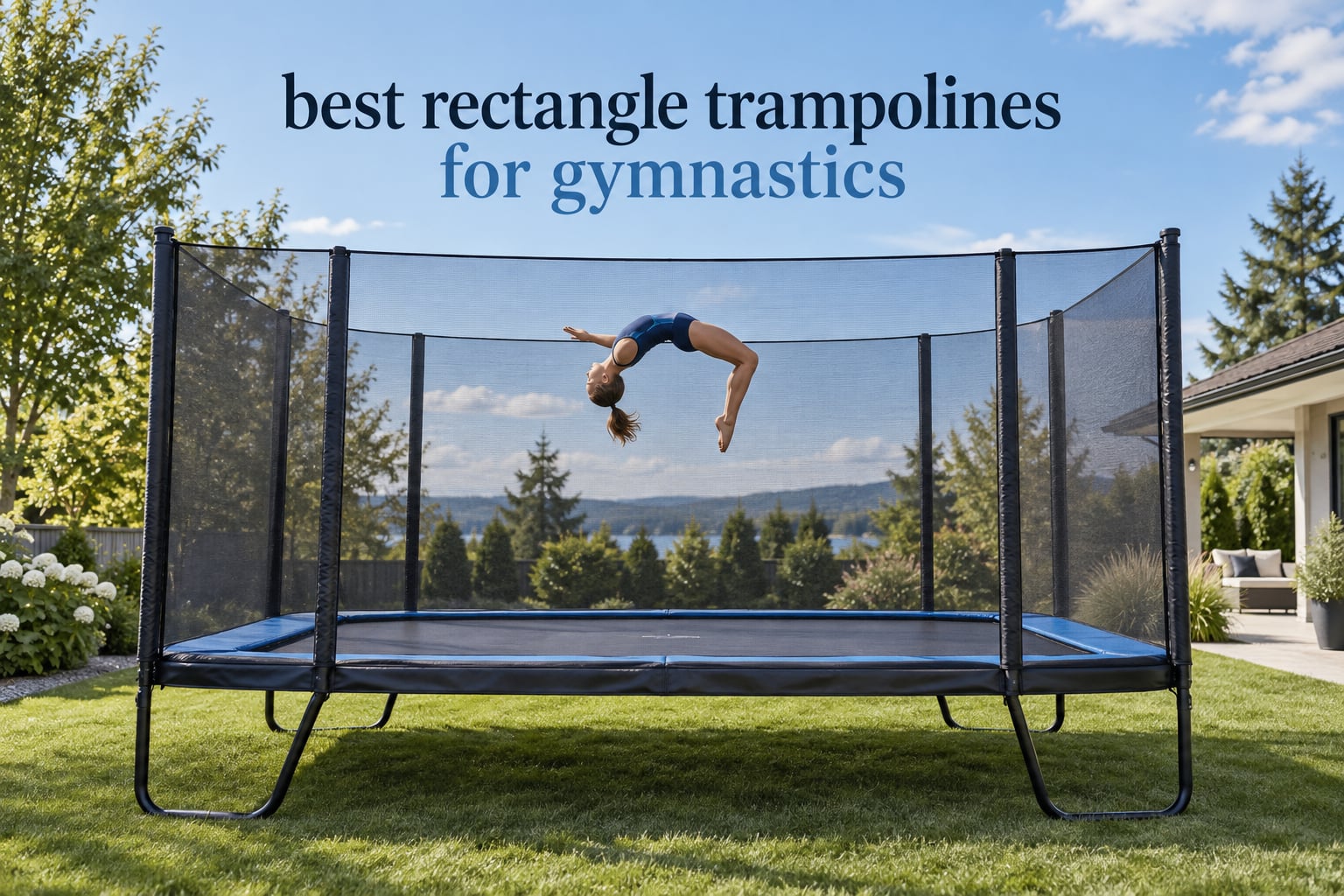
Yes, rectangle trampolines are better for gymnastics. A rectangle gives you a longer, flatter jumping surface with independently working springs, so a gymnast can run in a straight line, land a body-length flip and rebound in the same spot instead of being curved back toward a ring. Round trampolines still win on price and on safe, unsupervised play. For flips, twists and tumbling lines, shape is the whole point.
That is the question behind almost every search for the best rectangle trampolines for gymnastics, and it is the question we spend the first hour of any yard assessment answering. We compared the dimensions, frame gauge, spring counts, enclosure design, published weight limits and warranty terms of every rectangle in this lineup, then read the owner feedback on each one to see whether the claims survived contact with a real backyard.
This guide is deliberately rectangle-only. Most roundup lists in this category pad their rankings with round models, which is exactly the wrong shape for the skills people are shopping for. Everything here is a true four-sided trampoline, and everything here is honest about the space it needs, the way it is built and where it will disappoint you.
Our selection criteria were simple: a jumping surface long enough for a somersault run, an enclosure that closes the gap between mat and net, a published per-user weight limit rather than a vague static number, a frame warranty long enough to cover the years a growing gymnast will use it, and enough owner reviews to tell us whether it holds up. We also weighed assembly reality, because a 13×23 foot frame is a two-afternoon project with three people, not an evening job.
Table of Contents
How We Picked These Rectangle Trampolines
Every rectangular trampoline in this category looks similar in a photograph, so the selection has to start with numbers rather than first impressions. We read the published specification for each model and pulled the same fields for all of them: jumping surface dimensions, frame diameter and wall thickness, spring count, static and dynamic load ratings, enclosure type, net height where stated, certification, and the length of the frame warranty and spare-parts commitment.
Then we read the reviews. Not just the star average, which we treat as the least informative number on a listing, but the distribution, the volume, and the recurring sentences inside the written feedback. A 4.6 average across nearly 700 reviews tells you far more about a five-year-old trampoline than a 4.7 across 299 tells you about a nine-year-old one, because the first rating has been tested by a much larger and longer-lived group of households. We also tracked the specific complaints, since a category where the same four problems appear across every brand is a category where those problems are design-driven rather than luck.
Our weighting, roughly in order: a jumping surface long enough for the intended skill, an enclosure that closes the mat-to-net gap, a published per-user working load, frame and parts longevity, bounce consistency reported across a large review base, and finally assembly reality. A product that scores well on every specification but has 22 reviews and a 4.0 average still made this list when its specification advantage was decisive, and we say so plainly in the review rather than hiding it.
What we deliberately excluded is worth stating too. We did not include round trampolines, even highly rated ones, because the shape defeats the purpose. We did not include models whose listing could not be verified against a real specification block, and we did not rank on price, because a price comparison written this month is wrong within weeks.
Top 3 Best Rectangle Trampoline Picks for Gymnastics in October

Zupapa 10x17ft No-Gap Recta…
- Patented no-gap net sewn to the mat
- 51mm Q195 steel frame
- 1800LBS static and 450LBS dynamic
- 10-year frame warranty

AOTOB 14ft No-Gap Rectangle
- Foam-padded no-gap enclosure
- 72 springs
- 5-year mat and frame support
- 3D assembly app

Zupapa 8x14ft Double Zipper
- Highest rated at 4.7
- Double zipper on both long sides
- 51mm Q195 steel frame
- 10-year parts commitment
Best Rectangle Trampolines at a Glance in 2026
Every trampoline below is rectangular, and every one carries a full enclosure. The columns that separate them are jump surface size, spring count, published dynamic load and the length of the frame warranty, because those four numbers predict long-term satisfaction better than any marketing adjective.
| Product | Specs | Action |
|---|---|---|
| Zupapa 10x17ft Rectangle with No-Gap Net |
|
Check Latest Price |
| AOTOB 14ft Rectangle with No-Gap Enclosure |
|
Check Latest Price |
| Zupapa 8x14ft Rectangle with Double Zipper |
|
Check Latest Price |
 Zupapa 13x23ft Large Rectangle Zupapa 13x23ft Large Rectangle |
|
Check Latest Price |
 BSPORTY Ultra 8x14ft Six-Leg Rectangle BSPORTY Ultra 8x14ft Six-Leg Rectangle |
|
Check Latest Price |
 SkyBound 10x17ft with ASTM F2225 Enclosure SkyBound 10x17ft with ASTM F2225 Enclosure |
|
Check Latest Price |
Two brands dominate this table. Zupapa holds four of the six slots across three distinct sizes, which tells you something real about how consistent the frame engineering is across the range, but it also means the roundup tests a narrower set of frame designs than the brand spread suggests. The other two picks earn their place on specific, checkable advantages: a six-leg braced frame in one case, an ASTM F2225 enclosure in the other.
1. Zupapa 10x17ft Rectangle Trampoline with No-Gap Net and 10-Year Frame Warranty
Zupapa 1800LBS Weight Capacity Rectangle Trampoline 10x17FT 9X15FT 8X14FT Outdoor Square Gymnastics Trampolines with Basketball Hoops for Kids Adults Long Large Big Rectangular Tumbling Trampolin
Hot-dip galvanized steel
51mm frame at 2.5mm wall thickness
1800LBS static and 450LBS dynamic
310lb assembled weight
Pros
- Patented no-gap net sewn straight to the jumping mat
- 51mm Q195 steel frame that outclasses typical 42mm tubing
- Four-leg middle support that stops the long side sagging
- Two basketball hoops included
- 10-year frame warranty with free replacement parts
Cons
- Included hardware feels cheap and many owners upgrade it
- Ground anchors are weak for exposed sites
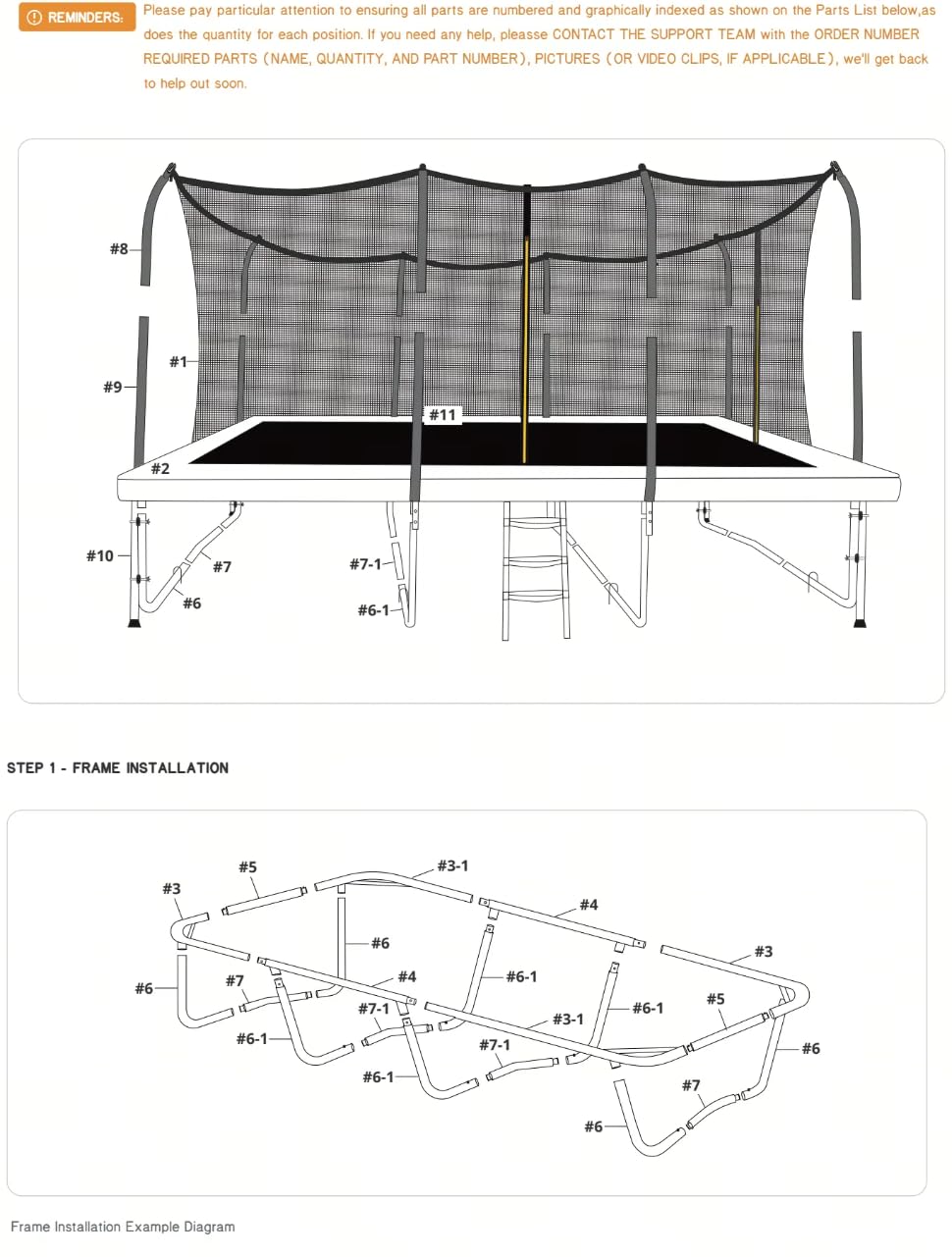
- Instructions could use clearer diagrams
The 10×17 is the size most families end up on, and the reason is arithmetic rather than hype. A 10 foot width gives a gymnast enough run-up for a hurdle series or a round-off into a back handspring, and 17 feet of length gives a full body-length tuck or layout to land in. This is also the only size in the lineup that carries a rating and a review count large enough for us to draw real conclusions from owner feedback rather than a handful of early listings.
What the 693 reviews agree on is the surface. Owners describe a large, even bounce that keeps its response right out to the edges, which is the specific thing you need for a tumbling line, and several note that it replaced a round trampoline for a child working on flips. The 82 percent five-star share is consistent with that, and the most common theme in the four-star reviews is not disappointment with the trampoline but the assembly weekend.
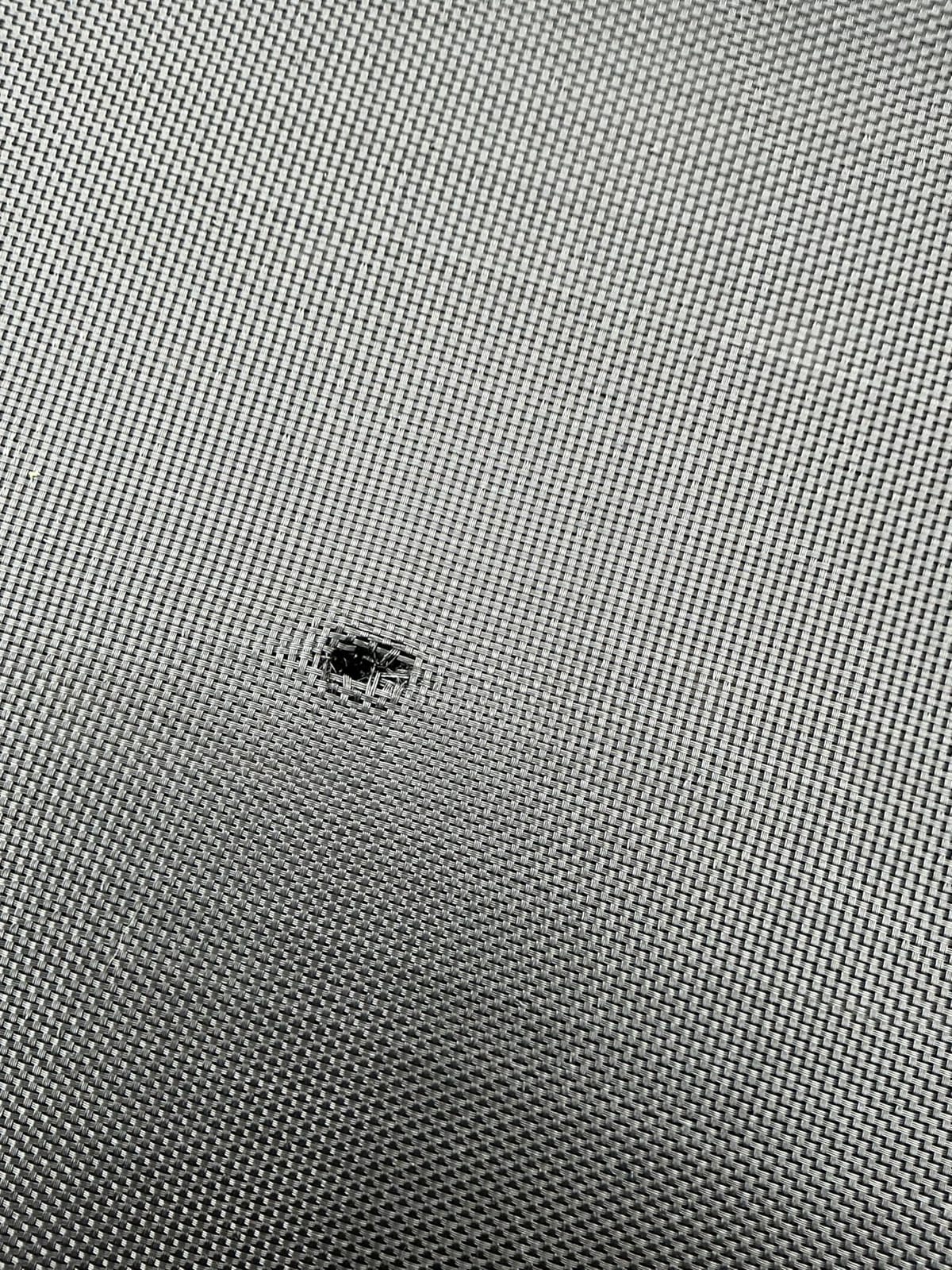
Frame construction is where this one separates from the budget tier. The frame uses 51mm diameter Q195 steel with a 2.5mm wall thickness, and the listing is explicit that typical rectangular frames use 42mm tube at 1.5mm walls. That difference is not a marketing rounding error, because wall thickness is what resists the repeated impact load of a landing. The patented four-leg layout also places a middle support along the long span, which is the design response to the classic rectangle failure mode where a 17 foot side bows inward under a heavy landing.
Two details are worth pausing on. First, the net poles run all the way to the ground rather than stopping at frame height, which closes the side gap where a tumbling athlete drifting off-centre could otherwise land near the springs. Second, the two basketball boards use soft, metal-free baskets, so an errant landing into the hoop structure is a cushion rather than a collision. Neither is a gymnastics feature, but both are safety details that cost nothing to design in.
How the no-gap net changes tumbling safety
The patented no-gap design sews the enclosure net directly to the jumping mat, so the strip of exposed springs and hardware you find between the mat edge and the net on most rectangles does not exist here. For a family whose main goal is flips and backflips, that is the single most important safety feature on the sheet, and owners name it first when they explain why they bought the model.
Forum threads about this category turn up the same worry repeatedly: a gymnast who lands off-centre can slip a foot into the spring channel on a conventional rectangle, and the resulting ankle or heel injury is the most common trampoline complaint parents describe. Reviewers report that on this model the net-to-mat seam keeps hands and feet away from the springs entirely. The design also removes the tie-down ropes used to secure a separate net, which is where the advertised half-hour assembly saving comes from.
Certification is stated plainly: CPC certified in the United States, CPSIA compliant and ASTM F381-16 compliant, with UV protection materials in the mat and net. Owners in sunny climates note the UV treatment as a practical benefit rather than a spec-sheet line, and the mat is polypropylene with PVC, PE and foam padding over the springs and poles.
Where the 450LBS dynamic limit bites
The 1800LBS static capacity and 450LBS dynamic capacity printed on this trampoline describe two different things, and the gap between them is where most disappointed buyers end up. Static capacity is the total load the structure survives sitting still. Dynamic capacity is the working load limit for people jumping on it. For gymnastics, the number that governs your household is 450 pounds, and it applies to jumper weight in use rather than to some theoretical test rig.
That is comfortably above one adult or one older teen. It is not comfortable for two adults, and parents who run family sessions with a parent and a child bouncing together are outside the intended envelope. Every trampoline in this roundup carries a published dynamic figure, and the honest way to read it is per jumper, with the total on the mat staying under the number.
The other honest limitation is the included hardware. Reviewers consistently describe the nylon nuts, bolts, washers and locknuts as among the cheapest they have seen on a frame of this class, and the supplied ground anchors as too light for exposed or windy sites. Both are cheap to solve. Budget an hour and a set of heavier anchors before the first session rather than discovering the problem on the first windy day.
2. AOTOB 14ft Rectangle Trampoline with No-Gap Enclosure
AOTOB 8×14FT Rectangle Trampoline with Net for Kids-Black
Powder-coated steel frame
72 springs
Lists at 93.5 pounds
5-year mat, frame and spring support
Pros
- Lowest entry point to a full no-gap rectangle enclosure
- Foam padding on the poles reduces collision risk
- Zipper entry keeps jumpers inside the net
- 3D assembly app makes setup approachable
- 5-year support on mat
- frame and springs
Cons
- Lightest build in the lineup at 93.5 pounds
- Only 72 springs against 116 to 180 on larger models
- 3-year net coverage is shorter than the 5-year frame and mat terms
This is the pick for a household that wants the rectangle shape and the no-gap enclosure without moving up to a heavy commercial-scale frame. The AOTOB 14 foot is listed at 93.5 pounds, which is barely a quarter of the weight of the 10×17 above it, and that single number tells you the whole story of what this trampoline is and is not.
It is a family practice trampoline. A child aged roughly five to nine working on jumps, drops, twists and assisted flips will get real use from a 14 foot rectangle, and at 4.6 stars across 318 reviews the satisfaction rate is high for the segment. The 78 percent five-star share reflects that most buyers got what they intended. What they did not get is the frame headroom for an adult training full-power tumbling, and owners who tried that describe the response flattening under a heavy adult load.
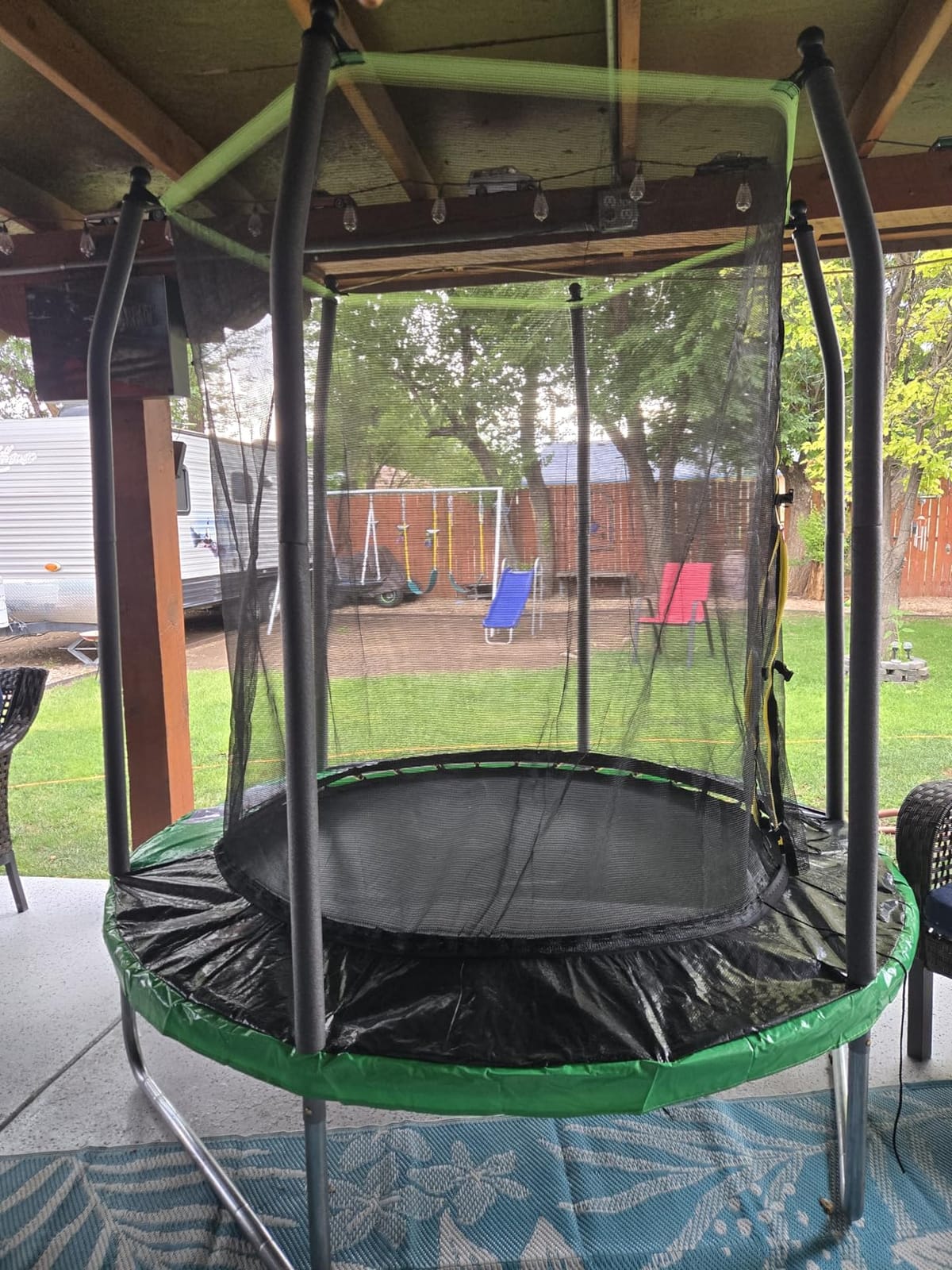
The enclosure is the real story. It uses a no-gap design with soft foam padding around the poles and a zippered entry, which covers the two safety items that matter most to a parent supervising a young child. The frame is powder-coated steel on four supportive legs, specified to handle all-weather exposure, and the pad material is listed as PVC with foam. Spare parts are stated as available for five years, which is longer support on parts availability than some products costing several times as much.
Assembly is the other thing this listing gets right. It comes with a paper manual plus a 3D step-by-step app, and owners consistently mention the app as the reason setup went smoothly. For a category where the top complaint in reviews is confusing instructions and a half-finished Sunday, guided 3D assembly is worth more than it sounds like it should be.
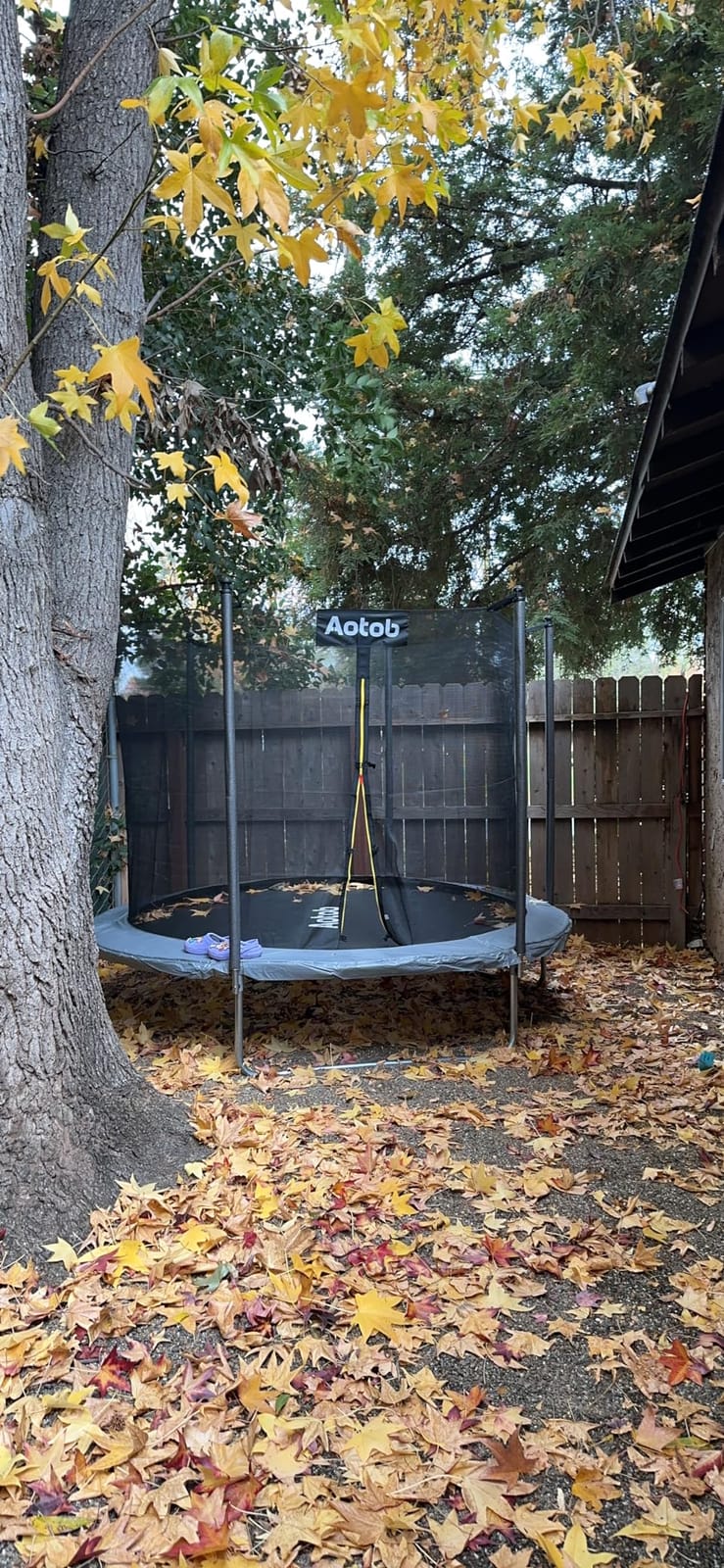
What a 14ft rectangle actually gives a young gymnast
Fourteen feet of length is enough for a straddle or pike shape to open out and land flat, and enough separation between a run-up and a rebound to practise the rhythm of a somersault without constant repositioning. It is not enough for a full hurdle pass with a rebound, and it is not enough for two gymnasts working in sequence. For a first rectangle, a first flip, and a first enthusiastic seven-year-old, that ceiling is exactly where most families stop anyway.
Buyers describe the surface as having good elasticity for its class, which matches the product’s own positioning for both beginners and more advanced practice. Our read is that “advanced” here means advanced relative to a round trampoline, not advanced relative to a 10×17. Anyone progressing toward layouts and rebound drills will outgrow this size in a season or two, so think of it as a training stage rather than a final destination.
The warranty structure is unusually generous for the price. Support runs five years on the jumping mat, frame and springs, three years on the enclosure net and pole caps, and the brand offers free immediate replacement for defects. Comparing that against the two-year mat coverage on considerably more expensive models in this same roundup, the support terms here hold up well.
Where the lighter frame and spring count show
At 93.5 pounds with 72 springs, this is the lightest build in the lineup by a wide margin, and the gap is not cosmetic. Spring count drives how evenly the surface responds under load, and models in this roundup that carry 116 to 180 springs distribute that load across far more attachment points. The practical symptom of a low count shows up as edge response: a landing near the frame feels less lively than one in the middle.
For a 45 pound child, that difference is academic. For a 180 pound adult running drills, it is the difference between a responsive surface and a surface that feels tired near the ends. Reviewers who push this model hard with multiple large jumpers report exactly that pattern, and the frame legs feel lighter in the hand than the frame tubing does.
Also note the size configuration. The listed frame size of 168 inches indicates the 14 foot variant is the primary build, and the model is also offered in a 12 foot version. If your space is tight, measure the 12 foot option against your clearance before committing, because the rectangle needs side clearance well beyond the frame itself to be safe for tumbling.
3. Zupapa 8x14ft Rectangle Trampoline with Double Zipper Entry
Zupapa 1800LBS Weight Capacity Rectangle Trampoline 10×17 9X15 8X14FT Outdoor Square Gymnastics Trampolines with 10-Year Quality Assurance for Kids Adults Large Big Rectangular Trampolin
Hot-dip galvanized steel
51mm frame at 2.5mm wall thickness
1800LBS static and 450LBS dynamic
269 pounds assembled
Pros
- Highest average rating in the roundup at 4.7 across 299 reviews
- Net sewn to the mat for a true no-gap perimeter
- Double zipper entry on both the long and short sides
- Four-leg middle support keeps the long side from caving in
- 10-year frame warranty with 10-year spare part availability
Cons
- Full enclosure and ground-length net poles add real assembly time
- Weighs 269 pounds so moving it later is a project
- 450LBS dynamic limit rules out multiple adults at once
At 4.7 stars across 299 reviews, this is the highest-rated rectangle in the lineup, and the gap between it and everything else is narrow enough that the deciding factor should be your household rather than the star count. The 86 percent five-star share is the highest here, and the three percent one-star share is the lowest. When we sorted the feedback for common threads, the positives were the stitched no-gap mat, the double zipper access and the even, lively bounce, and the single recurring friction was assembly time.
The engineering is the same family as the 10×17: Q195 steel at 51mm diameter with a 2.5mm wall, an explicit comparison against the 42mm and 1.5mm frames that are standard on the category, and the patented four-leg middle-support layout that keeps the long sides from collapsing inward. At 8×14 it is lighter at 269 pounds than its 10×17 sibling, and the spare part commitment runs ten years, which is longer than the frame warranty on most competing brands.
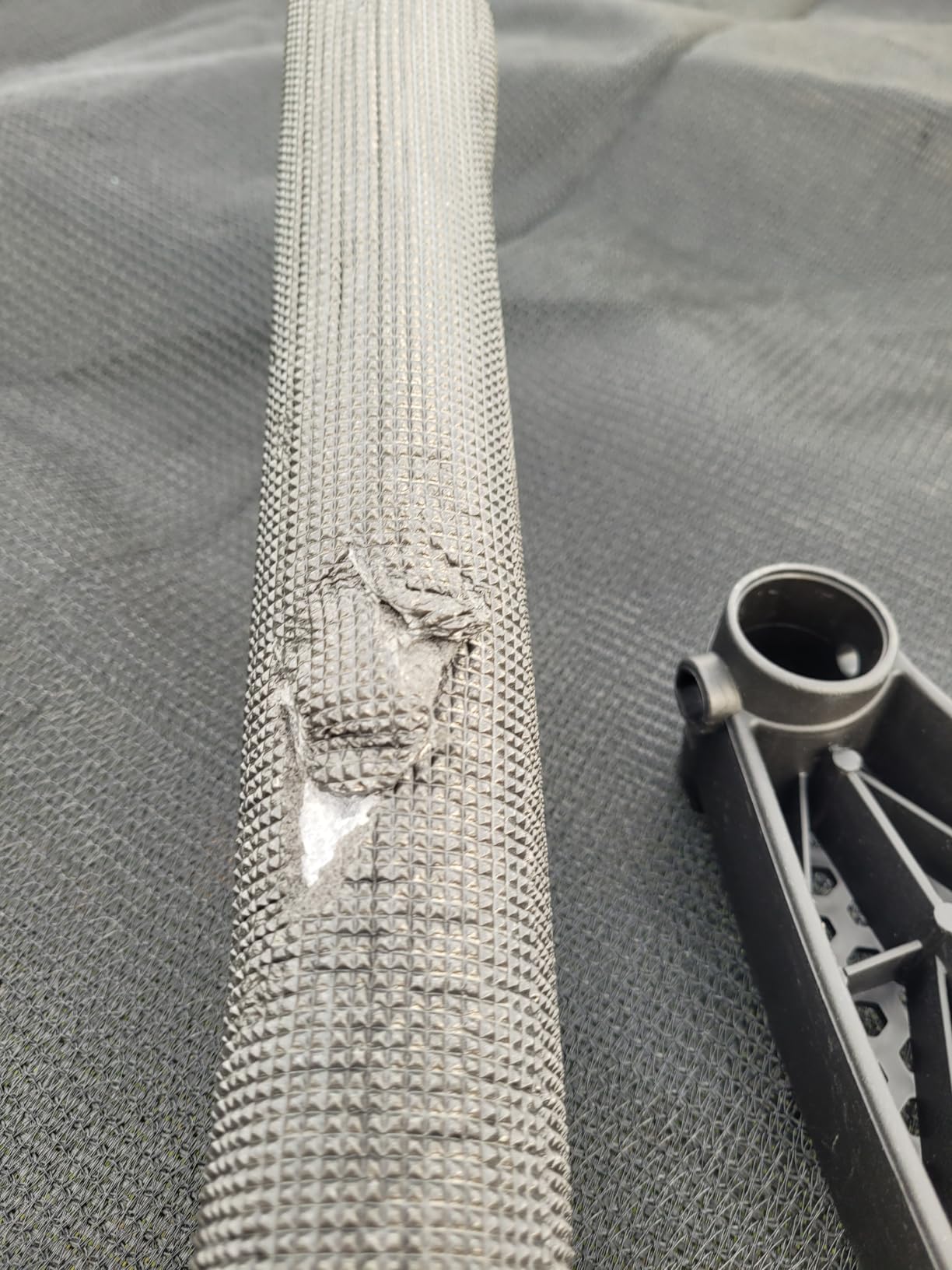
The double zipper entry is the feature that separates this from the 10×17, and it is more useful than it first appears. With a single zipper on one side, a family with two children practising at once has to funnel through a single opening at the frame edge, which is a bottleneck and a collision risk. Zippers on both the long and short sides mean the entry can sit on whichever side is away from the run-up line, which keeps the tumbling path clear. Owners running shared practice sessions single this out as the difference.
Safety certification matches the rest of the range: CPC certified in the United States, CPSIA guidelines, and ASTM F381-16 compliance. The net poles again run to the ground with densely woven PE netting, and the net is sewn to the jumping mat under the same patent as the larger model. Pad material is PVC with PE and foam, and the frame is hot-dip galvanized steel, which is the right finish for a frame that will sit through wet seasons.
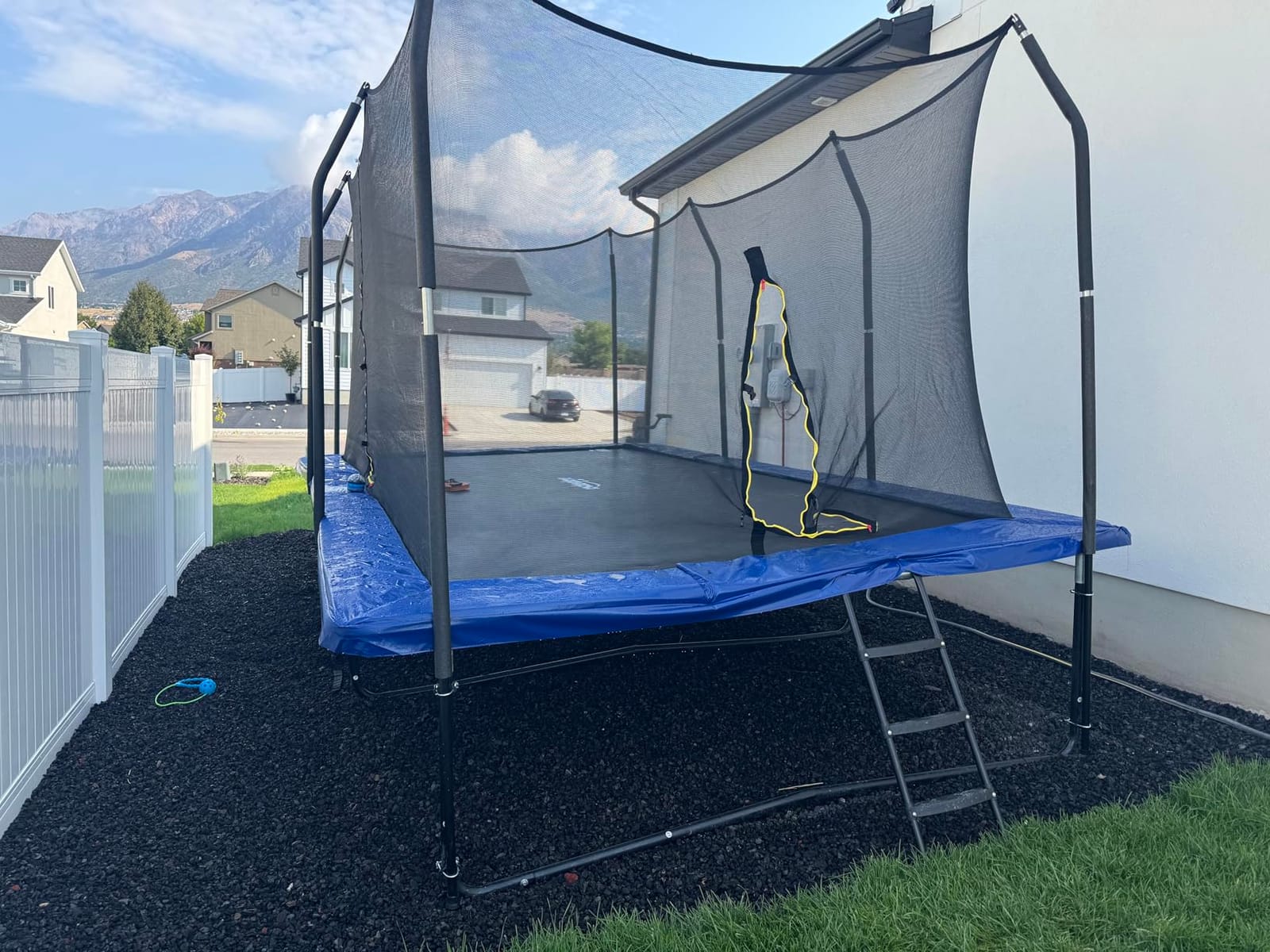
Double zipper entry for shared family practice
Think about how a rectangle is actually used in a house with more than one gymnast. The mat is long, and both ends of that length get used during a session, so entry on a single side means someone is always waiting or stepping over a waiting sibling near the frame edge. A double zipper lets you stage two entry and exit routes, and lets the coach position the opening away from the direction of travel so a jumper never launches into a waiting person.
That is the practical argument. The emotional one is visible in the reviews, where owners describe the entry as the detail that made the trampoline feel like it belonged to the family rather than to one designated user. It is a small design decision that only shows up once two or more people are on the mat, which is why it never appears in a spec comparison but does appear in owner feedback.
For a single child aged seven to twelve, the 8×14 is the sweet spot in this roundup. There is enough length for a full tuck or pike and a controlled rebound, and enough width to correct a drifting line without stepping off. If your gymnast is under seven and just starting, drop to the 14 foot AOTOB for a year and upgrade here; if they are past twelve and adding twists, move up to the 10×17 instead.
Assembly time and the problem of moving it later
Owners put assembly at the practical floor of a long afternoon for a fully enclosed rectangle of this size, with a second pair of hands strongly recommended. The frame itself is straightforward; the enclosure is the slow part, and the ground-length net poles mean each pole needs a separate sleeve fit and sleeve. Nothing here is unusual or defective, it is just volume, and the honest expectation is two to three hours rather than one.
The weight is the part people underrate. At 269 pounds assembled, this is not a trampoline you slide across the lawn on a dolly without planning, and the 51mm steel tubing is heavier per foot than a budget frame. Decide the final position before you start building. The second move, the one people always underestimate, is the one that takes an afternoon.
Anchor it properly on the first attempt. This listing does not foreground its anchors the way the 10×17 does, and a 269 pound frame with a long side is exactly the profile that shifts in a storm. Confirm that adequate ground anchors are included, and if the site is open or exposed, plan to add heavier ones before the first session.
4. Zupapa 13x23ft Rectangle Trampoline for Serious Tumbling
Zupapa 2500LBS Weight Capacity Rectangle Trampoline 13x23FT Outdoor Square Gymnastics Trampolines with 10-Year Quality Assurance for Kids Adults Large Commercial Grade Rectangular Pro Trampoline
13x23ft jumping surface
Alloy steel with 51mm tubing at 2.5mm walls
2500LBS static and 800LBS dynamic
750 pounds assembled
Pros
- Largest jumping surface in the roundup
- Highest load ratings at 2500LBS static and 800LBS dynamic
- 180 electroplated 3.5mm springs
- Accessory ladder included at this size
- Free replacement parts for the life of the product
Cons
- Weighs 750 pounds so site preparation is non-negotiable
- Only 61 reviews so long-term evidence is thinner
- One size and one colour configuration with no smaller options
This is the only trampoline in the roundup that functions more like a small training facility than a backyard toy, and it should be bought that way. At 13 by 23 feet with a 750 pound assembled weight, it is the largest jumping surface here by a wide margin, and the 2500LBS static and 800LBS dynamic ratings are the highest in the group by a factor of nearly two. Families with two or more athletes training simultaneously, or a club or coaching setup, are the realistic buyers.
Satisfaction runs high among the people who bought it, at 4.6 stars with 78 percent five-star feedback and no one-star reviews at all in the distribution. What that review base lacks is depth. Sixty-one reviews covers the build and early performance rather than five years of outdoor exposure, so we would treat the long-term durability picture as unproven rather than established. The design decisions, however, are the right ones on paper, and the specification sheet is unusually specific for the category.
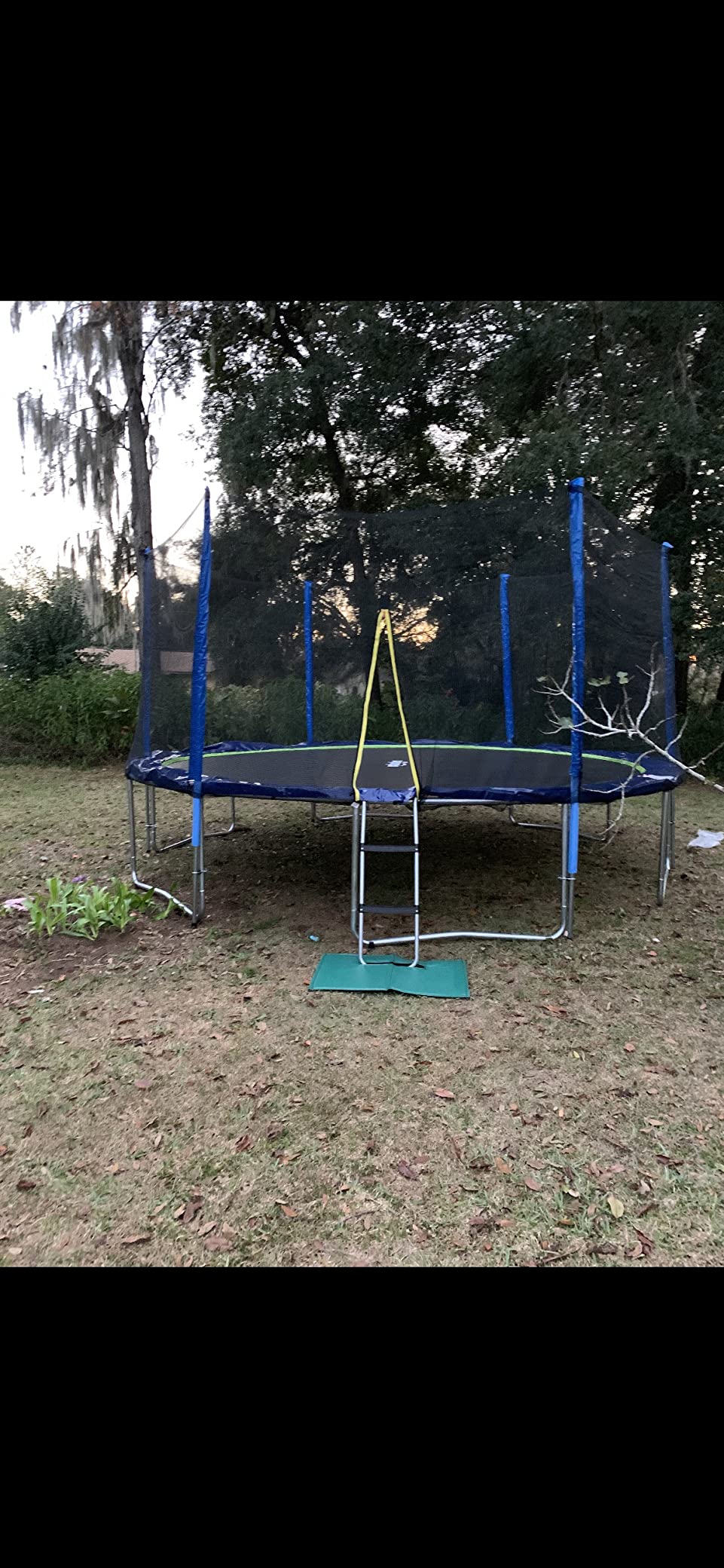
The support layout is the differentiator. Seven legs placed side by side give middle support across the full 23 foot span, which is the structural answer to the long-side sag that limits every other rectangle in this roundup. Combined with a 51mm frame at 2.5mm walls, it is a structure designed to hold its geometry under a hard landing near the middle of the span, and that is exactly the condition a tumbling pass produces.
The spring system gets the same treatment. One hundred and eighty electroplated springs at 3.5mm wire diameter are specified to outperform ordinary springs by more than thirty percent, which is a claim worth taking seriously at this size because spring count is what keeps the surface even under a moving load. The mat is premium polypropylene over PVC, PE and foam padding, and the patented no-gap net construction applies here too, so the net-to-mat seam is closed across the full 23 foot length.
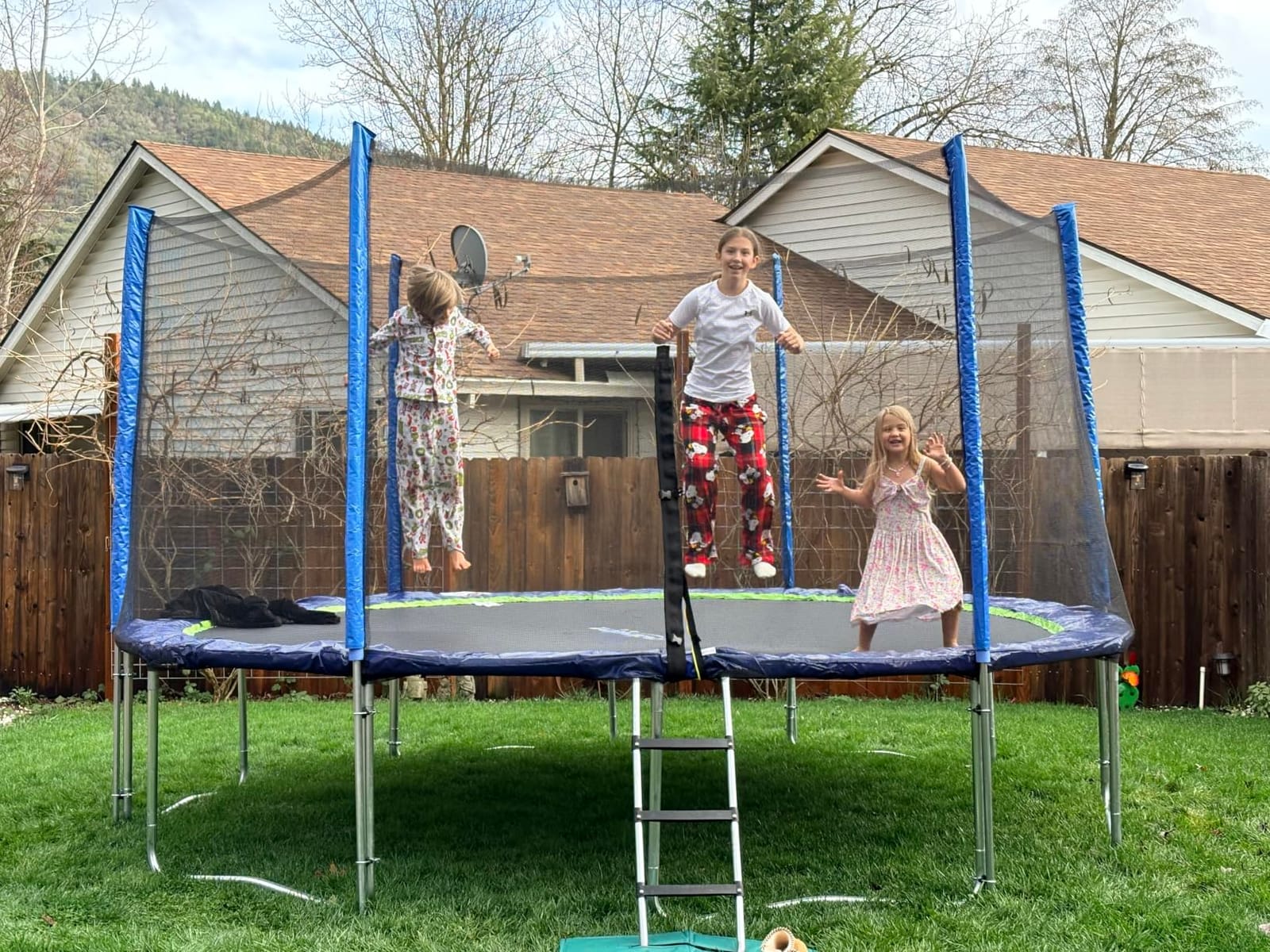
Who genuinely needs 13×23 feet
Ask what your longest run is. A full tumbling pass at competition pace travels a long way, and a 17 foot mat ends the pass sooner than most advanced athletes like. Thirteen by twenty-three gives room for a run-up, a hurdle, a rebound and a landing sequence without the gymnast waiting at the end of the mat for the bounce to return. For a family training two athletes at once, it is the difference between taking turns and training together.
It also changes the dynamic load math. An 800LBS dynamic rating supports two adult or teenage athletes on the mat at once, which no other rectangle in this roundup can honestly claim. If your household will have a parent coaching and demonstrating alongside a child, that capability is the reason to step up in size rather than in price.
It is also where a straight-frame discussion becomes relevant. This model uses a flex frame with multiple support legs, which is the right choice for a family that wants durability and multiple users. A competition-style straight frame is a different machine, sold by specialist brands, and it trades the middle support for a firmer, more powerful rebound. If your goal is competitive-level power rather than shared training space, read the frame section of the buying guide below before spending.
Site preparation for a 750 pound frame
Seventy-five hundred pounds of assembled steel does not tolerate a soft or uneven site. The frame needs a level, well-drained base, and it needs proper anchoring rather than the light stakes that suit a small backyard model. Reviewers who are happy with this product are consistently the ones who prepared the ground first. The dimensions are listed at 276 inches long by 156 inches wide by 40 inches high, and that footprint is the frame, not the clearance zone.
Budget real time for the assembly. At this weight and this leg count, three people and a full day is a realistic estimate, and the frame is not going anywhere afterwards without a vehicle and several helpers. Choose the site as if it were permanent, because functionally it is.
There is one configuration only, a single 13X23 blue model, with no smaller sizes in the range. That cuts both ways: nobody is paying for a size option they do not need, but there is no stepping-stone version if the site turns out to be tighter than measured. Measure clearance first, because unlike the rest of this roundup there is no smaller version to fall back on.
5. BSPORTY Ultra 8x14ft Rectangle Trampoline with a Six-Leg Frame
BSPORTY Ultra Rectangle Trampoline 8X14FT 2200LBS Weight Capacity Outdoor Square Gymnastics Heavy-Duty Trampolines with Full-Wrap Net Enclosure for Kids Adults
Alloy steel tubes at 50mm with 2.5mm walls
2200LBS static and 700LBS dynamic
65Mn springs at 7 inches
8x14ft surface
Pros
- Six legs with dual centre cross-grid braces for strong torsional rigidity
- Net webbing-stitched to the spring pad for a zero-gap perimeter
- EnduraWeave net rated Intertek UV Testing Grade 6
- 700LBS dynamic rating is the second highest here
Cons
- Lowest rating in the roundup at 4.3 with 11 percent one-star feedback
- Only 28 reviews so reliability is lightly documented
- Listing specification block reports shape as Round for this rectangular model
This is the pick if the primary user is an adult rather than a child, and it earns that on one specific piece of engineering. At 8 by 14 feet with a 700LBS dynamic rating, it is the second highest working load limit in the roundup, and it gets there with a frame design that is genuinely different from the four-leg layout the other models use.
Instead of four legs, this uses six, with two crosswise legs tying into dual centre cross-grid braces. The stated purpose is torsional rigidity, which in practice means the frame resists twisting when a landing lands off the centre line. For adult rebounding and fitness drills, where impact is heavy and landing position is unpredictable, that is the feature that matters most. Reviewers describe the result as a solid, steady bounce with a consistent response from edge to edge.
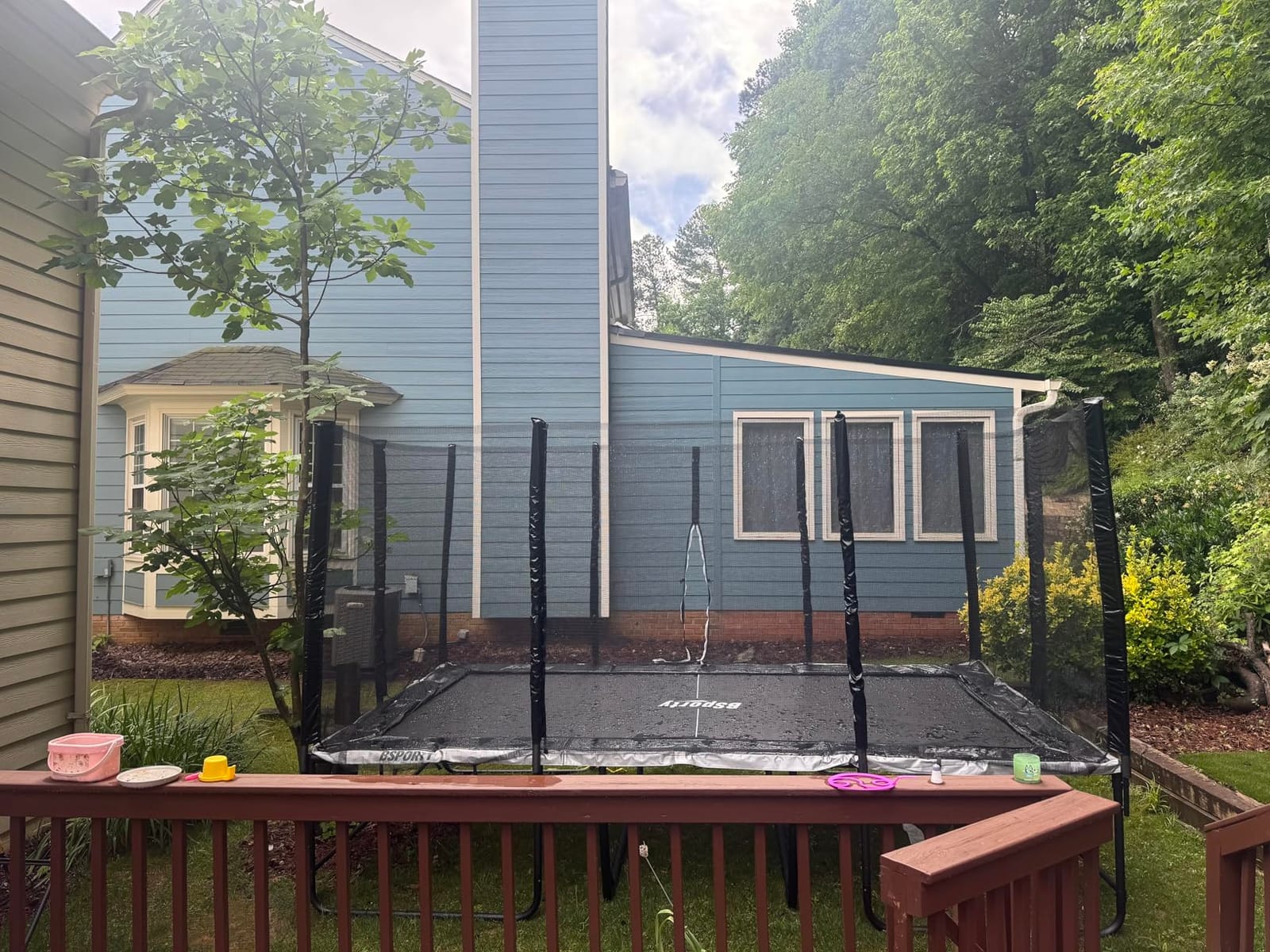
The perimeter is handled well. The jumping mat is webbing-stitched directly to the spring pad, forming a continuous stitched edge with no gap between the two, which closes the spring channel in the same way the sewn no-gap nets do on the Zupapa models. The enclosure is a full-wrap EnduraWeave net rated to Intertek UV Testing Grade 6, wrapping entirely over the frame so there is no side step-off gap, and the springs are 65Mn spring steel at 7 inches, tuned for a responsive takeoff rather than a soft, floaty rebound.
Frame tubing is 2 inch, or 50mm, diameter steel with 2.5mm walls, which sits between the budget frames and the 51mm Q195 steel on the Zupapa range. It is a serious tube specification for the price tier this product occupies, and it is backed by a six-leg geometry plus side crossbars that distribute landing loads rather than concentrating them at the corners.
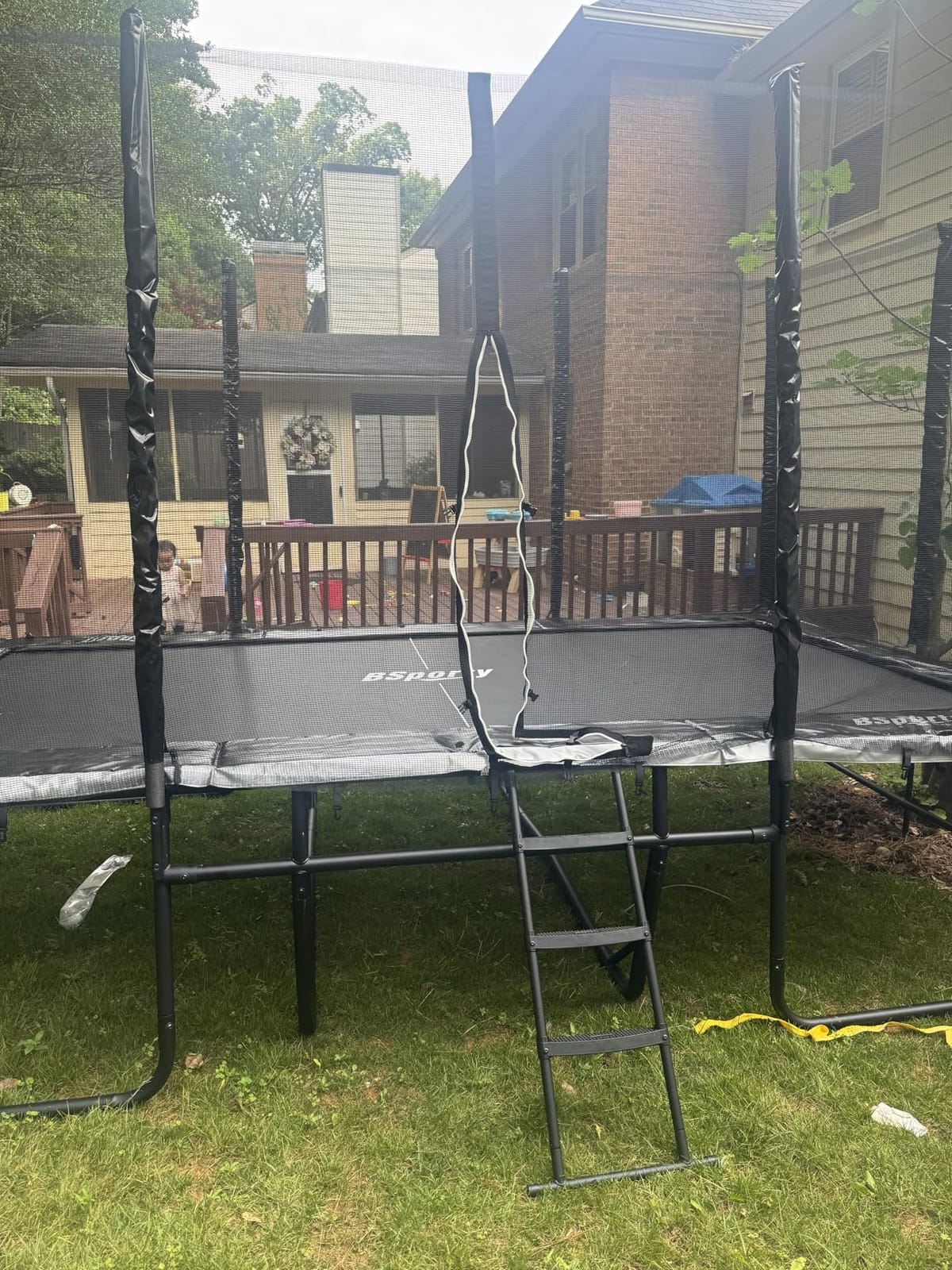
Frame stiffness is the real story here
Torsional rigidity sounds like an abstract spec until you jump on a trampoline that has it and one that does not. When a frame twists under an off-centre landing, the mat surface tilts slightly and the rebound sends the jumper off-axis. A child learning a new skill absorbs that with a correction. An adult rebounding at full intensity repeats the pattern hundreds of times per session, and the correction eventually becomes a bad landing.
The six-leg layout with twin cross-grid braces is the cheapest structural answer to that problem, and the reviewers who praise this model praise it almost exclusively for bounce consistency. For a home gym, a parkour or cheerleading practice setup, or a parent who will actually be the main user, that is a more valuable trait than a bigger mat.
The UV rating is the second detail that separates it. A Grade 6 UV rating on the enclosure net is directly relevant in hot climates where a net that fades and degrades becomes a safety problem within a few seasons, and net degradation is one of the recurring complaints in this category across brands. Rated UV resistance is worth paying attention to if your trampoline will see full sun.
How to read a thin review count honestly
Twenty-eight reviews is not enough to establish long-term reliability, and we will not pretend otherwise. The 4.3 average is the lowest here, and 11 percent one-star feedback is meaningfully higher than the 1 to 5 percent one-star share on the Zupapa models. The distribution still skews heavily positive at 71 percent five-star, so this is not a problematic product, it is a less proven one.
What that means practically is that the specification sheet is doing more work in your decision than owner feedback. That is not automatically bad. This listing is unusually concrete about frame diameter, wall thickness, spring steel grade, spring length, UV rating and load capacities, and those are testable, verifiable numbers. Where a listing is vague and a review base is thin, walk away. Where a listing is specific and a review base is thin, you are making a specification decision rather than a trust decision.
One flag worth raising: the listing’s specification block reports the shape as Round even though the model is a rectangular 8 by 14. Treat that as a data-entry error in the listing rather than a sign you received the wrong product, but it is a reminder to check the physical dimensions and the included parts against the packing list on arrival day, before assembly begins.
6. SkyBound 10x17ft Rectangle Trampoline with an ASTM F2225 Enclosure
SkyBound Rectangular Trampoline with Enclosure Net 10×17 FT – Rectangle Trampolines Performance Build for Families and Athletes – Reinforced Welding Base – Gymnastics Trampoline Superior Bounce
ASTM F2225 compliant enclosure net
Net height of at least 60 inches
10x17ft surface with 116 springs
Recommended max user weight 352lbs
Pros
- Only enclosure net in the roundup meeting the ASTM F2225 standard
- Net height exceeds the 60 inch minimum barrier guideline
- Reinforced welding base and safety base-leg design add rigidity
- Basketball hoop
- ladder and tools included
- US-based customer support
Cons
- Lowest average rating in the roundup at 4.0
- Recommended max user weight of 352lbs is the lowest stated
- Only 22 reviews
- the thinnest evidence base here
The safety argument for this one is narrow, specific and checkable. It is the only rectangle in this roundup whose enclosure net is stated to meet ASTM F2225, the performance standard for trampoline enclosure nets, and its net height is specified at a minimum of 60 inches, which is the barrier height the standard calls for when the net must be at least half the length of the longest bed dimension on a rectangular model.
That distinction matters more than it sounds. A rectangle is long, so a net sized to round-model requirements sits lower relative to the athlete’s centre of mass and offers less protection during a tumbling pass. A 60 inch minimum on a 17 foot bed is a real structural difference, and it is the one specification on this listing that no competitor in this roundup makes.
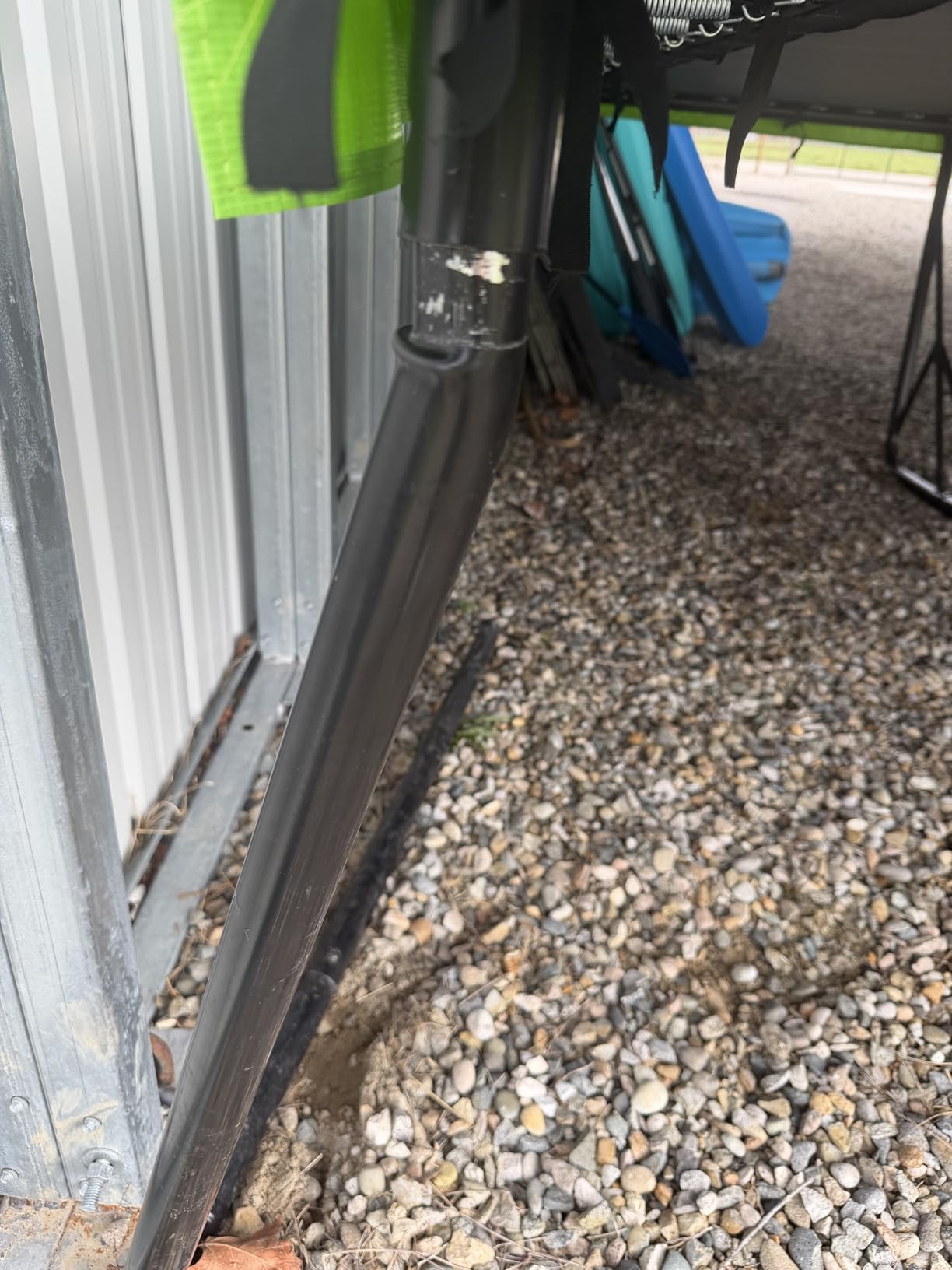
Underneath the net specification, the build is credible. The frame uses stainless steel with a galvanized steel material listing, a reinforced welding base for rigidity, and a safety base-leg design with additional reinforced connections at each leg. The pad is PVC with PP and foam, the mat runs on 116 springs, and the box includes a basketball hoop, a ladder, a user manual and installation tools. A ladder at this size is genuinely useful and is exactly the kind of accessory that owners elsewhere in this category report being forced to buy separately after purchase.
Customer support being US-based, with a readable step-by-step installation manual, is a quiet but real advantage on a product of this size. Assembly quality documentation matters more on a 10 by 17 foot frame than on a small round model, because the number of parts is larger and the cost of getting a step wrong is higher.
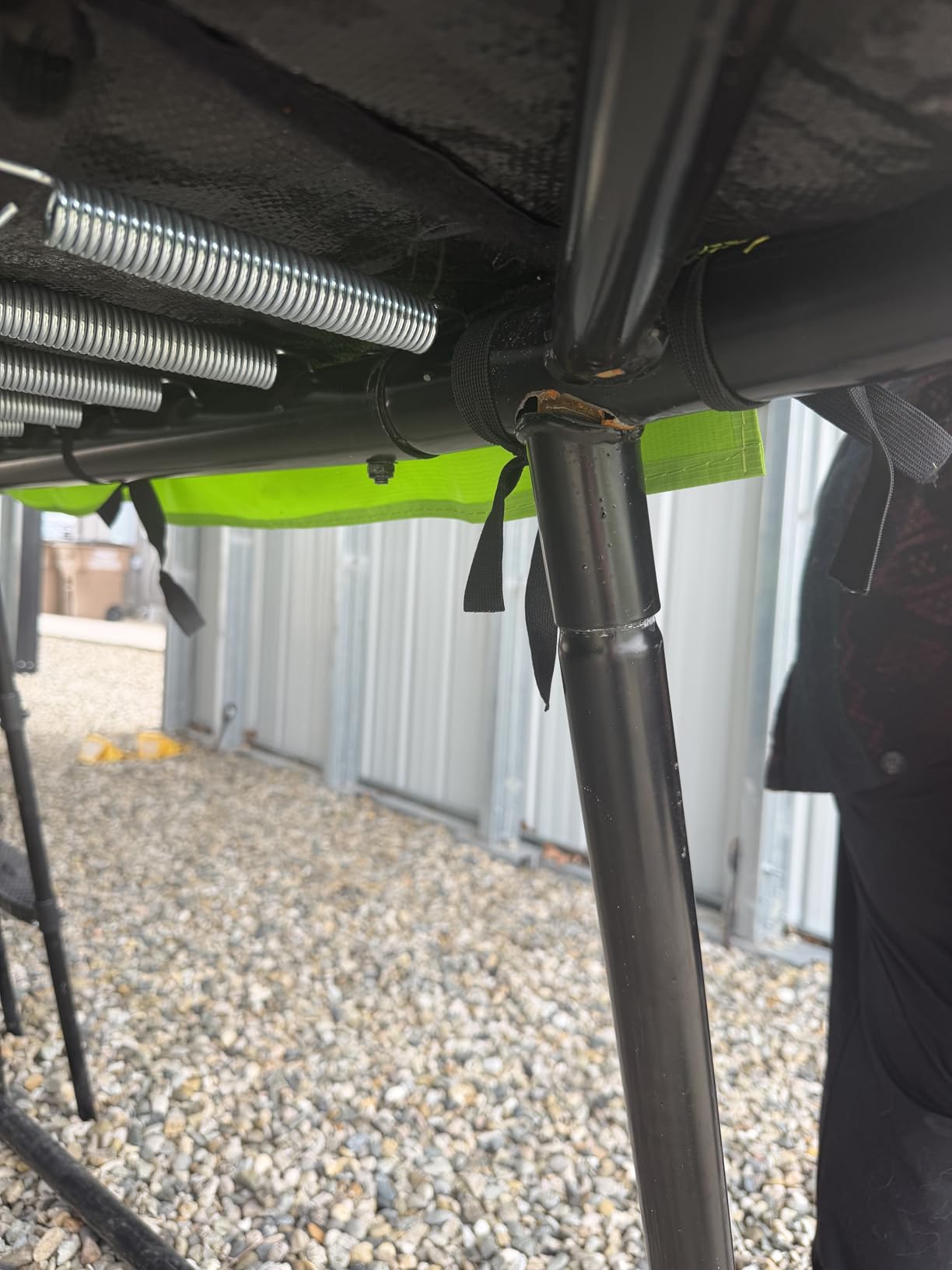
What the ASTM F2225 enclosure changes
ASTM F2225 sets performance requirements for trampoline enclosure nets, covering things like the force the net absorbs on impact and how it behaves at the entry point. A net tested to that standard is specified to handle a body hitting it during a fall rather than merely acting as a visual boundary. For a household where the plan is aerial tumbling rather than casual bouncing, that is the difference between a boundary and a safety system.
The net height detail reinforces it. On a rectangular bed, standard guidance calls for the barrier to be at least half the length of the longest dimension, and never less than 60 inches of barrier height. A 17 foot bed implies a tall barrier, and this listing states it meets or exceeds the 60 inch floor. Most rectangular listings in this category simply do not address net height at all, so a buyer comparing enclosures across brands is usually comparing nothing.
For a family whose concern is a tumbling child landing into the enclosure at speed, this is the enclosure to shortlist. Pair it with the fact that the frame has a reinforced welding base and additional leg connections, and you have the most safety-specified build in the roundup, on paper.
Weight limit and warranty ambiguity to watch
Two numbers need careful reading before you commit. The recommended maximum user weight is 352 pounds, the lowest published per-user figure in this roundup and well below the 450 and 800 pound dynamic ratings on the Zupapa models. That may reflect a genuinely conservative engineering stance or a conservative test standard, but either way it is the constraint you plan around. Two adults on this mat is outside the stated envelope, and a 352 pound adult working alone is at the limit rather than comfortably inside it.
The warranty is also stated inconsistently. The product copy describes a 3-year manufacturer limited warranty on the frame and 1 year on other materials, while the specification sheet lists a 10-year limited warranty on the frame and 1 year on other materials. The specification sheet is the more authoritative source, and the frame is the part most likely to be the subject of a claim, but confirm the term in writing before purchasing rather than assuming the longer figure applies.
Finally, this is the smallest evidence base in the lineup at 22 reviews, and it carries the lowest average rating at 4.0 with 22 percent one-star feedback. That combination does not disqualify it, particularly when the ASTM F2225 enclosure is the feature you are buying, but it does mean you are buying a specification rather than a track record. Check the enclosure on arrival, assemble on a level site, and treat the 352 pound figure as a real ceiling.
How to Choose a Rectangle Trampoline for Gymnastics
Every purchase in this category follows the same decision path, and the order matters. Size first, because it is the one thing you cannot change later. Frame and enclosure design second, because that is what determines safety as skill grows. Weight limit third, because it determines who can use it. Everything else is preference.
How big should your rectangle trampoline be?
For gymnastics, the right size follows the length of the pass you want to run. Under seven years old and just starting, a 7 by 10 or 8 by 14 surface is enough for jumps, drops and assisted flips. For older children and early teens working toward full flips, 8 by 14 or 9 by 15 gives the rebound room a single jump needs. For advanced tumbling, layouts, hurdle series and any shared training, move to 10 by 17 or larger. Competition-style straight frames start around 10 by 20 and go up from there.
Width is the axis people underestimate. A 10 foot width is what allows a gymnast to run a straight line without drifting, and drift is what turns a clean backflip into a near-miss into the net. If you can only manage a 14 foot model, that is fine for a single young child, but understand that you are buying a starter stage rather than a training tool. Growth is the reason many families buy a 10 by 17 and keep it for a decade.
Check the rectangle’s clearance requirement before the size, not after. A rectangle needs side clearance beyond the frame so a tumbling athlete who travels off the mat has mat rather than grass to land on, and it needs overhead clearance for inverted skills. Measure the full site, not the footprint, and check it against fence lines, patio edges, tree branches and roof lines before the frame arrives.
Straight frame vs flex frame
A flex frame uses multiple legs and support points along the length to spread the load and stop the long sides from bowing. It is more forgiving, more stable and more durable under mixed use, which is why every large rectangle in this roundup uses one. A straight frame runs a single rail along each long side and does not flex, which gives a stiffer, more powerful and more consistent rebound, closer to the feel of competition equipment.
For a family backyard, the flex frame is the right answer, and we would not pay a premium to move away from it. Straight frames earn their money in a club, a gym or a dedicated athlete training multiple sessions a week, where the difference in rebound consistency is felt by a trained gymnast. The trade is maintenance and cost: a straight frame is a specialist purchase, it is heavier and more expensive, and its spare parts are less universally available.
In-ground vs above-ground installation
An in-ground trampoline sits flush with the ground in a lined pit, which removes the frame height entirely and gives you the entire surface as usable mat. For a tumbling line, that is a real advantage, because there is no lip to land near and no frame edge to drift into. The cost is installation. You need a pit, a liner, drainage and a level base, and the total project is a landscaping job rather than a delivery.
Above-ground is simpler and reversible, and it is what most of the products here are. The frame is elevated by roughly three feet, which means more clearance risk for a low skill, so a full enclosure is not optional. The enclosed rectangle is the format that makes backyard tumbling viable at all, and every model in this roundup includes one.
Choose in-ground if you have a serious tumbling programme and a willingness to modify the yard, or if an above-ground frame would crowd a small site. Choose above-ground if you want the option to move the trampoline, if the yard is rented, or if the surface under the trampoline is uneven or slopes.
Reading user weight limits honestly
Every trampoline in this roundup publishes two numbers, and confusing them is the single most common complaint owners raise about this category. The static load figure is a structural test load, the total weight the frame supports at rest. The dynamic figure is the working limit for people jumping. The one that governs your household is the dynamic figure, and it applies to jumper weight in use, not to a theoretical test.
So 1800LBS static with 450LBS dynamic means a frame structurally rated for 1800 pounds that is rated for jumping up to 450 pounds. A single adult or older teen fits comfortably. Two adults do not. Forum discussion in this category is full of owners who assumed a large static number was a per-user allowance and then exceeded the real one, and frame damage and warranty disputes follow from that misunderstanding more often than from any manufacturing fault.
Also check whether the limit is per jumper or a total. The models here publish a working load without always specifying the split, and the conservative reading is total jumper weight on the mat. If a family intends to train two athletes simultaneously, that is the reason to move to the 800LBS dynamic model rather than a bigger mat with a lower ceiling.
Safety features that actually matter
Rank enclosure features by how they protect a tumbling athlete rather than by how they look. First is the gap between the mat and the net. A sewn or stitched no-gap perimeter, where the net attaches directly to the mat, removes the spring channel that causes the ankle and heel injuries parents describe most often. A full-wrap net that passes entirely over the frame also removes the side step-off gap.
Second is net height and standard compliance. On a rectangular bed the barrier should be at least half the length of the longest dimension and never less than 60 inches, which is a checkable specification that few listings state. Nets specified to ASTM F2225 have been performance-tested for impact absorption rather than simply tension-tested. Third is padding: foam over every pole and a full-length spring cover pad, not a short pad that stops short of the corners.
Fourth is certification. ASTM F381-16 compliance and CPSIA compliance are the two standards worth confirming, and CPC certification in the United States is a further marker. Fifth, and most important of all, supervision. A trampoline with a certified net is still a trampoline, and the injury patterns described in this category are overwhelmingly associated with unsupervised flipping and multiple jumpers on the mat at once.
Space and clearance you need before delivery day
Measure the site and the clearance zone as two separate numbers. The frame footprint is what the product measures, and the clearance zone is what a tumbling athlete needs around it. For a 10 by 17 model, plan on a site several feet larger on every side than the frame itself, and check that overhead clearance is unobstructed across the full mat, not just at the centre. Low branches, eaves and overhead lines are the ones owners discover after assembly.
Add time to the plan. Assembly for a fully enclosed rectangle in this roundup runs from an hour with an app on a small model to a full day with three people on the 13 by 23. The frames are heavy once built, so the position you assemble in is close to the position it stays in. Deciding the site first is the single most useful thing you can do before the boxes arrive.
Finally, plan for the total cost of ownership rather than the frame. Anchors, a spring cover or replacement mat, a cover for winter storage and any future spring set all sit outside the initial purchase. Owner frustration in this category clusters around spare-parts cost and availability, and the models here vary widely on that, from ten-year parts commitments on some listings to three-year availability on others. Check the parts commitment before you buy, because a mat that has to be replaced in year three is a different purchase from one that lasts a decade.
Frequently Asked Questions
Are rectangle trampolines better?
For tumbling and gymnastics, yes. A rectangle offers a longer, flatter jumping surface with independently working springs, so a gymnast can run in a straight line, land a body-length flip and rebound in the same place. Round models curve the jumper back toward the centre, which limits run-up distance. Round trampolines remain cheaper and safer for casual, unsupervised play.
Are trampolines good for gymnastics?
Yes, as pre-training equipment. Trampoline work builds coordination, balance, core strength and aerial awareness before mat work begins, and it is widely used to prepare athletes for tumbling lines. They are not a substitute for coached training on advanced skills, and injury risk rises sharply with unsupervised flipping.
What is the best size rectangle trampoline for gymnastics?
Children aged 5 to 7 starting out need 7×10 or 8×14 feet. Older children and early teens working toward full flips need 8×14 or 9×15. Advanced tumbling, layouts and shared training need 10×17 or larger, and competition-style straight frames start around 10×20.
Which rectangle trampoline is the safest?
Look for a no-gap enclosure attached directly to the mat, foam padding on every pole, a full-length spring cover pad, a barrier height of at least 60 inches, and ASTM F381-16 plus CPSIA compliance. In this roundup the Zupapa no-gap models lead on mat-to-net sealing, and the SkyBound 10×17 is the only enclosure stated to meet the ASTM F2225 net standard.
Which trampoline brand is considered the most reliable?
Reliability in this category tracks warranty length and spare-parts availability more than brand name. The Zupapa models here carry a 10-year frame warranty with 10-year parts availability on two listings, the AOTOB offers 5-year mat, frame and spring support, and the SkyBound specification sheet lists a 10-year frame warranty alongside a 3-year parts window.
The Best Rectangle Trampolines for Gymnastics in 2026
The best rectangle trampolines for gymnastics in 2026 come down to size matched to the athlete, an enclosure that seals the mat-to-net gap, and an honest reading of the dynamic weight limit. The Zupapa 10×17 with its patented no-gap net and 10-year frame warranty is the strongest all-round pick, holding the largest review base here and a bounce owners describe as consistent right out to the edges.
For a younger gymnast or a tighter budget, the AOTOB 14ft gives you the same no-gap enclosure principle at a fraction of the frame weight, and it suits a child aged roughly five to nine learning flips. If your household wants the highest-rated option and the double zipper entry matters for shared practice, the Zupapa 8×14 at 4.7 stars is the one owners rate most highly. The 13×23 model is for shared training space and the highest working load in the group, and the SkyBound 10×17 is the pick when enclosure standard compliance matters more to you than anything else.
Whichever you choose, measure the clearance zone before the boxes arrive, read the dynamic load limit rather than the static one, and plan for the day you want to move it. Those three steps prevent almost every regret owners describe in this category.