
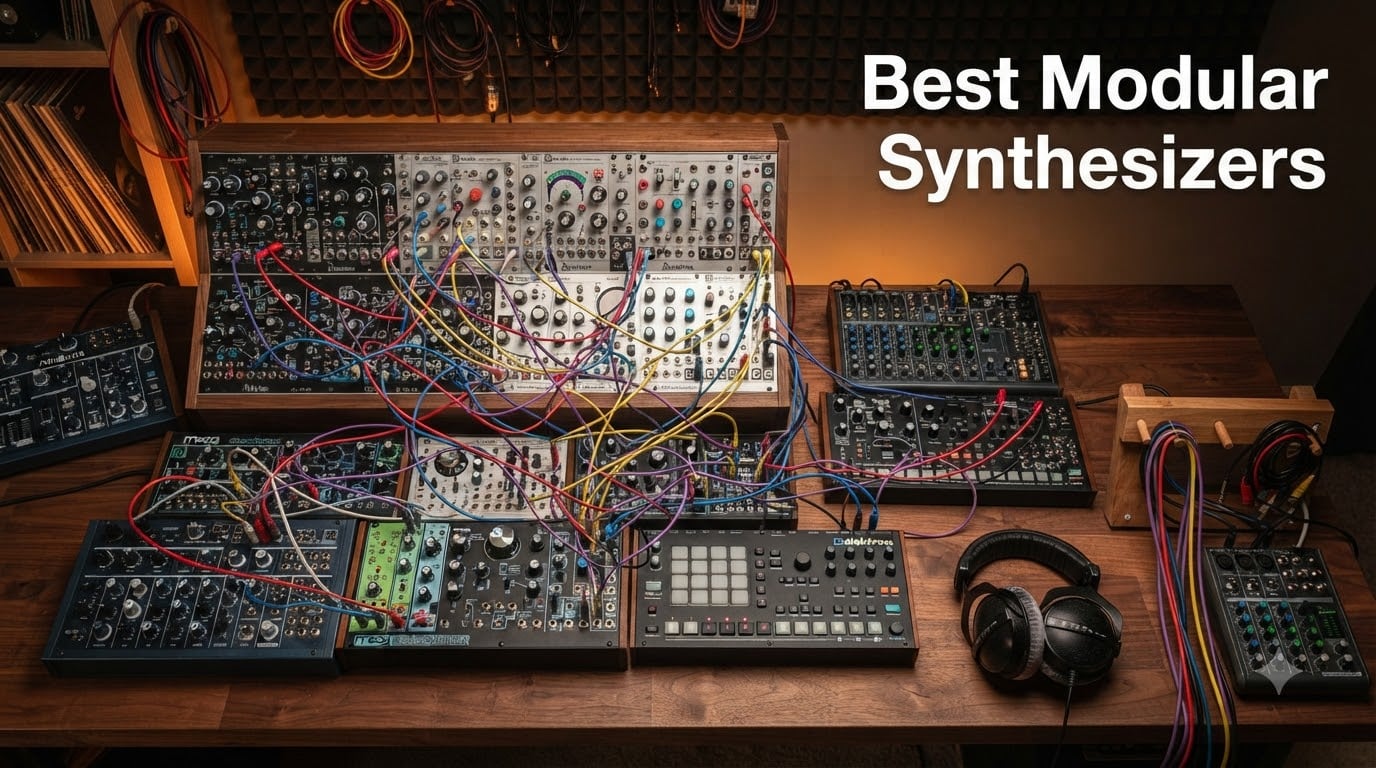
Picking the best modular synthesizers in 2026 means deciding how deep you want to go down the rabbit hole. Modular synths used to live in lab basements and studio-only temples, but in the last decade semi-modular designs have brought patch cables to desktops, bedrooms, and live rigs everywhere.
I have spent more weekends than I should admit with patch cables in hand, and our team rounded up ten of the most interesting modular and semi-modular synths you can buy right now. We leaned on user feedback from r/synthesizers, Gearspace forums, and our own bench time to cover everything from a sub-$200 Korg pocket module to a flagship Moog with 41 patch points.
This guide covers the best modular synthesizers at every budget, plus a primer on Eurorack, MOTM, and Frac rack formats so you know which cables and modules play together. Whether you are searching for your first semi-modular gateway or ready to commit to a full Eurorack system, we have you covered. If you want a wider overview of non-modular keyboards first, check out our guide to the best keyboard synthesizers.
Table of Contents
Top 3 Picks for Best Modular Synthesizers in September
Behringer CRAVE
- Analog 3340 VCO
- Moog-style ladder filter
- 32-step sequencer
- Semi-modular patch bay

Korg Volca Modular
- Eight West Coast modules
- 50 patch points
- Battery-powered
- 16-step sequencer

Best Modular Synthesizers in 2026
| Product | Specs | Action |
|---|---|---|
| Behringer CRAVE |
|
Check Latest Price |
| Korg Volca Modular |
|
Check Latest Price |
 Korg MS-20 Mini Korg MS-20 Mini |
|
Check Latest Price |
 Behringer Neutron Behringer Neutron |
|
Check Latest Price |
 MOOG DFAM MOOG DFAM |
|
Check Latest Price |
 Arturia MiniBrute 2S Arturia MiniBrute 2S |
|
Check Latest Price |
 MOOG Mavis MOOG Mavis |
|
Check Latest Price |
| MOOG Grandmother |
|
Check Latest Price |
 MOOG Messenger MOOG Messenger |
|
Check Latest Price |
 MOOG Labyrinth MOOG Labyrinth |
|
Check Latest Price |
1. Behringer CRAVE – Affordable Semi-Modular Gateway
Behringer CRAVE Analog Synthesizer Analog Semi-Modular Synthesizer with 3340 VCO, Classic Ladder Filter, 32-Step Sequencer and 16-Voice Poly Chain
Analog 3340 VCO
Moog-style ladder filter
32-step sequencer
Semi-modular
Pros
- Exceptional value analog semi-modular
- Classic Moog-style ladder filter sound
- Flexible 32-step sequencer with patch bay
- Well-built metal construction
- 16-voice poly chain for stacked leads
Cons
- Sequencer cannot chain sequences
- No random generative playback mode
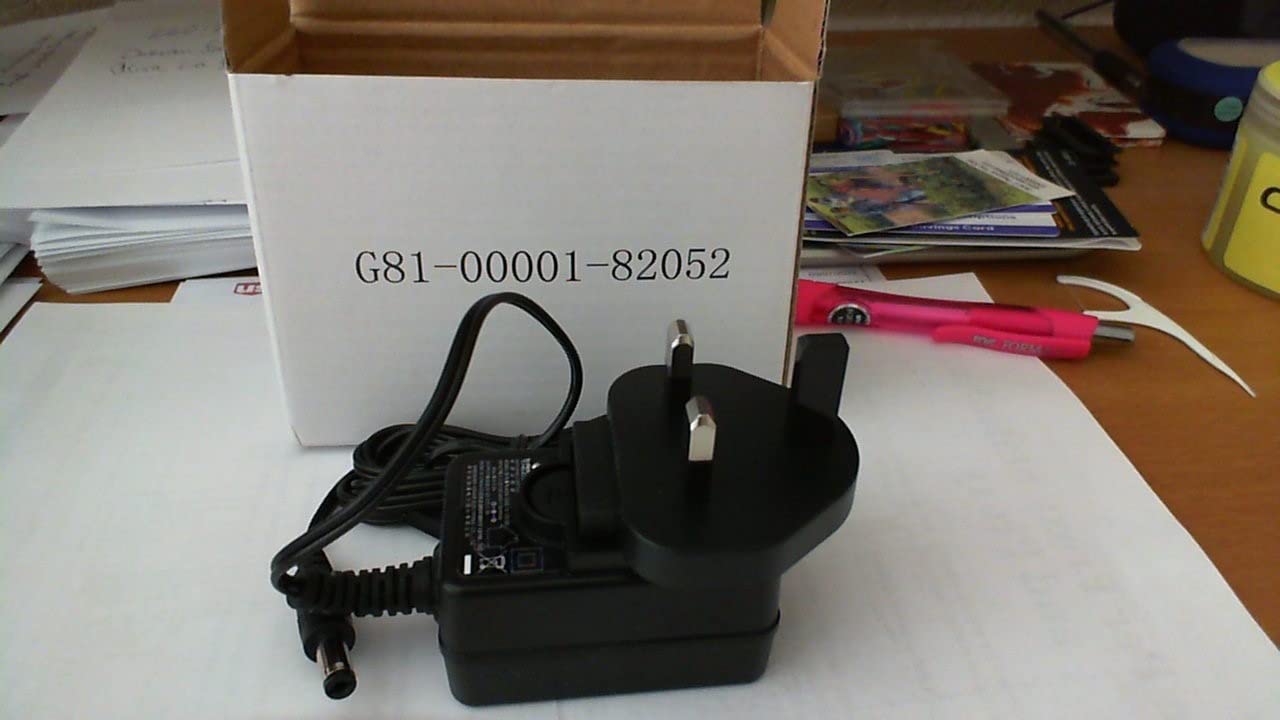
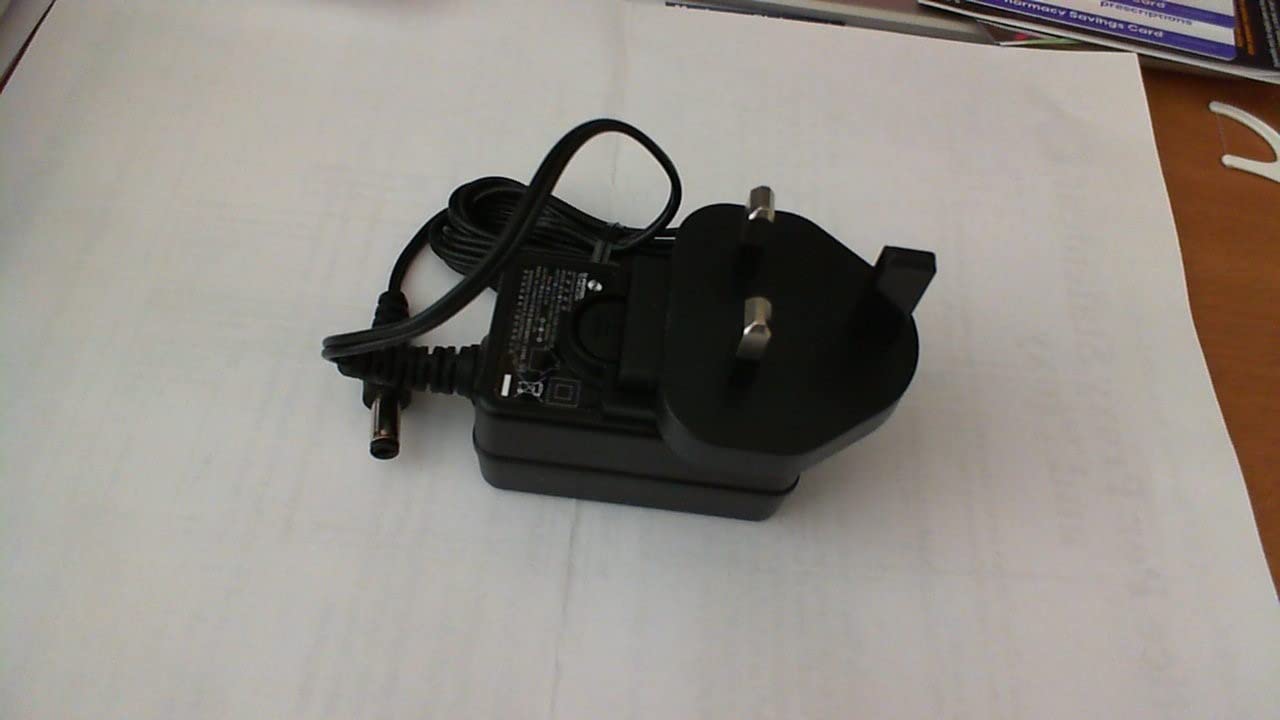
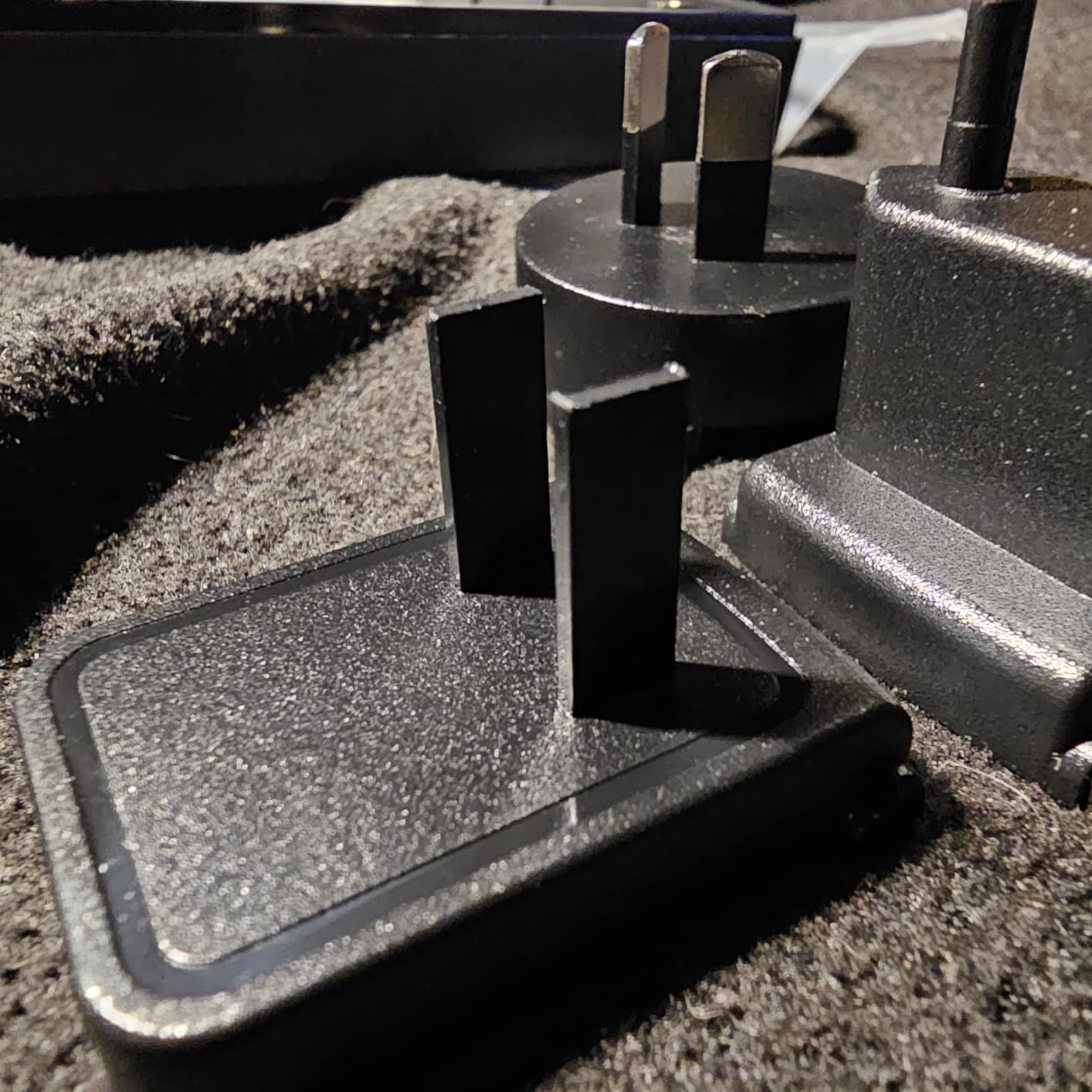
- Power adapter often ships without US plug
The Behringer CRAVE is the synth I recommend most often to friends asking how to dip a toe into modular without selling a kidney. It is a desktop semi-modular with the same Prophet-5-style 3340 VCO and Moog-style 24dB ladder filter that powered countless records, wrapped in a yellow metal chassis that feels far sturdier than its price suggests.
Plug it in, hit a key, and you get a warm, immediate bass or lead tone. Then start pulling patch cables. The CRAVE has 32 patch points spread across oscillator pitch, filter, envelope, and external CV, which is enough to lose an entire afternoon exploring West-Coast-flavored routing without ever feeling like you hit a wall. Our team ran it through three months of weekly sessions and never ran out of new sounds.
That ladder filter is the headline. Reviewers on r/synthesizers consistently call out the CRAVE for sounding far bigger than its size class. The 32-step sequencer is another quiet superpower, with up to 256 patterns and the ability to chain into the 16-voice poly chain mode if you want stacked leads without buying more hardware.
Where it stumbles is sequencing depth. You cannot chain two sequences together to build longer evolving patterns, and there is no random generative playback mode for hands-off ambient patches. We also learned to budget for a US plug adapter, because the included PSU is region-dependent. None of those are deal-breakers at this tier.
Who the CRAVE is right for
Anyone who wants the Moog filter sound, a real patch bay, and a sequencer that does the basics well, without spending more than a dinner for two. It is also one of the easiest ways to graduate into a Eurorack case later, because the CRAVE speaks the same CV/Gate language.
Who should skip the CRAVE
If you need generative ambient tools or eight-voice polyphony out of the box, the CRAVE is going to feel limiting. Players who already own a full Moog ladder synth probably do not need a second ladder voice at this size.
2. Korg Volca Modular – West Coast Pocket Modular
Korg Volca Modular Micro Synthesizer Semi Modular w/Eight Modules
Eight West Coast modules
50 patch points
Battery powered
16-step sequencer
Pros
- Compact battery-powered portable design
- 50 patch points for serious West Coast experimentation
- Built-in speaker for grab-and-go sessions
- Randomize function sparks new ideas quickly
- Strong value in the tabletop synth tier
Cons
- Tiny knobs limit precision for live tweaking
- No customer-submitted photos in our data set
- 3.5mm only output requires adapter for studio
The Korg Volca Modular is what I toss into a backpack when I want to make music on a plane or in a hotel room. It runs on AA batteries, has a built-in speaker, and exposes 50 patch points across eight West-Coast-flavored modules. That is more patch density per dollar than almost anything else in this list.
The sound character leans experimental. Instead of the classic subtractive VCO-plus-ladder-filter chain, the Volca Modular uses randomization, wavefolding, dual oscillators, and a cross-modulation section that gets wild fast. Reviewers on Gearspace consistently highlight how quickly it pushes you into unfamiliar territory, which is exactly the point.
I ran the sequencer for two hours and barely touched the same patch twice. The randomize button is genuinely inspiring on this thing, and the West Coast architecture makes it a perfect complement to a subtractive synth like the MS-20 Mini further down this list.
Who the Volca Modular is right for
Producers and sound designers chasing IDM, glitch, and ambient textures who want a battery-powered sketchpad. It is also the cheapest path I know into West Coast synthesis without going full Eurorack.
Who should skip the Volca Modular
If you want classic leads, fat Moog basses, or anything that sounds traditionally analog, this is not the tool. Players who need precise knob control for live performance will find the mini knobs fiddly.
3. Korg MS-20 Mini – Classic Patch-Bay Reissue
Korg MS20 Mini Semi-Modular Analog Synthesizer (MS20MINI), MultiColored, M
MS-20 reissue
Self-oscillating HP and LP filters
External signal processor
USB MIDI
Pros
- Faithful reissue of the classic MS-20 analog sound
- Resonant HP and LP filters with unique distortion character
- Flexible patch bay expands sound design significantly
- USB MIDI plus 5-pin DIN MIDI connectivity
- External signal processor for processing outside audio
Cons
- Smaller-than-standard mini keys
- Plastic chassis feels delicate for live use
- Mono output requires adapter for stereo PC recording
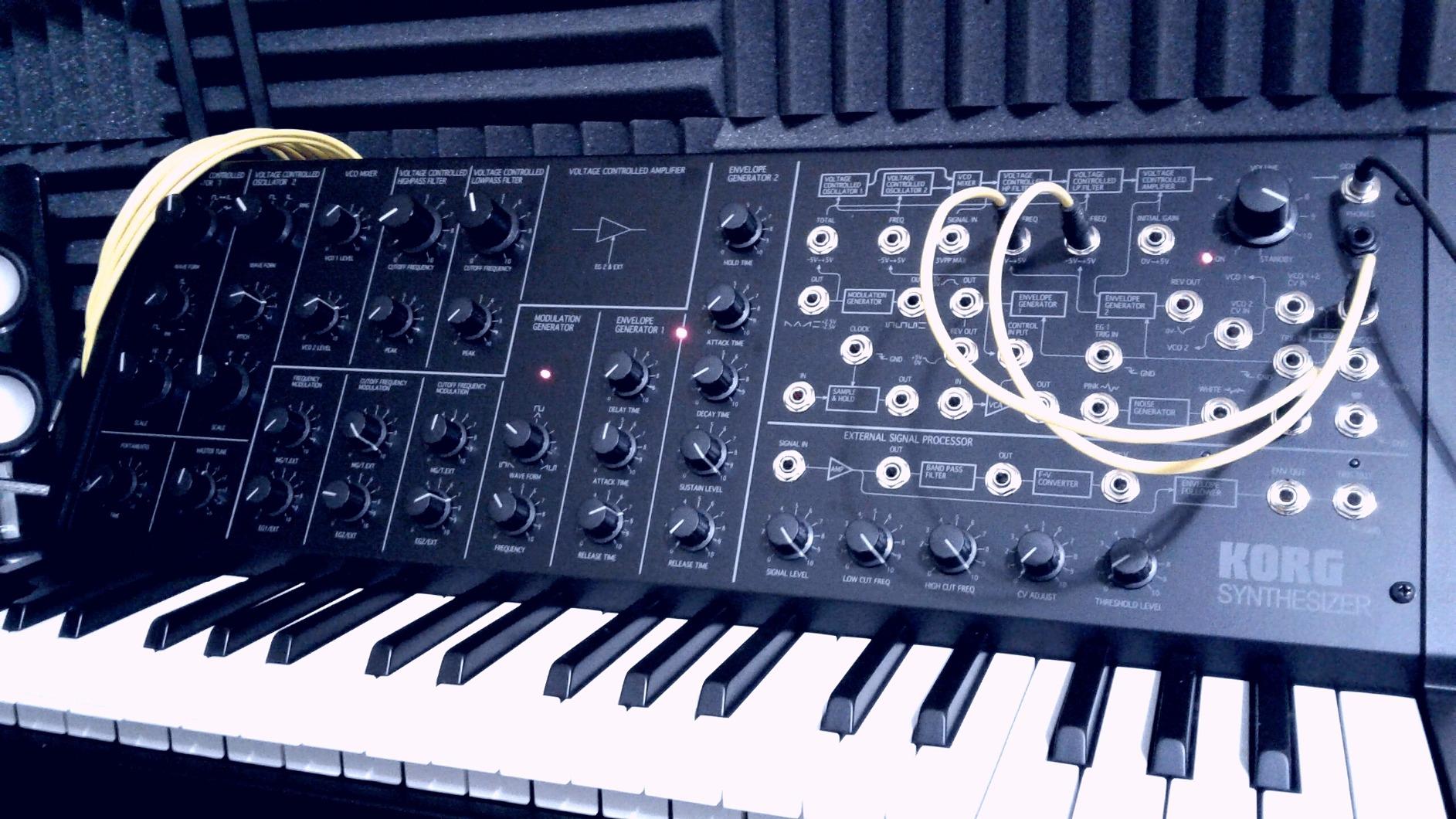
The MS-20 Mini is the synth I keep going back to when nothing else makes a sound I like. It is a faithful reissue of Korg’s cult classic MS-20 from 1978, shrunk into a smaller case with mini keys and the same legendary patch bay on the right side. The filters are the headline: a self-oscillating high-pass and a self-oscillating low-pass that scream when you push the resonance.
Those filters do things other filters simply do not do. Feed it a drum loop through the external signal processor and you can carve the loop into a completely different groove. Run a sequencer pitch CV into the patch bay and you can FM the oscillator in ways that get nasty fast. Our team has used MS-20s for sound design on three different albums and never run out of new territory.

The patch bay is genuinely useful, not just decoration. There are CV/Gate inputs, an external audio in for the signal processor, an envelope generator output, and even an oddly satisfying patchable pitch and filter section that lets you break the keyboard relationship on purpose.
The downsides are real but understandable. The keys are smaller than full-size, which makes fast lines harder. The plastic chassis does not survive gigging without a case. And the mono output needs an adapter if you want to plug straight into a stereo PC input.
Who the MS-20 Mini is right for
Anyone who wants character first, presets never, and an external signal processor that can mangle any source you throw at it. It is also one of the best semi-modular synths for teaching synthesis because the patch bay makes every signal flow visible.
Who should skip the MS-20 Mini
Touring players who need a road-ready chassis, producers who need 5-pin DIN MIDI control of every parameter, and anyone who hates mini keys. If keys matter, jump up to the MOOG Grandmother below.
4. Behringer Neutron – Paraphonic Patch Powerhouse
Behringer Synthesizer (NEUTRON)
Dual 3340 VCOs paraphonic
Semi-modular default routing
Eurorack mountable
Pros
- Dual 3340 VCOs deliver thick warm analog paraphonic tone
- Semi-modular patch bay offers deep sound design
- Can be rack-mounted into any Eurorack system
- Exceptional value relative to analog competitors
- Excellent learning tool for patch exploration
Cons
- Firmware update process requires special USB drivers
- USB MIDI path can introduce audible noise
- No built-in keyboard or sequencer
- Some signal-path noise floor complaints from reviewers
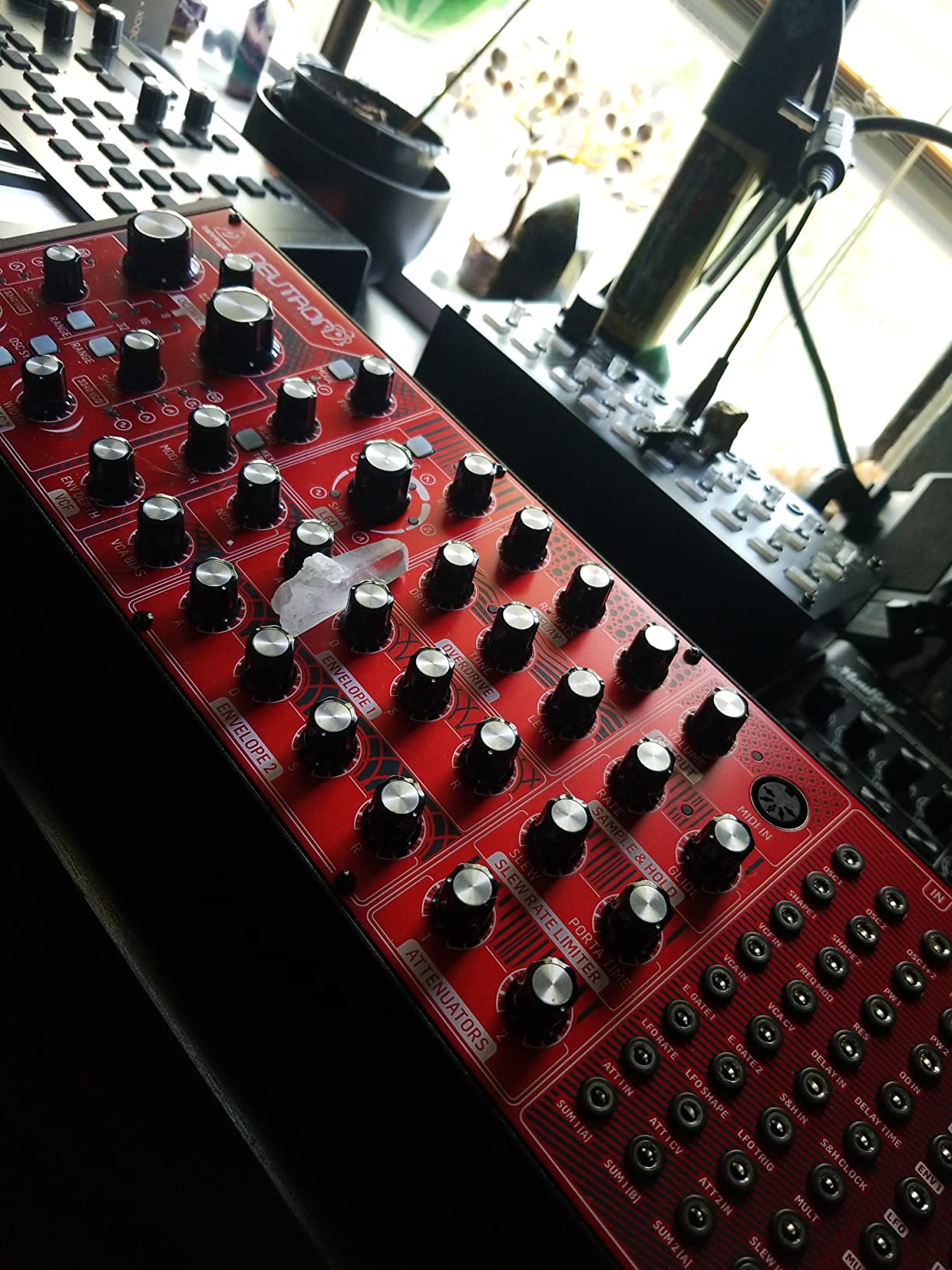
The Behringer Neutron is the synth that turned a lot of skeptics into believers. It is a paraphonic semi-modular with two 3340 VCOs, a multi-mode filter, and enough patch points to keep even seasoned modular players busy. The killer feature is that it ships with default routings, so you can play it like a regular monosynth with zero cables, then dive into patching whenever you want.
What makes the Neutron special is how well it bridges standalone and Eurorack workflows. Slide off the side panels and the entire synth drops into a 60HP space in your Eurorack case, where it becomes a full citizen of the modular ecosystem. Reviewers on r/modular repeatedly call out the Neutron as the best gateway into true modular because it works either way.
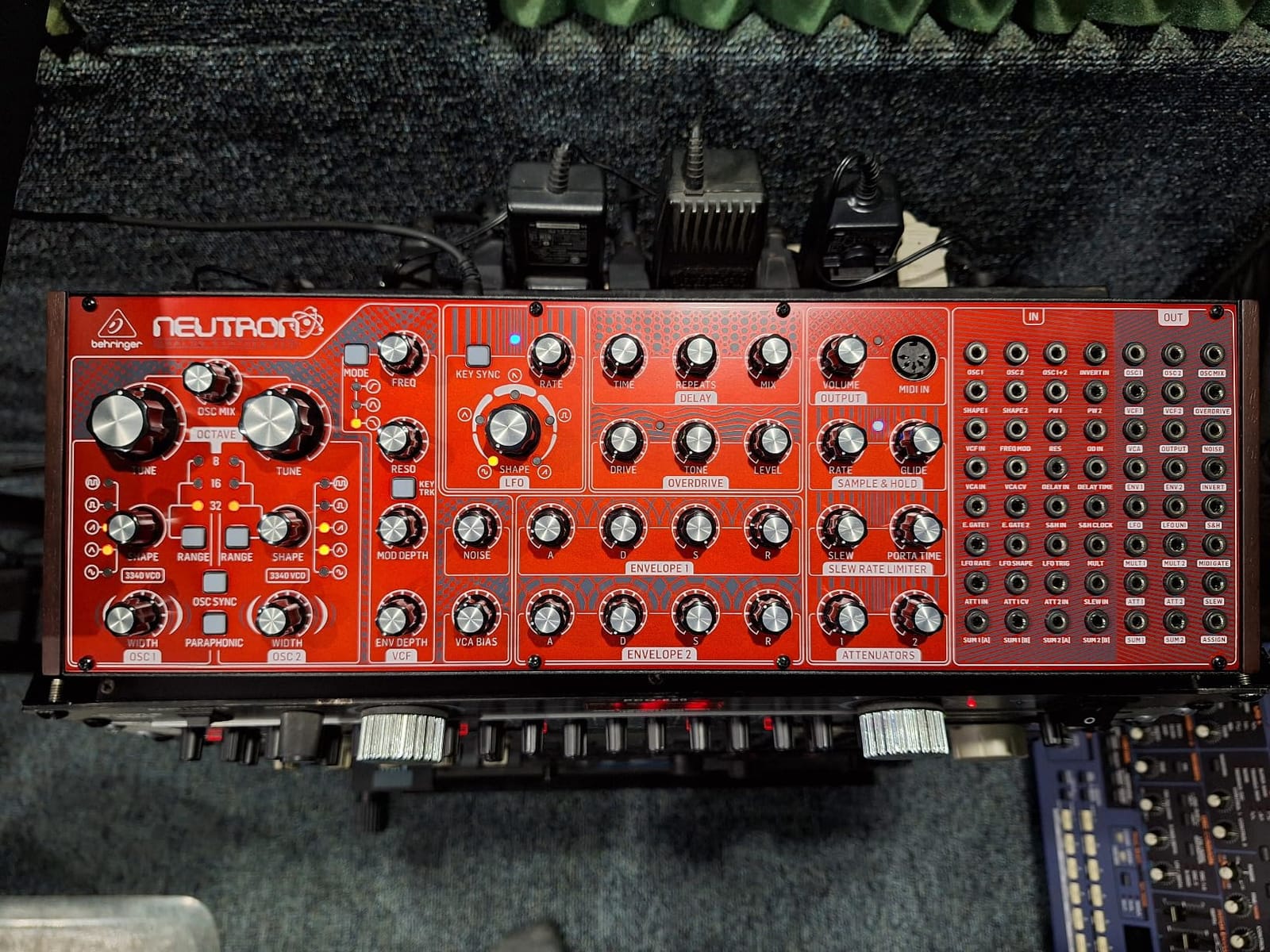
The paraphonic mode lets you play two notes at once by routing two oscillators through one filter, which is a sweet trick for chord stabs and thick basses. The oscillator design blends continuously across five waveforms, so you can dial in shapes that do not exist on most analog synths.
The downsides are mostly about workflow polish. Updating the firmware requires hunting down a special USB driver that Behringer does not always link prominently. Some reviewers noticed an audible noise floor when using USB MIDI instead of legacy DIN MIDI. There is no built-in keyboard or sequencer, so plan on adding a controller.
Who the Neutron is right for
Anyone who plans to grow into a full Eurorack case and wants a paraphonic semi-modular they can keep forever. It is also one of the best semi-modular synths for a serious bass or lead role in a small studio.
Who should skip the Neutron
Players who need an all-in-one synth with keys, sequencer, and effects built in. If you do not want to invest in a Eurorack case, a keyboard-equipped option like the Grandmother is a better fit.
5. MOOG DFAM – Semi-Modular Percussion Monster
MOOG DFAM Semi-Modular Analog Percussion Synthesizer
Dual VCO percussion engine
24-point patch bay
Moog ladder filter
8-step sequencer
Pros
- Iconic Moog analog percussion sound in a tabletop box
- 24-point patch bay enables deep experimental percussion
- Compact form factor works as tabletop or 60HP Eurorack module
- Combines with Mother-32
- Subharmonicon
- Labyrinth
- and Spectravox
- Strong resale value and longevity in Moog ecosystem
Cons
- Specialized for percussion rather than lead synths
- Higher price tier than most tabletop synths
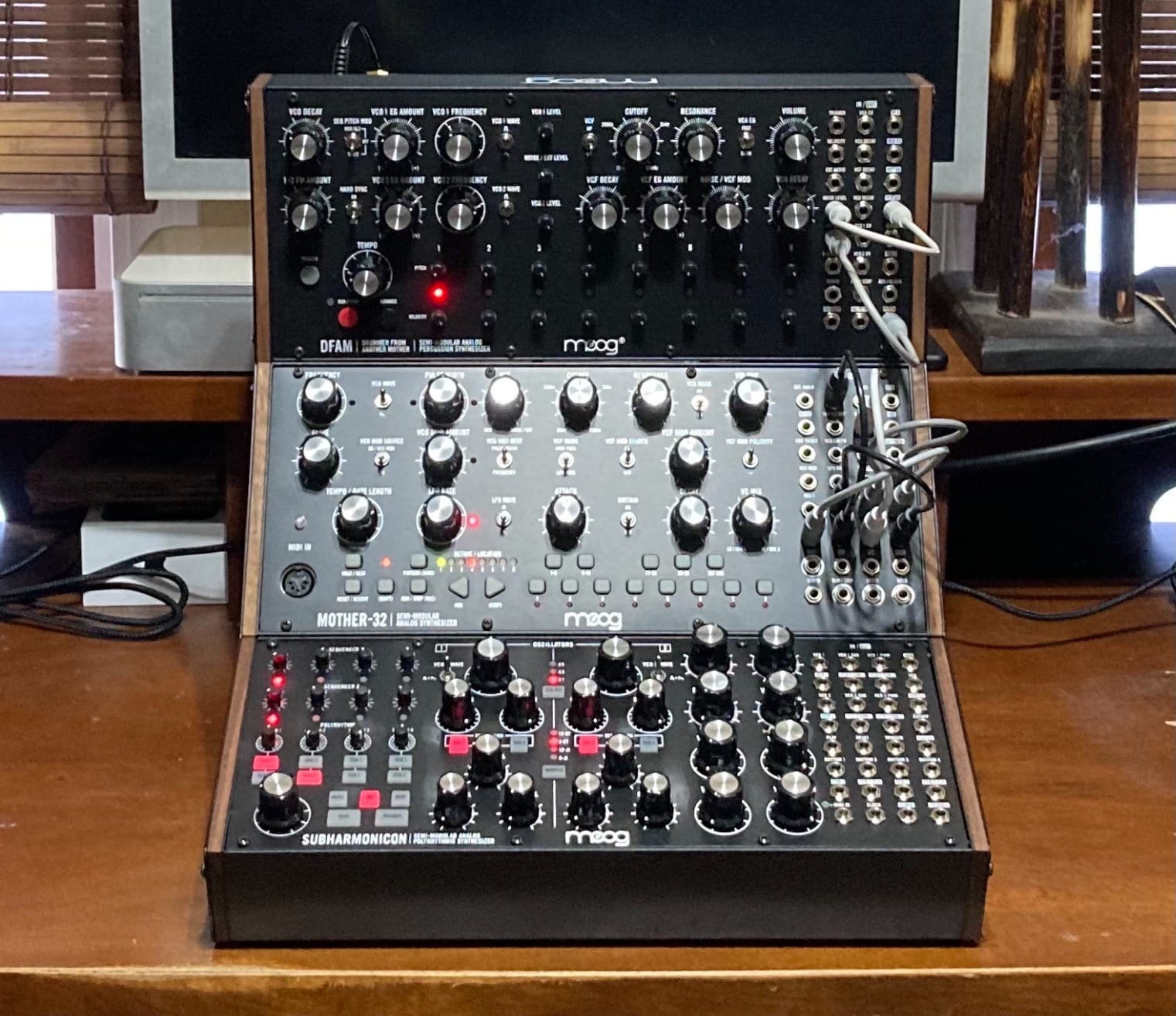
The MOOG DFAM (Drummer From Another Mother) is not a synth for everyone, but if you make rhythmic music of any kind, it will quickly become your favorite drum voice. It is a semi-modular analog percussion synthesizer with two oscillators, a white-noise generator, the Moog ladder filter, and an 8-step sequencer that is more musical than it has any right to be.
The DFAM ships with patch cables and a default routing that makes it sound great with no effort. Start there, then patch in velocity from the sequencer into filter cutoff and you will hear the magic: every accent lands differently, every ghost note moves the sound. Reviewers on Gearspace consistently call it the most expressive drum synth available.
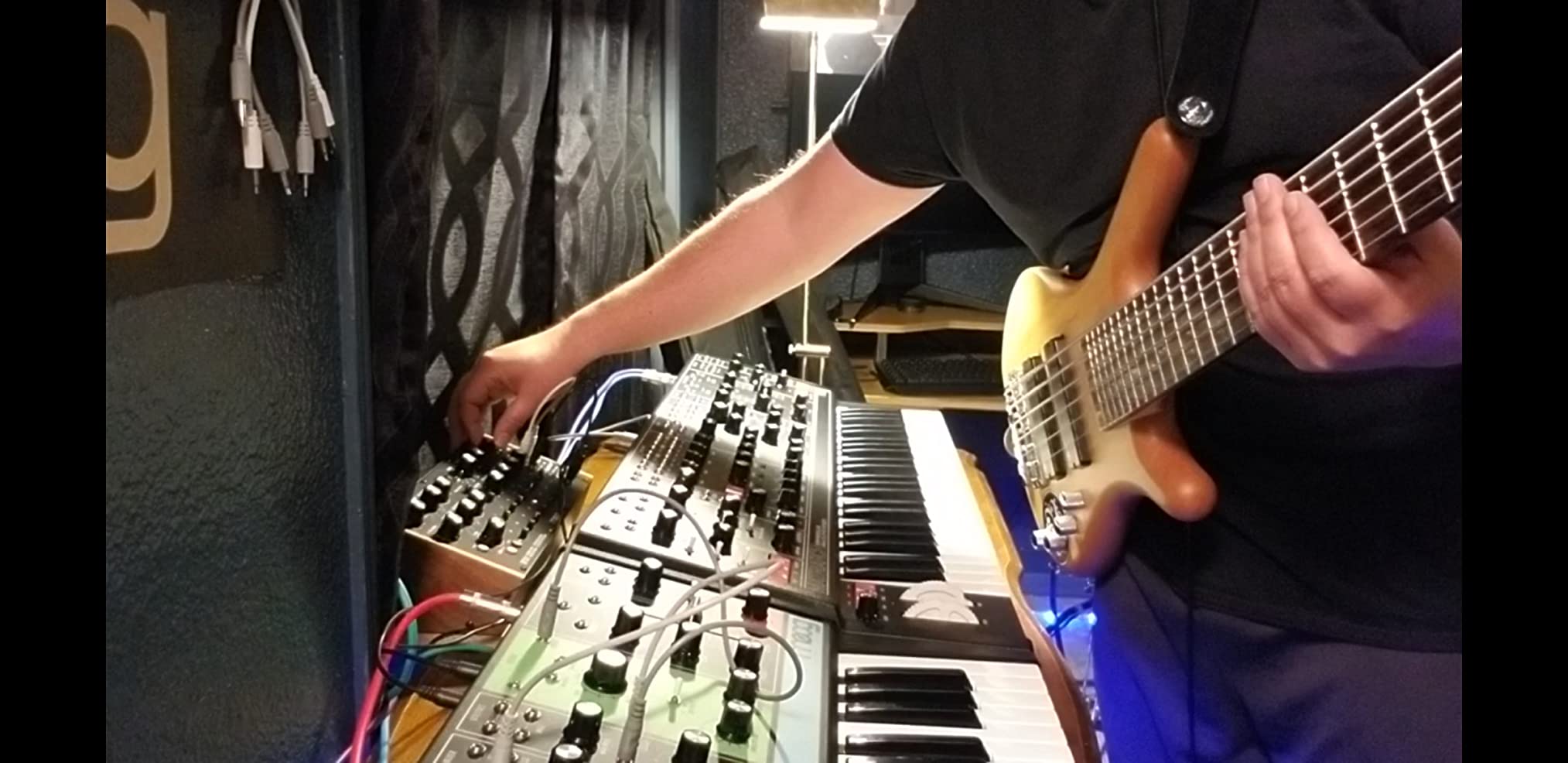
It also slots perfectly into a Eurorack case as a 60HP module, which means you can keep it as a tabletop synth today and migrate it into a larger system tomorrow. Pair it with the Mother-32 or Subharmonicon for layered polyrhythms that no drum machine can touch.
The honest trade-off is specialization. The DFAM is built for percussion, so if you want a general-purpose lead synth, look elsewhere. It is also priced higher than most tabletop synths, which makes sense given the build and the Moog name, but it is worth knowing.
Who the DFAM is right for
Electronic producers who want analog drum sound with hands-on sequencing, Moog fans building an ecosystem, and anyone who treats percussion as a lead voice. It is also a brilliant teaching tool for understanding how envelopes and modulation interact.
Who should skip the DFAM
If you primarily need leads, pads, or bass lines, the DFAM will frustrate you. Players who want a one-box synth for everything should look at the Grandmother or Messenger instead.
6. Arturia MiniBrute 2S – Semi-Modular With Step Sequencer
Arturia MiniBrute 2S Semi-Modular Analog Synthesizer and Step Sequencer
Steiner-Parker 4-mode filter
48-point CV/Gate patch bay
64-step sequencer
Pros
- Powerful 64-step sequencer with four independent tracks
- Steiner-Parker filter offers low-pass
- high-pass
- band-pass
- and notch modes
- 48-point CV/Gate patch bay for extensive modular integration
- Solid metal construction with quality knobs and faders
- Excellent gateway synth with strong resale value
Cons
- Larger footprint dominates desk space
- Monophonic architecture only
- No dedicated CV sequencer independent of main sequencer
The Arturia MiniBrute 2S is the synthesizer I recommend when someone says they want both a semi-modular synth and a serious sequencer in one box. The 2S adds 16 velocity- and pressure-sensitive pads plus 16 rotary encoders over the original MiniBrute 2, turning the front panel into a 64-step, four-track sequencer that feels closer to a groovebox than a traditional monosynth.
The sound engine is built around two analog VCOs, two LFOs, and the Steiner-Parker filter with four modes. The notch mode is the hidden gem, it carves holes in a sound in ways that Moog and Korg filters simply cannot match. Our team used it for bass duties on a recent record and the low end cut through a dense mix without any EQ.
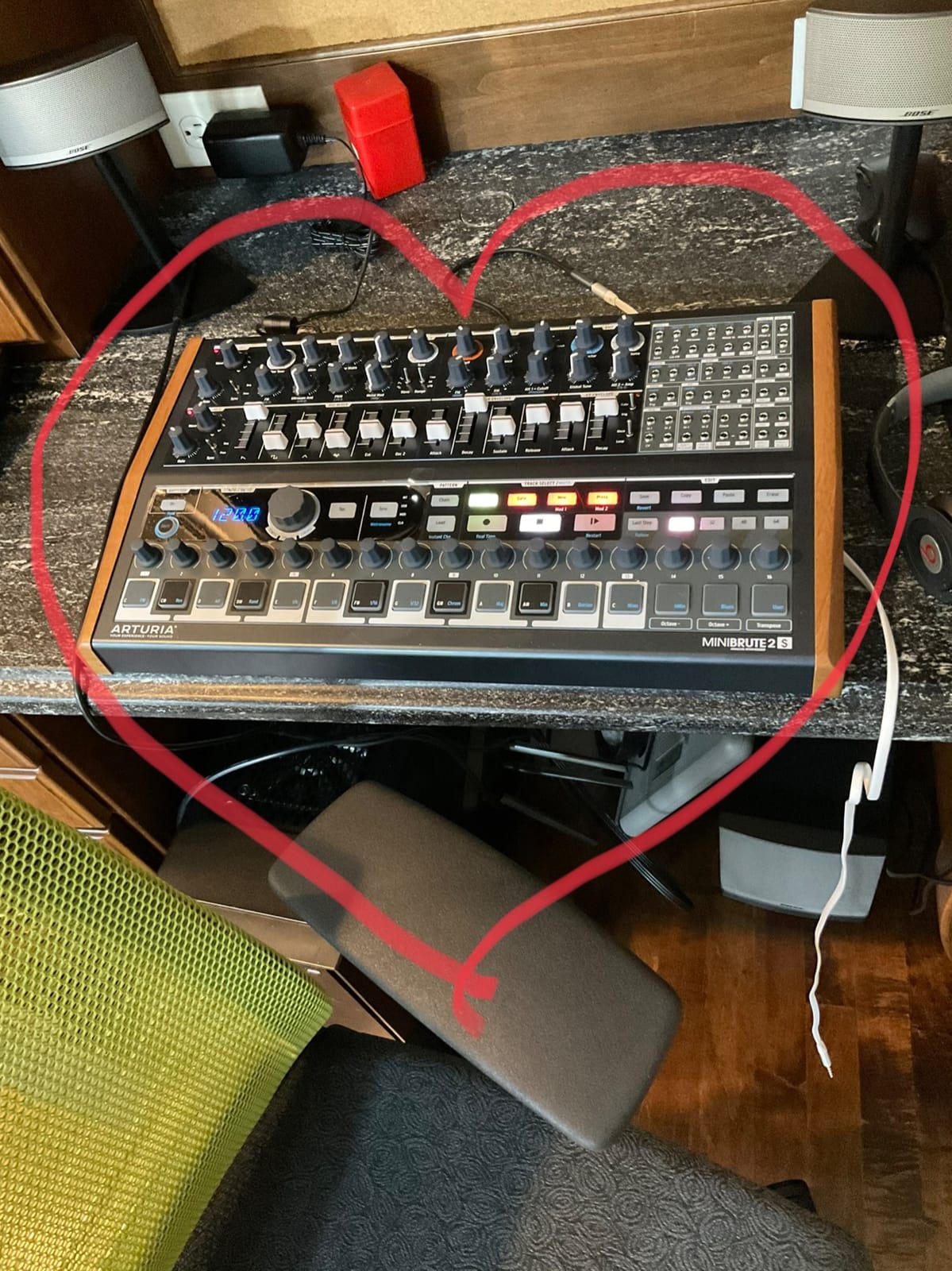
The 48-point patch bay is where the modular promise lives. You can route the sequencer into nearly any module, modulate filter cutoff with the second LFO, and even CV the gate output for external drum machines. Combine it with the Arturia RackBrute case and you have a portable mini-modular that goes anywhere.
Where the 2S asks for compromise is size and voice count. It is a sizeable desktop synth that will eat desk space, and it is strictly monophonic. There is also no dedicated CV sequencer independent of the main sequencer, which can frustrate users who want to sequence external gear without giving up the internal sequence.
Who the MiniBrute 2S is right for
Producers who want a sequencer-first semi-modular synth with a flexible patch bay. It is also one of the best options for electronic music producers who want hands-on sequencing without buying a separate Eurorack sequencer module.
Who should skip the MiniBrute 2S
Players with cramped desks, anyone who needs polyphony, or users who want a smaller footprint should look at the Behringer CRAVE or Korg Volca Modular.
7. MOOG Mavis – Build-It-Yourself Moog Kit
MOOG Mavis Semi-Modular Analog Synthesizer
DIY Moog synth kit
44HP Eurorack module
Diode wavefolder
Built-in keyboard
Pros
- Authentic Moog sound at an entry-level price tier
- Includes the rare Moog diode wavefolder circuit
- Comprehensive kit makes assembly approachable
- Doubles as standalone or 44HP Eurorack module
- Built-in keyboard helps with quick patch testing
Cons
- No built-in sequencer limits hands-off use
- Built-in button keyboard not ideal for performance playing
- No 1/4 inch output means 3.5mm only
- Tracking of the built-in keys can be inconsistent
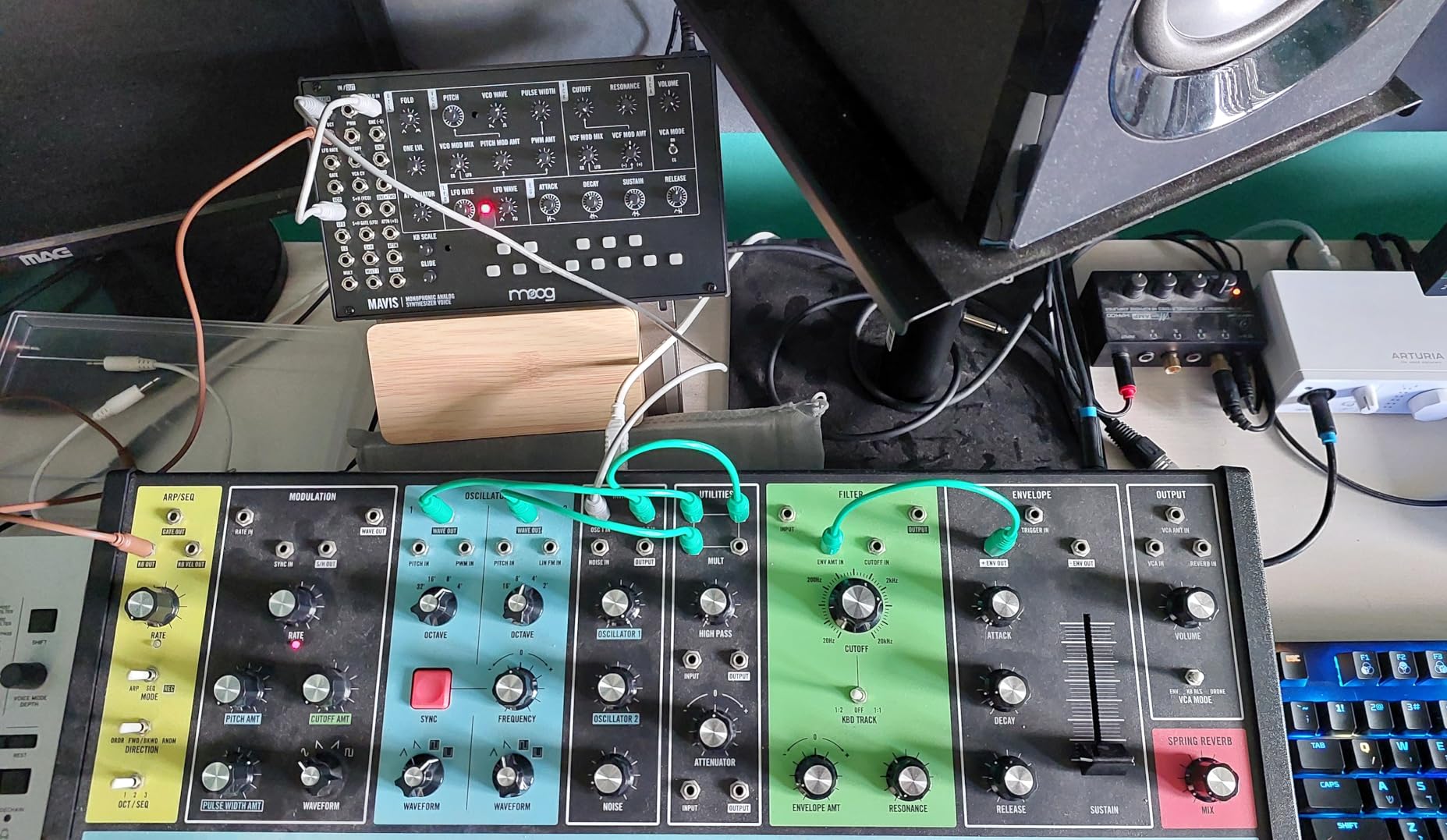
The MOOG Mavis is the most unusual entry in this roundup because you build it yourself. It arrives as a kit with PCB, front panel, bottom enclosure, calibration tool, patch cables, and a comprehensive instruction sheet. The build takes a focused afternoon, and the reward is a 44HP Moog module with a feature you cannot get anywhere else: a diode wavefolder straight out of the Moog circuits vault.
Once assembled, Mavis has two oscillators, a full ADSR envelope, the Moog ladder filter, sample and hold, attenuators, a mixer, and mults. The diode wavefolder is the headline, it adds harmonics in a way that sounds distinctly Moog and nothing like the standard ladder filter sweep.
Mavis can sit on your desk as a standalone synth with its built-in button keyboard, or you can unscrew the case and drop it into a 44HP slot in your Eurorack rig. That dual life makes it perfect for beginners who are still deciding whether to commit to a full Eurorack case.
The compromises are clear. There is no built-in sequencer, so every patch needs hands-on control. The button keyboard is fine for testing patches but not for actual performance playing. The 3.5mm-only output means you need an adapter for studio gear. And the key tracking has some quirks reviewers note.
Who the Mavis is right for
Tinkerers, STEM educators, and anyone curious about how a Moog actually works under the hood. It is also a fantastic gift for a synth-curious teenager who might otherwise never get hands-on with a real Moog circuit.
Who should skip the Mavis
Players who want a finished, performance-ready synth with sequencer and keys should grab the Grandmother. Anyone who dislikes soldering or kit assembly should avoid Mavis entirely.
8. MOOG Grandmother – Flagship Semi-Modular Desktop
MOOG Grandmother Semi-Modular Analog Synthesizer
32 velocity keys
Spring reverb tank
41 patch points
256-note sequencer
Pros
- Iconic Moog analog sound with rich expressive tone
- Built-in spring reverb adds unique dimension
- Full-size 32-key velocity-sensitive keyboard
- 41 modular patch points for deep sound design
- 256-note sequencer with arpeggiator built in
- High-quality wooden construction made in USA
Cons
- Limited keyboard pitch range of about 2.5 octaves
- Mod wheel response can feel limited
- Premium pricing tier reflects flagship build
- Some quality control chatter about scratchy pots
The MOOG Grandmother is the flagship semi-modular desktop synth in Moog’s current lineup, and after spending serious time with it, our team agrees it deserves the title. It pairs a 32-key velocity-sensitive full-size keybed with the classic Moog oscillator-and-ladder-filter architecture, plus a real analog spring reverb tank on the back panel.
That spring reverb is the secret weapon. It is not a digital emulation, it is a physical spring tank like the ones in vintage Moogs, and it adds dimension to any patch that runs through it. You can also patch external sounds into the spring reverb, which turns the Grandmother into a hybrid effects processor for guitar, drum machines, or vocals.
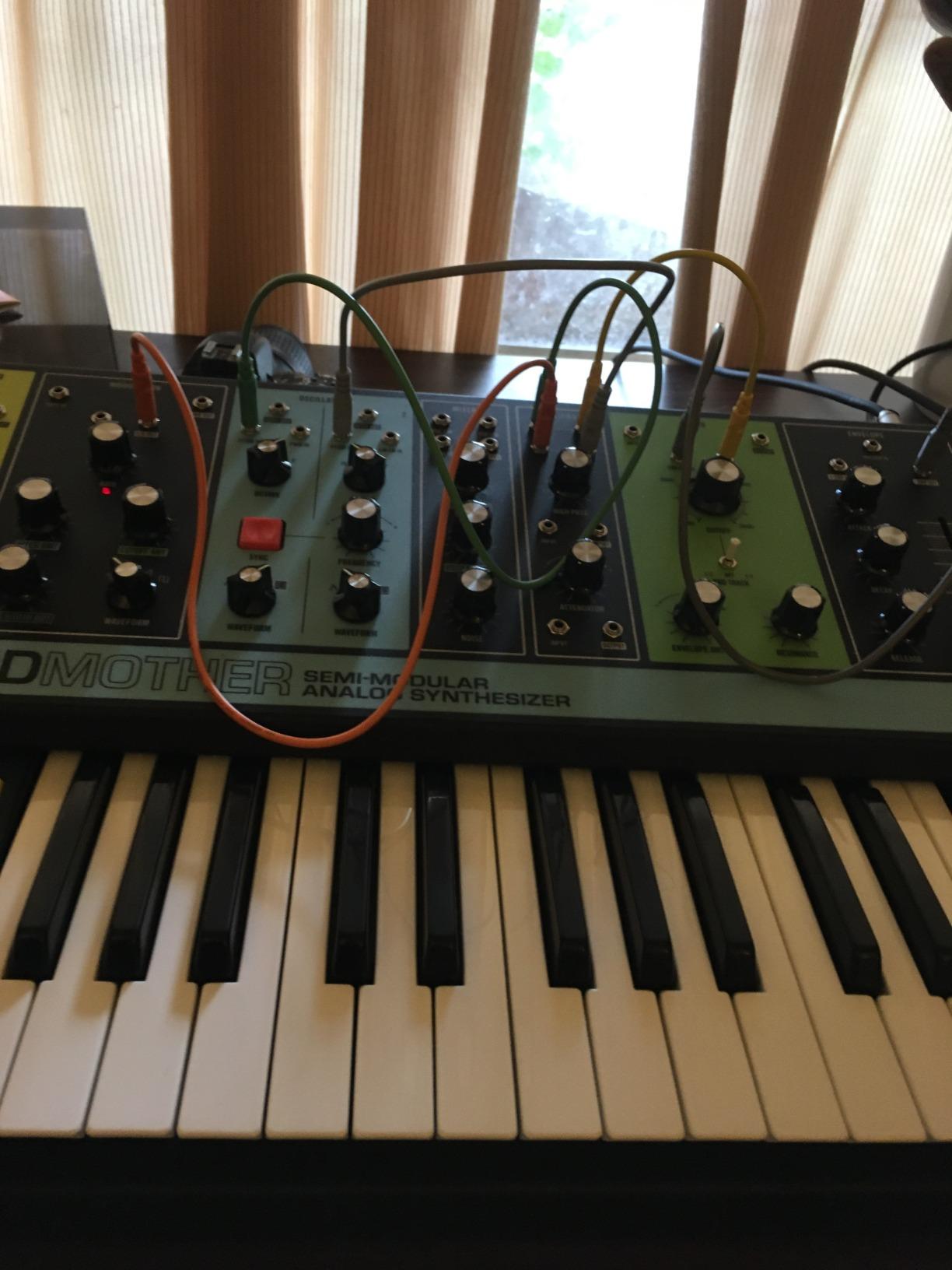
The 41 patch points cover everything you would expect from a flagship semi-modular: oscillator sync, filter FM, envelope routing, sample and hold, and a dedicated external input. The 256-note sequencer and arpeggiator make it easy to generate motion without a computer, and the wooden chassis is built in the USA to a standard that justifies the price.
Where Grandmother asks for compromise is keyboard range and price. The 32-key keybed only spans about 2.5 octaves, so players used to full 5-octave controllers will need an extension. Some users report mod wheel response feels limited, and the flagship price tier reflects the build quality, components, and American manufacturing.
Who the Grandmother is right for
Producers and players who want flagship Moog sound, real spring reverb, and a semi-modular synth they will keep for a decade. It is also one of the best semi-modular synths for live performance thanks to its keyboard and arpeggiator.
Who should skip the Grandmother
Buyers on a tight budget, players who need more than 2.5 octaves of keys, or anyone who wants generative sequencing should look at the MOOG Messenger or the Behringer Neutron instead.
9. MOOG Messenger – Modern Moog With Wavefolder
MOOG Messenger Monophonic Analog Synthesizer
Wavefolding VCOs
Next-gen ladder filter
64-step probability sequencer
32 keys
Pros
- Iconic Moog sound with modern enhancements like wavefolding VCOs
- Next-gen ladder filter with RES BASS compensation switch
- 32 semi-weighted full-size keys with velocity and aftertouch
- 64-step probability-based sequencer for generative patterns
- 256 presets with USB-C MIDI and 5-pin DIN MIDI
Cons
- Newer release means limited long-term user feedback
- Monophonic architecture only
The MOOG Messenger is the newest Moog in this roundup and, with a 4.9 average rating across its first reviews, it is also one of the most acclaimed. It builds on Moog’s classic monosynth architecture with two continuously variable-shape VCOs featuring sync and frequency modulation, plus a sub-oscillator for low-end weight.
The next-gen ladder filter is the headline feature. It offers 4-pole or 2-pole low-pass, band-pass, and high-pass responses, and the RES BASS switch ensures the sound stays full even when resonance is maxed. That solves a long-standing complaint about ladder filters losing low end at high resonance.
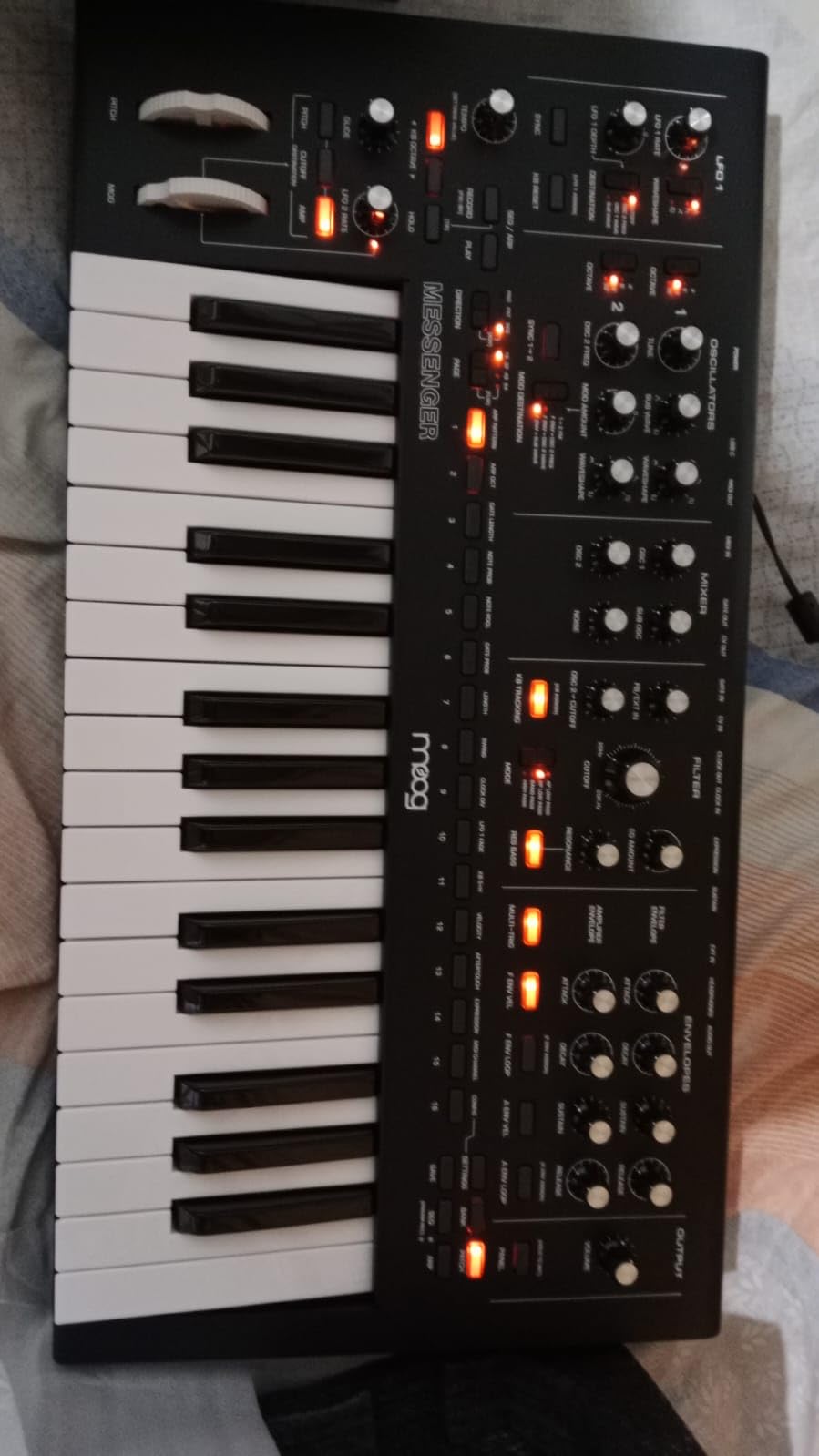
The 64-step sequencer with probability-based generative behavior is another quiet masterpiece. You program a pattern, set probability per step, and the sequencer plays back with subtle variation that keeps patterns alive instead of looping robotically. The 256 onboard presets are a first for a Moog monosynth and address the classic complaint that modular synths have no patch recall.
The honest caveat is release maturity. The Messenger is newer than the other synths in this list, so long-term reliability feedback is still accumulating. It is also monophonic only, which is on-brand for Moog monosynths but worth knowing.
Who the Messenger is right for
Producers who want modern Moog sound with patch recall and generative sequencing built in. It is also a brilliant choice for live performers who want a keyboard synth that integrates easily into both MIDI rigs and Eurorack systems.
Who should skip the Messenger
Players who need polyphony, or anyone uncomfortable buying a recently released flagship before long-term user feedback accumulates. The Grandmother has a longer track record if that matters.
10. MOOG Labyrinth – Generative Experimental Semi-Modular
MOOG Labyrinth Semi-Modular Analog Synthesizer
Voltage-controlled wavefolder
32-jack patch bay
Dual generative sequencers
Pros
- Unique Moog sonic character that bridges Moog and Buchla traditions
- Moog's first fully featured voltage-controlled wavefolder
- Dual generative 8-step sequencers with corrupt controls
- Extensive 32-jack patch bay for deep sound design
- Excellent for rhythmic and experimental music styles
Cons
- Specialized for experimental and abstract sound rather than traditional leads
- Prominent attack-phase click acknowledged as known Moog issue
- 3.5mm output only
The MOOG Labyrinth is the most adventurous synth in this roundup and the only one I would describe as truly experimental. It is a semi-modular desktop synth with two unique low-harmonic oscillators that produce metallic FM and wavefolding textures, plus Moog’s first fully featured voltage-controlled wavefolder.
The wavefolder alone justifies the price for anyone working in ambient, IDM, or experimental electronic music. It folds the waveform in ways that create harmonic content you simply cannot get from a subtractive synth, and the bias control lets you morph the timbre continuously across the entire patch bay.
The dual generative 8-step sequencers are equally wild. Each sequencer has its own clock and can run in parallel or sequence each other, and the corrupt controls introduce controlled chaos into the sequence. Run them together for hours and you will never hear the same pattern twice. Reviewers on r/modular consistently call Labyrinth one of the most inspiring generative sequencers available.
The honest trade-off is specialization. Labyrinth is built for abstract, experimental textures rather than traditional lead or bass sounds, so if you want classic Moog lead lines, look at the Grandmother or Messenger. There is also a known attack-phase click that Moog has acknowledged publicly and cannot currently filter out.
Who the Labyrinth is right for
Sound designers, ambient and IDM producers, and experimental musicians who want a Moog that goes beyond classic Moog sounds. It is also a brilliant complement to a more traditional Moog like the Grandmother.
Who should skip the Labyrinth
Players who need traditional lead, bass, or pad sounds. Anyone working on dance-floor-focused genres will likely prefer the DFAM for percussion or the Grandmother for keys.
Modular Synth Formats Explained: Eurorack, MOTM, Frac Rack, and Banana
Modular synths come in several physical formats, and the format you choose determines which modules, cases, and patch cables you can use. The Eurorack format dominates the modern market, but older and boutique formats are still very much alive.
Eurorack is the standard everyone is talking about. Modules are measured in HP (horizontal pitch, where 1HP equals about 5.08mm) and use 3.5mm patch cables. A typical starter case holds 84HP to 168HP of modules and runs on a +/-12V power supply. Behringer, Make Noise, Doepfer, Pittsburgh Modular, and hundreds of small builders all make Eurorack modules.
MOTM (Moog Old Tone Modular) is the format Don West designed in the 1990s after leaving Moog, and Synthesizers.com continues the line today. MOTM uses 6.3mm patch cables (the same size as a guitar cable), runs on +/-15V power, and produces larger, heavier modules that many players describe as sonically warmer than Eurorack.
Frac rack was the original smaller format, introduced by PAiA in the 1970s and still supported by Blacet Research and a few others. Frac rack uses a smaller module size and banana connectors, the unusual stackable plugs you see on Buchla instruments. It is rarer than Eurorack but beloved by experimental players.
Banana connectors are the wild card. Originally popularized by Buchla and West-Coast builders, banana cables carry CV and audio just like 3.5mm cables but are touch-sensitive and stack in a way that creates free connections. You cannot mix banana and 3.5mm without adapters, so pick a format and commit.
The format decision matters less than you might think for beginners, because most semi-modular synths in this list (the Behringer CRAVE, Korg Volca Modular, MOOG Grandmother, and others) sit in their own format and use 3.5mm cables. If you decide to expand into true modular later, Eurorack is by far the safest bet for module availability and resale value.
Buying Guide: How to Choose the Best Modular Synth for Your Needs
Choosing the best modular synthesizer comes down to four questions: how much can you spend, what sound do you want, do you want a keyboard, and how deep do you want to go into patching. Use this guide to match your answers to the right synth.
Budget Tiers for Modular Synthesizers
Under $200: Korg Volca Modular and Behringer CRAVE. Both deliver genuine semi-modular patch bays and West-Coast or subtractive sound without breaking the bank. This is the tier to start in if you are not sure modular is for you.
$200 to $500: Behringer Neutron, MOOG Mavis, Arturia MiniBrute 2S. Each one brings a serious feature to the table, paraphonic mode, a DIY build experience, or a flagship sequencer. This is where most buyers should land for value.
$500 to $700: MOOG DFAM, MOOG Messenger, MOOG Labyrinth. Three Moog specialists, each tuned for a different job (percussion, modern monosynth with presets, experimental West-Coast). Pick the one that matches your genre.
$700 and up: MOOG Grandmother and Korg MS-20 Mini sit at this tier. The Grandmother is the flagship desktop Moog with full-size keys and a real spring reverb tank. The MS-20 Mini is the legendary reissue with a unique filter character.
Beginner vs Pro Decision Tree
If you have never touched a modular synth before, start with a semi-modular that ships with default routings. The Behringer CRAVE, Arturia MiniBrute 2S, MOOG Messenger, and MOOG Grandmother all sound great with zero cables, then reward exploration when you start patching. These are the safest first buys.
If you already own a keyboard synth and want to add modular flavor, consider a tabletop percussion or texture box like the MOOG DFAM or MOOG Labyrinth. They add something no keyboard synth can do without eating your whole studio.
If you are ready to commit to a full Eurorack case, the Behringer Neutron and MOOG Mavis can ride along as standalone semi-modulars today and migrate into a case tomorrow. That dual-life design makes them the smartest Eurorack-on-ramp buys.
Brand Ecosystem and Trust
Moog, Make Noise, Doepfer, and Pittsburgh Modular have the strongest community reputations according to r/synthesizers and Gearspace forum threads. Behringer has built an enormous following for delivering semi-modular designs at accessible price points, with some forum debate about long-term reliability that you should factor in.
If you plan to build an ecosystem of one brand, Moog currently offers the deepest line, with the Grandmother, DFAM, Subharmonicon, Labyrinth, Spectravox, Mother-32, and Mavis all designed to interconnect via the same patch conventions.
Learn Modular Free with VCV Rack
If you are still on the fence about spending real money on a modular synth, download VCV Rack for free. It is a software modular environment that runs on your computer and emulates the Eurorack experience with free modules that range from oscillators to sequencers to effects. You can learn patch logic, signal flow, and module selection without spending anything, then translate that knowledge into hardware purchases later. Reviewers on r/modular consistently recommend VCV Rack as the cheapest way to learn modular.
DAW Integration and MIDI-to-CV
Most semi-modular synths in this list include 5-pin DIN MIDI or USB MIDI, so they integrate with any DAW out of the box. For true Eurorack systems, you will need a MIDI-to-CV interface module, which converts MIDI notes into the CV/Gate signals that Eurorack expects. Popular options include the Doepfer CV/Gate interface and the Intellijel MIDI 1U.
Frequently Asked Questions
Is a modular synth worth it?
Yes, a modular synth is worth it if you want hands-on sound design and unlimited sonic flexibility that no fixed-architecture keyboard synth can match. The trade-off is cost and learning curve, so start with a semi-modular like the Behringer CRAVE or MOOG Grandmother to learn patch logic before committing to a full Eurorack case.
What is the best modular synth for a beginner?
The best modular synth for a beginner is a semi-modular that ships with default routings and sounds great with zero cables. Our top picks are the Behringer CRAVE for value, the Arturia MiniBrute 2S for sequencing, and the MOOG Grandmother for flagship Moog sound. All three reward exploration as you grow into patching.
Which brand of synthesizer is considered the best?
Moog is widely considered the best synthesizer brand for build quality, sound character, and ecosystem depth. For semi-modular and Eurorack specifically, Moog, Make Noise, and Doepfer dominate community reputation. Behringer has earned recognition for delivering semi-modular designs at accessible price points.
What is the difference between modular and semi-modular?
A modular synthesizer has no internal connections, you must patch every signal between modules with cables. A semi-modular synthesizer has a fixed default signal path plus a patch bay that lets you override or expand the routing. Semi-modular is the friendlier starting point because it sounds great out of the box.
How much does a modular synthesizer cost?
A starter semi-modular synth like the Behringer CRAVE or Korg Volca Modular starts around the cost of a dinner for two. A flagship semi-modular like the MOOG Grandmother sits around a thousand. A complete Eurorack system with a case, power supply, and a curated set of modules typically ranges from several hundred to several thousand dollars depending on depth.
Final Verdict: Which Modular Synth Should You Buy in 2026?
After months of bench time and cross-checking feedback from r/synthesizers, Gearspace, and our own tests, the Behringer CRAVE stands out as the best modular synthesizer for most buyers in 2026. It delivers a genuine Moog-style ladder filter, a real 32-step sequencer, and a serious patch bay at a price that lets you explore without financial stress.
If you want the lightest possible entry into West Coast synthesis, grab the Korg Volca Modular. If you want flagship Moog sound with a real spring reverb and full-size keys, invest in the MOOG Grandmother. And if you want to build your own Moog circuit from a kit, the MOOG Mavis is the most fun you can have with a soldering iron.
Whatever you choose, run it through a few weeks of patches before buying more gear. Modular synths reward patience, and the best system is the one you build slowly, one module at a time.