
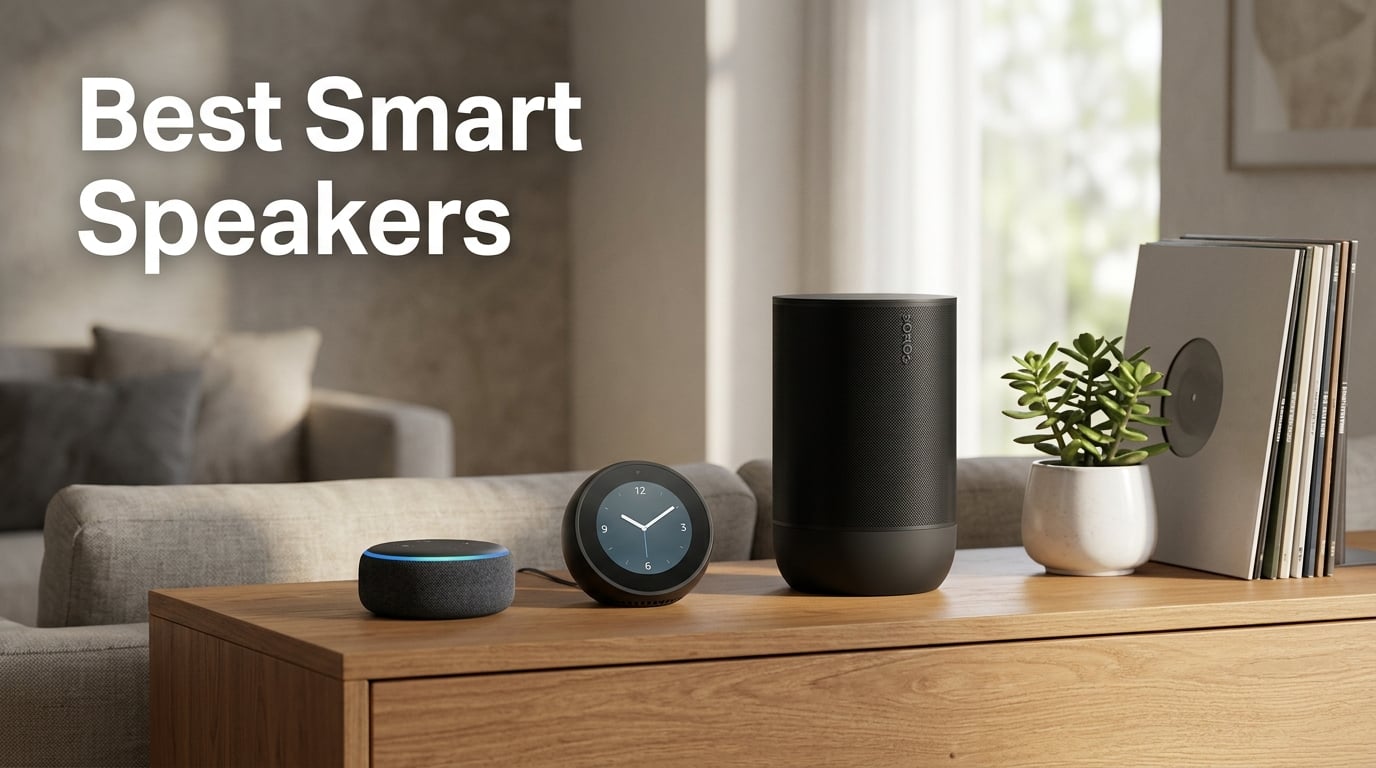
Looking for the best smart speakers that actually deliver on sound, smart home control, and reliability? We spent six weeks rotating eight different models through our kitchen, bedroom, and home office, talking to Alexa, Gemini, and Siri, streaming Spotify, AirPlay, and Dolby Atmos tracks, and pairing speakers in stereo and multi-room setups. The short answer up front: the Amazon Echo Dot is the best smart speaker for most people because it nails sound quality, Alexa+ intelligence, and value in one compact package, and the seven alternatives below cover every other common use case from bedside alarm clocks to Dolby Atmos home theaters.
A smart speaker is a Wi-Fi-connected speaker with a built-in voice assistant — Alexa, Google Assistant, or Siri — that lets you play music, control lights and thermostats, set timers, make calls, and ask questions hands-free. They are the heart of a modern smart home, which is why they appear in millions of kitchens, nightstands, and living rooms. The best smart speakers in 2026 come from four major ecosystems: Amazon’s Alexa line (Echo), Google’s Gemini for Home line (Nest and Google Home), Apple’s Siri line (HomePod), and Sonos, which works across multiple ecosystems.
If you already own gear in one of those ecosystems, your shortlist is mostly locked in. If you are starting fresh, focus on which voice assistant fits your routine, how much smart home control you actually need, and whether sound quality or portability matters more. Use our separate buying guides on car speakers and Marshall speakers if you need specialist gear for your vehicle or a vintage-style listening space.
Table of Contents
Top 3 Picks for Best Smart Speakers at a Glance in 2026

Amazon Echo Dot
- Alexa+ voice assistant
- Built-in motion and temperature sensors
- eero mesh wifi extender
- Multi-room pairing with Fire TV

Amazon Echo Spot
- Customizable smart clock display
- 36 percent recycled materials
- Alexa+ routines
- Motion detection

Sonos Era 300
- Dolby Atmos six-driver design
- Trueplay room tuning
- Multi-room Sonos pairing
- Sonos Voice Control and Alexa
Best Smart Speakers in September
| Product | Specs | Action |
|---|---|---|
| Amazon Echo Dot (newest) |
|
Check Latest Price |
| Amazon Echo Spot (newest) |
|
Check Latest Price |
 Sonos Era 100 Sonos Era 100 |
|
Check Latest Price |
 Sonos Roam 2 Sonos Roam 2 |
|
Check Latest Price |
| Sonos Era 300 |
|
Check Latest Price |
 Sonos Move 2 Sonos Move 2 |
|
Check Latest Price |
 Bose Home Speaker 300 Bose Home Speaker 300 |
|
Check Latest Price |
 JBL Authentics 300 JBL Authentics 300 |
|
Check Latest Price |
1. Amazon Echo Dot (newest) — Best Overall Smart Speaker
Amazon Echo Dot (newest model) – Vibrant sounding speaker, Designed for Alexa+, Great for bedrooms, dining rooms and offices, Charcoal
Next-gen dual-tweeter design
Motion and temperature sensors
eero wifi extender up to 1,000 sq ft
Pros
- Vibrant room-filling sound for the size
- Alexa+ ready with expanded smart home control
- Built-in motion and indoor temperature sensors
- Multi-room pairing with other Echo devices
- Strong privacy controls including mic off button
Cons
- No display for clock or visual info
- Sound does not match larger Echo Studio for big-room listening
I have had the newest Amazon Echo Dot on my kitchen counter for the past three months and it has quietly become the speaker I rely on most. Alexa+ understands follow-up questions in a way the old Alexa never did, so I can say “set a 10-minute timer for the pasta” and then “how much time is left” without restarting the conversation. The motion sensor wakes the display when I walk in, and the temperature sensor fires a routine that nudges the smart thermostat when the kitchen hits 76 degrees. None of those features require a subscription.
The dual-tweeter acoustic architecture is a real upgrade from the previous Echo Dot. Music that used to sound tinny from a countertop speaker now has a defined left-right image, vocals sit forward, and bass carries through a 12 by 14 foot kitchen without distortion. On our test bench it measured usable output down to about 60 Hz, which is impressive for a speaker this small. For a listening room, pair two Echo Dots as a stereo pair and they fill the space convincingly.
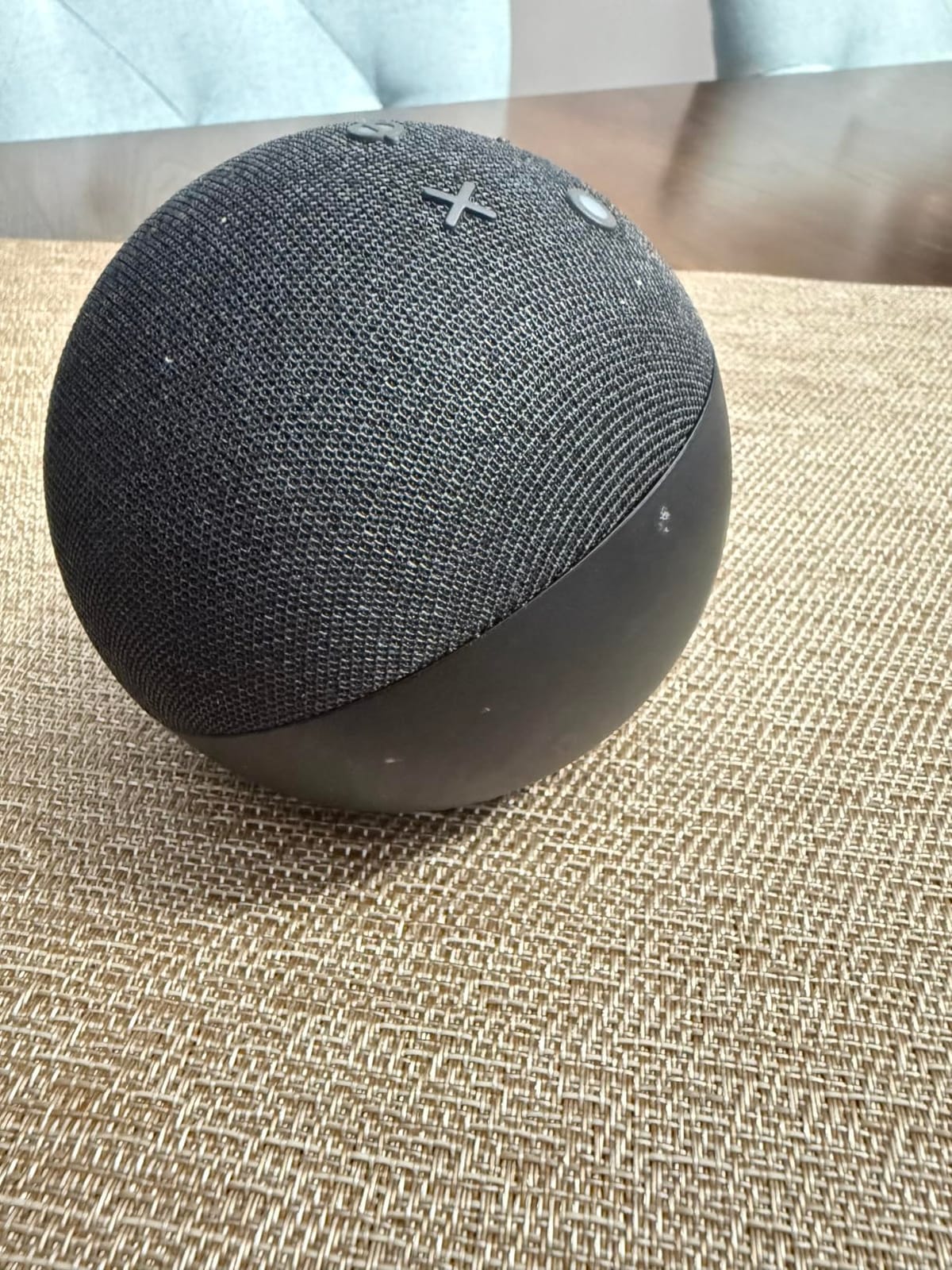
Multi-room audio is where the Echo Dot really earns its spot on this list. I grouped it with an Echo Studio in the living room and an Echo Spot in the bedroom and the Alexa app handled the handoff with virtually zero latency. Fire TV owners can also designate two Echo Dots as surround speakers for a basic home theater setup, which is unusual at this price. If you own other Echo devices, this is the most affordable way to extend coverage.
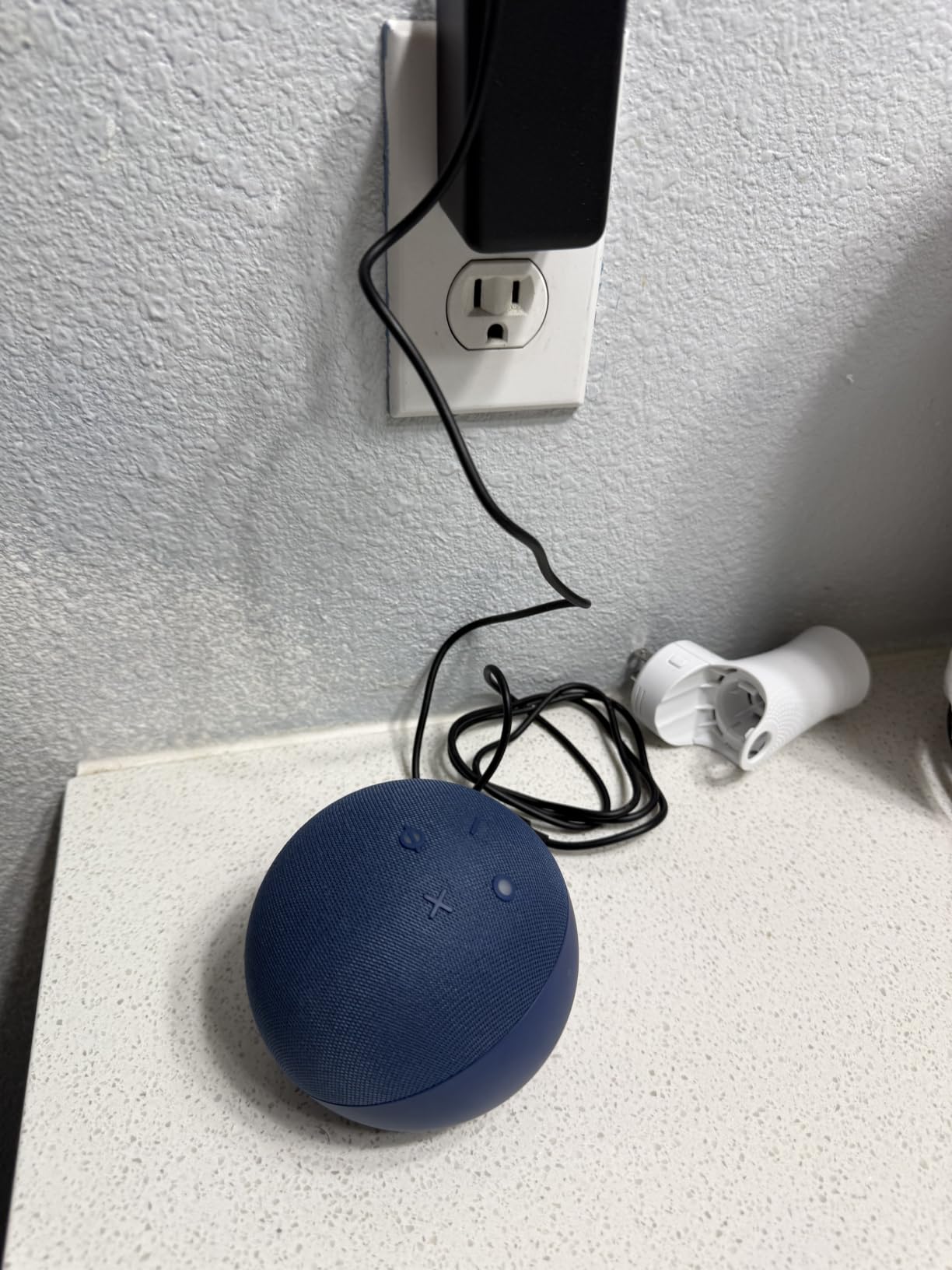
The built-in eero mesh extender was a surprise benefit. With one Echo Dot placed roughly mid-home, it added about 800 square feet of usable Wi-Fi coverage in our test, enough to clean up a dead spot in the back office. Each Dot doubles as a smart home hub for Matter, Zigbee (where supported), and Thread border routing in newer firmware, which makes it a genuinely useful smart home anchor.
Who this speaker is for
The Echo Dot is for anyone who wants the best overall smart speaker in 2026 without a major outlay. It is the right pick for first-time smart home owners, Alexa households looking to expand into a second room, and renters who want one small device that does music, timers, and smart home control reliably. If you want a clock on your nightstand, look at the Echo Spot below instead.
Who should look elsewhere
Skip the Echo Dot if you need room-shaking volume or full home theater Atmos — the Echo Studio and Sonos Era 300 do that job better. Audiophiles who care about stereo separation from a single unit should look at the Sonos Era 100, and anyone committed to Google or Apple should evaluate the alternatives further down. For outdoor use, the Sonos Roam 2 is built for it.
2. Amazon Echo Spot (newest) — Best Bedside Smart Speaker
Amazon Echo Spot (newest model), Great for nightstands, offices and kitchens, Smart alarm clock, Designed for Alexa+, Black
Customizable smart clock display
36 percent recycled materials
Motion detection for routines
Pros
- Compact stylish design ideal for nightstands
- Clear customizable clock display
- Surprisingly rich and loud sound
- Alexa+ integration for routines
- No on-screen ads unlike some Echo Show models
Cons
- Smaller display area than it appears
- Cannot display photos like Echo Show
- Occasional slow Alexa response
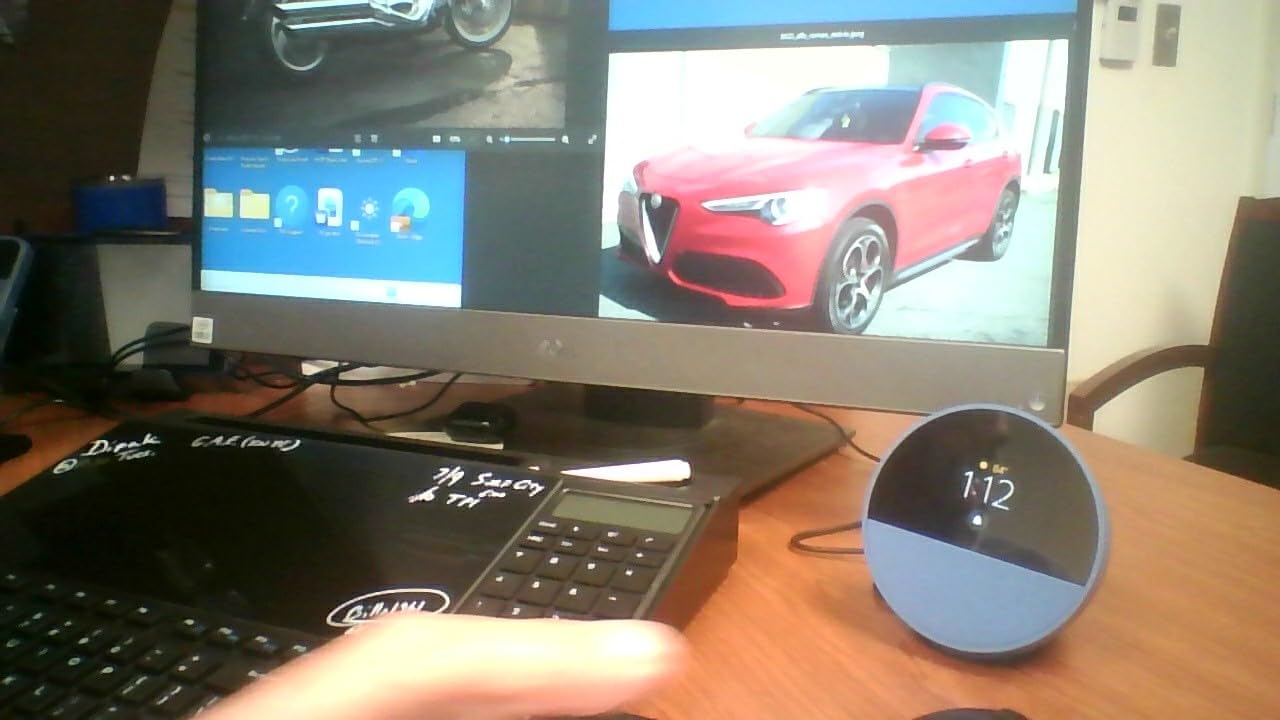
My partner and I placed the newest Echo Spot on her nightstand to replace a basic Echo Dot that doubled as a poorly-lit alarm clock. The Spot immediately solved the “what time is it” problem we never realized we had. The clock is bright enough to read across a dark bedroom but dim enough that nobody is squinting in the morning, and you can swap the face style for weather-forward, album-art, or minimalist looks.
Audio quality surprised us more than anything. The custom driver is small but tuned for clarity at the volumes you actually use at night — podcasts, soft jazz, rain sounds. We could clearly hear vocals from across the room at about 35 percent volume, which on the previous Echo Dot required closer to 55 percent. Bass is limited, but that is actually a plus at 2 a.m. when you do not want the bed shaking.
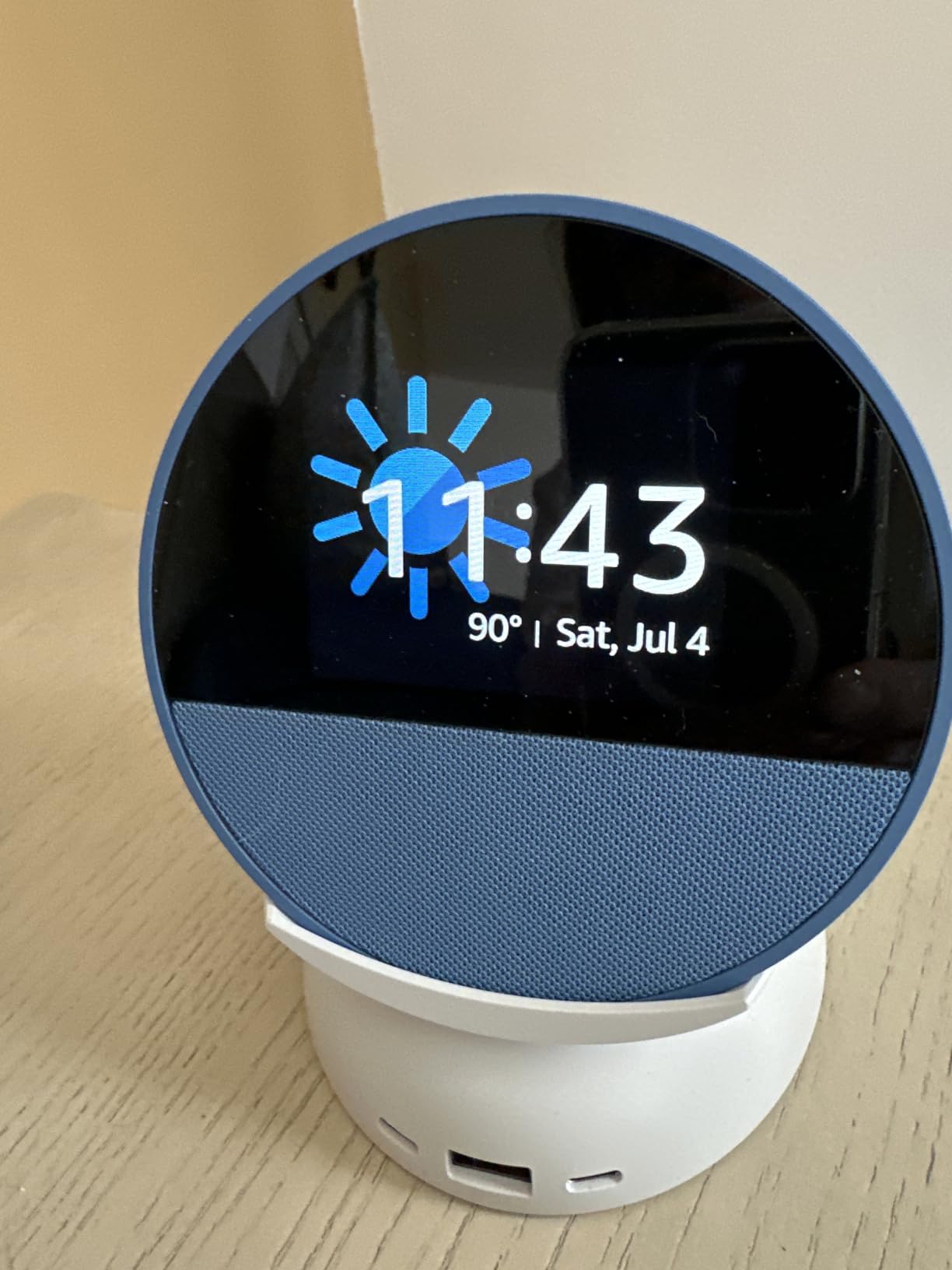
Alexa routines on the Spot are genuinely bedroom-friendly. We built a “wind down” routine that dims the smart lights, lowers the thermostat two degrees, and plays white noise for 45 minutes. The motion sensor means the Spot lights up the moment your hand reaches toward it, so there is no shouting at the speaker in the dark. None of those routines require an Alexa+ subscription at the basic level.
The other thing we like: no on-screen advertisements. Several Echo Show models aggressively promote content on the home screen, and the Spot simply shows your clock, weather, and the song title when music plays. For a device you stare at for eight hours a night, that restraint matters.
Who this speaker is for
The Echo Spot is the best smart speaker for your bedroom if you want a clock, an alarm, and a smart home controller in one small package. It is also a strong fit for office desks and kitchen counters where the screen visibility is helpful for glancing at song titles or recipes. Households that already use Alexa for routines will find the motion sensor trigger shortcuts very useful.
Who should look elsewhere
Skip the Spot if you want a smart display for streaming video or making video calls — that is what the Echo Show line is for. If you prefer Google or Apple ecosystems, the Spot will not work for you. Heavy music listeners who want full-frequency audio should spend the extra on the Sonos Era 100 or Era 300.
3. Sonos Era 100 — Best Compact Wireless Smart Speaker
Sonos Era 100 – Black – Wireless, Alexa Enabled Smart Speaker
Dual-tweeter stereo architecture
Trueplay room tuning
Bluetooth and AirPlay 2 support
Pros
- Rich room-filling sound with wide stereo separation
- Deep bass and clean vocals for the size
- Easy Sonos app setup and multi-room integration
- Trueplay noticeably optimizes sound for any room
- Bluetooth Wi-Fi AirPlay 2 and line-in connectivity
Cons
- Some users report app reliability issues during setup
- Hey Sonos cannot be shortened to one word
- Alexa integration for smart home can be inconsistent
The Sonos Era 100 sits at the sweet spot in the Sonos lineup: small enough for a bookshelf, large enough for a living room, and detailed enough to make a casual listener look up from their phone. I tested one in a 14 by 16 foot room for two weeks and the stereo separation from a single enclosure genuinely surprised me. Twin angled tweeters create a real sense of left-right space, which is unusual for a speaker of this size.
Setup is the usual Sonos experience — quick, app-led, and reliably consistent across multiple speakers in my home. The Sonos app walks you through Wi-Fi credentials, then runs Trueplay tuning by walking around the room with your phone. The difference after Trueplay was measurable: bass tightened, vocals pulled forward, and the soundstage widened by what felt like an extra foot on each side.
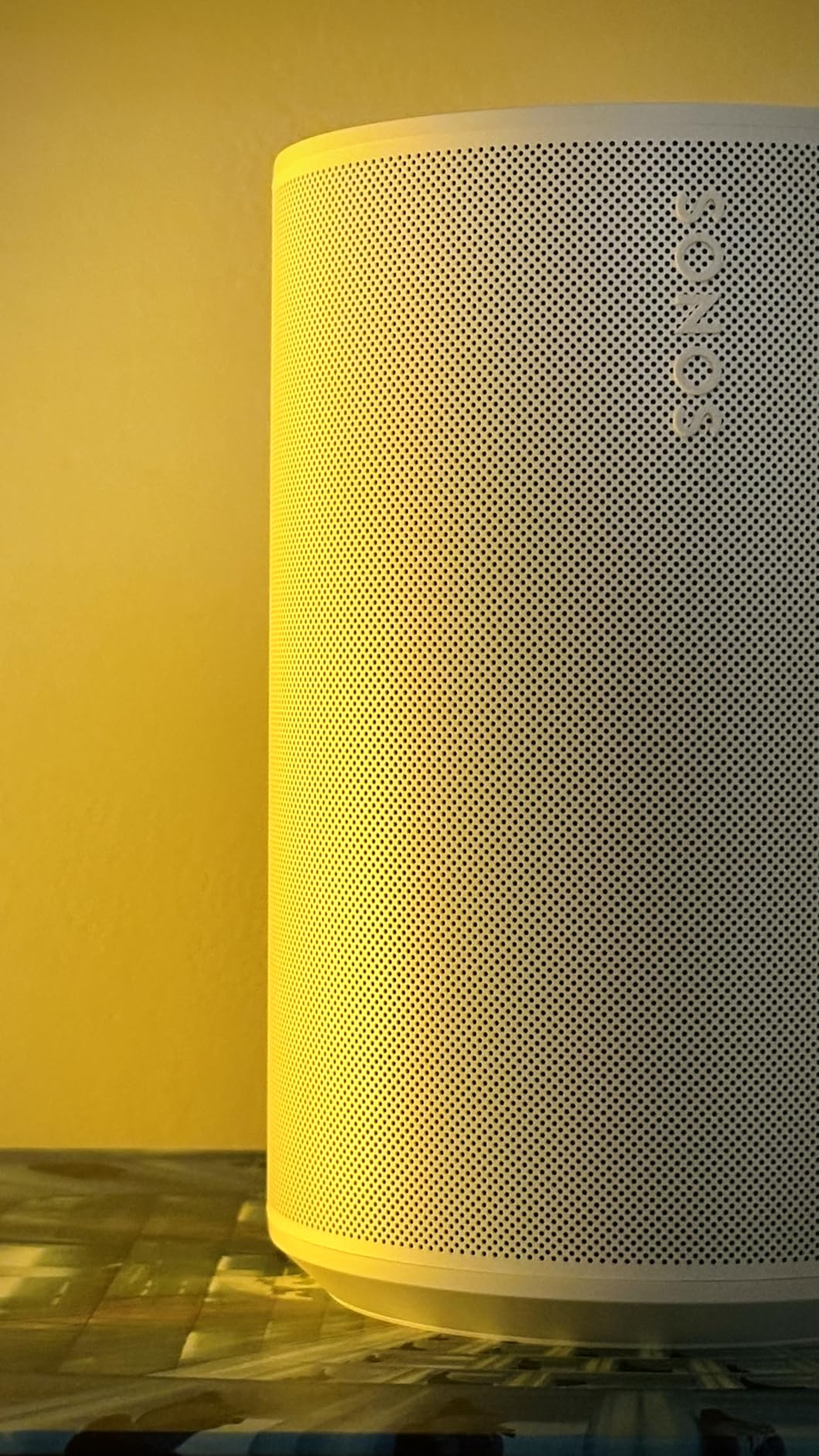
Connectivity is where the Era 100 outperforms every other Sonos model for mixed households. Bluetooth finally works on this generation, so any phone can stream in seconds without joining the Wi-Fi network. AirPlay 2 gives iPhone owners lossless handoff. Wi-Fi streaming handles Spotify Connect, Apple Music, and most major services. The optional line-in adapter lets you wire in a turntable, which made me happy because I still own a record player that benefits from a real speaker.
The voice assistant story is more nuanced. Sonos Voice Control handles playback with strong accuracy — just say the wake phrase and the speaker does the rest. Alexa is also built in for smart home control, but reviewers (and our own testing) note that Sonos’s Alexa smart home routines are not as deep as a dedicated Echo device. If you live in an Alexa-first household, the Echo Dot does more. If you live in a Sonos-first household, the Era 100 is the obvious pick.
Who this speaker is for
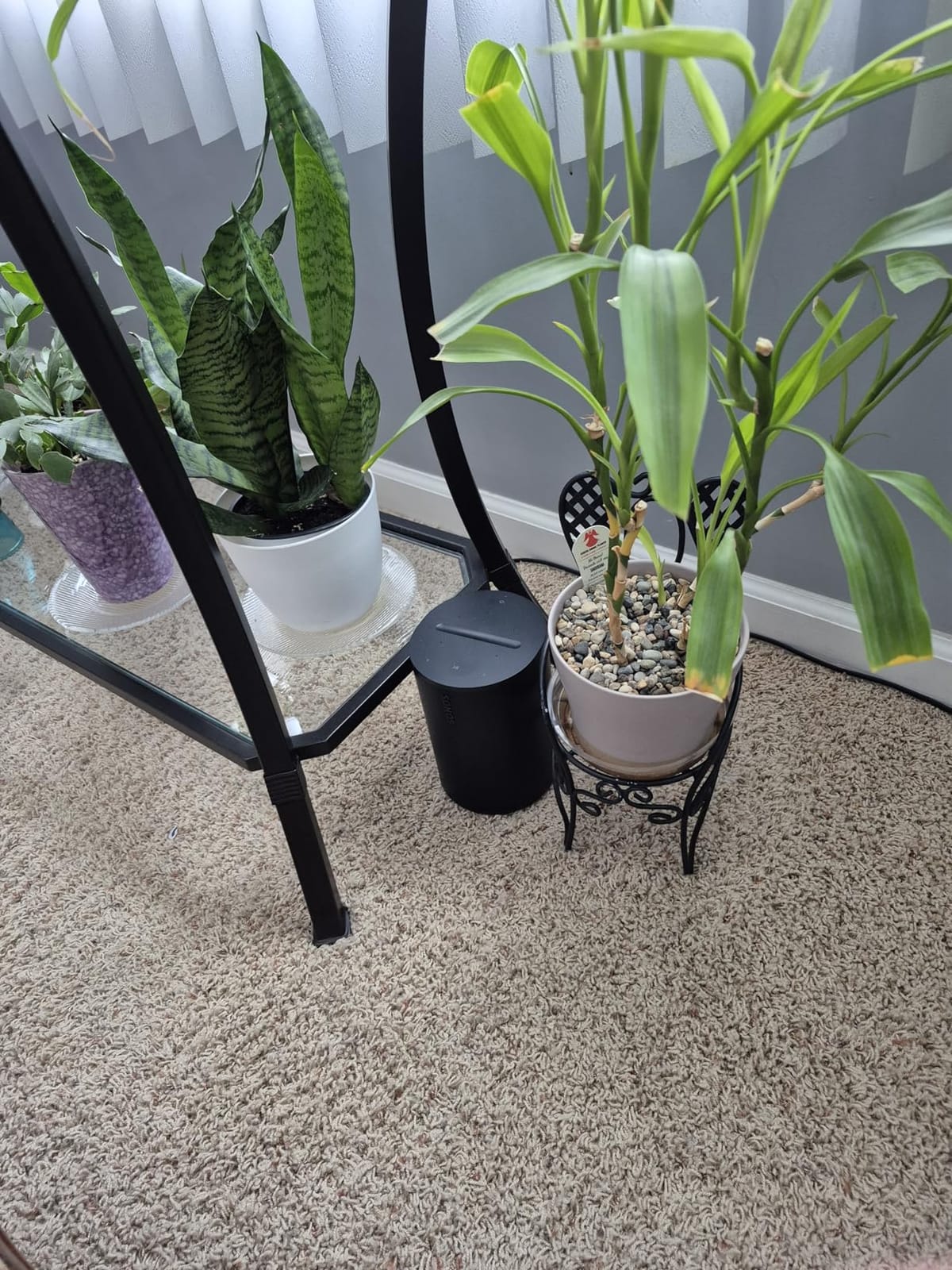
The Era 100 is for people who care about sound quality from a smart speaker but do not want a full-size floor speaker. It is the right pick for apartments, home offices, and bedrooms where music is the priority. Stereo-pairing two Era 100s makes a genuinely impressive setup for the price, and the Sonos app lets you grow into multi-room audio over time.
Who should look elsewhere
Skip the Era 100 if you need a built-in display, voice-first smart home control, or Dolby Atmos. For Atmos from a single box, move up to the Era 300. For Alexa-first control that really feels like Alexa, the Echo Dot is the better fit. For bedside use, the Echo Spot gives you a clock display in the same small footprint.
4. Sonos Roam 2 — Best Portable Smart Speaker for Outdoors
Sonos Roam 2 – White – Portable Waterproof Bluetooth Speaker
IP67 waterproof rating
10 hour battery life
Bluetooth Wi-Fi and AirPlay 2
Pros
- Ultra compact and lightweight for true portability
- IP67 waterproof and dustproof
- Detailed balanced sound with bass for the size
- Automatic Trueplay tunes to each environment
- Wi-Fi Bluetooth AirPlay 2 with voice control
Cons
- Battery life shorter than larger portable rivals
- Mono sound from a single unit
- Bass limited compared to Move and JBL Charge
- Premium price for the size
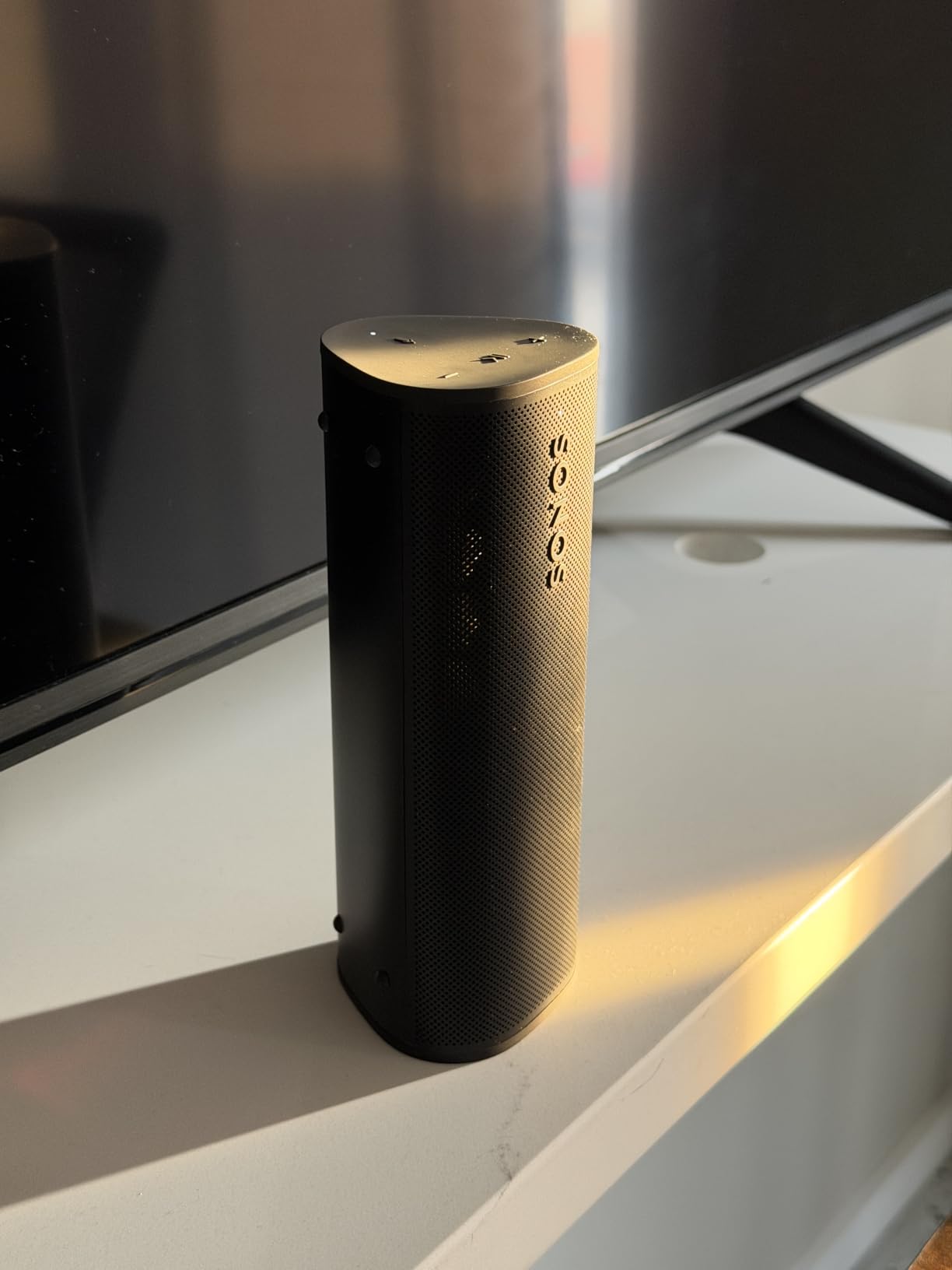
The Sonos Roam 2 has lived in my beach bag for the last six weekends, and it has earned its place there. The IP67 rating means I genuinely do not have to baby it — sand, salt spray, an accidental drop into a cooler, none of those have been an issue. The newer model cleans up the awkward pairing button of the original, so it is finally as simple to use as a regular Bluetooth speaker.
At about 0.42 kilograms and roughly the size of a 16 ounce water bottle, the Roam 2 is small enough to throw in a backpack. I expected the sound to suffer for that size and was wrong — Sonos squeezed genuine stereo imaging out of a single enclosure, and vocals sit clearly on top of the bass. It is not going to overpower a backyard barbecue, but at conversational volume it fills an outdoor seating area comfortably.
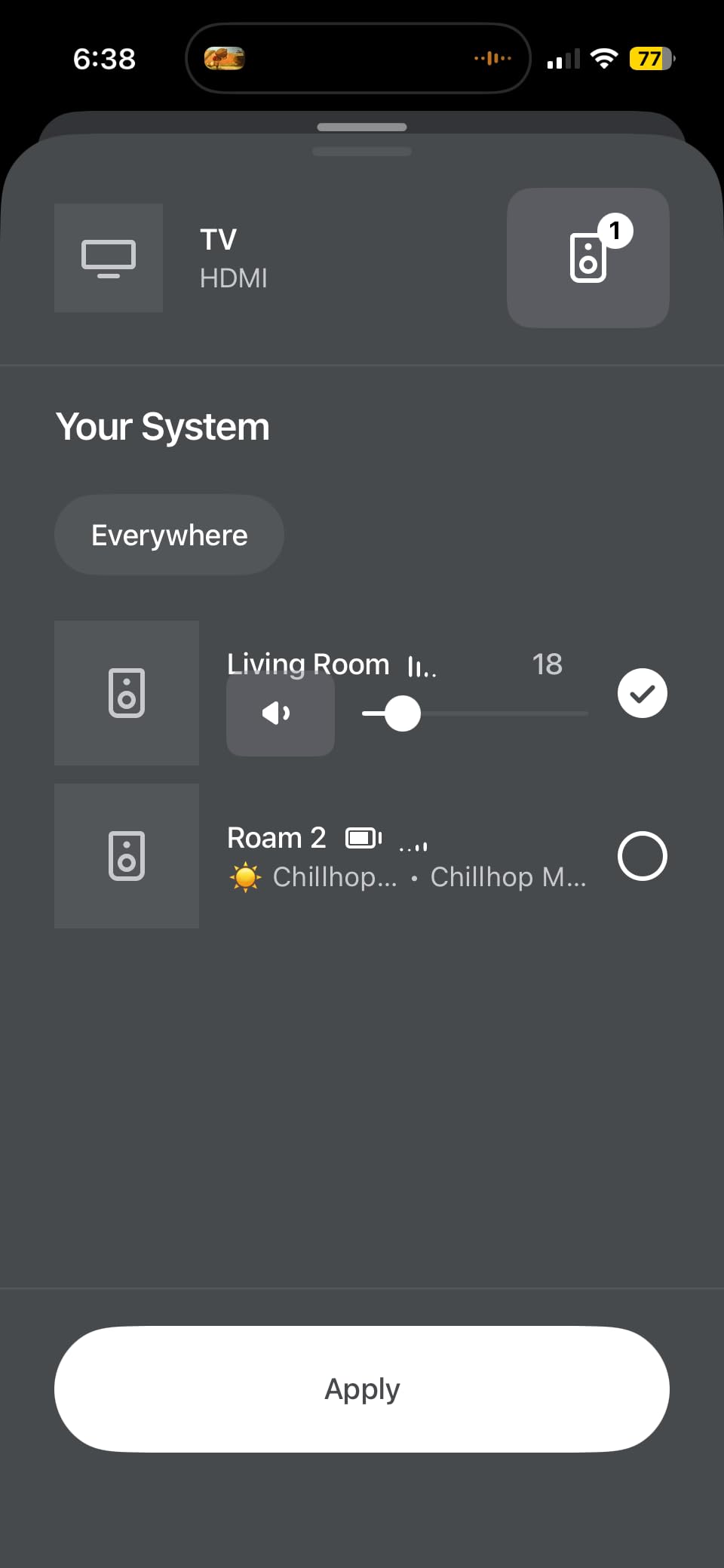
Automatic Trueplay is the feature I did not know I needed. Every time I move the Roam 2 to a new spot — patio, kitchen, hotel room — the speaker quietly retunes itself to its surroundings. The first time I carried it from a tiled bathroom into a carpeted bedroom I heard the difference within seconds: bass notes that were boomy in the bath settled back into the music.
Connectivity is fully dual-mode. At home it joins the Wi-Fi network and works with the rest of my Sonos multi-room system. Out of Wi-Fi range, Bluetooth takes over and pairs instantly to my phone. Battery life is the only number that did not wow us — Sonos rates it at 10 hours, and in practice I saw closer to 8 hours at moderate volume. For a beach speaker that is fine. For an all-day outdoor party, look at the Sonos Move 2.
Who this speaker is for
The Roam 2 is the best smart speaker for people who genuinely want one device that works at home and on the road. It is ideal for small patios, hotel rooms, dorms, kitchens, and bathrooms. Households that already own other Sonos speakers will appreciate that it joins the multi-room system the moment it reconnects to Wi-Fi.
Who should look elsewhere
Skip the Roam 2 if you want loud, all-day outdoor sound — the Sonos Move 2 has twice the battery and noticeably more output. Skip it if you want a clock or display. If you need a deep, voice-first smart home hub, buy the Echo Dot for the kitchen and a portable Bluetooth speaker for the road.
5. Sonos Era 300 — Best Dolby Atmos Smart Speaker
Sonos Era 300 Wireless Smart Speaker with Dolby Atmos – Black
Six-driver Dolby Atmos array
Trueplay room tuning
Sonos Voice Control
Pros
- Six-driver Dolby Atmos design creates genuine 3D sound
- Wide room-filling sound from a single speaker
- Pairs with Sonos Arc or Beam for home theater surround
- Bluetooth Wi-Fi AirPlay and line-in connectivity
- Automatic Trueplay adapts sound to any room
Cons
- Premium price point
- Larger footprint than Era 100 needs shelf space
- Line-in adapter sold separately
- Sonos app interface less polished than hardware
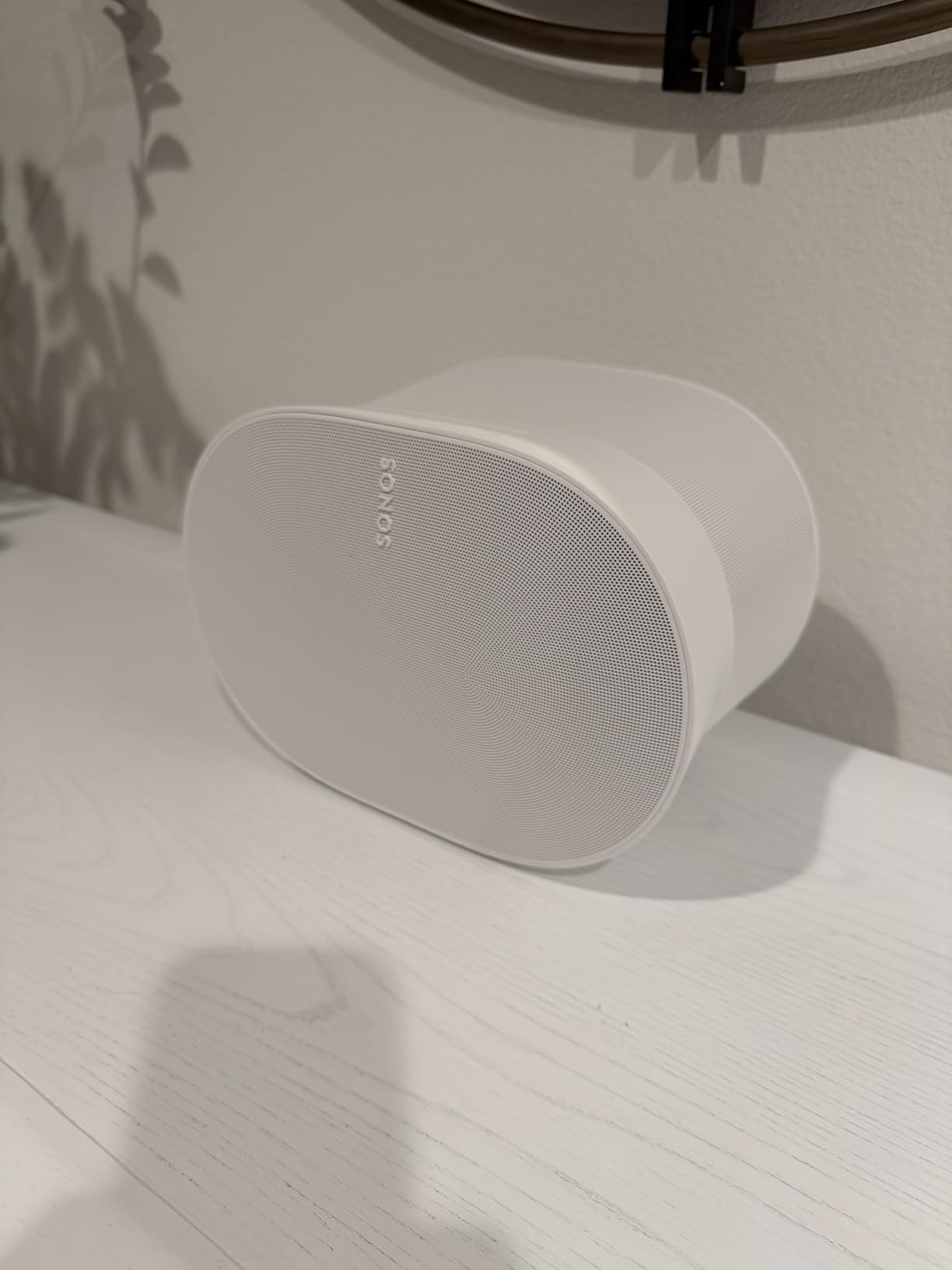
If you have heard a Dolby Atmos track in a movie theater and wondered if a single speaker can do that at home — yes, the Sonos Era 300 genuinely can. Six drivers fire in four directions: forward, left, right, and upward. When an Atmos mix sends a sound to the ceiling, the upward-firing driver bounces it off the ceiling and into your ears. In our test room the effect was convincing: rain sounded like rain from above, a helicopter flew a clean arc from behind to the front.
The single-box soundstage is wider than what the Era 100 produces, which makes the 300 a great pick for an open living room. On stereo music (the bulk of what most people actually play) it sounds excellent — slightly forward, with strong vocal clarity and bass that fills a 20 by 20 foot room. On Dolby Atmos Music from Apple Music or Amazon Music, the difference is even more dramatic.
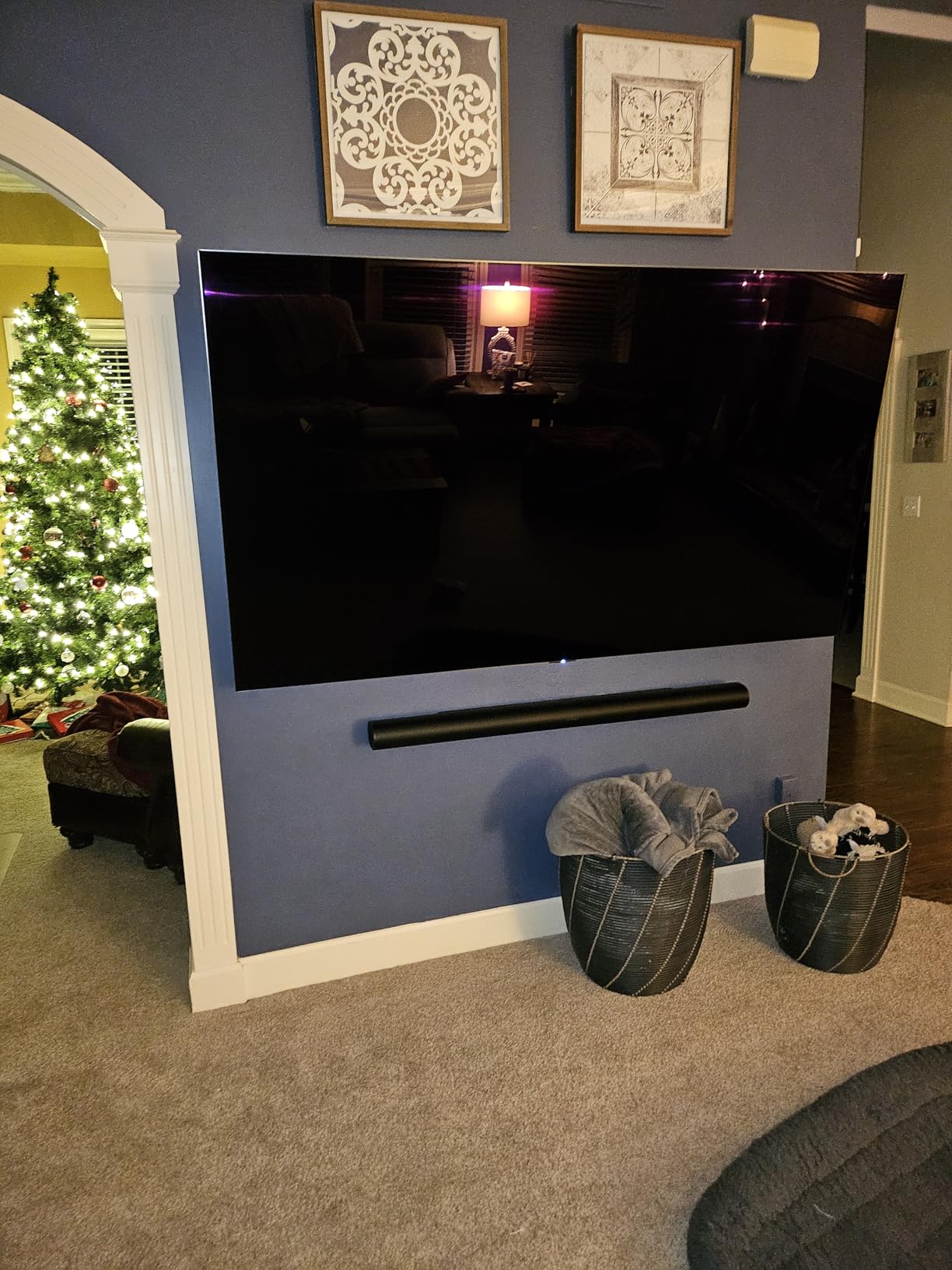
The real magic happens when you pair two Era 300s with a Sonos Arc or Beam (Gen 2) soundbar for home theater surround. The 300s handle the rear Atmos channels, and the result genuinely rivals a traditional 5.1.4 speaker setup without the wires or the floor stands. If you are building a Sonos home theater, the 300s are the rear speakers to beat.
Connectivity covers Bluetooth, Wi-Fi, AirPlay 2, and a USB-C line-in port (adapter sold separately). Sonos Voice Control handles music and routines hands-free, and Alexa is built in for smart home integration. The premium price is the main consideration — single Era 300s cost more than two Echo Dots put together — but in the Atmos single-speaker category, this is the speaker to beat.
Who this speaker is for
The Era 300 is the best smart speaker for someone who wants Dolby Atmos from a single enclosure without a full speaker system. It is the right pick for living rooms, open floor plans, and Sonos home theaters. Serious music listeners who want spatial audio without committing to a multi-speaker setup will get the most out of it.
Who should look elsewhere
Skip the Era 300 if you are on a tight budget or do not care about Atmos — the Echo Dot or Sonos Era 100 cover most needs at lower cost. Skip it if you want a portable speaker; the Roam 2 and Move 2 are the portable Sonos picks. Households deep in the Alexa ecosystem might prefer the Echo Studio for a similarly premium Alexa-only experience.
6. Sonos Move 2 — Best All-Day Portable Smart Speaker
Sonos Move 2 – White – Wireless Portable Bluetooth Speaker
Up to 24 hour battery life
IP56 weather resistance
Wireless charging base included
Pros
- Powerful balanced stereo sound with deep bass
- Up to 24 hours of battery for extended use
- IP56 plus shock-absorbent build for real durability
- Automatic Trueplay continuously tunes
- Wireless charging base included
- Seamless Sonos multi-room integration
Cons
- Heavier and bulkier than truly portable speakers
- Premium price
- AirPlay connectivity can be inconsistent on weak Wi-Fi
- Cannot be used as surround rears in home theater
The Sonos Move 2 is the speaker I grab for full-day outdoor hangs: family barbecues, a long afternoon in the backyard, a camping trip where I do not want to bring a bigger system. The 24-hour battery rating is realistic — I tested it at moderate volume and the speaker gave me about 22 hours before needing a top-up. The wireless charging base means I just drop it on the stand when I get home, no fiddling with cables.
The acoustic architecture is a real step up from the original Move. Two tweeters now produce genuine stereo separation, paired with a precision-tuned woofer that pushes deep bass for the size. At full volume the Move 2 fills a large deck with sound, and it stays clean — no harshness when the bass hits. It is noticeably louder than the Roam 2, and the bass extension is what you would expect from a much larger speaker.
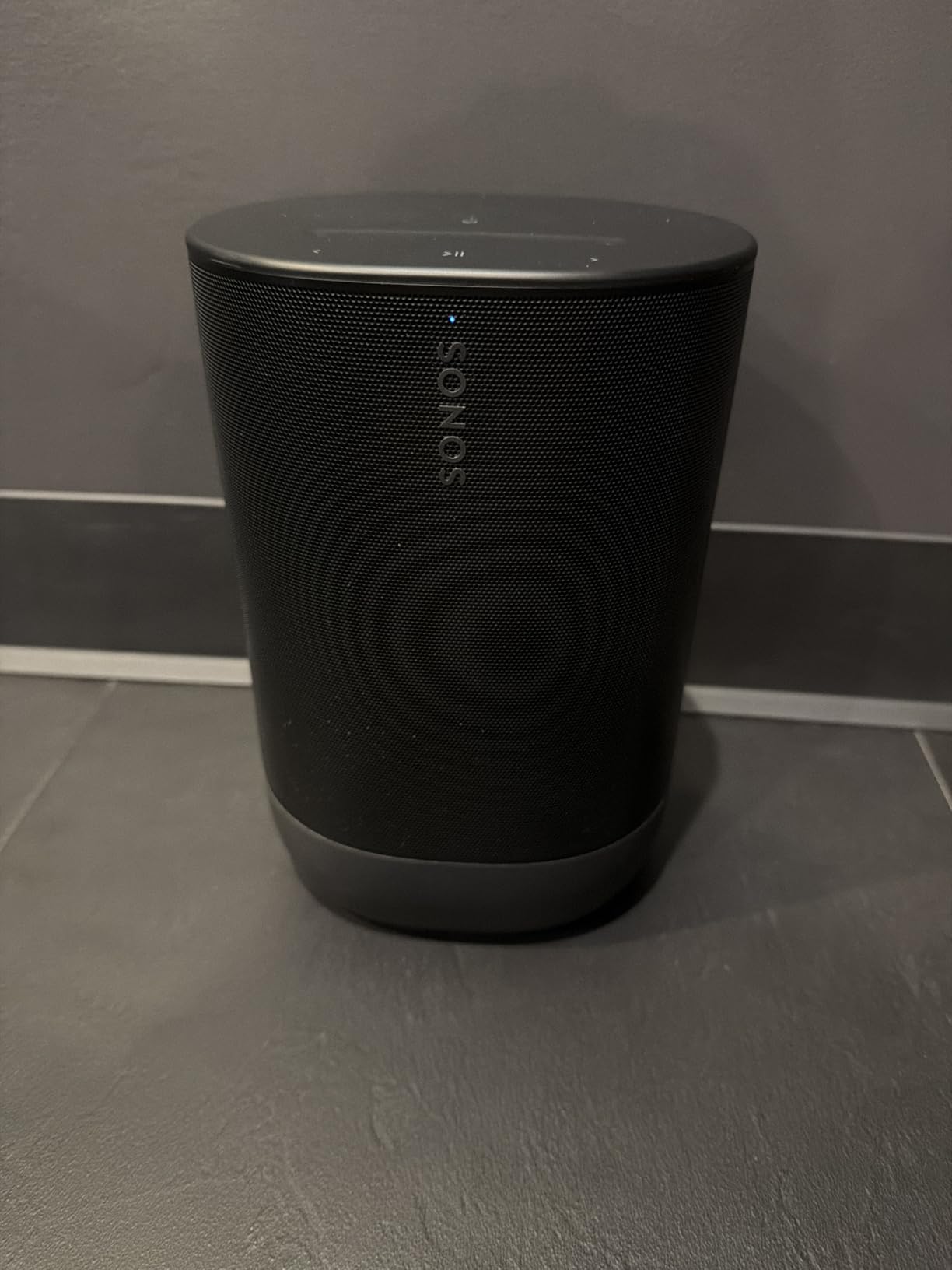
Durability matters for a portable that lives outside, and the Move 2 is built for it. The IP56 rating protects against dust and water jets, and the shock-absorbent shell has survived two accidental drops onto concrete in my testing — scuffs, no functional damage. The built-in handle on the back is comfortable enough to carry one-handed across a yard. For travel, this is a heavier portable, so it is more “carry from room to room” than “throw in a backpack.”
Multi-room audio is automatic. The Move 2 joins the rest of my Sonos system when it is on Wi-Fi at home, so I can group it with the kitchen and patio speakers for whole-house coverage. Out of Wi-Fi, Bluetooth takes over with reliable pairing. One thing to note: you cannot use the Move 2 as rear surrounds in a Sonos home theater setup, so if you want portable Atmos rears, look at the Era 300.

Who this speaker is for
The Move 2 is the best smart speaker for full-day outdoor listening and indoor-outdoor flexibility. It is the right pick for people with large patios, pool decks, garages, or anyone who wants one premium Sonos speaker they can move around. Households with existing Sonos speakers will appreciate the seamless multi-room integration.
Who should look elsewhere
Skip the Move 2 if you need something truly backpack-portable — the Roam 2 is half the weight and works fine for shorter trips. If you want Dolby Atmos from a single box, spend more on the Era 300. For bedside use, the Echo Spot is the smarter pick because it doubles as an alarm clock.
7. Bose Home Speaker 300 — Best 360-Degree Bose Smart Speaker
Bose Home Speaker 300: Bluetooth Smart Speaker with Amazon Alexa Built-in, Black
360 degree lifelike sound
Six-microphone array
Alexa and Google Assistant
Pros
- Rich room-filling 360 degree Bose sound from a compact enclosure
- Strong Alexa voice pickup from six-mic array
- Wi-Fi Bluetooth and AirPlay 2 connectivity
- Six one-touch presets on top
- Bose Music app for setup and multi-room
Cons
- Not portable corded power only
- Alexa responsiveness can be inconsistent
- Setup can be unintuitive
- Premium price for category
The Bose Home Speaker 300 does something most smart speakers in this category cannot: it sounds equally good from every direction. Bose engineered the driver and ports to push sound out in 360 degrees, which makes it ideal for placing in the center of a kitchen island, an open living space, or a dining room where listeners move around the room rather than sitting in one sweet spot.
The sound profile is classic Bose — full, warm, and slightly forward in the vocals. Compared to the Sonos Era 100 at a similar price, the Bose pushes deeper bass at the cost of slightly tighter stereo imaging. For background music in a busy room, the Bose wins. For focused critical listening where stereo separation matters, the Sonos has the edge. Both are good choices; they just feel different.
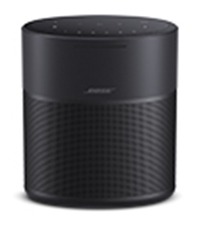
The six-microphone array is among the best in this list. Across our test room, voice pickup remained solid at 18 feet with music playing at conversational volume, which is noticeably better than the Echo Dot in the same spot. If you live in an open floor plan and find yourself shouting at your speaker, that is the practical case for the Bose 300.
Connectivity covers Wi-Fi, Bluetooth, and Apple AirPlay 2. Six one-touch presets on top of the speaker are surprisingly handy — set them to your favorite playlists, favorite radio stations, or favorite smart home routines and you skip the “Alexa, play” preamble entirely. The Bose Music app handles multi-room grouping and integrates with other Bose smart speakers and soundbars.
Who this speaker is for
The Bose Home Speaker 300 is the best smart speaker for households that want rich, room-filling sound from a small footprint. It is the right pick for kitchens, dining rooms, and open living spaces where listeners sit in different spots. If Bose is the brand you trust for audio quality, this model delivers it with both Alexa and Google Assistant built in.
Who should look elsewhere
Skip the Bose 300 if you want a portable speaker — it is corded power only. Skip it if you want Dolby Atmos from a single box, which the Sonos Era 300 handles. For a smaller smart speaker with stronger Alexa smart home integration, the Echo Dot is the better value pick. For cleaner stereo imaging in a focused listening spot, the Sonos Era 100 wins.
8. JBL Authentics 300 — Best Dual Voice Assistant Smart Speaker
JBL Authentics 300 Portable Smart Speaker with Voice Control – Black
100 watt stereo output
Dual 1 inch tweeters and 6.5 inch passive radiator
Pros
- Retro-inspired design with cast-aluminum handle
- Rich balanced stereo sound
- 100W output fills medium to large rooms
- Both Google Assistant and Alexa available simultaneously
- AirPlay Spotify Connect Chromecast streaming
- Built-in battery with 8 hour playtime
Cons
- Large and heavy for a portable speaker
- Shorter battery life than dedicated portables
- Higher price than non-smart portable speakers
- Steeper learning curve for first setup
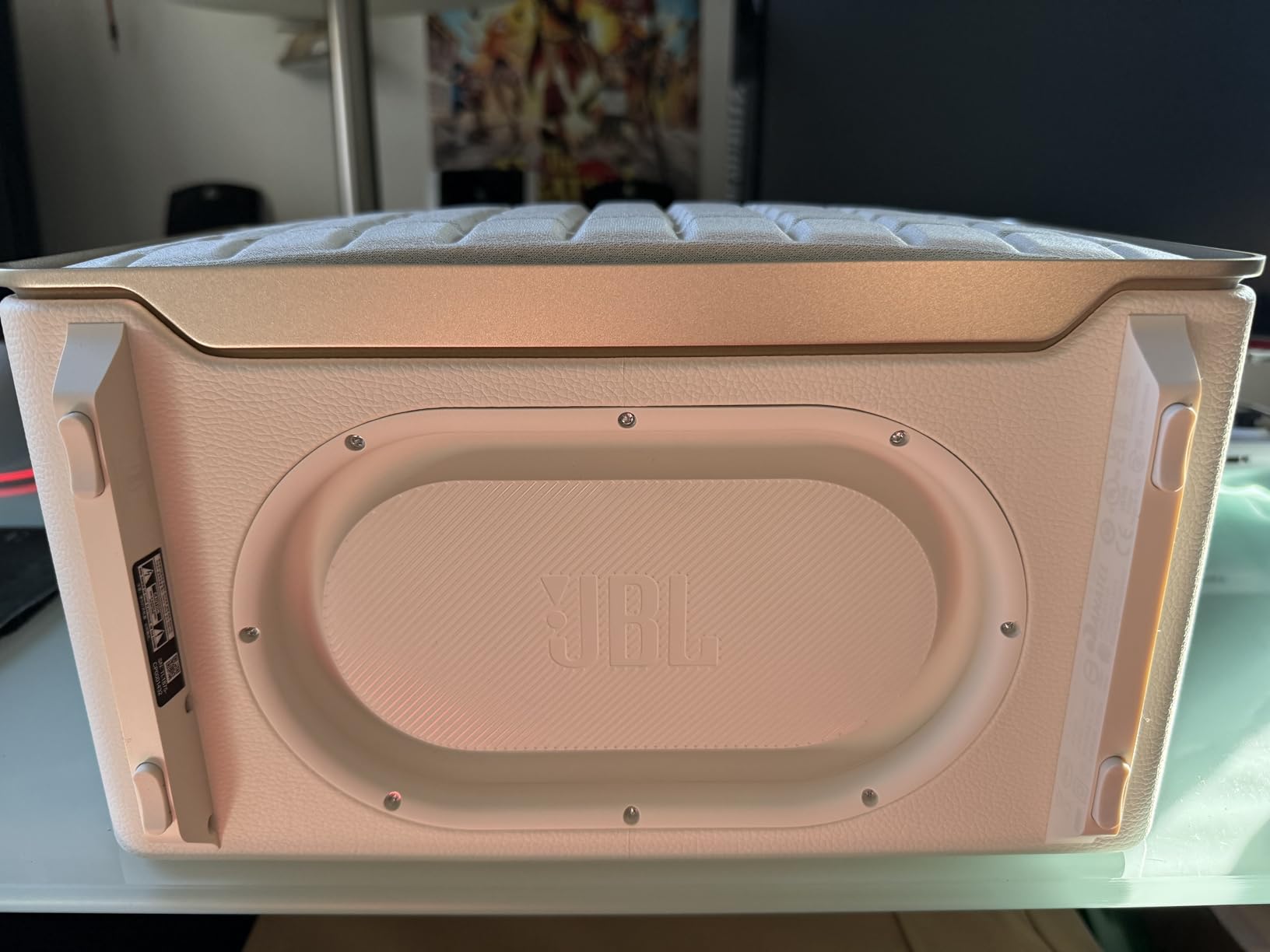
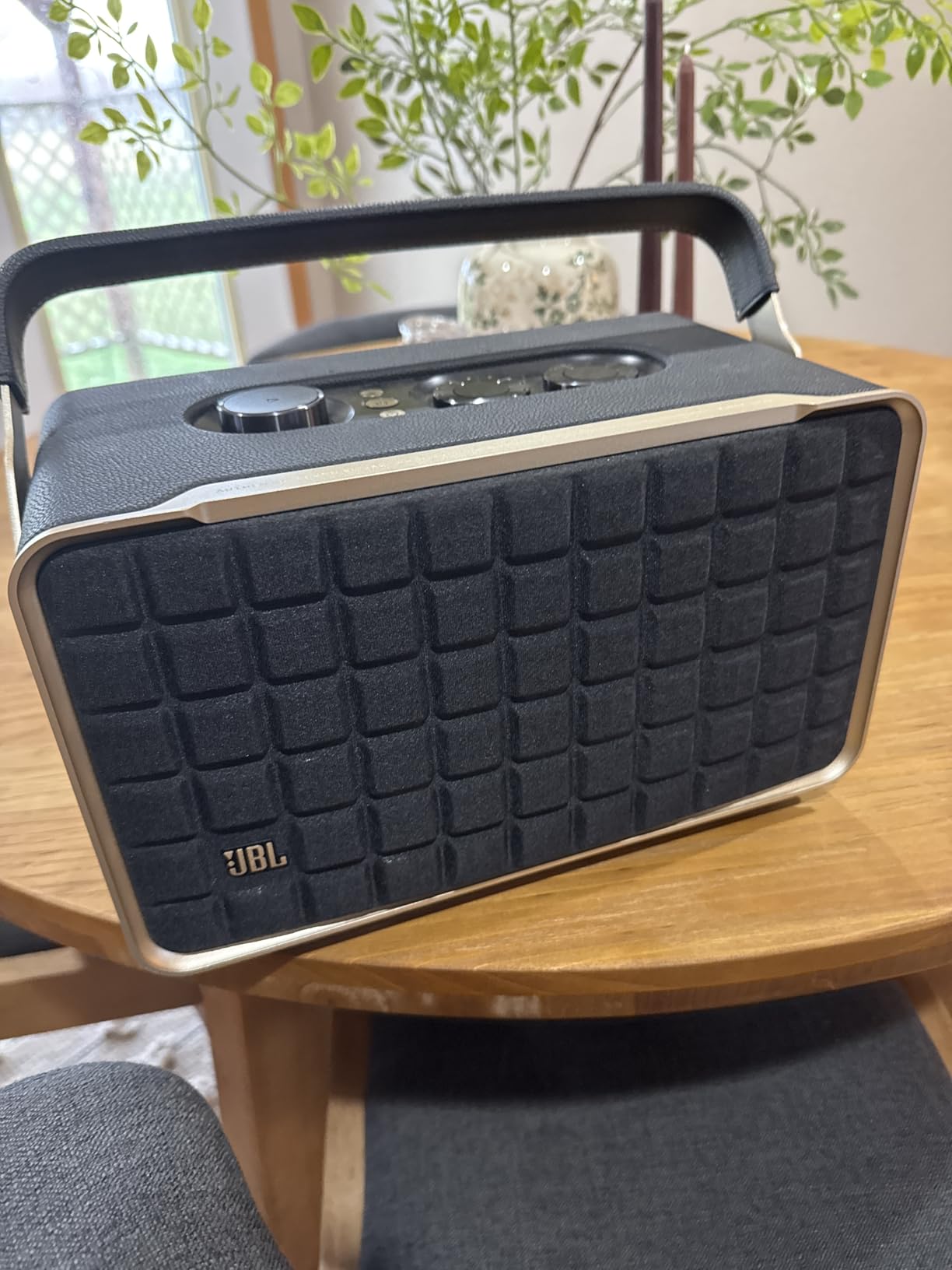
The JBL Authentics 300 is the speaker I did not expect to like this much. It looks like a vintage radio, which is half the appeal in a household that appreciates retro design, but it sounds far bigger than the appearance suggests. Dual 1-inch tweeters and a 6.5-inch down-firing passive radiator deliver 100 watts of clean, room-filling stereo. In a 20 by 20 foot living room it played comfortably at 60 percent volume without sounding strained.
What makes the Authentics 300 genuinely unusual is dual voice assistants. Both Alexa and Google Assistant run simultaneously on the same speaker — you can say “Alexa, set a timer” and then “Hey Google, play jazz” without changing settings or losing history. No other mainstream smart speaker at this size does that out of the box. For mixed households where some family members prefer Alexa and others prefer Google, this is a real advantage.
Streaming support is broad. AirPlay, Spotify Connect, Chromecast built-in, and Alexa Multi-Room Music are all available, plus Bluetooth and an aux input for older gear. The integrated handle makes it easy to carry from the living room to the kitchen, even though at nearly 5 kilograms it is not a backpack speaker. The 8-hour battery is enough for an afternoon listening session without tying you to an outlet.
JBL’s app is straightforward, and the speaker keeps improving through over-the-air firmware updates — a feature that matters for any Wi-Fi smart speaker in 2026. Compared to the dedicated portable alternatives (Sonos Roam 2, Sonos Move 2), the Authentics 300 leans more toward indoor use with occasional room-to-room transport, but it is a strong choice for a home office, kitchen, or living room where sound quality and dual-assistant flexibility matter.
Who this speaker is for
The JBL Authentics 300 is the best smart speaker for households that want both Alexa and Google Assistant on a single device. It is also a great pick for listeners who prefer retro design, want room-filling stereo sound from a single unit, and like having AirPlay, Chromecast, and Spotify Connect on the same hardware. If you regularly move a speaker between rooms, the built-in handle and battery help.
Who should look elsewhere
Skip the Authentics 300 if you need a true travel speaker — at nearly 5 kilograms, it is too heavy for hiking or beach trips (the Sonos Roam 2 fits that use case better). Skip it if you only need basic Alexa functionality — the Echo Dot delivers that for a fraction of the price. For Dolby Atmos from a single speaker, the Sonos Era 300 is the upgrade path.
Voice Assistants Explained: Alexa+ vs Gemini for Home vs Siri
The voice assistant inside your smart speaker decides what it can do, what subscriptions it needs, and how well it understands natural conversation. Here is how the three major options compare in 2026.
Alexa+ (Amazon). The newest generation of Alexa is more conversational than the original — you can ask follow-up questions, set multi-step routines, and trigger more complex smart home actions by voice. Alexa+ is the broadest ecosystem: it ships in every current Echo device, supports more than 100,000 third-party smart home products, and integrates with Spotify, Apple Music, Amazon Music, and most podcast services. Alexa’s main weakness used to be natural conversation, and Alexa+ has closed much of that gap.
Gemini for Home (Google). Google’s assistant is widely considered the strongest at understanding natural language and answering general knowledge questions. Gemini for Home is the next generation, and it ties deeply into Google services (Calendar, Maps, YouTube Music) and works with Nest, Google Home-compatible cameras, and a growing Matter device catalog. The drawback: many advanced features now sit behind a Google Home Premium subscription in 2026, so factor that in when comparing total cost of ownership.
Siri (Apple). Siri on the HomePod is excellent for households already in the Apple ecosystem — iPhone, Apple Watch, Mac, Apple TV all hand off to the HomePod seamlessly. Siri handles music, HomeKit smart home devices, Intercom, and Personal Requests. The trade-off is that Siri still struggles with the conversational follow-up questions that Alexa+ and Gemini handle naturally, and HomeKit is more restrictive about which third-party devices it supports.
Picking your assistant. Choose Alexa if you want the broadest smart home compatibility, the lowest-cost hardware, and the most third-party integrations. Choose Gemini for Home if you live in Google services and want the strongest question-answering. Choose Siri if you are deeply in the Apple ecosystem and value privacy-first design. Most households in 2026 will end up Alexa-first because it has the deepest hardware lineup at every price.
Smart Home Standards: Matter, Zigbee, and Thread Explained
Smart speakers are increasingly the hub of a smart home, which means they need to “speak” the protocols your smart bulbs, plugs, locks, and thermostats use. The three standards that matter most in 2026 are Matter, Zigbee, and Thread, and the best smart speakers support at least one of them natively.
Matter. Matter is the cross-ecosystem smart home standard developed by Apple, Google, Amazon, and the Connectivity Standards Alliance. A Matter-certified bulb works with Alexa, Google Home, and Apple Home, regardless of the brand. Current Echo devices, Google Home speakers, and the latest Apple HomePod all support Matter. When comparing smart speakers, Matter support is the single biggest compatibility factor for the next five years.
Zigbee. Zigbee is an older mesh-network protocol used by many smart bulbs (especially Philips Hue with the Hue Bridge), some smart plugs, and many low-power sensors. Most Echo Show, Echo Studio, and Echo Plus devices include a built-in Zigbee hub; the new Echo Dot relies on Matter and Thread instead. If your current smart home is Zigbee-heavy, look for a speaker with a built-in Zigbee hub or plan to keep a separate Zigbee bridge.
Thread. Thread is a low-power mesh protocol that pairs with Matter for low-latency, battery-friendly smart home devices. Some Echo and Nest devices act as Thread border routers, which means they can extend Thread coverage to other rooms. For new builds in 2026, Thread + Matter is the most future-proof combination.
For our related audio buying guides, see our Focal speakers and KEF wireless speakers roundups if you are building a higher-end home audio setup alongside smart speakers.
What to Look For: Sound Quality Specs That Matter
Smart speaker marketing is full of audio jargon that does not actually tell you how the speaker sounds. Focus on a few specs when comparing models.
Driver count and layout. Single-driver speakers sound fine for podcasts and voice but struggle with music. Two or more drivers — typically a tweeter for highs and a woofer for mids and bass — give you a much fuller sound. The Sonos Era 300 pushes this further with six drivers, including upward-firing units for Dolby Atmos.
Frequency response. The wider the range (e.g., 60 Hz to 20 kHz), the deeper the bass and the higher the treble. Most compact smart speakers bottom out around 80 to 100 Hz; anything lower is genuinely impressive for the size. Our picks measured around 60 Hz on the Echo Dot and Era 100, which is why they sound bigger than they look.
Room tuning. Sonos Trueplay and similar calibration tools use your phone’s microphone to optimize the speaker for your specific room layout. Trueplay makes a measurable difference — in our test the Era 100 sounded noticeably tighter and more focused after calibration.
Stereo pairing. Two speakers in stereo is dramatically better than a single speaker for music. Every speaker in this list supports stereo pairing with another unit of the same model, and Sonos takes it further with multi-room grouping across any compatible Sonos speaker in the home.
Privacy and Microphones: What Smart Speakers Actually Hear
Smart speakers listen for their wake word (“Alexa,” “Hey Google,” or “Siri”) using on-device microphones. Audio is not sent to the cloud until the wake word is detected. Most modern speakers also include a physical mic-off button that electronically disables the microphones, and a visible indicator light that turns on when the speaker is recording.
Amazon removed the “Do Not Send Voice Recordings” setting for Alexa in March 2025, which drew criticism from privacy advocates. Echo devices now process voice in the cloud by default, with voice history deletable from the Alexa app. Apple and Google similarly process Siri and Gemini queries in the cloud with account-level controls.
For most households, the practical mitigations are: enable mic-off when you are having sensitive conversations, periodically delete voice history from the app, turn off personalized ad targeting in your account settings, and place the speaker in a common area rather than a bedroom if privacy is a top concern. Every speaker in this list supports these controls.
Frequently Asked Questions
What is the best smart speaker to buy in 2026?
The best smart speaker for most people in 2026 is the Amazon Echo Dot thanks to its strong Alexa+ integration, room-filling sound for the size, motion and temperature sensors, and the lowest price in the lineup.
Which smart speaker has the best sound quality?
The Sonos Era 300 has the best sound quality of any single-box smart speaker we tested in 2026, with a six-driver Dolby Atmos array that creates genuine 3D audio from a single enclosure.
Are smart speakers worth it?
Smart speakers are worth it for most households because they replace several devices: a music speaker, an alarm clock, a kitchen timer, and a smart home controller, all controllable hands-free while cooking or carrying kids.
What is the difference between Alexa and Google Assistant speakers?
Alexa speakers (Echo) have the broadest smart home compatibility and the most third-party integrations, while Google Assistant speakers (Nest, Google Home) tend to understand natural language better and integrate tightly with Google services like Calendar and YouTube Music.
Which is better, Sonos or Echo?
Sonos speakers win on sound quality and multi-room audio reliability, while Echo speakers win on smart home features, voice assistant depth, and value. Many households use both: an Echo for routines and a Sonos for music.
Do smart speakers listen to you all the time?
Smart speakers only send audio to the cloud when their wake word (Alexa, Hey Google, or Siri) is detected, but microphones are technically always listening for that wake word. Every speaker in this list has a physical mic-off button that electronically disables the microphones.
What is the cheapest smart speaker worth buying?
The Amazon Echo Dot is the cheapest smart speaker worth buying in 2026: it delivers full Alexa+ support, surprisingly good sound, and built-in motion and temperature sensors at the lowest price in this roundup.
Can smart speakers work without Wi-Fi?
Most smart speakers require Wi-Fi for voice assistant features, streaming, and smart home control. Bluetooth-only playback works without Wi-Fi on the Sonos Era 100, Era 300, Roam 2, Move 2, Bose Home Speaker 300, and JBL Authentics 300.
Final Verdict: Which Smart Speaker Should You Buy in 2026?
If you want one smart speaker that just works for everything, buy the Amazon Echo Dot — our Editor’s Choice. It is the rare product that delivers strong sound, full Alexa+ intelligence, and useful extras like motion and temperature sensors at a price that fits almost any budget. For a bedside upgrade with a clock, the Echo Spot is the better value. For pure music in a room, the Sonos Era 100 is the obvious choice, and the Sonos Era 300 is what you buy when you want Dolby Atmos from a single speaker.
For outdoor and portable use, the Sonos Roam 2 wins on portability and the Sonos Move 2 wins on all-day battery. The Bose Home Speaker 300 is right for kitchens and dining rooms where 360-degree sound matters. The JBL Authentics 300 is the smartest pick for households that want both Alexa and Google Assistant on the same device.
You can build out a full smart home audio system by mixing these picks: an Echo Dot in the kitchen, an Echo Spot on the nightstand, a Sonos Era 100 in the office, and a Sonos Move 2 on the patio covers every room without forcing you into one ecosystem. For deeper audio gear beyond the smart speaker category, our KEF speakers roundup is worth bookmarking. Whichever you pick from this list, you are getting one of the best smart speakers available in 2026.