

If you have ever finished a board game and felt slightly empty about it, a legacy campaign fixes that. The best legacy board games for couples turn a stack of ordinary game nights into one continuous story with a beginning, a middle and an ending that only the two of you will ever see.
The problem is that most legacy roundups ignore the only question that matters to a pair of players. They rank games by how clever the campaign design is, not by whether two people can finish one, how long the commitment runs, or what you play on the night the campaign finally ends.
We compared seven campaign games side by side over six weeks of game nights, tracking session length, two-player scaling, post-campaign value and how each one handled a week when we simply did not feel like playing. What follows is the shortlist, with the commitment numbers written out in plain digits so you can budget for it before you buy anything.
Short on time? The three picks below are the ones we kept coming back to.
Table of Contents
Top 3 Picks for Best Legacy Board Games for Couples in 2026

Pandemic Legacy Season 1
- Co-op for 2-4 players
- 12+ session campaign
- 60 minute sessions
- Hidden sealed components

Pandemic Legacy Season 0
- Cold War espionage theme
- 12+ session campaign
- Passport alias system
- Standalone play
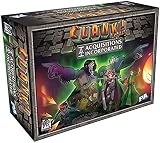
Clank! Legacy Acquisitions
- Deck-building with legacy
- 10+ session campaign
- Replayable game after
- 2-4 players
Pandemic Legacy Season 1 takes the top slot because it is the rare campaign that is genuinely better with two people than with four, and because the 60-minute session fits a weeknight without negotiation. Season 0 earns the runner-up spot as the gentlest on-ramp in this list, and Clank! Legacy wins on tone, with the funniest table talk of any campaign we played.
What Are the Best Two-Player Legacy Games?
The best two-player legacy games are Pandemic Legacy Season 1, Clank! Legacy: Acquisitions Incorporated and The Rise of Queensdale. Pandemic Legacy Season 1 is cooperative, plays 2-4, and runs a 12-plus session campaign in 60-minute chunks. Clank! Legacy is competitive, plays 2-4, and pairs a 10-plus session campaign with a fully replayable game afterwards. The Rise of Queensdale ships with dedicated two-player variant rules, which almost nothing else in the category does.
Two things make a campaign game work for a pair that most reviewers never discuss. First, the session has to end on a clean beat, because you will be packing the box away at 10pm and setting it up again the following week. Second, there has to be something to play when the campaign ends, otherwise the whole purchase turns into a cardboard monument to a relationship that had one good autumn.
Best Legacy Board Games for Couples in October
| Product | Specs | Action |
|---|---|---|
| Pandemic Legacy Season 1 |
|
Check Latest Price |
| Pandemic Legacy Season 0 |
|
Check Latest Price |
| Clank! Legacy Acquisitions Incorporated |
|
Check Latest Price |
 My City My City |
|
Check Latest Price |
 Ticket to Ride Legacy Legends of the West Ticket to Ride Legacy Legends of the West |
|
Check Latest Price |
 Aeon’s End Legacy Aeon’s End Legacy |
|
Check Latest Price |
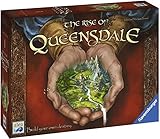 The Rise of Queensdale The Rise of Queensdale |
|
Check Latest Price |
One note before the individual reviews: nothing on this list is a good gift for a couple who wants a game they can pull off the shelf on a whim. Every one of these is a commitment, and several are a commitment measured in months.
1. Pandemic Legacy Season 1 – the Co-op Classic Two Players Can Finish
Pandemic Legacy Season 1 Board Game (Blue) – Epic Year-Long Battle Against Deadly Diseases! Cooperative Strategy Game for Family Game Night, Ages 13+, 2-4 Players, 1 Hr Playtime, Made by Z-Man Games
2-4 players
Cooperative
12+ session campaign
60 minute sessions
Ages 13+
Pros
- Best of the co-op campaigns at exactly two players
- Sealed envelopes keep the story unpredictable
- Production quality feels special from session one
- Character progression gives the arc real weight
Cons
- One-time playthrough ends the value
- Needs the same partner for the full run
- Weeks where nothing feels decisive
Two players is not a compromise in Pandemic Legacy Season 1, it is arguably the sweet spot. With four people the world events queue up faster than you can make them meaningful, and with two each of you is carrying a real share of the decision weight. We finished a full campaign as a pair and never once felt like a spare body was missing.
The co-op structure also solves the classic two-player problem of one partner steamrolling every irreversible choice. You are both looking at the same board state and the same information, and the loss condition is shared, so arguing about who wasted the last round of medic kits is genuinely funny rather than bitter.
Production is the first thing you notice. The board, the pawns, the character cards and the dossiers all feel like artefacts from a world that continues whether you are playing or not, and that atmosphere is a large part of why the campaign lands.
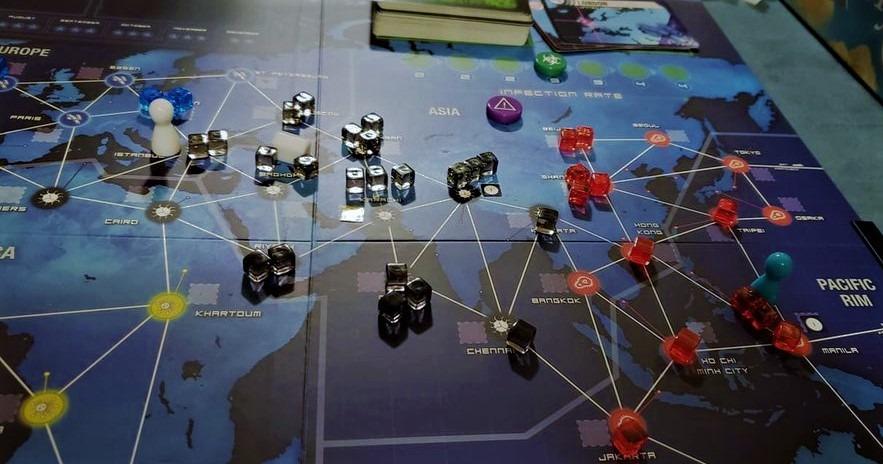
On commitment, the box itself lists 12-plus sessions with a 60-minute estimated playing time, so plan on a full season of game nights. What the box does not tell you is how the middle sags. In our run there were three sessions in a row where the outcome was decided early and the rest was a slow mop-up, and that is where a lot of couples quietly lose interest.
The sealed components are the real engine. Random story beats arrive that you cannot plan around, which means the campaign stays fresh even in month four, and that is the thing a repeatable euro game can never do for you.
Character progression is another quiet win for couples. Your medic levels up, gains a permanent ability, and quietly becomes a shared reference for the rest of the campaign, which is the sort of small running joke that outlives the game itself.
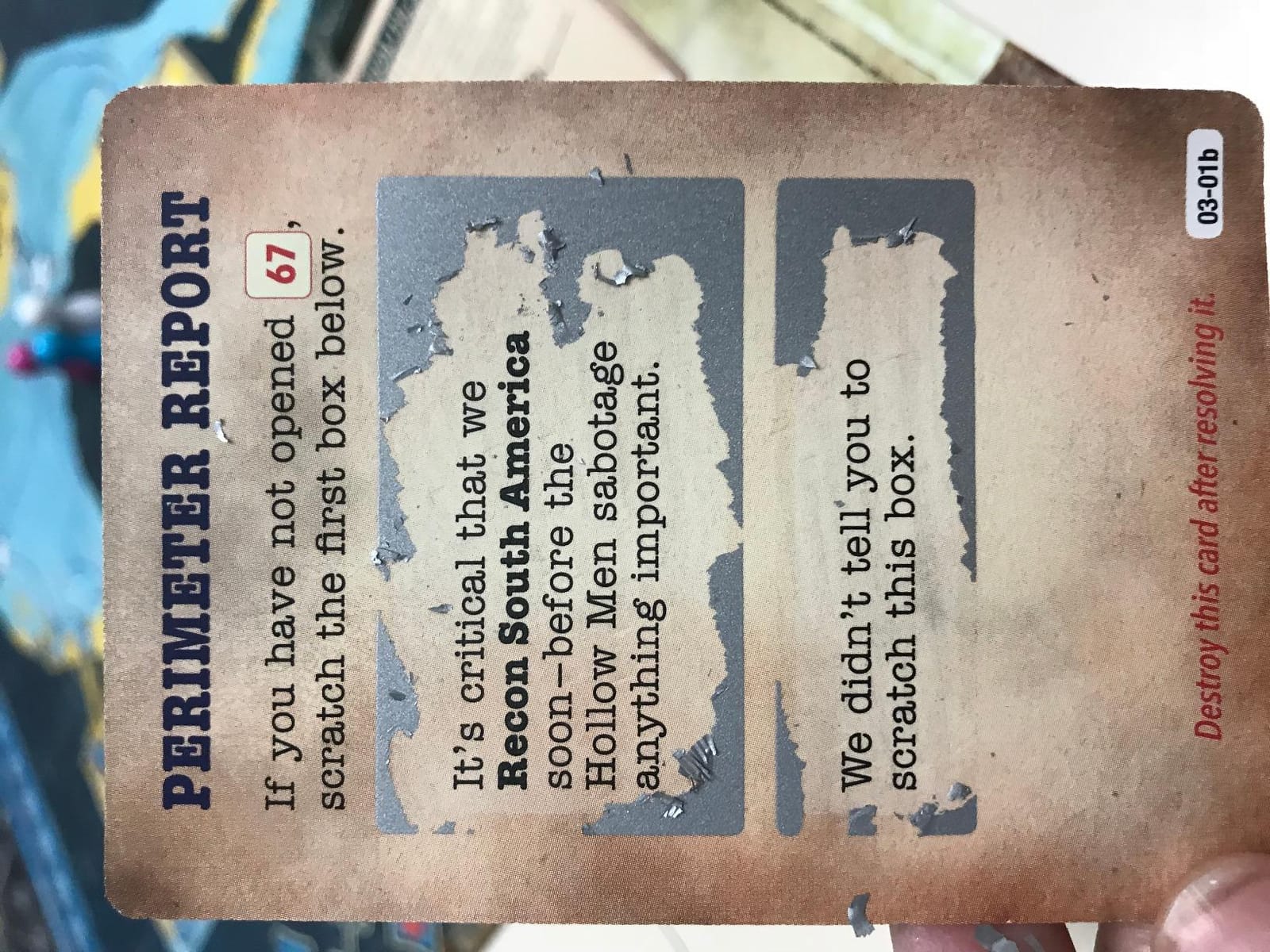
Who Pandemic Legacy Season 1 suits
It suits couples who want a story they are building rather than one they are watching. If your game nights usually end with someone asking what to play next, a campaign answers that question for roughly a year of Tuesdays.
It also suits mixed-skill pairs. Cooperative play is forgiving, because a strong player has to explain rather than simply outplay, and the explanation is where the teaching happens without anyone feeling taught.
Who should skip Pandemic Legacy Season 1
Skip it if either of you loses interest when a game has a defined finish. There is no score sheet at the end, no rematch, and no natural pause button once you are three sessions deep.
Skip it if you are the kind of couple who buys a game, plays it twice, and then forgets it exists. This one asks you to remember it exists for a very long time.
2. Pandemic Legacy Season 0 – the Shortest Route Into the Genre
Pandemic Legacy Season 0 Board Game – Uncover Cold War Secrets and Save Humanity! Cooperative Strategy Game for Family Game Night, Ages 14+, 2-4 Players, 60 Minute Playtime, Made by Z-Man Games
2-4 players
12+ session campaign
60 minute playtime
Ages 14+
Cold War theme
Pros
- Standalone
- no need to own earlier seasons
- Passport alias system is genuinely fun
- Deepest narrative of the trilogy
- Excellent themed components
Cons
- Less beginner friendly than Season 1
- One-time campaign only
- Setup takes longer between sessions
Pandemic Legacy Season 0 is the one we hand to friends who say they are not really board game people. The Cold War espionage framing gives you characters and a premise that carry you through the rules, and the passport system means you are not just playing a disease-management game with a different skin on it.
Every player gets a passport and a cover identity, which is a small mechanic with an outsized effect on a two-player game. It gave our sessions an opening beat, a bit of theatre, and a reason to talk in character for the first ten minutes.
It is a standalone entry, so nobody needs to own Season 1 first. That makes it a clean single purchase for a couple who want one legacy experience and not a boxed trilogy.
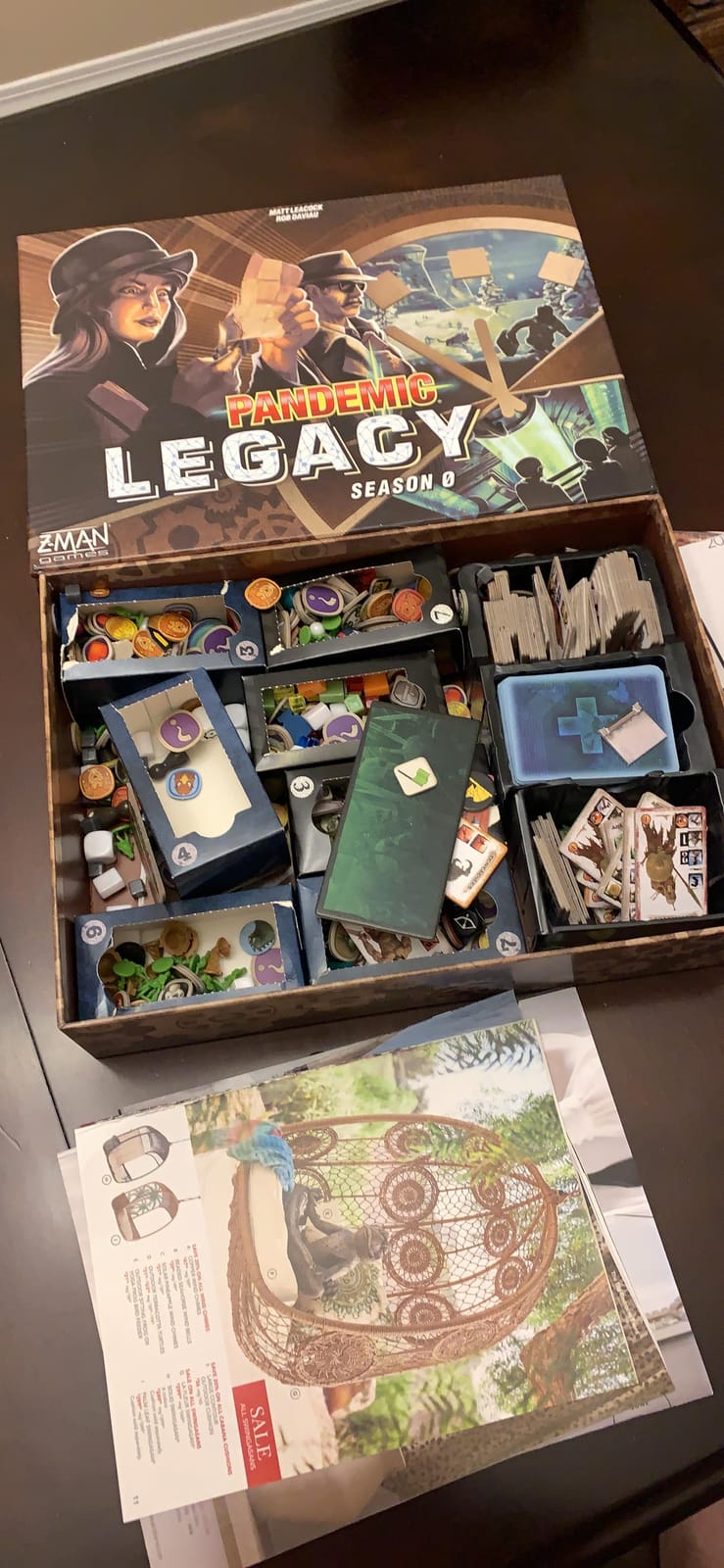
Where it differs from Season 1 is tone. Season 0 is a spy story with a debrief book that reads almost like a novella, so there is more sitting back and listening, and less pure crisis management. Couples who love story-driven play tend to love this one more.
The trade-off is weight. Reviewers consistently call the rules more demanding than Season 1, and we agree, though the difficulty is front-loaded into the first two sessions rather than spread across the whole campaign.
On logistics, the box measures 14.5 by 10.6 by 3 inches and carries 134 legacy cards, 151 other cards, three sticker sheets and eight safe deposit boxes. That is a real teardown and re-setup between sessions, so if your table lives in a cupboard rather than a spare room, factor that in.
Who Pandemic Legacy Season 0 suits
It suits couples who like to perform a little at the table. The aliases, the agents and the debrief give you something to talk about beyond the rules, which is often the difference between a game night that lands and one that does not.
It also suits anyone who finished Season 1 and wants a different flavour rather than the same disease again. The systems overlap, but the experience feels like a different genre entirely.
Who should skip Pandemic Legacy Season 0
Skip it if you want the lightest possible introduction. This is not that. The rules and the component count both ask for patience, and patience is the first thing to erode in a busy month.
Skip it if a long setup between sessions will get to you. It is a shame to love a campaign you cannot get back on the table.
3. Clank! Legacy Acquisitions Incorporated – the Funniest Campaign at the Table
Clank! Legacy: Acquisitions Incorporated
2-4 players
10+ session campaign
30-120 min sessions
Deck-building
Fantasy theme
Pros
- A full replayable game ships after the campaign
- Best humour of any legacy game
- Lighter mood suits casual couples
- Short sessions possible
Cons
- Rules are busy for new deck-builders
- Campaign needs a consistent group
- Longer sessions at higher player counts
Clank! Legacy: Acquisitions Incorporated is the one we recommend when a couple wants a legacy campaign that does not feel heavy. The tone is corporate fantasy, essentially two people clawing their way up a dungeon-monster-themed company, and the jokes land often enough that it never feels like homework.
It is competitive, and the competition is gentler than it sounds. You are building decks and racing to acquire locations, but the losses are visible and funny rather than devastating, which matters if you are playing to spend an evening together rather than to settle something.
The best feature for couples is structural. A fully replayable standalone game is included for use after the campaign ends, so this purchase does not die on the shelf. We finished our campaign and started the follow-up game two weeks later, which is exactly what we wanted.
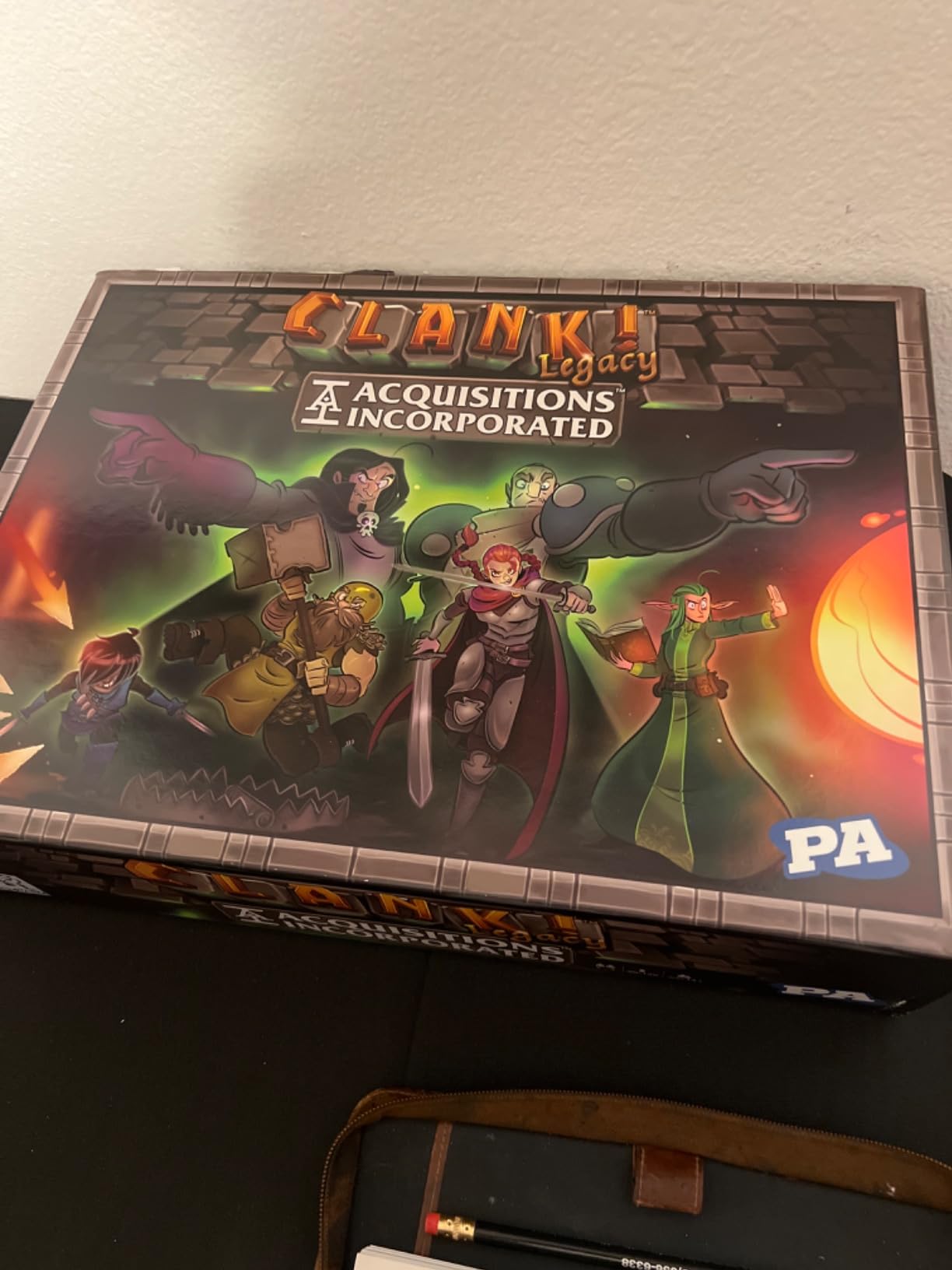
Sessions scale with player count in practice, and the box lists a 30 to 120 minute range. As a pair you will usually land in the middle of that, and the shorter end of the range is genuinely achievable on a weeknight when you both have early starts.
The deck-building underneath gives mixed-skill pairs a decent balance, because a weaker player can recover with a good draw rather than being outplayed structurally. That is a quiet mercy in a competitive game.
On the negative side, the component and card management is heavier than the light tone suggests. Reviewers who enjoyed it still flag the rule load for anyone new to deck-building, and we would not call it a first strategy game for a nervous beginner.
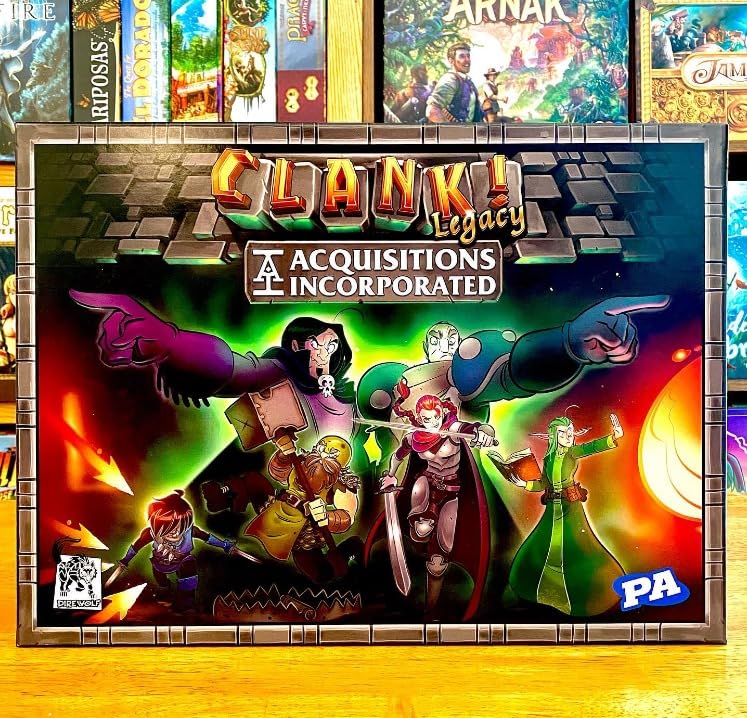
Who Clank! Legacy suits
It suits couples who want a campaign but dread grim storylines. The comedy carries the middle sessions, and it is the pick we recommend when a partner signs up for game night mainly for the company.
It suits people who are already mildly interested in deck-building. The card engine gives you something to look forward to between sessions, and the post-campaign game rewards you for learning it.
Who should skip Clank! Legacy
Skip it if either of you needs a legacy game to be gentle. The campaign is competitive and the cards are unforgiving, so if losing to your partner on a Tuesday would sting, pick a co-op instead.
Skip it if a longer session would kill the plan. The upper end of the range is a whole evening, and you cannot always choose your player count by yourself.
4. My City – the Lightest Legacy Game With 24 Episodes
Thames & Kosmos My City | Family – Friendly | Legacy Board Game | Kosmos Games | 2 to 4 Players | Ages 10 and Up | Award Winning Designer Reiner Knizia , Blue
2-4 players
24 episode campaign
30 minute episodes
Ages 10+
Simultaneous play
Pros
- Shortest sessions in this roundup
- No downtime between turns
- Flip board for eternal mode after the campaign
- Easy to teach to a non-gamer
Cons
- Too simple for heavy strategy players
- Paper components rather than premium plastic
- One campaign only
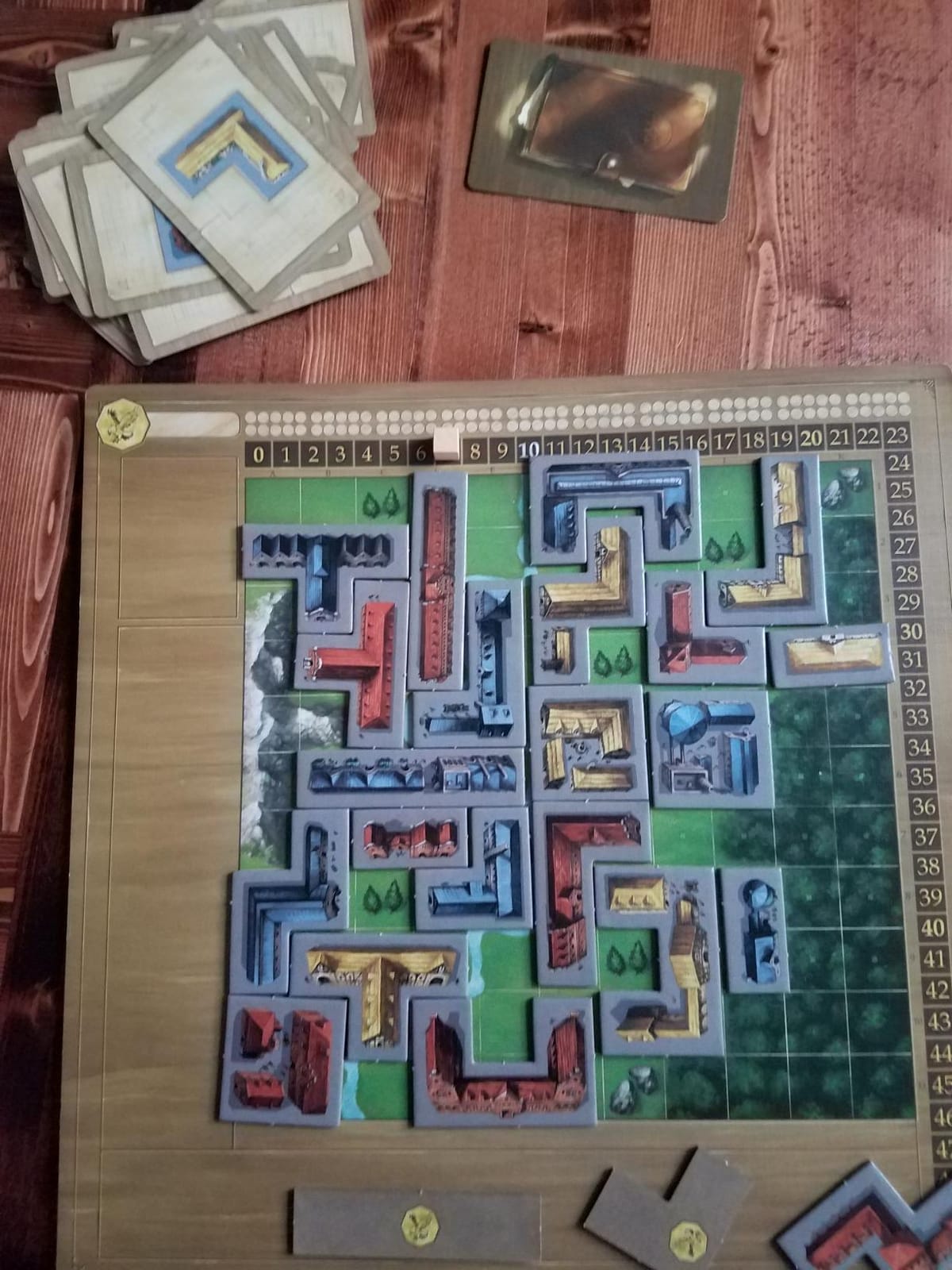
My City is the most useful thing in this roundup if your real problem is session length. Twenty-four episodes at roughly 30 minutes each means you can play one and still have an evening, which is the difference between finishing a campaign and abandoning one at episode six.
Designed by Reiner Knizia, it uses simultaneous play, so neither of you is ever sitting through the other person’s turn. For a couple that is a meaningful design choice, because the dead minutes in a two-player game are the minutes where phones come out.
It is also the easiest to teach. A couple who has never played a legacy game can usually run an episode with one page of rules, and the tile-laying city building underneath is intuitive enough that you both know what you are doing by the second round.
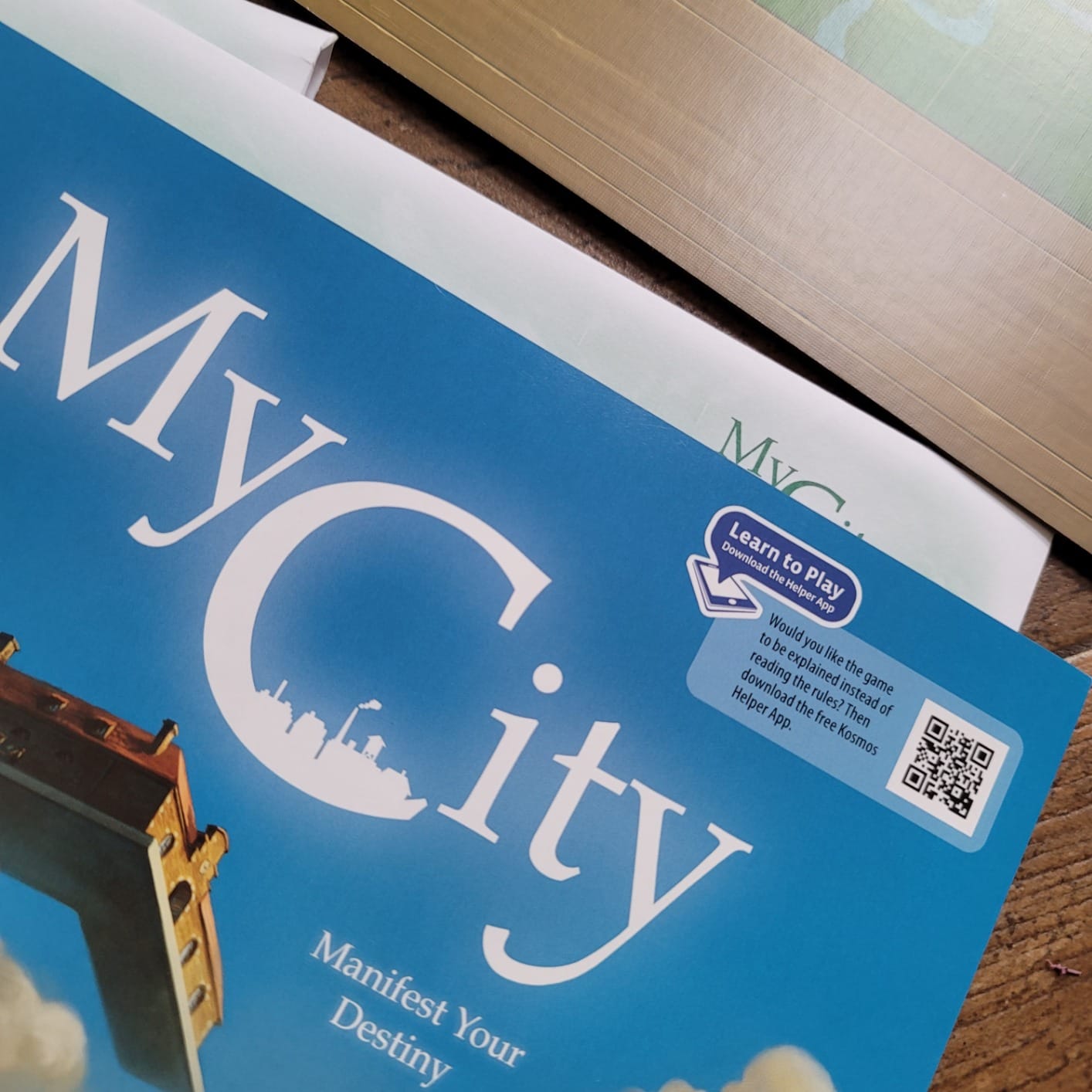
The legacy layer is eight sealed envelopes that unlock progressively over the 24 episodes, so the campaign curve is long and gentle rather than a hard climb. Nothing gets thrown at you in episode three that the first two did not prepare you for.
After the campaign, the flip board turns the whole thing into an endless mode that plays differently from the campaign itself. That is the single best post-campaign feature in this roundup, and it removes most of the value objection we normally raise about legacy games.
What you give up is weight. Reviewers who prefer heavier strategy find the systems too simple, and the components are paper-based rather than plastic, which tells you immediately where this sits in the range.
Who My City suits
It suits couples with irregular schedules. If some weeks only one of you is free, or if the two of you rarely have a free evening block, a 30-minute episode is a campaign you will actually finish.
It suits a mixed pair where one partner is hesitant about games. There is no rulebook anxiety here and no failure state to argue about, so it is also a reasonable one to start on and then graduate from.
Who should skip My City
Skip it if you want a legacy game with real dramatic tension. Nothing bad ever happens, and the campaign ends without a sting in its tail. If you want stakes, this is not them.
Skip it if tactile components matter to you. The paper tiles are serviceable and the box is enormous, but nobody is going to unbox this and gasp.
5. Ticket to Ride Legacy Legends of the West – the Best Pick for Short Sessions
Asmodee Ticket to Ride Legacy: Legends of the West Board Game – The Ultimate Train Adventure! Strategy Game, Family Game for Kids & Adults, Ages 10+, 2-5 Players, 20-90 Min Playtime
2-5 players
12 game campaign
20 min minimum playtime
Ages 10+
Route building
Pros
- Familiar route-building rules ease the entry
- 280 plastic train cars feel special
- Thirteen boards change as the campaign runs
- Designers with serious track records
Cons
- The campaign is strictly one-time
- Session length grows as the campaign advances
- Bulkier box and heavier components
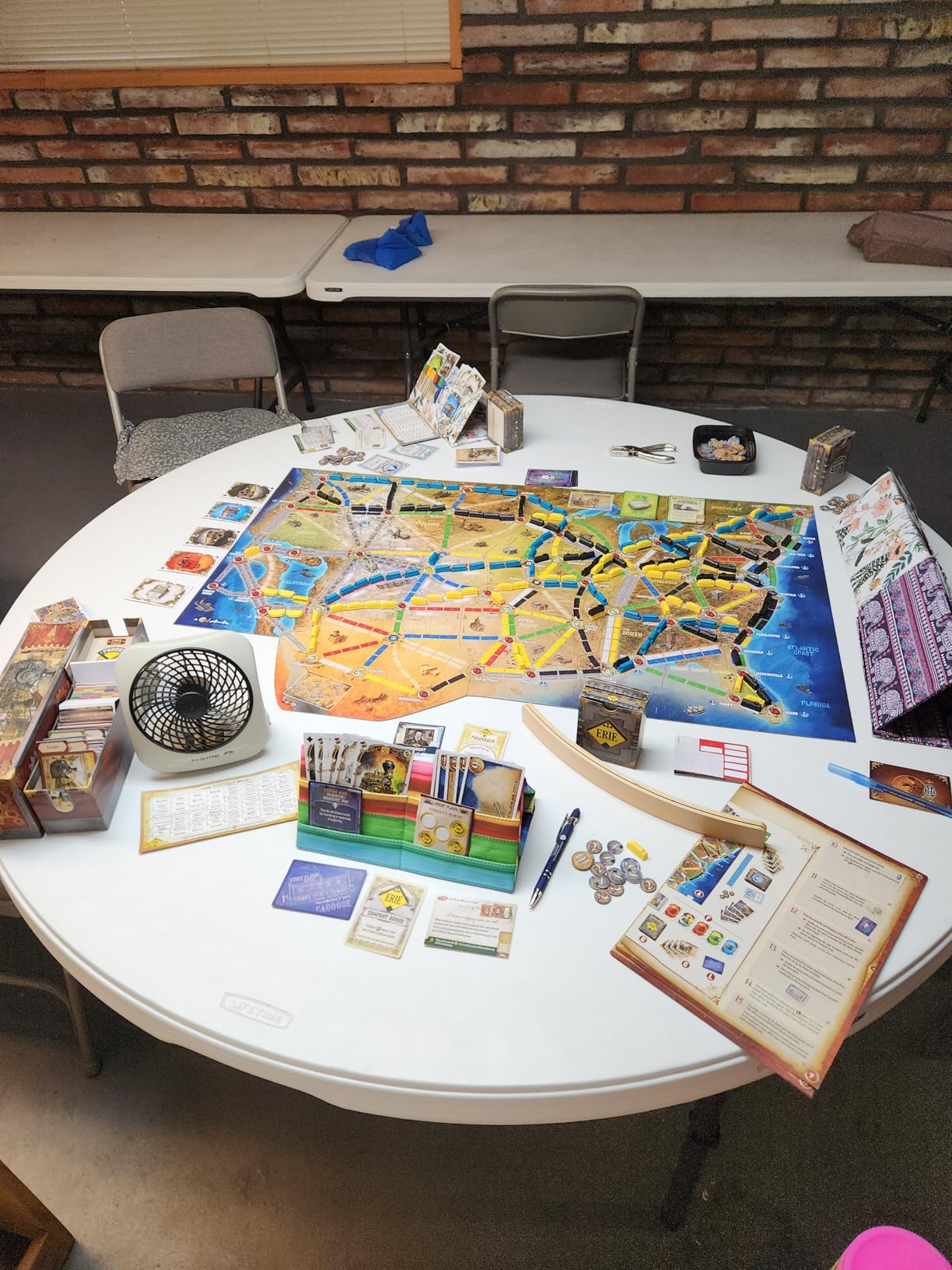
If either of you already knows Ticket to Ride, this is the lowest-friction legacy campaign available. The route building engine you know does the heavy lifting, and the legacy layer adds new rivers, new tunnelling and new constraints as the campaign moves west.
Two players is fully supported here, and the box lists 2 to 5, so this is a game you can keep playing with friends later. That flexibility is the opposite of a locked-in campaign and it matters for households with shifting social circles.
The components are the best in this roundup by a distance. Two hundred and eighty plastic train cars and thirteen frontier boards make the campaign feel physical, and putting the trains on the board at the end of a session has a satisfying ceremony to it.
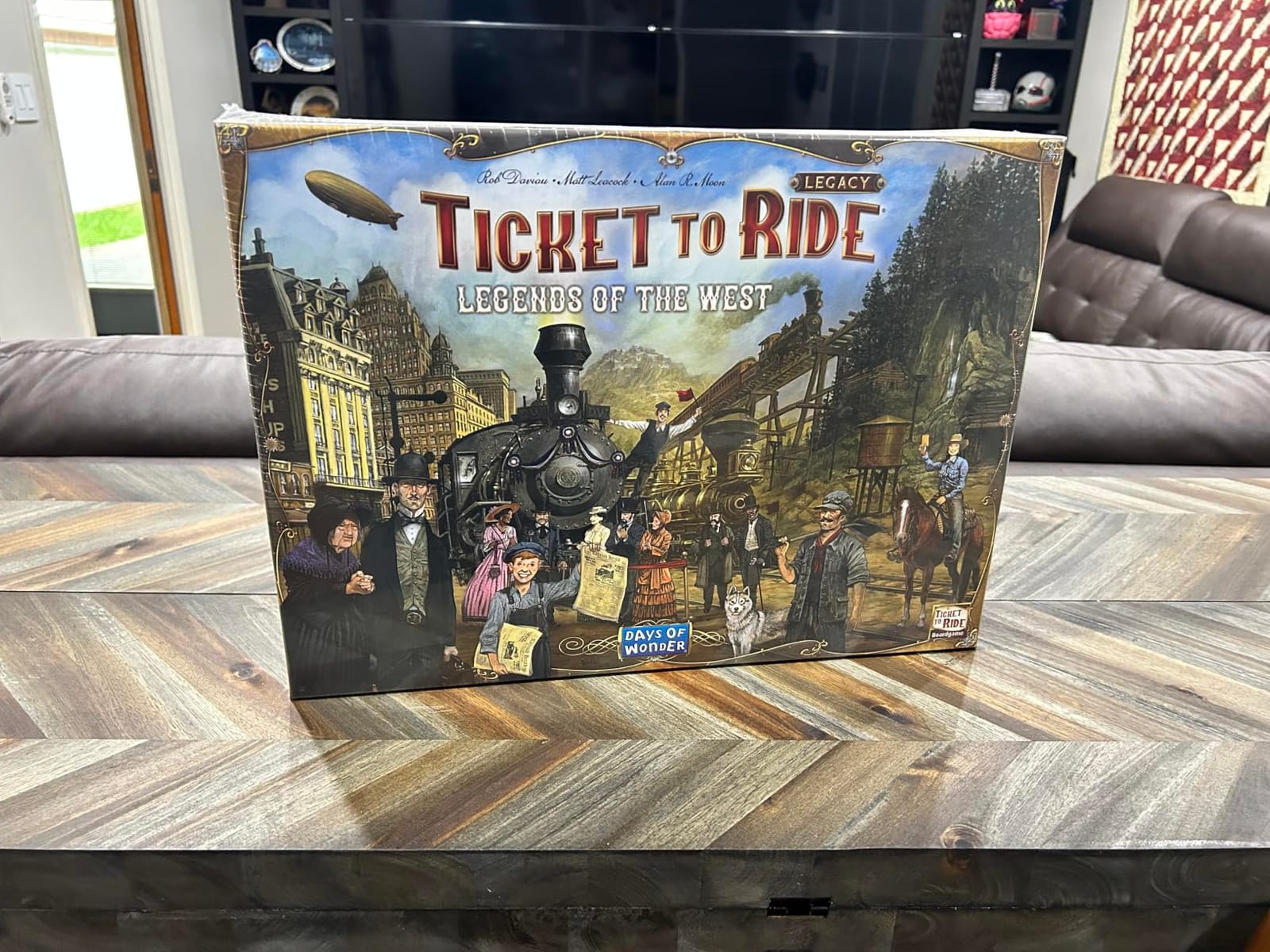
The campaign runs twelve games, and the design team behind it is Rob Daviau, Matt Leacock and Alan R. Moon. The story cards and newspaper cards between rounds give the campaign a narrative spine rather than just a series of new rules.
One thing to plan for is drift. Early sessions can be quick, but as the board fills and new rules arrive, the middle of the campaign stretches. The listed playtime starts at 20 minutes, so treat that as a floor rather than an average.
It is a fairly large box at 17.13 by 12.59 by 4.21 inches, and a lot of that is the plastic. If you are tight on storage, know that this is one of the two boxes on this list that needs real shelf space.
Who Ticket to Ride Legacy suits
It suits couples who want one entry point and no lecture. The rules you already half-know do the teaching, so you can get to the interesting part, the campaign, almost immediately.
It also suits couples whose friends rotate. Because a larger group can join at any point, this is the one campaign here that does not punish you for having a different social life in month three.
Who should skip Ticket to Ride Legacy
Skip it if you want a long campaign. Twelve games is respectable but it is over before most couples expected, and you will be looking for the next one sooner than you think.
Skip it if you dislike competitive route building. Two players on a map like this will find themselves blocked often, and that is a specific kind of frustration rather than a universal one.
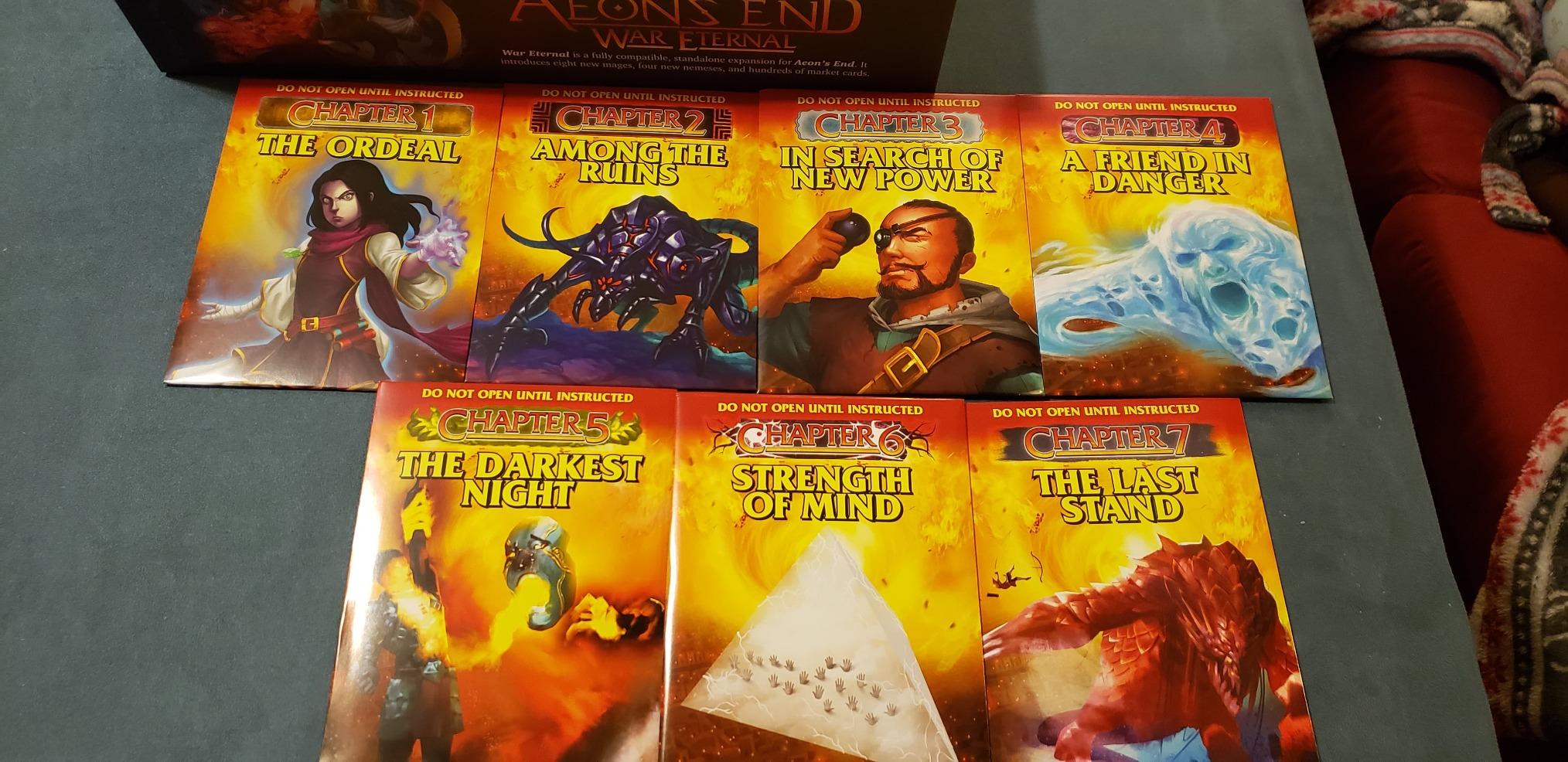
6. Aeon’s End Legacy – the Deepest Deck-Builder for Long Evenings
Aeon’s End: Legacy, The First Legacy Deck-Building Game
1-4 players
45-90 minute sessions
Cooperative
Legacy deck-building
Ages 14+
Pros
- Plays solo
- so one player is never stuck
- Deepest strategy in this roundup
- 80% compatible with the base game
- Real narrative payoff across sessions
Cons
- Longest sessions on the list
- Steep learning curve for deck-builders
- Components altered permanently
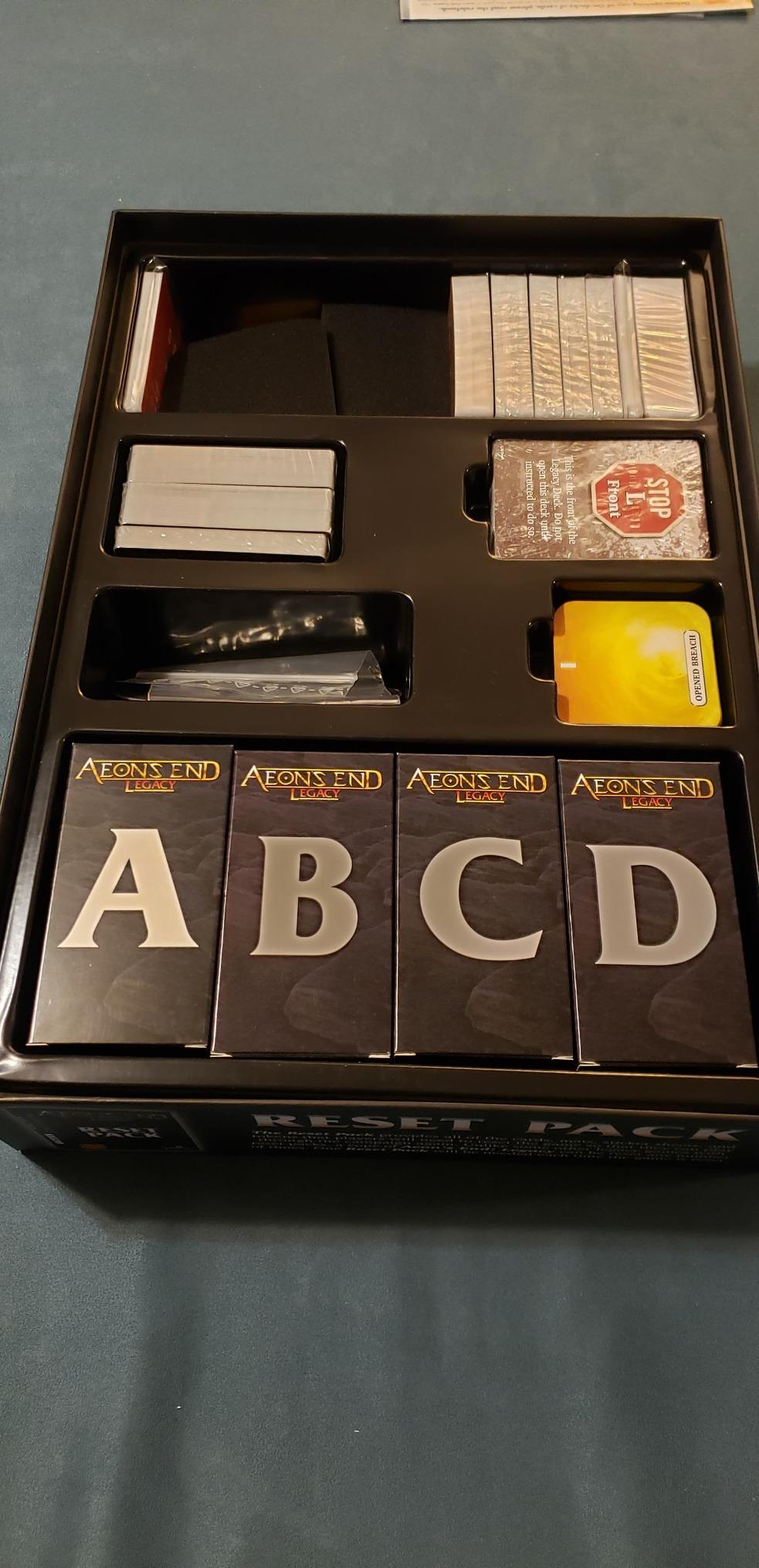
Aeon’s End Legacy was the first legacy deck-builder ever made, and it still has the most going on under the hood. If you are the couple that reads rules before playing, this is the one that will hold your attention, because the strategic space is enormous compared with anything else here.
The unique selling point for a couple is flexibility: it supports 1 to 4 players. If one of you travels for work, or one partner simply is not feeling it that week, the campaign does not stall. That single fact makes it the safest commitment on this list.
Sessions run 45 to 90 minutes, which is the longest range here. We would treat the 90-minute end as the realistic figure for the campaign proper, with the shorter end reserved for lighter weeks.
Cooperative play means no losing to your partner, which is a real consideration for some couples and a non-issue for others. The pressure comes from the campaign itself rather than from the other person across the table.
It sits alongside the regular Aeon’s End system, with the box noting around 80 percent compatibility with the base game and expansions. If one of you already owns Aeon’s End, the component value here is much higher than the campaign alone.
The difficulty is real. Reviewers and our own sessions agree that the learning curve is the steepest in this roundup, and it leans hardest in the first few sessions before the systems start clicking.
Who Aeon’s End Legacy suits
It suits the couple with uneven schedules, or with one partner who plays solo when the other is busy. No other campaign on this list tolerates a missing player that gracefully.
It suits experienced strategy players who want the legacy format to be the main event rather than a wrapper. The campaign here has genuine depth rather than mostly new rulebook pages.
Who should skip Aeon’s End Legacy
Skip it if a 90-minute session is a non-starter. This is the one on the list that reliably needs a proper free evening, and campaigns die fastest when the session you need is the one you never have.
Skip it if either partner is new to deck building and unwilling to read ahead. The systems stack faster here than anywhere else in the roundup.
7. The Rise of Queensdale – the One Built Around Two Players
Ravensburger The Rise of Queensdale for Ages 12 & Up – Legacy Strategy Board Game, Brown
2 player variant included
Worker placement
Legacy evolution
Ages 12+
450+ counters
Pros
- Dedicated 2-player rules are rare in this category
- Deep worker placement with real evolution
- Huge component spread
- 21 wooden dice add a lot of texture
Cons
- Lowest rating in this roundup
- Setup is a genuine chore
- Worker placement is a steep first step
The Rise of Queensdale is the only game in this roundup that ships with a proper dedicated 2-player variant, and if you have ever finished a worker placement game at a five-player table, that single fact is worth a look.
It is also the most openly legacy of the seven. More than 500 stickers and over 450 counters get applied across the campaign, so the board visibly becomes your campaign rather than a generic map with stickers on it.
Twenty-one wooden dice do a lot of the heavy lifting and give the game a physical, chunky feel that photographs well and survives a lot of handling.
On the honest side of the ledger, this is the entry with the thinnest review base in the list, and it is worth reading a few recent owner accounts before committing a month of evenings to it. The 2-player ruleset is the reason it made the cut regardless, because almost nothing else in the category builds the whole experience around a pair.
Budget the table as well as the calendar. With 100 or more wooden tokens, hundreds of stickers and 21 dice to sort before you begin, the setup is closer to a small jigsaw puzzle than to a normal box opening, and doing it badly is how couples end up abandoning a campaign before episode one.
Who The Rise of Queensdale suits
It suits a pair who both enjoy heavy strategy and want a two-player game that was designed as one. The 2-player rules are a real ruleset, not a paragraph of adjustments.
It suits a couple with plenty of table space and time. The component count is enormous and the setup is the price of admission.
Who should skip The Rise of Queensdale
Skip it if you want a light, forgiving entry. Worker placement is one of the more demanding first experiences in modern gaming, and the rating here is the lowest in the roundup for a reason.
Skip it if short sessions are the priority. This is a long setup and a longer sitting, and the campaign rewards pairs who can give it an uninterrupted evening each week.
How to Play Legacy Games as a Two-Player Household
Most published legacy campaigns were designed for three to five players, which is exactly why couples so often assume they are locked out. They usually are not. The base system scales down, and the second player slot frequently gets a rule adjustment that reduces the chaos rather than the fun.
Where you have to do work is in the schedule. A campaign that expects a weekly session is a different product from one that expects a session every fortnight, so agree the rhythm before you open the first box. We set a target of one session a fortnight and finished each campaign in roughly six months.
On the skill gap, the fix is not to teach your partner less. The fix is to assign jobs. One of you runs the campaign knowledge, the other handles the board state and the reference sheets, and you swap halfway through so neither of you is permanently the tutor.
Cooperative campaigns are the safest choice for a mismatched pair, because experience shows up as speed rather than as winning. If you do play competitively, pick games where the losing position recovers, and agree in advance that nobody brings up the third game of the campaign.
Finally, decide the abort policy in advance. A campaign you stop at session four is a story you told together, and boxes can be put away without anyone feeling they wasted anything. Agreeing that in advance is what stops the walk to the cupboard from turning into a row.
How to Choose a Campaign Length That Fits Your Relationship
Campaign length is the number one practical objection couples raise, and it is worth answering in hours rather than games. Multiply the session count by the session length and you have the real number of evenings you are signing up for.
Under about ten hours, you are looking at My City, Clank! Legacy or Ticket to Ride Legacy. These finish inside a season and the momentum rarely dies, which makes them the right choice for a first campaign or for a couple with a busy autumn.
Between ten and twenty hours, you have Pandemic Legacy Season 0 and Season 1. This is the range most couples end up in, and it is long enough to feel like a real story and short enough to finish before the novelty is gone.
Above twenty hours, Aeon’s End Legacy and The Rise of Queensdale sit. Both reward the investment and both punish an interrupted schedule, so treat them as a purchase for a settled period rather than a general gift.
One final filter: check whether there is something to play when the campaign ends. My City, Clank! Legacy and Ticket to Ride Legacy all give you a reason to keep the box; the others mean the campaign is the entire value, which is fine, but it should be a decision rather than a surprise.
What to Play After the Campaign Ends
Legacy games are one-time purchases, and treating that as a flaw misses the point. A campaign is closer to a season of a television show than to a purchase, and the box at the end is a record of something you built together.
That said, three of these seven hand you something playable afterwards. My City flips into an endless mode, Clank! Legacy includes a fully replayable standalone game, and Ticket to Ride Legacy leaves you a permanent board that works well for open play. Any of those three is a safer buy for a gift than the rest.
The other four end cleanly and go on a shelf. We are fine with that, because the campaign is the thing, but it is worth saying out loud before you commit two people to a year of Tuesdays.
Is a Legacy Game Right for Us as a Couple?
There are four genuine disqualifiers, and none of them are about the games themselves.
Fights about permanent damage. Legacy mechanics punish irreversible choices, and a session where your partner’s plan destroys three cities can curdle. If you are not able to laugh about a campaign wipe, choose a co-op entry instead.
Campaign abandonment. If your household has a history of a game hitting a wall in week three, the short-pick games here are the only safe options. A 24-episode run you never finish is the worst possible outcome for money and for the shelf.
The teaching curve. Season 0 and Aeon’s End Legacy both ask more up front than the rest. If either of you has never read a rulebook voluntarily, My City or Ticket to Ride Legacy is a gentler door.
And a genuine disagreement about commitment. One of you wanting a monthly shared project while the other wants a Tuesday night game is a real problem, and no title on this list fixes it. Resolve that first, then shop.
Frequently Asked Questions
What are the best two-player legacy board games?
Pandemic Legacy Season 1, Clank! Legacy Acquisitions Incorporated and The Rise of Queensdale are the strongest two-player legacy games. Pandemic Legacy Season 1 plays 2-4 in cooperative 60-minute sessions across a 12-plus session campaign. Clank! Legacy is competitive for 2-4 and includes a replayable game after the campaign. The Rise of Queensdale ships with dedicated 2-player variant rules.
Are legacy board games good for couples?
They can be, because a campaign turns separate game nights into one shared story with an ending. The best designs for two people give both partners real decisions, finish in a clean 30 to 90 minute session, and do not punish a lost week. The risk is the commitment, since a campaign cannot be paused and reset without ending it.
Can you play a legacy game with only two people?
Yes. Pandemic Legacy Season 1 and Season 0, Clank! Legacy, My City and Ticket to Ride Legacy all support two players, and Aeon’s End Legacy supports 1 to 4. The Rise of Queensdale includes a dedicated 2-player variant. Expect slightly easier balance and more downtime, but every campaign here is playable as a pair.
How long does a Pandemic Legacy campaign take?
Pandemic Legacy Season 1 and Season 0 are both listed at 12-plus sessions with a 60-minute playing time, so budget roughly twelve to eighteen evenings depending on how many sessions you choose to play through. If one session a week feels like too much, a fortnightly rhythm keeps the story intact and the commitment manageable.
What happens when you finish a legacy game campaign?
Usually the box becomes a keepsake, because a completed campaign is a one-time story rather than a repeatable game. Three picks here avoid that: My City has a flip-board endless mode, Clank! Legacy includes a fully replayable standalone game, and Ticket to Ride Legacy leaves a permanent board that works for open play afterwards.
Final Recommendation
Start with Pandemic Legacy Season 1 if you want the definitive two-player legacy experience, and accept that it is a year-long project. Start with My City if your schedule is unpredictable, because a 30-minute episode across 24 episodes is the only realistic way a busy couple finishes a campaign. Experienced players who want real strategic depth should look at Aeon’s End Legacy, and anyone who wants a story and a reason to keep the box should look at Clank! Legacy.
Whichever you pick, agree the session rhythm and the abort policy before you open the first envelope. Those two conversations matter more to a successful campaign than any rulebook.