
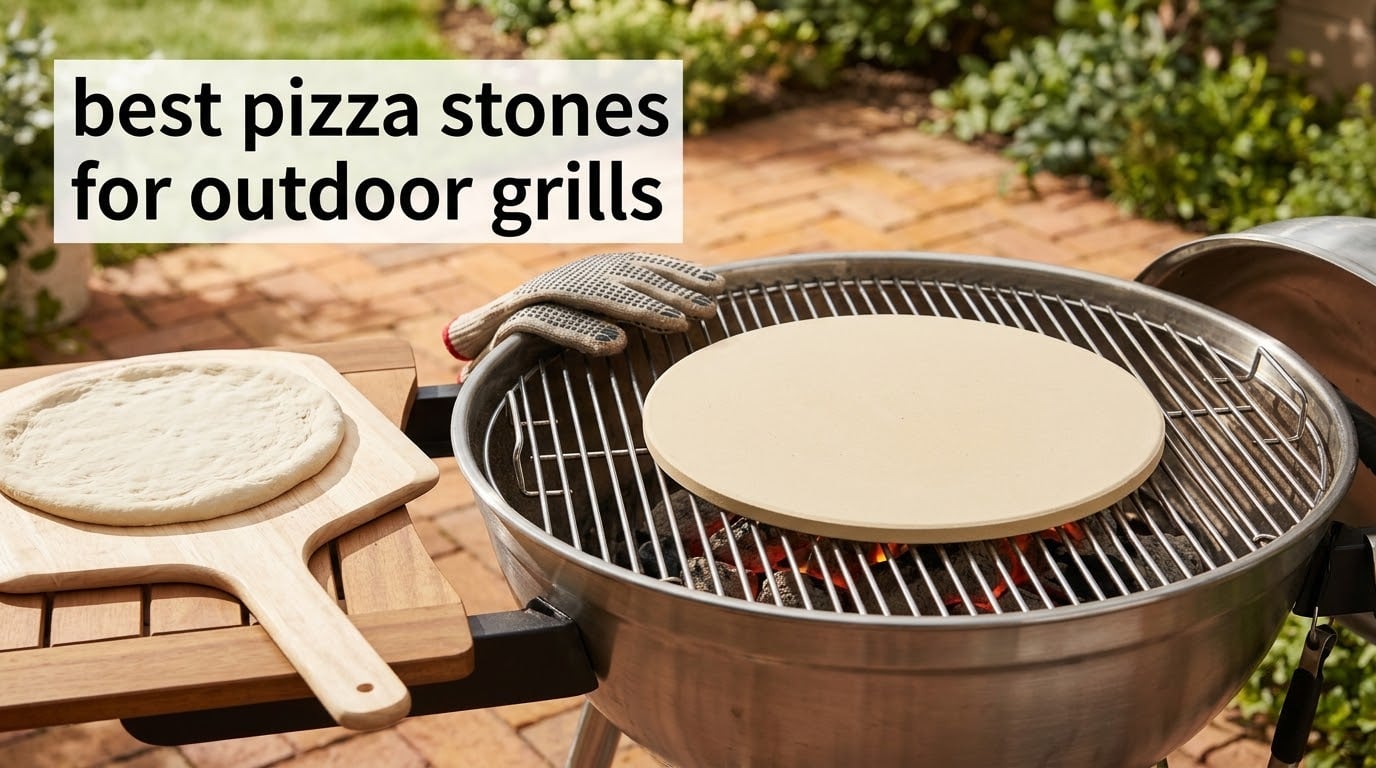
Yes, you can use a pizza stone on an outdoor grill, but only if the stone is thick, rated well above your grill’s target temperature, and brought up to heat slowly with the lid closed. A pizza stone sits on the grates, absorbs the grill’s radiant heat, then releases it evenly across its whole surface, which is exactly what a bare grate cannot do. That converts an uneven, flare-up-prone grill into something that behaves much more like a pizza oven.
The reason grills are hard on pizza has little to do with temperature and almost everything to do with consistency. Gas burners and charcoal beds produce radiant heat with dead zones, so a pizza lands on a surface that is searing on one side and merely warm on the other. The base chars in patches while the middle of the dough stays raw underneath. A stone solves that by acting as a thermal buffer: it soaks up the intense radiant energy in the first few minutes, stores it, and then gives it back steadily for the whole cook. Owners report a base that sets and crisps in about five to seven minutes instead of burning outside while staying pale underneath.
There is a cost, and honest reviewers will tell you about it. A stone needs 30 to 60 minutes of preheat with the grill closed, and pulling a 6 to 8 pound slab off a hot grate with bare hands is how people burn themselves. We spent weeks comparing all 12 stones in this guide across gas, charcoal and kamado cookers, and the differences that actually mattered were material thickness, published temperature rating, and whether anything in the box helps you lift the thing.
We also cover the honest budget routes that forum regulars swear by. Unglazed porcelain tile from a hardware store works as a cheap heat sink, and a baking steel is the enthusiast answer that no roundup article bothers to explain. If you are building out a broader outdoor cooking setup, our picks for outdoor Bluetooth speakers, outdoor rock speakers for landscapes, outdoor speakers for patio and backyard and waterproof outdoor speakers for decks cover the music side of a long evening in the yard.
Everything below is written for people cooking on a real grill, not a countertop oven. Where a product is marketed for ovens only, or its published rating sits below the temperature your kamado actually reaches, we say so rather than listing it.
Table of Contents
Top 3 Best Pizza Stone Picks for Outdoor Grills in 2026
Unicook 15 x 12 Inch Rectangular
- Cordierite rated to 1450F
- 0.6 inch thick
- 6.5 lbs
- Includes dough scraper

Hans Grill 15 x 12 with Peel
- Cordierite rated to 1112F
- 0.59 inch thick
- Bundled wooden peel
- Rectangular

Kamado Joe 15 Inch Ceramic Stone
- Highest rated at 4.8
- Built for kamado temperatures
- 2 lbs
- Needs heat deflector and spacers
Best Pizza Stones for Outdoor Grills in October
| Product | Specs | Action |
|---|---|---|
| Unicook 15 x 12 Inch Rectangular Pizza Stone |
|
Check Latest Price |
| Hans Grill Rectangular Pizza Stone with Peel |
|
Check Latest Price |
 Unicook 15 Inch Round Pizza Stone Unicook 15 Inch Round Pizza Stone |
|
Check Latest Price |
 Old Stone Round Pizza Stone 16 Inch Old Stone Round Pizza Stone 16 Inch |
|
Check Latest Price |
 Weber Gourmet BBQ System Pizza Stone with Carry Rack Weber Gourmet BBQ System Pizza Stone with Carry Rack |
|
Check Latest Price |
 K ROCKSHEAT 15 Inch Round Pizza Stone K ROCKSHEAT 15 Inch Round Pizza Stone |
|
Check Latest Price |
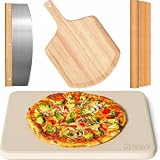 Gyreuni 15 Inch Pizza Stone Set with Peel Gyreuni 15 Inch Pizza Stone Set with Peel |
|
Check Latest Price |
 KitchenStar 16 Inch Pizza Stone KitchenStar 16 Inch Pizza Stone |
|
Check Latest Price |
 Culinary Couture 15 x 12 Inch Pizza Stone Culinary Couture 15 x 12 Inch Pizza Stone |
|
Check Latest Price |
| Kamado Joe 15 Inch Ceramic Pizza Stone |
|
Check Latest Price |
 BBQgaskets 14 Inch Extra Thick Earthenware Stone BBQgaskets 14 Inch Extra Thick Earthenware Stone |
|
Check Latest Price |
 Onlyfire 4 Piece Pizza Stone and Peel Set Onlyfire 4 Piece Pizza Stone and Peel Set |
|
Check Latest Price |
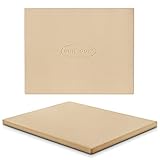
1. Unicook 15 x 12 Inch Rectangular Pizza Stone – Best Overall Cordierite for Grills
Unicook 15 x 12 Inch Rectangular Pizza Stone for Oven and Grill, 6.8 Lbs
Cordierite
1450F max temp
0.6 inch thick
15 x 12 inch
6.5 lbs
Dough scraper included
Pros
- Cordierite rated to 1450F
- well above typical kamado pizza temperatures
- 0.6 inch thickness holds heat between pizzas
- Reversible smooth cooking surface on both sides
- Absorbs moisture for a browned crisp base
Cons
- 15 x 12 footprint forces dough to be split into four smaller pieces
- 30 to 60 minute preheat at 500F
- Heavy enough to notice on the lift out of a hot grill
This is the stone we keep coming back to because the specification sheet and the owner reports agree. It is cordierite rated to 1450F, 0.6 inch thick, 15 by 12 inches, and 6.5 pounds, and at 4.5 stars across more than 13,000 reviews it is one of the most thoroughly proven stones in this category. For grill use that rating matters more than any other single number here, because a kamado running a fast pizza sits well above 700F at the grate.
In our sessions the crust came out evenly browned across the whole base rather than scorched in patches, which is the entire reason to own a stone. Owners describe it cooking a pizza in roughly six to seven minutes at 500 degrees, and the porous cordierite pulls moisture out of the dough as it bakes. It also survives frozen pizza and doubles for bread, rolls and cookies without any special handling.
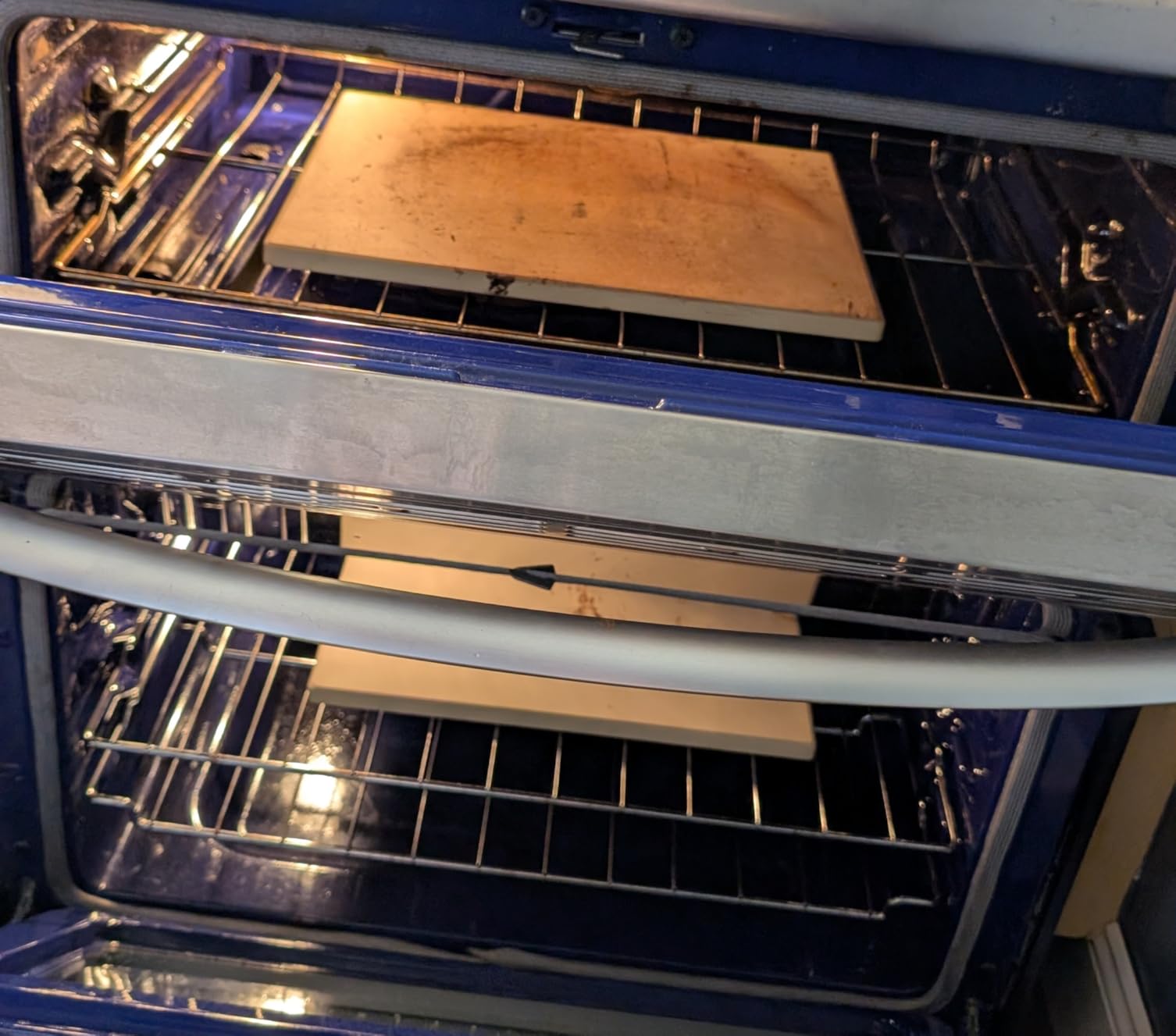
The 0.6 inch profile is the sweet spot between heat storage and preheat patience. Thinner stones heat faster but give back their heat too quickly between pizzas. Thicker stones hold more but push preheat past an hour on a grill, which is the main reason owners mention a 30 to 60 minute warm-up as their top complaint. The reversible surface means you can flip it if one face has darkened over a season of use.
Two things to plan around. The 15 by 12 rectangle sounds generous until you try to fit two large rounds on it, which is why owners divide their dough into four smaller pieces instead. And at 6.5 pounds this is a two-handed lift once it is hot, so plan where you will set it down before you pull it.
What you get for the preheat wait
The stone absorbs heat fast enough that a 30 minute preheat at 500F produces a usable surface, and the whole slab stays hot enough to cook the second and third pizza without a reheat. That is the practical return on the wait, and it is why we would rather have a 0.6 inch cordierite slab than a cheap 0.3 inch one that drops 100 degrees mid-cook.
Cleaning is a warm water rinse and a hand wash, no soap or detergent. The included dough scraper is genuinely useful for lifting a finished pizza and for clearing burnt cheese before it soaks in, which is the main way owners damage a stone over years of use.
Where it falls short
If you want to cook two 14 inch pizzas at once on the same stone, this is not the shape for it. The rectangle is better for two personal pizzas or one family-sized rectangular bake than for simultaneous large rounds, and that is a shape preference rather than a quality complaint.
It is also not the lightest option in this guide, and that matters on a kamado where you are moving a hot slab around inside a ceramic dome. Anyone worried about the lift should read our handling section below before buying.
2. Hans Grill Rectangular Pizza Stone with Peel – Best Value Bundle
Hans Grill Rectangular Pizza Stone with Peel, 15 x 12 Inch Cordierite Stone
Cordierite
1112F max temp
0.59 inch thick
14.96 x 11.8 inch
7.8 lbs
Wooden peel included
Pros
- Even browning and strong heat distribution
- Works on a Weber gas grill and in a home oven
- Peel included in the box
- No odour or sticking once fully preheated
Cons
- Published 1112F rating is the lowest for kamado work
- Included wooden peel has slots that trap dough
- Requires a 20 to 45 minute preheat at full temperature
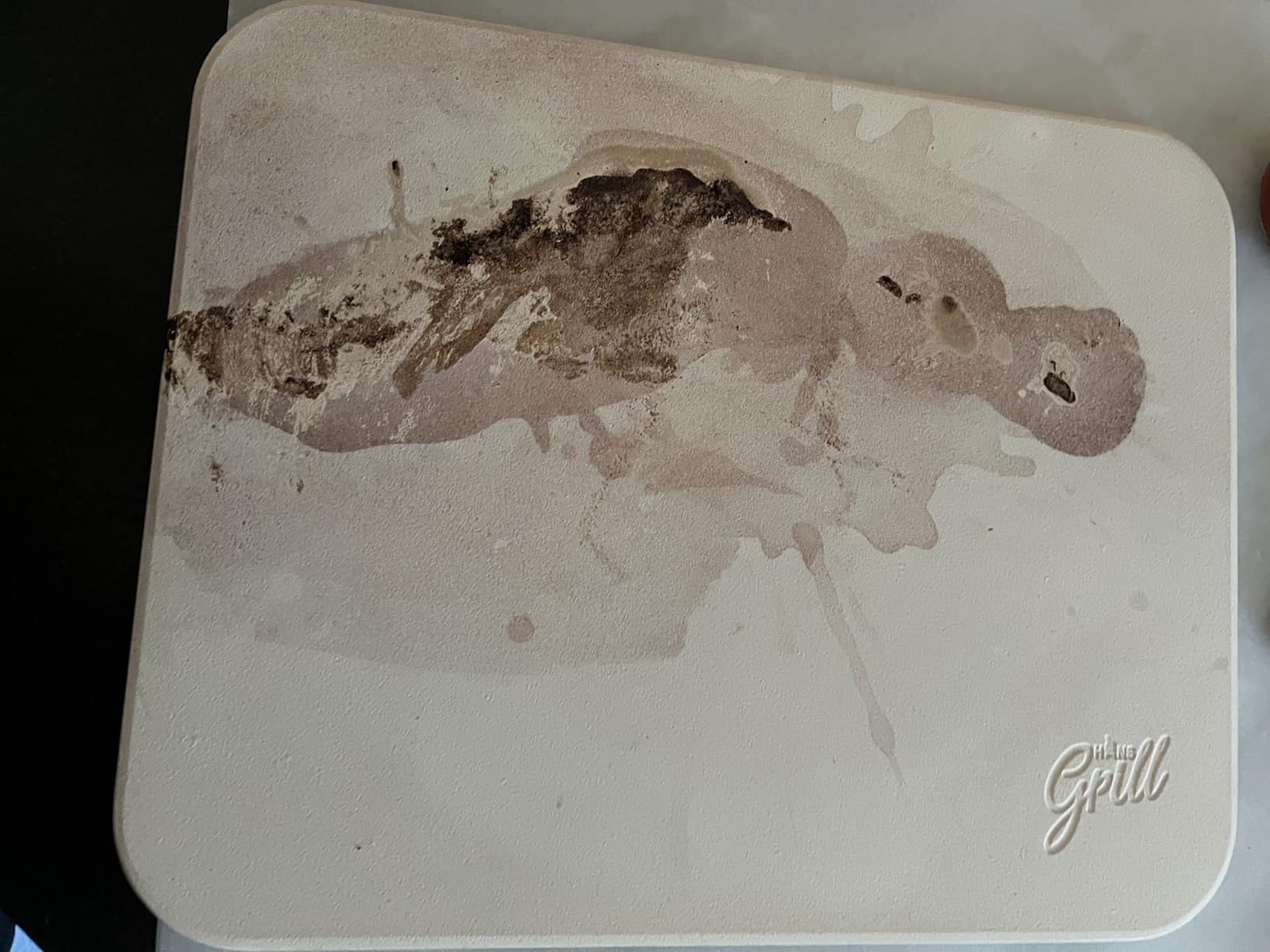
The Hans Grill stone is the pick if you want one box to contain everything you need, and the stone itself is good. It is toughened porous cordierite rated to 1112F, measures 14.96 by 11.8 inches at 0.59 inch thick, and weighs 7.8 pounds. Owners report a crisp, evenly baked base with strong heat distribution on both a Weber gas grill and a standard oven, with no odour once it is hot.
At 4.4 stars and more than 13,800 reviews it is the most-reviewed stone in this roundup, which means the sample size behind those crust claims is genuinely large. Multi-use is a real strength here, with owners using it for pies, pastry, calzone, frozen pizza and artisan bread.
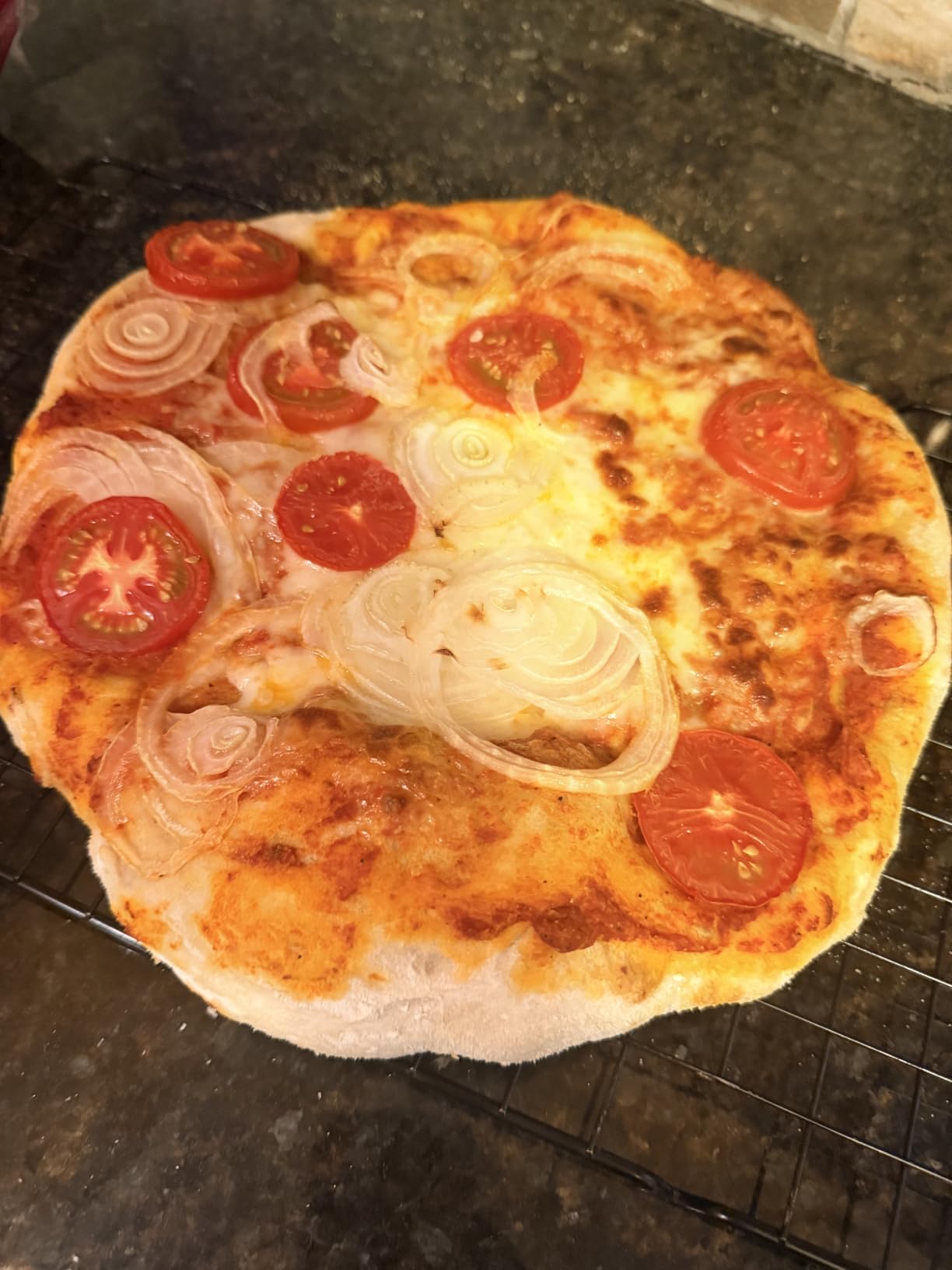
The thing to understand is the 1112F rating. That is comfortably above a gas grill running 450 to 550F and fine for a charcoal grill, but it is below the range a kamado hits when you are pushing a fast Neapolitan-style pie. On a Big Green Egg or Kamado Joe at 700F and up, you are outside this stone’s published envelope, and that is the single reason it did not take our top slot despite its review count.
The bundled peel is the other trade-off. It is a real wooden peel that slides under dough properly once you learn the angle, but owners complain about slots that catch dough, a short handle, and a blade that feels smaller and thicker than expected. Budget an extra peel for launch work if you are serious about it.
How it behaves on a gas grill
This is where it shines. A gas grill’s problem is uneven radiant heat, and a 0.59 inch cordierite slab flattens that out completely. Owners switching from bare grates report the single biggest change was crust consistency rather than any increase in peak temperature, which is the whole argument for owning a stone at all.
The 20 to 45 minute preheat at full temperature is the routine. Bring the stone in cold, close the lid, let it come up with the cooker, and then hold. Staining shows up quickly, and every owner treats that as normal rather than a defect.
Where it falls short
Kamado owners are the ones who push this stone past its rating and report cracking. If your cooking happens at 600F and above on a ceramic cooker, pick a stone rated to 1800F or higher instead.
At 7.8 pounds it is the second-heaviest stone here, and the peel bundled with it is not a lifting tool for the stone itself. There is no rack in the box, so you are planning your own landing spot before you open the lid.
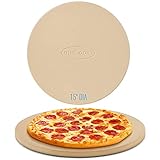
3. Unicook 15 Inch Round Cordierite Pizza Stone – Best All-Around Round Stone
Unicook 15″ Round Pizza Stone for Oven and Grill, Cordierite Baking Stone
Cordierite sintered at 2100F
1450F max temp
15 inch round
0.6 inch thick
6.7 lbs
Pros
- Sintered at 2100F for thermal shock resistance
- Micro-pores draw moisture and spread heat evenly
- Holds heat between pizzas
- No sticking once fully preheated
Cons
- 30 to 60 minute preheat before cooking
- Burnt cheese and sauce take real scrubbing
- Baking on stone adds minutes to total cook time
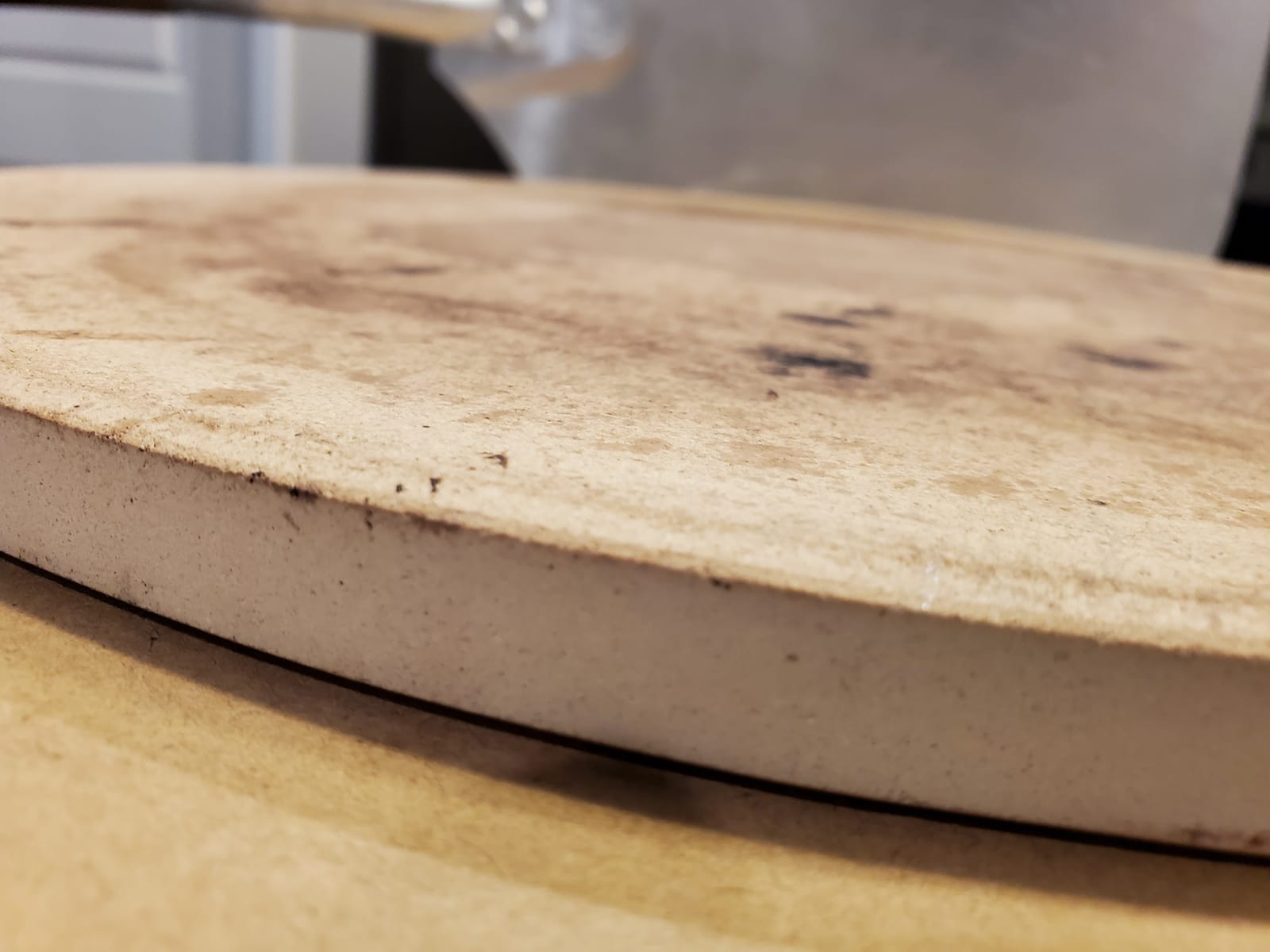
The round sibling of our top pick trades the rectangle for a 15 inch circle, and for classic round dough it is the better tool. It is cordierite sintered in a 2100F kiln, 0.6 inch thick, rated to 1450F, and 6.7 pounds. Owners with years of use describe it as heavy and nearly as rigid as steel, surviving high heat without cracking.
That 2100F sintering figure is the detail that matters for grill work. The kiln temperature is well above the stone’s own service rating, which is exactly why a properly sintered cordierite body survives the rapid temperature swings of a charcoal or kamado cook better than a cheaper stoneware slab. The micro-pore structure is what wicks moisture out of the dough base and gives you that browned, crisp finish.
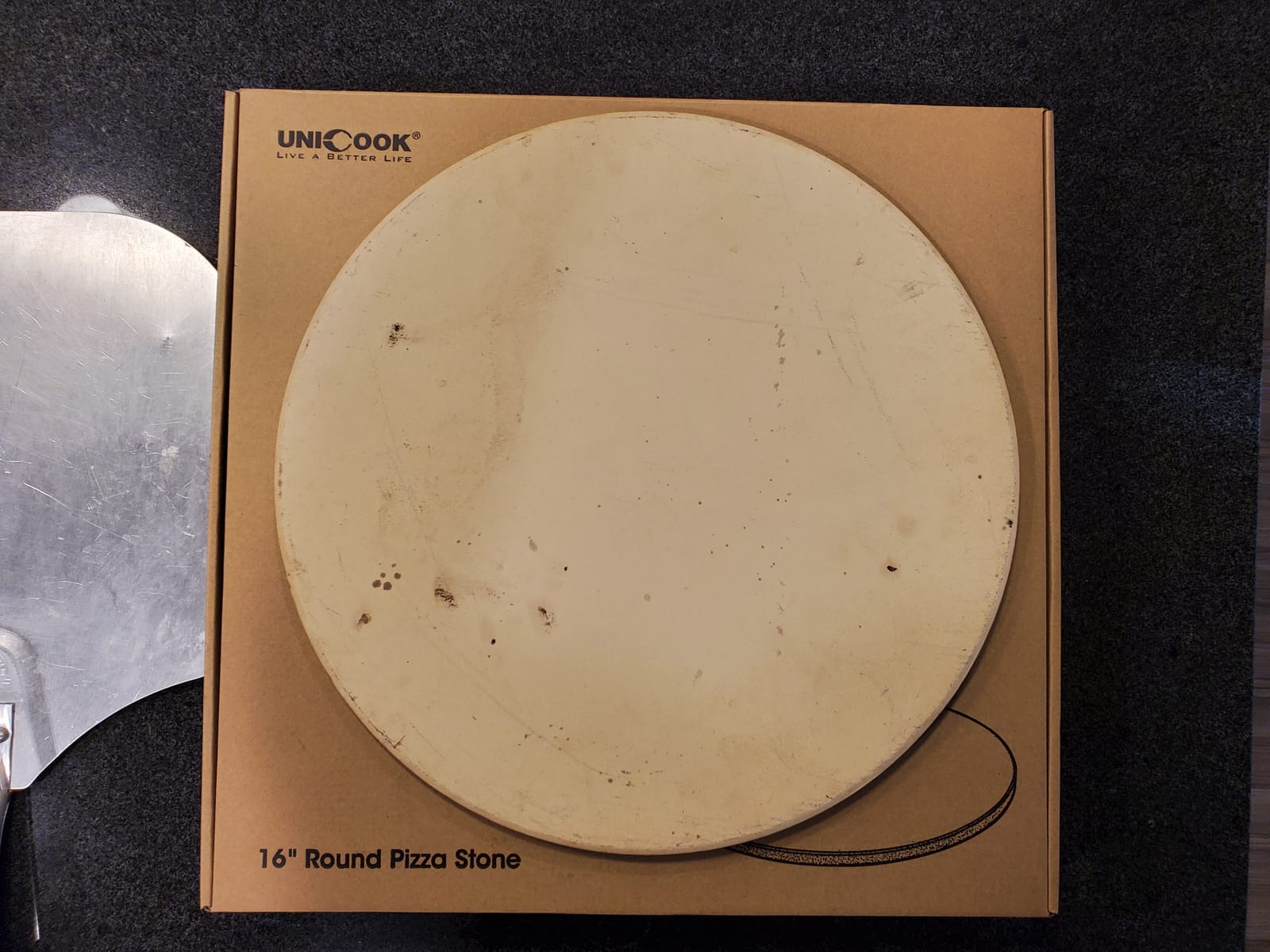
Long-term owners report cooking a large pizza in roughly five minutes once the stone is fully preheated, which is fast for a stone. They also report no odour out of the box, which matters more on an outdoor grill than indoors because smoke carries smells, and no sticking when the stone is hot enough and you use cornmeal or a peel.
Beyond pizza it handles bread, calzone and frozen pizzas well. The round shape means a single 14 inch pie with a little clearance around the edge, which is the working area you want for launching dough without the rim catching.
Where the round shape earns its keep
A round stone matches round dough, and that removes the awkward corner problem where a rectangular surface leaves a small curved scrap of crust exposed to bare stone or grate. If your household makes one pizza at a time and wants the classic shape, this is the one.
Heat retention between pizzas is where the 0.6 inch profile shows. Owners cooking multiple rounds back to back on a grill report the stone holding its surface temperature, which means the second pizza behaves like the first instead of needing another full warm-up.
Where it falls short
The preheat is long. Thirty to sixty minutes is the routine, and on a grill where you are managing airflow and fuel that is a real commitment. People who cook pizza on a whim rather than as a planned event feel this most.
Cleaning burnt cheese off takes real scrubbing, and baking on a stone adds several minutes to total cook time compared with a sheet pan. A plastic dough scraper is included, which helps, but it is not a substitute for not burning cheese onto the surface in the first place.
4. Old Stone Round Pizza Stone 16-Inch – Best for Full-Size Pizzas
Old Stone Round Pizza Stone, 16-Inch
Stoneware
16 inch round
0.59 inch thick
7.3 lbs
Wipe clean with dry cloth
Pros
- Lead-free clay blend for even browning and a crisp base
- 16 inch face suits full-size pizzas and bread
- Absorbs and distributes heat evenly for even browning
- Handles bread pastries and vegetables too
Cons
- Recommended for 500F or below in a standard home oven
- Wipe clean only and never use soap
- Weighs 7.3 lbs which is a two-handed lift when hot
The Old Stone 16-inch is the pick when diameter is your priority and your heat source is moderate. It is stoneware rather than cordierite, 16 inches across at 0.59 inch thick, and 7.3 pounds. Buyers cite even heat absorption and a crisp, browned base, and it ranks in the top three of its kitchen subcategory.
Crafted from a blend of lead-free clays, it handles pizzas, bread, pastries and vegetables. The 16 inch face gives you room for a genuinely full-size pizza plus bread on the same cook, which is the practical reason to size up.
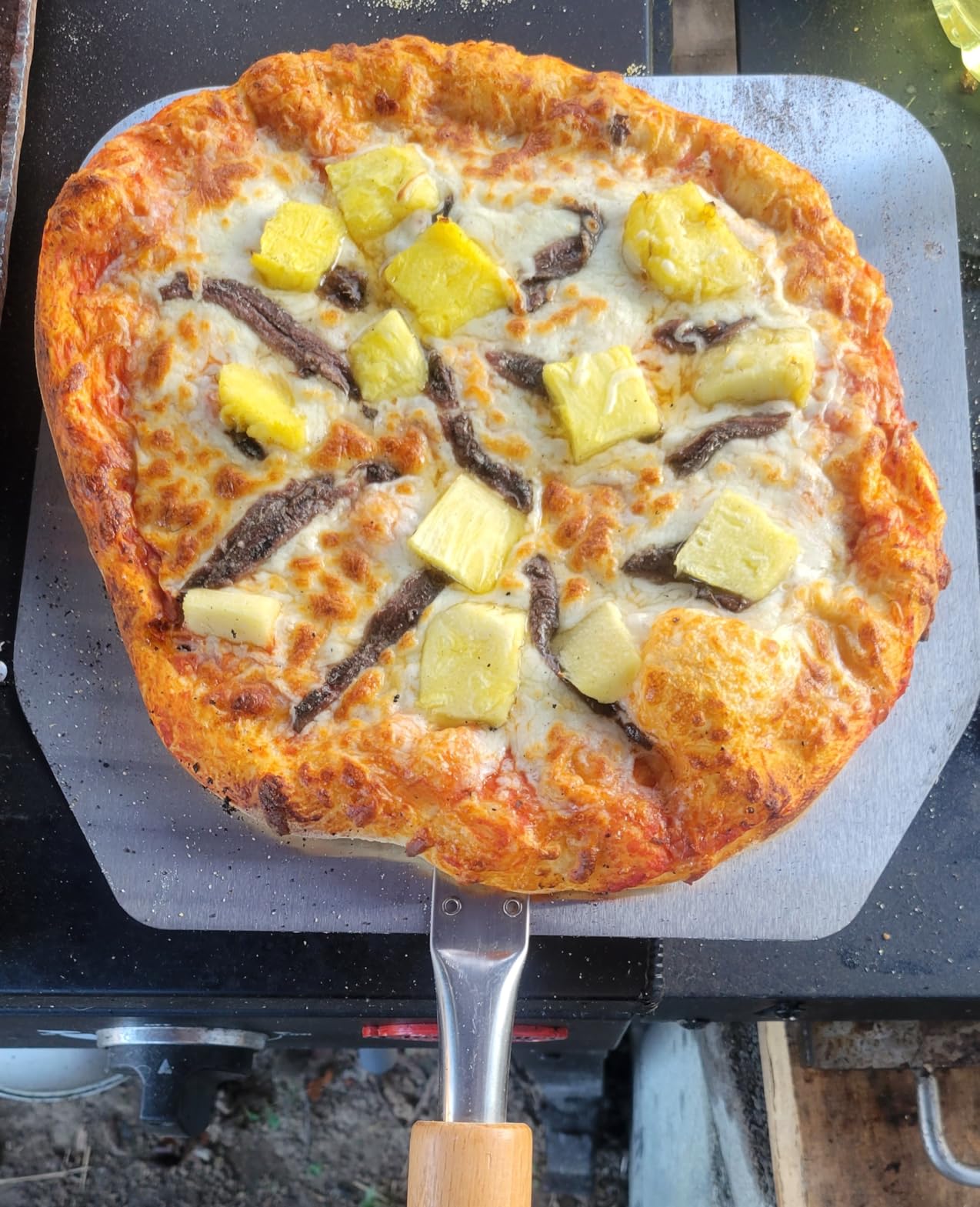
Here is the honest limitation. This stone is recommended for up to 500F in a standard home oven, and forum users repeatedly flag low-temperature-rated stones as the reason cheap stones crack on a grill. On a gas grill or a charcoal grill held at 450 to 500F it is fine and produces excellent results.
On a kamado running 650F and above it is outside what the manufacturer suggests, and at 0.59 inch of stoneware you are gambling with thermal shock. We included it because the size is genuinely useful and most gas grill owners never go near those temperatures, but it is not a kamado stone.
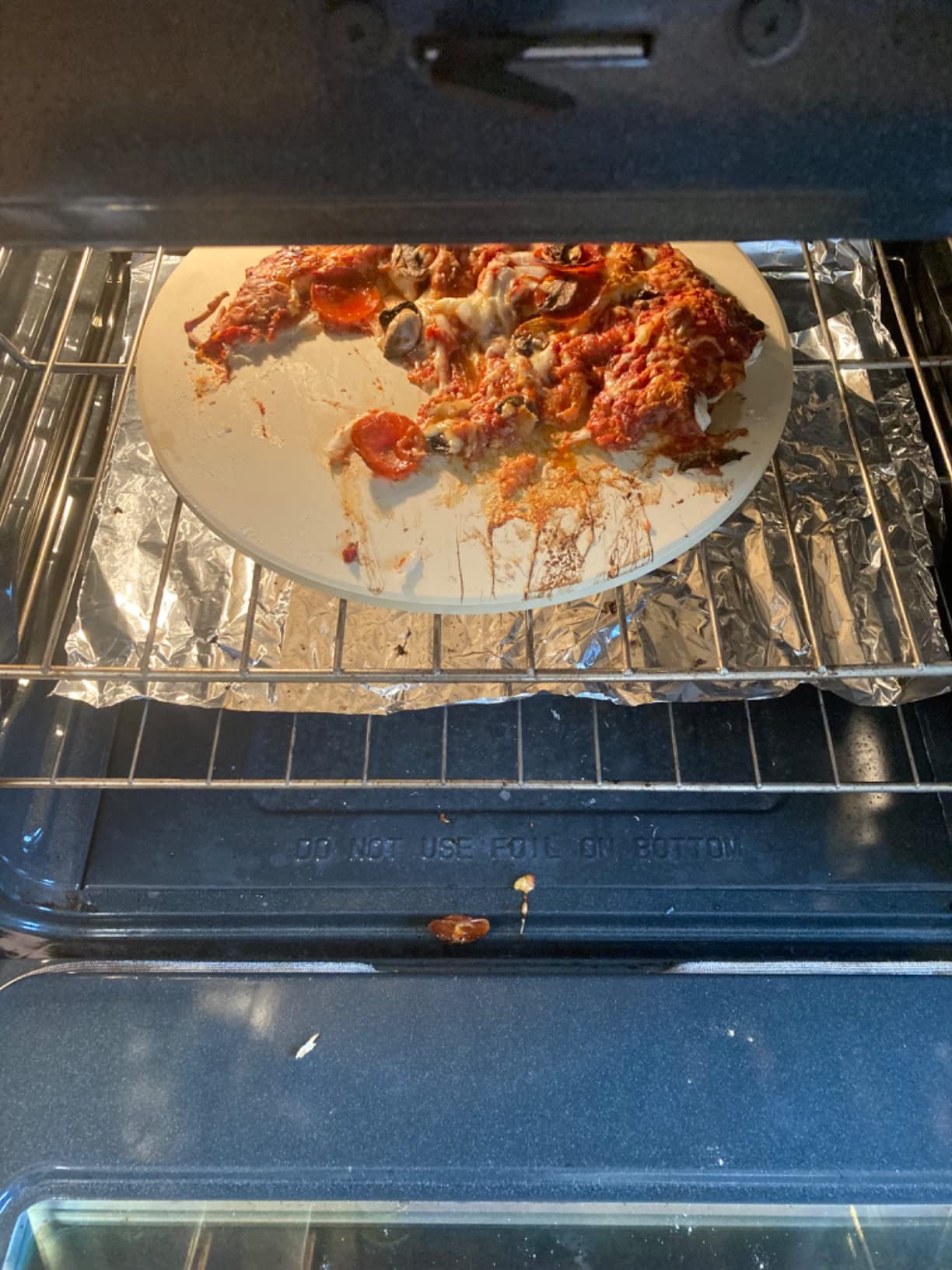
When the extra four inches matter
Sixteen inches is the difference between a pizza that nearly fills the surface and one with a clean margin all around, and that margin is what lets you launch and retrieve without catching an edge. For people cooking large family pizzas rather than personal ones, the extra diameter is worth the compromise on temperature ceiling.
It is also a multi-cook surface. Bread, pastries and roasted vegetables on the same slab is the kind of use that justifies buying a stone rather than borrowing one, and owners use it that way routinely.
Where it falls short
The 500F guidance is the dealbreaker for high-heat cooking. Read it as an oven recommendation, but apply the same caution on a grill, because a kamado grate is hotter than most home ovens.
At 7.3 pounds it is a heavier stone, and care instructions are wipe with a dry cloth only. No soap, no water, no exceptions, which is stricter maintenance than most people expect.
5. Weber Gourmet BBQ System Pizza Stone with Carry Rack – Best for Safe Handling
Weber® Gourmet BBQ System Pizza Stone with Carry Rack, 16.7″
Cordierite
16.7 inch long
6 lbs
Carry rack doubles as handle
Locks into the Gourmet BBQ grate
Pros
- Carry rack lifts the hot stone without touching the surface
- Rack geometry locks the stone into the Gourmet BBQ grate
- Cordierite gives a light crispy thin crust
- Detaches from the rack so it also works in a standard oven
Cons
- Metal rack and handles get hot enough to melt oven mitts
- Real learning curve and first attempts often burn
- Works best at moderate temperatures around 375 to 400F
Of everything here, this is the one built around the hot-transfer problem rather than ignoring it. It is cordierite at 16.7 by 13.2 inches, 6 pounds, and it comes with a metal carry rack that doubles as a lifting handle and a grate that keeps the stone locked in position while you cook. The rack geometry is the part that matters most, because a stone that slides around on the grates when you open the lid is both a cooking problem and a safety problem.
Owners praise it for genuinely crispy, restaurant-style crusts on a kettle grill, and the cordierite absorbs moisture for a light, thin crust rather than a heavy base. The rack separates from the stone, so the same piece works in a standard home oven when the weather turns.
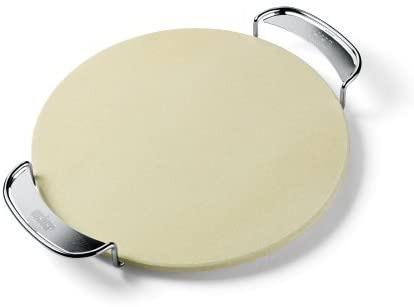
At 4.6 stars it is the highest-rated rectangular stone here, and that rating is backed by specific behaviour rather than enthusiasm. Owners also note that the rack lifts the stone slightly off the grate, which improves airflow underneath and reduces the hot spots that ruin pizza on a kettle grill.
Buyers do warn that the metal gets hot enough to melt oven mitts, so you still need proper protection. That is the honest trade: the rack removes the need to touch the stone, but it introduces its own hot surface.
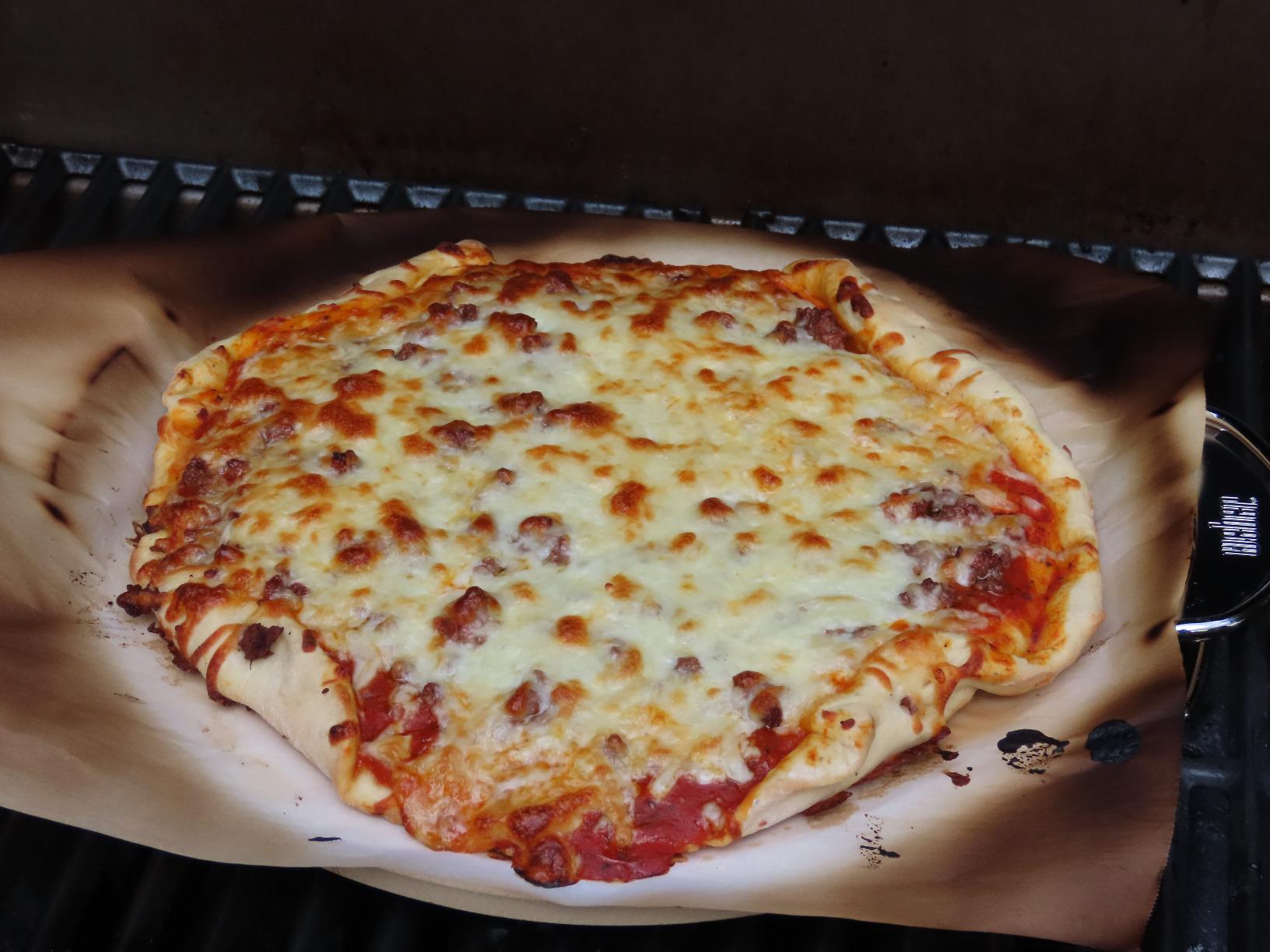
The rack is the whole reason to buy this one
Six pounds of hot stone lifted off a grate with bare hands is how people get hurt, and the carry rack turns that into a two-handed carry with mitts. It also raises the stone slightly on the grate, which improves airflow underneath and reduces the hot spots that ruin pizza on a kettle grill.
Because it locks into the Gourmet BBQ System cooking grate, the stone stays put through a lid open and close, which is the difference between a controlled cook and a pie that ends up half on the stone and half over the fire.
Where it falls short
It works best at moderate grill temperatures, around 375 to 400F, which is well below what kamado and hot charcoal cooks want. If you are chasing a fast high-heat pizza, this is the wrong stone.
There is a genuine learning curve. Owners report first attempts on a grill often burning, and the stone keeps cooking the crust if you leave the pizza on after pulling it from the grill. Practise on a cheap pizza before you commit an expensive one.
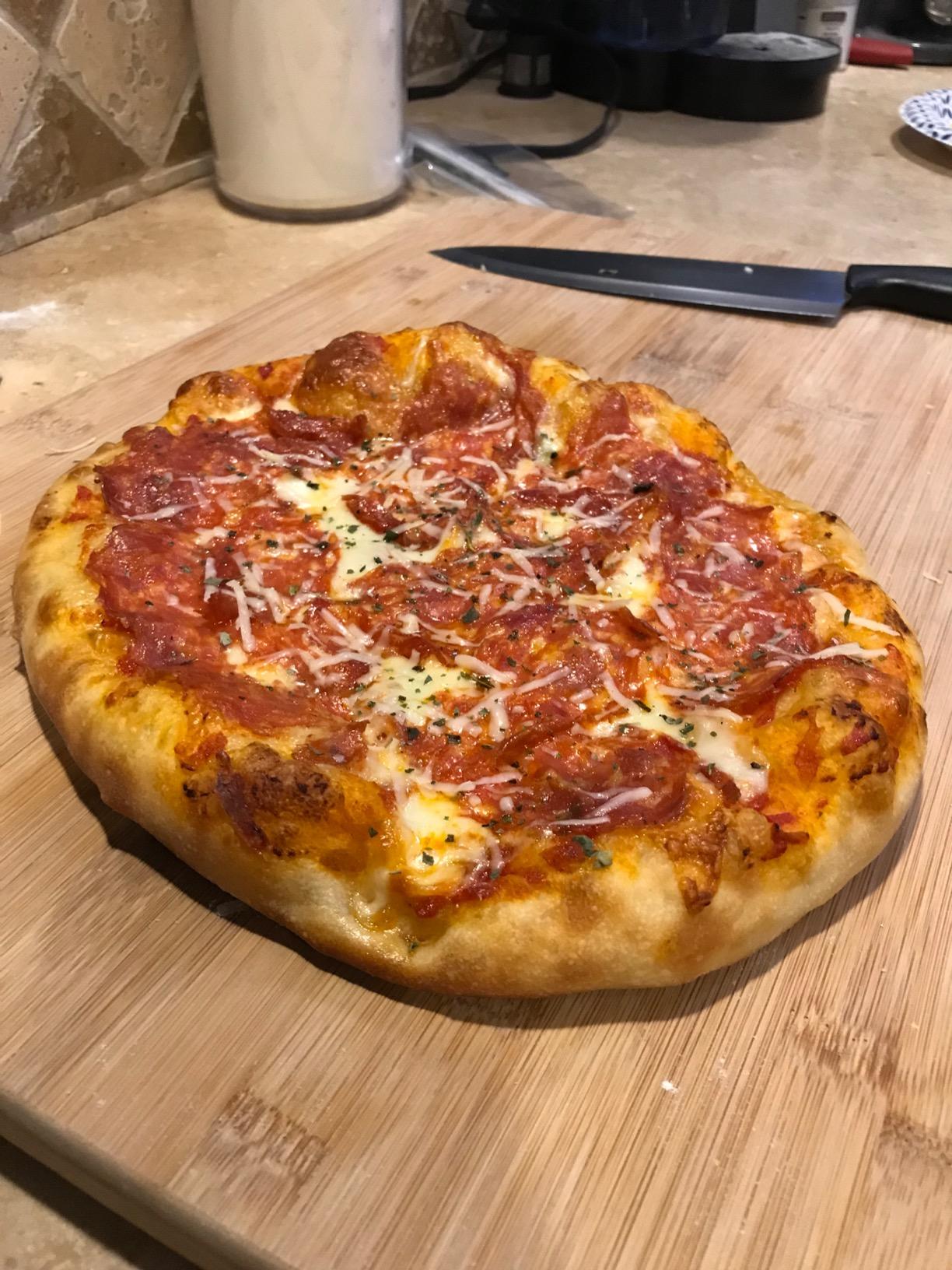
6. K ROCKSHEAT 15 Inch Round Cordierite Stone – Best for a Shorter Preheat
K ROCKSHEAT 15 Inch Round Pizza Stone for Oven Grill BBQ, Cordierite Large Pizza Grilling Stone, Durable Bread Baking Stone 15″
Cordierite fired at 2200F
1400F rating
15 inch round
0.6 inch thick
8 lbs
Pros
- No odour or off smell reported by owners
- Thick enough to hold heat without an excessively long preheat
- Ready to use with no seasoning step
- Self-cleaning during a long oven cycle
Cons
- Thinner variants in the range arrive cracked in shipping
- Some sizes have handle indentations on the cooking face
- Thinner variants can leave frozen pizza crusts soggy
The K ROCKSHEAT is cordierite fired in a 2200F kiln, rated to 1400F, 15 inches round at 0.6 inch thick, and 8 pounds. Owners single out the absence of smells as the standout trait, which matters on an outdoor grill where any off-odour gets into your food and your patio.
The 0.6 inch profile is described as well thought out because it heats faster than thicker competitors while still holding heat between pizzas. It is ready to use with no seasoning required, which removes a step that trips up new stone owners.
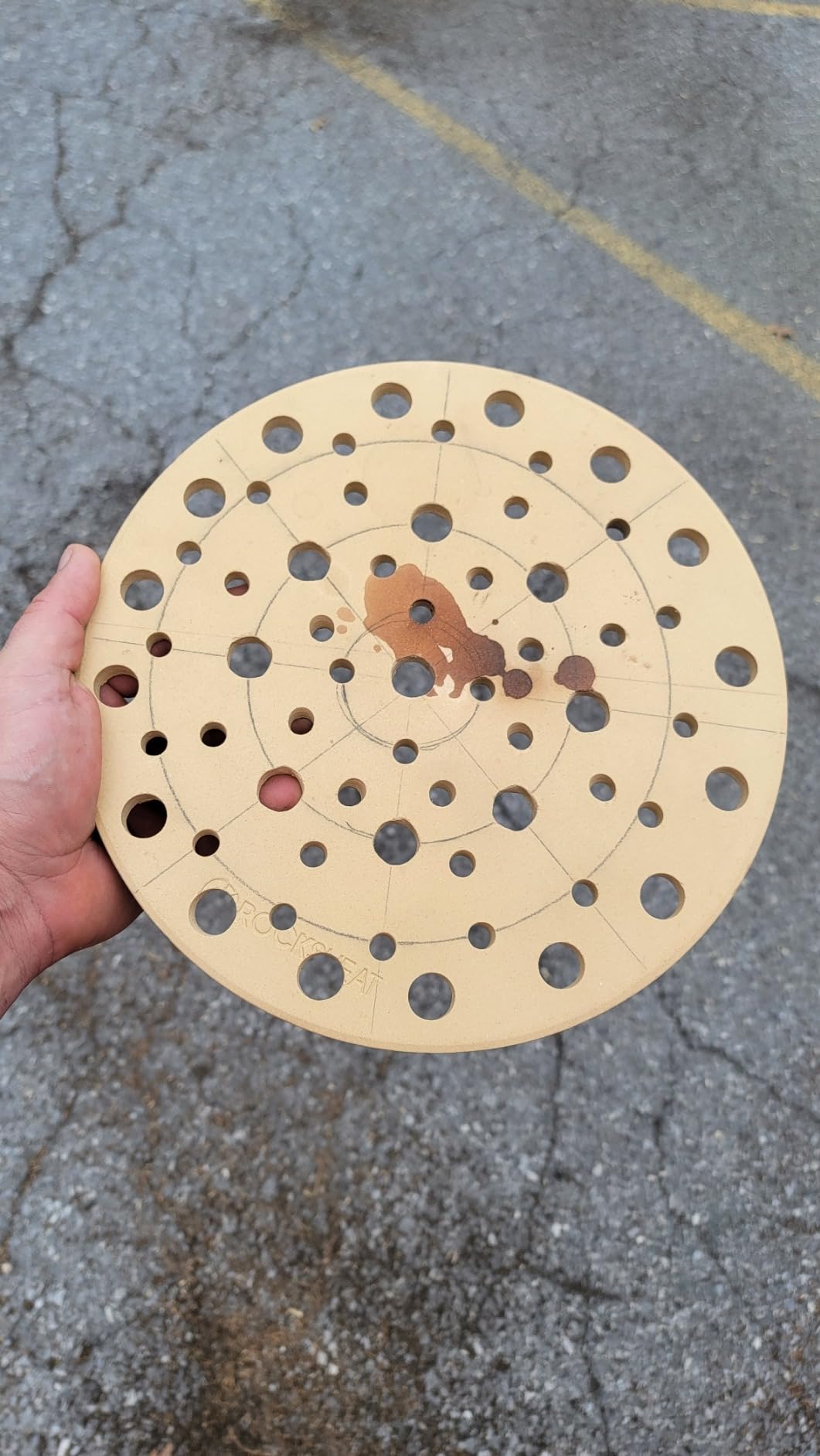
The 2200F firing temperature is well above the 1400F service rating, which is the same durability margin that makes a properly sintered cordierite body hold up under the thermal swings of a charcoal or kamado cook. Cordierite is the material to look for if your grill runs hot, and this stone is squarely in that tier.
The self-cleaning behaviour is real and useful. Owners report that a long cycle in a hot oven burns off residue and leaves a clean surface, which reduces the scrubbing that is the most common complaint about stone maintenance.
Why the preheat is shorter than most
Most stones in this roundup need 30 to 60 minutes. Owners of this one describe it as thick enough to hold heat without an excessively long preheat, which makes it more practical for spontaneous pizza nights than a heavier slab that demands a planned warm-up.
Ready to use out of the box also removes the seasoning question entirely. There is no oiling step, no curing cycle, nothing to remember except not to thermal shock it.
Where it falls short
Read the reviews carefully by variant. Complaints concentrate on the thinner and smaller sizes in the range, with some buyers reporting stones arriving cracked in shipping and thinner variants leaving frozen pizza crusts soggy even when preheated. The 15 inch 0.6 inch version here is the thick end of that range, but the family resemblance means you should inspect on arrival.
Some sizes in the range also carry handle indentations on the top face that reduce the usable cooking surface. At 8 pounds it is also the heaviest round stone in this guide, so the hot transfer deserves a plan.
7. Gyreuni 15 Inch Pizza Stone Set with Oak Peel – Best All-in-One Kit
Gyreuni 15”Pizza Stone for Oven and Grill with Pizza Peel,Baking Stone Set
Cordierite
1472F max temp
15 x 12 inch
0.4 inch thick
7.1 lbs
Stone peel cutter and parchment
Pros
- Complete kit with stone oak paddle cutter and parchment
- Consistent crispy crust on oven or grill
- Oak peel is sturdy and slides cleanly under dough
- Good value for the number of pieces included
Cons
- Included pizza cutter is dull with burrs on unused edges
- Listing describes four stones when one is included
- Paddle can crack or break over time
The Gyreuni set is cordierite rated to 1472F, 15 by 12 inches, 0.4 inch thick, and 7.1 pounds. Owners like the all-in-one package and report that the stone cooks a 14 inch pizza evenly in about eight minutes at 500F, on a smoker or an oven alike.
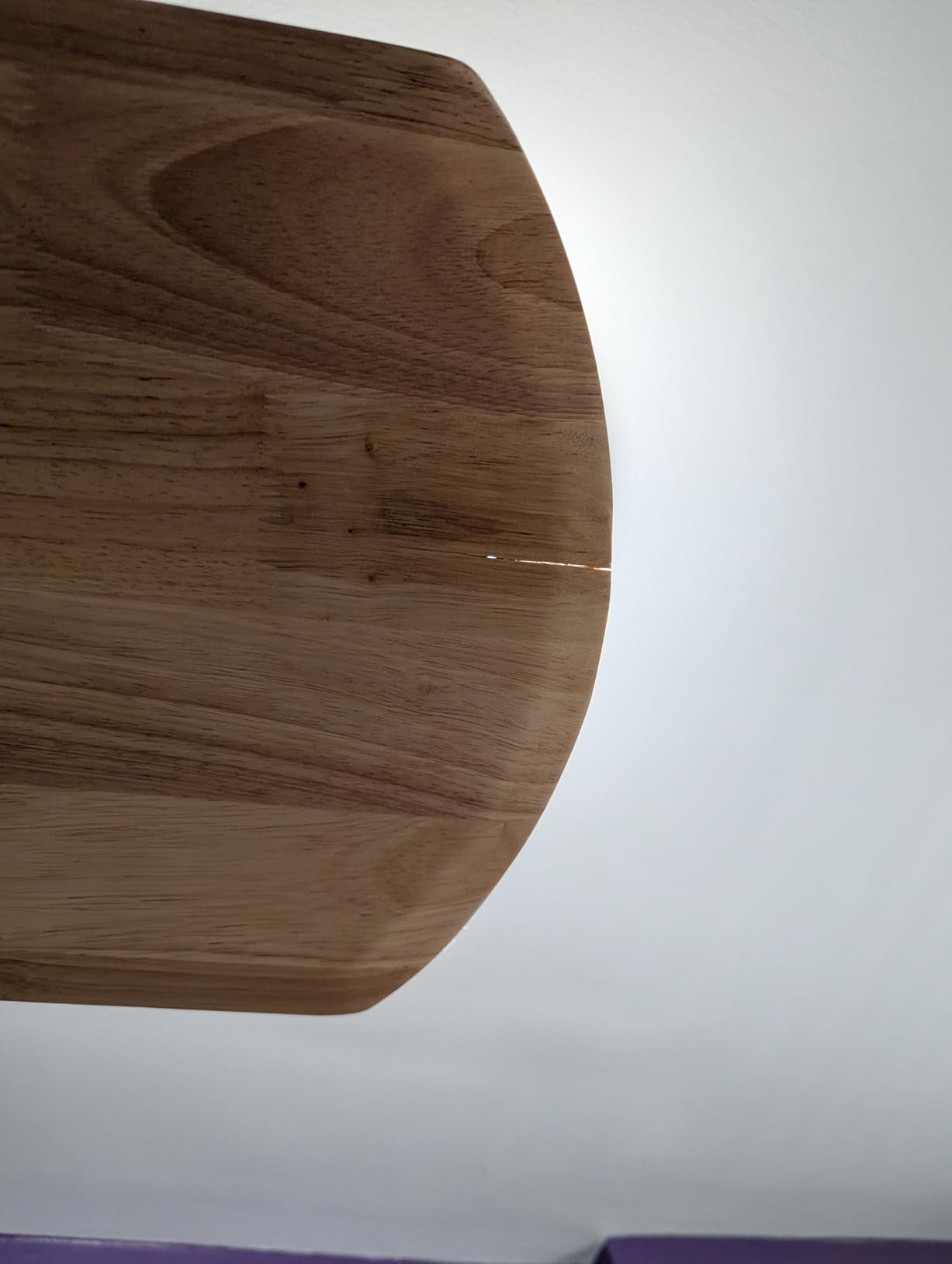
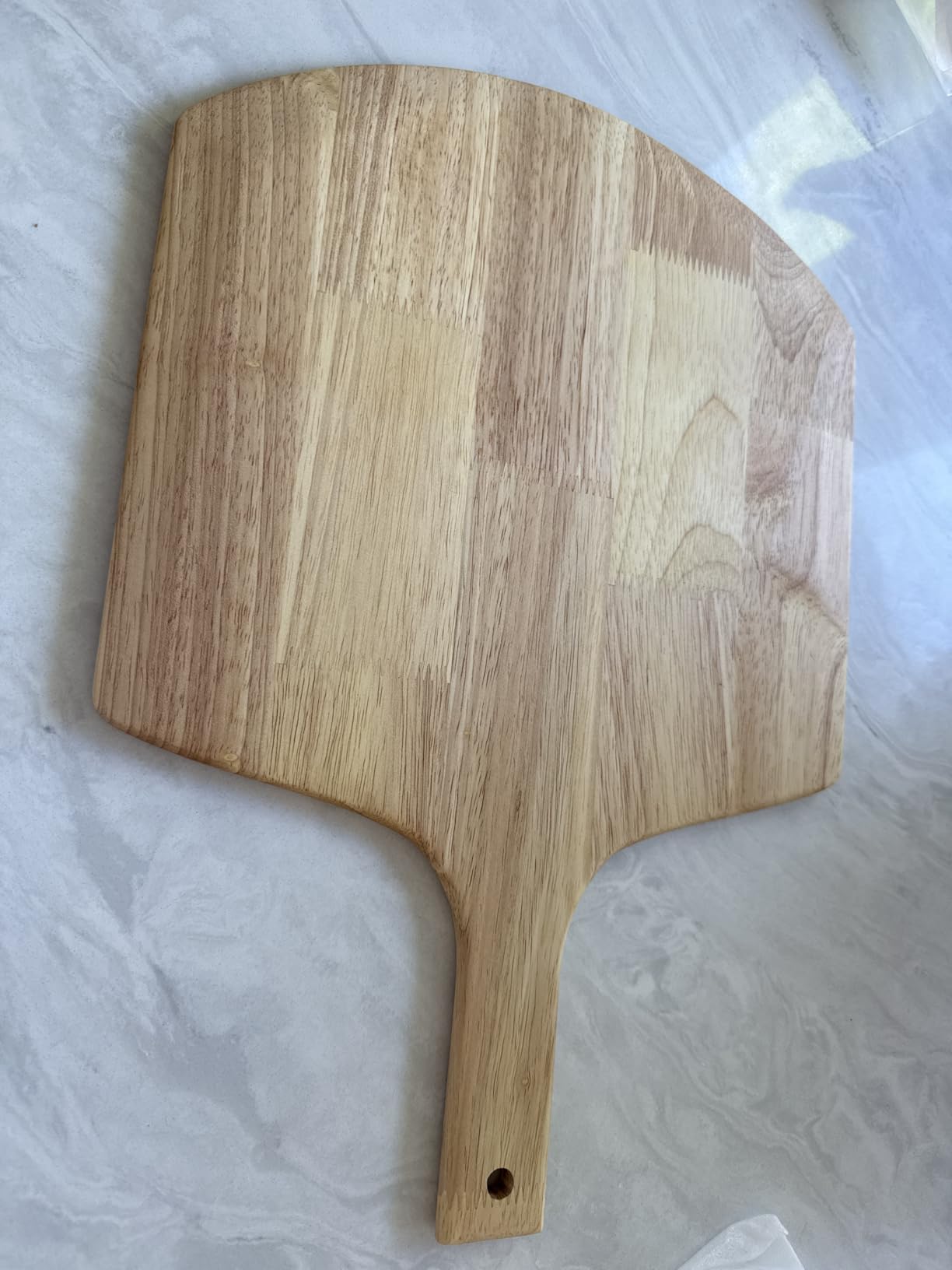
Everything you need to launch a pizza is in the box: a 12 inch solid oak paddle with a tapered half inch blade, a large pizza cutter, and ten parchment sheets. The oak peel is sturdy and slides cleanly under dough, which is more than can be said for many bundled peels.
At 4.4 stars across more than 2,100 reviews the stone itself is solid, and 1472F gives it more headroom than most rectangular cordierite in this price class. It is also genuinely versatile, working for pizza, flatbread, sourdough, scones and reheating leftovers, which stretches the value well past pizza night.
Care instructions matter here: scrape off excess food, run under warm water while scrubbing with a brush, and never use soap or detergent. Cordierite is porous and soap leaves a lasting smell in that structure, which is the complaint that recurs across most stone brands.
Why a kit makes sense for a grill cook
Launching dough on a grill without a proper peel is the most common reason people give up on outdoor pizza. The bundled oak paddle is a real 12 inch solid blade with a tapered edge, which is what lets it slide under a 14 inch pizza instead of scooping half the dough.
The parchment sheets are a genuine convenience for the first cooks. They let you slide a raw pizza onto a hot stone without any flour or semolina, which avoids the dusting step and the bitter spots flour leaves behind.
Where it falls short
At 0.4 inch this is the thinner rectangular stone here, so it holds heat less well between pizzas than the 0.6 inch Unicook options. Expect the second pizza on a cold grill to take longer than the first.
The accessories draw most of the criticism. The pizza cutter is dull with burrs along the unused edges, the listing describes four stones when only one is included, and one buyer reported the paddle cracking over time. Treat the accessories as a bonus rather than a reason to buy.
8. KitchenStar 16-Inch Pizza Stone – Best for Smokers and High-Heat Grills
16-Inch Pizza Stone for Oven and Grill, Baking Stone for Bread, Round
Cordierite
1800F max temp
16 inch round
0.6 inch thick
7.1 lbs
Steel stand and scraper
Pros
- Cordierite rated to 1800F tolerates very high kamado heat
- Includes a stainless steel stand and plastic scraper for safe handling
- Works for flatbreads cookies chips and quesadillas too
- Multiple sizes for smokers grills and small ovens
Cons
- Lowest average rating here at 4.3 reflects mixed results
- Soap and detergent leave an unpleasant odour on the stone
- Slow preheat cycle at its 0.6 inch thickness
The KitchenStar is cordierite rated to 1800F, 16 inches round at 0.6 inch thick, and 7.1 pounds. That 1800F figure is the second-highest service rating in this roundup, and it is the reason this stone suits pellet smokers, charcoal grills and kamados that run hotter than the standard 1450F stones tolerate.
Natural cordierite accumulates heat and eliminates moisture for a crispy base, and buyers generally confirm it bakes a crisp crust on a charcoal or gas grill and in a kamado, provided you give it a full preheat and keep detergent away from the surface.
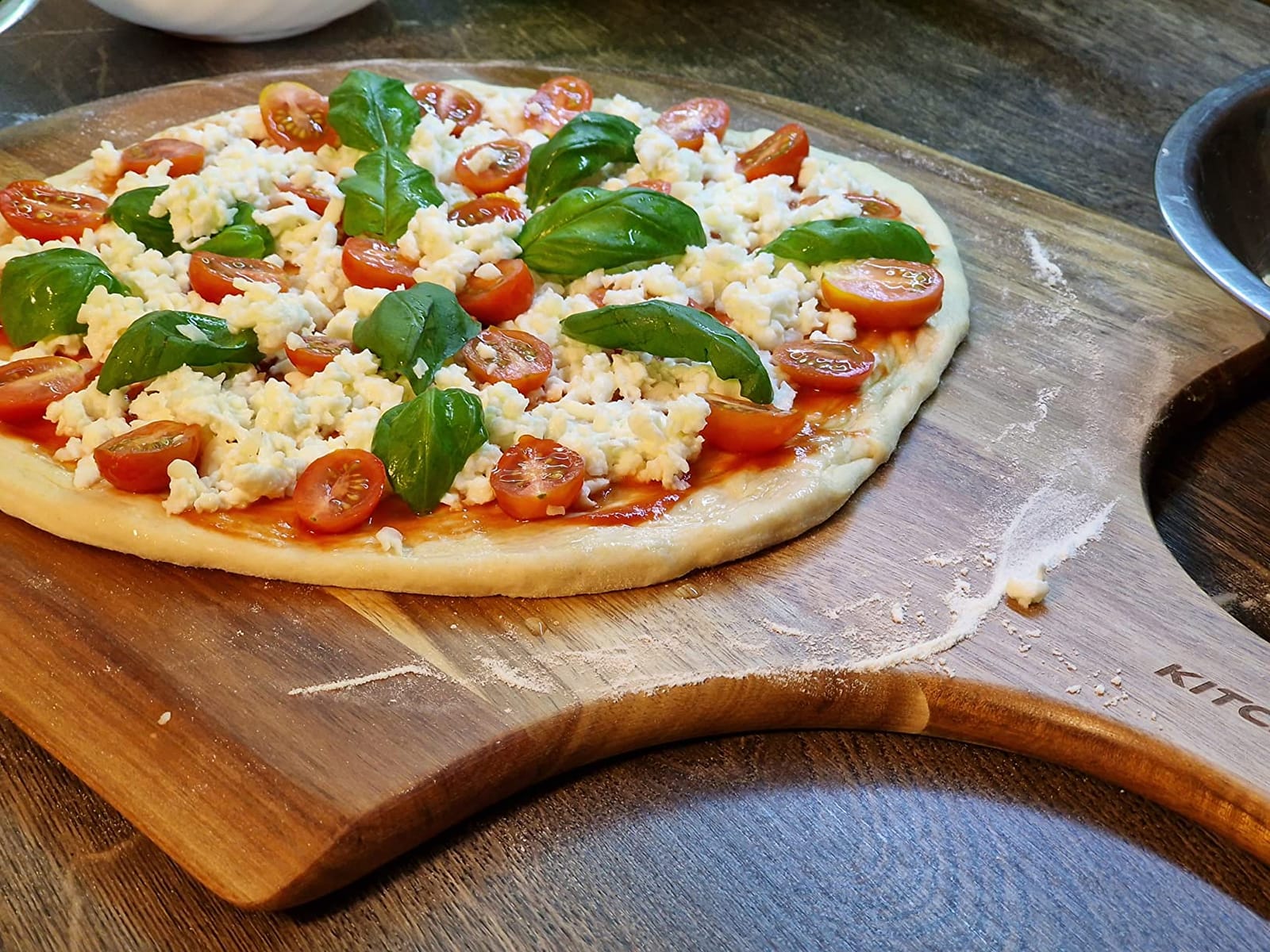
It is also the best-equipped stone in this guide for safe handling, alongside the Weber rack. A stainless steel stand and a vinyl plastic scraper are both included, and the stand gives you a place to set a 7 pound hot stone down without improvising. Several sizes are available for toaster ovens, air fryers, smokers and grills.
It doubles beyond pizza. Flatbreads, cookies, chips and quesadillas all work, and on a smoker the stone becomes a convection surface that helps dough bake rather than just smoke.
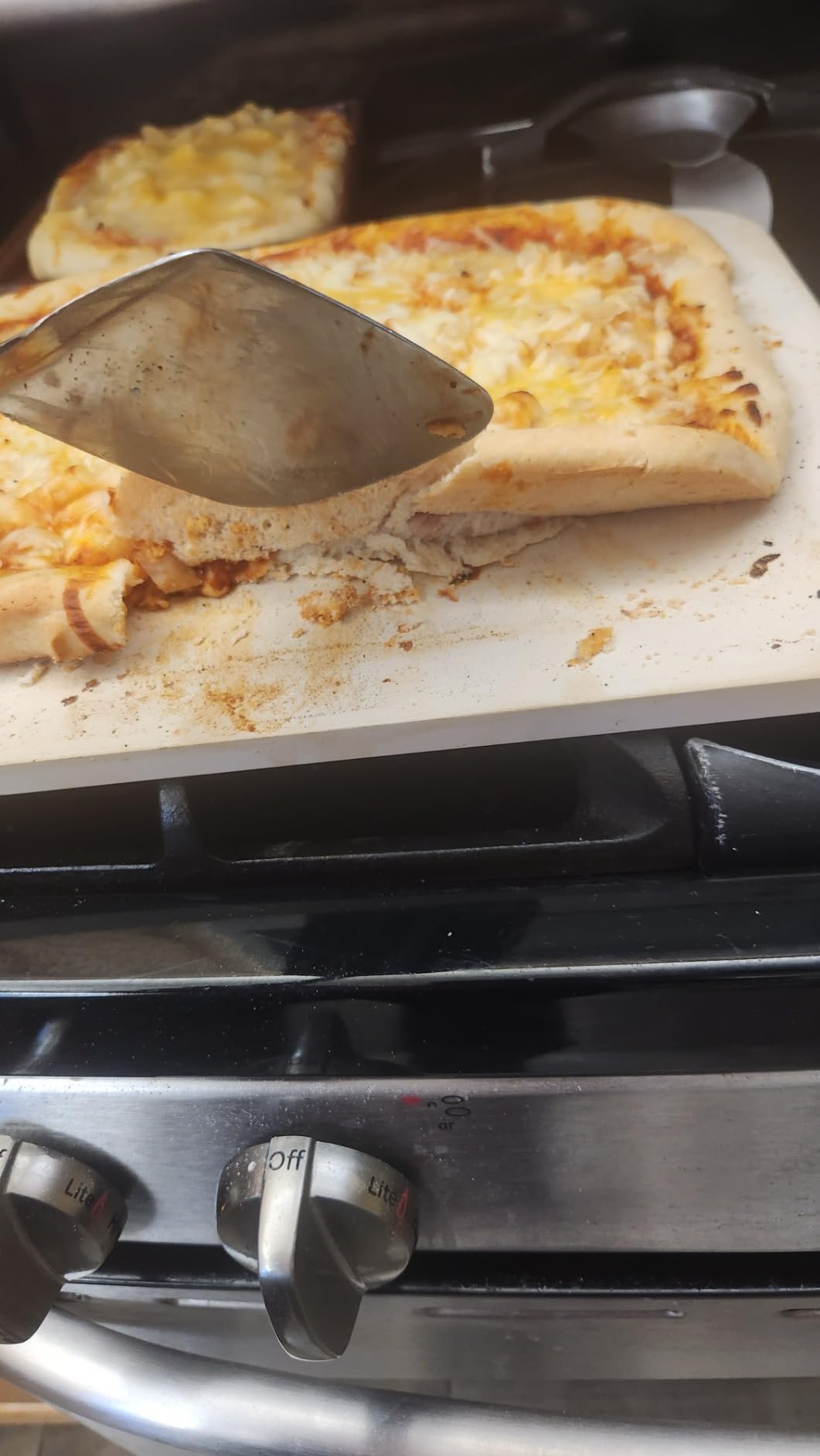
What 1800F actually buys you
The gap between a 1450F stone and an 1800F stone only matters above about 600F. If your grill runs at 450 to 550F, both are safe and the extra rating is wasted headroom. If you run a kamado at 700F or push charcoal hard for a fast bake, the higher rating is the difference between a stone that survives years and one that cracks.
That is the honest case for this stone. It is not the best crust in the group, but it is among the safest buys for a grill you push hard.
Where it falls short
At 4.3 stars it is the lowest-rated stone here, which points to inconsistent results for some buyers rather than a single fault. If you want the most predictable experience, a 4.5-rated stone with a much larger review base is the calmer bet.
The 0.6 inch thickness means a slow preheat cycle, and care instructions are emphatic: never use soap or detergent, hand wash with water only, with baking soda as the only permitted cleaner.
9. Culinary Couture 15 x 12 Inch Pizza Stone – Best Budget Pick
Large Pizza Stone for Oven and Grill – 15 x 12 inch Rectangular Pizza Stone
Cordierite
1000F max temp
15 x 12 inch
0.4 to 0.5 inch thick
Lightweight
Pros
- Crisp crunchy crust with good browning underneath
- Lightweight and easy to move in and out
- Useful for calzone stromboli and bread
- A baking soda paste clears stuck cheese
Cons
- Listed thickness varies and some pieces measure thinner
- Occasional quality control reports of cracked arrivals
- Needs cornmeal or another barrier to prevent sticking
The Culinary Couture stone is a light, easy-moving option and the one to buy if you want to try grill pizza without committing to a heavy slab. It is cordierite rated to 1000F, 15 by 12 inches, with a 0.4 inch nominal thickness, and buyers describe a lightweight stone that still browns the underside well.
It earns 4.5 stars, and the praise is specific: crisp crunchy crust, good browning on the underside, and usefulness for calzone, stromboli, bread and anything else that needs a browned base. It is a particular favourite for RV ovens where hot spots were the original problem.
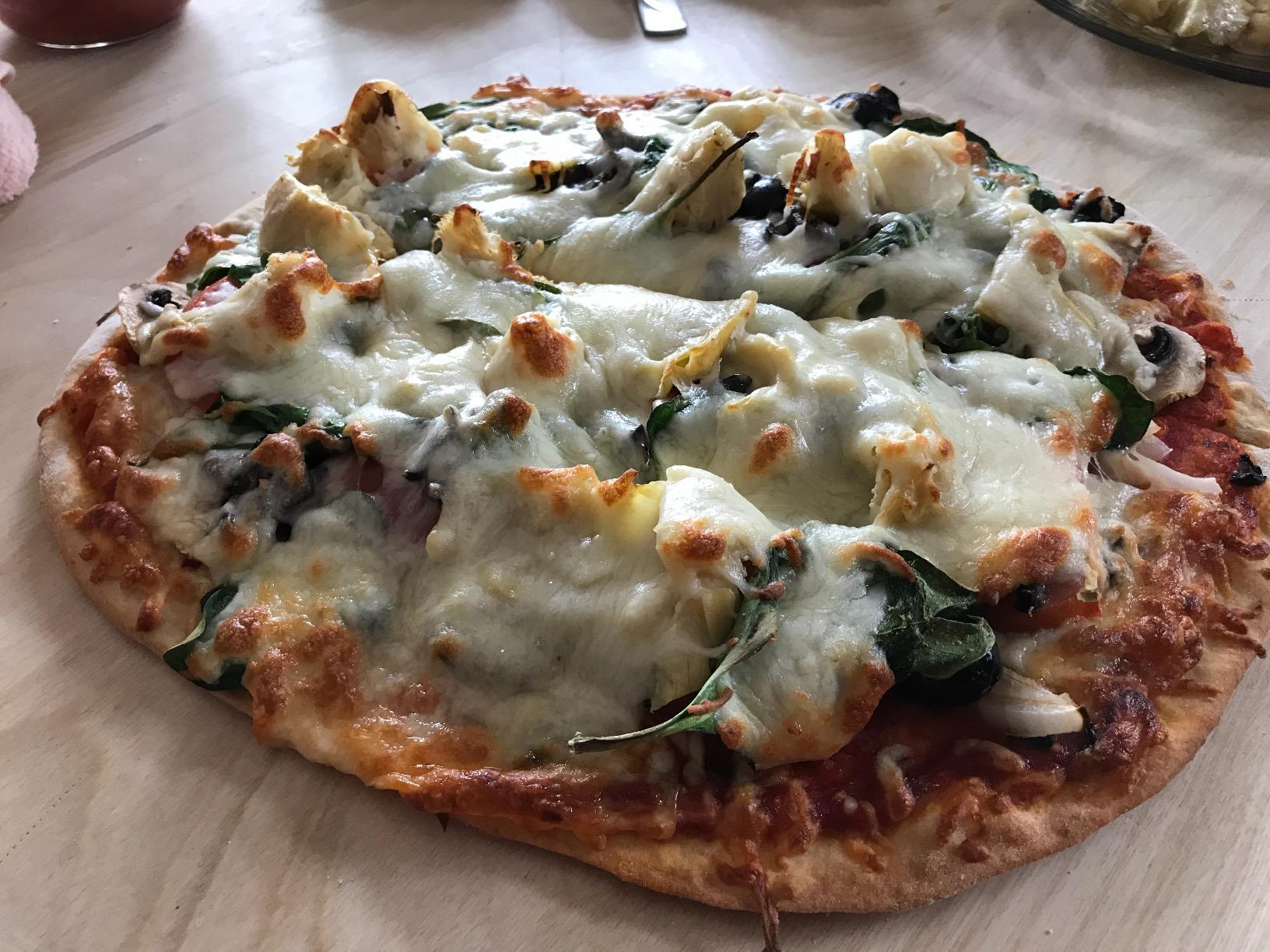
The 1000F rating is lower than anything else in this roundup and that is the main constraint. It is comfortably fine for a gas grill at 450 to 550F and adequate for a moderate charcoal cook, but it is not a stone for a kamado running above 700F, and we would not push it there.
The manufacturer does not publish a weight for this stone, which is unusual, but the lightness is consistently reported by buyers and is the reason it is easy to lift in and out without a rack or a helper.

Why the low weight matters more than it sounds
Every time you cycle a pizza on a grill you lift a hot slab. At 6 to 8 pounds that is a two-hand job with a landing plan. A lighter stone is a meaningfully easier and safer object to move repeatedly, which over a whole pizza night is the difference between cooking and wrestling.
For RV and travel use it is also one of the few stones here most people would comfortably move between a vehicle and a campsite grill.
Where it falls short
Thickness is the main complaint and it is a fair one. Buyers report the listed thickness is inconsistent, with some units measuring thinner than advertised, and thinner stone holds heat less well between pizzas. Measure what you actually receive.
There are also occasional quality control reports of stones arriving cracked, so inspect on arrival. And it needs cornmeal or another barrier to stop frozen pizza sticking, which is a small step that beginners routinely forget.
10. Kamado Joe 15-Inch Ceramic Pizza Stone – Best for Kamado Grills
Kamado Joe 15-inch Ceramic Pizza Stone for Brick-Oven Style Pizza Compatible with Kamado Joe Classic Joe 18-inch Charcoal Grill and Smokers, Model KJ-PS23
High-impact ceramic
15 inch round
2 lbs
Built for 550 to 600F kamado cooks
Dishwasher safe
Pros
- Highest rated stone here at 4.8 with 85 percent five-star reviews
- Crisp bottom and chewy centre in about 9 to 10 minutes
- Holds up at the kamado temperatures that crack oven stones
- Doubles as a second heat deflector when smoking
Cons
- Must be used with the Kamado Joe heat deflector or the pizza burns
- Does not heat evenly on the grate without 1 to 2 inch spacers
- Spacers are not included and have to be improvised
The Kamado Joe stone is the highest-rated product in this roundup at 4.8 stars, with 85 percent five-star reviews across 964 ratings. It is a high-impact ceramic 15 inch round stone at 2 pounds, and it is the only stone here designed specifically for a ceramic kamado rather than adapted from an oven stone.
Kamado owners report restaurant-grade results once the stone, deflector and spacer stack is set up correctly, typically at 450 to 500F for nine to ten minutes. The 2 pound weight is also a genuine safety advantage, since it is the easiest hot stone to lift in this entire guide.
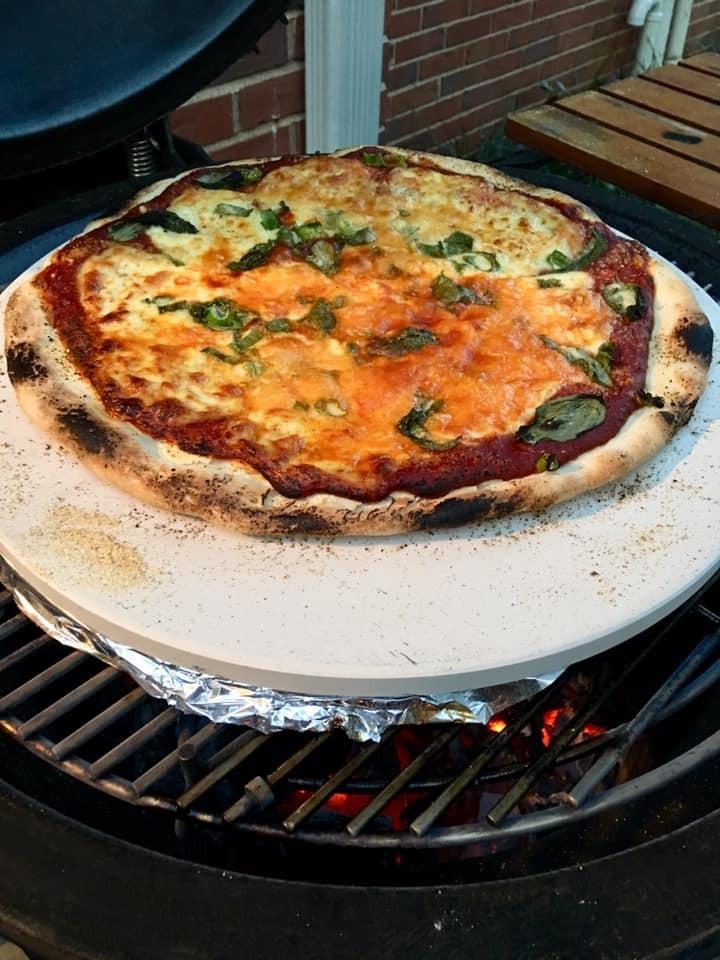
It holds up at the 550 to 600F kamado temperatures that crack oven-rated stones, and it doubles as a second heat deflector when you are smoking meat. It is also dishwasher safe, which is unusual for a stone and makes cleanup after a cook far easier than scraping burnt cheese.
Buyers who skip the heat deflector or the spacers get uneven heating or a burnt pie, and that is the single most repeated caution in the reviews. This stone depends on a stack, and the stack is not in the box.
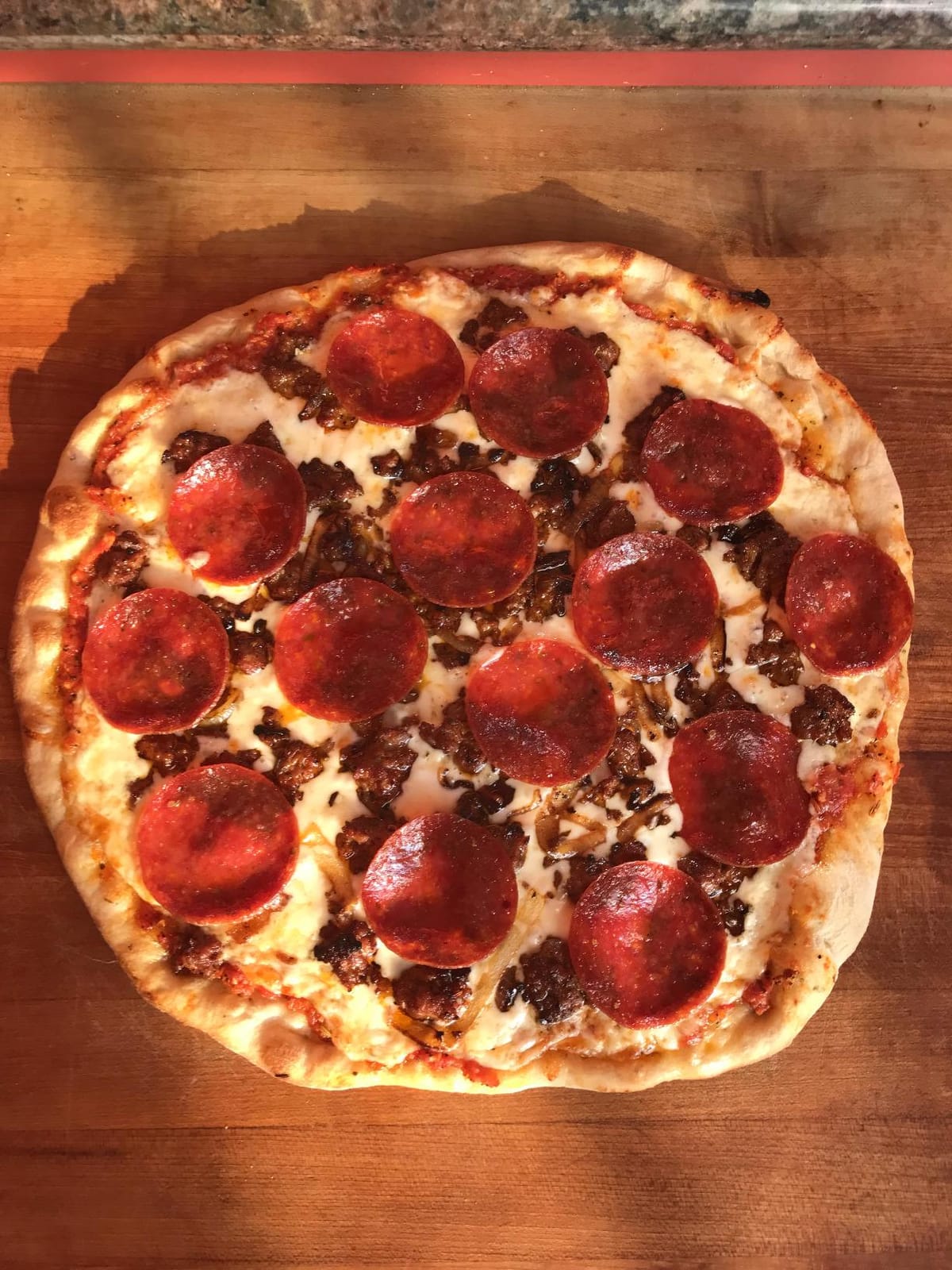
Why kamado owners get better results here
A kamado radiates heat from ceramic walls rather than from below, so a stone sitting flat on the grate gets very uneven exposure. The heat deflector puts a barrier between direct flame and the stone, and the 1 to 2 inch spacers let heat reach the underside evenly. With both in place you get a properly set crust.
At 2 pounds this is also the stone you can lift one-handed with mitts, which matters enormously when you are pulling pies every nine minutes through a service.
Where it falls short
It only works on the Classic Joe style setup, and you need a separate heat deflector to use it properly. Without spacers it does not heat evenly and the pizza burns, which is a real cost in the purchase.
At 4.8 stars and 964 reviews it is well reviewed, but that sample is smaller than the 13,000-review stones elsewhere in this roundup. The rating is excellent; the volume is moderate.
11. BBQgaskets 14-Inch Extra Thick Earthenware Stone – Best for the Big Green Egg
Pizza Baking Stone EXTRA THICK 9/16″ for Large Big Green Egg BGE (genuine imported earthenware) not ceramic
Imported earthenware
14 inch round
9/16 inch extra thick
6 lbs
Sized for Big Green Egg Large
Pros
- Extra thick 9/16 inch earthenware handles kamado temperatures without cracking
- Sold as earthenware rather than ceramic for better thermal shock resistance
- Sized for a large Big Green Egg Kamado PK Grills Oklahoma Joe or UDS
- Owners report a golden top with no charred bottom
Cons
- Only 133 ratings the thinnest evidence base here
- Staining is permanent and should not be scrubbed out
- 14 inch face is smaller than the 16 inch stones here
This is the Big Green Egg specialist. It is genuine imported earthenware rather than ceramic, 14 inches round at an extra thick 9/16 inch, and 6 pounds. Owners push kamados to 700F without cracking and report a properly browned crust on the first pizza, which is the strongest kamado performance claim any product in this guide makes.
Earthenware rather than ceramic is a deliberate choice here, and it is the reason it resists thermal shock better than the ceramic slab used by most kamado owners. The stone is self-seasoning and ready to use straight from the box.
The sizing is specific and useful. It is sold as the correct size for a Big Green Egg Large, Kamado, PK Grills, Oklahoma Joe and UDS, which means you are not guessing at the clearance. For those cookers it lands where a stone needs to sit so air can move around it.
Because it is 9/16 inch of body rather than 0.6 inch, the extra mass is the reason it shrugs off a lid opening. Most consumer stones fail not from steady high heat but from the rapid change when cold air hits a red-hot surface, and extra mass plus a forgiving material body is the defence against that.
How it handles the heat a kamado actually produces
The 9/16 inch extra thick profile is the point. Most consumer stones fail not from steady high heat but from the rapid change when a lid opens and cold air hits a red-hot surface, and extra mass plus a forgiving material body is the defence against that.
It should never be washed. Owners describe it as self-seasoning, and staining is permanent and should not be scrubbed out. Treat that as a feature of the material rather than a flaw.
Where it falls short
The evidence is thin. A 4.7 rating from 133 ratings is far smaller a sample than the 13,000-review stones elsewhere in this guide, so you are trusting a handful of owners rather than a large population. The reports are unusually specific, but they are still few.
At 14 inches it is smaller than the 16 inch stones in this comparison, so it caps your pizza size, and the earthenware is sold against a specific cooker list rather than a general grill market.
12. Onlyfire 4-Piece Pizza Stone and Peel Set – Best for Extreme Heat
Onlyfire 4 pcs Pizza Stone & Peel Set, Pizza Making Kit for Oven Grill BBQ
Cordierite rated to 2200F
15 inch round stone
4 piece kit
Stone peel cutter and spatula
Pros
- Cordierite rated to 2200F the highest service rating in this roundup
- Four piece kit covers stone peel cutter and spatula
- Works on a kamado at 600F where a decades-old oven stone cracked
- Long metal spatula transfers slices without losing toppings
Cons
- Pizza cutter is flimsy and the weakest part of the kit
- Stainless steel spatula is cheap and somewhat floppy
- No rack included so removing the hot stone is awkward
The Onlyfire kit carries the highest temperature rating in this guide at 2200F, shipped as a four piece set with a 15 inch round cordierite stone, a 14 by 16 inch aluminium peel with an 11 inch wood handle, a pizza cutter and a stainless steel spatula. Reviewers confirm the stone outlasts a decades-old oven stone at 600F kamado heat.
At 4.5 stars and 417 reviews it is well rated on a modest sample. The stone is the strong part, and the reviews are clear about that, which is useful to know before you decide whether the bundle is worth it.
The kit is aimed at people who want to cook outside rather than only at home, and it is marketed for oven, grill, BBQ, camping and tailgating. That portability angle is genuine, and the aluminium peel is lighter than the wood ones in this roundup.
Two things about the accessories are worth a second look. The peel has an 11 inch wood handle with a hanging cord, which is a longer reach than most bundled peels, and the stainless steel spatula is sized to lift a whole finished pie to a board without losing the toppings off the edge.
What a 2200F rating really signals
That figure is a firings and materials statement more than a promise you will ever use. You will not cook a grill at 2200F. What it tells you is that the cordierite body is sintered well beyond the service range, which is the same durability margin that keeps a stone from cracking when a kamado lid opens on it.
The 15 inch round face matches the working area of a personal or family pizza without crowding, and the long metal spatula is genuinely useful for transferring a finished pie to a board without losing toppings.
Where it falls short
The accessories are the problem. The pizza cutter is described as flimsy and the stainless steel spatula as cheap and somewhat floppy, so you are paying for tools you will replace. There is no rack in the box, so removing the hot stone from the grill is awkward.
Some buyers also reported dough sticking to the peel on first use before proper technique was learned, which is the learning curve every grill pizza beginner hits. And with 417 ratings it has a thinner evidence base than the leaders.
How to Choose a Pizza Stone for Outdoor Grills in 2026
Material is the first decision, and it is the one that decides whether your stone survives a grill. Cordierite is the safe default for almost every grill because it is sintered at 2000F-plus, resists thermal shock, and is sold with service ratings from 1000F to 2200F. High-fired ceramic behaves similarly but with less margin for a sudden temperature change. Stoneware and ordinary ceramic are oven products first, and their lower ceilings are exactly why forum users warn about cheap stones shattering on a grill.
The second decision is the published temperature rating, and it must exceed the temperature your grill actually reaches at the grate. A gas grill usually sits between 450 and 550F, a charcoal grill between 500 and 650F, and a kamado pushing fast pizza between 650 and 750F. Read the rating, not the marketing. A stone rated 1000F is fine on a gas grill and dangerous on a kamado, which is why the Culinary Couture and Old Stone stones do not suit high-heat cooking.
Thickness comes next, and the differences are real rather than cosmetic. Around 0.6 inch is the practical sweet spot for grill work because it holds enough heat to cook consecutive pizzas without pushing preheat past an hour. Thinner stones under 0.4 inch heat faster but lose their heat between pizzas, which matters when you are cooking for a group. Thicker stones hold more heat but make the preheat punishing and the lift heavier.
Size is a question of fit and airflow, not of pizza size alone. A stone that crowds the grill blocks circulation and creates the hot spots it is supposed to remove. Most grillers report best results leaving one to two inches of clearance around the stone, so measure the cooking grate before you buy a 16 inch round or a 15 by 12 rectangle.
Weight deserves more attention than any guide gives it. Stones here run from 2 pounds to 8 pounds, and every one of them comes off a grill at 500F or above. The lightest stones are the easiest to handle one-handed, and the two accessories that genuinely reduce risk are the Weber carry rack and the KitchenStar stainless steel stand. Neither is standard.
Accessories are worth evaluating honestly rather than generously. A stone that arrives with a peel, a cutter and a scraper saves you a second purchase and gives you something to launch with, which is why the Gyreuni and Onlyfire kits earn their place here. What matters most is whether anything in the box helps you handle the stone itself, and only two products in this roundup do that: the Weber carry rack and the KitchenStar stainless steel stand. Bundled cutters are the weakest link in most kits, with owners across several sets describing them as dull, burred or flimsy, so judge the kit on the stone and treat the rest as a bonus.
Evidence is the last filter. Beyond the specifications, judge by review volume rather than by rating alone, because a 4.8 from 133 ratings tells you much less than a 4.4 from 13,800.
Storage deserves a sentence of its own. These stones are heavy enough that where you keep them between cooks matters as much as what they cost. Cordierite handles temperature swings far better than glass or metal surfaces, so a garage shelf or a grill-side cabinet is fine, but keep a 7 pound stone somewhere it cannot be knocked off an edge, and never rest it on its edge. Place it flat on a level surface or on the rack it came with.
Pizza Stone vs Baking Steel vs Cast Iron on a Grill
Baking steel is the alternative forum users recommend most often, and no roundup article we found explains it properly. A baking steel is a plain sheet of A36 mild steel, typically three-eighths inch thick, and it works by conducting heat directly into the dough rather than absorbing radiant heat the way a stone does. The practical result is a faster bake, a darker crust, and a chewier interior. Enthusiasts call it hard to beat, and the screen-then-no-screen launch method that steel encourages is a real technique rather than a gimmick.
The comparison is not simply stone good, steel better. Steel conducts roughly ten times faster than cordierite, so a 0.4 inch steel plate can bake a pizza in four minutes where a 0.6 inch stone takes seven, and steel warps if it is not supported. Stone is forgiving, forgiving to store, forgiving to buy on a budget, and forgiving when you drop it, which is why it remains the better first purchase for most people. Stone is also the better choice if you plan to bake bread, because the slower heat profile suits a longer bake.
Cast iron is the third option and the most overrated of the three for pizza. It has enormous thermal mass, which sounds like an advantage but works against a pizza base, because it keeps cooking the underside after the top is done and produces a heavy, scorched bottom rather than a crisp one. Cast iron earns its place on a grill as a griddle for smash burgers, not as a pizza surface.
Unglazed porcelain tile is the budget route that forum users genuinely recommend. An unglazed porcelain tile from a hardware store works as a cheap heat sink, used singly or four tiled together for a 24 inch square surface. It is the cheapest way to find out whether you even like grill pizza. It is also the least consistent, because tile is dimensionally unstable and more likely to crack from thermal shock than a sintered cordierite slab, so it is a trial rather than a long-term answer.
There is a fourth route worth naming: a custom-fabricated baking steel from a local metal shop. Forum regulars point to it as the way to get a properly supported, correctly sized steel plate without hunting for a retail one, and it is the natural upgrade after you have outgrown a stone. For a kamado owner already running 700F, a quarter inch A36 mild steel plate with a set of 1 inch spacers is the configuration enthusiasts recommend.
For most households the decision is straightforward. Buy a cordierite stone first, learn your grill’s temperature and your dough, and only then consider a steel if you want a faster bake and already have a handle on the process. The stone is the safer first step and it is what we recommend in 2026.
How to Cook Pizza on a Grill With a Stone
Step one is bringing the stone up with the cooker rather than dropping it into a hot grill. Users consistently suggest setting a cold stone inside the grill and closing the lid before lighting or turning the burners to high, because a cold stone meeting a hot grate is the most common cause of thermal shock cracking. This single habit matters more than any other on this list.
Step two is preheating for 30 to 45 minutes with the lid closed. On a gas grill that means high heat and a closed lid. On a kamado, users report preheating with the closed grill for about 30 minutes and getting good wood-fired crust texture with smoke flavour. On a charcoal grill, wait until the coals are ashed over and the airflow is stable before you commit.
Step three is hitting the right target temperature. For kamado cooks pushing a fast pizza, the working range is 700 to 750F, which is why a 1000F-rated stone is a mistake and a 1800F or 2200F stone is not. For gas and charcoal, 500F is the common target and most owners cook a pizza in six to eight minutes at that temperature.
Step four is managing the lid. Every time a kamado lid opens you lose a significant amount of heat, and one user reported dropping to 450 to 500F on subsequent pizzas in 32F weather. Cook in batches sized to the heat you have, and do not expect the second pizza to perform like the first if the grill is small and the weather is cold.
Step five is launching. Semolina or cornmeal on the peel and the stone prevents sticking. For a screen method, place the dough on a wire pizza screen, set it on the hot stone, then peel the screen away once the dough has set for a few seconds. Enthusiasts run this screen-then-no-screen launch because it is much easier than launching bare dough at high heat.
Step six is lifting safely. Pull the stone or the pizza with proper heat protection and a clear landing surface already in place. If your stone has a carry rack or a stand, use it. Do not attempt a hot 7 pound slab with a folded towel, which is how people end up in an emergency room.
Step seven is cleaning. Scrape while warm with a plastic scraper, rinse with warm water, and never use soap or detergent on cordierite or ceramic, because the odour soaks into the pores and follows you back outside.
Frequently Asked Questions
Can you use a pizza stone on an outdoor grill?
Yes, but only a thick, grill-rated stone placed on the grates with the lid closed for the full preheat. It absorbs radiant heat and releases it evenly, so the crust sets evenly instead of scorching over bare grates. Set the stone inside the grill before bringing the grill to temperature, cook at 500F for a gas or charcoal grill, and keep the lid shut whenever you can.
Which type of pizza stone is better, ceramic or cordierite?
Cordierite is better for outdoor grills. It is sintered above 2000F, which gives it far more tolerance for the rapid temperature swings of a charcoal or kamado cook, and it survives thermal shock that breaks ordinary ceramic or stoneware. Ceramic is fine in a home oven but is the material most often blamed in reports of grill stones cracking.
What is the best brand of pizza stone?
There is no single best brand, but the strongest proven options for grill use are Unicook, whose cordierite stones are rated to 1450F and carry well over 6,000 reviews each, and KitchenStar, whose 16 inch stone is rated to 1800F for high-heat cookers. Match the stone to the temperature your grill actually reaches rather than buying on brand name alone.
What is the best way to cook pizza on a grill?
Put the stone in a cold grill, close the lid, bring the grill to 500F on gas or charcoal, and preheat 30 to 45 minutes. At 700 to 750F on a kamado, cook 9 to 10 minutes with the deflector and spacers in place. Launch on semolina or cornmeal, keep the lid closed between pizzas, and expect a six to eight minute cook at 500F.
Do you oil a pizza stone before using it?
No. Oiling a cordierite or ceramic stone is unnecessary and can create sticky, uneven browning. Never use soap or detergent either, since both leave an odour that soaks into the porous surface and follows you back outside. Scrape while warm with a plastic scraper, rinse with warm water, and let it air dry.
How do I stop a pizza stone cracking on a grill?
Three rules prevent most cracking. Bring the stone up to temperature inside the cold grill with the lid closed rather than dropping a cold stone onto hot grates. Buy a stone whose published rating exceeds the temperature your grill reaches, not one that merely says heat resistant. And avoid sudden changes, since a burst of cold air on a red-hot stone is what shatters it.
Final Recommendation by Grill Type
For most people the Unicook 15 x 12 rectangular cordierite is the best pizza stone for outdoor grills, because a 1450F rating and 0.6 inch thickness cover everything a gas or charcoal grill does without the guesswork, and its 13,000-review history makes the crust claims easy to trust. Round dough lovers should take the Unicook 15 inch round instead, which shares that pedigree in a shape that suits classic pies.
Kamado and Big Green Egg owners have a different answer. The Kamado Joe 15 inch ceramic stone carries the highest rating in this roundup and is built for the deflector-and-spacer stack these cookers need, while the BBQgaskets extra thick earthenware stone is the specialist pick if you run a Big Green Egg Large at full heat and want a 9/16 inch body that tolerates it. Anyone pushing a smoker hot should look at the KitchenStar 16 inch, rated to 1800F and shipped with a stand.
Two picks cover the remaining cases. The Weber Gourmet BBQ System stone is the one to buy if hot handling worries you, because the carry rack solves the lift that every other stone leaves you to manage. The Culinary Couture 15 x 12 is the low-commitment trial if you want to find out whether grill pizza is for you without carrying an 8 pound slab around.
Whatever you choose, put it in the grill cold, close the lid, and give it a full 30 to 45 minutes. That habit does more for the life of the stone than any other, and it is the reason our picks are still cooking pizza years after they were bought. Use the buttons above to check current details, and start your preheat before anyone asks when dinner is ready.