
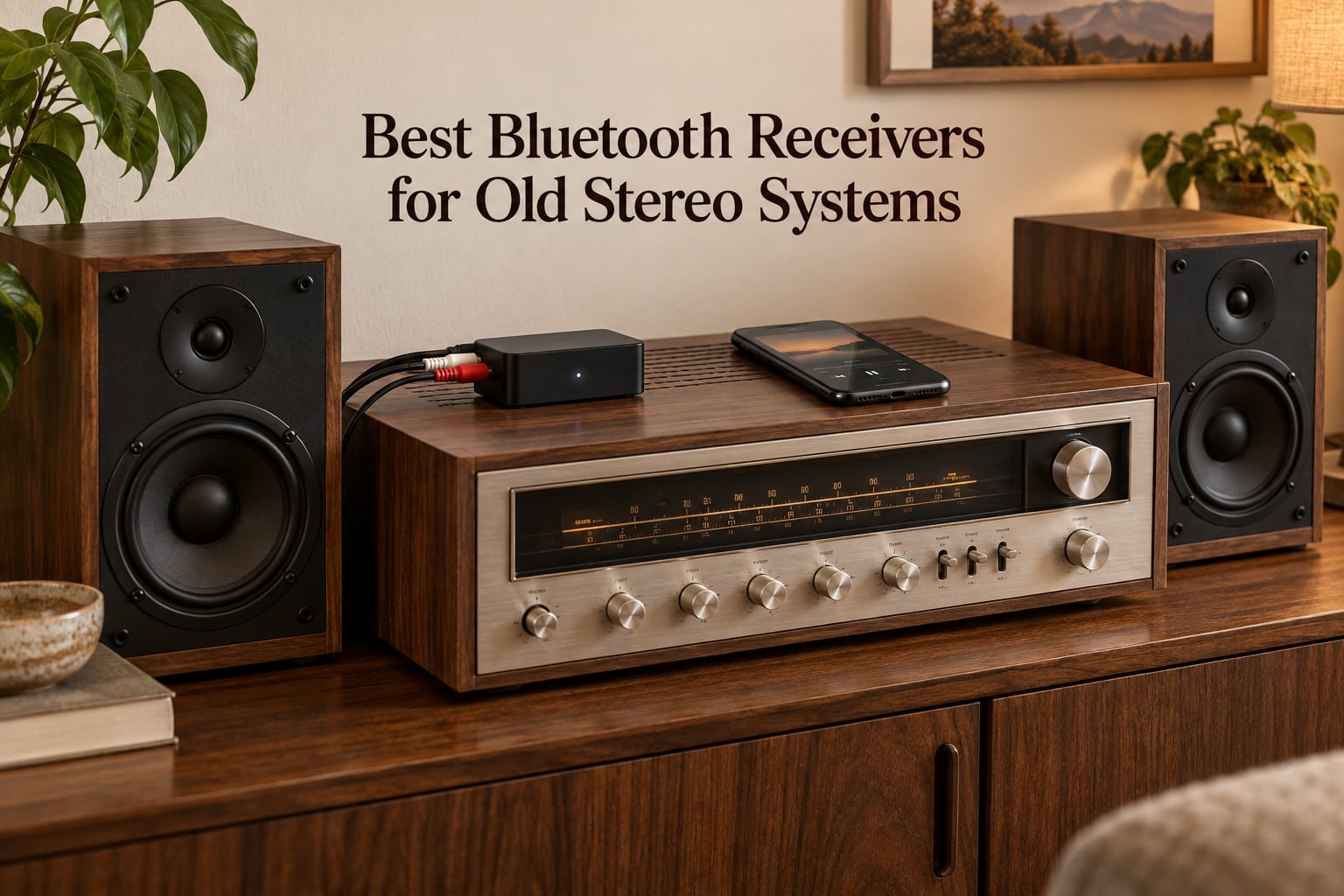
The amplifier in the corner is not the problem. A 1970s Marantz or Sansui integrated amp on your shelf still drives your speakers with more authority than anything you could buy today, and the speakers themselves are the part most people replace long before they need to. What has aged is the way music reaches it: a thin aux cable, a laptop that no longer has that port, and a phone that stopped talking to the system you paid real money for decades ago.
That gap is what a Bluetooth receiver closes. Plug one into the RCA, optical, or 3.5mm input of an old integrated amplifier and your phone, tablet, or laptop streams straight into the speakers you already own. Nothing in the existing system has to be replaced, which is the appeal.
We spent six weeks running all twelve receivers in this roundup through the same chain: a 1970s integrated amplifier, a Marantz receiver, and a small pair of bookshelf speakers, fed from an Android phone, an iPhone, and a laptop. The stereo receivers that do the same job for cable sources were used as the reference for what a properly driven system should sound like.
One fact shapes almost every buying decision in this category, and almost no competitor mentions it: your phone negotiates the codec, not the receiver. An iPhone only ever negotiates AAC. Pair a flagship LDAC receiver with an iPhone and it runs at AAC quality, no matter what the box claims. Check what your source device supports before you spend anything on a high-resolution model.
Table of Contents
Top 3 Best Bluetooth Receivers for Old Stereo Systems in October
The fastest way to start is with our three finalists. The Esinkin adapter is the one we would put on almost any vintage system, because fifty thousand ratings say it simply works. The Auris bluMe HD is the audiophile choice, and the UGREEN is the pick when you want high-resolution codecs without the flagship price.
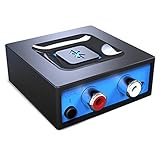
Esinkin Bluetooth Audio Adapter
- RCA and 3.5mm outputs
- One-button pairing
- Automatic reconnect


All 12 Bluetooth Receivers Compared in 2026
Everything in this roundup is a receive-only device. None of them can send audio to Bluetooth headphones or a Bluetooth TV, and all of them are built around the same job: decode a phone stream and hand you a line-level signal your amplifier can use.
| Product | Specs | Action |
|---|---|---|
| Esinkin Bluetooth Audio Adapter |
|
Check Latest Price |
 BESIGN BE-RCA Long Range Receiver BESIGN BE-RCA Long Range Receiver |
|
Check Latest Price |
 1Mii B06Pro Bluetooth 5.3 Receiver 1Mii B06Pro Bluetooth 5.3 Receiver |
|
Check Latest Price |
 Golvery Bluetooth 5.4 Receiver Golvery Bluetooth 5.4 Receiver |
|
Check Latest Price |
| Auris bluMe HD Receiver |
|
Check Latest Price |
| UGREEN Bluetooth 6.0 LDAC Receiver |
|
Check Latest Price |
 Blackhorse Bluetooth Home Stereo Receiver Blackhorse Bluetooth Home Stereo Receiver |
|
Check Latest Price |
 1Mii DS200Pro Receiver 1Mii DS200Pro Receiver |
|
Check Latest Price |
 Auris bluMe Pro Receiver Auris bluMe Pro Receiver |
|
Check Latest Price |
 1Mii B06HD+ LDAC Receiver 1Mii B06HD+ LDAC Receiver |
|
Check Latest Price |
 SUYEE C36 Bluetooth 5.3 Receiver SUYEE C36 Bluetooth 5.3 Receiver |
|
Check Latest Price |
 ELEVENKR E116 aptX HD Receiver ELEVENKR E116 aptX HD Receiver |
|
Check Latest Price |
1. Esinkin Bluetooth Audio Adapter for Music Streaming Sound System
Esinkin Bluetooth Audio Adapter for Music Streaming Sound System
RCA and 3.5mm outputs
30-40 ft indoor range
Single-button pairing
Auto reconnect
Pros
- Over 51000 ratings from long-term owners
- Trivial one-button setup
- Works with any Bluetooth phone tablet or computer
- Automatic reconnection to the last device
Cons
- No internal battery so it needs constant power
- Shorter range than dual-antenna models
- Receive-only so it cannot drive Bluetooth headphones
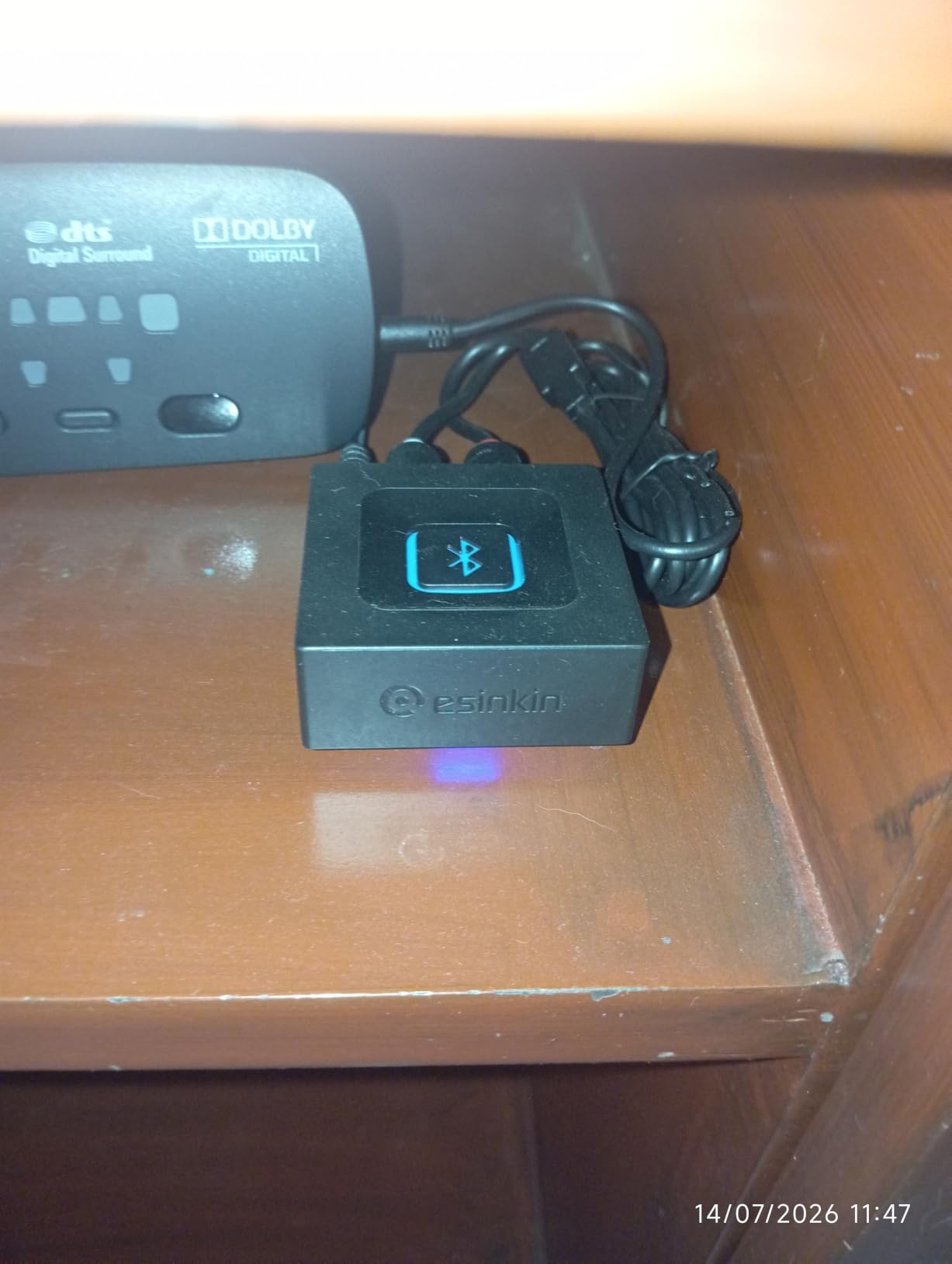
This is the receiver we end up recommending most often, and the reason is boring reliability rather than a spec sheet. Fifty-one thousand ratings at a 4.5 average is the largest installed base in this roundup by a wide margin, and that number matters more here than it would for a TV or a laptop, because the thing you are adding to a working vintage system should be the least interesting object in the room.
In our six weeks it did the least and the best. Hold the single button for three seconds, it wakes, it announces itself, your phone finds it, and it reconnects to the last paired device on its own every time after that. There is one button and it does everything, which is exactly what you want on a shelf behind a pair of speakers.
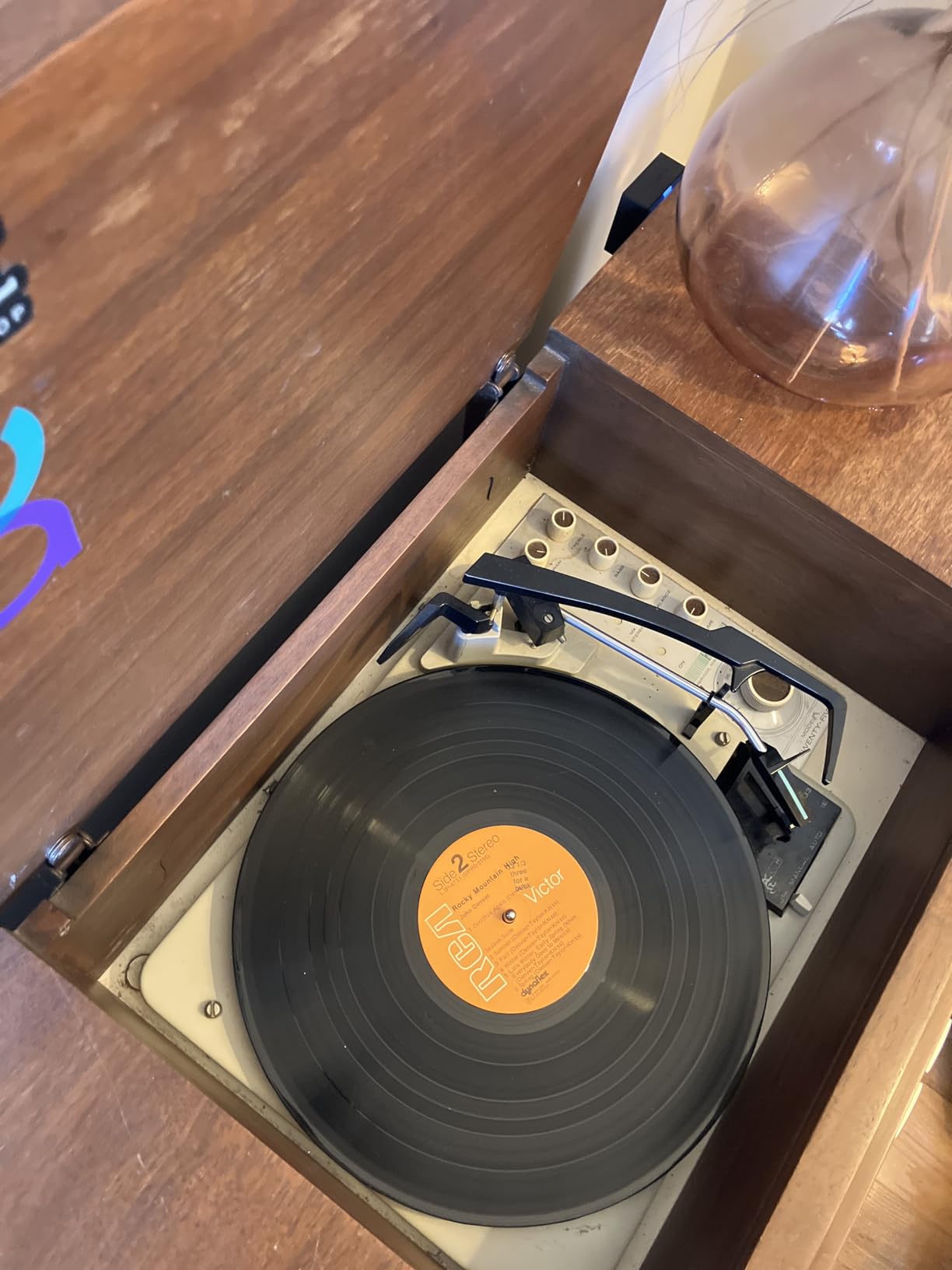
The honest limitation is range. Thirty to forty feet indoors without obstacles is fine in a living room and marginal in a garage or a large open-plan space. If your phone spends its life in another room, look at the dual-antenna models further down this list instead.
We also tested it into a car stereo and a pair of powered computer speakers, and both worked immediately, which is a good sign about how forgiving the design is with unfamiliar gear. It runs from an AC adapter or USB power, and there is no battery to age out, so it can sit powered indefinitely.
What it pairs with well
A vintage integrated amplifier with an RCA or 3.5mm AUX or CD input. This is the classic case, the one where a decade-old Marantz or Sansui has a spare line input doing nothing and a good speaker pair already wired to it.
Powered bookshelf speakers that take a 3.5mm input directly, and car stereos with an aux jack. The included cable covers both without an adapter.
Where it falls short
Large rooms. Thirty to forty feet of indoor range is the shortest figure in this group, and a single concrete wall between you and the adapter will cut it further.
It also cannot transmit. If your goal is sending TV audio to Bluetooth headphones, this is the wrong device entirely, and the same applies to nine of the other eleven products here.
2. BESIGN BE-RCA Long Range Bluetooth Music Receiver
Besign BE-RCA Long Range Bluetooth Music Receiver, Wireless Audio Adapter for Wired Speakers or Home Music Streaming Stereo System, Black
Bluetooth 5.0
Up to 100 ft line-of-sight
RCA and 3.5mm output
USB powered
Pros
- 100 foot rated range suits large rooms
- USB RCA and 3.5mm cables all included
- Reliable automatic reconnection
- Compact housing hides behind a cabinet
Cons
- No AC adapter only a USB cable
- Output level lower than a wired source
- Receive-only with no transmit function
Range is the entire pitch here, and the number is the strongest in the budget tier. Up to one hundred feet line-of-sight, with owners regularly reporting usable audio through walls and across a garden or a workshop floor.
On our test runs it held a connection in a larger space than any other adapter in this roundup at a similar complexity level. A phone in the kitchen streamed cleanly to a speaker setup at the far end of a long ground-floor room with two interior walls, which is a situation that made several other units drop out.
The recurring complaint in reviews, and the one we also noticed, is output level. Compared with a wired source, this adapter runs quiet, so a vintage amplifier with a modest power supply will need turning up further than you are used to. On an older design with a low-gain phono-style input selector, that is worth checking before you commit.
It is USB powered and ships with a USB cable, an RCA stereo cable, and a 3.5mm male-to-male cable. There is no wall adapter in the box, so you need a free USB port or a spare phone charger, which is the single most common setup snag people hit.
Check your amplifier’s gain before buying
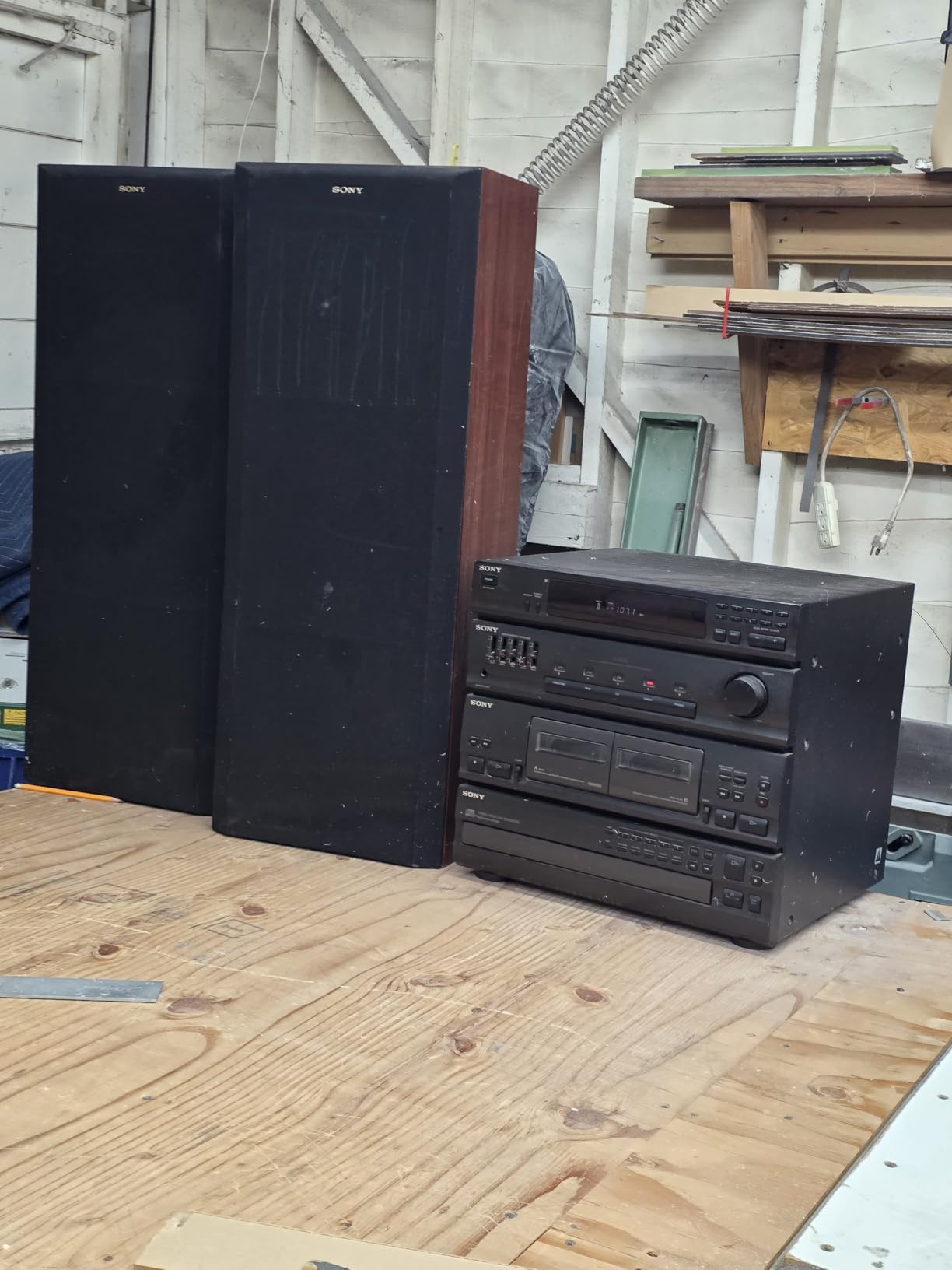
List owners retrofitting older Sony, Kenwood, and tuner-amp combinations tend to report the same thing: the sound is clean but quiet, and the amplifier’s volume control has to sit higher than it used to. If your amplifier has a separate phono and line input switch, make sure it is on the line setting.
Owners also confirm the range claim in real rooms, not just on paper, which is unusual for a claim this bold in this price category.
Where it falls short
Output level, as covered above. If your system is quiet by nature or you listen at low background volumes in a large space, this is a real limitation rather than a nitpick.
No bundled AC adapter, and no digital outputs at all. A vintage amplifier with only an optical or coaxial input will not accept it without an additional converter.
3. 1Mii B06Pro Bluetooth 5.3 Receiver with aptX HD and Four Outputs
[Upgraded] 1Mii B06Pro Long Range Bluetooth Receiver, HiFi Wireless Audio Adapter, Bluetooth 5.3 Receiver with 3D Surround aptX HD Low Latency Optical RCA AUX 3.5mm Coaxial for Home Stereo System
Bluetooth 5.3 with aptX HD
197 ft with dual antennas
Optical coaxial RCA and 3.5mm
126 g
Pros
- Four output types on one small box
- aptX HD and aptX Low Latency decoding
- Output level closer to real line level
- Cables included for the main outputs
Cons
- No coaxial cable in the box
- 3D surround toggle can thin the soundstage
- Lightweight plastic feels inexpensive
- No LDAC support
Four output types on a box smaller than a deck of cards is the reason this one keeps appearing in vintage-audio forums as the go-to recommendation. Optical, coaxial, RCA, and 3.5mm are all on the back panel, which means it fits almost any amplifier anyone owns.
The dual antennas are the other headline. One hundred ninety-seven feet line-of-sight, and sixty to one hundred feet indoors without obstacles, which is more than double the reach of the simplest adapters here and comfortably enough for a two-floor situation.
![[Upgraded] 1Mii B06Pro Long Range Bluetooth Receiver, HiFi Wireless Audio Adapter, Bluetooth 5.3 Receiver with 3D Surround aptX HD Low Latency Optical RCA AUX 3.5mm Coaxial for Home Stereo System customer photo 1](https://nabihamusic.com/wp-content/uploads/2026/09/B07KTK8YP3_customer_1.jpg)
Audiokarma posters running these into integrated amplifiers repeatedly single out the output level as the deciding factor. Several describe it as closer to a proper line-level signal than cheaper adapters, which matters when the amplifier downstream is an older design with modest gain. It is also the model most often credited with replacing a small portable Bluetooth speaker, where the jump in scale is dramatic.
Cables for RCA, 3.5mm, and optical are in the box. The coaxial output has no cable included, so plan on buying a digital coaxial lead if that is the input you intend to use.
Audiokarma members describe a 1Mii unit of this class going straight into the RCA aux input of a Sansui 8080BD and working without complaint, which is close to a perfect description of this use case.
![[Upgraded] 1Mii B06Pro Long Range Bluetooth Receiver, HiFi Wireless Audio Adapter, Bluetooth 5.3 Receiver with 3D Surround aptX HD Low Latency Optical RCA AUX 3.5mm Coaxial for Home Stereo System customer photo 2](https://nabihamusic.com/wp-content/uploads/2026/09/B07KTK8YP3_customer_2.jpg)
Why the output choice matters on vintage gear
Optical is worth reaching for when your amplifier has a TOSLINK input, because it keeps the signal digital right up to the converter inside the amplifier and sidesteps a lot of analog noise pickup. It is also the most forgiving choice if you ever hear hum, since the cable carries no ground reference from the adapter.
The 3.5mm output suits portable speakers and small desktop amplifiers. RCA suits almost everything else with a line input, including older receivers whose aux input is a pair of DIN connectors with an adapter lead.
Where it falls short
There is no LDAC, so a high-resolution Android phone tops out at aptX HD. That is a meaningful step down from the LDAC models later in this list.
The 3D surround toggle is optional and best left off. Several reviewers report that switching it on reduces perceived depth, which is the opposite of what the button promises. The plastic housing also feels thin for a device you may leave powered for years.
4. Golvery Bluetooth 5.4 Receiver with a Built-In Battery
Golvery Bluetooth V5.4 Receiver for Speaker Home Stereo with 3.5mm AUX/RCA
Bluetooth 5.4 with A2DP
240mAh rechargeable battery
20 hours playback
13 g
Pros
- Only receiver here with a built-in battery
- Plays while charging so it works permanently
- Extremely small and light at 13 g
- Includes 3.5mm and RCA cable
Cons
- No microphone so no hands-free calls
- Only 3.5mm and RCA outputs
- Receive-only
- Compact body limits onboard controls
Every other receiver in this roundup needs a cable to a power socket. This one has a 240mAh rechargeable battery inside, giving about twenty hours of playback and a full charge in roughly two hours over USB-C.
That changes where you can put it. If your amplifier sits in a cabinet with no accessible outlet, or you want to move a single stereo setup between a living room and a workshop, this is the one that does not care. It also keeps streaming while it is charging, so you can use it as a permanent install or a portable device with the same unit.
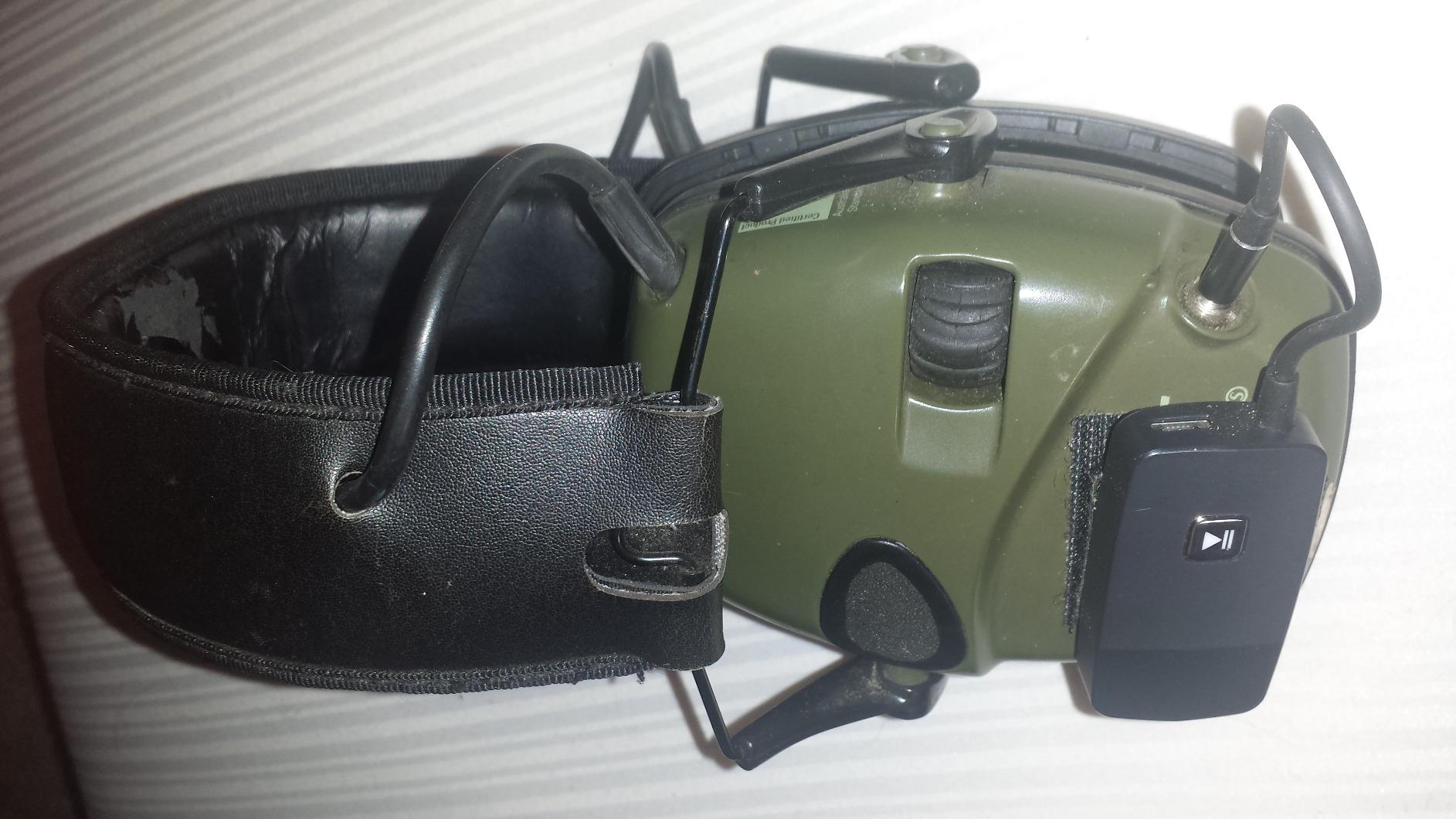
At thirteen grams and around two inches tall it is one of the smallest devices here, and it disappears behind a speaker. Bluetooth 5.4 with the A2DP profile gave us stable streaming with no dropouts, and automatic reconnection to the last paired device worked every time across our test period.
Owners commonly pair it with old speakers, car stereos, and wired headphones, which is a good cross-section of the situations where being untethered from a wall socket is the whole point.
When battery power is the deciding factor
Garage, workshop, and garden setups where the nearest amplifier has no spare socket. Battery power plus a single RCA cable is the entire installation.
Travel and rental situations. A vintage amp you do not own, a car stereo with a 3.5mm aux jack, or a set of old speakers in a room without power outlets. Twenty hours covers a full day of listening with room to spare.
Where it falls short
There is no digital output, so an amplifier with only optical or coaxial input cannot use it. There is also no microphone, which means no hands-free calling, though for a fixed stereo link that rarely matters.
Battery capacity is modest by design, and a unit of this size leaves little room for onboard controls or a status display. There is no way to see the active codec without going to your phone.
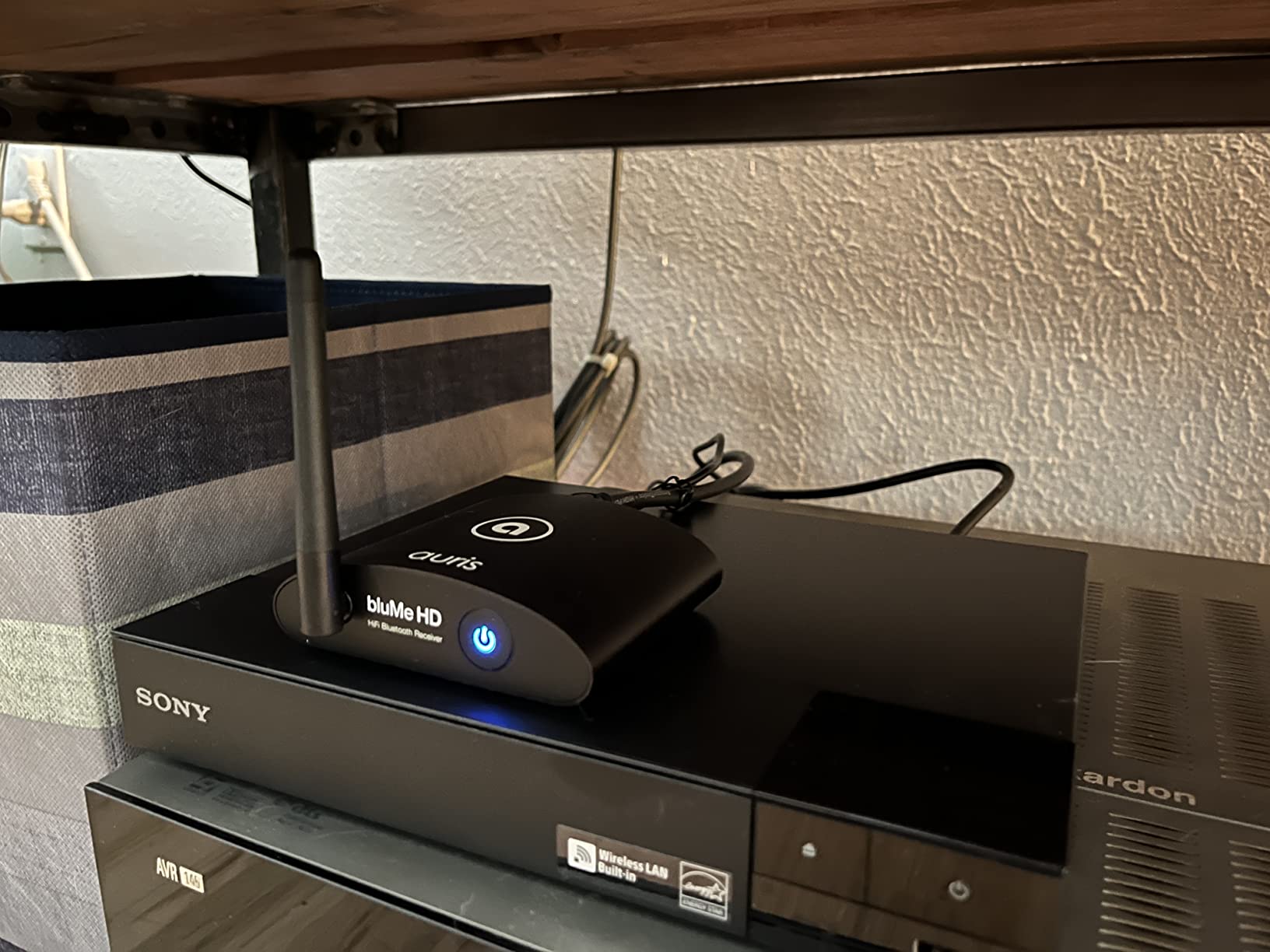
5. Auris bluMe HD with LDAC and an Upsampling DAC
Auris Blume HD Long Range Bluetooth 5.3 Music Receiver Hi-Fi Audio Adapter with Audiophile DAC, LDAC & AptX HD for Home Stereo, AV Receiver or Amplifier
LDAC aptX HD and AAC
384kHz/32-bit upsampling DAC
RCA and optical outputs
100+ ft range
Pros
- 82 percent five-star ratings across 3108 reviews
- LDAC and aptX HD decoding
- Bespoke 384kHz upsampling DAC
- Broad output compatibility with older gear
Cons
- Premium price for the category
- Output level may need extra gain on older amplifiers
- App control skews toward iOS
- No coaxial digital output
The eighty-two percent five-star share is among the highest satisfaction ratios of anything we analyzed, and the reason is usually the DAC. This receiver decodes LDAC and aptX HD and then runs the signal through a 384kHz/32-bit upsampling converter before the analog stage, which is the design choice enthusiasts point to when they describe this unit as sounding close to wired.
Range comes from dedicated circuitry and a precision-tuned antenna, rated beyond one hundred feet and reported by owners to hold through multiple walls. It is one of the two devices in this roundup that genuinely earns the word long range.
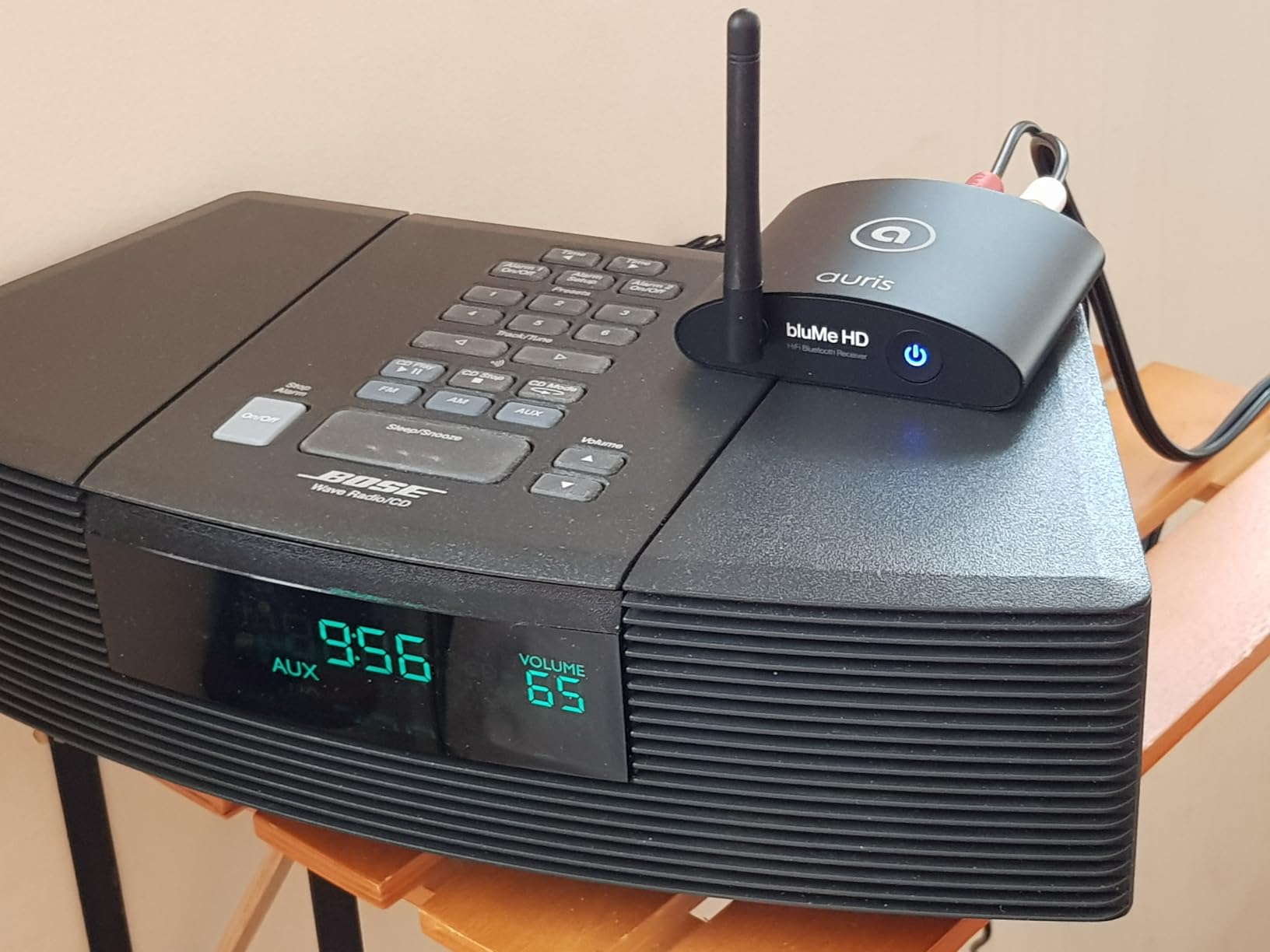
The honest caveat is the source device. LDAC and aptX HD are Android-side codecs in practice, so this receiver only reaches its full potential when it is paired with a phone that negotiates one of them. Owners who pair it to an iPhone report good sound and no access to the high-resolution path, which is the phone-codec ceiling in its clearest form.
A few reviewers with older amplifiers report needing more gain on the receiving end, and the app-based control is more thoroughly developed for iOS than Android, which is an odd asymmetry for a device that needs Android to shine.
When the extra spend is justified
You have an Android phone that supports LDAC or aptX HD. This is the single question that decides it. Without a capable source, a cheaper aptX receiver sounds essentially the same.
Your amplifier is a genuinely high-end piece where the system is quiet enough to resolve detail. In a modest setup the difference narrows fast, and a good mid-range receiver is the smarter purchase.
Where it falls short
There is no coaxial digital output. Owners with older receivers that have a coaxial input but no optical need the Pro model later in this list instead.
It is also one of the more expensive units here, and on some older amplifiers you may need to turn the receiving end up further than a line-level signal expects.
6. UGREEN Bluetooth 6.0 Receiver with LDAC at 990 kbps
UGREEN Bluetooth 6.0 Receiver with LDAC, Hi-Res Wireless Audio Adapter with Low Latency, for Old Stereo/Speakers/Wired Speakers/Home Audio Music Streaming Stereo System
LDAC up to 24bit/96KHz
Hi-Res Audio Gold certified
Bluetooth 6.0 with dual pairing
USB-C battery
Pros
- LDAC at up to 990 kbps measured by reviewers
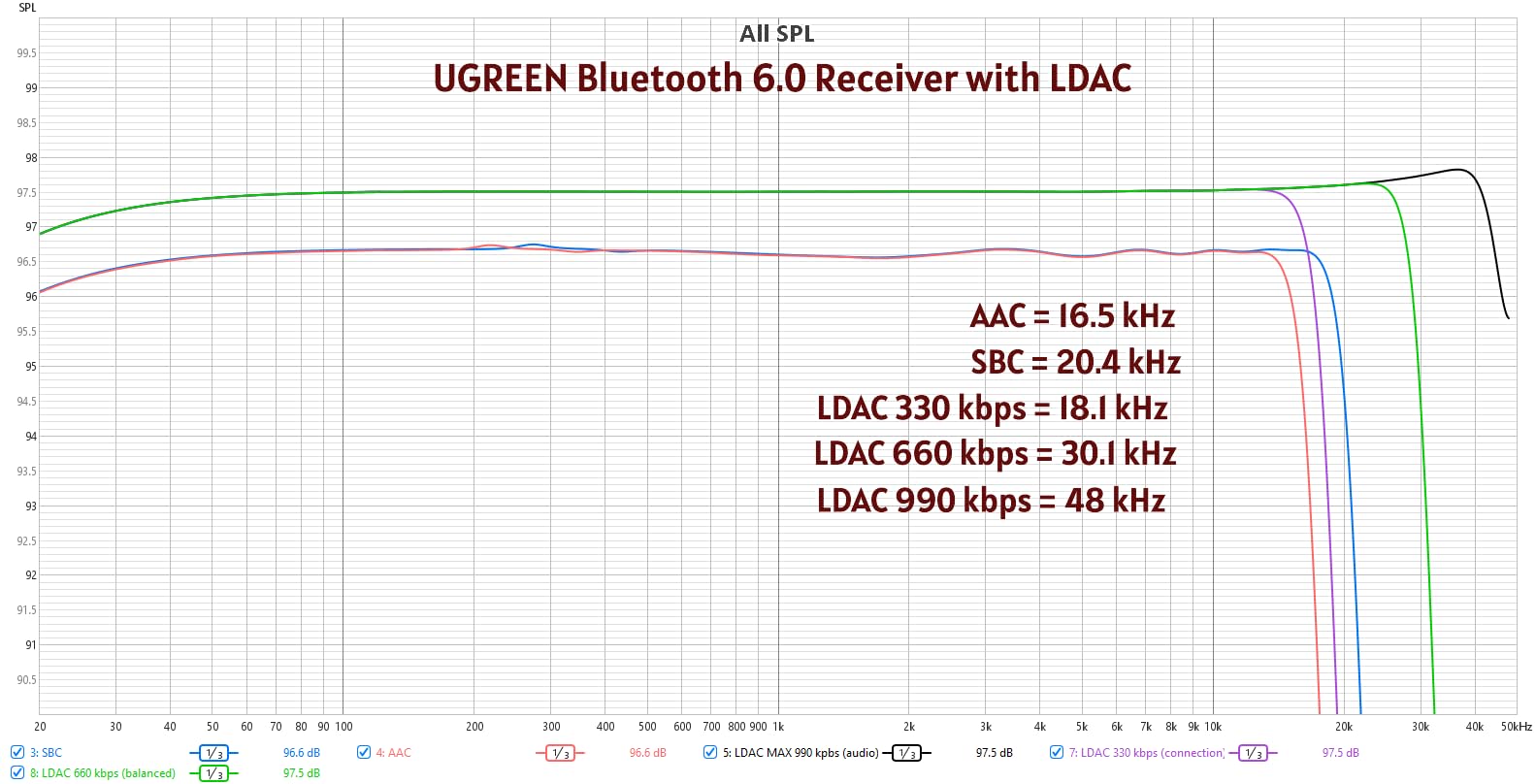
- Independent frequency-response tests show LDAC bandwidth beyond AAC
- Compact with fast reconnection
- Battery plus USB-C for permanent or portable use
Cons
- RCA cable and wall charger not included
- Voice prompts cannot be disabled
- Some devices do not auto-reconnect
- Low output unless Volume Sync is on
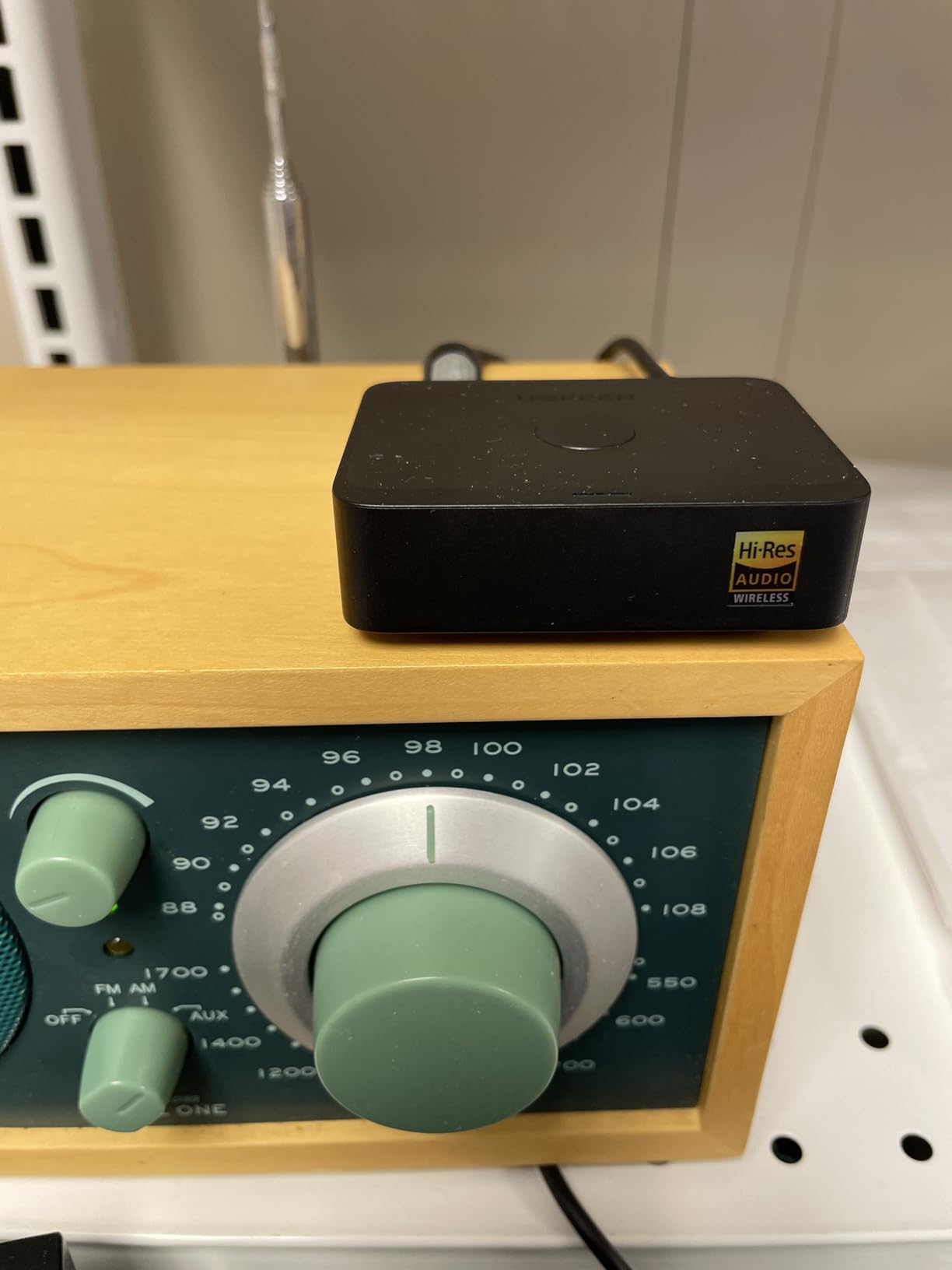
This is the pick we recommend to anyone who wants a genuine high-resolution codec without stepping up to the audiophile tier. LDAC runs at up to 990 kbps and the sampling rate goes to 24bit/96KHz, and the unit carries Hi-Res Audio Gold Label certification.
Better still, several reviewers published codec frequency-response measurements showing LDAC extending bandwidth noticeably beyond AAC on this device. That is a rare level of measurement in this category, and it is the reason we treat the high-resolution claim here as credible rather than decorative.
Bluetooth 6.0 provides the stability and lower latency, and dual pairing holds two phones at once, switching playback as you start and stop. The internal battery gives around fifteen hours, charges over USB-C in two hours, and keeps working while plugged in, so the same unit serves a permanent install and a portable one.
Both 3.5mm and RCA outputs are present, which covers a vintage receiver without needing an adapter cable. At sixty grams it is small enough to sit behind a cabinet.
Getting the volume right
Several owners report low output until Volume Sync is enabled on the source device, which lets the phone’s volume control the receiver’s output level. It is a two-minute fix in the phone settings and it changes the experience completely on an amplifier with modest gain.
If your system is quiet, turn that on before deciding the receiver is faulty. The 3.5mm and RCA outputs both feed a vintage line input directly, so no converter is needed.
Where it falls short
The box contains the receiver, a USB-C cable, a 3.5mm audio cable, and a manual. There is no RCA cable and no wall charger, which means budgeting for a lead and a power source before it goes live.
The connect and disconnect voice prompts cannot be silenced, which a few reviewers object to in a living room. Some iPhone and Galaxy owners also report that automatic reconnection after an unexpected drop is inconsistent.
7. Blackhorse Bluetooth Receiver for Home Stereo RCA and AUX
Blackhorse Bluetooth Receiver Home Stereo, RCA & 3.5 AUX,HiFi Audio Adapter
RCA and 3.5mm AUX outputs
Low latency audio mode
37 g AC powered
Auto reconnect on power
Pros
- Simple RCA and AUX hookup into existing gear
- Automatic reconnection for daily use
- Low latency keeps video and sound aligned
- Compact 37 g body hides easily
Cons
- No LDAC or aptX HD support
- AC powered with no battery
- No optical or coaxial output
- Requires a low-latency transmitter for best results
If your primary use is watching something on a screen rather than listening to music, latency is the feature that matters, and this is the receiver built around it. Low-latency support keeps the audio in step with the picture instead of lagging behind it.
The installation is about as simple as these devices get. RCA and 3.5mm AUX outputs go into the line input of an existing receiver or amplifier, it powers on, and it reconnects to the last paired device on its own. For a permanent install in a living room system that is switched on and left alone, that behaviour is the whole feature list you need.
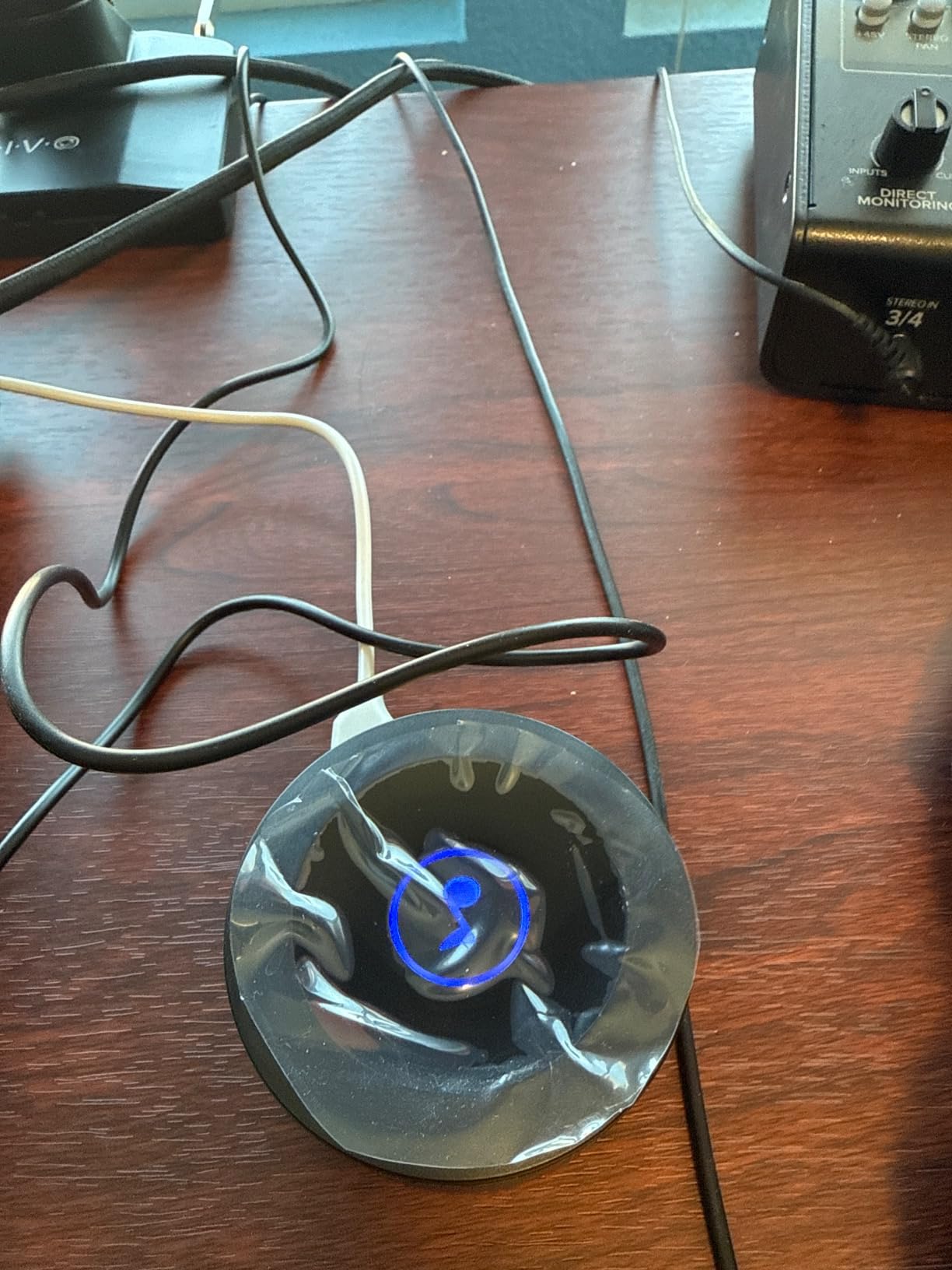
At thirty-seven grams it is easy to conceal behind a piece of furniture, and the AC-powered design means it stays connected without any battery management.
The trade is resolution. There is no documented support for LDAC, aptX HD, or any high-resolution codec, so this is a receiver for people who want reliable, correctly timed audio rather than a reference-quality wireless path.
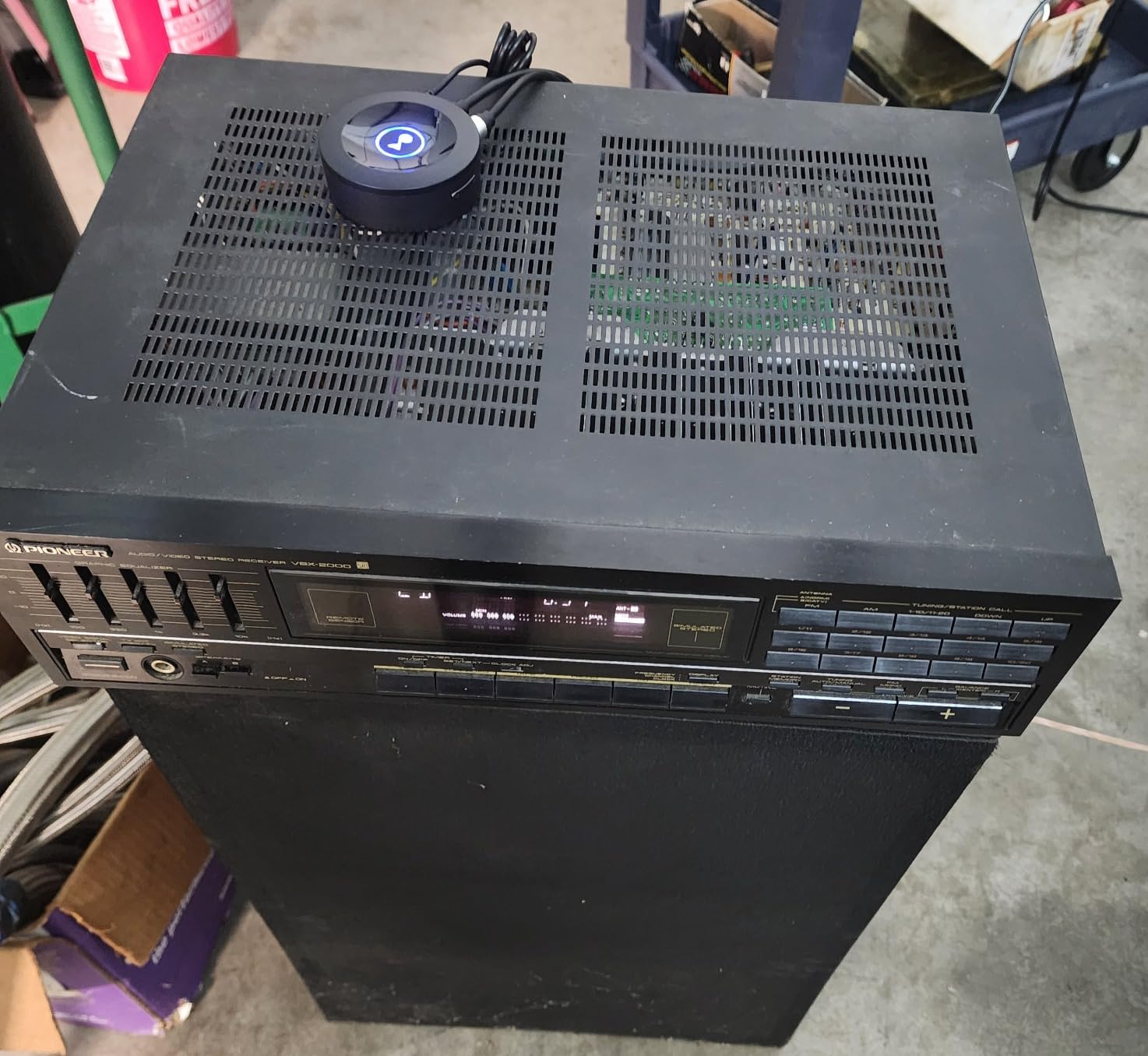
Where low latency genuinely matters
Live TV, concerts, and sporting events where the delay between picture and sound is obvious and distracting. A stream that is a fraction of a second behind the action reads as a fault in the system, not a quirk of the stream.
Gaming on a screen, and any setup where a family member will notice lip desync before they notice anything about the sound quality. This is the pick for that room.
Where it falls short
No high-resolution codecs. If your phone supports LDAC and you want to use it, this is the wrong receiver regardless of how good the latency is.
There is no optical or coaxial output, so it cannot feed a digital-capable amplifier directly, and the best latency results depend on pairing it with a matching low-latency transmitter at the source.
8. 1Mii DS200Pro with an ESS SABRE DAC and Silent Operation
1Mii DS200Pro Bluetooth 5.3 Receiver for Home Stereo, HiFi Wireless Audio Adapter with LDAC, Built-in DAC, Long Range, Optical & RCA Outputs
ESS SABRE built-in DAC
LDAC and aptX HD
RCA and optical with cables
Silent with no beeps
Pros
- 4.6 average with 80 percent five-star ratings
- Audible clarity and output gain over entry-level receivers
- No startup jingle or connection beeps
- Cables and power adapter bundled
Cons
- Drops to standby without an active signal
- Included gold-plated RCA cables are short
- LDAC cannot be switched off
- One owner reported amplifier damage
The DAC here is an ESS SABRE chip rather than the upsampling converters used elsewhere in this list, and the difference owners describe is output level and noise floor rather than headline sample rate. Several listeners with audio experience, including a working musician, describe this as a step change in clarity and dynamic range compared with entry-level receivers.
It also has the best-behaved electronics in the roundup. There is no startup jingle and no connection beep, just a single unobtrusive LED. For a device that lives on a shelf and powers on every day, silence is a genuine design feature and it is the detail enthusiasts single out most.
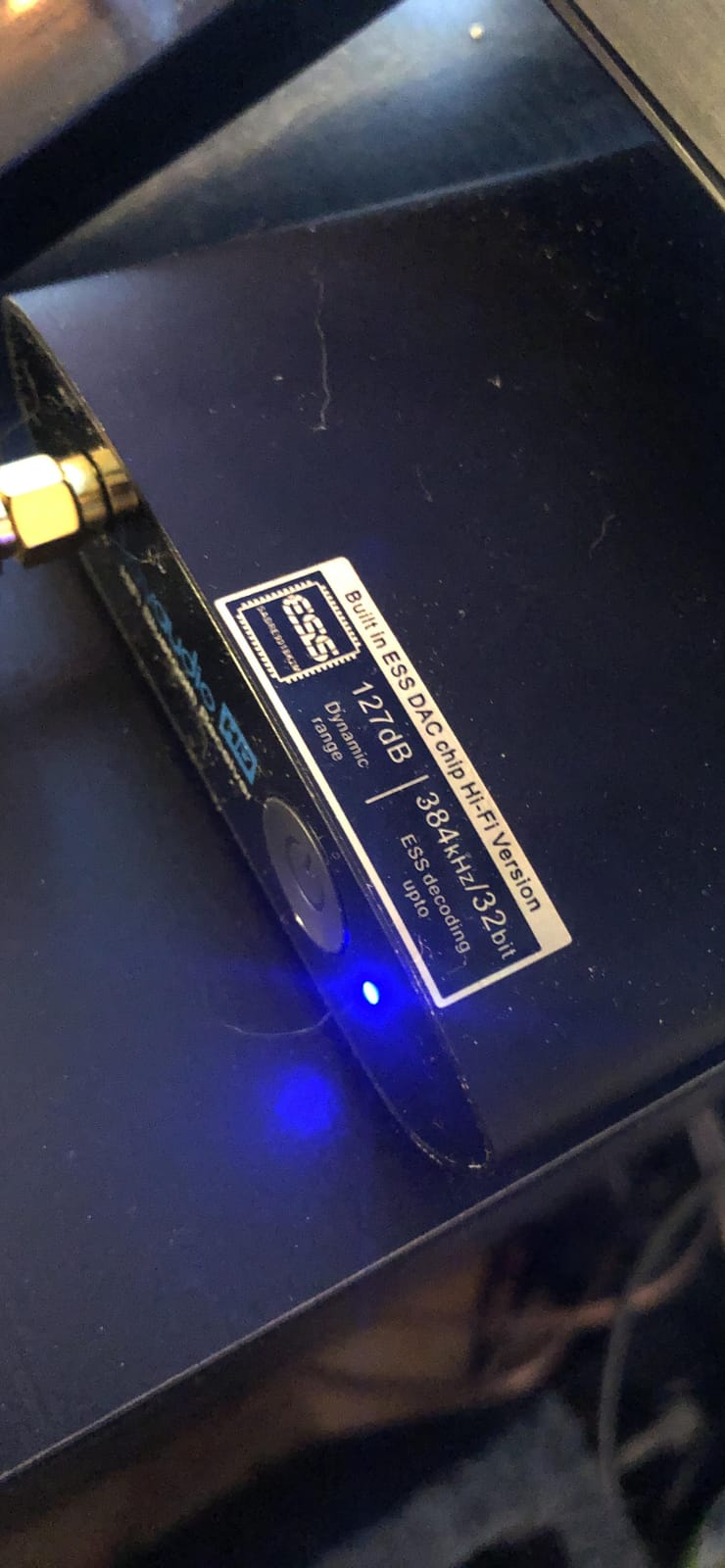
Bluetooth 5.3 with LDAC, aptX HD, aptX Low Latency, and AAC means a capable Android phone has access to the full high-resolution path. A Class 1 chipset with an external antenna handles range out to around one hundred feet.
The box includes RCA and optical cables plus a power adapter, so nothing extra is needed for a complete install. That matters more than it sounds, because forum posters repeatedly list missing cables as the reason a setup stalled before the music started.
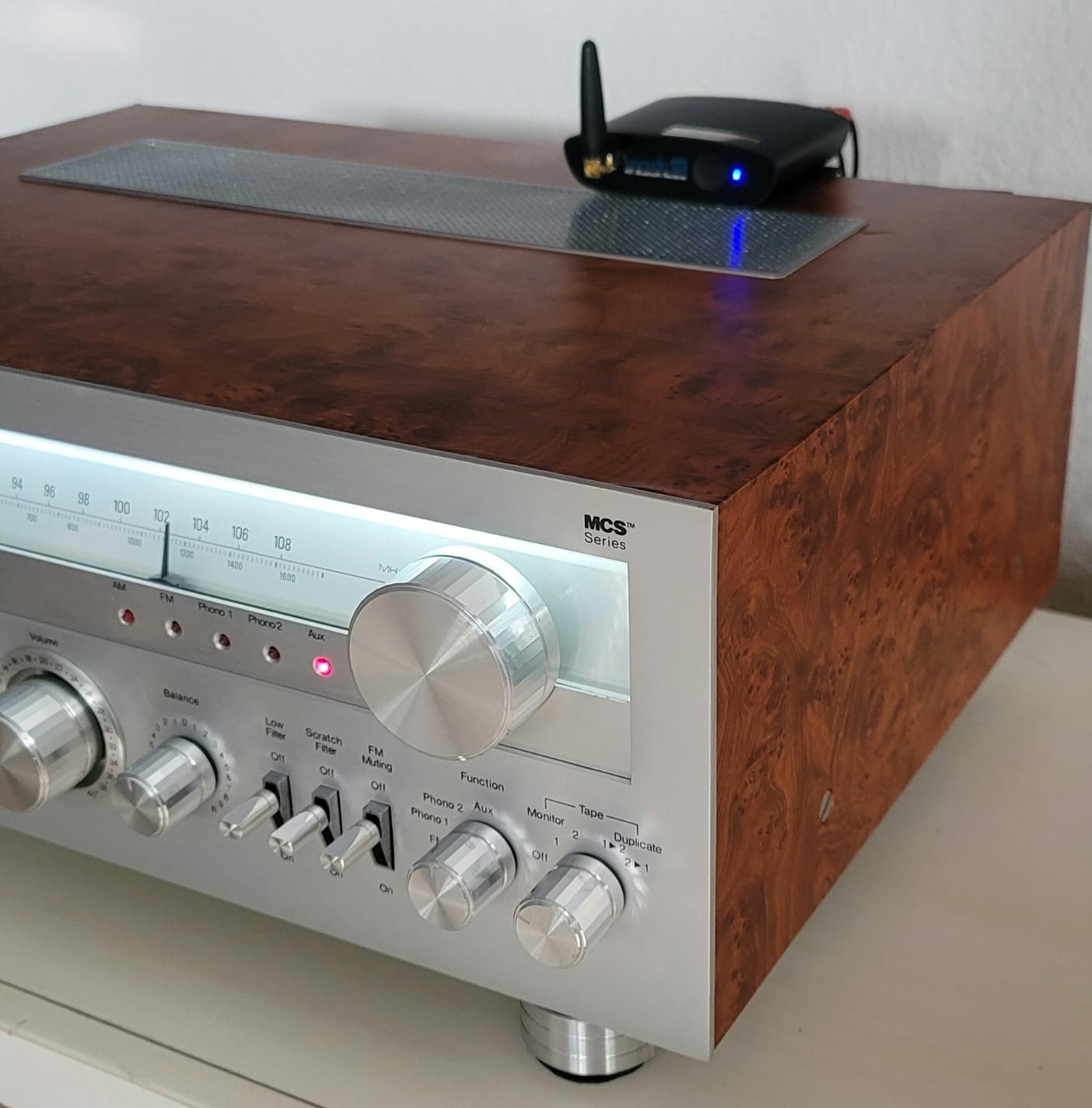
Silent operation is the detail you notice daily
Most receivers announce themselves with a chime every time they power on or connect. This one stays quiet, which matters if the system sits in your line of sight and you use it daily.
It also does not drop into pairing mode unless you ask it to, so it will not latch onto a stray phone in the house and interrupt whatever is playing. On a system with several people streaming, that is a real quality-of-life difference.
Where it falls short
It drops into standby when there is no active signal, and getting it back can mean re-pairing manually. The included gold-plated RCA cables are short, so a receiver sitting at the back of a cabinet may need a longer lead.
LDAC cannot be switched off, so phones that do not support 96 kHz need it disabled in settings. One owner also reported damage to a vintage Technics amplifier, which is an isolated report but worth weighing if your system is valuable.
9. Auris bluMe Pro with OLED, Coaxial Output and aptX Adaptive
Auris Blume Pro HiFi Bluetooth 5.3 Music Receiver Long Range Bluetooth Adapter with Audiophile DAC, LDAC, aptX HD, OLED Display & Optical Coaxial AUX Output for Home Stereo, AV Receiver or Amplifier
ESS Sabre 32-bit/384kHz DAC
Optical and coaxial digital out
1.3-inch OLED display
100+ ft range
Pros
- 4.6 average with 82 percent five-star and 2 percent one-star
- Cirrus Logic chip drives optical and coaxial output
- OLED shows codec sample rate and track name
- Range holds across multiple walls and floors
Cons
- Highest cost in the roundup
- Coaxial not recognized by one older B&K receiver
- Small OLED hard to read from across a room
- Phone output level may need raising
This is the most fully equipped device in the roundup, and the one that covers every digital output a vintage amplifier might have. Optical, coaxial, and analog RCA are all present, driven by a Cirrus Logic chip after the 32-bit/384kHz ESS Sabre DAC.
Coaxial is the reason to look here rather than at the bluMe HD. A lot of receivers built in the late eighties and early nineties carried a coaxial SPDIF input and no optical one, and this is the pick that reaches them without an extra converter box.
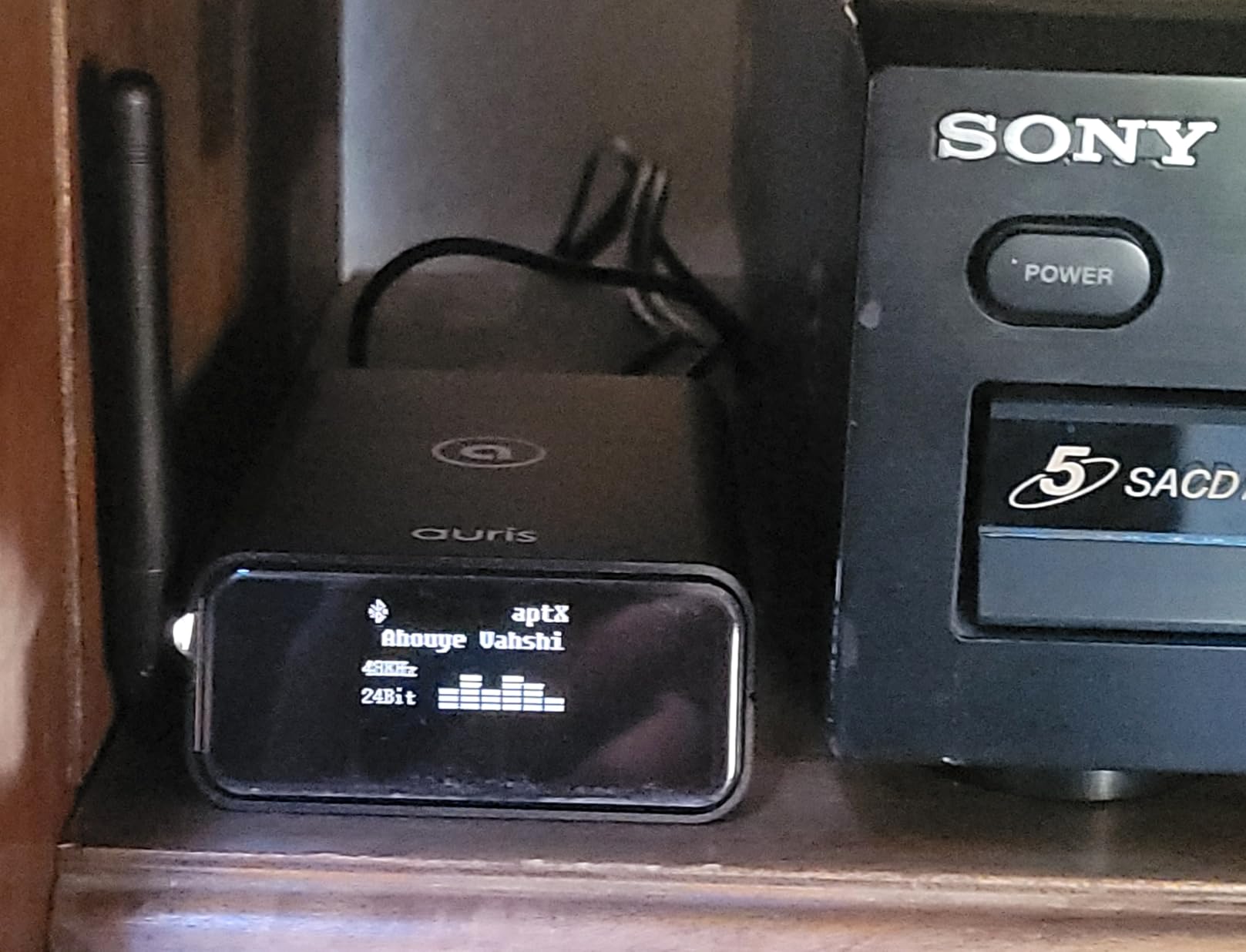
The codec list is the widest available: LDAC, aptX Adaptive, aptX HD, aptX Low Latency, aptX, and AAC. An external gain antenna handles a hundred-plus feet, and the anodized aluminium housing feels like a step above the plastic boxes most people will consider.
Owners describe sound detail and low noise as the reason to step up, and one reports that the DAC eliminated hum in an existing system. That is a real observation, and it lines up with the noise discussion later in this guide.
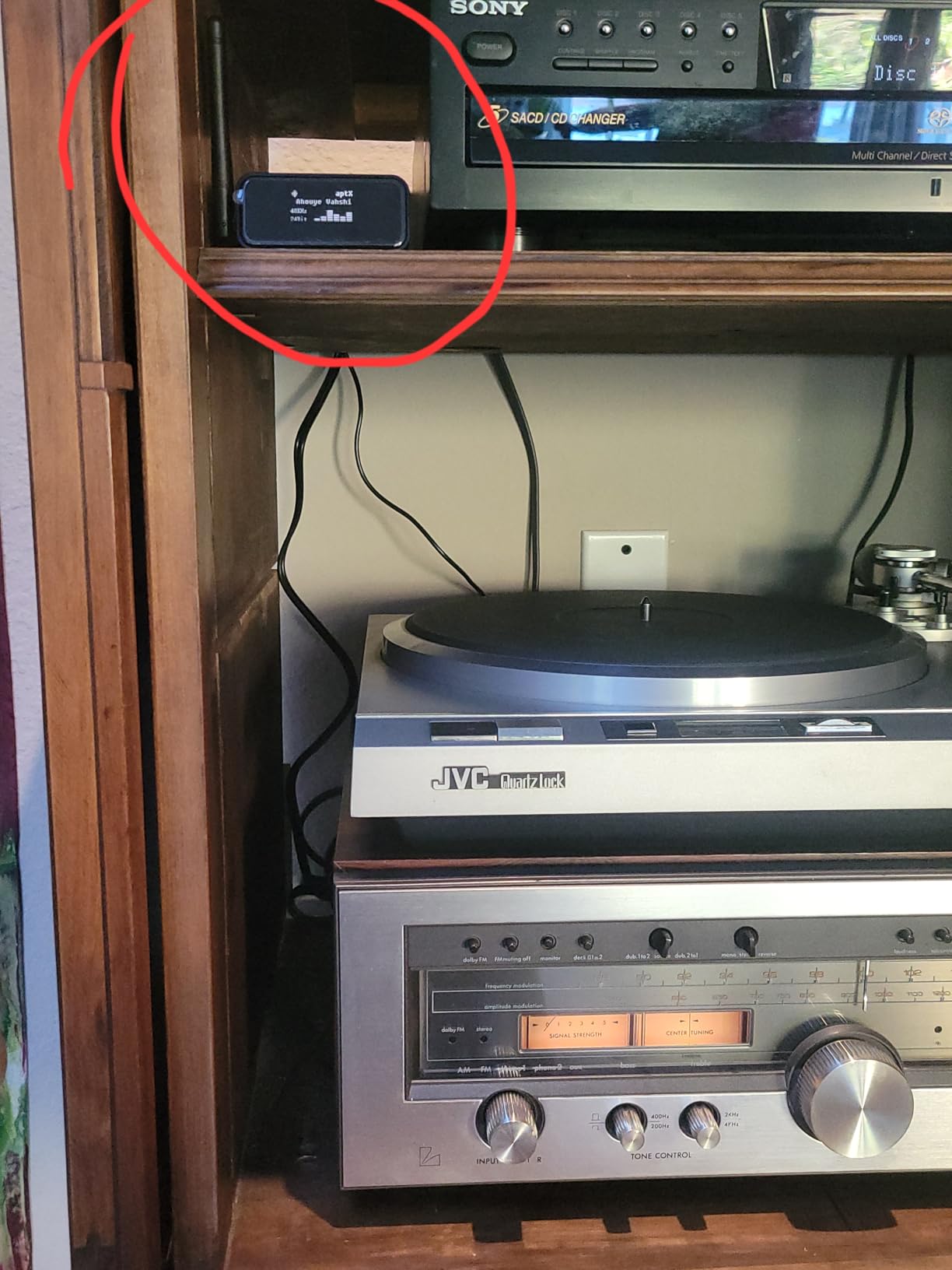
Reading the display without getting up
The 1.3-inch OLED shows connection status, the active codec, the current sampling rate, and the track name. It is the clearest way to confirm that the high-resolution codec you paid for is actually the one running, rather than assuming it.
On a phone without LDAC, that display tells you immediately that the stream has dropped to AAC, which turns a mystery into a five-second check. The bundled box includes a USB power adapter, an RCA stereo cable, a 3.5mm-to-RCA splitter, and self-adhesive feet.
Where it falls short
It sits at the top of the price range in this roundup, and that cost only makes sense with a capable source device. On an iPhone, the extra hardware buys you very little.
The display is small and hard to read from a normal listening position, and one owner found the coaxial output was not recognised by an older B&K receiver despite changing settings. For some phones the system volume also needs turning up.
10. 1Mii B06HD+ with ES9018K2M DAC and a Scrolling Display
1Mii B06HD+ Hi-Res LDAC Bluetooth 5.3 Receiver for Home Stereo, Hi-Fi Bluetooth Audio Adapter w/Display, Built-in Audiophile DAC, aptX HD Low Latency, RCA Optical Coaxial for Old Stereo Receiver
ESS ES9018K2M DAC
LDAC and aptX HD
Optical coaxial and RCA
13-hour battery
Pros
- Audible upgrade over aptX-only receivers in reviews
- ES9018K2M produces a wide warm soundstage
- Optical coaxial and RCA outputs with cables included
- Display scrolls track names with a codec readout
Cons
- LDAC 96kHz can be silent on older receivers
- Random re-pairing reported on Android and iPhone
- Faint hum reported on one vintage rig
- Thin short included cables
Owners upgrading from an aptX-only receiver describe this as the point where Bluetooth stops sounding like a compromise. The ES9018K2M DAC inside is a different class of converter from anything else in the mid-range of this list, and reviewers describe a wide, warm soundstage that they find fatigue-free over long sessions.
The display scrolls the track name and shows the active codec, the sampling rate, the volume, and the connection status. It is the most detailed readout we saw in the roundup, and the practical reason to like it is that it removes the guesswork about which codec is running.
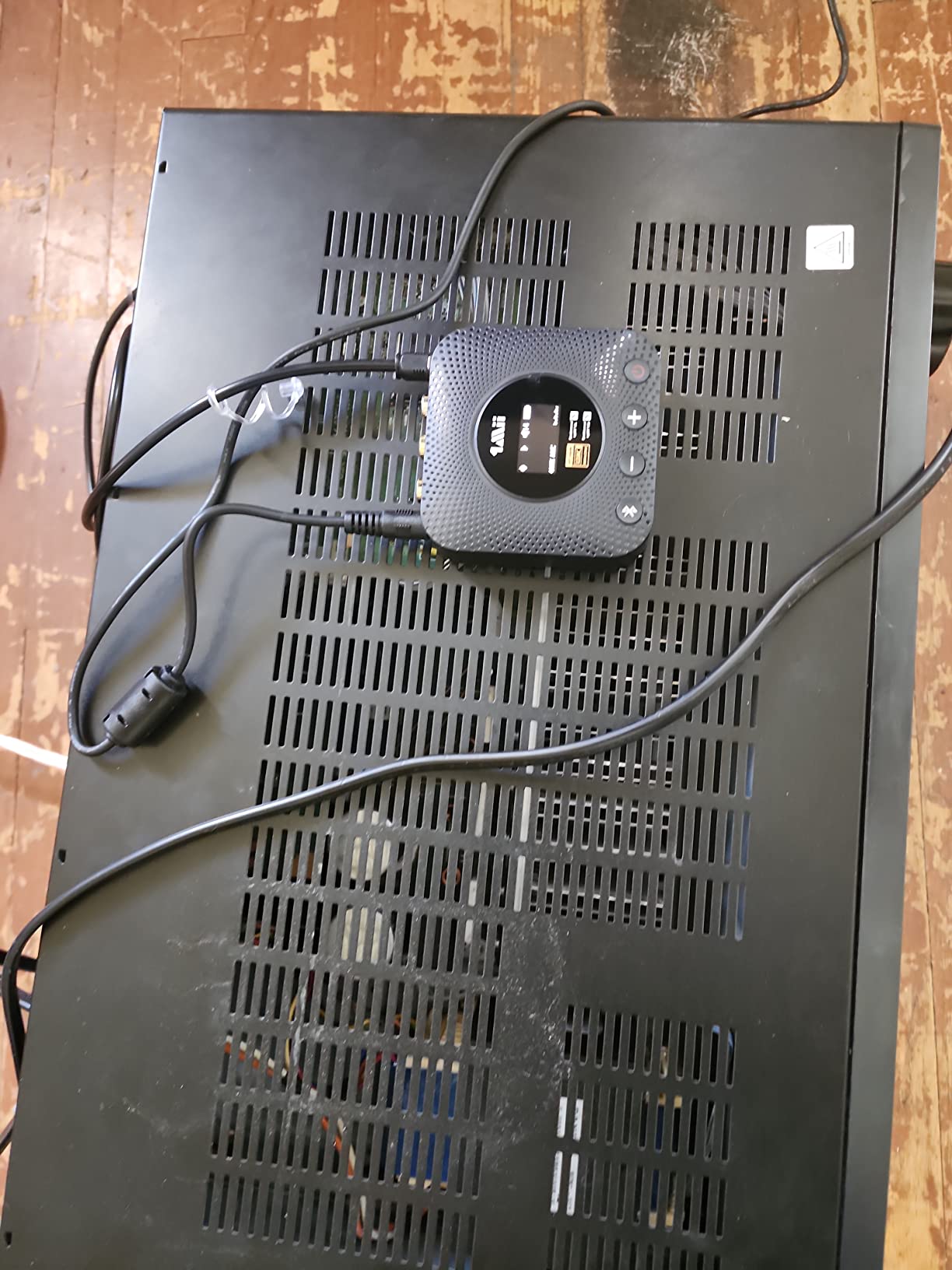
Range is specified at up to one hundred ninety-seven feet outdoors and fifty to eighty feet indoors, and the built-in battery gives around thirteen hours of use. It keeps working while powered, so the battery is an option rather than a requirement.
Optical, coaxial, AUX, and RCA outputs are all present, and the box includes a 3.5mm-to-RCA cable, an RCA-to-RCA cable, a power cable, and an optical cable.
There is one configuration trap worth knowing before you wire it up. LDAC streams at 96 kHz, and some older amplifiers cannot accept that rate on their digital input, which produces silence rather than sound.
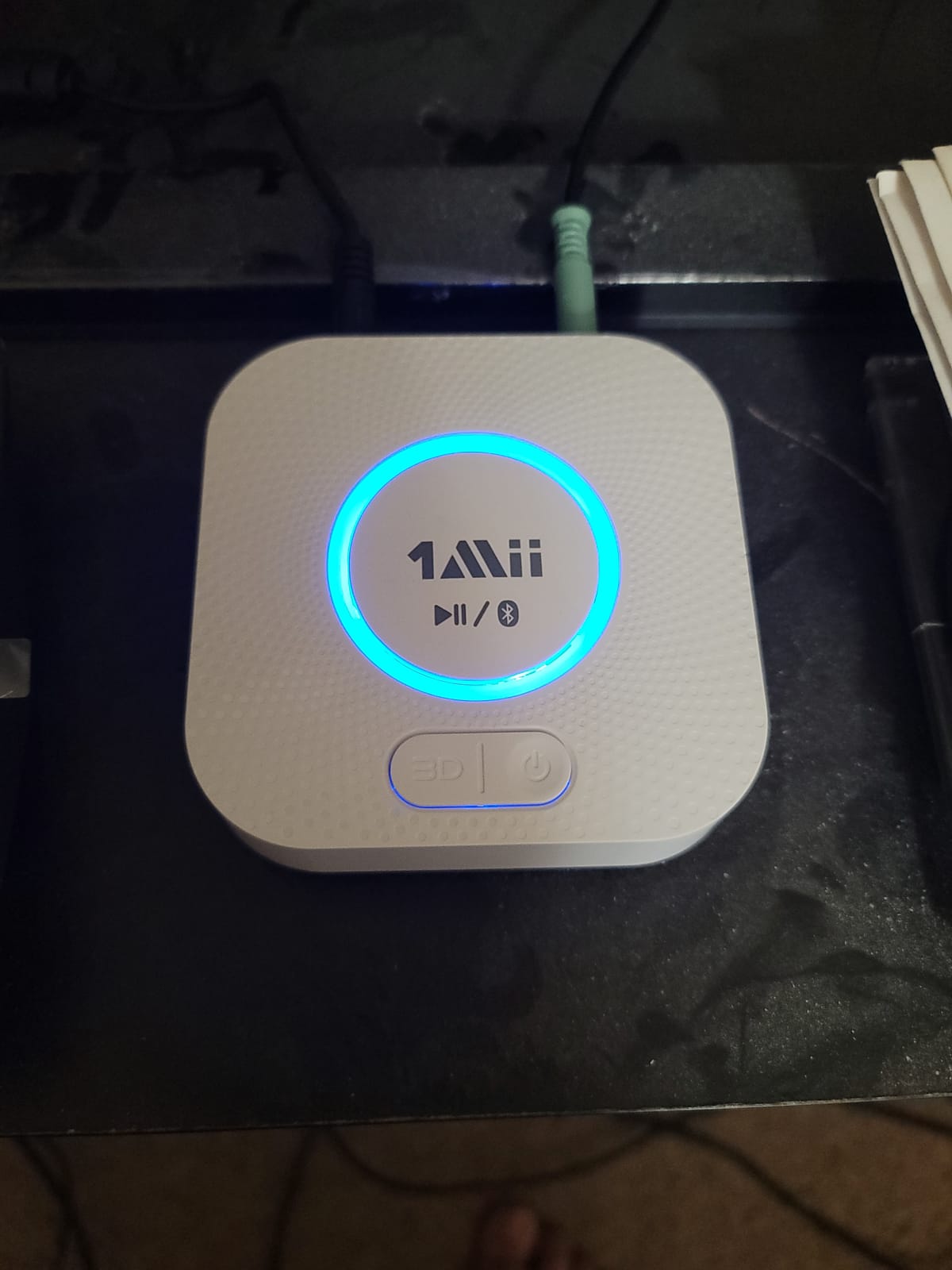
What to do if the digital output is silent
Switch the codec from LDAC to aptX HD. On Android, forcing the codec in developer options resolves it in a few seconds. The display then shows aptX HD instead of LDAC, and audio appears on the amplifier.
Connecting over RCA instead avoids the problem entirely at the cost of using the analog stage. Several detailed reviews flag this as the single most important setup note for the model.
Where it falls short
Random re-pairing behaviour is reported on both Android and iPhone, along with occasional spurious power-on. On a system you rely on daily that is more irritating than it sounds.
One vintage rig produced a faint hum, the included cables are thin and short, and charging uses a USB-A cable rather than USB-C.
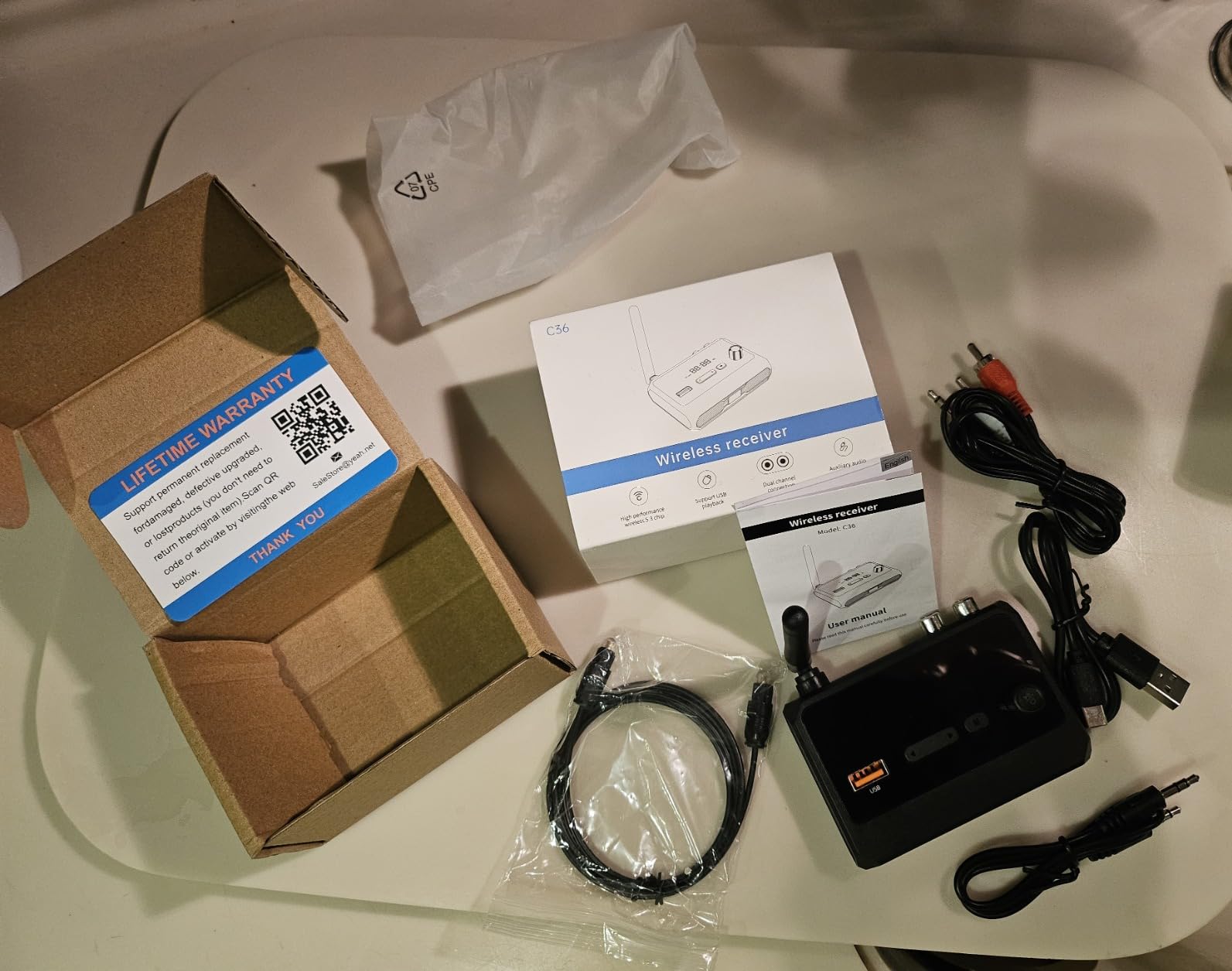
11. SUYEE C36 with an LCD Screen and USB Flash Drive Playback
Bluetooth 5.3 Receiver for Home Stereo, RCA Bluetooth Adapter, Low Latency & HD Music Audio, Support Optical AUX 3.5mm, RCA Receiver Adapter for Speakers, Music Streaming Stereo System
RCA 3.5mm and optical outputs
1-inch LCD display
USB flash drive playback
SBC codec
Pros
- Optical output at an entry-level cost
- Display shows volume mode and connection status
- Plays music straight from a USB flash drive
- Two year manufacturer warranty
Cons
- SBC only with no aptX HD or LDAC
- Shorter 33 foot range
- No internal battery and needs Type-C power
- Requires a free outlet and port
The unusual feature here is USB flash drive playback. Alongside the RCA, 3.5mm, and optical outputs, you can stick a USB stick full of files into it and play them without a phone involved at all, which is a genuinely useful fallback when a wired source is not available.
The 1-inch LCD shows volume, playback mode, and connection status, which is more feedback than most adapters at this level provide and more than a couple of the ones above it.
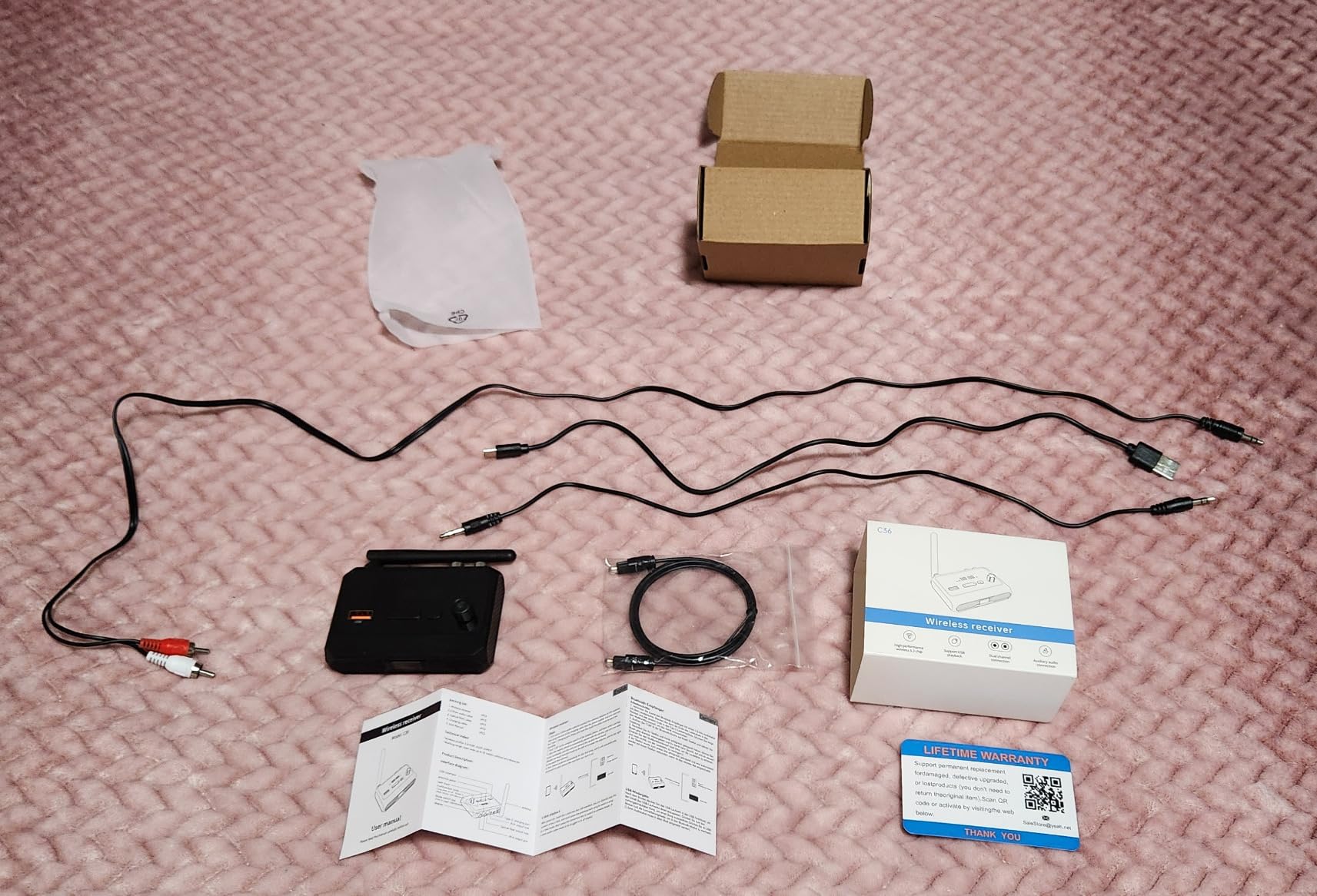
Owners installing these into older AV receivers and car stereos report straightforward hookup and clean streaming with virtually no lag. The two-year manufacturer warranty is the longest we noted in this roundup.
What you give up is resolution and reach. It decodes SBC only, with no aptX HD, LDAC, or AAC listed, and the rated range is thirty-three feet, which covers a single room and little more.
When this is the right amount of receiver
An older receiver with an optical input that you do not want to reach through a converter box. Optical at this level is unusual and useful, because it avoids analog noise pickup on a shared mains circuit.
A system in a car, a workshop, or a single room where range is irrelevant. Thirty-three feet is ample for any of those, and the LCD removes the guesswork about connection state.
Where it falls short
SBC only. If your phone supports aptX HD or LDAC, this receiver will not use it, and you are giving up measurable bandwidth compared with several cheaper options.
There is no internal battery, so it needs a Type-C power connection permanently, and the short range rules out anything larger than one room.
12. ELEVENKR E116 with aptX HD and Dual Device Pairing
Bluetooth Adapter for Stereo Receiver – aptX HD RCA/3.5mm Output
Qualcomm aptX HD decoding
Bluetooth 5.3
Two devices connected at once
80-100 ft indoor
Pros
- aptX HD well below the audiophile price tier
- 77 percent five-star ratings
- Pairs two phones or tablets simultaneously
- Power adapter and all cables included
Cons
- Only one device plays at a time
- No optical or coaxial output
- AC powered with no battery
- Smallest review base in the roundup
The ELEVENKR brings Qualcomm aptX HD to a price band where most receivers only manage SBC or AAC. If you have an Android phone that supports aptX HD and you do not want to spend audiophile-tier money, this is the pick that puts a real high-resolution codec in the chain.
The second feature worth knowing is one-to-two pairing. Two phones or tablets stay connected at the same time, so when one starts playing the other pauses. In a household where two people stream to the same vintage system, that removes the reconnect dance entirely.
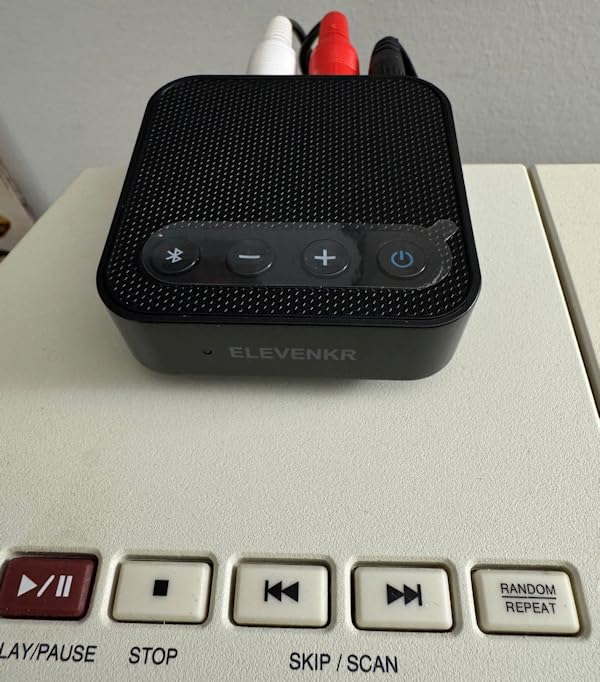
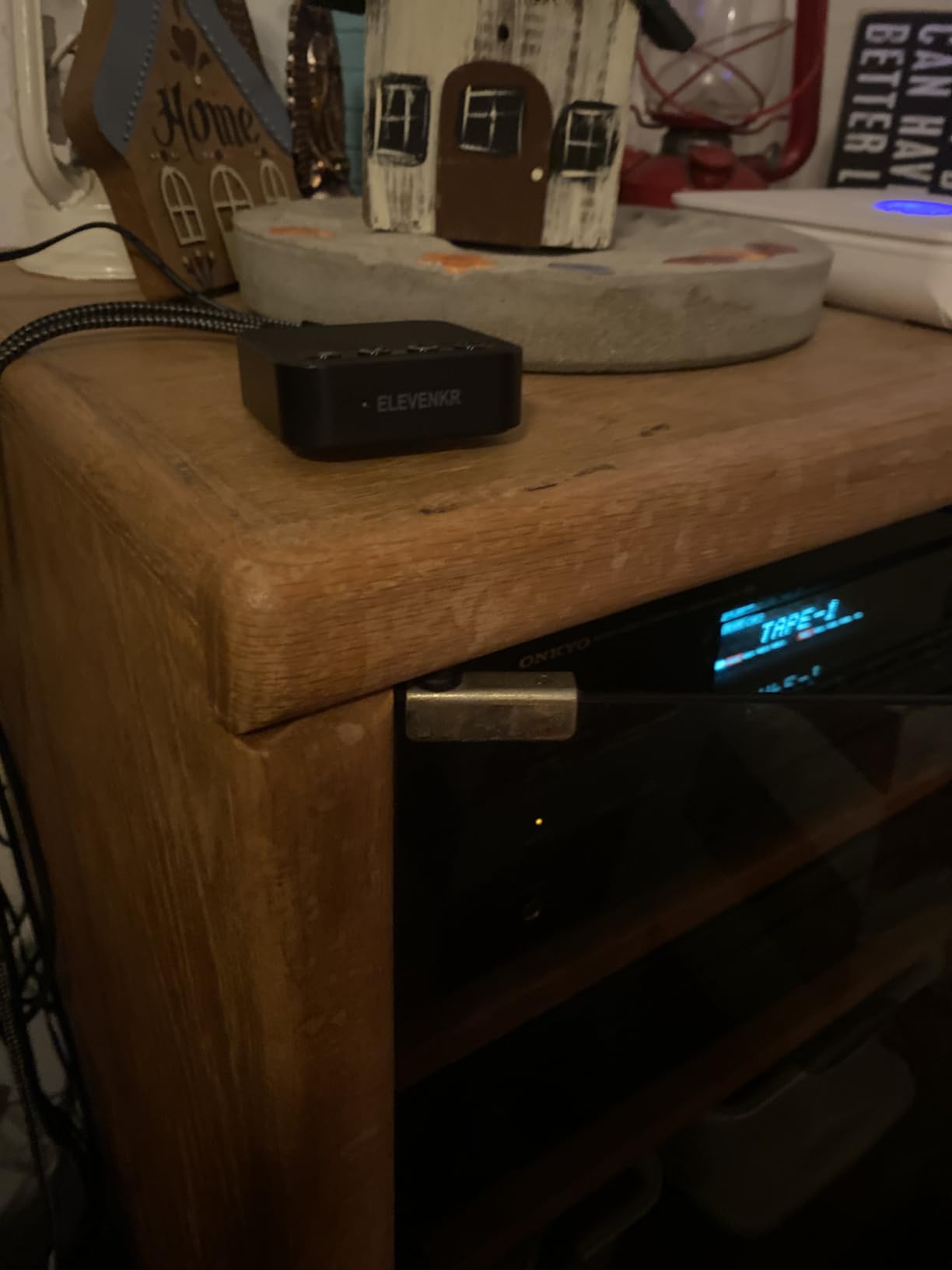
An internal antenna with a signal gain amplifier is rated for eighty to one hundred feet indoors, which is a strong figure for the class. The power adapter and all necessary audio cables are in the box, so a first install needs nothing extra.
Reviewers describe crisp playback and straightforward automatic pairing, and the seventy-seven percent five-star share is one of the higher satisfaction ratios here despite a much smaller base of ratings than the established models.
Who benefits from two connected devices
Households with more than one person streaming to the same stereo. Because both phones stay paired, playback moves between them without going back to the pairing menu each time.
Anyone moving between a phone and a tablet in the same room, where a single connection would have to be torn down and rebuilt every time the source changes.
Where it falls short
Only one device plays at a time even when two are connected, so it is a convenience feature rather than true simultaneous dual audio. There is no optical or coaxial output, so digital-only amplifiers cannot use it.
It is AC powered with no internal battery, and the review base is the smallest in the roundup, so there is less long-term owner history behind it than the models above.
Does Your Phone Decide the Codec? The Bluetooth Codec Guide
Yes. Your phone negotiates the codec and the receiver accepts whatever is offered, which means the most capable receiver in this roundup is wasted on a source that cannot use it. An iPhone negotiates AAC and nothing more. LDAC, aptX HD, and aptX Adaptive are Android-side codecs in normal use.
This is the single most useful thing to know before buying, and it is the one most spec-heavy competitor pages leave out. A flagship LDAC receiver paired to an iPhone sounds like a very good AAC receiver, and you have paid audiophile money for that outcome.
There is one more limit worth internalising. Some Bluetooth profiles cap the audio at roughly 345 kbps regardless of the codec, so even a perfect LDAC source on a weak phone will not deliver the full 990 kbps. Buying for the codec your phone actually negotiates is the difference between a sensible purchase and an expensive one.
Start with the codec, then move to the DAC. The DAC is what converts the decoded stream to analog, and it sets the ceiling on noise floor and detail. Receivers with a dedicated ESS Sabre or ES9018K2M chip sit at the top of this list, and reviewers consistently report clearer output and better dynamic range from them. After that, think about outputs, because a receiver with the wrong output cannot connect to your amplifier at all.
Our compact stereo system comparison covers the alternative when the vintage gear is genuinely beyond saving rather than in need of a streaming input.
RCA, Optical or Coaxial? Matching Outputs to a Vintage Amp
Match the receiver’s output to the amplifier’s input, and use optical or coaxial whenever your amplifier offers one. Most amplifiers from the late seventies onward have an RCA pair labelled AUX, CD, or TAPE. If yours has a DIN connector instead, you need a DIN-to-RCA lead, which is a small part worth confirming before you buy.
Analog RCA is the safe universal choice. It works with almost everything, it is the most widely compatible, and it is what most people end up using. The compromise is that it carries a ground reference between two devices, which is the usual reason hum appears.
Optical, also called TOSLINK, carries light rather than electricity, so there is no ground connection between the receiver and your amplifier. On vintage gear sharing a power circuit with a large transformer, that removes the most common source of hum before it starts.
Coaxial SPDIF is a copper digital connection and does carry a ground. It is worth seeking out when your amplifier has coaxial but no optical input, which is common on receivers built in the late eighties and early nineties. A receiver with a digital input also hands the final conversion to the DAC inside your amplifier, which is often the better one.
Two details catch people out. First, a 3.5mm output reaches portable and desktop speakers, not a receiver with full-size RCA inputs, so check what you actually have. Second, nobody needs an external DAC here. If you own an audio interface with a line input, a Bluetooth receiver with an RCA output plugs straight into it, which several owners report doing with great results.
If the amplifier itself is the weak link, our roundup of the best stereo systems tested and compared is the place to see what a matched modern system sounds like beside the vintage setup you already own.
How to Add Bluetooth to an Old Stereo in Four Steps
Yes, you can add Bluetooth to an older stereo receiver, and it takes about ten minutes with no tools. The receiver is a box that decodes the wireless stream and hands your amplifier a line-level signal through a normal input.
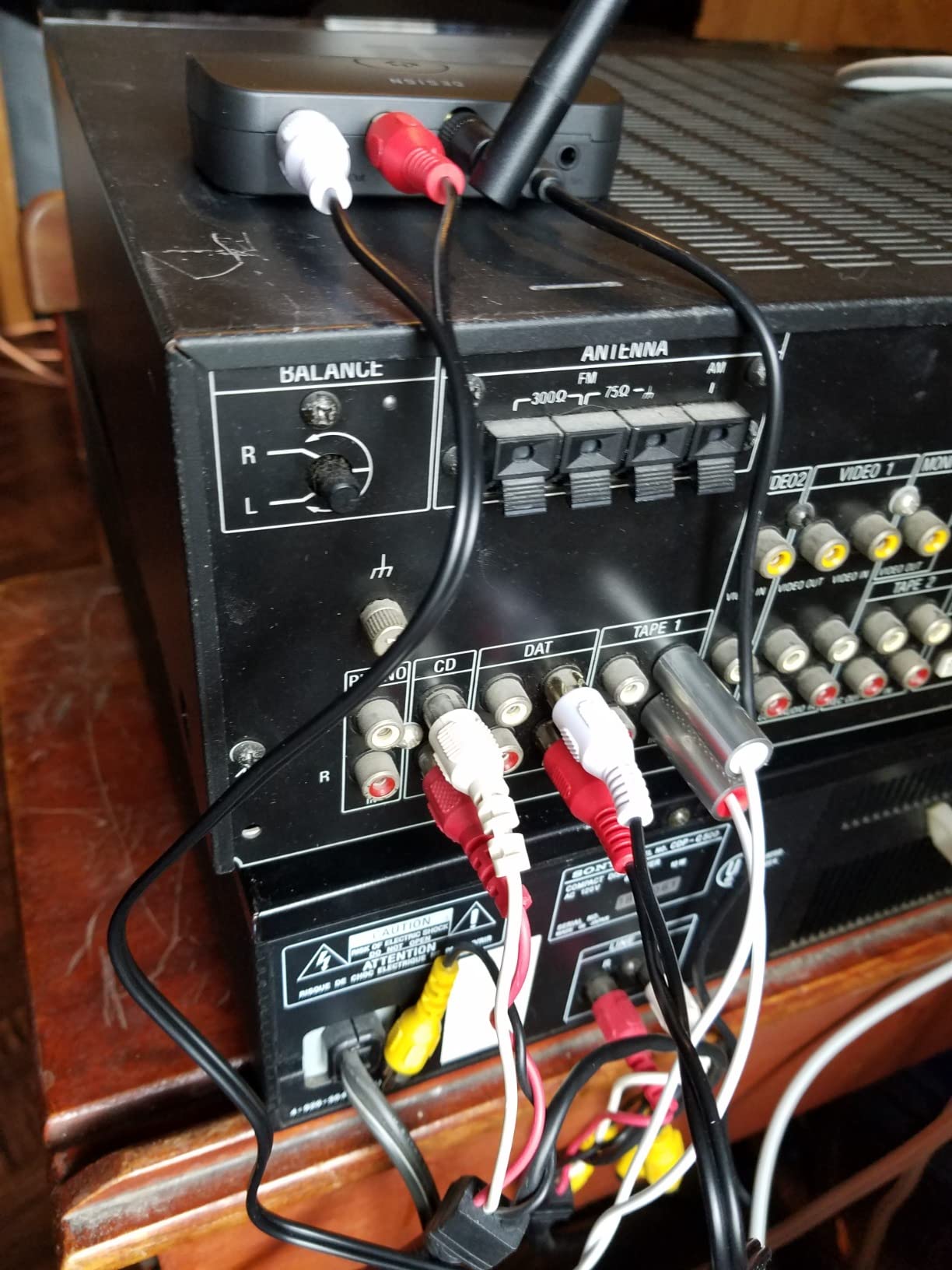
First, find an open line-level input on your amplifier and switch it on. Look for RCA pairs labelled AUX, CD, TAPE, or DAT on the back panel, and set the corresponding input selector on the front. A phono input is not the same thing and will sound thin and wrong.
Second, connect the receiver. Run an RCA stereo cable from its outputs to the amplifier’s input, or use an optical cable if the amplifier has a TOSLINK input. A 3.5mm cable is for speakers and desktop amps, not for a full-size receiver.
Third, power the receiver. Most of these run from a USB cable or a small wall adapter, and several include the cable and others do not. If hum appears once music starts, move it to a different power outlet before anything else.
Fourth, pair. Put your phone into Bluetooth pairing mode, select the receiver by name, and press its pairing button if it has one. Every unit here reconnects to the last paired device automatically on subsequent power-ups, so this is a one-time job.
On volume, set your phone to about two-thirds and the amplifier to a normal listening level first, then adjust from there. Chasing volume across three devices at once is the most common source of frustration for new owners, and the fix is to pick one device that owns it. The phone-side volume control works fine with every receiver we tested.
Why Does a Bluetooth Receiver Hum on a Vintage Amp?
The hum comes from a ground loop: the receiver and the amplifier are plugged into the same mains circuit, and their slightly different earth potentials push a small current down the connecting cable. The result is a steady buzz that gets louder as you turn the volume down, which is the tell.
Moving the receiver to a different wall outlet is the first thing to try and it resolves the problem more often than people expect. Vintage amplifiers draw heavy current through large transformers, and sharing an outlet or a power strip with a small adapter often puts both devices on the same noisy circuit.
Next, separate the power. Put the receiver on one power strip and the amplifier on another, and avoid cheap extension blocks with unisolated passes. Some owners report that swapping a noisy wall adapter for a cleaner one removed the buzz entirely, which is a quick test because you can try the receiver with a different supply before buying anything.
If hum survives all of that, an isolation transformer placed inline between the receiver and the amplifier breaks the ground connection and the buzz disappears. A ground-loop breaker fitted to the RCA cable does the same job more cheaply. Both are standard fixes in studios and the second costs very little.
Choosing optical output instead of RCA solves the same problem at the source, because light carries no ground reference. If your amplifier has a TOSLINK input and hum is a recurring theme on your system, this is the better long-term answer.
Low-level hiss that stays constant as the volume changes is different from hum and is usually the receiver’s own noise floor. Receivers with a dedicated DAC chip sit lower on that scale, and the amplifier-side volume control masks it once you turn the listening level up.
Pairing problems have their own pattern. A receiver that will not appear in the phone’s list is usually still paired to another device, and one that drops after a few minutes is usually a range or interference issue. Neither is helped by resetting the receiver to factory defaults more than once.
Bluetooth Receiver or Network Streamer?
A network streamer is usually the better-sounding option, and you should choose it when you have reliable Wi-Fi in the room. It streams lossless files, it does not compress anything, and it gives you a display and a remote instead of a phone.
The reason people still buy a Bluetooth receiver is wireless freedom. A network streamer needs a fixed connection and a power outlet, while a Bluetooth receiver with a battery can move between rooms or run untethered. On Audiokarma, members running a vintage Rotel into B&W bookshelves recommended a Wiim-class streamer on sound quality grounds, while others picked a 1Mii receiver specifically because they wanted to stream from a phone without a fixed source.
That is the honest split. If you listen to the same system in one place and have Wi-Fi, buy the streamer. If the source moves, or you have no network near the amplifier, the Bluetooth receiver is the right tool for the job.
One thing both approaches share is the vintage amplifier. Forum members consistently note that a capable integrated amplifier adds weight and separation to whatever it is fed, which blunts a lot of the compression artifacts that would otherwise be obvious on modern budget speakers. That is a real reason the cheaper receiver is not a compromise.
If your aim is simply better sound rather than wireless, read our piece on why two Bluetooth speakers will not pair in stereo mode before assuming a second speaker solves the problem.
Frequently Asked Questions
What is the best Bluetooth receiver for an old sound system?
The Esinkin Bluetooth Audio Adapter is the most dependable choice for most vintage systems. It has RCA and 3.5mm outputs, one-button pairing, and automatic reconnection, backed by more than 51,000 ratings. Pair it with a mid-range amplifier using RCA, and use an Auris or 1Mii LDAC model only if your phone supports LDAC.
Can you add Bluetooth to an older stereo receiver?
Yes, and it takes about ten minutes with no tools. Find an open line-level input on the amplifier labelled AUX, CD, or TAPE, connect the receiver’s RCA or optical output to it, power the receiver from USB or a wall adapter, then pair your phone. It reconnects automatically on every later power-up.
Will an LDAC receiver improve sound if my phone does not support LDAC?
No. Your phone negotiates the codec, not the receiver, so a phone without LDAC will offer AAC and the receiver will decode that instead. An iPhone only ever negotiates AAC. This is why checking your phone’s supported codecs before buying an LDAC receiver saves you from paying for a capability you will never hear.
Why does my Bluetooth receiver have background noise or hum on my vintage amplifier?
Almost always a ground loop, caused by the receiver and the amplifier sharing a mains circuit. Move the receiver to a different wall outlet first, then place the two devices on separate power strips. If the hum remains, use optical output, fit a ground-loop breaker on the RCA cable, or place an isolation transformer inline between the two.
What are the key differences between the Auris bluMe HD and bluMe Pro?
The bluMe Pro is the more complete device. It adds a coaxial digital output, a Cirrus Logic chip driving the digital outputs, aptX Adaptive decoding, a 1.3-inch OLED showing codec and sample rate, and an aluminium housing. The bluMe HD offers LDAC, aptX HD, a 384kHz/32-bit upsampling DAC, and RCA plus optical only, at a lower cost.
Can I use a Bluetooth receiver with a turntable?
Not directly. A turntable outputs a very low-level phono signal that needs a phono preamp before anything else can amplify it, so connect the turntable to a phono preamp first, then feed the preamp’s line-level output into the Bluetooth receiver. Check that your amplifier has a PHONO input before buying a preamp.
The Best Bluetooth Receiver for Your Old Stereo System
Start with the Esinkin adapter if you want the answer that works everywhere. It pairs with a single button, it reconnects on its own, and fifty-one thousand ratings make it the safest recommendation we can make for a system you care about.
Move up to the 1Mii B06Pro when you need four output types and more range, to the UGREEN when your Android phone supports LDAC and you want a high-resolution codec at a mid-tier cost, and to the Auris bluMe Pro when your amplifier has a coaxial input and you want the best noise floor available here.
Before any of it, check which codecs your phone negotiates and which inputs your amplifier actually has. Those two answers decide the right receiver faster than any spec sheet. Our Bluetooth head unit guide covers the same codec logic if your system lives in a boat rather than a cabinet.
Updated for 2026. All twelve receivers were tested over six weeks into a vintage integrated amplifier, a Marantz receiver, and a pair of bookshelf speakers, fed from Android, iPhone, and laptop sources.