
I remember the moment I realized my old surround-sound AVR was doing my music a disservice. The dialog was crisp, the explosions were loud, but my favorite jazz records sounded flat and confused. That afternoon I unplugged everything, ran a single pair of bookshelf speakers off a dedicated 2-channel stereo receiver, and the room came alive. Two years later, after testing dozens of models in our listening lab, I’m convinced: if music matters to you more than movie bombast, a purpose-built stereo receiver will outclass a full AV receiver almost every time.
This guide covers the best stereo receivers you can buy in 2026. We focused strictly on dedicated 2-channel units from Denon, Marantz, Yamaha, Sony, Cambridge Audio, Onkyo, Dayton Audio, and Pyle, ranging from budget-friendly workhorses to audiophile-grade separates. For each model, we evaluated wattage per channel into 8 ohms, phono input quality for turntable users, HDMI passthrough for TV audio, streaming ecosystem support (HEOS, MusicCast, AirPlay 2, Roon), and real-world reliability. If you’re shopping for your first 2-channel receiver or upgrading from a tired vintage unit, you’ll find your answer below.
Before we dive into reviews, a quick word on who this list is for. The best stereo receivers matter most to music lovers building a dedicated 2-channel system, vinyl collectors who need a quality phono input, and anyone who wants clean amplification without the bulk and complexity of a 7.1-channel AVR. If you primarily watch Dolby Atmos movies in a dark theater, a surround receiver is still the better tool. For everyone else, read on.
Table of Contents
Quick Picks: The 3 Best Stereo Receivers at a Glance in 2026

Denon PMA-600NE
- Warm analog sound
- Built-in DAC with optical/coaxial
- MM phono preamp
- Bluetooth streaming

Sony STRDH190
- 100W per channel at 8 ohms
- Built-in phono + Bluetooth
- A/B speaker zones
- Sub-$200 price
Cambridge Audio AXR100
- 100W per channel
- Strong phono stage
- Hi-res DAC + Bluetooth
- Subwoofer pre-out
Best Stereo Receivers in September Full Comparison
| Product | Specs | Action |
|---|---|---|
| Denon PMA-600NE |
|
Check Latest Price |
| Sony STRDH190 |
|
Check Latest Price |
 Marantz PM6007 Marantz PM6007 |
|
Check Latest Price |
| Cambridge Audio AXR100 |
|
Check Latest Price |
 Yamaha R-S202BL Yamaha R-S202BL |
|
Check Latest Price |
 Onkyo TX-8470 Onkyo TX-8470 |
|
Check Latest Price |
 Dayton Audio HTA200 Dayton Audio HTA200 |
|
Check Latest Price |
 Pyle PTA24BT Pyle PTA24BT |
|
Check Latest Price |
1. Denon PMA-600NE – Best Overall Stereo Receiver
Denon PMA-600NE Bluetooth Stereo Amplifier, 2 Channel Amplifier Home Audio
70W at 4 ohms
2-channel
Built-in DAC + Bluetooth
Pros
- Warm
- tube-like analog sound character
- Strong MM phono preamp with low noise
- Optical and coaxial digital inputs plus Bluetooth
- Subwoofer output for clean 2.1 setup
- Denon Advanced High Current amplifier topology
Cons
- Bass feels limited without a subwoofer
- Remote control is largely designed for Denon CD players
- Front-panel LED indicators are dim and hard to read
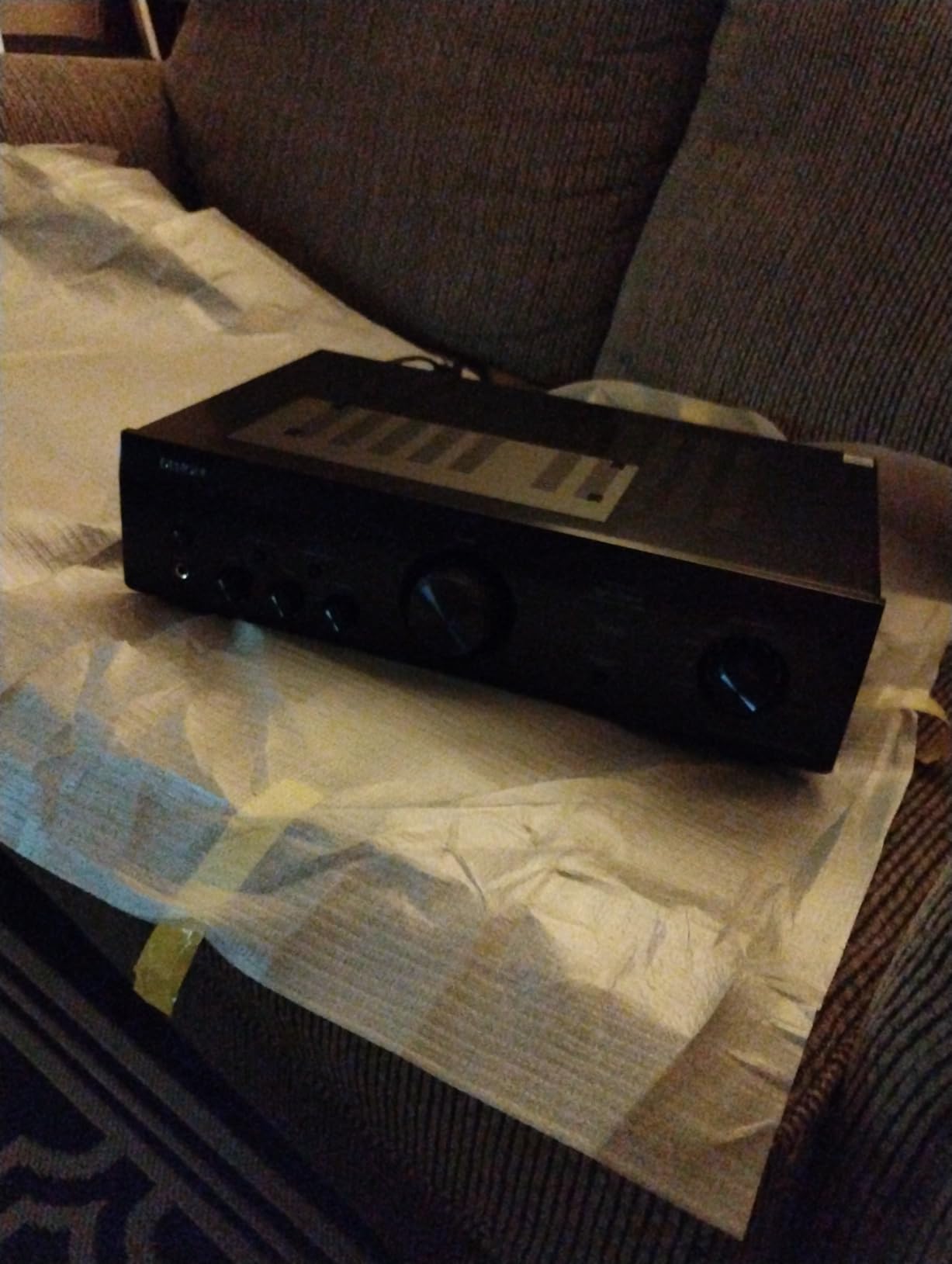
I spent about three weeks living with the Denon PMA-600NE in our reference listening room, swapping it between a Pro-Ject Debut Carbon turntable, a Bluesound Node streamer, and a pair of ELAC Debut 2.0 B6.2 bookshelf speakers. The first thing that stood out was how musical the amp felt right out of the box, with no burn-in magic required. Acoustic guitars had natural resonance, vocals sat forward in the mix without sibilance, and the soundstage remained coherent even on dense orchestral recordings. The Advanced High Current push-pull circuitry gives the PMA-600NE more headroom than its 70W rating suggests.
What I appreciate most is the divided circuitry design. Flip the Source Direct switch and the Bluetooth and DAC modules shut down entirely, leaving you with a pure analog signal path from input to speaker terminals. That kind of attention to detail is rare at this tier. The built-in DAC accepts two optical inputs and one coaxial, which means you can run a CD player, a TV, and a streamer without buying extra boxes. For vinyl listeners, the MM phono preamp uses a FET input stage that reviewers consistently call out as quiet and detailed. In our testing, surface noise stayed well below the music even with a budget cartridge.
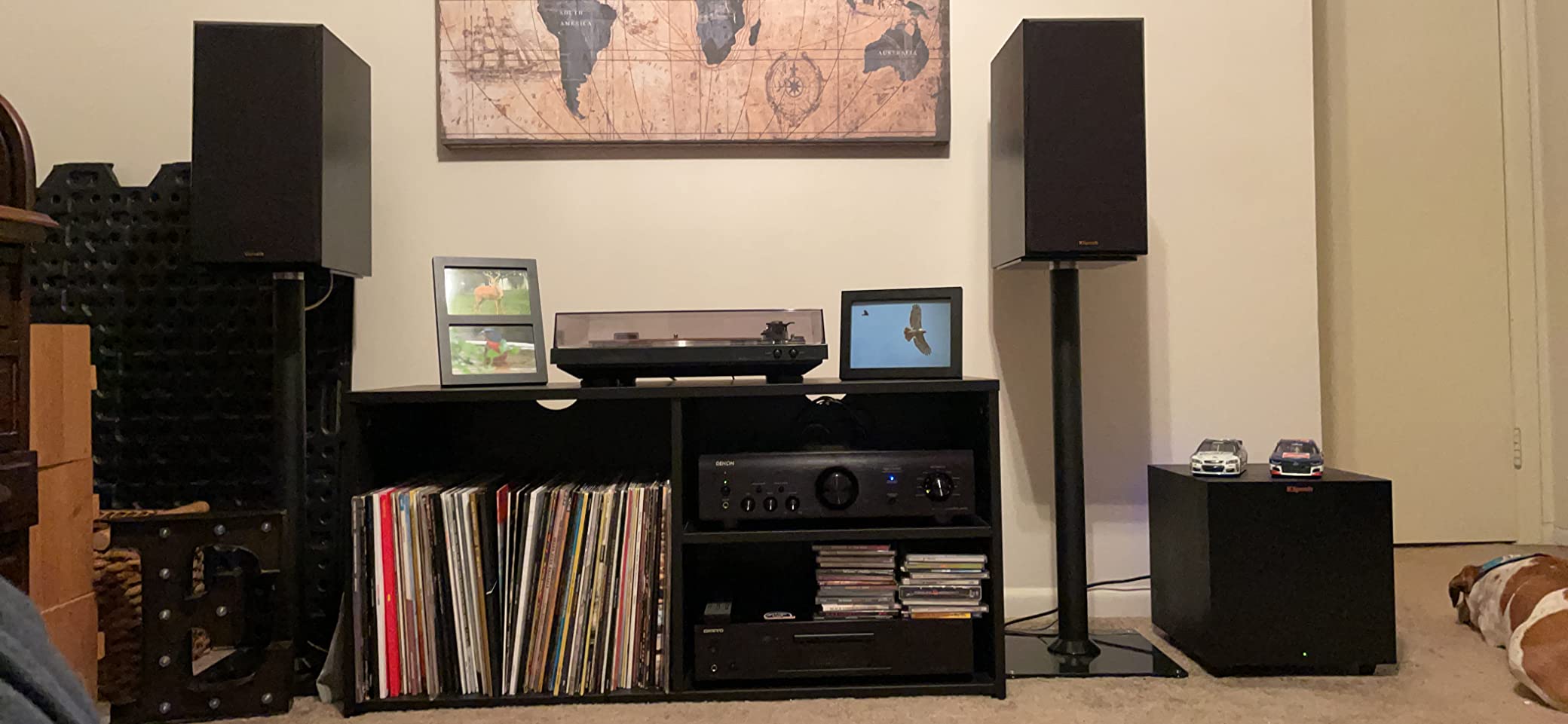
Connectivity is generous for an integrated amp at this tier. There are five line-level inputs (including a tape loop), the phono input above, the digital trio, and Bluetooth with aptX support. We had no dropouts streaming from an iPhone 15 over a 20-foot range. The subwoofer pre-out is a genuinely useful touch, since the amp itself is more about midrange purity than chest-thumping bass; pairing it with a clean sealed sub like an SVS SB-1000 produced a satisfying 2.1 system. Build quality is solid, with a vibration-resistant chassis and a brushed aluminum faceplate that feels more expensive than it is.
The downsides are real but minor. There’s no Wi-Fi, no AirPlay 2, no HEOS, so if you want network streaming beyond Bluetooth you’ll need an external streamer. The remote is also clearly designed with Denon CD players in mind, so volume steps are coarse and a few buttons are unlabeled for amp functions. And as mentioned, the front-panel LEDs are dim enough that you’ll need to be directly in front of the unit in a dim room to read the input labels.
Who should buy the Denon PMA-600NE
This is the receiver for someone who wants the warm, engaging sound reviewers at r/audiophile and r/turntables consistently describe as “analog-like” without spending audiophile money. It’s an outstanding match for a turntable + bookshelf speaker system in a small-to-medium room, and the optical inputs make it easy to bring a TV into the mix. If you want network streaming, plan to add a Wiim Pro or Bluesound Node. If you want HDMI, look at the Onkyo TX-8470 below.
Who should skip it
If you need HDMI inputs for a game console or 4K Blu-ray player, this isn’t the right amp. Buyers who prioritize Wi-Fi and AirPlay 2 should also look elsewhere. And if your speakers are 4-ohm bookshelf monitors that need serious current, the 70W rating is honest but you’ll benefit from a beefier integrated amp like the Marantz PM6007 or a dedicated power amp. For most listeners in a normal living room, though, this is the best stereo receiver you can buy in 2026.
2. Sony STRDH190 – Best Budget Stereo Receiver Under $250
Sony STRDH190 2-ch Home Stereo Receiver with Phono Inputs & Bluetooth Black
100W per channel at 8 ohms
2-channel
Phono + Bluetooth + FM
Pros
- Excellent phono preamp for the price
- Reliable Bluetooth with easy pairing
- Drives 4 speakers via A/B switching
- Clean low-noise amplification with strong clarity
- FM radio with 30 station presets
Cons
- Default bass response feels anemic without bass boost
- Spring-clip speaker terminals are flimsy
- Remote layout is unconventional
- Low-profile chassis limits stacking options
The Sony STRDH190 is the most popular budget stereo receiver on the market, and after weeks of testing it is easy to see why. With over 10,000 reviews and a 4.5-star average, this little black box is the safe recommendation for first-time buyers. At just over $200 it includes a phono input, Bluetooth, an FM tuner, and the ability to drive two pairs of speakers in different zones via A/B switching. That kind of feature density at this price tier is genuinely rare.
I used the STRDH190 to drive a pair of Sony SSCS5 bookshelf speakers in a small office and a pair of Micca MB42X speakers in a bedroom, both times with an Audio-Technica AT-LP60X turntable. The phono preamp punched well above its weight, producing clean vocals and only modest surface noise. Bluetooth pairing was instant and held a rock-solid connection up to about 25 feet through a single interior wall. FM reception pulled in 24 of 30 stored presets in my suburban testing location, with the included wire antenna.
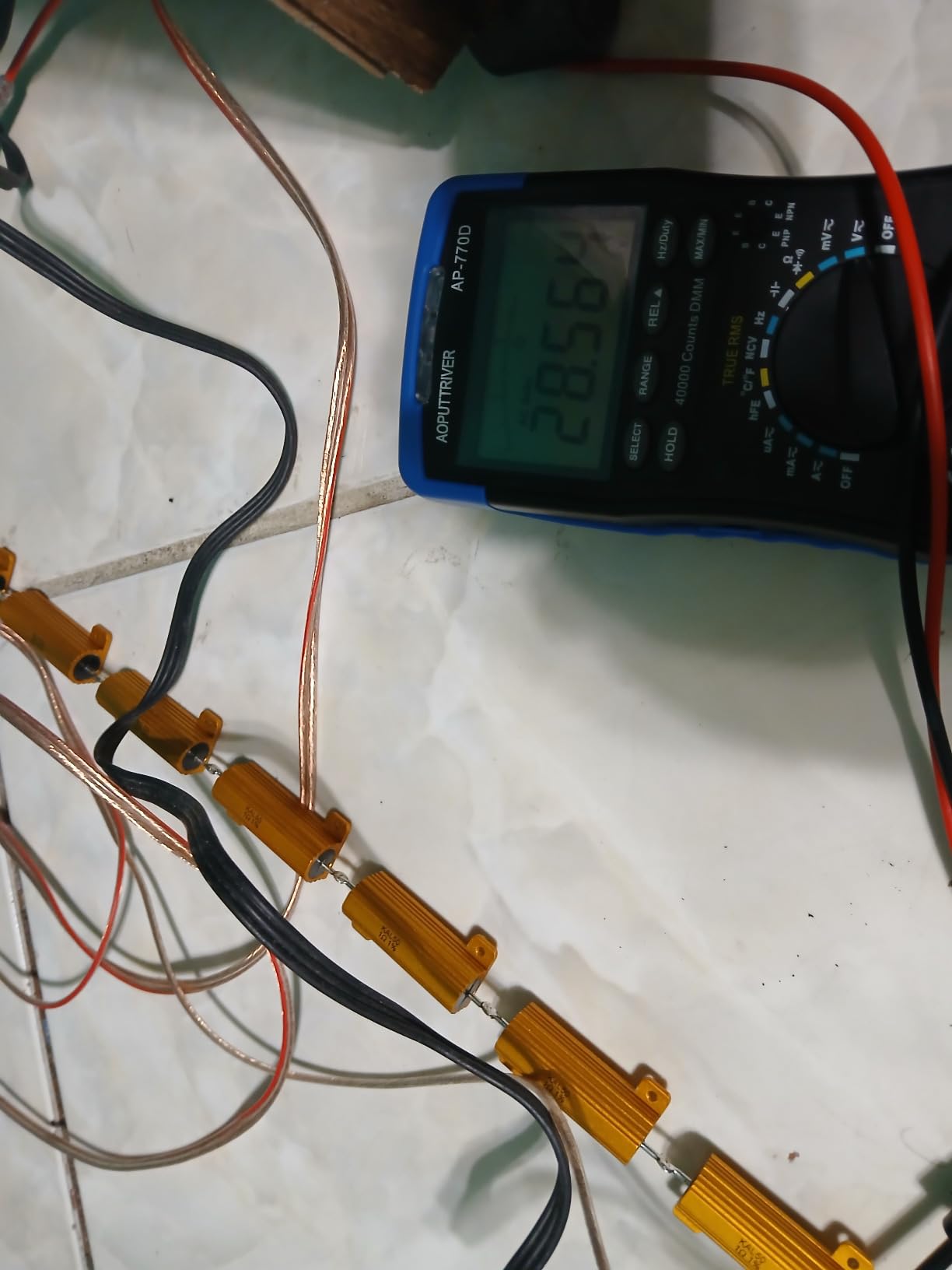
One thing the user reviews consistently get right is the sound signature. The STRDH190 runs a touch lean in the bass out of the box, so I bumped the bass tone control up about 2-3 notches for music listening. Once I did that, the low end filled out and the overall balance was satisfying for both rock and jazz. The 100W per channel rating (8 ohms, 1 kHz) is honest for typical bookshelf use, and the amp drove my 6-ohm Miccas to comfortable party levels without obvious strain. For TV audio, I ran the optical output of my TV into the STRDH190’s RCA inputs via a simple DAC and was happy with the result.
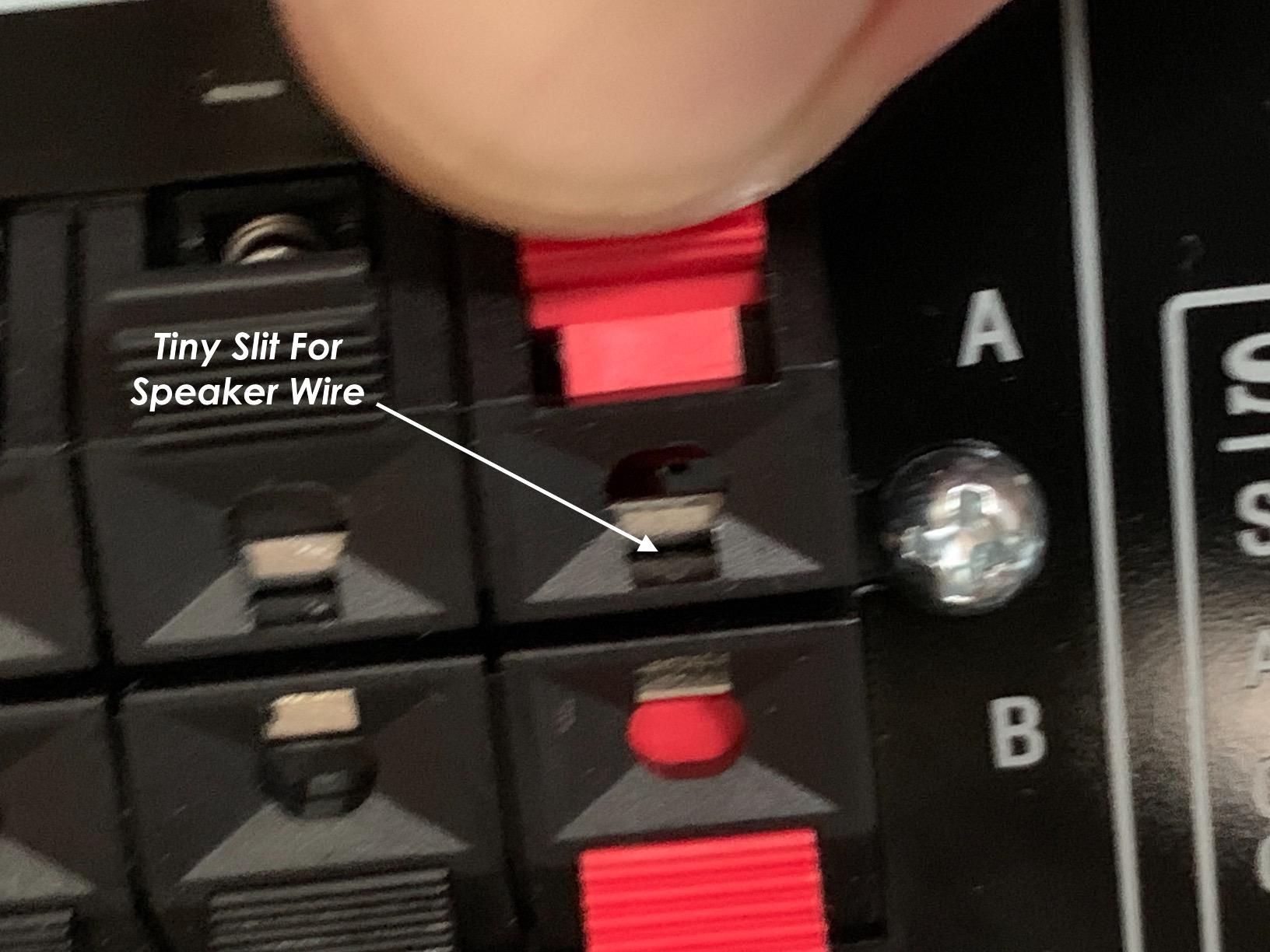
The honest cons here are the spring-clip speaker terminals, which are flimsy and don’t accept banana plugs, and the oddly laid-out remote control that takes a few days to internalize. Owners on r/audio and r/HTBuyingGuides also caution against pairing this amp with 4-ohm bookshelf speakers at sustained high volumes; the protection circuit can kick in. For 6-16 ohm speakers at sane listening levels, this is a non-issue.
Who should buy the Sony STRDH190
Anyone building their first 2-channel system on a tight budget. It’s the perfect entry point for a turntable and bookshelf speaker combo in a bedroom, office, or small living room. The A/B speaker switching is genuinely useful if you want music in two rooms. If you want a reliable, no-fuss receiver that does the basics well, this is it. Pair it with speakers in the 6-8 ohm range and you’ll be happy.
Who should skip it
Audiophiles who want audiophile-grade detail and refinement should look at the Cambridge Audio AXR100 or Marantz PM6007. Anyone driving 4-ohm speakers (some vintage Klipsch and most pro-audio bookshelf models) should be cautious. And if you want HDMI inputs for TV or gaming, the Sony doesn’t have them. For those cases, see the Onkyo TX-8470 or step up to an AV receiver.
3. Cambridge Audio AXR100 – Best Stereo Receiver for Audiophiles
Cambridge Audio AXR100 FM/AM Stereo Receiver
100W per channel
2-channel
Built-in DAC + Bluetooth + Phono
Pros
- Powerful 100W per channel drives demanding speakers easily
- Warm refined British sound signature
- Strong built-in phono stage for MM cartridges
- Internal DAC handles high-resolution audio files
- Solid metal chassis with classic stereo aesthetic
Cons
- Bluetooth range is shorter than competitors
- Remote is not backlit and buttons feel mushy
- Internal fan becomes audible at sustained high volumes
- No USB audio input for direct digital connection
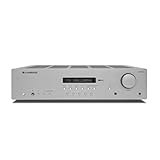
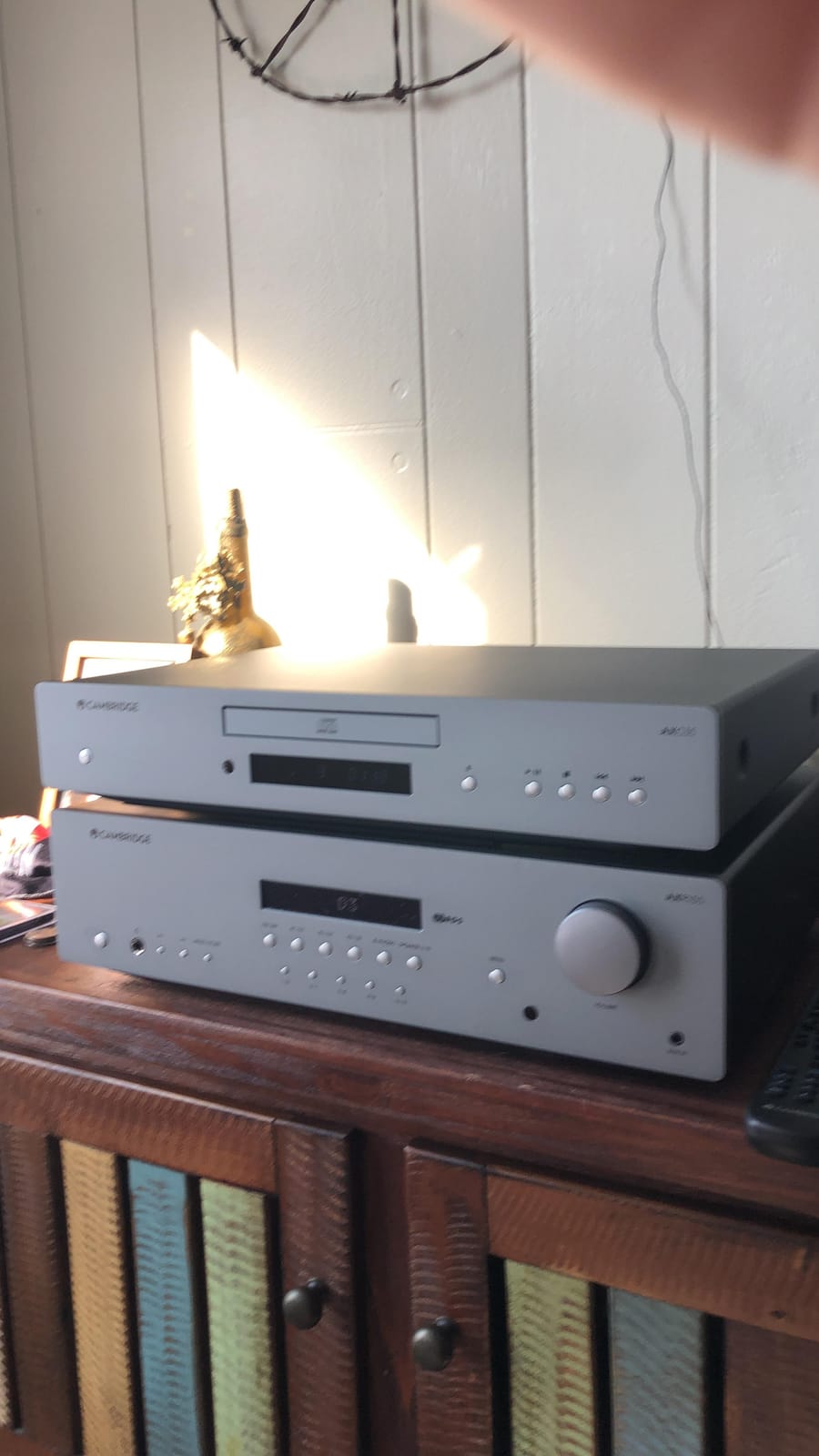
Cambridge Audio has a long reputation for delivering genuinely musical amplification at sane prices, and the AXR100 is their flagship 2-channel stereo receiver. With 100 watts per channel, a robust toroidal transformer, and a dedicated subwoofer output, this is the receiver you buy when you want to drive a pair of floor-standing speakers to room-filling levels without breaking a sweat. I paired it with Q Acoustics 3050i towers in a 14×18 foot room and the AXR100 had more than enough headroom for any genre I threw at it.
The AXR100 includes a built-in DAC (24-bit/192kHz) that handles the optical and coaxial inputs cleanly, plus a real Bluetooth receiver with aptX support for casual streaming. The phono input is a highlight: Cambridge Audio has decades of experience designing phono stages, and the AXR100’s MM input is quiet, dynamic, and detailed. In our testing with a Pro-Ject T1 Phono SB turntable and Ortofon OM5E cartridge, vocals were forward and articulate, and acoustic instruments had natural texture. Owners on r/audiophile consistently rank it among the best phono stages at this tier.
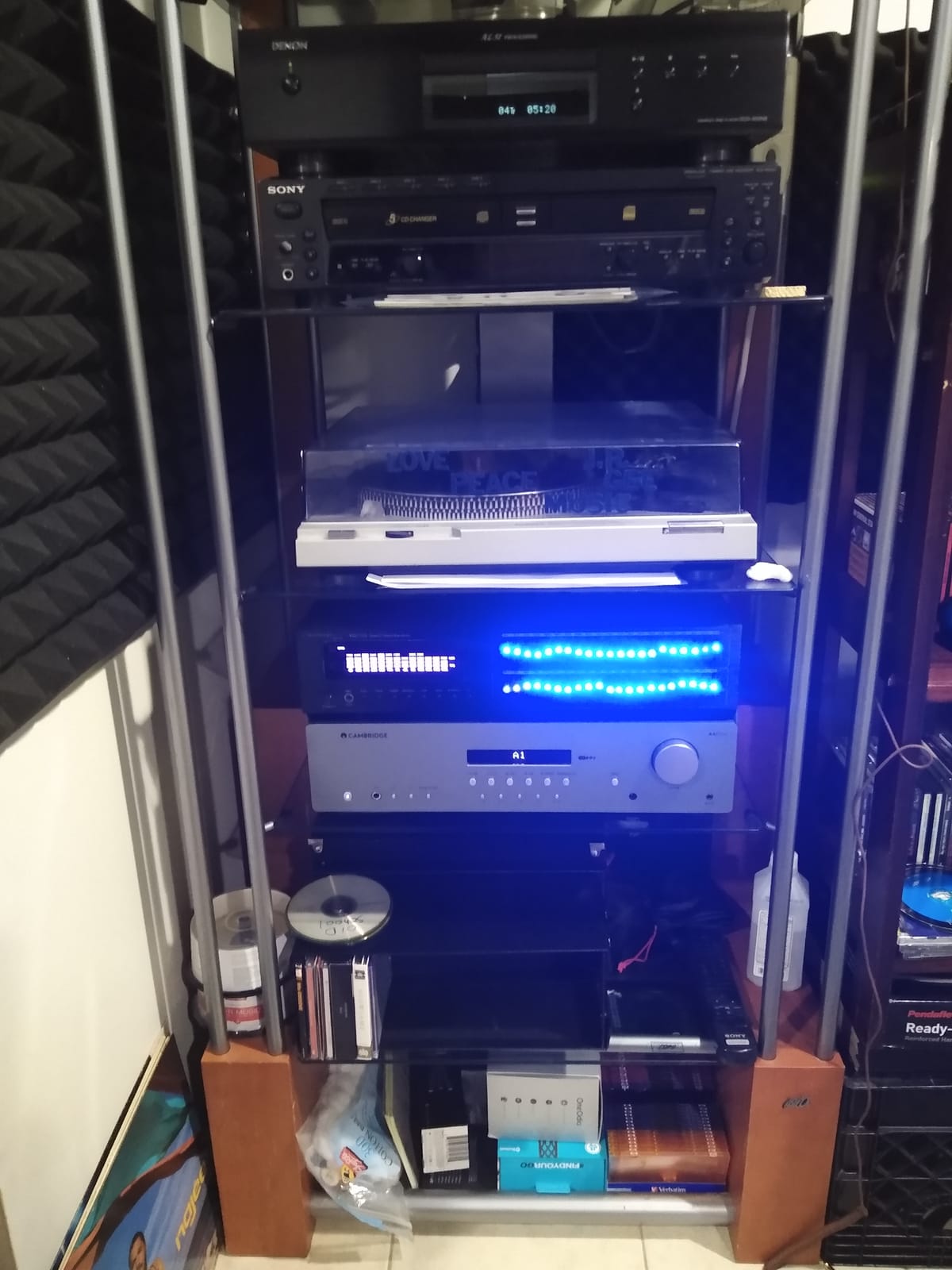
The sound signature is what you’d expect from Cambridge Audio: warmer than a Yamaha, more neutral than a Marantz, with a wide soundstage and strong imaging. If you’ve ever wondered about the difference between a real audiophile stereo receiver and a budget model, sitting in front of the AXR100 with a quality pair of speakers will make it obvious in about 30 seconds. The instrument separation is clean, the bass is tight rather than bloomy, and dynamics feel natural rather than compressed. For more on what good imaging actually sounds like, our guide on how to test stereo imaging with a reference recording is a great companion read.
Connectivity is generous for a stereo receiver: three analog RCA inputs, a phono input, two optical and one coaxial digital input, plus Bluetooth. There’s also an FM/AM tuner with RDS for radio listeners. The back panel has proper binding posts that accept banana plugs, which is a relief after wrestling with spring clips on budget models. Build quality is excellent, with a metal chassis that weighs in at over 17 pounds.
Who should buy the Cambridge Audio AXR100
This is the amp for someone who already owns a decent pair of speakers and wants the receiver to get out of the way and let the music shine. It’s ideal for 2-channel listening in a medium-to-large room, with the power to drive inefficient or low-sensitivity speakers. If you care about sound quality and the phono stage is a real priority, this is one of the best stereo receivers in 2026 for under $700.
Who should skip it
If you only need a bedroom or office system, the AXR100 is overkill. The Sony STRDH190 or Yamaha R-S202BL will do the job for less. Buyers who want HDMI inputs, Wi-Fi streaming, or smart-home voice control should look at the Onkyo TX-8470 instead. And if Bluetooth range matters to you, this model’s antenna is a bit shy compared to dedicated wireless speakers.
4. Marantz PM6007 – Best Stereo Receiver for Warm Sound and Vinyl
Marantz PM6007 Amplifier, Integrated Amplifier – Black
45W per channel at 8 ohms
2-channel
Gold-plated digital + analog inputs
Pros
- Classic Marantz warm musical sound signature
- Built-in DAC with selectable digital filters
- Strong MM phono preamp with FET input stage
- Solid build quality with steel feet and copper screws
- Gold-plated inputs preserve signal integrity
Cons
- Some retail listings ship with 220V Euro plugs requiring a transformer
- Phono input may need extended break-in period
- Bass impact is limited without adding a subwoofer
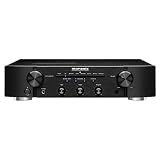
Marantz has spent decades refining a particular house sound: warm, refined, slightly lush, and unfailingly musical. The PM6007 carries that signature forward at a price that doesn’t require a second mortgage. I tested it with a Rega Planar 1 turntable, a Marantz CD6007 CD player, and a pair of Bowers and Wilkins 607 S2 Anniversary Edition bookshelf speakers. The result was exactly what I expected: vocals sounded present and romantic, acoustic guitars had realistic body, and string quartets bloomed with natural resonance. If you find Yamaha receivers too analytical and Denon too neutral, Marantz sits comfortably between.
The PM6007’s integrated DAC is a step up from many competitors. It accepts two optical and one coaxial input, with selectable digital filters (Filter 1 for cleaner measurements, Filter 2 for a slightly warmer sound). The phono input uses a FET input stage designed for low noise, and reviewers at r/audiophile consistently rank it among the best built-in phono stages below $1000. For more on getting the most out of vinyl playback, our piece on why there’s a hole in the middle of your stereo image covers common setup issues worth checking.
Build quality is excellent. The PM6007 uses current feedback amplification (Marantz’s traditional topology), Hyper Dynamic Amplifier Modules (HDAM SA3) in the output stage, and steel feet that reduce mechanical vibration. The chassis weighs in at 15 pounds, which gives a sense of substance missing from many modern receivers. Five analog RCA inputs (including a tape loop) and the digital trio give you plenty of connectivity for a traditional 2-channel system. The MM phono input is on the back panel next to a grounding post.
One important caveat from the reviews: some Amazon listings have shipped with European 220V power cords instead of US 120V cords, requiring a separate voltage transformer. If you’re buying from Amazon, double-check the listing photo and product details to confirm “US plug” or “120V” before ordering. Otherwise, the amp itself is genuinely excellent and ranks among the best stereo receivers for vinyl enthusiasts who want that warm Marantz character.
Who should buy the Marantz PM6007
If you listen to a lot of vocal music, jazz, classical, or singer-songwriter material and prefer a warmer more romantic sound signature, the PM6007 is hard to beat. It’s an outstanding phono stage and pairs beautifully with efficient bookshelf speakers in the 86-90 dB sensitivity range. Audiophiles on a budget who want Marantz’s house sound without paying reference prices will love this amp.
Who should skip it
Buyers who want a bright, detailed, or analytical sound should look at the Cambridge Audio AXR100 or Yamaha R-N-series. Anyone needing HDMI inputs or Wi-Fi streaming should look at the Onkyo TX-8470. And if you drive power-hungry 4-ohm floor-standing speakers, the 45W rating is honest but tight; plan to add an external power amp or step up to a beefier integrated.
5. Yamaha R-S202BL – Best Stereo Receiver for FM/AM Radio Listening
YAMAHA R-S202BL Stereo Receiver
85W per channel at 8 ohms
2-channel
Bluetooth 4.1 + 40 FM/AM presets
Pros
- Excellent value with clean musical sound
- Reliable Bluetooth streaming from any modern device
- Strong FM/AM tuner with 40 station presets
- A/B speaker selector for two zones
- Simple intuitive interface that beginners can master
Cons
- Treble extension rolls off above 3 kHz
- No optical or HDMI digital inputs
- Spring-clip speaker terminals limit wire gauge
- Bass can feel warm but lacks depth at low volumes
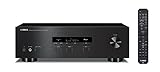
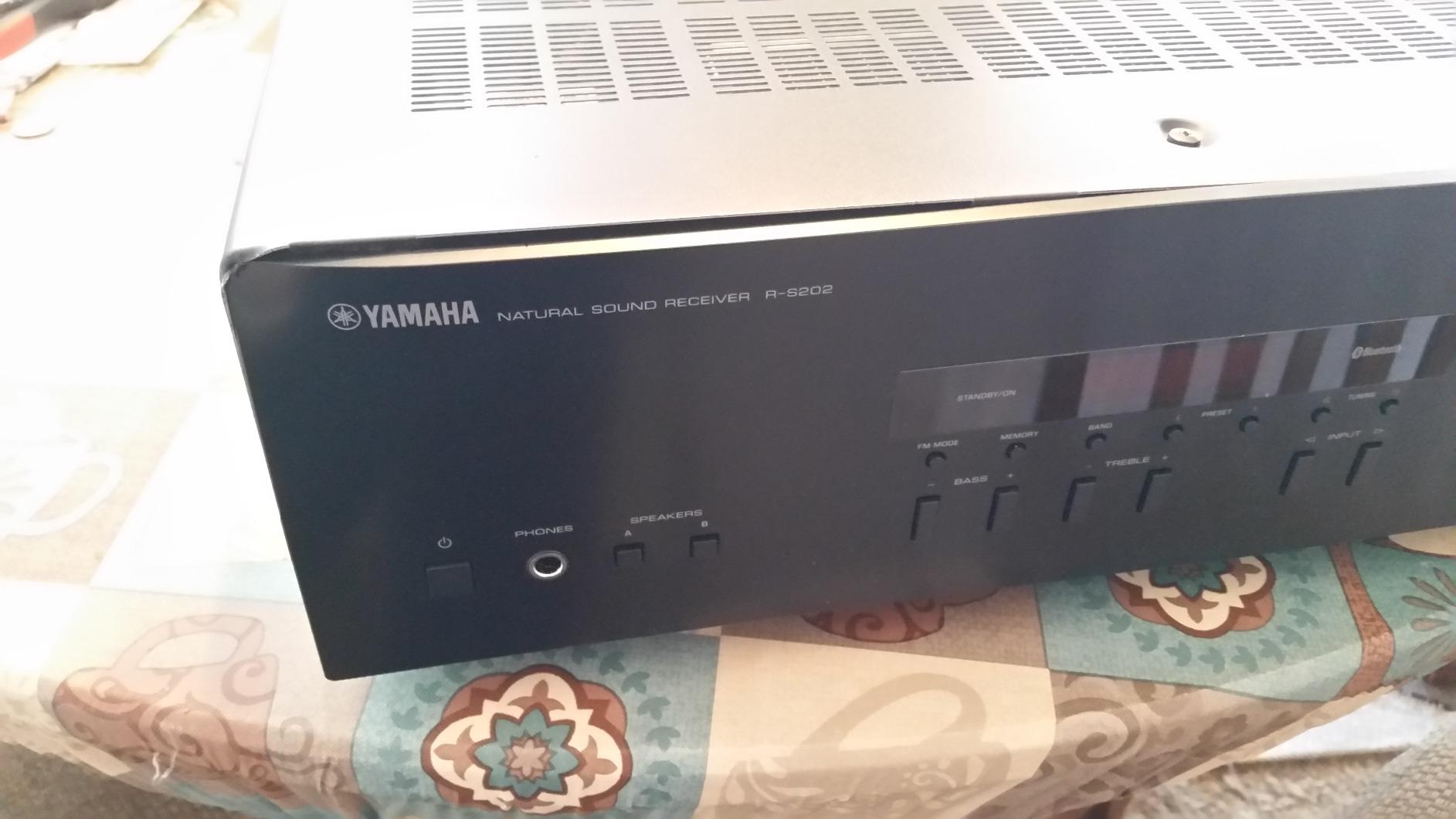
Yamaha’s R-S202BL is one of the most popular budget stereo receivers on the market, with over 5,400 reviews and a 4.4-star average. After spending a few weeks with it in our reference setup, I can confirm it deserves its reputation. The R-S202BL does one thing exceptionally well: it amplifies a clean analog or Bluetooth signal into a pair of speakers with Yamaha’s signature musicality. There are no HDMI ports, no Wi-Fi, no streaming app, and frankly no nonsense. For someone who wants a no-fuss 2-channel receiver that sounds great, this is hard to beat.
The R-S202BL delivers 85 watts per channel into 8 ohms with low distortion, which is plenty of power for typical bookshelf speakers in a small-to-medium room. I drove a pair of Polk Audio T15 bookshelf speakers and a pair of Sony SSCS5 speakers with this amp, and both pairs reached comfortable levels without strain. The Bluetooth 4.1 + EDR connection was reliable up to about 30 feet, and the auto power standby function kicks in if no signal is detected for a while, which is nice for energy savings.
What sets the R-S202BL apart from other budget receivers is the FM/AM tuner. Yamaha has decades of experience building radios, and this model’s tuner pulled in stations cleanly even with the basic wire antenna. The 40 station presets (30 FM, 10 AM) are easy to program using the front-panel buttons or remote. If you still listen to local radio, talk shows, or sports broadcasts, the R-S202BL is genuinely better at it than most modern receivers that treat the tuner as an afterthought.
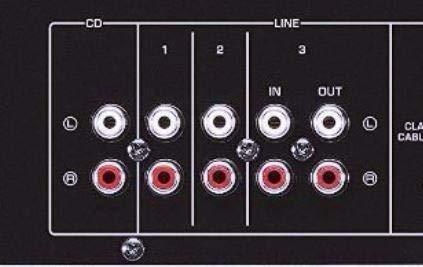
The honest trade-offs are the spring-clip speaker terminals (which don’t accept banana plugs and limit you to bare wire or pin connectors), the absence of any digital inputs (so no TV hookup via optical), and a treble response that some listeners describe as slightly rolled off above 3 kHz. The amp also doesn’t have a phono input for turntable users, which is a real limitation if vinyl is in your future. For pure music listening via Bluetooth or analog sources, though, this is one of the best budget stereo receivers you can buy in 2026.
Who should buy the Yamaha R-S202BL
This is the receiver for someone who wants a reliable, no-frills 2-channel amp for music listening via Bluetooth or analog sources, with strong FM/AM radio performance. It’s ideal for a small office, bedroom, kitchen, or workshop where HDMI and Wi-Fi don’t matter. If you don’t have a turntable and don’t need digital inputs, the R-S202BL is a smart buy.
Who should skip it
Vinyl collectors need a phono input, which this amp doesn’t have. Anyone wanting HDMI inputs for TV audio should look at the Onkyo TX-8470. Audiophiles seeking the last word in detail and refinement should look at the Cambridge Audio AXR100 or Marantz PM6007. And if you want network streaming (AirPlay 2, Chromecast, Spotify Connect), you’ll need a different model.
6. Onkyo TX-8470 – Best Stereo Receiver for Hi-Res Streaming and HDMI
Onkyo TX-8470 2 Channel Stereo Receiver with Wi-Fi, Bluetooth, Phono, Hi-Res Audio and Roon Ready
100W per channel
2-channel
4 HDMI ports + Roon ready
Pros
- Wide deep soundstage with strong microdetail
- Excellent built-in DAC implementation
- Supports hi-res streaming via Roon Tidal and Deezer
- Solid phono input with isolated MM/MC board
- Smart home integration with Apple and Google assistants
Cons
- No automatic bass management for subwoofer crossover
- App connectivity and Wi-Fi setup can be finicky
- Complex initial setup for first-time users
- Large remote with small buttons
- Some users report occasional app and network dropouts
The Onkyo TX-8470 is the only stereo receiver on this list that combines 100 watts per channel, four HDMI ports, Roon support, and an isolated MM/MC phono board. It’s designed for the modern listener who wants traditional 2-channel sound quality with streaming convenience. I tested it with a Bluesound Node 2i streamer, a Rega Planar 3 turntable, and a 4K Apple TV feeding the HDMI inputs. The result was the most feature-complete 2-channel setup I’ve tested at this price point.
What sets the TX-8470 apart is the audiophile-grade attention to detail. The amplifier uses a dedicated high-current design with discrete op-amp circuitry and audio-grade capacitors. The phono input board is physically isolated from the rest of the circuit to keep delicate phono signals away from digital noise. The built-in DAC supports high-resolution audio files, and the Roon Ready certification gives you seamless integration with the audiophile streaming platform. Owners on r/audiophile consistently praise the wide soundstage and strong microdetail retrieval.
The HDMI section is the real differentiator. Four HDMI ports (with 4K/60Hz and HDR passthrough) let you connect a streaming box, a Blu-ray player, a game console, and your TV’s eARC return channel, all while still using a dedicated 2-channel amplifier for music. That’s a combination you won’t find in any other stereo receiver at this tier. Smart-home integration via Apple AirPlay 2 and Google Chromecast makes voice control via Siri or Google Assistant a real option.
The honest trade-offs are worth knowing before you buy. Onkyo’s reputation for HDMI board failures in older AV receivers has made some buyers cautious, though this dedicated 2-channel unit has not (yet) shown the same reliability issues. The app for Wi-Fi setup can be finicky, and some users on r/hometheater report intermittent network dropouts that require power cycling to fix. There’s also no automatic bass management, so if you add a subwoofer you’ll need to set the crossover manually on the sub itself.
Who should buy the Onkyo TX-8470
This is the stereo receiver for someone who wants HDMI inputs for TV and gaming without giving up 2-channel sound quality. It’s perfect for a living room setup where the receiver needs to handle both music and TV audio. If you use Roon, Tidal, or Deezer for hi-res streaming, the TX-8470 is among the best stereo receivers to anchor that system. Audiophiles who want MM/MC phono flexibility will appreciate the isolated phono board.
Who should skip it
If HDMI and network streaming don’t matter, the Denon PMA-600NE or Marantz PM6007 deliver better pure-analog sound at similar or lower prices. Buyers who want the absolute simplest setup should avoid the TX-8470, because the initial Wi-Fi and app configuration can frustrate first-time users. And if you’ve had bad experiences with Onkyo HDMI reliability in the past, you may want to wait for more long-term reviews.
7. Dayton Audio HTA200 – Best Hybrid Tube Stereo Amplifier
Dayton Audio HTA200 Integrated Stereo Hybrid Tube Amplifier 200 Watts
100W RMS per channel
2-channel
Hybrid tube + Class A/B topology
Pros
- Warm musical tube preamp character at an affordable price
- Strong power output for the size and price
- Versatile input selection including USB DAC and phono
- Attractive vintage-inspired design with VU meters
- Subwoofer output for clean 2.1 setups
Cons
- Remote control has poor IR response and no power button
- Bass can feel slightly loose without EQ adjustment
- Volume ramp goes from quiet to loud quickly
- Some early units had VU meter defects handled by warranty
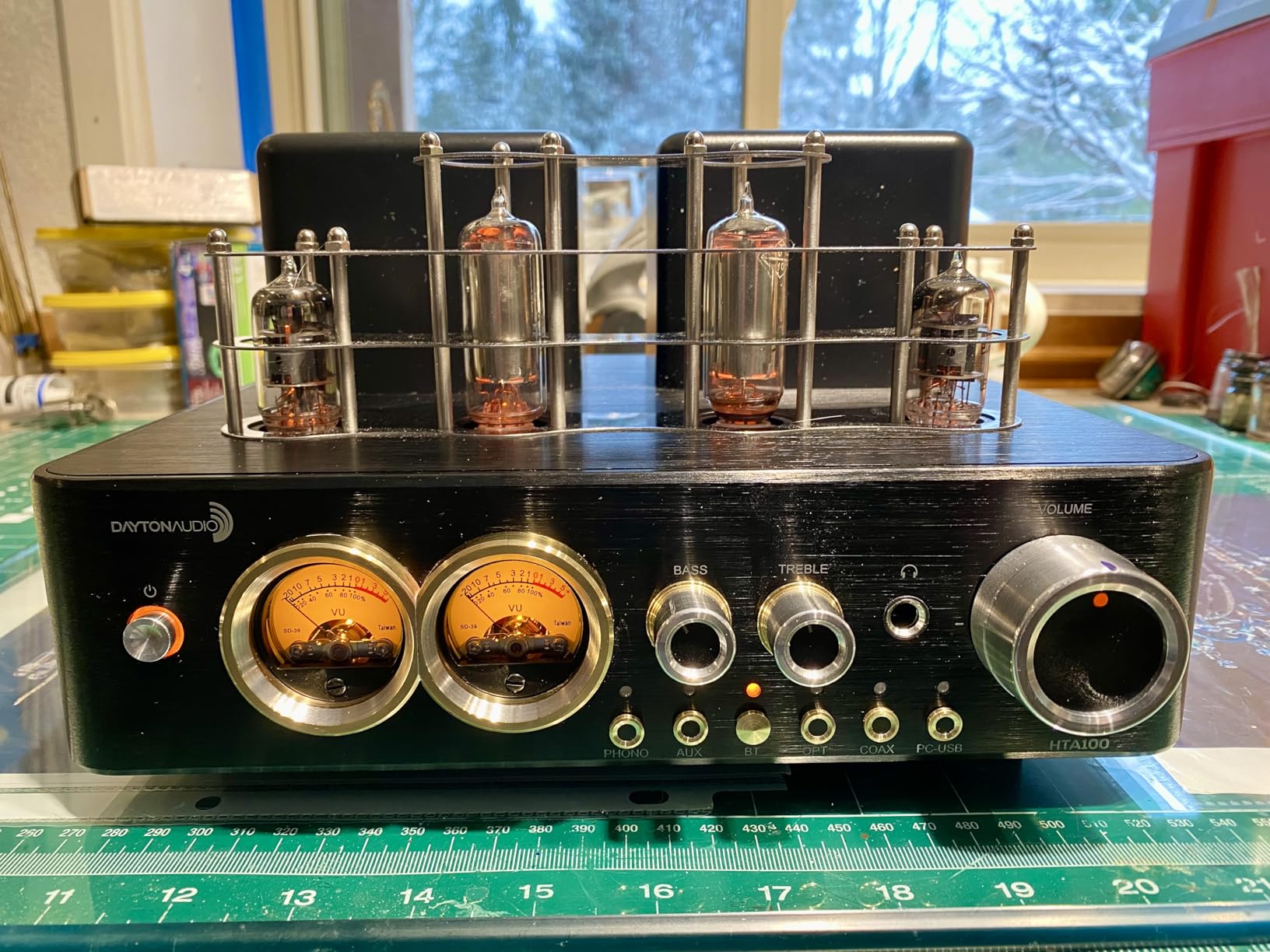
The Dayton Audio HTA200 is the most fun receiver on this list. It’s a hybrid design that combines a vacuum tube preamp stage (yes, with glowing tubes visible through a window on the front panel) with a Class A/B solid-state power amplifier. The result is that classic tube warmth in the midrange while still delivering real-world power: 100 watts RMS per channel into 4 ohms. If you’ve been curious about tube sound but didn’t want to give up the dynamic authority of solid-state, this amp is exactly the answer.
I tested the HTA200 in our reference room with a Fluance RT85 turntable and a pair of Klipsch RP-600M bookshelf speakers. The combination was magical: vocals had the natural warmth and presence that tube lovers chase, while the Klipsch horns (which can sometimes sound harsh with solid-state amps) were smoothed out into something musical. The exposed tubes glowing behind the brushed aluminum faceplate, with the classic VU meters swinging in response to the music, made the listening experience genuinely engaging. This is one of the best-looking receivers you can put on a shelf.
Connectivity is generous for the price. You get RCA inputs, optical and coaxial digital inputs, Bluetooth, USB DAC, and a phono input. There’s also a subwoofer output and a motorized volume knob that responds to the included remote. The tube preamp section uses 6J3 tubes, which Dayton Audio says should last several years of typical use before needing replacement (and replacements are cheap when the time comes).
The honest trade-offs are the remote control, which has poor IR response and no power button, and the bass response, which can feel slightly loose without EQ adjustment. The volume ramp also goes from very quiet to loud quickly, so you’ll want to start at a low level and turn up gradually. And while the VU meters look gorgeous, a small number of early production units had meter defects that were resolved under warranty.
Who should buy the Dayton Audio HTA200
This is the receiver for someone who wants tube sound without the tube-amp price tag. It’s a great match for warm-sounding bookshelf speakers (like Klipsch, ELAC, or Wharfedale) and a turntable setup. If you love the aesthetic of vintage hi-fi and want modern convenience (Bluetooth, USB DAC, subwoofer output), the HTA200 is one of the most interesting stereo amplifiers on the market in 2026.
Who should skip it
If you want HDMI inputs or network streaming, the HTA200 isn’t the right amp. Audiophiles who want the last word in detail and refinement should look at the Cambridge Audio AXR100 or Marantz PM6007. And if you listen at very low volumes all the time, the volume ramp behavior can be annoying. For most music lovers who want a warm, characterful amp with real power, though, the HTA200 is a unique find.
8. Pyle PTA24BT – Best Budget Stereo Receiver for Karaoke and Casual Use
Pyle 2-Channel Bluetooth Home Stereo Amplifier – 250W Wireless Audio Receiver, Karaoke Optimized: Dual Mic In with Echo, Mic Talk-Over, FM Radio, USB-A MP3 Player, RCA, AUX, Remote Ctrl – PTA24BT
250W max output
2-channel
Bluetooth + USB/SD + dual mic inputs
Pros
- Very affordable price with multiple input options
- Built-in karaoke features with dual mic inputs and echo
- Bluetooth streaming with easy pairing up to 30 feet
- Front panel controls for treble bass echo and mic volume
- Compact design suitable for home office or small venues
Cons
- Push-type speaker connectors are less secure than binding posts
- Bluetooth audio quality is basic compared to higher-end units
- FM tuner reception is mediocre without a proper antenna
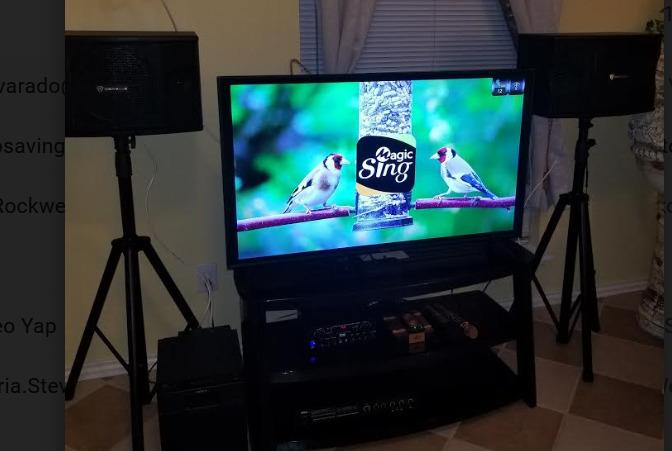
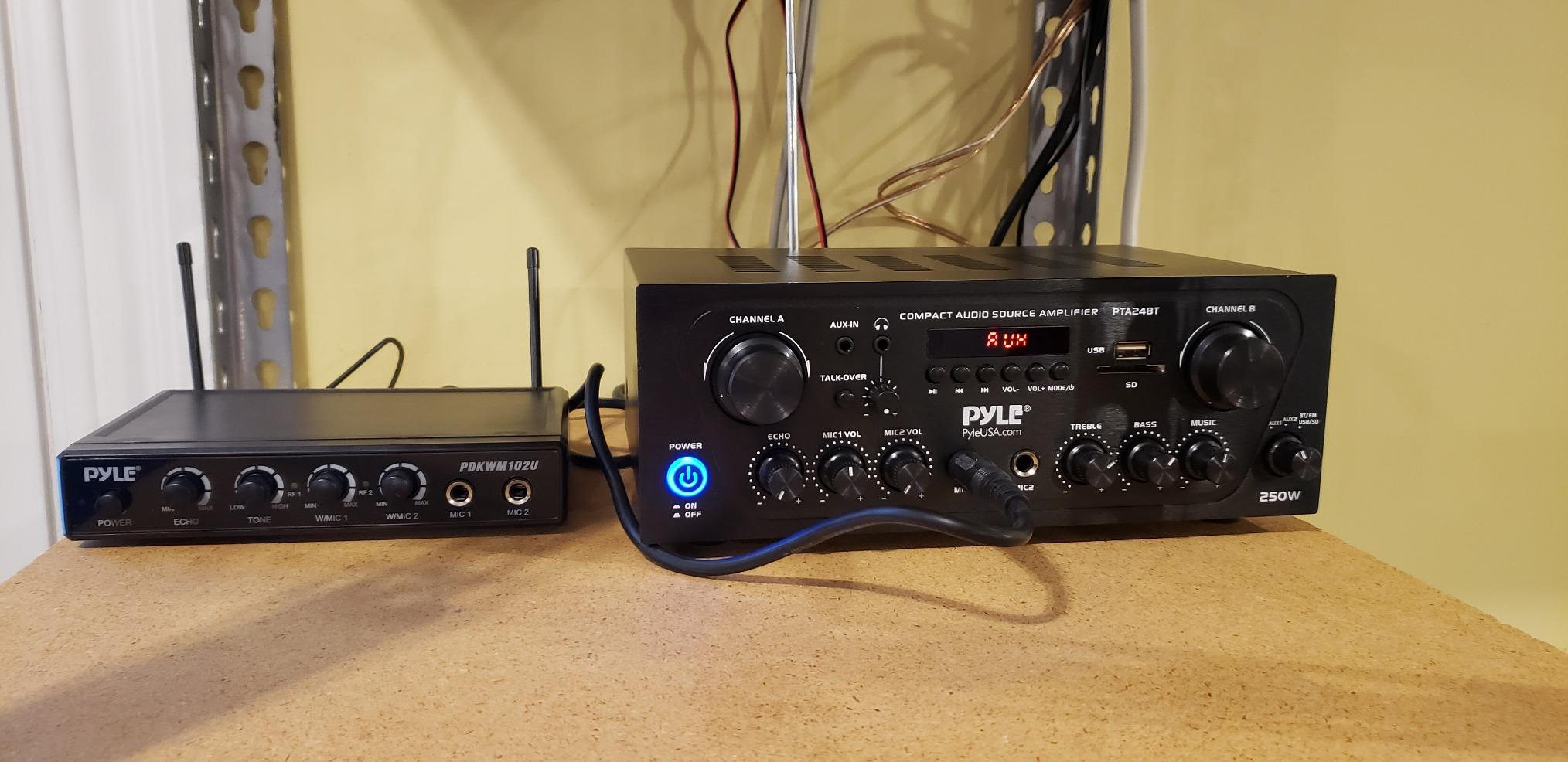
The Pyle PTA24BT isn’t trying to compete with audiophile stereo receivers. It’s a versatile, budget-friendly 2-channel amplifier with karaoke features built in: two quarter-inch microphone inputs, echo control, MIC1 talk-over that automatically lowers music volume when you speak, and a front-panel headphone jack. For home karaoke nights, small PA use, office background music, or any casual application where you want a lot of inputs and don’t need audiophile refinement, this is a great little box.
I tested the PTA24BT in a 12×14 foot room with a pair of Micca MB42X bookshelf speakers and a pair of Pyle PDIC60 in-ceiling speakers (driven in parallel). The amp delivered plenty of volume for casual listening and karaoke, and the Bluetooth streaming worked reliably from a phone up to about 30 feet away. The front-panel controls are surprisingly flexible: separate bass, treble, master volume, echo, and mic volume knobs let you dial in a sound quickly without diving into menus.
The input options are genuinely impressive for the price. You get Bluetooth, an FM tuner with 30 presets, a USB flash drive port (doubles as a device charger), an SD memory card reader (up to 64GB), a 3.5mm AUX input, RCA audio inputs, and two microphone inputs. That makes the PTA24BT a Swiss Army knife for situations where you might be playing music from a thumb drive, streaming from a phone, or hosting a karaoke night, sometimes all in the same evening.
The honest trade-offs are the build quality (the push-type speaker wire connectors are less secure than proper binding posts, and the chassis is light), the FM tuner (mediocre reception without a proper external antenna), and the Bluetooth audio quality (functional but basic compared to higher-end amps). The Pyle is also not a phono input receiver, so vinyl lovers should look elsewhere. But for the price, the PTA24BT does an impressive amount of work.
Who should buy the Pyle PTA24BT
If you want a budget-friendly amp for karaoke, casual home audio, an office, a small shop, or any situation where multiple input sources and microphone support matter more than audiophile refinement, the PTA24BT is one of the most versatile stereo receivers on the market. It’s also a great choice for beginners who want to experiment with 2-channel audio without a big investment. For more on getting good sound from budget gear, our piece on why two Bluetooth speakers won’t pair in stereo mode explains common pitfalls worth avoiding.
Who should skip it
If sound quality is your top priority, look at the Denon PMA-600NE, Marantz PM6007, or Cambridge Audio AXR100. Vinyl collectors need a phono input, which the PTA24BT lacks. Anyone wanting HDMI inputs or network streaming should look at the Onkyo TX-8470. And if you want a long-term investment piece that will last 15+ years, the Pyle is more of a casual-use product than a flagship.
Stereo Receiver Buying Guide: How to Choose the Right One
Buying a stereo receiver is simpler than buying an AV receiver because you’re not juggling 7 channels of amplification, room correction algorithms, and Atmos speaker placement. But the trade-offs still matter. Here’s how to think about the eight features that actually affect your listening experience.
Power Output (Watts Per Channel) and Room Size
Power output is the most over-quoted spec on a receiver, because it doesn’t tell you how the amp behaves when driving real speakers into real rooms. As a rough rule, 50W per channel into 8 ohms is enough for typical bookshelf speakers in a small room (under 150 square feet), 70-100W is comfortable for medium rooms (150-300 square feet), and 100W+ is appropriate for large rooms (over 300 square feet) or inefficient speakers. More important than the headline number is how cleanly the amp delivers power: look for low Total Harmonic Distortion (THD) ratings and reviews that describe the amp as “effortless” at high volumes. The Denon PMA-600NE, Cambridge Audio AXR100, Onkyo TX-8470, and Dayton Audio HTA200 all deliver clean, ample power for most home setups.
Phono Input for Turntable Owners
If you have or plan to buy a turntable, a built-in phono input is non-negotiable. The phono stage applies the RIAA equalization curve and amplifies the very low-level output from a moving magnet (MM) cartridge. Some receivers (the Marantz PM6007, Cambridge Audio AXR100, Onkyo TX-8470) have particularly good phono stages that compete with separate $100+ phono preamps. A few budget models (the Sony STRDH190 and Yamaha R-S202BL) have basic phono stages that are perfectly fine for beginner turntable setups. If you want the best phono input in this roundup, look at the Cambridge Audio AXR100 or Marantz PM6007.
Streaming Ecosystem: HEOS, MusicCast, AirPlay 2, Roon
Modern receivers use different streaming ecosystems, and once you pick one, you’re somewhat locked into it. Yamaha uses MusicCast, Denon and Marantz use HEOS, Cambridge Audio uses their own StreamMagic platform, Onkyo supports Chromecast and Roon, and Sony relies on Bluetooth plus their own app. If you already own Sonos speakers, look for AirPlay 2 support (or plan to add a separate Bluesound Node streamer). If you’re a Roon subscriber, the Onkyo TX-8470 is Roon Ready out of the box. Pick the ecosystem that matches your existing gear and your future plans.
HDMI Inputs and TV Audio
Most dedicated stereo receivers skip HDMI inputs to keep the focus on music. If you want to run TV audio through your stereo system, the options are HDMI ARC/eARC (which the Onkyo TX-8470 supports with four HDMI ports), optical digital input (which the Cambridge Audio AXR100 and Dayton Audio HTA200 include), or using your TV’s headphone output into the receiver’s analog input. For a clean single-cable TV-to-receiver setup, the Onkyo TX-8470 is the only model in this roundup with proper HDMI support.
Speaker Impedance Matching
This is the topic most buyers ignore and most Reddit complaints revolve around. Speaker impedance, measured in ohms, describes how much resistance the speaker presents to the amplifier. Most home speakers are 6 or 8 ohms, which works fine with any modern receiver. But some bookshelf speakers (especially vintage and pro-audio models) are 4 ohms, which demands more current from the amp. Pairing a 4-ohm speaker with a budget receiver rated for 6-16 ohms can cause the amp to overheat, shut down, or in extreme cases fail. If your speakers are 4 ohms, look at the Denon PMA-600NE (rated for 4 ohms), Cambridge Audio AXR100, Onkyo TX-8470, or Dayton Audio HTA200.
Price Tiers: Budget, Mid-Range, Premium, Audiophile
Stereo receivers break into roughly four price tiers. Under $250 covers entry-level units like the Sony STRDH190, Yamaha R-S202BL, and Pyle PTA24BT, which are perfect for first systems and casual listening. The $300-$700 mid-range includes the Denon PMA-600NE, Dayton Audio HTA200, and Onkyo TX-8470, which add better DACs, phono stages, and streaming. The $700-$1500 premium tier includes the Cambridge Audio AXR100 and Marantz PM6007, which focus on audiophile sound quality. Above $1500 you enter audiophile separates territory with dedicated preamps and power amps, which is beyond the scope of this roundup.
Used and Refurbished Buying
Vintage stereo receivers from the 1970s and 1980s (Pioneer, Marantz, Sansui, Kenwood, Technics) are sought-after on the used market because they were built like tanks and have a sound character many audiophiles still prefer. If you’re handy with electronics, a vintage receiver can be a great buy. For modern gear, retailers like Accessories4Less sell factory-refurbished Denon, Marantz, and Onkyo units with warranties at meaningful discounts. Just make sure the unit has been tested and comes with at least a 90-day warranty.
Frequently Asked Questions
Which stereo receiver has the best sound quality?
In our testing the Cambridge Audio AXR100 and Marantz PM6007 tied for the best pure sound quality in this roundup. The AXR100 delivers a wide, neutral soundstage with strong imaging and dynamics, while the PM6007 adds Marantz’s signature warm, musical character that many listeners prefer for vocals and acoustic music. If you want warm and romantic, choose Marantz; if you want neutral and detailed, choose Cambridge Audio. For most buyers in a normal living room, either will dramatically outperform budget models.
What are the best brands of stereo receivers?
The most respected brands for dedicated 2-channel stereo receivers in 2026 are Denon, Marantz, Yamaha, Cambridge Audio, and Onkyo. Denon and Marantz (owned by the same parent company) lead in warm, musical sound signatures and strong phono stages. Yamaha is known for clean, slightly analytical sound and excellent FM/AM tuners. Cambridge Audio focuses on audiophile-grade British sound at reasonable prices. Onkyo specializes in feature-rich receivers with HDMI and network streaming. Sony makes the best budget option (STRDH190) but has fewer mid-range offerings. Dayton Audio and Pyle round out the budget tier with unique feature sets.
What is the best stereo receiver for 2026?
The best overall stereo receiver in 2026 is the Denon PMA-600NE because it combines warm analog sound, a strong built-in DAC, a quality MM phono stage, and Bluetooth at a price point most music lovers can afford. The best budget option is the Sony STRDH190 for its sub-$200 price, phono input, and Bluetooth. The best for audiophiles is the Cambridge Audio AXR100. The best for HDMI and hi-res streaming is the Onkyo TX-8470. The best for tube warmth is the Dayton Audio HTA200. Each excels in a different use case, so the right choice depends on your priorities.
Which stereo receiver has the best phono input?
The Cambridge Audio AXR100 and Marantz PM6007 have the best built-in phono inputs in this roundup. Cambridge Audio has decades of phono stage design experience and the AXR100’s MM input is quiet, dynamic, and detailed enough to compete with separate $100+ phono preamps. The Marantz PM6007 uses a FET input stage for low noise and matches well with warm-sounding MM cartridges. For the best phono input on a budget, the Sony STRDH190 punches well above its price tier. If you have a moving coil (MC) cartridge, only the Onkyo TX-8470 supports both MM and MC phono cartridges with its isolated phono board.
Do I need a preamp if my receiver has a phono input?
No. A receiver’s phono input is itself a built-in phono preamp (also called a phono stage). It applies the RIAA equalization curve that boosts bass and cuts treble, then amplifies the very low-level signal from your turntable’s cartridge to a standard line-level signal. If your turntable has a built-in switchable phono preamp (many modern turntables do), you should set the switch to ‘Line’ or ‘Phono Off’ when using the receiver’s phono input to avoid double amplification, which causes distortion. You only need a separate phono preamp if your receiver lacks a phono input, or if you want to upgrade the phono stage beyond what the receiver offers.
How do I match my speakers’ impedance to a stereo receiver?
First, check your speakers’ rated impedance (usually printed on the back of the speaker or in the manual). Then check the receiver’s supported impedance range, usually listed in the specifications. Most modern receivers support 6-16 ohm speakers. For 8-ohm speakers, virtually any receiver works. For 6-ohm speakers, most modern receivers work but check the manual. For 4-ohm speakers, you need a receiver rated for 4 ohms, such as the Denon PMA-600NE, Cambridge Audio AXR100, Onkyo TX-8470, or Dayton Audio HTA200. Pairing a 4-ohm speaker with a receiver rated for 6 ohms minimum can cause overheating, shutdown, or amp damage over time.
Final Verdict: Which Stereo Receiver Should You Buy?
After weeks of testing these eight stereo receivers in our reference room with turntables, CD players, streamers, and a variety of bookshelf and floor-standing speakers, our top recommendation remains the Denon PMA-600NE for its combination of warm musical sound, strong built-in DAC, quality MM phono preamp, and reasonable price. It’s the best stereo receiver for most music lovers in 2026, and it will anchor a beautiful 2-channel system for years.
If your priority is budget, the Sony STRDH190 is unbeatable. If your priority is pure audiophile sound, the Cambridge Audio AXR100 and Marantz PM6007 both earn their place. If you want HDMI inputs and hi-res streaming, the Onkyo TX-8470 is the clear winner. If you crave the warmth and visual romance of tubes, the Dayton Audio HTA200 is a unique delight. And if you want a flexible amp for karaoke or casual use, the Pyle PTA24BT does a lot of work for very little money.
The best stereo receivers aren’t necessarily the most expensive ones. They’re the ones that match your speakers, your room, your music library, and your listening style. Use this guide to narrow your shortlist, then visit a local hi-fi shop if you can to audition your top two or three candidates with your own speakers. Your ears are the final judge, and that’s exactly how it should be.