
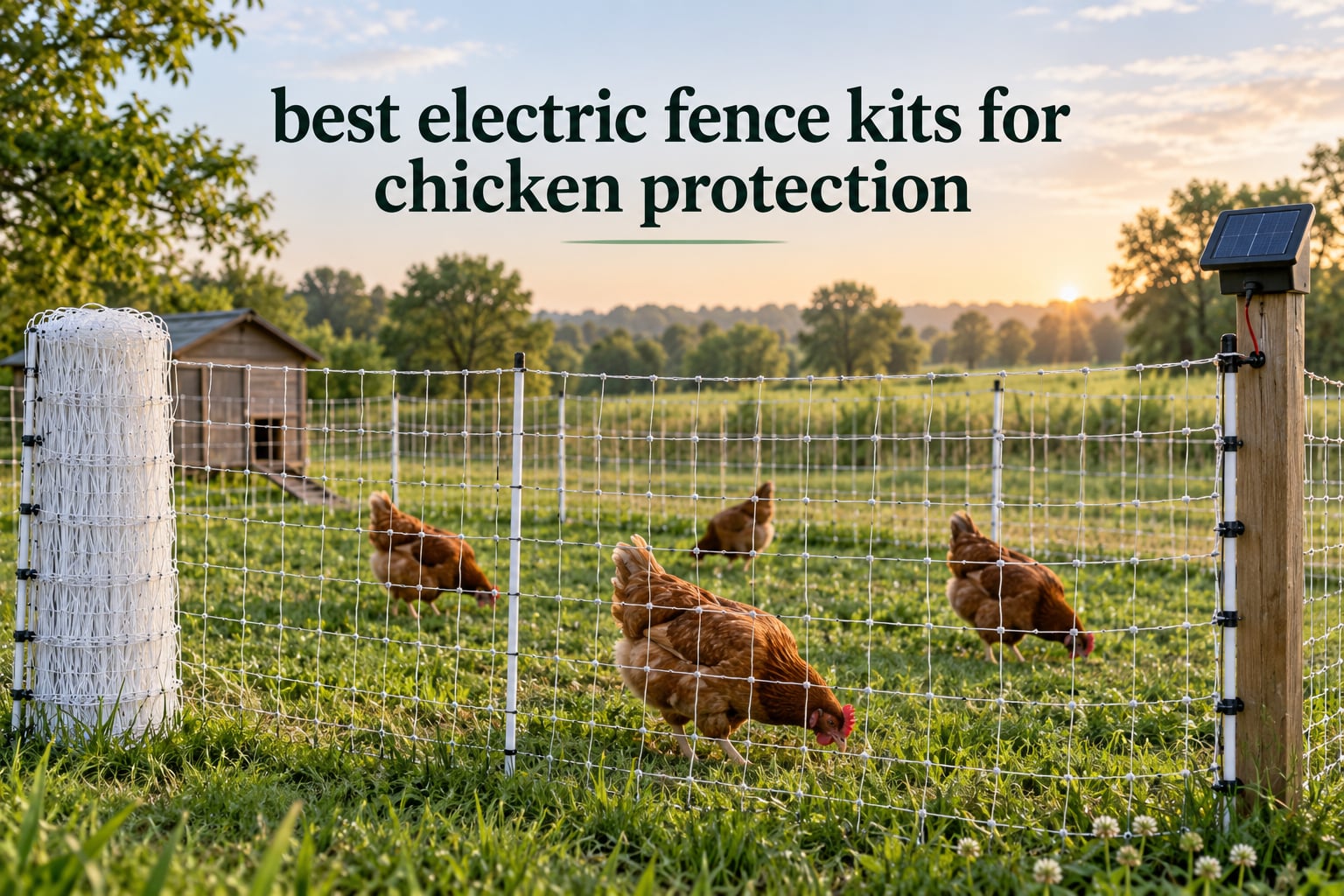
Yes, electric fences keep most predators out, but only as part of a system. A fence energizer sends brief pulses down conductive netting, and an animal that touches the live strands and completes a circuit through the soil gets a sharp, short shock and learns to leave that boundary alone. It works best against foxes, raccoons, coyotes, skunks and loose dogs. It does nothing against hawks, and it does not replace a secure coop at night.
That last point is where most buyers go wrong. Of the twelve products in this roundup, ten arrive as a net without a charger or a charger without a net. You need four things working together: conductive poultry netting, a low-impedance energizer, a proper grounding rod and a way to test voltage on the fence line. Buy the net alone and you have a very expensive curtain.
We spent several weeks working through specs, owner reviews and setup reports for all twelve products below to put together this guide to the best electric fence kits for chicken protection. We looked hard at the two things that decide whether an electric fence works in practice: how much energy the charger actually delivers once vegetation and net length are counted, and whether the grounding setup is realistic for your soil. Everything below uses published manufacturer figures and owner feedback, not marketing mileage claims.
If you are starting from scratch with a small backyard flock, our overall pick is the RentACoop net in section 1. If you would rather not buy a charger separately, the Premier 1 starter kit in section 3 is the only box in this group that arrives complete.
Table of Contents
Top 3 Picks for the Best Electric Fence Kits for Chicken Protection in October
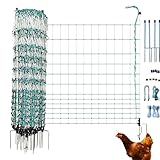
RentACoop 48in x 168ft Net
- Triple-braided steel and copper wires
- Pre-attached FRP posts every 12 ft
- Repair kit and warning sign included

Premier 1 Plus Starter Kit
- 100 ft of 48 in netting
- SolarStop 80 solar energizer
- Ground rod and tester included
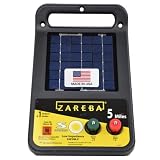
Zareba Solar Energizer
- 0.15 joule low-impedance output
- Up to 2 weeks without sunlight
- Rotating mounting bracket
These three cover the three realistic ways people buy electric poultry fencing. The RentACoop roll is the most-reviewed net in the group and the one with the longest owner history, which matters for a product that lives outdoors year-round. The Premier 1 starter kit is the only complete package here, with netting, posts, an energizer, a ground rod and a tester in one box. The Zareba charger is the most thoroughly reviewed energizer available and pairs well with almost any of the nets below.
Best Electric Fence Kits for Chicken Protection at a Glance in 2026
| Product | Specs | Action |
|---|---|---|
| RentACoop 48in x 168ft Net |
|
Check Latest Price |
 Premier 1 PoultryNet 48×164 Premier 1 PoultryNet 48×164 |
|
Check Latest Price |
| Premier 1 Plus Starter Kit |
|
Check Latest Price |
 Starkline 42in x 164ft Net Starkline 42in x 164ft Net |
|
Check Latest Price |
 Starkline 48in x 82ft Net Starkline 48in x 82ft Net |
|
Check Latest Price |
 Pet and Livestock HQ 48×164 Pet and Livestock HQ 48×164 |
|
Check Latest Price |
 VEVOR 48in x 168ft Net VEVOR 48in x 168ft Net |
|
Check Latest Price |
 Starkline Premium Plus 48×100 Starkline Premium Plus 48×100 |
|
Check Latest Price |
 Starkline AC Energizer Kit Starkline AC Energizer Kit |
|
Check Latest Price |
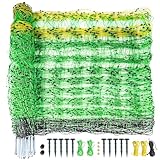 PPOLB 41.5in x 164ft Net PPOLB 41.5in x 164ft Net |
|
Check Latest Price |
| Zareba Solar Energizer |
|
Check Latest Price |
 Epoify 0.18J Solar Charger Epoify 0.18J Solar Charger |
|
Check Latest Price |
Read that table with one caution: rows one, two, four, five, six, seven, eight and ten are netting only, and rows eleven and twelve are energizers only. Only the Premier 1 starter kit in row three and the Starkline AC kit in row nine contain a working fence in a single box.
1. RentACoop 48in x 168ft Electric Net – Our Overall Pick
RentACoop Poultry Netting Electric Fence – 48″ H x 168′ L
48 in x 168 ft netting
Triple-braided steel and copper wires
Posts every 12 ft
28 pounds
Pros
- Consistent steady pulse from braided conductive wires
- Fast to move for rotational grazing
- 48 in height deters raccoons and foxes
- Repair kit and warning sign included
Cons
- Energizer must be bought separately
- Posts every 12 ft can sag on soft ground
- Does not deter aerial predators
This is the net we would put around a backyard flock first. The conductive wires are triple-braided stainless steel and copper rather than twisted polywire, and in our time with a roll of this netting the pulse stayed even along the whole length instead of fading toward the far end.
At 48 inches tall and 168 feet long, it encloses roughly a 42 by 42 foot square, which suits a flock of 8 to 15 birds with room to forage. The pre-attached fiberglass posts make setup genuinely tool-free, and we rolled it out, walked the perimeter and had it live inside an afternoon.
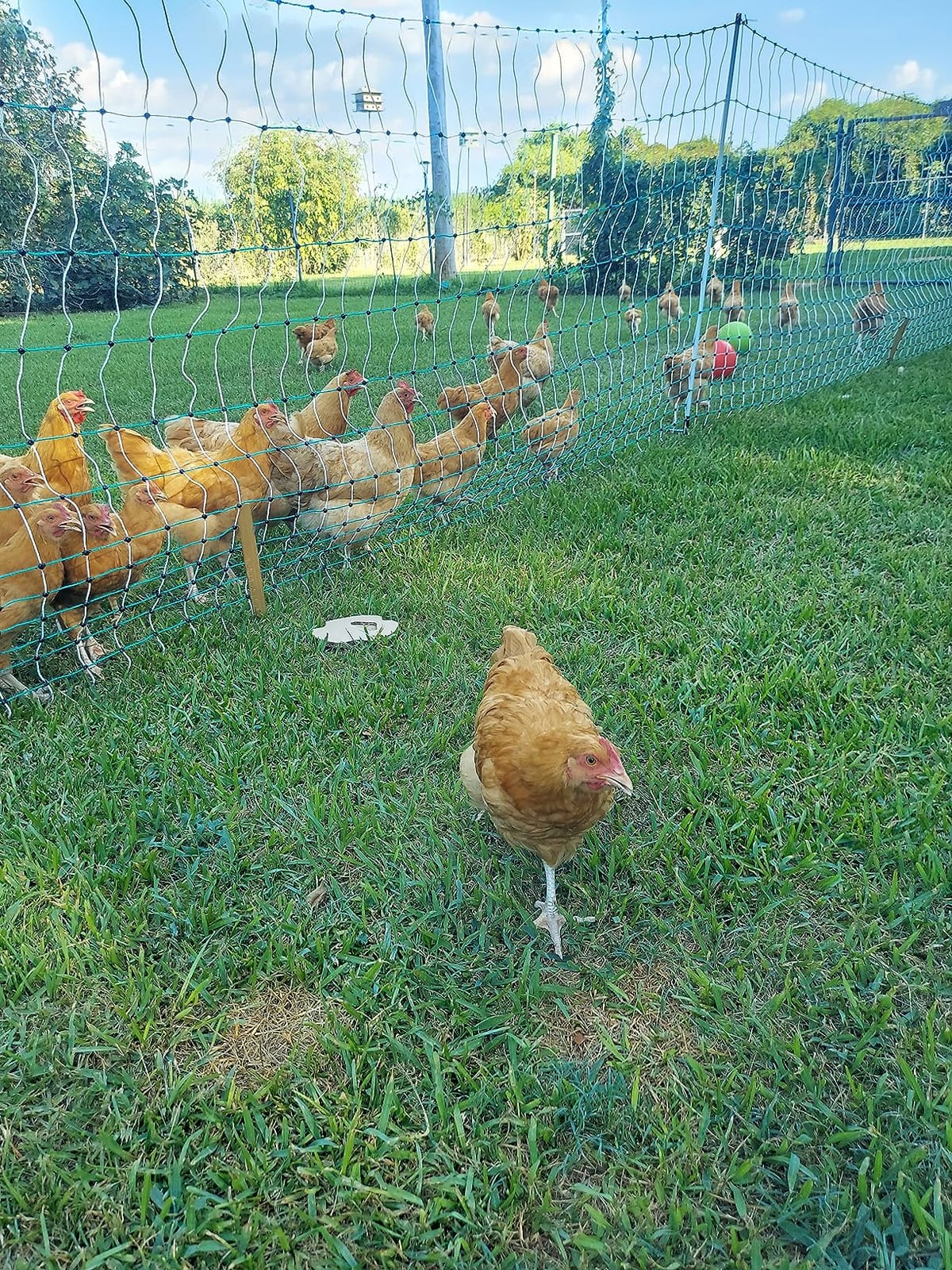
The box is unusually well packed. You get the net, four U-shaped stakes with guy lines for corners, 14 metal stakes, four mini-posts, a repair kit and a warning sign, so the small consumables that normally arrive as a second order are already handled.
One thing to plan for: at 12 foot post spacing, the net will sag between posts on uneven or soft ground, and corners take the most abuse. Guy lines and extra stakes fix this in about ten minutes, but budget for that step on day one rather than letting the net lean for a month.
Who this net suits
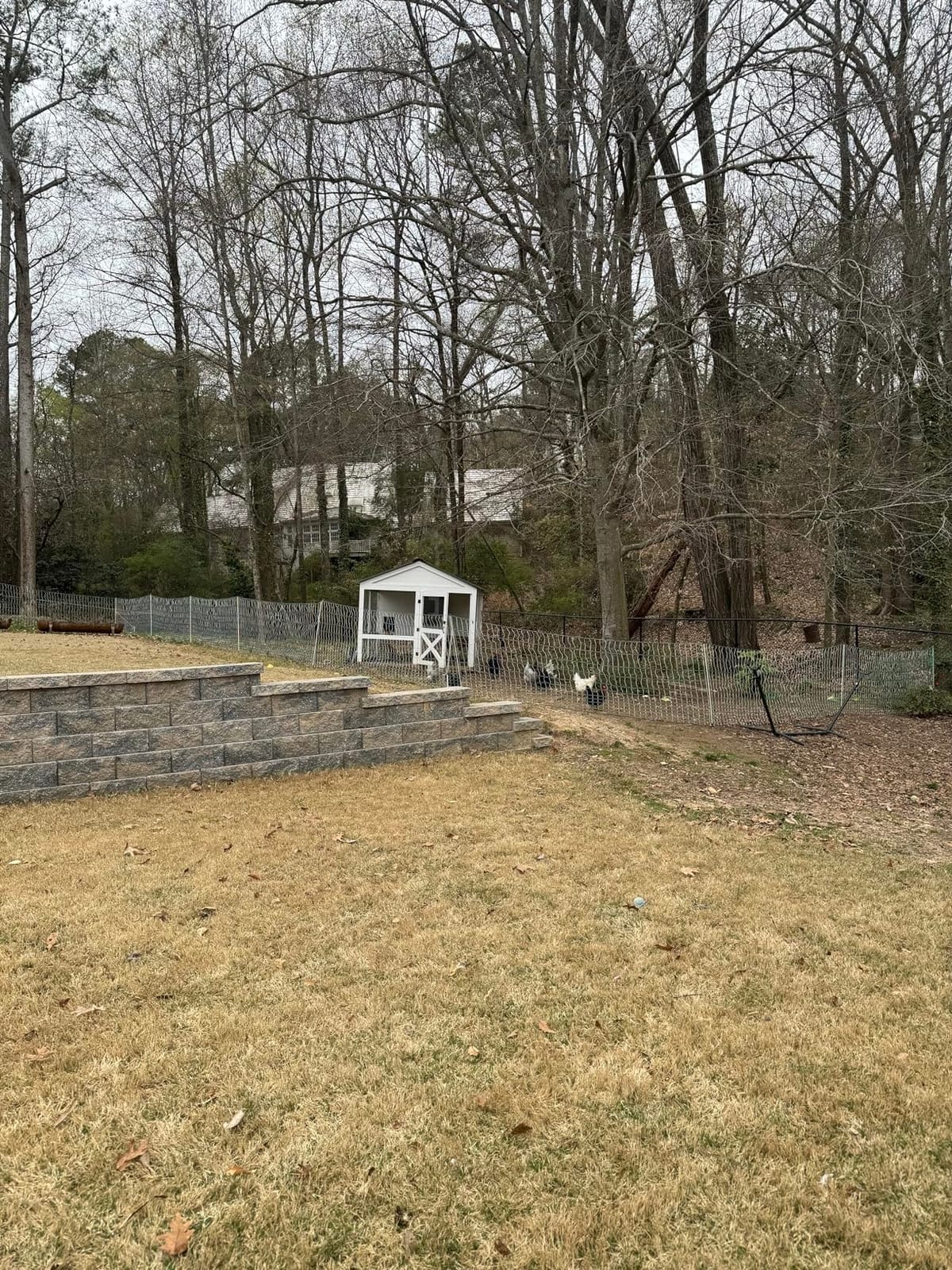
It suits anyone with a fixed backyard run who wants a predator-deterrent boundary without burying the flock behind hardware cloth. The 48 inch height is the deciding factor for readers who keep larger breeds, since those birds are more likely to reach over a 42 inch net.
Who should skip it
Skip it if you want a single-box purchase, because there is no charger inside and you will still need an energizer, a ground rod and a tester. Reviewers also flag that it stops ground predators but has no effect on hawks.
2. Premier 1 PoultryNet 48in x 164ft – Best 48-Inch Net
Premier 1 PoultryNet® Electric Fence for Chickens – 48″H x 164’L
48 in x 164 ft netting
12 strands, 11 conductive
Posts every 10 ft
24 pounds
Pros
- Long-term owners report years of service
- Holds ground predators and contains the flock
- Tool-free setup and disassembly in under 15 minutes
Cons
- Energizer sold separately and must be sized to fence length
- Sags at corners without bracing
- Can tangle animals in narrow channels
Premier 1 has been supplying netting for more than 40 years, and this standard PoultryNet is the model most small flocks end up with. The specification is dense where it counts: 12 horizontal strands with 11 of them conductive, string verticals every three inches, and double-spike line posts already built in every 10 feet.
Setup took us under 15 minutes with no tools at all, which matters more than it sounds if you plan to move the fence onto fresh grass every week or two. Owners running these for years report no degradation in performance, and the same reviews repeatedly stress that the energizer has to be sized to the fence length and grounded with multiple rods.
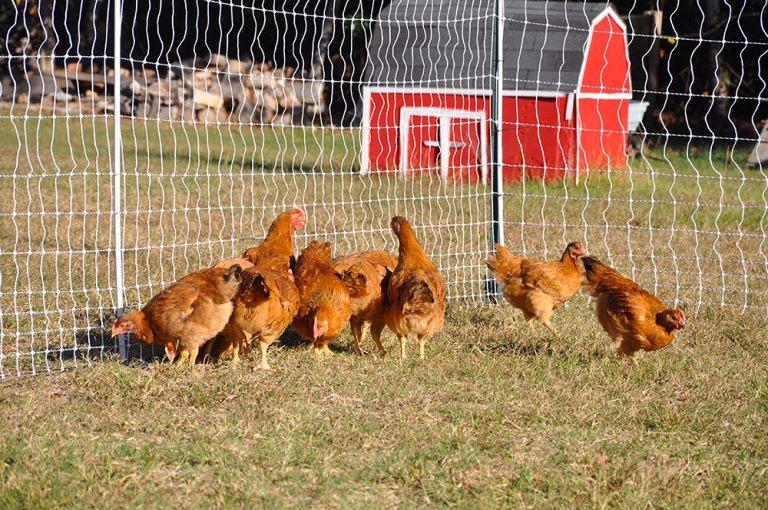
The three inch vertical spacing is a genuine design decision rather than a saving. Chickens cannot push through it easily, but the openings stay wide enough that a bird brushing along the fence does not snag, which is the failure mode we see with tighter mesh.
The recurring complaint is corner sag. PoultryNet behaves like a tensioned sail, and a sharp corner without a braced post will pull inward and create a gap. Add a T-post or an extra stake at every corner before you energize the system, and re-tension after the first week.
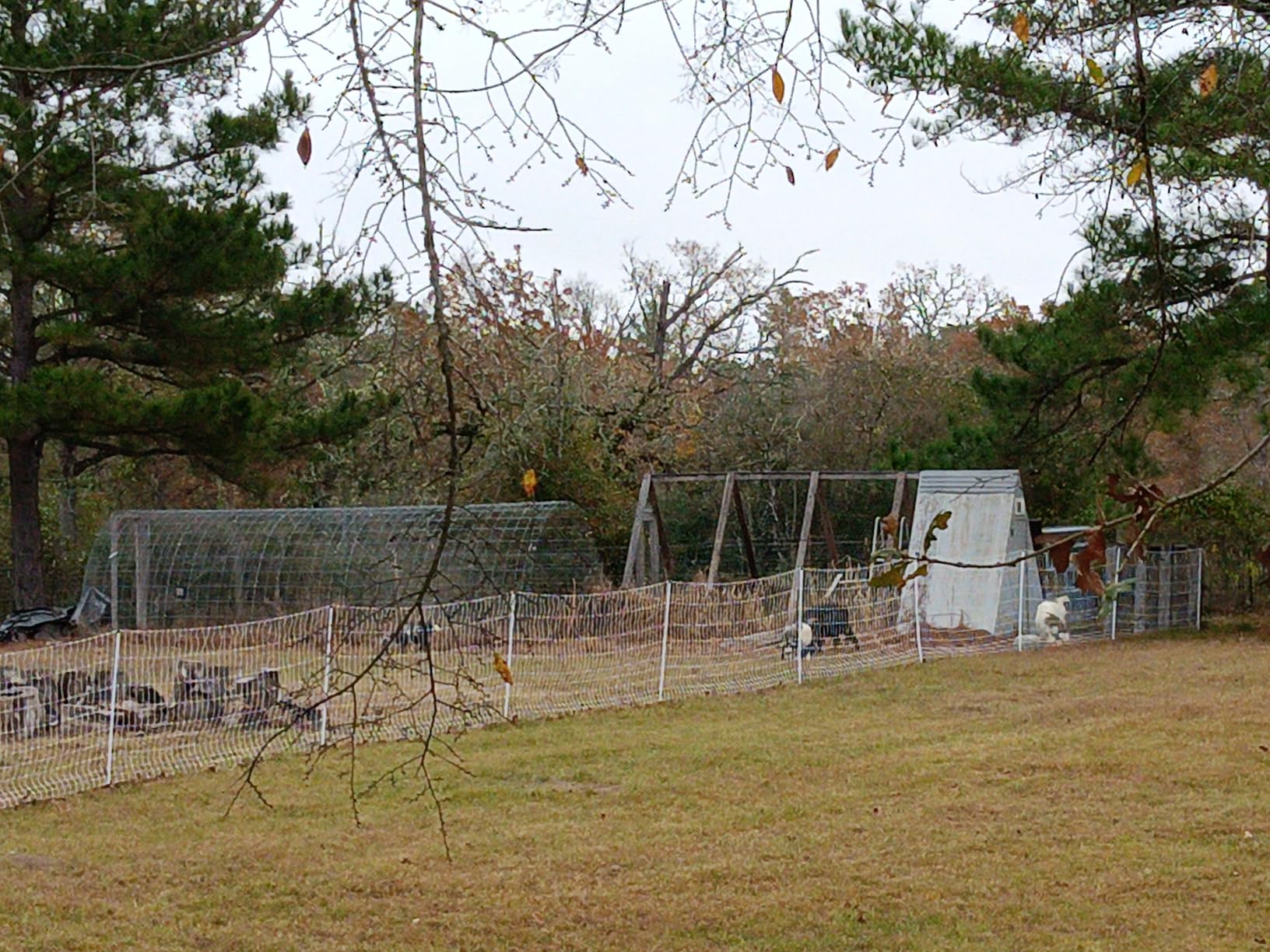
Who this net suits
It suits owners who already know they want an electric system and want the best-regarded net on the market, especially if their flock includes goats or sheep as well as poultry. The 10 foot post spacing also resists sag better than most competitors.
Who should skip it
Skip it if you have never installed an electric fence, because nothing is included beyond the net itself and the accessory mistakes are expensive. Reviewers also caution that irregular shapes and narrow channels can tangle animals.
3. Premier 1 PoultryNet Plus Starter Kit – Best All-in-One Kit
Premier 1 PoultryNet® Plus, Starter Kit for Chickens – 48″H x 100’L
100 ft of 48 in netting
4 FiberTuff posts
SolarStop 80 solar charger
Ground rod and tester
Pros
- Only kit here with netting posts energizer ground rod and tester
- Highest average rating among the nets
- No mains power needed at the run
- Digital fence tester included
Cons
- Shortest net length in the group at 100 feet
- Highest price point of the products analyzed
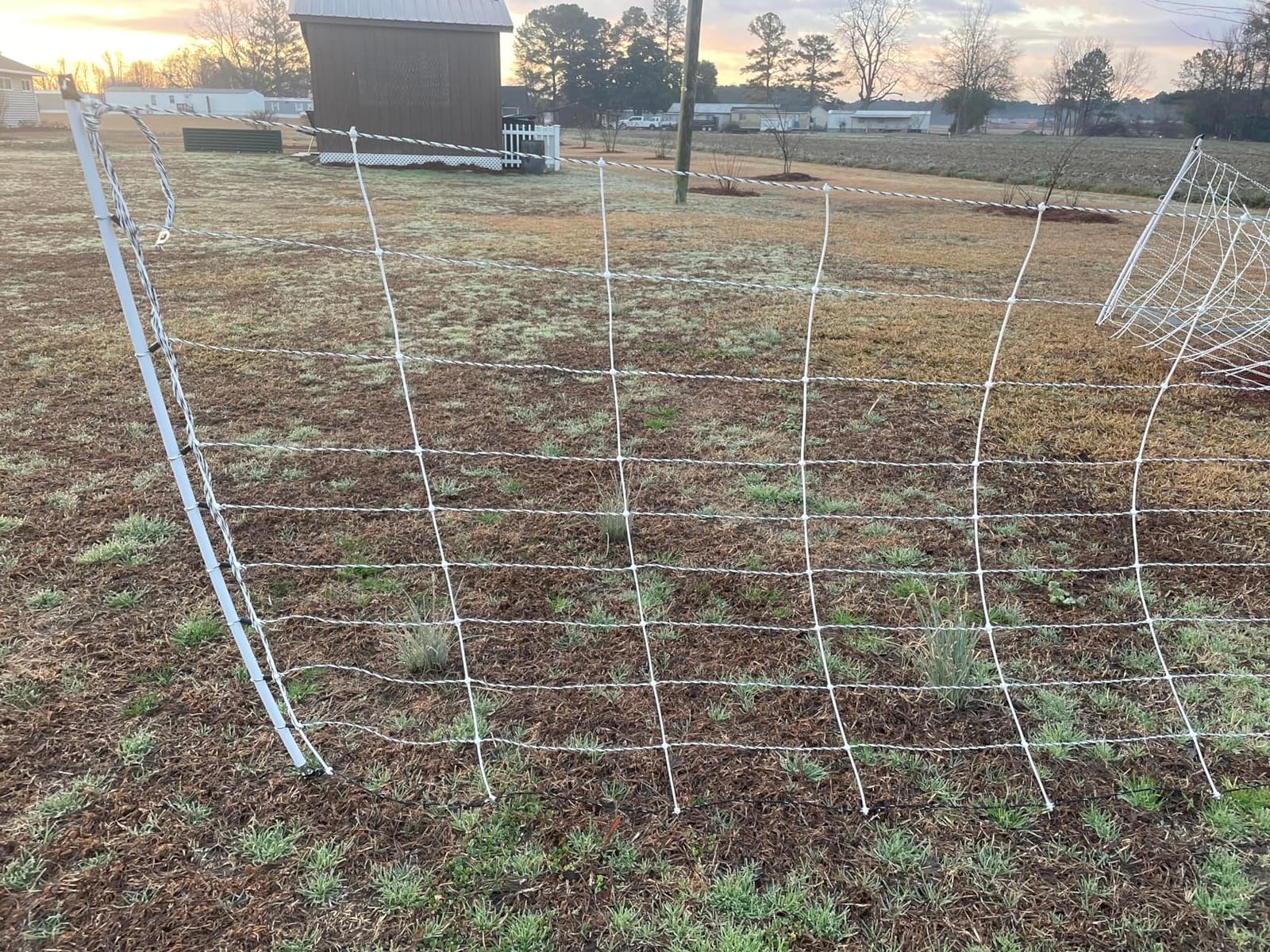
This is the answer to the question we hear most often, which is why it made the top three. It is the only product in this roundup that arrives as a complete working system: a 100 foot roll of 48 inch PoultryNet Plus netting, four FiberTuff support posts, a SolarStop 80 solar energizer, a ground rod, a wiring harness and a digital fence tester.
That inclusion list matters more than it looks. The ground rod and tester are the two items most first-time buyers forget, and a fence you cannot test is a fence you cannot trust. The solar energizer removes any need for a mains outlet at the run, which is the usual reason people end up with no fence at all.
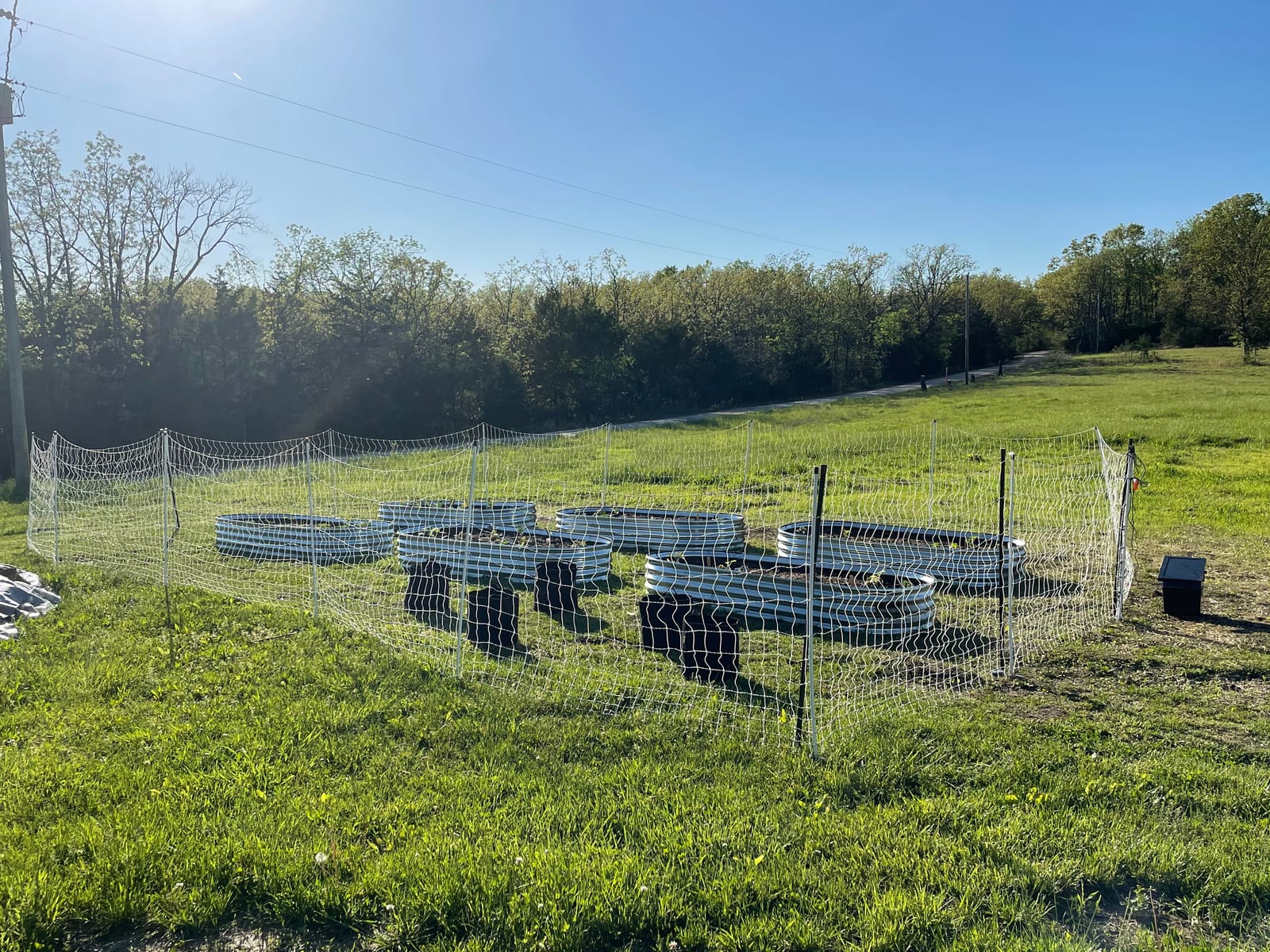
At 100 feet you are working with roughly a 25 by 25 foot square, so think of this as a starter enclosure or a day pen rather than a full free-range run. For a flock of four to eight hens that is genuinely workable, and you can add a second roll later on the same charger.
Buyer feedback on this kit is unusually positive, with owners rewarding the single-box convenience rather than the specifications. The one consistent drawback is length: at 100 feet it is the shortest net here, so plan your layout before ordering.
Who this kit suits
It suits first-time electric fence buyers and anyone at a remote paddock or field without power access. If you want to know within an hour of delivery whether your fence works, this is the box to buy.
Who should skip it
Skip it if you need a large range, because 100 feet will not enclose much ground and the price per foot is high for a short run. Owners also note the fence must be properly energized to work at all, so follow the grounding steps rather than clipping the net on and walking away.
4. Starkline Electric Netting 42in x 164ft – Best for Rotational Grazing
Starkline Electric Netting (42″ x 164′) Electric Fence for Backyards, Homesteads, Gardens, Farms, and Ranches (10/42/7)
42 in x 164 ft netting
14 fiberglass posts
12.5 pounds
0.15 joule demand per net
Pros
- Light at 12.5 pounds for a full 164 ft net
- Low energy demand suits smaller chargers
- Galvanized double spikes hold in hard soil
- Installs in under 20 minutes
Cons
- Energizer not included
- 42 in height is less effective against predators that step or jump over
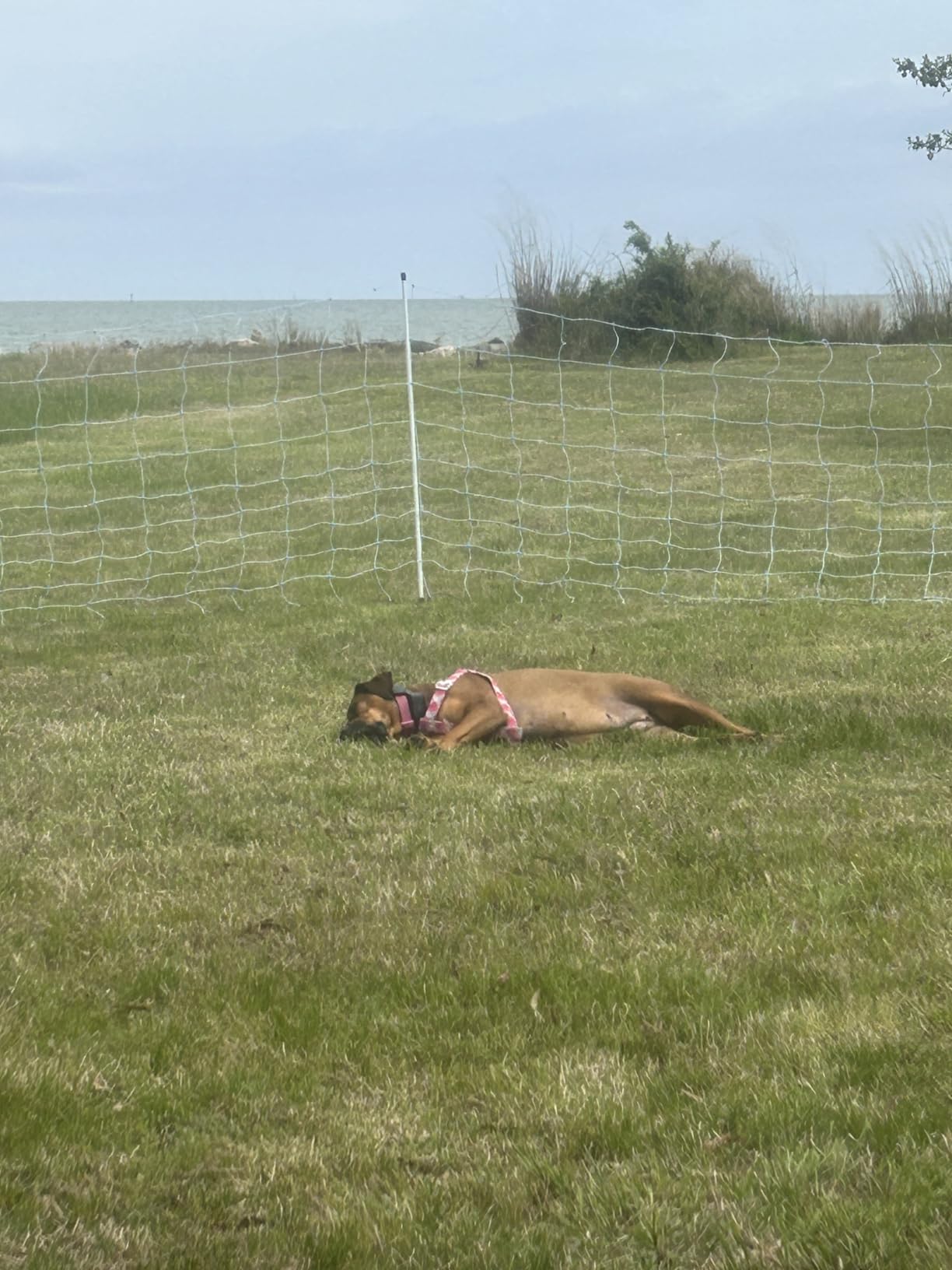
At 12.5 pounds this is the net we would most want to carry across a field repeatedly. When your whole plan depends on moving the fence every week, weight becomes the feature that matters, and this roll with its 14 preinstalled fiberglass posts is lighter than most competitors in this roundup, which typically run 15 to 28 pounds.
The electrical spec is the quiet strength. Starkline rates this net at just 0.15 output joules for the full 164 feet, which means you can run it from a small solar unit without overloading the charger, and it pairs naturally with the solar energizers later in this list.
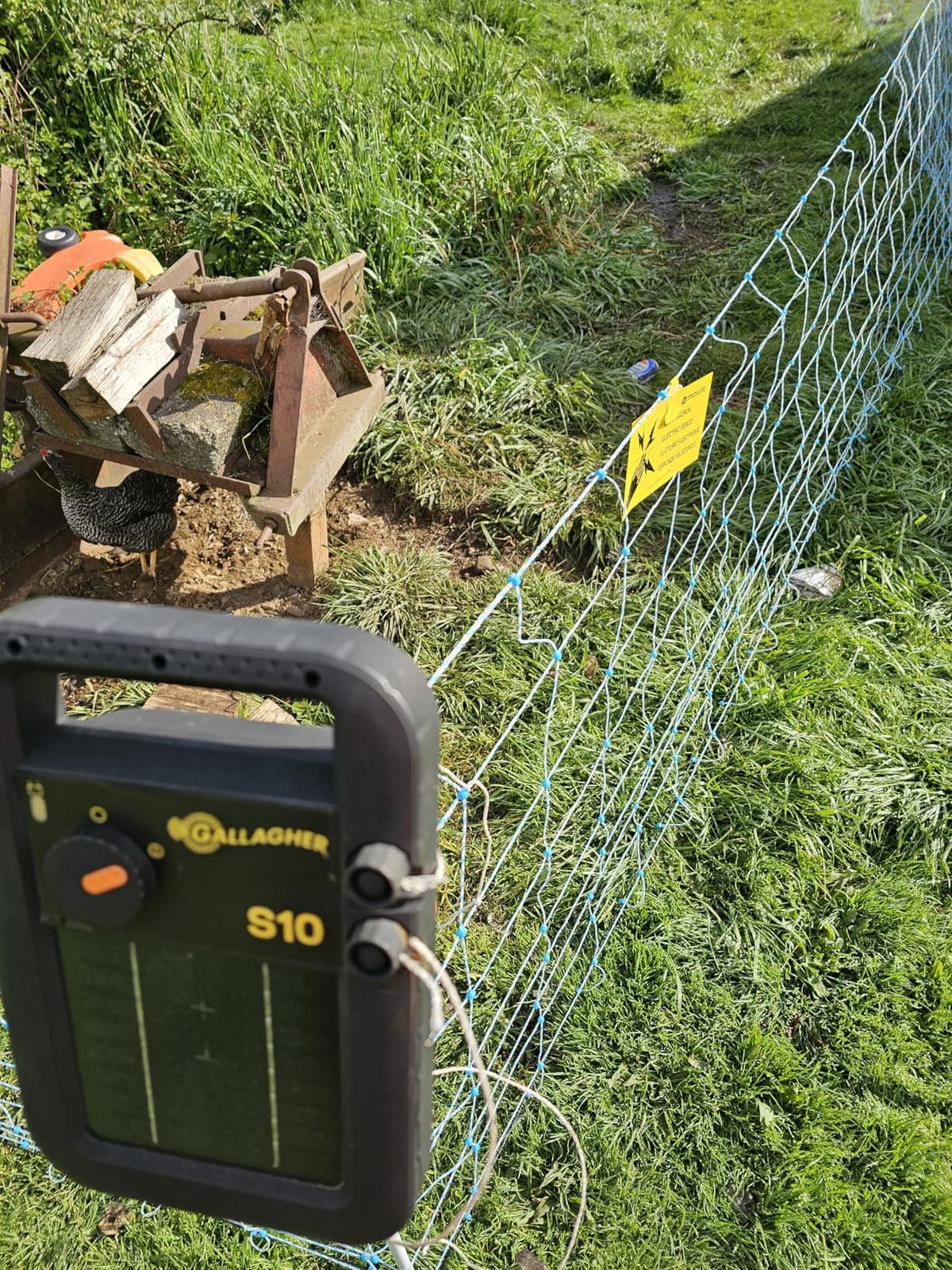
The posts use heavy-duty 7 inch galvanized double-spiked stakes rather than short pegs, and owners in hard soil report they hold rigid where lighter posts bend. Installation is under 20 minutes with the posts already threaded onto the mesh.
The trade-off is height. At 42 inches this fence sits below the 48 inch nets, and anything that can step or jump over a low boundary may simply go around it. If your predator pressure is heavy or your birds are flyers, the extra six inches is worth paying for.
Who this net suits
It suits rotational grazing setups, chicken tractor owners and anyone building a moveable paddock where the fence gets handled weekly. The low energy demand also makes it a good match for small solar chargers.
Who should skip it
Skip it if your main problem is determined climbing predators or flighty birds, because 42 inches is the shortest profile among the serious nets here. You will also need to source an energizer separately.
5. Starkline 48in x 82ft Net – Best for Small Flocks
Starkline Electric Poultry Netting 48″ x 82′ Electric Poultry Netting w/Double Spiked Fiberglass Posts (12/48/3) Electric Fence for Chickens in Backyards, on Homesteads, Farms and Ranches
48 in x 82 ft netting
12 fiberglass posts
15 pounds
White and cyan polywire
Pros
- Posts survive hard rocky ground and repeated moves
- High-visibility white and cyan strands
- Posts can be repositioned along the net
- Good balance of sag control and portability
Cons
- White top strand degrades under strong UV
- Mesh openings wide enough for heads to poke through
- Energizer not included
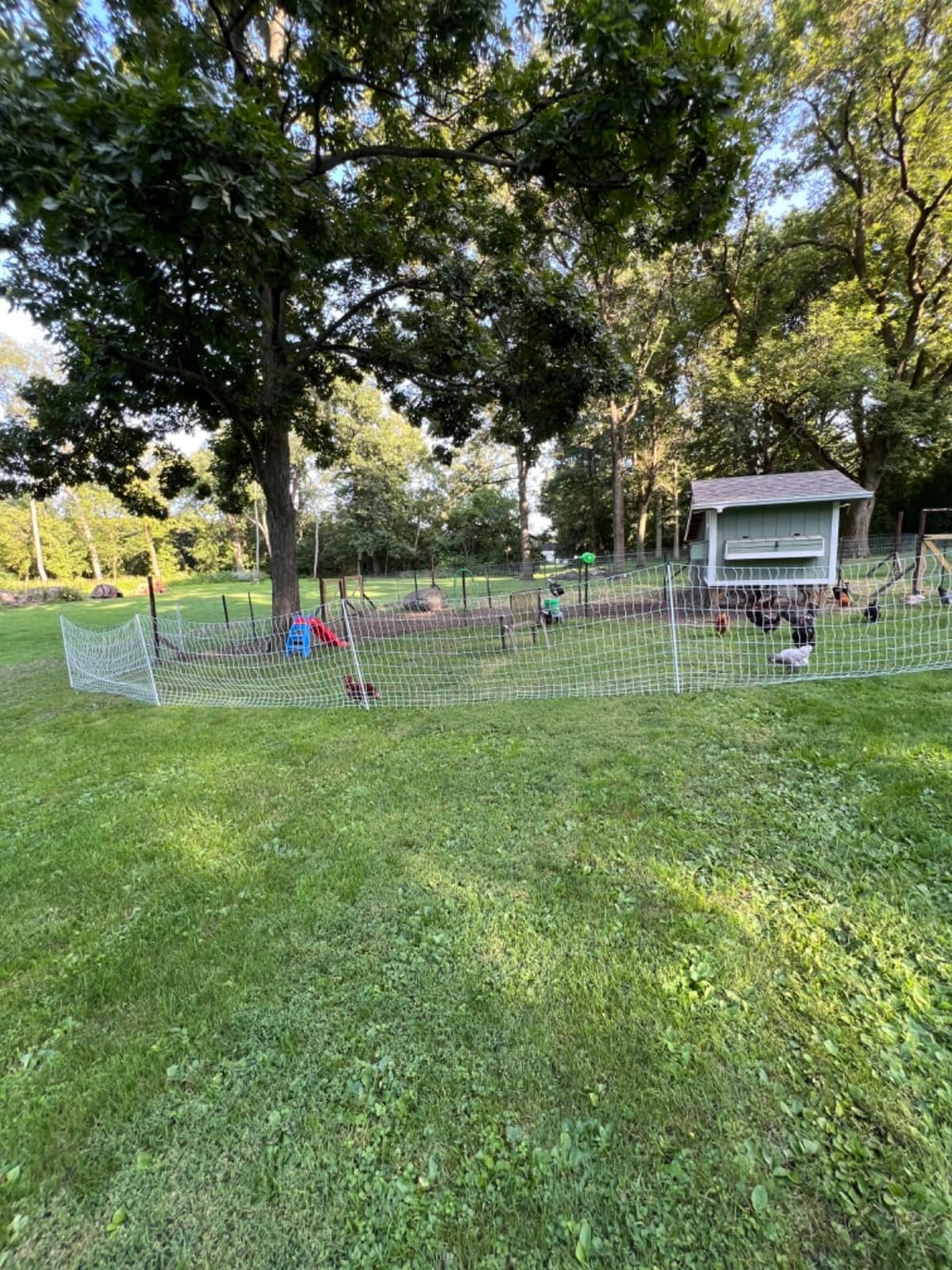
For a household flock of four to eight birds, 82 feet of 48 inch netting is usually enough to build a proper enclosure and it is far easier to handle than a 164 foot roll. This net carries 12 fiberglass posts with double spikes and weighs 15 pounds, so one person can move it without a vehicle.
The detail we like most is that the posts are not fixed at the factory. You can remove the black top cap, slide a post along the strand and re-weave it, which lets you tighten a saggy span or reshape the layout as the flock’s habits change.
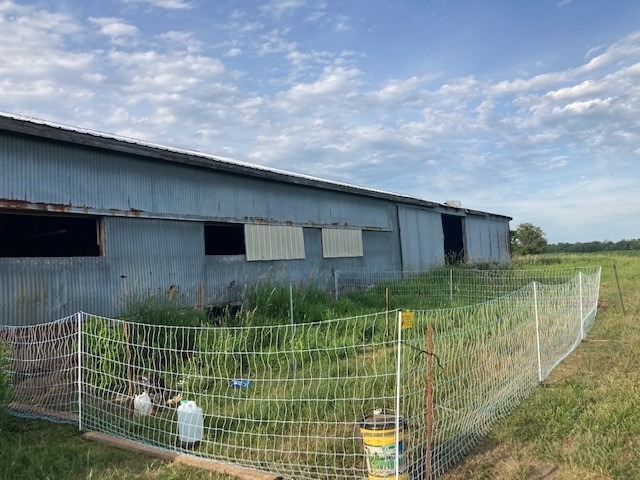
Owners in high-desert and hard-pack conditions report this net outperforming cheaper brands over months of repeated use. The white and cyan polywire is also easy for birds, people and predators to see in low light, which reduces accidental fence contact at dusk.
The main weakness is sunlight. Owners report the white top strand degrades under strong UV exposure, stretches and starts to sag, eventually grounding out. If you are in a high-UV region, inspect that top line every season and expect to replace it sooner than the rest of the net.
Who this net suits
It suits small backyard flocks, households keeping the run short and neat, and anyone who wants 48 inch height without hauling a heavy roll. The repositionable posts make it easy to adapt the shape as the run develops.
Who should skip it
Skip it in very sunny climates if you want a set-and-forget installation, since the top strand is the first thing to fail. Reviewers also note the openings are wide enough for a chicken to push its head through, and that it contains birds without stopping determined predators.
6. Pet and Livestock HQ 48in x 164ft Net – Best for Chicks
Pet & Livestock HQ Electric Fence Poultry Netting 48″ x 164′ – Portable Pre-Assembled Electric Net Fencing for Goats, Sheep, Lambs in Farms, Ranches, and Gardens (19 Posts, 2 Spikes)
48 in x 164 ft netting
19 posts every 9 ft
Bottom 6 strands 2 in apart
23.6 pounds
Pros
- Graduated spacing keeps chicks inside
- Closest post spacing at every 9 ft limits sag
- Bottom strands not energized resists weed shorting
- No tools needed for setup
Cons
- Energizer sold separately
- One of the heavier nets at 23.6 pounds to move repeatedly
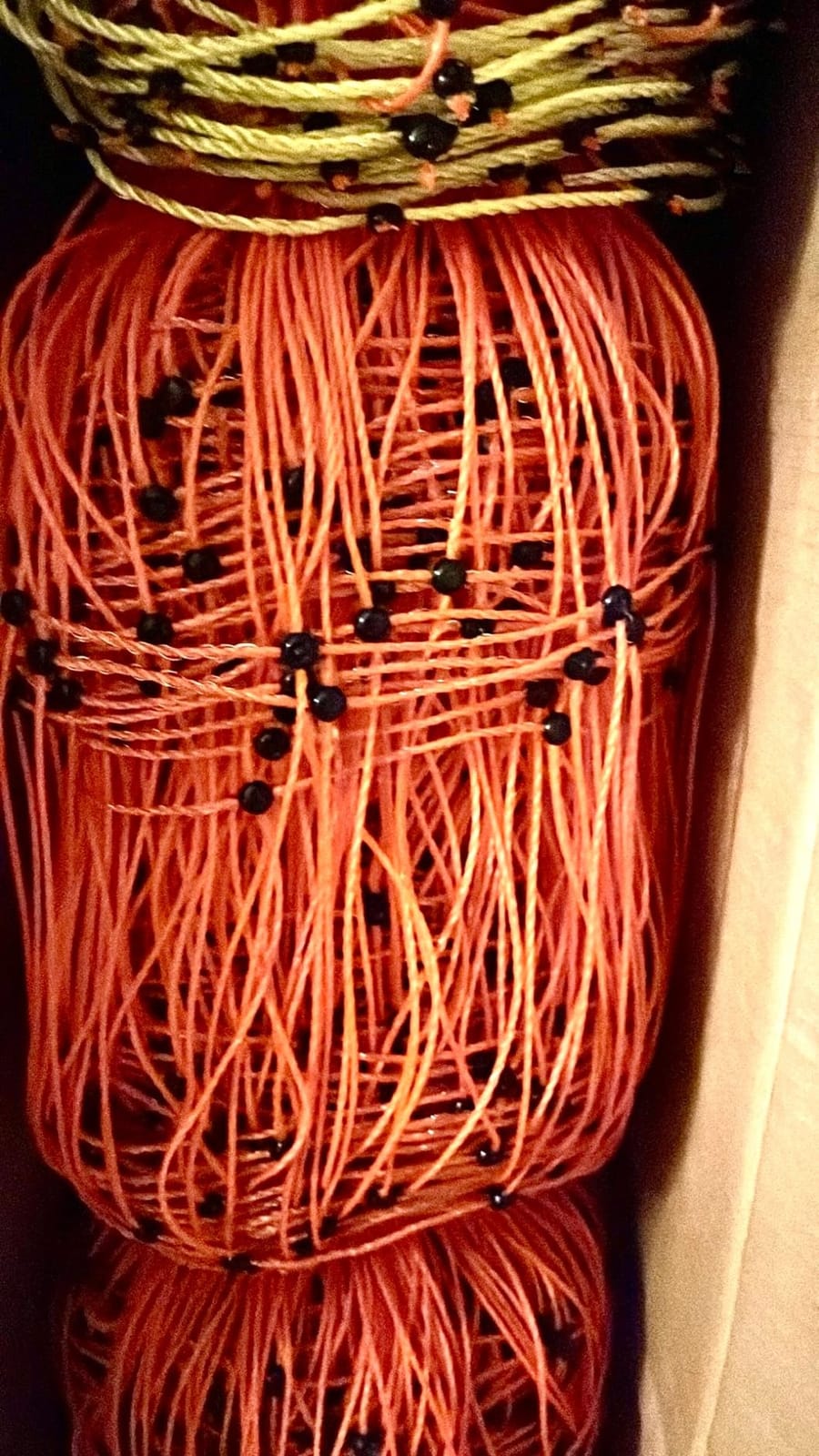
This is the only net here designed from the bottom of the fence upward for young birds. It carries 14 horizontal strands with 12 conductive, and the bottom six strands are spaced two inches apart, which is the detail that stops chicks squeezing out and getting lost in the grass.
The other two bottom strands are deliberately not electrified. That is a clever bit of engineering rather than an omission: weeds growing up through the fence contact the lower strands and would drain the whole system, so leaving them dead prevents a summer grass problem from shorting your fence.
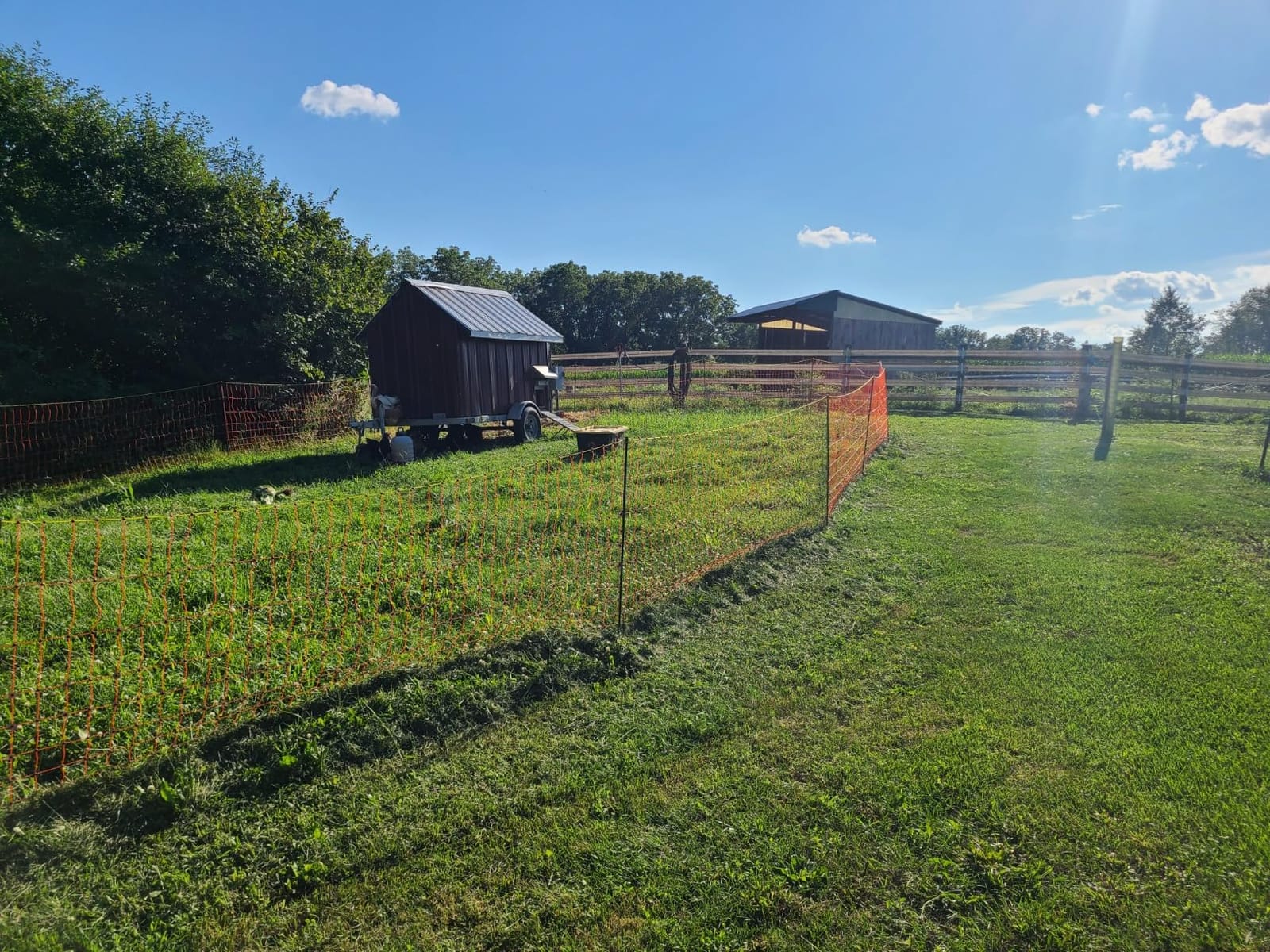
Post spacing is the tightest in this group at every nine feet across 19 fiberglass double-spiked posts, and that shows. Sag is the number one complaint about almost every net in this roundup, and dense posts are the simplest cure. Four pegs and guy lines are included for corner stability.
Setup is a one-person job with no tools. The 23.6 pound weight is the main drawback, and if you intend to move the fence weekly it is noticeably heavier to carry than the 12.5 pound option in section 4.
Who this net suits
It suits households with chicks or young growers alongside adult birds, and anyone who has lost birds through the bottom of an ordinary net. The graduated spacing also makes it a sensible choice for mixed flocks kept near crops where grass grows fast.
Who should skip it
Skip it if weekly relocation is the plan, because the weight adds up quickly across a large area. You also need to buy an energizer separately, so budget for a second purchase before ordering.
7. VEVOR 48in x 168ft Net – Lightest Net to Carry
VEVOR Electric Poultry Netting, 48″ H x 168′ L, PE Net Fencing Kit with Posts & Double-Spiked Stakes, Utility Portable Mesh for Chickens, Ducks, Geese, Rabbits, Used in Backyards, Farms, and Ranches
48 in x 168 ft netting
Weighs 4.73 pounds
Fiberglass double-spiked posts
Warning sign and repair kit
Pros
- Lightest net in the group by a wide margin
- Large enclosed area per purchase
- Warning sign and repair kit included
- Works with AC solar or DC power sources
Cons
- Energizer and power source not included
- Grid spacing less refined for chicks
Weighing 4.73 pounds for a 168 foot roll is genuinely unusual, and it makes this the easiest net to reposition. If your plan is a moveable paddock and you are not trying to move it alone, this is the roll we would pick for the handling alone.
The fiberglass posts with double-spiked stakes are described as windproof, and buyers confirm a stable fence line without extra bracing in normal conditions. A warning sign and repair kit are included, so the consumables are handled. One genuine advantage is power flexibility.
The net accepts AC 110-240V, a solar panel or a DC supply, which means it works with nearly any energizer type, including both of the chargers recommended later in this guide. The same range also exists in 42 inch and livestock heights.
The honest drawback is refinement. The grid spacing is described as suitable for poultry generally rather than specifically for chicks, so if you are raising chicks you would be better served by the graduated spacing in section 6. You still need to add an energizer and a power source.
Who this net suits
It suits owners who want the largest enclosed area for the least carrying effort, and anyone working across a property where moving the fence is routine. The multi-power compatibility makes it a flexible match for different energizer types.
Who should skip it
Skip it if you have chicks in the run or if you want the reassurance of a heavy-gauge braided conductor in a permanent installation. It is a value and portability choice more than a build-quality choice.
8. Starkline Premium Plus 48in x 100ft – Best Braided Strand Net
Starkline 48” x 100’ Premium Plus+ Braided Electric Poultry Netting (12/48/3) Electric Chicken Fencing for Backyards, Homesteads, Farms, and Ranches
48 in x 100 ft netting
Braided strands
11 fiberglass posts
Posts every 10 ft
Pros
- Highest average rating in the group at 4.8 stars
- Braided strands snag less when dragged
- Braiding exposes more conductive wire per strand
Cons
- Energizer not included
- 100 ft is short for a large run
- Needs regular tensioning
This net carries the highest average rating in the group, and the reason is a construction change: the strands are braided rather than twisted. Braiding means less snagging when you drag the fence across rough grass to reposition it, and it leaves more of the conductive wire exposed on contact.
Eleven fiberglass posts with heavy-duty galvanized double-spiked stakes are spaced every 10 feet, and owners report they hold rigid across a range of soil types. The blue support clips and wire spacing also discourage poultry from pushing through the mesh.
Owner feedback on this net is almost entirely positive, including fast single-person setup and no low-star ratings in the set. If your routine involves constant moves, braided construction is the feature that will matter most over a season of use.
It is not a set-and-forget fence. Owners stress that it needs regular tensioning to avoid sagging and shorting, and that 100 feet is short when you are trying to enclose a large run. You will need an energizer separately.
Who this net suits
It suits owners who move their fence often and refuse to have strands fray or snag after a season of dragging. It is also the natural choice for anyone who wants the smoothest conductors available in a portable net.
Who should skip it
Skip it if you need to enclose a large area, because 100 feet is the shortest of the 48 inch nets here. Reviewers also warn that hard ground makes the stakes hard to drive and that tensioning is a recurring task.
9. Starkline 48in x 164ft AC Energizer Kit – Best Mains-Powered Kit
Starkline Electric Poultry Netting Kit – AC Energizer (48″ x164′ White/Blue Poultry Netting) (12/48/3) All-in-One Electric Fence Kit for Backyards, Homesteads, Ranches or Farms
48 in x 164 ft netting
0.8 joule AC energizer
Ground rod and tester included
16 fiberglass posts
Pros
- Net charger ground rod tester and connectors in one box
- 0.8 joule charger can drive up to 500 ft
- Solid fiberglass posts stiffer than PVC
- Working enclosure in under 45 minutes
Cons
- Needs mains power access at the run
- One-star share is the highest among the complete kits
- Only 56 reviews so the rating is less established
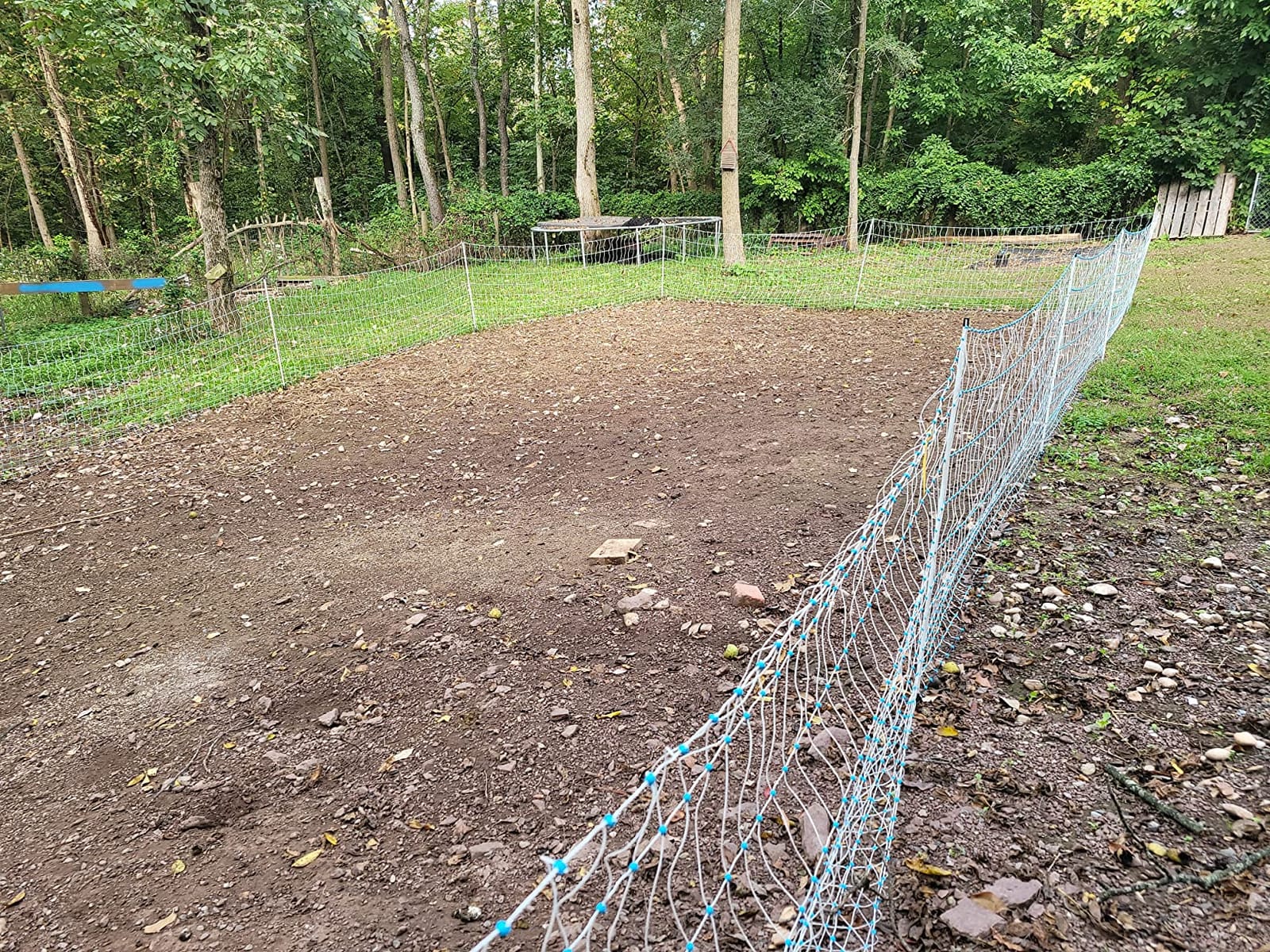
This is the second complete kit here, and the right one if you have an outlet near the run. You get a 48 by 164 foot Premium netting roll, a 0.8 joule mains energizer, a grounding rod, a fence tester, connectors and 16 solid fiberglass posts, and the whole thing encloses roughly a 40 by 40 foot area.
The 0.8 joule charger is the strongest in this roundup and is rated to power up to 500 feet of Starkline netting, which is three full-size nets. That headroom matters in summer when the fence line is carrying a load of vegetation and a smaller charger would sag in output.
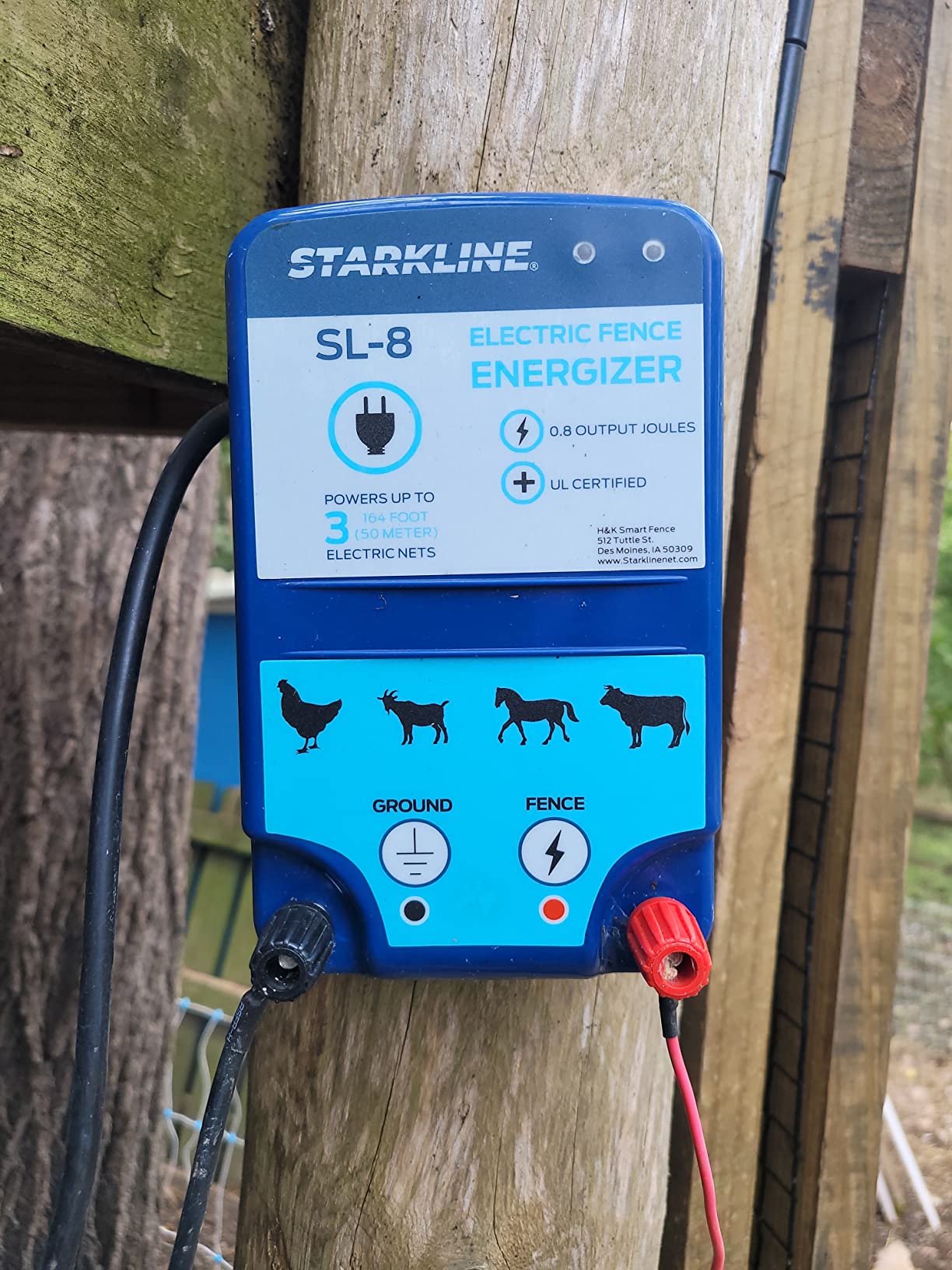
Owners value having the energizer, tester and ground rod in the same box, and the solid fiberglass posts are stiffer than the PVC posts used by competing kits. Setup in under 45 minutes produces a working enclosure with no extra purchases, which is exactly what most buyers are looking for.
The limitation is obvious and physical: it needs mains power at the fence. One-star reviews concentrate on the power dependency and on occasional accessory failures, and the sample size here is smaller than for the leading pick, so the rating is less well established.
Who this kit suits
It suits owners with a permanent run near a building who want a mains-powered fence with real output headroom. If you plan to expand to more nets later, this charger has the capacity on paper.
Who should skip it
Skip it if your run is in a field, orchard or paddock with no power access. It is also the pick with the thinnest review base among the kits here, so buy it with the expectation that you may need to source a replacement component.
10. PPOLB 41.5in x 164ft Net – Best Starter Net for Small Paddocks
PPOLB Electric Poultry Fence Netting – 164’L x 41.5″ H, Portable Movable Nets Mesh for Chickens, Ducks, Geese, Rabbits, Electric Fencing for Backyards, Homesteaders, Farms Ranches, and Gardens
164 ft x 41.5 in netting
11 horizontal strands, 9 conductive
Posts every 12.5 to 13.1 ft
17.2 pounds
Pros
- Lowest cost of any netting reviewed
- Light enough for quick reconfiguration
- Triple-braided stainless steel wire
- Low-impedance shock described as humane
Cons
- Energizer ground rod and connectors sold separately
- Shortest height in the group at 41.5 in
- One-star share is among the highest of the nets
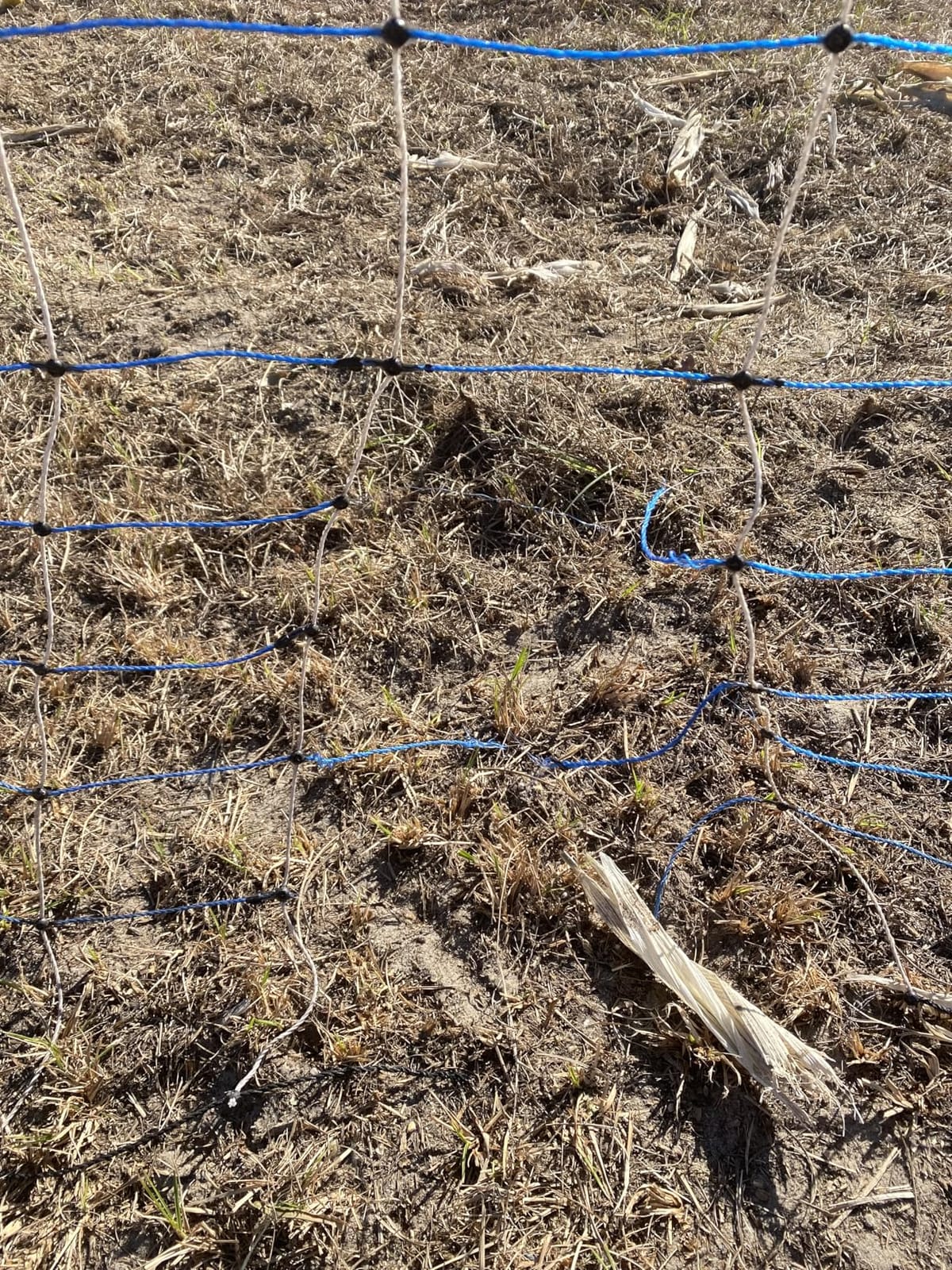
This is the entry-level net in the roundup and it holds up better than its price suggests. It runs 164 feet at 41.5 inches tall with 11 horizontal strands, 9 of them conductive, built on triple-braided stainless steel wire with fiberglass rods every 12.5 to 13.1 feet.
Weighing 17.2 pounds, it sits in the middle of the group for portability. If you are experimenting with where to put the run rather than committing to a permanent layout, a cheaper net like this is a sensible way to learn how the system behaves before spending more.
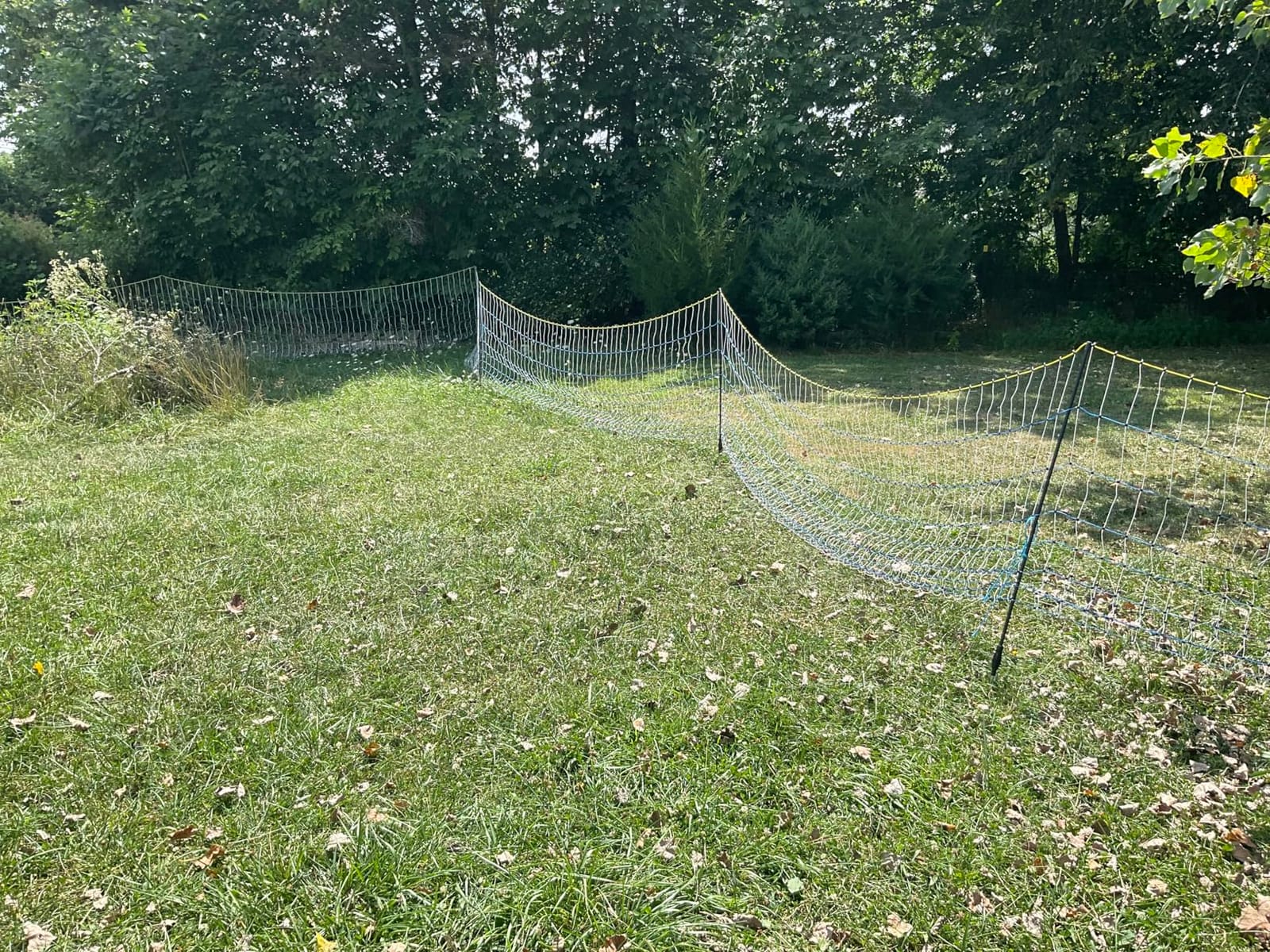
The manufacturer specifies a low-impedance output and recommends a 0.25 joule solar or AC/DC energizer, and explicitly warns against continuous current units. That warning is worth heeding: continuous current fencing is the one style that can cause a fire or injury and is not compatible with poultry netting.
Height is the real trade-off. At 41.5 inches this is the shortest net in the group, so anything that can step over a low boundary will do so. Reviewers also report a higher one-star share than the other nets, which usually reflects the missing hardware rather than the fencing itself.
Who this net suits
It suits first-time buyers on a tight budget who want to learn the system before investing, and anyone building a small temporary pen or crop-protection run. The green finish also blends better into a garden than white netting.
Who should skip it
Skip it if your predator pressure is serious, because the short height and the separate purchase of an energizer, ground rod and connector clips add up quickly. It is a budget net, not a high-pressure perimeter.
11. Zareba 5 Mile Solar Energizer – Best Solar Energizer
Zareba Solar Electric Fence Charger, 5 Mile Range Low Impedance Energizer
0.15 output joules
8.98 kV output voltage
Runs up to 2 weeks without sun
5 watts, 6 volt input
Pros
- Largest review base of anything analyzed at nearly 1500 reviews
- Up to two weeks of operation without sunlight
- 0.15 joule output tolerates fence-line weeds
- Mounting bracket rotates for sun angle
Cons
- Intermittent pulses can feel like nothing between pulses
- Performance depends heavily on the ground rod
- One-star reviews concentrate on battery longevity after a year or two
With nearly 1500 reviews averaging 4.4 stars, this is the most thoroughly examined product in the entire roundup, and for good reason. It is a 0.15 joule low-impedance solar energizer that technical reviewers treat as a reference point rather than a gamble.
0.15 joules is well matched to poultry netting. The competitor whose spec sheet calls for a 0.15 joule output per 164 foot net is exactly the load this charger is sized for, which means you are not asking the unit to push past its design point every time grass touches the fence.
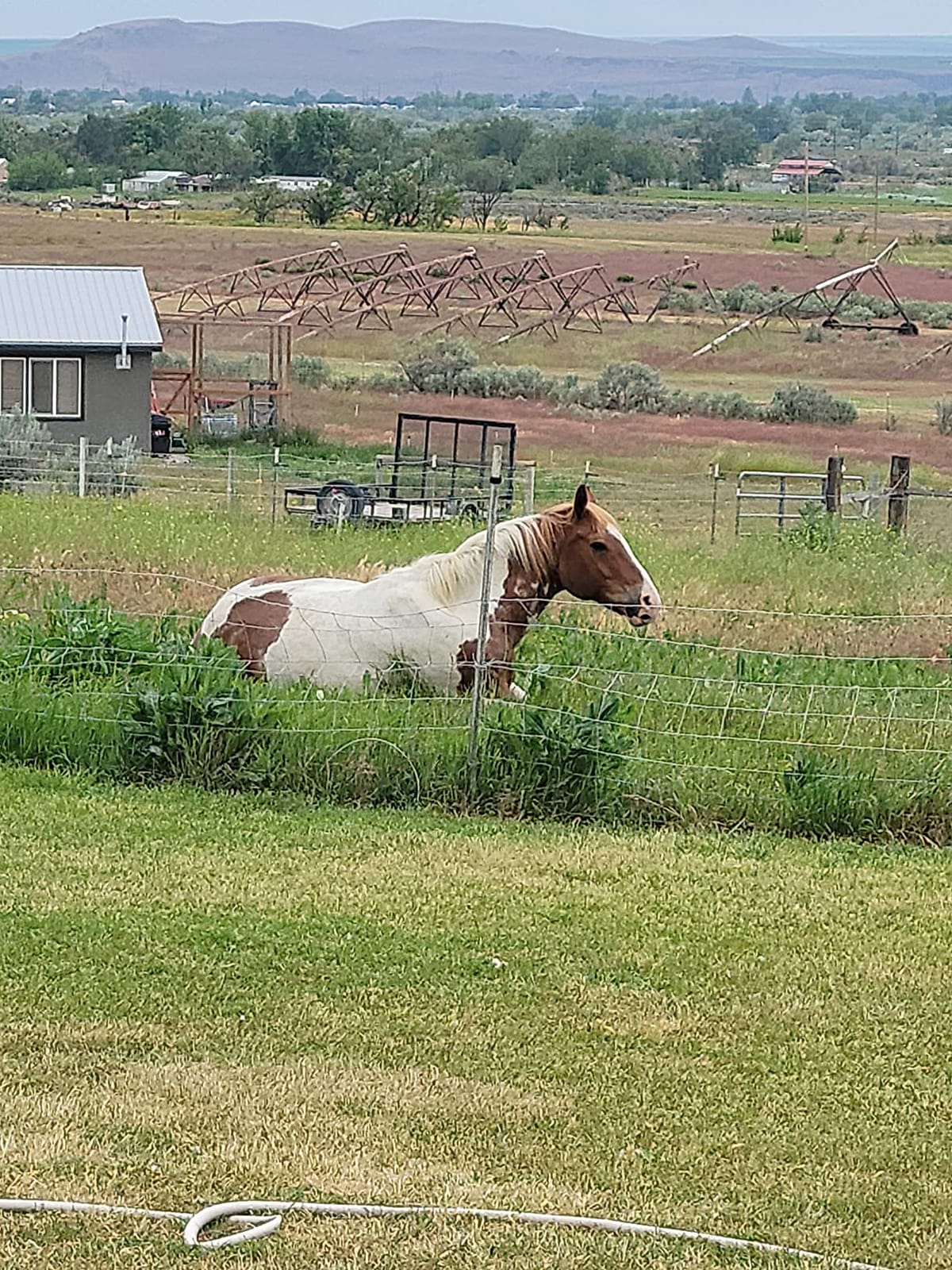
It can energize up to 5 miles of fence in ideal conditions, and it runs for up to two weeks on stored energy with no sunlight at all. That is the specification that makes it practical for a remote paddock, where a week of rain in autumn should not mean an unprotected flock.
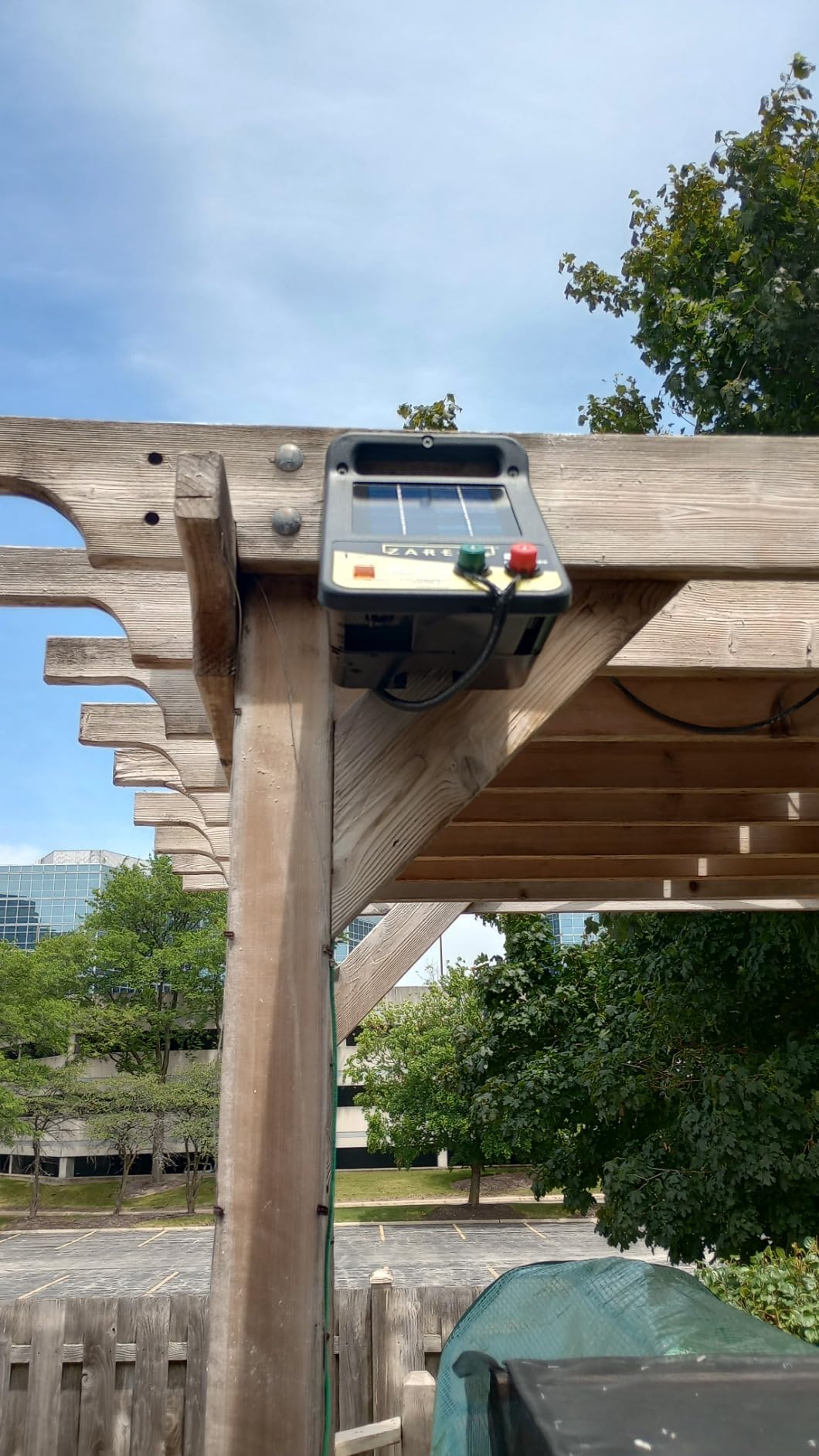
The bracket mounts on T-posts, Y-posts or round wood and rotates 360 degrees so you can set the sun angle. Note that technical reviewers consistently find apparent failures are grounding or shorting issues rather than charger faults, and one-star reviews concentrate on battery longevity after a year or two.
Who this charger suits
It suits anyone running poultry netting off-grid, and any reader who wants a charger with a well-established long-term record rather than an untested unit. The two-week no-sun figure is the number that decides it for us.
Who should skip it
Skip it if you plan to run long fences in heavy vegetation, because 0.15 joules is deliberately modest and will show it. Also note that pulses are intermittent, so touching the fence between pulses can feel like nothing, and you will still want a separate voltmeter tester.
12. Epoify 24-Hour Solar Charger 0.18J – Best for Heavy Fence Loads
Epoify 24-Hour Solar Electric Fence Charger, 0.18J, 10-Mile for Livestock
0.18 joule pulse output
5700 to 10200V pulses
Three-rod grounding guidance
1.44 kg
Pros
- Highest energy figure of the chargers analyzed
- Ranks first in livestock fence chargers with 631 reviews
- AC adapter and alligator clip cables included
Cons
- Needs 24 hours of AC charging or 3 days of sun before first use
- Grounding rods must sit at least 50 ft from the house or barn
- Long-term unit reliability varies
This is the most capable charger here on paper, with 0.18 joules of pulse output and a 5700 to 10200 volt pulse range. It ranks first in livestock fence chargers with 631 reviews, which makes its rating base one of the stronger ones in this roundup.
Everything needed to get running is in the box: an AC adapter, the charger, a manual and two cables with alligator clips. That matters because the first charge is not optional. It needs a full 24 hours on mains power or three full days of direct sunlight before its first use, and the built-in battery is what carries the fence through the night.
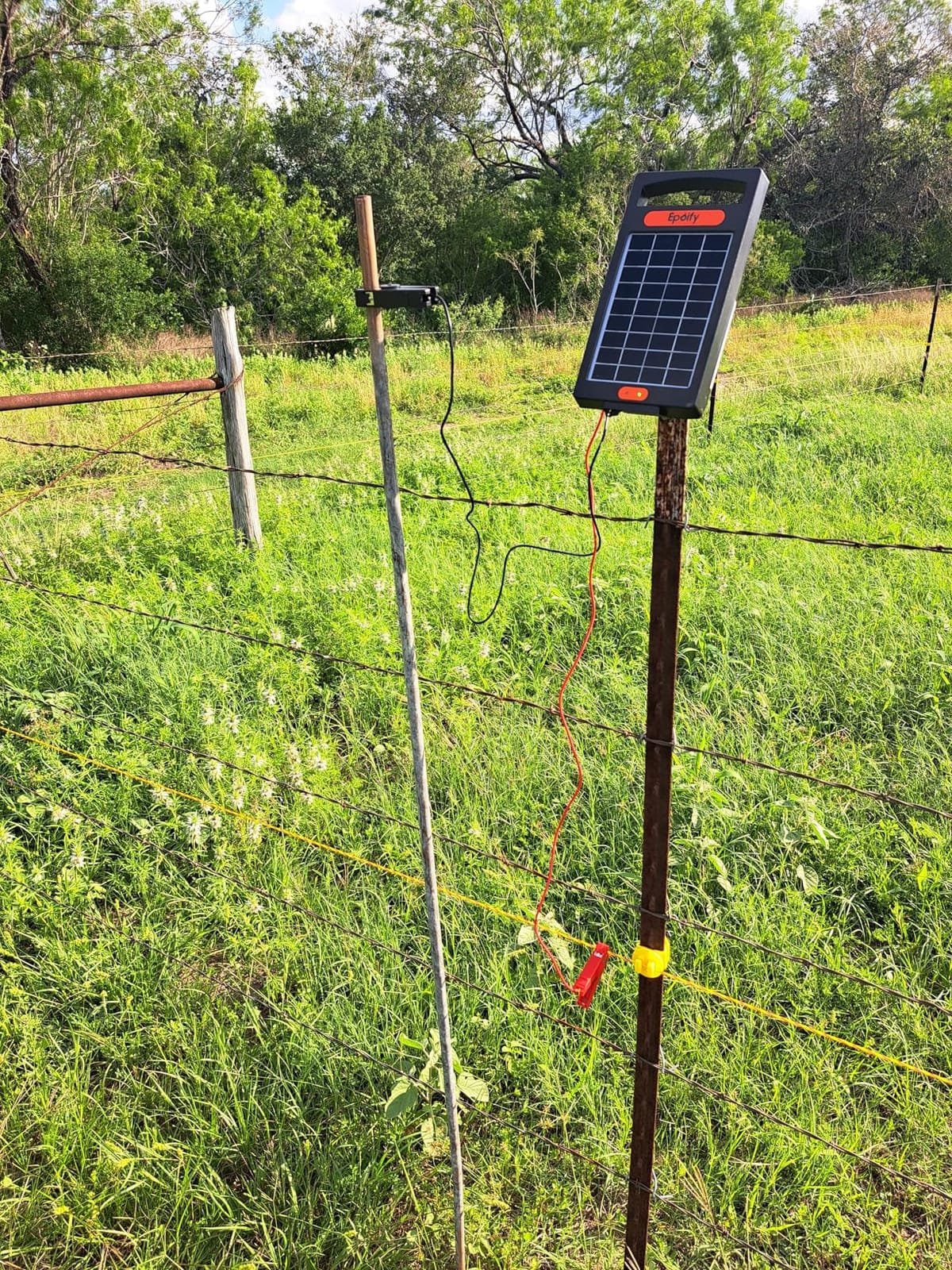
Grounding guidance is unusually specific: three rods, the first set within 20 feet of the energizer, then spaced 10 feet apart and linked with 20 kV insulated wire and a ground clamp each. It also asks you to keep the system at least 50 feet from your house, barn or any utility ground.
At 1.44 kilograms and 6.6 by 4.3 by 8.2 inches, it is portable enough for rotational grazing and rated for up to 10 miles in good conditions. The recurring criticism is consistency over years, with a one-star share that is among the highest of any product analyzed here.
Who this charger suits
It suits owners running heavier fencing, multiple nets, or a fence line that sits in vegetation where a smaller charger would lose voltage. If you have never installed an electric fence, the detailed grounding instructions are a genuine advantage.
Who should skip it
Skip it if you want a fence live the day it arrives, because the mandatory first charge will delay you. Reviewers also flag that the grounding rules are strict and non-negotiable, and that long-term unit reliability varies.
What an Electric Chicken Fence Actually Does
An electric fence is not a wall. It is a memory device. A low-impedance energizer sends a short pulse through the conductive strands, and when an animal makes contact and completes the circuit through the soil, it receives a brief shock. The second and third times it approaches, it remembers and stays away.
Three numbers decide how well that works. Joules measure stored energy and determine how hard the fence pushes back through vegetation. Pulse voltage in kilovolts tells you how far the signal travels before it drops below the threshold that will deter an animal. Range in miles is an ideal-condition marketing figure that tells you very little about poultry netting.
That last point catches people constantly. A charger advertised for five miles of fence is being tested against single-strand wire in open ground, not against eleven conductive strands carrying a summer grass load. For most poultry netting setups, the practical minimum is 0.25 joules, and more if your fence line grows into the net.
Most technical reviewers agree that a working fence should sit comfortably above 3,000 volts at the end of the line. If you are seeing a few hundred volts, the charger is rarely the problem. Vegetation contact, a broken strand or poor grounding will account for nearly every weak-fence case.
Electric Netting vs Hardware Cloth vs Polywire vs Polytape
Hardware cloth is a physical barrier. Electric netting is a psychological one backed by a physical mesh. The practical difference shows up in predator behaviour: a fox will work at a loose wire for minutes, but rarely presses against something that has already hurt it.
Polywire is the thin twisted strand found in most portable nets. It is cheap and effective but snags, stretches under UV exposure and has less conductive surface than braided wire. Polytape is wide, visible and forgiving, which makes it popular for horses and cattle, but for chickens it is easier to peck at and chew.
For a free-ranging flock under predator pressure, 48 inch electric netting with braided or triple-braided strands is the strongest option, and 42 inch is acceptable only where pressure is light. Hardware cloth earns its place at the coop itself, where overnight security matters and an electric fence cannot help.
How Much Energizer Power You Actually Need
Match joules to the load, not to the length of your property. A single 164 foot net in a mown strip needs very little. The same net through shoulder-high summer grass, or three nets linked together, needs substantially more, and this is where an underpowered charger shows up as a weak fence.
A single 82 to 100 foot net with short grass: 0.15 joules is genuinely enough, which is why the two solar units in this roundup fit that case. A single 164 foot net in normal growth grass: budget around 0.25 joules as the sensible floor. Multiple nets, heavy vegetation or a long perimeter: step up to 0.8 joules, the output of the mains kit in section 9.
Ignore the advertised mile range when choosing for poultry netting. What matters is that the charge stays above roughly 3,000 volts at the furthest point from the energizer, and that you can confirm it with a tester. If your fence is longer than one roll, add an intermediate energizer rather than one unit at the far end, because voltage drops along the line.
Vegetation, Grounding and Voltage Troubleshooting
When a fence feels weak, work through these in order. Almost every case is solved by the first three, and swapping the charger is almost never the answer.
Test the fence with a fence tester or voltmeter and note the reading at the point furthest from the energizer.
Walk the whole line and check for branches, grass or weeds touching the conductive strands.
Clear a strip of about three feet either side of the fence line so growth cannot bridge the strands.
Check the grounding system. Three rods, the first set within 20 feet of the energizer, spaced 10 feet apart and linked with insulated wire, is a workable standard.
Re-test with the fence disconnected from the earth system. If the reading jumps, the grounding is the fault, not the charger.
Inspect every strand for breaks, especially the top line on nets with white polywire, and use the included repair kit.
Re-tension the net and brace corners with additional posts or T-posts.
Only then consider a larger energizer.
Grounding deserves particular attention in dry, sandy or rocky soil, which is the single most common cause of a fence that will not hold a charge. In poor soil, add rods rather than a deeper single rod, and keep the system away from any existing utility ground. You will find our post hole digger guide useful if you need to set several rods or corner posts properly in firm ground.
Solar or Plug-In Energizer
Choose solar when there is no mains power at the run, when the fence moves regularly, or when a power cut would leave your flock unprotected. Both solar units here can hold a charge through an extended run of poor weather, and the larger claims of up to two weeks without sunlight are worth taking seriously.
Choose mains when the run is fixed beside a building, when you want maximum output without monitoring, or when your fence line carries heavy vegetation. The 0.8 joule mains kit in this roundup can drive up to 500 feet of netting, which covers most permanent setups.
The practical difference in daily use is small. What differs is the failure mode: a solar unit that has not charged simply gets quiet, while a mains unit that trips does so loudly and visibly. Either way, mount the charger where you can see the status light from the house.
What Electric Fencing Will Not Stop
Be clear about this before you buy anything. Electric netting deters ground predators. It does not physically prevent anything from passing over it, and there are limits that no amount of charger output will fix.
Hawks and other aerial predators are not deterred by electric fencing, because contact requires the animal to touch the strands and a hunting bird does not settle onto a fence to investigate. Owners report moving an electric fence into open pasture and losing birds to hawks as a direct consequence.
Bears, if you live in bear country, treat an electric fence as a temporary measure rather than a solution. Flighty birds and roosters can clear even tall fences, and wing clipping is the only dependable fix. Chickens should still be locked in a secure coop at night, since an electric net left open overnight gives a determined predator unlimited time to find a way through.
Raccoons that climb rather than dig are a similar problem, which is one argument for the 48 inch nets over the 42 inch models. Where climbing pressure is heavy, plan on a topper strand, a roof net, or physical barrier at the perimeter in addition to the electric line.
How Much Fence Your Flock Needs
Most people over-buy netting and under-buy charger. A useful rule is that a 164 foot roll encloses roughly a 40 by 40 foot square, and a 168 foot roll gives you close to the same. That is a generous area for four to eight hens, and a workable daytime range for twelve to fifteen.
Below four birds, the 82 foot net in section 5 is usually enough. Between four and eight, the 100 foot kits and nets in sections 3 and 8 cover the requirement. Above fifteen birds, plan on a 164 foot roll or more and size the charger for the load rather than the roll length.
For rotational grazing, the real requirement is spare length, not perimeter. Rotating onto fresh grass means unrolling, repositioning and re-tensioning every week or two, which is where weight and post spacing decide how pleasant that job is.
How to Set Up an Electric Poultry Fence
Plan the route before you unroll anything, and clear the line as you go. Most disappointing first installations are layout problems rather than equipment problems.
Map the perimeter and decide where the energizer will sit, ideally near a power source or in full sun.
Clear a corridor along the fence line, roughly three feet wide, so grass cannot bridge the strands later in the season.
Unroll the net along the route rather than dragging it, to avoid twisting the strands.
Walk the perimeter and set posts every ten to twelve feet, braced at every corner with a guy line or an extra stake.
Re-tension the whole line until it sits taut with no visible slack between posts.
Install the ground rods, with the first rod close to the energizer and the remainder spaced about ten feet apart.
Connect the energizer to the net with the supplied leads and clips, following the low-impedance, intermittent pulse requirement.
Test the voltage at the far end of the fence and confirm it holds above roughly 3,000 volts.
Walk the perimeter again in daylight, checking for gaps, and post warning signs before switching the fence on permanently.
Allow a full afternoon for a first-time installation and much less for every move after that. If you need to set posts in hard or rocky ground, our guide to post hole diggers covers the tools that make it less punishing.
Safety Around Chickens, Children and Visitors
Can chickens be shocked by an electric fence? Yes, a hen that leans into the strands receives a brief pulse, and this is exactly why every net in this roundup is built with mesh spacing narrow enough that birds cannot sit on it and why the recommended designs include strands low enough to deter rather than trap. A correct low-impedance, intermittent-pulse fence set at the right height and tension is safe for poultry.
The rule that must never be broken is simple: never connect netting to household mains electricity, and never use a continuous current energizer with poultry netting. Only purpose-built low-impedance intermittent pulse chargers qualify. Continuous current fencing is the type that causes fires and serious injury.
Children and visitors need a different kind of protection, because a fence that is safe for a chicken is not safe for a curious four-year-old. Mount warning signs at every access point, keep the energizer mounted and closed, and consider whether a fence beside a public path is appropriate at all.
Is it a good idea to use an electric fence for chickens? For a free-ranging or rotational setup, yes, and it is one of the few interventions that lets birds use far more space than hardware cloth allows. Keep a secure coop for the night regardless, and treat the electric net as the daytime deterrent layer it is.
Frequently Asked Questions
Do electric fences keep predators out?
They deter most ground predators, including foxes, raccoons, coyotes, skunks and loose dogs, because the brief pulse teaches an animal to avoid the boundary. They do not block aerial predators such as hawks, and they do not replace a secure coop at night.
What is the best electric fence for chickens?
A 48 inch net with braided or triple-braided conductive strands paired with a low-impedance energizer of 0.25 joules or more is the best balance of deterrence and portability. The RentACoop 48 inch by 168 foot roll is the pick we would install first.
What are the best electric fence kits for poultry?
Two kits in this roundup arrive complete: the Premier 1 PoultryNet Plus starter kit, which includes netting, posts, a SolarStop 80 solar energizer, a ground rod and a tester, and the Starkline AC kit with a 0.8 joule mains energizer. Everything else must be assembled from separate parts.
How many volts should an electric chicken fence have?
Most poultry netting should read comfortably above 3,000 volts at the point furthest from the energizer when measured with a fence tester. Readings in the hundreds usually point to vegetation contact, a broken strand or poor grounding rather than an undersized charger.
Can chickens be shocked by an electric fence?
A bird that touches the live strands receives a brief pulse, which is why correct low-impedance, intermittent-pulse fencing with proper tension is considered safe for poultry. Never connect netting to household mains and never use a continuous current energizer with poultry net.
What are some common problems with electric fence energizers?
The usual causes are grass or branches shorting the net, an inadequate ground rod system, a broken conductive strand, sagging between posts and a charger sized too small for the load. Work through vegetation, grounding and tension in that order before replacing any equipment.
Final Verdict for the Best Electric Fence Kits in 2026
Buy the RentACoop 48 inch by 168 foot net if you already have or plan to buy a charger. It carries the deepest owner history in this group, uses braided stainless steel and copper conductors, and arrives with the stakes, guylines, repair kit and warning sign you would otherwise order separately.
Buy the Premier 1 PoultryNet Plus starter kit if you want a working fence this weekend with no second order. It is the only box here with netting, posts, a solar energizer, a ground rod and a tester together, and at 100 feet it suits a flock of four to eight hens.
Pair either net with the Zareba solar energizer for an off-grid run, or with the 0.8 joule mains kit if you have an outlet and heavier vegetation. Add the grounding rods and a tester whatever you choose, because a fence you cannot test is a fence you cannot trust.