
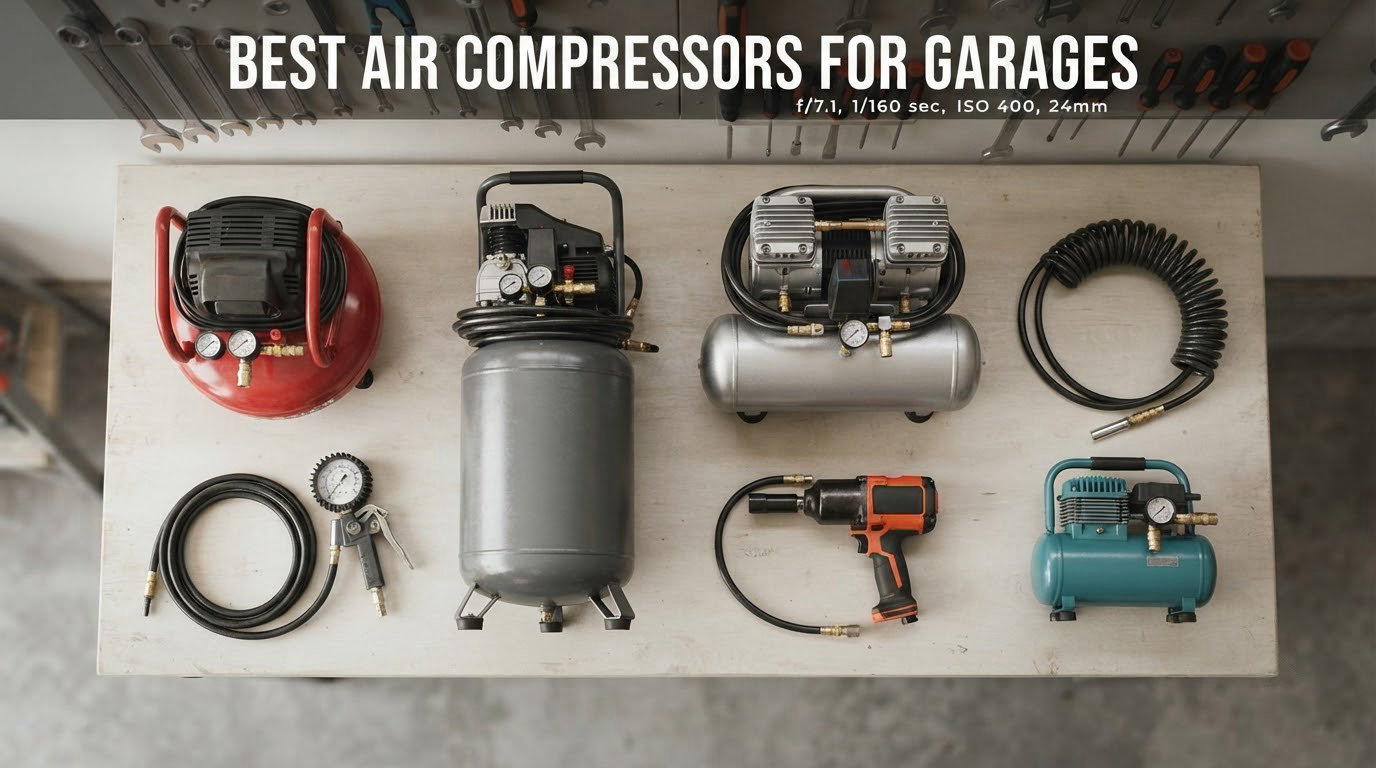
If you are standing in the aisle of a hardware store trying to pick a garage air compressor, the decision is simpler than the spec sheet makes it look. Match the compressor’s CFM at 90 PSI to the airflow your most demanding pneumatic tool actually needs, then pick the smallest tank that covers how long you like to work between refills. Everything else on the box is advertising.
That rule matters because the two numbers people shop on, peak horsepower and max PSI, decide almost nothing. A compressor can hit 200 PSI and still stall a framing nailer if it cannot push enough air. Airflow is the number that keeps a nail gun from stuttering, a sander from bogging down, and a spray gun from starving mid-flush.
We put ten of the most popular garage compressors through their specs, owner reviews, and form factors so you can find the right one fast. Whether you are framing a deck, blowing dust out of an air filter, or rolling a compressor into a truck bed, the right pick changes with the job. Our other garage guides cover the space around the compressor itself: our best ping pong tables for garages picks round out a two-car bay, and if your noise complaints are about low-frequency rumble through a shared wall, our piece on using an air gap behind panels explains the same physics that makes a loud compressor hard to live with. For the compression side of the workshop, we also track the best studio compressors in a completely different price class.
Table of Contents
Top 3 Picks for Best Air Compressors for Garages in 2026
Our top three cover the three ways garages are actually used: one compressor for general work, one affordable starter, and one that can drive a framing nailer without pausing.

All 10 Best Air Compressors for Garages in October
| Product | Specs | Action |
|---|---|---|
| Makita MAC2400 |
|
Check Latest Price |
 PORTER-CABLE C2002-WK PORTER-CABLE C2002-WK |
|
Check Latest Price |
 California Air Tools 2010A California Air Tools 2010A |
|
Check Latest Price |
 Metabo HPT EC914S Metabo HPT EC914S |
|
Check Latest Price |
 Limodot LJ5120K Limodot LJ5120K |
|
Check Latest Price |
 DEWALT DWFP55130 DEWALT DWFP55130 |
|
Check Latest Price |
 Klutch 29-Gallon Vertical Klutch 29-Gallon Vertical |
|
Check Latest Price |
 VEVOR 10-Gallon VEVOR 10-Gallon |
|
Check Latest Price |
 Stealth 20-Gallon Stealth 20-Gallon |
|
Check Latest Price |
 DEWALT D55146 DEWALT D55146 |
|
Check Latest Price |
1. Makita MAC2400: Best All-Around Garage Workhorse
Makita MAC2400 2.5 HP* Big Bore™ Air Compressor
4.2 CFM at 90 PSI
2.5 HP 4-pole motor
4.2-gallon tank
79 dB
120V, 12.3 amp
Pros
- Oil-lubricated cast iron pump runs cooler and lasts longer
- Low 12.3 amp draw starts without tripping breakers
- Roll-cage frame protects components
- Big Bore cylinder recovers pressure fast
Cons
- Needs periodic oil checks
- 4.2-gallon tank cycles often on big jobs
- 79 dB is loud next to the quietest picks
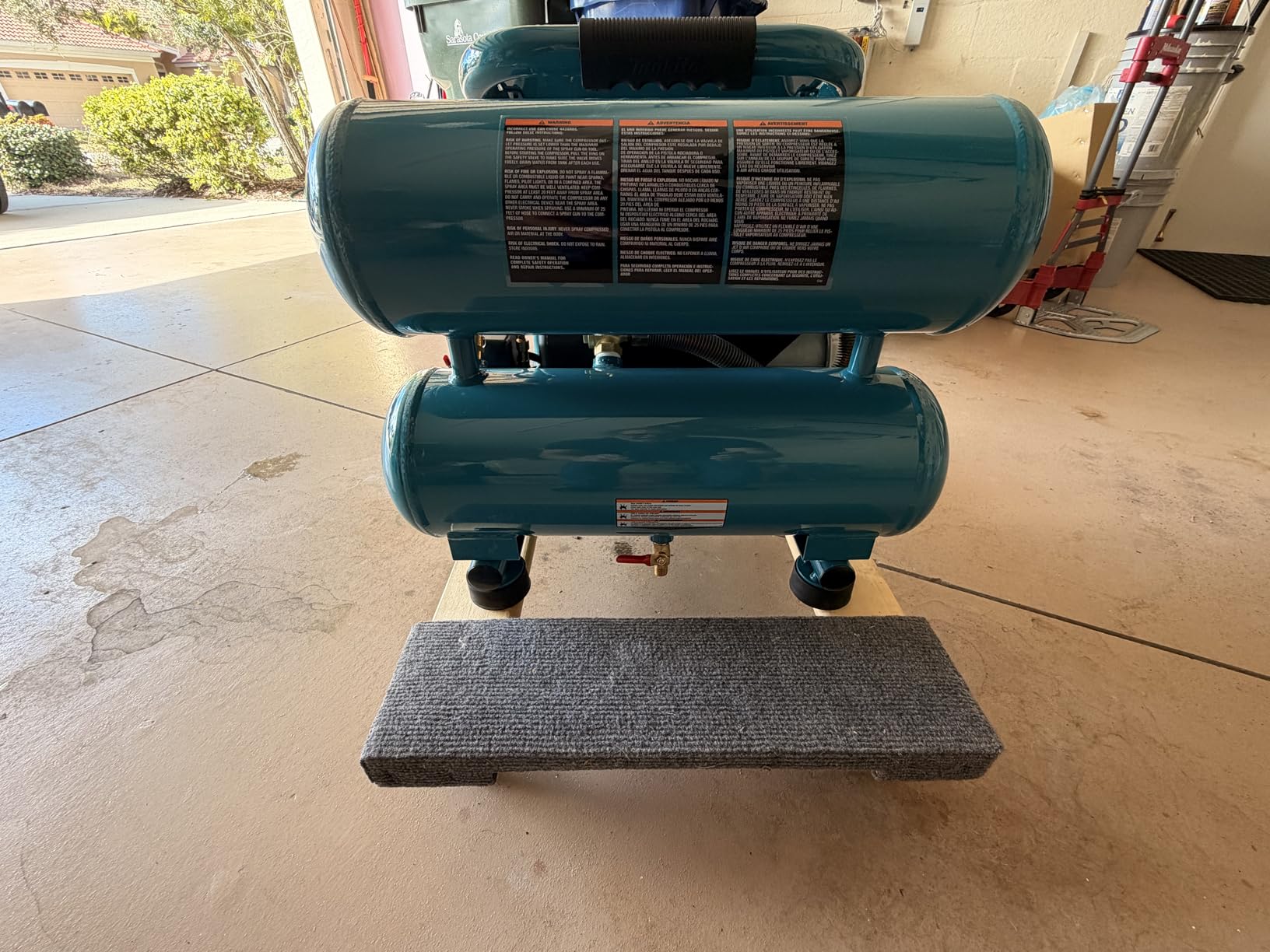
The Makita MAC2400 is the compressor we keep coming back to after working through this entire list. It is the only one here that pairs an oil-lubricated cast iron pump with a genuinely modest 12.3 amp draw, and that combination is the reason it works in a real garage rather than only on a spec sheet.
Oil-lubricated means someone has to check the sight glass every few months, which is the trade most DIY owners refuse to make. In exchange you get a pump that runs cooler under sustained load and resists the wear that shows up on a three-year-old oil-free unit. The removable cast iron cylinder makes that maintenance less of a chore than it sounds.
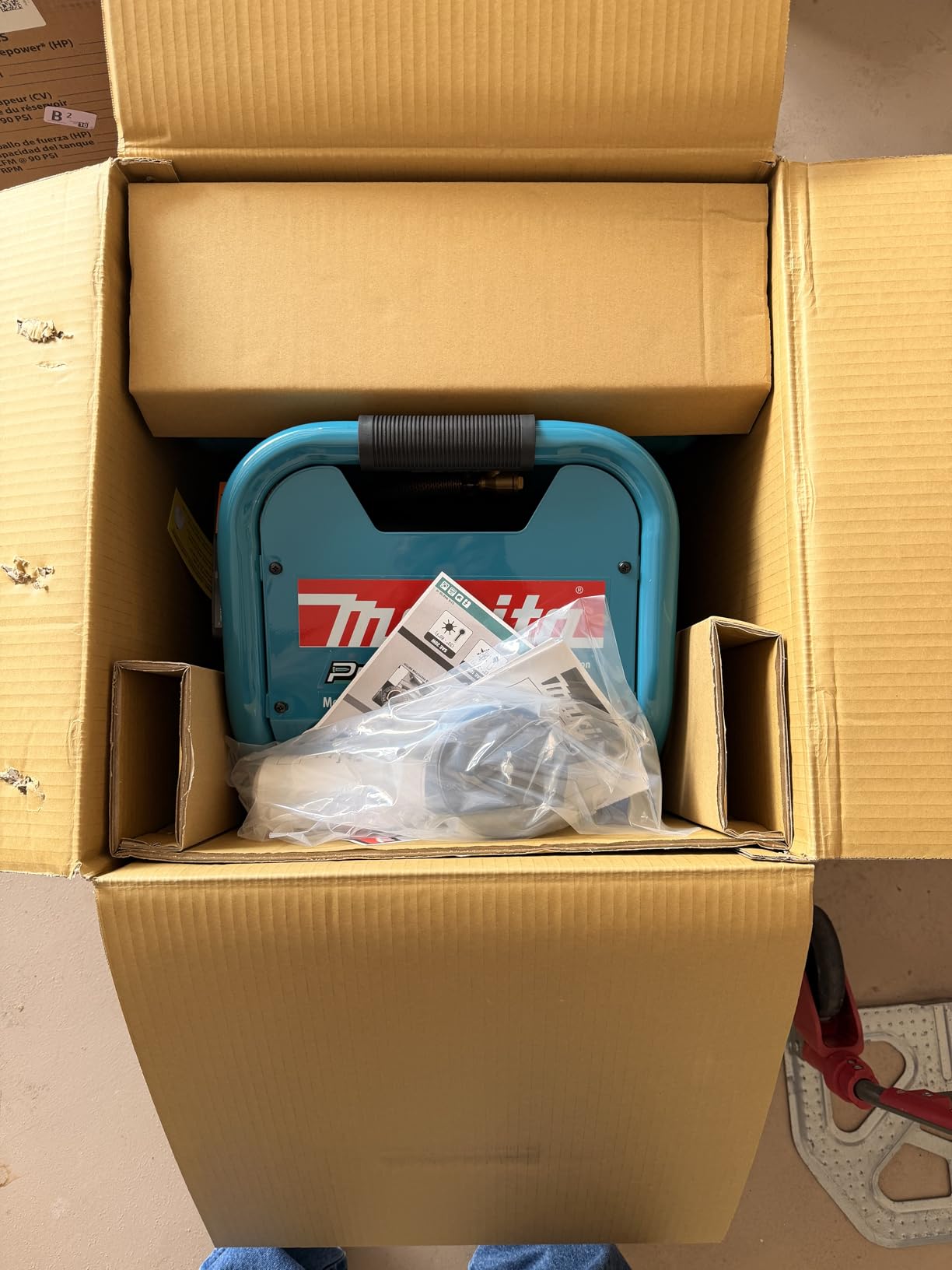
The 2.5 HP 4-pole motor turns at 1,730 RPM, slower than a typical direct-drive pancake motor, and that slower speed is where the reduced noise and the long pump life come from. The large automotive-style intake filter helps the same way. Big Bore cylinder and piston geometry is the other half of the recovery story, and recovery is what stops a nailer from pausing mid-board.
At 4.2 CFM it clears the bar for brad and finish nailers, staple guns, small sanders, and inflation without breaking a sweat. It will not drive a framing nailer at speed or paint a car. Know that going in and it is a very satisfying unit for the 80 percent of garage work that is not a full-time job site.
How the recovery and noise numbers hold up in practice
Recovery is the honest test of a small tank, and this one performs well because of the Big Bore design rather than tank size. Owners report steady pressure through repeated fastener cycles, with the 4.2-gallon cylinder refilling quickly enough that you rarely notice the gap.
At 79 dB it is mid-pack on noise. In a detached shop with the door open that is a non-issue. In an attached garage with living space above, you will hear it, and placement matters more than the number at that point.
Where the low amp draw earns its keep
The 12.3 amp rating is the detail that separates this from several rivals. It starts on a shared household circuit, and it starts reliably through a properly sized extension cord, which removes the single most common complaint about 120V compressors.
The roll-cage frame is not cosmetic on a unit that gets dragged around a garage floor, and the low starting RPM means it is easier on the breaker than a faster-spinning motor of the same size.
2. PORTER-CABLE C2002-WK: Best Value Starter Compressor
Black & Decker/dewalt C2002-WK Pancake Compressor
2.6 SCFM at 90 PSI
6-gallon pancake tank
150 PSI max
82 dB
30 lb
Pros
- Highest review volume in the roundup at 2404 reviews
- Oil-free pump needs no maintenance
- Only 30 lb so it moves around easily
- 25-ft hose and 13-piece accessory kit included
Cons
- 150 PSI is the lowest ceiling here
- 2.6 SCFM limits it to trim and finish work
- 82 dB is the loudest compressor in this roundup
More people own this compressor than anything else in our test group, and that is not an accident. The C2002-WK is the unit most first-time buyers end up with, and the 2404 reviews behind its 4.6-star average are the closest thing to a long-term report card we have on any budget compressor.
Two factory-installed regulated couplers mean two tools can run at the same time, which is more than most pancakes in this price range offer. The oil-free pump requires nothing, will not leak oil into a paint finish, and can be tilted without complaint.
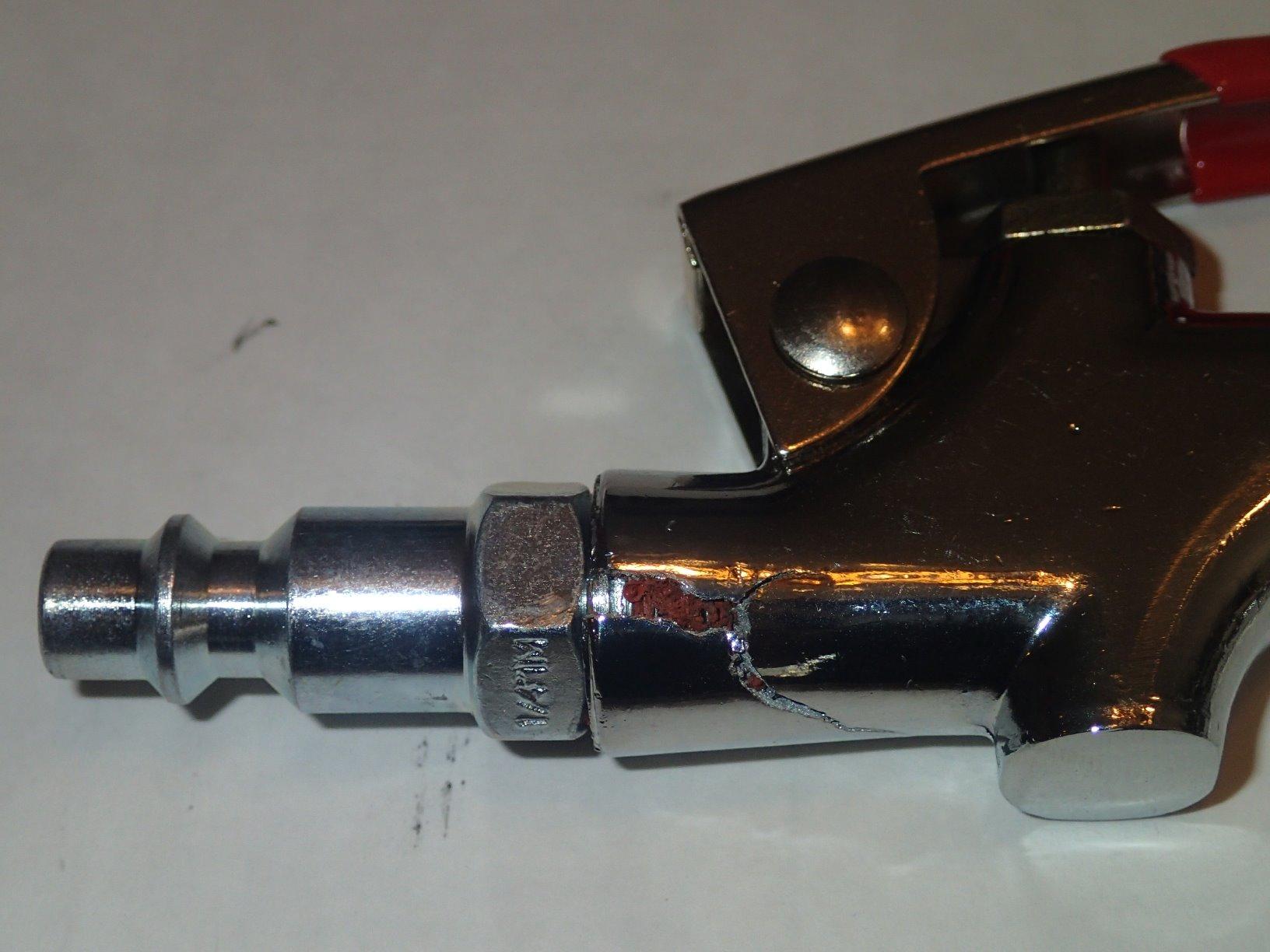
Owners consistently describe it as dependable for brad nailing, stapling, inflating tires, and blowing dust off a car. The 25-foot air hose and 13-piece accessory kit in the box mean you can start a project on day one without a hardware store run for fittings.
At 30 pounds it is the easiest unit here to lift into a car trunk, which is why it doubles as a mobile kit for lug nuts and roadside tire work. Just plan on waiting for the tank to refill between bursts of airflow.
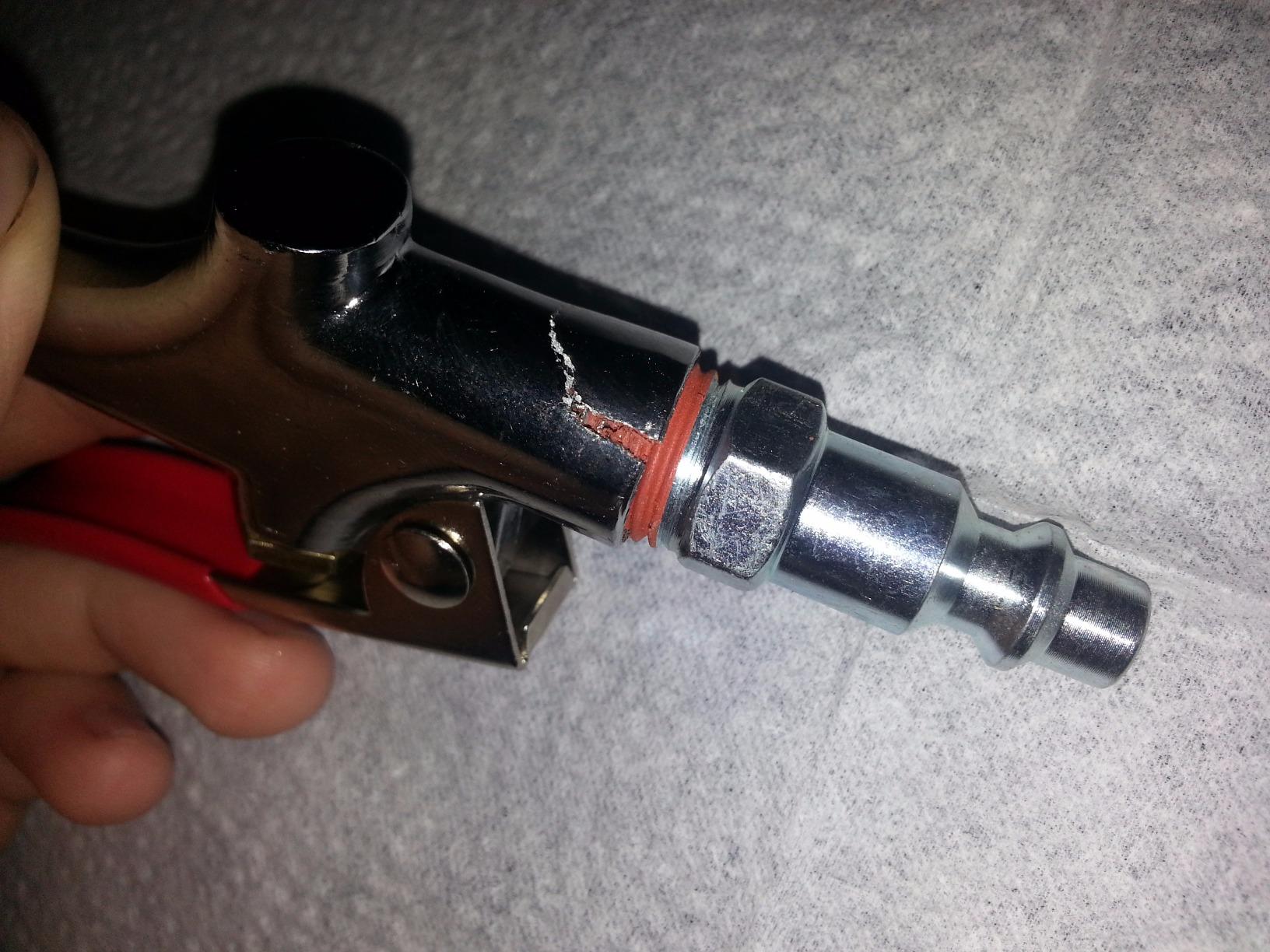
What two couplers actually buy you
Two couplers let a finish nailer and a stapler share the same compressor at the same time, or let you keep a hose connected while swapping tools. Both are real workflow gains rather than spec-sheet filler.
The factory regulator on each outlet means each tool gets its own pressure setting, which matters when you move from a 120 PSI brad nailer to a 30 PSI inflate valve without reworking a central regulator.
Where the airflow ceiling shows up
2.6 SCFM at 90 PSI is a light-duty number and buyers report it as such. It handles trim, brad nailing, cleaning, and inflation without trouble. It is not enough for a framing nailer, an impact wrench, or any spraying work.
The 150 PSI maximum is also the lowest ceiling in this roundup. That is adequate for trim work and short of what spray equipment wants, so treat this as a finish-stage compressor rather than a one-tool-does-everything unit.
3. California Air Tools 2010A: Quietest Unit for Indoors
California Air Tools 2010A 1.0 HP Ultra Quiet and Oil-Free Air Compressor, 2 Gallon Aluminum Tank, 60 dBA Noise Level, Silver
60 dBA noise level
2-gallon aluminum tank
2.20 CFM at 90 PSI
125 PSI max
35 lb
Pros
- Quietest compressor in the roundup at 60 dBA
- Aluminum tank will not rust if draining slips
- Recovers from 90 to 120 PSI in about 14 seconds
- Compact enough to store under a workbench
Cons
- 2-gallon tank cycles two or three times per project
- 2.20 CFM cannot drive framing nailers or air wrenches
- No hose or quick-connect fitting in the box
The California Air Tools 2010A exists for one reason: to be run indoors. At 60 dBA it is the quietest compressor in this roundup by a wide margin, and owners report holding an ordinary conversation next to it while it fills.
That is a 1.0 HP motor spinning at only 1,680 RPM inside an oil-free dual-piston pump rated for 3,000 hours before wear. The slow speed is the whole trick, and it is why the tank refills from empty in roughly 50 seconds and climbs from 90 PSI to 120 PSI in about 14.
Owners overwhelmingly use it for brad and finish nailers, airbrushing, and tire top-ups. The trade is stated plainly on every review we read: a 2-gallon aluminum tank means it cycles two or three times per project, and 2.20 CFM at 90 PSI will not run framing nailers, air wrenches, or HVLP sprayers.
Why the aluminum tank matters more than it sounds
A steel tank that sits with condensation in it starts corroding from the inside where you cannot see it. An aluminum tank does not have that failure mode, which is a genuine safety and longevity advantage for a machine that lives in a damp garage or a basement workshop.
The 35-pound weight and compact 18.5 by 14 by 13.5 inch footprint mean it can live under a bench rather than taking up floor space you want for a car.
The accessories you will need to buy
Nothing comes in the box but the compressor. No hose, no quick-connect fitting, no coupler. Budget for a hose and a 1/4-inch coupler before the first job, or plan a hardware store run.
At 125 PSI maximum it is the second-lowest ceiling here, and combined with 2.20 CFM it means this is a finish and detailing tool. Paint spraying is a stretch goal rather than a realistic one.
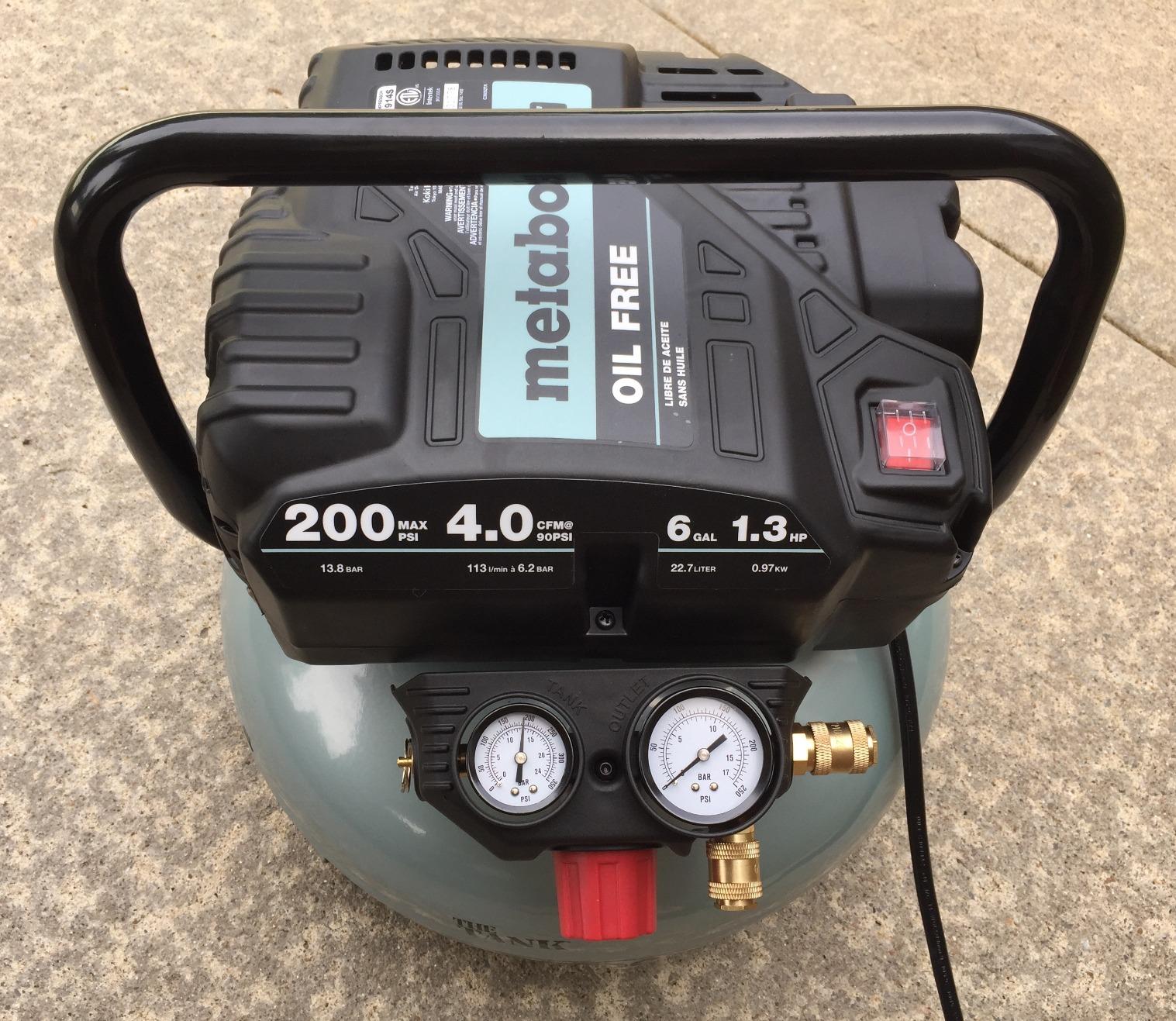
4. Metabo HPT EC914S: Best Pancake for Framing Nailers
Metabo HPT Portable Pancake Air Compressor, 6 Gallon 200 PSI, EC914S
4 CFM at 90 PSI
6-gallon tank
200 PSI max
73 dB
42 lb
Pros
- 4 CFM at 90 PSI drives framing and roofing nailers
- 200 PSI max gives 25 percent more pressure than a basic pancake
- Oil-free pump runs at any angle
- Roll cage and accurate regulator
Cons
- Loud during fill cycles
- Filling at altitude takes several minutes
- Not a quiet option for indoor shops
The Metabo HPT EC914S is the answer for anyone who wants a pancake that can actually frame. Most 6-gallon units put out 3 CFM and 150 PSI; this one manages 4 CFM at 90 PSI and 200 PSI maximum, and owners consistently report it keeps nail guns cycling without pauses.
That combination means it can run two framing, two roofing, or two siding nailers at once, or up to five brad nailers. For a homeowner reframing a deck or a roofer working alone, it is the most capable small compressor in this group.
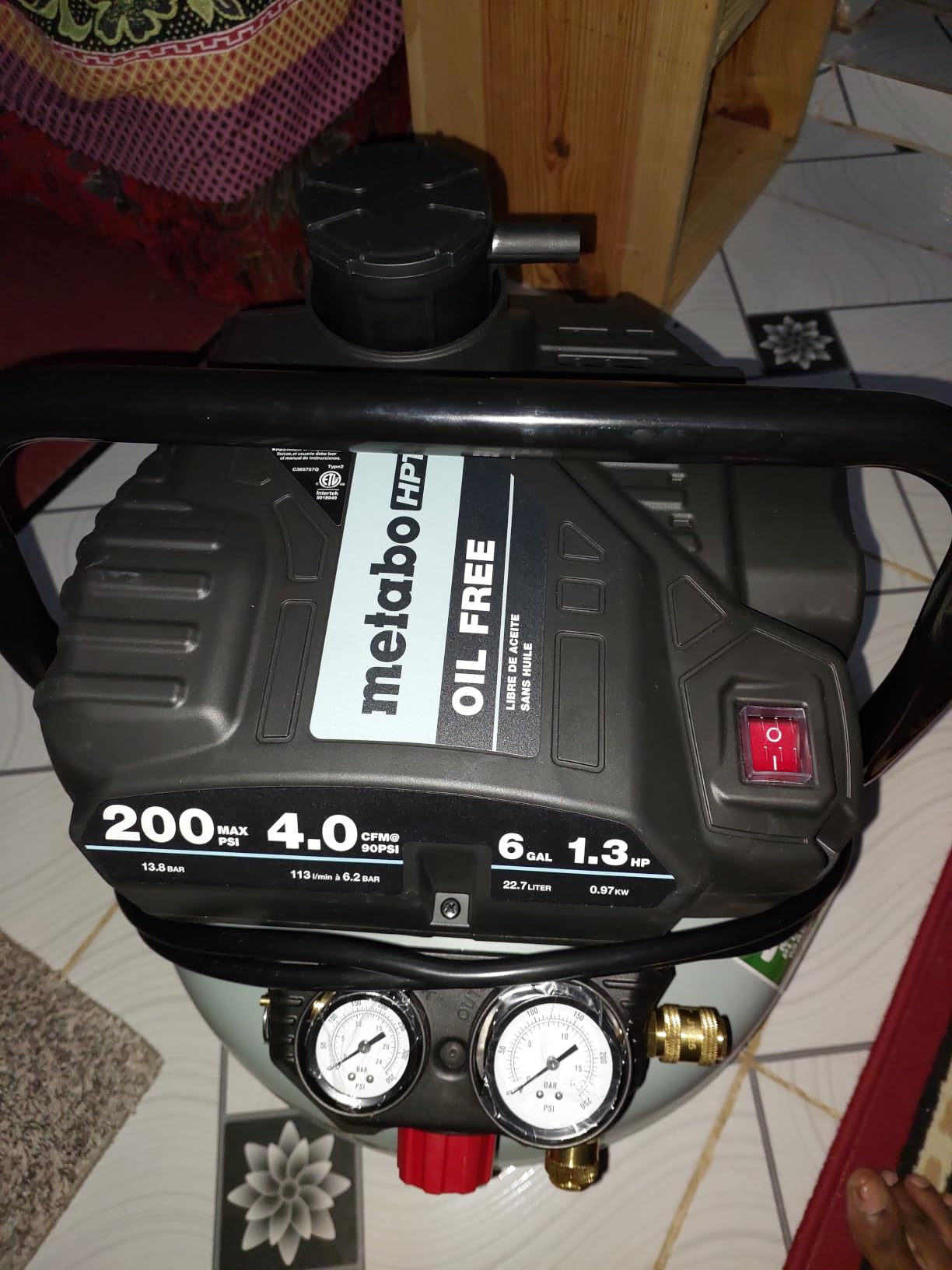
The oil-free pump needs no maintenance and runs at any angle, which makes it easy to drag into a crawlspace or set on its side under a workbench. The stainless steel construction and roll cage are the parts that survive being moved.
Owners also flag the noise. At 73 dB the rating understates how present it feels during a fill cycle in an enclosed garage, and at altitude the tank takes several minutes to fill. In a detached shop that is a fair trade for the airflow.
Why 200 PSI changes what you can hang on it
Max pressure is not the number that matters, but 200 PSI gives this pump headroom to deliver its rated 4 CFM at 90 PSI instead of sagging as the tank drops. On a 150 PSI pancake the airflow you get at working pressure is lower than the headline number suggests.
That headroom is why the manufacturer can claim two framing nailers simultaneously. Most pancakes in this size class cannot hold pressure and airflow at the same time.
Where the noise shows up in a real garage
Fill cycles are the loud part, not tool operation. If your garage is enclosed or shares a wall with living space, the difference between a 68 dB and a 73 dBA unit matters more than the decibel gap suggests.
The 42-pound weight is 22 percent lighter than traditional twin-stack models, so moving it to the far wall for a quiet weekend is realistic rather than aspirational.
5. Limodot LJ5120K: Budget Pick With a Full Accessory Kit
Quiet Oil-Free Air Compressor, 68 dB, 2.8 CFM @ 90 PSI, 5 Gallon Air Tank
2.8 CFM at 90 PSI
5-gallon tank
120 PSI max
68 dB
1.2 HP
Pros
- Comes with a 25-ft hose
- 13-piece accessory kit and wheels
- 68 dB induction motor suits a workshop
- Empty-to-full refill in about 80 seconds
- Oil-free design starts in cold weather
Cons
- 2.8 CFM at 90 PSI is below framing nailer needs
- 120 PSI is the lowest ceiling in the roundup
- 4.5-star rating reflects more mixed feedback
The Limodot LJ5120K is the pick if the deciding factor is what arrives in the box. A 25-foot PVC hose, a 13-piece accessory set, a wheels kit, and a 1/4-inch quick-connect fitting are all included, so there is no first-job hardware store trip.
The 1.2 HP oil-free motor delivers 4 CFM at 40 PSI and 2.8 CFM at 90 PSI, filling the 5-gallon steel tank from empty in about 80 seconds with roughly 25 seconds of recovery. That is enough to keep a finish or brad nailer going through most of a project.
The 68 dB claim comes from an induction motor spinning at only 3,400 RPM, and owners describe it as usable inside a workshop. The wheels make it easy to move around a bench-heavy garage, which is a real benefit at this size.
Where buyers temper their enthusiasm is airflow and ceiling. 2.8 CFM at 90 PSI sits below what a framing nailer wants, and 120 PSI maximum is the lowest ceiling in the roundup. The 4.5-star average reflects more mixed feedback than the top sellers.
What the included kit actually saves
A 25-foot hose and a coupler set is roughly the first thing any new owner buys anyway, and having them pre-matched means the fittings are the right size for the tank. For a first compressor purchase that removes the most common beginner mistake, which is mismatched fittings.
The wheels kit matters more than it sounds at 5 gallons, because a compressor that stays put is a compressor you keep using.
Where the 120 PSI ceiling becomes the limiting factor
Most pneumatic nailers and inflators work comfortably below 120 PSI, so this is fine for the majority of garage tasks. Spray guns and sandblasters are the exception, and they will starve here regardless of tank size.
Long-term feedback is thinner on this one than on the high-volume sellers, which is worth weighing if you want a machine you will not think about for a decade.
6. DEWALT DWFP55130: Best Thin Pancake for Finish Work
DEWALT Air Compressor for Trim, 200-PSI Max, Quiet Operation (DWFP55130)
3.0 SCFM at 90 PSI
2.5-gallon tank
200 PSI max
71.5 dBA
36 lb
Pros
- 200 PSI max in a thin 2.5-gallon pancake
- 71.5 dBA tested per ISO3744 keeps it usable indoors
- 12 amp draw starts on shared circuits
- 12.5-inch slim profile stores easily
Cons
- 2.5-gallon tank is one of the smallest here
- 4.4 stars is the second-lowest average in the roundup
- Not enough for framing or spray painting
The DEWALT DWFP55130 is built around a contradiction: a very small 2.5-gallon tank that still hits 200 PSI maximum and 3.0 SCFM at 90 PSI. That is unusual, and it is why the pancake format works so well for finish carpentry.
Owners single out the combination of pressure, the ISO3744-tested 71.5 dBA rating, and a 12.5-inch thickness that lets it slide into a narrow gap between studs or under a shallow bench. It can be operated or stored in either vertical or horizontal position.
The 12-amp motor is another quiet advantage, since it starts on a shared household circuit without knocking the breaker. Dual quick couplers let you run two nailers at once, and a ball-valve drain plus cord wrap are the small touches that separate a well-made pancake from a cheap one.
Not everyone is happy. The 4.4-star average is the second-lowest in this roundup with 8 percent one-star reviews, and some owners report leaks or short service life. The 2.5-gallon capacity simply cannot support framing or spray painting work, no matter how good the pressure is.
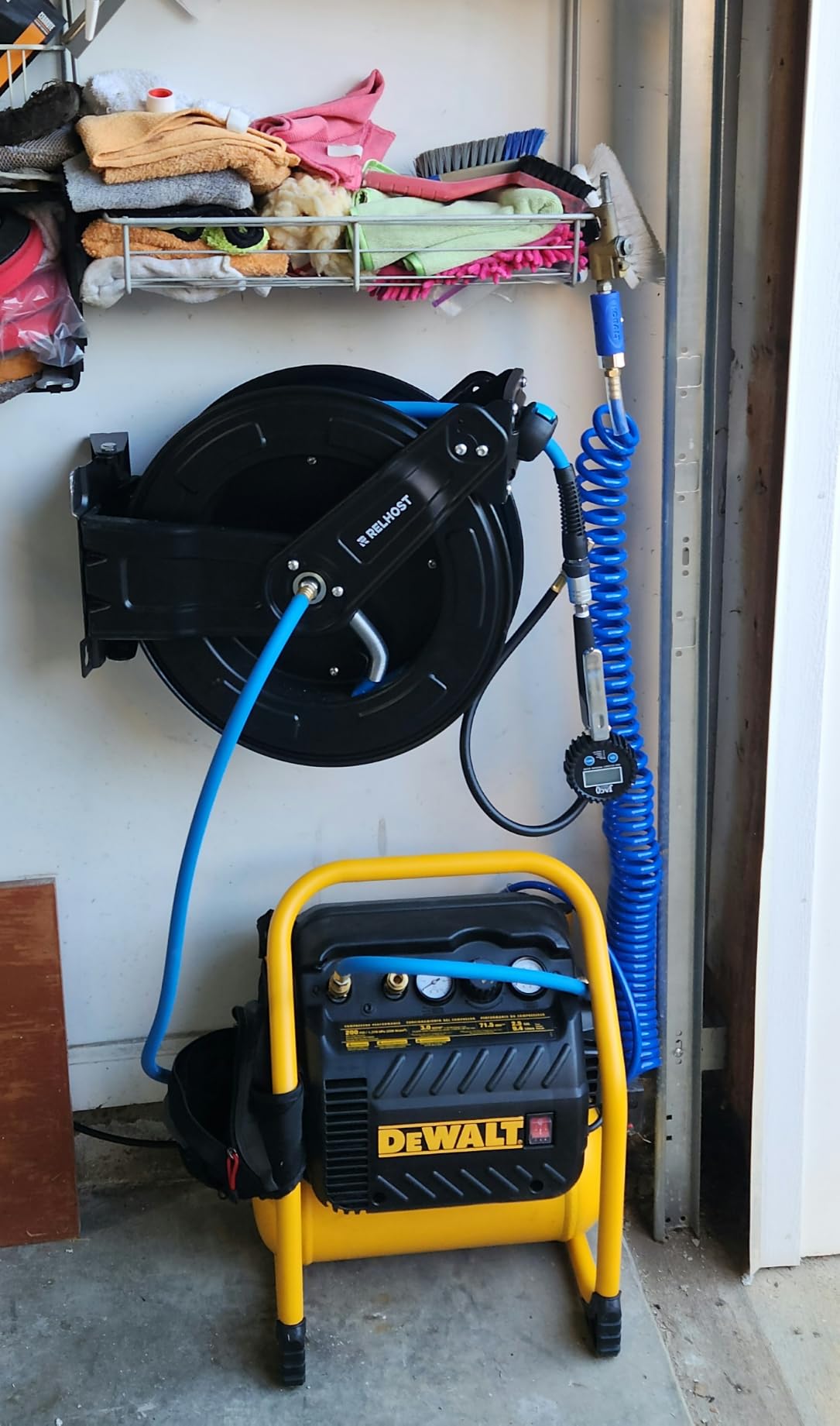
Why a slim profile changes where a compressor can live
At 12.5 inches thick and 36 pounds, this unit goes places a 6-gallon pancake does not. Built-ins, narrow shelves, the cavity behind a workshop bench, or the corner of a mobile work setup are all realistic positions.
The roll cage and control panel protect the couplers and regulator, which are the components most often damaged when a compressor gets dragged or tipped.
Where the small tank earns its keep, and where it does not
For finish nailers, brad nailing, and trim, a 2.5-gallon tank with 200 PSI is genuinely sufficient, and the 71.5 dBA rating means you can run it while someone watches television in the next room.
For anything continuous, it is the wrong tool. Two tools running at once is listed as a feature, but that promise is about couplers rather than available airflow, so expect pauses on larger jobs.
7. Klutch 29-Gallon: Best Vertical for Auto Work
Klutch 29-Gallon Air Compressor, 2.5 HP, 120V, 175 PSI, 5.1 CFM at 90 PSI
5.1 CFM at 90 PSI
29-gallon vertical tank
175 PSI max
120V
127 lb
Pros
- 29-gallon vertical tank gives the largest air reserve here
- 5.1 SCFM at 90 PSI from a 2.5 HP oil-free motor
- Runs on a standard 120V outlet with no dedicated circuit
- Large flat-free tires roll easily
Cons
- Heaviest compressor here at 127 lb
- 81 dB is loud for an enclosed garage
- One reviewer reported a switch that failed to interrupt power
The Klutch 29-gallon is the largest tank in this roundup and the only true shop-style vertical unit on the list. If your work involves impact wrenches, a pressure washer feed, or a spray gun that has to keep moving, this is the airflow and reserve you need on a standard outlet.
The 2.5 HP oil-free motor delivers 5.1 SCFM at 90 PSI, and the 29-gallon vertical tank means you can run a long burst of high-demand work without waiting on the pump. At 45.3 inches tall and 23.2 by 21.1 inches on the floor, it uses vertical space well and leaves the rest of the bay open for a vehicle.
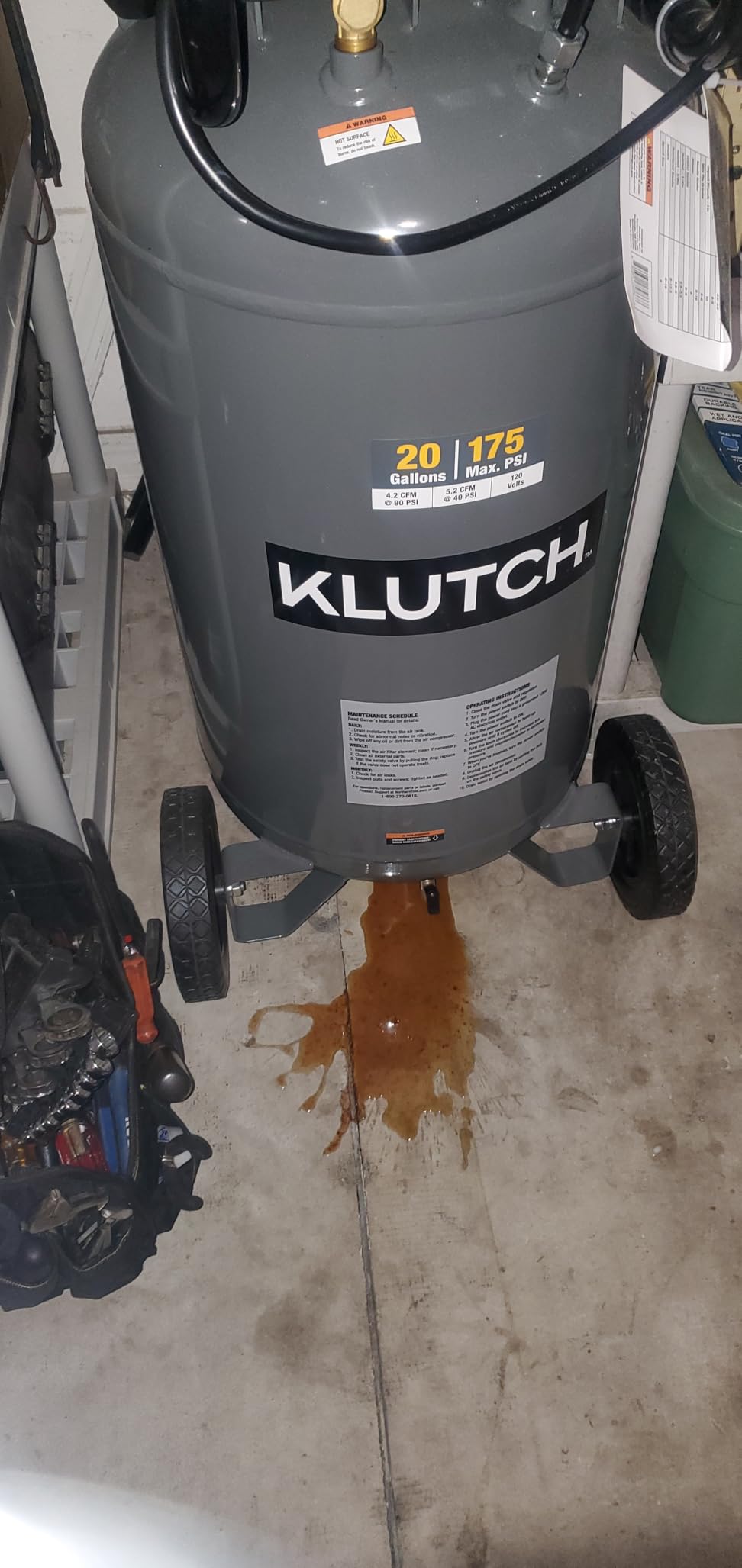
Owners report it holds pressure for weeks without leaks, and the brass quick-connect coupler makes one-handed hose changes straightforward. Flat-free tires and a 14.5 amp draw keep it manageable, and no dedicated circuit is required.
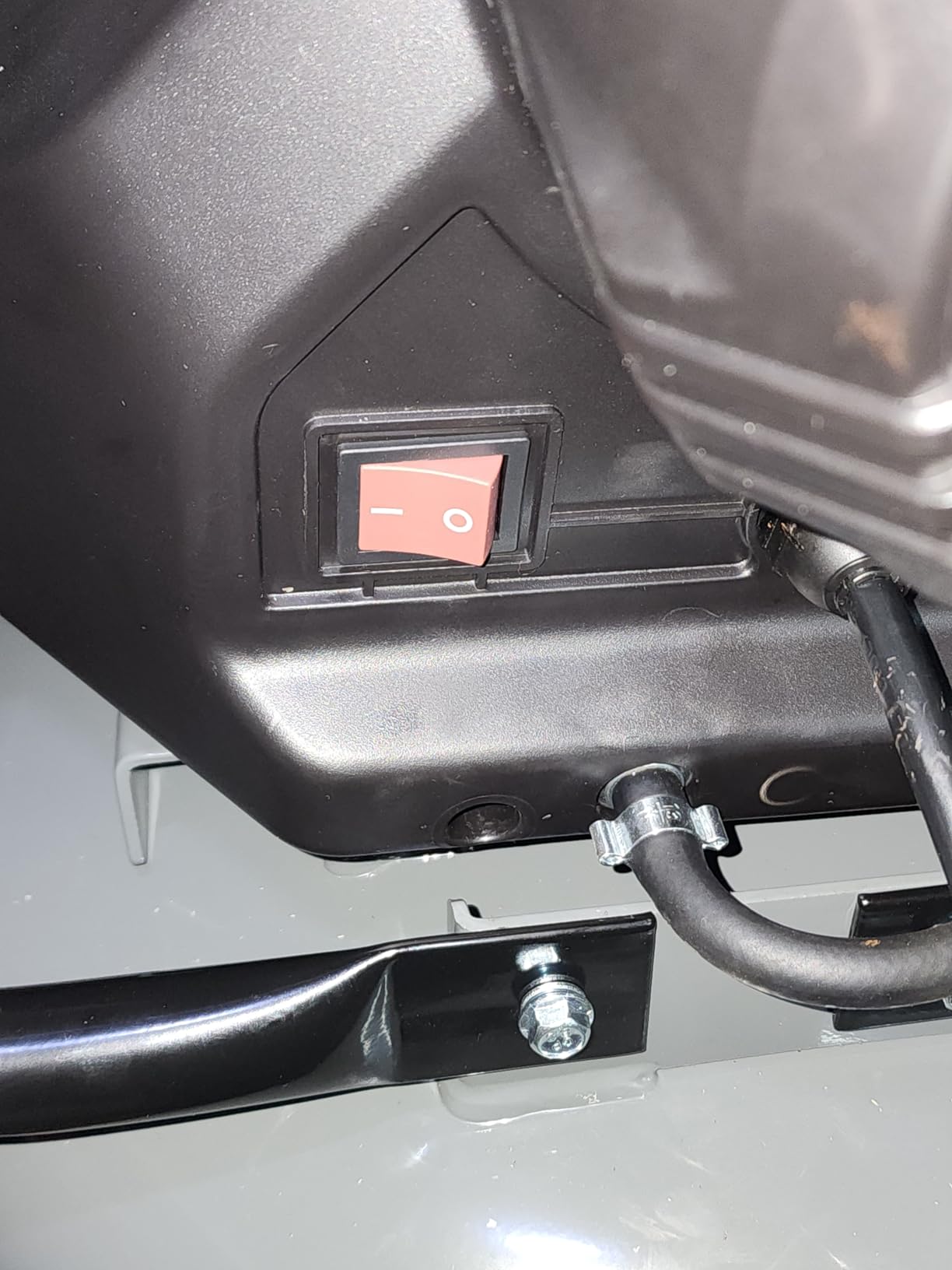
Two things to weigh. It is 127 pounds, so moving it takes real effort even with the wheels. And at 81 dB it is loud, which is a genuine problem in an enclosed garage. One detailed review also documented a power switch that failed to interrupt power, which is a serious safety report worth considering before buying.
Why tank size changes the working rhythm
On a 6-gallon pancake, a 5 CFM tool empties the tank in about a minute and you wait. On 29 gallons you have roughly five times the reserve, so an impact wrench job becomes continuous instead of stop-and-start. That difference is the entire argument for a vertical shop unit.
The brass coupler and the maintenance-friendly tank drain are the parts you will touch every session, and both are better here than on most compressors of this size.
Who should not buy this
If your garage is attached to living space, or if you need to lift the compressor into a truck regularly, 127 pounds is a problem. There is no quick way to make that lighter.
Also inspect the power switch carefully on arrival and before every use, given the one documented failure. If you already have 5 CFM of airflow from something smaller, the extra tank is a convenience rather than a necessity.
8. VEVOR 10-Gallon: Best Raw Airflow for the Money
VEVOR Air Compressor, 10 Gallon Steel Tank, 2HP 5.3 CFM@90 PSI Oil Free Air Compressor & Max. 125PSI Pressure, 78dB Ultra Quiet Portable Compressor, for Auto Repair, Tire Inflation, Spray Painting
5.3 CFM at 90 PSI
10-gallon tank
125 PSI max
78 dB
70.6 lb
Pros
- 5.3 CFM at 90 PSI is the highest airflow figure here
- Owners confirm it is genuinely quiet for its size
- Fast fill times
- No leaks and steady pressure hold
Cons
- 125 PSI max is the second-lowest ceiling in the roundup
- Short cord and it will not tolerate extension cords
- Small wheels make the 70 lb unit tippy
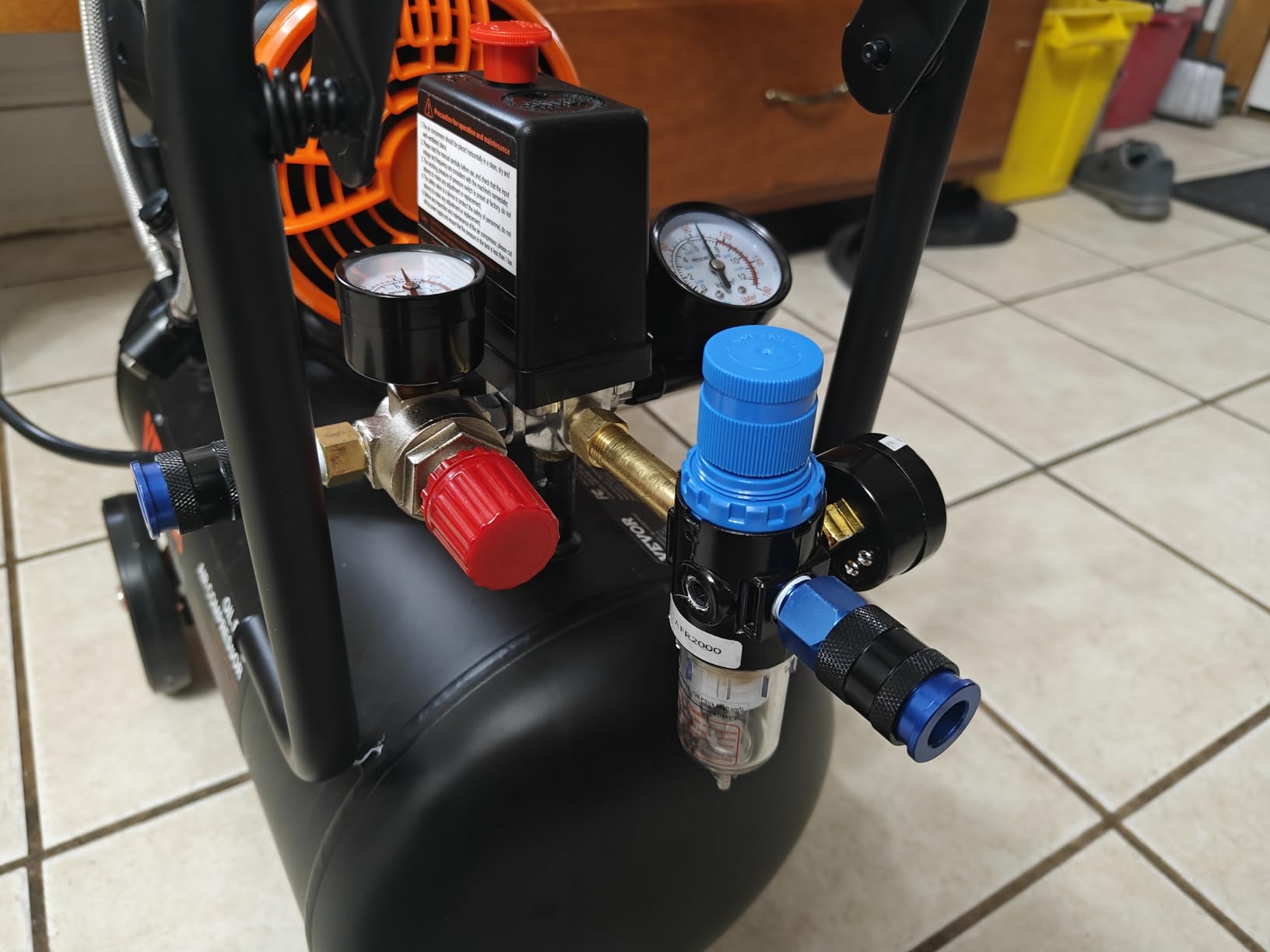
The VEVOR 10-gallon puts out 5.3 CFM at 90 PSI, the highest airflow figure of anything we reviewed, from a 1.32 kW oil-free motor spinning to 1,680 rpm. If airflow is the metric you are shopping on, this is where the specs land hardest.
The multi-layer muffler with rubber pipe and filter cotton is what delivers the 78 dB figure, and owners confirm it sounds quieter than its size suggests. The 10-gallon horizontal steel tank refills quickly, and reports of no leaks and steady pressure hold are common in the reviews.
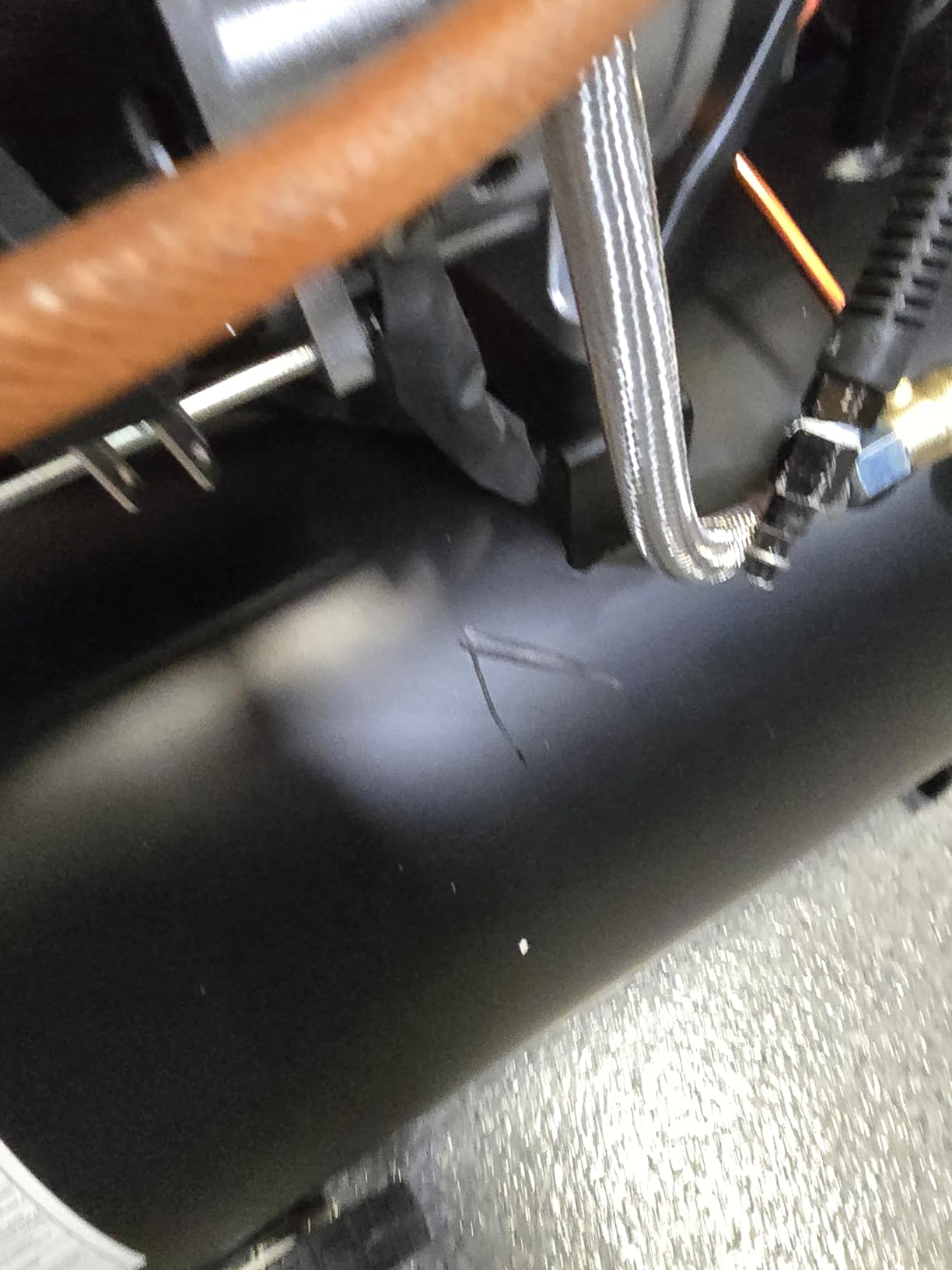
Build details are better than the price suggests: three-layer tank construction with a rust-resistant inner layer, high-temperature silicone and stainless steel braided intake pipe, plus automatic overheat, overcurrent, and overpressure protection. A large cooling fan handles sustained runs.
The catch is voltage. Owners repeatedly report the short cord and difficulty running it on an extension cord. The 125 PSI maximum is the second-lowest ceiling in the roundup, the small wheels make a 70-pound machine tippy, and the 4.3-star average with 10 percent one-star reviews is the second-lowest here.
Why high airflow with a low ceiling still wins for some people
Nailers, staplers, sanders, and impact wrenches care about airflow and are satisfied well under 125 PSI. If your list is fasteners and inflating, the 5.3 CFM is the number that prevents stalling, and the pressure ceiling is irrelevant.
That trade flips the moment a spray gun is on your list. HVLP and conventional spray equipment want 100 PSI or more with steady delivery, and a 125 PSI tank cannot give you either.
Plan the electrical setup before you buy
This is the one product in the roundup where reviewers specifically warn against extension cords. Because of the 15-plus amp motors in this class, voltage drop over a long run cuts the available pressure below what the tools need, and the machine may not start at all.
Measure to the nearest outlet. If the compressor cannot sit close to one, this is not the right choice even though the airflow number is the best on the list.
9. Stealth 20-Gallon: Quiet Full-Size Vertical
Stealth 20 Gallon Ultra Quiet Air Compressor,1.8 HP Oil-Free Peak 150 PSI 68 Decibel, 5.5 CFM @ 40 PSI 5 CFM @ 90 PSI Silent Long Life Electric Air Compressor W/Wheel for Garage
5 CFM at 90 PSI
20-gallon steel tank
150 PSI peak
68 dB
121.4 lb
Pros
- Quietest full-size vertical in the roundup at 68 dB
- 20-gallon tank covers long stretches of work
- Quality rubber tires roll a 121 lb machine easily
- Limited lifetime warranty from the manufacturer
Cons
- 4.2 stars with 12 percent one-star reviews
- One owner reported early failure and unreachable support
- 121 lb is difficult to lift
- Can trip breakers on under-wired circuits
The Stealth SAQ-12018 solves a problem nobody else on this list solves: a 20-gallon vertical tank that is genuinely quiet. At 68 dB it is the only full-size vertical here you could run in an attached garage without your neighbours filing a complaint.
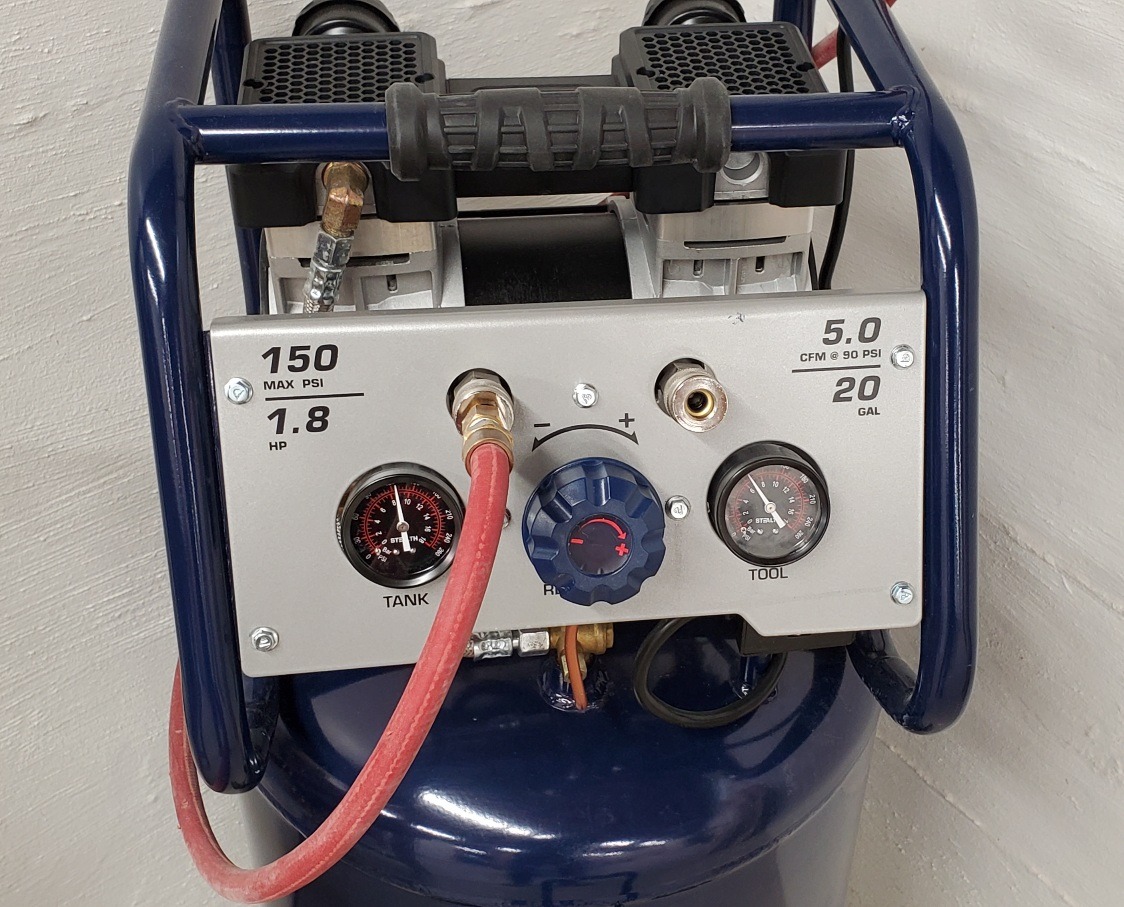
It delivers 5.5 CFM at 40 PSI and 5 CFM at 90 PSI from a 1.8 HP oil-free motor, peaking at 150 PSI. Two quick couplers let you switch between tools quickly, and the 8-inch rubber wheels on a 20-gallon alloy steel tank roll far better than the small casters on lighter units.
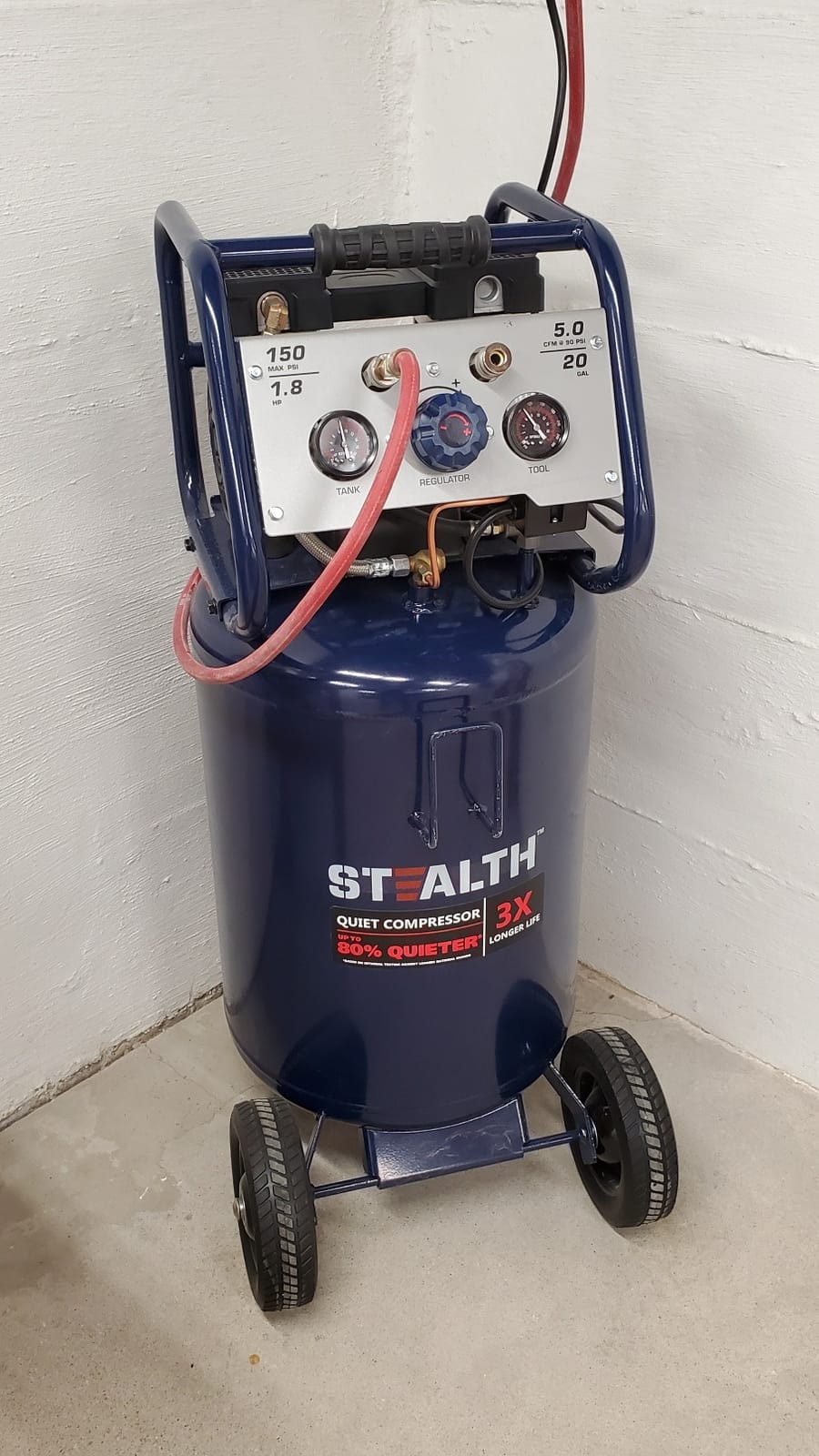
Owners who keep it report genuine satisfaction with the quiet operation, the tank capacity, and the build quality. They also report the tank holds pressure well when the unit is not in use, which matters for a machine that sits between projects.
Bring the compressor up on a fresh circuit and bleed the tank fully before the first start, because owners do report nuisance breaker trips on under-wired circuits and the fix is in the wiring rather than the machine.
Why the tank-to-wheel relationship matters more than it sounds
A 20-gallon steel tank full of air is heavy in a way that surprises people. Good rubber tires are what make it possible to roll to the far corner of a two-and-a-half car garage for a quiet weekend, instead of leaving it next to the breaker where it is loudest.
At 20 by 18 by 42 inches it also takes a real footprint, so measure the wall before committing.
Where the 4.2-star rating comes from
One-star reviews run 12 percent, the highest share in this roundup, and the pattern is early failure combined with customer service that could not be reached. If a compressor fails in month two, the support experience is as important as the machine.
Owners also report it will not start with air in the tank on under-wired circuits and can trip breakers. Check your circuit before install, and bleed the tank fully before the first start.
10. DEWALT D55146: Best for a Decade of Service
DEWALT Air Compressor, 225-PSI Max, Hand Carry with Wheels, 4-1/2 Gallon (D55146)
5 CFM airflow
4.5-gallon tank
225 PSI max tank storage
78 dB
88 lb
Pros
- 225 PSI is the highest pressure ceiling in the roundup
- Owners report 5
- 10 and 15 years of service
- 5 CFM drives framing nailers and vacuum clamping
- 10-inch non-flat tires roll over rough ground
Cons
- Draws 15 amps so it needs a dedicated circuit
- 88 lb and bulky to load alone
- Tank must tilt about 45 degrees to drain
- Regulator tops out near 150 PSI
The DEWALT D55146 is the durability story in this roundup. Owners report five years, ten years, and in one case fifteen years of service from the same unit, which is a level of long-term feedback none of the other compressors here can match.
It also has the highest pressure ceiling we found at 225 PSI max tank storage, and 5 CFM of airflow that owners verify at 5.0 to 5.2 CFM. That is enough to drive framing nailers and even vacuum clamping systems, which most of this list cannot do.
The 10-inch non-flat pneumatic tires handle rough job-site ground, and owners note it is quiet enough at 78 dB to run inside the house for short tasks. The oil-free pump needs no maintenance, and the tank stores upright with the tank on top, which is unusual for a wheeled unit this size.
The catch list is real: it draws a full 15 amps and wants a dedicated circuit, it weighs 88 pounds and is awkward to load alone, the tank must be tilted about 45 degrees to drain properly, and the regulator tops out near 150 PSI well below tank pressure. It also comes with no manual or accessories.
Reading 225 PSI honestly
Max tank storage pressure is the number this unit is known for, and it is a genuine advantage for tools that want more than the usual 150 to 200 PSI. But the regulator capping near 150 PSI means delivered pressure to the tool is what actually matters day to day.
For high-demand pneumatic tools that benefit from sustained higher working pressure, the extra tank capacity is real. For a finish nailer, none of it is used.
Who gets the most out of this unit
Owners with a dedicated 15-amp circuit and a place to park it permanently. It is not a mobile compressor and not a beginner purchase, and the 88-pound weight means you will set it down once and leave it.
Buyers who want a machine to set and forget for a decade, and who are willing to plan the circuit and a wall location before it arrives, are the ones getting the best return.
What Size Air Compressor Does Your Garage Need?
For most home garages, a 20 to 30 gallon oil-free compressor delivering 4 to 6 CFM at 90 PSI on a standard 110V outlet is the right target. Smaller 2 to 6 gallon pancakes suit finish work and inflation. Larger shop units only make sense if you run impact wrenches, spray equipment, or sandblasters.
The mistake is picking tank size first. Tank capacity only determines how long you can work between refills. Airflow determines whether your tool keeps running at all.
Start by listing the tools you own, not the ones you might buy. Find the CFM figure for the most demanding one, multiply by 1.5 as a safety buffer, and only then choose a tank that holds enough air to cover a typical work session.
For trim and cabinet work, a 2 to 3 gallon tank is plenty. For framing a deck solo, 6 gallons with at least 4 CFM is the floor. For auto work and spraying, 20 to 30 gallons at 5 CFM or more is the realistic starting point, and forum advice across Garage Journal and r/Tools consistently treats 20 to 24 gallon verticals as the sweet spot for a serious home garage.
One last framing: an r/Tools owner described upgrading from a 6-gallon pancake after five years, wanting something static in a 2.5-car garage and unsure what CFM to look for. That is the single most common upgrade path, and a 20-gallon vertical answers it cleanly.
CFM vs PSI vs Horsepower: What Actually Matters
Peak horsepower is measured at startup and tells you almost nothing about sustained work. Running horsepower is closer to the truth, and CFM at 90 PSI is the number that decides whether your tools run continuously.
As a working guide for typical pneumatic tools:
Brad nailer and pneumatic stapler: roughly 1 to 2 CFM, light duty
Finish nailer: roughly 2 to 3 CFM, comfortable in most pancake compressors
Framing nailer: roughly 4 CFM, this is where most 6-gallon units fall short
1/2-inch impact wrench: roughly 4 to 5 CFM for sustained breakaway work
Random orbit sander: roughly 3 to 5 CFM, continuous airflow keeps the pad from bogging
HVLP spray gun: roughly 3 to 5 CFM at 35 to 40 PSI, plus a regulator with fine control
Sandblaster: 8 CFM and above, with a 30 to 60 gallon tank
Apply the buffer. If your most demanding tool wants 4 CFM, look for a compressor rated at 6 CFM or better at 90 PSI. That single habit prevents the stuttering nailer and stalled sander that drive most second purchases.
PSI mostly matters in one direction. Tools that need more than 150 PSI, such as some spray equipment, need a compressor whose rated airflow is measured at 90 PSI anyway, and a tank that holds a genuinely higher ceiling. Below that threshold, extra PSI is a spec-sheet accessory.
Tank Size and Form Factor: Pancake, Twin-Stack, Vertical, Belt-Drive
Form factor is a packing decision, not a performance one, once airflow is matched. Choose the shape that fits the bay and the way you move the machine.
Pancake compressors are 2 to 6 gallons, roughly 13 to 20 inches tall, and light enough to lift with one hand. They are the right answer for finish carpentry, a single-car garage, and anyone who wants a compressor in a closet between projects. Their limit is airflow, not size.
Twin-stack units sit in the same 6 to 9 gallon range but stack two cylinders for more airflow in a similar footprint. If your work is framing rather than trim, a twin-stack or a high-CFM pancake outperforms a bigger pancake with the same tank.
Vertical units of 20 to 30 gallons trade floor area for height and give you the reserve to run high-demand tools without pausing. For a two-and-a-half car garage or a shop, this is the format that scales with your work.
Horizontal tank-on-top units like the DEWALT D55146 store the air high and roll on large wheels, which makes them easy to move but wide. Belt-drive pumps reduce vibration and extend pump life, and none of the ten compressors here use one, which is worth knowing if longevity is your priority.
Buy the smallest tank that covers a work session. Bigger tanks are heavier, take more floor space, and cost more without making a single tool run faster.
Noise Levels Explained: What Those Decibel Numbers Mean
A compressor’s published dB figure is measured at a distance under lab conditions, so treat it as a ranking tool rather than a promise. The real question is whether the sound carries into a space you need quiet.
Here is how the numbers in this roundup translate:
60 dBA, the California Air Tools 2010A: roughly a normal conversation at 3 feet, usable indoors
68 dBA, the Limodot and Stealth: a vacuum cleaner, noticeable in an attached garage
71.5 to 73 dBA, the DEWALT DWFP55130 and Metabo HPT EC914S: a hair dryer, fine in a shop, borderline in a bedroom-adjacent wall
78 to 79 dBA, the Makita, VEVOR, and DEWALT D55146: a city street, clearly audible outside the garage
81 to 82 dBA, the Klutch and PORTER-CABLE: an alarm clock at arm’s length, the practical limit for enclosed spaces
Placement beats decibel shopping. Put the compressor against a far exterior wall, on a vibration isolation pad, and in a corner rather than flat against a shared interior wall. Building a simple plywood enclosure with an air gap behind the panels is the same low-frequency principle covered in our guide to air gaps behind panels, and it cuts transmitted rumble far more than a quieter compressor does.
Extended hose runs are the underrated fix. Moving the machine five feet away from a workbench and running a 50-foot hose to the tool is often quieter than replacing the compressor.
Oil-Free vs Oil-Lubricated Pumps and Maintenance
Oil-free pumps need nothing. That is the whole maintenance story, and it is why nine of the ten compressors here use them. They are lighter, can run at any angle, and will not put oil mist into a paint finish or a cabinet surface.
The cost is service life. Oil-free pumps have tighter tolerances and higher bearing loads, so a well-maintained oil-lubricated cast iron pump outlasts a cheap oil-free one. The Makita MAC2400 is the proof in this list, and its removable cast iron cylinder makes oil changes straightforward.
Whichever type you buy, the maintenance that actually matters is draining. Open the drain valve after every job and wipe the tank dry. Condensation left in a steel tank is what causes internal corrosion, and a corroded tank is a safety problem, not a performance one.
For oil-free units, keep the intake filter clean and check the pressure switch occasionally. A compressor that short-cycles or runs constantly is telling you something, and most long-term complaints in the reviews on this list trace back to a filter or a switch rather than the cylinder.
Power: 110V vs 220V and Extension Cord Limits
Every compressor in this roundup runs on 120V, which is why none of them needs an electrician. That choice caps airflow at around 5 to 6 CFM, because a 15-amp circuit cannot deliver more.
Check the draw before you buy. The Makita MAC2400 pulls 12.3 amps, the DEWALT DWFP55130 pulls 12, and the DEWALT D55146 pulls a full 15 and wants a dedicated circuit. Anything at 15 amps sharing a circuit with a welder, saw, or microwave will trip the breaker on start.
Extension cords are the second problem. Voltage drop over a long or undersized cord cuts the pressure delivered to the tool, which shows up as a stuttering nailer rather than a tripped breaker. The VEVOR owners in this roundup specifically report that their unit will not tolerate an extension cord at all.
As a rule, use a heavy-gauge cord, keep the run short, and if a compressor needs more than 50 feet, put it closer to the work instead. The low-amp units on this list, particularly the Makita and the DEWALT DWFP55130, are the ones that start reliably through a cord.
Going to 220V buys you a 5 to 10 HP motor and 10 to 20 CFM, which is a real jump. It also means a dedicated 20-amp or larger circuit, and for most home garages the trade is not worth it until you are running spray equipment or sandblasting regularly.
Which Compressor for Which Garage
The right pick depends more on the bay than the budget. Garage type is the question we see answered worst in competitor guides, so here is the honest mapping.
For a single-car garage, apartment, or shared space where noise matters, the California Air Tools 2010A or the DEWALT DWFP55130 are the sensible choices. Both run under 72 dBA and both can be stored out of the way between projects.
For a 2.5-car attached garage used for serious weekend work, a 20 to 30 gallon vertical is the answer. The Klutch 29-gallon gives you 5.1 CFM on a standard outlet, and the Stealth 20-gallon does the same job more quietly for owners with noise-sensitive walls.
For a detached shop, airflow wins over form factor. The Metabo HPT EC914S at 4 CFM and 200 PSI handles framing, and the VEVOR 10-gallon pushes 5.3 CFM for air tools and impact wrenches when you can place it near an outlet.
For a mobile mechanic, portability is the requirement. The PORTER-CABLE C2002-WK at 30 pounds with dual couplers is the one people carry, and r/Tools owners describe the wait-and-recharge workflow on lug nuts as workable but slow. The Makita MAC2400 at 4.2 CFM is the better carry if the budget stretches, since its low amp draw starts on any circuit.
Many owners end up running two compressors: a pancake they grab for trim and a vertical that stays put for anything demanding. That setup is more common than any single-unit answer, and it is a legitimate way to build a garage over time. If the floor space is the constraint, our garage layout picks cover how owners reclaim bay space for other uses.
How to Inspect a Used Air Compressor Before Buying
Used compressors are a common marketplace recommendation, especially older 80-gallon verticals, and they are cheap for a reason. Forum regulars on Pelican Parts and r/Tools describe older high-capacity units as the best garage addition besides a socket set, but the inspection matters more than the deal.
Run these checks before you commit:
Look at the tank for rust bloom, bubbling paint, or a weeping drain valve. Internal corrosion is the single most common reason to walk away, and it is invisible from the outside until it is serious.
Confirm the safety valve opens and the pressure switch cuts in and out at the rated settings. A gauge that does not hold pressure steady under load means a leaking valve seat.
Ask for the hours meter, and check the oil on an oil-lubricated unit. Dark, gritty oil means the pump has run past the point where a cheap rebuild is worth it.
Run it loaded and listen. Knocking, a rattling check valve, or a whine that rises with pressure points to worn internals.
Confirm the parts situation before you buy. Obsolete motor, capacitor, and pump components make a bargain unit a parts-only unit within two years.
Verify the electrical requirements. Older 230V shop compressors need a circuit that many residential garages do not have, which can cost more than the machine.
Price in a pressure-vessel inspection if the tank shows any surface corrosion. A tank is a pressure vessel, and that is not a place to economize.
Frequently Asked Questions
What size air compressor is best for a home garage?
For most home garages, a 20 to 30 gallon oil-free compressor delivering 4 to 6 CFM at 90 PSI on a standard 110V outlet is the right target. A 2 to 3 gallon pancake covers trim, brad nailing, and tire inflation, while 20 gallon verticals handle impact wrenches, spray guns, and longer sessions.
What is the quietest air compressor for a garage?
The California Air Tools 2010A is the quietest compressor in our roundup at 60 dBA, followed by the Stealth 20-gallon and the Limodot LJ5120K at 68 dB. For a full-size vertical tank that stays usable indoors, the Stealth pairs 20 gallons with 68 dB of operation.
How much CFM does a pancake compressor have?
Most 2 to 3 gallon pancakes deliver 2 to 3 CFM at 90 PSI, which covers brad nailers, finish nailers, and inflation. 6 gallon units range from 2.6 to 4 CFM, and the Metabo HPT EC914S reaches 4 CFM at 200 PSI, enough to drive framing nailers.
Are vertical or horizontal air compressors better?
Vertical units save floor space and suit 20 to 30 gallon shop tanks, while horizontal tank-on-top units roll more easily on large wheels. Choose vertical for a two-car bay where every foot counts, and horizontal for job-site portability. Form factor does not change airflow.
Is a bigger tank better for an air compressor?
A bigger tank only means more air stored between refills, so you work longer before the pump catches up. It does not make a tool run faster. Airflow at 90 PSI is what prevents stalling, so match CFM to your most demanding tool first, then pick the smallest tank that covers your sessions.
Do I need 220V for a garage air compressor?
No, not for the compressors recommended here. Every pick runs on 120V, so no electrician or dedicated 20-amp circuit is needed. A 15-amp draw, as on the DEWALT D55146, still wants its own circuit. Moving to 220V adds 10 to 20 CFM for dedicated circuit work.
The Bottom Line for 2026
The best air compressors for garages in 2026 are not one product but a decision about the work. Match CFM at 90 PSI to your most demanding tool with a 1.5x buffer, and then choose the tank that covers a full work session. The Makita MAC2400 is the all-round answer for general garage work. The PORTER-CABLE C2002-WK is the affordable first step for trim and nailing. The Metabo HPT EC914S handles framing. The California Air Tools 2010A is the only one of the ten you can comfortably run indoors.
For a serious 2.5-car shop, the Klutch 29-gallon or the quieter Stealth 20-gallon put 5 CFM on a standard outlet, and the DEWALT D55146 is the choice for owners who want one machine for a decade. Whichever you pick, drain the tank after every job and keep the intake filter clean, because that habit is worth more than any spec on the box.