
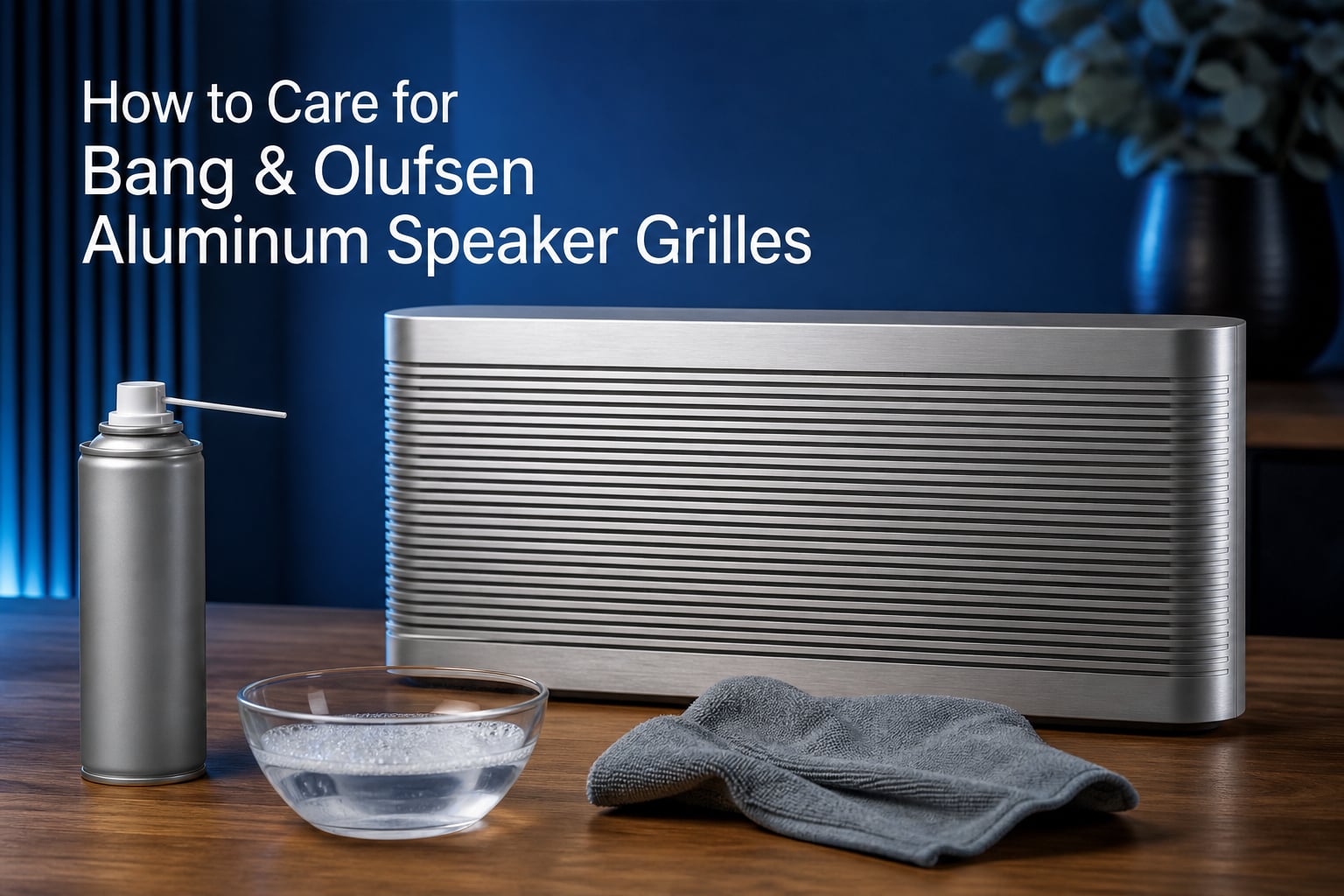
Bang & Olufsen aluminum speaker grille care comes down to three things: gentle tools, mild cleaning solutions, and a consistent routine. Wipe your grilles with a soft microfiber cloth dampened in a water-and-mild-detergent solution, remove dust from the perforations with compressed air, and never use abrasive pads or harsh chemical solvents on the anodized surface.
These speakers represent a serious investment. I have spoken with B&O owners who treat their Beolab and Beosound speakers like furniture pieces, and the number one concern is always the same: how do you keep that brushed aluminum looking flawless without damaging it? The answer matters because one wrong cleaning product can permanently etch the anodized coating.
In this guide, I will walk you through everything from understanding what makes B&O aluminum unique to a complete step-by-step cleaning process, dent prevention strategies, and the common mistakes that ruin expensive grilles. Whether you own a Beosound A5, a pair of Beolab 8000s, or a vintage Beovision set, the principles here apply across the board.
Table of Contents
Understanding Your B&O Aluminum Grilles
Bang & Olufsen speaker grilles are made from 99.97% pure anodized aluminum, precision-milled and finished at the company’s Factory 5 in Denmark. This exceptional purity level matters because any impurities would show as visible imperfections in the final surface, and going higher in purity would make the metal too brittle to work with.
The anodizing process is what gives these grilles their signature look and protective qualities. During anodisation, the aluminum is submerged in an electrolytic bath where a controlled electrical current grows a layer of aluminum oxide directly into the surface of the metal. This oxide layer is not a coating sitting on top, it is chemically bonded to the aluminum itself.
That oxide layer makes the surface scratch-resistant and corrosion-proof under normal conditions. It also allows B&O to achieve various finishes, from pearl-blasted matte to high-polish mirror surfaces. But here is the catch: anodized aluminum is porous at a microscopic level, which means harsh chemicals can penetrate and discolor it permanently.
This is exactly why you cannot treat a B&O grille the same way you would clean a regular metal surface. Standard household cleaners, acidic solutions, and abrasive polishing compounds can all damage the oxide layer that took careful manufacturing to create.
Some owners wonder whether the metal grille itself affects sound quality. The short answer is that B&O engineers design the grilles to be acoustically transparent at the perforation sizes used, so the metal has a negligible impact on audio performance when the speakers are functioning as intended.
Cleaning Supplies You Will Need
Before you start cleaning, gather the right tools. Using the wrong materials is how most damage happens, not the cleaning technique itself. Here is what I recommend based on B&O’s own maintenance guidelines and community-tested methods.
You will need a soft microfiber cloth, ideally two of them so you can use one for cleaning and one for drying. Add a few drops of mild dish detergent or a pH-neutral cleaner to a bowl of lukewarm water. Do not use hot water, as temperature extremes can stress the anodized surface.
A soft-bristled brush helps reach into the grille perforations where dust collects. A clean paint brush with soft natural bristles works well for this. A can of compressed air is also useful for blowing debris out of the small holes without touching the surface.
For tougher cleaning, keep distilled water on hand. Tap water in many areas contains minerals that can leave spots or residue on polished aluminum, and distilled water eliminates that risk entirely.
That is your complete toolkit. Notice what is missing: no window cleaner, no rubbing alcohol, no metal polishes, no abrasive sponges. If a product is not on this list, think twice before putting it near your B&O grilles.
How to Care for Bang & Olufsen Aluminum Speaker Grilles: Step-by-Step Cleaning Guide
Follow these steps in order for safe, effective cleaning. The entire process takes about 15 to 20 minutes per speaker.
Step 1: Power Off and Remove the Grille
Turn off your speaker and unplug it from power. B&O’s official maintenance documentation recommends removing the speaker cover before cleaning. Most B&O grilles attach with clips or magnets and can be gently pulled straight off the cabinet. Check your specific model’s manual for the removal method, as forcing a grille off can bend the frame or damage the clips.
Step 2: Remove Loose Dust with Compressed Air
Hold the can of compressed air about 6 inches from the grille and use short bursts to blow dust out of the perforations. Work in sections, moving systematically across the surface. This step removes the bulk of dry debris before you introduce any moisture, which prevents dust from turning into mud that gets trapped in the holes.
Step 3: Prepare Your Cleaning Solution
Mix two or three drops of mild detergent into a bowl of lukewarm distilled water. Stir gently to create a lightly soapy solution without excessive foam. The ratio should be mostly water with just enough detergent to break down oils and fingerprints.
Step 4: Wipe with a Damp Microfiber Cloth
Dip your microfiber cloth into the solution, then wring it out until it is barely damp. The cloth should leave no visible water on the surface when wiped. Wipe the grille in straight lines following the grain of the brushed aluminum, not in circular motions. Circular wiping can leave visible swirl marks on the surface.
Step 5: Clean the Perforations Gently
For dust trapped in the holes, lightly sweep your soft-bristled brush across the surface in the same direction as the grain. Do not push the bristles into the perforations forcefully. If debris remains, use another burst of compressed air after the surface has dried.
Step 6: Dry and Buff
Use your dry microfiber cloth to wipe away any remaining moisture immediately. Buff lightly in the direction of the grain to restore the finish. Allow the grille to air-dry completely for 10 to 15 minutes before reattaching it to the speaker cabinet.
Removing Stubborn Stains and Fingerprints
Fingerprints are the most common complaint among B&O owners, and polished aluminum finishes show them prominently. Reddit users in the r/BangandOlufsen community frequently ask about this exact problem.
For fresh fingerprints, a barely damp microfiber cloth with a tiny amount of mild detergent usually does the job. Wipe gently in the direction of the grain and dry immediately. The oils from your skin come off easily when caught early.
For older or more stubborn smudges, slightly increase the detergent concentration in your solution and use a bit more pressure with the microfiber cloth. Still avoid scrubbing aggressively. Let the detergent do the work by holding the damp cloth against the stain for a few seconds before wiping.
Grease stains respond well to the same mild detergent method since dish soap is designed to break down oils. Work from the outside of the stain inward to avoid spreading it across a larger area of the grille.
Never use acetone, paint thinner, or industrial degreasers on anodized aluminum. These solvents can dissolve or discolor the oxide layer, leaving permanent cloudy or white spots that cannot be reversed without professional refinishing.
Dent Prevention and Repair
B&O metal speaker grilles are thin by design, and the Beoworld community forum notes that they are “prone to dents, and the dents are quite noticeable” on the perforated surface. Prevention is far easier than repair.
Position your speakers away from high-traffic areas where people or pets might bump into them. Keep at least 6 inches of clearance on all sides. If you have children, consider placing floor-standing models in corners or behind furniture that creates a natural barrier.
When moving speakers, always remove the grilles first and transport them separately. Carry grilles flat with both hands supporting the frame. Never lift a speaker by its grille, even if it feels secure.
For small dents, some forum users report success with gentle massage from the back side of the grille using a soft tool like the rounded end of a chopstick. This works only on thin, accessible grilles and carries risk. Pushing too hard can create a bulge that looks worse than the original dent.
For significant dent damage, seek professional repair. B&O authorized service centers can assess whether the grille can be reshaped or needs replacement. Attempting aggressive DIY repairs on a premium speaker often leads to more damage and higher eventual costs.
Common Mistakes to Avoid
Many cleaning mistakes come from treating B&O aluminum like any other household surface. Here are the errors I see most often in forums and user discussions.
Do not use abrasive cleaners or scouring pads. Steel wool, rough sponges, and even some paper towels can scratch the anodized surface. Stick to microfiber and soft brushes only.
Never spray cleaning solution directly onto the grille. Overspray can run into the speaker drivers or pool in the perforations. Always apply solution to your cloth first, then wipe.
Avoid isopropyl alcohol and other solvents. While alcohol is great for disinfecting electronics, it can strip the protective oxide layer on anodized aluminum over time, leaving the surface vulnerable to corrosion and discoloration.
Do not spray paint a speaker grille to refresh its appearance. Paint fills the perforations, dampens sound, and looks uneven on metal surfaces. If your grille finish is truly worn, replacement through B&O is the correct path.
Do not skip the grille removal step. Cleaning the grille while it is still attached risks getting moisture into the speaker cabinet and driver components. Taking two minutes to remove the grille properly protects the internal electronics.
Preventive Care Tips for Long-Term Maintenance
Consistent light maintenance prevents the need for aggressive cleaning later. I recommend dusting your B&O grilles every one to two weeks with a dry microfiber cloth or a soft brush.
Do a deeper clean with the damp cloth method once a month, or more frequently if the speakers are in a kitchen, near windows, or in rooms where people smoke or cook. Grease and airborne particles settle on aluminum faster than you might expect.
Placement plays a big role in how dirty your grilles get. Avoid positioning speakers near open windows where pollen and dust blow in. Keep them away from heat sources like radiators, as thermal cycling can stress the anodized coating over time.
Humidity matters too. In very humid environments, moisture can eventually penetrate even anodized aluminum. If you live in a coastal area or a damp climate, consider using a dehumidifier in the room where your speakers live.
For long-term storage, wrap each grille in a soft cloth or bubble wrap and store it flat in a dry, temperature-stable location. Never stack heavy objects on top of stored grilles. Label them by model so you know which speaker each one belongs to when you retrieve them.
FAQs
What material are the Bang u0026amp; Olufsen speaker grilles made from?
Bang u0026amp; Olufsen speaker grilles are made from 99.97% pure anodized aluminum. The metal goes through an electrolytic anodising process that grows a protective aluminum oxide layer into the surface, making it scratch-resistant and corrosion-proof.
What is the best way to clean speaker grills?
The best way to clean speaker grills is to remove the grille from the speaker, blow out loose dust with compressed air, then wipe with a barely damp microfiber cloth using a solution of water and a few drops of mild detergent. Always wipe in the direction of the brushed grain and dry immediately with a clean cloth.
Can I spray paint a speaker grill?
No, you should not spray paint a Bu0026amp;O aluminum speaker grille. Paint fills the precision-milled perforations, restricts airflow to the drivers, and dulls sound quality. If the finish is damaged, contact Bu0026amp;O for a replacement grille instead.
Do metal speaker grills affect sound?
Bu0026amp;O engineers design their aluminum grilles with perforation sizes that are acoustically transparent, so the metal grille has a negligible impact on sound quality when the speaker is functioning as designed.
How often should I clean my Bu0026amp;O speaker grilles?
Dust your Bu0026amp;O speaker grilles every one to two weeks with a dry microfiber cloth. Perform a deeper clean with a damp cloth and mild detergent once a month, or more often if the speakers are in dusty, humid, or kitchen-adjacent environments.
Conclusion
Knowing how to care for Bang & Olufsen aluminum speaker grille care comes down to respecting the anodized surface. Use soft microfiber cloths, mild detergent, and distilled water. Dust regularly, deep clean monthly, and never introduce harsh chemicals or abrasive tools.
Your B&O speakers were built to last decades with proper maintenance. By following the steps and preventive tips in this guide, you can keep those brushed aluminum grilles looking as striking as the day you unboxed them. Start a cleaning routine this week, and your future self will thank you every time guests notice the finish.