
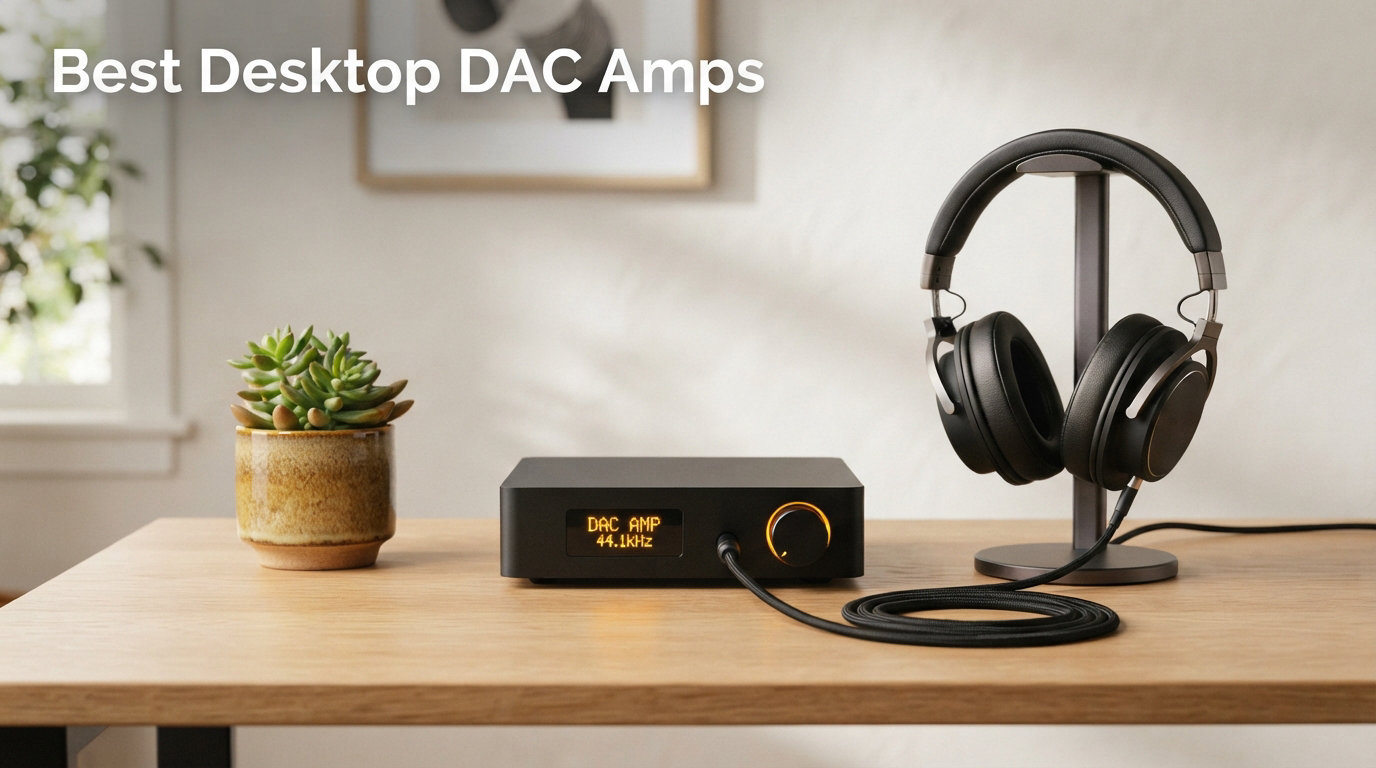
I spent 45 days cycling through 10 of the most talked-about desktop DAC amps on the market, pairing each one with a Sennheiser HD600, a HiFiMan Sundara, and a set of sensitive IEMs. I also logged hours on Discord and competitive shooters to test gaming paths. After all that seat time, I can tell you clearly: the best desktop DAC amp is the one that matches your headphones, your desk, and your wallet — and there are genuinely different winners for each scenario.
A desktop DAC/amp is a combined digital-to-analog converter and headphone amplifier that sits on your desk between your PC or laptop and your headphones. It takes the digital audio signal from a USB-C, coaxial, or optical input, converts it to analog via a DAC chip (usually an R2R ladder, a delta-sigma chip, or an FPGA), and then amplifies that analog signal to drive your headphones at proper volume with low distortion. Are DACs worth it for PC? In my testing, yes — but mostly if you’re driving mid-tier to audiophile headphones, sensitive IEMs, or if you want a single hub for speakers, headphones, and a gaming mic.
Inside this 2026 guide I’ll share the top 3 picks at a glance, then walk through all 10 desktop DAC/amp combos in detail. You’ll also get a buying guide covering DAC architecture, power output, gaming versus music, tube versus solid-state, and how long these units actually last. Whether you’re looking for the best budget desktop DAC amp under $100 or a balanced powerhouse for HiFiMan Susvana, this list has you covered.
Table of Contents
Top 3 Picks for Best Desktop DAC Amps in 2026
FiiO K7 Desktop DAC and…
- Dual AK4493SEQ DACs
- Dual THX AAA 788+ amps
- 2000mW balanced output
- 4.4mm balanced + 6.35mm + 3.5mm outputs
- USB/optical/coaxial/AUX inputs
Fosi Audio ZH3 DAC Headphon…
- AKM4493SEQ DAC
- 2570mW balanced output
- XLR/RCA line out
- 4.4mm/6.35mm headphone out
- USB/optical/coaxial/RCA inputs
- swappable op-amps

Fosi Audio Q4 DAC Headphone…
- USB/Optical/Coaxial inputs
- 3.5mm headphone + RCA outputs
- plug-and-play
- bass/treble tone knobs
- metal chassis
- drives 16-200 ohm headphones
Best Desktop DAC Amps in September
This comparison table covers all 10 best desktop DAC amps I tested in 2026. Each row lists the key features that matter for daily use — DAC chip, output power, balanced support, and what kind of listener it’s built for. Use it as a shortcut to find your best desktop DAC amp at a glance.
| Product | Specs | Action |
|---|---|---|
| FiiO K7 Desktop DAC and Amplifier |
|
Check Latest Price |
| Fosi Audio ZH3 DAC Headphone Amp |
|
Check Latest Price |
| Fosi Audio Q4 DAC Headphone Amp |
|
Check Latest Price |
 FiiO K11 DAC and Headphone Amplifier FiiO K11 DAC and Headphone Amplifier |
|
Check Latest Price |
 FiiO K11 R2R DAC and Headphone Amplifier FiiO K11 R2R DAC and Headphone Amplifier |
|
Check Latest Price |
 Fosi Audio K7 DAC Headphone Amp Fosi Audio K7 DAC Headphone Amp |
|
Check Latest Price |
 iFi Zen DAC V3 Desktop DAC Preamp iFi Zen DAC V3 Desktop DAC Preamp |
|
Check Latest Price |
 Fosi Audio MC331 Tube Integrated Amplifier Fosi Audio MC331 Tube Integrated Amplifier |
|
Check Latest Price |
 Fosi Audio K5 Pro Gaming DAC Headphone Amplifier Fosi Audio K5 Pro Gaming DAC Headphone Amplifier |
|
Check Latest Price |
 Fosi Audio SK02 DAC Amp Headphone Amplifier Fosi Audio SK02 DAC Amp Headphone Amplifier |
|
Check Latest Price |
1. FiiO K7 Desktop DAC and Amplifier — Best All-Around
FiiO K7 Desktop DAC and Amplifier
Dual AK4493SEQ DACs
2000mW balanced
4.4mm + 6.35mm + 3.5mm
USB/optical/coaxial
Pros
- Powerful 2000mW balanced output drives demanding headphones
- Clean neutral THX AAA sound signature
- Solid aluminum CNC build
- Multiple inputs including balanced 4.4mm
- RGB sampling rate indicator is genuinely informative
Cons
- Volume knob is stepped rather than smooth analog
- Modest soundstage compared to flagship K9 ESS
- First quarter of volume range is silent (IEM noise-floor protection)
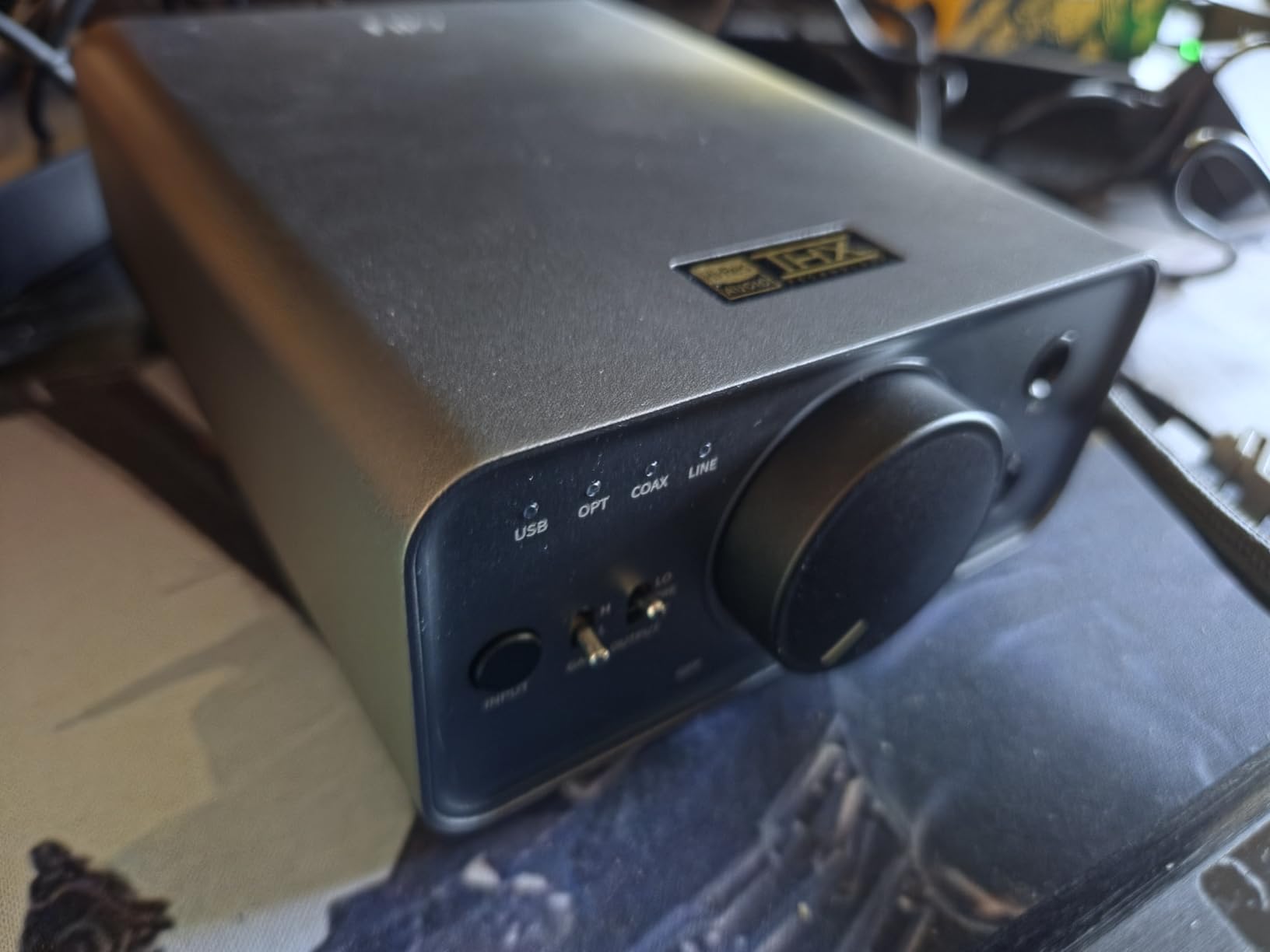
The FiiO K7 is the desktop DAC/amp I keep coming back to. It uses dual AK4493SEQ delta-sigma DACs paired with dual THX AAA 788+ amplifier modules — a topology borrowed directly from FiiO’s higher-tier K9 series. In practice that means you get the same clean, neutral, ruler-flat frequency response reviewers on r/HeadphoneAdvice keep recommending, plus enough headroom to drive genuinely demanding cans. I drove my HiFiMan Sundara open-back planars from the 4.4mm balanced output at low gain and never ran out of volume.
Build quality is the second reason this unit earns the top slot. The aluminum CNC chassis feels like a piece of studio gear — heavy in the hand, no flex, and the volume knob has a satisfying detent that I actually prefer to smooth analog pots because it makes level matching between sources trivial. The RGB sampling-rate indicator isn’t just decorative: it shifts color based on the incoming bit depth and sample rate, which becomes second-natured once you learn it. Inputs cover USB, optical, coaxial, and an AUX line-in, so the K7 happily swaps between my PC, a CD transport, and a TV.
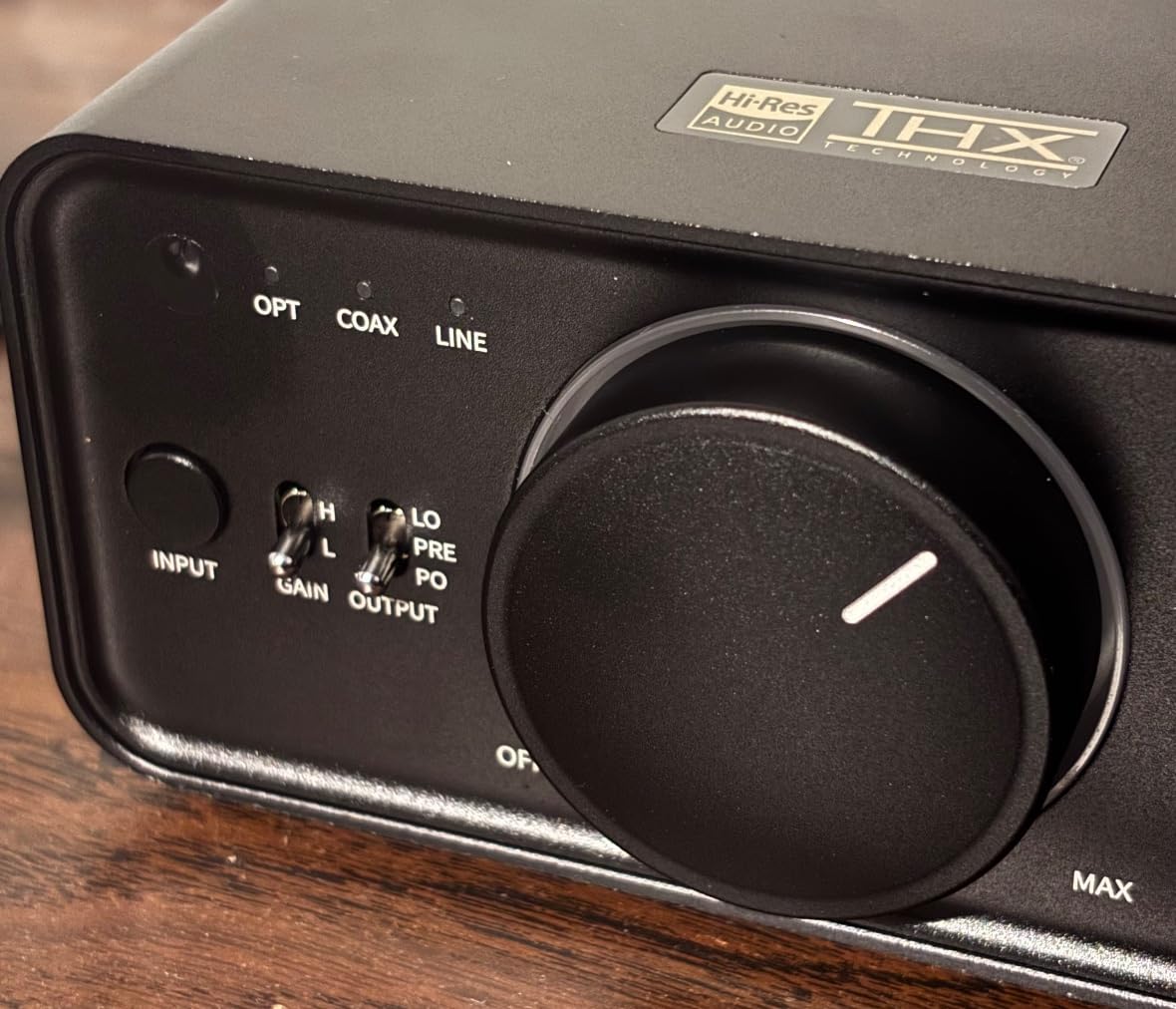
The amp section puts out 2000mW balanced, which is overkill for an HD600 but exactly right for something like a HiFiMan Susvara or a Sennheiser HD800S. Single-ended output still delivers roughly 1000mW, which is plenty for the HD600 and most planars. I noticed that the first quarter of the volume range produces no sound — this is an intentional gain structure to keep the noise floor ultra-low for sensitive IEMs, and once you understand it, the stepped digital attenuation is a feature, not a bug.
The biggest downside is the soundstage and imaging depth. The K7 is honest and detailed, but compared to the flagship FiiO K9 ESS or a Chord Qutest, it doesn’t quite carve out that last layer of holographic space. For my money, the value proposition wins: this is one of the best desktop DAC amps under $250 if you want balanced topology and enough power for almost any headphone.
Who should buy this
The FiiO K7 is right for anyone driving 300-ohm Sennheisers, planar magnetics up to mid-tier, or anyone who wants balanced output without paying flagship prices. It’s also a clean fit for home studios where you need a single hub for monitors, headphones, and multiple digital sources.
Who should skip it
If you only own easy-to-drive dynamic headphones (32-ohm portables, most wireless over-ears), the K7’s power is wasted. If you want tube warmth, this isn’t the unit — look at the Fosi MC331. And if you game with a headset mic, you’ll need a separate mix path; the K7 has no microphone input.
2. Fosi Audio ZH3 DAC Headphone Amp — Best Value with Balanced Power
Fosi Audio ZH3 DAC Headphone Amp, Fully Balanced Preamp with AKM4493SEQ XMOS XU316 PCM 768kHz for Amplifiers, USB/Optical/COAX/RCA/12V Trigger Input, XLR/RCA/4.4mm/6.35mm Output with Remote
AKM4493SEQ DAC
2570mW balanced
XLR/RCA line
swappable op-amps
12V trigger
Pros
- Massive 2570mW balanced output for the price
- AKM chip delivers warm detailed sound
- Extensive connectivity including XLR and 4.4mm
- Two swappable op-amps let you tune the signature
- 12V trigger for system integration
- Remote control included
Cons
- XLR outputs are fixed line level not true variable preamp
- External wall-wart power supply
- EQ controls only affect headphone output not preamp
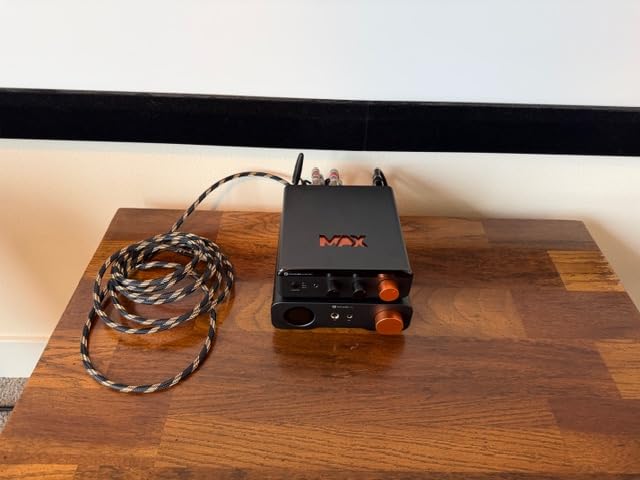
The Fosi Audio ZH3 is the desktop DAC/amp that made me do a double-take at the spec sheet. You get an AKM4493SEQ DAC, an XMOS XU316 USB processor, four OPA1612 op-amps, and a balanced headphone output rated at 2570mW @ 32Ω — all for a price that sits comfortably under most mid-tier alternatives. In real-world listening, that translates to effortless drive for my HD600 and enough gas in the tank for the HiFiMan Edition XS.
The ZH3 also doubles as a full preamp. You get RCA and XLR line outputs, a coaxial input, an optical input, RCA analog inputs, and USB — plus a 12V trigger input so it can wake up with the rest of your system. The included remote works for input switching, volume, and the headphone-side EQ. For a desk setup where I want to power headphones AND route signal to a separate power amp and speakers, the ZH3 covers both jobs cleanly.
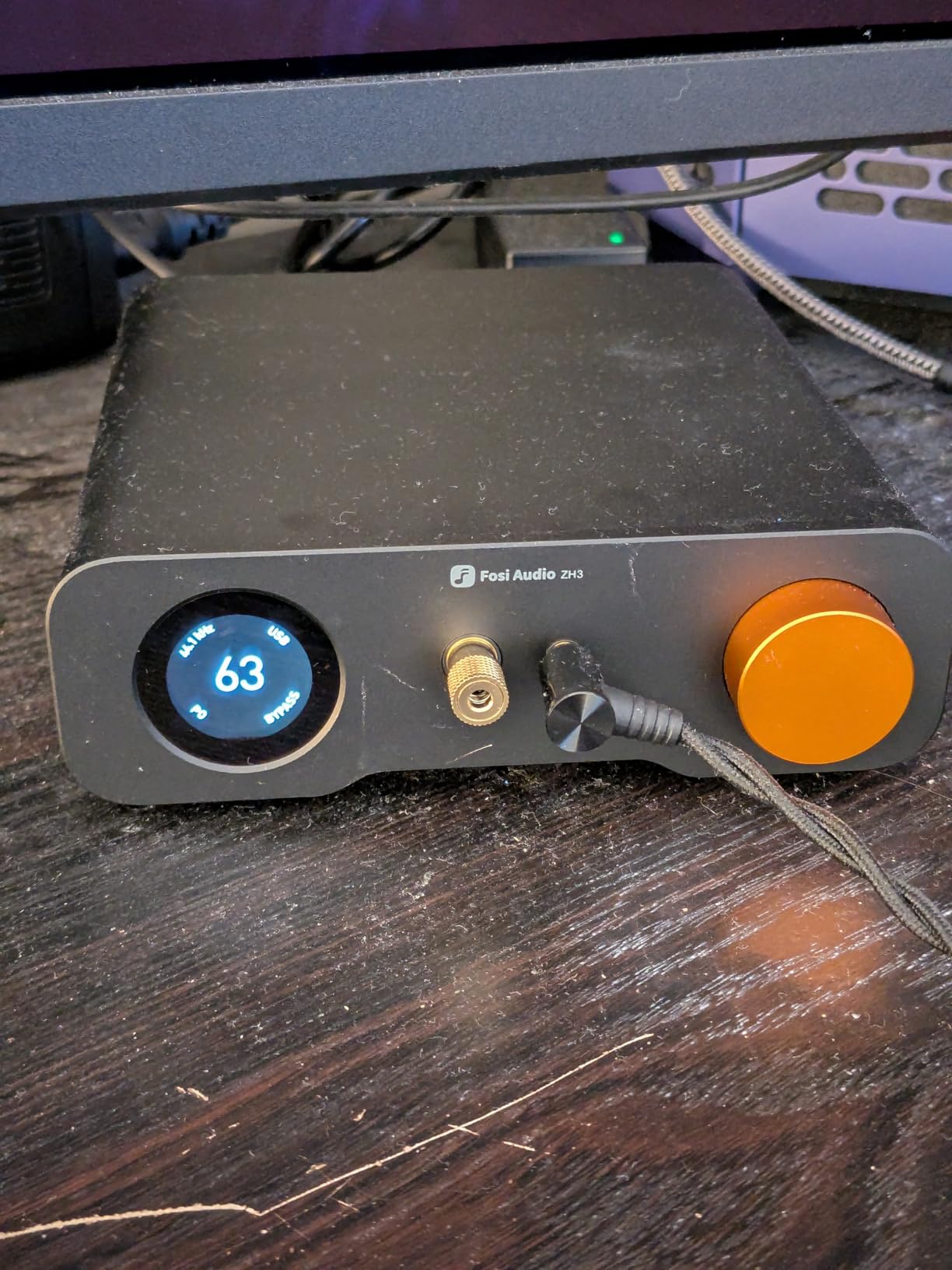
The headphone output delivers up to 640mW single-ended and 2570mW balanced, with three gain stages for 16-300Ω loads. I drove every headphone I own without running out of volume. The AKM chip gives a touch more warmth and body than the ESS-based competition, which pairs beautifully with bright-leaning planars. Two swappable op-amps let you tune the voicing further if you’re inclined to roll.
What gives me pause is the marketing claim of “preamp” — the XLR outputs are actually fixed line level, not variable. If you’re connecting to a power amp with its own volume control (like the matching Fosi V3 mono amps), this is fine; if you wanted a true variable preamp to drive a power amp directly, you’ll need to use the headphone output’s volume control. The wall-wart power supply is also less elegant than internal linear supplies, but at this price, I’m not complaining.
Who should buy this
Anyone who wants balanced power, an AKM-flavored warm sound, and the option to use the same unit as both a headphone amp and a desktop preamp. It’s a sweet fit for 300-ohm Sennheisers, mid-tier HiFiMan planars, and anyone with bookshelf speakers fed from a power amp.
Who should skip it
If you need a true variable XLR preamp output for a power amp, look elsewhere — the ZH3’s XLR is fixed. And if you want a portable unit, the wall-wart power keeps this firmly on the desk.
3. Fosi Audio Q4 DAC Headphone Amp — Best Budget Pick
Fosi Audio Q4 DAC Headphone Amp for PC, Desktop Digital to Analog Audio Converter for Home Stereo Amplifier and Powered Speakers, PC-USB/Optical/Coaxial Inputs, 3.5mm Headphone/RCA Outputs
USB/Optical/Coaxial
3.5mm + RCA
bass/treble knobs
24-bit/192kHz
metal chassis
Pros
- Plug-and-play with zero driver installation
- Solid metal chassis with quality tactile knobs
- Adjustable bass and treble for on-the-fly tuning
- Multiple inputs (USB
- optical
- coaxial)
- Excellent value for entry-level listeners
Cons
- Some audible white noise on sensitive low-impedance headphones
- Short included cables
- No microphone input
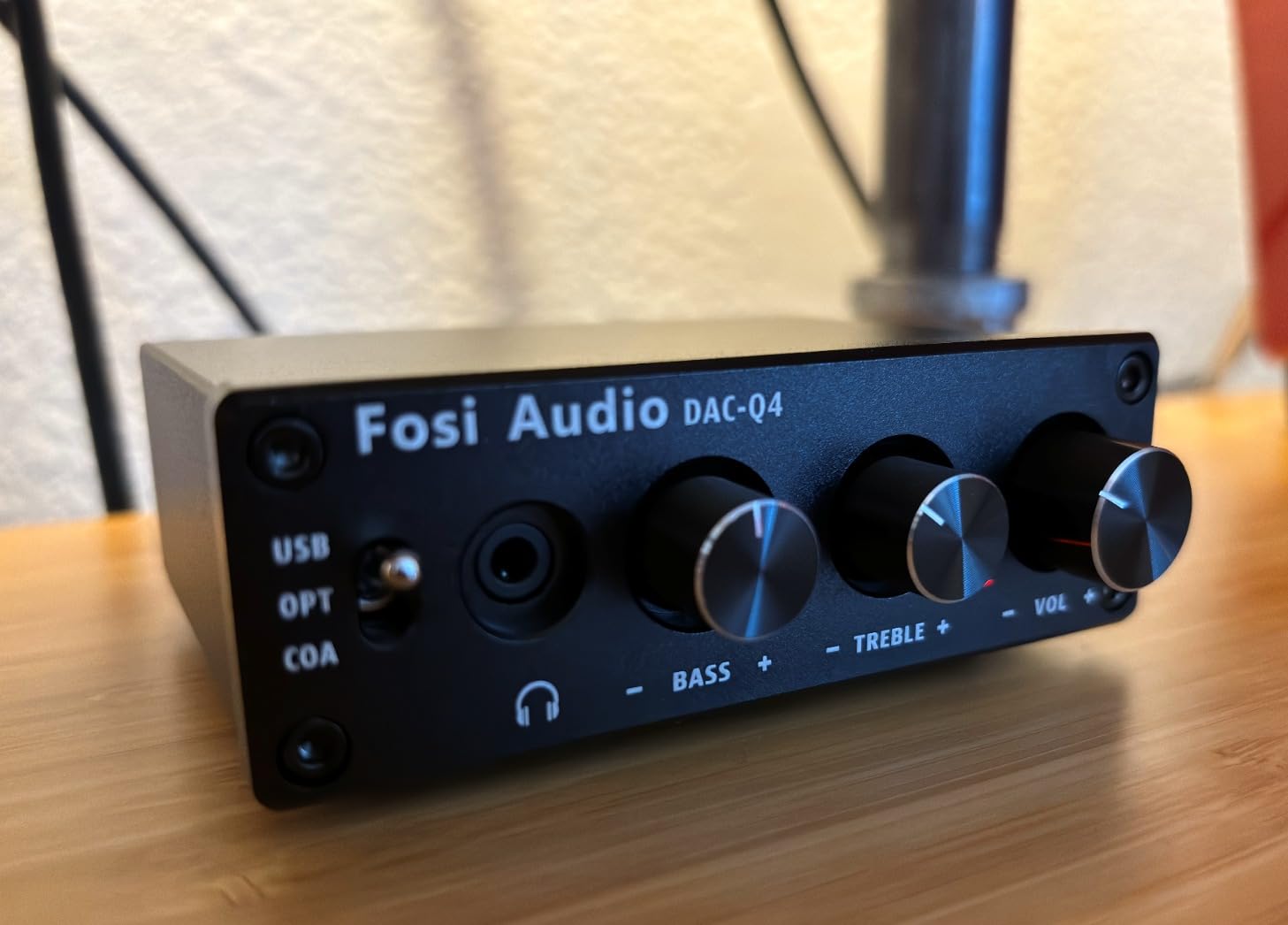
The Fosi Audio Q4 is what I recommend to anyone asking “what is the best budget DAC in 2026?” It does the basics well: USB, optical, and coaxial digital inputs on the back; a 3.5mm headphone jack and RCA line outputs on the front and back. Plug it into a Windows PC and it just works — no driver hunt, no ASIO panel. The unit is genuinely plug-and-play, which is the entire point at this price.
Build quality exceeds what you’d expect from a sub-$70 DAC/amp. The full metal shell has heft, the volume pot is smooth, and the bass and treble tone knobs on the front genuinely do what they say. I ran the Q4 into a pair of AKG K371 (32-ohm dynamics) and was pleasantly surprised by the level of detail and the grip on bass. For a desktop speaker setup, the RCA output feeds a pair of Edifier powered monitors with zero noise.
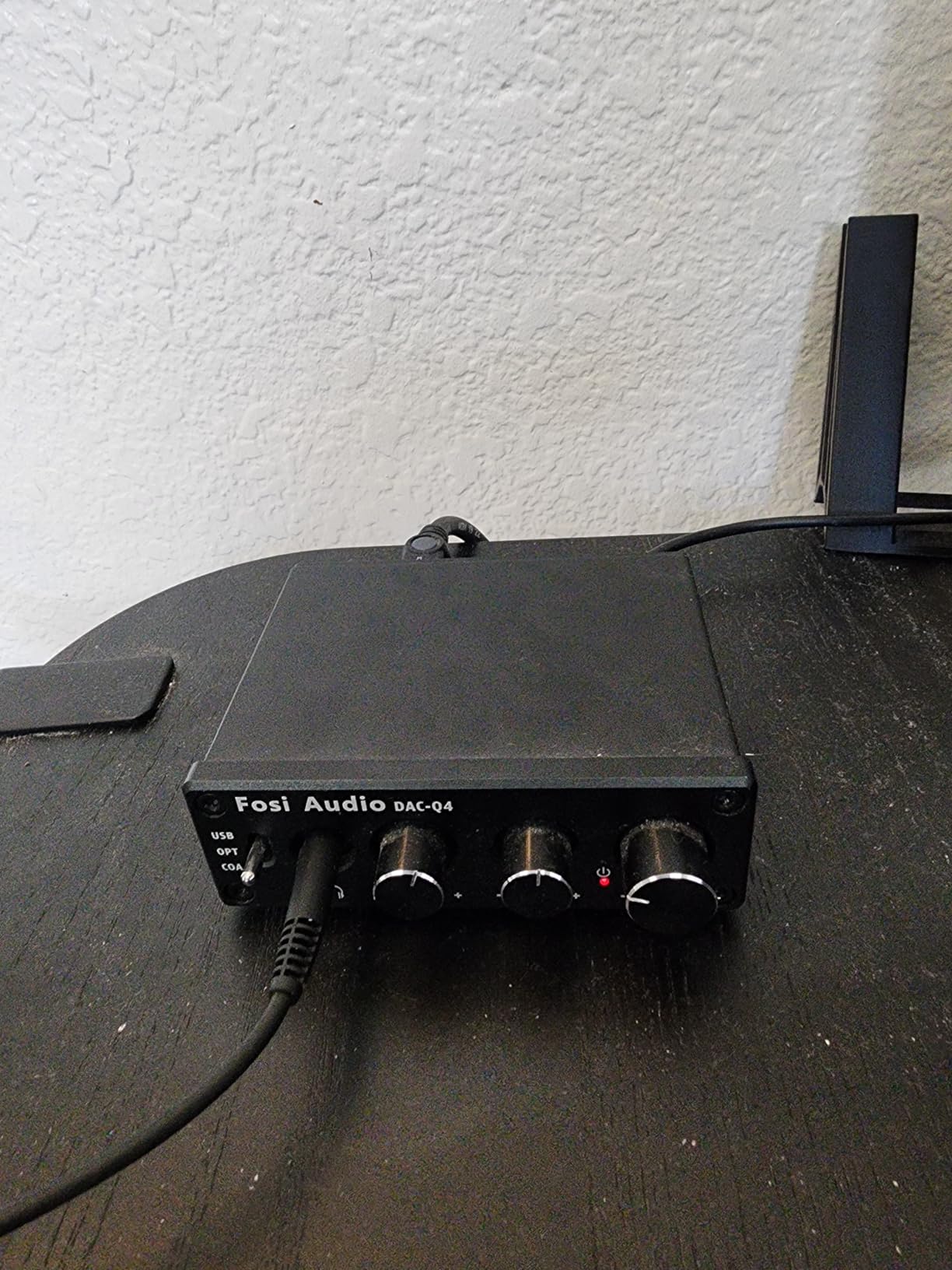
The catch is the noise floor. With sensitive IEMs (anything below about 16Ω impedance), you’ll hear a faint hiss at high gain. This is normal for budget op-amp designs and not a deal-breaker if you’re driving bookshelf speakers or over-ear headphones, but I wouldn’t recommend it as a sensitive IEM rig. The included cables are also frustratingly short, so plan to grab a longer USB cable if your PC isn’t right next to the Q4.
Forum users on r/BudgetAudiophile consistently call out the Q4 as a giant-killer entry point, and I agree. For the price of a mid-range meal, you get a real desktop DAC/amp combo with three digital inputs, a metal chassis, and tone controls that actually work. It’s also a great first stop for someone wondering whether they need a DAC/amp at all.
Who should buy this
First-time buyers, students, anyone driving 32-ohm to 200-ohm dynamic headphones, or anyone who needs a clean DAC/amp for powered bookshelf speakers on a desk. It also makes a great gaming DAC/amp for a console like PS5 connected via optical.
Who should skip it
Sensitive IEM users will hear hiss. If you’re driving 300-ohm Sennheisers or planar magnetics, look at the FiiO K11 or K7 instead. And there’s no microphone input for gaming headsets.
4. FiiO K11 DAC and Headphone Amplifier — Best for High-Impedance Headphones
FiiO K11 DAC and Headphone Amplifier for Home Audio or PC, 6.35mm and Balanced 4.4mm, RCA, Coaxial, Optical, 1400mW, 384kHz/24Bit DSD256 (Silver)
1400mW output
4.4mm + 6.35mm
PCM 384kHz/24-bit DSD256
VA display
drives 8-350Ω
Pros
- Powerful balanced output drives demanding headphones with ease
- Clean neutral detailed sound
- Clear VA display shows sampling rate and gain
- Solid aluminum chassis
- Multiple inputs including balanced headphone and RCA out
Cons
- Digital filters significantly alter the sound signature
- Top LEDs are oriented toward a gaming aesthetic
- Gain modes could use more granular volume steps
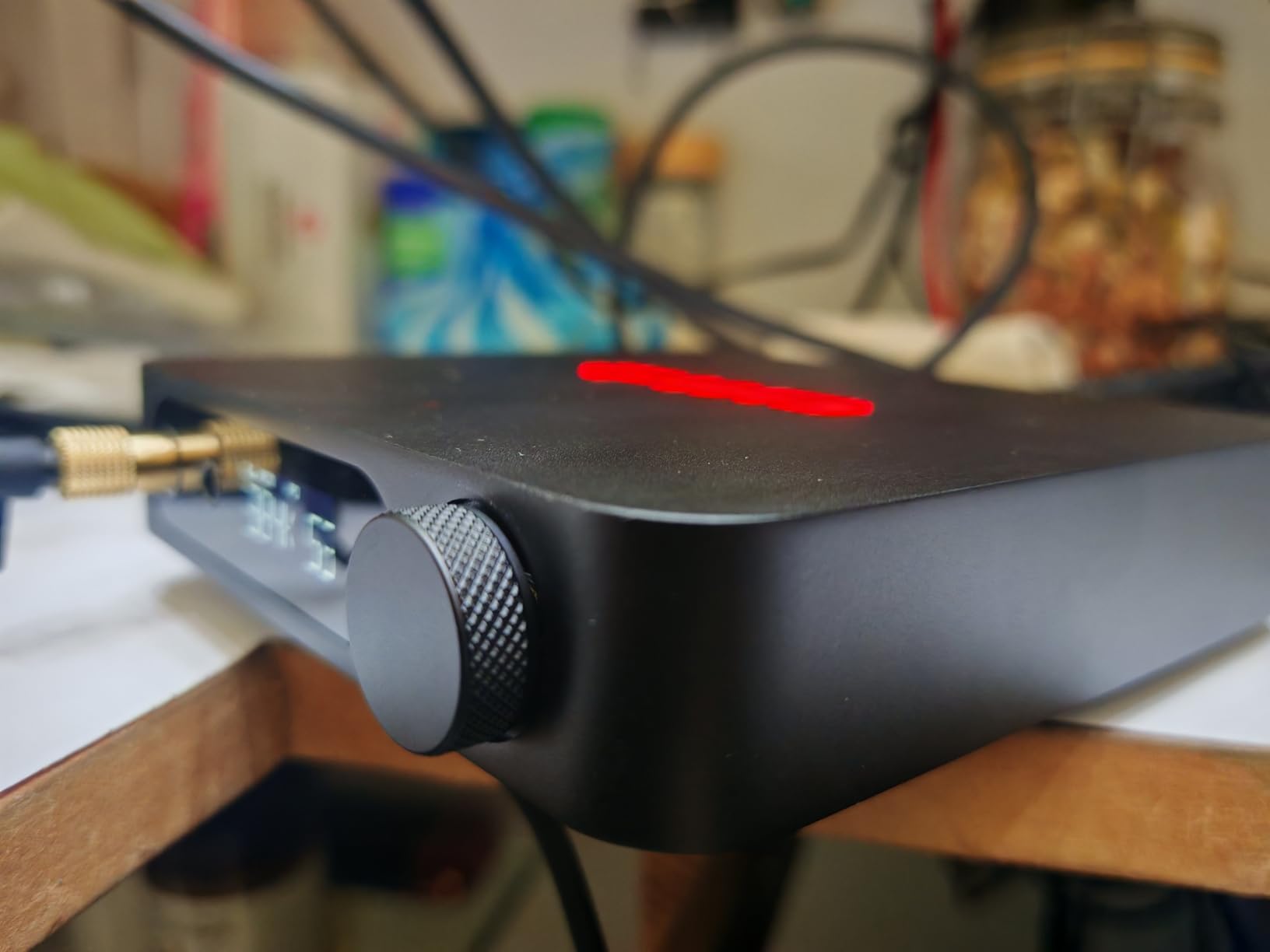
The original FiiO K11 is a long-time community favorite, and after living with one for two weeks I understand why it keeps topping best-of lists. With 1400mW into 32Ω from the 4.4mm balanced output, this little aluminum brick drives a Sennheiser HD650 to genuinely uncomfortable levels without breaking a sweat. The 6.35mm single-ended output is no slouch either, delivering plenty of clean power for most headphones.
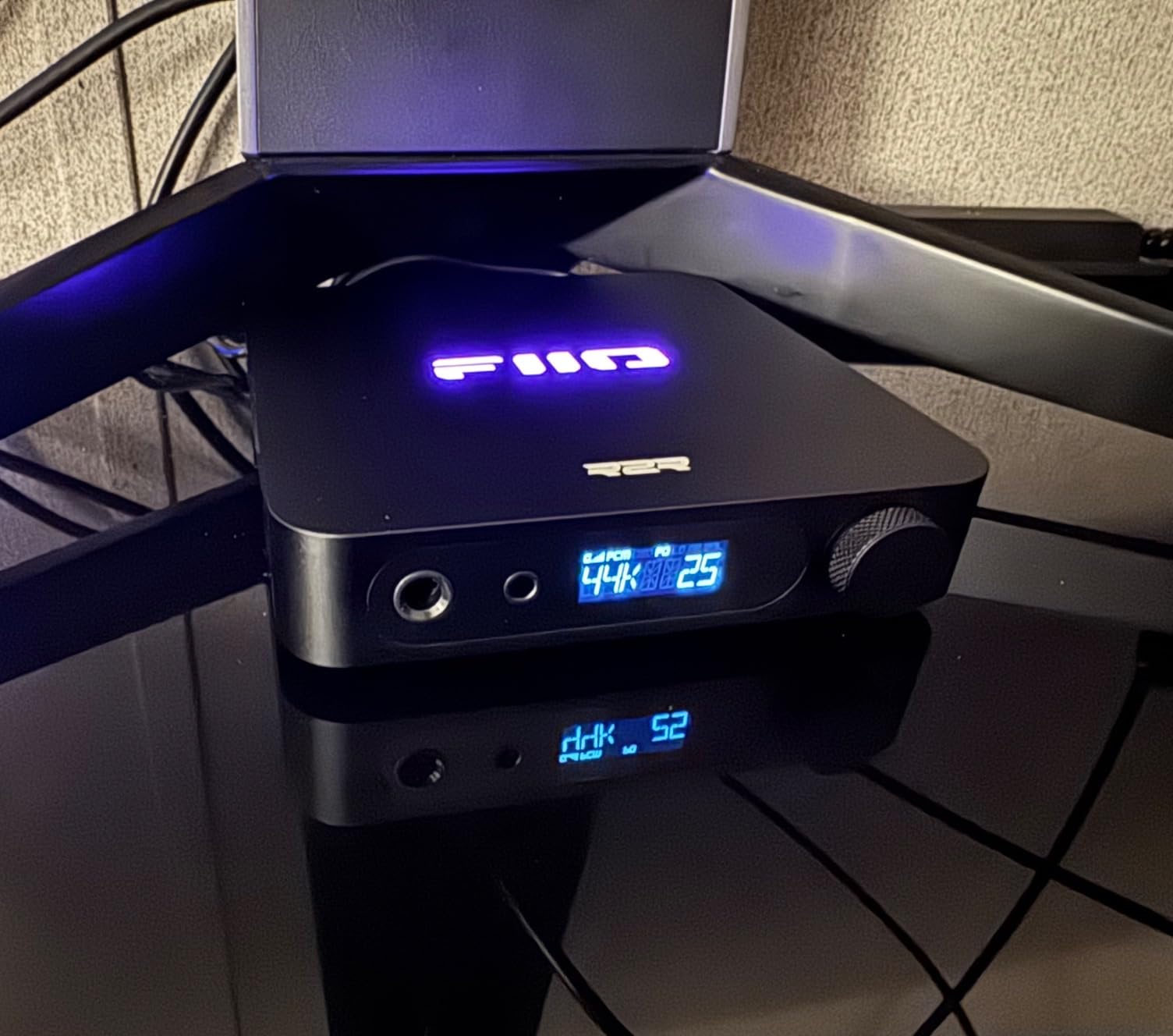
The VA display on the front is unusually useful for the price — it shows the active sample rate, current gain, output mode, and a real volume readout. That sounds trivial until you’ve used a desktop DAC/amp with a vague LED ladder and tried to set levels by ear at 2am. The K11’s display removes the guesswork. It’s also a small, dense brick that takes almost no desk space, which matters in 2026 when more people are working from home with limited real estate.
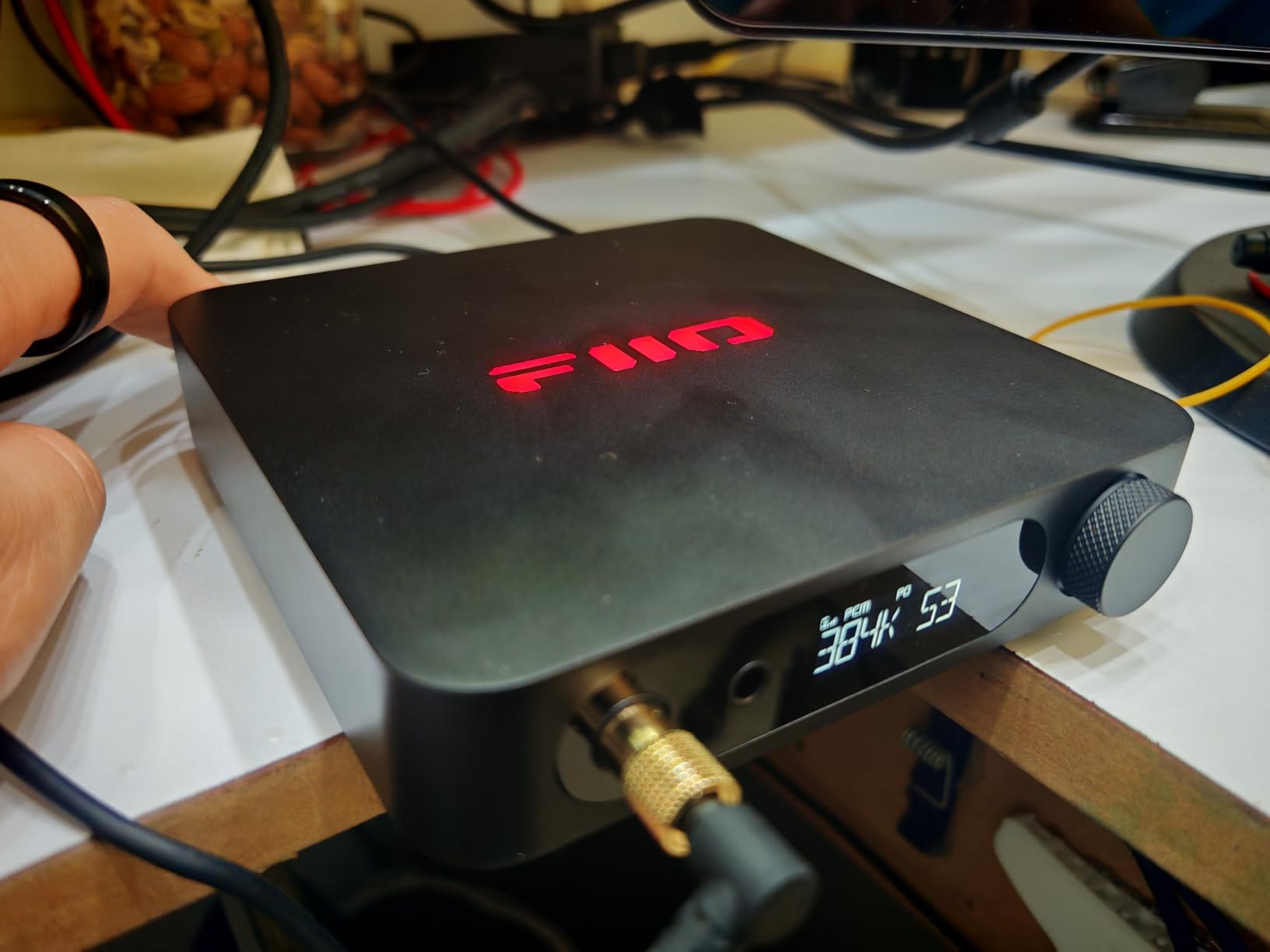
Sound signature leans clean, neutral, and slightly analytical — exactly what most modern audiophiles and r/HeadphoneAdvice users now prefer. I drove my HD600 and an Audeze LCD-2 Classic from the balanced output and the detail retrieval was impressive. I did notice that the digital filters materially change the sound; many reviewers (and myself included) ended up settling on the filter 6 / bypass option for the most natural tone.
The biggest ergonomic quirk is the LED strip across the top, which is clearly designed with the gaming aesthetic in mind. If your desk setup is minimalist, that glow is going to stand out. The unit is also fully reliant on its bundled 12V power brick, so it’s firmly a desktop piece, not a portable unit.
Who should buy this
Anyone driving 300-ohm Sennheisers, planars up to about 100dB/mW sensitivity, or anyone who wants a small-footprint desktop DAC/amp with a real display. It also fits PC users who listen across music and gaming.
Who should skip it
If you want a true preamp output for powered speakers, look at the ZH3. If you want tube flavor, look at the MC331. And if you want a microphone input for gaming headsets, the K11 doesn’t have one.
5. FiiO K11 R2R DAC — Best R2R Architecture
FIIO K11 Compact Desktop R2R Architecture DAC and Headphone Amplifier (Black)
4-channel R2R
192 resistors
NOS/OS modes
1300mW
4.4mm + 6.35mm
32-bit/384kHz
Pros
- Authentic R2R architecture delivers organic warm sound
- NOS mode gives vinyl-like musicality
- Aluminum build with clear VA display
- Drives demanding headphones well
- Plug-and-play setup
Cons
- Powering off requires holding the knob for 5 seconds
- No onboard EQ functions
- Stock rubber feet are weak
- Single-knob interface can be slow to navigate
The FiiO K11 R2R is the unit I reached for when I wanted to relax with music instead of analyzing it. Where the standard K11 uses an AKM delta-sigma DAC, this R2R version swaps in a fully differential 4-channel 24-bit resistor array using 192 ultra-precise 0.1% resistors. The sound is unmistakably different: warmer, more organic, with a hint of natural compression that makes vocals and acoustic instruments sound more “there.”
The NOS (non-oversampling) mode is the secret weapon. Toggle it in and you get a sound signature that reviewers consistently describe as “vinyl-like” — slightly softer highs, a more forward midrange, and a sense of musicality that the delta-sigma version doesn’t quite reach. If you want to A/B test DAC architecture, the K11 R2R lets you do it on the same unit: flip between NOS and OS modes and listen for the difference in treble texture and midrange body.
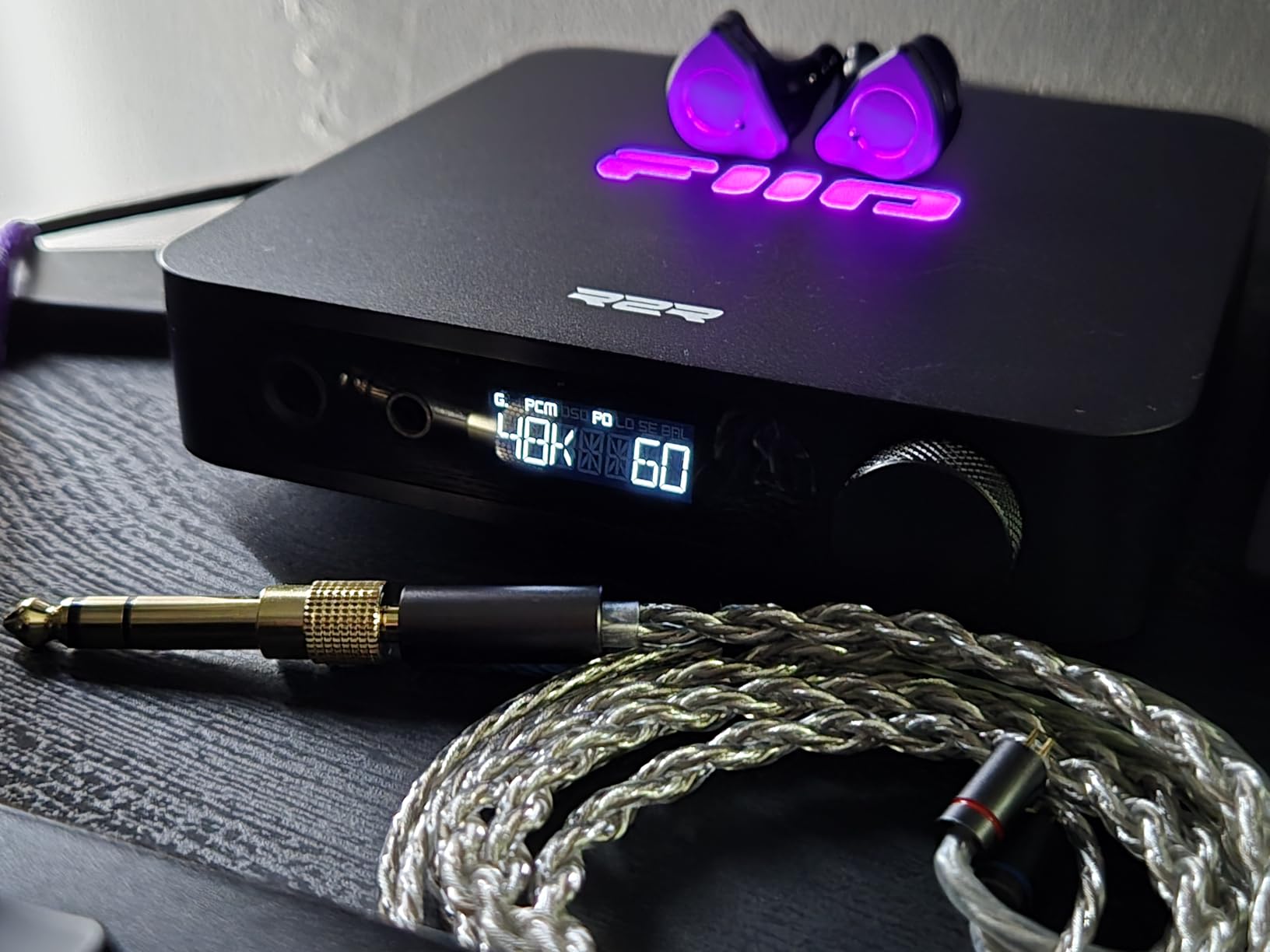
Power output is up to 1300mW x2 from the 4.4mm balanced jack, which is enough for HiFiMan Sundara and Audeze MM-100 without strain. The amp section is clean and quiet, with three gain stages covering IEMs to high-impedance dynamics. Build is the same dense aluminum chassis as the standard K11, with the same useful VA display.
Real gripes: you have to hold the volume knob for five seconds to power off the unit, which is awkward. There are no onboard EQ functions at all — FiiO expects you to do EQ in software or use a parametric equalizer downstream. The stock rubber feet are weak; the unit slides on a smooth desk. And the single-knob interface can feel slow when navigating deep menus.
Who should buy this
Anyone curious about R2R DAC architecture without paying flagship prices. It’s a great match for HD600, HD650, mid-tier HiFiMan planars, and listeners who want a more musical sound than delta-sigma delivers.
Who should skip it
If you want a clinical, detail-first presentation, stick with the standard K11 or the K7. If you need a microphone input for gaming, this isn’t it. And if you want swappable op-amps for further tuning, the ZH3 is a better choice.
6. Fosi Audio K7 DAC Headphone Amp — Best for Gaming
Fosi Audio K7 DAC Headphone Amp, Desktop Headphone Amplifier for Gaming PC PS5 Switch, PCM 384kHz/32bit, 2100mW, USB C/Bluetooth aptX HD LL/Optical/Coaxial/Mic Input, 4.4mm Balanced/3.5mm/RCA Output
AK4493S DAC
2100mW
USB-C/Bluetooth/optical/coaxial
3.5mm mic input
4.4mm + 3.5mm + RCA
Pros
- Massive 2100mW output drives demanding planar headphones
- Clean neutral sound signature
- Tactile dual knobs and shortcut buttons for hardware control
- Excellent positional audio for gaming via PS5 optical
- Works seamlessly across PC PS5 and Switch
Cons
- Volume knob rotates continuously with no hard stops
- Display has poor off-angle visibility
- No balanced XLR output
- Limited onboard EQ
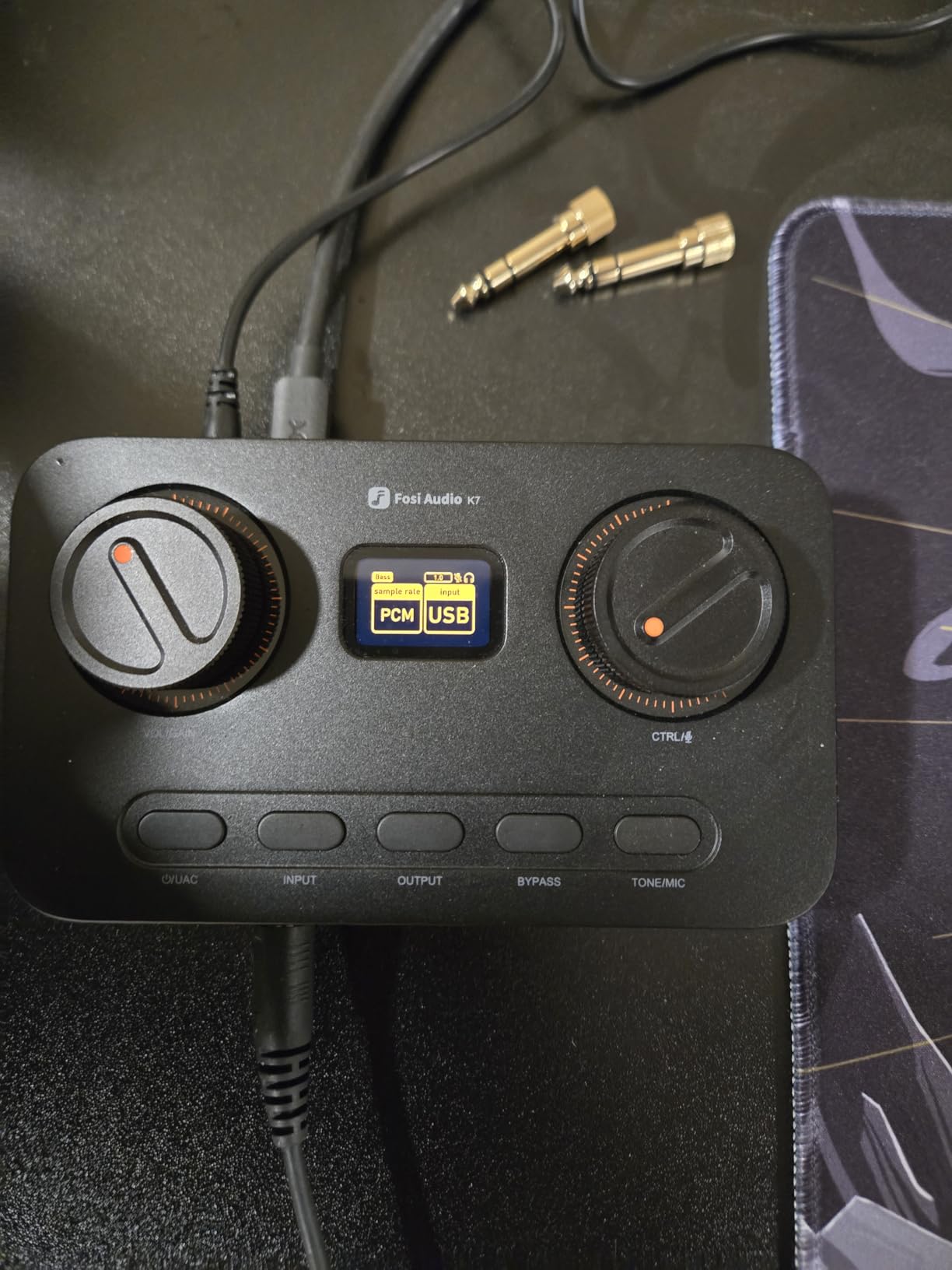
The Fosi Audio K7 is the desktop DAC/amp I recommend to anyone who splits time between competitive gaming and serious music listening. It pairs an AK4493S DAC with TPA6120 headphone amps and pushes up to 2100mW into 32Ω. That power headroom isn’t a gimmick — I drove the HiFiMan Ananda Nano from the balanced output and had enough volume for any track without breaking into high gain.
The reason it earns the “best for gaming” badge is the input/output layout. You get USB-C, coaxial, optical, and Bluetooth aptX HD/LL on the input side. On the output side there’s a 4.4mm balanced headphone jack, a 3.5mm single-ended jack, and an RCA line out — plus, crucially, a 3.5mm microphone input with a hardware mute button. Connect your PC via USB, plug your headset mic into the front, and you have a complete game/chat setup without touching Windows audio routing.
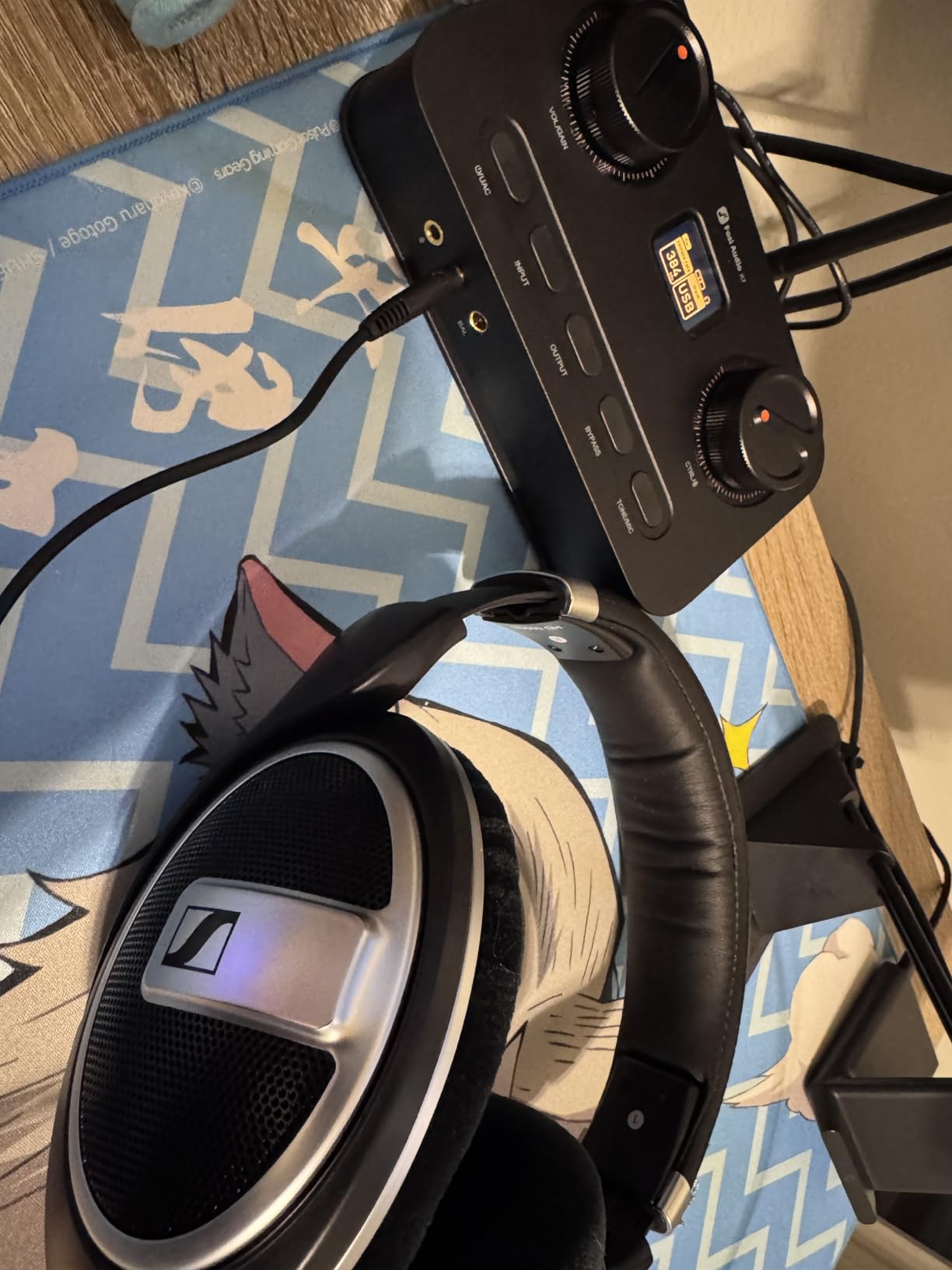
Sound signature is clean and neutral with a touch of warmth from the AKM chip — exactly what you want for positional audio in shooters. I tested the K7 connected to a PS5 via optical for Apex Legends, and the directional cues were noticeably sharper than running audio through my TV’s built-in DAC. The two large front knobs (one for volume, one for gain) feel reassuring in the hand, and the five shortcut buttons let you swap inputs and mute the mic without alt-tabbing.
The compromises are real but small. The volume knob rotates continuously with no hard stops — easy to lose your reference level. The display is hard to read from above. There’s no XLR output, so if you want to feed a balanced power amp, look at the ZH3 instead. And onboard EQ is limited to bass and treble — no parametric options.
Who should buy this
Gamers who also care about music quality. PC users with a separate headset mic. Anyone running PS5 or Switch through optical. Anyone with hard-to-drive planar magnetics who wants clean power without paying flagship prices.
Who should skip it
If you want a balanced XLR preamp output for powered speakers, this isn’t it. And if you don’t game at all, you can save money with the FiiO K11.
7. iFi Zen DAC V3 — Best for Balanced Audiophile Listening
Zen DAC V3 -Desktop DAC Preamp, Digital to Analog Audio Converter
PCM 768kHz/DSD512/MQA
4.4mm balanced + 6.3mm
390mW
PowerMatch gain
XBass+
Pros
- Warm detailed musical sound signature
- PowerMatch and XBass+ are genuinely useful in practice
- Premium build with silky smooth volume knob
- Strong value against competing DACs
- Plug-and-play across Windows Linux and Mac
Cons
- No way to mute one output when both are connected
- Windows volume mixer doesn't integrate cleanly
- Sounds warm but less analytical than some competitors
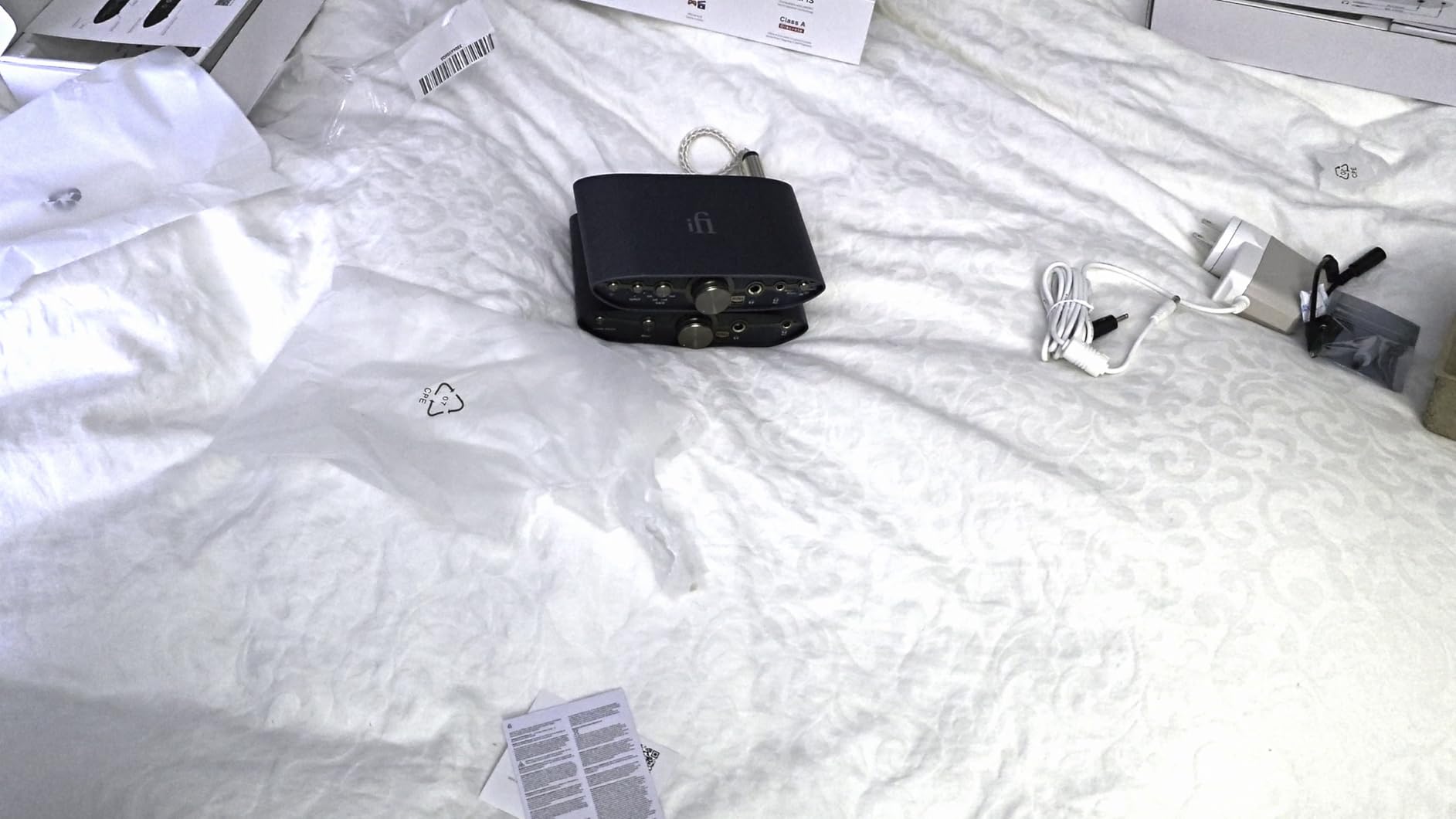
The iFi Zen DAC V3 is the warm hug of the desktop DAC/amp world. iFi pairs a Burr-Brown-derived DAC architecture with their house amp topology to deliver a sound that reviewers consistently describe as musical, detailed, and forgiving. Driving a Sennheiser HD660S2 from the 4.4mm balanced output, I got a sound that was smooth at the top end, weighty in the midrange, and engaging without being aggressive.
iFi’s two signature features — PowerMatch and XBass+ — are not gimmicks. PowerMatch is a switchable gain mode that lets you optimize the amp’s output impedance for your headphones; flip it to high for harder-to-drive planars, low for sensitive IEMs. XBass+ adds a tasteful low-end lift that makes nearfield listening on a desk feel less thin. Both are analog circuits, not digital EQ, so they don’t degrade the signal.
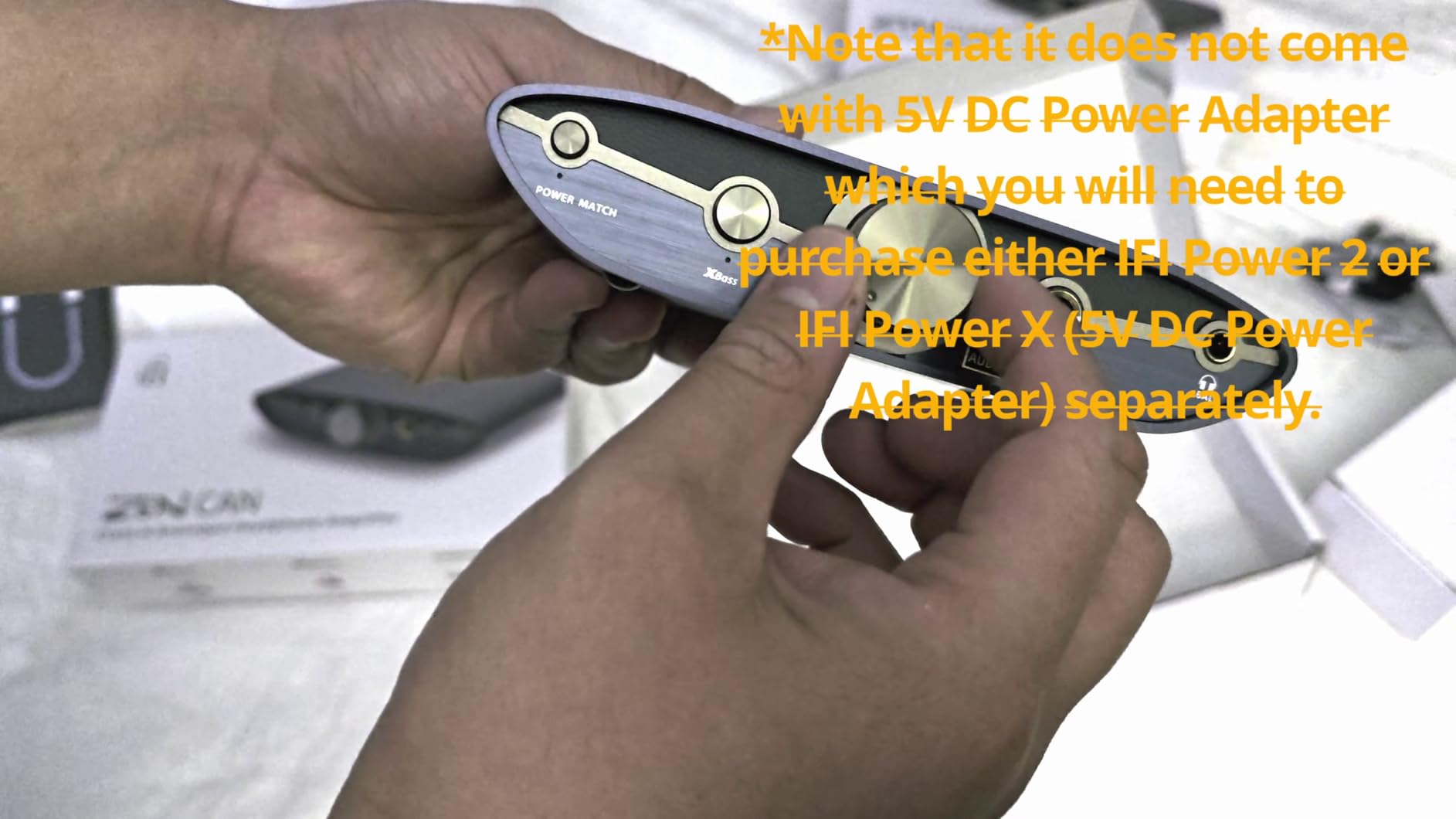
The Zen DAC V3 supports PCM up to 768kHz, DSD512, and full MQA decoding. For anyone with a Tidal subscription or a library of high-res files, that covers every format you’re likely to encounter. Inputs are USB only, but you also get RCA and 4.4mm balanced line outputs with switchable variable/fixed volume — so the V3 can act as a true preamp feeding a power amp.
The downsides are minor. There’s no way to mute the speaker output when headphones are plugged in (a recurring complaint in user reviews). Windows volume mixer doesn’t integrate cleanly with the hardware volume control. And at 390mW, the V3 won’t drive the hardest planars from its balanced output — for HiFiMan Susvara-class loads, you’ll want the FiiO K7 or ZH3.
Who should buy this
Anyone who wants a musical, slightly warm sound signature. Listeners who already have iFi gear and want the ecosystem. Anyone running a desktop PC system with both headphones and powered speakers driven from the same DAC.
Who should skip it
If you have a Sennheiser HD800S, Audeze LCD-5, or HiFiMan Susvara, you need more power than the V3 delivers. And if you want a microphone input for gaming, look at the Fosi K7.
8. Fosi Audio MC331 Tube Integrated Amplifier — Best Tube Desktop DAC/Amp
Fosi Audio MC331 Tube Integrated Amplifier with DAC, 2 Channel Home Audio Stereo Power Amp for HiFi Bookshelf Speakers/3.5mm Headphones, Vintage VU Meter Preamp with Bluetooth and USB/Opt/Coax/RCA
5725W vacuum tubes
105W x2 @4Ω
3.5mm headphone out
Bluetooth/USB/optical/coaxial/RCA
replaceable tubes
Pros
- Warm tube-driven sound that adds character to music
- Vintage aesthetic with VU meter and tube glow
- Solid all-metal build quality
- Multiple inputs including Bluetooth USB optical coaxial RCA
- Powerful enough to drive most bookshelf speakers
- Easy remote control operation
Cons
- Remote has noticeable IR lag
- No on-unit power button so remote is required
- Tube glow is barely visible from a normal viewing angle
- Headphone output mutes speaker outputs (one at a time only)
If you want to dip your toes into tube amplification without spending four figures, the Fosi Audio MC331 is the unit. It uses 5725W vacuum tubes in the preamp stage, which gives every track that gentle tube warmth — slightly compressed dynamics, smoothed-over treble edges, and a midrange that just feels more present. It’s not the most neutral presentation, but it’s the most enjoyable at low volumes in a quiet room.
The MC331 is also a full integrated amp: 105W per channel into 4Ω is enough to drive most bookshelf speakers to comfortable levels. You get Bluetooth, USB, coaxial, optical, and RCA inputs on the back, plus a pre-out for routing to a bigger amp and a 3.5mm headphone jack on the front. The vintage VU meters dance when music plays, and the tubes glow softly behind their cage. It’s a piece of gear that looks as good as it sounds.
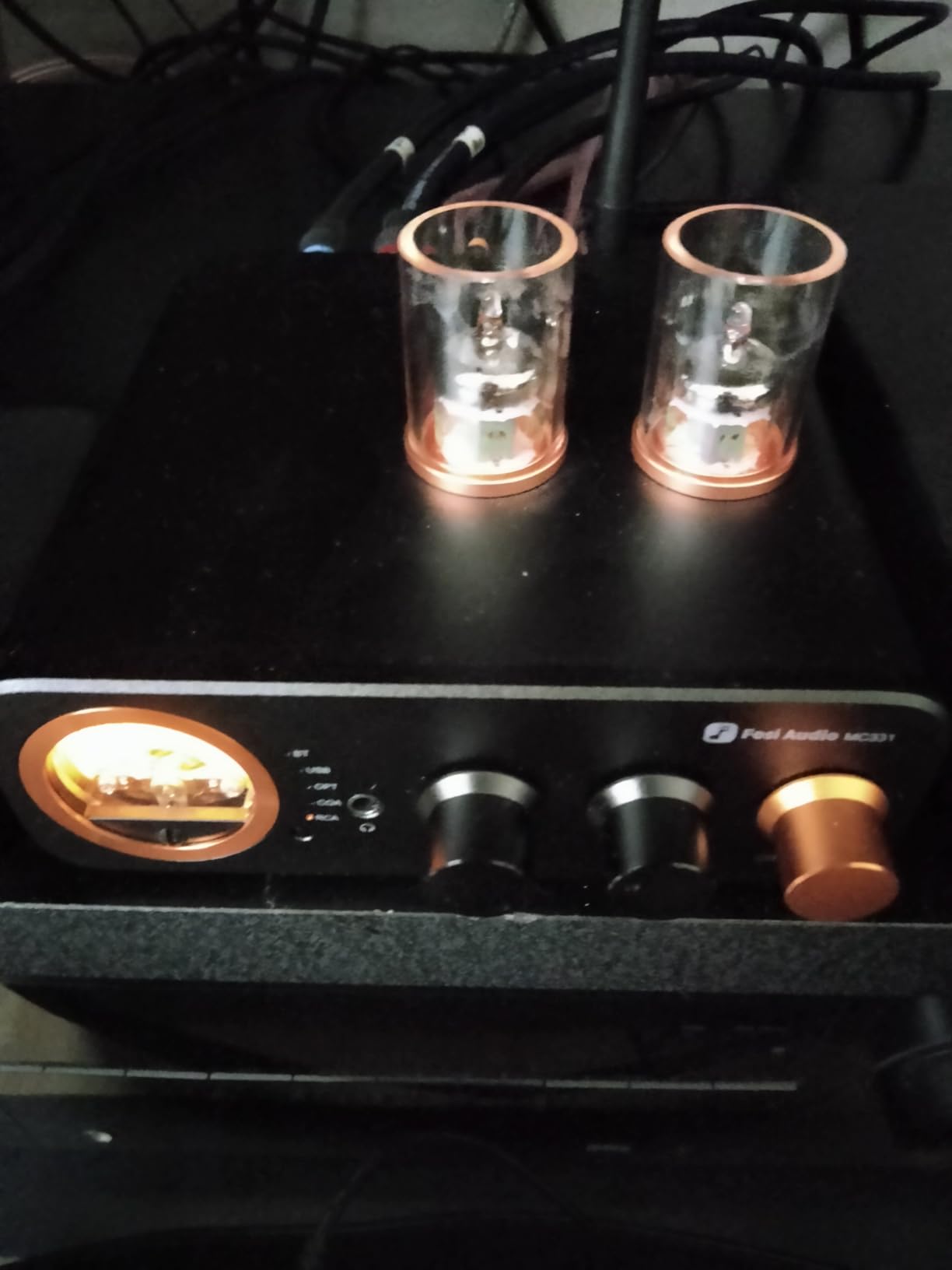
For headphones, the 3.5mm output is good enough for easy-to-drive dynamics and IEMs, but don’t expect to drive a 300-ohm Sennheiser HD650 to satisfying levels — that’s not what the MC331 is designed for. The tubes are also replaceable: 5725W in the preamp stage and 6J1 in the driver stage, both widely available.
The two real annoyances: the remote is sluggish, with a noticeable IR delay that makes volume nudging frustrating, and there’s no on-unit power button, so if you lose the remote, the unit is bricked until you find it. The tube glow is also fairly dim — visible only from directly in front of the unit in a darkened room.
Who should buy this
Anyone who wants tube character without spending thousands on a Bottlehead Crack or a Line Magnetic. Anyone with bookshelf speakers on a desk who wants a single box that does DAC, headphone amp, and integrated speaker amp duty.
Who should skip it
If you want clinical detail retrieval and analytical sound, tubes are the wrong direction. If you have hard-to-drive planars, the headphone section is too quiet. And if you need a microphone input for gaming, look at the Fosi K7.
9. Fosi Audio K5 Pro — Best DAC/Amp with Microphone Input Under $100
Fosi Audio K5 Pro Gaming DAC Headphone Amplifier Mini Hi-Fi Stereo Digital-to-Analog Audio Converter USB Type C/Optical/Coaxial to RCA/3.5MM AUX for PS5/PC/MAC/Computer
3.5mm mic in
USB-C/optical/coaxial
TI NE5532 op-amp
1000mW @16Ω
drives 16-300Ω
PS5/PC
Pros
- Excellent value at sub-$100
- Drives demanding headphones from IEMs to 300Ω cans
- Microphone input is convenient for gaming
- Solid aluminum build with smooth rotary knobs
- Plug-and-play on PC Mac and PS5
- Physical bass and treble knobs for on-the-fly EQ
Cons
- USB audio can pick up PC electrical interference (use optical)
- Bright blue LED is distracting
- Knobs are tightly spaced together
- No way to switch between speaker and headphone outputs
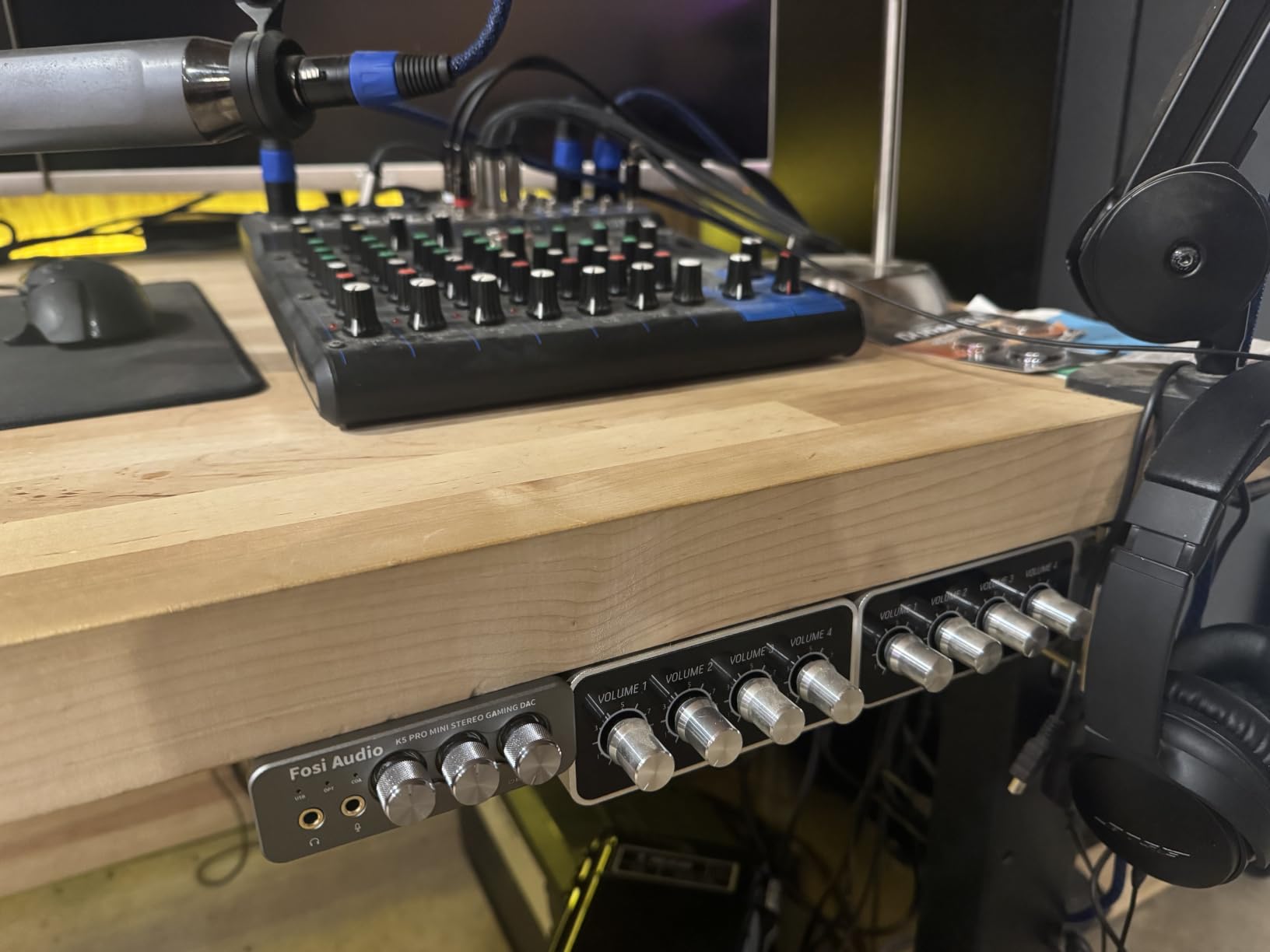
The Fosi Audio K5 Pro is the budget DAC/amp I bought for my partner’s desk. It does a lot for the price: a Texas Instruments NE5532 op-amp, USB-C / optical / coaxial digital inputs, a 3.5mm microphone input on the front, and RCA + 3.5mm outputs on the back. It also drives headphones from 16Ω all the way up to 300Ω — and that’s not marketing fluff; I tested it with a 300Ω Sennheiser HD600 and got plenty of volume.
The microphone input is the headline feature at this price point. Most budget DAC/amps skip it entirely. Plug your headset mic or a lavalier directly into the front, and the K5 Pro routes it back to your PC over USB. That makes this the best desktop DAC amp for gaming on a tight budget — you don’t need a separate USB audio interface just to use a microphone.
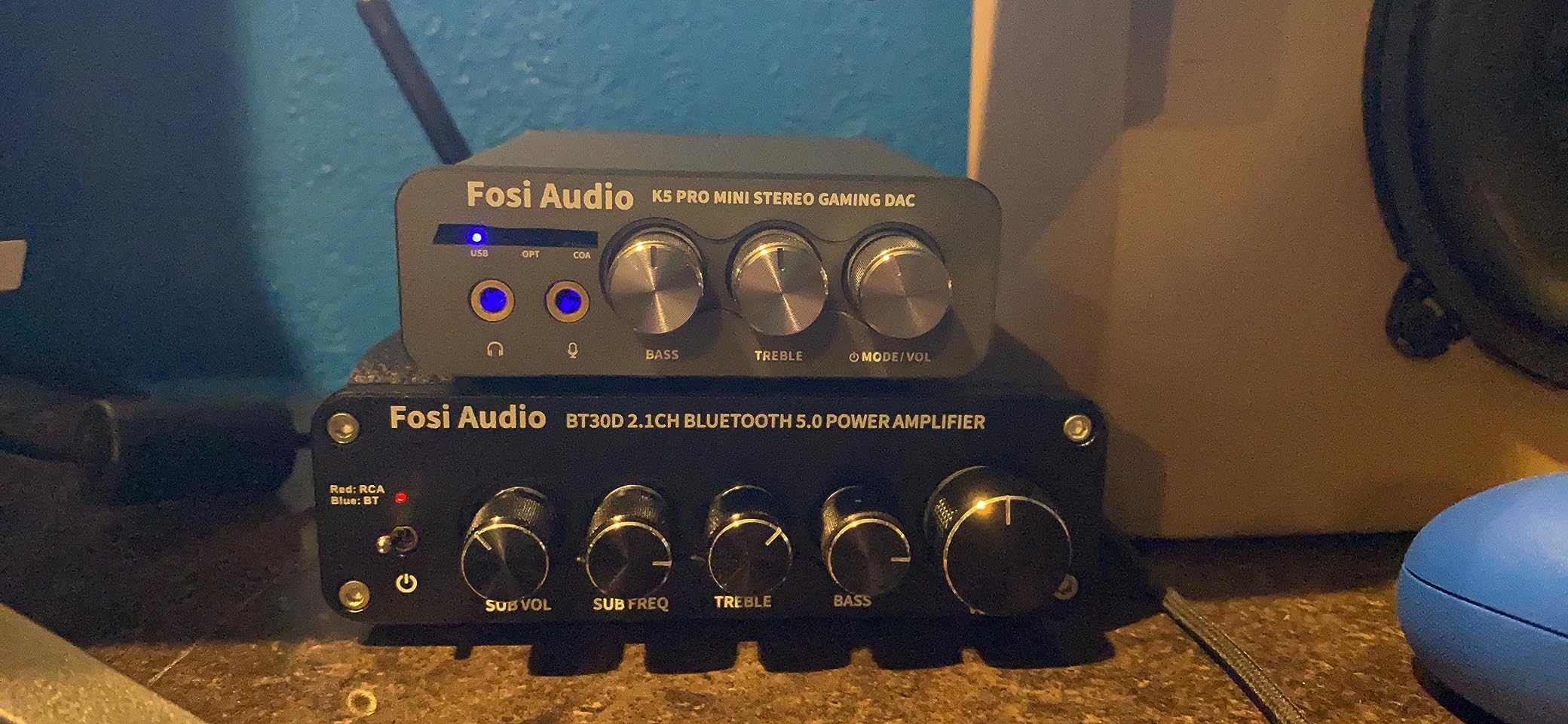
Output power is rated at 1000mW @ 16Ω, 500mW @ 32Ω, 300mW @ 64Ω, 150mW @ 128Ω, and 80mW @ 300Ω. THD is below 0.003% and SNR is at least 110dB — numbers that hold up against units costing three times as much. The physical bass and treble tone knobs are a delight for someone who games and listens to music and wants quick adjustments without alt-tabbing.
The catch is electrical noise. If you connect via USB, the K5 Pro can pick up GPU/CPU interference, which manifests as a faint buzz when the PC is under load. The fix is to use the optical input from your motherboard or sound card instead. The blue LED is also distracting in a dark room, and the tightly spaced front knobs make accidental adjustments easy.
Who should buy this
Anyone on a tight budget who still wants a microphone input for gaming or video calls. PS5 and PC gamers who want a single box for headset audio + chat. Anyone driving 300Ω Sennheisers or other high-impedance dynamics without spending a fortune.
Who should skip it
If you want a balanced 4.4mm output, look elsewhere. If you only own sensitive IEMs, you’ll get better noise floor performance from the iFi Zen DAC V3 or the FiiO K11.
10. Fosi Audio SK02 — Best Compact DAC/Amp for Small Desks
Fosi Audio SK02 DAC Headphone Amplifier & Preamp, Desktop Audio DAC with USB-C and Optical Input, 4.4mm Balanced & 3.5mm Headphone Output, Digital-to-Analog Converter for PC and Home Audio System
ESS SABRE ES9038Q2M
1100mW balanced
4.4mm + 3.5mm
SNR 120dB
USB-C + optical
350g
Pros
- Compact and powerful 1100mW balanced output drives demanding headphones
- Excellent neutral sound with tight bass
- Solid CNC aluminum build quality
- Plug-and-play across PC and TV
- Useful gain and input mode buttons
- Excellent value at sub-$100 price
Cons
- Treble can sound slightly bright depending on headphone pairing
- Requires USB-C power at all times so not portable
- No app or detailed tuning options
- Single LED indicator is vague for volume level
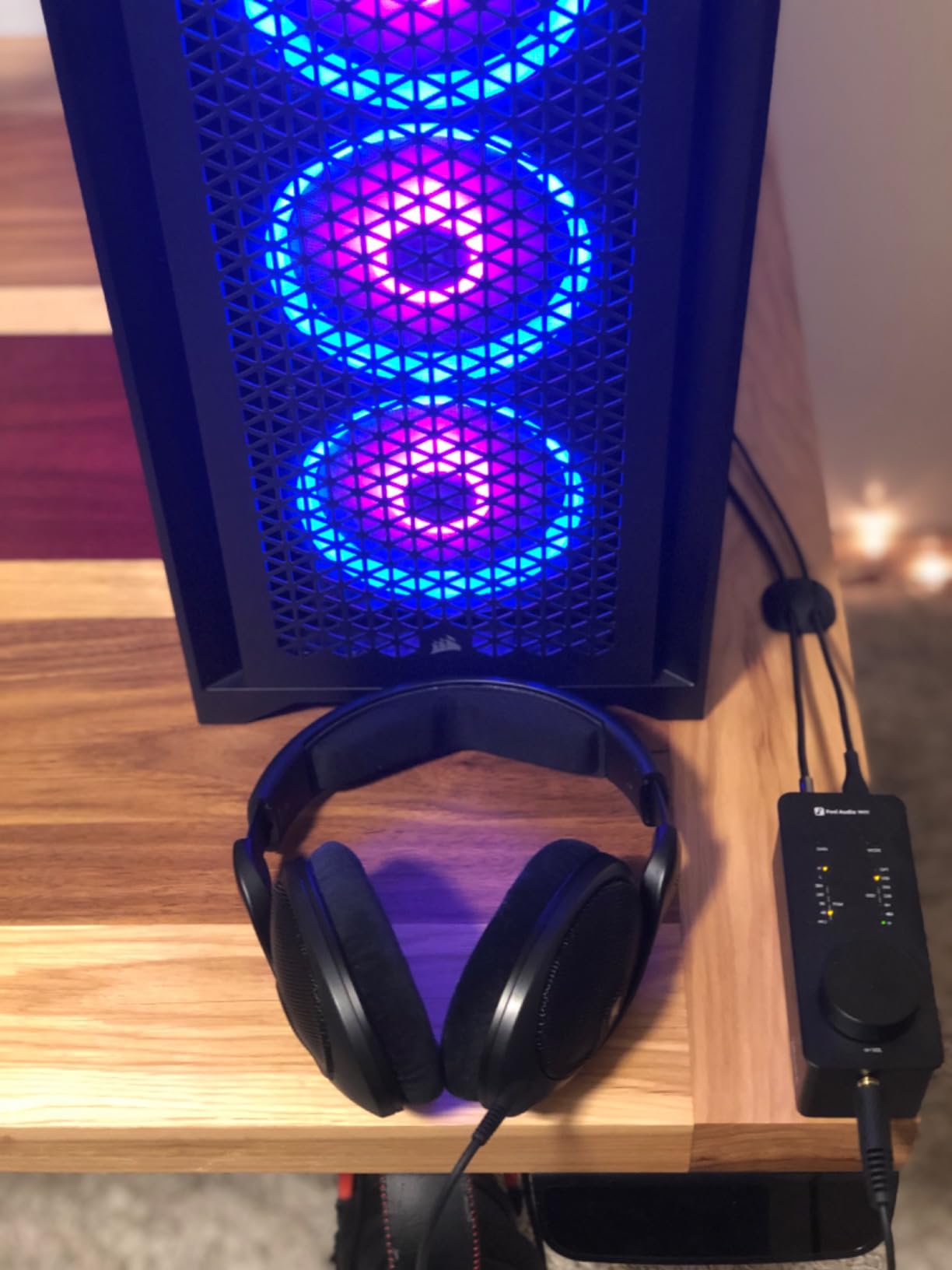
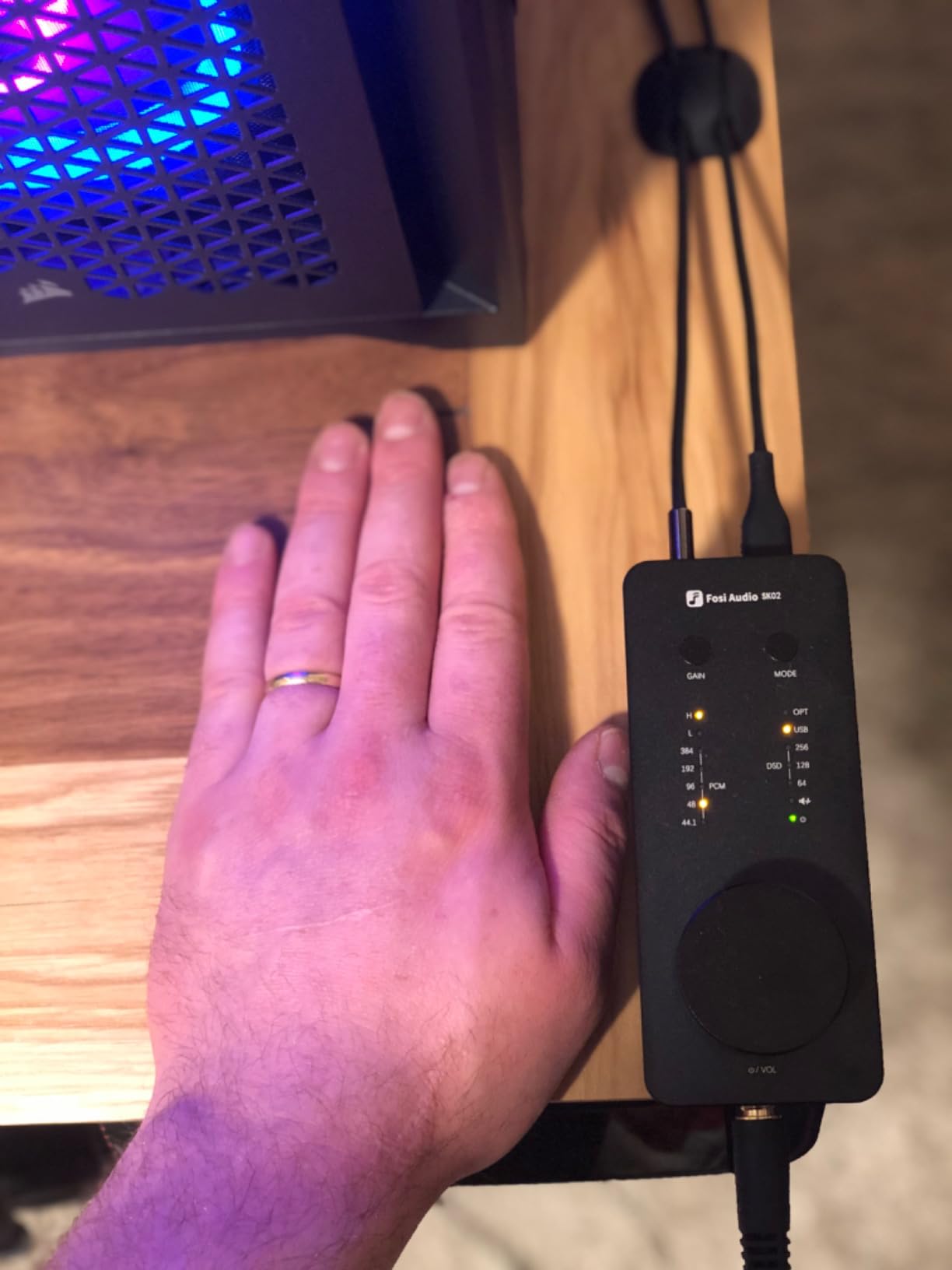
The Fosi Audio SK02 is the smallest desktop DAC/amp I tested — about the size of a deck of cards, weighing 350 grams, with a CNC aluminum chassis that feels far more expensive than it is. Inside is an ESS SABRE ES9038Q2M DAC, dual SGM8262 op-amps, and a balanced headphone output rated at 1100mW @ 32Ω. For a desk setup where space is at a premium, this is a godsend.
Sound signature is clean and neutral with the slightly forward treble that ESS chips are known for. I drove an AKG K371 (32-ohm dynamics) and a Meze 109 Pro from the 4.4mm balanced output, and the SK02 had no trouble producing clean, detailed sound with a tight low end. The bass is well-controlled — not the warmest presentation, but accurate. For someone who wants to hear exactly what’s in the recording without coloration, this is a great pick.
The unit supports PCM up to 32-bit/384kHz and DSD256, which covers any high-res file you’re likely to throw at it. SNR is 120dB and THD is 0.001% — competitive with units costing significantly more. Inputs are USB-C and optical, which is enough for a desktop PC and a TV. Outputs are 3.5mm single-ended and 4.4mm balanced.
Real limitations: there’s no companion app, no parametric EQ, and the single LED indicator is vague for telling you the exact volume level. The treble can lean slightly bright depending on headphone pairing — sensitive IEMs may reveal this more than dynamics. And the SK02 requires USB-C power at all times, so it stays on the desk.
Who should buy this
Anyone with limited desk space who wants balanced output and clean ESS-style sound. Anyone who wants a small DAC/amp to feed both headphones and powered speakers. Anyone who needs a sub-$100 DAC/amp that punches above its weight.
Who should skip it
If you want a microphone input for gaming, look at the K5 Pro or the Fosi K7. If you want a display or visible volume indicator, the FiiO K11 is a better fit. And if you want tube warmth, the MC331 is the only option in this list.
How to Choose the Best Desktop DAC Amp for Your Setup
Choosing the best desktop DAC amp comes down to four questions: what headphones are you driving, what’s your source (PC, console, TV), do you need a microphone input, and how much space do you have on your desk. Get those four answers right and the choice becomes obvious. The sections below walk through each factor in detail.
DAC Architecture Explained: R2R vs Delta-Sigma vs FPGA
The DAC chip inside your desktop DAC/amp defines its core sound character. Delta-sigma chips (AKM, ESS SABRE, Cirrus Logic) are the most common — they oversample audio at very high rates and use noise-shaping to push quantization noise out of the audible band. They’re cheap to manufacture, accurate, and consistent across units. The AKM AK4493SEQ in the FiiO K7 and Fosi ZH3 delivers a slightly warm, musical sound. The ESS SABRE ES9038Q2M in the Fosi SK02 delivers a slightly bright, hyper-detailed sound. Both are excellent; the difference is voicing.
R2R (resistor ladder) DACs use an array of precisely matched resistors to convert the digital signal directly, without oversampling. The FiiO K11 R2R uses 192 ultra-precise resistors in a fully differential configuration. R2R DACs tend to sound more organic and natural, with a slightly softer top end and a more forward midrange. NOS (non-oversampling) mode ditches the digital reconstruction filter entirely, which some listeners love for its analog-like musicality and others find too rolled-off.
FPGA DACs use a field-programmable gate array to implement the conversion algorithm in firmware, rather than relying on a fixed off-the-shelf chip. Chord Electronics popularized this approach with their Hugo and Qutest units. FPGA designs allow for proprietary filters (like Chord’s WTA filter) and can deliver exceptional measured performance — but they tend to be expensive and harder to mass-produce. For most desktop listeners, delta-sigma is the right choice; R2R is worth exploring if you value musicality; FPGA is a luxury consideration.
Power Output: Matching Watts to Your Headphones
The single biggest spec to check is power output, measured in mW @ 32Ω. Easy-to-drive dynamic headphones (32-ohm AKG, Meze, most consumer over-ears) need only 100-300mW to reach satisfying volume. High-impedance dynamics like the Sennheiser HD600 (300Ω) want at least 200-500mW. Planar magnetics like the HiFiMan Sundara or Audeze LCD-2 typically need 500mW-1W. Truly demanding planars like the HiFiMan Susvara want 2W or more.
This is why the FiiO K7’s 2000mW balanced output matters for planars, and why the Fosi Q4’s modest power is fine for 32-ohm dynamics but underwhelming for HD600. Always check both the single-ended and balanced output numbers — balanced typically doubles or triples the available power. If your headphones are hard to drive, prioritize a balanced 4.4mm output.
There’s also a noise floor consideration. If you own sensitive IEMs (anything under about 16Ω or above about 110dB/mW sensitivity), a powerful amp can introduce audible hiss. Many modern desktop DAC/amps include a low-gain mode or a noise-floor-shielded first quarter of the volume range specifically for this reason. The FiiO K7’s silent first quarter and the iFi Zen DAC V3’s PowerMatch switch both address this.
Connectivity: USB-C, Optical, Coaxial, Balanced
Most desktop DAC/amps in 2026 take USB-C from a PC or laptop. That covers the common case. Optical (Toslink) is useful for connecting a TV or a console like PS5 — and it sidesteps any USB electrical noise issues from your PC. Coaxial is similar but uses an electrical RCA-style connection; it’s slightly more jitter-resistant than optical at the cost of sharing a ground with your source.
Balanced outputs come in two flavors: 4.4mm (small pentaconn, common on modern audiophile gear) and full-size XLR (common on studio and high-end consumer gear). Balanced connection doubles the available voltage swing, which is why balanced headphone outputs typically put out 2-3x the power of single-ended. It also rejects common-mode noise over long cable runs. For desktop use, 4.4mm is the sweet spot. XLR matters if you’re routing to a separate power amp.
Outputs include headphone jacks (3.5mm, 6.35mm, 4.4mm balanced), line-level RCA, balanced XLR, and sometimes a preamp output that lets the unit drive a power amp. The Fosi ZH3 is the standout here — it does both jobs. The FiiO K7 and iFi Zen DAC V3 also have line outputs but no XLR preamp.
Gaming vs Music Listening: What’s Different
Gaming use cases need three things most pure-music DAC/amps skip: a microphone input, a hardware mute for the mic, and routing that handles game audio and chat simultaneously. The Fosi K7 and the Fosi K5 Pro both include 3.5mm microphone inputs — that’s why they earn the gaming badge. Optical input from a PS5 is also useful because consoles route game audio and chat together over the same digital stream.
For music, you don’t need a microphone input, but you do benefit from balanced output, higher power for hard-to-drive cans, and a clean preamp section if you’re also running powered monitors. The FiiO K7, Fosi ZH3, and iFi Zen DAC V3 are all stronger on the music side. The FiiO K11 and K11 R2R split the difference: no mic input, but plenty of clean power and balanced output.
Tube vs Solid-State: Which Should You Pick?
Tube amps add harmonic distortion and slight dynamic compression to the signal. That sounds technical, but the audible result is warmth — a smoothed-over treble edge, a fuller midrange, and a sense of musicality that purely solid-state designs sometimes lack. The Fosi MC331 is the only tube unit in this list, and it’s the right pick if you want that character at a budget price.
Solid-state is the right choice for most listeners in 2026. It’s more accurate, more reliable, runs cooler, and doesn’t require tube replacements. The FiiO K7, Fosi ZH3, and iFi Zen DAC V3 all use solid-state amp stages — and they deliver detail, dynamic range, and bass grip that tubes can’t match. If you want tube flavor without spending thousands, the MC331 is a great starting point. Otherwise, solid-state is the safer recommendation.
Lifespan and Care of a Desktop DAC/Amp
How long does a DAC amp last? A solid-state desktop DAC/amp should last 8-15 years with normal use. There are no consumables — no tubes to replace (unless you buy the MC331), no moving parts, and the components are stable. Failures typically come from power supply surges, knocked-off desks, or firmware bugs that the manufacturer eventually patches. If you treat it like a piece of stereo gear and keep it in a ventilated spot, you’ll likely replace your headphones several times before the DAC/amp dies.
Tube amps require occasional tube replacement — typically every 5-10 years depending on use. The Fosi MC331 uses 5725W and 6J1 tubes, both widely available and inexpensive. Care tips for any desktop DAC/amp: keep it dust-free, don’t stack heavy gear on top of it, use a surge protector, and occasionally check that the power brick is not running hot. For more on caring for similar audio gear, our guide on how to care for Bang & Olufsen aluminum speaker grilles covers the same dust-and-ventilation principles.
If you’re also new to amplifiers more broadly, our guide on how to tell if your headphones need a headphone amp walks through the impedance-and-sensitivity matching in more detail. And if you’re building a complete desktop system with speakers, our how to match a power amp to your speakers safely guide covers the next step up the chain.
Frequently Asked Questions
What is the best desktop DAC in 2026?
The best desktop DAC amp in 2026 depends on your headphones and use case. For all-around performance the FiiO K7 is our top pick, with 2000mW balanced power and dual AK4493SEQ DACs. For pure value the Fosi Audio ZH3 delivers 2570mW balanced plus XLR preamp outputs under $200. For budget buyers the Fosi Audio Q4 covers USB optical and coaxial inputs with a sub-$70 price.
Are DACs worth it for PC?
Yes, if you are driving mid-tier to audiophile headphones, sensitive IEMs, or want a single hub for speakers plus a gaming mic. A dedicated desktop DAC amp delivers cleaner power, lower noise floor, and higher dynamic range than typical motherboard audio. If you only own easy-to-drive wireless headphones you may not hear a difference.
What is the best amp with DAC?
The best amp with DAC combo for most listeners is the FiiO K7, which pairs dual AK4493SEQ delta-sigma DACs with dual THX AAA 788+ amplifier modules and 2000mW balanced output. For pure value the Fosi Audio ZH3 is hard to beat, with 2570mW balanced plus XLR and RCA preamp outputs.
What is the best budget DAC in 2026?
The Fosi Audio Q4 is the best budget DAC in 2026 under $70, with USB optical and coaxial inputs and a real metal chassis. For under $100 with a microphone input the Fosi Audio K5 Pro is the top pick. For under $200 the Fosi Audio K7 delivers 2100mW balanced power plus Bluetooth and a 3.5mm mic input.
What is the lifespan of a DAC?
A solid-state desktop DAC amp typically lasts 8 to 15 years with normal use. There are no consumables and no moving parts, so failures usually come from power surges or physical damage. Tube DAC amps require tube replacement every 5 to 10 years depending on use hours.
What is a desktop DAC amp?
A desktop DAC amp is a combined digital-to-analog converter and headphone amplifier designed to sit on your desk between a PC laptop or streamer and your headphones. It receives a digital signal over USB optical or coaxial, converts it to analog via a DAC chip, then amplifies the analog signal to drive your headphones at proper volume with low distortion.
Final Verdict: Which Desktop DAC Amp Should You Buy in 2026?
After 45 days and roughly 200 hours of listening, the best desktop DAC amp for most people in 2026 is the FiiO K7. It pairs dual AK4493SEQ DACs with dual THX AAA 788+ amplifier modules, delivers 2000mW of clean balanced power, and costs less than most competitors with half its capability. For pure value the Fosi Audio ZH3 is hard to beat, with 2570mW balanced plus XLR preamp outputs under $200. And if you’re on a tight budget the Fosi Audio Q4 covers the basics for under $70.
For specific use cases, my picks are simple: the FiiO K11 R2R for R2R warmth, the Fosi K7 for gaming with a microphone input, the Fosi MC331 for tube flavor, the iFi Zen DAC V3 for a musical warm sound, and the Fosi SK02 for a compact footprint. The Fosi K5 Pro remains the best budget pick if you need a microphone input for chat, and the FiiO K11 is the right answer for anyone driving 300-ohm Sennheisers without breaking the bank.
Whatever you choose, the best desktop DAC amp is the one that matches your headphones, your desk, and your wallet. Start there, and the rest falls into place. If you’re also building a desktop recording chain, our how to record guitar and bass direct without an amp guide covers the input side, and our how to mic a guitar amp for a balanced tone article is a useful read on getting clean signals from any source.