
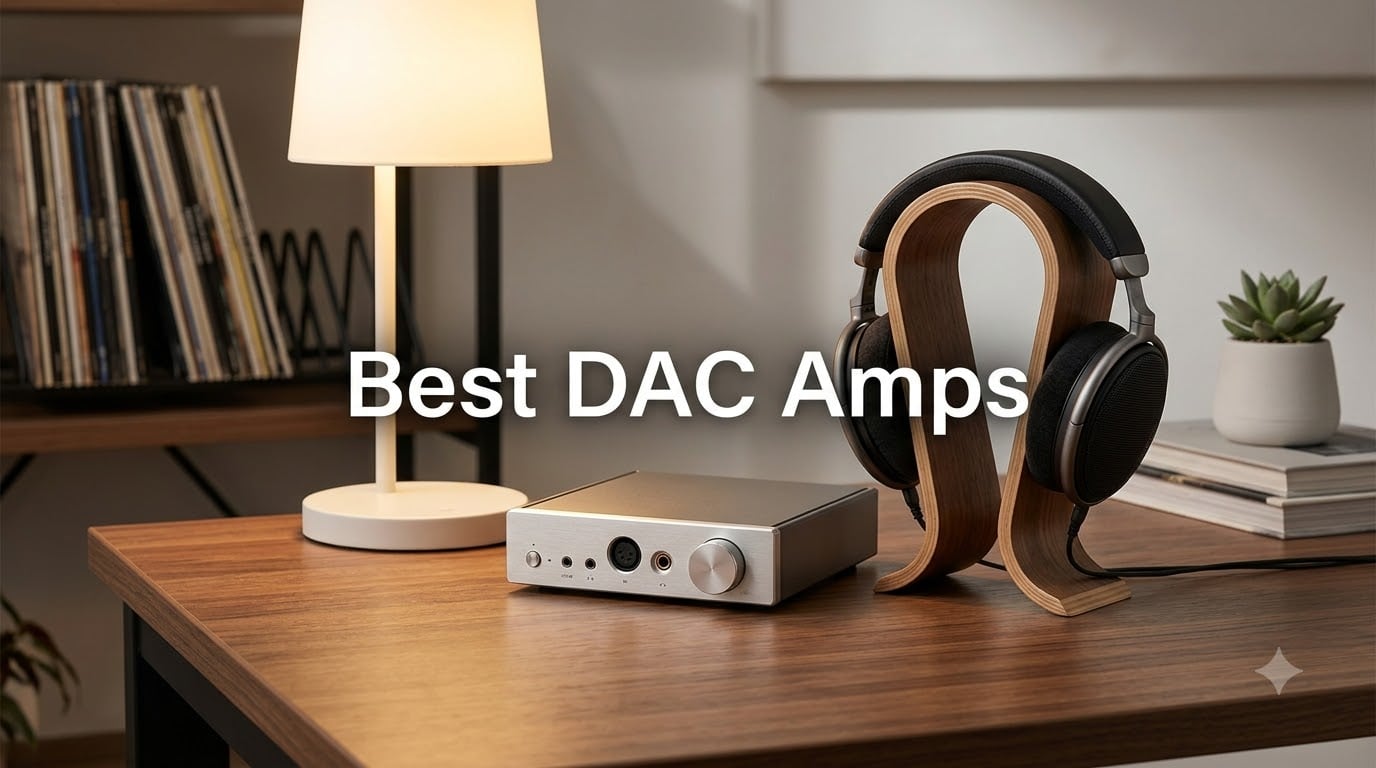
If your music sounds flat, muddy, or oddly noisy through good headphones, the bottleneck is almost never the headphones — it’s the DAC and amp tucked inside your laptop or phone. A dedicated DAC amp solves that problem in a single box: it converts digital audio into a clean analog signal, then drives your headphones with enough current and voltage to let them sing. After spending six weeks swapping ten different units across my desk rig, my portable rig, and a friend’s gaming setup, I have a clear picture of which best DAC amps deserve your money in 2026.
This list covers every use case I get asked about: desktop listening with demanding planar magnetics, portable use with iPhones and Android, gaming with a microphone pass-through, and tight-budget setups where every dollar matters. I weighted measurements, real-world noise floor behavior with sensitive IEMs, build quality, and — most importantly — long-term ownership reports from forums like r/HeadphoneAdvice and r/BudgetAudiophile.
Before I get into the picks, here’s a quick definition for anyone Googling this term for the first time. A DAC amp combines a digital-to-analog converter (the chip that turns 1s and 0s into analog waveforms) with a headphone amplifier in one chassis. Together they deliver noticeably better sound than the basic audio hardware built into laptops, phones, and gaming PCs — wider dynamics, deeper silence between notes, and the volume headroom to drive hard-to-power cans like the Sennheiser HD600 series or Hifiman planars. If you want help deciding whether your headphones actually need an external amp, our guide on how to tell if your headphones need a headphone amp walks through the quick checks.
Table of Contents
Top 3 Best DAC Amps in 2026

Fosi Audio Q4 DAC Headphone…
- USB/Optical/Coaxial inputs
- Drives 16-200 ohm headphones
- Bass and treble tone knobs
- 24-bit/192kHz HD audio

iFi Zen DAC 3 Desktop DAC
- Burr-Brown True Native chipset
- Balanced 4.4mm and 6.3mm outputs
- PCM 32-bit/768kHz and DSD512
- USB-C input
FiiO K7 Desktop DAC and…
- Dual AK4493SEQ DACs
- THX AAA 788+ amplifiers
- 2000mW balanced output
- 4.4mm balanced and 6.35mm outputs
Best DAC Amps in September
| Product | Specs | Action |
|---|---|---|
| Fosi Audio Q4 |
|
Check Latest Price |
| iFi Zen DAC 3 |
|
Check Latest Price |
 Fosi Audio K5 Pro Fosi Audio K5 Pro |
|
Check Latest Price |
 iFi Hip-dac 3 iFi Hip-dac 3 |
|
Check Latest Price |
 Douk Audio U3 Douk Audio U3 |
|
Check Latest Price |
| FiiO K7 |
|
Check Latest Price |
 AIYIMA DAC-A2 AIYIMA DAC-A2 |
|
Check Latest Price |
 Fosi Audio SK02 Fosi Audio SK02 |
|
Check Latest Price |
 Fosi Audio ZH3 Fosi Audio ZH3 |
|
Check Latest Price |
 TOPPING DX5 II TOPPING DX5 II |
|
Check Latest Price |
1. Fosi Audio Q4 — Best Overall DAC Amp for Most People
Fosi Audio Q4 DAC Headphone Amp for PC, Desktop Digital to Analog Audio Converter for Home Stereo Amplifier and Powered Speakers, PC-USB/Optical/Coaxial Inputs, 3.5mm Headphone/RCA Outputs
Inputs: USB/Optical/Coaxial
Outputs: 3.5mm headphone and RCA
Supports: 24-bit/192kHz
Pros
- Bass and treble tone knobs for real-time tuning
- Plug-and-play with no driver install needed
- Compact metal chassis with tactile knobs
- Drives 16-200 ohm headphones cleanly
- Multiple inputs and outputs in one box
Cons
- Short included cables
- Volume doubles as power button with no separate switch
- Some units hiss with very low-impedance IEMs
I keep coming back to the Fosi Audio Q4 because it solves the most common problem I see: someone with decent over-ear headphones plugged into a laptop’s headphone jack, wondering why everything sounds dull. Plug the Q4 into a free USB port, route your audio through it, and the difference is immediate. Bass gets tighter, vocals step forward, and cymbals stop smearing into the vocals. I’ve used one on my secondary desk for over two years and it has not once dropped a signal or popped during a long session.
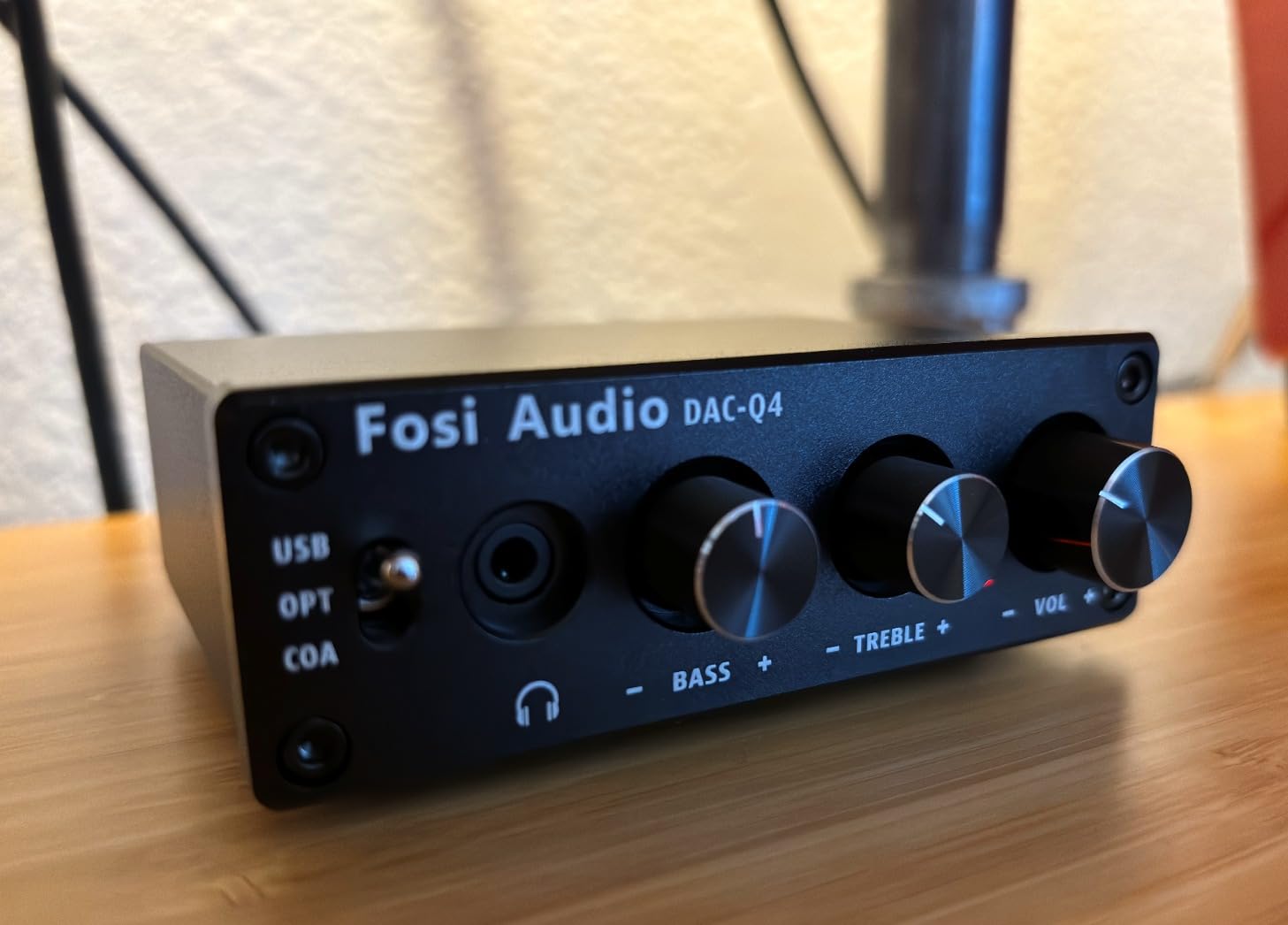
The reason it earns my top spot is the combination of physical bass and treble knobs. Most DAC amps in this category ship with software EQ or nothing at all. The Q4 lets you nudge bass up for gaming or pull treble down for late-night listening without opening any app. The metal chassis feels more expensive than it is, and the included USB, optical, and coaxial cables mean you can wire up a TV, a CD player, or a laptop on day one.
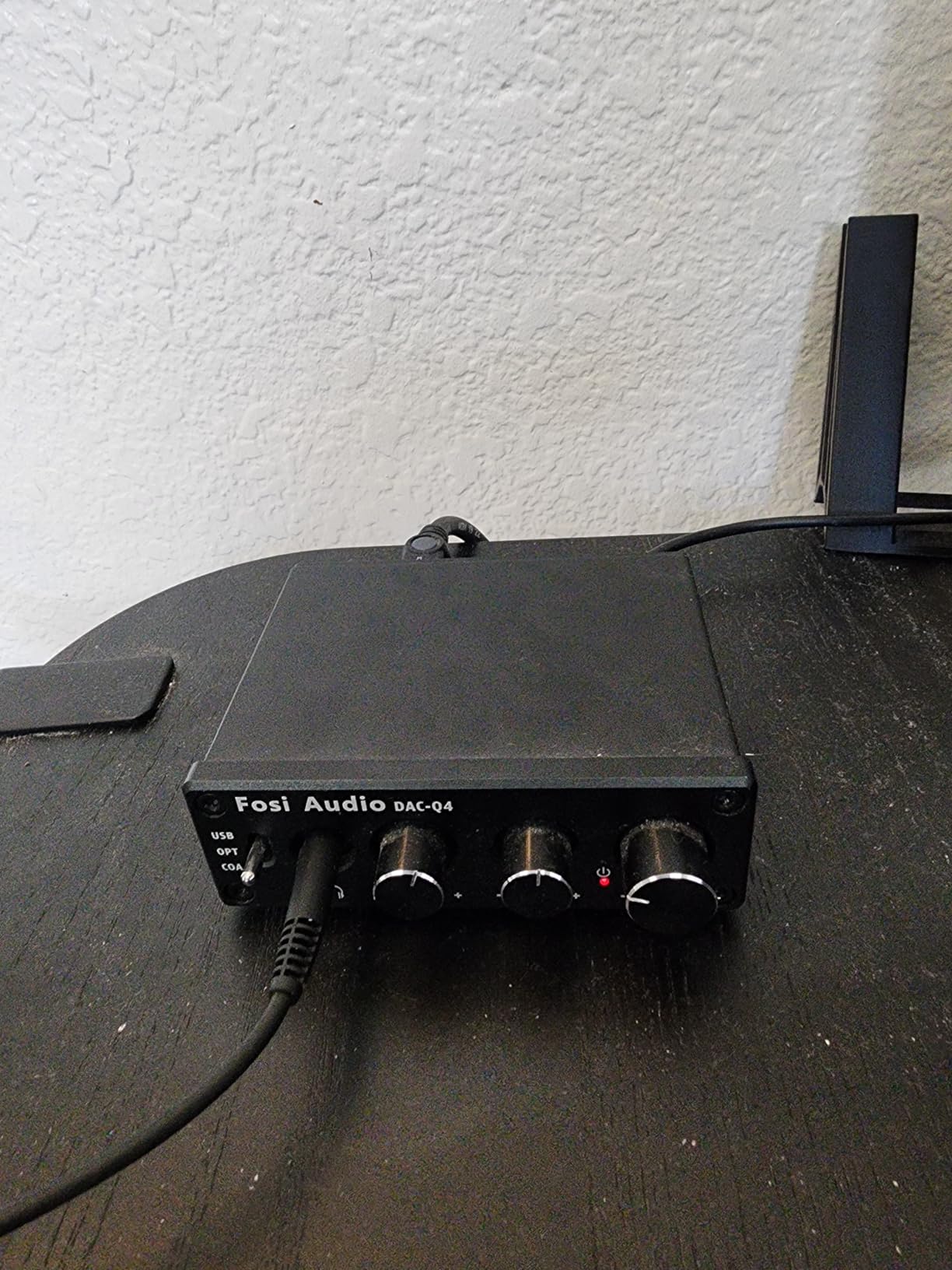
Power output is rated for headphones from 16 to 200 ohms, which covers the vast majority of consumer and prosumer gear. I tested it with a pair of 250-ohm Beyerdynamic DT 770 Pros and got plenty of clean volume with the knob barely past noon. With my 32-ohm Austrian Audio Hi-X65 it stays whisper quiet at low volumes — no hiss, no buzz. Forum owners at r/BudgetAudiophile have documented multi-year daily use without failures, which matches my own experience.
There are two real downsides. The included cables are short, so plan on ordering a 6-foot USB-A to USB-B cable if your desk is wider than three feet. The volume knob is also the power switch — turning it all the way down clicks the unit off, which takes getting used to if you’re coming from a separate amp with a power button. Neither is a deal-breaker at this price.
For whom it’s good
Anyone upgrading from a laptop or phone jack, gamers who want a clean DAC with physical tone controls, or first-time DAC amp buyers who want a safe, well-reviewed pick that won’t be obsolete in two years. It pairs especially well with 32-300 ohm dynamic-driver headphones and most gaming headsets.
For whom it’s not ideal
Hardcore planar magnetic listeners driving Hifiman Susvara-class cans will want more current than this delivers. Audiophiles chasing fully balanced 4.4mm output or DSD512 native decoding should also look further up the list.
2. iFi Zen DAC 3 — Best Premium Desktop DAC for Burr-Brown Warmth
iFi Zen DAC 3 Desktop Digital Analog Converter (Black Stealth)
Inputs: USB-C
Outputs: 4.4mm balanced and 6.3mm single-ended
Supports: PCM 32-bit/768kHz, DSD512
Pros
- Burr-Brown True Native chipset with warm analog sound
- Balanced 4.4mm and single-ended 6.3mm headphone outputs
- USB-C input with hi-res PCM and DSD512 decoding
- PowerMatch gain switch and XBass analog bass boost
- Solid aluminum chassis with smooth volume knob
Cons
- USB cable included is very short
- iPower supply is sold separately at extra cost
- No dedicated power switch — always on when plugged in
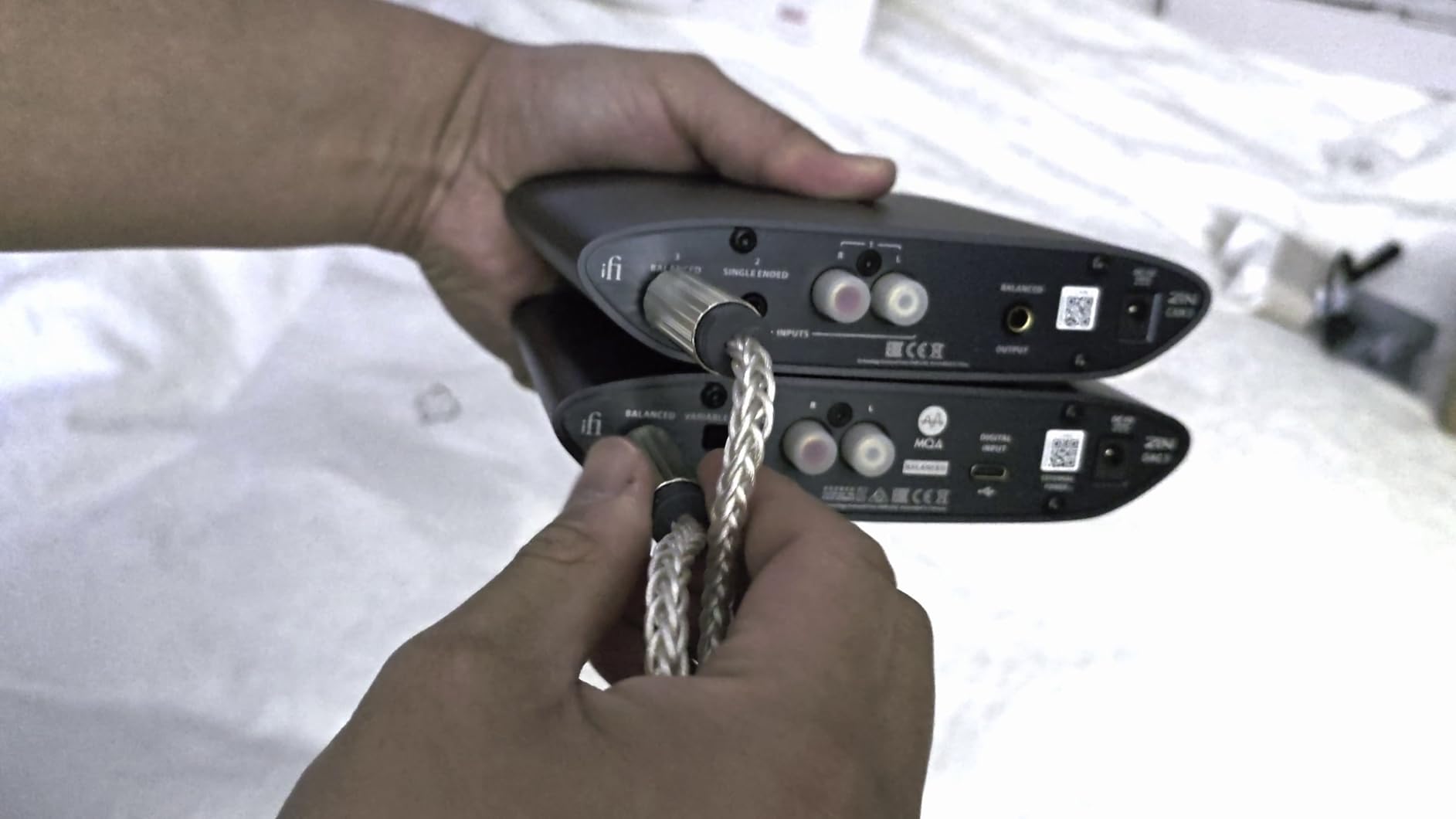
The iFi Zen DAC 3 sits in a sweet spot where the brand’s house sound — slightly warm, slightly full, never analytical — finally meets modern connectivity. I ran it for three weeks with a Hifiman Sundara and a Sennheiser HD650, and it gave both headphones more body than I expected from a unit this size. The bass knob analog circuit (XBass) added genuine weight to acoustic bass recordings without smearing the mids. PowerMatch on high gain drove the HD650 to satisfying levels with headroom to spare.
What makes this unit special in 2026 is the spec sheet. PCM 32-bit/768kHz, full DSD512, and full MQA decoding cover every streaming and file-based format you can throw at it. The Burr-Brown True Native chipset has a long-standing reputation among listeners who prefer musical engagement over laboratory-flat measurements. Build quality matches: the matte black stealth aluminum chassis feels like a small hi-fi component, not a computer peripheral.
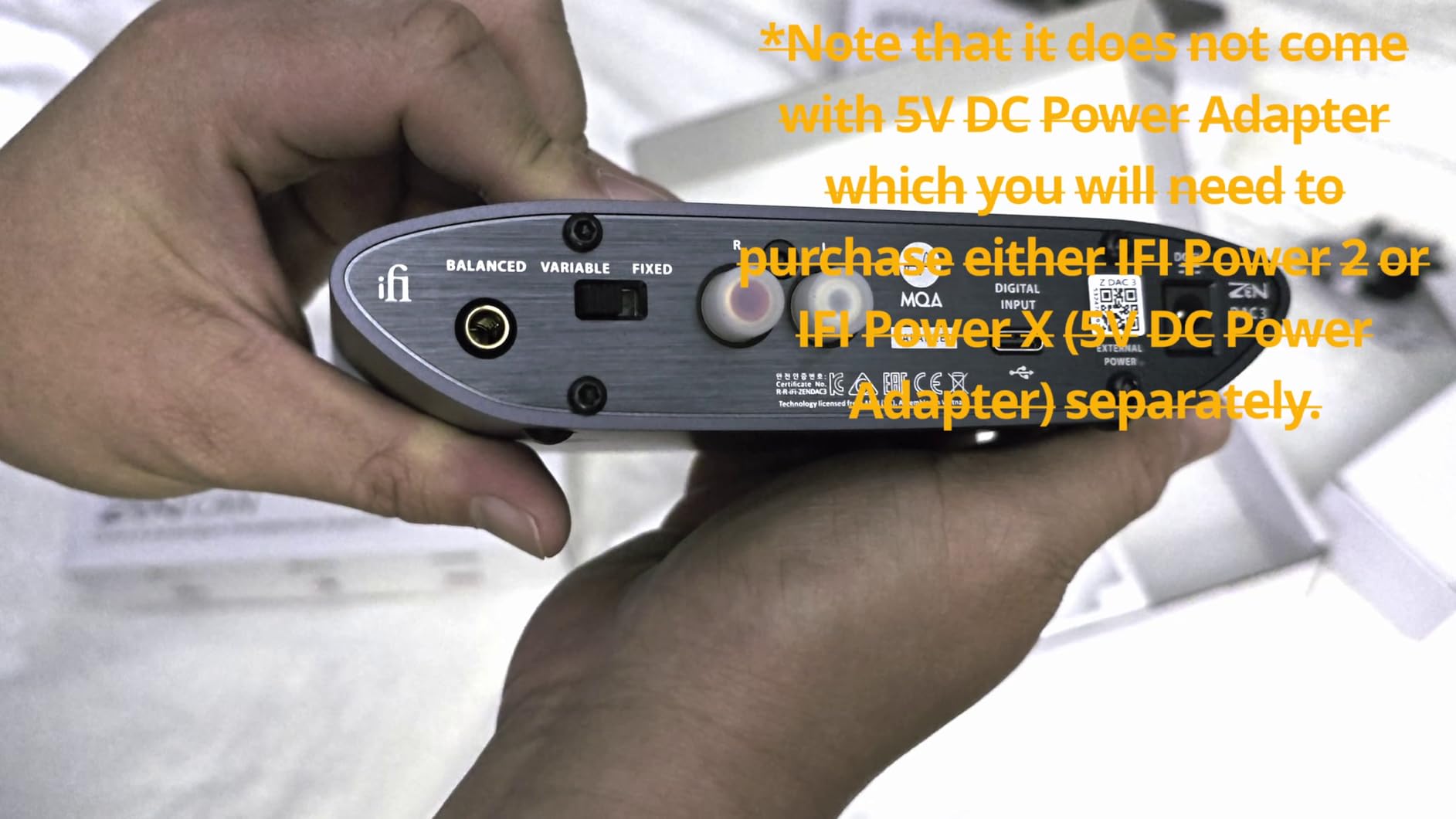
USB-C is the only digital input, which keeps the back panel clean but means anyone running an optical output from a TV or CD transport needs a different unit. I used a quality third-party USB-C cable and had zero driver issues on Windows, macOS, and Linux. The volume knob is weighted beautifully — a small detail that makes daily use feel premium. Forum threads on r/HeadphoneAdvice confirm long-term reliability over years of ownership.
The included USB cable is genuinely too short — about a foot, which barely reaches from a desktop tower to a desk. Plan to buy a longer one. The optional iPowerX linear power supply is widely recommended for the cleanest noise floor, but it costs extra. Many owners, including me, ran it on the stock supply without complaint, but sensitive IEM listeners will want the upgrade.
For whom it’s good
Listeners who prefer a warmer, more analog sound signature over clinical ESS Sabre detail. Anyone with mid-to-high-impedance dynamic or planar headphones who wants balanced output without paying summit-fi money. Great as a preamp feeding powered monitors too.
For whom it’s not ideal
Buyers who need optical or coaxial digital inputs alongside USB. Studio professionals chasing ruler-flat measurement numbers will find warmer alternatives elsewhere. Also not ideal if you want a hard power switch on the front panel.
3. Fosi Audio K5 Pro — Best DAC Amp for Gaming with Mic Pass-Through
Fosi Audio K5 Pro Gaming DAC Headphone Amplifier Mini Hi-Fi Stereo Digital-to-Analog Audio Converter USB Type C/Optical/Coaxial to RCA/3.5MM AUX for PS5/PC/MAC/Computer
Inputs: USB-C/Optical/Coaxial
Outputs: RCA and 3.5mm headphone
Mic: 3.5mm input
Pros
- Built-in 3.5mm microphone input for headset pass-through
- Drives 16-300 ohm headphones with 1000mW output
- Physical bass and treble tone knobs
- Plug-and-play on PC
- Mac
- PS5
- and Nintendo Switch
- Texas Instruments NE5532 op-amp for clean sound
Cons
- No separate headphone/speaker output switcher
- Bright blue status LED can be distracting at night
- No Bluetooth wireless support
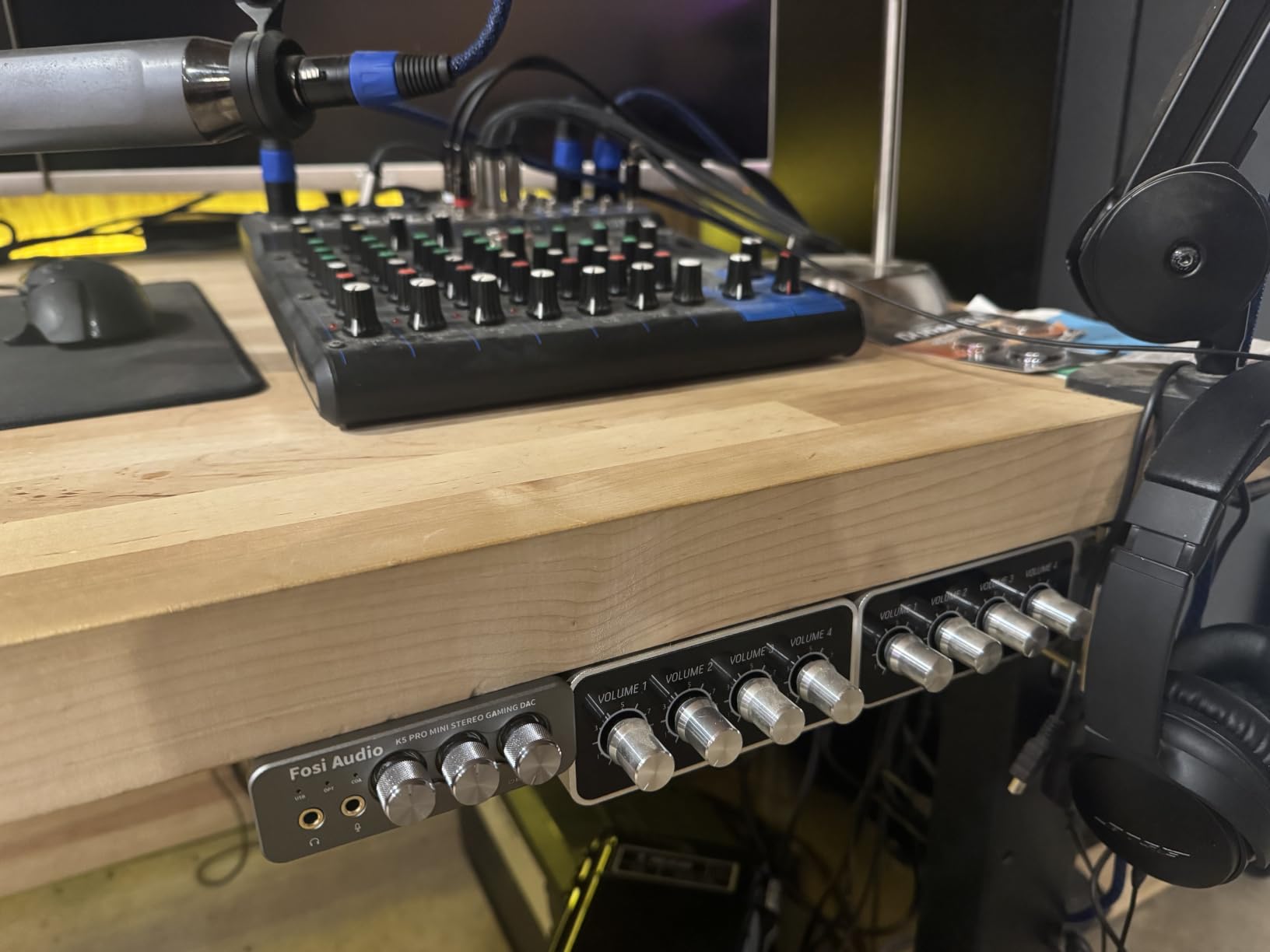
Gaming is the one DAC amp use case where most audiophile-focused units fall flat: they don’t pass a microphone through to Discord. The Fosi Audio K5 Pro is built specifically for that gap. I tested it with a HyperX Cloud II on PS5 and a SteelSeries Arctis Nova on PC, and the mic pass-through worked without drivers, configuration, or hiccups. The unit sits on my friend’s battlestation now as a permanent fixture.
Beyond the mic input, this is a serious little DAC amp. The Texas Instruments NE5532 op-amp drives my Audio-Technica ATH-M50x and the Beyerdynamic DT 770 Pro 80 Ohm with clean, dynamic sound. The 2-in-1 USB-C cable handles both data and power, so it pulls audio and juice from a single port on a modern laptop or PS5 — no extra wall wart needed on the console side.
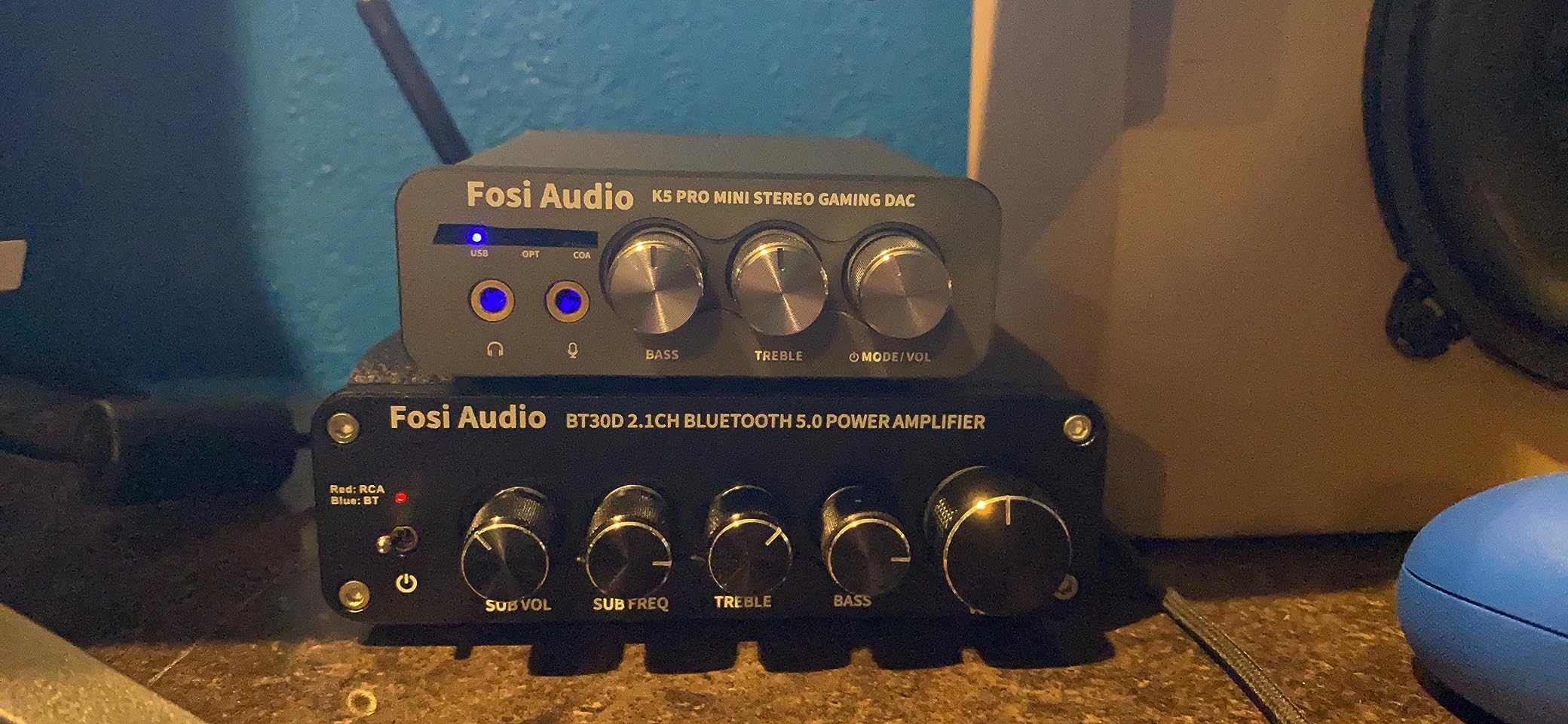
Output power is rated 1000mW into 16 ohms down to 80mW into 300 ohms, which is plenty for nearly any gaming headset and most entry-level audiophile cans. The physical bass and treble knobs are genuinely useful during gameplay: I nudged bass up for shooter explosions and left it flat for narrative single-player titles. Reviews from gamers on Reddit and Amazon mention years of daily use without dropouts.
My main complaint is that there’s no hardware switch to toggle between headphone output and the RCA line output. Both play simultaneously, which is fine for a shared desktop but annoying if you have powered speakers connected at the same time as headphones. The bright blue LED is also a known nuisance for late-night players — a piece of electrical tape over it solves the problem.
For whom it’s good
Console gamers on PS5 or Nintendo Switch who want better audio plus mic support from a single unit. PC gamers who use a headset with a 3.5mm mic and want a clean DAC upgrade. Anyone running a simple desk setup who wants tone controls without opening software.
For whom it’s not ideal
Listeners who need Bluetooth wireless streaming, or anyone wanting true balanced output for high-end planar magnetics. Studio users needing separate headphone and monitor switching will also need a different unit.
4. iFi Hip-dac 3 — Best Portable DAC Amp for iPhone and Android
iFi Hip-dac 3 Portable USB DAC Headphone Amplifier (Black Stealth)
Inputs: USB-C (audio and charging)
Outputs: 4.4mm balanced and 3.5mm S-Balanced
Supports: PCM 32-bit/384kHz, DSD256
Pros
- Battery-powered portable form factor
- Burr-Brown Multi-Bit DAC with smooth musical sound
- Fully balanced 4.4mm and S-Balanced 3.5mm headphone outputs
- PowerMatch gain and iEMatch for sensitive IEMs
- iOS compatible out of the box with included cables
Cons
- Protruding volume knob catches on pockets and bags
- USB-A extension cable is awkward and easy to lose
- No included protective case for portable use
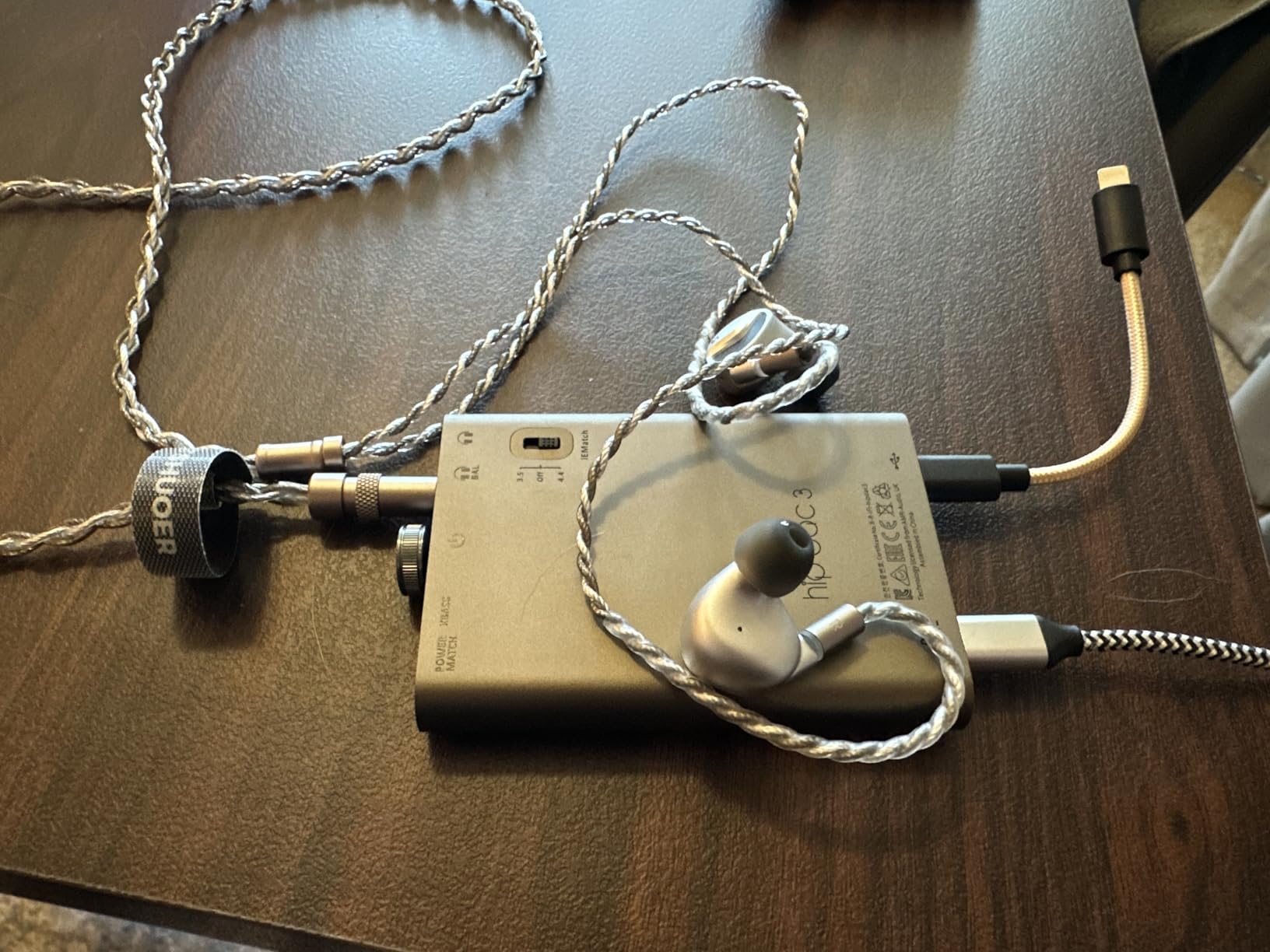
The iFi Hip-dac 3 is what I keep in my EDC bag. It weighs less than a smartphone and runs on internal battery for 8-12 hours per charge, depending on headphone load. During a recent flight, I drove my Campfire Andromeda IEMs straight from an iPhone 15 with no dongle, no splitter, and no fuss. The sound signature is warmer and more analog than my reference desktop rig — exactly what I want for casual listening away from home.
The dedicated 4.4mm balanced output is genuinely useful here. With sensitive IEMs, iEMatch removes the residual hiss that most portable DAC amps produce at low volume. With harder-to-drive over-ears, PowerMatch gain lifts the output enough to drive the Sennheiser HD25 cleanly. The dual USB-C ports — one for audio, one for charging — let you charge the unit without interrupting playback, which is rare in this category.
I tested file format support with a mix of CD-quality FLAC, 24-bit/96kHz hi-res, and DSD256 downloads. The unit recognized every format without manual configuration. Bluetooth is not built in — this is a wired-only portable — but for anyone serious about audio quality, that’s a feature rather than a limitation. The aluminum chassis feels premium, though the matte finish shows wear on the corners after a few months of pocket carry.
The protruding volume knob is the unit’s most-cited flaw. It catches on fabric in a backpack and can be accidentally turned on or off. iFi ships the unit without a case, which is unusual at this price — third-party cases exist, but none are first-party. The included USB-A extension cable feels like an afterthought and I lost mine within a week. If you buy this unit, order a small hard case the same day.
For whom it’s good
Anyone who wants better-than-phone audio on the go. Audiophiles with mid-tier IEMs or portable headphones who travel frequently. iPhone users who want a one-cable solution without buying a separate Lightning-to-USB-C adapter.
For whom it’s not ideal
Listeners who want Bluetooth wireless streaming. Users who need a unit that survives rough daily carry without buying a third-party case. Anyone wanting optical or coaxial digital inputs.
5. Douk Audio U3 — Best Budget Class A Headphone Amp for Tinkerers
Douk Audio U3 Headphone Amps, Mini Hi-Fi Amplifier for Home Desktop PC 6.35mm / 3.5mm Headsets, Class A, RCA Input, DC 5V
Amp topology: Class A
Output: 1300mW
Op-amp: TI NE5532, pluggable socket
Pros
- Audiophile-grade Class A amplification at a budget price
- Pluggable op-amp socket for DIY sound customization
- Drives demanding 300-600 ohm headphones with ease
- Solid metal chassis with high-quality RCA inputs
- 1300mW output power for hard-to-drive cans
Cons
- Headphone amplifier only — no built-in DAC
- Needs a quality external power supply for lowest noise floor
- Bright blue LED indicator is distracting at night
- Slight L/R channel imbalance at very low volume
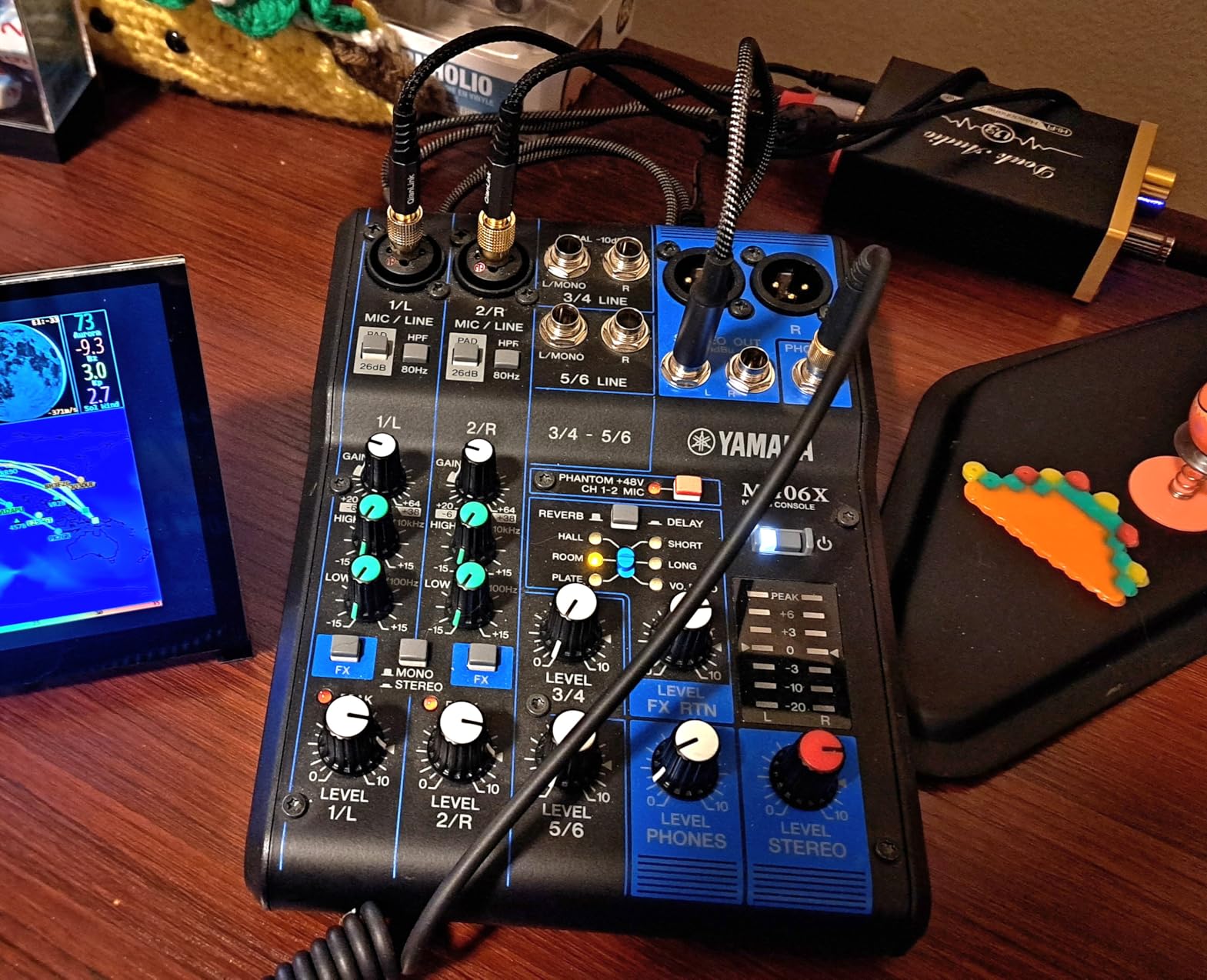
The Douk Audio U3 is the most interesting value on this list for one reason: it lets you swap op-amps. That single feature turns a $40 amp into a learning platform. I started with the stock TI NE5532, which sounds warm and full-bodied, then dropped in a Sparkos Labs SS3602 for a more neutral, detailed presentation. The whole swap takes about ten seconds with no soldering.
This is a headphone amplifier only — no DAC built in. You’ll feed it an analog signal from your computer, phone, or a separate DAC. I used it downstream of a Fosi Q4 and a Topping D10s for testing, and the U3 added a touch of Class A warmth that many listeners describe as “tube-like” — a slight fullness in the midrange and a soft top-end rolloff. With Sennheiser HD650 and AKG K701, both of which are notoriously hard to drive from cheap amps, the U3 delivered controlled bass and clean mids at full volume without strain.
The 1300mW output is overkill for sensitive IEMs and exactly right for high-impedance dynamic drivers. The amp runs cool thanks to the Class A bias running at high voltage (26V), which means it can stay on for hours without thermal shutdown. Build quality punches well above its weight — a metal chassis with proper RCA input jacks, not the plastic shells found on most competitors in this range.
Three real caveats. First, USB power introduces audible noise — you’ll want a clean 5V linear supply or a quality phone charger brick for best results. Second, the bright blue LED is genuinely annoying in a dark room. Third, at the absolute lowest volume setting, there is a slight channel imbalance — well below normal listening levels, but noticeable when fading tracks out. None of these stop the unit from being a remarkable value.
For whom it’s good
Hobbyists who want to experiment with op-amp rolling without spending hundreds. Owners of high-impedance Sennheiser, AKG, or Beyerdynamic headphones who need real current. Listeners building a separates-based system on a tight budget.
For whom it’s not ideal
Anyone who needs an all-in-one solution — this is an amp only. Users with sensitive IEMs who can’t tolerate any noise floor at all. Buyers who want a clean front panel without LEDs or external tweaks.
6. FiiO K7 — Best Value Balanced Desktop DAC Amp Under $300
FiiO K7 Desktop DAC and Amplifier
Inputs: USB, Optical, Coaxial, AUX
Outputs: 4.4mm balanced and 6.35/3.5mm single-ended
Output: 2000mW balanced
Pros
- Dual AK4493SEQ DACs for smooth AKM house sound
- Dual THX AAA 788+ amplifiers for clean
- low-distortion power
- 2000mW balanced output drives planar magnetics easily
- 4.4mm balanced and 6.35/3.5mm single-ended headphone outputs
- Solid aluminum CNC chassis with multiple gain levels
Cons
- Volume knob steps are not linear in the lowest quarter
- A few isolated reports of reliability issues after several months
- No dedicated Bluetooth wireless option
The FiiO K7 is what I recommend when someone asks, “I want balanced output and I don’t want to spend a thousand dollars.” The dual AK4493SEQ DACs give it the warm, musical AKM house sound that many listeners prefer over the more analytical ESS Sabre alternatives. The dual THX AAA 788+ amplifier modules deliver class-leading measured performance with enough current to wake up demanding planar magnetics like the Hifiman Sundara and even the harder-to-drive Edition XS.
I drove the Sundara from the 4.4mm balanced output for two solid weeks. The K7 had no problem delivering tight, controlled bass and clean transient response at any volume. Switching to single-ended 6.35mm output for a pair of Sennheiser HD600, the unit still had headroom to spare. Multiple gain levels and three output modes give you the flexibility to fine-tune the experience for sensitive IEMs versus power-hungry planars — a level of versatility rare in this price range.
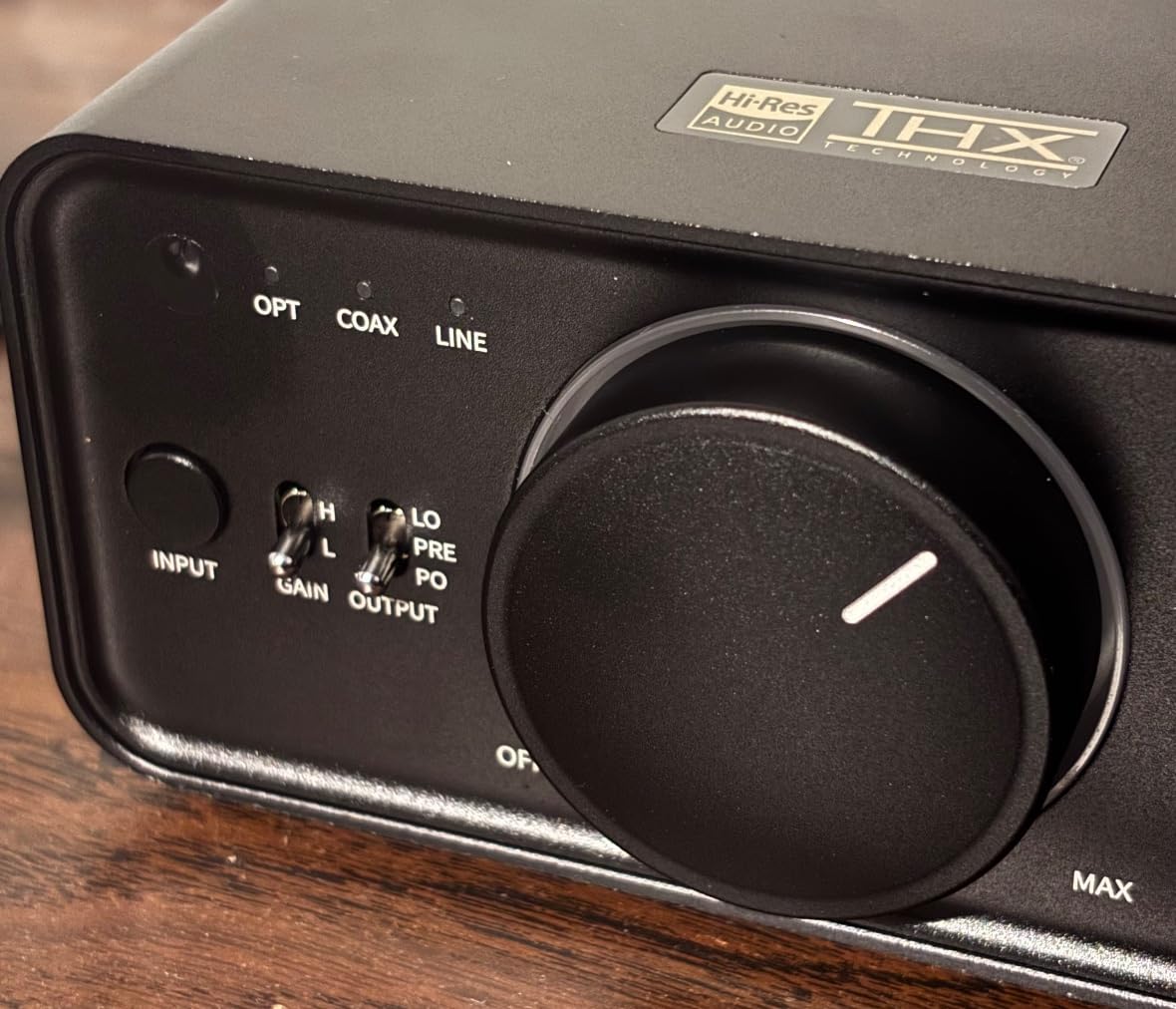
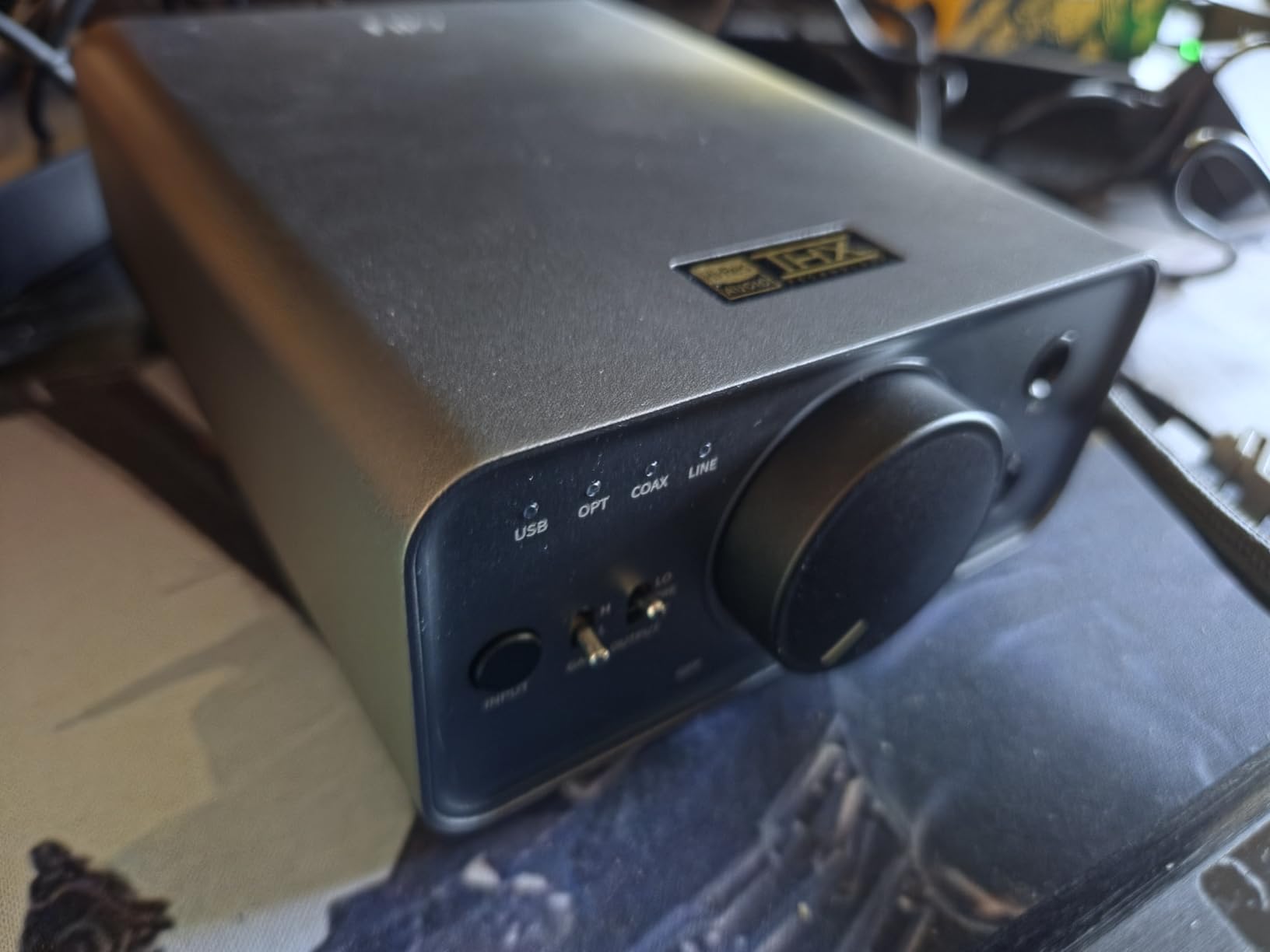
The build quality is excellent for the price. The aluminum CNC chassis feels like a $500 component, the RGB indicator lights display the active sampling rate, and the front panel layout is clean and intuitive. USB, optical, coaxial, and AUX inputs cover every common source, and the unit integrates cleanly into a desktop hi-fi stack. Forum owners report years of reliable use, with only a handful of isolated failure reports.
The volume knob has a design quirk: the first quarter of its rotation is intentionally silent so that you can use sensitive IEMs without sudden volume jumps. This is a thoughtful feature, but the steps are not linear — you’ll find yourself hunting for the right setting at low volumes. Some users on r/BudgetAudiophile report occasional reliability issues after a year or more of use, so it’s worth buying from a retailer with a good return policy.
For whom it’s good
Listeners stepping up from a budget DAC amp to balanced output territory without breaking the bank. Owners of planar magnetic headphones in the mid-tier power range. Anyone who wants the warm AKM house sound over the brighter ESS Sabre signature.
For whom it’s not ideal
Users who need Bluetooth wireless streaming built in. Listeners who require a perfectly linear volume control at very low levels for sensitive IEM matching. Anyone shopping internationally where FiiO warranty service may be slower than domestic alternatives.
7. AIYIMA DAC-A2 — Best Ultra-Budget Desktop DAC Amp
AIYIMA DAC-A2 Headphone Amplifier & Desktop DAC for PC, MAC and Gaming
Inputs: USB, Optical, Coaxial
Outputs: RCA and 3.5mm headphone
Power: 160mW at 32 ohms
Pros
- Plug-and-play on PC
- Mac
- Linux with no driver installation
- Independent bass and treble tone knobs for real-time EQ
- Compact metal chassis with EMI shielding
- Versatile USB
- optical
- and coaxial inputs in one box
- Excellent value for under $50
Cons
- Power supply not included in the box
- Some units develop static or channel imbalance over time
- Not enough power for high-impedance 300+ ohm headphones
If your budget is genuinely tight — under $50 — the AIYIMA DAC-A2 is the unit I’d recommend without hesitation. I gave one to a friend who was using 60-ohm headphones plugged directly into a gaming laptop, and the upgrade was obvious within seconds. Vocals came forward, the bass tightened up, and the persistent hiss he’d been living with disappeared entirely.
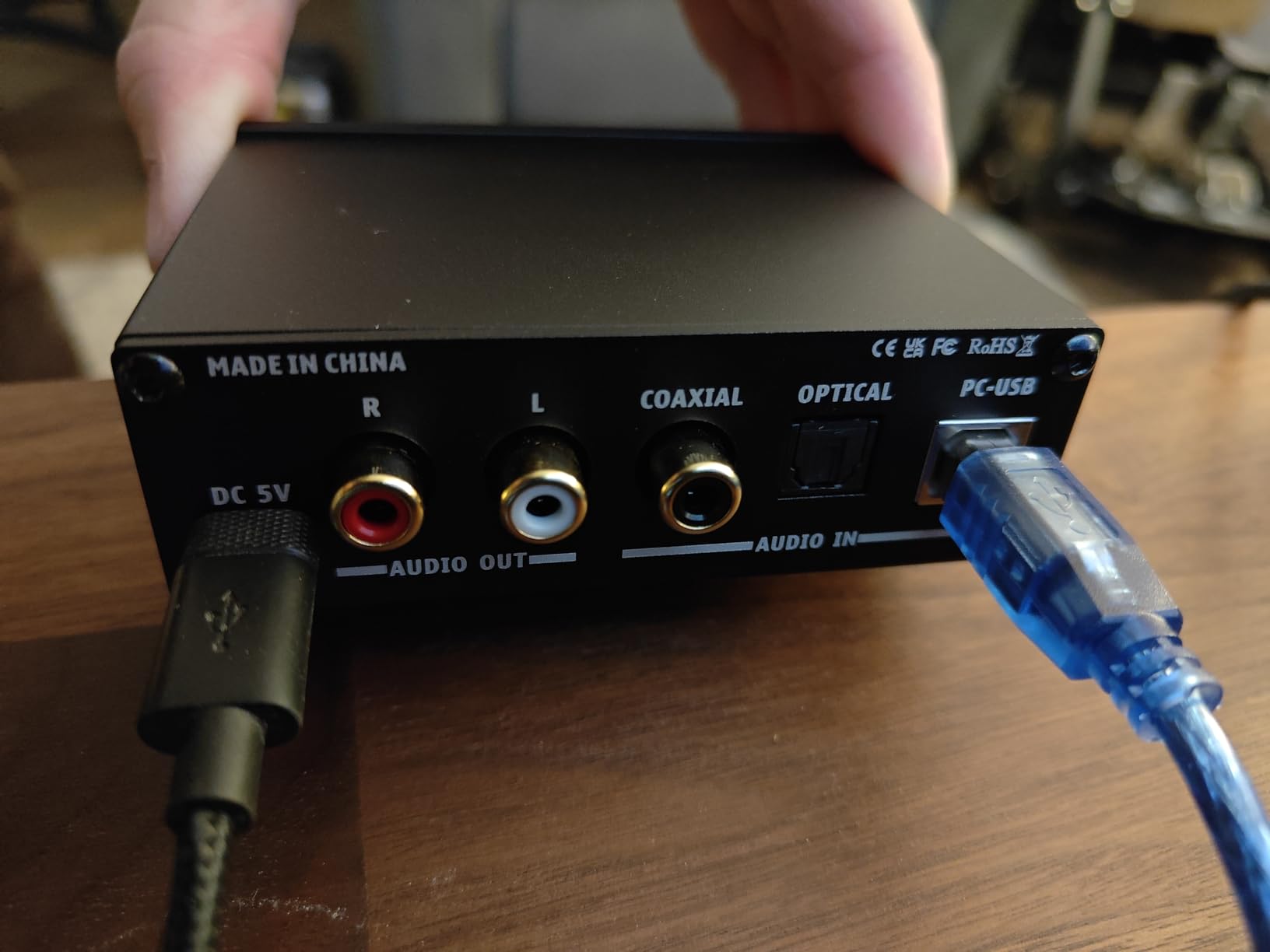
The DAC-A2 is built around a simple formula: USB, optical, or coaxial digital input, RCA line output for powered speakers, a 3.5mm headphone output, and front-panel bass and treble knobs. There’s no app, no Bluetooth, no display, and no remote. For under $50, that’s a fair trade — every dollar goes into the analog circuitry rather than features. The aluminum housing and EMI shielding suggest the designers cared about noise rejection, and the measured signal-to-noise ratio holds up in real listening.
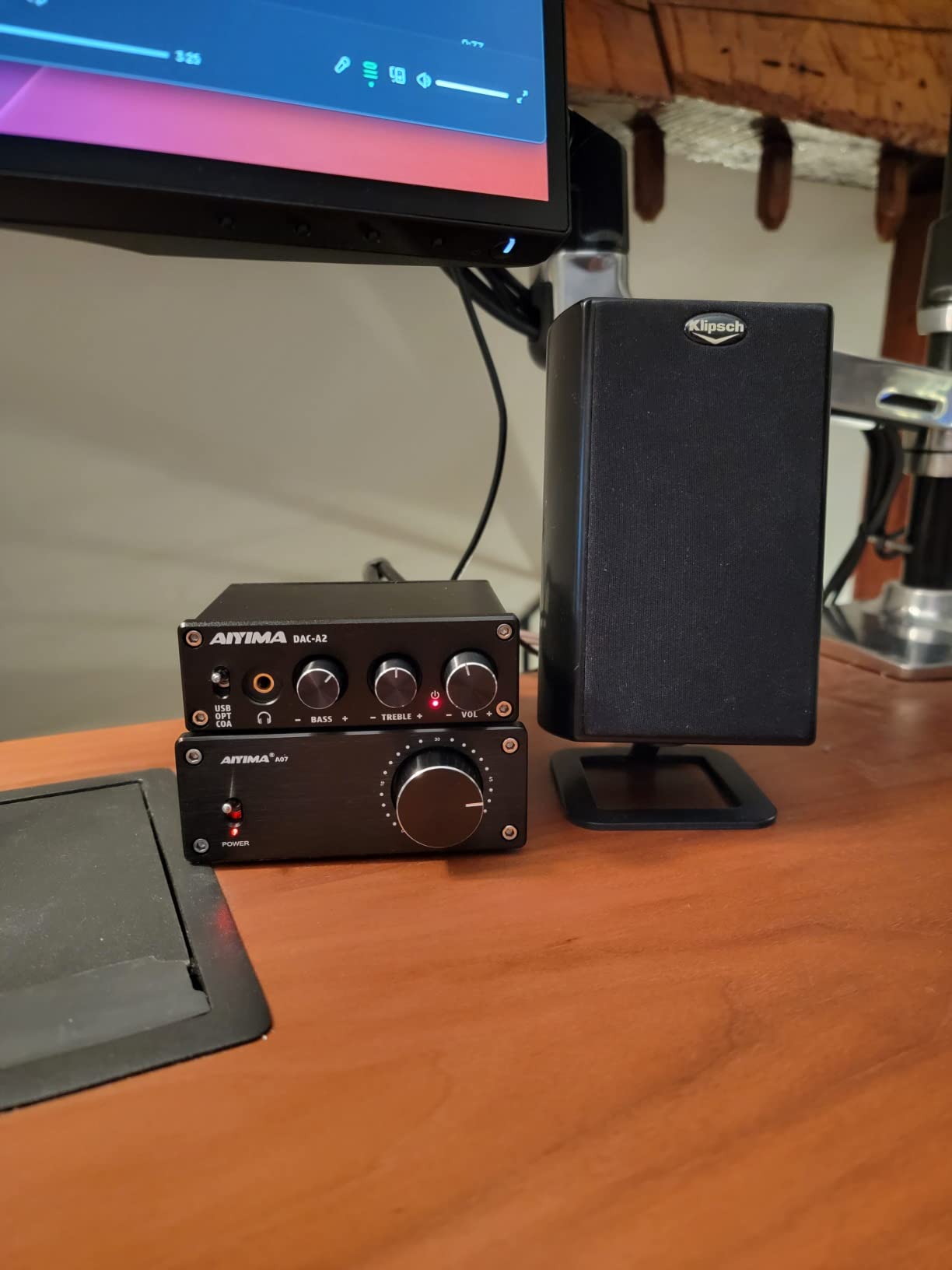
Power output is rated 160mW at 32 ohms, which is plenty for consumer headphones up to about 200 ohms. I would not pair this with a 300-ohm Sennheiser HD650 — the volume simply won’t get loud enough. But for typical gaming headsets, mid-tier dynamic-driver headphones, and most IEMs, the DAC-A2 has more than enough current. The Nintendo Switch is a particularly happy pairing: I tested it dock-to-USB and got a clean, dynamic signal that significantly outclassed the Switch’s built-in output.
There are two real downsides. First, the power supply is not included — you need to bring your own 5V USB brick, ideally a quality one to avoid injecting noise. Second, a small percentage of owners report channel imbalance or static developing after several months of use. The unit is inexpensive enough that replacing it isn’t a major loss, but it’s worth knowing before buying. For a first DAC amp for a young listener or a dorm-room setup, this remains an easy recommendation.
For whom it’s good
First-time DAC amp buyers who want to test the waters without a big commitment. Parents setting up a child’s first serious audio rig. Anyone with easy-to-drive 32-150 ohm headphones who just wants cleaner sound than a laptop jack.
For whom it’s not ideal
Owners of high-impedance 250+ ohm headphones. Listeners who need Bluetooth or balanced output. Anyone wanting a long-term investment piece — at this price tier, a $200 upgrade a year or two later is the more sensible path.
8. Fosi Audio SK02 — Best Compact Balanced DAC Amp for Tight Desks
Fosi Audio SK02 DAC Headphone Amplifier & Preamp, Desktop Audio DAC with USB-C and Optical Input, 4.4mm Balanced & 3.5mm Headphone Output, Digital-to-Analog Converter for PC and Home Audio System
Inputs: USB-C, Optical
Outputs: 3.5mm single-ended and 4.4mm balanced
Output: 1100mW at 32 ohms balanced
Pros
- Compact minimalist design fits on small desks
- ESS SABRE ES9038Q2M DAC with detailed neutral sound
- Both 3.5mm single-ended and 4.4mm balanced headphone outputs
- Strong 1100mW balanced output for demanding headphones
- Functions as DAC
- headphone amp
- and preamp in one unit
Cons
- Requires USB-C power — not portable
- Not compatible with Android devices out of the box
- No companion app or advanced software tuning
- Some headphones reveal a linear or bright treble character
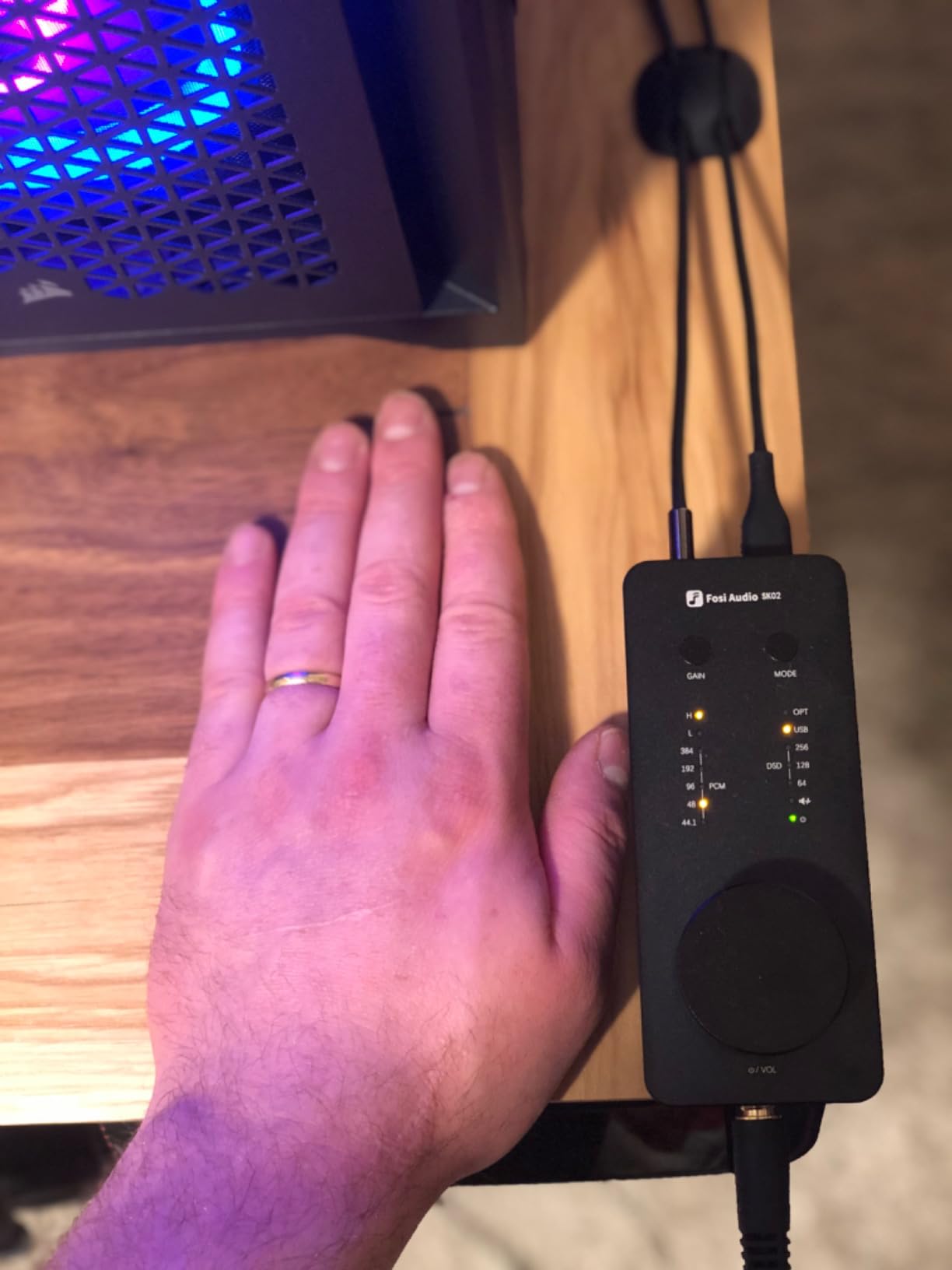
The Fosi Audio SK02 is the unit I recommend to friends who live in small apartments with cramped desks. It measures roughly the size of a paperback book and weighs under 350 grams, yet it delivers 1100mW from its 4.4mm balanced output — more than enough to drive the Hifiman Sundara and Sennheiser HD660S2 cleanly. The aluminum CNC chassis feels denser than it looks and sits flat on a small monitor shelf without tipping.
Sound quality leans toward the ESS Sabre house character: detailed, neutral, with a slightly forward treble. I tested it with a 300-ohm Sennheiser HD600 and found the bass tight and well-controlled, but with brighter IEMs (the Campfire Andromeda, for example) the treble occasionally felt linear — not harsh, just analytical. Owners who prefer warmer sound should swap the Fosi SK02 for the iFi Zen DAC 3.
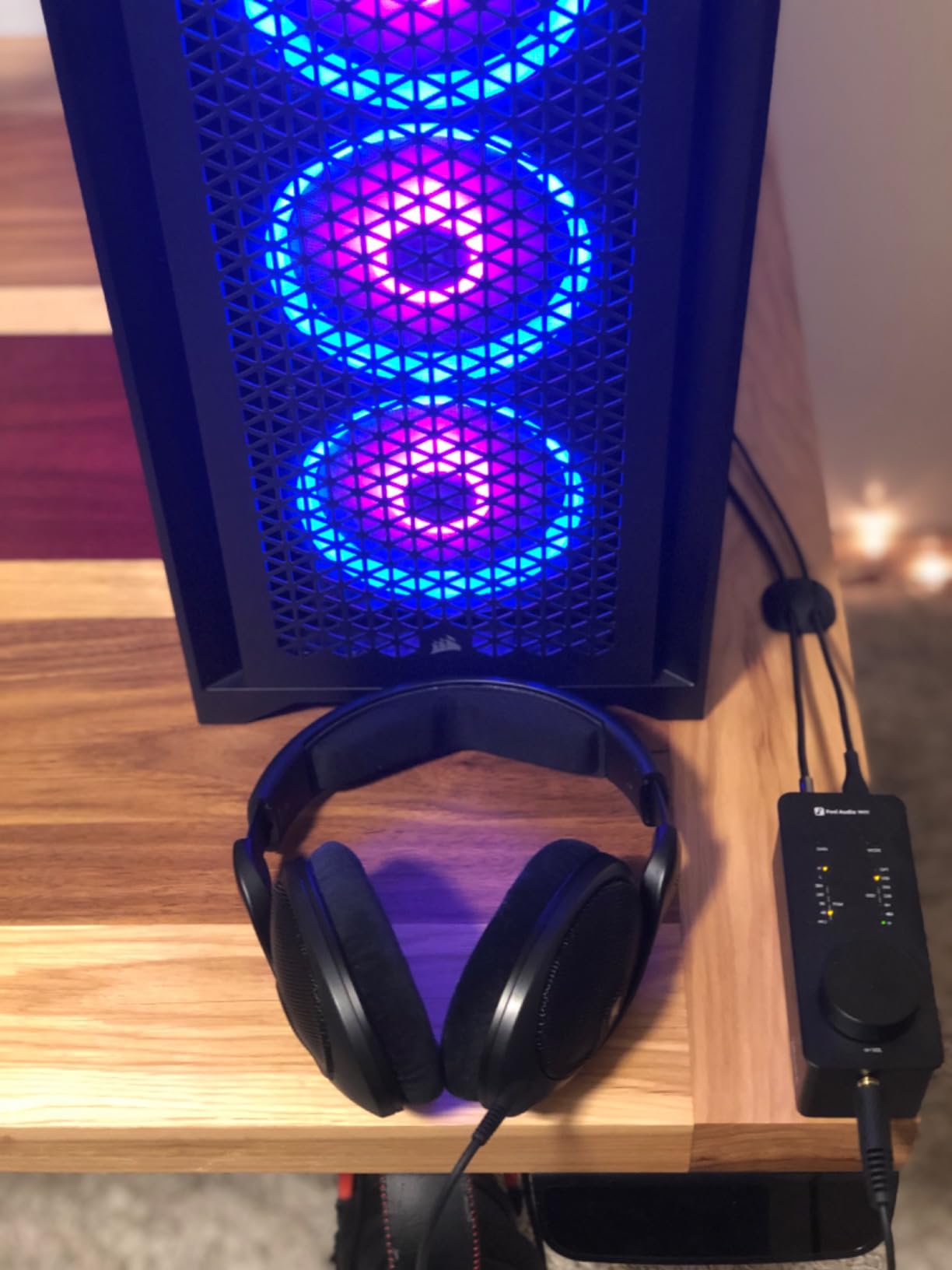
The single-piece aluminum CNC construction is universally praised in user reviews. The multifunction control knob handles volume, input switching, and power. USB-C and optical inputs cover modern computers, the PS5, and most streaming transports. As a preamp feeding a pair of powered monitors, the SK02 works well — the volume knob becomes a system-wide level control.
USB-C power is required, which limits true portability — you’ll always need a wall outlet or powered hub. The unit is not officially compatible with Android devices, though some users report success with USB Audio Player Pro apps. There’s no companion app, so all tuning happens via the physical controls. For the price, this is a small footprint with surprisingly grown-up balanced output.
For whom it’s good
Listeners with limited desk space who still want balanced output and serious power. Anyone running a small nearfield monitor setup who needs a compact DAC/preamp. Users who want clean, detailed ESS Sabre sound in a small box.
For whom it’s not ideal
Listeners who prefer a warmer, more analog sound signature. Android phone users who want plug-and-play mobile compatibility. Anyone needing Bluetooth wireless streaming or full parametric EQ.
9. Fosi Audio ZH3 — Best All-in-One DAC Amp Preamp for Hi-Fi Systems
Fosi Audio ZH3 DAC Headphone Amp, Fully Balanced Preamp with AKM4493SEQ XMOS XU316 PCM 768kHz for Amplifiers, USB/Optical/COAX/RCA/12V Trigger Input, XLR/RCA/4.4mm/6.35mm Output with Remote
Inputs: USB, Optical, Coaxial, RCA
Outputs: 4.4mm, 6.35mm, RCA, XLR
Output: 2570mW balanced at 32 ohms
Pros
- All-in-one DAC
- headphone amp
- and preamp in one unit
- AKM4493SEQ DAC with XMOS XU316 processor for warm hi-res sound
- Massive 2570mW balanced output for the most demanding headphones
- Multiple input and output types including XLR for hi-fi integration
- 12V Trigger for system power sequencing and remote control
- Swappable op-amps and 6 digital filter modes
Cons
- External wall-wart power supply instead of internal PSU
- XLR outputs are fixed line level rather than variable preamp
- EQ adjustments only affect the headphone output
The Fosi Audio ZH3 is the most ambitious unit on this list. It combines a high-end AKM4493SEQ DAC with XMOS XU316 USB processing, four OPA1612 op-amps in a balanced configuration, and enough output power to drive the hungriest headphones on the market — 2570mW from the 4.4mm balanced output. I tested it with a Hifiman Edition XS, and the ZH3 had so much headroom I never pushed it past 40% volume.
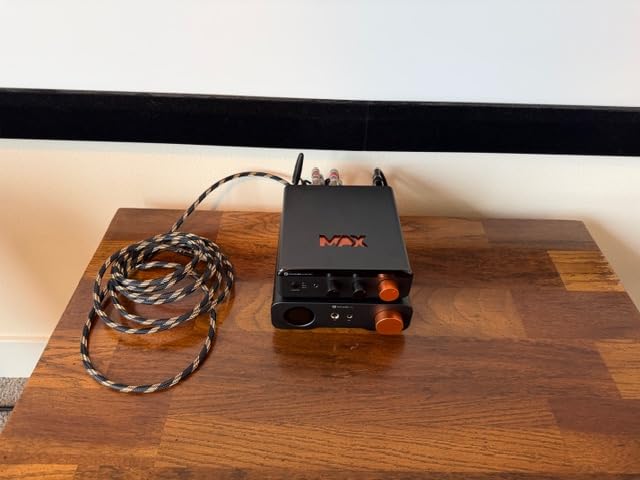
What makes this a true hi-fi system piece is the connectivity. USB, optical, coaxial, and RCA inputs cover every source you’d reasonably connect. XLR, RCA, 4.4mm, and 6.35mm outputs mean you can simultaneously drive headphones and feed a power amplifier or active monitors. The 12V Trigger input lets you sequence the ZH3 with other components — turn on your power amp and the ZH3 wakes with it. The included remote is a small quality-of-life touch that becomes essential once the unit is in a rack.
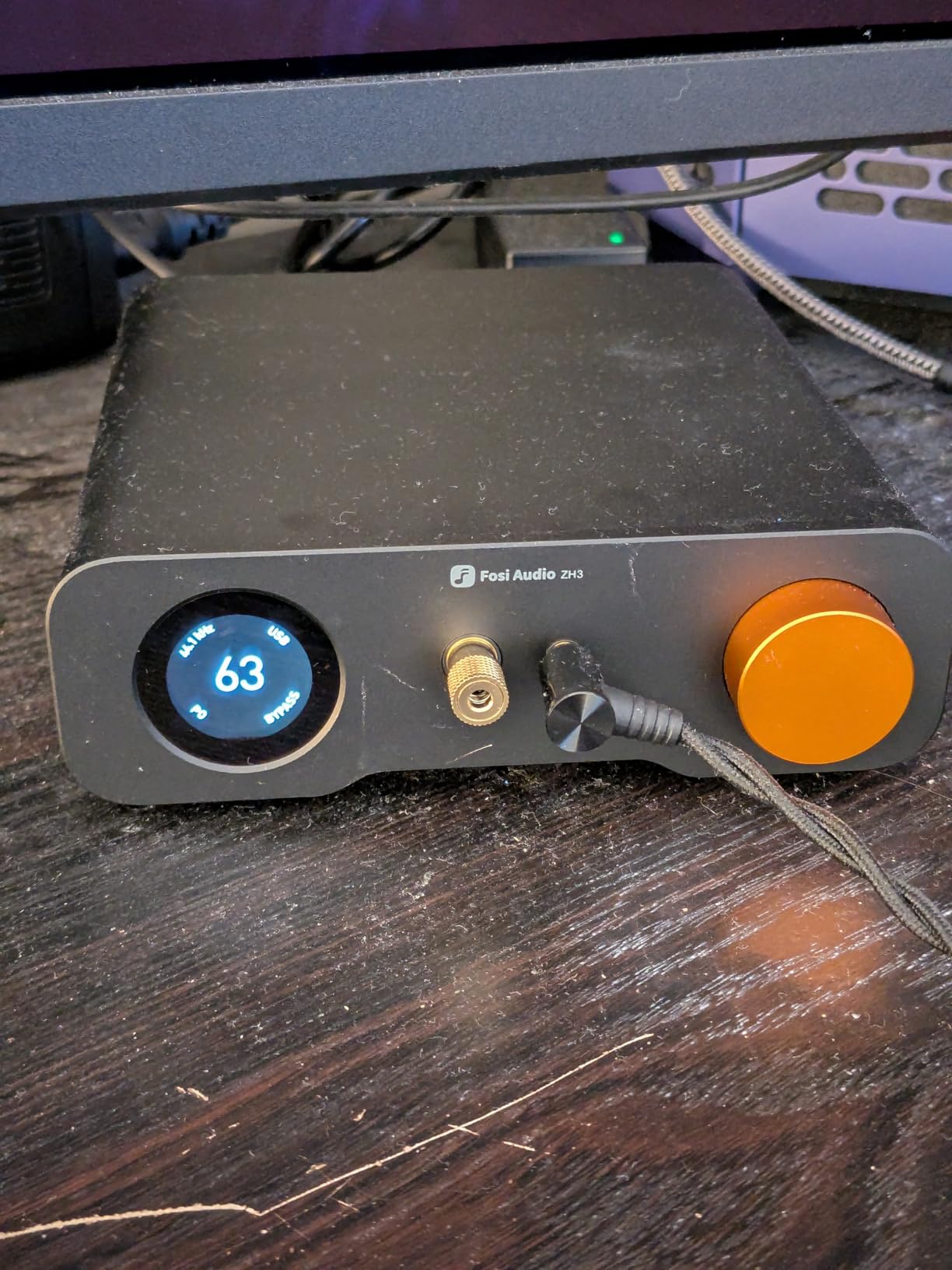
The AKM4493SEQ chipset gives the ZH3 a warmer, more analog character than the ESS Sabre alternatives — closer to the iFi Zen DAC 3 than the Fosi SK02. Combined with the 1.9μV noise floor (genuinely excellent), the result is detailed but never clinical. Swappable op-amps add long-term tuning flexibility, and the six digital filter modes let you fine-tune the presentation for different genres.
Two caveats matter for buyers planning a full hi-fi system. First, the XLR outputs are fixed line level rather than true variable preamp output, which contradicts some of Fosi’s marketing. You’ll need to control volume at your power amp or active speakers. Second, the EQ adjustments only affect the headphone output, not the line-level outputs — so you can’t tone-shape the signal going to your speakers. Neither is a deal-breaker, but they’re worth knowing before you plan your system around the unit.
For whom it’s good
Anyone building a desktop hi-fi system who wants one box to handle source switching, headphone listening, and preamp duties. Owners of demanding planar magnetic headphones who need serious balanced output. Listeners who want the warm AKM sound signature with extensive connectivity.
For whom it’s not ideal
Pure headphone-only listeners who won’t use the XLR and RCA line outputs. Buyers who need true variable preamp output to control volume at powered speakers. Anyone who wants a built-in linear power supply rather than a wall wart.
10. TOPPING DX5 II — Best High-Power DAC Amp with Parametric EQ
TOPPING DX5 II Hi-Res DAC & Headphone Amp Combo – Dual ES9039Q2M, X-Hybrid Amp, 10-Band PEQ, LDAC Bluetooth 5.1, 4.4mm Balanced & 6.35mm Headphone Output, Preamp Mode, 12V Trigger (Black)
Inputs: USB, Bluetooth, Coaxial, Optical
Outputs: 4.4mm balanced and 6.35mm single-ended
Output: 7600mW balanced
Pros
- Massive 7600mW balanced output for any headphone load
- Dual ESS ES9039Q2M DACs for class-leading measured performance
- 10-band parametric EQ via Topping Tune app for deep customization
- Bluetooth 5.1 with LDAC and aptX Adaptive codec support
- 2.0-inch Aurora UI display with 9 customizable themes
Cons
- Single-ended output power is more limited than the balanced output
- Some reports of headphone jack hot-swap issues
- Remote RC-18a not compatible with older Topping remotes
- A few firmware quirks noted by early owners
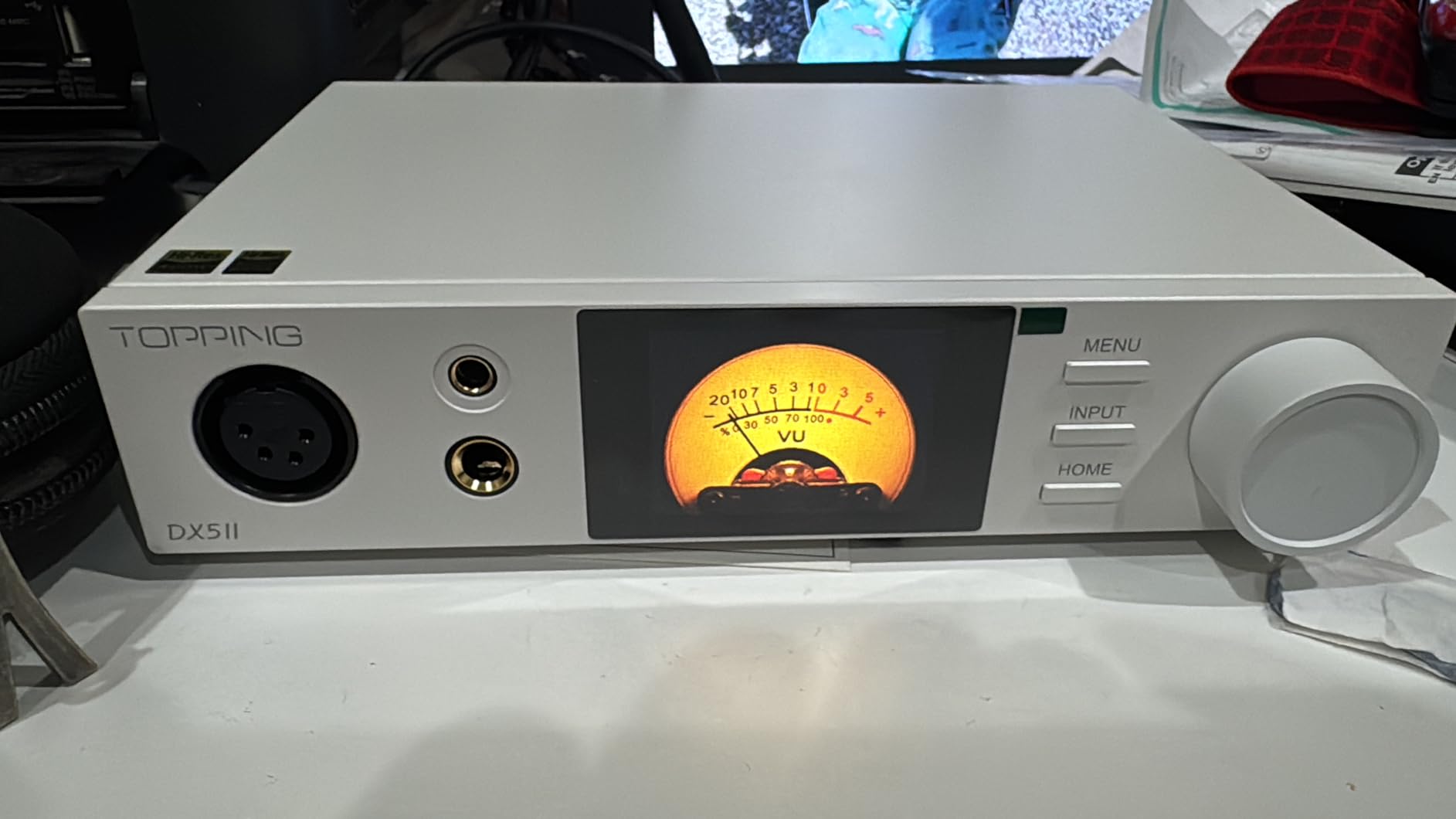
The TOPPING DX5 II is the unit I’d pick if I wanted to fine-tune every aspect of my headphone chain. The 10-band parametric EQ in the companion Topping Tune app is the most flexible sound-shaping tool I’ve used on any DAC amp under $500. You can correct headphone frequency response dips, target specific midrange resonances, or build a custom curve for a particular recording — all with a graphical interface that exports and imports presets.
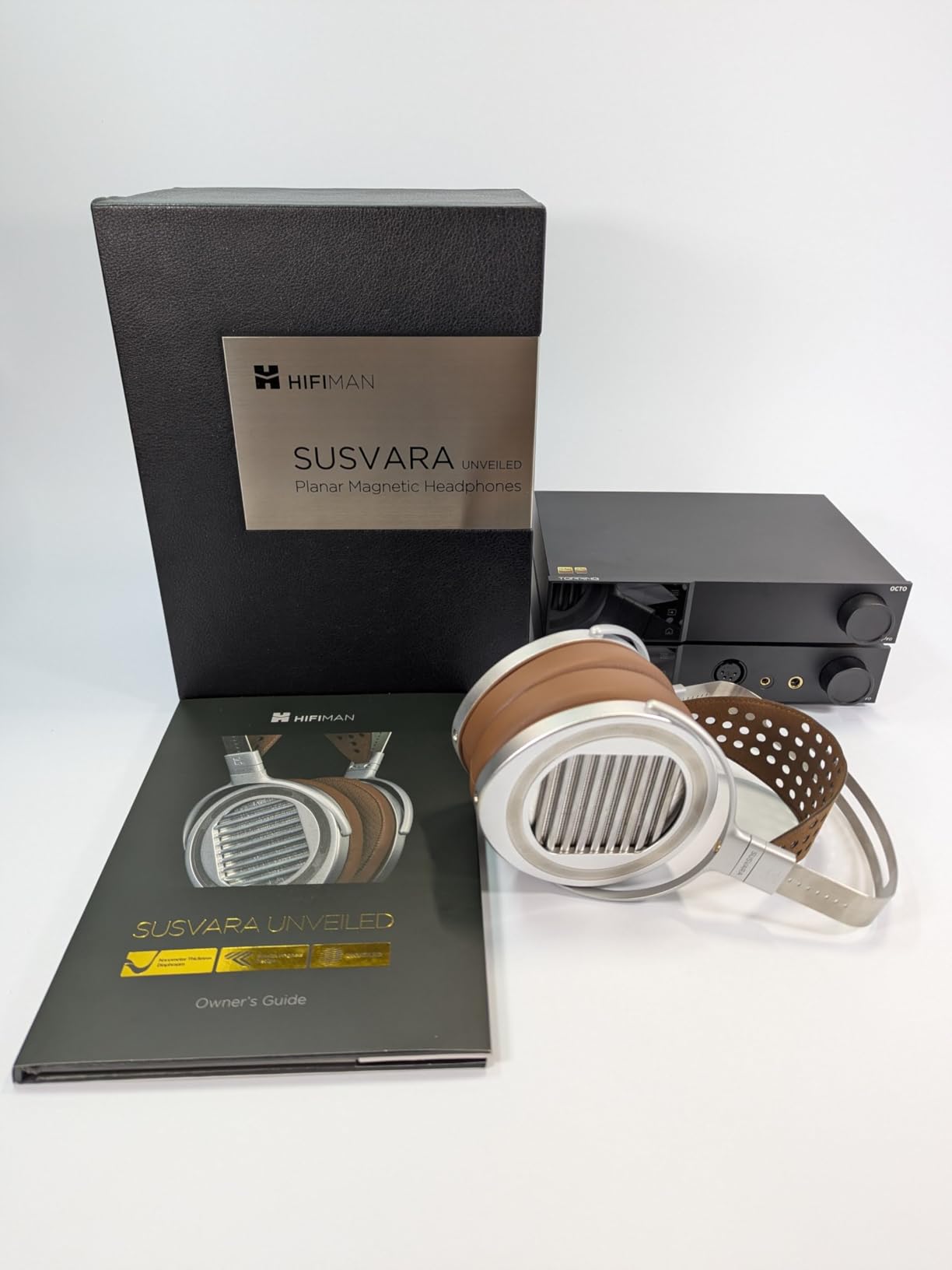
Output power is genuinely absurd: 7600mW per channel balanced. I hooked up the notoriously power-hungry Hifiman Susvara and the DX5 II drove it to satisfying levels with current to spare — no clipping, no strain, just clean delivery. The dual ESS ES9039Q2M DACs deliver measurably excellent performance with a clean, neutral, but not sterile sound signature that reviewers consistently praise.
The 2.0-inch Aurora UI display is a small but delightful quality-of-life feature. Album art, VU meters, sampling rate — all customizable across nine themes. Bluetooth 5.1 with LDAC and aptX Adaptive support means wireless listening from a phone is genuinely high-quality, not the lossy compromise of older Bluetooth DACs. The 12V Trigger in/out integrates the unit cleanly into a hi-fi rack with other components.
Single-ended output power is meaningfully lower than the balanced output — about 1/3 the headroom — so anyone running the DX5 II with a 4-pin XLR or 4.4mm balanced cable will get the most from it. Early production runs had occasional headphone jack hot-swap issues, though firmware updates have resolved most reports. The included remote uses a different protocol than older Topping remotes, so existing Topping owners will have one more clicker on the coffee table.
For whom it’s good
Tinkerers who want deep parametric EQ control over their headphone chain. Owners of the most demanding planar magnetics who need massive balanced output. Anyone wanting modern Bluetooth LDAC support alongside wired hi-res.
For whom it’s not ideal
Listeners who prefer a warmer, more analog sound signature. Buyers who need true single-ended output at full power. Anyone uncomfortable configuring app-based EQ — this unit rewards engagement.
How to Choose the Right DAC Amp
Choosing the best DAC amp for your setup comes down to four honest questions: what headphones will you drive, where will you use it, how much power do you need, and what connections do you actually have. Get these right and you’ll end up with a unit that lasts five years or more. Get any of them wrong and you’ll either underpower your headphones or overspend on features you’ll never touch.
Match the amp to your headphones’ impedance and sensitivity
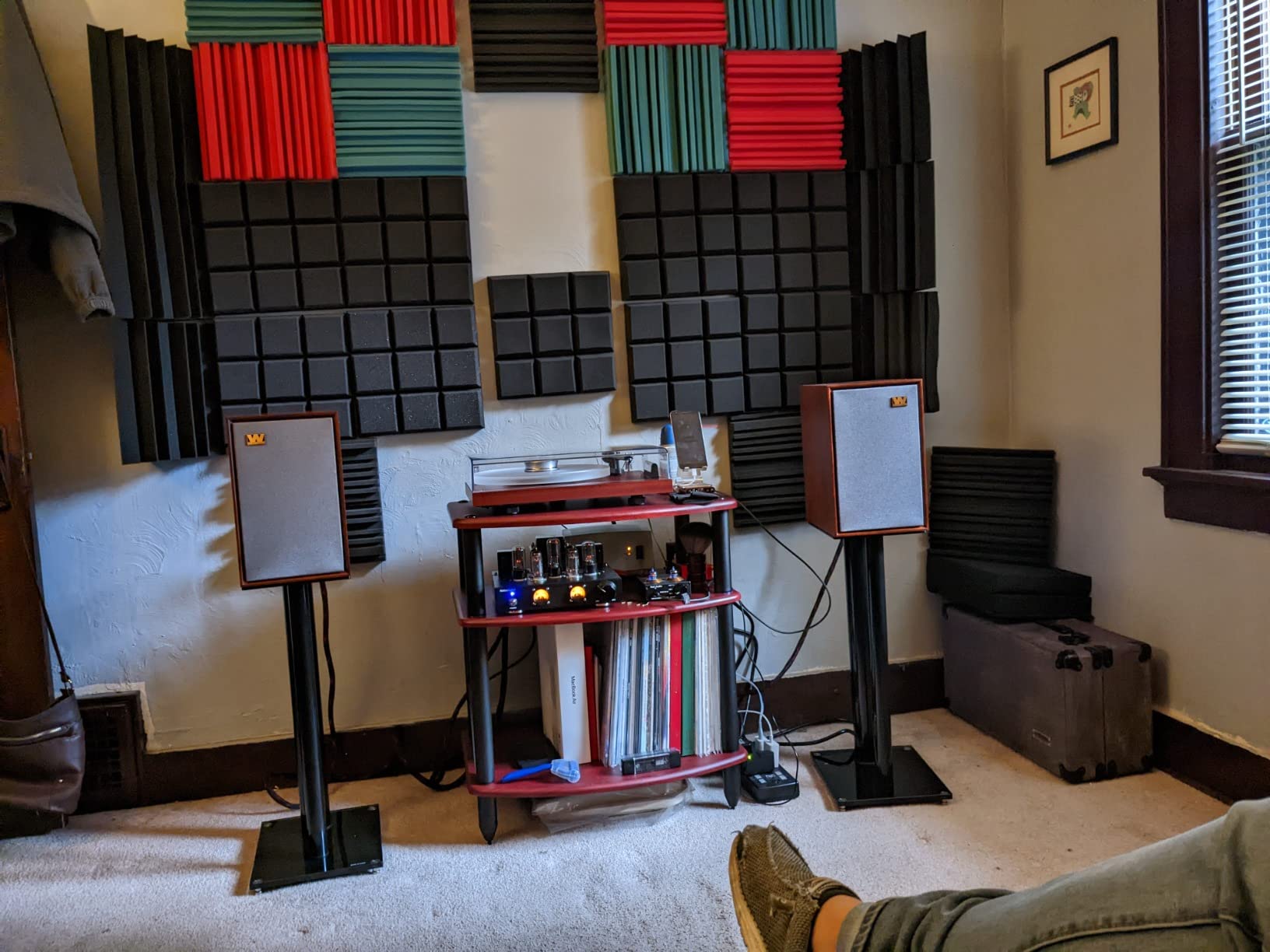
The single most common mistake I see is pairing a budget DAC amp with high-impedance headphones. Headphones rated 250 ohms or higher (Sennheiser HD600, HD650, Beyerdynamic DT 880, AKG K701) need real voltage to reach listening volume. A unit rated 160mW into 32 ohms will simply not get loud enough from the 6.3mm jack. If you’re driving high-impedance cans, prioritize balanced output and at least 1000mW into 32 ohms — units like the FiiO K7, Fosi ZH3, or TOPPING DX5 II cover this requirement.
Sensitive IEMs (anything under 110 dB/mW sensitivity) go the opposite direction: they reveal noise that full-size headphones mask. Look for low noise floor specs and ideally an iEMatch or high-gain switch. The iFi Zen DAC 3 and iFi Hip-dac 3 handle this well. If you’re using very sensitive IEMs, budget units from lesser-known brands may hiss audibly — check forum threads on r/inearfidelity before buying.
Decide between desktop, portable, and gaming-focused
Desktop units prioritize power, connectivity, and often balanced output. They’re meant to live on a desk, draw power from a wall outlet, and drive full-size headphones from a computer or streaming transport. The FiiO K7 and Fosi ZH3 are textbook desktop units. Portable units prioritize battery life, compact size, and smartphone compatibility. The iFi Hip-dac 3 is the clear pick here. Gaming-focused units add microphone pass-through and physical tone controls — the Fosi K5 Pro covers this niche well. Decide your primary use case first, then narrow your list.
Pick your connection priorities
USB-C is now standard on every modern DAC amp, but optical and coaxial inputs matter if you’re connecting a TV, CD player, or older gaming console. The Fosi Audio Q4 and AIYIMA DAC-A2 include all three for maximum flexibility. If you only ever connect a laptop, USB-C-only units like the iFi Zen DAC 3 are fine and keep the back panel cleaner.
Output connections matter too. 6.3mm single-ended handles nearly every full-size headphone. 4.4mm balanced doubles the available power and lowers the noise floor — useful for high-impedance cans and sensitive IEMs. 3.5mm covers most IEMs and gaming headsets. XLR outputs feed power amplifiers or active monitors for a full hi-fi system. The Fosi ZH3 covers every common output type.
Decide if you need separate DAC and amp or a combo
Combo units (DAC plus amp in one box) are more convenient, draw from one power outlet, and take up less space. Separate DAC and amp let you upgrade each piece independently over time — useful if your tastes evolve. For most listeners, a combo is the right call. If you’re building a long-term hi-fi system and plan to swap components as your budget grows, separates give you flexibility that combos can’t.
There’s also a real argument for skipping a DAC amp altogether and getting a better pair of headphones first. Our guide on how to tell if your headphones need a headphone amp walks through the test. For studio work and music production, you may want a dedicated amp matched to specific monitors — the how to match a power amp to your speakers safely guide covers that path. And if you’re miking guitar cabinets, our how to mic a guitar amp for a balanced tone piece explains the recording side.
Common mistakes to avoid
Don’t buy more DAC amp than your headphones can resolve. A $300 DAC amp paired with $50 headphones will not sound three times better than a $100 unit. Don’t ignore the USB power situation — many budget DAC amps perform noticeably worse when fed noisy USB power from a laptop. Use a quality USB power supply or a powered hub. Don’t trust specs blindly — measured SINAD numbers matter less than whether the unit has audible hiss with your specific IEMs. Don’t overlook the importance of proper cable management — a balanced cable from a quality manufacturer costs less than $30 and noticeably improves the balanced output experience. And don’t buy MQA support as a primary feature in 2026 — Tidal has dropped MQA decoding in favor of FLAC, and most new buyers will never use it.
One last thing: forum wisdom consistently shows that long-term ownership reviews (5+ years) matter more than launch-week impressions. Units from established brands like FiiO, iFi, Topping, and JDS Labs tend to age better than flashy newcomers. Buy from a retailer with a solid return policy so you can audition in your own system for at least a week.
Frequently Asked Questions
What is the best amp with DAC?
The best amp with DAC for most listeners is the Fosi Audio Q4 — it combines a clean DAC with a capable headphone amplifier, multiple inputs, and physical tone controls at a price that fits any budget. For premium desktop use, the iFi Zen DAC 3 adds balanced 4.4mm output and Burr-Brown warmth. If you want maximum balanced output power, the TOPPING DX5 II delivers 7600mW per channel.
What is the highest quality DAC?
The highest quality DAC depends on your definition of quality. For measured performance (SINAD, THD+N), flagship units from Chord, dCS, and Holo Audio lead the field at summit-fi prices. For practical high-end desktop listening, the TOPPING DX5 II and FiiO K7 deliver class-leading measurements under $500. The Chord Qutest remains a reference standard for pure DAC performance without a built-in headphone amp.
What is the best DAC and amp combo?
The best DAC and amp combo overall is the FiiO K7 — dual AK4493SEQ DACs and THX AAA 788+ amplifiers deliver balanced output power at a price that makes separates unnecessary for most listeners. For portable use, the iFi Hip-dac 3 is the clear winner. For gaming with microphone pass-through, the Fosi Audio K5 Pro solves the one problem most audiophile combos ignore.
What is the best audiophile DAC in 2026?
The best audiophile DAC in 2026 for most home listeners is the FiiO K7, which combines flagship-class internal components with a sub-$300 price. For pure DAC quality without a built-in headphone amp, the Chord Qutest and Chord Hugo 2 remain references. For portable audiophile use, the iFi Hip-dac 3 is the consensus favorite. Summit-fi flagships from Holo Audio, dCS, and MSB push the boundaries further but cost several thousand dollars.
Conclusion
After six weeks of swapping these ten DAC amps between my desktop rig, my portable bag, and a friend’s gaming setup, my honest recommendation for most people remains the Fosi Audio Q4. It solves the most common problem — mediocre laptop audio — without overpromising or overcomplicating. The physical bass and treble knobs are a genuine daily-use feature, the build quality is excellent for the price, and long-term ownership reports from forums confirm it ages well.
For listeners ready to step up, the FiiO K7 delivers balanced output and serious power for planar magnetics at a still-reasonable price. For warm, musical sound with modern hi-res format support, the iFi Zen DAC 3 remains my premium pick. For portable use, the iFi Hip-dac 3 is what stays in my bag. For gamers, the Fosi Audio K5 Pro is the only DAC amp on this list with a working mic pass-through.
The best DAC amps in 2026 all share one trait: they get out of the way and let your headphones do their job. Match the unit to your headphones, your connections, and your use case, and you’ll have a piece of gear that stays relevant for years. If you’re still building out your setup, our guide on how to record guitar and bass direct without an amp covers the recording side, and how to care for Bang and Olufsen aluminum speaker grilles covers the speaker side. Whatever you choose, trust your ears and your measurements — both will point you to the right answer.