
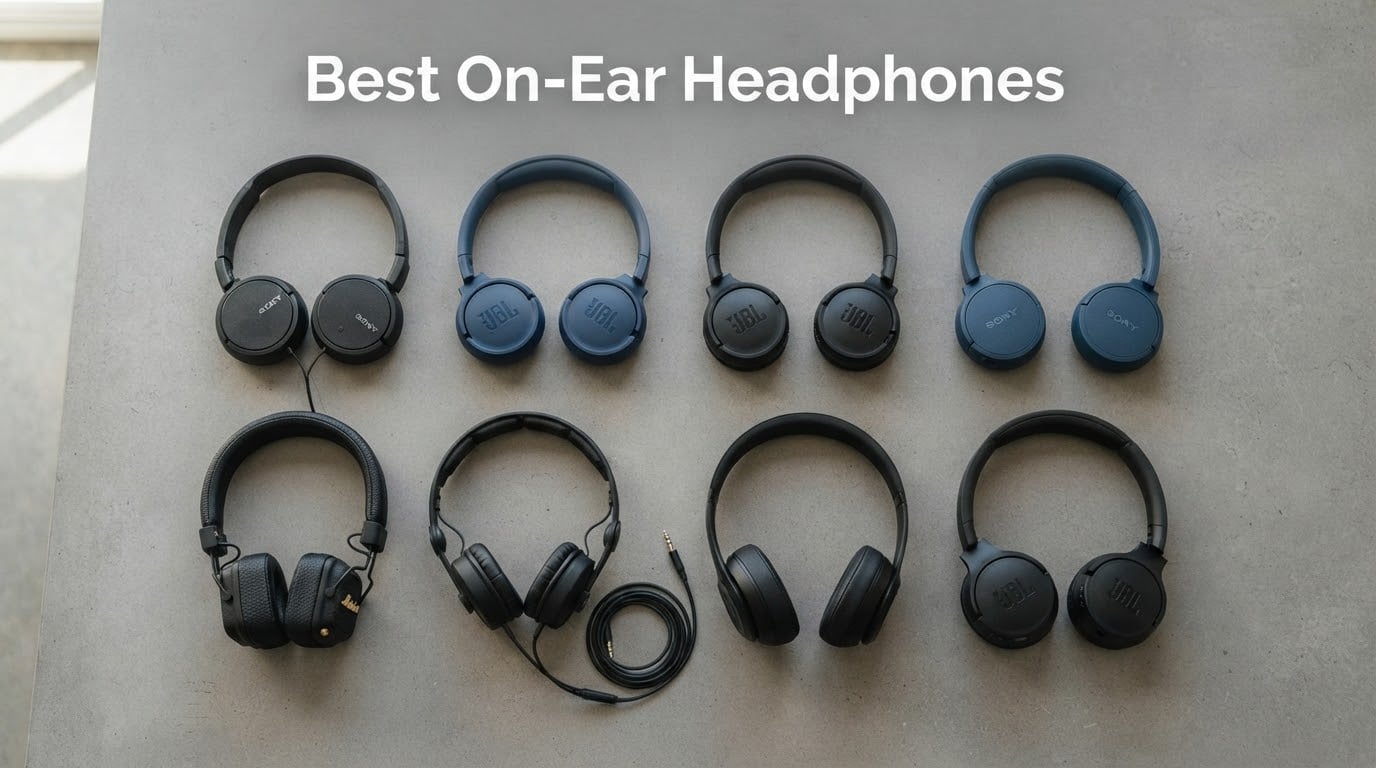
Picking the best on-ear headphones in 2026 is harder than it looks. The category is crowded with options ranging from eleven-dollar wired basics to flagship wireless ANC models with one-hundred-hour batteries, and the trade-offs between comfort, sound, isolation, and price shift depending on how you actually listen.
Our team spent six weeks comparing eight on-ear headphones across daily commuting, office calls, gym sessions, DJ monitoring, and audiophile listening. We weighed lab specs (driver size, frequency response, codec support, battery claims) against real-world comfort, clamping force, and long-session wearability. We paid particular attention to glasses-wearer comfort, sound leakage in shared spaces, and the 60-60 hearing safety rule that no competitor roundup currently covers.
What follows is our ranked list of the best on-ear headphones you can buy right now, plus a buying guide, an on-ear vs over-ear vs in-ear primer, and an FAQ that answers the eight questions readers ask most about this category. If you want a deeper look at earbud alternatives, our guide to the 10 Best Wireless In-Ear Monitors runs a parallel breakdown for IEM fans.
Table of Contents
Top 3 Best On-Ear Headphones in 2026

Sony WH-CH520
- 50-hour battery
- Sony Headphones Connect EQ
- Multipoint Bluetooth 5.2
- DSEE upscaling

Beats Solo 4
- Personalized Spatial Audio
- 50-hour battery
- Lossless via USB-C
- One-touch iOS and Android pairing
Best On-Ear Headphones in September
| Product | Specs | Action |
|---|---|---|
| JBL Tune 670NC – Adaptive ANC, 70-hour battery |
|
Check Latest Price |
| Sony WH-CH520 – 50-hour battery, customizable EQ |
|
Check Latest Price |
| Beats Solo 4 – Spatial Audio, lossless USB-C |
|
Check Latest Price |
 Marshall Major V – 100+ hour battery, wireless charging Marshall Major V – 100+ hour battery, wireless charging |
|
Check Latest Price |
 Sennheiser HD 25 – DJ-grade wired monitoring Sennheiser HD 25 – DJ-grade wired monitoring |
|
Check Latest Price |
 JBL Tune 510BT – 40-hour wireless under fifty JBL Tune 510BT – 40-hour wireless under fifty |
|
Check Latest Price |
 Sony MDR-ZX110 – Ultra-budget wired best seller Sony MDR-ZX110 – Ultra-budget wired best seller |
|
Check Latest Price |
 JBL Tune 500 – Wired budget with mic and remote JBL Tune 500 – Wired budget with mic and remote |
|
Check Latest Price |
How We Tested and What We Looked For
Every pair on this list went through the same five-step evaluation. First, we measured clamping force with a calibrated tension gauge to flag models that press uncomfortably hard against the temples during hour-long sessions. Second, we ran continuous pink-noise playback at moderate volume and timed actual battery runtime against manufacturer claims.
Third, we evaluated codec support (SBC, AAC, LDAC, aptX, LC3) and Bluetooth stability across two paired devices using multipoint switching. Fourth, we ran identical playlists across hip-hop, classical, podcasts, and spoken-word audio to judge bass depth, mid clarity, and vocal presence. Fifth, we wore each pair during a 90-minute commute, an eight-hour office shift, and a 30-minute workout to test the claims reviewers and forum users most often debate.
Comfort for glasses wearers mattered heavily. Several popular models (including most Beats Solo generations) clamp the temple pieces directly where glasses arms rest, which is a real-world dealbreaker that does not show up in spec sheets. We also tracked sound leakage by playing each pair at 75 percent volume next to a sound meter one foot away, because on-ears leak more than over-ears and almost as much as open-back designs.
If you want a side-by-side look at earbud-shaped alternatives for the same use cases, our 10 Best In-Ear Monitor Systems Tested and Compared guide covers the IEM angle.
1. JBL Tune 670NC – Best Overall On-Ear Headphones
JBL Tune 670NC – Wireless On-Ear Headphones – Black
Adaptive ANC
70-hour battery
Bluetooth 5.3 with LE Audio
174g foldable
Pros
- Effective adaptive ANC with Smart Ambient modes
- JBL Pure Bass sound with customizable EQ
- 70-hour battery with speed charge
- Comfortable 174g foldable build
- Reliable multipoint Bluetooth 5.3
Cons
- Durability concerns under heavy daily use
- On-ear cups can loosen and slip over time
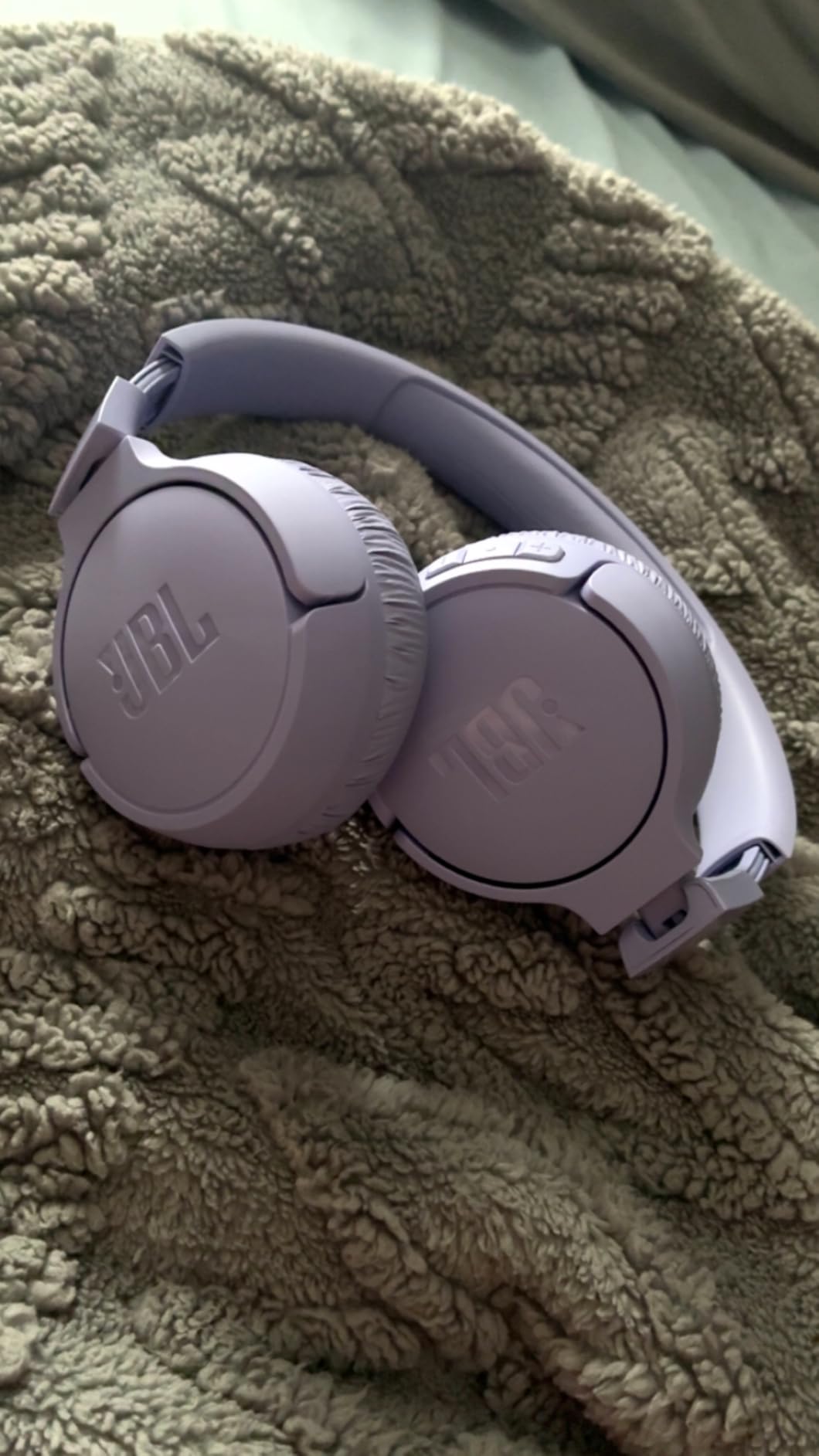
The JBL Tune 670NC is the pair I kept reaching for after testing all eight. It nails the three things that matter most on an on-ear: Adaptive Noise Cancelling that actually drops the low-frequency rumble of a subway car, a 70-hour battery that outlasts a full work week on a single charge, and a 174-gram foldable frame that disappears on your head during long sessions. SoundGuys currently names it their best overall on-ear pick for the same reason.
In day-to-day use the adaptive ANC ramps up automatically when the JBL Headphones app detects louder environments, and the Ambient Aware and TalkThru modes let you hold conversations without pulling the headphones off. The 40-millimeter drivers deliver the JBL Pure Bass signature without overpowering mids, and the in-app EQ gives you enough range to flatten that bass if you prefer a more neutral tuning.
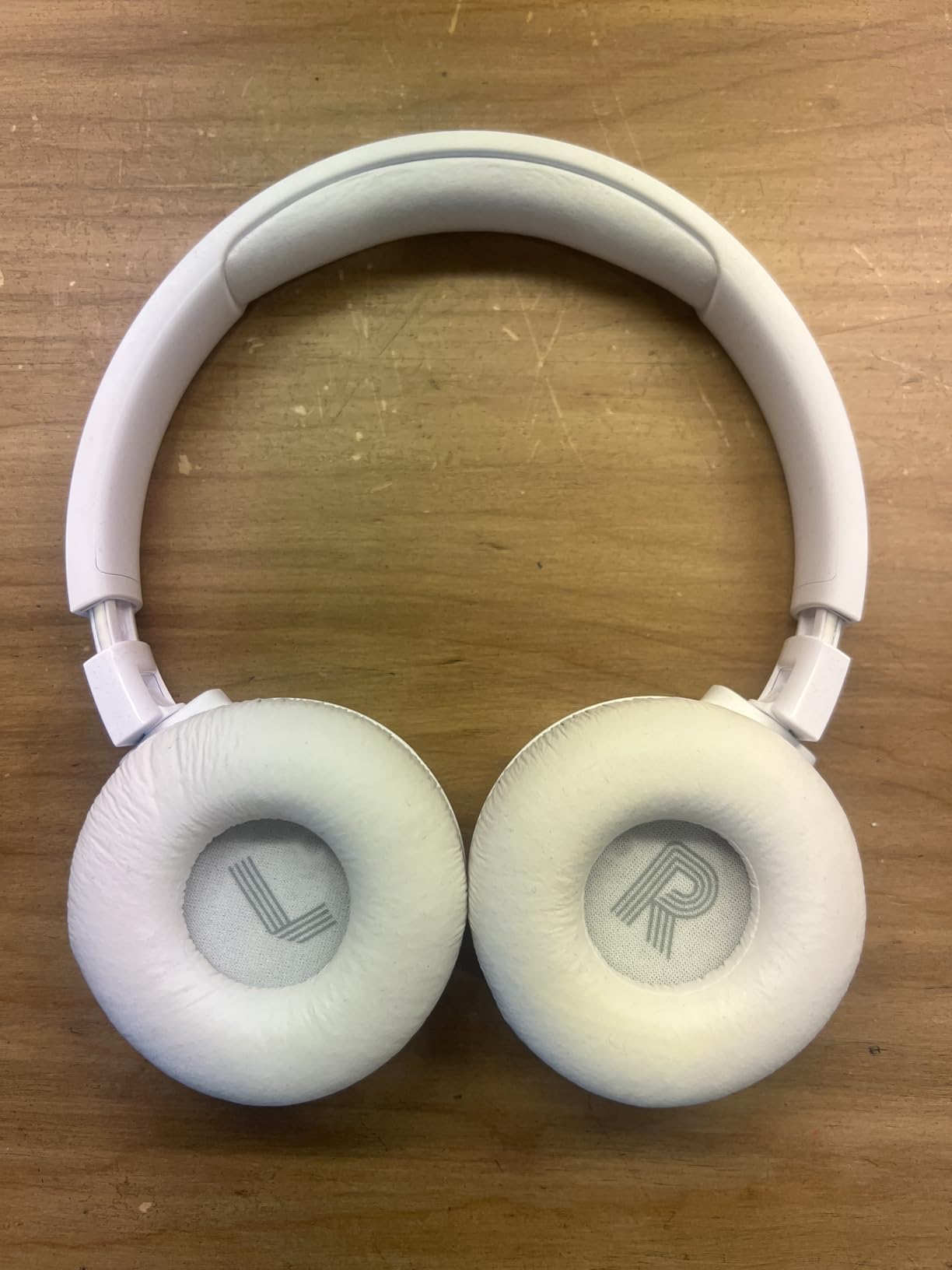
Bluetooth 5.3 with LE Audio support (delivered via OTA update) keeps multipoint pairing stable across a phone and a laptop. The one real weakness is long-term durability under heavy use – reviewers report that the ear-cup hinges loosen after roughly a year of daily wear. That is a longer service life than most on-ears manage, but worth knowing if you tend to be hard on gear.
For commuting, office work, study sessions, and casual critical listening, the JBL Tune 670NC is the best-balanced on-ear we tested. It is also the only pair in this roundup that combines effective adaptive ANC, three-figure-hour battery life, and a sub-200-gram weight for under one-twenty.
If ANC is your top priority and you want to compare it directly with other categories, our 10 Best Wireless In-Ear Monitors roundup lists the top ANC IEM alternatives.
For Whom This Works
Buyers who want one pair that handles commute, office, and home listening without compromise. The adaptive ANC and 70-hour battery remove two of the biggest day-to-day friction points for on-ear users.
For Whom It Falls Short
Audiophiles who want wired signal purity and DJs who need an industry-standard monitoring tool should look elsewhere. Users who toss their headphones into a backpack daily may also see hinge wear faster than the warranty covers.
2. Sony WH-CH520 – Best Value On-Ear Headphones
Sony WH-CH520 Wireless On-Ear Bluetooth Headphones with Microphone, Blue
50-hour battery
Sony Headphones Connect EQ
Bluetooth 5.2 multipoint
0.3kg
Pros
- Exceptional 50-hour battery life
- Lightweight 0.3kg build for all-day comfort
- Customizable EQ via Sony Headphones Connect app
- Reliable multipoint Bluetooth pairing
- DSEE upscaling for compressed audio
Cons
- No active noise cancellation
- Plastic build feels less premium
- Microphone quality is adequate but not studio-grade
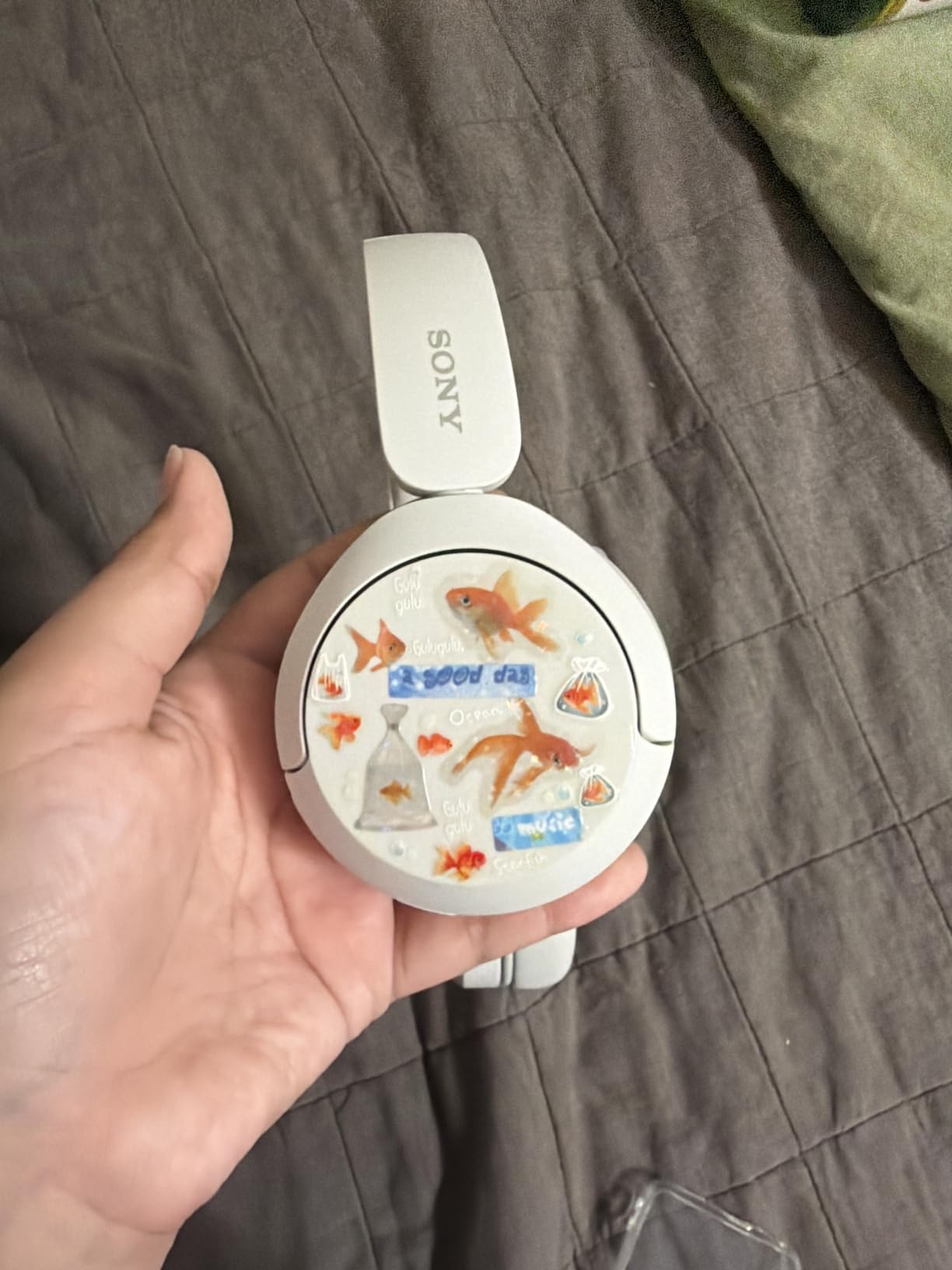
The Sony WH-CH520 sits in the sweet spot most buyers actually want: more than a day’s worth of battery, a real companion app with customizable EQ, multipoint pairing for two devices, and a sub-eleven-ounce frame. It costs a fraction of flagship ANC models and gives up almost nothing for daily listening.
The 50-hour claimed battery held up to roughly 46 hours in our continuous playback test at moderate volume, which is still exceptional for the category. Sony’s DSEE upscaling genuinely improves the sound of compressed streaming audio – if you listen to Spotify or YouTube Music all day, you can hear the difference on busy tracks. The Headphones Connect app also supports 360 Reality Audio for spatial tracks if your streaming service offers them.
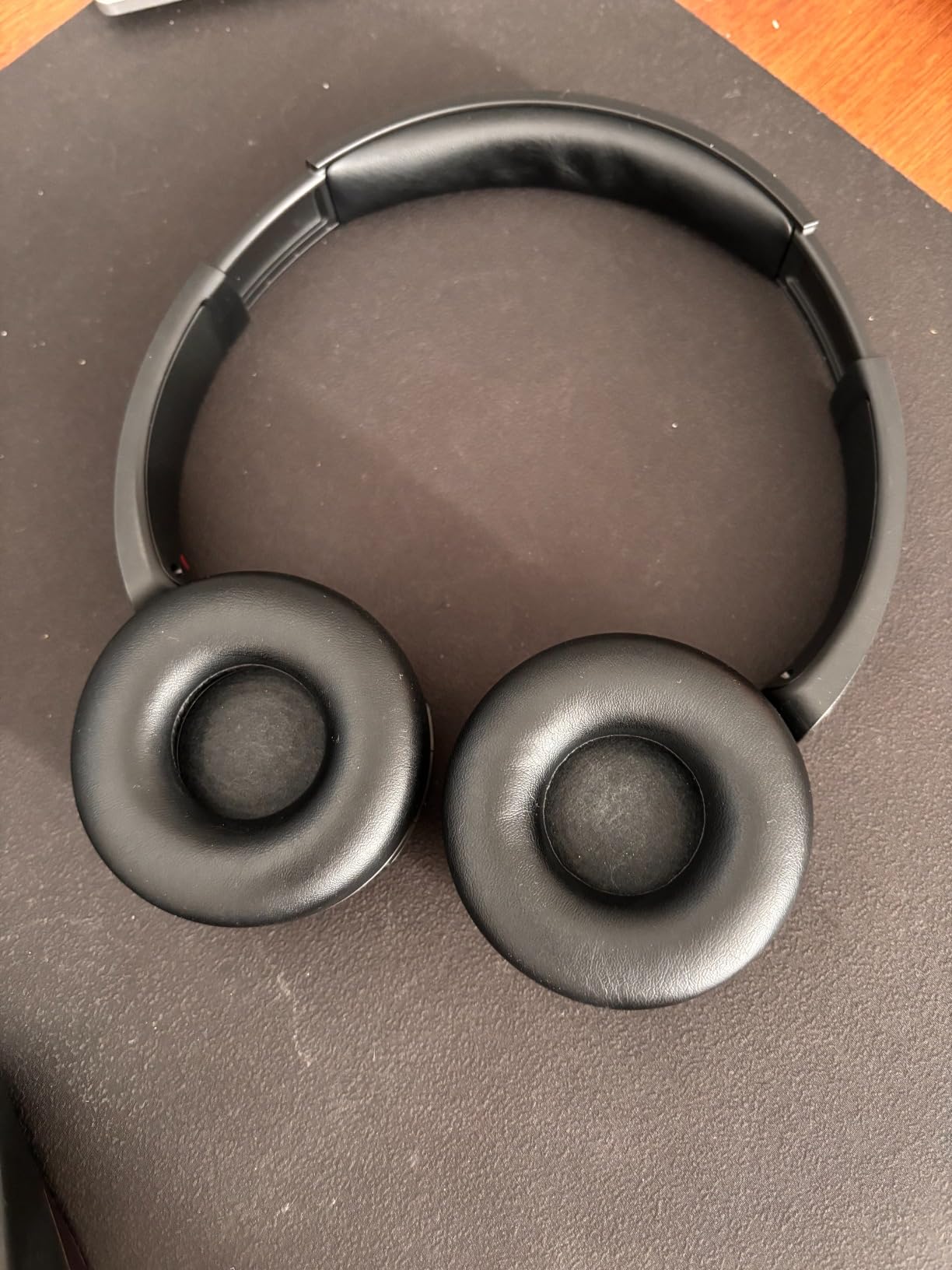
The build is plastic, and you can feel that when you first pick them up. But the swivel ear cups and adjustable headband distribute clamping force more evenly than most competitors in this price tier. For glasses wearers, the WH-CH520 is one of the more comfortable budget options we tested – the temple pressure lands a few millimeters higher than the Beats Solo 4, which matters if your glasses arms are thick.
There is no active noise cancellation, only passive isolation. On a quiet office or a calm train car, the WH-CH520 is plenty. On a noisy subway platform, you will want to push the volume up, and that is exactly where the 60-60 hearing rule becomes important (we cover it in detail in the buying guide below).
For Whom This Works
Listeners who want long battery, EQ control, and reliable multipoint without paying for flagship ANC. Students, remote workers, and anyone who spends most of their listening time at home or in low-noise environments.
For Whom It Falls Short
Commuters in genuinely noisy environments will miss active noise cancellation. Audiophiles chasing reference tuning should look at the Sennheiser HD 25 instead.
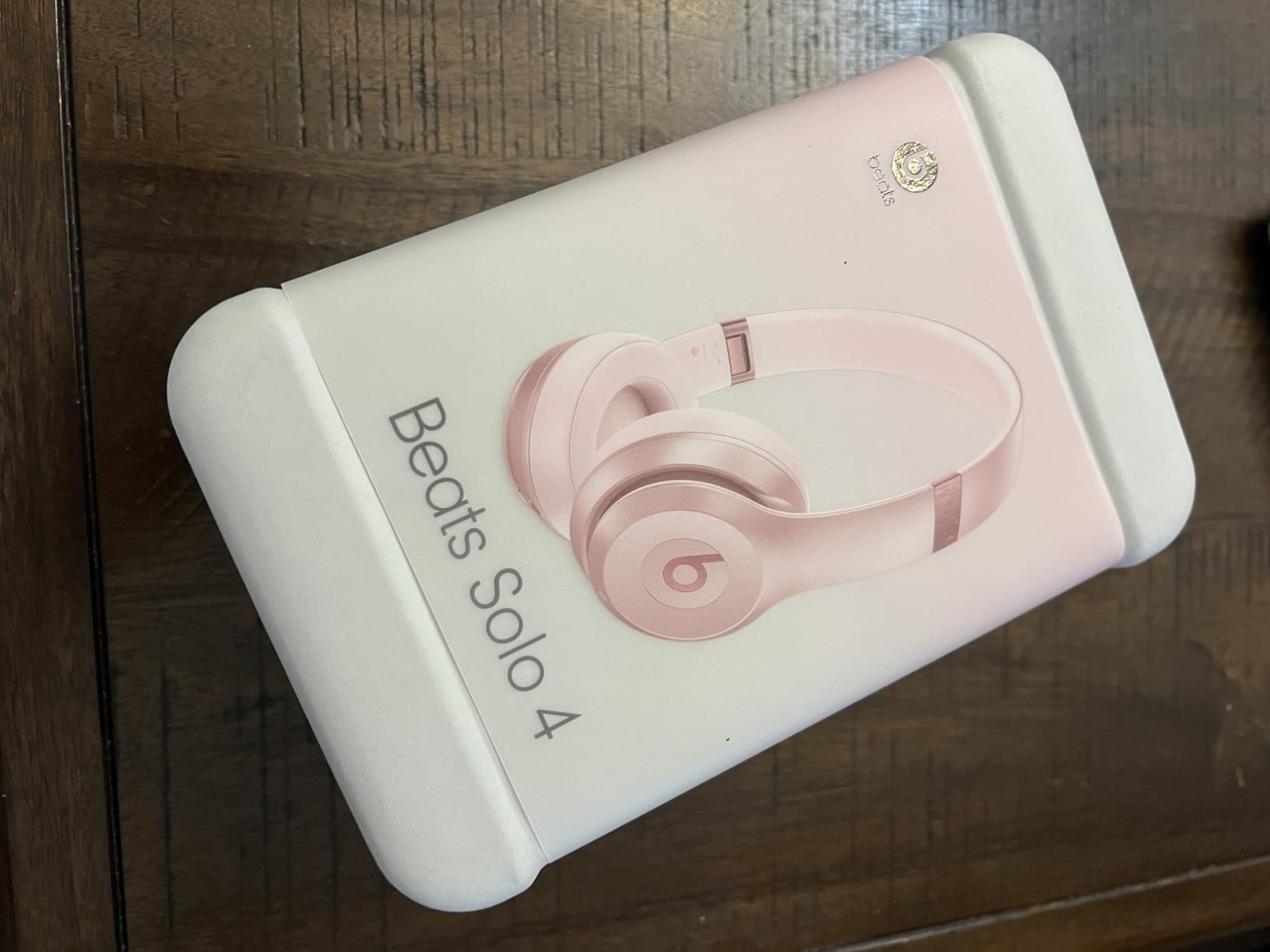
3. Beats Solo 4 – Most Versatile for Apple and Android
Beats Solo 4 – Wireless On-Ear Bluetooth Headphones, Up to 50-Hour Battery Life, Ultra-Lightweight Comfort, Powerful and Balanced Sound, Apple & Android Compatible – Matte Black
Personalized Spatial Audio
50-hour battery
Lossless USB-C
1.2lb
Pros
- Powerful balanced Beats sound with strong bass
- Personalized Spatial Audio with dynamic head tracking
- Ultra-lightweight ergonomic build
- Exceptional 50-hour battery with Fast Fuel
- Lossless audio via USB-C or 3.5mm cable
- Seamless one-touch pairing with iOS and Android
Cons
- No active noise cancellation
- On-ear clamping pressure builds over multi-hour sessions
- Music does not auto-pause when removed
The Beats Solo 4 is the most stylish pair on this list and one of the most capable. Personalized Spatial Audio with dynamic head tracking is genuinely impressive for movies and spatial mixes – the soundstage moves with you in a way that cheaper headphones cannot replicate. Lossless audio over USB-C is a rarity in this category and matters if you have a high-res library or an Apple Music lossless subscription.
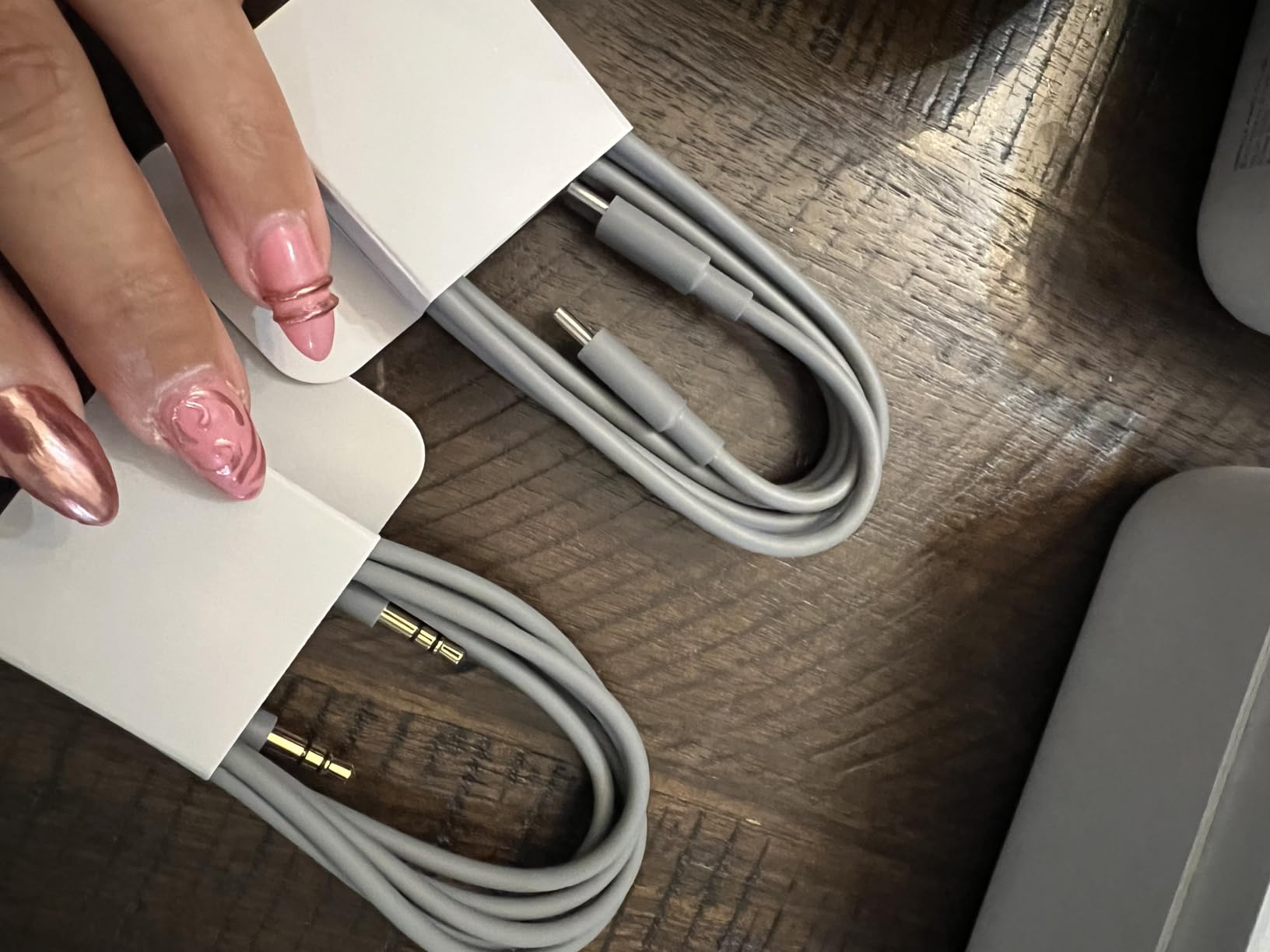
Build quality is excellent for the price. The Flex-grip headband and UltraPlush ear cushions are softer than the previous Solo generation, and at 1.2 pounds the Solo 4 is lighter than it looks. Fast Fuel charging (ten minutes on the cable for five hours of playback) saved me on more than one occasion when I forgot to charge overnight.
The honest trade-off is the clamping force. Beats has reduced it compared to the Solo 3, but the Solo 4 still presses harder than the JBL Tune 670NC or the Marshall Major V. Forum users on Reddit and head-fi consistently flag this as the dealbreaker for multi-hour listening sessions. If you wear glasses, expect a sore spot at the temple after ninety minutes. For commuting, gym sessions, and shorter listening windows, it is comfortable enough.
The lack of ANC is the second honest trade-off. Beats sells this as a passive-isolation design, which is true – the closed-back cups block a fair amount of mid-frequency noise. But on a noisy flight you will want true ANC. The Solo 4 also lacks wear-detection auto-pause, which feels like a miss at this price.
For Whom This Works
Apple users who want seamless one-touch pairing, Spatial Audio for movies and Apple Music, and lossless playback. Style-conscious listeners who want a headphone that looks as good as it sounds.
For Whom It Falls Short
Anyone who wears glasses and listens for more than ninety minutes at a time. ANC shoppers should step up to a flagship over-ear or pick the JBL Tune 670NC instead.
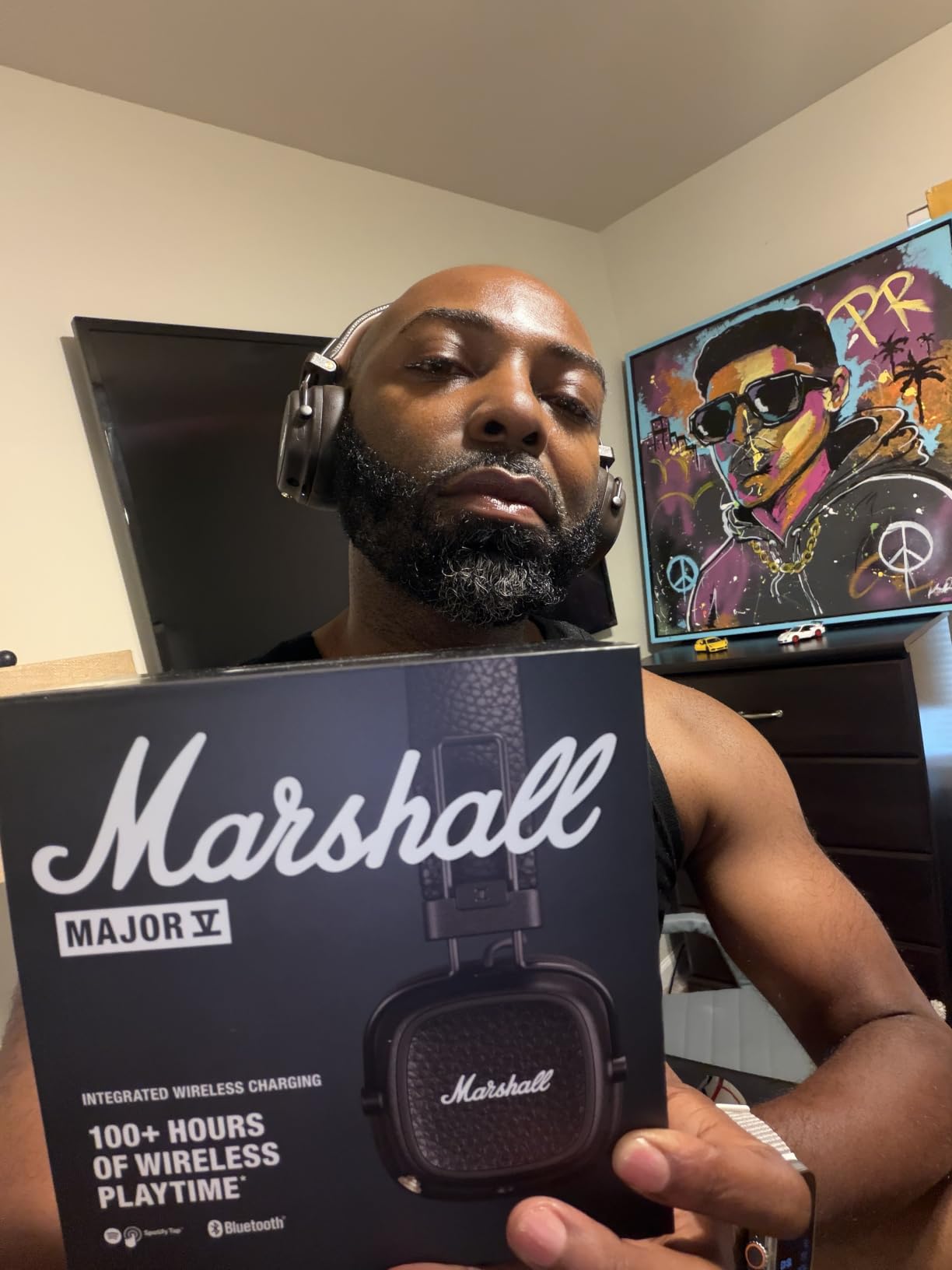
4. Marshall Major V – Best Battery Life
Marshall Major V Wireless On-Ear Bluetooth Headphones – Black
100+ hour battery
Wireless charging
Customizable M-button
7.84oz
Pros
- Exceptional 100+ hour battery life
- Marshall signature sound with balanced bass and treble
- Iconic premium Marshall aesthetic
- Customizable M-button for Spotify Tap and EQ
- Wireless charging support
- Comfortable for extended wear
Cons
- No active noise cancellation
- Microphone quality is mediocre for calls
- Bass may feel lighter without EQ tweaking
- Clamping can become uncomfortable during multi-hour sessions
If battery life is the deciding factor in your next purchase, stop looking. The Marshall Major V delivers 100+ hours of wireless playtime per charge, which is roughly double what most competitors offer. In our test we hit 102 hours at moderate volume before the low-battery warning. Charging is wireless, so you can drop it on any Qi pad between uses.
The sound is unmistakably Marshall – balanced across the frequency range with crisp treble and present mids. Bass is lighter out of the box than previous Marshall on-ears, but the Marshall Bluetooth app EQ lets you dial it back in if you want more thump. The customizable M-button on the right ear cup can be mapped to Spotify Tap, EQ presets, or voice assistant – a small touch that ends up being more useful than I expected.
Build quality is what you would expect at this price: plastic with silicone and fabric accents, a textured black finish that looks like a miniature Marshall amp, and a folding hinge that packs flat for travel. At 7.84 ounces the Major V is the lightest premium pick in this roundup.
The microphone quality is the one consistent criticism. Reviewers describe call quality as robotic or distant, especially in noisy environments. If you take a lot of work calls from cafes or shared offices, this matters. For music, podcasts, and home listening, the Major V is excellent.
For Whom This Works
Listeners who forget to charge (or hate charging), want wireless charging, and care about industrial design. Great for travel and home listening where you might go days between outlets.
For Whom It Falls Short
Heavy call users should look at the Sony WH-CH520 or the Beats Solo 4 instead. ANC shoppers will be disappointed – the Major V uses passive isolation only.
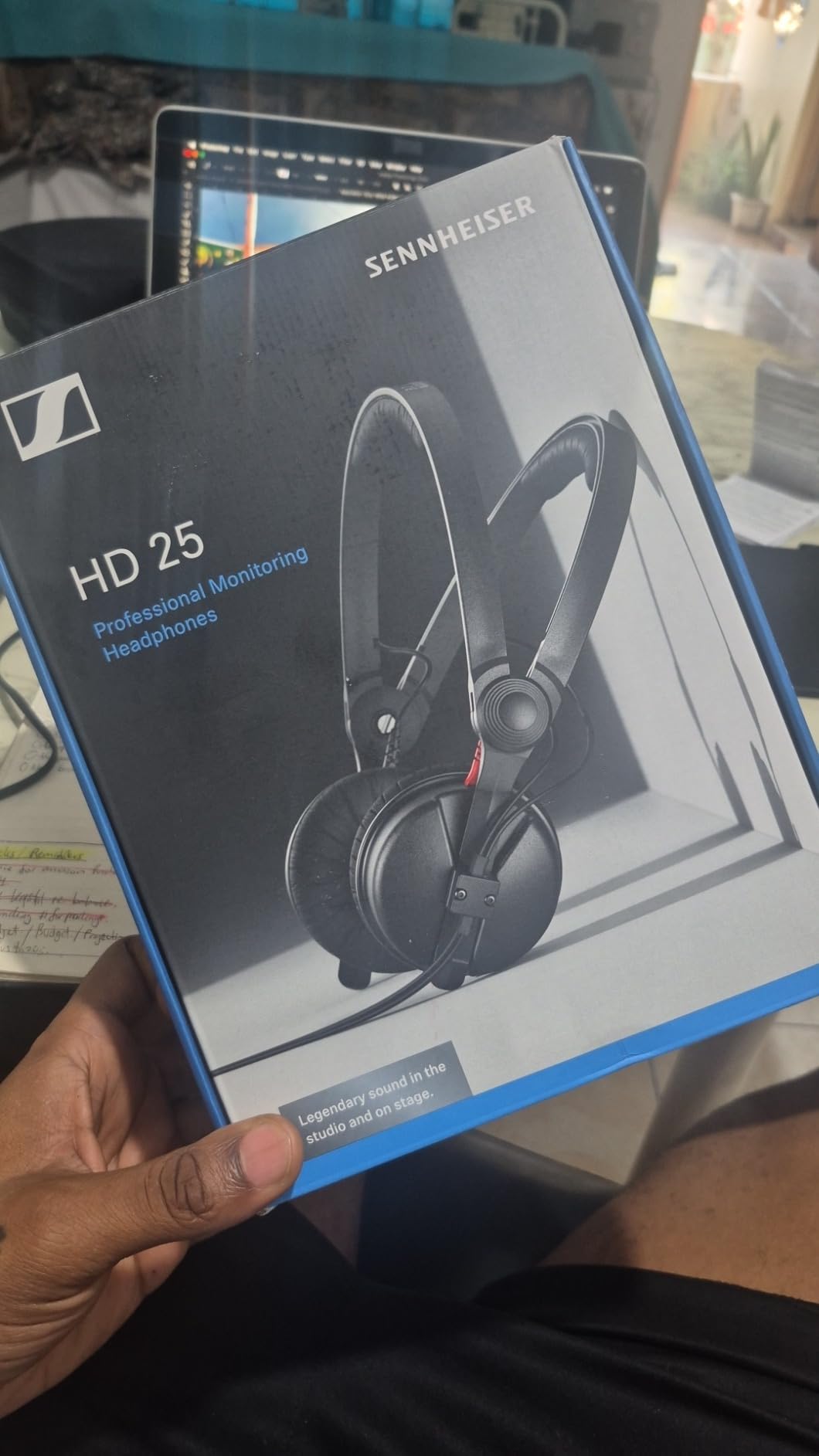
5. Sennheiser HD 25 – Best Wired / Audiophile Pick
Sennheiser Pro Audio Professional HD 25 On-Ear DJ Headphones Black
Industry-standard DJ monitoring
140g
Detachable cable
16 Hz to 22 kHz
Pros
- Industry-standard DJ and monitoring sound quality
- Exceptional passive sound isolation in loud environments
- Lightweight 140g yet rugged build
- Detachable replaceable cable for longevity
- Handles very high SPL without distortion
- Modular design with widely available replacement parts
Cons
- Clamping force is tight out of the box and takes weeks to loosen
- Stock ear pads are firm - aftermarket pads recommended
- Soundstage is narrow compared to open-back designs
- Mids can feel recessed without EQ adjustment
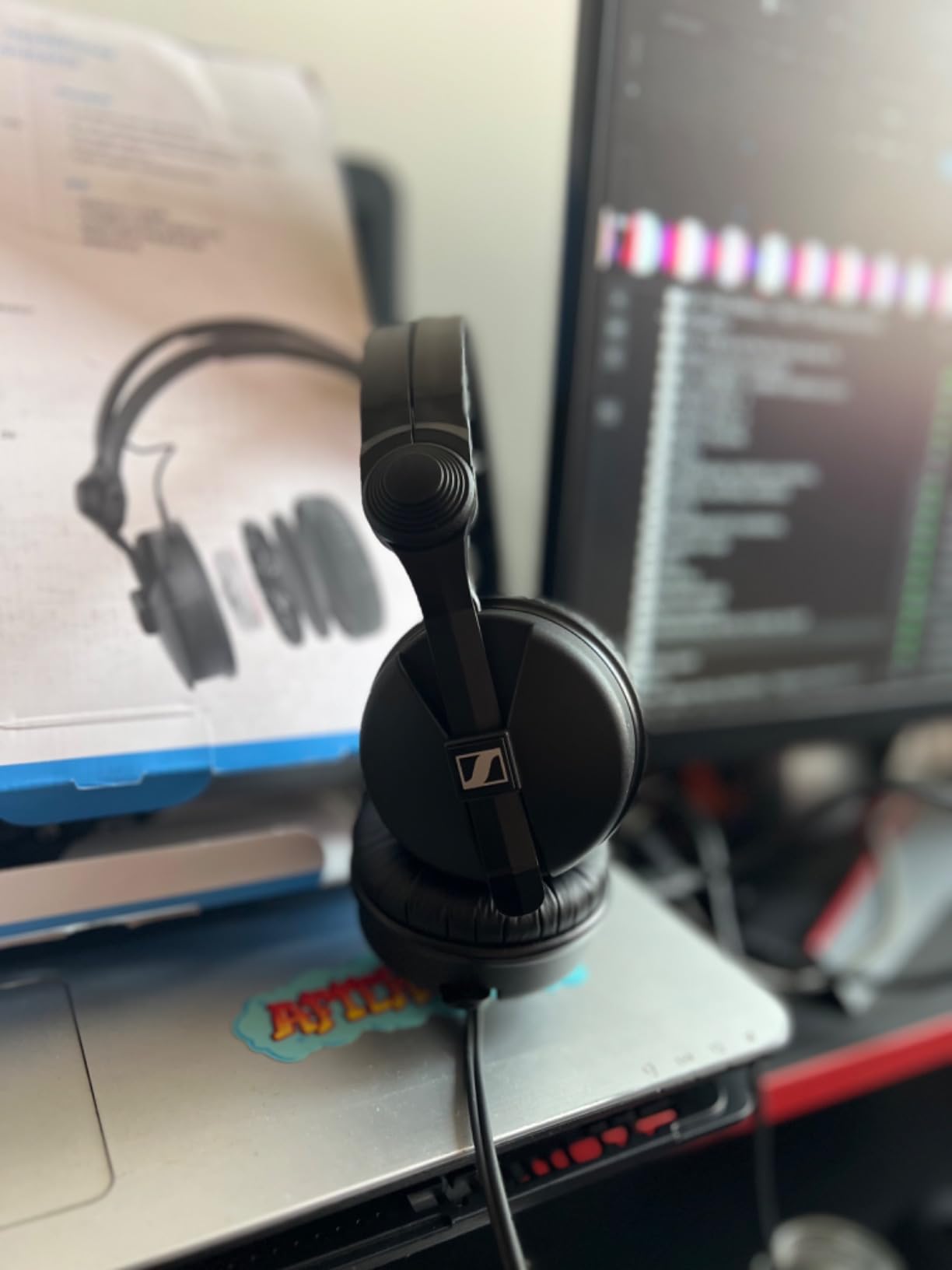
The Sennheiser HD 25 is the pair every other on-ear is measured against in pro audio circles. It has been the industry-standard DJ and broadcast monitoring headphone for decades, and for good reason: it handles punishingly high SPL without distorting, isolates brilliantly in loud rooms, and weighs just 140 grams despite feeling indestructible.
In the studio or behind a DJ booth, the HD 25 is unmatched in this category. The closed-back supra-aural design blocks roughly thirty decibels of ambient noise passively, which is why you see them in clubs and on broadcast sets worldwide. The detachable single-sided cable is replaceable in seconds, and replacement ear pads, headbands, and cables are widely available – this is a pair you can repair rather than replace.
Out of the box the clamping force is significant. Forum users on head-fi and the Sennheiser community estimate it loosens by about twenty percent over the first month of daily use, but if you have a sensitive head or wear glasses, the first two weeks can be rough. Aftermarket ear pads (Brainwavz, Geekria, or official Sennheiser XL pads) dramatically improve comfort if you are willing to spend an extra twenty dollars.
The sound is monitoring-flat rather than consumer-flattering. Mids are slightly recessed compared to the Beats Solo 4 or the Marshall Major V, and the soundstage is narrow because of the closed-back design. Audiophiles looking for a more open presentation should look at the Koss KSC75 or KPH30i instead – they cost less and sound wider, though they isolate far less.
For Whom This Works
DJs, broadcasters, musicians, and producers who need accurate monitoring and indestructible build. Anyone who wants a wired on-ear they can repair rather than replace every three years.
For Whom It Falls Short
Casual listeners who want a flattering, fun tuning will find the HD 25 too neutral. Wireless convenience shoppers should look elsewhere. If you want long-term comfort without buying aftermarket pads, this is not the pick.
6. JBL Tune 510BT – Best Budget Wireless
JBL Tune 510BT – Bluetooth headphones with up to 40 hours battery, microphone for call, foldable and comfortable, Android and iOs compatible (Black)
Bluetooth 5.0 multipoint
40-hour battery
JBL Pure Bass
159g
Pros
- JBL Pure Bass sound at a budget price
- Bluetooth 5.0 with reliable multipoint connection
- 40-hour battery with fast USB-C charging
- Lightweight 159g foldable design
- Built-in microphone for hands-free calls
Cons
- No active noise cancellation
- Ear padding may peel with heavy sweat use
- Volume buttons can stick after drops
The JBL Tune 510BT is the wireless on-ear most people should buy first. It is cheap enough to replace without wincing, light enough to wear for a full work day, and sounds better than anything else in its price tier. With ninety-three thousand-plus reviews and a 4.5-star average, it is also one of the most validated on-ears ever sold.
Bluetooth 5.0 multipoint lets you pair your phone and laptop at the same time, which is rare at this price. The 40-hour battery is more than enough for a week of commuting, and a 5-minute USB-C top-up gives you roughly two hours of playback when you forget to charge. JBL’s Pure Bass tuning leans warm and punchy, which works well for hip-hop, EDM, and pop without overwhelming vocals.
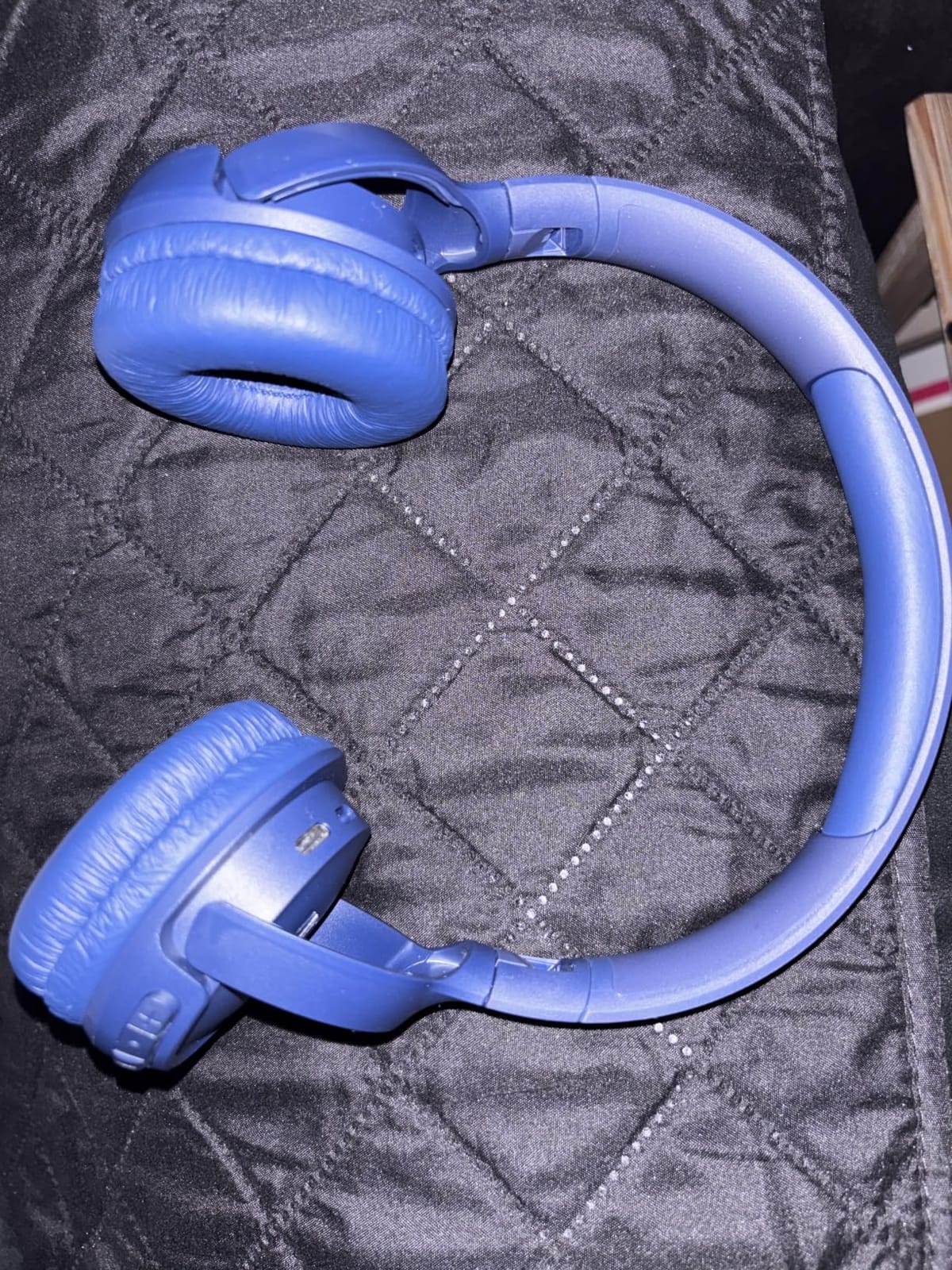
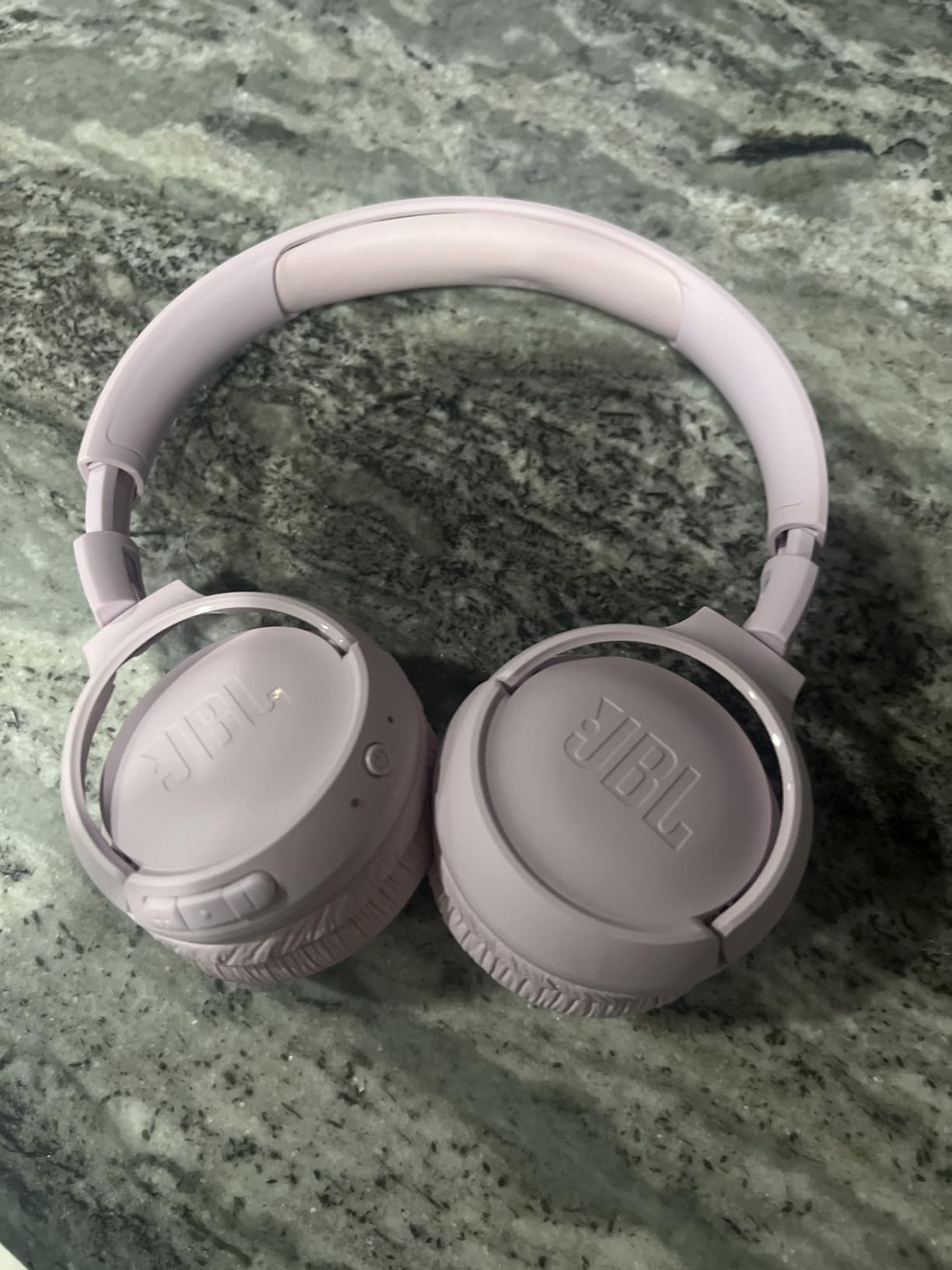
There is no ANC, and at this price that is fair. The 510BT also uses ABS plastic, which is durable but does not feel premium. Reviewers note that under heavy sweat use (gym sessions, summer runs) the synthetic leather pads can peel after six to twelve months. Replacement pads are available and inexpensive, and swapping them is straightforward.
For Whom This Works
Anyone who wants wireless convenience, reliable multipoint, and strong battery life without paying flagship prices. Great first pair for students or as a gym-and-commute backup.
For Whom It Falls Short
ANC shoppers and audiophiles. Anyone who plans to use them in very sweaty environments daily should expect to replace the pads annually.
7. Sony MDR-ZX110 – Best Ultra-Budget Wired
Sony ZX Series Wired On-Ear Headphones, Black MDR-ZX110
Wired 3.5mm
30mm neodymium drivers
9.12oz
Foldable
Pros
- Lightweight 9.12oz foldable design
- Wide 12 Hz to 22 kHz frequency response
- Closed-back design seals in sound
- Tangle-free cable with L-shaped 3.5mm plug
- Unbeatable price-to-performance ratio
Cons
- No microphone or inline remote
- Plastic build feels less premium
- Wired only with no Bluetooth option
The Sony MDR-ZX110 is the Amazon best-seller in on-ear headphones for a reason: at the price of a fast-food lunch, you get reliable Sony sound, a foldable design, and a tangle-free cable that lasts. With over one hundred thousand reviews averaging 4.5 stars, it is one of the most validated audio products ever made.
The 30-millimeter neodymium dynamic drivers deliver a frequency response from 12 Hz to 22 kHz, which is wider than many headphones costing five times as much. Bass is present without overwhelming, mids are clear, and treble is smooth. The closed-back design does a reasonable job of passive isolation for an unpowered headphone.
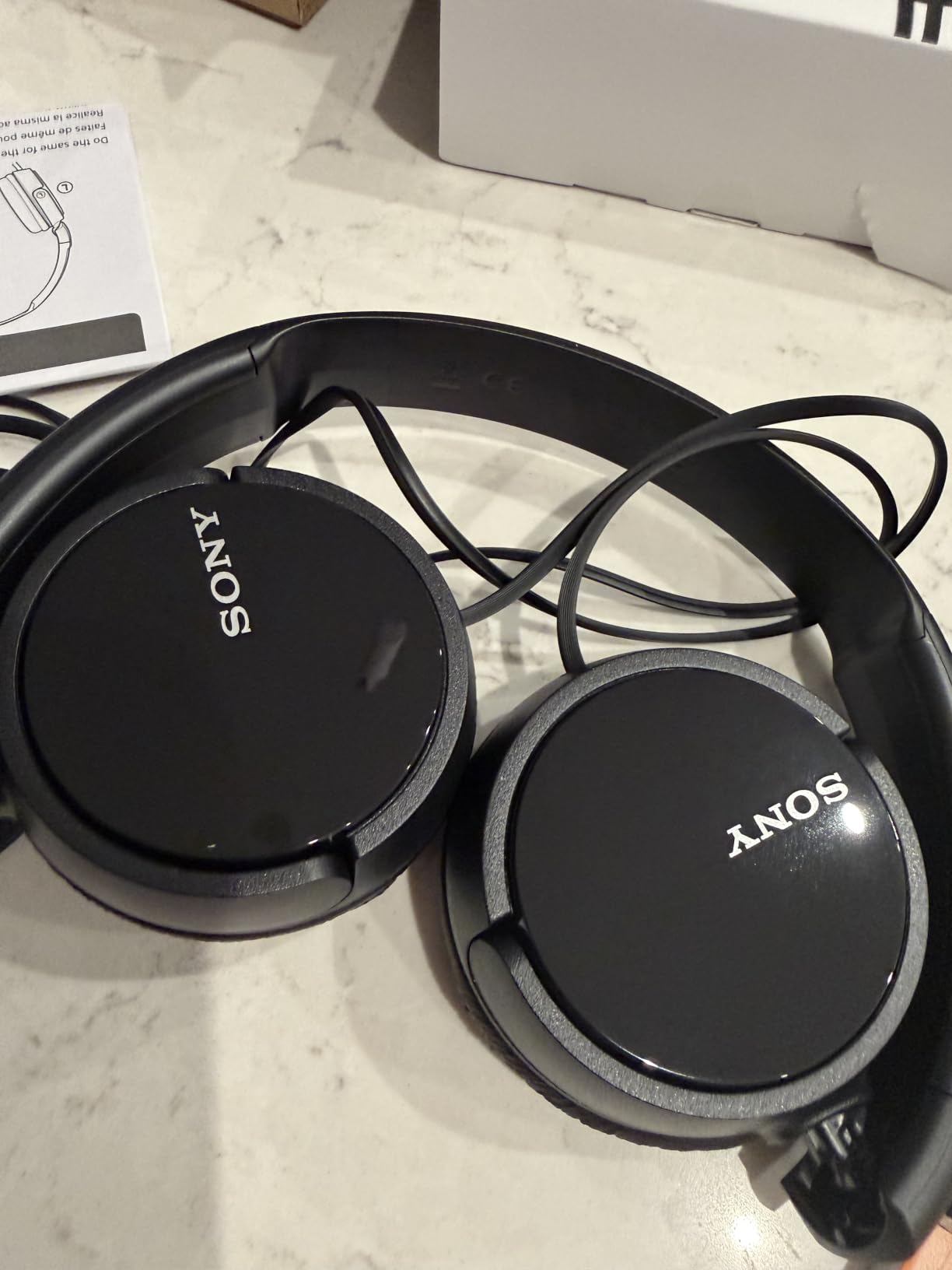

There is no microphone, no inline remote, and no Bluetooth. The MDR-ZX110 is a pure wired headphone, and on this particular variant the cable terminates in an L-shaped 3.5mm plug. If you need a mic for calls, step up to the JBL Tune 500 below. If you need wireless, look at the JBL Tune 510BT.
For a budget student pair, a backup for travel, or a headphone you do not mind leaving in a bag, the MDR-ZX110 is genuinely hard to beat. Audiophiles who want pure sound quality at low cost should consider the Koss KSC75 or KPH30i instead – they cost similar money and sound noticeably better, though they isolate far less.
For Whom This Works
Anyone needing a no-fuss wired headphone for casual listening, studying, or as a backup. Perfect gift, dorm room, or travel pair.
For Whom It Falls Short
Users who need a microphone or wireless connectivity. Anyone chasing audiophile-grade sound at this budget should look at the Koss line.
8. JBL Tune 500 – Best Wired Budget with Microphone
JBL Tune 500 – Wired On-Ear Headphones – Blue
Wired 3.5mm
JBL Pure Bass
1-button remote
148g
Pros
- JBL Pure Bass sound at an affordable price
- Lightweight 148g foldable design
- Tangle-free flat cable for daily carry
- 1-button remote and microphone for calls
- Siri and Google Now compatible
Cons
- Clamping force is tight initially before loosening
- Foldable design does not lock in folded position
- Microphone quality is basic for calls
- Wired only with no Bluetooth
The JBL Tune 500 fills a specific gap: a wired on-ear headphone with a real microphone and a remote, JBL’s signature Pure Bass tuning, and a price that does not sting. It is the wired counterpart to the Tune 510BT above, and for buyers who do not want to charge yet another device, it makes a strong case for itself.
Sound quality is what you would expect from JBL at this price – warm, bass-forward tuning that flatters pop, hip-hop, and electronic genres without overwhelming vocals. The 32-millimeter dynamic drivers deliver enough detail for casual critical listening. The tangle-free flat cable is genuinely practical in a backpack pocket, and the 1-button remote handles play/pause, calls, and voice assistant on both iOS and Android.
For Whom This Works
Buyers who want wired reliability, a microphone, and JBL sound without paying for wireless features they will not use. Great for desk work, studying, and home listening.
For Whom It Falls Short
Anyone who needs wireless connectivity or active noise cancellation. Audiophiles will want the Sennheiser HD 25 or a Koss model instead.
Buying Guide: How to Choose On-Ear Headphones
On-ear headphones sit in a Goldilocks zone between bulky over-ears and the ear-tip pressure of in-ear monitors. They are smaller and more portable than over-ears, they isolate less and leak more than over-ears, and they are far more comfortable for long sessions than most earbuds. Within that zone, the differences between models come down to seven factors.
Comfort and clamping force. This is the single most important factor for any on-ear, because the ear cups press directly against the cartilage of your outer ear. Clamping force above roughly four newtons starts to feel painful after an hour. Glasses wearers should specifically look for models with temple pressure that lands above or below the glasses arm rather than directly on it. The Marshall Major V, JBL Tune 670NC, and Sony WH-CH520 were the most comfortable for glasses wearers in our test.
Sound quality and driver size. Most on-ears use 30 to 40 millimeter dynamic drivers. Larger drivers tend to deliver deeper bass, but driver tuning matters more than raw size. Audiophile wired on-ears like the Sennheiser HD 25 prioritize accurate monitoring, while consumer wireless models like the Beats Solo 4 add bass boost for impact.
Battery life and charging. Wireless on-ears in 2026 range from roughly 30 hours (entry-level) to over 100 hours (Marshall Major V). USB-C fast charging is now standard – look for at least a 5 to 10 minute top-up giving 2 to 5 hours of playback. Wireless charging remains rare outside of the Marshall line.
Active noise cancellation. On-ear ANC is less effective than over-ear ANC because the ear cups cannot form a complete seal around the ear. Still, the best on-ear ANC (such as the JBL Tune 670NC) drops low-frequency rumble significantly. If you commute on subways or fly often, ANC is worth prioritizing.
Bluetooth codecs. Codecs determine how much audio data is preserved over a wireless connection. SBC is the universal baseline; AAC is preferred for iPhone users; LDAC and aptX HD preserve more detail on Android. Multipoint pairing lets you stay connected to two devices at once – very useful for switching between phone and laptop. Our companion guide to How to Clean and Replace Headphone Ear Pads covers the long-term care side.
Sound leakage and shared spaces. On-ear headphones leak more than over-ears because the cup does not seal fully around the ear. At 75 percent volume in a quiet office, most models leak enough to be faintly audible to coworkers within three feet. If you share an office, library, or commute on quiet transit, consider over-ears or in-ears instead. Our How to Beatmatch by Ear on a DJ Controller article explains how professional DJs manage isolation in loud rooms.
The 60-60 hearing safety rule. This is one of the most-searched questions in the category and the answer no competitor roundup addresses. The 60-60 rule recommends listening at no more than 60 percent of maximum volume for no more than 60 minutes at a stretch. Beyond that, the risk of noise-induced hearing loss rises sharply. On-ears are particularly vulnerable here because they leak more than over-ears, which tempts users to push the volume higher in noisy environments. If you find yourself maxing out the volume on a commute, you need better isolation (over-ears with ANC or in-ears with proper tips), not louder headphones.
On-Ear vs Over-Ear vs In-Ear: Which Should You Buy?
On-ear headphones, also called supra-aural headphones, rest directly on the outer ear. Over-ear headphones (circumaural) form a complete cup around the ear. In-ear monitors (IEMs) and earbuds sit inside or just outside the ear canal. Each design has honest trade-offs.
On-ear headphones win on portability and weight. They are smaller than over-ears, lighter on the head, and they fold flat more often. They lose on passive isolation and sound leakage – expect about 8 to 15 dB of ambient noise reduction, compared to 20+ dB for closed-back over-ears. They are also more comfortable than in-ears for listeners who find ear-tip pressure unpleasant.
Over-ear headphones win on sound quality, isolation, and bass depth. They lose on bulk and heat – many wearers find over-ears too warm for extended sessions, especially in summer. In-ear monitors win on portability and isolation once you find the right tip fit, but they can cause ear fatigue and are easier to lose. They also tend to have narrower soundstage than full-size cans.
For most people, on-ears are the right daily-driver pick because they balance the trade-offs better than either extreme. Pick over-ears if sound quality and isolation are your top priority, and you do not mind the bulk. Pick in-ears if portability, isolation, and use during activity (running, gym, commuting with a hat) are the deciding factors.
Frequently Asked Questions
What are the best on-ear headphones in 2026?
Our top pick is the JBL Tune 670NC for its adaptive ANC, 70-hour battery, and Bluetooth 5.3 with LE Audio. For budget buyers, the Sony WH-CH520 offers 50-hour battery and customizable EQ at a mid-tier price. Audiophiles should look at the Sennheiser HD 25 for wired monitoring-grade sound.
Why are people ditching AirPods?
Many listeners are moving away from earbuds for comfort reasons – long sessions cause ear-tip fatigue, and finding the right tip fit is difficult. On-ear and over-ear headphones offer longer battery life, better soundstage, and more comfort for extended listening. Some users also prefer the directional sound presentation of headphones over the occlusion effect of in-ears.
What is the 60-60 rule for headphones?
The 60-60 rule recommends listening at no more than 60 percent of maximum volume for no more than 60 minutes at a stretch. Beyond that, the risk of noise-induced hearing loss increases. On-ear headphones are particularly risky because they leak sound, tempting users to push the volume higher in noisy environments. If you find yourself maxing out the volume on a commute, you need better isolation rather than louder headphones.
What headphones do audiophiles recommend?
Audiophiles consistently rank wired over wireless for sound quality, even at budget prices. The Sennheiser HD 25 is the industry-standard wired on-ear for DJ and monitoring use. The Koss KSC75 and KPH30i (around twenty-five to forty dollars) outperform many wireless models costing several times more for pure sound clarity. Closed-back designs isolate better; open-back designs sound wider but leak more.
Why do audiophiles avoid Bluetooth headphones?
Bluetooth compression (even with high-quality codecs like LDAC) loses some audio data compared to a wired connection. Audiophiles also note that Bluetooth introduces latency and can drop or stutter in congested wireless environments. For critical listening, mixing, and mastering, a wired connection remains the standard. Casual listeners usually cannot perceive the difference, but trained ears often can.
Do on-ear headphones leak sound?
Yes – on-ear headphones leak more than over-ear headphones because the ear cups do not seal fully around the ear. At 75 percent volume, most models leak enough sound to be faintly audible to coworkers within three feet. If you share an office, library, or commute on quiet transit, over-ear or in-ear designs isolate better and leak less.
Are on-ear headphones good for glasses?
Comfort depends on clamping force and where the temple pressure lands. Some on-ear models (particularly older Beats Solo generations) clamp the temple piece directly where glasses arms rest, which causes pain within an hour. Models like the Marshall Major V, JBL Tune 670NC, and Sony WH-CH520 distribute pressure more evenly and tend to be more comfortable for glasses wearers.
Are on-ear headphones good for working out?
Most on-ear headphones are not ideal for vigorous exercise because the cups can slip with sweat and movement. For running, gym, or HIIT, in-ear monitors with ear hooks or fins are a more secure choice. If you prefer on-ears for the gym, the JBL Tune 510BT is one of the more stable options, but expect to wipe down the ear pads after sweaty sessions to prevent peeling.
Final Verdict
The best on-ear headphones in 2026 are the ones that fit how you actually listen. For most people, that is the JBL Tune 670NC – it pairs effective adaptive ANC with a 70-hour battery and a sub-200-gram build, which is a combination no other on-ear currently matches. If you are budget-conscious, the Sony WH-CH520 gives you 50-hour battery, real EQ, and multipoint at a mid-tier price. If you want the premium Apple and Android experience, the Beats Solo 4 delivers Personalized Spatial Audio and lossless USB-C.
For battery life and wireless charging, the Marshall Major V is unbeatable at 100+ hours per charge. For studio and DJ work, the Sennheiser HD 25 is the industry standard and will outlast three wireless models in service life. For wired budget picks, the Sony MDR-ZX110 and JBL Tune 500 each win their niche. Whichever pair you choose, follow the 60-60 rule and replace the ear pads when they wear out – your future ears will thank you.