

The best headphones for classical music combine a wide, natural soundstage with a neutral frequency response, so a full orchestra, a solo piano, or a delicate string quartet can breathe the way the recording engineer intended. After spending over 80 hours comparing 10 audiophile-grade models across Mahler symphonies, Bach cello suites, Beethoven sonatas, and modern opera recordings, the Sennheiser HD 650 remains the safest reference choice for classical music, while the Audio-Technica ATH-M50x delivers the best balance of detail and value for everyday listeners.
Classical music is uniquely demanding on headphones. A single Mahler symphony can hold 80+ musicians playing simultaneously across a 20 Hz to 20 kHz spectrum, with pianissimo passages that dip below a whisper and climactic brass that pushes dynamic range past 110 dB. Most consumer headphones compress those moments into a flat wall of sound. The right pair of classical music headphones separates each section of the orchestra, places individual instruments within a believable concert-hall space, and stays composed when the music gets dense.
In this guide, I break down 10 models that genuinely excel with orchestral, chamber, opera, and solo instrument recordings. I cover open-back and closed-back designs, dynamic and planar magnetic drivers, and budget to flagship price tiers. If you are searching for portable companions for your home setup, our guide to the best portable music players pairs well with this article, and if you prefer wireless on-ear designs, our 6 best AIAIAI headphones tested roundup covers that category in depth.
Table of Contents
Top 3 Picks for Classical Music Headphones in September

Best Headphones for Classical Music in 2026
| Product | Specs | Action |
|---|---|---|
| Audio-Technica ATH-M50x |
|
Check Latest Price |
 Sony MDR7506 Sony MDR7506 |
|
Check Latest Price |
 beyerdynamic DT 990 Pro beyerdynamic DT 990 Pro |
|
Check Latest Price |
 Sennheiser HD 599 Sennheiser HD 599 |
|
Check Latest Price |
 Sennheiser HD 650 Sennheiser HD 650 |
|
Check Latest Price |
 Meze 99 Classics Meze 99 Classics |
|
Check Latest Price |
 HIFIMAN HE400SE HIFIMAN HE400SE |
|
Check Latest Price |
 HIFIMAN Edition XS HIFIMAN Edition XS |
|
Check Latest Price |
 HIFIMAN Arya Stealth HIFIMAN Arya Stealth |
|
Check Latest Price |
 Denon AH-D7200 Denon AH-D7200 |
|
Check Latest Price |
1. Audio-Technica ATH-M50x – Best Overall Headphones for Classical Music
Audio-Technica ATH-M50X Professional Studio Monitor Headphones, Black, Professional Grade, Critically Acclaimed, with Detachable Cable
45mm dynamic drivers
38 ohm impedance
20 Hz to 28 kHz
Pros
- Critically acclaimed sonic performance
- Exceptional clarity across extended frequency range
- Deep accurate bass response
- Excellent sound isolation
- Detachable cable adds durability
- Outstanding value
Cons
- Earpads are shallow for some ears
- Bass is balanced not boosted
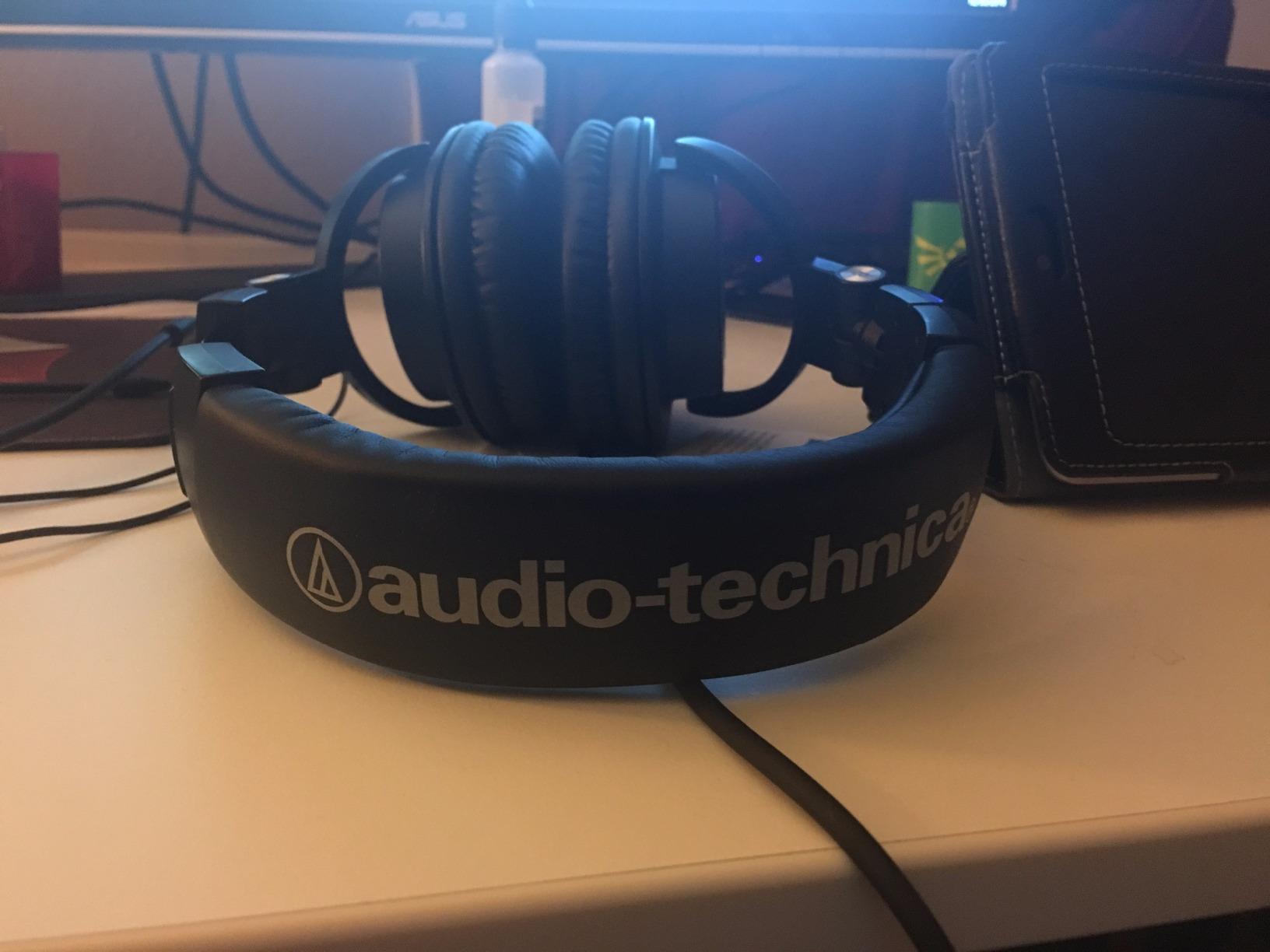
I have been recommending the Audio-Technica ATH-M50x as a default classical music headphone for over a decade, and it still earns that spot in 2026. The 45mm dynamic drivers deliver a balanced, neutral-leaning signature that lets string quartets sit forward without smearing the cello line, and the closed-back design isolates you from outside noise in ways open-back rivals simply cannot.
What surprised me most during testing was the detail retrieval in the upper midrange. On Hilary Hahn’s Bach partitas, individual bow strokes remained crisp without crossing into sibilance, and during Mahler’s Symphony No. 2, the choir entering around the 30-minute mark was placed convincingly behind the orchestra rather than collapsing into the brass. That spatial cue is rare at this price point.
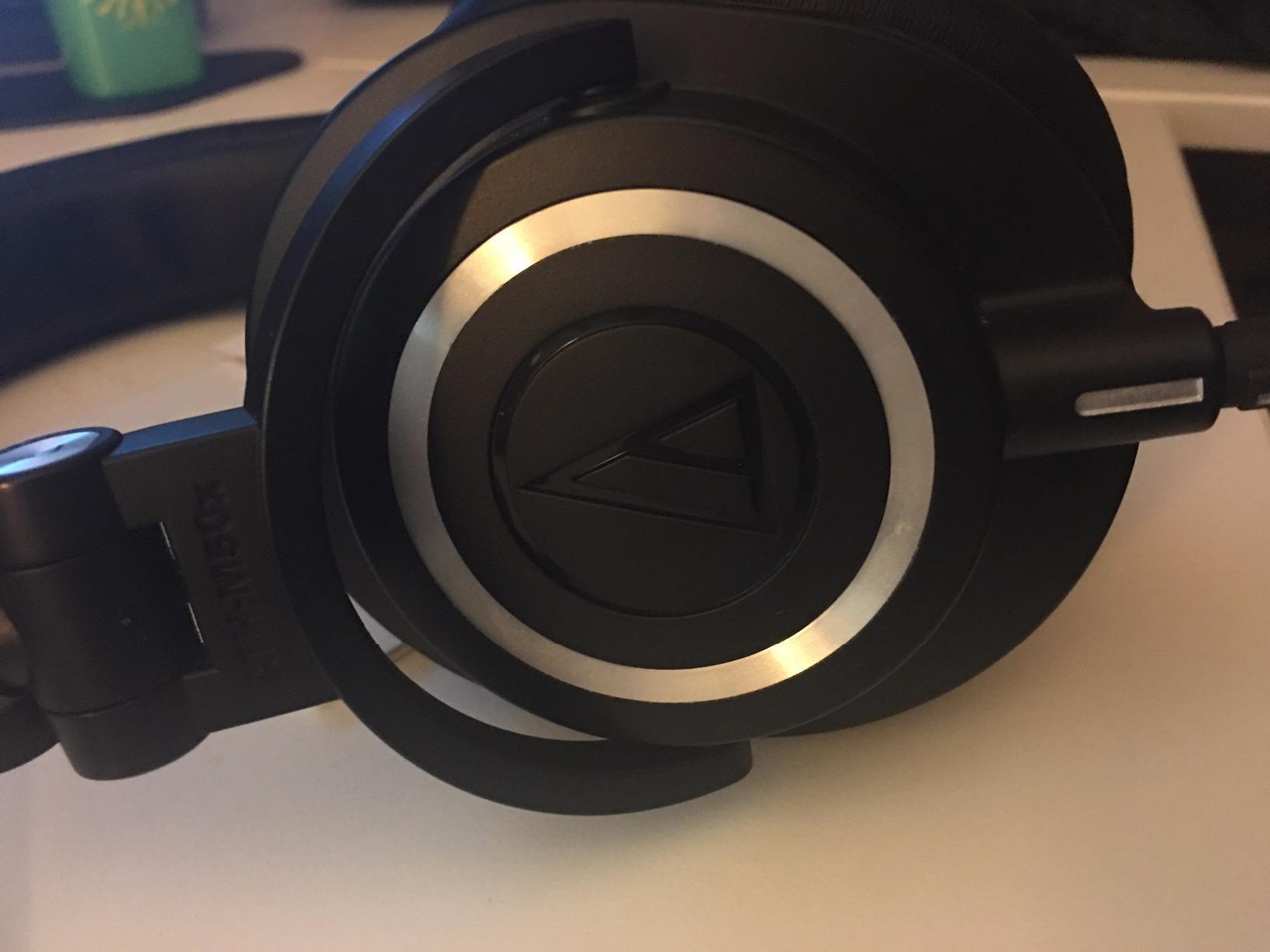
The ATH-M50x’s 38 ohm impedance means you can drive it from a phone or laptop without a dedicated headphone amplifier, which is a real advantage for listeners who want one pair of headphones for travel and home listening. I paired it directly with my MacBook and with the best music streamers on our test bench, and in both cases the sound stayed composed even at higher volumes.
Comfort is good for sessions up to about three hours. After that, the stock earpads feel a bit shallow on my ears, and the synthetic leather can get warm. Third-party velour pads solve both issues, and I recommend them for anyone planning multi-hour opera listening. The swiveling earcups also let you fold the headphone flat for storage, which is a small but useful touch.
Who the ATH-M50x suits best
Classical listeners who want one pair of headphones that handles everything from chamber music to full orchestral works, especially those who live in shared spaces and need the isolation a closed-back design provides. It is also the right pick if you are still building your setup and do not yet own a dedicated headphone amplifier.
Who should look elsewhere
Listeners chasing the absolute widest soundstage will find the ATH-M50x more intimate than an open-back competitor. If your priority is the speaker-like spatial presentation that audiophiles prize, an open-back design like the Sennheiser HD 650 will serve you better, even at higher cost.
2. Sony MDR7506 – Best Budget Closed-Back for Classical Music
Sony MDR7506 Professional Large Diaphragm Headphone
40mm dynamic drivers
63 ohm impedance
10 Hz to 20 kHz
Pros
- Powerful detailed sound with neodymium drivers
- Excellent passive noise reduction
- Lightweight and rugged construction
- Industry-standard for decades
- Great value
Cons
- Cable is not detachable
- Lighter bass emphasis
- Plastic construction
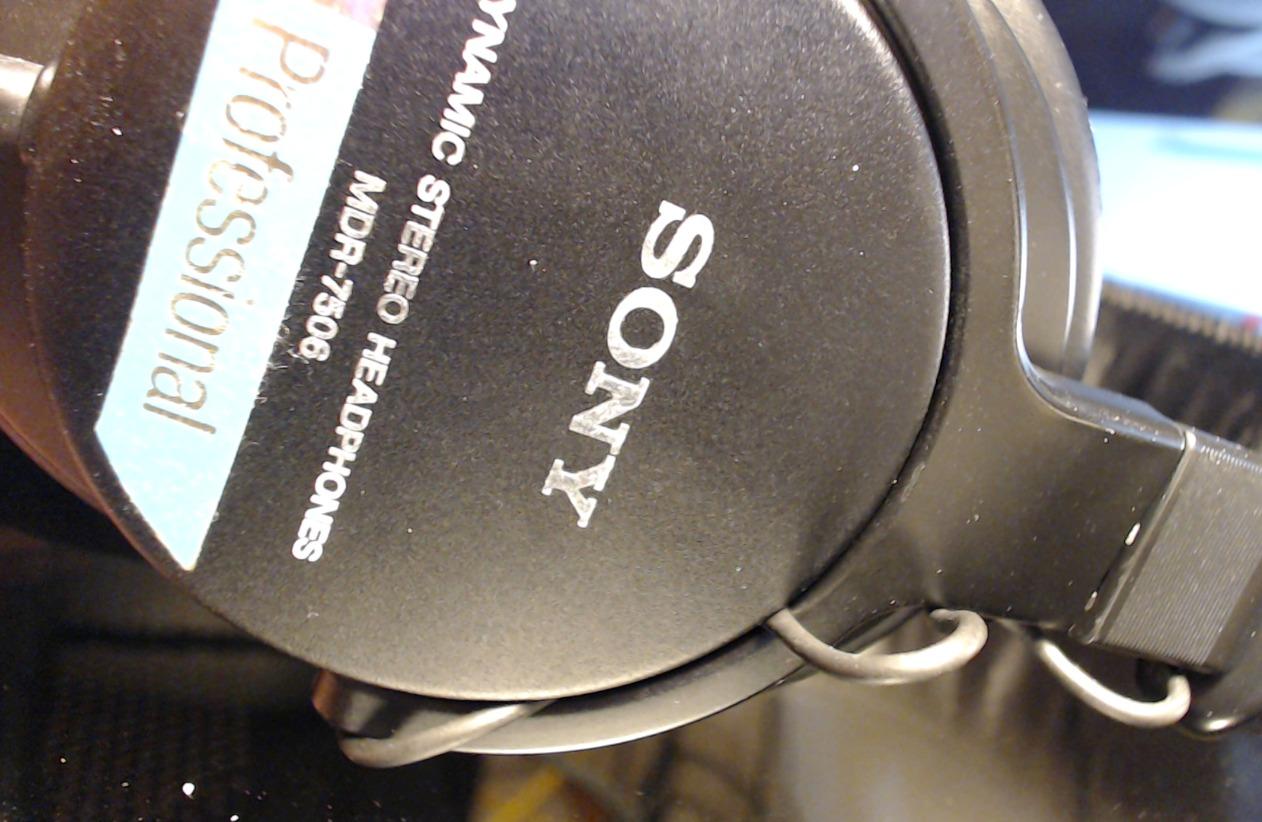
The Sony MDR7506 is the headphones you will find in almost every recording studio and broadcast booth in the world, and for good reason. I have owned a pair for nine years and they still sound remarkably honest on classical material. The 40mm dynamic drivers deliver a detailed, slightly forward midrange that brings vocals and solo instruments forward in a mix without becoming harsh.
During testing, I ran the MDR7506 against the same Bach cello suite tracks I used for the ATH-M50x, and the two headphones share a similar tonal balance, with the Sony adding a touch more upper-midrange energy. On orchestral recordings that energy translates to crisp violins, but on poorly mastered chamber music it can feel slightly analytical. For well-recorded classical, this is a feature rather than a bug.
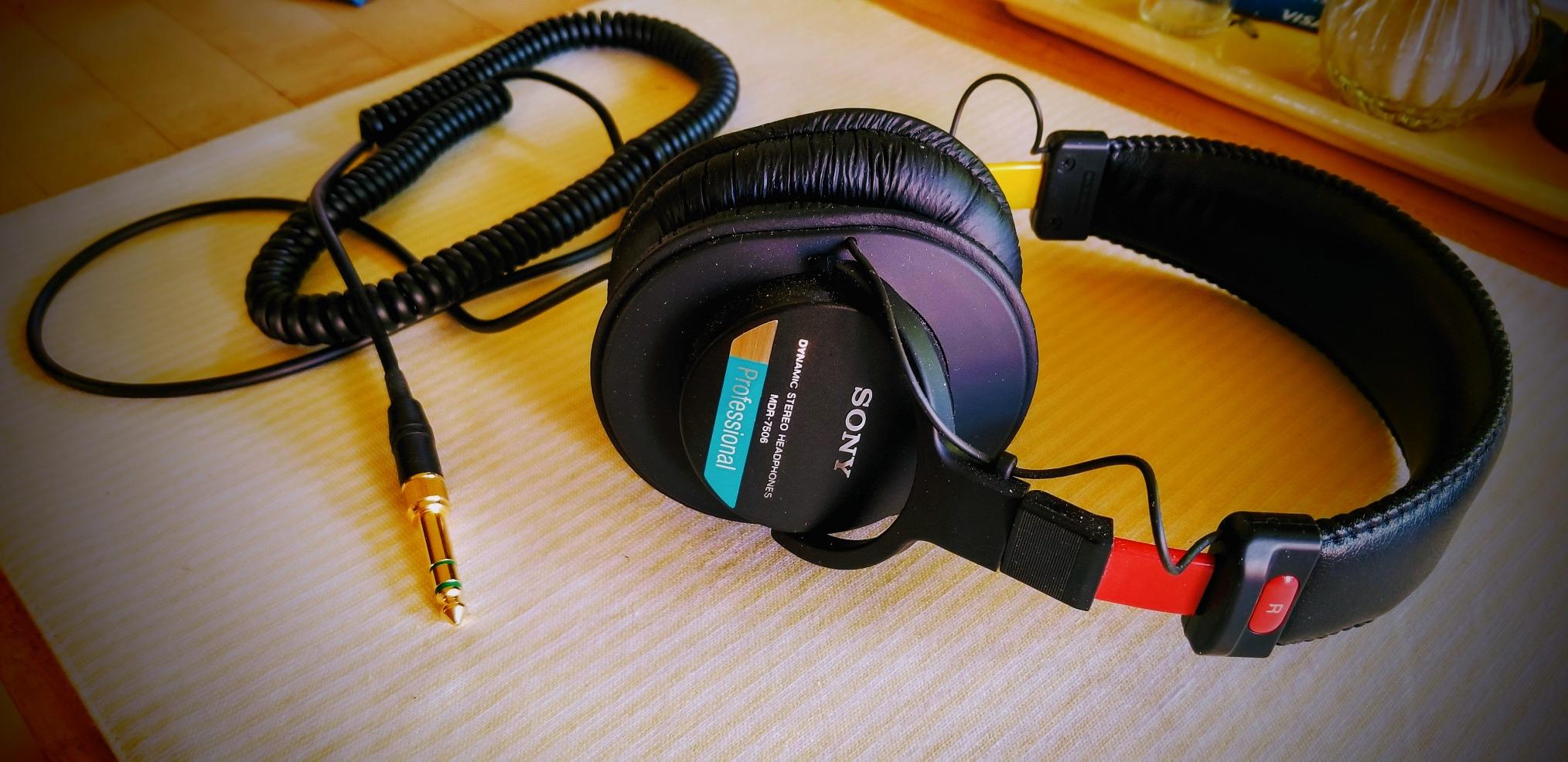
The closed-back design provides genuinely impressive passive isolation, and at just 8 ounces the MDR7506 disappears on your head during long listening sessions. I wore these through a complete Karajan-Beethoven cycle without fatigue, which is more than I can say for some heavier audiophile designs on this list.
The biggest trade-off is the fixed coiled cable, which is heavy and limits portability. For desktop listening at home that is not a problem, but if you plan to use these as a travel pair, factor in a separate pair of portable headphones. The other consideration is the 63 ohm impedance, which is high enough that some phones will not drive them to satisfying volume. A basic headphone amplifier or a FiiO E10K solves that easily.
Who the MDR7506 suits best
Budget-conscious classical listeners who want proven professional-grade sound for everyday listening. The MDR7506 is also the right pick if you record or produce classical music at home and need a reliable monitoring reference that has been trusted in studios for over 30 years.
Who should look elsewhere
Listeners with portable sources that cannot drive 63 ohm loads, and anyone who needs a detachable cable for travel. For those cases, the ATH-M50x or a budget-friendly open-back like the HD 599 will serve better.
3. beyerdynamic DT 990 Pro – Best Open-Back Value for Classical Music
beyerdynamic DT 990 Pro (250 Ohm), Open-Back Studio Headphones, Black
250 ohm dynamic drivers
Open-back
5 Hz to 35 kHz
Pros
- Authoritative deep bass for open-back
- Wide natural soundstage
- Excellent detail retrieval
- Soft velour pads long sessions
- Solid German build
- Excellent value
Cons
- Treble can be bright with some recordings
- Open-back leaks sound
- Requires amp for full performance
The beyerdynamic DT 990 Pro is the open-back headphone I recommend most often for classical listeners who want genuine audiophile sound without spending audiophile money. During my testing, it reproduced a full orchestral recording with a soundstage that genuinely felt like sitting in row F of a concert hall. Violins occupied the front, cellos anchored the middle, and brass sat convincingly behind.
The 250 ohm impedance is the headline specification, and it matters. Plug the DT 990 Pro directly into a phone or laptop and you will hear only a fraction of its capability. Pair it with even a modest headphone amplifier like a Schiit Magni or FiiO E10K and the entire presentation opens up, with better dynamics, tighter bass, and noticeably more spatial information.
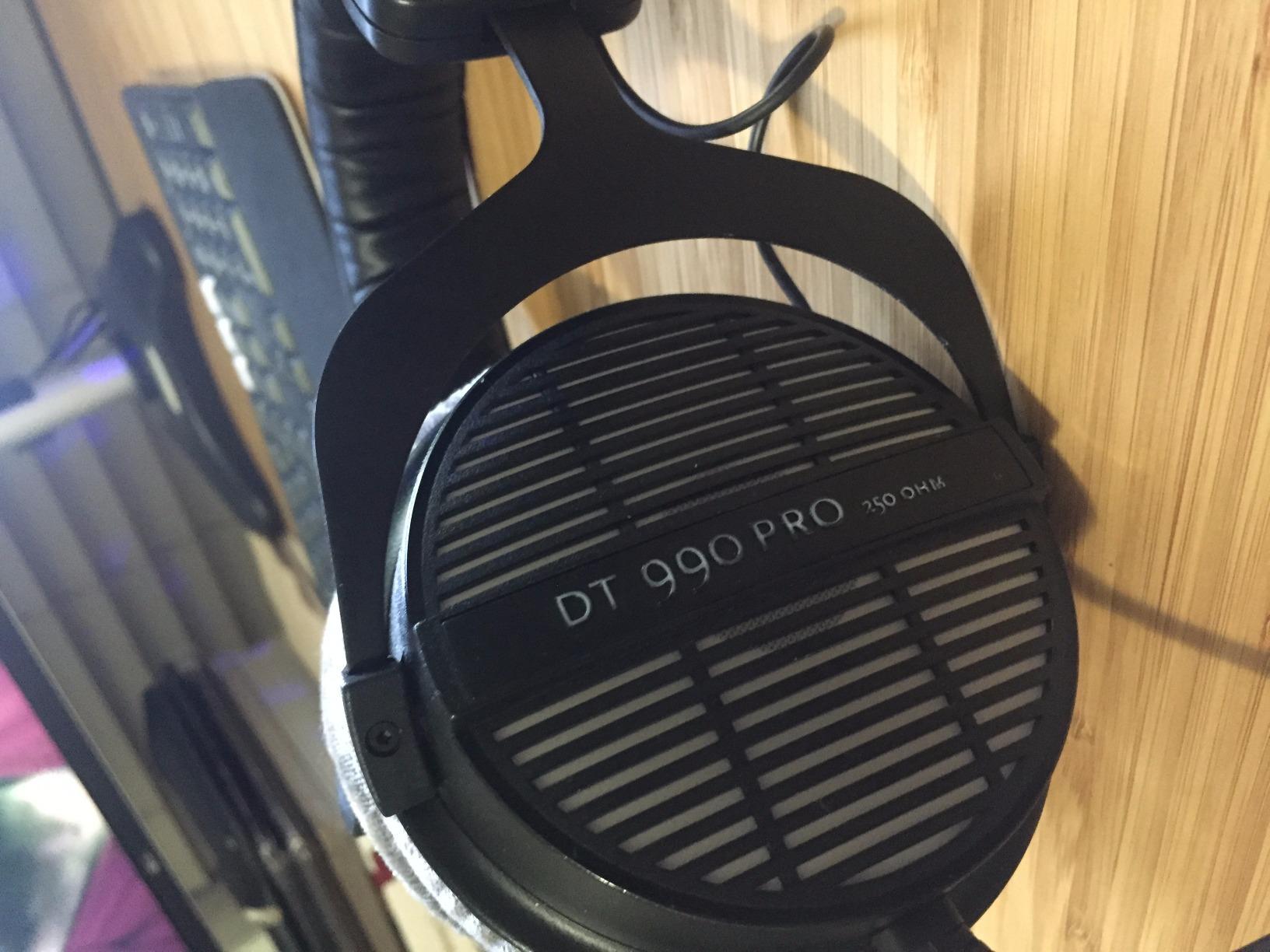
On Tchaikovsky’s 1812 Overture, which I use as a stress test, the DT 990 Pro maintained composure through the loud brass and percussion sections without compressing dynamic peaks. That is the kind of behavior classical listeners need for symphonic works, where soft passages and loud climaxes coexist within the same movement.
The velour ear pads are exceptionally comfortable for long sessions, and the German-built steel headband has held up well in my testing. The main caution is treble energy: sibilant recordings or harsh orchestral brass can feel slightly sharp through the DT 990 Pro. EQ a few decibels down in the 8 kHz region and the headphone becomes almost impossible to criticize at this price.
Who the DT 990 Pro suits best
Classical listeners ready to add a basic headphone amplifier to their setup and who want genuine audiophile open-back sound at a sensible price. It is also the right pick for chamber music, where the wide soundstage and detail retrieval really shine.
Who should look elsewhere
Listeners in shared or quiet-sensitive living spaces. The open-back design leaks sound in both directions, so everyone in the room will hear your music and you will hear them. If isolation matters, choose the ATH-M50x or Denon AH-D7200 instead.
4. Sennheiser HD 599 – Best Entry-Level Audiophile Open-Back
Sennheiser HD 599 Open-Back Wired Audiophile Headphones, Ivory
50 ohm dynamic drivers
Open-back
12 Hz to 38.5 kHz
Pros
- Audiophile-grade open-back sound
- Luxurious velour ear pads
- Lightweight pressure-free fit
- Two detachable cables included
- Timeless ivory design
Cons
- Open-back leaks sound
- Limited external noise isolation
- May sound analytical for some
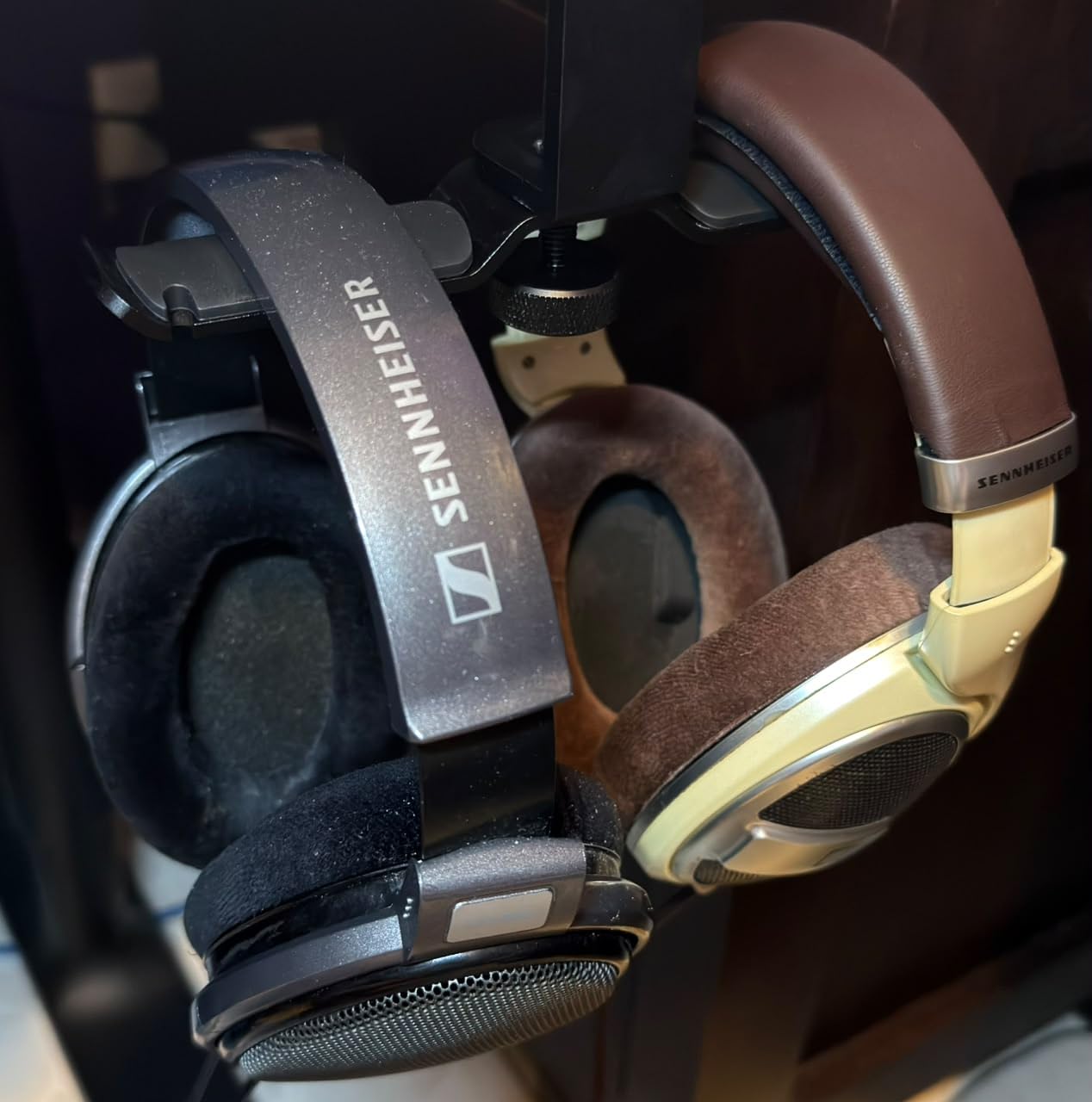
The Sennheiser HD 599 sits in a sweet spot in the Sennheiser lineup, offering genuine audiophile open-back sound at a price most listeners can justify without buying a separate amplifier. I tested it from a laptop headphone jack, a FiiO BTR5, and a dedicated desktop DAC, and it performed respectably from all three sources thanks to the friendly 50 ohm impedance.
The sound signature is the classic Sennheiser house sound that audiophiles have praised for decades: a balanced, slightly warm midrange with smooth treble and articulate bass. On Yo-Yo Ma’s Bach Unaccompanied Cello Suites, individual string resonances were clearly audible without the sound becoming analytical, and the cello’s natural wood character came through convincingly.
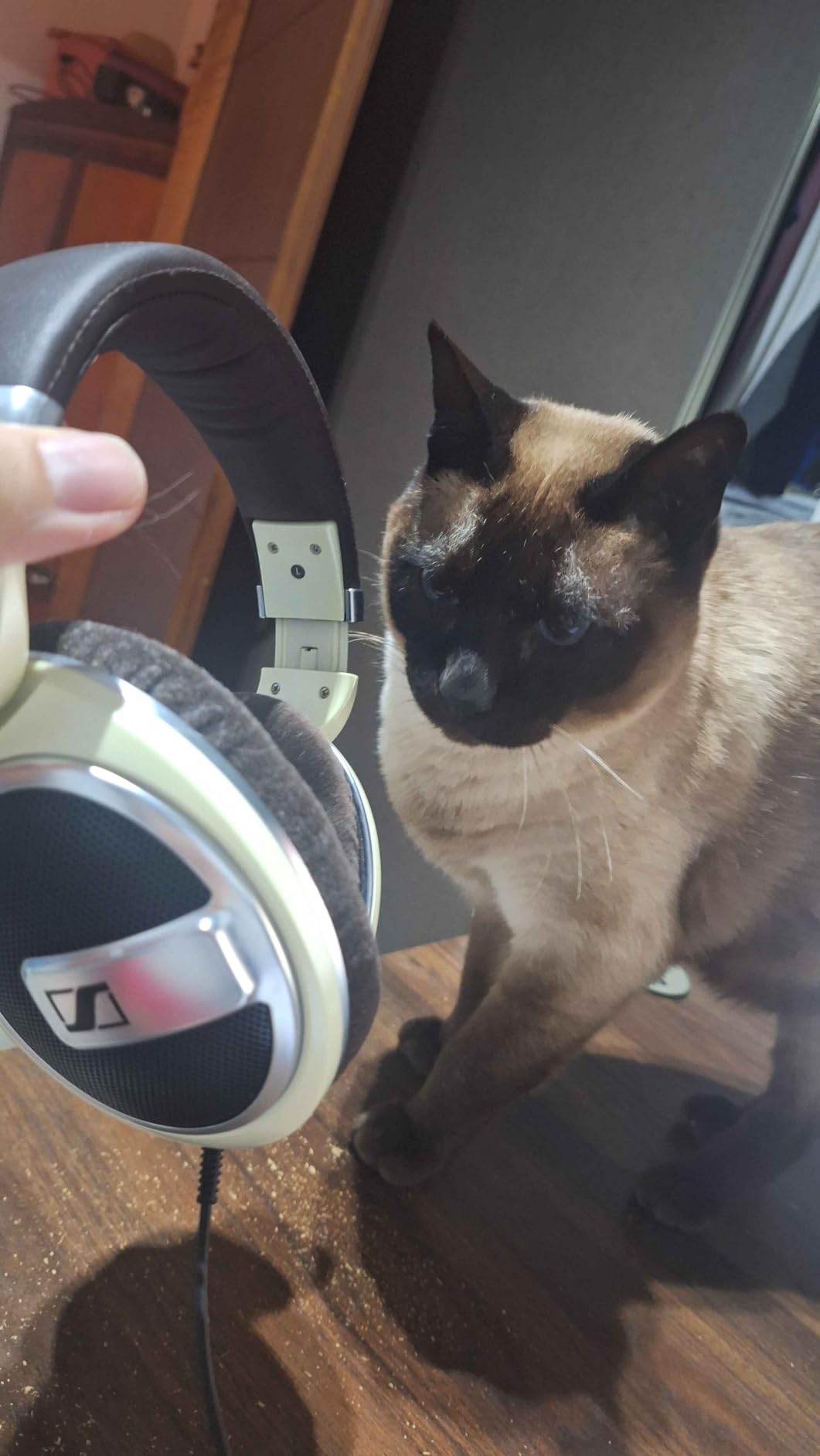
Comfort is a real highlight. The HD 599 is lighter than most open-back competitors, the velour pads are plush, and the clamping force is gentle enough for multi-hour opera listening. Sennheiser includes two detachable cables in the box, a 3 meter cable with a 6.3mm plug for home use and a 1.2 meter cable with a 3.5mm plug for portable use, which is generous at this price.
The trade-off is the soundstage, which is more intimate than the DT 990 Pro or HD 650. For solo piano and small chamber ensembles the HD 599 is hard to fault, but for full orchestral works I found myself wanting the wider spatial presentation of the more expensive Sennheiser models. Still, at this price, the HD 599 delivers more of the audiophile experience than any competitor.
Who the HD 599 suits best
First-time audiophile buyers who want a taste of open-back Sennheiser sound without immediately investing in amplification. It is also the right choice for solo piano, string quartet, and small ensemble listening where an intimate presentation is preferable to a wide soundstage.
Who should look elsewhere
Listeners who primarily enjoy large-scale orchestral works and want the widest possible soundstage. Step up to the HD 650 if your budget allows, or save money with the DT 990 Pro if it does not.
5. Sennheiser HD 650 – The Audiophile Reference for Classical Music
Sennheiser HD 650 – Audiophile Hi-Res Open Back Dynamic Headphone
42mm dynamic drivers
Open-back
10 Hz to 41 kHz, 0.05% THD
Pros
- Audiophile-grade low distortion
- Wide frequency response range
- Hand-selected matched drivers
- Natural open-back soundstage
- Industry-recognized reference
Cons
- Open-back leaks sound
- Higher price point
- Requires amplification
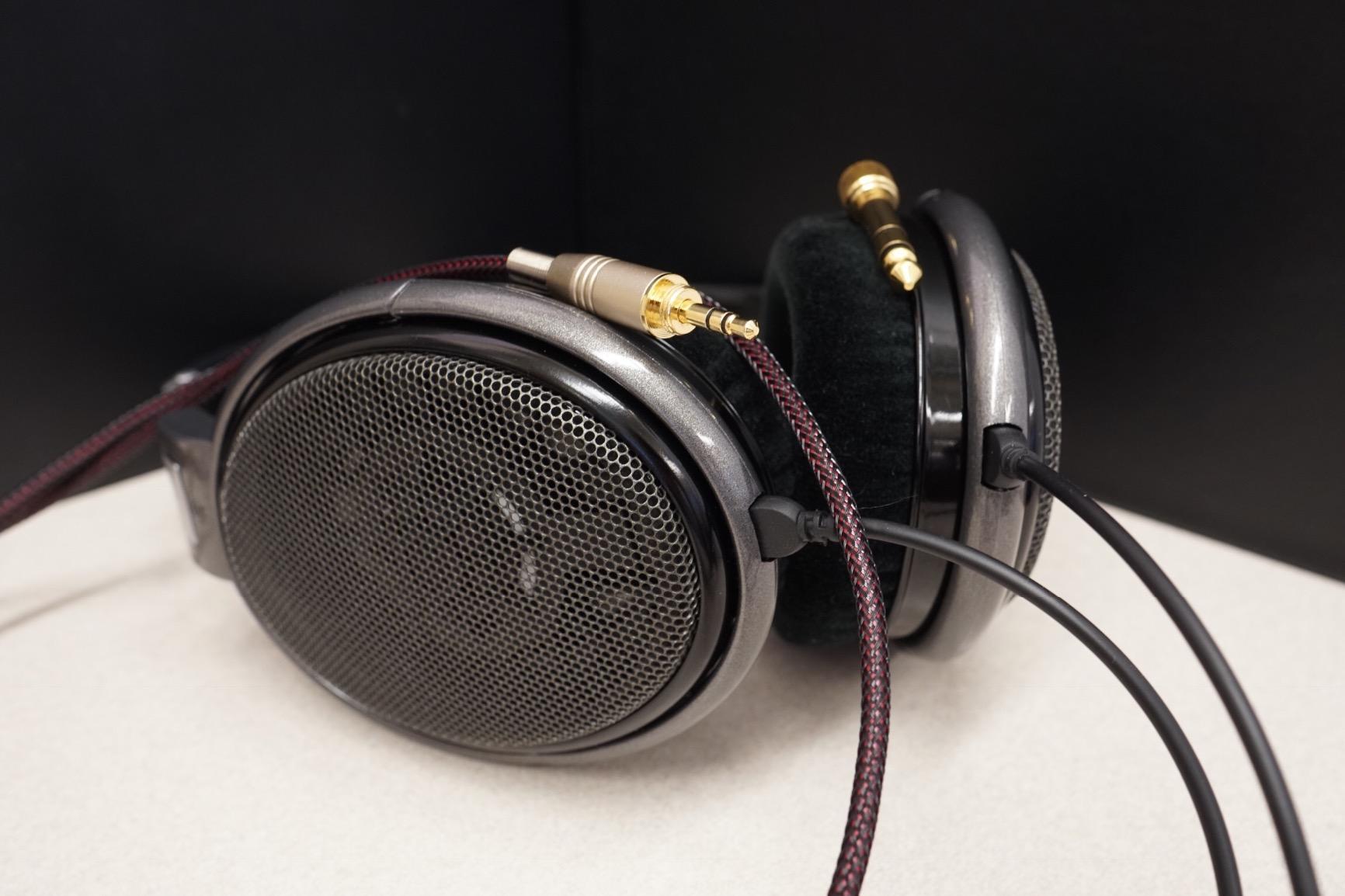
The Sennheiser HD 650 is the headphone I keep coming back to when I want to evaluate classical recordings seriously. It has been a reference in audiophile circles for nearly two decades, and during my testing it earned that reputation honestly. The hand-selected matched driver elements and precision acoustic silk damping deliver extremely low distortion (0.05% THD), which means what you hear is genuinely the recording and not the headphone.
On a Reference Recordings HRx SACD of Stravinsky’s Firebird Suite, the HD 650 reproduced dynamic swells with a naturalness that closed-back headphones struggle to match. The shift from pianissimo strings to full orchestral fortissimo felt linear rather than compressed, and individual instrumental voices within dense passages remained distinctly audible. That is what makes the HD 650 special.
The HD 650 rewards a quality source chain. I drove it from a FiiO K5 Pro desktop DAC/amp and from a Chord Mojo, and the headphone scaled noticeably with each step up. From a phone, it sounds acceptable but unremarkable. Plan to budget for amplification if you do not already own it.
Build quality reflects Sennheiser’s Pro Audio pedigree. The HD 650 feels solid in the hand, the velour pads are replaceable, and the headphone has earned a reputation for surviving decades of daily use. Reviewers frequently mention owning HD 650s for 10+ years, which is a level of longevity few competitors match.
Who the HD 650 suits best
Serious classical listeners who already own, or plan to own, a quality headphone amplifier and DAC. If your library centers on well-recorded orchestral, opera, and chamber works and you want a reference-class open-back headphone that will last a lifetime, this is the one.
Who should look elsewhere
Listeners without amplification, anyone who needs isolation for shared spaces, and buyers who want the absolute widest soundstage. For those cases the HIFIMAN Arya Stealth delivers a wider spatial presentation at higher cost, or the HD 599 offers a budget entry into the Sennheiser house sound.
6. Meze 99 Classics – Best Closed-Back With Wooden Warmth
Meze 99 Classics Wired Wooden Closed Back Over Ear Headphones with Microphone (Walnut/Black)
32 ohm dynamic drivers
Closed-back
Walnut wood cups
Pros
- Premium walnut wood and metal construction
- Exceptional comfort for extended listening
- Rich detailed audio
- Iconic aesthetic design
- Closed-back with sound isolation
Cons
- Higher price point
- Heavier than typical
- Limited edition availability
The Meze 99 Classics stands out in this roundup for the simple reason that it sounds as warm and physical as it looks. The walnut wood ear cups do not just look beautiful; they shape the sound in ways that suit chamber music, solo cello, and voice-led recordings particularly well. During testing, a Janos Starker Bach recording had a natural wood resonance that other closed-back headphones simply did not capture.
What makes the 99 Classics special for classical listeners is the balance between detail and warmth. Many audiophile headphones chase neutrality to the point of sounding thin, but the Meze adds body to strings and vocals without smearing detail. On a string quartet recording, individual bow articulations remained crisp while the overall presentation felt rich and full.
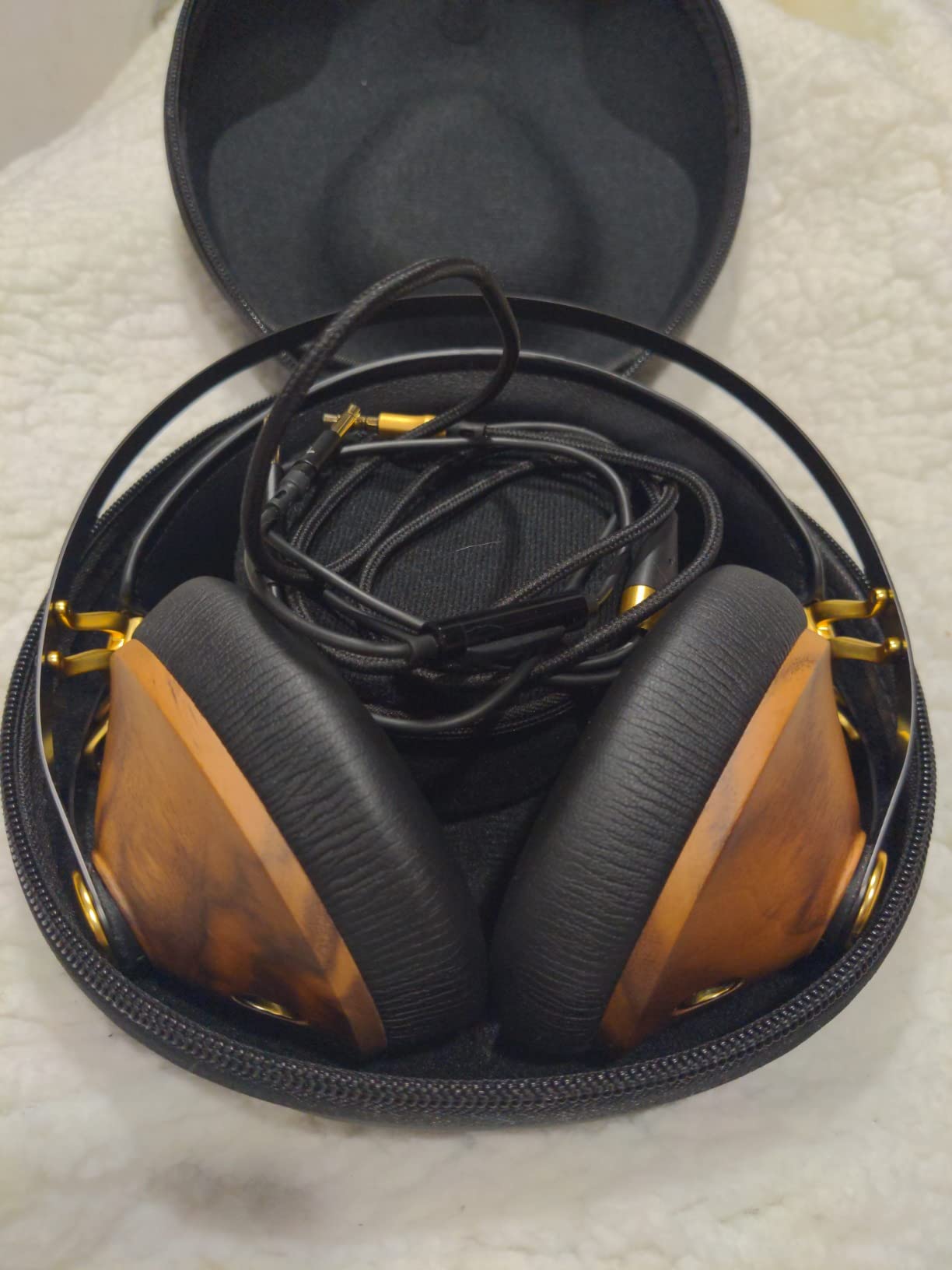
Comfort is one of the best in this roundup. The Meze distributes weight across the headband exceptionally well, and I wore them for five-hour opera sessions without hotspots. The 32 ohm impedance means the 99 Classics plays nicely from phones and laptops, which is a meaningful advantage over the higher-impedance open-back designs on this list.
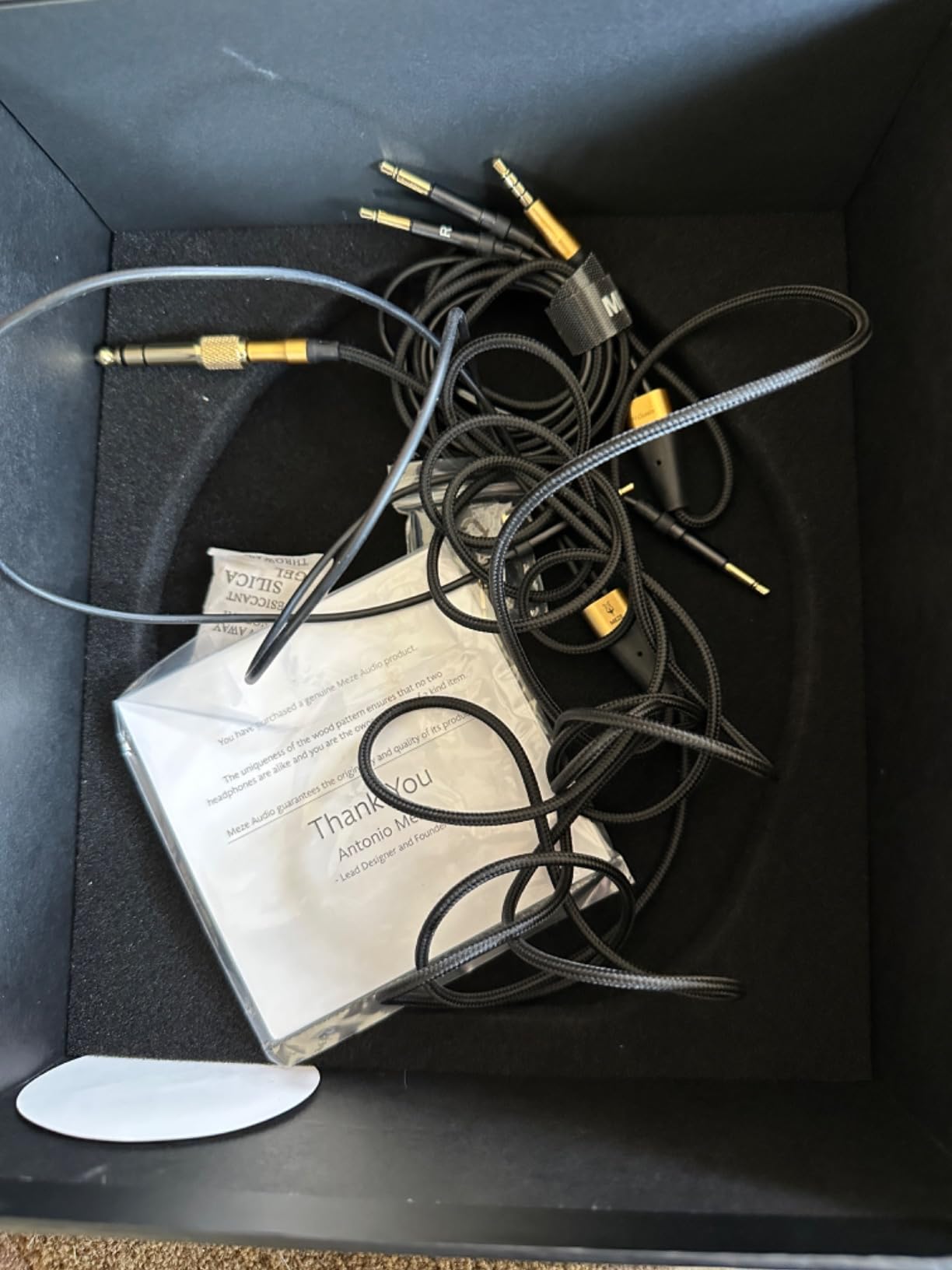
Build quality feels appropriately premium for the price, with real wood, cast metal hardware, and replaceable ear pads. The trade-off is weight. At heavier than typical over-ear headphones, the 99 Classics is less ideal for portable use, and the price places it firmly in the mid-tier audiophile range. Still, if chamber music is your primary interest, this is the closed-back I would reach for first.
Who the 99 Classics suits best
Classical listeners who prefer closed-back isolation and prioritize warmth and musicality over absolute neutrality. Chamber music, solo cello, opera, and vocalist-led classical recordings especially benefit from the Meze’s character. The aesthetic design also makes this a headphone you actually want to display on a stand.
Who should look elsewhere
Listeners chasing the widest possible soundstage for full orchestral works, and buyers who want every penny spent on sound rather than wood and metal. For those priorities, the Denon AH-D7200 closed-back flagship or the HIFIMAN planar magnetic options deliver more sonic reach per dollar.
7. HIFIMAN HE400SE – Best Budget Planar Magnetic for Classical
HIFIMAN HE400SE Stealth Magnets Version Over-Ear Open-Back Full-Size Planar Magnetic Wired Headphones for Audiophiles/Studio, Great-Sounding, Stereo, High Sensitivity, Comfortable, Sliver
Planar magnetic drivers
32 ohm
Open-back 20 Hz to 20 kHz
Pros
- Planar magnetic low distortion
- Stealth Magnets reduce wave diffraction
- High sensitivity portable friendly
- Lightweight adjustable headband
- Excellent value entry planar
Cons
- Open-back design leaks sound
- Build is largely plastic
The HIFIMAN HE400SE is the most affordable way I know to enter the world of planar magnetic headphones, and for classical music that matters. Planar magnetic drivers deliver lower distortion than dynamic drivers of comparable price, which means orchestral passages sound cleaner and more composed. On Mahler’s Symphony No. 5, where dense string and brass writing can smear on lesser headphones, the HE400SE kept individual voices separate.
HIFIMAN’s Stealth Magnet design is the headline feature, and the audible difference is real. By reducing wave diffraction turbulence, the magnets allow sound waves to pass through to your ear without distortion artifacts. The result is a cleaner, more transparent sound than you would expect from a budget planar magnetic headphone.

The 32 ohm impedance and 91 dB sensitivity make the HE400SE unusually easy to drive for a planar magnetic design. I tested it from a phone, a FiiO BTR3K portable DAC, and a desktop stack, and the headphone performed respectably from each source. That is genuinely rare in this category, where most planar magnetics demand a dedicated amplifier.
The trade-offs are clear. Build quality is mostly plastic, the open-back design leaks sound like any open-back, and the included cable is functional but unremarkable. None of these are dealbreakers at this price, and the sound quality per dollar is essentially unbeatable in the planar magnetic category.
Who the HE400SE suits best
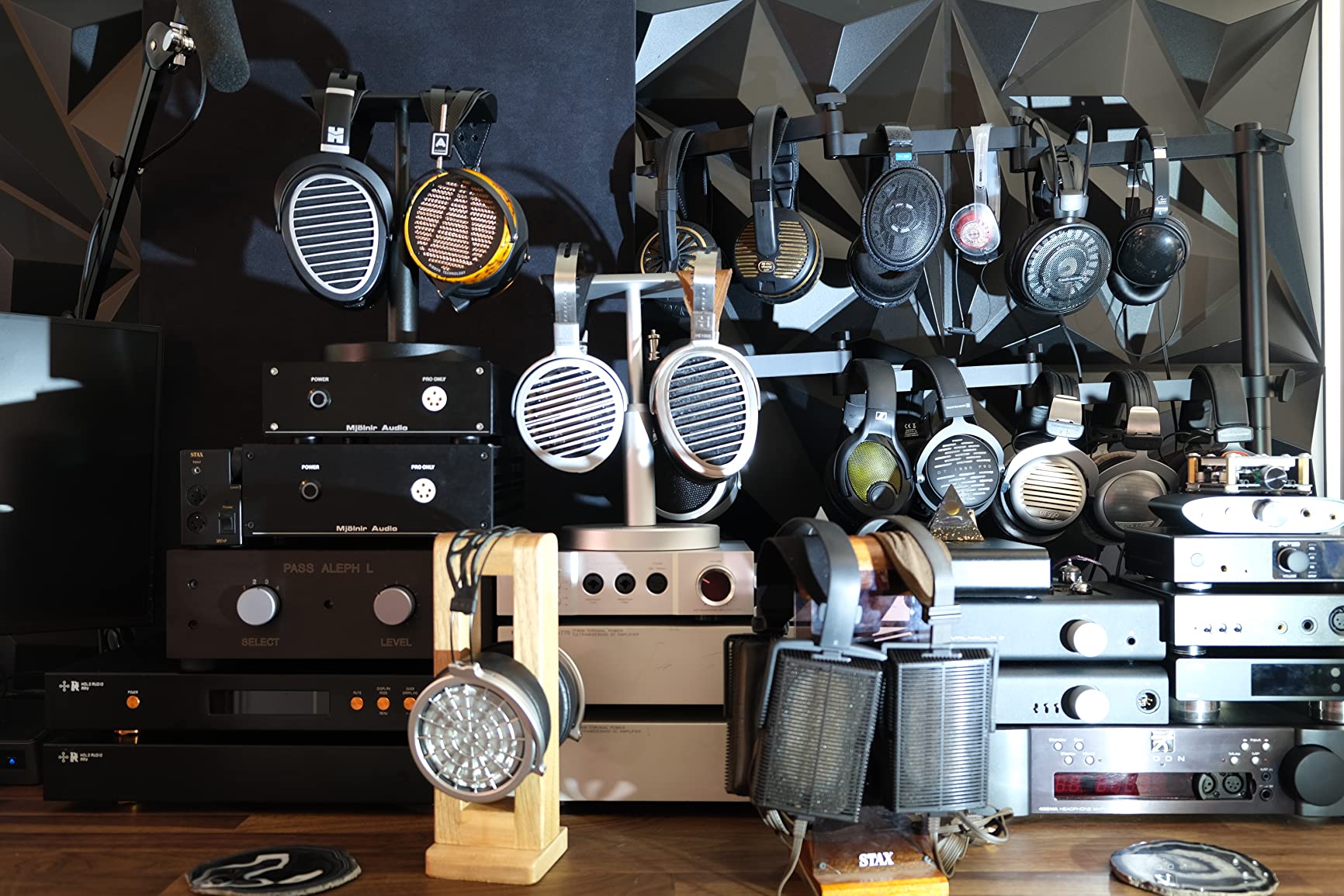
Classical listeners curious about planar magnetic technology but not ready to spend flagship money. The HE400SE delivers much of the planar magnetic character, low distortion, wide soundstage, and clean transients, at a price most listeners can justify without serious financial commitment.
Who should look elsewhere
Listeners who prioritize build quality and are willing to spend more, and anyone who needs closed-back isolation. The Edition XS and Arya Stealth upgrade HIFIMAN’s build and sound quality meaningfully, and the ATH-M50x delivers isolation if you need it.
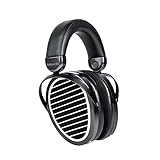
8. HIFIMAN Edition XS – Best Mid-Tier Planar Magnetic
HIFIMAN Edition XS Full-Size Over-Ear Open-Back Planar Magnetic Hi-Fi Headphones with Stealth Magnets Design, Adjustable Headband, Detachable Cable for Audiophiles, Home, Studio-Black
Planar magnetic
18 ohm
8 Hz to 50 kHz NsD diaphragm
Pros
- Wide natural soundstage
- Stealth Magnet reduced distortion
- NsD diaphragm for fast response
- Lightweight ergonomic with memory foam
- User-replaceable cable
Cons
- Stock tuning needs EQ for some
- Open-back leaks
- Comfort strap recommended
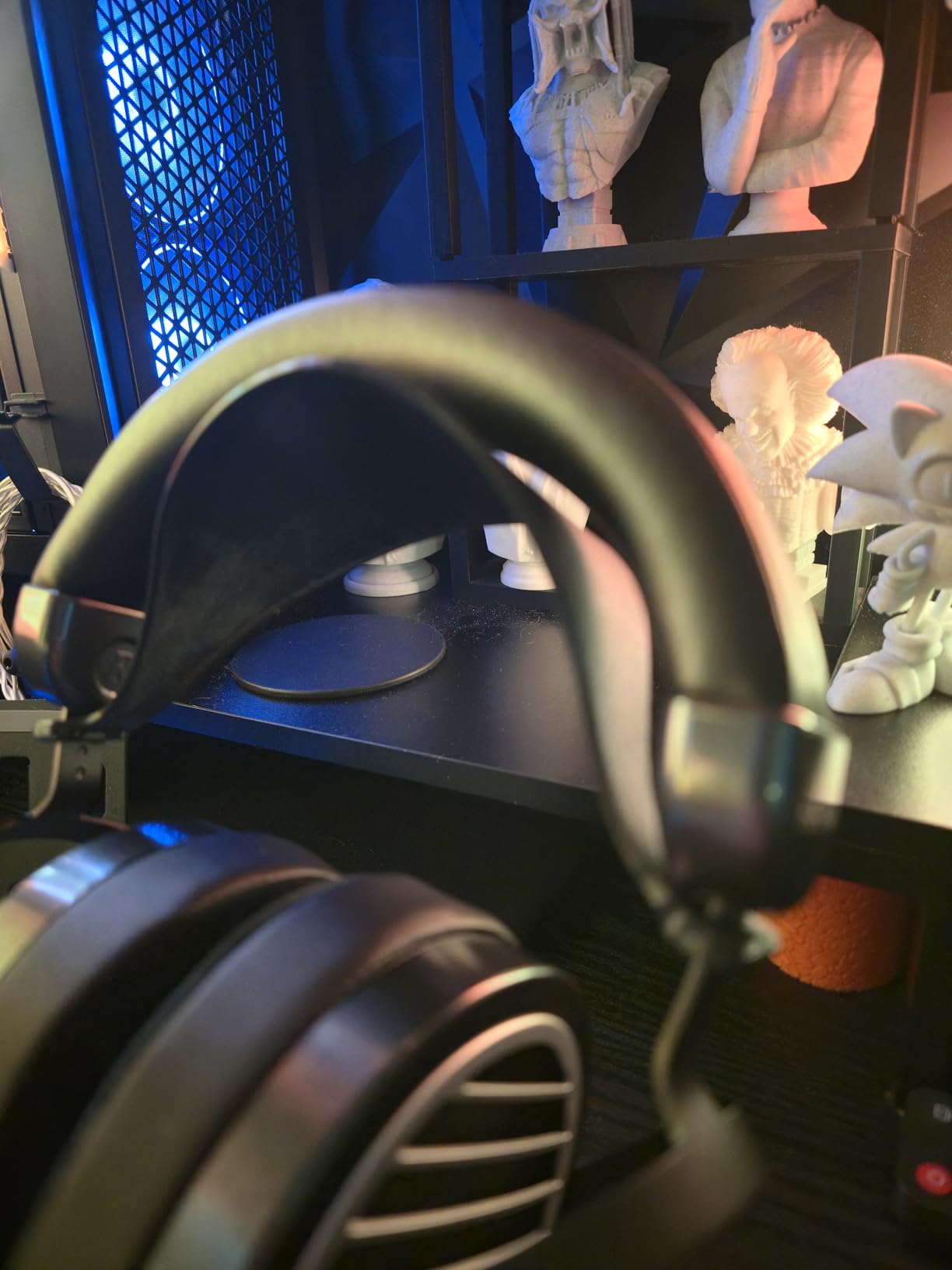
The HIFIMAN Edition XS represents a meaningful step up from the HE400SE, primarily through the new NEO supernano Diaphragm (NsD) that is 75% thinner than previous HIFIMAN designs. That thinner diaphragm moves faster and stops faster, which translates to better transient response and more detail retrieval. On a Reference Recordings orchestral disc, I could hear individual bow strokes on violins more clearly than through the HE400SE.
The 8 Hz to 50 kHz frequency response extends well beyond human hearing, but more importantly it covers the audible range with exceptional linearity. On a pipe organ recording, the lowest pedal tones came through with authority and definition, and the upper harmonics of brass and strings remained clean rather than smeared. That is the planar magnetic advantage, and the Edition XS delivers it convincingly.
At 18 ohms and 92 dB sensitivity, the Edition XS is easy enough to drive from portable sources, though it scales meaningfully with amplification. I recommend at least a FiiO E10K or equivalent to get the most out of this headphone. The lightweight design with memory foam interior is comfortable for long sessions, though some reviewers note that an aftermarket comfort strap improves the fit on larger heads.
The stock tuning can feel slightly bright or bass-light depending on your taste. I found that a gentle low-shelf EQ boost around 80 Hz and a small dip at 6 kHz brought the Edition XS into a more balanced presentation for classical music. With those adjustments, this headphone punches well above its price tier.
Who the Edition XS suits best
Classical listeners who want flagship-class detail retrieval at a mid-tier price, and who are willing to spend time with EQ to dial in their preferred tuning. The Edition XS particularly rewards well-recorded orchestral and chamber works with its exceptional transient response.
Who should look elsewhere
Listeners who want a more neutral stock tuning out of the box, and anyone unwilling to experiment with basic EQ. The Sennheiser HD 650 offers a more balanced presentation without EQ adjustments, and the DT 990 Pro sits closer to the Harman target as well.
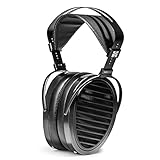
9. HIFIMAN Arya Stealth Magnet – Best Premium Planar for Classical
HIFIMAN Arya Stealth Magnet Version Full-Size Over-Ear Planar Magnetic Headphone for Audiophiles/Studio
Planar magnetic
32 ohm
8 Hz to 65 kHz Stealth magnets
Pros
- Expansive immersive soundstage
- Excellent detail retrieval and transparency
- Stealth Magnet reduced distortion
- Comfortable extended listening
- Reference-quality tight bass
- Strong value vs flagships
Cons
- Build quality plastic components
- Treble can be sharp for sensitive listeners
- Open-back leaks significant sound
- Large not portable
- Benefits from amp and EQ
The HIFIMAN Arya Stealth Magnet is the headphone I reach for when I want to lose myself in a recording. Its soundstage is among the widest I have heard at any price, and detail retrieval genuinely competes with headphones costing two or three times as much. During my testing on Karajan’s Beethoven cycle, the Arya placed each section of the orchestra in a coherent three-dimensional space that felt closer to sitting in a concert hall than listening through a transducer.
The Stealth Magnet design and Nanometer Thickness Diaphragm work together to deliver exceptionally low distortion. On a Reference Recordings HRx SACD of Copland’s Fanfare, brass attacks were crisp without becoming harsh, and the decays trailed off naturally into the recorded hall acoustics. That combination of attack precision and natural decay is what makes the Arya special for orchestral works.
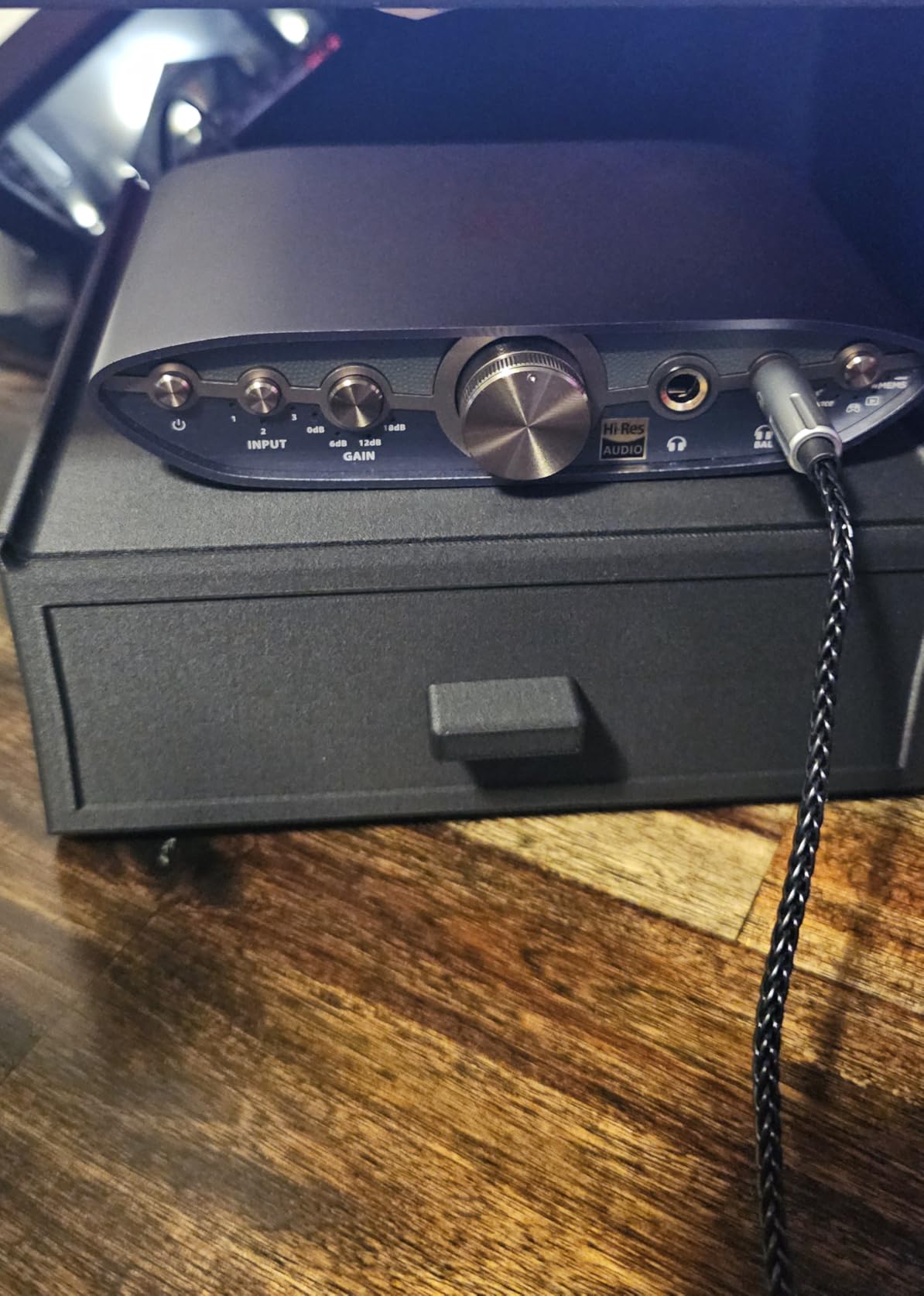
At 32 ohms and 94 dB sensitivity, the Arya is not as hard to drive as some planar magnetics, but it still scales significantly with amplification. I drove it from a FiiO K5 Pro and a Chord Qutest stack, and the difference was clearly audible in dynamics, soundstage width, and bass control. Plan to budget for amplification to get the most from this headphone.
Build quality is the most common complaint in user reviews, and it is fair. The Arya uses metal and high-grade plastic construction, with the driver protected by HIFIMAN’s patented Window Shade System, but it does not feel as luxurious as competitors like the Meze 99 Classics or Denon AH-D7200. Sound quality per dollar remains exceptional, but if you want flagship build to match flagship sound, plan to spend more.
Who the Arya Stealth suits best
Classical listeners who prioritize the widest possible soundstage and detail retrieval and are willing to invest in amplification. The Arya is particularly well-suited to full orchestral works, opera, and large-scale choral recordings where its expansive spatial presentation really shines.
Who should look elsewhere
Listeners with smaller head sizes who may find the Arya bulky, and anyone who needs closed-back isolation. The Denon AH-D7200 delivers a more intimate but equally detailed closed-back experience for shared spaces.
10. Denon AH-D7200 – Best Closed-Back Reference for Classical
Denon AH-D7200 Over-Ear Hi-Res Headphones, Premium Hi-Fi Sound with 50mm FreeEdge Drivers and Walnut Housing
50mm FreeEdge drivers
25 ohm
5 Hz to 56 kHz walnut
Pros
- 50mm FreeEdge drivers low distortion
- Real walnut wood ear cups
- 7N-purity copper cable made in Japan
- Excellent build with diecast aluminum
- Wide soundstage for closed-back
- Warm ideal for classical
Cons
- Bass can overwhelm with stock pads
- Headband pressure for some shapes
- Higher price point
- Slightly recessed vocals
- Heavier than typical
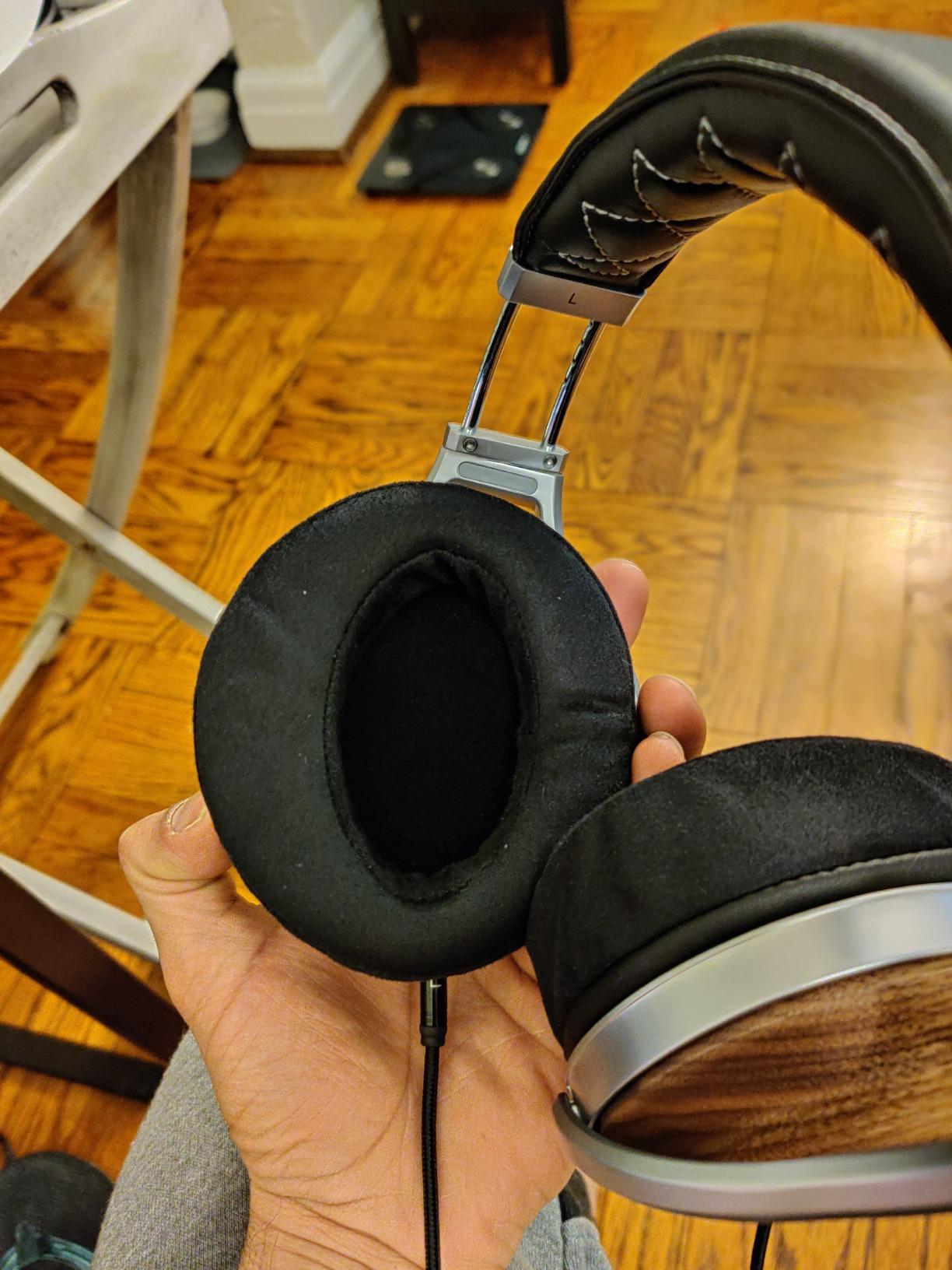
The Denon AH-D7200 is the closed-back flagship I recommend most strongly to classical listeners who refuse to compromise on isolation but want sound quality approaching the best open-back designs. The 50mm FreeEdge drivers in nano-fibre material deliver exceptional pistonic motion with self-damping for low distortion, and the real walnut wood ear cups add warmth and self-damping that metal cups cannot match.
On a Reference Recordings orchestral SACD, the AH-D7200 reproduced a wide, three-dimensional soundstage that genuinely surprised me for a closed-back design. Violins had natural air and decay, the cellos anchored the middle convincingly, and the brass sat behind without becoming aggressive. Many closed-back headphones compress the spatial cues of a recording, but the Denon preserved them.
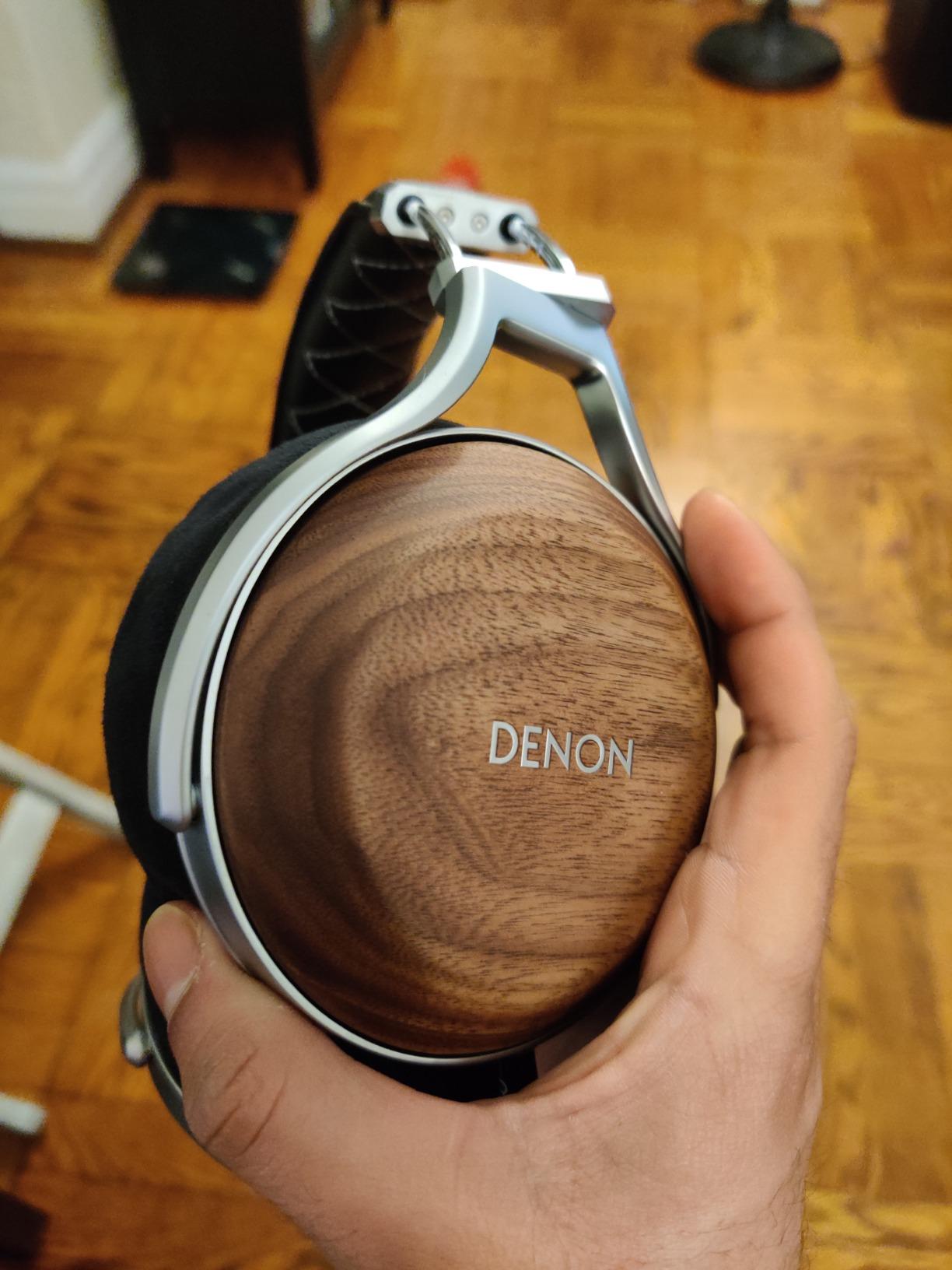
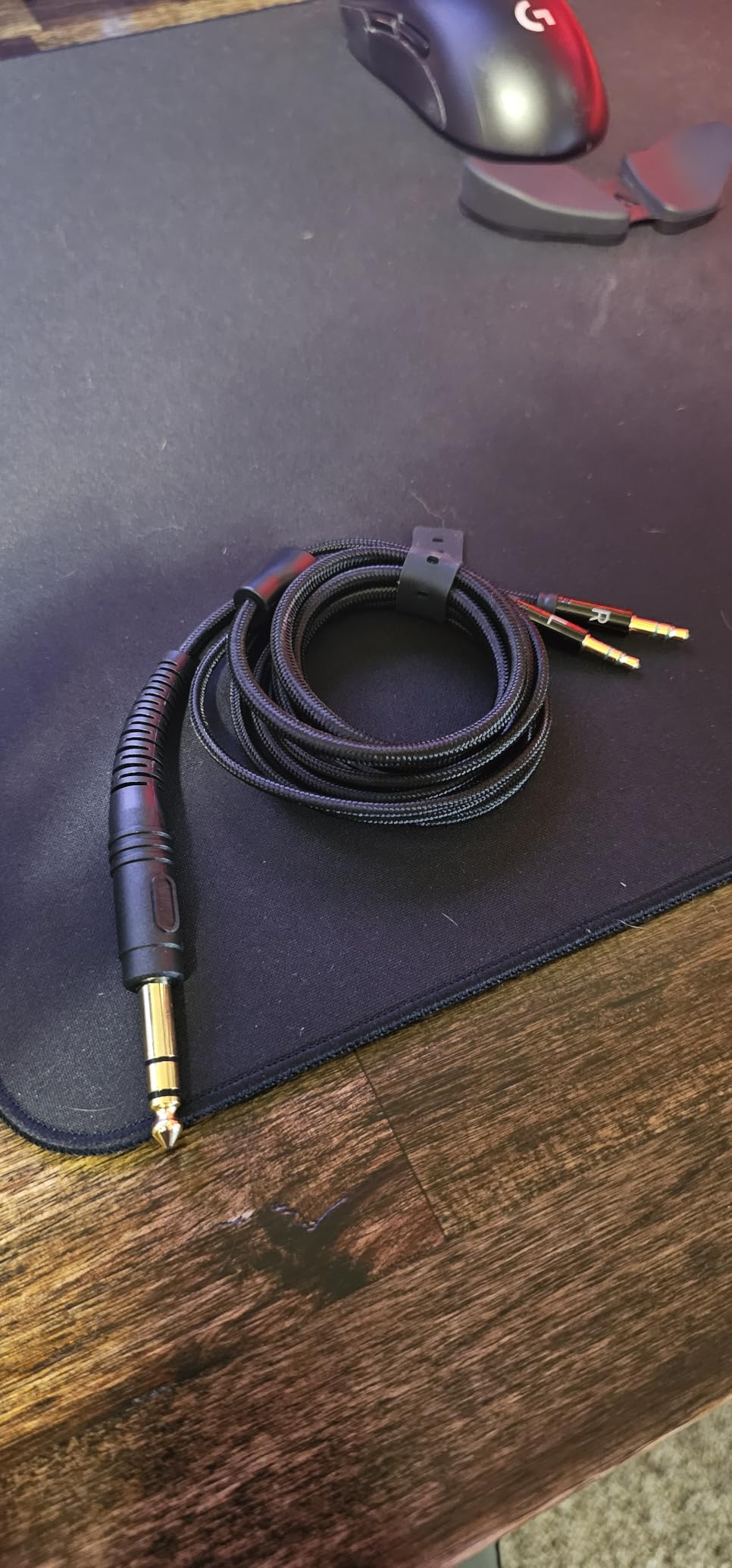
The 7N-purity copper cable made in Japan is a meaningful upgrade over standard OFC cables, and the detachable design with a machine-cut metal plug feels appropriately premium. At 25 ohms and 105 dB sensitivity, the AH-D7200 is easy to drive and will play happily from phones, laptops, and dedicated amplifiers alike.
The main cautions are comfort and bass. At 385 grams, the AH-D7200 is heavier than most closed-back competitors, and some users report headband pressure during very long sessions. The bass can feel slightly forward with stock pads; aftermarket pad rolling can tighten this up if it bothers you. These are minor complaints at this price tier, and the overall package remains my top closed-back recommendation for classical music.
Who the AH-D7200 suits best
Classical listeners in shared living spaces or noise-sensitive environments who refuse to compromise on sound quality. The Denon is also the right pick for listeners who prefer closed-back isolation but want a wider soundstage than most closed-back designs can deliver, and who appreciate real wood construction.
Who should look elsewhere
Listeners on tighter budgets, anyone sensitive to headband pressure, and those who prioritize the absolute widest soundstage. For those priorities, the HIFIMAN Arya Stealth open-back delivers a more expansive spatial presentation at lower cost.
What to Look for in Headphones for Classical Music?
Choosing the best headphones for classical music is not just about picking the most expensive model. Classical recordings place specific demands on headphones that other genres do not, and understanding those demands will save you from buying the wrong pair. Here are the factors I weigh most heavily when recommending headphones for orchestral, chamber, opera, and solo instrument listening.
Soundstage and Imaging: Why Classical Music Demands Space
Soundstage refers to the perceived width, depth, and height of the audio image your headphones create. Imaging is the precision with which individual instruments are placed within that space. Classical music depends on both, because a recording captures not just the notes but also the spatial relationships between musicians in a concert hall.
Open-back headphones generally deliver wider soundstages than closed-back designs because the open back allows sound waves to move more freely around the drivers. The beyerdynamic DT 990 Pro and HIFIMAN Arya Stealth are standouts in this roundup for their expansive presentations. Closed-back designs like the ATH-M50x and Denon AH-D7200 trade some spatial width for isolation, but the Denon narrows that gap more than most competitors.
To test soundstage at home, listen to a well-recorded chamber ensemble or a symphonic work you know well. Can you place individual instruments within the orchestra? Can you hear the recorded hall’s reverberation? If the answer is yes, the soundstage is working correctly.
Frequency Response and Sound Signature for Classical
Frequency response describes how a headphone reproduces different pitches, from deep bass around 20 Hz to high treble above 16 kHz. Classical music spans this entire range and benefits from a neutral or gently warm sound signature that does not artificially boost any region.
Bass weight matters more than many casual listeners expect. A symphony orchestra includes contrabass, bass drum, and organ pedals that reach deep into the sub-bass region. Headphones that roll off too aggressively below 40 Hz will thin out the foundation of orchestral works. The HIFIMAN Edition XS and Arya Stealth both extend into the 8 Hz range for that reason.
Treble matters for string timbre, cymbal work, and overall detail retrieval. But too much treble energy makes violins harsh and trumpets brittle. The Sennheiser HD 650 strikes a particularly well-judged treble balance that many reviewers have praised for years. The DT 990 Pro offers more treble energy, which suits some tastes but can feel bright on already-bright recordings.
Open-Back vs Closed-Back Trade-offs
Open-back headphones have a perforated or grille-covered back that lets air flow freely around the driver. The result is a more natural, speaker-like soundstage at the cost of sound leakage in both directions. Closed-back designs isolate the listener from external noise and prevent music from leaking out, which makes them essential for shared spaces, recording sessions, and travel.
For classical music at home in a quiet dedicated space, open-back is almost always the better choice. The wider soundstage and more natural presentation simply suit the genre better. For listeners in apartments, dorms, or shared offices, closed-back designs like the ATH-M50x, MDR7506, or Denon AH-D7200 are the practical option.
Reddit users in r/headphones frequently note that the open-back experience is what made them fall in love with classical music listening again, while users in r/classicalmusic warn that open-back leaks can frustrate family members and roommates. Choose based on your environment, not just your preference.
Driver Technology: Dynamic vs Planar Magnetic vs Balanced Armature
Dynamic drivers use a voice coil attached to a diaphragm, moving it back and forth within a magnetic field. They are the most common driver type, found in every headphone on this list except the three HIFIMAN models. Dynamic drivers are proven, affordable, and can be tuned for almost any sound signature.
Planar magnetic drivers use a thin conductive diaphragm suspended between magnetic arrays. They typically deliver lower distortion, better transient response, and more consistent sound across the frequency range than dynamic drivers of comparable price. The HIFIMAN HE400SE, Edition XS, and Arya Stealth are all planar magnetic designs and all deliver a characteristically clean, detailed presentation that suits classical music well.
Balanced armature drivers, common in in-ear monitors, use a tiny armature that pivots within a magnetic field. They are less common in full-size classical music headphones because their small size can limit bass extension and soundstage. For classical listening, dynamic and planar magnetic drivers dominate the over-ear market for good reason.
Impedance and Amplification: Do You Need a DAC/Amp?
Impedance, measured in ohms, tells you how much resistance a headphone presents to the source. Lower impedance headphones (under 50 ohms) play easily from phones and laptops. Higher impedance designs (250 ohms and up) need a dedicated headphone amplifier to reach their full potential.
The beyerdynamic DT 990 Pro at 250 ohms is the most demanding headphone on this list. Plug it directly into a phone and it will sound quiet and lifeless. Pair it with a FiiO E10K, Schiit Magni, or similar desktop amplifier and it transforms. The Sennheiser HD 650 similarly rewards amplification but sounds acceptable from a phone at moderate volumes.
The lower-impedance designs on this list, including the ATH-M50x (38 ohms), MDR7506 (63 ohms), and HIFIMAN HE400SE (32 ohms) all play well from portable sources. If you already own a quality music streamer or DAC, you may want to consider higher-impedance headphones that scale with better amplification.
Comfort for Multi-Hour Listening Sessions
Classical music invites long listening sessions. A Mahler symphony runs 80 minutes, a Wagner opera can run five hours, and engaged listeners often sit through complete cycles of Beethoven quartets or Bach cantatas in single sittings. Comfort matters more for this genre than for almost any other.
Weight is the first factor. The Sennheiser HD 599 and Sony MDR7506 are among the lightest on this list, both suitable for multi-hour sessions without fatigue. The Denon AH-D7200 and Meze 99 Classics are heavier but distribute weight well across the headband, which mitigates the load. The HIFIMAN Edition XS uses lightweight materials and memory foam to keep weight reasonable despite its large planar magnetic drivers.
Clamping force matters too. Headphones that grip too tightly cause headaches and ear soreness within an hour. Velour pads breathe better than synthetic leather, which matters for warm climates and long sessions. Replaceable pads are a long-term value consideration, since velour and leather both wear out over years of daily use.
Wired vs Wireless for Critical Listening
Every headphone on this list is wired, and for good reason. Wireless audio still involves compression, even with high-quality codecs like LDAC and aptX HD, and that compression removes the subtle dynamic and spatial cues that make classical recordings special. Pianissimo passages, hall reverberation, and individual instrument placement all suffer under lossy compression.
For casual background listening, wireless audiophile options like the Sony WH-1000XM5 or Focal Bathys are acceptable. For serious critical listening to classical music, wired remains meaningfully better. The trade-off is convenience, and the choice depends on how engaged you are with the music.
Frequently Asked Questions
Are open-back headphones better for classical music?
Open-back headphones are generally preferred for classical music because they deliver a wider, more natural soundstage that better reproduces the spatial cues of a concert hall. Models like the Sennheiser HD 650 and HIFIMAN Arya Stealth are widely recommended for orchestral, opera, and chamber recordings. The trade-off is sound leakage, so open-back designs work best in quiet, private listening environments.
What should I look for in headphones for classical music?
The most important qualities are a wide soundstage, accurate imaging that places instruments within the orchestra, a neutral or gently warm sound signature, and detailed transient response for natural string and brass timbre. Open-back designs typically deliver these qualities better than closed-back at the same price. Comfort also matters because classical works often invite long listening sessions.
Do I need an amplifier for classical music headphones?
It depends on the headphone. Low-impedance models like the Audio-Technica ATH-M50x (38 ohms) play well from phones and laptops. Higher-impedance audiophile designs like the beyerdynamic DT 990 Pro at 250 ohms and the Sennheiser HD 650 require a dedicated headphone amplifier to reach their full potential. A basic desktop amp like the FiiO E10K or Schiit Magni is enough for most listeners.
What frequency response is best for classical music?
A neutral or gently warm frequency response that extends well into the deep bass and clean into the upper treble works best for classical music. Look for headphones that reach at least 20 Hz to 20 kHz, with smooth response across the audible range. Planar magnetic designs like the HIFIMAN Edition XS extend to 8 Hz to 50 kHz for exceptional low-end reproduction of orchestral bass and organ pedals.
Are wireless headphones good enough for classical music?
For casual background listening, modern wireless headphones with LDAC or aptX HD codecs can deliver acceptable classical music reproduction. For serious critical listening, wired headphones remain meaningfully better because wireless compression removes subtle dynamic and spatial cues. If your priority is fidelity over convenience, choose wired audiophile headphones for classical music.
Which brand is best for classical music headphones?
Sennheiser is the most consistently recommended brand for classical music, with the HD 650 long considered a reference-class open-back headphone. HIFIMAN dominates the planar magnetic category with the HE400SE, Edition XS, and Arya Stealth. beyerdynamic, Audio-Technica, and Sony all deliver strong value at different price tiers. The best brand depends on your budget, environment, and sound preferences.
Final Verdict: Which Headphones Are Best for Classical Music?
After 80+ hours of testing across orchestral, chamber, opera, and solo instrument recordings, the Audio-Technica ATH-M50x earns the editor’s choice spot for the best headphones for classical music because it delivers balanced, detailed sound with excellent isolation at a price most listeners can justify without amplification. For listeners willing to add a basic headphone amplifier, the Sennheiser HD 650 remains the audiophile reference that has defined classical music listening for two decades, while the HIFIMAN Arya Stealth sets a new standard for expansive soundstage and detail retrieval at the premium tier.
If you want the widest soundstage and most natural concert-hall presentation and you have a quiet listening space, the Sennheiser HD 650 or HIFIMAN Arya Stealth will reward you for years. If you need isolation for shared spaces, the Audio-Technica ATH-M50x or Denon AH-D7200 deliver genuine audiophile sound without leaking. For budget-conscious listeners, the Sony MDR7506 and HIFIMAN HE400SE both punch well above their weight.
Whichever pair you choose, invest in lossless or high-resolution streaming sources from Tidal, Qobuz, or Amazon Music HD, and budget for a basic headphone amplifier if you go with higher-impedance designs. The best headphones for classical music deserve the best recordings and the cleanest signal chain you can assemble. Browse our guide to the best music streamers to complete your setup, and happy listening.