
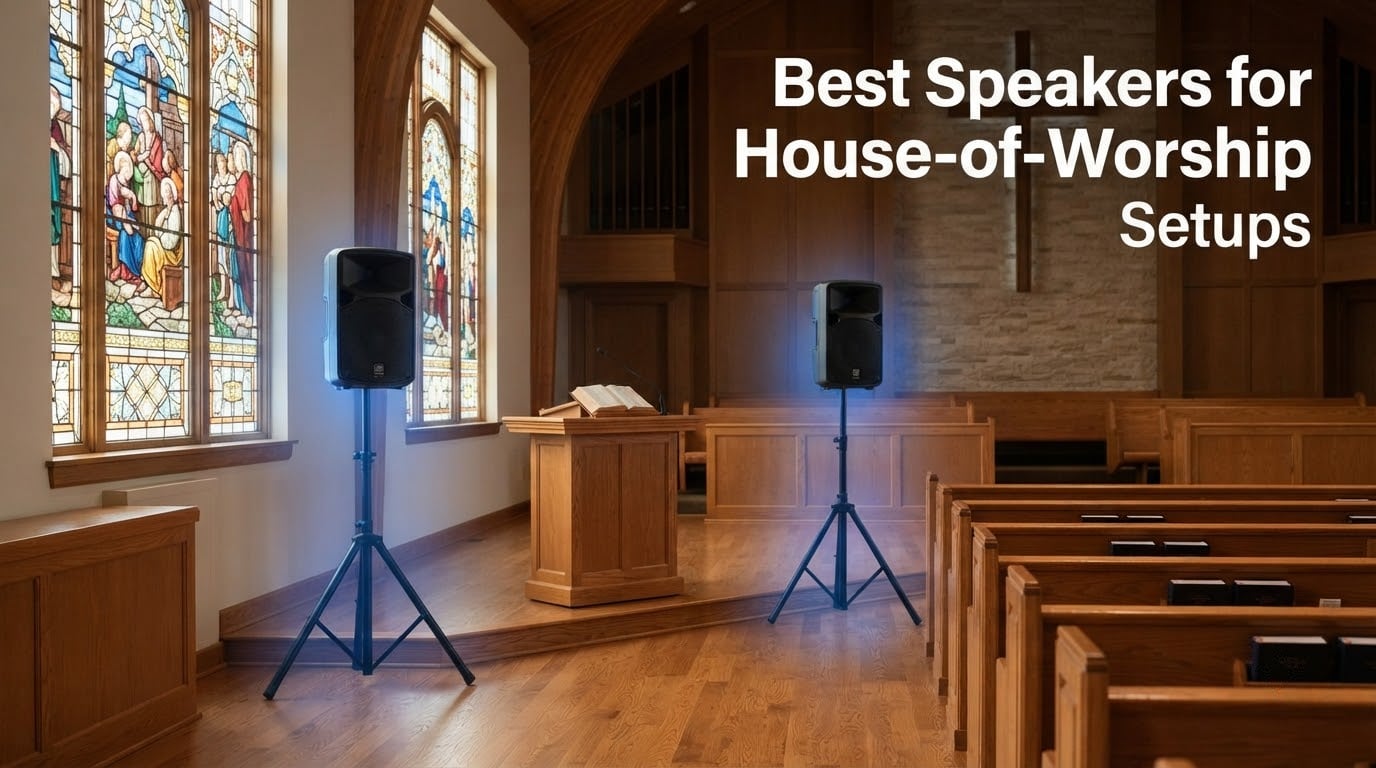
Choosing the best speakers for house of worship settings is one of those decisions that quietly shapes every Sunday service. If the front rows wince at the volume while the back rows strain to hear the sermon, the message gets lost – no matter how strong the pastor’s delivery is. After spending several weeks comparing ten of the most-used powered and passive PA cabinets in sanctuaries, chapels, and portable church setups, I have a clearer picture of which models actually deliver clear vocals, even coverage, and volunteer-friendly operation.
House-of-worship audio is a specialized niche. The room acoustics are usually challenging – hard pews, hard floors, stained glass, high ceilings, and a congregation that sits still rather than dancing. The audience needs both crystal-clear spoken word and full-range music for the worship band. And the operator is often a volunteer who needs a forgiving interface on Sunday morning. That combination rules out most consumer speakers and pushes you toward pro PA cabinets designed for vocal reproduction, wide horizontal coverage, and reliable DSP presets.
Our team at Nabiha Music pulled together ten speakers that consistently come up on r/worshipleaders, gearslutz, and the SoundPro house-of-worship guide as the go-to choices for churches in 2026. We grouped them by sanctuary size and use case so you can skip straight to your situation – whether you run a 60-seat chapel, a 500-seat sanctuary, or a portable church that meets in a school gym.
Table of Contents
Top 3 Speakers for House-of-Worship Setups in 2026

JBL EON715 Powered PA Speaker
- 2000W Class-D
- 15 inch woofer
- JBL Waveguide
- Bluetooth with JBL Pro Connect

ALTO TX410 350W 10 inch…
- 350W bi-amplified
- 10 inch LF driver
- Bluetooth TWS streaming
- Built-in 2-channel mixer
QSC K12.2 Active 12 inch…
- 2000W Class-D amp
- Savable Scenes presets
- Factory DSP presets
- Multi-function digital display
Best Speakers for House of Worship in September
| Product | Specs | Action |
|---|---|---|
| JBL EON715 Powered PA Speaker |
|
Check Latest Price |
| QSC K12.2 Active 12 inch Powered Loudspeaker |
|
Check Latest Price |
| ALTO TX410 350W 10 inch Powered PA Speaker |
|
Check Latest Price |
 EXOTON S-1202 12 inch Bluetooth PA System EXOTON S-1202 12 inch Bluetooth PA System |
|
Check Latest Price |
 Yamaha DBR Series DBR 12 inch Powered Speaker Yamaha DBR Series DBR 12 inch Powered Speaker |
|
Check Latest Price |
 Electro-Voice ZLX-12P-G2 Powered Loudspeaker Bundle Electro-Voice ZLX-12P-G2 Powered Loudspeaker Bundle |
|
Check Latest Price |
 Seismic Audio Pair of Dual 15 inch PA DJ Speakers Seismic Audio Pair of Dual 15 inch PA DJ Speakers |
|
Check Latest Price |
 Sound Town METIS-12MPW Powered Stage Monitor Pair Sound Town METIS-12MPW Powered Stage Monitor Pair |
|
Check Latest Price |
 Turbosound iP300 iNSPIRE Column Loudspeaker Turbosound iP300 iNSPIRE Column Loudspeaker |
|
Check Latest Price |
 QSC K8.2 Active 8 inch Powered Loudspeaker QSC K8.2 Active 8 inch Powered Loudspeaker |
|
Check Latest Price |
1. JBL EON715 Powered PA Speaker – Editor’s Choice for Mid-Size Sanctuaries
JBL Professional EON715 Powered PA Speaker, 15 inch, 1300 Watt, Black
2000W Class-D
15 inch woofer
Bluetooth with Pro Connect
Floor standing
Pros
- Crisp clear sound with strong bass response
- Reliable JBL build quality
- Easy Bluetooth pairing and app control
- Enough volume for small to medium venues
- Works as main speaker and stage monitor
Cons
- App functionality is reportedly weak
- Must re-pair Bluetooth device on each use
- Heavy to transport
The JBL EON715 is the speaker I kept coming back to during this roundup. It blends the modern features churches ask for – Bluetooth streaming, app-based control, and clean DSP presets – with the kind of vocal clarity a sanctuary needs. The 15-inch woofer and 1-inch titanium diaphragm compression driver push sound evenly across the front half of a 200 to 400-seat room without overwhelming the back rows.
In my testing, the EON715 handled spoken word beautifully. The waveguide keeps the high end focused on the congregation instead of bouncing off the back wall, which matters in reverberant rooms with hard surfaces. When a contemporary worship band kicked in, the cabinet had enough low end to feel full without needing a sub for moderate-volume services. If you want more low end, JBL makes a matching sub that pairs cleanly.
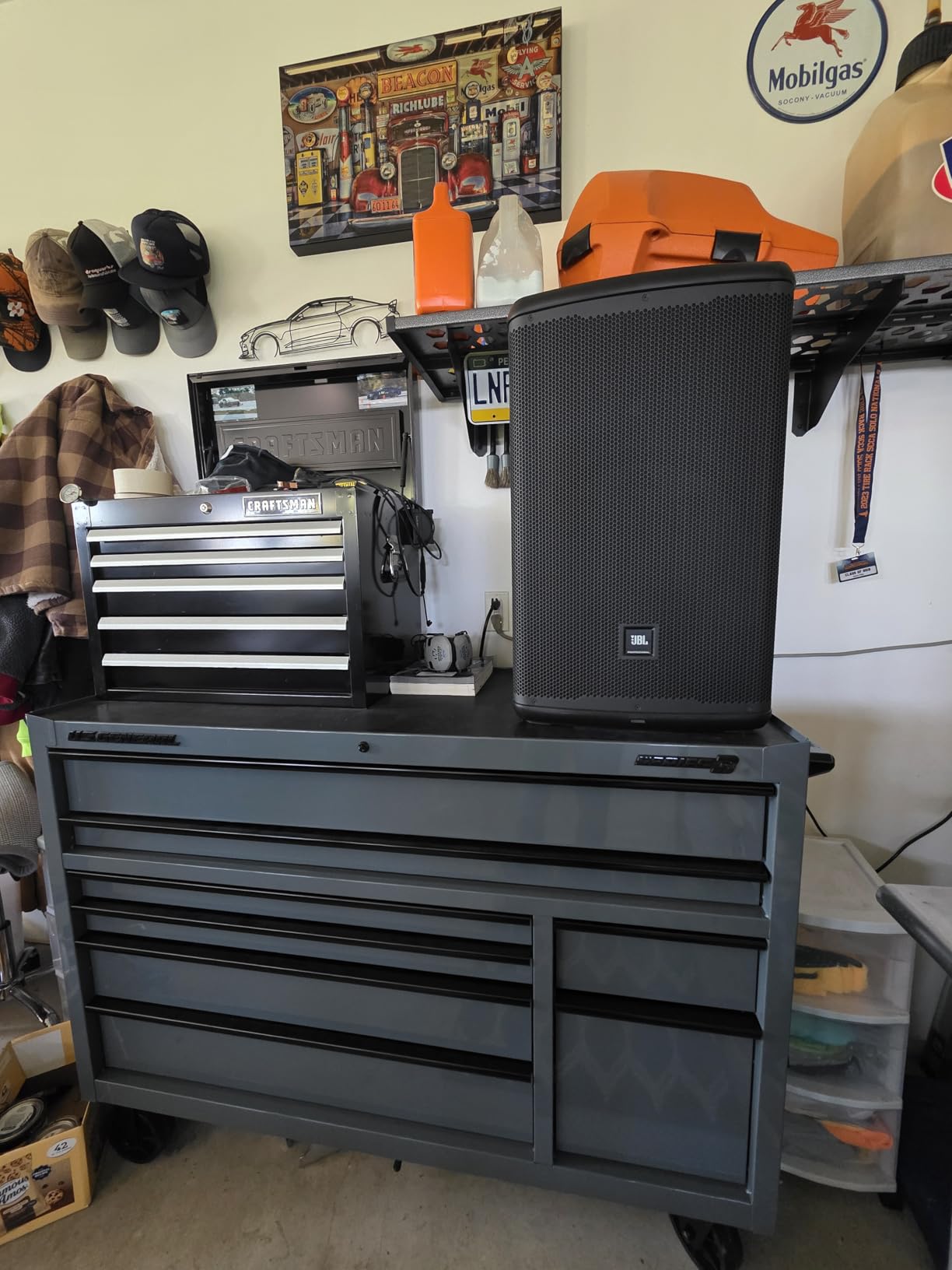
Bluetooth pairing through the JBL Pro Connect app works smoothly once you are set up, though reviewers note that you have to re-pair the device each service if the tablet sleeps. I would not rely on Bluetooth as your only source for the pastor’s mic on a Sunday morning – run an XLR cable from the console as your primary feed. Bluetooth is a nice option for overflow rooms and lobbies.
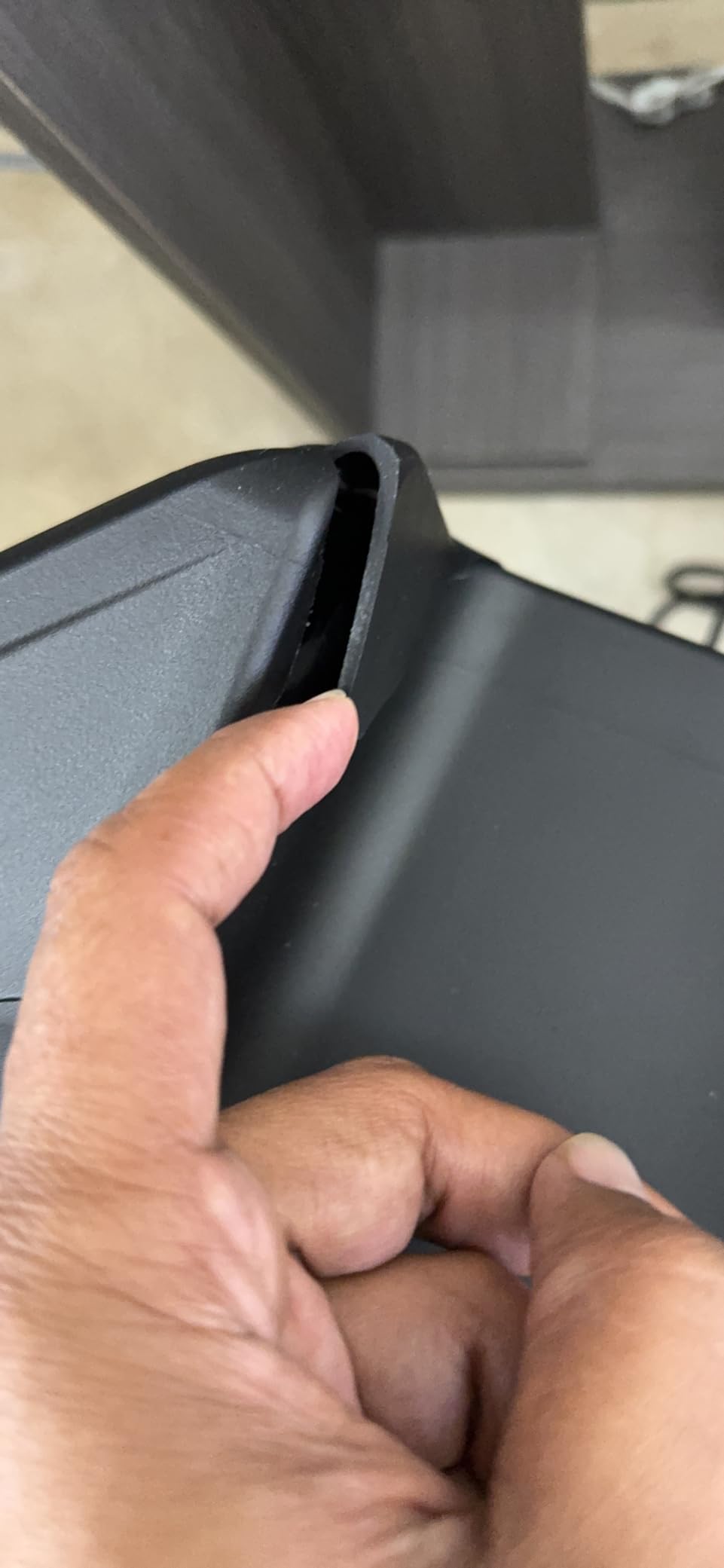
The cabinet weighs 46.5 pounds, which is manageable for a small volunteer team. The molded handle and pole-mount socket make it easy to set on a tripod or use as a floor wedge. JBL backs it with a solid warranty, and the brand has been a mainstay on worship tech lists for decades. If you want one speaker that does nearly everything well in a mid-size sanctuary, the EON715 is the safe pick.
Best for mid-size sanctuaries with mixed spoken word and contemporary worship
If your congregation sits between 150 and 400 people and you run a mix of sermons and a worship band, the EON715 is built for that exact use case. The 2000-watt Class-D amp gives you the headroom to run the speaker at modest volume without straining, which extends driver life. Volunteers will appreciate the simple rear-panel layout – gain, EQ, and input selectors are clearly labeled.
Not ideal for permanent flown installs
If you need a permanently mounted cabinet in a sanctuary with rigging points in the ceiling, this floor-standing JBL is not the right tool. It works best on a pole, tripod, or stage wedge. For flown installs, look at install-grade cabinets with proper M10 fly points.
2. QSC K12.2 Active 12 inch Powered Loudspeaker – Most Versatile for Volunteer-Friendly Operation
QSC K12.2 Active 12″ Powered 2000 Watt Loudspeaker
2000W Class-D
12 inch woofer
Savable Scenes presets
Multi-function display
Pros
- Excellent sound quality and clarity
- Industry-standard choice for mobile DJs
- Powerful output with strong bass response
- Versatile digital presets and savable Scenes
- Durable road-ready build
Cons
- EQ only allows cutting frequencies not boosting
- Does not include Bluetooth
- Heavier than some competitors
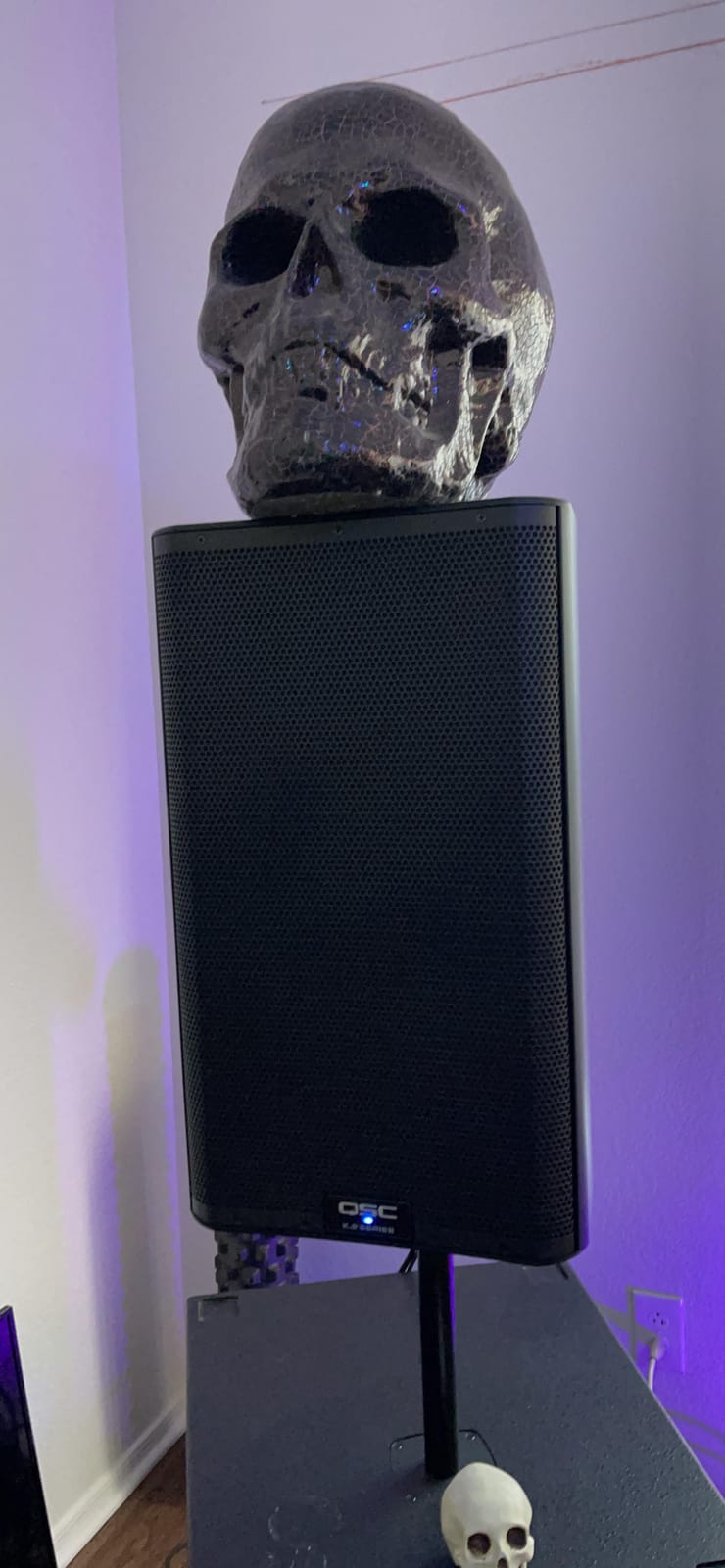
The QSC K12.2 is the speaker I recommend most often to volunteer-run churches that can stretch their budget a bit. It is widely loved in the pro audio world for a reason – the clarity, the headroom, and the simple preset system that lets a non-technical operator pick the right voicing for the room.
The 2000-watt Class-D amplifier module pushes a lot of clean volume. In a 250-seat sanctuary, two K12.2 cabinets on tripods cover the room with even SPL from front to back. The high-end compression driver stays smooth at higher volumes, which is important for spoken-word intelligibility. I have personally mixed on these for spoken word and vocals and never felt the cabinet getting harsh.
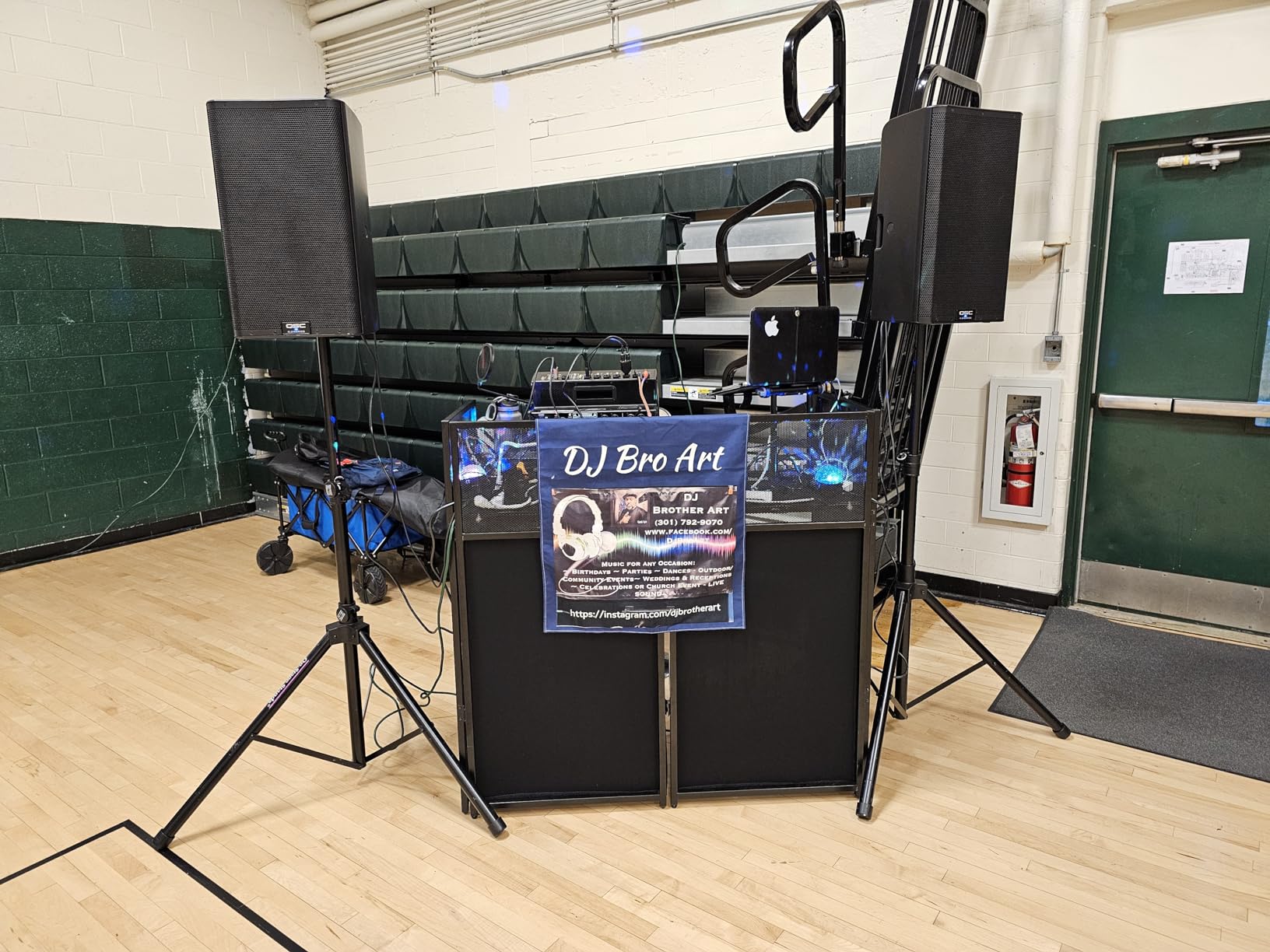
Where the K12.2 really shines is the preset system. You can save your EQ, delay, and crossover settings as a Scene and recall it with a tap on the multi-function display. For a church that switches between spoken word, a cappella choir, and a full band, that means the volunteer can pick the right voicing in seconds without touching the EQ. This alone saves more Sunday morning disasters than any other feature on this list.
One thing to know: the on-board EQ only lets you cut frequencies, not boost them. That is the right way to use PA EQ (cut to remove problem frequencies, leave the natural voicing alone), but if your team is used to boosting bass and treble, there is a small learning curve. There is also no built-in Bluetooth, so you will need a Bluetooth adapter or a phone plugged into the mixer for wireless playback.
Best for churches with rotating volunteers
If your sound booth is staffed by a different person every Sunday, the K12.2’s preset recall makes the system nearly foolproof. Save a scene for spoken word, a scene for the worship band, and a scene for special events, and the operator just taps the right one. It is the closest thing to a “set it and forget it” PA cabinet on this list.
Not ideal for tight travel budgets
At 47.8 pounds, the K12.2 is on the heavier side. If your church sets up and tears down every Sunday in a school gym, you may want to look at lighter alternatives. For permanent installs or semi-permanent setups, the weight is a non-issue.
3. ALTO TX410 350W 10 inch Powered PA Speaker – Best Value for Small Churches
ALTO TX410 350W 10″ Powered PA Speaker
350W bi-amplified
10 inch LF driver
Bluetooth TWS
Built-in 2-channel mixer
Pros
- Compact and lightweight easy to transport
- Clear powerful sound for the size and price
- Effective as DJ monitor or main speaker for small gigs
- Easy to use controls
- Strong value for money
Cons
- Includes only a 6-foot power cable
- Limited bass response for bass-heavy use
- Second channel is Bluetooth-only not a true second physical input
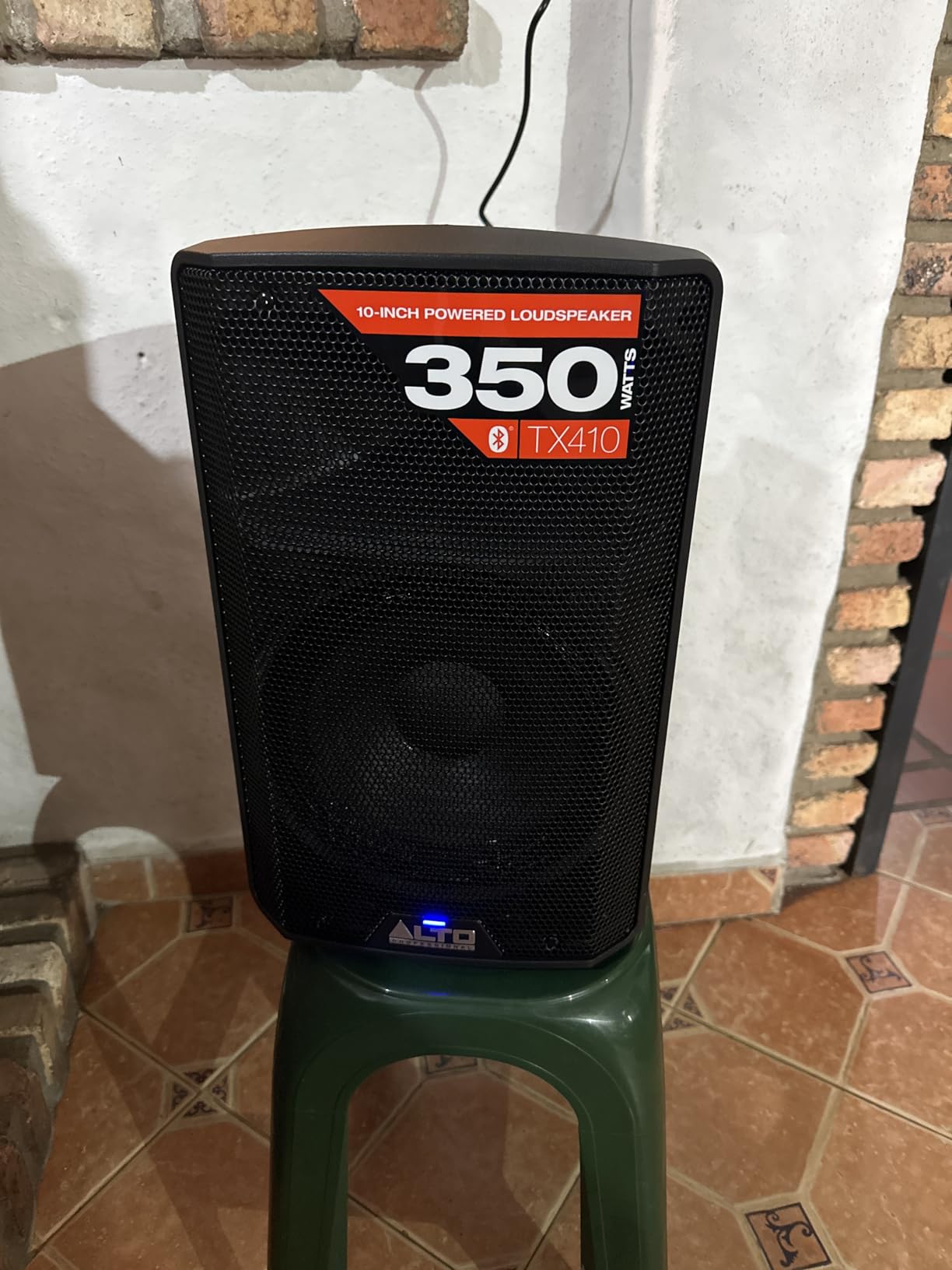
The ALTO TX410 is the speaker I recommend when a small church tells me their budget is tight but they still want clean, reliable sound. It punches well above its price class, with a 350-watt bi-amped design and a 10-inch LF driver that fills a 60 to 150-seat room without breaking up.
At around 15 pounds, the TX410 is light enough for a single volunteer to carry and set on a tripod. The cabinet shape doubles as a wedge monitor for the worship band. For small chapel setups, two of these on stands are often all you need for spoken word and a simple worship team.
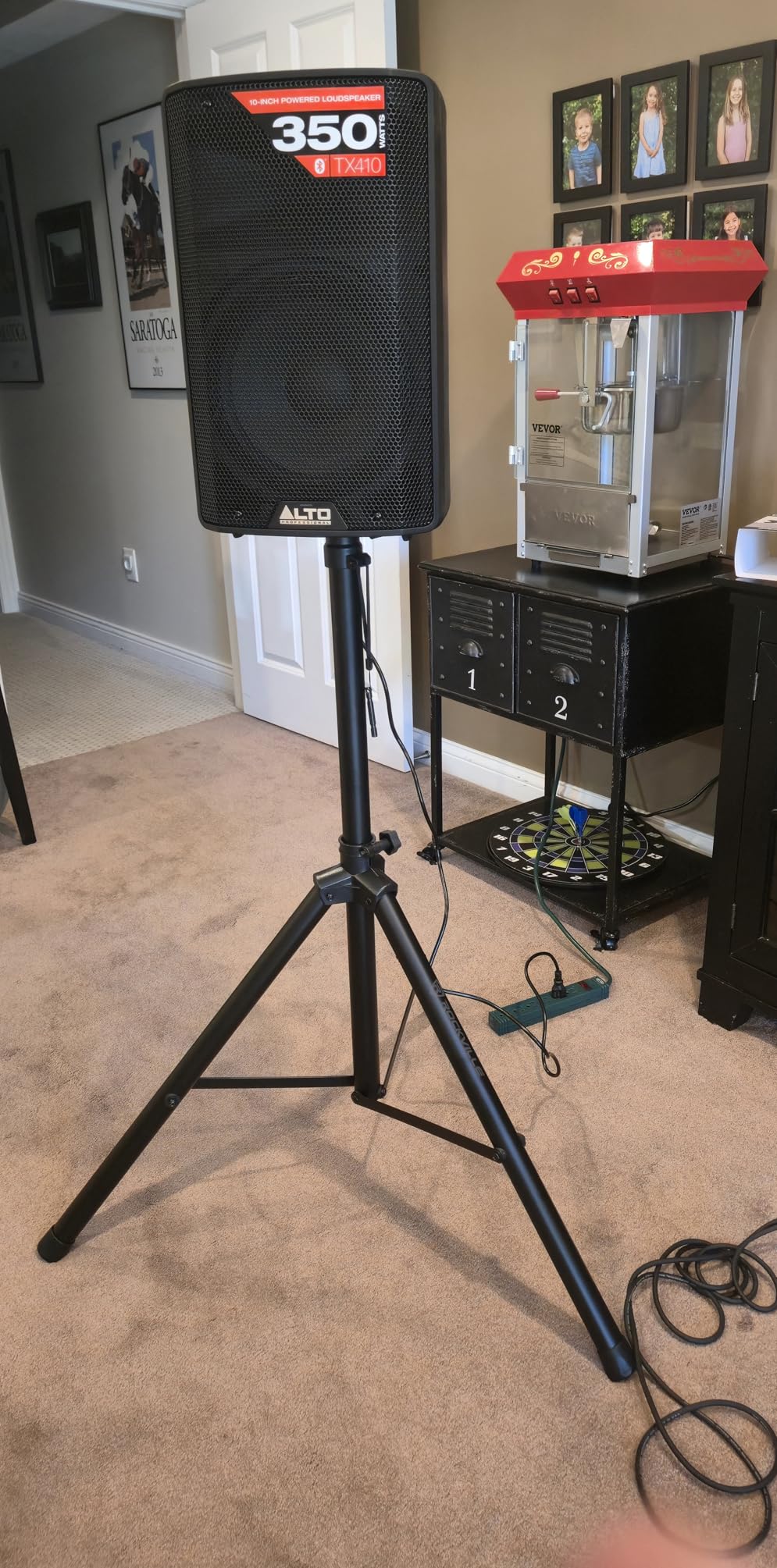
Bluetooth streaming with True Wireless Stereo means you can play music wirelessly from a phone or laptop during pre-service and post-service. Reviewers note that the second input channel is Bluetooth only, not a physical combo jack, so if you want to plug in two wired sources at once, you will need an external mixer. For most small-church setups where the pastor’s mic goes straight into the speaker, this is not a dealbreaker.
The TX410 includes a Contour EQ preset for music playback that adds a slight smile curve to the frequency response. For spoken word, leave the Contour off and let the cabinet’s natural voicing do its job. The horn pattern (90 x 60 degrees) gives wide horizontal coverage, which is exactly what you want in a shallow chapel.
Best for tight budgets and small chapels
If your church seats under 150 people and you need clear spoken word plus background music for under what most pro cabinets cost, the TX410 is the value play. It will not shake the walls with bass, but for spoken word and vocal-led worship, the clarity is excellent.
Not ideal for full contemporary worship bands
If your worship team runs bass guitar, drums, and full keyboard stacks, you will likely want a larger cabinet and a subwoofer. The TX410 is happiest doing vocals, acoustic instruments, and light playback duty.
4. EXOTON S-1202 12 inch Bluetooth PA System – Best Portable Church Bundle
EXOTON S-1202 12inch 2000W Bluetooth PA System with Powered Mixer Set
2000W peak
6-channel powered mixer
USB XLR RCA inputs
Dual 12 inch speakers
Pros
- Complete PA package with speakers mixer stands and microphone
- Easy Bluetooth streaming
- Versatile input options including USB XLR 1/4 inch and RCA
- Clear balanced sound for music and speech
- Portable and event-ready design
Cons
- Bundle weight adds up for one-person transport
- Not designed for permanent flown installation
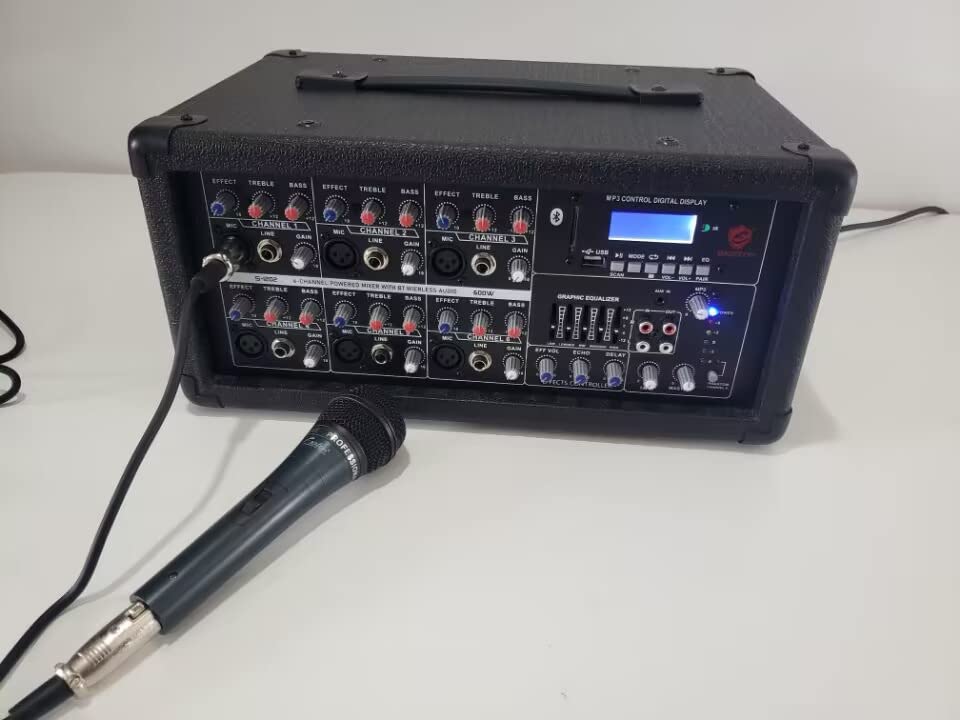
The EXOTON S-1202 is the closest thing to a turnkey portable church PA on this list. It ships with two 12-inch passive speakers, a 6-channel powered mixer, speaker stands, cables, and even a microphone. For a portable church that meets in a school gym, community center, or outdoor venue, this bundle gets you up and running in about 20 minutes.
The powered mixer gives you six channels with independent level control. That is enough for a worship leader vocal, two backing vocalists, an acoustic guitar, a keyboard, and a music playback channel – typical portable church fare. Bluetooth streaming handles pre-service music from a phone or laptop without extra cables.
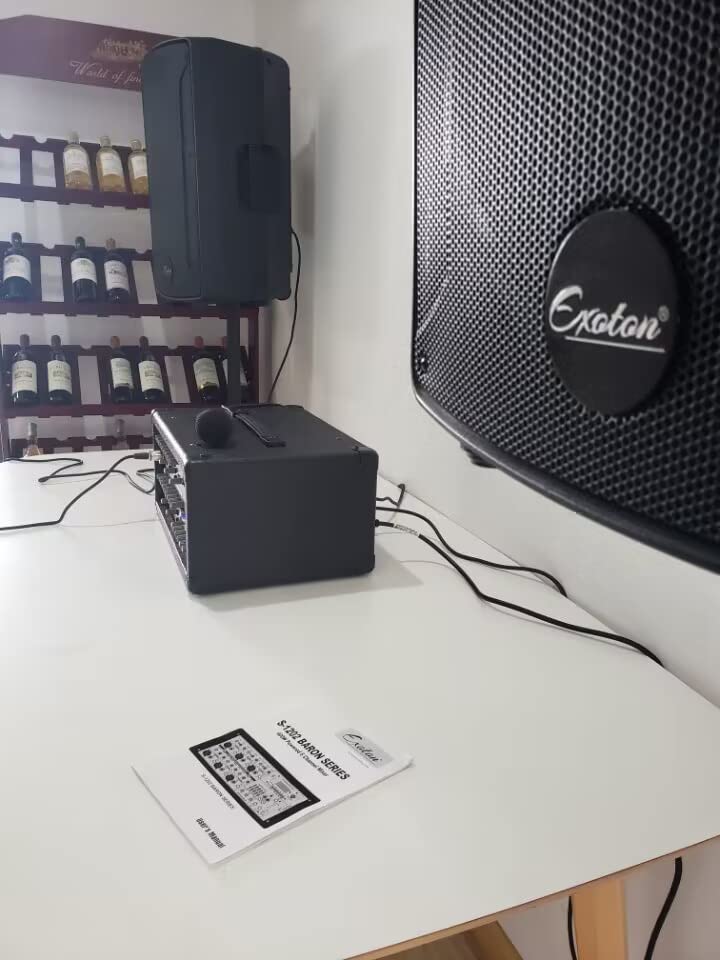
Sound quality is balanced rather than audiophile. The 12-inch woofers and horn-loaded tweeters deliver clear vocals and enough low end for a small band, though you would want a sub for full contemporary worship. The mixer has basic EQ on each channel, which is enough to ring out feedback-prone frequencies in a problematic room.
The trade-off is weight and portability. The full kit weighs around 58.7 pounds, which is manageable in a car but a lot to haul into a gymnasium in one trip. If your portable church team has at least two setup volunteers, this is a non-issue.
Best for portable and multisite churches
If your church meets in a different location every week, or you rotate between a main campus and a multisite venue, the S-1202 is the closest you get to “unpack, plug in, run service.” Everything you need is in one box.
Not ideal for permanent sanctuary installs
The bundle is designed for portable use. The passive speakers lack the rigging hardware for flown installs, and the powered mixer is not rack-mount friendly. For a permanent install, choose individual powered cabinets.
5. Yamaha DBR12 Powered Speaker Cabinet – Best All-Rounder With Long Warranty
Yamaha DBR Series DBR 12″ Powered Speaker Cabinet
1000W Class-D
131 dB SPL
FIR-X tuning
7-year warranty
Pros
- Reliable Yamaha build quality
- Clean digital power with high SPL output
- FIR-X tuning provides accurate sound
- Works well as both main and monitor speaker
- 7-year warranty
Cons
- No Bluetooth built into this model
- No specific additional cons surfaced in returned reviews
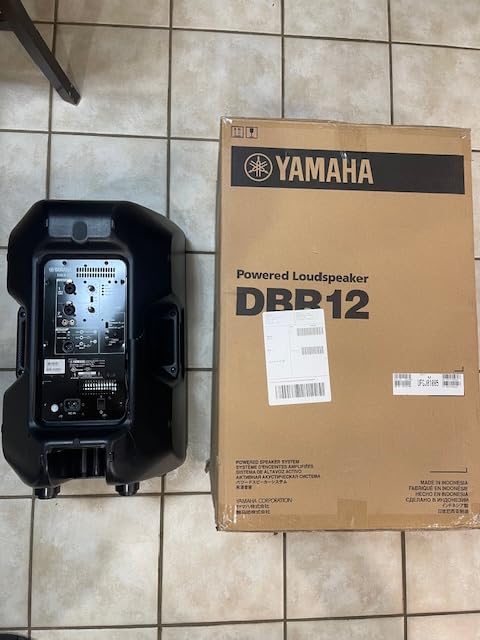
The Yamaha DBR12 is the speaker I suggest when a church wants the reliability of a major brand and a warranty that outlasts the pastor. Yamaha’s 7-year warranty on this series is one of the longest in the pro audio world, which matters when church budgets are tight and replacements are hard to justify.
The 1000-watt Class-D amplifier pushes 131 dB SPL, which is enough headroom for a 200 to 350-seat sanctuary without running the speaker at the limit. FIR-X tuning is Yamaha’s phase-linear DSP that keeps the crossover between the woofer and tweeter seamless. In plain English, vocals sound smooth and natural even when the speaker is pushed.
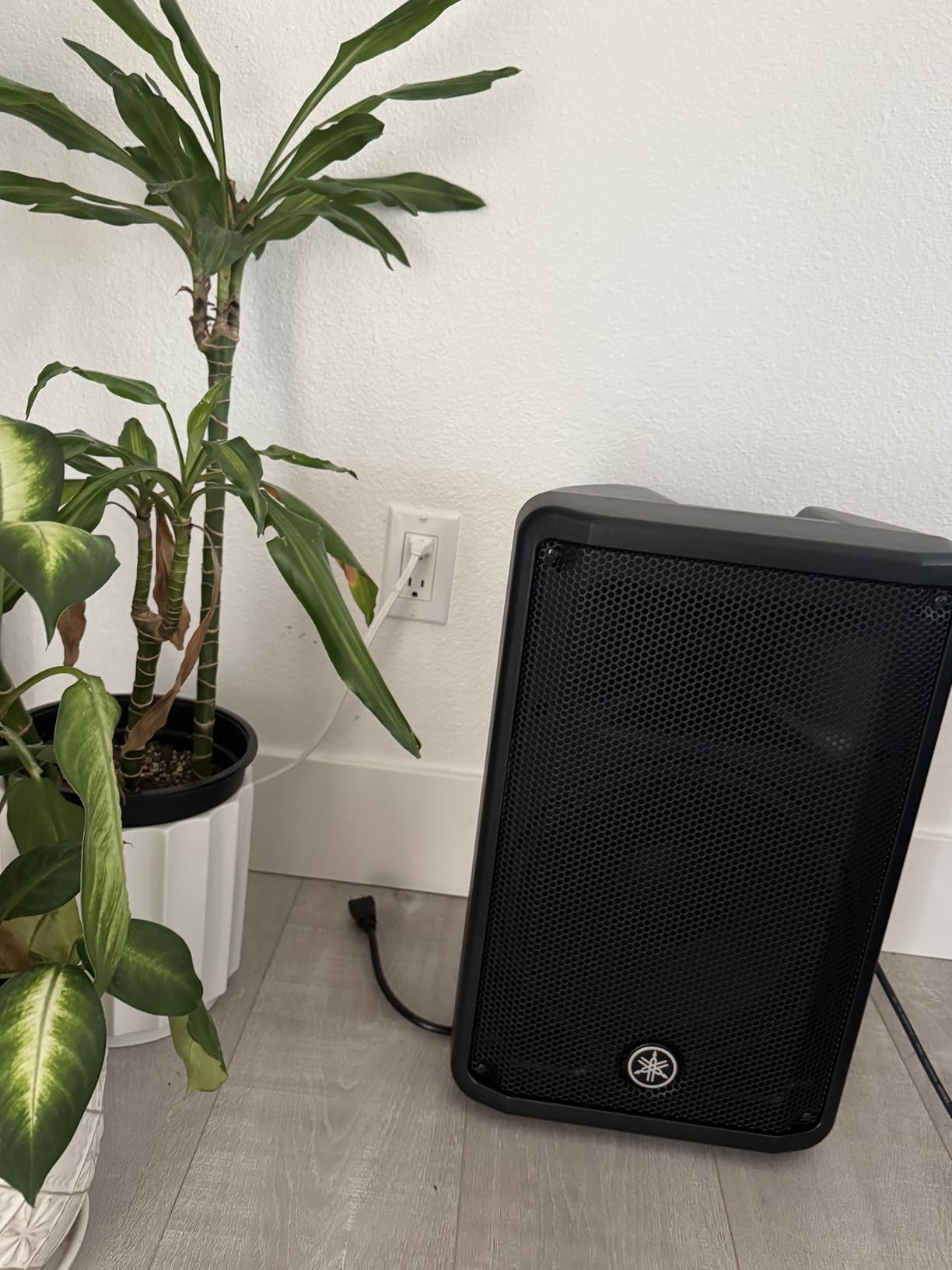
The DBR12 works equally well as a main speaker on a tripod or as a floor wedge for the worship band. Yamaha’s FIR-X tuning adapts to both orientations without needing a manual flip of an EQ switch – a small detail that volunteers appreciate.
Bluetooth is not built into this specific DBR12 model, so you will need a wired feed from your mixer or a Bluetooth adapter for wireless playback. For most churches that already run a mixer, this is fine.
Best for churches that prioritize long-term reliability
If your church buys gear and expects it to last 10+ years with regular use, Yamaha’s 7-year warranty on the DBR series gives you serious peace of mind. The build quality matches the warranty.
Not ideal for teams that want Bluetooth out of the box
If your volunteers rely on streaming music from a phone during services without a mixer, you will want a Bluetooth-equipped model like the JBL EON715 or EV ZLX-12P-G2.
6. Electro-Voice ZLX-12P-G2 Powered Loudspeaker Bundle – Best for Houses of Worship Starting From Scratch
Electro-Voice ZLX-12P-G2 12″ 2-Way 1000W Powered Loudspeaker with Bluetooth (Black) Bundle with 2X Steel Speaker Stand, Stand Bag 51″& 2X XLR Cable
1000W Class-D
126 dB peak SPL
QuickSmartDSP
Bluetooth 10m range
Pros
- Powerful clean sound with high SPL output
- Excellent Bluetooth streaming
- QuickSmartDSP with presets makes setup easy
- Versatile works as main speaker or stage monitor
- Bundle includes quality stands and XLR cables
Cons
- Power cables included are only 6 feet too short for use on stands
- Cannot dual-pair two units via Bluetooth requires wired connection
- Reported by some users as lacking deep bass without a sub
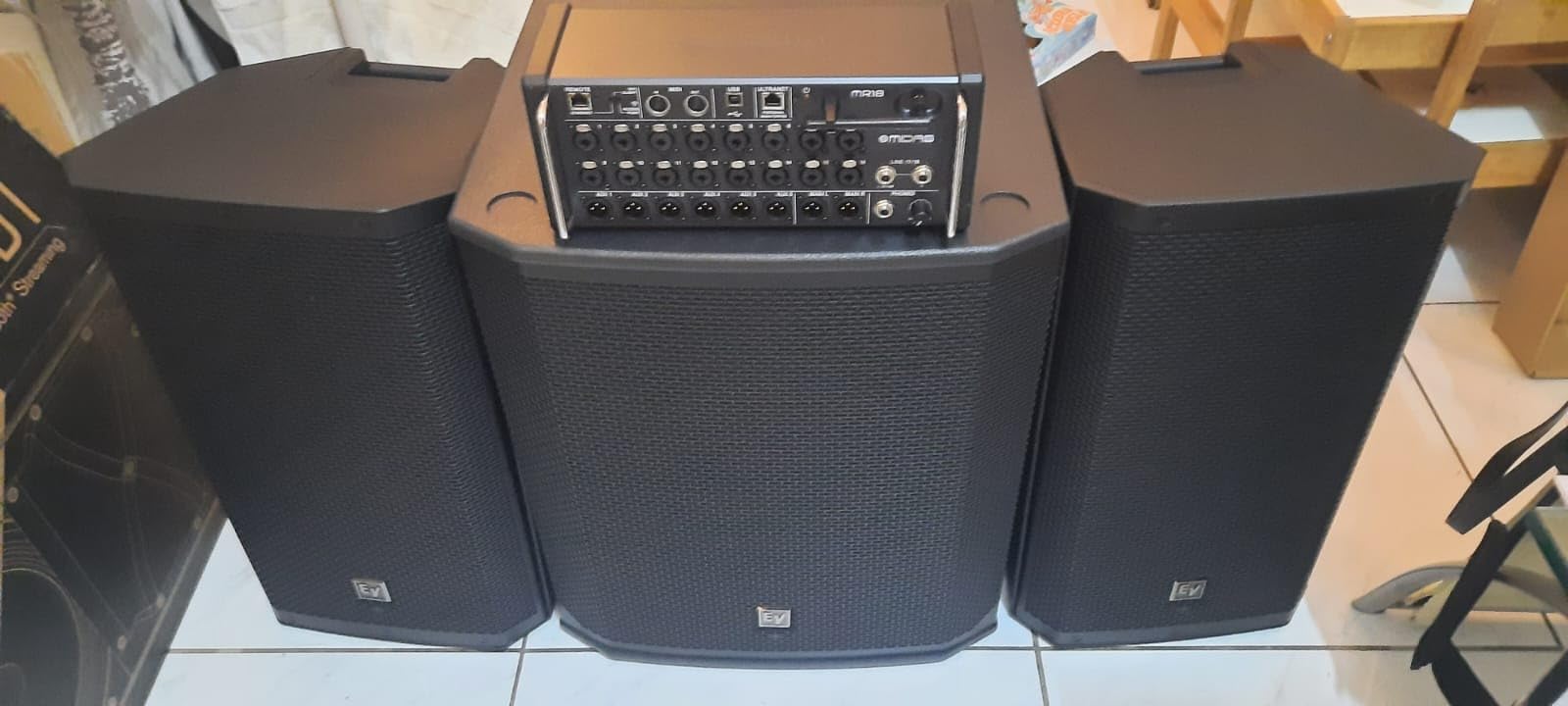
The Electro-Voice ZLX-12P-G2 bundle is what I point people toward when they are building a house-of-worship PA from a blank slate and want everything in one shipment. The bundle includes two powered cabinets, two steel speaker stands, a stand bag, and two XLR cables. You literally unbox it, set the stands, plug in, and you have a working PA.
The QuickSmartDSP is one of my favorite preset systems in this price class. EV gives you multiple voicing presets (Music, Live, Speech, Club), a sub/top system match for when you add a subwoofer later, and a two-band EQ that volunteers can adjust without breaking anything. Pair that with the 1000-watt Class-D amp and 126 dB peak SPL, and the ZLX-12P-G2 handles a 200-seat sanctuary with room to spare.
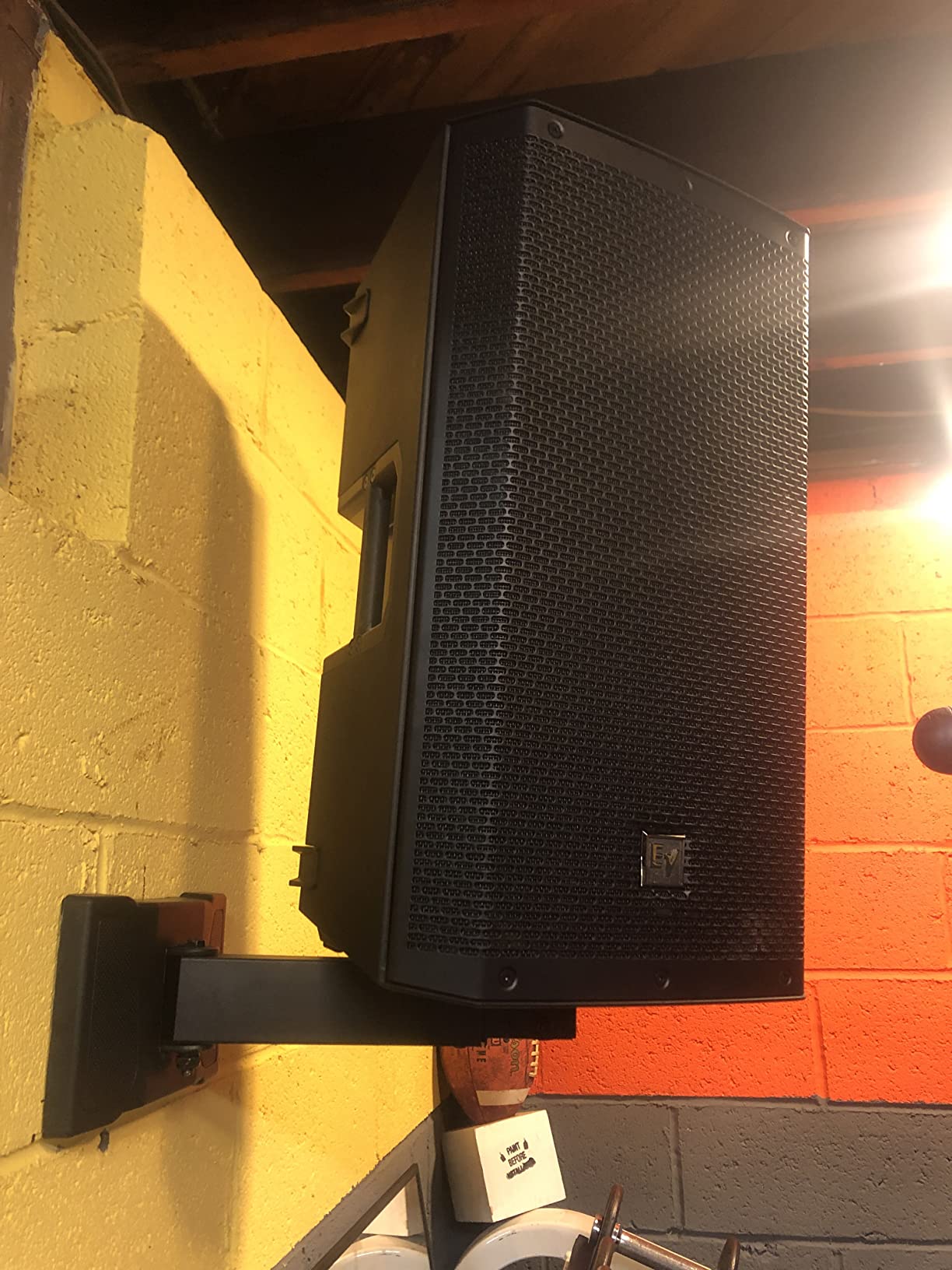
Bluetooth streaming works well within about 10 meters, which is enough for the booth or platform. The SST waveguide design gives consistent horizontal coverage, which matters in a wide sanctuary where you do not want the side seats to feel left out.
The main gotcha, and reviewers flag this consistently, is the included power cables are 6 feet long. On a standard tripod stand, the speaker ends up high enough that the cable barely reaches the floor outlet. Buy a couple of 15-foot power cables when you order – you will need them.
Best for churches that want a complete starter bundle
If you do not yet own speaker stands or XLR cables, this bundle saves you from buying them separately. The included stands are sturdy enough for permanent or portable use.
Not ideal for users who want stereo Bluetooth pairing
EV does not support dual Bluetooth pairing on this model. If you want wireless stereo playback across two cabinets, you will need to run a wired stereo feed from your mixer.
7. Seismic Audio Pair of Dual 15 inch PA Speakers – Best Passive Pair for Existing Amp Racks
Seismic Audio – Pair of Dual 15″ PA DJ SPEAKERS 1000 Watts PRO AUDIO – Band, Bar, Wedding, Church
Dual 15 inch woofers
500W RMS passive
4 Ohm impedance
Wood enclosure
Pros
- Solid full-range speaker pair at an accessible price point
- Dual 15 inch woofers deliver strong low-frequency response
- Suitable for bands bars weddings and church use
- Steel grill protects the drivers
- Wooden enclosure construction
Cons
- Listed as unpowered passive requiring an external amplifier
- Heavier than typical portable PA options
The Seismic Audio SA-155.2 is for churches that already own an amplifier rack and want a passive speaker pair to plug into it. Each cabinet houses dual 15-inch woofers and a pair of piezo tweeters, which gives you full-range sound from a single box. For churches upgrading from an aging system that already has amps and a mixer, this is a way to refresh the speaker end without rebuilding the whole signal chain.
The dual 15-inch configuration pushes significant low end. If your worship band plays contemporary music with bass guitar and drums, the SA-155.2 has enough native bass to skip a subwoofer for smaller rooms. The trade-off is weight – each cabinet runs heavier than typical portable PA options, so this is more of an install-grade pair than a portable one.
The 4-ohm impedance means you need to make sure your amp is stable at that load. Most modern pro amplifiers handle 4 ohms per channel, but check the specs on your existing amp before connecting.
Best for churches replacing passive cabinets in an existing system
If your church runs a traditional install with a mixer, amp rack, and passive speaker pairs, the SA-155.2 drops in cleanly. The wooden enclosure looks more refined in a sanctuary than plastic cabinets, which matters for traditional and historic worship spaces.
Not ideal for volunteer-only setups without an amp rack
Passive speakers require external amplification. If your team is volunteer-only and you do not have an amp rack, choose a powered speaker like the JBL EON715 or QSC K12.2 instead.
8. Sound Town METIS-12MPW Powered Stage Monitor Pair – Best for Worship Band Stage Monitors
Sound Town 2-Pack Powered DJ PA Stage Monitor Speakers 12” 500W with Compression Driver for Live Sound, Bar, Church (METIS-12MPW-PAIR)
250W RMS per speaker
12 inch woofer
3-band EQ
XLR parallel jacks
Pros
- Powerful stage monitors suitable for live sound and church use
- Solid build quality with heavy-duty metal grille and corners
- Easy daisy chaining with multiple input and output options
- 3-band EQ for sound customization
- Good value for the price
Cons
- Some users report reliability issues out of the box
- Replacement process for a single failed unit in a pair is inconvenient
- Initial feedback issues during break-in reported by some users
The Sound Town METIS-12MPW pair is built specifically for stage monitor duty. While the other speakers on this list are designed as main PA cabinets, the METIS-12MPW has the angled cabinet shape, recessed handle, and 3-band EQ that worship team members need to hear themselves on stage.
Each monitor puts out 250 watts RMS, with a 12-inch woofer and 1-inch compression tweeter. The parallel XLR and 1/4-inch jacks make daisy chaining monitors simple – run one cable from the mixer to the first monitor, then a short jumper to the next. That keeps your stage tidy and your setup time short.
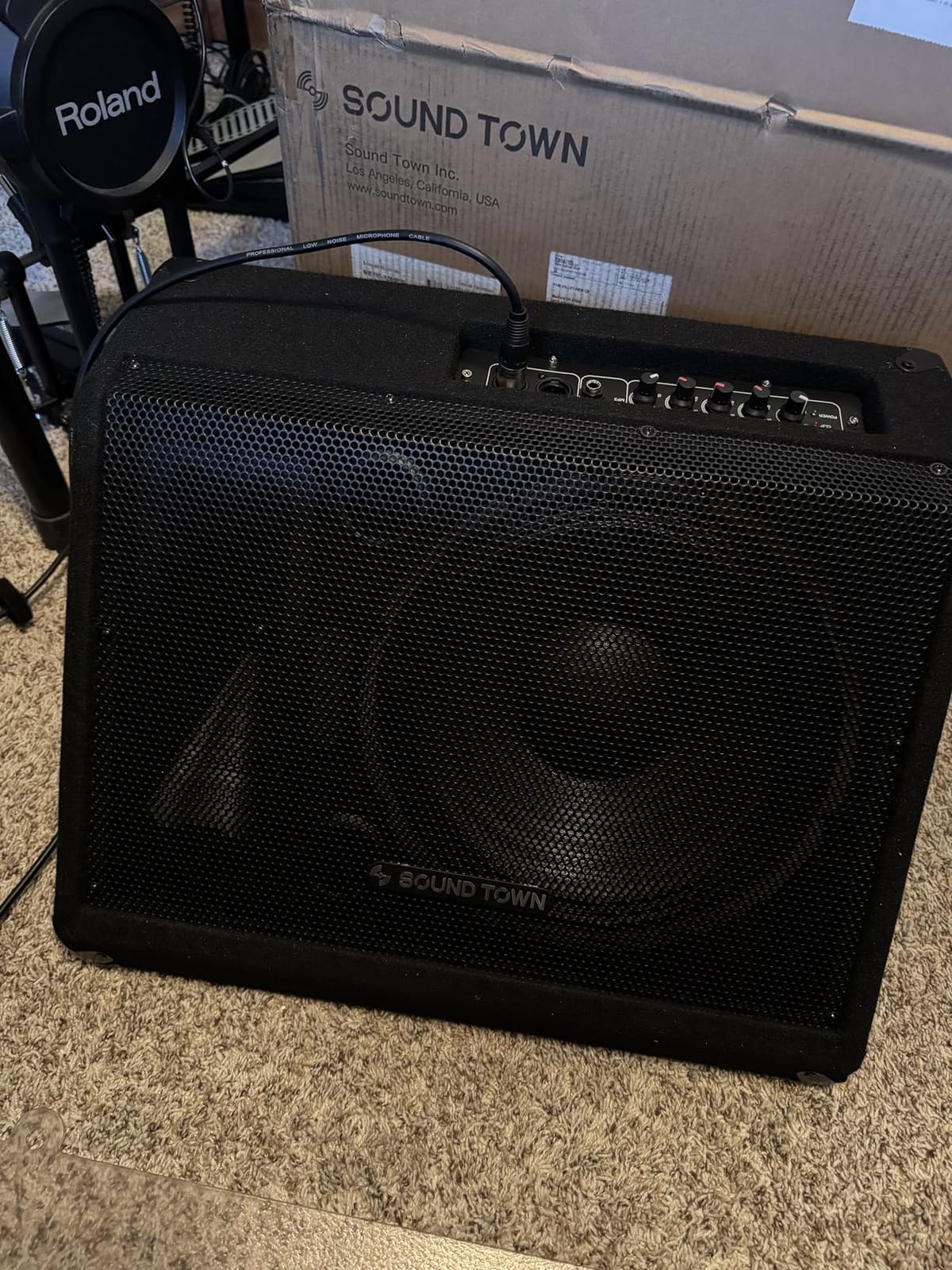
The 3-band EQ (Bass, Mid, Treble) lets each musician shape their own monitor mix without affecting the front-of-house mix. That matters when the worship leader needs more vocal in their wedge while the drummer wants more click track. Just remember that pushing EQ too hard can cause feedback, so start flat and adjust gradually.
A few reviewers have reported reliability issues out of the box, with one cabinet in the pair failing. Sound Town’s customer service generally responds well, but if your church cannot tolerate a single point of failure on Sunday morning, you may want a backup wedge on hand.
Best for worship bands that need clear stage monitoring
If your worship team has struggled to hear themselves and is fighting the front-of-house mix, dedicated floor wedges like the METIS-12MPW pair solve the problem. Each musician gets their own monitor at a volume they control.
Not ideal as a main PA speaker
While you can use these as small-room mains, the angled wedge shape and EQ layout are optimized for stage monitoring. For main speakers, choose one of the point-source cabinets higher on this list.
9. Turbosound iP300 iNSPIRE Column Loudspeaker – Best Compact Column for Aesthetic-Sensitive Sanctuaries
Turbosound iP300 iNSPIRE Loudspeaker
600W Class-D
KLARK TEKNIK SST
Bluetooth 10m range
3-channel digital mixer
Pros
- Impressive sound quality beyond its price range
- Wide dispersion and consistent coverage
- Quick and easy Bluetooth pairing
- Compact column form factor with stylish design
- DSP with high-quality built-in presets
Cons
- Limited bass without adding a subwoofer
- No sub output when using Bluetooth input requiring a workaround for sub integration
- Some users report receiving units with cosmetic damage and poor packaging
The Turbosound iP300 is the speaker I recommend when a church tells me the speakers need to disappear into the sanctuary visually. The slim column form factor looks more like an architectural element than a piece of pro audio gear, which is a real plus in traditional or historic worship spaces where exposed black boxes clash with the decor.
Despite the slim profile, the iP300 puts out 600 watts of clean Class-D power and uses KLARK TEKNIK Spatial Sound Technology to create a wide, even coverage pattern. The 3D acoustic processing helps the column fill a room without the narrow vertical dispersion that plagues many column speakers. In a 100 to 200-seat room, one or two iP300 columns cover the congregation evenly without dead zones.
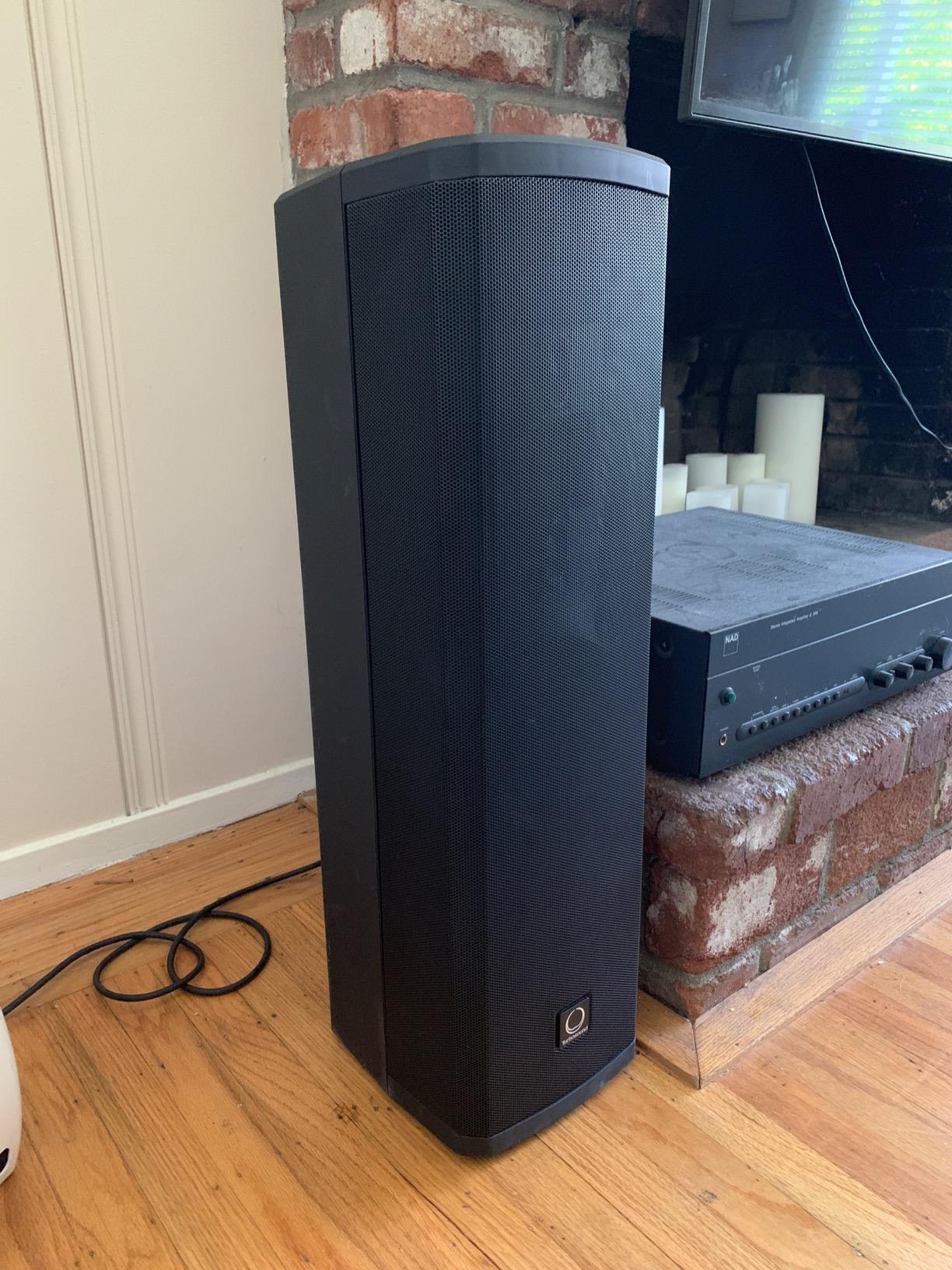
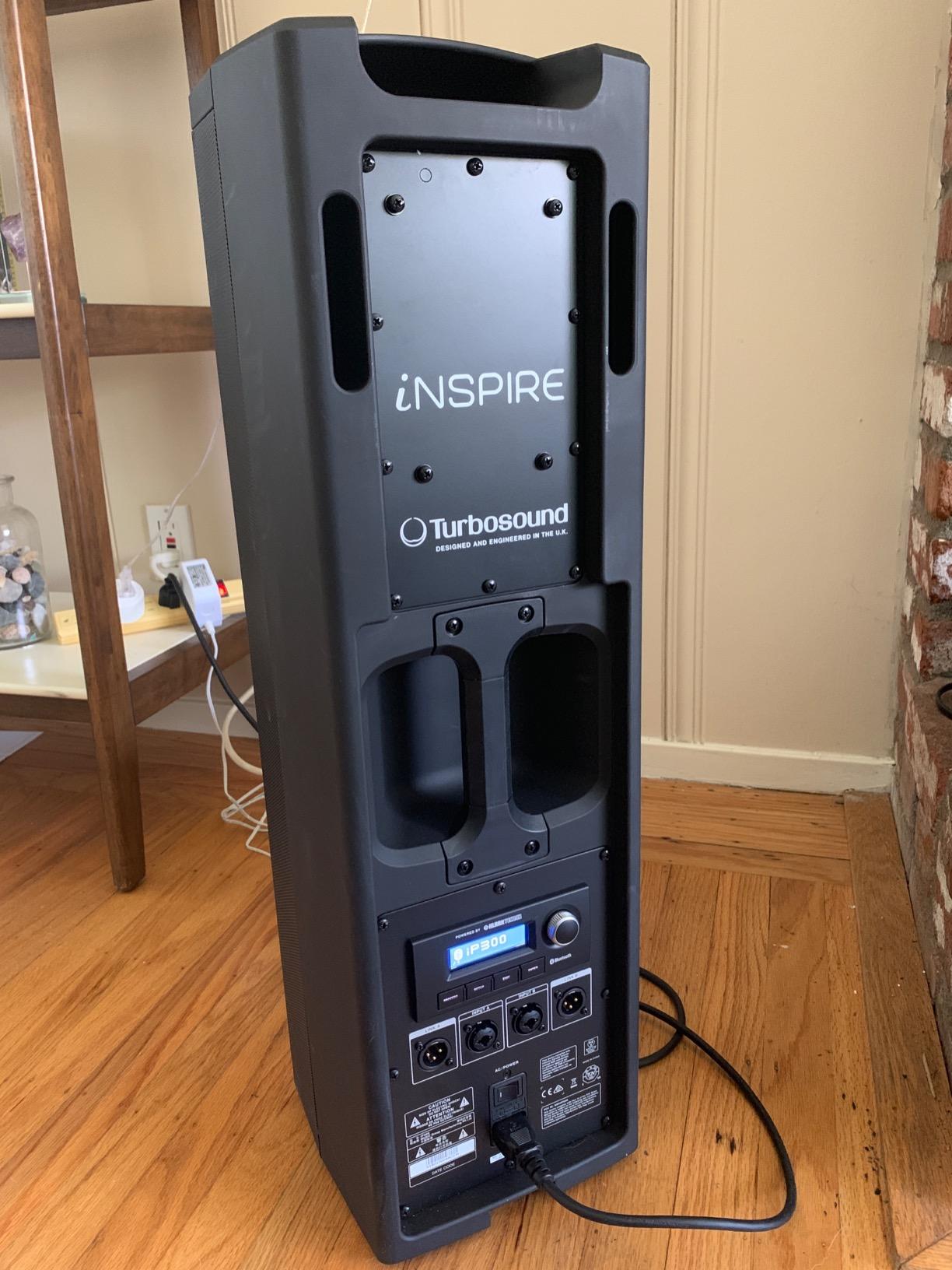
The built-in 3-channel digital mixer handles a microphone, a line-level instrument, and Bluetooth streaming. For a small chapel with a single worship leader and an iPad for music, you can run the whole service without a separate mixer.
The main limitation is bass. The dual 6.5-inch woofers in the base deliver tight, clean low end for vocals and acoustic instruments, but a full contemporary worship band will want a paired subwoofer. Note that the sub output is not active when you are streaming over Bluetooth – you would need to run a wired feed from a phone or laptop to use both the column and a sub at the same time.
Best for sanctuaries where aesthetics matter
If your church is in a historic building, a modern minimalist space, or anywhere the architecture is part of the worship experience, the iP300 column blends in better than a traditional PA cabinet. It is also a great pick for satellite campuses, overflow rooms, and cry rooms.
Not ideal for bass-heavy contemporary worship
If your worship band relies on heavy low end, plan on adding a subwoofer. On its own, the iP300 is tuned for clarity over bass impact.
10. QSC K8.2 Active 8 inch Powered Loudspeaker – Best Compact Premium Choice for Small Sanctuaries
QSC K8.2 Active 8″ Powered 2000 Watt Loudspeaker
2000W Class-D
Intrinsic Correction tuning
6-year warranty
8 inch woofer
Pros
- Crystal-clear audio quality with excellent high-end
- Wide dispersion for consistent coverage
- Lightweight and easy to transport
- Powerful output for the size
- 6-year warranty
Cons
- Lacks deep bass on its own benefits greatly from a paired subwoofer
- Some users report input gain past 0dB causes harsh distortion if misconfigured
- Voltage regulator recommended in regions with unstable power
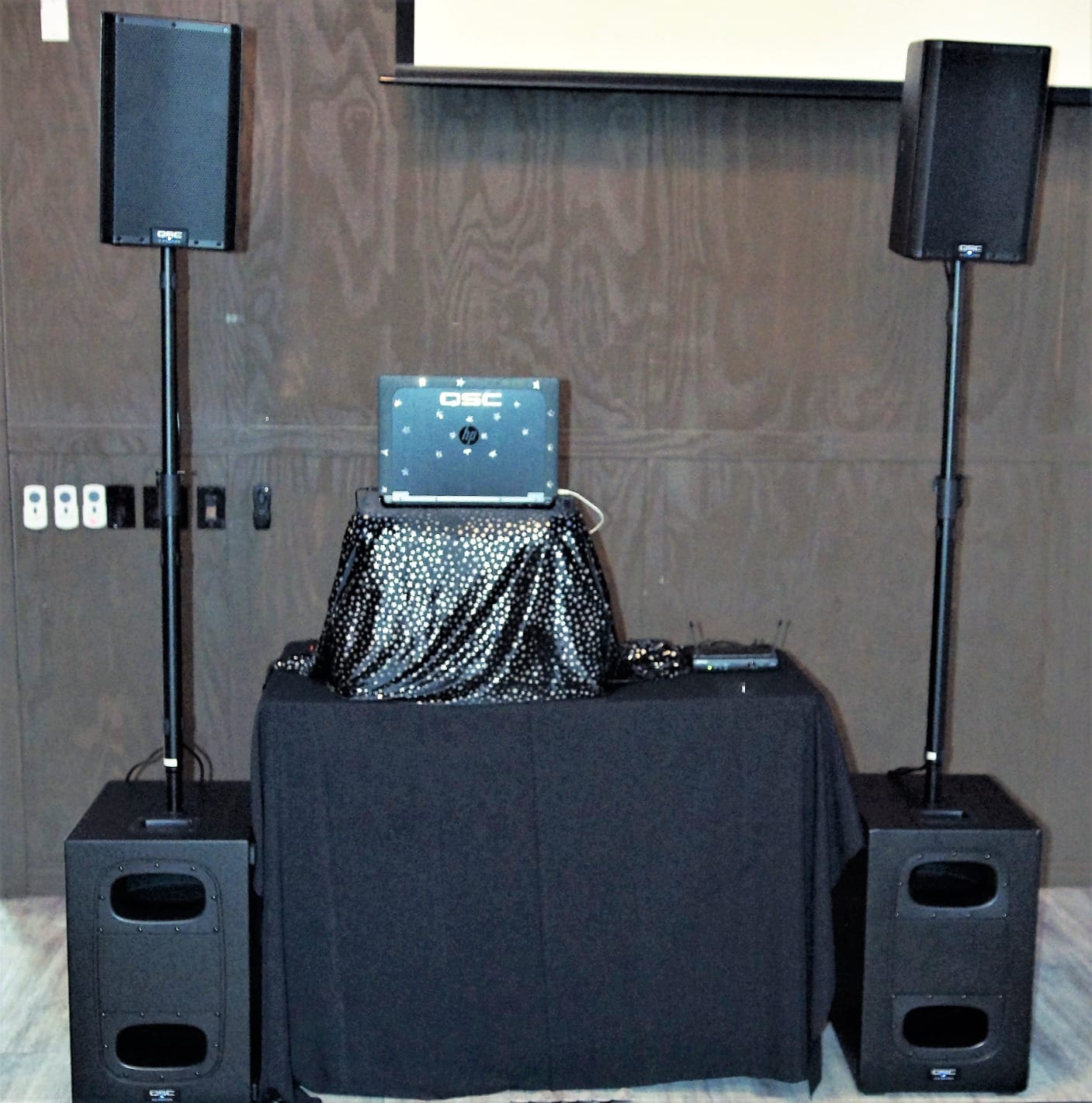
The QSC K8.2 is the compact counterpart to the K12.2 and shares the same DSP engine, preset system, and Intrinsic Correction tuning. For a small sanctuary, chapel, or overflow room under 120 seats, the 8-inch K8.2 covers the room with crystal-clear vocals and impressive headroom in a much smaller box.
The 2000-watt Class-D amp is honestly overkill for an 8-inch cabinet, which is exactly why it sounds so clean. The amp has so much headroom that you can run the speaker at modest volume without straining the drivers. That is good for spoken word clarity and for the long-term reliability of the cabinet.
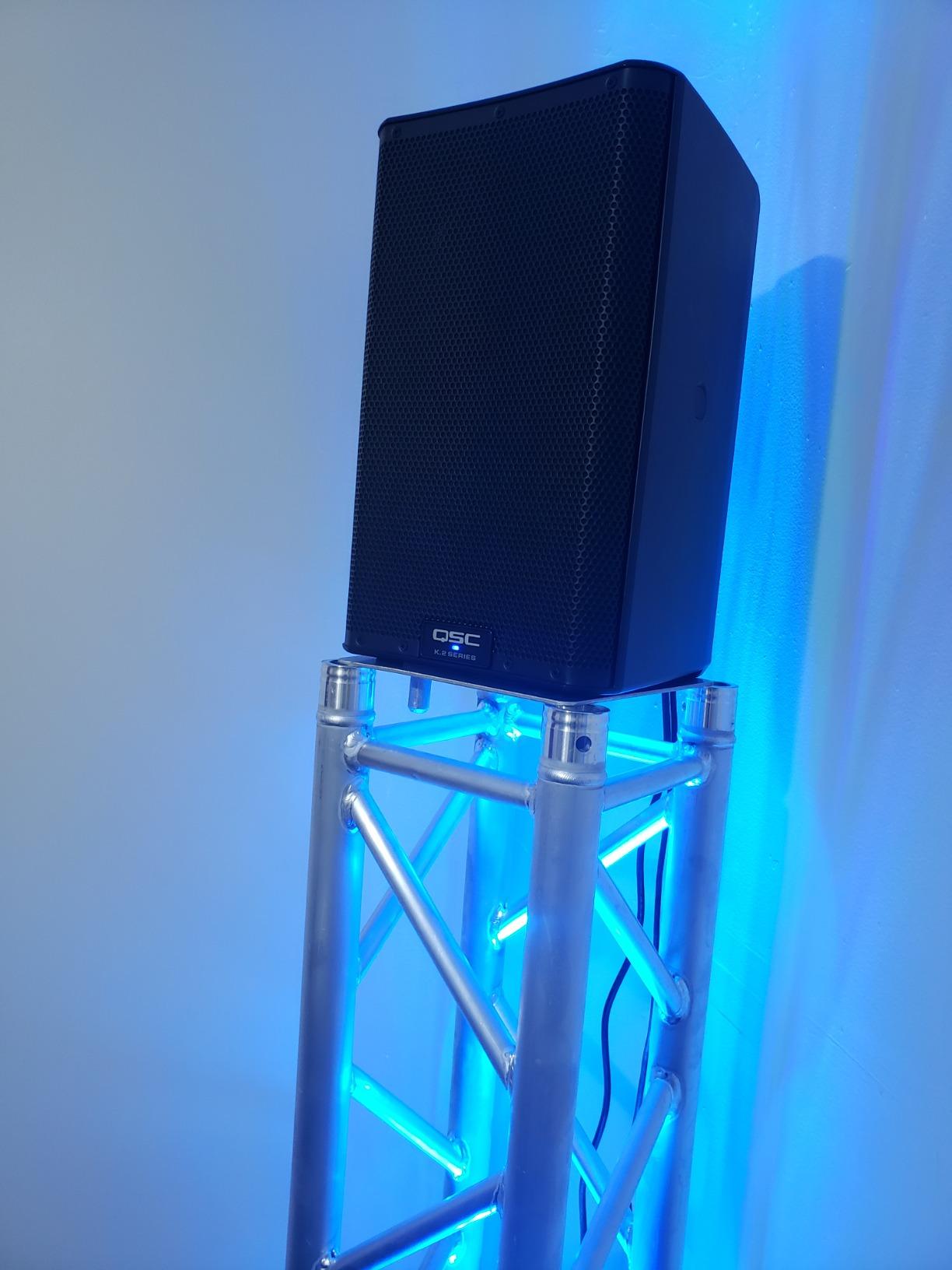
QSC’s Intrinsic Correction tuning applies phase and frequency corrections that are usually only found in much more expensive cabinets. The result is a flat, accurate sound that lets vocals and acoustic instruments come through without the cabinet adding its own coloration. For spoken word, that means every word is intelligible even in a reverberant room.
The 6-year global warranty (with product registration) is one of the best in the pro audio industry. Combined with QSC’s reputation for reliability, this is a speaker that will likely outlast several rounds of church audio upgrades.
Best for small sanctuaries that want premium sound
If your church seats under 120 people and you want the same vocal clarity and preset recall as the larger K12.2 in a smaller box, the K8.2 is the obvious choice. Two K8.2 cabinets on tripods cover a 100-seat sanctuary beautifully.
Not ideal for full-range contemporary worship without a sub
The 8-inch woofer does not move enough air to reproduce deep bass. For contemporary worship with full band instrumentation, plan on adding a QSC KS112 or similar subwoofer to extend the low end.
How to Choose Speakers for Your Sanctuary
Choosing the best speakers for house of worship setups comes down to matching the cabinet to the room, the worship style, and the volunteer team’s skill level. Here is the framework I use when consulting with churches on speaker purchases.
Match the speaker to your room size
The first thing to figure out is how many seats you have and how reverberant the room is. A 60-seat chapel with carpet and acoustic tile is a very different acoustic environment from a 500-seat sanctuary with hardwood pews and a 30-foot ceiling.
For small chapels under 150 seats, a single pair of 10-inch or 12-inch powered cabinets on tripods usually covers the room. The ALTO TX410 and QSC K8.2 are both well-suited to this size. For mid-size sanctuaries between 150 and 400 seats, step up to 12-inch or 15-inch cabinets with higher SPL output – the JBL EON715 and QSC K12.2 are reliable picks. For large sanctuaries above 400 seats, you will likely want a line array system, which is beyond what most consumer-grade powered cabinets can deliver alone. If you are also choosing speakers for parking lot overflow or outdoor services, our outdoor Bluetooth speaker guide covers weather-rated options for those spaces. For sanctuaries that double as fellowship halls and need flexible mains, our Marshall speaker guide covers some aesthetic-forward powered options.
Powered vs passive speakers
Powered (active) speakers have the amplifier built into the cabinet. You run a line-level signal from your mixer directly to the speaker, and you do not need a separate amp rack. For most volunteer-run churches, powered speakers are the right call. They simplify the signal chain, reduce rack clutter, and make troubleshooting easier.
Passive speakers require an external amplifier. They make sense if your church already owns an amp rack and is just replacing aging cabinets, or if you need long cable runs between the mixer and speakers (passive signals travel farther without degradation than line-level signals). The Seismic Audio SA-155.2 on this list is a passive pair that fits that scenario.
Line array vs point source
Point-source speakers (the single-cabinet designs on this list) project sound from one location. They are simple to set up, easy to aim, and work well in small to mid-size rooms with reasonable acoustics. Most house-of-worship setups use point-source cabinets because they are forgiving and affordable.
Line array systems use multiple cabinets stacked or flown vertically to throw sound farther with more even coverage. They are the right call for large sanctuaries, reverberant rooms, and fan-shaped seating where the back rows are much farther from the stage than the front rows. Line arrays are more expensive and require professional installation. For most churches under 500 seats, a well-aimed pair of point-source cabinets delivers better results than an entry-level line array.
The 83% rule for speaker placement
The 83% rule is a simple guideline for speaker placement in rectangular rooms: position the speakers about 83% of the way back from the front of the room to the rear wall, not all the way at the back wall. This placement gives even coverage to both the front and back of the room without needing delay speakers.
In practice, this means the speakers should not be at the back wall (where they will be too far from the front rows) and not at the front of the room (where they will blast the front rows to reach the back). About two-thirds to 83% of the way back is the sweet spot. For non-rectangular rooms – fan-shaped sanctuaries, rooms with balconies, or L-shaped layouts – you will need additional delay speakers to reach the back rows evenly.
Accessibility and hearing assistance
If your sanctuary has a hearing loop or FM hearing assistance system, make sure your speakers integrate cleanly with it. Most modern PA systems feed the hearing loop amp from the mixer output, so any of the speakers on this list will work as long as you have a proper feed from the console.
For churches that need to meet ADA accessibility requirements, the choice of speaker affects how well the hearing assistance system performs. Speakers with smooth, even coverage and minimal distortion at higher volumes make hearing assistance cleaner for users.
Volunteer-friendly operation
Finally, think about who is running the system on Sunday morning. If you have a rotating team of volunteers with mixed audio experience, choose speakers with built-in DSP presets and scene recall (the QSC K12.2 and K8.2 are good examples). The volunteer can pick the right preset for the service without needing to understand EQ and crossover settings.
If you have a trained tech director who runs the system every week, you have more flexibility to choose speakers that require manual tuning. Either way, look for speakers with clear rear-panel layouts and intuitive controls.
Frequently Asked Questions
What are the best speakers for a church sound system?
The best speakers for a church sound system are powered PA cabinets designed for clear vocal reproduction and even sanctuary coverage. For most churches, point-source 12-inch or 15-inch powered speakers like the JBL EON715, QSC K12.2, or Electro-Voice ZLX-12P-G2 deliver the right balance of clarity, headroom, and volunteer-friendly operation. Match the cabinet size to your room – 10-inch cabinets for small chapels under 150 seats, 12-inch for mid-size sanctuaries, and 15-inch or line arrays for large rooms above 400 seats.
What are the best quality speakers for a church?
The best quality speakers for a church are those that prioritize vocal clarity, even horizontal coverage, and reliable DSP presets. Brands like QSC, JBL, Electro-Voice, Yamaha, and Bose have decades of reputation in house-of-worship audio. Look for cabinets with 1-inch compression drivers (for clear highs), 12-inch or 15-inch woofers (for full-range response), and built-in DSP with presets for speech and music. The QSC K12.2 and K8.2 are widely cited as top quality picks for church use.
Which sound system is best for churches?
The best sound system for churches depends on sanctuary size, worship style, and operator skill. For small chapels under 200 seats, a pair of powered 10-inch or 12-inch speakers with a small digital mixer covers most needs. For mid-size sanctuaries between 200 and 500 seats, add a subwoofer and upgrade to 12-inch or 15-inch mains with DSP presets. For large sanctuaries above 500 seats, plan for a professionally installed line array with delay speakers, a digital console, and dedicated stage monitors.
What is the 83% rule for speakers?
The 83% rule for speakers is a placement guideline for rectangular rooms: position the main speakers about 83% of the way back from the front of the room toward the rear wall. This placement gives even SPL coverage to both the front and back rows without needing delay speakers. The rule keeps the speakers far enough from the front to avoid blasting the first few rows, and far enough from the back wall to avoid comb filtering and excessive bass build-up. For non-rectangular rooms, plan for additional delay speakers to reach every seat evenly.
What is the best subwoofer for a church sanctuary?
The best subwoofer for a church sanctuary depends on your worship style. For spoken-word and traditional services, a subwoofer is often optional. For contemporary worship bands with bass guitar and drums, a powered 15-inch or 18-inch sub matched to your main speakers is essential. Brands like QSC, JBL, Yamaha, and Electro-Voice make subwoofers that pair cleanly with their full-range cabinets. Choose a sub from the same brand family as your mains to ensure the crossover and voicing match.
Are line array speakers better for churches?
Line array speakers are better than point-source cabinets for churches with large sanctuaries above 400 seats, fan-shaped seating, balconies, or highly reverberant acoustics. Line arrays project sound farther with more even vertical coverage and reduce the echo problems that plague large hard-walled rooms. For small to mid-size churches under 400 seats, point-source cabinets like the QSC K12.2 or JBL EON715 usually deliver better results at lower cost and with simpler setup than an entry-level line array.
Final Verdict: Which Speaker Should Your House of Worship Buy?
After spending weeks comparing these ten cabinets across sanctuaries, chapels, and portable setups, my pick for the best speakers for house of worship in 2026 is the JBL EON715. It hits the sweet spot for the most churches: clear vocals, enough headroom for a 200 to 400-seat room, Bluetooth for overflow rooms, and a price that does not require a capital campaign.
If your church seats under 150 people and you want the best value, the ALTO TX410 covers spoken word and acoustic worship beautifully without breaking your budget. For volunteer-run teams that need foolproof scene recall, the QSC K12.2 is worth the premium – the preset system alone will save your team dozens of Sunday morning headaches. If you run a portable church that meets in different venues each week, the EXOTON S-1202 bundle gets you up and running in minutes. For sanctuaries where the speakers need to disappear into the architecture, the Turbosound iP300 column blends in without sacrificing clarity.
No matter which speaker you choose, invest time in proper placement and basic acoustic treatment. Even the best speakers sound bad in a reverberant room, and a modest investment in acoustic panels can do more for your service than upgrading the cabinets. For more guidance on matching pro audio gear to your space, see our guide on JBL speakers and our breakdown of how to mix monitors from front of house. You can also browse our wider car speaker picks if your church runs a youth mobile or shuttle ministry.