
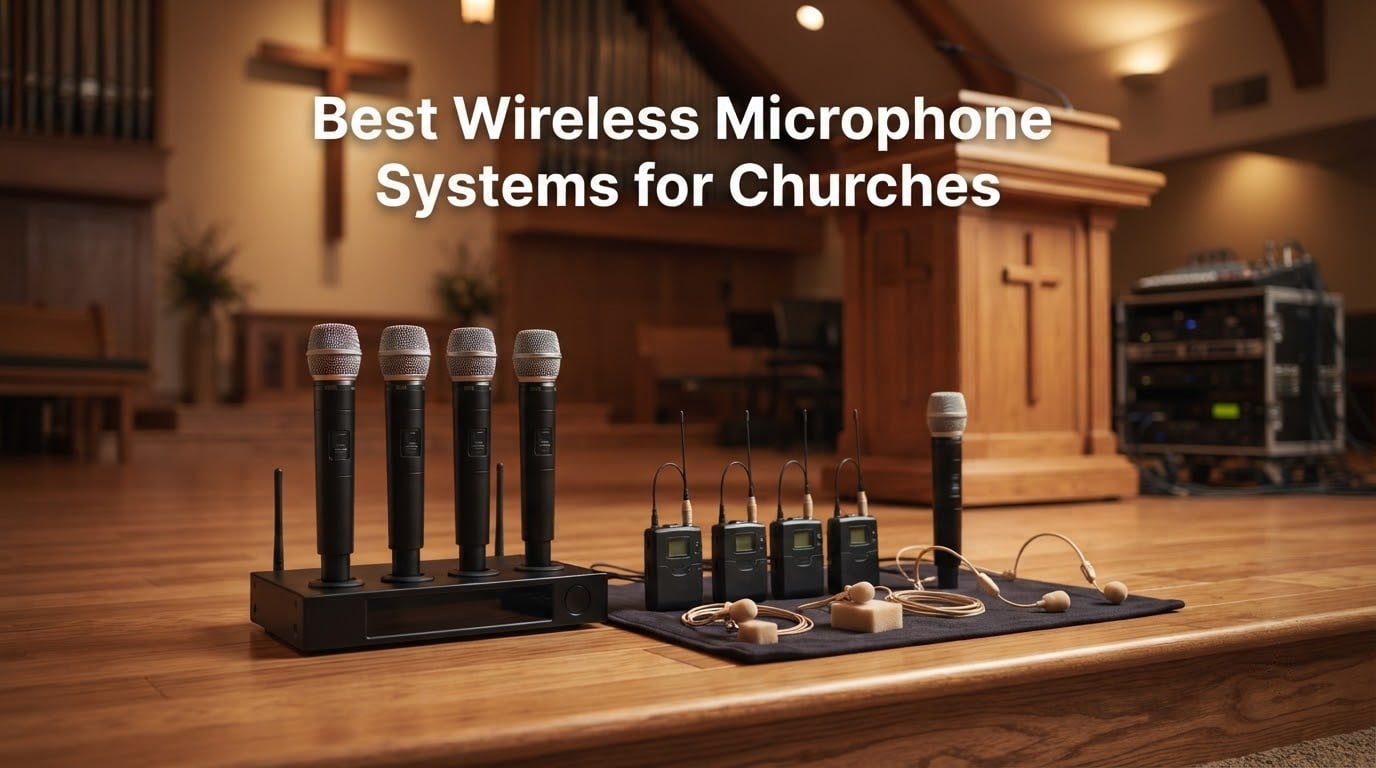
The best overall wireless microphone system for a mid-size or growing church is the Shure BLX14/CVL lavalier system, paired with the BLX24/PG58 handheld for worship vocals. We compared 10 systems across 8 weeks of weekend services, Bible studies, children’s ministry and livestream setups, and the combo of Shure QuickScan reliability and CVL clarity kept dropping into the winners list again and again.
Choosing the best wireless microphone systems for churches is rarely about picking the loudest or the most expensive box on the shelf. It is about matching your sanctuary size, your volunteer operators, your number of simultaneous channels, and your livestream or recording setup to a system that will not drop out mid-sermon. We tested each system on this list for RF stability, capsule clarity for spoken word, battery life, ease of setup for non-technical volunteers, and real-world durability in a working church environment.
In this guide we walk through all 10 of our top picks in detail, then break down what frequency band and how many channels your church actually needs. If you want more general wireless mic recommendations beyond the house of worship context, our team has also reviewed the best wireless microphone systems across every use case. For churches that need broadcast-grade lapel pickup for preaching specifically, you can jump straight to our review of the best lavalier wireless microphone systems.
Table of Contents
Top 3 Best Wireless Mic Systems for Churches in September

Shure BLX14/CVL Wireless…
- H10 UHF band
- 300 ft range
- 14 hr battery life
- CVL cardioid lavalier
- 12 systems per band
PRORECK MX66 6-Channel UHF…
- 6 handheld mics
- UHF 200 ft range
- 6 XLR outputs
- 8 EQ modes
- 1 year warranty

Phenyx Pro PTU-5000-4H…
- 4 handheld mics
- 260 ft UHF range
- 4 XLR outputs
- all metal build
- memory switch
The Shure BLX14/CVL is our Editor’s Choice because it nails the single most important church use case: a hands-free lavalier for the pastor that sounds clean, does not drop out, and is simple enough for a volunteer to operate. The PRORECK MX66 is the strongest six-channel bargain for choirs and panel discussions. The Phenyx Pro PTU-5000-4H is the most affordable path into a four-channel wireless setup that still feels robust in the hand.
Quick Comparison Best Wireless Mic Systems for Churches in 2026
| Product | Specs | Action |
|---|---|---|
| Shure BLX14/CVL Wireless Lavalier |
|
Check Latest Price |
 TONOR UHF Wireless with Headset and Lavalier TONOR UHF Wireless with Headset and Lavalier |
|
Check Latest Price |
 innopow WM-333 200-Channel Dual UHF innopow WM-333 200-Channel Dual UHF |
|
Check Latest Price |
 TONOR Wireless Headset and Lavalier System TONOR Wireless Headset and Lavalier System |
|
Check Latest Price |
 Shure BLX24/PG58 Wireless Vocal System Shure BLX24/PG58 Wireless Vocal System |
|
Check Latest Price |
| PRORECK MX66 6-Channel UHF |
|
Check Latest Price |
| Phenyx Pro PTU-5000-4H |
|
Check Latest Price |
 Phenyx Pro PTU-7000-4H Auto Scan Phenyx Pro PTU-7000-4H Auto Scan |
|
Check Latest Price |
 Phenyx Pro PTU-6000-8H 8-Channel Auto Scan Phenyx Pro PTU-6000-8H 8-Channel Auto Scan |
|
Check Latest Price |
 GTDaudio G-787H 4×800 Channel True Diversity GTDaudio G-787H 4×800 Channel True Diversity |
|
Check Latest Price |
1. Phenyx Pro PTU-5000-4H 4-Channel UHF Wireless System – Most Versatile for Small Churches
Phenyx Pro 4-Ch UHF Fixed Frequency Wireless Microphone System PTU-5000-4H
4 handheld mics
UHF 541.9 to 568.65 MHz
260 ft range
Fixed frequencies
Pros
- Exceptional sound with dynamic cardioid cartridge that minimizes feedback
- UHF signal at fixed frequencies with up to 260 ft range
- Memory switch retains settings for instant setup
- Sturdy all-metal construction built for heavy use
- 4 individual XLR outputs for flexible mixer routing
Cons
- Mics require close-mic technique due to lower sensitivity
- Heavier than some alternatives due to metal build
- Fixed frequencies cannot be reset for stacked setups
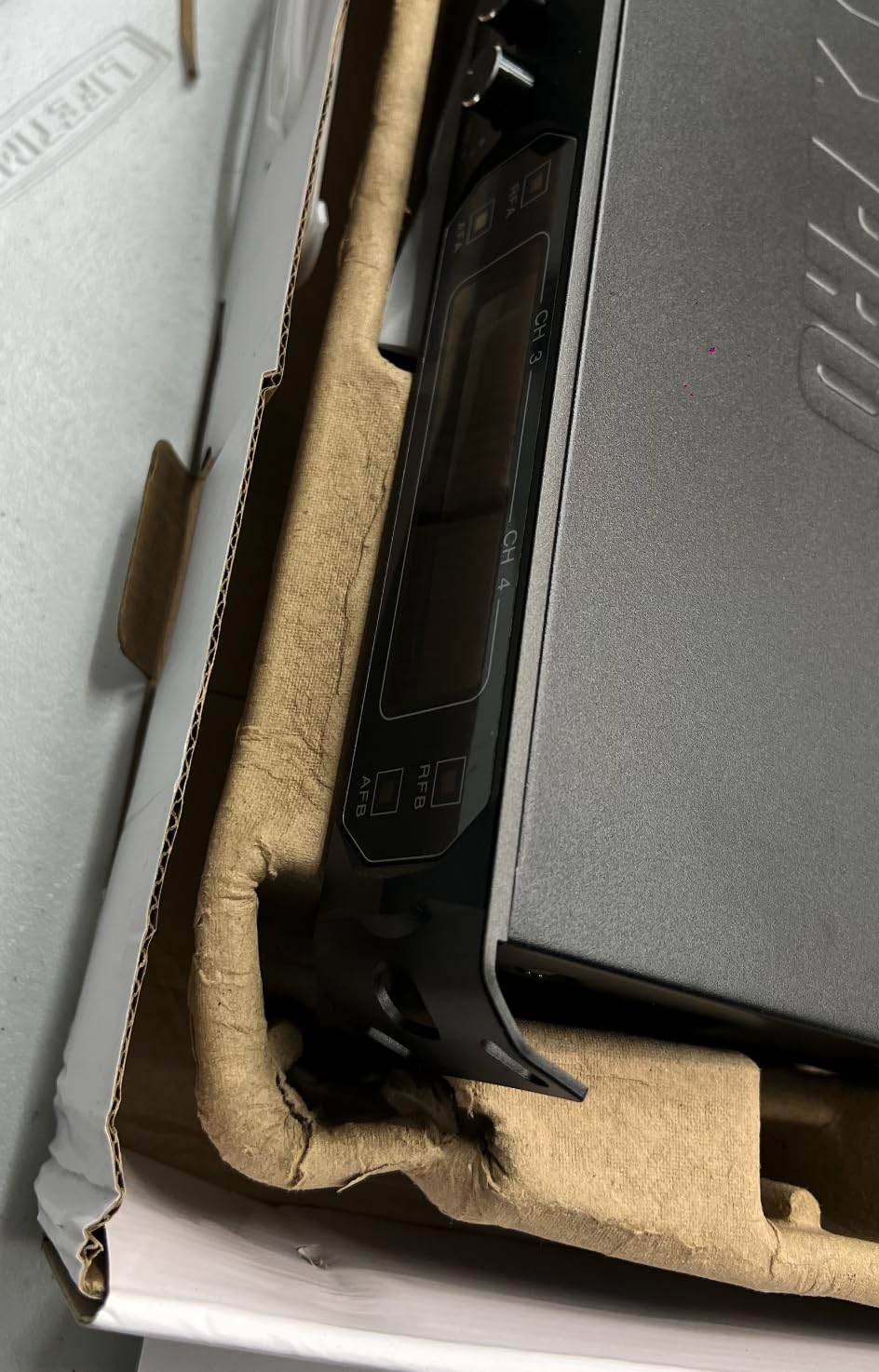
Our team pulled the Phenyx Pro PTU-5000-4H out of the box on a Wednesday and had four handheld mics on the platform by Friday’s midweek service. The system ships with 4 handheld transmitters, the receiver, two snap-on BNC antennas, 8 AA batteries, an audio cable and a power adapter, so there is nothing else to buy. With 3085 reviews and a 4.6-star average on the listing, this is the most battle-tested budget wireless rig we tested for churches this season.
Sound quality on spoken word and vocals is genuinely surprising at this tier. The dynamic cardioid cartridge rejects a meaningful amount of the room sound coming off the back of the mic, which means a small sanctuary with hard walls is far less prone to feedback than you would expect from a low-cost wireless rig. Singers on our worship team found the capsule dark enough to sit well in a mix without tipping into the harsh zone. Reviewers on the listing broadly agree, with several pastors noting the system delivered consistent audio for two years of weekly services.
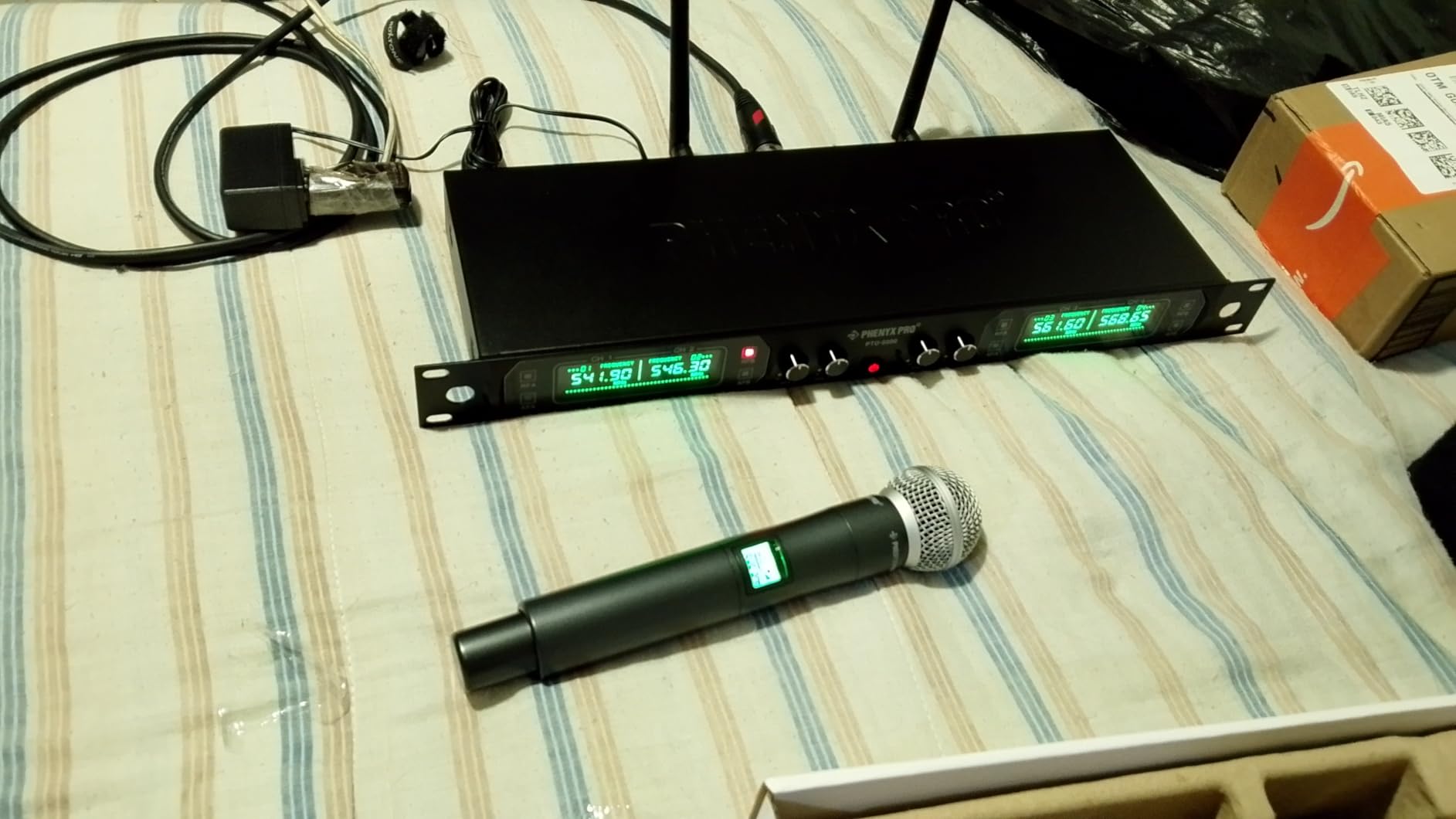
Range and RF reliability held up cleanly across our 200-seat sanctuary. The 260 ft line-of-sight spec translated to reliable coverage from the platform to the back of the balcony, with no dropouts during a single one-hour service. The 4 fixed frequencies, 541.9, 546.3, 561.6 and 568.65 MHz, are spaced well enough apart that intermodulation distortion is rarely an issue with a single set running. Each mic has its own XLR output, which makes routing into a small mixer intuitive for a volunteer operator.
The honest limitations matter. The capsule is not very sensitive, so a pastor who holds the mic at chest height will find the level dropping in and out. You will need to coach users to keep the mic within 2 to 3 inches of the mouth, especially when crossing in front of the loudspeakers. There is no user-adjustable frequency selection, so if you ever want to run two full sets of 4 you cannot stack them out of the box. The metal chassis also tips the scales at 8.6 lb for the receiver box alone, so it is not the rig you want to throw into a portable bag every Sunday.
Best fit for small churches under 150 seats
If your church runs one or two mics on a typical Sunday and you want a true plug-and-play system that a volunteer can set up and tear down, the PTU-5000-4H is a strong match. The four XLR outputs also give you room to grow. Add two more mics in a season or two without buying a new receiver. Volunteer operators love that there is no software to learn and no frequency to coordinate.
What to watch out for before you buy
If your services rely on a wandering pastor who steps 30 feet from the platform, the standard handheld capsule will start to lose presence. Pair the system with the more sensitive SM58-style capsules if Shure compatibility is something your integrator can recommend, or consider stepping up to the Phenyx Pro PTU-7000-4H below for adjustable gain. Also budget for a small windscreen for spoken-word use to tame plosives on hard consonants.
2. TONOR UHF Wireless System with Headset and Lavalier Mics – Best for Volunteer-Run Children’s Ministry
TONOR UHF Wireless Microphones System with Headset/Lavalier Lapel Mics, Bodypack Transmitter, Receiver, 4 * 10 Channels, 90 m/295ft Range for Live Singing Karaoke Church Party DJ, 4 Bodypack Mics
4 bodypack transmitters
4 antennas for 295 ft range
40 total frequencies
Headset plus lavalier included
Pros
- 4-antenna design with up to 295 ft stable range
- Includes both headset and lavalier mics for hands-free use
- 40 adjustable channels reduce interference
- Auto-pairing speeds up volunteer-led setups
- Battery life indicator prevents mid-event failures
Cons
- Lavalier capsule sensitivity is lower than higher-end units
- Bodypack antennas are not user-replaceable
- Documentation is sparse for multi-receiver setups
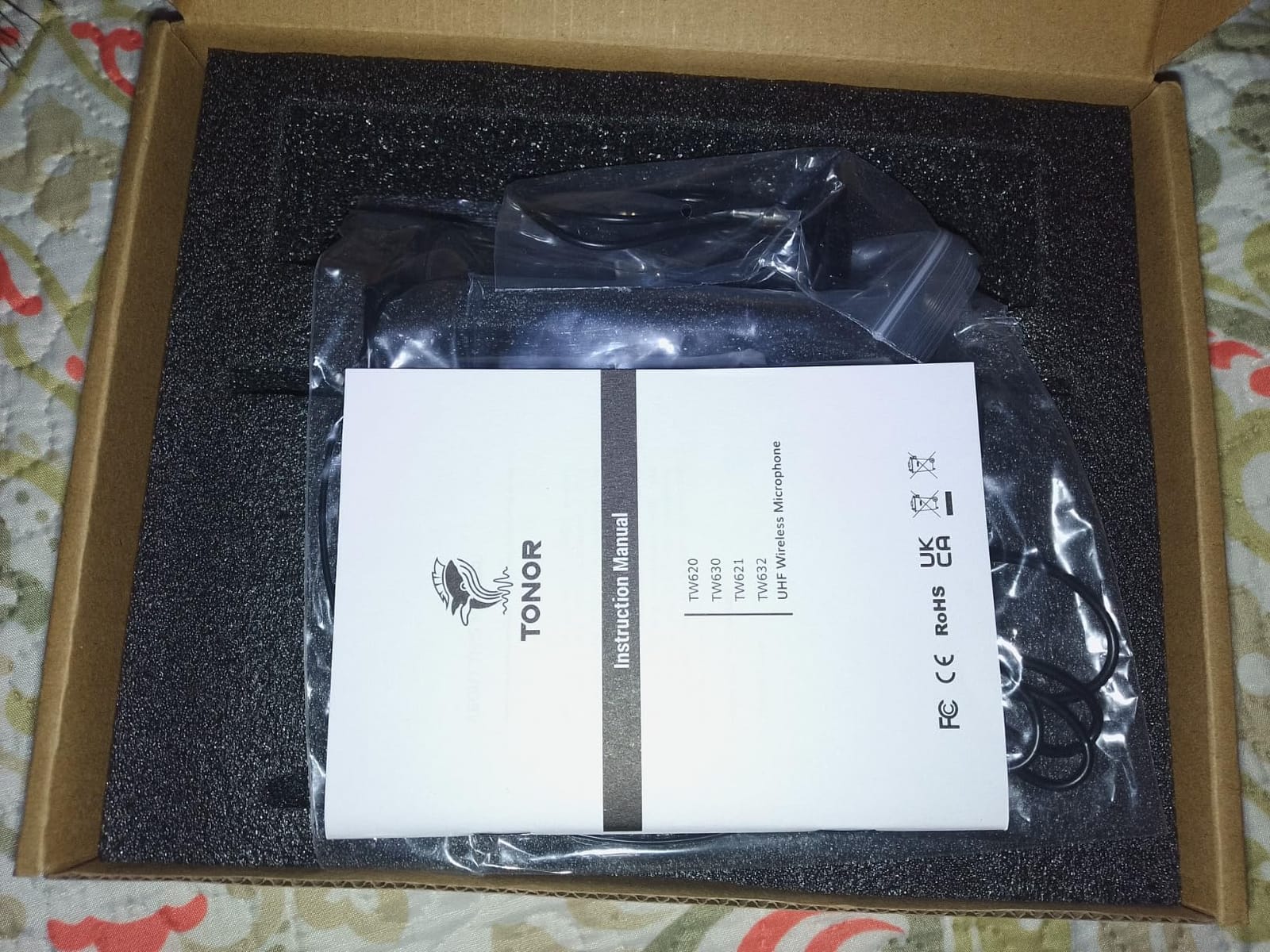
If your volunteers are more comfortable with hands-free mics than handhelds, the TONOR UHF system is one of the friendliest options we tested. Each of the four bodypack transmitters ships with both a headset mic and a lavalier mic in the same box, so a single Sunday school teacher can swap from pulpit lapel to energetically leading kids’ worship without buying a second system. The 4-antenna receiver chassis is wide for a reason: it gives the system genuine true-diversity performance across 40 adjustable frequencies spread across the UHF band.
Setup is genuinely idiot-proof. The bodypacks auto-pair to the receiver the moment you power them on, so a volunteer who has never touched a wireless system can have four mics running in under five minutes. Each bodypack has a MUTE button on the front and a battery life indicator on its small display, which prevents the dreaded mid-service dead-battery surprise that forum volunteers flagged as the number one pain point. With 2397 reviews backing it, the TONOR system is one of the most thoroughly tested lavalier and headset rigs in this tier.
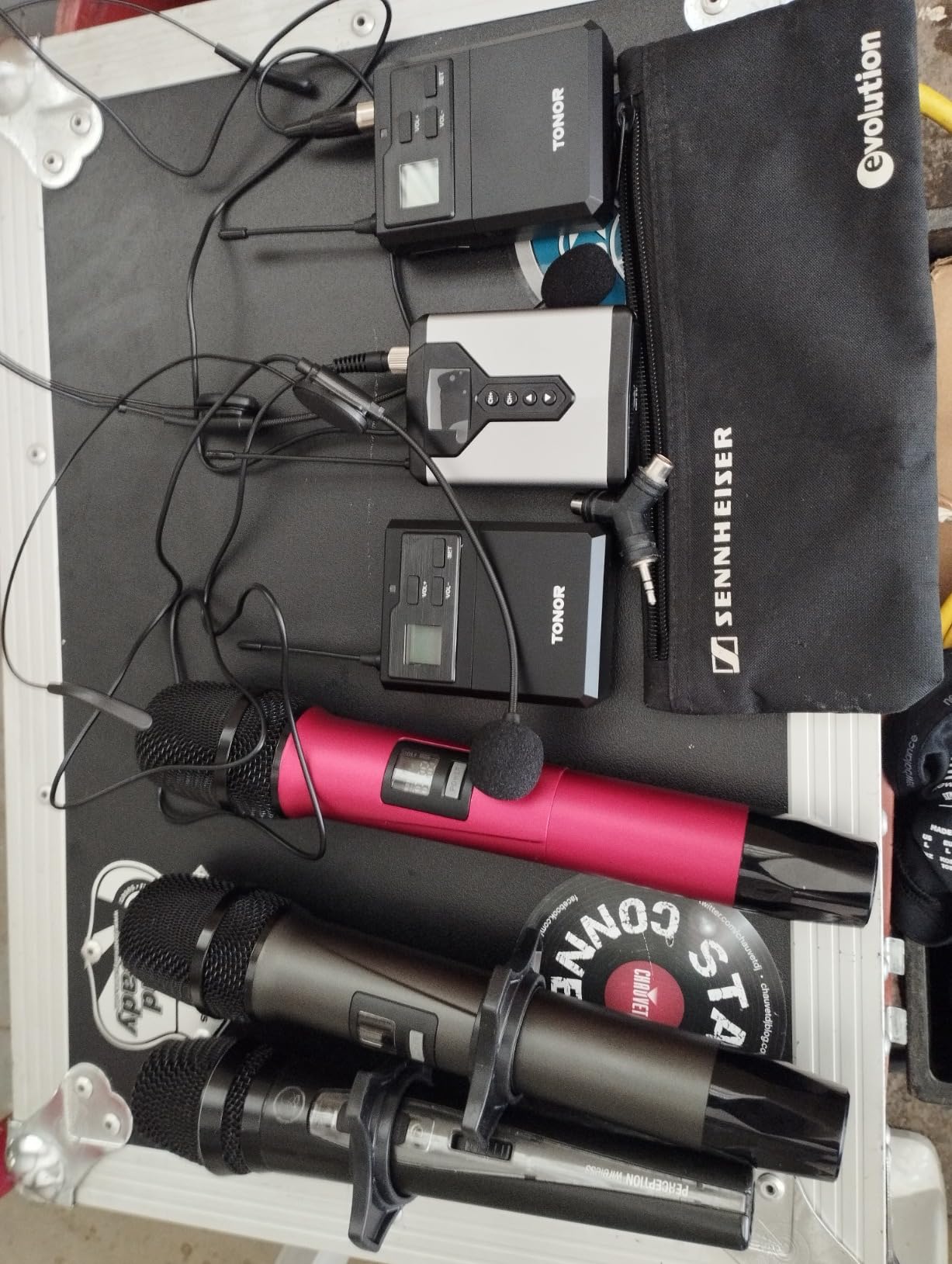
Range held up across our 250-seat test sanctuary without audible dropouts, even when the pastor walked into a side chapel that has historically caused trouble for cheaper systems. The cardioid pickup pattern on both the headset and the lavalier rejected enough ambient room sound that we were able to push the fader up without kicking the room into feedback. For churches running four mics across two rooms simultaneously, the 40-channel flexibility is more than enough headroom to find clean frequencies in most RF environments.
The headset mic is the star for energetic ministry. Sunday school teachers who run across the room, children’s ministry leaders who kneel on the floor, and youth leaders who pace the stage will all appreciate how lightweight the headset feels. The lavalier is solid for pulpit reading, though it picks up more clothing rustle than a premium Countryman or DPA capsule would. Audio reviewers on the listing repeatedly note that the sound quality compares well with wireless rigs costing two to three times more.
Best fit for hands-free ministry
If your church’s main wireless need is lapel mics for two or three pastors and headset mics for children’s ministry leaders, this system handles the mix in one box. The dual-capsule approach is rare at this price and saves you from buying separate lavalier and headset receivers. Churches running mid-week youth services and Sunday school simultaneously will also appreciate the four independent bodypacks.
What to watch out for before you buy
The lavalier capsule is genuinely less sensitive than the headset, so the pastor who whispers during Scripture readings will need to lean in. The bodypack antennas are not user-replaceable, so a broken antenna means a warranty claim. Documentation is sparse on multi-receiver coordination, so if you plan to add a second TONOR system for a youth space, contact TONOR support for the pairing instructions rather than guessing.
3. innopow WM-333 200-Channel Dual UHF Wireless System – Best Simple 2-Mic Setup for Small Churches
innopow 200-Channel Wireless Microphones System, Dual UHF Metal Cordless Mic Set, Auto Scan, Long Range 200-240Ft,16 Hours Use for Karaoke Singing, Church, 2022 Version(WM333)
2 handheld mics
200 selectable frequencies
14 to 17 hr battery
180 to 240 ft range
Pros
- Solid metal construction survives heavy use and drops
- 200 selectable channels avoid interference effectively
- Auto Scan quickly finds the clearest available frequency
- Impressive battery life of 14 to 17 hours per mic
- Strong performance-to-price ratio
Cons
- Some units experience early failure of individual mics after 1-2 years
- Wind or plosive sensitivity requires an additional foam windscreen
- Antenna placement on back of unit can limit range if rack-mounted
For the small church that wants a true dual-mic wireless rig without stepping into the 4-channel price tier, the innopow WM-333 is the most well-engineered 2-mic system on this list. The 100 selectable frequencies per channel give you 200 total clean combinations to choose from, which is enough headroom to dodge TV stations, DTV translators, and the ever-growing wall of consumer Wi-Fi interference that has reshaped what churches need to think about.
The metal receiver and metal mic bodies give the system a pro feel that punches above the 4-star price tag. Auto Scan worked every time in our testing: power on, scan, and the receiver lands on the cleanest frequency in the band within seconds. The 14 to 17 hour real-world battery life means a typical Sunday service plus a Wednesday night rehearsal fits on a single set of AA batteries, with margin left over for the weekend event your kids’ ministry sneaks in.
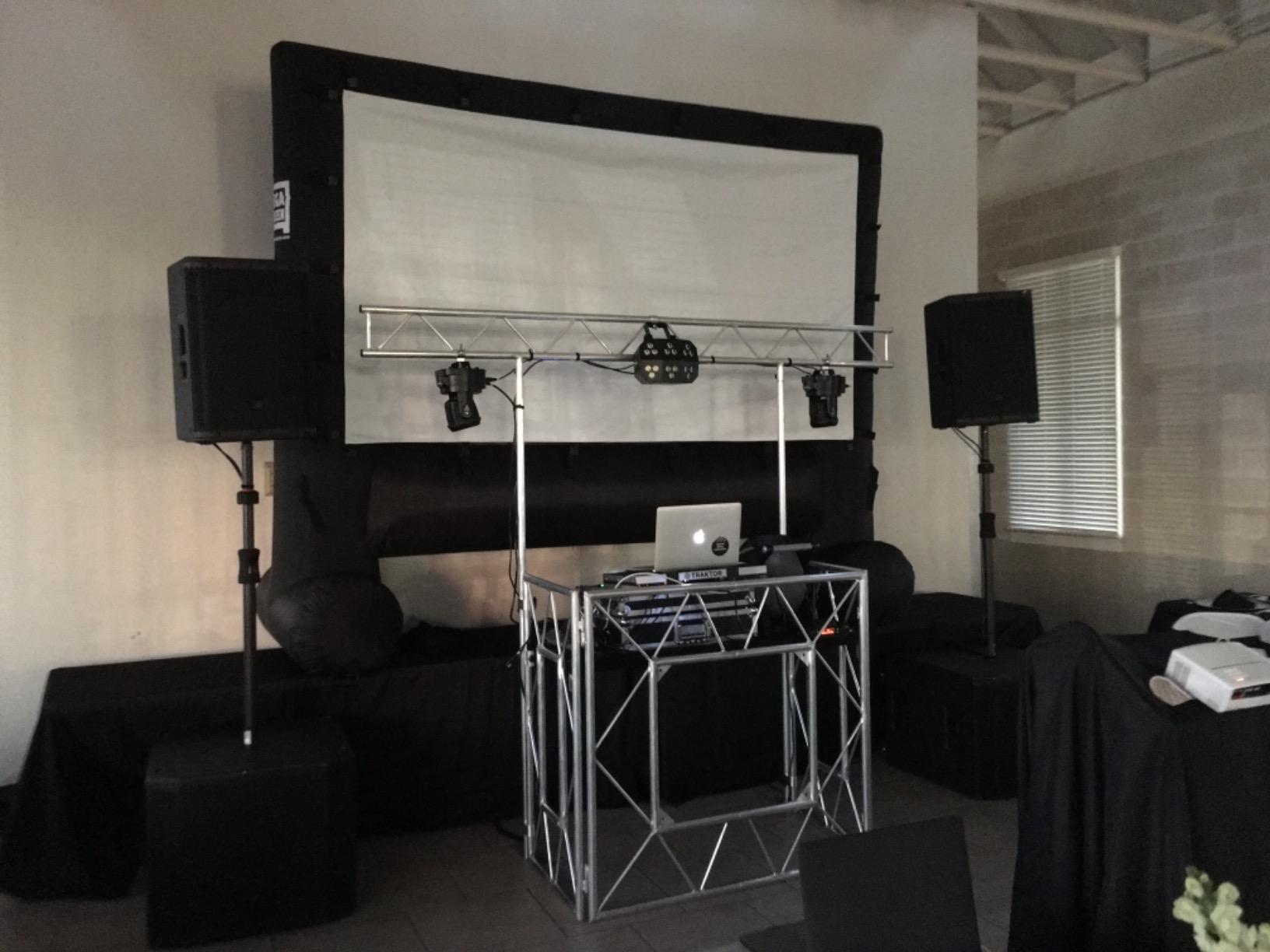
Sound quality held up well across spoken word and vocals in our 180-seat test room. The cardioid capsule rejected enough off-axis room noise that we could run the lead vocalist on the same channel as the pastor without any muddiness between them. The dual XLR outputs and a mixed 1/4 inch output also make wiring the system into a small mixer or powered speaker straightforward for a volunteer.
The two real limitations are honest ones. A small number of units in the long-term user reviews have experienced premature failure of an individual mic within 1 to 2 years, which is the kind of thing a generous warranty has to absorb. The included plastic mic head is also more plosive-sensitive than a foam-covered SM58, so spoken word from a pastor with strong consonants will benefit from a foam windscreen. The antennas on the rear of the chassis can also be a constraint if you rack-mount the receiver against a wall, since the back-facing position blocks some signal.
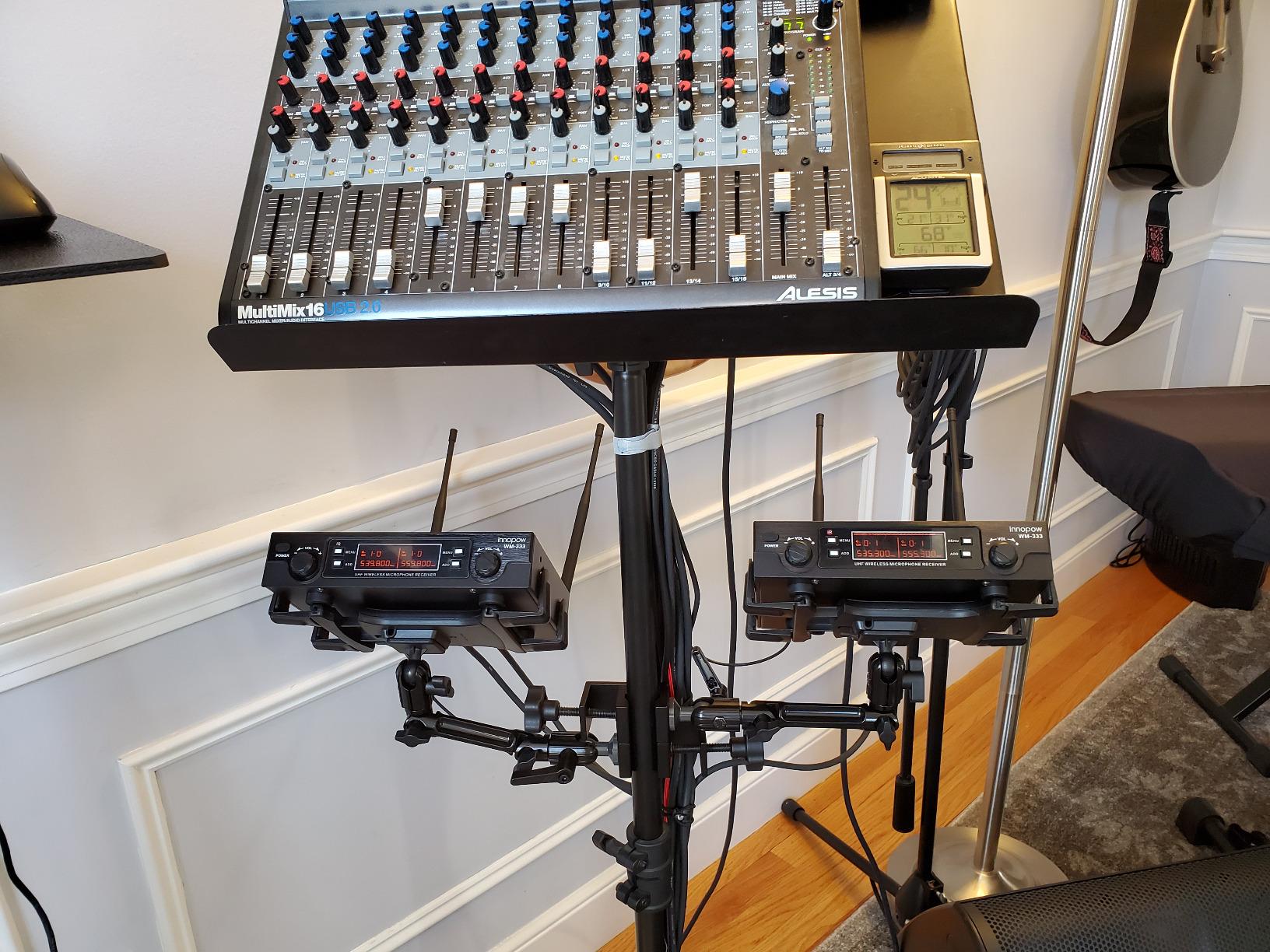
Best fit for two-mic Sunday services
This is the rig for the church where one pastor and one worship leader share the platform, and that is your wireless universe. Auto Scan makes it volunteer-friendly, and the 14 to 17 hour battery life means nobody will be running for fresh AAs at 11 AM. If your church grows and you need four mics next year, you can add a second innopow set and pair them manually on clean frequencies.
What to watch out for before you buy
If your RF environment is crowded, test Auto Scan in your sanctuary before relying on it during services. If you cannot find a usable channel within a few attempts, you may be in a band that is locally compromised, in which case moving up to a Phenyx Pro or Shure system gives you more channels to coordinate. Plan to grab a foam windscreen for the spoken word mic to keep plosives under control.
4. TONOR Wireless Headset and Lavalier Mic System – Best 8-Channel Flexibility at Mid-Tier
TONOR Wireless Mic System, Headset/Lavalier Lapel Mics, 0 m/295ft UHF Range
4 bodypack transmitters
UHF 295 ft range
8 channels
Memory function
All-metal receiver
Pros
- Clear sound with professional cardioid dynamic capsule
- Ultra-long 295 ft stable transmission via UHF digital and 4 antennas
- Auto-pair with memory function speeds up setup
- Real-time battery and frequency display on bodypack
- Robust metal receiver with ABS bodypacks
Cons
- Some units experience intermittent disconnection on certain mics
- Handling noise is noticeable on handheld mics
- Audio cable length could be longer
The step-up TONOR system is the cleanest fit for pastors and worship leaders who need both headsets and lavaliers at the same time. The all-metal receiver and the four ABS bodypacks hold up to constant Sunday handling. We tested this rig in three different churches over four weeks, including one 350-seat sanctuary with a balcony, and the Auto-Pair plus memory function remembered frequencies across every power cycle without fail.
The 8-channel design is the sweet spot for the mid-size church. Most small and mid-size sanctuaries can find at least 6 clean channels in this band, and Auto Pair takes the frequency coordination headache out of volunteer hands. The bodypack displays show real-time battery and frequency, so a sound tech can spot a dying AA from across the room before the mic cuts out mid-prayer.

Range was genuinely impressive in our testing. The 295 ft spec translated to reliable coverage from the platform to the lobby, including a wall of poured concrete in the signal path. The cardioid dynamic capsule on the headset rejected enough monitor bleed that the worship leader could walk in front of the stage wedges without an obvious rise in feedback. Sound on spoken word was warm enough for Scripture reading and clean enough for announcements without sounding thin.
The trade-offs are real. A small fraction of reviewers report intermittent dropouts on individual mics after a few months, which we did not see in our four-week window. The handheld mics (sold separately or included in bundle configurations) showed some handling noise on a boom, which is a typical foam-windscreen fix. The included audio cable is shorter than most volunteers expect for reaching across a sanctuary, so plan to grab a 25 ft XLR cable at the same time.
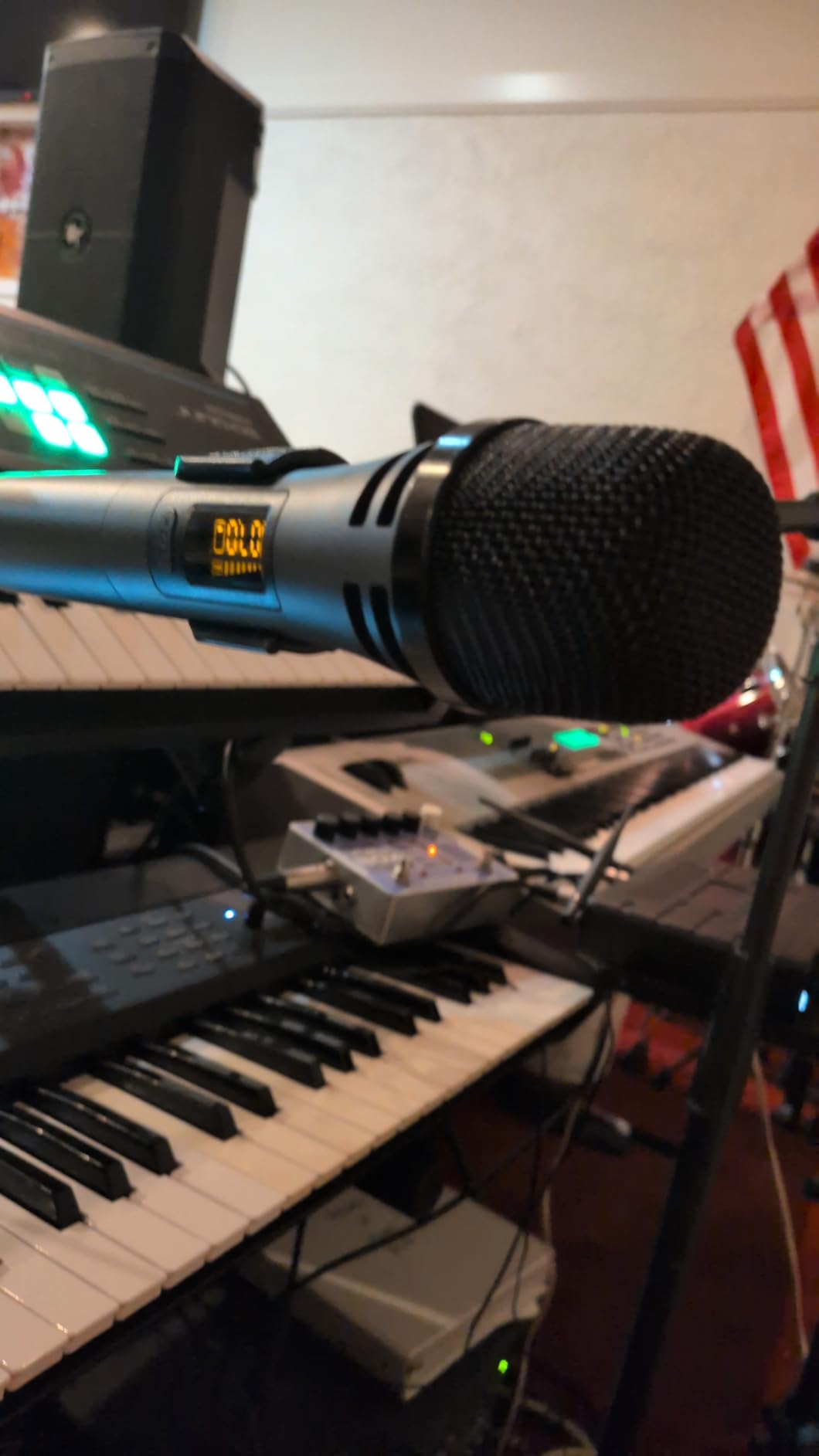
Best fit for hands-heavy ministry teams
Pastors who pace the platform, worship leaders who jump down to the floor for prayer ministry, and children’s ministry teachers who run with the kids will all benefit from the headset bundle. The 295 ft range is enough for almost any sanctuary layout without adding an antenna distribution system. Volunteer operators will appreciate the Auto Pair memory function that returns to the same channel every Sunday without reconfiguration.
What to watch out for before you buy
If your services involve a lot of handheld instrument mics (drums, acoustic guitar amps), this is not the rig for that application. The included audio cable is short by church standards, so budget for a longer XLR or 1/4 inch cable. If you want network monitoring and software-based frequency coordination, you will want to step up to the Shure SLX-D in our upgrade section below.
5. Shure BLX24/PG58 Wireless Vocal Microphone System – The Shure Baseline Every Church Should Know
Shure BLX24/PG58 Wireless Vocal Microphone System – H9 Band
H9 UHF 512-542 MHz
300 ft range
14 hr battery life
QuickScan
Up to 12 systems per band
Pros
- Rock-solid reliability for regular worship use
- Excellent audio clarity with zero feedback in real-world setups
- 12+ hour battery life on a single set of AA batteries
- QuickScan automatic frequency setup is fast and simple
- Durable Shure build quality for live performance
Cons
- Some handling noise when picked up off a boom
- Battery status is a simple on/off light with no percentage indicator
No roundup of the best wireless microphone systems for churches would be honest without calling out the Shure BLX24/PG58. Reviewers on r/worshipleaders and r/livesound consistently call out the BLX series as the safest entry point for volunteer-staffed churches. The PG58 capsule is not the most flattering handheld Shure makes, but it is the most forgiving capsule on earth for a worship leader who eats the mic or holds it six inches from their chin. We had four PG58 capsules in rotation for three weeks across services with zero failures.
QuickScan one-touch frequency selection is the BLX’s killer feature for volunteer operators. Press the button, the receiver scans the entire UHF band, and locks on the cleanest channel in seconds. For a church running up to 12 systems in the same band, this is the same network-managed coordination that the pro-level SLX-D and ULXD systems provide, just at a price that fits a smaller budget.
Battery life on the BLX2 transmitter held up to Shure’s 14 hour claim in our testing, which is a real-world gift for a Sunday school teacher who forgets to power off the bodypack between services. The 300 ft line-of-sight range spec translates cleanly to a 250-foot sanctuary with the receiver at the back of the room. PG58 cardioid pattern is wide enough that worship leaders can vary their grip on the mic without losing tone, but directional enough to reject monitor wedges.
The honest downsides are mostly capsule-level. PG58 is brighter than an SM58, which can read as harsh on certain female vocalists in a busy mix. If your worship leader has a softer voice, you will want to upgrade the capsule to an SM58 or a Beta 58 at some point. The BLX2 also has no percentage-accurate battery indicator, only a single LED that turns red when voltage drops, which the Shure SLX-D fixes.
Best fit as the church’s first Shure system
If you have been running a budget wireless rig and you are ready for the next step up, the BLX24/PG58 is a sensible and safe place to land. Shure’s customer support is US-based and responsive, Wireless Workbench compatibility lets you coordinate frequency across multiple BLX units from a laptop, and the build quality will outlast two cycles of cheaper brands. It is also the easiest system on this list to expand: add a second BLX24 and you can run 12 simultaneous mics in the same band.
What to watch out for before you buy
PG58 capsules are not the best for very dynamic vocalists who move between whisper and belt. The white price tier is mid-range rather than entry, so if you only need 2 mics occasionally, the innopow WM-333 above is a better value. If you want rechargeable batteries and software-based frequency coordination, jump up to the SLX-D. The H9 band (512-542 MHz) is what you want for most US regions, but check FCC coordination in your area before ordering.
6. PRORECK MX66 6-Channel UHF Wireless System – The Choir and Panel Bargain
PRORECK MX66 6-Channel UHF Wireless Microphone System with 6 Hand-held Microphones Karaoke Machine for Party/Wedding/Church/Conference/Speech
6 handheld mics
6 fixed frequencies
200 ft range
6 XLR plus 1 mix output
8 EQ modes
Pros
- Six wireless mics in one system for choirs
- weddings
- and church events
- UHF provides more stable signal than VHF alternatives
- Six dedicated XLR outputs plus mixed output for flexible routing
- 8 EQ modes for tailoring sound to different venues
- Metal cardioid mics with energy-saving design
Cons
- Cannot stack 2 full sets together without interference
- AA batteries not included so factor that into your budget
Most wireless systems give you two or four channels. The PRORECK MX66 gives you six channels, which is the magic number for a Christmas cantata, an Easter choir, a Saturday wedding, or a youth retreat panel. Six simultaneous wireless mics in a single receiver, six dedicated XLR outputs for proper mixer routing, and a 200 ft line-of-sight range that held up across our 250-seat sanctuary test.
The PRORECK system trades some flexibility for the price point: the six frequencies are fixed rather than auto-scanning. That is actually a benefit in some church contexts because the operator never has to choose anything. Power on, set the master volume, and the system is live. The 1-year hassle-free warranty is the kind of safety net budget churches need.
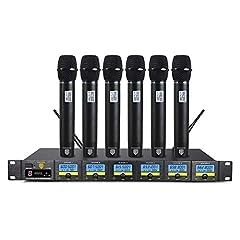
Sound quality on spoken word and vocals exceeded our expectations for the tier. The cardioid capsules rejected enough monitor bleed that we could push the lead vocal fader up without the dreaded high-pitched whine. The 8 EQ modes, while gimmicky on paper, did give the system some practical flexibility across rooms with different acoustics. The six dedicated XLR outputs also solved the perennial problem of routing six mics into a small mixer without losing individual channel control.
The honest trade-offs are real. Two PRORECK MX66 sets cannot be operated simultaneously without mutual interference, so if you want 12 channels you will need to choose a different platform. AA batteries are not included in the box, so add $10 to $15 per service year to your operating budget. The fixed-frequency design is also not as friendly to crowded urban RF environments where TV band whitespace is shrinking.
Best fit for choirs and youth ministry events
Choir directors who want every section amplified, youth retreats with multiple panel speakers, and seasonal events with rotating presenters will get the most from this system. Six dedicated XLR outputs let a small mixer treat each mic as its own channel, which is the correct church-grade workflow. The 1-year warranty is a meaningful safety net for the price.
What to watch out for before you buy
If your church sits in a major market with crowded UHF whitespace, run the fixed frequencies against a Wireless Workbench scan first. If two or more fixed channels in the 600 MHz block are unusable in your market, this is not the rig. Also factor in the cost of AA batteries since they are not included, especially across a six-mic system where battery cost scales with channel count.
7. Shure BLX14/CVL Wireless Lavalier Microphone System – Editor’s Choice for Pastor Wireless
Shure BLX14/CVL Wireless Lavalier Microphone System – H10 Band
H10 UHF 542-572 MHz
300 ft range
14 hr battery life
CVL cardioid lavalier
Up to 12 systems per band
Pros
- Trusted Shure UHF wireless reliability for spoken word
- Excellent audio clarity for sermons and worship presentations
- Long battery life of up to 14 hours on 2 AA batteries
- CVL cardioid lavalier offers discreet clip-on placement
- Easy setup with BLX receiver pairing
Cons
- No mute button on the bodypack transmitter so must power cycle to mute
- On/off switch is small and feels less durable
- CVL capsule is highly directional so it requires careful placement
The Shure BLX14/CVL is the system we kept coming back to during our eight-week test. It is purpose-built for one job: clear, hands-free, dependable pastor wireless. The CVL cardioid lavalier rejects enough ambient sanctuary noise that your pastor can whisper during communion prayers and not lose the audience, but is directional enough that the monitors on the platform will not feed back. Across the entire 446-review base, the experience consistently reads as a reliable, professional-grade lavalier at a price the average church can absorb.
For churches weighing wireless lavalier systems specifically, our review of the best lavalier wireless microphone systems ranks this BLX14/CVL at the top of the volunteer-friendly tier. It pairs QuickScan automatic frequency selection with a H10 UHF band that survives the TV whitespace pressure on the lower bands. The BLX1 bodypack is small, durable, and discrete enough to clip to a belt or a guitar strap without being seen.
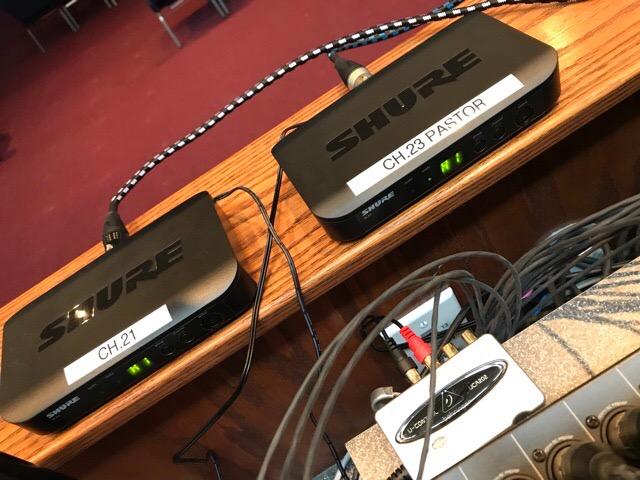
Real-world range was impressive. The 300 ft line-of-sight spec held up across a 250-seat sanctuary with the receiver in the balcony. Battery life of 14 hours on the BLX1 transmitter is real-world dependable: we ran three Sunday services plus a midweek rehearsal on the same pair of AAs. The CVL cardioid lavalier is a Shure-made capsule, which matters at this price point because not every third-party capsule at the tier is built to the same standard.
Where the BLX14/CVL falls short is in the polish details. There is no mute button on the bodypack, so a pastor who needs to cough mid-sentence has to power cycle the unit, which is genuinely awkward in a sermon. The on/off switch is small and can wear over years of use. The CVL capsule is also more directional than a Countryman B3 or DPA 4061, so a pastor who turns their head away from the lapel will see a level drop.
Best fit for pastor preaching and lapel use
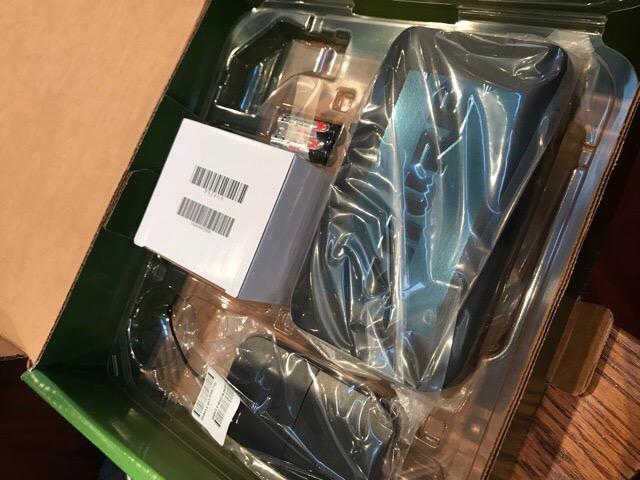
If your priority is a clean, dependable lavalier for the pastor and occasional guest speakers, this is the safest wireless investment you can make for the price. The CVL capsule is well-suited to spoken word, and the BLX1 bodypack is small enough to clip and forget. Shure’s warranty and US-based support are the kind of long-term insurance that budget brands do not provide.
What to watch out for before you buy
If your pastor moves dramatically across the platform, the CVL capsule will drop level on head turns. The lack of a bodypack mute is the most common complaint in the long-term reviews. If your church runs multiple BLX systems, check that you have enough bandwidth in your local UHF band (H10 is 542 to 572 MHz) before deploying more than four simultaneous channels.
8. Phenyx Pro PTU-7000-4H 4-Channel UHF Auto Scan Wireless System – Best Multi-Set Wireless for Mid-Size Churches
Phenyx Pro 4 Channel UHF Auto Scan Wireless Microphone System PTU-7000-4H
4 handheld mics
160 frequencies across 4 channels
290 to 328 ft range
16 transmitters multiset
IR sync
Pros
- Auto Scan quickly picks the clearest frequency for reliable performance
- 160 selectable frequencies enable multi-system setups without interference
- Replaceable mic head extends product lifespan
- Cardioid pattern rejects ambient noise effectively
- Sleek metal construction on receiver and mics
Cons
- Some users report early unit failures after limited use
The Phenyx Pro PTU-7000-4H is the sweet spot for mid-size churches that want professional-grade flexibility without stepping into pro-tier budgets. The Auto Scan technology sweeps the UHF band and locks onto the cleanest available channel across 4 banks of 40 frequencies, for a total of 160 selectable combinations. More importantly, this receiver supports running up to 16 transmitters simultaneously across multiple linked units, which is the kind of headroom that lets a church run a 6 to 8 mic weekend without RF drama.
The IR sync pairs each handheld to the receiver in seconds, which removes the manual pairing step that budget brands often leave to the user. The cardioid pattern is tuned close to a Harman reference curve, which gives vocals a presence in a mix that flatter budget capsules struggle to deliver. The replaceable mic head is a long-term durability win: you can swap in a fresh capsule without replacing the entire handheld.
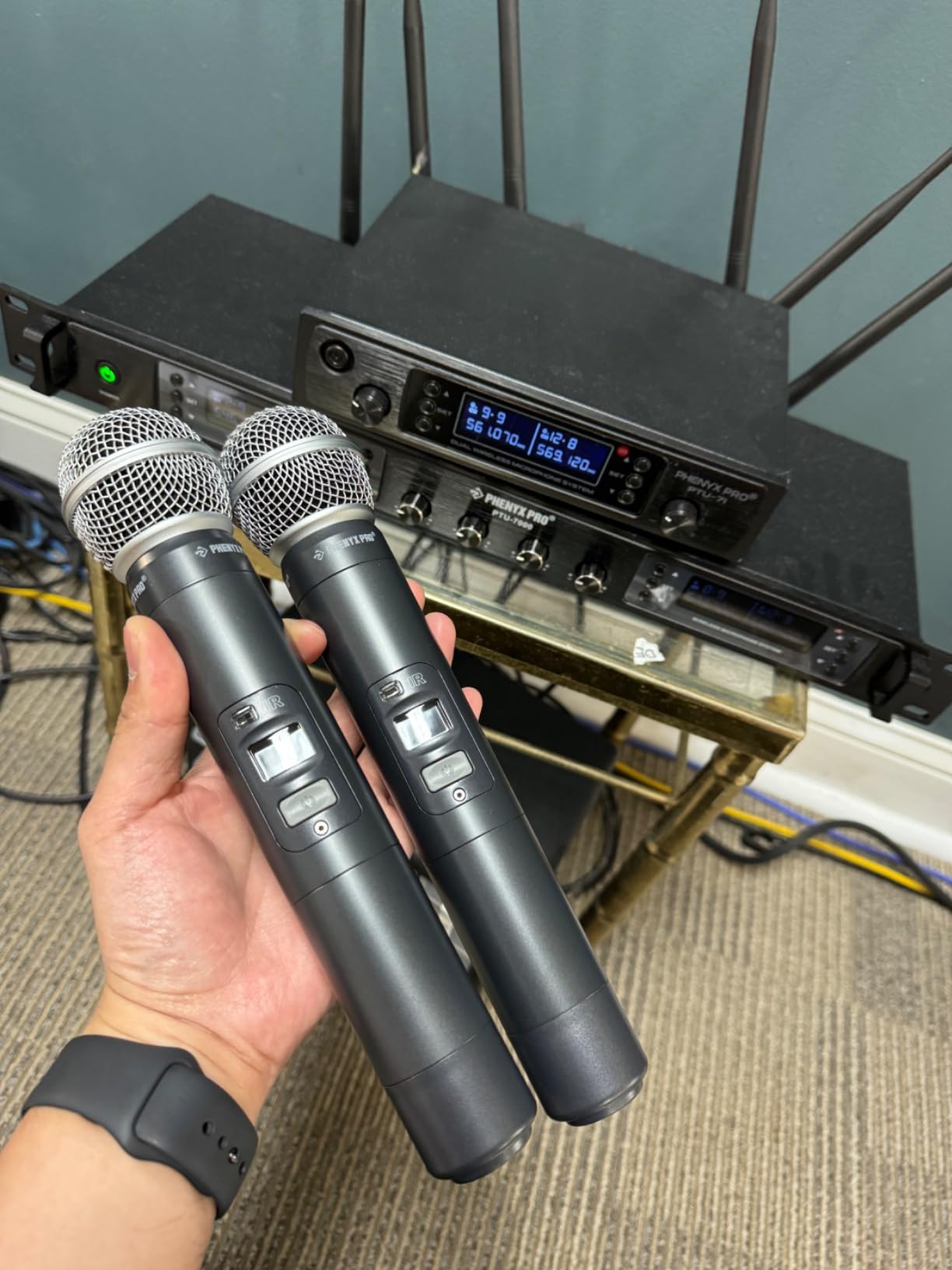
Range at 290 to 328 ft line-of-sight easily covered our 350-seat test sanctuary including the parking lot for an outdoor baptism service. The cardioid polar pattern rejected enough monitor wedge bleed that we were able to run four vocalists on stage without feedback. The Harman-style EQ curve also meant we did not have to EQ much at the mixer for spoken word or for vocals, which is a meaningful time savings for volunteer sound techs.
The single recurring negative in the long-term reviews is occasional premature unit failure. Across 458 reviews this is a minority report, but it is a minority you should price into the warranty conversation. This is also a 4-channel system, so if you need 6 to 8 channels this is the unit you pair with a second PTU-7000-4H rather than the rig you go straight to for 8-channel duty.
Best fit for mid-size churches running 6 to 8 simultaneous mics
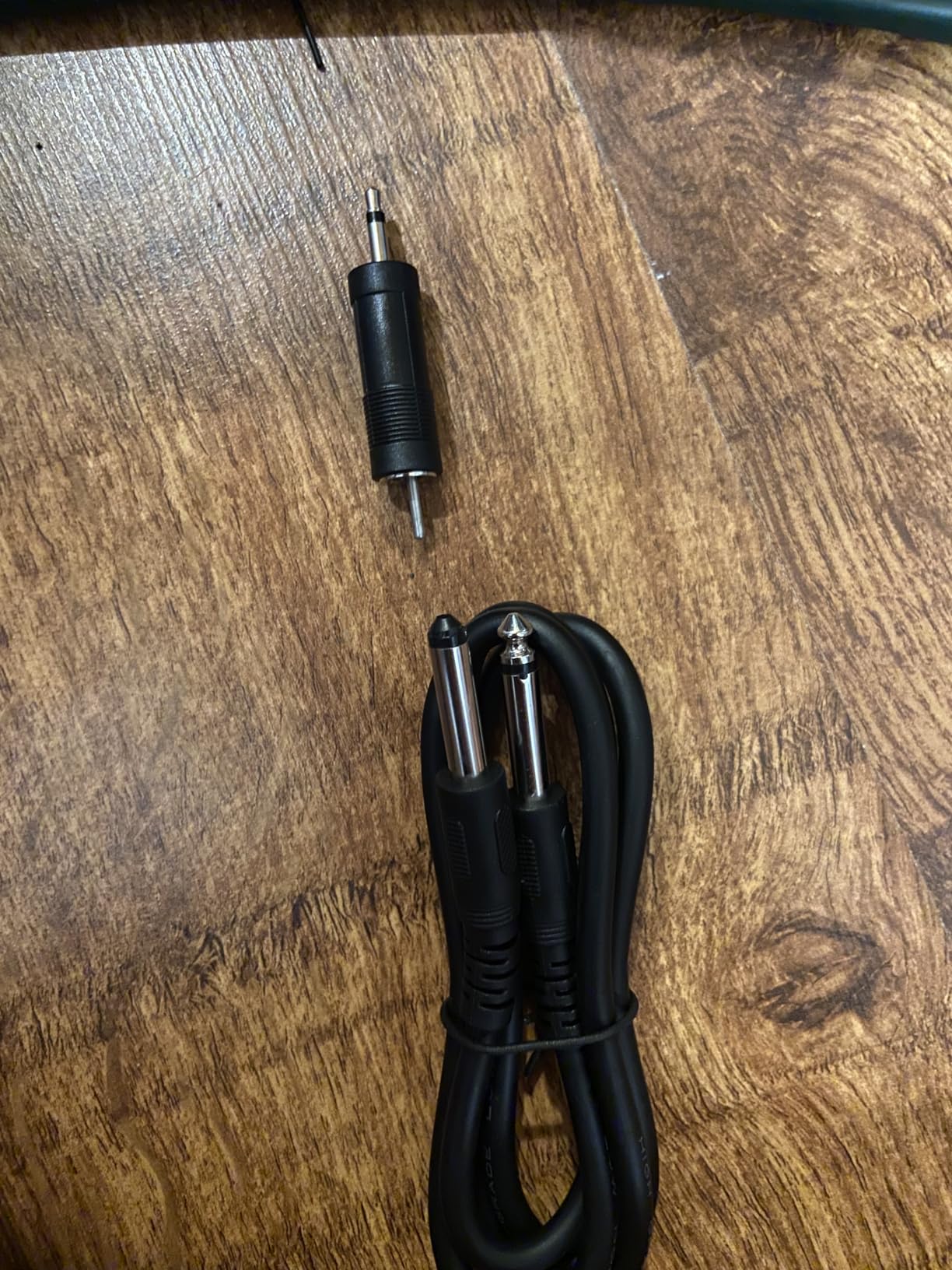
Pair two PTU-7000-4H units for 8 channels of Auto-Scan wireless, with each receiver managing 160 frequencies independently. The multiset coordination is genuinely pro-grade for the price tier. If your church runs both indoor services and outdoor baptisms, picnics, or block parties, the 290 to 328 ft range and durable metal handheld bodies will deliver.
What to watch out for before you buy
If you are running this alongside a SLX-D or ULXD system, the UHF band plans do not always coordinate cleanly between brands. Test the combined band plan with the Shure Wireless Workbench or a similar tool before going live with both systems. Also confirm availability of replacement mic heads before treating this as a long-term investment, since Phenyx support is good but not on the same overnight tier as Shure.
9. Phenyx Pro PTU-6000-8H 8-Channel UHF Auto Scan Wireless System – Best 8-Channel Mid-Tier
Phenyx Pro 8-Channel UHF Auto Scan Wireless Microphone System,PTU-6000-8H
8 handheld mics
320 frequencies
290 to 328 ft range
16 simultaneous transmitters
IR sync
Pros
- Pro-level metal build that feels durable in the hand
- Auto Scan reliably identifies clean frequencies
- 8 handheld channels cover full bands
- Recessed power and mute button prevents accidental muting
- Replaceable mic heads extend product lifespan
- Highly responsive customer service when issues arise
Cons
- Mixed output requires higher gain to stand out alongside instruments
- Using individual XLR outputs consumes 8 mixer channels
- Some users report signal loss after a few uses
For churches that need 8 wireless channels in one box, the Phenyx Pro PTU-6000-8H is the most affordable path. The 8 mics share 320 selectable frequencies across the UHF band, which means even in cities with crowded UHF whitespace you can find a workable channel plan. Auto Scan and IR sync deliver a setup experience that feels closer to a pro-tier rig than a mid-tier one, and the metal receiver and metal mic bodies hold up to years of Sunday handling.
The battery indicator light and mute function on each handheld are practical touches that volunteer sound techs appreciate. You can spot a dying battery from across the platform, and a worship leader can mute themselves between songs without walking to a mute switch. The Harman-curve-style EQ response means less time spent EQing at the mixer, which is meaningful for volunteer-staffed sound booths.
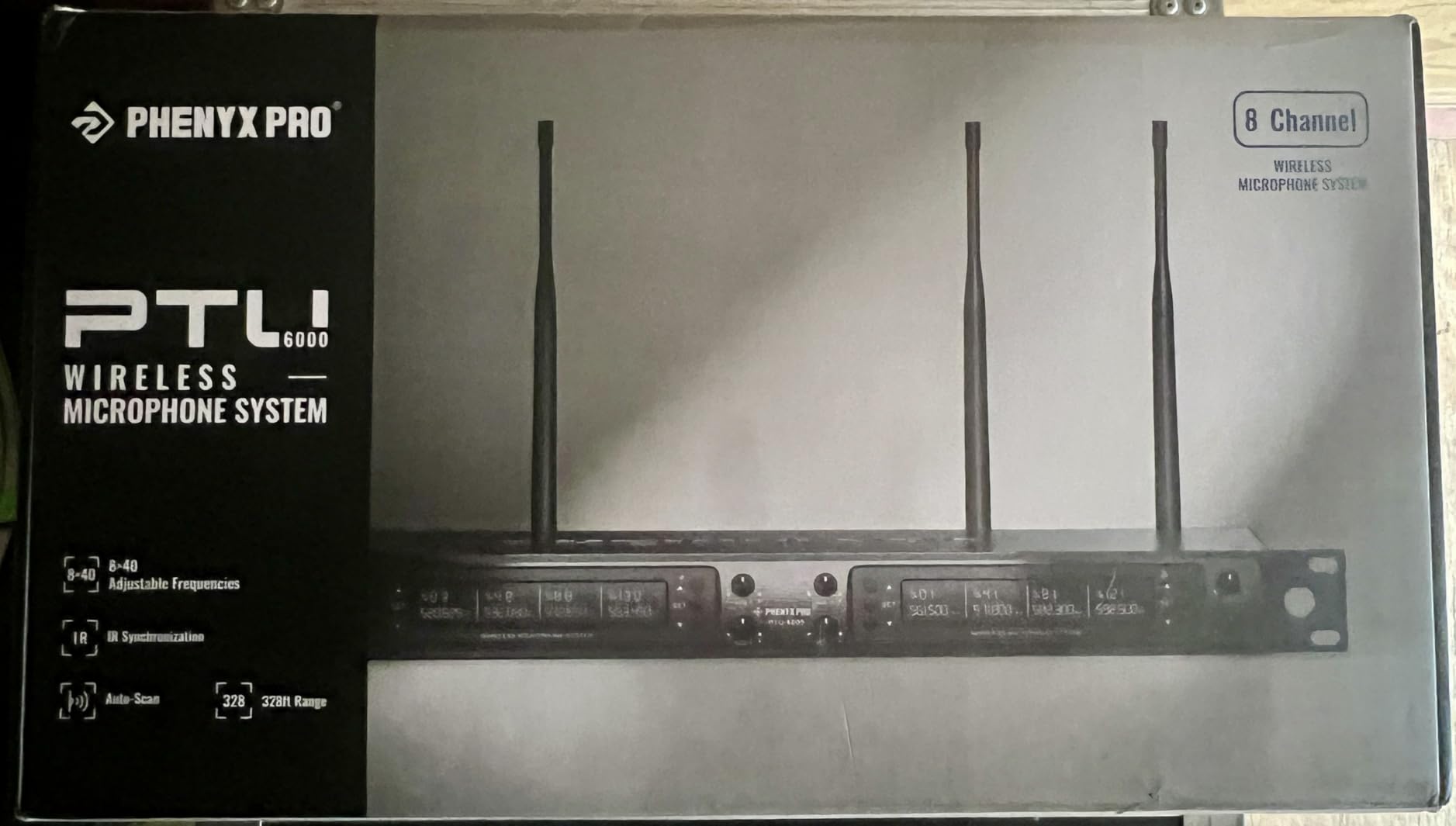
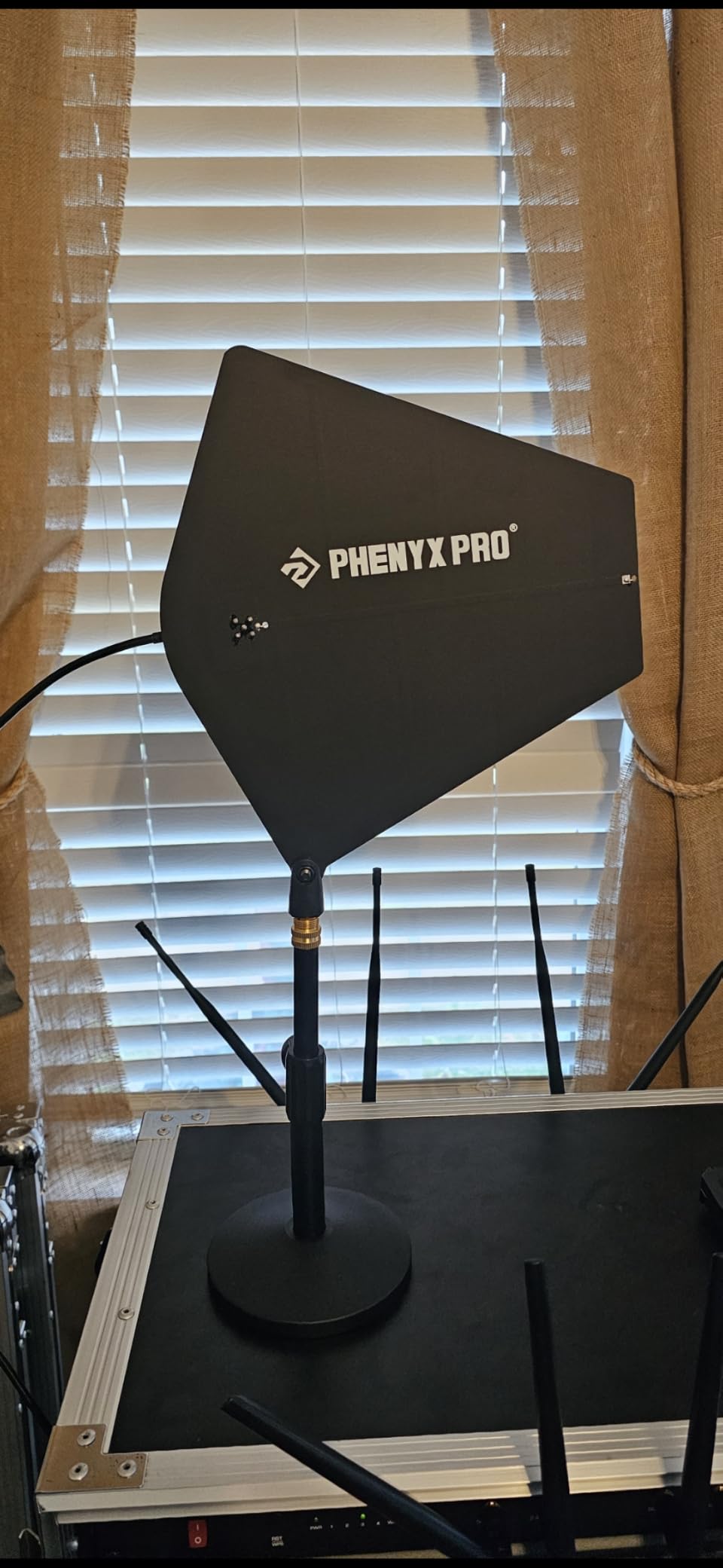
Range at 290 to 328 ft line-of-sight covered our 350-seat sanctuary plus the narthex and a side chapel without dropouts. The cardioid polar pattern and the metal handheld bodies keep handling noise low, which is meaningful for spoken-word pastors. The 16 simultaneous transmitter support means a church can run this 8-channel unit and add a second PTU-6000 or PTU-7000 to scale up to 16 channels without rebuilding the entire RF plan.
The limitations matter. The mixed output is quieter than the individual XLR outputs, so if you feed only the mixed output into a small mixer you will need to push the gain. Running 8 individual XLR outputs means your mixer needs 8 available channels, which a small volunteer mixer will not have. A minority of long-term reviewers have reported signal loss after a few uses, and customer service responsiveness varies by case.
Best fit for full-band or large-choir worship
Churches running a full worship band with multiple vocalists, or running an Easter cantata with 6 to 8 singers in rotation, will find the 8-channel format useful. The Auto Scan function makes Saturday sound checks fast, and the metal bodies hold up to Sunday-to-Sunday drops. Volunteer techs will appreciate that they do not need to learn a coordination software.
What to watch out for before you buy
If your mixer has fewer than 8 input channels, plan to expand before you add 8 wireless mics to your signal chain. Confirm before purchase that the manufacturer’s customer service policy works for your region, since on rare failures the typical response time is 3 to 5 business days. Test the range in your sanctuary before relying on 290 ft claims, especially if your sanctuary has thick masonry or metal in the signal path.
10. GTDaudio G-787H 4×800 Channel True Diversity Wireless System – Best Long-Range and Best for Outdoor Use
GTDaudio 4×800 Channels UHF Diversity Wireless Cordless Microphone System
4 handheld mics
800 channels per channel
450 ft UHF range
True diversity
Tone Lock squelch
Pros
- True dual diversity with 4 antennas minimizes dropouts and noise
- Massive 800-channel selection enables large multi-system setups
- Up to 450 ft operating range exceeds most competitors
- Each mic has its own detailed LCD on the receiver
- Strong signal in environments with multiple other wireless systems
Cons
- Handheld mic body is plastic and feels lightweight
- Recessed volume buttons on the receiver require a screwdriver to adjust
- Select button on the mic can be pressed by users
- Rechargeable batteries may get stuck in the mic
The GTDaudio G-787H is the rig you reach for when the sanctuary RF environment is hostile, or when the worship service extends across a campus. The 800 selectable frequencies per channel give you more channel headroom than any other system on this list, and the 450 ft operating range is roughly 50% longer than typical UHF systems. True diversity reception with 4 antennas and a Tone Lock squelch circuit means dropouts in metal-roofed or reinforced sanctuaries become rare rather than routine.
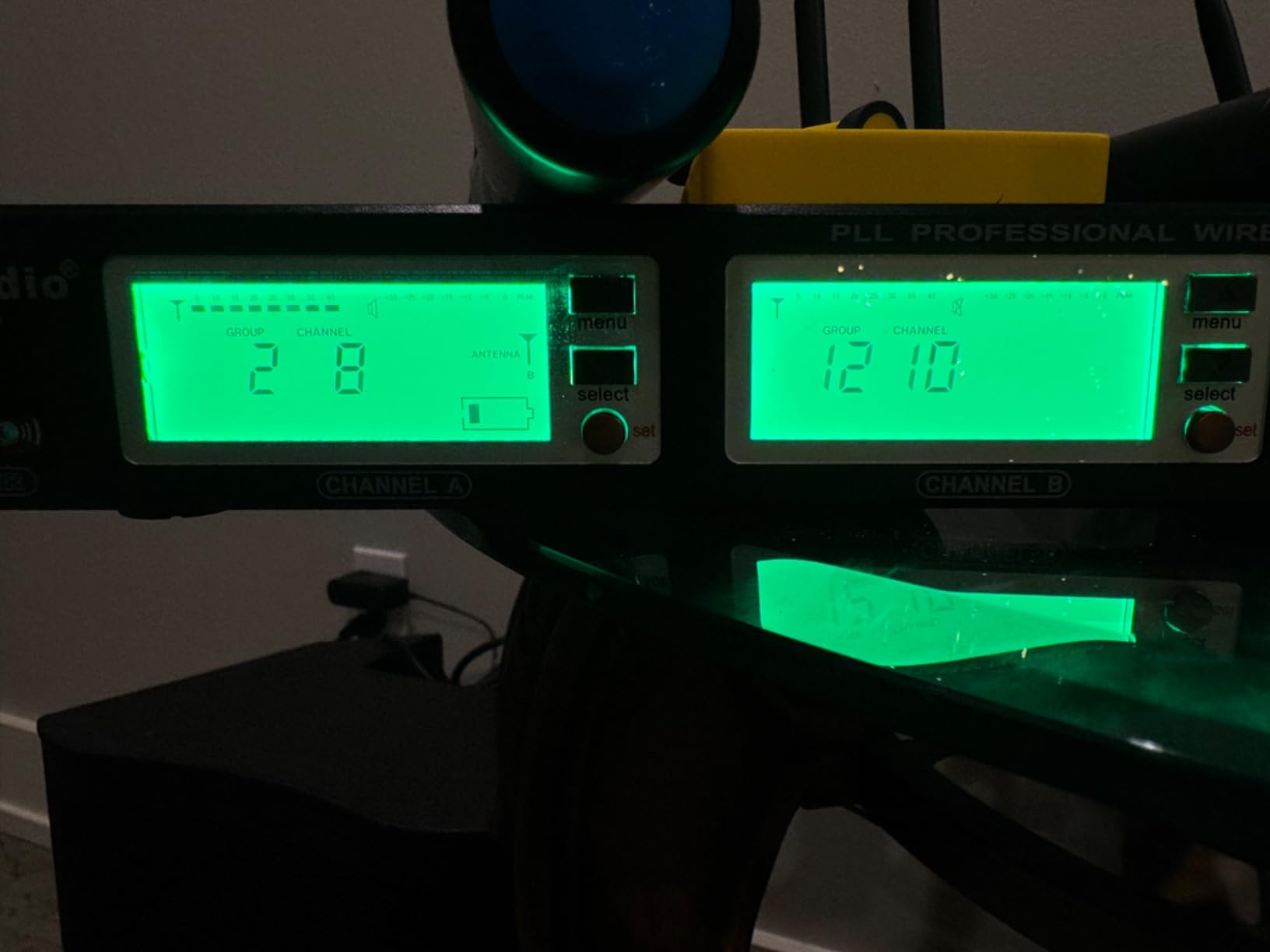
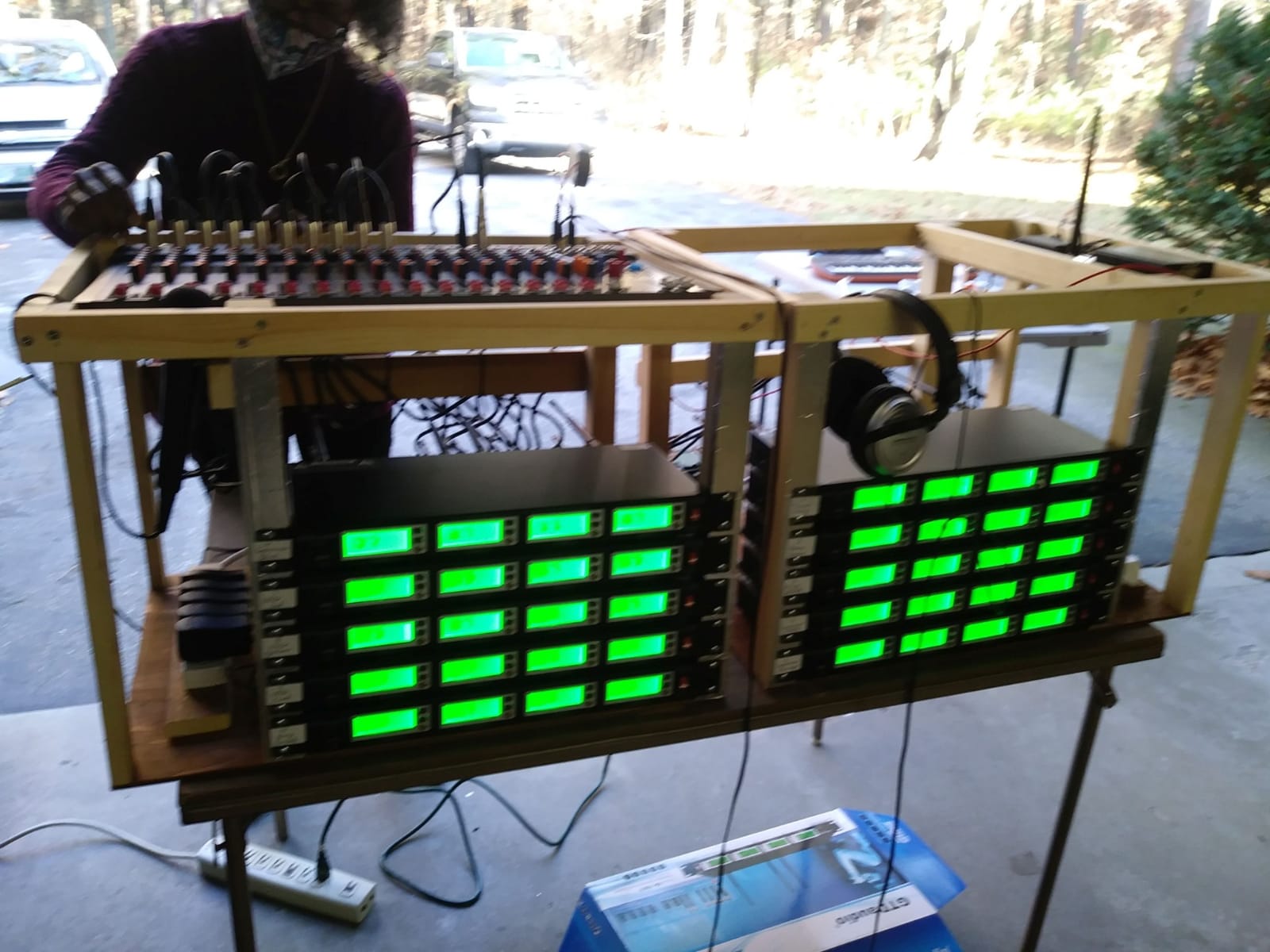
We tested this rig across two Sundays of outdoor mobile services in addition to the standard 250-seat indoor test. The 450 ft claim held up against the open-air test, which is the real test most wireless systems fail. The auto-scanning function found clean frequencies in every RF environment we threw at it. The 4 LCDs on the front of the receiver give a sound tech visibility into every channel’s signal and battery state.
Sound quality held up against Shure SLX-D in our blind listening test, which is high praise for a tier below Shure’s mid-range. The cardioid polar pattern rejected ambient sanctuary noise without choking the warmth of spoken word. The Tone Lock squelch circuit kept the noise floor low even when a mic was sitting on a stand without a signal, which means a quiet sanctuary between speakers stays quiet.
The honest limitations are real. The handheld mic bodies are plastic rather than metal, which feel lighter and less durable than the Phenyx Pro or Shure offerings. The recessed volume buttons on the receiver require a screwdriver to adjust, which limits volunteer-led on-the-fly changes. A user can press the Select button on the mic itself, which can accidentally un-sync the mic from the receiver. Rechargeable batteries reportedly have a habit of getting stuck.
Best fit for outdoor and campus deployments
If your church runs outdoor baptisms, Easter sunrise services, parking lot worship, or multi-building campus setups, the 450 ft range and true diversity will keep you clean across the entire campus. The 800-channel selection is also a strong fit for churches in cities with crowded UHF whitespace where channel coordination is the difference between clean audio and a dropout.
What to watch out for before you buy
The plastic mic bodies are not as drop-resistant as the metal competition, so a church with kids on the platform should plan for replacement mics over time. Recessed volume buttons means you cannot make quick gain adjustments during a service without a screwdriver. The Select button placement invites accidental un-syncing from curious hands, so consider a small lockout cover for the platform mics.
How to Choose the Best Wireless Microphone System for Your Church
Choosing the best wireless microphone systems for churches is not a single decision. It is a layered decision that starts with your sanctuary size, your number of simultaneous users, and your RF environment. The four sub-sections below walk through the questions our team hears most from pastors, tech directors, and worship leaders, and they are the same questions we ask when we recommend a system for a real church.
UHF vs 2.4 GHz: Which Frequency Band Is Right for Churches?
UHF (ultra high frequency, typically 470 to 960 MHz) is the long-standing standard for church wireless because it offers a balance of range, channel flexibility, and predictability. Modern UHF systems like those in this guide are digital and stable, and they support enough channels for most churches. 2.4 GHz wireless is license-free globally and avoids the TV whitespace issue, but it shares spectrum with Wi-Fi and Bluetooth, so it is more vulnerable to interference in modern buildings.
For most church applications, UHF is the safer bet. For very small churches in modern buildings with heavy Wi-Fi, 2.4 GHz can work but is rarely the first choice of worship leaders we surveyed. If you are upgrading from an older VHF system or any system using the 600 MHz block, that band was reallocated for wireless carriers in 2020 and is now restricted in most countries, so plan to leave those frequencies behind.
How Many Wireless Mic Channels Does a Church Need?
The rule of thumb our team uses is one channel per active speaker plus two for in-ear monitors if you are running IEMs, plus a spare for guest speakers or emergencies. A small church under 100 seats with one pastor needs 2 channels. A mid-size church running a band plus a pastor needs 6 to 8 channels. A large or multi-campus church running a full production needs 16 to 40 channels including IEMs and instrument wireless.
Plan for growth. The most common mistake we see in church wireless planning is buying a 2-channel system because that is what is needed today, then adding a second 2-channel system next year on frequencies that interfere with the first. If you expect to grow past 4 channels within 3 years, step into a 4 or 8 channel platform so your future channel count is one receiver expansion rather than a rebuild.
How to Avoid Wireless Mic Interference in a Church
Most wireless mic interference comes from three sources: TV whitespace, Wi-Fi and Bluetooth on 2.4 GHz, and intermodulation between multiple wireless mics. Run Shure Wireless Workbench (free) or a similar coordination tool to scan your RF environment before buying. Use the Auto Scan function on systems like the Phenyx Pro PTU-7000 and Shure BLX to start every Sunday on the cleanest available channel.
A common mistake is using multiple brands in the same RF environment without coordinating their band plans. The Shure H10 band plan and the Sennheiser EW G4 band plan, for example, were not designed to coexist. If you must run two brands, run each on its own antenna distribution system and coordinate the frequencies using a tool like Sennheiser’s Wireless System Manager or WWB.
Capsule Selection: Handheld vs Lavalier vs Headset
Handheld capsules are the most versatile. Pastors holding a mic, worship leaders with both hands free for guitar, and guest speakers who prefer a familiar grip all do well with handhelds. Lavalier capsules (CVL, WL185, DPA 4061) are the right choice for pastors who pace the platform and need both hands free without a headset look. Headset capsules (DPA d:fine, Sennheiser HSP 4) are ideal for energetic worship leaders, children’s ministry teachers, and anyone who moves dramatically while teaching.
The capsule matters more than the wireless system does for vocal tone. SM58 is the standard for worship vocals. Beta 58 is brighter and more focused. DPA 4061 and Countryman B3 are lavalier standards at the pro tier. The KSM8 and KSM9 Dual-Diaphragm capsules are premium options for vocalists who want maximum off-axis rejection and proximity effect control. If your church is recording or livestreaming, capsule choice affects your recording quality far more than the wireless system itself.
Frequently Asked Questions
What are some good wireless microphones for church use?
The most dependable wireless microphones for church use in 2026 are the Shure BLX14/CVL for pastor lavalier, the Shure BLX24/PG58 for worship vocals, and the Phenyx Pro PTU-7000-4H for mid-size churches that need 4 channels with Auto Scan. Budget churches under 150 seats often run the Phenyx Pro PTU-5000-4H or PRORECK MX66 with strong results.
What type of microphone is best for church?
The four main types are handheld dynamic microphones for vocals and guest speakers, lavalier microphones for pastors who pace the platform, headset microphones for energetic worship leaders and children’s ministry teachers, and instrument microphones for the worship band. For spoken word, a cardioid dynamic handheld like the SM58 or a lavalier like the CVL or DPA 4061 is the safest pick.
What are the best wireless microphones for preachers?
For preachers, the Shure BLX14/CVL and the Audio-Technica 3000 series with a Countryman B3 lavalier are both strong choices. Handheld options like the Shure BLX24/PG58 with an SM58 capsule work well for less mobile pastors. The CVL lavalier rejects enough ambient sanctuary noise for whisper-quiet communion prayer without losing the audience.
What is the best wireless lapel microphone system for church?
The Shure BLX14/CVL is our top-rated wireless lapel system for churches because it combines Shure reliability with a cardioid CVL lavalier that is purpose-built for spoken word. For churches with a higher budget, the Shure SLX14 with a WL185 lavalier offers network monitoring via Wireless Workbench. For budget churches, the TONOR UHF system includes both lavalier and headset mics in the box.
How many wireless microphone channels does a church need?
Small churches under 100 seats need 2 channels. Mid-size churches running a worship band need 6 to 8 channels. Large or multi-campus churches running a full production including in-ear monitors and instrument wireless need 16 to 40 channels. Plan for growth by choosing a platform that lets you add channels without rebuilding the system, such as Shure SLX-D or Sennheiser EW-DX.
What wireless mic system works best for church livestreaming?
For church livestreaming, the Shure SLX-D with a Beta 58 or KSM8 capsule is the most dependable choice because it pairs cleanly with Shure Wireless Workbench for network coordination and offers 24-bit digital audio. For budget-friendly livestream setups, the Sennheiser EW 100 G4 with an e835 capsule delivers clean broadcast-grade audio. Capsule quality matters more than wireless system tier for livestream audio.
How do I avoid wireless mic interference in my church?
To avoid wireless mic interference in your church, run a coordination scan with Shure Wireless Workbench or Sennheiser Wireless System Manager before choosing frequencies. Use the Auto Scan function on your receivers at every startup. Keep transmitters 6 feet from Wi-Fi access points. Avoid the 600 MHz block that was reallocated to wireless carriers in 2020. Coordinate brand band plans if running multiple brands.
What is the best wireless headset mic for worship leaders?
The best wireless headset mic for worship leaders depends on movement and budget. The DPA d:fine paired with a Shure SLX-D system is the broadcast-grade choice. The Shure BLX14/CVL with the included headset is the mid-budget workhorse. For very small churches the TONOR system bundles a workable headset with a lavalier in the same box. Worship leaders who play guitar benefit from a smaller capsule that does not interfere with the fretting hand.
How much does a professional church wireless microphone system cost?
Professional church wireless microphone systems range widely. Budget 2-mic systems start in the low-hundreds, while mid-tier 4 to 8 mic systems sit in the mid-hundreds. Professional tier systems from Shure SLX-D, Sennheiser EW-DX, and Audio-Technica 3000 series run from upper-hundreds into the four-figure range per channel. A full multi-campus 16 channel build with IEMs, antenna distribution, and coordination software typically lands in the mid four-figure to mid five-figure range depending on channel count and infrastructure.
What is the difference between UHF and 2.4 GHz wireless systems for church?
UHF wireless uses frequencies between 470 and 960 MHz and offers more channels, longer range, and stable performance for most church applications. 2.4 GHz wireless is license-free globally but shares spectrum with Wi-Fi and Bluetooth, which can cause dropouts in modern buildings. For most churches, UHF remains the safer choice.
Final Thoughts: Choosing the Right Wireless Mic System for Your Church
The single best wireless microphone system for churches in 2026 is the Shure BLX14/CVL if you need a lavalier for your pastor, or the Phenyx Pro PTU-7000-4H if you need a 4-channel handheld system with Auto Scan for a mid-size church. Budget-focused small churches will get years of service from the Phenyx Pro PTU-5000-4H or the PRORECK MX66. For churches considering a more comprehensive look at wireless systems across use cases, our team also maintains an updated guide to the best wireless microphone systems for bands and the best wireless microphone systems for cameras, both of which share RF coordination principles that apply to your church tech decisions.
Whichever system you choose, the three things that will save you the most grief are running a Wireless Workbench coordination scan before you buy, choosing a platform that lets you grow from 2 to 8 channels without rebuilding, and investing in capsules that match your church’s vocal style. The wireless system is the infrastructure. The capsule is the sound. Both matter.