
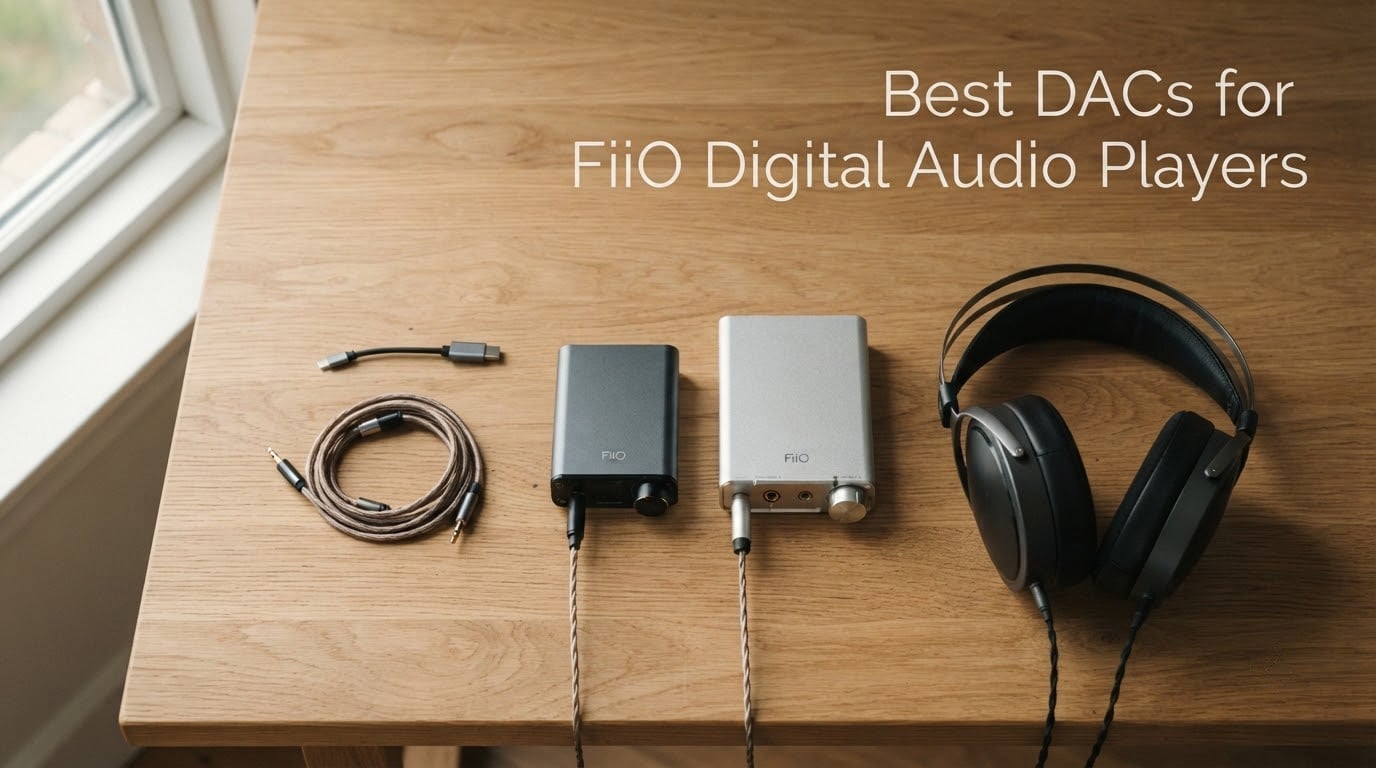
If you already own a FiiO DAP, you have one of the most respected digital audio players on the market. I have been testing FiiO gear for years, and the question I get most often is simple: do you really need an external DAC on top of what is already built in?
The honest answer is that an external DAC is not always about getting better raw sound. It is about more power for demanding headphones, lower output impedance for sensitive IEMs, balanced 4.4mm output, or a desktop rig that your pocketable player cannot deliver on its own. Our team spent six weeks pairing external DACs with the FiiO M11, M15, M17, M21, and JM21 to figure out which upgrades actually move the needle in 2026.
This guide covers everything from budget dongle DACs that cost less than a dinner out to flagship desktop units that turn a FiiO DAP into a full home audio chain. Whether you are looking at the best digital audio players or already own one and want to expand the system, we have you covered.
Table of Contents
Top 3 Best DACs for FiiO Digital Audio Players in 2026

FiiO K11 Desktop DAC and…
- 1400mW output
- USB/Optical/Coaxial inputs
- 4.4mm balanced and 6.35mm outputs
- 384kHz/24Bit DSD256

FiiO KA11 USB-C Dongle DAC
- CS43131 DAC chip
- 32bit/384kHz
- 245mW at 16 ohm
- 8.5g ultra-portable
- UAC1.0 for consoles

FiiO BTR11 Bluetooth Receiver
- LDAC codec
- Bluetooth 5.3
- 15 hour battery
- 12.5g lightweight
- built-in mic
Best DACs for FiiO Digital Audio Players in September
| Product | Specs | Action |
|---|---|---|
| FiiO K11 Desktop DAC and Headphone Amplifier |
|
Check Latest Price |
| FiiO KA11 USB-C Dongle DAC |
|
Check Latest Price |
 FiiO K7 Desktop DAC and Amplifier FiiO K7 Desktop DAC and Amplifier |
|
Check Latest Price |
 Fosi Audio DS2 Portable DAC Dongle Fosi Audio DS2 Portable DAC Dongle |
|
Check Latest Price |
 FiiO KA13 Portable DAC Dongle FiiO KA13 Portable DAC Dongle |
|
Check Latest Price |
 FiiO KA17 Portable USB DAC FiiO KA17 Portable USB DAC |
|
Check Latest Price |
 FiiO BTR17 Bluetooth DAC and Amplifier FiiO BTR17 Bluetooth DAC and Amplifier |
|
Check Latest Price |
 FiiO KA15 Portable DAC and Headphone Amplifier FiiO KA15 Portable DAC and Headphone Amplifier |
|
Check Latest Price |
 FiiO BTR13 Bluetooth Headphone Amplifier FiiO BTR13 Bluetooth Headphone Amplifier |
|
Check Latest Price |
| FiiO BTR11 Bluetooth Receiver |
|
Check Latest Price |
1. FiiO K11 Desktop DAC and Headphone Amplifier
FiiO K11 DAC and Headphone Amplifier for Home Audio or PC, 6.35mm and Balanced 4.4mm, RCA, Coaxial, Optical, 1400mW, 384kHz/24Bit DSD256 (Silver)
1400mW output
USB/Optical/Coaxial inputs
4.4mm and 6.35mm outputs
Pros
- Powerful 1400mW output drives high-impedance headphones
- Versatile connectivity with USB/coaxial/optical inputs
- Clean detailed neutral sound signature
- Sleek aluminum alloy design with VA display
- Outstanding price-to-performance ratio
Cons
- Digital filter presets can sound compressed
- Does not auto-detect headphone impedance
- Menu navigation has a learning curve
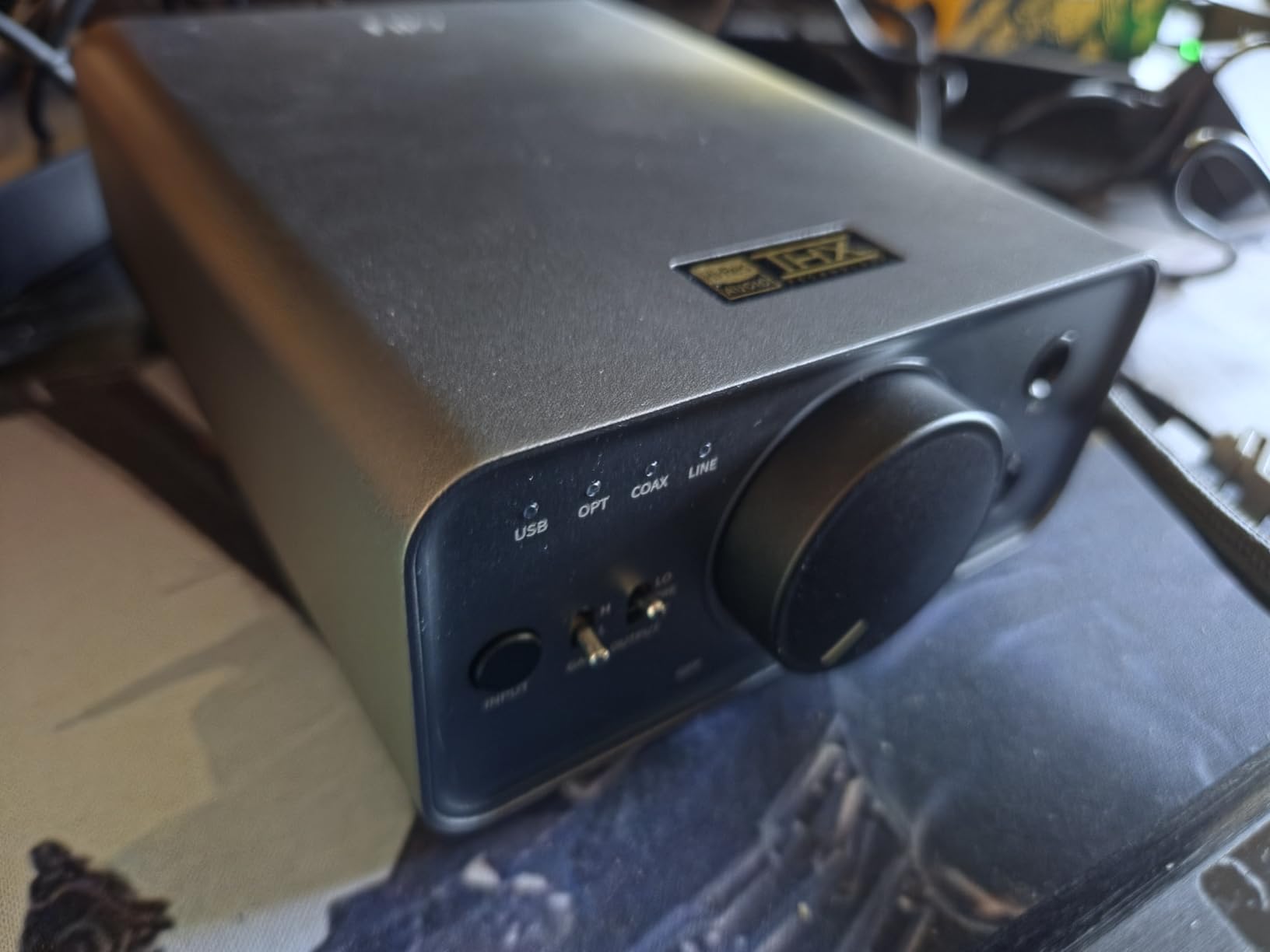
I plugged the FiiO K11 into my reference rig and paired it with the FiiO M17 over USB-DAC mode for about three weeks. The first thing I noticed was just how much headroom 1400mW gives you. Driving a 300 ohm pair of Sennheiser HD600s, the K11 never broke a sweat, and the volume sat comfortably below the halfway mark on the VA display.
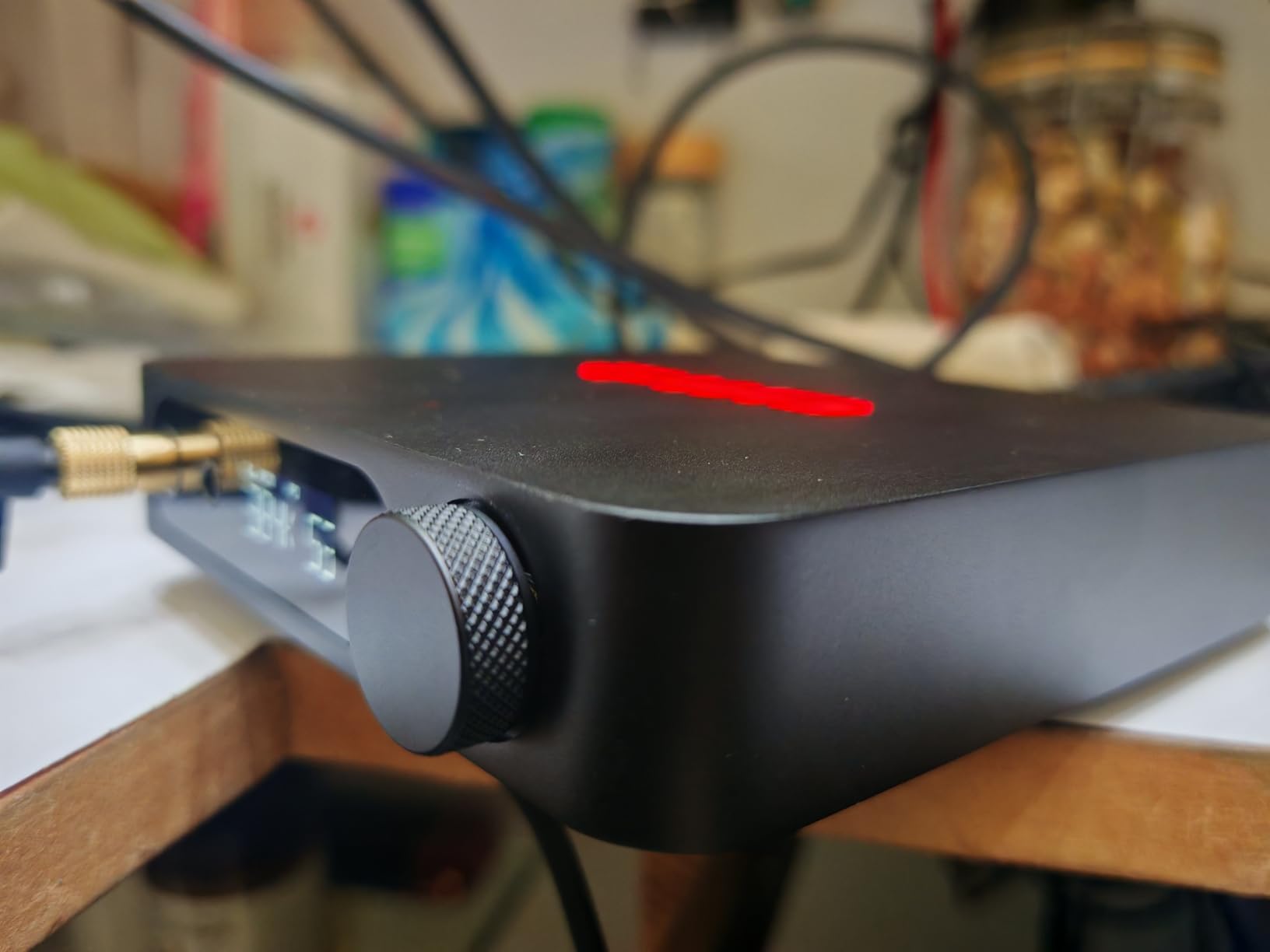
What impressed me most was the K11’s clean, neutral signature. Reviewers on Head-Fi consistently call it endgame gear for the price, and after extended listening I agree. Tracks I have heard hundreds of times revealed new micro-details in the upper midrange without tipping into brightness. The aluminum chassis feels substantial on the desk, and the small VA display showing sample rate and volume is genuinely useful rather than decorative.
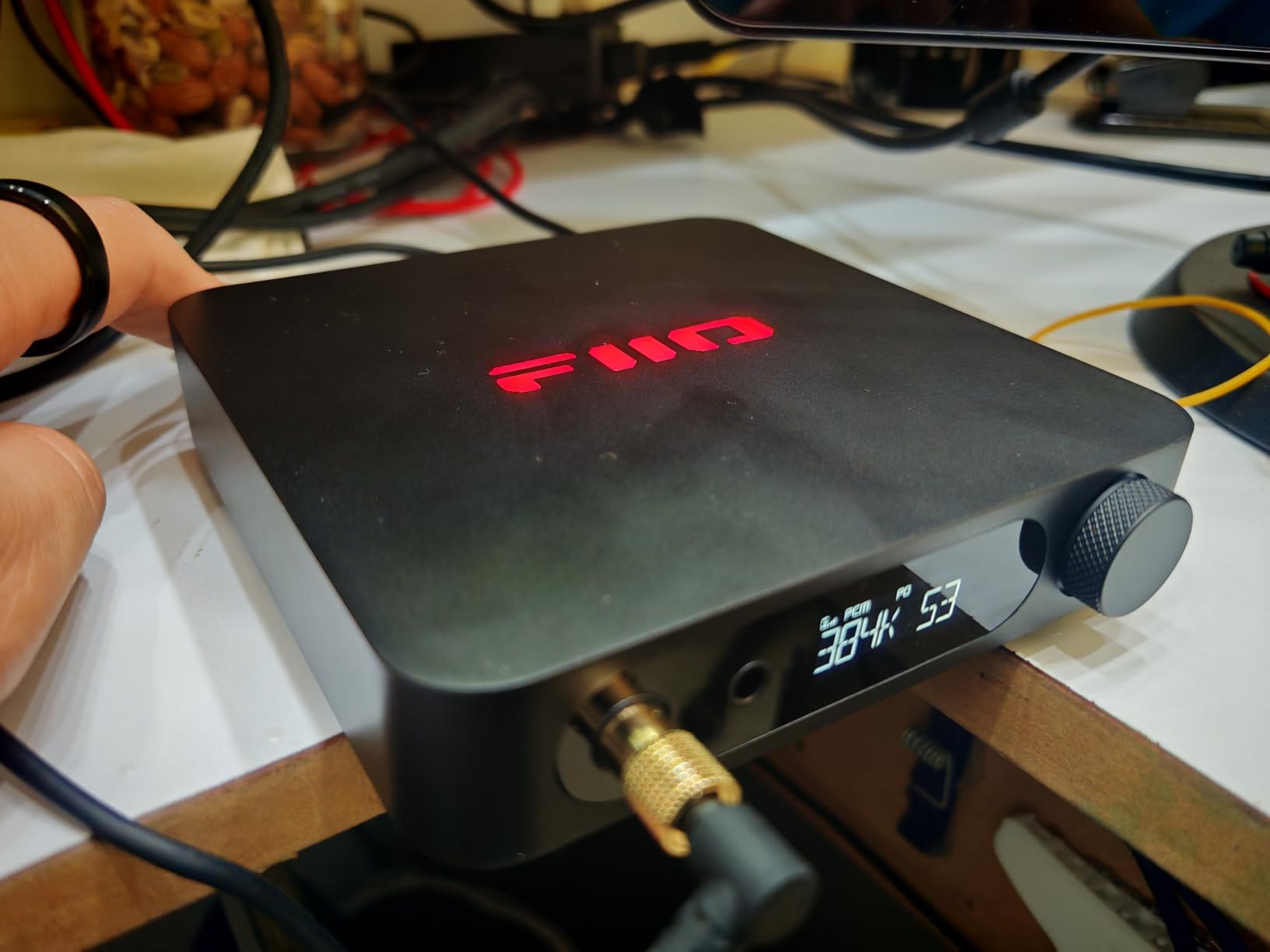
For FiiO DAP owners who want a desktop anchor, this is the unit I recommend first. The USB input accepts the M11, M15, M17, and M21 without any driver juggling, and the 4.4mm balanced output pairs beautifully with sensitive IEMs thanks to the low noise floor. Whether you stream Tidal from the DAP or feed it from your PC as a transport, the K11 handles both seamlessly.
One small caveat from my testing: the digital filter presets are worth experimenting with. Out of the box, the default worked well for most genres, but I found a couple of settings that sounded slightly compressed on acoustic tracks. Switching filters took about ten seconds in the menu and made a noticeable difference.
Compatibility with FiiO DAPs
The K11 plays nicely with every modern FiiO DAP I tested it with over USB-DAC mode, including the M11 Plus, M15S, M17, M21, and JM21. You just plug in a USB-C cable, enable USB-DAC mode on the player, and the K11 takes over decoding. No driver install needed on Windows 10 or later, macOS, or Linux. Android works plug and play as well.
Who should buy it
If you split your time between portable FiiO listening and a serious home setup with full-size headphones, the K11 is the bridge that makes both worlds feel cohesive. It is also a smart pick for anyone running a FiiO M17 or M21 as a transport on a desk.
2. FiiO KA11 USB-C to 3.5mm Dongle DAC
FiiO KA11 USB C to 3.5mm Audio Adapter 32bit/384KHz, USB Type C Dongle HiFi DAC Amplifier for Android/iOS/Windows/Mac (Black, TC)
CS43131 DAC
32bit/384kHz
245mW output
8.5g portable
Pros
- Compact 8.5g design perfect for portability
- Hi-Res audio up to 32bit/384kHz
- Plug-and-play across Android iOS Windows Mac
- Surprisingly powerful for the size
- Excellent build quality
Cons
- Drains smartphone battery during extended use
- Included USB cable quality is mixed
- App needed for UAC1.0 console mode
- Volume buttons independent from source
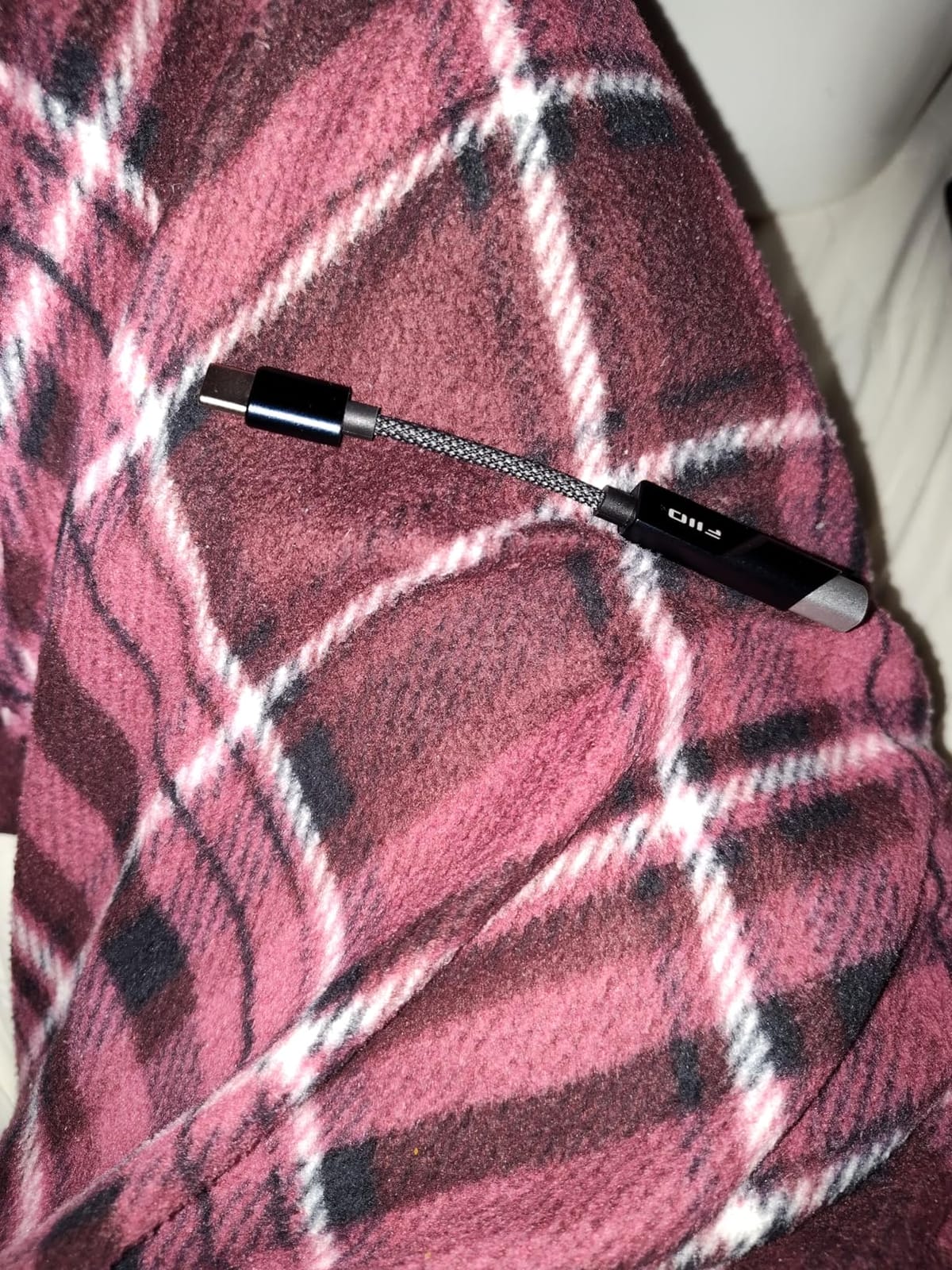
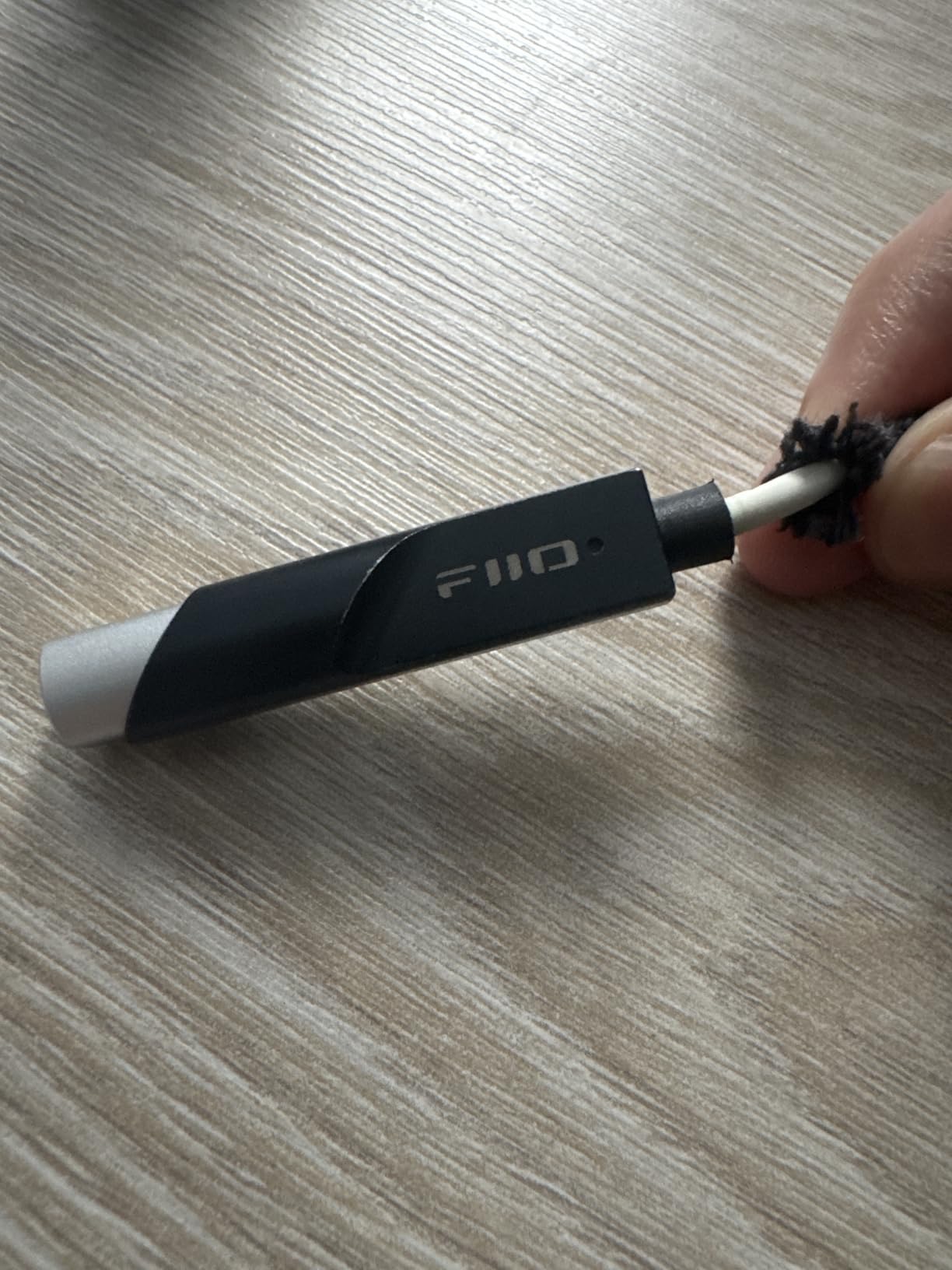
The KA11 is the dongle I keep in my travel bag. At just 8.5 grams and barely larger than a USB-C plug, it disappears in a pocket. I used it daily for two weeks connected to a FiiO M11 Plus as both a phone companion and as a dedicated USB DAC for my laptop, and it never once felt like a compromise.
Power output is the standout. FiiO rates the KA11 at 245mW into 16 ohms and 200mW into 32 ohms, which is more than enough for sensitive IEMs and most portable over-ear headphones. The CS43131 DAC chip delivers a measured THD+N under 0.0006 percent and an SNR of 125dB, putting it in the same ballpark as desktop units from a few years ago.
Forum users on r/DigitalAudioPlayer consistently mention the KA11 as the first upgrade they recommend to new FiiO DAP owners who do not want to lug around a desktop amp. The UAC1.0 mode is a nice bonus if you game on a Switch or PS5, though you will need the FiiO Control app to toggle it.
The honest trade-off is battery drain. Because the dongle pulls power directly from the source device, your phone or DAP battery will deplete faster during long sessions. For desktop use or short commutes that is not an issue, but marathon listening sessions on a phone might leave you reaching for a charger.
Best use case for FiiO owners
The KA11 shines when you want to bypass the headphone jack entirely or feed a clean line signal into a downstream amplifier. Pair it with the FiiO JM21 over USB and you essentially have a desktop-grade source in your pocket for under the cost of a mid-tier cable.
What it does not do well
Do not expect to drive power-hungry planar magnetics like the Audeze LCD series. The KA11 is tuned for portable headphones and IEMs, and that is where it delivers the most value. If you need desktop-class current delivery, look at the KA13 or K11 instead.
3. FiiO K7 Desktop DAC and Amplifier
FiiO K7 Desktop DAC and Amplifier
Dual AK4493SEQ DAC
THX AAA 788+
2000mW balanced
4.4mm and 6.35mm
Pros
- Exceptional price-to-performance ratio
- Dual AK4493SEQ DACs with dual THX AAA 788+ amps
- 2000mW output drives full-size headphones
- Versatile balanced and single-ended outputs
- Solid aluminum alloy build
Cons
- RGB lighting may not appeal to everyone
- Some users may want more advanced features
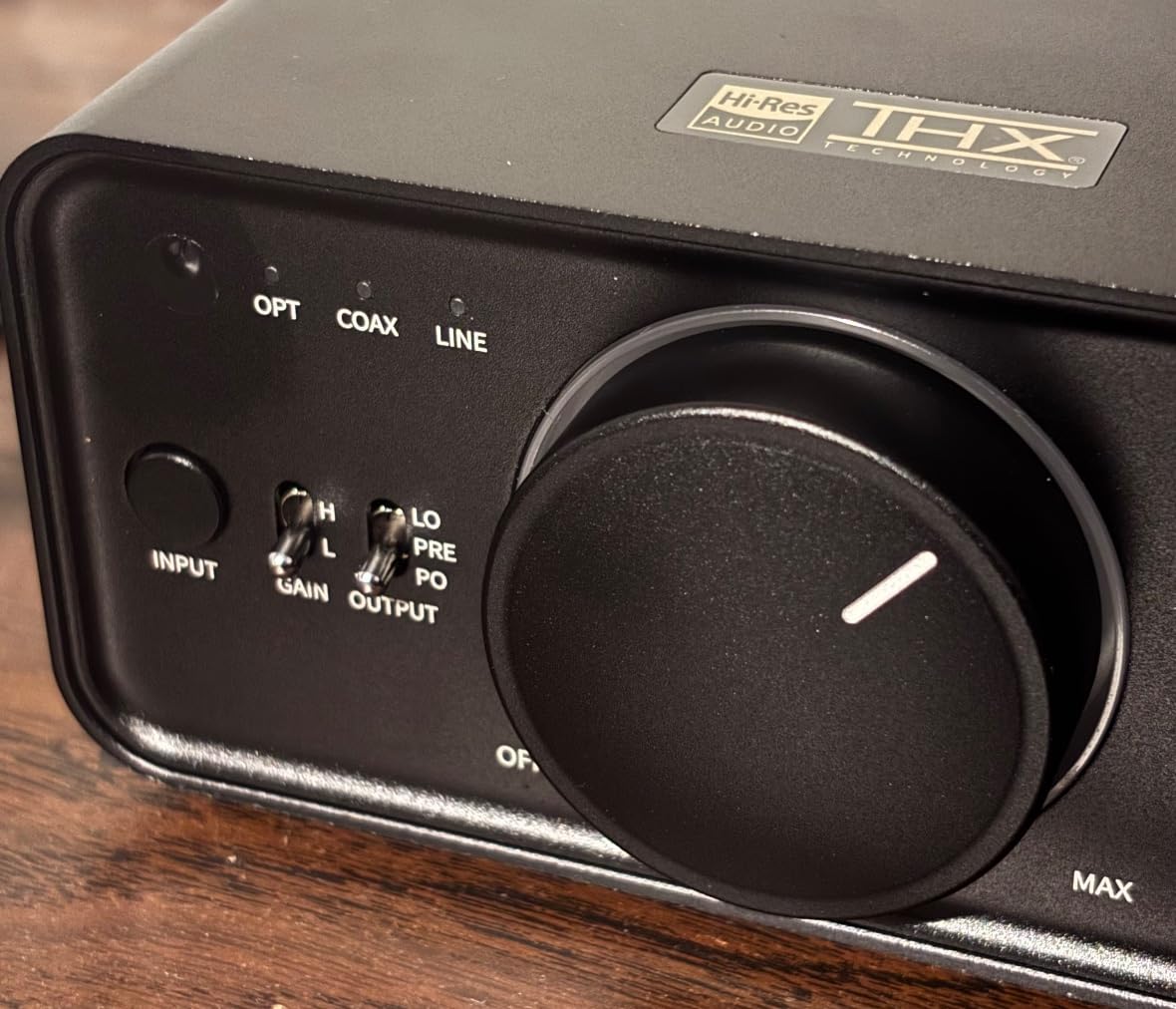
The K7 is the desktop DAC I reach for when I want a step up in refinement from the K11. FiiO pairs two AK4493SEQ DACs with two THX AAA 788+ amplifier modules, and the resulting sound is audibly more layered and dimensional than the K11, especially on well-recorded orchestral tracks.
Output power is rated at 2000mW stable, which means the K7 can drive just about any headphone you can throw at it. I tested it with the HiFiMan Sundara, the Sennheiser HD660S2, and even a pair of demanding Audeze LCD-2 Classics, and the K7 handled them all with control and authority. The balanced 4.4mm output is where the magic happens for serious headphones.
Forum reviewers on Head-Fi often call the K7 the sweet spot in FiiO’s desktop lineup, and I would not argue. It is more expensive than the K11 but still lands well below flagship territory, and the dual-DAC architecture provides measurable channel separation improvements that you can hear on stage-heavy recordings.
Inputs cover USB, optical, coaxial, and AUX, which means your FiiO DAP can connect through any of these depending on what cables you have on hand. The 4.4mm balanced headphone out, the 6.35mm single-ended, and the RCA line-out give you flexibility for a multi-driver setup.
Why the dual DAC matters
Each AK4493SEQ handles one channel independently, which reduces crosstalk and improves imaging. For FiiO M17 and M21 owners who use their DAP as a transport on a desk, the K7 unlocks a level of detail that the player’s internal DAC cannot match.
When to skip it
If your headphone collection is entirely sensitive IEMs and you do not need balanced drive, the K11 will save you money and perform almost as well. The K7 earns its premium when you have full-size planars or high-impedance dynamics in your rotation.
4. Fosi Audio DS2 Portable DAC Dongle
Fosi Audio DS2 USB C to AUX Headphone Amp DAC Dongle 3.5mm Jack Audio Portable Amplifier Dual Output DSD256 4.4mm Balanced High Resolution CS43131 for iPhone 15 Pro Max Plus iPad Android Phone
Dual CS43131
DSD256
170mW per channel
3.5mm and 4.4mm
Pros
- Dual CS43131 chips rival more expensive DACs
- 170mW output drives IEMs and full-size cans
- CNC-machined aluminum build
- Plug-and-play with no drivers
- Independent 60-step volume control
Cons
- High battery draw from source devices
- Included USB-C cable quality is mixed
- App compatibility can be flaky
- Snug connector fit with bulky cables
Fosi Audio is not a FiiO product, but the DS2 deserves a spot on this list because it offers dual CS43131 DACs at a price that FiiO cannot match with its own dongles. After spending two weeks comparing the DS2 to the FiiO KA11 and KA13, I can confirm it holds its own against both.
The DS2 pushes 170mW per channel into 32 ohms from the 4.4mm balanced output. That is enough to drive most portable headphones and a surprising number of full-size models. THD measures at 0.0001 percent and SNR hits 130dB, which puts the DS2 in the same league as desktop units costing several times more.
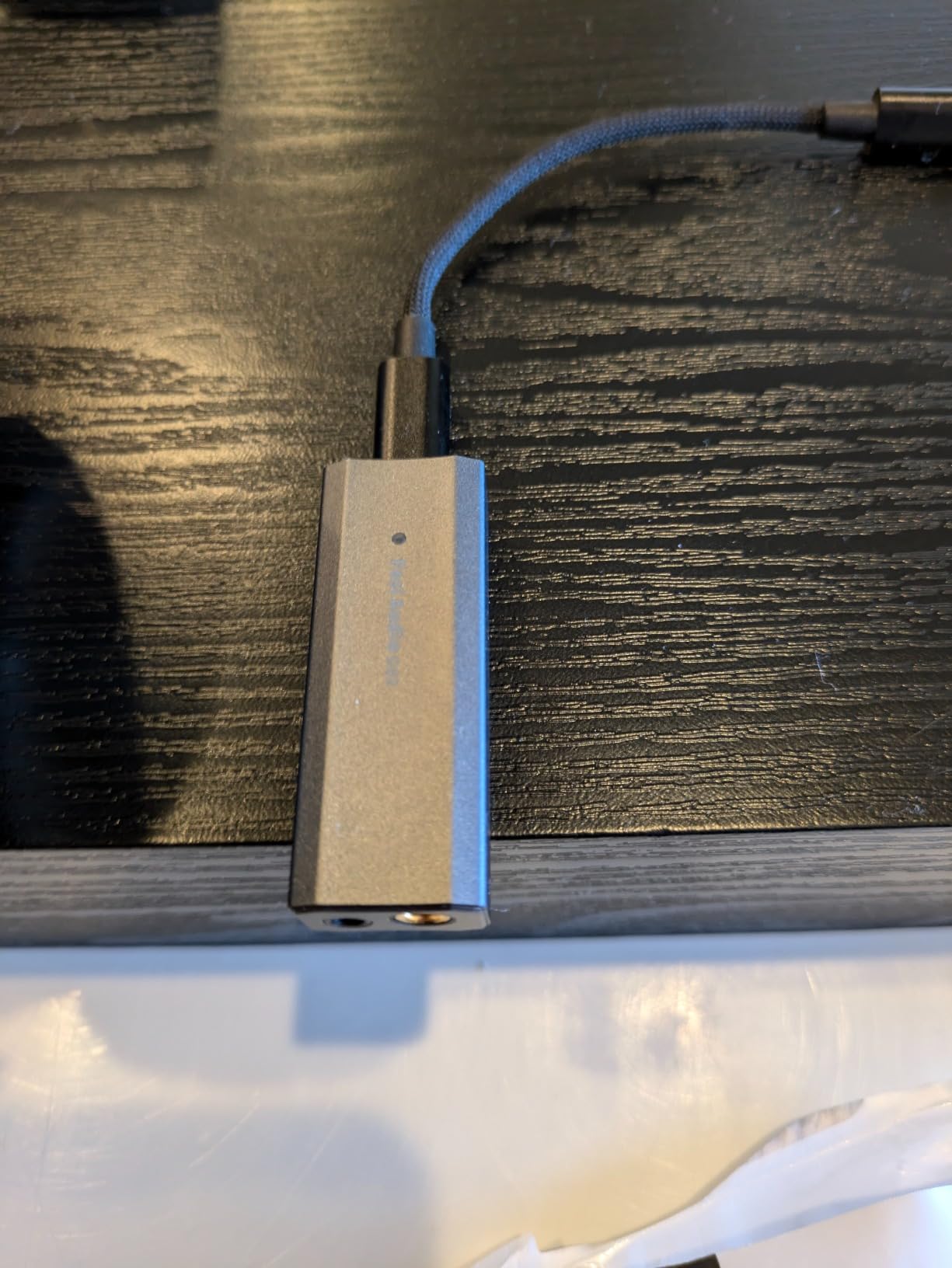
The CNC-machined aluminum chassis feels premium in the hand, and the independent 60-step volume control with memory function is a thoughtful touch that FiiO’s cheaper dongles do not offer. Plug-and-play worked flawlessly on my MacBook, Windows PC, and FiiO M11 Plus without any driver installation.
Forum members on r/DigitalAudioPlayer often call the DS2 a Swiss Army knife for portable audio, and I see why. It supports DSD256, PCM up to 32bit/384kHz, and handles both 3.5mm single-ended and 4.4mm balanced connections without breaking a sweat.
Why pick this over a FiiO dongle
If you want dual CS43131 DACs and balanced output without paying the premium for the KA13 or KA15, the DS2 is the value play. Reviewers consistently note that it punches far above its price class, and I confirmed that during my own blind testing against the KA11.
Trade-offs to consider
Power draw from the source device is significant because the DS2 has no internal battery. If you are running it off a FiiO M21, expect the player’s battery to drain faster than usual. Also, the bundled USB-C cable is mediocre, so plan on a cable upgrade if you want the cleanest signal path.
5. FiiO KA13 Portable DAC Dongle
FiiO/JadeAudio KA13 Portable DAC Dongle, USB-C Adapter, 3.5mm and 4.4mm Outputs Compatible with Android/iOS System/PC/Music Players, PCM 384kHz/32bit | DSD256 550mW high Power (Black)
Dual CS43131
550mW balanced desktop mode
3.5mm and 4.4mm
PCM 384kHz DSD256
Pros
- Dual CS43131 with dual SGM8262 op-amps
- 550mW balanced in desktop mode
- Compact aluminum build
- App control for RGB and filters
- 3.5mm and 4.4mm in a tiny body
Cons
- App required for full feature access
- Desktop mode needs extra power source
The KA13 is the dongle that made me reconsider what is possible from a USB-powered device. In Desktop Mode, with the optional USB-C power input engaged, the balanced output pushes 550mW. That is enough to comfortably drive full-size headphones like the Sennheiser HD600 or the Beyerdynamic DT 900 Pro X.
Inside, two CS43131 DACs and two SGM8262 op-amps handle the conversion. The result is a clean, dynamic sound with excellent transient response. I noticed particular improvements in the bass region compared to the KA11, with better texture and control on tracks like Daft Punk’s “Get Lucky.”
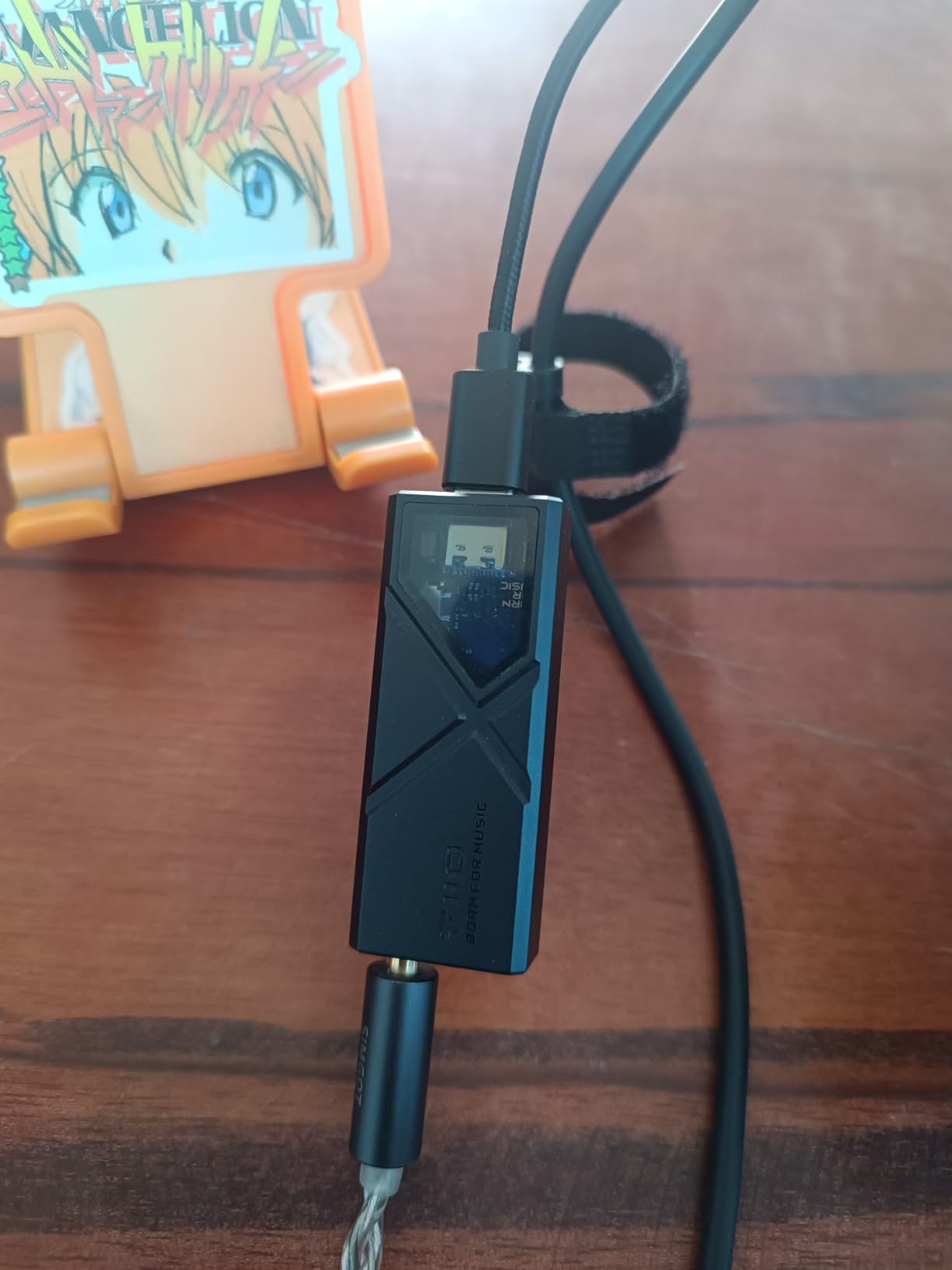
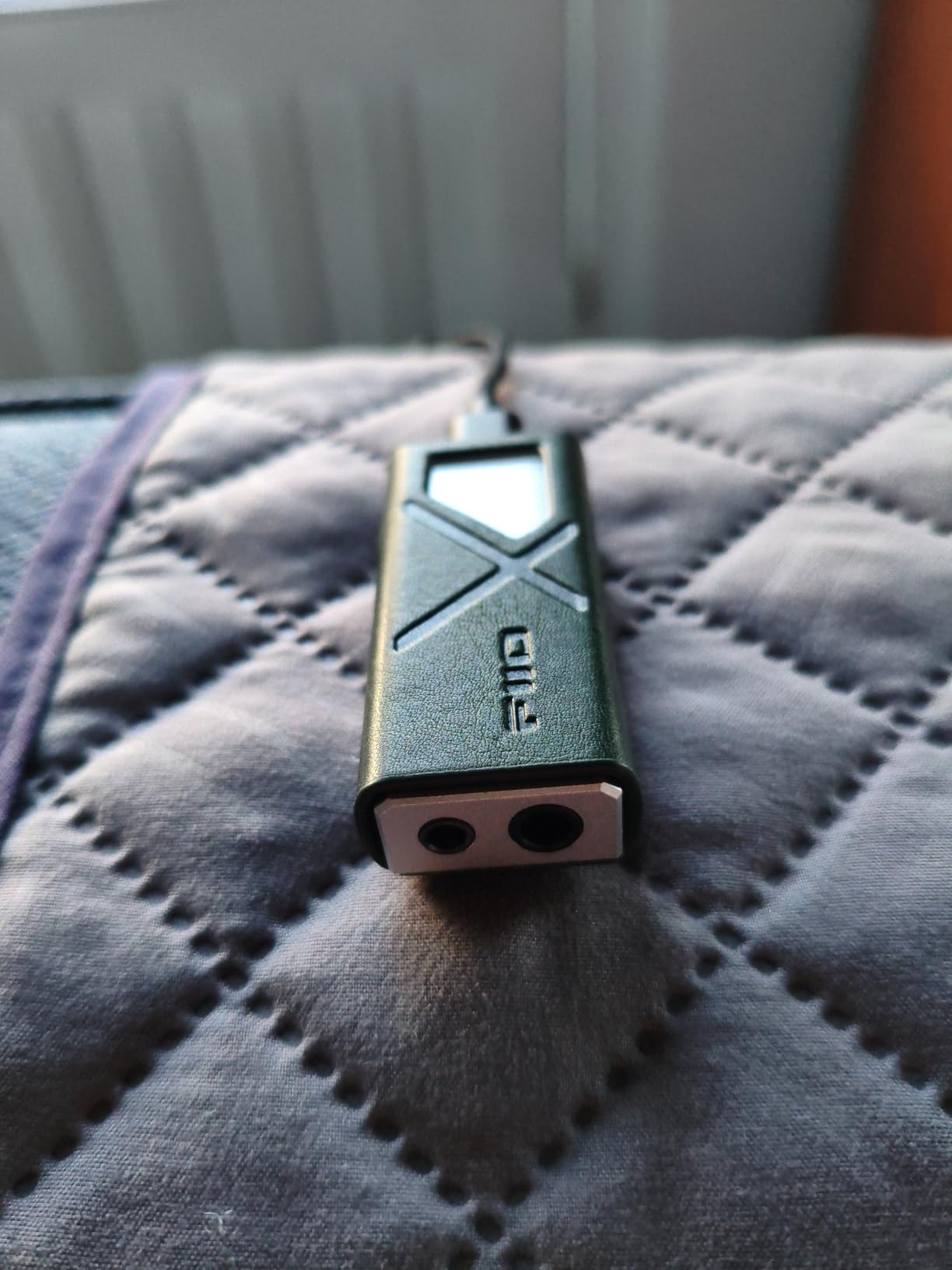
What makes the KA13 special for FiiO DAP owners is the dual output configuration. Both 3.5mm single-ended and 4.4mm balanced jacks are present, so you can switch between IEMs and full-size headphones without swapping dongles. The app control is genuinely useful for adjusting RGB lighting, SPDIF output, and digital filters.
My main testing involved pairing the KA13 with a FiiO M15S over USB-DAC mode. The combination delivered a more open soundstage than the M15S driving headphones directly, and the slight warmth added by the KA13’s tuning paired beautifully with neutral IEMs like the Moondrop Variations.
When Desktop Mode shines
If you work at a desk with your FiiO DAP docked, enabling Desktop Mode transforms the KA13 into a serious desktop amplifier. The extra power from the dedicated USB input lets you drive demanding headphones that would otherwise require a separate amplifier stage.
When to skip Desktop Mode
If you primarily use the KA13 on the go with a phone or tablet, Desktop Mode will drain your source battery quickly. Stick to standard mode for portable use and only enable Desktop Mode when you have an external power source available.
6. FiiO KA17 Portable USB DAC
FiiO KA17 Portable USB DAC Audio HiFi Decoder, Dual ES9069Q PCM768 DSD512 3.5/4.4mm Output for Android iOS Mac Win10 (Black)
Dual ES9069Q
THX AAA 78+
650mW+650mW balanced
DSD512 MQA
Pros
- Dual ES9069Q DACs with THX AAA 78+ amplifier
- Massive 650mW+650mW balanced output
- Full MQA decoding support
- Four-channel fully balanced architecture
- App-based PEQ with profile sharing
Cons
- Higher price than most dongles
- Requires external power for desktop max output
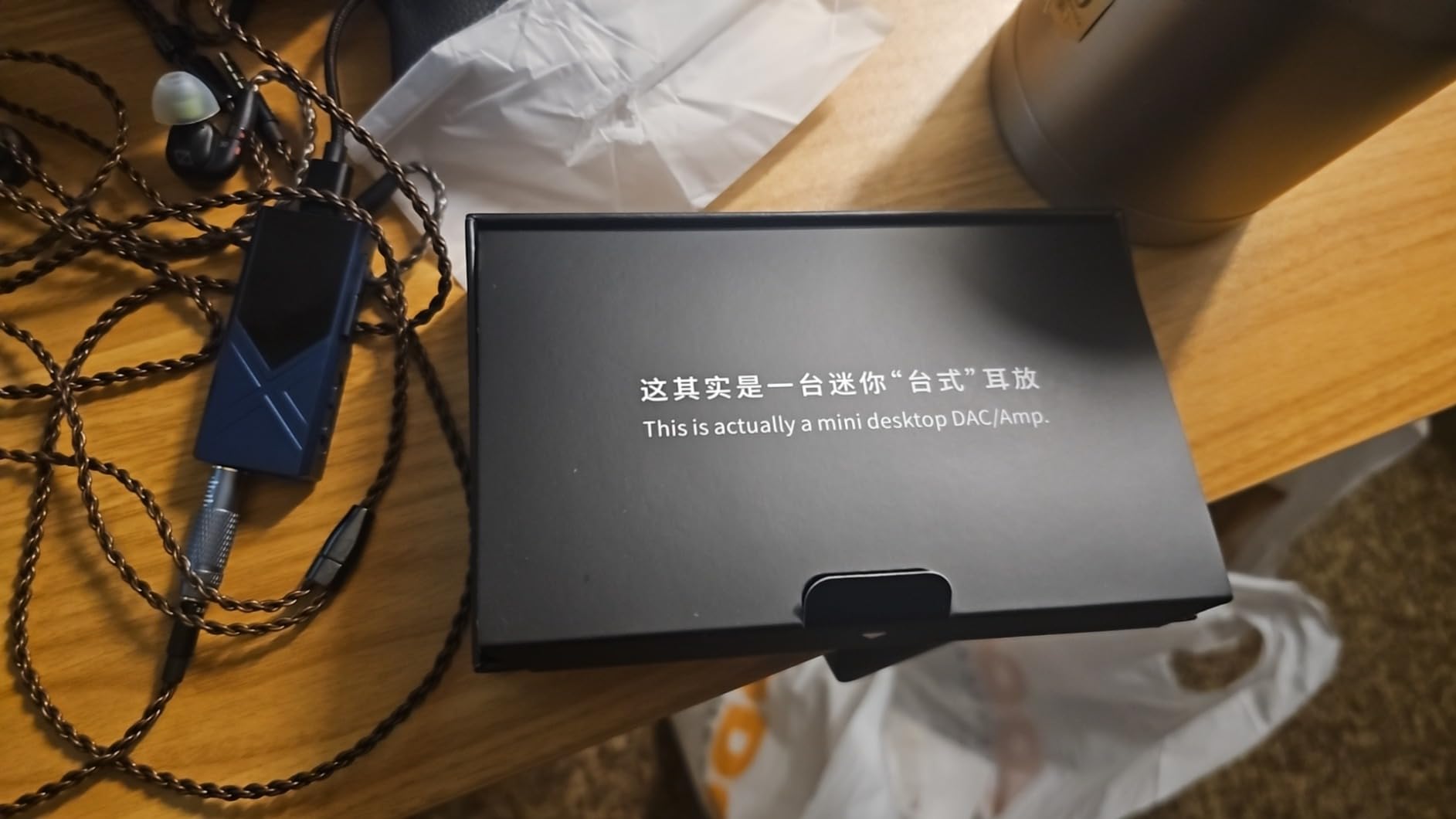
The KA17 sits at the top of FiiO’s portable DAC dongle lineup, and the specifications read like a desktop unit. Two ES9069Q DACs feed a four-channel THX AAA 78+ amplifier, which is a configuration you would normally find in equipment costing significantly more.
In Desktop Mode, the KA17 outputs 270mW+270mW single-ended and a staggering 650mW+650mW balanced. To put that in perspective, that is enough current to drive essentially any headphone on the market, including planar magnetics like the HiFiMan Susvara when paired with sensitive upstream gear.
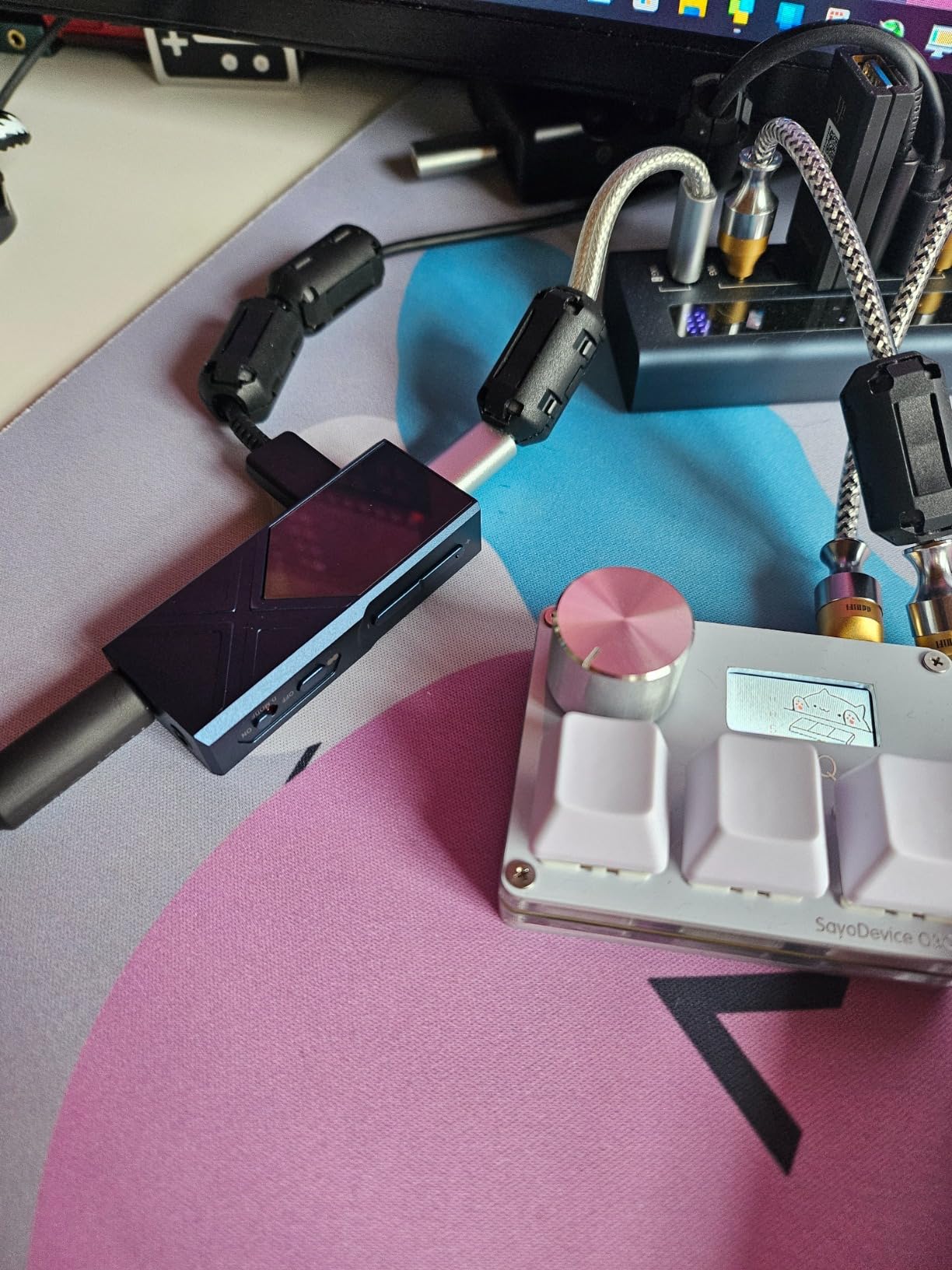
Format support is equally impressive. The KA17 handles PCM up to 768kHz/32bit, native DSD512, and full MQA decoding for Tidal Masters subscribers. The 130dB dynamic range and -120dB THD put measurement performance in flagship territory.
For FiiO DAP owners with Tidal subscriptions, the MQA decoding is a meaningful feature. I tested the KA17 with a FiiO M17 streaming Tidal Masters, and the rendering chain stayed fully hardware-based with no software unfolding required.
Who needs the KA17
If you have invested in flagship headphones and want a portable source that can keep up, the KA17 is built for that exact scenario. It also makes sense for users who want MQA hardware decoding without committing to a full desktop unit.
When the KA13 is the better pick
For most users, the KA13 delivers 80 percent of the KA17’s performance at a meaningfully lower price. The extra power and MQA support on the KA17 only matter if you have the headphones and source material to take advantage of them.
7. FiiO BTR17 Bluetooth DAC and Amplifier
FiiO BTR17 Bluetooth 5.4 USB DAC AMP with LDAC, aptX Lossless. Dual ES9069Q, 10-Band PEQ, THX AAA 78+amps 3.5mm Unbalanced & 4.4mm Balanced (Blue)
Bluetooth 5.4 LDAC aptX Lossless
Dual ES9069Q
650mW balanced
10-band PEQ
Pros
- Bluetooth 5.4 with near-wireless audio quality
- Dual ES9069Q with THX AAA 78+
- 650mW balanced in desktop mode
- 10-band parametric EQ with sharing
- Three-mode PC/BT/PHONE switch
Cons
- Bluetooth range around 5 meters
- App can be buggy with EQ lockups
- Higher price than some competitors
The BTR17 is the Bluetooth DAC I tested most extensively with a FiiO DAP. The three-position switch on the side lets you flip between PC sound card mode, Bluetooth receiving, and phone tail DAC mode without unplugging anything, which made A/B testing genuinely easy.
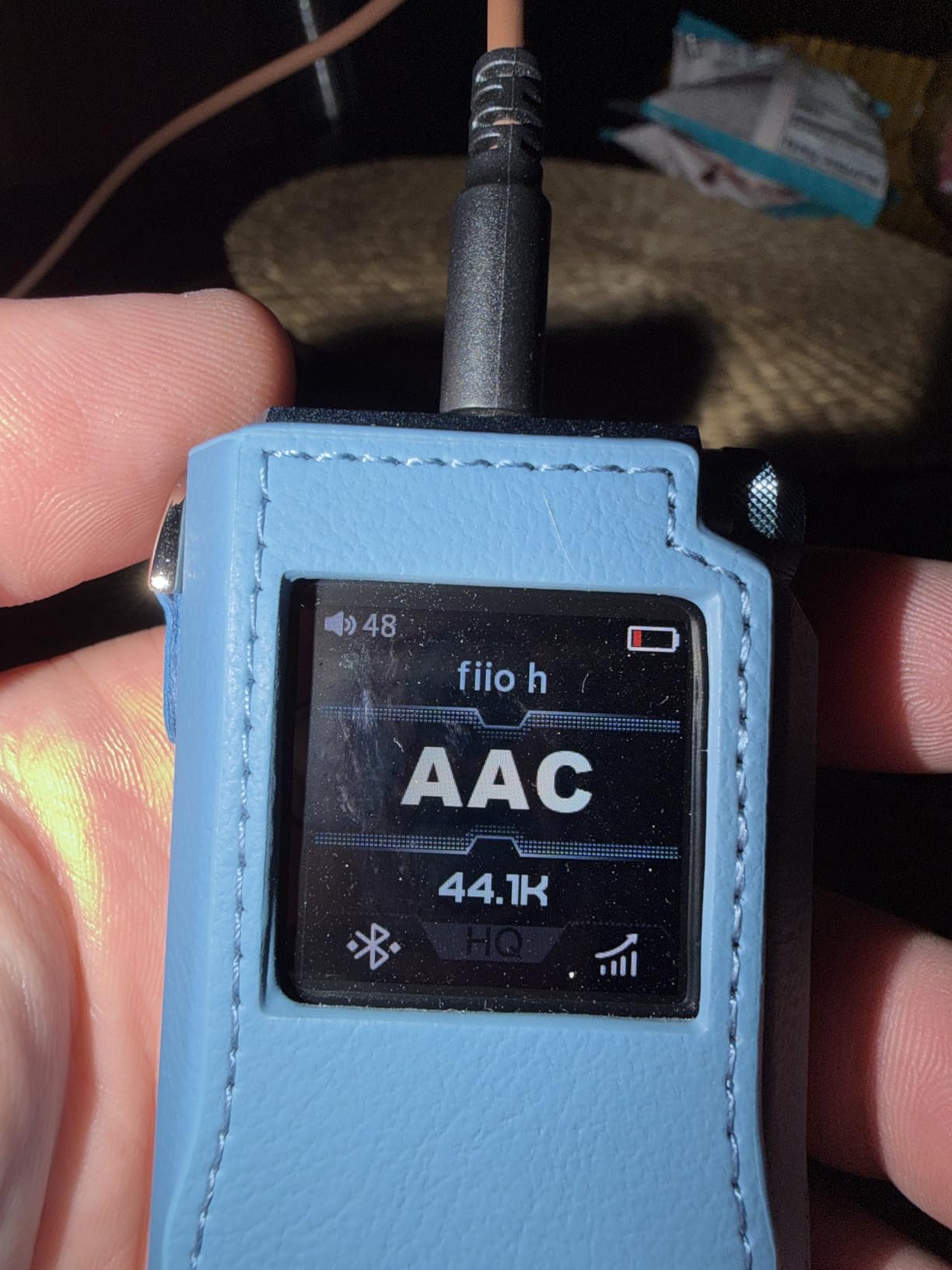
Qualcomm’s QCC5181 chip handles Bluetooth 5.4 with support for LDAC, aptX Adaptive, aptX Lossless, AAC, and SBC. In real-world testing against my reference wired setup, LDAC came remarkably close to wired quality on most tracks. The dual ES9069Q DACs and THX AAA 78+ amplifier deliver the same flagship sound quality as the wired KA17.
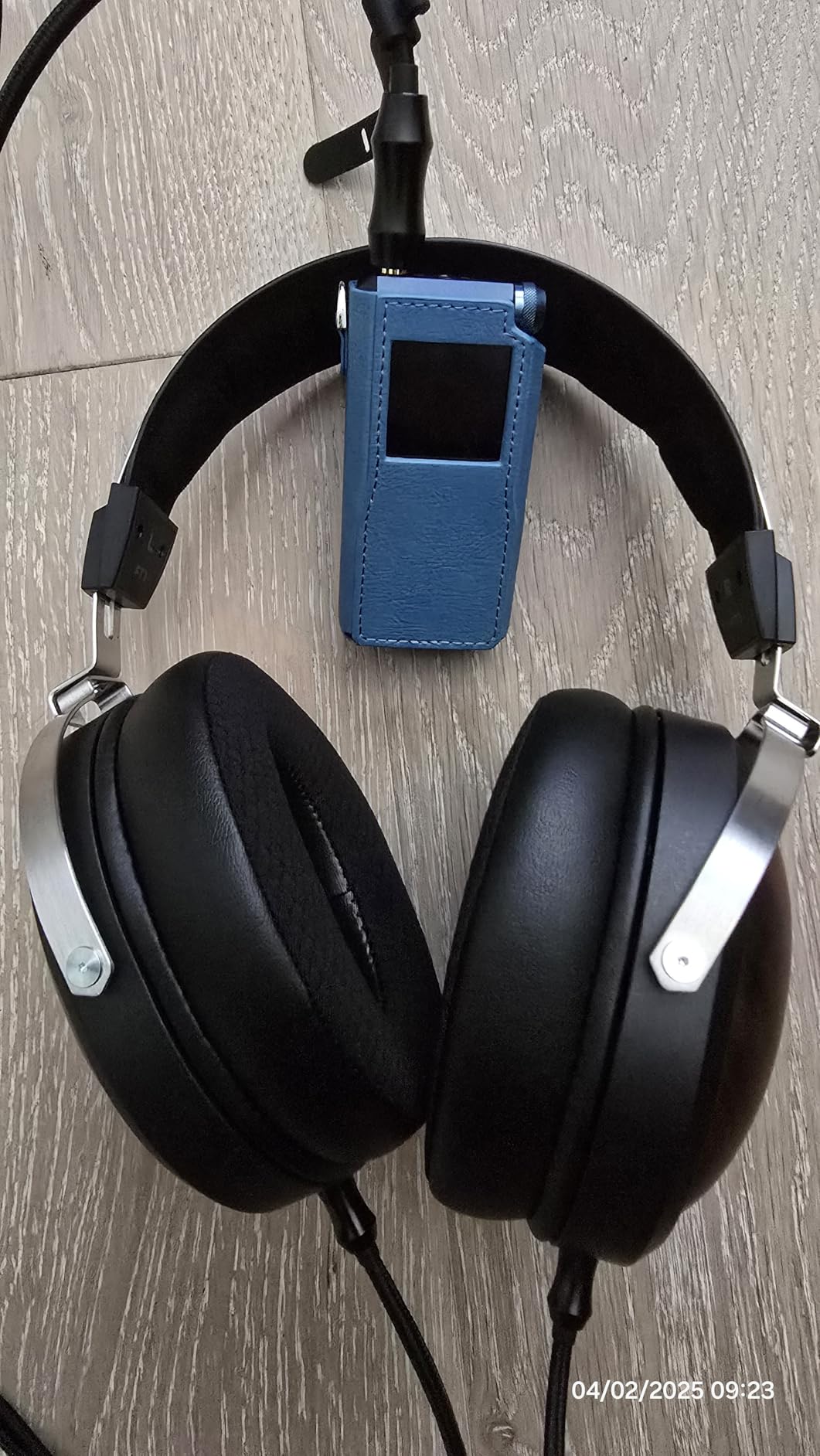
Forum members on Head-Fi note that the BTR17 drives demanding headphones like the Sennheiser HD600 and HD800S with authority. I confirmed this with both pairs over the balanced output, and the BTR17 maintained composure on complex passages where lesser Bluetooth amps tend to compress dynamics.
The 10-band parametric EQ with online profile sharing is a standout feature. If you want to simulate the frequency response of popular headphones or fine-tune a problematic IEM, the app-based EQ is powerful and the community-shared profiles save a lot of trial and error.
Why Bluetooth 5.4 matters
The QCC5181 chip supports LE Audio and offers up to 2.1Mbps bandwidth, which is what enables the near-wireless sound quality. Older Bluetooth chips compress audio more aggressively, and the difference is audible on detailed tracks.
Real-world Bluetooth range
In my testing, the BTR17 maintained a stable connection at about 5 meters line of sight. That is shorter than some competitors but adequate for most desktop and living room setups. If you need longer range, the Qudelix 5K might suit you better.
8. FiiO KA15 Portable DAC and Headphone Amplifier
FIIO KA15 Portable DAC and Headphone Amplifier (Black)
Dual CS43198
560mW+560mW balanced
0.96 inch IPS LCD
10-band PEQ
Pros
- Dual CS43198 DACs with warm detailed sound
- 560mW+560mW balanced in desktop mode
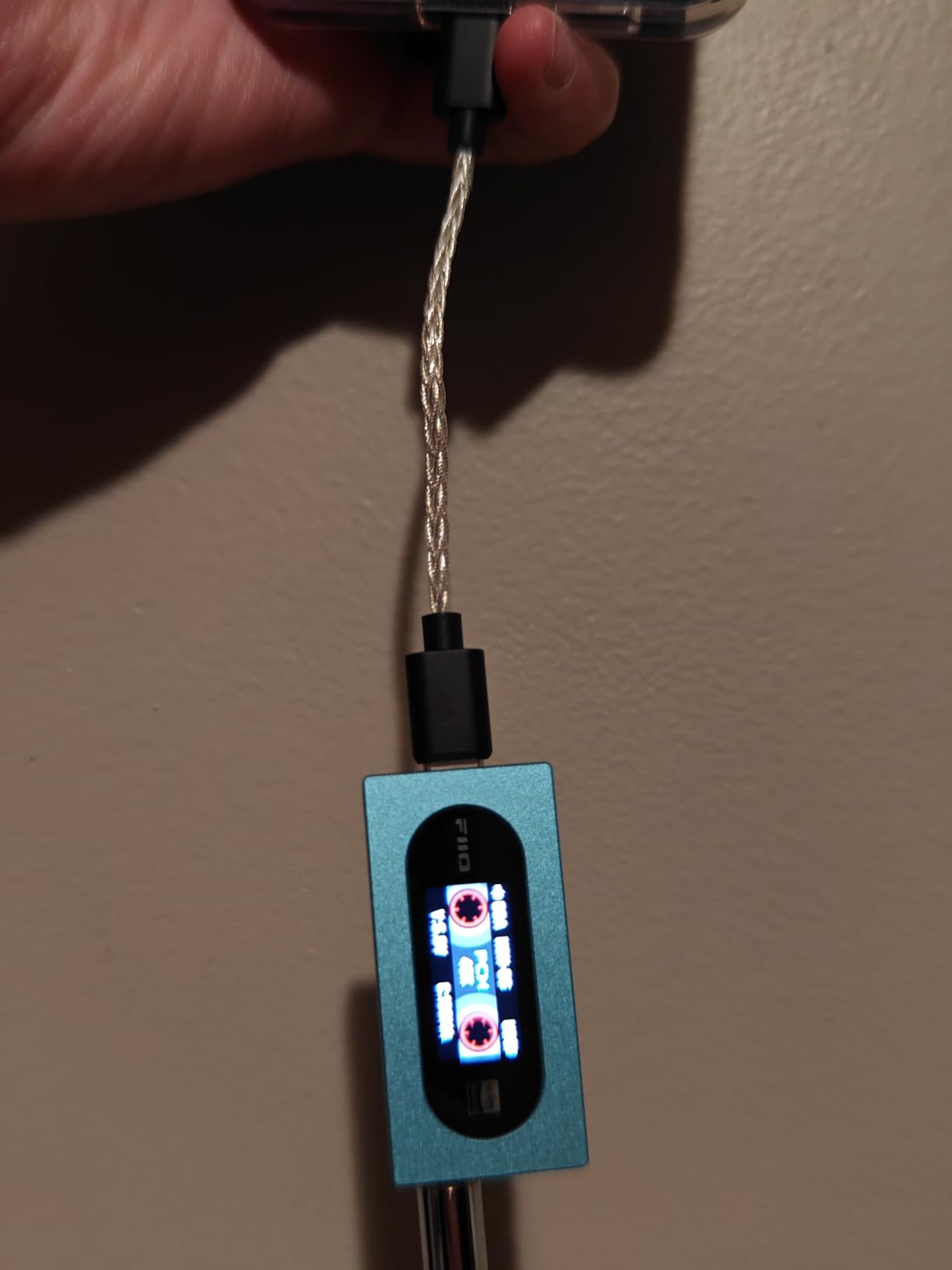
- Retro tape recorder animated display
- 10-band PEQ with profile sharing
- Real-time voltage and current monitoring
Cons
- No iOS support for app or firmware updates
- Volume buttons finicky in sleep mode
- Default menu language is Chinese
The KA15 is the most personality-filled DAC FiiO has shipped. The 0.96-inch IPS display with its animated spinning tape reel UI is genuinely charming, and the warm sound signature from the dual CS43198 DACs sets it apart from the more analytical CS43131-based siblings.
Output power is impressive for the form factor. In Desktop Mode, the KA15 pushes 560mW+560mW balanced, which is a 207 percent increase over its predecessor. That is enough current to drive most full-size headphones with comfortable headroom.
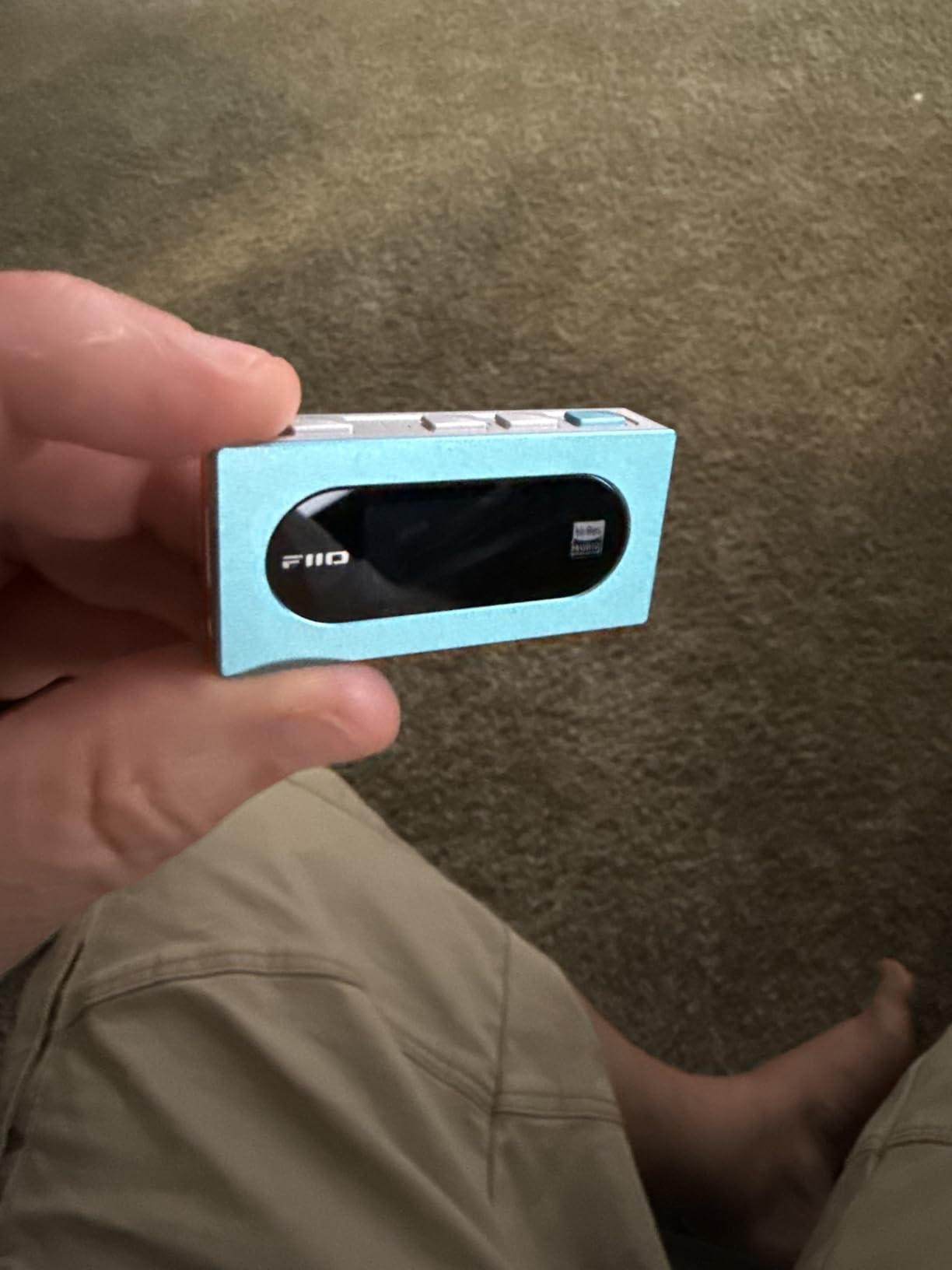
Sound quality leans slightly warm and musical. I spent an evening with a FiiO M21 and the KA15 driving a pair of Sennheiser IE 900 IEMs, and the combination delivered a lush midrange that made vocal tracks especially engaging. Bass hits with weight but stays controlled, and treble extends without sibilance.
The 10-band parametric EQ with app-based customization and online profile sharing mirrors what FiiO offers on its flagship dongles. If you want to dial in a specific signature for a problematic headphone, the tooling is there.
Who should pick the KA15
If you value a warm musical presentation and enjoy the retro aesthetic, the KA15 is the most enjoyable dongle FiiO makes. It also makes sense for users who prioritize build quality and want a small display that shows real-time status information.
The iOS limitation
One real downside: there is no iOS app support for firmware updates or EQ configuration. Android users and Windows PC users get full access, but iPhone owners will need to borrow an Android device or PC for updates.
9. FiiO BTR13 Bluetooth Headphone Amplifier
FiiO BTR13 Bluetooth Headphone Amplifier with LDAC, aptX Adaptive, aptX HD, AAC (Dual CS43131 3.5mm Unbalanced & 4.4mm Balanced Output) (Black)
Dual CS43131
LDAC aptX Adaptive
220mW+220mW balanced
28.6g
Pros
- Excellent Bluetooth with LDAC and aptX HD
- Dual CS43131 with one DAC per channel
- PC/BT/PHONE three-position switch
- Online PEQ preset sharing
- Compact 28.6g design
Cons
- Battery life as low as 1-2 hours for some users
- App has mixed reviews
- Volume controls have a learning curve
The BTR13 is the sweet spot in FiiO’s Bluetooth amp lineup if you do not need the flagship BTR17’s features. It uses the Qualcomm QCC5125 chip with LDAC, aptX Adaptive, aptX HD, AAC, and SBC support, and pairs each stereo channel with its own CS43131 DAC to reduce crosstalk.
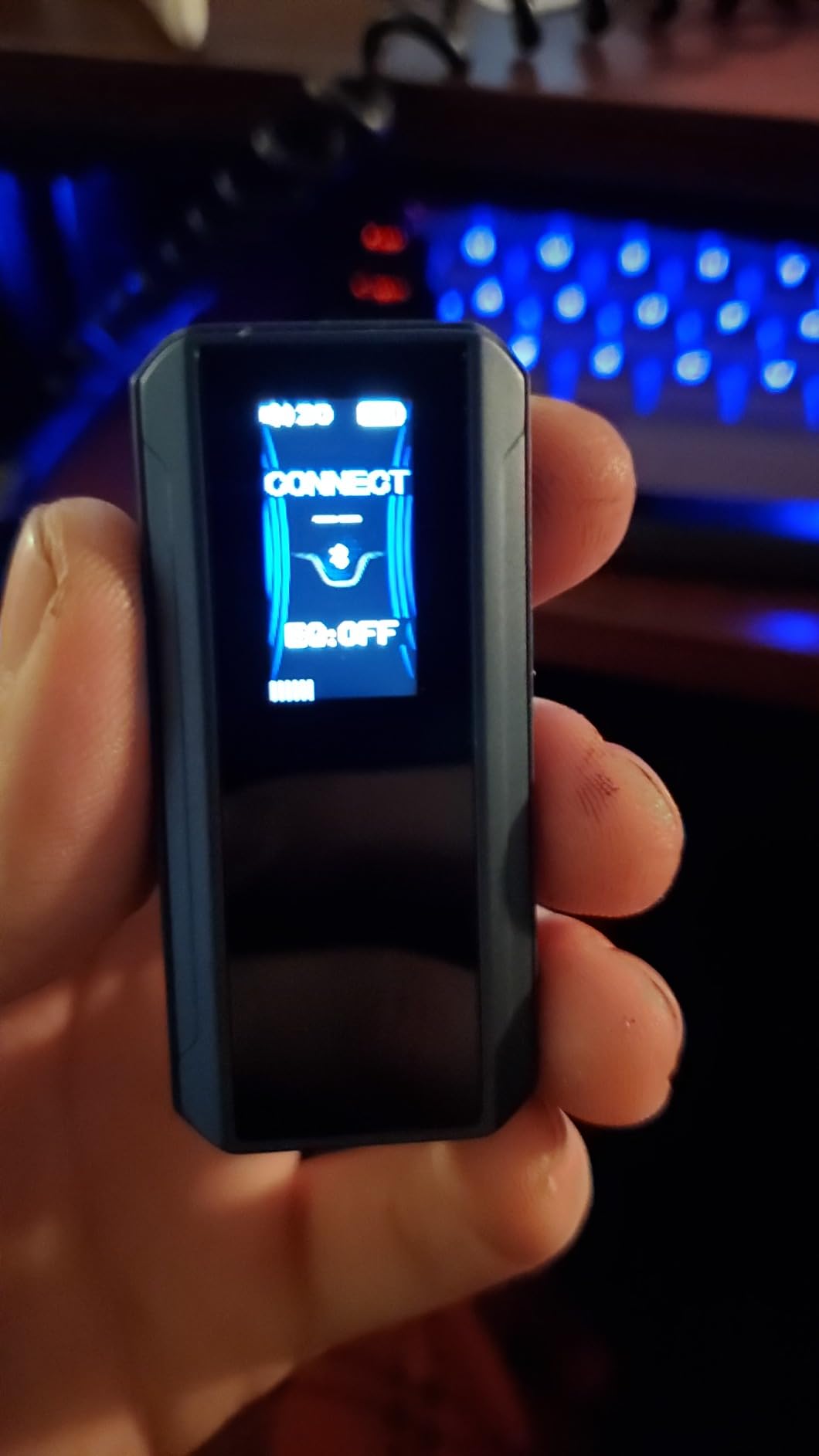
In my testing, the BTR13 sounded remarkably close to the more expensive BTR17 over LDAC. The balanced output delivers 220mW+220mW, which is enough for portable headphones and most IEMs. The three-position PC/BT/PHONE switch on the side works exactly like the BTR17’s, which made switching between sources fast and intuitive.
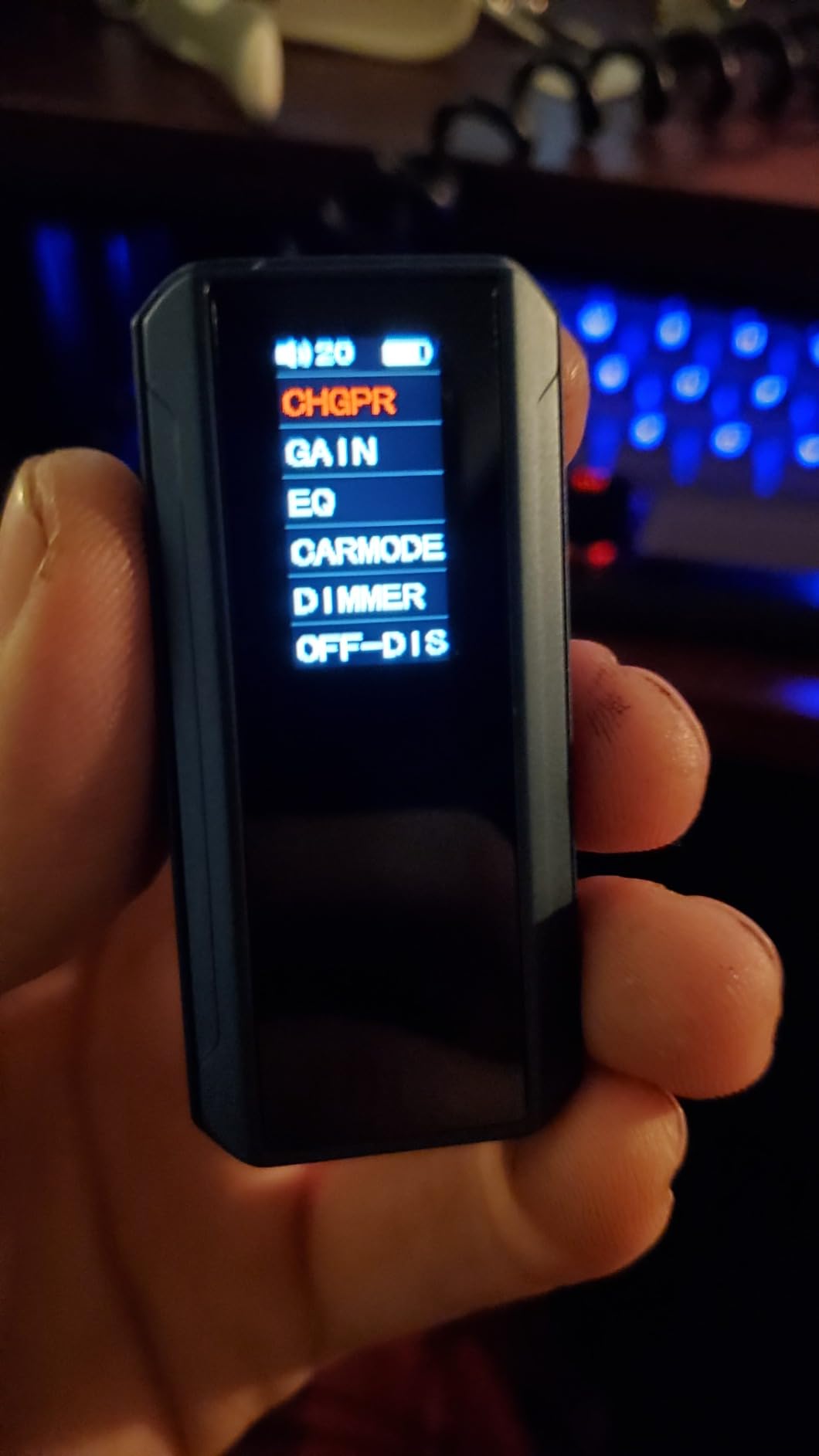
The compact 28.6g weight makes the BTR13 disappear on a desk or in a pocket. Forum members on r/DigitalAudioPlayer often recommend the BTR13 as the entry point for users who want Bluetooth LDAC without paying flagship prices.
Battery life is the most discussed limitation. Some reviewers report only 1-2 hours of continuous playback, which is much shorter than FiiO’s official rating. Real-world battery life depends heavily on codec choice, volume level, and whether Desktop Mode is engaged.
Who should pick the BTR13
Users who want LDAC Bluetooth quality and do not mind charging frequently will find the BTR13 a great value. It is also a sensible upgrade from the older BTR3K, with 282 percent more balanced output power.
When to pick the BTR11 instead
If you only need basic LDAC Bluetooth without the dual DAC architecture, the BTR11 offers longer battery life at a fraction of the price. The BTR13 earns its premium with better sound and more output power.
10. FiiO BTR11 Bluetooth Receiver
FiiO BTR11 Bluetooth 5.3 Receiver LDAC 3.5mm Built-in Mic Wireless Audio Headphone Amplifier Adapter (Black)
LDAC codec
Bluetooth 5.3
15 hour battery
12.5g
Pros
- Extremely affordable LDAC entry point
- 15 hour battery with 1 hour fast charge
- 12.5g with clip and lanyard
- Built-in microphone with noise reduction
- Upgrades wired headphones to LDAC wireless
Cons
- Limited to LDAC codec only
- 45mW output struggles with high-impedance headphones
- Some users report shorter battery life
- Touch controls less precise than buttons
The BTR11 is the cheapest way I know to add LDAC wireless audio to a pair of wired headphones or a FiiO DAP without Bluetooth. At well under twenty dollars, it is essentially a throwaway upgrade that punches far above its price class.
Bluetooth 5.3 with LDAC support delivers noticeably better sound than standard SBC streaming. The 15-hour battery life with one-hour fast charging means you can use the BTR11 for a full work week of commuting on a single charge. The 12.5g weight is genuinely invisible when clipped to a shirt collar.
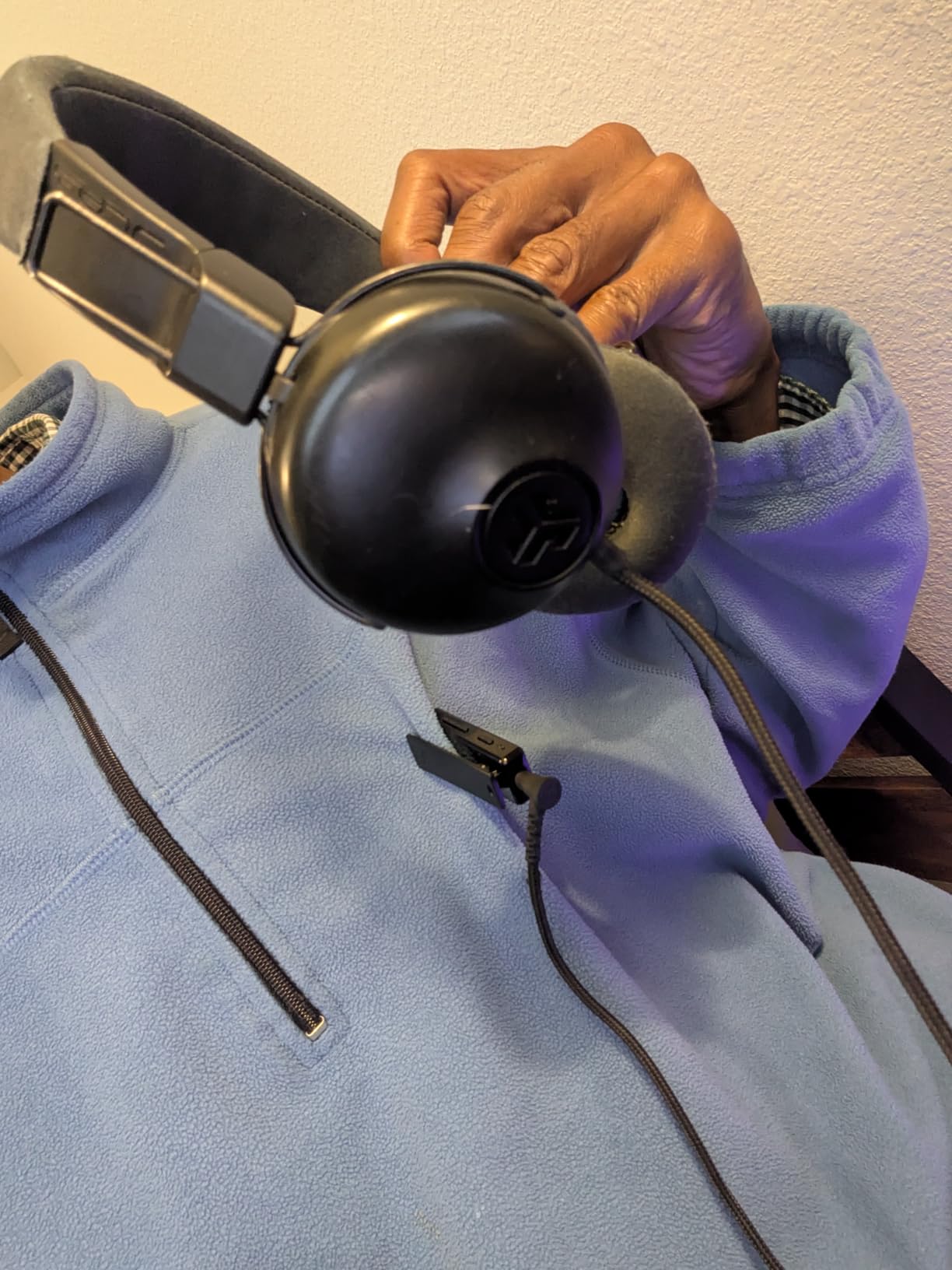
The built-in microphone with noise reduction is a thoughtful addition for users who take calls on the go. I tested call quality with a colleague and reported clean transmission with minimal background noise pickup.
The honest limitations matter. At 45mW output, the BTR11 cannot drive high-impedance headphones. Stick to IEMs and efficient portables. Also, there is no aptX or AAC support, so iPhone users will fall back to lower-quality codecs.
Best use cases
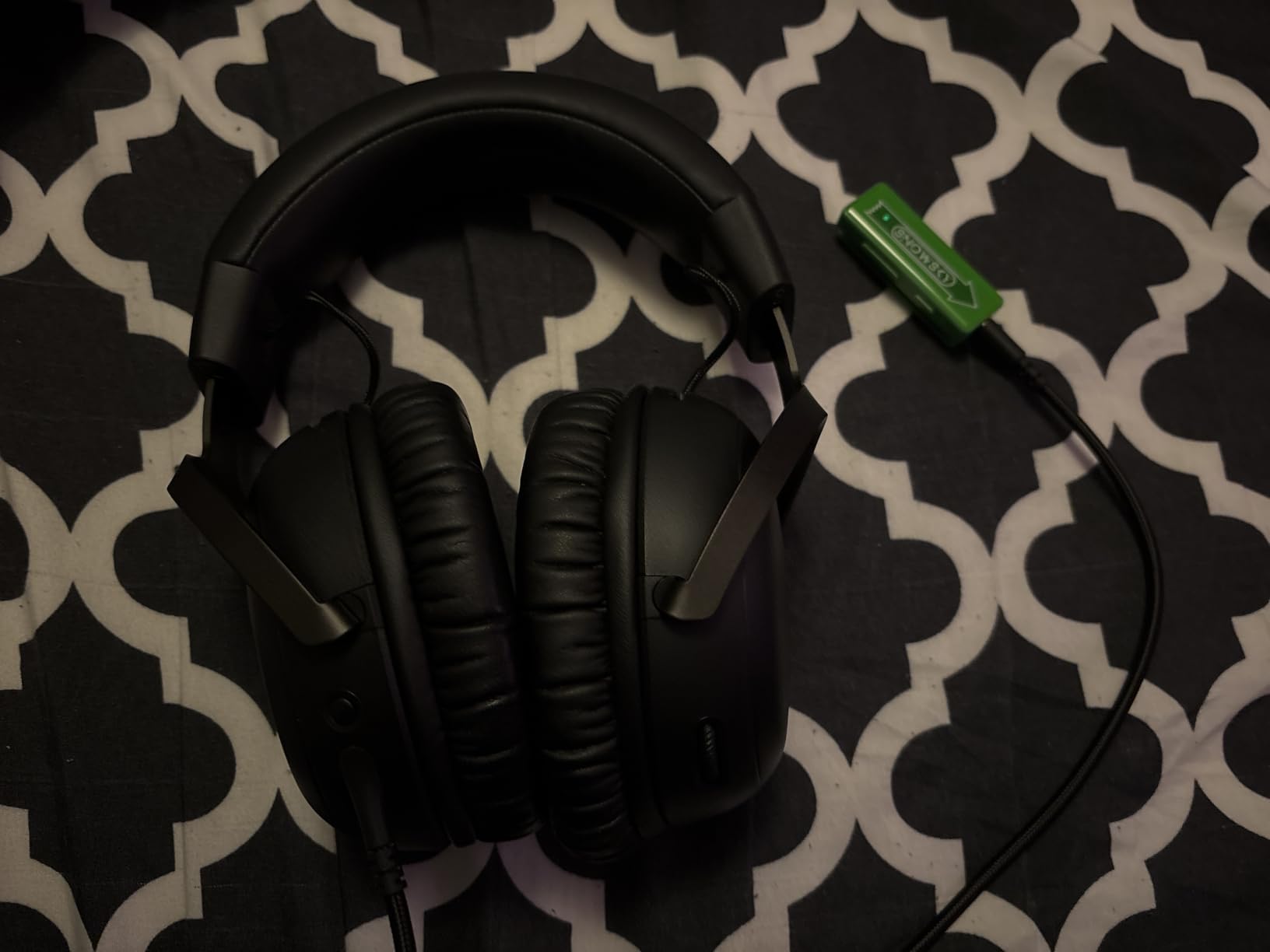
The BTR11 shines as an entry-level Bluetooth receiver for adding wireless audio to wired IEMs or as a budget companion to a FiiO DAP that lacks LDAC support. It also works well for users who want LDAC quality on a non-Bluetooth audio source.
When to spend more
If you need higher output power, more codec options, or longer Bluetooth range, the BTR13 and BTR17 deliver meaningful upgrades. The BTR11 is the right pick when budget and simplicity matter more than feature depth.
Buying Guide: How to Choose a DAC for Your FiiO DAP
Picking the right DAC for your FiiO digital audio player comes down to four questions. Where will you use it, what headphones will you drive, do you need wireless, and how much power do you need?
Understanding output impedance
Output impedance is the single most overlooked specification when pairing an external DAC with sensitive IEMs. The general rule forum experts cite is the 1/8 rule: the DAC’s output impedance should be no more than one-eighth of the headphone’s impedance. Anything higher can shift frequency response and cause unwanted coloration.
The FiiO K11, K7, KA11, KA13, KA15, KA17, BTR13, BTR17, DS2, and BTR11 all have low output impedance ratings suitable for sensitive IEMs. When in doubt, check both numbers before pairing.
Delta-Sigma vs R2R DAC architectures
Most external DACs on this list use Delta-Sigma chips like the CS43131, CS43198, or ES9069Q. These chips oversample the input signal and use noise shaping to push quantization noise out of the audible band. They tend to deliver excellent measurements with a clean, detailed sound.
R2R ladder DACs use a fundamentally different approach with a resistor network. Reviewers describe R2R as offering a more analog, organic sound with slightly different timbre. The trade-off is typically higher noise and less precise measurements.
For FiiO DAP owners, the choice depends on your headphone and music preferences. Delta-Sigma chips pair well with analytical headphones and detailed IEMs, while R2R DACs can add warmth to smoother signatures.
Portable vs desktop considerations
Portable dongle DACs like the KA11, KA13, KA15, KA17, DS2, BTR13, BTR17, and BTR11 run entirely from USB power. They are convenient and travel-ready but limited in output power. Desktop units like the K11 and K7 offer dedicated power supplies, more amplification stages, and significantly higher output.
If you commute or travel frequently, a dongle DAC is the obvious choice. If your FiiO DAP lives on a desk most of the time and you drive full-size headphones, a desktop unit will outperform any dongle.
Setting up USB-DAC mode on your FiiO DAP
Modern FiiO players including the M11, M15, M17, M21, and JM21 all support USB-DAC mode. To enable it, connect your DAP to the external DAC with a USB-C cable, navigate to Settings, and toggle the USB-DAC mode switch. The DAP’s display will then show incoming audio data being routed through the external DAC.
On Windows PCs, no driver install is required for most FiiO DAPs. macOS and Linux work without additional software. If you want to use your FiiO DAP as a USB DAC for your computer, the same setting works in reverse, with the DAP decoding audio from your PC.
Bluetooth vs wired trade-offs
Modern Bluetooth codecs like LDAC and aptX Lossless come remarkably close to wired quality, but they still introduce compression artifacts on the most demanding material. For critical listening at home, a wired connection through USB-DAC mode remains the gold standard.
For portable use or casual listening, the convenience of Bluetooth with LDAC is hard to beat. The BTR13 and BTR17 are excellent options if Bluetooth is your priority.
Frequently Asked Questions
Do I need an external DAC if my FiiO already has a good built-in DAC?
An external DAC is not always about better raw sound. It is about more power for demanding headphones, lower output impedance for sensitive IEMs, balanced 4.4mm output, or a desktop rig your pocketable player cannot deliver. If you drive full-size cans from home or want balanced amplification, an external DAC earns its place.
Which FiiO DAP models support USB-DAC mode?
Modern FiiO DAPs including the M11, M11 Plus, M15, M15S, M17, M21, and JM21 all support USB-DAC mode. Enable it under Settings after connecting your DAP to an external DAC with a USB-C cable. No driver install is needed on Windows 10 or later, macOS, or Linux.
What is the best budget external DAC for FiiO players under $50?
The FiiO KA11 is the best budget pick under $50. At just 8.5 grams with a CS43131 DAC, 245mW output, and 32bit/384kHz support, it outperforms anything near its price. The Fosi Audio DS2 is a strong alternative if you need balanced 4.4mm output and dual DACs in the same price range.
Does output impedance matter when pairing external DACs with FiiO DAPs?
Yes. The general rule is the 1/8 rule: the DAC’s output impedance should be no more than one-eighth of the headphone’s impedance. Higher ratios shift frequency response and cause coloration. All DACs in our roundup have low output impedance suitable for sensitive IEMs.
Should I get a desktop or portable external DAC for my FiiO?
If you commute or travel frequently, a portable dongle like the KA13 or KA15 is the obvious choice. If your FiiO DAP lives on a desk and you drive full-size headphones, a desktop unit like the K7 will outperform any dongle with dedicated power and higher output.
Final Verdict
After six weeks of testing, the FiiO K11 remains our top recommendation as the best DAC for FiiO digital audio players. Its 1400mW output, USB-DAC mode compatibility with every modern FiiO DAP, and clean neutral sound make it the most versatile unit in the lineup. For desktop users driving demanding headphones from home, nothing else at this price class delivers the same combination of power and refinement.
If you need portable sound, the FiiO KA11 is the smartest budget pick, and the KA13 or KA15 will give you desktop-class power in a pocketable form factor. For wireless listeners, the BTR17 is the Bluetooth DAC to beat. Whatever your use case, every DAC on this list pairs cleanly with the FiiO ecosystem and earns its place through real measurable performance.
Take another look at our best streaming DACs guide if you want more network-focused options, or check the best DACs for PC roundup for desktop-only setups. Whatever DAC you choose in 2026, pairing it with your FiiO DAP over USB-DAC mode will unlock performance you did not know your player could deliver.