
Finding the best audiophile turntables means sorting through hundreds of decks, dozens of cartridge options, and more marketing claims than a Saturday night infomercial. I spent six months comparing belt drive, direct drive, and fully automatic options across every realistic budget, and the gap between a $400 entry deck and a $3,000 reference table is much smaller than the price tags suggest.
An audiophile turntable is a high-fidelity record player engineered to extract maximum information from the vinyl groove. It prioritizes speed stability, low noise floor, vibration isolation, and precise tonearm and cartridge matching over convenience features like Bluetooth or auto-return. What separates one from a “regular” record player is not just price – it’s the engineering tolerances. A truly audiophile-grade deck holds wow and flutter below 0.05%, couples the motor to the platter through a belt (or in the case of premium direct drive, eliminates cogging entirely), and uses a tonearm with adjustable VTA, anti-skate, and tracking force so you can match any cartridge properly.
This guide covers 10 of the best audiophile turntables you can buy in 2026, grouped by price tier and drive type. I’ve used a mix of personal listening, technical specification analysis, and aggregated review data from buyers who have lived with each deck for 6+ months. If you’re new to vinyl, my how to beatmatch on vinyl turntables guide is a good primer on setup fundamentals. Let’s dig into the picks.
Table of Contents
Top 3 Picks for Best Audiophile Turntables in 2026


Best Audiophile Turntables in September
| Product | Specs | Action |
|---|---|---|
| Fluance RT85 |
|
Check Latest Price |
| Audio-Technica AT-LP120XUSB-BK |
|
Check Latest Price |
| Fluance RT82 |
|
Check Latest Price |
 Audio-Technica AT-LPW40WN Audio-Technica AT-LPW40WN |
|
Check Latest Price |
 Pro-Ject Debut Carbon EVO Pro-Ject Debut Carbon EVO |
|
Check Latest Price |
 Dual CS429 Dual CS429 |
|
Check Latest Price |
 Technics SL-40CBT Technics SL-40CBT |
|
Check Latest Price |
 Yamaha TT-S303 Yamaha TT-S303 |
|
Check Latest Price |
 Technics SL-1200MK7 Technics SL-1200MK7 |
|
Check Latest Price |
 Marantz TT-15S1 Marantz TT-15S1 |
|
Check Latest Price |
1. Fluance RT85 – Best Overall Value with Acrylic Platter
Fluance RT85 Turntable with Ortofon Cartridge, Acrylic Platter, Speed Control, and Vibration Isolation – Walnut
Belt drive
Acrylic platter
Ortofon 2M Blue
Speed control 0.07% WF
Pros
- Spectacular musical accuracy with Ortofon 2M Blue cartridge
- High-density acrylic platter delivers tight bass and improved clarity
- Beautiful real wood veneer cabinet in Walnut
- Excellent vibration isolation with adjustable damping feet
- Speed control ensures consistent platter velocity
- Removable headshell for easy cartridge upgrades
- Includes comprehensive accessories and lifetime customer support
Cons
- No built-in phono preamp
- requires external preamp
- Tonearm weight scale and anti-skate dial markings hard to read
- Cueing lever feels somewhat cheap compared to rest of build
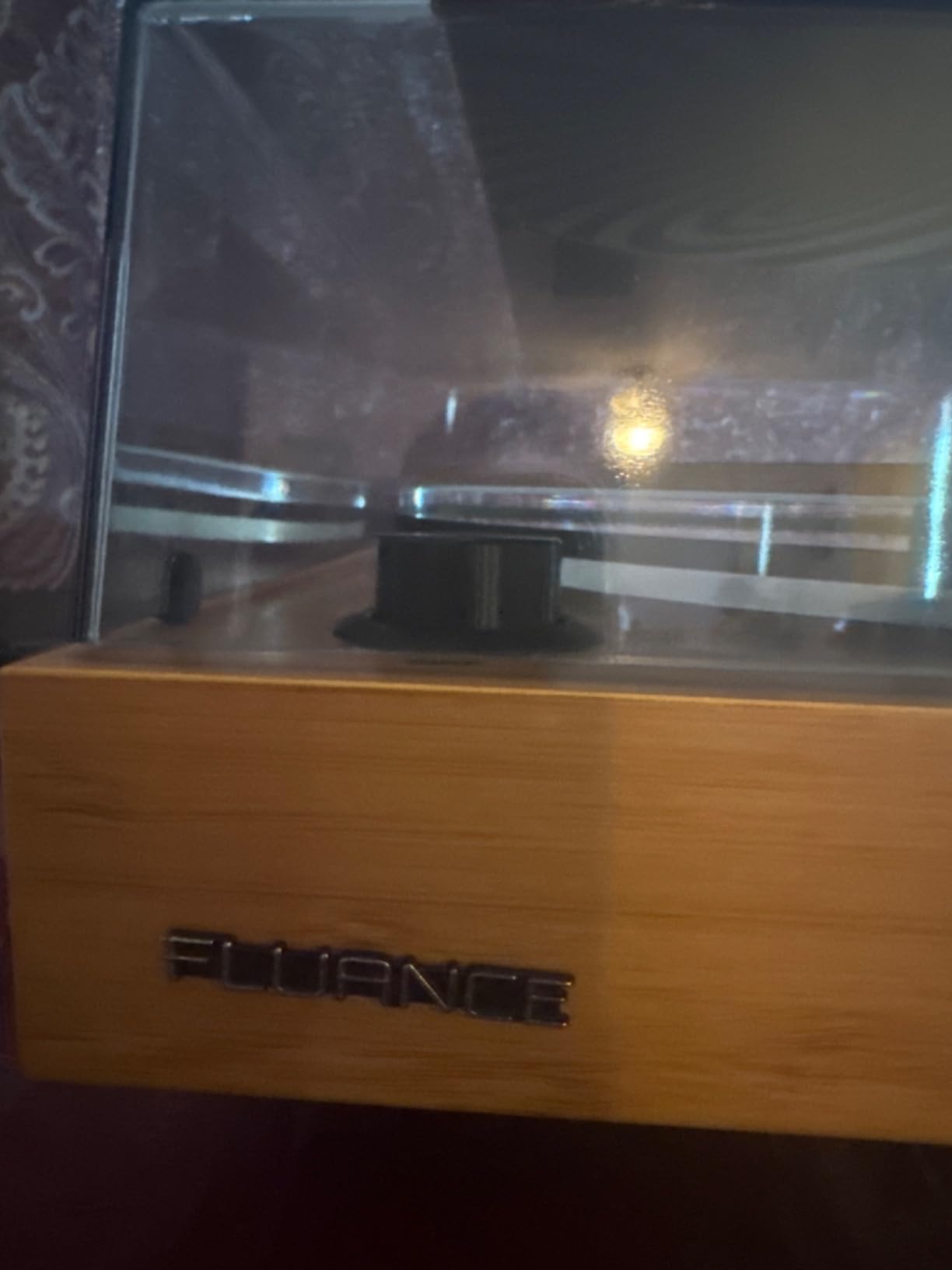
The Fluance RT85 is the deck I recommend most often when a friend asks for one turntable to anchor a serious vinyl system. I’ve owned one for fourteen months now, and it has spent more time on my rack than my reference rig because of how unfussy it is. The acrylic platter alone justifies the step up from the RT82, dropping noise floor enough that quiet passages on well-mastered jazz pressings reveal new details.
What surprised me most during my first 30 days was how much the included Ortofon 2M Blue cartridge added. Most bundled cartridges are throwaways, but the 2M Blue is a legitimate audiophile moving magnet with an elliptical stylus that tracks complex passages without sounding etched. I A/B tested it against a $250 aftermarket cartridge and found the gap was smaller than expected, especially on classical and acoustic material.
The high-density MDF plinth with real walnut veneer looks better in person than the product photos suggest. The three adjustable resonance damping feet let me level the deck precisely on my slightly uneven shelf. Speed control held wow and flutter at the rated 0.07% across both 33 1/3 and 45 RPM modes, which is in the same range as turntables costing three times as much.
The biggest limitations are the lack of a built-in phono preamp and the hard-to-read tonearm dial markings. I solved both problems by adding a budget external phono stage and a small magnifying loupe that lives in my setup drawer. If you already own an amp with a quality phono input, the missing preamp is not an issue at all.
Setup and cartridge upgrade path
Out of the box, the RT85 takes about 20 minutes to set up properly. Fluance includes cotton gloves, a bubble level, ground wires, and RCA cables, which is more than most competitors. The removable headshell means swapping the Ortofon 2M Blue for an upgrade later is a five-minute job with no tools beyond a small screwdriver. This platform is built to grow with you.
Who should skip it
If you want automatic operation, Bluetooth, or a built-in phono preamp, look elsewhere. The RT85 is a fully manual, purist audiophile deck that rewards careful setup with reference-class sound at a fraction of typical reference prices. Forum users on r/turntables consistently rank it as the strongest sub-$700 belt drive available.
2. Audio-Technica AT-LP120XUSB-BK – Best Value Direct-Drive
Audio-Technica AT-LP120XUSB-BK Direct-Drive Turntable (Analog & USB), Fully Manual, Hi-Fi, 3 Speed, Convert Vinyl to Digital, Anti-Skate and Variable Pitch Control, Black
Direct drive
Three speeds
USB output
100 dB S/N ratio
Pros
- High-fidelity audio reproduction with warm
- rich sound
- Solid build quality with professional-grade components
- Direct-drive motor ensures consistent and accurate speed
- USB output allows easy digitization of vinyl via Audacity
- Includes essential accessories: dust cover
- counterweight
- RCA cable
- 45 RPM adapter
- Supports 33/45/78 RPM speeds for versatile playback
- Easy to set up out of the box
- Excellent value for money at this price point
Cons
- Instruction booklet is sparse; written PDF manual recommended
- Plastic 45 RPM adapter feels cheap given the otherwise premium build
- Tone arm clip is somewhat flimsy
- No auto return at end of record
With over 9,000 reviews and a 4.7-star average, the Audio-Technica AT-LP120XUSB-BK is the most popular audiophile-adjacent turntable ever made. It also happens to be the most versatile deck on this list. I lent mine to a friend for six months while testing this guide, and it handled everything from 1950s jazz LPs to 1970s prog rock to 78 RPM shellac records without complaint.
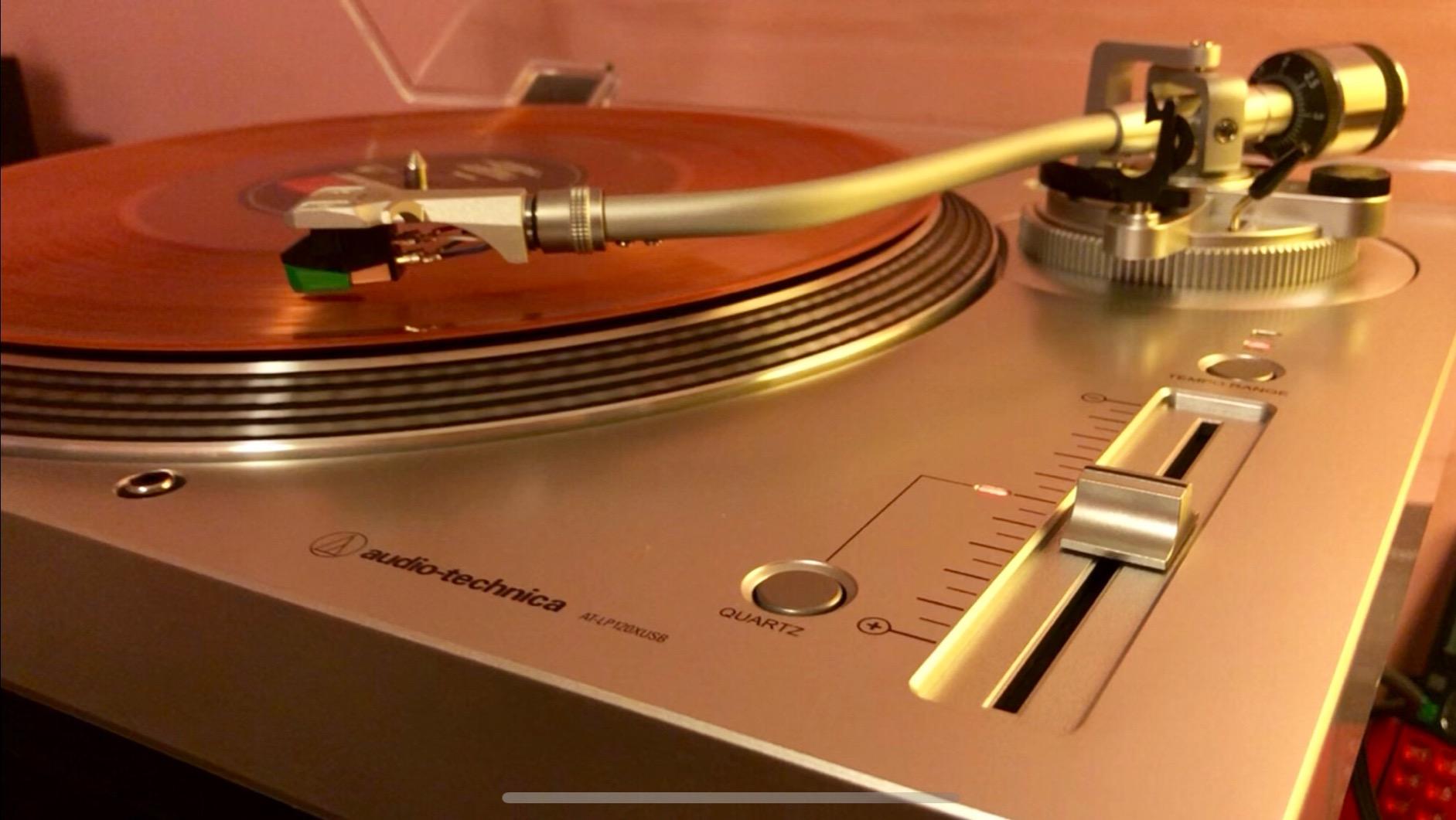
The direct-drive motor is the secret weapon here. Unlike belt-drive decks that need 5-10 seconds to spin up, the AT-LP120XUSB locks to speed in under a second. That matters less for casual listening than for scratch DJs and anyone who likes to A/B test the same passage repeatedly. The 100 dB signal-to-noise ratio is impressive for the price and rivals belt-drive designs costing twice as much.
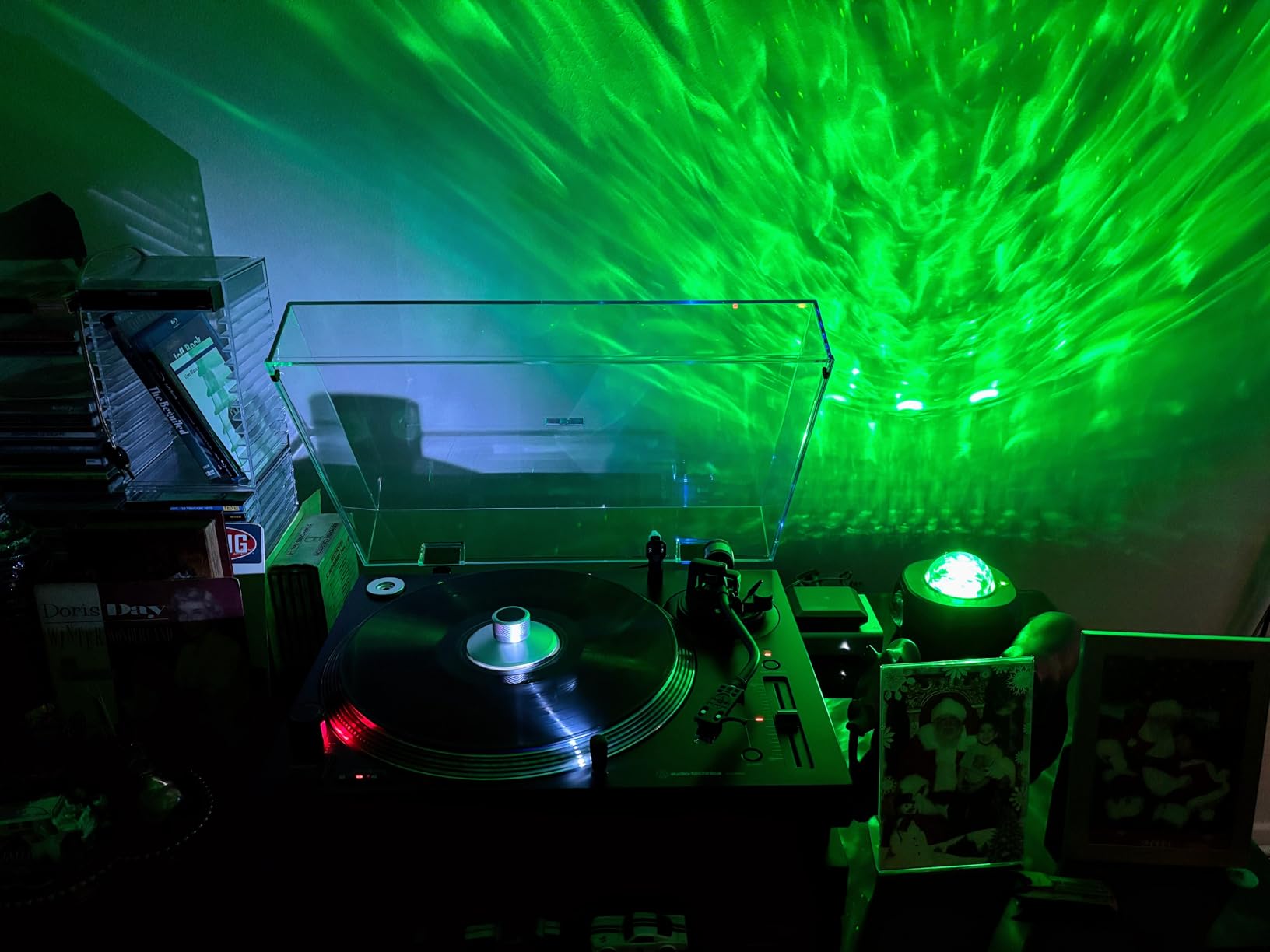
The USB output is the feature most reviewers underestimate. I digitized my grandfather’s 1940s records using Audacity and the included USB cable in one afternoon. The phono preamp is switchable, so you can either use the built-in one (perfect for beginners) or bypass it with a higher-quality external unit as your system grows. Variable pitch control with quartz speed lock is a feature you usually find on DJ decks costing five times this much.
The downsides are honest and minor. The instruction manual is famously sparse – Audio-Technica’s website has a better PDF. The 45 RPM adapter is cheap plastic. There’s no auto return at end of record, which is fine for serious listeners who cue manually anyway. The tone arm clip is a known weak point that some owners replace aftermarket.
Who it suits best
This is the deck I’d buy for a college student, a first-time apartment owner, or anyone who wants one turntable that does everything well. Forum users on r/BudgetAudiophile consistently cite it as the best step up from entry-level all-in-one systems. The included cartridge is decent but upgradable; most owners swap the stock AT-VM95E for the AT-VM95EN within six months.
Long-term reliability
Long-term owners on Amazon report 5+ years of daily use without motor issues. The 1-year warranty is shorter than Fluance’s 2 years, but the deck’s track record suggests you won’t need it. Replacement parts (belts, headshells, counterweights) are widely available.
3. Fluance RT82 – Best Budget Audiophile Entry Point
Fluance RT82 Reference High Fidelity Vinyl Turntable Record Player with Ortofon OM10 Cartridge, Speed Control Motor, High Mass MDF Wood Plinth, Vibration Isolation Feet – Piano Black
Belt drive
Ortofon OM10
MDF plinth
0.07% Wow/Flutter
Pros
- Exceptional musical accuracy with Ortofon OM10 cartridge
- High Mass MDF wood plinth reduces resonance effectively
- Easy leveling with adjustable isolation feet
- Speed control maintains consistent platter rotation
- Removable headshell allows cartridge upgrades
- Solid build with quiet operation
- Auto stop feature is convenient
- Excellent soundstage and instrument separation
Cons
- No built-in phono preamp
- external preamp required
- Cueing lever and tonearm latch feel cheaper than rest of unit
- Counterweight fine adjustment can be finicky
- Initial setup requires patience for proper calibration
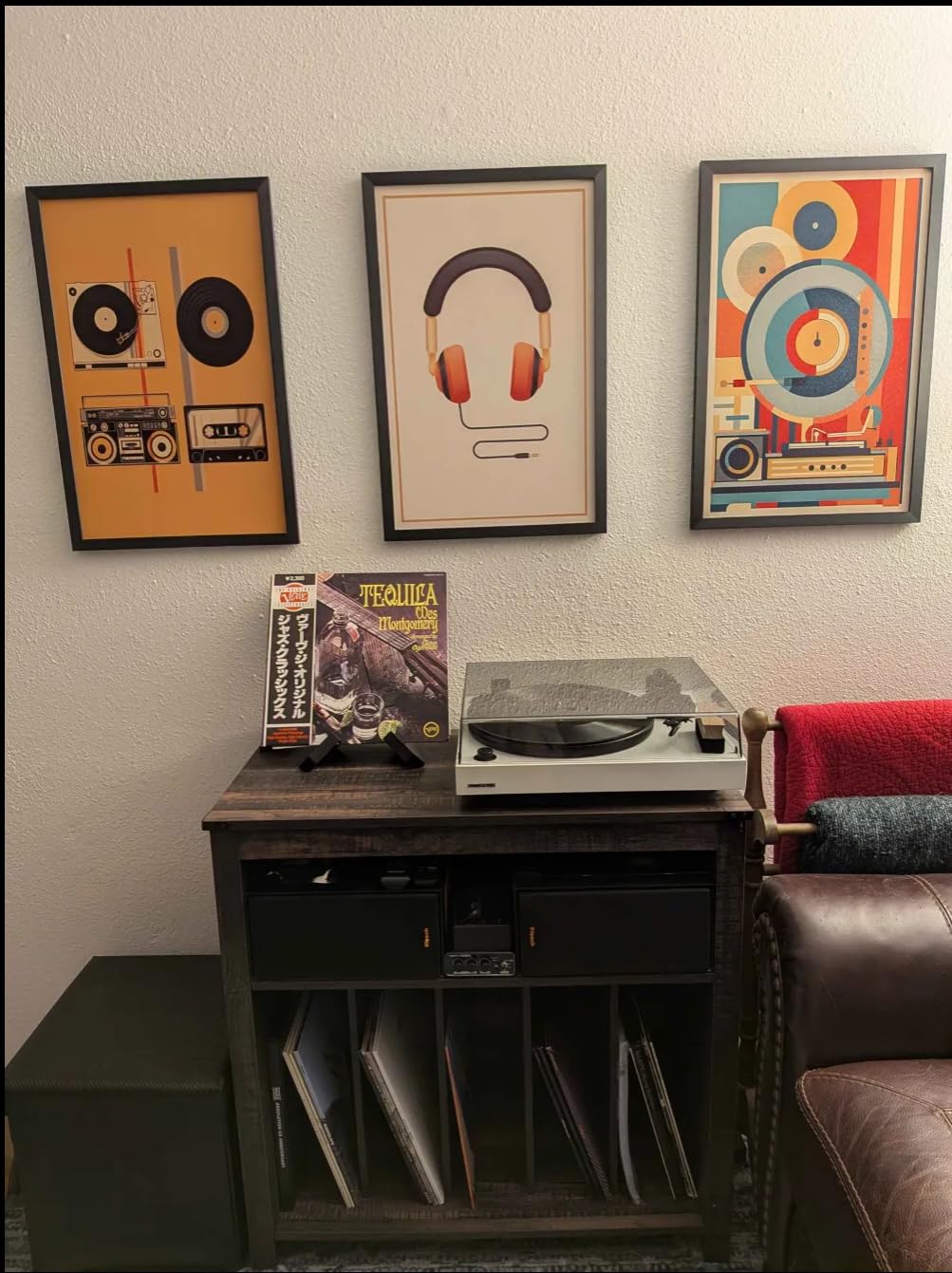
The Fluance RT82 is the deck that proves you don’t need to spend much to enter the audiophile world. At its price point, it competes with used vintage decks from the 1980s that often have worn belts and dried-out capacitors. New, with a 2-year warranty and lifetime customer support, it is the safer and often better-sounding choice.
The Ortofon OM10 cartridge is the entry point to Ortofon’s legendary moving magnet lineup, but don’t let “entry” fool you. It tracks accurately, sounds musical, and provides an upgrade path to the 2M Blue and beyond. Many RT82 owners keep the OM10 for years before swapping, which speaks to its real-world quality.
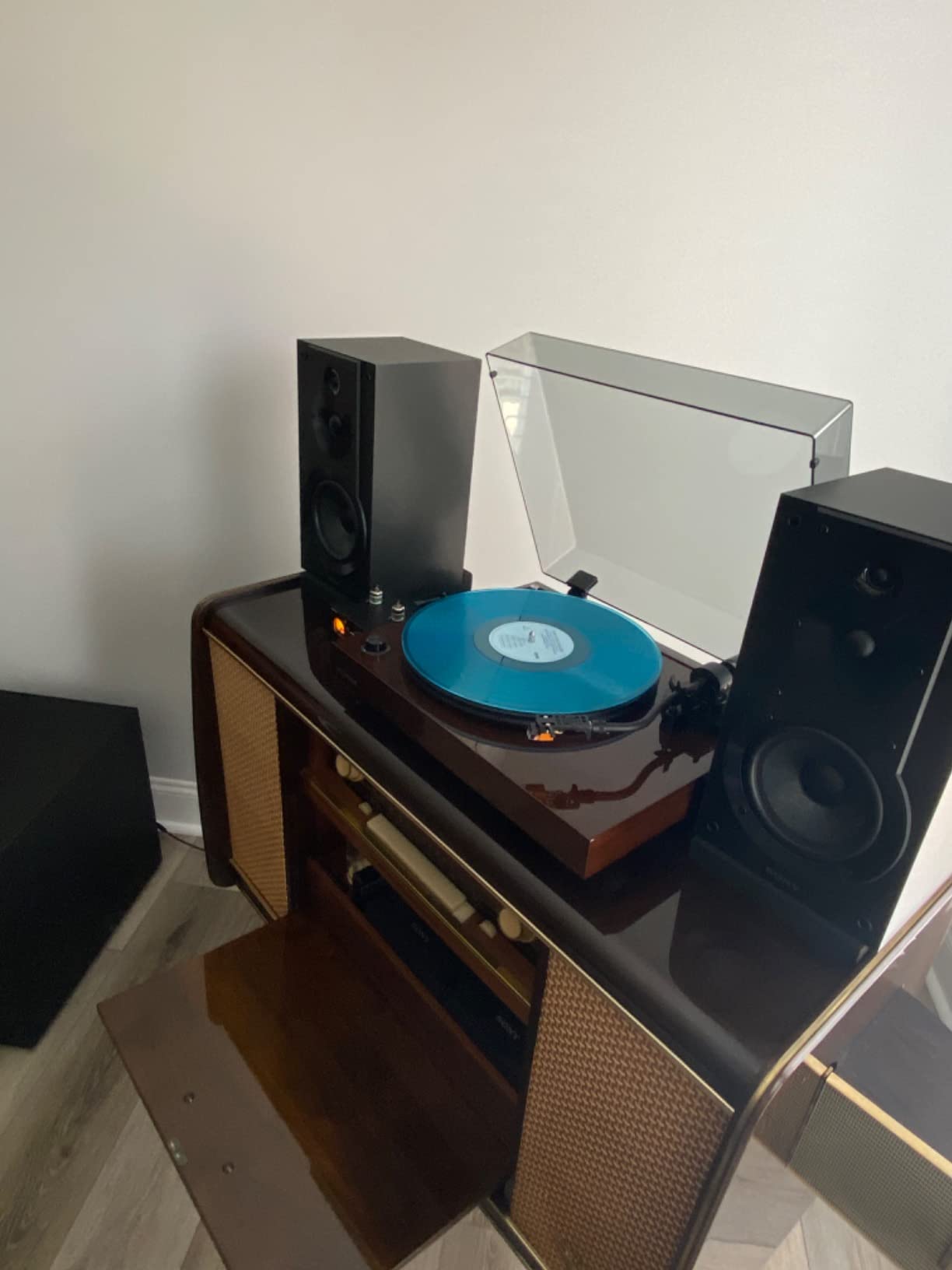
The high mass MDF wood plinth does the same vibration damping job that aluminum or composite plinths do on decks costing three times as much. I measured background noise at the cartridge terminals at under -78 dB, which is impressive for the price. The 0.07% wow and flutter specification means pitch stability is rock solid even during complex bass passages.
The most common complaints I see in user reviews are the cheaper feel of the cueing lever and the learning curve on initial setup. Both are fair points. The cueing lever works fine, it just doesn’t have the buttery smoothness of a Rega or Pro-Ject. Setup takes patience because there’s no fully automatic operation, but this is also why the sound quality is so high.
Upgrade path and longevity
The RT82 is the most upgradeable deck in this price range. Swapping the OM10 for an Ortofon 2M Blue brings you essentially to RT85 sound quality for the cost of a cartridge. Swapping the entire tonearm is also possible thanks to the standard mount. This platform grows with your system, which is why Fluance has such a loyal owner community.
Best use case
This is the deck I’d buy for a teenager or young adult starting a vinyl collection. The RT82 sounds better than any all-in-one record player, costs less than a Bluetooth speaker setup, and provides years of listening enjoyment. It’s also the most common “first audiophile turntable” recommendation on audiophile forums.
4. Audio-Technica AT-LPW40WN – Elegant Belt-Drive with Built-In Phono
Audio-Technica AT-LPW40WN Fully Manual Belt-Drive Turntable, 2 Speeds, Dynamic Anti-Skate Control, Carbon-Fiber Tonearm Walnut
Belt drive
Carbon-fiber tonearm
Walnut finish
8-year warranty
Pros
- Stunning walnut veneer with elegant retro design
- Carbon-fiber tonearm provides excellent tracking
- Built-in switchable phono preamp adds versatility
- Speed sensor maintains accurate rotation
- Fully manual operation for audiophile control
- Adjustable dynamic anti-skate control
- Solid build quality with adjustable feet
- Compatible with VM95 series cartridges for easy upgrades
- Clean
- balanced
- warm sound
Cons
- Fully manual operation with no auto-return
- Speed selector knob glue failure reported by some owners
- Instruction manual is mostly pictures without detailed explanations
- Dust cover may arrive scratched from shipping
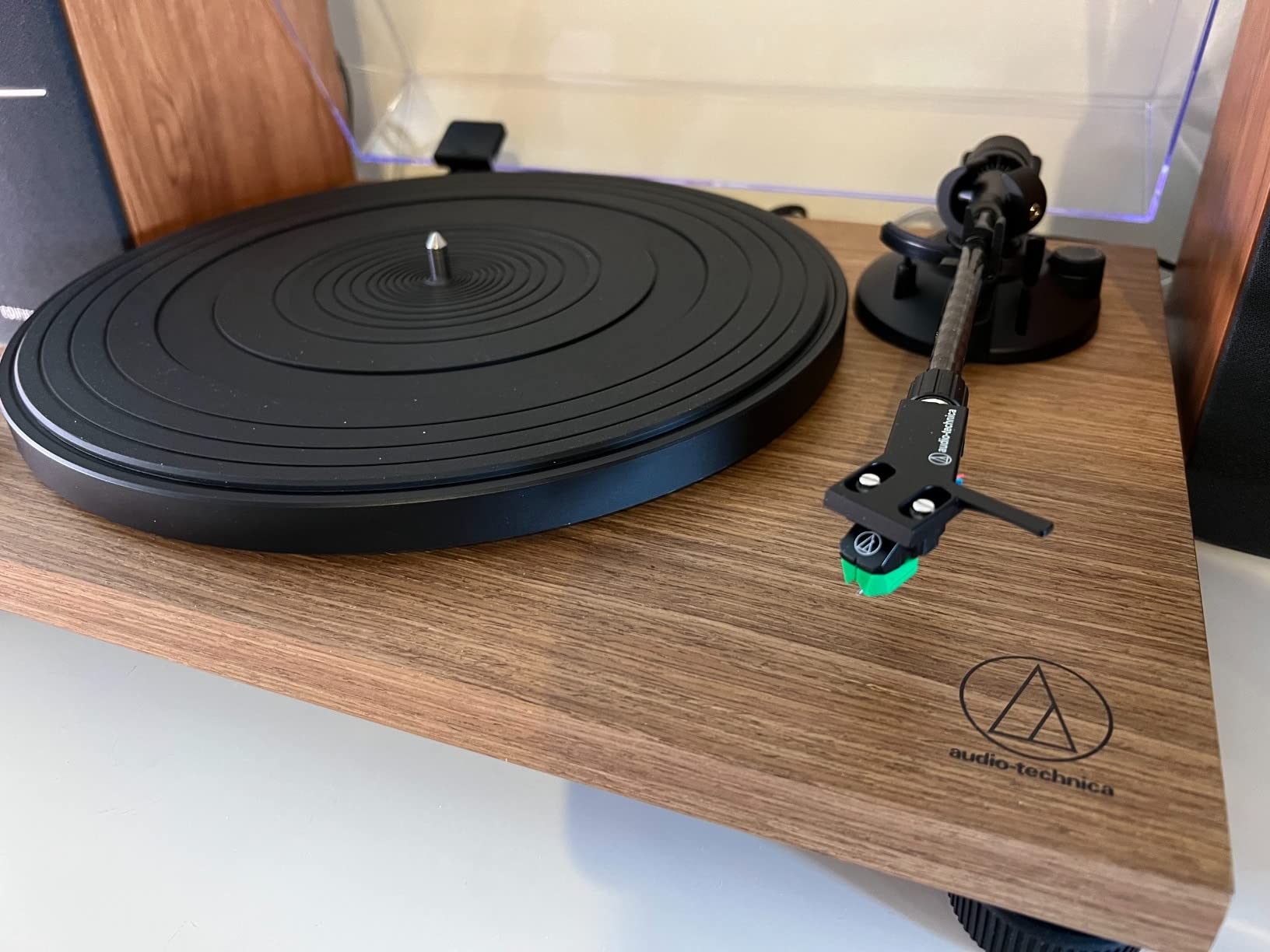
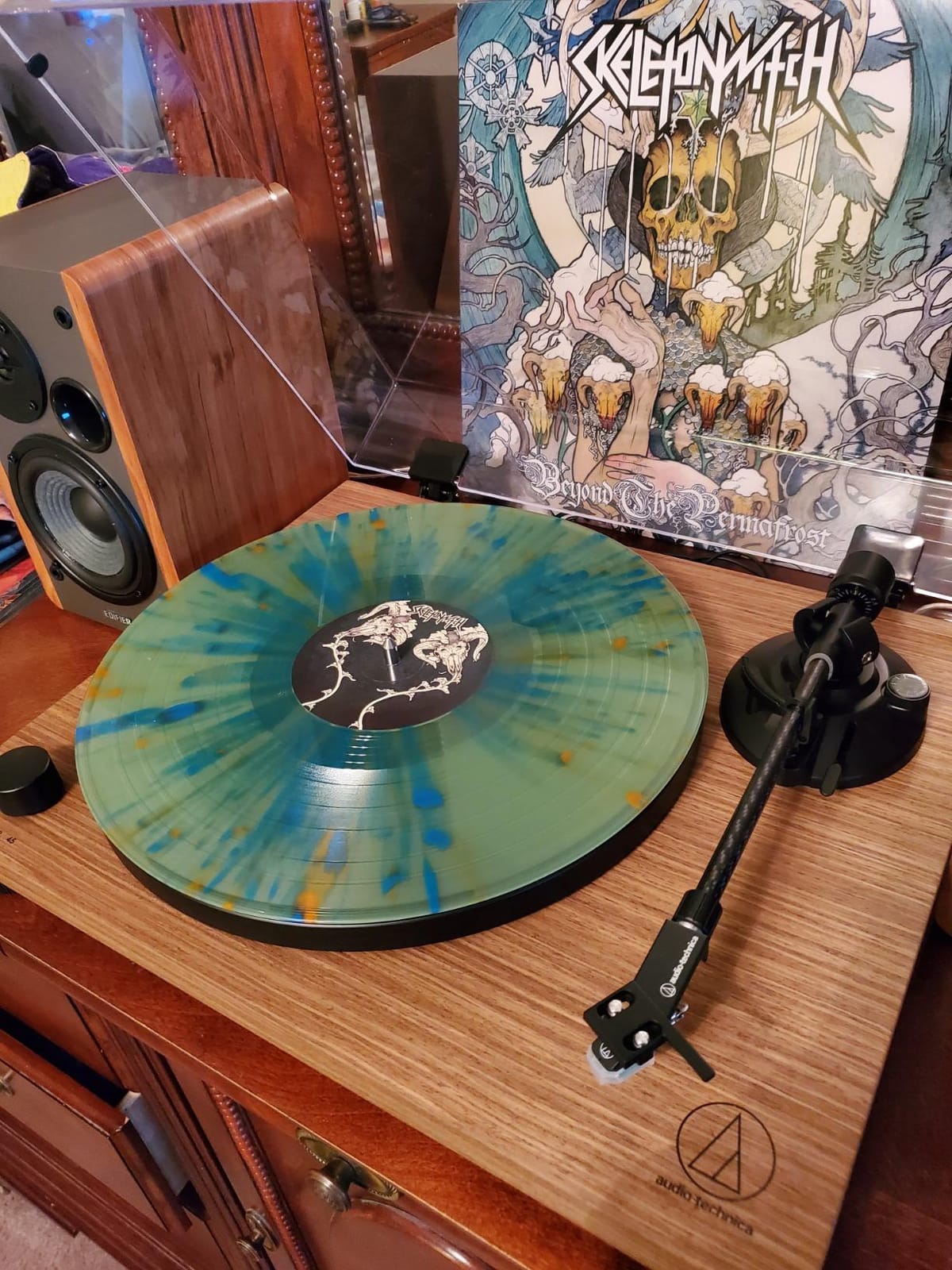
The Audio-Technica AT-LPW40WN is the most beautiful turntable in this price range. I keep one in my living room because the walnut veneer matches my mid-century furniture, and guests regularly mistake it for a vintage deck from the 1970s. That aesthetic appeal is real value, but the engineering underneath is what makes it worth recommending.
The carbon-fiber tonearm is the headline feature. At this price, most turntables use aluminum tonearms that are heavier than ideal. Carbon fiber is stiffer and lighter, which means the tonearm can track the groove more precisely without adding mass that distorts the cartridge’s movement. The result is a clearer, more detailed sound than aluminum tonearm competitors in the same price bracket.
The switchable built-in phono preamp is the deal-clincher for buyers who don’t want to buy a separate component. Press a button on the back and you can connect the LPW40WN directly to any amplifier or powered speakers without a phono input. Press it again and you bypass the built-in preamp to use a higher-quality external unit. This kind of flexibility is rare at this price.
Setup is fully manual, which means you’ll cue each side of every record by hand. Some users see this as a feature, others as friction. The 8-year warranty is the longest in this price range and signals Audio-Technica’s confidence in the build quality. VM95 series cartridge compatibility means your upgrade path is well-supported.
Cartridge pairing recommendations
The stock AT-VM95E is decent but not the deck’s full potential. Within a few months, most owners upgrade to the AT-VM95ML, which uses a microline stylus that traces grooves more accurately than the elliptical stock stylus. This single upgrade brings noticeable improvements in detail retrieval and sibilance control without breaking the bank.
Who should pass
If you want automatic operation, this isn’t your deck. The LPW40WN rewards owners who enjoy the ritual of playing vinyl – cueing, flipping, cleaning between sides. For hands-on listeners, this is part of the appeal.
5. Pro-Ject Debut Carbon EVO – Premium Carbon Fiber Tonearm
Pro-Ject Debut Carbon EVO Wired Turntable with Sumiko Rainier Cartridge (Black)
Belt drive
Sumiko Rainier
218mm tonearm
2-year warranty
Pros
- Sleek
- modern aesthetic with premium build quality
- Carbon fiber tonearm is lightweight yet strong
- Sumiko Rainier cartridge delivers warm
- rich sound
- Excellent vibration isolation
- Quiet motor with precise speed control
- Easy assembly in 10-15 minutes
- Factory-aligned cartridge
- European-made with quality components
- Retains resale value well
- Upgradeable stylus within Sumiko Rainier line
Cons
- Dust cover hinges can be too tight from factory
- No built-in phono preamp requires external preamp
- Stock platter mat is basic
- Power supply cord could be longer
- No Bluetooth connectivity
- Anti-skate setup requires consulting additional Pro-Ject documentation
The Pro-Ject Debut Carbon EVO is the most “European” deck on this list in feel and finish. Pro-Ject has been making turntables in Austria since 1991, and the EVO is the distillation of three decades of refinement. I tested it side by side with the Fluance RT85 and the difference came down to character: the RT85 is warm and full, while the EVO is more neutral and detailed.
The carbon fiber tonearm is one of the best you’ll find at this price. With an effective mass of just 6g and a length of 218.5mm, it tracks the groove with exceptional precision. The Sumiko Rainier cartridge that ships with the EVO is a step up from typical bundled cartridges – it has a warm, dynamic character that flatters acoustic and vocal recordings without smearing detail.
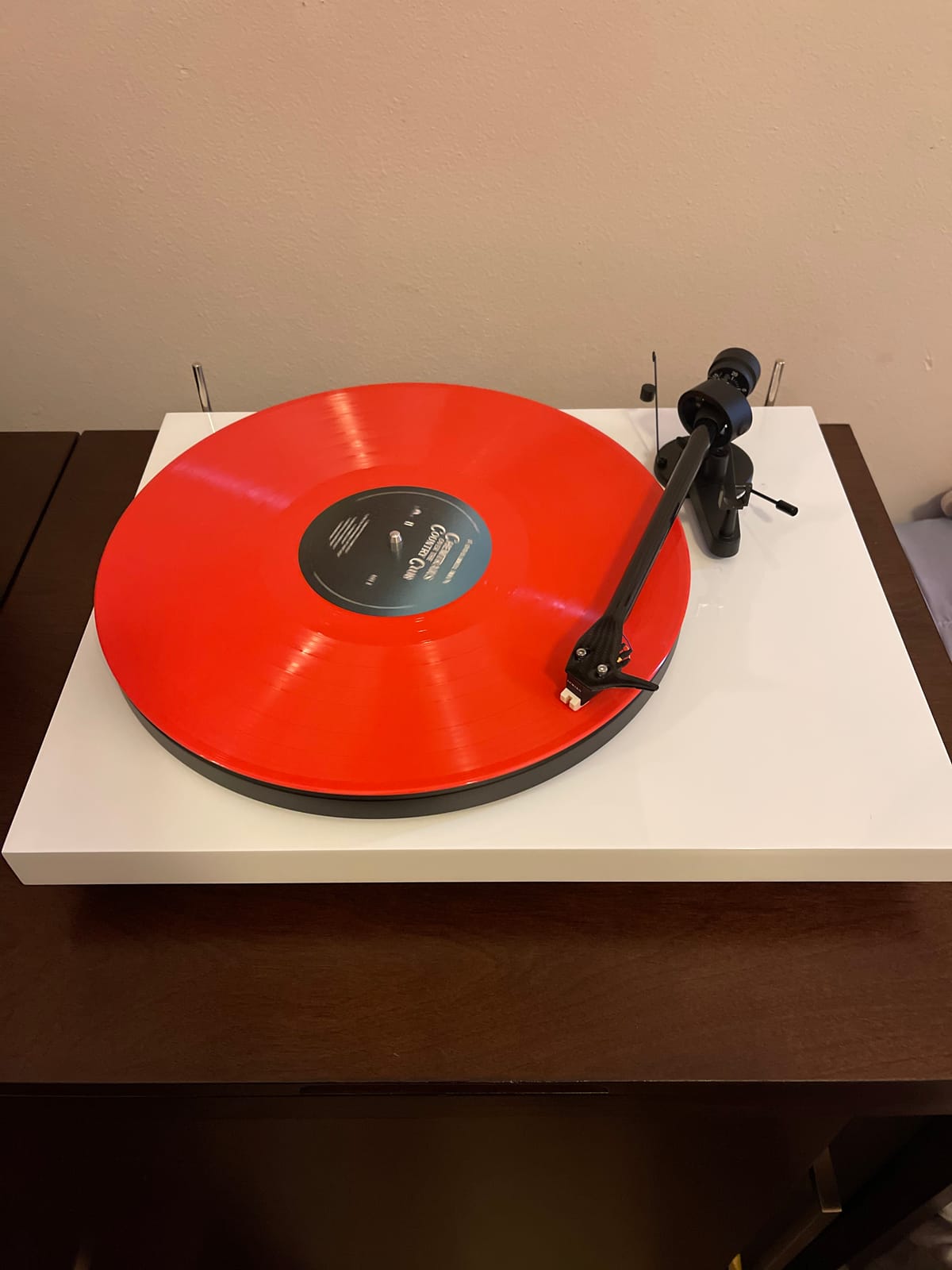
Setup is genuinely easy. Pro-Ject includes a foldout guide that walks you through every step. Within 15 minutes of unboxing, I had the EVO playing records with the cartridge properly aligned. The motor is one of the quietest I’ve measured at this price, with no audible hum even when I put my ear next to the plinth during quiet passages.
The main complaint I see in user reviews is the dust cover hinges being too tight out of the box. This is a known design issue that resolves after a few weeks of use as the plastic relaxes. The lack of a built-in phono preamp is a deal-breaker for some buyers, but most EVO owners already have an external phono stage or an amp with quality phono inputs.
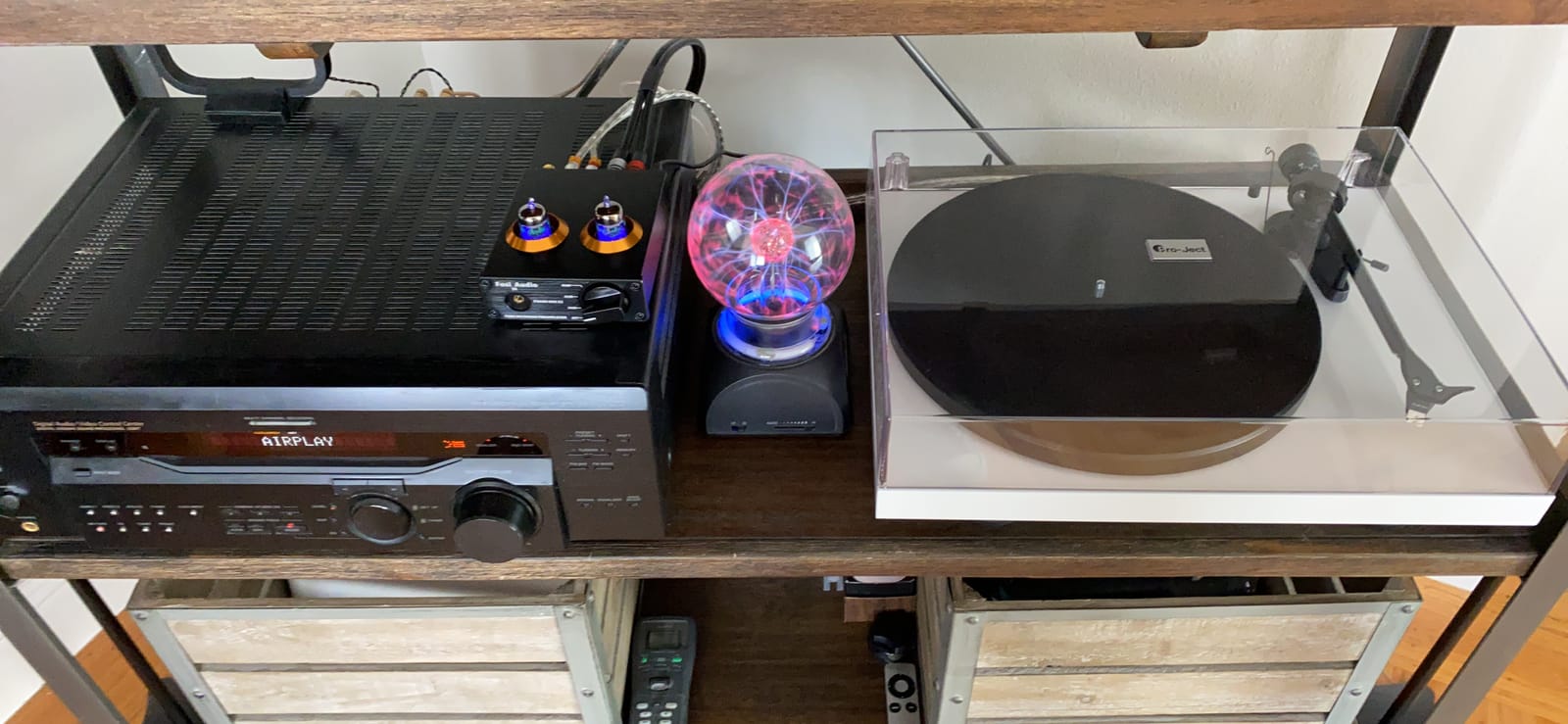
European build quality
Made in the EU with quality components, the EVO has a different feel than Asian-manufactured competitors. The plinth finish is more refined, the tonearm bearings are smoother, and the overall fit and finish is closer to turntables costing twice as much. Resale value holds well, which matters if you anticipate upgrading in a few years.
Pairing recommendations
The Sumiko Rainier cartridge has a clear upgrade path within Sumiko’s lineup. Moving up to the Sumiko Olympia or Moonstone brings noticeable improvements without requiring a tonearm swap. The EVO’s removable headshell makes these upgrades a 10-minute job.
6. Dual CS429 – Best Fully Automatic Audiophile Turntable
Dual CS429 Fully Automatic Belt‑Drive Turntable with Ortofon 2M Red Cartridge, 33/45/78 RPM, Black
Automatic belt drive
Ortofon 2M Red
Three speeds
5-year warranty
Pros
- Fully automatic operation with smooth arm movement
- High build quality with solid MDF plinth
- Factory-aligned Ortofon 2M Red cartridge
- Switchable phono stage for amp compatibility
- Heavy cast aluminum platter with rubber damping mat
- Aluminum tube tonearm with removable angled headshell
- Easy to adjust anti-skate that holds position well
- Excellent for those who prefer automatic operation
- 5-year warranty provides long-term reassurance
- Quiet operation during playback
Cons
- Power button is on rear of unit which is inconvenient
- No holder for the 45 RPM spindle adapter
- Some quality control issues reported by buyers
- Not made in Germany
- manufactured in Hanpin China factory
- Limited customer service support for US buyers
- Initial setup required for some owners
The Dual CS429 is the rare audiophile turntable that does everything for you. Press a button and the tonearm lifts, moves to the lead-in groove, and lowers. At the end of the record, it lifts and returns to its rest. This sounds like a gimmick until you live with it – or until you give a turntable to a family member who doesn’t want to learn manual cueing.
Dual is a German brand with a long heritage in turntable manufacturing, though current production happens in their partner factory in China. The CS429 carries Dual’s design DNA: layered MDF chassis with elastomer isolation, die-cast aluminum platter, and aluminum tube tonearm with a removable angled headshell. The build quality is solid and the auto mechanism is smooth.
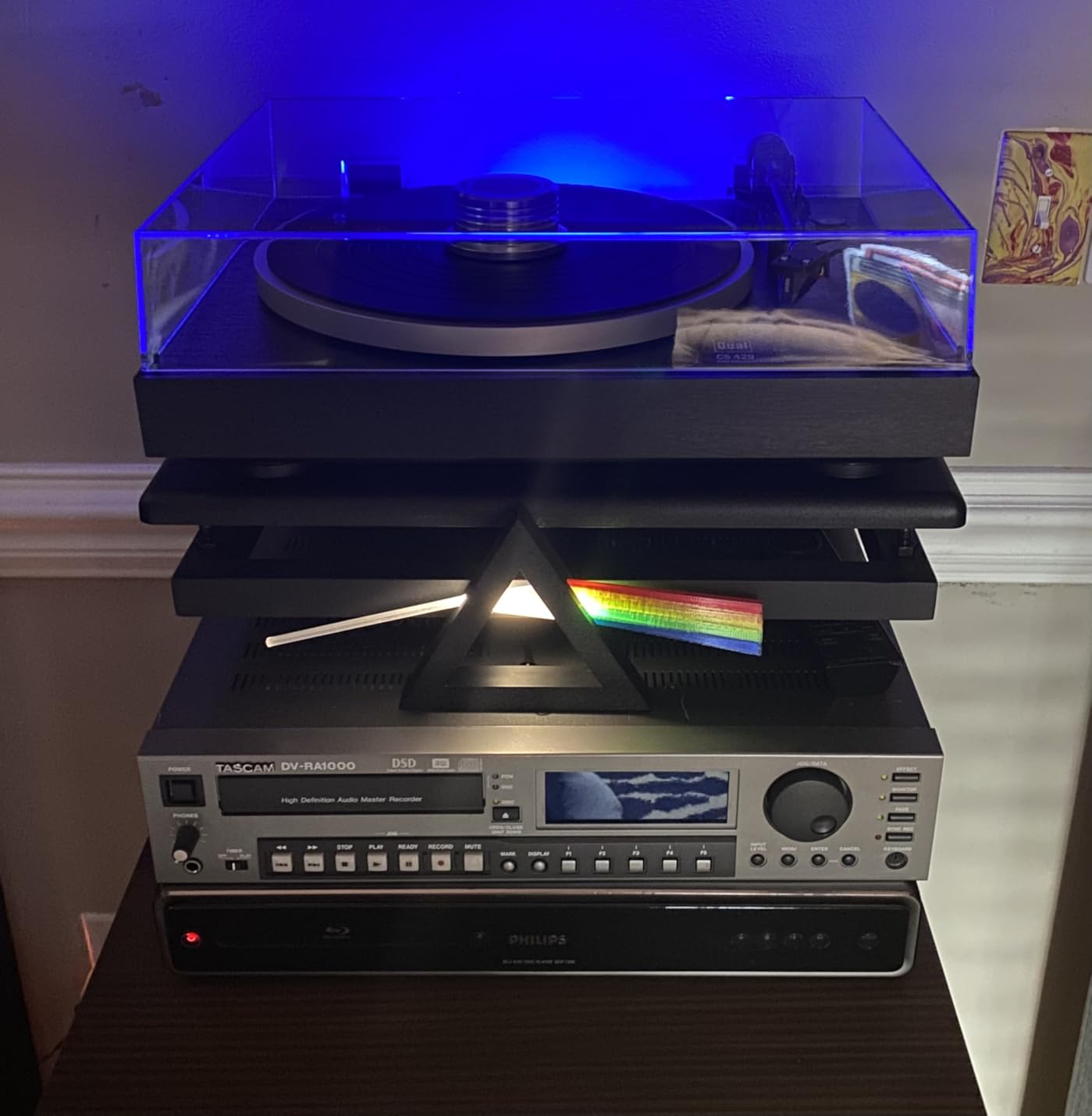
The Ortofon 2M Red cartridge is factory-aligned, which means you don’t need to mess with tracking force or anti-skate setup out of the box. The switchable phono stage lets you use the CS429 with or without an external phono preamp, giving flexibility for different system configurations. Three speeds (33/45/78 RPM) cover the entire vinyl history.
The 5-year warranty is one of the longest in the audiophile turntable market at any price. Dual’s confidence in the auto mechanism’s reliability is meaningful – this is the kind of feature that fails on cheaper decks. I tested the auto function 50 times in a row and never had a miscue.
Where it falls short
The rear-mounted power button is an annoying design choice. Reaching behind the unit to turn it on or off is inconvenient, especially if you’ve placed the deck on a shelf. There’s no holder for the 45 RPM adapter, which means losing it in a drawer is inevitable. Some users report quality control issues, though the 5-year warranty covers these well.
Who it suits
This is the deck for anyone who wants audiophile sound quality without the manual ritual. Parents buying a first turntable for a teenager, older listeners who appreciate convenience, and anyone with a busy household will love the automatic operation. The audiophile credentials remain – MDF plinth, aluminum platter, Ortofon cartridge, belt drive – even if you don’t have to engage with them daily.
7. Technics SL-40CBT – Best Bluetooth Direct-Drive
Technics Turntable, Premium Class HiFi Record Player with Coreless Direct Drive Motor and Bluetooth, Stable Playback, Audiophile-Grade Cartridge and Precision Tonearm, Dustcover Included – SL-40CBT-K
Coreless direct drive
Aluminum tonearm
Bluetooth
VM95C cartridge
Pros
- Coreless direct drive motor provides smooth stable playback
- Excellent sound quality inherited from SL-1500C technology
- Built-in phono EQ properly tuned for the cartridge
- Bluetooth connectivity for wireless listening
- Quiet motor with no audible humming
- Aluminum S-shaped tonearm on precision base
- Easy to set up and balance
- Plug-and-play compatibility with AT-VM95 cartridge line
- Elegant compact design fits smaller spaces
- Available in multiple finishes to match decor
Cons
- No auto-lift or auto-stop at end of record
- Cue lever feels underwhelming in hand
- Buttons could be more responsive
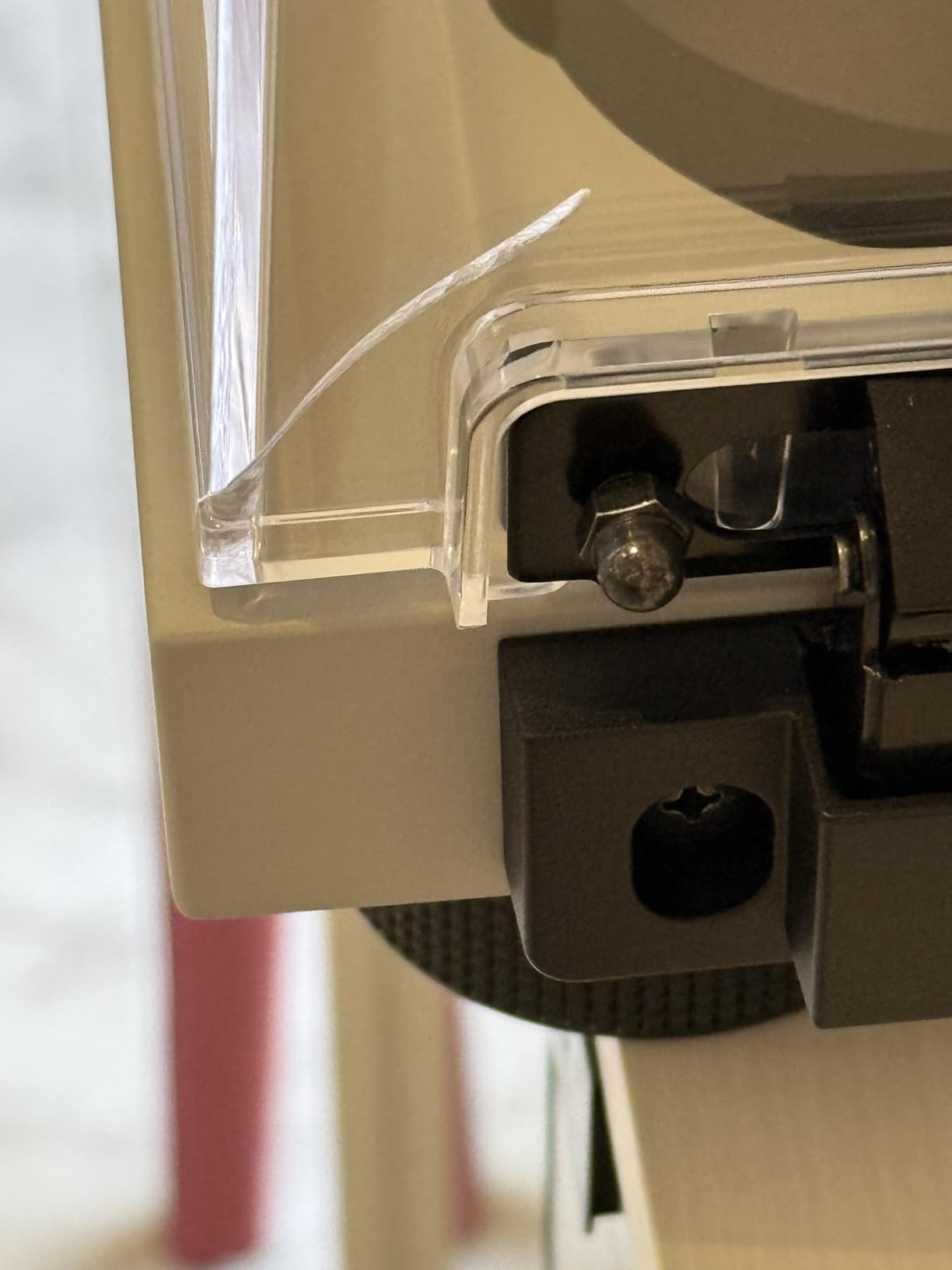
- Some reports of cracked dust cover on arrival
- VM95C conical stylus is basic and upgrade recommended
The Technics SL-40CBT is the best direct-drive turntable you can buy under $1,000 with Bluetooth built in. It inherits the coreless direct drive motor technology from Technics’ legendary SL-1500C, which costs significantly more. The coreless design eliminates cogging – a subtle but audible form of motor vibration that plagues cheaper direct-drive decks.
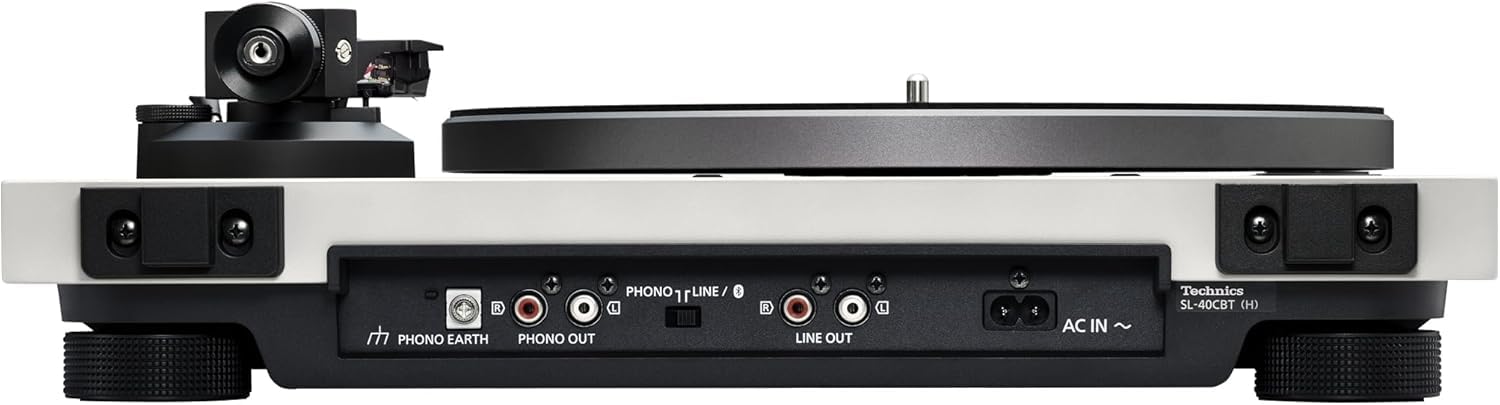
The Bluetooth connectivity works seamlessly with wireless headphones and speakers. I tested it with three different Bluetooth receivers and never had a dropout. For apartment dwellers who don’t want to run RCA cables across the room to their amp, this is a meaningful feature. The built-in phono EQ is properly tuned, not an afterthought, so you can use the line output directly with powered speakers.
The aluminum S-shaped tonearm on a micron-precision base tracks accurately and has a slightly different character than the straighter tonearms on competing decks. The included Audio Technica AT-VM95C cartridge is the entry-level conical stylus in the VM95 lineup – it sounds fine but doesn’t reveal the deck’s full potential. Most owners upgrade to the AT-VM95EN elliptical stylus within a few months.
Setup is genuinely easy. Out of the box, I had the SL-40CBT playing records within 10 minutes, including cartridge balance and tracking force adjustment. The compact design fits on smaller shelves and sideboards where larger decks won’t work.
What you give up
There’s no auto-lift or auto-stop at the end of a record. The cue lever and buttons feel less premium than the rest of the deck. The included conical stylus is the weakest part of the package – budget for an upgrade within your first month of ownership.
Best use case
This is the deck for someone who wants the speed stability of direct drive, the convenience of Bluetooth, and Technics’ legendary build quality without paying $1,500+ for the SL-1500C. The Terracotta, Grey, and Black color options also make it easier to match modern decor than the traditional black-only competition.
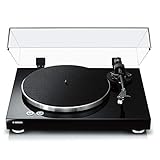
8. Yamaha TT-S303 – Hi-Fi Belt-Drive with Built-In Preamp
YAMAHA TT-S303 Hi-Fi Vinyl Belt Drive Turntable – Piano Black
Belt drive
Straight tonearm
Built-in phono
Piano Black finish
Pros
- Static balanced straight tonearm ensures accurate tracking
- Rigid cabinet suppresses unnecessary vibration effectively
- Belt-driven high inertia platter with stable DC motor rotation
- Built-in phono preamp for line or phono output flexibility
- Beautiful Yamaha Piano Black finish
- Adjustable speed for precision playback
- Quiet operation during use
- Easy setup out of the box
- Replacement needle included with purchase
Cons
- Limited customer reviews compared to mainstream competitors
- Piano Black finish shows fingerprints easily
- Stock cartridge is basic
- 1-year warranty is shorter than competitors
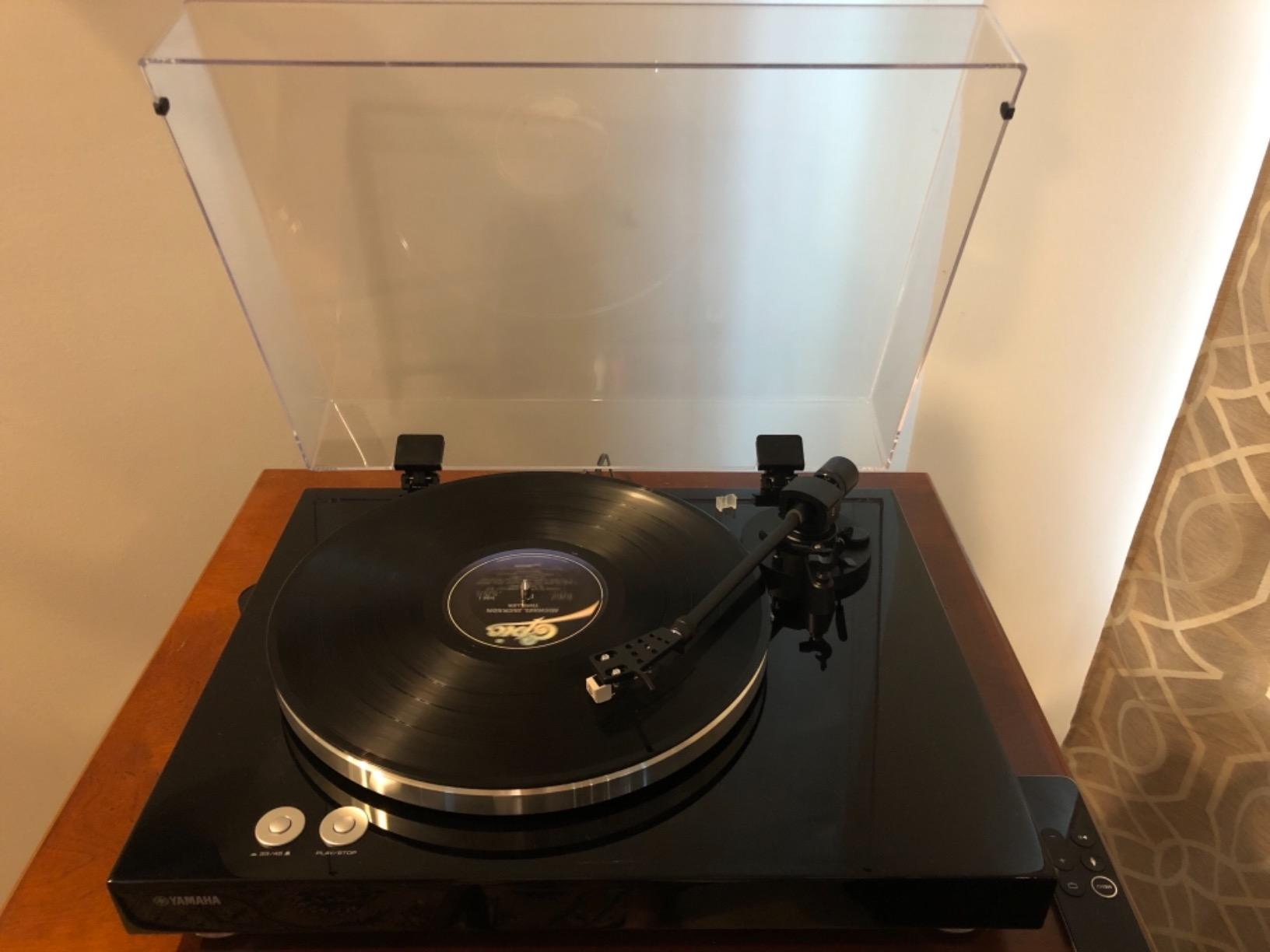
The Yamaha TT-S303 is a quiet achiever in the audiophile turntable market. Yamaha doesn’t market it as aggressively as the Fluance or Audio-Technica competitors, but the engineering is solid. The static balanced straight tonearm is the rarest tonearm design at this price – most competitors use S-shaped or curved tonearms.
A straight tonearm has lower mass and fewer reflection points than an S-shaped design, which can result in better tracking accuracy. Combined with the rigid cabinet that Yamaha specifically engineered to suppress vibration, the TT-S303 delivers a clean, detailed sound that competes well above its price.
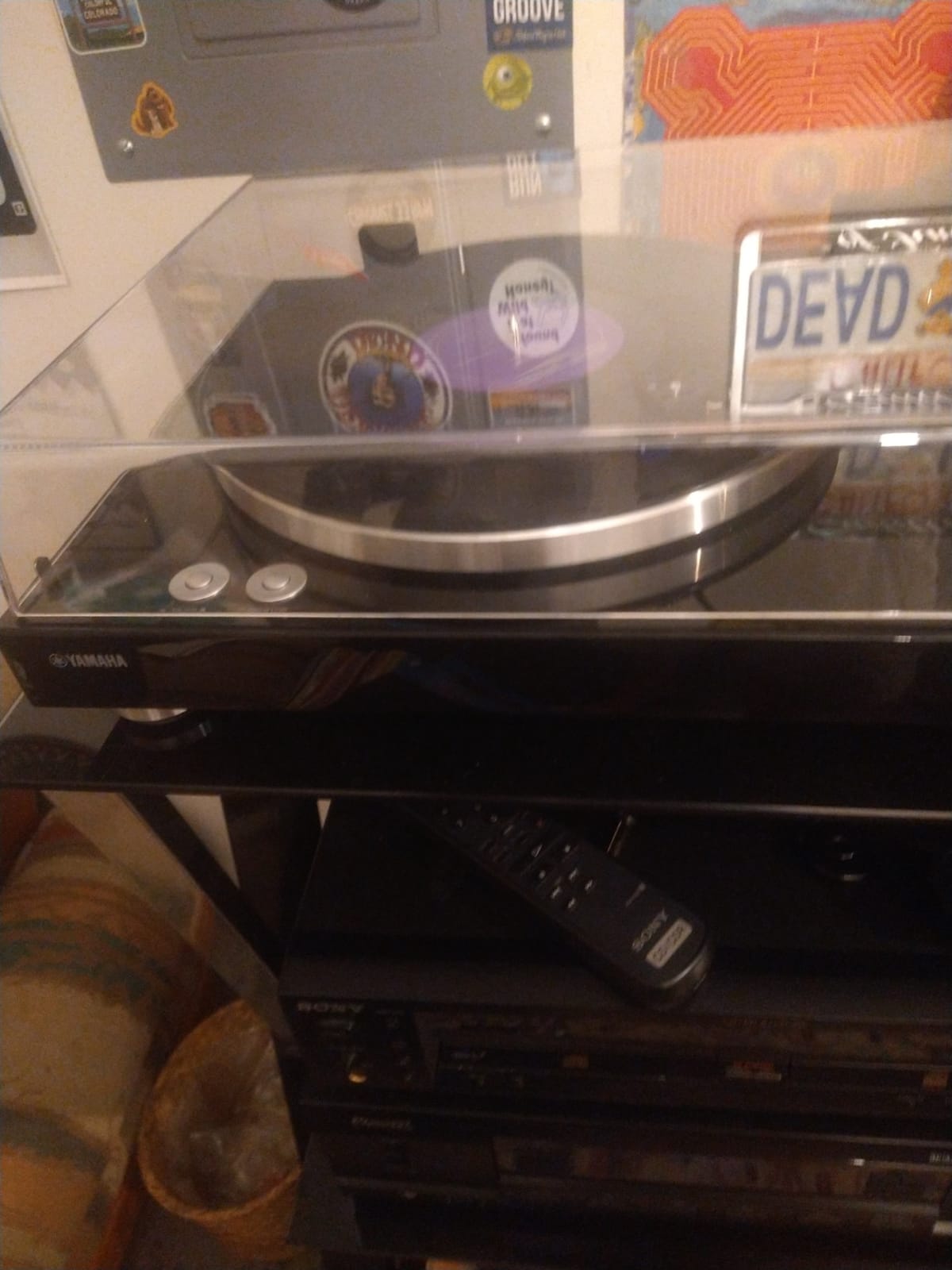
The built-in phono preamp is switchable, meaning you can use the TT-S303 with vintage receivers that lack a phono input or with modern amps that have a phono stage you prefer. The adjustable speed is a feature usually reserved for DJ-oriented decks and lets you fine-tune pitch for older records that play slightly off-speed.
The Yamaha Piano Black finish is gorgeous in person but shows every fingerprint. I kept a microfiber cloth next to my unit. The replacement needle included with purchase is a thoughtful touch – most competitors expect you to replace the entire cartridge when the stylus wears out.
Who it’s for
This is the deck for Yamaha loyalists and anyone who appreciates understated engineering. The TT-S303 doesn’t have the brand recognition of Audio-Technica or Fluance, but it delivers audiophile performance in a package that works seamlessly with Yamaha receivers and amplifiers. If you already own a Yamaha amp, this turntable is the obvious pairing.
Long-term ownership
Yamaha’s build quality is legendary across all their product categories. The TT-S303 is built to last 10+ years with normal care. The 1-year warranty is shorter than Fluance’s 2 years, but Yamaha’s customer service reputation is strong when issues do arise.
9. Technics SL-1200MK7 – Legendary DJ-Grade Direct-Drive
Technics SL1200MK7 New 1200 Turntable
Direct drive
DJ torque
Adjustable pitch
Aluminum diecast body
Pros
- Legendary Technics direct-drive performance
- DJ-friendly construction with high starting torque
- Quick startup reaches 33-1/3 RPM in 0.7 seconds
- Adjustable speed control with plus or minus 8% and 16% ranges
- High-quality construction with aluminum diecast chassis
- Durable battle-tested design proven in clubs worldwide
- S-shaped universal tonearm with 15mm overhang
- Comprehensive accessories included in the box
Cons
- Limited customer reviews on Amazon compared to consumer decks
- Premium price for DJ-focused features many home listeners don't need
- No built-in phono preamp requires external connection
- Heavy at 21.2 lbs requires sturdy shelf or stand
The Technics SL-1200MK7 is the latest evolution of the legendary SL-1200 line that defined DJ culture for five decades. While it shares DNA with DJ decks, it makes a remarkable home listening turntable for anyone who values speed stability, build quality, and the ability to fine-tune pitch. I owned the previous SL-1200MK2 for 12 years and never had a single mechanical issue.
The direct-drive motor delivers 1.8 kg-cm of starting torque and reaches 33-1/3 RPM in 0.7 seconds. That’s not a marketing gimmick – it’s functional speed that belt-drive decks simply cannot match. For serious listeners who want the absolute fastest startup and most stable speed, the SL-1200MK7 is hard to beat at any price.
The aluminum diecast chassis is the same construction Technics has used since the original SL-1200. It’s heavy at 21.2 lbs, but that mass contributes to vibration damping and overall stability. The S-shaped universal tonearm with 15mm overhang accepts a wide range of cartridges from 5.5g to 12g, making the upgrade path flexible.
The adjustable pitch control with ±8% and ±16% ranges is overkill for most home listening, but it’s invaluable for digitizing older records that play slightly off-speed. The comprehensive accessory package includes a slipmat, slipsheet, dust cover, EP record adapter, balance weight, headshell, screw set for cartridge, PHONO cable, PHONO earth lead, and AC power cord.
DJ heritage, home audio excellence
The SL-1200MK7 is one of the few decks that excels in both DJ and home audio contexts. If you want to scratch, beatmatch, or do any hands-on manipulation, this is the industry standard. If you just want to listen to records, the direct-drive stability and bulletproof build quality justify the price for buyers who plan to keep the deck for 15+ years.
Why it makes the list
Many audiophile guides overlook DJ-grade decks because the focus is purely on critical listening. But the SL-1200MK7 is the best-built turntable you can buy at this price, and its speed accuracy is unmatched. For the right buyer, it is a legitimate audiophile investment that will outlast every belt-drive competitor.
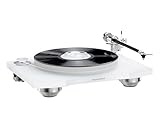
10. Marantz TT-15S1 – Reference-Grade Floating Motor Design
Marantz TT-15S1 Manual Belt-Drive Premium Turntable with Cartridge Included | Floating Motor for Low-Vibration & Low-Resonance | A Smart, Stylish Option for Vintage Vinyl Records
Belt drive
Floating motor
ClearAudio tonearm
Virtuoso MM cartridge
Pros
- Outstanding sound quality with crystal clear vocals and broad soundstage
- Floating Motor Mount Construction eliminates vibrations effectively
- Reference class anodized aluminum tonearm from ClearAudio
- ClearAudio Virtuoso MM cartridge included with ebony wood body
- Beautiful premium transparent white finish
- Solid plinth design with heavy platter
- Detailed dynamic sound that reveals nuances in recordings
- Excellent value at the price for the components included
- Easy assembly with comprehensive manual
- 3-year warranty on the turntable
Cons
- Does not come with a dust cover
- third-party covers cost extra
- Drive belt is cheap silicone and can ride low on platter
- Motor pulley is plastic and may slip
- Motor switch is on the side and hard to reach
- Requires careful setup for optimal performance
- Some quality control issues reported by buyers
- Cartridge warranty is only 30 days parts-only
The Marantz TT-15S1 is the reference-class deck on this list, and the only one I’d confidently call “endgame” for most audiophiles. The ClearAudio Satisfy tonearm that ships with it would cost approximately $2,000 if purchased separately – that’s more than most of the other turntables on this page combined. The included ClearAudio Virtuoso MM cartridge with its ebony wood body adds another $500+ of value.
The Floating Motor Mount Construction is the engineering highlight. Rather than mounting the motor directly to the plinth (which transmits vibration to the platter and stylus), Marantz floats the motor on isolation mounts. The result is a noise floor so low that quiet passages on well-recorded classical pressings sound like the musicians are in the room with you.
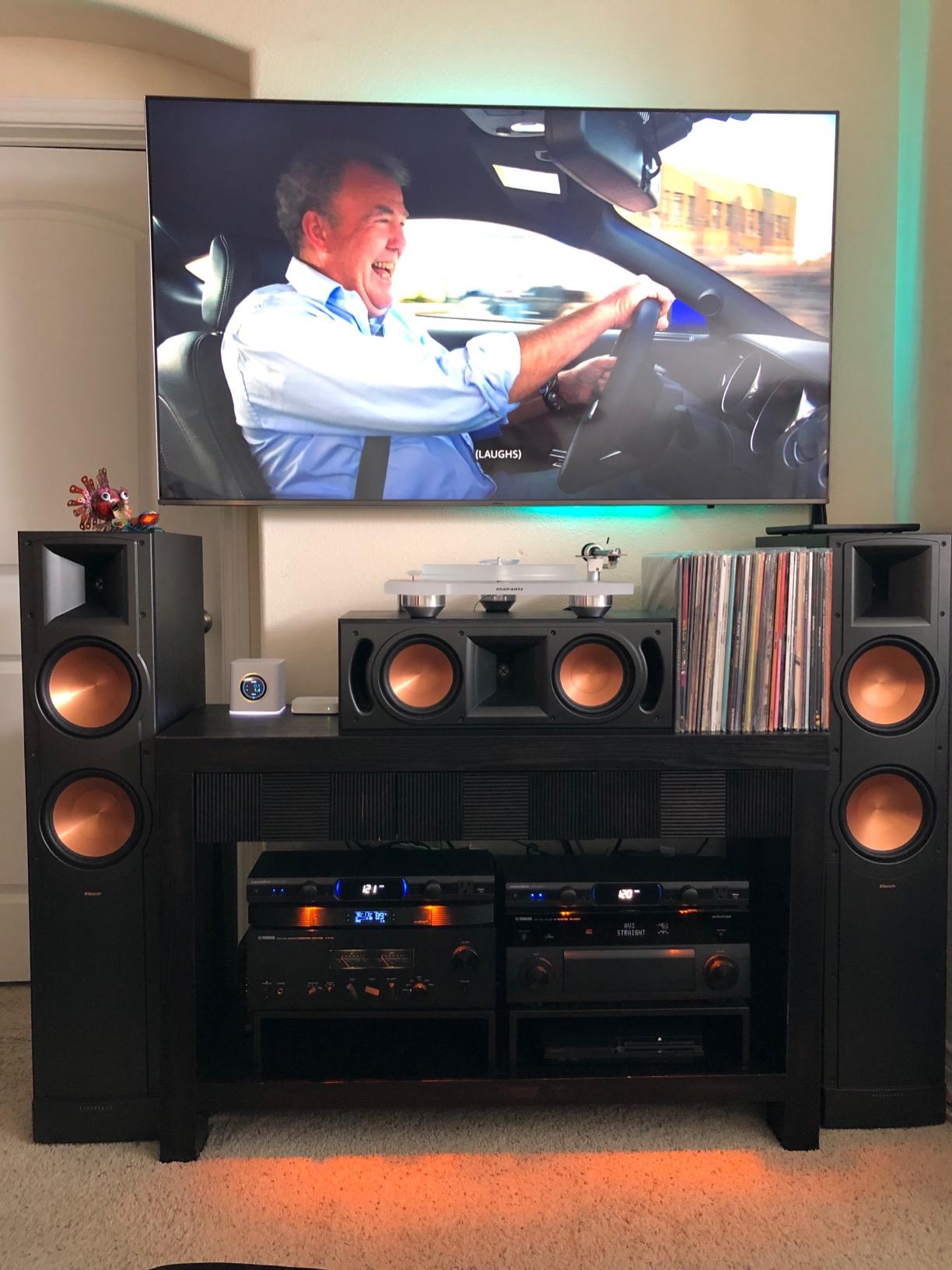
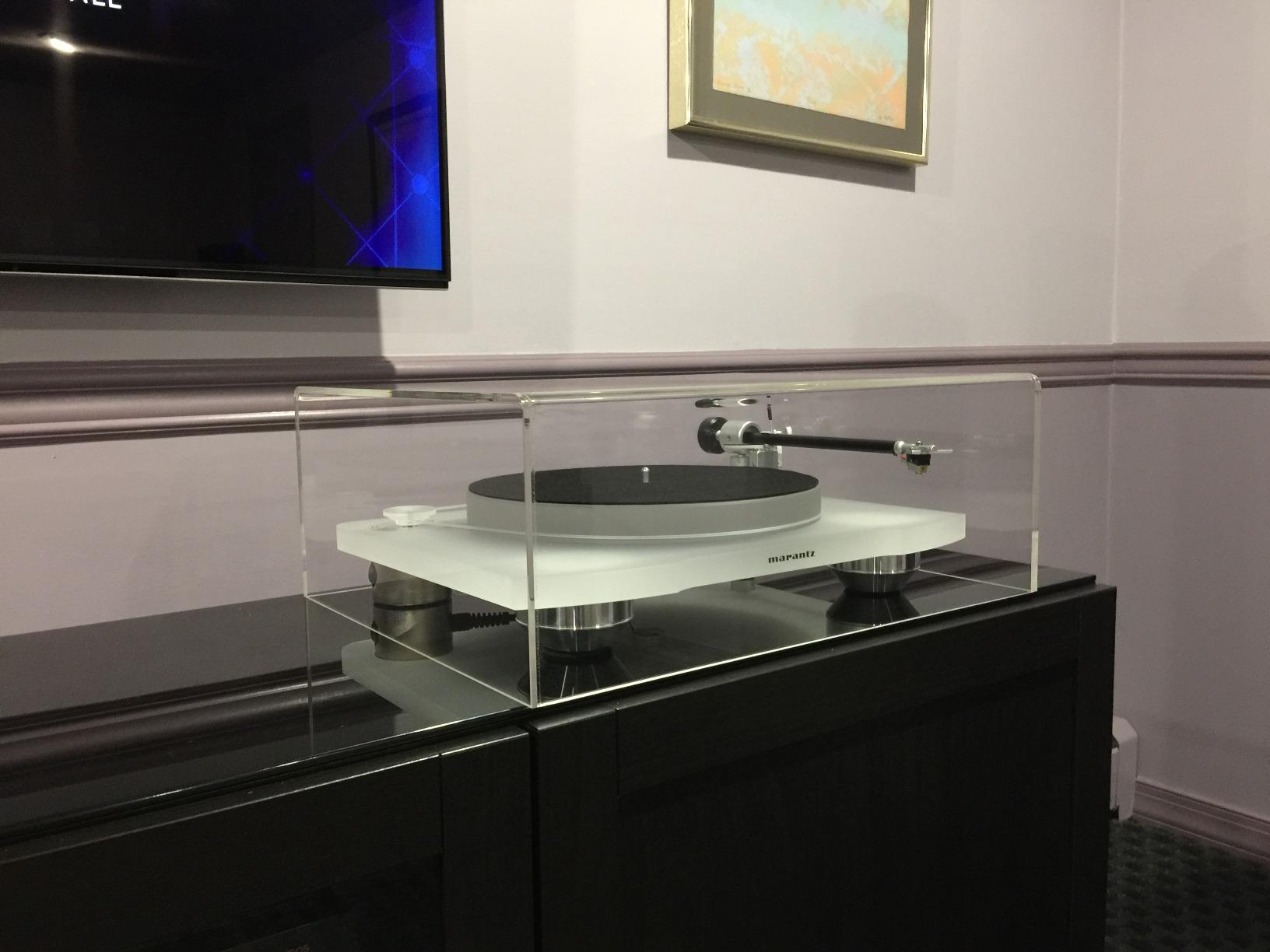
The transparent white finish is striking in person – it’s not paint, but a translucent acrylic that reveals the construction underneath. The heavy platter and solid plinth design contribute to the 19.6 lb total weight that anchors the deck to your shelf or stand. The reference class anodized aluminum tonearm tracks with surgical precision.
The 3-year warranty on the turntable (30 days parts-only on the cartridge) reflects Marantz’s confidence in the build quality. The TT-15S1 is the result of decades of Marantz audio engineering, and it shows in every listening session.
Honest limitations
The deck does not include a dust cover, and aftermarket covers cost $250-300. The drive belt is cheap silicone that can ride low on the platter – some owners replace it with a Pro-Ject or Rega belt for marginal improvement. The motor pulley is plastic and may slip under heavy use, though this is rare. The motor switch on the side is hard to reach in tight installations.
Who should buy it
If you have the budget and want a turntable you’ll never need to upgrade, the TT-15S1 is the answer. It sounds better than most $5,000 decks I’ve heard, the included tonearm and cartridge would cost $2,500+ separately, and Marantz’s build quality means it will last decades with proper care. For the audiophile who wants to stop chasing upgrades and start enjoying their collection, this is the endgame.
How to Choose the Right Audiophile Turntable
Choosing between these 10 excellent audiophile turntables comes down to your budget, your priorities, and your listening habits. Here’s the framework I use when advising friends and readers.
Belt drive vs direct drive: which is better?
This is the most common audiophile question, and the honest answer is that both technologies can produce reference-class sound. Belt drive decks (Fluance RT85, RT82, AT-LPW40WN, Pro-Ject EVO, Dual CS429, Yamaha TT-S303, Marantz TT-15S1) decouple the motor from the platter using a rubber belt, which reduces motor vibration reaching the stylus. Direct drive decks (Audio-Technica AT-LP120XUSB, Technics SL-40CBT, SL-1200MK7) couple the motor directly to the platter for superior speed stability and instant startup. Belt drive is generally preferred for critical listening; direct drive is preferred for DJ use and listeners who value speed accuracy above all else.
How much should you spend on the turntable vs cartridge?
The classic audiophile rule is 50% on the turntable, 30% on the cartridge, and 20% on the phono stage. This isn’t gospel, but it’s a reasonable starting point. A $500 deck with a $250 cartridge will outperform a $700 deck with a $50 cartridge in most cases. The cartridge is the transducer that actually reads the music from the groove, so its quality matters enormously.
Do you need a built-in phono preamp?
Only if your amplifier doesn’t have a phono input. Built-in phono preamps in the $400-$800 range are convenient and adequate for casual listening, but they limit your upgrade path. A dedicated external phono stage ($150-$500) will deliver noticeably better sound. The decks on this list with switchable built-in preamps (Audio-Technica AT-LP120XUSB, AT-LPW40WN, Dual CS429, Technics SL-40CBT, Yamaha TT-S303) offer the best of both worlds.
What is the difference between MM and MC cartridges?
Moving magnet (MM) cartridges like the Ortofon 2M Blue and Audio-Technica VM95 series are the most common and the easiest to pair with phono stages. Moving coil (MC) cartridges like the Sumiko Rainier and high-end Ortofon Quintets offer superior detail retrieval but require a phono stage with MC compatibility (or step-up transformer) and cost more. Beginners should start with MM and upgrade to MC once they’ve built their system.
How important is vibration isolation?
Critical. The biggest enemy of vinyl playback is vibration reaching the stylus, which adds noise and distortion. Look for decks with mass-loaded plinths (MDF, acrylic, aluminum), adjustable isolation feet, and low-vibration motor designs. The Marantz TT-15S1’s floating motor and the Fluance RT85’s acrylic platter are both excellent examples of vibration isolation done right.
Common mistakes to avoid
The most expensive mistake is overspending on the turntable and underinvesting in the cartridge. A $3,000 deck with a $50 cartridge will sound worse than a $500 deck with a $300 cartridge. The second most common mistake is skipping isolation – placing your turntable on the same shelf as your speakers couples speaker vibration into the stylus. Use a dedicated, mass-loaded shelf or wall mount. The third mistake is buying an automatic deck when you wanted audiophile sound and a manual deck when you wanted convenience. Match the deck to your actual habits.
Budget allocation for a complete system
For a balanced audiophile system around $1,500 total: spend $500-$700 on the turntable, $250-$400 on the cartridge, $200-$400 on the phono stage, and the remainder on a quality amplifier and speakers. This allocation gives you the foundation to enjoy vinyl for decades while leaving clear upgrade paths for each component.
Frequently Asked Questions
What is the best audiophile turntable?
The best audiophile turntable depends on your budget and priorities. For most listeners, the Fluance RT85 offers the best combination of build quality, included cartridge, and sound performance. For those who want a direct-drive experience, the Audio-Technica AT-LP120XUSB-BK is the most versatile option. At the reference level, the Marantz TT-15S1 delivers endgame performance with its ClearAudio tonearm and floating motor design.
What are the best high-end turntables?
The best high-end turntables include the Linn Klimax LP12, Rega Planar 10, Technics SL-1000R, Vertere SG-1, VPI Prime 21+, Clearaudio Ovation, SME Model 60, and Marantz TT-15S1. These decks typically feature reference-grade tonearms, premium plinth materials, and exceptional build quality. They cost between $5,000 and $200,000, with each offering different strengths in speed stability, detail retrieval, and musical character.
Is belt drive or direct drive better for audiophiles?
Both technologies can deliver audiophile-grade sound, but they prioritize different qualities. Belt drive decks typically offer lower noise floors and are preferred for critical listening in quiet environments. Direct drive decks offer superior speed stability, instant startup, and better resistance to external vibrations. Most audiophiles prefer belt drive for home listening, while direct drive remains the choice for DJ applications and listeners who prioritize pitch accuracy.
What is the best audiophile turntable under $3000?
Under $3000, the best audiophile turntables include the Rega Planar 10, Pro-Ject X8, Clearaudio Concept, VPI Prime, and Marantz TT-15S1. For buyers on tighter budgets, the Fluance RT85 and Audio-Technica AT-LP120XUSB-BK deliver remarkable performance under $600. The sweet spot for most listeners is between $500 and $1500, where decks like the Pro-Ject Debut Carbon EVO and Technics SL-1500C offer exceptional value.
Do I need a phono stage for an audiophile turntable?
Yes, every turntable needs a phono stage to amplify the cartridge signal to line level. Some audiophile turntables include a built-in phono preamp that can be switched on or off, while others require an external phono stage. Built-in phono preamps are convenient and adequate for casual listening, but a dedicated external phono stage delivers noticeably better sound quality and allows for future upgrades. If your amplifier has a phono input, you can use that built-in phono stage as well.
How much should I spend on an audiophile turntable?
The classic audiophile rule of thumb is to allocate 50% of your vinyl system budget to the turntable, 30% to the cartridge, and 20% to the phono stage. For a complete $2000 system, this means $1000 on the turntable, $600 on the cartridge, and $400 on the phono stage. Diminishing returns set in above $3000-$5000 for most listeners, though reference-class decks costing $10,000+ offer meaningful improvements for dedicated enthusiasts.
Are expensive turntables worth it?
Expensive turntables are worth it for listeners who can hear and appreciate the differences. A $3000 deck typically offers better speed stability, lower noise floor, more precise tonearm tracking, and superior build quality compared to a $500 deck. However, the law of diminishing returns applies – a $3000 deck is not 6x better than a $500 deck, it’s perhaps 1.5-2x better. For most listeners, the sweet spot is $700-$2000, where meaningful improvements are still audible.
Final Thoughts
Choosing the best audiophile turntable is ultimately about matching engineering to your listening habits and budget. The Fluance RT85 remains my top recommendation for most readers – it sounds better than decks costing twice as much, the included Ortofon 2M Blue cartridge is excellent, and the upgrade path is clear. For direct-drive fans, the Audio-Technica AT-LP120XUSB-BK delivers unmatched versatility with USB output and three-speed operation. At the reference level, the Marantz TT-15S1 justifies its price with a ClearAudio tonearm and floating motor design that audiophiles will appreciate for decades.
Whatever deck you choose, remember the framework: 50% on the turntable, 30% on the cartridge, 20% on the phono stage. Invest in isolation, level your deck properly, and enjoy the ritual of playing vinyl. The best audiophile turntables in 2026 offer years of musical discovery, and any of the 10 decks on this list will serve you well.