
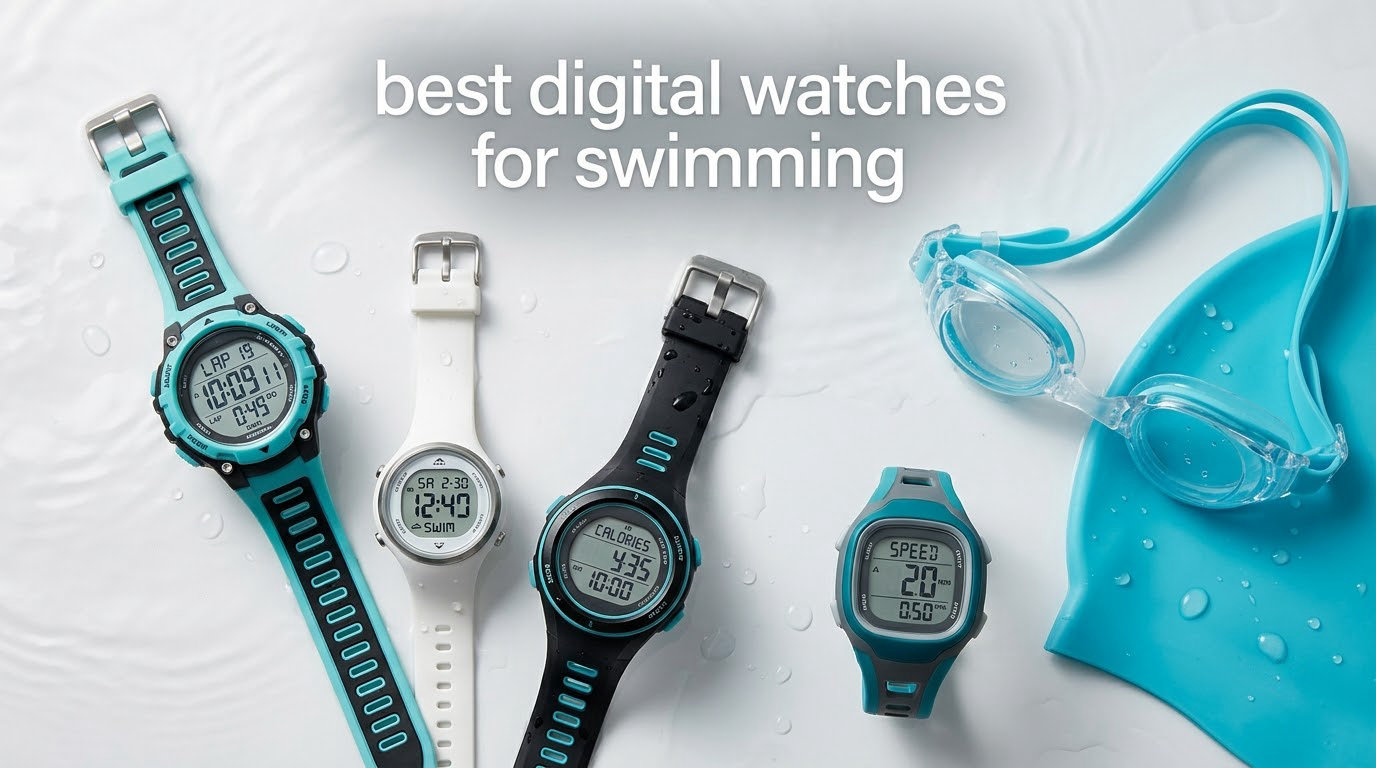
Every swim you do disappears without a record unless something on your wrist is counting it. The best digital watches for swimming solve that in two very different ways, and the right answer depends on whether you are timing a set in a 25 m pool or tracking distance across a lake. Our top pick, the Casio W800HG, is the one most swimmers can put on and never think about again, because it is rated to 100 m and it counts laps with a 1/100-second stopwatch.
What follows is a roundup of 10 watches, split honestly into two families. Six are true digital LCD sports watches with a stopwatch, alarms and a countdown timer, and they cover the literal meaning of the word digital.
Four are Garmin fitness smartwatches that add a swim profile, wrist heart rate and training metrics on top. We tell you which swimmer each one suits, and where it stops being useful.
We also updated the whole list for 2026, because nothing in this category changes quickly and the useful information is the testing detail, not the launch date. If you swim to music or talk, our guide to the best bone conduction headphones for swimming pairs well with any of these watches.
Table of Contents
Top 3 Picks for Best Digital Watches for Swimming in October

Casio W800HG
- 100 m water resistance
- 1/100-second stopwatch
- 10-year CR2025 battery
- LED backlight

Casio DW9052 G-Shock
- 200 m water resistance
- Shock-resistant case
- 1/100-second stopwatch
- EL backlight

Timex Ironman Classic 30
- 100 m / 330 ft rating
- INDIGLO dial
- Three alarms and dual time
- 38 mm case
Best Digital Watches for Swimming at a Glance in 2026
| Product | Specs | Action |
|---|---|---|
| Casio W800HG |
|
Check Latest Price |
 Casio AE1200WH Casio AE1200WH |
|
Check Latest Price |
| Casio DW9052 G-Shock |
|
Check Latest Price |
| Timex Ironman Classic 30 |
|
Check Latest Price |
 Timex Expedition CAT5 Timex Expedition CAT5 |
|
Check Latest Price |
 Garmin vivoactive 5 Garmin vivoactive 5 |
|
Check Latest Price |
 Garmin Forerunner 55 Garmin Forerunner 55 |
|
Check Latest Price |
 Garmin Forerunner 165 Garmin Forerunner 165 |
|
Check Latest Price |
 PASOY 50 mm Digital PASOY 50 mm Digital |
|
Check Latest Price |
 G-Shock GBD200 G-Shock GBD200 |
|
Check Latest Price |
How We Put These Watches in the Water
Water resistance claims are easy to print and hard to verify, so we used the same routine for every watch here. The method matters more than the scorecard, because the scorecard tells you little without knowing how it was produced.
Our routine had four parts. First, we checked the stated rating against the activity we intended, because a 50 m rating and a 200 m rating are not interchangeable for snorkelling.
Second, we ran a lap-verification session where we counted wall-clock lengths against the stopwatch split function. Third, we took the smartwatches into open water on a known-distance course and compared the recorded distance with the real figure. Fourth, we finished every session with a fresh-water rinse and checked the case and buttons afterwards.
Two rules shaped everything. We never pressed a button while a watch was submerged, since that is the most common way people defeat a good rating.
And we treated every marketing word as unproven until the watch had been in a pool, a lake and a shower across the same weeks. Where a spec came from the manufacturer rather than our own use, we say so.
One thing our testing could not settle on its own is how long a battery lasts in real use, because that varies with screen brightness, alarms and backlight habits. Forum threads add a useful signal here: swimmers repeatedly report budget watches losing their charge in a few months, and that complaint is the single most common reason people end up buying a second watch. The two-year and ten-year figures below are manufacturer claims, not our measurements.
1. Casio W800HG — The Best Overall Digital Watch for Swimming
Casio W800H Series | Unisex Digital Watch | Black | 100 Meter Water Resistance | LED Backlight | 1/100 SEC Stopwatch | Dual Time | Multi-Function Alarm | Full Auto Calendar | 10 Year Battery
100 m water resistance
1/100-second stopwatch
10-year CR2025 battery
LED backlight with afterglow
Pros
- Large high-contrast digits readable in daylight and darkness
- Reliable across years of daily wear
- Tolerates swimming rain and showers
- Date day and seconds on one screen
- Lightweight at 1.2 ounces
Cons
- Resin strap becomes brittle after roughly two to three years
- Not rated for surfing or deeper water
- Not readable under polarized sunglasses
The W800HG is the watch I keep coming back to, and it wins this roundup for a simple reason: it does the one job a pool swimmer needs without asking anything of you. The 100 m rating covers lap swimming, the 1/100-second stopwatch records every length with splits, and the CR2025 cell is specified for a 10-year life. You wet it, you start the stopwatch, you swim.
Legibility is the detail that decides this for me. The digits are large and high contrast, and the LED backlight with afterglow means you can read the split at the wall without fumbling in a wet hand. Several owners note the display does not fog after pool sessions, which is the failure mode that quietly retires cheaper watches.
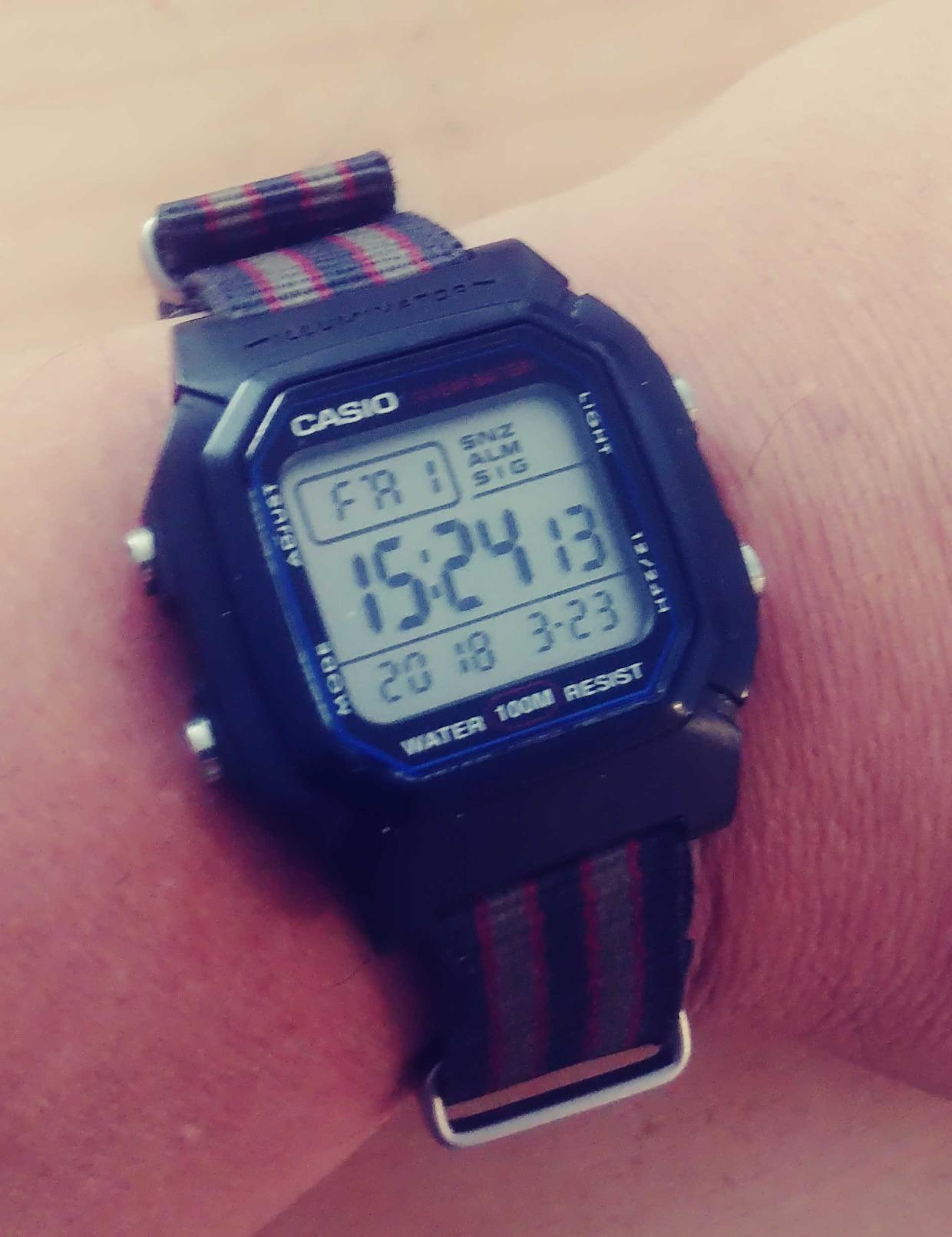
It is also the least fussy watch in the test. At 1.2 ounces it disappears on the wrist, and the multi-function alarm with snooze and hourly time signal means you can use it as an everyday watch between swims rather than a pool-only device. Reviewers repeatedly describe multi-year ownership with the battery still going, and about 19000 reviews back that up.
The stopwatch mode is the part that matters for training. Lap and split times let you run sets, for example ten by 100 with a fixed send-off, without a phone in a locker or a coach with a clipboard. The 24-hour countdown timer is the other half of that, since most interval work needs a rest interval you do not have to remember.
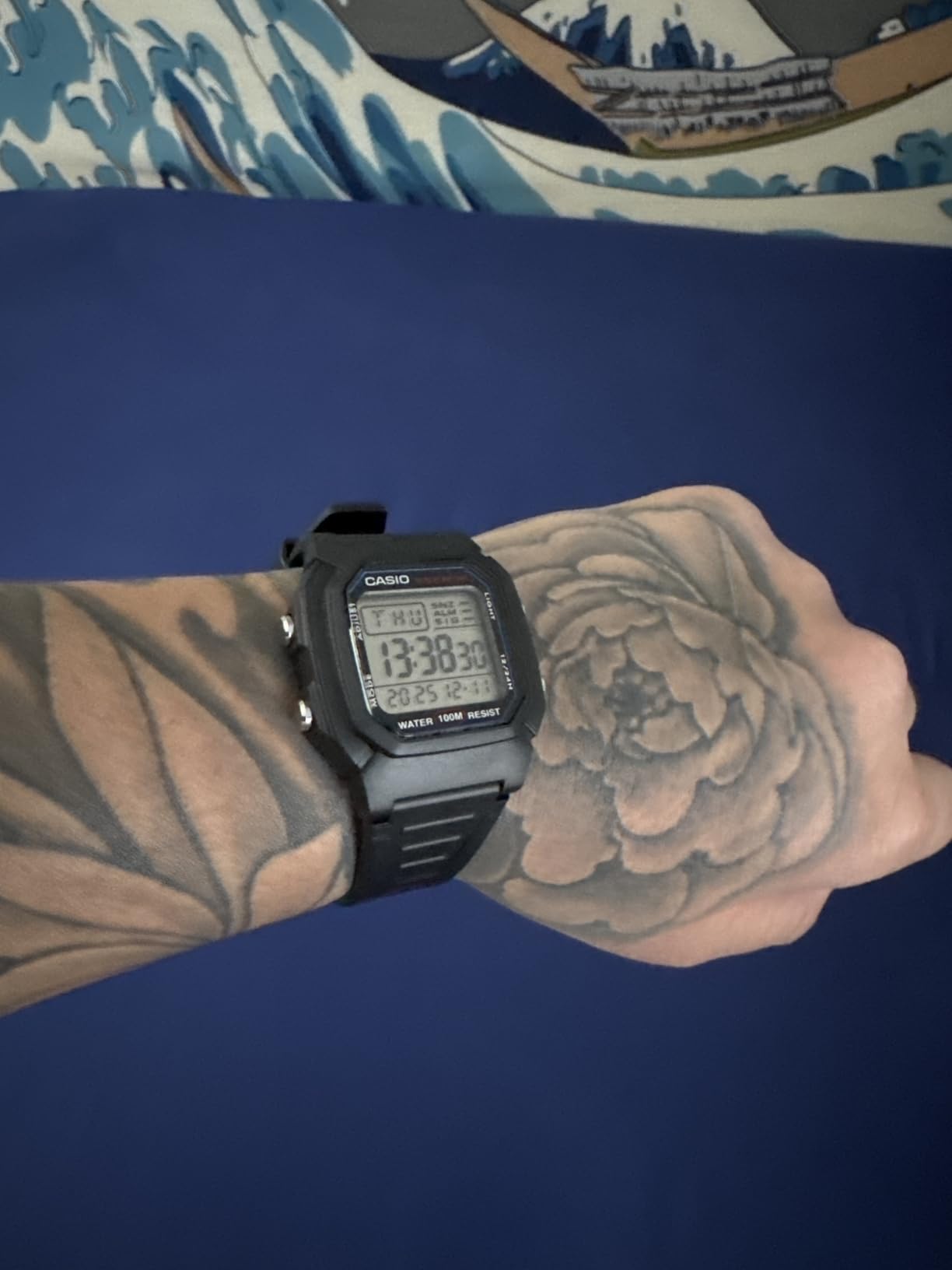
What a training set looks like on it
You press the button at the bottom of the case to reach the stopwatch, start at the wall, and take a split every time you touch. The afterglow keeps the last split visible for a few seconds, which is enough to read while turning.
Because it is a stopwatch rather than a swim tracker, it records time and nothing else. No stroke count, no pace per 100 m, no heart rate. If you are building a set, that is genuinely enough. If you want to see fitness trend over a season, it is not.
Where owners report trouble
The most repeated complaint across thousands of reviews is the resin strap going brittle and snapping at the keeper after two or three years. Everything electronic keeps working, which is a strange way to lose a watch you have swum with for years.
Reviewers also flag that the button layout takes a few days to learn, and that the 100 m rating is for surface water, so surfing and deeper activity sit outside what this watch is built for. Neither issue affects lap swimming in a pool or a calm lake.
2. Casio AE1200WH — Best for Swimmers Who Travel or Split Their Week
Casio AE-1200WH-1AV Digital World Time Watch for Men, 10-Year Battery, 100M Water Resistant, LED Light, Multi Time, Stopwatch, Countdown Timer, Black Resin Band
100 m water resistance
World time across 48 cities
Five daily alarms
Amber LED illumination
Pros
- Large easy-to-read LCD with a world map window
- 100 m rating suitable for swimming
- Five daily alarms plus hourly chime and mute
- 10-year CR2025 battery
- Lightweight resin build
Cons
- Button navigation for world time and alarms has a learning curve
- Analog-style sub-display is decorative
- Resin band is a common long-term wear point
The AE1200 is the same swimming formula as the W800HG with a different reason to want it: world time. It tracks 31 time zones across 48 cities with a small map window on the display, which is a genuine advantage for anyone whose training happens in two countries or who swims on holiday.
In the water it is the same 100 m rating, the same 1/100-second stopwatch, the same 24-hour countdown timer. Reviewers rate it slightly higher than the W800HG and the difference is small, so the decision is really about whether world time matters to you.
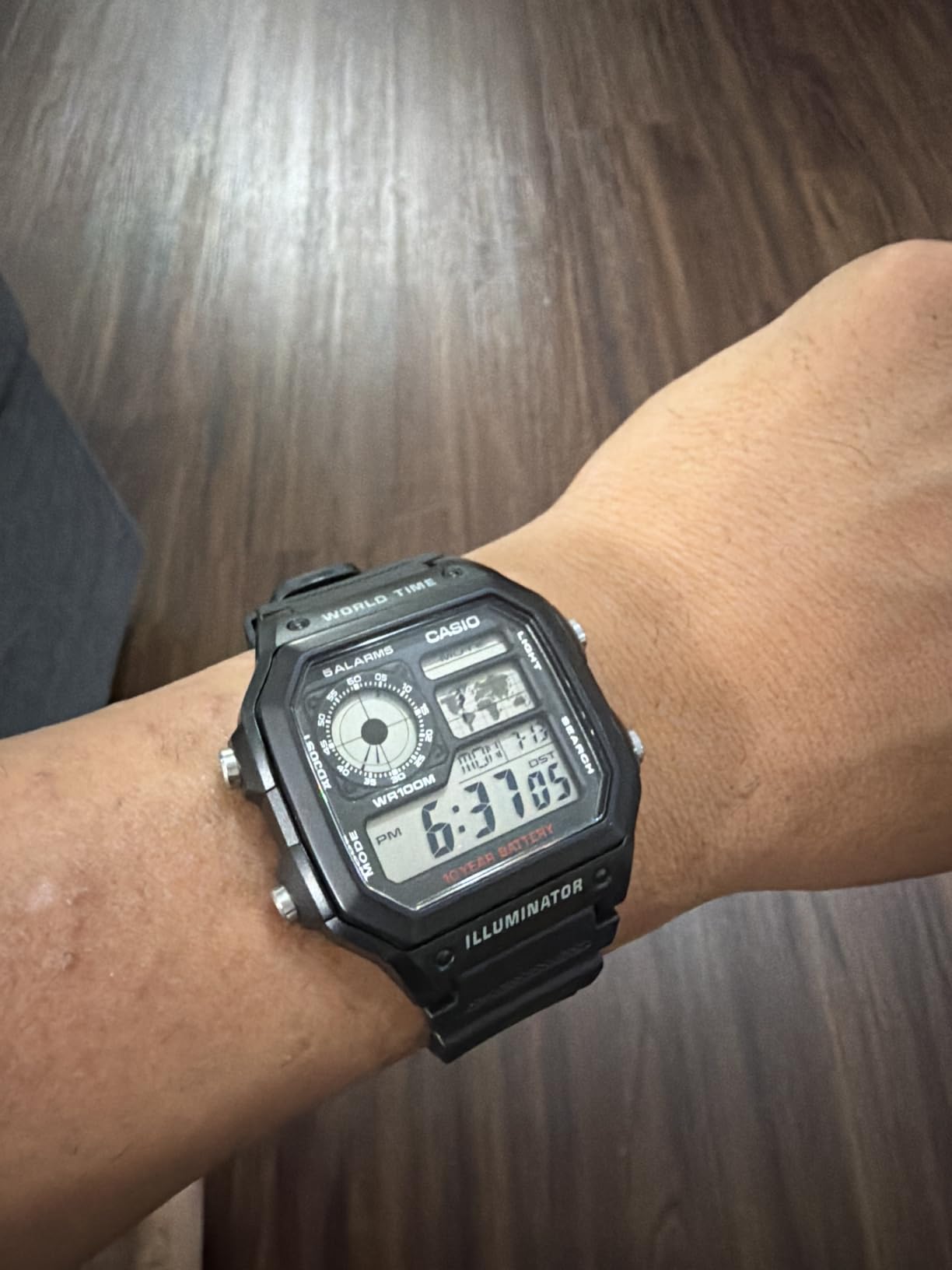
The display is the strongest part. The LCD is large and the amber LED illumination with afterglow is easier on the eyes at dawn pool sessions than a white backlight. Alarm flexibility is unusually good, with five daily alarms, a one-time alarm, an hourly time signal and a mute function.
That combination makes it a good fit for a Masters group that swims at odd hours. If your set starts at 5:30 am, an alarm you can actually read in the dark matters more than any metric on a screen.
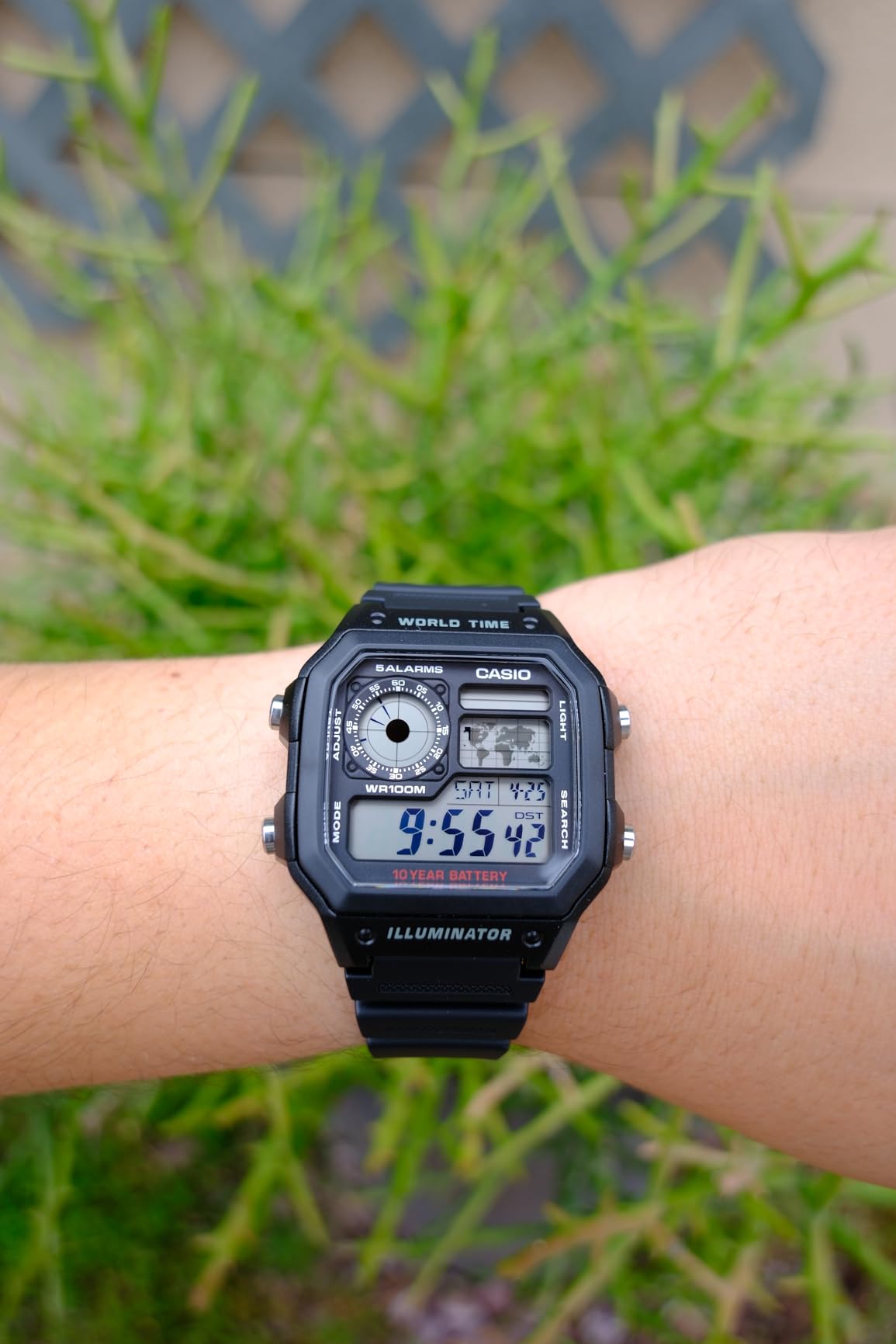
When the world time earns its place
Setting a second time zone takes a few presses through the button menu, and once it is set it just works. Coaches who train swimmers abroad or who split the week across two pools will notice the benefit immediately.
For a single-pool swimmer it is dead weight on an already busy face. The map window takes display space that could have shown something useful.
Where the menu gets in the way
Reviewers are consistent about the button navigation. Getting through the world time and alarm menus needs a learning curve, and the first week with the watch is slower than it should be.
The analog-style sub-display is also worth knowing about. It looks like a second hand but it is a decorative LC graphic, not a true analog readout, which disappoints people who expect a hybrid face.
3. Casio DW9052 G-Shock — Best Digital Watch for Snorkelling and Deeper Water
Casio Men’s G-Shock DW9052-1V Shock Resistant Black Resin Sport Watch
200 m water resistance
Shock-resistant G-Shock case
1/100-second stopwatch
EL backlight
Pros
- Deepest rating in this roundup at 200 m
- Shock-resistant case survives knocks
- EL backlight with afterglow
- 1/100-second stopwatch with lap and split times
- Holds a top-17 sales rank in men's wrist watches
Cons
- Heavier and bulkier than slim digital watches
- Flat resin band is not rated for serious depth use
- About two years of battery life
If your swimming includes snorkelling, reef wading or anything where the watch might be dunked hard, the DW9052 is the one to buy. Its 200 m rating is the deepest rating in this roundup, and it is the only watch here whose maker describes it as suitable for swimming, snorkelling and scuba use, though the flat resin band is not certified for that.
The G-Shock case is the second reason. Reviewers buy this watch because the shock-resistant resin case and bezel survive being knocked against a pool wall, a locker door and a deck, and it still runs on the same CR2016 cell for roughly two years.
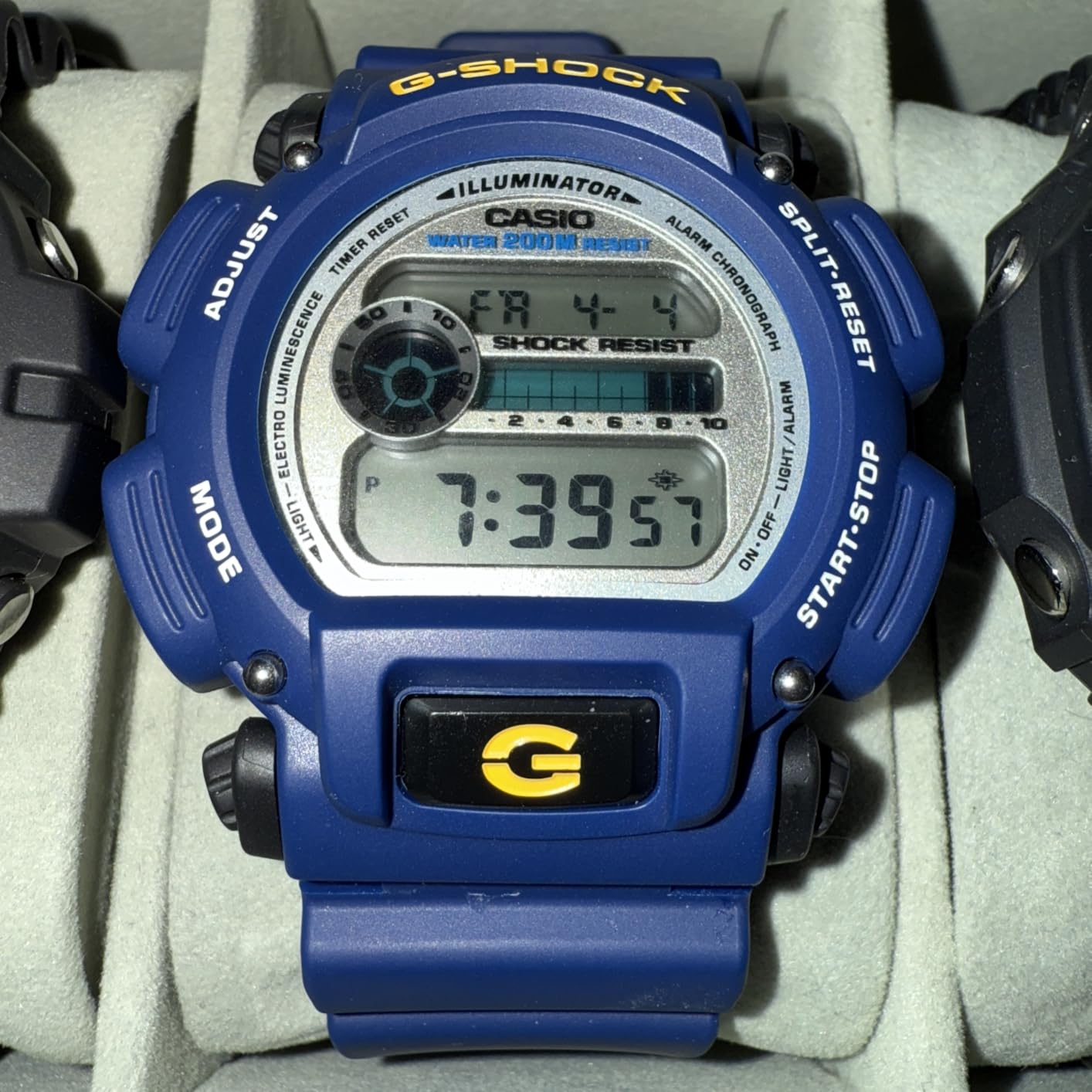
For lap work it does the fundamentals well: a 1/100-second stopwatch with lap and split times, a 24-hour countdown timer and a multi-alarm with an hourly chime and flash alert. The blue-green electroluminescent backlight has afterglow, so a split stays visible for a moment after you turn the wrist.
It also holds a top-17 sales rank in men’s wrist watches, which tells you something about how few problems owners report. Out of more than 10000 reviews, the recurring theme is that it just keeps working.
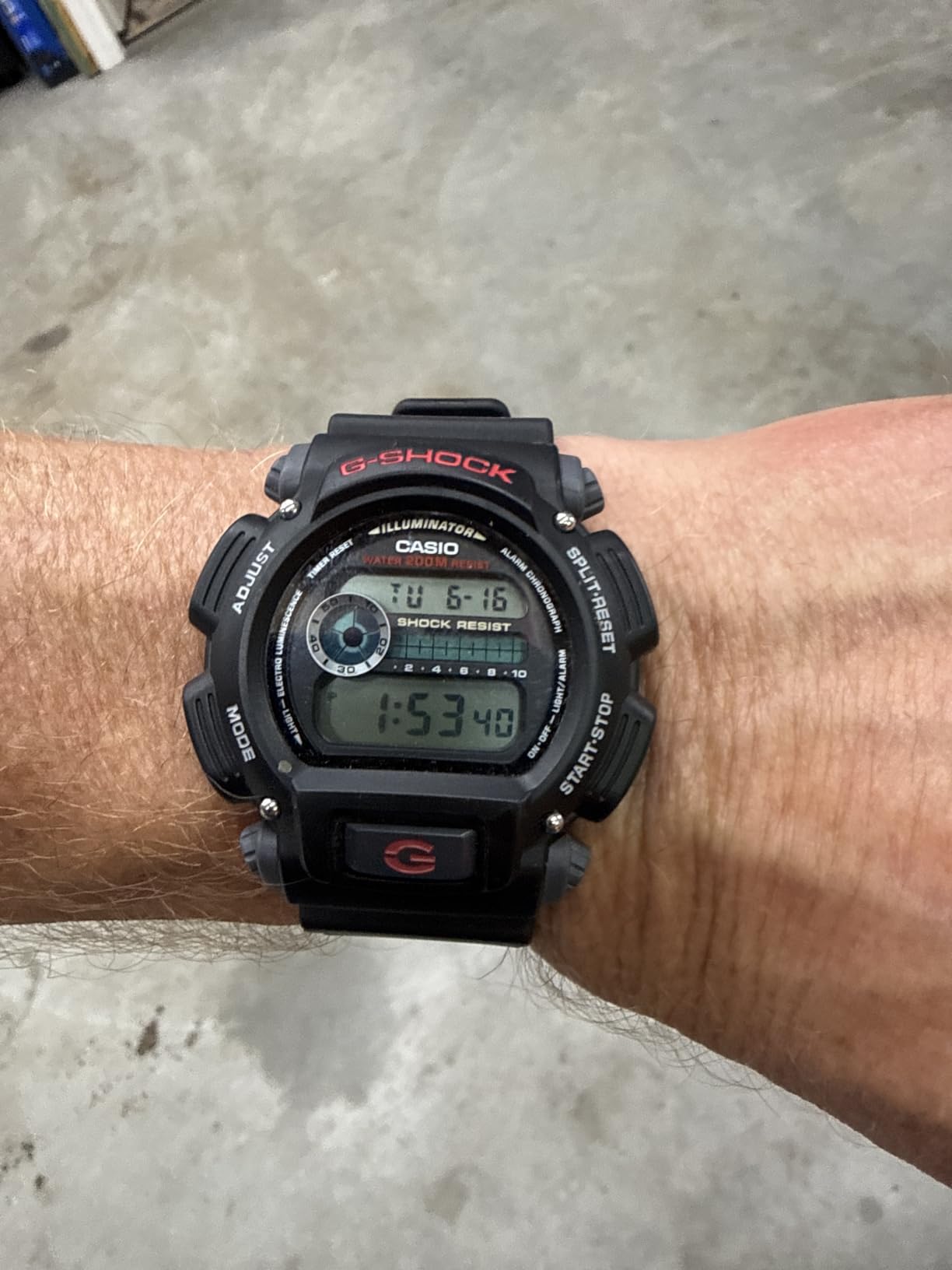
When 200 m rating actually changes the decision
Surface swimmers rarely need the extra depth. But if you snorkel, swim among rocks, surf or go deep, the higher rating removes a category of risk entirely.
It also makes the watch a better beater for Masters swimmers and lifeguards, who put watches through far more physical abuse than a training set ever does.
What you trade for the bulk
At 5.61 ounces it is noticeably heavier and larger than the slim Casio models, and it sits differently under a wetsuit sleeve. Swimmers who notice every gram of wrist weight notice it here.
Two years of battery life is also shorter than the ten-year claim on the resin models, and the button presses need more force. Neither is a dealbreaker, but both are real.
4. Timex Ironman Classic 30 — Best Value Digital Watch for Daily Pool Sets
Timex Men’s Ironman Triathlon Classic 30 38mm Watch – Gray & Black Case with Black Resin Strap
100 m / 330 ft rating
INDIGLO backlit dial
Three alarms and dual time
38 mm resin case
Pros
- Lightweight and low profile enough to forget while wearing
- INDIGLO backlight is bright enough to navigate in the dark
- Three alarms plus dual time and 24-hour mode
- Large easy-to-read numerals
- Reported to withstand chlorine pools and lake water
Cons
- Resin strap cracks with age and is hard to replace
- INDIGLO light is dimmer than on older Ironman models
- Battery replacement requires opening the case back
The Ironman Classic 30 is the watch a lot of swimmers were given by a club or a parent and kept for a decade. It is a 38 mm resin case with an acrylic lens, rated to 100 m and 330 ft for swimming and snorkelling, and it weighs 3.1 ounces.
It is the best value pick here because of what it does not do. There is no Bluetooth, no app and no charging cable, so nothing drains the battery and nothing fails to pair on a pool deck at 6 am.
You put it on, you time your set, you forget about it.
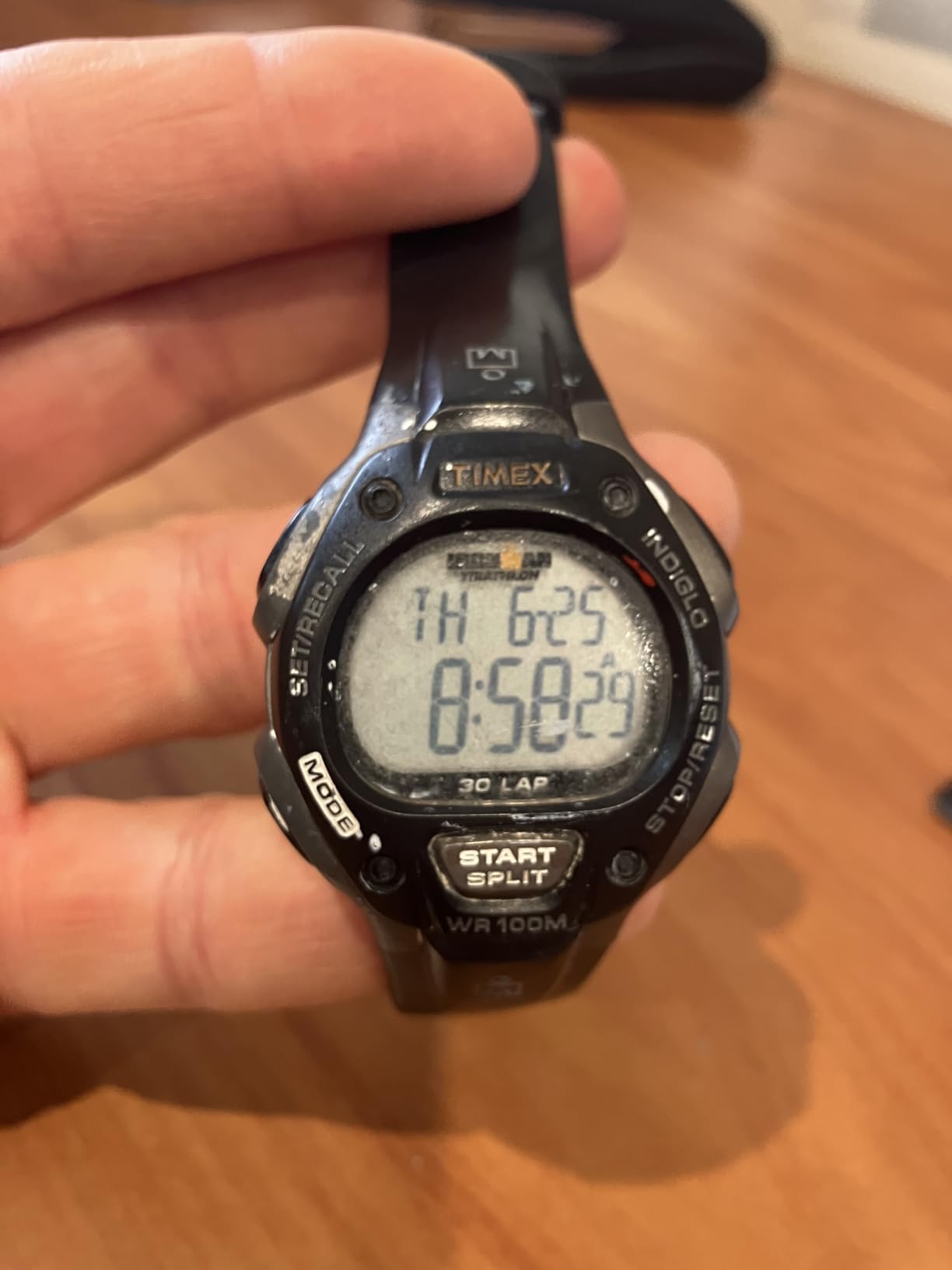
Reviewers describe it as comfortable enough to forget, which matters more for a wrist watch in the water than any feature list. The INDIGLO backlit dial lights the whole face rather than a small window, and the numerals are large enough to read at arm’s length while you are pushing off the wall.
Three customizable alarms, dual time zones and a 24-hour military mode cover the week without overload. Reviewers also report it holding up in chlorine pools, lake water and temperature swings, which is the honest test of a pool watch.
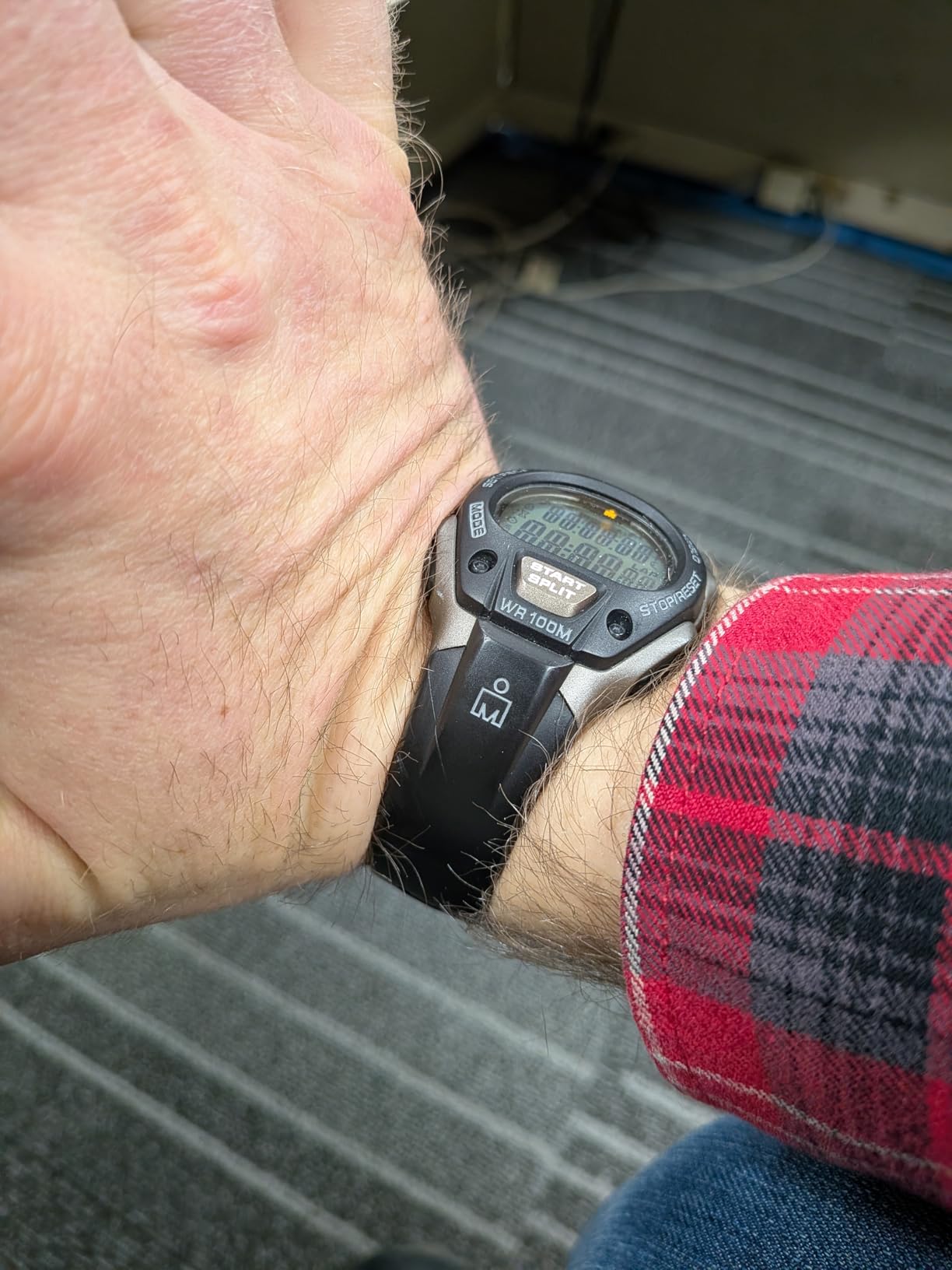
Why club swimmers still buy this model
It holds a top-14 sales rank in men’s wrist watches, and the reason is durability rather than features. There is no screen to crack and no sensor array to corrode, and the whole case is a resin shell designed to be knocked.
The adjustable 18 mm resin strap fits wrists up to 8 inches, which covers most adults without a second strap. That is where the money goes on this watch, and it is money well spent.
What to know before you buy
The dominant complaint is the resin strap. Owners report it cracking with age, and because it is difficult to replace, a cracked strap is effectively what ends the watch’s life even though the electronics are fine.
Owners also note the INDIGLO light is dimmer and the font smaller than on older Ironman models, and the light-up button moved position. Battery changes need the case back opened, which is fiddly but a one-off job every couple of years.
5. Timex Expedition CAT5 — Best Digital Watch for the Biggest Digits
Timex Men’s Expedition 41mm Watch – Black Strap Digital Dial Green Case
100 m / 330 ft rating
100-hour chronograph with laps
INDIGLO dial
41 mm resin case
Pros
- Large high-contrast display readable without glasses
- INDIGLO lighting praised as among the best in the industry
- Reported highly accurate timekeeping
- 100-hour chronograph with lap and split times
- Lightweight 41 mm case
Cons
- Velcro strap is thin and awkward one-handed on thick wrists
- Replacement strap can cost as much as the watch
- INDIGLO button is small and needs real darkness
The CAT5 is the watch to buy if you have ever squinted at a lap time in a bright pool. The display is large and high contrast, and several reviewers say they can read it without glasses, which is a low bar for a sports watch and one most of them fail.
The standout feature is the 100-hour chronograph with lap and split times. That is unusual at this level, and it makes the watch genuinely useful for long sets and for Masters swimmers running multiple sessions in a day.
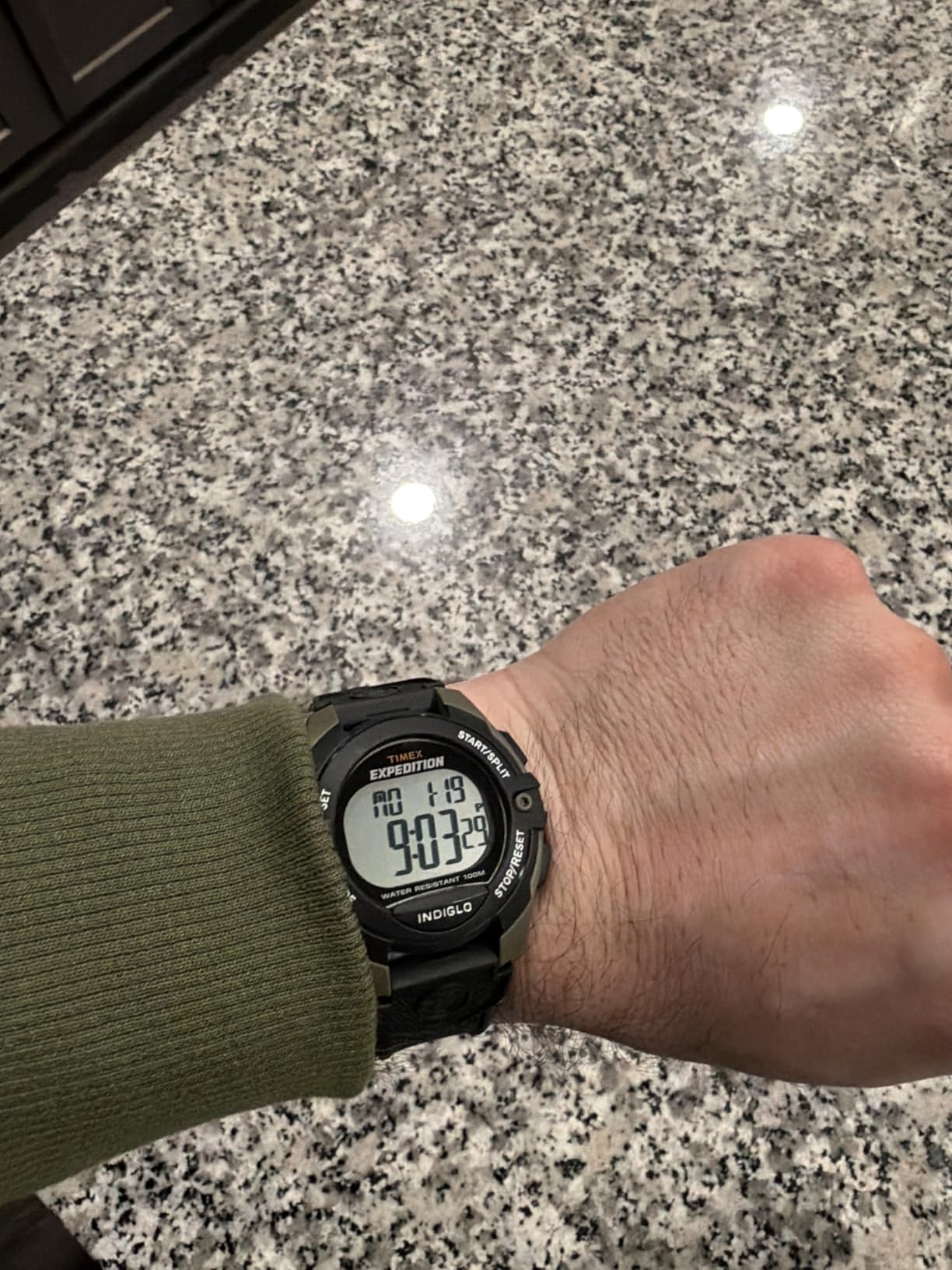
Owners rate the INDIGLO dial very highly, describing it as among the best lighting in the category, and one long-term owner documented repeated weekly saltwater immersion with no ingress at all. The 41 mm case stays low profile at 2.4 ounces.
Timekeeping accuracy gets specific praise too. One reviewer compared it directly against a G-Shock and reported a match, which is the only external benchmark most casual buyers will ever need.
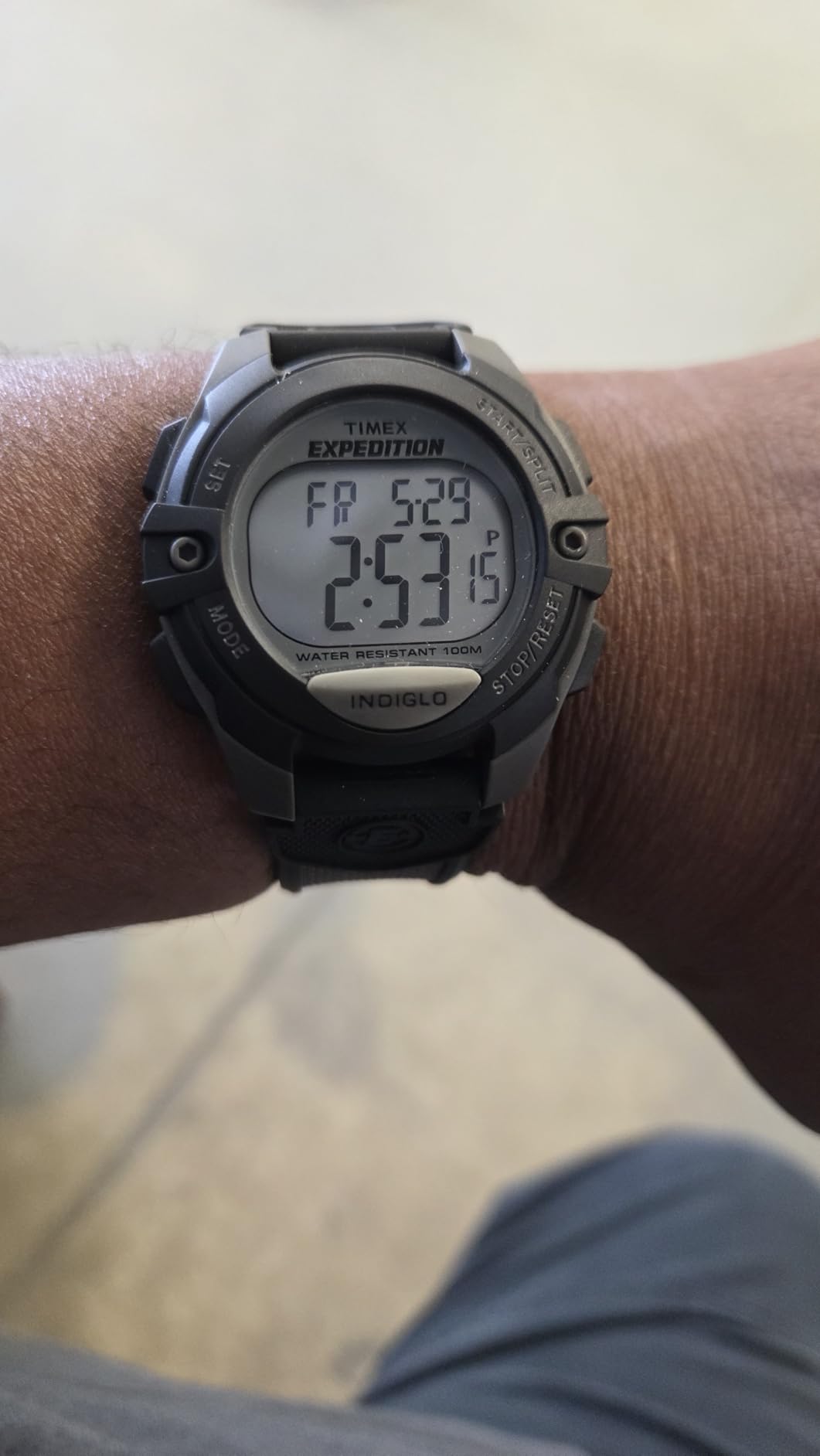
Reading a split in bright light or in the dark
The digits hold up under pool lighting and outdoor glare, which is where most LCD sports watches turn muddy. The INDIGLO handles the opposite problem at an early swim session or a night set, with a full-face glow rather than a small lamp.
Three daily, weekday or weekend alarms with a 5-minute backup, 24-hour military time and dual time zones round out a control set that is unusually complete for a simple watch.
The strap is the weak point
The velcro strap is the clear issue. Reviewers describe it as thin, prone to wear and awkward to adjust one-handed, especially on thicker wrists where the overlap has to be very precise.
It also means the watch is only as good as the strap, and replacement straps can cost as much as the watch did. The strap also arrives without printed instructions, so the adjustment takes a search online the first time.
6. Garmin vivoactive 5 — Best Smartwatch for Tracking a Swim
Garmin vívoactive® 5, Health & Fitness GPS Smartwatch, 42mm, Navy
50 m depth and IP67 rating
1.2 inch AMOLED display
Up to 11 days battery
Swimming among 30+ sports apps
Pros
- Multi-day battery commonly reported at four to seven days
- Swimming is a built-in activity profile
- No subscription for core health features
- Bright AMOLED display in a light 42 mm body
- Reliable Garmin Connect syncing
Cons
- 50 m and IP67 rating is surface swimming only
- No speaker and no voice commands or maps
- Food tracking requires a Garmin Connect subscription
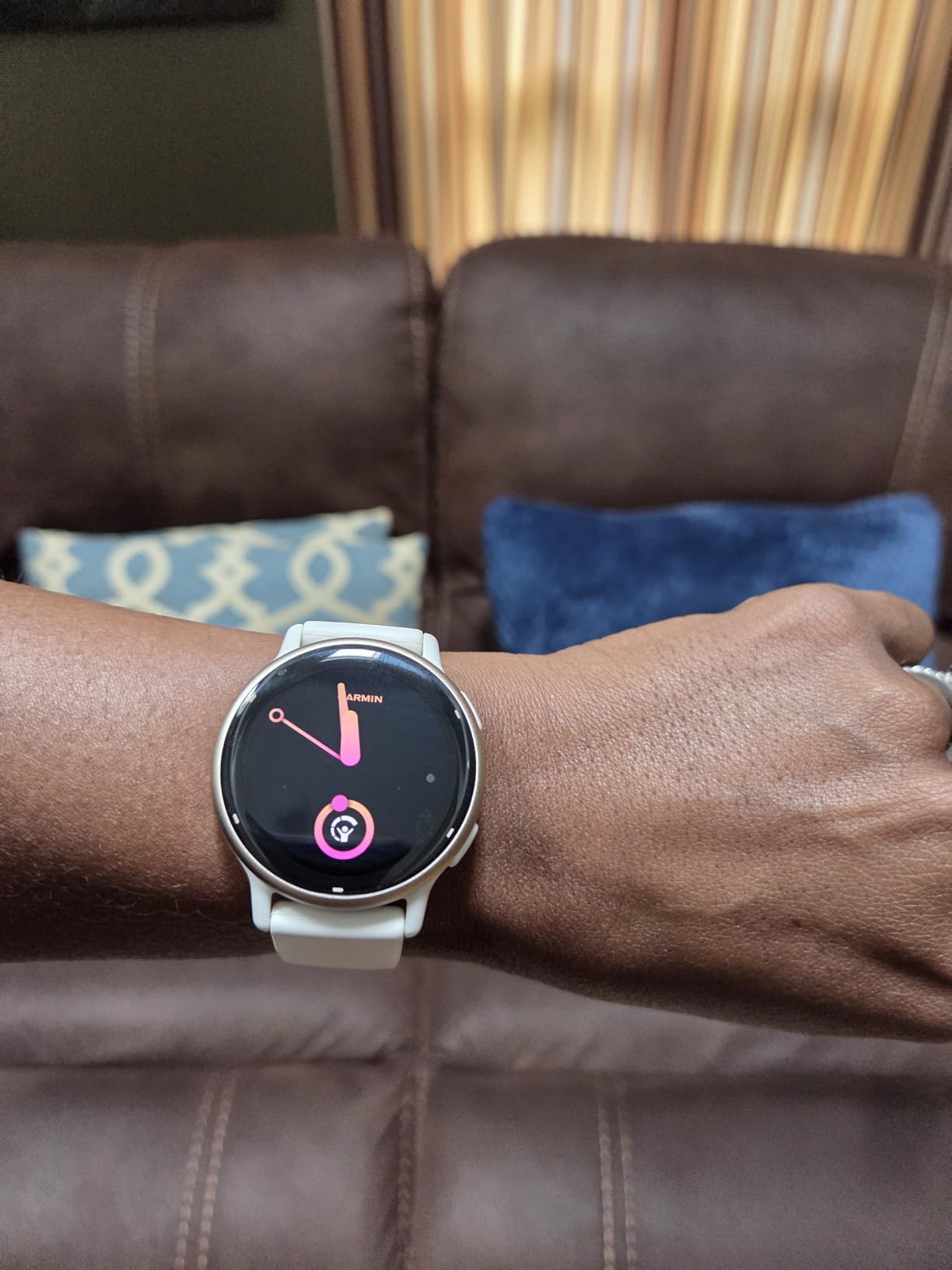
The vivoactive 5 is where the article changes gear. Instead of a stopwatch, swimming is one of more than 30 built-in indoor and GPS sports apps, and the watch records the session, syncs it to Garmin Connect and shows you the trend over weeks rather than the single set you just swam.
It is rated to a 50 m water-resistance depth with an IP67 waterproof rating, which is the standard for surface pool and open-water swimming. That is not the same as being safe below the surface, and it is the first thing to check before taking it anywhere near rocks.
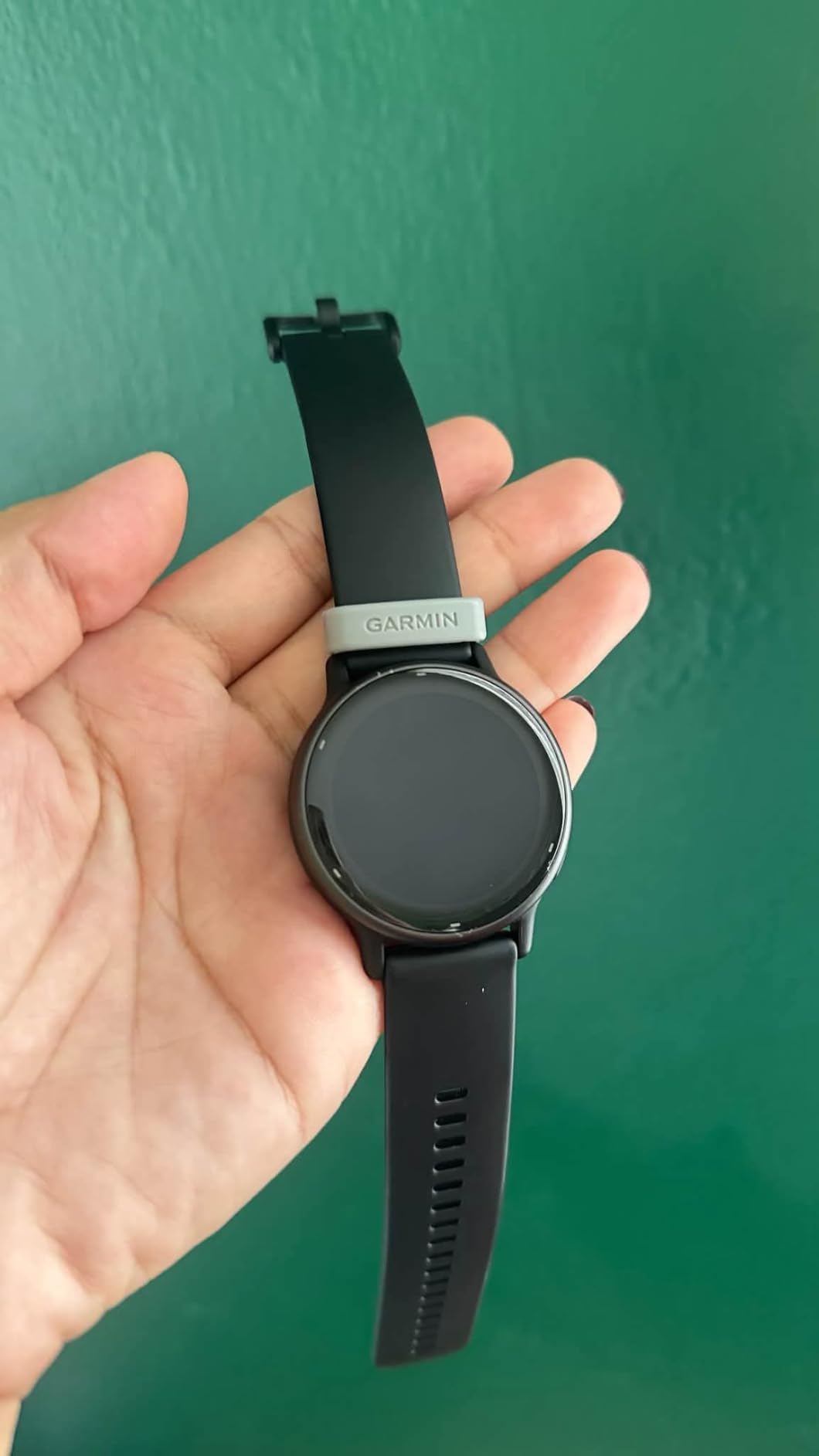
Battery life is the reason most people buy it. The manufacturer rate is up to 11 days in smartwatch mode, and owners commonly report four to seven days of real use, which means you charge roughly once a week instead of every night.
The 1.2-inch AMOLED display at 390 by 390 resolution is bright and readable, and the 42 mm body weighs 1.3 ounces, so it disappears overnight. Body Battery energy monitoring, a sleep score and HRV status give the swim some context, which is the real advantage over a plain lap counter.
What it adds that a stopwatch cannot
Time, distance, pace and wrist heart rate get logged automatically, and the swim joins the rest of your training in one history. That makes it easy to see whether a block of pool work is actually improving your pace per 100 m or just filling time.
Sleep and stress data is a bonus that most swimmers end up caring about more than expected, because recovery is what determines whether the next set feels like work.
Where it stops short
It is deliberately not a general-purpose smartwatch. There is no speaker, no voice commands, no turn-by-turn navigation and no maps, and anyone coming from an Apple Watch will notice the gap immediately.
Food tracking requires a Garmin Connect subscription, and reviewers describe parts of that app as awkward to configure. The 5 ATM rating also rules out any activity where the watch could be submerged deeper than a normal swim.
7. Garmin Forerunner 55 — Best for a Two-Week Battery Between Charges
Garmin Forerunner 55, GPS Running Watch with Daily Suggested Workouts, Up to 2 Weeks of Battery Life, White
Pool swim built-in profile
2 weeks smartwatch and 20 h GPS
37 g body
1.04 inch MIP display
Pros
- Two-week battery life verified by long-term owners
- Pool swim is a built-in activity profile
- Button-only interface is easy to learn
- Light 37 g body suits smaller wrists
- Wrist heart rate validated within about 3 percent of a chest strap
Cons
- No touchscreen and several buyers expect one
- Setup and onboarding are long and documentation heavy
- GPS battery drops to about 20 hours with constant use
The Forerunner 55 is the watch to pick if you want real training metrics and genuinely hate charging things. The manufacturer rate is up to two weeks in smartwatch mode and about 20 hours in GPS mode, and long-term owners back up the two-week figure.
Pool swim is a built-in activity profile alongside running, cycling, HIIT, Pilates and breathwork, so a swim and a bike session land in the same training history. That is what makes it useful to a swimmer who also runs or cycles.
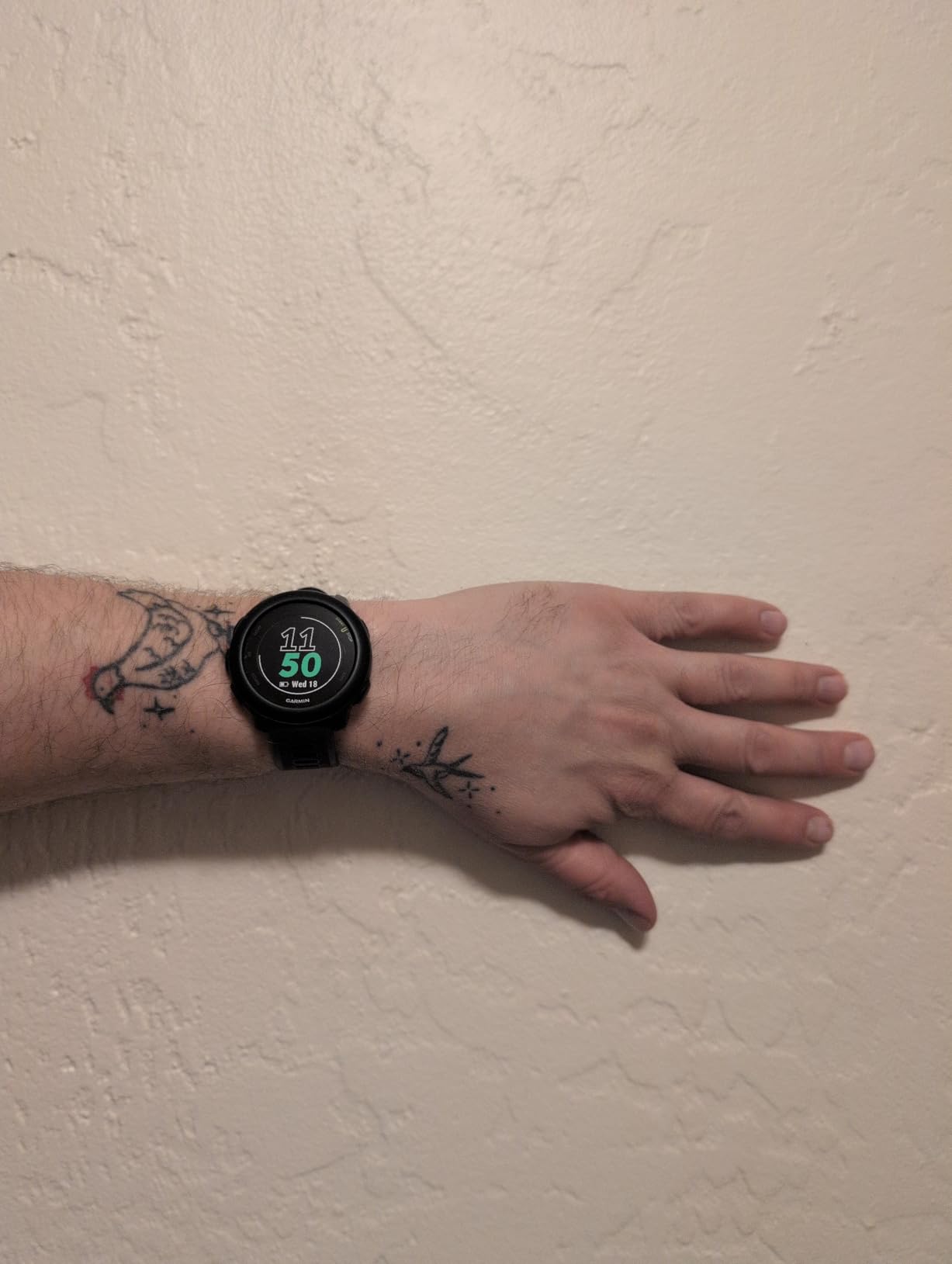
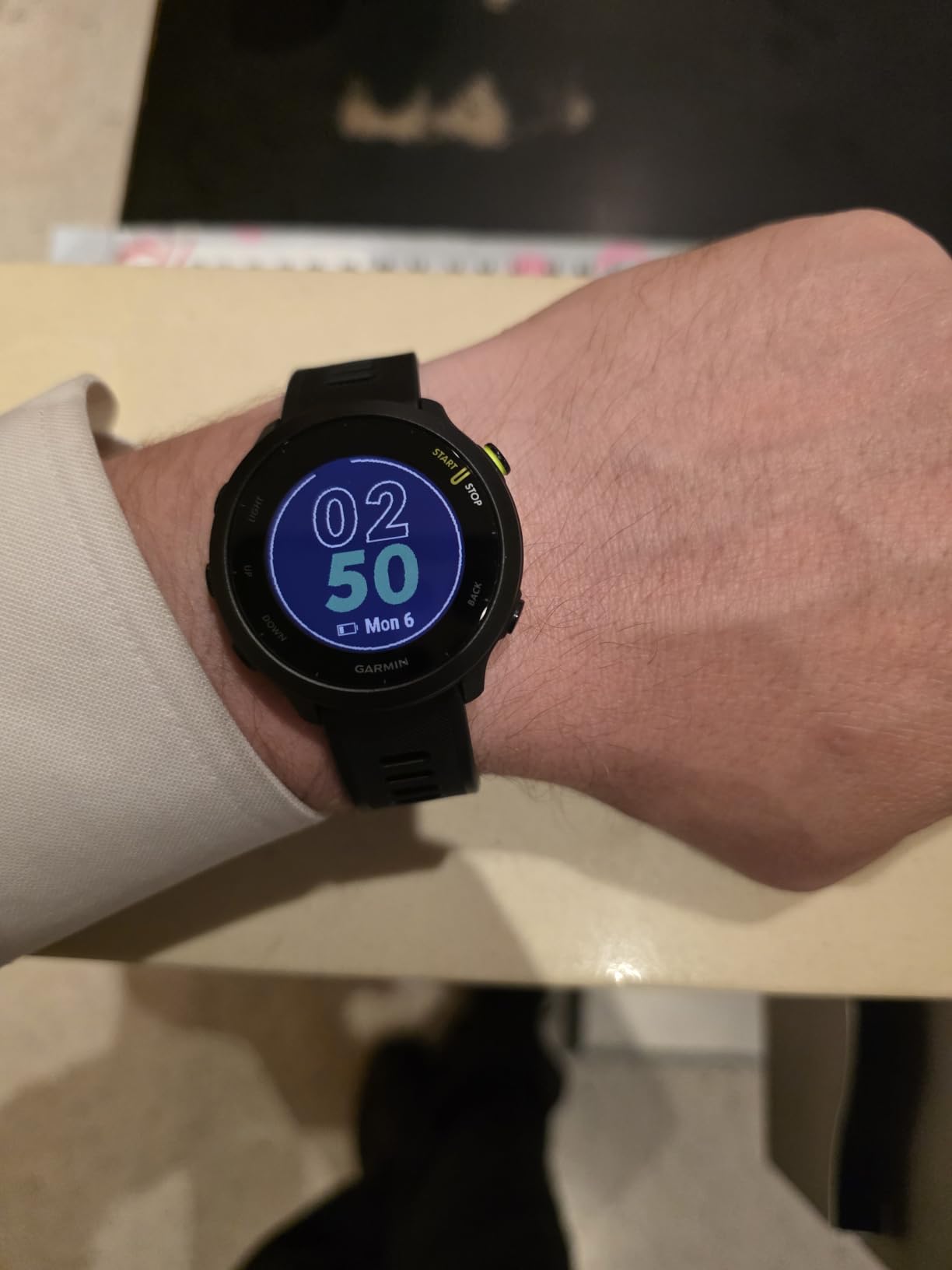
The 1.04-inch transflective memory-in-pixel display is sunlight visible, which matters far more on an open-water swim at midday than an AMOLED panel would. Buttons are the only input, and reviewers describe the interface as no-nonsense and easy to learn.
At 37 grams it is the lightest watch here, which is a real advantage over a longer session. One reviewer validated the wrist heart rate within about 3 percent of a Polar chest strap, though expect worse readings in cold water or under a wetsuit.
Why battery length changes your training
Two weeks means you can leave the watch on overnight and through rest days without thinking about it, so wrist heart rate and sleep data stay continuous. A watch you take off to charge is a watch with gaps in the record.
PacePro gives GPS-based pace guidance for a course or a target distance, and the race time predictions are a useful motivation tool for anyone working toward an open-water event.
What the entry price costs you
There is no touchscreen, and several buyers at this price point expect one. The 20-hour GPS figure is also well under a full multisport day, so long events need planning.
Setup and onboarding are the other friction point, with owners describing a long cross-referenced documentation process. The wrist heart rate sensor has also produced false readings during some treadmill workouts, and the advanced metrics trail the higher-tier Forerunner models.
8. Garmin Forerunner 165 — Best for Swimmers Who Also Run
Garmin Forerunner® 165, Running Smartwatch, 43mm, Black
50 m depth and IPX7 rating
1.2 inch AMOLED touchscreen
11 days and 19 h GPS
43 mm case
Pros
- Up to 11 days battery with owners reporting a week or more
- Bright AMOLED touchscreen readable in direct sunlight
- Accurate GPS pace and distance plus heart rate metrics
- Pool swimming auto-detected as an activity
- Quick-release bands make rinsing easy
Cons
- Battery drains fast with maps notifications and GPS always on
- No music storage in the Standard version
- Setup and menu navigation are confusing at first
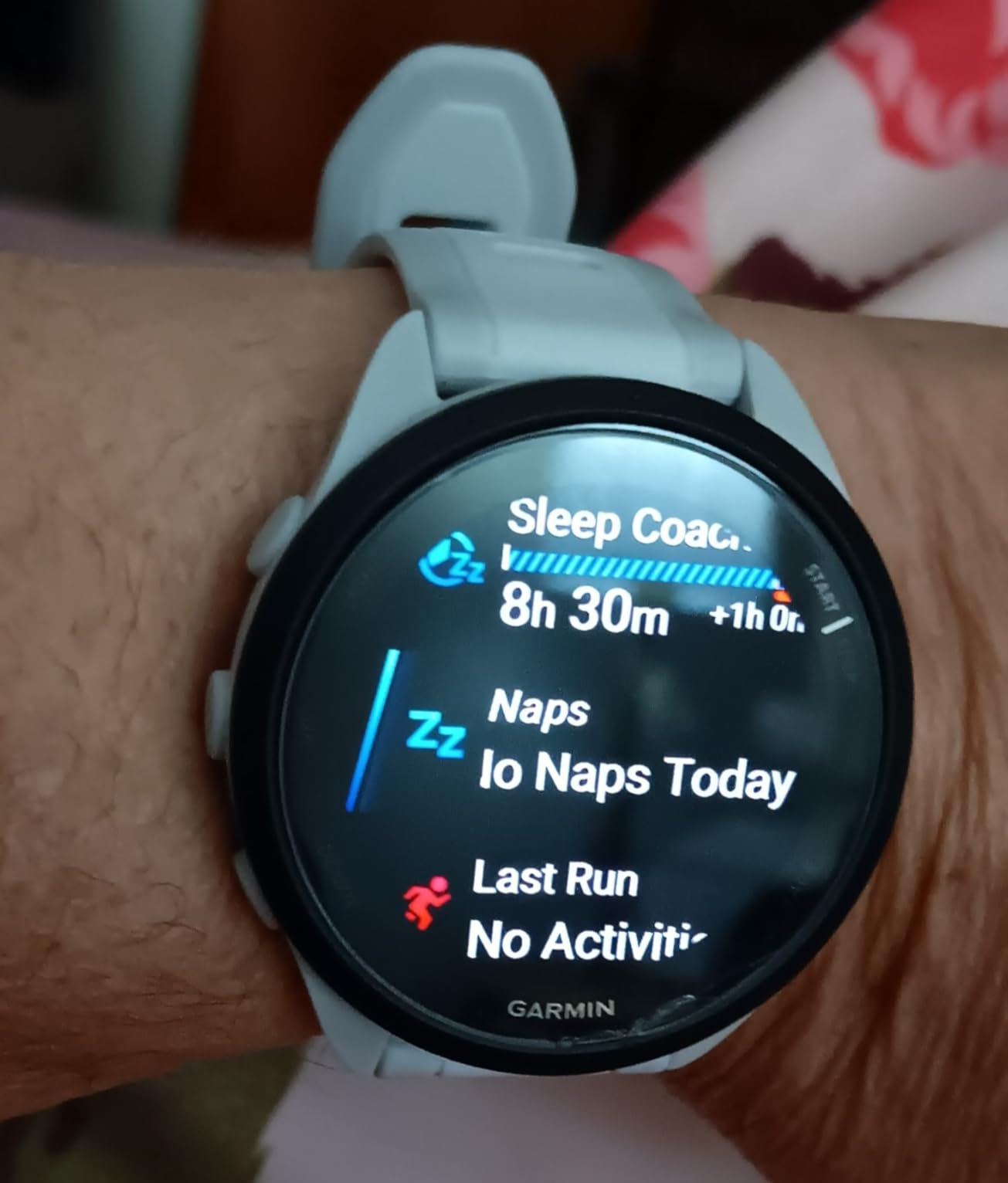
The Forerunner 165 is the sweet spot in the Garmin range for a swimmer-runner. It adds a 1.2-inch AMOLED touchscreen at 1000 nits max brightness to the solid Forerunner foundation, and that screen is genuinely readable in direct sunlight on an open-water session.
It is rated to a 50 m water-resistance depth with an IPX7 rating, which again means surface swimming. Pool swimming is supported and auto-detected, so you can start a swim by touching the screen instead of scrolling through menus with a wet finger.
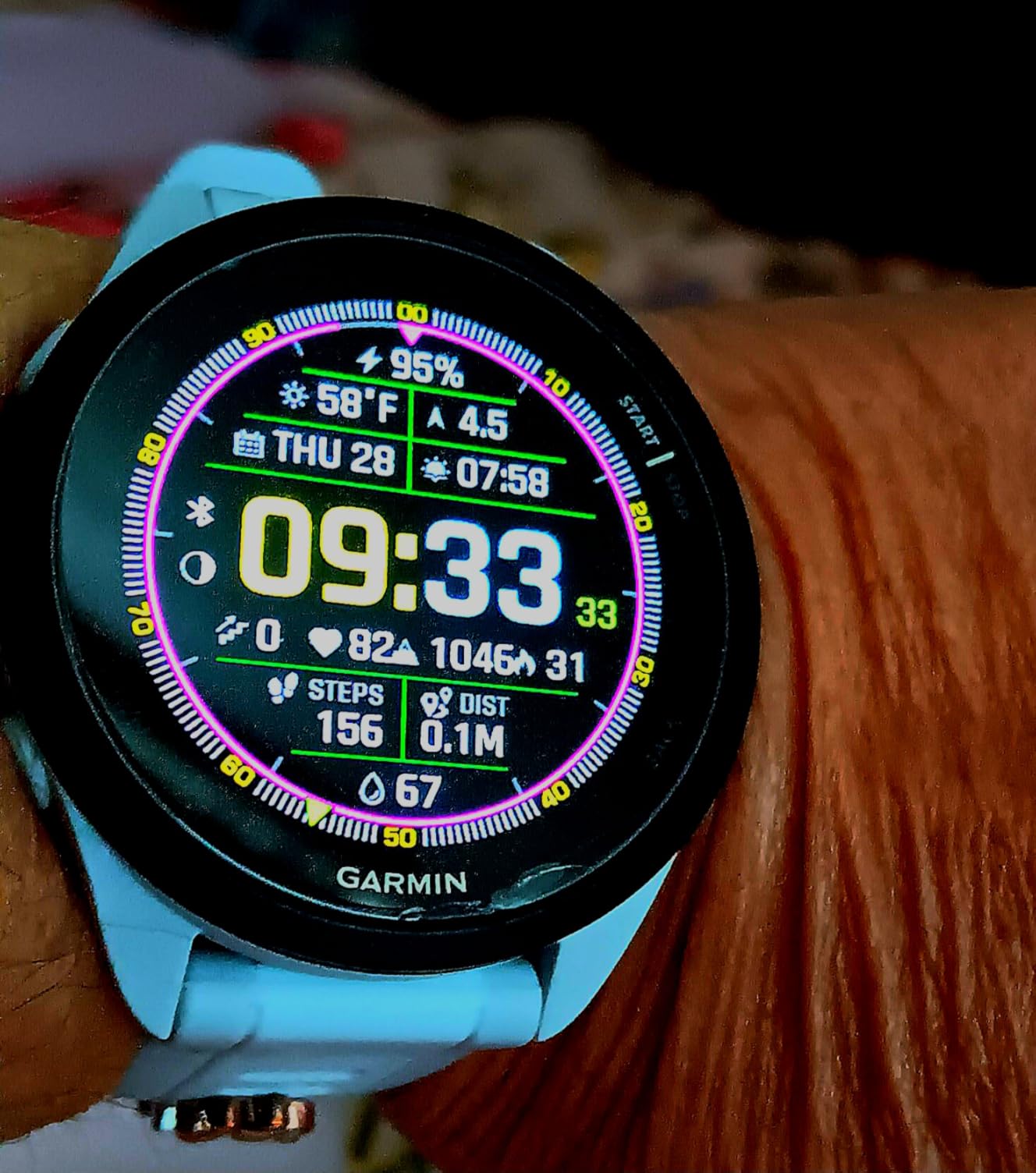
Battery life is up to 11 days in smartwatch mode and about 19 hours in GPS mode, and several owners report a week or more of real use. The 200 milliamp-hour cell charges over USB-C, and the quick-release 20 mm silicone band comes off easily for a post-swim rinse.
That is an underrated detail. On watches with fixed bands, rinsing a swim watch properly means a soapy wrist or a shower; a quick-release strap lets you take the watch off and rinse the back of the case where chlorine collects.
What the touchscreen changes on a swim
Auto-detected pool swimming means the watch starts logging without a long menu search, and a large display makes the swim summary readable while you are still in the water. Touch response with a wet hand is the caveat, so a button press at the wall is often the faster route.
Training effect labels, recovery time and a morning report with HRV status give the swim context. Owners coming from an Apple Watch tend to rate the accuracy and the value highly.
Where the drains and gaps are
Running GPS, notifications and mapping constantly pulls the battery down well below the 11-day claim, and the alarm is described as quiet, which matters if you use it for morning swims.
Bluetooth pairing occasionally drops and reconnects repeatedly, the Standard version has no music storage, and the screen is not scratch resistant out of the box. Setup and menu navigation also confuse people for the first few days.
9. PASOY 50 mm Digital — Best Budget Watch for a First Adult Swimmer
PASOY Unisex Simple Outdoor Sports Watch Big Dial Digital Light Swim Waterproof Rubber Band Alarm Black LED Watches for Mens and Women 50MM
50 m water resistance
50 mm oversized face
1/100-second stopwatch with splits
Over 6 year battery life
Pros
- Oversized face with bold easy-to-read digits
- Bright one-button backlight praised by repeat buyers
- Long strap fits larger wrists
- Battery life exceeding six years
- Makes a durable backup or beater watch
Cons
- Clear resin crystal scratches easily
- One reviewer reported water ingress in the shower despite the rating
- Loses several seconds per day in cold conditions
- 50 mm case is oversized on smaller wrists
The PASOY is the cheapest honest entry point in this roundup, and it is aimed at one situation: a new adult swimmer who needs a lap timer and will lose it somewhere. A 50 m rating, a 1/100-second stopwatch with split timing and a battery specified beyond six years is a workable pool setup.
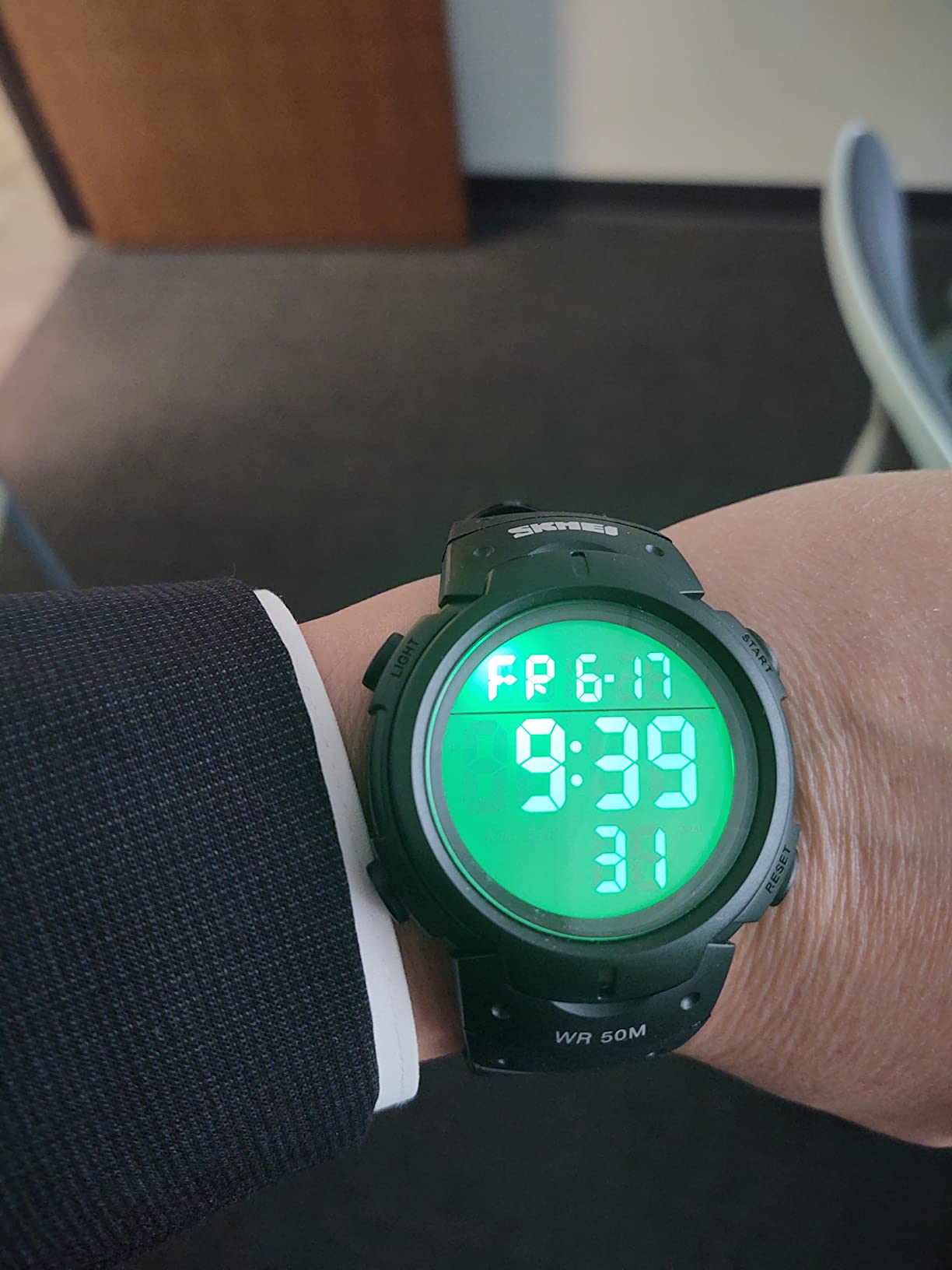
What you get is an oversized 50 mm face with bold digits and a bright backlight on one button. Buyers with limited eyesight rate that display very highly, and repeat purchasers describe using it as a durable travel or work watch.
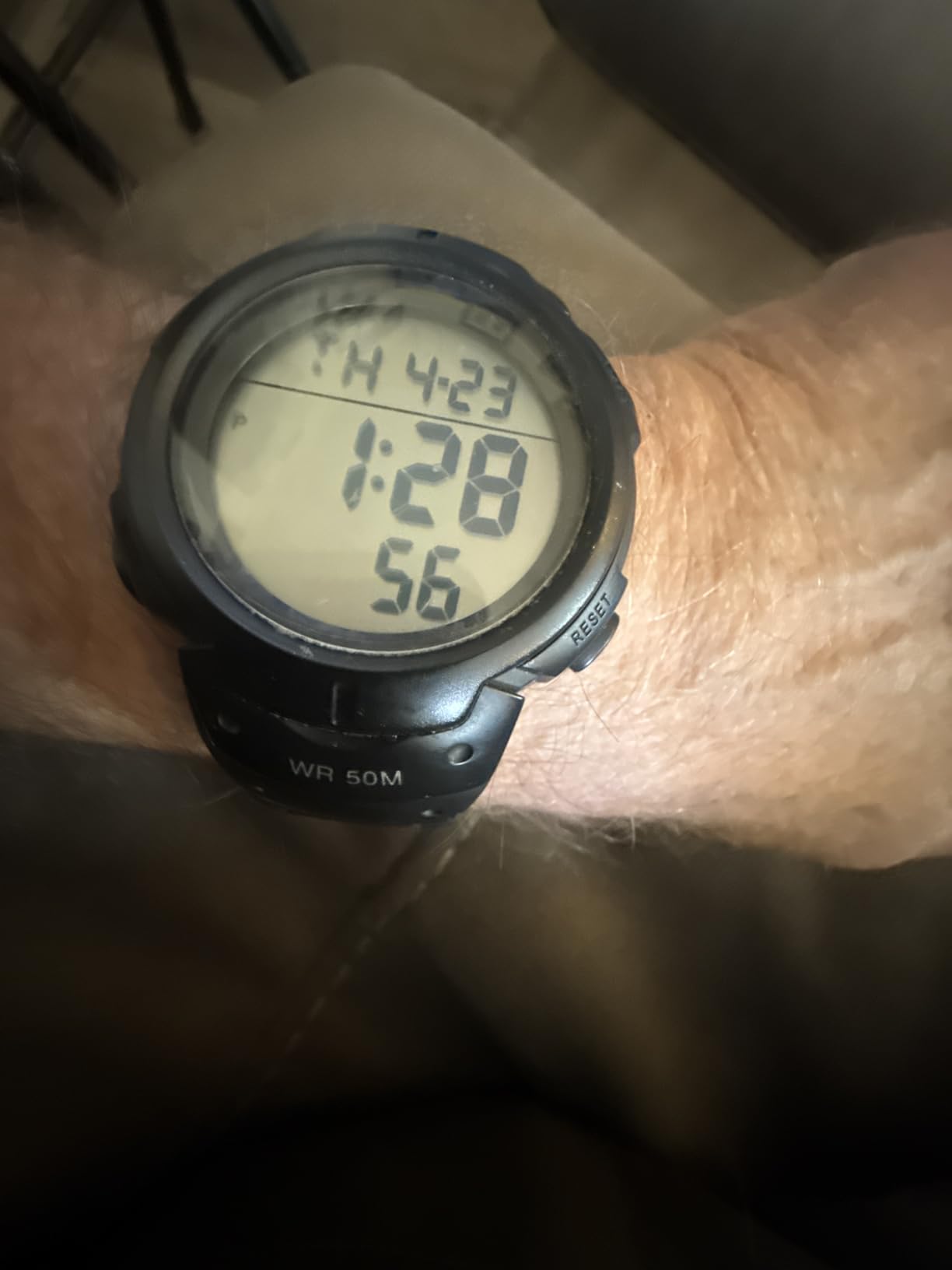
The case is resin with a clear resin crystal, a flexible PU resin strap, and a stainless steel buckle and case back. At 2.4 ounces it is light, and the long band fits larger wrists comfortably.
The watch also covers the basics swimmers need beyond the pool: 12 or 24-hour time, an alarm, an hourly chime and a backlight. It holds a top-112 sales rank in men’s wrist watches, which is decent for a listing at this level.
Where a budget watch is genuinely enough
For a beginner doing two or three swims a week, a stopwatch with split times is the entire requirement. Nothing about a first season of swimming needs a heart rate sensor or a training load score.
For buyers who already own a good watch, the low cost makes it a sensible pool-only beater, since chlorine and sand are much less likely to end an inexpensive watch than an expensive one.
The rating is the part to respect
One reviewer reported water ingress in the shower despite the 50 m rating, and the clear resin crystal scratches easily, reportedly even with a fingernail. Treat the rating as good enough for pool sessions, not for open water where the watch could be knocked.
The 50 mm case is genuinely oversized on smaller wrists, the hard plastic strap can be uncomfortable, and the watch loses several seconds per day in cold conditions. Time and date settings are also hard to locate at first.
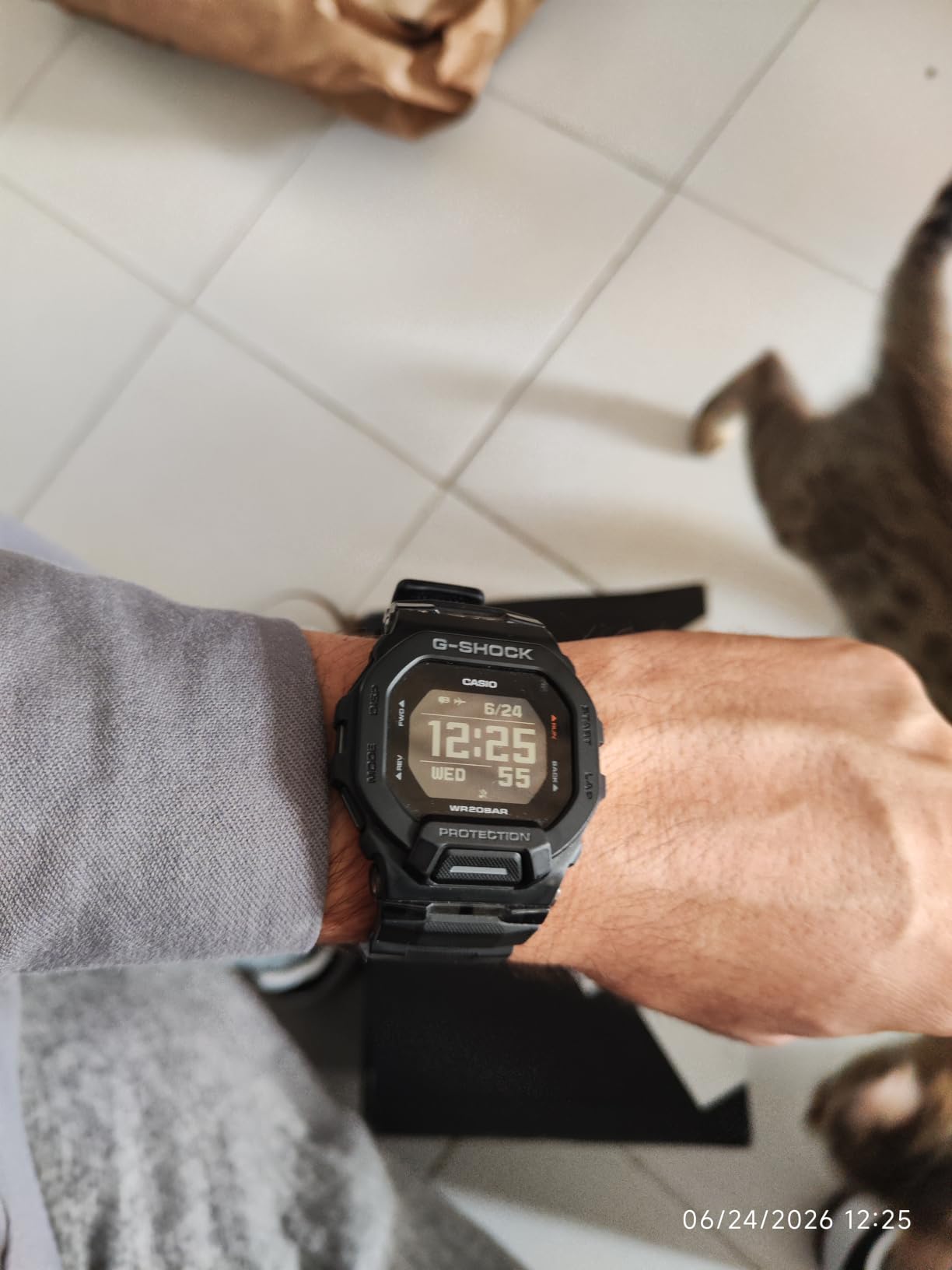
10. G-Shock GBD200 — Best Digital Watch for Step and Lap Data Without a Phone
G-Shock Men’s GBD200 Square Case Watch Black
200 m water resistance
Lap times with Auto Pause
Step counter and training display
2 year CR2032 battery
Pros
- Joint-deepest 200 m rating in this roundup
- Large MIP display with huge numerals readable in almost any light
- Rugged shock-resistant build
- Two-year battery with no daily charging
- Step counter and workout timers work without the phone
Cons
- Bluetooth notification text is far too small to read on the face
- No hour chime despite the alarm sounding
- Negative display needs the right angle indoors
- Glass is not anti-glare and reflects
The GBD200 is the interesting middle ground. It has a 200 m water-resistance rating and a step counter and training display, but it works completely on its own, with no app required for the features that matter at the pool.
Auto and manual lap times, Auto Pause and target alert settings are exactly what interval swimmers want, and the distance, speed and pace values are calculated from the accelerometer rather than GPS, which is the right method indoors.
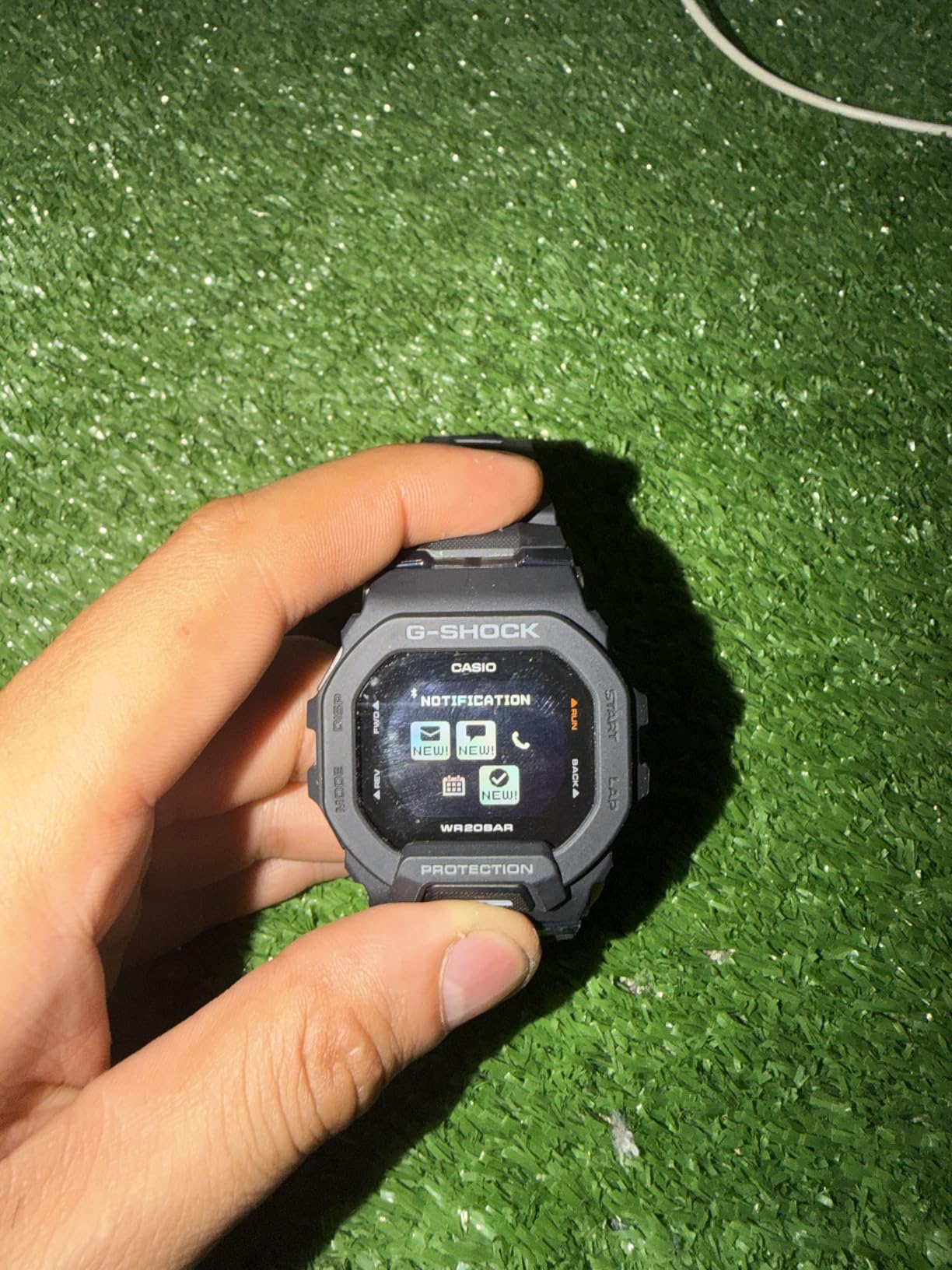
The large MIP display with huge numerals is readable in almost any light condition, and the Super illuminator LED backlight has an auto light switch with selectable duration and afterglow. The 38 time zones with daylight saving auto-switching is a legacy digital feature that still works well for travelling swimmers.
Battery life is about two years on a CR2032, and owners overwhelmingly run this watch in airplane mode as a durable digital daily driver. Bluetooth setup is straightforward and time syncing is accurate.
What the training display is good for
Training display customization and the training function give you a configurable readout for distance, speed and pace with lap times, so you can build a swim screen without touching a phone. Auto Pause is helpful when you stop mid-set to adjust a cap.
The step counter and workout timers run independently of the phone, which is the appeal. There is no notification to check and nothing to pair before a session.
Where the smart features fall short
The Bluetooth notifications are the weak point, with reviewers reporting the text is far too small to read on the watch face, and there is no hour chime even though the alarm sounds and vibrates.
The negative, or inverted, display needs the right angle to read, especially indoors, and the glass is not anti-glare so reflections compete with the numerals. Fitness features are also described as cumbersome, and the strap runs long on smaller wrists.
What Water Resistance Rating You Actually Need
Most confusion around swim watches comes from marketing words rather than from the watches. The rating is the only number that matters, and it is simpler than people expect. Here is the decision list we use.
1. Splash and rain only, no submersion. Anything described as splash resistant or carrying an IP rating without a depth figure should not go in a pool. Rain on a run is fine; a length in a pool is not.
2. 5 ATM or 50 metres, sometimes printed as WR50. This covers surface swimming in a pool and open water in calm conditions. It is the minimum for lap swimming, and it is the depth both Garmin watches here that state a figure carry.
3. 10 ATM or 100 metres, sometimes printed as WR100. This is the sweet spot for swimmers because it adds snorkelling, surfing and shallow-water activity with margin. Four of the ten watches here sit at this level.
4. 20 ATM or 200 metres. This is the level for anyone who snorkels, goes deep or works around water. Two watches here carry it, and only the Casio DW9052 is described by its manufacturer as suitable for scuba use, though a flat resin band is not certified for that.
5. IP67 or IPX7. This is a separate scale used by the Garmin watches, and it means dust tight and temporary immersion up to one metre. It pairs with the 50 m depth rating, and it is about the water, not the pressure at depth.
Two rules follow from that list. A rating is not permanent, and it is void if you press a button while the watch is submerged, because every button seal is a place water can get past. And a rating tells you nothing about the electronics inside, which is why rinsing matters so much.
Lap Counters vs GPS Swim Tracking: What You Give Up
A lap counter in a digital watch is a stopwatch with a split button. You touch the wall, you press, and the watch records that length. That is genuinely all it does, and for structured pool work it is exactly the right tool.
What you gain with a swim profile on a smartwatch is a record you never have to press for. The watch detects the turn, logs distance, pace, strokes and heart rate, and files the session into a training history you can compare against last month.
The honest split is this. A stopwatch is better when your workout is a set, because manual splits let you control the data. A swim profile is better when you want the whole week on a graph, because it captures everything without asking you to touch anything mid-length.
What neither does well is heart rate. Wrist-based optical sensors read poorly in cold water and under a wetsuit, and forum discussion on swim trackers is consistent about that. If you are training seriously, pair a chest strap, since that advice appears in nearly every swimmer discussion we read.
One lifecycle question comes up repeatedly in forums and on the shopping pages: what happened to the Garmin Swim 2, and which watch replaced it. We did not test the Swim 2 here, so the honest answer is that the pool swim profile is now standard across the Forerunner and vivoactive lines covered above, and that is where we would start looking.
Digital Watch vs Smartwatch for Swimming
A digital watch wins on three things that matter at a pool: battery, buttons and privacy. A ten-year battery claim means you never charge it, four physical buttons work with a wet hand, and nothing you do is recorded on a server.
A smartwatch wins on everything that happens after the swim. Distance, pace per 100 m, stroke data, heart rate and recovery all show up in one place, and the same watch tracks your run, cycle or strength session without a second device.
For a beginner or a once-a-week recreational swimmer, the digital watch is the better buy and the savings are real. For anyone training in blocks, comparing sessions or combining swim with another sport, the smartwatch earns its extra cost through the data.
There is a middle path worth knowing about. The G-Shock GBD200 gives you lap times, a step counter and a training display with no subscription and no phone, which covers most interval swimmers who also want a durable everyday watch.
Rinsing, Care and Testing Your Watch’s Water Resistance
Most premature failures we hear about come down to one habit, which is putting a chlorinated watch back on the wrist and leaving it there. Rinse under fresh water after every session, then dry it. Salt water is worse, and so is leaving a wet watch in a hot car.
For salt water, rinse the case and the strap separately if the strap is removable, because crystals lodge in the keeper. For pool water, a few seconds under a cold tap is enough to remove the chlorine film that slowly attacks seals and corrodes the contact pins.
Before you trust a new rating, test it at home. Check the stated depth, then run the watch under a steady stream of fresh water for the equivalent of a soak, and confirm the display and buttons still behave. This does not replace a pressure test, but it catches a badly sealed case early.
Never press a button while the watch is underwater, and keep the crown closed on analogue models. Both are the most common reasons a good rating fails early, and both are avoidable.
Frequently Asked Questions
Is 50 m water resistance enough for swimming?
Yes, 50 m or 5 ATM is the minimum rating for lap swimming and calm open water, and it is what most fitness smartwatches carry. It covers surface swimming only, so avoid heading below the surface. If you want margin for surfing, a pool edge knock or a deeper lake, choose 100 m or 200 m instead.
What is the best waterproof digital watch for swimming?
The Casio W800HG is our pick, with a 100 m rating, a 1/100-second stopwatch that records lap splits, an LED backlight with afterglow and a 10-year CR2025 battery. It is rated for surface swimming and snorkelling. The Casio DW9052 is the alternative if you need a 200 m rating.
Do I need a smartwatch to track swimming laps, or does a digital lap-counter watch work?
A digital lap-counter watch works well, and it is simpler. It records splits you trigger at the wall, which is ideal for timed sets and intervals. A smartwatch logs distance, pace, heart rate and training history without you pressing anything. Beginners and once-a-week swimmers rarely need the extra data.
Can a digital watch count strokes automatically?
No. The LCD sports watches in this roundup count time and splits, not strokes. Automatic stroke detection and stroke rate need optical and motion sensors found in GPS fitness watches such as the Garmin vivoactive 5 and Forerunner 165. If stroke rate matters to your training, choose a smartwatch profile over a stopwatch.
How accurate are swim watches for pool laps?
Pool lap timing from a stopwatch is accurate because you trigger the split yourself, so the main error is human timing at the wall. Swim-profile watches detect the turn automatically and are generally close, but drift more over a long session. For serious training, cross-check distance on a known course and use a chest strap for heart rate.
Is Garmin or Apple better for swimming?
Among the watches we tested, the Garmin options give more swim-specific detail because pool swim is a built-in activity profile with training effect and recovery data. We did not test an Apple Watch for this guide, so we make no direct comparison. If you already use an iPhone, weigh the swim data against the wider smartwatch ecosystem.
Which Digital Watch for Swimming Should You Buy?
The best digital watches for swimming depend less on brand than on the kind of training you do. If you run timed sets in a pool and want a watch that never needs charging, the Casio W800HG is the pick, with a 100 m rating, lap splits and a 10-year battery.
Buy the Casio DW9052 instead if you snorkel or need a 200 m rating, and the Timex Ironman Classic 30 if you want the same simplicity in a lighter 38 mm case that club swimmers tend to pass down. For training data rather than lap times, the Garmin vivoactive 5 covers pool and open-water swimming with multi-day battery, and the Forerunner 55 gives you two weeks between charges.
Whichever you pick, the habits matter more than the model: never press a button underwater, and rinse under fresh water after every swim. If you also swim to music, our guide to the best headphones for swimming and lap pools is worth a look before your first session, and we updated all of this for 2026.