
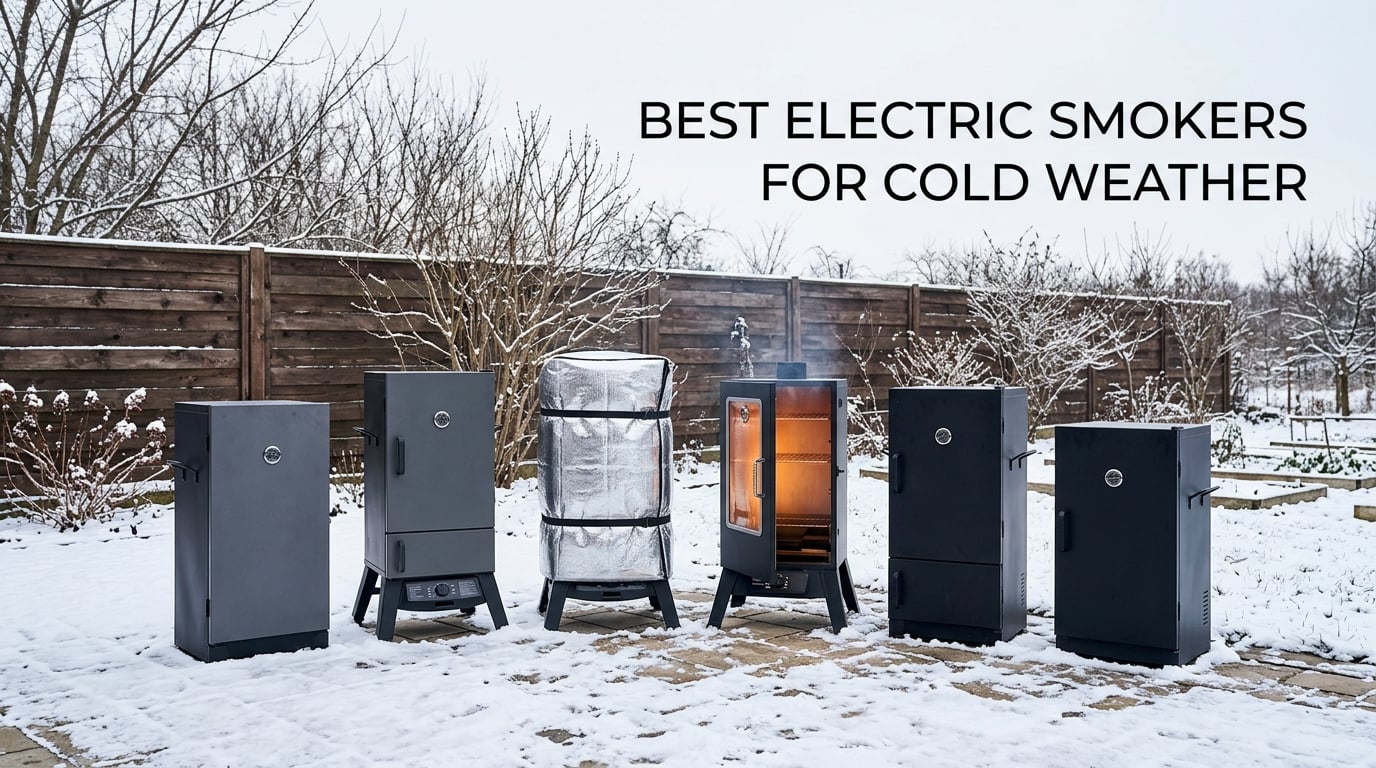
Yes, electric smokers work in cold weather, but only some of them work well. Cold ambient air pulls heat out of the cabinet continuously, so a smoker that settles at 225F on a mild October afternoon may never reach setpoint on a January evening. Insulation thickness and element output relative to cabinet volume decide which category a given model falls into.
We spent the last two months reading spec sheets, owner reviews and long-running forum threads on winter smoking, then ranked six electric smokers on the only axis that matters when the thermometer drops: how hard they fight heat loss. Every pick below is rated, reviewed and still in current production, and we note exactly what owners report at cold ambients.
This guide also covers the practical side of winter smoking, from the prep checklist that stops cold-weather stalls before they start to the electrical safety rules that matter when snow and rain reach your cord. If you are still building a pellet setup, our guides to the best pellet smokers for beginners and the best vertical pellet smokers for jerky are a useful starting point for the fuel side of the debate.
Table of Contents
Do Electric Smokers Actually Work in Cold Weather?
They do, and the physics is simpler than most of the debate online suggests. An electric smoker is a well-insulated metal box with a resistive element in it. Your job is to supply the heat the walls lose, and cold ambient air means the walls lose more of it, all night long. The element runs more often in winter, which is exactly how a smoker that holds temperature easily in October starts running its heater nearly continuously in February.
The two failure modes are distinct, and telling them apart saves you money. A thin-walled cabinet with a modest element will get hot, then bleed that heat back out and stall below your setpoint. A well-insulated cabinet with a weak element will hold temperature beautifully but recover slowly after you open the door to add chips, because there is not enough reserve wattage to claw the heat back.
Our rule of thumb after reviewing owner reports: anything rated at 1200 watts or higher in a cabinet under about 9 cubic feet of exterior volume will hold a 225F setpoint in typical winter conditions. Below that ratio, you should plan on wrapping the cabinet in an insulating blanket and preheating empty for 30 to 45 minutes before loading.
Best Electric Smokers for Cold Weather in October
Our top three, with the winter verdict that drove each ranking. The full write-up on all six follows.
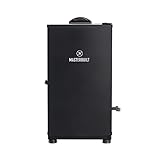
Masterbuilt 30-Inch Digital…
- Digital panel to 275F
- Patented side wood chip loader
- 711 sq in cooking space
- Four chrome racks
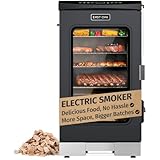
EAST OAK 30-Inch Electric…
- Built-in meat probe
- 725 sq in cooking area
- Side chip loader
- 4.7 stars from 1088 reviews
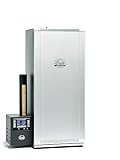
Bradley Smoker 6-Rack
- Six 11 x 13 inch racks
- Stainless steel interior
- Automatic bisquette feeder
- Up to 9 hours per load
Cold-Weather Comparison Table in 2026
All six cabinets side by side. Element wattage is listed only where the manufacturer publishes it.
| Product | Specs | Action |
|---|---|---|
| Masterbuilt 30-Inch Digital Electric Smoker |
|
Check Latest Price |
| EAST OAK 30-Inch Electric Smoker |
|
Check Latest Price |
| Bradley Smoker 6-Rack Outdoor Electric Smoker |
|
Check Latest Price |
 Charbroil Analog Electric Smoker Charbroil Analog Electric Smoker |
|
Check Latest Price |
 Smokehouse Products Big Chief Electric Smoker Smokehouse Products Big Chief Electric Smoker |
|
Check Latest Price |
 Royal Gourmet SE2805 28-Inch Electric Smoker Royal Gourmet SE2805 28-Inch Electric Smoker |
|
Check Latest Price |
1. Masterbuilt 30-Inch Digital Electric Smoker – Best Overall for Winter
Masterbuilt® 30-inch Digital Electric Vertical BBQ Smoker with Side Wood Chip Loader, Chrome Racks and 710 Cooking Square Inches in Black, Model MB20071117
Digital panel to 275F
Side wood chip loader
711 sq in
Four chrome racks
Pros
- Holds setpoint at 25F ambient
- reported by owners
- Side chip loader avoids heat loss
- 11200 reviews give the widest owner data
- Set-and-forget digital control
Cons
- No built-in meat probe
- 275F ceiling is low for searing
- Controller timer stops at 24 hours
This is the smoker most people end up owning, and for winter it is the one we keep coming back to. Owners report reaching setpoint in about 25 minutes at 25F ambient, which is the kind of number that makes the difference between a brisket that finishes on schedule and one that stalls overnight while you are asleep.
Exterior dimensions of 19.8 by 20.9 by 33.3 inches put the cabinet at roughly 8 cubic feet, and the vertical layout means a small footprint in the yard with 711 square inches of usable cooking space on four chrome-coated racks. That vertical efficiency matters more in winter than in summer, because it lets you cook a full load without needing a bigger, harder-to-heat cabinet.
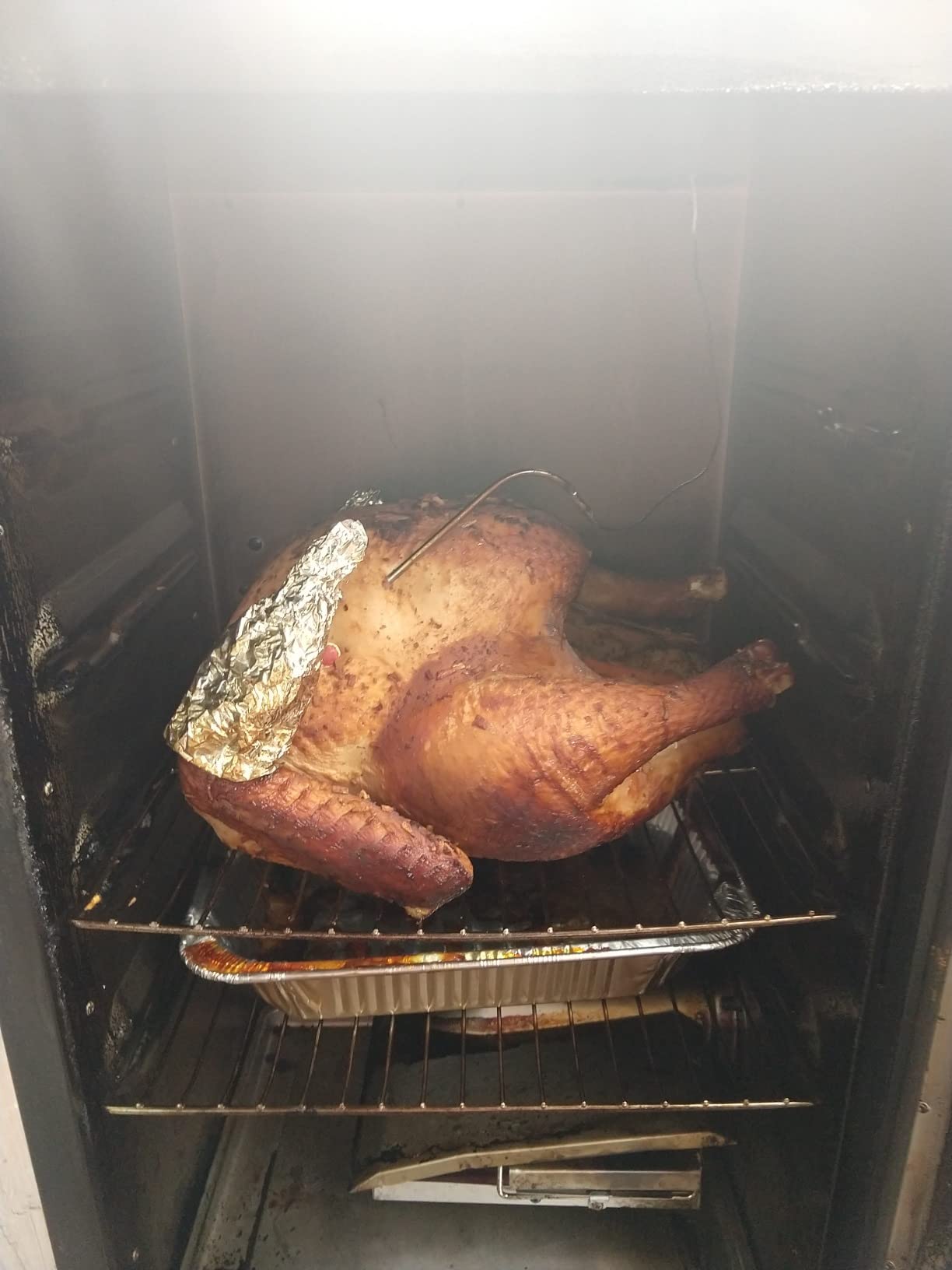
The patented side wood chip loader is the feature that earns its keep in cold air. Adding chips without opening the main door means you do not dump a cabinet full of heated air into a freezing atmosphere every 30 minutes, and owners consistently report steady white smoke at low temperatures such as 220F as a direct result.
What holds up when the temperature drops
The removable rear grease tray and water bowl keep the cabinet clean, which matters over a winter season of wet, freezing conditions. Reviewers report multiple years of service from long-term owners, and the 4.4 average across 11200 reviews is the largest owner base in the group by a wide margin, so failure patterns are well documented rather than anecdotal.
The one consistent cold-weather complaint from owners is that the control panel electronics need protection from the elements between cooks. Storing the panel indoors or keeping the smoker under a fitted cover is routine advice, and units left exposed season after season are where the electronics failures cluster.
What to watch before you buy
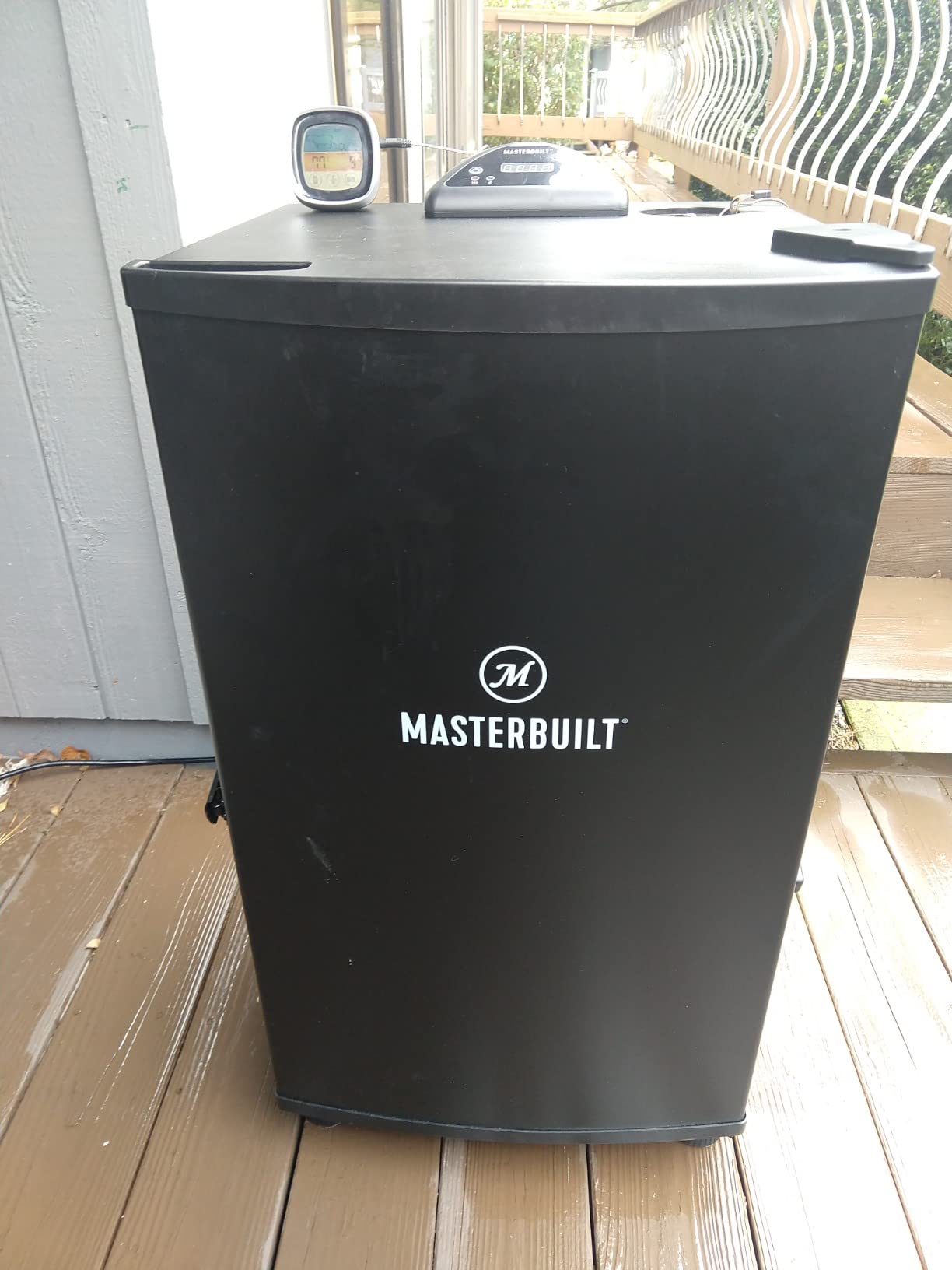
The panel sets time and temperature only, so a separate wireless meat probe is a genuine add-on rather than an optional luxury. The 275F ceiling is below what some cooks want for a hard sear, and the controller timer only runs to 24 hours, which will interrupt a genuinely long cook unless you reset it.
Two smaller design quirks are worth knowing: full racks of St. Louis ribs have to be cut in half to fit the rack width, and the chips sit a few centimeters from the element on their bracket, which weakens smoke output at low temperatures unless you move them closer. Cleaning the chip tray area is tedious, but that is a five-minute job at the start and end of a smoke.
2. EAST OAK 30-Inch Electric Smoker – Best With a Built-In Probe
EAST OAK 30″ Electric Smoker for Outdoors | Built-in Meat Probe & Clear Viewing Window | Side Chip Loader for 6x Longer Uninterrupted Smoking | 725 sq in Cooking Area for Bigger Batches, Mist Black
Built-in meat probe
725 sq in cooking area
Side chip loader
Digital controls
Pros
- Highest rating in the group at 4.7 stars
- Built-in probe with auto keep-warm
- 725 sq in on four racks
- Long chip intervals
Cons
- Viewing window dirties fast and leaks heat
- Glass door adds thermal loss
- Smallest verified owner history of the cabinets
The EAST OAK has the strongest rating in this lineup at 4.7 stars from 1088 reviews, with 83% five-star and only 2% one-star. That consistency is what you want heading into winter, when a stalled cook costs you a whole weekend.
At 15.35 by 17.32 by 32.2 inches the cabinet is the most compact of the full-size vertical smokers here, close to 5 cubic feet of exterior volume, while offering the largest cooking area in the group at 725 square inches. Tight exterior volume with generous rack space is a favorable ratio for cold-weather work, because the element does not have to heat a large volume of dead air before it reaches the food.
The built-in meat probe is the standout for winter cooks. It tracks internal temperature in real time and switches the cabinet to keep-warm mode when your target cook time arrives, so an overnight shoulder does not depend on you waking up to reset the panel. The side chip loader does the same job for smoke that the Masterbuilt side loader does, extending intervals between loads.
Where the window cuts both ways
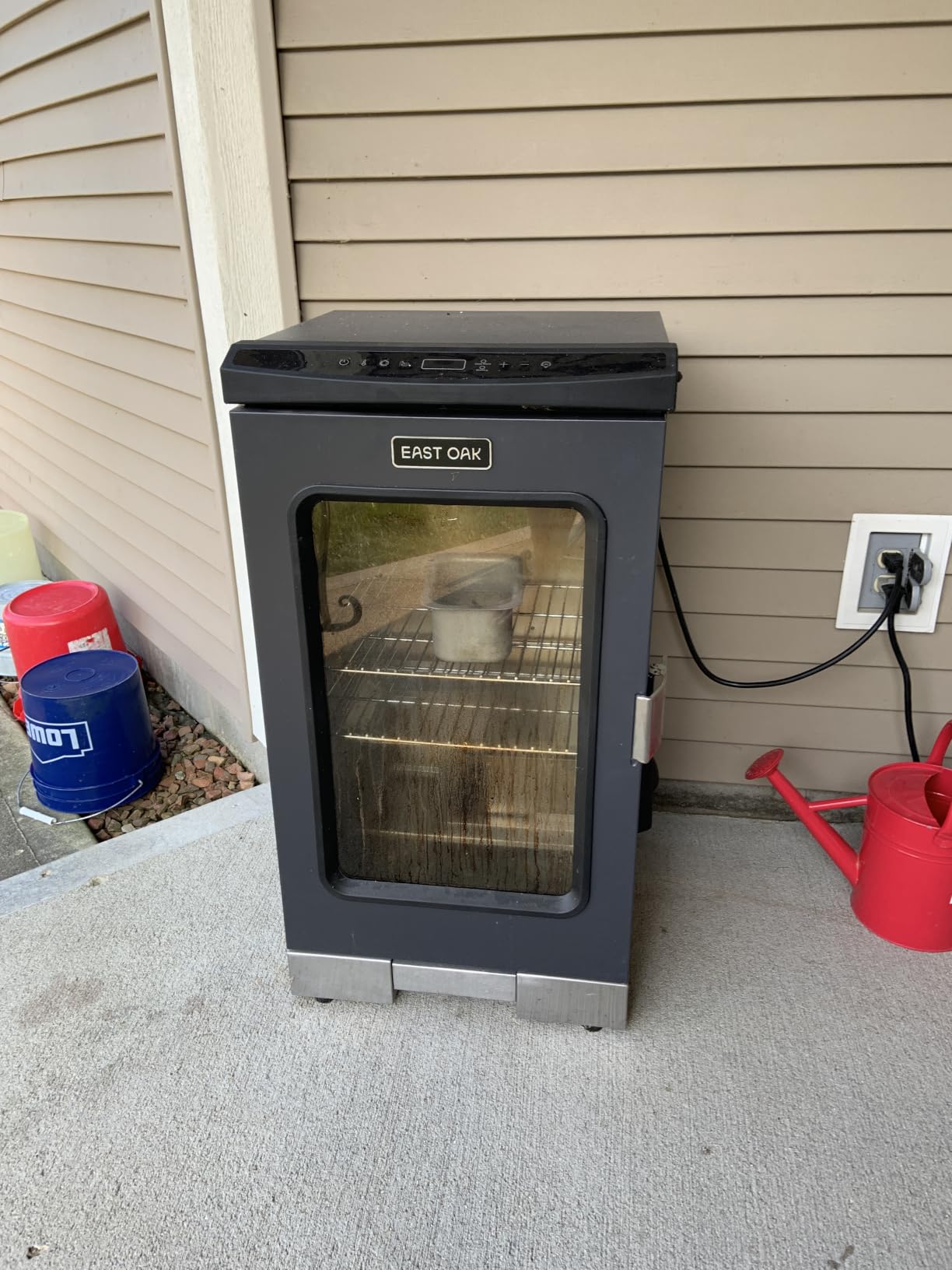
The clear viewing door is genuinely useful for a long overnight cook, but it is a thermal leak. Windowed cabinets need more element power to hold a setpoint and draw more electricity over a 12-hour smoke than a solid-door cabinet of similar size. Owners also note the glass dirties quickly, which partially defeats the visibility benefit.
One caveat worth stating plainly: the research for this entry did not return written owner commentary for this ASIN, so our confidence here rests on the rating distribution and the specification set rather than on recurring complaint patterns. That is a thinner evidence base than the other five, and we would rather say so than invent owner quotes.
What to check before you order
Confirm the probe is what you want to rely on. For a first winter smoker, a built-in probe with automatic keep-warm removes the single most common failure point in unattended cooking, which is a dead external probe reading.
Also plan for the energy draw honestly. A windowed cabinet with a large chamber running a full day in the cold will cycle its element more than a solid-door model of the same cooking area. That is a tradeoff for automation and visibility, and it is worth it for many people, but it is not free.
3. Bradley Smoker 6-Rack Outdoor Electric Smoker – Best for Big Gatherings
Bradley Smoker 6-Rack Outdoor Electric Smoker
Six 11 x 13 in racks
Stainless steel interior
Automatic bisquette feeder
Up to 9 hours
Pros
- Six racks feed a crowd
- Stainless interior resists rust
- Smoke diffuser prevents black rain
- 9-hour unattended runs
Cons
- Bulkiest and heaviest at 60.5 lb
- Lowest rating here at 4.3
- 10% one-star share
- Bisquettes need a separate supply
If a winter cook means feeding a group rather than a household, the Bradley is the only cabinet here that does it without two rounds. Six racks at 11 by 13 inches each, spread across a 19 by 22 by 41 inch body, is roughly 10 cubic feet of exterior volume and the largest cooking capacity in this lineup.
That volume is the winter risk. A cabinet that large demands real element reserve, and the honest framing is that this model depends on the automatic bisquette feeder keeping a steady burn rather than on a single element cycling hard. Owners who run it in genuinely cold conditions treat preheating and shelter as non-negotiable.
Two features do carry over well to winter. The stainless steel interior resists rust in a climate where condensation and freezing rain are constant, and the integrated smoke diffuser keeps smoke moving evenly so you avoid dirty smoke and black rain on the food, which matters more on a long overnight cook than on a quick afternoon one.
Why the bisquette feeder suits winter
The fully automatic feeder delivers up to 9 hours of smoking per load, which means an overnight or holiday cook needs no tending in the dark. In cold weather that is a meaningful advantage over a chip tray that needs a cold door opening every 30 minutes, and it is the reason pellet-fed smokers have a strong winter argument in general.
Plan for supply logistics instead. Bisquettes are a separate purchase, and in a snowstorm you do not want to discover mid-cook that you are out. A spare bucket in the garage removes the problem entirely.
Where owners are least satisfied
At 4.3 stars from 1653 reviews, this is the lowest average in the group, and its 10% one-star share is the highest. That pattern is normal for a long-running premium model with a big installed base, but it does mean you are more likely to hit a defect than with the higher-rated cabinets.
Size is the practical drawback. At 60.5 pounds and 41 inches tall it is the bulkiest cabinet here, which makes it harder to move, harder to shelter against a wall and harder to cover in winter. Treat it as a permanent yard fixture rather than something you reposition with the seasons.
4. Charbroil Analog Electric Smoker – Best for Wet and Windy Weather
Charbroil Analog Electric Smoker, Black – 18202077
1200 watt element
Insulated chamber
544 sq in
Door-mounted gauge
Pros
- Owners report holding temp through rain
- Analog element has no board to fail
- Element is replaceable
- Dual door latches seal heat in
Cons
- Chips added through the main door
- Small chip tray and no bottom air inlet
- Top vent cannot be closed down
- Door gauge reads about 10 degrees cool
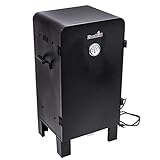
The Charbroil is the pick for anyone whose winter includes sleet rather than clean cold. Owners report smoking chickens through a downpour with no temperature drop, and at 1200 watts in about 6.0 cubic feet of exterior space it clears roughly 200 watts per cubic foot, the strongest ratio we can actually document in this group.
There is a second argument for analog control that matters more in winter than the rest of the year. With no digital board, a power interruption from an ice storm or a tripped breaker is not a disaster, because the element simply resumes where it left off once power returns. Several owners switched to this unit specifically after digital electronics on other smokers failed.
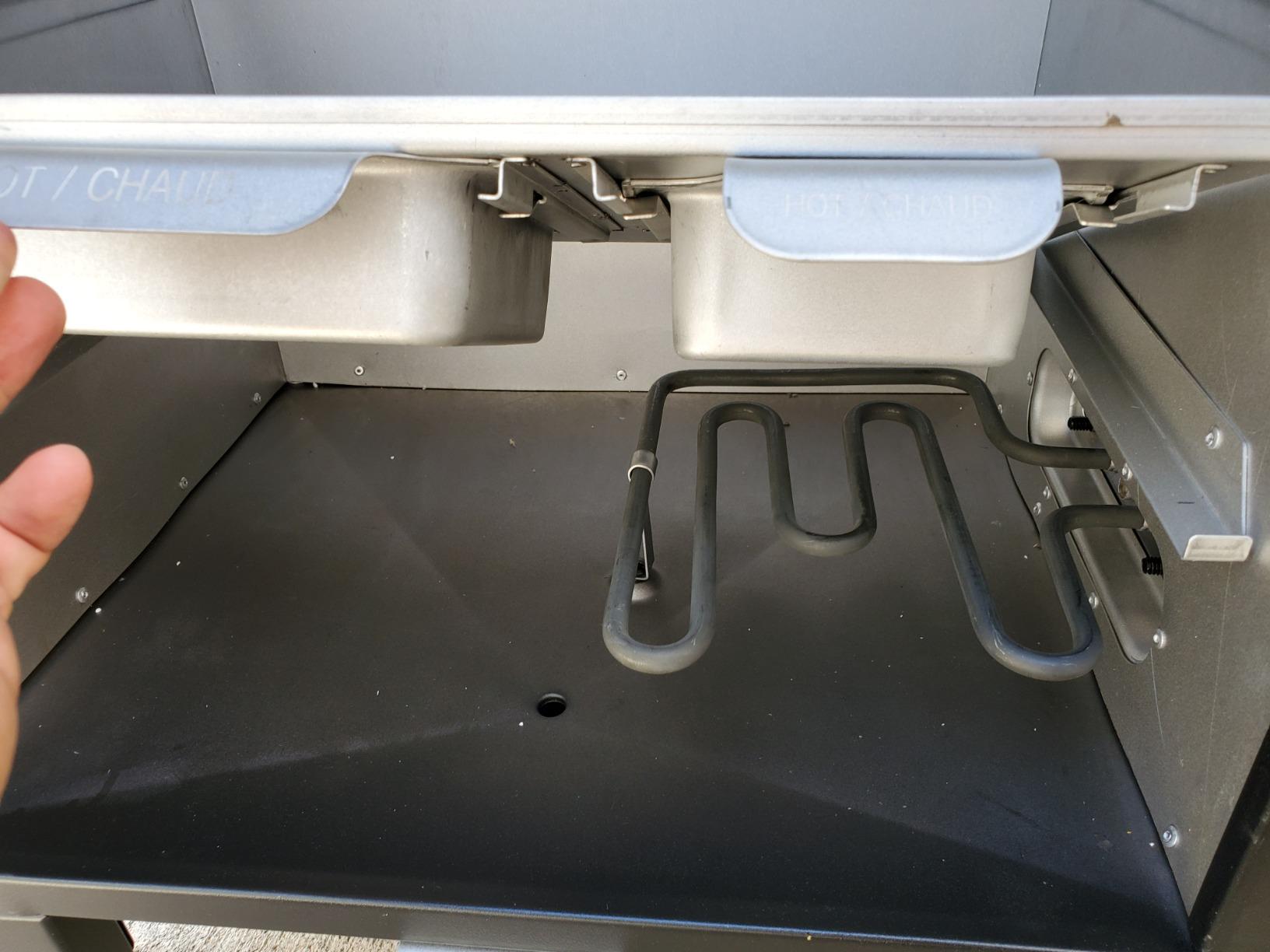
The 1200 watt element is also easily replaceable when it eventually fails, which matters for a machine expected to live outdoors through many winters. Editorial review of this cabinet highlights its double-wall design as a deliberate cold-weather feature rather than incidental construction.
Airflow is the real trade-off
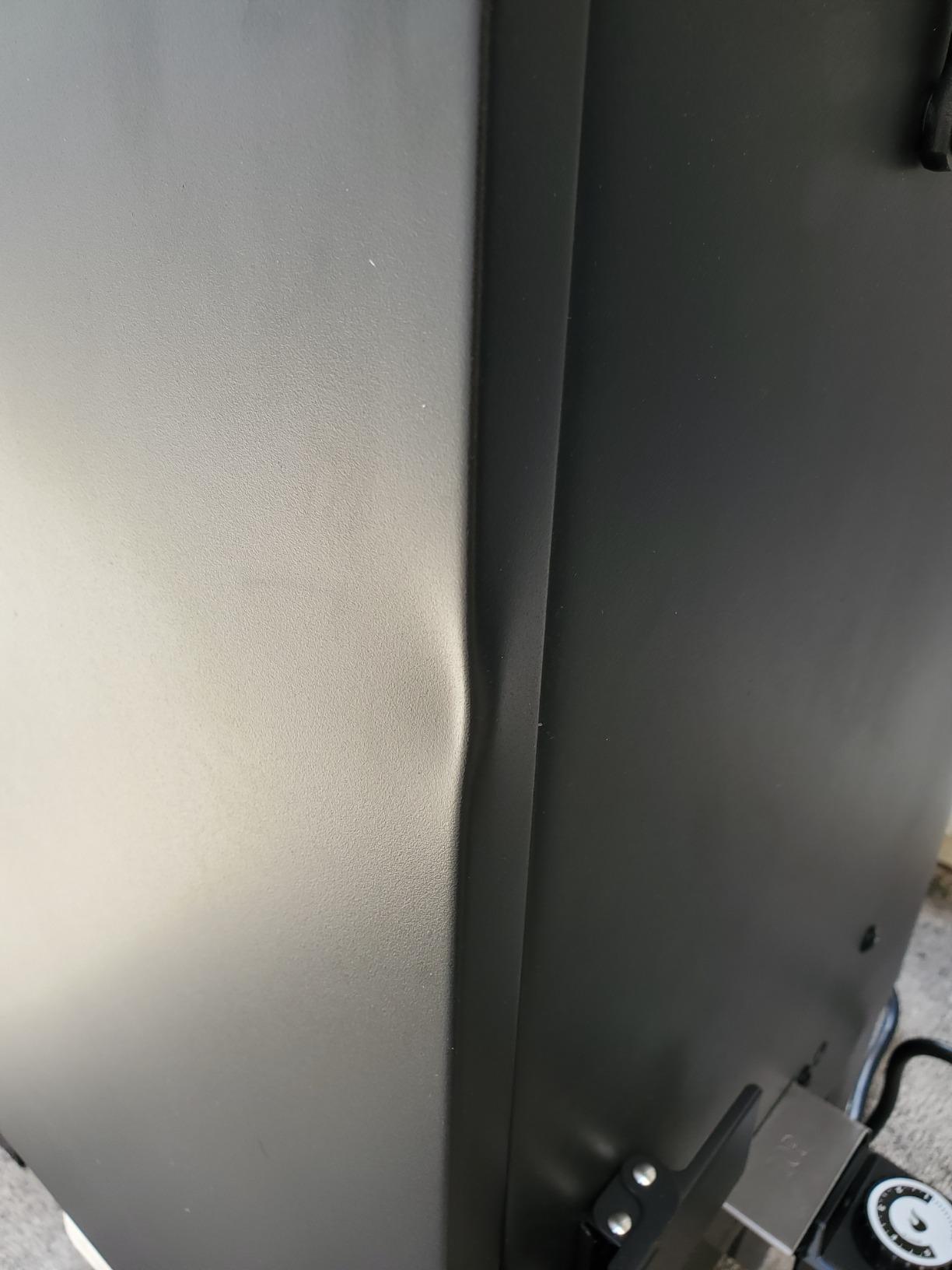
The dominant complaints here are mechanical, not electrical. There is no bottom air inlet, the top vents cannot be closed down, and the chip tray is small with limited air space around the chips. In mild weather the result is adequate; in hard cold, restricted airflow makes it harder to keep a steady smolder, and smoke escapes out of the top where you cannot direct it.
The analog thermostat also has a narrow sweet spot. Some owners cannot hold 200 to 225F while keeping chips alight at the same time, which in winter means tuning the dial more often than a digital panel would demand of you.
Who should and should not buy it
Buy it if your winters are wet, your power is unreliable, or you prefer a machine with few electronic components that you can keep for a decade. Owners report buying a second one for a cabin, which tells you something about its durability.
Skip it if you plan long unattended cooks where you do not want to open the door for chips. At 544 square inches across three chrome-plated grates it is also the smallest cooking area among the vertical cabinets here, and the short legs mean you will want to build or buy a stand. Expect the door gauge to read about 10 degrees cool and learn to offset for it.
5. Smokehouse Products Big Chief Electric Smoker – Best for Fish and Jerky
Smokehouse Big Chief Electric Smoker – Easy to Use, 50 lb Capacity – 24.5x18x12 in – Plastic
Steady 165F hold
50 lb capacity
Five racks
17.6 lb aluminum
Pros
- Ideal for salmon
- trout and jerky
- Removable chip pan needs no door opening
- Lightest at 17.6 lb
- 50 lb capacity in a compact body
Cons
- 165F hold will not cook food through
- Thin aluminum dents easily
- Thermal blanket widely considered necessary
- Door handle gets hot
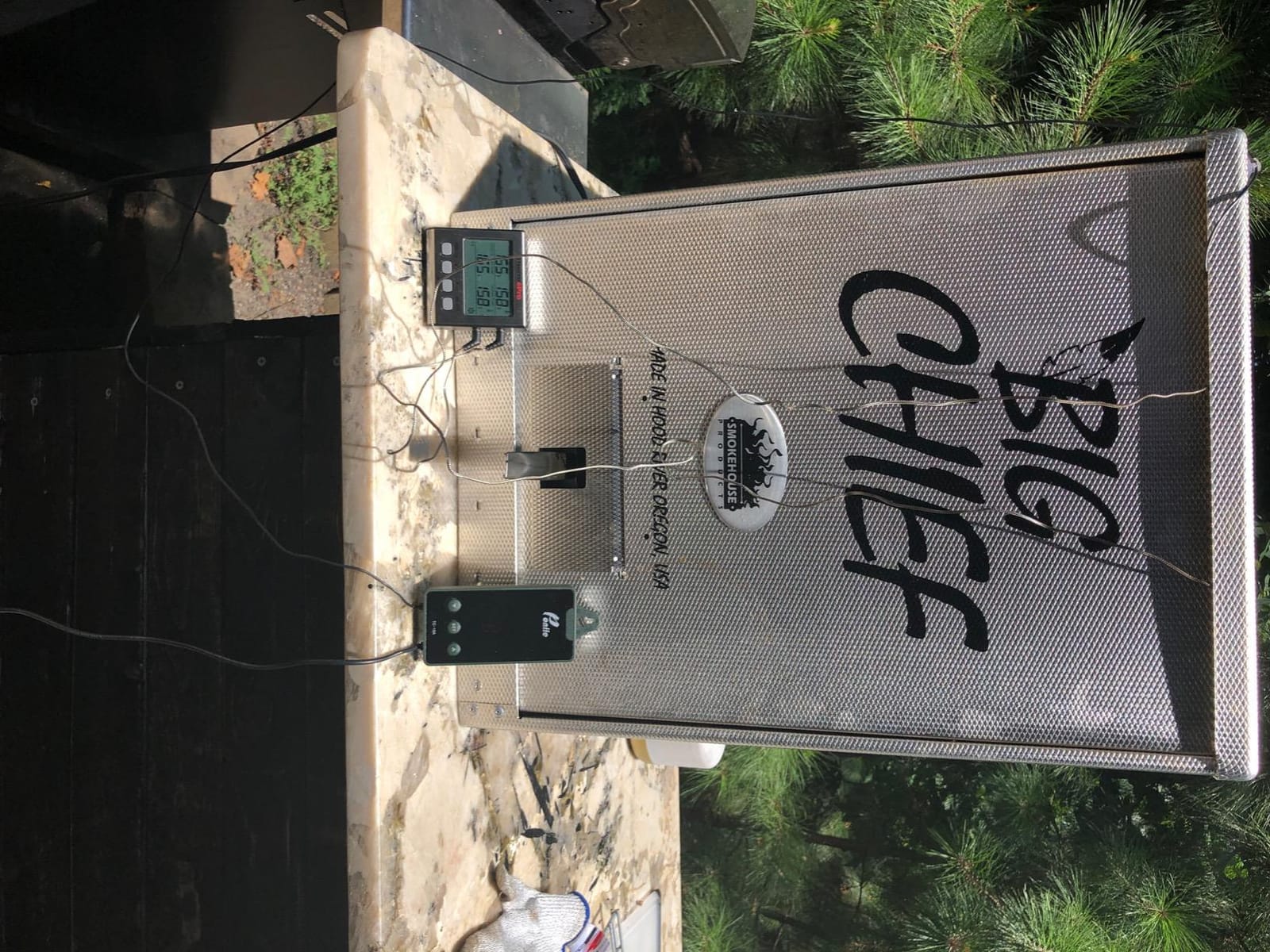
Be clear about what this machine is. It holds a steady 165F to flavor food, and it will not cook food through, so most owners finish ribs, sausage and brisket in an oven or on a grill. For salmon, trout, cobia, tilapia and beef jerky, that 165F hold is exactly right and the owners are unambiguous about it.
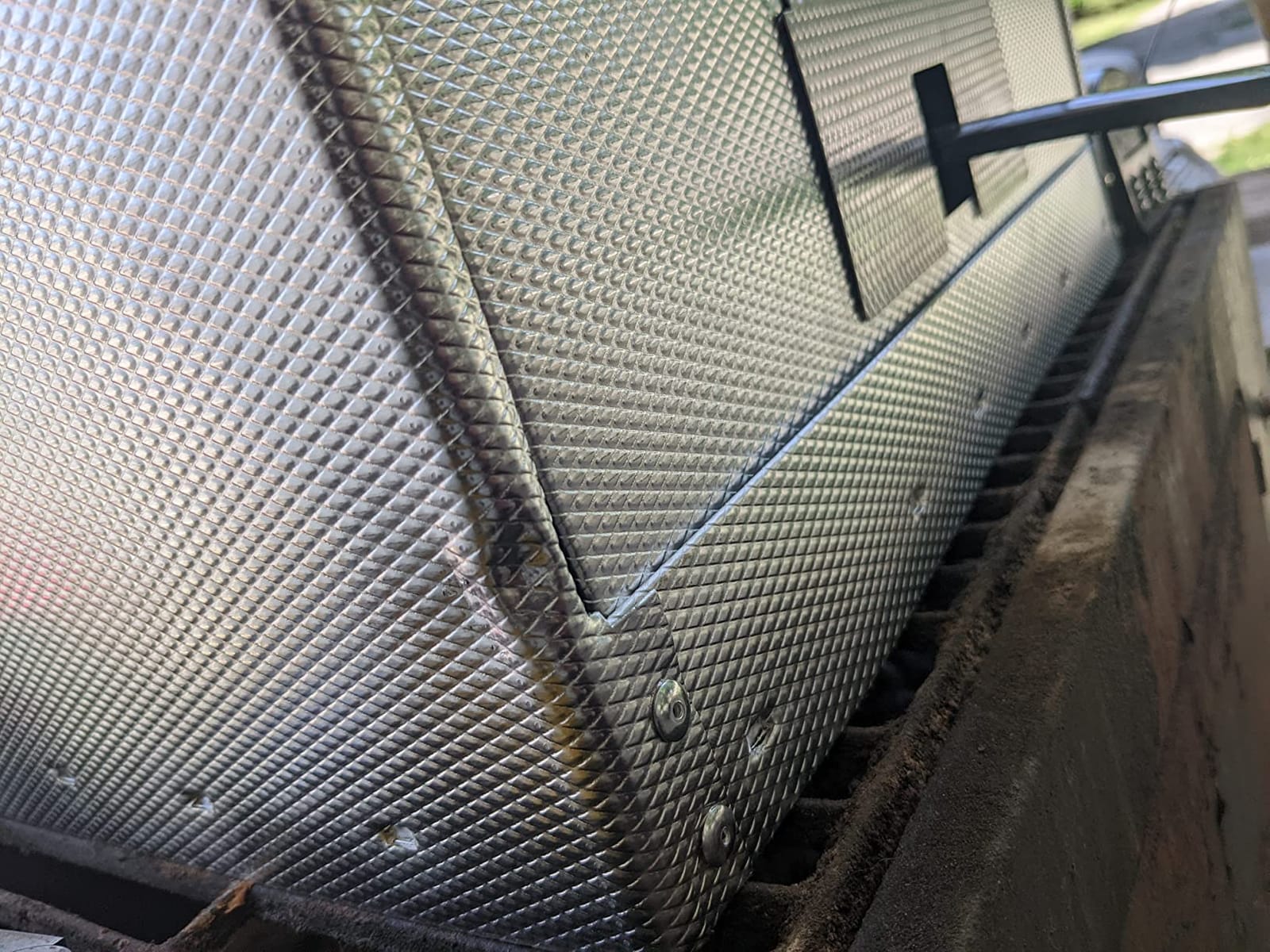
Winter is where it needs help. The cabinet is aluminum at 17.6 pounds and roughly 3.5 cubic feet, with no published element wattage, so there is no reserve to draw on in a hard freeze. The most repeated real-world finding in reviews is that owners independently wrap it in a thermal or insulation blanket for winter and windy use, which tells you the extra step is not optional at low temperatures.
What it does have going for it in cold weather is the removable wood chip pan, which pulls out without opening the smoking door. On a small cabinet where heat escapes fast, not dumping the interior every 30 minutes matters more than it does on a large one.
At 165F setpoint the duty cycle is also low, so the element runs far less than a 225F or 250F cook would demand. Long cold-weather sessions at a low hold are the least punishing way to use it.
Where the construction gives out
The thin-gauge aluminum shell dents easily, and several owners reported units arriving heavily dented because of inadequate protective packaging. Thin aluminum can also warp under pressure, and it feels flimsier than the older Little Chief that shares the same lineage.
There are two smaller but real annoyances: the door handle gets hot with no top handle to take over, so many owners add their own, and at around 140F the element burns through wood chips quickly, which matters if you are trying to stretch a load over a long session.
Who it suits and who it does not
Buy it if your winter smoking is about salmon and jerky rather than low-temperature barbecue, and you are willing to add an insulating blanket and place it out of the wind. Five racks and up to 50 pounds of capacity in an 18 pound body is genuinely useful, and it stores easily when winter ends.
Skip it if you want one appliance to cover every winter cook. This is a flavor infuser, not a cooker, and owners who expected otherwise are the source of most of its one-star reviews. Our other guides cover the pellet side of fish and jerky if you want a single-fuel solution.
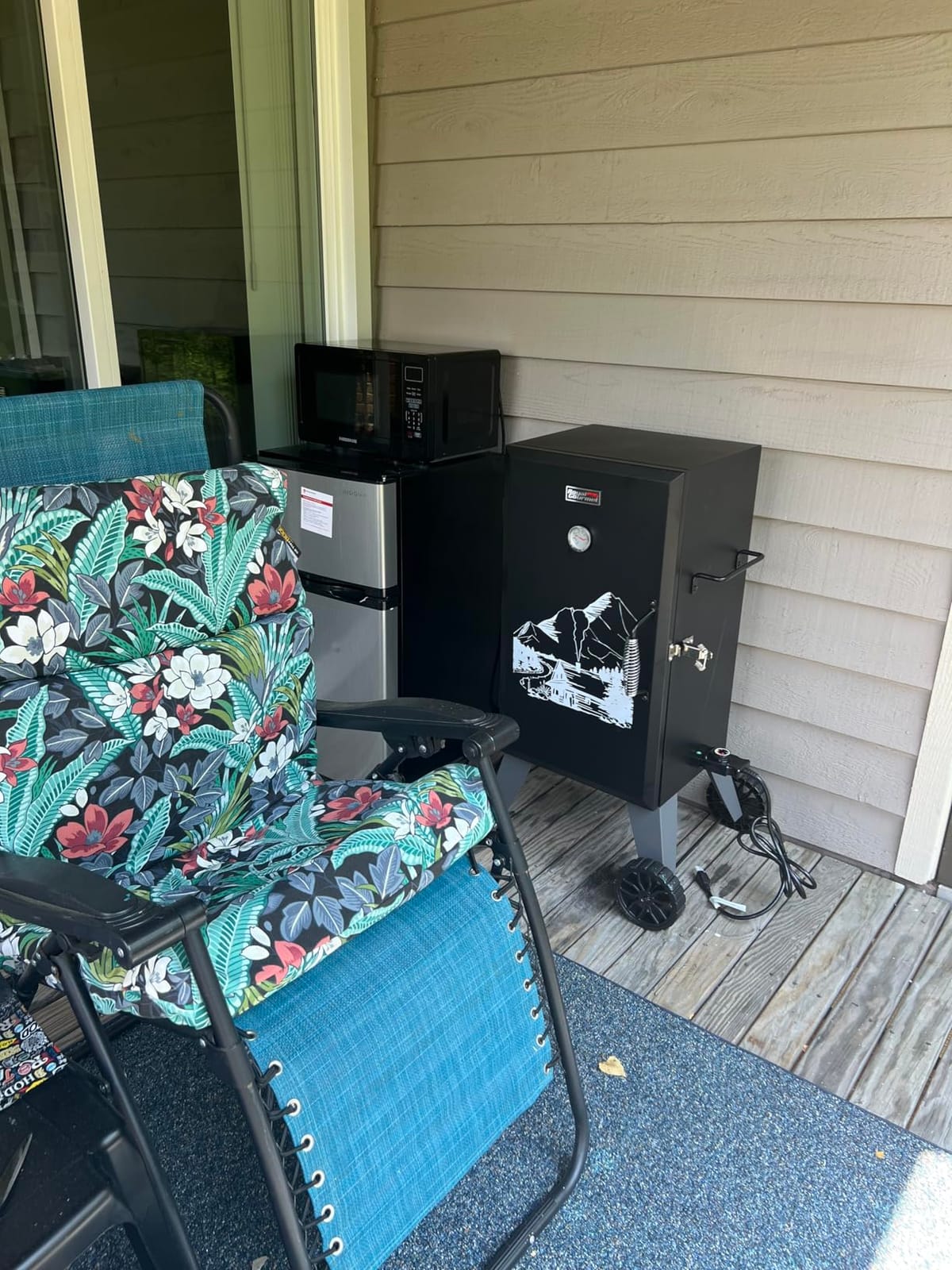
6. Royal Gourmet SE2805 28-Inch Analog Electric Smoker – Best for New Owners
Royal Gourmet SE2805 28-Inch Analog Electric Smoker with 3 Cooking Grates
1350 watt element
454 sq in cooking area
Analog dial controller
Insulated chamber
Pros
- 1350 watts is strong output for the size
- Simple dial controller is easy to learn
- Doubles as an outdoor oven
- Good protective packaging
Cons
- Chip box too far from the element for good smoke
- Cabinet is not square so racks travel about 3 inches
- Interior paint peels after repeated use
- Smallest review base at 163
If you have never owned an electric smoker, this is the least intimidating one here, and its 1350 watt element in about 8.7 cubic feet of exterior volume works out to roughly 155 watts per cubic foot. That clears the recovery threshold we use for cold-weather capability, which is more than you can say for a lot of first-time-friendly cabinets.
Most owners are beginners, and the common finding is that the graduated analog dial plus built-in thermometer is straightforward to read and adjust. There is no app to pair, no account to create and no firmware to lose when the power blips. It also works as an outdoor oven for grilling or steaming, which one reviewer valued specifically in hot weather.
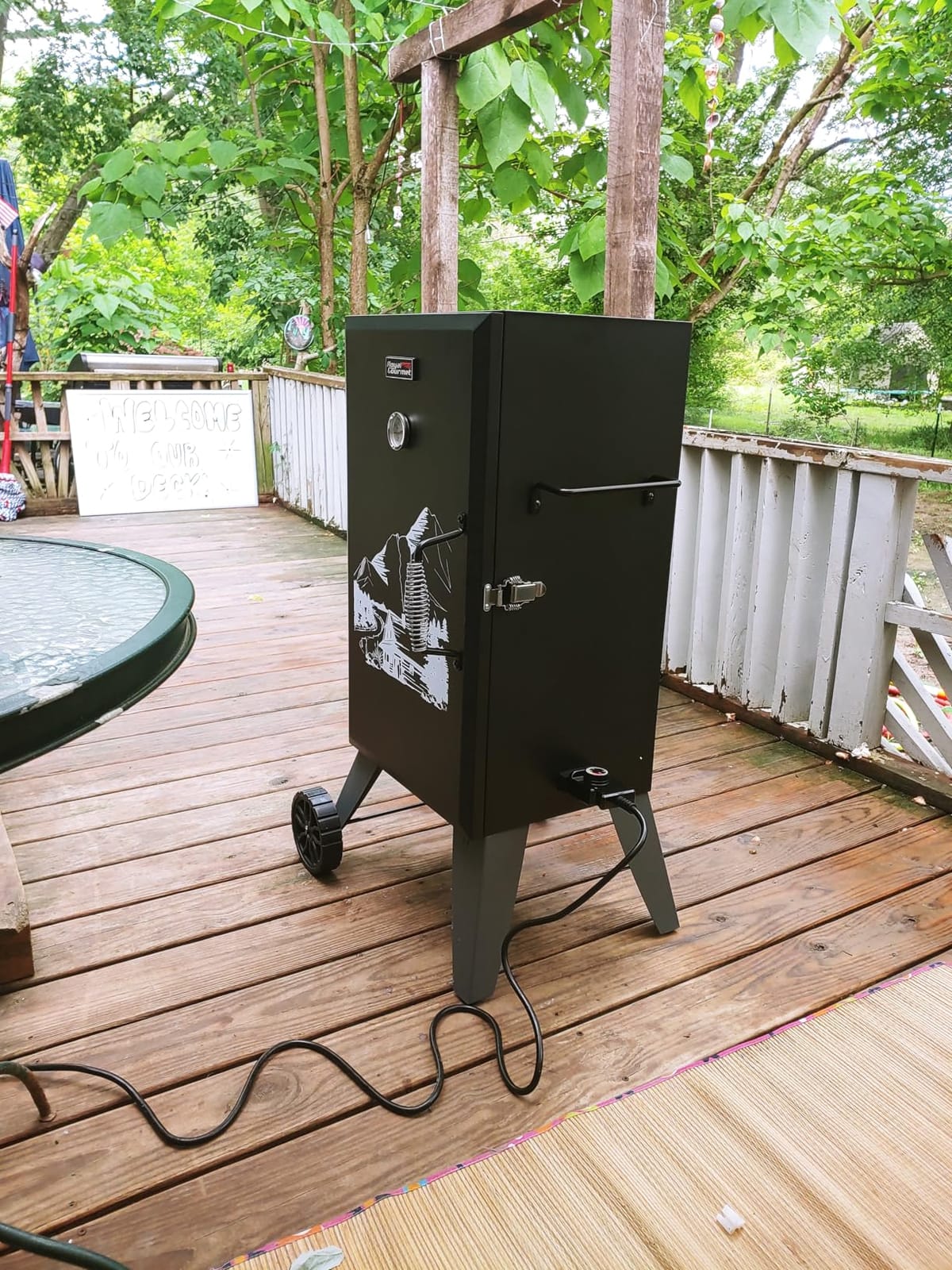
Two design faults are worth fixing before your first cook rather than after. The chip box sits too far from the heating element to produce much smoke until you move it directly onto the element, and the cabinet is not square, so the racks only travel about 3 inches from the back before stopping, which makes loading and unloading awkward.
The included water pan is also slightly too large and blocks heat circulation. Owners run it partially filled or omit it, which is an easy adjustment once you know.
What to check once it is set up
Inspect the finish before the first long cook. Interior paint peeling after repeated use is a recurring report, and in a wet winter climate a peeling interior is worth watching for corrosion rather than ignoring.
Use wood chips, not pellets. Owners report pellets burning too fast and producing far too much smoke on this cabinet, which is a fuel choice rather than a fault. The three racks are light-gauge, so keep heavy loads toward the front of the shelf guides where the support is closer.
Is the evidence enough to trust it?
Be aware that this is the least proven cabinet in the group at 163 reviews, even though its 4.4 average matches the others. The rating is encouraging and the insulation is described as solid, but a thinner review base means fewer long-term owner reports about how the unit ages across multiple winters.
For a first winter smoker that you will use gently, that is an acceptable trade for the simplest controls in the lineup. For overnight low-and-slow cooks where a failure costs a whole weekend, pick a model with a deeper owner history.
How to Winterize Your Electric Smoker
These nine steps are the difference between a smoker that holds 225F in January and one that stalls at 195F. Most of them cost nothing.
Place the smoker out of the wind, ideally against a wall or under a covered patio. Wind exposure is harder on a cabinet than ambient temperature.
Run the power from a GFCI-protected outdoor outlet, with the cord elevated off the ground and out of any puddle or snowbank.
Wrap the cabinet in an insulating blanket if the walls are single-wall. Owners across multiple forums treat this as routine for winter, not a modification.
Fit a tight cover, and use it between cooks rather than leaving the cabinet exposed season to season. Covering is the biggest single factor in electronics longevity.
Preheat the empty cabinet to your setpoint for 30 to 45 minutes before loading food. This gives the walls a thermal buffer the meat would otherwise have to provide.
Load wood chips before preheating finishes so smoke is established, and use the side loader where your model has one.
Check that the water pan and chip tray will not freeze solid during a long overnight smoke, and reduce water pan fill in hard cold so heat circulation stays open.
Keep spare fuel in the garage. For bisquette-fed smokers this matters more than anything else, since a feeder cannot be topped up in a storm.
Store the control panel indoors between seasons if your model uses one, and wipe the interior dry before shutting it down.
What to Do When Your Smoker Will Not Hold Temperature
If the cabinet will not hold setpoint in cold air, work through these in order. The first three solve the problem most of the time.
Preheat empty for 30 to 45 minutes before you judge performance. A cold cabinet loaded immediately will read low for an hour regardless of its capability.
Close the door and confirm the latch or gasket is fully seated. A door that does not seal leaks heat faster than any insulation gap.
Add an insulating blanket. This is the single most common owner fix and it works on any single-wall cabinet.
Check the wood supply and airflow. Restricted chips, a clogged tray or a closed air inlet can starve the burn and drop cabinet temperature.
Move the smoker out of the wind and away from a cold wall, and close any nearby door or window feeding it cold air.
Verify your outlet is on a circuit that can carry the element without tripping, since a breaker cycling mid-cook silently stops heat production.
Accept and adjust. If you are running a large cabinet with a low element wattage in hard cold, set the target 15 to 25F higher and extend your cook time accordingly.
Winter Smoking Safety and Electrical Care
Electric smokers are outdoor appliances and should be treated as such. Never operate one indoors, in a garage, on a covered porch or under a shelter that traps combustion-adjacent air.
Can electric smokers be left outside? Yes, with conditions. Leave it plugged into a GFCI-protected outlet on an exterior rated for the load, keep the cord dry and off the ground, and never run it through a puddle or a snowbank that could melt into standing water. Snow and ice on the vent stack is the real hazard in cold climates, because a blocked top vent can make the cabinet overheat and over-smoke the food.
Rain is survivable and owners do smoke through it, but moisture is what kills these machines over time rather than any single wet weekend. The pattern we see repeatedly is electronics failing on units left uncovered for years. Covering between cooks is the difference between a ten-year smoker and a five-year one.
One more check before winter: verify your model has not been subject to a recall. The Charbroil brand has had a Consumer Product Safety Commission recall covering certain electric smoker models, and if you own an older Charbroil cabinet, check the CPSC database for your model number before firing it up in freezing conditions.
Electric Smoker vs Pellet Grill in Cold Weather
Below freezing, pellet grills hold an advantage most electric smokers do not, and the reason is fuel density. A hopper full of pellets is a large, self-contained fuel store that burns for hours without intervention. An electric smoker has to generate every unit of heat electrically, so its cold-weather performance is capped by element wattage no matter how well insulated it is.
The electric smoker wins in three areas instead. There is no auger, no ignition system and no hopper to freeze, so mechanical failure points disappear. An analog cabinet resumes where it left off after a power interruption. And for fish, jerky and low-temperature holds around 165F, an electric smoker is simply the right tool.
Owners who run cold-weather pellet setups judge them on wall thickness and cite specific ambients as proof, so if you want the pellet route our guide to the best pellet tube smokers for gas grills and the best pellet smokers for competition brisket cover the high-heat side of that comparison.
Frequently Asked Questions
Do electric smokers work in winter or below freezing?
Yes, electric smokers work in cold weather, but performance varies a lot between models. Two factors decide it: insulation thickness, which slows heat loss, and element wattage relative to cabinet volume, which determines how much heat is available to replace what escapes. A smoker that holds 225F easily at 70F ambient may only manage 200F at 15F. Preheating empty for 30 to 45 minutes and wrapping a single-wall cabinet in an insulating blanket are the two habits that close most of the gap.
How many watts do I need for a cold-weather electric smoker?
For a cabinet under about 9 cubic feet of exterior volume, 1200 watts or higher gives the element enough reserve to replace cold-weather heat loss and recover after a door opening. That works out to roughly 150 watts per cubic foot or better. The Charbroil Analog we reviewed hits about 200 watts per cubic foot, and the Royal Gourmet SE2805 about 155. Many manufacturers do not publish element wattage, so check review data for cold-weather owner reports if the spec is missing.
Can electric smokers be left outside in the rain and snow?
They can, with conditions. Always plug into a GFCI-protected outdoor outlet rated for the load, keep the cord dry and elevated off the ground, and never run the smoker through standing water or a snowbank that could melt into a puddle. Keep the top vent clear of snow and ice, since a blocked vent can overheat the cabinet. Between cooks, use a fitted cover, because moisture rather than any single wet weekend is what shortens the life of the electronics.
Why is my smoker not holding temperature?
Work through it in order. Preheat the empty cabinet to setpoint for 30 to 45 minutes, since a freshly loaded cold cabinet reads low for an hour. Confirm the door and latch or gasket are fully seated. Add an insulating blanket if the walls are single-wall. Check wood supply and airflow, because restricted chips or a closed air inlet starve the burn. Move the smoker out of the wind, and verify your circuit is not cycling under the element load.
What is the lowest temperature a Masterbuilt electric smoker can reach?
The Masterbuilt 30-inch Digital sets smoking temperature up to 275F with no published lower setpoint figure, so usable temperature is governed by ambient conditions and the water bowl rather than by a fixed minimum. Owners of this cabinet report reaching setpoint in about 25 minutes at 25F ambient, which is the practical benchmark for cold-weather use. The removable water bowl adds moisture when you want it and takes it away when you want a crisper finish.
What is the best smoker for cold smoking and jerky?
For cold smoking and jerky, the Smokehouse Products Big Chief is the clear pick in this group. It holds a steady 165F, which is exactly the right temperature for salmon, trout and beef jerky, and it carries up to 50 pounds across five racks in a cabinet that weighs just 17.6 pounds. For winter use, wrap it in an insulating blanket and keep it out of the wind, because the thin aluminum shell has no reserve to fight a hard freeze on its own.
Bottom Line
The best electric smokers for cold weather are the ones that combine a tight, well-insulated cabinet with enough element reserve to replace what the walls lose. The Masterbuilt 30-Inch Digital is our top pick because owners report reaching setpoint in about 25 minutes at 25F ambient across 11200 reviews, and its side wood chip loader keeps you from dumping heat into freezing air every 30 minutes.
Pick the EAST OAK if unattended cooking is the priority and you want a built-in probe with automatic keep-warm. Choose the Bradley if you are feeding a group, and the Charbroil if your winter is wet, windy and prone to power interruptions. For fish and jerky at 165F, the Big Chief does the job at 17.6 pounds, provided you blanket it. The Royal Gourmet is the simplest way into the category, with 1350 watts of output and controls anyone can read.
Whichever you choose, preheat empty, shelter the cabinet and cover it between cooks. Those three habits do more for your winter results than any specification on the list.