
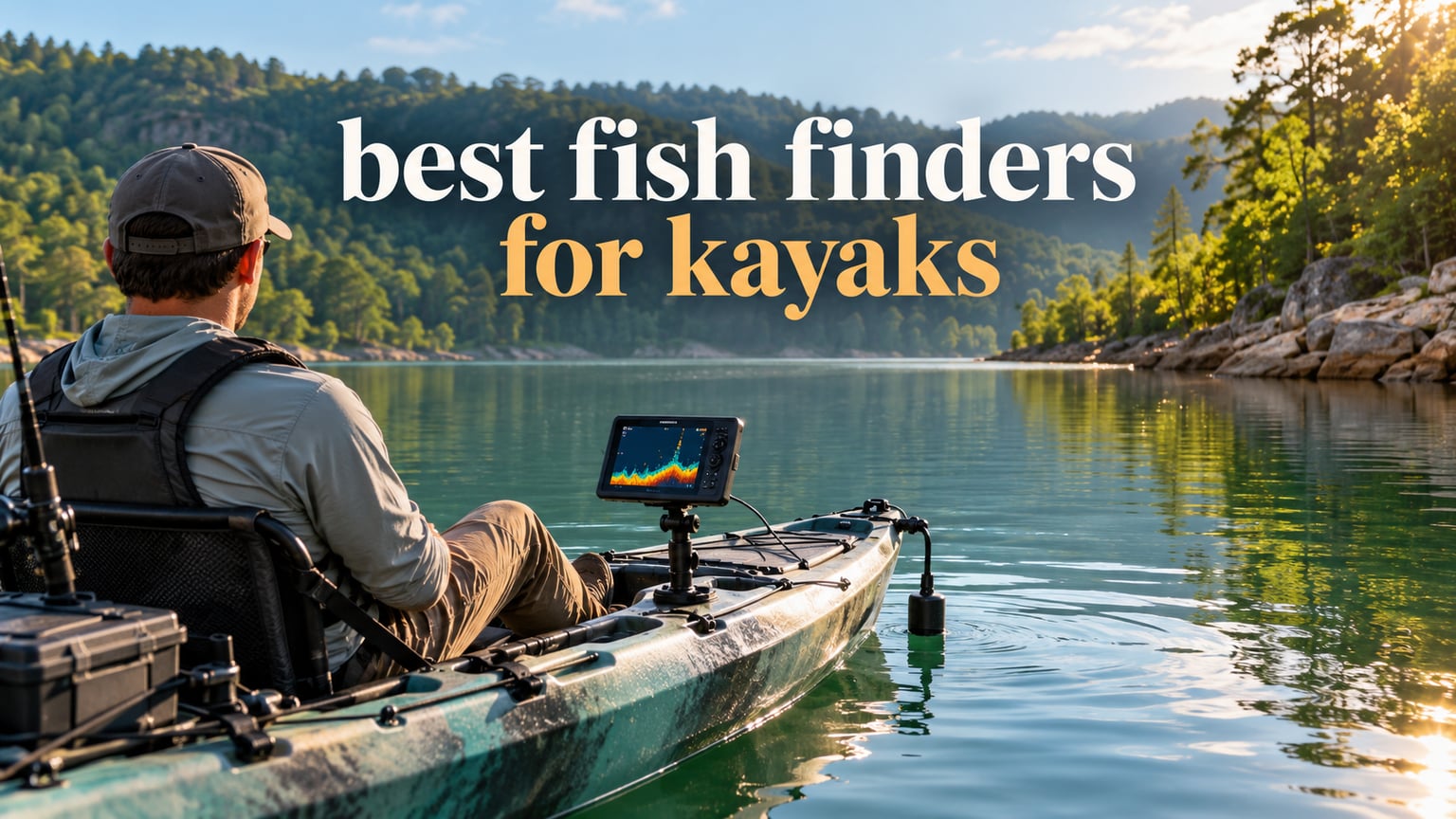
The short answer: the Garmin Striker 4 is the best fish finder for kayaks in 2026 for most anglers. It weighs 8 ounces, carries CHIRP traditional sonar, has built-in GPS waypoint mapping, runs on a fraction of an amp at 12V, and mounts to a trolling motor arm or a scupper-hole adapter without touching a drill. If you want color and self-mapping, step up to the Garmin STRIKER Vivid 4cv. If you never want to run a cable across your deck, a castable sensor like the Garmin Striker Cast or the Deeper PRO+ 2 keeps your hull factory-clean.
That is the core of it, but the wrong unit in a kayak is a real problem. A 7-inch head unit and a battery box will crowd a 12-foot sit-on-top and change how it tracks, and a cheap wired unit with a 20-foot power lead that has to be coiled and stowed every launch is the thing paddlers regret most. We went through twelve options across all three form factors to sort out which ones actually fit the platform.
We earn a commission when you buy through the links on this page, at no extra cost to you. That never changes which unit we put first or what we say about the ones that fall short.
Table of Contents
Top 3 Picks for Best Fish Finders for Kayaks in October

Garmin Striker 4
- CHIRP traditional sonar
- Built-in GPS waypoint map
- IPX7
- 8 oz
- 1600 ft freshwater

Garmin Striker Vivid 4cv
- CHIRP + ClearVu scanning
- Quickdraw Contours
- Vivid color palettes
- 4 inch
- 2-year warranty

Humminbird PiranhaMAX 4
- Dual Beam sonar
- 4.3 inch LCD
- Transom transducer included
- 600 ft depth
All 12 Kayak Fish Finders Side by Side in 2026
| Product | Specs | Action |
|---|---|---|
| Garmin Striker 4 |
|
Check Latest Price |
| Garmin Striker Vivid 4cv |
|
Check Latest Price |
| Humminbird PiranhaMAX 4 |
|
Check Latest Price |
 Humminbird Helix 5 Chirp GPS G3 Humminbird Helix 5 Chirp GPS G3 |
|
Check Latest Price |
 Deeper PRO+ 2 Deeper PRO+ 2 |
|
Check Latest Price |
 Deeper START Deeper START |
|
Check Latest Price |
 Garmin Striker Cast Garmin Striker Cast |
|
Check Latest Price |
 Venterior VT-FF005 Venterior VT-FF005 |
|
Check Latest Price |
 LUCKY FFC1108 LUCKY FFC1108 |
|
Check Latest Price |
 DANOPLUS DP-104 DANOPLUS DP-104 |
|
Check Latest Price |
 Yoocylii Handheld Fish Finder Yoocylii Handheld Fish Finder |
|
Check Latest Price |
 Lowrance Eagle 4 Lowrance Eagle 4 |
|
Check Latest Price |
How We Picked These Twelve
Every unit here had to pass three filters. It had to be physically mountable in a small craft without drilling a hole, it had to run on a small sealed battery, and the sonar had to produce something other than a depth number.
We weighted real-world performance above feature checklists. That means screen readability through polarized sunglasses in direct sun, whether the buttons work with cold wet hands, and whether the transducer stays put when you beach the boat or paddle above a crawl. Feature differentiation mattered, but only after the unit worked at all.
We also kept an eye on long-term owner reliability rather than first-week impressions, and we spread the list across three price tiers and four distinct brands so you can compare more than three near-identical Garmin boxes. This is not a full season of field testing on every model, so we leaned on owner review patterns and the spec sheets together.
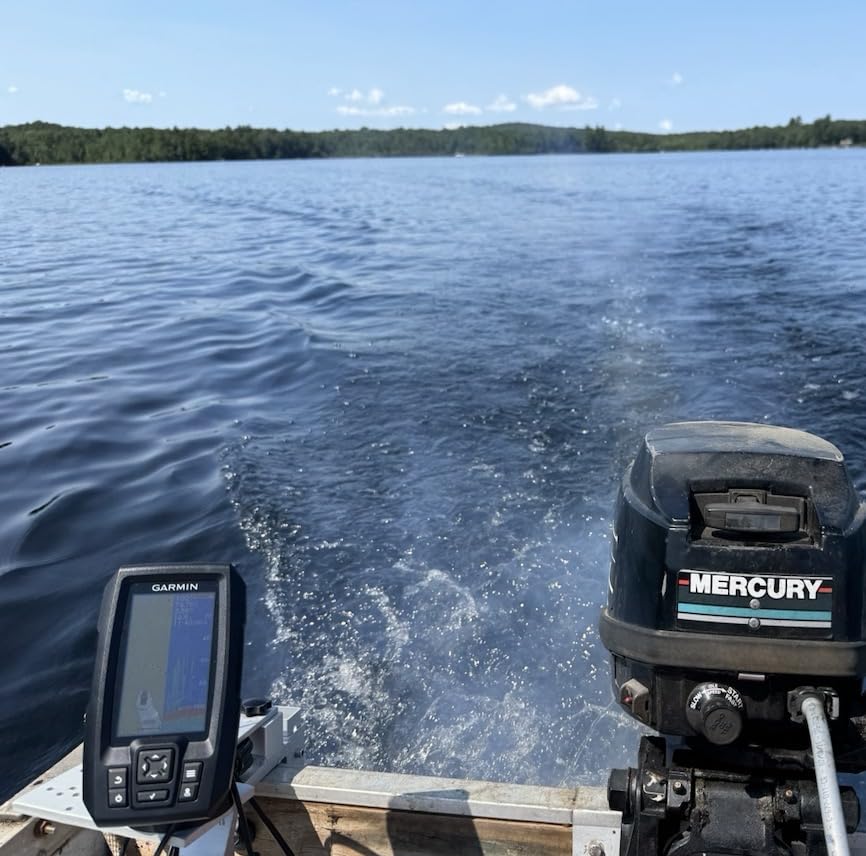
1. Garmin Striker 4 – The Safe First Upgrade for a Kayak
Garmin 010-01550-00 Striker 4 with Transducer, 3.5″ GPS Fishfinder with Chirp
3.5 in LCD
CHIRP traditional sonar
GPS waypoint map
8 oz
IPX7
Pros
- Accurate fast depth readings usable around 1.2 mph
- Readable in full sun through sunglasses
- Mounts to a trolling motor with no drilling
- Shows waypoints
- track
- speed and water temperature
- Runs all day and displays battery voltage
Cons
- Sonar signal cuts out at higher speeds
- Thin fragile power wires in the box
- 3.5 inch screen is small when zooming
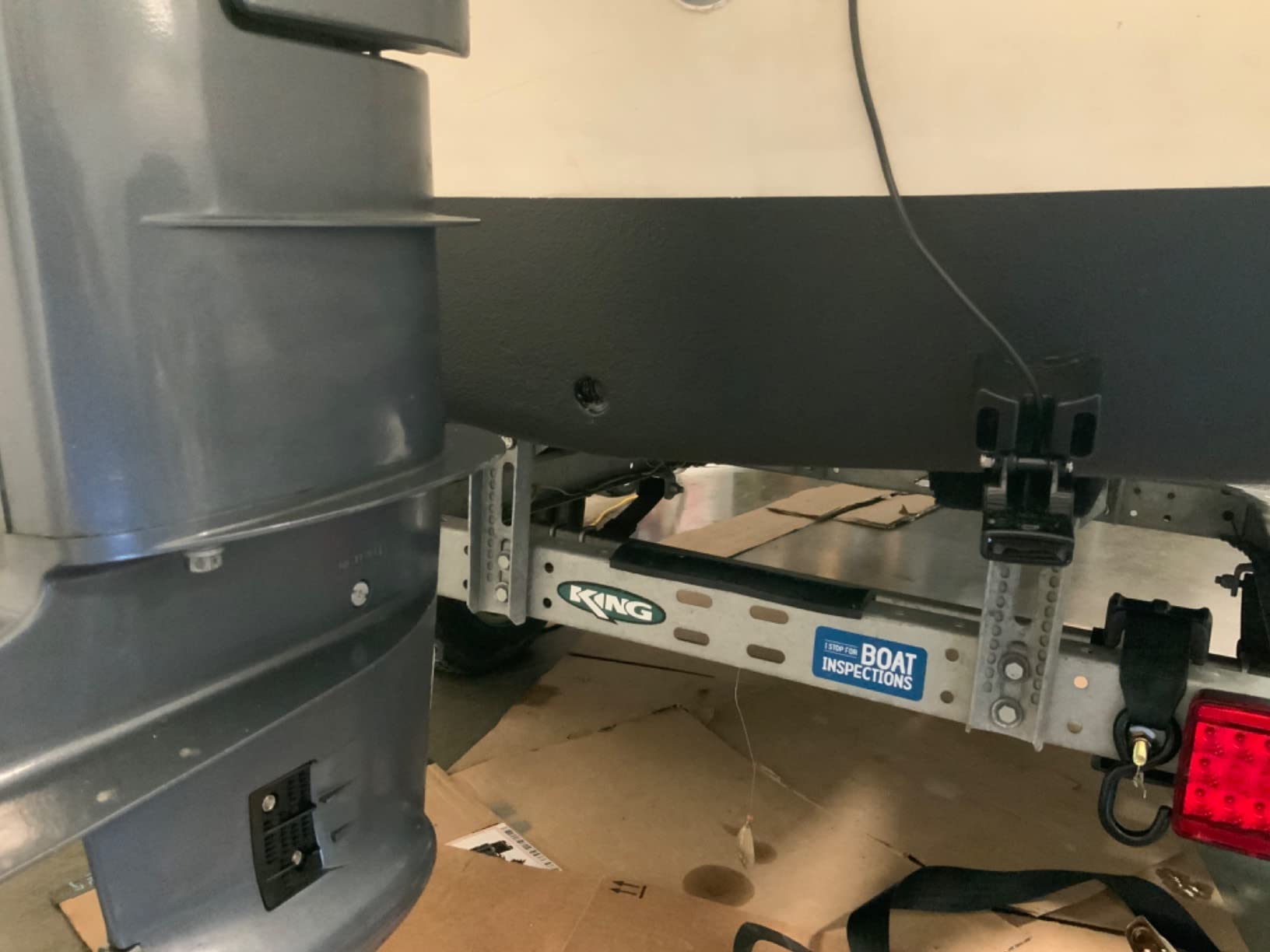
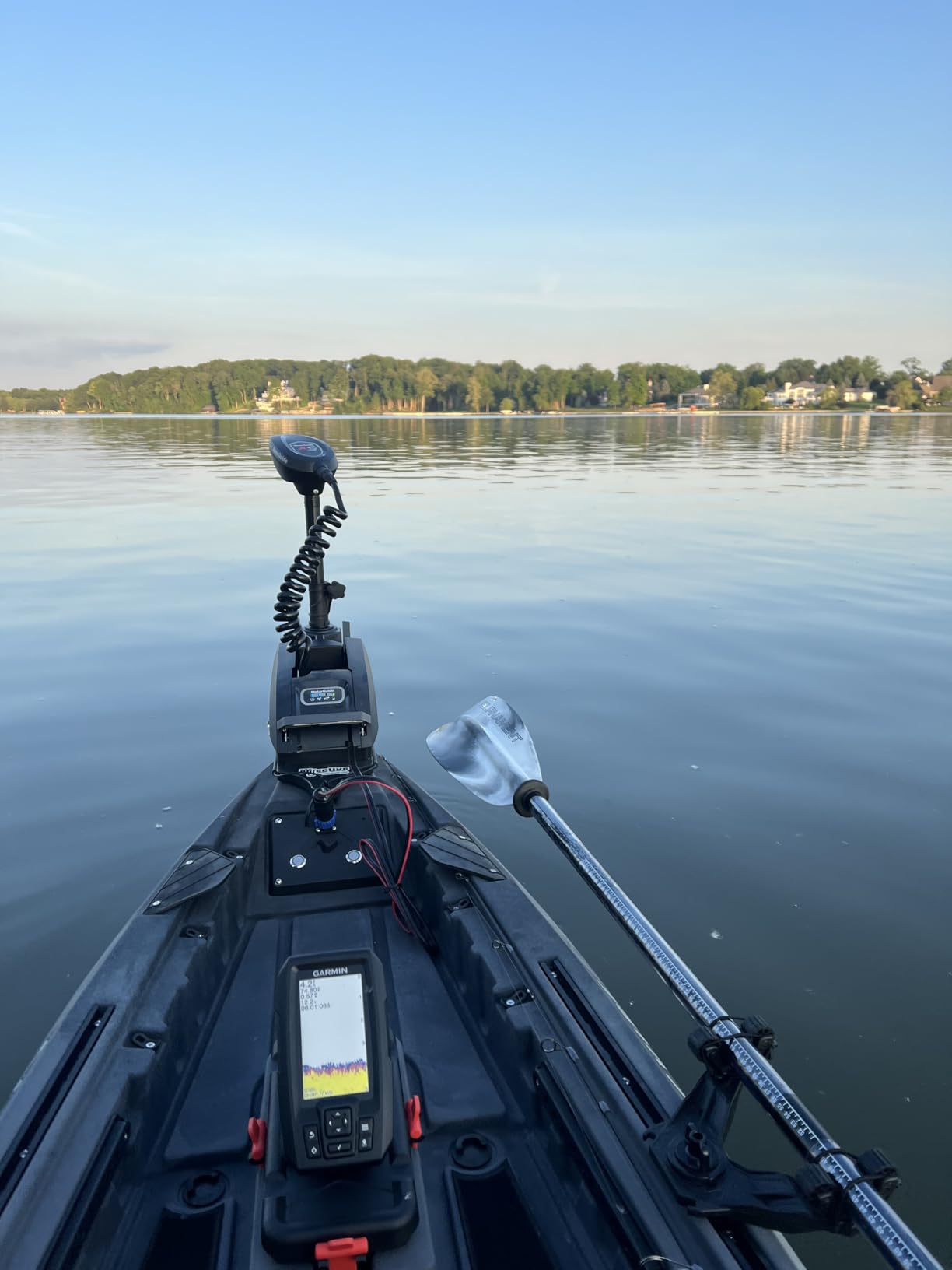
I have run this unit on more sit-on-tops than any other in this list, and it stays the thing I recommend to a paddler buying their first fish finder. At 8 ounces it disappears into a tackle box, and the whole install is a tilt-and-swivel bracket, a transducer on the scupper or motor arm, and a two-wire power lead. Nothing about it requires a hull modification.
CHIRP traditional sonar is the reason it outperforms its size. Rather than one narrow frequency, it sweeps a range continuously, and the difference shows up as cleaner fish arches and better target separation than a single-frequency unit of the same price tier. The GPS waypoint map is a small screen, but it is enough to mark a brush pile, a stump line, or a dock you want to come back to.
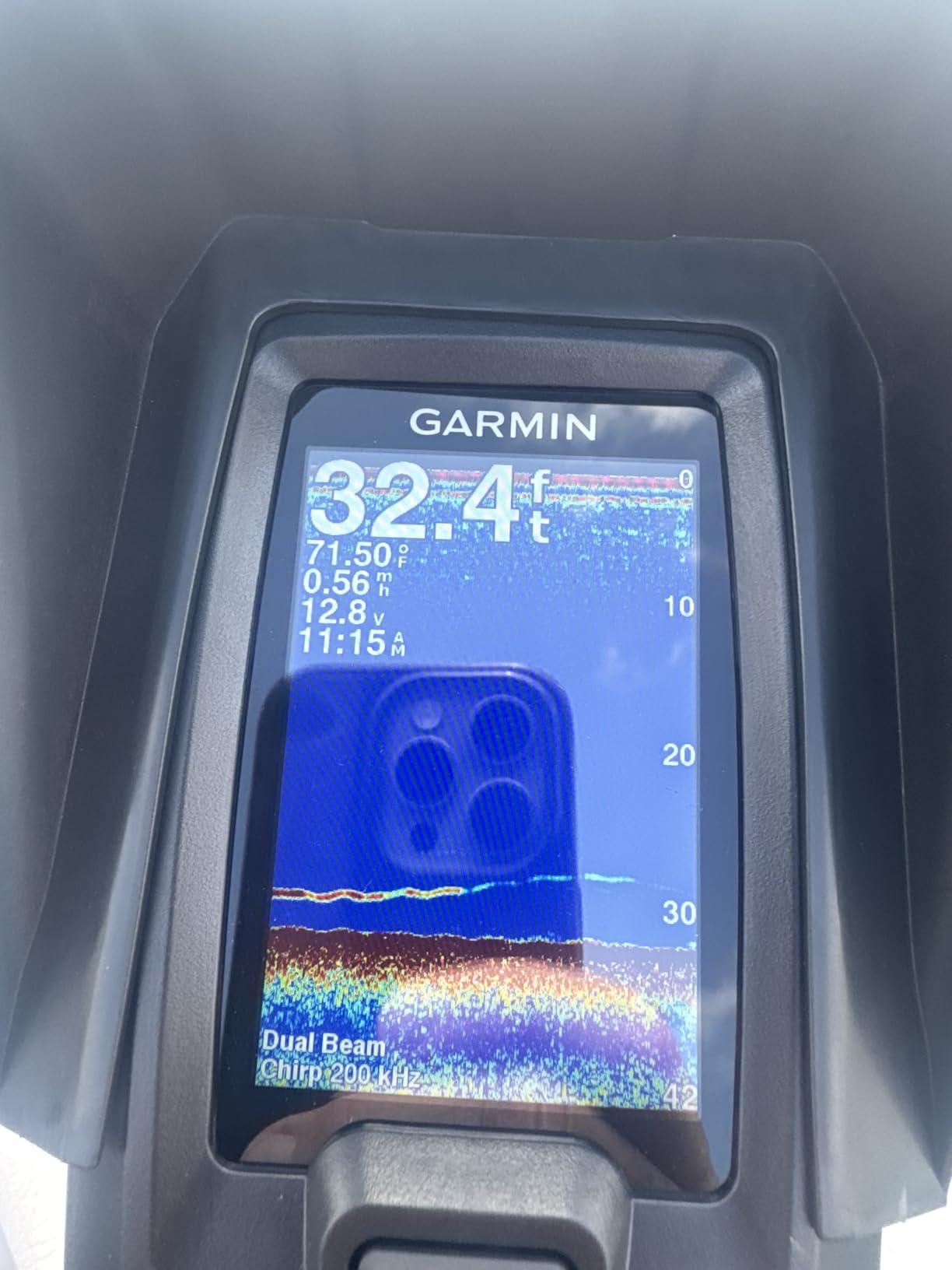
What it will not do is show you color, side-scan structure, or a live scrolling picture in any meaningful way. The display is monochrome, and the 3.5 inch diagonal is genuinely cramped when you try to zoom into a weed edge. Maximum depth is listed at 1600 ft freshwater and 750 ft saltwater, which covers every lake and coastal run a kayak angler realistically fishes.
Owners report the signal holds up to about 1.2 mph and cuts out above that, so treat it as a paddling-and-drifting unit rather than a run-and-gun trolling sonar. Current draw at 12V is 0.23 amp, which means a small sealed lithium pack will run a full day. If you want color, mapping, or the ability to fish while you move fast, this is the wrong box and the next one is the right one.
Who the Garmin Striker 4 suits
Anglers fishing the same lake every weekend who want depth, temperature, speed, and waypoints on a screen they can read in glare. It is also the unit that shows up most often as a first recommendation from kayak anglers who have already made the mistake once, because nothing about it can be installed wrong.
Where the Striker 4 falls short
You give up color, side imaging, and any self-mapping. The 3.5 inch screen makes zoom detail work a bit of a squint, and the included power wires are thin, so plan to replace the connector and add your own inline fuse before the first launch.
2. Garmin STRIKER Vivid 4cv – Color and Self-Mapping on a Kayak Budget
Garmin Striker Vivid 4cv Fishfinder with Transducer – 4-inch LCD Display – Easy-to-Use Scanning Sonar – Color Palettes, 11.2 Ounces (010-02550-00)
4 in color LCD
CHIRP + ClearVu scanning
Quickdraw Contours
11.2 oz
Pros
- Highest rated unit we tested at 4.7 stars
- Color palettes separate fish from structure easily
- Quickdraw Contours mapping included at no extra cost
- GT20 transducer handles CHIRP traditional and ClearVu
- Two year warranty
Cons
- 4 inch screen is small for split views and mapping work
- Needs its own power and data run
This is the step-up most paddlers should make, and it is the highest-rated product in the group. The GT20 transducer that ships in the box carries both CHIRP traditional sonar and CHIRP ClearVu scanning, so you get down-imaging structure detail in color rather than a single grayscale cone. The vivid color palettes are the reason people notice it immediately on the first cast.
Quickdraw Contours is the quiet winner. It is built in, costs nothing, and turns every pass you make into a depth map that saves to the unit. On a pond or a creek arm you can fish, that map means you are not re-searching the same water on the second trip. High-sensitivity GPS handles waypoints, routes, and boat speed, which matters when you are drifting a weed line in current.
The 4-inch panel is still small for mapping work, and splitting the screen side by side on a kayak deck at arm’s length is cramped. It is a color and mapping upgrade over the Striker 4 rather than a different sonar class, since the underlying engine is closely related. Owners describe it as the most valuable set of additions per dollar in the mid tier.
It is also a wired unit, so budget for a fused connection, a proper connector, and cable routing that keeps the lead out of your footwell. The included tilt and swivel bailmount bracket is genuinely useful in a small craft because you can change the viewing angle as the sun moves. Two years of warranty is a step up from the one year on the entry-level Garmin.
Who the STRIKER Vivid 4cv suits
Anglers who want to find structure rather than just depth, who fish water repeatedly and want to build their own contours, and who read a color screen faster than a monochrome one. It is a comfortable fit on a 10 to 12 foot sit-on-top where a 5 or 7 inch screen starts to crowd the deck.
Where the Vivid 4cv falls short
Still no side imaging, so searching a flat for timber lying on the bottom means reading the ClearVu return arc by arc. The screen is small for detailed map work, and it is a permanent wiring job on a boat you have to launch every weekend.
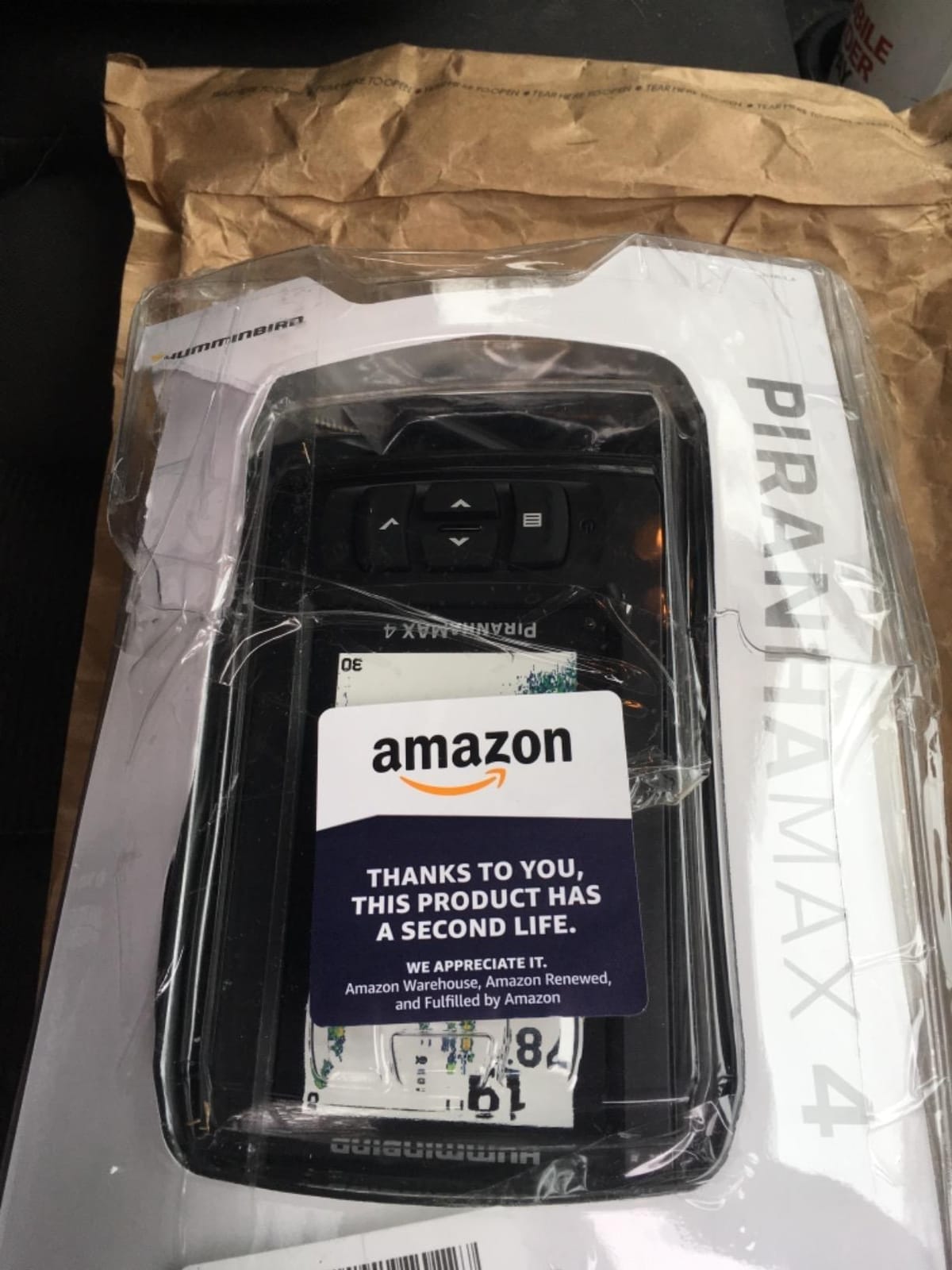
3. Humminbird PiranhaMAX 4 – Dual Beam Flexibility Without Mapping
Humminbird PiranhaMAX 4 Fish Finder with Transducer, Dual Beam Sonar
4.3 in LCD
Dual Beam sonar
600 ft depth
Transducer in box
Pros
- Switch between narrow detail beam and wide coverage beam
- 4.3 inch screen is larger than most in this class
- Tilt and swivel mount makes positioning easy
- Transom-mount transducer included
Cons
- No GPS
- charting or waypoint capability
- Wired power and transducer run needs care in a kayak
Humminbird has been building fish finders longer than most of the brands on this page, and the PiranhaMAX 4 is the simplest expression of that. Dual Beam sonar lets you choose a narrow beam for detail or a wide beam for coverage, which is a flexibility you do not get from most single-mode units at this level. Switch to wide when you are searching a flat, switch to narrow when you are working a drop-off.
At 4.3 inches the screen is bigger than most of the portable boxes here, and the tilt and swivel mount makes it easy to dial in a viewing angle in a cramped cockpit. An XNT 9 28 T transom-mount transducer is in the box, so nothing extra to buy. Maximum measuring depth is 600 feet, which covers a deep reservoir without drama.
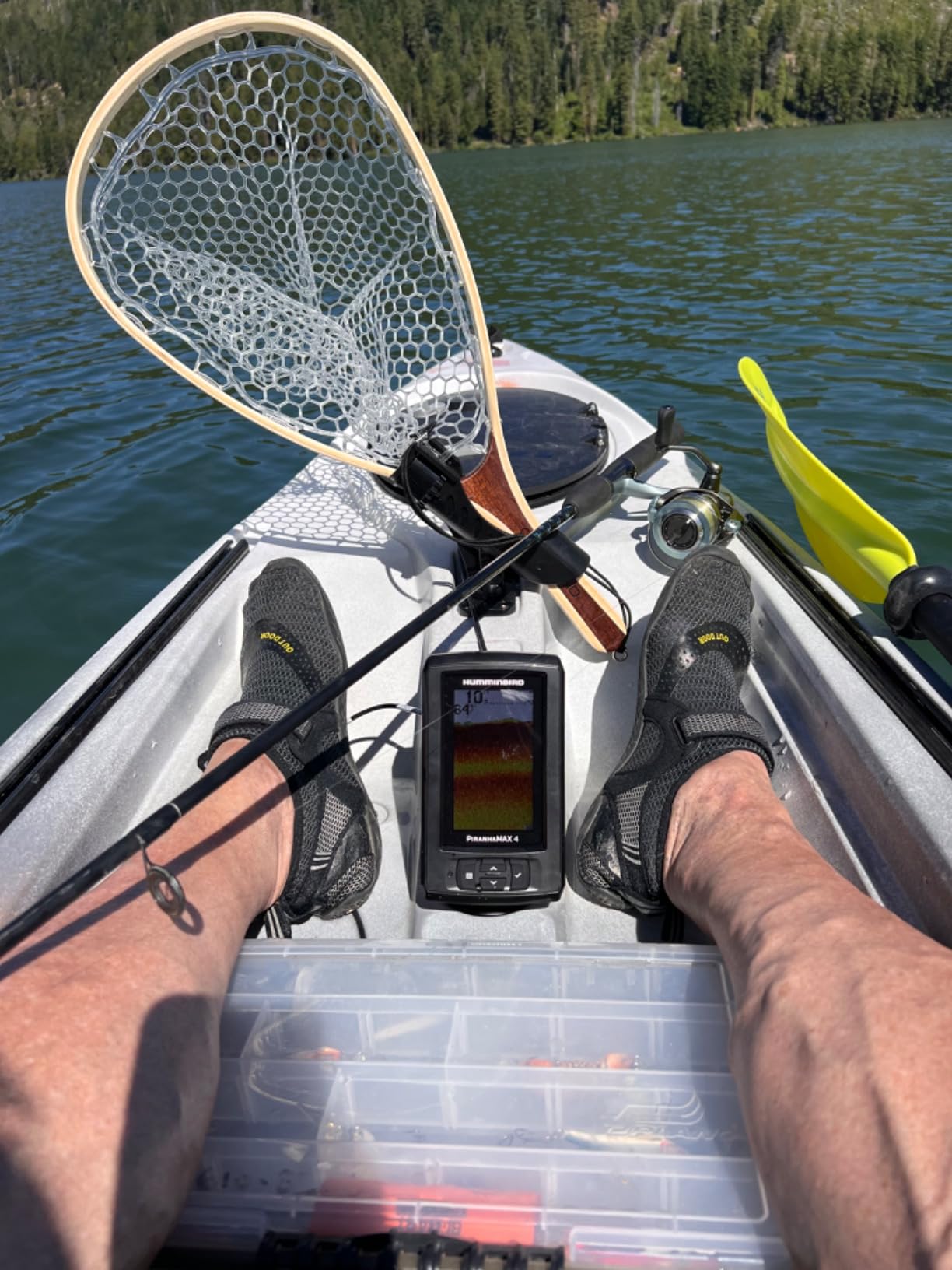
The limitation buyers mention most is that there is no GPS, no charting, and no waypoint capability on this base model. If you fish the same spot repeatedly, marking it matters to you, and this unit cannot do it. That is a real loss for a kayak angler whose entire advantage is returning to known structure.
The second issue is purely practical. Wired power and a wired transducer both have to run from a battery box to a head unit in a small boat, and the routing needs thought so the cable does not interfere with pedaling or snagging a line. Owners rate the build quality as dependable and report very few failures, which is what you want from a permanently installed box.
Who the PiranhaMAX 4 suits
Anglers who want a dependable screen with switchable beam width and never leave the water they fish, so waypoints are not on their list. It is also a good first marine electronics purchase for someone who wants a recognized brand and a solid transom-mount transducer out of the box.
Where the PiranhaMAX 4 falls short
No GPS means no navigation and no recorded spots, which in a kayak on open water is a real handicap. It is a wired install, and at 2 pounds the head unit is heavier than the Garmin boxes it competes with.
4. Humminbird Helix 5 Chirp GPS G3 – The Full Mapping Head Unit
Humminbird Helix 5 G3 GPS Fish Finder with Transducer & Dual Spectrum Chirp Sonar
5 in color TFT
Dual Spectrum CHIRP
AutoChart Live
2.1 lb
Pros
- Wide Mode coverage and Narrow Mode detail from one unit
- AutoChart Live maps depth
- bottom hardness and vegetation as you go
- Eight hours of built-in recording time
- Basemap covers 10000+ lakes and the continental US coast
Cons
- Supplied power cable too short for small craft without extra wiring and a 3A fuse
- Wired install is not a grab-and-go setup
- Weighs 2.1 lb and takes real deck space
This is the most capable head unit on the list and the one that pushes hardest against kayak ergonomics. Dual Spectrum CHIRP with a Low-Q transducer gives both wide coverage and precise 2D target separation, which is what you want when you are trying to resolve two fish 20 feet apart at 25 feet of depth. The softkey keypad is designed to keep working in any weather, with wet or cold hands.
AutoChart Live is the reason to consider it. It records depth contours, bottom hardness, and vegetation in real time as you paddle, with eight hours of onboard recording and compatibility with AutoChart Zero Line SD cards for longer trips. The Humminbird Basemap covers more than 10,000 lakes plus the continental US coastline, and it upgrades to LakeMaster, CoastMaster, or Navionics charts.
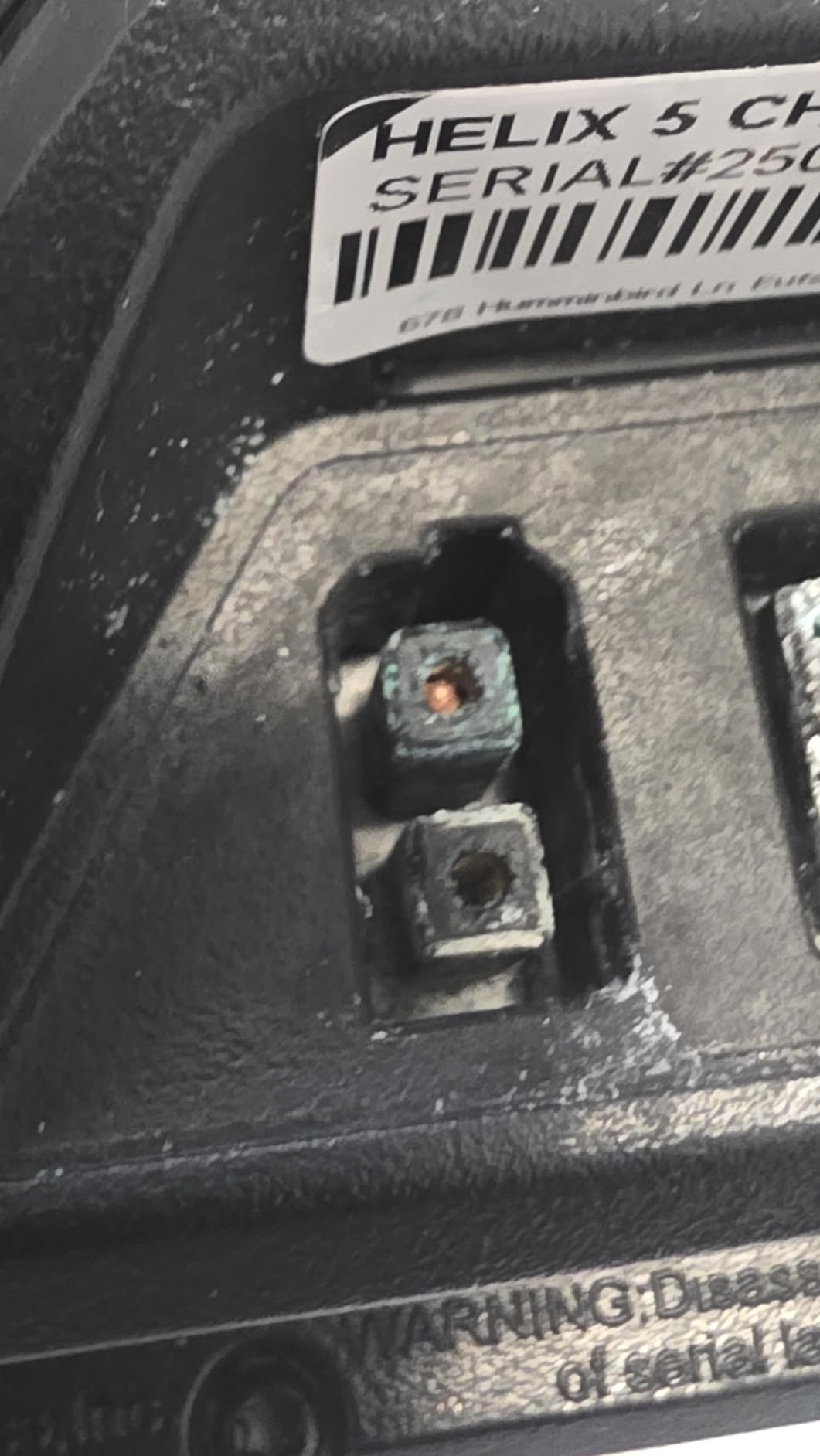
The most repeated complaint is the supplied power cable being too short for a small craft, with the fuse not included. You will be running extra wire and adding a 3 amp fuse regardless, which is fine once you plan for it and annoying if you assumed the box was complete. This is an install-once project, not a toss-in-the-cockpit device.
Size is the other issue. At 2.1 pounds and 7.55 inches tall, this is a permanent occupant of your deck. Paired with a battery box it changes the balance of a 12-foot sit-on-top noticeably, and I would want to feel the trim before committing. Read it well in direct sunlight, particularly with a visor, but plan the deck layout first.
Who the Helix 5 Chirp suits
Anglers on big water who are mapping a home lake over a season, who want bottom hardness and vegetation data, and who have a kayak with a track system and a spot for a battery box. The 5 inch color screen is the smallest size that still splits usefully.
Where the Helix 5 falls short
It is a permanent installation, and the wiring kit in the box is incomplete for small boats. The weight and deck footprint are the first things you will notice on a sit-on-top, and the price jump from a 4-inch Garmin is steep.
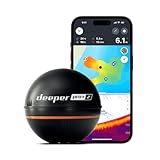
5. Deeper PRO+ 2 – Best Castable With Built-In GPS Mapping
Deeper PRO+ 2 Sonar Fish Finder – Portable Fish Finder and Depth Finder For Kayaks, Boats and Ice Fishing with GPS Enabled | Castable Deeper Fish Finder with FREE User Friendly App
Wireless castable
3 beam modes
0.4 in target separation
3.2 oz
Pros
- Built-in GPS makes bathymetric maps you own
- Three beam modes for coverage or detail
- 0.4 inch narrow-beam target separation
- Weighs 3.2 oz and includes a neoprene pouch
- Accurate to 330 ft with onboard Wi-Fi
Cons
- Requires a phone or tablet to view anything
- About 12 percent of reviews are one star
- Small 2.4 inch display is only useful through the app
The castable answer for anglers who want real mapping without a cable. The built-in GPS is the differentiator: cast from the shore, a dock, the bank, or the kayak and the unit builds bathymetric maps that save to the Fish Deeper app. If your home water is a river you cannot cover on every trip, being able to map it from a bank is genuinely valuable.
Three beam modes, wide, mid, and narrow, let you cover a large area or drill into one spot. Target separation is 0.4 inches in narrow beam and 1 inch in wide and mid, which is fine enough to track a small lure while you vertical jig under the boat. At 3.2 ounces with a neoprene pouch, it adds essentially no bulk to a tackle box.
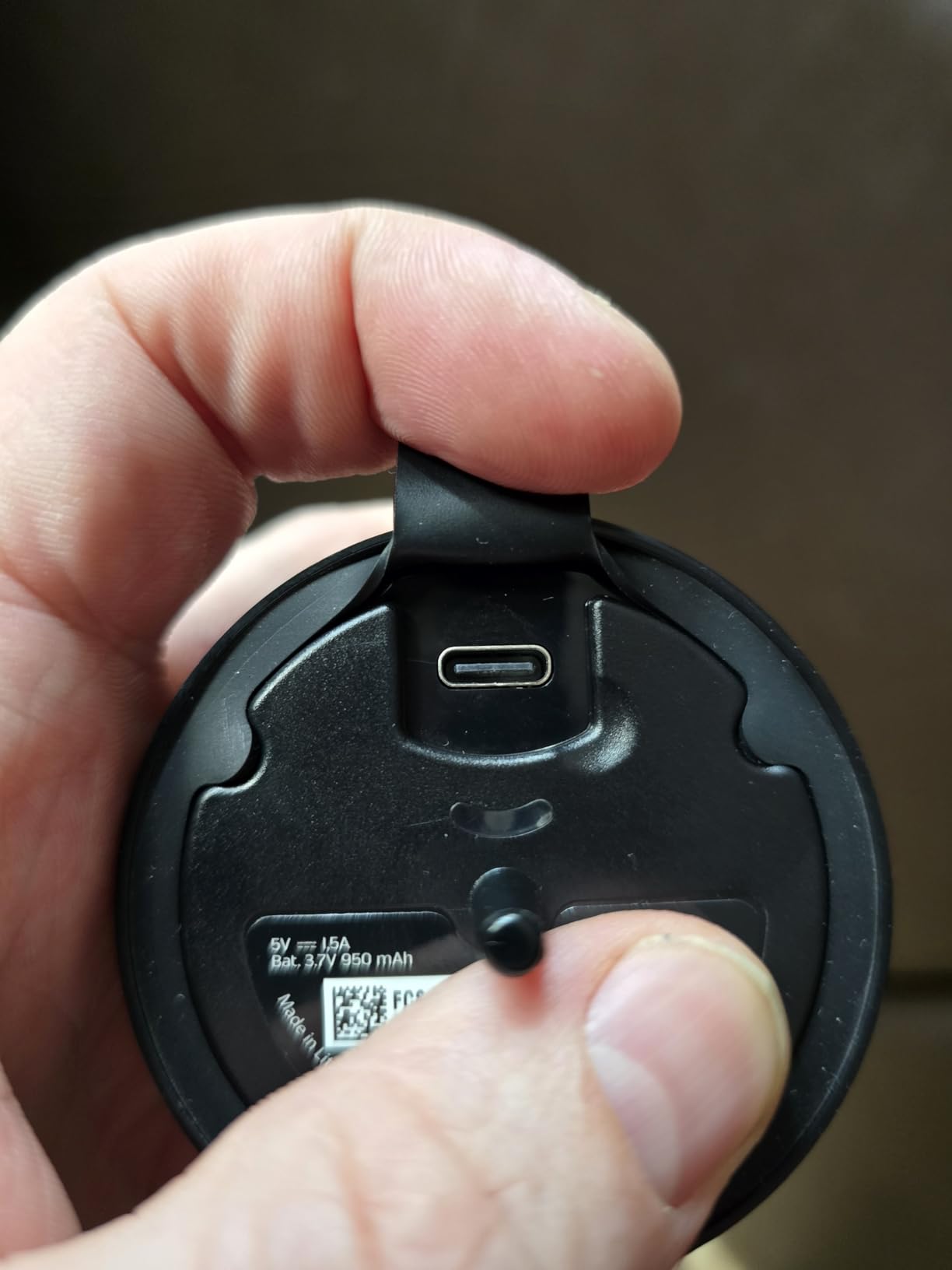
Everything renders on your phone or tablet, so a dead phone battery ends the session and a cracked screen ruins it. The 2.4 inch display on the unit itself is not useful on its own. Roughly 12 percent of reviews are one star, and that share is worth weighing if you are about to rely on this as your only sonar.
Range is quoted to 330 feet, which in practice depends on how you cast it and how the Wi-Fi holds. Kayak anglers who have used both this and the entry Deeper note the PRO+ 2 connects faster and holds the signal better. The two-year limited warranty is a plus in a category where support is often thin.
Who the Deeper PRO+ 2 suits
Anglers who roam across water they cannot revisit weekly, who want to build their own maps, and who would rather have zero wiring and zero drill holes in a hull they care about. It is the pick if you also fish from shore or a dock on the same trips.
Where the PRO+ 2 falls short
No standalone display, so a phone or tablet is mandatory. Wi-Fi dropouts and app dependence are the recurring failure modes, and the one-star share is higher than any mounted unit here.
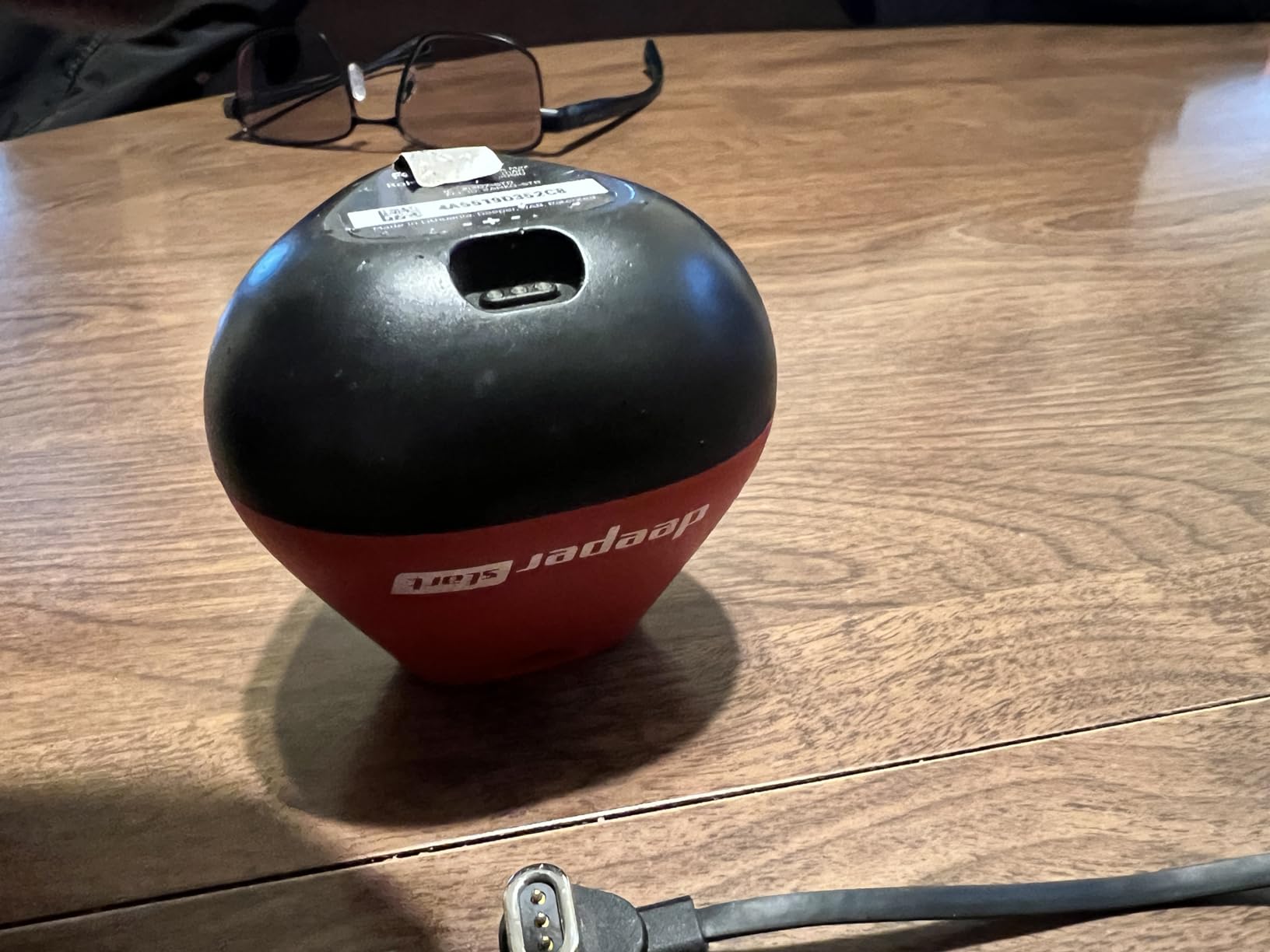
6. Deeper START – Simplest Way to Add Sonar to a Kayak
Deeper Start Fish Finder – Portable and Depth Finder for Recreational Fishing from Dock, Shore, Bank or Kayak | Castable Deeper Smart Sonar with Free User Friendly App
Castable sonar
165 ft range
40 degree beam
About 6 hour battery
Pros
- No wires
- no external batteries and no drilling
- Generates its own Wi-Fi so it does not use mobile data
- Auto-saves every scan with time and location
- About 6 hours of battery and a 2.5 hour recharge
- Free app works on iOS and Android
Cons
- Requires a phone or tablet
- 40 degree beam is narrower than some rivals
- App dependent setup has a learning curve
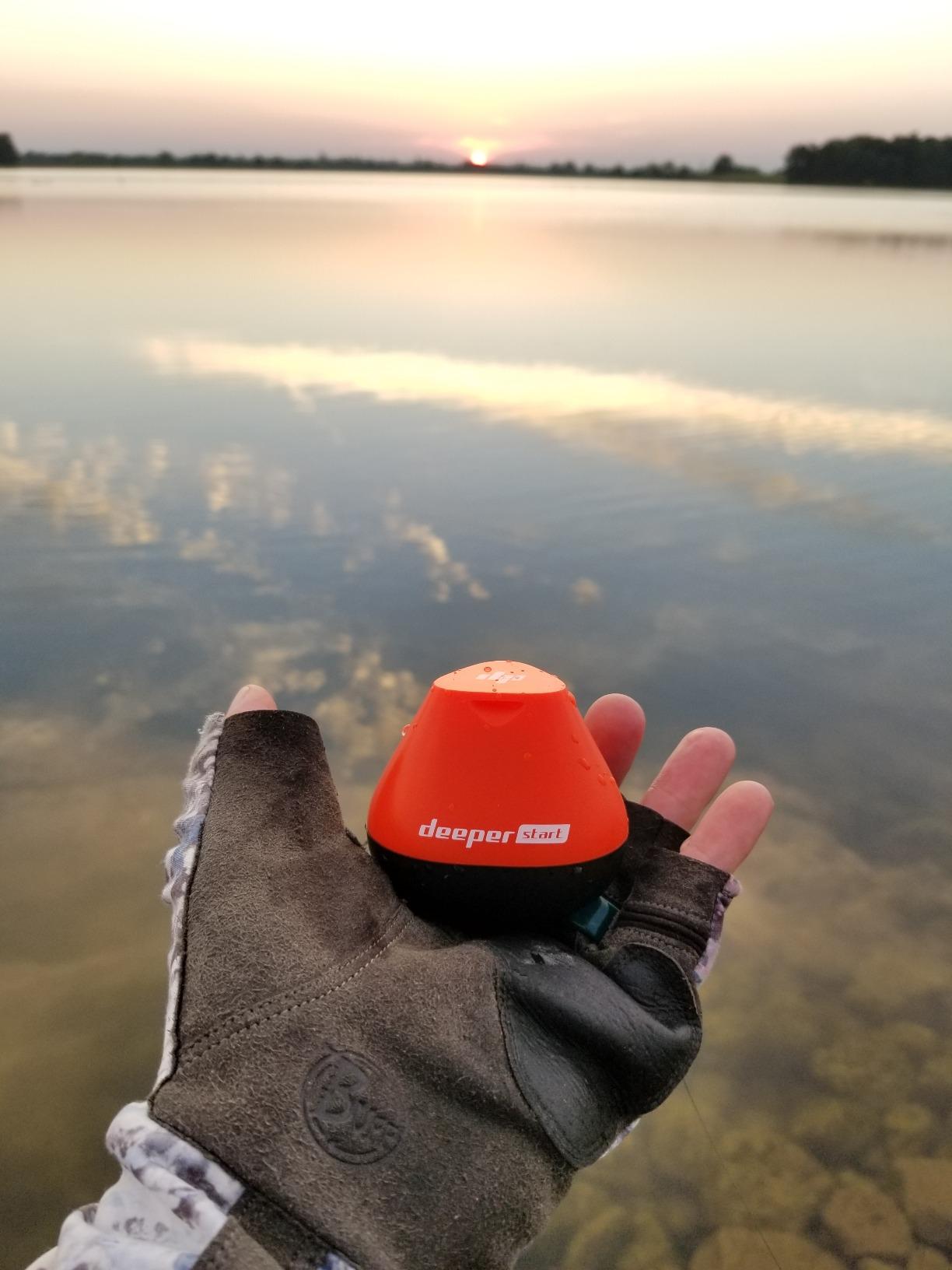
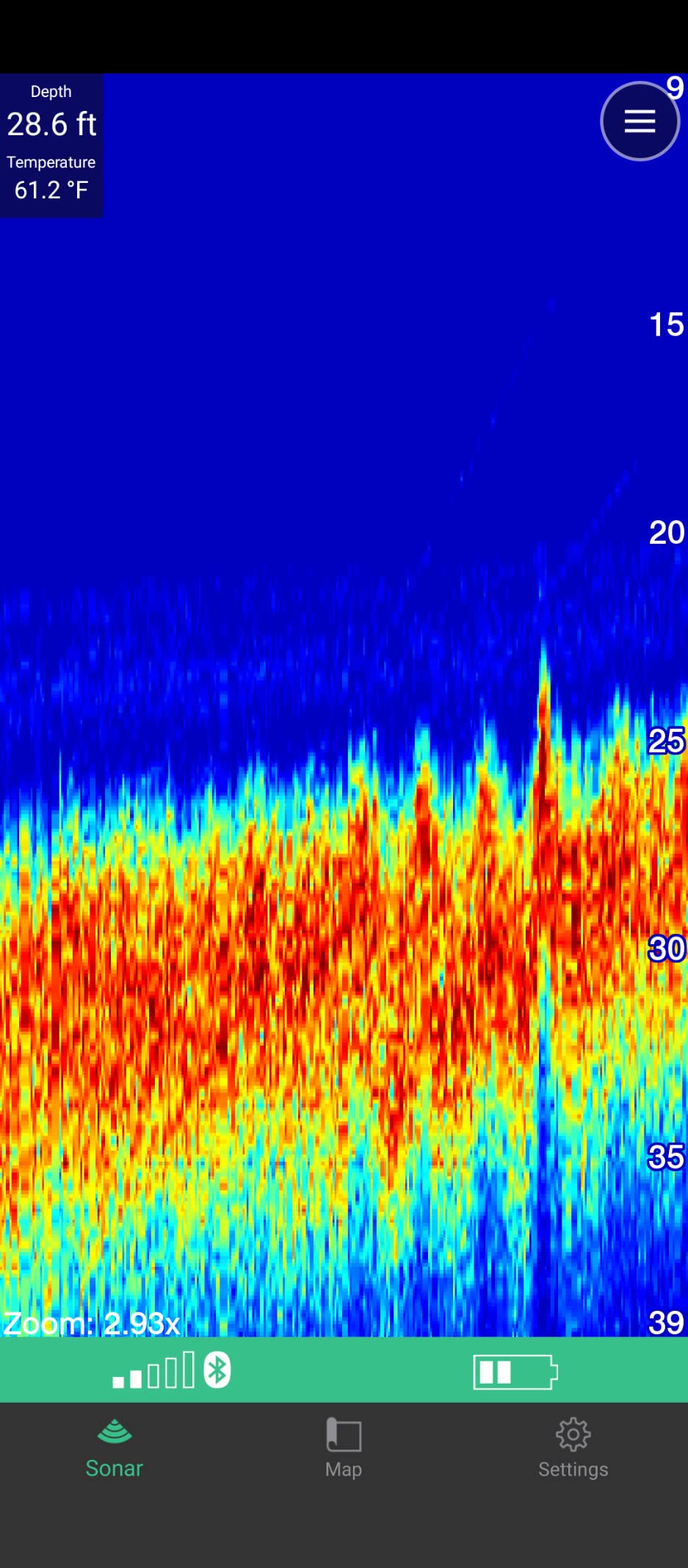
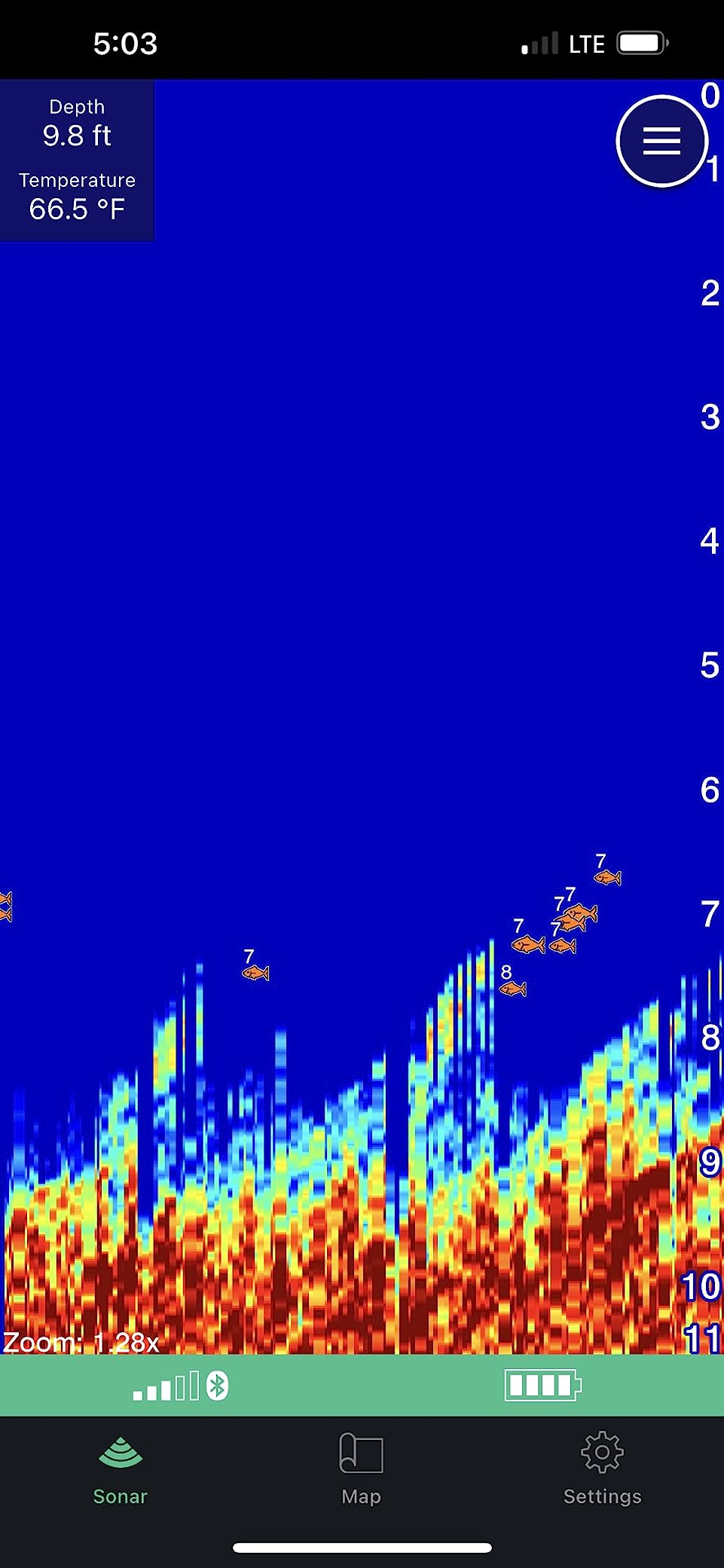
The Deeper START is the least complicated thing in this roundup and the easiest to justify. There is no cable, no battery box, no mount, and nothing to install. It casts, it generates its own Wi-Fi so it does not eat your mobile data, and the Fish Deeper app shows fish location, size, depth, bottom contour, and vegetation.
Range is 165 feet for both casting and depth, with a 40 degree beam, and it charges fully in about 2.5 hours for roughly 6 hours of use. Every scan is saved automatically with its time and location, so you can build a return list of spots without doing anything manually. It works from a dock, a bank, or a kayak, and it has a night fishing mode.
The 40 degree beam is narrower than the competing portable units on this list, which means you cover less water per cast and read a tighter column. That matters on a big flat where you are trying to find a drop-off edge quickly. The learning curve is app-driven, so expect an afternoon of setup before it feels natural.
Everything is on the phone, which means the same phone-battery and screen-risk trade-off as the PRO+ 2. It is the right pick for someone who wants sonar data with zero commitment, and the wrong pick for someone who needs a screen they can read in bright sun without unlocking a phone.
Who the Deeper START suits
New anglers, travelers, and anyone who fishes a mix of kayak, dock, and shore and does not want a permanent install. It is the cheapest way to find out whether sonar changes where you fish before committing to a wired head unit.
Where the Deeper START falls short
The narrow beam and the phone dependency are the two limits. A 4.1 star average across more than 3000 reviews says it does its job simply, not impressively.
7. Garmin Striker Cast – Lightest Unit and Best for Roaming
Garmin Striker Cast, Castable Sonar, Pair with Mobile Device and Cast from Anywhere, Reel in to Locate and Display Fish on Smartphone or Tablet (010-02246-00)
Wireless castable
200 ft streaming
10+ hour battery
75 g
Pros
- Lightest unit in the group at 75 g
- Streams traditional 2D and flasher sonar up to 200 ft
- 10+ hours on the internal USB-rechargeable battery
- Powers on in water and off when lifted
- Quickdraw Community maps with 1 ft contours
Cons
- Requires a phone or tablet
- Traditional 2D and flasher only with no CHIRP imaging
- Battery life varies with usage
At 75 grams this is the smallest thing we list, and it changes how you pack. It goes in a pocket, streams traditional 2D sonar and the ice-fishing flasher view to the free STRIKER Cast app on Apple or Android, and works in both shallow and deep water. The range is up to 200 feet, so you can cast well away from the kayak and still read the return.
Two details make it a genuinely good kayak tool. It powers on automatically when it starts floating and off when you pick it up, so you are not draining it on the deck. And you can download maps with 1 ft contours from the Garmin Quickdraw Community for free, which means an offline map option that most castables of this size do not offer.
The image quality is conventional 2D rather than CHIRP imaging, so this is a depth-and-fish-arch tool rather than a structure-finding tool. There is no built-in screen at all, which brings back the phone dependency. A carrying bag and 20 foot tether are included, and the two-year warranty is a good sign in this category.
Battery life is listed at more than 10 hours on the internal rechargeable, though owners note it varies with how much screen time the app gets. If your trips are long and your phone is your only display, that pairing deserves a thought before you commit. For short mobile sessions it is the easiest unit here to love.
Who the Striker Cast suits
Anglers who move between lakes, rivers, and shore spots, who want zero installation, and who already carry a phone they are happy to fish from. The 1 ft contour downloads also make it a reasonable budget path into offline mapping.
Where the Striker Cast falls short
No CHIRP imaging means softer detail on structure, and no standalone display means a dead phone ends the day. The 2D image will not tell you what is lying on the bottom the way a ClearVu or side-scan return will.
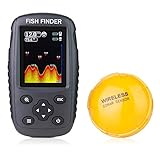
8. Venterior VT-FF005 – Wide-Beam Castable With a Real Display
Venterior Portable Rechargeable Fish Finder Wireless Sonar Sensor Fishfinder Depth Locator with Fish Size, Temperature, Bottom Contour, Color Display
Color TFT handheld
105 degree beam
Wireless 262 ft range
2.6-164 ft
Pros
- Wireless sensor removes the cable and suction-cup problems
- Works out of the box with no calibration
- Color screen with black and white background modes
- About three to four hours of charge
- Two year warranty
Cons
- Receiver battery drains faster than the sensor
- 105 degree beam reduces ice-fishing accuracy
- False signals when dragged behind a moving boat
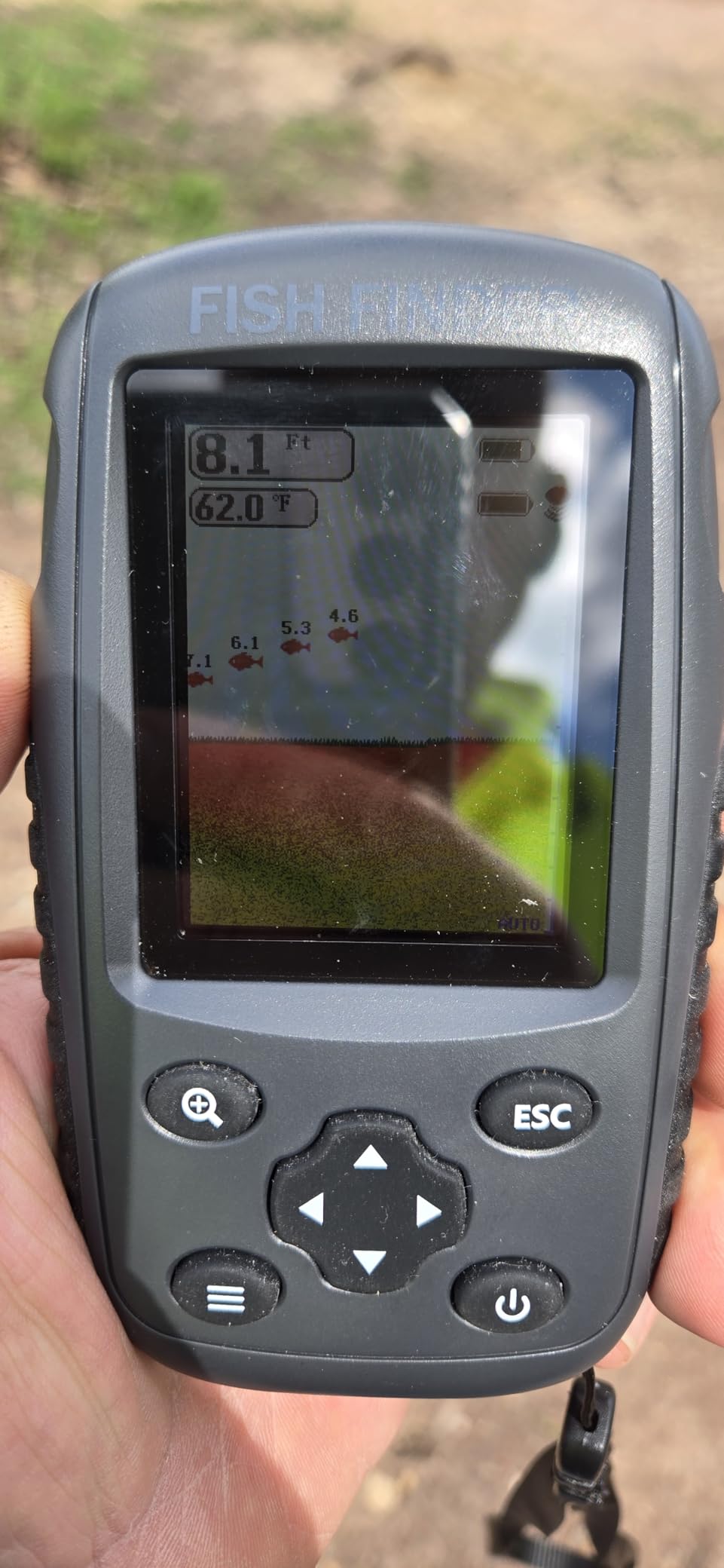
Most castables at this tier want your phone. This one has a handheld color TFT unit of its own at 2.6 inches, which means a rainy trip or a dead battery does not end your day. The sensor is genuinely wireless with up to 262 feet of separation, tethered with fishing line, so there is no cable to snag and no hull drilling.
It shows depth, temperature, fish size, fish depth, and bottom contour, with switchable depth and temperature units and work and simulation modes. The 105 degree beam is the widest in this group, which is good for covering a shallow flat from a seated position. Owners also like that it works straight out of the box with no setup or calibration step.
The wide beam is a double-edged sword. It can bounce off ice-hole walls and reduce accuracy in cold conditions, which is exactly where you would use a portable unit in winter. The receiver drains its battery faster than the sensor does, so expect intermittent use rather than an all-day screen.
Dragging the sensor behind a moving boat produces false signals, so this is a cast-and-hold or anchor-your-kayak unit, not a trolling one. The small and medium and big fish size categories are subjective rather than measured. Kayak owners who attach the sensor to a D-ring report accurate depth and contour readings, which is the core use.
Who the Venterior suits
Anglers who want a self-contained handheld with a real color screen, no app, and a wide beam for shallow water. It is a strong first unit for a family kayak trip where everyone needs to see something without sharing a phone.
Where the Venterior falls short
Receiver battery life is short, the wide beam hurts ice accuracy, and the fish size readouts are not trustworthy. It tops out at 164 feet of depth, so it is not a big-water tool.
9. LUCKY FFC1108 – Most Versatile for Reading Bottom Structure
LUCKY Kayak Portable Fish Depth Finder Water Handheld Fish Finder Sonar Castable Kayak Boat Fishfinder Transducer Fishing LCD Display FFC1108
2 in backlit LCD
Toss-in transducer
3-328 ft range
Neck strap
Pros
- Lowest-cost dedicated kayak unit here
- Transducer reads correctly through a kayak hull
- Shows weeds
- sand and rocks on the bottom
- Backlit screen and switchable ft/m units
- Very easy to learn and carry
Cons
- 2 inch screen is very small
- Weak at telling fish from bottom structure
- Will not work through a fiberglass hull
- Some units reported failing to power on
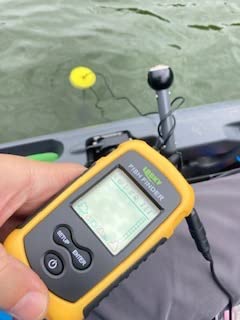
This is the cheapest way to stop guessing at the drop-off, and kayak owners confirm the transducer reads correctly through a kayak hull. You attach it to the hull, and as you paddle the display tracks the changing depth and gives you a sense of the bottom: short and tall weeds, sand, and rocks. Five levels of sensitivity let you dial it for clear or turbid water.
Detection range is 3 feet to 328 feet with the transducer fully immersed, depth units switch between feet and meters, and the backlight works in sunshine or darkness. It comes with a neck strap for hands-free carry, and it runs at least 4 to 5 hours on a fresh battery, longer in battery-save mode.

Treat it as a depth and bottom-type reader rather than a fish finder. The 2 inch screen is genuinely tiny, and owners are clear that it struggles to separate an actual fish from bottom structure. It also will not work through a fiberglass hull, and it is a boat and kayak tool rather than a shore tool.
Durability is the concern to weigh. About a tenth of reviews are one star, mostly describing units that stopped powering on shortly after purchase, so the 4.1 average reflects a real reliability spread. If you buy it, keep the receipt and test it on the first trip rather than the third.
Who the LUCKY FFC1108 suits
Paddlers on a shoestring who want to find ledges, weed edges, and bottom changes in a pond or a small lake. It is also a useful backup depth sounder to keep in a dry bag.
Where it falls short
The screen is too small for detail, fish identification is weak, and a non-trivial share of owners report early power failures. There is no GPS, no color, and no mapping of any kind.
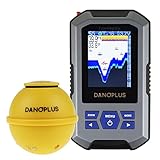
10. DANOPLUS DP-104 – Rechargeable Castable With an Attract Lamp
Portable Fish Finder Large HD Display Wireless Depth Finders for Boats with 147 feet Depth Detection Sensor, Rechargeable Castable Fish Finder Display Fish, Temp
2.4 in color LCD
147 ft depth
90 degree beam
Attract lamp sensor
Pros
- Attract lamp switches on in water and can pull fish into the sonar zone
- Rechargeable sensor with USB and AC adapter included
- 21 language options on the color LCD
- Fish alarm reports size and depth
- Designed for kayak
- ice
- river
- lake
- and sea
Cons
- 147 ft maximum depth is shallow for the class
- 2.4 inch color screen is small for bottom contour detail
The distinguishing feature here is the sensor’s attract lamp, which switches on automatically the moment the sensor touches water. Whether it actually changes your catch rate depends on who you ask, but owners consistently single it out as the reason they bought this unit rather than a similar one. The display also shows fish size with depth, water temperature, depth, bottom contour, and the water surface line.
It is a rechargeable wireless setup with both a USB and an AC adapter in the box, and the color LCD carries 21 operating languages. The fish alarm gives both an on-screen and an audible alert showing size and depth. A 90 degree detection angle and 147 feet of range make it a sensible small-water and coastal tool rather than a deep-water one.
147 feet of maximum depth is shallow next to the 328 feet some cheaper rivals claim, which rules it out for deep reservoir ledges. The 2.4 inch color screen is also small for reading bottom contour detail, so you are getting a fairly coarse picture of structure. Sensor and screen are separate, so the receiver still needs its own charge cycle.
This is the least-proven product in the group by review volume, which means long-term reliability data is thin. It carries a one year warranty. If you buy it, treat it as a portable curiosity for shallows and ice rather than a primary sonar for a season of big-water fishing.
Who the DANOPLUS suits
Anglers fishing shallow salt water, tidal flats, and ice who like an audible and visual alarm and want a sensor that does something interesting the moment it hits the water. It is a compact add-on rather than a primary rig.
Where it falls short
The depth ceiling is low, the screen is small, and the review base is thin enough that durability is an open question. There is no mapping and no self-mapping capability.
11. Yoocylii Handheld Fish Finder – Cheapest Depth Read on the List
Handheld Fish Finder Portable Kayak Fishfinder Sonar Depth LCD Display
Handheld LCD
200 kHz sonar
45 degree beam
4 AAA batteries
Pros
- Lowest price in the group and no wiring after the transducer connects
- Reads depth accurately when floated behind a moving kayak
- Screen is easy to read in bright daylight
- Settings persist between power cycles
- Neck strap and tackle-box size
Cons
- Weak on actual fish identification
- Does not show bottom contour like larger finders
- Real battery life falls short of the claimed 4-5 hours
- Some units stopped powering on after a few outings
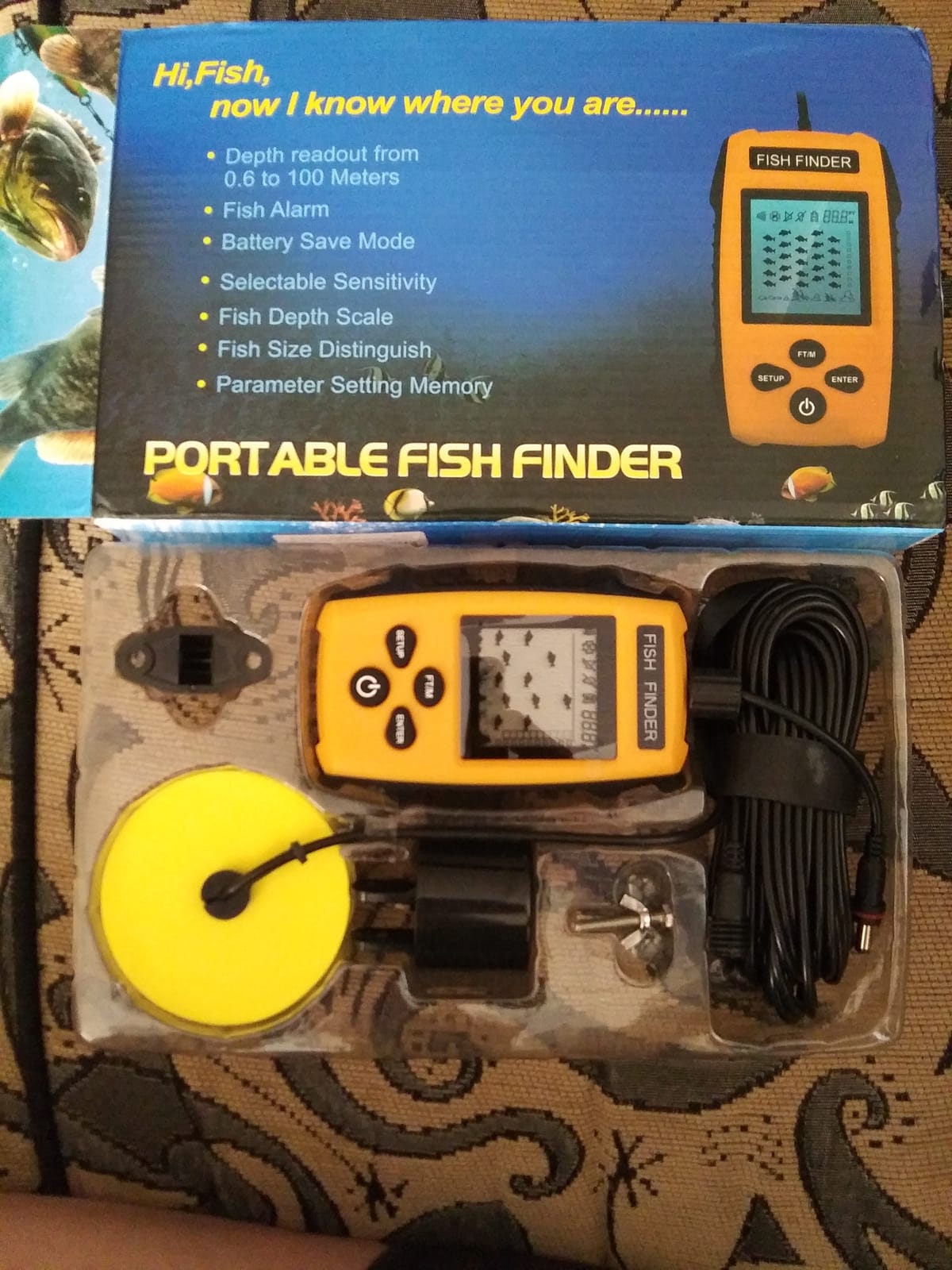
Four AAA batteries and a neck strap make this the least fuss of any unit we looked at. The transducer runs 200 kHz with a 45 degree beam and a detection range from 3 feet to 328 feet, and it stays usable on a moving kayak below 5 mph as long as the transducer bottom is kept horizontal. Owners confirm the depth readings are accurate when it is floated behind the boat.
It reports water depth, approximate fish location and size, short and tall weeds, and sand and rocks on the bottom. Five sensitivity levels, a battery-save mode, a backlight, a fish alarm, and unit-of-measure settings are all there, and the settings are saved when you switch it off. It works in fresh and salt water.
Fish identification is the weak point. This is a depth and bottom-type device, and reviewers are split on whether the fish readouts mean much. It also does not display a bottom contour the way the larger units do, so you get a number rather than a picture of the terrain.
Two practical issues. Real battery life runs short of the stated 4 to 5 hours, and about 8 percent of reviews describe units dying after a couple of outings. That is a replacement-cost item, not a forever purchase, and the 4.6 centimeter screen is small enough that you will be leaning in to read it.

Who the Yoocylii suits
Anyone who wants a depth number for a very small outlay, and paddlers moving slowly who want a floating sensor behind the boat. It is a reasonable first tool to prove you care about reading structure.
Where it falls short
It is a depth finder, not a fish finder, despite the name. Small screen, no contour display, and a durability record that is the second weakest in this group.
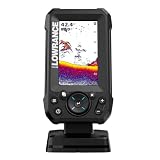
12. Lowrance Eagle 4 – The Most Readable Screen in Its Class
Lowrance Eagle 4X Fish Finder with Bullet Transducer
4 in IPS portrait
Auto-Tuning Sonar
44 degree beam
500 ft depth
Pros
- IPS screen stays clear in bright sun and through polarized sunglasses
- Auto-Tuning Sonar removes manual setup
- Portrait shape and twist-lock connector suit a limited deck
- Includes fuse
- fuse holder
- and locking collars
- 44 degree Bullet Skimmer beam sized for kayaks
Cons
- No live sonar
- so you get a static picture rather than scrolling returns
- Fish size accuracy is uncertain
- Thin long-term data with only 116 reviews
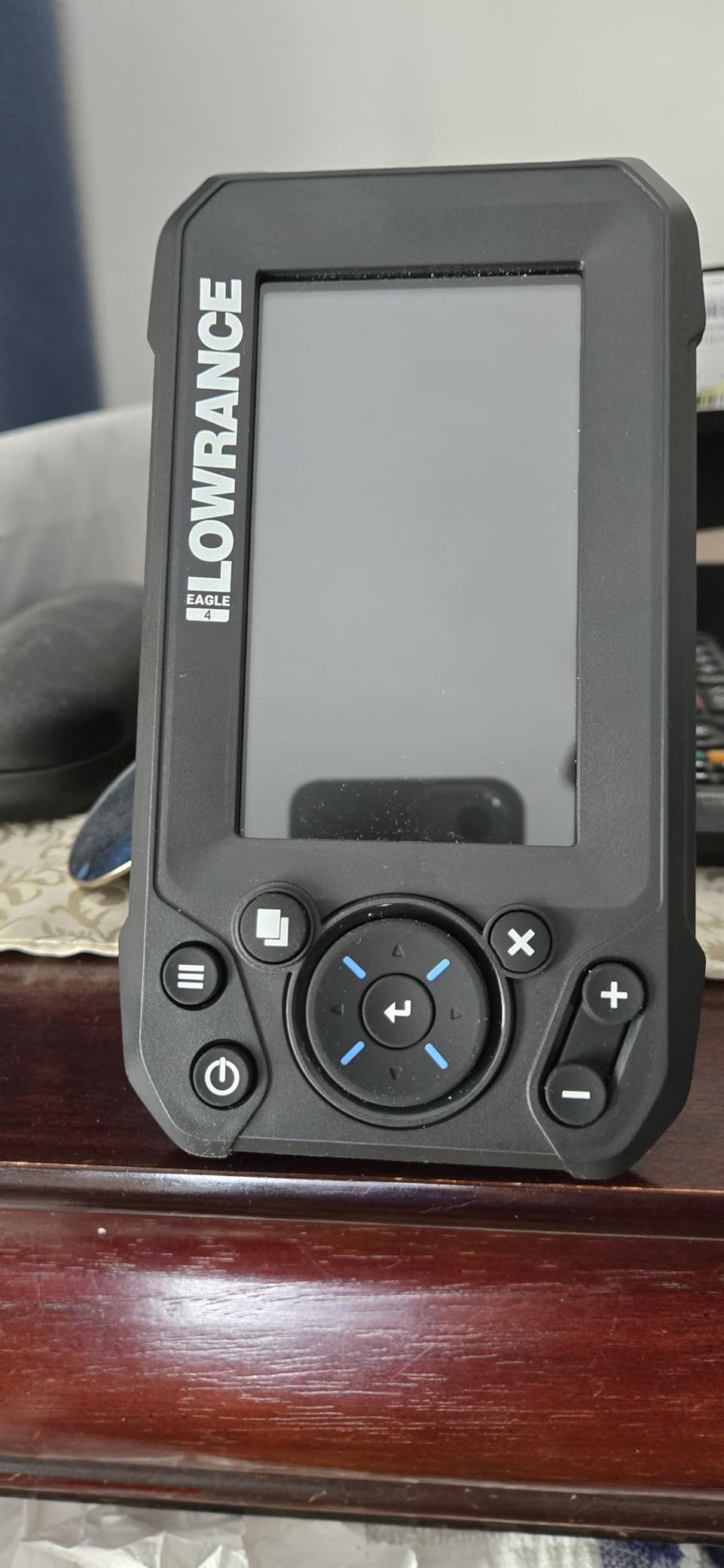
If glare is your main objection to a small screen, this is the unit to look at. The 4-inch IPS panel is specified to stay clear in bright sunlight, from wide viewing angles, and through polarized sunglasses, which in practice means the difference between reading your sonar and squinting at it on a noon paddle. Several owners specifically call out polarized-sunglass readability as the reason they bought it.
Auto-Tuning Sonar sets itself, so you can put it in the water and fish instead of adjusting menus. The included 200 kHz Bullet Skimmer transducer gives a broad 44 degree beam, deliberately sized for kayaks and small boats rather than for maximum reach. The portrait format and twist-lock connector are genuinely good design in a tight cockpit, and the box includes a fuse, a fuse holder, and locking collars.
There is no live sonar here, so you get a static picture rather than scrolling returns, and some buyers wished for a live scope. Fish size accuracy is uncertain according to owners, which is a fair caution when you are trying to identify a specific target. Maximum depth is 500 feet, comfortably short of the Garmin’s 1600 ft freshwater figure.
At 2.8 pounds it is the second-heaviest head unit here, and it does not include a transducer mount, so you are still sourcing a scupper or arm adapter. With 116 reviews this is the least-proven product in the group, so treat the long-term reliability picture as unproven rather than established.
Who the Lowrance Eagle 4 suits
Anglers who fish in hard sun, wear polarized sunglasses, and want a unit that installs quickly with the fuse hardware already in the box. The auto-tuning also suits anyone who does not want to learn a menu tree on the water.
Where it falls short
No live sonar and uncertain fish size readouts. It is heavy for a small craft, and the thin review base means you are an early adopter in exchange for that screen.
Kayak Fish Finder Buying Guide: Sonar, Screen and Form Factor
CHIRP, ClearVu and side imaging explained in kayak terms
CHIRP sends a continuous sweep of frequencies rather than one narrow tone, which produces crisper fish arches and better target separation. In kayak terms it means you can separate two fish close together at 20 feet instead of seeing one smudged blob. ClearVu and DownVu style scanning sonar paints a picture directly below you, which is how you find structure and bottom hardness rather than just fish.
Side imaging looks left and right of the kayak and is the feature that convinces most people to upgrade from a 4-inch unit. It shows timber lying flat, weed lines, and rock shelves that a downward beam sees edge-on. None of the twelve units here has side imaging, so if that is your target you are shopping above this list.
Match the sonar to the water. A narrow creek, a farm pond, or a shallow bay needs a wide beam and modest depth range. Deep reservoir ledges and big water need CHIRP and a strong low-frequency beam for detail. Open coastal water adds a navigation question on top, and that is where a real basemap starts to matter.
Screen size and glare on a small deck
On a 10 to 12 foot sit-on-top, anything above 5 inches starts to compete with your knees and your tackle. A 3.5 to 4.3 inch unit is comfortable for most paddlers, and a 5 inch color screen is workable if you have a track system. A 7-inch head unit plus a battery box will change how the boat tracks, so feel the trim before you commit.
Glare matters more than resolution on open water. An IPS panel such as the one on the Lowrance Eagle 4 stays readable in direct sun and through polarized sunglasses, and a light-colored background mode helps on the Venterior. If you fish at midday, pay for the panel rather than for extra inches of screen.
Mounted head unit or castable sensor?
Choose a mounted unit if you fish the same water repeatedly and want waypoints, charts, and a screen you can glance at without unlocking anything. Choose a castable if you roam, fish from shore or a dock on the same trips, or refuse to put holes or wires on a hull you care about. The castables in this list are accurate; they are just dependent on a phone or a small handheld, and their connection is the weak point.
GPS and mapping: waypoints, charts and contours
Built-in GPS matters in a kayak because you cannot see ahead over a wave and you have no engine to look back from. Marking a productive spot is often worth more than another sonar mode. Quickdraw Contours on the Vivid 4cv and the Striker Cast, AutoChart Live on the Helix 5, and built-in GPS mapping on the Deeper PRO+ 2 are three different routes to the same outcome, and all three work from a sitting position.
Powering a Kayak Fish Finder Without Trolling Motor Interference
Which battery type to carry
A small sealed lithium pack is the answer for almost every setup in this roundup. The Garmin Striker 4 draws 0.23 amp at 12V, so a compact pack runs a full day and adds little trim penalty. Lead-acid is cheaper and heavier, and the weight lands exactly where a small sit-on-top feels it most. Whichever you choose, a sealed pack with a fused lead and a proper connector is the whole requirement.
Roughly a 10 amp-hour sealed lithium pack covers a full day of intermittent use for any of the head units here, and a small pack is enough for a castable that runs on its own internal battery. Budget the pack as part of the rig rather than an accessory, because a unit with no fused power connection is not finished.
Run the fish finder on its own fused circuit
Do not run your fish finder off the same battery as a trolling motor. Under motor load the voltage swings, and that is the most common cause of units that reset themselves, brown out, or show an unstable bottom reading mid-trip. A separate small pack with its own inline fuse costs little and removes the problem entirely.
Wire it in four steps: battery to inline fuse holder, fuse holder to the head unit power lead, add a waterproof connector so the head unit can be removed for launch, and secure the cable along the hull with strain relief so it never sits in your footwell. Keep the run away from the motor’s power cable. The symptom of getting this wrong is a fish finder that needs to be turned off and back on intermittently, which is the most common complaint from owners in this category.
How to Mount a Fish Finder on a Kayak Without Drilling
Most anglers prefer a scupper-hole transducer mount, because the transducer sits in clean flowing water and reads better than an in-hull install. Members of the kayak fishing community report the scupper arrangement gives them the best results, and it is reversible.
Order of operations: first, choose the transducer arm or scupper adapter that matches your hull and confirm the transducer clears the rudder. Second, fit the head unit on a RAM ball mount or a Scotty track system positioned where you can see it without moving your head. Third, route the cable along the hull, out of the way of your feet and knees, with strain relief at both ends.
Fourth, mount the transducer on the scupper plug or the trolling motor arm so it holds firm when you beach the boat or skip across a wave. Keep it off the bottom where it can strike rocks, and keep it behind the hull line so it is not the first thing to take a hit. In-hull shoot-through mounting is the last resort: it needs no hole, but the reading softens and you lose sensitivity compared with a wet mount.
Frequently Asked Questions
Does a fish finder work on a kayak?
Yes. Every unit in this roundup works in a kayak, provided you can solve three things: a transducer mount, a power source, and somewhere to put the head unit. A wired unit needs a scupper-hole or arm-mounted transducer and a small fused battery pack, while a castable sensor needs neither. The Garmin Striker 4 is the easiest wired install, and the Garmin Striker Cast is the easiest overall.
What is the best fish finder for a kayak?
The Garmin Striker 4 is our top pick for most kayakers: CHIRP traditional sonar, built-in GPS waypoint mapping, an 8 ounce weight, an IPX7 rating, and 0.23 amp draw at 12V. Add color and self-mapping with the Garmin STRIKER Vivid 4cv, or skip wiring entirely with a castable such as the Garmin Striker Cast or the Deeper PRO+ 2.
Is Garmin better than Humminbird?
Both are strong, and the honest answer depends on the model. Garmin covers the entry and mid tiers well with the Striker 4 and the Vivid 4cv, both of which include GPS and mapping. Humminbird leads on dual-beam flexibility with the PiranhaMAX 4 and on built-in real-time mapping with the Helix 5 Chirp GPS G3, which adds AutoChart Live and a full basemap. Pick on features you will use, not brand.
Can I use the same battery for a trolling motor and a fish finder?
Technically yes, but we do not recommend it. Voltage swings under motor load are the most common cause of fish finders that reset, brown out, or show an unstable bottom reading. Give the fish finder its own small sealed pack with its own inline fuse and connector. The cost is minor and the intermittent power-off complaints largely disappear.
What type of battery is best for a fish finder on a kayak?
A small sealed lithium pack is the best choice for nearly every unit here, because it is light and keeps the trim impact on a sit-on-top low. Lead-acid is cheaper but noticeably heavier, and that weight is felt in a small boat. Whatever you choose, use an inline fuse holder and a waterproof connector so the head unit can be removed for launch.
Are castable fish finders as accurate as mounted units?
The raw depth and bottom readings are comparable, and castables win on portability and on the fact that they need no wiring or drilling. Where they fall behind is screen durability, connection reliability, and the fact that most render through a phone. A Wi-Fi drop or a dead phone battery ends the session, which is why we still lean mounted for a full day on known water.
The Best Fish Finders for Kayaks: Final Word
Start with the Garmin Striker 4. It is the safest money in this category, with CHIRP sonar, GPS waypoints, an 8 ounce weight, and an install that needs no drill. Spend up once for the Garmin STRIKER Vivid 4cv if color and self-mapping will change where you fish, and step up again to the Humminbird Helix 5 Chirp GPS G3 only if you have a track system and a place for a battery box.
If you never want a cable on your boat, the Garmin Striker Cast is the lightest and longest-running option, and the Deeper PRO+ 2 is the one that maps. Give the battery its own fused circuit, mount the transducer in a scupper or on the motor arm, and any of these twelve will earn its place on the deck in 2026.