
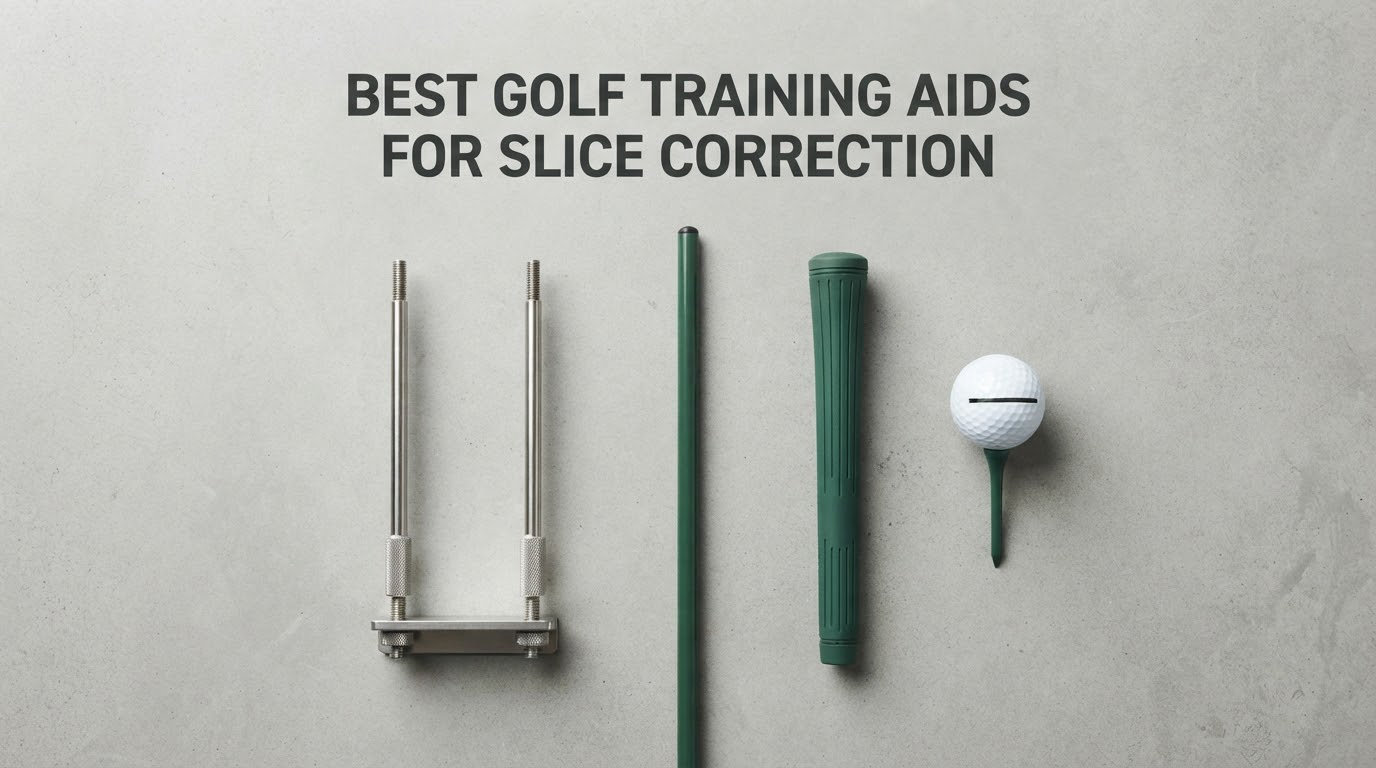
If you want the short answer: the best golf training aid for slice correction is the one that matches the fault you actually have, not the one with the biggest review count. A slice is two problems stacked together – a clubhead that travels from outside to inside, and a clubface that points open of that path. Grip trainers, arm bands, wrist guides, weighted braces, floor traps and wax sticks each attack one of those two problems, and only one or two of them will match your swing.
That is why picking a random aid from a list of ten usually wastes your money. The most common complaint on the GolfWRX and r/golf threads about slice correction is not that aids do not work, but that golfers buy before they know what is wrong – then fix the wrong thing, turn a slice into a push or a hook, and give up. Spend a session diagnosing, then spend your money.
We pulled 10 slice correction aids together and lined each one up against the specific fault it addresses, along with honest limits from thousands of buyer reviews. Prices change constantly, so we leave the buying button on each card and never quote a figure you might act on a stale number.
We also put a few of our other buying guides at the end of the practice section, including our golf cart Bluetooth speaker picks if you want audio on the way to the range.
Table of Contents
Diagnose Your Slice Before You Buy an Aid
A slice is not one fault. It is a clubhead path problem and a clubface problem happening at the same time, and every aid in this guide works on one of them.
Swing path is the direction the clubhead travels through impact. A straight-ish ball flight comes from the clubhead moving from the inside to the outside of the target line – what coaches call an in-to-out path. When the clubhead moves outside to inside, the start and end lines both point right, and that path alone will send the ball right.
Face angle is where the clubface points relative to that path. Even on a good path, a face that sits open adds spin and pushes the ball further right. Slice number goes up when both are wrong at once.
Arm lift and chicken wing is the third common cause. Lifting the arms away from the body in the downswing throws the club outside the target line and creates the over-the-top move that most golfers call a slice.
An open right hand on the grip is the fourth. A weak, strong or overly open right-hand grip rotates the face open through impact, and no amount of path work will fully cancel it.
Stance and address come before all of it. Several regulars on the GolfWRX thread make the same point: an over-the-top move nearly always starts with the grip, the address position and a poor takeaway, and a golfer who fixes those three things often finds the slice mostly disappears without buying anything.
Three checks you can do before buying anything
Check one: film two shots from behind and from the side. From behind, look at where the clubhead finishes relative to the target line. From the side, look at whether your hands rise at the top and whether the lead wrist folds or flattens at impact.
Check two: hit three shots with a deliberately closed face. If closing the face dramatically straightens your ball flight, the face is a large part of your problem. If the ball still curves right, the path is the bigger culprit.
Check three: swing with no ball, slowly, three times. Feel whether your arms are connected to your torso through the top of the backswing. If they drift away, an arm band or weighted brace is the relevant category, not a grip trainer.
Top 3 Best Golf Training Aids for Slice Correction in October
These three cover the widest range of actual faults. If you are buying one thing and nothing else, start here.

Slic Stic by JP Lann
- Reduces hook and slice spin
- Treats both curve directions
- Small enough for any bag


All 10 Golf Training Aids for Slice Correction at a Glance in 2026
Here is the full list mapped to the fault each one attacks. Nothing in this table is a general-purpose swing trainer; every entry targets one specific problem.
| Product | Specs | Action |
|---|---|---|
| Slic Stic by JP Lann |
|
Check Latest Price |
 theHanger by Watson Golf theHanger by Watson Golf |
|
Check Latest Price |
 SKLZ Golf Grip Trainer SKLZ Golf Grip Trainer |
|
Check Latest Price |
| Callaway Swing-Easy |
|
Check Latest Price |
 TrueBirdie Arm Band TrueBirdie Arm Band |
|
Check Latest Price |
| GoSports Pure Strike Discs |
|
Check Latest Price |
 EyeLine Golf Speed Trap EyeLine Golf Speed Trap |
|
Check Latest Price |
 FODESAN 5-in-1 Retractable Trainer FODESAN 5-in-1 Retractable Trainer |
|
Check Latest Price |
 Wellstream Weighted Elbow Brace Wellstream Weighted Elbow Brace |
|
Check Latest Price |
 TREED GOLF-GRIP TREED GOLF-GRIP |
|
Check Latest Price |
1. Slic Stic by JP Lann – Best All-Rounder for Spin at Impact
The Original and Best Slic Stic by JP Lann Golf – Anti-Slice, Hook and Spin Reduction Stick
Applies spin-reducing wax to the ball face
Stops both slice and hook curves
3.75 inch translucent stick
0.01 kg
Pros
- Reviewers report shots landing straight instead of curving
- Small and subtle in the golf bag
- Helps both slicers and hookers
- Boosts confidence on the course
Cons
- Applicator wax twists up before the tube empties
- Needs frequent re-application
- Some golfers report less carry distance
- Does not suit every swing type
This is the aid we keep coming back to, and not because of the marketing. It is the simplest possible intervention: a translucent stick of wax you swipe across the clubface impact area, and the ball leaves the club with less sidespin. With 3,517 reviews averaging 4.3, it is by a wide margin the most reviewed item we tested, and the review base is unusually consistent about what it does.
What it does not do is change your swing. Nothing about a stick glued to your toe changes the direction the clubhead travels. It removes the spin component of a curve, so a mild slice becomes a gentle push that you can shape around obstacles and still score on. If your ball flight is a hard banana shape, this will not save you. If your ball flight is a soft fade, it may fix the problem outright.
The thing that surprised us is how many golfers use it on the course rather than in practice. The stick is 3.75 inches long and weighs almost nothing, so it lives in a bag pocket permanently and gets reapplied during a round. That is not how we would use it, and it raises a fair question about competitive play, but it explains the volume of reviews better than anything else.
The practical flaw is the applicator. A number of buyers report the wax twisting inside the tube and stopping before it empties, which leaves you with a half-used stick. The wax also needs refreshing fairly often, and a small group of reviewers say they gave up a little carry distance in exchange for the straighter flight.
What it does not fix
It does not fix a genuine path fault or an open face at impact. Treat it as a finishing touch for ball flight, not as swing correction.
Who it suits
It suits a golfer with a soft fade whose ball flight curves further than they would like, and anyone who wants a same-session answer on whether their miss is a spin problem or a shape problem. It does not suit a golfer whose clubhead is travelling dramatically outside to inside.
At roughly the cost of a coffee, the Slic Stic is the cheapest way to run that test. Hit ten balls with it and ten without. If the curve shrinks and the direction does not change, your issue is face and spin, and you now know which category to shop in.
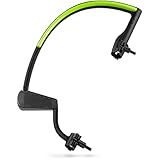
2. theHanger by Watson Golf – Best for Lead Wrist and Clubface Control
theHANGER Golf Training Aid for Right Handed Golfers, Golf Swing Aid Helps with Clubface Awareness, Swing Plane, and Proper Impact
Attaches to your own clubs
Resin guide arm on the lead wrist
7 x 6 x 50 inch unit
0.29 kg
Pros
- Immediate tactile wrist angle feedback
- Reviewers report straighter lofted shots
- Stores inside a standard golf bag
- Solid build with a lifetime warranty
Cons
- Plastic arm can irritate the lead wrist
- Awkward unless you choke down on the grip
- Trickier to set up on driver than irons
- Some say it treats a symptom
theHanger is a short resin arm that clips onto a club and sits alongside your lead wrist through impact. It is the most direct intervention on the list for face control, because it physically tells you whether your lead wrist is flat, folded or somewhere between the two. If your slice comes from a lead wrist that extends and opens the face, you feel the difference within a few swings.
Long-term owners in the reviews describe a short adjustment period followed by consistently straighter, better-lofted shots. It attaches to your own clubs rather than to a weighted training club, which means you can use it mid-round on your own set, and it is small enough to sit in a bag rather than in the trunk.
The complaints are almost entirely physical rather than functional. The plastic guide arm presses against the lead wrist and some users report discomfort or bruising over extended sessions, and if you grip high on the club the arm can rub the trail hand through impact. It is also easier to set up correctly on irons than on a driver, which is awkward because a driver is usually the club that slices worst.
Several reviewers on the buying side make a fair conceptual point. If your swing is fundamentally built around an open face, a wrist guide is treating the symptom rather than the cause, and a proper look at your grip and takeaway will get you further. A minority of buyers think the aid is overhyped for exactly that reason.
What it does not fix
It does not fix swing path, arm separation or lower-body stability. If your clubhead is travelling outside to inside, the Hanger will square your face but the ball is still going right.
Who it suits
It suits a golfer whose miss is mostly a face problem: a push-slice, a weak slice that fades gently, or a shot that lacks loft. It is also a decent second-stage tool once you have fixed your grip and takeaway, because it isolates the part of the swing that a grip trainer cannot reach.
If you have a tender or previously injured lead wrist, look at the softer arm-band category instead. Nothing about a plastic guide pressing on a wrist is good for a wrist that is already angry.
One practical tip: set it up on a mid-iron first and get comfortable with the feel before you put it on a driver. Choking down an inch on the grip makes the fit much more forgiving, and it is the difference between the aid being useful and the aid being something you abandon after two rounds.
3. SKLZ Golf Grip Trainer – Best for an Open Right Hand
SKLZ Golf Grip Trainer, Club Attachment for Correct Hand Positioning and Muscle Memory, Fits Standard Grips from Driver to Wedge, Right-Handed, Compact Training Aid for Practice and Pre-Round Warm-Up
Molded hand guide that snaps on
Covers driver through wedge grips
Standard grip size
Right-handed only
Pros
- Places fingers thumb and palm instantly
- Targets strong weak and open right-hand grips
- Works with the clubs you actually play
- Lightweight and bag friendly
Cons
- Right-handed only
- Does not touch path or face control
- Address and takeaway still need work
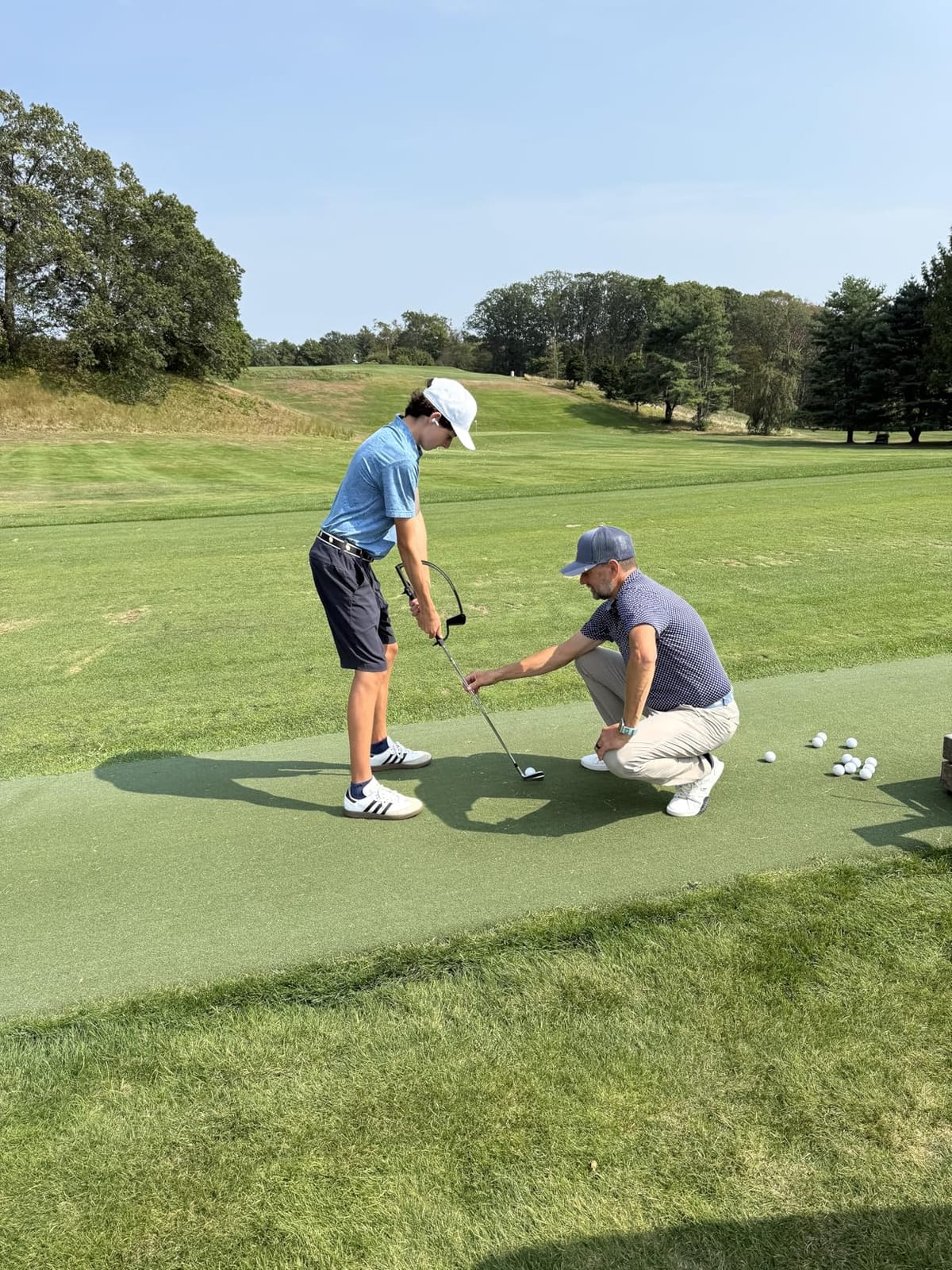
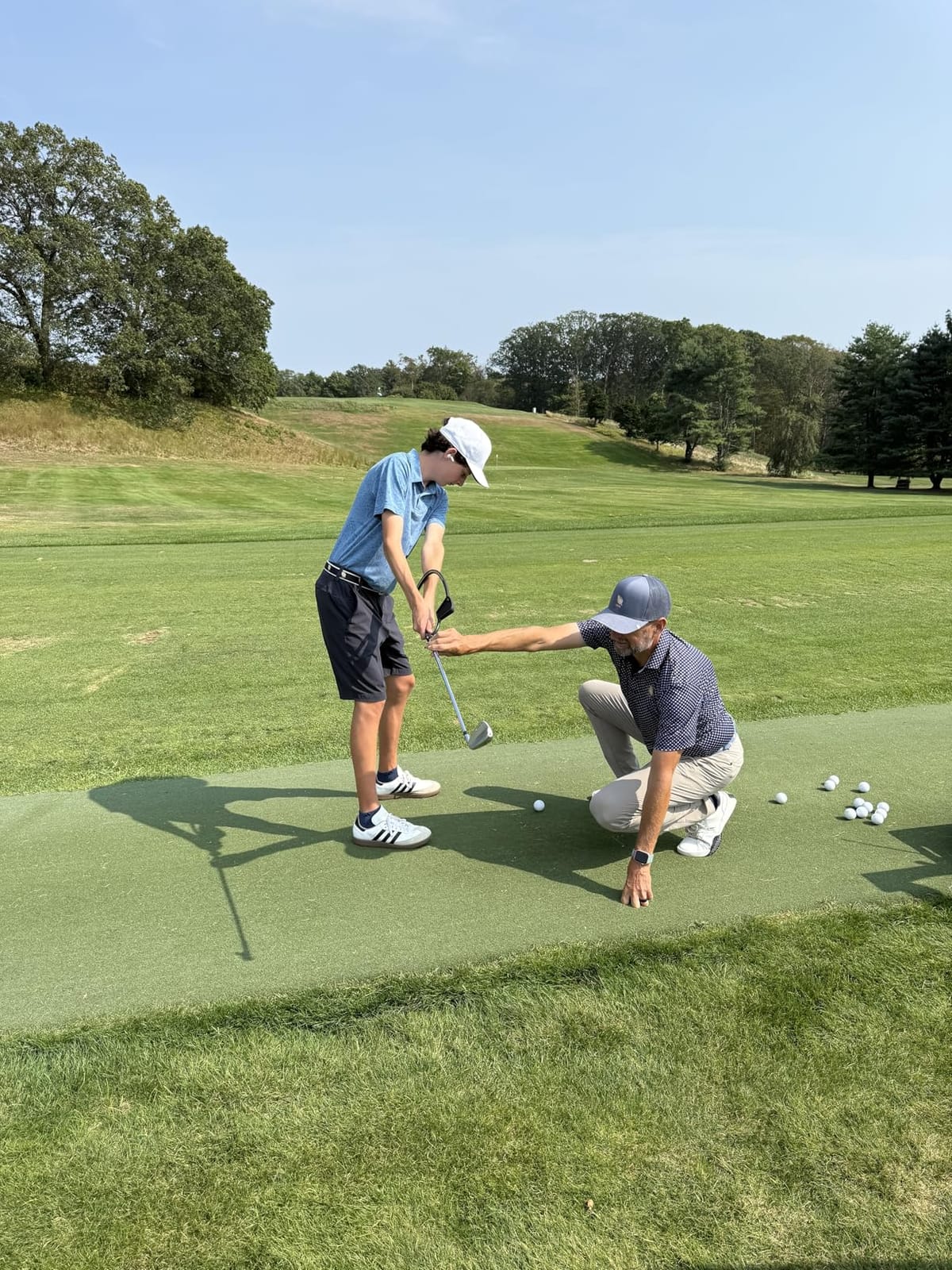
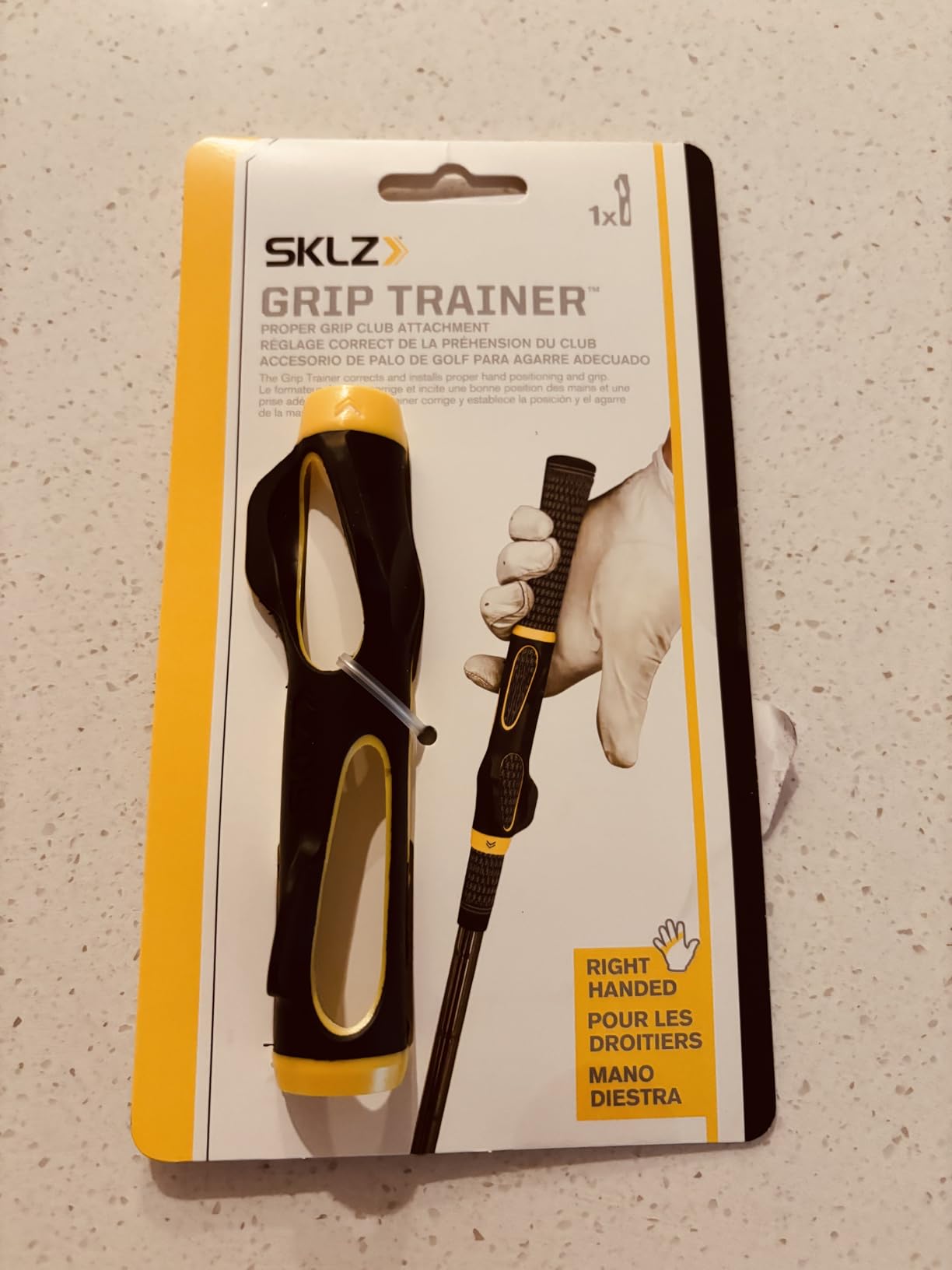
With 9,569 reviews at 4.0, the SKLZ Grip Trainer is the single most-reviewed golf swing trainer on the market, and the reason is simple: most slices start with a right hand that is too far around the grip. The molded guide drops your fingers, thumb and palm into a neutral position, and a neutral right hand is a much harder starting point for an open face.
It is the cheapest real diagnosis tool we recommend. If you fit it on, hit twenty balls, and the slice barely changes, your grip is not your problem and you have learned that in a single session rather than three weeks. That negative result is worth more than a vague sense that something felt different.
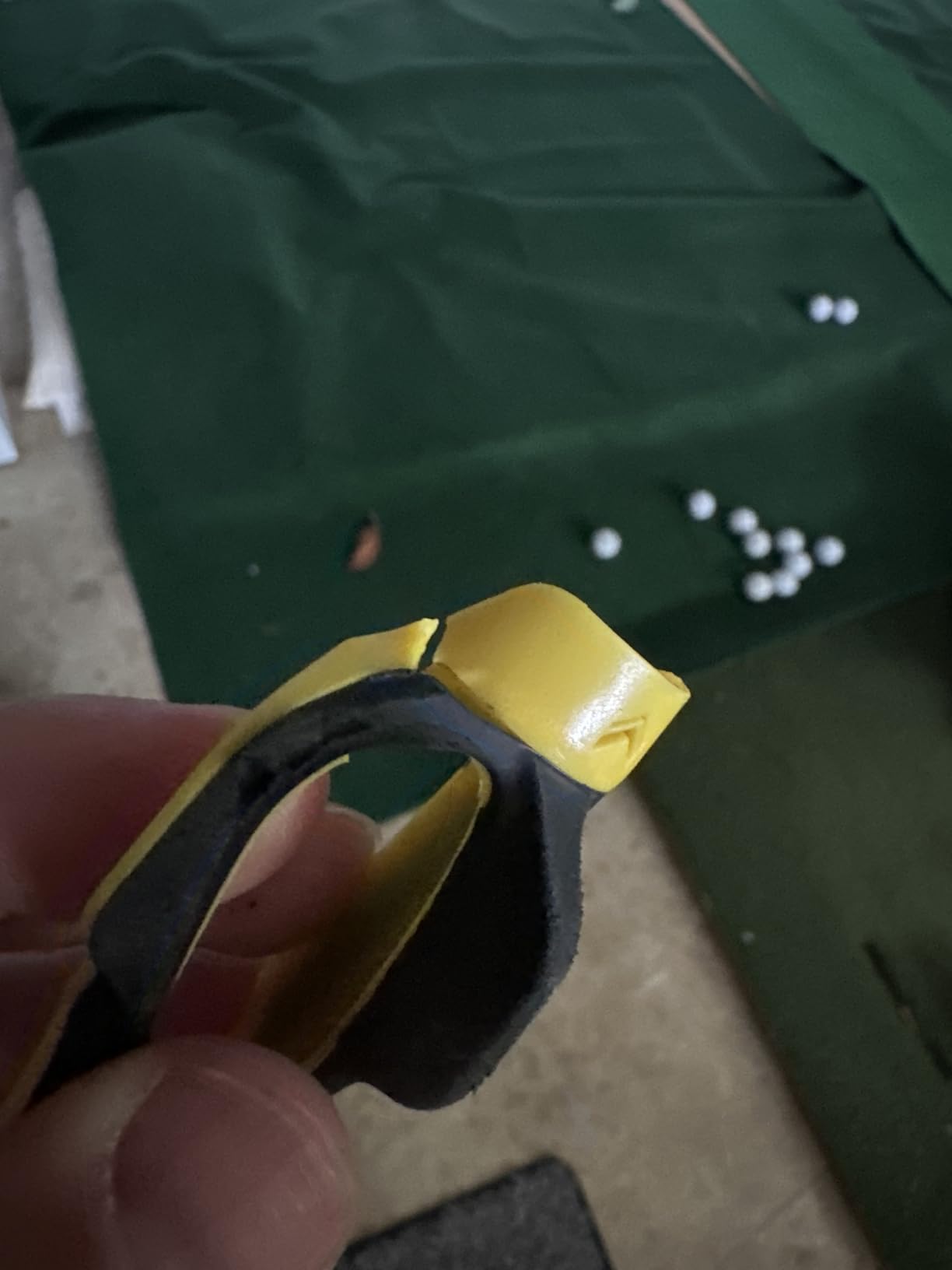
It slides onto standard grips from driver to wedge, so you can train with your own clubs rather than a cheap practice club, and it is small enough to carry for a pre-round warm-up. Reviewers consistently credit it with making a neutral grip feel automatic rather than something you have to think about.
The scope limit is the same as with every grip trainer: it does not touch swing path, downswing sequencing or face angle at impact. And it is right-handed only, which rules it out entirely for a left-handed golfer looking for the same fix.
What it does not fix
It does not fix anything that happens after the hands leave address. A perfect grip and a terrible takeaway still produce a slice.
Who it suits
It suits high handicap and beginner golfers, and it suits anyone who is not sure where their fault is. It is the first thing we would buy, and the first thing we would graduate from. Once your grip is automatic, move to a path or face tool.
Use it as a warm-up, not a crutch. Twenty reps on and twenty off is a common approach, and reviewers broadly agree the grip position carries over to free swings quickly. Hitting every shot for a month with a trainer glued on is how you end up dependent on a piece of plastic.
4. Callaway Swing-Easy – Best First Aid for a Poor Takeaway
Callaway Swing-Easy Golf Swing Trainer Aid, Orange
Rolls up to about wallet size
One-piece takeaway cue
Both handedness
2.2 ounces
Pros
- Reinforces a one-piece takeaway
- Keeps arms and body in sync
- Works for both handedness and all sizes
- Best for beginners learning fundamentals
Cons
- Teaches one fundamental only
- Not a full swing plane fix
- More warm-up tool than corrector
The Swing-Easy takes the most upstream fault of all. It wraps around both arms and holds them together, so you physically cannot separate them or break the takeaway into a hands-first swing. Takeaway is where most slices are born: a club that goes around the body with the arms disconnected sets up an outside-to-inside path no matter how good the bottom of the swing is.
At 4.4 stars across 1,528 reviews it is one of the better-rated aids in the group, and it rolls up to about the size of a wallet, so there is no excuse for not having it in the bag. It is also one of very few aids here that suits left-handed golfers as readily as right-handed ones.
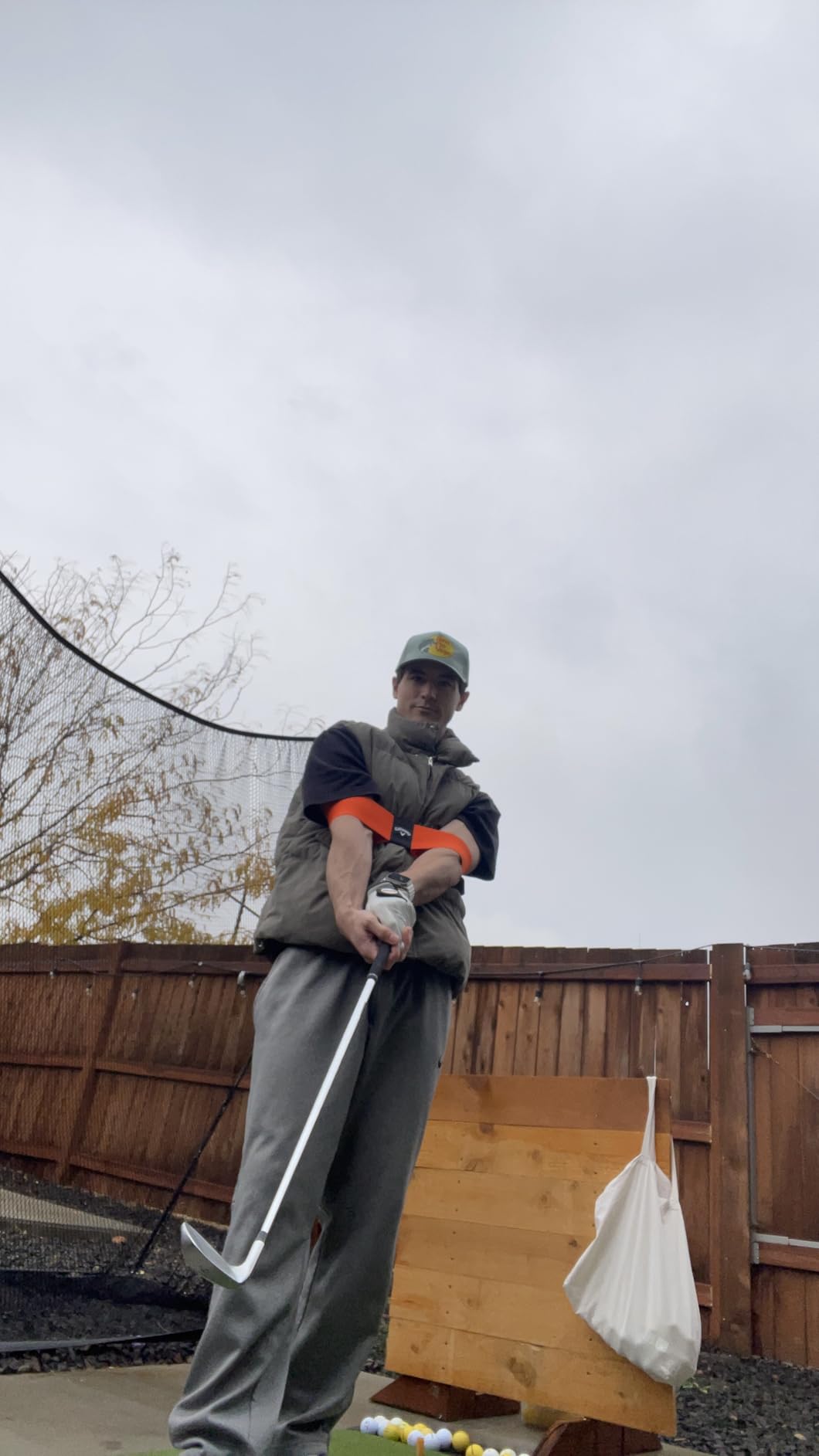
Be clear-eyed about what it does. It teaches one fundamental – a connected, one-piece takeaway – and it does not correct swing path, face angle or impact position on its own. Several reviewers describe it as a warm-up tool rather than a corrector, and we think that is the right read. It is the first rung on the ladder, not the top of it.
What it does not fix
It does not fix a slice driven by an open face or an arm lift in the downswing. It addresses the cause, but it only addresses one cause.
Who it suits
It suits beginners and anyone whose takeaway has gone independent of their body. It also works well as a pre-round piece alongside a second aid – a band for the takeaway on the first fifteen swings, then a path or face tool for the rest of the session.
If you only want one product in the entry-level bracket, this is the one we would pick, because the takeaway fault is both the most common and the cheapest to correct.
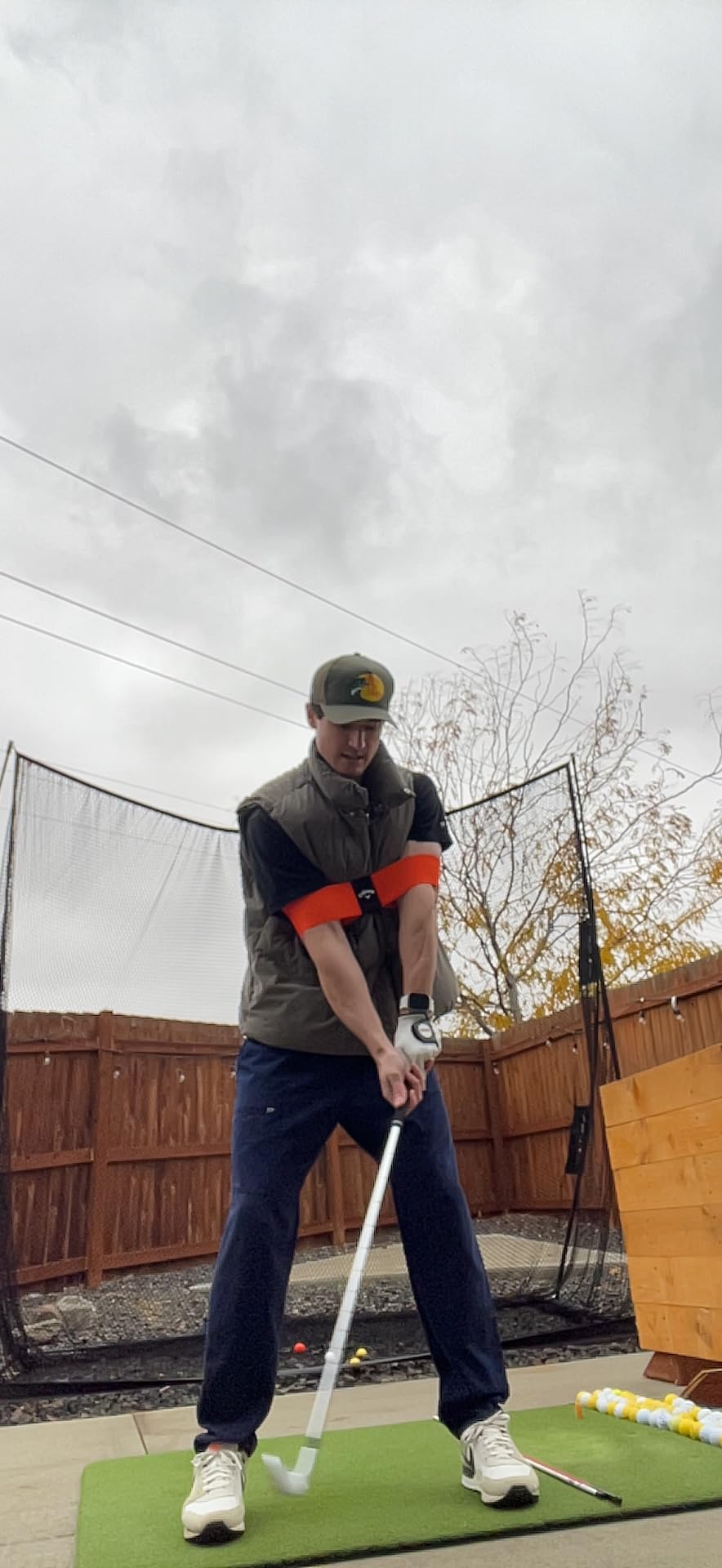
Our only real reservation is that beginners often buy it and never take it off, then wonder why their impact position is unchanged. The whole value of this aid is that it shapes the top of the swing, so let it do that job and retire it once the motion feels connected without it.
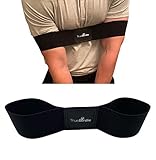
5. TrueBirdie Swing Correcting Arm Band – Best for Chicken Wing and Over the Top
TrueBirdie Golf Swing Training Aid – Swing Correcting Arm Band
Double-stitched arm band
One size fits most
Both handedness
0.04 kg package weight
Pros
- Keeps arms together to stop chicken wing
- Lightweight and simple to put on
- Reviewers see ball striking improve in weeks
- Works for any skill level
Cons
- One size fits larger arms poorly
- Slides down the arms mid-swing
- Tight at first and can tender the elbow
- May not hold shoulders together all the way
If your miss is caused by lifting your arms away from your body, this band is the cheapest direct counter. It holds the upper arms together through the top of the backswing and into the downswing, which removes the separation that creates an over-the-top path. At 4.2 stars from 1,404 reviews, buyers broadly agree it produces a quick mechanics change rather than a slow one.
The best data point in the reviews is that muscle memory carries over quickly. Buyers report meaningful ball-striking improvement within a few weeks, and one of the more useful figures in the whole set is that roughly twenty practice swings with the band on is where the connection starts sticking without it. That makes this a short-term training tool, not a permanent accessory.
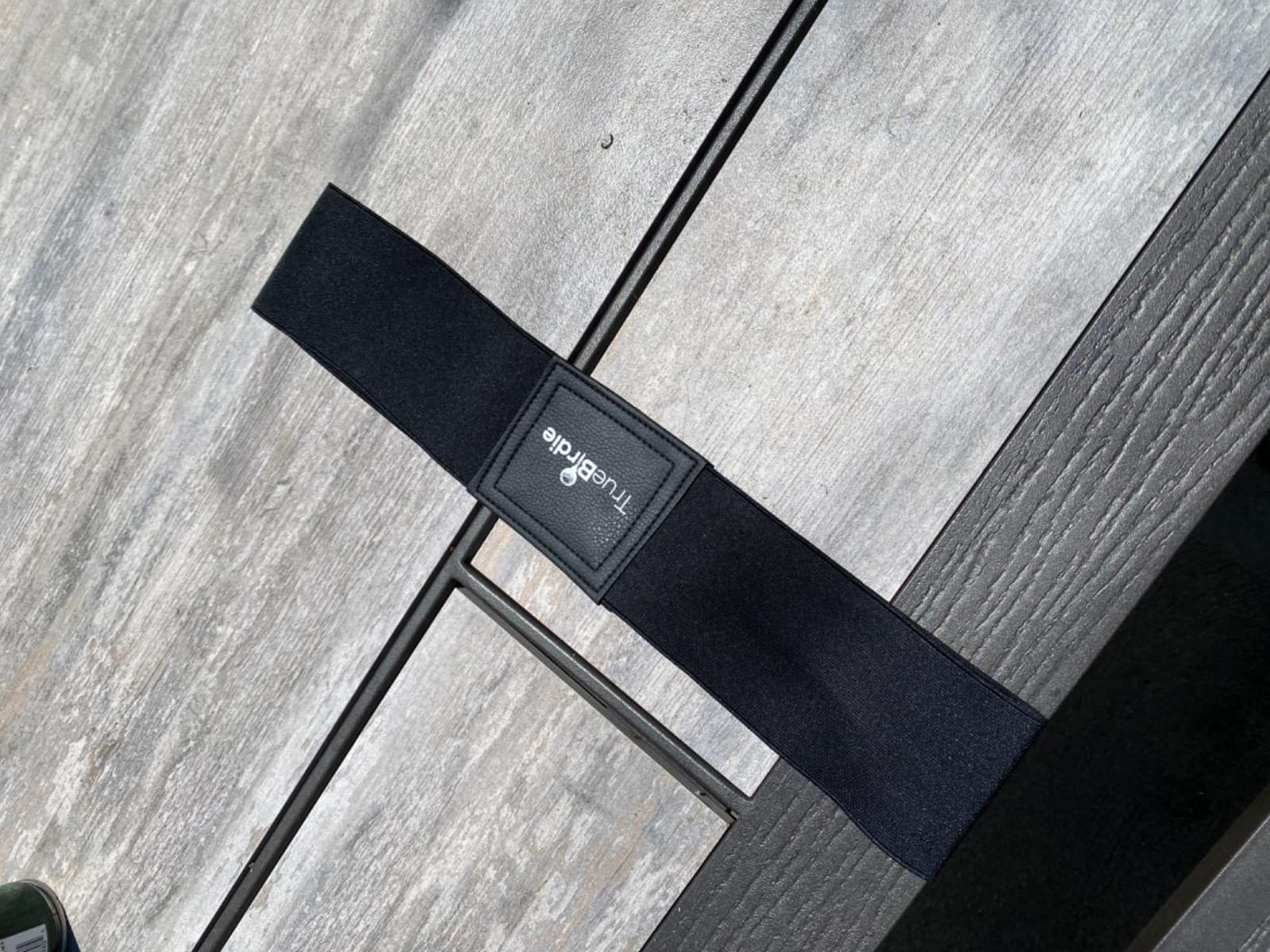
Fit is the whole story here, and it is where the complaints live. One size does not suit larger arms and some bigger golfers cannot get it to sit correctly, and the strap can slide down during the swing and need readjusting. It also feels tight and restrictive for the first few sessions, and a number of users report elbow tenderness after high volumes of reps.
What it does not fix
It does not fix an open face at impact, or a lower body that slides. If your shoulders are connected but your clubface is still open, this band will not change the ball flight much.
Who it suits
It suits golfers who can feel their arms drifting away at the top, and it suits anyone training indoors where a full, banded swing with no ball is the whole session.
Two recommendations if you buy it. First, tighten it high on the upper arm, not at the elbow, so it cannot slide. Second, keep rep counts sane – the elbow complaints in the reviews cluster around golfers grinding through hundreds of banded swings in a row rather than working in sets of thirty.
6. GoSports Pure Strike Training Discs – Best for Low Point and Strike Quality
GoSports Pure Strike Golf Training Discs 24 Pack | Golf Swing Trainer and Ball Striking Training Aid for Contact, Compression and Swing Path Practice | Indoor and Outdoor Golf Practice Equipment
24 soft rubber discs plus mesh tote
Simulates a ball footprint
0.15 kg total
Compact disc footprint
Pros
- Simulates ball footprint for ball-first contact
- Teaches low point control and compression
- Soft rubber works indoors and outdoors
- 24 discs allow varied drills
Cons
- Contact tool not a face angle fix
- Discs scatter and need collecting between reps
This is not a swing-path corrector and we would rather say so than pretend otherwise. It is a contact aid. Each disc sits on the turf with a footprint roughly the size of a golf ball, so if you catch it thin you know immediately, and if you hit the turf behind it you know immediately. Hitting a ball-first strike is the entry requirement for any face control at all, and many slicers are striking the heel or the sole on the way to their miss.
It holds a 4.4 average across 1,398 reviews, which makes it one of the best-rated aids we looked at. Buyers consistently use it to fix thin shots and to build a repeatable low point, and the soft rubber means it works in a garage, a backyard or on a range without a hitting net.
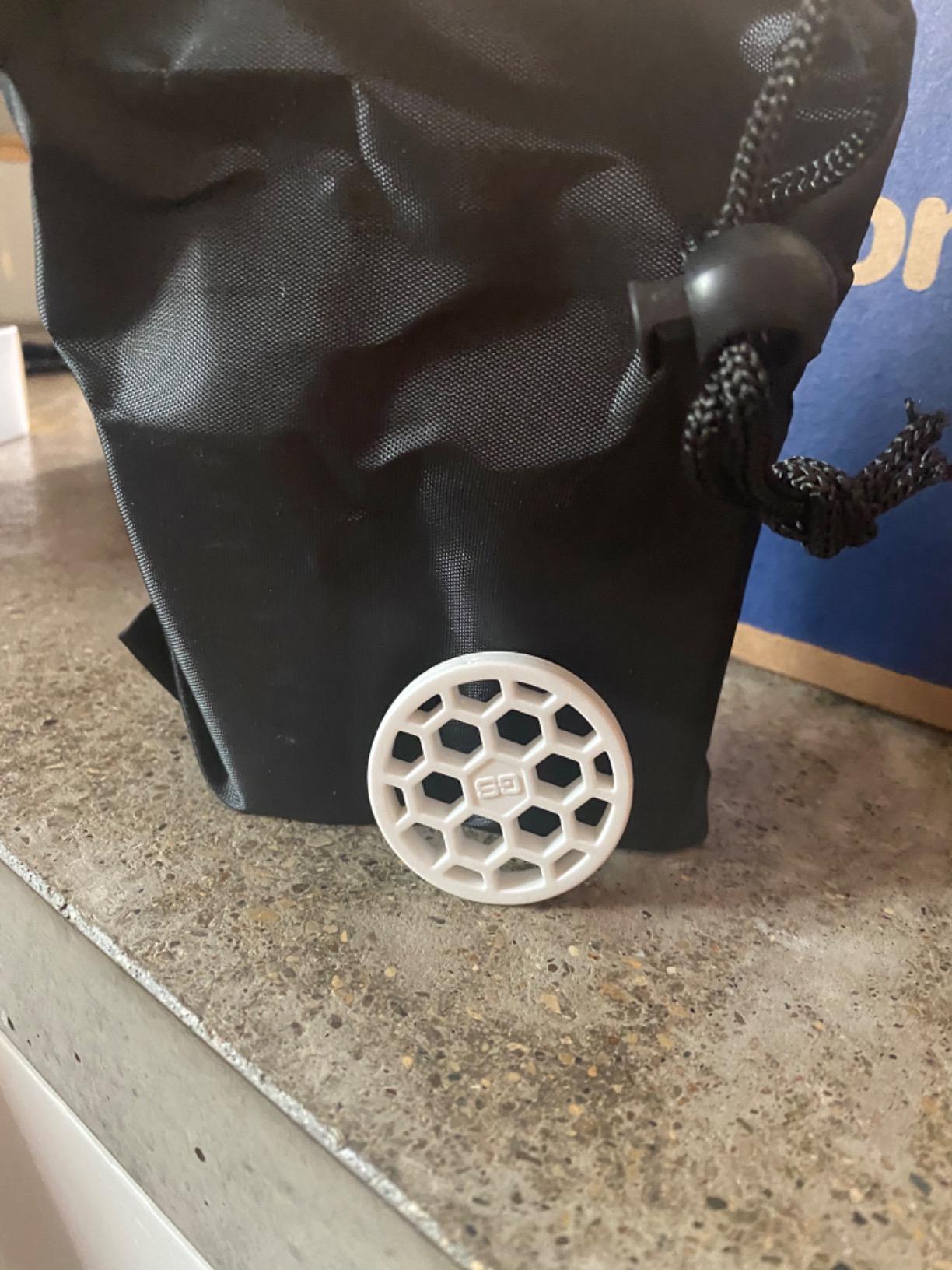
There are twenty-four discs in the pack with a mesh tote, and that quantity is the real value. You can lay out two discs, three discs, or a gate of them to create a corridor, and the set fits in a golf bag without a dedicated pocket. The warranty runs six months from the manufacturer against defects in material and workmanship.
The two honest drawbacks are obvious once you use it. It trains contact, not face angle, so a golfer with a beautiful strike and an open face will see little change. And the discs displace and scatter with every rep, so you spend a good share of your practice time walking around collecting them.
What it does not fix
It does not fix swing path, face angle, or any of the sequencing problems that create a slice. It fixes where the clubhead meets the ground, not where it is aimed.
Who it suits
It suits a slicer who is also missing contact, and it suits anyone practicing indoors where a full-speed driver swing at a wall is not an option. It is also a genuinely useful companion to a wrist or path aid, because better contact makes every other correction measurable.
Buy it second rather than first. Once you can strike consistently, an aid that works on path or face becomes much more useful, because your results are no longer muddied by a mis-hit.
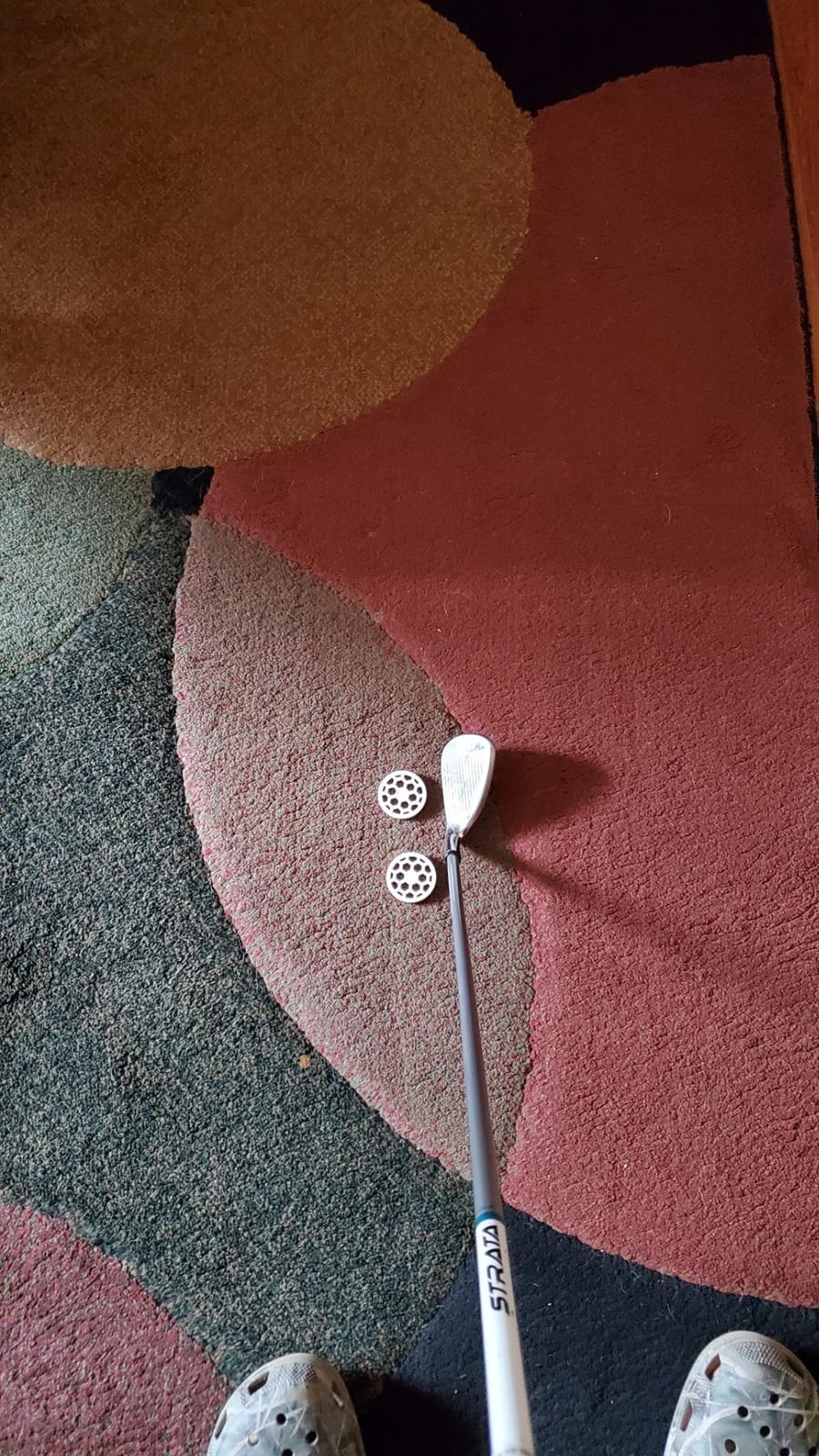
One drill worth doing: place a disc where you expect the low point and hit ten balls at it. Track how many you strike flush. Write the number down, then repeat next week. Most golfers see that number climb noticeably within two sessions, and it gives you the kind of objective progress figure that a swing aid alone cannot provide.
7. EyeLine Golf Speed Trap – Best for Irons, Wedges and Short Game
EyeLine Golf Speed Trap – Build Confidence, Improve Your Swing with Slice and Hook Corrector, Swing Trainer, Path Aid, Greater Distance, Made in USA, Polycarbonate Base (Speed Trap 1.0)
Polycarbonate base with impact zones
17.5 x 12 x 1.75 inch footprint
1.1 pounds
365 day warranty
Pros
- Impact zones show scooping or fat contact instantly
- Forces the club on plane and on path
- Strong for chipping and pitch shots
- Stable and durable base
Cons
- Needs a ball and open space
- Better for irons and wedges than driver
- Bulkier to carry than sticks and bands
The Speed Trap is the only floor-based path tool in this group, and it works on a simple idea. The club is supposed to pass through a narrow gate and trap the ball, then take the turf. If you are scooping under it or hitting it fat, the base lights up a contact zone and you know without looking at a single video.
Reviewers value it most for chipping and pitch shots, and they rate it at 4.2 from 569 reviews. It suits both handedness and all skill levels, and the polycarbonate base is stable enough that it does not walk across the floor when you hit it hard.
It also handles the driver question better than most floor aids, because the alignment markings let you line the shot up square rather than guessing. What it cannot do is swing a driver properly – the tool is sized and weighted for a mid-iron or wedge swing, and users trying to force a full driver swing into it tend to get an awkward feel rather than a useful cue.
What it does not fix
It does not fix arm lift, grip position, or anything about wrist angle at impact. It is a floor feedback tool and works best on a decently controlled swing.
Who it suits
It suits a slicer whose short game is fine and whose driver is not, and it suits anyone with a range or a yard who wants immediate visual feedback on strike quality. It is also a good partner for a band, since the band works on the top of the swing and the trap works on the bottom.
The trade-off is portability. At 17.5 by 12 inches and 1.1 pounds it is the bulkiest item here, and it needs both a ball and enough clear space to swing, so it does not work for a no-ball warm-up or a small indoor room.
Its warranty runs 365 days from purchase with a 30-day return window, which is shorter than the lifetime-style commitments some of the smaller aids make. If you are unsure, use the return window on a real swing rather than guessing.
8. FODESAN 5-in-1 Retractable Swing Trainer – Best for Travel and Indoor Tempo Work
FODESAN Retractable Golf Swing Trainer, Training Aid with Grip Trainer, Swing Mechanics for Beginners & Tempo Training for Advanced, Click Feedback, Muscle Training, Indoor/Outdoor
Retractable shaft with click feedback
Collapses to 15.5 inches
0.7 pounds
One year manufacturer warranty
Pros
- Clicks when swing mechanics are correct
- No ball needed so it works anywhere
- Non-slip rubber grip builds hand position
- Stainless steel shaft with resin head
Cons
- Click is a tempo cue not a face angle fix
- Handedness variants do not always match the listing
This is the one to buy if your practice has to happen in a hotel room, a garage or a spare corner. It collapses to 15.5 inches and weighs 0.7 pounds, and it needs no ball, so the constraint that kills most practice sessions – nowhere to swing – simply disappears.
At 4.3 stars from 319 reviews it punches above its weight. The package combines a grip trainer, an arm band and a retractable shaft, and the shaft clicks when the mechanics are right, which gives you an audible tempo cue you can work with in a small space. Buyers also like the non-slip rubber grip for rebuilding hand position.
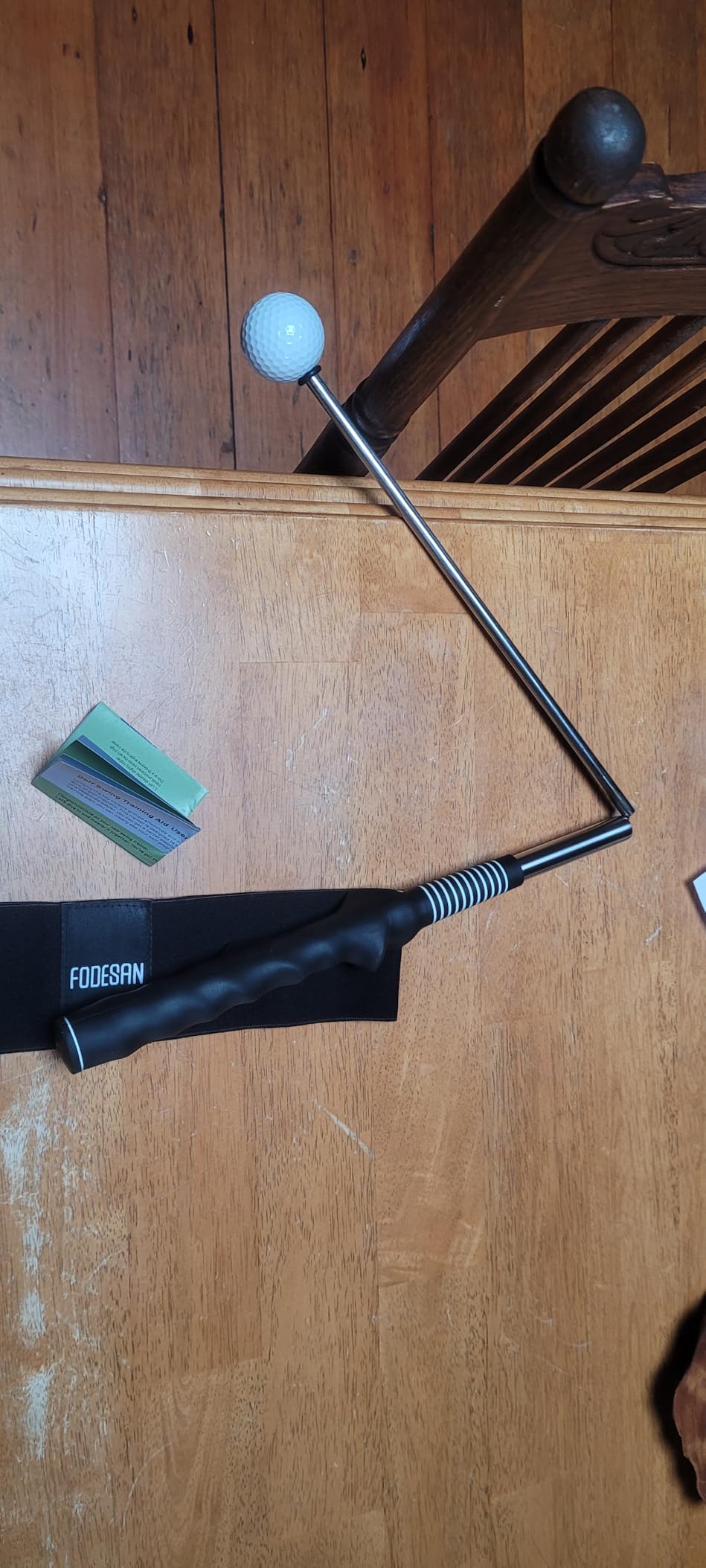
Understand the click for what it is: a rhythm and tempo marker, not a face angle measurement. A smooth fast swing that clicks is better than a rushed one that does not, but a click will happily happen while your clubface sits open. The build quality is better than the price bracket suggests, with a stainless steel shaft and a reinforced resin head, and there is a one year manufacturer warranty.
The main purchasing trap is handedness. The product title mentions right and left handed versions, but the listing options can be orientation-specific, so check which version you are actually buying before you commit. This is the single most common source of confusion in the reviews for this item.
What it does not fix
It does not fix face angle at impact or downswing path. It is a tempo, grip and connection tool, and a slice caused by an open clubface will survive it.
Who it suits
It suits golfers who travel, golfers with a garage or basement setup, and anyone who wants to practise without balls. It also works well as a first-week tool, because you can drill takeaway and tempo every day at home before you ever get to a range.
One thing nobody needs: the pitch that you can hit full driver speed with it in a confined space. Practise the motion slow, use the click to find the rhythm, and take that rhythm to the range.
9. Wellstream Weighted Elbow Brace – Best for a Big Shoulder Turn
U.S. Patented Weighted Elbow Brace – Wellstream Golf Swing Trainer, Golf Swing Training Aid to Keep Leading Arm Straight, Chicken Wing Correction, Shoulder Turn & Anti-Slice, Heavy-Duty Rigid Steel Support
Weighted brace with rigid steel bar
2 pounds total
Fits arms up to 14.5 inches
Both handedness
Pros
- Rigid bar keeps the lead arm straight
- Weight increases moment of inertia for a fuller turn
- Breathable mesh with silicone pad
- Works for both handedness
Cons
- Limited to arms up to 14.5 inches circumference
- Two pounds of bulk during the swing
- Highest cost in the group
- Needs dedicated repetitive practice
This is the most physically demanding aid in the group and the only one that attacks your rotation directly. A rigid PVC-coated steel bar runs along the leading arm, so the arm cannot bend or drop away from your body, and the two-pound weight raises the moment of inertia of your arms, which makes a lazy partial turn physically harder to produce.
Buyers who train with it regularly credit exactly that: a bigger shoulder turn and a straighter leading arm, with a matching drop in over-the-top moves. The build quality is praised, using a silicone rubber pad, breathable mesh and a rigid steel support, and it is made in South Korea with US patented technology. It suits both right and left-handed golfers.
The reviews are genuinely divided, and the split is mostly about fit and weight. Anything above a 14.5 inch mid-upper arm circumference is excluded outright, and the two pounds of bulk is intrusive enough that some users simply stop using it. At 4.0 stars from 272 reviews it works, but it works for a specific body and a specific commitment level.
What it does not fix
It does not fix face angle at impact. A straight lead arm is necessary for control, but it does not square the face on its own, and this brace is not a substitute for a path tool.
Who it suits
It suits a golfer with big arms who loses rotation under pressure and has already fixed their grip and takeaway. It suits a golfer willing to train with it repeatedly, because results reported in the reviews come from dedicated practice rather than occasional use.
Measure your mid-upper arm before you order. If you are near the 14.5 inch ceiling, buy it knowing it is a squeeze, and give it a fair trial period with real practice rather than three range sessions.
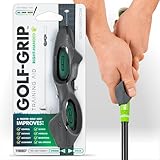
10. TREED GOLF-GRIP – Best Snap-On Grip Guide for Left-Handed Golfers
GOLF-GRIP™ Golf Grip Trainer for Left & Right-Handed Golfers – Snap-On Golf Training Aid for Proper Hand Position & Swing Technique – Hit Straighter, Longer Shots & Fix Slices or Hooks
Snap-on grip trainer
20 g
One size from junior to jumbo grips
Separate left and right versions
Pros
- Installs in seconds on your own clubs
- Right and left handed versions available
- Flexible skeleton adapts across club sizes
- Thumb pockets suit a range of hand sizes
Cons
- Lowest rated in the group at 3.9
- Left and right are separate products
- Trains grip fundamentals only
We include this one because it is the most accessible grip trainer for left-handed golfers, and grip position is the most common first fix for a slice. The snap-on design installs in seconds, so there is no argument about spending practice time fitting equipment instead of hitting shots, and you use it on the clubs you actually play.
Separate right and left handed versions mean the hand position is anatomically correct rather than mirrored, which matters more than buyers expect. The flexible endoskeleton adapts from junior to jumbo grips, and the engineered thumb pockets are sized to fit a range of hands, which addresses the main grip aid complaint we saw on other products.
It is also the lowest rated item in this roundup at 3.9 stars from 275 reviews, and we would rather flag that than bury it. Buyers like the quick installation and report straighter shots with consistent grip work, but a notable minority find the fit awkward or find the product less effective than they expected. Treat it as a reasonable grip option rather than a proven one.
What it does not fix
It does not fix swing path, face angle, or anything about the downswing. Like every grip trainer, it covers the first six inches of the swing and nothing after them.
Who it suits
It suits left-handed golfers who have found the right-handed grip trainers unusable, and anyone who wants a fast install between practice reps. It suits golfers who want to isolate the grip question cheaply before committing to a larger aid.
Compare it directly against the SKLZ trainer if you are right-handed, since that product has a far larger review base at 9,569 reviews. The TREED wins on handedness, the SKLZ wins on evidence.
How to Choose a Slice Training Aid by Fault Type
Match the aid to the fault, not to the price or the rating. This is the decision that determines whether your next month of practice produces a straighter ball flight or an expensive paperweight.
Start with the three cheap diagnosis steps
Film two shots from behind and from the side. Watch the finish relative to the target line and watch whether your hands rise at the top. Then hit three balls with a deliberately closed face and see whether the ball flight changes. Finally, make three slow, ball-free swings and notice whether your arms stay connected to your torso.
Those three checks take one session and they tell you which category below to shop in. Golfers who skip this step spend months on the wrong category, and the most common forum complaint about slice aids is exactly that.
Match the fault to the aid
Open right hand on the grip – start with a grip trainer. The SKLZ trainer is the most-reviewed option and the TREED is the pick if you are left-handed.
Arms lifting away, chicken wing, over the top – start with an arm band or a weighted elbow brace. The TrueBirdie band is the cheap option and the Wellstream brace is the heavy-duty one for big arms.
Open clubface at impact, weak or flat shots – start with a wrist guide. theHanger is the only dedicated option in this roundup.
Curved ball flight from spin, direction not too bad – the Slic Stic reduces the spin component and is the fastest fix available.
Thin shots, poor contact, no low point – GoSports Pure Strike discs build strike quality, which every other correction depends on.
Bad takeaway, arms going independent – the Callaway Swing-Easy is built for exactly this and suits both handedness.
Scooping or fat contact on the range – the EyeLine Speed Trap shows you the error on the floor in real time.
No place to practise – the FODESAN trainer needs no ball and collapses small.
Work up the tiers rather than buying top-down
In the entry bracket you are buying diagnostics and takeaway work: the Swing-Easy, the Slic Stic, the discs, a grip trainer. That tier tells you what is wrong and fixes the most upstream fault.
In the middle bracket you are buying a specific mechanism: arm band, wrist guide, or a floor trap. One of these is the right answer for almost every slicer, and you cannot know which without the diagnosis first.
In the premium bracket you are buying a physical constraint, such as a weighted brace. It works, it is uncomfortable, and it only suits golfers with the arm size and the practice habit to support it.
Check the practical constraints
Handedness matters more than most listings admit. The SKLZ trainer is right-handed only, while the Swing-Easy, the discs, the Speed Trap and the Wellstream brace cover both. Storage space matters: the Speed Trap needs floor area and a ball, while the FODESAN trainer folds to 15.5 inches and goes anywhere.
Where you practise matters most of all. A wrist or arm aid works indoors with no ball. A floor trap and a disc set both need a swing area. Buy for the space you actually have, not the space you wish you had.
A Four-Week Practice Protocol for Any Aid
Nobody answers the repetition question credibly, so here is our protocol. It works with any aid on this list, and it is built around the fact that you need a diagnostic baseline before you can tell whether anything is working.
Week one – establish the baseline. Hit three groups of ten balls without the aid and record the shape of the miss. Film two of them from behind and from the side. Write down whether the ball curves, which direction it starts, and how far left or right it finishes. Do not change anything this week except the aid you already decided on.
Week two – reps with the aid. Three sessions of thirty to forty slow, deliberate reps. Slow beats fast for this phase, because you are trying to feel a position, not hit a distance. Do not chase ball flight in week two at all.
Week three – transfer to ball flight. Half the reps with the aid, half without. This is where the change either appears in your normal swing or it does not. If nothing changes, your diagnosis was wrong and you should switch categories rather than buy another device in the same one.
Week four – measure and decide. Repeat the week one test exactly, same clubs, same conditions. Most golfers need somewhere between four and six weeks of consistent practice for a path or connection change to stick. One GolfWRX user fixed an over-the-top slice with an alignment stick and a pool noodle, repeating the drill about ten thousand times and alternating with no aid at all – that is a long-haul commitment, and it is why most people give up on devices before the change lands.
Retire the aid when you have produced three consecutive sessions of straighter ball flight without it. Keeping it on past that point trains dependence, not skill, and it is the most common way golfers end up stuck with a worse swing than the one they started with.
For the range trips that go with this, we have also put together golf cart sound bar picks and our golf cart speakers with GPS picks so you can run drills with audio on the way out.
When a Training Aid Is the Wrong Answer
Some golfers should not buy a device at all, and saying so is more useful than another recommendation. Three groups fall into that category.
If you are above an 18 handicap and cannot make contact consistently, a lesson will fix more than an aid will. A repeated question in the r/golf threads is whether any device helps a high-handicap slicer, and the honest answer is that you need a repeatable swing before any feedback tool has anything to report. Get the motion working, then add a device.
If you have already spent heavily on lessons, the problem is diagnosis rather than budget. Golfers report spending serious money on instruction with the slice still present, which is a sign the original cause was never identified. Film the swing, find the fault, then decide whether an aid or another lesson is the right instrument.
If your slice came back after it was fixed, you do not need a new device, you need to re-diagnose. A recurrence usually means the original cause was a physical limitation or an unresolved sequence issue, and the same aid will produce the same temporary result twice.
The free options are genuinely worth trying first. A pair of alignment sticks set up as a corridor around your target line costs almost nothing and shows your true path immediately. Practising on a side-hill lie, or from a slightly wrong stance, removes a stance-based cause rather than treating the symptom. Spending a session on lower-body work – weight to the lead leg early, turn rather than slide – addresses the most common root cause reported on the GolfWRX threads.
One golfer in that thread fixed a slice with no device at all: they learned to move the lower body first, then took the lead wrist from extension to neutral or beyond. Another reported that over-rotating the right hand over the left as a right-handed golfer largely removed their slice, though found the position uncomfortable. Neither approach is a substitute for a good swing, but both show how much of a slice is a body sequencing issue rather than a wrist or face issue.
Frequently Asked Questions
What is the best golf training aid to fix a slice?
The best aid is the one that matches your specific fault. An open right hand on the grip calls for a grip trainer, arms lifting away from the body calls for an arm band or weighted brace, an open clubface at impact calls for a wrist guide, and a curving ball flight caused by spin calls for a ball-side wax stick. Diagnose which fault you have before buying, because a path aid will not fix a face problem and vice versa.
Are there any golf training aids that actually work?
Several do, when used for the fault they were designed to address and used consistently. The most reliable results come from aids with a clear single job, such as a grip trainer, an arm band or a wrist guide, used for a focused four to six week block and then retired. The ones that disappoint are usually the ones bought without a diagnosis, or kept in the bag indefinitely instead of used as a short training tool.
What is the easiest way to fix a slice in golf?
Start at address. Check that your grip is neutral and your right hand is not strong or overly open, then film two shots from behind to see whether the clubhead travels outside to inside. Next, check for arm lift by making three slow swings with no ball. Fix takeaway and connection before touching the impact position, and hit hundreds of deliberate repetitions rather than changing several things at once.
Should I buy a swing trainer or take lessons?
Take a lesson if you cannot make consistent contact, if your swing changes completely between shots, or if you have already taken several without improvement, which usually signals a diagnosis problem rather than a practice problem. Buy a swing trainer if you have a repeatable swing and one identifiable fault, because an aid gives you fast, repeated feedback on that specific fault at a fraction of the cost.
How long does it take to fix a slice with a training aid?
Most golfers who practise three times a week see a measurable change in ball flight somewhere between four and six weeks. The pathway is diagnostic: two weeks of slow reps to feel the new position, two weeks of half-and-half practice with and without the aid to transfer it to real shots, then a final week of free swings. Consistency of practice matters far more than the device you choose.
Where to Start
Start with the Slic Stic. It is the most reviewed aid in this roundup by a wide margin, it costs almost nothing, and it gives you a twenty-ball answer about whether your slice is a spin problem or a shape problem in a single session. If the curve softens, your face and spin are doing the damage. If the ball still goes right regardless, you have a path or connection fault and you now know where to shop.
From there, work up the ladder. Grip fundamentals first, because an open right hand ruins everything downstream. Then connection and takeaway, because a disconnected arms-first swing creates the over-the-top path most golfers blame on their hands. Only then move to face control and contact.
The point of these best golf training aids for slice correction is not the device. It is having a specific, testable thing to change, a way to measure whether it changed, and a date to decide whether it worked. Buy the aid that matches your diagnosis, practise it on a schedule, and retire it when the ball flight holds without it.