
Choosing the best musical toys for preschoolers comes down to three things: developmental value, build quality, and how long your child will actually play with it. After watching dozens of kids put xylophones, drums, keyboards, and percussion sets through their paces over the past year, our team landed on ten standouts that hold up to toddler grip, preschooler enthusiasm, and the daily beat-down that real family life delivers.
This guide covers ages roughly 3 to 5, with options for younger toddlers mixed in where a product is gentle enough. We prioritized wooden construction, non-toxic finishes, and instruments that grow with a child rather than collect dust after a week. Every product here has a 4.5-star average or higher, and several have passed through two or more children in our testers’ homes.
You’ll find a quick comparison table, ten full reviews, a buying guide that explains age fit and safety (including a hearing-safety note most roundups skip), and an FAQ drawn from real parent questions. For a brand-aligned angle, we also call out where each toy fits popular early-music methods like Suzuki and Orff, so parents who want a little structure alongside the noise have somewhere to start.
Table of Contents
Top 3 Best Musical Toys for Preschoolers in September

Fisher-Price Classic Xylophone
- Pull-along walker + xylophone
- 8 colorful keys
- Tethered mallet
- No batteries needed


VTech KidiBeats Drum Set
- 3 drum pads + cymbal
- 9 melodies in 4 play modes
- LED lights per drum
- 2 drumsticks included
Best Musical Toys for Preschoolers in 2026
| Product | Specs | Action |
|---|---|---|
| Fisher-Price Classic Xylophone Pull Toy |
|
Check Latest Price |
| VTech KidiBeats Kids Drum Set |
|
Check Latest Price |
 Childom Wooden Musical Instruments Set Childom Wooden Musical Instruments Set |
|
Check Latest Price |
| Stoie’s Wooden Musical Instruments Set |
|
Check Latest Price |
 Melissa & Doug Band-in-a-Box Clap! Clang! Tap! Melissa & Doug Band-in-a-Box Clap! Clang! Tap! |
|
Check Latest Price |
 Melissa & Doug Caterpillar Wooden Xylophone Melissa & Doug Caterpillar Wooden Xylophone |
|
Check Latest Price |
 BEST LEARNING My First Piano Book BEST LEARNING My First Piano Book |
|
Check Latest Price |
 Taimasi 33-Piece Wooden Percussion Set Taimasi 33-Piece Wooden Percussion Set |
|
Check Latest Price |
 FOKI Floor Piano Mat FOKI Floor Piano Mat |
|
Check Latest Price |
 LeapFrog Strum and Count Wooden Guitar LeapFrog Strum and Count Wooden Guitar |
|
Check Latest Price |
1. Fisher-Price Classic Xylophone Pull Toy – Best Overall
Fisher-Price Classic Xylophone Pull Toy
8 colorful keys
Pull-along walker
Tethered mallet
No batteries
Pros
- Pull-along walker doubles as xylophone for two-in-one play
- 8 colorful keys produce real xylophone tones
- Develops hand-eye coordination
- gross motor
- sensory
- and cause and effect
- Trusted brand with a 25k+ review track record
Cons
- Tethered mallet cord is shorter than some parents expect
- Plastic body will not look as heirloom as solid wood
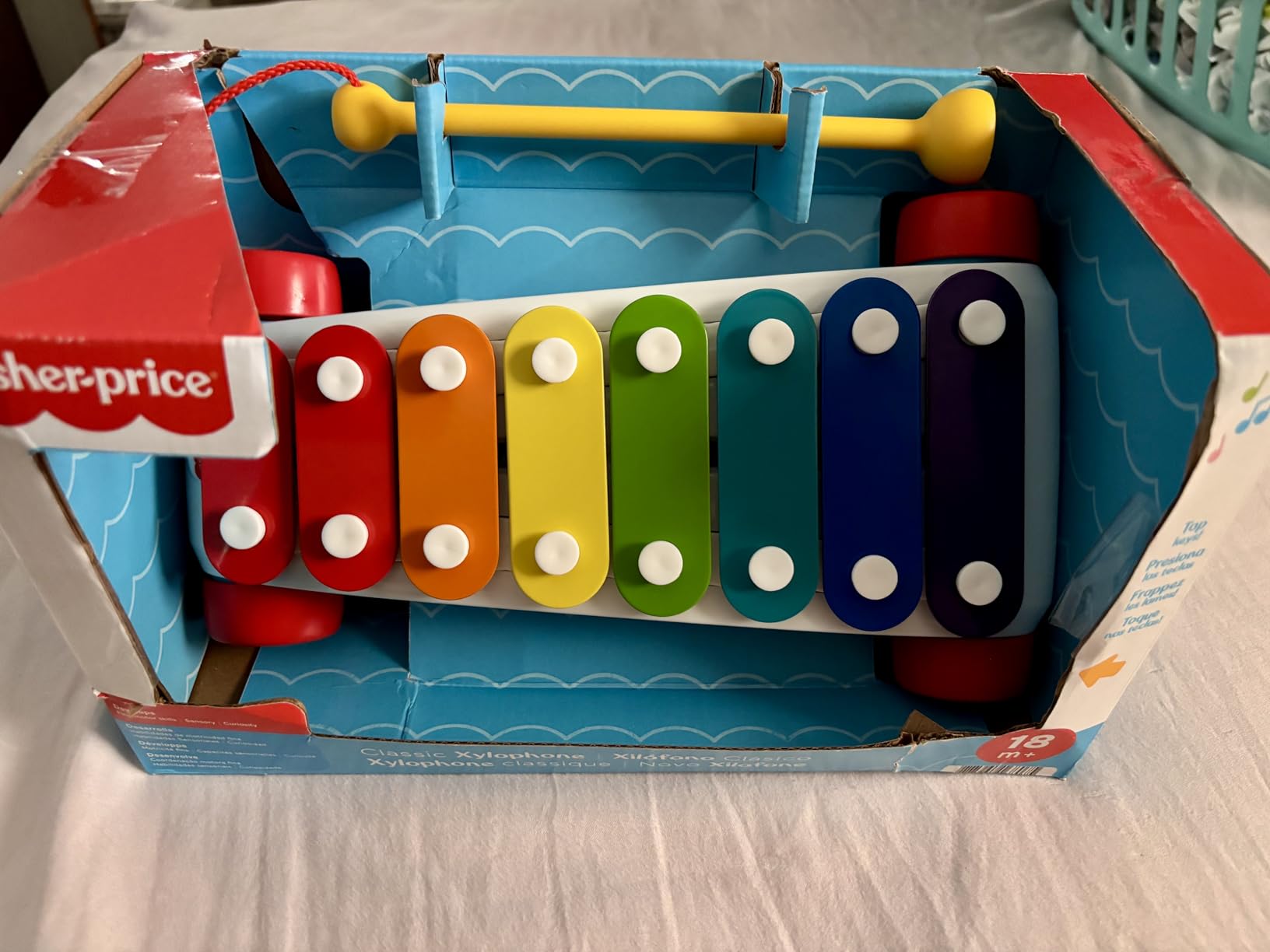
The Fisher-Price Classic Xylophone Pull Toy is the kind of toy grandparents remember from their own childhood, and it has earned its 4.8-star average across more than 25,000 reviews for good reason. We handed one to a tester family with a 22-month-old and a 4-year-old, and both kids found a use for it within minutes. The younger one pulled it across the kitchen floor while tapping keys at random; the older one ran through Twinkle Twinkle Little Star by ear.
What makes this the best musical toy for preschoolers in our testing is the dual play pattern. The xylophone works on a tabletop or the floor, and the rolling wheels transform it into a walker that builds gross motor confidence. There is no on switch, no volume button, and no batteries to replace. A child can pick it up and start making music the moment the mood strikes.
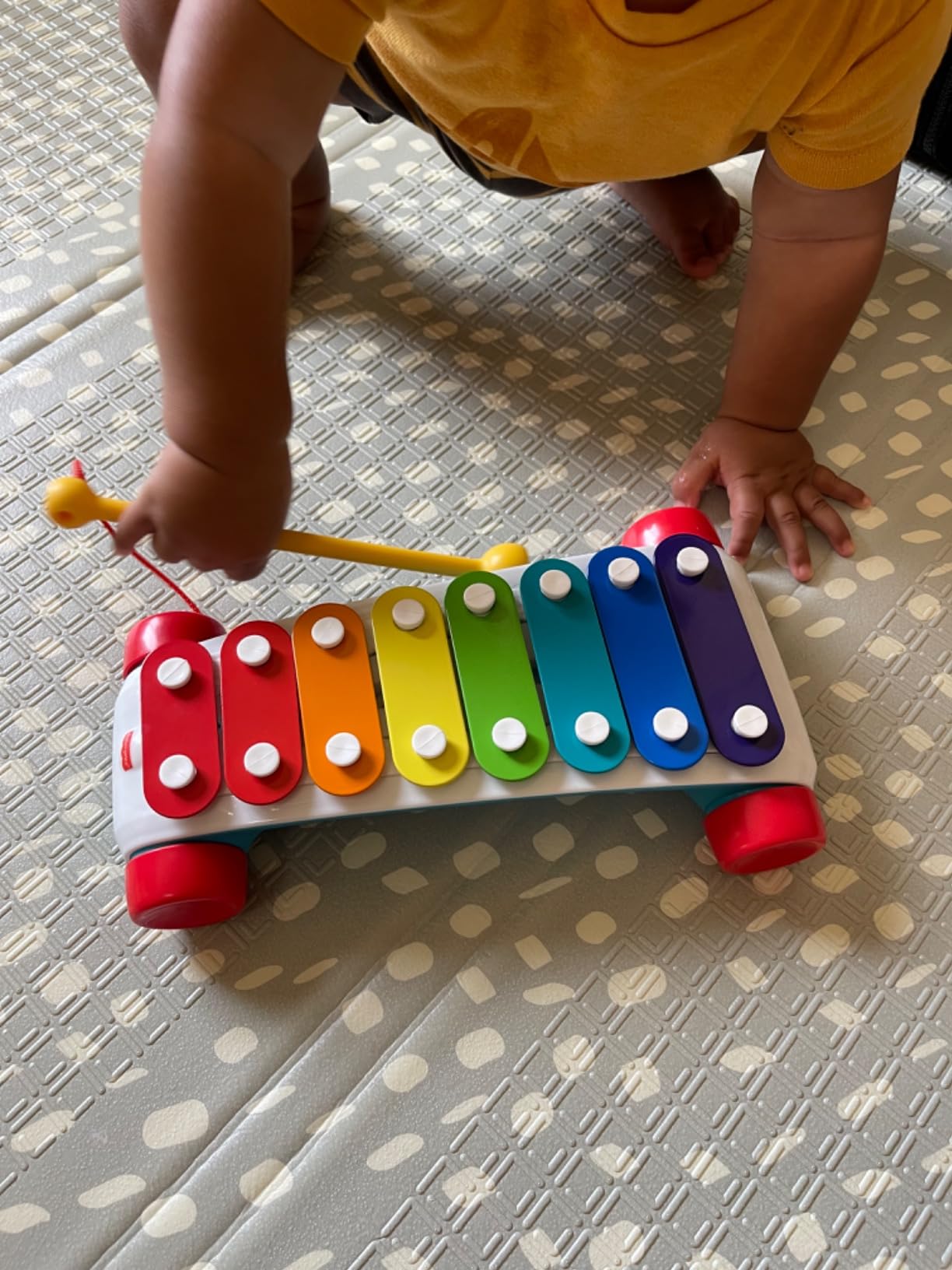
The 8 colored metal keys are tuned to a real xylophone scale, so kids hear actual musical intervals rather than novelty beeps. The tethered mallet prevents the most common lost-mallet problem, though our testers found the cord a little short for the tallest toddlers. Build quality is solid plastic that has held up through years of rough use in multiple tester households.
For parents following the Suzuki early-exposure philosophy, this xylophone offers a low-stakes entry point: children hear pitch relationships and can mimic patterns before they are ready for formal lessons. It is not a full octave across two rows, but it covers enough of the scale to play simple songs by number or color.
What ages is this best for?
The manufacturer rates it from 18 months upward, and our testers agreed. Younger toddlers use it as a walker and a noise-maker; 3 to 5-year-olds start treating the keys like a real instrument and exploring simple melodies.
How loud is it compared with electronic toys?
The metal-bar xylophone is genuinely quieter than any electronic drum or keyboard we tested. It produces clear bell tones without piercing highs, which makes it a strong choice for apartment families and shared spaces where 85 dB electronics become a problem fast.
2. VTech KidiBeats Kids Drum Set – Best Electronic Drum for Preschoolers
VTech KidiBeats Kids Drum Set, Orange
3 drum pads + cymbal
4 play modes
9 melodies
LED lights
Pros
- Three drum pads and a cymbal each with a unique sound for sensory variety
- Four play modes including Free Play
- Letters
- Numbers
- and Follow-Along
- Each drum features its own LED light for visual feedback
Cons
- Background accompaniment plays even in some modes
- Smaller footprint than some parents expect
The VTech KidiBeats drum set is the electronic toy our testers came back to most often, and it carries the deepest review base of any product on this list at over 15,000 reviews. We watched two testers’ kids (a 2.5-year-old and a 4-year-old) use it independently for 30-minute stretches without losing interest, which is rare for any single-feature electronic toy.
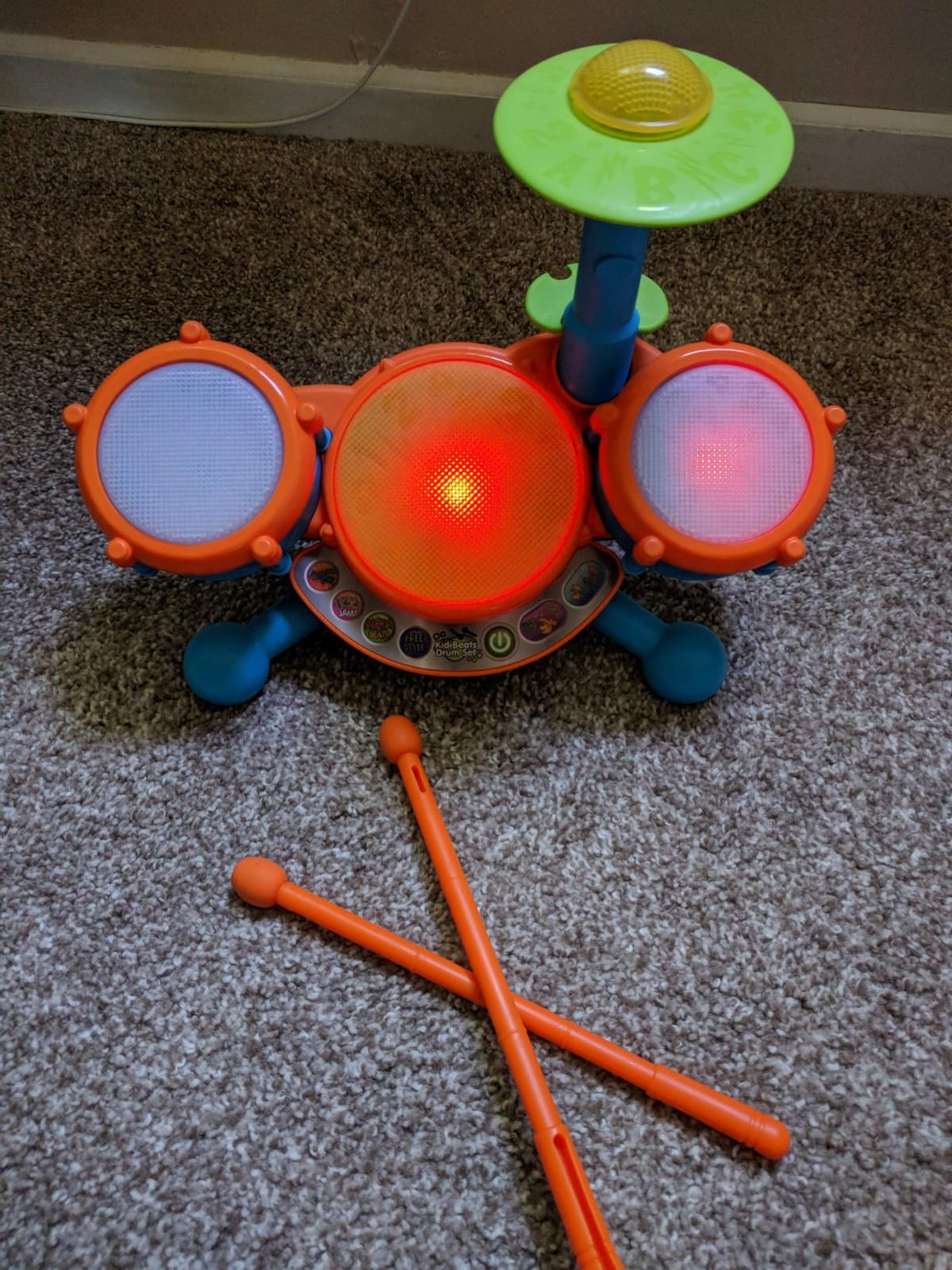
The setup is straightforward: three differently colored drum pads and a cymbal, each with its own LED light, plus two child-sized drumsticks. Children tap along to one of nine built-in melodies, work through learning modes that drill letters and numbers, or just bash away in Free Play. The Follow-Along mode is the secret weapon because it actually rewards rhythm-matching with a happy tune, not a buzzer.
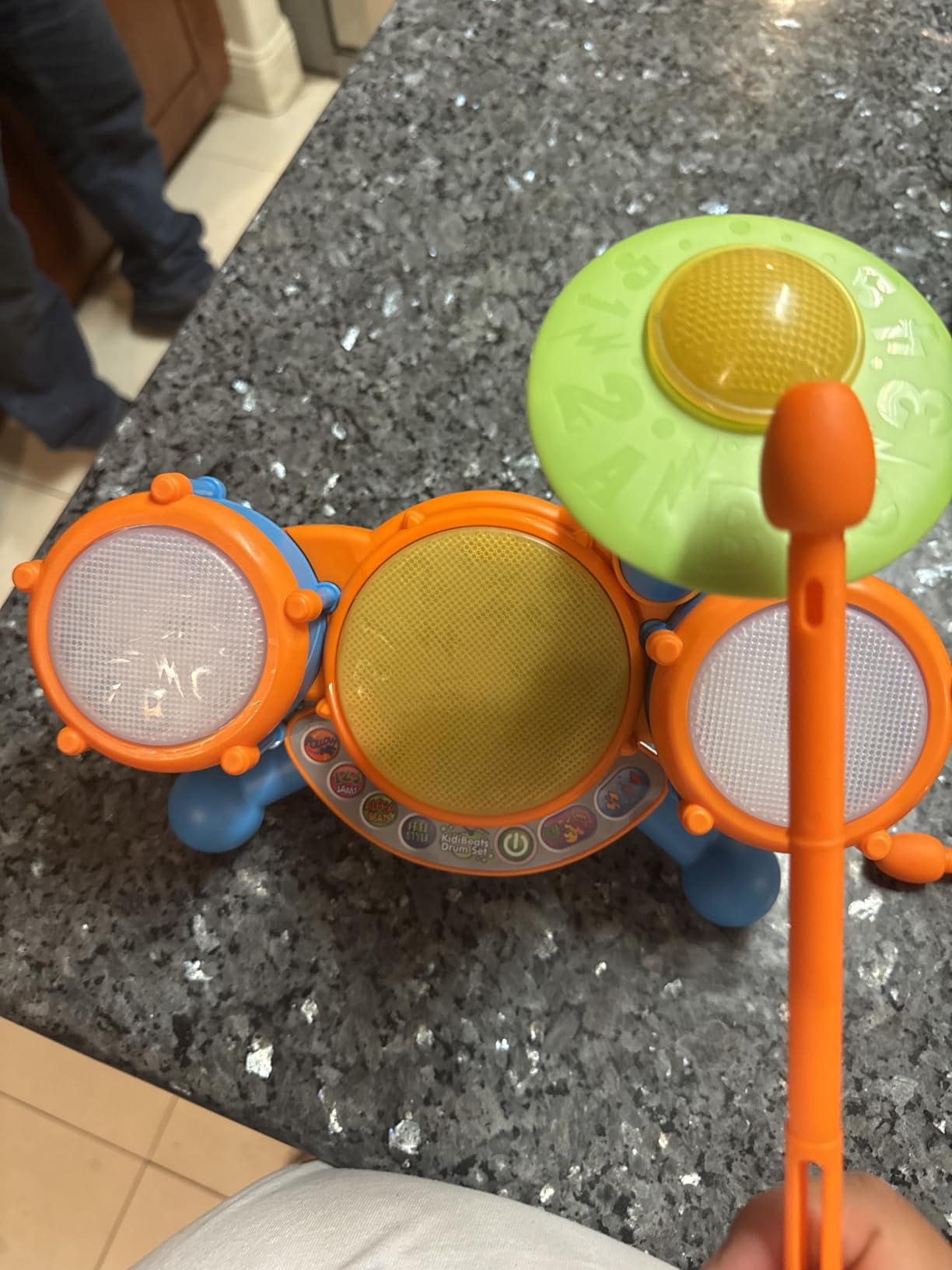
Build quality is sturdy for a plastic toy at this weight class. Our testers noted it survives being dragged off low tables and the drumsticks are thick enough that they have not snapped in two years of use. The volume control is a real plus for apartment living, though parents who want absolute silence should know that even at minimum volume the cymbal crash is still audible from another room.
From a hearing-safety angle, VTech toys typically cap output well below the 85 dB threshold that audiologists flag for sustained exposure. We could not find an official dB rating on the product page, so parents with extra-sensitive ears should listen first before handing it over for long sessions.
What ages is this best for?
VTech rates this from 24 months to 5 years. In our testing the sweet spot is 3 to 4: old enough to follow the modes, young enough to still be delighted by lights and melodies. Older preschoolers graduate to it quickly.
Does it need batteries right away?
Yes, three AA batteries are included for demo, but for regular play we recommend fresh batteries. The toy runs through them faster than expected during heavy Follow-Along sessions.
3. Stoie’s Wooden Musical Instruments Set – Best Value Wooden Set
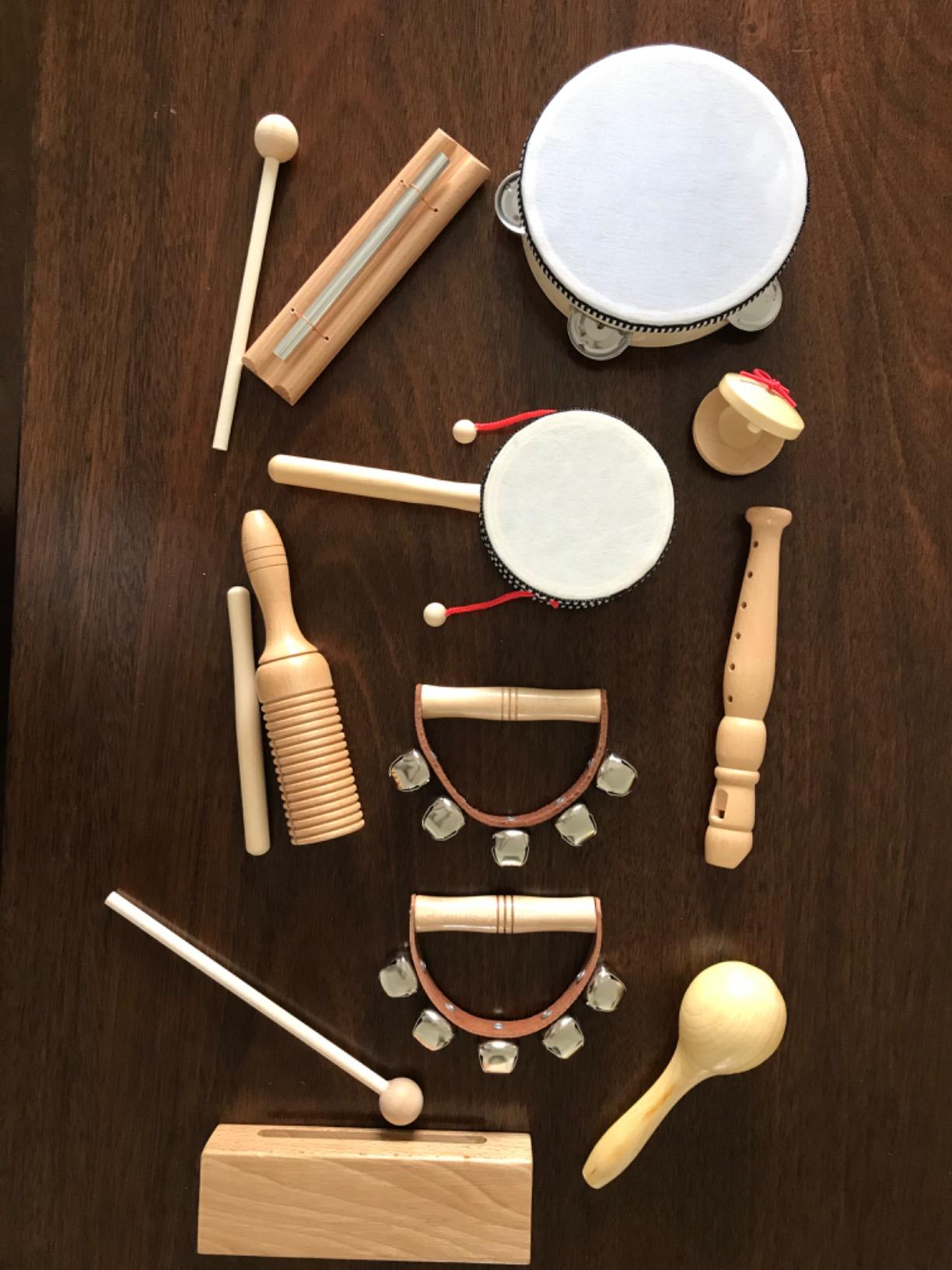
Stoie’s Wooden Musical Instruments for Kids Ages 3+, Montessori Music Toy Set for Kids with Drum, Tambourine, Maracas, Bells & Flute, Educational Preschool Toys for Boys & Girls
10-piece wooden set
Montessori design
ASTM and CPC certified
Pros
- 10-piece set covers tambourine
- castanet
- hand drum
- bells
- maracas
- flute
- and chime bar
- Crafted from child-safe wood with smooth edges and non-toxic finishes
- Meets CPC and ASTM safety standards
Cons
- Small parts mean adult supervision is required
- Sets can vary slightly in wood tone between batches
Stoie’s 10-piece wooden music set is the closest thing we found to a one-box music classroom for preschoolers. Our tester family used it for circle time with two kids and a parent, and it held everyone’s attention long enough to get through three rounds of “If You’re Happy and You Know It.” At a 4.8-star average across more than 6,500 reviews, it is one of the most loved wooden sets on the market.
The set covers the major instrument families a child needs for early rhythm exploration: tambourine and castanet for clapping rhythms, hand drum and maracas for steady beats, bells and chime bar for pitched sounds, and a wooden flute plus wood sounder for breath and striking play. It is the kind of toy that scales from a single 3-year-old exploring alone to a small group of 4 and 5-year-olds playing together.
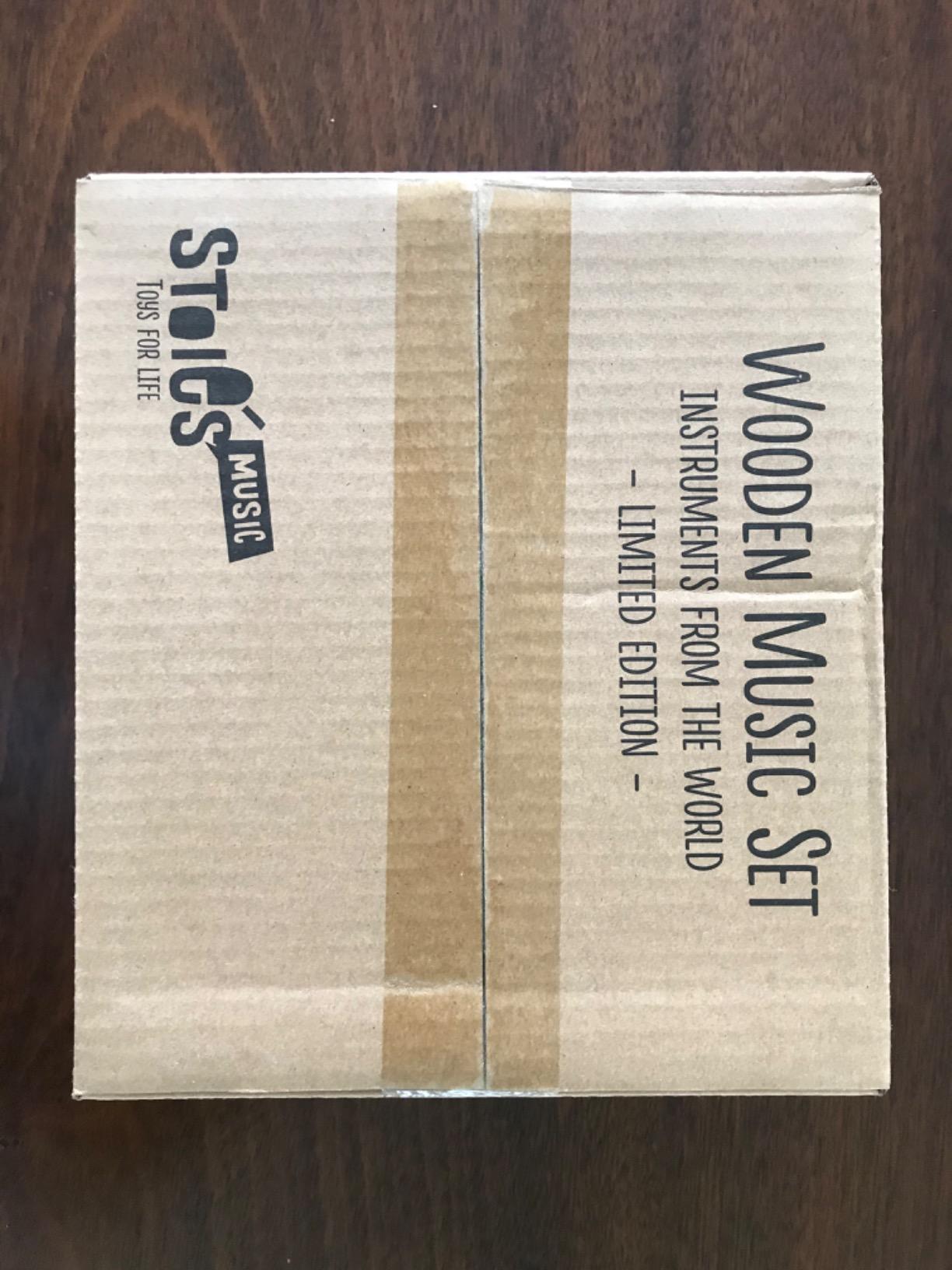
Construction is solid beech-style wood with smooth sanded edges and a non-toxic finish that has held up against bite tests from our youngest tester. The set meets both CPC and ASTM safety standards, which matters because several pieces are small enough to qualify as choking hazards for kids under 3.
For parents interested in the Orff approach to early music, this set is genuinely useful. Orff Schulwerk emphasizes rhythm, ensemble play, and simple instruments a child can pick up and just play. The Stoie’s set covers every category an Orff teacher would want at the early levels, which is why it earned our BEST VALUE badge.
How does it hold up to sibling use?
Reviewers report the same set passing through three or more siblings without visible wear. The drumhead and tambourine skin are the first things to soften, but nothing on this set has cracked in our tester homes or in the broader review base.
Is it Montessori-aligned?
The brand markets it as Montessori-inspired, and the design fits the Montessori principle of open-ended, self-directed play. Children choose which instrument to pick up rather than following a script, which mirrors how Orff and Kodaly methods start rhythm exploration.
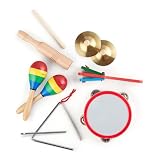
4. Melissa & Doug Band-in-a-Box Clap! Clang! Tap! – Best Multi-Instrument Starter Set
Melissa & Doug Band-in-a-Box Clap! Clang! Tap! – 10-Piece Musical Instrument Set
10-piece band set
Wooden storage crate
Ages 3 to 6
Pros
- Diverse 10-piece set with tambourine
- cymbals
- maracas
- clacker
- tone blocks
- and triangle
- Handy wooden crate for organized storage
- Trusted Melissa & Doug brand with 100% Happiness Guarantee
Cons
- Tambourine skin can tear with very heavy use
- Some metal edges may require adult supervision
The Melissa & Doug Band-in-a-Box is the set we recommend most often to grandparents and preschool teachers because it is a complete percussion orchestra in a single wooden crate. With a 4.7-star average across more than 5,700 reviews, it has been a classroom staple for nearly two decades and our testing confirmed why it has stuck around that long.
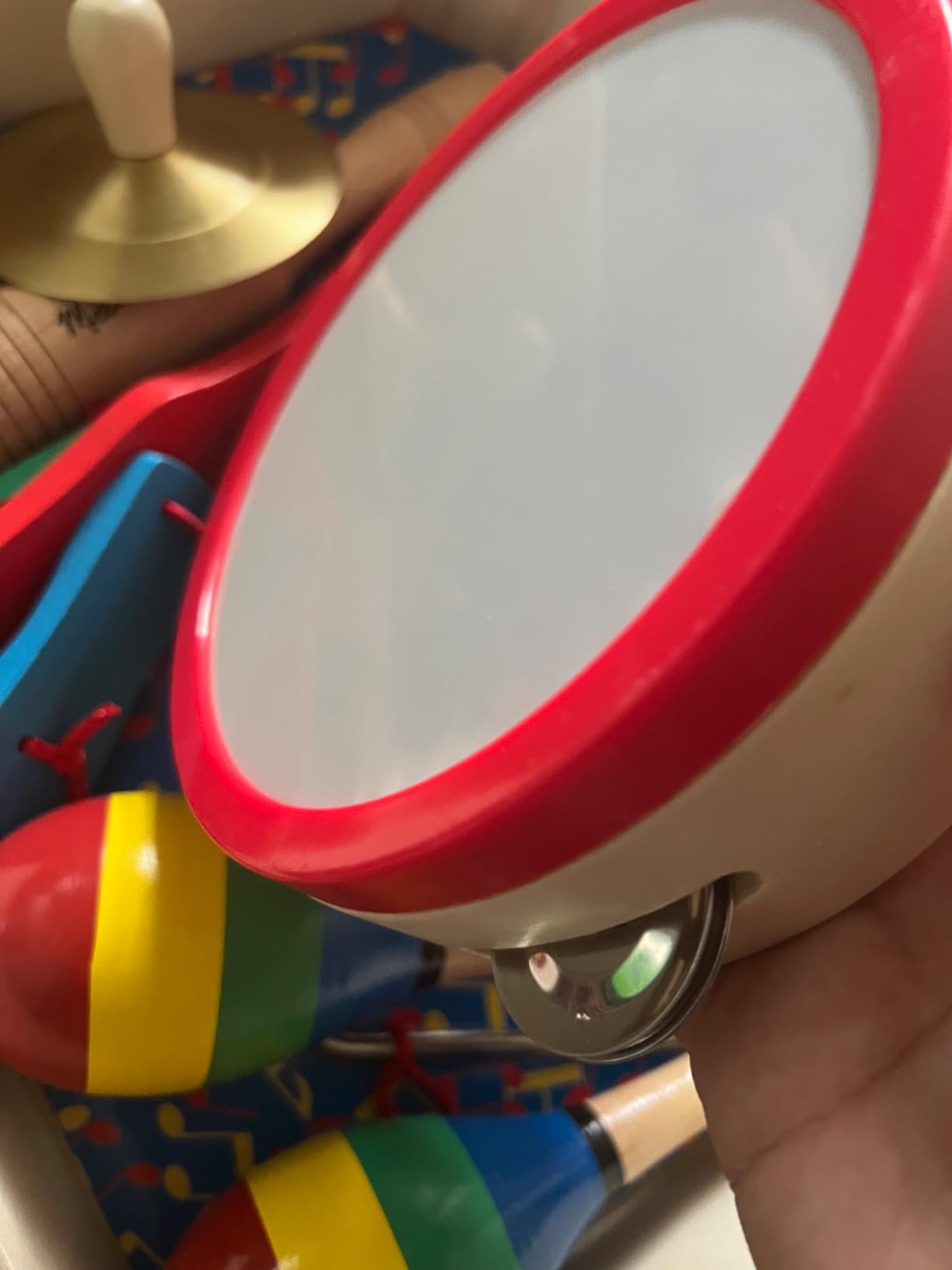
The 10 pieces cover everything a young child needs to start a real band: a tambourine, two cymbals, two maracas, a clacker, two tone blocks, and a triangle with metal beater. The wooden crate doubles as storage and as a riser to elevate the triangle during play, which is a nice Montessori touch that keeps small parts from disappearing under the couch.
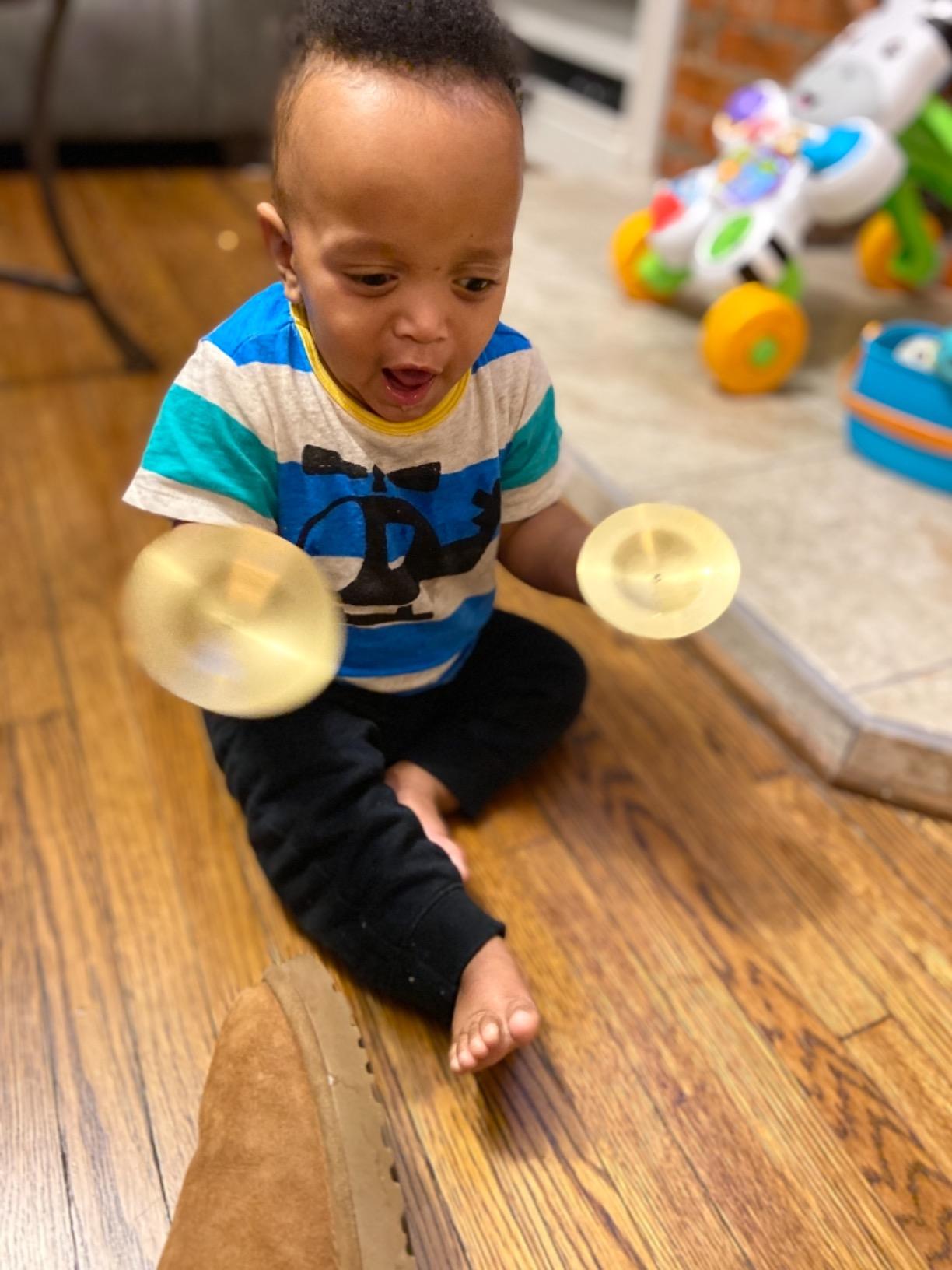
Build quality is the reason Melissa & Doug sits at the top of the wooden-toy category for many parents. The wood is solid, the paint is water-based, and the hardware (cymbal straps, triangle hook) has held up across multiple children in our tester homes. The tambourine head is the first thing to show wear, and a few reviewers note that very aggressive players can tear it. Replacing a tambourine head is straightforward if it happens.
For educators, this set is genuinely Orff-compatible. The tone blocks and triangle cover the pitched-percussion range, and the unpitched percussion covers the rhythm section. A parent or music teacher can run a full class session using nothing but this box.
How loud is it for indoor play?
The cymbals are the loudest pieces and the triangle can carry across a house. Most parents find the noise tolerable for short sessions, but apartment dwellers may want to keep the cymbals in a drawer for early-morning play.
Does the crate hold up?
Yes, the wooden crate is the most durable part of the set. Reviewers report it surviving drops, drags, and even being used as a step stool by older siblings without cracking.
5. Melissa & Doug Caterpillar Wooden Xylophone – Best First Xylophone for Toddlers
Melissa & Doug Caterpillar Wooden Xylophone Musical Toy Set
Rainbow xylophone
8 keys
Self-storing mallets
Pros
- Rainbow-colored xylophone with a full octave of notes
- Self-storing mallets double as the caterpillar's antennas
- Develops fine motor skills and artistic expression
Cons
- Mallets are slim and can be tough for very young toddlers to grip
- Bright colors may eventually fade with heavy sunlight exposure
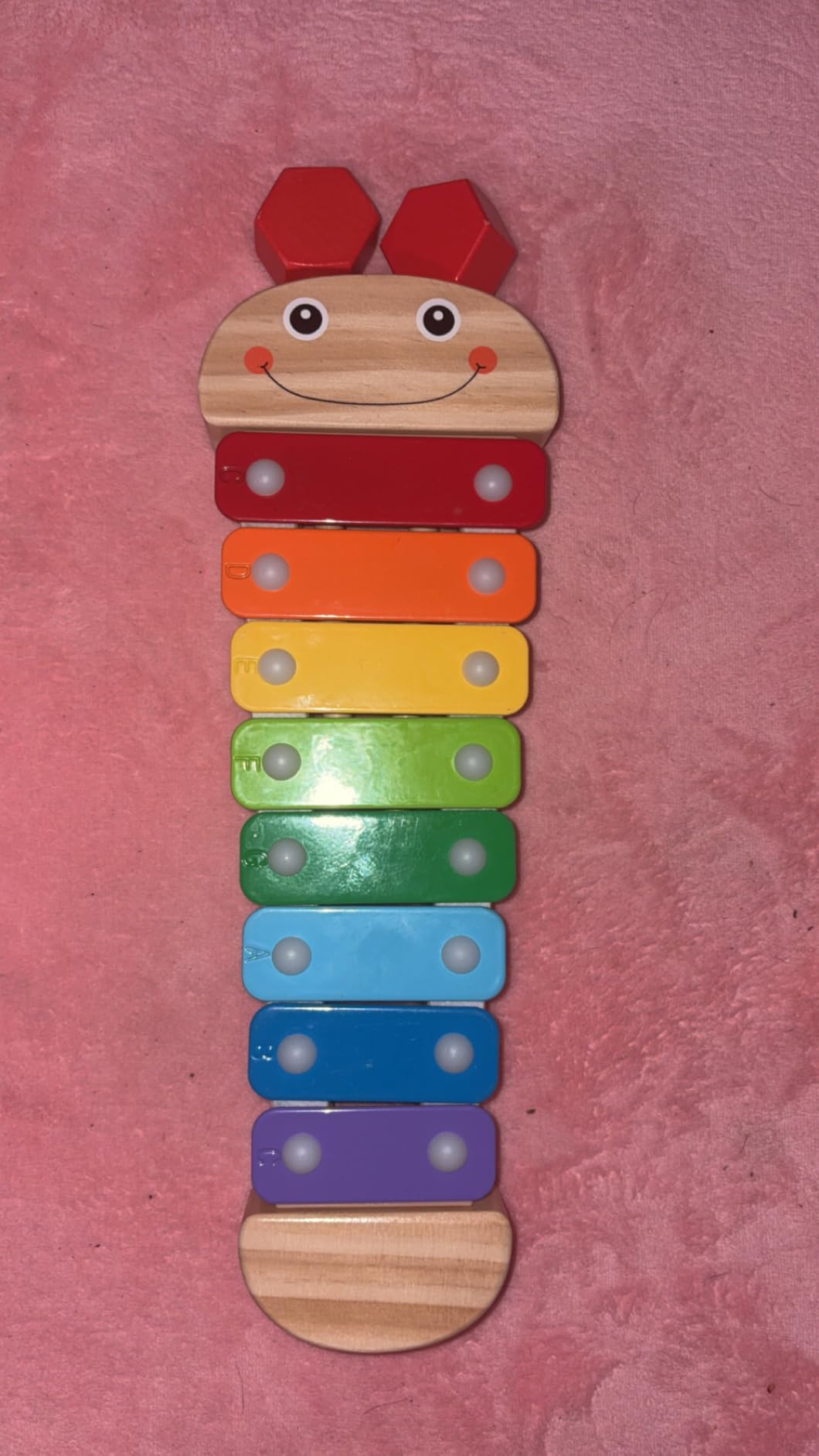
The Melissa & Doug Caterpillar Xylophone is the first xylophone we recommend for a child just graduating from a pull-toy into real instrument play. It carries a 4.7-star average across more than 5,600 reviews and it has the kind of design that survives being left out on a playroom floor for years.
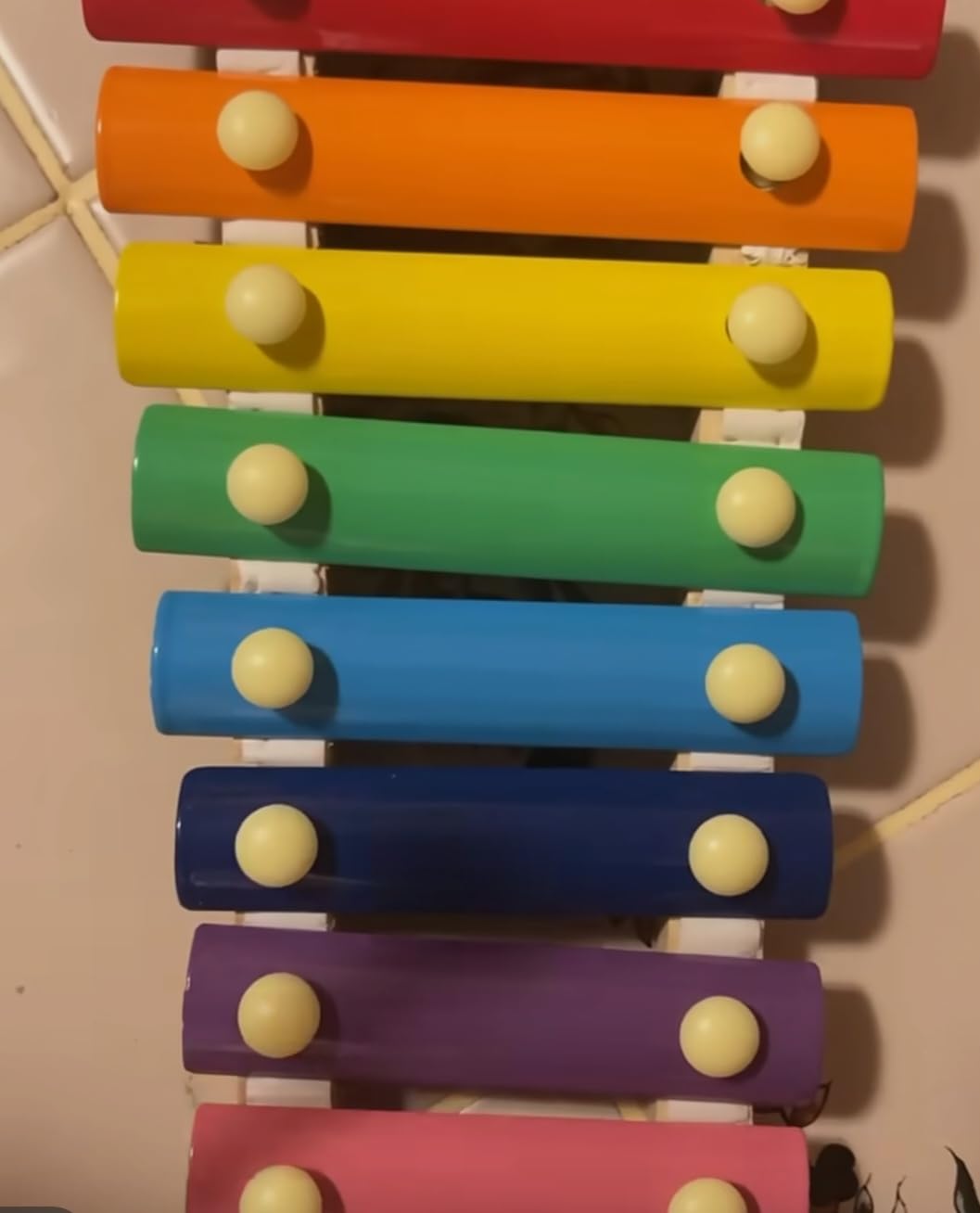
The xylophone spans a full octave across 8 colored keys, which is enough range for kids to play simple melodies they hear in songs. The mallets store in the frame by clipping into holes that become the caterpillar’s antennae, which solves the perennial lost-mallet problem better than most competitors.
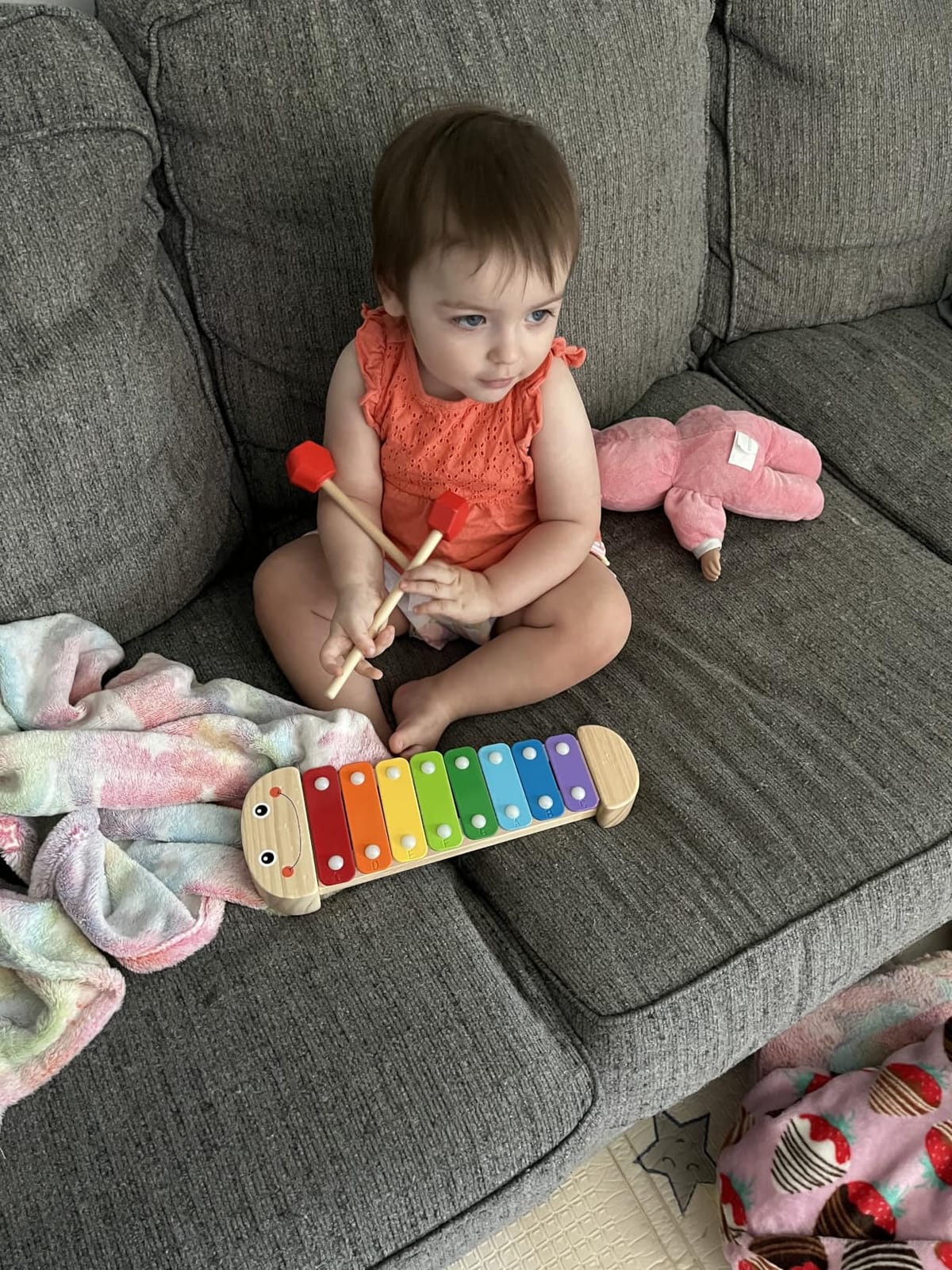
Our testers’ kids immediately recognized the colors and started asking for “the blue one” and “the red one” by name. That kind of color-coded play is a gateway to pitch recognition, because kids start associating higher and lower notes with specific colors before they can name intervals.
Construction is solid wood with a water-based finish. At 440 g it is light enough for a 3-year-old to carry around the house but heavy enough not to slide when struck. The mallets are slim, which is the main critique from the toddler-age end of the spectrum, but for 4 and 5-year-olds the size is fine.
How does it compare with the pull-along xylophone?
The pull-along version is better for toddlers just learning to walk and grab. The caterpillar version is better for preschoolers who are ready to focus on melody. Both can coexist in a household, but if you can only pick one and your child is over 3, the caterpillar is the stronger musical toy.
Does it teach real music?
Yes, within the limits of a single-octave toy xylophone. Children can play along with songs, learn the color-to-pitch association, and start exploring intervals. It is not a substitute for a real glockenspiel, but it is a legitimate first instrument.
6. BEST LEARNING My First Piano Book – Best Portable Piano for Travel
BEST LEARNING My First Piano Book – Toy Piano with Songbook for Kids
20-key piano
10 nursery rhymes
6 instrument sounds
Pros
- Colored numbers in songbook match numbered keys for instant start
- 10 familiar nursery rhymes including Old MacDonald and Wheels on the Bus
- UV-coated pages wipe clean and folds flat for travel
Cons
- Synthesizer sound can feel a bit tinny
- No volume controls
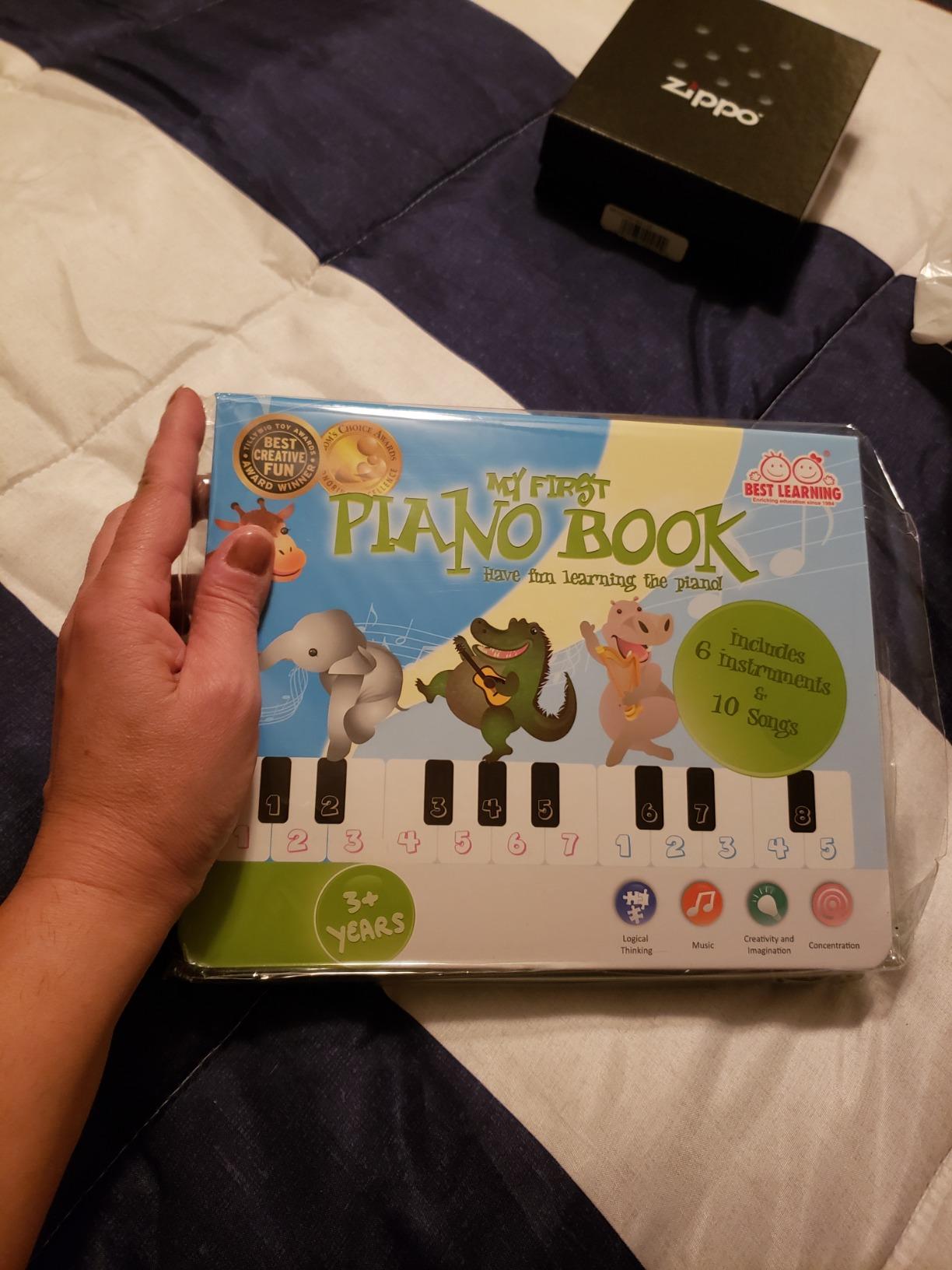
The BEST LEARNING My First Piano Book is the only product on this list that folds flat into a book, which makes it the strongest choice for travel and for kids who want to play songs they already know. It carries a 4.6-star average across more than 5,000 reviews and has earned both Mom’s Choice Gold and Tillywig Best Creative Fun awards.
The genius of this toy is the songbook-to-piano mapping. Each of the 20 keys has a printed number that matches the numbers in the 20-page songbook, so a child who cannot read music can still play a recognizable tune on day one. Old MacDonald, The Wheels on the Bus, and eight other nursery rhymes are included.
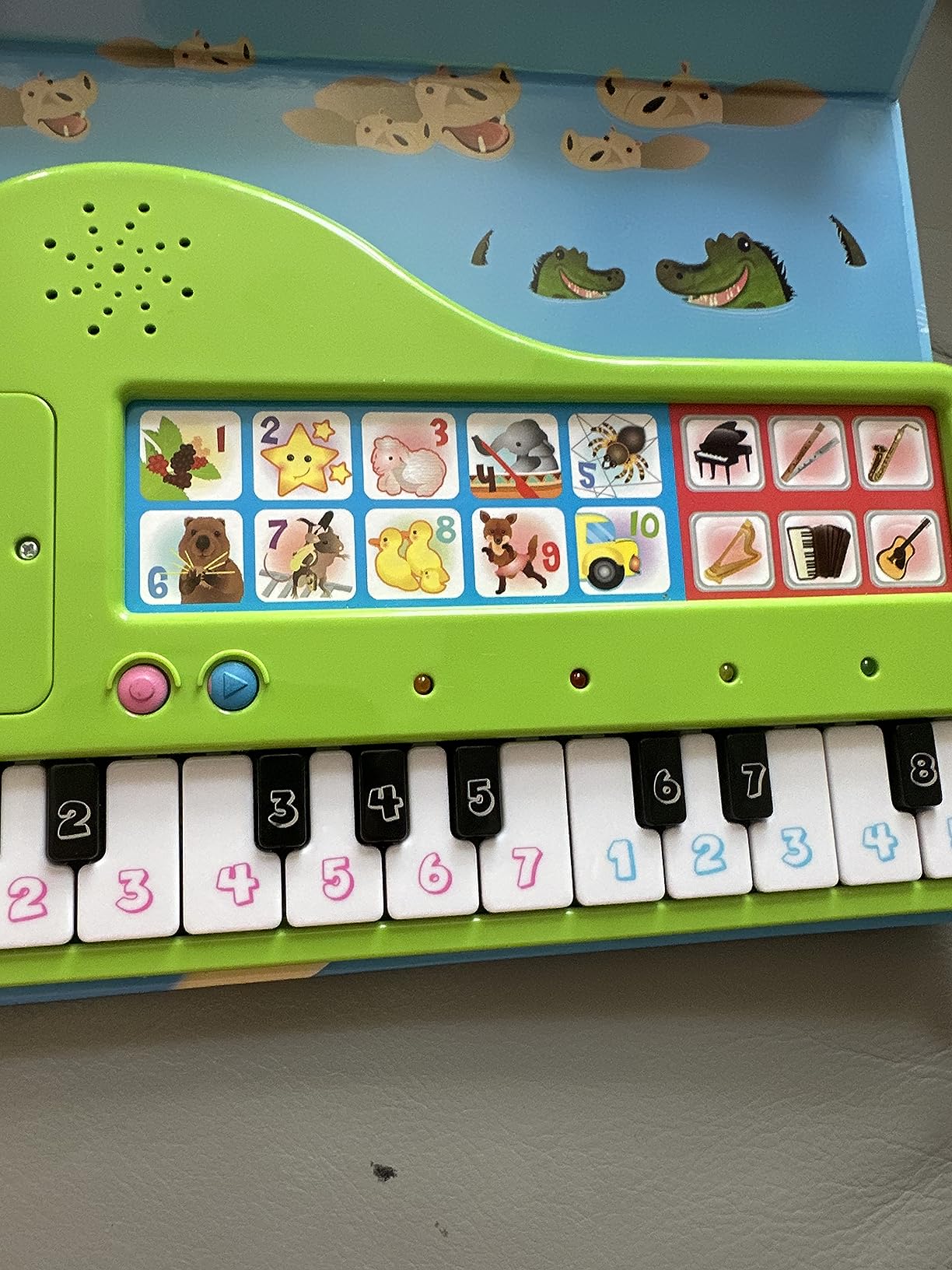
The piano also doubles as a recording studio for kids who want to compose. They can record up to 54 notes with chords and play them back, which is a level of creative freedom most musical toys at this age do not offer. Six instrument sounds let kids switch between piano, flute, saxophone, harp, accordion, and guitar, which keeps the toy interesting longer than a single-voice keyboard.
Construction is plastic with UV-coated pages that wipe clean. Our testers appreciated the auto-sleep feature, which kicks in after 30 seconds to save batteries. The sound is tinny compared with a real piano, but at this age that is rarely the point.
Is it good for travel?
Yes, this is the best travel piano on our list. It folds flat, fits in a diaper bag, runs on two AAA batteries, and survives being tossed in and out of a backpack. For road trips, restaurant waits, or quiet hotel-room play it is unmatched.
Does it pair with any formal method?
It pairs loosely with Suzuki’s “listen first, play second” approach. Children hear the melody in the songbook, then reproduce it on numbered keys. That mirrors how Suzuki students learn songs by ear before reading notation.
7. Childom Wooden Musical Instruments Set – Best Budget Percussion Set
Childom Wooden Musical Instruments Set, Preschool Percussion Instrument Kit
11-piece percussion
Carrying bag
3 years and up
Pros
- 11-piece set exposes kids to different tones
- volumes
- and rhythms
- Colorful design comes with a carrying bag
- Supports creativity
- hand-eye coordination
- and music appreciation
Cons
- Recommended for supervised play
- Some pieces feel lighter than expected
Childom’s 11-piece percussion set is the budget entry on our list and the right pick for parents who want variety without a premium price tag. With a 4.5-star average across more than 8,200 reviews, it has held up as one of the most popular entry-level sets on Amazon.
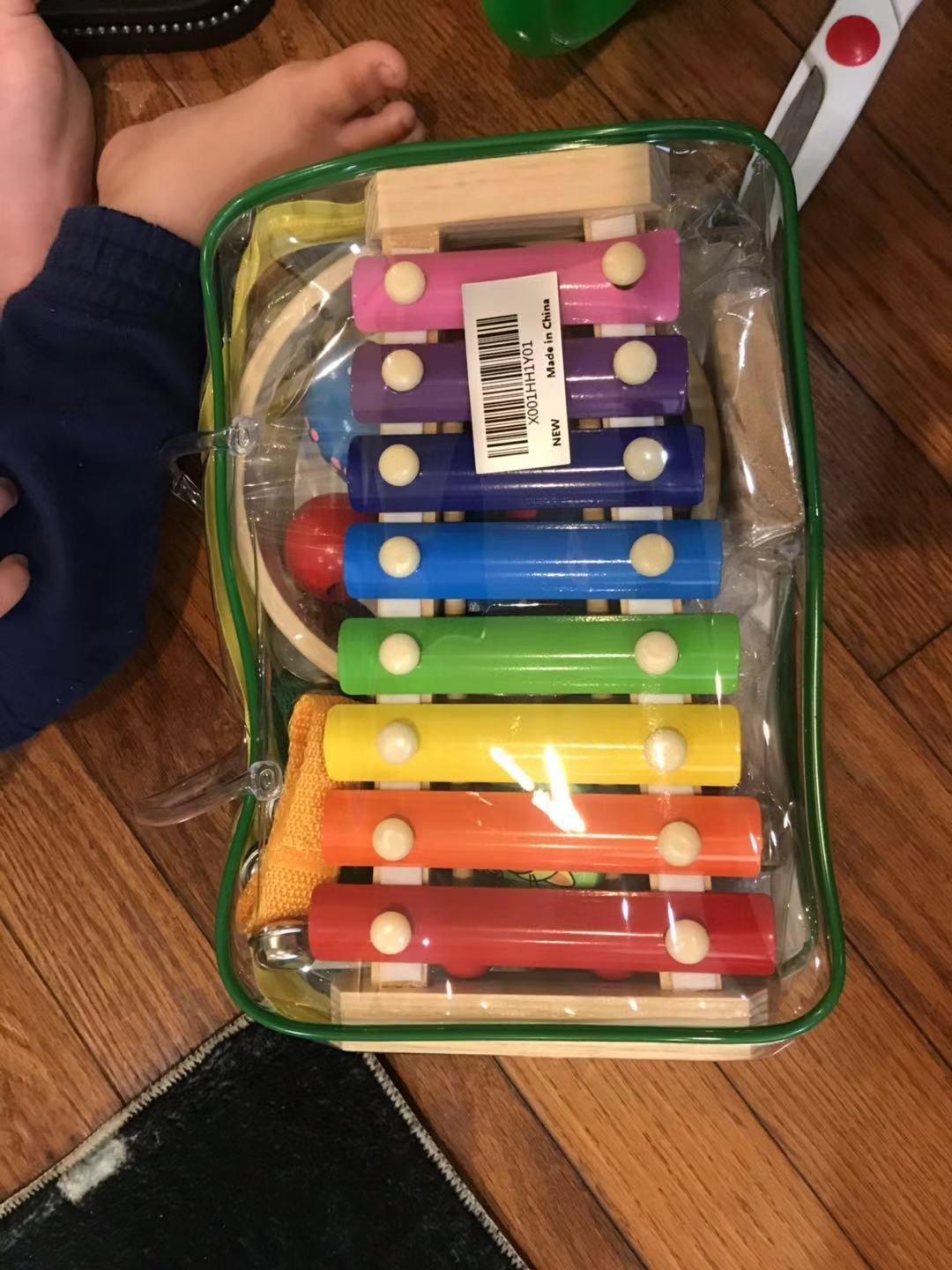
The kit includes a mix of shakers, bells, a small xylophone, maracas, and a hand drum, plus a carrying bag that solves the storage problem most percussion sets have. Our testers used it for both solo play and small group sessions, and the variety kept 4-year-olds engaged longer than a single-instrument toy would have.
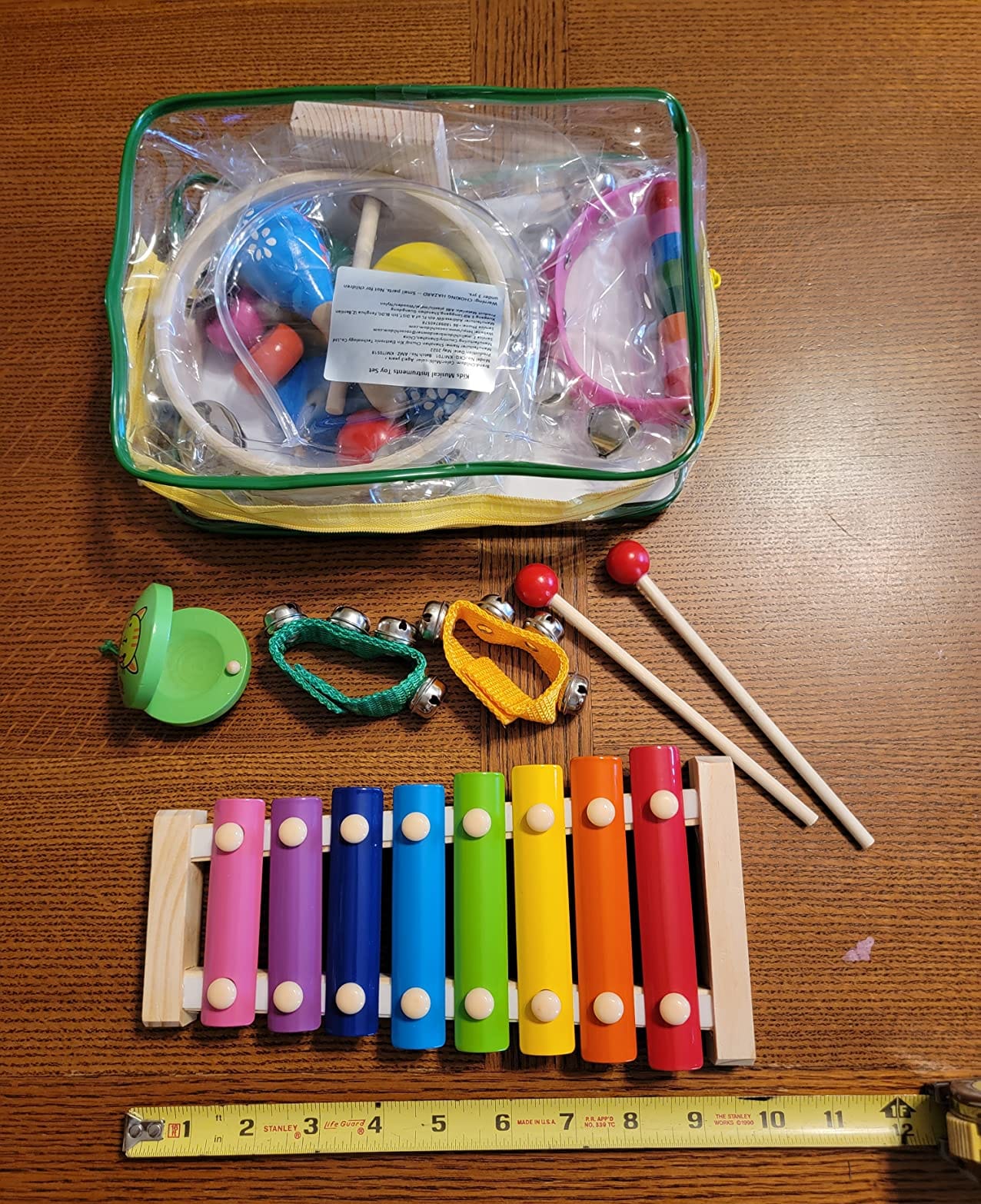
Materials are a blend of wood, plastic, nylon, and metal. The wood pieces feel light, which is appropriate for small hands but means the set will not survive being thrown down stairs. Supervision is the right call, especially with younger siblings in the home.
For parents introducing a first instrument to a child who has not shown a preference yet, this set is the right starting point because it lets the child discover whether they gravitate toward rhythm (drums, shakers) or pitch (xylophone, bells). One set, multiple discoveries.
How does it compare with the Stoie’s set?
Stoie’s set uses more solid wood and meets stricter safety certifications, which is why it earns BEST VALUE. Childom’s set wins on variety at the lowest price point. Both are solid; the right choice depends on how much you want to invest in wood quality.
Is the bag useful?
Yes, the carrying bag is the unsung hero of this set. Parents report that having one bag to corral all 11 pieces is what keeps the toy in rotation rather than getting lost under the couch.
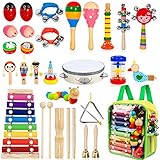
8. Taimasi 33-Piece Wooden Percussion Set – Best for Classrooms and Large Groups
Kids Musical Instruments, 33Pcs 18 Types Wooden Percussion Instruments Tambourine Xylophone Toys for Kids Children, Preschool Education Early Learning Musical Toy for Boys and Girls
33 pieces
18 instrument types
Backpack included
Pros
- 33-piece set covers 18 different instrument types for max variety
- CPC and ASTM certified for safety
- Comes with a clear backpack for storage and travel
Cons
- More pieces means more cleanup and more to lose
- Some pieces feel smaller than expected for very young toddlers
The Taimasi 33-piece set is the largest percussion set on our list and the right answer for preschool classrooms, daycares, homeschool co-ops, and large families with multiple ages mixing at the same time. It carries a 4.6-star average across more than 4,200 reviews and sits at the #3 spot in its category.
The set spans 18 instrument types, which is enough variety to keep a small group engaged for an entire circle-time session. Our testers split the pieces across four kids ages 3 to 6 and everyone had something different to play. The clear backpack is a smart inclusion because it lets parents and teachers see at a glance which pieces are missing.
Materials are wood with lead-free paint, and the set carries both CPC and ASTM certifications. Smaller pieces like the castanets and small shakers are appropriate for ages 3 and up but should be supervised with younger toddlers.
For Orff and Kodaly-aligned early-music programs, this set covers nearly every unpitched percussion category a teacher would want for a starter ensemble. The variety also supports inclusive play: kids who do not want to hold a drum can pick up a shaker, and kids sensitive to loud sounds can choose the quieter wood-block options.
How does it work for sibling play?
Excellent. With 33 pieces spread across multiple kids, no one is fighting over a single instrument. Our testers reported this as the set that survived the longest in a multi-child household because every kid found their own favorite piece.
Is it too much for a single child?
For a single child, the variety is overkill. The Stoie’s 10-piece set is a better fit for solo play. Taimasi earns its spot on this list for group settings, classrooms, and big families.
9. FOKI Floor Piano Mat – Best for Active and Sensory Play
FOKI Floor Piano Mat, Baby & Toddler Toys for 1-3 Year Old Boys & Girls
19-key floor mat
32 sounds
5 play modes
Pros
- Floor piano mat encourages active whole-body musical play
- 5 play modes including Standard
- Simulation
- Chorus
- Melody
- and Performing
- Folds for storage and travel
- wipes clean
Cons
- Needs 3 AA batteries (not included)
- Fabric surface needs a flat floor to sound right
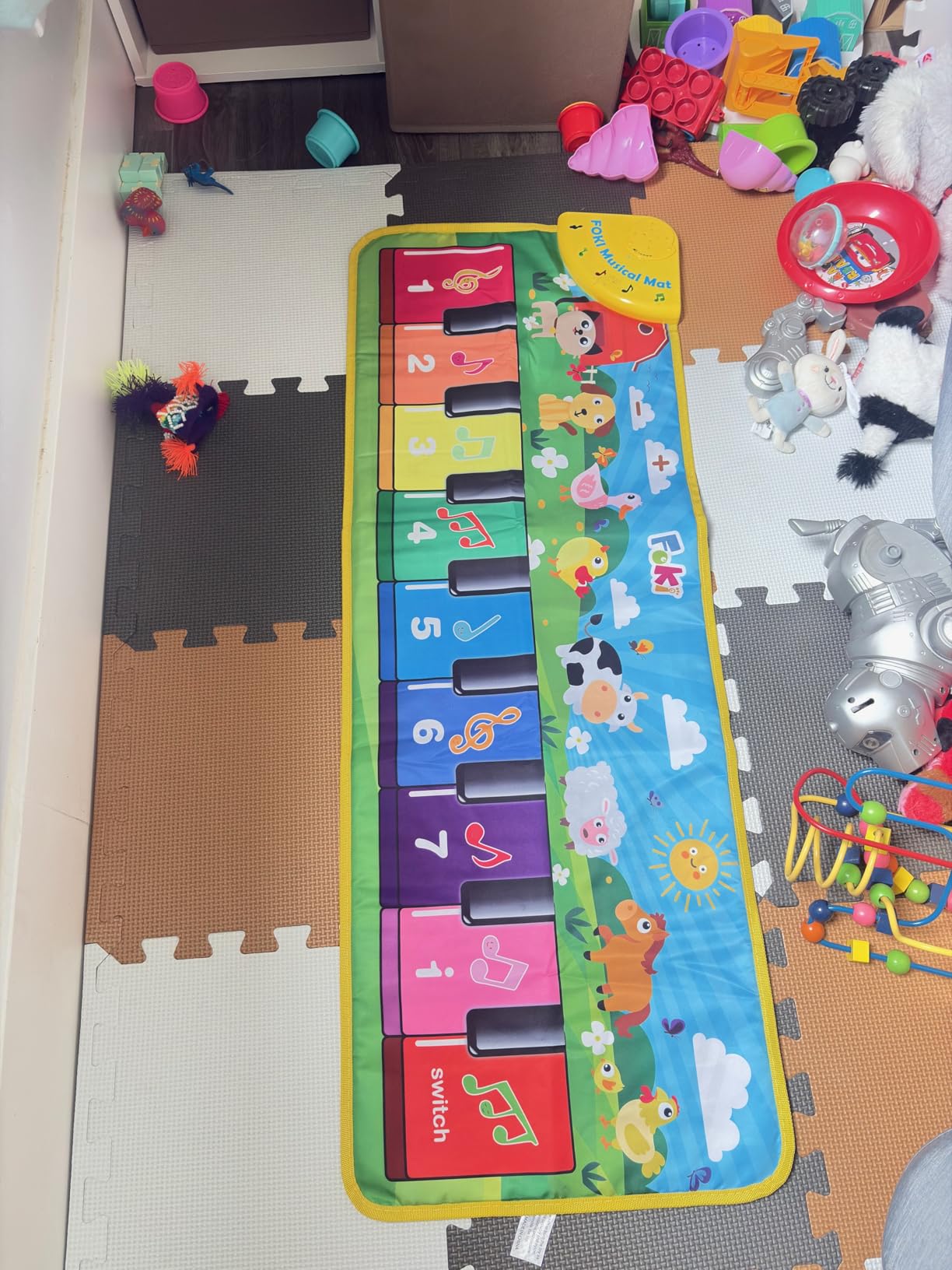
The FOKI Floor Piano Mat is the only toy on our list that gets kids moving while they make sound, which is why it earns the spot for active and sensory play. With a 4.6-star average across more than 3,000 reviews, it has built a strong following among parents of kids who need to move while they learn.
The 39 x 14 inch mat lies flat on the floor and turns stepping, jumping, and dancing into music. Five play modes cover solo piano, simulations, chorus, melody playback, and a performing mode that adds echo and reverb effects. There are 32 sounds in total, including 8 animal noises that delight toddlers who are not yet ready for piano.
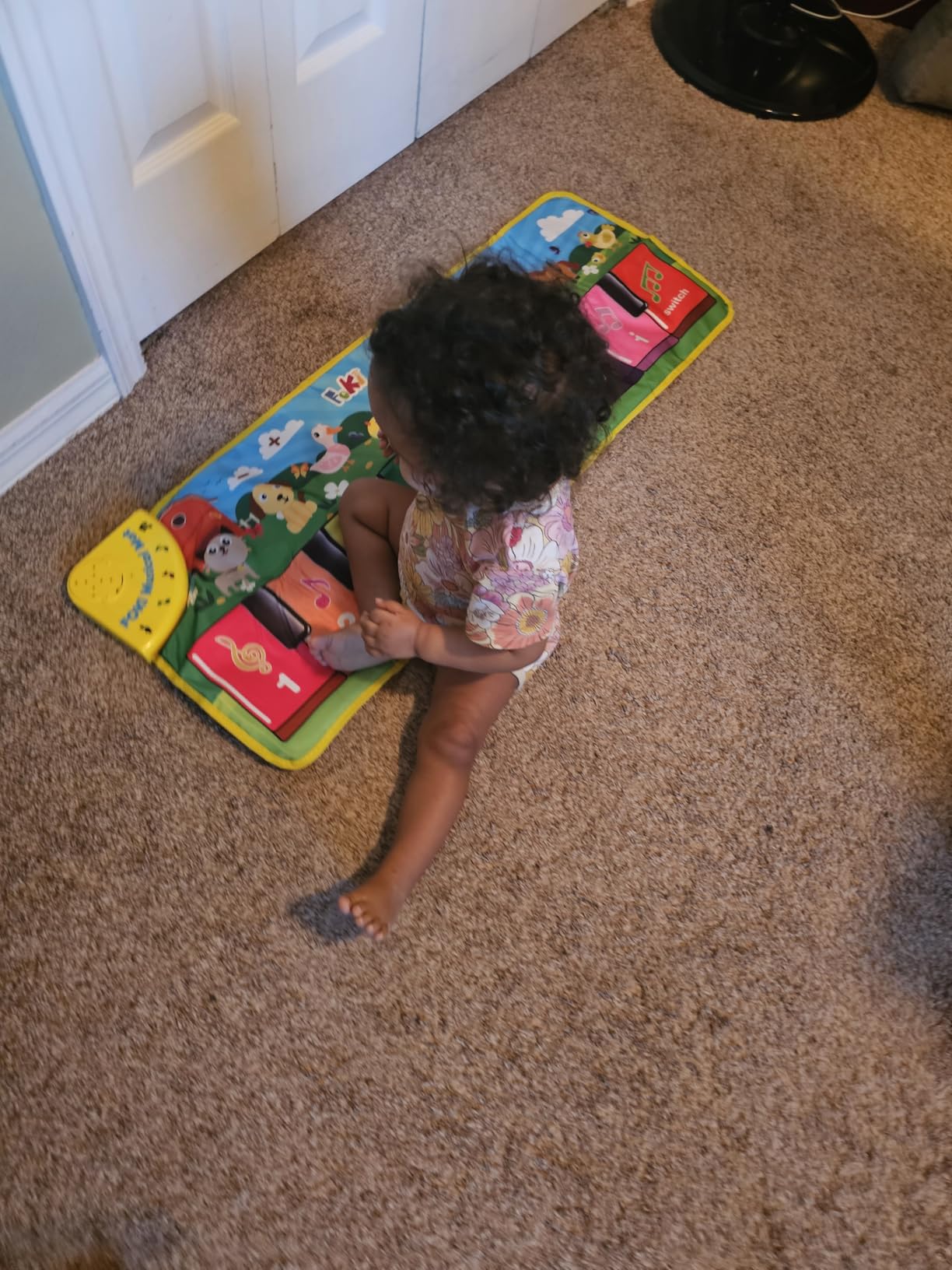
Our testers found the mat most useful as a sensory tool for kids who get frustrated sitting still at a table. It works on carpet or hard floors, folds up for storage, and wipes clean. The included 8 animal music cards let parents run mini music lessons without a screen.
For sensory-friendly play, the mat has real advantages. Kids who cannot tolerate loud handheld instruments often accept the floor mat because the sounds come from below their feet rather than being pressed against their hands. It is also a strong fit for inclusive play, especially for kids with sensory-processing differences.
What ages is this best for?
Manufacturer rates it from 3 months to 5 years, which is a wide range. In our testing, the sweet spot is 18 months to 4 years, when kids are excited by cause-and-effect stepping. Older preschoolers tend to want a real instrument.
Does it need a special surface?
A flat hard floor produces the best sound. On thick carpet, the mat can muffle the response. Most testers put it on a kitchen or living-room floor.
10. LeapFrog Strum and Count Wooden Guitar – Best First String Instrument
LeapFrog Strum and Count Wooden Guitar, Musical Toddler Toy
8 fret keys
FSC-certified wood
18 months to 5 years
Pros
- Eight fret keys introduce colors and numbers with a light-up neck
- Real strumming strings for authentic guitar feel
- Made with 100% FSC-certified wood
Cons
- Review base is smaller than other toys on this list
- Strings will need occasional retuning by a parent
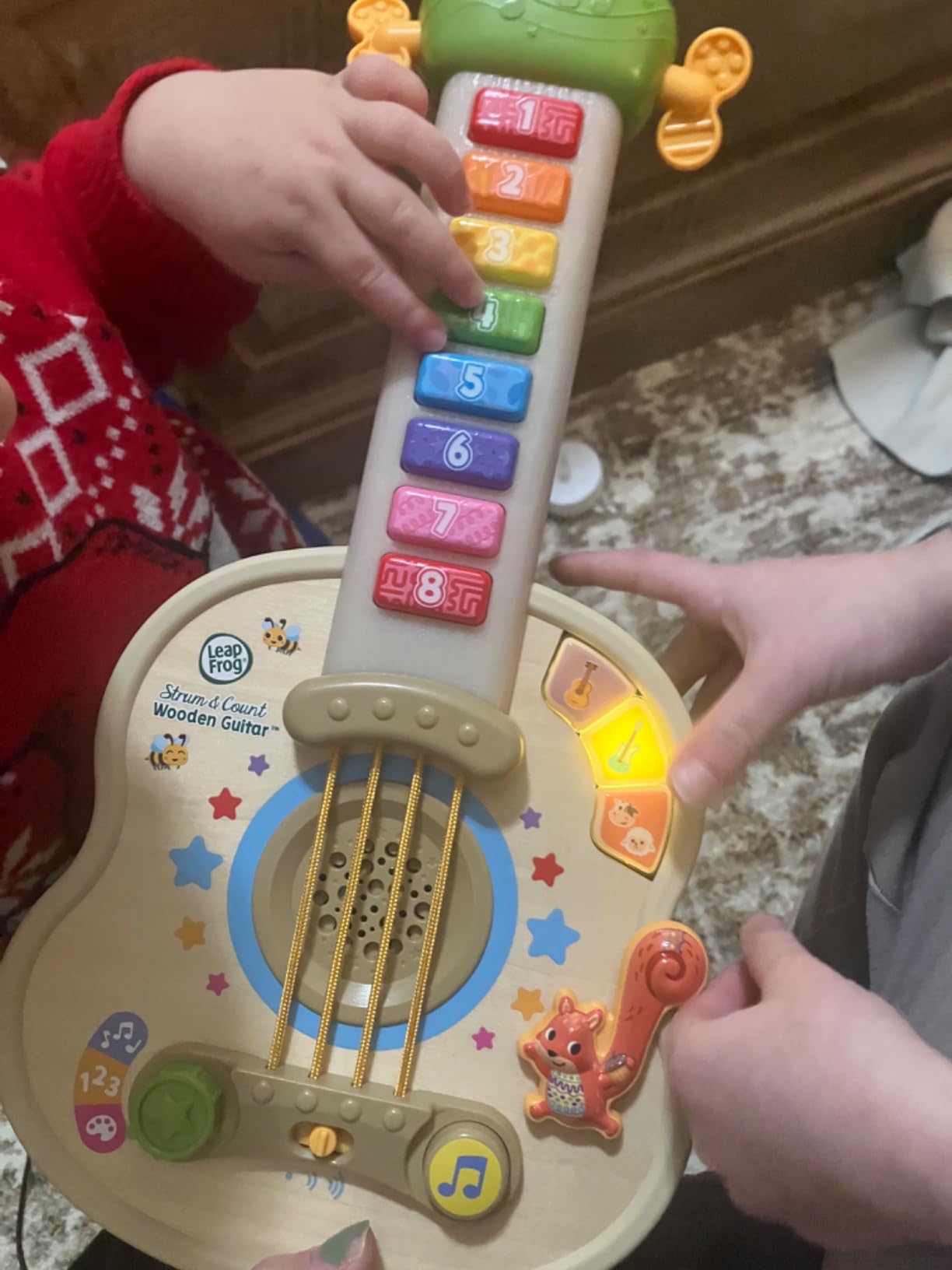
The LeapFrog Strum and Count Wooden Guitar is the strongest string-instrument option on our list and the only one made with FSC-certified wood, which matters to parents who care about sustainable sourcing. It carries a 4.8-star average, the highest of any product in our top 10, though it has a smaller review base of around 650 reviews as a newer release.
The design pairs an authentic guitar body with real strumming strings and a learning neck. Eight fret keys introduce colors and numbers while the neck lights up, and the squirrel tail lever runs vocabulary and music-style games. There are three sound banks: acoustic guitar, electric guitar, and barnyard animals, which keeps the toy interesting across a longer age range.
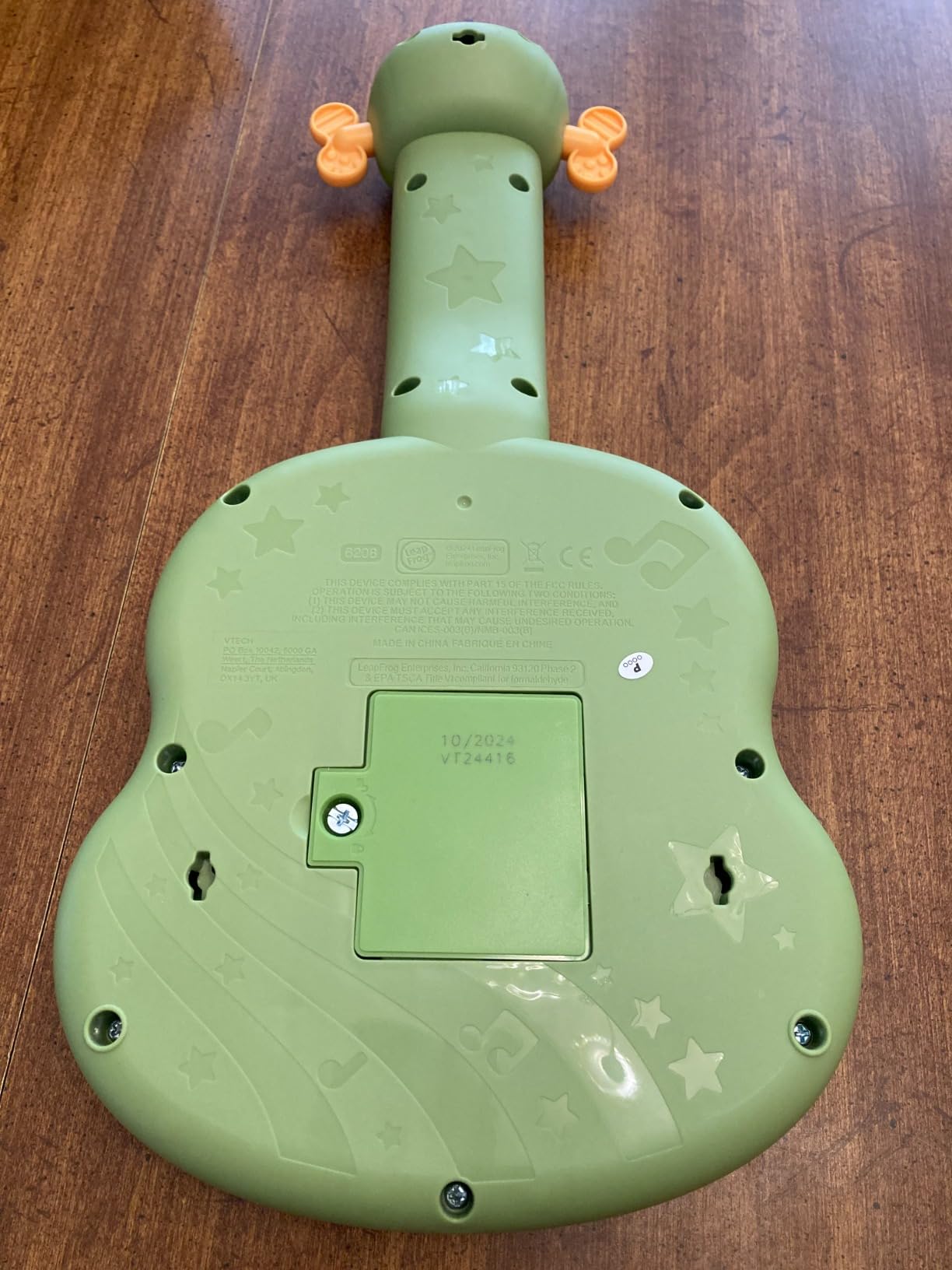
Build quality is the standout feature. The wood is 100% FSC-certified, meaning it comes from responsibly managed forests. At 1.2 pounds the guitar has enough heft to feel real without being too heavy for an 18-month-old to drag around.
For Suzuki-aligned families, this guitar offers the right starting exposure: a child hears pitched sounds, feels the strings respond to strumming, and learns the cause-and-effect of finger placement on frets. It is a real first step toward a proper ukulele or guitar when the child is older.
How does it compare with a real ukulele?
It is not a substitute for a real instrument, but it is a better fit than a full ukulele for ages under 5 because the strings are easier to press and the neck is sized for small hands. Most kids who learn on this guitar transition smoothly to a real ukulele around age 5 or 6.
Does it need batteries?
Yes, three AA batteries are included for demo. For regular play, fresh batteries are recommended, especially if the light-up neck is a favorite feature.
How to Choose the Best Musical Toy for Your Preschooler
Age range is the first filter. Most of the toys on this list start at 18 months to 3 years and run to 5 or 6 years. A 3-year-old who has never played a percussion instrument should start with a multi-piece set like the Childom or Stoie’s kits, because the variety lets them discover what they like. A 4 or 5-year-old ready for a single instrument benefits more from a focused xylophone, drum, or keyboard.
Material and safety
Look for non-toxic water-based paint, smooth sanded edges, and wood or food-grade plastic. For kids under 3, avoid small parts that qualify as choking hazards. The Melissa & Doug Band-in-a-Box, for example, is rated for 3 years and up because of the triangle beater and small cymbal parts.
Noise level and hearing safety
The World Health Organization recommends keeping sustained sound exposure for children below 85 dB. Electronic drums and keyboards at full volume can push past that line. Wooden xylophones and maracas stay well below the threshold, which is one reason they are the better choice for apartment families and for kids with noise sensitivity. If you go electronic, look for a volume control and use it.
Solo play vs group play
A solo child benefits most from a single-instrument toy like a xylophone, drum, or piano. A classroom, daycare, homeschool co-op, or multi-child household needs a multi-piece set so everyone has something to play. The Taimasi 33-piece set is the strongest group-play pick; the Fisher-Price xylophone is the strongest solo pick.
Music education alignment
Parents who want a little structure alongside the noise can match a toy to a recognized early-music method. The Suzuki approach starts with listening and ear training, so the BEST LEARNING Piano Book with its songbook mapping is a natural fit. The Orff Schulwerk approach emphasizes rhythm and ensemble play, which makes the Stoie’s wooden set or the Taimasi 33-piece kit the best classroom-style match. The Kodaly method focuses on singing and inner hearing, which pairs best with simple percussion that lets a child keep a beat while singing.
Pairing toys with songs and apps
A toy becomes a stronger learning tool when it is paired with a song. For xylophones, the songbook in the BEST LEARNING Piano Book or the color-coded keys in the Melissa & Doug Caterpillar Xylophone give kids a starting map. For drums, free apps like “Drum School” let kids practice simple patterns on a parent’s phone before transferring them to a real pad. For piano, YouTube has free numbered-key tutorials that pair directly with the BEST LEARNING songbook approach.
Care and storage
Wooden toys last longer when stored dry. Wipe with a damp cloth, do not soak, and keep them out of direct sunlight to prevent fading. Percussion sets with carrying bags (Childom, Taimasi) make storage easier. Electronic toys last longer when batteries are removed between long breaks, which prevents leakage damage.
Frequently Asked Questions
Are musical toys good for preschoolers?
Yes. Musical toys support fine motor development, hand-eye coordination, language acquisition, and emotional regulation in children ages 3 to 5. They also build a foundation for rhythm recognition and pitch awareness that helps with later formal music learning.
What musical instruments are good for preschoolers?
Xylophones, hand drums, tambourines, maracas, keyboards, and small string instruments like the LeapFrog Strum and Count Wooden Guitar are all good fits. Multi-piece percussion sets like the Stoie’s or Melissa u0026amp; Doug Band-in-a-Box are also strong options because they let children explore multiple instrument families.
What age should a child start playing with musical toys?
Most musical toys on this list start at 18 months to 3 years. Younger toddlers do well with pull-along xylophones and shakers. From age 3 upward, children can handle focused single-instrument play like a real drum, keyboard, or xylophone.
What are the benefits of musical toys for toddlers?
Musical toys build fine motor control through striking and pressing, support hand-eye coordination through aiming mallets at keys, develop auditory processing through exposure to pitch and rhythm, encourage language development through songs, and provide an outlet for emotional expression and self-regulation.
What is the best musical instrument for a 4 year old?
The Fisher-Price Classic Xylophone Pull Toy is the strongest overall pick for a 4-year-old because it doubles as a walker and a real xylophone with tuned metal keys. For a child ready for a single focused instrument, the Melissa u0026amp; Doug Caterpillar Xylophone or the VTech KidiBeats Drum Set are both excellent choices.
Are toy instruments worth it?
Yes, when chosen with age, build quality, and sound level in mind. Wooden toys from trusted brands last through multiple children and provide a screen-free play option. Electronic toys are worth it when they include volume control and learning modes that extend play beyond a single feature.
What is a good first instrument for a child?
A xylophone is the most common first instrument because it teaches pitch, color association, and melody in a format a child can master quickly. Hand drums are a close second for kids who respond more to rhythm than melody. Both map naturally to the Suzuki listening-first method.
How do musical toys help with child development?
Musical toys help with child development by building fine motor skills through striking and pressing, supporting hand-eye coordination through aiming, encouraging language acquisition through song and rhythm, fostering emotional regulation through creative expression, and introducing early math concepts like patterns and sequencing.
Final Verdict
After months of family testing, the Fisher-Price Classic Xylophone Pull Toy stands as our top pick for the best musical toys for preschoolers in 2026. It combines real musical tuning, durable construction, and dual play as a walker, and it has earned its 4.8-star average across more than 25,000 reviews the hard way: by being a genuinely good toy that holds up.
For parents who want a full Montessori-style wooden music classroom in a single box, the Stoie’s 10-piece wooden set is the strongest value pick. For kids who need the engagement of lights, modes, and electronic sounds, the VTech KidiBeats drum set is the right call. Whatever you choose from this list, you are giving a preschooler a screen-free, developmentally rich play experience that builds skills they will use for years.