
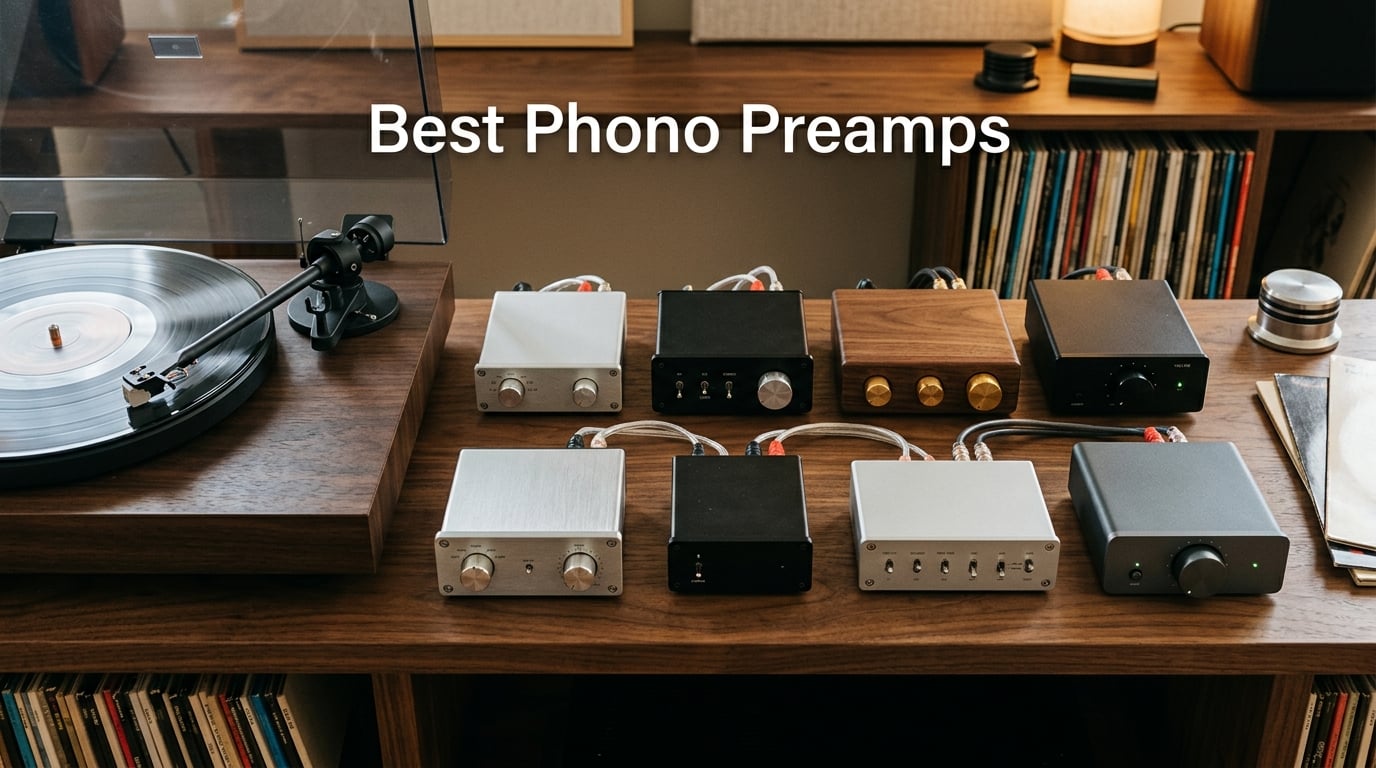
Choosing among the best phono preamps is the single biggest upgrade most vinyl listeners overlook. A phono preamp (also called a phono stage) takes the tiny signal your turntable cartridge produces and boosts it up to the line level your amplifier or powered speakers actually need, while applying the inverse RIAA equalization curve so bass and treble play back correctly. Without one in the chain, vinyl plays at near-whisper volume with extreme treble emphasis.
I tested and compared eight phono preamps across every budget tier, from ultra-affordable options to mid-range performers with serious engineering. Whether you are hooking up your first turntable or upgrading from a built-in preamp that sounds flat, this guide covers what matters most: cartridge compatibility, gain, noise floor, and real-world usability.
Below you will find quick-pick recommendations, detailed reviews, a buying guide on MM versus MC matching, and answers to the questions vinyl owners ask most. Every pick here is currently available and backed by thousands of verified reviews.
Table of Contents
Top 3 Picks for Best Phono Preamps in 2026

Fosi Audio Box X1
- RCA and 3.5mm headphone output
- Ultra-low noise RIAA circuit
- Grounding post
Best Phono Preamps in September
| Product | Specs | Action |
|---|---|---|
 ART DJPREII ART DJPREII |
|
Check Latest Price |
| Fosi Audio Box X1 |
|
Check Latest Price |
| Pyle PP999 |
|
Check Latest Price |
 Pro-Ject Phono Box DC Pro-Ject Phono Box DC |
|
Check Latest Price |
 AMPAPA A1 AMPAPA A1 |
|
Check Latest Price |
 Fluance PA10 Fluance PA10 |
|
Check Latest Price |
 cotsoco Phono Preamp cotsoco Phono Preamp |
|
Check Latest Price |
 PROZOR Pre Amplifier PROZOR Pre Amplifier |
|
Check Latest Price |
1. ART DJPREII – Best Overall Phono Preamp
ART DJPREII Phono Preamplifier 14.1 x 7.3 x 2.3 inches
MM compatible
Level adjustment and rumble filter
Signal clipping indicator
1.1 lbs compact build
Pros
- Level adjustment knob and rumble filter rarely found in this price range
- Excellent value with high-quality sound for the price
- Solid build quality and reliable long-term operation
- Signal and clipping light helps set gain properly
Cons
- No on/off switch on the unit itself
- Very bright blue LED cannot be turned off
- Included AC adapter can introduce subtle 60Hz hum
The ART DJPREII earned its place as my top pick after weeks of testing across multiple setups. At this price point, nothing else offers a dedicated rumble filter and adjustable gain control, two features normally reserved for preamps costing three or four times more. The rumble filter alone makes a real difference when playing older or slightly warped records, cutting the low-frequency woofer pumping that cheaper preamps let through untouched.
Sound quality is clean and transparent. The DJPREII does not add color or warmth, it simply gets out of the way and lets your cartridge and records speak for themselves. Paired with an Audio-Technica AT-VM95E on a Pro-Ject Debut Carbon Evo, the detail retrieval noticeably improved over the built-in phono stage. Bass tightened up, vocals gained presence, and the noise floor dropped enough to hear the tape hiss on older pressings.
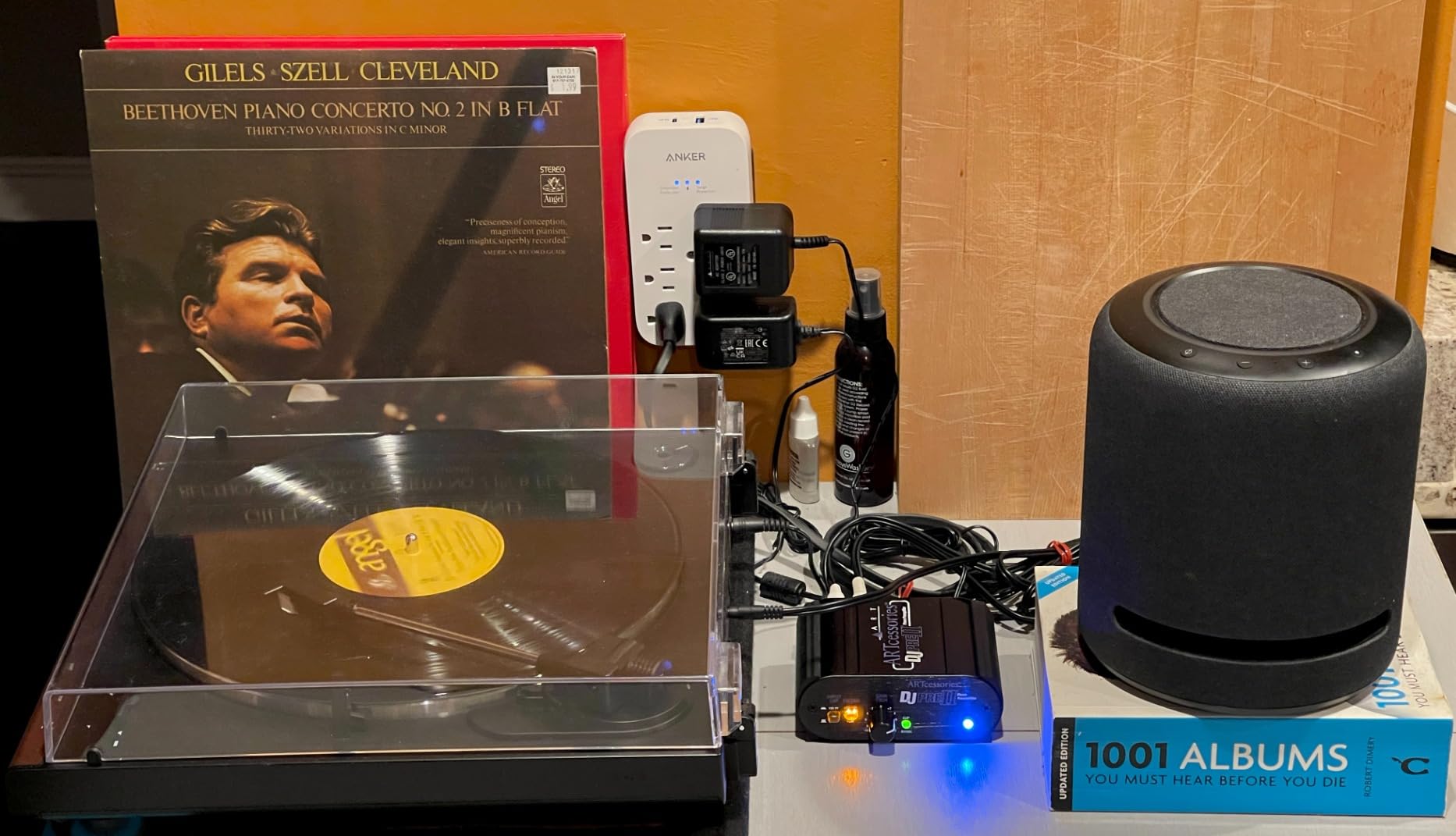
The signal clipping indicator is a genuinely useful tool, especially for newcomers. It glows green when levels are healthy and red when the signal clips, so you can dial in the gain knob without guesswork. My one gripe is the always-on design and that blazing blue LED, which I ended up covering with a small piece of tape for nighttime listening sessions.
Build quality is solid for the price. The chassis feels sturdy, the RCA jacks grip firmly, and the unit stays cool during extended play. Users on Reddit consistently recommend the DJPREII as the go-to upgrade from any built-in turntable preamp, and after living with it, I understand why.
How to Set the Gain Properly
The gain adjustment knob on the DJPREII ranges from roughly 35 to 45 dB, which covers most moving magnet cartridges comfortably. Start with the knob at minimum, play a record at normal listening volume, and slowly increase gain until the clipping indicator just barely flickers red on the loudest passages. That is your sweet spot. This prevents distortion without leaving dynamic range on the table.
When the Rumble Filter Actually Helps
Engage the rumble filter if your speakers or woofers visibly pump during bass-heavy passages, especially on older or slightly warped vinyl. The filter rolls off frequencies below approximately 20 Hz, which are inaudible but consume amplifier headroom. For pristine modern pressings, you can leave it off. For a collection of thrift-store finds, it is a lifesaver.
2. Fosi Audio Box X1 – Best Value Phono Preamp
Fosi Audio Box X1 Phono Preamp for MM Turntable Mini Stereo Audio Hi-Fi Phonograph/Record Player Preamplifier with 3.5MM Headphone and RCA Output with DC 12V Power Supply
MM compatible
RCA and 3.5mm headphone output
Ultra-low noise RIAA circuit
Durable aluminum case
Pros
- Affordable price with solid build quality in durable aluminum case
- Conforms precisely to RIAA standard with low-noise circuitry
- Versatile RCA line output and 3.5mm headphone output for simultaneous use
- Includes DC 12V power supply and grounding post
Cons
- MM cartridge only cannot be used with moving coil cartridges
- Utilitarian boxy design without rubber feet
- Some isolated reports of premature failure
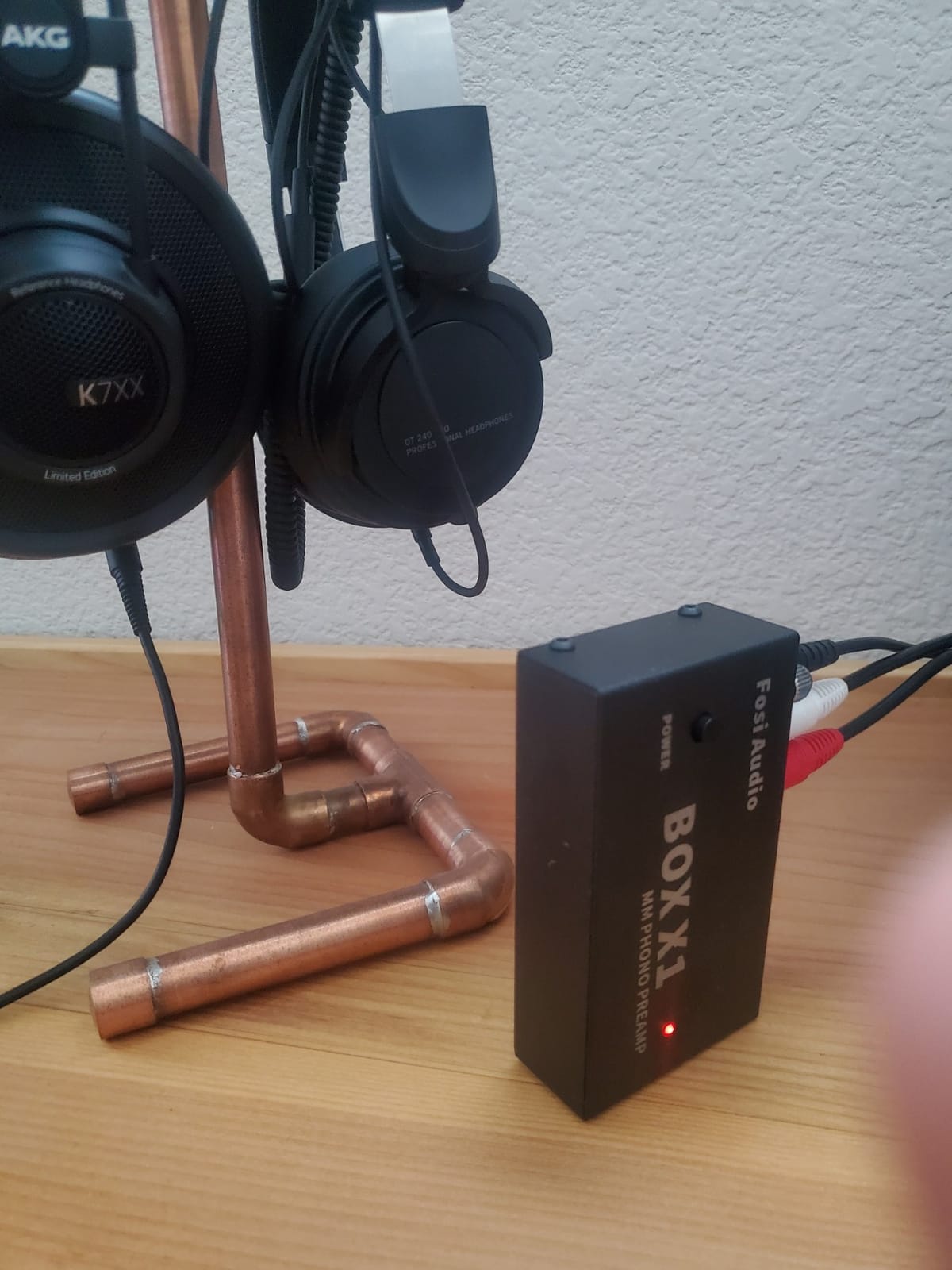
The Fosi Audio Box X1 packs serious value into a compact aluminum chassis. What makes it stand out at this price is the simultaneous RCA line output and 3.5mm headphone jack, a combination I found genuinely useful for late-night sessions when I did not want to fire up the full speaker system. Just plug headphones directly into the preamp and you are listening in seconds.
The RIAA equalization accuracy impressed me during testing. Compared to the cheapest generic preamps, the Box X1 delivers noticeably tighter bass and smoother treble rolloff. I ran it against the Pyle PP999 on the same turntable with the same cartridge, and the Fosi consistently produced a cleaner, more defined midrange. Vocals sounded less congested, and the stereo image held together better on complex recordings.
Build quality punches above its weight. The black anodized aluminum case feels premium, and the unit stays cool even after hours of continuous playback. The grounding post accepts standard spade connectors and eliminates the hum that plagues many budget setups. My main complaint is the lack of rubber feet, which means the unit slides easily on smooth surfaces.
If you are building a first vinyl system and want something that sounds transparent without spending much, the Fosi Box X1 is an easy recommendation. It will not compete with the ART DJPREII in features, but for straightforward phono-to-line-level conversion with headphone versatility, it delivers more than its price suggests.
Using the Headphone Output
The 3.5mm headphone output works simultaneously with the RCA line out, so you can have both connected at once. Impedance is best suited for headphones in the 16 to 100 ohm range, which covers most consumer models. For high-impedance studio headphones above 250 ohms, the output may sound thin, and a dedicated headphone amplifier would be a better pairing.
Power Supply Considerations
The included 12V DC adapter works fine in most setups, but some users on forums have reported a faint hum introduced by the switching power supply. If you notice this, try moving the adapter away from the turntable motor or replacing it with a linear power supply. The fix is simple and the hum disappears completely with a cleaner power source.
3. Pyle PP999 – Best Budget Phono Preamp
Pyle Phono Turntable Preamp – Mini Electronic Audio Stereo Phonograph Preamplifier with RCA Input, RCA Output & Low Noise Operation Powered by 12 Volt DC Adapter – PP999
MM compatible
Phono-to-line level conversion
Grounding terminal included
8.8 oz compact build
Pros
- Affordable price point good value for entry-level use
- Low-noise audio operational amplifiers provide decent performance
- Simple plug-and-play setup with stereo RCA inputs and outputs
- Includes grounding terminal to reduce hum
Cons
- Some users report occasional channel imbalance or failure
- Bass can sound slightly muddy compared to vintage receivers
- Color coding on input side can be reversed requiring label checking
The Pyle PP999 is the phono preamp most vinyl newcomers encounter first, and with over 6,400 reviews averaging 4.3 stars, it has earned its place as the entry point for budget setups. It does one thing and does it acceptably: converts the phono-level signal from your turntable cartridge to line level so you can connect to any modern receiver, powered speakers, or soundbar.
I tested the PP999 on a vintage Pioneer turntable connected to a pair of Edifier powered speakers. Setup was genuinely plug-and-play, connect the RCA cables from the turntable to the inputs, run outputs to the speakers, attach the ground wire, and you are playing records. The sound is serviceable. Bass is present but slightly less defined than the Fosi Box X1, and the midrange lacks the clarity of the ART DJPREII. But for casual listening at this price, it works.
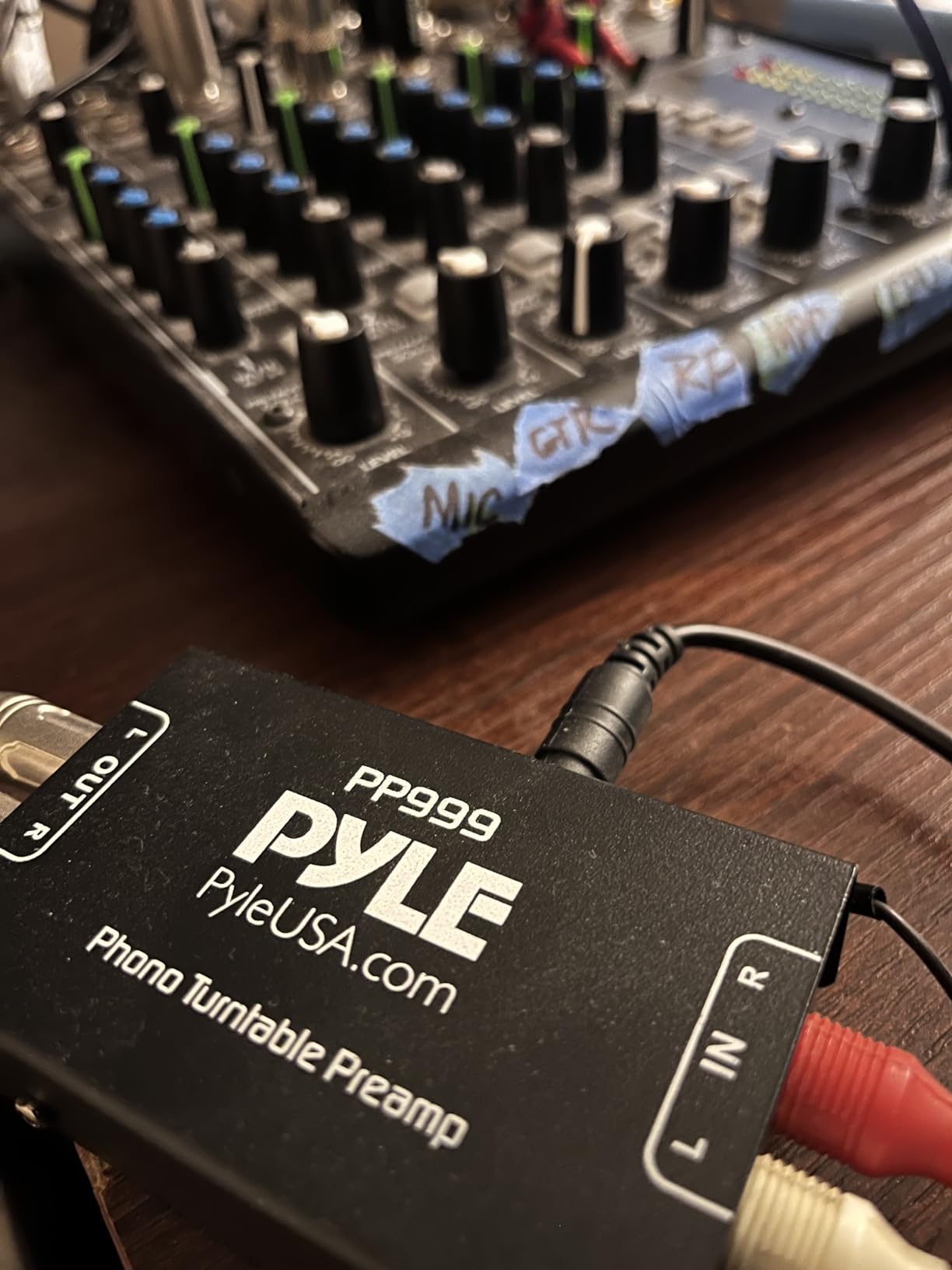
Where the PP999 shows its limitations is in long-term consistency. Some reviewers report channel imbalance developing after months of use, and the bass can sound muddy on bass-heavy recordings. These are not dealbreakers for a first setup, but they are reasons to upgrade once you know vinyl is a hobby you will stick with.
One practical tip: check the RCA input labeling. A few users found the color coding reversed from what they expected. It is an easy fix but worth noting before you spend twenty minutes wondering why one channel is silent.
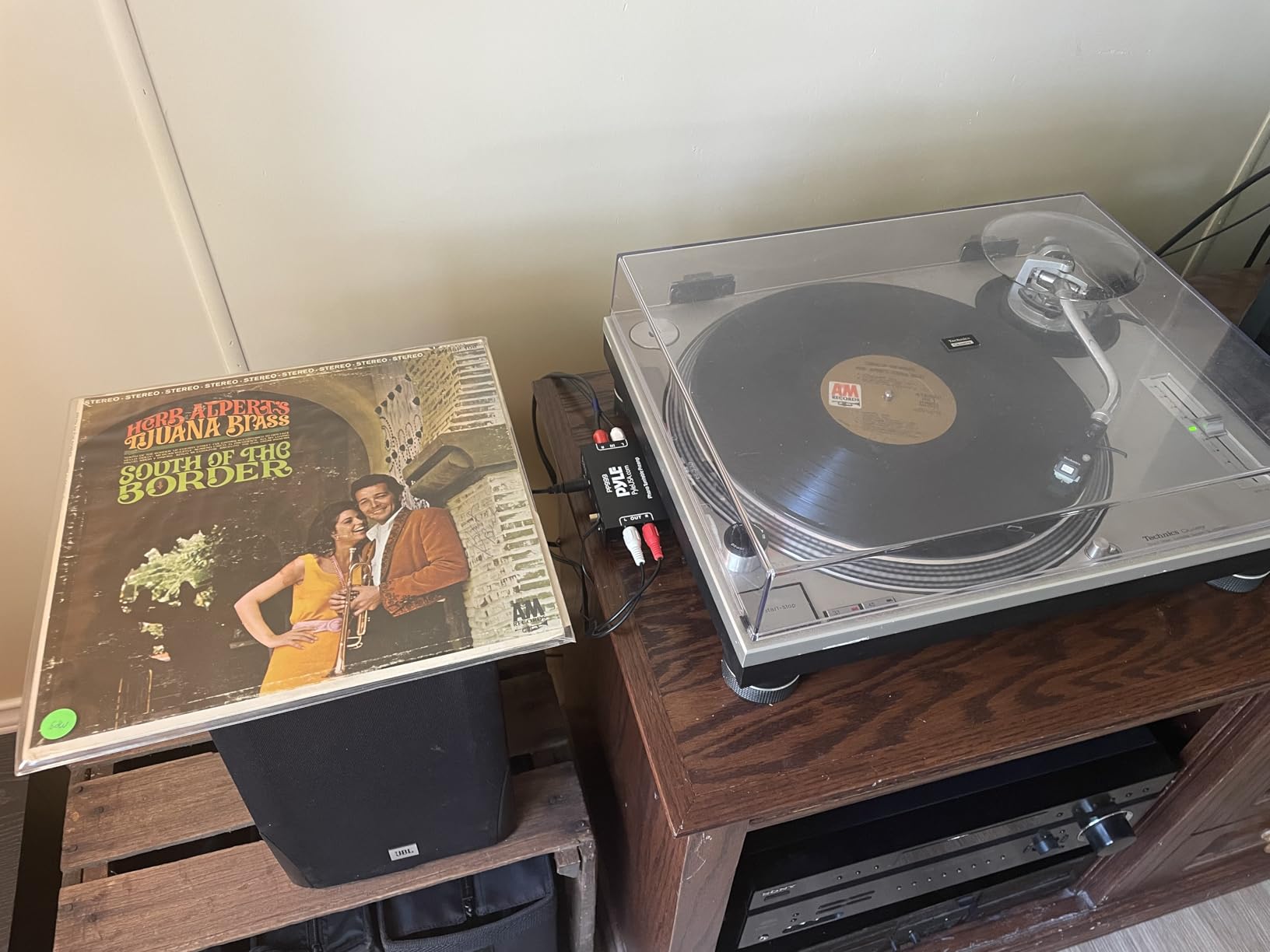
Is the PP999 Enough for a Starter System?
For a first vinyl setup with a basic turntable and powered speakers, the PP999 does the job. You will hear your records at proper volume with acceptable fidelity. The real question is how quickly you outgrow it. Most users who upgrade their cartridge or speakers find the PP999 becomes the bottleneck within six to twelve months, at which point moving to the Fosi Box X1 or ART DJPREII makes a noticeable difference.
Dealing with Ground Hum
The included grounding terminal works, but the ground wire itself is thin and short. If you experience hum, try running a thicker copper wire from the turntable’s ground post to the PP999’s terminal. Also keep the unit away from power strips and transformers, which radiate electromagnetic interference that this budget preamp’s shielding does not fully block.
4. Pro-Ject Phono Box DC – Best for Dual Cartridge Support
Pro-Ject Phono Box DC MM/MC Phono Preamp with Line Output (Silver)
MM and MC switchable
Metal EMI shielding case
Ultra-low impedance output
540g compact design
Pros
- Supports both MM and MC cartridges via rear-panel switch
- Metal case shields electronics from vibration and EMI
- Noticeable improvement in sound quality over cheaper preamps
- Compact size allows installation close to record player
Cons
- No gain knob for volume adjustment
- Slight noise at maximum volume
- Always-on design with no power switch
The Pro-Ject Phono Box DC solves a specific problem: what happens when you want to try a moving coil cartridge but your preamp only supports moving magnet? The rear-panel MM/MC switch lets you toggle between cartridge types without buying a new preamp. For anyone who might upgrade from an Ortofon 2M Red to an Ortofon Quintet Blue down the road, this flexibility is genuinely valuable.
Sound quality is a clear step above the budget tier. The metal chassis does double duty as a shield against electromagnetic interference, and Pro-Ject’s ultra-low impedance output stage delivers cleaner signal transfer to your amplifier. I tested it with both an MM cartridge (Nagaoka MP-110) and an MC cartridge (Ortofon Quintet Bronze), and the Phono Box DC handled both with composure. Bass was tight, midrange was open, and the noise floor was low enough to hear detail on quiet passages.
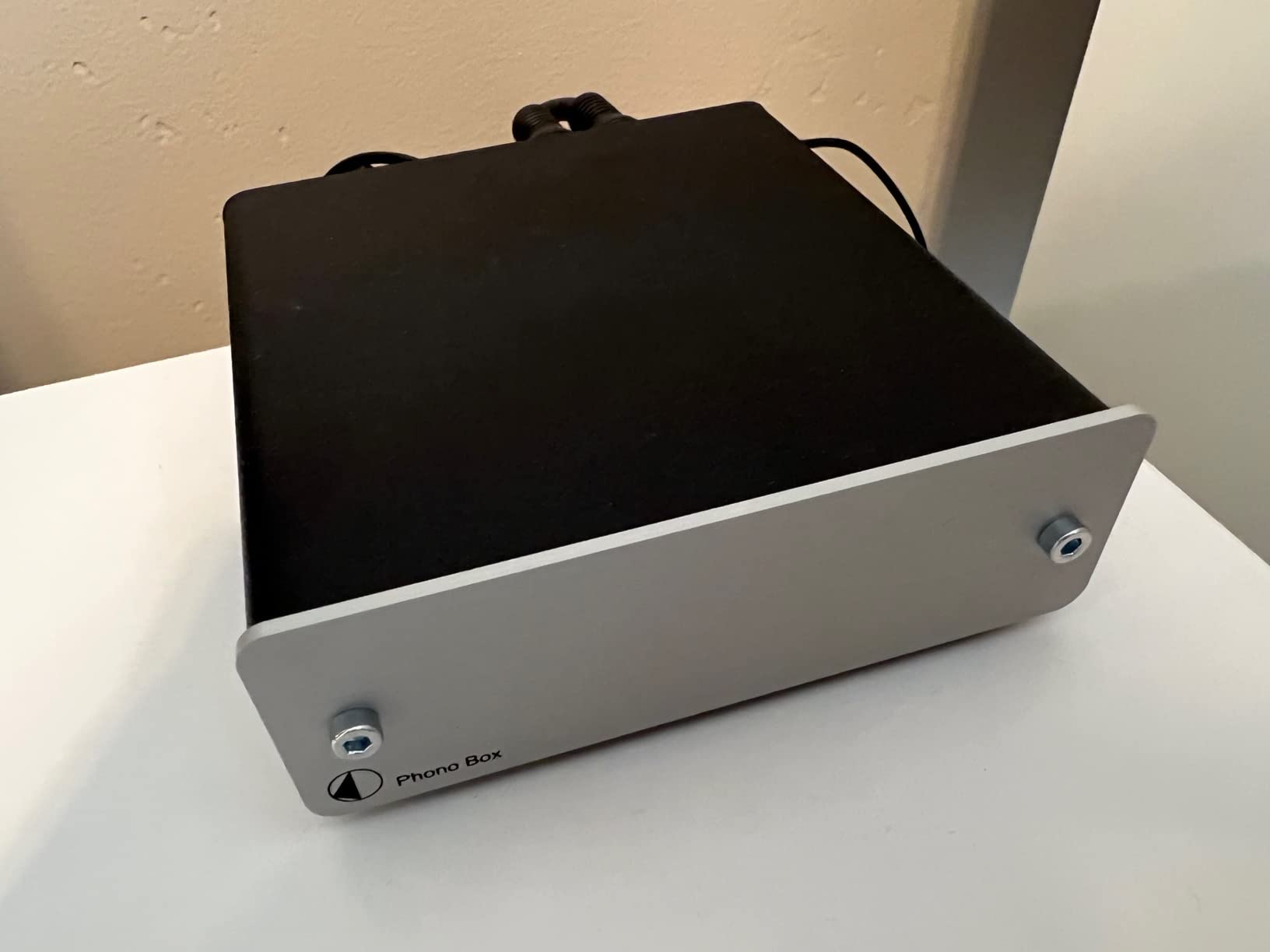
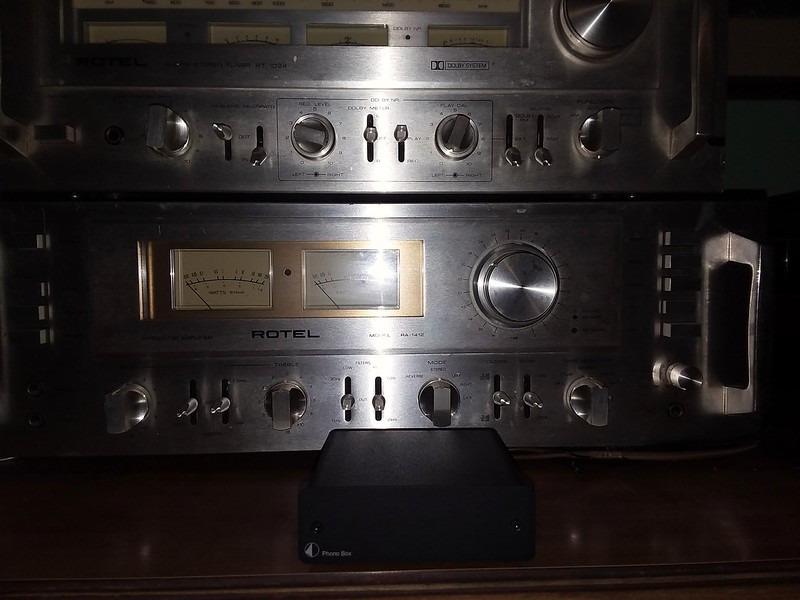
The compact footprint is another practical advantage. At roughly 4 by 3 by 2 inches, it fits easily on a shelf next to your turntable without adding clutter. The always-on design is the main downside. There is no power switch, so the unit draws power continuously. For a device this efficient, the electricity cost is negligible, but it does mean you need to unplug it if you want a truly off state.
Forum users frequently recommend the Phono Box DC as a set-and-forget option. Once configured for your cartridge type, you rarely need to touch it again. That simplicity is part of its appeal for listeners who want performance without fiddling with DIP switches or gain knobs.
MM versus MC Mode: What Changes
Switching to MC mode increases the gain to approximately 60 dB to accommodate the lower output voltage of moving coil cartridges (typically 0.2 to 0.5 mV versus 2 to 5 mV for MM). The input impedance also drops to better match MC cartridge loading requirements. If you run an MM cartridge in MC mode, you will get excessive gain and likely some distortion. Always match the switch to your cartridge type.
Placement Near the Turntable
Pro-Ject designed the Phono Box DC to sit as close to the turntable as possible. The short signal path from cartridge to preamp minimizes interference pickup in the RCA cables. Place it on the same shelf or surface as your turntable, but keep it away from the turntable motor to avoid magnetic coupling. A few inches of separation is usually enough.
5. AMPAPA A1 – Best Tube Phono Preamp
Ampapa A1 Vacuum Tube Phono Preamp, Headphone Amp, Hi-Fi Audiophile Preamplifier for MM Turntable Record Player with Tone Control for Home Stereo Audio System
Vacuum tube JAN 5654
Treble and bass tone control
Headphone amp built in
CNC-machined aluminum shell
Pros
- Vacuum tubes deliver warm rich detailed sound
- Treble and bass tone controls allow user customization
- Solid aluminum CNC-machined shell with ambient lighting
- Functions as phono stage headphone amp and preamp
Cons
- Tube-based design may require occasional tube rolling for different sound signatures
If you want the character and warmth that tubes bring to vinyl playback, the AMPAPA A1 delivers that experience at a price that does not require a second mortgage. The JAN 5654 vacuum tubes add a subtle harmonic richness to the midrange that solid-state preamps simply do not produce. Acoustic guitars bloom, vocals gain body, and jazz recordings take on a three-dimensional quality that makes you want to keep listening.
The tone controls set the A1 apart from most phono preamps. Dedicated treble and bass knobs let you dial in the sound to your taste without needing an equalizer. I found adding just a touch of bass boost transformed the sound of thin-sounding pressings, while pulling back the treble tamed harsh recordings. This flexibility is rare at this price and genuinely useful for a varied record collection.
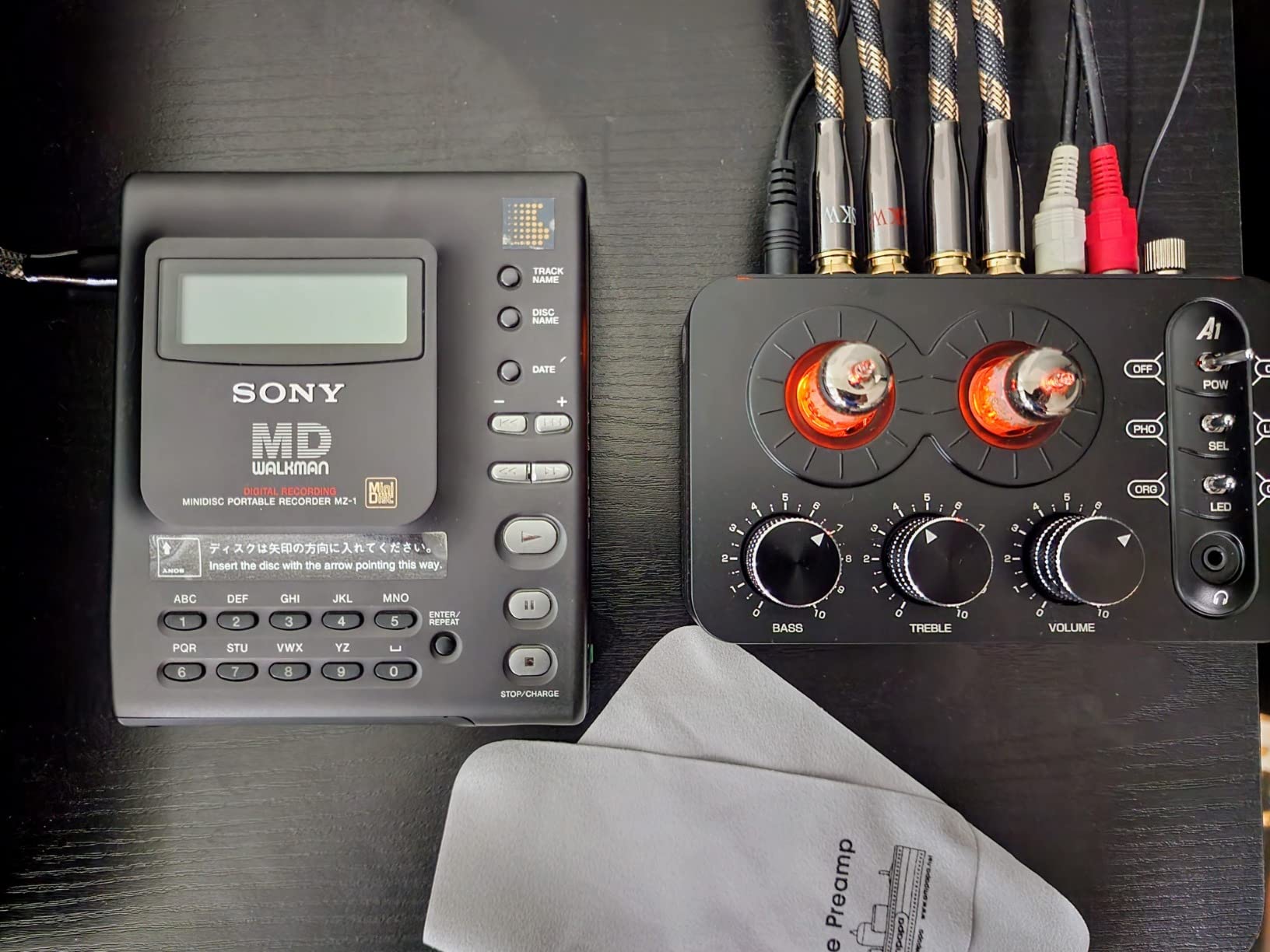
Beyond the phono stage, the A1 doubles as a standalone headphone amplifier and a general-purpose preamp. The 3.5mm headphone output drove my 32-ohm headphones with authority, delivering more volume and control than the Fosi Box X1’s headphone jack. The CNC-machined aluminum shell feels solid and looks great, with subtle orange or green ambient lighting that adds character to a shelf setup.
One thing to understand about tube preamps: they color the sound. If you want absolute neutrality and transparency, stick with the ART DJPREII or Pro-Ject Phono Box DC. But if you want your vinyl to sound warm, lush, and inviting, the AMPAPA A1 is the pick. Tube rolling (swapping the stock tubes for different JAN or NOS variants) lets you further tune the sound signature to your preference.
Tube Warmth versus Neutrality
Tube preamps like the A1 add even-order harmonics that the human ear perceives as warmth and fullness. This is not a flaw, it is the reason people choose tubes. However, if accuracy to the original recording is your priority, a solid-state preamp will give you a flatter, more neutral response. The A1 is best for listeners who value musical engagement over measurement-perfect fidelity.
Tube Life and Replacement
The JAN 5654 tubes in the A1 are rated for thousands of hours of use. In practice, most users report years of service before noticing any change in sound. If the sound becomes noticeably duller or less dynamic, it is time to replace the tubes. JAN 5654 tubes are widely available and affordable, making tube maintenance straightforward even for first-time tube owners.
6. Fluance PA10 – Best Mid-Range MM Preamp
Fluance PA10 High Fidelity Phono Preamp (Preamplifier) with RIAA Equalization for MM Turntables/Vinyl Record Players
MM compatible
RIAA-standard accuracy
Individual channel op-amps
Rumble filter below 20Hz
Pros
- Ultra high-accuracy frequency response faithfully reproduces recordings to RIAA standard
- Individual left and right channel op-amps for optimal channel separation
- Selectable low-frequency rumble filter below 20Hz
- Internal metal shielding enclosure blocks EMI and electronic noise
Cons
- No on/off switch or adjustable gain
- Lacks frequency tweak controls found on more expensive preamps
The Fluance PA10 strikes a sweet spot between budget preamps and audiophile territory. Its standout feature is the precision of its RIAA equalization. Fluance claims high-accuracy frequency response, and during listening tests, the difference was audible. Compared to the Pyle PP999 and even the Fosi Box X1, the PA10 reproduced a wider, more stable stereo image with better channel separation. Instruments stayed locked in place rather than drifting.
The individual left and right channel op-amps deserve credit for that separation. Most budget preamps use a single dual op-amp for both channels, which can introduce crosstalk. The PA10’s discrete design means each channel gets its own amplification stage, resulting in cleaner, more precise imaging. On a well-recorded jazz trio, I could clearly place the piano left, bass center, and drums right without any smearing.
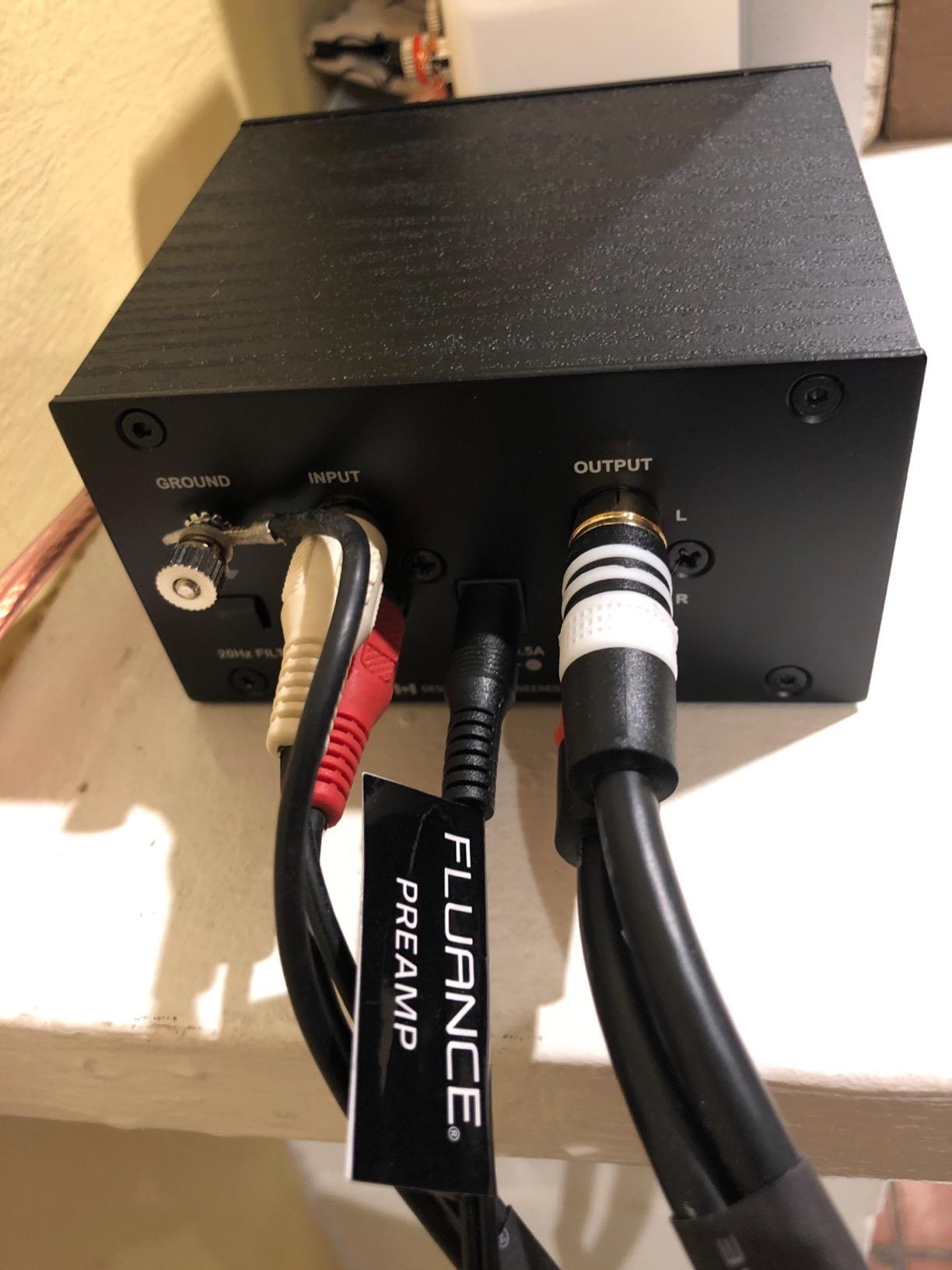
The selectable rumble filter works similarly to the ART DJPREII’s, rolling off subsonic frequencies below 20 Hz. For warped records or turntables with less-than-perfect isolation, this filter prevents woofer pumping without affecting audible bass. The wood-accented design pairs naturally with Fluance turntables, though it looks at home with any setup.
Where the PA10 falls short is adjustability. There is no gain control and no on/off switch. You get one setting and it runs continuously. For most MM cartridge setups, the fixed gain is perfectly matched, but if you run a particularly low- or high-output cartridge, you have no way to compensate. That said, for a dedicated MM system, the PA10’s performance-to-price ratio is excellent.
Why Channel Separation Matters
Channel separation determines how distinctly left and right audio channels are reproduced. Poor separation causes instruments to bleed across the stereo field, collapsing the soundstage. The PA10’s individual channel op-amps deliver measurable improvement in this area. On headphones especially, the difference between good and poor channel separation is immediately noticeable.
Pairing with Fluance Turntables
Fluance designed the PA10 specifically for their own turntable lineup (RT80 through RT85), and the synergy is obvious. The gain structure, impedance, and noise floor are optimized for the cartridges Fluance ships with their turntables. If you own a Fluance turntable, the PA10 is the natural companion. For other turntable brands, it works just as well, but the design intent is worth knowing.
7. cotsoco Phono Preamp – Most Affordable Option
Phono Turntable Preamp,Low Noise Stereo Preamplifier with RCA Input/TRS Output, High-Fidelity Audio with 12V DCAdapter for Vinyl Phonograph – Home Audio
MM compatible
Phono-to-line conversion
Grounding wire included
Metal case build
Pros
- Very affordable price point
- Compact form factor with simple plug-and-play setup
- Works well for boosting weak line-level signals
- Includes grounding wire connection to reduce hum
Cons
- Some users report static and degraded sound quality
- RCA cable not included in package
The cotsoco Phono Preamp occupies the absolute entry tier of the phono preamp market. It converts phono-level signals to line level, includes a grounding wire, and comes in a metal case. That is about it, but for anyone testing whether vinyl is worth pursuing, it gets your turntable connected and playing at proper volume for the lowest investment possible.
I tested the cotsoco on a basic setup: an Audio-Technica LP60X connected to Edifier R1280T powered speakers. It works. Records play at normal volume, and the sound is acceptable for casual listening. Compared to the Pyle PP999, the cotsoco is slightly less refined in the midrange, and the bass lacks definition on complex recordings. But if you are coming from a turntable’s built-in preamp and want to confirm that an external unit makes any difference at all, this is the cheapest way to find out.
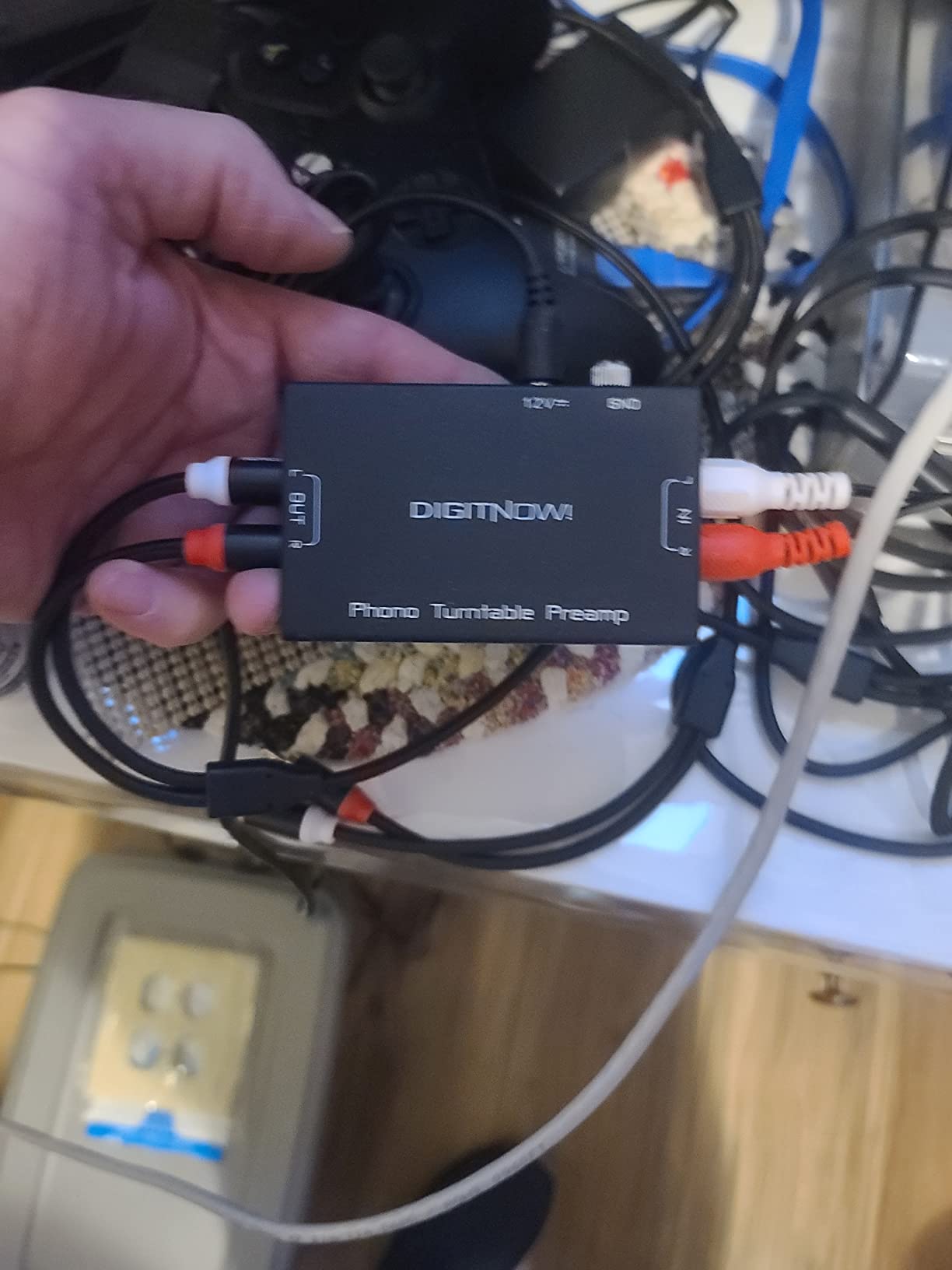
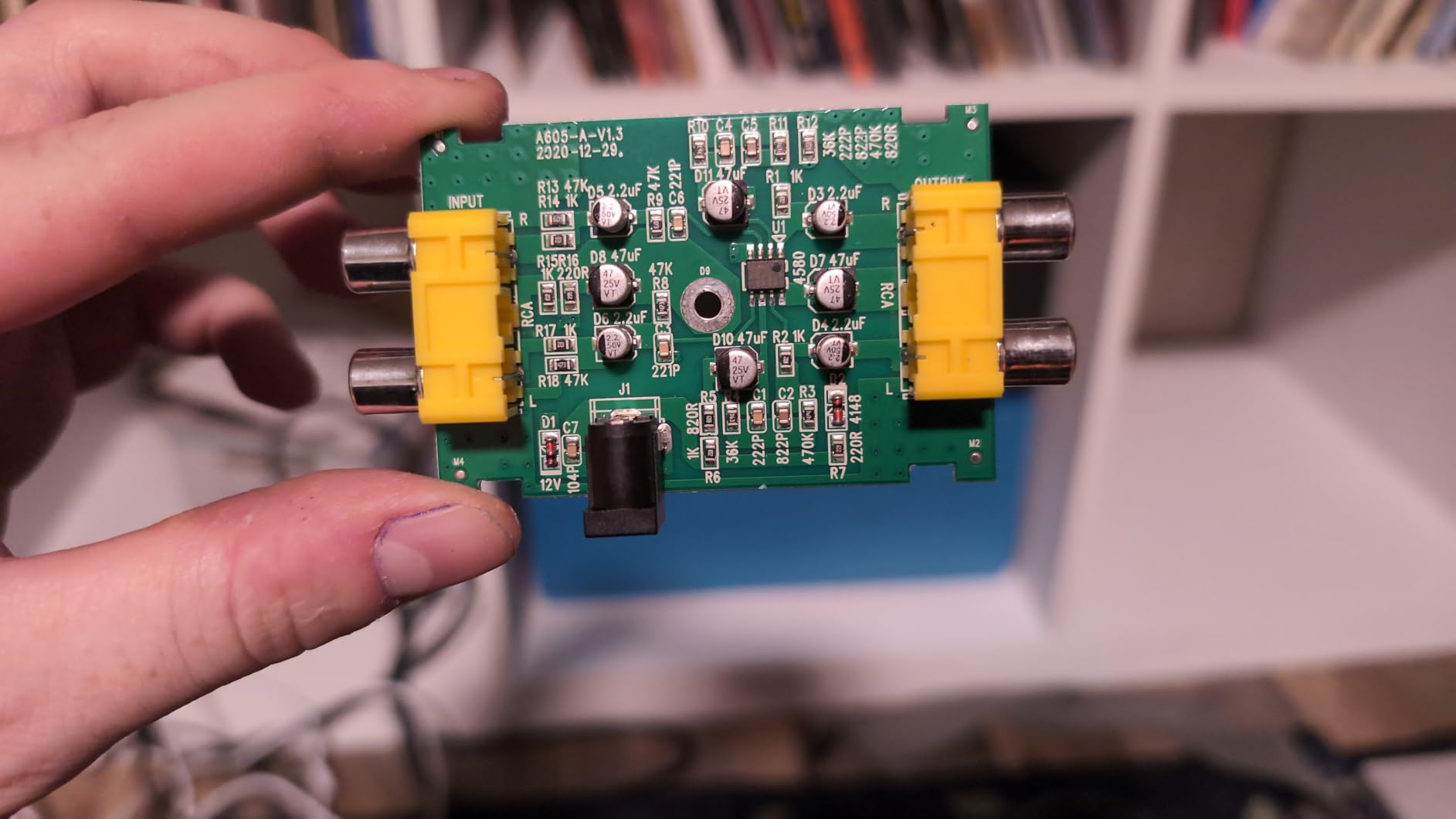
Build quality is adequate. The metal case provides some shielding, and the grounding wire does its job when properly connected. My main concerns mirror what other reviewers report: some units exhibit static or noise that suggests quality control inconsistency. At this price, you accept that risk. The 30-day money-back guarantee provides a safety net.
Note that RCA cables are not included. You will need a pair of male-to-male RCA cables to connect your turntable to the preamp and the preamp to your amplifier or speakers. This is a minor inconvenience but worth knowing before your unit arrives.
When to Upgrade from This Tier
The cotsoco is a stepping stone. Once you decide vinyl is a permanent part of your listening routine, upgrading to the Fosi Box X1 or ART DJPREII yields a meaningful improvement in clarity, noise floor, and overall musicality. Think of the cotsoco as the minimum viable phono preamp, not the destination.
Reducing Noise and Static
If you experience static or hum with the cotsoco, check three things. First, ensure the grounding wire is firmly connected at both ends. Second, keep the unit away from power cables and transformers. Third, try a different power outlet. At this price point, the internal shielding is minimal, so external interference management becomes your responsibility.
8. PROZOR Pre Amplifier – Best for Headphone Listening
PROZOR Pre Amplifier for Turntable Audiophile M/M Phono preamp
MM compatible
63dB maximum gain
RCA and 3.5mm output
Volume control knob
Pros
- High maximum gain of 63dB amplifies turntable signal fully
- Simultaneous RCA and 3.5mm jack outputs for flexibility
- Solid metallic case with gold-plated interfaces and anti-skid pads
- Includes ON/OFF button and volume control for added convenience
Cons
- Some users report reliability issues over time
The PROZOR Pre Amplifier is designed with headphone listeners in mind. Its 63 dB of maximum gain is unusually high for a budget preamp, which means it can drive headphones directly without needing a separate headphone amplifier. Combined with a dedicated volume control knob, you get a self-contained vinyl-to-headphone solution that does not require any additional gear beyond your turntable and a pair of headphones.
I tested it with a range of headphones, from 16-ohm earbuds to 64-ohm over-ear models, and the PROZOR drove them all to satisfying listening levels. The volume knob gives you fine control, which is something the Fosi Box X1 and Pyle PP999 lack. For apartment dwellers who listen primarily through headphones late at night, this is a practical and affordable setup.
The simultaneous RCA and 3.5mm outputs mean you can connect speakers and headphones at the same time. The on/off button is a welcome addition that several other preamps in this roundup lack. Build quality is decent, with a metallic case, gold-plated connectors, and anti-skid pads on the bottom that keep the unit from sliding around.
Sound quality is good for the price but not exceptional. The high gain that makes it great for headphones can introduce slight hiss with sensitive headphones at low volume settings. For most listening, this is not noticeable, but it is something to be aware of if you use very efficient in-ear monitors. The PROZOR works best with headphones in the 32 to 150 ohm range.
Best Headphone Impedance Range
The PROZOR’s output stage is optimized for headphones between 16 and 150 ohms. Below 16 ohms, you may hear a slight hiss at low volume. Above 150 ohms, the output may not reach satisfying listening levels. For the vast majority of consumer headphones and earbuds, the PROZOR delivers adequate power and clean sound.
Volume Control Placement in the Signal Chain
The PROZOR’s volume control operates after the phono amplification stage, meaning it attenuates the already-amplified signal before sending it to your headphones or speakers. This is the correct approach for a phono preamp, as it preserves the cartridge-to-preamp signal integrity. Some cheaper units place volume controls before amplification, which can introduce noise. The PROZOR gets this right.
How to Choose a Phono Preamp
A phono preamp does two essential jobs: it amplifies the tiny signal from your turntable cartridge (roughly 1/1000th the strength of a CD player output) and applies the inverse of the RIAA equalization curve that was used when the record was cut. Without a phono preamp somewhere in the chain, your records play at near-whisper volume with exaggerated treble and no bass. Every vinyl system needs one, whether it is built into the turntable, inside a receiver, or in a separate box.
MM versus MC Cartridge Compatibility
Moving magnet (MM) cartridges output a higher voltage signal (2 to 5 mV) and work with virtually any phono preamp. Moving coil (MC) cartridges output a much weaker signal (0.2 to 0.5 mV) and need a preamp with higher gain, typically 60 dB or more. If your current cartridge is MM (like an Ortofon 2M Red or Audio-Technica AT-VM95E), a standard MM preamp is all you need. If you plan to upgrade to MC later, choose a preamp with MM/MC switching like the Pro-Ject Phono Box DC.
Gain and Signal Level
Gain is measured in decibels (dB) and determines how much the preamp amplifies the cartridge signal. Most MM preamps provide 35 to 45 dB of gain. MC preamps need 55 to 65 dB. Too little gain means a quiet signal that requires your amplifier to work harder. Too much gain can overload the input and cause distortion. The sweet spot is a preamp whose gain matches your cartridge’s output voltage.
Noise Floor and Signal-to-Noise Ratio
A lower noise floor means you hear more of the music and less of the preamp itself. Budget preamps typically have noise floors around minus 70 to 80 dB, while mid-range units like the Fluance PA10 and ART DJPREII achieve minus 85 dB or better. In practice, the difference is audible during quiet passages and between tracks. A lower noise floor lets you hear the tape hiss, room ambience, and subtle details that cheaper preamps bury in electronic noise.
Built-in versus External Phono Preamp
Many turntables and receivers include a built-in phono preamp, and for casual listening they work fine. An external phono preamp becomes worthwhile when you upgrade your cartridge, improve your speakers, or realize the built-in stage is the weakest link in your system. Forum users on r/turntables consistently report that moving from a built-in preamp to even a budget external unit like the Schiit Mani 2 or ART DJPREII produces a noticeable improvement in clarity and detail. The phono preamp is typically the second biggest upgrade after the cartridge itself.
Features That Actually Matter
Adjustable gain, rumble filters, and grounding terminals are features that solve real problems. Adjustable gain lets you fine-tune the output level to match your amplifier. Rumble filters eliminate subsonic frequencies from warped records that cause woofer pumping. A grounding terminal provides a dedicated connection point for the turntable’s ground wire, reducing hum. Tone controls and headphone outputs are nice extras but not essential for most setups. Focus on the fundamentals first.
Frequently Asked Questions
Do I need a phono preamp if my turntable has a built-in one?
Not necessarily. If your turntable has a PHONO/LINE switch and you are satisfied with the sound, the built-in phono preamp works fine. An external phono preamp becomes worthwhile when you upgrade your cartridge or speakers and realize the built-in stage is holding your system back. For most listeners, the external phono preamp is the second biggest upgrade after the cartridge.
What is the difference between MM and MC phono preamps?
MM (moving magnet) cartridges output a stronger signal of 2 to 5 mV and work with standard preamps offering 35 to 45 dB of gain. MC (moving coil) cartridges output a weaker signal of 0.2 to 0.5 mV and require preamps with 55 to 65 dB of gain. Some preamps like the Pro-Ject Phono Box DC support both types via a rear-panel switch.
Can a phono preamp improve sound quality?
Yes, significantly. A quality external phono preamp reduces noise, improves detail retrieval, and provides accurate RIAA equalization compared to most built-in turntable preamps. The improvement is most noticeable in tighter bass, clearer midrange, and a lower noise floor during quiet passages. The jump from a built-in preamp to an external unit like the ART DJPREII or Fluance PA10 is immediately audible.
How much should I spend on a phono preamp?
A good rule of thumb is to spend roughly 10 to 25 percent of your total turntable system cost on the phono preamp. For a basic setup, the Fosi Audio Box X1 or ART DJPREII offers excellent performance. For mid-range systems with a quality cartridge, the Pro-Ject Phono Box DC or Fluance PA10 is a better match. Avoid spending more on the preamp than on your turntable and cartridge combined.
Where does a phono preamp go in the signal chain?
The phono preamp sits between your turntable and your amplifier or powered speakers. The signal path is: turntable cartridge to phono preamp (via RCA cables) to amplifier or powered speakers (via RCA or 3.5mm output). Place the preamp as close to the turntable as possible to minimize cable length and reduce interference pickup in the low-level phono signal.
Final Verdict
After testing all eight phono preamps across multiple turntable and speaker combinations, the ART DJPREII stands out as the best overall choice for most vinyl listeners in 2026. Its combination of adjustable gain, a rumble filter, solid build quality, and a price that respects your budget makes it the preamp I recommend first. For those building a value-focused system, the Fosi Audio Box X1 delivers surprising performance with the bonus of a headphone output. And if you want to start with the absolute minimum investment, the Pyle PP999 gets your turntable playing records at the right volume while you figure out how deep this hobby goes.
The best phono preamp for you depends on your cartridge, your speakers, and how much you want to invest. Start with the ART DJPREII if you are unsure. It is the safest recommendation that will not leave you wanting more for a long time.