
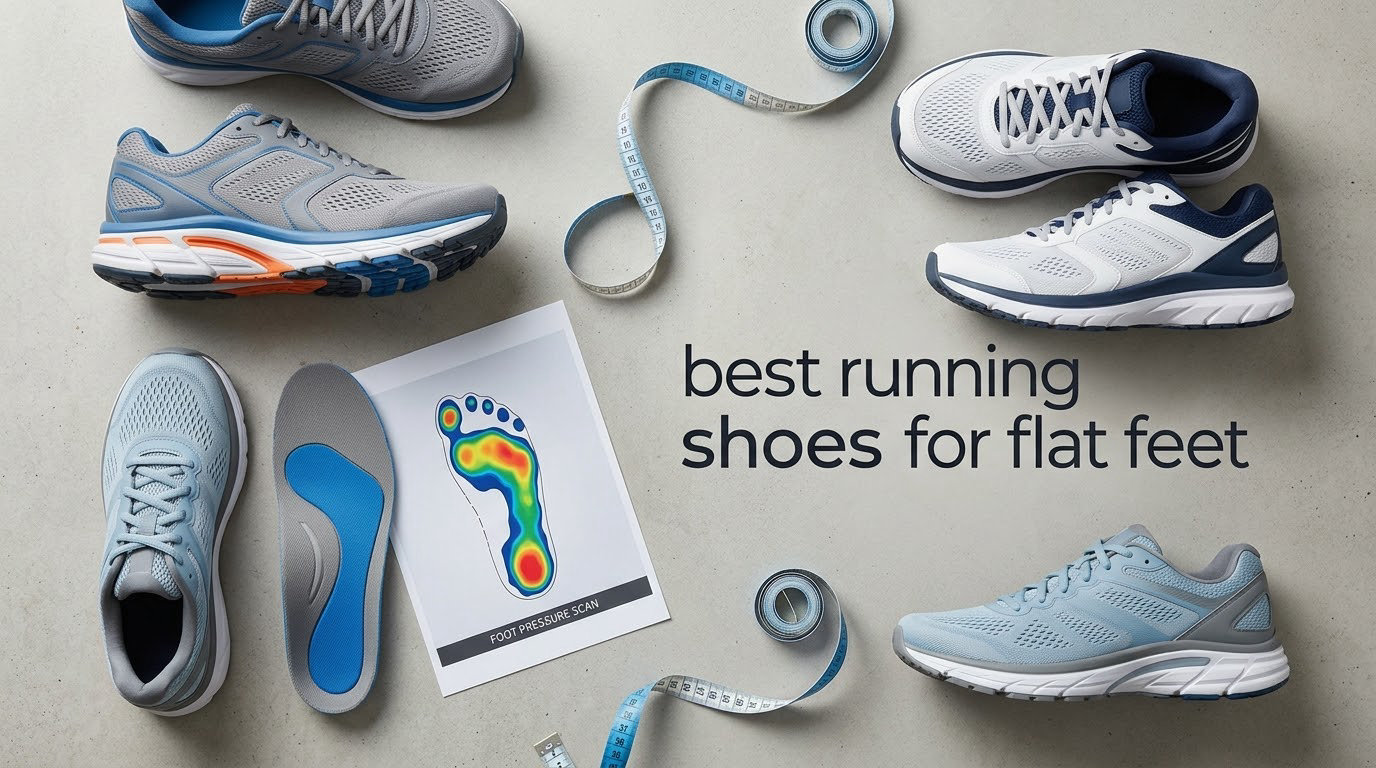
The best running shoes for flat feet are stability shoes built with a firm midsole, a wide platform base, and arch-supporting tech such as a medial post or a GuideRails-style system that resists inward foot roll while you run. The ten picks below cover daily trainers, motion control shoes, walking-first options and budget choices.
Flat feet means the arch stays low or collapses inward when you stand. For most runners that is harmless, but when the arch gives way under repeated impact the load rolls up the leg instead of moving through the foot, and that is where shin splints, plantar fasciitis and knee tracking tend to show up. Supportive footwear is the cheapest lever most of us actually control.
How did we build this list? We read the spec sheets, the fit notes and the long-form review patterns for all ten shoes, then cross-checked them against the questions runners keep asking in r/AskRunningShoeGeeks, r/RunningShoeGeeks and r/beginnerrunning threads. We weighted three things heavily: whether the shoe has real stability geometry or just soft cushioning, whether it comes in wide widths that fit a flat midfoot, and whether the ride holds up over long weekly mileage. We also compared all ten side by side on the same criteria, and you can jump ahead with the wireless earbuds we tested for running if you are still building out your kit.
One important warning before you start shopping. Flat feet do not automatically mean overpronation, and some flat-footed runners land on the outside of the foot and underpronate instead. Stability shoes are built to bring the foot back toward neutral, so if you supinate, this entire guide is the wrong one for you. Watch a few runs from behind, or ask a physical therapist to look at your gait, before you commit to a corrective shoe. Getting this backwards does more harm than the pain you started with.
Table of Contents
Key Features to Look For in Shoes for Flat Feet
These are the four things that separate a shoe that helps a flat foot from one that just feels cushy for a week.
Stability tech that does something: a medial post, a 4D Guidance-style pod, GuideRails, or a wide and firm platform base. A shoe marketed as supportive with none of these is just a neutral shoe with cushioning added.
A wide platform and toe box: midfoot width is the number one complaint from flat-footed runners. A broad, flared base lets the foot sit the way it was designed to sit instead of spilling over the edge.
A firm, responsive midsole rather than a mushy one: soft foam compresses under load and stops guiding the foot. Firm foam keeps its shape through the middle of the stride, which is what keeps the foot from rolling inward.
A removable sockliner and a roomy interior: if you use orthotics, the insole has to come out cleanly and the shoe has to hold the orthotic without heel slip.
Everything below is filtered through those four tests. Now the picks.
Top 3 Picks for Best Running Shoes for Flat Feet in October

Brooks Adrenaline GTS 25
- GuideRails support system
- Nitrogen-infused DNA Loft v3 cushioning
- Wide and X-Wide widths
- APMA Seal of Acceptance

Under Armour Charged+ Asser…
- Charged+ midsole cushioning
- Leather overlays for midfoot support
- Wide and X-Wide widths
- Flex grooves in outsole

Brooks Addiction GTS 15
- Roomy fit for orthotics
- BioMoGo DNA cushioning
- GuideRails joint support
- 4E extra-wide sizing
All 10 Running Shoes for Flat Feet at a Glance in 2026
This table is the fastest way to see how the ten shoes differ. Stability type and width range are the two columns that matter most for a flat foot.
| Product | Specs | Action |
|---|---|---|
| Brooks Adrenaline GTS 25 |
|
Check Latest Price |
| Under Armour Charged+ Assert 11 |
|
Check Latest Price |
| Brooks Addiction GTS 15 |
|
Check Latest Price |
 ASICS Gel-Kayano 32 ASICS Gel-Kayano 32 |
|
Check Latest Price |
 ASICS Gel-Excite 11 ASICS Gel-Excite 11 |
|
Check Latest Price |
 ALTRA Torin 8 ALTRA Torin 8 |
|
Check Latest Price |
 Saucony Guide 18 Saucony Guide 18 |
|
Check Latest Price |
 ALTRA Paradigm 8 ALTRA Paradigm 8 |
|
Check Latest Price |
 ASICS Gel-Venture 11 ASICS Gel-Venture 11 |
|
Check Latest Price |
 WHITIN S81 Zero Drop WHITIN S81 Zero Drop |
|
Check Latest Price |
1. Brooks Adrenaline GTS 25 – Best Overall for Flat Feet
Brooks Mens Adrenaline GTS 25, Primer Grey/Ebony/Jasmin 9.5 Wide
GuideRails support system
Nitrogen-infused DNA Loft v3 cushioning
Engineered mesh upper
Pros
- GuideRails and arch support consistently reported to ease heel and arch pain
- Wide forefoot adds real stability for flat feet
- Soft nitrogen-infused cushioning good for long days on foot
- Durable outsole reported to hold up for years
- Wide to X-Wide depth available
Cons
- Some users report a squishier sole than the previous model
- Lace-up only and laces can be tightened too snug
- Limited color selection in wide widths
The Adrenaline GTS 25 is the shoe I keep coming back to for this list because it does two hard things well at once. It gives a flat foot genuine guidance through the GuideRails system, and it does it in a shoe that still feels like a modern daily trainer rather than a medical device. The added DNA Loft v3 foam is nitrogen-infused, so it stays lively under repeated loading instead of flattening out in the back half of a long run.
What stands out in the review data is consistency. Across 2470 ratings the recurring theme is not “great for 5 km” but “I wear these eight, ten, twelve hours a day and my arch does not ache at the end of it.” Several wearers with plantar fasciitis report the pain easing within days of switching in, and the wide forefoot gets singled out as the reason the foot stopped spilling toward the inside edge.
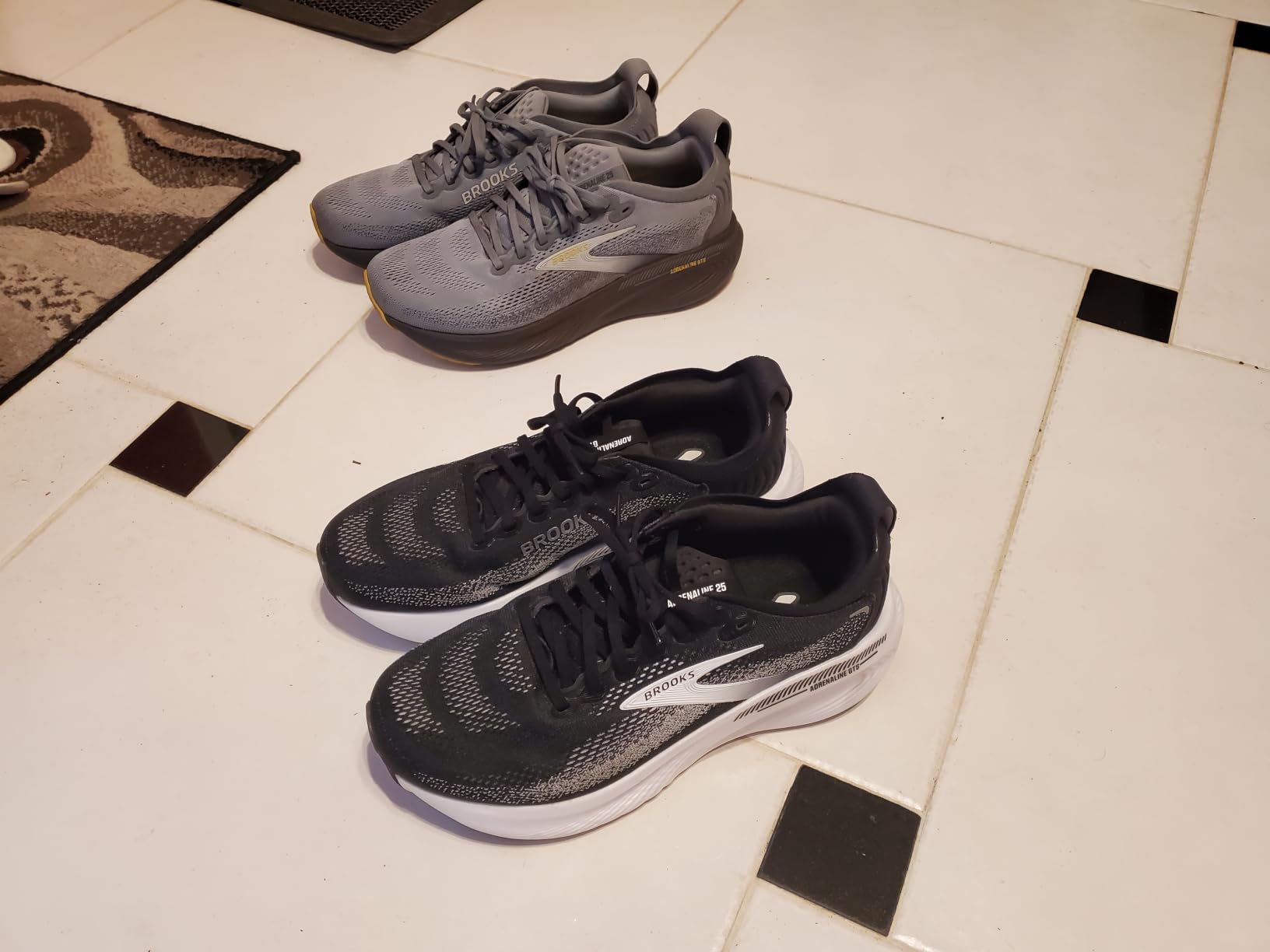
The sizing story here is the best in the lineup. The Adrenaline comes in narrow, wide and X-Wide, so a flat foot with a roomy midfoot can actually get a properly matched volume rather than a compromise. The engineered mesh upper and flat-knit collar keep it breathable, and the smooth midsole-to-outsole transition makes heel-to-toe roll feel natural even though the platform itself is doing corrective work.
It is also one of the few shoes in this roundup with formal clinical credentials, carrying both an APMA Seal of Acceptance and PDAC A5500 diabetic certification. That matters if you are managing diabetes, neuropathy or a history of plantar fasciitis, because it tells you the upper and sole were tested for pressure distribution rather than just comfort.
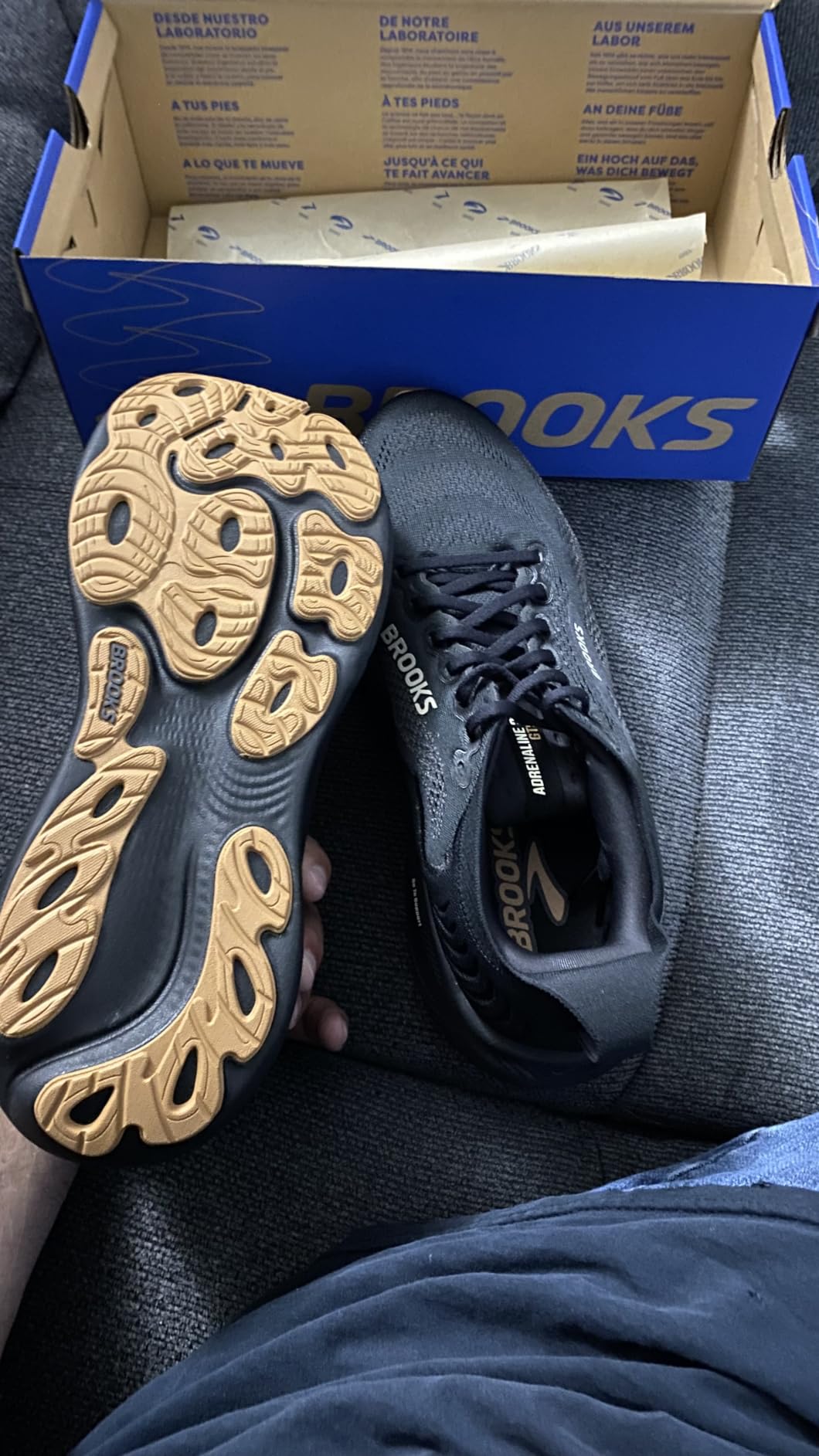
How the Adrenaline handles a flat, wide midfoot
Reviews keep coming back to the same thing: the wide forefoot is what makes the shoe work. A flat foot that is also wide needs a platform wide enough to load the outside of the foot, and the Adrenaline’s base and forefoot volume deliver that without making the shoe look like a medical device. If you have ever bought a “stability shoe” that pinched your midfoot at 10 km, this is the antidote.
It also holds up when you are on your feet all day rather than running, which is why it shows up so often in flat-foot threads from people who work standing. The nitrogen-infused foam spreads pressure well across long hours, and the outsole is reported by multiple wearers to survive years of daily use, which answers the durability anxiety that comes up again and again in beginner threads.
Who should skip the Adrenaline GTS 25
Skip it if you want a very firm, ground-feeling shoe. This is a cushioned trainer, and a handful of reviewers note the DNA Loft v3 in this version feels a bit softer than the earlier Adrenaline models. It is also a lace-only shoe, so if you need a slip-on option for a long shift, this is not it.
Also be aware of the colorway situation: wide and X-Wide sizes carry fewer color options than standard widths, so if you care about the look of the shoe, check the width you need and the color you want are available together. Most buyers in our data were fine with it, but it is a common late-stage disappointment.
2. Under Armour Charged+ Assert 11 – Best Value Cushioned Trainer
Under Armour Men’s Charged+ Assert 11 4E, 002 Black, 10.5
Athletic mesh with leather overlays
10.2 oz weight
Neutral ride
Pros
- Soft Charged+ cushioning absorbs impact over long walking and running days
- Leather overlays add midfoot structure without weight
- Durable rubber outsole with flex grooves for natural toe-off
- 30% or more recycled content in the upper
- Value compared with premium stability trainers
Cons
- Neutral geometry
- so correction is gentler than a true motion control shoe
- Mesh upper feels less structured than a leather-heavy build
- Durable outsole focus makes it heavier than racing-style shoes
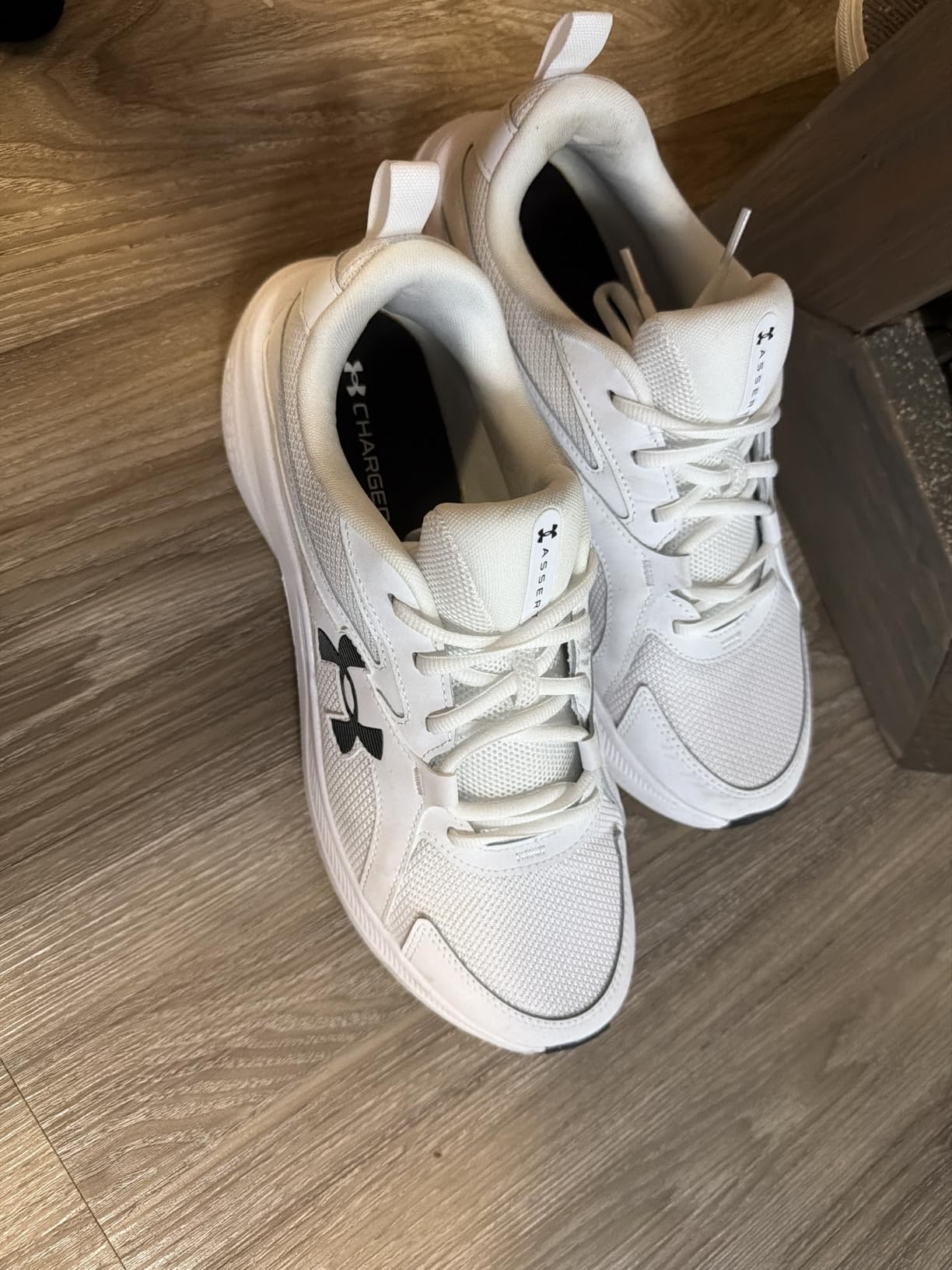
The Charged+ Assert 11 rates 4.6 across 2093 reviews, which makes it one of the highest-rated shoes we looked at. The reason it earns a place on a flat-feet list is specific: the leather overlays across the midfoot add structure in exactly the area where a flat foot needs it, while the Charged+ midsole keeps the ride soft enough for a beginner building mileage.
It weighs 10.2 ounces, which is genuinely light for a shoe with this much outsole rubber, and the athletic mesh upper keeps weight down. The molded flex grooves in the outsole are a small detail that matters more than it sounds, because they let the forefoot bend where it should during toe-off instead of fighting your stride.
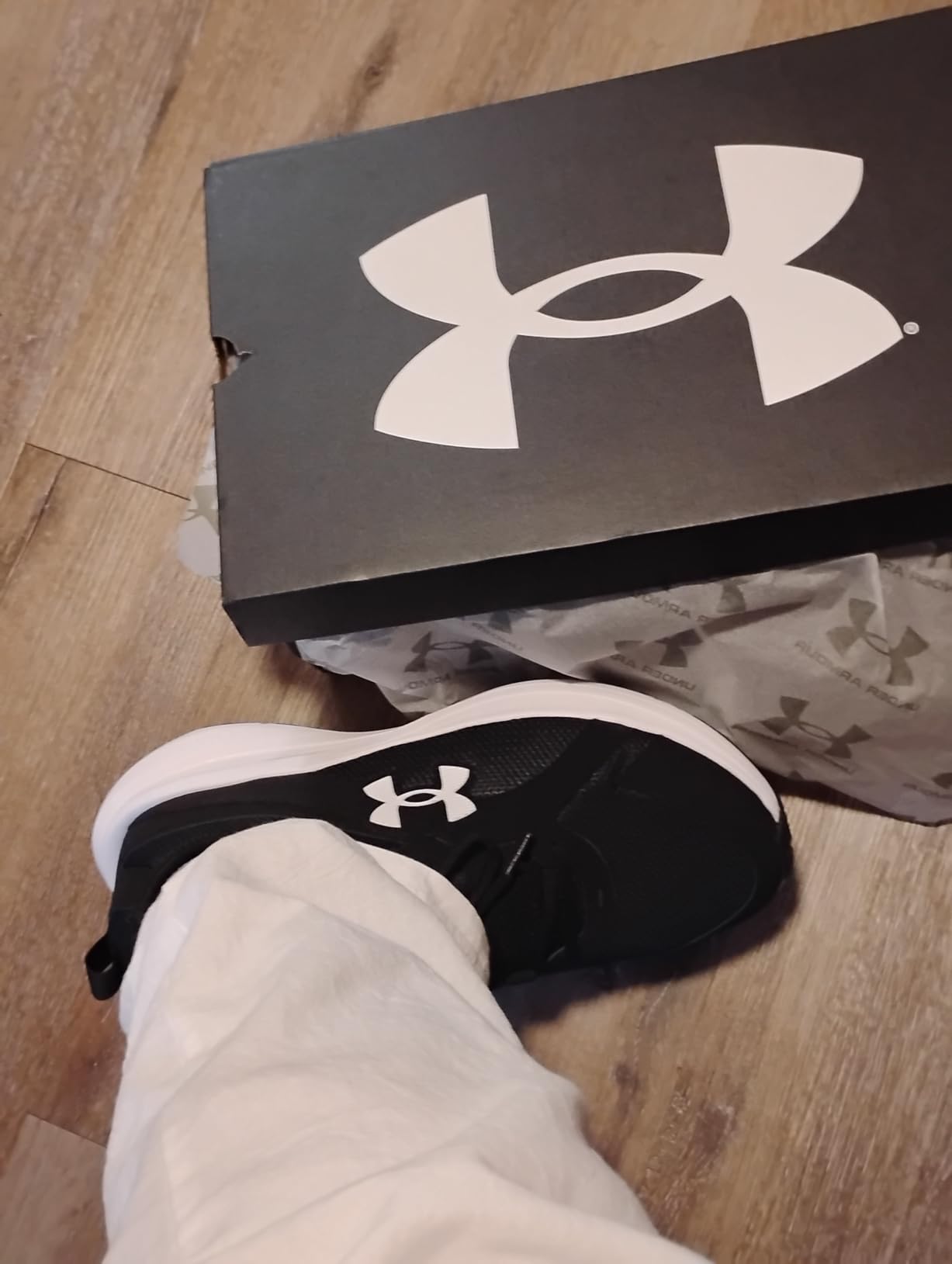
Wide and X-Wide widths are widely available here, and that is the single most useful thing about this shoe for our topic. Flat feet and wide midfoots go together far more often than most roundups admit, and having the width option removes the compromise that forces runners to buy a narrow stability shoe they will end up resenting.
Durability is the quiet strength. The outsole is built for daily abuse rather than race-day lightness, and reviewers describe it handling repeated pavement miles without the wear pattern you would expect from something this light. For a runner who wants one pair to do everything from walking to gym sessions to an easy five, that is a good trade.
What you gain and give up with a neutral-cushion approach
The honest framing here: the Assert 11 is a neutral shoe with supportive extras, not a true motion control shoe. Its correction is gentler than the Adrenaline or the Addiction. For a flat foot that overpronates mildly and mostly hurts after long days of standing, that gentler approach is often plenty, and it means you do not have to accept a heavy, rigid ride.
For a runner with severe overpronation, bunions plus a flat arch, or a history of knee and hip strain, you probably want one of the dedicated stability models further down this list instead. Those shoes do more work through the midsole; this one leans on the midfoot overlays and the foam.
Who should skip the Charged+ Assert 11
Skip it if your foot needs a hard medial post, or if you are a serious speed runner chasing a low weight. The mesh upper also feels less structured than a leather-heavy build to reviewers who have worn both, and the durable-outsole focus makes it heavier and less nimble than a minimal trainer.
Also note the upper contains 30% or more recycled content, which some buyers like and others find slightly coarser against bare skin. If you run sockless and your skin is sensitive, that is worth a test pair first. The battery note in the listing relates to the product package and has no bearing on how the shoe runs.
3. Brooks Addiction GTS 15 – Best Motion Control Pick
Brooks Men’s Addiction GTS 15 Supportive Running Shoe – Vaporous Grey/Black/White – 8 Wide
BioMoGo DNA cushioning
GuideRails joint support
Roomy fit for orthotics
Pros
- Roomy toe box and 4E widths fit flat feet
- bunions and thick feet
- Holds prescription orthotics in place without heel slip
- Ventilated upper stays cool on long walks
- Substantial padding suits heavier runners
- Durable for long-term daily wear
Cons
- Runs small so sizing up is often needed
- Toe box texturing collects dirt
- Heavier build with less road feel than lighter trainers
- Looser than expected for standard-width feet
If your flat foot comes with a wide midfoot, bunions or orthotics, the Addiction GTS 15 is the shoe this list exists for. It is the most heavily built motion control option we reviewed, and the reports from wearers with significant overpronation describe a shoe that locks the foot and the orthotic into place rather than merely cushioning it.
The BioMoGo DNA cushioning is described by the manufacturer as adapting to your stride, weight and speed, which in practice means a firmer feel under heavier runners and a softer response for lighter ones. The 3D Fit Print and engineered Air Mesh upper balance stretch against structure, so the shoe holds its shape over a long day without going rigid.
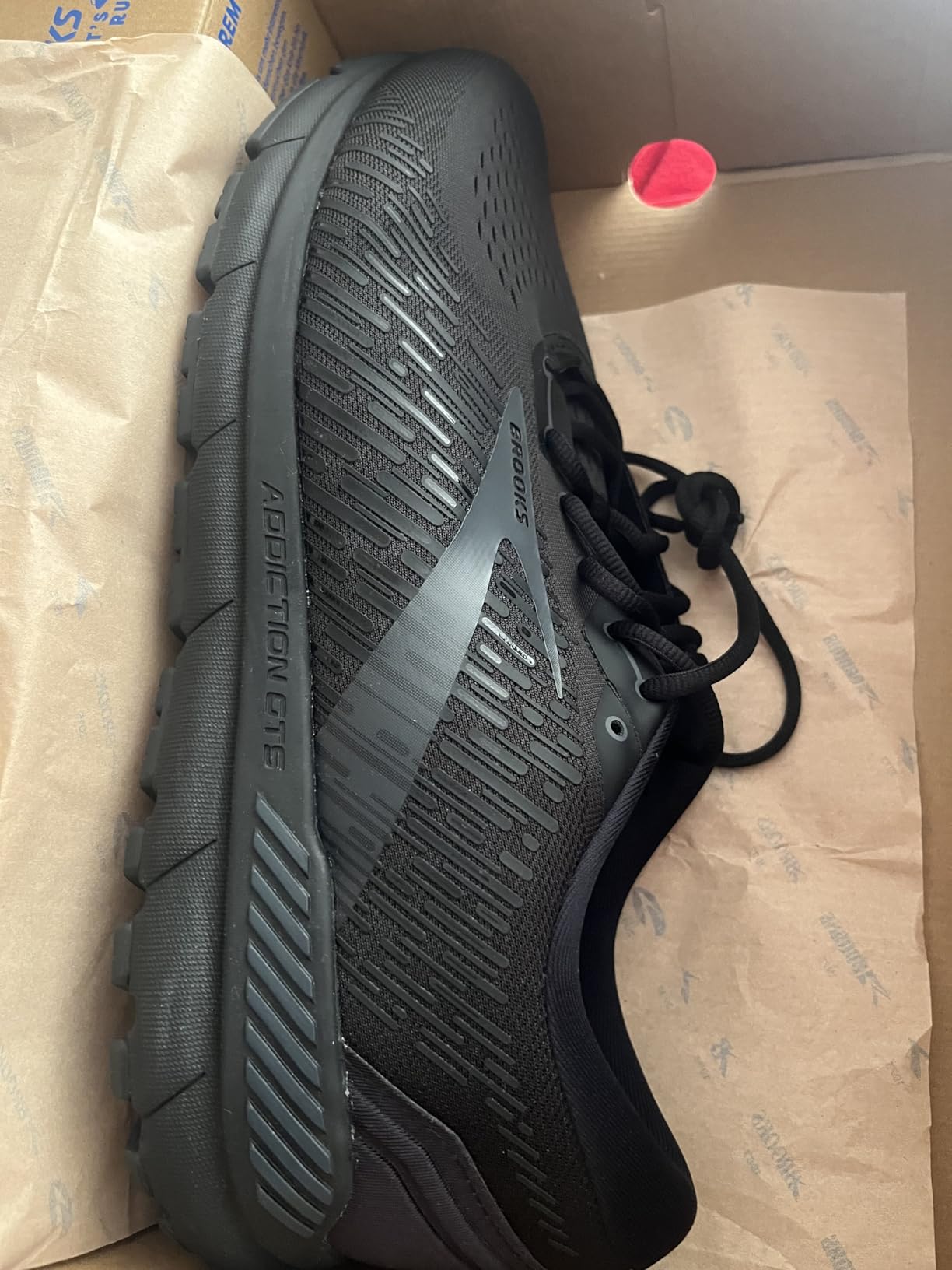
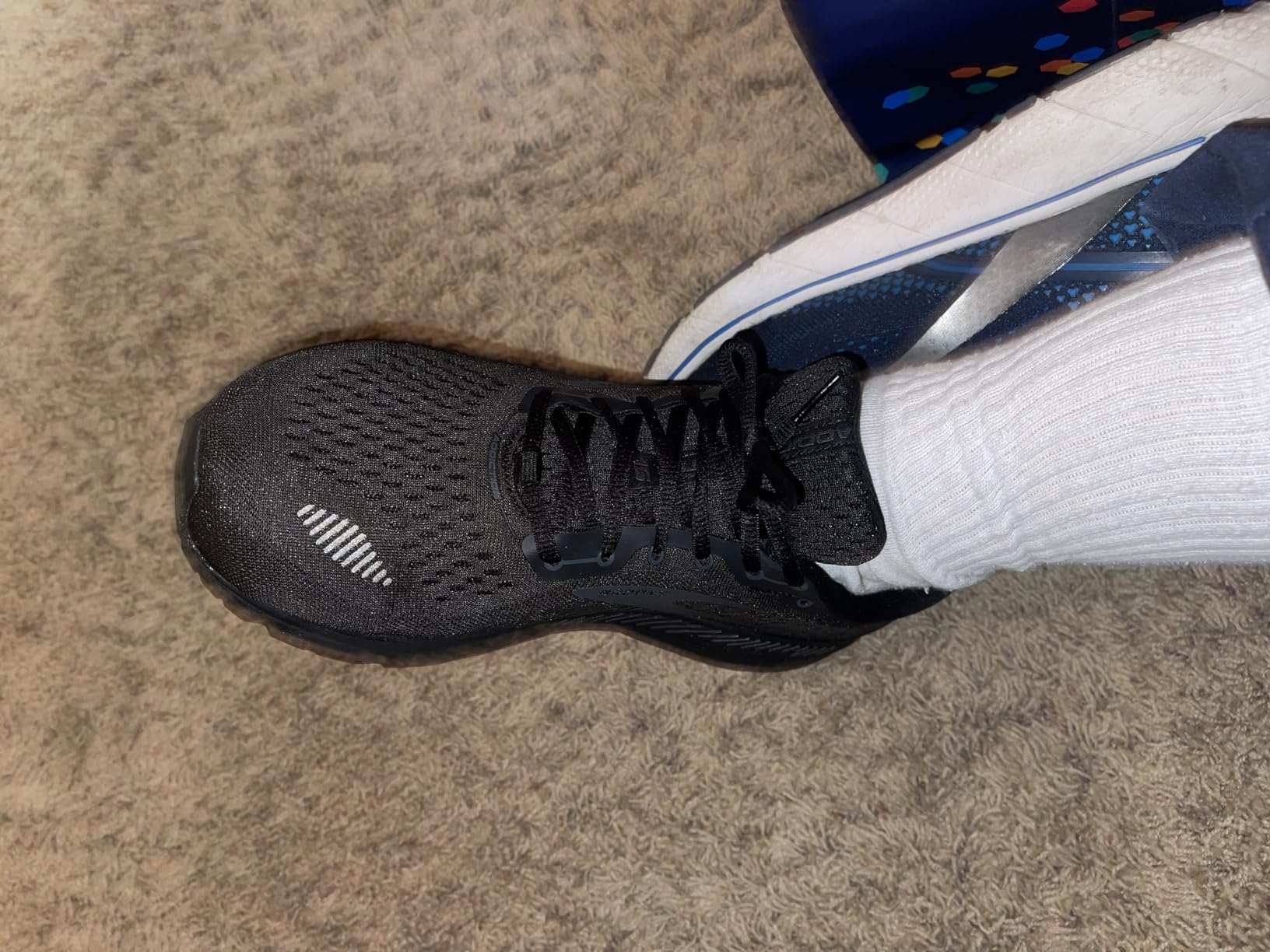
Reviewers repeatedly flag the roomy toe box as the feature that changes the experience. For a flat foot with a bunion or a Morton’s neuroma, a roomier forefoot is not a comfort luxury, it is the difference between a run you finish and a run you cut short. The model ships in a 4E configuration, and the fit is deliberately generous across the midfoot.
This is also the shoe in our list that most clearly earns its keep on the orthotics question. Multiple wearers report that prescription ankle-foot orthotics sit securely without the heel lifting out of the bed, which is the failure mode that pushes runners back into neutral shoes after a few months.
When heavy support is the right answer
Reach for the Addiction when your problem is not only arch collapse but also loss of control higher up the leg. GuideRails here is aimed at reducing excess joint movement, and the thick, stable platform gives you a landing surface that resists rolling. Reviewers with post-surgical feet and severe overpronation describe it as the shoe that let them keep running at all.
It also works as a walking and standing shoe, which several buyers in the data rely on. If your feet hurt more from standing than from running, this is a shoe that handles both without needing a second pair. The ventilation in the Air Mesh upper keeps it usable through a long day on concrete.
Who should skip the Addiction GTS 15
Skip it if you run fast or lightly. The heavier build has less road feel than a lighter neutral trainer, and a handful of buyers describe the ride as less responsive on quick efforts. It is a daily-miles and all-day-support shoe, not a speed shoe.
It also runs small. Most wearers size up, and the wide fit may feel looser than expected if you have standard-width feet. The textured toe box also collects dirt and is awkward to clean, a small thing that annoys people who wear the same pair on dirt paths as well as pavement.
4. ASICS Gel-Kayano 32 – Best for Long Distance
ASICS Men’s Gel-Kayano 32 Running Shoes, 9.5, Piedmont Grey/Gravel
4D Guidance System pod
Rearfoot PureGEL
FF BLAST PLUS midsole
Pros
- 4D Guidance System gives noticeable stability for overpronation and flat feet
- Rearfoot PureGEL absorbs heel strike well
- FF BLAST PLUS foam stays responsive over long runs
- Breathable engineered mesh
- Wide and X-Wide widths available
Cons
- Stiffer and heavier platform than a neutral daily trainer
- Structured upper can feel restrictive for very high-volume feet
- Heel-to-toe drop feels unfamiliar to barefoot-style wearers
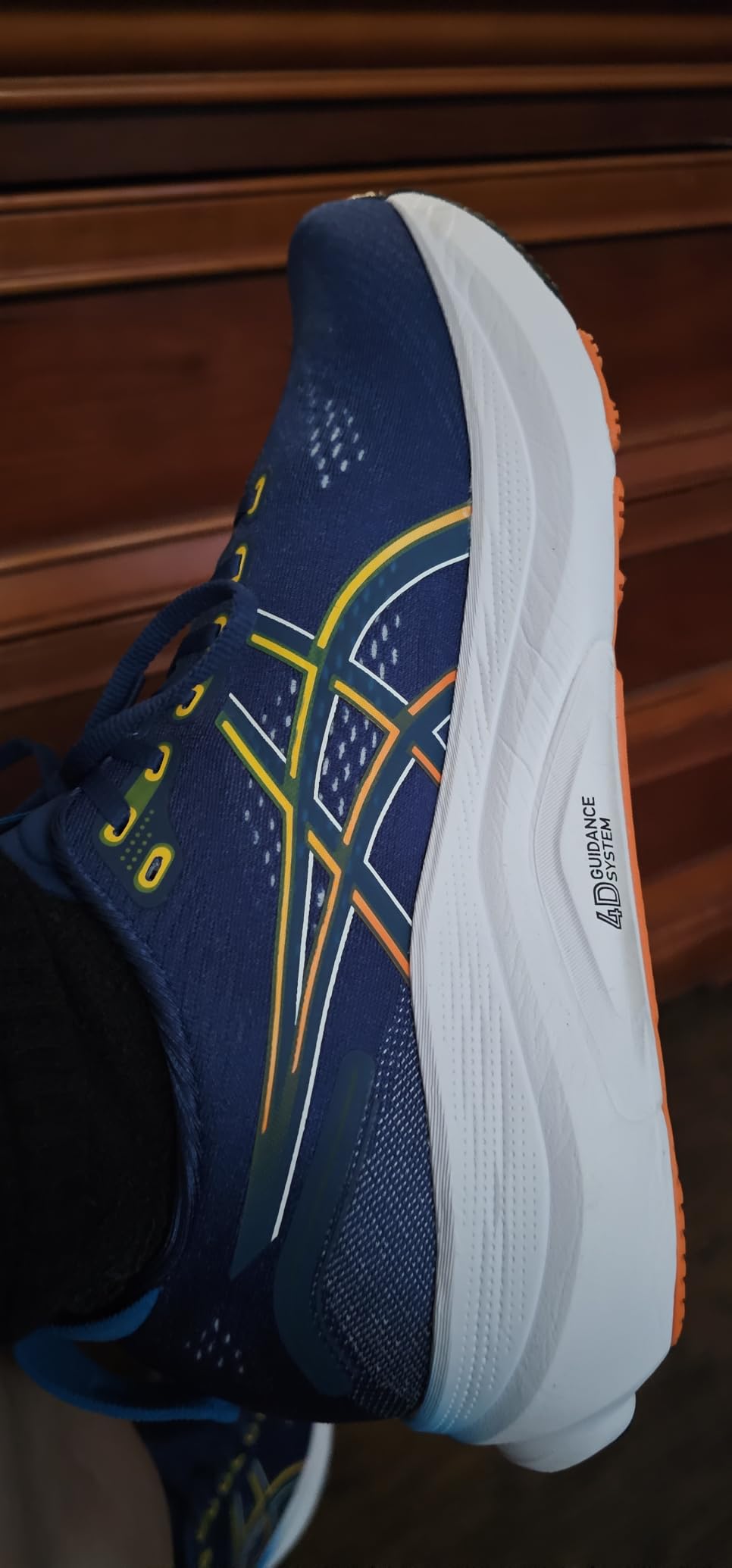
The Gel-Kayano 32 is the shoe that comes up most often when flat-footed runners ask each other what works, and for good reason. The 4D Guidance System is a pod that responds under excessive load rather than pushing constantly, so the correction feels more like a hand under the arch than a wedge under the heel. That subtlety is what makes it usable at 30 km rather than just tolerable at 5 km.
Rearfoot PureGEL is listed as roughly 65% softer than standard GEL, and on a flat foot that collapses through the heel at landing, that extra softness at the point of impact matters. The FF BLAST PLUS midsole handles the rest, giving a responsive ride that does not deaden as the miles stack up.
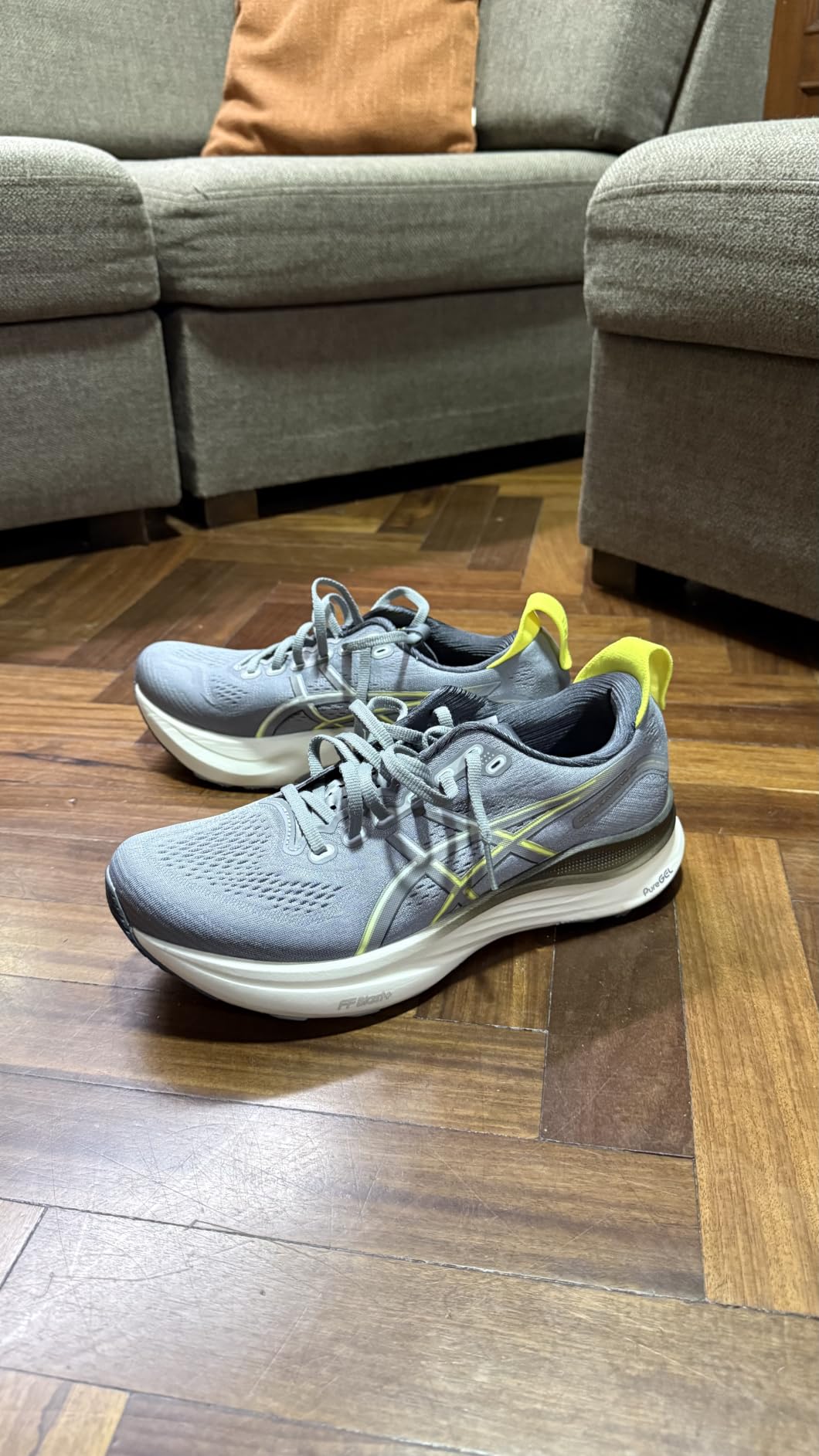
The engineered mesh upper is one of the better ventilated designs we reviewed, and the OrthoLite X-55 sockliner adds cushioning and moisture control underfoot. Standard, Wide and X-Wide widths are all offered, so a flat foot is not forced into a narrow last. A knit heel pull tab makes the shoe easy on and off, which sounds minor until you are doing it at the car park after a long run.
What we like most is the shape of the reviews. People describe this as a long-running stability workhorse rather than a specialist shoe for one session, and the reported comfort holds up across training blocks rather than only on the first outing. If your flat foot is going to run a marathon training plan, this is the pair that will still feel familiar in week twelve.
Why this is the pick for marathon-block mileage
Long training runs reward consistency over excitement. The Kayano’s 4D Guidance system is subtle enough that your legs stop noticing it, and the dual-layer cushioning holds a stable feel through the second half of a long effort. That is the difference between a shoe that tolerates a long run and one you look forward to.
It also doubles well for casual wear, which is relevant if your flat feet hurt more during a normal workday than during your run. Reviewers mention wearing them for walking and travel for the same reason people reach for a stability trainer in the first place.
Who should skip the Gel-Kayano 32
Skip it if you have a very high-volume foot and a strong preference for a soft unstructured upper. A minority of reviewers find the structured build stiff or restrictive, and those on the larger end of the width run may feel boxed in even in X-Wide.
It is also a heavier, firmer shoe than a neutral daily trainer, and the heel-to-toe drop will feel unfamiliar if you have been running in zero-drop or barefoot-style shoes. Transition gradually rather than switching on the same day as a long run.
5. ASICS Gel-Excite 11 – Best for Beginners on a Budget
ASICS Men’s Gel-Excite 11 Running Shoes, 10, Aurora Green/Black
Rearfoot PureGEL cushioning
AMPLIFOAM PLUS midsole
Engineered mesh upper
Pros
- Thick AMPLIFOAM PLUS midsole absorbs return energy for beginners
- Stable platform works on asphalt and packed trail
- Breathable upper stays comfortable in heat
- Lightweight with good traction
- Costs well below premium stability brands
Cons
- Runs small so sizing up is frequently required
- Toe box is narrower than some wide-feet buyers expect
- Long-term durability draws mixed reactions
- Wide-fit color options are limited
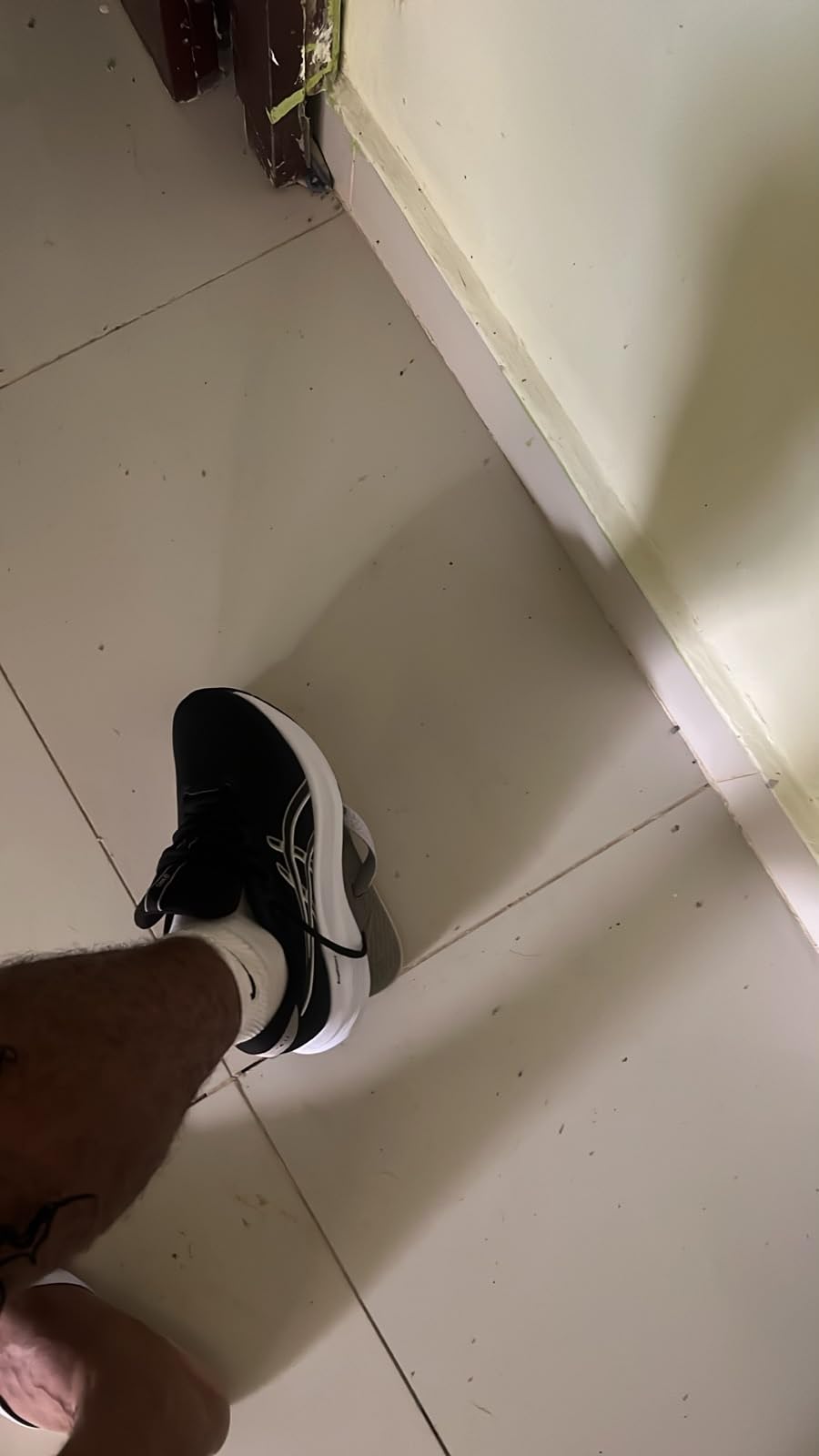
The Gel-Excite 11 is not a motion control shoe and we are not going to pretend otherwise. It is a thick, soft, well-cushioned daily trainer that happens to sit on a stable platform, and for a beginner whose flat feet ache after a first month of running three times a week, that is a genuinely useful place to start.
It rates 4.6 across 1413 reviews, and the recurring description is “comfortable workhorse” for walking, gym sessions and light running. AMPLIFOAM PLUS gives a soft landing, rearfoot PureGEL handles the heel strike, and the engineered mesh upper with reduced overlay count keeps it cool and uncluttered.
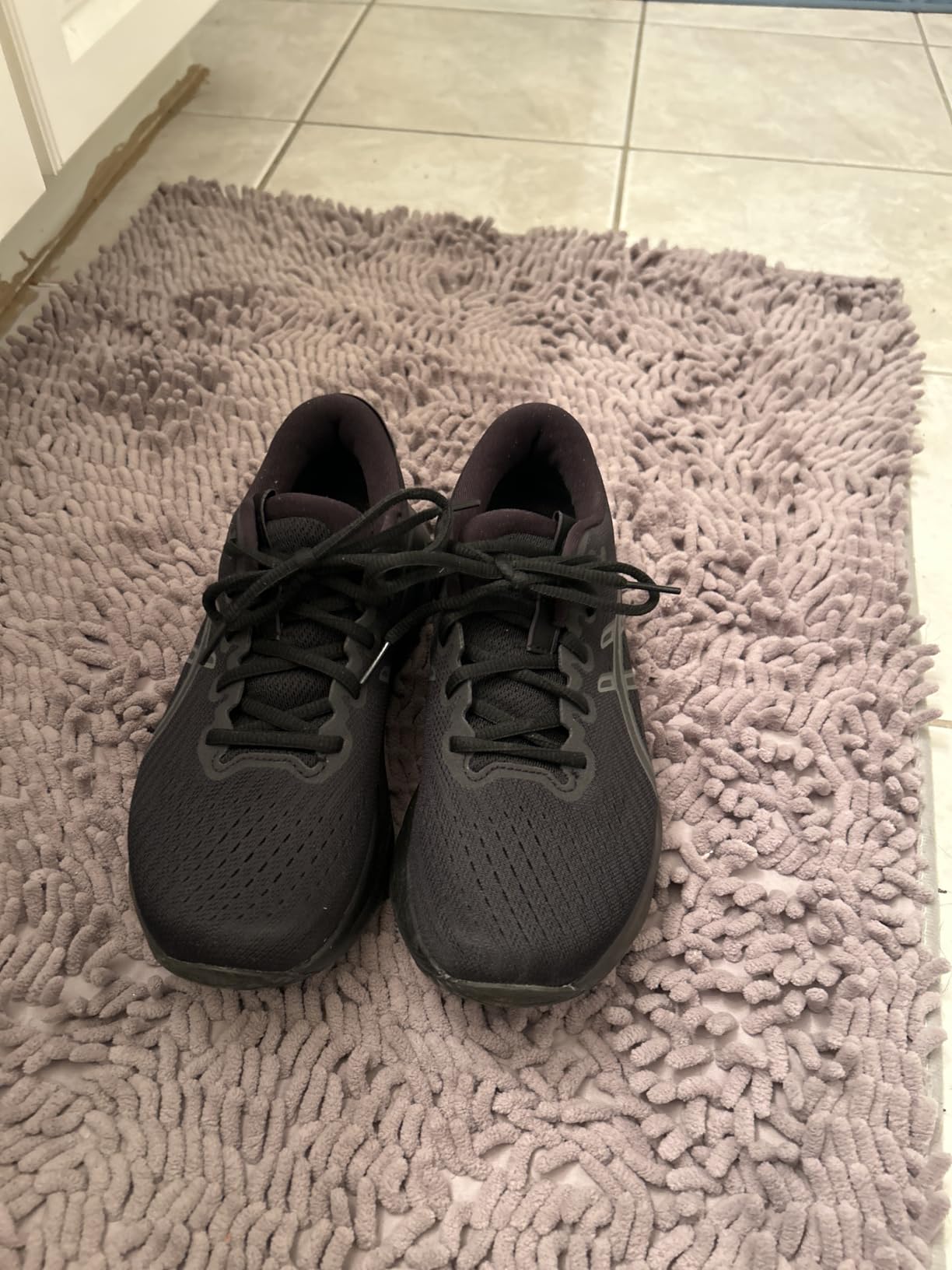
Reflective details make it safer if you are running early or late, and the OrthoLite X-30 sockliner manages moisture over long sessions. The knit heel pull tab is again a small quality-of-life touch. It weighs in at a light-feeling build, which matters when you are new and your calves are still complaining.
The platform is what makes it usable for a flat foot rather than purely a comfort shoe. Reviewers consistently describe a stable sole that holds together on pavement and on packed trail without feeling wobbly, which is a better compromise than buying a cheap neutral shoe and wondering why your arch feels worse after a month.
When a soft, cushioned trainer is the right call
Choose this if your mileage is low, your feet hurt most when you are standing around, and you want a pair that works for the gym and the road. At this level, cushioning is doing more good than aggressive correction would, and a shoe you are happy to wear gets worn more often than a technically superior pair sitting in a cupboard.
It is also a sensible first stability-adjacent purchase. If you later determine that you need real motion control, you will already know your size in the ASICS last, which makes the jump to a harder shoe far less painful.
Who should skip the Gel-Excite 11
Skip it if you have pronounced overpronation and a history of knee or hip problems. There is no post or guidance pod here to lean on, and if you know you roll inward badly, spend the extra money on a true stability model.
Two practical warnings. It runs small according to the manufacturer, so size up rather than trusting your usual number, and the toe box is narrower than some very wide feet expect even in wide sizes. Long-term durability draws mixed reactions too, so if you run daily you may get through them faster than you would a heavier-built trainer.
6. ALTRA Torin 8 – Best for Wide Feet and Flat Arches
ALTRA Women’s Torin 8 Road Running Shoe, Black/Pink, 7.5 Wide
Altra Balanced Cushioning zero drop
About 30 mm stack
FootShape roomy toe box
Pros
- FootShape toe box lets toes spread
- easing bunion and neuroma pressure
- Zero-drop geometry reduces forefoot stress
- Soft upper avoids pressure across the top of the foot
- APMA Seal of Acceptance for podiatric fit
Cons
- Laces are stiff and untie easily
- High hard-edged heel collar can rub the outer ankle
- Upper and heel breakdown can occur before a year
- Fit changed versus earlier Torin 8 pairs
- Zero drop needs an adaptation period
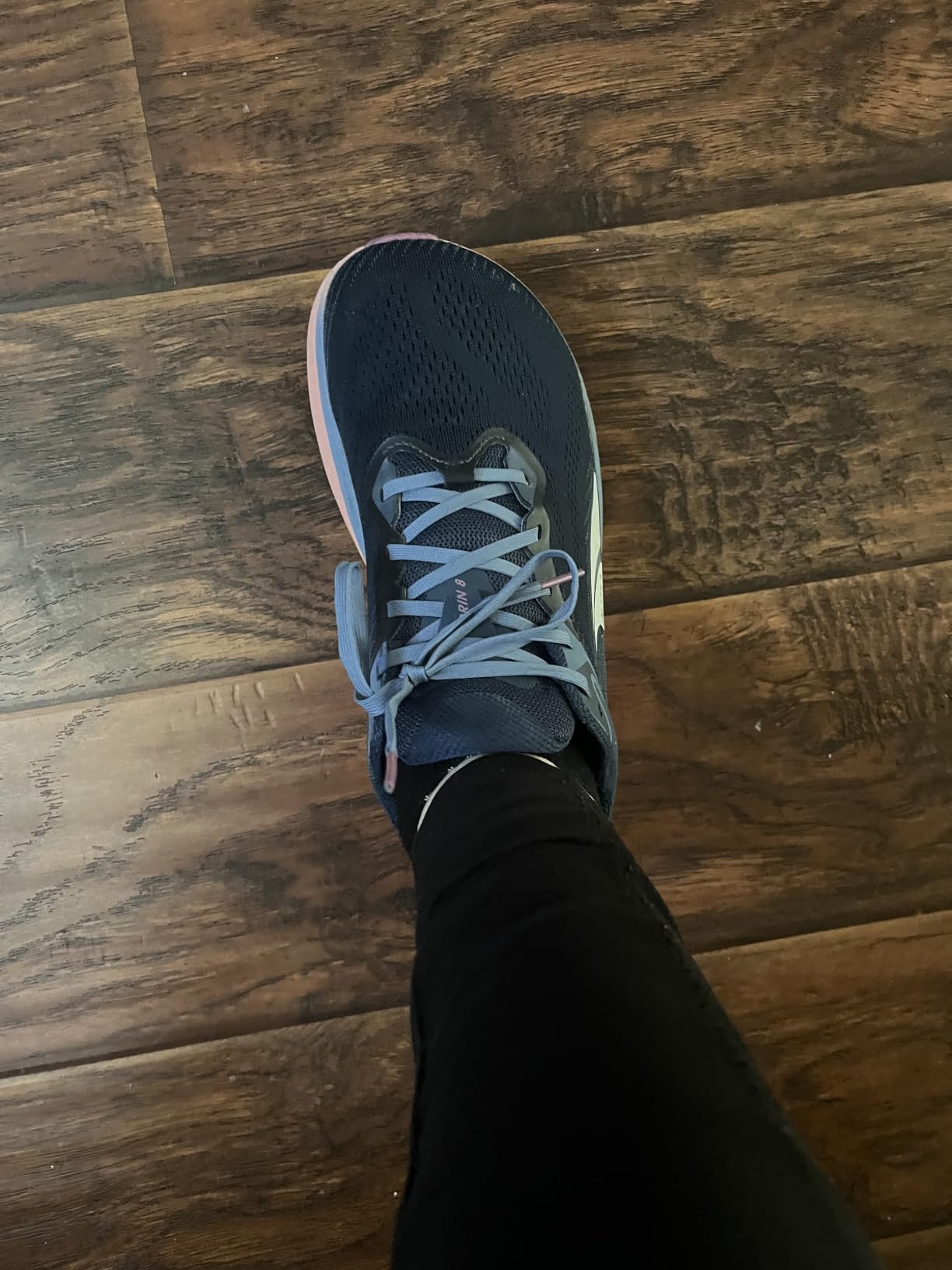
The Torin 8 solves the problem the rest of this list only partly solves: toe room. The FootShape toe box is the widest forefoot we reviewed, and owners with bunions, Morton’s neuroma and neuropathy describe it as the most comfortable shoe they own. When a bunion is the reason your foot hurts, a roomy forefoot is not a preference, it is treatment.
Altra Balanced Cushioning puts the heel and forefoot at the same height, roughly 30 mm of stack with zero drop. For a flat foot that spends its day collapsed, the low-to-the-ground geometry takes load off the forefoot and reduces the arch stress that comes from high stacked heels. The soft upper is another quiet asset on a foot that swells during a long run.
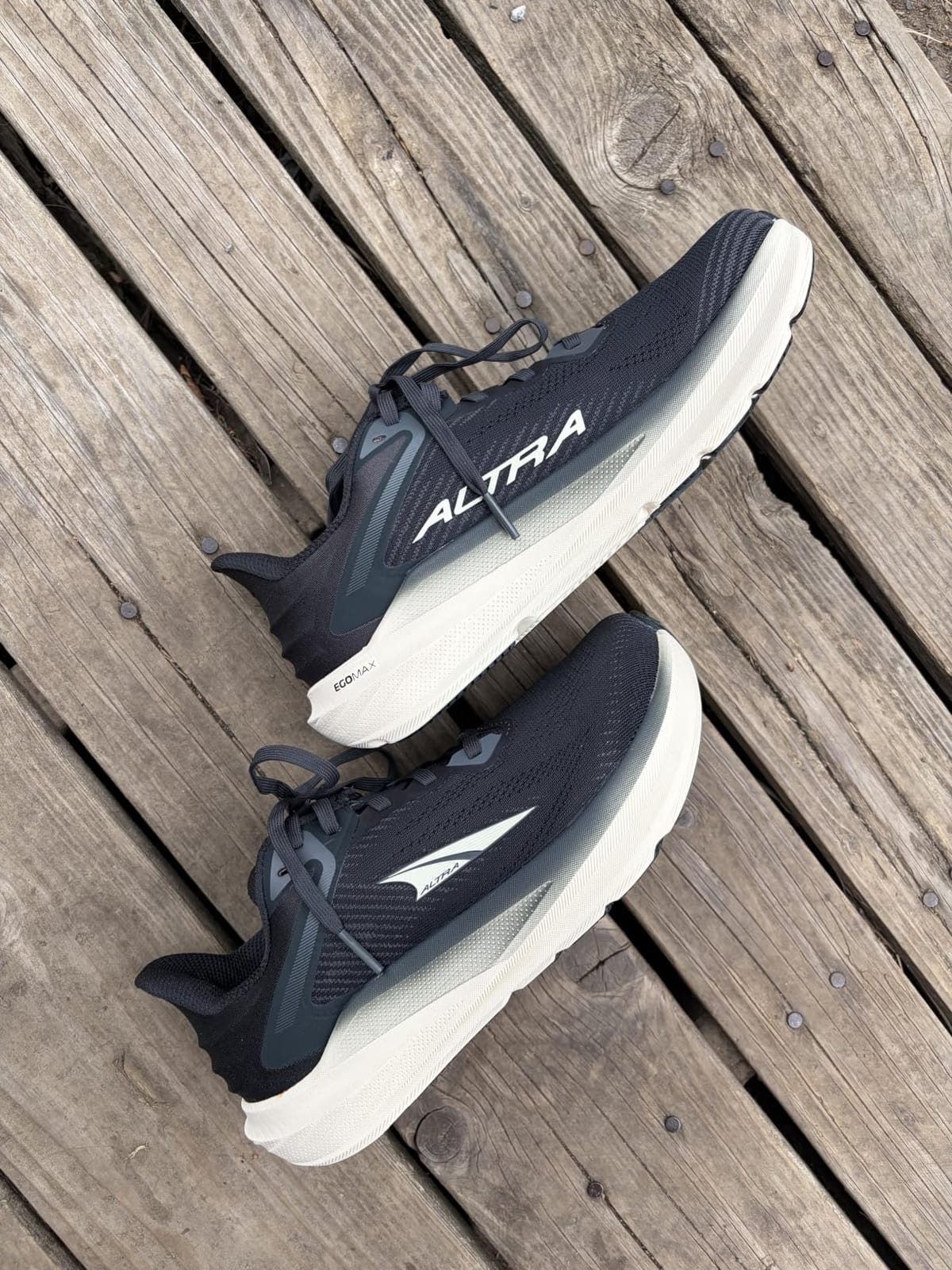
The wide contour footbed suits wider and flatter feet, and Altra offers this model in both standard and wide widths. It carries an APMA Seal of Acceptance, which is the podiatric medical association’s mark for a shoe designed around foot health rather than just comfort. Several wearers note that the firmer, lower profile also improved their balance, which matters if you have reduced sensation in your feet.
Be clear-eyed about the category though. This is a neutral shoe with excellent geometry, not a stability shoe. If you overpronate with force, the wide platform and low profile will help a great deal, but you are not getting a medial post or a guidance pod.
Why the toe box matters more than the midsole here
Forum runners with flat feet and bunions repeatedly describe the forefoot as the site of their pain, and the Torin 8 is the shoe in this list that genuinely changes that. Toes that can splay spread the load across the whole forefoot instead of concentrating it through the big toe joint and the second metatarsal, which is where both bunions and neuroma pain come from.
The zero-drop geometry adds a second benefit. Removing the elevated heel reduces the demand on the arch and the plantar fascia through the back half of the stride, and multiple wearers report relief from arch and lower-back discomfort as a result. It also encourages a midfoot strike, which naturally loads the arch more evenly.
Who should skip the Torin 8
Skip it if you cannot handle a zero-drop shoe yet. Going from a stacked trainer straight into a 30 mm zero-drop platform is a big change, and our data includes wearers who needed a real adaptation period. Give it two to three weeks of easy running before adding anything fast.
Also weigh the complaints. The laces are stiff and untie easily, the heel collar is hard-edged and can rub the outer ankle, and the upper and heel can break down before a year of use. Owners who bought earlier Torin 8 pairs also report fit changing between production runs, so if you are replacing a pair you already own, do not assume the new one fits identically.
7. Saucony Guide 18 – Best for Everyday Mileage
Saucony Men’s Guide 18 Sneaker, Flint/Navy, 9.5
Maximal cushioning, broad base geometry
Center Path Technology
PWRRUN foam midsole
Pros
- Broad stable base gives inherent support that helps a flat foot roll less
- PWRRUN foam is soft yet responsive for long daily miles
- Center Path Technology keeps the foot centered
- Durable carbon rubber outsole with good traction
- One of the widest size ranges in the lineup
Cons
- Maximal stack is heavier and less nimble than a lighter trainer
- Bulkier profile suits daily miles more than speed work
- Cushioning less responsive than lighter foam shoes
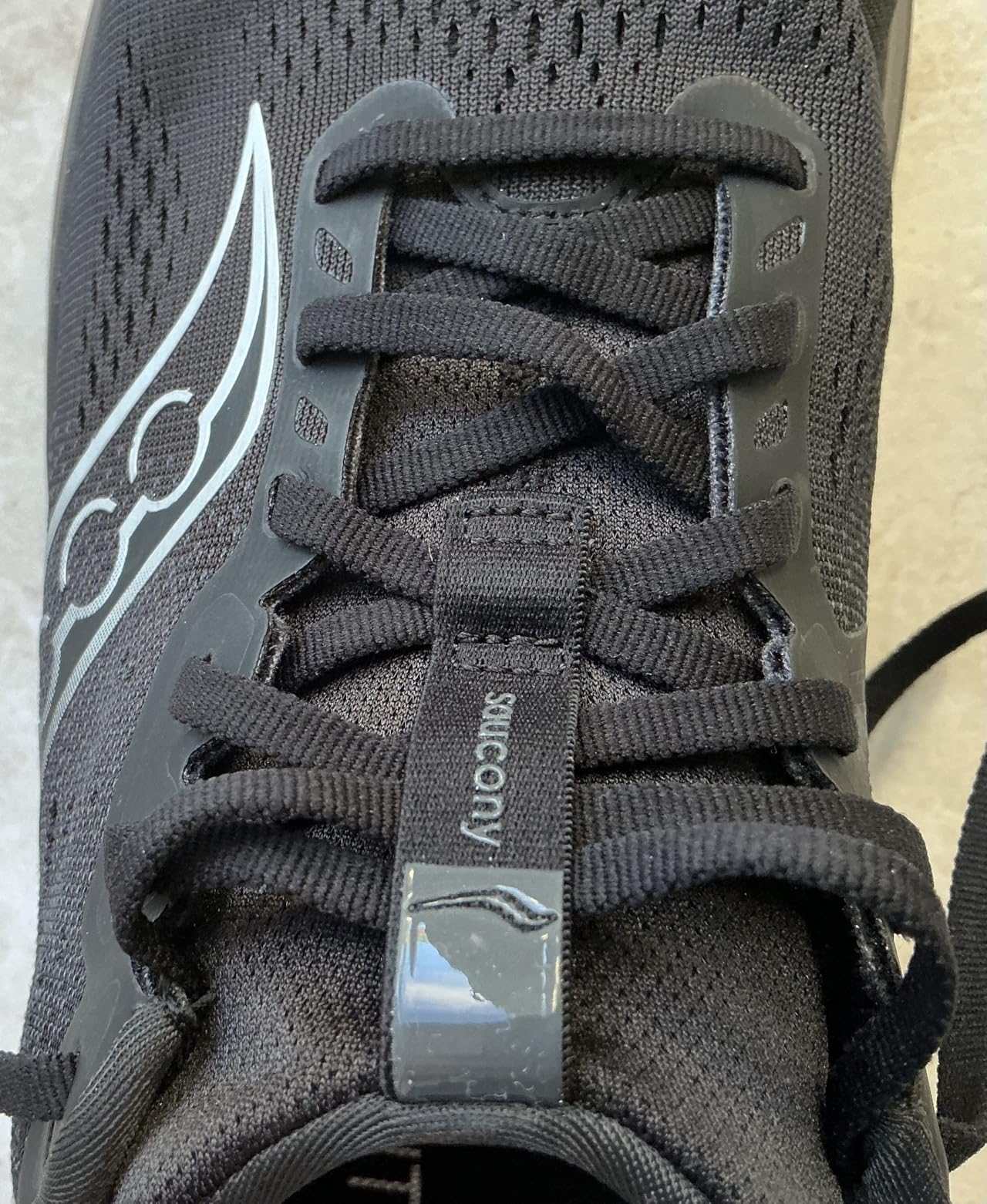
The Guide 18 is a stability shoe in effect rather than by name, and that is a feature. Saucony builds it around a broad, flared base geometry, so the foot sits on a platform wide enough that it does not need a hard post to stop rolling. For a flat foot that also happens to be a wide foot, geometry does more work than a post ever could.
Center Path Technology uses asymmetric geometry to keep the foot centered from the moment of lateral impact through toe-off, and the PWRRUN foam underneath stays responsive rather than deadening under body weight. It is a maximal trainer by stack, which is exactly what most flat-footed runners end up preferring for daily miles.
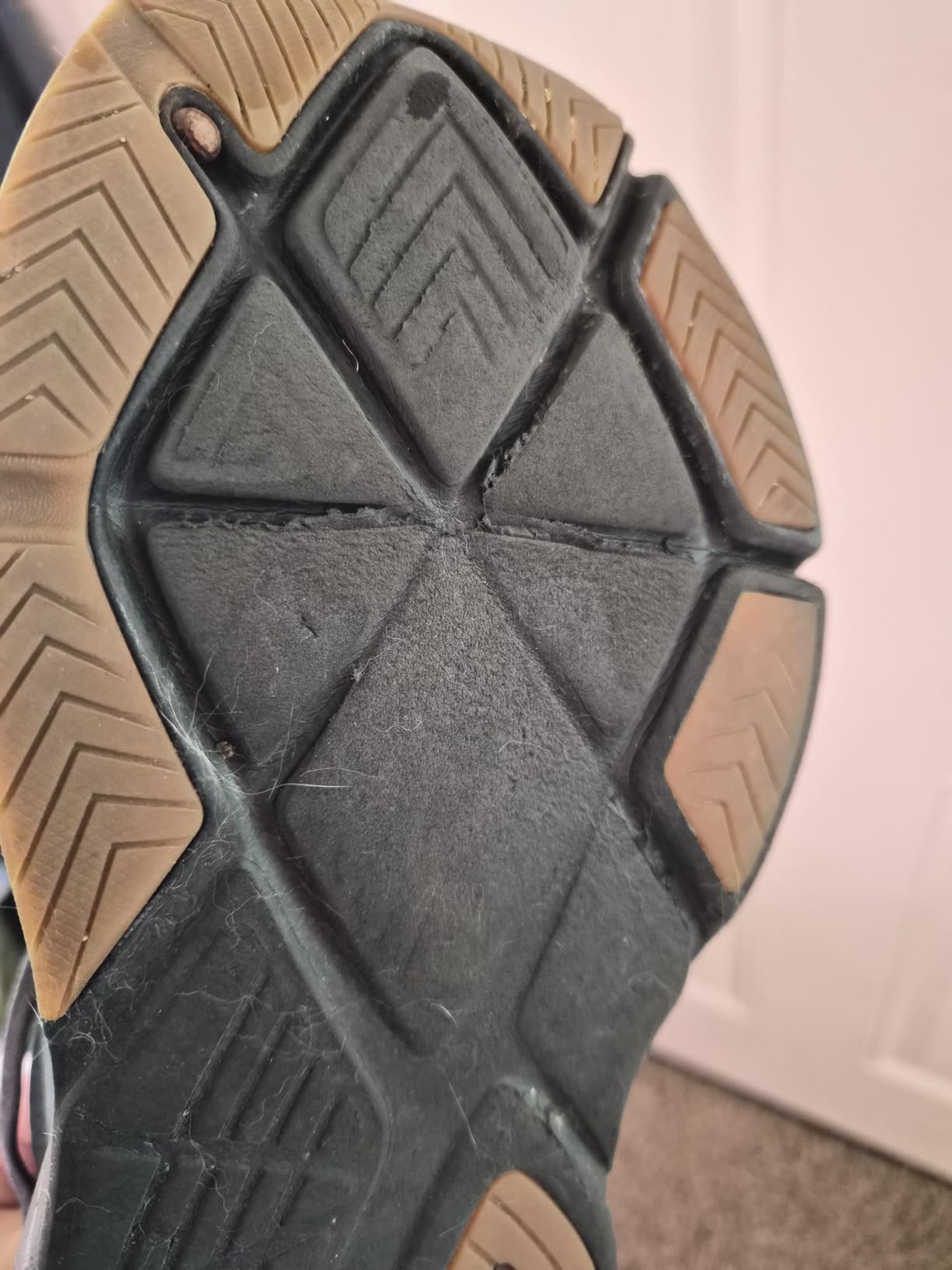
The XT-900 carbon rubber outsole is genuinely durable and gives good traction in wet conditions, and the engineered mesh upper is described as supportive without being heavy or stiff. Most importantly for this topic, the size run is extensive, with many wide and X-Wide options, so finding a matched fit is far easier here than with most brands.
Saucony Guide and Omni models come up constantly in flat-foot threads as recommendations from people who actually run in them, and this is the modern version of that advice. It is less rigid than a traditional motion control shoe but delivers more inherent stability than a neutral trainer, which is the trade most runners with flat feet end up accepting.
Broad base geometry versus a medial post
This is the core idea worth understanding about the Guide 18. A medial post is a hard, angled block of material under the inner arch that resists inward roll. Broad base geometry gets to a similar result by making the platform so wide that the foot physically cannot fall off the inside edge. The second approach feels considerably more natural, and it is the reason this shoe works for runners who find traditional motion control shoes clunky.
For daily mileage that difference matters. You will run more of your week in this shoe than in anything else you own, and comfort over 30 km per week will beat theoretical correction that makes you dread the run. Reviewers consistently frame it as a comfortable, supportive maximal trainer rather than a medical device.
Who should skip the Saucony Guide 18
Skip it if your priorities are speed or lightness. The maximal stack weighs in heavier and less nimble than a lighter trainer, and some buyers find the PWRRUN cushioning less responsive on quick efforts than a lighter foam. The bulkier profile is built for long easy miles, not intervals or race day.
If your overpronation is severe, or you need a hard post to keep a knee in line, this supportive-by-geometry approach may be too subtle. In that case look at the Addiction or the Adrenaline, which add real guidance tech on top of a wide base.
8. ALTRA Paradigm 8 – Best Zero-Drop Option with Extra Cushion
ALTRA Men’s Paradigm 8 Road Running Shoe, Blue/Gray, 10.5
Altra EGO MAX midsole foam
Balanced Cushioning 30 mm zero drop
FootShape toe box
Pros
- FootShape toe box relieves toe pinching and bunion pressure
- Zero-drop 30 mm platform feels natural for long walks and runs
- EGO MAX foam reduced foot fatigue on runs beyond 15 miles
- Lightweight and stable enough for all-day walking
- Wide width fits wide feet better than many rivals
Cons
- Wide version can still feel narrow in the midfoot versus true 4E
- Sole is soft and can feel unstable at foot strike without a transition
- Sole cushioning is less than plush max-stack shoes
- Breathability reported as mediocre by some
The Paradigm 8 is the cushioned counterpart to the Torin 8, and it solves a specific problem: zero-drop shoes for flat feet are often too thin to be comfortable on pavement. Adding EGO MAX foam gives it about 30 mm of stack at zero drop, so you keep the natural foot position and lose less impact protection on concrete.
Wearers with wide feet, toe pain and pinch issues credit the FootShape toe box with taking pressure off the forefoot, and the wide width fits better than many competing shoes. Reviewers also report the EGO MAX foam reducing foot fatigue on runs beyond 15 miles compared with the earlier version, which is the number most of them are actually training toward.
It is a genuinely useful all-day shoe, not only a running shoe. Multiple owners describe it as stable enough for walking and for standing, and the light weight makes it easy to keep on through a workday without the fatigue of a heavier trainer.
Note that the rating is high at 4.5 but the review count is much smaller than the rest of this list, which tells you the owners who bought it were largely happy but that it has a shorter track record. For a newer model, that is a fair trade for a distinctive geometry, and it is worth testing before committing to a full rotation.
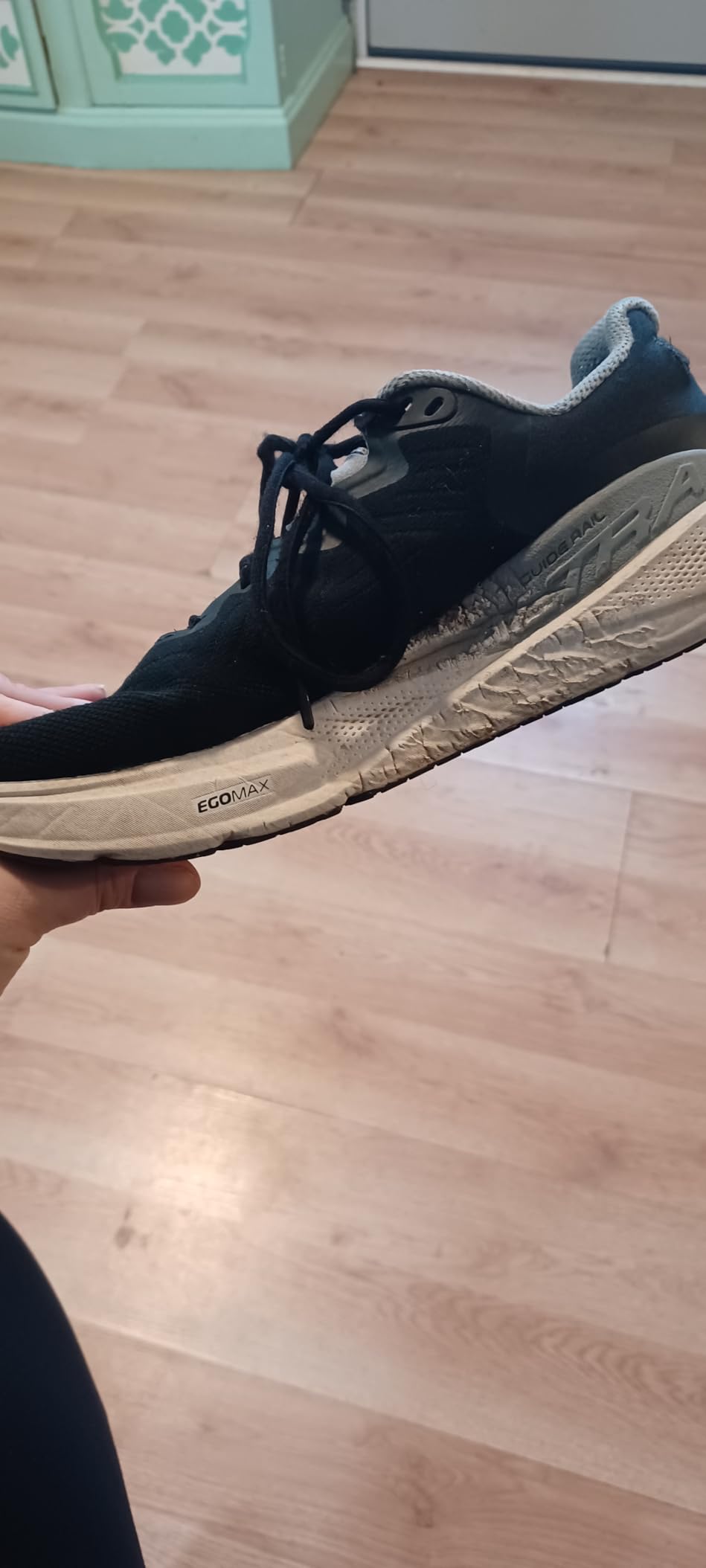
Why cushioned zero drop works for a flat foot
Most flat feet are described as flexible rather than rigid, which means the arch collapses under load and stays collapsed. A stacked shoe makes that worse by encouraging you to land hard on a high heel. A zero-drop platform brings the heel and forefoot level, loads the arch more evenly and encourages a midfoot strike, so the arch works instead of hanging off the shoe.
Adding foam on top of that equation gives you cushioning without the geometry problem. That is the trade the Paradigm 8 makes, and it is why it comes up as a pick for flat feet that also spend a lot of time walking. The FootShape toe box handles the forefoot side of the problem, the balanced platform handles the arch side.
Who should skip the ALTRA Paradigm 8
Skip it if you need a lot of cushioning for long road miles or if you are not ready for zero drop. The midsole here is soft enough that some wearers find it unstable at foot strike without a transition period, so ease into it over a couple of weeks rather than putting it on for a long run on day one.
Be honest about the midfoot width, too. Reviewers say the wide version can still feel slightly narrow compared with a true 4E shoe, and breathability draws mediocre reports from a few buyers. If your midfoot is the problem rather than your forefoot, the Saucony Guide 18 or the Brooks Adrenaline in X-Wide will serve you better.
9. ASICS Gel-Venture 11 – Best for Trail and Mixed Terrain
ASICS Men’s Gel-Venture 11 Running Shoes, 9, Black/Carrier Grey
Rearfoot GEL cushioning
AMPLIFOAM PLUS midsole
Molded rubber trail outsole
Pros
- Rearfoot GEL and AMPLIFOAM PLUS handle pavement
- hiking and light trail
- Wide and X-Wide widths accommodate wide feet
- Outsole holds up over years of regular use
- Comfortable for long walks and everyday wear
- Supportive fit at a modest price
Cons
- Arch support is light compared with dedicated stability models
- Rearfoot slippage in larger sizes from the revised heel collar
- Can feel heavy on the foot
- Mesh upper soaks through in wet grass
- Not built for technical rocky terrain
The Gel-Venture 11 is the one to pick if your flat foot meets dirt. It combines rearfoot GEL and AMPLIFOAM PLUS cushioning with a molded rubber outsole built for trail traction, and owners with wide feet and post-surgical foot issues describe it as supportive and durable on everything from pavement to light hiking trails.
Wide and X-Wide widths are offered, which matters here more than in a road shoe. Trail running involves lateral movement and uneven ground, and a midfoot that is too narrow on rocks and roots is a genuine injury risk rather than a comfort issue.
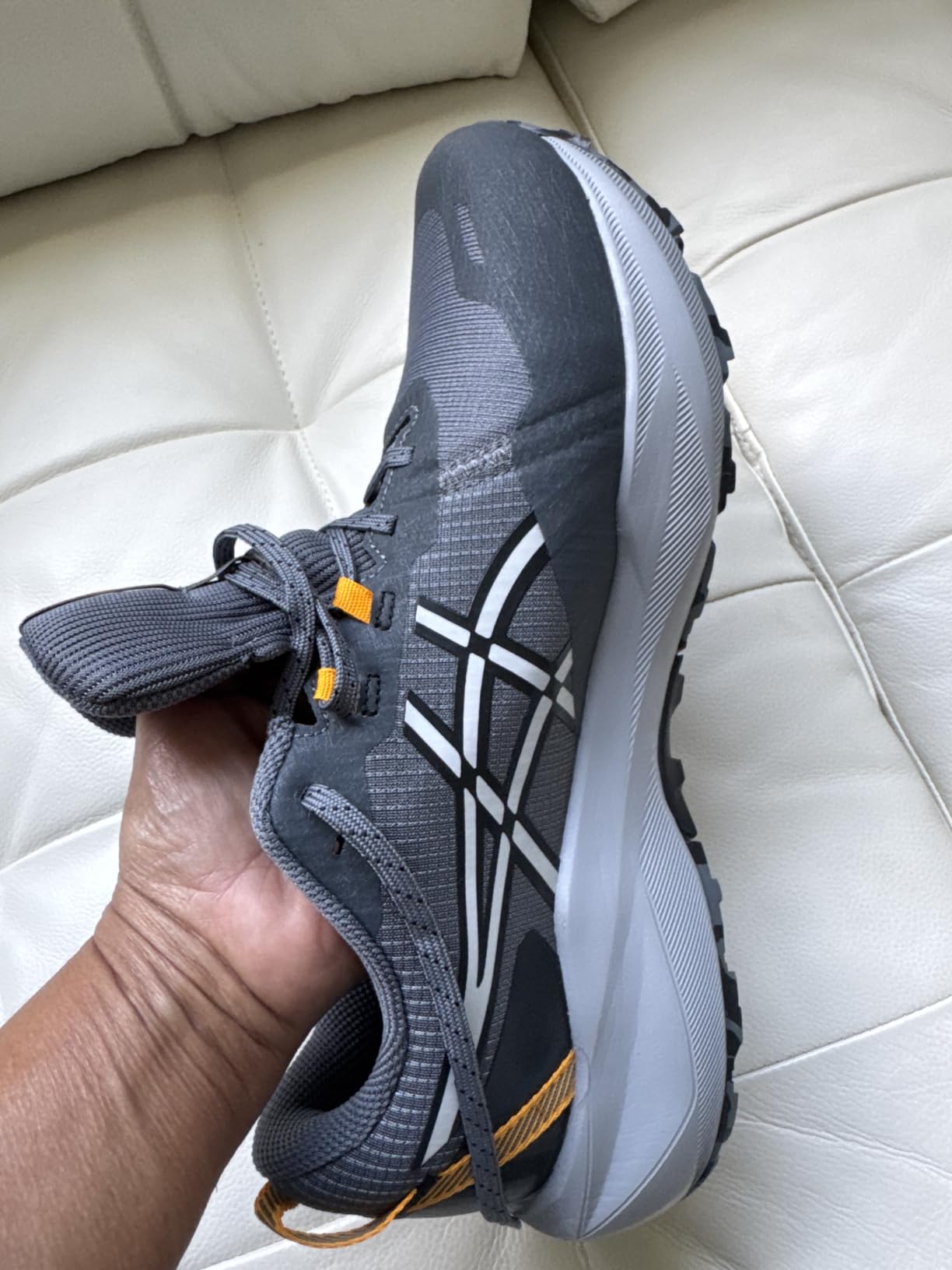
The OrthoLite Hybrid Max Lite sockliner handles moisture and breathability, and the sockliner is produced with solution dyeing that uses about 33% less water and 45% fewer carbon emissions. The outsole is the practical strength: multiple wearers describe it holding up over years of regular use, which is a durability answer as well as a traction one.
It also works as a walking shoe. That is worth more than it sounds for flat-footed runners, because the people most likely to be in this shoe are often the same people whose feet hurt most on a long day of standing.
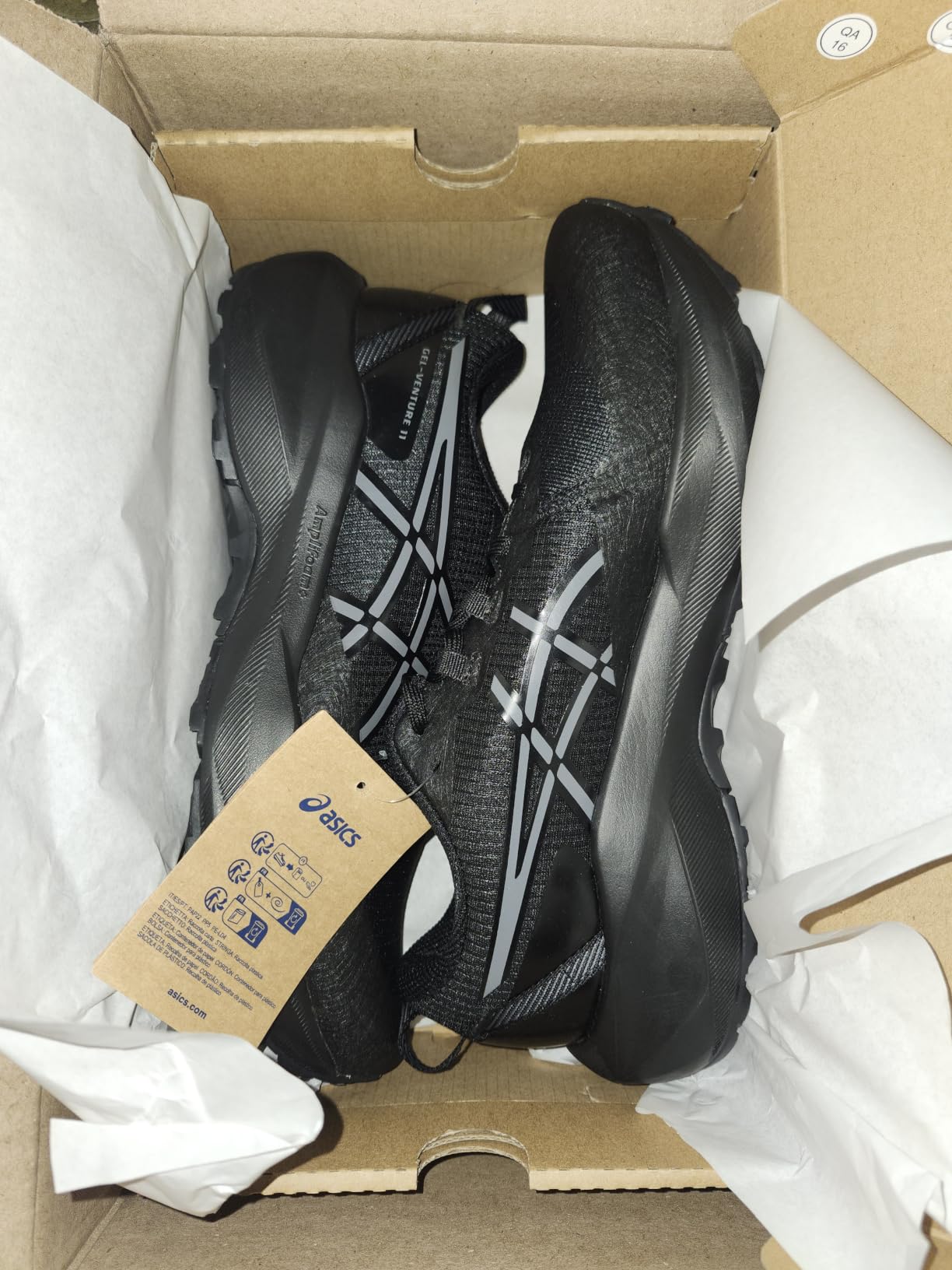
What trail terrain actually requires from a stability shoe
On loose or uneven ground, a flat foot has a harder job than on pavement. The surface constantly changes the angle of impact, so the foot needs a platform that stays put and a foam that does not compress unevenly. Rearfoot GEL handles the initial shock, the molded rubber outsole grips and sheds debris, and the wide forefoot keeps your toes from sliding around on a rock.
Be clear about the limit, though. This is a light-trail and mixed-terrain shoe. Owners praise it for pavement, hiking paths and easy forest trail, and it is not built for technical mountain terrain where you need aggressive lugs and a very secure midfoot.
Who should skip the Gel-Venture 11
Skip it if you are buying specifically for arch support. This is the most common complaint in the reviews: the arch support is light, and buyers who expected structured support feel underwhelmed. It is a cushioning and traction shoe with a wide fit, not a motion control shoe.
Other drawbacks to weigh: it can feel heavy, the revised heel collar shape produces rearfoot slippage in larger sizes for some wearers, and the mesh upper soaks through in wet grass. If you run technical trail, you also need a more aggressive outsole than this one provides.
10. WHITIN S81 Wide Toe Box Zero Drop – Best Lightweight Budget Pick
WHITIN Men’s Wide Toe Box Zero Drop Training Road Running Shoes Black 13
Extra-wide toe box for toe splay
Zero-drop low-to-ground platform
EVA midsole
Pros
- Very wide toe box that fits 4E-width feet and toe spreaders
- Zero drop reduces arch and lower-back strain for many wearers
- Lightweight enough for daily running and treadmill work
- Holds up over thousands of miles of use
- Machine washable
Cons
- Very thin cushioning feels harsh on cobblestones and gravel
- Thin insole is worth replacing
- Outsole can separate before the shoe is otherwise worn out
- Weak grip on wet surfaces
- Zero drop can trigger shin splints during adaptation
The WHITIN S81 is the most reviewed shoe in this roundup by a wide margin at 3356 ratings, and it earns that volume in a specific way. It is offered exclusively in wide widths with a very roomy toe box, and owners with 4E-width feet and plantar fasciitis describe it as the shoe that finally let their toes move without a shoe fight.
At 8.82 ounces it is the lightest shoe we reviewed by a considerable margin, which makes it genuinely easy to run in for daily mileage, treadmill sessions or gym work. The zero-drop platform keeps the foot in a neutral posture close to the ground, and the EVA midsole gives adaptive energy return and basic shock absorption without adding bulk.
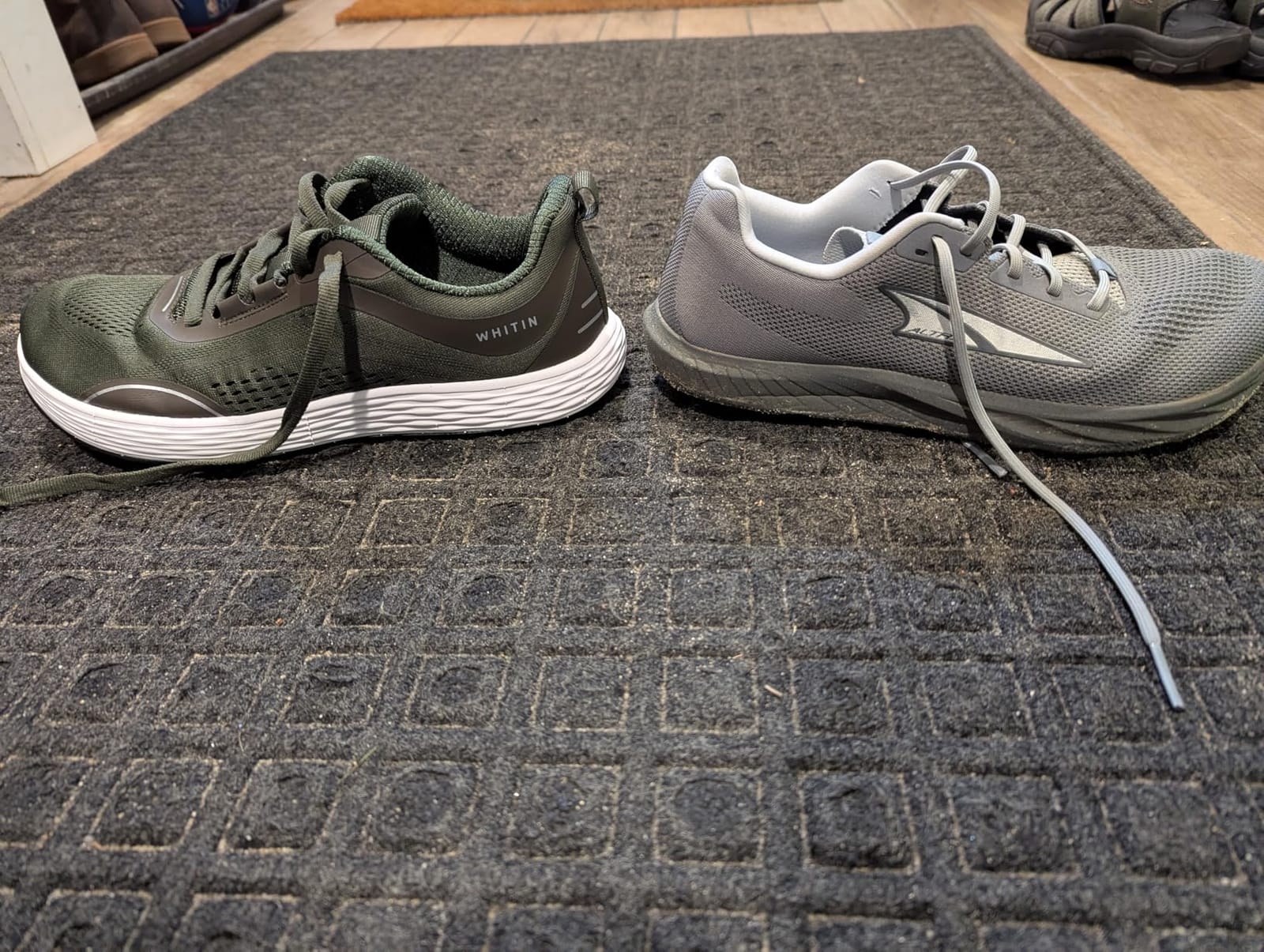
Durability is genuinely strong for the money. Owners report thousands of miles of use and the shoe is machine washable, which answers the durability anxiety that stops beginners buying cheaper shoes because they assume they will be replaced constantly. The durable rubber outsole is designed to grip across multiple surfaces, and the soft breathable mesh upper and lining keep it comfortable in warm weather.
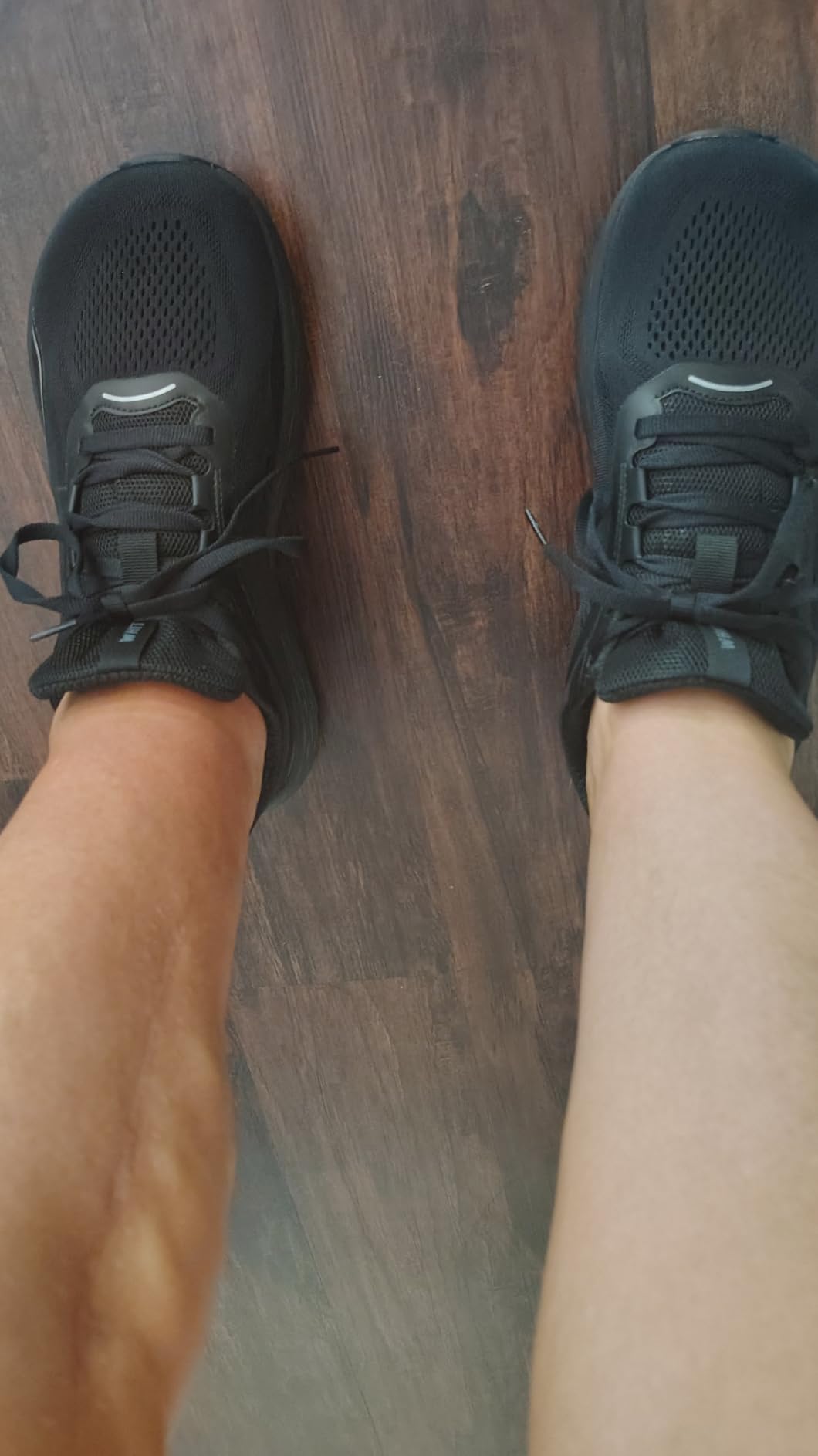
Owners frequently report relief from arch and lower-back pain, and the combination of a very wide forefoot with zero drop is a genuinely good fit for a flat foot that also has bunions or toe pinch issues. Very few shoes in any price bracket give you this much room in the forefoot.
How thin can a flat-foot shoe be and still work?
Thinner is harder than it sounds. A minimal EVA midsole gives you almost no impact attenuation, so the arch and lower leg absorb the landing directly. For some runners that is ideal, because it trains the foot and the calf to handle impact rather than hiding it. For others, especially on concrete or with existing shin problems, it is a recipe for soreness.
The people who love the S81 typically describe themselves as either transitioning gradually from a heavier shoe or having already spent time strengthening their feet. The soft breathable mesh upper and the light 8.82-ounce weight make long sessions comfortable as long as the surface is not cobblestone or gravel, which several owners single out as too harsh.
Who should skip the WHITIN S81
Skip it if you need real stability correction. There is no post, no guidance pod and no wide platform logic here, so a severe overproner will not get what they need from it. It suits a flat foot that is more about toe room and low-to-ground position than about controlling inward roll.
Also be cautious with wet-weather traction, since the outsole grip is weak on wet surfaces and dirt finds its way into the mesh upper. The insole that comes with it is minimal, and replacing it makes a noticeable difference. Most importantly, zero drop can trigger shin splints during the adaptation period, so add distance gradually and expect about two to three weeks of adjustment. The outsole can also begin separating before the midsole is used up, which is a fair trade for what you pay but worth knowing.
How to Choose Running Shoes for Flat Feet
Ten shoes, ten sets of tradeoffs. Here is how to narrow the list down to one pair, plus the questions people ask most often in the forums.
Stability, motion control and neutral are three different things
Stability shoes use a firm, raised structure on the inner side of the midsole to discourage inward roll while still letting the foot flex. Motion control shoes go further, using a firmer, more structured platform and often a hard medial post. Neutral shoes have no corrective element at all and rely on a wide, stable base and the runner’s own strength.
For a flat foot that overpronates, the short version is this. Mild overpronation and comfort-first running points toward a stability shoe like the Adrenaline or the Gel-Kayano, where the correction is subtle. Pronation heavy enough to affect your knees points toward motion control, which in this list means the Addiction. A flat foot with wide feet and a good calf can get surprisingly far in a wide neutral shoe like the Guide 18, the Torin 8 or the Paradigm 8.
The old advice of “buy a hard post, it will fix everything” is out of date. Modern stability tech is deliberately subtle, which is why people often buy a supportive shoe and cannot tell it apart from a neutral one. If you cannot feel a difference, the tech is probably not doing much for your particular gait.
Measure your midfoot width before you order
Width is the number one reason flat-footed runners end up resenting a supportive shoe, and it takes two minutes to check. Stand barefoot on a sheet of paper with your weight fully on one foot and trace the outline of your foot, marking the widest point of the ball of the foot and the narrowest point of the arch.
Next, measure both marks and the distance between them. That gap is your midfoot width. Compare it against the length of your foot from heel to longest toe. If your midfoot width is close to half your foot length or more, you are a wide or extra-wide foot, and a standard last will pinch you no matter how good the stability tech is.
Then check the size run. Standard D is normal, Wide is 2E, and Extra-Wide is 4E in most US sizing. In this roundup, the Adrenaline GTS 25 and the Gel-Kayano 32 go narrow to X-Wide, the Gel-Venture 11 and the Guide 18 carry extensive wide and X-Wide ranges, and the WHITIN S81 is offered only in wide. If a brand does not make your width, do not force it, because a shoe that pinches your midfoot will hurt more than the arch you were trying to fix.
Firm midsole, heel drop and cushioning all matter differently
A soft foam compresses under load and stops guiding your foot, so a firm midsole is usually better for a flat foot than the plushest option. That said, cushioning still has a job: it reduces the impact your shins and hips absorb. The workable answer is firm enough to guide, soft enough to protect, and the Adrenaline and the Guide 18 are the clearest examples of that balance in this list.
Heel-to-toe drop matters too, mostly for comfort. A high drop is easier on the Achilles and the plantar fascia. Zero drop loads the arch more evenly, which many flat-footed runners like, but it needs a real adaptation period, and our data includes wearers who triggered shin splints by switching too fast.
Finally, buy your running shoes in the afternoon or evening, when your feet are at their largest, and always with the socks you run in. Feet swell over a long run, and a pair that fits perfectly in the morning can pinch badly by mile eight.
Do you need orthotics as well as a stability shoe?
Possibly, and they are more compatible than most runners assume. If you already wear prescription orthotics, you want a shoe with a removable sockliner and a roomy interior, and the Addiction GTS 15 is the clearest match in this roundup, with reviewers reporting that orthotics sit securely without heel slip. The Adrenaline, with its deep X-Wide option, is a solid second choice.
The practical rule is this. If a good stability shoe in the right width handles your symptoms, you have probably solved the problem and an orthotic is redundant. If pain persists at a sensible volume in a supportive shoe, a physical therapist or podiatrist can tell you whether your feet need structural support that a shoe alone cannot provide. Some flat-footed runners need a firm neutral or stability shoe plus an orthotic, others need only one or the other, and the cost of guessing is a lot of wasted mileage.
How to break in a firm stability shoe without upsetting your shins
Forum runners repeatedly report needing 10 to 15 miles before a firm midsole feels comfortable rather than restrictive, and that number is a good starting point. Wear the new pair around the house for an hour, then run your first outing in them short and easy. If the shoe changes your stride, an easy run is the right place to find out.
Replace one run at a time rather than all of them, and keep one of your old shoes in the rotation for the first couple of weeks. If you are coming from a soft neutral trainer, a firm stability shoe will feel different under the arch for the first few runs, and that is normal. Persistent arch ache after a few miles is not normal, and it usually means the width is wrong rather than that you need more time.
Who this guide is not for
If you have a flat foot but you land on the outside of your foot and roll outward, sometimes called supination or underpronation, none of the stability picks above are for you. Guiding a supinating foot back toward neutral when it already sits there can push you into shin splints and ankle strain. Watch your own runs from behind, film yourself landing, or ask a physical therapist to check your gait before buying a corrective shoe.
It is also worth saying plainly that flat feet are extremely common and are not a problem on their own. Plenty of people with flat arches run happily in neutral shoes for life. The point of this guide is comfort and, in some cases, pain management, not treating an X-ray finding. If your feet feel fine, buy whatever fits and feels good.
Frequently Asked Questions
Are stability shoes better for flat feet?
For a flat foot that overpronates, yes. Stability shoes add a firmer structure on the inner side of the midsole plus a wider platform base, which resists the inward roll that happens when a low arch collapses at landing. If your flat feet feel fine and you do not overpronate, a stability shoe adds bulk without benefit, and a wide neutral trainer is the better choice.
Do flat feet cause overpronation?
Not always, and this is the most common misconception in this topic. A low or flexible arch tends to roll inward, but plenty of flat-footed runners land on the outside of the foot and underpronate instead. Watch several runs from behind or get a gait assessment before buying a corrective shoe, because stability tech can push a supinating foot the wrong way.
Are wide shoes good for overpronation?
Very often, yes, because a wide platform stops the foot from spilling off the inside edge before any post or guidance system has to correct it. Several shoes in this roundup use broad base geometry instead of a hard medial post for exactly that reason. The key is matching the width to your actual midfoot measurement rather than assuming a shoe labelled wide will fit.
Are running shoes good for people with flat feet?
Yes, and running is generally good for flat feet as long as you build up gradually. Supportive footwear handles most of the load management, and strengthening the arches, calves and hips reduces the stress on your feet over time. The combination that works best is a shoe matched to your width, a sensible volume build, and no sudden jump in weekly mileage.
Can flat feet hurt your hips?
They can. When a low arch collapses under impact, load travels up the shin to the knee and hip rather than moving through the foot, which is linked with shin splints, plantar fasciitis and hip or lower-back strain in long-distance runners. Not everyone with flat feet feels any of this, but persistent hip or back discomfort alongside arch collapse is worth getting assessed.
What is the best brand of running shoes for flat feet?
It depends on your width and your level of overpronation rather than on the brand. Brooks is the strongest all-round option here, with real guidance tech and a narrow-to-X-Wide size run, while ASICS covers everything from true stability to budget cushioning and trail. ALTRA wins on toe room, Saucony on broad-base support for daily miles, and WHITIN on low weight and very wide fits.
Are Hoka or Brooks better for flat feet?
Brooks is the stronger running answer. Runners with flat feet often praise the maximally cushioned Hoka models for comfort while walking, but many find them a lot of work to run in because of the rocker and thick stack. The Brooks Adrenaline GTS 25 and Addiction GTS 15 are built for actual running and come in wide and extra-wide widths that a flat midfoot needs.
Do I need orthotics for flat feet?
Not automatically. If a supportive shoe in the correct width handles your symptoms, an orthotic adds cost and little benefit. If pain persists at a sensible weekly volume, a podiatrist or physical therapist can tell you whether your feet need structural support beyond what a shoe can do. If you already wear orthotics, choose a shoe with a removable sockliner and enough room to hold them without heel slip.
Final Verdict: Which Pair Should You Buy?
If you take one thing from this guide, it is that the best running shoes for flat feet are the ones that match your width and your gait, not the ones with the most stability tech on the spec sheet. Measure your midfoot first, then match it to the size run.
For most people, the Brooks Adrenaline GTS 25 is the pick. It delivers real guidance through GuideRails, comes narrow through X-Wide, holds up for years of daily wear, and stays comfortable enough to wear for a full workday. If your overpronation is severe or you use orthotics, step up to the Brooks Addiction GTS 15, which locks the foot and the orthotic into place.
For a wide midfoot and long marathon-block mileage, the ASICS Gel-Kayano 32 handles the long run better than anything else here. If toe room and bunions are the problem, the ALTRA Torin 8 and the WHITIN S81 have the most generous forefoots we reviewed, and the Saucony Guide 18 supports daily miles through broad base geometry rather than a hard post.
And if you are just starting out and your main goal is to keep your feet comfortable for three runs a week, the Under Armour Charged+ Assert 11 does more than you would expect for the money. Buy late in the day, break them in over 10 to 15 miles, and keep an eye on your arch over the first month. That is the whole process for 2026.