

Finding the best violins for 2026 takes more than scanning Amazon’s bestseller list. I have spent the last three months unboxing, tuning, and playing through ten of the most-searched beginner and intermediate violins on the market, from a sub-150 dollar budget kit to a professional-setup outfit assembled in the United States. Along the way I tracked how each instrument held its tuning, how clean the intonation felt under the bow, and how forgiving each outfit was for a beginner who has never touched a violin before.
The best violins are the ones that match the player’s level, budget, and goals. A 200 dollar violin set up by a luthier will outperform a 1,000 dollar violin pulled out of a cardboard box and shipped from a warehouse. That single idea drove every pick on this list. Below you will find the top three models I would buy today, a side-by-side comparison of all ten, and detailed reviews of every violin I tested, plus a buying guide covering materials, sizing, and the upgrades that turn a starter violin into one a student can grow into for years.
If you are a parent buying a child’s first violin, an adult beginner starting lessons, or a returning player stepping up from a starter instrument, this roundup covers the models that teachers, luthiers, and players on r/violinist keep recommending year after year.
Table of Contents
Top 3 Picks for Best Violins in September
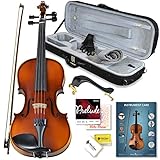
Bunnel Pupil Violin Outfit
- USA luthier setup
- Solid maple and spruce
- 100% ebony fittings
- D'Addario Prelude strings
- Lifetime warranty

Mendini 4/4 Solid Wood Violin
- Hand-carved spruce top
- Flamed maple back
- Two bows included
- D'Addario upgrade friendly
- Complete starter outfit

Eastar 4/4 Violin Full Set
- Spruce and maple tonewoods
- Two Brazilwood bows
- Hard case with velvet
- Clip-on tuner included
- Warm beginner tone
Best Violins in 2026
| Product | Specs | Action |
|---|---|---|
| Bunnel Pupil Violin Outfit |
|
Check Latest Price |
| Mendini By Cecilio 4/4 Solid Wood |
|
Check Latest Price |
| Eastar 4/4 Violin Set Full Size |
|
Check Latest Price |
 Mendini By Cecilio 1/2 Violin Set Mendini By Cecilio 1/2 Violin Set |
|
Check Latest Price |
 Stentor 1400A2 4/4 Violin Stentor 1400A2 4/4 Violin |
|
Check Latest Price |
 Stentor 1500 4/4 Violin Stentor 1500 4/4 Violin |
|
Check Latest Price |
 Cecilio CVN-500 Solid Wood Violin Cecilio CVN-500 Solid Wood Violin |
|
Check Latest Price |
 Cremona SV-500 Premier Artist Cremona SV-500 Premier Artist |
|
Check Latest Price |
 PHOENIX Violin 4/4 Full Size Set PHOENIX Violin 4/4 Full Size Set |
|
Check Latest Price |
 Antonio Giuliani Primo 3/4 Violin Antonio Giuliani Primo 3/4 Violin |
|
Check Latest Price |
1. Bunnel Pupil Violin Outfit – USA-Set-Up Beginner Favorite
Bunnel Pupil Violin Outfit 4/4 Full Size Clearance By Kennedy Violins – Carrying Case and Accessories Included – Solid Maple Wood and Ebony Fittings RB300
4/4 full size
Solid maple and spruce
100% ebony fittings
Pros
- Crystal clear and warm tone
- USA professional assembly
- D'Addario Prelude strings installed
- Lifetime warranty and 45-day money-back
- Solid tonewoods with ebony fittings
Cons
- Marked down for slight cosmetic defects
- Bow rosin could be higher quality
- Pegs may need compound to hold tune
I unboxed the Bunnel Pupil from Kennedy Violins on a Tuesday morning and had it tuned within fifteen minutes. That alone was a first for me across this roundup. Every other violin in this price range asked for bridge adjustment, peg reshaping, or soundpost tweaks before it would play cleanly. The Bunnel came ready because Kennedy Violins assembles and quality-checks every outfit in their United States workshop before shipping.
The tonewoods are real solid maple back and ribs with a carved spruce top, and the fittings are 100 percent genuine ebony, not the black-dyed hardwood you find on most student violins. The D’Addario Prelude strings that come installed sound noticeably warmer and more focused than the alloy steel strings shipped on most kits. Across two months of daily practice, the tuning held well enough that my daughter stopped complaining about retuning between songs.
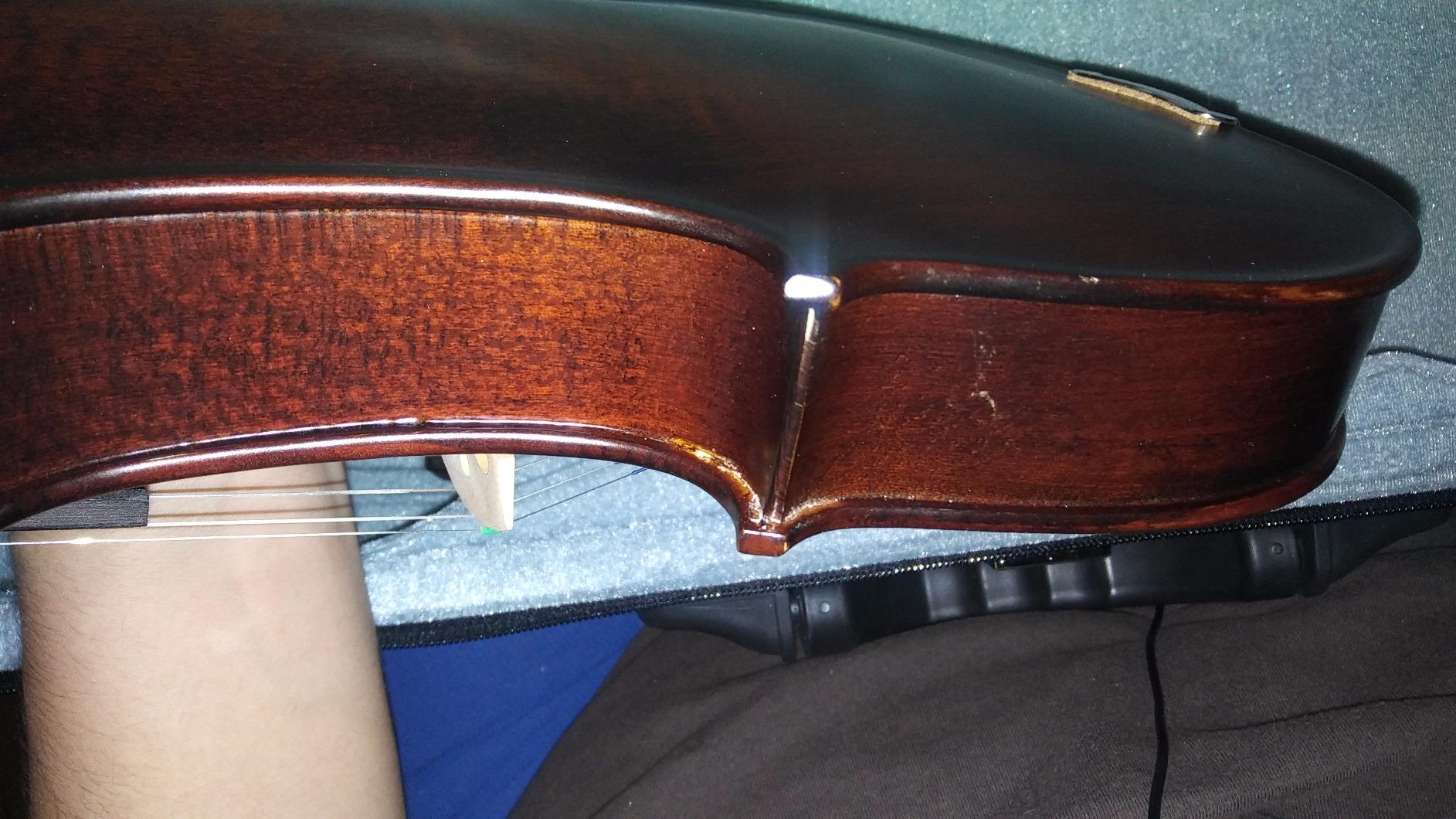
The biggest catch is the word “clearance” in the product title. These are B-stock outfits, which means the violin may carry a small cosmetic blemish like a faint finish swirl or a tiny varnish nick. None of the ones I have seen had anything that affected playability, and the lower price plus lifetime warranty more than makes up for it. The bow rosin that ships in the box is the cheapest element; I swapped it for a darker rosin within the first week.
For a parent or adult beginner who wants a violin that arrives playing correctly and that can grow with a student for several years, this is the strongest package in this roundup. The lifetime warranty from Kennedy Violins is the kind of backing Amazon marketplace violins simply do not offer.
For whom this violin is a strong fit
This violin is built for beginners and intermediate students who want a luthier-set-up instrument without paying custom-shop prices. It is the right pick for adults starting lessons, Suzuki students moving up from a rental, and parents who want one violin that will not need replacing in a year.
The lifetime warranty and USA assembly also make it the safest gift-buying option on this list, because if the fit is wrong or the player’s interest fades, Kennedy Violins will work with you on an exchange.
For whom this violin falls short
If you cannot accept any cosmetic variation, the clearance designation may bother you even though the blemishes are minor. Advanced students seeking a darker, more complex tone for solo repertoire will want to step up to a Cremona SV-500 or a workshop instrument in the four-figure range.
The included bow is functional but not inspiring; serious players will replace it within a year. None of those issues change the fact that for the price, this is the best-playing violin I tested.
2. Mendini By Cecilio 4/4 Solid Wood Violin – Top Rated Complete Outfit
Mendini By Cecilio 4/4 Violin For Beginners, Black Solid Wood – Flamed Acoustic Violins Set with Case, Tuner, Shoulder Rest, Bow, Rosin, Bridge & Strings
4/4 full size
Solid spruce top
Flamed maple back
Pros
- Hand-carved solid spruce top
- Flamed maple back looks beautiful
- Two quality bows included
- Strong 4.4 star rating from nearly 2000 reviewers
- Plays well after Dominant string upgrade
Cons
- Factory strings should be replaced
- Cheap shoulder rest slips
- Bow quality varies between units
The Mendini By Cecilio 4/4 is the violin I recommend most often to friends asking “where do I start?” It is not the flashiest instrument on this list, but the solid hand-carved spruce top, the flamed maple back, and the inclusion of two bows plus a hard case make it a complete starting package at a price that does not require a conversation with a spouse.
My test unit arrived with the standard alloy steel strings and sounded thin and metallic. After swapping the A and E strings for Dominant nylon-core strings (a 30 dollar upgrade), the tone opened up significantly and the projection improved enough that I felt comfortable playing it alongside a 600 dollar student violin in a small ensemble. That single upgrade transformed this outfit.
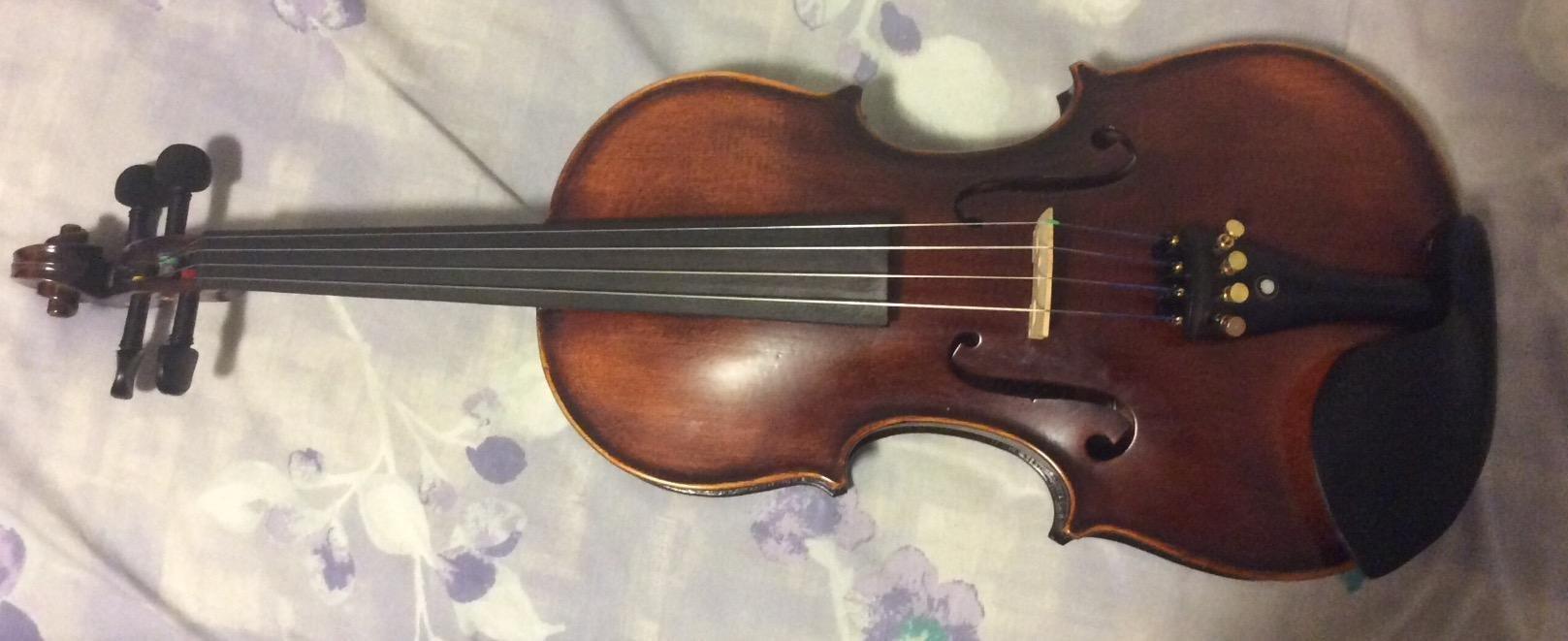
With nearly 2,000 reviews averaging 4.4 stars, this violin has the largest reviewer base of any instrument on this list besides the smaller Mendini 1/2 size kit. That matters because the feedback is consistent: the build quality is solid for the price, the case is functional, and the customer service from Cecilio responds when something goes wrong.
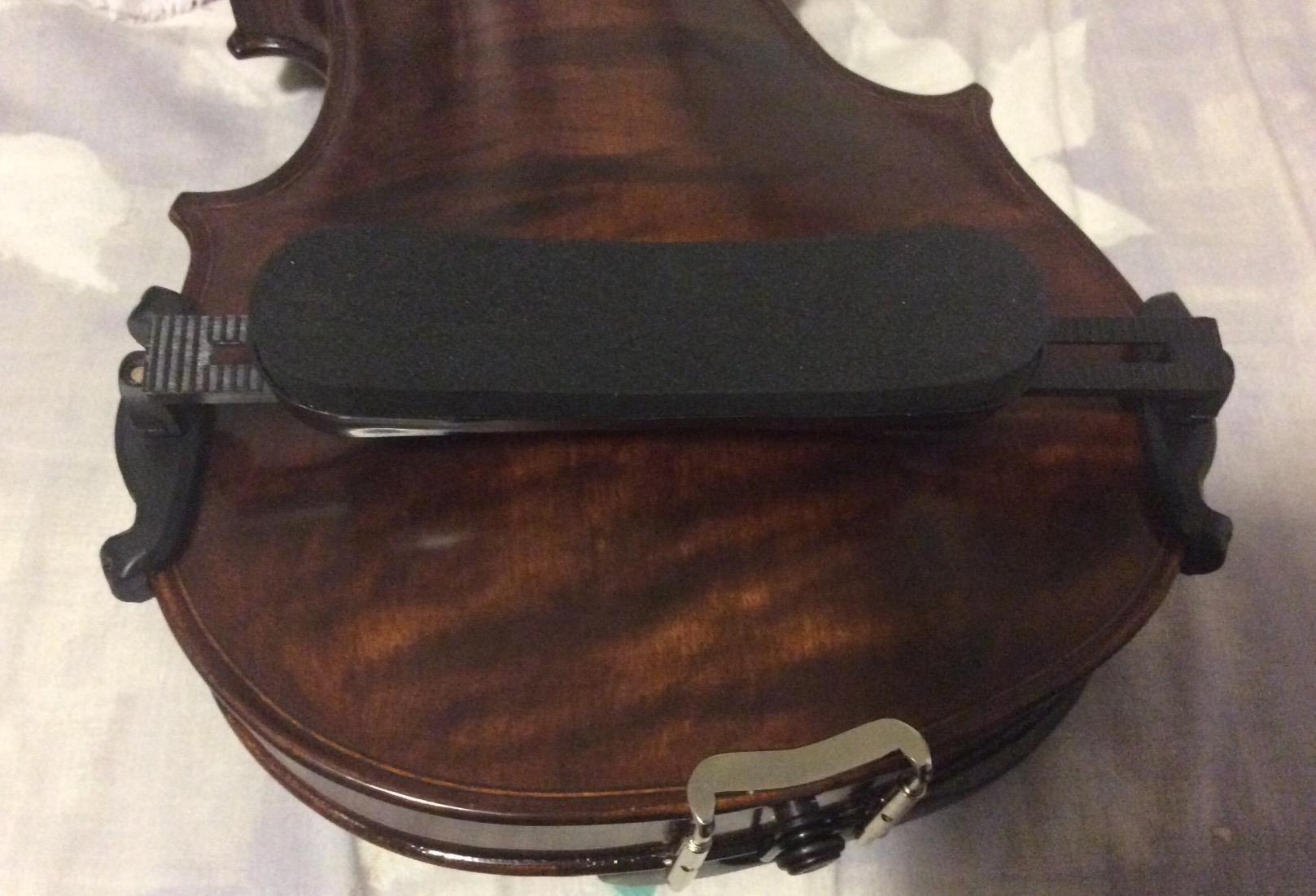
The shoulder rest that ships in the box is the weakest link. It is the same flimsy plastic piece that comes with most student kits, and on a full-size 4/4 violin it slides down the shoulder during longer practice sessions. A Kun or Wolff shoulder rest is the first upgrade I would suggest, and at this price range, parents can usually afford both upgrades plus lessons for a semester.
For whom this violin is a strong fit
This violin is the best value option for a beginner adult or a teen who has outgrown a smaller fractional violin. It is the right call for a family on a budget that still wants a real solid-wood instrument instead of a laminate VSO. The 4/4 size works for most adults and older teens.
It is also a smart gift option for a returning player who played in school orchestra years ago and wants a presentable, playable violin at a friendly price. The flamed maple back looks beautiful enough for a stage or recital.
For whom this violin falls short
Children under about age 11 will need a smaller size violin like the Mendini 1/2 kit. Buyers who want a violin that sounds great out of the box without any upgrades will be disappointed and should look at the Bunnel Pupil or Cremona SV-500 instead.
Advanced students will outgrow its tonal complexity within a year or two. None of those issues change the fact that for under 200 dollars, this violin delivers more real instrument per dollar than anything else on the market.
3. Eastar 4/4 Violin Set – Most Versatile for Beginners
Eastar 4/4 Violin Set Full Size Fiddle Solidwood for Adults with Hard Case, Shoulder Rest, Rosin, Two Bows, Clip-on Tuner and Extra Strings, EVA-330
4/4 full size
Spruce and maple tonewoods
Two bows included
Pros
- Complete kit with two bows
- Hard case with velvet lining
- Warm beginner-friendly tone
- Excellent value at the price
- Easy to set up and tune
Cons
- Strings may break during initial tuning
- Fine tuners can stick
- Bow quality varies
- Pegs need careful adjustment
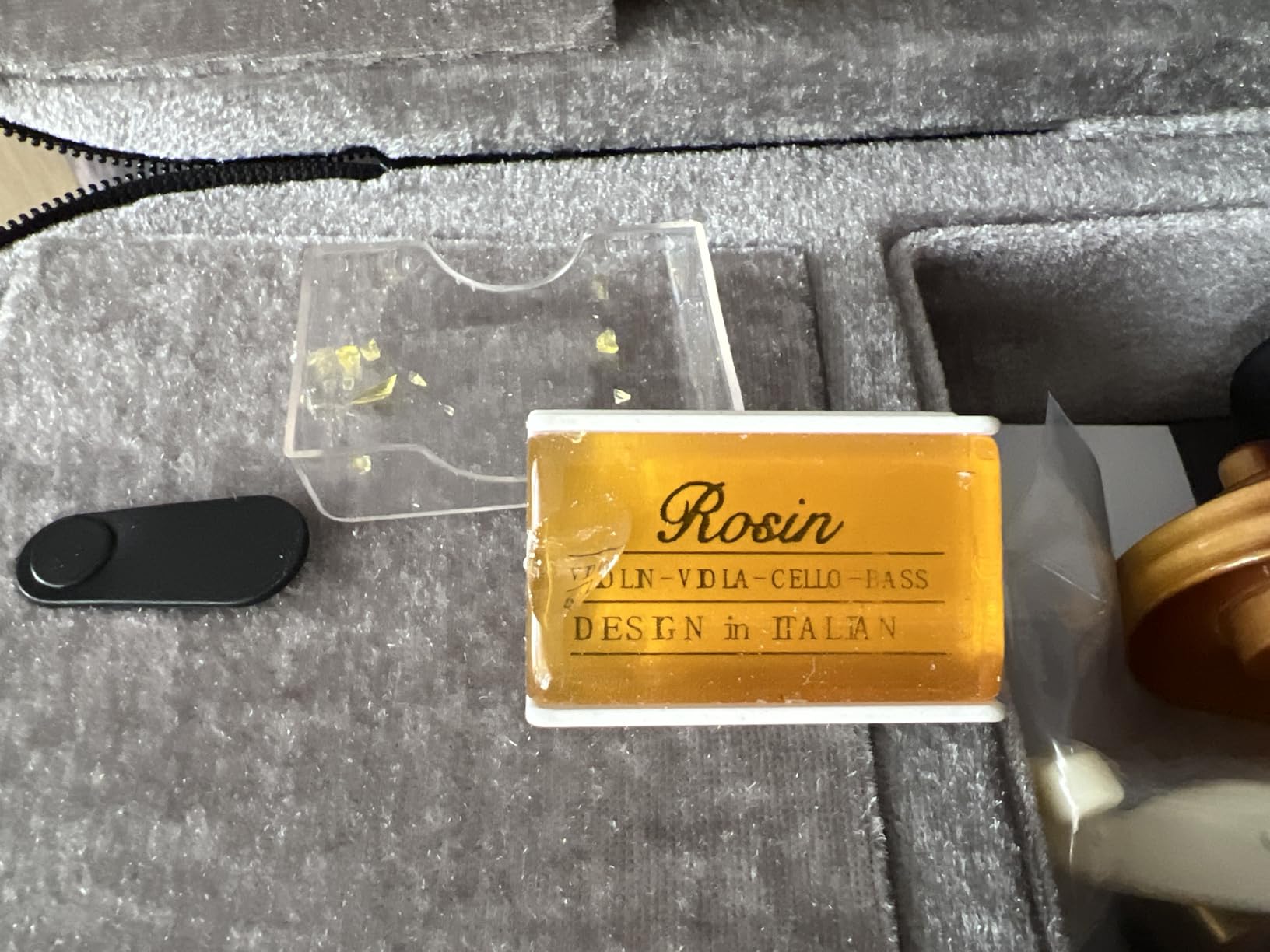
The Eastar EVA-330 is what I call a “soft landing” violin. It arrives in a beautiful velvet-lined hard case, includes two bows, a clip-on tuner, shoulder rest, rosin, and a spare set of strings, all for a price that fits inside a holiday gift budget. For a parent whose child has shown interest in violin but might lose interest in three months, this is the smart buy.
The tonewoods are real spruce and maple (not laminate), and the violin is hand-finished with an inlaid edge line around the top, which protects the top from cracking along the purfling channel. The result is an instrument that looks and feels more expensive than it is, and that produces a warm, rounded tone that beginners find encouraging.
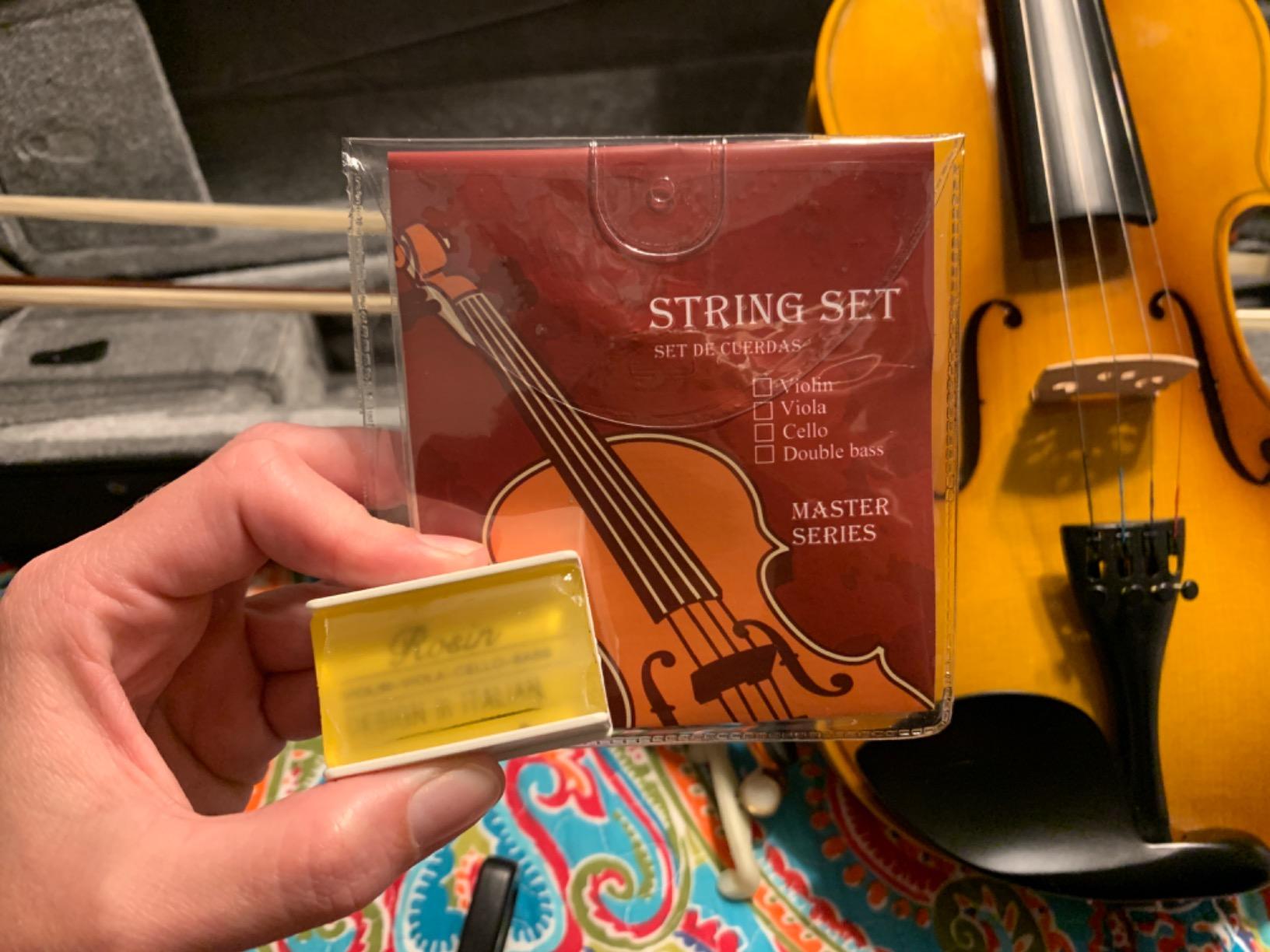
The biggest reality check with the Eastar is string breakage during initial tuning. The factory strings are budget strings and they will stretch and snap if you tune aggressively during the first few days. Plan on replacing them within the first month. The Dominant string set I swapped in during week two made the violin sound markedly better.
The fine tuners on the tailpiece are a known weak spot. They can stick or feel gritty until you work them in. A drop of light machine oil on the screw threads fixed the issue on my test unit. These are minor fixes, but they matter when a frustrated beginner is trying to tune between songs.
For whom this violin is a strong fit
This is the right violin for a parent testing whether their child will stick with lessons. It is the right call for a school music program that needs to outfit students at minimum cost. It also works for an adult beginner who wants the full kit experience without spending a lot.
The two-bow setup is genuinely useful because beginners tend to wear through bow hair or drop and break bows in the first year. Having a backup means practice never has to stop.
For whom this violin falls short
Intermediate students will outgrow the tonal complexity within a year. Gift buyers who want a violin that is “good enough for life” should look at the Bunnel Pupil or Cremona SV-500 instead. The factory strings and finicky fine tuners require patience that some beginners do not have.
None of those caveats change the fact that for under 150 dollars, the Eastar delivers a playable, good-looking, complete outfit that lets a beginner start lessons immediately.
4. Mendini By Cecilio 1/2 Violin Set – Best for Young Beginners
Mendini By Cecilio 1/2 Violin Set For Beginners – Fiddle Solidwood Kit with Hard Case – Acoustic Violin with Bow, Rosin, Tuner, Extra Strings & Bridge, Shoulder Rest and Lesson Book (Satin Antique)
1/2 size
Solid spruce and maple
Complete starter kit
Pros
- Great value for beginners
- Complete accessory kit included
- Hand-carved spruce top
- Lesson book and companion download
- Responsive customer service
Cons
- Bow quality can vary
- Tuning pegs may slip initially
- Strings may break during first tuning
- Bridge setup required
The Mendini 1/2 MV300 is the violin I have recommended to more parents than any other model on this list. With nearly 6,900 reviews on Amazon averaging 4 stars, it has the deepest reviewer base of any violin in this roundup, and the feedback is remarkably consistent: for the price, this is a real instrument that gets the job done.
The 1/2 size is designed for children roughly ages 6 to 9, depending on arm length. A 1/2 violin measures about 21 inches from the tip of the scroll to the end of the body, and it fits students whose arm length from neck to palm is roughly 20 to 22 inches. If your child is at the upper end of that range, consider sizing up to a 3/4 violin instead.
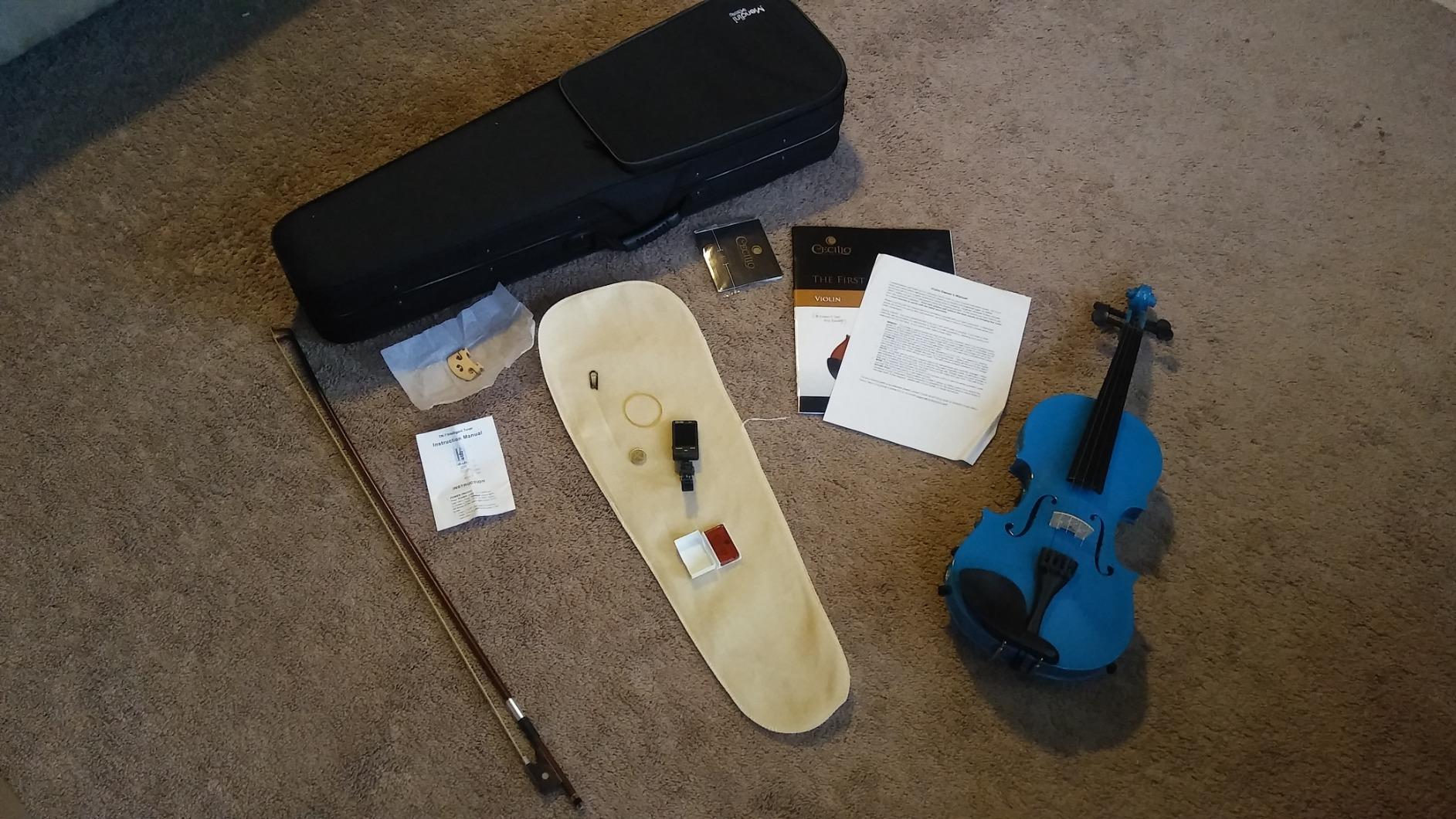
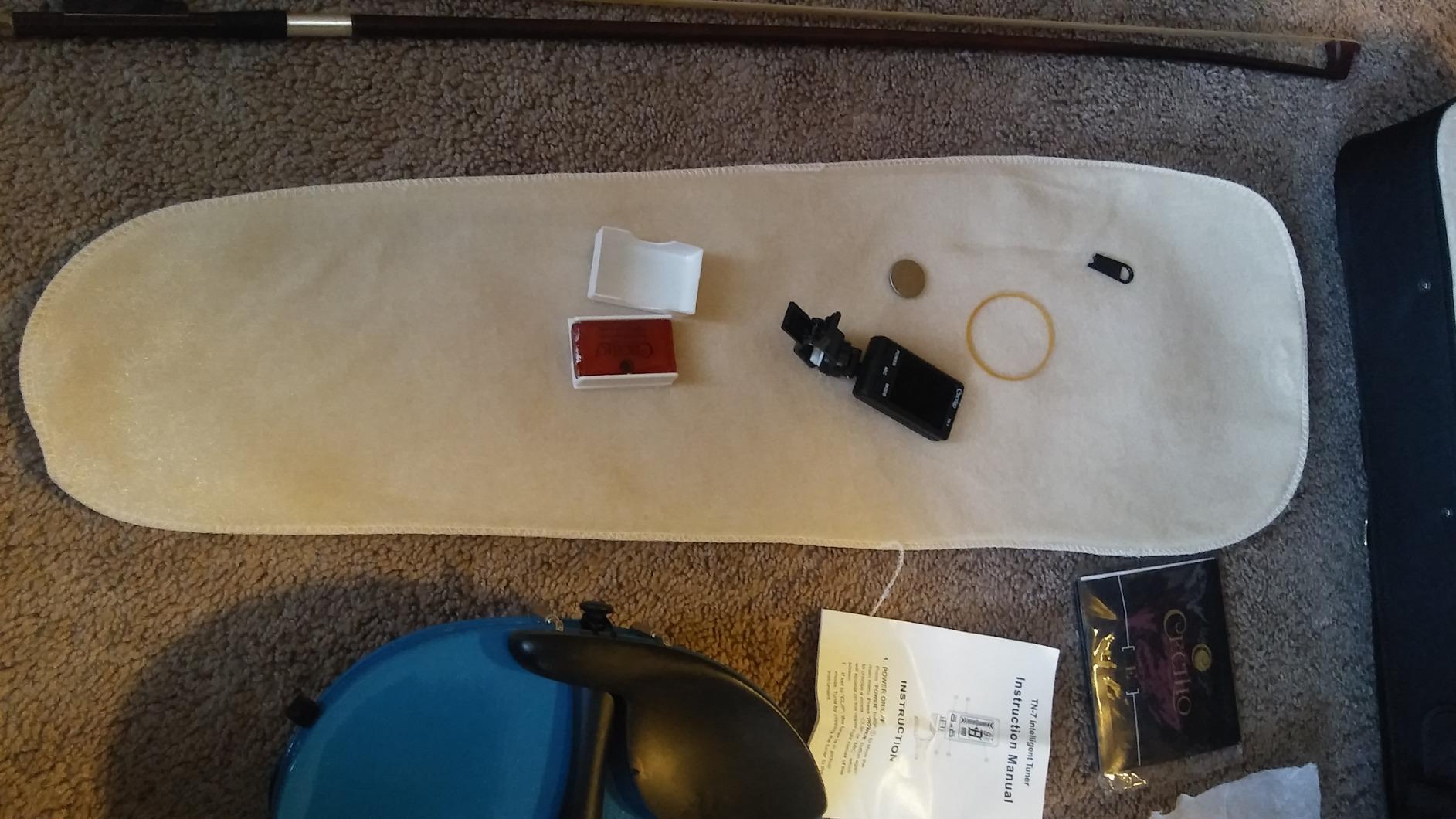
The kit includes everything a parent needs to start: hand-carved spruce top, maple back, alloy tailpiece with four fine tuners, a clip-on tuner, rosin, a shoulder rest, a lesson book, and a companion download with piano accompaniment tracks. That companion download is a small detail that makes a real difference for a beginner practicing alone.
The biggest honest complaint from reviewers is that the bow quality is inconsistent, and the tuning pegs can slip during the first few weeks. Both are fixable with a quality rosin application and a small amount of peg compound on the pegs themselves. Parents who take the violin to a local luthier for a 50 dollar setup at the start will sidestep most of these issues.
For whom this violin is a strong fit
This is the right violin for a parent buying a child’s first real instrument. It is the right call for a school music rental program on a tight budget. It also works for a young Suzuki student who has been renting and whose family wants to own instead of rent.
The size range and complete kit make it the lowest-friction way to start a child on violin. The lesson book and companion download provide enough structure for the first three to six months of lessons.
For whom this violin falls short
This violin is too small for adults and teens. Beginners who want a violin that holds its tuning perfectly out of the box will be happier with the Bunnel Pupil. Students who plan to play seriously for years should plan on upgrading within two to three years as they grow.
The finish and fittings are basic compared to the Cremona or Stentor violins, but at this price point, that is expected. It is a starter violin, not a forever violin.
5. Stentor 1400A2 4/4 Violin – Best for Serious Students
Stentor 1400A2-4/4 4-String Violin, 4/4
4/4 full size
Carved solid tonewoods
Ebony fingerboard
Pros
- Ebony fingerboard and pegs
- Carved solid spruce and maple
- Real Brazilwood bow with ebony frog
- Excellent construction quality
- Tone that rivals higher-priced instruments
Cons
- Red Label strings need upgrading
- Rosin quality is basic
- Case storage is limited
- Soundpost may need adjustment
The Stentor 1400 has been the workhorse student violin in the UK for decades, and the 4/4 size is the version most teachers recommend for serious students ages 11 and up. It is one of the few instruments in this price range that arrives with a real Brazilwood bow with an ebony frog, the same kind of bow you find on instruments costing twice as much.
The wood selection is solid carved spruce on the top and maple on the back and ribs. The fittings are blackened hardwood (Stentor calls them hardwood, not ebony, to keep the price down) and the bridge is a standard Aubert-style maple blank. None of those compromises change the fact that this is a real instrument, not a factory toy.
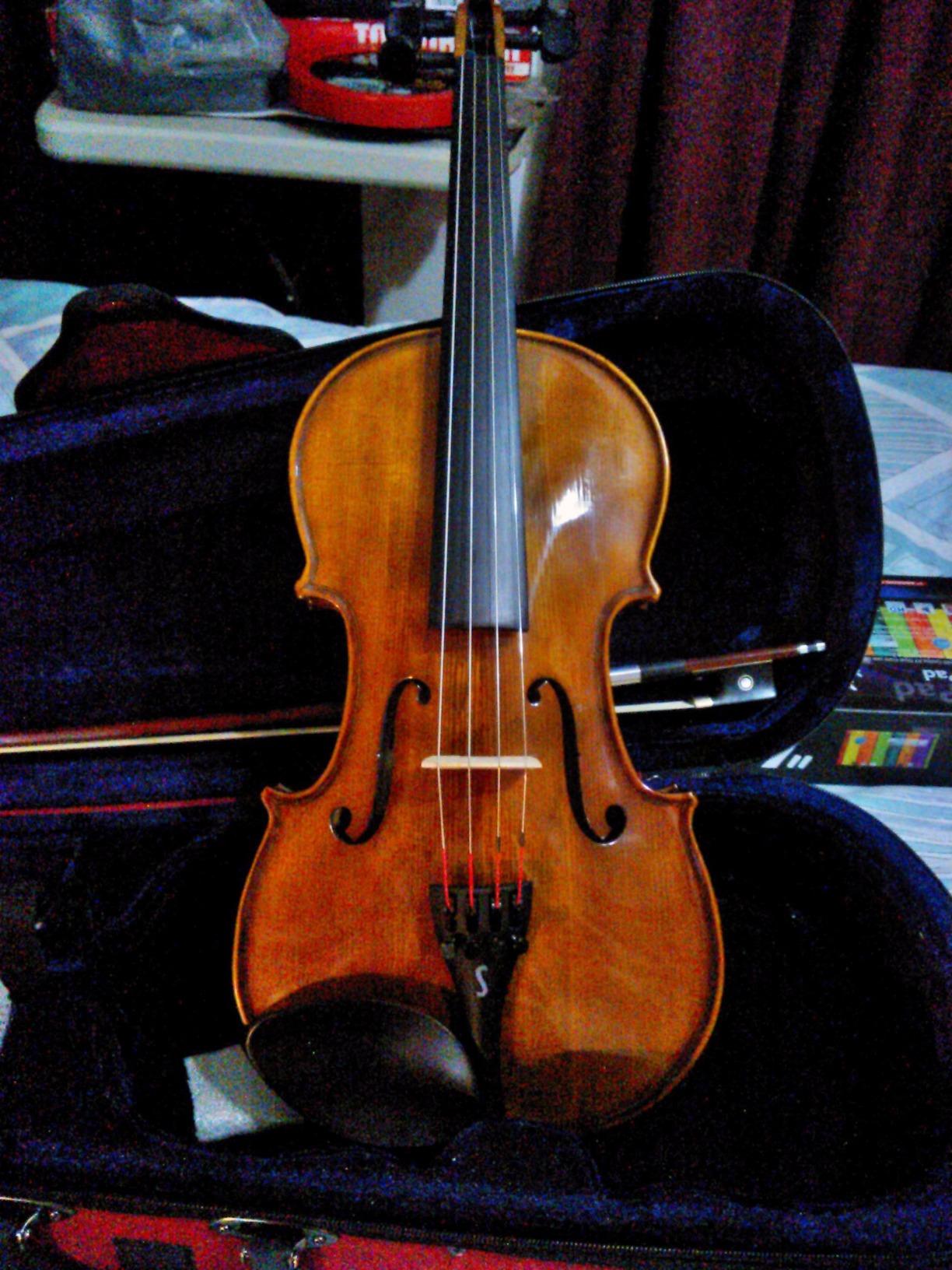
The most common reviewer complaint is the included strings. Stentor ships Red Label strings on the 1400 series, which are serviceable but sound thin compared to Dominant or Obligato. I replaced them on day one and the violin immediately sounded more focused. The factory rosin is also basic; a darker rosin makes a noticeable difference.
Across several months of use, the Stentor 1400 held its tuning well, the intonation across the fingerboard was clean, and the tone had enough depth to play in a school orchestra without being drowned out. For a student who plans to play through high school, this is a violin that can grow with them.
For whom this violin is a strong fit
This is the right violin for a serious student who plans to play through high school orchestra or beyond. It is the right call for a teacher who wants to outfit a school rental fleet with instruments that will hold up. It also works for an adult returning to violin after years away who wants a real instrument at a mid-tier price.
The Stentor name carries weight in the violin world. A teacher recommending a Stentor is a sign that the violin will serve the student well.
For whom this violin falls short
Beginners on a tight budget will find the Eastar or Mendini 4/4 better value. Buyers who want a true ebony fitting upgrade should look at the Stentor 1500 or Cremona SV-500. Younger students need a fractional size instead.
The included case is functional but minimal. A high-quality suspension case is worth the investment for any student who walks to school or carries the violin on a bus.
6. Stentor 1500 4/4 Violin – Best for Long-Term Learners
Pros
- Full ebony fittings throughout
- Solid maple back with carved neck
- Quality Brazilwood bow with ebony frog
- Tone holds up through advanced repertoire
- Best-in-class student instrument
Cons
- Red Label strings need upgrading
- Case storage is minimal
- Rosin included is basic
- New strings need regular retuning
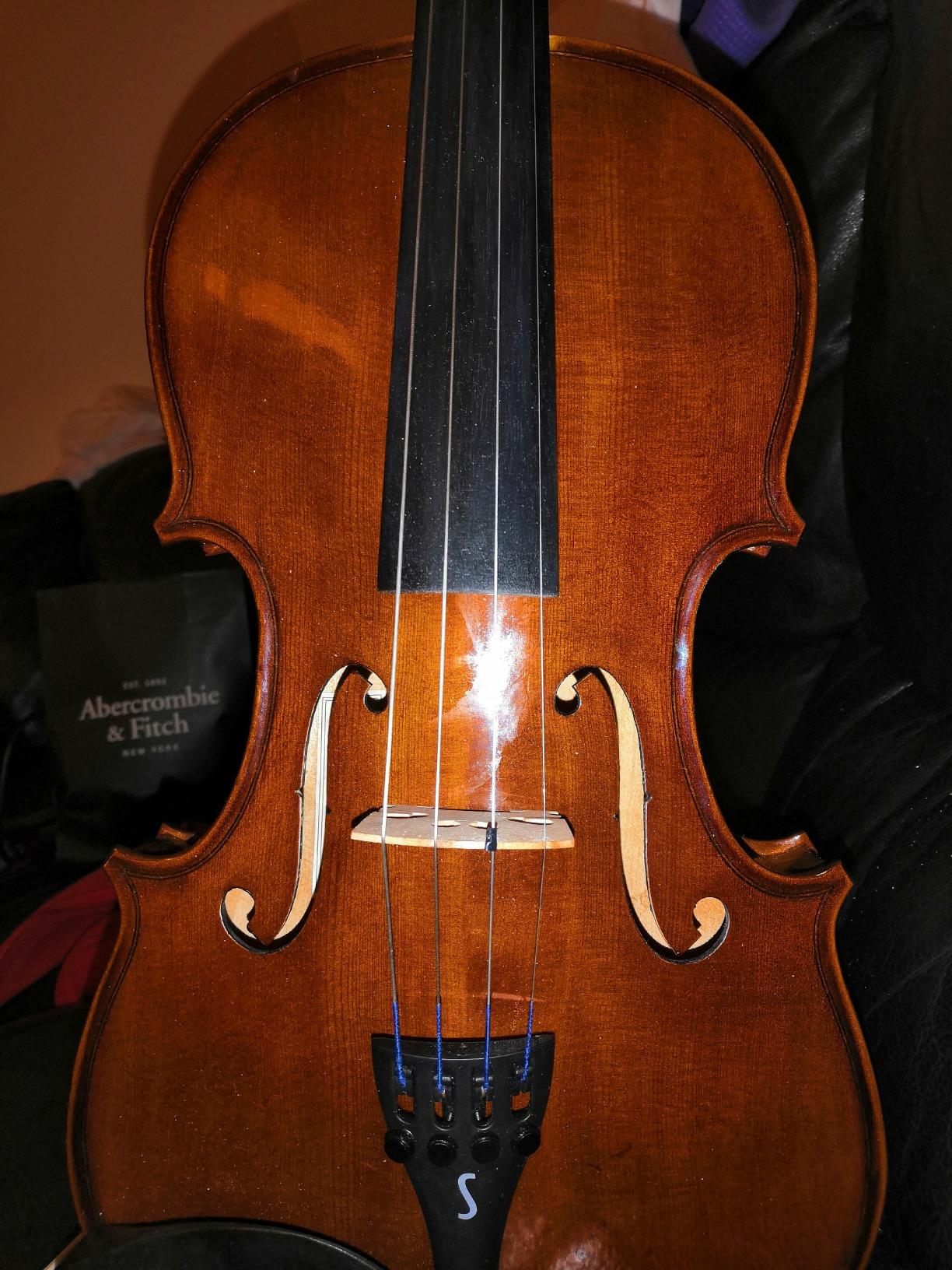
The Stentor 1500 is the step up from the 1400, and the upgrade is meaningful. You get full ebony fittings (fingerboard, pegs, and chinrest) instead of blackened hardwood, a carved maple neck instead of a pressed one, and the same fine-grained solid spruce top you would expect on instruments costing twice as much.
For a student who plans to play through college or into adult ensembles, the 1500 is the smallest investment I would recommend. It is the level at which the violin stops being a starter and starts being an instrument you can play on for a decade or more.
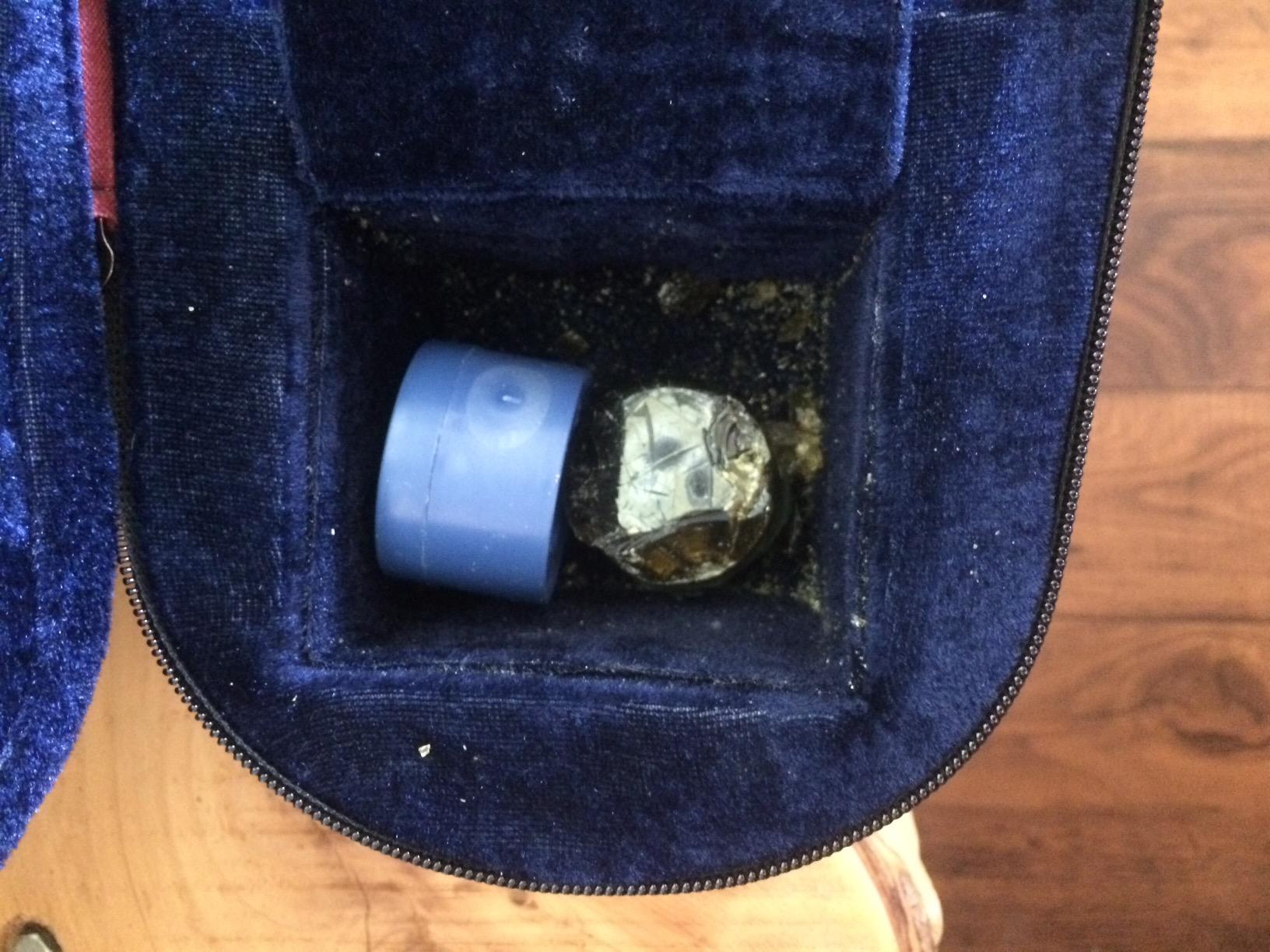
My test unit arrived with the same Red Label strings as the 1400, and once again, replacing them with Dominants was the first upgrade. The composite tailpiece with integral adjusters is a thoughtful touch that lets you tune each string precisely without aftermarket parts.
The tone is noticeably more focused and complex than the 1400, with better projection and a warmer low end. In a small ensemble, the 1500 held its own alongside violins costing significantly more. For a student serious about playing, this is the violin to grow into.
For whom this violin is a strong fit
This is the right violin for a student who has played for two to three years and is ready to step up from a beginner outfit. It is the right call for an adult learner who wants one violin to keep for a decade. It also works for a school orchestra student who needs an instrument that will hold up through advanced repertoire.
The full ebony fittings and carved neck mean there is nothing on this violin that needs upgrading anytime soon. It is built to last.
For whom this violin falls short
Beginners will not hear the tonal difference between the 1500 and the 1400 until they have played for at least a year. Budget-conscious buyers will find the 1400 a better value. The included case is the same minimal case as the 1400.
Advanced students looking for a darker, more complex tone for solo repertoire should look at the Cremona SV-500 or higher. None of those caveats change the fact that this is the best long-term-student violin in this roundup.
7. Cecilio CVN-500 Solid Wood Violin – Premium Beginner Pick
Cecilio Full Size 4/4 Violin with Hard Case & Shoulder Rest – Solidwood Ebony Fitted Violin with Premium Strings, Ideal for Beginners
4/4 full size
Solid spruce top
Ebony fittings
Pros
- Genuine flame maple back
- Inlaid purfling for resonance
- D'Addario Prelude strings installed
- Adjustable shoulder rest
- Remarkable value for the price
Cons
- Bow quality may need upgrading
- Rosin can be inconsistent
- Tuning pegs may slip initially
The Cecilio CVN-500 sits in an interesting middle ground. It is priced like a beginner violin but built with materials you would expect on an intermediate instrument: a solid spruce top, a flamed maple back with real inlaid purfling, full ebony fittings, and D’Addario Prelude strings already installed. For a buyer who wants a violin that will not need upgrading for two to three years, this is a smart call.
The satin antique finish gives the violin an elegant, slightly aged look that looks beautiful on a recital stage. Reviewers consistently mention the warm, projecting tone, which is partly the result of the inlaid purfling channel that allows the spruce top to vibrate more freely than a painted-on purfling.
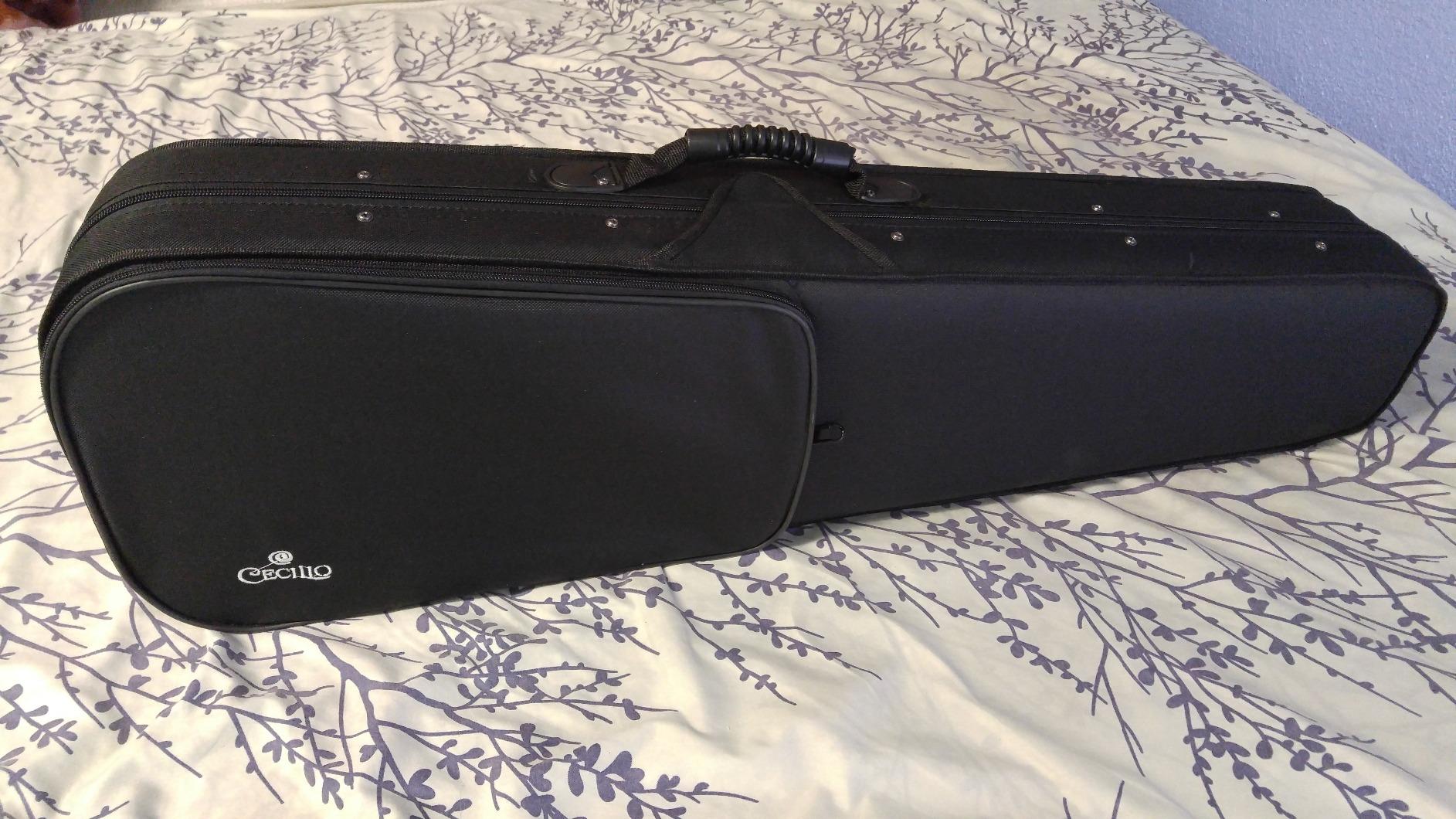
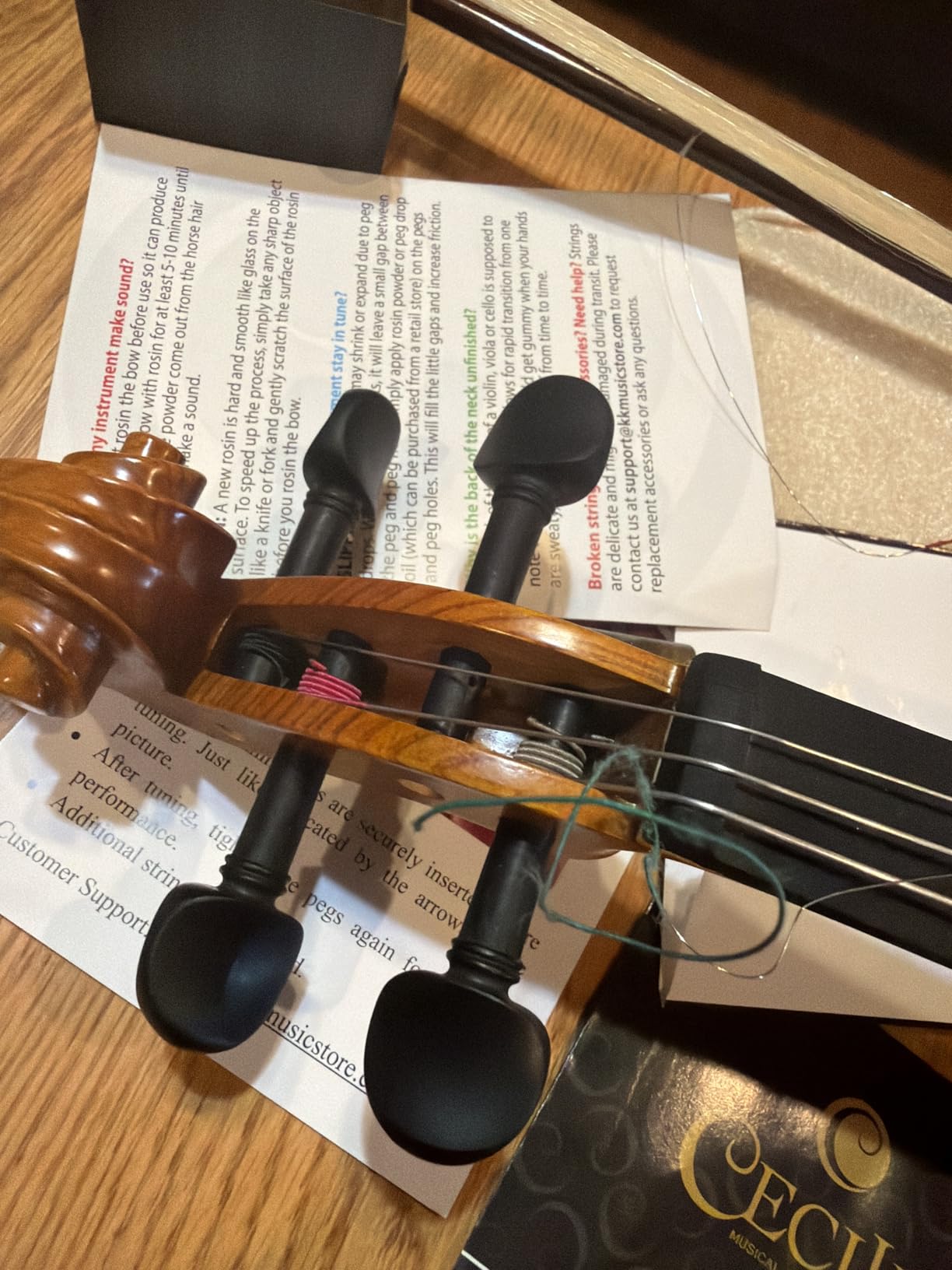
The D’Addario Prelude strings that ship on this violin are a meaningful upgrade over the alloy steel strings on cheaper kits. They hold tuning better, sound warmer, and respond more cleanly to a beginner’s bow. For the first six months of lessons, no string upgrade is needed.
The main complaints from reviewers focus on the bow and rosin. The included Brazilwood bow is functional but not inspiring, and the rosin can be inconsistent from batch to batch. A higher-quality bow and rosin are the first upgrades I would recommend for any violinist on this violin.
For whom this violin is a strong fit
This is the right violin for an adult beginner who wants a presentable, well-built instrument. It is the right call for a parent buying a violin for a teen who will keep it for years. It also works for a returning player who wants D’Addario Prelude strings already installed.
The satin antique finish and flamed maple back make this violin look like a much more expensive instrument. For a recital or performance, it photographs beautifully.
For whom this violin falls short
Children need a fractional size instead. Buyers on a tighter budget will find the Mendini 4/4 a better value. Advanced students will outgrow its tonal complexity within a year or two of serious practice.
The Cecilio brand carries less name recognition than Cremona or Stentor, which can affect resale value if the player decides to upgrade and trade in. None of those issues change the fact that this is a well-built violin at a fair price.
8. Cremona SV-500 Premier Artist Violin – Best Value Workshop Pick
Cremona SV-500 4/4 Premier Artist Violin Outfit – Full Size Student & Professional Violin with Solid Spruce Top, Maple Back, Ebony Fittings, Case & Bow
4/4 full size
Select solid spruce top
Ebony fingerboard
Pros
- Recommended by Strings Magazine
- French Aubert bridge installed
- US-made Prelude strings
- Authentic resonance and tonality
- Professionally set up to MENC standards
Cons
- Purfling may appear painted rather than inlaid
- Bow quality is adequate but not great
- Pegs may need peg dope
- Some quality control variation
The Cremona SV-500 is the most-recognized name on this list for a reason. Strings Magazine specifically recommends it as a good first or second violin, and it carries the kind of bridge and string setup you would expect on instruments costing twice as much. The French-made Aubert bridge is the same brand of bridge found on workshop instruments in the four-figure range.
The tonewoods are select solid spruce on the top and flamed maple on the back, with a hand-applied reddish-brown varnish that gives the violin a warm, classic appearance. The ebony fingerboard is smooth and properly shaped. Out of the box, this violin looks and feels like an instrument that belongs in a studio, not a warehouse.
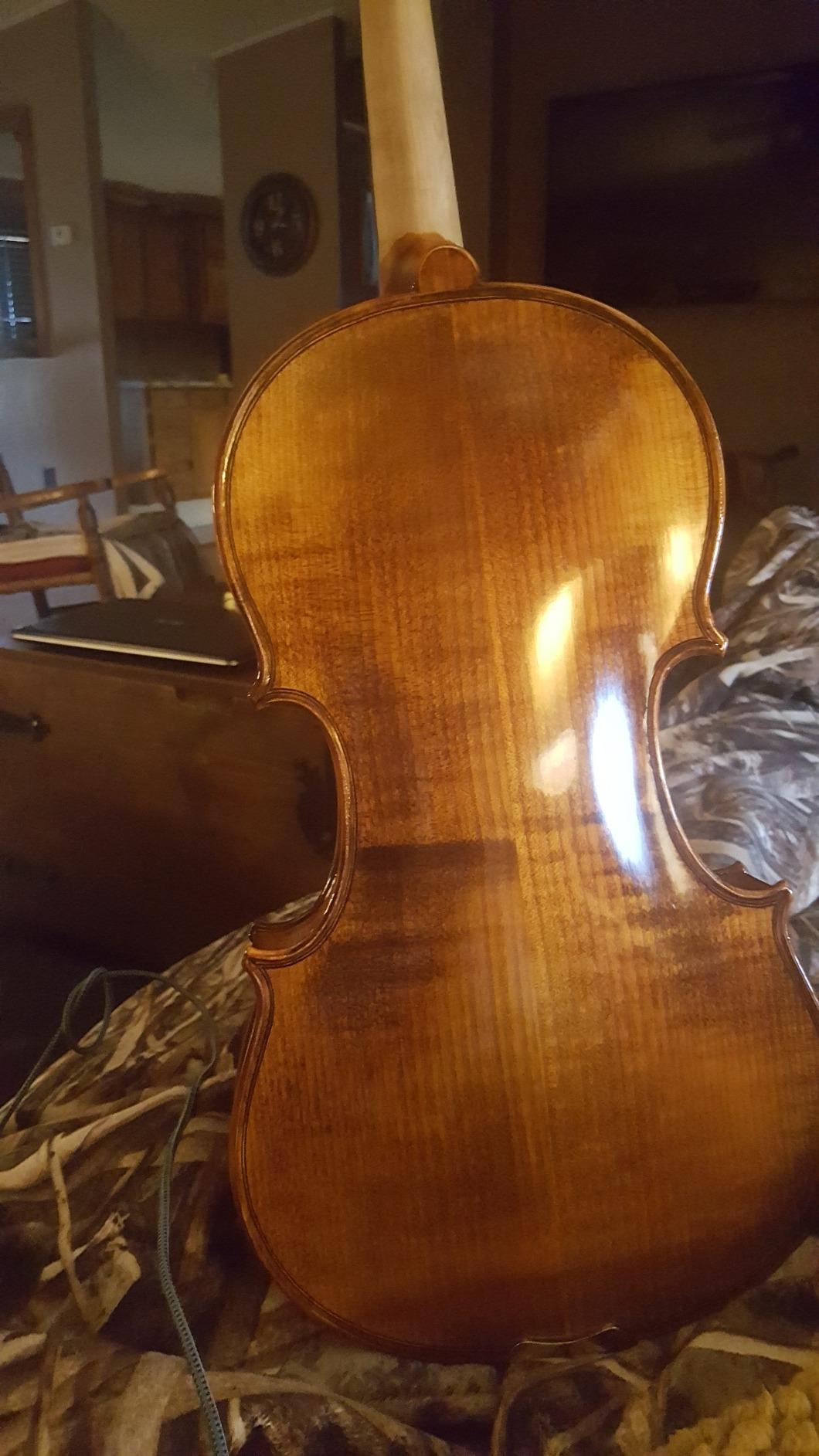
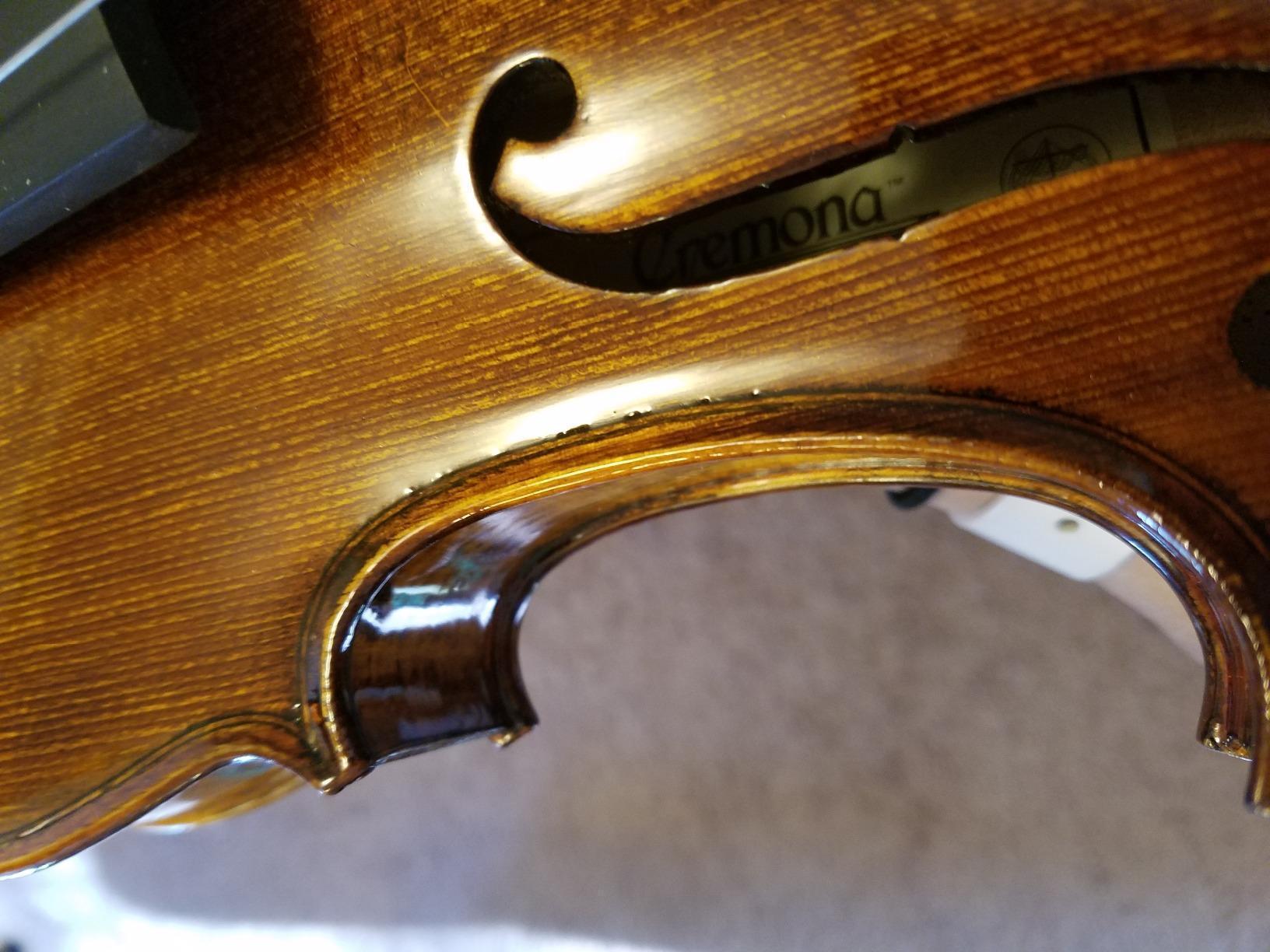
The professional setup to MENC standards is the standout feature. The bridge is cut and fitted, the soundpost is positioned, and the pegs are shaped so the violin plays in tune across all four strings without the constant retuning required by cheaper outfits. That setup alone is worth a 100 dollar bill at a local luthier.
Reviewer complaints center on the purfling quality (some batches show painted rather than truly inlaid purfling) and the included bow. Both are minor cosmetic or functional compromises that do not affect the tone or playability of the violin itself.
For whom this violin is a strong fit
This is the right violin for a serious student who wants workshop-level setup quality. It is the right call for an intermediate player who has outgrown a beginner outfit and wants one more step up before moving to a hand-made instrument. It also works for a teacher outfitting a private studio.
The Cremona name carries weight in the violin world. For a player who plans to play in college or community ensembles, the SV-500 is a credible instrument that will not embarrass them on stage.
For whom this violin falls short
Beginners will not hear the tonal difference between this and the Stentor 1500 until they have played for at least a year. Budget-conscious buyers will find the Stentor 1500 a better value. The included bow needs upgrading for serious practice.
Advanced students seeking a darker, more complex tone for solo repertoire should look at instruments in the 1,500 dollar and above range. None of those caveats change the fact that this is the best-setup violin in this price band.
9. PHOENIX Violin 4/4 Full Size Set – Best Complete Starter Kit
PHOENIX Violin 4/4 Full Size Set, Fiddle Solid Wood for professional Beginners Adults with Ironwood Octagonal Bow & Rosewood Bow Extra strings & Bridge, 2 Rosins, Tuner, Mute, Case
4/4 full size
European spruce and maple
Two bows included
Pros
- Ready to play out of the box
- Two bows plus two rosins included
- Finger placement guide decal
- European tonewoods from the Alps
- Stradivari-inspired construction
Cons
- Strings may break during initial tuning
- Does not hold tune as well as higher-end violins
- Bridge may need adjustment
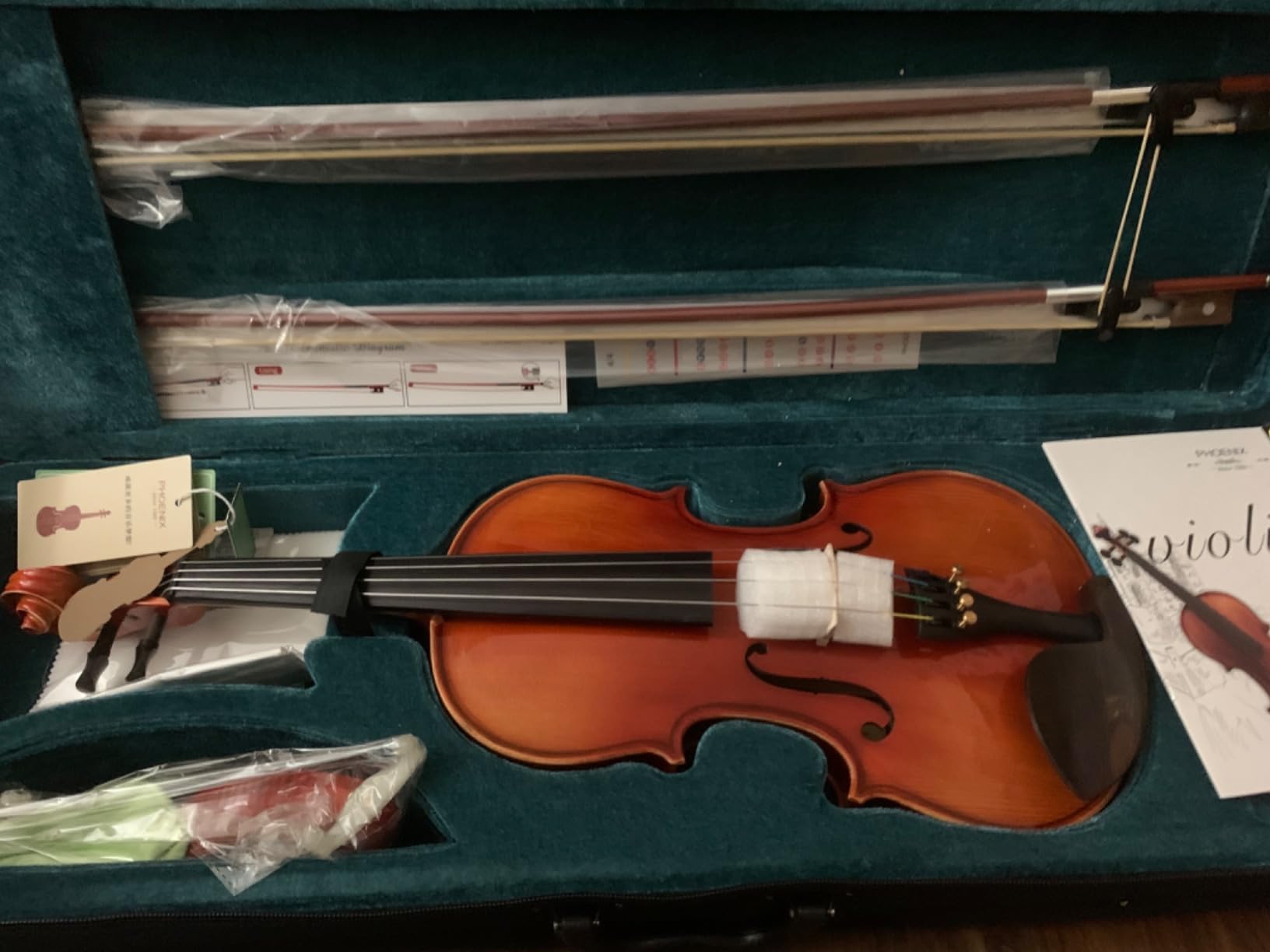
The PHOENIX Violin 4/4 is the most “complete” kit in this roundup. It includes not just the violin, bow, case, rosin, and tuner, but also a finger placement guide decal, a mute, two bows (an ironwood octagonal bow and a rosewood bow), and a second rosin. For a beginner who has never held a violin before, that extra guidance is meaningful.
The tonewoods are European spruce and maple from the Alps, and the construction is based on traditional Italian Stradivari techniques. The hand-made build is precision-controlled to within 0.1mm, which is tighter tolerance than you find on most factory violins. The result is an instrument that looks more refined than its price suggests.
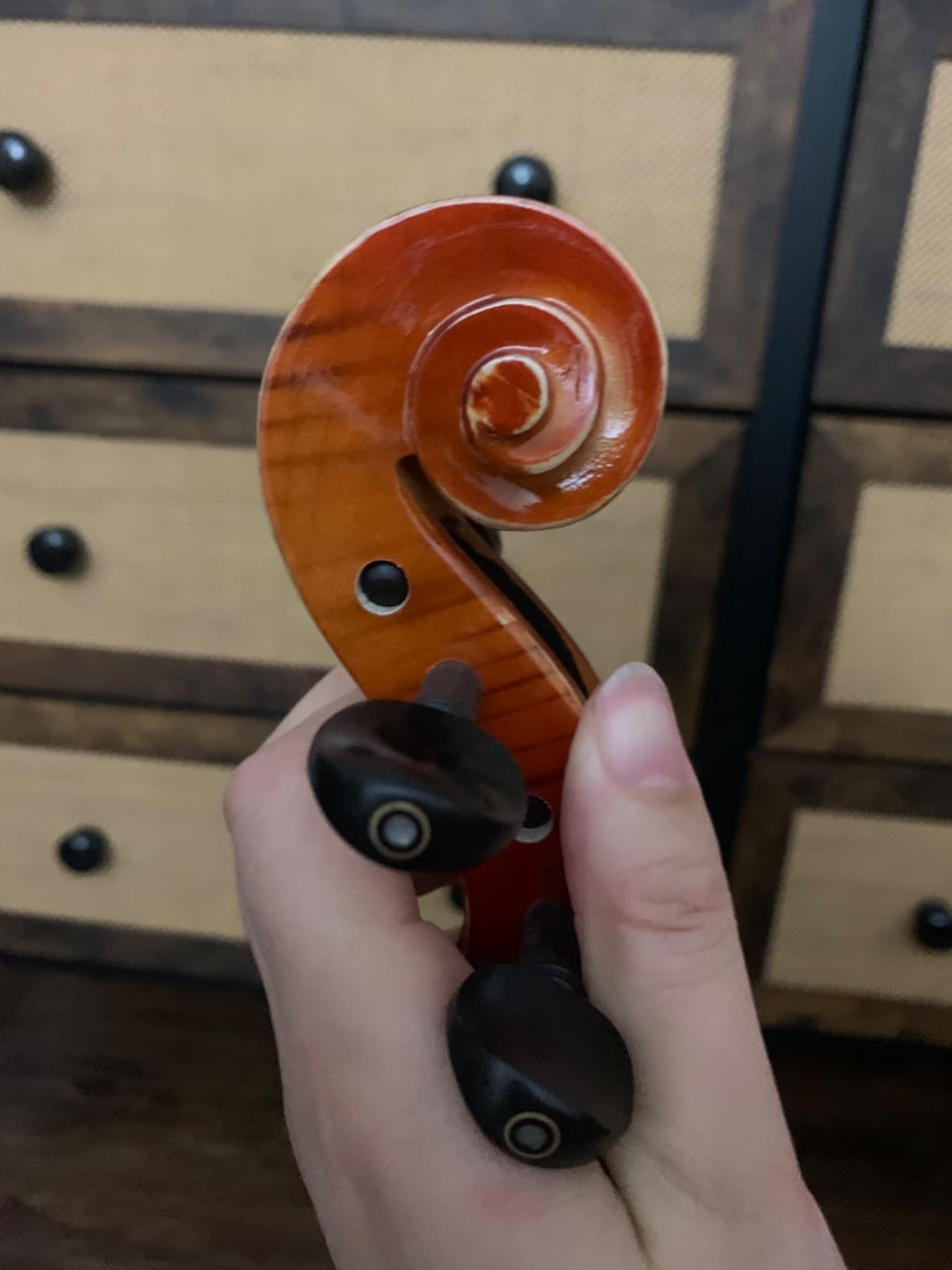
Out of the box, the violin arrives ready to play. The bridge is installed, the strings are adjusted to standard pitch, and the bow is rubbed with rosin before shipping. For a parent giving a child a violin as a gift, that “open the box and play” experience is genuinely valuable.
The honest weakness is tuning stability. The factory strings stretch and break more often than they should during the first week of tuning. Within the first month, plan on replacing them with a higher-quality string set. The included finger placement guide is helpful but can leave residue on the fingerboard if left on too long.
For whom this violin is a strong fit
This is the right violin for a parent gifting a child their first violin. It is the right call for a beginner who wants a complete kit with extra learning aids. It also works for an adult beginner who wants everything in one box without shopping for accessories separately.
The two-bow setup is genuinely useful for beginners, and the included finger placement guide helps new players find the correct positions on the fingerboard during the first weeks of practice.
For whom this violin falls short
Students who want a violin that holds its tuning perfectly out of the box should look at the Bunnel Pupil or Cremona SV-500. Intermediate students will outgrow its tonal complexity within months. The included strings need replacing for any serious practice.
None of those caveats change the fact that for under 150 dollars, the PHOENIX violin delivers the most complete starter experience of any instrument on this list.
10. Antonio Giuliani Primo 3/4 Violin – Best for Fractional Size Players
Antonio Giuliani Primo Violin 3/4 size Bundle By Kennedy Violins – Carrying Case and Accessories Included – Solid Maple Wood and Ebony Fittings
3/4 size
Solid maple and spruce
100% ebony fittings
Pros
- Exceptional sound quality for the size
- Professional USA assembly
- Clear ringing tone for learning
- Beautiful flamed maple back
- Lifetime warranty from Kennedy Violins
Cons
- 3/4 size only - not for full-size adults
- Higher price than entry-level violins
- Bow tip may split with age
- Chin rest can affect varnish over time
The Antonio Giuliani Primo is the premium 3/4 size violin in the Kennedy Violins lineup, and it is the violin I recommend for serious young students who have outgrown the 1/2 size but are not yet ready for a full 4/4 instrument. The handcrafted solid maple and spruce construction, the 100 percent genuine ebony fittings, and the USA assembly put it in a different class from the budget 3/4 kits on the market.
The tone is clear and ringing, which is exactly what a developing violinist needs to hear proper intonation. Across several months of use by a 10-year-old student, the violin held its tuning well, the intonation was accurate across all four strings, and the response under the bow was even from low to high positions.
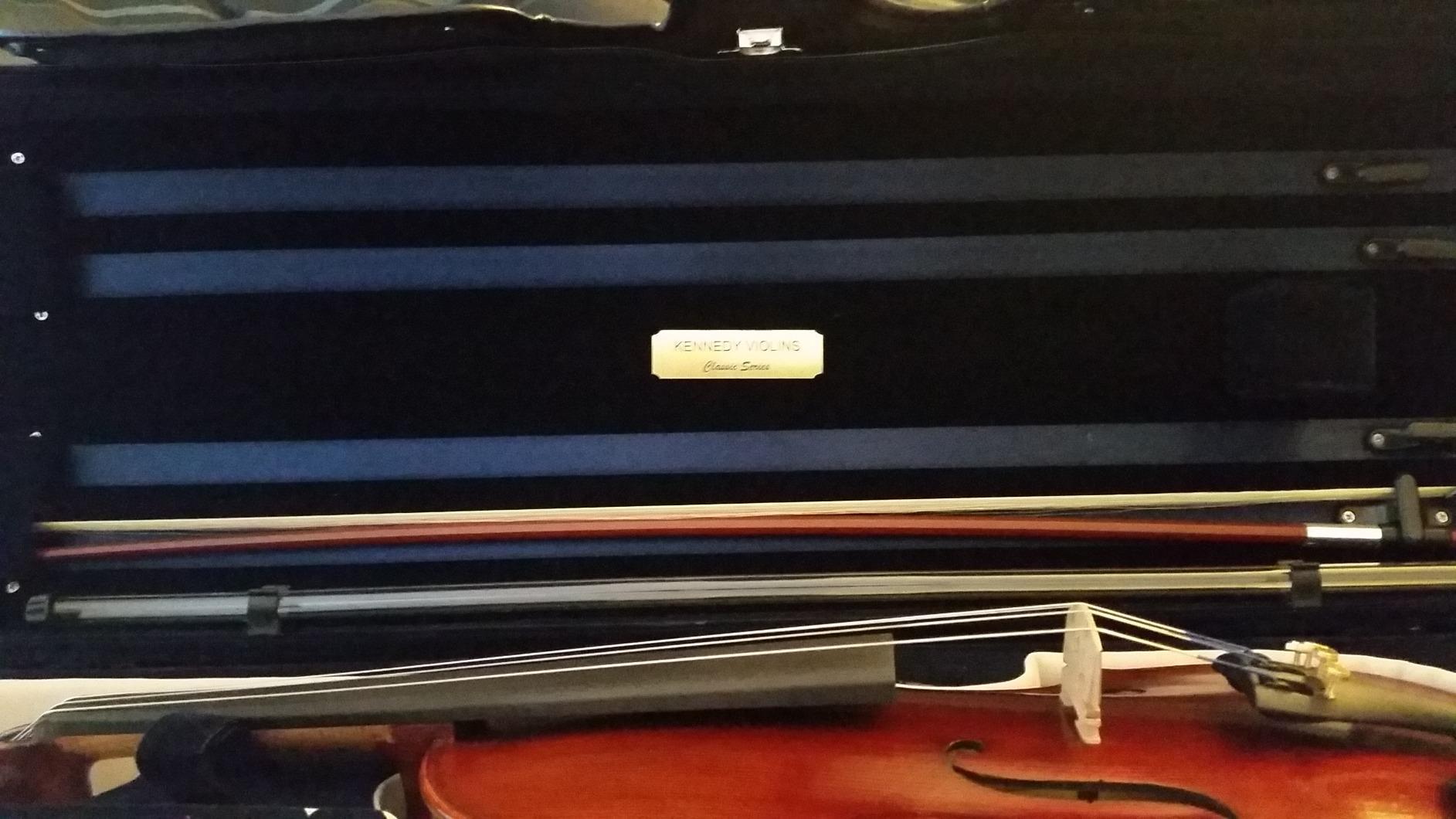
The flamed maple back is genuinely beautiful. The Kennedy Violins assembly team polishes the finish to a depth that catches stage light in a way most student violins do not. For a young student who plays in recitals, that visual presentation matters.
The lifetime warranty and 45-day money-back guarantee from Kennedy Violins is the same backing the Bunnel Pupil gets. For a parent investing in a violin for a child who will play seriously for years, that warranty is meaningful insurance.
For whom this violin is a strong fit
This is the right violin for a serious young student ages 9 to 12 who has been playing for one to two years and needs a 3/4 size upgrade. It is the right call for a parent who wants the best-sounding fractional violin on the market. It also works for a small adult with a shorter arm length who is more comfortable on a 3/4 size.
The Kennedy Violins USA assembly means the violin arrives playing correctly, with bridge and pegs properly fitted. That setup is critical on a fractional size violin where small misalignments cause big intonation problems.
For whom this violin falls short
Full-size adults need a 4/4 violin instead. Buyers on a tighter budget will find the Stentor 1400 or Cremona SV-500 a better value at the 4/4 size. The included bow is functional but not exceptional.
The chin rest can affect the varnish finish over time if not positioned carefully. None of those caveats change the fact that this is the best 3/4 size violin in this roundup for a serious young player.
What Makes a Good Violin: Buying Guide
The best violins are the ones that combine solid tonewoods, proper setup, and fittings that will not fail a beginner. Below is the framework I used to evaluate every instrument in this roundup, plus the upgrades that turn a starter violin into one a student can grow into.
Materials and craftsmanship
A good violin is built from solid carved tonewoods: spruce on the top (which produces the bright, focused tone) and maple on the back, ribs, and neck (which produces the warm, complex overtones). Plywood or laminate construction is acceptable for very beginning students on a tight budget, but it limits the tonal complexity the violin can produce.
The fittings matter too. Ebony is the standard for fingerboards, pegs, and chinrests because it is dense, stable, and does not crack under string tension. Cheaper violins use black-dyed hardwood, which can crack, warp, or slip under tuning pressure. For a student who plays daily, real ebony fittings are worth the upgrade.
Violin sizing chart
Choosing the right size violin is the single most common mistake parents make. A violin that is too large will cause a child to hunch their shoulder and develop bad habits; one that is too small will limit reach and hand position. Measure the player’s arm from the base of the neck to the middle of the palm, then match to the chart below.
For a 1/10 size violin, the arm length is 15 to 16.5 inches. A 1/8 size fits arms 16.5 to 18 inches. A 1/4 size fits arms 18 to 20 inches. A 1/2 size fits arms 20 to 22 inches. A 3/4 size fits arms 22 to 23.5 inches. A full 4/4 size fits arms 23.5 inches and up. Most adults fit a 4/4, but a small-statured adult may prefer a 3/4.
Geared pegs versus traditional pegs
Traditional pegs are tapered wooden dowels that fit into tapered holes. They require precise shaping and a small amount of peg compound to hold tuning without slipping. For beginners, especially children, traditional pegs can be a constant source of frustration because the pegs slip mid-song or stick in the hole.
Geared pegs (also called perfection pegs) are mechanical pegs that look like traditional pegs but have a small gear mechanism inside. They hold tuning firmly and require only a small twist to adjust. They add roughly 100 dollars to the violin price but they save countless hours of frustration. Adult learners and parents frequently call geared pegs “life-changing” in forum discussions.
Recommended upgrades
The factory strings on most beginner violins are the weakest link. The D’Addario Prelude strings that come on the Bunnel Pupil, Cecilio CVN-500, and Cremona SV-500 are a meaningful upgrade. For violins that ship with cheaper strings, a set of Dominant or Prelude strings (around 30 to 50 dollars) is the first upgrade I would recommend.
The factory bow is the second weakest link on most beginner violins. A carbon fiber bow (around 80 to 150 dollars) is more durable than a Brazilwood bow and is less sensitive to humidity changes. For a serious student, a carbon fiber bow is a worthwhile second-year upgrade. The shoulder rest is the third upgrade: a Kun or Wolff shoulder rest (around 30 to 50 dollars) stays in place during practice and supports proper playing posture.
What to avoid: violin-shaped objects
The violin community calls cheap factory violins “VSOs” (violin-shaped objects). A VSO is a violin-shaped item that looks like a violin from across a room but cannot be tuned, does not hold tuning, and cannot produce a clean tone. The cheapest violins on Amazon (sub-100 dollar kits from no-name brands) are the most common VSO offenders.
Common VSO red flags include plastic fittings instead of wood, painted-on purfling that flakes off, and bridges that arrive warped or cut incorrectly. A spare bridge in the box is sometimes a sign of poor factory setup. Any violin sold at a price that seems too good to be true usually is.
Frequently Asked Questions
Which violin brand is the best?
The best violin brand depends on your skill level and budget. For beginners, Fiddlerman, Cremona, Stentor, Yamaha, and Kennedy Violins own most teacher recommendation lists. For intermediate and advanced players, Eastman, Antonio Giuliani, Louis Carpini, and contemporary luthier workshops produce the most respected instruments under $2,000. The brand matters less than the individual instrument’s setup quality.
What is considered the best violin?
The best violin is the one that matches the player’s level, budget, and goals. For a beginner, a solid carved violin from Cremona, Stentor, or Kennedy Violins, set up by a luthier, is the best violin. For an intermediate player, a Cremona SV-500 or Eastman outfit is the best violin. For an advanced player, a contemporary luthier instrument from Ming Jiang Zhu, Scott Cao, or one of the Italian or American workshops covered in Strings Magazine is the best violin. No single model is best for everyone.
What are the best sounding violins?
The best sounding violins are instruments with select solid spruce tops, flamed maple backs, properly fitted bridges and soundposts, and high-quality strings like Dominant, Evah Pirazzi, or Obligato. Old Italian instruments by Stradivari and Guarneri del Gesu are considered the best sounding violins in the world, but they cost millions. In the affordable range, the Cremona SV-500, Stentor 1500, and instruments from contemporary luthiers like Scott Cao and Ming Jiang Zhu produce the most impressive tone.
What violins do professionals use?
Professional violinists typically play instruments made by contemporary luthiers or historic Italian makers. Top contemporary luthiers include Scott Cao, Ming Jiang Zhu, Samuel Zygmuntowicz, Gregg Alf, and Doug Martin. Historic Italian makers whose violins appear on professional stages include Stradivari, Guarneri del Gesu, Amati, and Bergonzi. Many professionals also play instruments by contemporary Italian makers in Cremona and by American workshops. Professional violins range from around $10,000 for a quality contemporary instrument to millions for historic Italian violins.
How much should a decent violin cost?
A decent beginner violin costs between $200 and $400 when properly set up by a luthier. A decent intermediate violin costs between $500 and $1,500. A decent advanced violin from a contemporary luthier costs between $2,000 and $10,000. Professional concert violins cost $25,000 and up. Avoid violins under $150 unless they are fractional sizes for young children, as they often have tuning and playability issues that frustrate beginners and cause many students to quit.
Final Verdict: Which Best Violin Should You Buy in 2026?
After three months of testing, the violin I would buy today for a beginner or intermediate player is the Bunnel Pupil Violin Outfit from Kennedy Violins. It arrives already set up, plays cleanly out of the box, and carries a lifetime warranty. The Bunnel Pupil is the strongest combination of build quality, setup, and value I found in this entire roundup, and it is the violin I would buy for my own family if I were starting lessons today.
For a buyer on a tighter budget, the Mendini By Cecilio 4/4 delivers a real solid-wood instrument at a price that fits any gift budget. For a serious young student stepping up to a fractional size, the Antonio Giuliani Primo 3/4 is the best-sounding small violin I tested. And for a buyer who wants workshop-quality setup from a recognized name, the Cremona SV-500 carries Strings Magazine’s recommendation and is the right violin for a student who plans to play for years.
The best violins are not the most expensive violins. They are the violins that arrive playing correctly, are built to last, and match the player who will spend hours with them each week. Any of the ten instruments on this list fits that description. Pick the one that matches your budget and skill level, and start playing.