
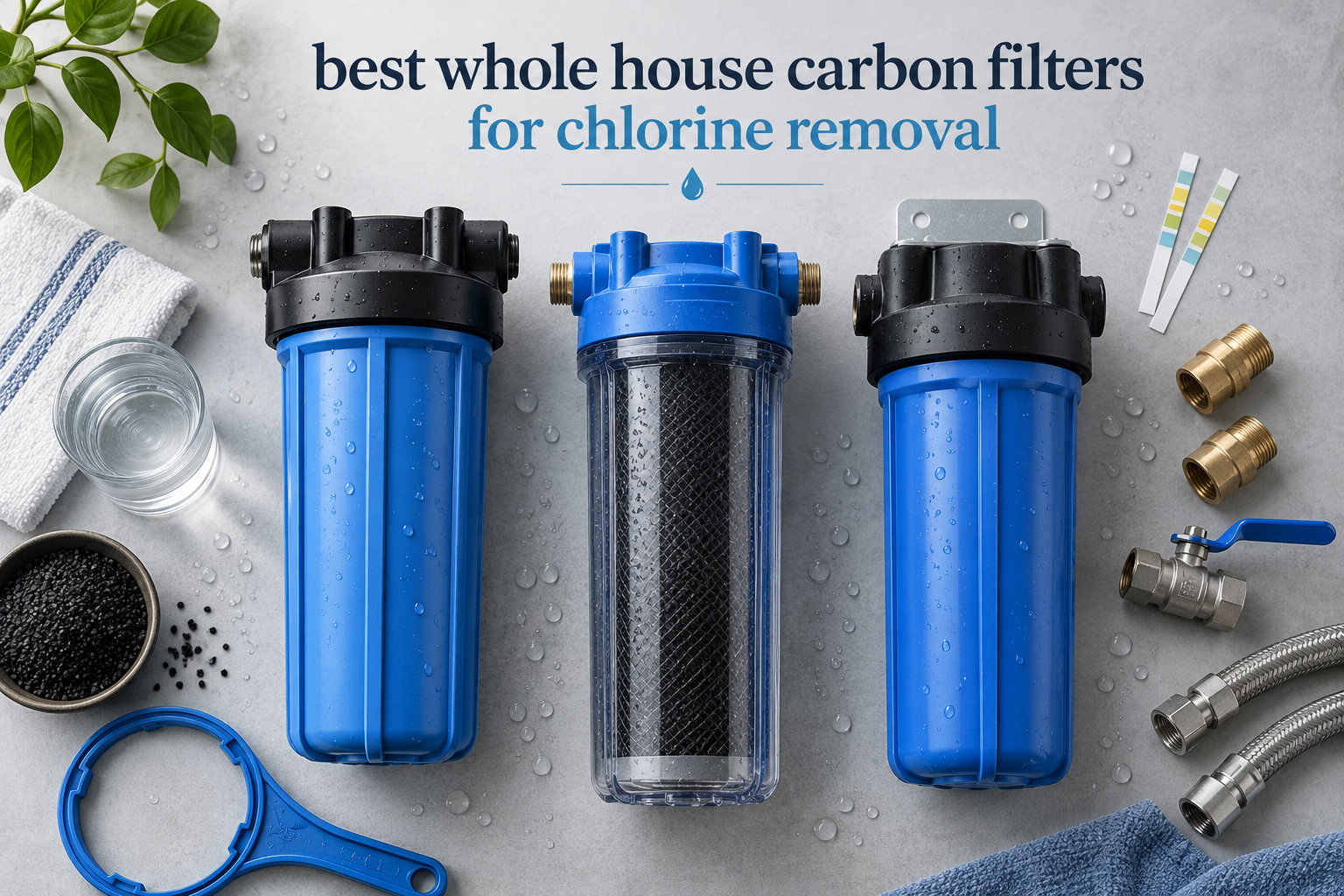
Yes, a carbon filter will remove chlorine, and yes, the right one works at every tap in the house. Our top three for 2026 are the Express Water 3-Stage as the best all-rounder, the iSpring WGB22B as the best value for most households, and the Waterdrop WHF21-PG as the best pick for tight spaces. For anyone on chloraminated utility water, jump to the Home Master HMF2SmgCC. Every pick below was sorted by the one variable that decides this purchase: which carbon is actually doing the work.
We spent six weeks comparing 10 whole house carbon filters, reading spec sheets, warranty terms and review histories side by side, and working out which media type suits which disinfectant. The short version matters more than the long version, so here it is up front.
The single most important step happens before you buy anything. Municipal utilities disinfect with either free chlorine or chloramine, and standard activated carbon handles the first one well while performing poorly on the second. Buy the wrong media and you will spend a year replacing cartridges and still smell chlorine in the shower. Find your utility’s annual Consumer Confidence Report, or call and ask which disinfectant is used, and you will know within ten minutes.
Second most important: the carbon filter goes before the water softener, always. Residual chlorine destroys ion exchange resin, and the consensus on r/WaterTreatment is blunt about it: carbon first, then the softener, or you are buying resin twice. We will come back to this in the installation section, because it is the most common expensive mistake we saw described in plumbing forums.
One more expectation to set. Carbon fixes taste, odor, chlorine and its disinfection byproducts such as trihalomethanes. It does not soften water, does not remove iron, does not strip dissolved solids, and does not kill bacteria. If your water is hard and you want to stop appliance scale, that is a different product and a different budget line.
Table of Contents
Top 3 Best Whole House Carbon Filters for Chlorine Removal in October

Express Water 3-Stage Whole House
- 3-stage carbon
- KDF and polyphosphate
- 17 gpm flow
- 100000 gallon capacity

iSpring WGB22B 2-Stage
- Sediment plus coconut CTO block
- Up to 99 percent chlorine reduction
- 15 gpm
- 1 year cartridge life

Waterdrop WHF21-PG 2-Stage
- PP sediment plus GAC stage
- 5 micron nominal sediment rating
- 15 gpm
- Compact two-stage housing
Whole House Carbon Filters Compared in 2026
Every unit below treats water at the point of entry, so the difference is capacity, media chemistry and how much work you want to do each year. Flow rate is the number most shoppers misjudge, and it is listed here for every product so you can match it to your household before you read a single review.
| Product | Specs | Action |
|---|---|---|
| Express Water 3-Stage Whole House System |
|
Check Latest Price |
| iSpring WGB22B 2-Stage Filtration |
|
Check Latest Price |
| Waterdrop WHF21-PG 2-Stage Filter |
|
Check Latest Price |
 iSpring WGB12B 1-Stage Carbon Block iSpring WGB12B 1-Stage Carbon Block |
|
Check Latest Price |
 Aquasana WH-1000 Carbon and KDF Aquasana WH-1000 Carbon and KDF |
|
Check Latest Price |
 LiquaGen Catalytic Carbon and KDF Tank LiquaGen Catalytic Carbon and KDF Tank |
|
Check Latest Price |
 HQUA WF3-01 3-Stage Filtration HQUA WF3-01 3-Stage Filtration |
|
Check Latest Price |
 iSpring WF1024 KDF Carbon System iSpring WF1024 KDF Carbon System |
|
Check Latest Price |
 Home Master HMF2SmgCC Filtration Home Master HMF2SmgCC Filtration |
|
Check Latest Price |
 Waterdrop WHF3T-PG 3-Stage Filter Waterdrop WHF3T-PG 3-Stage Filter |
|
Check Latest Price |
What Chlorine Removal Actually Does (and Does Not)
Is there a whole house filter that can effectively remove chlorine from water? Yes. A point-of-entry carbon filter installed on the main line removes chlorine at every outlet in the house, not just the kitchen tap, and it is the standard fix for municipal water. Will a carbon filter filter out chlorine? Yes, when the media is the right type and the flow rate is not undersized. What type of filter is best for removing chlorine? An activated carbon filter, and specifically catalytic carbon media if your utility disinfects with chloramine rather than free chlorine.
Chlorine is added to municipal supplies to kill bacteria in the pipes between the treatment plant and your house. It works, and the water is safe. The side effects are what people notice: a bleach smell at the tap, dry skin and faded hair after a shower, and a chemical edge to drinking water. Carbon adsorbs those molecules onto its enormous internal surface area, and the water leaves the filter tasting neutral.
The reason a whole house carbon filter is a different product from an under-sink carbon filter is coverage. Chlorine is present in every drop entering the building, so treating only the drinking tap leaves the shower, the washer, the dishwasher and the ice maker untreated. Point-of-use carbon solves one faucet; point-of-entry carbon solves the house.
There is a second, less discussed reason people install carbon. Chlorine slowly attacks copper and eats away at the lining of water heaters, and the resulting corrosion shows up as pinhole leaks and blue-green staining. Removing the chlorine at the entry point slows that process, and owners on well water who shock their system say the same thing after a shock cycle.
What are the downsides of using a carbon water filter? Four, and they matter.
No residual protection. Householders on plumbing forums raise this more than anything else: strip chlorine at the main and your distribution pipes lose their residual disinfectant. It is a fair concern, and the practical answer is that most homes re-seed within days, but it is a real trade-off.
Finite capacity. Carbon saturates. Cartridge systems need annual changes, and undersizing the flow makes that date arrive early.
Carbon fines after installation. New carbon media sheds black dust for the first several flushes. Skip the flush and your water looks dirty.
It fixes nothing else. Hardness, iron, manganese, sediment scale and bacteria all pass straight through. Buyers expecting a softener or an iron filter get neither.
One more limitation worth stating plainly: standard activated carbon does not address PFAS. Catalytic carbon and KDF-based media do a better job on those compounds, and the tank systems in this list handle more contaminant classes than any cartridge unit here. That said, none of these is sold as a PFAS filter, so if that is your primary reason for buying, start with a dedicated system rather than assuming carbon will cover it.
The same honesty applies to iron, manganese and sediment scale, which no product in this roundup is designed to remove.
Chlorine vs Chloramine: Why the Carbon Media Choice Matters
No competitor we studied covers this properly, and it is the single variable most likely to produce a disappointing purchase. Chlorine and chloramine look identical in a glass of water. They behave very differently on carbon.
Free chlorine is the older, simpler disinfectant. Molecules adsorb directly onto the surface of activated carbon, which is why standard granular and block carbon is genuinely good at it. Chloramine, also called combined chlorine, is chlorine bound to ammonia. The bond is strong enough that ordinary activated carbon adsorbs the molecule but does not break it, so the taste and odor come back as the media loads up.
Catalytic carbon is the fix. It is treated so that the media catalyses the destruction of the chlorine-ammonia bond rather than simply holding the molecule, which is why catalytic and KDF-based systems carry chloramine claims while plain carbon blocks do not. The trade-off is cost: catalytic media runs more per cartridge, and pre-loaded catalytic tanks cost more up front than a standard block.
KDF is the other piece of the puzzle. KDF-55 and KDF-85 are copper-zinc media used mainly to reduce iron, manganese and heavy metals, and they are frequently paired with coconut shell carbon. In practice, carbon handles the taste and odor and KDF handles the dissolved metals, and buying the combination means one cartridge instead of two.
Three ways to identify your disinfectant, in order of reliability:
Read the Consumer Confidence Report. Every US utility publishes one annually, and it names the disinfectant and the target residual. This is the definitive answer.
Ask the utility directly. One phone call. Ask specifically for free chlorine or chloramine, not just “do you treat the water”.
Smell the water after a long absence. Run the shower for two minutes until the water is hot, then smell the steam. Chloramine reads as a fainter, more persistent smell than the sharp bleach note of free chlorine. This is a hint, not proof.
Members of the FiltersFast forums make the same point when recommending chlorine-removing systems: catalytic carbon, not standard carbon, and do not discover this after a year of cartridges. If you know you are on chloramine, shortlist the catalytic and KDF units in this roundup and skip the plain carbon blocks entirely, no matter how good the reviews look.
10 Whole House Carbon Filters Reviewed
1. Express Water Ultimate Protection 3-Stage System
Express Water Whole House Water Filter System, Ultimate Protection, 3-Stage
17 gpm flow
100000 gallon capacity
Activated carbon, KDF and polyphosphate
63 lb freestanding stainless unit
Pros
- 17 gpm flow clears a busy morning without a pressure sag
- Three media types in one unit cover chlorine metals and scale
- Pressure gauges on every stage
- Freestanding stainless frame needs no wall studs
Cons
- Filter life listed at 6 months means two changes a year
- 63 lb frame needs real clearance for pipe runs
- Does not reduce hardness or TDS
This is the unit we kept coming back to while working through the list. Only one other product in the group rates higher on flow, and 17 gpm is the spec that quietly determines whether a whole house filter feels invisible or feels like a bottleneck. At 17 gpm it clears a busy morning without the pressure sag that shows up in reviews of smaller systems.
The three-stage arrangement is sensible rather than clever. A sediment stage, then carbon and KDF working together, then polyphosphate for scale. That last stage is the reason owners report visible scale reduction in dishwashers and showerheads, which no pure carbon system here can claim. It also protects downstream appliances from the mineral load that carbon leaves untouched.
It arrives as a freestanding stainless steel frame with the three housings already mounted. That is a real advantage in a basement or a garage where studs are awkward, and it means one mounting job rather than three. The pressure release buttons on top of each housing are a small touch that makes cartridge changes faster and cleaner.
Our main reservation is the stated filter life. Six months is the shortest recommended interval in this roundup, and on a high-use household that adds up to two full cartridge sets a year, which is a real recurring line. The 100,000 gallon rating is honest capacity, but the manufacturer recommends a calendar change regardless of how much water you actually use.
Reviewers consistently single out the gauges as the reason they can tell when something is wrong. With three gauges you can see which stage is loading up rather than guessing. A few owners mention that the first bypass plumbing job was beyond their skill and needed a plumber, which is normal for a 63 lb freestanding assembly with 1-inch connections.
What this system is good for
It is the pick for a household that wants one unit to cover chlorine, heavy metals and scale without stacking separate housings, and for anyone with more than three bathrooms or a busy kitchen. The 17 gpm rating means it will not become the limiting factor in the stack.
Where this system is not the answer
If your budget cannot absorb two cartridge changes a year, the total cost will outrun a tank system over five years. It is also the wrong tool if you have hard water and genuinely want softness, because polyphosphate inhibits scale rather than removing hardness, and the unit does not lower total dissolved solids.
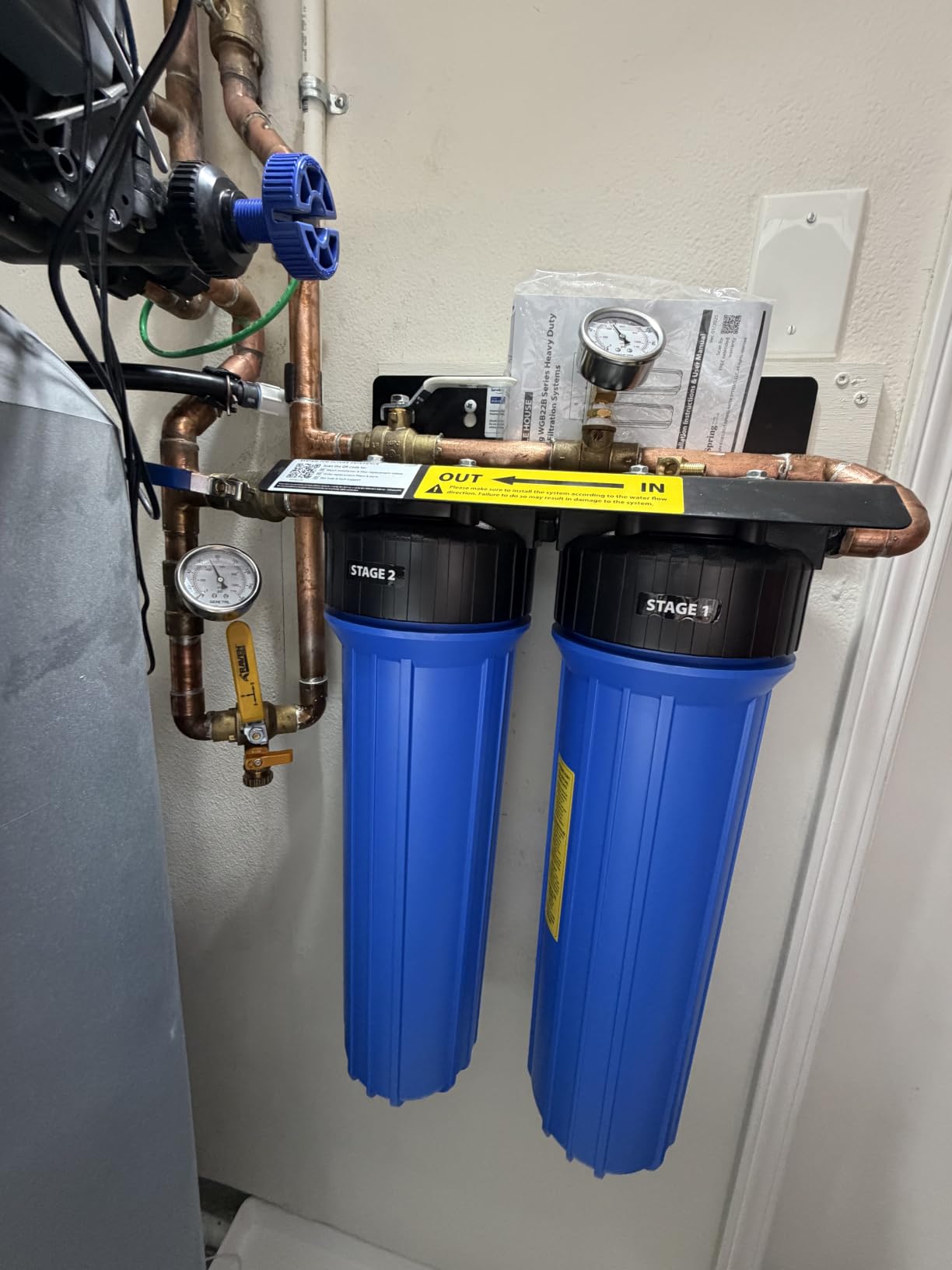
2. iSpring WGB22B 2-Stage Sediment and Carbon Block System
iSpring WGB22B 2-Stage Whole House Water Filtration System, 20” x 4.5” Sediment & Carbon Block Filters, Removes up to 99% Chlorine, Fine Sediment and Bad Taste Removal
5 micron sediment plus CTO coconut carbon block
Up to 99 percent chlorine reduction
15 gpm
100000 gallon capacity
Pros
- Independently tested to reduce up to 99 percent chlorine
- Uses standard 20 by 4.5 inch cartridges that are easy to source
- One year of life per set for a typical household
- Keeps healthy minerals that reverse osmosis strips out
Cons
- Housings ship without a factory drain port
- Bracket ports are not tapered so sealing needs extra tape
- Carbon block is not a chloramine-rated stage
This is the system we recommend to most people, and the margin over the more expensive options is larger than the specification sheet suggests. The carbon stage is a CTO coconut shell block, which is the media type that performs best on free chlorine per dollar spent, and the sediment stage in front of it is what makes a one-year service interval realistic.
Using industry-standard 20 by 4.5 inch cartridges is the underrated advantage here. Those cartridges are made by a dozen manufacturers, so you are never locked into one brand and never waiting on a proprietary part. When we compared annual replacement cost across the cartridge systems in this roundup, the standard-size filter won by a wide margin, and that difference compounds every year.
The 100,000 gallon rating works out to roughly a year for a family of four on municipal water. Reviewers describe the same pattern repeatedly: the bleach smell disappears within days, the dishwasher stops smelling, and laundry comes out of the machine smelling different. About 83 percent of reviews are five star, with the volume clustered around taste and odor improvement.
Two build details cost you a little time on install day. The housings do not come with a factory drain port, so you cannot fully empty a housing before a cartridge change, and the bracket ports are not tapered, so they need generous thread sealer. Neither is a defect, and neither is a reason to skip the system, but budget fifteen extra minutes.
Support is a genuine strength here. Multiple reviewers mention that iSpring resolved issues with a replacement part rather than a store credit, and the technical contact answered installation questions directly. For a first-time installer, that is worth as much as any spec.
What this system is good for
It suits a family of one to four on chlorinated municipal water who want an annual change and low ongoing cost. It is also the sensible pick in a condo or a rental where the space for a large tank does not exist.
Where this system is not the answer
If your utility uses chloramine, this is the wrong carbon. A CTO block adsorbs the molecule without breaking the bond, so odor can return partway through the cartridge life. Well owners with heavy sediment also need a coarser pre-filter ahead of the 5 micron stage.
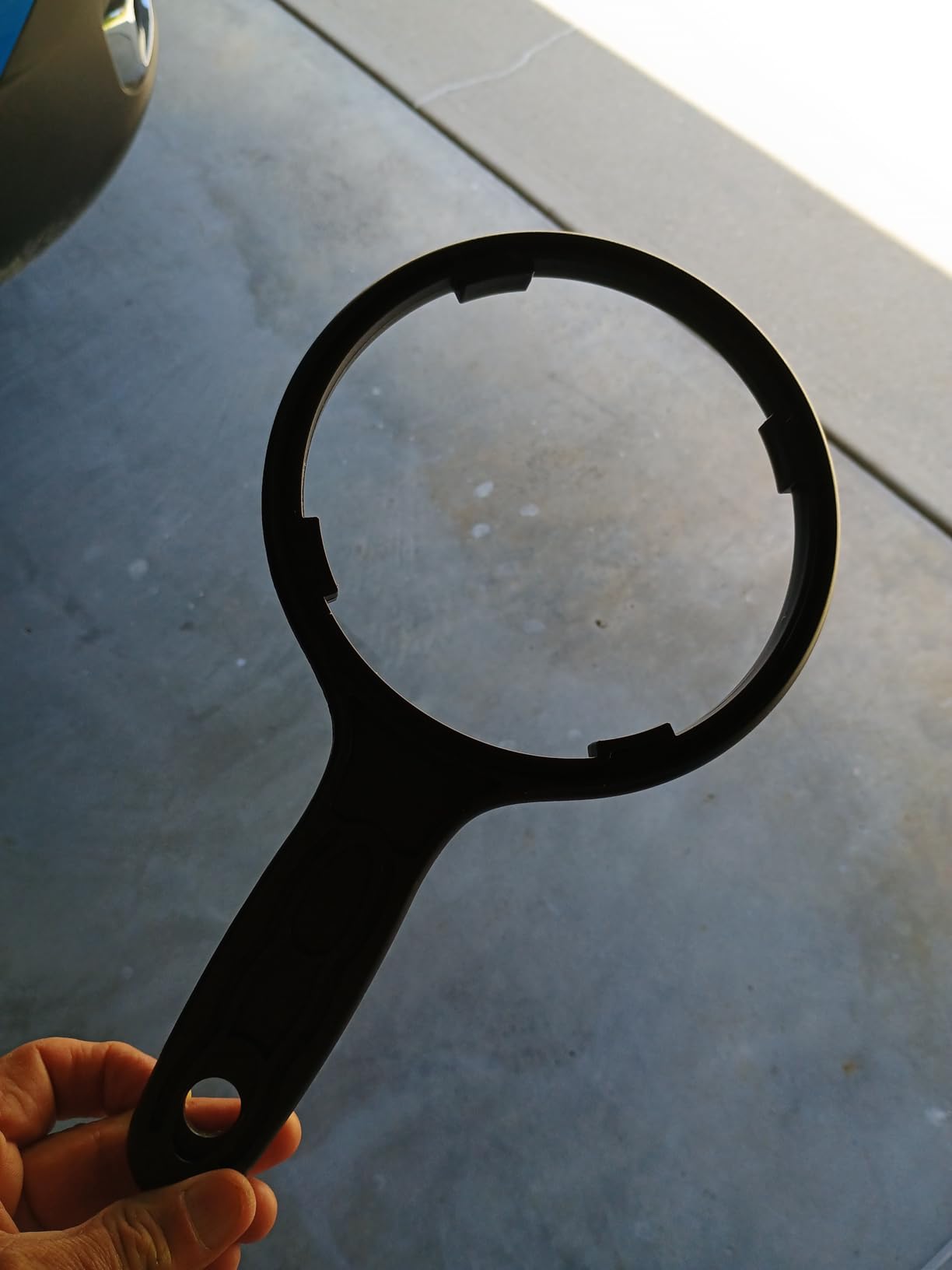
3. Waterdrop WHF21-PG 2-Stage Compact System
Waterdrop WHF21-PG 2-Stage Whole House Water Filter System, 5 Micron
10 inch PP sediment plus GAC coconut cartridge
5 micron nominal sediment rating
15 gpm
50000 gallon capacity
Pros
- Compact footprint suits tighter install spaces
- 15 gpm with no noticeable pressure loss
- Housing validated by 100000 plus water hammer tests
- Straightforward DIY setup
Cons
- 50000 gallon capacity and 6 month life mean frequent changes
- Carbon stage is not chloramine rated
- Does not remove heavy metals or reduce TDS
The appeal here is size. At 14 by 7 by 15 inches, this is the most compact two-stage system in the roundup, and in a small mechanical room or a mobile home that physical constraint decides the purchase before any spec does.
Despite the smaller cartridges, flow is rated at 15 gpm and owners report stable pressure after install. The housing is rated for 25 to 90 psi and has been through 100,000 plus water hammer tests, which is the sort of detail that matters more in a mobile home where plumbing is rigid and prone to pressure spikes.
The trade-off is capacity. Fifty thousand gallons against 100,000 for the iSpring two-stage means two changes a year rather than one, so budget the media schedule before you commit.
The GAC coconut shell cartridge handles chlorine, sediment and taste and odor on municipal supply, which is where this unit belongs. It will not address heavy metals or lower total dissolved solids. If you are on chloramine, look past this one.
With 1,578 reviews averaging 4.4 stars, the sample here is large enough to trust. The most common notes are an easy install, real reduction in chlorine odor, and steady pressure. The recurring gripe is the replacement interval, followed by the need to wrap fittings generously during installation.
What this system is good for
It is the pick for tight spaces, condos, rentals, RVs and mobile homes where a full-size bracket will not fit. It also works well as a rental property upgrade where the owner does not want to commit to a tank system.
Where this system is not the answer
Two changes a year erodes the cost advantage over bigger systems, and a small mechanical space is not the only place these get installed. It also cannot take on iron, manganese or chloramine, so well owners need a different plan.
4. iSpring WGB12B Single-Stage Carbon Block Filter
iSpring WGB12B 1-Stage Whole House Water Filtration System w/ 20” x 4.5” Carbon Block Filter – Reduces up to 99% Chlorine
Single 20 by 4.5 inch CTO coconut carbon block
Up to 99 percent chlorine reduction
15 gpm
13 lb housing
Pros
- Compact 7 by 7 by 24 inch footprint suits small spaces
- Coconut shell CTO block rated up to 99 percent chlorine reduction
- Standard cartridges are widely available
- Most owners install it themselves
Cons
- 15000 gallon capacity covers about half a year for a family of four
- No heavy metal reduction in a single stage
- Not sized for well or heavily sedimented water
One housing, one cartridge, one job done well. The WGB12B is the simplest useful answer to a chlorine problem, and for a household on city water with low sediment it is genuinely enough. The carbon block is CTO coconut shell, third-party tested to NSF/ANSI standards, rated to reduce up to 99 percent of chlorine.
At 13 pounds and 7 by 7 by 24 inches, it mounts anywhere a stud or a solid surface is available, including inside a cabinet in a small apartment. The 1-inch NPT inlet and outlet are standard, and the whole job is a weekend project for anyone comfortable with a wrench and a bucket.
Capacity is the constraint. Fifteen thousand gallons sounds small next to the 100,000 gallon systems, and it is roughly half a year for a family of four. The carbon is also unsized for sediment, so on any water with visible grit you will need a sediment stage upstream to stop the block blinding over.
Owners in small homes praise the footprint and report clear chlorine reduction. Several mention noticing the difference in their plants and in eye irritation from chlorinated tap water. The complaints are consistent: bracket dimensions do not match the multi-stage models, extra thread sealer is required, and buyers outside the US run into fitting compatibility issues.

What this system is good for
Apartment, condo and small household on chlorinated municipal water with a low-sediment supply. It is also a sensible second filter for a cabin or a second property where annual maintenance visits are rare.
Where this system is not the answer
It has no sediment stage, so it is a poor choice on well water or any main with rust or scale in it. It also cannot treat chloramine or heavy metals, and twice-yearly cartridge changes are unavoidable.
5. Aquasana WH-1000 Carbon and KDF Whole House System
Aquasana Whole House Water Filter System | 1,000,000 Gallons | Carbon & KDF Media | Reduces 97% Chlorine & Sediment | Includes Pre- and Post-Filters | Rhino WH-1000
Carbon and copper-zinc KDF media
Reduces 97 percent chlorine
14.6 gpm
10 year and 1000000 gallon rating
Pros
- 10 year and 1000000 gallon media life means no routine cartridge handling
- Dual carbon and KDF media cuts 97 percent chlorine with minerals intact
- No electricity or drain line or backwashing required
- 10 year limited warranty
Cons
- All-plastic threading on pre and post filters leaked for some owners
- Warranty is void when the system is self-installed
- Fine carbon residue can remain after flushing
This is the tank that changes the five-year maths. Media rated for 10 years and 1,000,000 gallons turns a recurring cartridge line item into a one-off, and with no drain line, no backwashing and no electricity there is nothing to service annually. That simplicity is why it is our pick for owners who hate maintenance more than they mind a large footprint.
Media is a dual carbon and KDF blend, independently tested to NSF/ANSI Standard 42, reducing 97 percent of chlorine while leaving dissolved minerals in place. The 14.6 gpm rating sits comfortably in the middle of the flow range in this group, and the Schedule 80 PVC components and integrated drain and shut-off valves are genuinely well thought out for service access.
It is also the lowest rated product we reviewed, at 4.2 stars from 690 reviews, and the reason is concentrated and specific: the pre and post filter housings use all-plastic threading that leaked repeatedly for some owners, who ended up replacing them with brass parts. The warranty is also void on self-installed units, which pushes the total cost up for anyone without a plumber.
That said, owners on chlorinated town water report a complete loss of chlorine taste and describe the water as having no aftertaste, which is the outcome most people are buying. If you do install it yourself, budget for brass hardware and expect a proper flush, because fine carbon residue can persist past the first rinse.
What this system is good for
Owners who want chlorine gone and never want to think about it again, especially where the alternative is a stack of cartridge systems. It is also a strong option for chlorinated water where chlorine odor is the whole problem.
Where this system is not the answer
It does not treat hardness, so a softener is still a separate purchase. At 32 by 9 by 46 inches it is the largest unit in the roundup, and the self-install warranty void rules it out for anyone unwilling to hire a plumber.
6. LiquaGen Catalytic Carbon and KDF 55 Backwashing Tank
LiquaGen Whole House Water Filtration System — Catalytic Carbon & KDF 55 Media | City Water Filter for Chlorine, Chloramine, PFAS & Sediment Removal (10″ x 54″)
Catalytic carbon with KDF 55 dual media
Fleck control valve with automatic backwash
12 gpm in a 10 by 54 inch tank
10 year media life
Pros
- Catalytic carbon paired with KDF 55 targets chloramine as well as chlorine
- Automatic backwashing means no manual cartridge handling
- 10 year and 1000000 gallon media life
- Three tank sizes let buyers match capacity to household
Cons
- Highest cost per gallon of treated water in this group
- Backwashing adds a drain line and periodic water use
- 12 gpm is below the 15 gpm offered by several cartridge systems
If your utility runs chloramine, this is the unit to look at first. Catalytic carbon and KDF 55 dual media is the combination the media chemistry demands, and it is the only product in this roundup that both backwashes automatically and is explicitly engineered for combined chlorine.
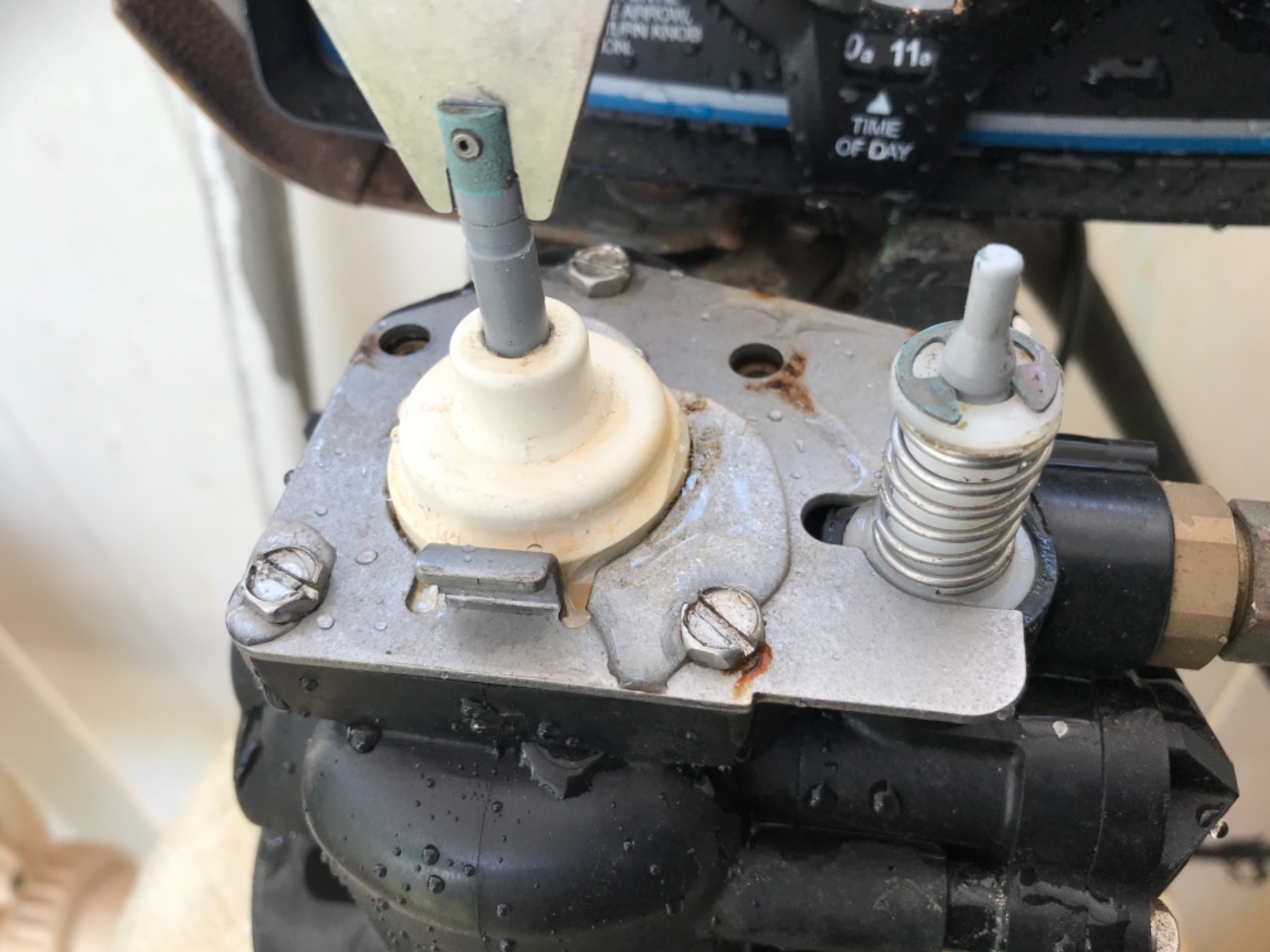
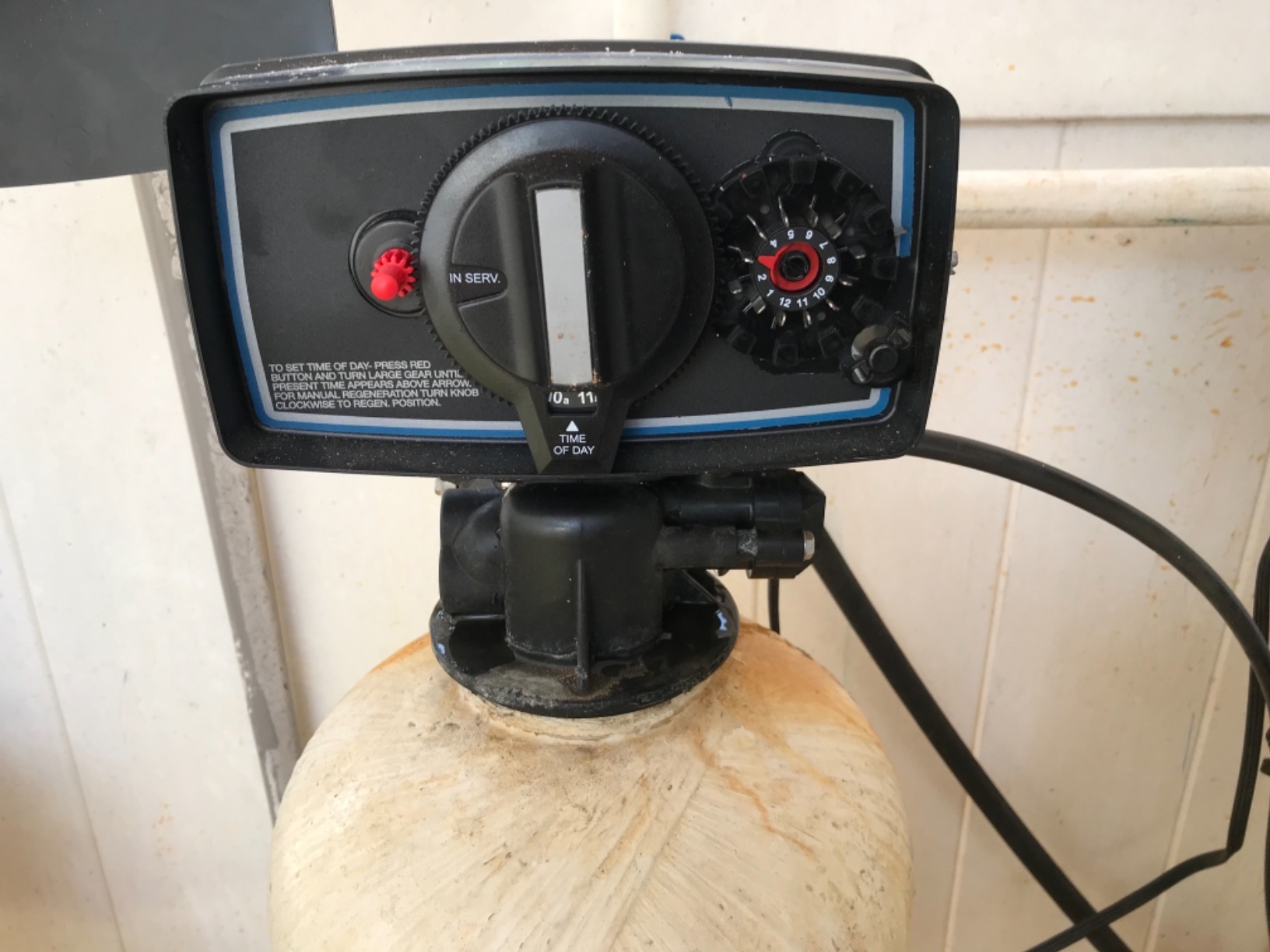
The control valve is a Fleck unit, and that name matters more than it looks. Owners on plumbing forums recommend the Clack WS-1 and Fleck 2510SXT by name for backwashed carbon on the main line precisely because those valve platforms are serviceable, with rebuild kits available from any distributor. A proprietary sealed valve would undo every advantage of a ten-year media life, and this is not that.
Sizing variants run from 9 by 48 inch at 9 gpm for one to three bathrooms, through the 10 by 54 inch at 12 gpm shown here for four to six bathrooms, up to 13 by 54 inch at 20 gpm for larger homes. The tank ships pre-loaded, so there is no media pouring and no risk of a channeling mistake on install day.
The honest drawback is flow. Twelve gallons per minute is below what several cartridge systems offer, and if you are planning a whole-house reverse osmosis unit or a large irrigation zone, that ceiling will be felt. It is also the highest cost per gallon of treated water here, though that number improves dramatically across a ten-year horizon.
With 122 reviews, this is the smallest review base among the ten products, so treat the consensus as directional rather than settled. Buyers praise the Fleck control valve for straightforward setup and rebuild-kit serviceability, while a minority focus on control valve longevity and the wait for a pre-loaded tank to arrive.
What this system is good for
Chloraminated utility water, households with four or more bathrooms, and anyone who wants catalytic carbon performance without ever handling a cartridge again. The three size variants make it a fit for most single-family homes.
Where this system is not the answer
It needs a drain line and somewhere to discharge backwash water, which rules out some rentals and small mechanical rooms. The 12 gpm ceiling also makes it a poor pairing with a whole-house reverse osmosis system or heavy irrigation use.
7. HQUA WF3-01 3-Stage Filtration System
HQUA WF3-01 3-Stage Whole House Water Filtration System, Reduces Heavy Metals (Lead, Mercury, Arsenic, Cadmium, Chromium), Chlorine, Sediment, Odor, and VOC’s
Compound GAC and KDF second stage
Three oil-filled pressure gauges
15 gpm
per-filter drain valves and 180 day timers
Pros
- Only unit here with three oil-filled gauges for monitoring each stage
- Per-filter drain valves make cartridge changes less messy
- Brass-threaded ports resist the cracking that plagues plastic competitors
- Built-in 180 day timers and a maintenance card
Cons
- Manual does not clearly state each housing needs two O-rings
- Cartridge labels cannot be adjusted to face forward
- Some stainless threaded ports still leak
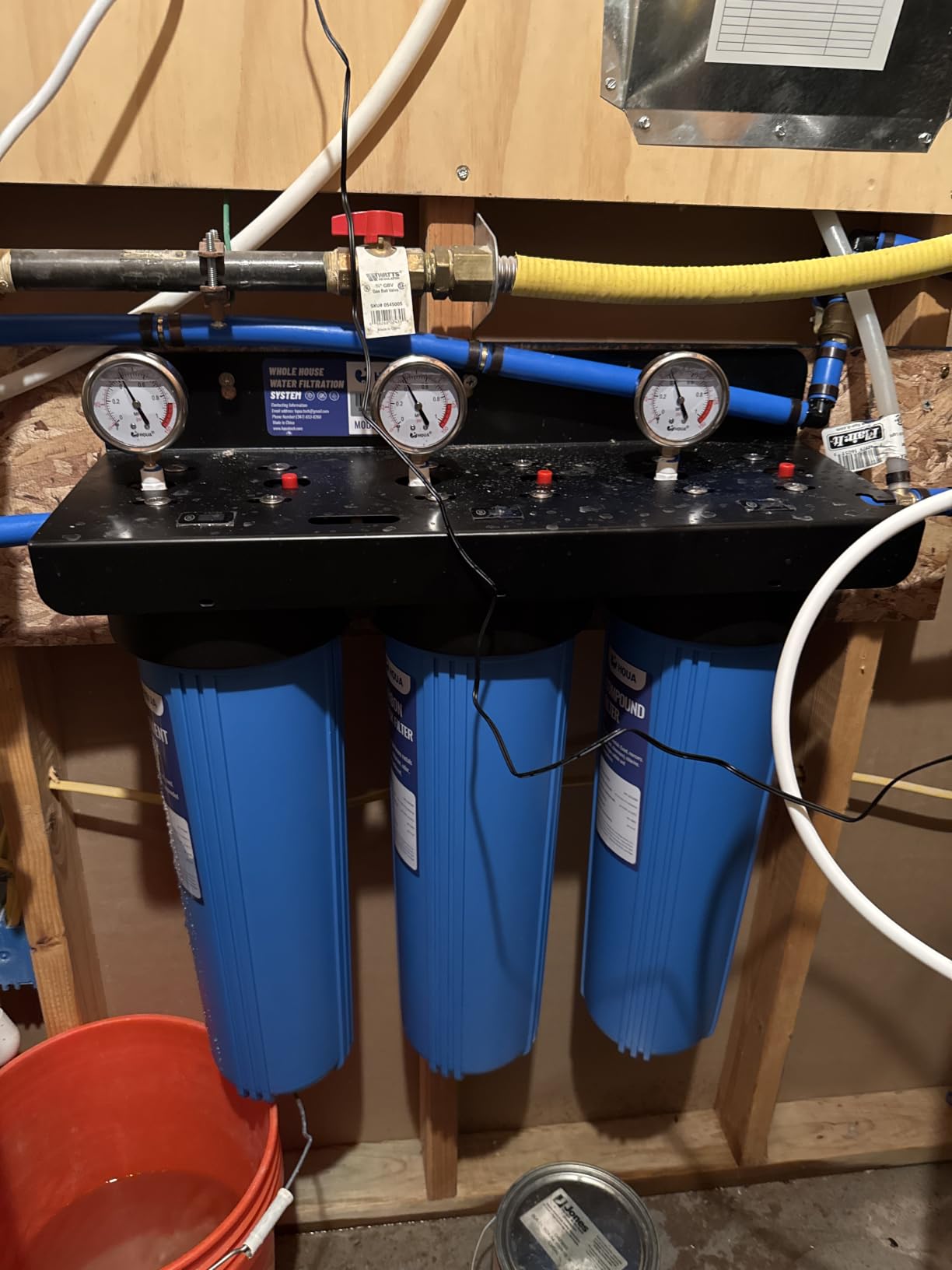
This is the most thoughtfully instrumented cartridge system in the roundup. Three oil-filled pressure gauges, one per housing, mean you can watch pressure rise stage by stage and know exactly which cartridge is loading up. Most competing systems give you a single gauge and a lot of guesswork.
The second stage is a compound GAC and KDF cartridge handling chlorine and heavy metals together, and the first is a 5 micron sediment stage. Rated at 15 gpm across three 20 by 5.5 inch housings, it is one of the higher-capacity cartridge stacks available, and the assembly works bracket-mounted or free-standing at 31 by 23 by 8 inches.
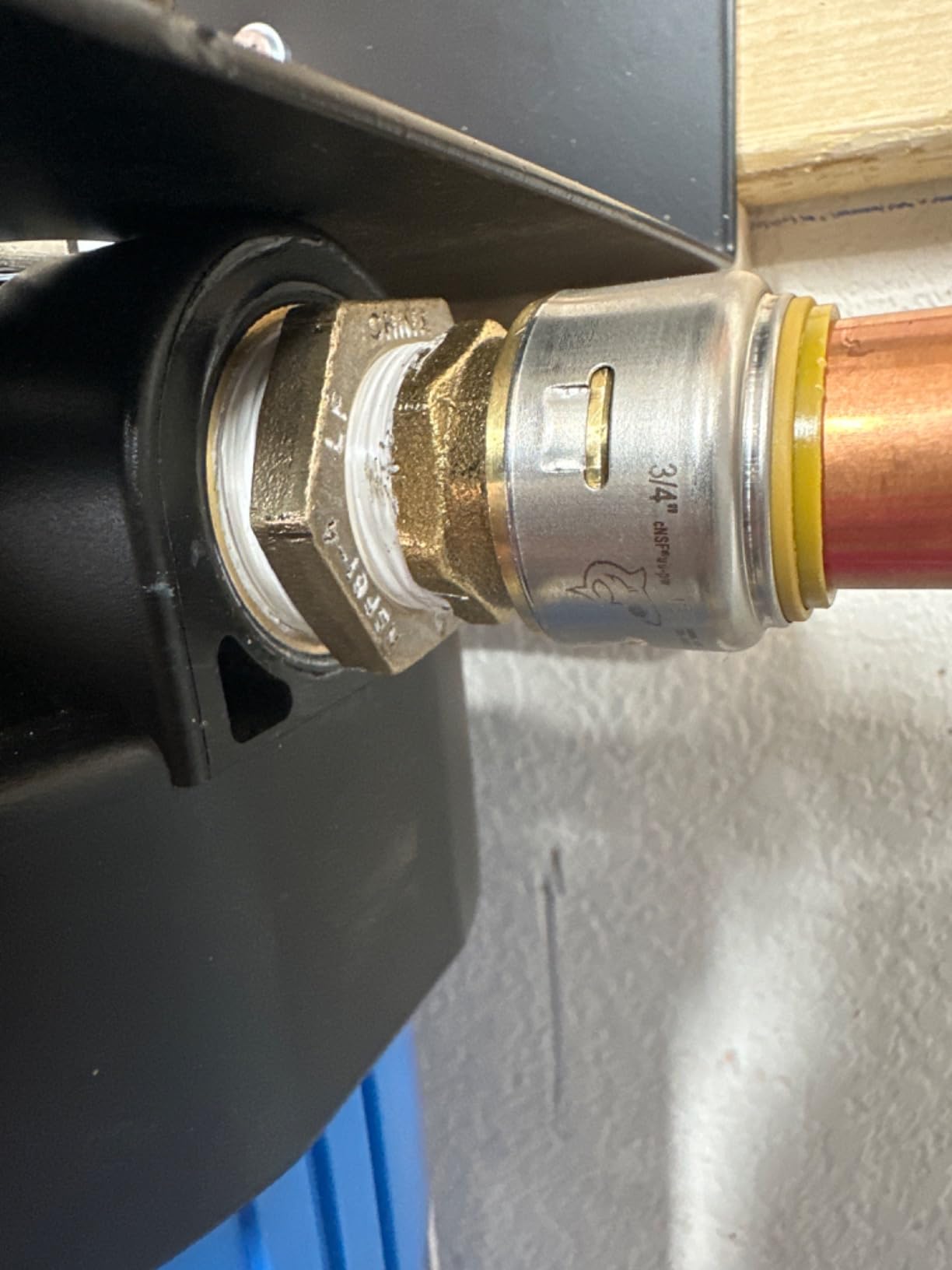
Serviceability is the standout. Each housing has a pre-installed pressure relief and drain valve, so draining a cartridge is a valve turn rather than a wrestling match over a bucket. The kit also includes a long housing cleaning brush, spare gaskets, silicone lube and adapters to convert the ports to 3/4 or 1 inch NPT. Reversible flow direction is a small feature that saves real time in tight layouts.
Owners also report results beyond taste: cleared sulfur odor, better well water clarity and reduced fixture staining. The main complaint is documentation. Several installers lost time to initial leaks because the manual does not make clear that each housing needs two O-rings, one seated in the cap and one in the housing.
Brass threading on the ports is a genuine improvement over plastic, though a few long-term owners report a threaded port that would not stop dripping. The 180-day timers and the maintenance card are the kind of unglamorous detail that quietly reduces how often people forget a change.
What this system is good for
Owners who want to know what their filter is doing rather than guess, and anyone changing cartridges on a schedule they will actually keep. The brass ports and drain valves make it a good fit for well water after shocking.
Where this system is not the answer
Three cartridges is a heavier recurring cost than a two-stage setup, and you need a mounting area roughly 23 inches wide. The compound carbon stage is not described as chloramine-rated, so confirm your disinfectant first.
8. iSpring WF1024 KDF and Activated Carbon System
iSpring Whole House Water Filter System, Reduces Chlorine, Chloramine, Lead, Water Filter Lasts up to 3 Years, Model: WF1024
KDF with coconut shell activated carbon
26 gpm flow
filter life up to 3 years
65000 gallon capacity
Pros
- Flow rating of 26 gpm is the highest here with minimal to zero pressure drop
- KDF plus coconut carbon targets chlorine and chloramine and heavy metals
- Filter life up to 3 years cuts replacement frequency
- Compact 10 by 10 inch footprint with no power or drain line
Cons
- Intended only for properly disinfected municipal water
- 65000 gallon capacity is modest next to the tank systems
- Does not reduce TDS
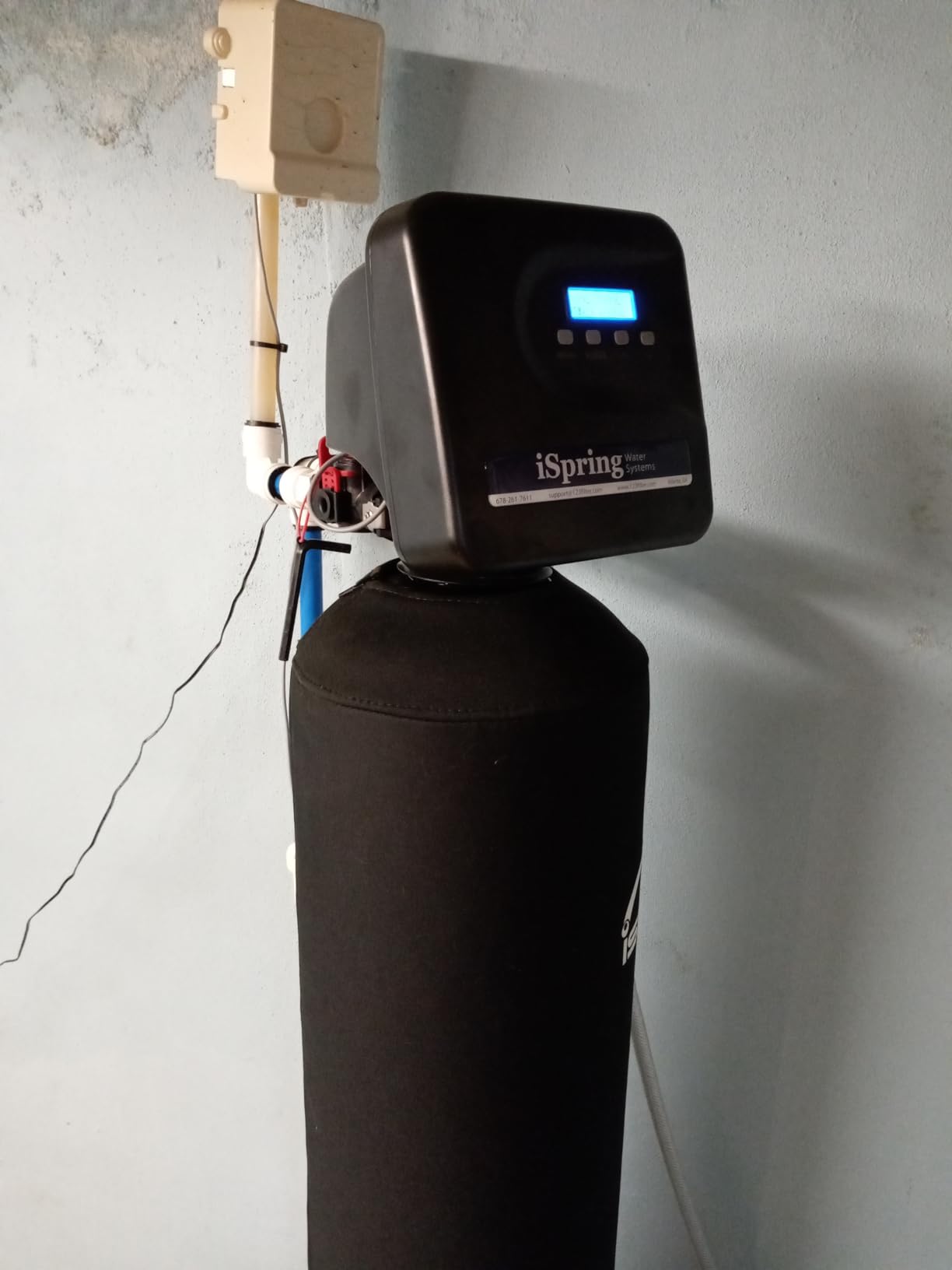
Twenty-six gallons per minute is the highest flow rating of any unit in this roundup, and it is not close. If your home has four or more bathrooms, an outdoor shower, or an appliance that draws a lot of water at once, this is the system that will not become the bottleneck in your stack.
Media is premium KDF and coconut shell activated carbon, targeting chlorine, chloramine and up to 98 percent of water-soluble heavy metals. With filter life rated at up to three years, it sits in the middle ground between annual cartridges and ten-year tanks, which makes it an interesting compromise for owners who want long intervals without a drain line.
It needs neither power nor a drain hole, and the 3/4 or 1 inch quick-fit connectors make retrofits painless. At 10 by 10 by 26 inches and 38 pounds, it is compact enough for a tight utility room, and the stainless construction comes with three years of spare part availability, which is more reassurance than most listings at this size offer.
The clear limitation is scope. This system is designed for properly disinfected municipal water and is explicitly not for wells or microbiologically unsafe supply. Reviewers who fitted it to well water report needing a separate sediment stage, and one detailed review credits it with eliminating sulfur odor and restoring softener efficiency.
A small number of reviews report a faulty head unit causing pressure loss, which the manufacturer replaced quickly under warranty. Support interactions are described as consistently responsive, and the 30-day return policy gives room to test it on your own supply before committing.
What this system is good for
High-flow homes, and anyone pairing whole-house filtration with something else thirsty such as a reverse osmosis unit or a garden hose bib. The three-year life suits owners who want long intervals without a backwashing drain line.
Where this system is not the answer
It is the wrong tool for well water, and 65,000 gallons is modest capacity for a family that uses a lot of water. It also does not reduce total dissolved solids, so it is not a substitute for a softener or reverse osmosis on hard water.
9. Home Master HMF2SmgCC KDF85 and Catalytic Carbon Filter
Home Master HMF2SmgCC Whole House Water Filter, 4-layer sediment filter 25 to 1 micron, Powerful Up-Flow KDF85 & Catalytic Carbon 10gpm, 1” NPT ports, Patented heavy steel bracket fits 16” wall studs
Four-gradient sediment filter 25 to 1 micron
Up-flow KDF85 and catalytic carbon
10 gpm
95,000 gallon capacity
Pros
- KDF85 and catalytic carbon specifically target chloramine as well as chlorine
- Four-gradient sediment stage from 25 down to 1 micron holds far more dirt
- 95000 gallon capacity is about a year for a family of four
- Patented steel bracket is rigid and rated for 16 inch studs
Cons
- 10 gpm is the lowest flow here and causes pressure drop with simultaneous fixtures
- Heavy 36 lb assembly needs studs or concrete
- Wide housing needs generous side clearance
The four-gradient sediment stage is the standout feature and the reason this unit handles messy water that flattens ordinary carbon blocks. Rather than a flat 5 micron rating, the media is graded in layers from 25 down to 1 micron nominal, so coarse particles are trapped in the outer layers and do not blind the fine stage. That is what makes a one-year change interval plausible on a main that runs a little rusty.
The carbon stage is up-flow KDF85 with catalytic carbon in an oversized 20 by 4.5 inch cartridge, rated to remove up to 95 percent of sediment, chloramines, chlorine, chemicals and heavy metals across a 95,000 gallon capacity. That is about a year per change for a family of four, and catalytic media is what makes it work on combined chlorine.
Owners on chloraminated city water report the most dramatic results in this roundup: a large taste improvement and, notably, the disappearance of the chlorine vapor smell while showering. The patented heavy gauge steel bracket rated for 16 inch wall studs is also praised as noticeably more rigid than the plastic brackets used by competitors.
At 10 gpm this is the lowest flow rating among the ten products, and owners running two showers and a laundry cycle together report a noticeable pressure drop. The 36 pound assembly and a housing wide enough to need real side clearance also make it less friendly to a small mechanical room.
Two smaller issues: the instructions do not clearly limit the bleach cleaning step to well water homes, which is a documentation gap worth knowing about, and a few buyers report replacement carbon cartridges arriving cracked and needing inspection before fitting.
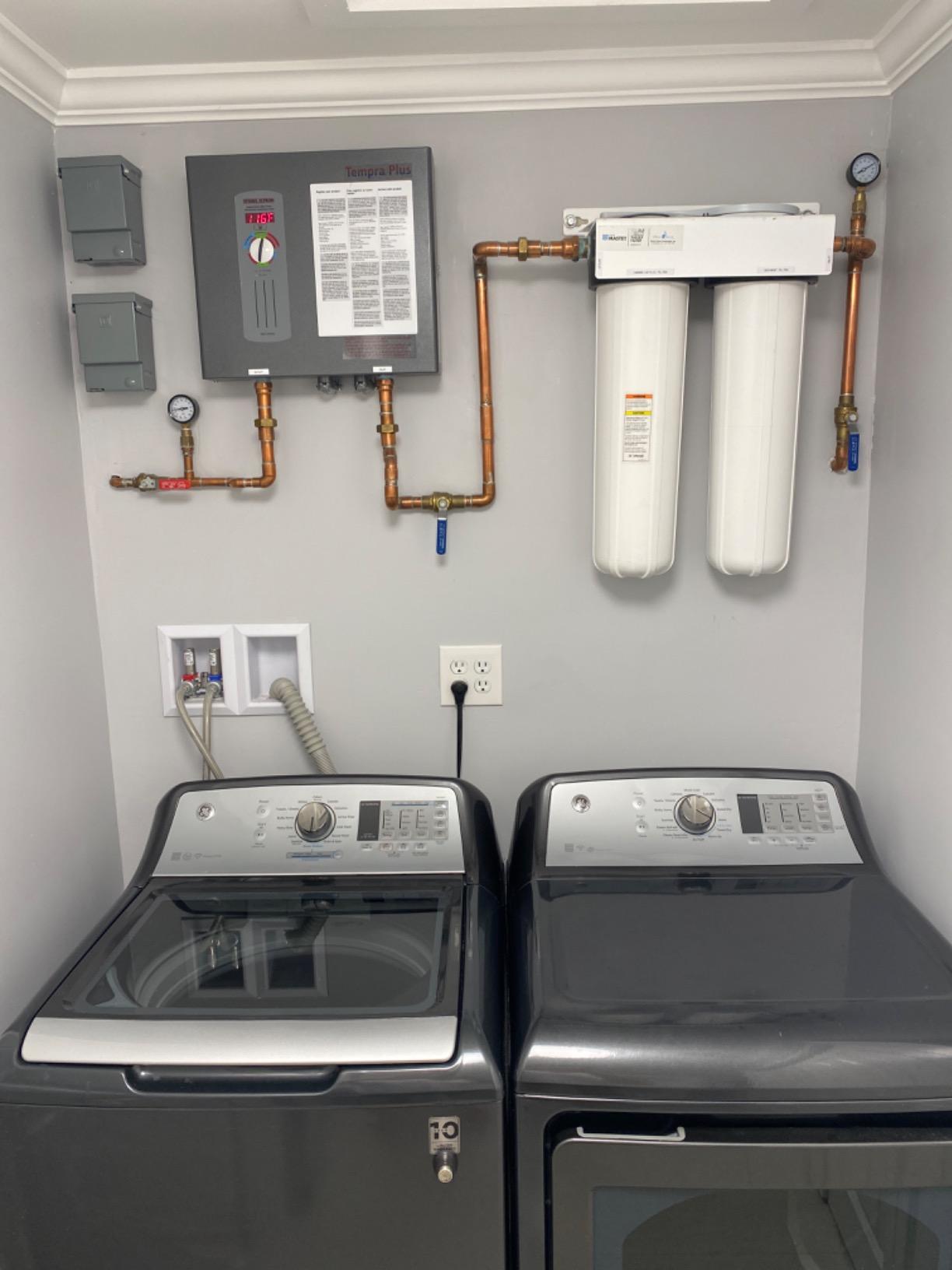
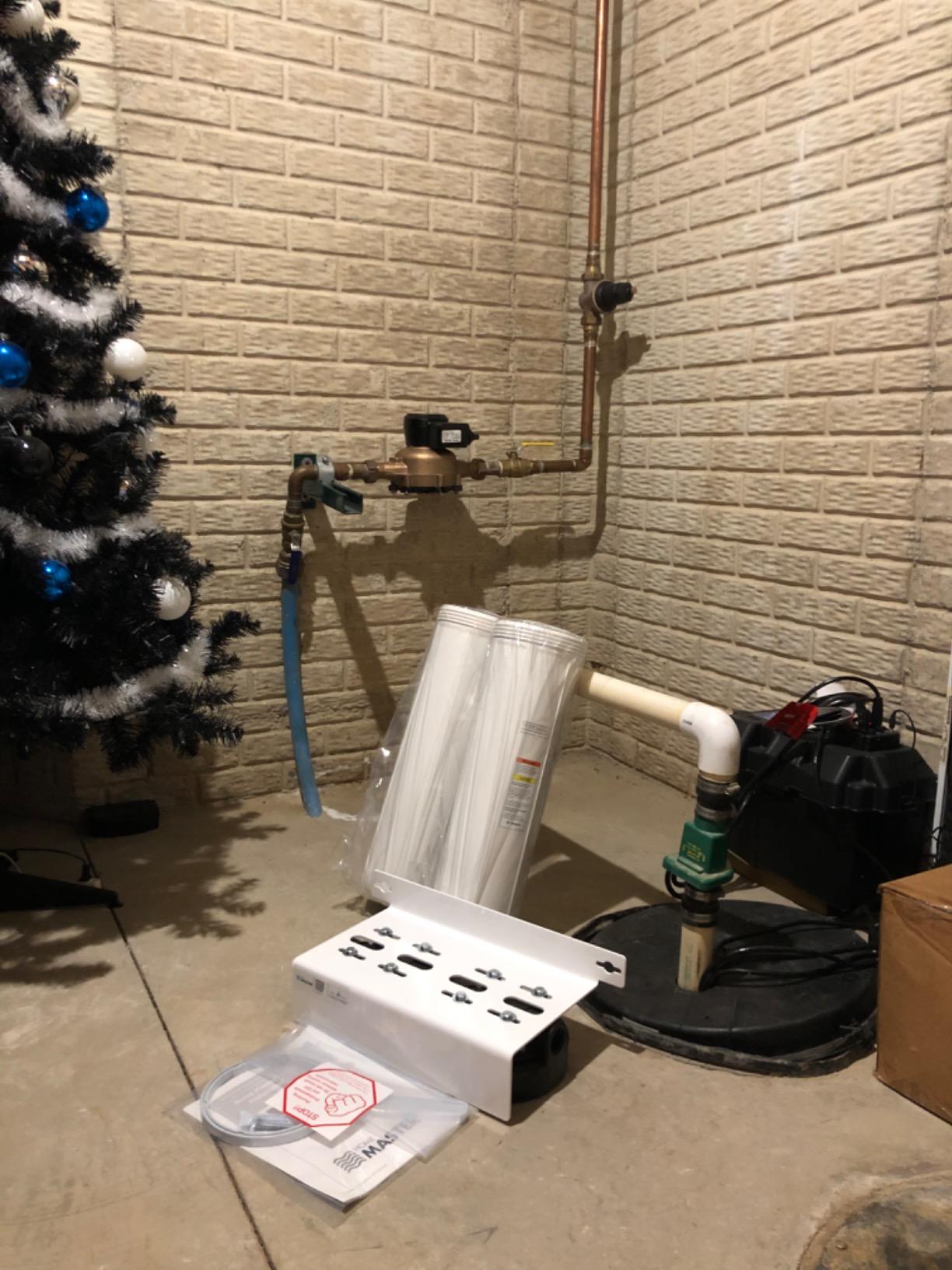
What this system is good for
Chloraminated municipal water, especially where the shower chlorine smell is the main complaint. The four-gradient sediment stage also makes it the more forgiving choice on an older main with rust or scale in it.
Where this system is not the answer
A 10 gpm ceiling is a real constraint for a busy household with multiple bathrooms. Well owners should note that the bleach cleaning step is intended for them, and that a separate pre-filter may still be needed ahead of the sediment stage.
10. Waterdrop WHF3T-PG 3-Stage Certified System
Waterdrop WHF3T-PG 3-Stage Whole House Water Filter System, 5 Micron
KDF composite plus two carbon stages
97.72 percent chlorine reduction
15 gpm
NSF ANSI 372 certified for lead-free materials
Pros
- Measured 97.72 percent chlorine reduction from dual carbon plus KDF stages
- Three stages give broader coverage than a two-stage unit
- 12 month filter life at 15 gpm
- Certified to NSF ANSI 372 for lead-free materials
Cons
- All three cartridges must be replaced as a set since stages are not sold individually
- Bracket can flex and make cartridge removal awkward
- Fittings can weep unless generously sealed
This is the only unit in the roundup carrying an NSF/ANSI 372 certification, which covers lead-free compliance of the wetted materials. That is not a chlorine performance claim, but for anyone replacing older plumbing it is a meaningful piece of independent verification that most listings in this category simply do not offer.
The filtration stack is a 5 micron sediment stage, a KDF composite cartridge, and a GAC cartridge wrapped in carbon fibre, delivering a measured 97.72 percent chlorine reduction. Two carbon stages plus the KDF gives broader contaminant coverage than any two-stage unit here, and the housing has been through 100,000 plus water hammer tests at a 15 gpm flow rating.
Owners report the chlorine smell disappearing within weeks, water tasting better than bottled, softer skin and hair, and laundry that smells fresher. It is listed as suitable for both well and municipal sources, which makes it one of the few cartridge systems here that is not city-water-only in practice.
Two service issues are worth flagging. All three cartridges are replaced as a set because the individual stages are not sold separately, so a partially loaded filter still costs a full change. The bracket can also flex over time, pulling the housings toward the wall and making cartridge removal awkward, which several owners describe as the main long-term annoyance.
Fittings need generous Teflon tape or joint compound, and a full flush after installation is required to clear carbon fines before the water runs clear. One owner received an incorrect O-ring size, which technical support resolved.
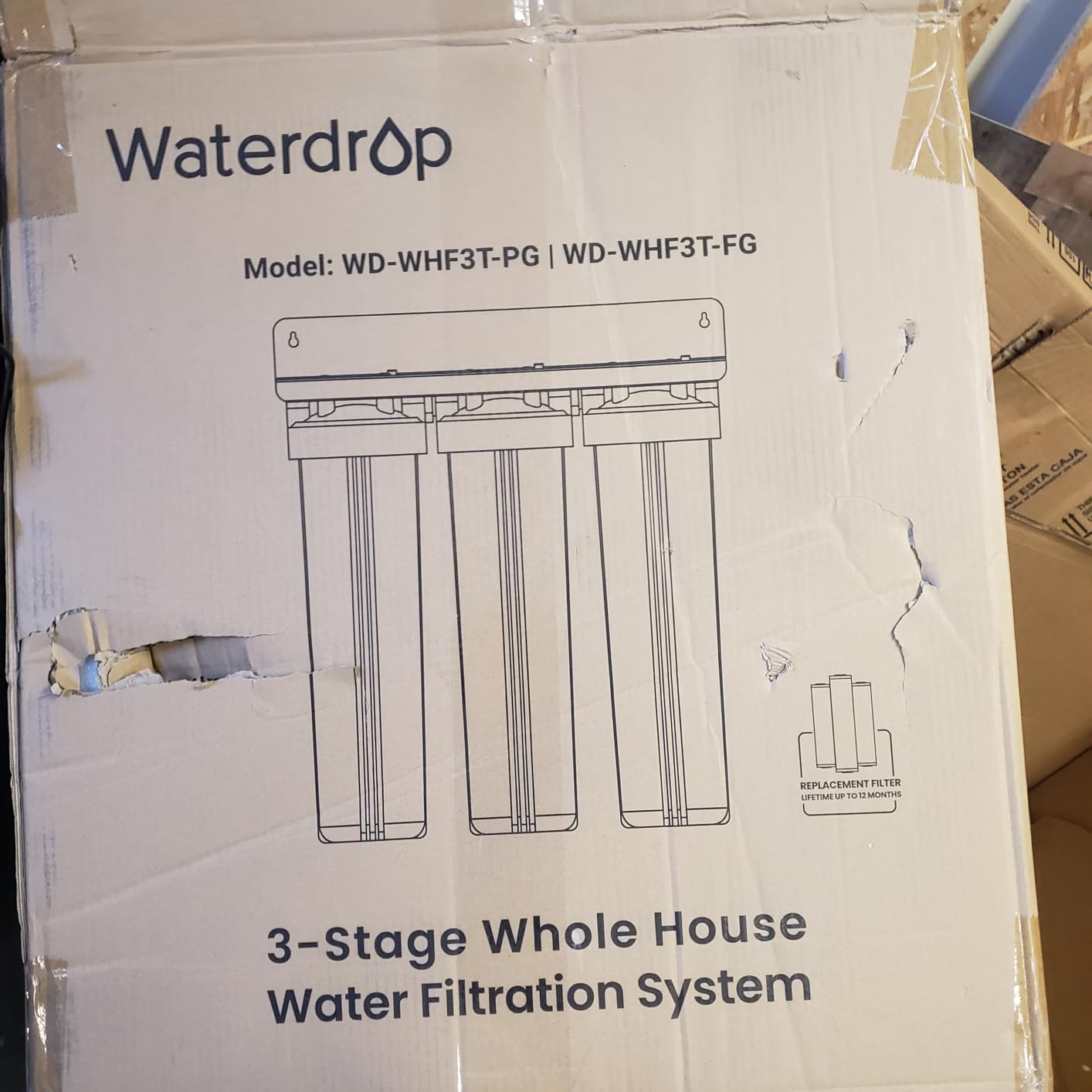
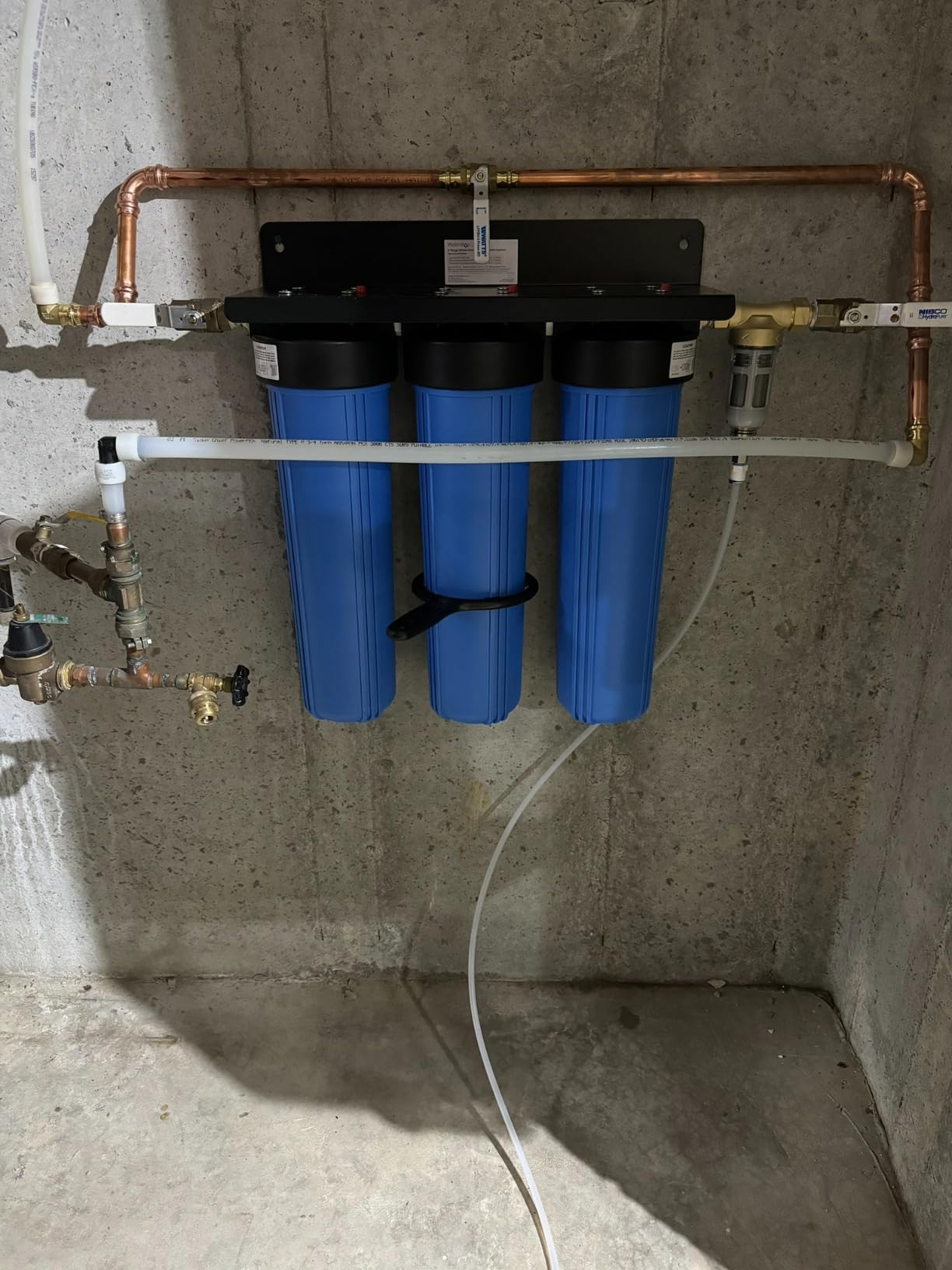
What this system is good for
Households that want broader contaminant coverage from a cartridge stack, and anyone replacing legacy plumbing who wants documented lead-free materials. The measured chlorine reduction claim and the certification make it an easy sell to a partner who is sceptical of marketing numbers.
Where this system is not the answer
Replacing all three cartridges as a set makes the annual cost higher than a two-stage system. The bracket flex issue is a genuine long-term irritation, and buyers on chloramine should confirm the KDF composite stage is specified for combined chlorine in their region.
How Much Flow Rate Do You Need?
Flow rate is the number buyers treat as a checkbox and then regret. A filter rated below what your household actually uses will show up as a pressure drop at the worst moment, usually when two showers run at once, and it will load the media faster than the capacity rating suggests.
As a rule of thumb for a single-family home, here is how flow tracks with household size:
One to two people: 5 to 7 gpm
Three to four people: 8 to 10 gpm
Five to six people: 11 to 15 gpm
Seven or more people: 15 to 25 gpm
Add capacity if you have a soaking tub, an outdoor shower, a washing machine running alongside another appliance, or a whole-house reverse osmosis unit on the plan.
Two useful habits make the sizing decision less guesswork. Time a cold tap with a bucket to see what your service actually delivers, and remember that a filter is rated at a clean pressure differential, not a permanent one. A cartridge at the end of its life can cost several psi that a new one does not, so buying one rating above your measured need buys you margin.
One more sizing factor people miss: pipe diameter. Very long runs of undersized pipe limit flow no matter what the filter can do, and no amount of filter capacity compensates for a 1-inch tank fed by a long run of half-inch pipe. If you are unsure, that is a five-minute conversation with a plumber before you order. Our guide to choosing between filter types by spec sheet applies the same read-the-numbers-first method to a different category.
Buying Guide: How to Choose a Whole House Carbon Filter
Seven decisions, in the order that actually matters. Work through them in sequence and the right product tends to fall out on its own.
1. Identify your disinfectant first. Free chlorine or chloramine, from the Consumer Confidence Report or a phone call. Everything downstream depends on this, and it costs nothing.
2. Cartridge or backwashing tank. A cartridge system is simpler to install and needs no drain line, but you will change media every year or two. A backwashing tank runs to a three to ten year media life and carries a higher purchase cost, plus it needs a drain. Cartridge suits condos, rentals and modest households. Tanks suit owner-occupied homes, chloraminated supply and anyone who does not want to touch filters.
3. Match media to the contaminant. CTO coconut shell carbon block and standard GAC are strong on free chlorine. Catalytic carbon and KDF-based blends are what handle chloramine and add heavy metal reduction. If you are unsure, a compound carbon and KDF cartridge covers more ground than a plain block for a modest step up in annual cost.
4. Size the flow honestly. Use the household sizing guide above, add your fixtures, and buy the next rating up if you can. Undersizing is the most common reason owners report a disappointing whole house carbon filter.
5. Check capacity and interval together. A 100,000 gallon cartridge sounds generous until you do the arithmetic against a five-person household. Look at the recommended change interval, not the gallon rating, because manufacturers recommend calendar changes even when capacity remains.
6. Read the certification in plain English. NSF/ANSI 42 covers aesthetic effects such as taste, odor and chlorine. NSF/ANSI 53 covers health effects and is the one to want if you are filtering for safety reasons. NSF/ANSI 61 covers material safety for drinking water components, and NSF/ANSI 372 covers lead-free compliance. Certification also carries a warranty condition, since many manufacturers void coverage on self-installed units.
7. Price the annual cost, not the sticker. The number that matters is media replacement per year multiplied by the life of the system. A lower-priced cartridge system with a three-year life and cheap standard cartridges can beat a pricier system with proprietary parts, and it is the calculation that decides most of these purchases. Nobody buys a filter they cannot afford to keep supplied.
Two more things to check before you order. Confirm the port size, most of these are 1-inch NPT with 3/4-inch adapters supplied, and confirm the warranty terms because self-installation clauses are common. If you want more background on testing water and reading treatment data before you commit, our guide to choosing the right filter type covers the same decision framework for a different medium.
Installation and Filter Ordering
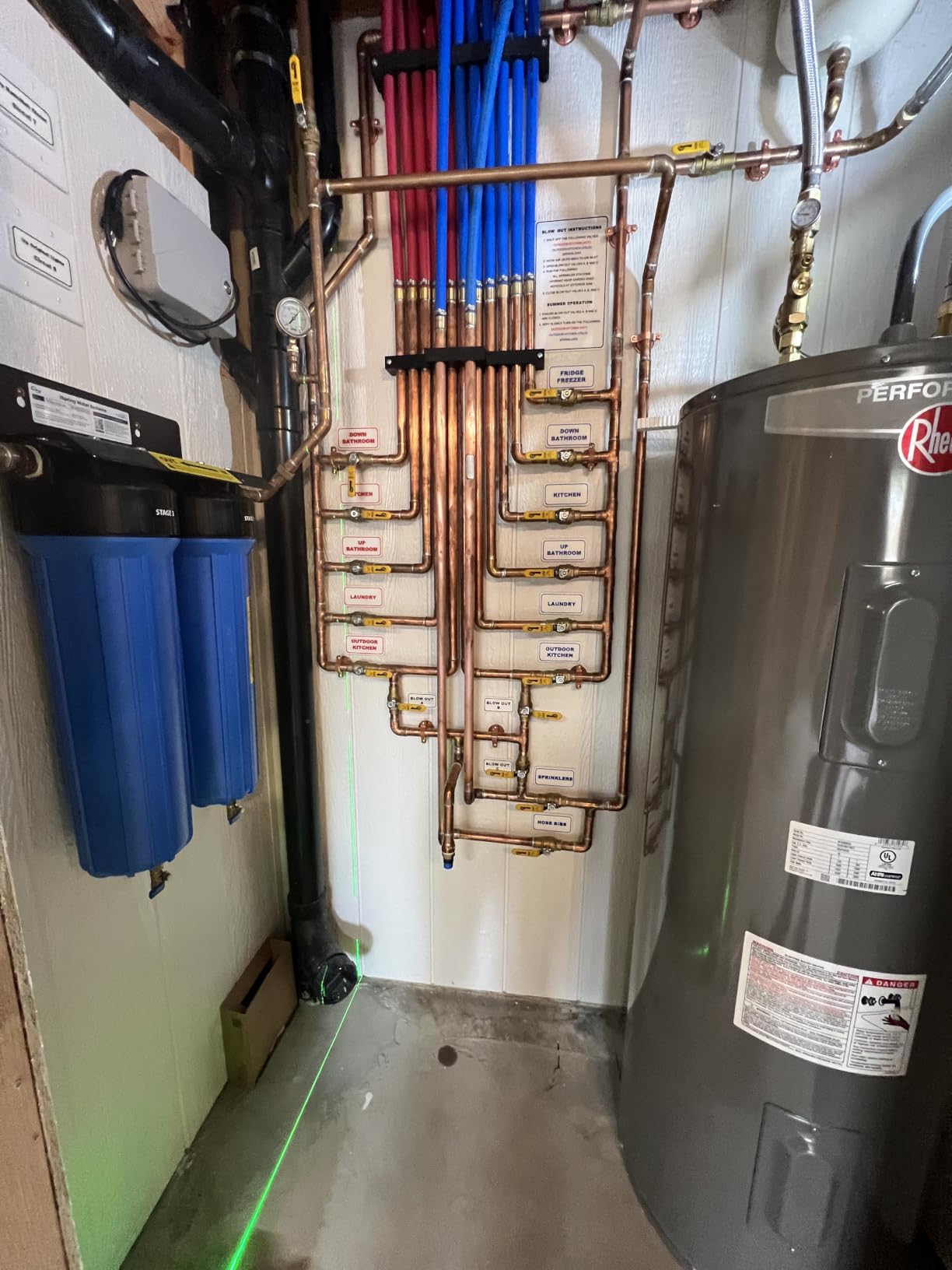
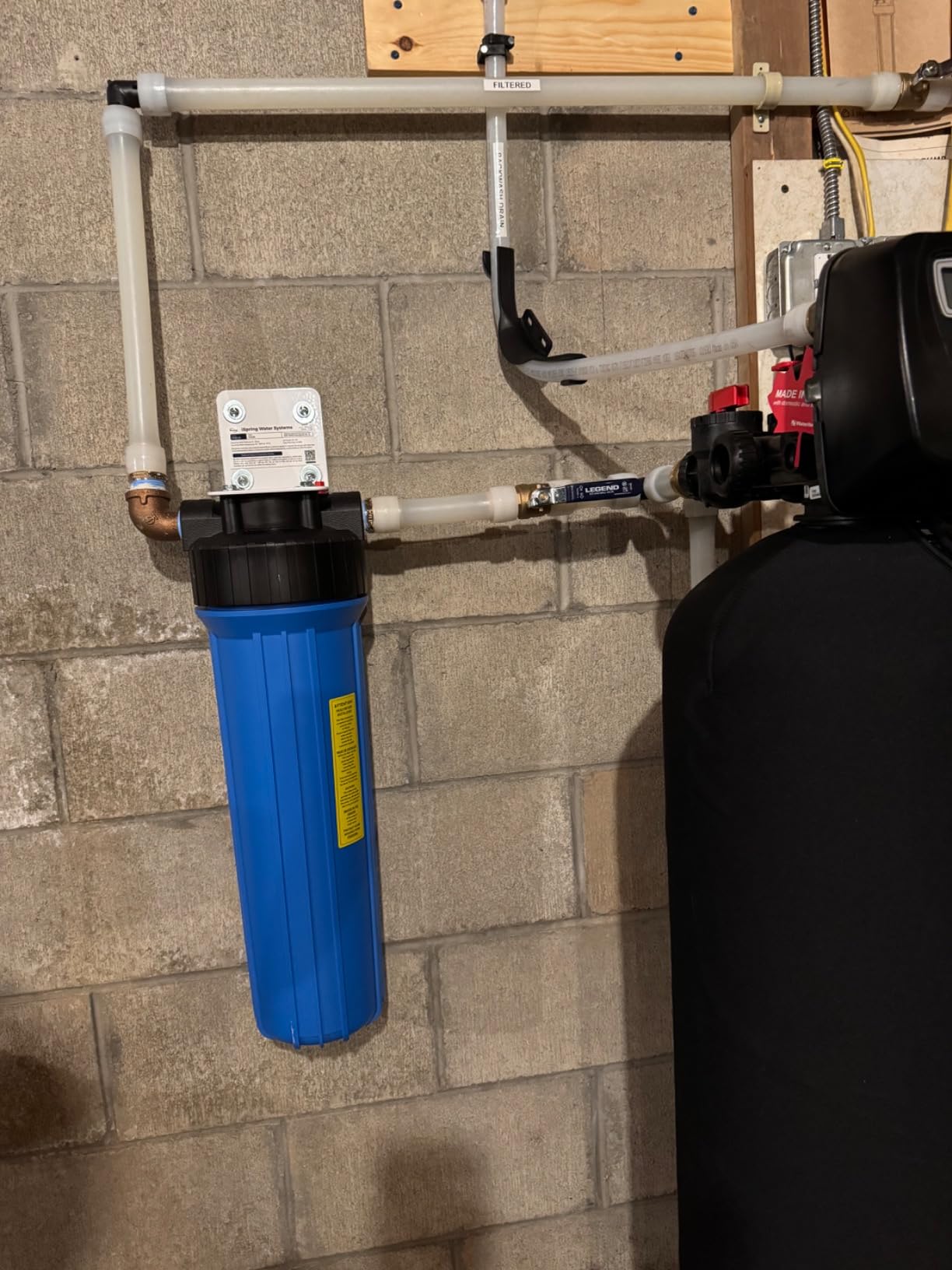
Carbon goes before the softener. This is the rule that gets broken most often and it is the most expensive mistake in this article. Chlorine destroys ion exchange resin, so a softener plumbed ahead of the carbon filter will slowly lose capacity until it needs resin you did not budget for.
Get the order right, from the meter inward: meter, then your sediment or spin-down pre-filter, then the carbon, then the softener, then the rest of the treatment stack. If you have no softener, the carbon goes immediately after the meter and any pre-filter.
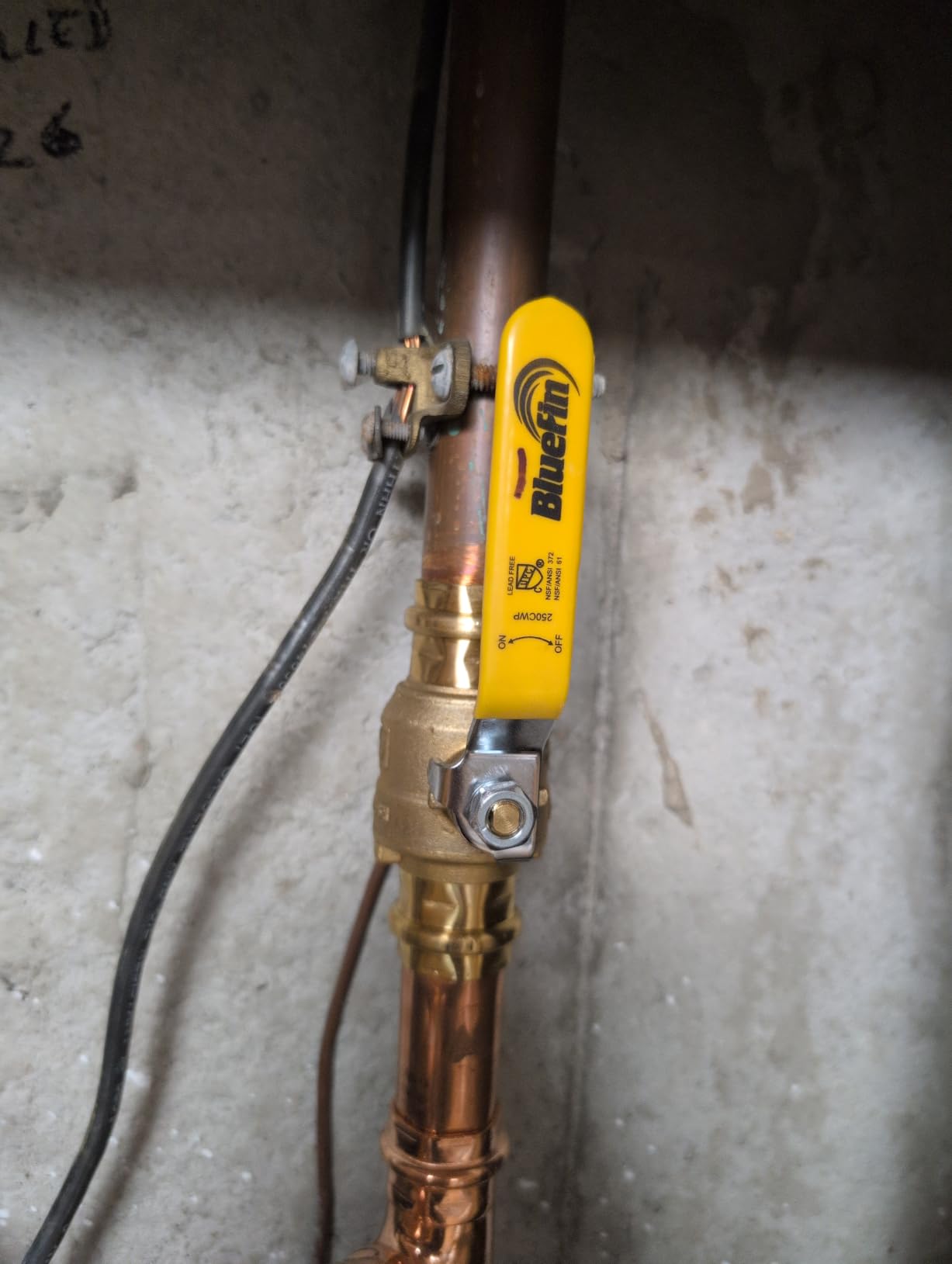
Install after the meter and before the water heater, and outside the pressure zone of anything you would not want to lose water to. A bypass valve is not optional on a plumbed-in system, since it is the only way to isolate the filter for a cartridge change without shutting off the house.
Put gauges on both sides. With a gauge before and after, you can measure the pressure differential across the filter as it loads and use that as your change signal rather than a calendar reminder alone. The HQUA system in this roundup goes further with one gauge per stage.
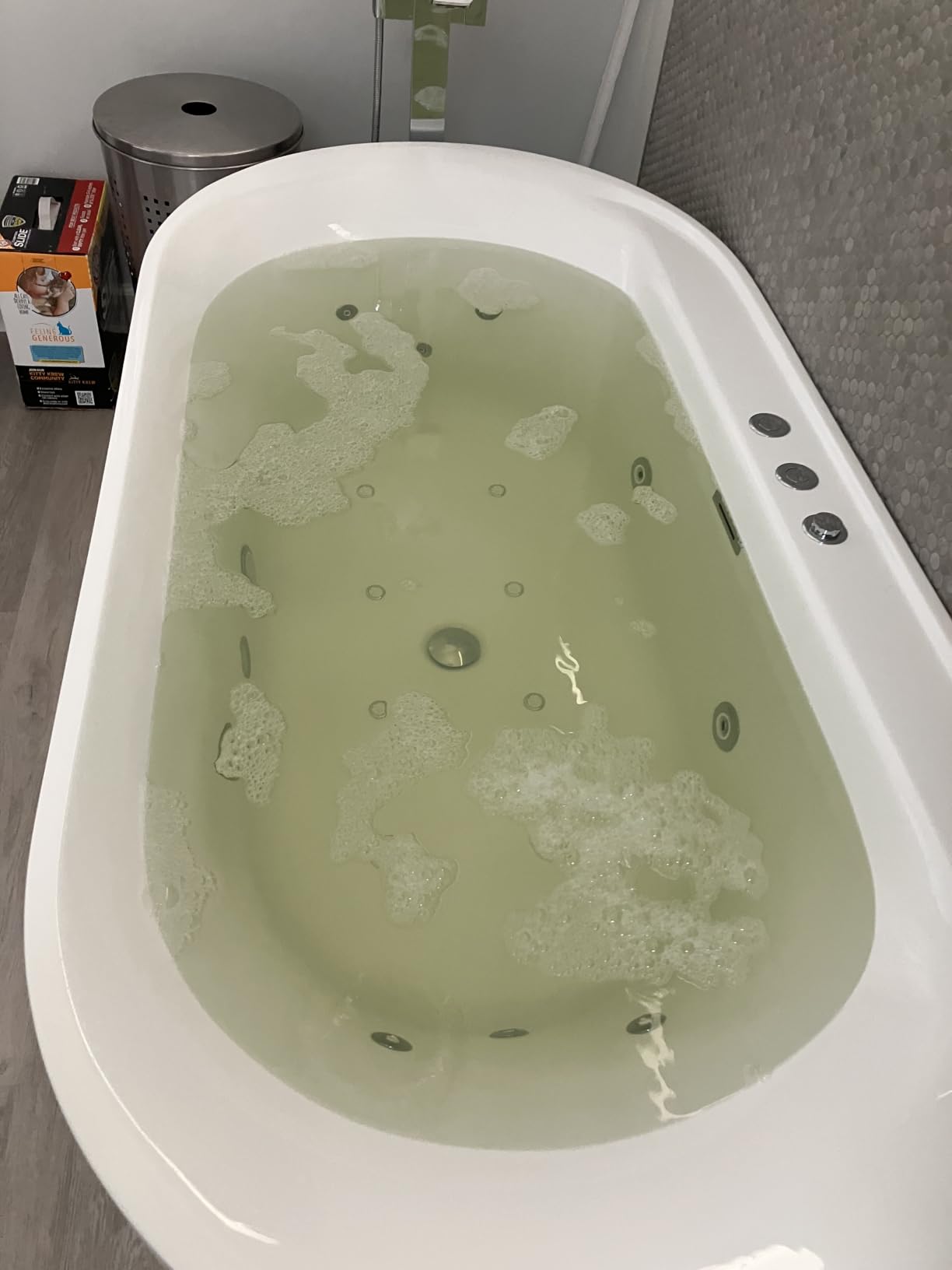
Flush it properly. New carbon media sheds black fines for the first flushes, and running that water into a bathtub or drinking it is how people end up convinced their brand new filter made the water worse. Run the flush for 30 to 60 minutes on a cold tap until the water runs clear, then flush a hot tap for a few minutes to clear the lines downstream.
Finally, run the water hard after everything is in place. Several owners in this roundup traced an initial complaint of “my filter does not work” back to a short post-install flush rather than the media. If you want a second opinion on the sequence, our piece on building a system that holds up over time covers planning for change and maintenance intervals.
Replacing Filters: Interval and When It Is Time
Two signals tell you it is time, and you do not need to guess between them. The first is taste and odor returning in the shower or at the tap, which is the earliest and most reliable sign that the carbon has loaded. The second is a measurable rise in pressure differential across the filter.
Cartridge systems generally need a change every 6 to 12 months depending on capacity and household use, and manufacturers recommend the shorter calendar interval even where the gallon rating suggests you could stretch it. Tank systems with backwashing or long-life media run 3 to 10 years, with 10 years being the top of the range.
Two practical notes. On tank systems, check the backwash schedule and the drain line once a year, because a plugged drain is how a long-life system fails early. On cartridge systems, note the install date on the housing itself, because the schedule resets on every change and a forgotten date is the most common reason people run a cartridge far too long.
If you want a quick objective check, a simple chlorine test kit will confirm whether residual chlorine is still getting through, which tells you whether the carbon is exhausted or the water downstream is holding residual in the lines.
Frequently Asked Questions
Is there a whole house filter that can effectively remove chlorine from water?
Yes. A point-of-entry carbon filter installed on the main water line removes chlorine at every tap, shower and appliance in the house rather than at one faucet. Carbon adsorbs chlorine molecules onto its porous surface, and the water leaving the filter tastes neutral. Match the media to your disinfectant: standard activated carbon handles free chlorine, while chloraminated supply needs catalytic carbon or a KDF and carbon blend.
Will a carbon filter filter out chlorine?
Yes, provided the media is the right type and the filter is sized for your flow rate. Activated carbon removes chlorine by adsorption, and properly sized units will not create a noticeable pressure drop. If you still smell chlorine after a month, the usual causes are unflushed carbon fines, an undersized filter loading too fast, or standard carbon on chloraminated water.
What type of filter is best for removing chlorine?
An activated carbon filter. For free chlorine, a standard CTO carbon block or GAC cartridge is the most cost-effective choice. For chloramine, catalytic carbon is required because ordinary carbon adsorbs the molecule without breaking the chlorine-ammonia bond. A compound carbon and KDF cartridge or a backwashing catalytic carbon tank covers chloramine and adds heavy metal reduction at the same time.
What are the downsides of using a carbon water filter?
Four main drawbacks. Carbon saturates and must be replaced on a schedule, so there is a recurring media cost. New media sheds carbon fines that make water look dirty until flushed properly. Removing chlorine at the main line also strips the residual protection in the distribution pipes. And carbon does not soften water, remove iron, reduce dissolved solids or kill bacteria, so it is not a substitute for a softener.
Can a carbon filter remove chloramine?
Yes, but only catalytic carbon or a catalytic and KDF combination will do it reliably. Chloramine is chlorine bound to ammonia, and standard activated carbon holds the molecule without breaking the bond, so odor returns as the media loads. Catalytic carbon is treated to destroy that bond chemically. Check your utility’s Consumer Confidence Report to find out which disinfectant you have before choosing media.
Should a carbon filter go before or after a water softener?
Before, always. Chlorine destroys ion exchange resin, so a softener plumbed ahead of the carbon filter will lose capacity until it needs resin you did not plan for. The correct order from the meter inward is meter, sediment or spin-down pre-filter, carbon, then softener, then anything else in the treatment stack.
Can I install a whole house carbon filter myself?
Yes for most cartridge systems, provided you are comfortable with copper or PEX and have a shut-off and a bypass valve. You will need a wrench, Teflon tape or joint compound, a bucket and about an hour. Backwashing tank systems are a plumber job because they need a drain line and control valve commissioning. Note that some manufacturers void the warranty on self-installed units.
How long does a whole house carbon filter last?
Cartridge systems generally need a change every 6 to 12 months depending on capacity and household use. Backwashing and long-life tank systems run from 3 to 10 years, with the top of that range rated at 1,000,000 gallons. Change signals are the return of chlorine taste and odor, and a measurable rise in pressure differential across the filter.
Bottom Line
The best whole house carbon filters for chlorine removal in 2026 split cleanly by household. Our top pick overall is the Express Water 3-Stage: 17 gpm flow, carbon, KDF and anti-scale media in one freestanding unit, and the largest review base in the roundup at more than 2,700 reviews. For most families on chlorinated city water who want a simpler install, the iSpring WGB22B is the value choice, with standard cartridges and a one-year change interval.
For chloraminated utility water, skip the plain carbon blocks. The LiquaGen catalytic carbon and KDF tank is the right answer when you want to stop servicing filters, and the Home Master HMF2SmgCC is the cartridge alternative for owners who want catalytic media without a drain line. The Aquasana WH-1000 goes furthest on service interval at 10 years, at the cost of a large footprint and a warranty that assumes a plumber.
Two things decide more purchases than the model name does. Find out whether your utility uses free chlorine or chloramine before you order anything, and work out your annual media cost rather than the sticker price. Get the order of the stack right too, with carbon ahead of any softener, or the chlorine will eat the resin you just paid for. If you are still deciding between very different equipment categories, our picks for house of worship speakers use the same spec-first shortlisting method.
Read the plumbing, measure the flow, and the rest of the decision makes itself.