
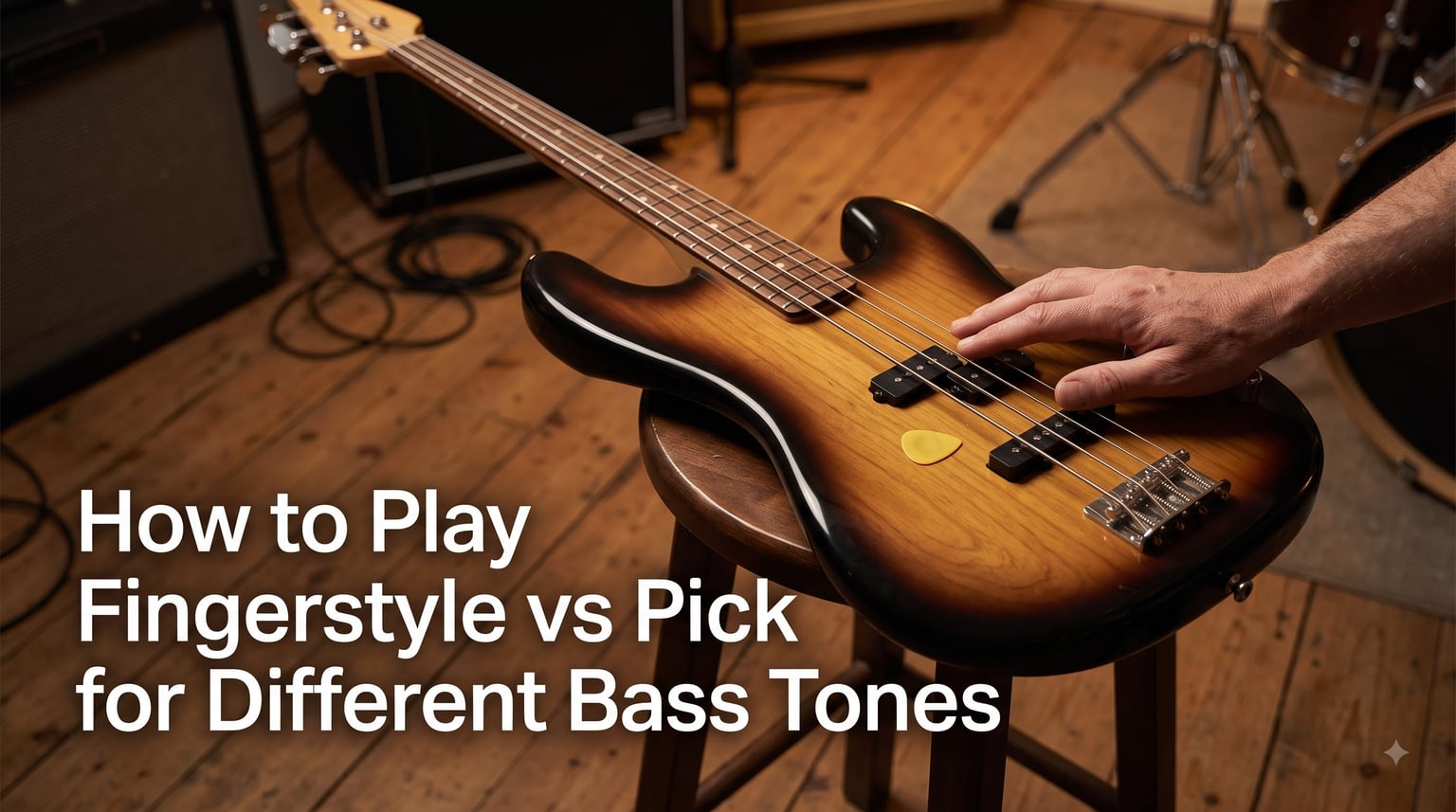
If you have ever wondered how to play fingerstyle vs pick for different bass tones, the short answer is this: each technique produces a distinct sound, and most experienced bassists learn both so they can match their tone to any genre or song.
I have spent years switching between a pick and my bare fingers on bass, and I can tell you from experience that the technique you choose shapes your sound more than almost any other decision at the amp. This guide walks you through how each approach works, what tone you get from each, and when to reach for one over the other.
Table of Contents
What Is Fingerstyle Bass Playing
Fingerstyle bass playing means you pluck the strings with your bare fingers, most commonly your index and middle fingers, sometimes adding the ring finger for speed runs. The flesh of your fingertip contacts the string, which softens the attack and rounds out the note.
That soft attack is the signature sound of fingerstyle. You get a warmer, fatter tone with more natural sustain and richer low-end presence. Players like Jaco Pastorius and Marcus Miller built legendary sounds using only their fingers.
You also get more dynamic control with fingers. Because the fleshy pad absorbs some of the string energy, you can shape notes from whisper-quiet ghost notes to full-throttle slaps without changing tools. That range is why fingerstyle dominates in genres that lean on feel and groove.
What Is Pick Bass Playing
Pick bass playing uses a flatpick, usually a standard guitar pick between 0.7 mm and 1.5 mm thick, held between your thumb and index finger to strike the strings. The hard plastic edge creates a sharper, more defined note than fingers do.
The result is a brighter, more articulate sound with a snappy attack that cuts through a dense mix. That is why pick playing is the go-to choice for rock, punk, and metal bassists who need every note to land hard.
Pick playing also gives you speed and consistency. A pick strikes the same way every time, so you can play rapid 16th-note lines or fast alternate picking patterns with precision. Geddy Lee of Rush and Paul McCartney of The Beatles used picks to drive some of the most recognizable bass lines ever recorded.
Fingerstyle vs Pick Tone Comparison
Here is a direct side-by-side look at how each technique shapes your bass tone, attack, and feel. I put this together after weeks of A/B testing both approaches through the same amp and cab.
| Characteristic | Fingerstyle | Pick |
|---|---|---|
| Attack | Soft, rounded | Sharp, defined |
| Brightness | Warm, fat | Bright, cutting |
| Dynamics | Wide range, expressive | More consistent per stroke |
| Speed ceiling | High with practice | Very high out of the box |
| Muting | Easier with palm | Easier with left hand |
| Best for | Funk, jazz, worship, blues | Rock, punk, metal, pop punk |
| Famous users | Jaco Pastorius, Marcus Miller | Geddy Lee, Paul McCartney |
The table makes it clear there is no universal winner. Each technique excels where its strengths match the music you play.
Pick Thickness and Material Guide
Pick thickness changes your bass tone more than most beginners realize. A thin pick (0.4 mm to 0.7 mm) flexes as it hits the string, giving a slightly softer attack and a rounder tone that sits somewhere between fingerstyle and a thicker pick.
A medium pick (0.8 mm to 1.0 mm) is the standard recommendation for bass players who want clarity without too much harshness. It gives you a defined attack with a bit of flex for forgiveness on fast runs.
A heavy pick (1.1 mm and up) produces the brightest, most aggressive tone with the least string flex. Metal and punk players often reach for heavy picks to get maximum punch and minimum flub.
Material matters too. Celluloid picks sound warmer and grippier, while nylon and Delrin picks glide across the string for a brighter, slicker attack. Try a few thicknesses and materials before settling on your daily driver.
Bridge vs Neck Position Impact on Tone
Where your plucking hand sits along the string changes the tone just as much as the technique you use. Plucking close to the bridge produces a brighter, more focused sound with sharper attack, while plucking near the neck gives a warmer, bassier, rounder tone.
Pick players often stay near the bridge to maximize the cutting power of their pick stroke. Fingerstyle players tend to drift toward the middle of the string or even toward the neck pickup to capture warmth and low-end bloom.
You can use position as a tonal switch on the fly. Move an inch toward the bridge for a chorus that needs brightness, then slide back toward the neck for a verse that needs warmth. Combining position shifts with technique changes doubles your tonal range.
When to Use Fingerstyle for Bass
Reach for fingerstyle when the music calls for groove, feel, or dynamic range. Funk bass lines rely on ghost notes and percussive slaps that fingers handle naturally, and walking bass lines in jazz come alive with the subtle volume swells fingers deliver.
Worship and contemporary music also lean toward fingerstyle because the warmer tone sits well under vocals and pads. Blues and soul bass work the same way. If you want your bass to sound like part of the rhythm section rather than a solo instrument, fingerstyle is usually the right call.
Use fingerstyle when you need to vary volume and texture without changing tools, when you want a fat low-end presence, or when the song already calls for slap, pop, or tap techniques that all start from fingerstyle fundamentals.
When to Use a Pick for Bass
Reach for a pick when you need aggression, speed, or consistency. Rock bass lines from bands like Led Zeppelin, Metallica, and Iron Maiden use pick tones to cut through loud guitars and driving drums.
Punk and pop punk lean heavily on pick playing because the rapid downstroke eighth notes need a tight, percussive attack. Metal bass work, especially in genres that thumb on the low B string, sounds thicker and more aggressive with a heavy pick.
Pick playing is also useful in live settings where consistency matters. A pick produces the same note volume every stroke, so you spend less energy fighting uneven dynamics when you are also singing or moving on stage.
Combining Pick and Fingerstyle in One Song
Most great bassists do not pick one technique and stick with it forever. They switch mid-song to match the section. You can do the same, and learning the transition is a game-changer for your versatility.
The classic use case is the quiet verse to loud chorus shift. Use fingerstyle for the soft verse where you want warm dynamic swells, then switch to a pick for the chorus where you need a brighter, louder attack. Bands like Foo Fighters and Green Day use this trick constantly.
To practice the switch, drop your pick between your lips or tuck it under your ring finger while you fingerpick, then grab it again when the chorus hits. It feels awkward at first, but after a few weeks of practice the transition becomes seamless and you have a full tonal palette at your disposal.
Practice Tips for Each Technique
For fingerstyle practice, start with a slow alternating pattern using only your index and middle finger. Keep the volume of each note even and rest your plucking hand fingers perpendicular to the string. Add a metronome at 60 BPM and build up speed gradually as your fingers develop muscle memory.
For pick practice, hold the pick so only a small wedge sticks out past your thumb. Too much pick sticking out makes your strokes wobbly. Practice strict downstrokes on one string for ten minutes before adding upstrokes, and use alternate picking for fast lines once the downstrokes feel natural.
Common mistakes to avoid: tensing your plucking hand (relax and let the motion come from the wrist), anchoring your pinky on the pickup or bridge (it limits your range), and skipping the slow practice phase (fast playing without accuracy just sounds sloppy).
FAQs
Is it better to use a pick or fingers for bass?
Neither is universally better. Pick gives you sharper attack and speed for rock, punk, and metal. Fingerstyle gives you warmer tone and dynamic range for funk, jazz, and worship. Learn both and pick the technique that matches the song.
What is the difference in tone between pick and fingerstyle?
Pick playing produces a brighter, more articulate sound with a sharper attack and consistent volume per stroke. Fingerstyle produces a warmer, fatter tone with a softer attack and wider dynamic range. The two techniques create clearly different tones even on the same bass and amp.
Is playing with a pick or fingerstyle harder?
Fingerstyle is usually harder to learn first because you are building finger independence and control. Pick playing tends to feel more familiar to guitarists and beginners because the motion is similar to strumming. Both techniques take years to master.
Does playing bass with a pick sound different?
Yes. A pick strikes the string with a hard edge, which produces a sharper attack, more brightness, and more cut in a mix. Bare fingers have a fleshy pad that softens the attack and rounds the tone. The same bass line sounds noticeably different between the two approaches.
Can I use both pick and fingers on bass?
Absolutely. Many professional bassists switch between pick and fingerstyle within a single song. Use fingerstyle for soft verses with dynamic swells and switch to a pick for louder choruses that need more attack and cut. Practice the transition until it feels natural.
Conclusion
Learning how to play fingerstyle vs pick for different bass tones comes down to understanding what each technique does to your sound and matching that to the music in front of you. Fingerstyle gives you warmth and dynamics. Pick gives you attack and speed. Pick thickness, material, and hand position along the string all shape the final tone even further.
My best advice after years on the bass: commit to learning both techniques, even if you have a favorite today. The bassists who can switch on the fly have the most options in the studio and on stage, and they sound better in every genre because of it.