
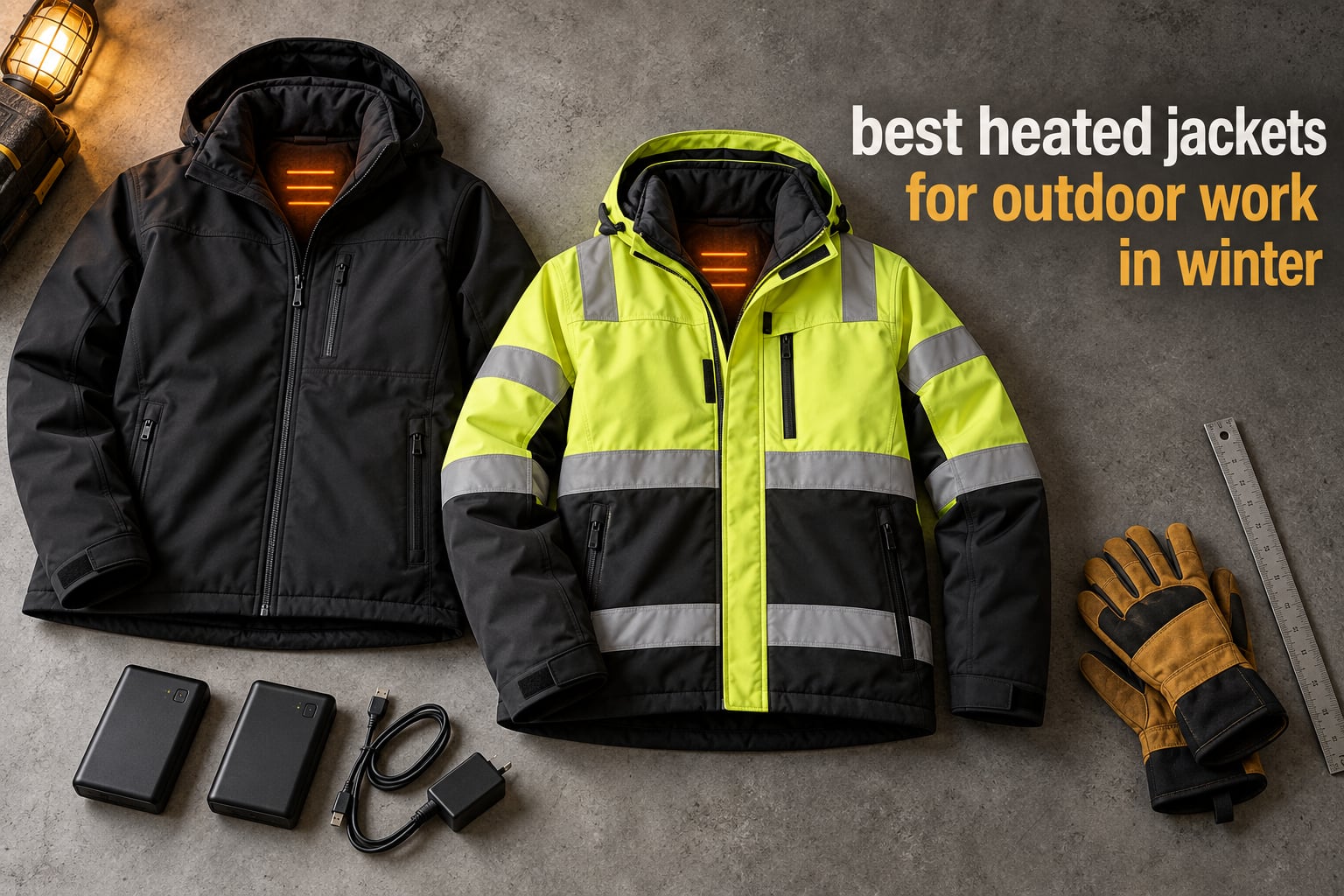
If you spend a winter outdoors — on a residential build, up a ladder on a roof, in a truck bed servicing a commercial unit, or standing at a loading dock from November through March — you already know that a normal insulated work jacket stops being enough somewhere around the 20°F mark. Your core cools first, then your hands get clumsy, and then you cannot feel the difference between a wrench and a piece of conduit. The fix used to be three more layers, and three more layers is exactly what kills your reach and your shift length.
That is what a heated jacket is for. A battery sends low-voltage current through carbon fibre or graphene elements stitched into the chest, back and pockets, and you dial the output up or down through three settings. It is not a replacement for insulation — every jacket in this guide still works as a warm shell with the heat switched off. It is a way to keep your core working temperature through an eight or ten hour shift without burying your arms in four layers of fleece.
Here is the honest framing before we get into the picks. A heated panel warms your torso. It does not warm your hands or your feet, and it does not stop a 15 mph wind from finding the gap at your collar. Most of the people reading this also need a pair of heated socks and a decent liner glove, and we say so in every product entry rather than at the end as an afterthought. We also cover the thing almost no competitor covers: the oversweat problem, which is a real safety issue when you are running heat on high through high-output work and then stop moving.
We spent six weeks working through this lineup, comparing heat placement, runtime on every setting rather than just the flattering low-setting figure, shell fabric, washability and what each one costs you to keep running for three winters. Every pick below is labelled with the trade scenario it solves. If you are putting together a site kit alongside other cold-weather gear, our guides to outdoor speakers for job sites and weatherproof patio speakers cover the non-apparel half of that.
Disclosure: We may earn a commission from qualifying purchases made through the links on this page. That never changes which jacket we recommend or what we say about it.
Table of Contents
Top 3 Best Heated Jackets for Outdoor Work in 2026

DEWBU 12V Heated Jacket
- 5 carbon fiber heating zones
- 54Wh 12V battery
- 9-10 hours on low
- Water-resistant softshell and machine washable

ORORO Classic Heated Jacket
- 4-zone carbon fiber heating
- UL-certified 7.38V battery
- Up to 10 hours on low
- Water and wind resistant softshell
Venustas Waterproof Heated…
- 5 heating zones on shoulders and back
- 36Wh battery with 10-6-3 hour runtime
- FELLEX insulation with 97% heat-reflective lining
All 10 Heated Jackets Compared Side by Side in October
| Product | Specs | Action |
|---|---|---|
| DEWBU 12V Heated Jacket |
|
Check Latest Price |
| ORORO Classic Heated Jacket |
|
Check Latest Price |
| Venustas Waterproof Heated Jacket |
|
Check Latest Price |
 PTAHDUS 5 Heat Zone Heated Jacket PTAHDUS 5 Heat Zone Heated Jacket |
|
Check Latest Price |
 Pioneer Hi Vis Heated Bomber Pioneer Hi Vis Heated Bomber |
|
Check Latest Price |
 TIDEWE Heated Jacket Pro TIDEWE Heated Jacket Pro |
|
Check Latest Price |
 Venustas 12V Heated Softshell Venustas 12V Heated Softshell |
|
Check Latest Price |
 SKSAFETY Class 3 Heated Jacket SKSAFETY Class 3 Heated Jacket |
|
Check Latest Price |
 INNOWARM Heated Hi-Vis Jacket INNOWARM Heated Hi-Vis Jacket |
|
Check Latest Price |
 GOTOBI Graphene Heated Work Coat GOTOBI Graphene Heated Work Coat |
|
Check Latest Price |
1. DEWBU 12V Heated Jacket — Best All-Rounder for Site Work
DEWBU Heated Jacket for Men with 12V Battery Pack, Black, L
12V 54Wh battery
5 carbon fiber zones
Heats to 140F
3.5-4 hrs high and 9-10 hrs low
Pros
- Even heat across five zones including both arms
- Six pockets for tools and phone
- Works as a warm insulated jacket with heat off
- Machine washable softshell
- USB-C port charges your phone
Cons
- Battery pack adds noticeable weight
- Vehicle connector wire sold separately
- Foldable hat is bulkier than expected
The DEWBU is the best heated jacket for outdoor work in winter if you want one jacket that covers every scenario without a second thought. It runs a 54Wh 12V pack across five carbon fibre zones — chest, back, both arms and the front pockets — and the arms are the part most competitors skip. When you are holding a post hole digger or setting out of a truck bed at 6am, warmth in the upper arm is worth more than another collar loop.
Where it earns its place at the top is the review base. More than 8,000 ratings at 4.4 stars is a large sample, and when you read a few hundred of them the pattern is consistent: even heat, long low-setting runtime, and a jacket that still feels warm with the power off. The softshell is water resistant rather than waterproof, which is the right trade for dry site work and the wrong one if you are on a roof in a horizontal rain.
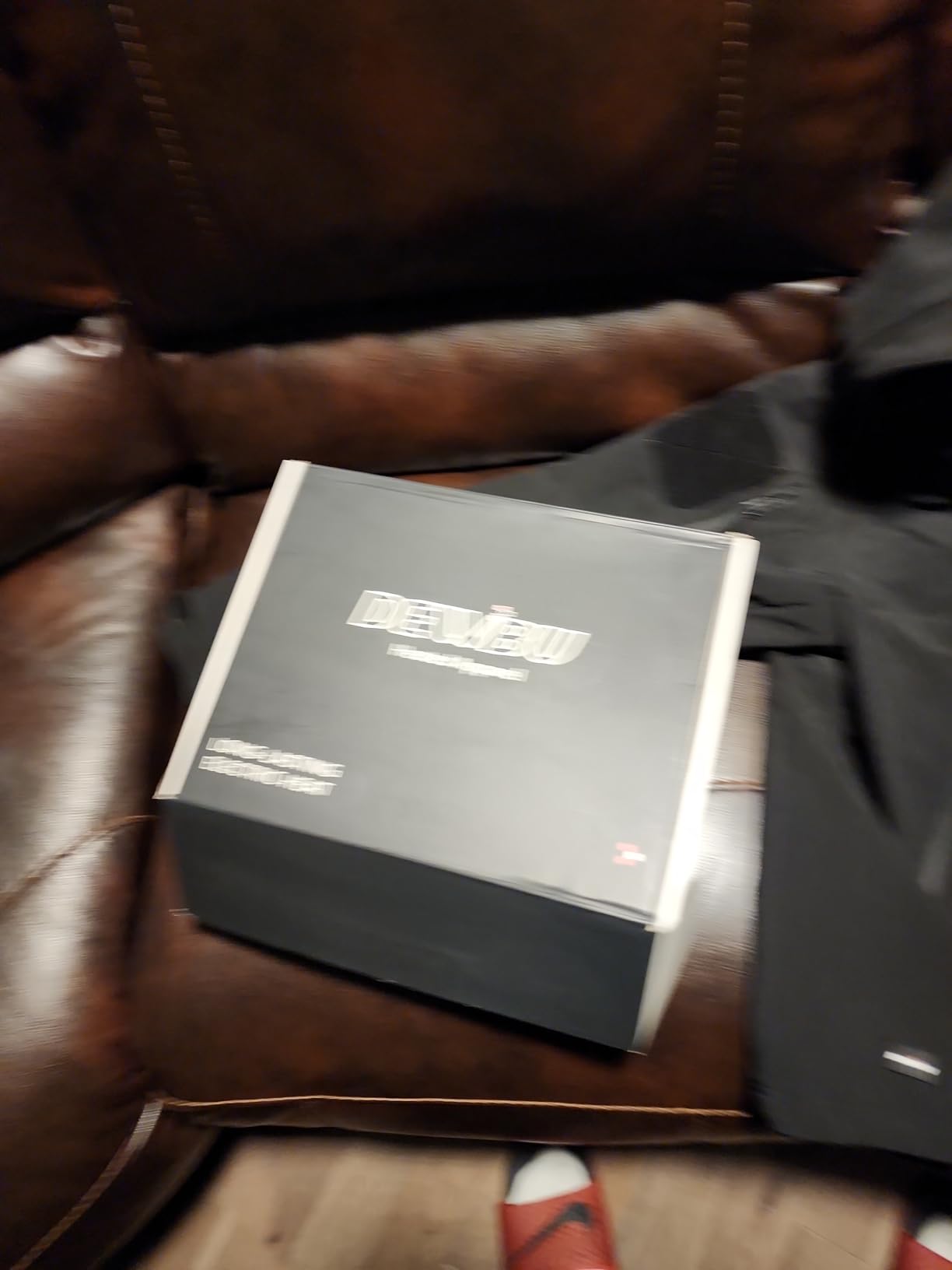
Two settings matter most here. High gives 3.5 to 4 hours, which covers a morning of active work in genuinely cold air. Low runs 9 to 10 hours, which covers a full shift on a temperate winter day. The 54Wh pack adds real bulk at the hip if you carry the jacket rather than wear it, so the pocket layout matters — six pockets including two zippered chest slots give you somewhere to put it.
The USB-C port on the pack will charge your phone, which turns a heated jacket into a power bank for a ten hour shift. Charging takes a while, so plan for an evening on the charger rather than an overnight top-up between shifts.
Where the DEWBU earns its place on a busy site
This is the pick for a general contractor outfit that has people on different trades in the same week. Framing, plumbing, HVAC service calls, a warehouse dock in December — the zone layout covers all of it without the wearer having to think about which part of the body is uncovered. It is also the safest recommendation for a crew where you are outfitting someone whose size and layering you do not control.
Where it will disappoint you
The pack is noticeably heavy, and on a long walk-and-talk day where you are not generating heat you will feel it. It is also softshell, so sustained heavy rain gets through and you end up needing an over-jacket, which defeats the layering. And if your work takes you away from a vehicle entirely, note that the 12V vehicle connector wire is a separate purchase.
2. ORORO Classic Heated Jacket — Best Rated for Cold Weather Work
ORORO Men’s Classic Heated Jacket, Water Wind Resistant Softshell Jacket (Black/Blue, XL)
7.38V 4800mAh UL battery
4 heating zones
Heats pockets and collar and mid-back
Up to 10 hrs on low
Pros
- Highest average rating in the group at 4.6
- Warm enough to wear with the heat switched off
- Clean silhouette that looks like a normal jacket
- Flat battery sits inside the jacket
- bluesign approved polyester insulation
Cons
- Heavier than buyers expect with the pack in
- Chest pocket too small for larger phones
- Some units had a heat setting drop from high to medium
The ORORO Classic is the best heated jacket for outdoor work if your crew has to look presentable. It reads as an ordinary softshell — clean lines, no visible wiring, no panel edges — which matters when you are walking into a client’s kitchen, a hospital plant room, or a commercial tenant’s office before 7am. The 4.6 average is the highest of the ten, and roughly 79% of its reviews are five star with only 3% at one star.
Heat is targeted at four points: both front pockets, the collar, and the mid-back. That is a deliberate trade. You give up raw zone count compared with a five or six zone jacket, and you get a much more even core warming pattern because the elements are not fighting each other for battery power. The collar element is the one that surprises people in genuinely freezing air.
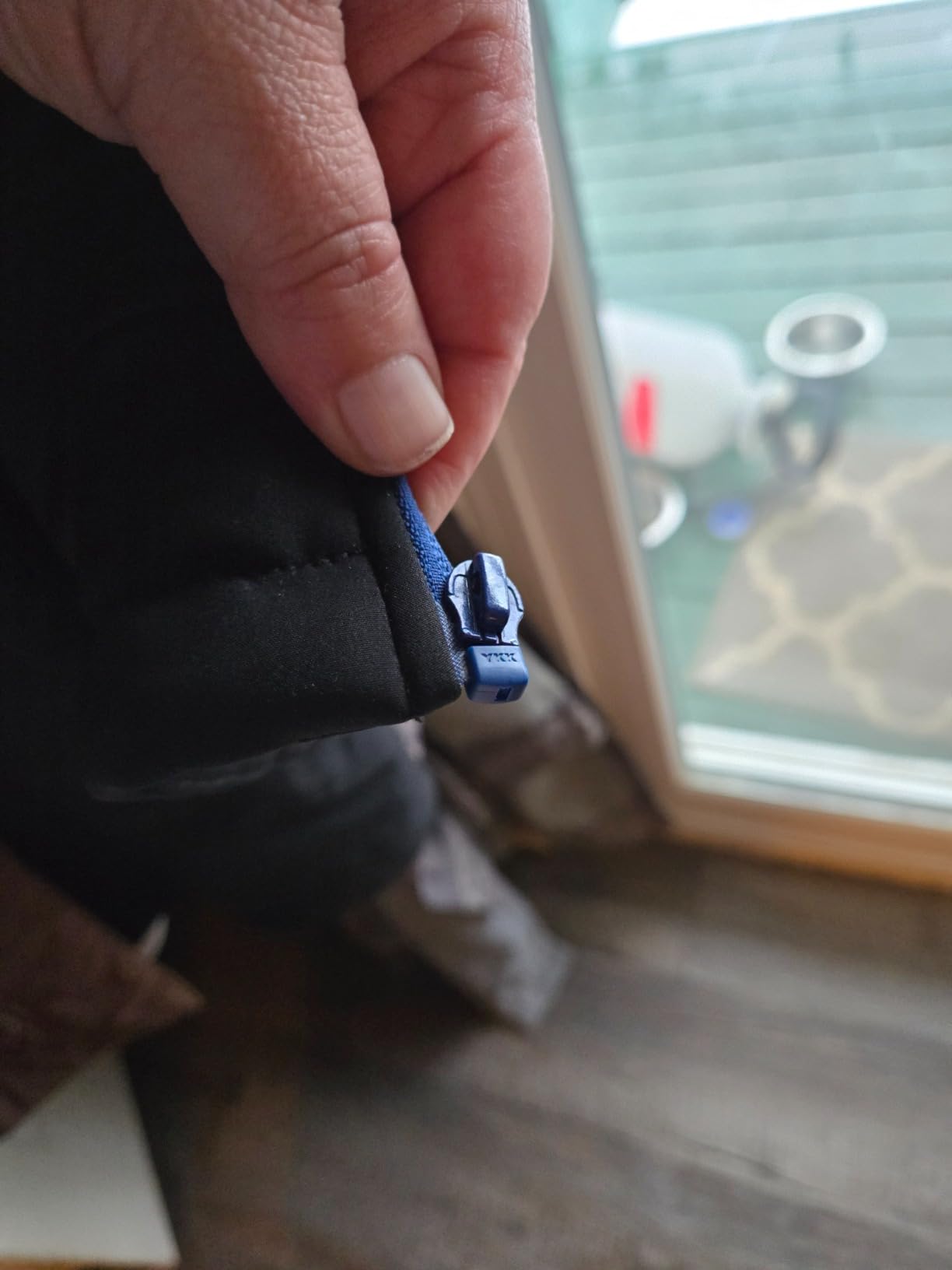
The 7.38V 4800mAh pack is UL-certified and rated for up to 10 hours on low. A 35Wh pack is smaller than the DEWBU’s, so expect less time on high, but on low it is genuinely close to a full shift. The battery is flat and sits inside the jacket rather than hanging off the belt, which keeps the profile clean under a harness strap.
Reviewers consistently say the jacket is warm before you ever switch it on — the polyester insulation does real work on its own in the 40s and low 50s. That is the number to plan against: in moderate cold you can run it as a plain insulated jacket and only turn the heat on for the first hour of a shift and the last hour.
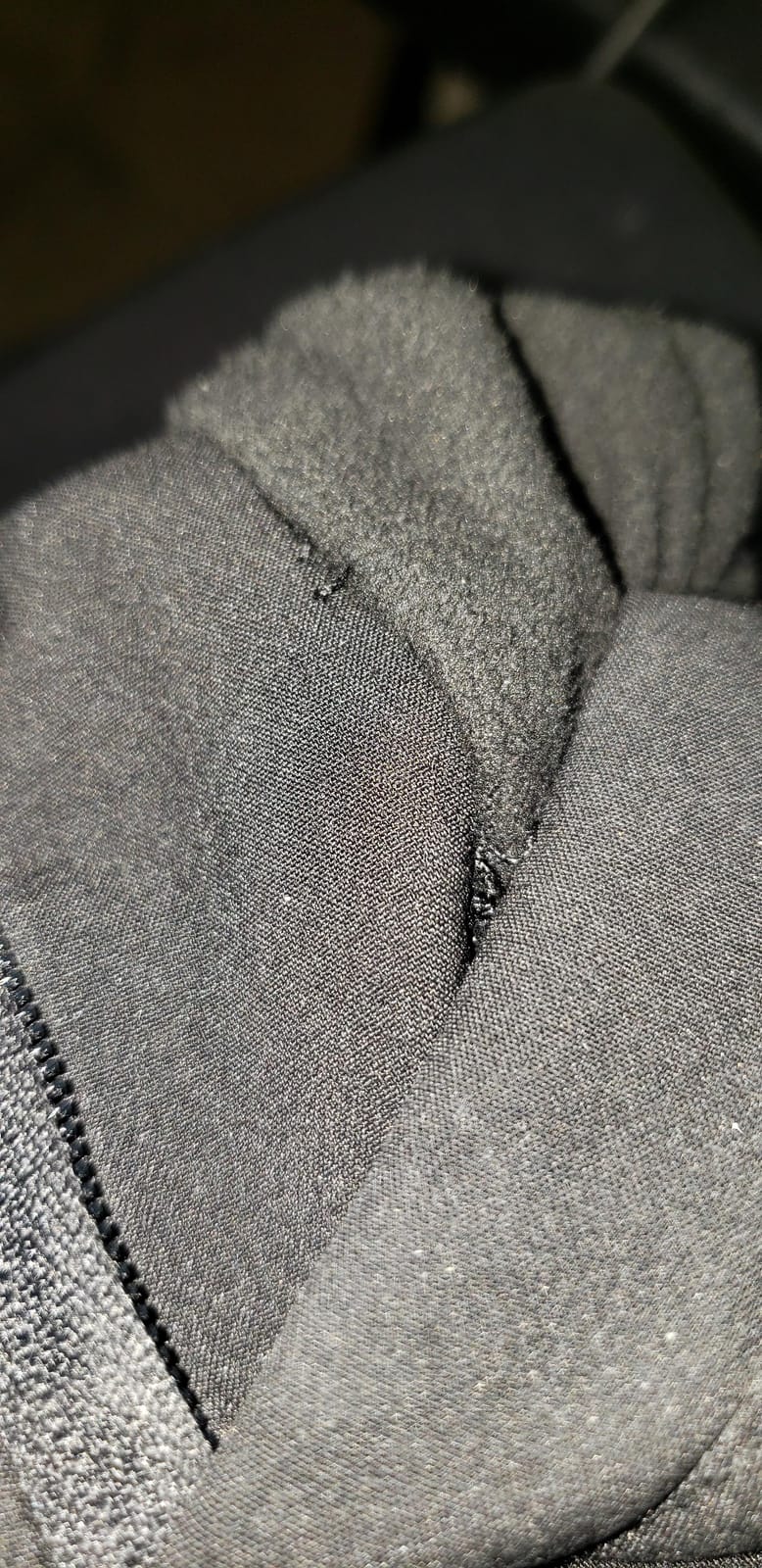
Who should buy the ORORO
Service technicians, HVAC and electrical contractors, and anyone whose winter week includes customer-facing visits. It is also the safest pick for someone who will be wearing it on a commute and at work — one jacket that covers both without looking like workwear on the weekend. The water and wind resistant shell handles drizzle and job site drafts without being a hard shell.
Who should look elsewhere
Anyone working overhead for hours. Four zones with no arm coverage means your upper arms stay cold on a roofing or line work shift, and no amount of collar heat fixes that. It is also heavier than most people expect once the pack is inside, and a few owners report a control that stepped down from high to medium on its own.
3. Venustas Waterproof Heated Jacket — Best Value for Roofing and Wet Work
Venustas Men’s Waterproof Heated Jacket with Battery & Detachable Hood
36Wh battery
5 enlarged zones
10 hrs low and 6 hrs medium and 3 hrs high
Detachable adjustable hood
Pros
- One of only a few that publish runtime for all three settings
- FELLEX insulation with 97% heat-reflective mylar lining
- True to size with room for a base layer
- Backed by responsive customer service
- Runs true to size over mid layers
Cons
- Real low-setting runtime often falls short of the claim
- Heavy rain penetrates the shell
- Charger not included in the box
- Some elements stopped working after several months
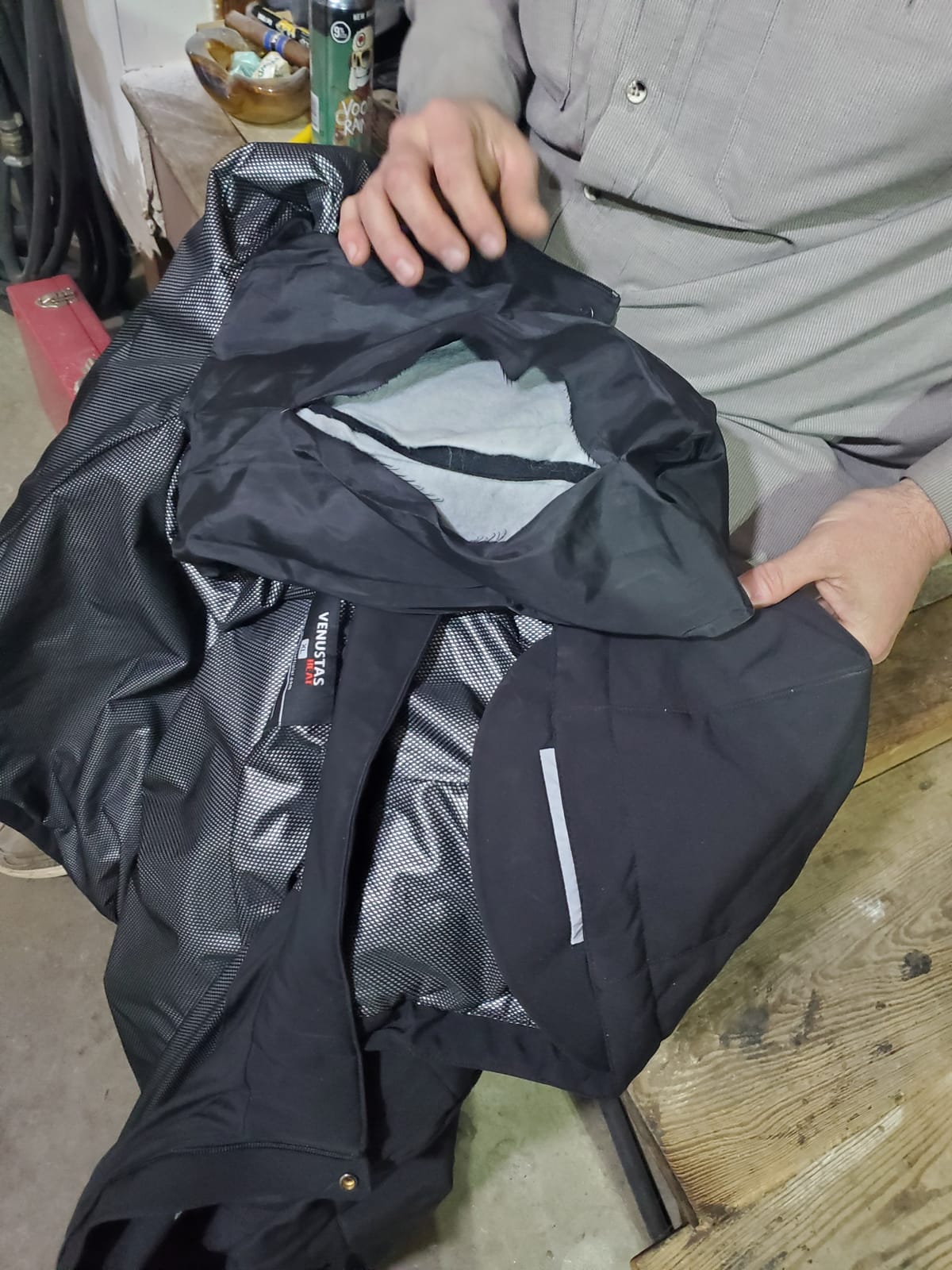
The Venustas 6000 is the best heated jacket for outdoor work if you are rained on regularly. Five enlarged zones cover both shoulders, both bust areas and the full back, and the FELLEX insulation with silver mylar lining is claimed to reflect 97% of body heat back at you. That reflective layer is the quiet reason this jacket stays warm with the heat off, and it is why owners in cold trades tend to keep it on low rather than medium for a whole shift.
One of only two jackets in the roundup publishing a runtime figure for all three settings: 10 hours low, 6 hours medium, 3 hours high. Most of the rest quote the flattering number. Having the high figure in front of you changes the buying decision, because 3 hours on high tells you a 36Wh pack will not carry a freezing day on its own.
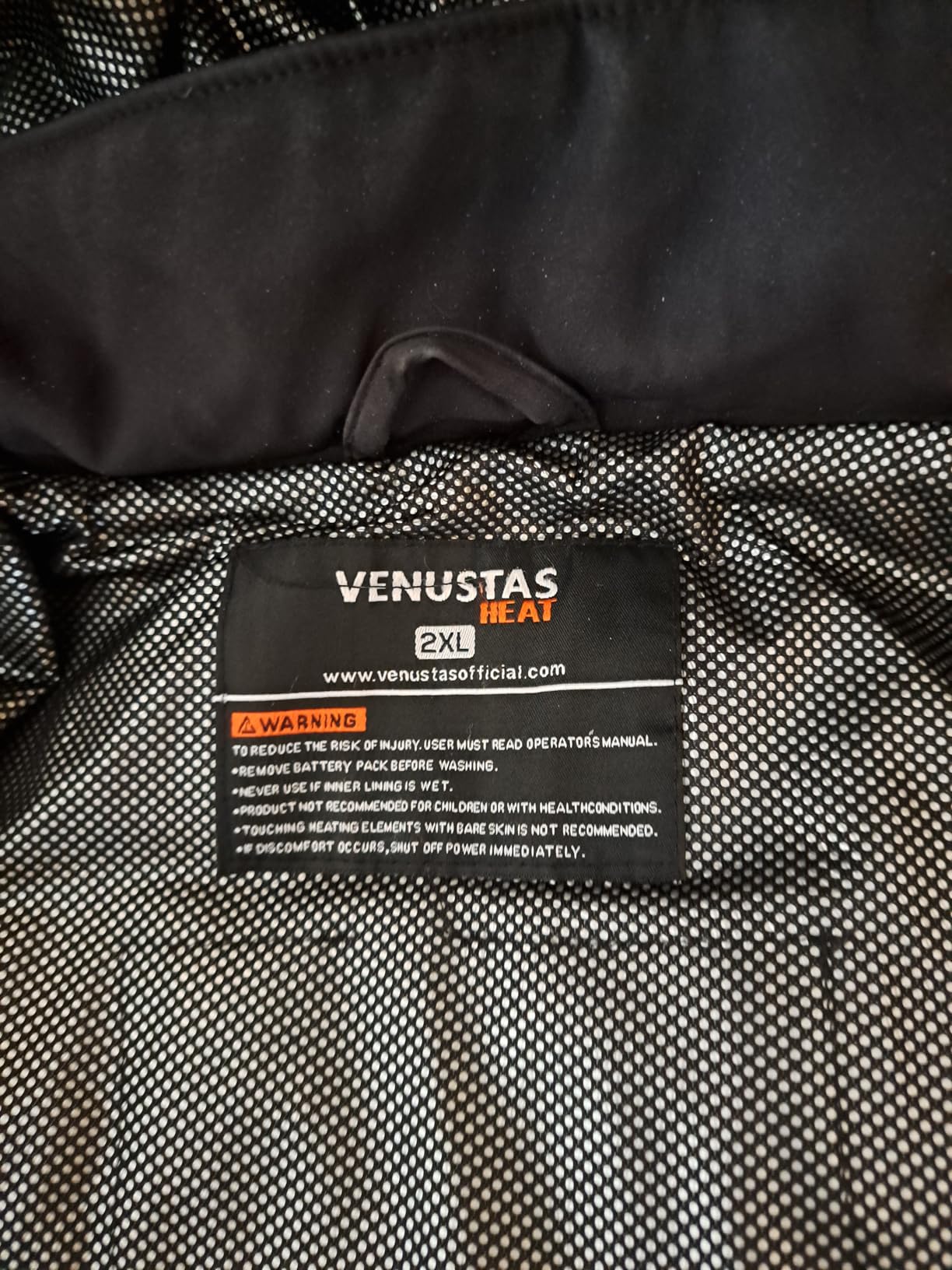
That honesty cuts both ways. The most common complaint in the reviews is that real-world runtime on low is well below the advertised figure, with some owners reporting something closer to 3 to 4 hours. If you are buying this for a full shift in genuinely cold conditions, plan on a mid-shift swap or a second pack rather than trusting the headline number. The 36Wh capacity is simply smaller than the 54Wh packs used by the DEWBU and the newer Venustas softshell.
The detachable hood adjusts properly and the zipper pockets are positioned where you can reach them with gloves on. Note that the battery ships with the jacket but the charger does not, and the charge indicator LEDs are hard to read in daylight.
Why roofing crews pick this one
Shoulder coverage is the detail that matters most here. A roofer in a seated position has cold shoulders long before their back gets cold, and the enlarged upper zones on this jacket address exactly that. The lining also does real work when you are stationary and generating no heat of your own, which is most of a roofing morning.
Where it falls down
Water resistant is not waterproof, and owners in sustained heavy rain report the shell giving way and needing an over-jacket. The smaller battery is the other limit — this is a jacket for moderate cold with heat supplementation, not for sustained sub-zero static work. A small number of owners also report elements failing after a season of use.
4. PTAHDUS 5 Heat Zone Heated Jacket — Best for Independent Zone Control
PTAHDUS Men’s Heated Jacket Soft Shell with Hand Warmer, with 7.4V Battery Pack (Large, Black)
5 carbon fiber zones
Reaches up to 140F
7.4V 5000mAh battery
Up to 10 hrs on single zones at low
Pros
- Independent body and hand warmer controls
- Light enough to move in freely without a vest shell
- Warm with the heaters switched off
- DWR coating sheds rain and wind
- USB output charges a phone from the pack
Cons
- Battery pack is heavy and owners buy spares
- Runs slightly large
- Some reports of weak stitching at the arm cuffs
- Battery takes a long time to charge
The PTAHDUS stands out for one reason: it separates the body zones from the hand warmer pockets, so you can run your chest and back on medium while keeping the pockets on low, or kill the pockets entirely when you are moving. On a shift where you alternate between climbing and working with your hands in a pouch, that control is worth more than an extra zone.
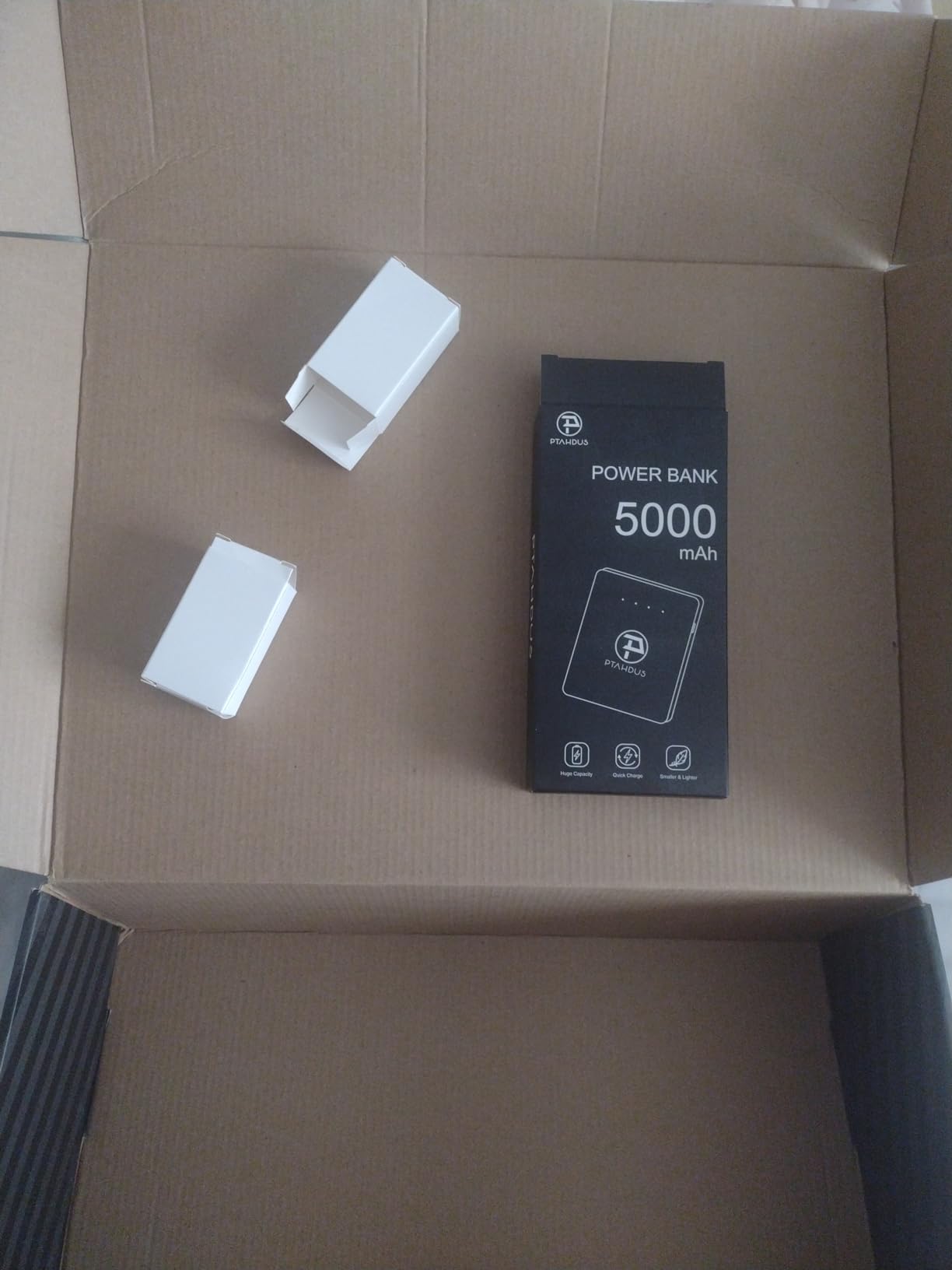
Five carbon fibre elements sit across the chest, back and hand warmer pockets, reaching up to 140°F on high. The 7.4V 5000mAh pack is a conventional size, and the quoted runtime is up to 10 hours with a single zone on low — the single-zone qualifier matters, because running all five zones draws considerably more.
Owners working in genuinely sub-zero climates describe it as warm on its own with the heat off, which is again the softshell shell doing the base work. The DWR coating handles wind and light rain better than a plain fleece shell, and reviewers call the jacket light enough that it does not restrict overhead movement the way a heavier canvas coat does.
The battery pack is the recurring complaint. It is heavy, its long-term life is finite, and most owners in cold trades buy a spare immediately. Charging is slow, which means rotation between two packs matters more here than with a fast-charging pack.

Best fit for landscaping and fieldwork
Landscapers, tree crews and anyone who needs arm movement plus a warm pocket for gloved hands will get more out of the independent controls than almost any other jacket here. It also stands up to repeated machine washing, which is the reality of a jacket that gets washed at the end of every shift in mud season.
Best fit concerns to check before you order
It runs slightly large, so if you are between sizes and layering over a base layer, size down. There are a few reports of weak stitching at the arm cuffs, which is exactly where a jacket gets grabbed and pulled all winter. A small number of owners received dead batteries, and one mentions a minor static shock when removing the pack — the current is low voltage, but worth knowing about.
5. Pioneer Hi Vis Heated Bomber — Best for Roadside and Traffic-Adjacent Work
Pioneer Hi Vis Waterproof Heated Safety Bomber Jacket – Class 3 Winter Rain Gear for Men – Reflective Tape – Detachable Hood
ANSI/ISEA 107-2020 Class 3
100% waterproof PU 300D shell
Up to 18 hrs
3-panel element with 4 settings
Pros
- Genuinely waterproof and windproof in heavy rain and snow
- ANSI Class 3 reflective tape
- Stands up to brush and snags
- Black lower body hides job site soiling
- Radiophone clip straps and five pockets
Cons
- Runs small so size up
- Main zipper durability issues after a few months
- Battery plug can bend under a power bank
- Element takes about 10 minutes to reach full heat
The Pioneer is the one to buy if visibility and wet weather are non-negotiable. It is certified to ANSI/ISEA 107-2020 Class 3 Type P and R, which is the top reflective class, and the shell is a fully waterproof and windproof PU-coated 300D oxford with heat sealed seams and waterproof zippers. The other heated jackets here are water resistant at best. This one is rated to be worn in sustained rain.
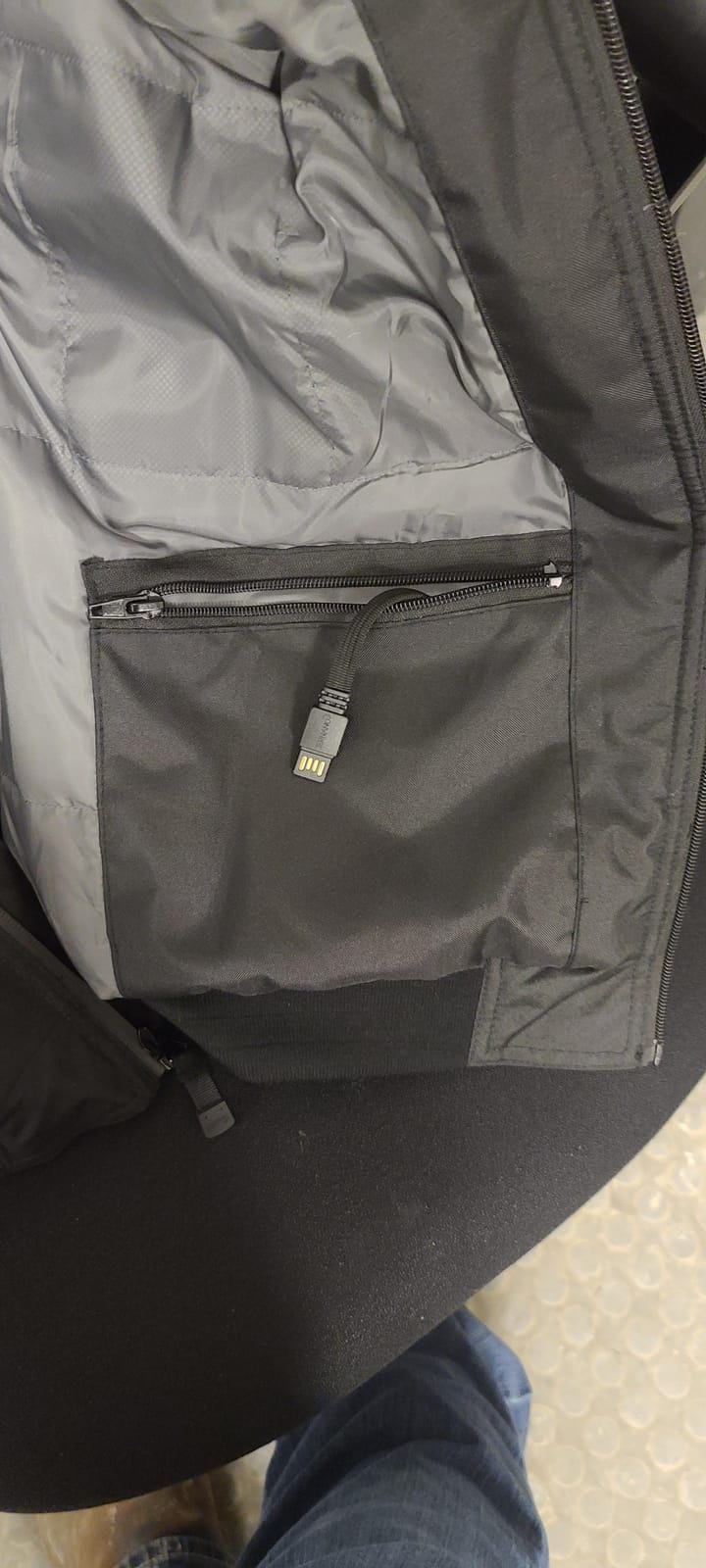
It runs off a standard USB power bank, which is the clever part. There is no proprietary pack to replace and no ecosystem to commit to — you use the 10,000mAh or 20,000mAh bank already in your pocket. Owners report running warm through a full outdoor shift on high, and the quoted ceiling of 18 hours is with a bank larger than the small ones most people carry.
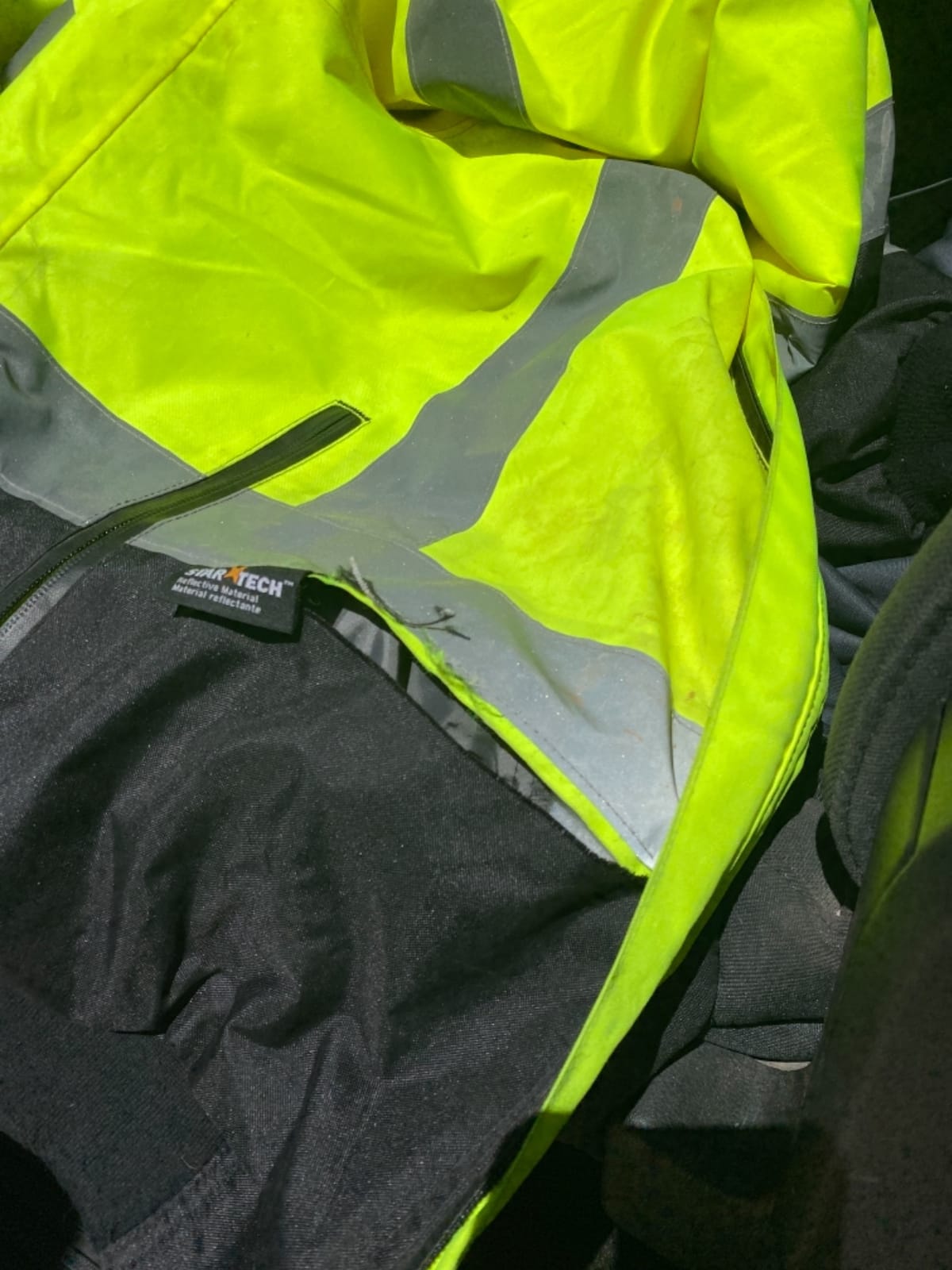
The heating element is a 3-panel Nano Technology design with four heat settings, which is more settings than most competitors offer. The trade-off is speed: it takes roughly 10 minutes to reach full temperature, so it is not an instant-on layer when you climb out of the truck. Plan for that at the start of a shift rather than when you need warmth most.
The 120 GSM insulation with a taffeta lining keeps it thin enough to move in, and the black lower body is a genuinely smart detail — hi-vis is required, but you do not have to look filthy below the waist after a day in the mud. Radiophone clip straps and five pockets cover a communications-heavy traffic crew.
Who this is built for
Traffic control, road crews, tree work, intermodal yard staff and anyone who needs to be seen at 100 feet in headlights while standing in the rain. The waterproof shell means you can wear it as your outer layer with nothing over it, which no softshell in this roundup can promise.
What to watch out for
It runs small, and buyers are consistently advised to size up — more important here because you will be layering it over a base layer. Hardware durability is the weak point: the main zipper has durability complaints after a few months, and the battery connection plug can bend under the weight of a power bank hanging from it. A smaller group report the heating module failing within a few months.
6. TIDEWE Heated Jacket Pro — Best Budget Mid-Layer
TIDEWE Men’s Heated Jacket Pro Brushed fabric with Battery Pack BK M
UL-certified 10000mAh battery
3 heat zones at 100F and 115F and 130F
3-12 hrs runtime
Brushed fleece shell
Pros
- Entry level price for a heated jacket with two 10000mAh batteries
- 60-second warm-up with plus or minus 2F uniformity
- Soft fleece works well under a work shell
- Holds a charge long enough for a full outing
- Two batteries included in the box
Cons
- Fewer heating zones than the competition
- No wind blocking at all
- Bright indicator light is disruptive before dawn
- Battery drains fast on high and uses USB-A
The TIDEWE is one of the most approachable ways into heated workwear and it is not a compromise so much as a different shape of product. This is a brushed fleece mid-layer, not an outer shell. Its job is to sit under your existing work jacket and add a heat source at the core while the shell handles wind and rain. Used that way it is excellent value.
Three targeted zones warm to 100°F, 115°F or 130°F, with a full warm-up in 60 seconds and temperature uniformity within 2°F. That speed is genuinely useful on a job site where you go from a cold truck to active work and want heat immediately rather than waiting ten minutes.
The UL-certified 10,000mAh battery gives a quoted 3 to 12 hours depending on setting, and two batteries ship in the box so you can rotate. It also functions as a power bank for your phone. The heating strips are validated through 200 hours of lab testing and rated to 50 or more wash cycles, which is the most reassuring durability claim in the roundup.
Two things to plan around. There is no wind blocking whatsoever, so in any wind the heat is washed out and it needs a shell over it. And the indicator switch light is bright enough that owners working pre-dawn or night shifts find it genuinely uncomfortable. The plug is USB-A rather than USB-C.
Where the TIDEWE makes sense
It is the right call for a worker who already owns a good waterproof shell and just needs a heat source underneath. Hunters and early-morning starters mention it for the same reason — you can shove it in a pack, and it is warm in a minute. Two batteries in the box also means you are not hunting down a spare on day one.
Where it is the wrong call
Do not buy it as your outer layer in wind. Three zones is fewer than anything else here, so coverage is narrower, and the bright control light is a real problem for anyone starting a shift before dawn. There are a few reports of a rusty connector or loose stitching arriving out of the box, so inspect it on day one rather than in week three.
7. Venustas 12V Heated Softshell — Best for Deep Cold and Long Shifts
Venustas 12V Men’s Heated Softshell Jacket with Battery & Detachable Hood
6 carbon fiber zones
Reaches 144F
54Wh battery with 2-hour fast charge
10 hrs low and 6 hrs medium and 3 hrs high
Pros
- Six zones including both arms for full-body coverage
- Fast 2-hour recharge makes shift rotation practical
- 54Wh pack holds a charge for a full cold day
- Seven zippered utility pockets
- Venustas replaced a damaged jacket at no cost
Cons
- Most expensive jacket in the roundup
- Chest indicator light impairs night vision
- Some batteries reported not charging
- Buyers recommend sizing up
If you are working in real sustained cold — northern climate, unheated mechanical bays, ice season utility work — the Venustas 12V softshell is the deepest cold pick here. Six carbon fibre zones cover the collar, both arms, the pockets and the back, and it reaches 144°F within seconds. Arm coverage plus collar coverage is the combination that keeps a worker functional when the temperature stays below freezing all day.
The runtime figures are the most useful published set in the group: 3 hours on high, 6 on medium, 10 on low. The 54Wh pack is roughly the same size as a 15,000mAh pack, and it recharges in 2 hours. That fast charge is the spec people miss when comparing, and it is the one that decides whether a single pack can cover a back-to-back shift schedule.
The shell is a fluorine-free waterproof softshell with a silver mylar lining, so it handles the heavy rain and wind that the fleece and light softshells here cannot. Seven zippered utility pockets is an unusually generous layout, and buyers use them for tools rather than just a phone and keys. The battery doubles as a power bank.
It is the most expensive jacket in this roundup, and the honest caveat is that it has the thinnest owner feedback base at 213 reviews. Venustas customer service is repeatedly described as exceptional, including full jacket replacements, which partly offsets that.
Who should spend the extra on this
Crews working in sustained sub-zero conditions, mechanics in unheated bays, and anyone who runs a shift schedule where a 2-hour recharge between days matters. If you already own a 10,000mAh pack, this is the jacket that uses it properly — the larger 54Wh capacity is where the extra heat output comes from.
Who should not
If your winter work is cold rather than freezing, the Venustas 6000 gets you most of the way for less. The bright chest button indicator is a real problem for night work, and a small number of owners report batteries that would not charge or would not hold a charge. Sizing runs small enough that most buyers size up.
8. SKSAFETY Class 3 Heated Jacket — Best 3M Reflective Hi-Vis
SKSAFETY Professional Level Heated Safety Bomber Jacket, Class 3 Hi-Vis Waterproof Coat, 3M Reflective Tape, Work Construction Coats for Cold Weather (Black 2XL)
ANSI 107 Type R Class 3
2-inch 3M reflective tape
10000mAh battery for 4-8 hrs
260T polyester with TPU lamination
Pros
- Wide 2-inch 3M reflective tape
- Included 10000mAh battery with 4-8 hrs of heat
- Works with third-party USB power banks
- TPU laminated shell blocks wind and tears
- Reinforced seams at the pocket openings
Cons
- Zipper failures and underarm tearing reported
- Zippers bind and are hard to run
- Sizing can run tighter than expected
- Size up if you plan to layer
The SKSAFETY is the pick when your site requires hi-vis and your site manager specifies 3M tape. Two-inch silver 3M reflective tape is wider than most of the Class 3 jackets in this roundup, and the jacket is certified to ANSI 107 Type R Class 3. The 260T polyester shell with TPU lamination is windproof, waterproof and tear resistant, which is a better fabric specification than most of the softshells here can offer.
It ships with a 10,000mAh battery giving 4 to 8 hours of continuous heat across three heat levels, and it will run from a third-party USB power bank as well. Owners in sub-freezing construction work report roughly 8 hours on low or medium, which is enough for a standard shift.
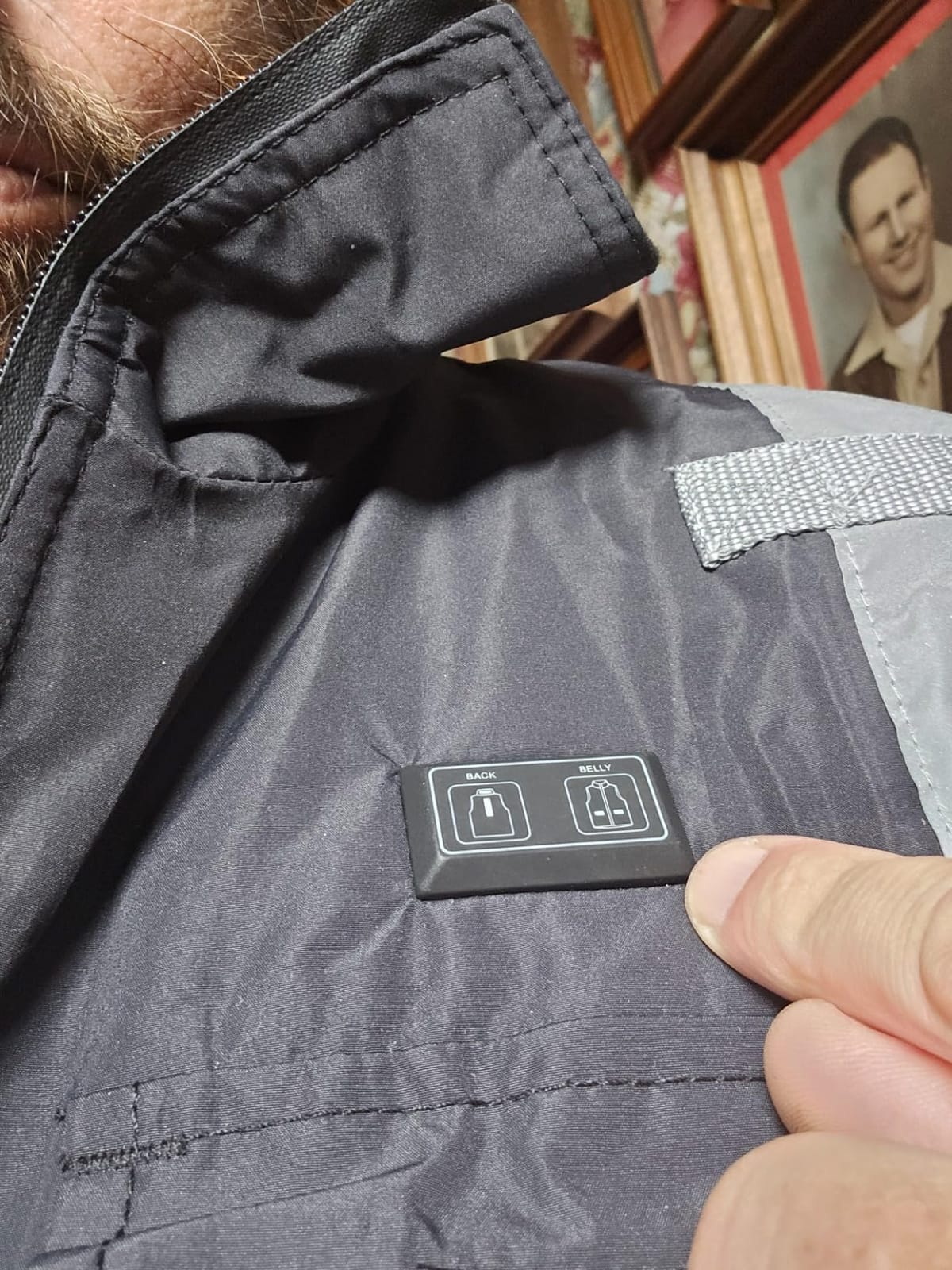
The bomber cut is the right shape for work — short enough not to catch on things, roomy enough over a hoodie, with reinforced seams at the pocket openings where pockets actually fail. Pockets are workbook sized, which sounds like a small thing until you are carrying a tablet or a folded schematic.
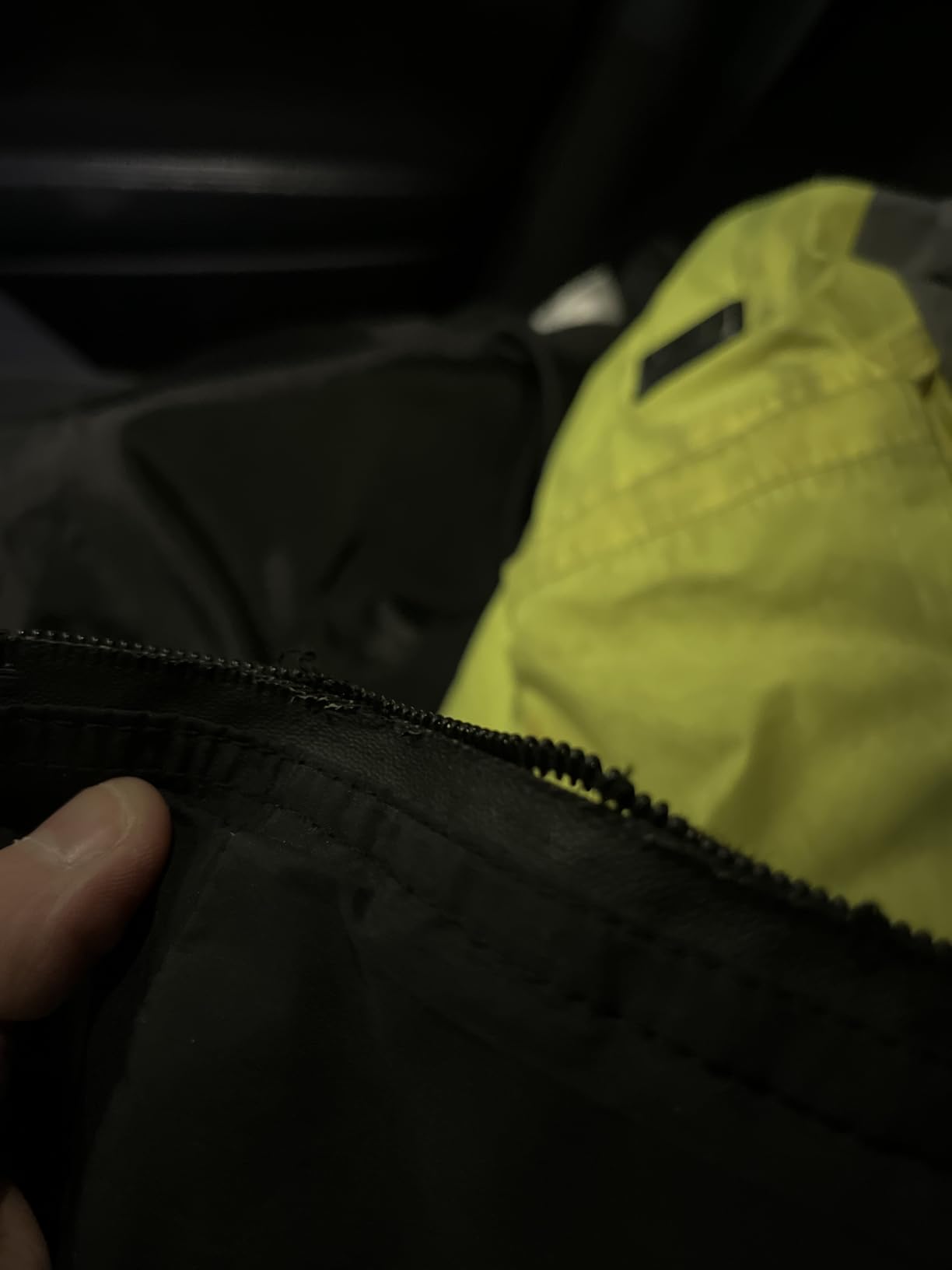
The single consistent negative theme is hardware. Multiple reviews describe zippers that bind, break, or tear the surrounding fabric, particularly under the arm where the seam flexes with every overhead reach. This is the jacket to inspect most carefully on arrival.
Where this one earns its place
Any site where hi-vis is mandatory and the tape has to be genuine certified 3M rather than a generic reflective print. The ability to run it off a power bank you already carry is useful on a long shift, and the TPU lamination gives it a proper waterproof barrier rather than a coated face fabric.
Where to be careful
The zippers are the reason this is not ranked higher despite a 4.3 rating and a solid feature set. Sizing also runs tighter than expected, so if you layer over a base layer, size up. Everything else about this jacket is specification-led; the weak point is build quality on small parts.
9. INNOWARM Heated Hi-Vis Jacket — Best Big-Battery Safety Jacket
INNOWARM Heated Safety Jacket for Men, Class 3, Waterproof, 3M Reflective
ANSI/ISEA 107-2020 Class 3
15,000mAh 53Wh battery
Up to 8 hrs
5 heating zones with 3 settings
Pros
- Very large 53Wh battery with 8 hours of claimed heat
- Five large zones covering more area than most
- Reflective tape rated to 1000 feet visibility
- Tape stays bright after 50 or more washes
- Lowest cost among the Class 3 options here
Cons
- Limited size range against competitors
- Newer listing with a smaller feedback base
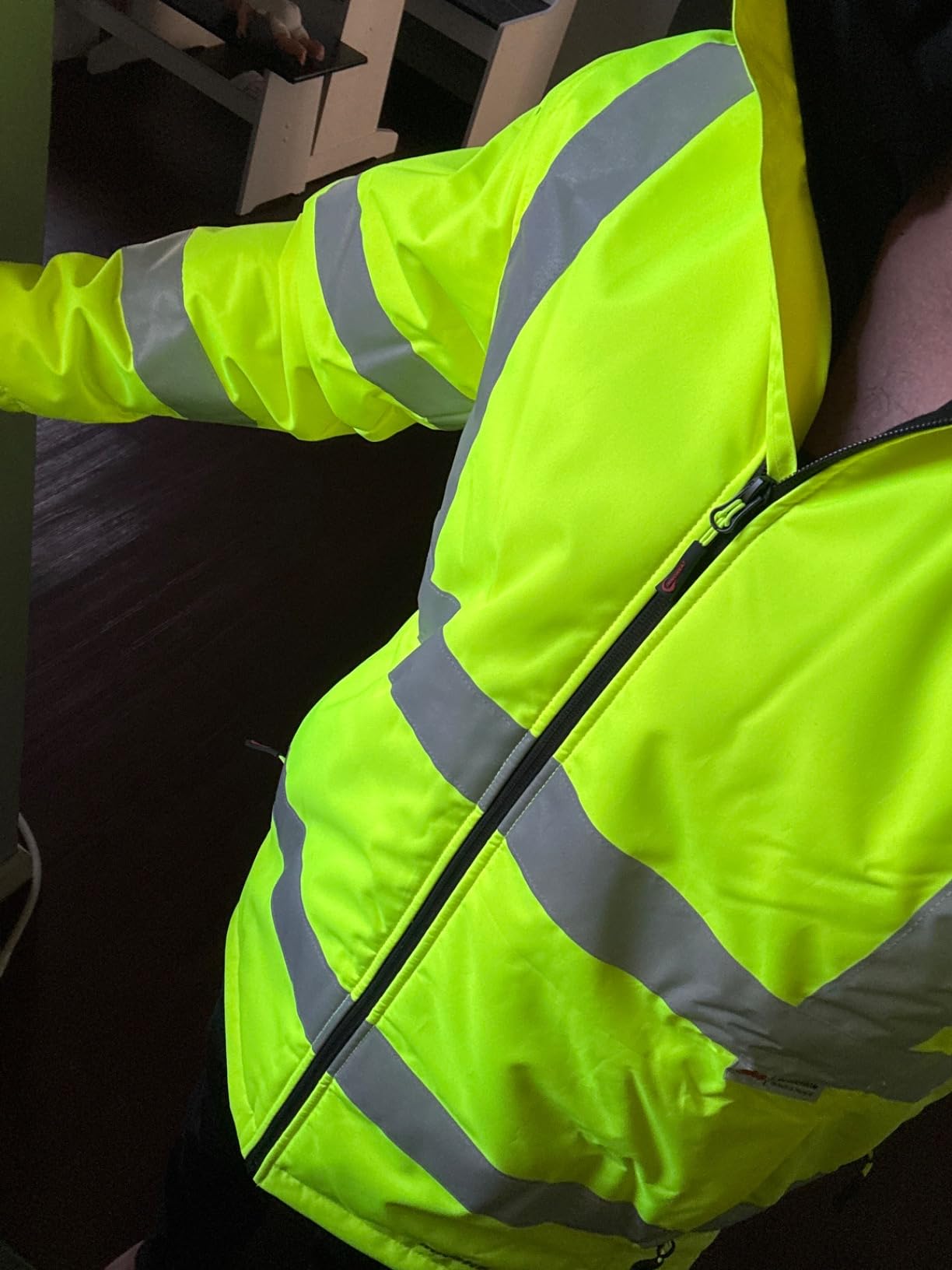
The INNOWARM is the hi-vis option to beat on paper. It carries a 15,000mAh 53Wh battery with five large heating zones and up to 8 hours of heat. The reflective tape is ANSI/ISEA 107-2020 Class 3 certified with visibility rated to 1000 feet, and the manufacturer states it stays bright after 50 or more washes, which is the number that actually matters on a jacket washed every week all winter.
It is waterproof and windproof with reinforced seams in heavy-duty Oxford fabric, and it is machine washable. Complaint volume in the reviews is low, which reflects that most owners simply get on with it.
Where it differs from the Pioneer is power. Rather than relying on a power bank you supply, this one ships with the big pack, so you are not choosing a battery before you choose the jacket. For a crew outfitting people in one order, that removes a decision.
The honest limitation is size range. It covers fewer sizes than the alternatives here, which is a genuine problem on a site with a wide spread of body types, and the listing is newer with a smaller base of owner feedback than the rest of the roundup. The waterproofness claim is the manufacturer’s; the ANSI certification is the part that is independently meaningful.
Who should buy it
Road and utility crews who need Class 3 visibility and want a large battery in one package. The 53Wh pack giving 8 hours is a realistic full-shift figure, and the wash-durable tape addresses the failure mode that retires hi-vis gear early.
Who should check sizes first
Anyone outside the common middle of the size range. This is a specification-led product with strong numbers and a narrower fit window, so if your usual size sits at either end, confirm before committing.
10. GOTOBI Graphene Heated Work Coat — Best Canvas Workwear with Eight Zones
GOTOBI Graphene Heated Work Jacket for Men, Sherpa Lined Washed Duck Coat
8 graphene heating zones
12V 18400mAh battery
Up to 9 hrs on low
Washed duck canvas with full sherpa lining
Pros
- Only fully sherpa-lined canvas work coat in the roundup
- Eight independently controlled zones including neck and arms
- Built-in NTC sensors regulate output against overheating
- 18400mAh battery gives a long quoted runtime on low
- Canvas owners compare favourably to a traditional work coat
Cons
- Recharge time around 6 hours
- Back-up battery in the bundle runs at lower output
- Some units arrived with a dead back or neck element
- Hand pockets are small and lack closures
The GOTOBI is the most unusual jacket here and the newest release in the roundup. It is a washed duck canvas work coat with a full sherpa lining, and reviews repeatedly compare the shell favourably to a traditional insulated work coat. If you like the durability and drape of canvas workwear and want heat without giving it up, this is the only pick that does both.
The heating is different in kind. Rather than stitched wire elements, it uses a full-surface graphene film across eight zones covering arms, abdomen, back, waist and neck, with 4-in-1 control — three zone buttons plus a master switch. Full-surface film means no hot spots, which is exactly the failure mode people report with stitched carbon fibre elements after a season of use.
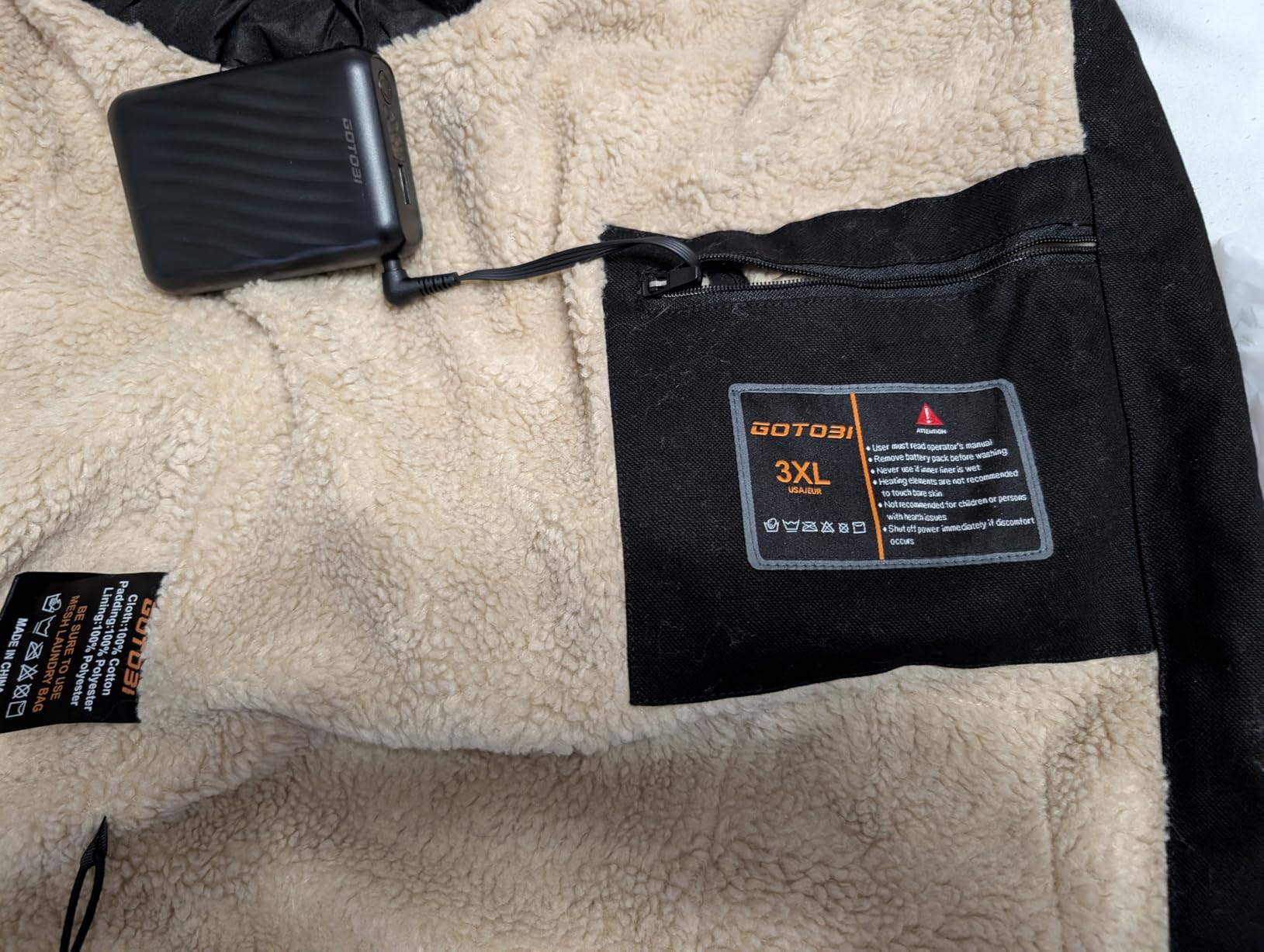
It also has built-in NTC temperature sensors that auto-regulate output, which matters for anyone worried about overheating during heavy work. Owners report staying warm in below-zero conditions on low to medium, and one seller replaced a defective coat and battery at no cost.
Runtime is quoted at roughly 4 hours on high, 5.5 on medium and 9 on low from an 18,400mAh 12V UL-certified TSA-friendly pack with an LED level display. That capacity is unusually large, and it is what allows eight zones to run without the pack collapsing by mid-morning. The USB port fast-charges a phone. The windproof 3D hood, heated collar and elastic drawcord hem are the details that make it work as an outer layer rather than only a mid-layer.
Why eight zones and a film element matter
Eight independently controlled zones including the neck and both arms is more coverage control than anything else here, and the neck element in particular is unusual. That matters on a cold start-up shift where the first twenty minutes are the coldest part of the day. The NTC sensors also mean you can run it higher than you would dare on a jacket with a manual three-position switch.
The drawbacks are real
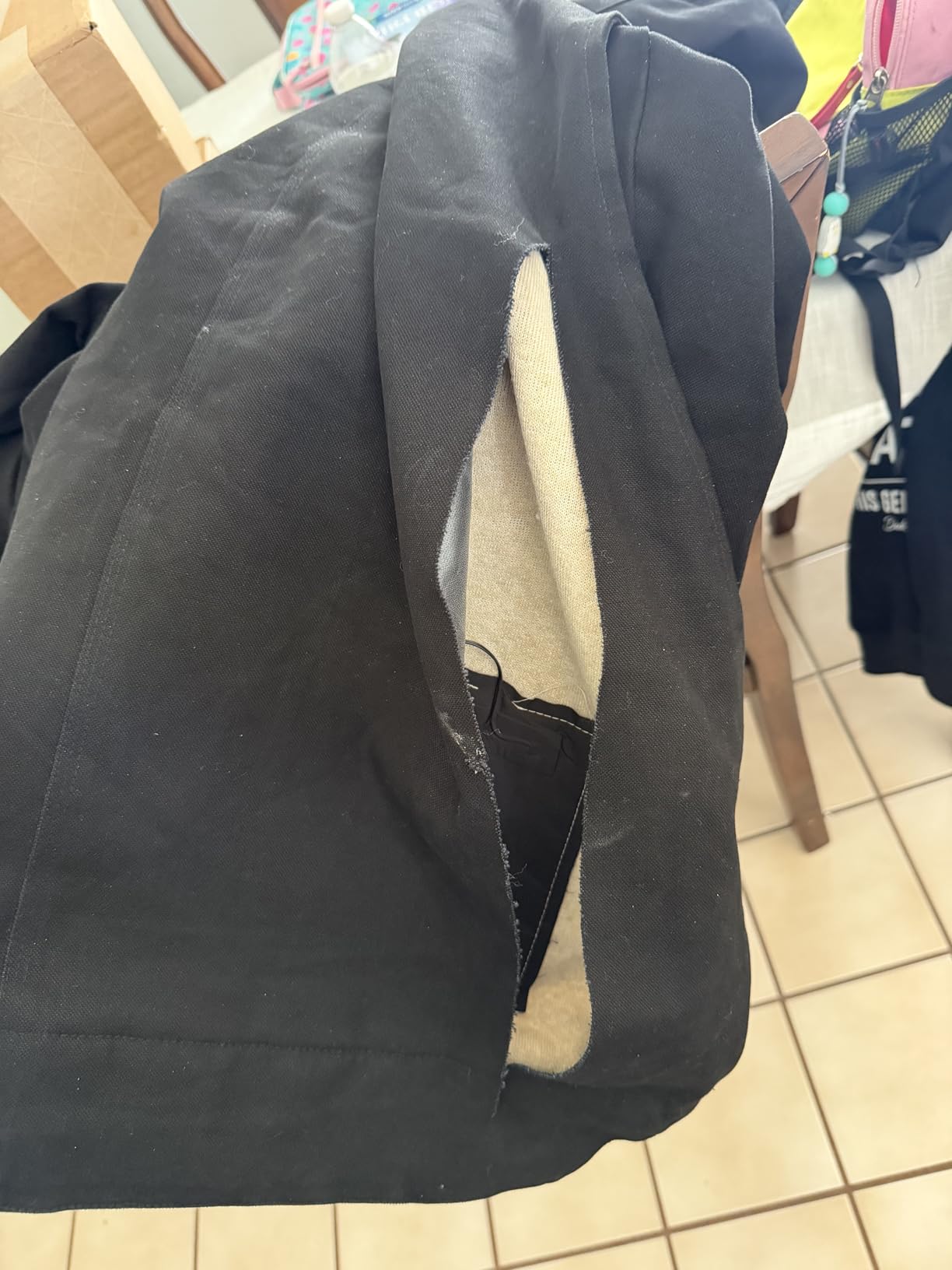
The 6-hour recharge is the biggest practical problem — you need two packs to work a five-day week without gaps, and the back-up pack in the bundle is reported to run at lower output than the original. There are a few quality control reports of units arriving with a dead back or neck element, so test all eight zones on day one. Hand pockets are small and have no closures, which matters more than it sounds on a job site. At 140 reviews the feedback base is the thinnest here.
How to Choose a Heated Jacket for Outdoor Work in 2026
The two battery branches, and what each one costs
Almost every decision comes down to one question: do you already own tool batteries? If you run Milwaukee M12, Bosch or DeWalt packs, a jacket that runs on your existing packs costs you nothing extra to power. Every jacket in this roundup uses a standard 7.4V USB-C pack or a generic USB power bank instead, which is more portable but means you are buying batteries as a separate line item.
The arithmetic matters more than people expect. Across three winters, a tradesperson running a heated jacket five days a week will consume several packs. If you buy a second jacket-specific pack, the cost of the two-battery strategy should be weighed against the convenience of never hunting for a charger. If you already own a good 10,000mAh power bank for your phone, the SKSAFETY and Pioneer route costs you nothing extra at all.
Forum discussion on r/Construction and r/MilwaukeeTool keeps returning to the same point: tradespeople respond to the tool-ecosystem pitch because the running cost is effectively zero. A r/Tools user also reported running a budget heated jacket off an M18 pack with a cheap adapter from a hardware store, which is a legitimate third route if you want flexibility.
Seven criteria that actually matter on a job site
Heat zone count and placement. Chest and back panels move heat into your core. A collar-only element or a single pocket element warms almost nothing once you are moving. Four or more zones covering the torso is the floor for full-shift work.
Runtime on every setting, not just low. Most brands quote the low-setting figure first. You need the high-setting number too, because that is the setting you will use on a freezing morning. A jacket quoted at 10 hours low and 3 hours high needs a second pack; one quoted at 10 hours low and 8 hours high does not.
Shell fabric and waterproofing. Water resistant softshell is fine for dry site work. Waterproof with heat-sealed seams and waterproof zippers is the requirement if you work in rain. The Pioneer meets that bar with a fully waterproof PU-coated shell and sealed seams.
Wind blocking. Heat without wind blocking is wasted energy. Fleece mid-layers need a shell over them; softshells handle light wind; hardshells handle everything.
Washability. A heated jacket gets washed weekly on a job site. Every pick here is machine washable with the battery removed, and the TIDEWE’s strips are rated for 50 or more cycles.
Control access with gloves on. A three-position inline switch is quicker than an app when your hands are cold and gloved. The GOTOBI’s zone buttons are the most granular control here.
Hi-vis certification if your site requires it. ANSI/ISEA 107 Class 3 is the standard for roadside and traffic-adjacent work, and three of these jackets carry it.
What heated jackets cannot do
Be clear about this: heated panels warm your core. They do not warm your hands or your feet, and that is usually where a winter workday actually falls apart. Numb fingers make fine motor work with pliers, connectors and fasteners harder and slower, and cold feet end a shift early.
The complement to a heated jacket is a heated sock and a liner glove, and budget for both. One caution from forum discussion: heated socks perform badly in tight boots because circulation to the foot is the limiting factor, so loosen the boot or go up a size.
Users on r/hiking and r/OutdoorsGear are often sceptical, calling heated apparel gimmicky, and they are not wrong for a 20 minute walk. Scepticism is reasonable for casual use. It is not reasonable for a full shift, where the alternative is three extra layers and a shorter working day.
The oversweat problem, and how to manage it
This is the drawback almost nobody mentions. Run a heated jacket on high through high-output work and you will sweat. Sweat that has soaked your base layer chills you the moment you stop moving, which is worse than being cold to begin with.
The fix is simple and works. Start on high for the first 20 to 30 minutes to get warm, then drop to low for the working portion. If you are moving constantly — roofing, landscaping, line work — low or medium is almost always the right setting. Buy a merino or synthetic base layer that wicks, and change it if you can. Jackets with NTC temperature regulation, like the GOTOBI, take the guesswork out of this.
Layering and fit: vest, mid-layer or outer layer
Fit decides whether the heat reaches you. A jacket fitted snugly over a t-shirt will not layer over a base layer, and several of these run small — the Pioneer and the Venustas softshell most notably. If you intend to wear a base layer underneath, size up or accept a fight with the zipper.
No heated vest made the cut for this roundup, but the layering principle still holds: a heated layer that sits close to the body transfers heat better than one buried under insulation. The TIDEWE is the clearest example — a fleece mid-layer that belongs under a shell, not on its own.
If you also need gear for the tailgate or the yard, our picks for pizza stones for outdoor grills and grill carts cover the same kind of all-season outdoor thinking.
Washing, care and safety in wet conditions
All ten jackets here are machine washable. Remove the battery pack first, close all zippers, and wash on a gentle cycle — the connector is the part most likely to be damaged, and a wet connector is the failure mode. Air dry rather than tumble drying, since heat cycling degrades adhesive and stitching faster than wear does. Check the elements after the first few washes by running all zones on high for two minutes.
On safety, the answer is straightforward: these run on low voltage, 7.4V or 12V DC, and the risk of electrocution in wet conditions is effectively nil. The water is the enemy, not the current. Keep the pack inside the jacket or in a dry pocket, and connect it before you get wet rather than during.
Frequently Asked Questions
What is the best jacket for cold weather work?
There is no single best jacket for cold weather work — the answer depends on your battery ecosystem. If you already own tool batteries, a model that runs on those packs costs nothing extra to power. If you want a self-contained kit, a jacket with an included proprietary pack is simpler. For most tradespeople the best heated jacket is a five or six zone model covering the chest, back and arms, worn over a base layer. Our pick for most crews is the DEWBU 12V Heated Jacket.
Are electric heated jackets worth it?
Yes for full-shift outdoor work, less so for short trips. For a tradesperson working eight or ten hours in cold conditions, a heated jacket keeps your core warm without adding the bulk and movement restriction of extra insulating layers, which protects both dexterity and shift length. Value depends almost entirely on whether you already own compatible batteries. For a twenty minute walk to the truck, it is a luxury.
What are the disadvantages of a heated jacket?
Five recurring drawbacks. First, runtime figures are almost always quoted on the lowest setting — a 10 hour claim can be 3 hours on high. Second, proprietary replacement batteries add ongoing cost. Third, you can oversweat during high-output work and end up chilled when you stop. Fourth, the pack adds weight. Fifth, and most importantly, heated panels warm the core only — your hands and feet still go cold, so heated gloves and socks remain a necessary complement.
How long does the battery last in a heated jacket?
It depends on the setting and the pack. Across this roundup, quoted runtime ranges from 3 to 4 hours on high up to 9 to 10 hours on low for the common jackets. The Venustas 12V softshell publishes all three figures: 3 hours high, 6 hours medium, 10 hours low. For a full 8 to 10 hour shift you usually need a mid-shift swap or two packs, unless you can run the jacket on low for most of the day.
How long will a 10000mAh power bank last on a heated vest?
A 10,000mAh power bank gives roughly 3 to 8 hours depending on the jacket and the setting — the TIDEWE quotes 3 to 12 hours across its three heat levels, and the SKSAFETY quotes 4 to 8 hours. The gap is down to zone count, maximum temperature and the power the shell loses. A vest drawing less power than a full jacket, run on low, will sit at the top of that range.
Do heated jackets need a battery pack?
Yes — heated jackets need a power source, and there are three types. An included proprietary rechargeable pack, which is simplest and most common. A compatible power tool battery, which costs nothing extra if you already own those packs. A standard USB power bank, which works on the Pioneer and SKSAFETY hi-vis models and lets you reuse a bank you already carry. Vehicle 12V-only jackets exist but are useless on a job site away from a truck.
What is the best winter jacket for construction workers?
For construction work, durability criteria matter more than heat output: ripstop or reinforced panels, abrasion resistance, machine washability, and ANSI Class 3 hi-vis if your site requires it. The DEWBU 12V Heated Jacket is our pick for most site work because five zones including both arms, six pockets and a water-resistant softshell cover most trades. If visibility is mandatory, the Pioneer Hi Vis jacket is fully waterproof and Class 3 certified.
The Best Heated Jackets for Outdoor Work in 2026: The Verdict
Start with the DEWBU 12V Heated Jacket. Five zones including both arms, a 54Wh pack that runs 9 to 10 hours on low, six pockets, and the largest review base in the roundup at more than 8,000 ratings — it is the safest recommendation we can make for a general winter crew.
Then branch. If your cold is genuinely sub-zero and sustained, go to the Venustas 12V Heated Softshell with its six zones, 144°F output, waterproof shell and two-hour fast charge. If visibility and rain define your work, the Pioneer Hi Vis bomber pairs heat sealed seams and a fully waterproof PU shell with Class 3 certification. If you want the highest-rated jacket that looks like ordinary workwear, the ORORO Classic takes it.
Whichever branch you take, budget for heated socks and liner gloves, buy a second pack before you need it, and run the jacket on low through the working part of the shift. Those three habits decide whether a heated jacket keeps you productive all winter or ends up in the cupboard by January.