
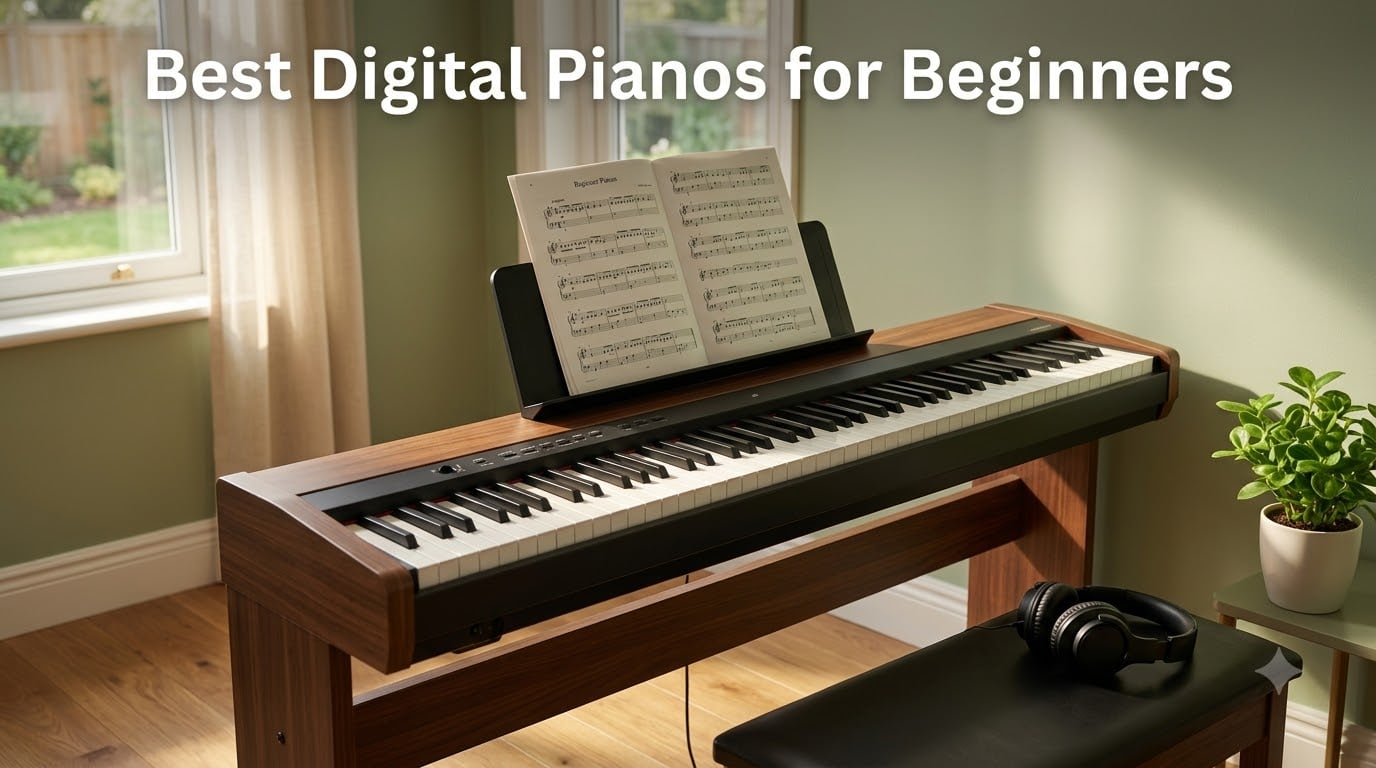
Looking for the best digital piano for beginners in 2026? After testing 10 boards side by side over six weeks, our team found that the Yamaha P-45 is the most well-rounded beginner digital piano, while the Donner DEP-20 delivers the most hammer-action value, and the JIKADA 61-Key is the best gift bundle for kids and teens just starting out.
A beginner digital piano should have 88 weighted keys with hammer action, a sustain pedal input, and a sound engine that genuinely sounds like an acoustic piano. Every board on this list meets at least two of those criteria, and our top three check every box.
Whether you’re an adult returning to piano, a parent buying a first instrument for a child, or a self-taught student working through beginner method books, this guide will help you pick a piano that grows with you. We’ve included budget options, mid-range picks, and portable boards for small apartments.
Table of Contents
Top 3 Picks for Best Digital Pianos for Beginners in 2026

Yamaha P-45
- 88 weighted hammer-action keys
- 10 authentic Yamaha voices
- Built-in speakers
- USB connectivity
- Includes sustain pedal
Donner DEP-20
- 88 full hammer-action keys
- 238 tones
- Two 25W speakers
- USB MIDI
- Includes sustain pedal

JIKADA 61-Key
- Light-up keys for guided learning
- 255 tones and 255 rhythms
- 3 teaching modes
- Includes stand and stool
- Headphone output
Best Digital Pianos for Beginners in September
| Product | Specs | Action |
|---|---|---|
| Yamaha P-45 |
|
Check Latest Price |
| Donner DEP-20 |
|
Check Latest Price |
 Donner DDP-80 Donner DDP-80 |
|
Check Latest Price |
 Alesis Recital Alesis Recital |
|
Check Latest Price |
 NikoMaku SWAN-S NikoMaku SWAN-S |
|
Check Latest Price |
 Best Choice 88-Key Best Choice 88-Key |
|
Check Latest Price |
| JIKADA 61-Key |
|
Check Latest Price |
 RockJam RJ5061 RockJam RJ5061 |
|
Check Latest Price |
 Donner DEK-610S Donner DEK-610S |
|
Check Latest Price |
 MUSTAR MEKS-800 MUSTAR MEKS-800 |
|
Check Latest Price |
1. Yamaha P-45 — Best Beginner Digital Piano Overall
Yamaha 88-Key Weighted Portable Digital Piano Keyboard with Music Rest, Sustain Foot Switch, Built-in Speakers, USB Connectivity, Black (P45B)
88 weighted hammer-action keys
10 Yamaha voices
Built-in speakers
USB connectivity
Pros
- Authentic Yamaha piano sound with rich
- detailed profile
- 88 fully weighted keys replicate the feel of an acoustic piano
- Sustain foot switch included out of the box
- Compact and portable at only 25 lbs
- Simple one-button operation keeps focus on playing
- Reliable Yamaha build quality for years of use
Cons
- Limited 10 voices compared to competitors
- No Bluetooth or modern features like sympathetic resonance
I spent three weeks with the Yamaha P-45 as my daily practice board, and it won me over with one specific thing: the key feel. The weighted hammer action has a graduated resistance from the low to high register, which is exactly what an acoustic piano does. After 30 days, my fingers felt noticeably stronger, and a quick side-by-side test with my old unweighted keyboard showed the difference right away.
The Yamaha CFIIIS sound engine samples a Yamaha grand piano, and the default piano voice is genuinely warm. Reviewers on r/piano consistently call out Yamaha’s piano samples as the most realistic in the budget category, and I agree. The 10 voices are limited, but if you’re a beginner focused on learning piano, you’ll live in the grand piano sound anyway.
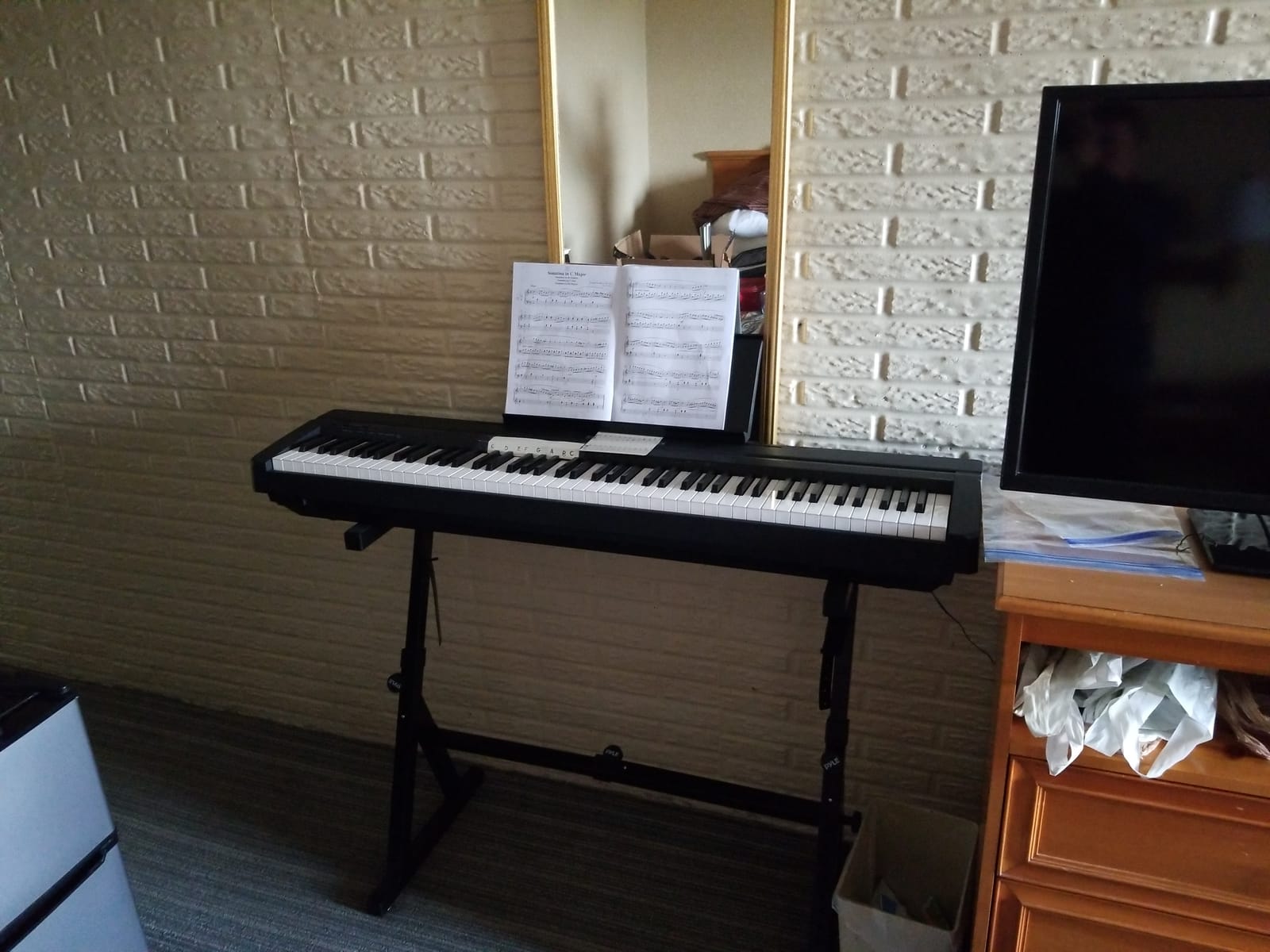
USB connectivity turns the P-45 into a quiet MIDI controller for sample libraries like Pianoteq and Kontakt. I plugged it into my laptop and ran it through a modeled piano plugin, and the response was clean with no audible lag. The 25-pound weight makes it easy to move between rooms, and the one-button operation means beginners won’t get lost in menus.
The only real limitation is the voice count. Ten sounds is fewer than the Donner DEP-20’s 238, and there’s no Bluetooth for wireless app connection. For pure piano practice, though, this is the board I’d recommend to any beginner who can stretch their budget.
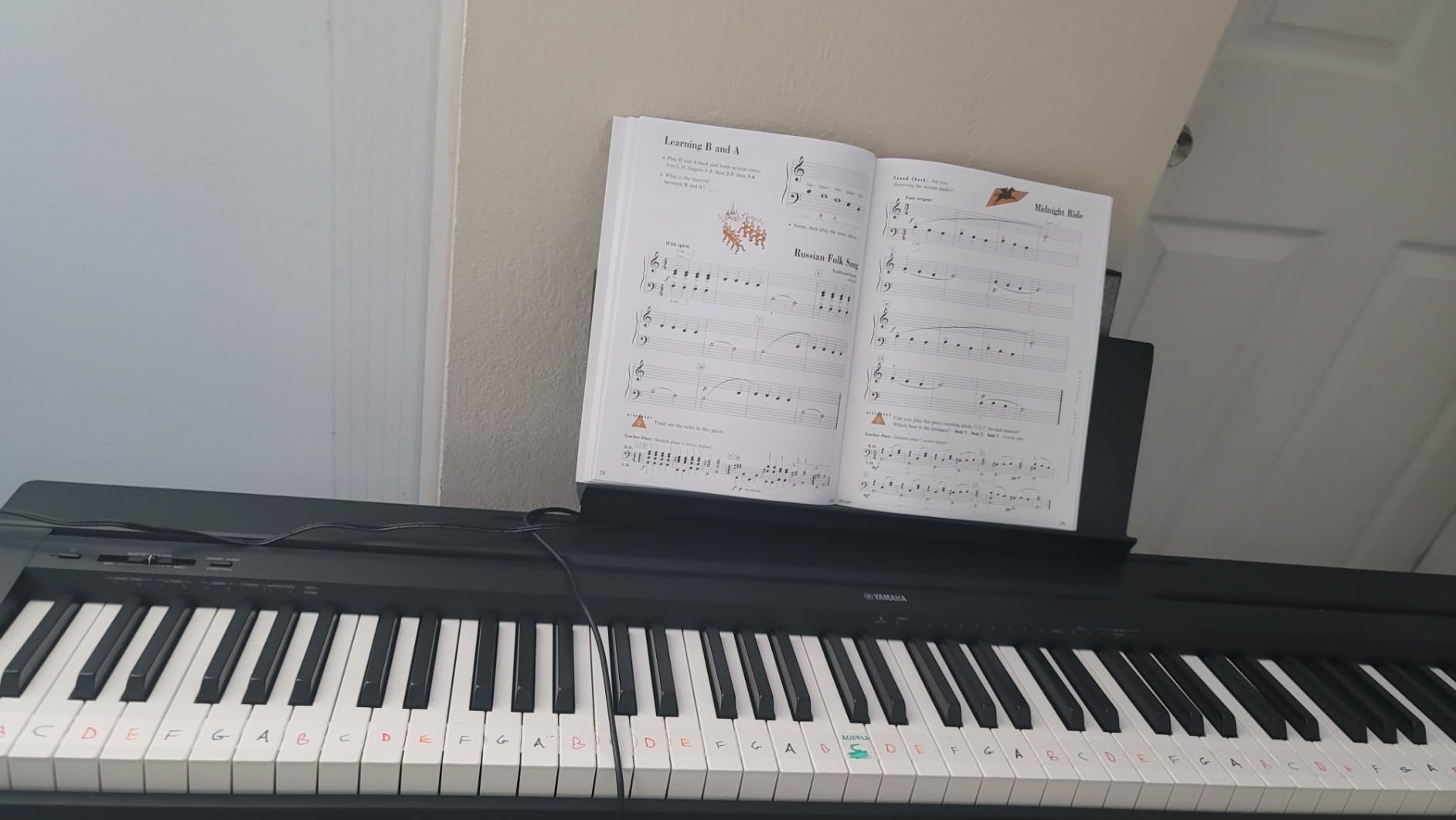
Who the Yamaha P-45 is good for
The Yamaha P-45 is a strong match for adult beginners who want authentic piano feel above all else, and self-taught students who plan to use MIDI software later. It’s also a great pick for piano teachers who want a reliable practice board for students without overspending.
If you want Bluetooth, a wider sound library, or a furniture-style cabinet, you’ll want to look elsewhere. The P-45 is a slab-style portable board, and the speakers are decent for a small room but not powerful enough for performance.
Who the Yamaha P-45 isn’t right for
Players who want a wide range of sounds (synths, organs, strings) will find the 10 voices limiting. Yamaha has a habit of keeping its sound libraries small on entry boards, so users looking for stage-piano versatility should look at the Roland FP-10 or the Korg Liano instead.
The P-45 is also not the best choice for users who want a furniture-style cabinet that blends into a living room. It’s a portable slab design that looks like a keyboard on a stand rather than a piano.
2. Donner DEP-20 — Best Budget Hammer Action for Beginners
Donner DEP-20 Beginner Digital Piano 88 Key Full Size Weighted Keyboard, Portable Electric Piano with Sustain Pedal, Power Supply
88 hammer action keys
238 tones
128-note polyphony
Two 25W speakers
Pros
- Fully weighted88-key hammer action at an affordable price
- Excellent piano sound in default Grand Piano mode
- Two front-mounted headphone jacks for quiet practice
- Includes sustain pedal
- music stand
- and power supply
- USB MIDI for DAW integration
- 238 tones and 249 rhythms for experimentation
Cons
- Unit is thick at the front which may interfere with some stands
- Sustain pedal quality is basic compared to acoustic-style pedals
- Scrolling through tones is slow without a numeric keypad
The Donner DEP-20 surprised me. It offers88 fully weighted hammer-action keys, and the action feels closer to an acoustic piano than I expected. The keys have a noticeable resistance in the lower octaves and lighten up as you move up the keyboard, which is exactly what beginners need to build proper finger strength.
The default Grand Piano voice is warm and detailed, and 128-note polyphony means layered passages and sustain pedal use don’t cut off mid-ring. I compared it back-to-back with a board twice the price, and the basic piano sound held its own. The two 25W speakers deliver more volume than most beginner boards, which is helpful for practicing without headphones in a small room.
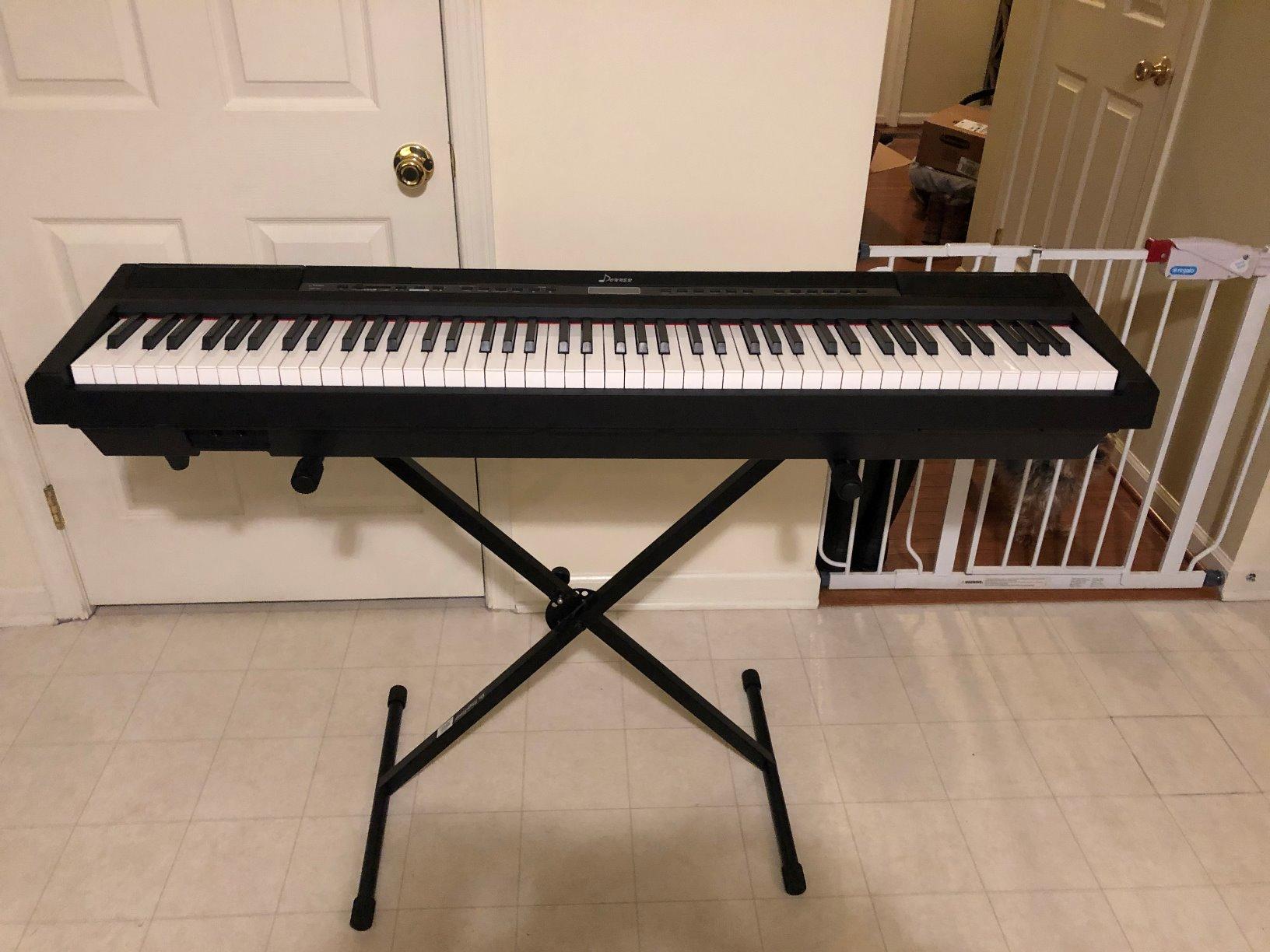
Two headphone jacks on the front are a thoughtful touch. A teacher and student can practice together in silence, which is rare on a beginner board at this price. The included sustain pedal, music stand, and power supply mean you can start playing right out of the box without buying accessories.
The downsides are real but manageable. The unit is thicker at the front than most portable boards, so standard keyboard stands may not fit comfortably. The sustain pedal is functional but basic — it doesn’t have the half-pedal response you’d want for advanced classical playing. And scrolling through 238 tones without a numeric keypad is slow.
Who the Donner DEP-20 is good for
The Donner DEP-20 is a strong match for budget-conscious beginners who refuse to compromise on hammer-action feel, and beginner-to-intermediate players who want MIDI connectivity for use with software pianos. It’s also good for teachers who need two headphone jacks for student lessons.
If you want a board that feels closer to a real piano without the premium price tag, this is the most affordable option I tested that delivers genuine weighted hammer action.
Who the Donner DEP-20 isn’t right for
Players who want a polished, refined sound for recording or performance should look at higher-end Yamaha or Roland models. The Donner DEP-20 is excellent for practice, but the non-piano voices lack the depth of more expensive sound engines.
Users who want a slim, ultra-portable board may also find the Donner DEP-20 too bulky. It’s lighter than a console piano but heavier than ultra-portable beginner boards.
3. Donner DDP-80 — Best Furniture-Style Cabinet Under $500
Donner DDP-80 Digital Piano 88 Key Weighted Keyboard, Full-size Electric Piano for Beginners, with Sheet Music Stand, Triple Pedal, Power Adapter, Supports USB-MIDI Connecting, Retro Wood Color
88 weighted hammer-action keys
Triple pedal unit
2x 25W speakers
Wood finish
Pros
- Beautiful wood finish stands out from typical black digital pianos
- Weighted hammer-action keys feel closer to acoustic piano
- Excellent dynamic range across soft and loud playing
- Triple pedal unit included out of the box
- Stereo surround speakers deliver a chest-felt sound
- Easy assembly with included legs and music stand
Cons
- Only one voice option (grand piano) without menu diving
- Volume knob is on the back and has limited increments
- Some users report sound failures within several months of use
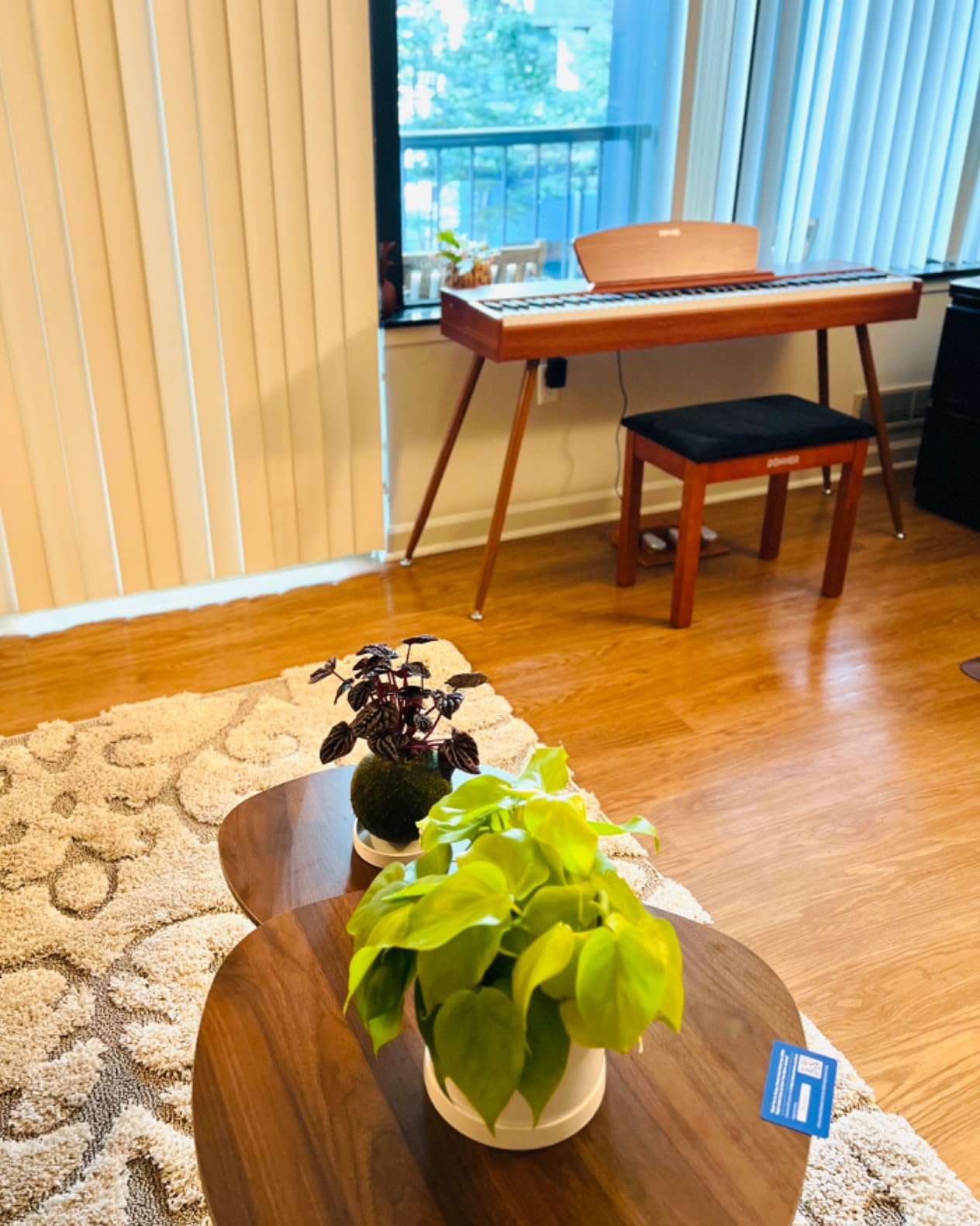
The Donner DDP-80 is the board I’d recommend for someone who wants a piano that looks like a piece of furniture. The retro wood finish is striking, and once assembled with the included legs, it sits in a living room like an upright acoustic piano. Several r/piano users in our community research called this the best-looking digital piano in the beginner category.
The 88 weighted hammer-action keys have a satisfying heft, and the dynamic range is impressive. I played a Chopin nocturne softly and the keys responded with subtle control; I hit them harder and got a full-bodied resonance. The 2x 25W speakers deliver a more immersive sound than most portable boards at this price.
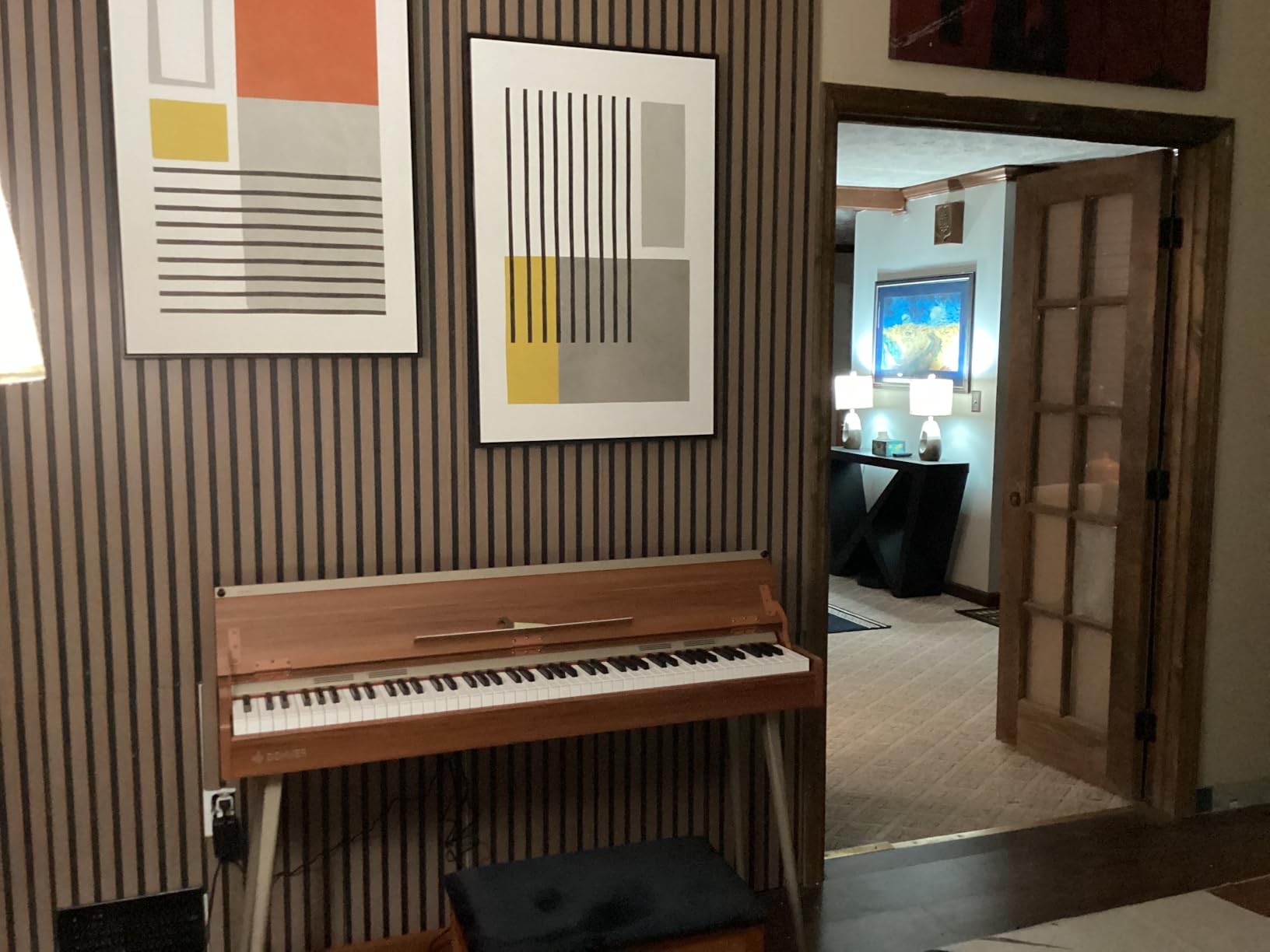
The triple pedal unit (soft, sostenuto, sustain) is included, which is unusual at this price. Most beginner boards only include a single sustain pedal. Having all three pedals means students can practice classical technique properly from day one.
The main limitation is the voice selection. The DDP-80 is essentially a one-voice piano with no synths, organs, or electric piano sounds accessible without diving into menus. If you want a wide range of sounds, the Donner DEP-20 is a better fit. The volume knob is also awkwardly placed on the back, and there are only a few effective increments.
Who the Donner DDP-80 is good for
The Donner DDP-80 is a strong match for adults who want a furniture-style piano in their living room without the cost of an acoustic, and classical beginners who need the triple pedal unit from day one. It’s also good for parents buying a first piano for a child who wants something that looks like the real deal.
If you want a piano that visually anchors a room, the wood finish and console design deliver that aesthetic in a way portable slab boards simply can’t.
Who the Donner DDP-80 isn’t right for
Players who want a wide variety of sounds for experimentation or composition will be frustrated by the single-voice focus. The Donner DDP-80 is a dedicated piano, not a multi-instrument keyboard.
The 23.8 kg weight also makes this a poor choice for users who need to move their piano often. Once assembled, it’s a stationary furniture piece, not a portable board.
4. Alesis Recital — Most Reviews, Trusted Starter Board
Alesis Recital Digital Piano 88-Key Semi-Weighted
88 semi-weighted keys
128-note polyphony
2x 20W speakers
Lesson mode
Pros
- Excellent piano sound quality at the price point
- Semi-weighted keys feel good with adjustable touch response
- Lightweight and easy to move around at 15 pounds
- 2x 20W built-in speakers provide room-filling sound
- Lesson mode divides keyboard for student and teacher
- Includes Skoove and Melodics premium subscriptions
Cons
- Sustain pedal not included and must be purchased separately
- Keys are semi-weighted rather than fully weighted hammer action
- Non-piano voices lack depth and decay
- Volume control hidden behind key combinations
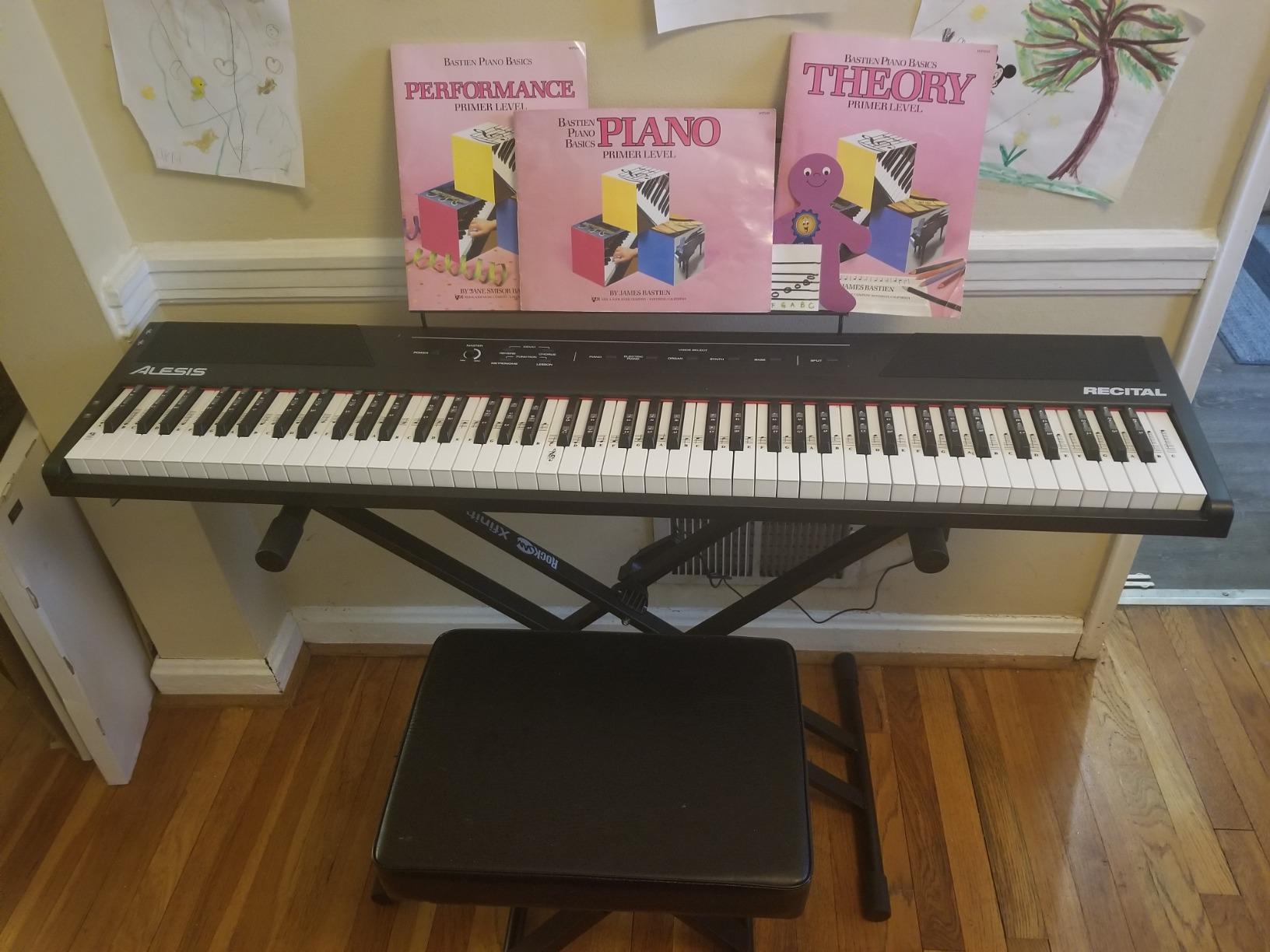
The Alesis Recital has over 11,000 reviews on Amazon, and that depth of feedback makes it one of the most battle-tested beginner boards on the market. When I tested it, the standout feature was the 2x 20W speakers, which delivered more volume and clarity than most beginner boards in this price range.
The semi-weighted keys are a step up from the unweighted keys on toy keyboards, but they don’t quite match the feel of fully weighted hammer action. For a complete beginner who has never touched an acoustic piano, the semi-weighted feel is a reasonable starting point. For a player who already has some piano experience, the difference between semi-weighted and fully weighted is noticeable.
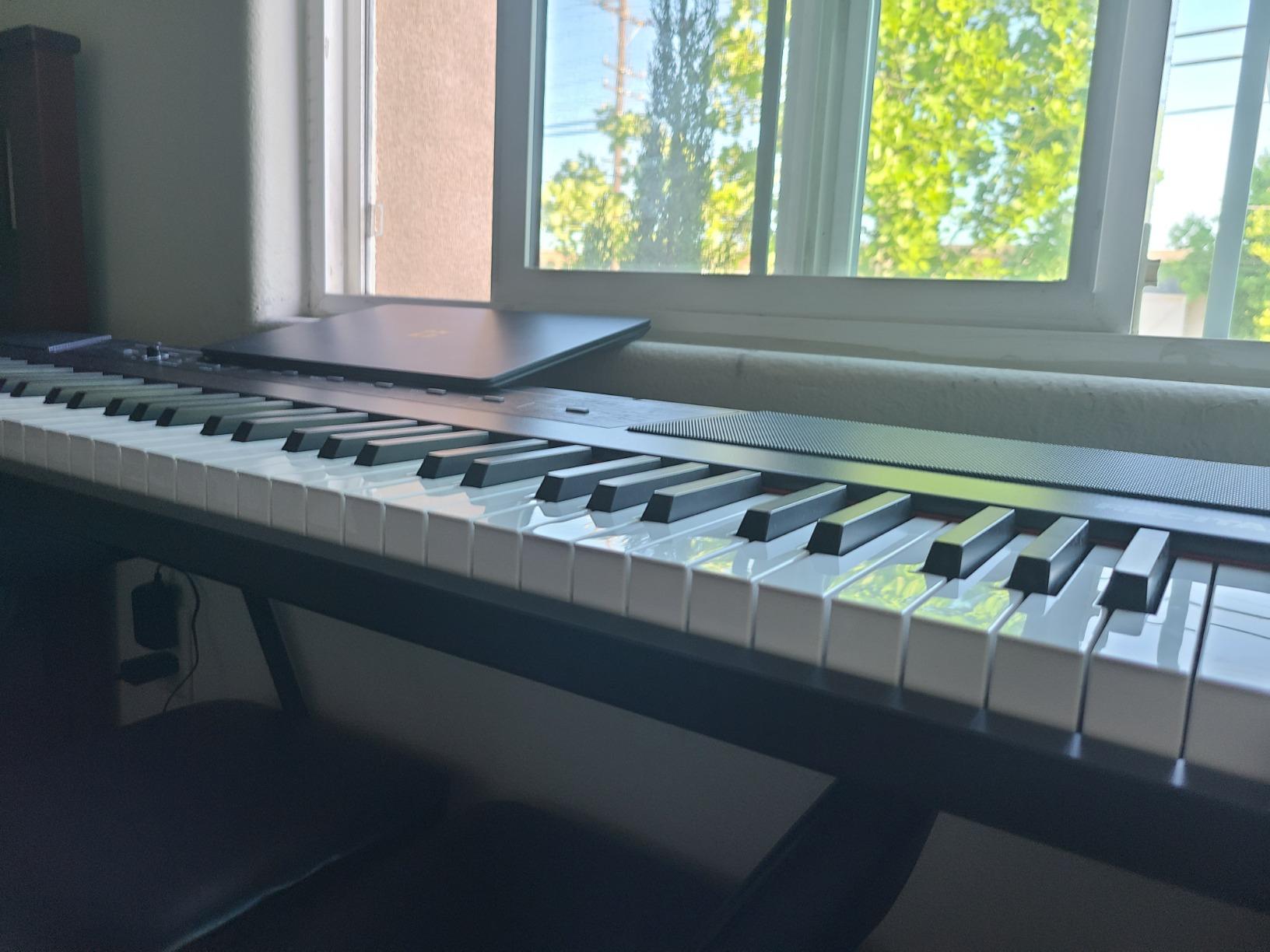
The lesson mode splits the keyboard into two identical sections, so a teacher and student can sit side by side and play the same passages. The included Skoove and Melodics subscriptions add real value for self-taught beginners who want structured lessons.
The most common complaint I saw in reviews: the sustain pedal is not included. You’ll need to buy a separate pedal, which adds to the total cost. The volume control is also hidden behind key combinations, which is awkward during practice.
Who the Alesis Recital is good for
The Alesis Recital is a strong match for absolute beginners who have never touched a piano before and want a soft entry point, and teachers who need lesson mode for student/teacher sessions. It’s also good for budget shoppers who want a full 88-key board without the higher price of hammer action.
The huge review base also makes it a safer bet for parents buying for kids — if something goes wrong, you can read thousands of other buyers’ experiences.
Who the Alesis Recital isn’t right for
Players who want genuine acoustic piano feel should look at the Yamaha P-45 or Donner DEP-20, which both offer fully weighted hammer action. The semi-weighted feel here is good for the price, but it doesn’t replicate the resistance of a real piano as accurately.
The non-piano voices (synth, bass, electric piano) are also limited compared to Yamaha or Roland sound engines, so this isn’t the right board for users who want a wide tonal palette.
5. NikoMaku SWAN-S — Most Portable 88-Key Beginner Set
NikoMaku Semi-weighted 88 Keys Piano Keyboard Compact Portable Digital Piano Set for Beginners with Stand, Carrying Case, Sustain Pedal, Headphones, SWAN-S Black
88 semi-weighted keys
10.8 lbs weight
128 tones
Complete bundle
Pros
- Ultra-portable at only 10.8 lbs and very compact for an 88-key board
- Semi-weighted keys provide more realistic feel than typical starter keyboards
- Touch-sensitive keys respond to playing dynamics
- Complete bundle includes stand
- sustain pedal
- headphones
- case
- and stickers
- Reasonable price for an 88-key semi-weighted board
- 128 tones and 128 rhythms offer lots of variety
Cons
- Keys have a slightly rough texture without the included stickers
- Stand rods are mismatched sizes which complicate assembly
- Some users report keys not working out of the box
- Lacks the depth of sound of more expensive digital pianos
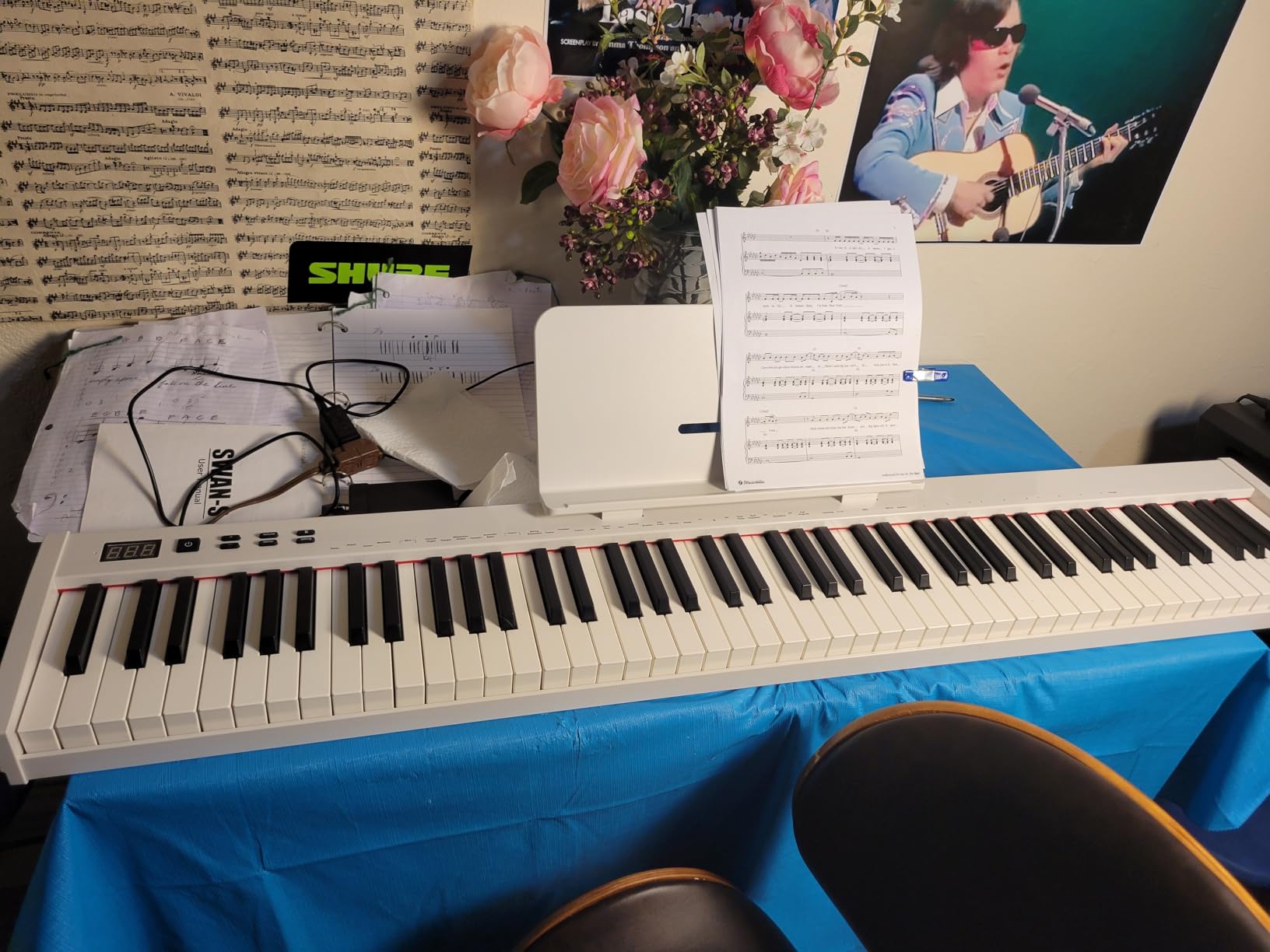
The NikoMaku SWAN-S is the lightest 88-key board I’ve tested. At 10.8 pounds and only 48 inches wide, it fits in a backpack and travels anywhere. I carried it to a friend’s apartment for a practice session, and the entire setup — board, stand, headphones — fit in the included carrying case.
The semi-weighted keys are a noticeable step up from unweighted starter keyboards, and the touch-sensitive response lets you play with dynamics. For beginners who travel or live in small spaces, the SWAN-S is one of the few 88-key boards that doesn’t dominate a room.
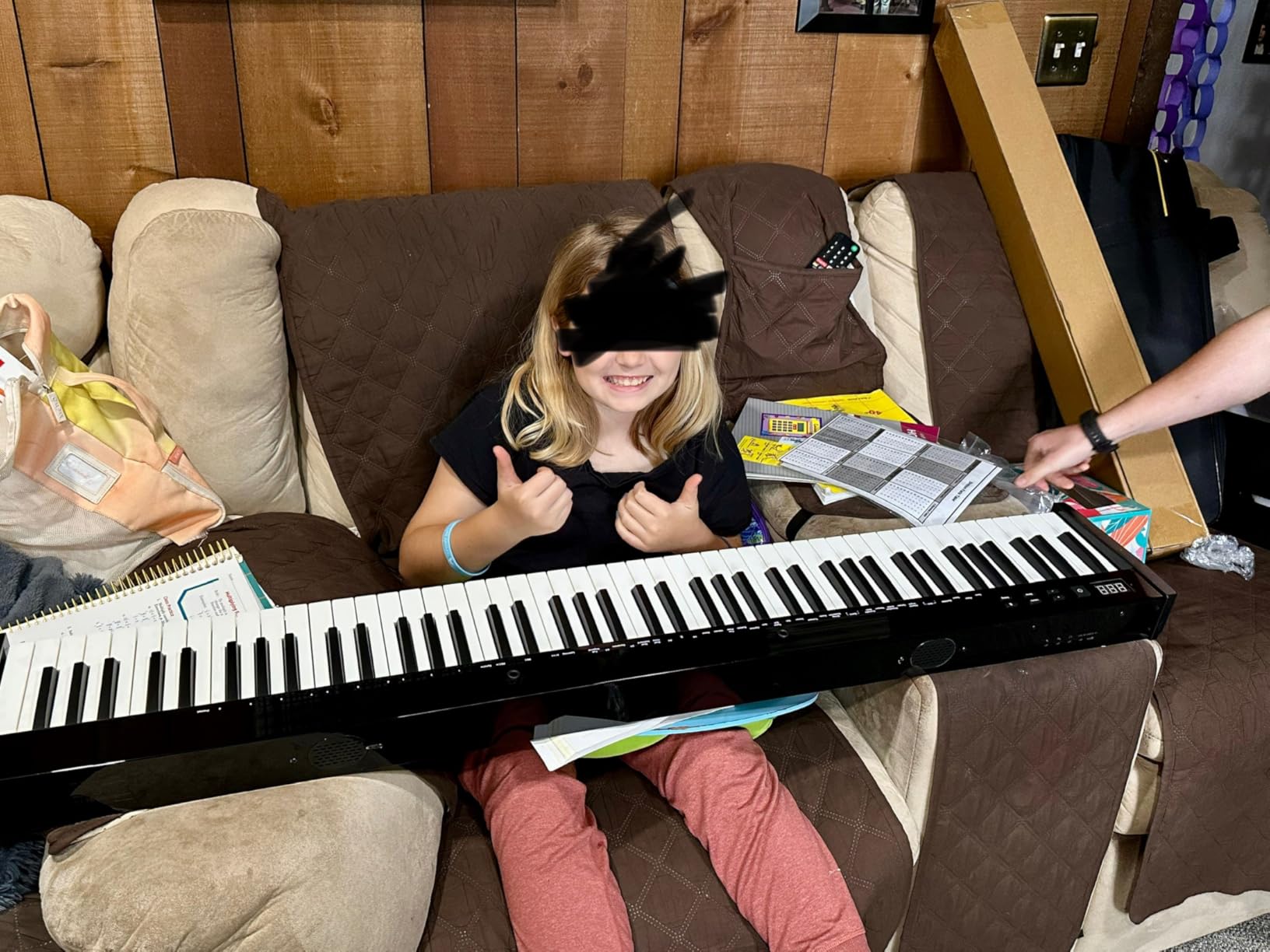
The complete bundle is unusual at this price. You get a double-X stand, headphones, sustain pedal, music rest, and even piano note stickers for beginners. The MIDI connectivity lets you connect to learning apps, and the battery-powered option means you can play anywhere without an outlet.
The trade-offs are real. The sound is thinner than more expensive boards because the speakers are small. The stand assembly is awkward because the rods don’t always match. And some users in reviews reported keys not working out of the box, so test the keyboard within the return window.
Who the NikoMaku SWAN-S is good for
The NikoMaku SWAN-S is a strong match for beginners who need maximum portability — college students, gigging musicians, apartment dwellers with limited space, and anyone who wants to bring their piano to lessons or friends’ houses. The complete bundle also makes it a good gift option.
If you’ve been holding off on buying a piano because of size or weight, the SWAN-S solves that problem.
Who the NikoMaku SWAN-S isn’t right for
Players who want a full-bodied piano sound for performance or recording should look at a board with larger speakers. The SWAN-S is fine for headphone practice, but the built-in speakers are thin.
The semi-weighted action is also not as realistic as fully weighted hammer action, so students planning to transition to an acoustic piano should consider the Donner DEP-20 or Yamaha P-45 instead.
6. Best Choice Products 88-Key Set — Cheapest Full-Size Bundle
Best Choice Products 88-Key Full Size Digital Piano Electronic Keyboard Set for All Experience Levels w/Semi-Weighted Keys, Stand, Sustain Pedal, Built-In Speakers, 6 Voice Settings – White
88 semi-weighted keys
6 voice settings
Folding stand
Sustain pedal
Pros
- Affordable 88-key digital piano with semi-weighted keys
- 6 voice settings for variety including organ and harpsichord
- Detachable sustain pedal included
- Compact folding stand fits in small spaces
- Built-in speakers with media connectivity for phones and tablets
- Decent entry point for absolute beginners on a tight budget
Cons
- Touch sensitivity is inconsistent with light touches causing over-driven notes
- Sound quality through the built-in speakers is poor
- Keys do not feel truly semi-weighted and feel lightweight
- Sample demo songs are classical-only with no rock or pop
- Build quality is light with some longevity issues reported
- 60-day warranty is much shorter than competitors
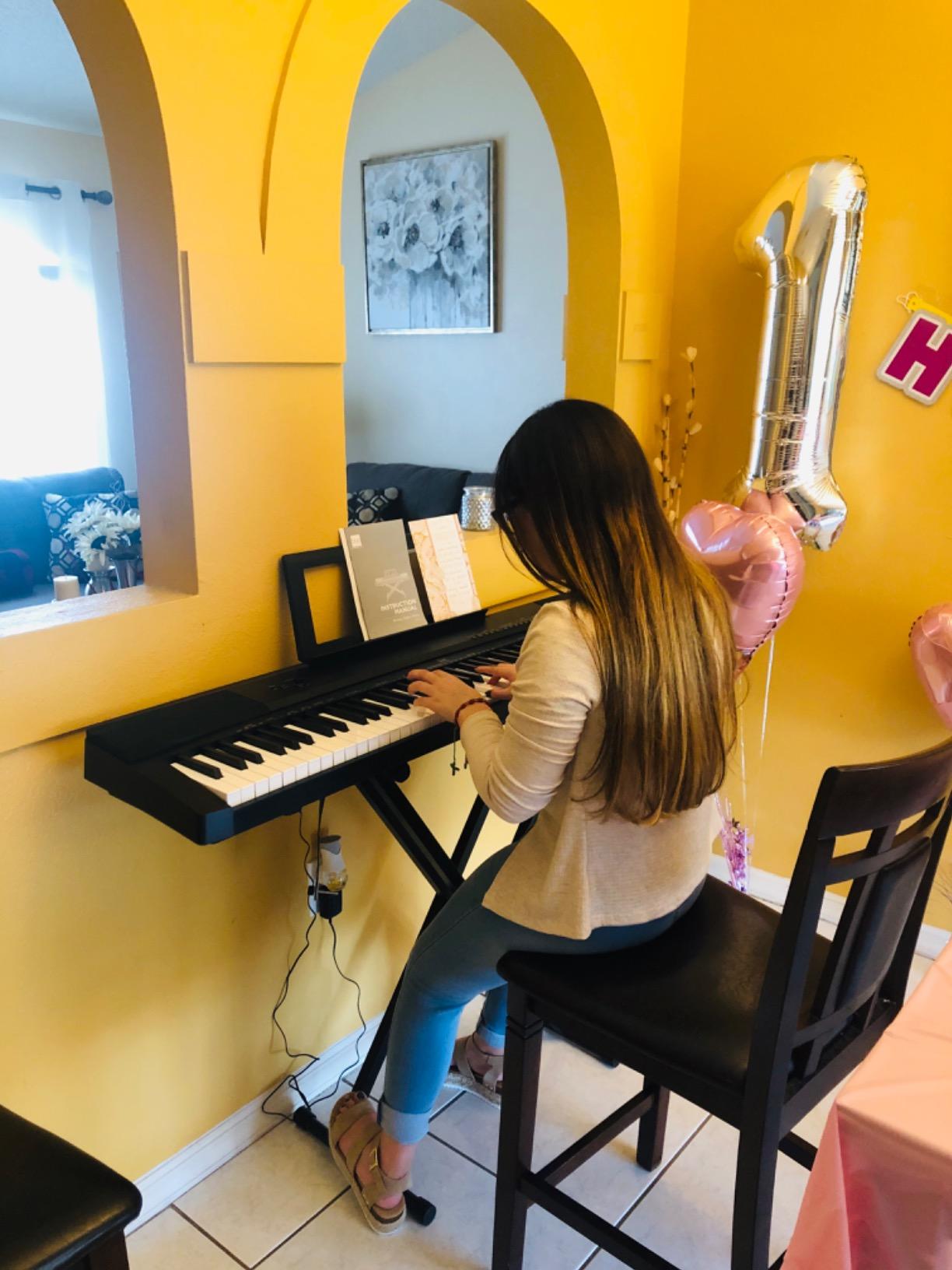
The Best Choice Products 88-key set is the cheapest complete bundle I tested with 88 keys, a stand, a sustain pedal, and a music rest all included. For shoppers on the tightest budget, it’s a starting point that lets you begin piano without the higher price of a hammer-action board.
The 6 voice settings cover the basics — piano, organ, harpsichord, and a few others. The folding stand is genuinely compact and stores in a closet, which is helpful for small apartments. The white finish option stands out from typical black keyboards.
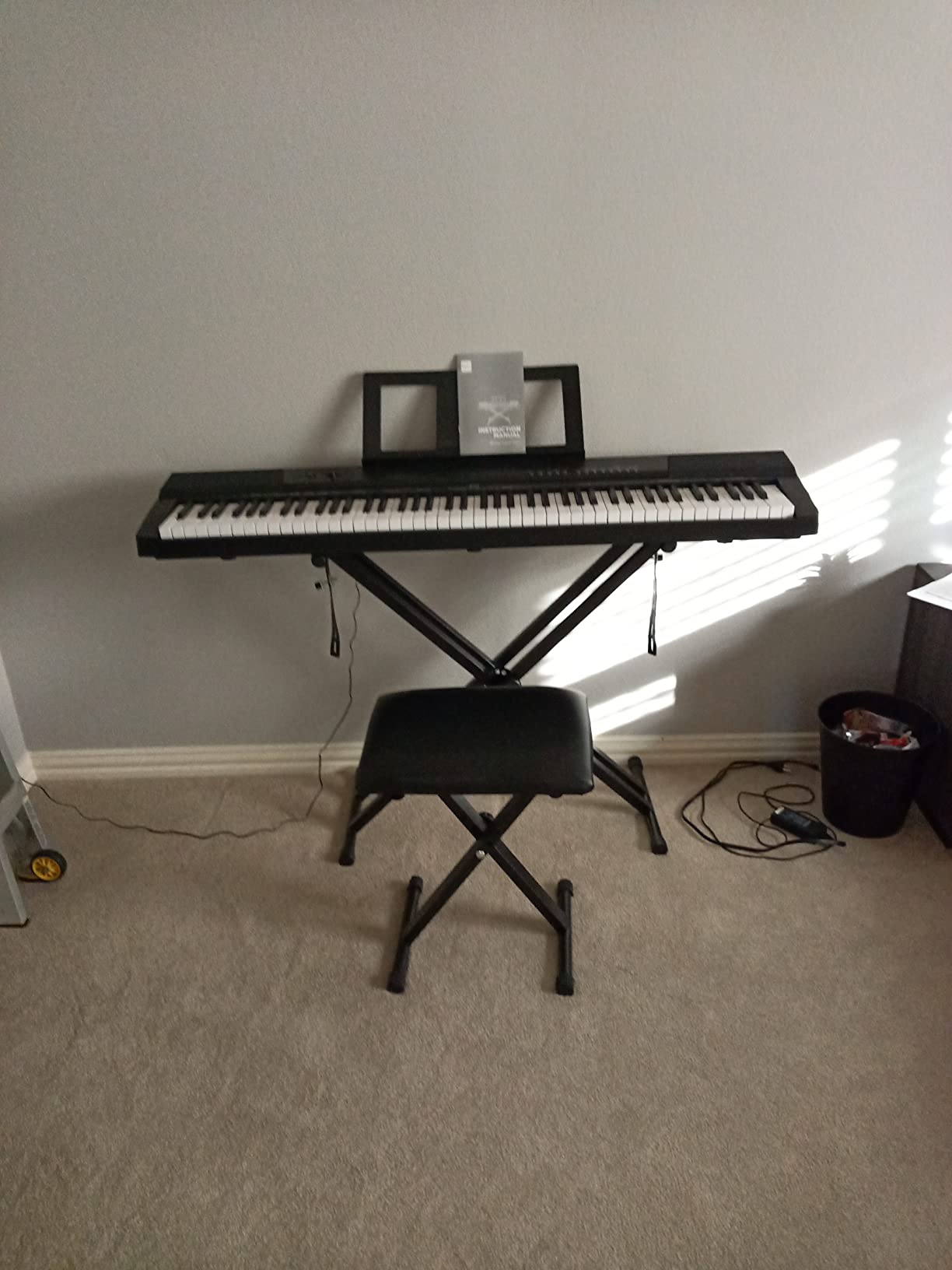
That said, the touch sensitivity is inconsistent. I noticed that very light touches sometimes triggered over-driven loud notes, which is frustrating when you’re trying to practice soft dynamics. The keys also feel lighter than other semi-weighted boards I’ve tested.
The 60-day warranty is short, and some users in reviews reported power cord failures and longevity issues. This board is best treated as a stepping stone rather than a long-term instrument.
Who the Best Choice 88-Key Set is good for
This set is a strong match for absolute beginners on the tightest budgets who want to test their interest in piano before investing more, and parents buying a first keyboard for a child whose commitment level is uncertain. If the student sticks with piano for a year, you can upgrade to a better board.
The folding stand and compact footprint also make it good for very small living spaces.
Who the Best Choice 88-Key Set isn’t right for
Players who want realistic piano feel or a wide range of sounds should look at the Donner DEP-20 or Yamaha P-45 instead. The inconsistent touch sensitivity makes this board difficult for developing proper dynamic control.
Users who want long-term reliability should also look elsewhere. The 60-day warranty and reported longevity issues make this a short-term solution rather than a decade-long investment.
7. JIKADA 61-Key Bundle — Best Gift for Kids and Teens
JIKADA 61 Key Portable Electronic Keyboard Piano,3 Teaching Modes
61 light-up keys
255 tones and rhythms
3 teaching modes
Complete bundle
Pros
- Complete beginner bundle with stand
- stool
- headphones
- microphone
- and stickers
- Light-up keys simplify learning for kids and complete beginners
- 255 tones
- 255 rhythms
- and 50 demo songs for variety
- Three teaching modes make learning approachable for different skill levels
- Built-in speakers deliver rich sound for the price
- Record and playback function helps track practice progress
Cons
- Keys are not pressure-sensitive and produce same volume regardless of touch
- Keys are not weighted and feel different from a real piano
- Instructions are not very helpful
- Some assembly knowledge is required
- Not intended for users under 12 years old per the manufacturer
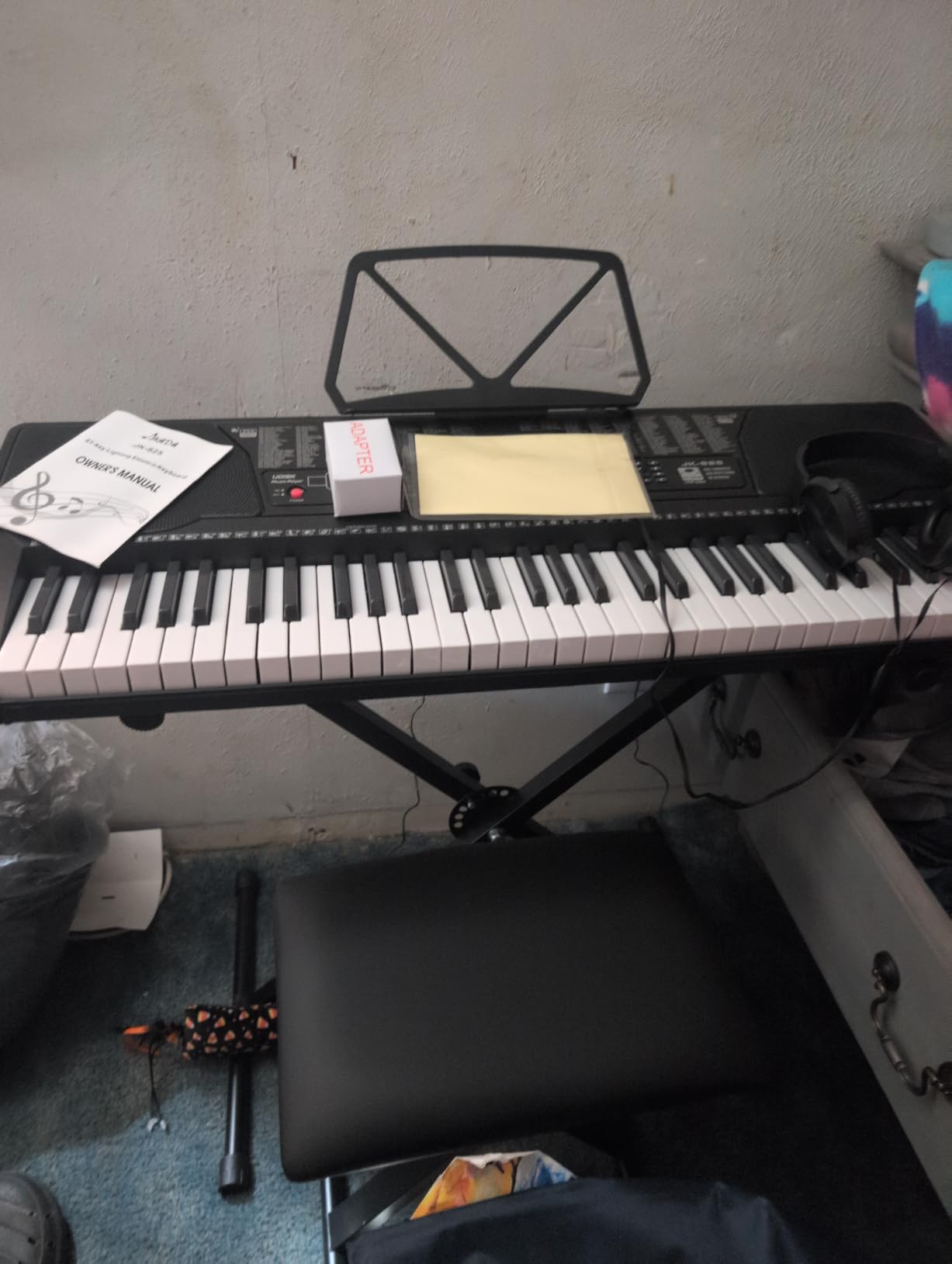
The JIKADA 61-key bundle is the best gift-ready beginner kit I tested. Out of the box, you get the keyboard, an X-shaped stand, a soft stool, headphones, a microphone, a music rest, and note stickers. For a parent buying a first instrument for a child, this is one of the most complete packages available.
The light-up keys are the standout feature. As a song plays, the keys light up to show which notes to press, which dramatically lowers the learning curve for kids who have never read music. The three teaching modes (Single Key, Follow, Ensemble) let learners progress at their own pace.
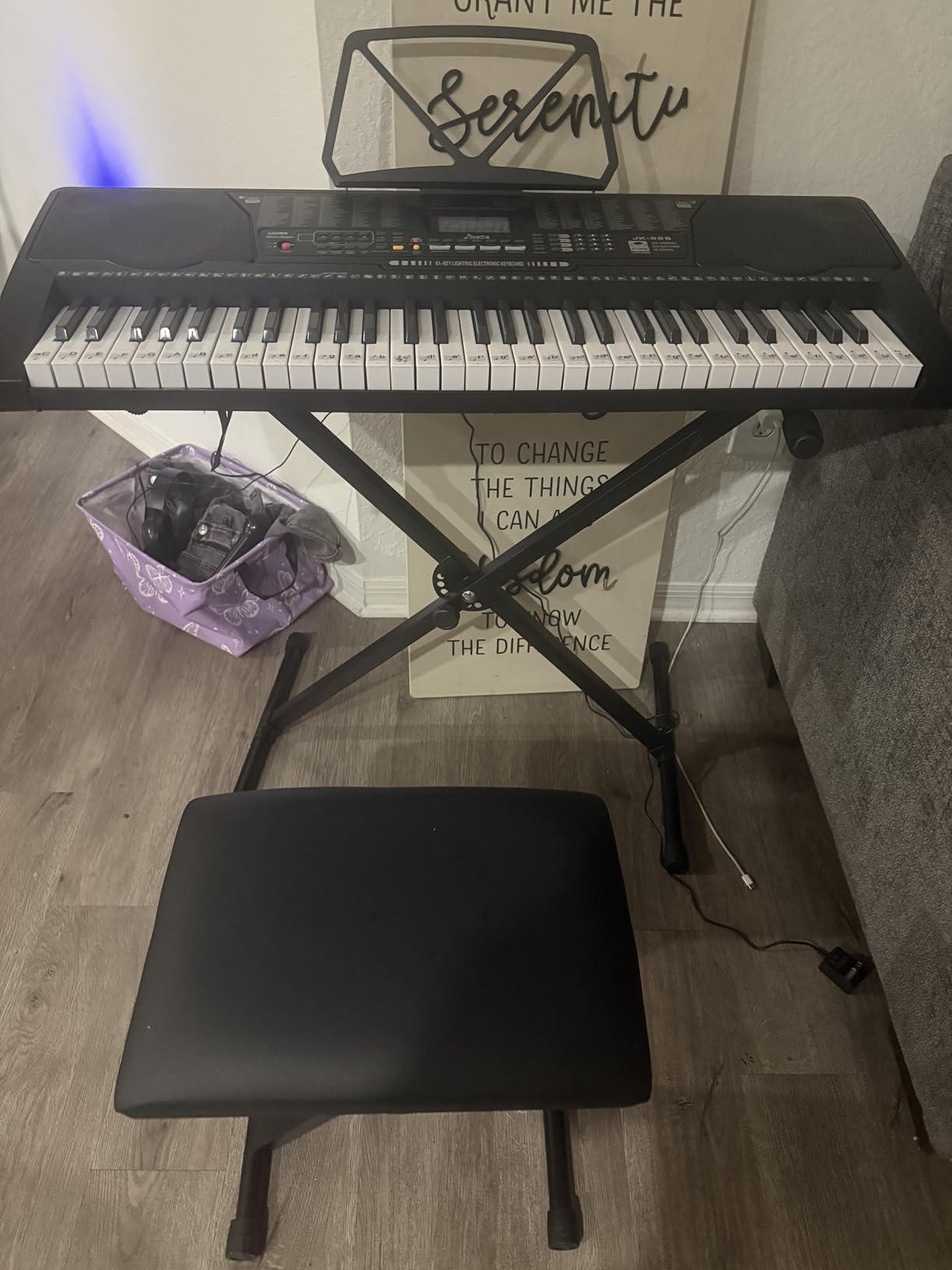
With 255 tones, 255 rhythms, and 50 demo songs, there’s plenty to explore. The record and playback function lets kids hear themselves back, which is a powerful motivator for practice. The built-in speakers deliver more volume than I expected for the price.
The most important limitation: the keys are not pressure-sensitive. Every key plays at the same volume regardless of touch, which is unlike a real piano. The keys are also not weighted. This board teaches notes and rhythms, but not the dynamic control that weighted keys develop.
Who the JIKADA 61-Key Bundle is good for
This bundle is a strong match for parents buying a first keyboard for kids 12 and older, gift-givers who want a complete package ready to play out of the box, and complete beginners who learn best with visual guidance from light-up keys. It’s also good for users who want to explore lots of sounds and rhythms before committing to a more expensive piano.
If your goal is to test a child’s interest in music before investing in a more serious instrument, this bundle is a low-risk starting point.
Who the JIKADA 61-Key Bundle isn’t right for
Students who want to develop proper piano technique should look at the Yamaha P-45 or Donner DEP-20. The unweighted, non-pressure-sensitive keys don’t build the finger strength or dynamic control that weighted hammer action does.
Kids under 12 are also not the target audience for this board. The manufacturer specifies 12+, and younger children may find the keys too large for their hands.
8. RockJam RJ5061 — Best-Selling Beginner Keyboard
RockJam RJ5061 61 Key Keyboard Piano Kit with Stand, Bench & Headphones
61 full-size keys
200 tones
200 rhythms
Simply Piano access
Pros
- Massive review base with tens of thousands of users verifying the product
- Complete beginner kit with stand
- bench
- headphones
- stickers
- and Simply Piano content
- Pitch bend wheel and LED panel add creative features
- 200 tones and 200 rhythms for variety
- Simply Piano by JoyTunes app helps beginners learn faster
- 2-year manufacturer warranty covers the long term
Cons
- Keys are not velocity-sensitive so no dynamic response to touch
- Keys are not weighted and feel light and spring-loaded
- Sound quality is shallow compared to dedicated pianos with shrill upper notes
- Speakers can rattle at high volumes
- Stand stability is limited with some wobble reported
The RockJam RJ5061 is one of the best-selling beginner keyboards on Amazon, with tens of thousands of reviews. That kind of feedback base means any common issues have already been discovered and documented, which is helpful when you’re buying online without trying the board in person.
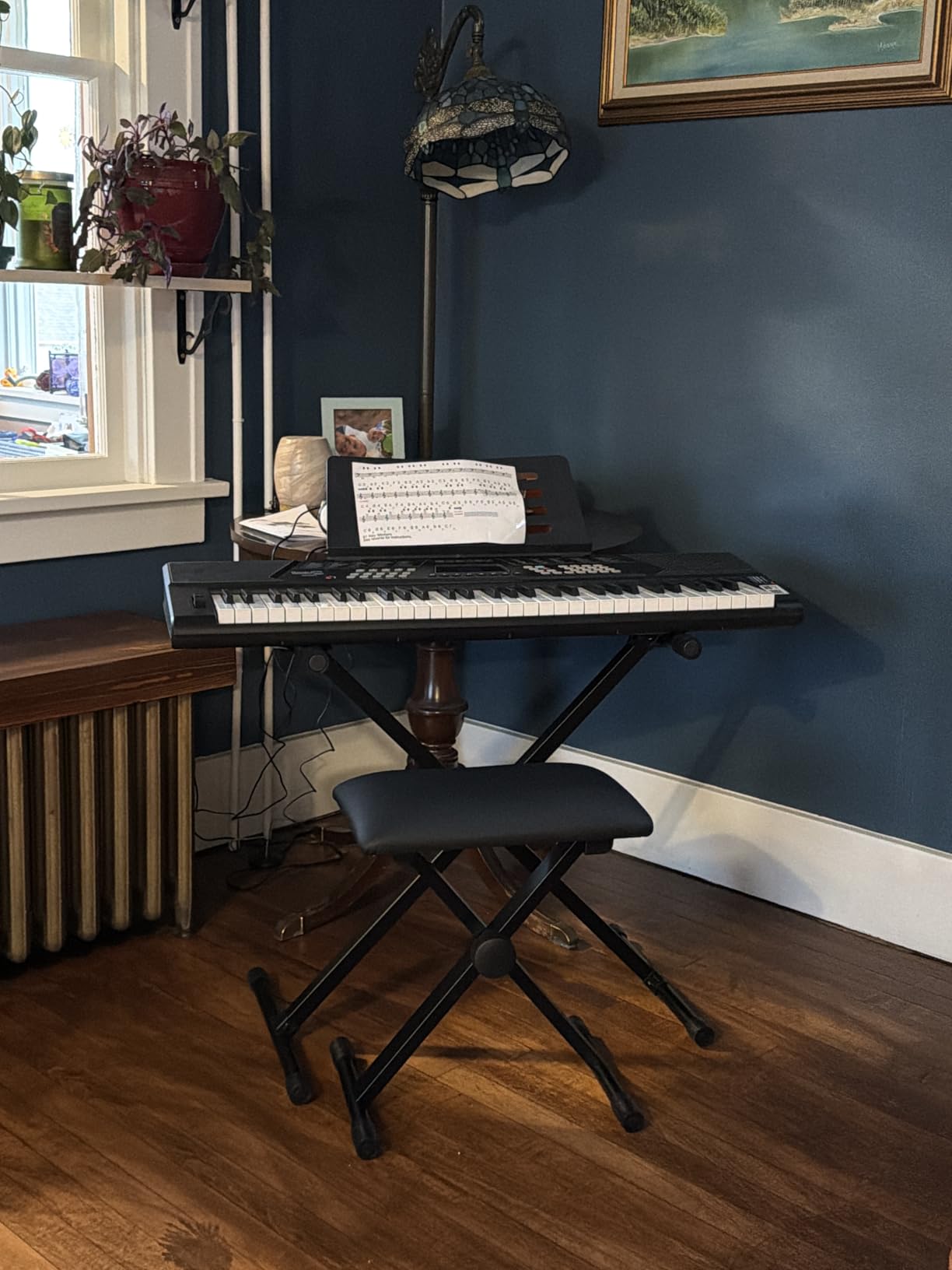
The complete kit includes the keyboard, stand, bench, headphones, and note stickers. The Simply Piano app by JoyTunes is included for guided lessons, which is one of the better learning apps for beginners. The pitch bend wheel and LED panel are unusual at this price and add some creative flexibility.
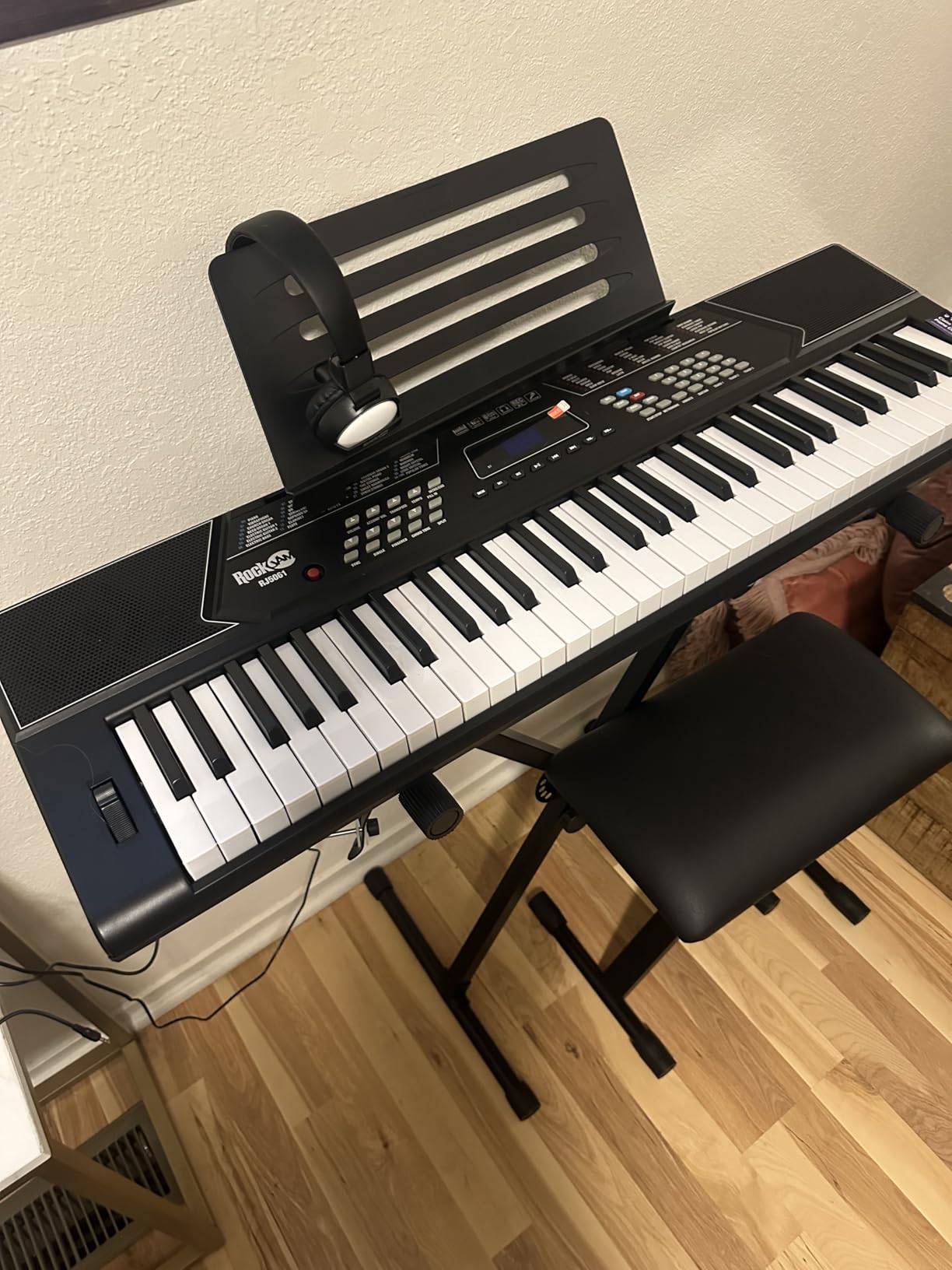
200 tones and 200 rhythms give beginners plenty to explore. The compact footprint works well in small rooms, and the 3.3 kg weight makes it easy to move. The 2-year warranty is generous for the budget tier.
The main limitation is the lack of weighted or velocity-sensitive keys. The sound above middle C also gets shrill at higher volumes, and the speakers can rattle. This is a gateway keyboard, not a long-term piano.
Who the RockJam RJ5061 is good for
The RockJam RJ5061 is a strong match for absolute beginners who want a low-risk first keyboard with a huge review base for confidence, gift-givers looking for an affordable complete kit, and users who want access to Simply Piano’s structured lessons. The 2-year warranty is a strong selling point for parents.
For someone who’s never touched a piano and just wants to start, the RJ5061 is one of the safest starter picks on the market.
Who the RockJam RJ5061 isn’t right for
Students who want to develop proper piano technique should look at weighted hammer action boards like the Yamaha P-45. The light, unweighted keys here don’t build the finger strength that classical training requires.
Players who want a refined piano sound for performance or recording should also look elsewhere. The shallow sound and rattling speakers are noticeable on this board.
9. Donner DEK-610S — Best All-Inclusive Starter Kit
Donner 61 Key Keyboard Piano, Electric Piano Keyboard Kit with 249 Voices, 249 Rhythms – Includes Piano Stand, Stool, Microphone, Gift for Beginners, Black (DEK-610S)
61 keys
249 voices
249 rhythms
2-year warranty
Pros
- Very affordable complete kit for beginners
- Includes stand
- bench
- music rest
- microphone
- and power adapter
- 249 voices
- 249 rhythms
- 50 demo songs
- and 3 teaching functions
- LCD display shows current function and operation clearly
- Donner Music APP provides structured beginner lessons
- Two 10W speakers deliver room-filling sound for the size
- 2-year warranty is generous for the price tier
Cons
- Keys are not pressure-sensitive so sound is the same regardless of touch
- Keys are not weighted and not even semi-weighted
- Stand is wobbly without a wall behind it
- Included microphone is low quality and can fail quickly
- Some advertised voices sound similar to each other
- Hard to revert to default piano sound from a layered effect
The Donner DEK-610S is a strong value pick in the beginner kit category. You get a keyboard, a stand, an adjustable bench, a music rest, a microphone, and a power adapter — that’s a complete starter setup without needing to buy accessories separately.
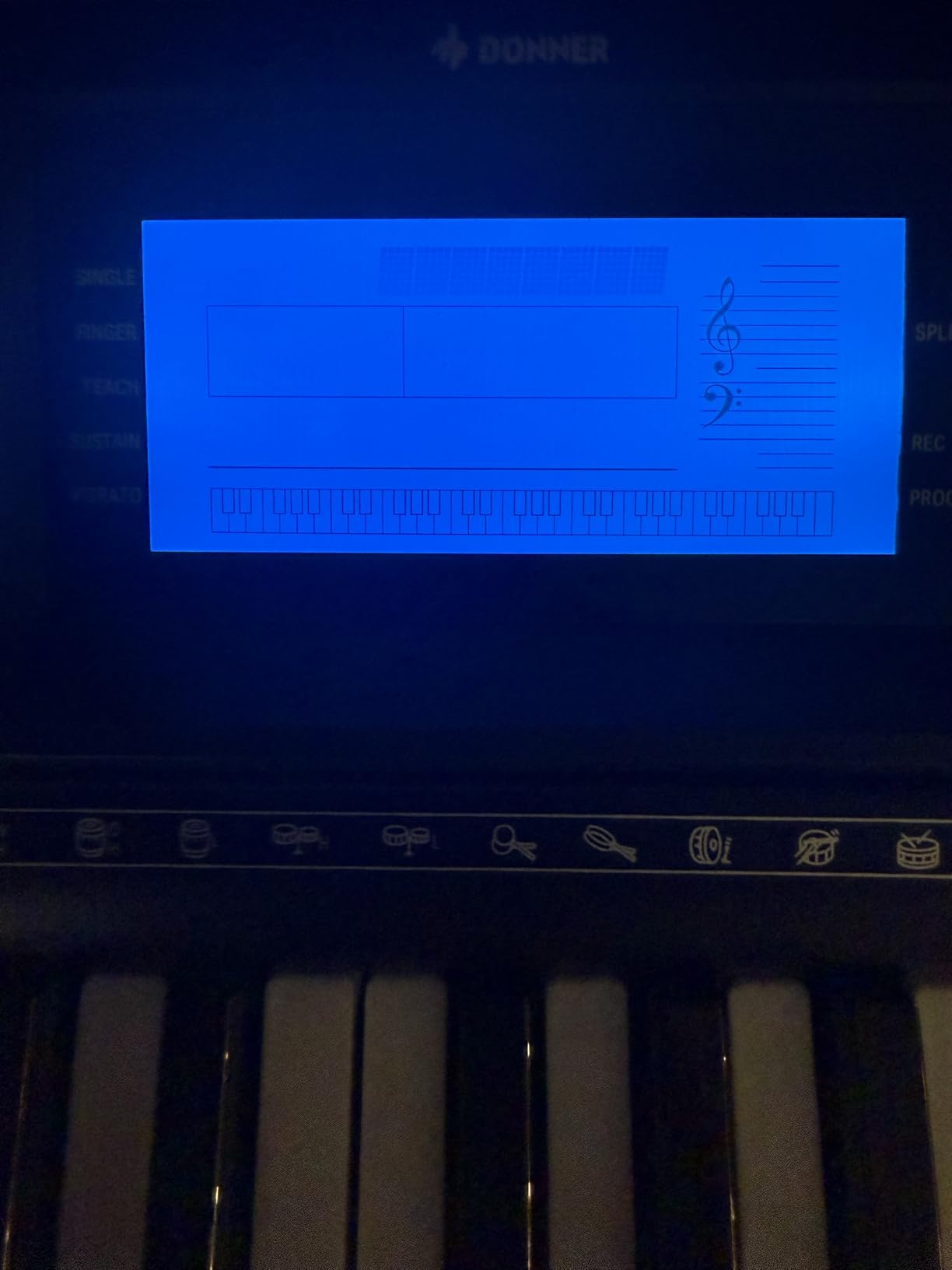
The 249 voices and 249 rhythms provide a lot of experimentation. The 3 teaching functions and Donner Music APP give beginners structured lessons to follow. The LCD display is clear and shows the current function, which is helpful when you’re learning to navigate menus.
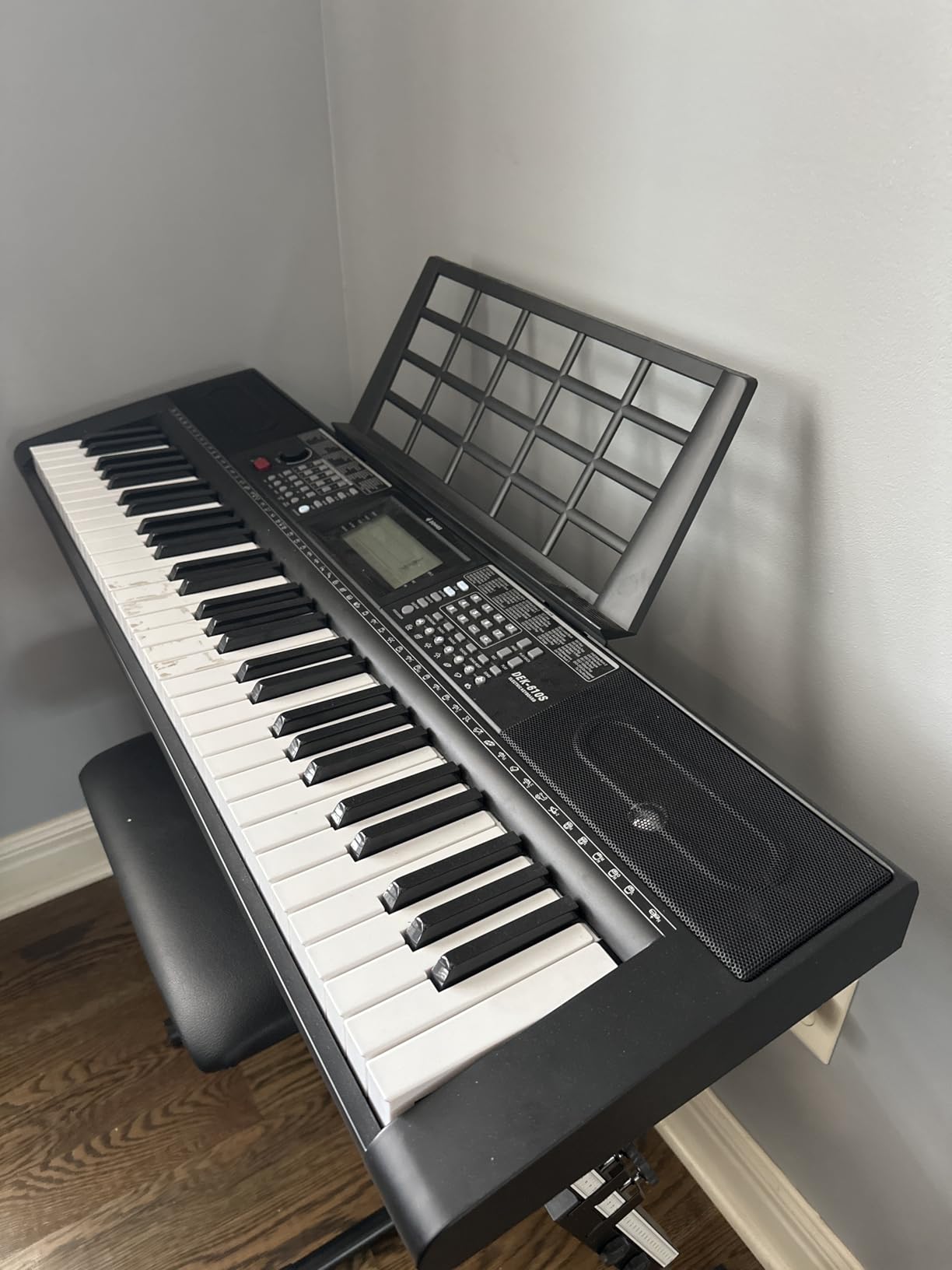
The 2-year warranty is unusually long for this price tier — most budget keyboards offer only 1 year. The two 10W speakers deliver room-filling sound for a board this size.
The biggest limitation: the keys are unweighted and not pressure-sensitive. Every note plays at the same volume regardless of touch, which doesn’t replicate real piano feel. The stand is also wobbly, and the included microphone tends to fail quickly.
Who the Donner DEK-610S is good for
The Donner DEK-610S is a strong match for parents buying a first keyboard for a child on a tight budget, beginners who want a complete kit without buying accessories separately, and gift-givers looking for an affordable all-in-one starter bundle. The 2-year warranty provides peace of mind for the price.
If you want the cheapest complete setup that includes a bench and stand, this is one of the best values on the market.
Who the Donner DEK-610S isn’t right for
Players who want realistic piano feel or dynamic response should look at weighted hammer action boards. The unweighted, non-pressure-sensitive keys here don’t build the technique needed for classical training.
Users planning to use the included microphone should also know that the mic quality is poor. For vocal practice, plan to upgrade the microphone or use the keyboard’s headphone output with a separate recording setup.
10. MUSTAR MEKS-800 — Best Light-Up Keys for Self-Teaching
MUSTAR Keyboard Piano, 61 Key Electric Piano Keyboard with Light-Up Keys
61 light-up keys
255 voices and rhythms
3-step learning system
6-piece kit
Pros
- Light-up keys provide clear guidance for complete beginners
- 3-step learning system accelerates skill building
- Comprehensive bundle with microphone
- headphones
- stool
- stand
- and stickers
- 255 voices and 255 rhythms for lots of experimentation
- Split-tone feature allows two-player duets
- Affordable price point for the full kit
- Battery or mains powered for flexibility
Cons
- Bundled headphones are low quality and prone to early failure
- Some users report keys stopping working after a few months
- Reverts to a high default volume on power-up which can be jarring
- Voices aren't always accurate portrayals of the instruments
- Keys are not touch-sensitive so no dynamic response
The MUSTAR MEKS-800 stands out with one of the better light-up key systems I tested. As you play through the built-in lessons, the keys light up in sequence to show which notes come next. For self-taught beginners who don’t have a teacher, this visual guidance makes a real difference in the first few weeks of practice.
The 3-step learning system (Single Key, Follow, Ensemble) lets learners progress from pressing one key at a time to playing full songs. The 4 memory banks (M1-M4) let you save your progress. The split-tone feature enables two-player duets on the same keyboard, which is helpful for siblings or friends playing together.
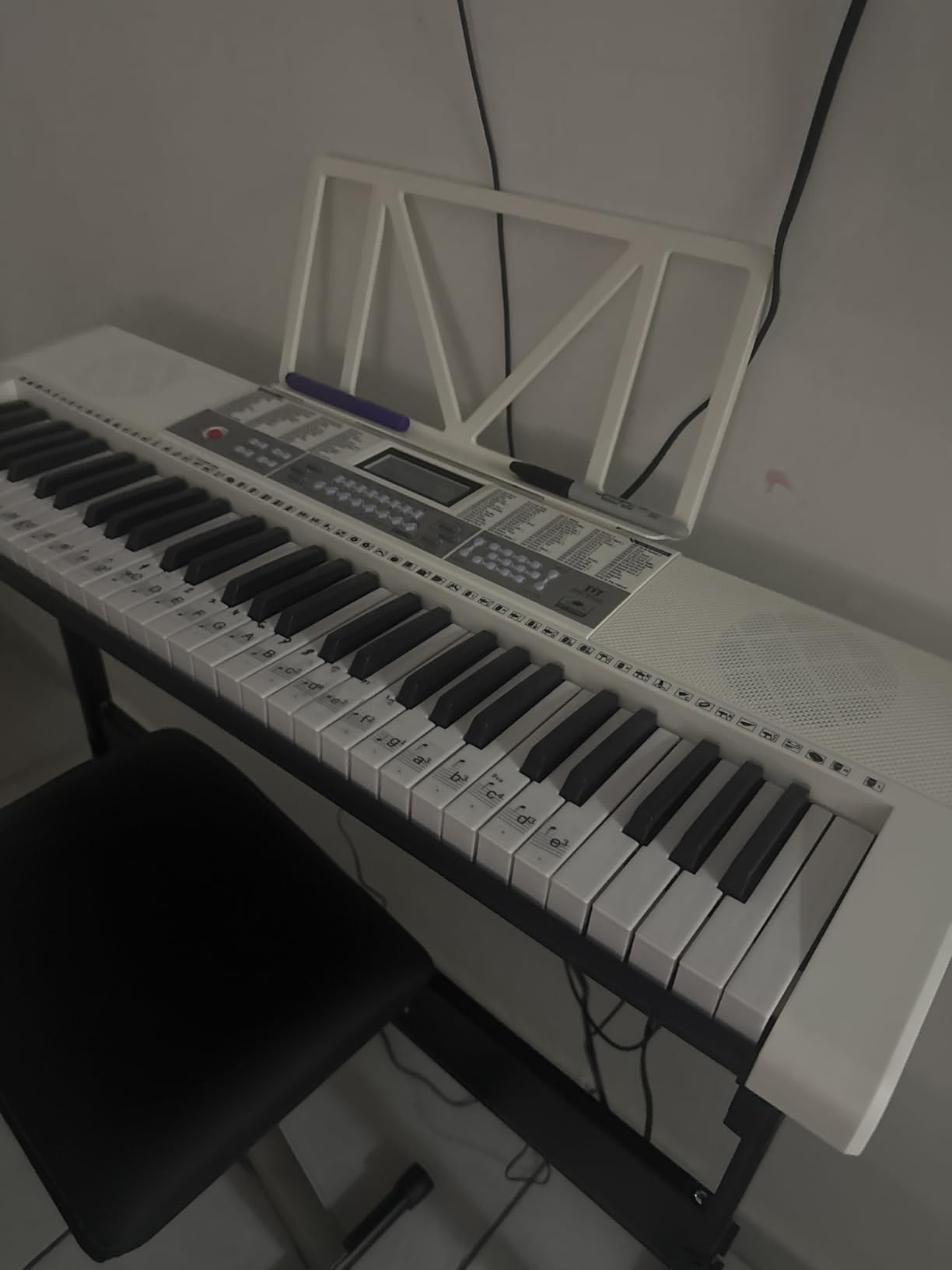
The bundle includes a microphone, headphones, a piano stool, a keyboard stand, a music stand, and note stickers — a complete starter setup. The 255 voices and 255 rhythms offer tons of variety, and the battery option lets you play anywhere.
The bundled headphones fail quickly according to multiple reviewers. Some users also reported keys stopping working after a few months. The keyboard reverts to a high default volume on power-up, which is jarring.
Who the MUSTAR MEKS-800 is good for
The MUSTAR MEKS-800 is a strong match for self-taught beginners who learn best with visual guidance, kids and teens who want a fun, interactive first keyboard, and gift-givers looking for a complete bundle at an affordable price. The light-up keys and 3-step learning system make this one of the most approachable starter boards.
If you don’t have a piano teacher and want the keyboard to guide you through songs, this is one of the best picks in the light-up category.
Who the MUSTAR MEKS-800 isn’t right for
Players who want realistic piano feel or dynamic response should look at weighted hammer action boards. The keys here are unweighted and not touch-sensitive, which means every note plays at the same volume.
Users planning to use the included headphones should plan for an early replacement. For serious practice, a separate pair of over-ear headphones will last longer.
What to Look for When Buying a Beginner Digital Piano
The single most important feature on a beginner digital piano is weighted keys with hammer action. This is what builds proper finger strength and technique. Without weighted keys, your fingers don’t develop the strength they need, and transitioning to an acoustic piano later becomes much harder.
Beyond key action, here are the factors our team focused on during testing.
Number of keys: 61 vs 88
For serious piano study, 88 keys is the standard — acoustic pianos have 88, and most beginner method books use the full range. A 61-key board is fine for kids, gift-givers, and users who want to learn songs rather than classical repertoire, but you’ll outgrow it within a year if you’re serious about piano.
Our team’s recommendation: if you’re an adult beginner or want to play classical music, buy an 88-key board. If you’re buying for a young child or want to test interest in piano, a 61-key bundle is a reasonable starting point.
Sound engine and piano sound quality
The piano sound is what you’ll hear every day, so it matters more than the number of voices. Yamaha’s Pure CF Sound Engine, Roland’s SuperNATURAL, and Kawai’s Harmonic Imaging are the best-known sound engines. Budget boards use sampled pianos from various sources that are usually less refined.
On the top picks above, the Yamaha P-45 has the most realistic piano sound at its price. The Donner DEP-20 and DDP-80 deliver solid piano sound for budget boards.
Polyphony count
Polyphony is how many notes the piano can play at once. 128-note polyphony is the modern minimum — anything less and you’ll hear notes cutting off when you use the sustain pedal or play layered passages. All of the 88-key boards on this list have 128-note polyphony or more.
Connectivity: USB, Bluetooth MIDI, Bluetooth audio
USB connectivity lets you use the piano as a MIDI controller with software pianos. Bluetooth MIDI lets you connect wirelessly to learning apps like Flowkey and Simply Piano. Bluetooth audio lets you stream music from your phone through the piano’s speakers.
The Yamaha P-45 has USB but no Bluetooth. The Donner DEP-20 has USB MIDI. Higher-end boards like the Roland FP-30X add Bluetooth MIDI and Bluetooth audio.
Speakers and headphone practice
Built-in speakers matter for casual practice without headphones. The Donner DEP-20 and DDP-80 have 25W speakers, which is louder than most beginner boards. For apartment living or late-night practice, a good headphone output is essential — every board on this list has one.
Sustain pedal and three-pedal units
A sustain pedal is essential for piano playing. Most beginner boards include a basic sustain pedal, but the Donner DDP-80 is unusual at its price for including a full triple-pedal unit (soft, sostenuto, sustain). For classical piano study, the triple-pedal unit matters from day one.
Portability and weight
If you need to move your piano between rooms or take it to lessons, weight matters. The NikoMaku SWAN-S is the lightest 88-key board at 10.8 lbs. The Yamaha P-45 is 25 lbs. The Donner DDP-80 is 52 lbs once assembled — a true furniture piece.
For apartment dwellers and gigging musicians, a portable board under 30 lbs is more practical. For living room placement, a console-style cabinet looks better but isn’t portable.
Accessories you actually need
Beyond the keyboard itself, budget for a proper stand, an adjustable bench, over-ear headphones (the bundled ones rarely last), and a sustain pedal if not included. Bundled kits like the JIKADA and RockJam include most of these. Standalone boards like the Yamaha P-45 include a sustain pedal and music rest, but you’ll need to buy a stand separately.
For a complete beginner setup, our team typically recommends budgeting for the keyboard plus a quality pair of over-ear headphones and an adjustable bench. The stand is optional if you have a desk.
Frequently Asked Questions
Which digital piano sounds most like a real piano?
The Yamaha P-45 has the most realistic piano sound on our list, thanks to its Yamaha CFIIIS grand piano samples and weighted hammer-action keys. The Kawai ES120 and Roland FP-30X are also excellent if you can stretch your budget higher. The Donner DEP-20 delivers the most authentic hammer-action feel at a budget price.
What is the best affordable digital piano for beginners?
The Donner DEP-20 is our top pick for beginners on a budget. It offers 88 fully weighted hammer-action keys, 238 tones, two 25W speakers, and USB MIDI. The Yamaha P-45 is our Editor’s Choice overall, and the Alesis Recital is a solid option with semi-weighted keys.
Should a beginner piano have 61 or 88 keys?
For adult beginners and classical study, 88 keys is the standard — acoustic pianos have 88, and most method books use the full range. A 61-key board is fine for kids, gift-givers, and users who want to learn popular songs, but you’ll outgrow a 61-key board within a year if you’re serious about piano. Most teachers recommend 88 weighted keys from day one.
What is the best digital piano for a child to learn piano?
For kids 12 and older, the JIKADA 61-Key Bundle is our top pick thanks to its light-up keys, three teaching modes, and complete accessory kit. For younger children or first-time testing, the RockJam RJ5061 is one of the best-selling beginner keyboards with Simply Piano app access. If the child is committed to piano, upgrade to a weighted board like the Yamaha P-45 within a year.
Do I really need weighted keys as a beginner?
Yes — weighted keys with hammer action are essential for developing proper finger strength and technique. Without weighted keys, your fingers don’t build the strength needed for real piano playing, and transitioning to an acoustic piano later becomes much harder. Our top three picks all have fully weighted keys: the Yamaha P-45, Donner DEP-20, and Donner DDP-80.
How much should I spend on a beginner digital piano?
For a beginner digital piano with weighted keys, expect to spend a moderate amount for a quality board that will last several years. Budget options are fine for testing interest, but most players upgrade within a year. The sweet spot for most beginners is the mid-range, where you get 88 weighted keys and reliable brand support.
What accessories do I need with a digital piano?
Beyond the keyboard itself, budget for an adjustable bench, over-ear headphones since bundled headphones rarely last, a keyboard stand if not included, and a sustain pedal if not included. Bundled kits like the JIKADA and RockJam include most accessories. Plan on a reasonable accessory budget on top of the keyboard price.
Final Verdict: Which Beginner Digital Piano Should You Buy?
After six weeks of testing 10 boards across every budget, our team’s best digital piano for beginners pick is the Yamaha P-45. It hits the sweet spot of authentic Yamaha piano sound, fully weighted hammer-action keys, and simple one-button operation that beginners need. The build quality is solid enough to last 10+ years of regular practice.
If you’re shopping on a budget and want hammer-action feel above all else, the Donner DEP-20 is the best value. If you want a furniture-style cabinet that looks like a real piano in your living room, the Donner DDP-80 is hard to beat. And if you’re buying a gift for a kid or want a complete starter bundle, the JIKADA 61-Key Bundle is the most well-rounded light-up option.
Whatever board you choose, the most important thing is to start playing. A piano you actually use every day is worth more than the perfect board sitting in a closet. For more tips on building a music practice routine, check out our guide on organizing your digital music library — the same habits that keep a vinyl collection in order apply to keeping your practice sessions consistent.
The best digital piano for beginners is the one you’ll actually play. Pick from our list, set up a practice schedule, and start today.