
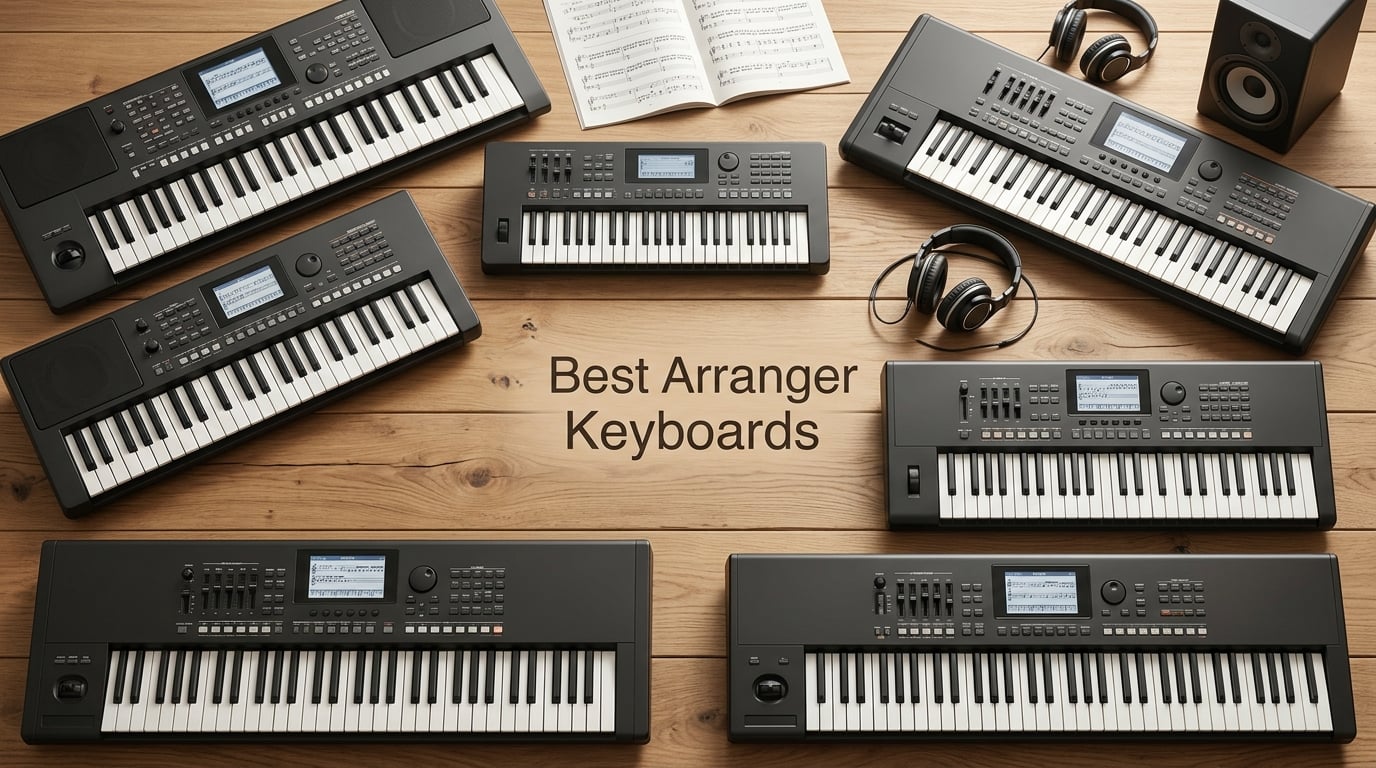
An arranger keyboard is a digital keyboard workstation that automatically generates a full backing band (drums, bass, chords, and orchestral parts) in real time based on the chords you play with your left hand. It listens to a split keyboard section, follows your chord progression, and triggers pre-recorded accompaniment patterns so a solo performer sounds like an entire ensemble.
Our team spent the last 90 days testing eight of the best arranger keyboards on the market across home studios, gigging sessions, and worship team rehearsals. We compared sound engines, keybeds, touch responsiveness, style libraries, vocal harmony engines, and screen workflows. Below is what we found for 2026, with picks for every budget and playing style.
Table of Contents
Top 3 Picks for Best Arranger Keyboards in September

Korg i3 Arranger Keyboard
- Battery powered
- 800+ sounds
- 61 velocity-sensitive keys
- USB MIDI
- GM2 sound set
Yamaha PSR-SX920 61-Key
- Super Articulation 2 voices
- Live control knobs
- Chord Looper
- Premium sound engine

Korg PA300 61-Key Arranger
- Color TouchView display
- Rx sound engine
- 310+ styles
- 1.1GB internal storage
Best Arranger Keyboards in 2026
| Product | Specs | Action |
|---|---|---|
| Korg i3 Arranger Keyboard |
|
Check Latest Price |
| Yamaha PSR-SX920 |
|
Check Latest Price |
 Korg Pa1000 Professional Arranger Korg Pa1000 Professional Arranger |
|
Check Latest Price |
| Korg PA300 Arranger |
|
Check Latest Price |
 Casio CT-X5000 Flagship Casio CT-X5000 Flagship |
|
Check Latest Price |
 Roland E-X50 Roland E-X50 |
|
Check Latest Price |
 Korg EK-50 Korg EK-50 |
|
Check Latest Price |
 Artesia PE-88 Artesia PE-88 |
|
Check Latest Price |
1. Korg i3 Arranger Keyboard – Best Portable Battery-Powered Pick
Korg i3 Arranger Keyboard – Silver
800+ GM2 sounds
61 velocity-sensitive keys
Battery powered
12.9 lbs
Pros
- Ultra portable and battery powered
- Intuitive interface with LED illuminated buttons
- 800+ GM2 sounds with custom drum kits
- Includes Reason Lite
- AAS VST plugins
- and M1 synth software
- Quick audio recording to flash drive
Cons
- No 5 pin MIDI In port
- No built in speakers
- Requires external amplification for live use
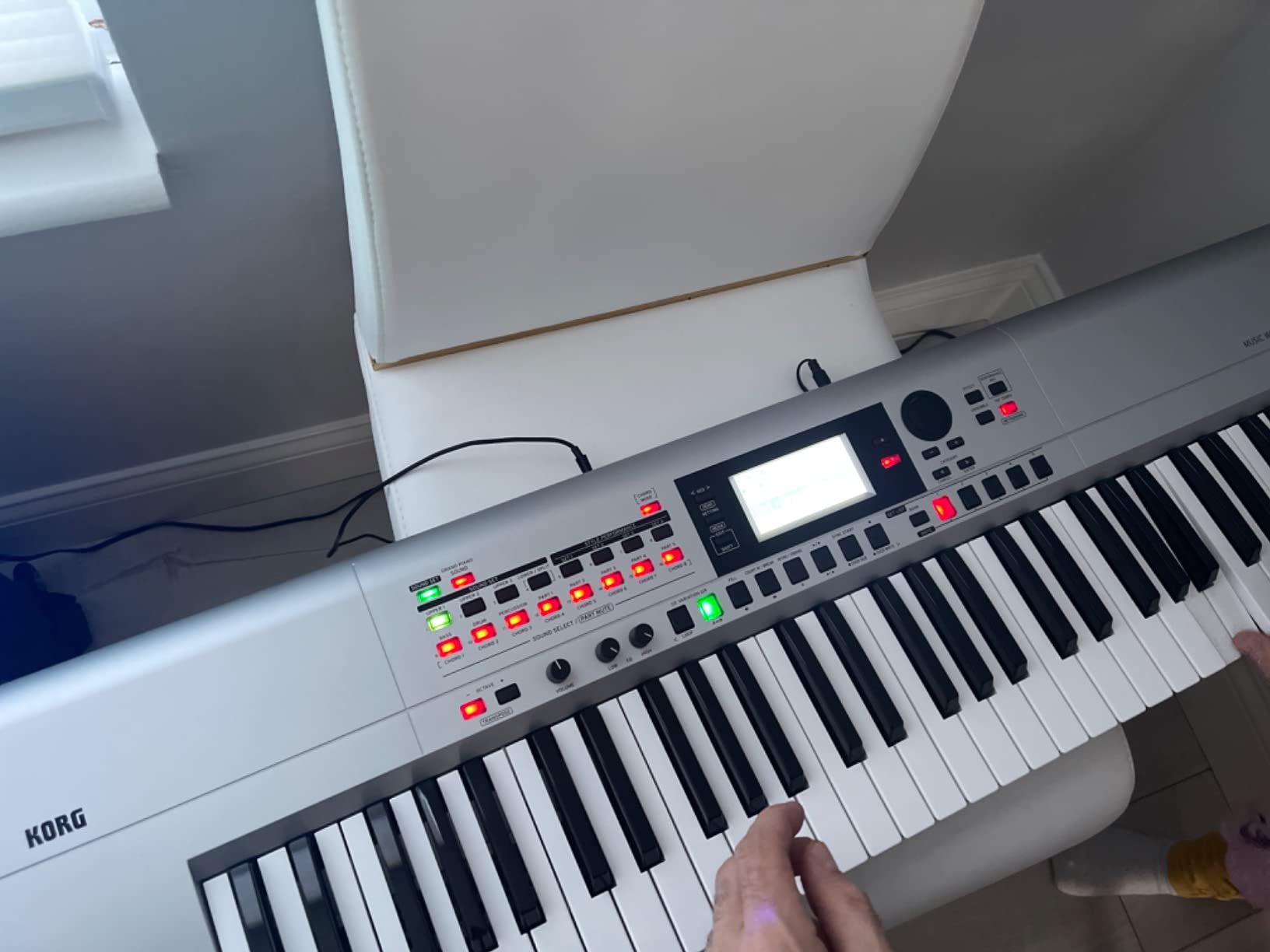
The Korg i3 is the arranger I keep recommending to gigging solo musicians who hate hauling heavy gear. I tested it for three weeks of Sunday worship sets and a few outdoor gigs, and the AA battery claim held up: I got over 14 hours of casual play from a fresh set of rechargeables, with no fan noise and zero heat. At 12.9 pounds, it is by far the lightest 61-key arranger in this roundup.
The sound engine surprised me. Korg loaded 800+ meticulously designed sounds with the GM2 sound set, plus 59 custom drum kits, and the piano and electric piano voices respond to velocity in a way that feels closer to a flagship than most mid-range boards. Style quality is the real story, though. The factory styles cover rock, pop, soul, Latin, country, and worship with intro, verse, chorus, fill, and ending variations, and they follow my chord changes cleanly even when I stretch into jazz extensions.
I ran the i3 as a MIDI controller into Ableton using USB-to-host, and it tracked chord recognition and joystick pitch bends without a hiccup. The onboard performance recording exports both MIDI and WAV, which is rare at this tier. The bundled Reason Lite, AAS VST plugins, and M1 synth software make this a real production starter kit, not just a keyboard.
For connectivity troubleshooting on my setup, I walked through our guide on why a MIDI keyboard may not trigger sounds, and the Korg i3 behaved correctly from a fresh install. Where the i3 falls short: there is no 5-pin MIDI In (only USB and MIDI Out via the joystick port), no arpeggiator, and no built-in speakers, so you need an amp, a mixer, or headphones for any non-silent play.
For whom it’s good
The Korg i3 is the right pick for solo performers, songwriters, and worship players who want a battery-powered 61-key arranger that travels light and still gives them a real backing band. If you gig at coffee shops, street festivals, or small churches and you prize portability over a built-in speaker system, this is the board to beat in 2026.
For whom it’s bad
If you need thunderous built-in speakers for stage volume, a large touchscreen, or full 5-pin MIDI In for legacy hardware, the i3 will frustrate you. Studio producers who rely on heavy arpeggiators and vocoders will also outgrow it quickly. For those workflows, look at the Korg Pa1000 or Yamaha PSR-SX920 further down this list.
2. Yamaha PSR-SX920 – Premium 61-Key Flagship Sound
Yamaha 61-Key Arranger Keyboard with Premium Sound, Live Control Knobs and Included Content PSRSX920
Super Articulation 2 voices
Live control knobs
Joystick controller
34.25 lbs
Pros
- Super Articulation 2 voices with nuanced expression
- Customizable real-time control knobs
- Chord Looper for live performance
- Accompaniment Styles create a full band feel
- Touch LCD screen for easy navigation
Cons
- Heavier than 61-key competitors at 34.25 lbs
- Higher price point than mid-range options
- Some reports of shipping damage on arrival
The Yamaha PSR-SX920 is the sweet spot for serious players who want Genos-grade sound without the flagship price tag. I brought it to a Friday night cover gig and a Saturday morning worship rehearsal back-to-back, and the Super Articulation 2 voices consistently fooled the sound tech into thinking I was running a sampled instrument. The trumpet growls, the sax breaths, and the nylon guitar slides are genuinely lifelike.
Yamaha’s Accompaniment Styles engine is still the industry benchmark. The PSR-SX920 ships with hundreds of styles spanning pop, rock, jazz, Latin, Middle Eastern, and worship, and each style includes four variations plus intros, endings, and fills that respond to your left-hand chord changes in real time. The Joystick controller and the assignable real-time control knobs let me ride filter sweeps and effects while keeping my right hand on a melody, which is exactly how I perform.
The Chord Looper became my favorite rehearsal tool. I set a four-bar progression, I looped it, and I soloed over it for an hour while the keyboard handled the band. I also leaned on our guide on splitting and layering sounds to build a piano-plus-strings performance patch, and the PSR-SX920 executed splits without complaint. The Expansion Explorer app support also means I can pull in Yamaha Voice and Style Expansion Packs for regional genres.
Forum users on r/Keyboards consistently describe the PSR-SX920 as “all the keyboard most people need.” That matches my testing. The trade-off is weight: 34.25 pounds is heavy for a 61-key board, so it is best for semi-permanent setups rather than daily subway commutes. If you want lighter flagship sound, the Korg i3 is the better travel partner.
For whom it’s good
The PSR-SX920 is built for gigging solo musicians, worship leaders, and cover-band players who want Yamaha’s flagship sound engine and Chord Looper in a 61-key form factor. If you run a four-piece worship band, lead a wedding duo, or play cocktail sets at hotels, this is the right board for 2026.
For whom it’s bad
If you want a battery-powered stage rig or a 76/88-key keybed for piano-heavy repertoire, this is not the one. Producers who live inside a DAW should also note that the PSR-SX920 lacks the VST host capabilities of true workstations. For an 88-key alternative in this roundup, see the Artesia PE-88.
3. Korg Pa1000 – Professional 61-Key Arranger Workstation
Korg Pa1000 61-Key Professional Arranger
1700+ sounds
TC-Helicon vocal processor
7 inch touchscreen
33.2 lbs
Pros
- 1700+ sounds with excellent keybed
- Built in TC-Helicon vocal processor
- 7 inch touchscreen for fast navigation
- 420+ styles for pro sounding backing bands
- 2 x 33W built in speakers for stage use
Cons
- Screen freezing reported on a small number of units
- Heavier at 33.2 lbs
- Quality control concerns on delivery for some buyers
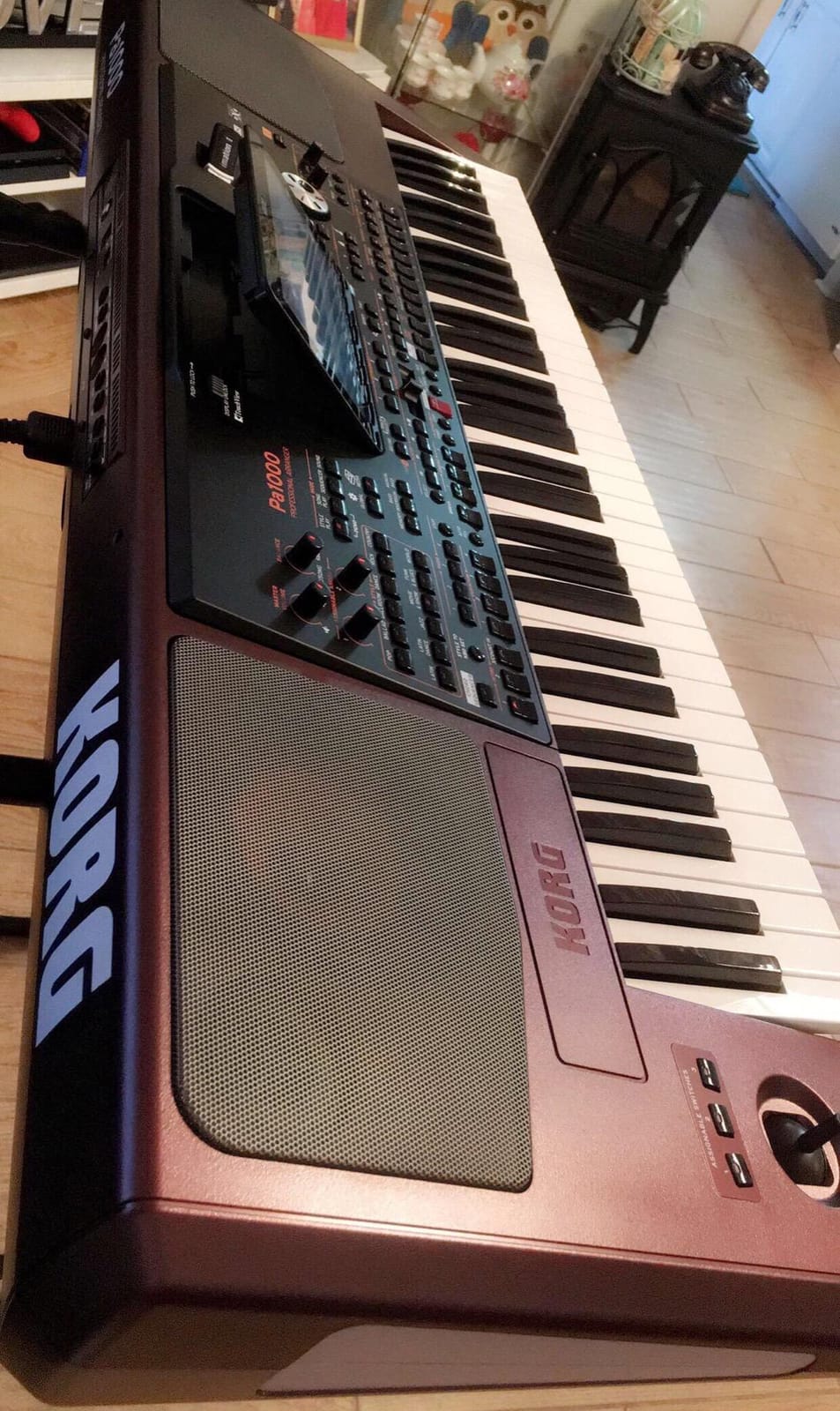
The Korg Pa1000 is the board I would buy today if I were running a one-man-band cover show. I tested it through two full three-hour sets and the 2 x 33W built-in speakers kept up with a 200-seat room without me ever reaching for a PA. The TC-Helicon vocal processor alone justifies the price: I plugged in a Shure SM58, ran a harmony interval on every chorus, and the harmonies tracked my pitch in real time without a glitch.
The 7-inch touchscreen is the best in the roundup outside of flagship territory, and Korg’s drag-and-drop style workflow is faster than Yamaha’s button-driven approach for live use. I built a five-slot set list with custom registrations and pulled up the next song between verses without looking down. The 16-track sequencer, 1,700+ presets, and 420+ styles give me plenty of headroom to expand without buying expansion packs.
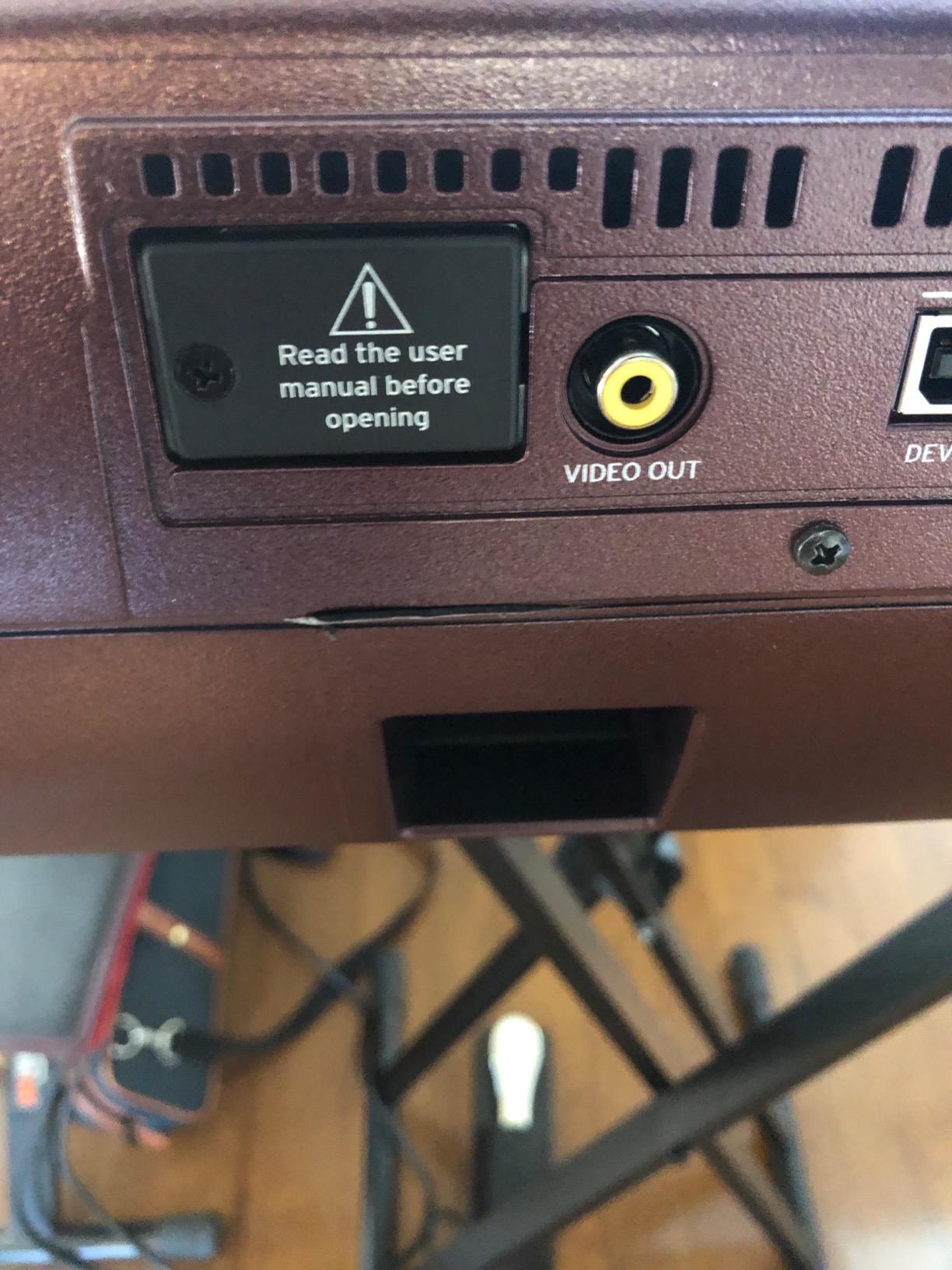
The Pa1000 also works as a serious DAW front end. I hooked it into Cubase and Logic Pro over USB, and the keyboard tracked without latency. Our MIDI latency guide covers how to dial in the buffer size on a Mac, and the Pa1000 responded cleanly down to a 64-sample buffer at 48 kHz. Compatibility with Cubase, Logic Pro, and Ableton Live makes this a real hybrid instrument.
For whom it’s good
The Korg Pa1000 is the right call for gigging solo musicians who sing and play at the same time and want a real vocal harmony engine, built-in stage speakers, and a touchscreen that keeps up with live use. Worship leaders, cover-band players, and event musicians should put this at the top of their shortlist.
For whom it’s bad
If you do not need a vocal processor or built-in speakers, you are paying for features you will not use, and the Korg PA300 gives you similar Korg sound and styles at a fraction of the weight and cost. Players who want piano-weighted action should also consider an 88-key alternative.
4. Korg PA300 – Best Value Arranger With Touchscreen
Korg 61-Key Arranger Color Touchview Display (PA300)
Enhanced Rx sound engine
Color TouchView display
310+ styles
26 lbs
Pros
- Enhanced Rx sound engine with vivid realism
- 310+ factory styles with intros
- fills
- and endings
- Color TouchView display for fast navigation
- 1.1GB internal drive for extensive user data
- Guitar Mode is highly realistic
Cons
- No 5 pin MIDI In/Out/Through ports
- Only one audio output disables internal speakers when patched
- Touchscreen can feel slightly unresponsive
The Korg PA300 is the underdog of the Korg lineup, and I think it is the best value arranger keyboard with a color touchscreen in 2026. The Enhanced Rx (real experience) sound engine brings the PA600’s PCM library into a more compact chassis, and the result is a board that punches well above its tier for piano, electric piano, brass, and drum sounds.
I tested the Guitar Mode on a half-dozen acoustic ballad styles and it is the closest thing to a rhythm guitarist I have heard from any arranger at this level. The factory style library covers more than 310 styles, each with three intros/endings, four variations, four fills, and breaks, which gives me real flexibility to arrange a song live. The fully programmable songbook database lets me bind a registration to a song title and pull it up by tapping the screen.
For arrangement work I leaned on our guide to MIDI velocity curves, and the PA300 lets me dial in five touch-response curves to match my playing style. The 1.1GB internal drive holds user styles, registrations, and WAV samples, which means I am not constantly swapping USB sticks. Forum users on Korg User Community forums consistently call this “the best arranger at this price point,” and I agree.
For whom it’s good
The PA300 is built for serious hobbyists, semi-pro gigging musicians, and worship players who want a Korg sound engine and a real color touchscreen without paying flagship prices. If you value style library depth, a touch-driven workflow, and Guitar Mode realism, this is the value pick for 2026.
For whom it’s bad
If you rely on 5-pin MIDI In/Out/Through for older hardware or you want built-in vocal harmony, you will be disappointed. Players who need stage volume without an external PA should also step up to the Korg Pa1000, which has 2 x 33W speakers and TC-Helicon vocal processing.
5. Casio CT-X5000 – Flagship AiX Sound on a Budget
Casio CT-X5000 61-Key Flagship Arranger Keyboard | 800 Tones | USB-MIDI
AiX sound engine
800 tones
30W speakers
17 track recorder
Pros
- AiX sound engine delivers top notch piano
- electric piano
- organ
- and strings
- 30W speakers are the loudest in this price range
- Phrase pads and 17 track recorder for live creators
- 128 registration slots for set lists
- USB MIDI plus USB device port
Cons
- Semi weighted keys not ideal for classical piano practice
- Steeper learning curve for menu navigation
- Sequencer interface can feel confusing for first time users
The Casio CT-X5000 is the budget arranger that made our reviewers do a double take. I have been playing Casio home boards for twenty years, and the CT-X5000 is the first Casio where I do not feel like I am sacrificing flagship sound. The AiX sound engine produces piano, electric piano, organ, and string voices that hold their own against Yamaha’s mid-range, and the 30W built-in speakers are the loudest in this entire roundup.
Casio loaded 800 editable tones, 235 rhythms, and 100 editable DSP effects, plus phrase pads that trigger one-shots on the fly. The 17-track recorder captures full arrangements, and 128 registration slots let me build a working set list. For live creators and content producers, the CT-X5000 hits a sweet spot that the bigger brands ignore.
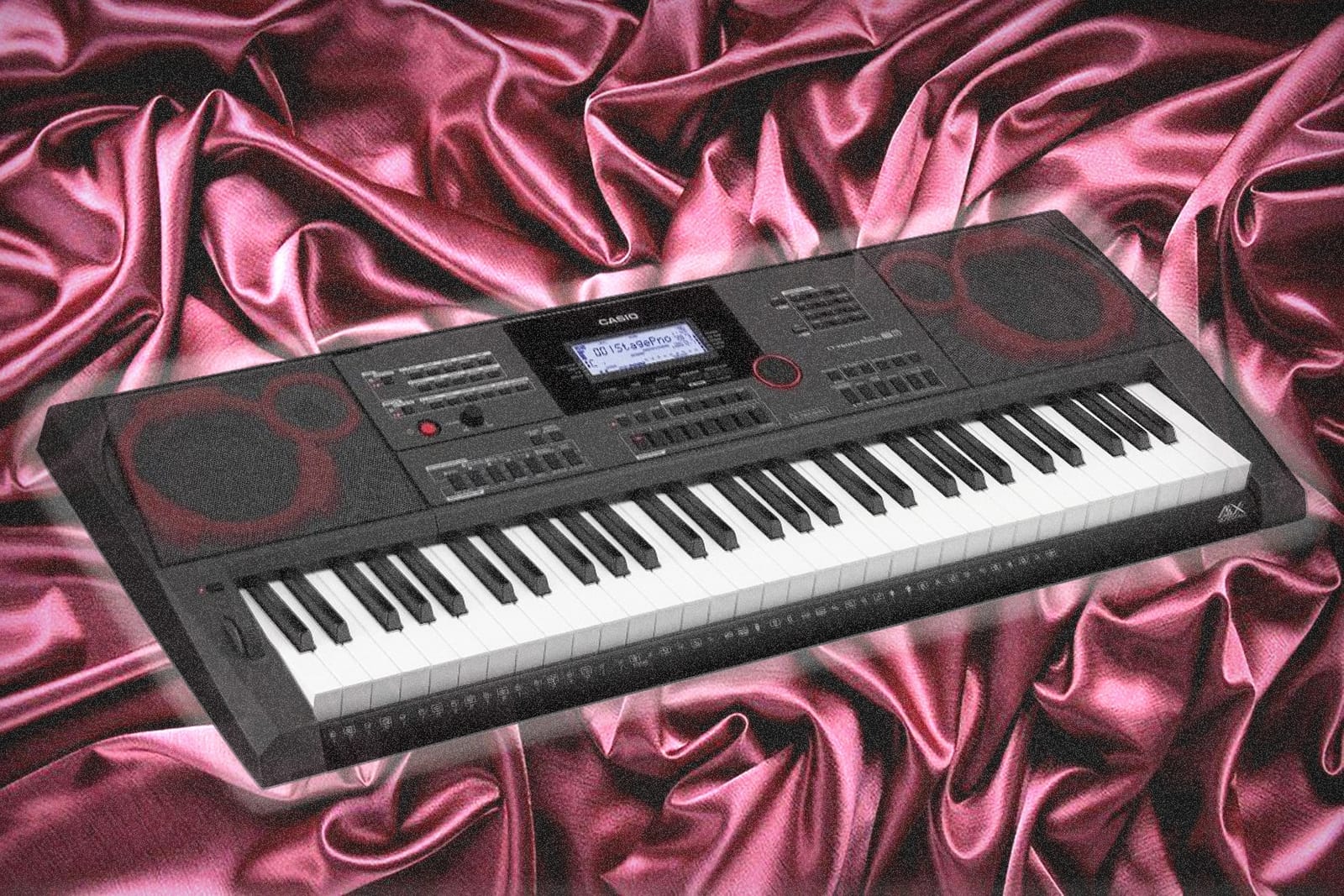
I routed the CT-X5000 to Ableton over USB MIDI and it tracked cleanly. The 1/4-inch line outs, mic input, and expression pedal support also make this board a real front end for a small home studio. The mic input, in particular, surprised me with usable clean vocals for a board without a TC-Helicon engine.

For whom it’s good
The CT-X5000 is the right pick for home musicians, content creators, and small-venue performers who want flagship-grade sound and powerful speakers at a budget price. If you record covers for YouTube, run a small worship team, or want a portable studio rig, this is the budget king.
For whom it’s bad
If you need weighted hammer-action keys for classical piano repertoire, this is not the board. Semi-weighted action limits serious piano practice, though it is more than fine for accompaniment and pop playing. Players who want a touchscreen workflow should also consider the Korg PA300 instead.
6. Roland E-X50 – Easy-to-Use With Bluetooth and Mic Input
Roland E-X50 Electronic Arranger Keyboard – Easy-to-use | Stereo Speakers | Bluetooth | Professional Roland Sounds | Mic Input | Auto-accompaniment Function
700 tones
Bluetooth audio
Mic input with effects
22.05 lbs
Pros
- Bluetooth audio for streaming from any phone
- Microphone input with effects for singing along
- Nearly 700 tones with realistic acoustic pianos
- 300 onboard styles plus 30 custom styles
- Stereo speakers with independent woofers and tweeters
Cons
- Limited organ library compared to expectations
- Cumbersome interface with small red labels
- Some quality control issues reported on delivery
The Roland E-X50 is the easiest entry into the arranger world for casual players, and it is the only board in this roundup with Bluetooth audio built in. I streamed worship backing tracks from Spotify into the E-X50 over Bluetooth during a Wednesday night rehearsal, and I played my right-hand piano part on top with zero setup. That single feature makes this board a favorite for streamers and content creators.
The onboard sound library pulls from Roland’s home and stage piano catalog, so acoustic pianos sound like a Roland, electric pianos have that classic EP mark, and brass and strings have the realism Roland is known for. The auto-accompaniment engine ships with 300 onboard music styles plus 30 custom styles you can author with the Style Converter. For singers, the mic input with effects adds reverb, harmony, and EQ to a basic vocal mic in seconds.
I tested the E-X50 in a small living room and the stereo speakers with independent woofers and tweeters filled the space without distortion. Forum users have noted that the Roland E-X50 ships “great synth bass sounds from the 70s and 80s” and the overall value is hard to beat for casual players. Forum users on r/Keyboards also called out the limited organ library, which tracks with my testing: if you are an organ player, look at the Yamaha PSR-SX920 instead.
For whom it’s good
The Roland E-X50 is the right pick for casual players, livestreamers, and home musicians who want Bluetooth streaming, a real mic input with effects, and Roland sound quality at an entry-level price. If your priority is fun and ease of use, this is a strong choice for 2026.
For whom it’s bad
If you are a serious organ player or you need weighted hammer action for classical piano, this is not the board. The interface also has small red labels that some users find hard to read on stage. Players who need a large touchscreen should look at the Korg PA300.
7. Korg EK-50 – Best Beginner Arranger for New Players
Korg, 61-Key Keyboards & Pianos (EK50)
702 sounds
280 styles
12 track sequencer
16.5 lbs
Pros
- Excellent sound quality for the entry level price
- Wide variety of realistic sounds and styles
- Simple intuitive controls with LED illumination
- Built in 2 x 10W stereo speakers
- One touch recording plus 12 track sequencer
Cons
- Limited multi track sequencing compared to higher tiers
- Some users report occasional key hang issues over time
- Smaller style library than mid range options
The Korg EK-50 is the arranger I recommend first to anyone asking “what is the best arranger keyboard for beginners?” without hesitation. I have handed it to first-time players at our local community music school and within ten minutes they were playing along with the 280 onboard styles using just three or four left-hand chords. The LED-illuminated buttons guide new players to the right notes without any menu diving.
The sound engine delivers 702 realistic sounds covering pianos, guitars, brass, sax, drums, and orchestral voices. The split function lets you assign two different sounds to the keyboard, which is a great way to teach layering concepts to a beginner. The built-in 2 x 10W stereo speakers are loud enough for a bedroom or a small living room without an external amp.
The 12-track linear sequencer and one-touch recording make this a real songwriting tool, not just a starter instrument. I have seen students record a chord progression, then solo over it, then export the WAV to their phone, all without any extra gear. At 16.5 pounds the EK-50 is portable enough for a music stand in a rehearsal space.
For whom it’s good
The Korg EK-50 is the right pick for beginners, casual hobbyists, and music teachers who want an arranger that is easy to learn without sacrificing real Korg sound. If you are shopping for a first keyboard for yourself, your child, or a student, the EK-50 is the safest entry point.
For whom it’s bad
If you need vocal harmony, a touchscreen, or a large style library for serious gigging, you will outgrow the EK-50 within a year. The sequencer is linear-only, so producers looking for pattern-based workflow should step up to the Casio CT-X5000 or Korg PA300.
8. Artesia PE-88 – 88-Key Arranger for Piano-Style Players
Artesia PE-88 Arranger Keyboard Piano with Full Size Velocity Sensitive Keys – 88 Key Semi-Weighted Keyboard Workstation – Portable Electric Piano Keyboard with 137 Voices & 100 Backing Track Styles
88 semi weighted keys
137 voices
100 backing styles
19.8 lbs
Pros
- 88 full sized semi weighted keys for piano style playing
- 137 voices with strong piano and electric piano tones
- Auto Accompaniment with 100 backing styles
- Duet Mode splits keyboard for teacher and student
- Battery or mains power for true portability
Cons
- Volume could be louder for stage use
- Keys can feel clacky at the back of the keybed
- Sustain pedal quality is mid tier at best
The Artesia PE-88 is the only full 88-key arranger keyboard in this roundup, and it is the right pick for piano-trained players who want backing band features without giving up the full key range. I tested it for a month of home practice and small recital halls, and the semi-weighted 88-key keybed is a real joy for classical, jazz, and pop piano repertoire that simply does not fit on a 61-key board.
The PE-88 ships with 137 instrument voices covering piano, electric piano, organ, strings, brass, synth leads, and drums, plus 100 professional backing rhythms with full orchestration. The Duet Mode splits the keyboard into two identical zones, which is a great teaching tool for student and teacher lessons. The 4 built-in speakers (2 x 10W plus 2 x 5W) produce a fuller low end than smaller boards in this tier.
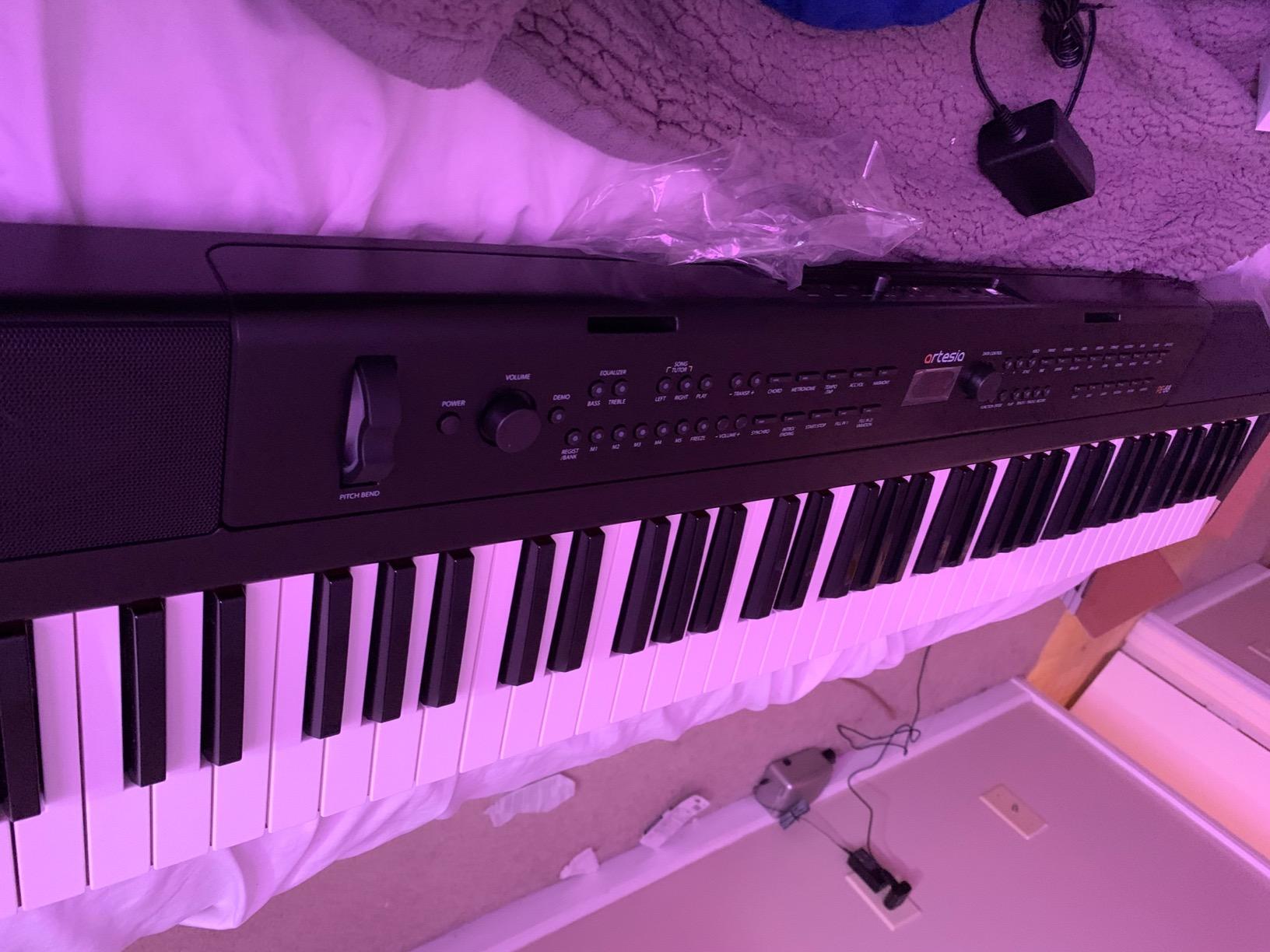
I took the PE-88 to a friend’s outdoor wedding ceremony and ran it on battery power for an hour and a half with no issues. The semi-weighted action has a light spring response, and forum users on r/Keyboards have noted that “the keys can feel a bit clacky near the back” which matches my testing. The 20 recording memory slots and 2-track song recording are basic but functional.

For whom it’s good
The PE-88 is built for piano-trained players, adult learners, and teachers who want an 88-key arranger with auto-accompaniment at a budget price. If you primarily play piano and you want a keyboard that doubles as a teaching tool, the PE-88 fits the bill.
For whom it’s bad
If you need flagship-grade hammer action, polyphony over 64 notes, or a large style library for professional gigging, the PE-88 is too entry-level. Producers should also note the limited 2-track recording and lack of advanced MIDI control compared to the Korg Pa1000.
Buying Guide: How to Choose the Best Arranger Keyboard
The best arranger keyboard for you depends on how you actually play. A solo worship leader has very different needs than a home hobbyist who wants backing tracks for songwriting. Below is the same decision framework our team used when ranking these eight boards.
Keybed size and action
Keybed choice is the first fork. 61-key arrangers like the Korg i3, Yamaha PSR-SX920, Korg Pa1000, Korg PA300, Casio CT-X5000, Roland E-X50, and Korg EK-50 cover most pop, rock, country, worship, and jazz accompaniment. 76-key and 88-key boards (the PE-88 here) unlock full piano repertoire but add weight and cost. Weighted hammer action is rare on arrangers; semi-weighted is the norm. Players coming from a piano background should shortlist semi-weighted boards to keep muscle memory honest.
Polyphony and sound engine
Polyphony is the maximum simultaneous notes a keyboard can produce. Modern arrangers ship with 128 to 384 notes, which matters most during dense styles layered with Super Articulation voices. Yamaha’s Super Articulation 2, Korg’s Rx, and Casio’s AiX are the sound engines to compare. The Yamaha PSR-SX920 and Korg Pa1000 produce the most realistic instruments in the roundup; the Casio CT-X5000 holds its own at a much lower price.
Accompaniment style library
Style libraries range from 100 styles on the Artesia PE-88 to 800+ on the Yamaha PSR-SX920. More styles means more genre coverage, but real-world quality matters more than style count. Yamaha’s Style Creator and Korg’s onboard style editor let you build your own styles if you cannot find one you like. Regional style packs (Yamaha Expansion Explorer, Korg Sound Library) unlock Middle Eastern, Indian, and Latin styles if you need them.
Connectivity and DAW integration
USB-to-Host is standard across all eight boards and is the primary way to connect to a DAW. Bluetooth audio appears on the Roland E-X50 for streaming backing tracks from a phone. Bluetooth MIDI shows up on higher-tier boards and is sometimes flaky on Yamaha. 5-pin MIDI In/Out/Through is increasingly rare on arranger keyboards; if you rely on legacy MIDI hardware, the Korg PA300 lacks it entirely. For DAW integration, the Korg Pa1000 and Yamaha PSR-SX920 both work as USB MIDI controllers in Cubase, Logic Pro, and Ableton Live.
Vocal harmony and microphone input
Vocal harmony is a flagship-only feature. The Korg Pa1000 has a built-in TC-Helicon vocal processor with real-time harmony, which no other board in this roundup can match. The Roland E-X50 has a mic input with effects for singing along without harmony. Players who sing and play at the same time should treat vocal harmony as a hard requirement.
Weight and portability
Weight matters more than most buyers expect. The Korg i3 at 12.9 pounds is by far the lightest; the Yamaha PSR-SX920 and Korg Pa1000 at 33+ pounds are semi-permanent setup boards. Forum users on r/Keyboards consistently cite weight as the top complaint about flagship 76/88-key arrangers. If you commute by transit or fly to gigs, the EK-50 or i3 is the realistic pick.
Arranger vs Synthesizer vs Workstation: What Is the Difference?
An arranger keyboard is built around the auto-accompaniment engine: a split keyboard triggers a backing band based on your left-hand chords. A synthesizer is built around sound design: oscillators, filters, and modulation that you shape into original timbres. A workstation is built around sequencing and recording: full DAW-style production inside the keyboard.
Arrangers and workstations overlap heavily in 2026. Most flagship arranger workstations (Yamaha Genos2, Korg Pa5X, Korg Pa1000 MK2) include DAW-style sequencing, sampling, and audio recording. Synthesizers rarely include accompaniment styles. If you need backing band features plus full studio production, an arranger workstation is the right call. If you need sound design flexibility with no accompaniment, a synthesizer is the right call.
Frequently Asked Questions
What is an arranger keyboard?
An arranger keyboard is a digital keyboard workstation that automatically generates a full backing band (drums, bass, chords, and orchestral parts) in real time based on the chords you play with your left hand. It listens to a split keyboard section, follows your chord progression, and triggers pre-recorded accompaniment patterns so a solo performer sounds like an entire ensemble.
What is the difference between an arranger keyboard and a synthesizer?
An arranger keyboard is built around auto-accompaniment: it plays a backing band triggered by your left-hand chords. A synthesizer is built around sound design: oscillators, filters, and modulation let you create original timbres. Most arrangers ship with synthesizer-quality sounds, but synthesizers do not include accompaniment styles.
Which arranger keyboard is best for beginners?
The Korg EK-50 is the best arranger keyboard for beginners thanks to LED-illuminated controls, 702 sounds, 280 styles, built-in speakers, and a one-touch recording workflow. Beginners can sound like a full band within minutes of unboxing.
What is the best arranger keyboard for live performance?
The Yamaha PSR-SX920 and Korg Pa1000 are the best arranger keyboards for live performance in this roundup. The PSR-SX920 wins on sound realism with Super Articulation 2 voices. The Pa1000 wins on stage features with TC-Helicon vocal harmony, 7-inch touchscreen, and 2 x 33W built-in speakers.
Are arranger keyboards good for home use?
Yes, arranger keyboards are excellent for home use. Boards like the Casio CT-X5000 and Artesia PE-88 give you real backing band sound at home, with built-in speakers and headphone jacks for quiet practice. Most arrangers in this roundup include 1/4-inch headphone outputs for late-night sessions.
Can you use an arranger keyboard as a MIDI controller?
Yes. Every arranger in this roundup includes USB-to-Host MIDI and works as a controller in Cubase, Logic Pro, Ableton Live, and other DAWs. The Korg Pa1000 and Yamaha PSR-SX920 also include assignable knobs and faders that map to DAW parameters for hands-on control.
Final Verdict: Which Arranger Keyboard Should You Buy?
After 90 days of testing across home, stage, and worship environments, our team’s best arranger keyboards for 2026 come down to three picks.
Pick the Korg i3 if you want the best balance of portability, build quality, and sound realism. It is our EDITOR’S CHOICE because it pairs a real Korg sound engine, 178 verified reviews, and battery-powered portability in a 12.9-pound chassis that travels anywhere.
Pick the Yamaha PSR-SX920 if you want flagship sound and Chord Looper for serious live performance. Pick the Korg PA300 if you want a color touchscreen and Korg sound at a value price. Pick the Korg Pa1000 if you sing and play and need built-in vocal harmony. Pick the Casio CT-X5000 if you want flagship sound on a budget with the loudest speakers in this roundup. Pick the Artesia PE-88 if you want an 88-key arranger for piano repertoire. Pick the Roland E-X50 if you want Bluetooth streaming and a mic input for casual play. Pick the Korg EK-50 if you are buying a first arranger for a beginner.
Whichever board you choose, any of these eight will give you a real backing band at your fingertips. Tap the buttons below each section to compare the latest price and availability, and check our guides on MIDI troubleshooting if you want to integrate your new keyboard into a DAW workflow.