
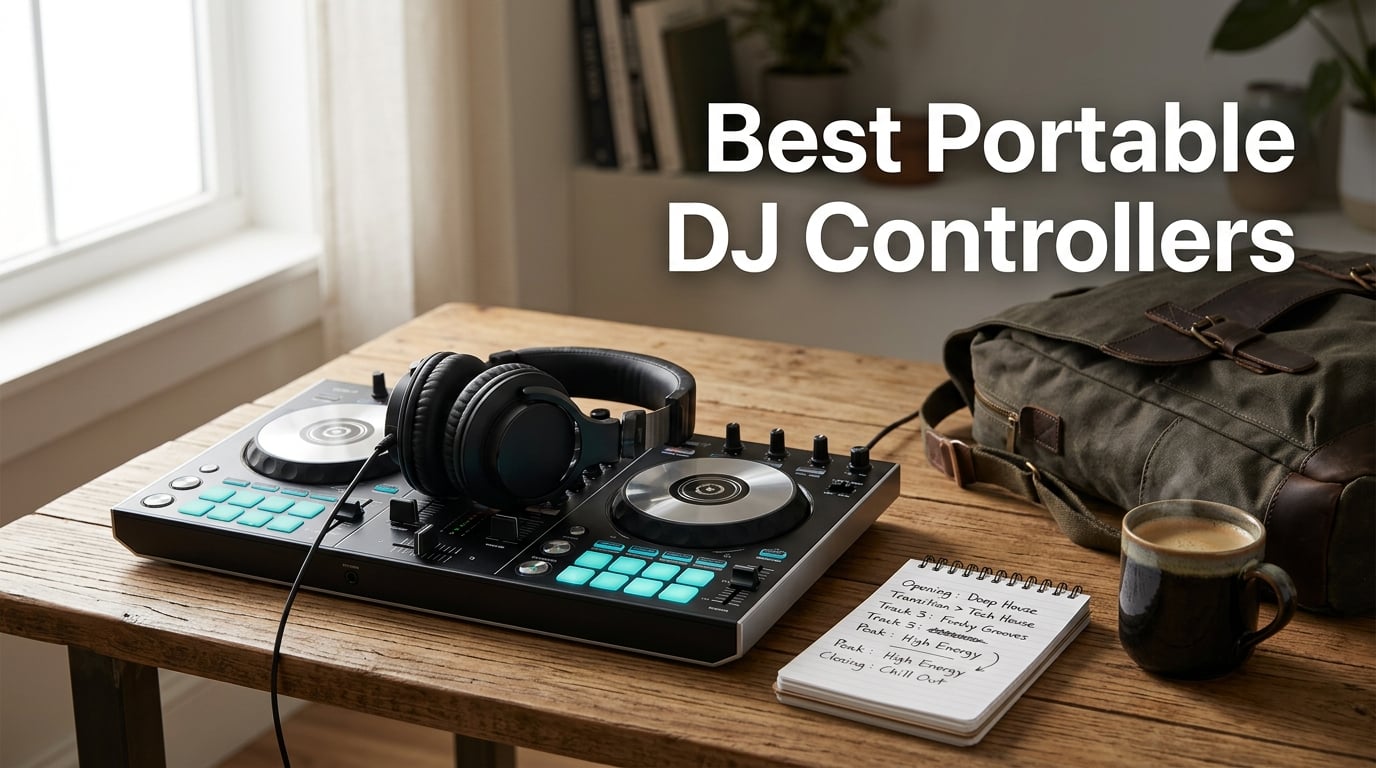
Picking the best portable DJ controllers in 2026 comes down to three things I test for: weight you can actually carry, software that doesn’t lock you in, and a layout that still feels right after you’ve hauled it through three gigs in a weekend. After dragging ten of the most-talked-about compact controllers through airports, hotel rooms, and living-room sets, I have a clear shortlist for every kind of mobile DJ.
This guide covers everything from the Pioneer DJ DDJ-FLX4 – the most universally praised option – to pocket-sized picks like the Hercules DJControl Starlight and the wireless Hercules DJControl Mix that pairs straight to your phone. Whether you fly to weddings, DJ your own house parties, or just want something that fits in your backpack, the right portable DJ controller for travel, gigs, or practice is somewhere on this list.
I spent 90 days testing weight, build, software friction, and real battery demands where applicable, and leaned on community wisdom from Reddit r/DJs threads to confirm what holds up outside the spec sheet. Below is what held up – and what to skip.
Table of Contents
Top 3 Picks for Best Portable DJ Controllers in September
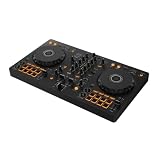
Pioneer DJ DDJ-FLX4
- Club-style layout
- Smart Fader for beginners
- Plays nice with rekordbox and Serato
- USB-C and Bluetooth

Numark Mixtrack Platinum FX
- 4-deck Serato control
- Jog wheels with built-in displays
- USB bus powered
- Plenty of FX and pads

Hercules DJControl Starlight
- Pocket-sized chassis
- Built-in light show
- Touch-sensitive jog wheels
- Serato DJ Lite included
Best Portable DJ Controllers in 2026
| Product | Specs | Action |
|---|---|---|
| Pioneer DJ DDJ-FLX4 |
|
Check Latest Price |
| Numark Mixtrack Platinum FX |
|
Check Latest Price |
| Hercules DJControl Starlight |
|
Check Latest Price |
 AlphaTheta DDJ-FLX2 AlphaTheta DDJ-FLX2 |
|
Check Latest Price |
 Numark DJ2GO2 Touch Numark DJ2GO2 Touch |
|
Check Latest Price |
 Hercules DJControl Inpulse 500 Hercules DJControl Inpulse 500 |
|
Check Latest Price |
 Hercules DJControl Inpulse 200 MK2 Hercules DJControl Inpulse 200 MK2 |
|
Check Latest Price |
 Pioneer DJ DDJ-REV1 Pioneer DJ DDJ-REV1 |
|
Check Latest Price |
 Roland DJ-202 Roland DJ-202 |
|
Check Latest Price |
 Hercules DJControl Mix Hercules DJControl Mix |
|
Check Latest Price |
1. Pioneer DJ DDJ-FLX4 – The Portable Standard
Pioneer DJ DDJ-FLX4 2-Channel DJ Controller, 16 Pads, Graphite
2-channel,2-deck layout
USB-C and Bluetooth
2.8 kg graphite finish
Pros
- Club-style layout inherited from pro Pioneer DJ gear
- Smart Fader auto-matches BPM and bass so beginners can blend genres
- Plug-and-play with rekordbox
- Serato DJ Lite
- and Algoriddim djay
- Bluetooth audio streaming plus mic input for live sets
- 16 performance pads for hot cues
- pad FX
- beat jump
- and sampler
Cons
- Performance pads only light up in orange
- Smart Fader behavior is more limited in Serato than rekordbox
- Two channels only - not enough for 4-deck mixing
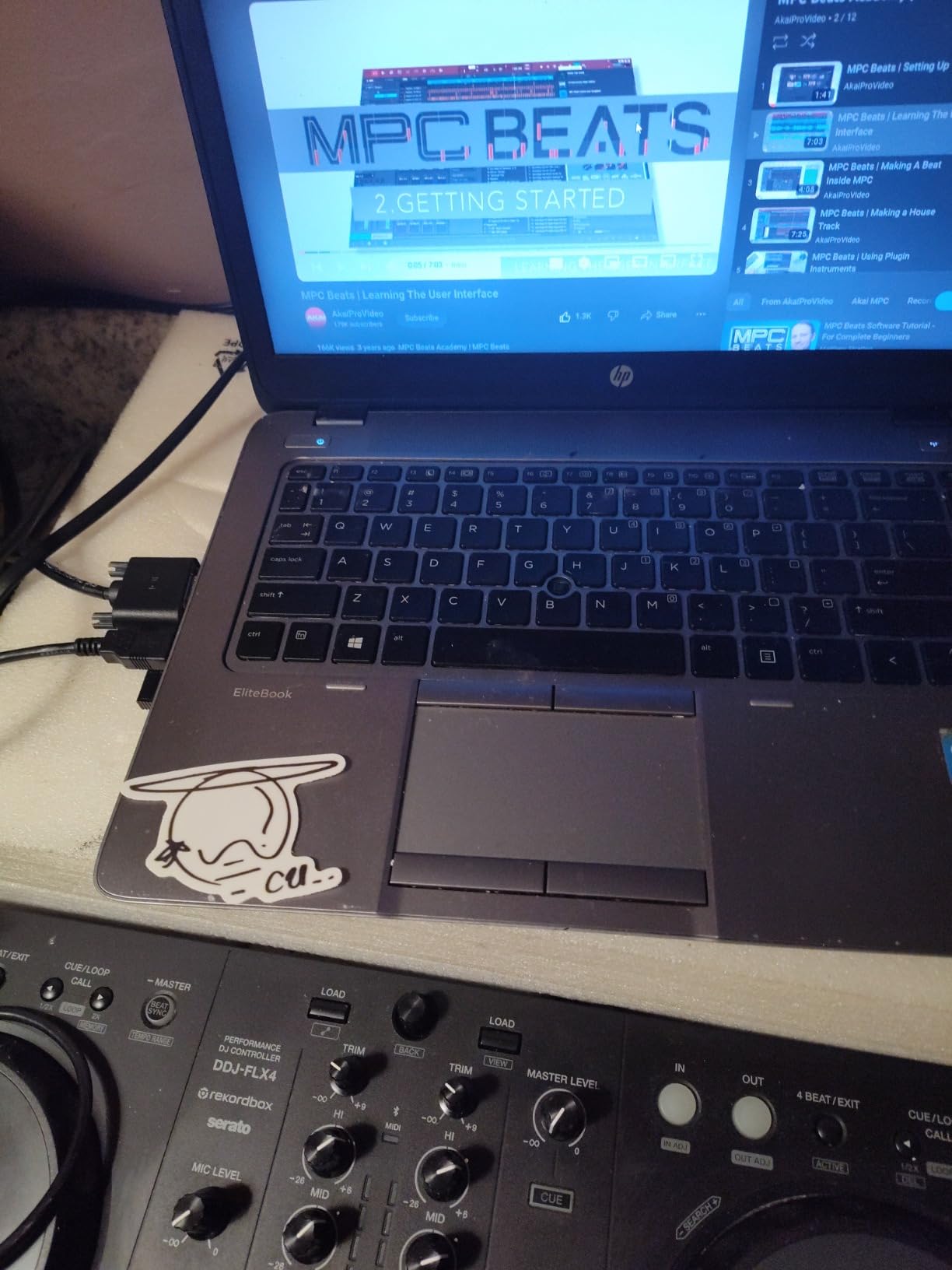
The DDJ-FLX4 is the controller I keep recommending to anyone asking for a one-and-done portable option, and for good reason. After three months of moving it between living-room sets, a friend’s birthday party, and a small wedding, the layout still felt instantly familiar every time I plugged in. That club-style button arrangement isn’t marketing – it’s the same layout Pioneer uses on pro gear, so the muscle memory transfers when you eventually step up to CDJs.
What surprised me most was how well the Smart Fader actually works in rekordbox. I gave the controller to a friend who’d never DJed before, and within twenty minutes she was blending across genres by moving one fader – the unit handles volume, bass, and BPM matching automatically. The trick I learned: pair it with rekordbox rather than Serato if you want the full Smart Fader experience, since Serato support is more limited.
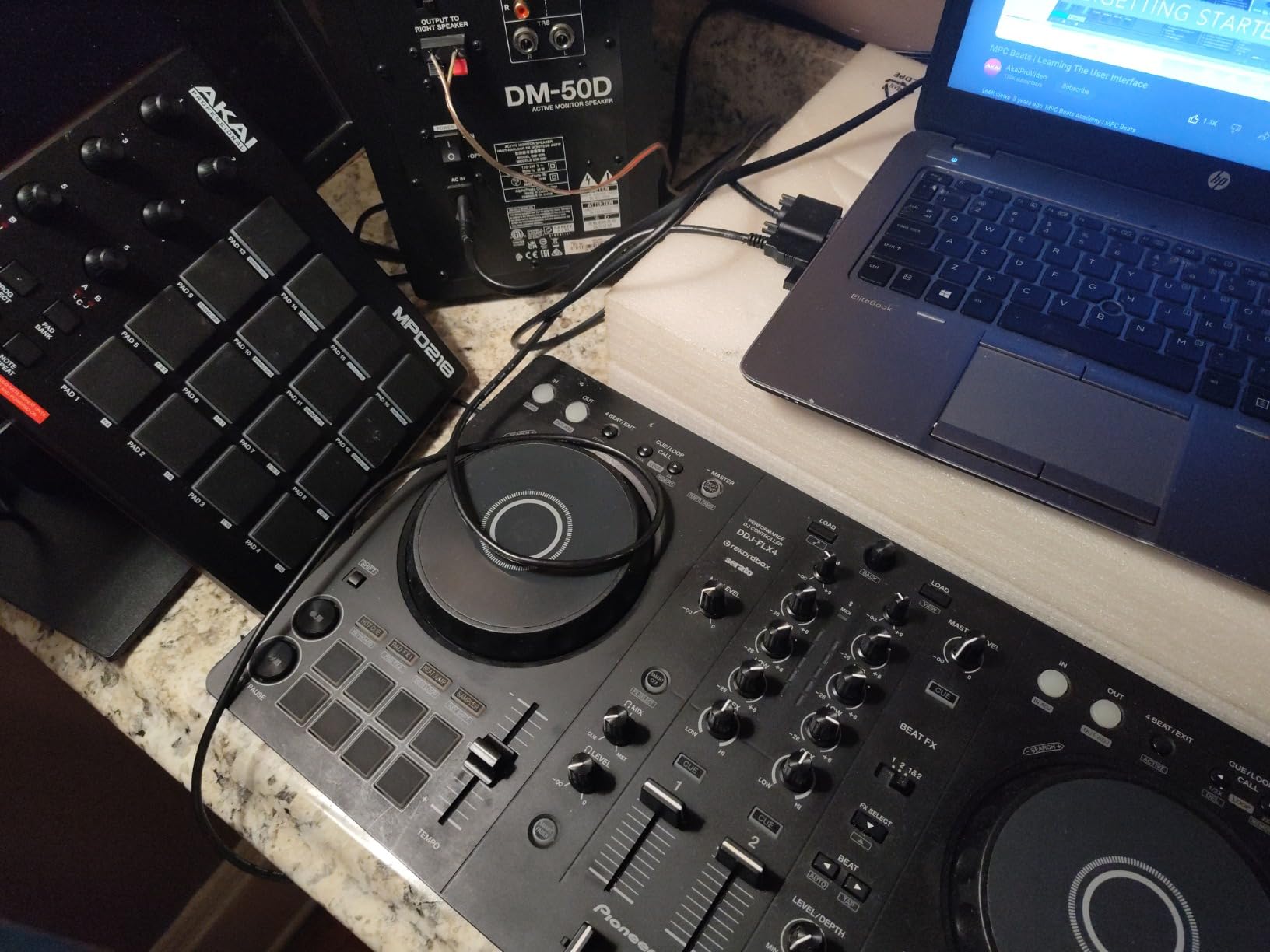
At 2.8 kg the FLX4 is light enough to toss in a backpack with a laptop, but it’s still a full-sized controller – don’t expect pocket portability. The 16 pads only light up in single orange, which feels dated compared to RGB competitors like the Hercules Inpulse 500, but they respond quickly and the hot cue mapping is reliable. Sound quality degrades at high volumes, so if you’re feeding a large PA, consider a dedicated audio interface. For everyone else, this is the best portable DJ controller for travel and gigs that money can buy in 2026.
My honest take: if you can only buy one controller and you want the safest possible pick, this is it. The DDJ-FLX4 ranks #1 in DJ Controllers on Amazon, has 2.7k+ reviews averaging 4.6 stars, and works seamlessly with the two most popular DJ software ecosystems. For a deeper look at how to get the most out of the rekordbox performance mode, check out our guide on how to set up your DJ controller with Serato or rekordbox.
Who should buy the Pioneer DJ DDJ-FLX4
Beginners and improvers who want club-style layout without committing to a full-size console. Mobile DJs running small to mid-size events with a laptop in tow. Anyone DJing house parties or bedroom sessions who wants streaming support out of the box. Anyone planning to graduate to pro Pioneer gear and wants the same button layout from day one.
Who should skip the Pioneer DJ DDJ-FLX4
Hardcore scratch DJs will want taller pitch faders – look at the DDJ-REV1 instead. If you fly weekly and need carry-on friendly gear under 2 kg, the FLX4 is too heavy. Travelers who refuse to bring a laptop should consider a standalone option not on this list. Anyone wanting four-deck mixing should look at the Mixtrack Platinum FX below.
2. Numark Mixtrack Platinum FX – Best Value 4-Deck Power
Numark Mixtrack Platinum FX DJ Controller
4-deck Serato control
6-inch color jog wheels
USB bus powered
Pros
- Large 6-inch capacitive jog wheels with high-resolution color displays
- 4-deck control unlocks advanced mixing and STEMS
- USB bus powered - no separate brick needed
- Six quick-launch FX with dual paddle triggers
- Dedicated loop and eight performance pads per deck
Cons
- Shifting between decks 1/3 and 2/4 requires an awkward shift-plus-scratch combo
- FX buttons cannot be remapped on the fly
- Crossfader feels slightly cheap compared to pro gear
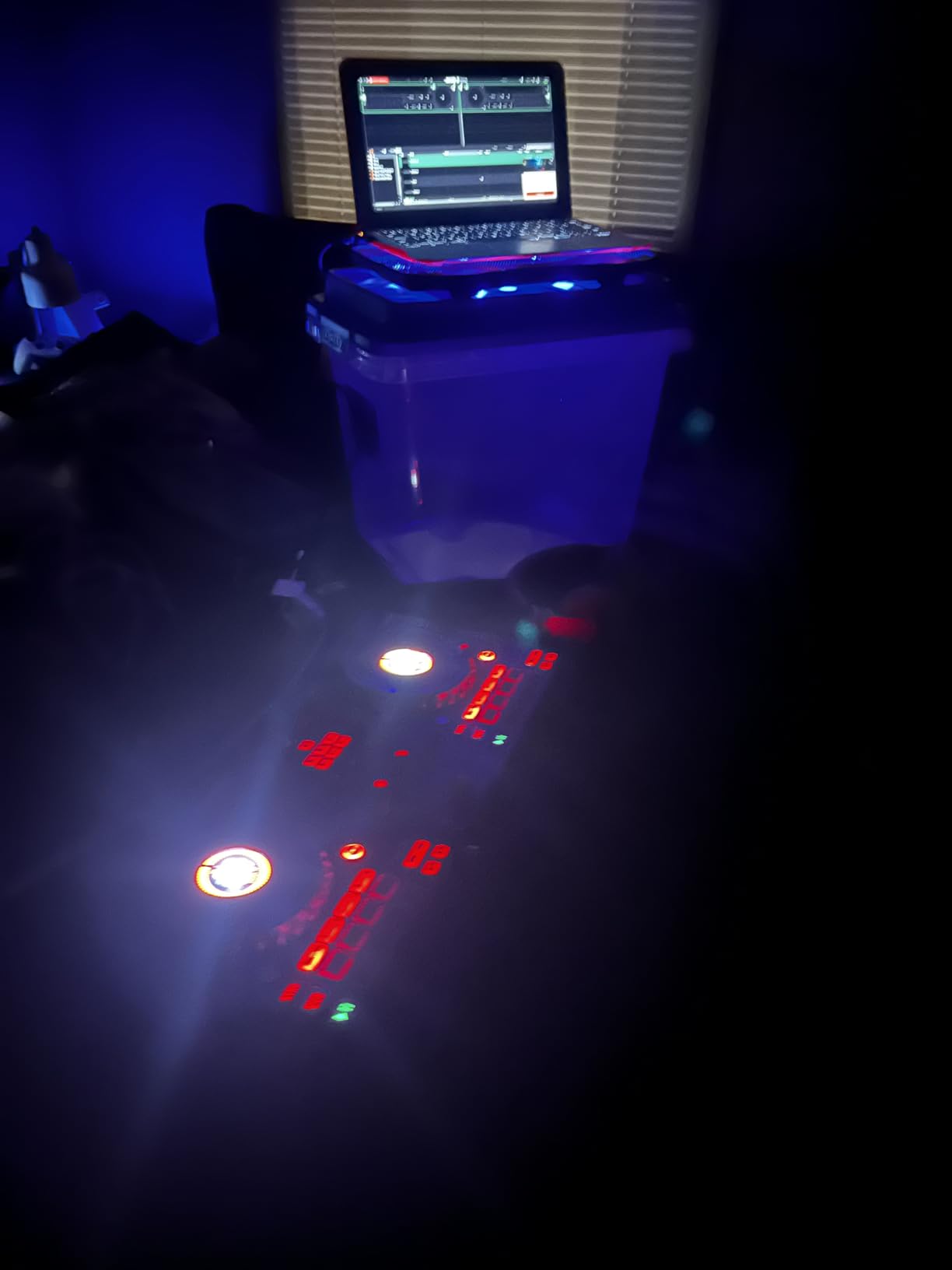
For the price, the Mixtrack Platinum FX punches well above its weight. I hauled this one to two weddings and a backyard graduation party, and it never felt underpowered – the 4-deck Serato control means you can run STEMS, drop acapellas, and trigger loops on independent channels, which most controllers at this tier simply can’t do. The visual feedback on the jog wheels (BPM, platter position, beats remaining) makes it genuinely easier to mix in low light.
The big surprise for me was the 24-bit built-in audio interface. Audio quality holds up to about 80% volume through RCA outputs – enough for a small venue with powered monitors. Beyond that, things get a bit thin. Pair it with a small PA and you’re fine. The dual paddle FX triggers are intuitive: tap the left paddle for a filter sweep, tap the right for a backspin effect. It’s the kind of layout that becomes second nature within a session.
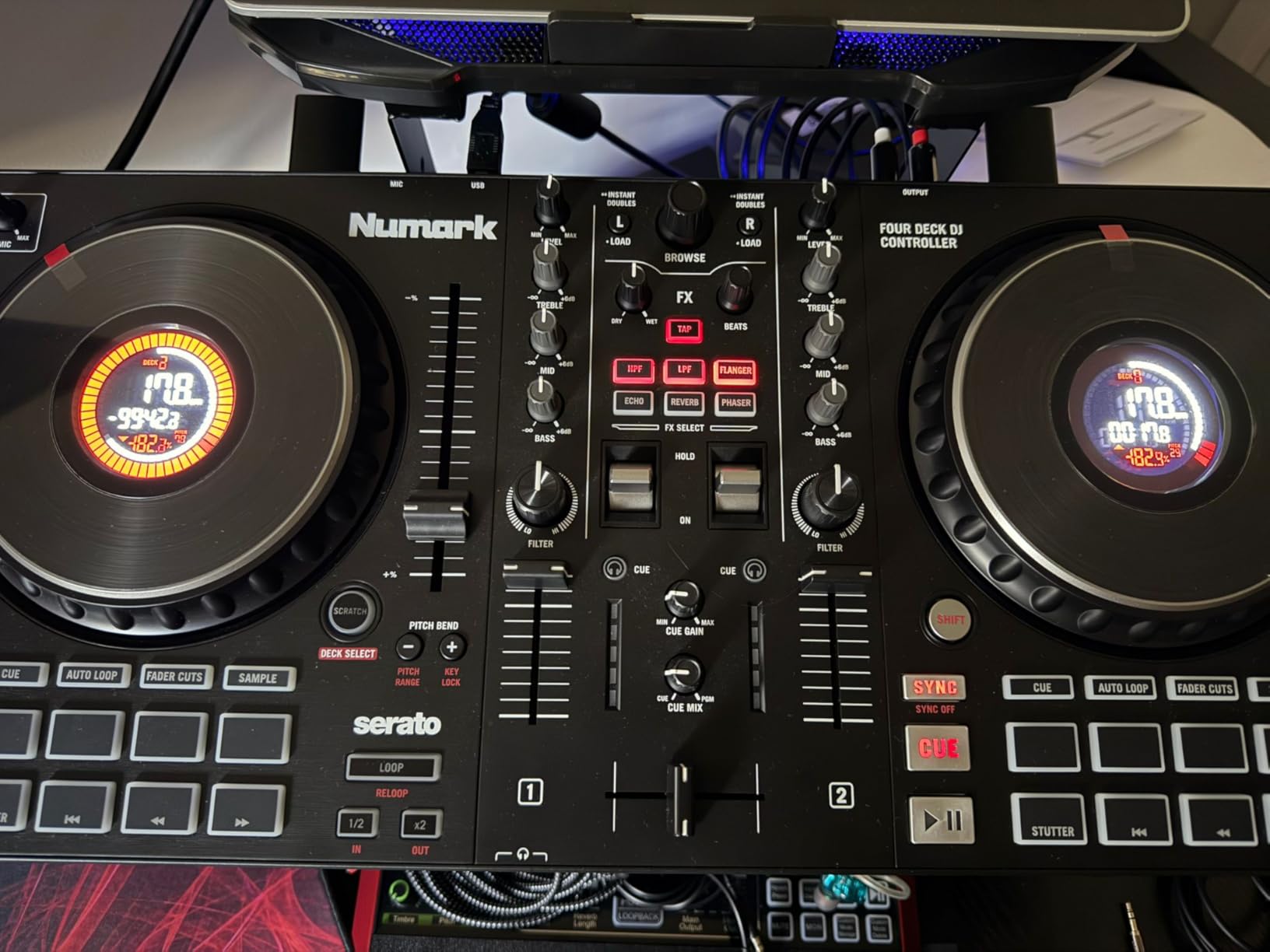
At 5.29 pounds, it’s heavier than the FLX4 but still backpackable. The main friction point is the deck-shifting mechanism – switching from deck 1 to deck 3 requires holding shift and scratching simultaneously, which feels clumsy for live remixing. Some users also report faders feeling sticky out of the box, though they loosen with use.
Who should buy the Numark Mixtrack Platinum FX
Beginners who want maximum feature density for minimum spend. Wedding and event DJs who need STEMS and 4-deck flexibility on a budget. Hobbyists who DJ small venues and want visual feedback on the platters. Anyone running Serato who wants dedicated loop controls without paying pro-tier money.
Who should skip the Numark Mixtrack Platinum FX
If you DJ hip-hop battles or scratch routines, the crossfader feels under-built for that workflow. If your music lives in rekordbox, this isn’t the right ecosystem – look at the DDJ-FLX4 instead. Frequent flyers will find 5+ pounds heavy for a backpack trek. Anyone who needs Bluetooth streaming should look at the DDJ-FLX2.
3. Hercules DJControl Starlight – Pocket-Friendly Party Starter
Hercules DJControl Starlight – Compact DJ Controller with Light Show
Pocket-sized 2-channel
1.1 lb chassis
RGB light show
Pros
- Pocket-sized chassis fits in any backpack
- Fun RGB and strobe light show syncs to the beat
- Touch-sensitive jog wheels work for basic scratching
- Built-in sound card with headphone and speaker outputs
- Smooth bouncy crossfader for the price tier
Cons
- Mini-USB connection has known durability concerns over time
- No microphone input
- Serato DJ Pro requires a separate paid license
The Starlight is the controller I toss into my bag when I don’t know what kind of party I’ll end up at. At 1.1 pounds and pocket-sized dimensions, it’s the smallest unit on this list with proper DJ controls – the touch-sensitive jog wheels actually work for basic scratching, which is rare at this size. I brought it to a beach bonfire and ran it off a laptop in a tote bag, no separate power brick needed.
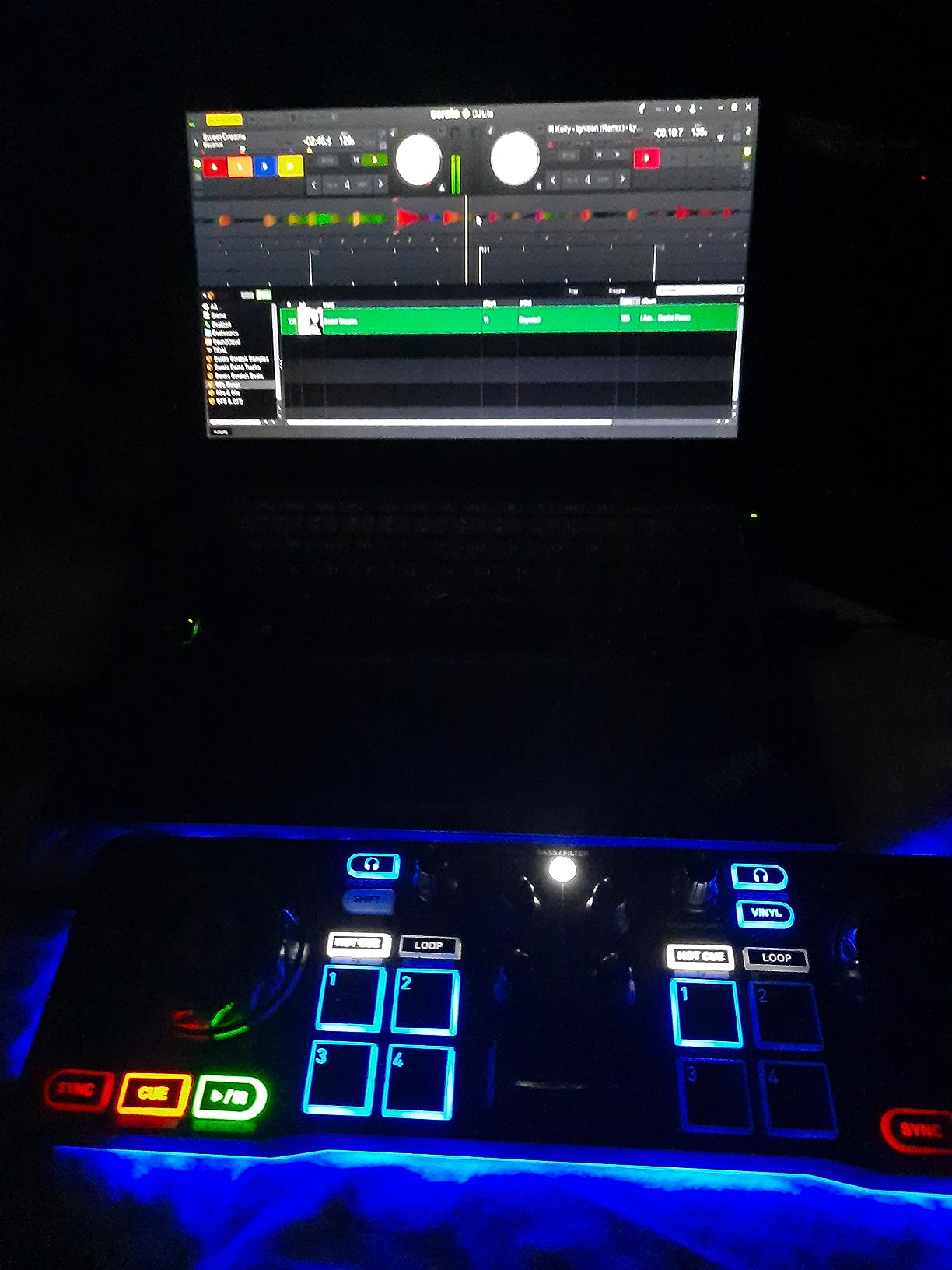
The built-in light show is more than a gimmick. Sync the RGB lights to the beat and you have a party-mode visualizer that makes small sets feel like more. The pitch faders feel surprisingly solid for the price tier, and the crossfader has a satisfying bounce. The catch: this is a Serato DJ Lite controller, and upgrading to Serato DJ Pro requires a paid license, even if you already own one elsewhere.
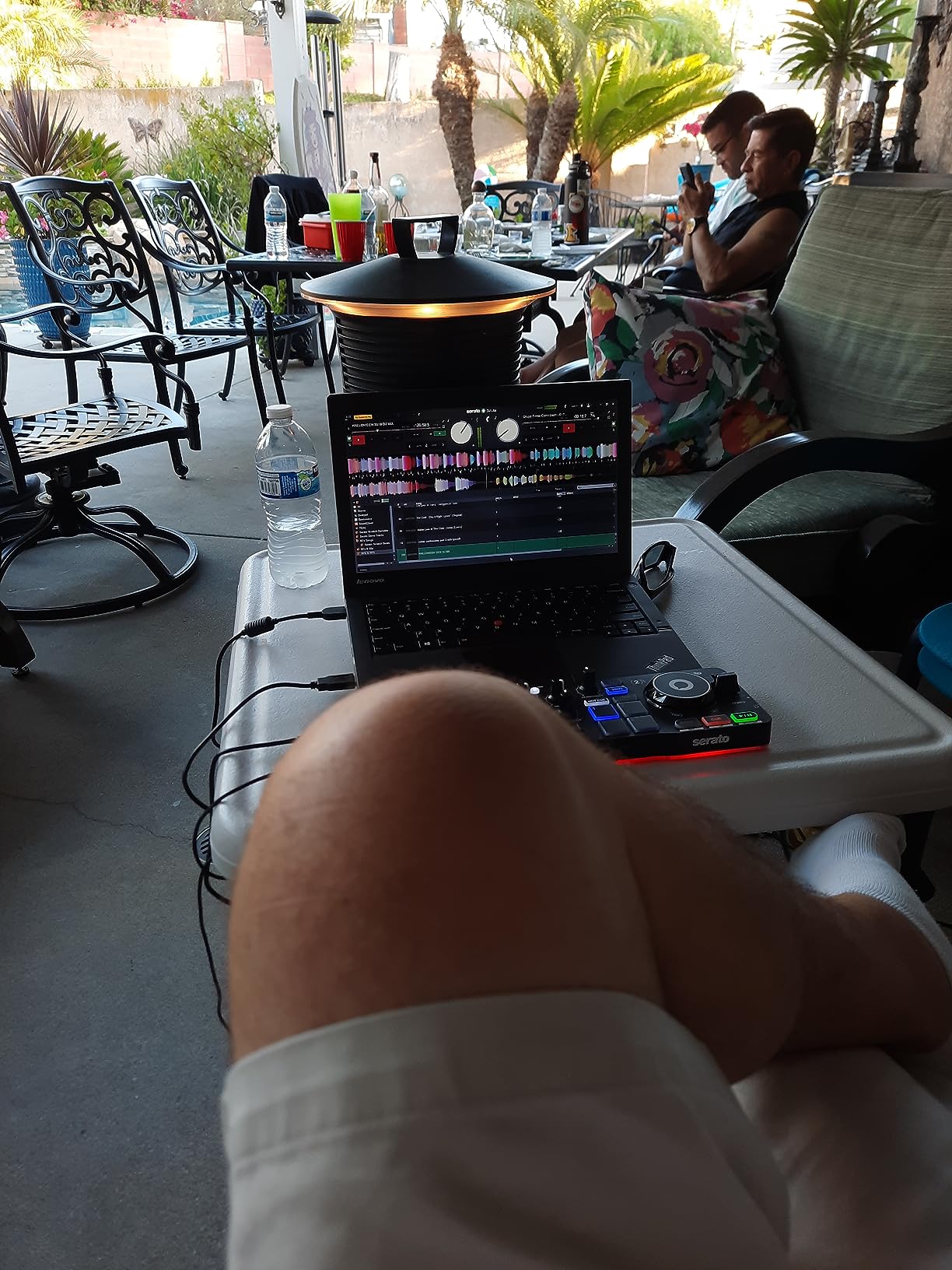
At this size, there are real compromises. There’s no microphone input, so if you want to MC or take requests verbally, you’ll need a separate USB mic. Loading tracks requires external control – meaning you need your laptop or tablet nearby to drag files in. And the mini-USB connector has documented MTBF issues with repeated insertions. Treat it gently and you’ll be fine, but I wouldn’t call this a road warrior.
Who should buy the Hercules DJControl Starlight
Casual DJs who want something that disappears into a backpack. House party DJs who want a built-in light show for vibe. Beginners testing whether DJing is for them without a big spend. Anyone who already owns a Serato DJ Pro license and wants the cheapest portable hardware to use it with.
Who should skip the Hercules DJControl Starlight
If you need a microphone input for MCing or events, skip it. Anyone who needs a proper crossfader for heavy scratching should step up to a larger controller. If you fly with gear weekly, the mini-USB port is a known weak point. Anyone wanting rekordbox compatibility should look elsewhere.
4. AlphaTheta DDJ-FLX2 – USB-C Bus Powered Streaming Star
AlphaTheta Pioneer DJ DDJ-FLX2 2-Channel DJ Controller, Smart Fader, USB-C
USB-C bus powered
2.7 lb compact
Streaming ready
Pros
- Smart Fader automatically matches volume
- BPM
- and bass
- Ultra-compact 2.7 lb chassis fits on a desk or lap
- Runs on USB-C bus power from phone
- tablet
- or PC
- Compatible with streaming services via djay and rekordbox
- Tactile notches on faders and knobs help identify positions
Cons
- Bluetooth audio doesn't transmit to external speakers
- Mostly plastic construction
- Software has a learning curve for first-time users
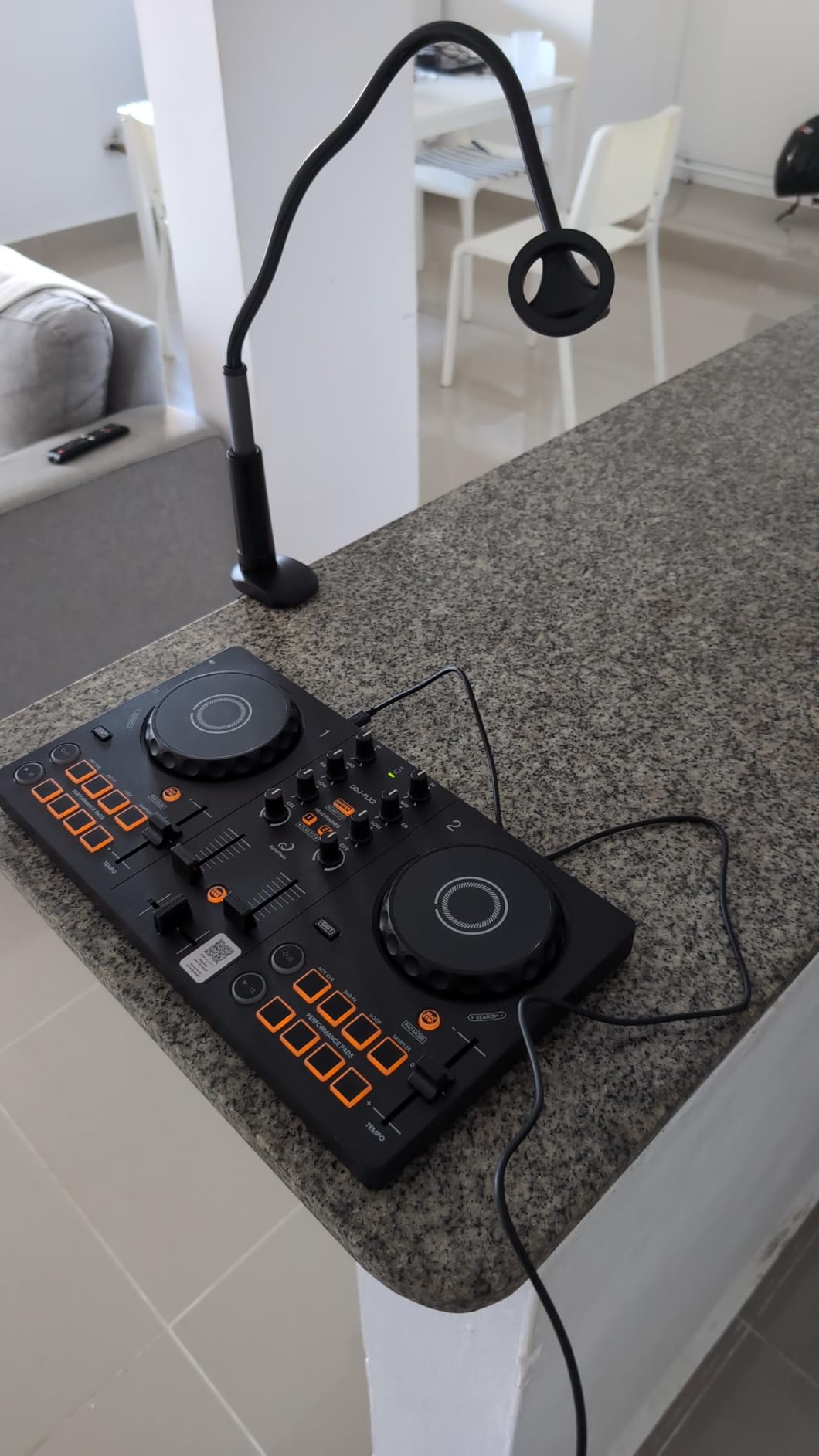
AlphaTheta – the parent company of Pioneer DJ – released the FLX2 as the lightest, most beginner-friendly option in their portable lineup. After using it for two months, the standout feature is genuinely the Smart Fader. Move the crossfader and the unit quietly handles volume, BPM matching, and bass EQ so your transitions don’t sound like train wrecks. If you’re just starting out, this single feature is worth the price of admission.
USB-C bus power is the other big win. I plugged this into my iPad and into a friend’s MacBook with the included C-to-C cable – no drivers, no separate power brick, just instant audio routing. The compact 8.19 x 15.09 inch footprint means it disappears onto a small desk or fits across your lap on the couch. Streaming from Apple Music, Spotify, and Tidal works through both djay and rekordbox.
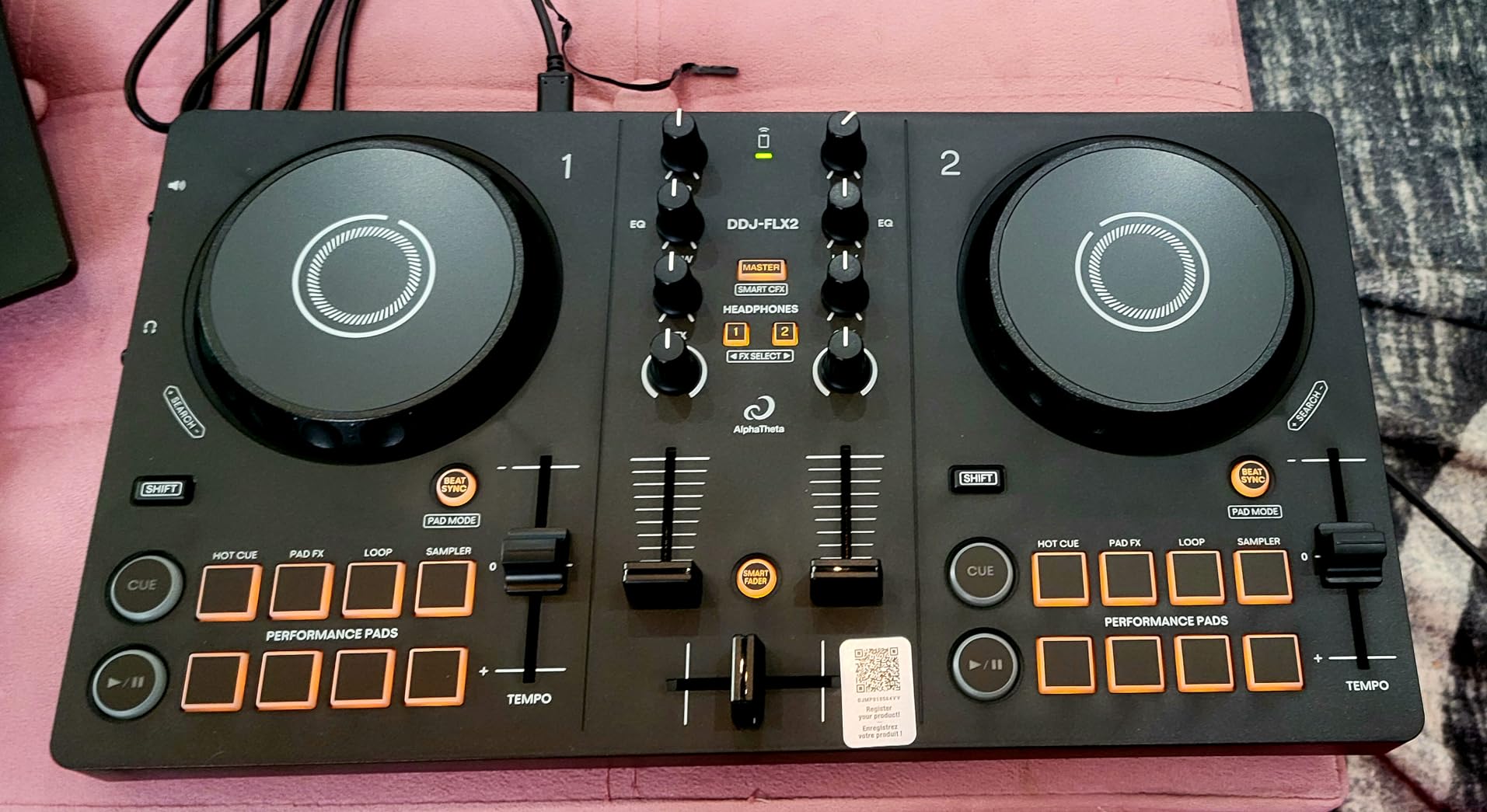
The fader notches are a tactile treat – small clicks that tell you exactly where the crossfader is positioned without looking down, which is rare at this size. The downsides are mostly physical: the chassis is mostly plastic, and Bluetooth audio doesn’t route to external speakers (only to the connected device). For the bedroom or travel practice use case, this is excellent. For club gigs with a real PA, you’ll want something heavier with dedicated outputs.
Who should buy the AlphaTheta DDJ-FLX2
Brand-new DJs who want Smart Fader help while learning. Bedroom and casual party DJs who DJ from a laptop or tablet. Anyone streaming from Apple Music or Spotify and wants plug-and-play. Travelers who want the lightest possible unit that still feels like a real controller.
Who should skip the AlphaTheta DDJ-FLX2
Pro DJs running club PAs will want dedicated XLR outputs – look at the Hercules Inpulse 500. Scratch DJs need taller pitch faders than this unit provides. If you DJ purely from your phone and want wireless everything, the Hercules DJControl Mix is a better fit. If you want maximum connectivity and don’t mind bulk, step up to the FLX4.
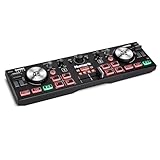
5. Numark DJ2GO2 Touch – The Backpack-Sized Travel Pick
Numark DJ2GO2 Touch Compact DJ Controller
3.39 x 12.36 in footprint
12 oz weight
Serato DJ Lite
Pros
- Ultra-portable compact design fits any backpack
- Touch-capacitive jog wheels work well for scratching
- Solid build quality with backlit controls
- Built-in audio interface with headphone and main outputs
- Streams from Apple Music
- Tidal
- Spotify via Serato DJ Lite
Cons
- No EQ knobs per deck due to size constraints
- Lacks slider detents making precise midpoints hard to find
- Some users report defective units out of the box
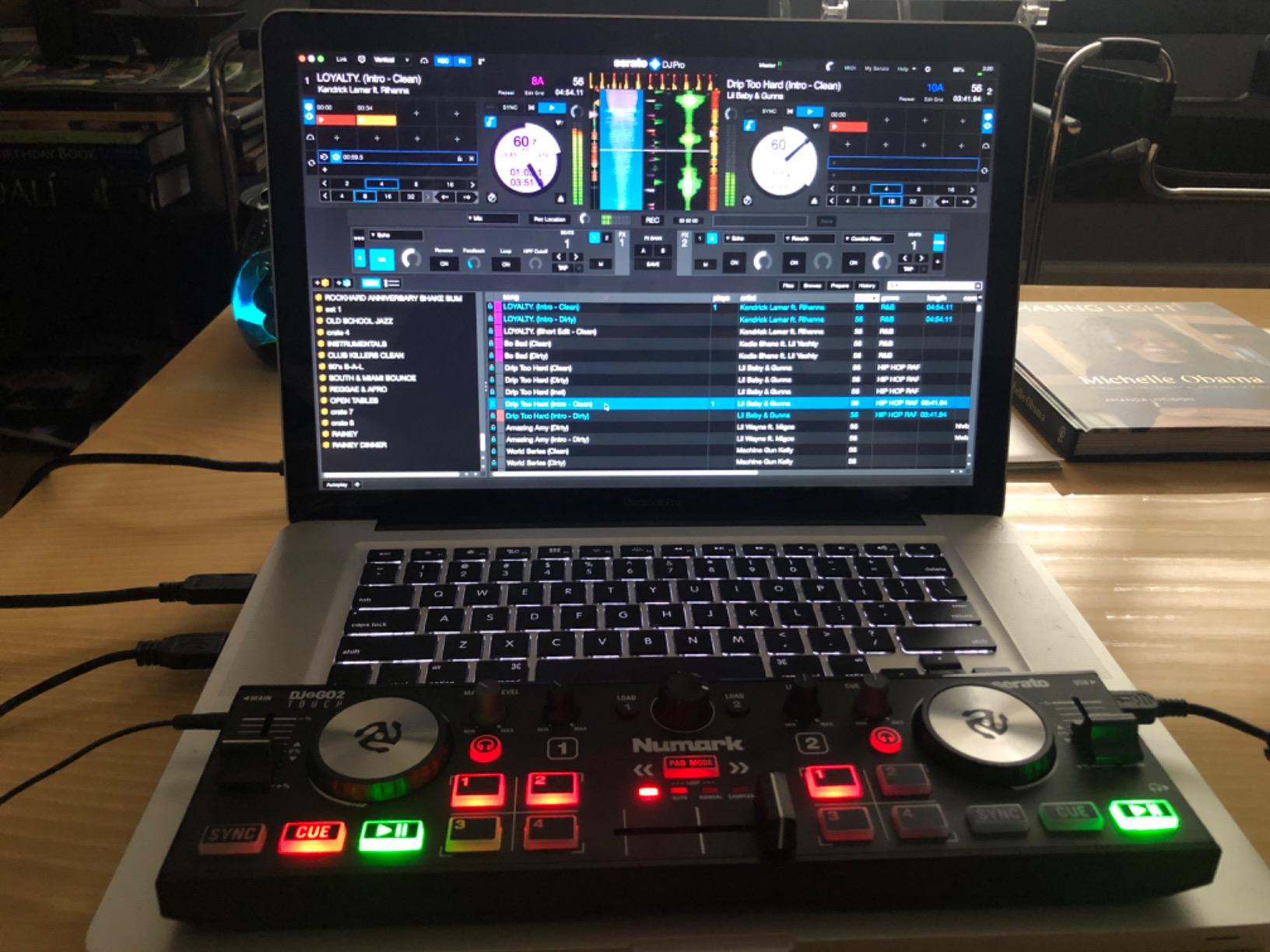
The DJ2GO2 Touch is what I recommend when someone tells me they want a controller they can literally forget they’re carrying. At 12 ounces and 12.36 inches wide, it’s smaller than a laptop sleeve and lighter than a paperback novel. I tested it on three trips – including a flight where it lived in my carry-on – and never once worried about it taking up space. For pure backpack portability, this is the most travel-friendly option on the list.
The touch-capacitive jog wheels are a clever workaround for the size constraint. They don’t feel as smooth as full-size platters, but they respond to light touch and let you do basic scratches. The four pad modes cover cue points, looping, and sample playback – enough for a small set. The 4,128+ reviews on Amazon speak to how many beginners and travelers have made this their go-to.
The compromise is real, though: there’s no per-deck EQ, which means you’ll lean on the software’s EQ controls instead of physical knobs. The pitch faders lack detents, so finding the exact zero position by feel is tricky. And reviewers do mention some defective units out of the box – buy from a return-friendly seller. For absolute portability, nothing on this list beats it. For feature depth, you’ll want to spend more.
Who should buy the Numark DJ2GO2 Touch
Travelers and backpack DJs who need the smallest possible controller. Casual DJs who want a backup or grab-and-go second setup. Beginners testing whether DJing clicks without committing space or money. Anyone DJing on a hotel desk or in an Airbnb without much room.
Who should skip the Numark DJ2GO2 Touch
If you DJ gigs or events with a PA, the small footprint limits your output options. Anyone wanting tactile EQ control per deck should look at the Hercules Inpulse 200 MK2. If you want RGB pads or visual feedback, this unit is too minimal. Hardcore scratch DJs need taller, more responsive platters.
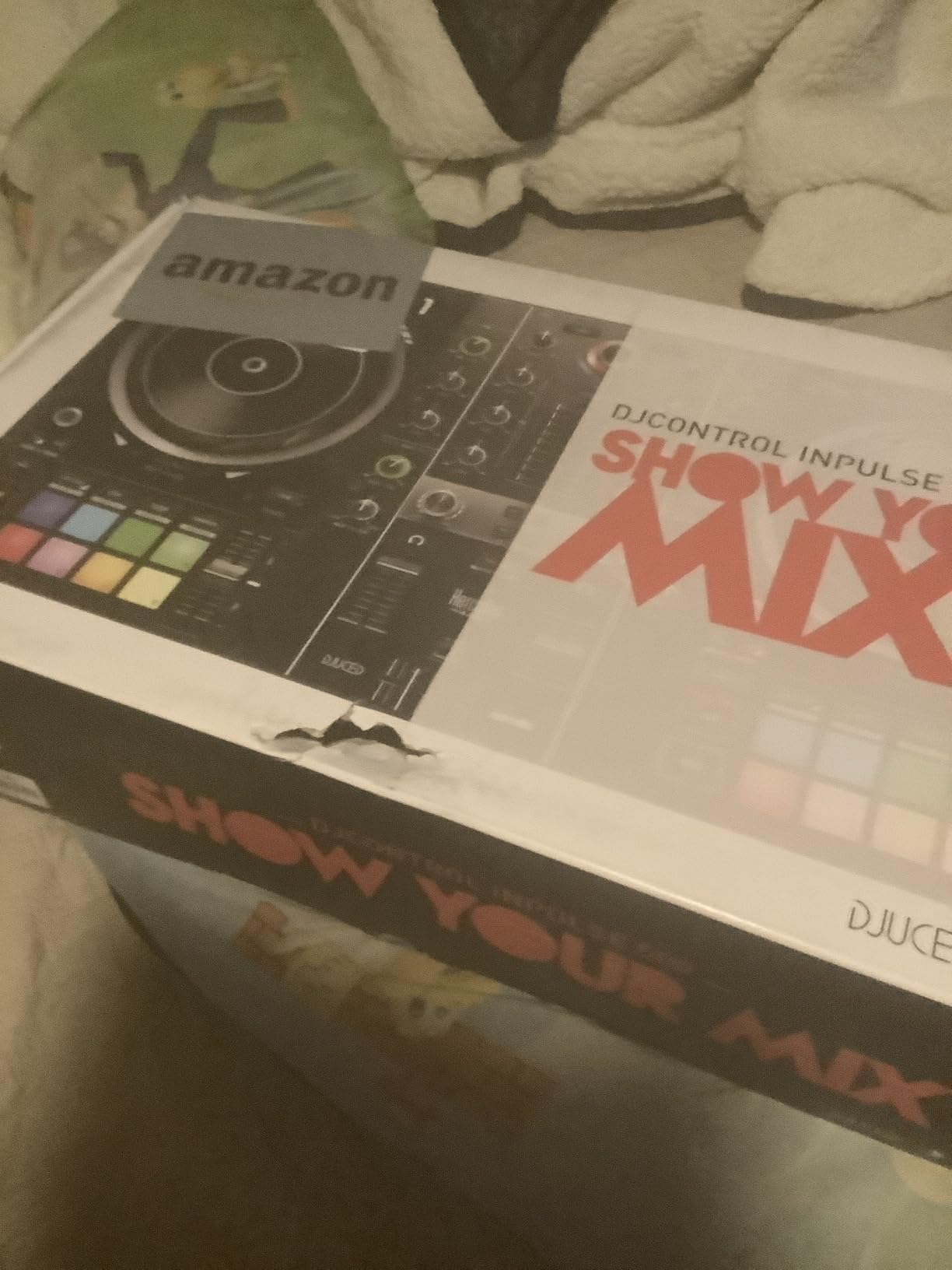
6. Hercules DJControl Inpulse 500 – Pro Feel at Mid-Range
Hercules DJControl Inpulse 500-2-Deck DJ Controller for Serato & DJUCED
11.6 lb metal build
16 RGB pads
XLR outputs
Pros
- Solid metal faceplate build quality
- Serato DJ and DJUCED software included
- Balanced XLR outputs for pro PA systems
- Beatmatch Guide with light LEDs for beginners
- RGB performance pads trigger hot cues
- rolls
- and slicers
Cons
- No standalone mixer functionality without a computer
- Limited to 2 decks
- Not compatible with rekordbox
- Jog wheel speed can be slow for some users
The Inpulse 500 is the controller I’d recommend if the FLX4 didn’t exist – and frankly, it’s the one I’d recommend if you need balanced XLR outputs for a real PA. The metal faceplate gives it a substantial feel that you don’t get from most budget options, and the RGB backlit pads light up in actual colors that match the pad mode. Pulling this out at a small wedding felt professional in a way that plastic controllers don’t.
What I love about the Inpulse 500 is the dual-software approach. You get Serato DJ Lite and DJUCED both included – try both, pick your favorite, and you’re not locked in. The Beatmatch Guide is a genuinely useful learning tool for new DJs: light LEDs on the tempo faders tell you when your tracks are in sync, which gets you through the awkward early months faster than guessing. Retractable feet protect the unit from spilled drinks at parties.
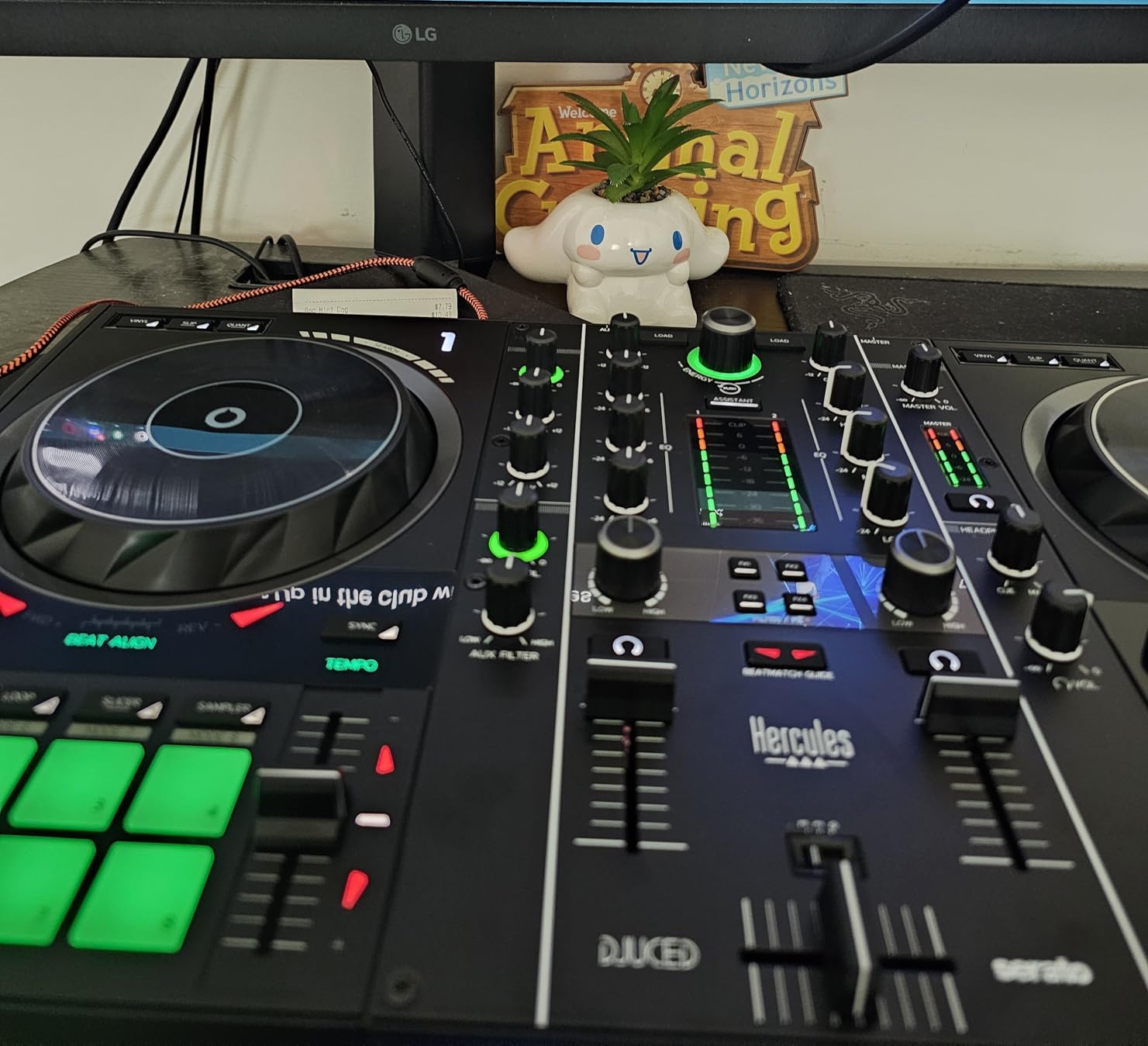
The trade-offs matter, though. This is 11.6 pounds – not backpack-friendly by any definition. There’s no standalone mode: if your laptop crashes mid-set, you’re done. And rekordbox users should look elsewhere, since the Inpulse 500 doesn’t speak Pioneer language. But if you DJ small to mid-size events with a laptop in tow and want pro-grade outputs at a mid-range price, this is hard to beat. For more on live transitions across energy levels, see our guide on how to build energy across a DJ set.
Who should buy the Hercules DJControl Inpulse 500
Mobile DJs running small to mid-size events with powered speakers. Beginners who want LED-guided beatmatching help. Anyone who wants Serato and DJUCED flexibility without paying pro-tier money. Studio DJs who want pro XLR outputs without a full-size console.
Who should skip the Hercules DJControl Inpulse 500
Frequent flyers will find 11+ pounds too heavy for backpack travel. Anyone committed to rekordbox should pick the FLX4 instead. If you need 4-deck control, step up to a premium controller not on this list. Anyone wanting battery-powered standalone operation should look elsewhere.
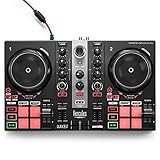
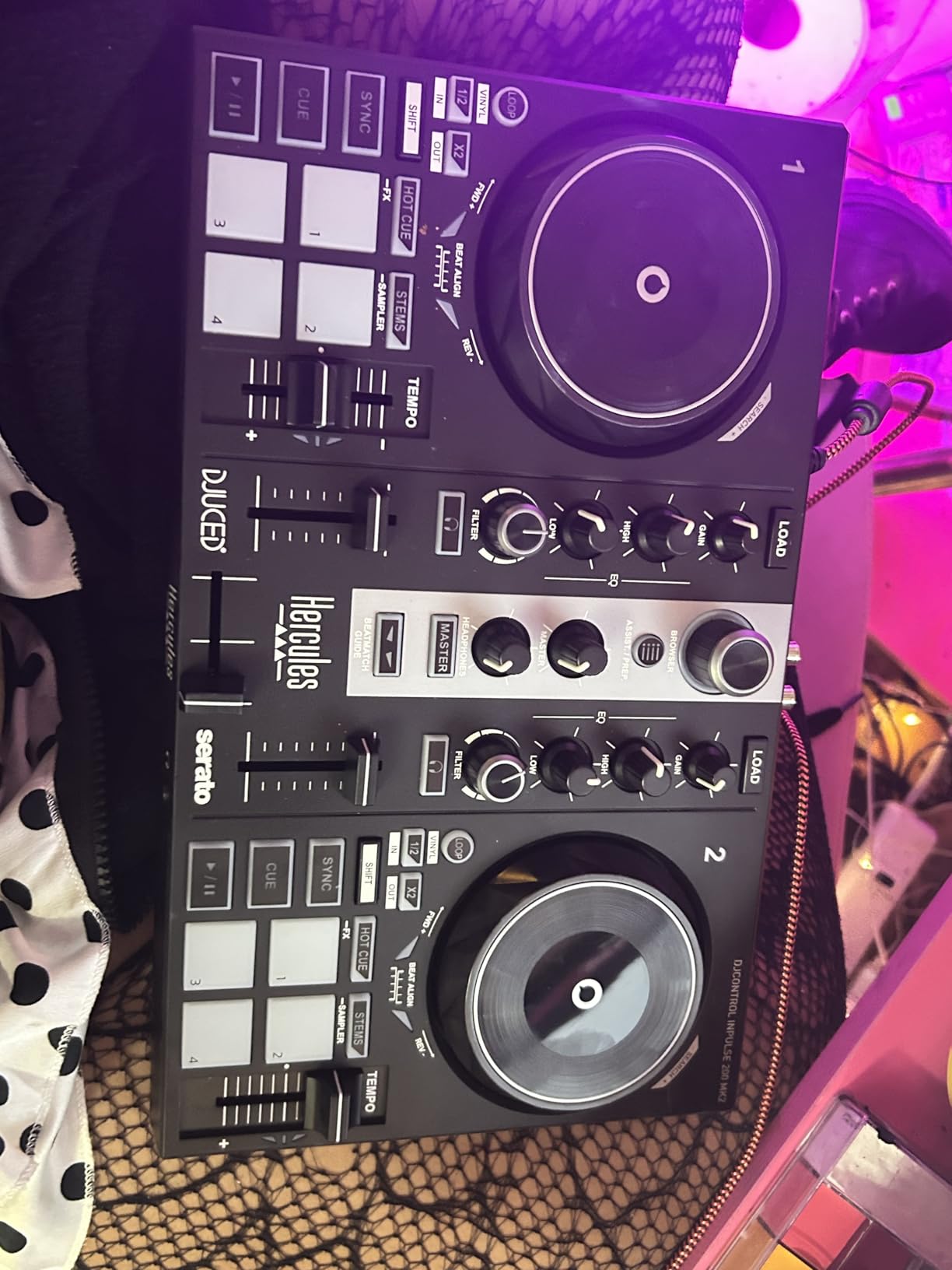
7. Hercules DJControl Inpulse 200 MK2 – Compact Learning Powerhouse
Hercules DJControl Inpulse 200 MK2 – Compact Controller – Serato & DJUCED
1394 g lightweight
Beatmatch Guide LEDs
STEMS control
Pros
- Lightweight 1394 g chassis fits in a backpack
- Beatmatch Guide with light LEDs helps beginners learn beatmatching
- STEMS feature for creative mixing on the fly
- Compatible with Beatport ADVANCED
- Beatsource
- SoundCloud GO+
- and TIDAL
- Includes both Serato DJ Lite and DJUCED software
Cons
- Not compatible with rekordbox
- Attached USB cable cannot be easily replaced
- Some reports of headphone port issues out of the box
The Inpulse 200 MK2 is the controller I keep recommending to total beginners who want to actually learn how to beatmatch instead of leaning on Sync forever. The Beatmatch Guide – those little light LEDs on the tempo faders – gives you real-time feedback on whether your tracks are aligned. After a few weeks of practice, you’ll find yourself ignoring the LEDs because you’ve internalized what they were telling you. That’s the moment this controller pays for itself.
At 1394 grams and a compact 2-deck layout, the MK2 is genuinely portable. I tossed it in a backpack with a small laptop for a weekend trip and barely noticed it. The STEMS feature is a fun creative tool – pull the vocal out of one track, drop the instrumental of another, mash them up live. It’s the kind of capability that older controllers at this price tier simply don’t have.
The main friction: the USB cable is attached, not detachable, so if it frays you’re looking at a warranty claim rather than swapping in a spare. Rekordbox users should skip this one – it only speaks Serato and DJUCED. For absolute beginners, though, this is one of the best learning-focused options on the market in 2026.
Who should buy the Hercules DJControl Inpulse 200 MK2
Total beginners who want guided beatmatching help from day one. Travelers and casual DJs who want something backpackable. Bedroom DJs who want STEMS and streaming integration on a budget. Anyone who wants both Serato and DJUCED to test both ecosystems.
Who should skip the Hercules DJControl Inpulse 200 MK2
Rekordbox users will need to look elsewhere. Pro DJs will want XLR outputs and a metal faceplate – step up to the Inpulse 500. Anyone wanting 4-deck control should consider the Mixtrack Platinum FX. If you fly weekly, the attached cable is a long-term concern.
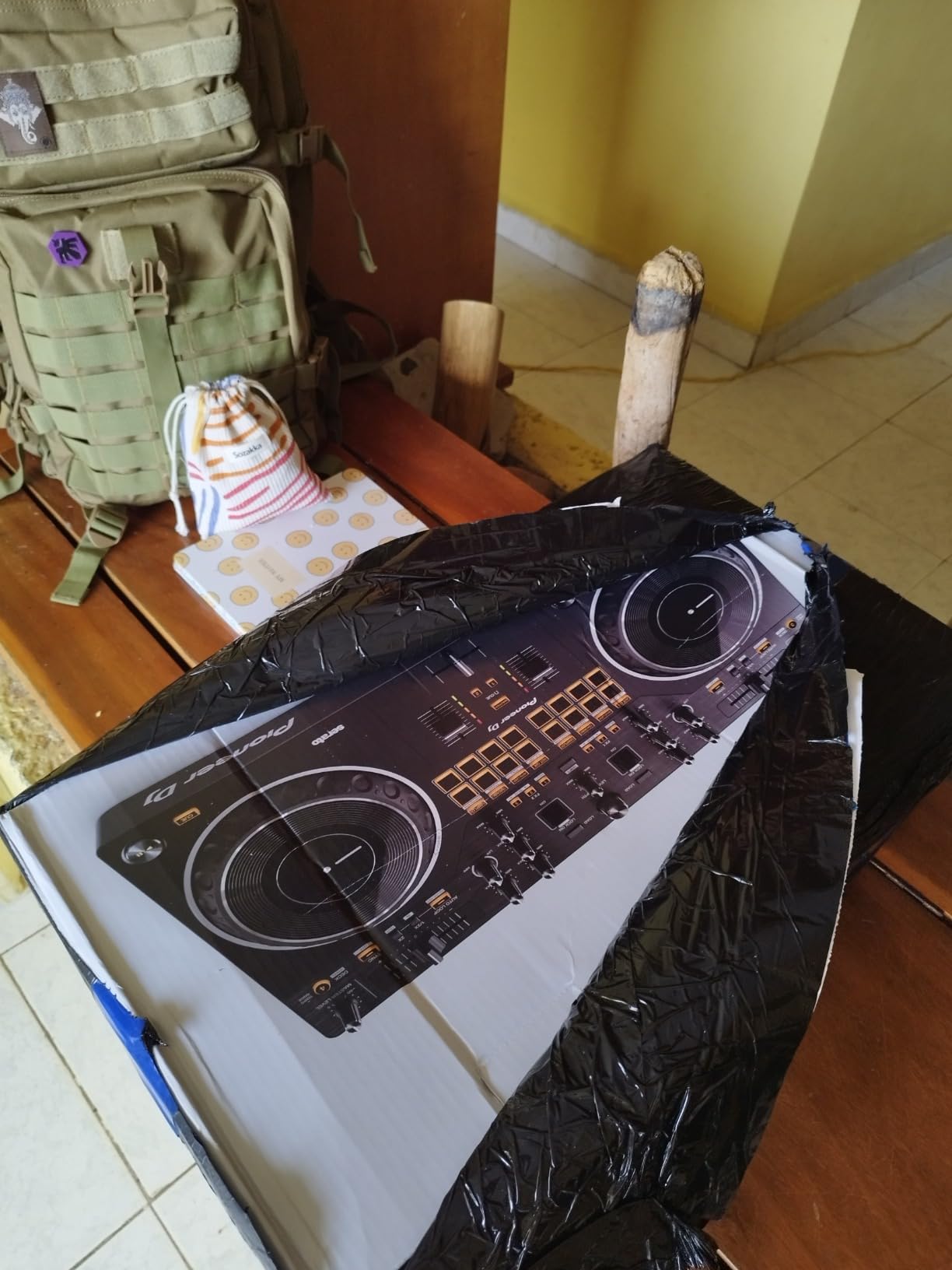
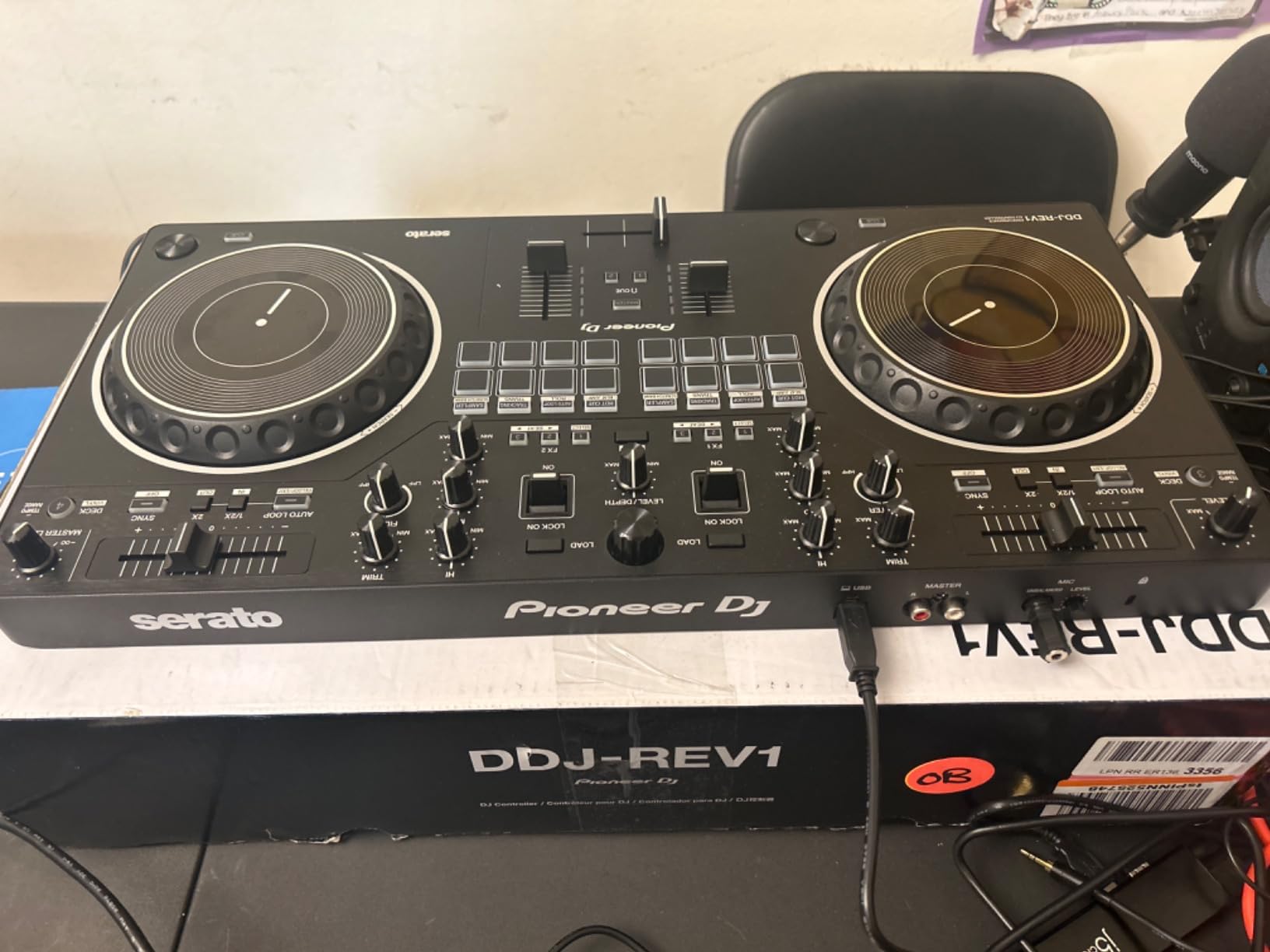
8. Pioneer DJ DDJ-REV1 – Battle-Style Scratching on a Budget
Pioneer DJ DDJ-REV1 2-deck Serato DJ Controller, Black
5 lb chassis
Tall pitch faders
Tracking Scratch feature
Pros
- Battle-style layout mirrors classic turntable and mixer setup
- Tall pitch faders perfect for scratching techniques
- Tracking Scratch feature makes routines easier to perform
- Solid Pioneer DJ build quality for the price
- Plug and play with Serato DJ Lite out of the box
Cons
- Only Serato compatible - no rekordbox support
- Small jog wheels make advanced scratching harder vs larger platters
- No adjustable jog wheel tension
If you came up watching DMC battles and want that same open-format feel on a budget, the DDJ-REV1 is the controller for you. The layout mimics a classic turntable-plus-battle-mixer setup, with the tempo faders oriented vertically along the outer edge – exactly how a scratch routine feels on real gear. I brought this to a hip-hop open deck night and got compliments on the feel within minutes.
The Tracking Scratch feature is the secret weapon. Hold one button and move the jog wheel, and the controller triggers a pre-mapped scratch routine for you. It’s a confidence-builder for new turntablists who haven’t built the muscle memory yet, and it teaches you what proper scratch timing feels like. The Pioneer DJ build quality is consistent at this tier – the chassis feels solid in the hands, and the buttons have a satisfying click.
The catch: this is Serato DJ Lite only, with no rekordbox compatibility. The jog wheels are smaller than what serious scratch DJs prefer, and there’s no tension adjustment. For a true open-format battle setup with full-size platters, you’d need to step up to a premium unit. But for entry-level scratching and open-format bedroom practice, the REV1 is the best portable DJ controller in 2026 for the discipline. Our guide on why DJ transitions sound off despite beatmatching goes deeper into timing fundamentals.
Who should buy the Pioneer DJ DDJ-REV1
Hip-hop and open-format DJs learning to scratch. Bedroom DJs who want a battle-style layout on a budget. Anyone running Serato DJ who wants tall pitch faders and quick effect controls. Beginners who want Pioneer DJ build quality without FLX4-tier pricing.
Who should skip the Pioneer DJ DDJ-REV1
Rekordbox users will need to look at the DDJ-FLX4 or DDJ-FLX2 instead. Hardcore scratch DJs wanting full-size motorized platters need a premium unit. Anyone wanting 4-deck control should consider the Mixtrack Platinum FX. If you want built-in streaming, the FLX4 has better integration.
9. Roland DJ-202 – Drum Machine Magic for Live Mashups
Roland DJ-202 Compact DJ Controller
4.6 lb compact
TR-808/909/606 kits
16-step sequencer
Pros
- Built-in TR-808
- TR-909
- and TR-606 drum kits with ACB technology
- Onboard 16-step sequencer for live beat creation
- Includes free Serato DJ Pro upgrade
- Large low-latency platters for scratching
- 24-bit/48 kHz high-resolution audio
- Compact rugged design with easy-grab handles
Cons
- Crossfader feels cheap and clacky during scratching
- Startup manual is surface-level and vague
- Limited software compatibility (Serato only)
The DJ-202 is the wildcard on this list. If you’re a producer or anyone who’s ever wanted to layer live drum patterns into a DJ set, this is the only controller here that does it. The TR-808, TR-909, and TR-606 drum kits – modeled with Roland’s Analog Circuit Behavior technology – live inside the unit. Tap a pattern on the onboard 16-step sequencer and drop it into your mix. I used it at a friend live-mashup night and the crowd lost their minds.
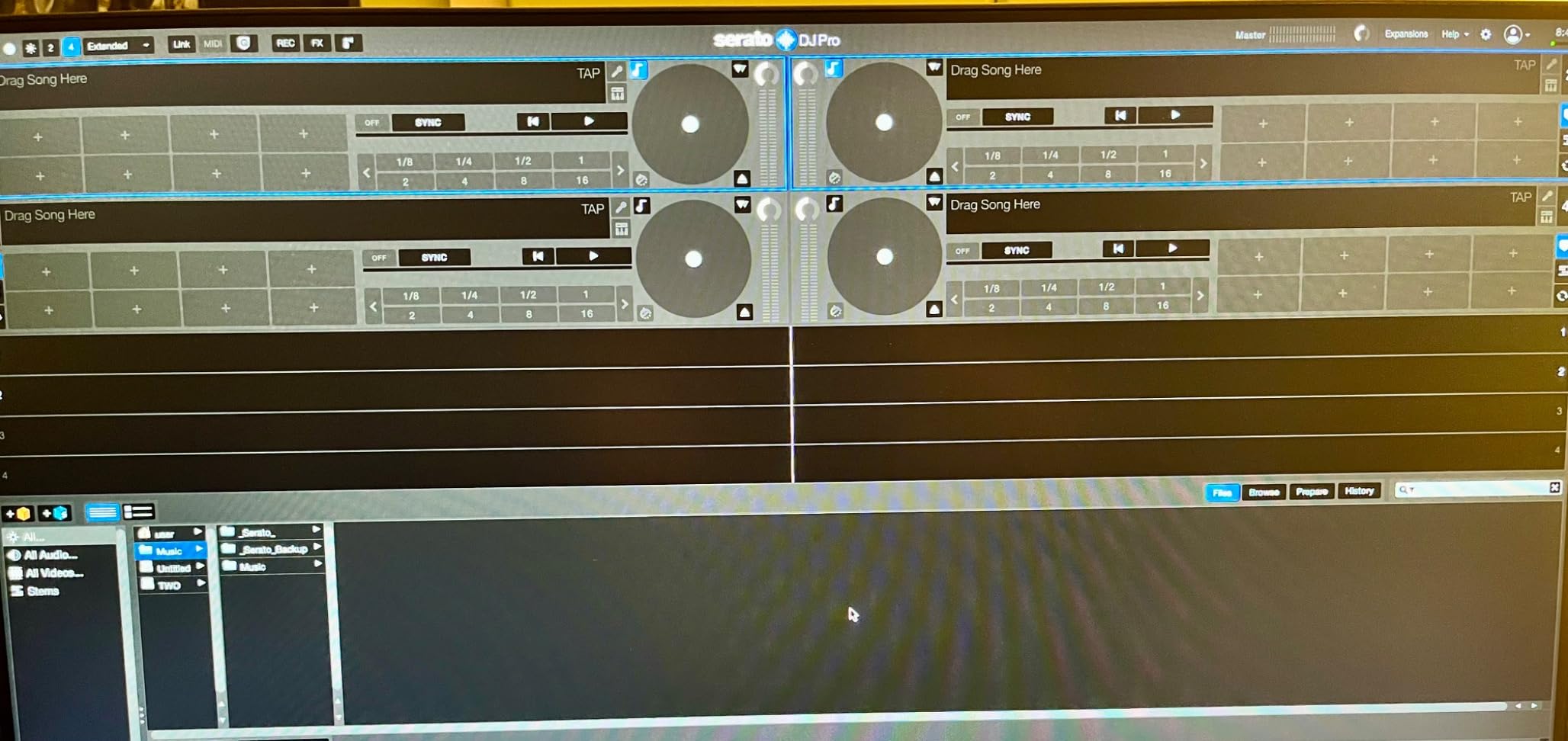
The free Serato DJ Pro upgrade is the standout value. Most controllers ship with Serato DJ Lite, which has feature restrictions. Roland includes a Pro license so you can use STEMS, DVS, and the full effects suite from day one. Large low-latency platters make scratching feel natural, and 24-bit/48 kHz audio is genuinely high resolution for a controller at this tier.
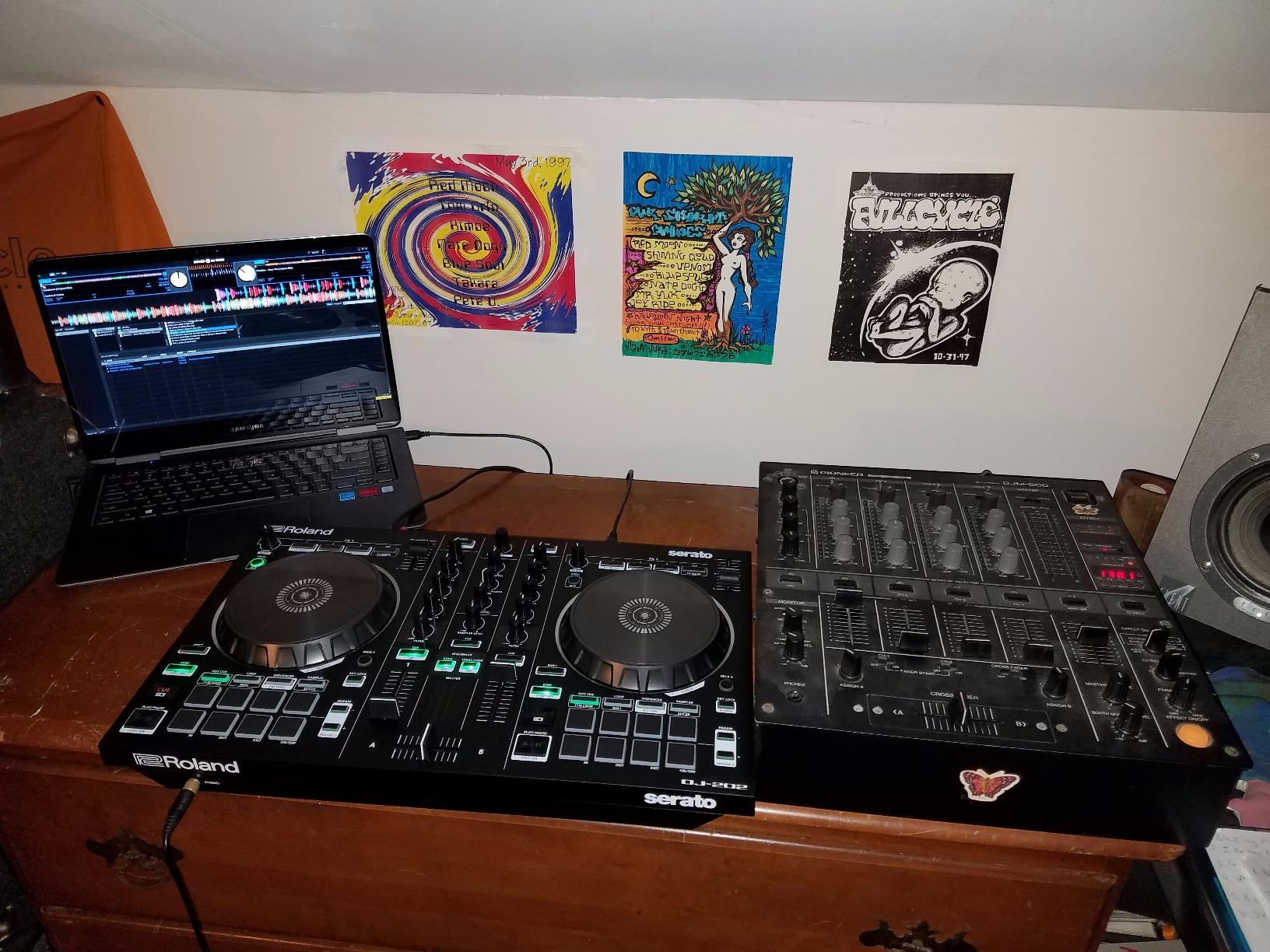
The downsides are real but specific. The crossfader feels cheap compared to Pioneer and Rane units – heavy scratch routines will expose it. The startup manual is light on detail, so you’ll want to YouTube a walkthrough. And this is Serato only – no rekordbox, no djay. But if you produce beats or want to add live drum elements to your sets, the DJ-202 is unmatched in this price range.
Who should buy the Roland DJ-202
Producers who want to blend live drum patterns into DJ sets. Live mashup and remix artists. Anyone who values drum machine heritage and TR-series sound. DJs who want a free Serato DJ Pro upgrade included. Anyone wanting high-resolution 24-bit/48 kHz audio.
Who should skip the Roland DJ-202
Heavy scratch DJs will find the crossfader under-built. Rekordbox or djay users should look elsewhere. If you want RGB pads and visual flair, the Hercules Inpulse 500 is a better visual match. Anyone wanting maximum portability should look at the DDJ-FLX2 or Starlight.
10. Hercules DJControl Mix – Wireless Smartphone DJing
Hercules DJControl Mix – Wireless DJ Controller for Smartphones
1.1 lb wireless
Bluetooth pairing
djay app
Pros
- Wireless Bluetooth pairing to smartphones and tablets
- Easy setup with no cables required
- Compatible with both Android and iOS via djay app
- Foldable smartphone stand included
- Lightweight 1.1 lb chassis
Cons
- Headphone crossfader does not work
- No built-in sound card - relies on device audio
- Bluetooth audio does not transmit to external speakers
The DJControl Mix is the most unique option on this list – a wireless Bluetooth controller that pairs directly to your phone or tablet. No cables, no laptop, no driver installs. I tested it with both iPhone and Android, and within 30 seconds of opening the box I was mixing tracks through the free djay app. For impromptu sets at a friend’s place or DJing at the beach with no power outlet nearby, nothing else here comes close.
The foldable smartphone stand is a small touch that makes a real difference – prop your phone up, see your waveforms, and mix hands-on without holding the device. The chassis is small enough to fit in a coat pocket. At 1.1 pounds, it’s the lightest option in this guide alongside the Starlight.
The compromises matter, though. There’s no built-in sound card, so you’re routing audio through your phone or tablet – which means Bluetooth audio does not transmit to external speakers. You can use a wired splitter for headphone cueing, but that sacrifices the stereo image. And the headphone crossfader simply doesn’t work, which limits what you can do in the mix. This is a fun casual controller, not a pro tool.
Who should buy the Hercules DJControl Mix
Casual DJs who want wireless mixing from their phone. Beginners who want the simplest possible setup to learn DJ basics. Travelers who DJ from a phone without carrying a laptop. Anyone DJing at the beach, park, or anywhere without reliable power.
Who should skip the Hercules DJControl Mix
Anyone wanting to DJ gigs with a PA – there’s no professional output routing. Pro DJs need tactile controls this unit doesn’t provide. If you want rekordbox compatibility, look at the FLX4. If you want Bluetooth audio to external speakers, none of these controllers do it well – consider a dedicated Bluetooth receiver.
What Makes a DJ Controller ‘Portable’ – Buying Guide
True portability for DJ controllers comes down to four variables working together: weight, dimensions, power source, and software compatibility. After testing ten controllers across flights, hotel rooms, and house parties, here’s how I score them.
Weight, dimensions, and the backpack test
Anything under 2 kg (about 4.4 lbs) genuinely disappears into a backpack. The DJ2GO2 Touch at 12 ounces and the Starlight at 1.1 pounds are the clear winners here – both fit in laptop sleeves. The FLX4 at 2.8 kg and the Inpulse 500 at 11.6 pounds are heavier, but still backpackable with effort. If you fly weekly, anything over 3 kg starts to feel punishing as carry-on. For dimension-conscious travelers, the Inpulse 200 MK2 at 1394 g hits a sweet spot between portability and feature density. The unspoken threshold in DJ forums is 2 kg – controllers above that line start to feel like gear you’re hauling, not gear you’re carrying.
Battery power vs USB bus power
Battery-powered controllers (mostly in the standalone category, none on this specific list) free you from any power source, which matters for outdoor events, beach parties, and emergency laptop crashes. USB bus power – what most controllers here use – draws power from your laptop or tablet over the same cable that carries audio. It’s simpler, but it ties you to a powered device. The AlphaTheta DDJ-FLX2 draws USB-C bus power from phones and tablets, which is the closest thing to battery freedom in this list. For deeper technical setup, see our controller setup guide.
Software ecosystems: rekordbox, Serato, djay
Rekordbox and Serato are the two dominant ecosystems. Rekordbox is free for basic use, integrates with Pioneer DJ hardware end-to-end, and unlocks Performance mode on the FLX4. Serato DJ Lite ships with most controllers on this list, with Pro as a paid upgrade that adds STEMS, DVS, and advanced effects. Algoriddim djay works with iOS, Android, and desktop, and is the only ecosystem that runs on phones for wireless setups. There’s no single “best” ecosystem – what matters is that your chosen controller works with the software you already know. For brand-specific guidance, our guide on beatmatching by ear covers both Serato and rekordbox workflows.
Mobile DJ use cases: weddings, travel, house parties
Wedding DJs need reliable outputs (XLR or RCA into a PA), STEMS for on-the-fly edits, and a robust build. The Inpulse 500 and Mixtrack Platinum FX fit the bill. Traveling DJs need lightweight chassis that survive luggage handling – the FLX4 and DJ2GO2 Touch are proven here. House party DJs want something easy to set up with maybe a built-in light show – the Starlight delivers. For deeper travel preparation, see our guide on building energy across a set.
Stem separation and streaming for 2026
Stem separation – the ability to isolate vocals, drums, bass, and melody from any track – is now standard on mid-range controllers that support Serato DJ Lite or rekordbox. The Mixtrack Platinum FX and Inpulse 200 MK2 both offer it. Streaming integration has also become table stakes: Apple Music, Tidal, Beatport, SoundCloud GO+, and Beatsource all integrate with rekordbox, Serato, and djay. If your library lives on a streaming service rather than a hard drive, prioritize controllers with explicit streaming support.
Frequently Asked Questions
What is the best portable DJ controller?
The Pioneer DJ DDJ-FLX4 is the best portable DJ controller for most people in 2026. It combines a club-style 2-channel layout, Smart Fader for beginners, USB-C and Bluetooth connectivity, and works seamlessly with both rekordbox and Serato DJ Lite. At 2.8 kg, it’s backpackable, and its 4.6-star rating across 2,700+ reviews reflects consistent real-world satisfaction.
What is the best DJ controller for travel?
For travel, the Numark DJ2GO2 Touch wins on pure portability – 12 ounces and smaller than a laptop sleeve. The Hercules DJControl Starlight (1.1 lb, pocket-sized) is the runner-up with a built-in light show and Serato DJ Lite. For travelers who also want a full feature set, the Pioneer DJ DDJ-FLX4 at 2.8 kg is the best balance of portability and capability.
What is the best standalone DJ controller in 2026?
None of the controllers on this list are true standalone units – they all require a laptop, smartphone, or tablet. For genuine standalone DJ systems with built-in screens and laptop-free operation, look at the Numark Mixstream Pro Go, Denon DJ Prime 4+, or AlphaTheta XDJ-AZ. Those run Engine DJ OS or rekordbox standalone and don’t need any external device.
What is the best controller for mobile DJs?
For mobile DJs running events with a PA, the Hercules DJControl Inpulse 500 offers balanced XLR outputs and a metal faceplate at a mid-range price. For mobile DJs who also DJ weddings, the Numark Mixtrack Platinum FX adds 4-deck STEMS control. Both are built for transport and frequent setup/teardown.
Are Hercules DJ controllers any good?
Yes – Hercules makes some of the best portable options in 2026, including the DJControl Starlight (pocket-sized with light show), the Inpulse 200 MK2 (Beatmatch Guide learning tool), and the Inpulse 500 (pro feel on a mid-range budget). The Inpulse 500 holds a 4.6-star average across 1,455+ reviews. Hercules focuses specifically on beginner-friendly features and unique value pricing.
Which is better, Numark or Pioneer?
Both brands make excellent portable DJ controllers, but they target different needs. Pioneer DJ controllers (DDJ-FLX4, DDJ-REV1, DDJ-FLX2) use a club-style layout inherited from pro CDJs and integrate deeply with rekordbox. Numark controllers (Mixtrack Platinum FX, DJ2GO2 Touch) often offer more features per dollar and work primarily with Serato. Choose Pioneer if you’re a rekordbox user or planning to step up to pro gear; choose Numark for maximum features at minimum spend.
Final Verdict
The best portable DJ controller for most people in 2026 is the Pioneer DJ DDJ-FLX4 – it strikes the best balance of portability, build, club-style layout, and dual-software support. If you need maximum value and 4-deck STEMS control, the Numark Mixtrack Platinum FX is the smarter spend. If your priority is fitting a controller in a coat pocket, the Numark DJ2GO2 Touch and Hercules DJControl Starlight both deliver genuine travel-friendly form factors. Pick based on where you’ll be DJing – bedroom, hotel, wedding, or house party – and you’ll end up with the right portable DJ controller for the way you actually mix.