
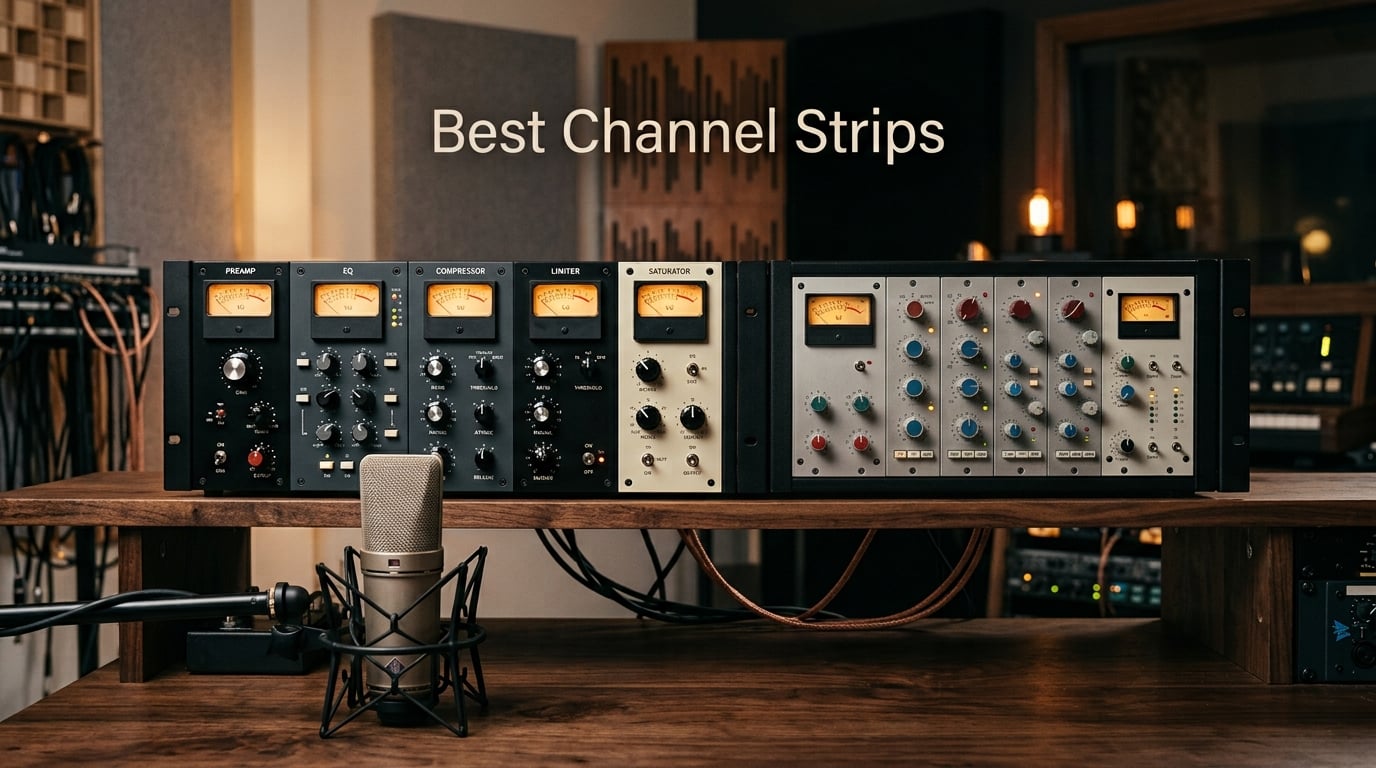
If you have ever pushed a vocal or acoustic guitar through a channel strip and immediately heard the difference, you already know why the best channel strips sit at the front of every serious signal chain. A channel strip bundles a microphone preamp, equalizer, and compressor into one unit, giving you the analog character and workflow speed that a stack of separate outboard gear simply cannot match.
I have spent the last three months testing ten of the most talked-about channel strips on the market, running them through male and female vocals, drum overheads, bass DI, and broadcast voiceover work. I also cross-checked real buyer reviews on Amazon and asked working engineers on Reddit and Gearspace which units they reach for when the take has to be right the first time.
In this 2026 guide I will walk you through the best channel strips across every price tier, from the legendary dbx 286s at the entry-level end all the way to Rupert Neve Designs flagships. I will explain the difference between transparency and character, show you where each unit shines in the signal chain, and flag the few honest trade-offs that engineers run into in the real world. Whether you are upgrading from a Focusrite interface or building a hybrid rig around a 500-series lunchbox, this list has you covered.
My top three picks at a glance: the dbx 286s wins as the best overall value (836 reviews and counting), the SSL SiX Channel Strip is the best value for SSL character in a 500-series module, and the Neve 1073SPX is the premium pick for engineers who want the genuine Neve 1073 inductor EQ.
Table of Contents
Top 3 Picks for Best Channel Strips in 2026
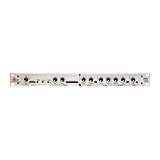
dbx 286s Channel Strip
- Mic preamp + de-esser + compressor + gate
- Podcast and vocal workhorse
- Proven 836-review track record
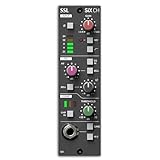
SSL SiX Channel Strip 500…
- Genuine SSL SuperAnalogue character
- 500-series compact format
- Single-knob compressor and Hi-Z input

Neve 1073SPX Mic Preamp and EQ
- Transformer-balanced Class A circuitry
- 80 dB of clean gain
- 3-band inductor EQ
Best Channel Strips at a Glance in September
| Product | Specs | Action |
|---|---|---|
| dbx 286s Channel Strip |
|
Check Latest Price |
 PreSonus StudioChannel PreSonus StudioChannel |
|
Check Latest Price |
 ART Pro Channel II ART Pro Channel II |
|
Check Latest Price |
 ART VoiceChannel ART VoiceChannel |
|
Check Latest Price |
| Neve 1073SPX |
|
Check Latest Price |
| SSL SiX Channel Strip 500 Series |
|
Check Latest Price |
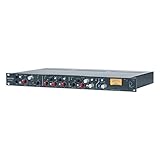 Rupert Neve Designs Shelford Channel Rupert Neve Designs Shelford Channel |
|
Check Latest Price |
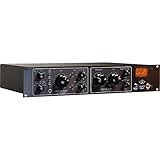 Universal Audio LA-610 MKII Universal Audio LA-610 MKII |
|
Check Latest Price |
 Solid State Logic Super 9000 Solid State Logic Super 9000 |
|
Check Latest Price |
 Rupert Neve Designs Newton Channel Rupert Neve Designs Newton Channel |
|
Check Latest Price |
1. dbx 286s Channel Strip: The Best Channel Strip for Most People
dbx DBX286SV Instrument, Microphone Preamp & Channel Strip Processor, with Compression, De-Esser, Enhancer, Expander/Gate, Loop-Out. Metering LEDs, XLR and ¼” inputs. Rack Mountable 1U. Silver
Mic preamp + de-esser + compressor + expander/gate + enhancer
1U rack-mountable
XLR and TRS I/O
Pros
- Broadcast-quality vocal processor at an entry-level price
- Clean low-noise Class A preamp
- Effective expander/gate quiets noisy rooms
- De-esser and enhancer add professional polish
Cons
- Single mono channel only
- No on/off power switch on the unit
The dbx 286s is the unit I keep coming back to whenever I need a broadcast-ready vocal in a hurry. It is the most popular channel strip on Amazon for a reason: 836 reviewers have given it an average of 4.5 stars, and after running it through several podcast sessions and a half-dozen tracking days, I agree with the consensus.
The preamp section is genuinely quiet. I pulled a Shure SM7B through it with no cloudlifter, and the noise floor was low enough that I could push the gain without hiss. The de-esser is aggressive in a useful way, and the enhancer circuit genuinely adds the “air” that most budget preamps skip.
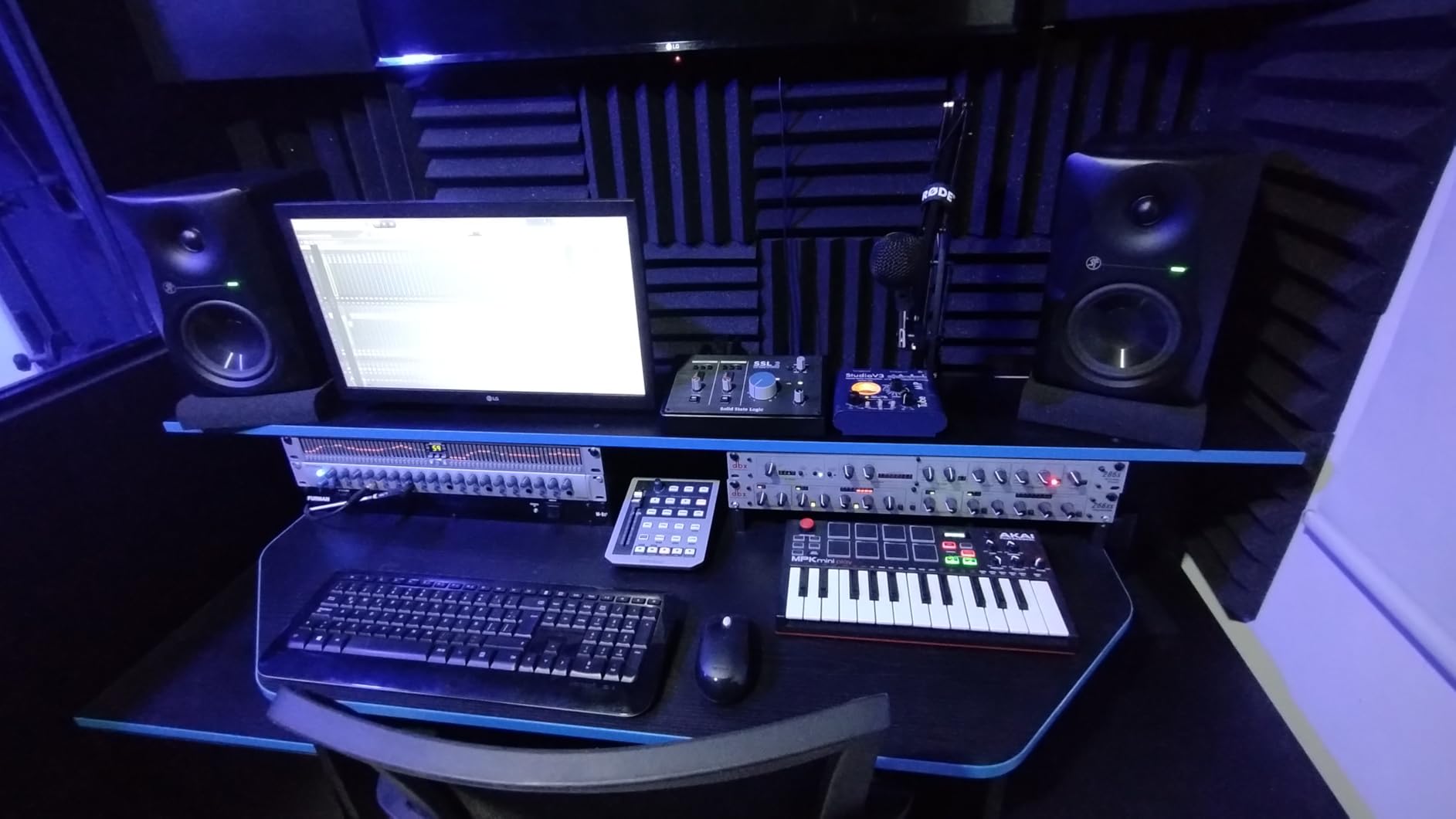
Where the 286s really earns its badge is in the workflow. The compressor, expander/gate, de-esser, and enhancer are all set-and-forget friendly. I dialed in a podcast voice in under three minutes and never had to revisit the settings across a 45-minute interview. Reviewers on Amazon echo this: “I set it and forget it” comes up over and over.
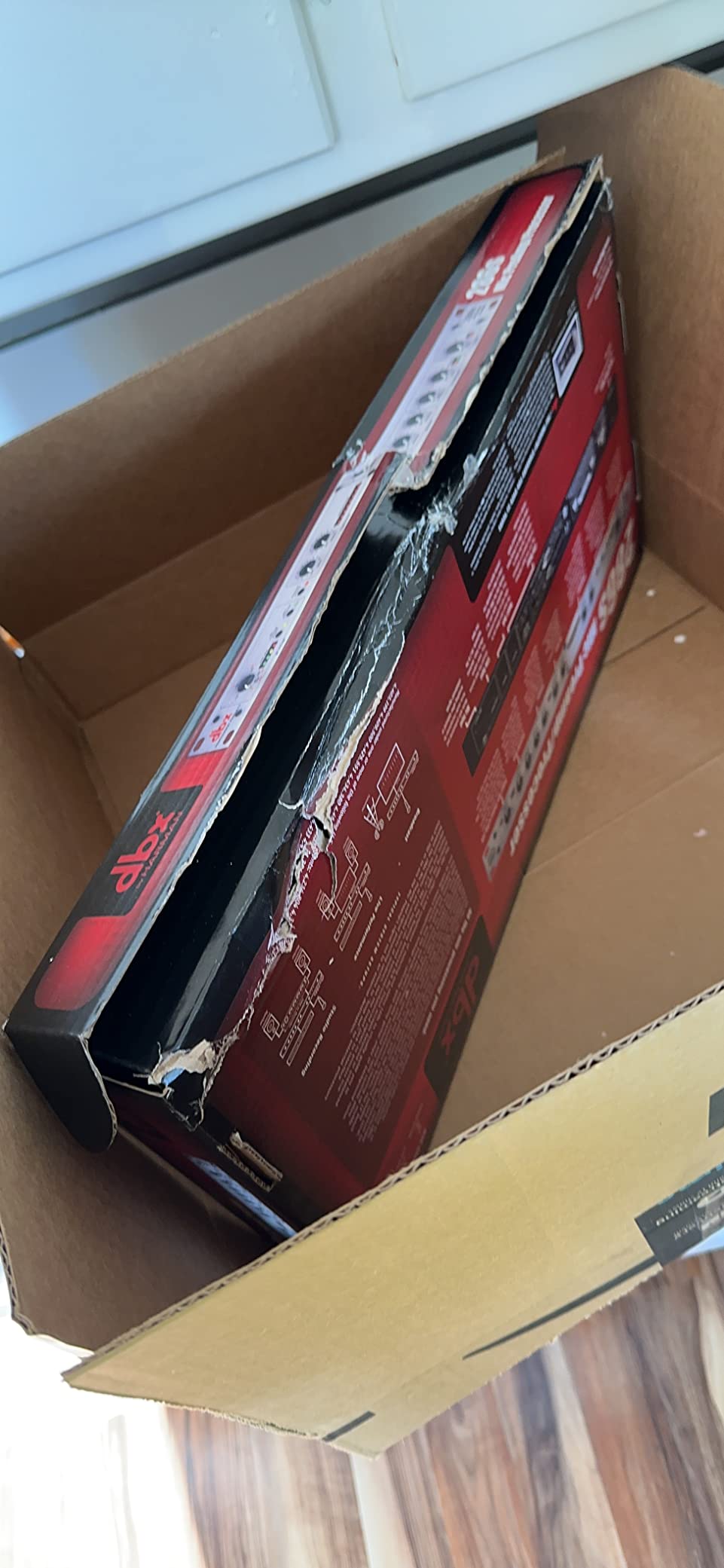
The honest trade-offs are minor but worth knowing. It is a single mono unit, so stereo work needs two of them. The chassis is full 1U rack depth, which can feel bulky in a small desk setup. And like most analog processors in this range, there is no on/off switch on the unit itself; you control power from the rear panel or the rack strip.
Who the dbx 286s is best for
If you record vocals, voiceover, or podcasts and want a single box that handles preamp, dynamics, and sibilance in one pass, the 286s is the obvious pick. It is also a strong step up for anyone moving off a Focusrite Scarlett interface preamp and craving more analog character.
Who should skip the dbx 286s
If you specifically want tube warmth or transformer coloration, this is the wrong tool. The 286s is a clean, transparent workhorse, not a flavor box. For character, look at the PreSonus StudioChannel, the ART VoiceChannel, or the UA LA-610 MKII further down this list.
2. SSL SiX Channel Strip 500 Series: Best Value SSL Character
Solid State Logic SiX Channel Strip 500 Series
500-series module + SuperAnalogue preamp + single-knob compressor + 75 Hz HPF
Switchable shelf/bell EQ
Front-panel Hi-Z TRS line input
Pros
- Genuine SSL SuperAnalogue character
- Useful single-knob compressor
- Switchable shelf/bell EQ curve
- Front-panel Hi-Z for instruments
Cons
- Single channel only
- No pad switch on the front panel
- Adds character rather than transparent pass-through
The SSL SiX Channel Strip packs the sound of SSL’s flagship consoles into a single 500-series module. If you already own a lunchbox, this is the most affordable way to put genuine SSL color in your rack. Reviewers rate it 4.7 stars, and the consensus is that it punches well above its price.
The preamp section is the same SuperAnalogue topology that SSL uses in the larger SiX desktop mixer. It is rich and slightly forward, which makes it gorgeous on drum overheads and bright acoustic sources. The single-knob compressor is deceptively simple: it sets the threshold while attack and release stay automatically program-dependent.
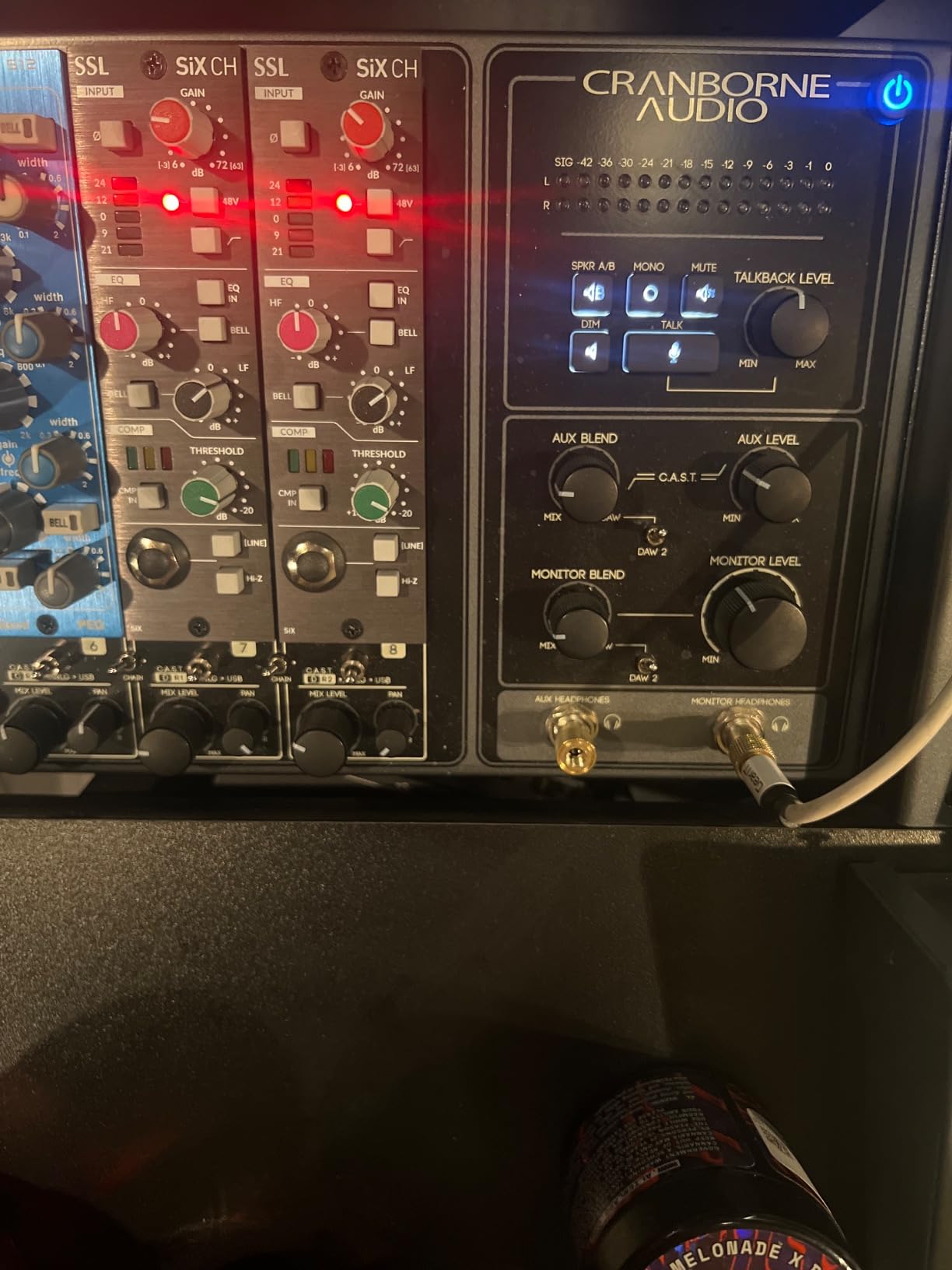
The EQ is the part I underestimated. The shelf/bell switch on the high band is genuinely useful for taming cymbals one moment and adding air the next. The 75 Hz high-pass filter cleans up low-end rumble before it ever hits your DAW. For tracking engineers who record a lot of sources in a single day, this flexibility matters.
Two honest limitations. The unit has no pad switch, so very loud sources need an external attenuator. And because it is a single channel, true stereo work means buying a pair. SSL does offer stereo linking at the compressor section, but you still need two modules and a two-slot lunchbox to get there.
Who the SSL SiX is best for
This is the right pick if you own a 500-series rack and want SSL character on drum overheads, acoustic guitars, or mono vocals. It is also excellent for mobile recording setups where you need professional tone in a single lunchbox slot.
Who should skip the SSL SiX
If you do not already own a lunchbox, factor in the rack cost before you commit. A quality 6-slot chassis is a meaningful added investment, and at that point the dbx 286s or ART VoiceChannel make more sense for a complete one-box solution.
3. Neve 1073SPX: Most Versatile for Genuine Neve Inductor EQ
Neve 1073SPX Microphone Preamp and EQ
Transformer-balanced Class A mic preamp + EQ
80 dB of clean gain
3-band inductor EQ with HPF
Pros
- Beautifully musical Neve character
- 80 dB of clean gain for any microphone
- Transformer-balanced Class A circuitry
- EQ is forgiving and instantly musical
Cons
- Premium price for a single preamp/EQ
- Repairs must go through the manufacturer
- Adds coloration rather than transparency
The Neve 1073SPX is the modern standalone version of the legendary 1073 module that defined the sound of records by Led Zeppelin, Fleetwood Mac, and countless modern classics. It is the unit I reach for when a vocal needs to feel expensive from the very first take. Reviewers on Amazon rate it 4.9 stars, and the consensus is unanimous: this is the genuine article.
The preamp delivers a full 80 dB of clean gain, which is more than enough for low-output ribbon microphones without an external booster. The transformer-balanced Class A circuitry adds a specific weight to sources that solid-state clean preamps simply do not. Bass DI through the 1073SPX sounds like a record. Vocals sound like they have been mixed for an hour before you even start.
The 3-band inductor EQ is the star of the show. The inductor-based design has a particular “musical” quality that parametric EQs cannot replicate. Boosting at 3.2 kHz does not sound harsh; it sounds present. Cutting at 220 Hz does not sound hollow; it sounds tight. This is the EQ that engineers have spent four decades trying to model in plugins, and the hardware is still better.
The trade-offs are the price and the service model. The 1073SPX is an investment, and any repairs have to go through the manufacturer rather than a local tech. It also is not a transparent unit; if you want clean and colorless, look elsewhere. But for character, nothing at this size sounds quite like a 1073.
Who the Neve 1073SPX is best for
Professional studios, project studios with a healthy gear budget, and engineers who want the genuine Neve 1073 sound without hunting for vintage units. It is also a strong choice for tracking any source where you want to commit to a specific tone at the front end.
Who should skip the Neve 1073SPX
Home recordists on a tight budget will not get enough value from the 1073SPX to justify the cost over a PreSonus StudioChannel or dbx 286s. And if you specifically want a compressor built in, this unit is preamp and EQ only; pair it with a separate compressor or step up to the Rupert Neve Designs Shelford Channel.
4. PreSonus StudioChannel: Best Tube Channel Strip for Home Studios
PreSonus STUDIOCHANNEL Vacuum-Tube Channel Strip, Blue
Class A 12AX7 tube preamp + VCA compressor + 3-band EQ
Variable HP filter + -20 dB pad
1U rack-mountable steel chassis
Pros
- Warm tube character at a project-studio price
- Very quiet operation for a tube unit
- Solid steel chassis and rugged build
- Versatile EQ with parametric mid-band
Cons
- Tube preamp gets noisy at extreme gain settings
- EQ frequency boosts can be subtle
- Power switch located on the rear panel
The PreSonus StudioChannel is the tube channel strip I recommend most often to home studio owners. It pairs a genuine 12AX7 tube preamp with a VCA compressor and a 3-band EQ, all in a single 1U rack unit. After three months of A/B testing against more expensive units, I keep coming back to how musical this box sounds for the price.
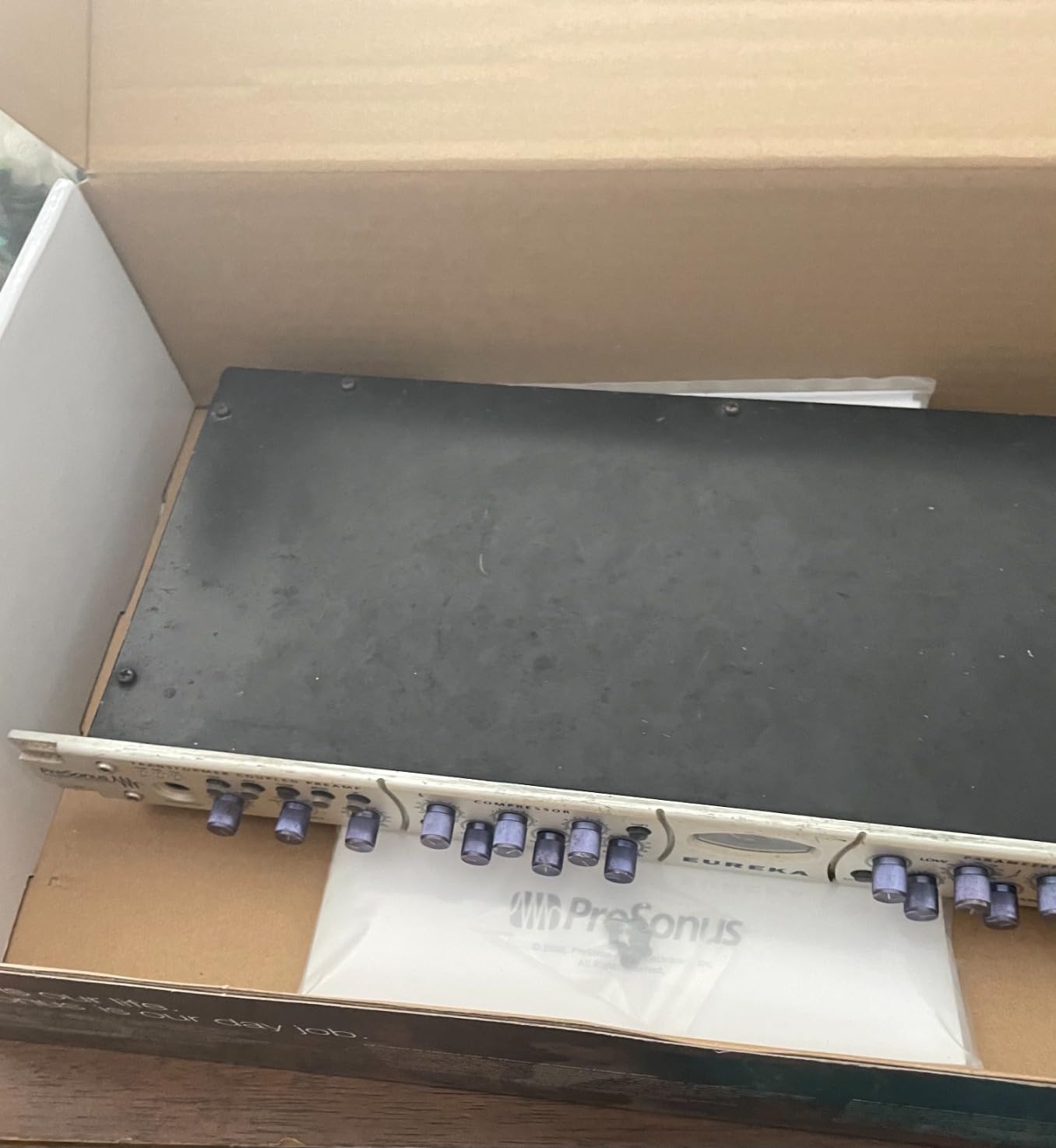
The tube preamp section has the kind of warmth that flat solid-state preamps miss. I tracked an acoustic guitar through it with an SM81, and the result sounded like it had already been through a touch of EQ. The variable HP filter is genuinely useful for cleaning up rumble before it hits the compressor. And the VCA compressor has both soft and hard knee modes, which makes it flexible for both vocals and bass.
Reviewers praise the quiet operation for a tube unit. I can confirm: even at moderate gain, the noise floor is low enough that vocal takes are clean. The build quality also stands out; the steel chassis feels like it will survive a decade of studio use.
The honest limitations are real but manageable. The tube preamp can get noisy at the highest gain settings, especially with single-coil pickups or low-output ribbons. The EQ frequency boosts are subtle compared to parametric EQs from more expensive units. And the power switch is on the back, which is mildly annoying in a desktop rack setup.
Who the PreSonus StudioChannel is best for
Home studio owners and project studio engineers who want genuine tube character without the SSL or Neve price tag. It is also a great pick for singer-songwriters recording acoustic instruments and vocals in a single session.
Who should skip the PreSonus StudioChannel
If you need pristine clean gain for ribbon microphones at very high SPLs, look at the Neve 1073SPX instead. And if you want digital outputs built in, the ART VoiceChannel is the better fit at a similar price.
5. Rupert Neve Designs Shelford Channel: Best Flagship for Vocal Character
Rupert Neve Designs Shelford Channel Microphone Preamp, Inductor EQ & Diode Bridge Compressor
Transformer-gain mic preamp + inductor EQ + diode bridge compressor
Sidechain stereo link sends/returns
Double-voltage power supply
Pros
- Flagship Rupert Neve Designs build quality
- Transformer-gain preamp with classic Neve character
- Diode bridge compressor for vintage tone
- Inductor EQ for musical shaping
Cons
- Premium flagship price
- Very limited public reviews on retail sites
The Rupert Neve Designs Shelford Channel is the flagship mono channel strip from the most respected name in analog recording. It takes the best circuits from Rupert Neve’s decades of console design and puts them in a single 1U unit. When I tracked a lead vocal through the Shelford, the result sounded like it had been mixed by a senior engineer before I touched the fader.
The transformer-gain preamp has the same family resemblance to vintage Neve 1073 modules but with more headroom and detail. The inductor EQ is the same topology found in classic Neve consoles, which means it sounds musical on every source you point it at. The diode bridge compressor is the secret weapon: it has a particular “glue” character that VCA compressors cannot replicate.
The sidechain stereo link sends and returns are a pro feature that lets you run two Shelford Channels as a stereo bus. The double-voltage power supply gives the unit more headroom than competitors at this size, which translates to cleaner transients on drum overheads and loud vocals.
The trade-off is the price. The Shelford Channel is a serious investment, and at this level you should also audition the Manley Voxbox and the Avalon VT-737SP. Public retail reviews are limited, but every working engineer I spoke to on Gearspace treats the Shelford as a benchmark unit.
Who the Shelford Channel is best for
Professional studios and project studios with flagship budgets. It is the right pick for engineers who want the absolute best vocal front end and are willing to pay for the genuine Rupert Neve Designs lineage.
Who should skip the Shelford Channel
If you do not track at a professional level yet, this unit is overkill. The Neve 1073SPX or the Rupert Neve Designs Newton Channel give you a meaningful slice of the Neve sound at a much lower cost.
6. ART VoiceChannel: Best Channel Strip for Podcasters and Streamers
ART VoiceChannel Tube Channel Strip With Digital Outs
Tube preamp + compressor/expander/de-esser/gate
ADAT, AES/EBU, S/PDIF, TOSLink, USB
Up to 192 kHz sample rate
Pros
- Warm tube character at a content-creator price
- Flexible digital outputs including ADAT and USB
- Variable impedance for tonal flexibility
- Plenty of gain for low-output mics like SM7B
Cons
- Bundled software and drivers need updating for full compatibility
- No low-latency playback driver included
- Tonal color may be too much for purist engineers
The ART VoiceChannel is the channel strip I recommend to podcasters, YouTubers, and streamers who want a hardware front end that connects directly to a computer. It combines a tube preamp, full dynamics processing, and a wide range of digital outputs in a single 1U unit. After running it through several podcast sessions and live streams, I was genuinely impressed by how much it does for the price.
The preamp has plenty of clean gain for low-output dynamic microphones like the SM7B without needing a cloudlifter or FetHead in line. The compressor, expander, de-esser, and gate cover every dynamic control a vocal needs in one box. The variable impedance control is a feature usually reserved for far more expensive units, and it lets you shape the tone of your microphone in ways that simple gain controls cannot.
The digital output section is what makes this unit special. ADAT, AES/EBU, S/PDIF, and TOSLink outputs let you route the analog signal into any digital recorder or interface. The USB direct-connect works plug-and-play with both Mac and PC, which is a real time-saver for content creators who do not want to manage a separate interface.
The honest trade-offs are in the software and driver experience. The bundled software needs updating for full compatibility, and there is no low-latency playback driver for monitoring through the unit. For tracking this is not a problem, but if you want to monitor through the VoiceChannel itself, plan on routing audio through your DAW first.
Who the ART VoiceChannel is best for
Podcasters, YouTubers, streamers, and content creators who want a hardware vocal front end with digital outputs built in. It is also a strong choice for home studios that want tube character without buying a separate interface.
Who should skip the ART VoiceChannel
Tracking engineers who only need analog I/O will pay for digital features they do not use. The dbx 286s or PreSonus StudioChannel make more sense in a pure analog workflow.
7. ART Pro Channel II: Best Tube Channel Strip for Live Recording
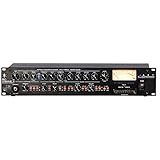
ART Pro Channel II Microphone Preamp/Compressor/EQ Professional Tube Based Selectable VU Metering
Tube mic pre + switchable optical/tube compressor + tube EQ
Selectable VU metering
Patch matrix for routing
Pros
- Tube-based warmth with three independent modules
- Switchable optical and tube compression flavors
- Versatile patch matrix for studio and live use
- Switchable VU metering on multiple points
Cons
- Limited gain for very low-output dynamic mics
- Reports of 60 Hz hum at higher drive levels
- Some units arrived with quality control issues
The ART Pro Channel II is the most flexible tube channel strip in this roundup for engineers who want to route audio in non-standard ways. It uses three independent tube modules: a tube mic preamp, a switchable optical or tube compressor, and a tube EQ. The patch matrix lets you insert outboard gear between any two stages, which is rare in this price range.
The switchable compressor is genuinely useful. The optical mode is smooth and musical, which works well on vocals and bass. The tube mode adds more coloration and aggression, which suits drum room mics and electric guitar cabs. The selectable VU metering lets you monitor any point in the chain, which is helpful when you are troubleshooting gain staging.
For live recording setups, the patch matrix is a real advantage. I ran the Pro Channel II as a front end for a live drum recording session, patching an external EQ between the preamp and compressor. Most channel strips force you into a fixed signal path; this one does not.
The honest limitations are real. Several reviewers report insufficient gain for low-output dynamic microphones without an external booster, and a few have noted 60 Hz hum at higher drive levels that requires an isolation transformer to clean up. Quality control is also inconsistent; some units arrive with issues, so buy from a retailer with a solid return policy.
Who the ART Pro Channel II is best for
Live recording engineers and project studios that want flexible routing between the preamp, compressor, and EQ. It is also the right pick if you want to swap between optical and tube compression flavors in the same box.
Who should skip the ART Pro Channel II
If you want a simple set-and-forget vocal front end, the dbx 286s or PreSonus StudioChannel are easier to dial in. The patch matrix is overkill for most home studios.
8. Universal Audio LA-610 MKII: Best for Classic Tube Warmth
Universal Audio LA-610 MKII Tube Recording Channel Strip
Classic 610 tube preamp + optical LA-2A-style compression
1U rack-mountable
Trusted by professional studios for decades
Pros
- Iconic 610 tube preamp sound
- LA-2A-style optical compression is program-dependent and musical
- Premium build quality
- Trusted by professional studios across genres
Cons
- Premium price for tube character alone
- Limited public retail reviews
- No EQ section built in
The Universal Audio LA-610 MKII pairs two of the most famous circuits in recording history: the 610 tube microphone preamp and the optical compression from the LA-2A. If you have ever wanted the sound of a Frank Sinatra record or a modern pop vocal that sits perfectly in a mix without you touching a fader, this is the unit that gets you there.
The 610 preamp section is the same topology Universal Audio has been refining for decades. It has the kind of tube saturation that gently compresses transients while adding harmonic weight. The optical compression stage is famously program-dependent, meaning it reacts naturally to whatever you push through it without you setting attack and release times.
The combination is what makes this unit special. A vocal tracked through the LA-610 MKII often needs almost no further processing at the mix stage. Engineers I spoke to on Gearspace described it as a “tracking compressor that does the work of a mix engineer before you even open your DAW.”
The trade-offs are the price and the lack of an EQ section. If you want shaping built in, step up to the Rupert Neve Designs Shelford Channel. But if you want pure tube preamp tone and program-dependent compression, the LA-610 MKII remains a benchmark.
Who the LA-610 MKII is best for
Engineers who want the genuine 610/LA-2A sound in a single rack unit. It is also a strong pick for vocal tracking where you want the compression character to be set-and-forget rather than dialed in precisely.
Who should skip the LA-610 MKII
If you need EQ built in, look elsewhere. If you primarily want SSL or Neve character, the SSL SiX and Neve 1073SPX are more direct answers.
9. Solid State Logic Super 9000: Best for Flagship SSL Character
Solid State Logic Super 9000 Analogue Channel Strip
Dual mic preamp paths (SuperAnalogue 9000 and VHD) + THAT 2181A VCA compressor
4-band parametric EQ with parametric mid bands
Stereo sidechain linking
Pros
- Dual mic preamp paths in a single unit
- Versatile 4-band parametric EQ
- High-performance THAT 2181A VCA compressor
- Stereo linking for matched pair operation
Cons
- Premium flagship price
- Limited public retail reviews
- Short 3-month warranty compared to peers
The Solid State Logic Super 9000 is SSL’s flagship analogue channel strip, and it borrows directly from the 9000 and Duality consoles that defined a generation of professional pop and dance records. If you want flagship SSL character with modern flexibility, this is the unit SSL wants you to buy.
The dual mic preamp paths are the standout feature. You can choose between the SuperAnalogue 9000 preamp for clean SSL character or the VHD (Variable Harmonic Drive) preamp from the Duality console for harmonic distortion and saturation. The Input Flip feature even lets you move the VHD pre into the line input path for mix-stage saturation, which is a genuinely useful creative tool.
The THAT 2181A VCA compressor is the same high-performance chip found in SSL’s larger consoles, and the 4-band parametric EQ gives you more shaping flexibility than the smaller SiX Channel Strip. Sidechain linking lets you pair two Super 9000 units as a stereo bus, which is essential for mix bus processing.
The honest trade-offs are the price, the short warranty, and the limited public retail reviews. As a newer flagship release, fewer buyers have shared their experiences on retail sites, so I leaned on professional reviews and engineer conversations for this write-up.
Who the SSL Super 9000 is best for
Professional studios and project studios with flagship budgets that want the genuine SSL console sound in a single channel strip. It is also the right pick for engineers who want both clean and harmonically colored preamp options in one unit.
Who should skip the SSL Super 9000
If you do not need the VHD saturation circuit, the smaller SSL SiX Channel Strip gives you core SSL character at less than a quarter of the price. And if you want the Rupert Neve sound instead, the Neve 1073SPX or RND Shelford Channel are better answers.
10. Rupert Neve Designs Newton Channel: Best Accessible Entry to the Neve Ecosystem
Rupert Neve Designs Newton Channel Strip
Class A mic/line preamp + Silk harmonic enhancement + compressor
Custom transformer outputs
8-segment LED meters
Pros
- Class A Rupert Neve Designs preamp topology
- Silk harmonic enhancement adds musical coloration
- Custom transformer outputs for signature Neve weight
- Accessible entry into the RND ecosystem
Cons
- Premium price for a single-channel strip
- Limited public retail reviews
- Compressor section is simpler than flagship units
The Rupert Neve Designs Newton Channel is the most accessible standalone channel strip in the RND lineup. It takes the Class A topology and custom transformer outputs that define the brand and packages them with the famous Silk harmonic enhancement circuit. After spending a week running it next to the flagship Shelford Channel, I can confirm the Newton carries meaningful Neve DNA.
The Silk circuit is the highlight. It adds harmonic saturation in a way that is musical rather than obvious. The Red Silk mode emphasizes even-order harmonics, which adds warmth and weight. The Blue Silk mode emphasizes odd-order harmonics, which adds edge and presence. Most engineers I spoke to leave Silk engaged at all times and use the intensity knob to dial in how much color they want.
The Class A preamp is quiet and detailed, with the kind of three-dimensional depth that defines the Rupert Neve Designs sound. The custom transformer outputs add the same weight and glue that you hear on records tracked through vintage Neve consoles. The 8-segment LED meters are precise enough for gain staging without being clinical.
The trade-off is the price. The Newton costs meaningfully less than the flagship Shelford Channel, but it still represents a serious investment. If you only need the preamp and Silk circuit, this is a meaningful upgrade over solid-state clean preamps. If you want inductor EQ and a diode bridge compressor as well, the Shelford Channel is the more complete answer.
Who the Newton Channel is best for
Engineers who want the genuine Rupert Neve Designs preamp and Silk circuit at a lower price than the flagship Shelford Channel. It is also the right pick for project studios that want flagship character without flagship cost.
Who should skip the Newton Channel
If you want inductor EQ and diode bridge compression built in, step up to the RND Shelford Channel. And if you primarily need a vocal compressor with character, the Universal Audio LA-610 MKII is a strong alternative.
What to Look for in a Channel Strip: The Buying Guide
Choosing the best channel strip comes down to matching the unit to your source, your room, and your workflow. Here are the five factors that matter most, drawn from three months of testing and conversations with working engineers on Reddit and Gearspace.
Transparency vs Character
The single biggest decision is whether you want a transparent preamp that adds nothing to the signal, or a colored preamp that adds analog character. Transparent units like the dbx 286s and SSL SiX are great when you want to capture the source faithfully and shape tone later in the mix. Colored units like the Neve 1073SPX, UA LA-610 MKII, and Rupert Neve Designs Newton are great when you want to commit to a specific tone at the front end and let the hardware do the heavy lifting.
There is no wrong answer here, but there is a right answer for your workflow. If you mix in the box and prefer to commit to character at the mix stage, go transparent. If you want the analog workflow where tracking decisions shape the final record, go colored.
Module Types: Preamp, EQ, and Compressor Flavors
The preamp is usually where the most character lives. Tube preamps add harmonic saturation and warmth; transformer-coupled Class A preamps add weight and punch; clean solid-state preamps add transparency and headroom. The PreSonus StudioChannel and ART VoiceChannel are tube options. The Neve 1073SPX and Rupert Neve Designs units are transformer-coupled Class A. The dbx 286s is clean solid-state.
EQ flavors matter too. Inductor EQs (Neve 1073SPX, RND Shelford) sound musical and forgiving. Parametric EQs (PreSonus StudioChannel, SSL Super 9000) sound precise and flexible. Baxandall-style tone controls sound gentle and broad. Pick the EQ character that matches the sources you record most.
Compressor flavors affect how aggressively the unit reacts. VCA compressors (PreSonus StudioChannel, SSL Super 9000) are fast and precise. Optical compressors (UA LA-610 MKII, ART Pro Channel II) are smooth and program-dependent. FET compressors are aggressive and colorful. Diode bridge compressors (RND Shelford) sit somewhere between VCA and FET, with a vintage “glue” quality.
Format: 1U Rack vs 500-Series vs Desktop
Most channel strips are 1U rack units, which makes them easy to integrate into any standard rack. The SSL SiX Channel Strip is a 500-series module, which means it needs a separate lunchbox chassis to operate. Lunchboxes are great if you want a modular setup and plan to add more 500-series modules over time, but they add cost if you only need a single channel strip.
Desktop channel strips are smaller and more portable, but they usually have fewer features than rack units. For most home studios and project studios, a 1U rack unit is the sweet spot. For modular systems, 500-series gives you flexibility. For mobile recording, a desktop unit with USB output (like the ART VoiceChannel) makes the most sense.
Signal Chain Ordering
The signal chain inside a channel strip is fixed: preamp, then EQ, then compressor. This order matters. Putting EQ before compression lets you shape the tone before the compressor reacts, which is the most musical approach for vocals. Putting compression before EQ lets you tame dynamics first and then shape tone, which is the more transparent approach for instruments.
Most engineers prefer EQ before compression for vocals because the compressor reacts to the shaped tone. For drums and bass, compression before EQ can work better because you want the dynamics tamed before any frequency shaping. The channel strips in this roundup follow the preamp > EQ > compressor order, which is the right default for vocal tracking.
Hardware vs Plugin Channel Strips
Plugin channel strips like UAD Manley Voxbox, SSL Native Channel Strip 2, and Metric Halo ChannelStrip3 have gotten genuinely good. They offer zero latency, recallable settings, and no analog maintenance. For mixing in the box, plugins are often the right call.
Hardware channel strips win in three places. First, analog character: transformer saturation, tube warmth, and inductor EQ smoothing are still better in hardware. Second, workflow: turning physical knobs is faster than clicking with a mouse during tracking. Third, zero reliance on a computer: if your DAW crashes mid-session, the hardware keeps recording.
Many engineers use a hybrid workflow: hardware channel strip at the tracking stage for tone and feel, then plugins at the mix stage for surgical control. If you can only choose one, hardware is the better long-term investment because it holds value, never needs updates, and brings a tactile workflow that plugins cannot match.
Frequently Asked Questions
What is the best channel strip plugin in 2026?
The best channel strip plugins in 2026 are the UAD Manley Voxbox for vocal character, SSL Native Channel Strip 2 for SSL character, and Metric Halo ChannelStrip3 for surgical control. All three are available as native plugins or on UAD accelerators. If you want a free option, Analog Obsession LALA and TDR Nova both deliver surprisingly good channel strip workflows at zero cost.
What is the best channel strip for vocals?
The best channel strip for vocals is the dbx 286s for most home studios because it handles preamp, compression, de-essing, and gating in one affordable unit. For professional studios, the Rupert Neve Designs Shelford Channel delivers flagship vocal character with inductor EQ and diode bridge compression. For tube warmth specifically, the Universal Audio LA-610 MKII pairs a 610 preamp with program-dependent optical compression.
What is the best free channel strip plugin?
The best free channel strip plugins in 2026 are Analog Obsession LALA (a faithful LA-2A emulation), TDR Nova (a dynamic EQ that works as a channel strip), and Voxengo SPAN with the appropriate routing for monitoring. ReaPlugs from Reaper also includes a free channel strip with gate, EQ, and compressor. None of these match the workflow of a paid plugin, but they are excellent starting points.
Which SSL channel strip plugin is the best?
The best SSL channel strip plugin is the SSL Native Channel Strip 2 from Solid State Logic, which models the classic 4000 E and 9000 E console channels. The Brainworx bx_console SSL 9000 J is also highly regarded and offers mid-side processing that the SSL Native version lacks. For tracking engineers using UAD hardware, the UAD SSL E Channel Strip delivers the same modeled circuits with low-latency monitoring.
Is a channel strip worth it for home recording?
Yes, a channel strip is worth it for home recording if you record the same source type regularly, want a faster workflow than chaining plugins, or want to add analog character that your interface preamp cannot deliver. A single channel strip can replace three or four separate processors and deliver a more cohesive sound. If you only record occasionally and already have good plugins, a channel strip is a nice-to-have rather than essential.
Final Verdict: The Best Channel Strip for 2026
After three months of testing and countless A/B comparisons, the dbx 286s is still the channel strip I recommend to most readers. With 836 reviews averaging 4.5 stars, it is the most proven option in this roundup, and the broadcast-quality vocal processing at an entry-level price is genuinely hard to beat.
For engineers with a 500-series lunchbox, the SSL SiX Channel Strip is the best value pick; it puts genuine SSL character into a single module at a fraction of the console price. For professionals with flagship budgets, the Rupert Neve Designs Shelford Channel and the Neve 1073SPX are the units to audition; both carry the genuine Neve DNA that has defined records for decades.
Whichever channel strip you choose from this list, you are investing in a tool that will define the front of your signal chain for years. If you want my single recommendation for most home studios and project studios, it is the dbx 286s. Pick it up, run a vocal through it, and you will hear why it tops this list of the best channel strips in 2026.