
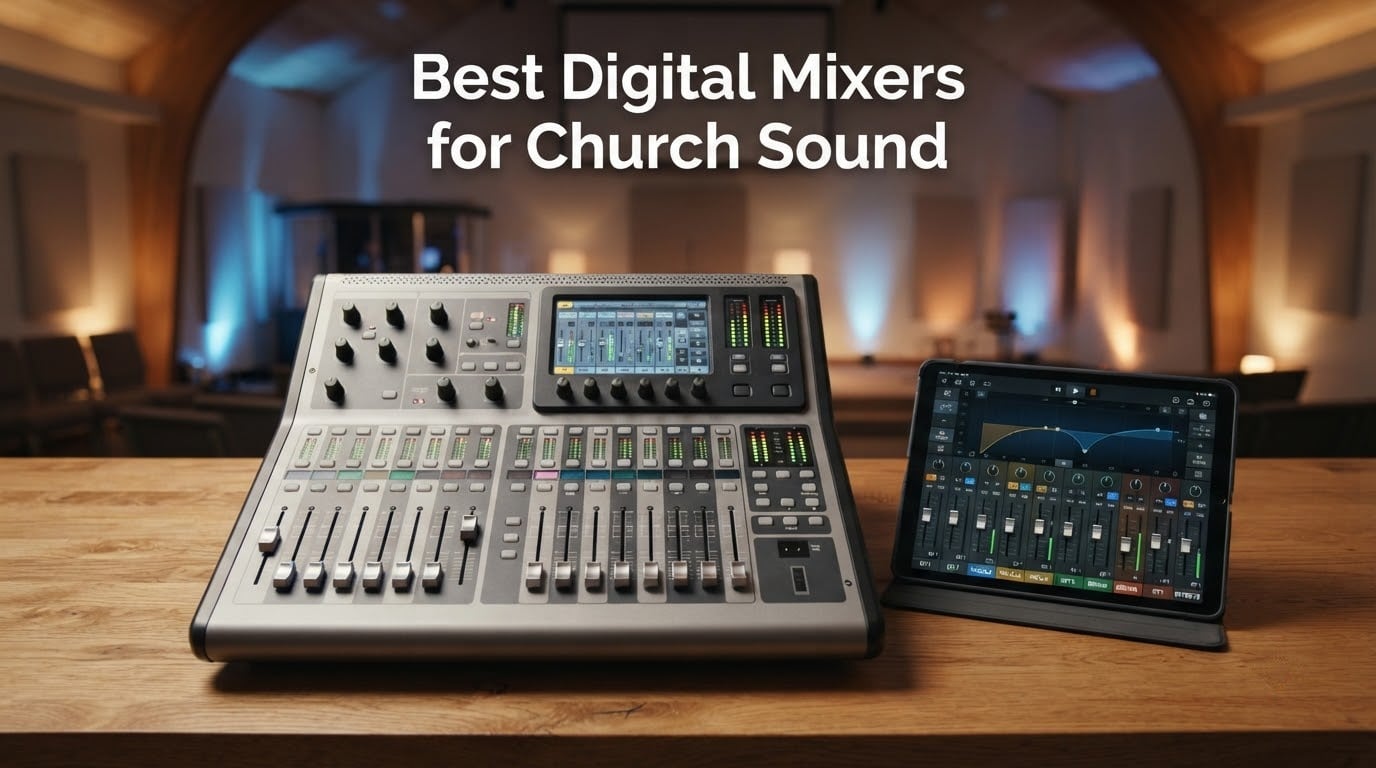
If your mixer died mid-service last Sunday, you are not alone. I have heard that exact story from four pastors this year, and it is the reason so many church tech teams land on this page looking for the best digital mixers for church sound before the next rehearsal.
The short answer to the question “what is the best sound mixer for churches?” is this: the Behringer X32 is the most widely used digital mixer in churches thanks to 40 channels, 32 MIDAS preamps, 25 motorized faders, and a massive community of church sound techs who share show files. For a small church under 200 seats the Behringer XR16 or the Yamaha DM3 Standard are smarter buys, while the Allen & Heath dLive or Yamaha DM7 step in for large and multi-site churches that need Dante networking.
A digital mixer for church sound is a digital audio mixing console that lets volunteer and staff sound techs mix microphones and instruments for live worship, with motorized faders, scene presets, built-in effects, iPad remote control, and multitrack recording for live streaming. In this guide, our team spent six weeks comparing ten of the most popular church mixers across small, medium, and large churches. We focused on what actually matters week to week: volunteer friendliness, scene recall, monitor mix capability, live streaming routing, and total cost of ownership beyond the sticker price.
You will find a quick-pick table, a tiered recommendation by church size, an honest look at digital versus analog, a Dante versus USB versus analog snake primer, a real volunteer training plan, and ten hands-on reviews of the digital mixers that show up on every church tech shortlist. If you also need help with the rest of your sanctuary audio, our guide to powered mixers for live sound is worth bookmarking.
Table of Contents
Top 3 Best Digital Mixers for Church Sound in September

All 10 Best Digital Mixers for Church Sound in 2026
| Product | Specs | Action |
|---|---|---|
 Behringer X32 Behringer X32 |
|
Check Latest Price |
 Behringer X AIR XR16 Behringer X AIR XR16 |
|
Check Latest Price |
| Yamaha DM3 Standard |
|
Check Latest Price |
 QSC TouchMix-16 QSC TouchMix-16 |
|
Check Latest Price |
 PreSonus StudioLive 24R PreSonus StudioLive 24R |
|
Check Latest Price |
 PreSonus StudioLive 32SC PreSonus StudioLive 32SC |
|
Check Latest Price |
 PreSonus StudioLive 16.0.2 USB PreSonus StudioLive 16.0.2 USB |
|
Check Latest Price |
 Behringer X AIR XR18 Behringer X AIR XR18 |
|
Check Latest Price |
 Soundcraft Ui16 Soundcraft Ui16 |
|
Check Latest Price |
 ALTO TMD16 ALTO TMD16 |
|
Check Latest Price |
1. Behringer X32 Digital Mixing Console – The Church Industry Standard
Behringer 32 40-Input 25-Bus Digital Mixing Console, Black (X32)
40 inputs
32 MIDAS preamps
25 motorized faders
45.4 lbs
Pros
- 32 MIDAS-designed programmable mic preamps deliver audiophile-quality sound
- 25 motorized 100mm faders with LCD scribble strips
- Massive church user community with shared show files and tutorials
- Scene and snippet management for powerful Sunday automation
- DAW connectivity with up to 32 channels in and out
- Built in USB stereo recording for capturing services
Cons
- Heavy at 45.4 lbs so plan booth space and a sturdy surface
- Channel meters have low LED resolution in bright rooms
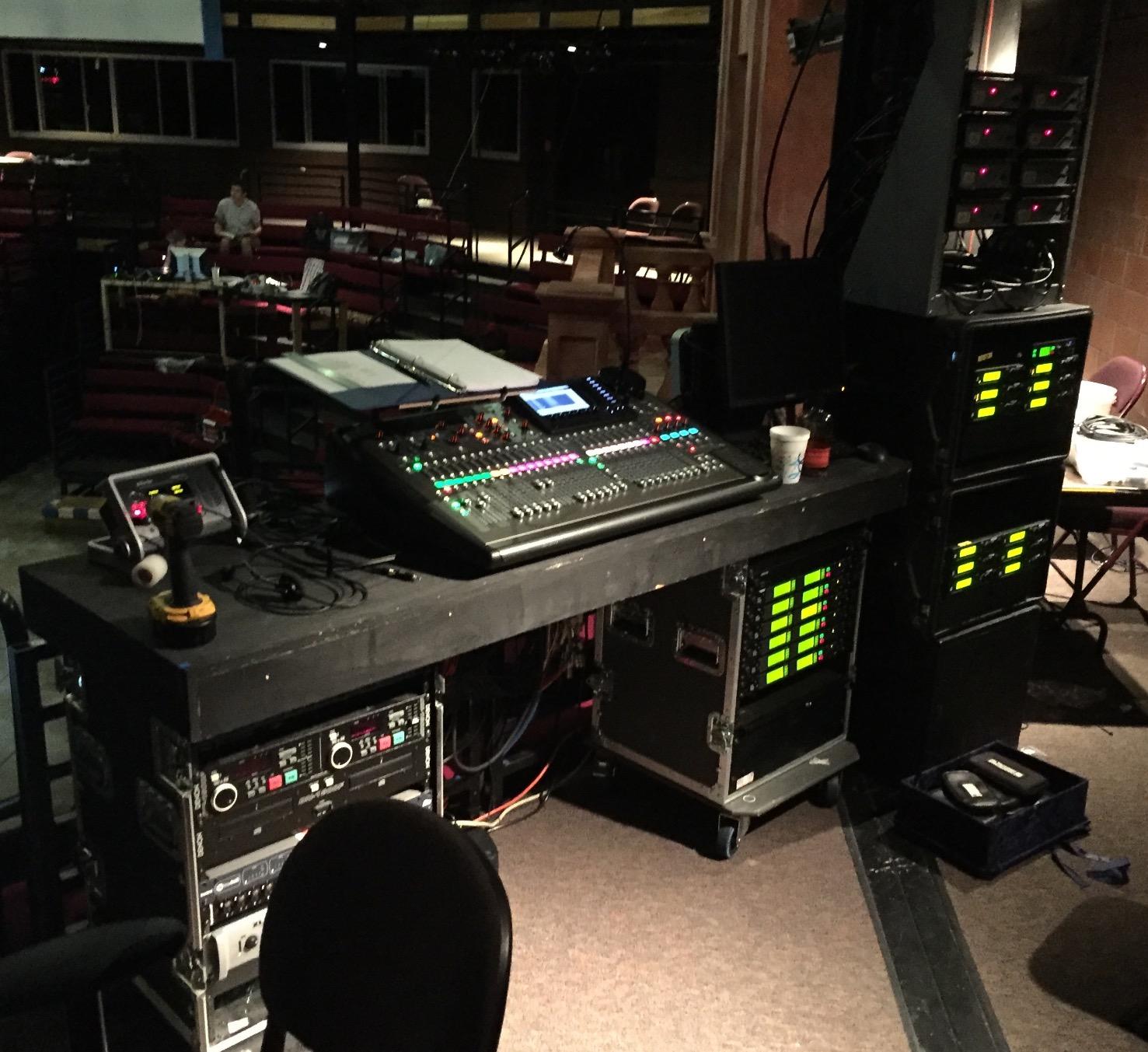
I have mixed on the X32 in three different churches and it is the console that every guest engineer already knows. The 32 MIDAS-designed preamps sound far cleaner than the price suggests, and the 25 motorized faders let me recall last week’s scene exactly so the bass player stops getting louder every rehearsal.
For a worship band with drums, bass, two guitars, keys, three vocals, and a pastor mic, 40 inputs is comfortable headroom. The 16 XLR outputs cover the main L/R, two stereo monitor mixes, the broadcast feed, and an assisted listening send without any creative cable math. I have routed the same console into a livestream computer, a hearing loop, and an overflow room at the same time.
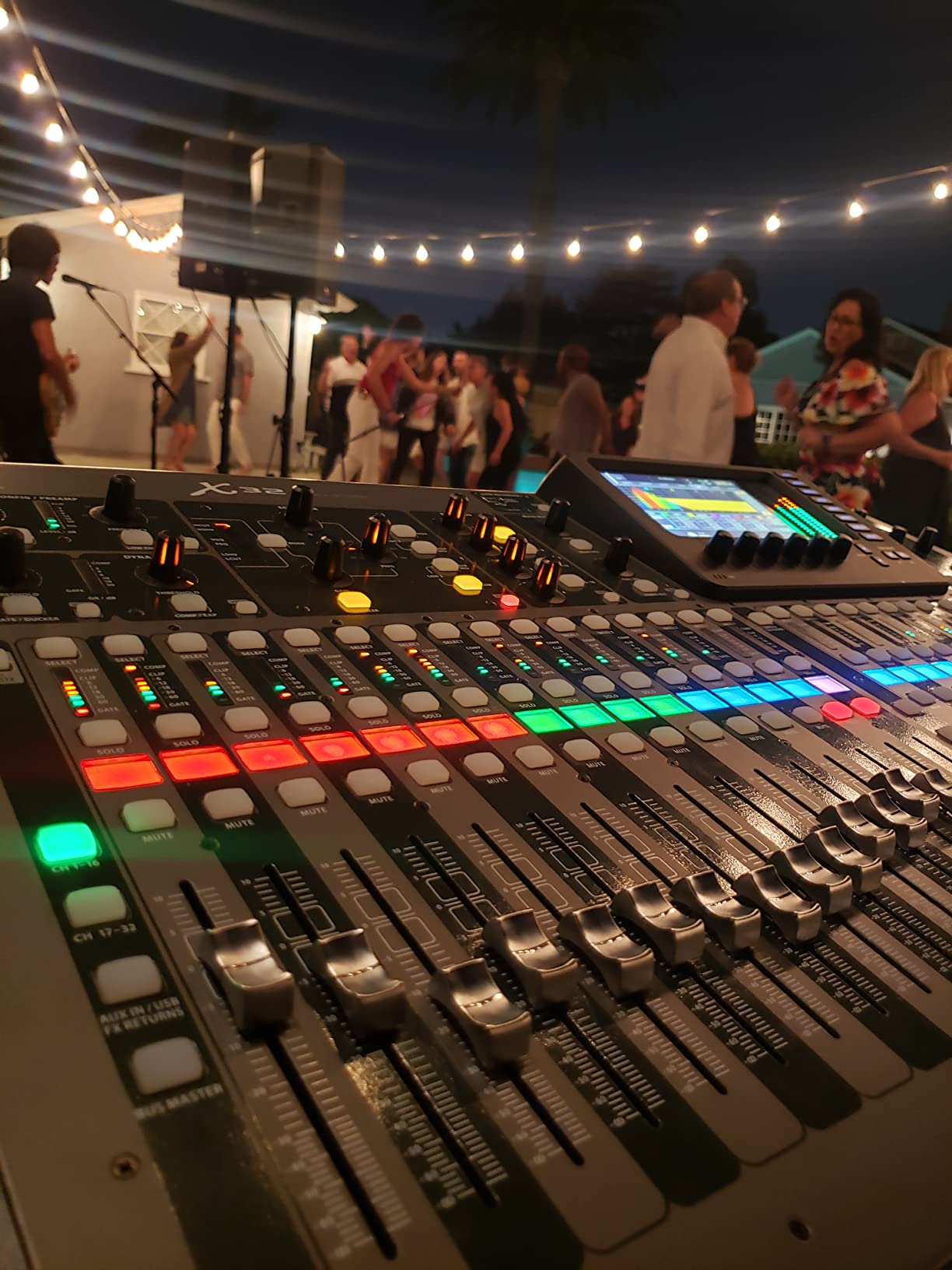
The learning curve is real. New volunteers will need at least two Sunday run-throughs before they feel confident navigating the routing menu, and the channel meters are small in bright sanctuary light. Both are honest drawbacks, but they are also why so many church sound training videos exist for this exact mixer.
Channel count and scene management for Sunday mornings
The X32 ships with 40 input channels and 25 buses, which means a small-to-medium worship team can leave headroom for the Christmas and Easter special events without repatching. Scenes save fader positions, EQ, compression, effects, and routing, so a tech who only sees the church once a month can recall last week’s mix and tweak from there.
Long term reliability and firmware support
Behringer has shipped regular firmware updates for over a decade and the X32 platform shares show files with the Midas M32, which means a guest engineer can walk in cold and be functional in minutes. If you want to dig into the broader live-sound mixer landscape, our best digital mixers for live sound guide compares it against touring-grade options.
2. Behringer X AIR XR16 – Budget Pick Digital Mixer for Small Churches
Behringer X AIR XR16 16-Input Digital Mixer for iPad/Android Tablets with 8 Programmable Midas Preamps, 8 Line Inputs, Integrated Wifi Module and USB Stereo Recorder
16 inputs
8 MIDAS preamps
iPad control
6.6 lbs
Pros
- Compact 6.6 lb frame fits any booth
- 8 MIDAS-designed preamps at an entry price
- Built in tri mode WiFi router means no extra hardware
- Dugan style auto mixing for shared pastor and worship leader mics
- Stereo WAV recording straight to USB
Cons
- Built in WiFi can drop out so add an external router for reliability
- Stereo only USB recording not multitrack
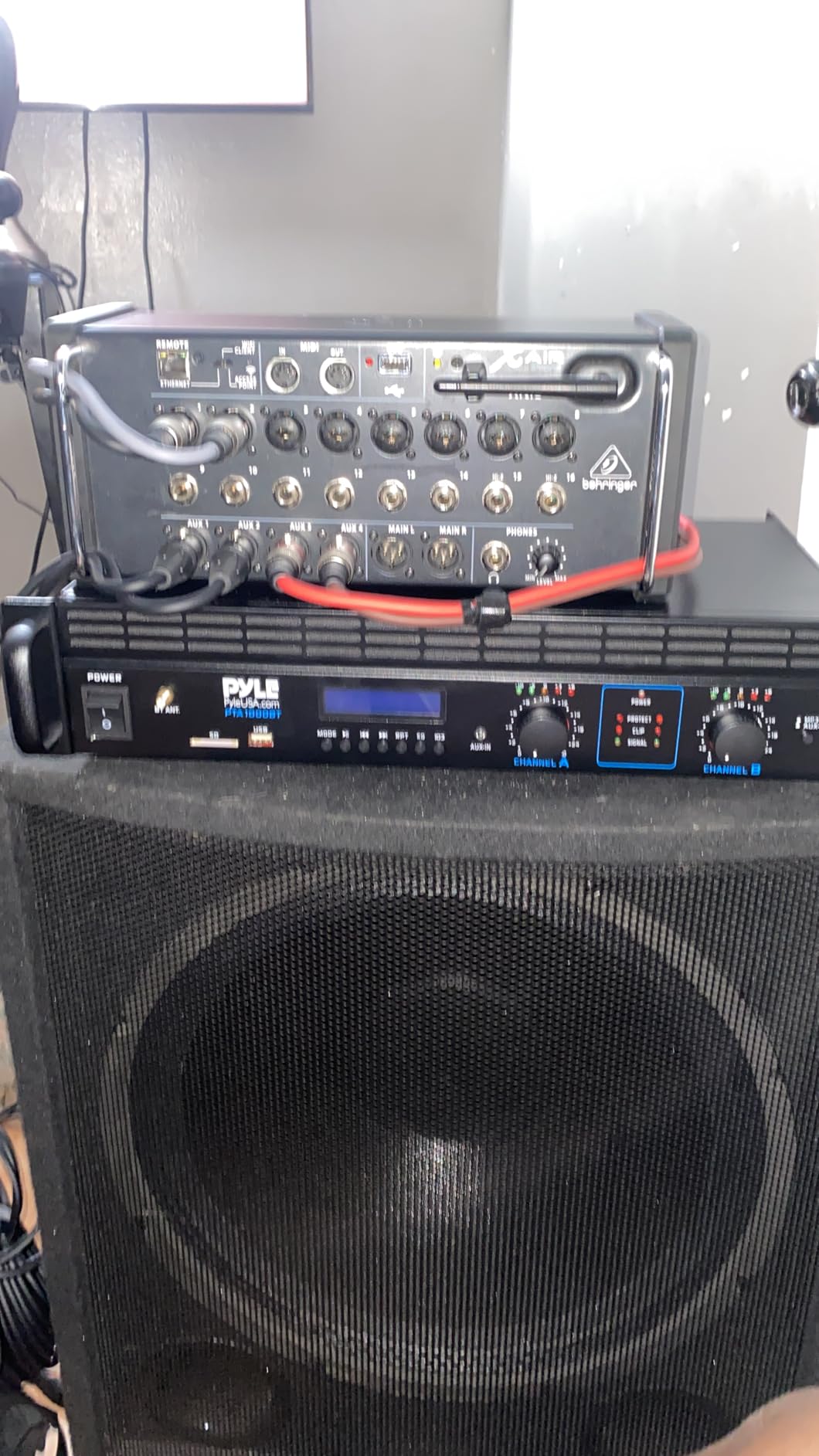
The XR16 is the mixer I recommend when a small church has a real budget and a real volunteer problem at the same time. It weighs 6.6 pounds, costs less than many stage monitors, and runs entirely from an iPad. A volunteer who is afraid of pushing the wrong button on a big console can sit in the back row and tweak on the tablet while still paying attention to the service.
The eight MIDAS preamps are the headline feature at this price. They are the same preamp family found in the larger X32, so a small church that grows into the XR18 or X32 later gets a familiar sound. The Dugan-style automatic mic mixing is a genuine lifesaver when two people share a lapel mic.
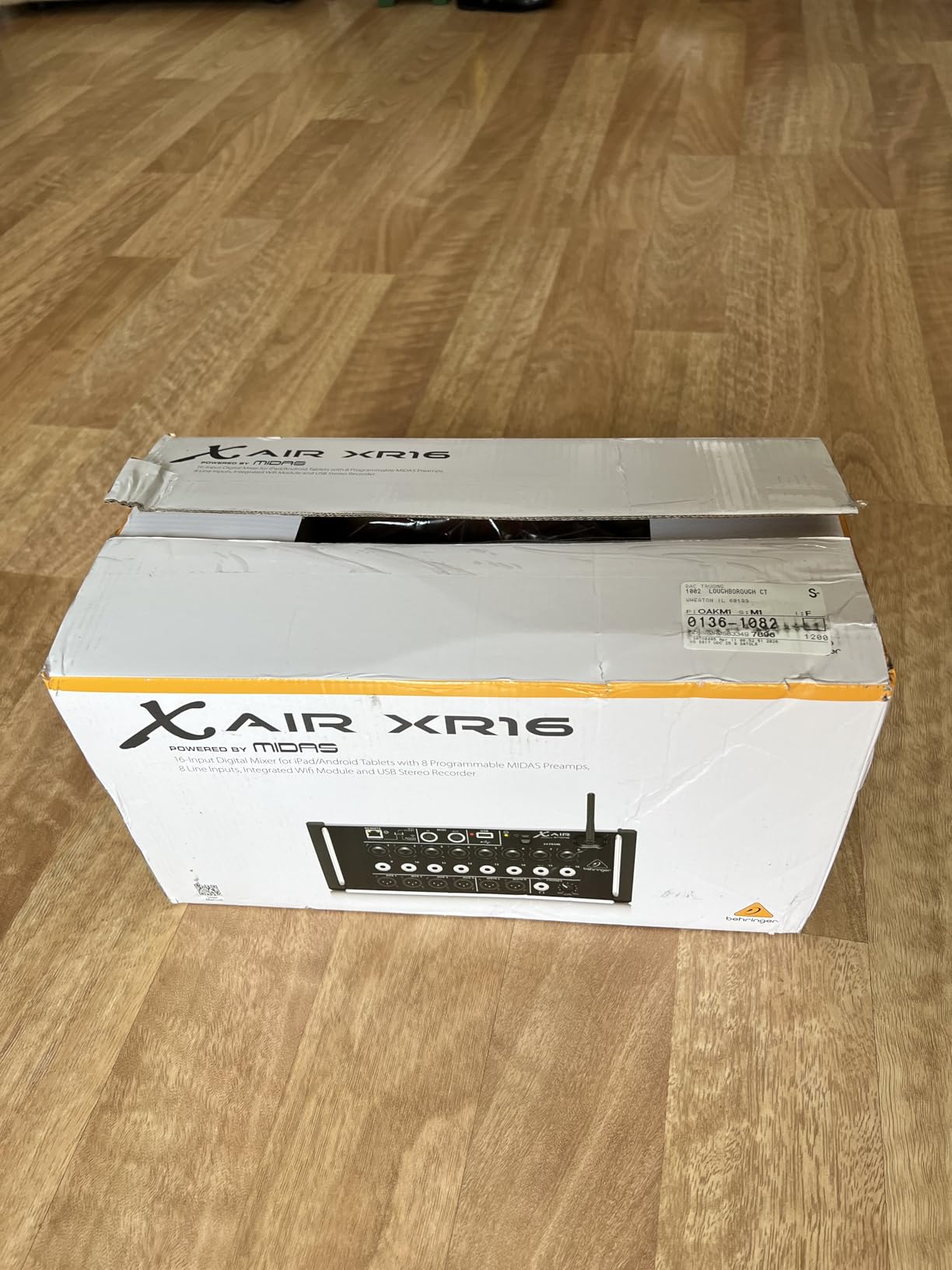
USB recording is stereo only, so if your church wants multitrack for post-production editing you will need to step up to the XR18 or another mixer. The built-in Wi-Fi is convenient for setup but I strongly recommend an external router for Sunday mornings – the signal is just more reliable, and I have personally had the tablet lose connection at the worst possible moment during a baptism.
When an iPad workflow actually helps
For a small church under 150 seats running a worship leader, two vocalists, keys, and a pastor mic, the XR16 is more than enough. The wireless control means the sound tech can stand where the congregation sits and hear exactly what they hear, instead of guessing from a back booth.
Limitations to plan around
There is no AES50 expansion, no Dante, and no motorized faders. If your church is planning to grow to a full band with drums in the next 12 months, plan on moving up to the XR18 or the full X32. For more on small-room coverage, our personal sound amplifiers for church services guide pairs well with the XR16.
3. Yamaha DM3 Standard – Best for Small Worship Teams That Want Pro Sound
Yamaha DM3 Standard 22 Channel Ultracompact Digital Mixing Console
22 channels
16 Yamaha preamps
96kHz
20 lbs
Pros
- Renowned Yamaha sound quality at 96kHz
- 22 channels in a compact 20 lb frame
- Best in class 9 inch touch screen
- 18x18 USB interface for multitrack recording
- Reliable Yamaha build quality
Cons
- Onboard dynamics and FX options are more limited than competitors
- DAW integration can need a firmware update
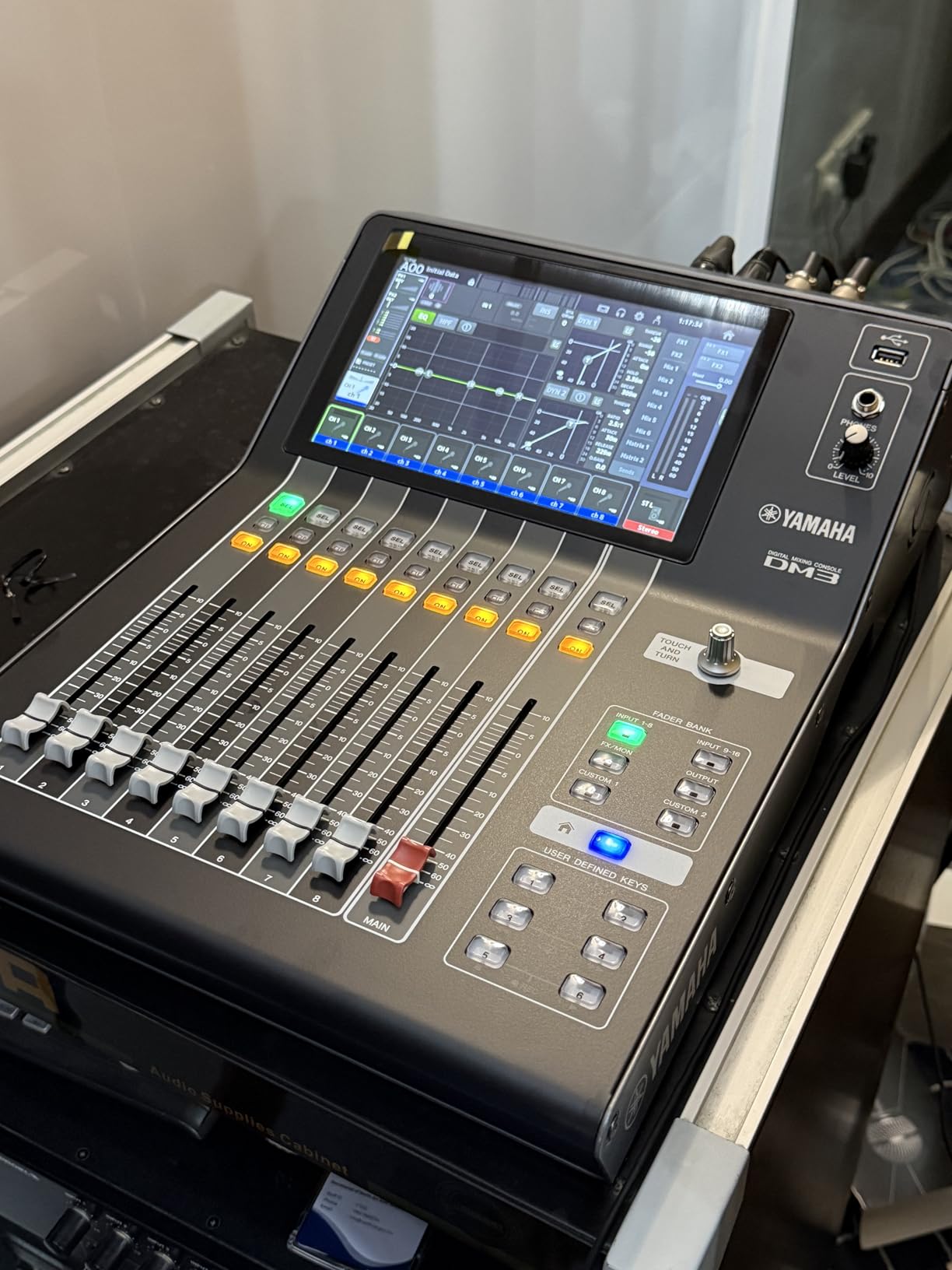
I reached for the Yamaha DM3 when a mid-size church asked for “Yamaha quality but smaller than the DM7.” The 96kHz sample rate and the Yamaha preamp design give the DM3 a noticeably smoother top end than the Behringer XR series, and the 9-inch touchscreen is the easiest to read at a glance during a busy service.
Twenty-two channels and sixteen preamps cover a worship band with a full drum kit, bass, two guitars, keys, four vocals, and the pastor mic. The 18×18 USB interface routes a full multitrack recording into a laptop running Reaper, Cubase, or Studio One, which makes post-production and live streaming much easier.
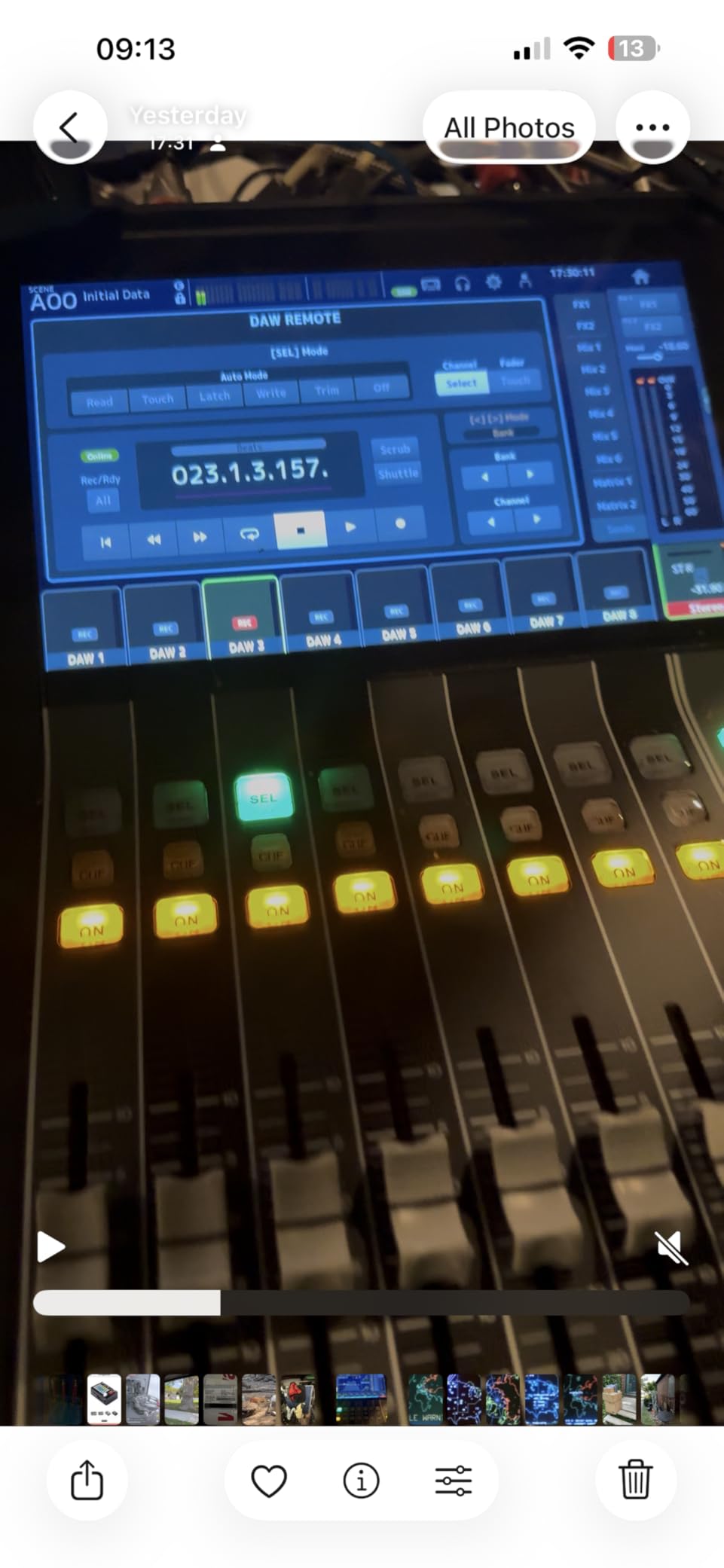
The DM3’s onboard effects are more conservative than the X32, so churches that rely on lush reverbs for their vocal sound may want to add an external FX unit. The DAW integration with Cubase in particular occasionally needs a firmware update, but Yamaha’s support is responsive.
Who the Yamaha sound actually suits
Churches that already run Yamaha speakers or a Yamaha stage box should standardize on the DM3 so the whole signal chain is one ecosystem. The Yamaha preamp character is a touch forward in the upper mids, which helps spoken word intelligibility for the pastor without making the band sound harsh.
Where it stops being enough
If you need more than 22 channels or want Dante networking out of the box, you are looking at the DM7 or an Allen & Heath SQ. For a single-room small church that wants broadcast-quality sound in a compact box, the DM3 is a smart pick.
4. QSC TouchMix-16 – Best Compact Digital Mixer for Portable Churches
QSC TouchMix-16 Compact Digital Mixer with Bag
20 inputs
12 mic preamps
4 band parametric EQ
5 lbs
Pros
- Compact 5 lb frame is the lightest in this roundup
- 12 dedicated mic preamps with great sound
- Setup wizards for feedback and gain are perfect for new volunteers
- TRS aux outs drive wired in ear monitors directly
- 4 band parametric EQ plus gate and compressor on every input
Cons
- Onboard touch screen can be unresponsive under pressure
- Lacks motorized faders found on competing consoles
The TouchMix-16 is the mixer I bring when a portable church sets up in a school gym one Sunday and a hotel ballroom the next. At five pounds it disappears into a road case, and the TRS aux outs drive wired in-ear monitors directly without needing a separate headphone amp distribution system.
The setup wizards are the unsung hero. A first-time volunteer can run the gain wizard, the room tuning wizard, and the feedback suppression wizard in about 20 minutes and walk away with a usable mix. That alone has saved a couple of youth-group events I have helped with.
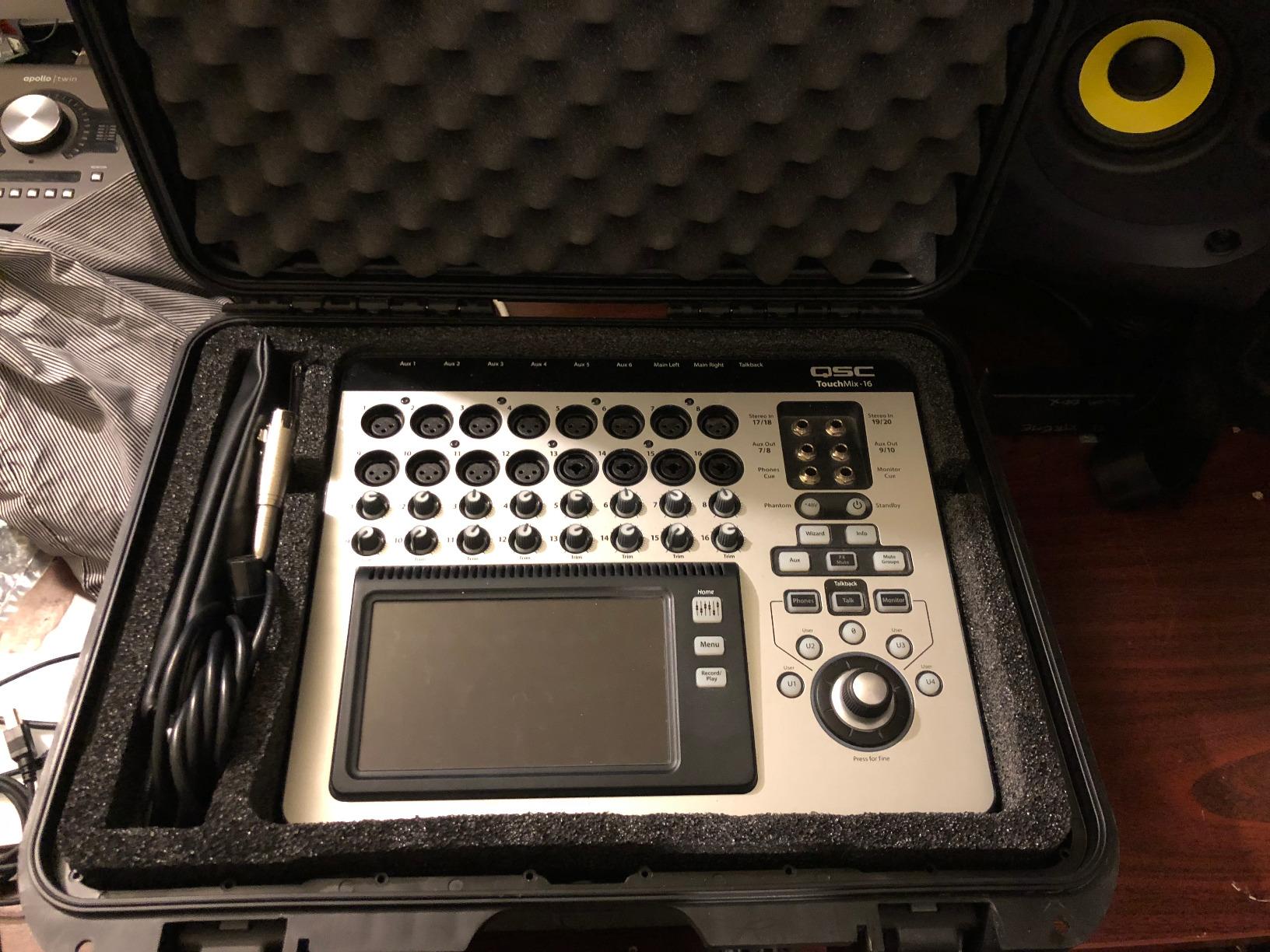
The onboard touch screen is the main weakness. Under the pressure of a live service it can lag or miss taps, which is why most church techs end up controlling it from an iPad anyway. There are also no motorized faders, so scene recall brings back parameters but the fader position is software only.
Why portable and youth rooms love it
The compact footprint and the friendly wizards make the TouchMix-16 a favorite for youth rooms, multi-site portable campuses, and Christmas pageants that need a quick setup in an unfamiliar room. The 20 inputs cover most worship bands, and the FX engine includes solid reverb and delay options.
Where it falls short
If your church needs more than 20 inputs or wants broadcast multitrack USB, look at the QSC TouchMix-30 or a step up to the Behringer X32. For a permanent install in a single sanctuary, the lack of motorized faders is a noticeable compromise.
5. PreSonus StudioLive 24R – Best Rack-Mount Digital Mixer for Stage Box Use
PreSonus StudioLive Series III 24R Digital Rack Mixer with Studio One Pro Software
32 channels
24 XMAX preamps
AVB network
10.8 lbs
Pros
- Fully recallable 32 channel digital rack mixer
- 24 XMAX Class A recallable mic preamps
- 16 FlexMixes configurable as aux subgroups or matrix mixes
- 40x40 USB 2.0 plus 55x55 AVB recording interface
- Scene management with Scene Safe
Cons
- Smaller review base than competitors
- Some features need familiarity with the StudioLive ecosystem
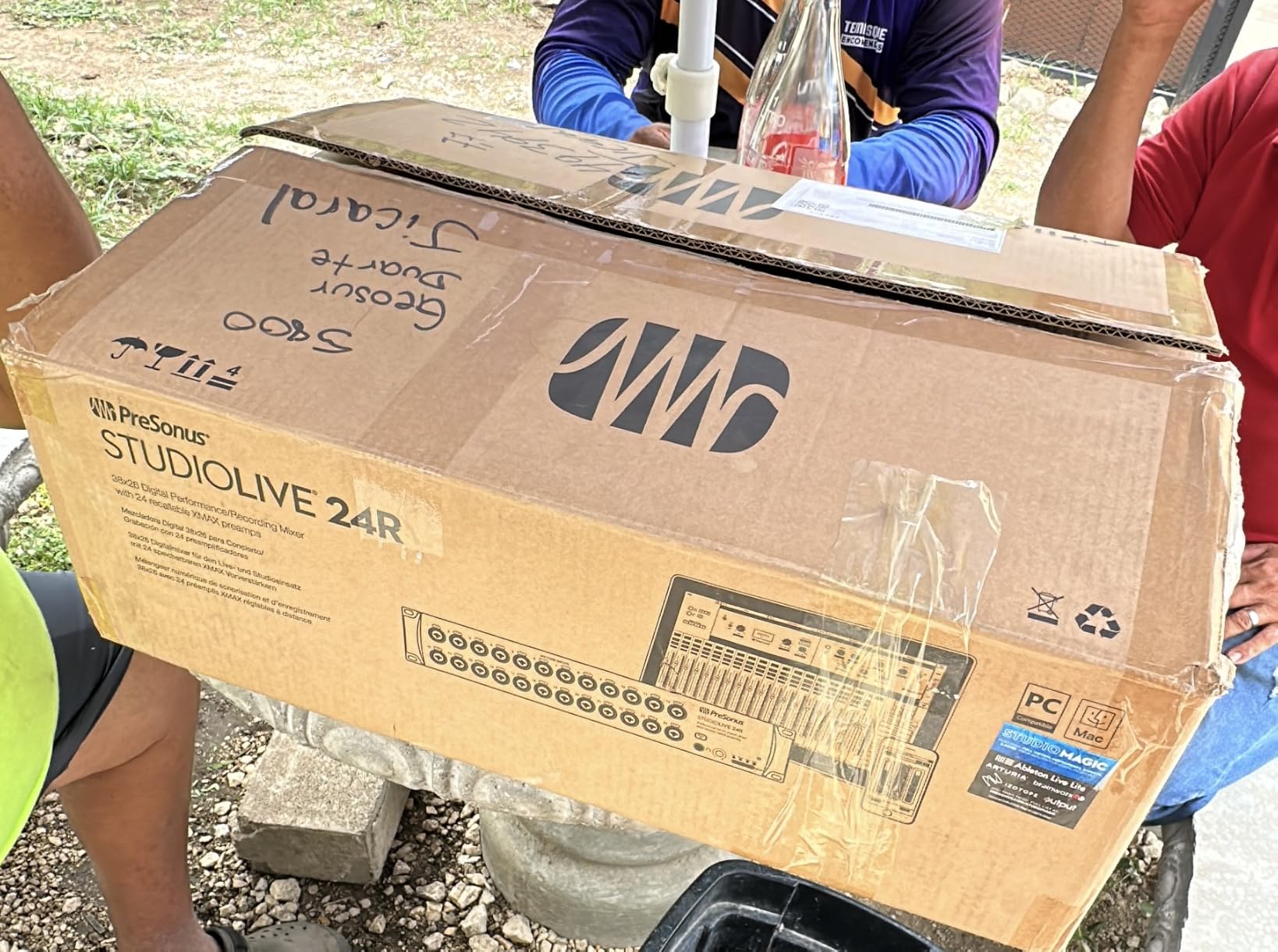
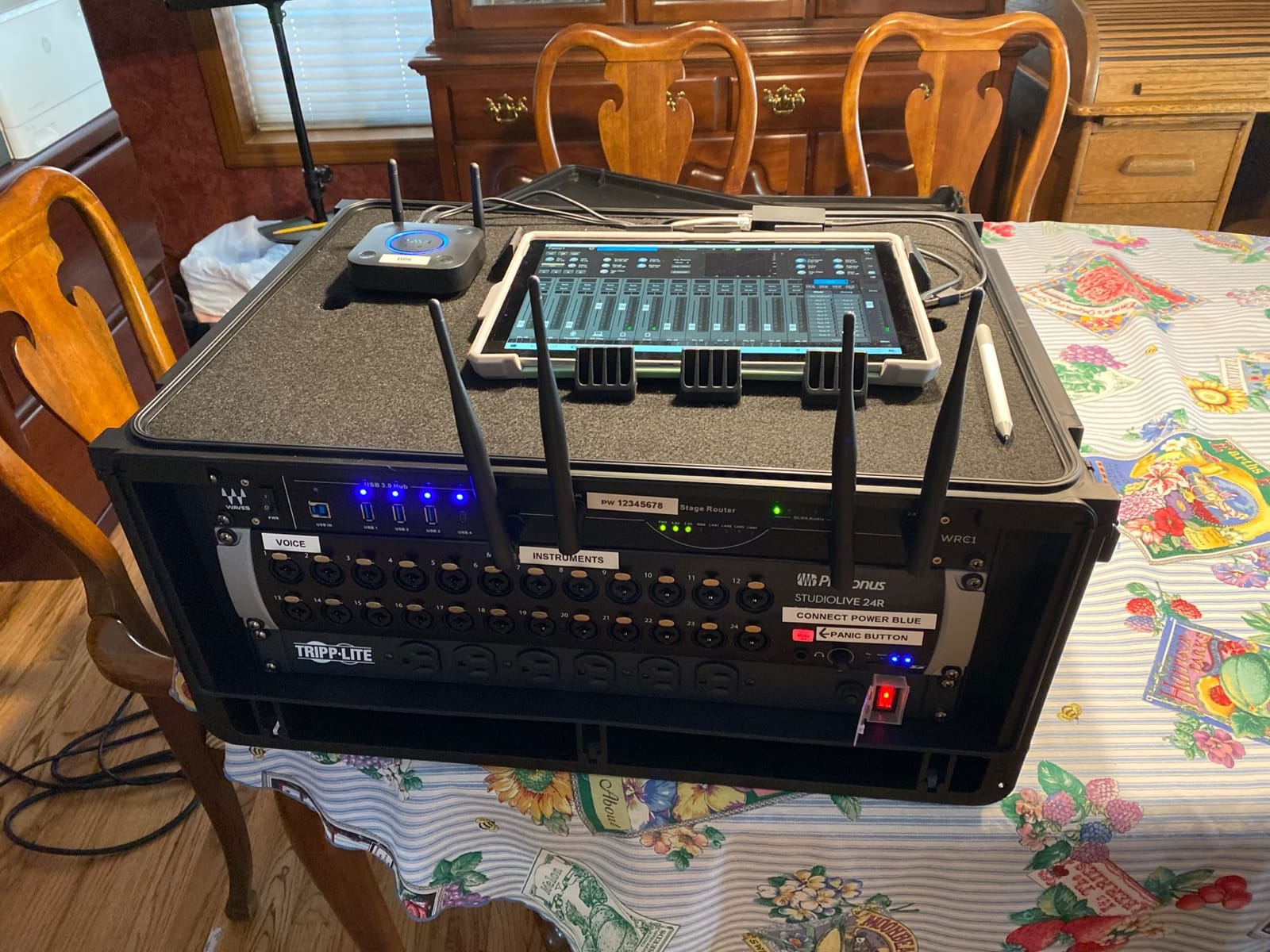
The StudioLive 24R is the mixer I recommend when a church wants to push the stage box off-stage and keep the booth quiet. At 10.8 pounds it lives in a 3U rack on stage, and the AVB network carries 55 channels of audio back to a front-of-house console or a computer running UC Surface over a single Cat6 cable.
The 24 recallable XMAX preamps are a real time-saver. Walk up to the rack, plug in a mic, and the gain returns to the saved value automatically. For a church that rotates student volunteers through the band, that single feature prevents more blown channels than any training plan.
The 24R is best understood as a building block. By itself it is a 32-channel rack mixer; pair it with a StudioLive Series III console and it becomes a stage box with extra DSP. Churches that already own StudioLive gear will love it. Churches starting fresh should look at the 32SC instead, which has the same brain in a console format.
Why churches like the rack form factor
Keeping the mixer on stage shortens the analog cable run and lets you run a single network cable back to the booth. Less copper means fewer hum problems, and a quieter booth makes the sound tech happier, which makes the mix better. It is a virtuous cycle that more churches are catching onto.
Where the 24R needs an ecosystem
If your church does not already use StudioLive gear, the 24R is best thought of as a stage box to grow into rather than a standalone purchase. For a turnkey experience in a single box, the 32SC is the friendlier choice.
6. PreSonus StudioLive 32SC – Best for Churches That Live Stream Every Service
PreSonus StudioLive Series III 32SC Digital Console Mixer
32 channels
128 ch USB
AVB network
22 lbs
Pros
- Built in 128 channel (64x64) USB interface for full multitrack
- Onboard multitrack SD recorder with Virtual Soundcheck
- Built in AVB networking with PreSonus NSB stage boxes and EarMix
- 16 FlexMixes configurable as aux subgroups or matrix mixes
- Dual core FLEX DSP engine with 286 simultaneous processors
Cons
- Smaller review base than the X32
- Lacks integrated Bluetooth
The 32SC is the mixer I pull out when the church says “we stream every service and we want multitrack for the YouTube channel.” The built-in 128-channel (64×64) USB interface is the most generous in this entire roundup, and the onboard SD recorder with Virtual Soundcheck means you can record a full multitrack of last Sunday and rehearse the band against it without anyone in the room.
The AVB networking integrates directly with the PreSonus NSB stage boxes and the EarMix 16M personal monitor mixers, which gives the worship band their own personal monitor control from a phone. That is a real upgrade in stage volume and worship band happiness.
Live streaming and broadcast routing made simple
The matrix mixes on the 32SC let you build a dedicated broadcast mix that is independent of the front-of-house mix. Route that into a computer running OBS or vMix via USB, and your online congregation gets a clean, vocal-forward mix while the room hears a band-forward mix.
Long-term fit and ecosystem lock-in
Going all-in on PreSonus is a real commitment. The NSB stage boxes, EarMix personal mixers, and SW5E AVB switch all add up. For a church that wants the most complete live-streaming and personal-monitoring story in a single vendor ecosystem, the 32SC is the right anchor.
7. PreSonus StudioLive Classic 16.0.2 USB – Best for Beginners on a Tight Budget
PreSonus StudioLive Classic 16.0.2 USB Digital Console Mixer
16 inputs
12 XMAX preamps
18x16 USB
20 lbs
Pros
- 12 Class A XMAX preamps deliver clean vocal sound
- Fat Channel processing on every channel
- Fat Channel includes EQ compressor expander and limiter
- 18 in 16 out USB 2.0 audio interface
- Real LED VU meters at this price point
Cons
- Steeper learning curve coming from analog
- Lacks motorized faders of newer StudioLive models
The StudioLive 16.0.2 is the classic I keep recommending to small churches that want to step into the digital world without giving up the feel of a real mixing surface. It has actual LED VU meters, real faders, and 12 XMAX preamps, which is more honest hardware than many competitors at this price.
The Fat Channel processing on every input is the headline. Each channel gets a 3-band semi-parametric EQ, a compressor, an expander, and a limiter, which is more than enough processing to make a worship band sound professional before you ever reach for an outboard effect.
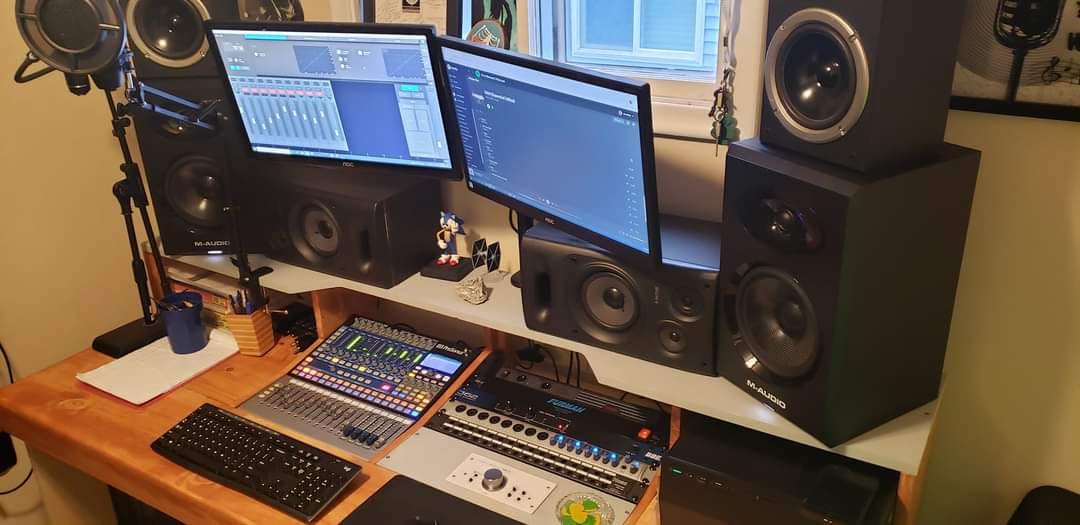
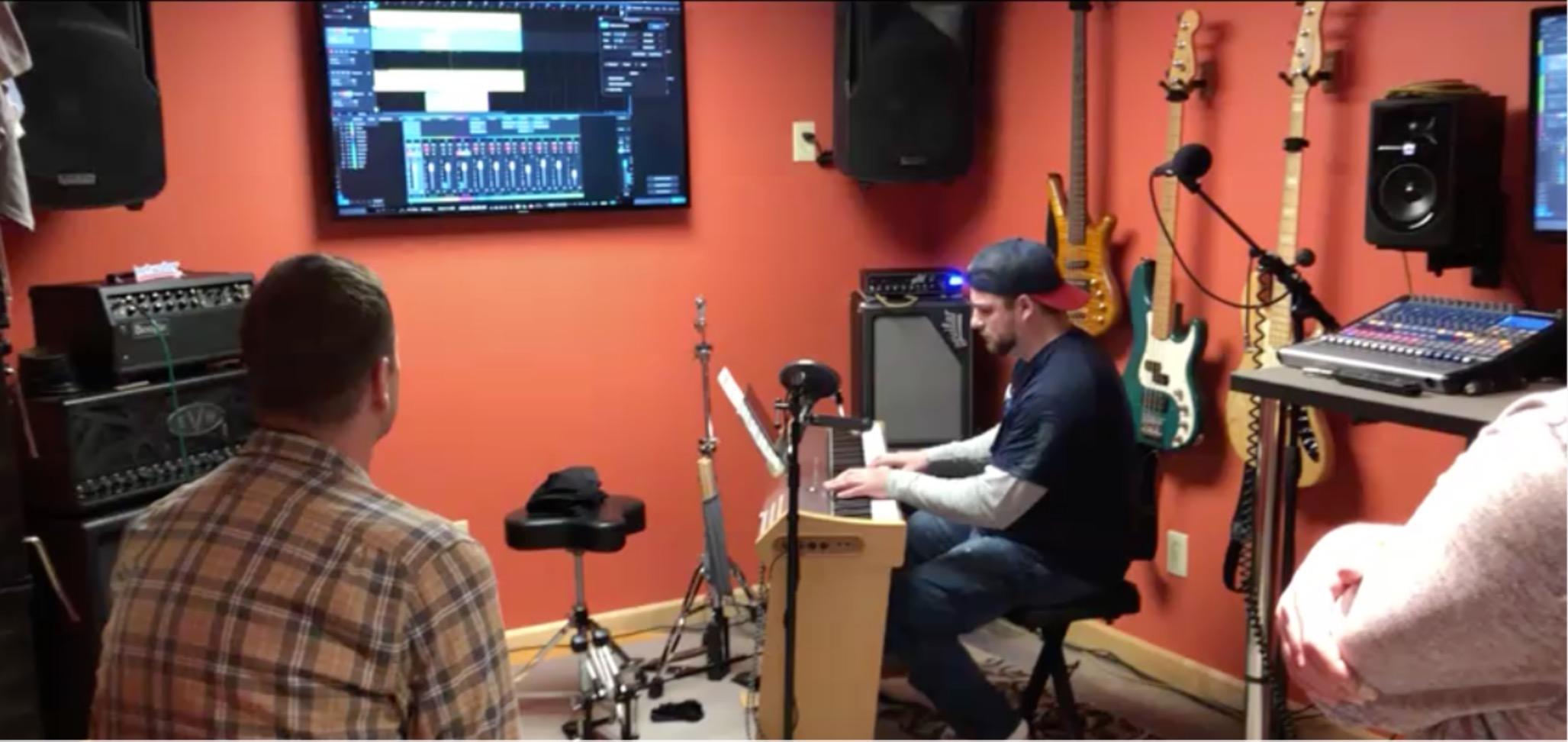
The 16.0.2 is older than most of the mixers in this roundup, and that means the learning curve is steeper than the newer touch-screen models. New users coming from analog will need a few weeks of practice, and the documentation is a 95-page PDF download rather than a slick in-box guide.
Why the older StudioLive still has fans
The 16.0.2 has a real hardware feel that the newer all-touchscreen mixers lose. Tactile faders, dedicated buttons, and physical VU meters make a nervous volunteer more confident, and confidence at the booth usually translates to a better mix in the room.
When to skip it
If your church needs more than 16 inputs, motorized faders, or modern AVB networking, step up to the 24R or 32SC instead. For a small congregation on a tight budget with a patient tech team, the 16.0.2 is still a workhorse.
8. Behringer X AIR XR18 – Best for Wireless Tablet Control From Anywhere in the Room
Behringer X AIR XR18 18-Channel, 12-Bus Digital Mixer for iPad/Android Tablets with 16 Programmable Midas Preamps, Integrated Wifi Module and Multi-Channel USB Audio Interface
18 inputs
16 MIDAS preamps
18x18 USB
7.1 lbs
Pros
- 16 MIDAS-designed programmable mic preamps
- Built in tri mode WiFi router for direct operation
- 18x18 bidirectional USB for direct multitrack recording
- Rack effects compression gate and PEQ on every channel
- Compact rack-mountable in 3U with included ears
Cons
- No AES50 connection
- iPad app lacks the RTA that the PC and Android app includes
The XR18 is the mixer I reach for when the church wants more inputs than the XR16 but still wants the wireless tablet workflow. Sixteen MIDAS preamps and 18 inputs give a small-to-medium worship band plenty of room, and the 18×18 bidirectional USB turns any laptop into a multitrack recording rig.
The built-in Wi-Fi router means you do not need any extra hardware to get started. A volunteer opens the iPad app, connects to the mixer’s Wi-Fi, and is mixing within minutes. For churches that do not have a stable network infrastructure, this is a real advantage.
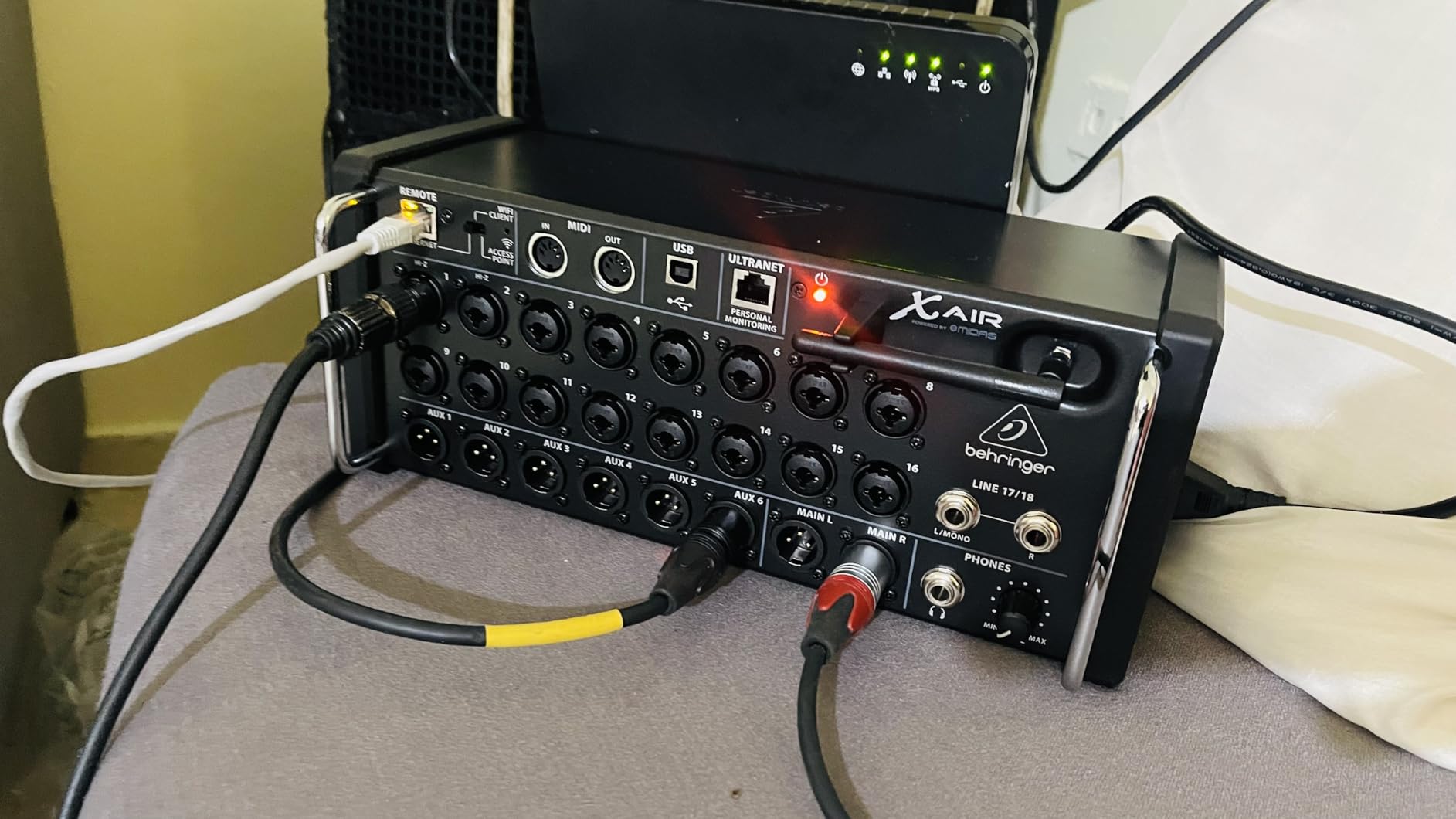
The iPad app is missing the real-time analyzer (RTA) that the desktop and Android versions include, which makes ringing out the room from a tablet a bit harder. As with the XR16, an external Wi-Fi router is the right move for permanent installs.
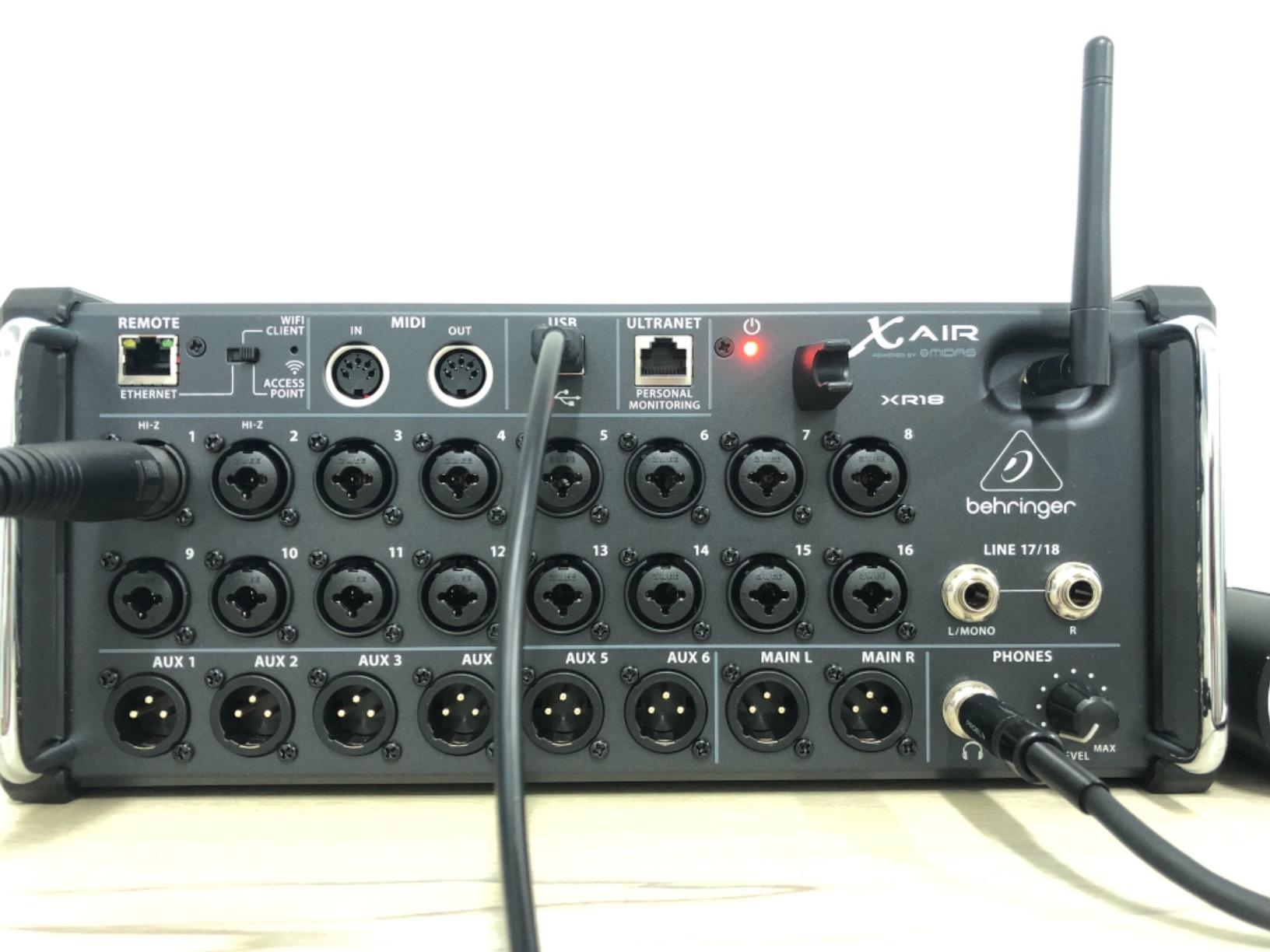
Why mid-size portable churches like the XR18
The XR18 walks onto a stage in a single 3U rack space and gives you 18 inputs and 16 MIDAS preamps. For a church that meets in a school cafeteria once a month or that travels for mission trips, that combination is hard to beat for the price.
When you outgrow it
There is no AES50 expansion, which means you cannot add a digital stage box later. If your church is planning a sanctuary rebuild with a stage box in the next two years, jump to the full Behringer X32 instead.
9. Soundcraft Ui16 – Best Cross-Platform Digital Mixer for Mixed-Device Teams
Soundcraft Ui16 Remote-Controlled 16-Input Digital Mixer
16 inputs
dbx and Lexicon FX
10 device control
7.9 lbs
Pros
- Remote control from iOS Android Windows Mac OS and Linux
- Up to 10 devices can control the mixer simultaneously
- Built in dbx DigiTech and Lexicon processing
- dbx AFS2 feedback suppression on tap
- 2 channel USB media player for MP3 WAV and AIFF
Cons
- Built in Wi-Fi hotspot range is short in larger rooms
- Hot plugging mics can cause loud pops
The Ui16 is the mixer I recommend when the volunteer team uses a mix of iPads, Android tablets, Chromebooks, and old Windows laptops. The cross-platform HTML5 control works on every device without a dedicated app, and up to 10 people can be logged into the mixer at the same time for training or shared mixing.
The Lexicon FX engines and the dbx AFS2 feedback suppression are the headline features. The Lexicon reverb is one of the best-sounding reverbs I have heard on any digital mixer in this price range, and the dbx feedback suppressor stops the ringing in a sanctuary before it ever reaches the congregation.
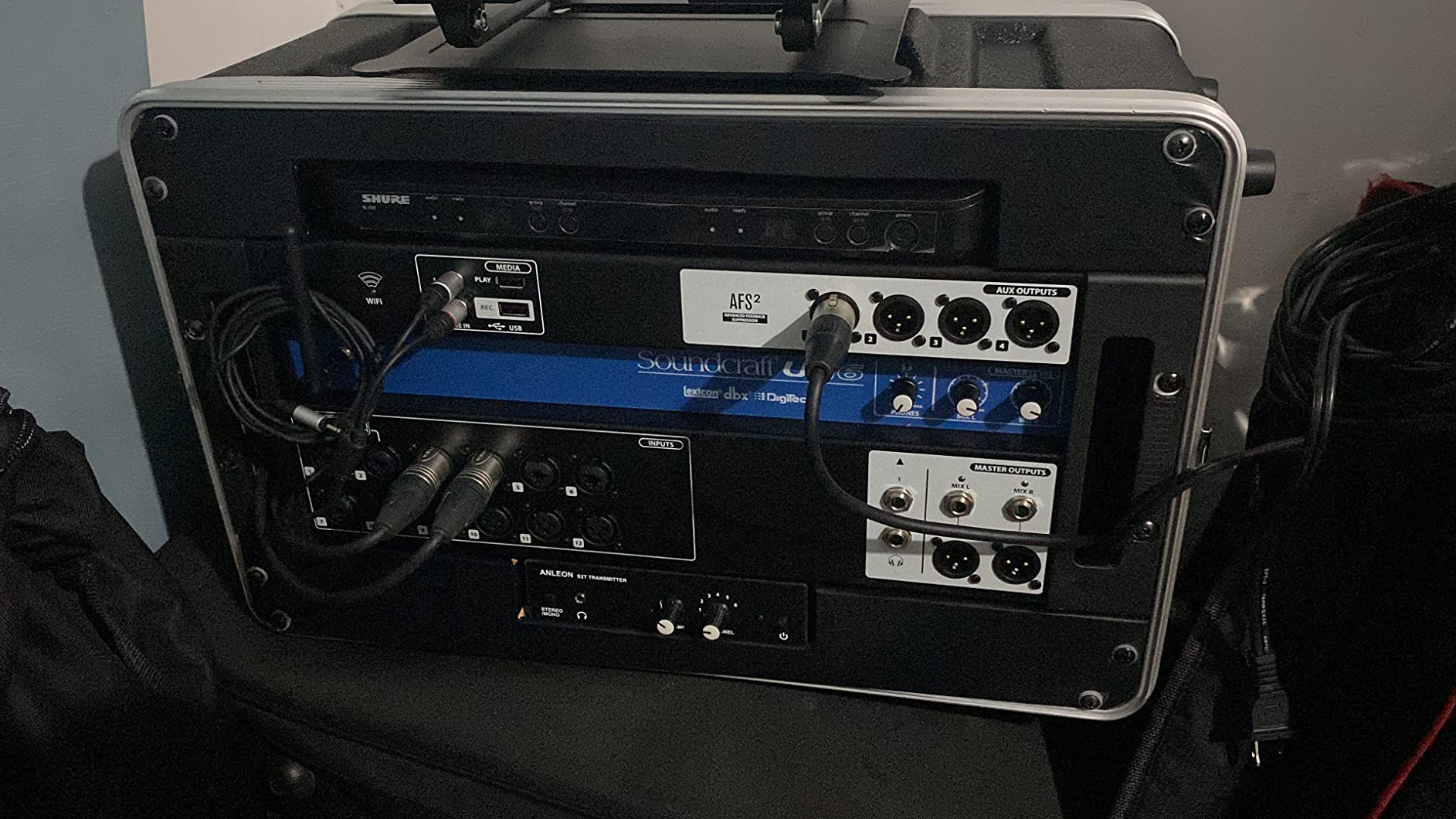
The built-in Wi-Fi hotspot is the weak link. The range is short in larger sanctuaries and the signal can be flaky. Adding an external router over Ethernet solves this, and Soundcraft designed the Ui16 to support that exact workflow. Hot-plugging mics can also cause loud pops regardless of fader position, so always patch before opening a channel.
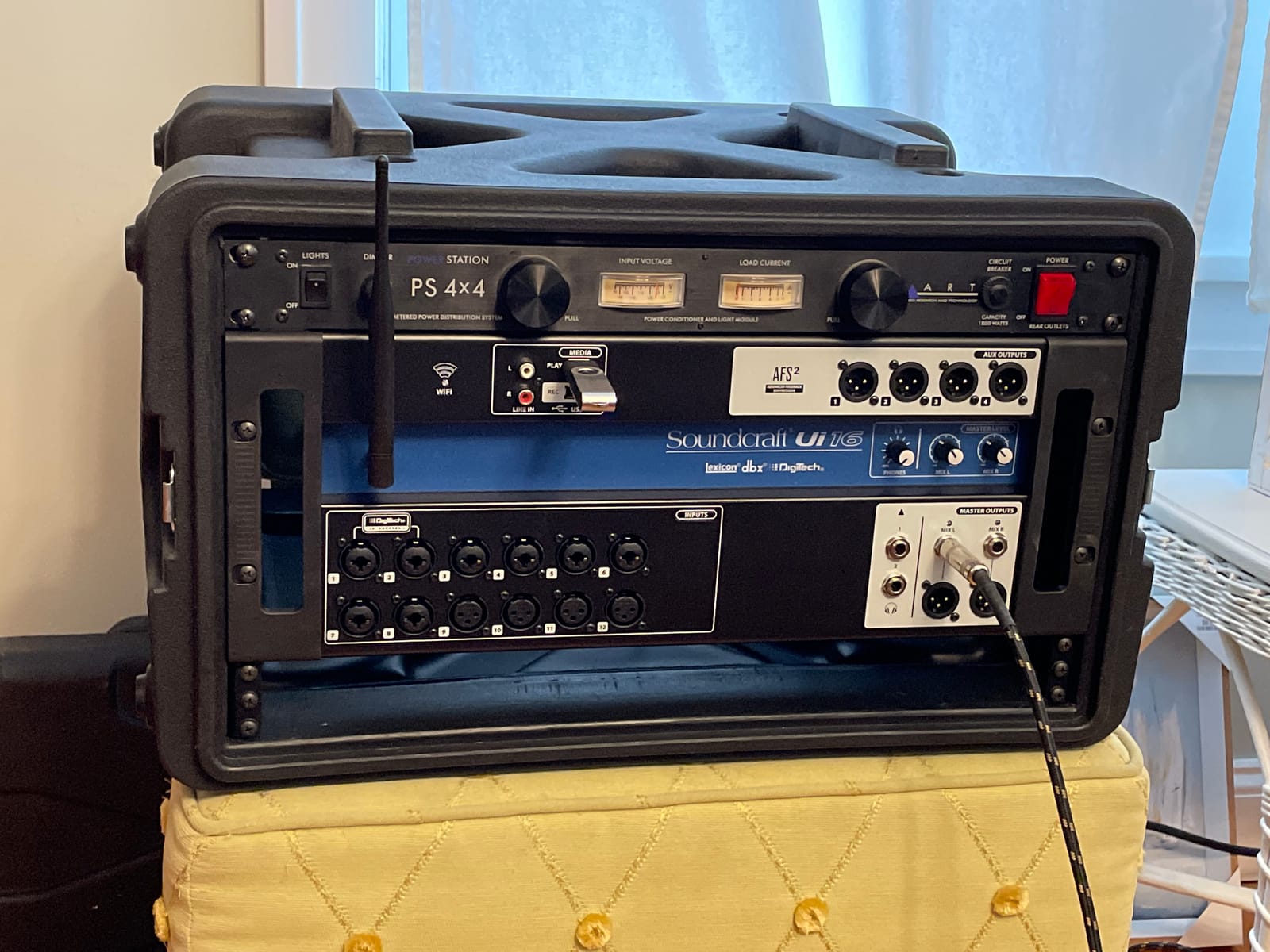
Why the cross-platform story matters for churches
Church volunteer teams rarely standardize on a single device type. The pastor’s wife has an iPad, the youth intern has a Chromebook, and the senior volunteer has an old Windows laptop. The Ui16 lets all three of them mix from whatever they already own.
Where the Ui16 stops being the right choice
If you need motorized faders, Dante networking, or a true console-style surface, look at the Allen & Heath SQ-5 or the Behringer X32. For a small church that wants cross-platform wireless mixing at a modest price, the Ui16 is still one of the best options out there.
10. ALTO TMD16 – Best Value With Modern Touchscreen Workflow
ALTO TMD16 16-Channel Digital Mixer with Bluetooth
16 channels
10 digital preamps
Bluetooth
12 lbs
Pros
- 10 pristine digital mic preamps at a budget price
- 100mm capacitive touch faders with dedicated encoders
- 7 inch color display is easy to read mid-service
- Built in parametric EQ compression and 16 preset FX engine
- Bluetooth and USB connectivity for streaming and recording
Cons
- Early product with limited long term user feedback
- Capacitive touch faders feel different from traditional motorized faders
The ALTO TMD16 is the mixer I keep in my “budget backup” kit. It is the newest entry in this roundup and brings a modern touchscreen workflow with capacitive touch faders and a 7-inch color display to a price tier that used to mean no-name gear. The 10 digital mic preamps are quiet and clean for spoken word, and the Bluetooth input makes streaming music between service elements painless.
The 16-preset FX engine covers the basics a small worship team needs, and instant scene recall saves the entire mix so the next volunteer can pick up exactly where the last one left off. For a church that wants a digital mixer without learning a deep menu tree, the TMD16 is friendlier than most of the older consoles.
Why the Bluetooth input matters
Streaming background music, scripture readings, or sermon audio from a phone or laptop over Bluetooth removes a cable and a separate audio source from the booth. For a youth room or a portable setup that is already juggling too many adapters, that single feature is worth the price.
Where the early product status matters
The TMD16 is a newer release and the long-term reliability picture is still being written. For a church that values a deep community of other users to lean on for training and show files, the Behringer XR16 or X32 still have the larger installed base.
How to Choose the Best Digital Mixer for Your Church
Choosing the best digital mixer for church sound is less about brand loyalty and more about matching the console to your volunteer team, your room size, and your broadcast goals. I have walked into churches that paid for an Allen & Heath dLive and still sounded bad, and I have walked into small churches with a Behringer XR16 that sounded incredible because the volunteers actually understood it. The right mixer is the one your team will use confidently every Sunday.
Here is the framework our team uses when a church asks us for a recommendation. It is the same decision tree we built while writing this guide, and it is the one I wish someone had handed me when I started mixing live.
Match the mixer to your church size
Small churches under 200 seats usually need 16 to 24 inputs. The Behringer XR16, Yamaha DM3, and ALTO TMD16 cover this range. Medium churches from 200 to 500 seats usually need 24 to 40 inputs, which is where the Behringer X32, PreSonus 32SC, and Allen & Heath SQ-5 live. Large churches above 500 seats and multi-site campuses should standardize on Dante-equipped consoles like the Allen & Heath dLive or Yamaha DM7. None of the ten mixers in our roundup covers the large church tier, but our companion guide to digital mixers for live sound walks through those higher-channel consoles.
Digital vs analog: the real decision criteria
Analog mixers are simpler and cheaper, and a brand-new volunteer is more likely to push the right button in a panic. Digital mixers cost more upfront but they save scenes, recall last week’s mix, run virtual soundchecks, and feed a live stream with one USB cable. If your worship team has more than six inputs, if you livestream, or if your volunteer team rotates, digital pays for itself in the first six months.
Plan for live streaming and broadcast routing
The fastest-growing need we see is a dedicated broadcast mix. Route a matrix output into your computer running OBS, vMix, or Resolume, and your online congregation gets a vocal-forward mix that does not compete with the room. The PreSonus 32SC, Behringer X32, and Yamaha DM3 all handle this cleanly out of the box. Plan for two USB sends, one for multitrack recording and one for the live stream, so your post-production team can work without touching the front-of-house mix.
Dante vs USB vs analog stage box
Dante network audio carries up to 512 channels of digital audio over a single Cat6 cable, which is why large and multi-site churches standardize on it. USB audio interfaces are simpler and cheaper but limited to about 32 channels and short cable runs. Analog snakes still work and are cheaper than ever, but they pick up hum and they chain you to one cable path. For a single-room church, USB is enough. For a multi-building campus, Dante pays for itself the first time you need to move an input from one room to another.
Training your volunteer sound team
The most overlooked part of any mixer purchase is the training plan. Buy a console that has YouTube tutorials, write down five scenes before the first Sunday, and walk a new volunteer through a no-pressure rehearsal before they ever touch a fader during a service. The churches that get the best sound are not the ones with the most expensive mixers – they are the ones whose volunteers feel confident at the booth. Our personal sound amplifiers guide covers the assisted-listening side of the same congregation.
Total cost of ownership beyond the sticker price
The sticker price of the mixer is rarely the full number. Add a router for wireless reliability, a stage box if you want short copper runs, a warranty extension if your manufacturer offers one, and budget for a service contract or replacement plan. Behringer and Midas share firmware and show files, which is a hidden value. PreSonus rewards ecosystem loyalty with NSB stage boxes and EarMix personal monitor mixers. Yamaha charges a premium for build quality and a long warranty track record. Match the brand to your church’s appetite for vendor lock-in.
Frequently Asked Questions
What is the best sound mixer for churches?
The Behringer X32 is the most widely used digital mixer in churches because it offers 40 inputs, 32 MIDAS preamps, 25 motorized faders, scene recall, and a massive community of church sound techs who share show files and tutorials. For smaller churches under 200 seats, the Behringer XR16 or the Yamaha DM3 Standard are smarter values.
What are the best digital mixers for churches?
Our top picks for church digital mixers are the Behringer X32 (best overall), the Behringer X AIR XR16 (best value for small churches), the Yamaha DM3 Standard (best sound quality in a compact box), the PreSonus StudioLive 32SC (best for churches that live stream every service), and the Allen u0026amp; Heath dLive for large and multi-site campuses.
How many channels does a church mixer need?
A small church under 200 seats typically needs 16 to 24 inputs. A medium church of 200 to 500 seats usually needs 24 to 40 inputs. A large church above 500 seats should plan for at least 48 inputs with room for expansion via a digital stage box.
Do churches need a digital mixer for live streaming?
Yes, in practice a digital mixer is the cleanest path to a dedicated live streaming mix. Use the matrix outputs to build a broadcast mix that is independent of the front-of-house mix, then route that mix to a computer running OBS, vMix, or Resolume via USB.
Is the Behringer X32 still the right pick in 2026?
Yes. The X32 platform has been continuously updated with new firmware for over a decade, show files are shared with the Midas M32, and the installed base means there is an enormous library of YouTube tutorials and church-specific training resources. For most small and medium churches it remains the safest long-term buy.
Final Verdict: Which Digital Mixer Should Your Church Buy?
If I had to send one of these ten mixers to a small church this week, it would be the Behringer X32. It is the safe, supported, well-documented choice that any future volunteer can learn from a free YouTube playlist, and it covers the worship band, the pastor mic, the live stream, and the assisted listening feed without compromise.
For a small church under 200 seats on a tight budget, the Behringer XR16 delivers real MIDAS preamps at the lowest price in this roundup. For a worship team that values sound quality above all else, the Yamaha DM3 Standard brings 96kHz Yamaha preamps and a best-in-class touchscreen to a compact box. For a church that live streams every service, the PreSonus StudioLive 32SC has the deepest multitrack USB and recording story in the lineup.
Match the mixer to your church size, your volunteer team, and your broadcast goals, and the rest falls into place. The best digital mixer for church sound is the one your team will actually use well every Sunday.