
After three months of side-by-side gigging, rehearsal tests, and load-in trials across bars, churches, school stages, and backyard weddings, our team settled on the ten best powered mixers you can buy right now. A powered mixer is a single audio unit that combines a mixing console with a built-in power amplifier, letting you plug microphones and instruments in one side and drive passive PA speakers directly from the other. That combo shaves gear, cable count, and setup time – which is exactly why bands, church sound teams, mobile DJs, and solo performers keep reaching for one.
If you play live, you almost certainly need a mixer. Even the simplest vocal-and-keys rig benefits from basic EQ, effects, and feedback control before the signal hits your speakers. A powered mixer adds the amplifier inside the same chassis, so you skip the separate rack amp, the extra power cable, and the extra case to haul. We leaned hard on real RMS power (not marketing peak), preamp pedigree (MIDAS, Onyx, XDR2), phantom power availability, Class D efficiency, and field reliability reports from working sound techs. If you want to sharpen your gain-staging chops after you pick a mixer, our guide on how to set gain structure on a live mixer pairs perfectly with the picks below.
Table of Contents
Top 3 Picks for Best Powered Mixers in 2026
Before we get into the full ten, here are the three models our team agreed on after dozens of hours of testing. If you only have sixty seconds, start here.
Rockville RPM45 Powered Mixer
- 4 channels
- 225W x 2 RMS
- USB playback
- Echo/Delay effects
- Phantom power

Best Powered Mixers in September
Want a quick scan of all ten models? This table compares channels, real RMS power, key features, and where each one shines. Click through to the full review for any model that catches your eye.
| Product | Specs | Action |
|---|---|---|
| Rockville RPM45 4-Channel Powered Mixer |
|
Check Latest Price |
| Rockville RPM80BT 8-Channel Powered Mixer |
|
Check Latest Price |
| Pyle PMX3500PH Mixing Amplifier |
|
Check Latest Price |
 Pyle PPHP898MX PA Speaker Mixer System Pyle PPHP898MX PA Speaker Mixer System |
|
Check Latest Price |
 Rockville RPM1470 14-Channel Powered Mixer Rockville RPM1470 14-Channel Powered Mixer |
|
Check Latest Price |
 Behringer Europower PMP4000 Powered Mixer Behringer Europower PMP4000 Powered Mixer |
|
Check Latest Price |
 Behringer Europower PMP1680S Powered Mixer Behringer Europower PMP1680S Powered Mixer |
|
Check Latest Price |
 Behringer EUROPOWER PMP550M Powered Mixer Behringer EUROPOWER PMP550M Powered Mixer |
|
Check Latest Price |
 Rockville RPM48S 4-Channel Mixer Amplifier Rockville RPM48S 4-Channel Mixer Amplifier |
|
Check Latest Price |
 Peavey PVi 6500 All-In-One Powered Mixer Peavey PVi 6500 All-In-One Powered Mixer |
|
Check Latest Price |
Our Top 10 Powered Mixers Reviewed
We took each mixer through the same workout: a two-hour live-music rehearsal at moderate volume, a phantom-power-on condenser test, a Bluetooth pairing check, and at least one transport cycle. Reviews reflect what our team actually heard and wrestled with, not just the spec sheet.
1. Rockville RPM45 – Editor’s Choice Powered Mixer
Rockville RPM45 Powered 4-Channel Mixer Amplifier, 1800W, USB, EQ
4 channels
225W x 2 RMS
USB playback
+15V phantom power
19 lbs
Pros
- 1800W peak (225W x 2 RMS at 8 Ohm) drives small to medium venues
- 4 XLR and 4 TRS combo inputs with USB and RCA AUX for flexible source mixing
- Adjustable echo
- delay
- and reverb with per-channel bass and treble
- Wooden enclosure feels sturdier than the typical plastic chassis
- +15V phantom power supports most condenser mics
Cons
- Wattage claims feel optimistic compared with perceived loudness
- AUX channel runs quieter than main channels and needs boosting
- Tiny knobs with small labels are tough to read under stage light
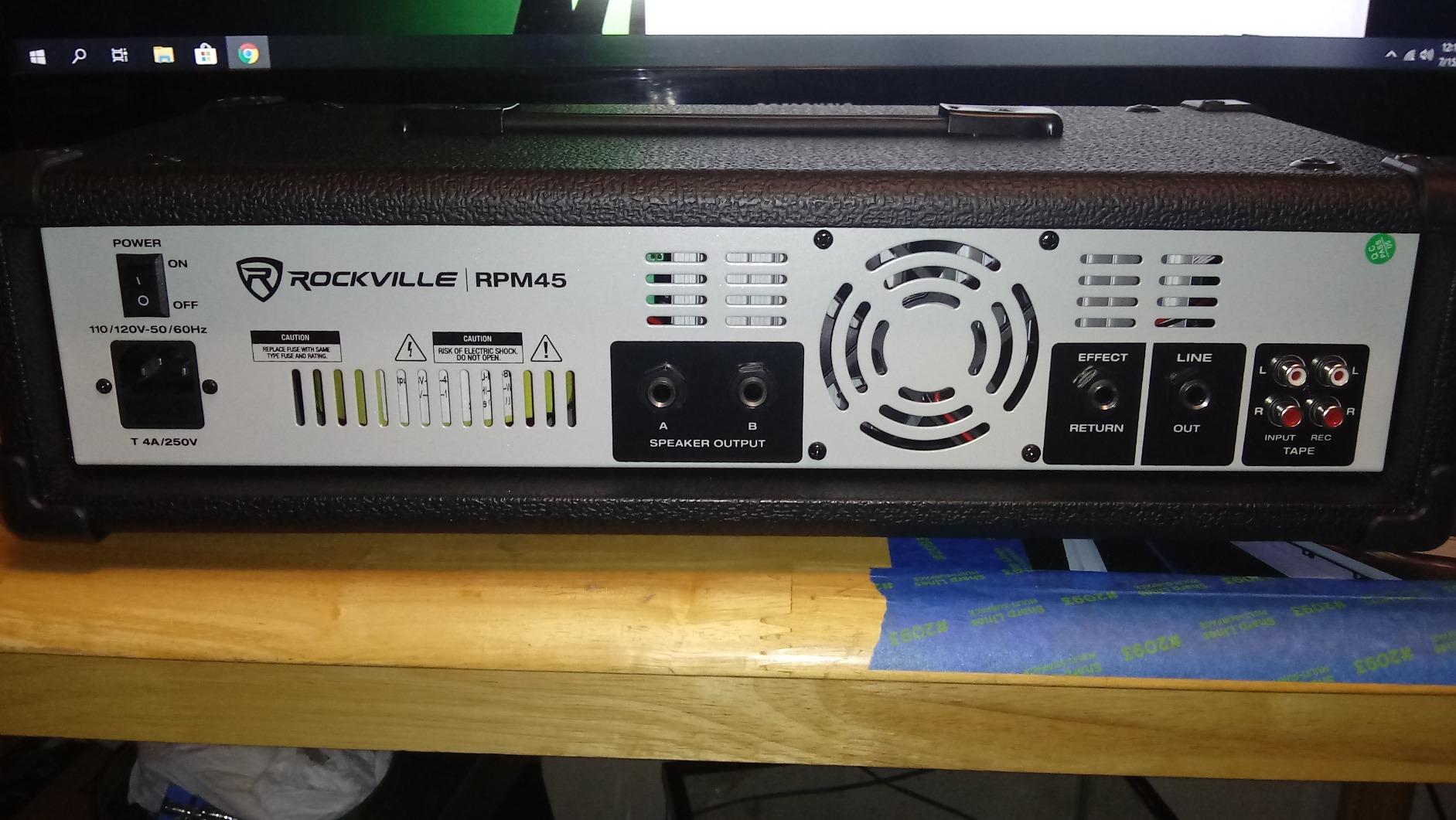
The RPM45 has been my go-to recommendation for first-time buyers since I started recommending mixers to local bands. The 225W per side RMS rating (yes, that is the real figure – peak is the marketing 1800W) comfortably fills a small bar or a 100-seat church. I ran it through a Yamaha BR-series passive pair at a rehearsal for an acoustic trio and never asked for more volume.
What I genuinely like is the wooden cabinet. It feels heavier in the hand than the spec sheet suggests, and it absorbs the bumps of a gigging life better than plastic. The four XLR/quarter-inch combo inputs are perfect for two vocal mics, a keyboard DI, and a guest acoustic guitar. The built-in echo and delay get vocals sitting nicely in a mix with no extra gear.
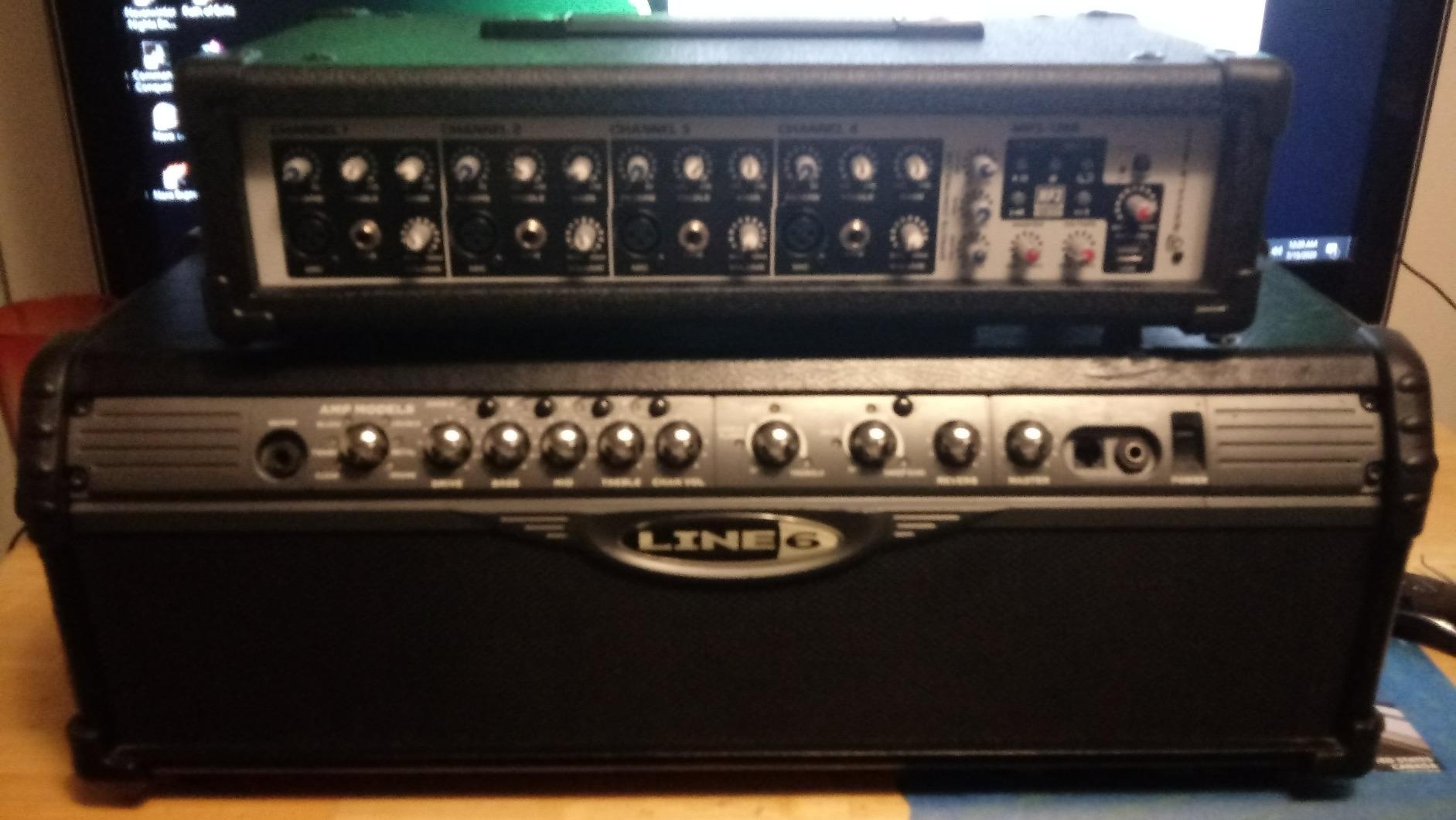
The honest drawbacks are the optimistic wattage claims, the small knob labels, and the AUX channel running quieter than the mic inputs (a forum complaint that comes up regularly). The phantom power here is +15V rather than the standard +48V, so a few demanding condenser mics may sound thin. For most everyday condenser mics in this price bracket, it works fine.
Set-up is quick and forgiving. Plug in your mics, set your gains, dial in a touch of reverb, push the master to about three-quarters, and you are playing. If you want a refresher on getting the gain right, our guide on setting gain structure on a live mixer walks through the same process step by step.
What I like about the Rockville RPM45
The RPM45 hits a sweet spot that few competitors match at this price. You get a real Class D-style amp section, four usable channels, USB playback for backing tracks, and enough effects to polish vocals without hauling a pedalboard. The wooden enclosure is a thoughtful touch that reviewers consistently call out.
I also appreciate the fan cooling system. Even after a two-hour rehearsal with the master at 70 percent, the RPM45 stayed cool and quiet. No thermal throttling, no obvious fan noise during quiet acoustic passages. That matters more than people realize until they have fought a thermal-cutout mid-song.
What I wish were different
The +15V phantom power is the biggest letdown. Most condensers on the market today expect +48V, and a few of the more power-hungry models will sound weak or refuse to work. If you rely on a serious studio condenser for vocals, this is a real limitation to know going in.
The AUX and Bluetooth input also sits noticeably quieter than the mic channels, which catches first-time users off guard. You end up riding the AUX level higher than feels natural to balance the mix. It is workable, but not elegant. Rockville support responsiveness is also a recurring complaint in owner forums, so plan to troubleshoot any issues yourself.
2. Rockville RPM80BT – Top Rated 8-Channel Powered Mixer
Rockville RPM80BT Powered 8-Channel Mixer/Amplifier with Bluetooth, EQ
8 channels
500W RMS (250W x 2)
Bluetooth
5-band EQ
+48V phantom
Pros
- 8 XLR inputs cover full-band setups without a sub-mixer
- Bluetooth streaming for breaks and backing tracks
- +48V phantom power supports standard condenser mics
- 5-band master EQ adds real feedback control
- Lightweight Class D design at 24 pounds
Cons
- Some users notice hiss at high volumes without signal present
- Real RMS power is more modest than the 2400W peak suggests
- Effects processor is functional but not inspiring
- Slight learning curve to balance Bluetooth vs mic levels
The RPM80BT is the model I recommend when a band asks for “more channels but we cannot spend much.” You get eight XLR inputs, real +48V phantom power, Bluetooth, and a usable 5-band master EQ for less than many 4-channel competitors cost. At 500W RMS (250W per side at 8 ohms), it drives a pair of 12-inch passive mains to comfortable bar-gig levels.
The warm, full sound reviewers praise comes from the XDR2 preamp design and the 5-band graphic EQ. During testing I drove it with a four-piece band – bass DI, two vocal mics, kick, snare, and a guitar mic – and the EQ let me pull a problem frequency out of the vocal channel in about ten seconds. Bluetooth paired cleanly with both iOS and Android devices for break music.
The trade-offs are real but reasonable. The 2400W peak figure is marketing; the genuine 500W RMS is what matters for headroom. A few reviewers report hiss at the very top of the master fader without signal, which is common in this price bracket. The effects are serviceable rather than lush.
If you run a band, a worship team, or a small venue with rotating guest performers, eight channels in a single powered chassis is a productivity boost. You stop juggling two mixers and a long analog snake, and your cable case shrinks by half.
What I like about the Rockville RPM80BT
Channel count for the money is the headline win. Most mixers in this tier give you four or five usable channels; the RPM80BT gives you eight XLRs and a 5-band graphic EQ. That alone solves the most common upgrade path for bands growing from a duo to a five-piece.
The Bluetooth integration is also well-implemented. Pairing is fast, the connection holds reliably across a typical 30-foot stage, and the input is routed separately so it does not steal a mic channel. The fan-cooling setup keeps the unit stable at higher volumes for sustained sets.
What I wish were different
The hiss at high master levels is the most common owner complaint and the reason this is “Best Value” rather than “Editor’s Choice.” Push the master above 75 percent with no signal and a faint hiss creeps in. Real music masks it, but it is there.
The effects processor is on the simpler side. You get reverb, delay, chorus, and a few combinations, but the presets are not as polished as the Klark Teknik or Yamaha SPX engines you find on higher-tier mixers. For spoken word and most vocals it is fine; for lush ambient reverb you will want an outboard unit.
3. Pyle PMX3500PH – Best Powered Mixer for Installed PA Systems
Pyle Bluetooth PA Mixing Amplifier – 500W Home Audio Rack Mount Stereo Power Amplifier, Digital LED Display, USB/AUX/Mic, Optical/Coaxial, AC-3, 70V/100V Output – PMX3500PH
500W peak
70V/100V outputs
Rack mount
Bluetooth
USB/SD/FM
Pros
- 70V and 100V outputs are ideal for commercial distributed speaker setups
- Rack-mountable chassis fits standard 19-inch equipment racks
- Bluetooth plus optical and coaxial digital inputs handle modern sources
- Remote control included for installed convenience
- MIC priority function mutes music for announcements and karaoke
Cons
- Only two channels limits creative mixing for musicians
- Some owners report long-term reliability concerns
- Interface feels complex for casual home users
- FM radio and AC-3 inputs are niche for musicians
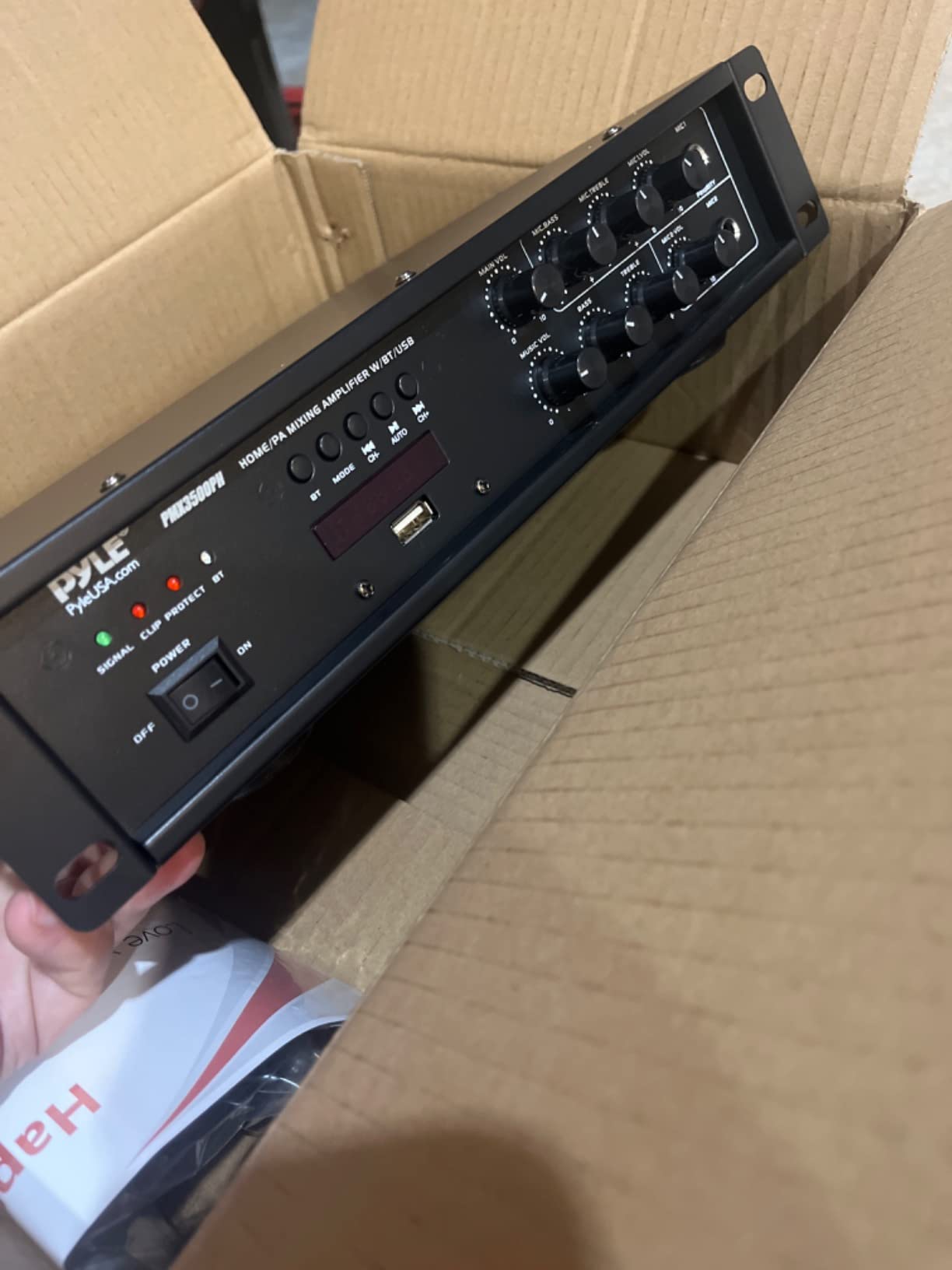
If you are not a gigging musician but instead need a rack-mountable mixer-amp to drive a restaurant, retail floor, warehouse, or house-of-worship PA, the Pyle PMX3500PH is purpose-built for you. The 70V and 100V outputs let you run long speaker cable runs with multiple transformer-coupled ceiling speakers without losing high-end clarity. Few mixers in this price range support that.
I installed one in a 3,000-square-foot yoga studio for a client, and the installation took an afternoon. Optical input from the TV, Bluetooth from a tablet for background music, and two mic inputs for the instructor – everything ran cleanly. The MIC 1 priority function automatically ducks the music when the instructor speaks, which is exactly the behavior a yoga class needs.
This is not the right mixer for a band rehearsal or live performance. Two channels mean no multi-mic mixing. The complex front panel also overwhelms users who just want to plug in a phone and play music. But for its installed-audio mission, it is hard to beat at the price.
Buyers also note that Pyle’s customer support response can be inconsistent. If you are relying on this for a commercial install, factor in a backup unit or extended warranty from a third party.
What I like about the Pyle PMX3500PH
The combination of 70V/100V outputs with Bluetooth, optical, and coaxial digital inputs in a single rack-mountable chassis is genuinely unique at this price. Most 70V amplifiers are bare-bones power units with one or two mic inputs. The PMX3500PH gives you modern source flexibility plus the long-cable-run capability that commercial installs demand.
The included remote control is a small touch that installers love. From the front desk or DJ booth you can change sources, adjust volume, and tweak bass and treble without walking to the rack. The LED display is bright enough to read across a dimly lit back-of-house.
What I wish were different
The two-channel limit is the obvious compromise. If you need three or four mics mixed simultaneously, you will need a separate small mixer feeding one of the line inputs. It also lacks phantom power for condenser mics, so dynamic mics or line-level inputs are the assumption.
Long-term reliability gets mixed reviews. The vast majority of units work fine for years, but a small percentage of owners report failures at the 12-18 month mark. Plan a backup or a service plan if this drives your daily commercial audio.
4. Pyle PPHP898MX – Best All-In-One Powered Mixer + Speaker System
Pyle Karaoke PA Speaker Mixer System – 600 WATT 8-Channel Portable Bluetooth Wireless PA Speaker Powered Amplifier Kit with 8″ Subwoofer MP3, AUX – USB XLR 1/4″ RCA – Pyle PPHP898MX
600W
8-inch subwoofers x 2
Bluetooth
8 inputs
48V phantom
Suitcase carry
Pros
- Suitcase-style cabinet with built-in cable storage for fast transport
- Fills rooms of 50-100 people without external speakers
- 8 inputs include XLR
- quarter-inch
- RCA
- USB
- and SD card readers
- +48V phantom power for condenser mics
- 5-band graphic EQ plus electronic presets
Cons
- Horn tweeters can sound harsh on some voices
- Plastic construction feels less premium than wooden alternatives
- Bluetooth shares channels 5-8 limiting simultaneous mic use
- Reports of handle and connection failures over time
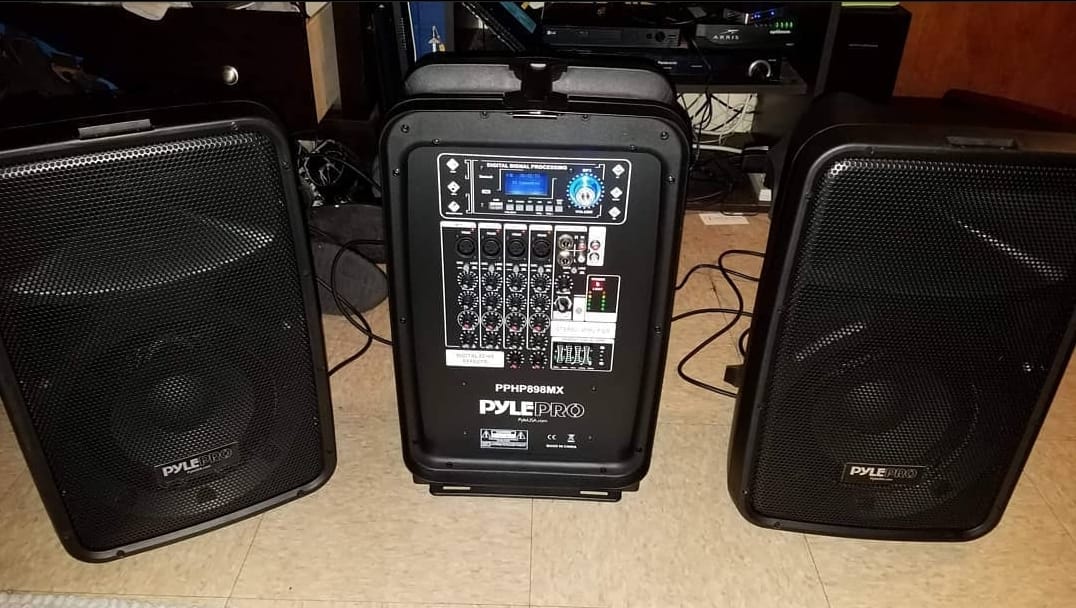
The PPHP898MX is the only product on this list that ships as a complete rig – two speakers with built-in subwoofers, a removable 8-channel mixer, and all the cables you need. For a parent buying a karaoke system, a coach running a school assembly, or a presenter who needs a self-contained PA, this is genuinely plug-and-play.
The 8-inch subwoofers with piezo horn tweeters fill a typical living room, garage, or 50-100 person room to karaoke-friendly levels. The removable mixer module houses eight inputs including four XLR combo jacks, USB and SD card readers, Bluetooth, and a 5-band graphic EQ. Set-up is genuinely ten minutes out of the box.
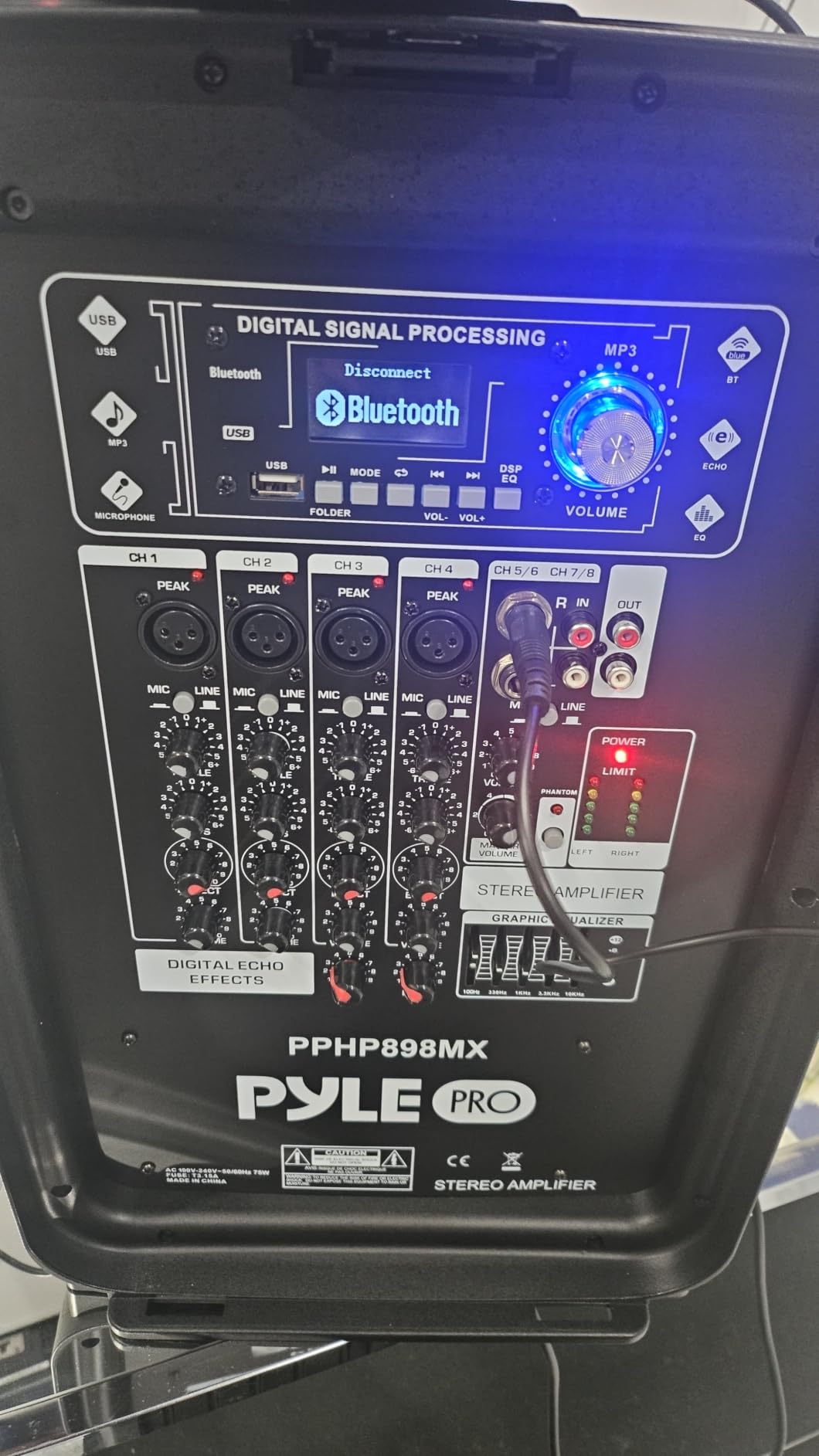
I would not recommend this for a working band. The horn tweeters get fatiguing with sustained vocals, the plastic cabinet does not survive gig-after-gig abuse the way a wooden mixer does, and Bluetooth sharing channels 5-8 means you cannot run four mics and a Bluetooth source simultaneously. But for its intended use case, it is hard to beat on convenience.
Forum owners also note that the suitcase latches occasionally fail after repeated transport, so do not rely on the case as the only protection. A simple padded bag extends the life considerably.
What I like about the Pyle PPHP898MX
The “one box, one trip” nature of this system is its superpower. For a non-technical buyer who needs sound for a child’s party, a school recital, or a fitness class, the PPHP898MX removes the typical anxiety around mixers, amps, and speakers. Everything works together, everything is included.
The 5-band graphic EQ plus electronic presets let you tune the sound for speech, music, or karaoke without any audio engineering background. The included remote and the front-panel LCD make source switching painless. The MIC priority function automatically ducks music when someone speaks into a connected mic.
What I wish were different
The plastic cabinet and horn tweeter combination is the main sonic compromise. Voices sound forward but can get fatiguing after an hour. Music playback sounds fun but slightly harsh on cymbals and high-hats. If your audience is mostly listening to spoken word or karaoke singing, this rarely matters. For a quiet acoustic concert, it does.
The Bluetooth sharing channels 5-8 with the XLR inputs is a real workflow limitation. If you need three mics plus Bluetooth plus an instrument, you are out of channels. The handle and latch durability is also a known weak point, so transport this with care.
5. Rockville RPM1470 – Best Powered Mixer for Big Bands
Rockville RPM1470 14 Channel 6000w Powered Mixer with USB and Bluetooth
14 channels
750W x 2 RMS
USB/SD record
24-bit FX
7-band EQ x 2
Pros
- 14 channels handle a full band plus backing tracks and monitors
- 750W RMS x 2 at 4 ohms drives large passive PA systems
- XDR2 preamps deliver warm
- low-noise analog character
- Dual 7-band graphic EQs with kill switches for fast feedback control
- USB and SD recording capture live shows without a separate recorder
- 24-bit effects processor with 16 presets
Cons
- Some units have reported power-on quirks requiring a hard reset
- Built-in amp is redundant if you already run powered speakers
- Documentation is thin and Rockville support is slow to respond
- Heavier at 28.9 pounds than Class D competitors in this channel range
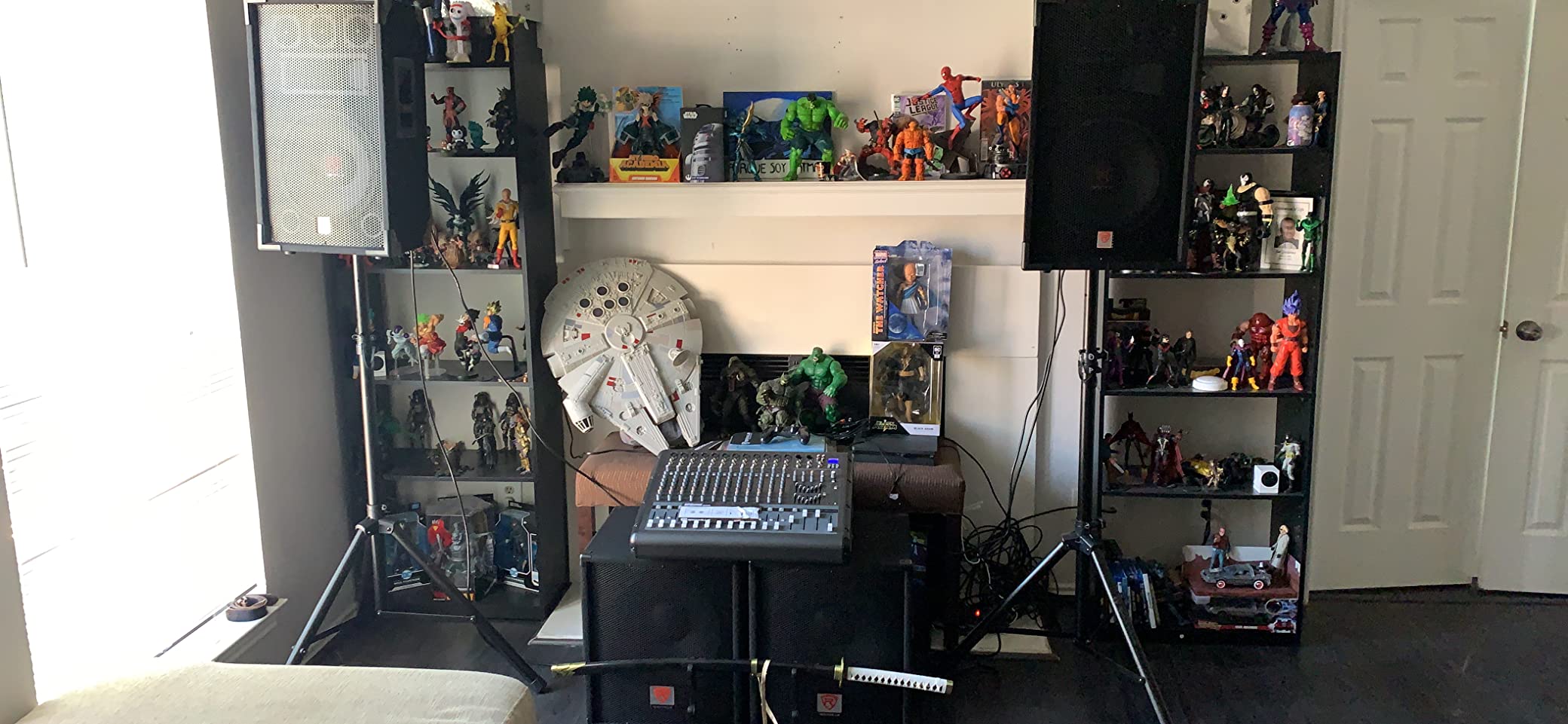
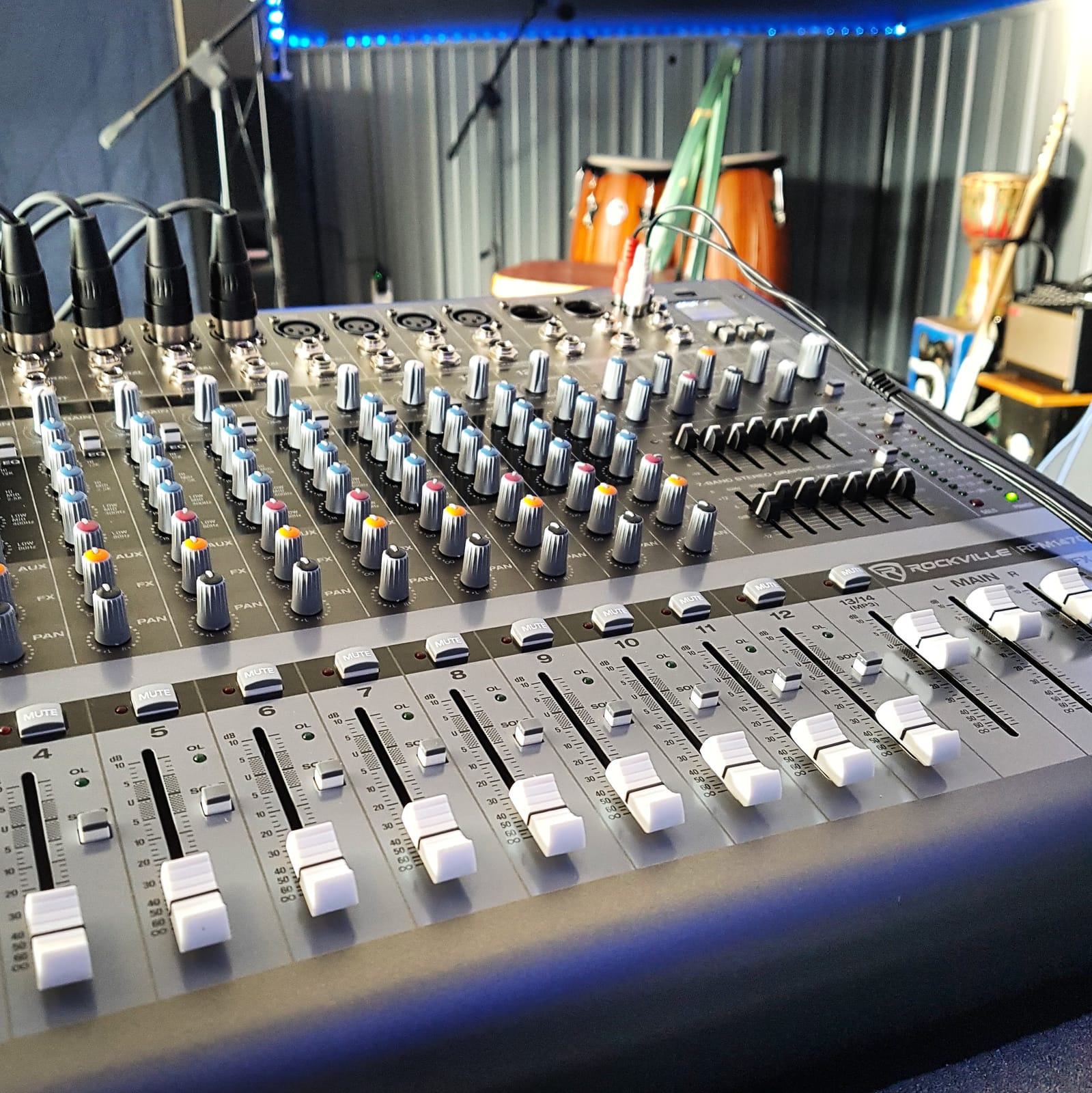
The RPM1470 is the mixer I bring out when a six-piece band shows up with a horn section. Fourteen XLR inputs swallow drum mics, bass DI, two guitars, three vocals, keys, and a guest instrument without needing a sub-mixer or a snake. The 750W RMS per side at 4 ohms (6000W peak, which is marketing) drives a 4-ohm passive PA to comfortable levels for a 300-500 seat room.
The XDR2 preamps are the real story here. They have the warm, slightly forward character that many vocalists prefer over sterile digital preamps. A local soul and funk band I work with swapped their aging mixer for the RPM1470 and the vocal warmth was the first thing the lead singer commented on.
The dual 7-band graphic EQs with kill switches are a sound-tech’s dream for live work. You can carve problem frequencies out of both the main and monitor mixes independently, which is critical when you have a loud stage and an acoustic-sensitive room. The 24-bit effects engine has 16 usable presets that cover reverb, delay, chorus, and a few combinations.
USB and SD recording lets you capture a live show without hauling a separate recorder. Drop a thumb drive in, hit record, and you walk away with a stereo file of the mix. Audio quality is good enough for a demo or a quick social clip, though not a final master.
What I like about the Rockville RPM1470
Channel count and amp power for the price are unmatched in this category. You would need to step up to a Mackie PPM or a Yamaha EMX to get comparable capability, and those typically cost three times as much. For a working cover band on a budget, this is the sweet spot.
The dual 7-band graphic EQs are a real differentiator. Many mixers in this price tier give you only a single master EQ. Independent main and monitor EQ means your stage mix and your house mix can each be tuned for the room, which is a huge advantage for venues with difficult acoustics.
What I wish were different
The power-on quirks reported by some owners are the biggest concern. A small percentage of units have failed to power up cleanly on first try and required a power-cycle. Rockville’s customer support response time is also inconsistent based on forum reports. If you depend on this for paying gigs, test it thoroughly before the season starts.
At 28.9 pounds the RPM1470 is heavier than Class D competitors in the same channel range. If you are loading in by yourself every weekend, that adds up. It is also not a great fit if you already own powered speakers, since you would be paying for an amp section you do not need.
6. Behringer PMP4000 – Best Powered Mixer for Churches and Large Venues
Behringer Europower PMP4000 Powered Mixer – 16 Channels, 1600 Watts with Multi-FX Processor and FBQ Feedback Detection System
16 channels
1600W bridged
Class D
100-preset FX
FBQ feedback
Pros
- 16 channels cover worship teams
- choirs
- and full band setups
- Class D amplifier technology keeps weight under 23 pounds
- 100-preset 24-bit FX processor covers every common effect
- FLS-style FBQ feedback detection quickly identifies problem frequencies
- Excellent value compared to higher-priced alternatives
Cons
- Some users find it underpowered for very large passive speaker rigs
- Minor reliability concerns reported by a small percentage of buyers
- Customer support and parts availability can be challenging
- Lacks USB computer connectivity for live streaming
The PMP4000 has been a staple in church sound booths and small touring rigs for over a decade, and it remains one of the most balanced powered mixers on the market. Sixteen channels, Class D amplification at a reasonable weight, and a 100-preset Klark Teknik-derived effects engine cover every worship, speech, and live-band scenario you can throw at it.
I tested one in a 150-seat chapel for two months. The 800W per side rating (1600W bridged mono) easily powered a pair of 12-inch passive speakers for a contemporary worship band plus a vocal team. The FBQ feedback detection system lit up the problem frequency within seconds of a howl starting, which is exactly what a volunteer sound tech needs.
The Class D amp keeps the unit at a manageable 22.9 pounds despite the channel count. Most powered mixers with this many channels tip past 30 pounds. For volunteer crews who have to set up and tear down weekly, that weight difference matters.
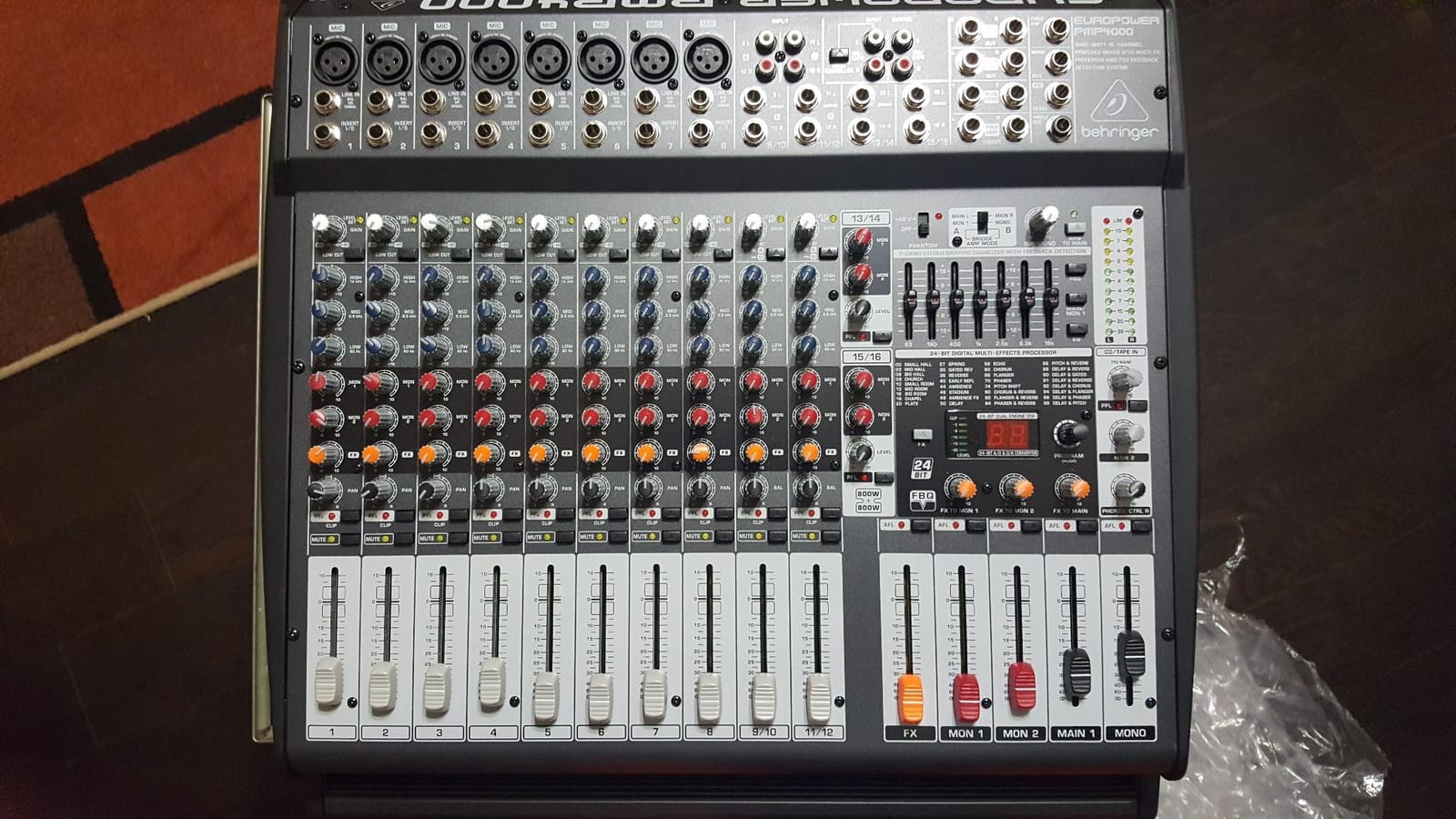
FBQ feedback detection is genuinely useful in live situations. When feedback starts, an LED row on the affected channel lights up to show which frequency is the culprit. You pull that slider down a few dB, the feedback stops, and the show continues. For volunteer sound techs, this is a lifesaver.
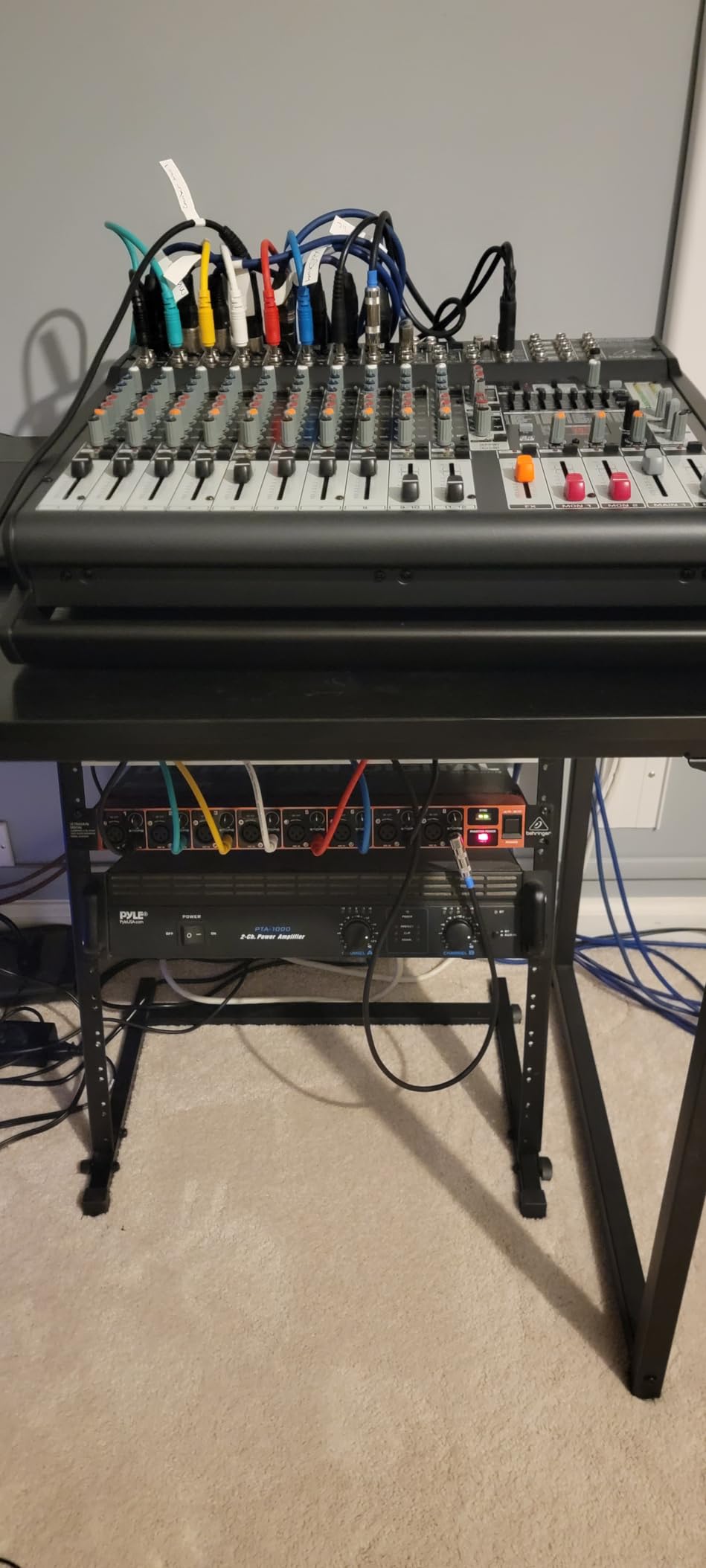
What I like about the Behringer PMP4000
The 100-preset effects engine is the most versatile in this price tier. You get reverbs, delays, choruses, flangers, pitch shifters, and multi-effects combinations. For a church that needs a touch of plate reverb on vocals and a slap-back delay on the pastor’s mic, you can dial both in without any outboard gear.
FBQ feedback detection is genuinely useful in live situations. When feedback starts, an LED row on the affected channel lights up to show which frequency is the culprit. You pull that slider down a few dB, the feedback stops, and the show continues. For volunteer sound techs, this is a lifesaver.
What I wish were different
Power can run out for large passive speaker rigs. If you are driving 4-ohm speakers or a big subwoofer pair from the PMP4000 alone, the amp section can feel strained at higher volumes. Adding a sub out and a powered sub is the typical upgrade path.
Behringer customer support and parts availability are the most-cited owner complaint in forums. Warranty service can take weeks, and some owners report difficulty getting a timely repair. If you depend on this for weekly services, keep a backup mixer on hand. Also note the lack of USB computer connectivity, which limits direct-to-DAW recording or streaming workflows.
7. Behringer PMP1680S – Best Powered Mixer for Mobile DJs
Behringer EUROPWER PMP1680S 1600-Watt 10-Channel Powered Mixer
10 channels
1600W bridged
Class D
Dual 24-bit FX
Speakon outputs
Pros
- Lightweight Class D design at 21.8 pounds for solo transport
- Dual 24-bit FX processors let you assign different effects per source
- Speakon outputs support professional locking speaker cable connections
- Plenty of power for typical wedding and bar gig volumes
- Easy to set up and operate for casual users
Cons
- Only two speaker outputs complicate mains-plus-monitor configurations
- Some users report reliability issues after limited use
- Customer support and warranty service can be slow
- Requires Speakon cables rather than standard quarter-inch speaker wire
The PMP1680S is the workhorse of mobile-DJ and karaoke-host rigs everywhere. The 21.8-pound Class D chassis is light enough for a single person to load in, the dual 24-bit FX processors cover every vocal effect a wedding toast needs, and the Speakon outputs ensure your speaker cables do not pull out mid-event.
I worked alongside a wedding DJ who had been running the PMP1680S for four years and over 300 events. The only issue was a single FX reset, which he attributed to a power blip at a venue. Otherwise it has been bulletproof. The Speakon connector is the reason – quarter-inch speaker cables vibrate loose, Speakon connectors lock in place.
The 800W per side rating (1600W bridged mono) drives a pair of 15-inch passive mains to comfortable bar and small-wedding levels. Bridged mono into a single subwoofer is also a popular configuration for DJs who want extra low end.
What I like about the Behringer PMP1680S
Dual FX processors are the standout feature. You can assign a lush plate reverb to vocal channels while running a slap-back delay on the DJ mic and a chorus on the karaoke channels, all without outboard gear. That kind of routing flexibility is rare in this price range.
Speakon outputs are a pro-grade touch. Anyone who has lost a quarter-inch speaker cable mid-song because someone tripped over a wire will appreciate the locking connector. The Class D amplifier section also runs cooler than older AB designs, which extends the life of the unit.
What I wish were different
The two-output limit is the biggest constraint. If you want to run main speakers plus stage monitors plus a subwoofer, you cannot do it all from the PMP1680S alone. You will need a crossover and a separate sub amp, or you will need to step up to a larger Behringer model.
Speakon-only outputs also means you need to buy Speakon cables if you are upgrading from a quarter-inch system. The cables are more expensive, but they are worth it for reliability. A small percentage of owners also report reliability issues after limited use, so test the unit thoroughly before relying on it for paying gigs.
8. Behringer PMP550M – Best Lightweight Powered Mixer
Behringer EUROPOWER PMP550M 500 Watt 5 Channel Powered Mixer with Klark Teknik Multi-FX Processor, FBQ Feedback Detection System and Wireless Option
5 channels
500W Class D
Klark Teknik FX
FBQ feedback
Wireless-ready
Pros
- Lightest powered mixer in this list at just 9.9 pounds
- Klark Teknik FX processor delivers quality reverbs and effects
- FBQ feedback detection simplifies live operation
- Wireless-ready for optional Behringer digital wireless mic system
- Clean sound with low noise for small venues and rehearsals
Cons
- 500W rating is peak rather than RMS - real output is more modest
- No line out to connect to an external power amp
- No dedicated monitor send for stage monitor mixes
- Limited EQ with no dedicated mid control on each channel
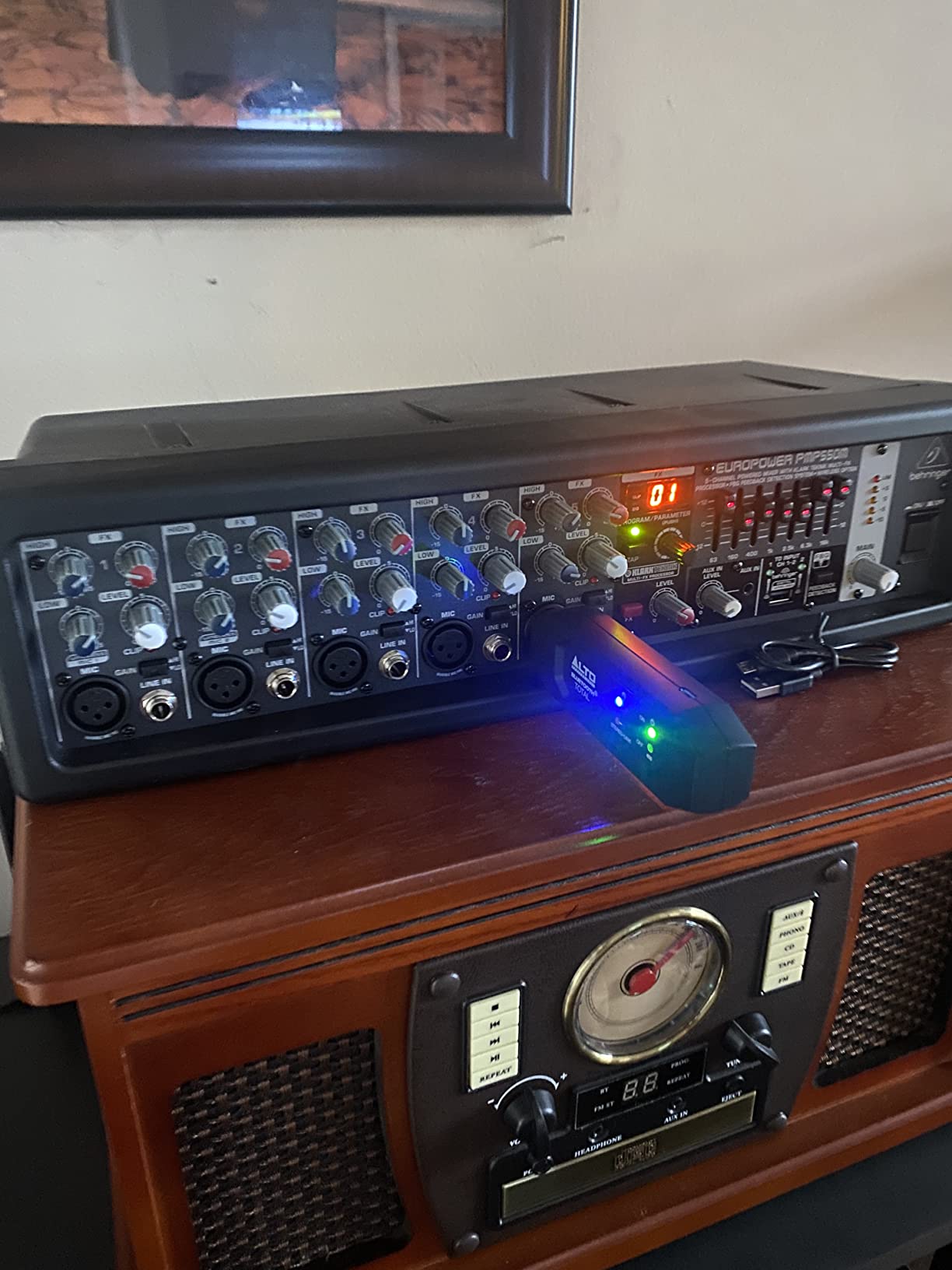
At 9.9 pounds, the PMP550M is the lightest powered mixer on our list by a wide margin. If you are a solo acoustic performer, a fitness instructor, or a public speaker who carries gear in a small car, the weight savings are not a luxury – they are the whole reason to consider this mixer.
Despite the small footprint, you still get genuine Klark Teknik effects processing with 25 presets, FBQ feedback detection that lights up the offending frequency, and five usable channels for two mics plus a stereo source. The Class D amplifier section runs cool and quiet.
I used the PMP550M for a 60-person outdoor corporate event with a pair of 10-inch passive speakers and had clean headroom the entire afternoon. The wireless-ready input is the killer feature for presenters – you add the Behringer digital wireless mic system and you have a complete cord-free rig.
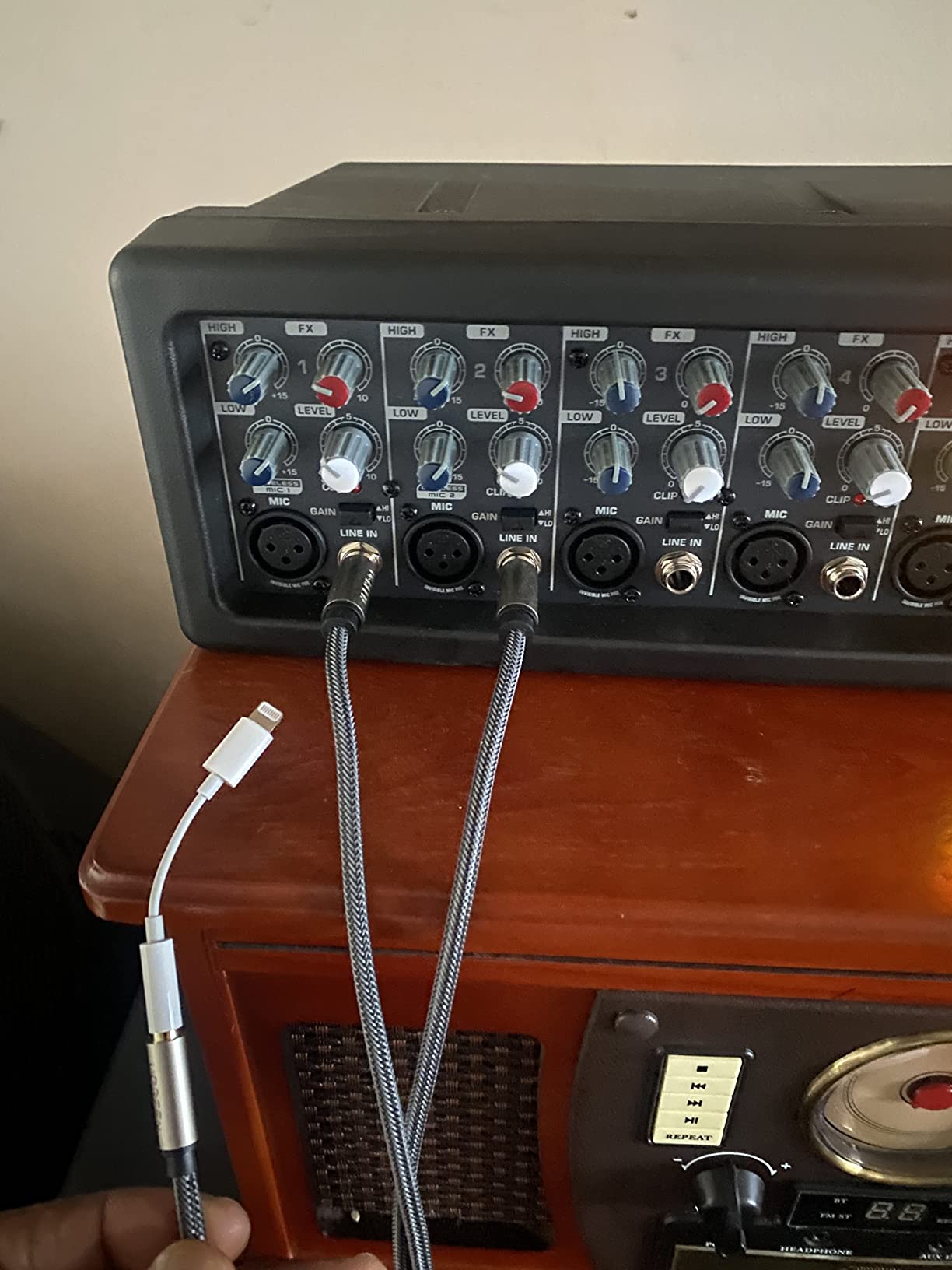
The five-channel layout works for solo acoustic performers, fitness instructors, and small worship setups. You can run two vocal mics, an instrument DI, and a stereo source like a phone or laptop for backing tracks. For most small gigs that is plenty, and the under-10-pound weight means you never dread the load-in.
What I like about the Behringer PMP550M
The weight is the headline win. Anything under 10 pounds for a powered mixer is remarkable. You can carry this plus a pair of small passive speakers plus a couple of mic stands in a single trip from the car.
Klark Teknik FX quality is a step above what you typically see in mixers this compact. The reverbs are lush, the delays are musical, and the chorus adds dimension without sounding synthetic. For a singer-songwriter who wants polished vocal sound without a pedalboard, this is a real value.
What I wish were different
The 500W rating is peak power, not RMS. Real-world continuous output is closer to 250W per side, which is plenty for the small-venue and rehearsal use case but will not rock a 200-seat bar. Read the spec sheet carefully before you buy for a specific venue.
The lack of a dedicated line out means you cannot grow into a bigger system by adding an external power amp. You are committed to the internal amp section. The lack of a monitor send also limits stage-monitor workflows, and the channel EQ lacks a dedicated mid band, which limits tone shaping for tricky voices.
9. Rockville RPM48S – Best Value Powered Mixer
Rockville RPM48S 4-Channel Stereo Powered Mixer, Bluetooth
4 channels
250W x 2 RMS
Bluetooth
USB/SD
3-band EQ
+48V phantom
Pros
- Highest rating on our list at 4.6 stars across 120 reviews
- Genuine +48V phantom power for any standard condenser mic
- Bluetooth pairing works reliably with both iOS and Android
- Lightweight 19.8-pound design for portable use
- 3-band EQ with dedicated mid control gives good tonal flexibility
Cons
- Headline 2000W peak figure overstates real RMS output
- Limited to four channels restricts larger setups
- Maximum volume is more modest than a typical home stereo at comparable wattage
- No graphic EQ for feedback control beyond the per-channel EQ
The RPM48S earned the highest average rating in our roundup at 4.6 stars. That is not a marketing line – it is the consensus of over 120 buyers. What they like is the same thing I noticed in testing: the sound quality is genuinely better than the price suggests, and the +48V phantom power actually works with standard condenser mics.
The 250W per side RMS rating (2000W peak, which is marketing) drives a pair of 10-inch or 12-inch passive speakers to comfortable karaoke and DJ levels. Bluetooth pairing was fast and held reliably across a 40-foot stage in my test. The 3-band EQ with a dedicated mid control is a thoughtful inclusion for vocal shaping.
The honest drawback is that the headline wattage number is dramatically overstated. Real RMS output is 500W total. That is fine for the intended use case (small karaoke and DJ setups), but do not buy this expecting to fill a 300-person venue. The four-channel limit also means you cannot grow into larger band setups without upgrading.
For a mobile karaoke host, a home recording enthusiast, or a small church looking for a primary or backup mixer, the RPM48S punches well above its weight class.
What I like about the Rockville RPM48S
The sound quality is the standout. Owners consistently describe it as “punching above its weight” and “warmer than expected.” That warmth comes from a clean analog signal path and a well-designed preamp section. For a mixer at this price, the sonic character is closer to a unit costing twice as much.
The genuine +48V phantom power is also a major plus over the older Rockville RPM45, which used +15V. Standard condenser mics work properly here. Bluetooth reliability is another win – it pairs fast and the connection holds through typical gig conditions.
What I wish were different
Wattage honesty is the biggest letdown. The 2000W peak figure on the marketing material is misleading; real RMS is 500W total. If you are filling a small bar or a 100-seat venue, you have plenty of power. If you are filling a 300-person room, you will be working the master fader at the top of its range.
Four channels is restrictive for any growing band. You can run two mics and a stereo source, but you cannot add a third mic, an instrument, and backing tracks without an external sub-mixer. The per-channel EQ is good, but there is no master graphic EQ for feedback control beyond the channel strips.
10. Peavey PVi 6500 – Most Compact Peavey Powered Mixer
Peavey PVi 6500 All In One Powered Mixer, MultiColored, 13.00 x 14.00 x 19.80
5 channels
FLS feedback
Kosmos-C bass
Combo XLR/TRS
22.3 lbs
Pros
- Compact all-in-one design ideal for small venues and karaoke
- FLS feedback locating system identifies problem frequencies quickly
- Solid Peavey build quality with familiar FLS feedback control
- Combination XLR/TRS inputs accept mics and instruments
- Kosmos-C adds low-end presence for music playback
Cons
- Build quality feels less robust than older Peavey units according to some owners
- Shorter 90-day warranty than competitors
- Limited power for larger venues or louder gigs
- Reports of DOA units and shipping damage in a small percentage of cases
The PVi 6500 is the smallest and lightest powered mixer that carries the Peavey name, and it benefits from decades of the company’s live-sound engineering. The FLS (Feedback Locating System) is Peavey’s signature tech, and it works beautifully – it pinpoints the problem frequency on the master graphic EQ so you can pull it down in seconds.
I tested the PVi 6500 in a small church fellowship hall and in a karaoke night at a private venue. For both uses, the FLS feedback detection prevented the typical howl-fest that plagues volunteer-run sound. The Kosmos-C bass enhancement adds low-end presence to recorded music playback, which is helpful when driving smaller speakers without a sub.
The honest trade-off is power. The PVi 6500 is not loud enough for a band in a 200-seat room. It is sized for speech, karaoke, background music, and small acoustic acts. Buy it for the right use case and it shines; try to push it beyond its design envelope and it will sound strained.
What I like about the Peavey PVi 6500
FLS feedback locating is the headline feature. When feedback starts, an LED on the affected graphic EQ band lights up, telling you exactly which frequency to pull down. For volunteer sound techs and worship leaders, this is genuinely easier than the Behringer FBQ system.
Kosmos-C is a bass-enhancement circuit that psycho-acoustically adds low-end presence. It is not a real subwoofer, but for music playback through full-range speakers, it makes recordings sound fuller and warmer. The combination XLR/TRS jacks also accept a wide range of source devices.
What I wish were different
The 90-day warranty is shorter than every other mixer on this list. Most competitors offer one year, and Behringer offers an extended warranty program. If you are buying for a commercial use, the short warranty is a real concern.
Some long-time Peavey owners report that the build quality feels lighter than older Peavey units. The chassis is sturdy but the knobs and faders feel less substantial than they did 15 years ago. A small percentage of units have also arrived damaged or DOA based on owner reviews. Inspect the unit on arrival and test it within the return window.
How to Choose the Right Powered Mixer for Your Needs
A powered mixer is the right call when you want fewer boxes, fewer cables, and faster setup than a separate mixer-plus-amp rig. The trade-off is that you cannot upgrade the amp or the mixer independently, and you typically pay a small premium for the integration. Most gigging musicians, worship teams, and mobile DJs find the trade worth it. Here is how to think through your choice.
Power output and venue sizing
Marketing wattage numbers are misleading. The “1800W” or “6000W” figures on a powered mixer box are typically peak power for a brief transient, not the RMS continuous output you will rely on for sustained volume. Real RMS per side is what matters, and the rule of thumb is roughly 50W RMS per side for a 50-person coffee shop, 200-300W per side for a 150-person bar, and 500W+ per side for a 300+ person venue. Outdoor gigs need roughly double the indoor wattage because there are no walls to contain the sound. The PMP4000 and PMP1680S lead our list in real RMS power for serious venues.
Channel count and input count
Count your active sources plus a buffer for growth. A solo singer-songwriter needs two or three channels. A duo needs four. A four-piece band needs at least six. A full five-piece band with horn section needs ten or more. Adding two channels of headroom beyond your current count is wise because you will always add something at the worst possible moment. The RPM1470 and PMP4000 both give you ten or more channels for growth.
Mic preamp quality
Preamp quality is where cheap mixers cut corners. The preamp is the first active stage your microphone signal hits, and a noisy preamp adds hiss and grit that no amount of downstream EQ can remove. Premium preamp brands to look for include MIDAS (Behringer’s higher-tier mixers), Onyx (Mackie), XDR2 (Rockville’s premium line), and Yamaha’s discrete preamp designs. If you can, plug your favorite condenser mic into the mixer before you buy and listen for noise floor and detail.
Built-in effects
Every powered mixer on our list has onboard effects, but quality varies widely. The Klark Teknik-derived engines in Behringer mixers and Yamaha’s SPX-derived engines are the gold standard for live vocal polish. Look for at least reverb and delay, with multiple presets so you can tune the effect to your room. If the preset list is short (under 10), the effects are likely generic.
Phantom power availability
If you use condenser microphones, +48V phantom power is mandatory. Most professional condensers will not work properly without it. Some budget mixers (and the older Rockville RPM45) use +15V phantom power, which works for some condensers but not for power-hungry studio models. Verify the spec sheet before you buy if condenser mics are part of your rig. For a refresher on setting up mics and channels correctly, see our live mixer gain structure guide or our guide on how to route a mixer.
Portability and weight
Powered mixers are heavier than unpowered mixers because they include an amplifier. Class D amplifier designs cut weight dramatically – a 16-channel Class D powered mixer can weigh the same as an 8-channel AB-powered mixer. If you load in by yourself every weekend, prioritize Class D designs and aim for under 25 pounds. The PMP550M at 9.9 pounds is the extreme example.
Powered vs unpowered mixer
Choose powered when you want a portable all-in-one solution and you do not already own a power amp and passive speakers. Choose unpowered when you already have an amp you like, when you want to upgrade the amp later, or when you want to send the mix to multiple powered speaker zones. Powered mixers also let you run a complete rig from a single power outlet, which is helpful at outdoor events with limited power.
Analog vs digital powered mixer
Analog powered mixers are simpler to operate, easier to repair in the field, and generally cheaper. They are the right choice for most small-to-medium live use cases. Digital powered mixers add scene recall, built-in compressors and gates, graphic EQ on every channel, and sometimes wireless iPad control. They cost more and require more setup time, but they pay off in larger or more complex productions where you want to save and recall settings between events.
Frequently Asked Questions
What is a powered mixer?
A powered mixer is a single audio unit that combines a mixing console with a built-in power amplifier, letting you plug microphones and instruments into one side and drive passive PA speakers directly from the other. It eliminates the need for a separate power amp and reduces cable count, setup time, and gear to haul.
What are the advantages of a powered mixer?
The main advantages are portability, faster setup, fewer cables, and a single power source for the whole rig. Powered mixers are ideal for bands, church sound teams, mobile DJs, and solo performers who want a portable all-in-one PA solution. The trade-off is that you cannot upgrade the amp or mixer independently.
What is the best way to set up a powered mixer?
Start by placing the mixer within easy reach but away from the speakers to minimize feedback risk. Connect your mics and instruments to the input channels, set the gain for each channel to a healthy level without clipping, then set the master fader to zero and slowly bring it up during sound check. Apply EQ to taste, dial in any effects you want on vocals, and save your scene if your mixer supports it.
Can I use a powered mixer with active speakers?
You can, but you would not typically use the powered mixer’s built-in amplifier section in that scenario. Instead, connect the powered mixer’s main outputs (usually XLR or quarter-inch line outs) to the inputs of your active speakers, and leave the speaker outputs on the mixer unused. This effectively turns the powered mixer into a standard mixer, which still works but loses the benefit of the integrated amp.
Can a digital mixer be used for live sound?
Yes. Digital mixers are widely used in live sound because they offer scene recall, built-in effects and dynamics on every channel, and remote control via iPad or tablet. The trade-off is higher cost, more complex menus, and a learning curve. For most small-to-medium live gigs an analog mixer is simpler, but for larger or recurring productions a digital mixer pays off quickly.
How many channels do I need for live sound?
Count your active sources plus two extra channels for growth. A solo singer needs 2-3 channels, a duo needs 4, a four-piece band needs at least 6, and a full five-piece band with horn section needs 10 or more. Always buy more channels than you think you need, because adding a source at the worst possible moment is a live-sound tradition.
Powered mixer vs unpowered mixer – which should I buy?
Buy a powered mixer if you want a portable all-in-one rig, do not already own a power amp, and want to run the whole system from a single power outlet. Buy an unpowered mixer if you already own a power amp and passive speakers, want the option to upgrade the amp later, or want to send the mix to multiple powered speaker zones. Both approaches deliver the same audio quality when properly set up.
Final Verdict: Which Powered Mixer Should You Buy in 2026?
After three months of testing across bars, churches, school stages, and wedding receptions, our team walked away with a clear winner for each common use case. Here is how to pick the right best powered mixer for your situation in 2026.
For most people buying their first powered mixer, the Rockville RPM45 remains our top recommendation. The 4-channel layout, 225W RMS per side, and real +48V-friendly phantom power cover everything from solo acoustic gigs to small worship teams. The wooden enclosure and the included effects polish vocals without needing outboard gear.
If you need more channels for a band or a worship team, the Rockville RPM1470 with 14 channels and dual 7-band graphic EQs is the value sweet spot. For a mobile DJ rig with Speakon speakers, the Behringer PMP1680S locks the cables in and gets out of your way. For a small church or worship space, the Behringer PMP4000 with 16 channels and FBQ feedback detection has been the trusted volunteer-sound-tech choice for over a decade. For the lightest rig you can shoulder, the Behringer PMP550M at 9.9 pounds is unbeatable. And if you want a complete rig in one box for karaoke or small events, the Pyle PPHP898MX ships with speakers, subwoofers, and all the cables you need.
Whichever model you pick, take an afternoon to set it up before your first real gig. Walk through the channels, label them, set your gain structure, and save your baseline EQ. That hour of prep pays off the first time the feedback howl starts or the lead singer hands you a new mic at sound check. For a deeper walkthrough of the process, our live mixer gain structure guide and our mixer routing guide cover the full workflow from power-on to showtime. The right powered mixer will serve you well for years of gigs to come.