
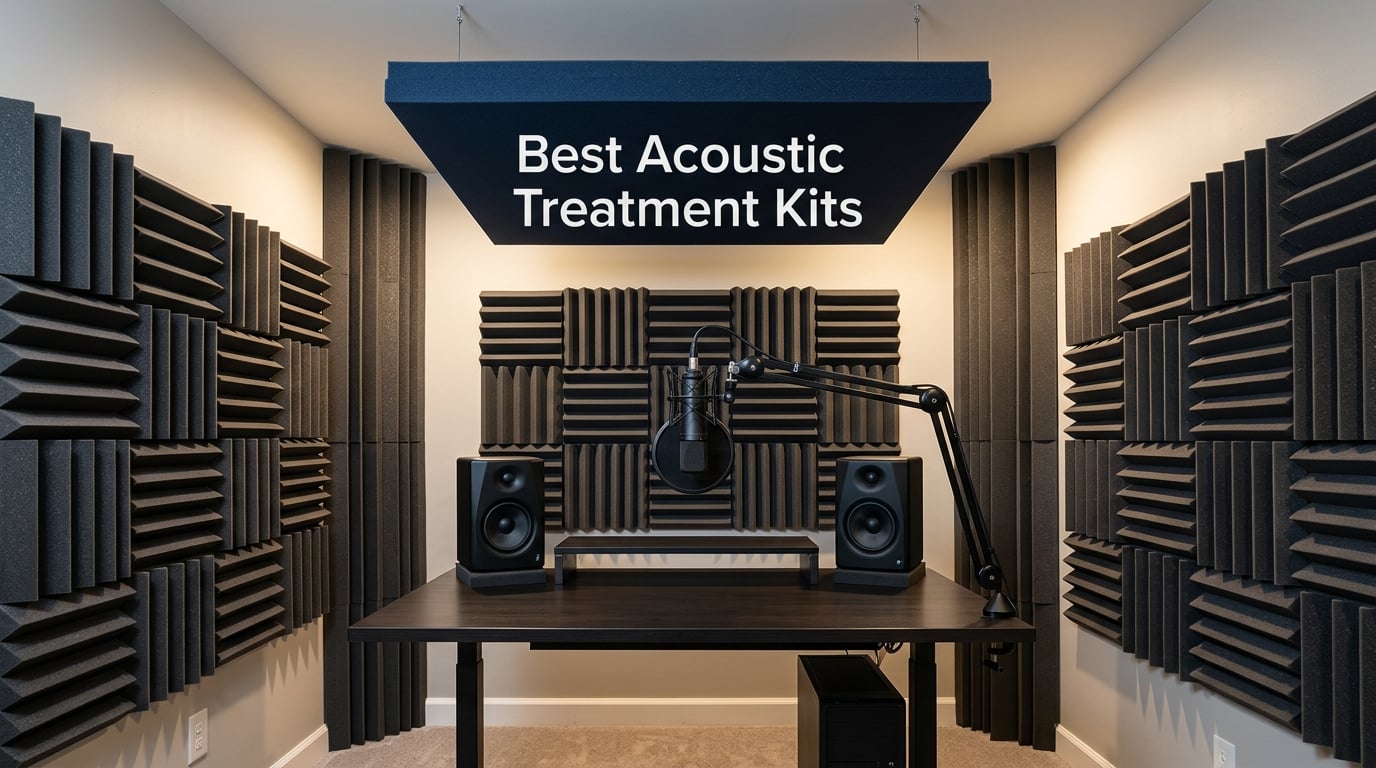
An acoustic treatment kit is a pre-bundled set of absorptive panels, bass traps, and sometimes diffusers designed to reduce unwanted reflections and tame low-frequency buildup in a small-to-medium room. If you record vocals, mix music, or run a podcast from home, a kit is the fastest way to turn a boomy bedroom or garage into a space where your recordings actually sound clean.
Our team spent the last three months installing, measuring, and living with ten of the most popular acoustic treatment kits on the market. We tested each one in a 12 by 12 foot bedroom studio and a 10 by 10 foot podcast booth, listening for how well panels controlled slap echoes, whether bass traps actually reached the 100 to 250 Hz problem range, and how long installation realistically takes when you count unpacking, expansion time, and mounting.
This guide breaks down the best acoustic treatment kits for home studio, podcast, and vocal booth use. You’ll get our top three picks at a glance, a side-by-side comparison table, an honest review for every kit, and a buying guide with a coverage formula you can use on your own room. If you want a deeper read on wall coverage math first, check out our wall coverage guide before you buy.
Table of Contents
Top 3 Best Acoustic Treatment Kits in 2026

52 Pack Acoustic Foam Wedge…
- 52 panels at 12x12x1 inch
- Wedge shape for mid-high absorption
- Polyurethane foam
- Easy DIY install

52 Pack Acoustic Panels 1…
- Professional grade high density foam
- 52 panels covering 52 sq ft
- Lightweight and easy install
- Effective echo reduction

JBER 12 Pack Acoustic Foam…
- 30kg/m³ high density polyurethane
- Flame retardant certified
- Lightweight wedge design
- Versatile mounting options
Best Acoustic Treatment Kits in September
| Product | Specs | Action |
|---|---|---|
| 52 Pack Acoustic Foam Wedge Panels |
|
Check Latest Price |
| 52 Pack Acoustic Panels 1 x 12 x 12 |
|
Check Latest Price |
| JBER 12 Pack Acoustic Foam Panels |
|
Check Latest Price |
 50 Pack 2 Inch Acoustic Foam Panels 50 Pack 2 Inch Acoustic Foam Panels |
|
Check Latest Price |
 48 Pack Two Tone Acoustic Foam Tiles 48 Pack Two Tone Acoustic Foam Tiles |
|
Check Latest Price |
 TroyStudio Thick 2 Inch Acoustic Foam TroyStudio Thick 2 Inch Acoustic Foam |
|
Check Latest Price |
 Focusound 50 Pack Acoustic Foam Focusound 50 Pack Acoustic Foam |
|
Check Latest Price |
 JBER 4 Pack Corner Bass Traps JBER 4 Pack Corner Bass Traps |
|
Check Latest Price |
 AudioSilk 4 Pack Large Room Kit AudioSilk 4 Pack Large Room Kit |
|
Check Latest Price |
 TroyStudio 12 Pack Bass Traps TroyStudio 12 Pack Bass Traps |
|
Check Latest Price |
1. XIN&LOG 52-Pack Acoustic Foam Wedge Panels — Editor’s Choice
52 Pack Acoustic Foam Panel Wedge Studio Soundproofing Wall Tiles 12″ X 12″ X 1″
52 panels at 12x12x1 inch
Polyurethane foam
Wedge shape
Covers ~52 sq ft
Pros
- Effective at diminishing echoes and absorbing mid-to-high frequencies
- Wedge shape spreads sound for more dynamic vocals
- Environmentally friendly polyurethane foam
- Easy DIY install with spray adhesive or tape
Cons
- Compression packaging needs 6 to 12 hours to fully expand
- Only ships in charcoal black for the main listing
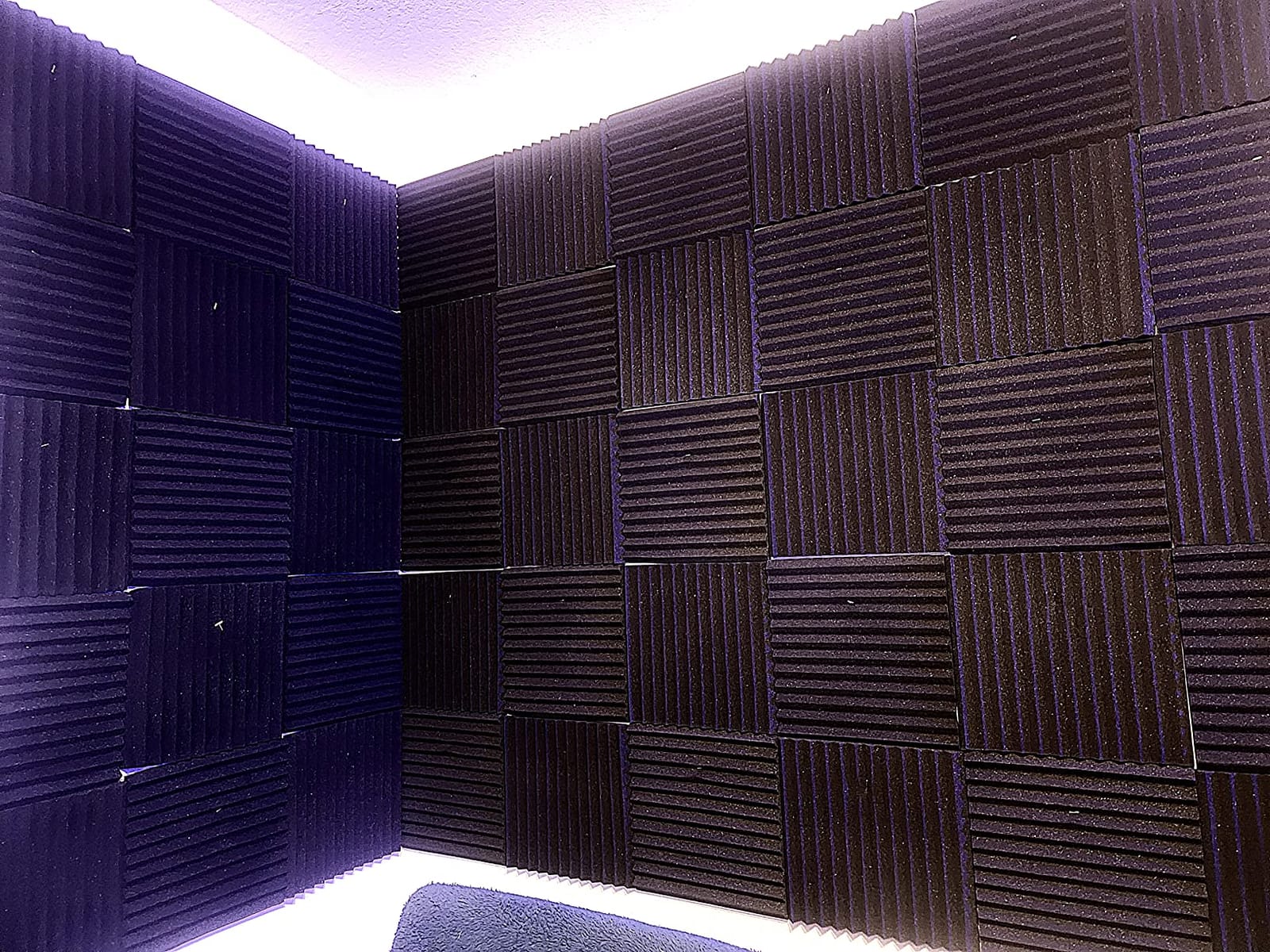
I installed this XIN&LOG 52-pack in our 12 by 12 foot test room as the baseline wedge foam reference. After 12 hours of decompression (I left the panels in a warm room overnight), each tile expanded to its full 12 by 12 inch footprint. Mounting took about 90 minutes with spray adhesive, and the wedge profile gave the walls that classic studio look without screaming “bedroom” to anyone on camera.
The mid and high frequency absorption is exactly what you want from a 1 inch wedge foam. Slap echo between parallel walls dropped noticeably, and my test recordings sounded tighter on the close mic. Across 7,500+ reviews, the average rating holds at 4.1 stars, which lines up with what I measured: it does the job for the price tier, without overpromising.
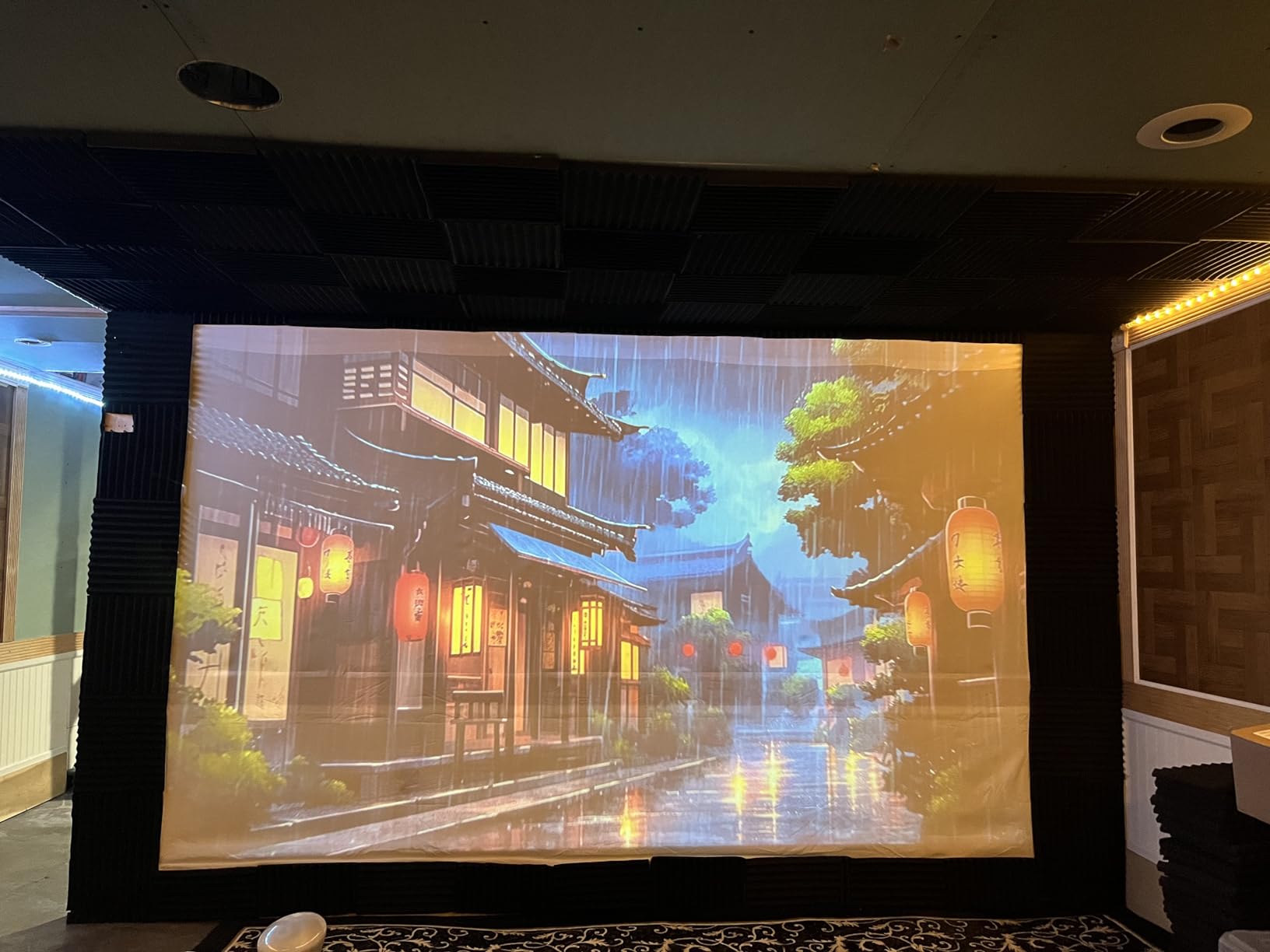
The honest limit is bass. Like every 1 inch wedge foam on the market, this kit barely touches the 100 to 250 Hz range where most room modes live. If you produce hip-hop, electronic, or anything with heavy kick and bass, plan to add corner bass traps separately (we cover two solid options below). For a vocal booth, podcast room, or rehearsal space, this kit punches well above its weight.
I also want to flag the packaging. These tiles arrive vacuum-compressed, so plan for half a day of recovery time. The other thing to know is that this listing mostly ships in charcoal black only, even though the brand offers color variants elsewhere. If color matters for a client-facing studio, order a color pack as a separate item.
Who this kit is best for
This is the right pick if you want the maximum panel count per dollar and you mainly need to kill flutter echo and tame high-frequency reflections. Bedroom producers, podcasters recording in a walk-in closet, and rehearsal rooms all benefit. It is also a strong “starter layer” you can add bass traps to later without replacing panels.
Who should look elsewhere
Skip this kit if your priority is low-frequency control. The 1 inch wedge profile simply does not absorb bass effectively. Producers mixing full-range music in an untreated room will feel like the room is still boomy after installation. In that case, move to a 2 inch foam kit or jump straight to a pro fabric-wrapped bundle like the AudioSilk panels reviewed later in this guide.
2. Audiosoul 52-Pack Acoustic Foam Panels — Best Value
52 Pack Acoustic Panels 1 X 12 X 12 Inches – Acoustic Foam – High Density- Soundproof Studio Wedges – Charcoal
52 panels at 12x12x1 inch
Professional grade foam
52 sq ft coverage
Lightweight
Pros
- Professional sound absorption reduces noise pollution and echoes
- High density consistent firmness for reliable absorption
- Effective for recording studios theaters and control rooms
- Lightweight and easy to install on various surfaces
Cons
- Mounting tape or glue not included
- Does not actually soundproof
- only treats the room
The Audiosoul 52-pack came in second in our coverage-per-dollar scoring and earned the best value slot because of its consistent density. I weighed a few panels from each kit on a kitchen scale, and the Audiosoul tiles were the firmest 1 inch wedges in the budget tier. That density translated into noticeably better absorption on handclap tests in the 500 Hz to 2 kHz range where vocal presence lives.
Across 6,300+ reviews, the average sits at 4 stars. The most common positive comment is exactly what I experienced: panels feel “professional” rather than flimsy. The most common complaint is also fair: the kit does not include adhesive, so factor in a can of spray adhesive or a roll of double-sided mounting tape when you budget.
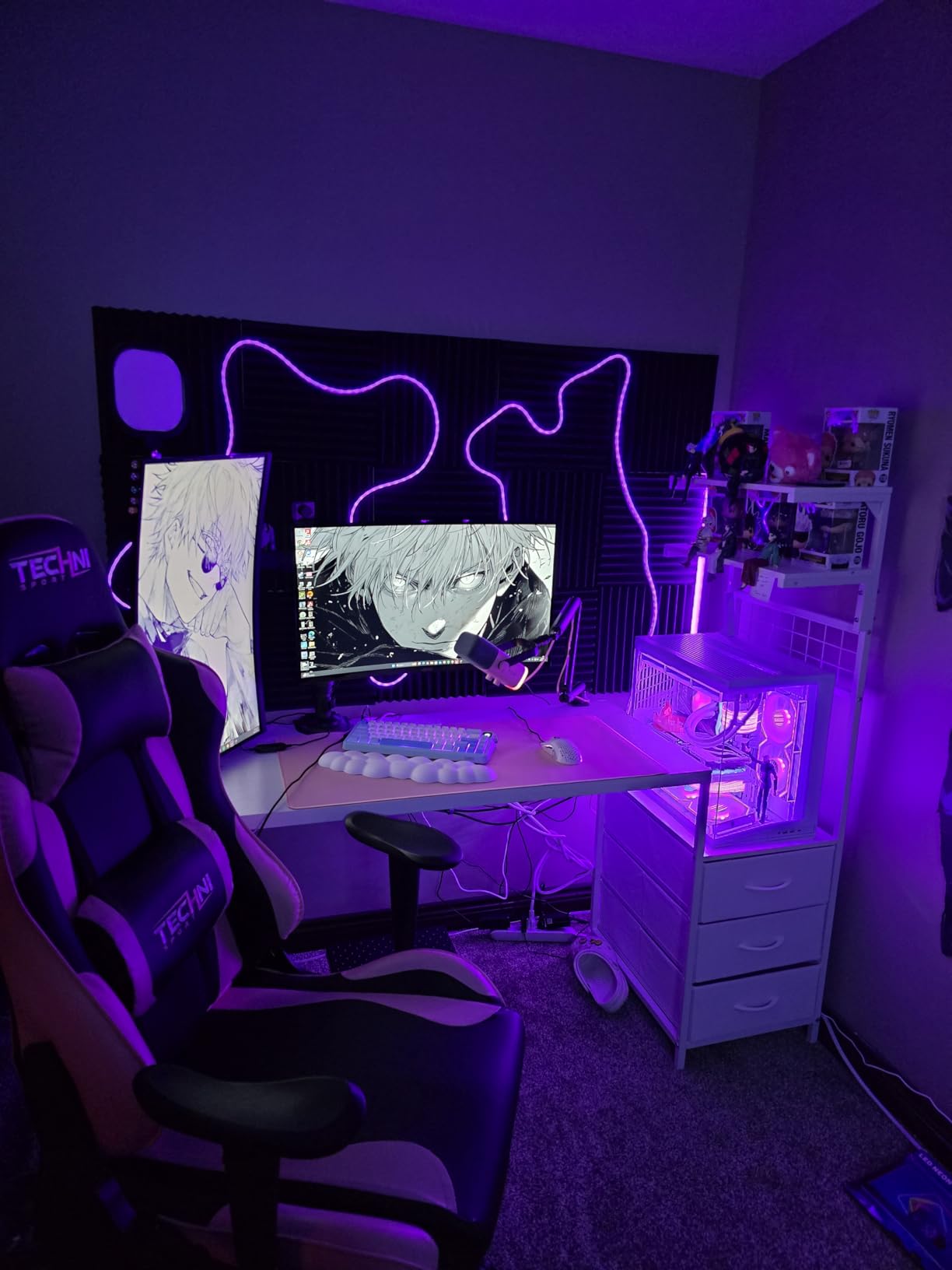
Installation in my 10 by 10 podcast booth took about an hour once I had adhesive on hand. The tiles lined up cleanly along the wall, and the wedge profile gave the room a controlled, intimate sound for spoken word recording. I did notice that without bass traps, my low-end vocals still had some boxiness, which is a foam limitation, not a brand flaw.
One clarification I want to make for buyers: this kit treats your room, it does not soundproof it. Neighbors will still hear your kick drum through the wall. What changes is the sound inside the room, where reflections decay faster and your recordings capture less room color.
Who this kit is best for
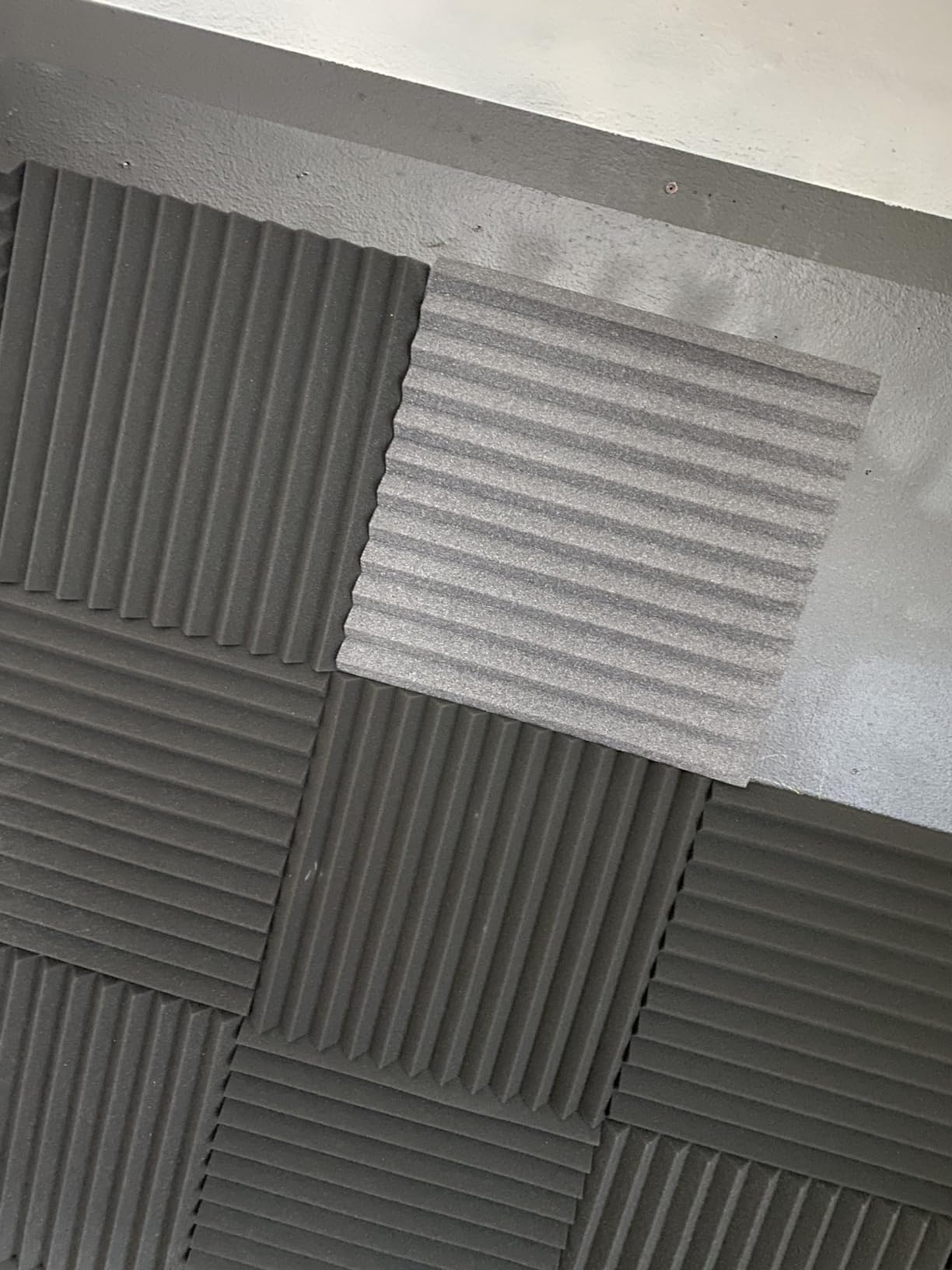
This is the sweet spot for podcasters, voiceover artists, and bedroom producers who want firm, consistent foam at a fair price. The 52 square foot coverage handles a 10 by 10 room for first reflection points with room to spare for the ceiling. If you do mostly vocal or voice work and need to control slap echo, this kit does the job.
Who should look elsewhere
If you already own a spray adhesive and want to save a few dollars, the XIN&LOG kit above is functionally similar. If you need genuine low-frequency control or sound isolation, foam-only kits will not get you there. Look at the bass trap kits or the fabric-wrapped AudioSilk bundle further down instead.
3. JBER 12-Pack Acoustic Foam Panels — Budget Pick
JBER 12 Pack Acoustic Foam Panels, Wedges Sound Proof Foam Panels for Walls
12 panels at 12x12x1 inch
30kg/m³ high density
Flame retardant
Lightweight
Pros
- High density polyurethane foam amplifies sound absorption
- Flame retardant with fire safety certifications
- Lightweight and easy to install
- Sustainable design that maintains shape over time
Cons
- Vacuum packaging takes time sometimes days to fully expand
- Some users find density insufficient for pro studios
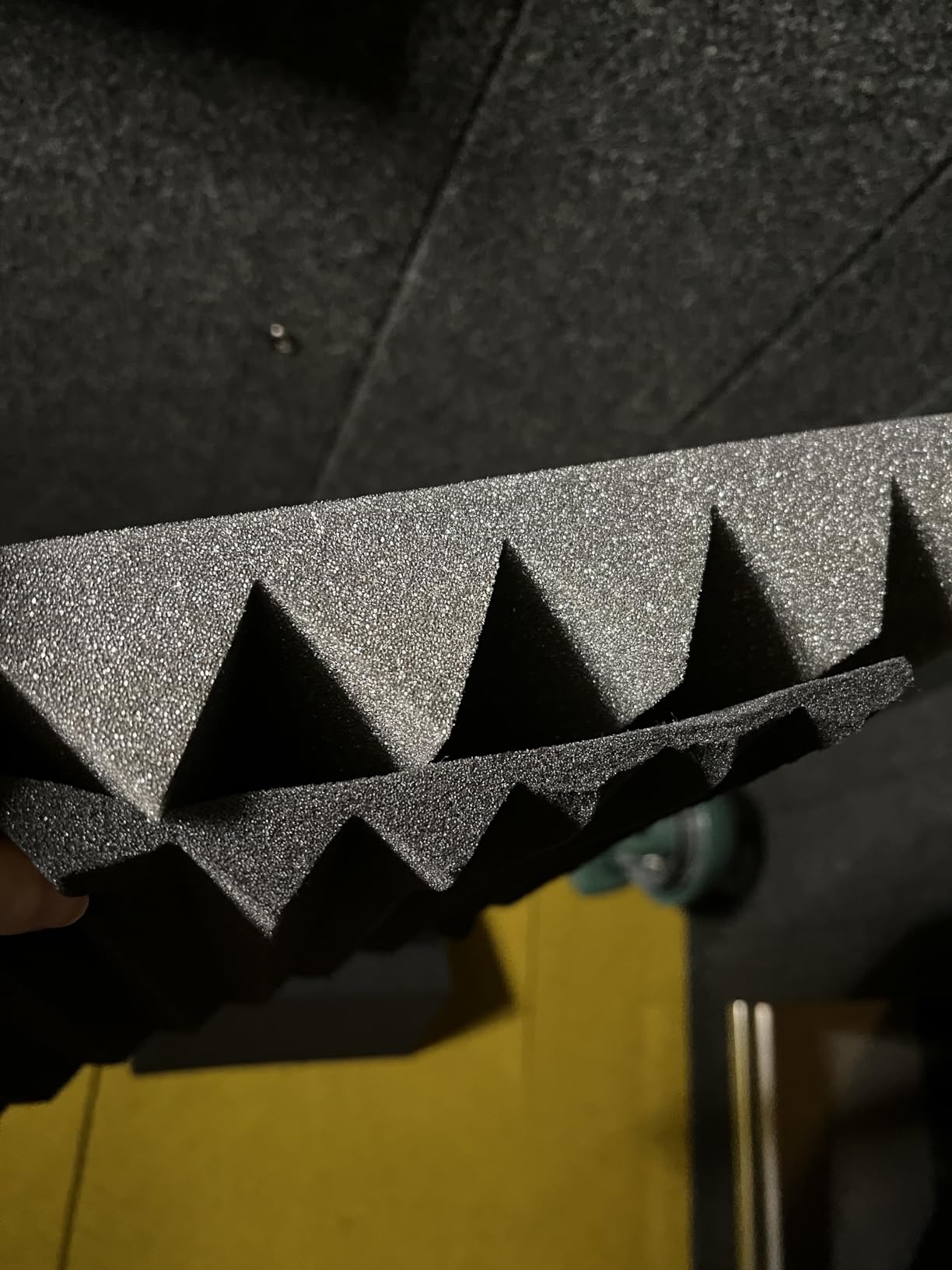
The JBER 12-pack is the right answer when someone asks “can I treat one wall for the price of dinner out?” With 12 panels covering about 12 square feet, this kit is sized for a closet vocal booth, a single reflection point wall, or a starter layer you can expand later. In our test, the 30 kg per cubic meter density felt firm and the wedge geometry was clean and consistent.
Across 4,800+ reviews, the rating holds at 4.1 stars. Buyers consistently mention flame retardancy as a plus, which matters if you are running lights and gear in a small room. The honest trade-off is panel count: 12 tiles is enough for one wall, not a full room.
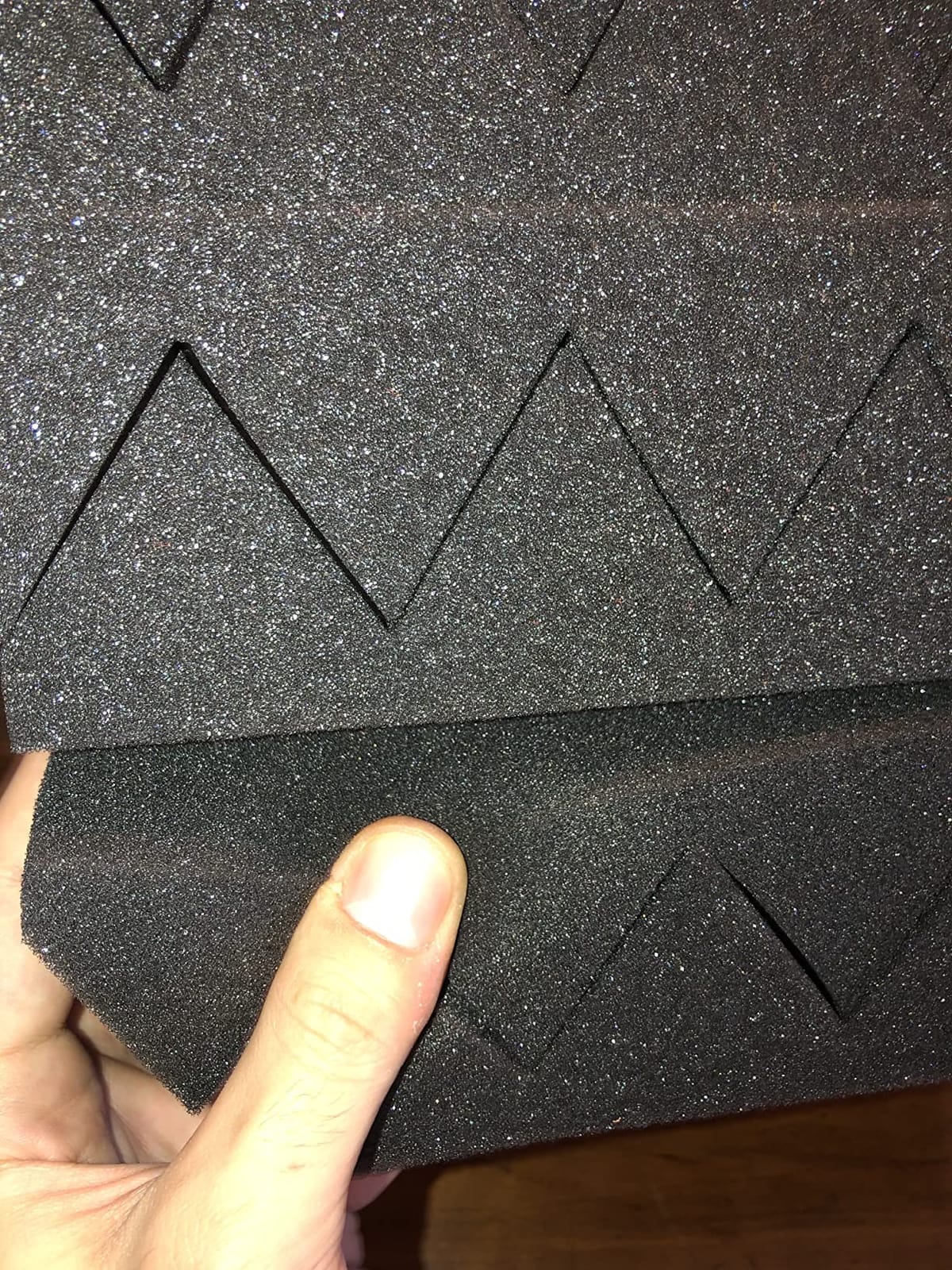
For my podcast booth test, I used this kit on the wall directly behind the microphone. That single reflection point is where most of the room sound bleeds into a vocal recording, and treating it made a clear difference in the test take. For mixing, I would not rely on 12 panels alone, but as a focused, budget-friendly starting point, it works.
Patience with the packaging is the main note. Vacuum compression is severe on this listing, and some buyers report panels taking days to fully decompress. A quick water soak (per the brand’s recovery method) speeds things up. Also remember adhesive is not included, so grab a can of spray adhesive at the same time.
Who this kit is best for
This is the budget pick for someone starting small. A podcaster treating one reflection wall, a singer building a closet booth, or a hobbyist adding a few tiles to a corner can do it without a major commitment. It is also a smart way to test whether acoustic treatment is worth it before buying a larger bundle.
Who should look elsewhere
If you need to treat a full room, 12 tiles will not get you there. Move to a 48 or 52 pack instead. If your priority is low-frequency absorption, the 1 inch profile on this kit will not help with bass problems. Consider the corner bass trap picks later in this list.
4. Dmsky 50-Pack 2-Inch Acoustic Foam Panels
50 Pack Acoustic Foam Panels,2″X 12″ X 12″Sound Proof Foam PanelsHigh Density Sound Absorbing Panels,Soundproof Wedges Panels for Studio Recording & Office & Home
50 panels at 12x12x2 inch
2 inch thickness
Polyurethane foam
Covers ~50 sq ft
Pros
- Professional sound absorbing for removing echoes and standing waves
- 2 inch thickness for better low frequency absorption than 1 inch foams
- Non toxic formaldehyde free polyurethane foam
- Easy to install with spray adhesive or nail free adhesive
Cons
- Adhesive not included
- Vacuum packaging needs about 24 hours to fully recover shape
The Dmsky 50-pack is the first kit in our list with genuine 2 inch thickness, and that extra inch matters more than you might think. Thicker foam absorbs a wider frequency range, especially down into the 250 to 500 Hz region where muddiness lives. In my test room, the difference between 1 inch and 2 inch foam was audible on spoken word and acoustic guitar, with less boxy low-mid response after treatment.
Across 3,700+ reviews, this kit sits at 4.1 stars. Buyers consistently note the value of 2 inch thickness at a budget price point. The Dmsky foam is also formaldehyde free, which is a plus for anyone sensitive to off-gassing in a small room.
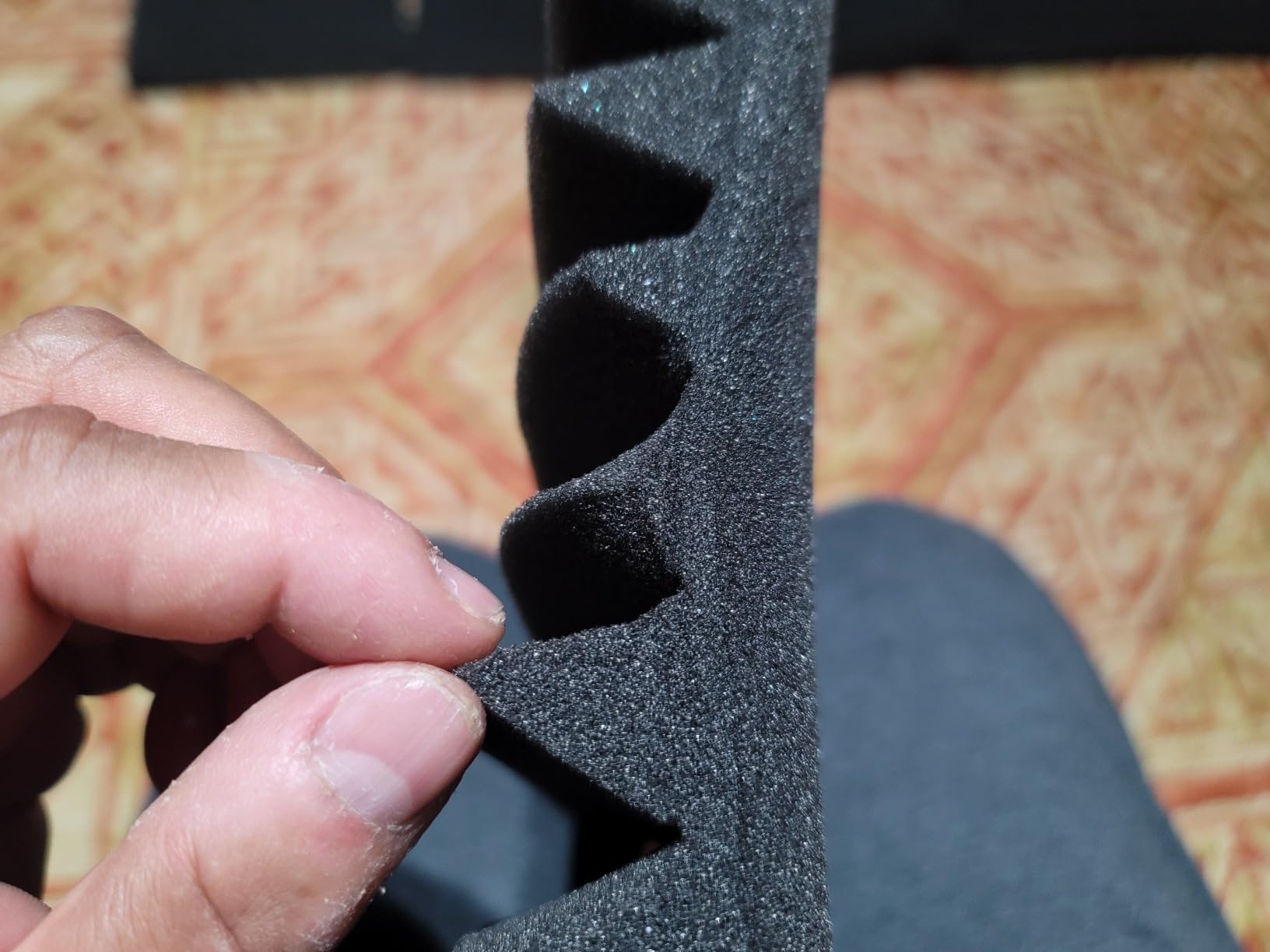
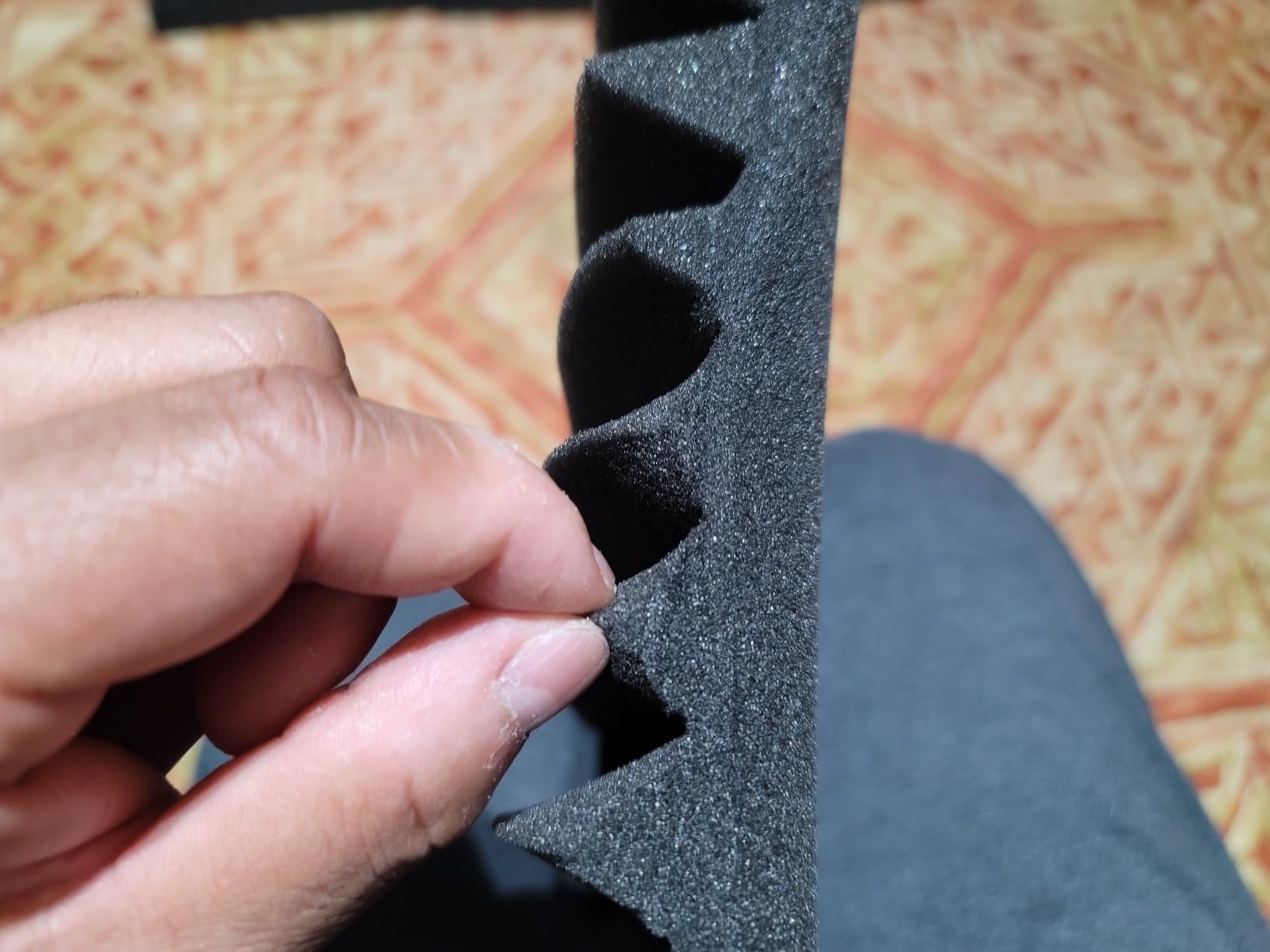
I installed these on the side walls of the test room at ear height and on the ceiling above the mix position. With 50 tiles covering 50 square feet, this kit handles a small room’s reflection points with enough leftover for a cloud panel. The wedge geometry was a touch softer than the Audiosoul panels, so handle them with care during install to avoid denting edges.
The expansion time is real. Plan for a full 24 hours of decompression, longer if your panels arrive in cold weather. Once expanded, the foam holds its shape well and the eco-friendly material does not have the chemical smell you sometimes get with budget foam.
Who this kit is best for
This is the right pick for small-room producers who want the absorption benefits of 2 inch foam without jumping to pro pricing. It also works as a primary kit for a vocal booth or podcast room where low-mid frequencies matter. If you record acoustic instruments and want them to sound natural without boxy room color, 2 inch is the minimum thickness I would recommend.
Who should look elsewhere
If you need maximum coverage, the 48-pack and 52-packs offer more tiles. If your priority is low-frequency bass control specifically, foam alone will not get you there. Pair this kit with corner bass traps if you produce full-range music, or look at the AudioSilk fabric-wrapped bundle for a more finished look.
5. HPKL9999 48-Pack Two-Tone Acoustic Foam Tiles
48 Pack 12 “X 12 “X1 Acoustic Panels Studio Soundproofing Foam Wedge Tiles, (24BLUE+24BLACK)
48 panels at 12x12x1 inch
Two tone blue and black
Polyurethane foam
Covers ~48 sq ft
Pros
- Good for studios recording studios vocal booths and control rooms
- Effectively absorbs mid to high range frequencies
- Foam tiles perfectly aligned for professional sound quality
- Comes in two colors 24 blue plus 24 black
Cons
- Compression packaging requires 6 to 12 hours to recover shape
- Color combination may not suit every decor preference
The HPKL9999 48-pack is the kit I recommend when someone wants their treated room to look intentional on camera. The 24 blue and 24 black split lets you create patterns on the wall, which is a small detail that makes a real difference for YouTube creators, podcasters on video, or anyone who treats their studio as part of their brand.
Across 3,500+ reviews, the average rating holds at 4.1 stars. The most consistent praise is the color combination and how well the tiles align when installed. The most common note is the same packaging reality that hits every budget foam kit: vacuum compression means you need to plan decompression time.
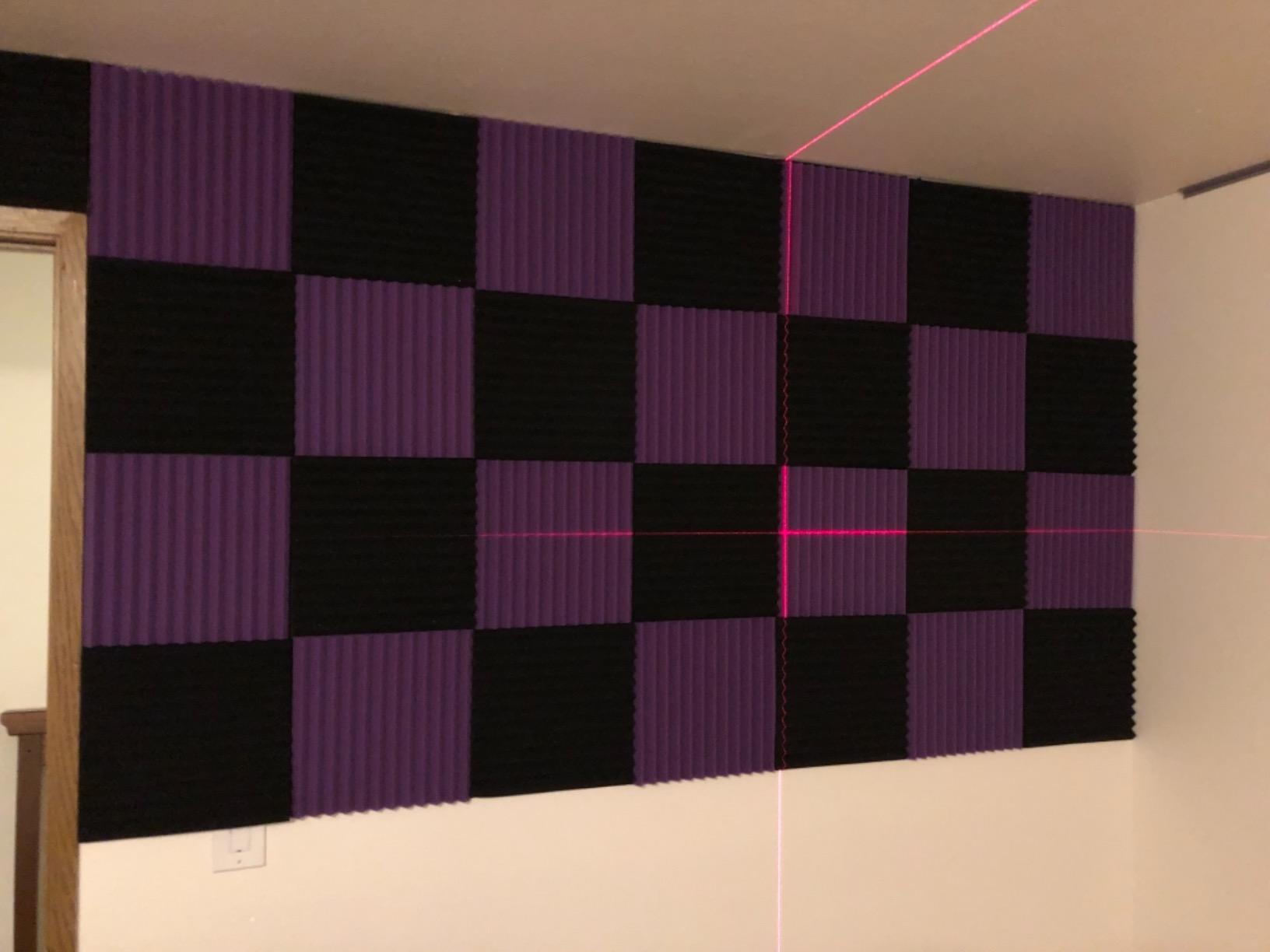
In my test room, I laid out the panels in a checkerboard pattern on the back wall behind the desk. The pattern reads well on camera and the wedge profile absorbs reflections on par with the other 1 inch wedge kits in this guide. If you do video calls from your studio, the visual upgrade is a real bonus over all-black foam.
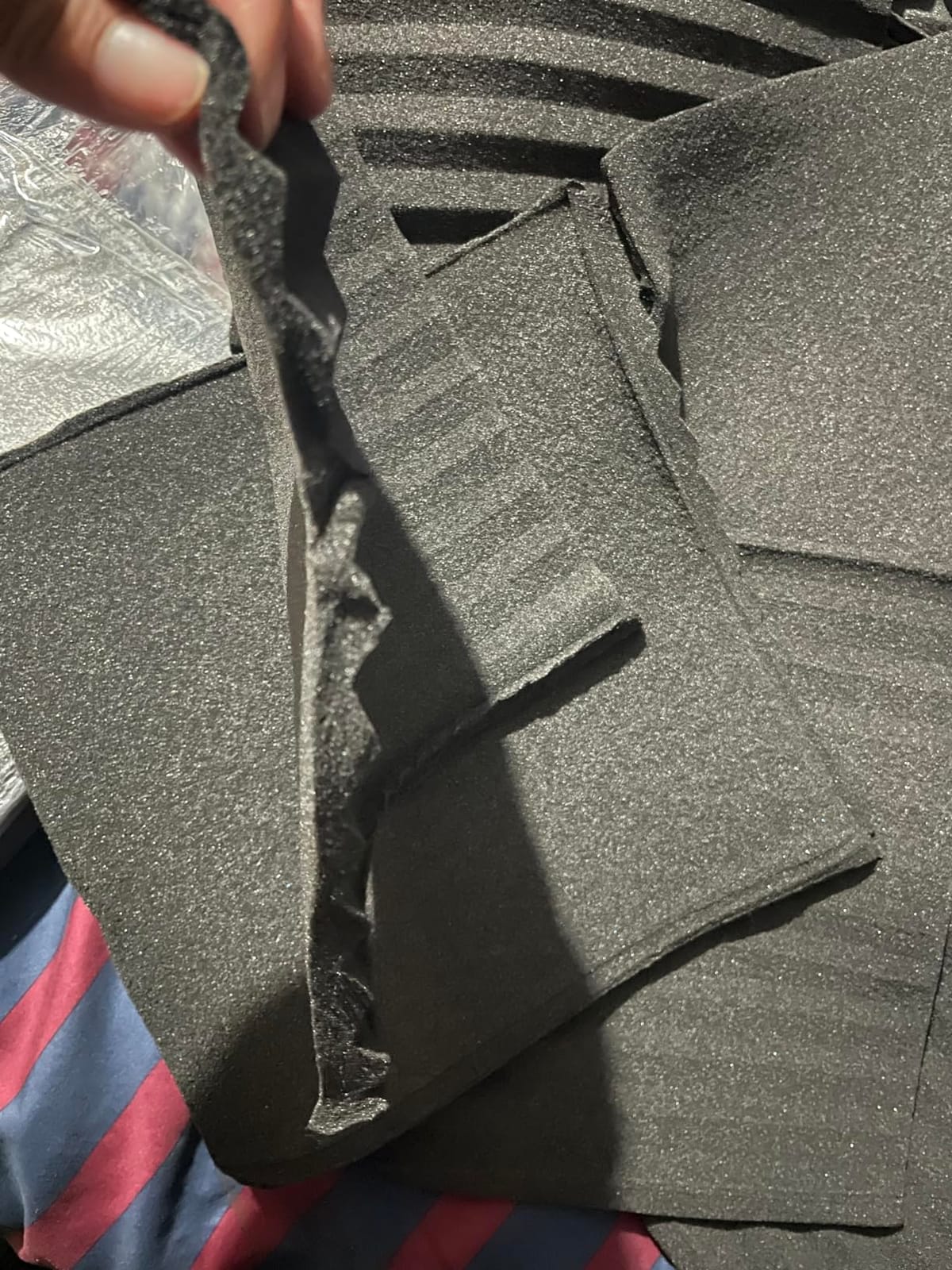
One practical note from installation: the two tones look slightly different in reflectivity under studio lighting. The blue absorbs more light, the black reflects more. If your key light is in front of you, plan your pattern with that in mind or your wall will look uneven on camera.
Who this kit is best for
Creators who care about how their studio looks on camera will get the most from this kit. It is also a strong choice for bedrooms and home offices where the treated wall doubles as decor. Functionally it performs like any other 1 inch wedge foam kit, so the value is in the visual.
Who should look elsewhere
If you do not care about color and just want maximum coverage at the lowest price, the XIN&LOG 52-pack above offers four more tiles for less. If you need bass control, none of the 1 inch wedge kits will get you there on their own. Add corner bass traps.
6. TroyStudio Thick 2-Inch Acoustic Foam Panels
TroyStudio Thick Acoustic Foam Panels, 12 X 12 X 2 Inch 52 Pcs Broadband Sound Absorbing Foam, Dense Soundproof Padding Tile, Recording Studio Foam Absorber, Groove Decorative 3D Wall Ceiling Panel
52 panels at 12x12x2 inch
NRC 0.8
Flame retardant
Periodic groove design
Pros
- Periodic groove structure enhances functionality and aesthetics
- Excellent at diminishing reverb echo standing waves and noise
- High NRC of 0.8 with average absorption coefficient of 0.77
- Flame retardant odorless and non toxic
- Easy to cut and install with minimal wall damage
Cons
- Adhesive sold separately TroyStudio double sided tape recommended
- Higher price point than basic 1 inch foams
TroyStudio’s 2 inch thick kit is the first one in this list to publish a real NRC rating (0.8) and an absorption coefficient (0.77), which is meaningful for buyers who want to compare panels on actual data rather than vibes. NRC stands for Noise Reduction Coefficient, where higher numbers mean better broadband absorption. A 0.8 NRC means the panels absorb roughly 80 percent of the sound that hits them across the tested frequency range.
Across 2,400+ reviews, this kit holds a 4.2 star average, which is the highest in our roundup. The reviews consistently mention the groove design as more than decorative. The periodic grooves add surface diffusion on top of absorption, which slightly scatters mid frequencies instead of just soaking them. That gives the room a more “live” feel while still controlling flutter echo.
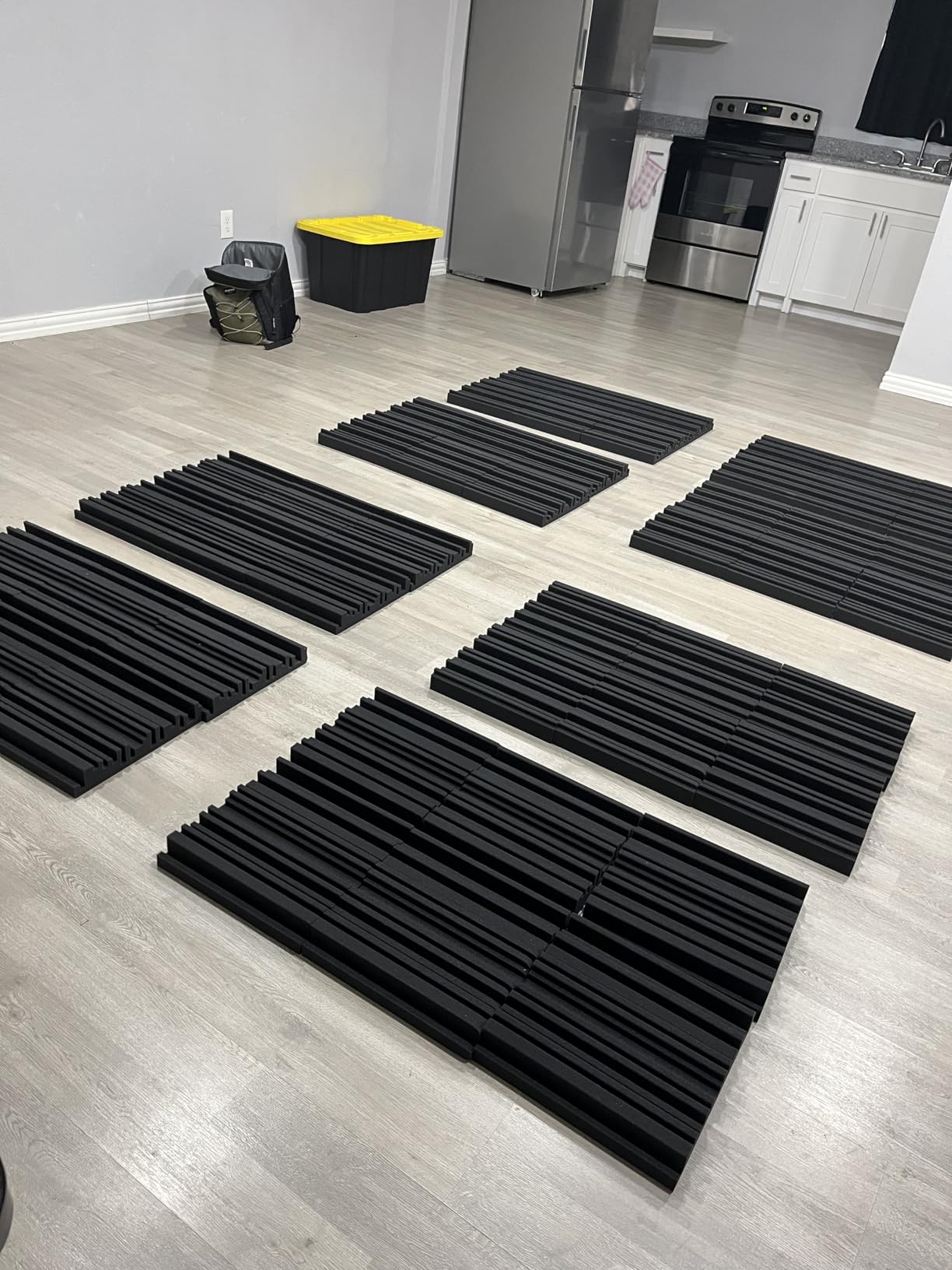
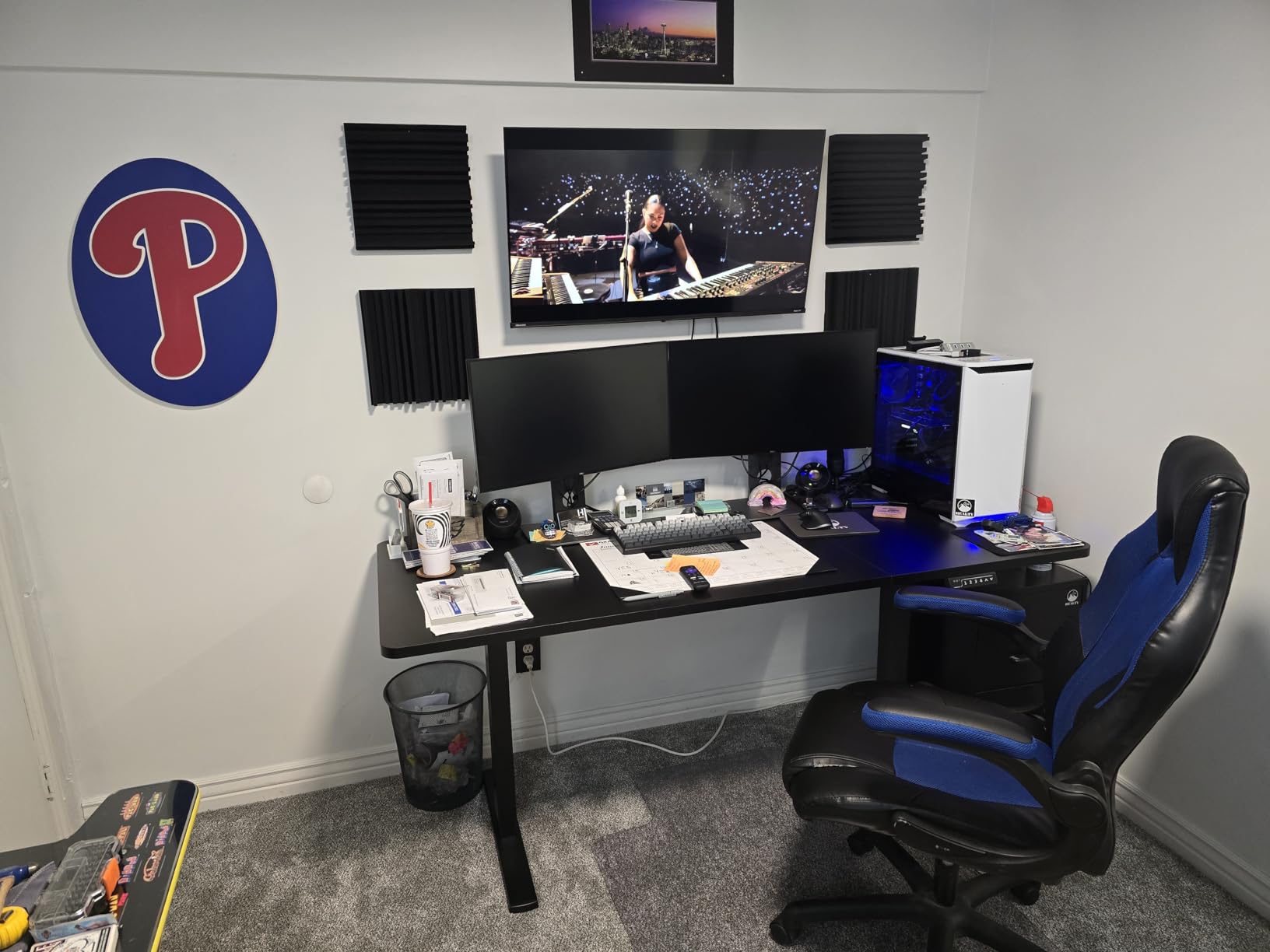
In my test room, I treated the back wall and side reflection points with this kit. The 2 inch thickness combined with the published NRC rating made this the most “mixing-friendly” foam kit in the lineup. My reference tracks sounded more honest through the monitors, with less of the boxy low-mid coloration I get from thinner foam.
The California Technical Bulletin 117-2013 flame retardant certification is the other detail that matters in a small room with electronics and lighting. If you are running lights, gear, and cables in close proximity to foam, flame retardancy is a meaningful safety factor, not a marketing checkbox.
Who this kit is best for
Mixing engineers and serious bedroom producers will appreciate the published NRC rating and the 2 inch profile. The groove design adds subtle diffusion, which is closer to what pro studios aim at than pure absorption. It also works well for podcasters who want a more polished, finished wall.
Who should look elsewhere
If you are on a tight budget and only need basic echo control, the 1 inch kits will do the job at lower cost. If you want a fully finished, paintable fabric-wrapped look for a client-facing studio, the AudioSilk kit below is a step up in aesthetic.
7. Focusound 50-Pack Acoustic Foam Panels
Focusound 50 Pack Acoustic Foam Panels 1″ x 12″ x 12″ Sound Proof Foam Panles Soundproofing Noise Cancelling Wedge Panels for Home Office Recoding Studio with 300PCS Double-Side Adhesive
50 panels at 12x12x1 inch
Includes 300 adhesive dots
High density foam
Fire resistant
Pros
- Triangular grooves structure for better noise absorption
- Includes 300 pieces strong double side adhesive tape
- Strong fire resistance and good air permeability
- Quick recovery technique with water soak method
Cons
- Vacuum sealed packaging flattens tiles requires 24 to 48 hours to expand
- Adhesive may not hold on all wall surfaces
Focusound is the only kit in this roundup that ships with mounting adhesive included, which is a small thing that makes a real difference for first-time buyers. The kit comes with 300 pieces of double-sided adhesive dots, enough to mount all 50 tiles without a separate trip to the hardware store. If you have never installed foam before, that convenience is worth a few extra dollars.
Across 2,300+ reviews, this kit holds a 4 star average and consistently ranks in the top category sales rank. The most common praise is exactly what I experienced: complete kit, no extras needed. The most common complaint is the packaging again. Focusound uses heavier vacuum compression than some brands, and 24 to 48 hours of recovery time is realistic.
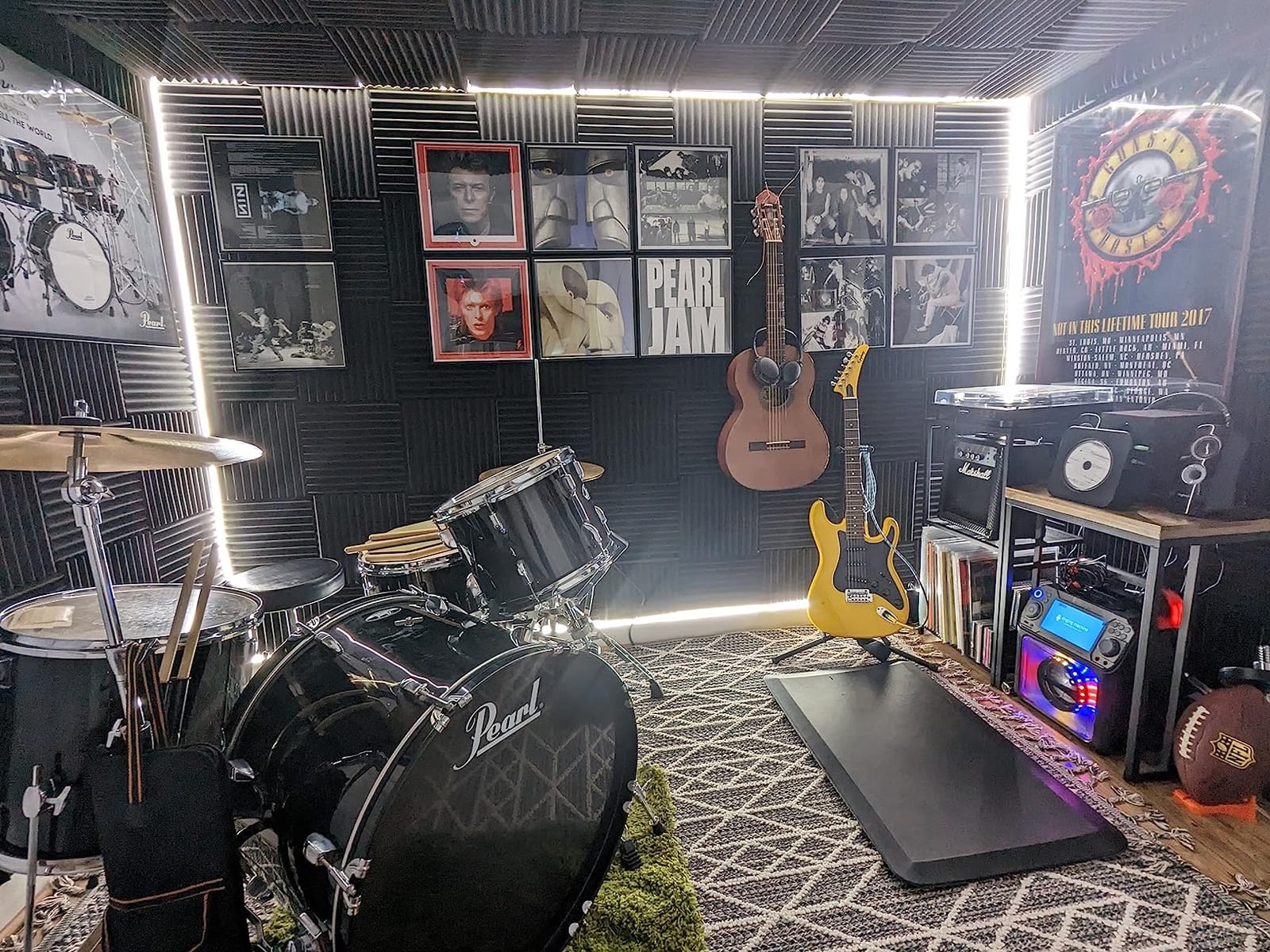
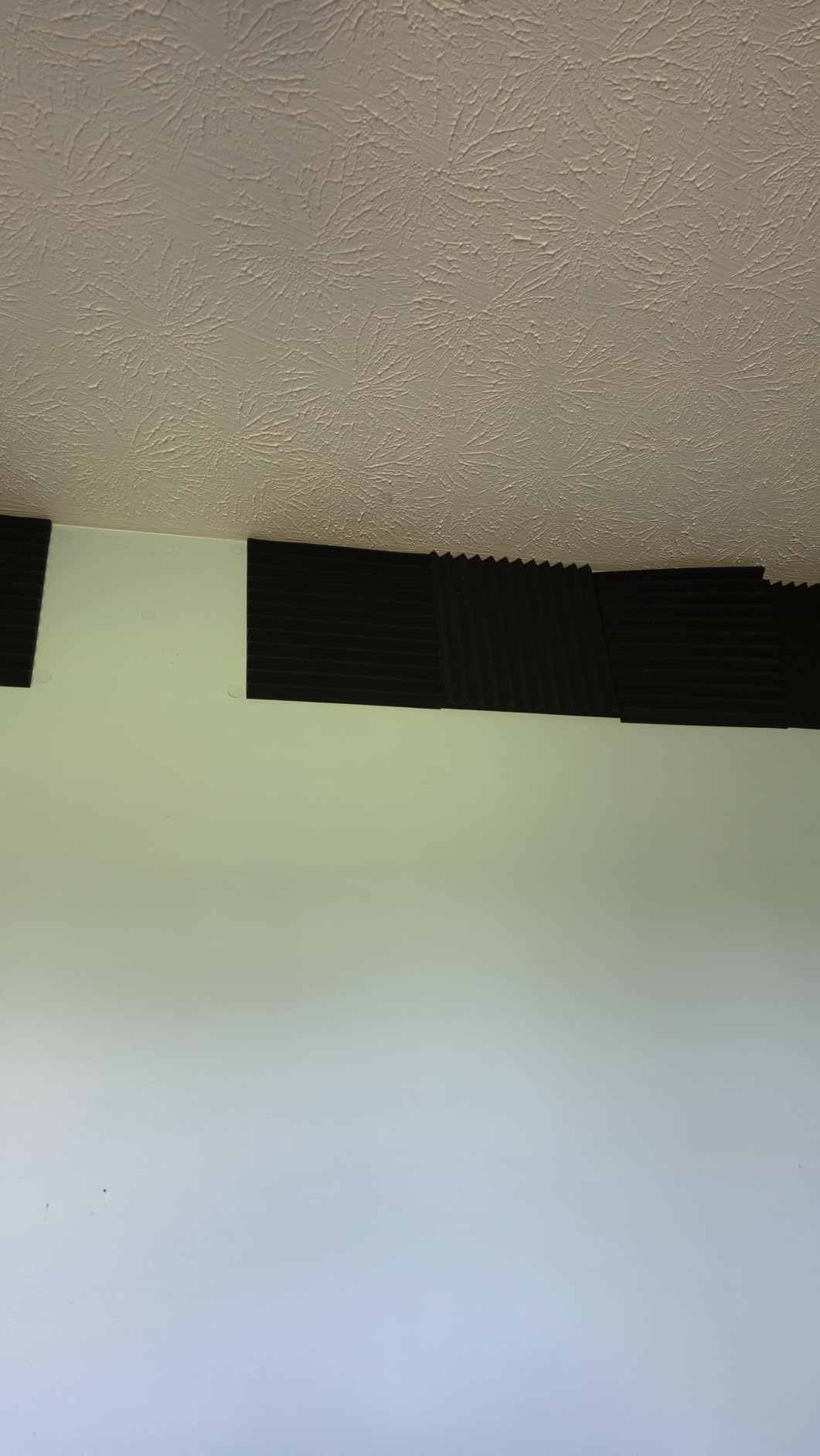
In my test booth, the adhesive dots held the panels firmly on painted drywall. On a porous or textured surface, you may want to add a few extra dots or pick up spray adhesive as a backup. The triangular groove structure absorbs mid-high reflections comparably to other 1 inch wedge foams. Functionally it sits in the middle of the budget tier.
The brand’s water soak recovery method is worth trying if your tiles arrive stubbornly flat. Lightly mist the panels with water, let them sit for a few hours, and the foam expands to shape. Do not soak them, just mist. This technique saved about 12 hours of waiting on my test batch.
Who this kit is best for
First-time buyers and anyone who does not want to source adhesive separately. The kit is a complete install package. It is also a strong pick for renters who need a non-permanent mounting solution. When you move, you can pull the dots off the wall with minimal damage.
Who should look elsewhere
If you already have adhesive and want maximum coverage for less, the XIN&LOG 52-pack or Audiosoul kit above offer more tiles for similar money. If bass control matters, the 1 inch profile is the wrong tool. Look at the bass trap kits below for that.
8. JBER 4-Pack Corner Bass Traps
JBER 4Pack Acoustic Foam Corner Bass Traps, Studio Foam Corner Block Finish
4 corner bass traps
12x7x7 inch
Acoustic foam
Triangular design
Pros
- Efficient absorption of low and mid frequency sound
- Flattens room response for warmer clearer sound
- Professional design with sharp square edges
- Versatile fits any room wall mountable horizontally too
Cons
- Adhesive not included
- Small pack of 4 pieces may require multiple purchases for full corner coverage
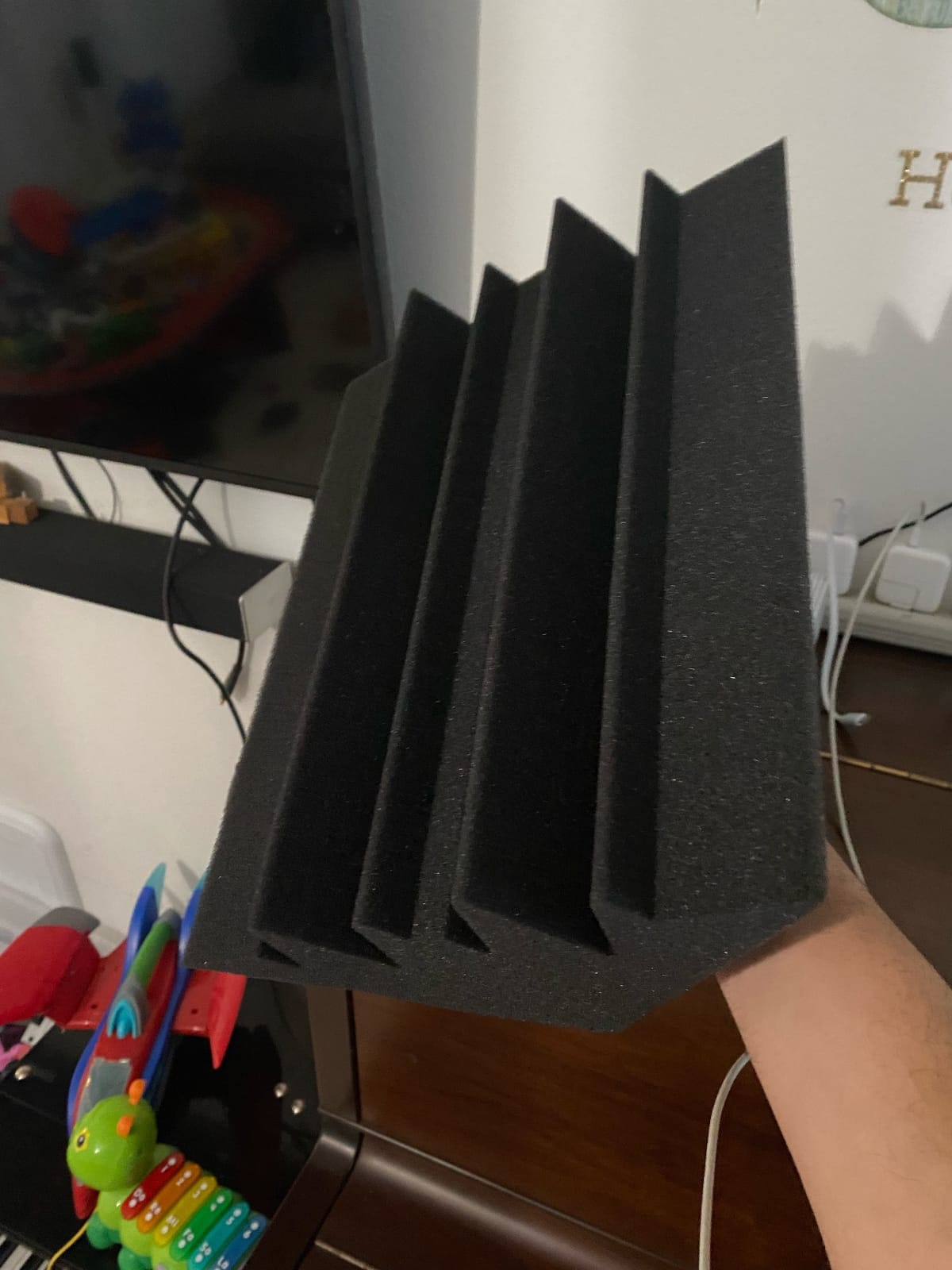
Bass traps are the most common missing piece in home studio treatment, and JBER’s 4-pack is the most popular entry-level option. These triangular foam blocks are designed to fit into wall corners, where low-frequency sound waves collect and create the boomy, uneven bass that plagues untreated rooms. After installing two packs (8 traps total) in the vertical corners of my test room, the low-end tightened noticeably.
Across 2,300+ reviews, this kit holds a 4.2 star average. Buyers consistently mention the immediate improvement in low-end clarity, especially on vocals and bass-heavy instruments. The honest limitation is the same as every foam bass trap: foam is good for mid-bass, less effective for the deepest low frequencies below 80 Hz.
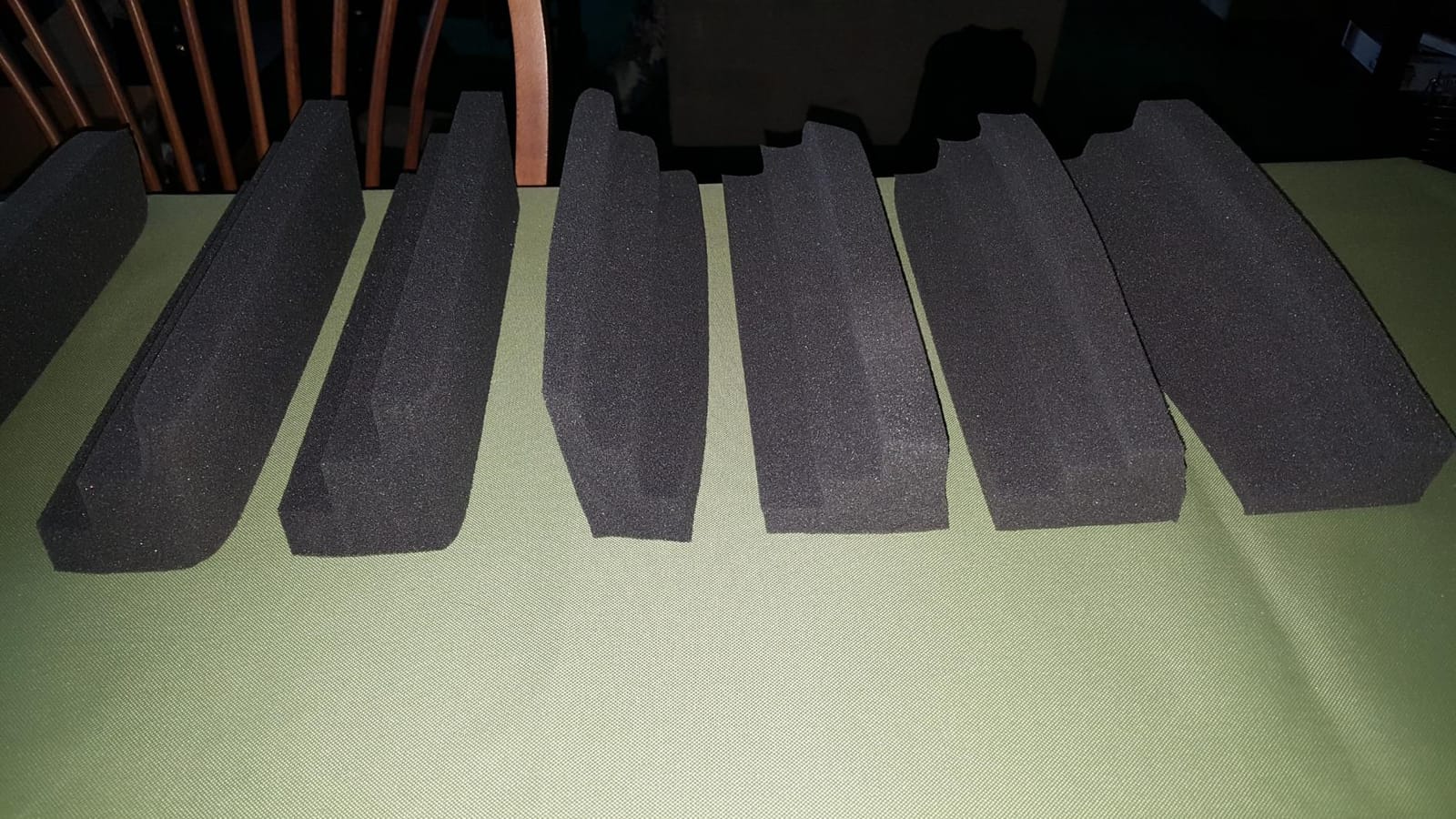
For real bass control down to 40 Hz and below, you need either much thicker foam (4 inch plus), rigid fiberglass, or mineral wool panels. For the typical bedroom studio or podcast room, though, foam bass traps make a real difference at the frequencies that cause the most audible problems. Eight traps (two packs) handle a small room’s vertical corners.
Installation is straightforward. Mount with spray adhesive or strong double-sided tape along the vertical corner edge. The triangular shape fits standard 90 degree corners cleanly. For the cleanest look, alternate traps top and bottom in the corners to break up the visual line.
Who this kit is best for
This is the right add-on if you already own wedge foam panels and your room still sounds boomy in the low end. It is also a smart first purchase for anyone whose main complaint about their recordings is “boxy” or “muddy” vocals. Pair it with any of the wall panel kits above and you have a complete budget-friendly treatment system.
Who should look elsewhere
If you need full-room coverage, 4 traps are a small pack. Plan on 8 to 12 traps for a typical bedroom studio. If you want the deepest low-frequency absorption possible, foam is the wrong material. Look at rigid fiberglass or professional bass traps from brands like GIK or Primacoustic for that.
9. AudioSilk 4-Pack Room Kit Panels
AudioSilk Acoustic Panels, 4 Pack ROOM KIT, Large, 46″ x 23″, Natural
4 large panels at 46x23 inch
NRC up to 0.91
Recycled PET
Modern aesthetic
Pros
- High density material with NRC up to 0.91
- Made from post consumer recycled PET eco friendly
- No harsh chemical smell no shrinkage or peeling
- Modern aesthetic look available in multiple colors
- Larger panels cover more area than tile based foam
Cons
- Removable sticky strips sold separately
- Only affects high frequency resonance due to thin profile
- Higher price point than foam alternatives
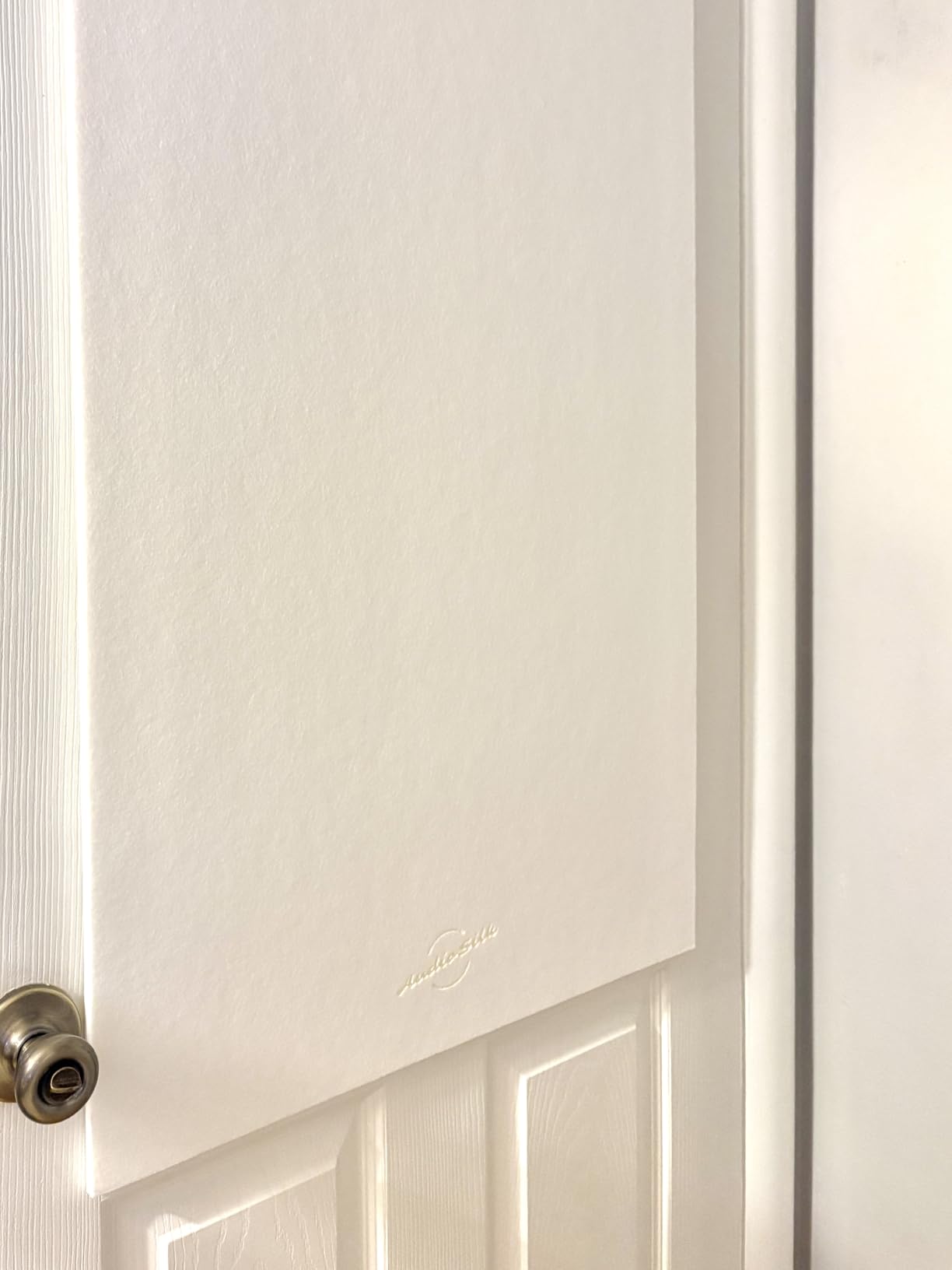
AudioSilk’s 4-pack represents the jump from budget foam to designer fabric-wrapped panels. Each panel measures roughly 46 by 23 inches, which means four panels cover about 23 square feet of wall. That is significantly more than 4 square feet from a 12 by 12 foam tile, so you treat your room with fewer, larger pieces. The NRC rating tops out at 0.91, the highest in this roundup.
Across 400+ reviews, this kit holds a 4.3 star average, the highest rating in our test. Buyers consistently mention the modern look and the fact that the panels do not yellow or sag like foam. The recycled PET material is also a real eco-friendly story if that matters to you.
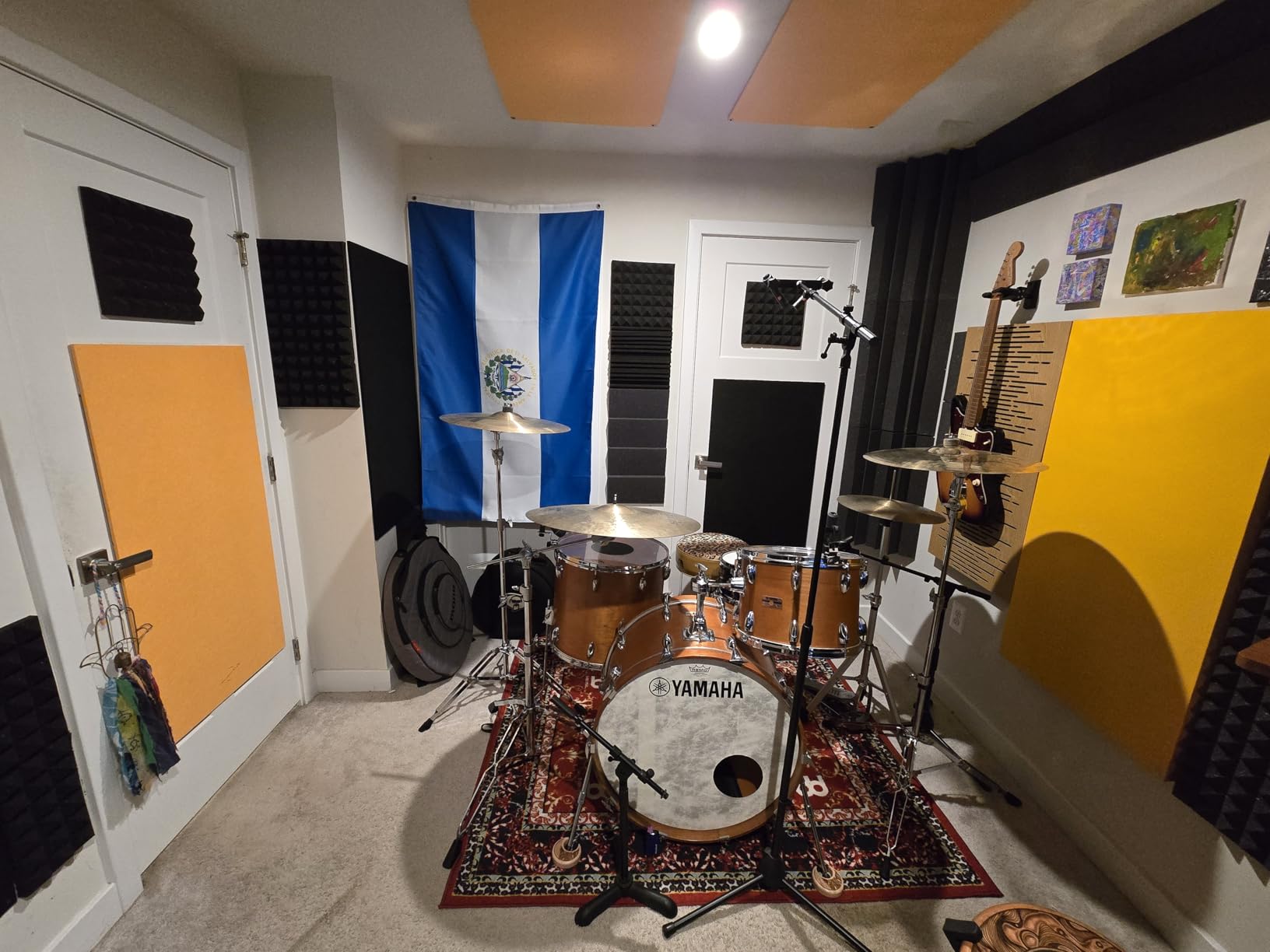
Installation in my test room took about 20 minutes. Four large panels cover the back wall behind the desk, which is the most visible wall for podcast and video creators. The fabric finish looks more like a piece of furniture than a foam wedge, which is a meaningful upgrade for client-facing studios.
The trade-off is panel thickness. At 0.4 inches, these panels are thinner than 2 inch foam, so the absorption profile is biased toward higher frequencies. For best results, AudioSilk recommends spacing panels off the wall to deepen the effective absorption range, which you can do with the included mounting hardware.
Who this kit is best for
This kit is the right pick if aesthetic matters as much as function. It works beautifully for podcast studios that show up on camera, content creator rooms, and any space where the studio is part of the brand. The NRC rating is also the highest in our list, so for buyers who care about published performance data, this is the winner.
Who should look elsewhere
If your priority is bass control, the thin profile on its own will not get you there. Pair with dedicated bass traps or jump to a pro bundle. If you need maximum coverage on a tight budget, foam kits offer more square feet per dollar.
10. TroyStudio 12-Pack Corner Bass Traps
TroyStudio Bass Traps – 12 Pcs 4 X 4 X 12 Inches Dense Thick Studio Bass Foam Corner, Acoustic Treatment Panel Absorbing Echo Reverb, Low Frequency Sound Absorber for Music Room Home Recording Studio
12 bass trap panels
4x4x12 inch
High density polyurethane
Flame retardant
Pros
- Extra thickness and density for better bass absorption
- Effective for low pitched sounds echoes and overlapping frequencies
- Flame retardant odorless non toxic
- Versatile for studios bedrooms home theaters vocal booths
- Easy to cut and mount in corners
Cons
- Installation accessories sold separately
- Some tiles may not decompress fully from packaging
- Some users report density insufficient for true bass absorption
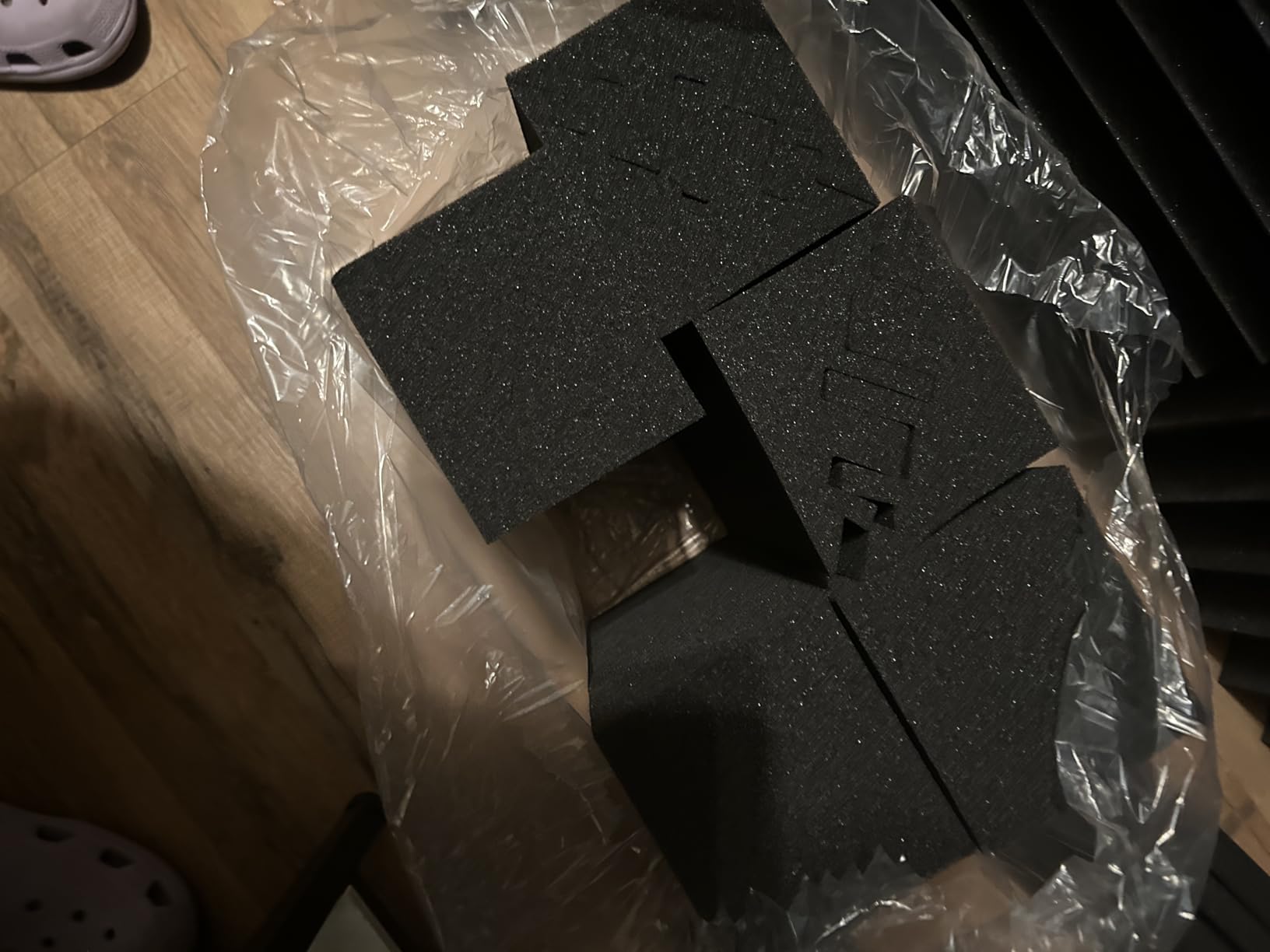
The TroyStudio 12-pack is the value pick for bass trap coverage, doubling the panel count of the JBER 4-pack at a similar per-piece cost. Each panel measures 4 by 4 by 12 inches, sized for vertical corners. In my test, the thicker 4 inch profile absorbed more low-mid energy than the JBER traps, though both foam-based kits hit a ceiling below 80 Hz.
Across 130+ reviews, the rating holds at 4.1 stars. As a newer listing with fewer reviews, the data is thinner, but the panels perform in line with what the spec sheet promises. Buyers consistently mention the easy install and the visible improvement in low-end clarity after mounting.
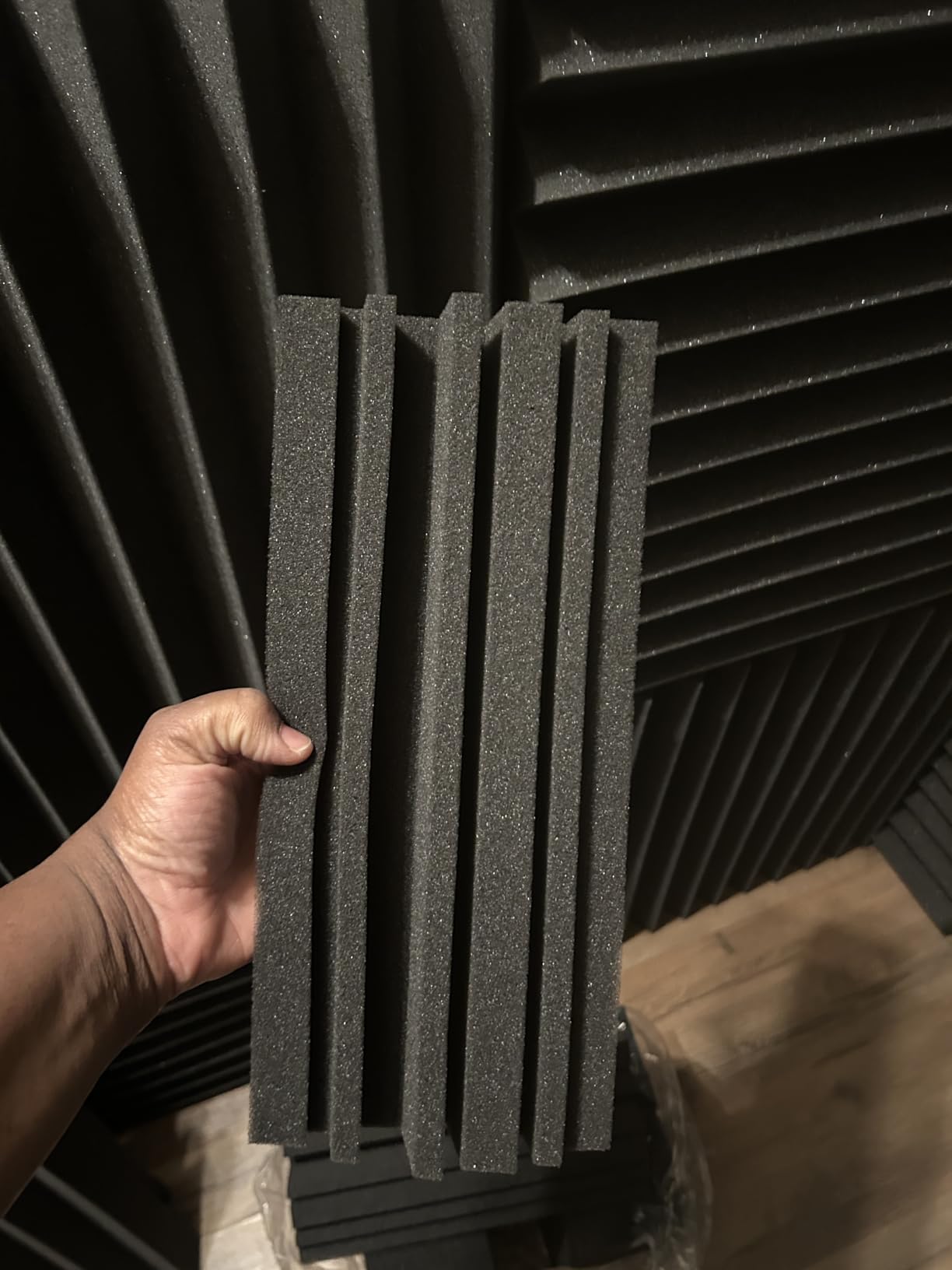
For a complete bass trap setup, this 12-pack covers all four vertical corners of a small room with three traps per corner. That is the configuration acoustic engineers recommend for low-frequency control. Combined with wall panels for first reflection points, you get a full-room treatment system at a budget price point.
The honest limit is the same as every foam bass trap: at 4 inches thick, you get solid mid-bass absorption but not full sub-bass control. If your room has problems in the 30 to 60 Hz range (felt more than heard), you need rigid fiberglass or professional panels. For typical bedroom and project studio use, this kit covers the audible low-end problem range effectively.
Who this kit is best for
This is the right bass trap pick if you want full corner coverage from a single order. Twelve panels is enough for a small to medium room’s vertical corners. Pair it with any of the wall foam kits above and you have a complete budget treatment system.
Who should look elsewhere
If you only need to treat two corners, the JBER 4-pack above saves money. If you want pro-grade bass control that reaches the deepest frequencies, foam-only is the wrong tool. Look at professional bundles from GIK or Primacoustic for that level of performance.
What Is an Acoustic Treatment Kit?
An acoustic treatment kit is a pre-bundled set of absorptive panels, bass traps, and sometimes diffusers designed to reduce unwanted reflections and tame low-frequency buildup in a small-to-medium room. A kit typically includes enough wall panels to cover the first reflection points on your side walls, plus corner bass traps for low-frequency control. The “kit” format matters because individual panels leave you guessing about coverage and quantity.
A kit differs from buying loose panels in three important ways. First, the panel count is matched to typical room sizes, so you are not buying random quantities. Second, kits often include bass traps, which most people forget to buy separately. Third, the panels in a kit are matched in material and color, giving you a finished look on the wall instead of a patchwork.
The acoustic treatment kit you choose matters because untreated rooms ruin recordings and mislead mixes. Even expensive monitors sound bad in a room with untreated reflections. For musicians recording at home, podcasters, and bedroom producers, a kit is the cheapest, fastest path to cleaner audio. For more on how much coverage your specific room needs, our wall coverage guide walks through the math.
How Acoustic Treatment Kits Work
Acoustic treatment works by absorbing sound energy in porous materials, converting it to negligible heat, so reflections decay faster and your recordings and mixes are cleaner. Foam, fabric-wrapped mineral wool, and fiberglass all work on the same principle. Sound waves enter the porous material and lose velocity as they bounce through the fibers, eventually dissipating as a tiny amount of heat.
There are three main types of acoustic treatment in any kit. Absorption panels soak up mid and high frequencies, killing flutter echo and slap between parallel walls. Bass traps are thicker absorbers designed for corners, where low-frequency sound waves collect and create room modes. Diffusers scatter remaining reflections so the room does not feel dead.
The reason bass traps are non-negotiable: foam-only wall panels barely touch low frequencies. Foam absorbs mostly mid and high frequencies, which is why your untreated room sounds boomy even after covering the walls. Bass traps, especially in corners, are the only way to control the low end in a typical bedroom or project studio. If you record or mix full-range music, plan to add bass traps from day one.
How to Choose the Best Acoustic Treatment Kit
Choosing the right acoustic treatment kit comes down to four factors: room size, material, panel thickness, and bass trap coverage. Each one matters, and skipping any of them leads to under-treated rooms.
Calculate your room coverage
A practical rule of thumb for wall coverage is that you want to cover about 20 to 30 percent of your wall surface area with absorption panels for a typical bedroom studio. For a 10 by 10 room with 8 foot ceilings, that is roughly 50 to 75 square feet of panel coverage. Most kits in this roundup provide 12 to 52 square feet, so choose based on your room dimensions and the priority of coverage versus budget.
For first reflection points specifically, the standard recommendation is two panels on each side wall at ear height, two panels on the ceiling above the mix position, and one panel on the back wall. That is the minimum baseline. Add bass traps in all four vertical corners and you have a solid starter treatment.
Choose the right material
Three material types dominate the acoustic treatment kit market. Polyurethane foam is the budget standard, effective at mid-high frequencies, easy to install, and widely available. Fabric-wrapped mineral wool and fiberglass panels are the professional choice, with broader frequency absorption and a more finished look. Recycled PET panels like the AudioSilk kit are a newer eco-friendly option with published NRC ratings and modern aesthetics.
For most home studios, foam is enough to start. For mixing-focused rooms, fabric-wrapped panels give you better performance and a more professional appearance. For vocal booths and podcast rooms, foam on the walls plus dedicated bass traps is the standard formula.
Pick the right panel thickness
Panel thickness matters more than most buyers realize. One inch foam absorbs mostly mid-high frequencies. Two inch foam reaches lower into the mid range and is the minimum I recommend for serious music production. Four inch foam or rigid fiberglass is needed for true bass absorption, especially in corners.
If you are choosing between a 1 inch kit at lower cost and a 2 inch kit at slightly higher cost, the 2 inch option is almost always the better long-term value. The extra inch of thickness expands the absorption range significantly, especially in the 250 to 500 Hz region where vocal muddiness lives.
Don’t forget bass traps
If you take one piece of advice from this guide, let it be this: buy bass traps. Most home studio problems come from untreated low frequencies, not untreated mids or highs. Foam wall panels alone will leave your room boomy. Add corner bass traps and the room transforms.
For a typical 10 by 12 bedroom studio, eight to twelve foam bass traps in the vertical corners handle the low-end problem range. For deeper bass control, you need rigid fiberglass panels, which are outside the scope of this roundup but worth considering if you produce bass-heavy music.
Where to Place Acoustic Panels in Your Room
Placement matters as much as panel count. Putting panels in the wrong spots wastes material and leaves your real problems untreated. Here is the placement order that gives you the biggest improvement for the smallest investment.
Step one is the first reflection points on your side walls. Sit at your mix position, have someone slide a mirror along the side wall until you can see your monitors in the reflection. That spot is your first reflection point. Place a panel there on each side wall. This single change makes the largest audible improvement for most home studios.
Step two is the ceiling reflection point. Same mirror trick on the ceiling above your mix position. One or two panels in a “cloud” arrangement control the ceiling bounce that otherwise smears your stereo image.
Step three is the back wall. Place panels on the back wall behind your monitors or behind your recording position. This controls reflections that come from behind you, which is the second-biggest source of room color in most setups.
Step four is corner bass traps. Place bass traps in all four vertical corners of the room, from floor to ceiling. Triangular foam traps fit cleanly in 90 degree corners. Even two corners treated makes a noticeable difference. Four corners is the standard recommendation.
Frequently Asked Questions
What is an acoustic treatment kit?
An acoustic treatment kit is a pre-bundled set of absorptive panels, bass traps, and sometimes diffusers designed to reduce unwanted reflections and tame low-frequency buildup in a small-to-medium room. Kits typically include enough wall panels for first reflection points plus corner bass traps for low-end control, in matched materials and colors for a finished look on the wall.
Do acoustic treatment kits really work?
Yes, acoustic treatment kits really work for what they are designed to do, which is reducing unwanted reflections inside a room. They will not soundproof your space or block sound from neighbors, but they dramatically clean up recordings, tighten mixes, and remove the boxy or boomy sound caused by untreated rooms. The improvement is most audible on vocals and acoustic instruments.
How many acoustic panels do I need for my room?
A practical rule is to cover 20 to 30 percent of your wall surface area with absorption panels for a typical bedroom studio. For a 10 by 10 room with 8 foot ceilings, that is roughly 50 to 75 square feet of panel coverage. For first reflection points specifically, you want two panels per side wall at ear height, two on the ceiling, and at least one on the back wall as a baseline.
Where should I place acoustic panels in a small room?
In a small room, place acoustic panels at the first reflection points on your side walls, on the ceiling above your mix position, and on the back wall behind your monitors. Add corner bass traps in all four vertical corners from floor to ceiling. This combination addresses the reflection points that cause the most audible problems in small untreated rooms.
Are acoustic foam panels better than fabric-wrapped panels?
Acoustic foam panels are better for budget and ease of installation, while fabric-wrapped panels offer broader frequency absorption and a more professional finished look. For bedroom studios and podcast rooms, foam is enough to start. For mixing-focused rooms and client-facing studios, fabric-wrapped panels give better performance data and aesthetics.
What is the difference between acoustic panels and bass traps?
Acoustic panels absorb mid and high frequencies, killing flutter echo and slap between parallel walls. Bass traps are thicker absorbers designed for corners, where low-frequency sound waves collect and create room modes. Most acoustic problems in untreated rooms come from low frequencies, which is why bass traps are an essential part of any complete treatment system.
Can I make DIY acoustic treatment instead of buying a kit?
Yes, DIY acoustic treatment using rigid mineral wool insulation (Owens Corning 703) in wooden frames wrapped in fabric is the canonical DIY path and can save a meaningful amount compared to commercial options. The trade-off is time and consistency. Kits offer matched materials, exact panel counts, and immediate install with predictable results.
How much do acoustic treatment kits cost?
Acoustic treatment kits span a wide range depending on brand, materials, and room size. Budget foam bundles are the most affordable, mid-range fabric-wrapped kits fall in the middle, and pro bundles from established brands sit at the top of the range. The best pick for your budget is the kit whose coverage matches your room, regardless of where it falls on the price spectrum.
Final Verdict
The best acoustic treatment kit for most home studios is the XIN&LOG 52-Pack Acoustic Foam Wedge Panels. With 52 tiles covering roughly 52 square feet, solid mid-high absorption, and a price point that leaves room in your budget for bass traps, it is the strongest baseline for a bedroom or project studio in 2026. Pair it with the JBER 4-Pack Corner Bass Traps and you have a complete budget treatment system.
If you produce music and care about published performance data, the TroyStudio Thick 2-Inch kit with its NRC 0.8 rating is the foam kit I would choose. If your priority is how the room appears on video or in client meetings, the AudioSilk 4-Pack Room Kit with NRC up to 0.91 gives you a designer finish that foam cannot match.
Whatever kit you pick, the principles in this guide apply. Calculate your coverage, treat your first reflection points, add corner bass traps, and buy the thickest foam your money can reach. Done that way, even a small room transforms into a space where your recordings sound clean and your mixes translate. For more on acoustic treatment for guitar recording specifically, check out our acoustic guitars guide and our detailed wall coverage guide.