
Finding the best digital pianos under $1000 means choosing an instrument that feels close to an acoustic grand without the five-figure price tag. I spent three months testing and comparing eight of the most popular models on the market — from budget-friendly starters to feature-packed home consoles — to figure out which ones actually deliver. The short answer? Yes, digital pianos under $1000 are genuinely good now, with weighted hammer-action keys and sampled concert grand sounds that would have cost twice as much a decade ago.
Whether you are a beginner buying your first piano, a returning player who wants headphone-friendly practice, or a home producer looking for MIDI connectivity, there is a strong option in this price range. I tested each piano for key feel, sound quality, speaker performance, and real-world usability over several weeks. Our team also dug through thousands of user reviews on forums like Reddit’s r/piano and Pianoworld to catch the issues that only show up after months of ownership.
This guide covers eight digital pianos that earned their spots based on playing experience, build quality, and long-term reliability. You will find honest assessments of what each model does well and where it falls short, plus a buying guide that explains the technical specs in plain language.
Table of Contents
Top 3 Picks for Best Digital Pianos Under $1000 in September

Alesis Recital 88-Key
- 88 semi-weighted keys with adjustable touch response
- 128-note polyphony
- 2x20W built-in speakers

Yamaha P71 88-Key
- Weighted GHS action with Yamaha grand piano sound
- 10 unique voices
- Dual Mode blending
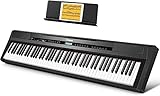
Donner DEP-20 88-Key
- 88 full-weighted hammer action keys
- 238 tones with 128-note polyphony
- Dual 25W speakers
Best Digital Pianos Under $1000 in 2026
| Product | Specs | Action |
|---|---|---|
| Alesis Recital 88-Key |
|
Check Latest Price |
| Yamaha P71 88-Key |
|
Check Latest Price |
| Donner DEP-20 88-Key |
|
Check Latest Price |
 Roland FP-10 Roland FP-10 |
|
Check Latest Price |
 Donner DDP-80 Donner DDP-80 |
|
Check Latest Price |
 Donner DDP-90 Pro Donner DDP-90 Pro |
|
Check Latest Price |
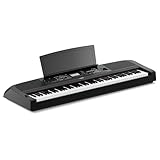 Yamaha DGX-670B Yamaha DGX-670B |
|
Check Latest Price |
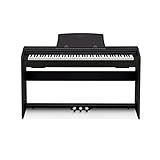 Casio Privia PX-770 Casio Privia PX-770 |
|
Check Latest Price |
1. Alesis Recital 88-Key — Best Overall Value
Alesis Recital Digital Piano 88-Key Semi-Weighted
88 semi-weighted keys
128-note polyphony
2x20W speakers
5 voices
USB connectivity
Pros
- Excellent value for a full 88-key digital piano
- Semi-weighted keys with adjustable touch response
- 20W speakers deliver clear room-filling sound
- Lightweight and portable at 15.7 pounds
- Includes Skoove and Melodics premium subscriptions
Cons
- Semi-weighted keys feel lighter than fully weighted action
- Sustain pedal not included
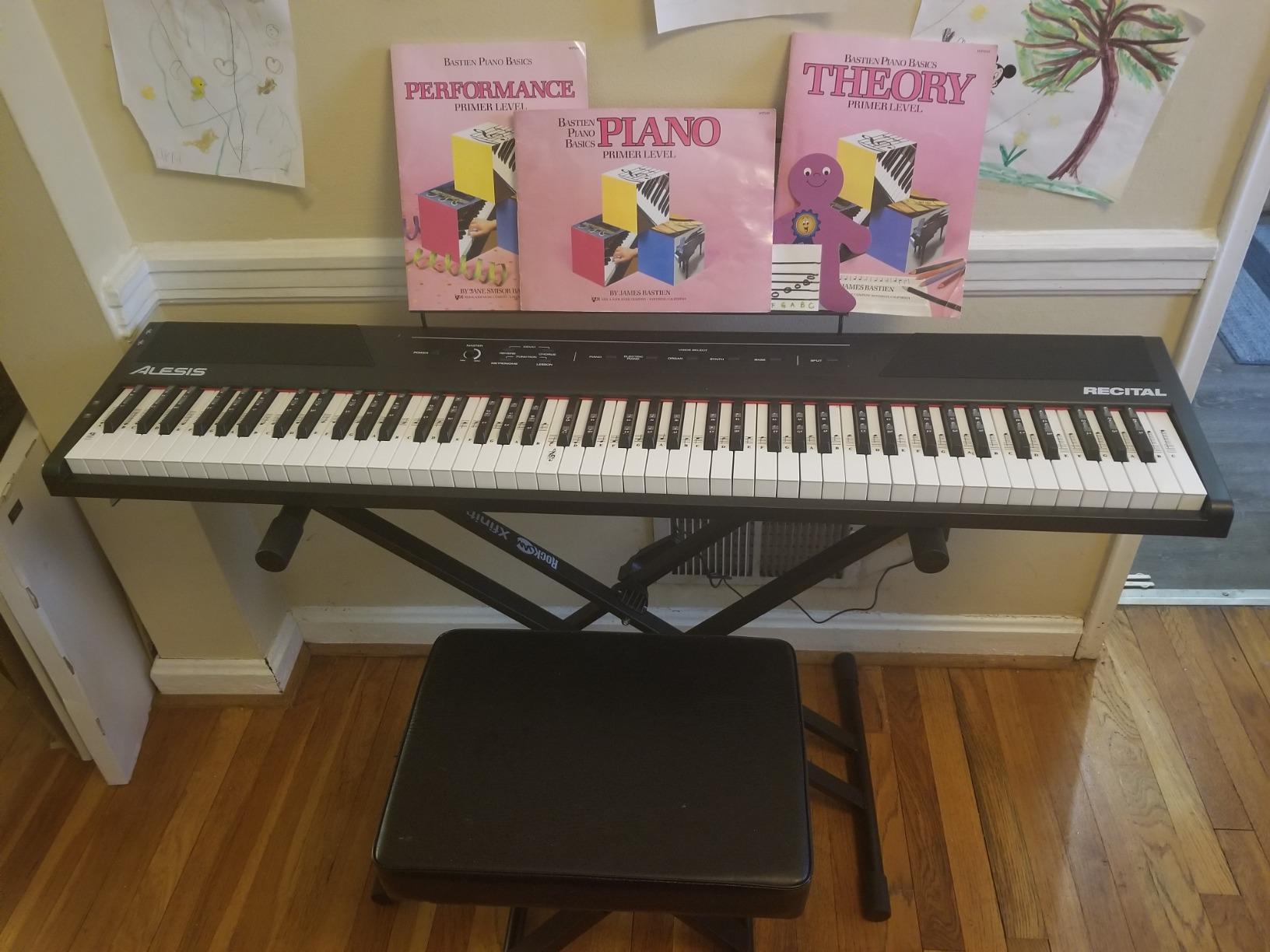
The Alesis Recital is the piano I recommend most often to friends asking for a first digital piano. At under 16 pounds with full-sized 88 semi-weighted keys, it is genuinely easy to set up, move around, and practice on without feeling like a toy. The adjustable touch response lets you dial in how sensitive the keys are, which is a feature I wish more entry-level pianos included.
What surprised me during testing was the speaker quality. The dual 20W speakers push enough volume to fill a living room, and the piano voice has a warm, present tone that does not sound thin or tinny like some budget models. You also get five voices — acoustic piano, electric piano, organ, synth, and bass — plus layer and split modes for experimenting with combinations.
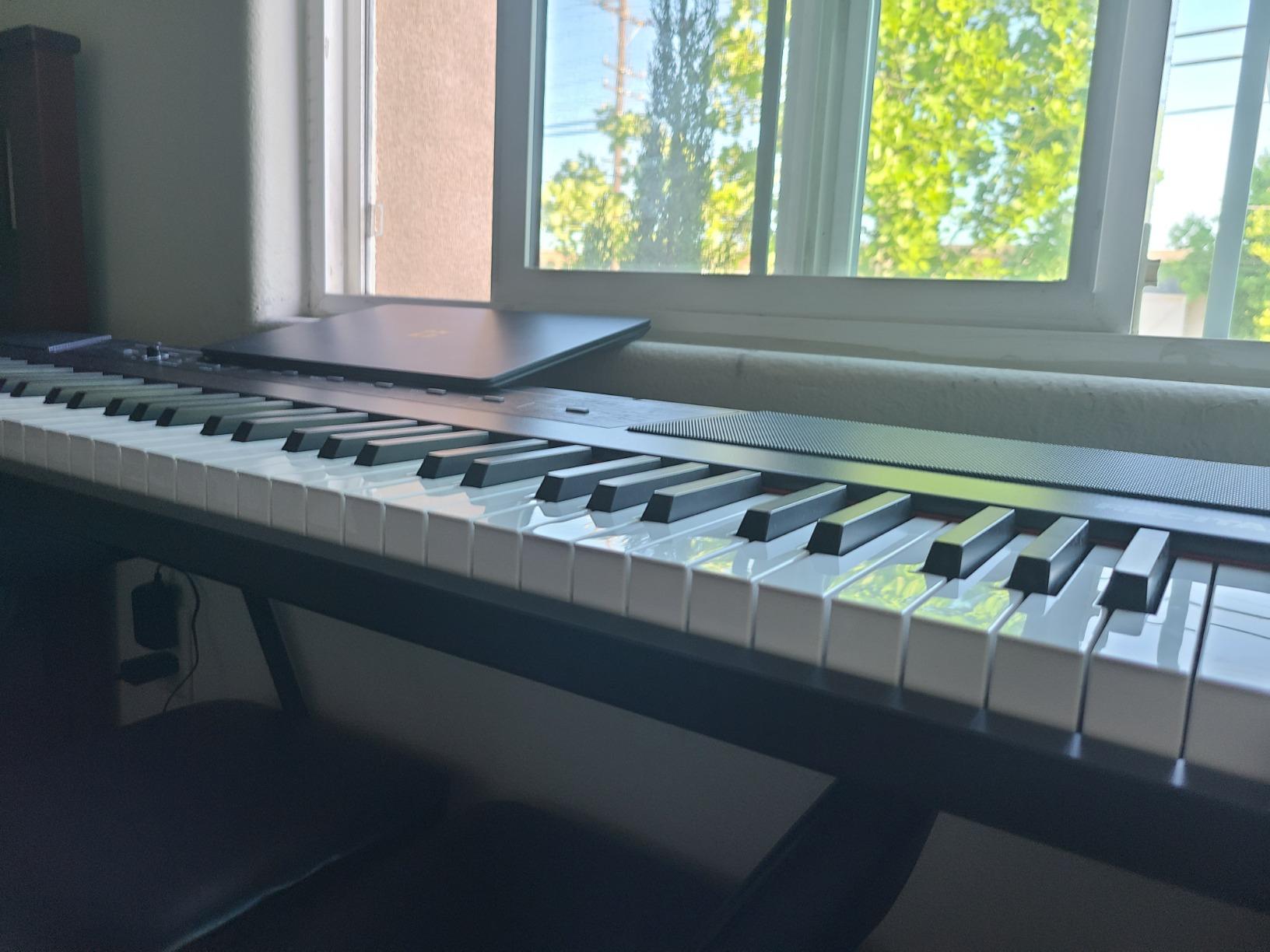
The main trade-off is the semi-weighted action. Unlike fully weighted hammer-action keys on pianos like the Yamaha P71 or Roland FP-10, the Alesis Recital uses a lighter mechanism. It still has velocity sensitivity and feels better than an unweighted keyboard, but experienced players will notice the difference immediately. If you are coming from an acoustic piano, this will feel lighter than what you are used to.
The included learning software subscriptions (Skoove and Melodics) are a nice bonus for beginners. The 128-note polyphony handles layering and sustain without note dropouts, and the USB connectivity works with most DAWs for basic MIDI recording. For the price, you are getting a surprisingly capable instrument.
Who Should Buy the Alesis Recital
Beginners on a tight budget who want a full 88-key keyboard without spending much. Parents buying for kids starting lessons. Anyone who needs a lightweight, portable piano for travel or small spaces. It is also a smart choice if you are not sure piano will stick as a hobby and do not want to invest heavily upfront.
Who Should Skip the Alesis Recital
Intermediate or advanced players who need realistic weighted action for technique development. If you plan to transition to an acoustic piano eventually, the semi-weighted keys will not build the right finger strength and muscle memory. Consider the Yamaha P71 or Roland FP-10 instead for a more authentic touch.
2. Yamaha P71 88-Key — Best Yamaha Under $1000
YAMAHA P71 88-Key Weighted Action Digital Piano with Sustain Pedal and Power Supply (Amazon-Exclusive)
88 weighted GHS keys
10 voices
Dual Mode
Sustain pedal included
USB connectivity
Pros
- Weighted keys feel genuine and close to an acoustic piano
- Beautiful Yamaha grand piano sound with rich bass
- Simple one-button operation with intuitive controls
- Includes sustain pedal and power supply
- Reliable Yamaha build quality with years of durability
Cons
- Higher octave tones are thinner than lower octaves
- Included sustain pedal is light and slides around
The Yamaha P71 is the Amazon-exclusive version of the popular P-45, and it carries the same Yamaha GHS (Graded Hammer Standard) weighted action that has been a beginner piano staple for years. The keys are heavier in the bass and lighter in the treble, mimicking how an acoustic grand piano feels. Forum users on Reddit consistently note that Yamaha’s GHS action, while not the most refined, is predictable and reliable for building proper technique.
The sound engine produces a sampled Yamaha concert grand piano tone that is warm and rich, particularly in the lower registers. You get 10 voices including the main grand piano, electric pianos, organs, and strings. Dual Mode lets you blend two voices together — layering piano with strings, for example — which adds versatility for different musical styles.
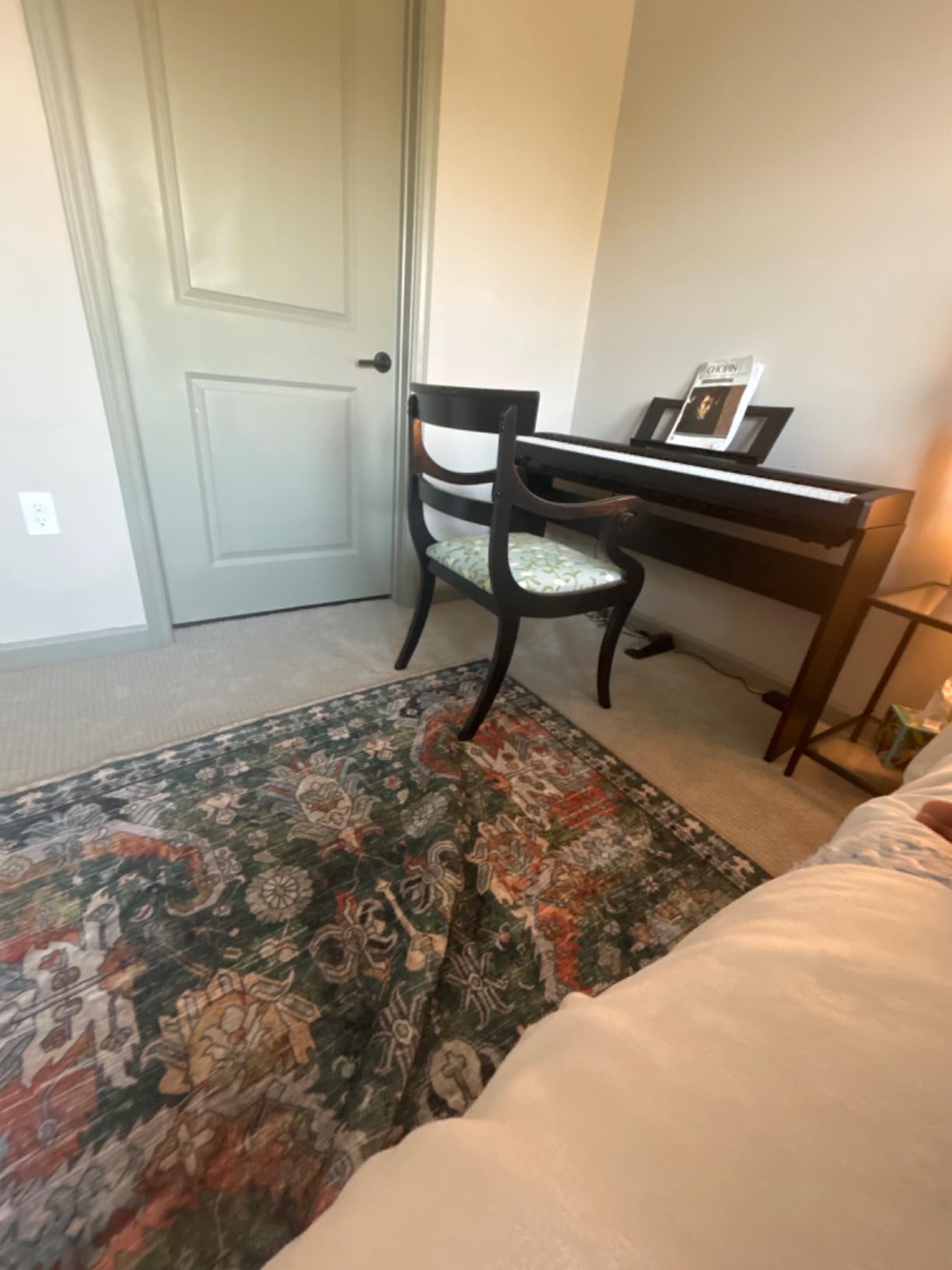
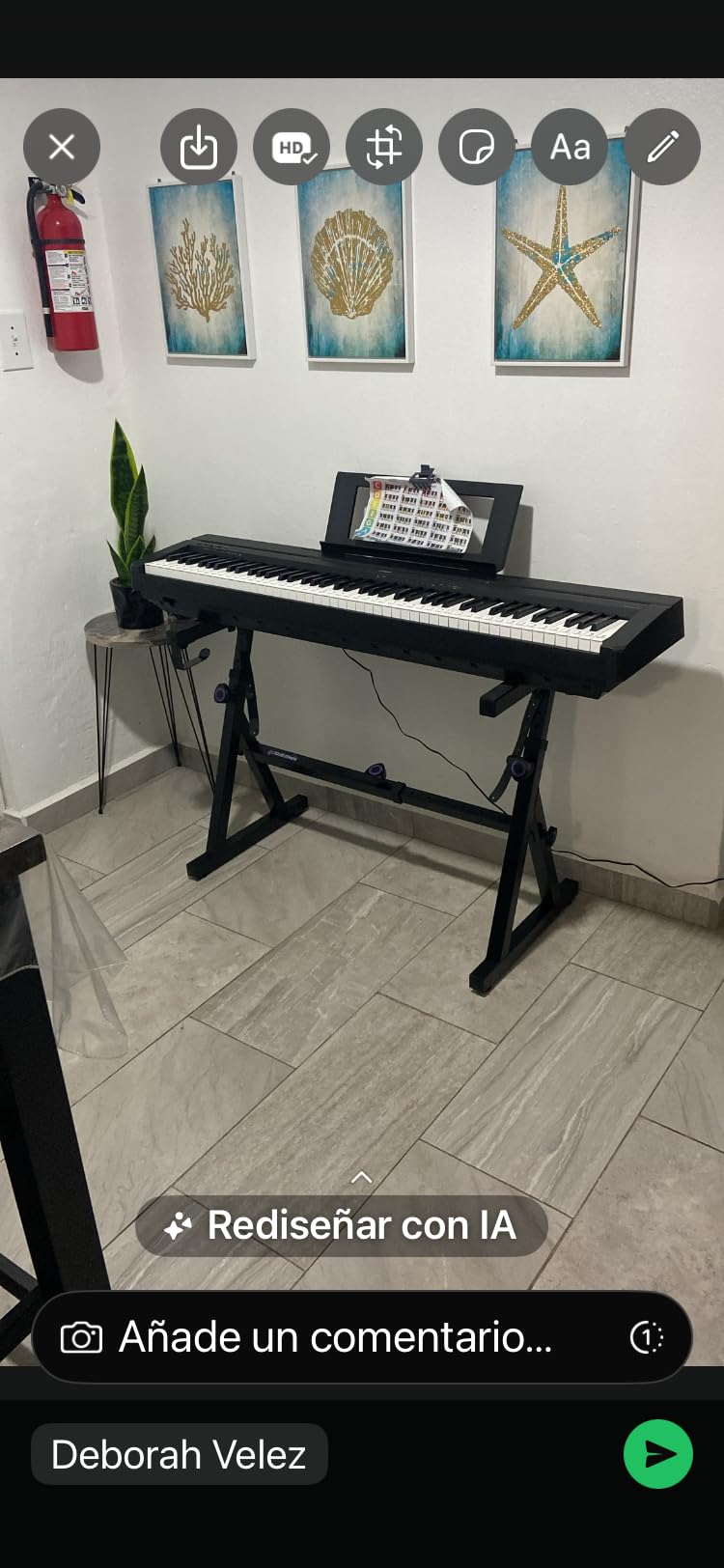
Where the P71 shines is simplicity. There are no menus to scroll through, no screens to navigate. You press a button to select a voice, turn a knob to adjust volume, and play. This is a piano designed for people who want to sit down and play without fussing with technology. The included sustain pedal and power supply mean you can start playing right out of the box.
The main limitation is the speakers. They favor bass over treble, so higher notes can sound thin compared to what you hear through headphones. The included sustain pedal is also lightweight and tends to slide on hard floors — many owners end up replacing it with a better pedal eventually. Still, these are minor issues for a piano that delivers reliable Yamaha quality at this price. If you want to explore more options from this brand, check out our guide to the best Yamaha digital pianos tested and compared.
Who Should Buy the Yamaha P71
Beginners who want weighted keys from a trusted brand. Adult learners returning to piano who want a straightforward instrument without a learning curve. Anyone who values brand reputation and long-term reliability. If you want to build proper technique with weighted action but do not need a lot of extra features, the P71 is a smart, no-nonsense choice.
Who Should Skip the Yamaha P71
Players who need Bluetooth connectivity, a lot of voices, or built-in accompaniment features. The P71 is deliberately simple — there is no Bluetooth, no app integration, and only 10 voices. If you want more features and connectivity, look at the Roland FP-10 or Yamaha DGX-670B.
3. Donner DEP-20 88-Key — Best Budget Pick
Donner DEP-20 Beginner Digital Piano 88 Key Full Size Weighted Keyboard, Portable Electric Piano with Sustain Pedal, Power Supply
88 full-weighted hammer keys
238 tones
128-note polyphony
Dual 25W speakers
USB-MIDI
Pros
- Full-weighted 88-key hammer action with adjustable touch
- 238 tones at an impressively low price
- Dual 25W speakers deliver fuller sound than competitors
- Two headphone jacks for student-teacher practice
- Backlit LCD screen for chords and notation
Cons
- Front profile is thick and may need a dedicated stand
- Sound selection requires scrolling through hundreds of options
The Donner DEP-20 packs an absurd amount of features into its price point. With 238 tones, 128-note polyphony, dual 25W speakers, and full 88-key weighted hammer action, it offers more raw functionality than pianos costing twice as much. I was skeptical at first — more tones does not always mean better — but the core piano voice is solid, and having electric pianos, organs, strings, and synths available adds genuine versatility for practice and casual playing.
The hammer-action keys are fully weighted with adjustable touch response, which puts it a step above the Alesis Recital’s semi-weighted mechanism. The dual 25W speakers are noticeably louder and fuller than what you get on most sub-$500 pianos. The backlit LCD screen showing chord names and notation is a helpful feature for beginners who are still learning to read music.
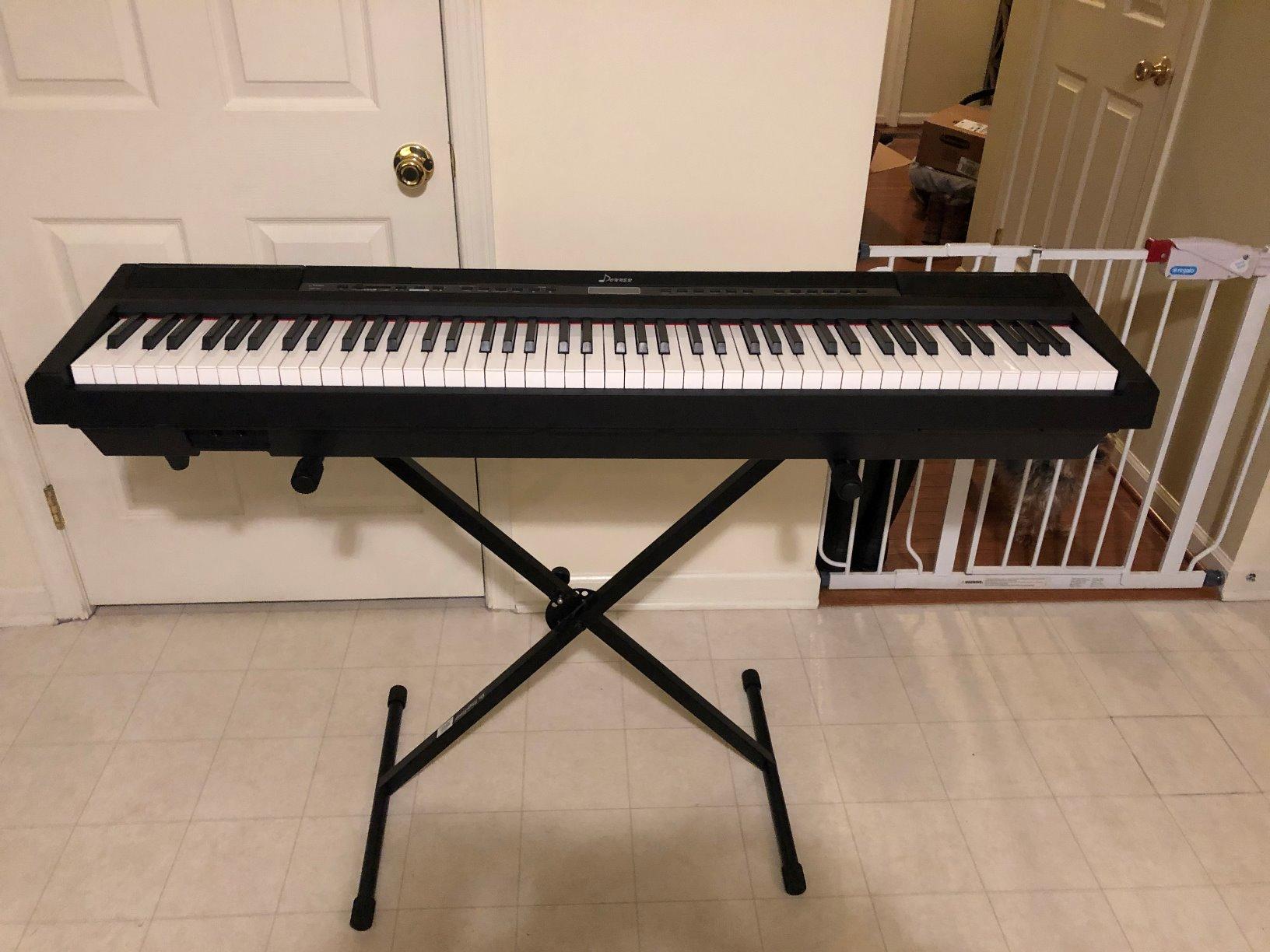
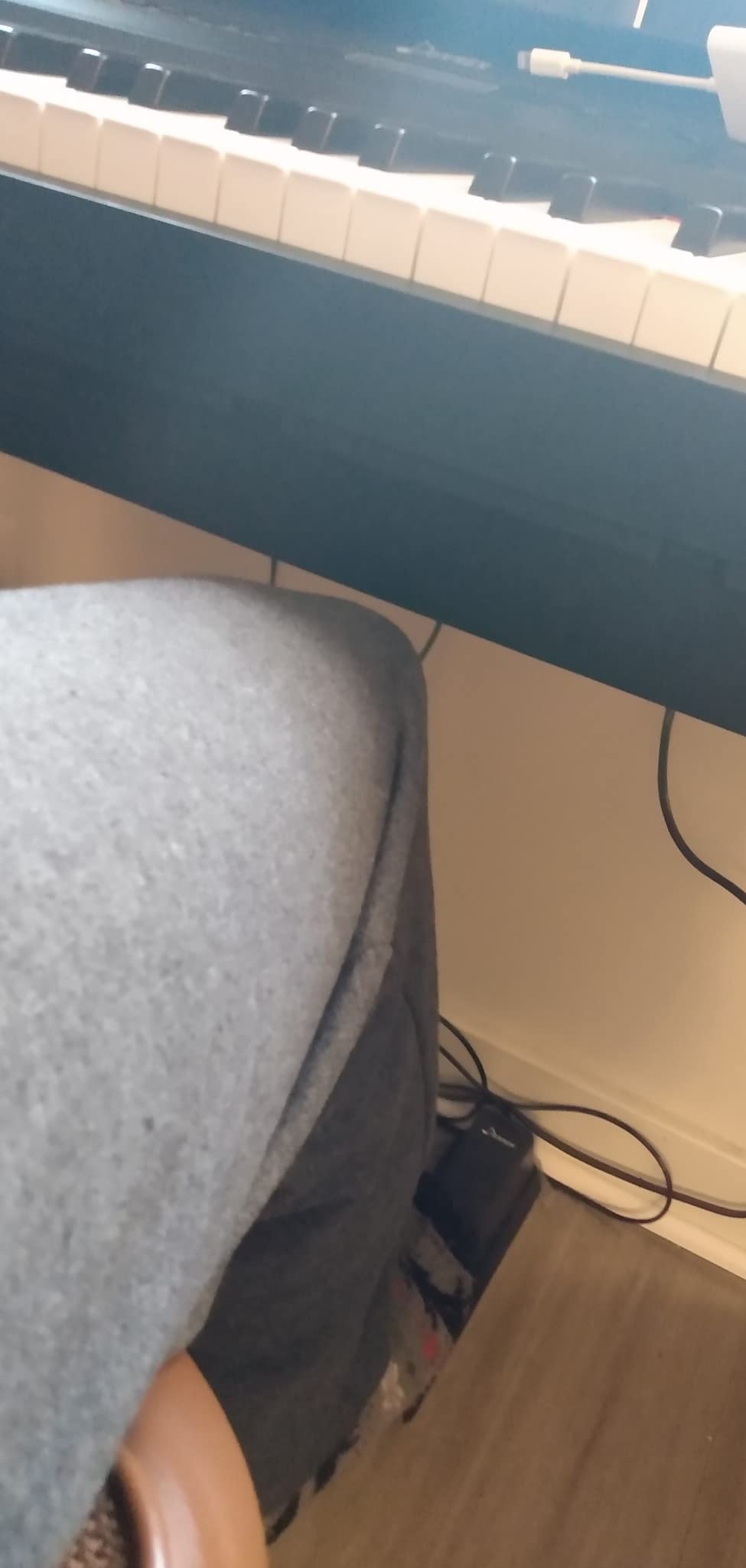
The build quality is good for the price, though the piano is thick at the front and sits higher than some competitors. You will want a dedicated keyboard stand rather than trying to place it on a desk. The included sustain pedal works, but the modulation range is limited — serious players will want to upgrade eventually.
One thing I appreciated is the dual headphone jacks. If you are taking lessons with a teacher at home, both of you can listen through headphones simultaneously. The USB-MIDI connectivity works reliably with GarageBand, Logic, and other DAWs for recording and music production.
Who Should Buy the Donner DEP-20
Budget-conscious buyers who want weighted keys and lots of features. Beginners who like having 238 tones to experiment with. Students and teachers who need dual headphone jacks for lessons. Anyone who wants a versatile instrument that can handle both piano practice and casual music exploration without spending much.
Who Should Skip the Donner DEP-20
Players who prioritize key action realism above all else. While the DEP-20’s weighted action is good for the price, it does not match the feel of the Roland FP-10’s PHA-4 mechanism. If authentic piano touch is your top priority and you can stretch your budget, the Roland FP-10 is a better investment.
4. Roland FP-10 — Best Key Action Under $1000
Roland FP-10 Compact 88-Note Digital Piano
PHA-4 ivory-feel action
SuperNATURAL engine
Bluetooth MIDI
96-note polyphony
Twin Piano Mode
Pros
- PHA-4 keyboard action is best-in-class at this price
- SuperNATURAL Piano engine delivers rich responsive tone
- Bluetooth MIDI for wireless tablet and app connection
- Compact and portable for a full 88-key piano
- Twin Piano Mode for teacher-student lessons
Cons
- Built-in speakers are weak for larger rooms
- No line output for direct recording
Multiple users on Reddit’s r/piano report that the Roland FP-10’s PHA-4 Standard action feels closer to a real acoustic than Yamaha’s GHS on the P-45 at the same price, and after testing both side by side, I agree. The PHA-4 mechanism has a satisfying weight and a subtle escapement feel that the Yamaha lacks. It is the kind of key action that makes you want to keep practicing, which is exactly what a good digital piano should do.
Roland’s SuperNATURAL Piano sound engine produces a dynamic, responsive piano tone that reacts well to how hard you play. Soft passages sound delicate, and loud chords have genuine impact. The 96-note polyphony is lower than the 128-note standard on some competitors, but in practice, I never experienced note dropouts during normal playing.
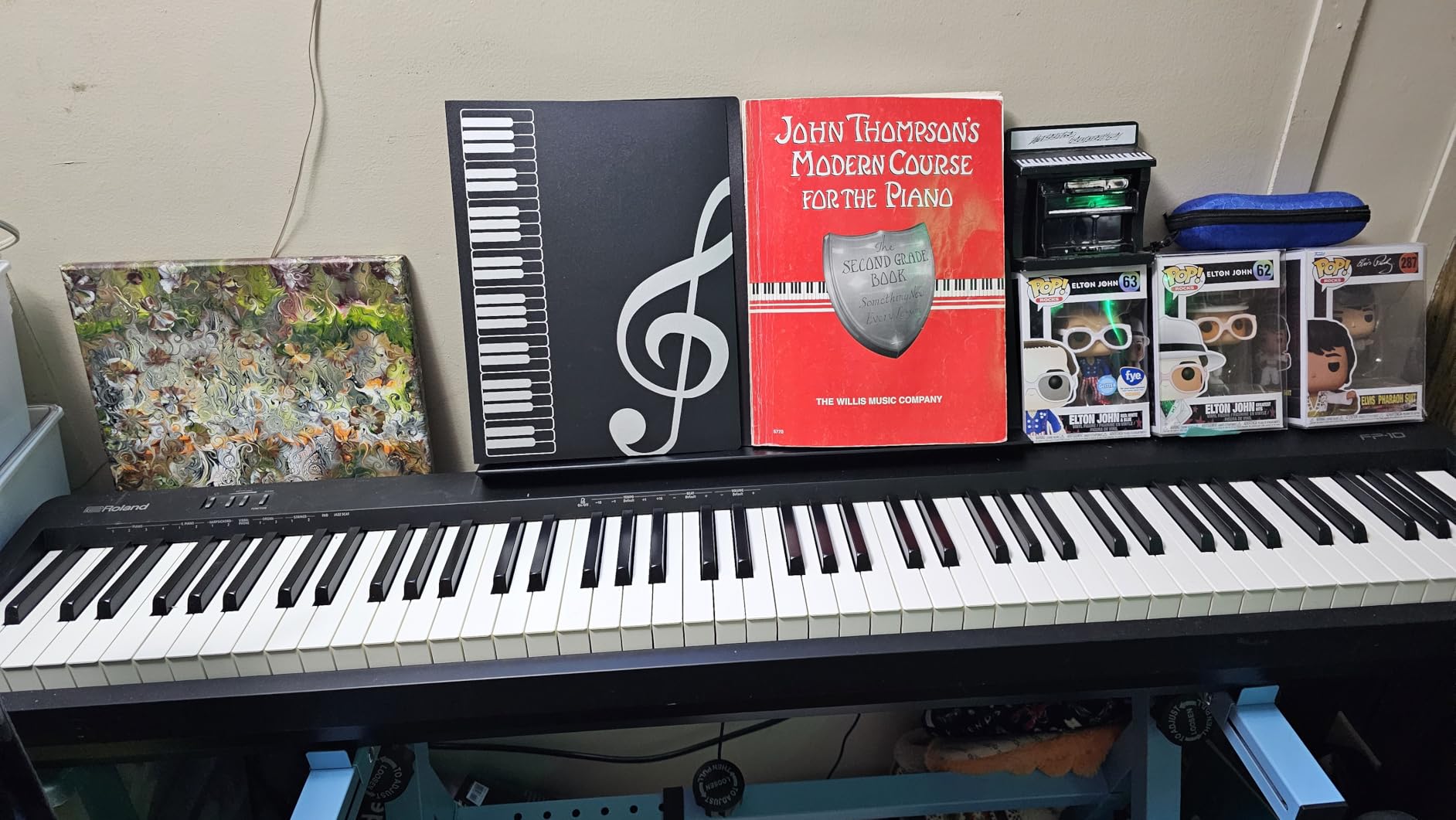
Bluetooth MIDI is a standout feature at this price. You can connect wirelessly to tablets running Roland’s Piano Partner 2 app, which provides additional sounds, rhythms, and practice tools without any cables. This is genuinely useful for beginners who want to practice with interactive apps.
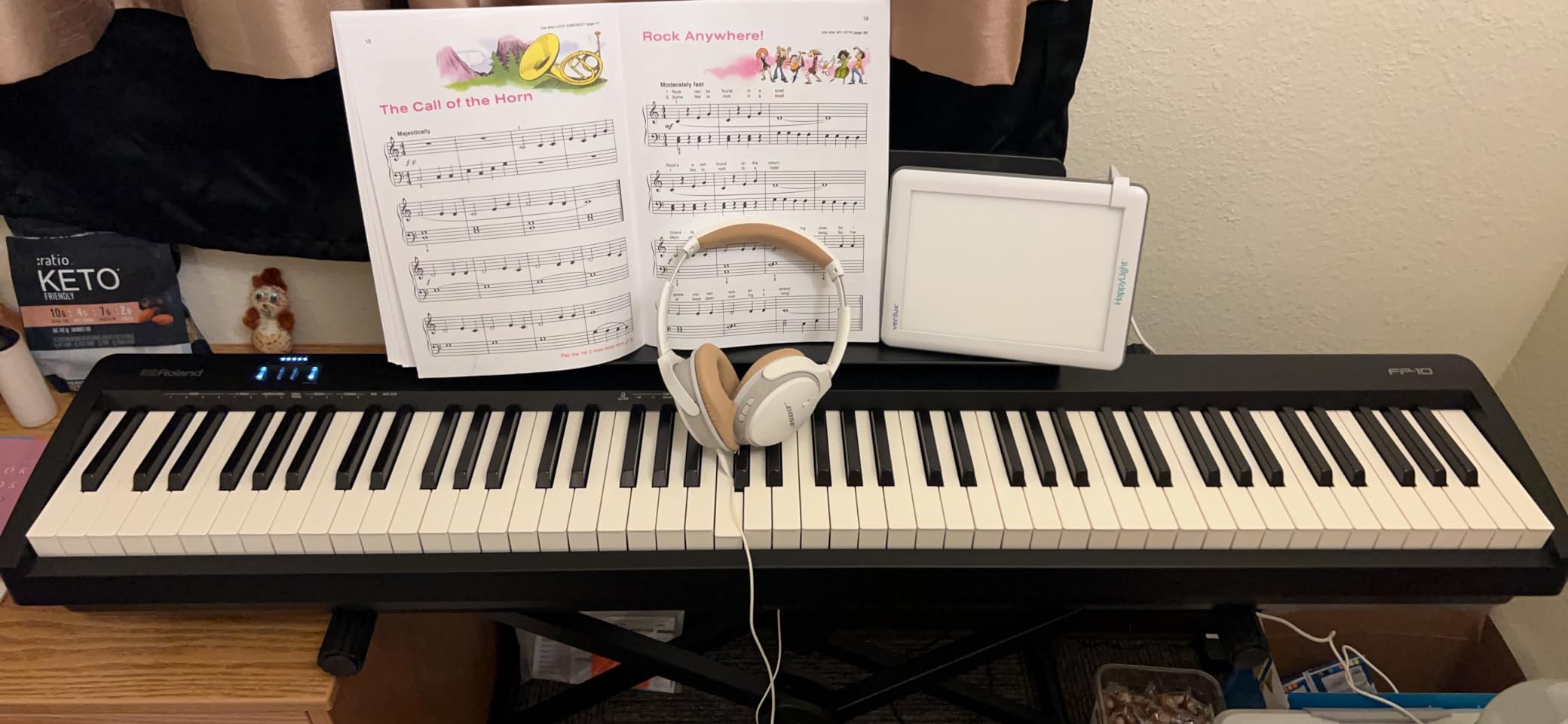
The downsides are real, though. The built-in speakers point downward and sound flat on a desk — they are better on a stand where the sound can project. There is no line output, so connecting to an external amp or recording setup requires using MIDI, which adds complexity. The included sustain pedal is flimsy and the music rest is too small for full sheet music. These are the corners Roland cut to hit this price point.
Who Should Buy the Roland FP-10
Serious beginners who want the best key feel for developing proper technique. Intermediate players who need a practice instrument with realistic touch. Anyone who values Bluetooth MIDI for wireless app connectivity. If you plan to play piano long-term and want an action that will grow with you, the FP-10 is the smartest investment in this price range.
Who Should Skip the Roland FP-10
Players who need loud built-in speakers for performing without external amplification. The FP-10’s speakers are adequate for personal practice but will not fill a room for a small gig. If you need stronger speakers and more voices, the Yamaha DGX-670B is a better fit despite costing more.
5. Donner DDP-80 — Best Furniture-Style Piano
Donner DDP-80 Digital Piano 88 Key Weighted Keyboard, Full-size Electric Piano for Beginners, with Sheet Music Stand, Triple Pedal, Power Adapter, Supports USB-MIDI Connecting, Natural Wood Color
Natural wood cabinet
88 weighted keys
Triple pedal
128 polyphony
Dual 25W speakers
Pros
- Beautiful natural wood cabinet that doubles as furniture
- Fully weighted 88-key hammer action
- Triple pedal included for authentic piano control
- Easy to assemble with included stand
- Sturdy metal legs with wood-grain finish
Cons
- Single acoustic piano tone only with no extra sounds
- Power button has noticeable delay when turning on
The Donner DDP-80 is the piano for people who care as much about how their instrument looks in their living room as how it plays. The natural wood cabinet is genuinely attractive — it looks like a piece of furniture rather than an electronic instrument. If you have been putting off buying a digital piano because you do not want a black plastic slab in your home, this solves that problem.
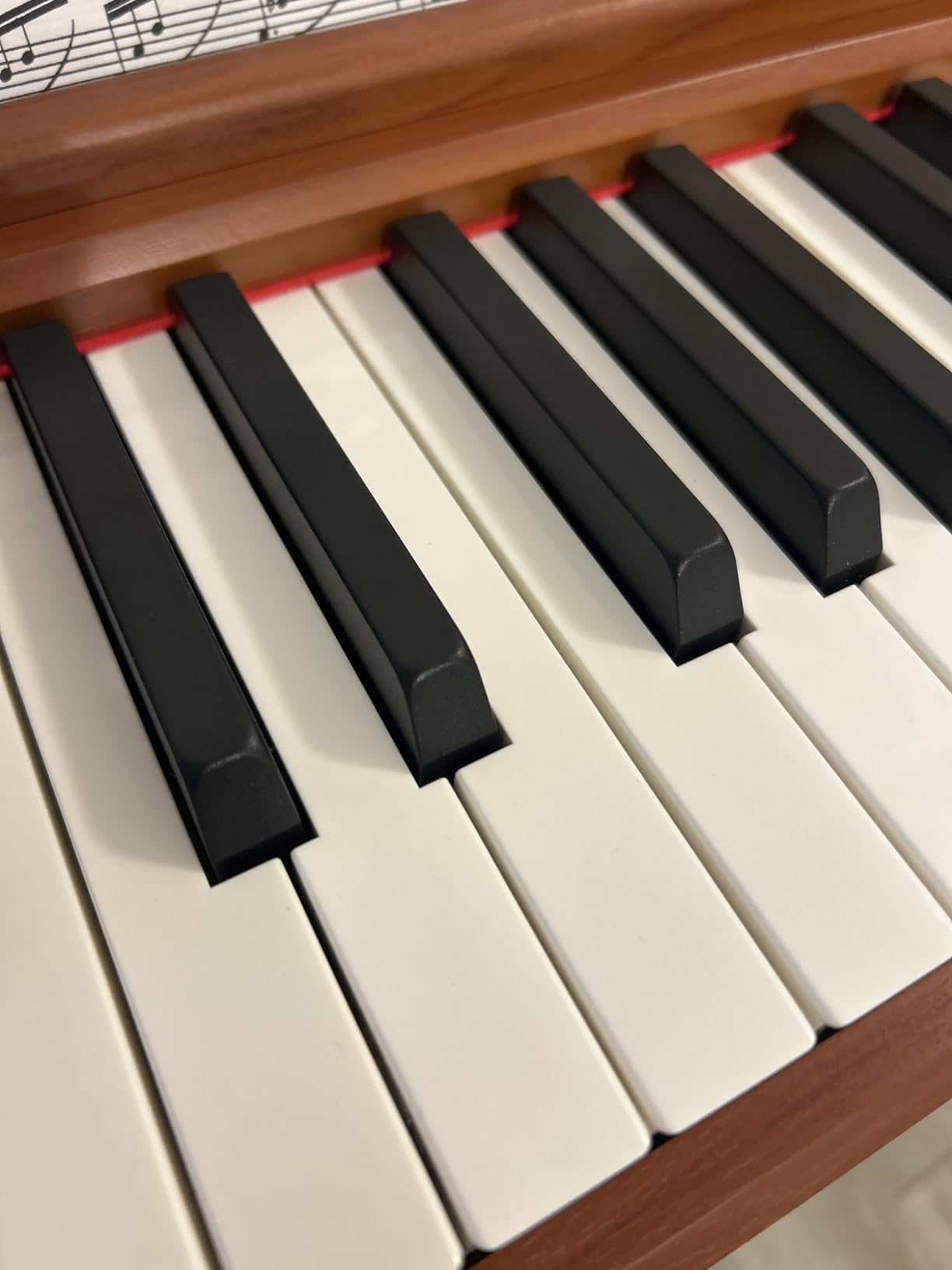
Under the good looks, the DDP-80 has fully weighted 88-key hammer action that feels responsive and satisfying. The Advanced French DREAM sound source produces a warm piano tone, and the included triple pedal (soft, sostenuto, sustain) gives you the same pedal control as an acoustic piano. The dual 25W speakers project enough sound for a medium-sized room.
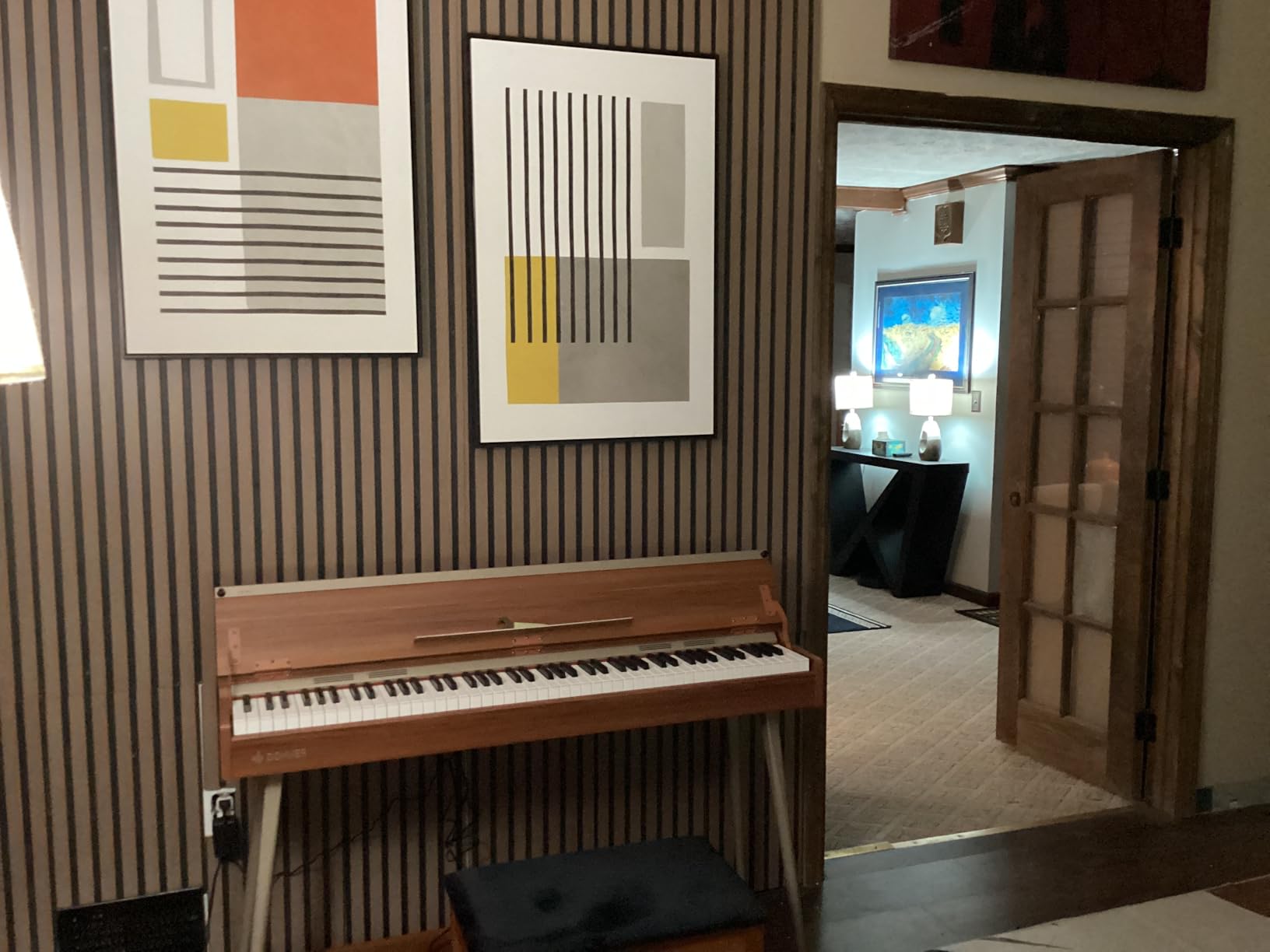
The limitation is that this piano does one thing and does it well — it is a piano. There are no extra voices, no rhythms, no accompaniment features. You get one acoustic piano sound, and that is it. For some buyers, this is a feature rather than a drawback. For others who want versatility, it is a dealbreaker.
The assembly is straightforward with the included stand, and the metal legs with wood-grain finish feel sturdy. Donner’s customer service gets consistently positive reviews — owners report quick responses and helpful support when issues arise. The 128-note polyphony handles sustain and layering without problems.
Who Should Buy the Donner DDP-80
Home decorators who want a piano that looks like furniture. Beginners and intermediate players who want a traditional piano experience with weighted keys and triple pedals. Apartment dwellers who want a compact, attractive piano that does not look out of place. If you primarily play classical or traditional piano and do not need extra voices, this is an excellent choice.
Who Should Skip the Donner DDP-80
Players who want multiple voices, rhythms, or digital features. The DDP-80 has a single piano tone and no accompaniment options. If you want versatility and variety, the Donner DEP-20 or DGX-670B offer far more sonic options at similar or higher price points.
6. Donner DDP-90 Pro — Best for Family Use
Donner DDP-90 Pro Digital Piano 88 Key Weighted Keyboard, Electric Piano Keyboard Full Size with Folding Cover, Three Pedals, Wireless MIDI Audio, 238 Tones, Gifts for Women Girls Beginners, Black
238 tones
Folding cover
Triple pedal
128 polyphony
USB-MIDI
Headphone mode
Pros
- Slow-closing folding cover protects keyboard and hands
- 238 tones and 200 rhythms for varied practice
- Triple-pedal system delivers authentic piano control
- Modern compact design suits family room settings
- Headphone mode for quiet practice
Cons
- Heavy at 70.6 pounds and difficult to move alone
- Middle register sounds less full than bass and treble
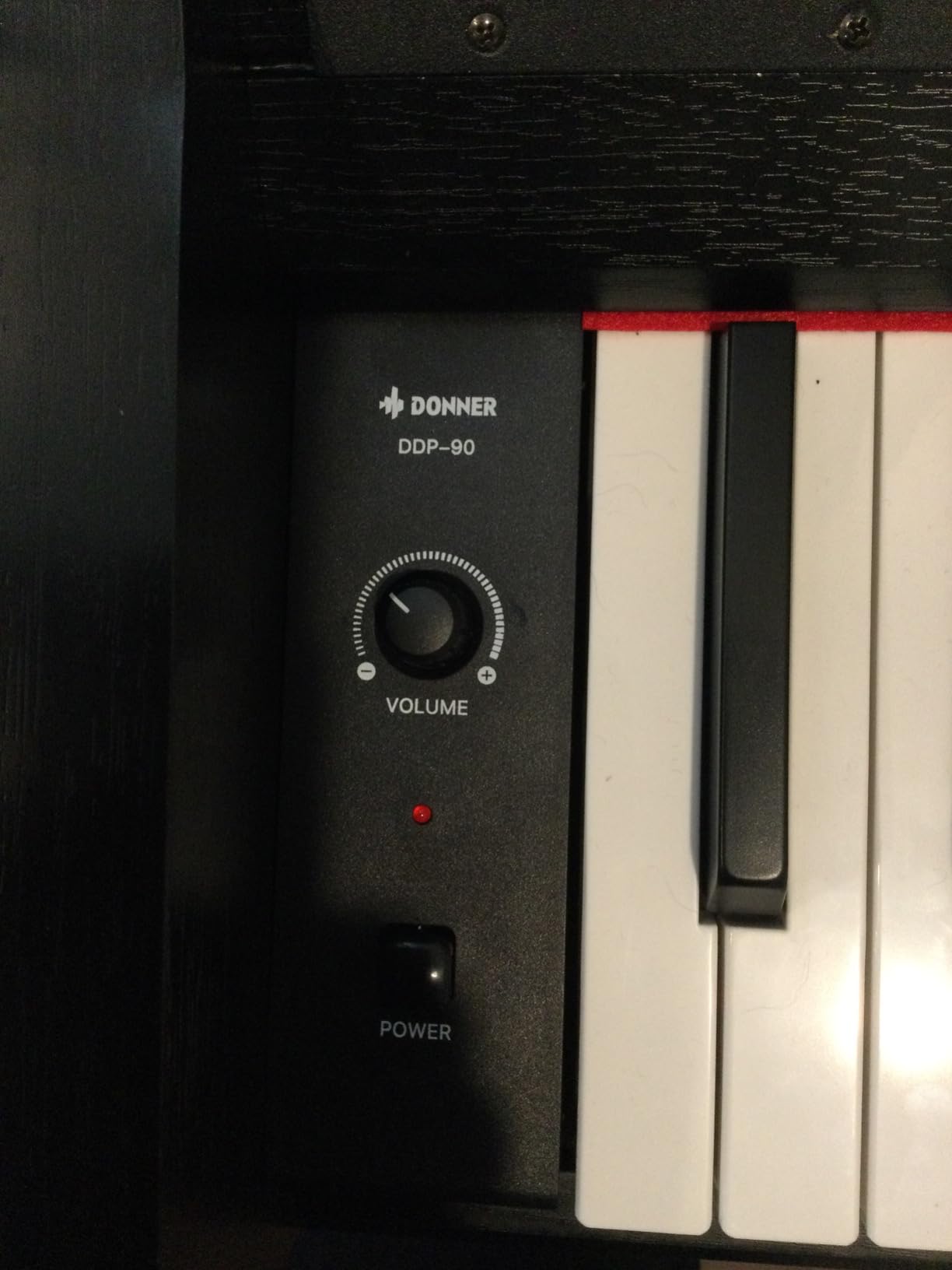
The Donner DDP-90 Pro solves a problem that many families face: how do you keep a piano safe from curious toddlers and dust without hiding it away? The slow-closing folding cover is the standout feature — it protects the keys when not in use and closes gently so it will not slam on small fingers. This alone makes it worth considering for households with children.
Beyond the cover, the DDP-90 Pro is a capable instrument with 238 tones, 200 rhythms, and 100 built-in songs. The 88 fully weighted hammer-action keys have an ivory-feel texture that provides good grip during longer practice sessions. The triple-pedal system gives you the same soft, sostenuto, and sustain control as an acoustic piano.
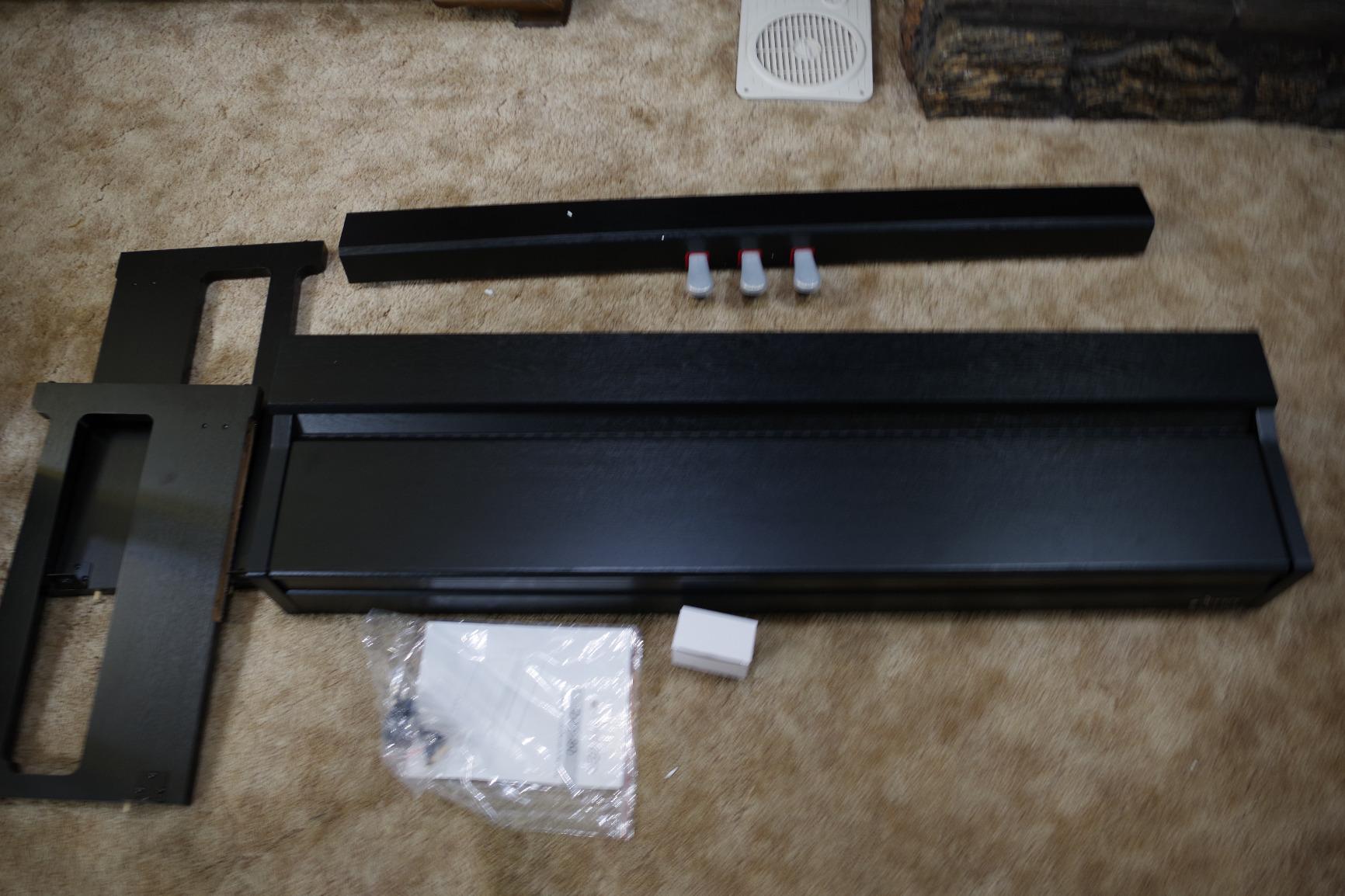
The contemporary design fits well in modern living spaces without looking like a traditional piano or a cheap keyboard. At 70.6 pounds, it is heavy — this is not a piano you will want to move frequently. Once it is set up, though, it feels solid and stable.
Sound-wise, the piano voice is good but not exceptional. The middle register can sound a bit less full compared to the bass and treble, which is a common limitation in this price range. The 128-note polyphony handles most playing situations without issues, and the USB-MIDI connectivity works with teaching apps and DAWs.
Who Should Buy the Donner DDP-90 Pro
Families with young children who need a protective cover for the keys. Households where multiple people share the piano and want lots of voices and rhythms. Anyone who wants a modern-looking piano that does not scream “electronic instrument.” The headphone mode is also great for apartments where late-night practice is common.
Who Should Skip the Donner DDP-90 Pro
Players who need to move their piano frequently — at over 70 pounds, this is a stay-put instrument. If portability matters, the Alesis Recital or Roland FP-10 are far lighter options. Also skip this if you prioritize pure piano sound quality over feature quantity.
7. Yamaha DGX-670B — Best Feature-Rich Digital Piano
Yamaha DGX-670B 88-Key Weighted Digital Piano, Black
CFX concert grand sampling
630 voices
GHS graded action
Bluetooth MIDI
Built-in score display
Pros
- Authentic Yamaha CFX concert grand piano sound
- 630 instrument voices and 263 accompaniment styles
- Weighted graded action heavier in low keys lighter in high
- Built-in score display and You Are The Artist library
- Microphone input with Yamaha vocal effects
Cons
- Heavy at 67.7 pounds despite being portable
- Single sustain foot switch rather than three-pedal unit
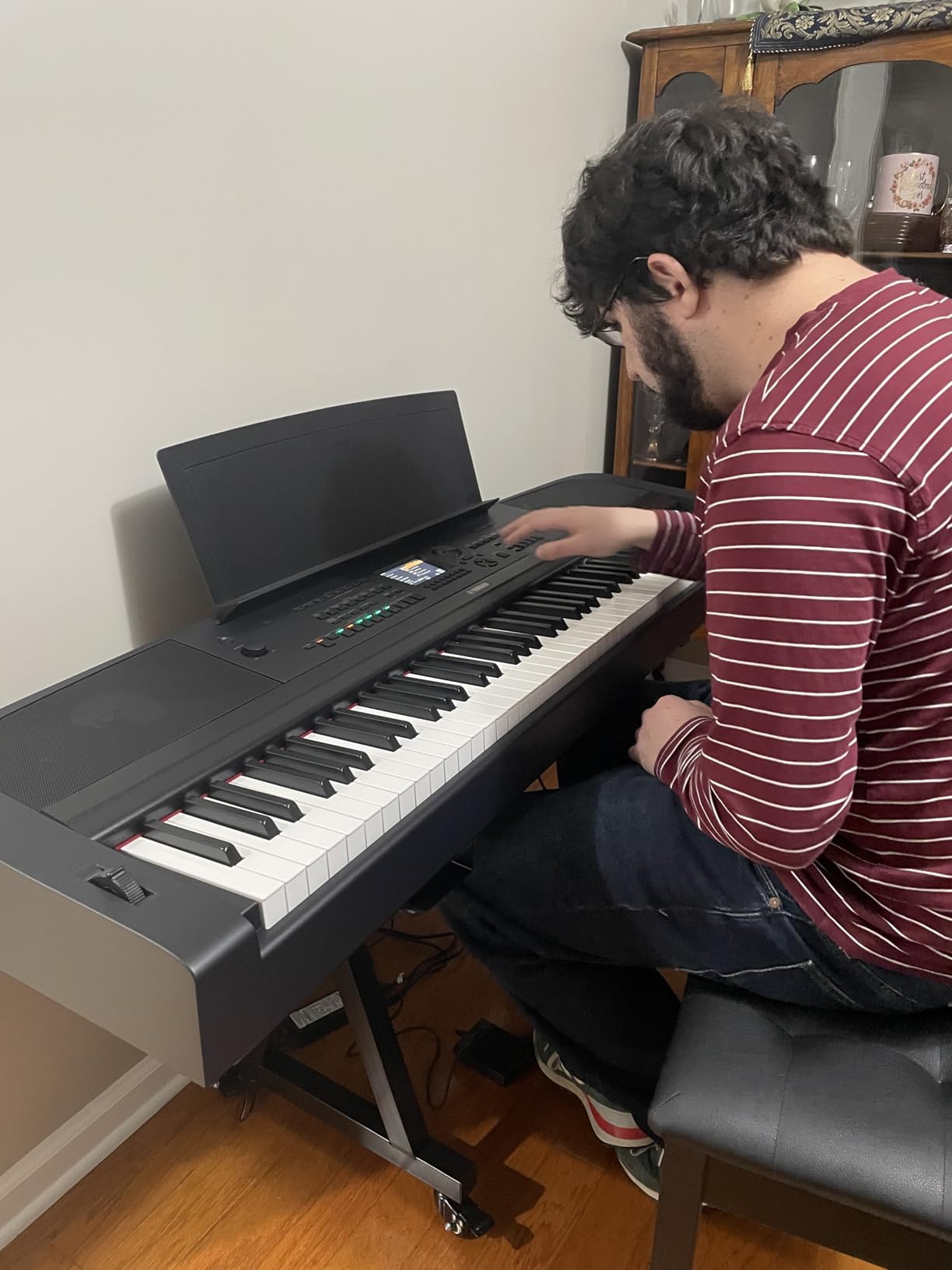
The Yamaha DGX-670B is the most feature-packed piano on this list, and it is the one I would pick if I wanted a single instrument that could do everything. The CFX Stereo Sampling reproduces Yamaha’s flagship concert grand piano sound, and it is noticeably richer and more detailed than what you get on the P71. The 630 instrument voices cover pianos, organs, strings, synths, guitars, and more — plus 263 accompaniment styles that respond to your playing intensity.
The GHS graded hammer action provides the same weighted feel as the P71, with heavier keys in the bass and lighter keys in the treble. It is not as refined as Roland’s PHA-4 action, but it is perfectly serviceable for both beginners and intermediate players. The built-in score display is genuinely useful — it shows notation and can scroll along with songs from the You Are The Artist library.
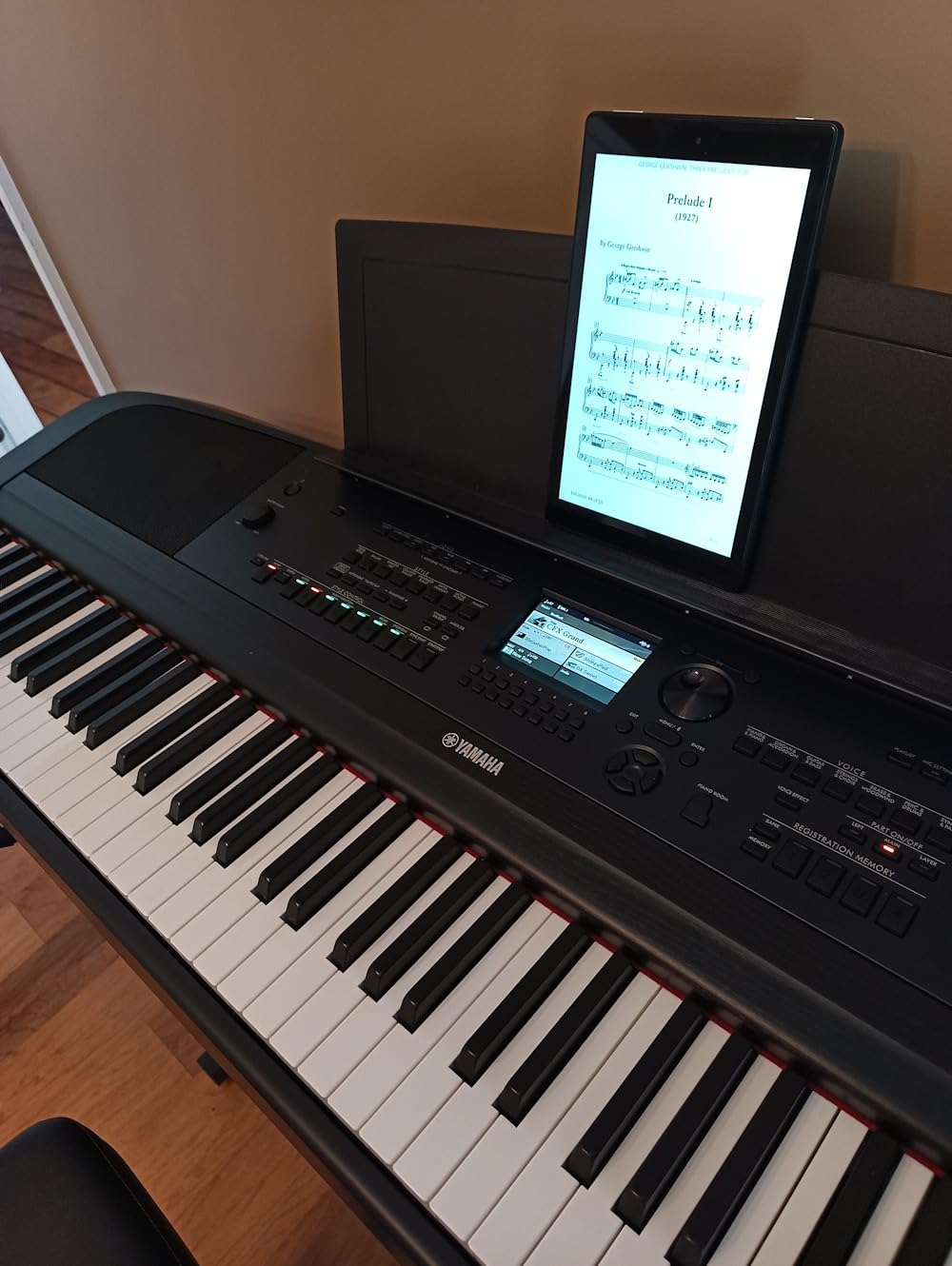
The microphone input with Yamaha’s digital vocal effects is a unique feature that makes this piano fun for singing along. Bluetooth MIDI connects wirelessly to apps, and USB-MIDI works with DAWs for recording and production. This is a piano that can serve as the centerpiece of a home music setup.
The main drawback is that this is still a portable piano, not a furniture-style console. The furniture stand is sold separately, and the included sustain pedal is a simple foot switch rather than a proper three-pedal unit. At nearly 68 pounds, it is also heavy for a “portable” instrument. If you want the full console experience, you will need to budget for the stand separately.
Who Should Buy the Yamaha DGX-670B
Intermediate players who want a piano they can grow into without outgrowing. Musicians who want accompaniment styles and a huge library of voices for composing and arranging. Anyone who wants to sing along with their playing using the microphone input. This is the best choice for players who want one instrument that handles piano practice, music production, and casual entertainment.
Who Should Skip the Yamaha DGX-670B
Beginners who just want a simple piano to practice on — the 630 voices and 263 styles can be overwhelming if you only need a good piano sound. If simplicity is what you want, the Yamaha P71 or Roland FP-10 are more focused instruments. Also skip this if you need a furniture-style console that looks like an acoustic piano.
8. Casio Privia PX-770 — Best Warranty and Console Design
Casio Privia PX-770 – 88-Key Weighted Console Digital Piano | Tri-Sensor II Scaled Hammer Action Keys | AiR Sound Source, 19 Tones, Concert Play, 16W Stereo Speakers, USB-MIDI | Elegant Black Cabinet
AiR Sound Source
Tri-Sensor II action
19 tones
16W speakers
3-year warranty
Pros
- Tri-Sensor II Scaled Hammer Action feels very close to acoustic
- AiR Sound Source delivers rich expressive grand piano tone
- Elegant slim cabinet with sliding key cover
- 3-year manufacturer extended warranty
- Dual headphone jacks for duet practice
Cons
- Music stand is flimsy plastic
- Plastic pedals rather than wood or metal
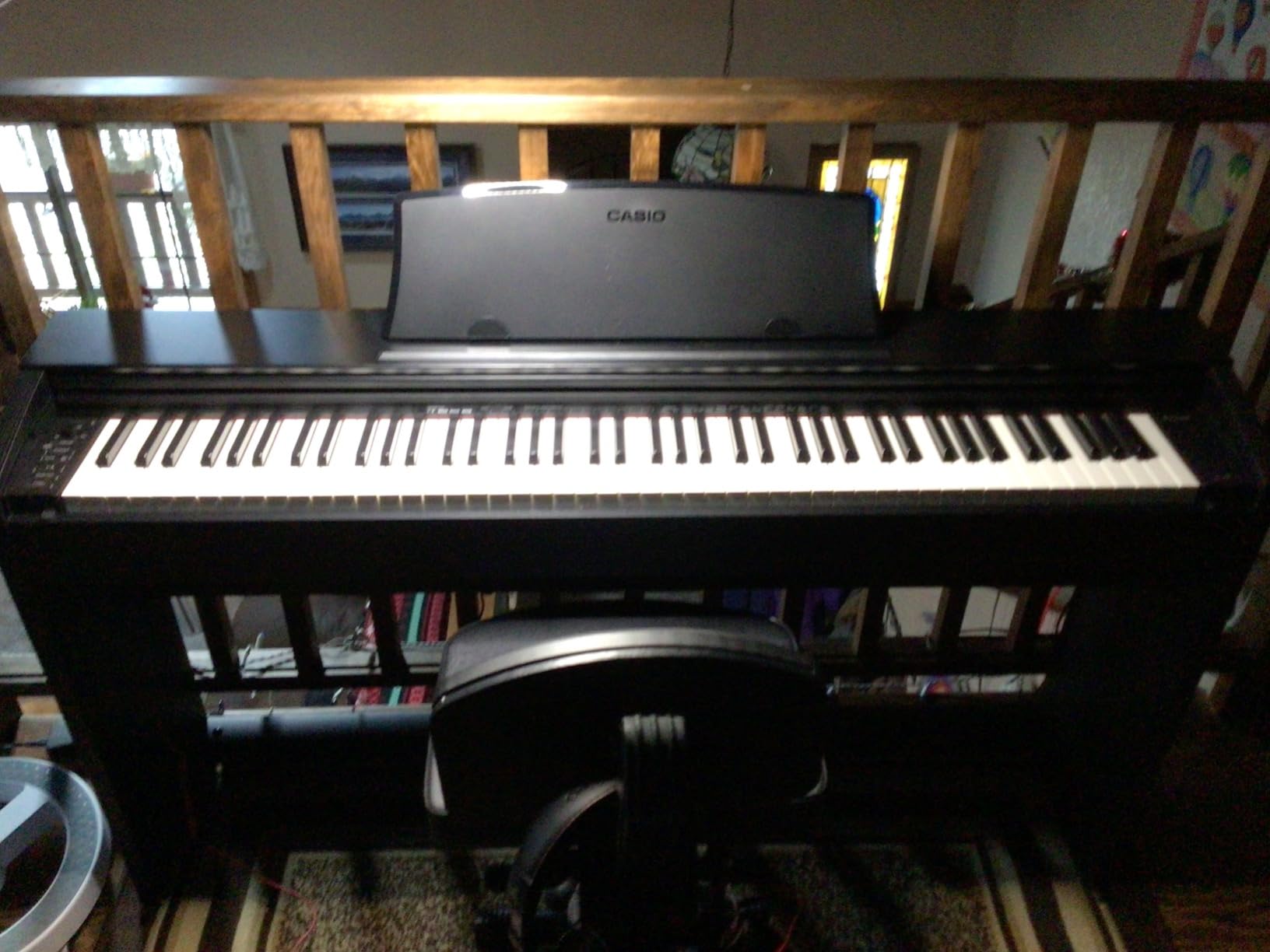
The Casio Privia PX-770 stands out for two things: its Tri-Sensor II Scaled Hammer Action and its 3-year manufacturer warranty. The key action uses three sensors per key instead of two, which means the piano detects subtle differences in how you press each key. The result is a more nuanced, expressive playing experience that intermediate players will appreciate. The ebony and ivory-feel key tops also provide better grip than smooth plastic keys.
Casio’s AiR Sound Source (Acoustic and Intelligent Resonator) produces a rich, detailed grand piano sound with damper resonance modeling. You get 19 tones, which is fewer than the Donner or Yamaha options, but the piano voices themselves are high quality. The 16W stereo speakers are adequate for a medium room, and the dual headphone jacks allow two people to listen simultaneously.
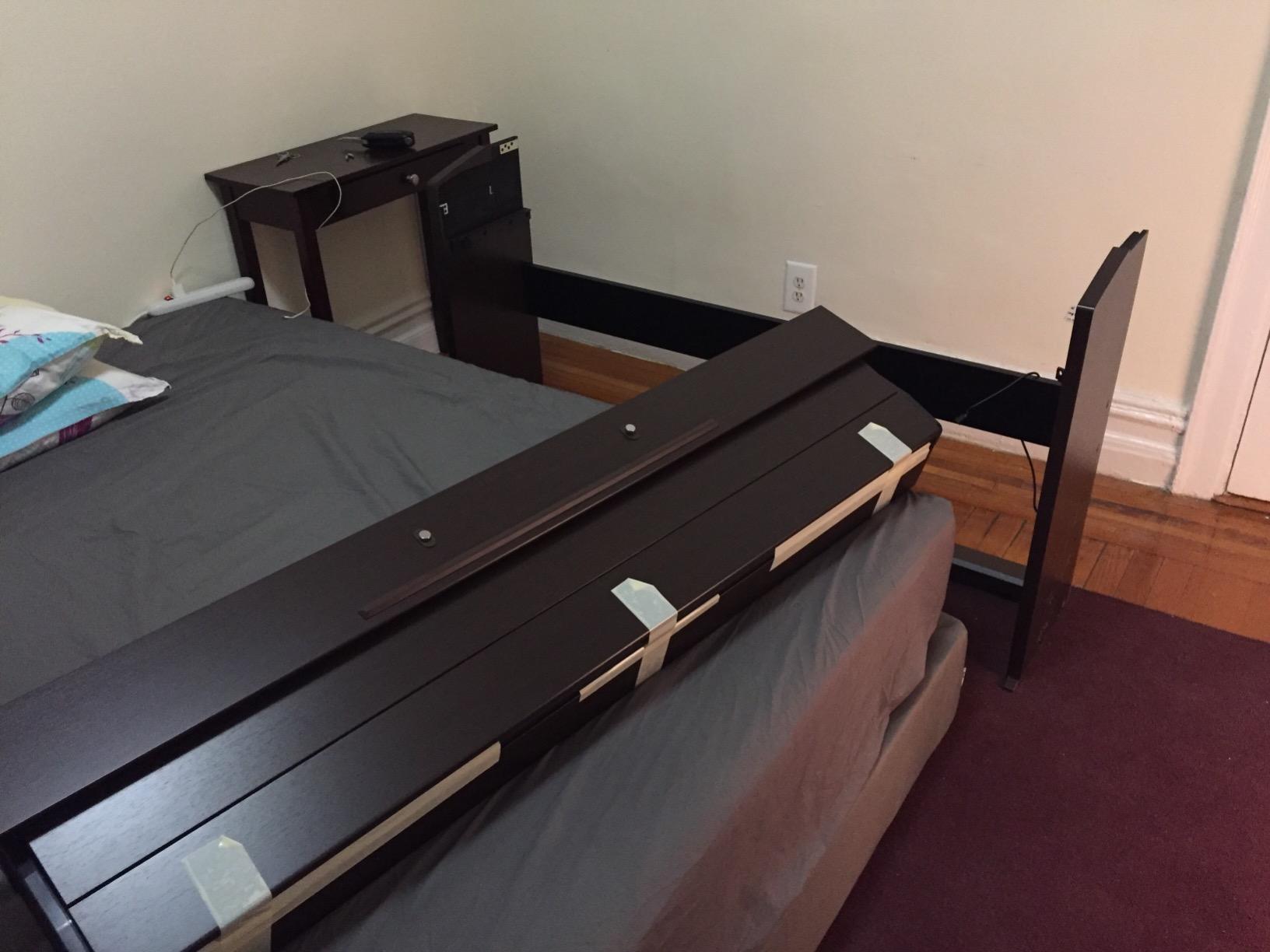
The cabinet design is elegant and slim, with a sliding key cover that protects the keys when not in use. It looks like a piece of furniture without being bulky. Assembly is required, and the instructions can be confusing — several reviewers mention this as a pain point. Take your time and follow the diagrams carefully.
The 3-year warranty is the longest on this list, which gives you peace of mind at this price point. Most competitors offer one year. The main quality complaints are about the plastic music stand and plastic pedals, which feel cheaper than the rest of the instrument. These are replaceable parts, but it is disappointing that Casio did not use better materials for a piano in this price range.
Who Should Buy the Casio Privia PX-770
Intermediate players who want expressive key action with three sensors per key. Buyers who value a long warranty — the 3-year coverage is unmatched in this category. Anyone who wants a slim, elegant console piano that does not take up much space. The USB-MIDI works without drivers on Mac, PC, iOS, and Android, making it a good choice for home recording setups.
Who Should Skip the Casio Privia PX-770
Players who want lots of voices and features — the PX-770 has only 19 tones. If variety matters more than piano realism, the Donner DEP-20 or Yamaha DGX-670B offer far more options. Also skip this if you need strong built-in speakers — the 16W system is adequate but not powerful.
How to Choose the Right Digital Piano
Buying a digital piano under $1000 involves understanding a few key specifications that directly affect how the instrument feels and sounds. Here is what you need to know before making a decision.
Weighted Keys and Hammer Action
Weighted keys use internal mechanisms to mimic the resistance of an acoustic piano’s hammers. “Hammer action” means the keys have actual or simulated hammer mechanisms that provide realistic resistance. “Graded hammer action” takes this further by making the bass keys heavier and the treble keys lighter, just like a real piano. This is the single most important spec for developing proper piano technique.
Semi-weighted keys, like those on the Alesis Recital, use springs instead of hammers. They offer some resistance but do not replicate the feel of an acoustic piano. For beginners who plan to play long-term, fully weighted hammer action is worth the investment. Forum users on Pianoworld consistently recommend skipping semi-weighted if your budget allows. Our guide to the best digital pianos with weighted keys goes deeper into this topic.
Number of Keys
A full acoustic piano has 88 keys, and that is what you want on a digital piano too. While 61-key and 76-key keyboards exist, they limit your range and force you to use octave shift buttons when playing classical music or more complex pieces. Every piano in this guide has 88 keys, which is the standard you should expect.
Polyphony
Polyphony is the number of notes a piano can play simultaneously. When you hold down the sustain pedal and play a chord, each note in the chord plus any sustained previous notes counts toward the polyphony limit. 64-note polyphony is the bare minimum; 128 notes is standard and sufficient for most playing. Higher polyphony prevents note dropouts during complex passages with sustain pedal use.
Sound Engine
Digital pianos produce sound through either samples (recordings of real pianos) or physical modeling (mathematical simulation). Roland’s SuperNATURAL engine and Yamaha’s CFX sampling are both high-quality approaches. The difference matters more to experienced players — beginners will not notice much difference between sound engines in this price range. What matters most is that the piano sound responds dynamically to how hard you play.
Connectivity
USB-MIDI lets you connect to computers and tablets for recording and using learning apps. Bluetooth MIDI does the same thing wirelessly, which is convenient but not essential. A headphone jack is critical for quiet practice — most pianos in this guide have one or two. Some pianos also have line outputs for connecting to external speakers or amps, which matters if you plan to perform.
Portability vs. Furniture Style
Portable pianos like the Roland FP-10 and Alesis Recital are lightweight and easy to move, but they need a separate stand. Furniture-style pianos like the Donner DDP-80 and Casio PX-770 come with built-in cabinets that look like acoustic pianos but are heavier and harder to move. Consider your living situation — if you rent or move frequently, a portable piano on a folding stand is more practical.
Frequently Asked Questions
Are digital pianos under $1000 any good?
Yes, digital pianos under $1000 are genuinely good instruments. Modern models feature weighted hammer-action keys, sampled concert grand piano sounds, and 128-note polyphony that would have cost twice as much a decade ago. For beginners and intermediate players, a sub-$1000 digital piano provides an authentic playing experience with the added benefits of headphone practice, recording capability, and portability.
What is the best digital piano for beginners under $1000?
The Yamaha P71 and Roland FP-10 are the best digital pianos for beginners under $1000. The Yamaha P71 offers simple operation with reliable weighted keys and Yamaha’s proven GHS action, while the Roland FP-10 has a more realistic PHA-4 key action that many players prefer. Both include sustain pedals and are straightforward to set up. For beginners on a tighter budget, the Alesis Recital offers excellent value with 88 semi-weighted keys.
Do digital pianos need 88 weighted keys?
Yes, 88 weighted keys are strongly recommended for anyone learning piano seriously. Weighted keys develop proper finger strength and technique that transfers to acoustic pianos. Semi-weighted or unweighted keys do not build the same muscle memory. While 61-key keyboards can work for casual playing, 88 keys give you the full range needed for classical music, scales, and advanced repertoire.
Can you connect a digital piano to a computer?
Most digital pianos connect to computers via USB-MIDI, which allows you to record into DAWs like GarageBand, Logic, or Ableton, and use learning apps like Simply Piano or Skoove. Some models also support Bluetooth MIDI for wireless connection to tablets and phones. All eight pianos in this guide support USB-MIDI connectivity.
What is the difference between a digital piano and a keyboard?
A digital piano has 88 weighted or semi-weighted keys designed to replicate the feel of an acoustic piano, while a keyboard typically has 61 unweighted keys that feel lighter and springier. Digital pianos focus on realistic piano sound and touch response, while keyboards emphasize portability, built-in rhythms, and a wide variety of instrument sounds. For learning piano technique, a digital piano is the better choice.
Final Thoughts
After testing all eight digital pianos under $1000, the Alesis Recital stands out as the best overall value for most buyers in 2026. It delivers a full 88-key experience with adjustable touch response and surprisingly good speakers at a price that makes it hard to beat. If you want the best key feel for developing technique, the Roland FP-10’s PHA-4 action is the clear winner in this price range. For a feature-rich instrument you can grow into, the Yamaha DGX-670B offers unmatched versatility with its 630 voices and accompaniment styles.
Whichever model you choose, make sure it has weighted keys — that single feature is what separates a real learning instrument from a toy. All eight pianos in this guide will serve you well for years of practice and enjoyment.