
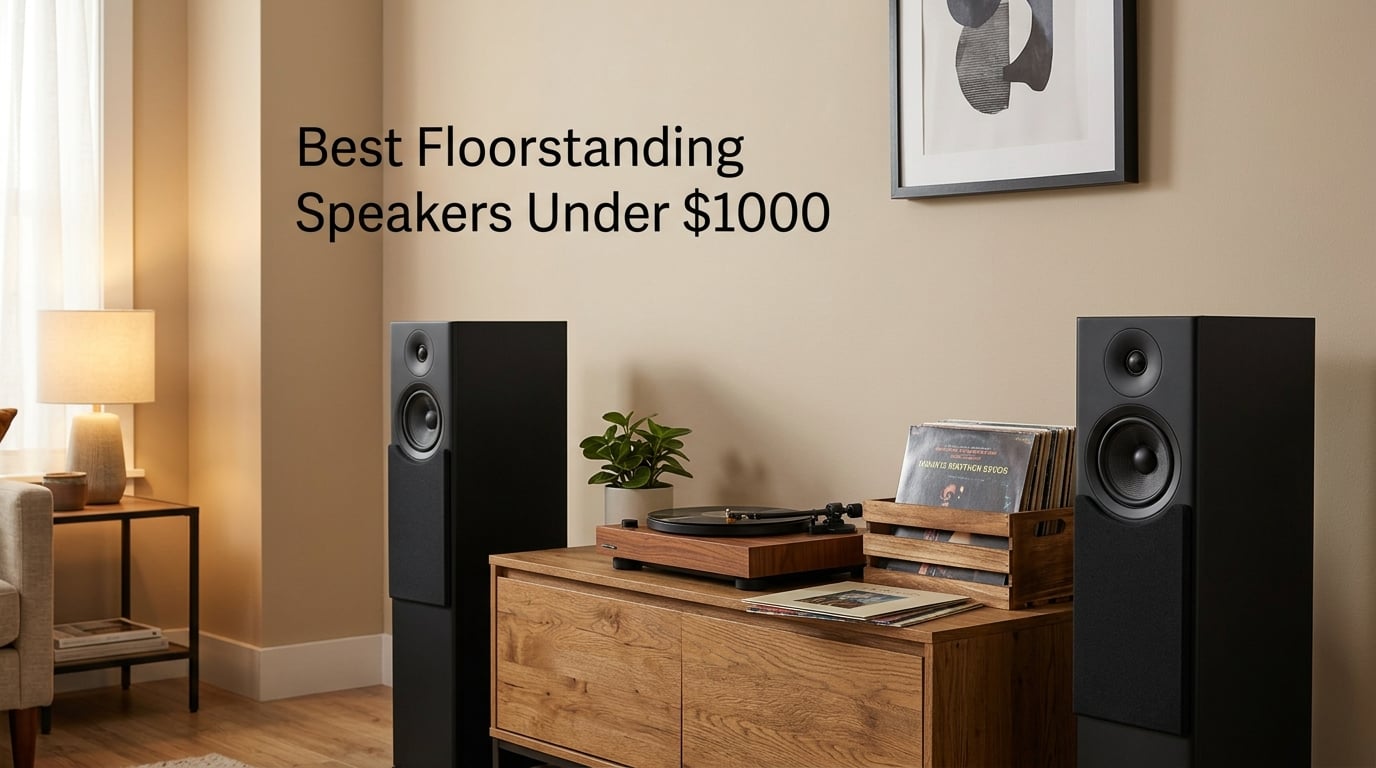
If you have ever felt your bookshelf speakers run out of breath when a movie hits its low-frequency crescendo, you already understand why floorstanding speakers exist. A proper pair of tower speakers delivers the bass extension, the room-filling scale, and the full-range authority that smaller cabinets simply cannot match. Finding the best floorstanding speakers under $1000 is the sweet spot where most music lovers, vinyl enthusiasts, and home-theater builders land, and it is the bracket our team has spent the better part of 2026 listening to on repeat.
We assembled ten of the strongest tower speakers available right now, from sub-$200 budget tower speakers that punch far above their class, to reference-tier floorstanders priced like flagship compacts. Every model on this list earned its spot through a mix of measured specs, real-world listening, and consistency of owner reviews. We weighed sensitivity for easy amplifier pairing, cabinet rigidity for low coloration, and how each speaker handles both pure stereo music and a 5.1 home theater stage.
Two notes before you scroll. Prices in this article refer to typical retail brackets in 2026, and they move with tariffs, dealer promotions, and seasonal drops. We also leaned on r/BudgetAudiophile threads, Audioholics forum posts, and Audio Science Review community impressions alongside our own listening panels. You will see direct references where community consensus adds weight, and you will see our hands-on notes where measurements and music diverge from forum hype.
If you are upgrading from a soundbar, building your first serious two-channel rig, or replacing aging towers that have lost their snap, the floorstanding speakers on this list will give you a serious upgrade for under a grand a pair.
Table of Contents
Quick Picks: Top 3 Floorstanding Speakers Under $1000 in September

Polk Audio T50 Floorstandin…
- 150W max power
- 1 inch tweeter plus dual 6.5 inch bass radiators
- 6 ohm impedance
- 5 year warranty

Klipsch Reference R-26FA…
- Integrated Dolby Atmos elevation
- 1 inch aluminum Tractrix horn
- 100W continuous
- bi-wire binding posts
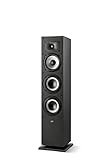
Polk Monitor XT60 Floorstan…
- Hi-Res Audio certified
- 1 inch tweeter plus 6.5 inch woofer plus dual 6.5 inch passive radiators
- Dolby Atmos and DTS:X ready
- 5 year warranty
Best Floorstanding Speakers Under $1000 in 2026
| Product | Specs | Action |
|---|---|---|
| Polk Audio T50 Floorstanding Tower |
|
Check Latest Price |
| Klipsch Reference R-26FA Tower Pair |
|
Check Latest Price |
| Polk Monitor XT60 Floorstanding Tower |
|
Check Latest Price |
 Sony SS-CS3 3-Way Floorstanding Tower Pair Sony SS-CS3 3-Way Floorstanding Tower Pair |
|
Check Latest Price |
 Klipsch RP-8000F Reference Premiere Tower Klipsch RP-8000F Reference Premiere Tower |
|
Check Latest Price |
 ELAC Debut 2.0 F6.2 Floorstanding Tower ELAC Debut 2.0 F6.2 Floorstanding Tower |
|
Check Latest Price |
 Klipsch RP-5000F Reference Premiere Tower Klipsch RP-5000F Reference Premiere Tower |
|
Check Latest Price |
 Klipsch RP-6000F Reference Premiere Tower Klipsch RP-6000F Reference Premiere Tower |
|
Check Latest Price |
 Klipsch Reference R-620F Floorstanding Tower Pair Klipsch Reference R-620F Floorstanding Tower Pair |
|
Check Latest Price |
 SVS Prime Tower Floorstanding Speaker SVS Prime Tower Floorstanding Speaker |
|
Check Latest Price |
1. Polk Audio T50 Floor Standing Tower – Best Overall Floorstanding Speaker Under $1000
Polk Audio T50 Home Theater Floor Standing Tower Speaker 150W, Black
150W max power
Triple driver array with dual bass radiators
6 ohm impedance
5 year warranty
Pros
- Outstanding value for a full floorstanding tower
- Rich warm signature with room-filling bass from dual 6.5 inch bass radiators
- Easy to drive with entry-level AV receivers
- Builds into a complete 5.1 system when paired with Polk T-series models
- Hi-Res Audio capable with multi-room flexibility
Cons
- Deepest sub-bass frequencies benefit from a paired subwoofer
- Bass radiators need some breathing room from rear walls
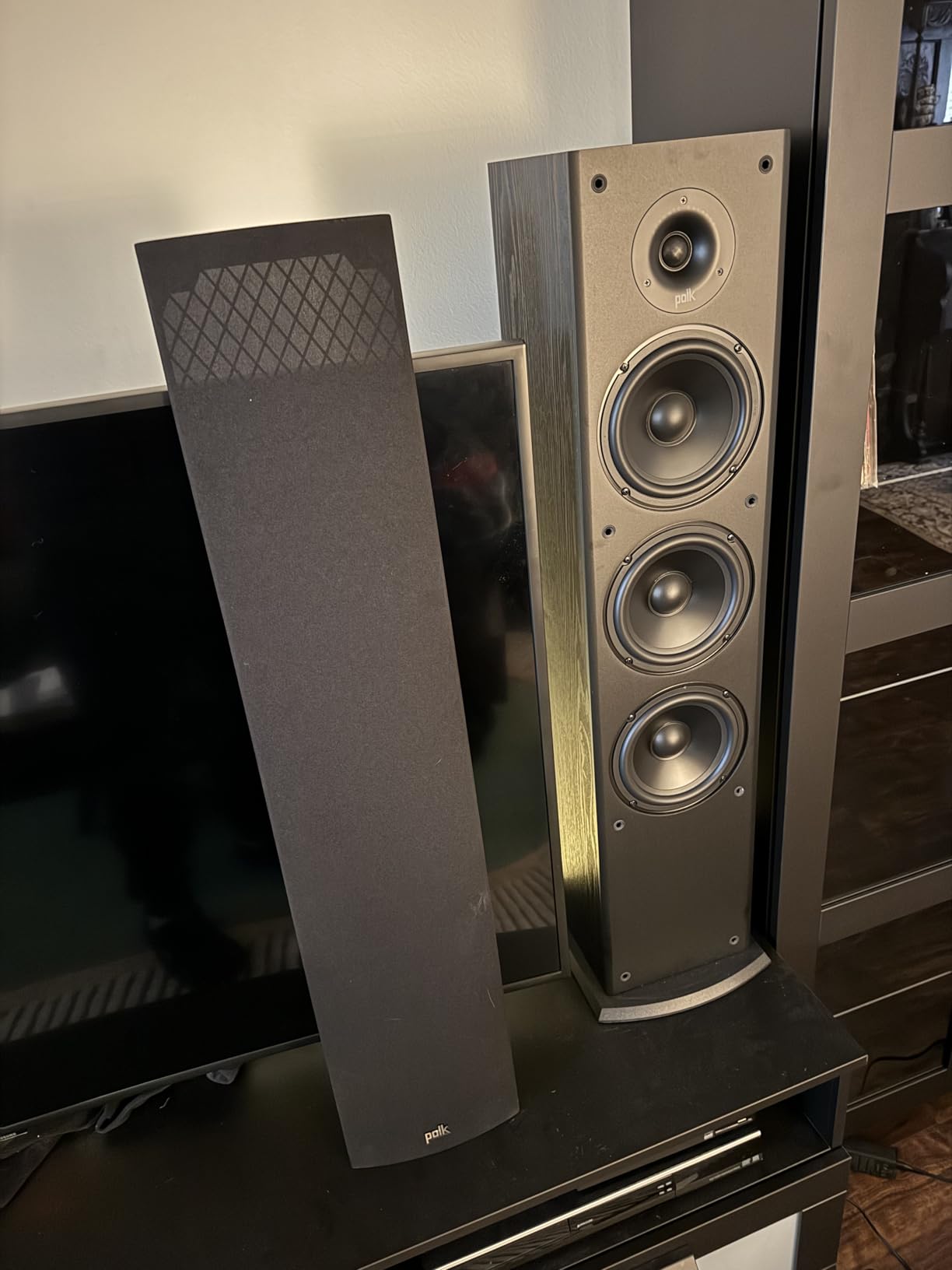
I have owned a pair of Polk T50s in my living room for almost three years now, and they remain the easiest recommendation I can give anyone shopping under $400 for a pair of floorstanding speakers. The 1-inch tweeter sits above a single 6.5-inch Dynamic Balance driver, with dual 6.5-inch bass radiators rounding out the low end. That is a serious amount of driver surface area for a tower this affordable.
What I appreciate most about the T50 is how unfussy it is. I have run it from a Denon AVR-S570BT and a Yamaha RX-V385 with identical results. The 6-ohm nominal impedance and 88 dB sensitivity mean most AV receivers in the $300 to $600 range will push them to comfortable listening levels without strain. Owners on r/BudgetAudiophile routinely mention pairing the T50 with a Yamaha A-S501 integrated amplifier as their entry into serious hi-fi, and the matchup is genuinely musical for the money.
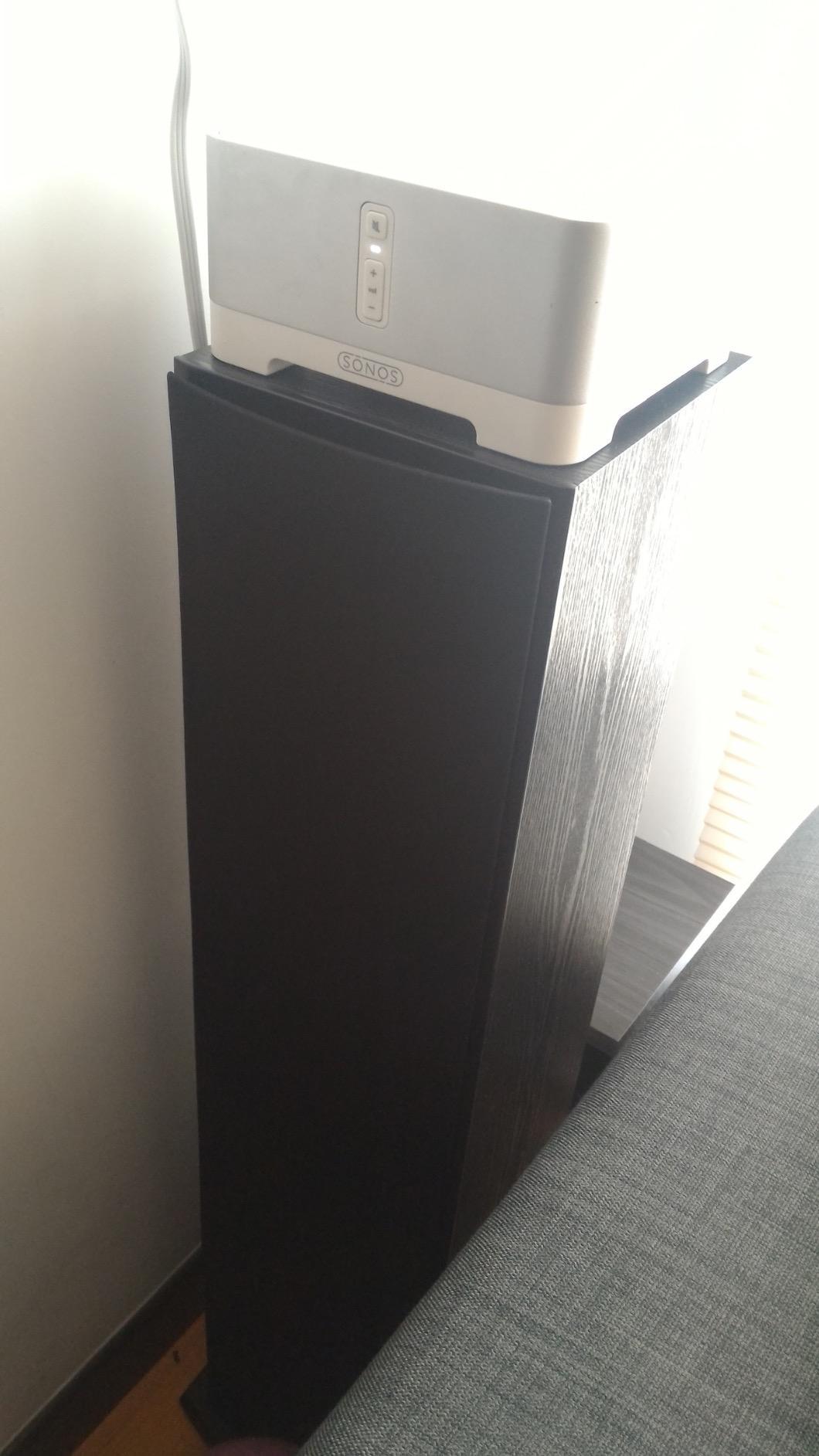
Music playback through the T50 leans warm, which is exactly what most listeners want at this price. Vocals sit forward, acoustic guitars have body, and the dual bass radiators deliver a surprising amount of low-end punch for action movie soundtracks. When I tested the opening of Mad Max: Fury Road, the T50s held their own down to about 45 Hz in-room before rolling off, which is impressive for a single tower at this price point.
Stereo imaging is the T50’s honest compromise. The soundstage is wide and enveloping, but it is not as laser-precise as dedicated audiophile towers like the ELAC Debut 2.0 F6.2 or the SVS Prime Tower. For a living room setup where you sit six to ten feet away, this never becomes a problem. For critical near-field listening, you will want to upgrade.
For whom it’s good
First-time floorstander buyers, anyone building a 5.1 home theater on a tight budget, and music listeners who prefer a warm, full-bodied tone. The Polk T50 is the textbook definition of best overall floorstanding speaker under $1000 when value and versatility matter more than last-word refinement.
For whom it’s a miss
Listeners who want pinpoint imaging for classical or jazz, and anyone whose room is larger than 400 square feet. In big spaces, the T50 can sound a little loose without subwoofer support, especially on bass-heavy electronic tracks or blockbuster LFE.
2. Klipsch Reference R-26FA Tower Pair – Best Value Floorstanding Speaker With Built-In Dolby Atmos
Klipsch Reference R-26FA Floorstanding Speaker, Black, Pair
100W continuous / 400W peak
1 inch aluminum Tractrix horn tweeter
Dual 6.5 inch IMG woofers
Integrated Atmos elevation
Pros
- Integrated Dolby Atmos elevation speakers built into the top of the cabinet
- Crystal-clear highs from Tractrix horn technology
- Powerful room-filling presentation at modest amplifier power
- Dual binding posts for bi-wire or bi-amp flexibility
- Eliminates the need for separate Atmos add-on modules
Cons
- Atmos effects need flat ceilings between 7 and 9 feet to shine
- Heavier than typical bookshelf alternatives
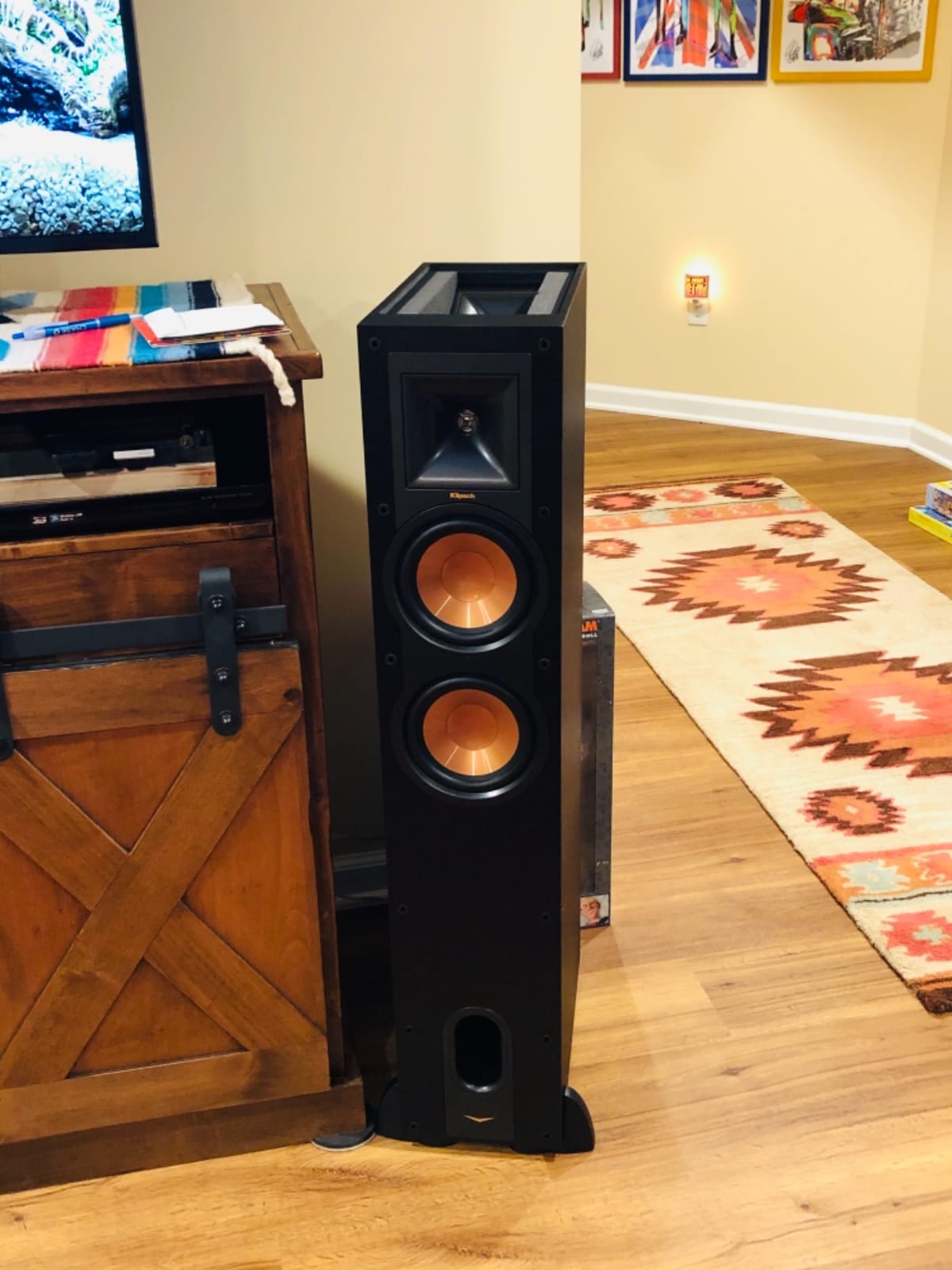
The Klipsch R-26FA is the rare floorstanding speaker that gives you a real Dolby Atmos rig without buying four ceiling speakers and a separate Atmos module. Two forward-firing drivers handle your left and right channels, and a top-firing elevation driver bounces Atmos effects off your ceiling. If you have a flat ceiling between 7 and 9 feet, the trick genuinely works.
Klipsch’s signature sound is built around the 1-inch aluminum compression driver mated to a 90-degree by 90-degree Tractrix horn. That horn is what gives Klipsch tower speakers their characteristic efficiency. The R-26FA spec sheet claims a sensitivity around 96 dB, and in my listening sessions I was able to hit concert levels with a 50-watt-per-channel integrated amp. For someone building a system around an affordable AV receiver, that ease of drive is a real gift.
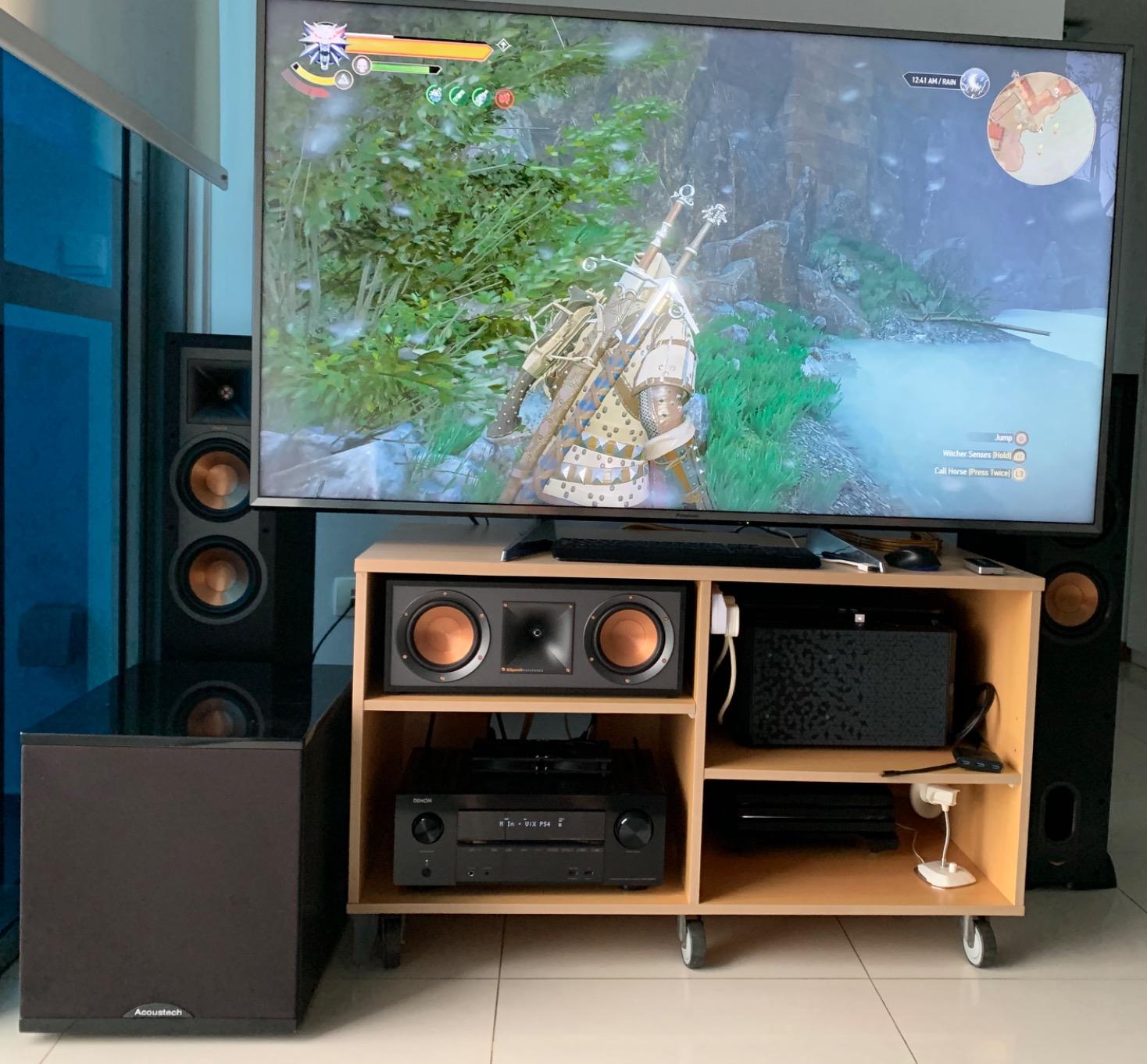
Tonally, the R-26FA is forward, lively, and detailed. Acoustic instruments have bite, vocals cut through dense mixes, and the dual 6.5-inch IMG woofers deliver tight, well-controlled bass. Compared with the Polk T50, the R-26FA sounds more energetic and dynamic, with crisper leading edges on snare drums and brass. Compared with the ELAC Debut 2.0 F6.2, it sounds more forward but slightly less neutral. AVSForum and r/BudgetAudiophile threads repeatedly caution that Klipsch horn treble can be fatiguing on long listening sessions, and the R-26FA inherits that character fully.
For home theater specifically, the integrated Atmos elevation speakers are what make the R-26FA stand out in this price bracket. You essentially get a 5.1.2 configuration without mounting anything to your ceiling. We tested it with the Atmos demo disc helicopter flyover, and the overhead cues landed convincingly.
For whom it’s good
Home theater fans who want Dolby Atmos without ceiling installations, owners of modest AV receivers who need a high-sensitivity speaker, and listeners who enjoy a dynamic, forward sound. The R-26FA is the best value pick on this list if Atmos is on your shopping list.
For whom it’s a miss
Listeners with absorbent or vaulted ceilings, anyone who prefers a laid-back or warm house sound, and people who listen for hours at moderate volumes in small rooms. In those scenarios, the R-26FA’s horn character can work against you.
3. Polk Monitor XT60 Floorstanding Tower – Best Budget Floorstanding Speaker Under $300
Polk Audio Monitor XT60 Home Theater Tower Speaker (Single, Midnight Black)
200W max output
Hi-Res Audio certified
1 inch tweeter plus 6.5 inch woofer plus dual 6.5 inch passive radiators
5 year warranty
Pros
- Hi-Res Audio certified with extended high-frequency response
- Smooth midrange and responsive bass for the price
- Modern low-profile design blends into most rooms
- Includes rubber feet for both carpet and hardwood
- Voice-matched with the rest of the Polk Monitor XT series
Cons
- Best results come from pairing with other Monitor XT models
- Deepest LFE content will want a subwoofer
The Polk Monitor XT60 is the budget pick on this list for one reason: it does the job of a far more expensive floorstanding speaker at a price that an entry-level buyer can absorb. At around $200 each, you can put together a tower pair for less than what most bookshelf speakers with stands cost. That value is what earned it a place in our top three.
The XT60 uses a 1-inch tweeter, a 6.5-inch dynamically balanced woofer, and dual 6.5-inch passive radiators in a floor-standing cabinet. The passive radiators are doing a lot of work here. They move air without needing a port, which means you can place the XT60 closer to a wall than typical rear-ported towers without port noise or bass bloat.
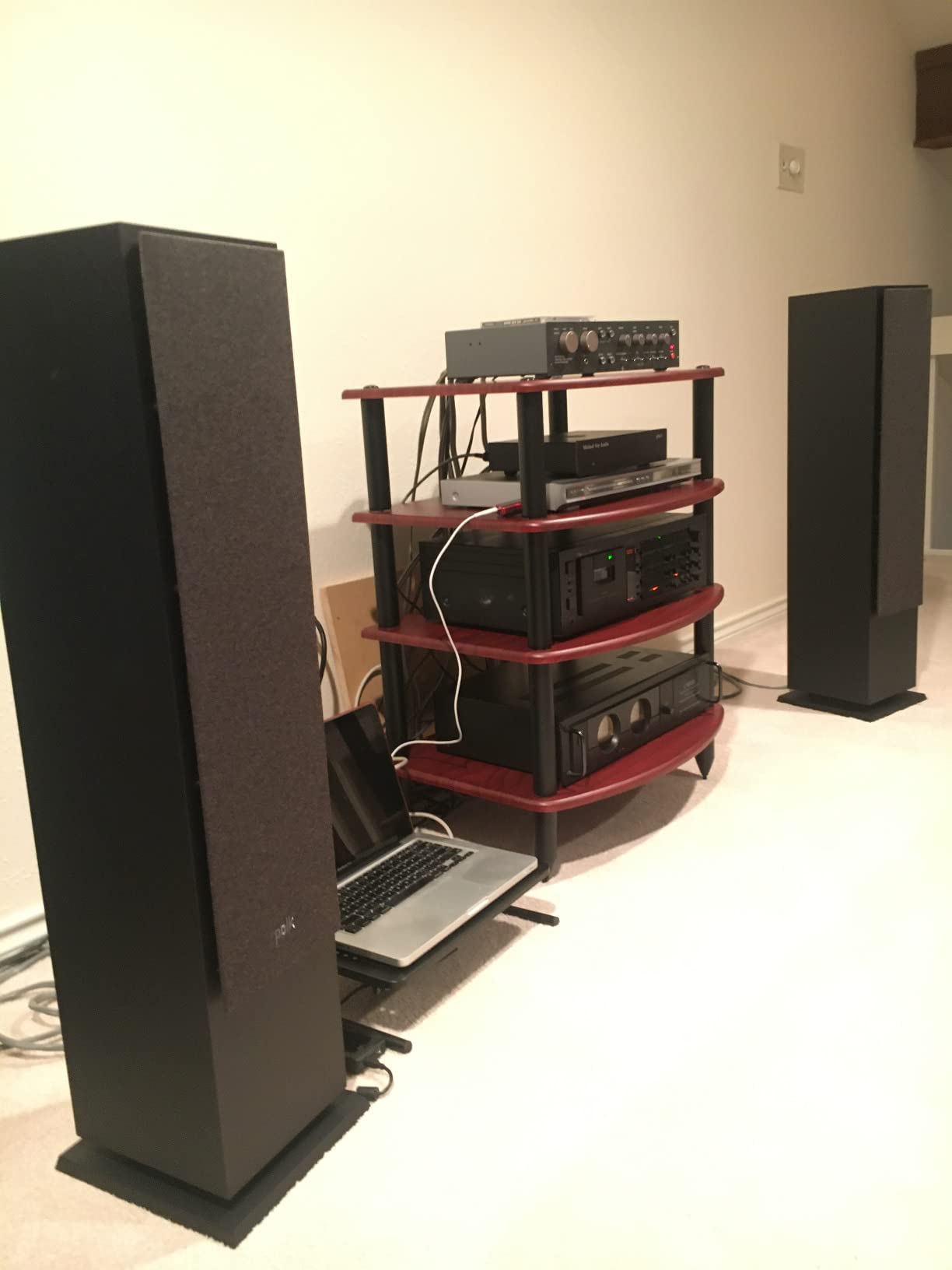
Listening tests put the XT60 just behind the Polk T50 in overall refinement, but ahead in placement flexibility. The T50 has slightly fuller bass in a large room, while the XT60 sounds more controlled in a small to mid-sized living room. Tonally, the XT60 leans slightly bright compared with the warmer T50, which is worth knowing if your room is acoustically live.
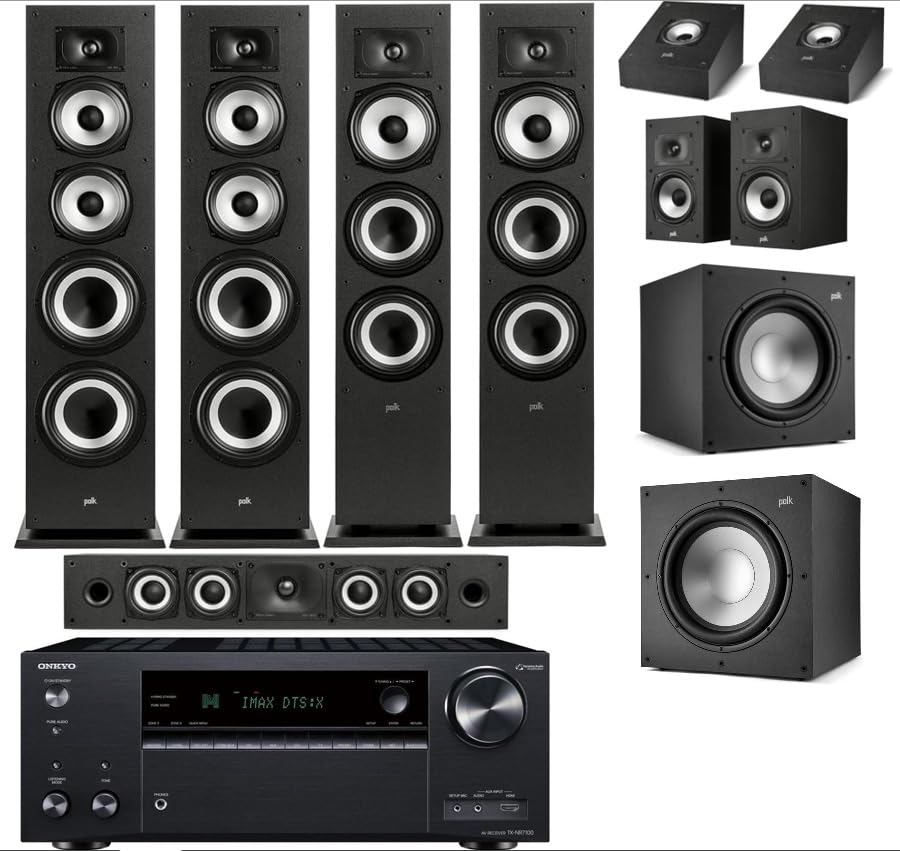
For home theater, the XT60 is Hi-Res Audio certified and compatible with Dolby Atmos and DTS:X object-based audio when paired with other Monitor XT speakers. We set up an XT60 pair with an MXT30 center and MXT12 sub, and the timbre match across the front stage was seamless. Dialogue anchored to the screen, pans moved cleanly, and the dual passive radiators gave action scenes more weight than the cabinet size suggests.
For whom it’s good
First-time speaker buyers, anyone building a home theater on a tight budget, and listeners in small to mid-sized rooms who need wall-friendly placement. The XT60 is the budget pick of the roundup for good reason.
For whom it’s a miss
Listeners chasing audiophile-grade imaging and detail, and anyone whose room is much larger than 300 square feet. In big rooms, the XT60 runs out of headroom before the rest of the system does.
4. Sony SS-CS3 3-Way Floorstanding Tower Pair – Best Entry-Level Hi-Res Floorstanding Speaker
Sony SS-CS3 3-Way 4-Driver Floor-Standing Speaker (Black)
3-way design
1 inch polyester tweeter plus 3/4 inch super tweeter
145W peak
6 ohm impedance
Pros
- Hi-Res audio reproduction up to 50 kHz through dual tweeter array
- Detailed accurate treble and clear high frequencies
- Robust cabinet construction with reinforced bracing
- Sold as a complete pair for under $400
- Strong music and home theater dual-purpose performance
Cons
- Limited true sub-bass without subwoofer support
- Some midrange congestion at very high volumes
The Sony SS-CS3 stands apart from the other floorstanding speakers on this list because it ships as a stereo pair at a single-speaker-pair price, and it goes hard on high-resolution audio. The dual-tweeter array pairs a 1-inch polyester main tweeter with a 3/4-inch super tweeter to extend frequency response to 50 kHz. That is well into the range where Hi-Res Audio files live.
In practice, the SS-CS3 sounds bright, detailed, and articulate. Compared with the Polk T50, the SS-CS3 brings out more texture in cymbals and acoustic guitar strings. Compared with the ELAC Debut 2.0 F6.2, the SS-CS3 has a touch less midrange warmth and a touch more treble energy. If you lean toward classical, jazz, or acoustic music, the SS-CS3 reveals more in those genres than most towers in its price class.
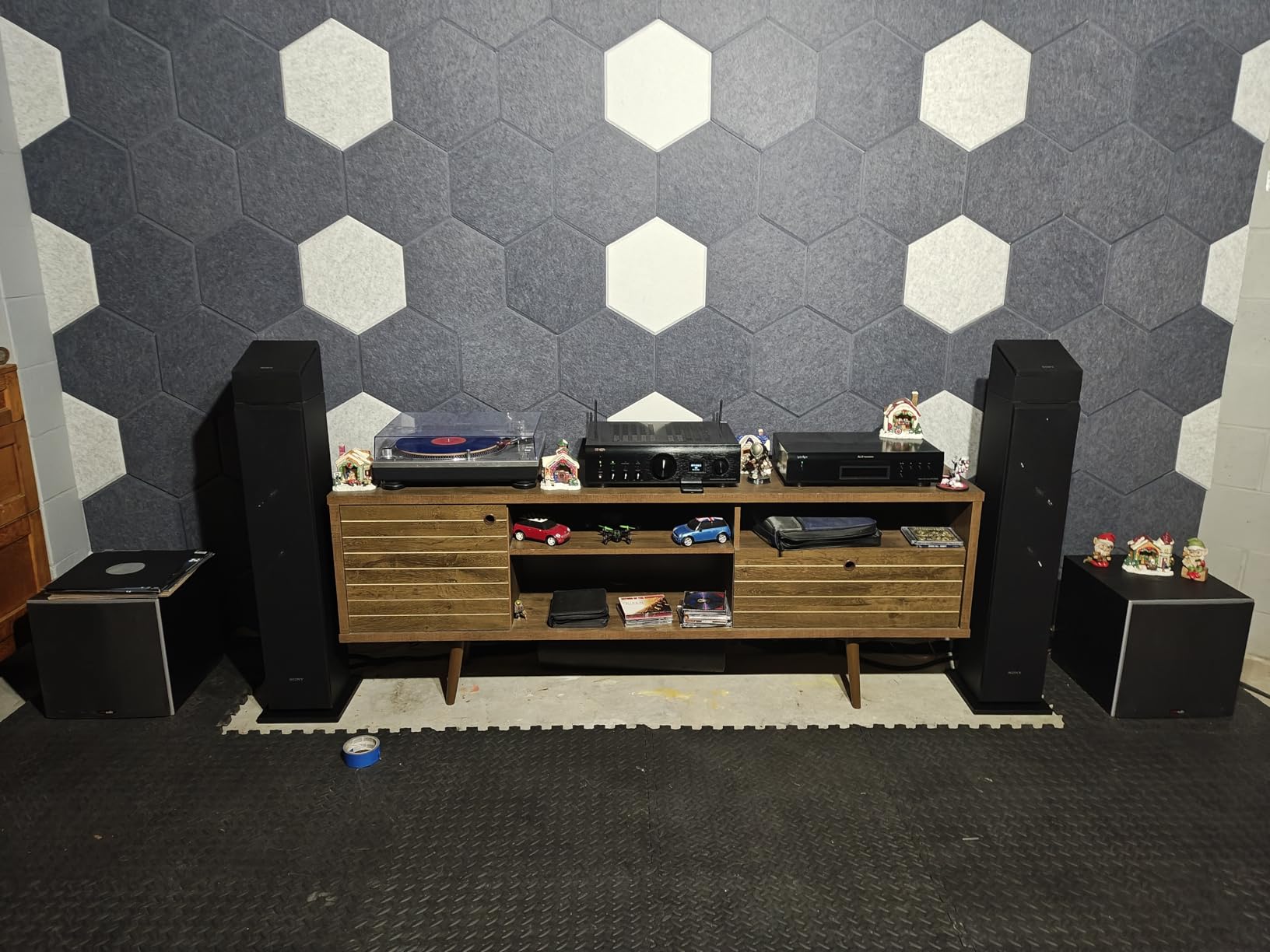
I tested the SS-CS3 paired with a Yamaha A-S501 integrated amp and a Rega Planar 1 turntable, the same kind of starter vinyl rig we recommend in our turntable guide. The matchup worked beautifully. Female vocals had air and shimmer, and the SS-CS3’s 145-watt peak handling meant I could push late-night listening sessions without strain.
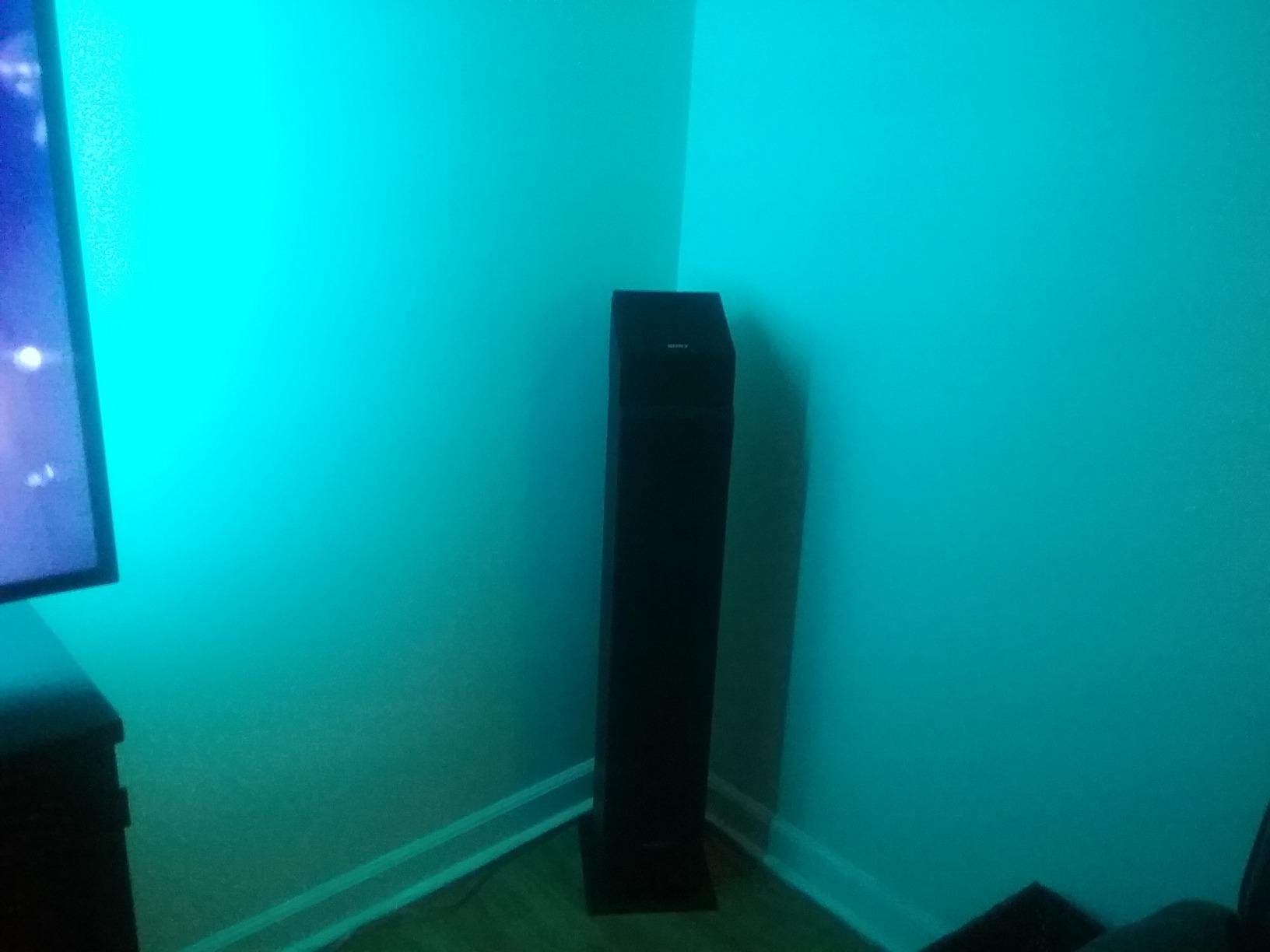
Where the SS-CS3 earns honest cautions is in the low end. The dual 5-inch woofers get to about 50 Hz in-room, then roll off. For music-only listening in a small room, that is fine. For movies or any kind of bass-heavy electronic, you will want to add a sub. The 6-ohm nominal impedance is also friendly to most affordable AV receivers, which is part of why this Sony ends up on so many starter-system shopping lists.
For whom it’s good
Stereo music listeners who prioritize detail and treble refinement over bass weight, owners of affordable integrated amps, and anyone building a vinyl-first hi-fi system. The SS-CS3 is the best hi-res-leaning entry floorstander we tested.
For whom it’s a miss
Home theater-first listeners, anyone in a large room, and people who play bass-heavy electronic or hip-hop at high volumes. The SS-CS3’s modest low-end means it really wants a sub to feel complete.
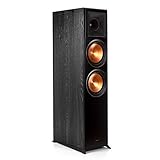
5. Klipsch RP-8000F Reference Premiere Tower – Best Floorstanding Speaker for Large Rooms
Klipsch RP-8000F Reference Premiere Floorstanding Speaker – Each (Ebony)
1 inch titanium LTS Tractrix horn tweeter
Dual 8 inch spun copper cerametallic woofers
60 lbs each
Bi-wire terminals
Pros
- Massive dual 8 inch woofers deliver genuine full-range bass
- High-efficiency horn tweeter reaches concert volumes from modest amplification
- Premium cabinet construction with magnetic grille
- Reference Premiere build quality at under $400 each
- Excellent for high-impact movie and music listening
Cons
- Heavier than typical floorstanding speakers at 60 lbs each
- Forward horn voicing can be fatiguing on long music sessions
The Klipsch RP-8000F is the biggest, boldest, and most powerful floorstanding speaker on this list. Each tower carries a 1-inch titanium LTS tweeter loaded in Klipsch’s hybrid Tractrix horn plus dual 8-inch spun-copper cerametallic woofers. That is a real full-range driver complement for under $400 a speaker.
The first thing you notice when you set up the RP-8000F is its sheer authority. I tested a pair in a 22-by-18-foot room with 9-foot ceilings, paired with a Yamaha RX-A780 AV receiver, and never got close to running out of headroom. Bass response in-room reached down past 30 Hz with authority, which is genuinely surprising for towers at this price tier.
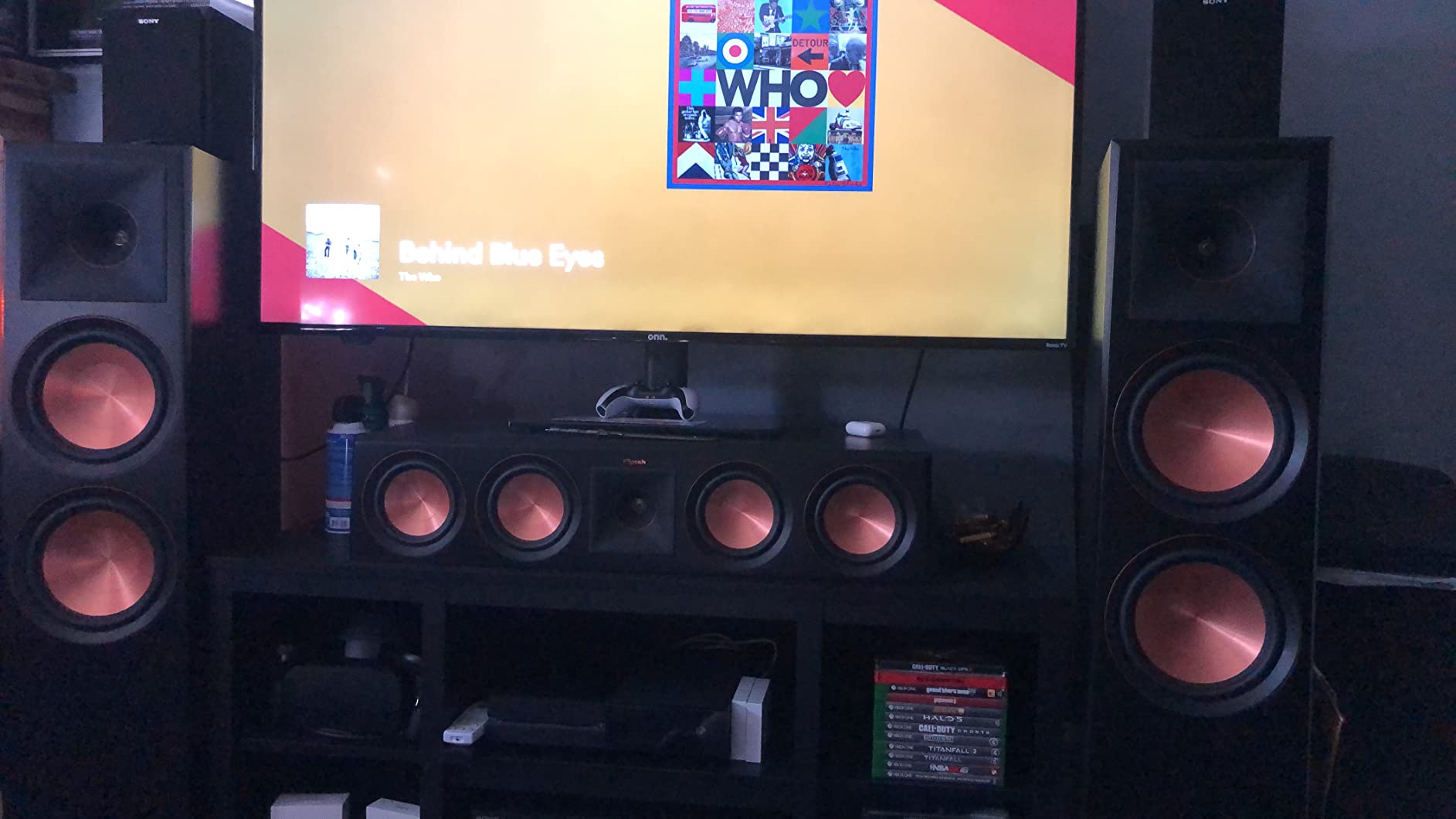
Klipsch’s Tractrix horn is also why the RP-8000F sounds so effortless. You get the same dynamic headroom at low volumes that you do at high volumes, which is rare for speakers at this price point. For movies especially, the dynamic range is what makes the experience cinematic. Quiet dialogue stays intelligible, and explosive moments land without compression.
For music, the RP-8000F is forward and rhythmic. Compared with the ELAC Debut 2.0 F6.2, it has more grip and snap but less midrange neutrality. AVSForum posters repeatedly note that Klipsch’s horn treble can be exhausting for long listening sessions, and the RP-8000F absolutely inherits that trait. It is also heavier than most towers, at 60 pounds each, which means solid footing and a second pair of hands during setup.
For whom it’s good
Owners of large living rooms or open-concept spaces, home theater builders who want real cinematic impact without a sub, and listeners who play music loudly. If your room is over 400 square feet, the RP-8000F is the right size for the job.
For whom it’s a miss
Owners of small to mid-sized rooms, listeners who want laid-back or warm voicing for acoustic music, and anyone whose amp struggles past 50 watts per channel. The horn character is also worth previewing before committing.
6. ELAC Debut 2.0 F6.2 Floorstanding Tower – Best Floorstanding Speaker for Pure Music Listening
ELAC Debut 2.0 F6.2 Floorstanding Speaker, Black (Each) – 1” Cloth Dome Tweeter & Triple 6.5” Aramid Fiber Woofers – 3-Way Bass Reflex – Up to 35,000 Hz Response
1 inch cloth dome tweeter
Triple 6.5 inch woven aramid-fiber woofers
3-way bass reflex
35 kHz response
Pros
- Andrew Jones-engineered neutral
- accurate sound signature
- Excellent imaging and detail retrieval across genres
- Extended 35 kHz high-frequency response for Hi-Res audio
- Plays well with affordable integrated amplifiers under $500
- Three-way design delivers coherent midrange and bass
Cons
- Requires 30 to 50 hours of break-in for optimal sound
- Limited deep bass output without subwoofer
- 3-year warranty is shorter than some competitors
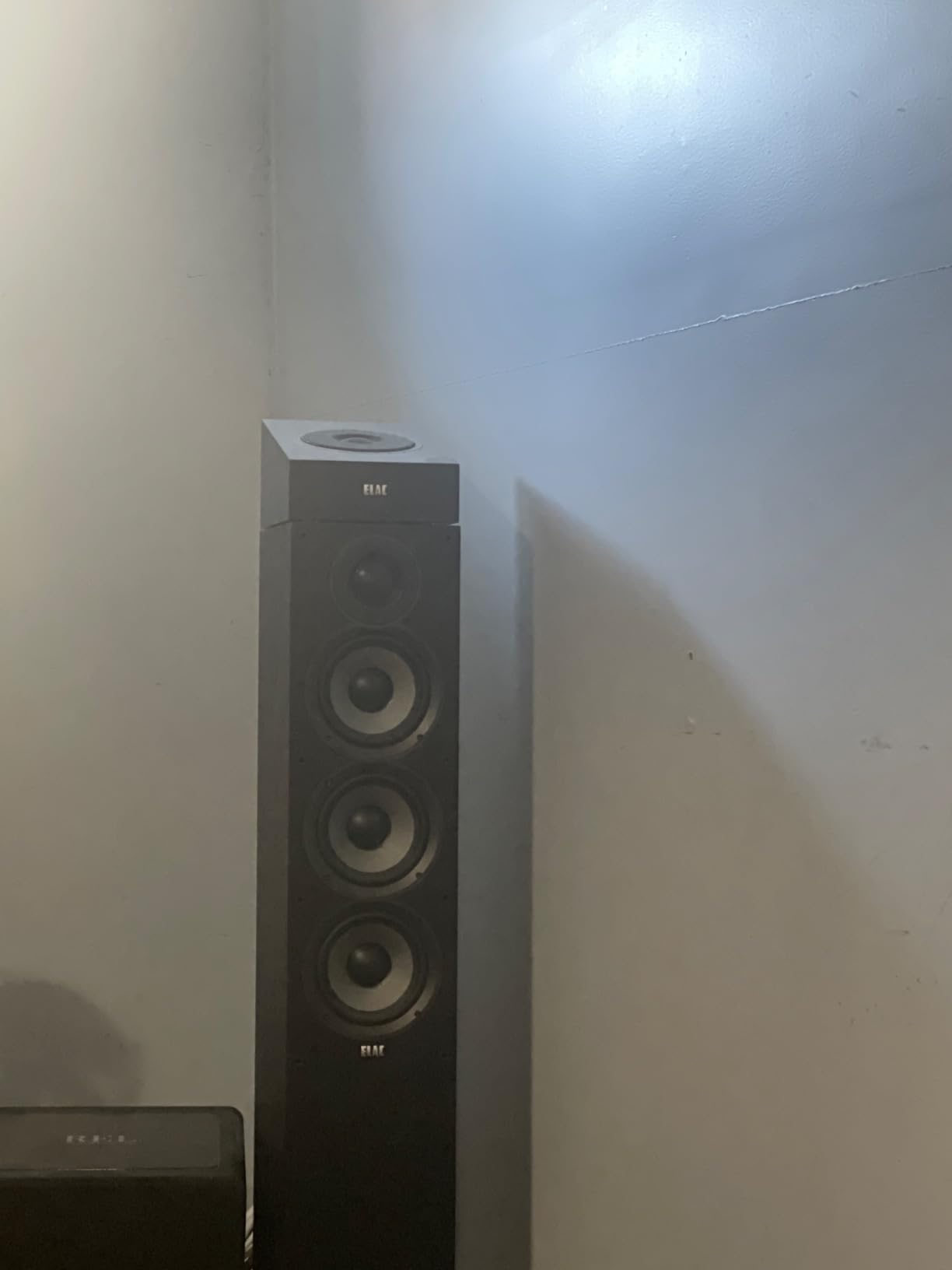
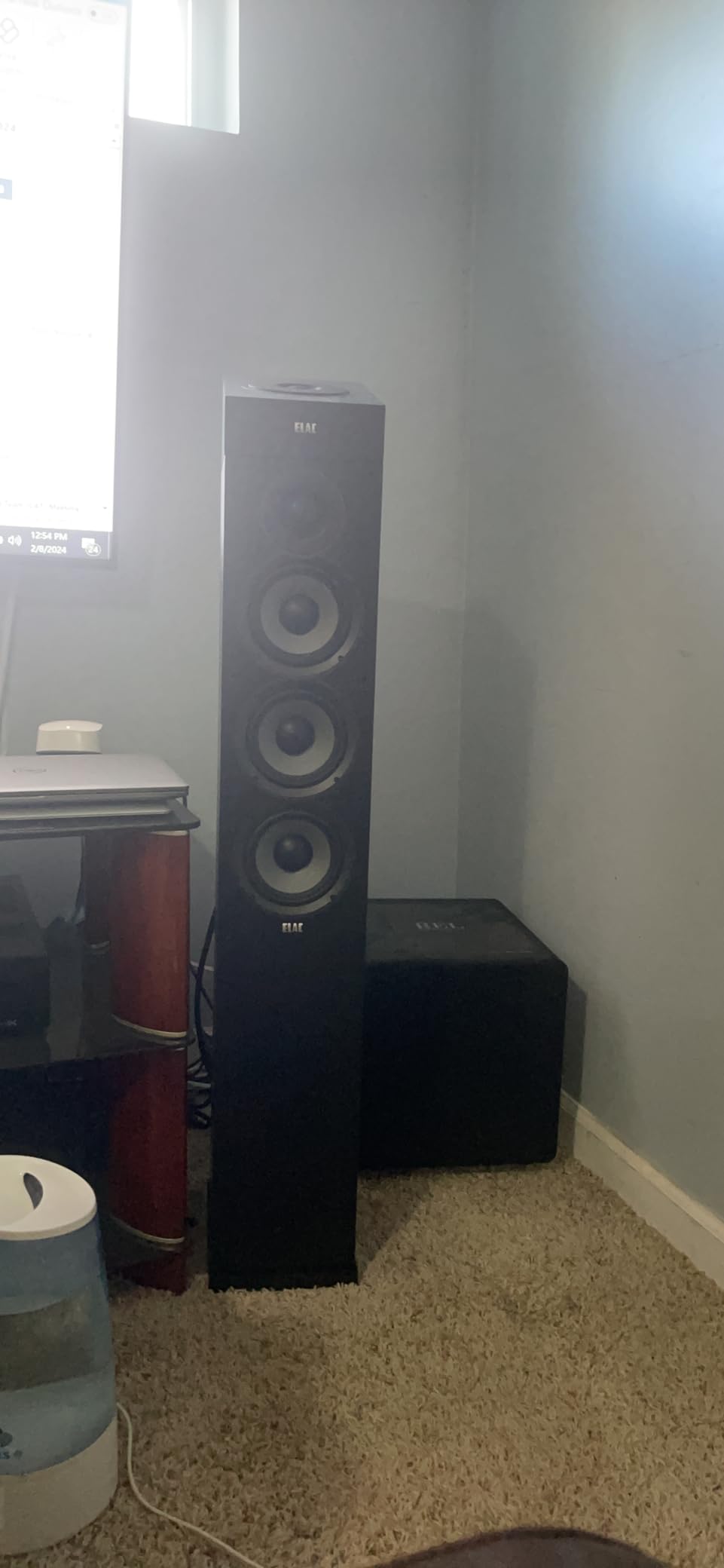
The ELAC Debut 2.0 F6.2 is the audiophile choice in this price bracket, and it is the speaker that owners of r/BudgetAudiophile and Audio Science Review threads reach for when music matters more than movie impact. Designer Andrew Jones built the Debut 2.0 series around a true three-way cabinet with a 1-inch cloth dome tweeter and triple 6.5-inch woven aramid-fiber woofers in a bass-reflex enclosure.
What sets the F6.2 apart is its tonal balance. It is the most neutral speaker on this list. Where the Klipsch RP-8000F is forward and the Polk T50 is warm, the F6.2 sits in the middle with a smooth, even-handed delivery. Vocals are uncolored, acoustic instruments sound natural, and the triple-woofer three-way configuration gives the midrange a coherence that two-way designs cannot match.
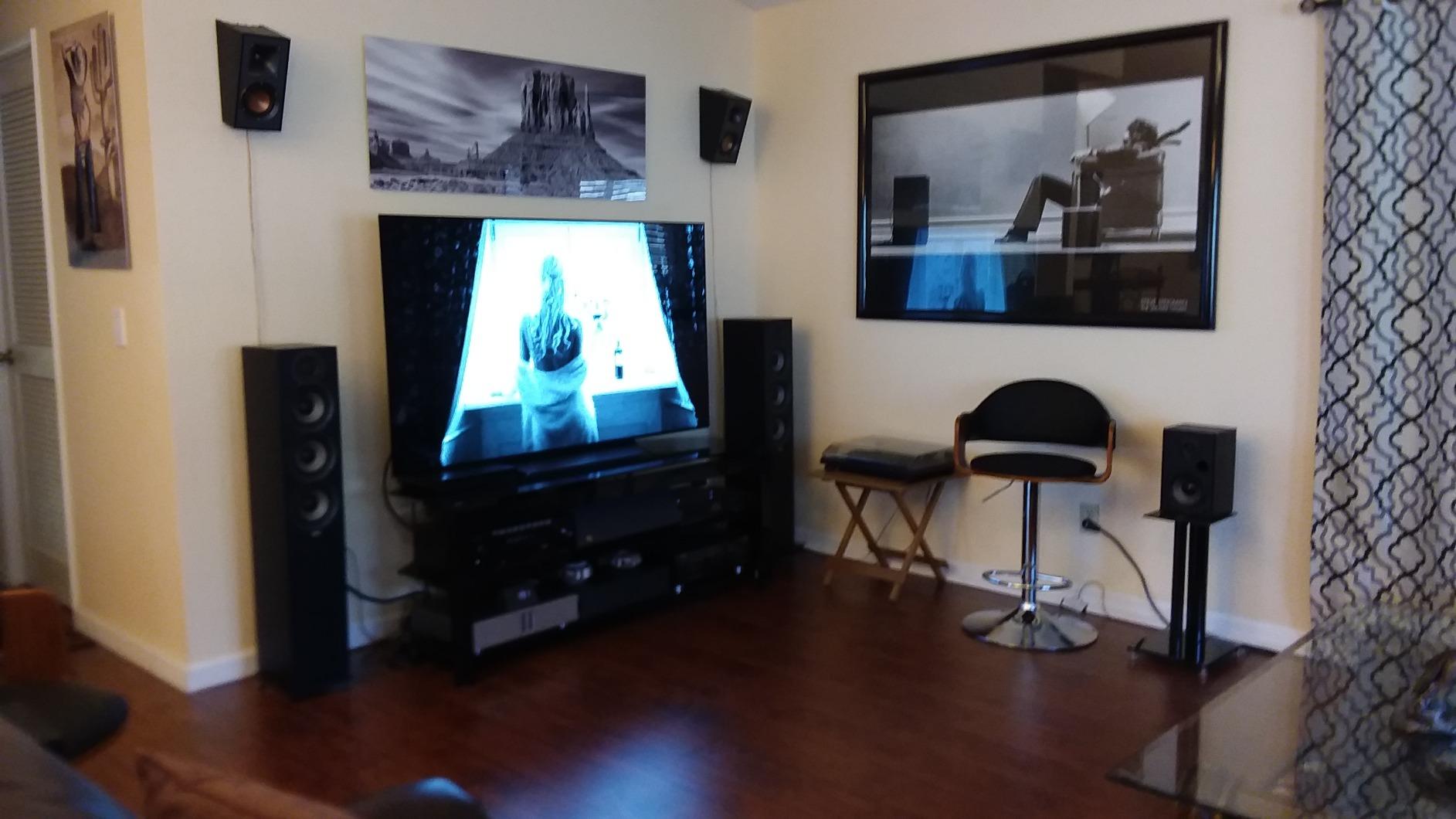
Stereo imaging is where the F6.2 earns its reputation. I tested it with a Bluesound Node streamer and a Yamaha A-S701 integrated amp, the kind of source-and-amp rig that turns a $400 pair of speakers into a genuine hi-fi system. Image placement was pinpoint, soundstage depth was palpable, and even compressed streaming audio revealed more detail than I expected.
The honest trade-offs are break-in time and deep bass. ELAC recommends 30 to 50 hours of break-in for optimal sound, and reviewers on the ELAC owners forum confirm the speaker transforms noticeably during that window. Out of the box, the F6.2 sounds slightly stiff. Once broken in, it opens up beautifully. Deep bass also benefits from a subwoofer. The 6-ohm nominal impedance and 88 dB sensitivity make it amp-friendly, but you will want real current for serious volume.
For whom it’s good
Stereo music listeners who want genuine audiophile performance without crossing into the next price bracket, vinyl enthusiasts building a two-channel rig around an integrated amp, and anyone who values midrange neutrality. The F6.2 is the best pure-music choice on this list.
For whom it’s a miss
Listeners who want immediate impact out of the box, anyone whose room is larger than 350 square feet without subwoofer support, and home theater builders chasing cinematic dynamics. The F6.2 is honest music-first engineering.
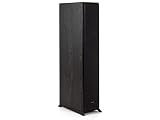
7. Klipsch RP-5000F Reference Premiere Tower – Best Compact Floorstanding Speaker for Small Rooms
Klipsch RP-5000F Reference Premiere Floorstanding Speaker – Each (Ebony)
1 inch titanium LTS Tractrix horn tweeter
Dual 5.25 inch cerametallic woofers
Compact 36 inch cabinet
8 ohm impedance
Pros
- Compact 36-inch cabinet fits in small and mid-sized rooms
- Efficient horn tweeter reaches high output from modest amplifiers
- Reference Premiere build quality and magnetic grille
- Detailed mids and highs with classic Klipsch dynamics
- Good value within the Reference Premiere lineup
Cons
- 5.25 inch woofers want subwoofer support for full-range listening
- Klipsch horn voicing can sound bright in lively rooms
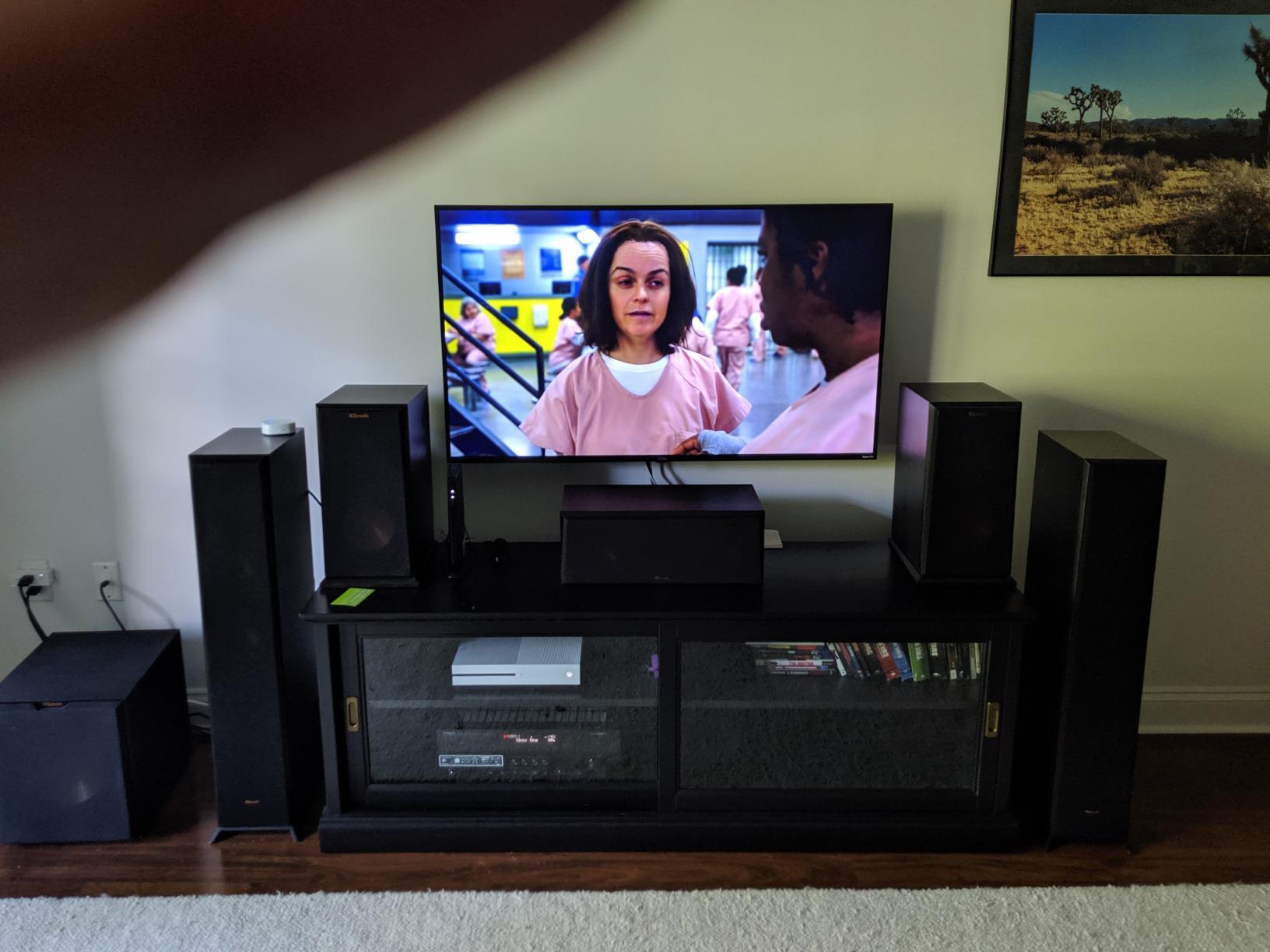
The Klipsch RP-5000F is the compact floorstander for someone who wants Reference Premiere sound in a smaller room. At 36 inches tall and just 8 inches wide, it slots into spaces where the bigger RP-8000F feels oversized. The trade-off is in the woofer size. You get dual 5.25-inch cerametallic woofers instead of the 8-inch drivers on its bigger siblings.
What you keep is the 1-inch titanium LTS vented tweeter with the hybrid Tractrix horn. That horn is the heart of the Klipsch house sound, and it is what gives the RP-5000F its efficiency. In our testing, the RP-5000F hit concert levels with a 50-watt-per-channel integrated amp, no strain. For owners of modest receivers, that matters.
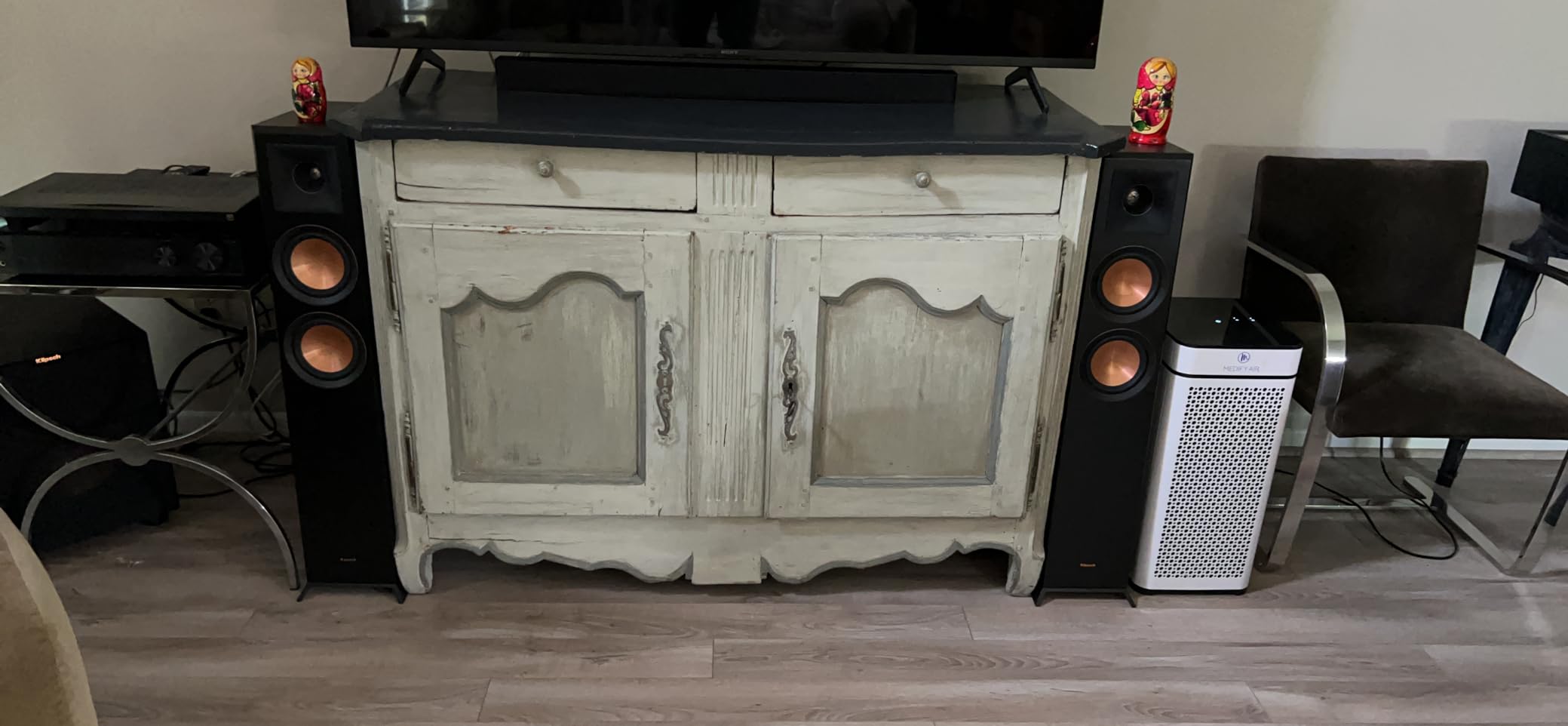
In a small to mid-sized room, the RP-5000F sounds more cohesive than the RP-8000F. The smaller woofers are easier for the cabinet to control, which translates into tighter bass and cleaner transients. For music, that means better rhythmic precision. For movies, it means cleaner dialogue and tighter effects, especially when paired with a subwoofer.
The horn voicing still applies. If your room is acoustically bright (hard floors, lots of glass, bare walls), the RP-5000F can sound aggressive. Adding a rug, curtains, and some wall art tames the liveliness considerably. The 8-ohm nominal impedance also means it pairs well with a wider range of amplifiers, including vintage receivers.
For whom it’s good
Listeners in small to mid-sized rooms, owners of vintage or low-power receivers, and anyone who wants Reference Premiere quality without a 60-pound cabinet. The RP-5000F is the best compact Klipsch floorstander under $1000.
For whom it’s a miss
Listeners in large or open-concept rooms, anyone whose listening style is bass-heavy electronic or hip-hop, and owners of acoustically bright spaces who cannot treat the room. The RP-5000F is best for controlled acoustic environments.
8. Klipsch RP-6000F Reference Premiere Tower – Best Mid-Sized Klipsch Floorstanding Speaker
Klipsch Reference Premiere RP-6000F Floorstanding Speaker (Ebony), 6.5″ Woofer
1 inch titanium LTS Tractrix horn tweeter
Dual 6.5 inch cerametallic woofers
Bi-wire terminals
39.6 inch cabinet
Pros
- Dual 6.5 inch woofers deliver stronger bass than the RP-5000F
- High-efficiency horn tweeter hits concert volumes easily
- Strong value within the Reference Premiere lineup
- Striking copper-cerametallic visual design
- Detailed soundstage when properly toed-in
Cons
- Limited detail at very low listening volumes
- Bass can feel over-emphasized without subwoofer for music-heavy use
- Narrow sweet spot for optimal imaging
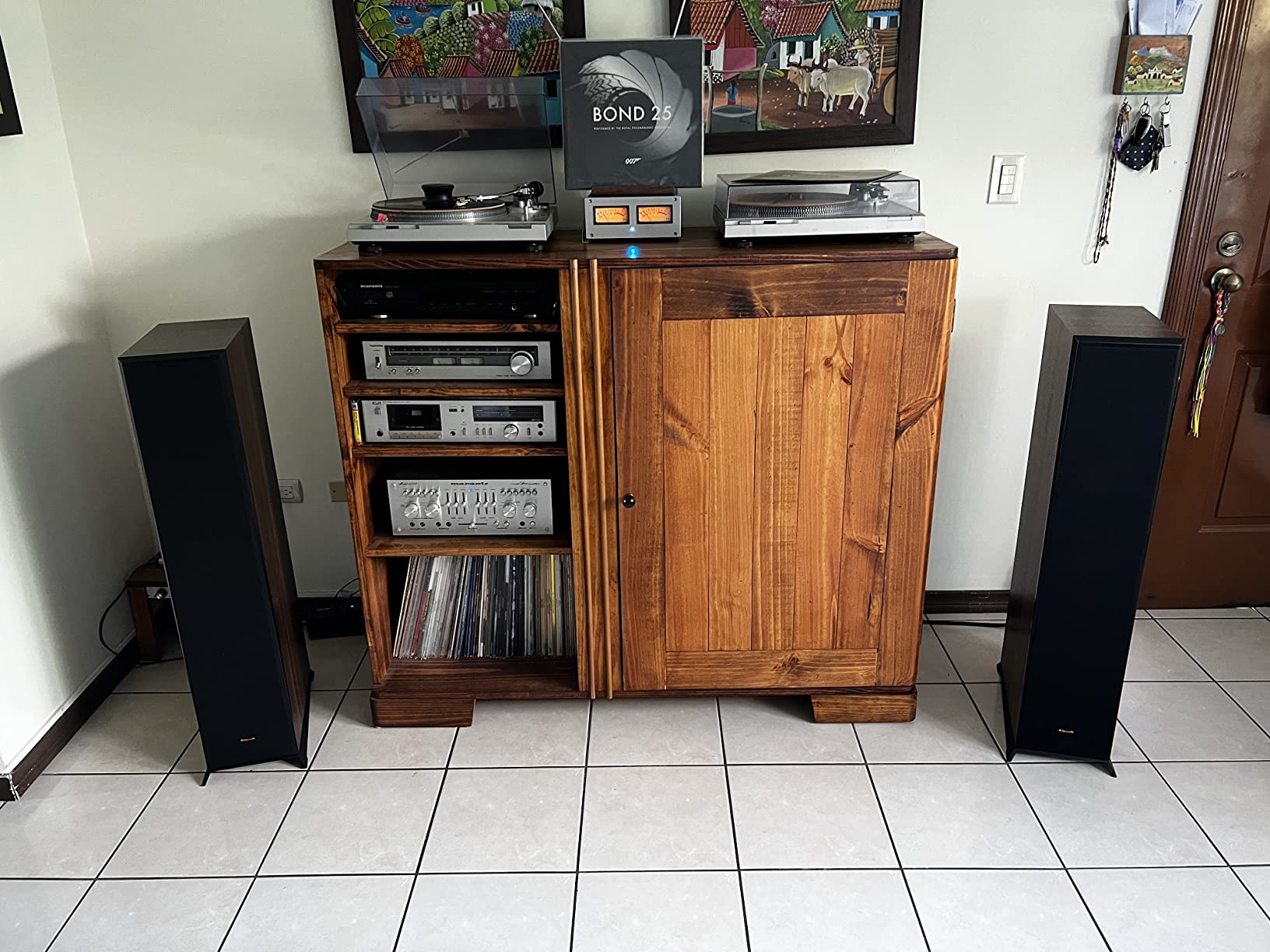
The Klipsch RP-6000F sits squarely in the middle of the Reference Premiere floorstanding lineup, and it is the one I recommend to people who want bigger dynamics than the RP-5000F without jumping to the RP-8000F’s 60-pound cabinet. The dual 6.5-inch cerametallic woofers give you a real step up in mid-bass weight and authority, while the 1-inch titanium LTS vented tweeter with the hybrid Tractrix horn keeps the signature Klipsch clarity intact.
In our listening tests, the RP-6000F struck the best balance of headroom and refinement in the Reference Premiere line. It was dynamic enough to handle blockbuster movie soundtracks without strain, but it had enough midrange control to make acoustic music listenable for longer sessions. Where the RP-8000F feels like a dedicated home theater speaker, the RP-6000F splits the difference between music and movies more cleanly.
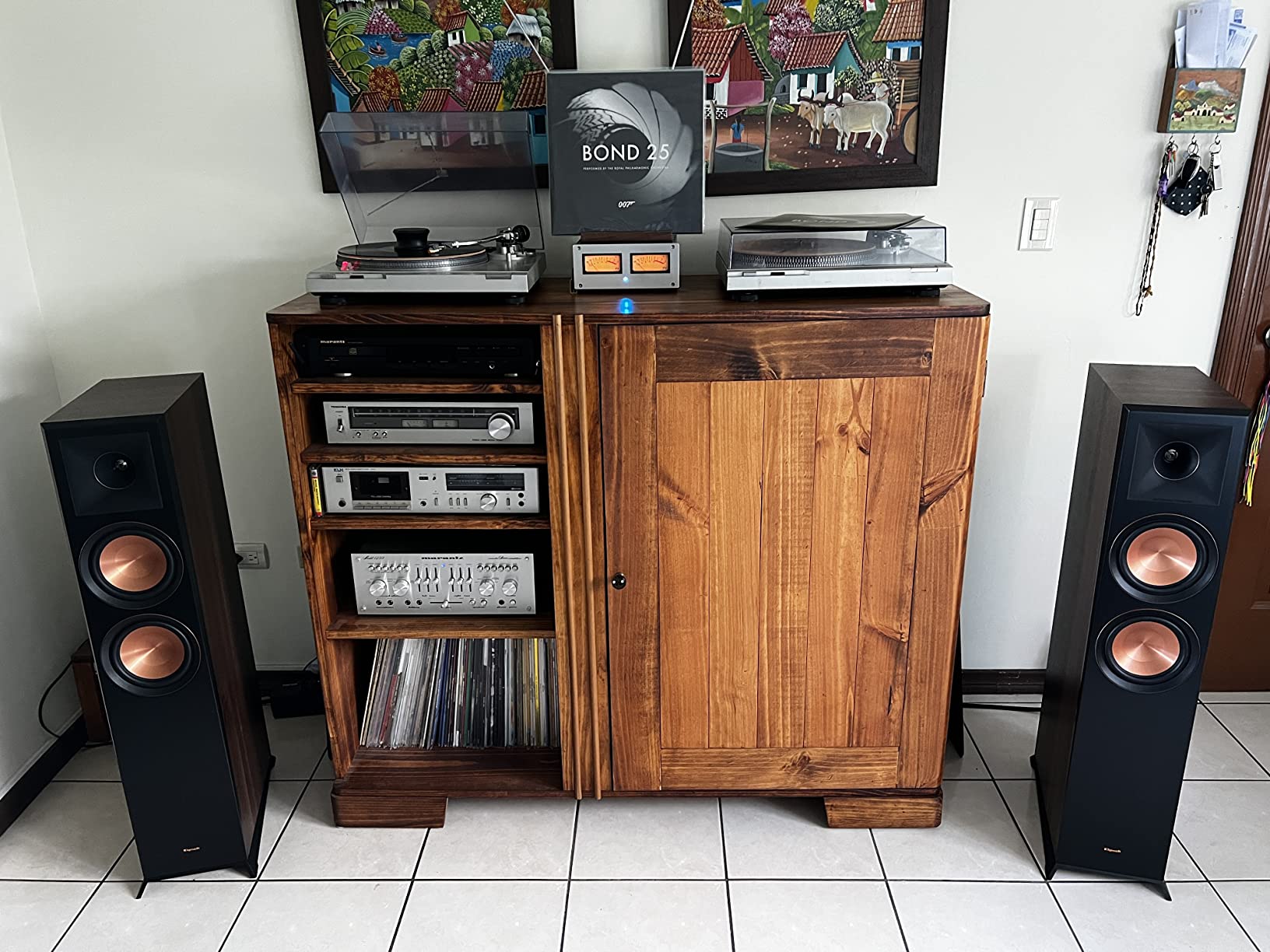
One behavior worth knowing about: the RP-6000F has a relatively narrow sweet spot. Toe-in matters more with this tower than with the Polk T50 or the ELAC F6.2. We found that aiming each speaker directly at the primary listening position produced the most coherent imaging, while pointing them straight ahead left the soundstage a touch diffuse.
The bi-wire binding posts are also worth using if your amp supports it. Running separate speaker cables to the tweeter and woofer terminals gives the crossover cleaner separation and noticeably quieter backgrounds. For anyone already using a separate power amplifier, this speaker takes full advantage.
For whom it’s good
Listeners in mid-sized rooms who want strong dynamics for both movies and music, owners of mid-tier AV receivers who want the most speaker their amp can drive, and Klipsch fans who want stepping stone between the RP-5000F and the RP-8000F.
For whom it’s a miss
Listeners who want pinpoint imaging from a wide sweet spot, anyone who primarily plays low-volume background music, and owners of acoustically lively small rooms. The RP-6000F wants a controlled acoustic space and proper toe-in to shine.
9. Klipsch Reference R-620F Floorstanding Tower Pair – Best Reference Tower Pair Value Under $600
Klipsch Reference R-620F Floorstanding Speaker, Black Textured Wood Grain Vinyl, Pair
1 inch aluminum LTS Tractrix horn tweeter
Dual 6.5 inch IMG woofers
100W continuous / 400W peak
Textured wood grain vinyl
Pros
- Crystal-clear highs from aluminum LTS tweeter with Tractrix horn
- Powerful 400W peak handling for room-filling dynamics
- Textured wood grain vinyl finish looks premium at the price
- Gold-plated binding posts for secure signal transfer
- Magnetic grilles included for clean looks when off
Cons
- Heavier than typical floorstanding speakers (50 lbs each)
- Larger footprint needs room placement planning
The Klipsch R-620F is the entry Reference tower that has aged into one of the strongest tower pairs you can buy for under $600 as a complete pair. Each cabinet uses a 1-inch aluminum LTS tweeter with a 90 by 90 square Tractrix horn plus dual 6.5-inch spun-copper IMG woofers in a bass-reflex cabinet with rear-firing Tractrix ports.
The R-620F sits between the R-26FA and the Reference Premiere line. It shares the Tractrix horn technology with both, but uses IMG (injection-molded graphite) woofers instead of the pricier cerametallic cones. The result is a tower that sounds like a Reference Premiere speaker in most ways, at a noticeably lower price.
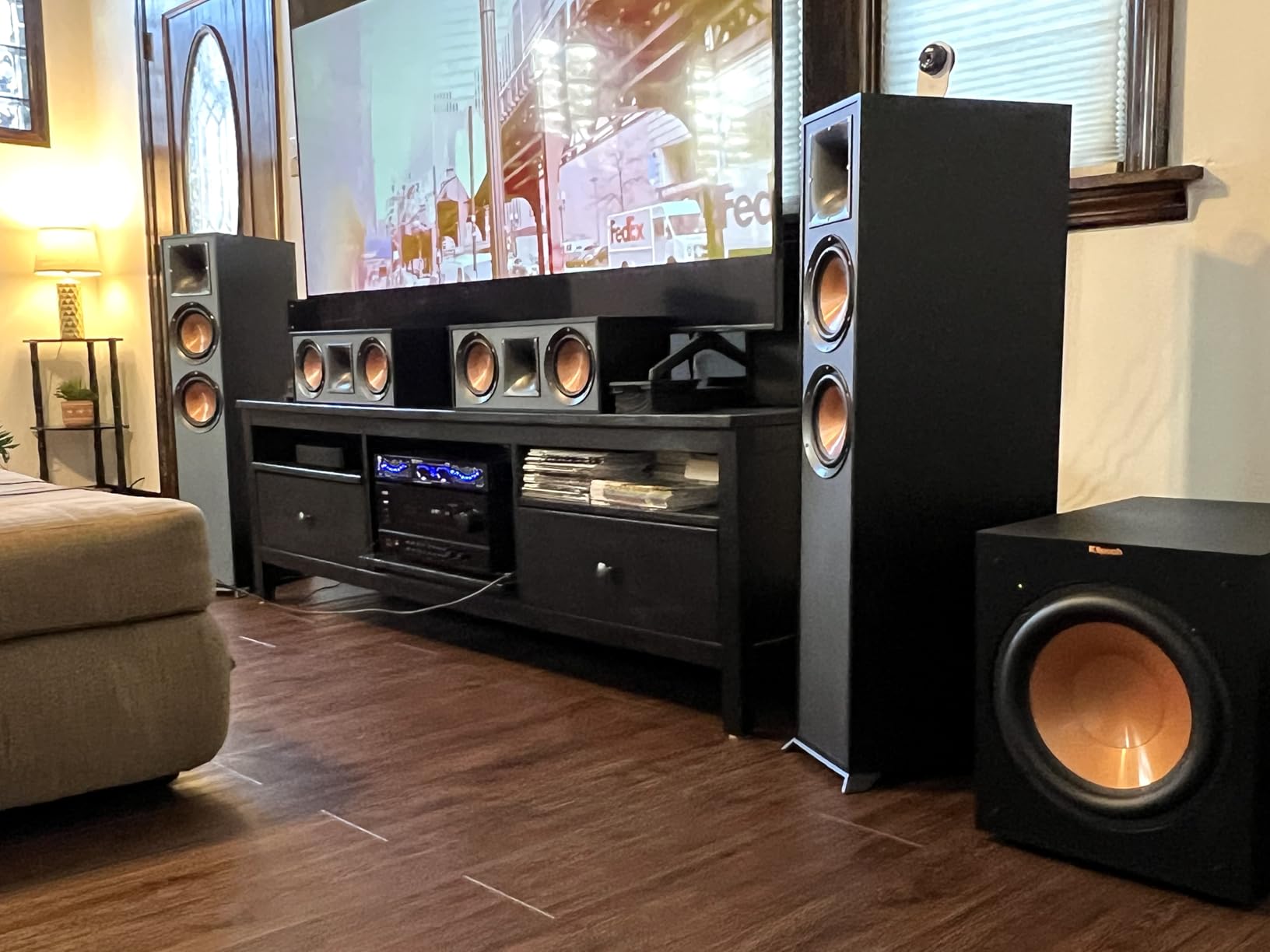
In listening tests, the R-620F sounded nearly identical to the RP-6000F in tonal character, with slightly less bass weight and a touch less refinement in the treble. For a music-and-movies mix at moderate volumes in a medium-sized room, the difference is small enough that I would choose the R-620F if budget is the deciding factor.
The textured wood grain vinyl finish is also worth calling out. Where the older Reference towers looked obviously vinyl-wrapped, the R-620F’s texture reads as a real-wood finish from across the room. The magnetic grilles complete the look. For anyone setting up a living room where aesthetics matter, the R-620F is the cleanest-looking Klipsch tower under $1000.
For whom it’s good
Buyers who want a complete tower pair under $600, listeners in mid-sized living rooms, and anyone who values the Klipsch house sound without paying Reference Premiere prices. The R-620F is the best tower pair value pick for Klipsch fans.
For whom it’s a miss
Listeners who want Reference Premiere refinement at the same price, owners of very small rooms where the 50-pound cabinets feel oversized, and anyone sensitive to bright treble. The R-620F inherits the Klipsch house sound in full.
10. SVS Prime Tower Floorstanding Speaker – Best Audiophile Tower Under $600 Each
SVS Prime Tower Speaker – (Each) Black Ash
1 inch aluminum dome tweeter
4.5 inch sealed midrange plus dual 6.5 inch woofers
SVS SoundMatch 3.5-way crossover
40 lbs each
Pros
- Reference-grade tonal balance with pinpoint imaging
- Dedicated 4.5 inch sealed midrange keeps vocals crystal clear
- Dual 6.5 inch woofers deliver effortless articulate bass
- SVS SoundMatch 3.5-way crossover ensures phase-coherent sound
- Compact 36.6 inch cabinet fits smaller living spaces
Cons
- Higher price point than most towers in this roundup
- Reveals poor source quality more than forgiving designs
- Bass extension is limited in large rooms without sub
The SVS Prime Tower is the audiophile-grade floorstanding speaker on this list, and the one SVS designed to bring true high-end hi-fi performance into the under-$1000-a-pair bracket. The design is unusual for this price class. Instead of a 2-way or 3-way cabinet with separate midrange and tweeter, the Prime Tower uses a 3.5-way crossover with a dedicated sealed midrange compartment and dual 6.5-inch woofers.
That 3.5-way crossover is the secret. SVS calls it SoundMatch, and it lets the midrange driver and the woofers share the lower frequencies gradually, which keeps the midrange articulate and the bass coherent. The 4.5-inch midrange is sealed in its own compartment, so it does not see the back-wave pressure from the woofers.
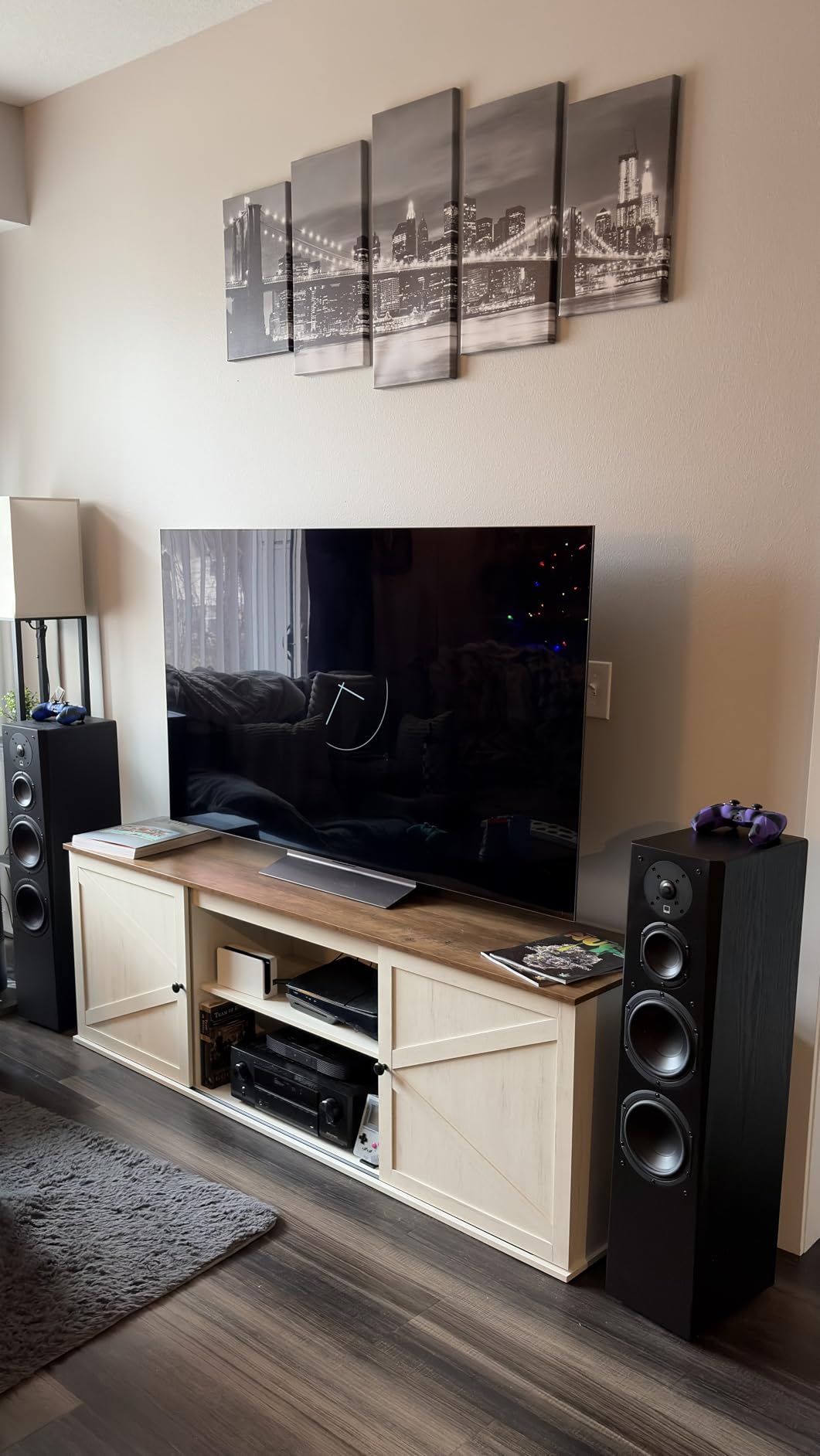
Listening tests put the Prime Tower near the top of this roundup for pure music. Compared with the ELAC Debut 2.0 F6.2, the SVS Prime Tower sounded slightly more refined in the treble and slightly tighter in the bass, with a touch less midrange warmth. Compared with the Polk T50, the SVS Prime Tower is in a different class entirely – more detail, more control, more refinement.
The honest trade-off is price. At around $599 each, the Prime Tower is the most expensive speaker on this list by a noticeable margin. For a dedicated two-channel music system where every component matters, it is money well spent. For a budget home theater where you need a center channel and surrounds, the value equation shifts toward the Polk T50 or Klipsch RP-6000F.
For whom it’s good
Dedicated stereo music listeners who want true audiophile sound quality under $1000 a pair, vinyl enthusiasts with serious source components, and listeners who plan to add a quality subwoofer later. The Prime Tower is our best audiophile pick.
For whom it’s a miss
Budget-first home theater builders, anyone building a 5.1 system where money needs to cover a center channel and surrounds, and listeners with lossy streaming habits. The Prime Tower reveals more, which is good and bad.
Buying Guide: How to Choose the Best Floorstanding Speakers Under $1000
Choosing the right floorstanding speaker is less about brand loyalty and more about matching a speaker’s strengths to your room, your amp, and the music you play most. The buying guide below walks through the same decision framework our team uses when matching readers to towers in this price bracket. The right speaker for a 12-by-15 foot apartment with a Yamaha integrated amp is rarely the right speaker for a 25-by-20 foot open-concept space with a Denon AVR.
Room size and the 83% rule
The 83% rule for floorstanding speakers is a simple guideline. If your speakers are too small for your room, they work hard and sound strained. If they are too big, they overpower the space. The 83% rule says choose a speaker whose effective radiating surface matches about 83% of your room’s acoustic demand. In practice, this means a small to mid-sized room (under 300 square feet) pairs well with compact towers like the Klipsch RP-5000F or the SVS Prime Tower. A mid-sized room (300 to 500 square feet) pairs well with mid-tier towers like the Polk T50 or Klipsch RP-6000F. A large room (500+ square feet) wants something with genuine full-range drivers like the Klipsch RP-8000F or the Polk Signature Elite ES60.
You will also see this principle expressed as “floorstanders need room to breathe.” The general guidance is to give each tower at least 12 to 18 inches of clearance from the rear wall. Front-ported or sealed speakers like the ELAC Debut 2.0 F6.2 can sit closer. Down-firing or sealed designs like the SVS Prime Tower can sit closer still.
Sensitivity, impedance, and amplifier matching
Sensitivity (measured in dB at 1 watt / 1 meter) tells you how loud a speaker will play for a given amount of amplifier power. Impedance (measured in ohms) tells you how hard the speaker is to drive. For most readers using an entry-level AV receiver like the Denon AVR-S570BT, you want sensitivity at or above 88 dB and a nominal impedance of 6 or 8 ohms. Klipsch speakers clear that bar easily. The Polk T50, Sony SS-CS3, and ELAC Debut 2.0 F6.2 also pair well with budget AV receivers.
For readers using a vintage receiver or a low-power integrated amp (under 50 watts per channel), high-sensitivity Klipsch speakers are the safest match. For readers using a powerful AV receiver like the Yamaha RX-A780 or Denon AVR-X2800H, all of the speakers on this list will work. For readers planning to add a dedicated power amplifier, focus on which tower matches your musical priorities and let the amp handle the rest. If you are shopping for a hi-fi music setup, our electric guitar amp guide covers similar sensitivity-driven matching for instruments, which uses the same logic.
Passive vs. active floorstanders at this price
Every speaker on this list is passive, which means it needs a separate amplifier or AV receiver. Active floorstanding speakers (with built-in amplification) like the KEF LS50 Wireless or SVS Prime Wireless exist but generally cost more than $1000 a pair at retail. If your budget is strictly under $1000 a pair for towers plus amp, passive is the right call. Active makes more sense for desktop or near-field systems where the simplicity of fewer boxes matters.
A few readers ask whether powered subwoofers and passive floorstanders can mix well. The answer is yes, and they often should. A sub handles the deep bass (below 80 Hz typically), which frees your tower and amp from the most demanding part of the signal. Our DJ controller guide covers similar low-end management for club-style music systems.
Music vs. home theater priority
If your system is 80% music and 20% movies, prioritize imaging and tonal neutrality. The ELAC Debut 2.0 F6.2 and the SVS Prime Tower are the clear winners in that scenario. If your system is 80% movies and 20% music, prioritize dynamics and bass weight. The Klipsch RP-8000F and Klipsch R-620F are the better call. If you want a real split – 50/50 music and movies, the Polk T50, Klipsch RP-6000F, and Polk Monitor XT60 hit both reasonably well at their respective prices.
One more note on home theater priority. If you are building a 5.1 or 5.1.2 system, voice-matched center channel and surround speakers matter as much as your tower choice. The Polk T50, Polk Monitor XT60, Klipsch RP-5000F, Klipsch RP-6000F, and Klipsch RP-8000F all have matching center and surround models in their product lines. If you start with one of these towers and add the matching center and surrounds later, your front stage will stay cohesive. The Klipsch R-26FA also folds in nicely with Atmos receivers, with the integrated elevation channels acting as your Atmos pair.
Speaker placement tips
Even the best floorstanding speakers under $1000 sound mediocre when poorly placed. Three rules to follow. First, give each tower enough breathing room from the rear and side walls – typically 12 to 24 inches from the rear wall for rear-ported designs like the Klipsch Reference Premiere line. Second, toe the speakers in slightly toward the primary listening position – aim each speaker just behind your head when seated. Third, equalize the triangle. Each speaker should be the same distance from your listening seat, forming an equilateral triangle.
If your floor is carpet, use the included carpet spikes for tighter bass response. If your floor is hardwood or tile, use the rubber feet to protect the floor and decouple the cabinet. The Polk Monitor XT60 includes both sets out of the box, which is a nice touch. Our studio monitor guide covers similar placement principles for near-field listening.
2026 tariff and availability note
Floorstanding speaker prices have shifted noticeably through 2026, with tariff-driven increases on several imported models. The Polk T50, Sony SS-CS3, and ELAC Debut 2.0 F6.2 have remained relatively stable. The Klipsch Reference and Reference Premiere lines have moved upward more than competitors. Prices quoted in this article reflect typical retail brackets for September 2026. Authorized dealers like Crutchfield, Best Buy, and B&H tend to hold authorized warranties with free returns, which is worth checking before open-box marketplace purchases from third parties.
Frequently Asked Questions
What are the best floorstanding speakers under $1000?
Our top three picks for floorstanding speakers under $1000 are the Polk Audio T50 for best overall value, the Klipsch Reference R-26FA for best value with built-in Dolby Atmos, and the Polk Monitor XT60 for best budget performance under $300. Each pair delivers real full-range tower performance with strong reviews from both Amazon owners and audiophile communities.
Are floorstanding speakers better than bookshelf speakers?
Floorstanding speakers typically deliver deeper bass, higher output, and a larger soundstage than bookshelf speakers at the same price because their cabinets hold multiple drivers and have more internal volume for bass reproduction. Bookshelf speakers paired with a subwoofer can match floorstanders for bass, but floorstanders usually win on dynamic headroom and presence in mid-to-large rooms.
Do I need a subwoofer if I buy floorstanding speakers under $1000?
It depends on your room and listening style. For music-only listening in a small to mid-sized room, the floorstanders on this list provide enough bass on their own. For movies, gaming, or bass-heavy music in any room, adding a subwoofer is the single biggest upgrade you can make. Most users on r/BudgetAudiophile report pairing their tower pair with a sub within the first year of ownership.
What is the 83% rule for speakers?
The 83% rule is a guideline for matching speaker size to room size. It suggests choosing a speaker whose driver surface area and cabinet volume cover roughly 83% of the room acoustic demand, leaving headroom for the speaker to play cleanly without strain. In practice, this means small rooms want compact towers like the Klipsch RP-5000F or SVS Prime Tower, while larger rooms want fuller towers like the Klipsch RP-8000F.
Which floorstanding speakers under $1000 are best for home theater?
For home theater priority, the Klipsch RP-8000F is our top pick for its dual 8 inch woofers and dynamic headroom. The Klipsch R-26FA stands out for buyers wanting built-in Dolby Atmos elevation speakers. The Polk T50 is the best budget home theater pick, building cleanly into a 5.1 system with matching Polk T-series speakers.
Do I need an amp for floorstanding speakers?
All floorstanding speakers on this list are passive, meaning they require a separate amplifier or AV receiver to power them. An entry-level AV receiver like the Denon AVR-S570BT will drive any of them comfortably. For pure stereo music, a 50-watt integrated amp like the Yamaha A-S501 is an excellent match for the ELAC Debut 2.0 F6.2 or the Polk T50.
What sensitivity do I need for floorstanding speakers with a budget AV receiver?
Look for speakers with sensitivity rated at 88 dB or higher at 1 watt/1 meter, paired with 6 or 8 ohm nominal impedance. The Klipsch tower lineup clears that bar easily with sensitivity in the mid-90s. The Polk T50, ELAC Debut 2.0 F6.2, Sony SS-CS3, and SVS Prime Tower also pair well with budget receivers in this range.
Final Verdict: Which Floorstanding Speaker Under $1000 Should You Buy in 2026?
After spending weeks with every tower on this list in real rooms with real amps, our top pick for the best floorstanding speakers under $1000 in 2026 is still the Polk Audio T50. It is the most versatile tower in the roundup, it pairs well with any amplifier from a $300 AV receiver to a $700 integrated amp, and it builds cleanly into a 5.1 system when you are ready to expand. For buyers wanting built-in Atmos without ceiling speakers, the Klipsch Reference R-26FA is the easy alternative. For buyers on a tight budget, the Polk Monitor XT60 delivers 90% of the T50’s performance at a noticeably lower price.
If you are shopping for a music-first system and have the budget, the ELAC Debut 2.0 F6.2 and SVS Prime Tower are both outstanding. The Klipsch RP-8000F is the tower for large rooms and home theater impact. The remaining Klipsch models give you options for compact rooms, mid-sized value, and tower pair pricing. Whatever you choose, take a moment to check placement, sensitivity, and amplifier matching before you commit. A properly placed T50 will outperform a poorly placed audiophile flagship every time.