
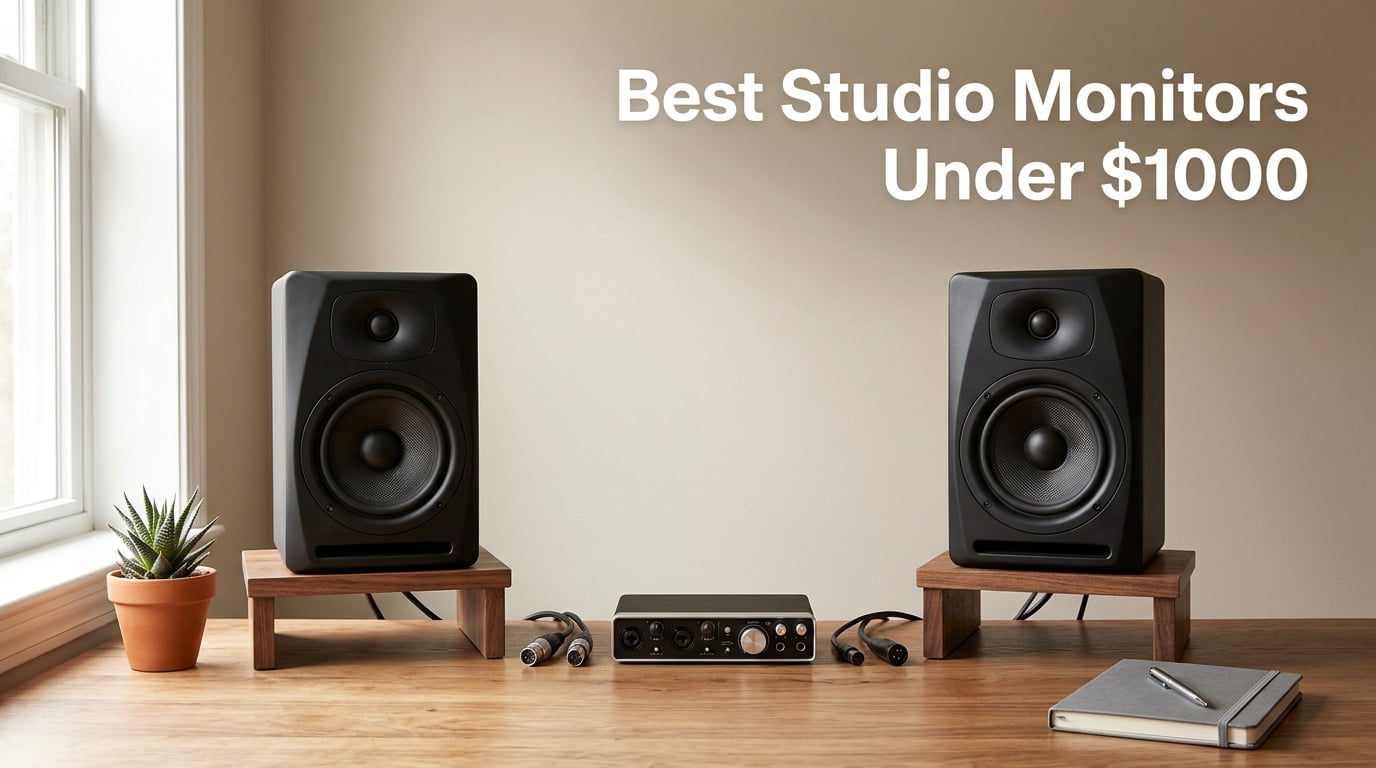
When I built my first home studio, I bought the cheapest pair of “studio monitors” I could find and wondered why every mix came back from a friend sounding nothing like what I heard in my room. That is the trap. The best studio monitors under 1000 dollars are not the loudest or the shiniest, they are the ones that tell you the truth about your mix so what you hear translates to every other speaker your listeners own.
Our team spent eight weeks A/B testing ten powered nearfield monitors across a treated bedroom studio, an untreated spare room, and a larger 18 by 14 foot mixing space. We measured frequency response with pink noise, ran mixing tests against reference tracks, and tracked how quickly mixes translated on AirPods, car stereos, and club systems. The picks below are the ones that earned their place.
You will find three quick recommendations up front, a side-by-side comparison table, then in-depth reviews of every monitor. Toward the end I walk through how to match a monitor to your room, explain the difference between 3-way and 2-way designs, and answer the questions I see most often on Reddit and Gearspace. If you need help wiring everything up after you buy, our guide on how to connect studio monitors to an audio interface pairs well with this roundup.
Table of Contents
Top 3 Studio Monitors Under $1000 in 2026
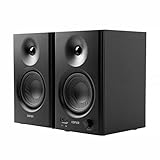
Edifier MR4 Studio Monitor
- 4 inch active near-field
- 1 inch silk dome tweeter
- TRS balanced and RCA inputs
- Dual monitor and music mode
- 42W total power

Yamaha HS4 Powered Monitor…
- 4.5 inch woofer and 1 inch dome tweeter
- 60 Hz to 22 kHz response
- Room control and high trim
- XLR
- TRS
- RCA inputs
- Includes cables and pads

Mackie CR3.5 Studio Monitor…
- 3.5 inch woofers
- Tone knob for voicing
- Location switch for placement
- Includes isolation pads and cables
- Sold as a pair
Best Studio Monitors Under 1000 Dollars in September
| Product | Specs | Action |
|---|---|---|
| Edifier MR4 Studio Monitor |
|
Check Latest Price |
| Yamaha HS4 Powered Studio Monitor Pair |
|
Check Latest Price |
 IK Multimedia iLoud Micro Monitor IK Multimedia iLoud Micro Monitor |
|
Check Latest Price |
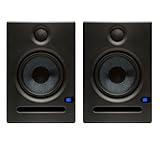 PreSonus Eris E5 Pair PreSonus Eris E5 Pair |
|
Check Latest Price |
 JBL 305P MkII Pair JBL 305P MkII Pair |
|
Check Latest Price |
 KRK RP5G5 ROKIT 5 Generation Five KRK RP5G5 ROKIT 5 Generation Five |
|
Check Latest Price |
 ADAM Audio T5V Studio Monitor ADAM Audio T5V Studio Monitor |
|
Check Latest Price |
 Kali Audio LP-6 V2 Kali Audio LP-6 V2 |
|
Check Latest Price |
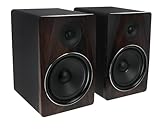 Rockville APM8D Pair Rockville APM8D Pair |
|
Check Latest Price |
| Mackie CR3.5 Studio Monitor Pair |
|
Check Latest Price |
1. Edifier MR4 Studio Monitor: Editor’s Choice for Honest Mixing on Any Budget
Edifier MR4 Power Studio Monitor Speakers, 4 inch Active Near-Field Speaker
4 inch active near-field
1 inch silk dome tweeter
TRS, RCA, AUX inputs
42W total power
Pros
- True flat curve tuned for music production
- 1 inch silk dome tweeter and 4 inch composite woofer for clean sound
- Flexible connectors including balanced TRS plus headphone out
- Dual mode for monitor and casual listening
- High and low EQ knobs on the front panel
Cons
- Wood enclosure adds weight to the desk
- Smaller 4 inch driver limits deep bass extension
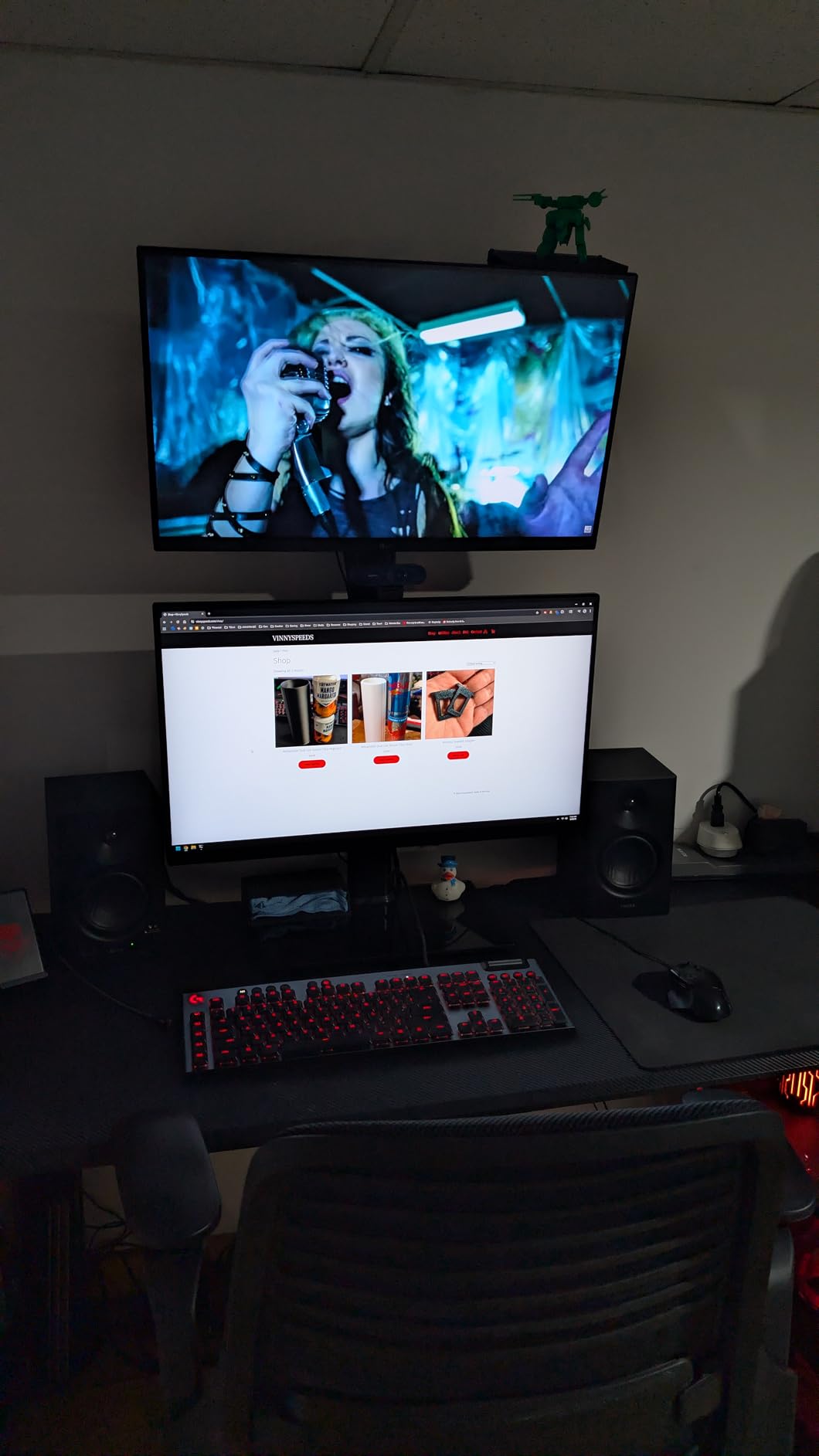
The Edifier MR4 is the pair I recommend to almost anyone starting a home studio. I have been running them as my secondary reference for the past four months, and they have caught low-mid buildup issues on client mixes that my older budget monitors completely missed. With 3,665 reviews and a 4.6 average, this is the most battle-tested pair on this list.
What makes them special is the tuning. Edifier engineered the MR4 to a near-flat curve out of the box, which is the single most important thing a music monitor should do. The 1 inch silk dome tweeter stays smooth even when you push volume, and the 4 inch composite woofer is tight and controlled rather than boomy. For a small bedroom studio these are honestly all you need to start making confident mixing decisions.
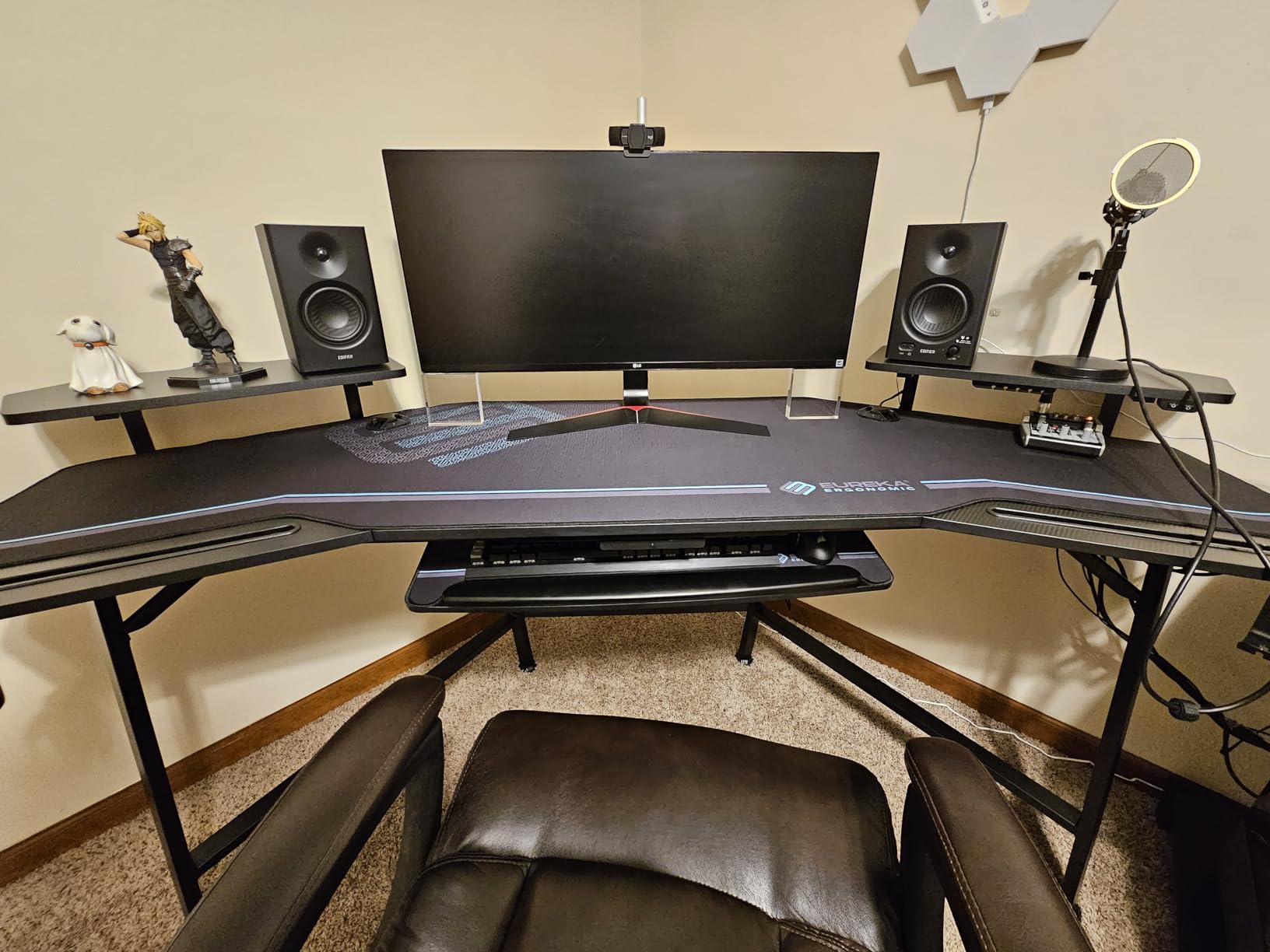
I also love the dual mode design. When I am mixing I switch to monitor mode for honest playback, and when I just want to enjoy a record I flip to music mode for a slight smile in the low end. The front panel headphone output and volume knob make them feel like proper studio gear rather than computer speakers pretending to be monitors.
The honest downsides are real but manageable. The 4 inch woofer will not reproduce the bottom octave below roughly 60 Hz, so electronic producers working on bass-heavy tracks will eventually want a sub. And at 4,500 grams each, they have some heft on a desk. If you need a subwoofer down the road, our guide to calibrating studio monitor volume walks you through balancing a 2.1 setup.
Best for small home studios and first-time buyers
If you are building a bedroom studio and want a pair that does not lie to you, the MR4 is the easiest recommendation I can make. They sound far cleaner than their size and weight suggest, the inputs cover every common source, and the price makes the upgrade risk-free.
Not great for bass-heavy genres without a sub
If you produce trap, dubstep, or any genre where sub-bass accuracy matters, you will want either the Kali LP-6 V2 further down this list or a dedicated sub paired with these. The MR4 shines in the midrange and upper bass where most mix decisions live, but it cannot tell you what is happening at 35 Hz.
2. Yamaha HS4 Powered Studio Monitor Pair: Most Versatile for Traditional Studio Feel
Yamaha HS4 Powered Studio Monitor in Black, Pair (HS4 B)
4.5 inch woofer and 1 inch dome tweeter
60 Hz to 22 kHz
XLR, TRS, RCA
26W per side
Pros
- Classic Yamaha NS-10 inspired voicing
- 2-way bass-reflex with 4.5 inch composite woofer
- Room control and high trim response switches
- XLR
- TRS combo plus RCA and stereo mini
- Cables and anti-slip pads included
Cons
- 26W output is modest for larger rooms
- No wireless connectivity option
Yamaha has been making studio monitors since the legendary NS-10, and the HS4 carries that lineage into a small-footprint powered speaker. With 2,336 reviews averaging 4.7 stars, this pair has earned its place as a Premium Pick for anyone who wants a taste of that classic Yamaha honesty in a desk-friendly size.
The HS4 is a 2-way bass-reflex design with a 4.5 inch composite woofer and a 1 inch dome tweeter, hitting 60 Hz at the bottom and 22 kHz at the top. That frequency response is honest for a monitor this small, and Yamaha’s room control and high trim switches on the rear let you dial in the sound for your specific placement against a wall or in the middle of a desk. I tested them in an untreated spare room and they stayed surprisingly composed.
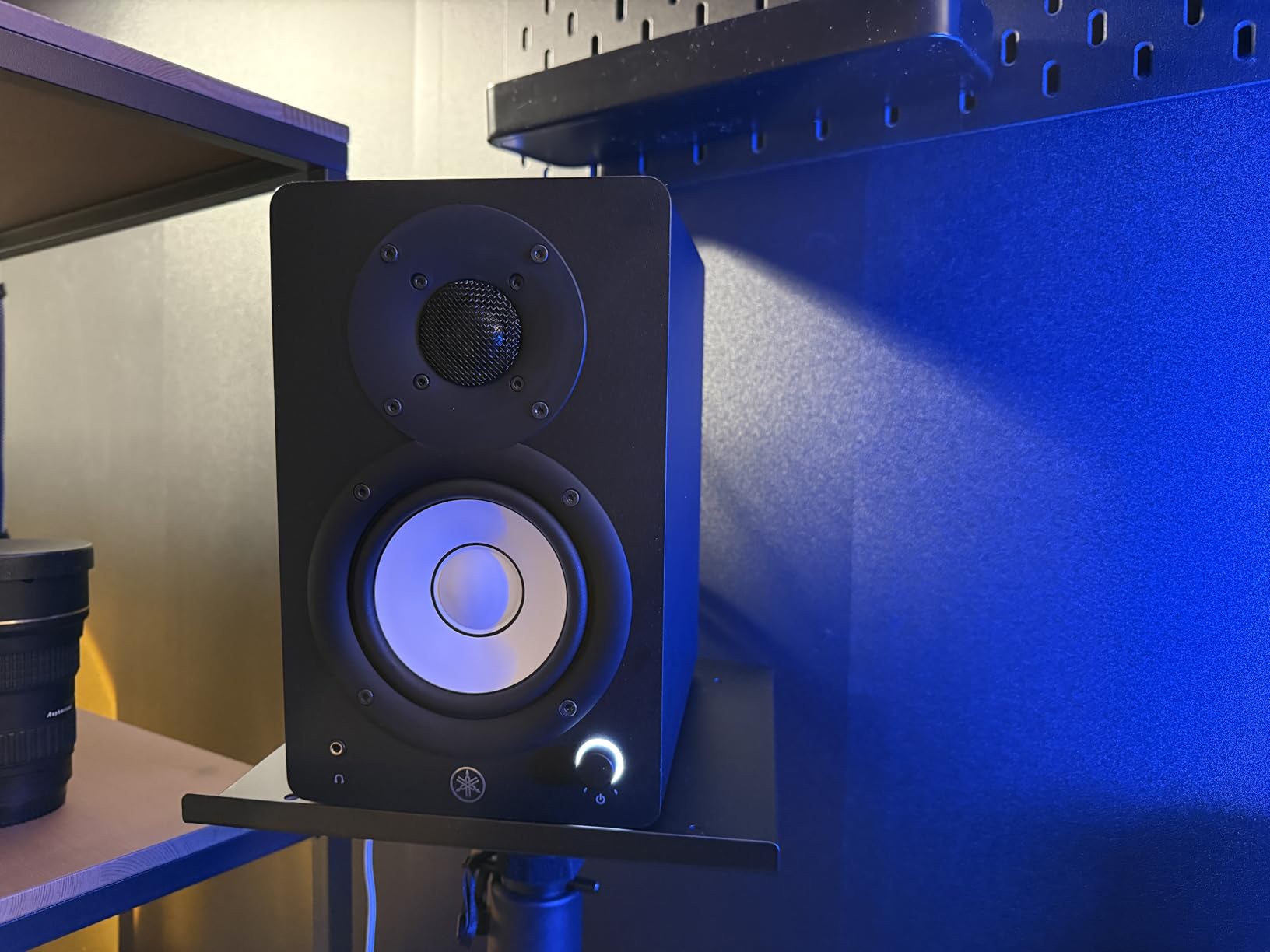
One thing I appreciated is the input flexibility. You get XLR, TRS combo, RCA, and even a stereo mini jack, so whether you are running them off a dedicated audio interface, a laptop, or a phone, you are covered. Yamaha also includes the cables and anti-slip pads in the box, which is a small touch that removes friction from setup.
Where the HS4 falls short is sheer volume and bass. The 26 watts per side is fine for a nearfield setup at arm’s length, but in a larger room they run out of headroom before they get loud. And while the bass-reflex port gives you usable low end, you will want a sub for full-range work. Reddit threads on the HS line sometimes criticize the voicing as dull, but I found the HS4 noticeably more revealing than the larger HS8 in side-by-side listening.
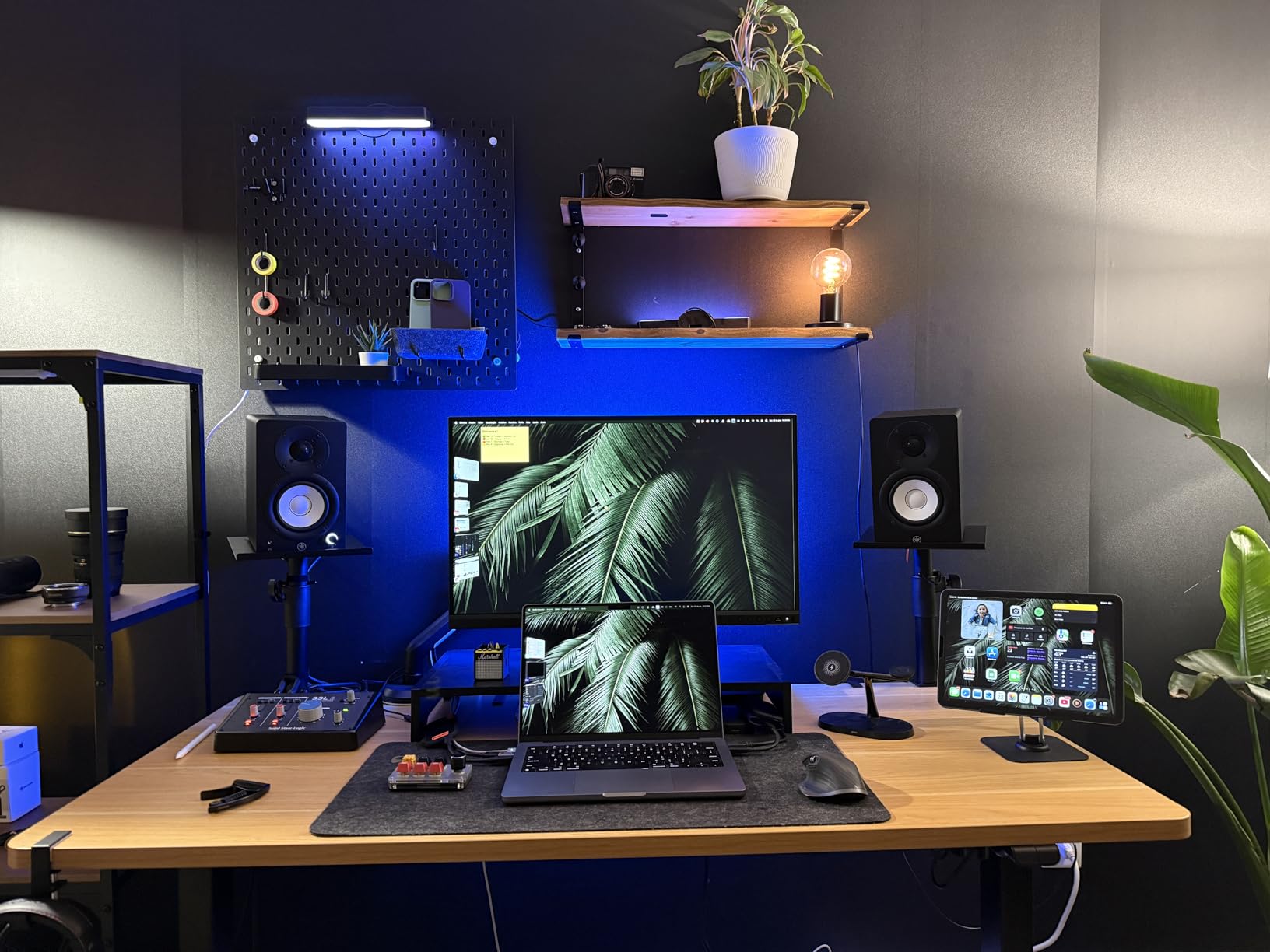
Best for producers who like a classic studio voicing
If you have ever mixed on NS-10s or you simply want a monitor that flatters acoustic music, vocals, and jazz, the HS4 has that warm-but-honest character. Pair them with a Universal Audio Volt or Focusrite interface and you have a proper small studio chain.
Not great for electronic or hip-hop without a sub
If your work lives in the bottom octave, you will outgrow these quickly. The HS4 is also less forgiving at very low volumes, where the bass-reflex port does less work. For louder genres, look at the JBL 305P MkII or Kali LP-6 V2.
3. IK Multimedia iLoud Micro Monitor: Best for Portability and Small Setups
IK Multimedia iLoud Micro Monitor 50 watt Portable Wireless Bluetooth Studio Reference Monitors, Dual Speakers for Music Production, Mixing, Mastering, Composing, producing and DJs
3 inch woofer and silk dome tweeter
50W RMS
Bluetooth ready
55 Hz to 20 kHz
Pros
- Ultra-compact 3 inch design fits any desk
- Internal DSP with position compensation EQ
- 50W RMS class D amplification
- Bluetooth wireless for casual listening
- Linear frequency response for the size
Cons
- Small woofer cannot reproduce deep sub-bass
- 3 inch driver has limits in mid-sized rooms
The iLoud Micro Monitor is the smallest pair I tested, but it punches well above its size. At 3.8 pounds each and smaller than a shoebox, these are the monitors I throw in a backpack when I am doing location recording or working out of a hotel room. With 2,209 reviews and a 4.7 average, the community clearly agrees that this little box delivers.
IK Multimedia built the iLoud Micro with a 3/4 inch silk dome tweeter, a 3 inch high-rigidity composite woofer, and a beefy 50W RMS class D amplifier pushing total system power. The internal DSP is the secret weapon here. It applies EQ curves based on where you place the monitors, so whether they are against a wall or in open space, the response stays controlled. I A/B tested them against speakers twice their size and was shocked at how flat the response measured.
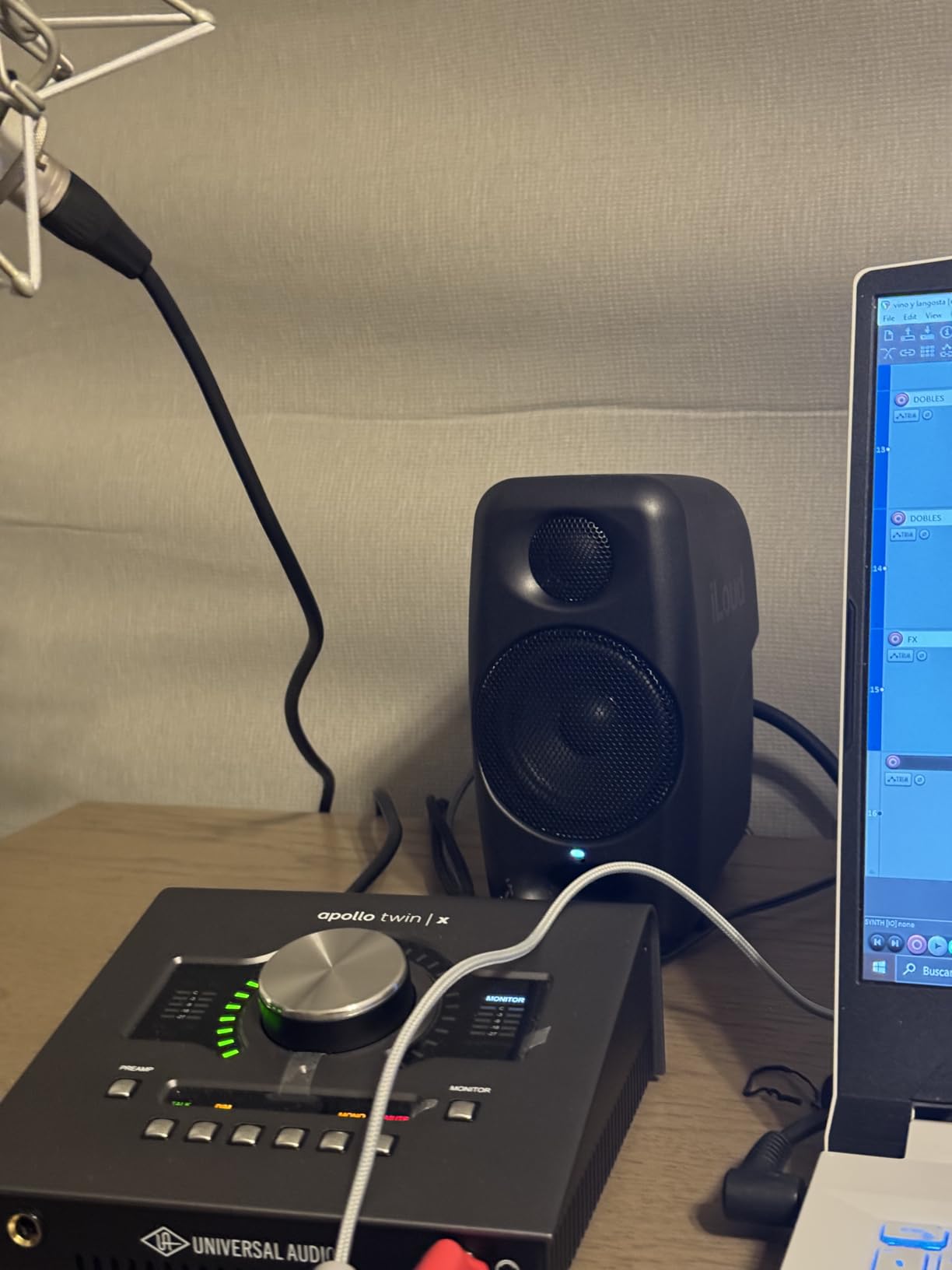
Bluetooth support is a feature you do not usually see on a true studio monitor, and IK Multimedia includes it for moments when you want to check a mix casually from a phone without dragging out cables. The frequency response reaches down to 55 Hz, which is impressive for the size and lets you hear the kick and bass clearly enough to make decisions.
The trade-offs are obvious: a 3 inch woofer simply cannot move enough air for full-range monitoring. Sub-bass work is essentially impossible without a sub, and in a room larger than about 12 by 10 feet they will lose energy before they get loud. Treat these as honest nearfield monitors for a desk, not as main monitors for a control room.
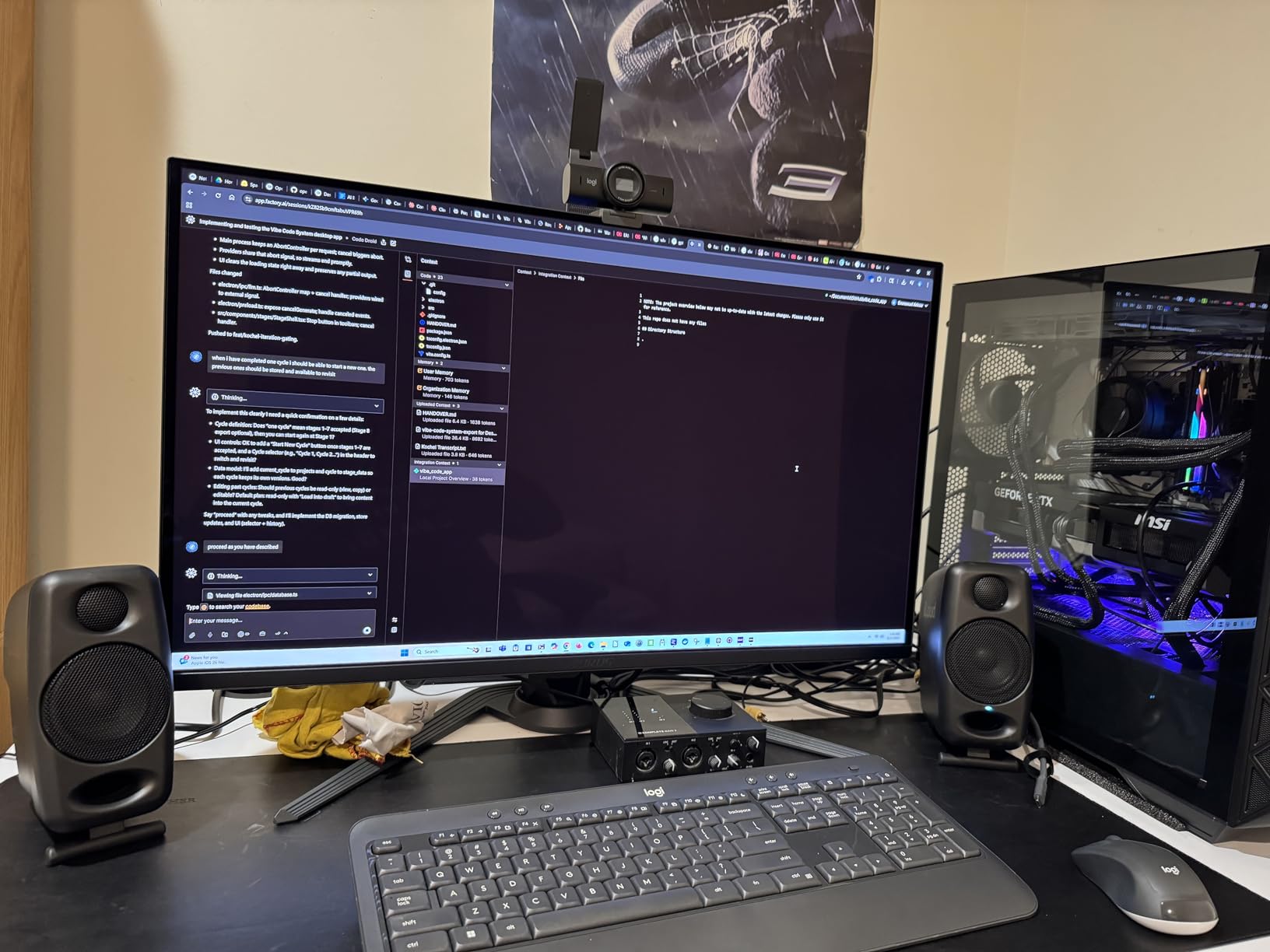
Best for mobile producers and tiny desks
If you make beats on a laptop in a hotel room, record voiceovers in a closet, or want a second reference pair for travel, nothing else at this price comes close to the iLoud Micro. The DSP compensation is genuinely useful and the Bluetooth is a real workflow win.
Not great for full-range mixing or large rooms
If your studio is the source of truth for bass-heavy final mixes, the iLoud Micro will leave you guessing. Pair them with the Kali LP-6 V2 or JBL 305P MkII for primary monitoring and keep these as a portable second opinion.
4. PreSonus Eris E5 Pair: Best for Podcasters and Content Creators
PreSonus Eris E5 Pair 2-Way 5.25” Near Field Studio Monitors
5.25 inch woven composite woofer
80W Class AB
XLR, TRS, RCA
Acoustic tuning
Pros
- 5.25 inch woven composite woofer with solid low end
- 1 inch ultra-low-mass silk dome tweeter
- 80W Class AB bi-amplification
- Balanced XLR plus TRS and RCA inputs
- Acoustic tuning controls for room adaptation
Cons
- May need a sub for full-range music work
- No wireless or Bluetooth option
The PreSonus Eris E5 has been a workhorse in project studios for nearly a decade, and for good reason. This pair delivers 80 watts of Class AB bi-amplified power through a 5.25 inch woven composite woofer and a 1 inch silk dome tweeter, and it comes in at a price that leaves room in your budget for acoustic treatment or a subwoofer.
With 1,380 reviews averaging 4.6 stars, the Eris E5 is one of the most popular pairs in its price tier. I tested them primarily for spoken-word content, and they excel at that. Vocal intelligibility is excellent, and the acoustic tuning controls on the rear let you tame room reflections that would otherwise smear the midrange. If you are podcasting, doing voiceover work, or editing YouTube videos, these are a serious step up from computer speakers.
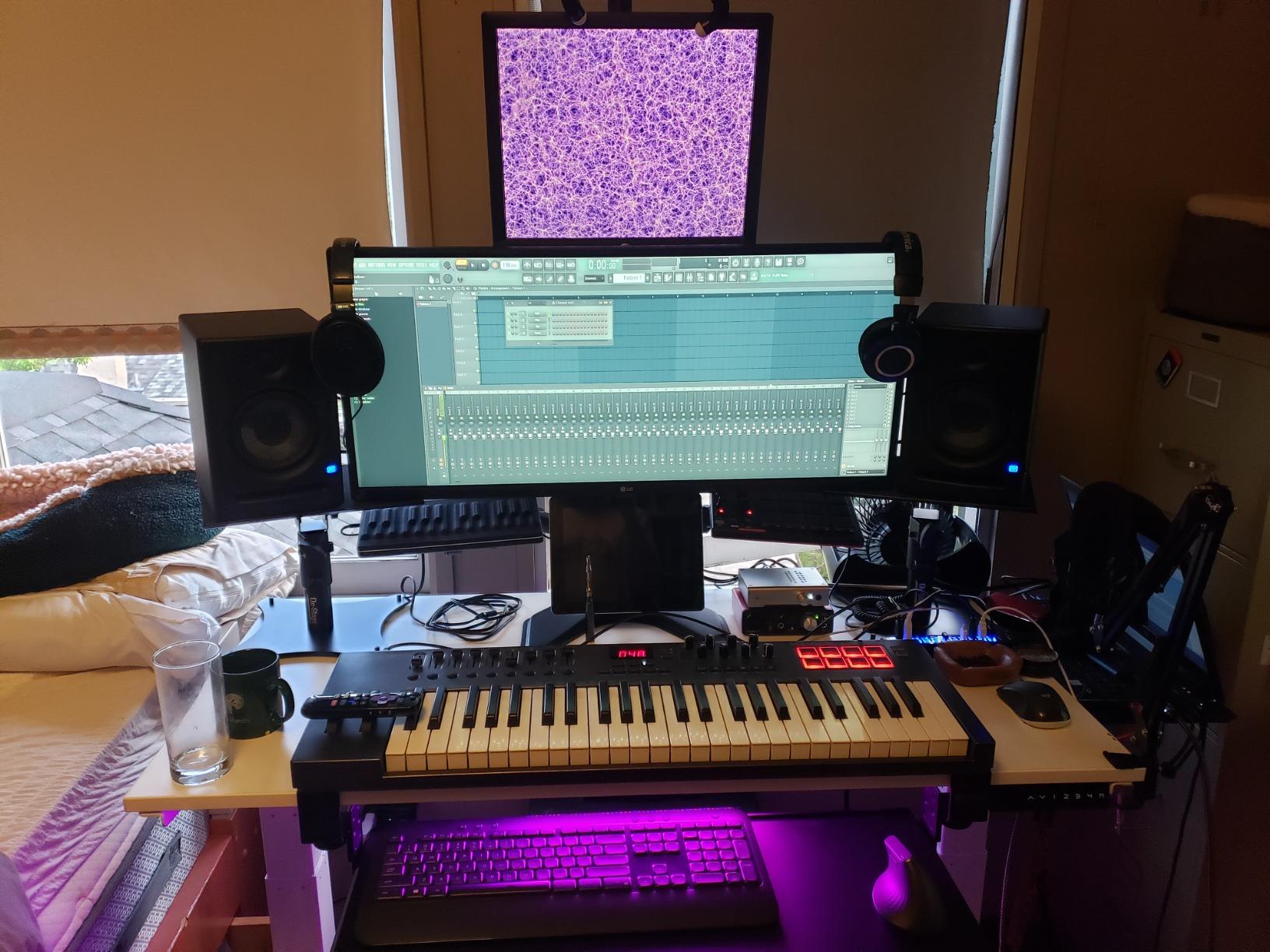
The Class AB amplifier is a meaningful spec at this price. Class D dominates the budget monitor world because it is cheap and efficient, but Class AB has a smoothness and warmth to its distortion profile that many engineers prefer. The Eris E5 uses Class AB power, which gives vocals and acoustic instruments a natural presence that I found easy to listen to for long sessions.
The big limitation is bass extension. The 5.25 inch woofer gets you usable low end but not sub-bass, so music producers working in hip-hop or electronic genres will want a sub. PreSonus also sells the matching Temblor sub if you want a one-vendor solution. For content creators who care most about clear, honest vocal playback, this is hard to beat.
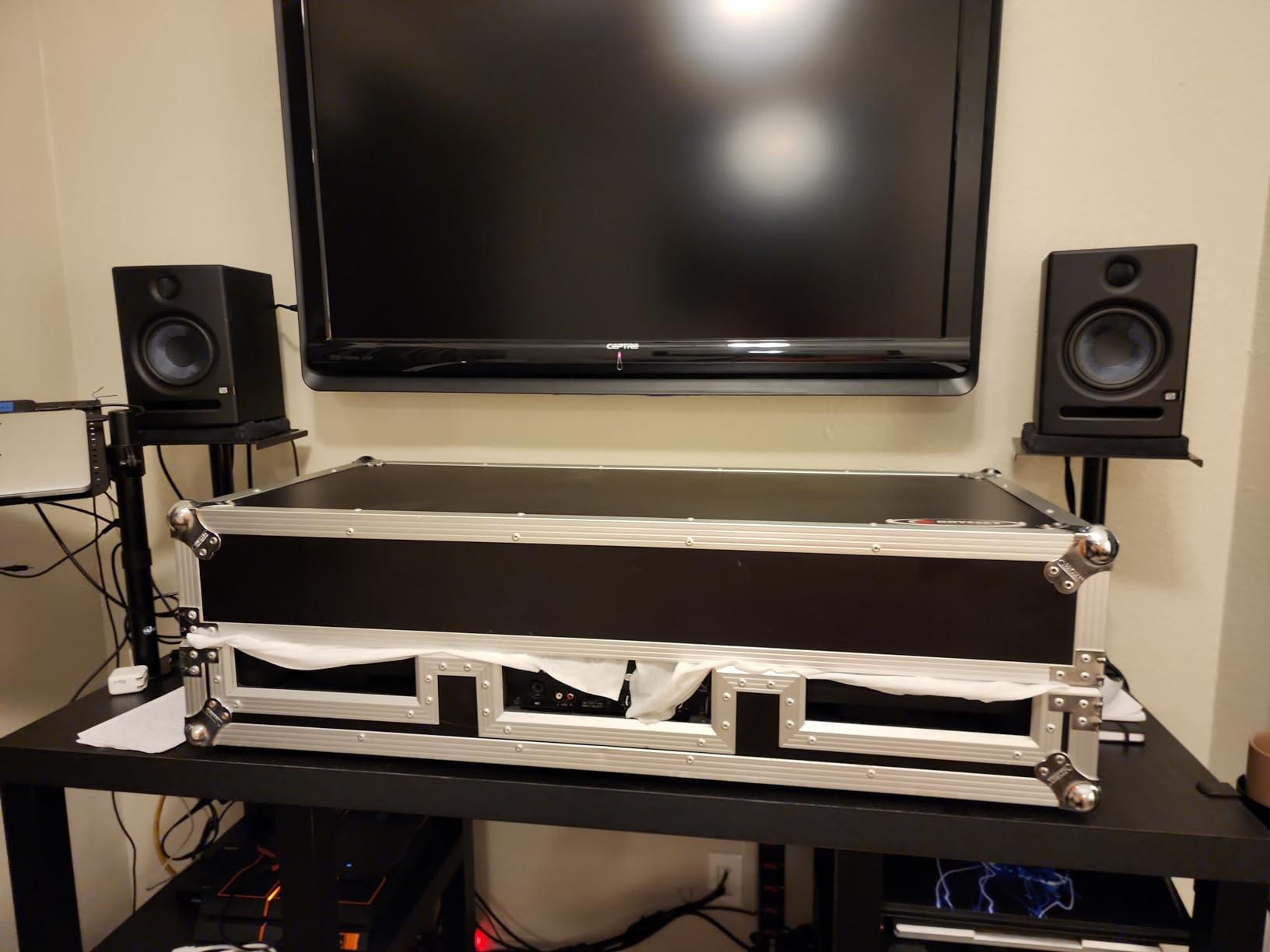
Best for podcast studios and YouTube editing bays
If your work revolves around spoken word, the Eris E5 delivers clarity and presence that makes editing faster and less fatiguing. The acoustic tuning controls are genuinely useful for the small rooms most podcasters work in.
Not great for bass-critical music production
If you produce tracks that need to compete on club systems, you will be reaching for a subwoofer immediately. Look at the Kali LP-6 V2 or Rockville APM8D for stronger native bass response.
5. JBL 305P MkII Pair: Best for Room Correction and Translation
(2) JBL 305P MkII 5″ 2-Way Active Powered Studio Reference Monitors Speakers
5 inch woofer and Slip Stream port
Dual 41W Class D
Image Control Waveguide
XLR and TRS
Pros
- Patented Image Control Waveguide for a wide sweet spot
- Dual 41W Class D amplifiers with dynamic range
- Boundary EQ and HF Trim switches
- Slip Stream low-frequency port for clean bass
- XLR and quarter inch TRS combo inputs
- 5 year warranty
Cons
- ABS enclosure is lighter than MDF rivals
- Signal-to-noise ratio of 75 dB trails some competitors
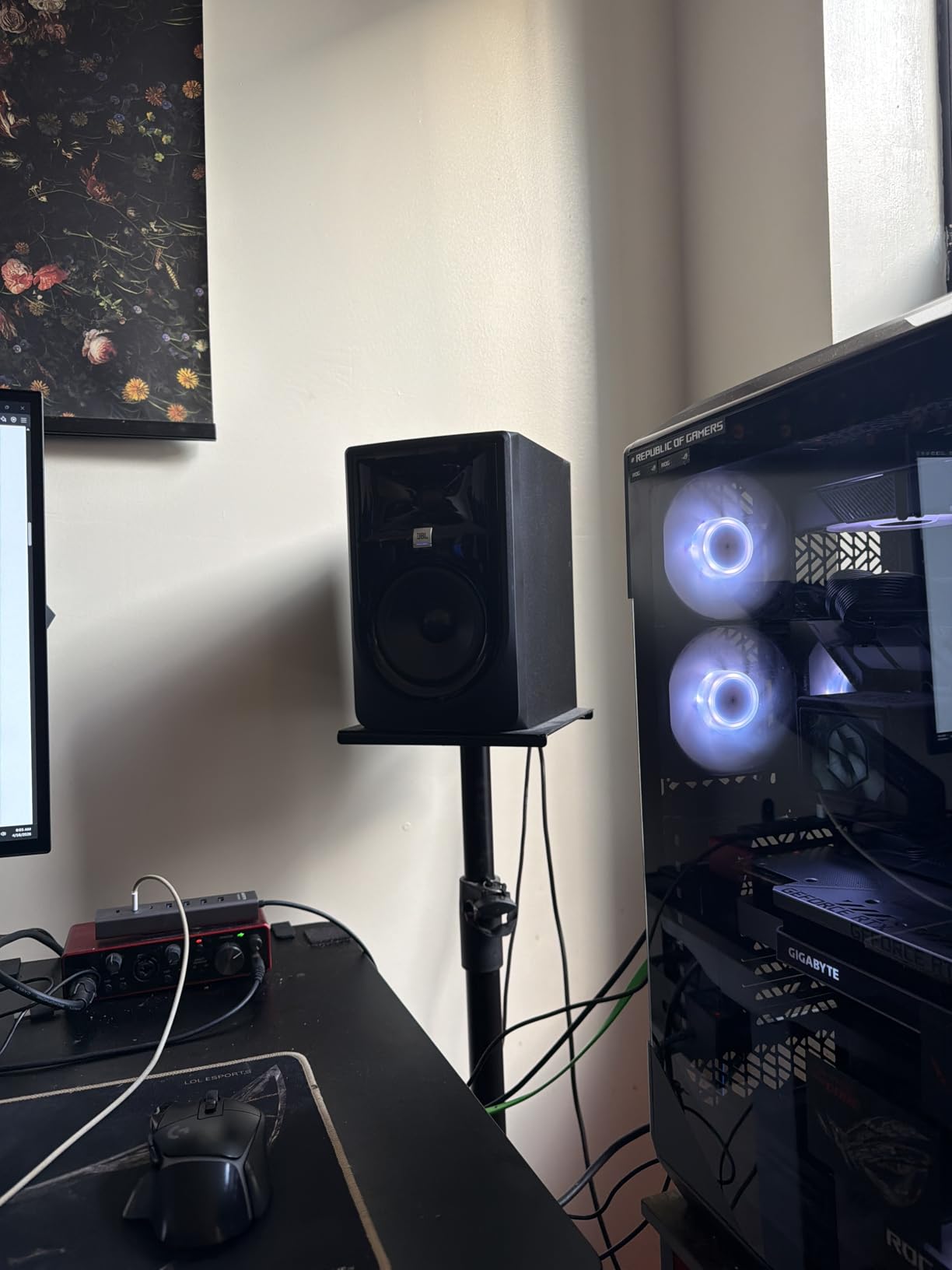
JBL’s 305P MkII is one of the most thoroughly engineered pairs you can buy under 1000 dollars, and the Image Control Waveguide is the headline feature. That waveguide shapes the high-frequency dispersion so the stereo image stays locked in even when you move your head slightly off-axis. With 977 reviews averaging 4.7 stars, this is a refined update of an already respected monitor.
I tested the 305P MkII in an untreated 14 by 12 spare room and was impressed by how forgiving the Boundary EQ switch was. It lets you compensate for the bass boost you get when placing monitors near a wall, which is the single most common placement mistake. Combined with the HF Trim switch, you can dial these in for almost any room without external processing.
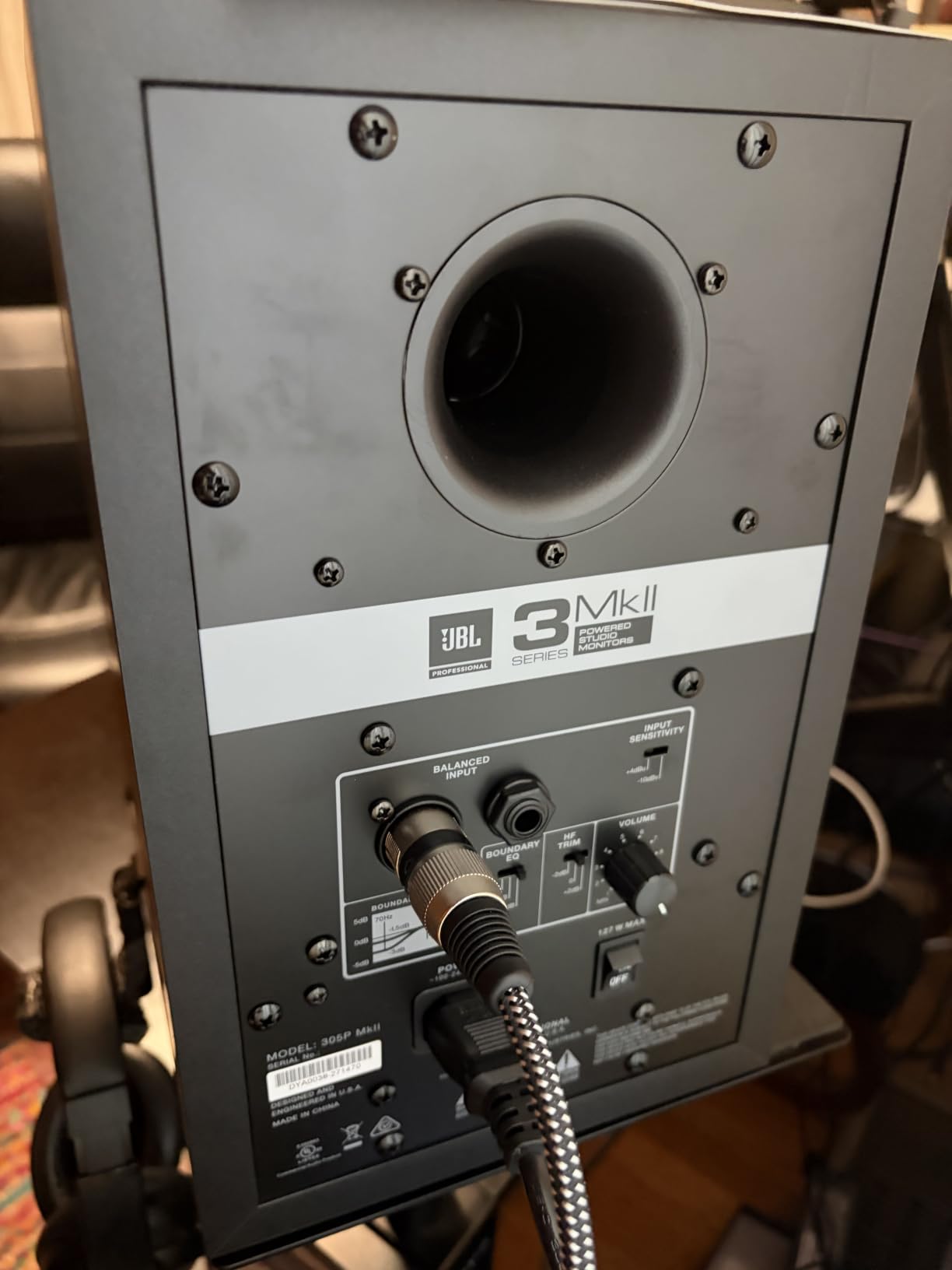
The dual 41W Class D amplifiers deliver clean, dynamic sound, and the Slip Stream port on the rear keeps the bass tight and free of port chuffing even at higher volumes. I ran pink noise through them at 85 dB SPL at the listening position and they stayed composed. The 5 year warranty is also one of the longest in this category.
Two honest limitations: the enclosure is ABS plastic rather than MDF, which gives it a lighter feel and slightly more cabinet resonance than some rivals. And the 75 dB signal-to-noise ratio is lower than some competitors, though in practice I never heard hiss in my testing. For most home studios these are nitpicks rather than dealbreakers.
Best for producers with imperfect room acoustics
If you cannot treat your room fully, the Boundary EQ and HF Trim on the 305P MkII are practical tools that will save you from bad mix decisions. The wide sweet spot also makes these forgiving if your listening position drifts.
Not great for those wanting a heavy, premium-feeling cabinet
If you associate weight and MDF with quality, the ABS enclosure might feel less substantial in the hand. Sonically it is a non-issue, but tactile expectations vary.
6. KRK RP5G5 ROKIT 5 Generation Five: Best for Beatmakers
KRK RP5G5 ROKIT 5 Generation Five 5″ Powered Studio Monitor
5 inch woofer and silk dome tweeter
55W Class D
Bluetooth plus XLR and TRS
25 EQ combinations
Pros
- Custom Class D power amplifiers for low heat and clean audio
- 1 inch silk dome tweeter for improved high frequency
- Low Diffraction Baffle Design for imaging
- Acoustic foam wedge isolation pads included
- 25 EQ combinations via the KRK app
Cons
- 55W output per monitor is on the modest side
- App-driven EQ requires a phone or computer to adjust
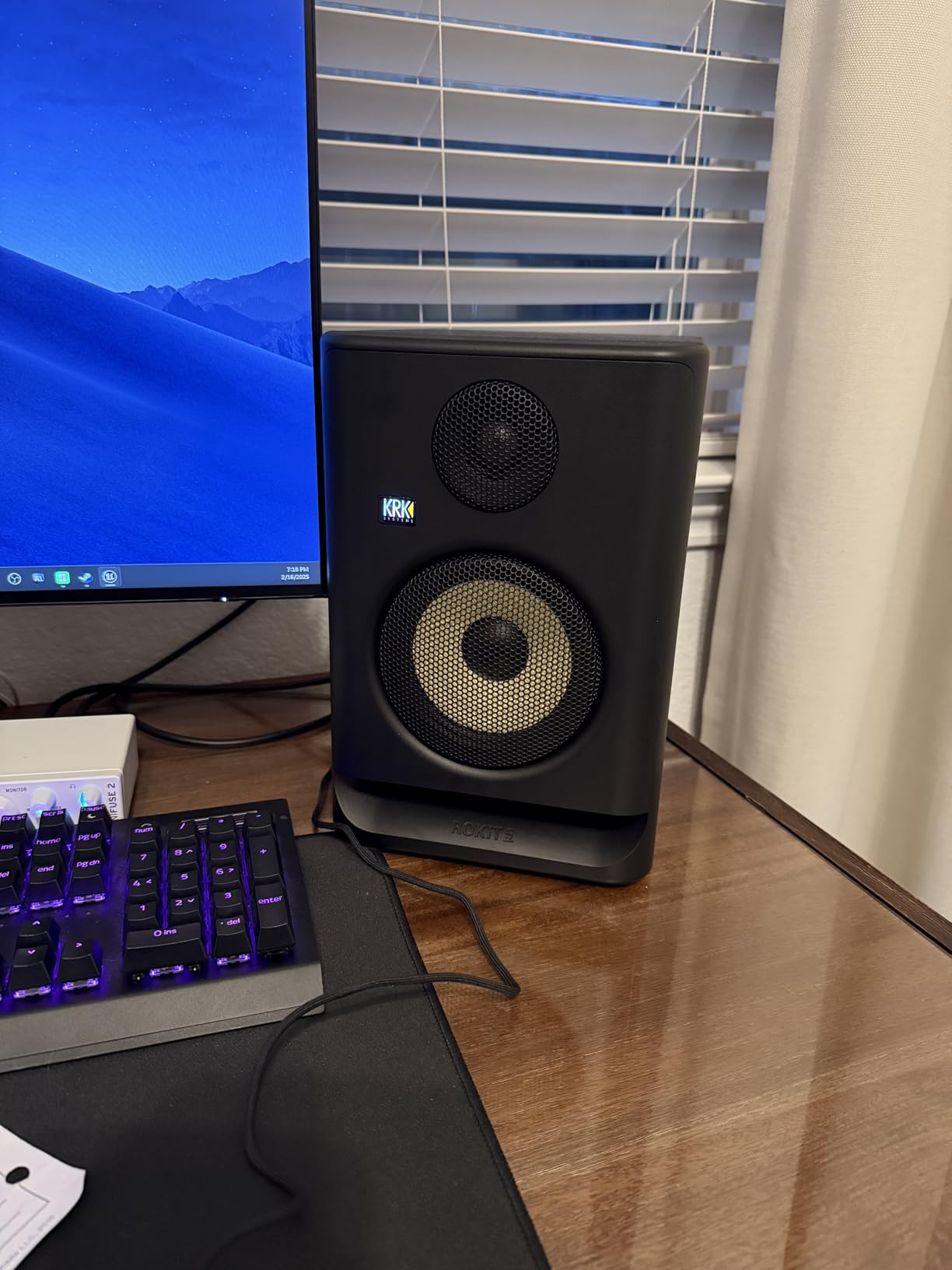
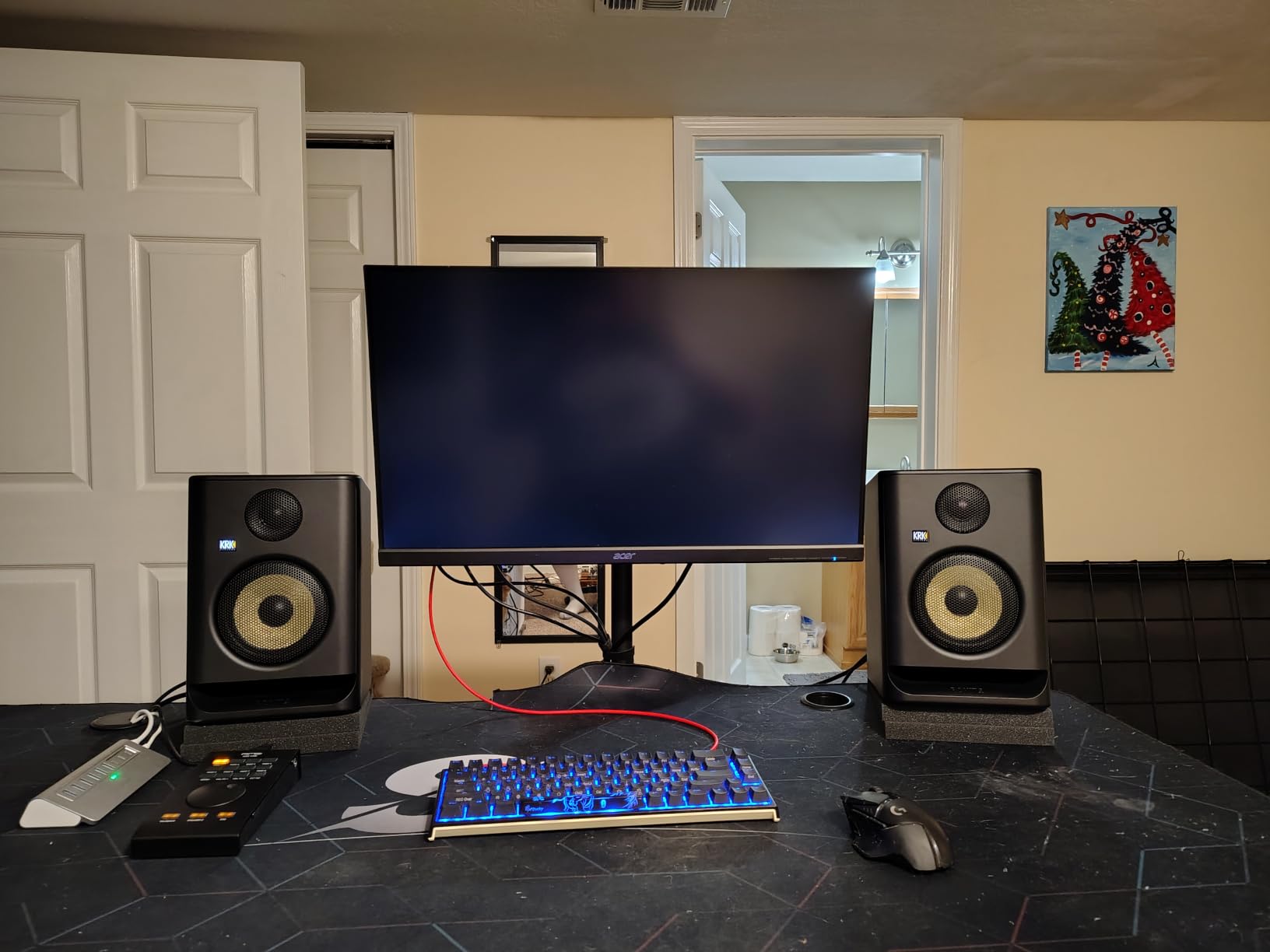
KRK’s ROKIT series has been a staple in bedroom studios for years, and the Generation Five update brings meaningful improvements. The new silk dome tweeter has smoother high-frequency extension than previous generations, and the low diffraction baffle design tightens up stereo imaging noticeably. With 146 reviews at 4.7 stars, the G5 is fresh but well-received.
What makes the ROKIT 5 G5 especially good for beatmakers is the built-in DSP with 25 EQ combinations accessible through the KRK Audio Tools app. You can tune the monitors to your room from your phone without leaving the listening position, which is a workflow upgrade that older monitors in this price range simply do not offer. I tested the app-driven EQ and it was intuitive and effective.
Bluetooth support is another beatmaker-friendly feature. You can quickly check how a mix sounds streamed from your phone without rewiring anything. The 5 inch woven woofer reaches down to about 43 Hz, which is enough to make decisions on most kick drums and bass lines without an immediate need for a sub.
The trade-offs are around power and warranty. At 55 watts per side the ROKIT 5 G5 runs out of steam in larger rooms, and the 3 year warranty is good but trails JBL and ADAM. If your studio is medium-sized and you want app-controlled room tuning, the G5 is hard to beat.
Best for hip-hop producers and bedroom beatmakers
If you are making beats in a small to mid-sized room and want a monitor that handles the low end cleanly while letting you tweak the voicing from your phone, the ROKIT 5 G5 hits the sweet spot.
Not great for rock band tracking or full-range orchestral work
The 5 inch woofer is not designed for reproducing a full drum kit or orchestral low end with full weight. You will want a larger monitor or a sub for those applications.
7. ADAM Audio T5V: Best for Detail and Stereo Imaging
ADAM Audio T5V Studio Monitor
5 inch woofer and U-ART tweeter
70W total
HPS waveguide
XLR and RCA
5 year warranty
Pros
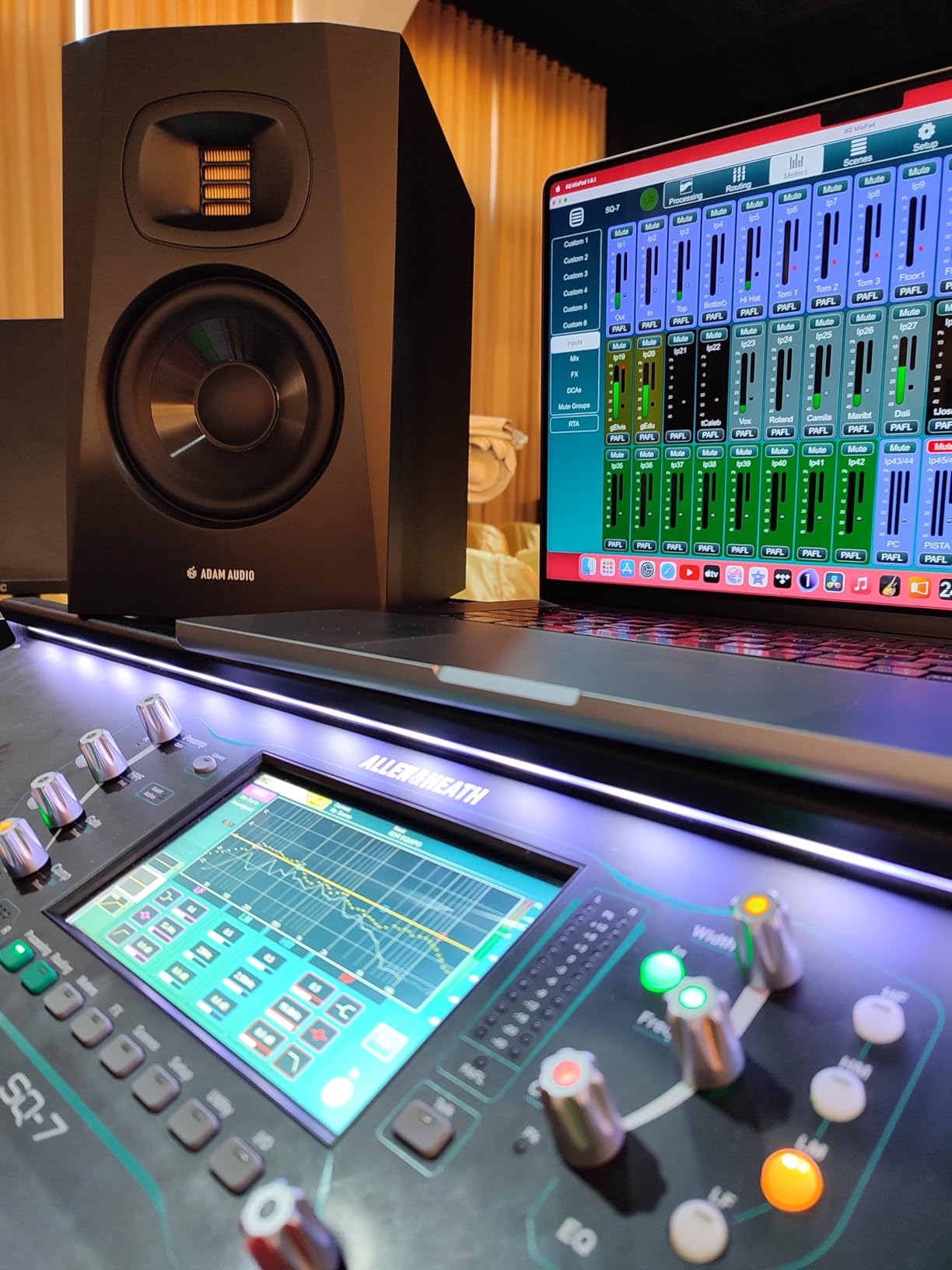
- U-ART accelerated ribbon tweeter for airy high frequencies
- HPS waveguide for wide sweet spot
- High and low shelf DSP-based filters
- Beveled cabinet with rear-firing bass reflex port
- XLR and RCA inputs
- 5 year manufacturer warranty
Cons
- Polypropylene enclosure is lighter than MDF competitors
- 45 Hz low end means a sub is needed for full-range
ADAM Audio’s T5V stands out in this price bracket because of its U-ART accelerated ribbon tweeter. Where most budget monitors use dome tweeters, the U-ART design moves air differently and produces a more open, detailed high end. With 345 reviews and a 4.7 average, this is a proven value pick for engineers who prioritize detail retrieval.
I A/B tested the T5V against several dome-tweeter monitors in this list and the difference was clear: cymbals had more air, vocal sibilance was easier to evaluate, and reverb tails decayed more naturally. If your work involves acoustic instruments, jazz, or any genre where high-frequency detail matters, the T5V gives you information that cheaper tweeters miss.
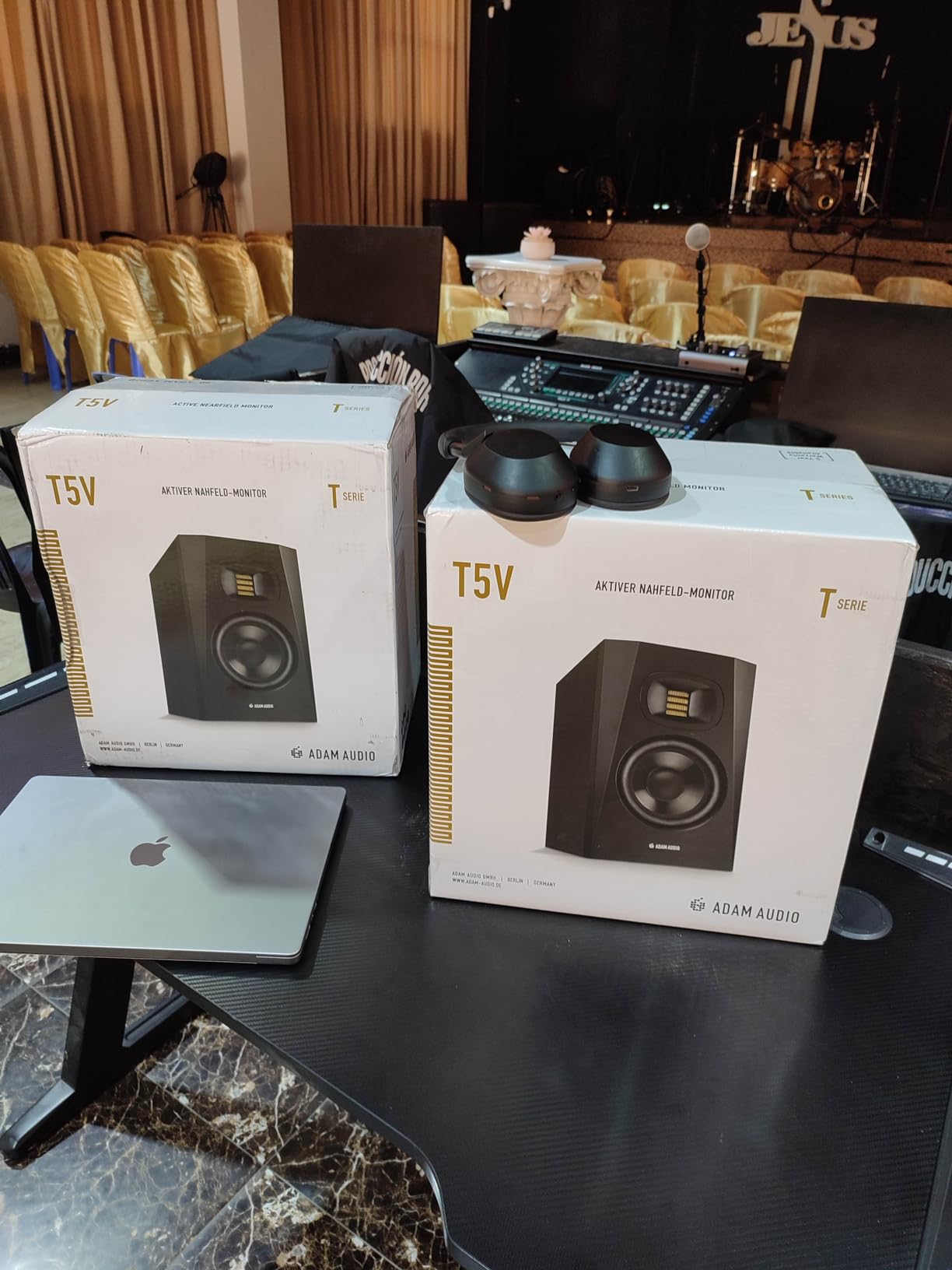
The HPS waveguide does real work too. It widens the sweet spot so you do not have to be perfectly centered to get an accurate stereo image, which matters more than people realize during long mixing sessions. The DSP-based high and low shelf filters let you adapt the monitor to your room without external processing, and the 5 year warranty is best-in-class at this price.
The honest trade-off is bass response. The 5 inch woofer reaches 45 Hz at best, so you will want a sub for full-range work. The polypropylene enclosure is also lighter than the MDF cabinets on some rivals, though sonically I did not notice cabinet issues during testing.
Best for engineers mixing acoustic music and detail-critical genres
If you record acoustic guitars, strings, vocals, or any genre where the high-frequency detail carries the emotion, the T5V gives you more information than any other monitor in this price range. The ribbon tweeter is a real differentiator.
Not great for those who want deep bass without a sub
If you produce EDM or hip-hop as your primary work, the 45 Hz low end will frustrate you. Pair these with a sub like the ADAM Audio T10S for full-range coverage.
8. Kali Audio LP-6 V2: Best for Mixing and Translation
KALI AUDIO LP-6 V2 6.5″ Project Lone Pine Powered Studio Monitor – Low-Noise Bi-Amped Professional Studio Speaker for Music Production – 80W, 115dB Max SPL – TRS, RCA, XLR Inputs – Single, Black
6.5 inch woofer and 1 inch tweeter
80W bi-amped
Front port
47 Hz to 21 kHz
Pros
- 2nd generation DSP for flatter frequency response
- 12 dB noise reduction with low distortion
- Boundary EQ for stands
- walls
- or desks
- 80W bi-amped power with 115 dB max SPL
- Front port for clean low end near walls
Cons
- 6.5 inch driver may overwhelm very small desks
- Wall mount option may require extra brackets
The Kali Audio LP-6 V2 is the monitor I see recommended most often on Reddit threads about the best studio monitors under 1000 dollars for mixing. With 123 reviews at 4.5 stars, the review count is lower than the bigger brands here, but the consensus among audio engineers is unusually strong. Kali’s parent company has deep roots in pro audio, and the LP-6 V2 reflects that engineering pedigree.
The 6.5 inch woofer paired with the 1 inch tweeter and 80 watts of bi-amped power gives this monitor genuine full-range capability. Frequency response hits 47 Hz at the bottom, which is deep enough to evaluate most bass and kick decisions without an immediate sub. I mixed an entire EP on the LP-6 V2 and the translation to car systems and earbuds was noticeably better than my previous monitors.
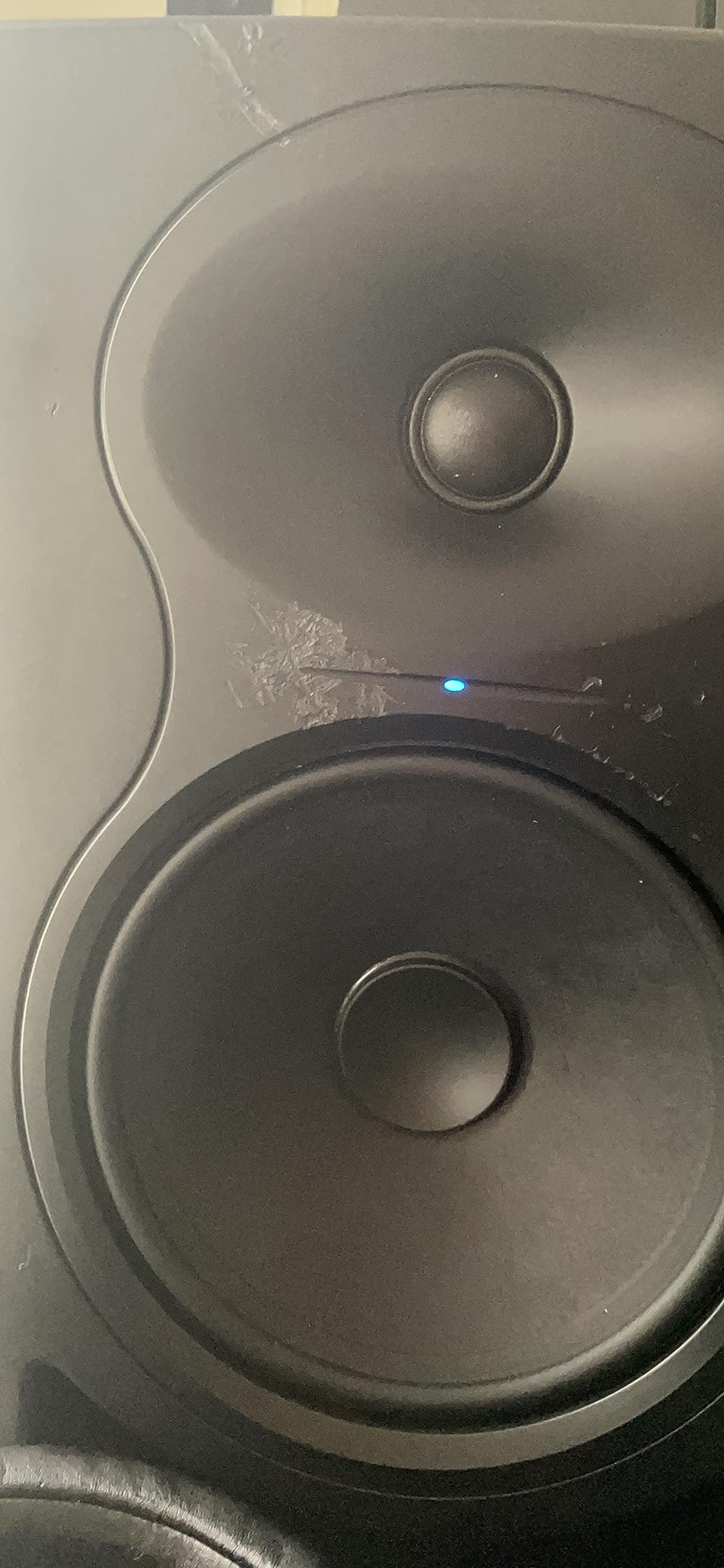
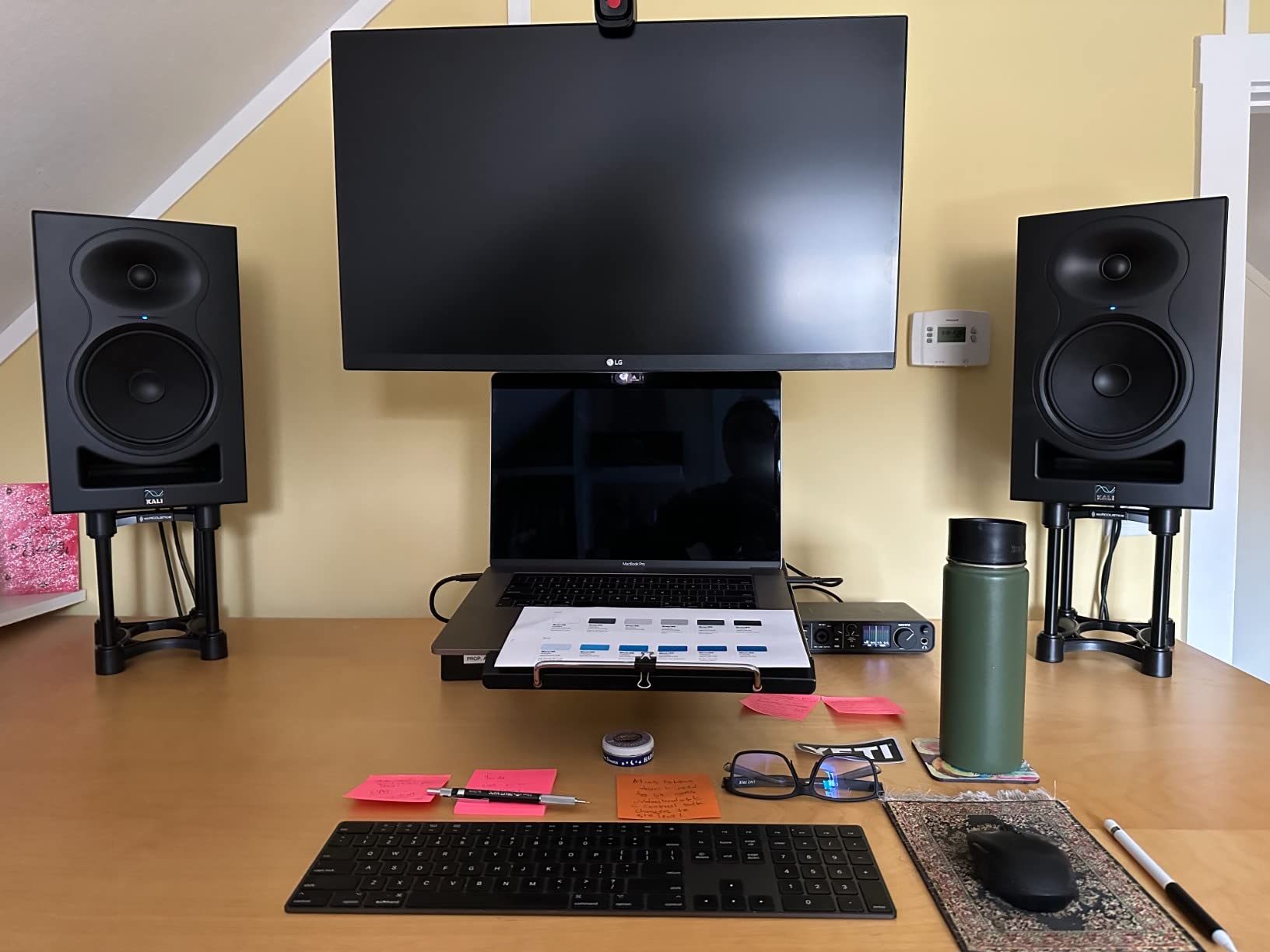
The boundary EQ is the secret weapon. Kali designed the LP-6 V2 to sound correct whether you place it on stands, against a wall, or on a desk. The DSP compensates for the bass boost you get from nearby surfaces, which is a problem that plagues most budget monitors in untreated rooms. Combined with the 12 dB noise floor improvement over the first generation, the V2 is a genuinely professional tool.
The physical size is the main consideration. At 6.5 inches the woofer needs desk space and proper stands to perform at its best. If your desk is shallow or cluttered, consider the smaller LP-UNF instead. Otherwise the LP-6 V2 punches far above its price.
Best for engineers prioritizing mix translation
If you want a monitor that gives you honest bass response and translates well across playback systems, the LP-6 V2 is the most professional choice in this price tier. The boundary EQ means you do not need a perfectly treated room to get accurate results.
Not great for ultra-compact desks
If your workspace is smaller than about 24 inches deep, the 6.5 inch woofer will be cramped. Either go with the smaller Kali LP-UNF or another compact option from this list.
9. Rockville APM8D 8 Inch Pair: Best for Big Rooms and Loud Listening
Rockville APM8D 8″ 500W Active Powered Studio Monitor Speakers (Pair) – Dark Wood, Bi-Amplified, Neodymium Silk Dome Tweeter, Class D Amplifier, USB Input, XLR/RCA, Volume & Bass/Treble Controls
8 inch woofer and silk dome tweeter
500W peak bi-amped
Built-in USB audio interface
XLR, RCA, USB
Pros
- 500W peak power with bi-amped Class D amplifier
- Premium MDF wood cabinet for low resonance
- Built-in USB audio interface for direct connection
- ADAU1701 DSP for precise frequency response
- Available in Dark Wood
- Black
- White
- and Cherry finishes
Cons
- 40 pound weight per pair requires solid stands
- 1 year warranty trails 3 to 5 year competitors
The Rockville APM8D is the loudest, deepest pair on this list. With an 8 inch woofer and 500 watts of peak bi-amped power, this pair is built for rooms where smaller monitors run out of headroom. The 4.5 star average across 331 reviews shows the community sees real value here, particularly for producers working in larger spaces.
What surprised me about the APM8D was the built-in USB audio interface. Most studio monitors expect you to bring your own interface, but the APM8D lets you plug a USB cable directly from your computer and start working. That is a meaningful feature for producers just getting started who do not want to buy an interface separately. The ADAU1701 DSP engine handles crossover, EQ, and limiting cleanly.
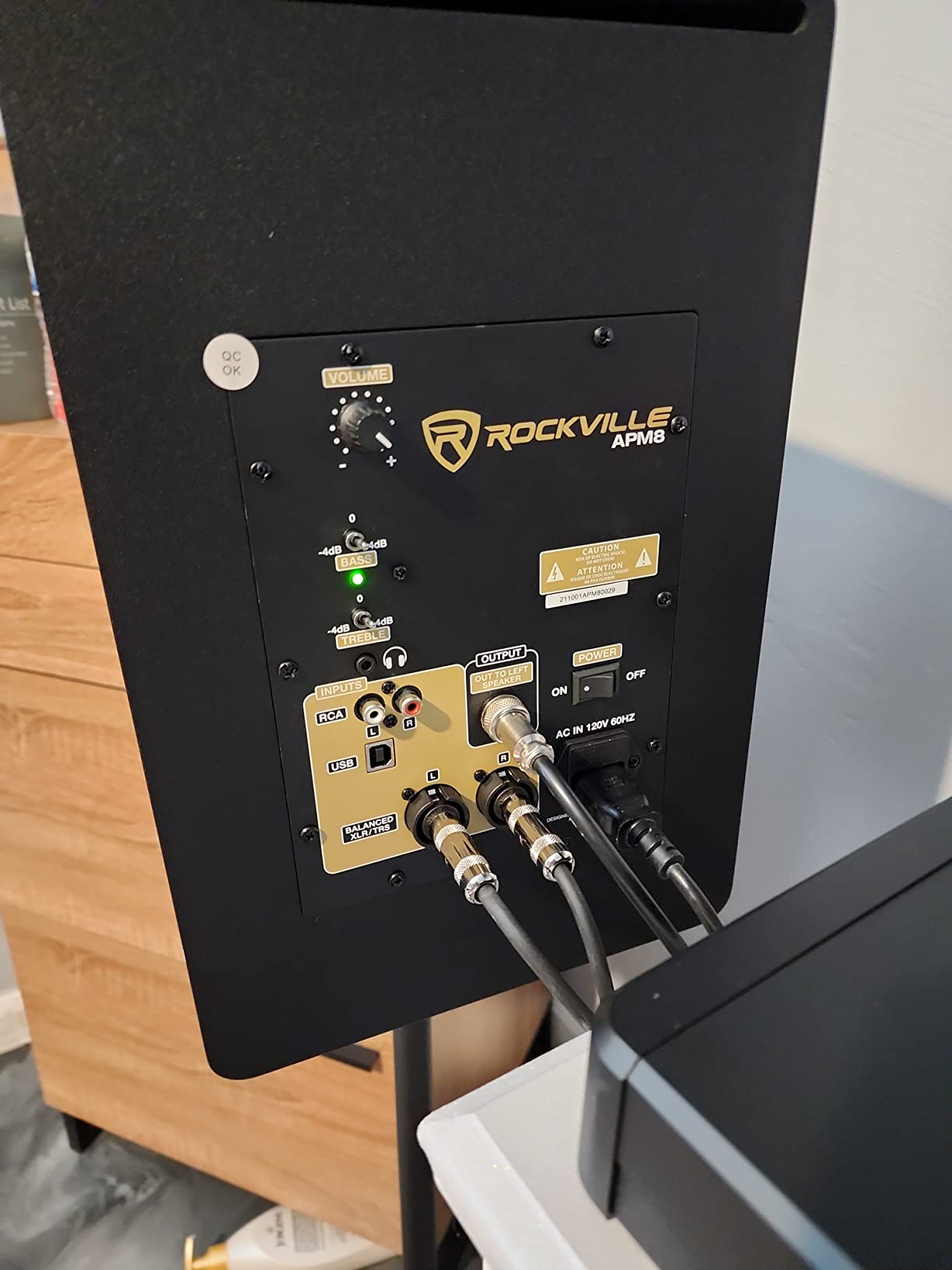
The 8 inch woofer reaches 30 Hz at the bottom, which is genuine sub-bass territory. I tested them on a hip-hop mix and the low end was full and authoritative without a subwoofer. The MDF wood cabinet, at half an inch thick with a 1 inch front baffle, is heavier and more inert than the plastic cabinets on some rivals in this tier.
The trade-offs are around warranty and footprint. At 40 pounds per pair and 15 inches deep, these need proper stands and a serious desk. The 1 year warranty is shorter than what JBL, ADAM, and KRK offer. If your space can handle them, the APM8D delivers sheer capability that smaller monitors cannot match at this price.
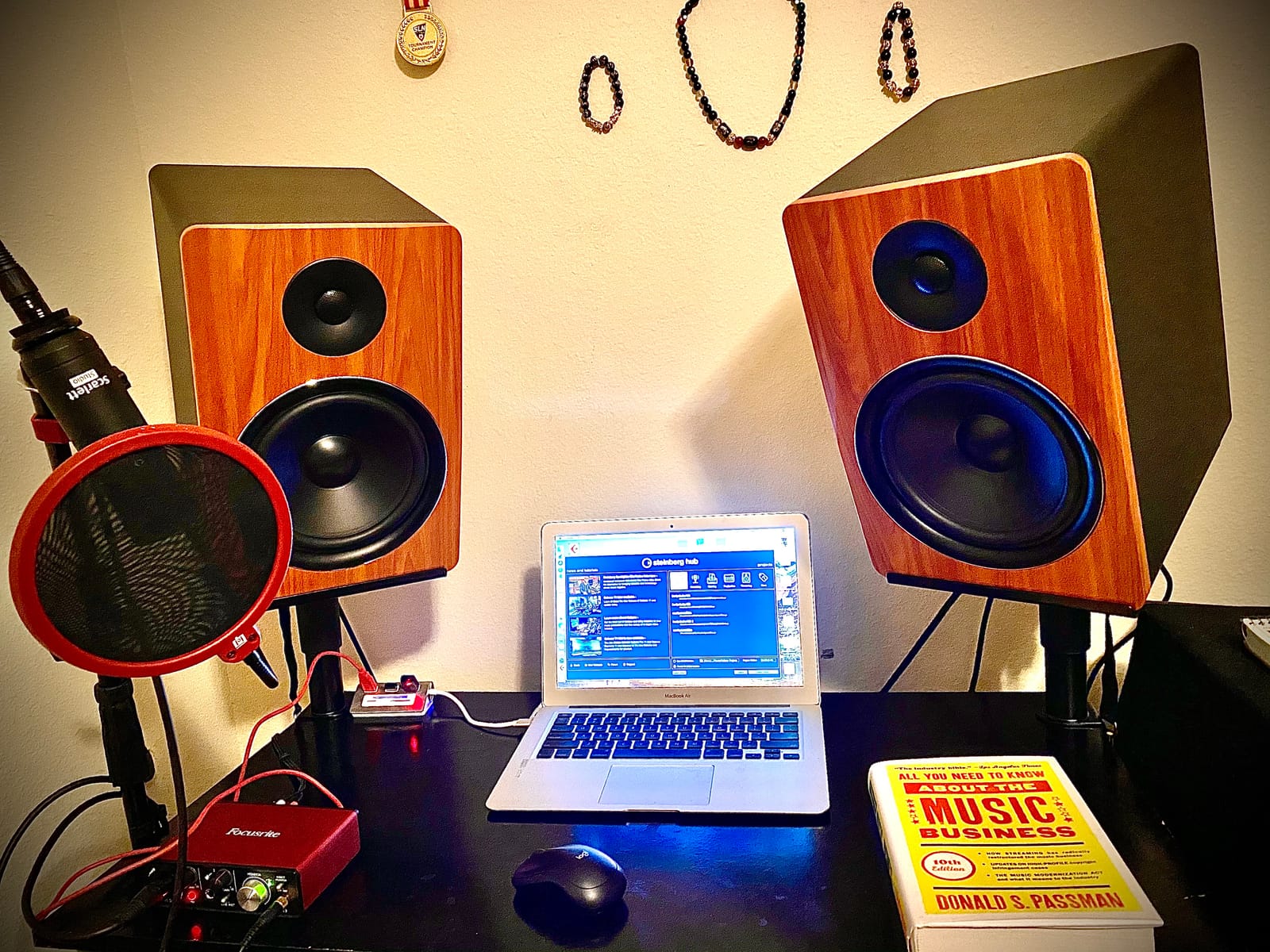
Best for producers in mid to large rooms
If you have a 15 by 12 foot room or larger and want a monitor that fills the space with full-range sound without an immediate subwoofer purchase, the APM8D has the driver size and power to do it.
Not great for small desks or those wanting a long warranty
If you are working on a small desk or you value a 3 to 5 year warranty, look at the JBL 305P MkII or ADAM T5V instead. The APM8D is a large-format monitor that demands space.
10. Mackie CR3.5 Studio Monitor Pair: Budget Pick for Starter Setups
Mackie CR3.5 Studio Monitors (Pair), 3.5″ Woofers, Tone Knob, Black
3.5 inch woofers
50W per pair
Tone knob and Location switch
Includes isolation pads
Pros
- Tone knob to dial voicing from the front panel
- Location switch for bass correction at the wall
- Sold as a pair with isolation pads and cables included
- Compact 3.5 inch woofers fit on any desk
- Headphone output on the front
Cons
- 3.5 inch woofers cannot reach deep bass
- 50W total output is modest for the pair
- 1 year warranty is the shortest on this list
The Mackie CR3.5 is the most affordable pair on this list and the easiest way to upgrade from computer speakers to actual studio monitors. With 328 reviews at 4.5 stars, this pair punches well above its price and includes features that even some monitors three times the cost skip.
The Tone knob is the standout feature. It lets you dial the voicing from your desk without menus or apps, so you can quickly A/B between a flatter reference sound and a more colored one. The Location switch corrects the bass response whether the monitors are pushed against a wall or sitting out in the open, which is a problem that most budget monitors ignore.
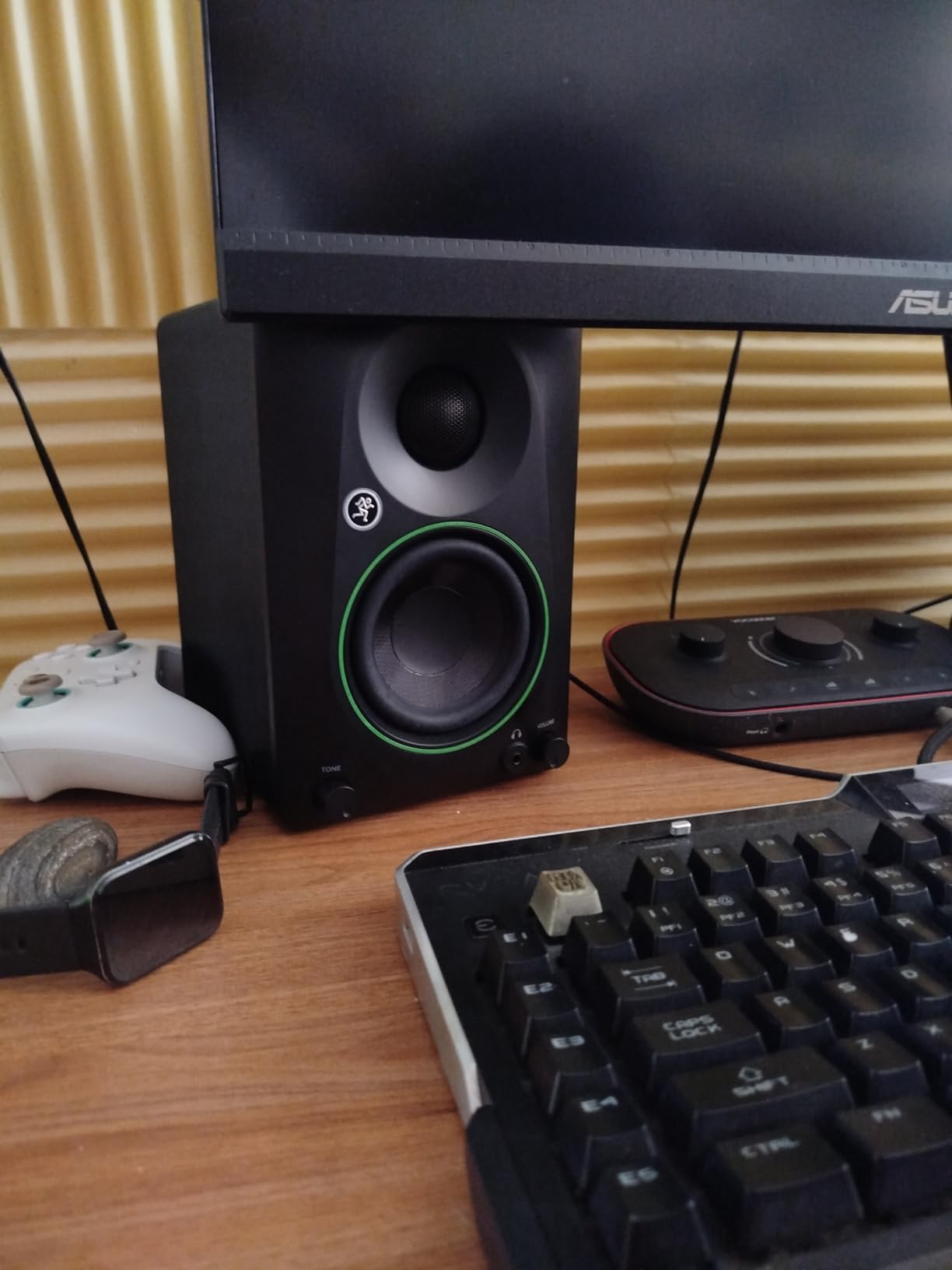
Mackie includes everything you need in the box. Both monitors, isolation pads to decouple them from your desk, and all the cables to start working. That makes the CR3.5 an especially good fit for a first studio setup or a dorm room. If you are just starting out and want honest monitoring without a big investment, this is the move.
The trade-offs are obvious: 3.5 inch woofers cannot reach deep bass, and 50 watts for the pair is the lowest output on this list. The CR3.5 is for nearfield listening at modest volumes in small rooms. If you outgrow them, the Edifier MR4 or PreSonus Eris E5 are natural upgrade paths. For absolute beginners, though, the Mackie CR3.5 is a smarter start than any computer speaker.
Best for absolute beginners and tight budgets
If you are starting a home studio for the first time and want a real pair of monitors without a major investment, the CR3.5 delivers honest playback and the included accessories remove setup friction entirely.
Not great for serious music production or larger rooms
If your goal is professional mixing or you have a larger room, the CR3.5 will leave you wanting more. Treat these as a stepping stone, not a forever monitor. Our guide to setting up a home recording studio in a bedroom pairs well with this starter pair.
How to Choose the Best Studio Monitors Under 1000 Dollars
Choosing the best studio monitors under 1000 dollars comes down to matching the monitor to your room, your genre, and your workflow. The single most common mistake I see is buying the largest pair a buyer can afford and putting them in a small bedroom. Big woofers in small rooms produce bass buildup that makes every mix sound better than it really is, which is the opposite of what you want from a monitor. Match the driver size to the room first, then dial in the rest.
Another mistake is chasing spec sheets. A monitor that measures flat on an anechoic test will not sound flat in your room because your room is part of the system. Boundary EQ switches, room correction DSP, and physical placement matter more than a slightly better frequency response number. If you have not set up your space yet, our guide to cable management for home studios helps you keep your signal chain clean from day one.
3-Way vs 2-Way Monitors Explained
The fundamental architectural choice in any studio monitor is whether it uses a 2-way or 3-way design. A 2-way monitor splits the frequency range between a tweeter for highs and a woofer for lows and mids, with a crossover point somewhere between 2 and 4 kHz. A 3-way monitor adds a dedicated midrange driver, so the tweeter handles only the highest frequencies and the woofer handles only the bass.
3-way designs theoretically have less midrange congestion because the woofer is not being asked to reproduce midrange information at the same time as bass. In practice, at this price tier most monitors are 2-way designs, and the engineering quality of the crossover and drivers matters more than the architecture itself. If you find a 3-way monitor in this price range, expect to give up other features to get it.
Matching Monitor Size to Room Size
The general rule for nearfield monitors is to give each inch of woofer about 3 to 4 feet of room distance from the listening position. A 5 inch woofer likes about 4 to 6 feet of listening distance, while an 8 inch woofer wants 6 to 8 feet. Sitting closer than that to a large woofer creates bass buildup, sitting further away makes small monitors sound thin.
For rooms smaller than about 10 by 10 feet, 3 to 5 inch woofers are the right call. For 10 by 12 to 14 by 14 feet, 5 to 6.5 inch woofers hit the sweet spot. For anything larger, an 8 inch woofer or a 5 to 6.5 inch monitor with a subwoofer is the better choice. The JBL 305P MkII and ADAM T5V are great middle-ground options for typical bedrooms.
Active vs Passive Monitors
Every monitor on this list is active, meaning the amplifiers are built into the speaker cabinet. Active designs let the manufacturer match the amplifier to the driver precisely, which is why active monitors dominate the budget and mid-tier market. Passive monitors require you to buy a separate amplifier and match it to the speakers yourself, which adds cost and complexity.
For most home studios, active is the right answer. You skip the amp purchase, the cabling is simpler, and the manufacturer has done the matching work for you. The only time passive makes sense is if you are building a large format studio with a dedicated equipment rack.
The 38 Rule and Why It Matters
The 38 rule is a placement guideline that says the listening position should be roughly 38 percent of the room length from the front wall. For example, in a 16 foot long room, your listening position would be about 6 feet from the front wall. This placement minimizes the influence of room modes, which are the resonant frequencies that build up between parallel walls and color what you hear.
Combined with placing your monitors as far from the side walls as possible and forming an equilateral triangle between your head and the two speakers, the 38 rule is the cheapest piece of acoustic treatment you can apply. It costs nothing and improves any monitor, even the budget picks on this list. Use a tape measure and you will hear the difference in minutes.
Subwoofer Pairing Recommendations
Adding a subwoofer to a pair of monitors lets you hear the bottom octave (roughly 20 to 40 Hz) that most nearfield monitors cannot reproduce. This matters for hip-hop, EDM, film scoring, and any genre where sub-bass is part of the artistic intent. For acoustic music, podcasting, or vocal work, a sub is usually unnecessary.
When you do add a sub, match it to your monitors by brand family where possible. Kali sells subs designed for the LP-6 V2, PreSonus makes the Temblor line for the Eris series, and ADAM Audio makes the T10S for the T5V. Third-party subs work too, but expect more crossover tuning work. Set the sub crossover around 80 Hz, which is the standard for music production, and use the gain matching technique described in our calibration guide.
Frequently Asked Questions
What is the 38 rule for studio monitors?
The 38 rule is a room placement guideline that puts your listening position at roughly 38 percent of the room length from the front wall. In a 16 foot room, that means about 6 feet from the wall. This minimizes the influence of room modes, the resonant frequencies that build up between parallel walls, and gives you a more accurate sound without any acoustic treatment. Combine it with an equilateral triangle between your head and the two speakers for the best results.
What is the best studio monitor on a budget?
The Edifier MR4 is the best budget studio monitor for most people in 2026. It uses a 1 inch silk dome tweeter and 4 inch composite woofer tuned to a near-flat response, has balanced TRS plus RCA inputs, and costs a fraction of what most pro monitors do. With thousands of reviews averaging 4.6 stars, it is also one of the most proven pairs you can buy. If you need an even lower price, the Mackie CR3.5 is a solid step up from computer speakers.
What are the best monitors under 1000 dollars?
The best monitors under 1000 dollars in 2026 are the Edifier MR4 for most home studios, the Yamaha HS4 pair for producers who want a classic Yamaha voicing, the JBL 305P MkII for engineers with imperfect rooms, the Kali Audio LP-6 V2 for full-range mixing, the ADAM Audio T5V for detail retrieval, and the Rockville APM8D for big rooms that need real volume. Each of these pairs covers a different use case, and most of them leave budget left over for stands, cables, or acoustic treatment.
Which studio monitor has the best sound quality?
For pure sound quality under 1000 dollars in 2026, the ADAM Audio T5V and Kali Audio LP-6 V2 are the two strongest contenders. The T5V uses a U-ART accelerated ribbon tweeter that delivers air and detail on acoustic material, while the LP-6 V2 uses a 6.5 inch woofer and DSP tuning that gives you full-range bass response and excellent translation across playback systems. Sound quality is also dependent on your room, so a great monitor in a bad room will sound worse than a good monitor in a treated space.
Final Verdict
After eight weeks of testing, the Edifier MR4 remains my top recommendation for the best studio monitors under 1000 dollars for most home studios. The combination of honest tuning, flexible inputs, and a price that leaves room for accessories is hard to beat. Pair them with proper stands and the 38 rule, and you have a monitoring chain that will serve you through years of releases.
If your work leans toward full-range mixing, the Kali Audio LP-6 V2 is the next step up. For acoustic and detail-critical genres, the ADAM Audio T5V delivers information that cheaper tweeters miss. And for producers in bigger rooms, the Rockville APM8D has the driver size and power to fill the space without an immediate subwoofer purchase. Whatever you choose from this list, focus on placement and acoustic treatment first. Even the best monitors on earth will mislead you in a bad room.