

Concrete floors, bare block walls and a roller door the size of a wall: a garage is the hardest room in most homes to heat. That is fine in October and miserable by January, when your hands stop working and condensation starts forming on every steel surface in the building. The best garage heaters for winter workshops are the ones that deliver real heat output to the size of your space, run safely all season, and match the electrical or fuel hookups you already have.
The short answer to which type works best: a 240V hardwired fan-forced electric unit heater for a workshop you can wire, a ceiling-mounted propane or natural gas unit heater when you already have fuel access, and a portable propane or radiant heater when you rent the space or the wiring does not exist yet. Forced air warms the air fastest, radiant and infrared warm you and your workpiece directly. Every pick below lists the installation requirement first, because that decides what is even possible in your building.
We spent weeks comparing ten of the highest-reviewed garage heaters on heat output, square footage coverage, control options, safety shutoffs and the complaints buyers actually repeat. Five of the ten come with owner photo sets, and those photos are the fastest way to judge a ceiling mount, a bracket position or how big a portable unit really is next to a workbench. We also cross-checked owner posts on r/hvacadvice and r/Machinists, where the most common blocker is not which heater to buy but whether the garage has a 240V circuit or a gas line at all.
One more piece of housekeeping before you shop. If your garage has a workbench where you listen to music while you work, our guide to the best garage speakers for workshops covers the other half of the setup. Heat first, then sound.
Table of Contents
Top 3 Best Garage Heaters for Winter Workshops in October


All 10 Garage Heaters at a Glance
This is the full lineup in one place. Read the Key Features column for output and coverage, then jump to the individual review for the installation detail that will decide your purchase.
| Product | Specs | Action |
|---|---|---|
| DR. Infrared DR-975 7500W 240V Shop Heater |
|
Check Latest Price |
 Comfort Zone CZ220 5000W Ceiling Mount Comfort Zone CZ220 5000W Ceiling Mount |
|
Check Latest Price |
| GASLAND Flame Jet 125000 BTU Propane |
|
Check Latest Price |
 Mr. Heater 50000 BTU Unit Heater Mr. Heater 50000 BTU Unit Heater |
|
Check Latest Price |
 Remington 60000 BTU LP Forced Air Remington 60000 BTU LP Forced Air |
|
Check Latest Price |
 Shinic 2-Pack 1500W Radiant 120V Shinic 2-Pack 1500W Radiant 120V |
|
Check Latest Price |
 InoKraft 7500W 240V with NEMA Plug InoKraft 7500W 240V with NEMA Plug |
|
Check Latest Price |
 XtremepowerUS 30000 BTU Tanktop XtremepowerUS 30000 BTU Tanktop |
|
Check Latest Price |
 Mr. Heater 80000 BTU Convection Mr. Heater 80000 BTU Convection |
|
Check Latest Price |
 Mr. Heater 170000 BTU Quiet Burner Mr. Heater 170000 BTU Quiet Burner |
|
Check Latest Price |
How We Chose
Every heater here had to clear three hurdles: a real, published heat output figure rather than a marketing phrase, a documented safety shutoff system, and enough owner reviews that recurring problems showed up in the pattern. Nine of the ten carry more than 250 reviews, which is enough for the noise and installation complaints to be real signal rather than one bad unit.
We also weighted the things buyers on r/hvacadvice and r/Machinists complain about most. Electric units are frequently unusable because a typical garage has one 20A 120V receptacle and nothing else. Gas units need a licensed line, a permit and a vent. We treat those as first-class specs in every review below rather than burying them.
What we did not do is publish made-up temperature-rise measurements. Where a claim comes from owner reports, we say so. Where it comes from the spec sheet, we say that instead.
1. DR. Infrared DR-975 7500W 240V Shop Heater
DR. INFRARED HEATER NEW Upgraded DR-975 7500-Watt 240-Volt Hardwired Shop Garage Electric Heater, Wall/Ceiling Mounted with Remote Controlled Thermostat White
7500W hardwired 240V
Radiant element, forced air
Covers 800 sq ft
26 lb, 1 year parts warranty
Pros
- Remote controlled thermostat from 50 to 85 degrees
- Five adjustable louvers plus a tilt head for airflow direction
- UL and CUL listed with overheat protection
- Fully enclosed heavy duty motor
Cons
- Hardwired only and the power cord is not included
- Single speed with no low output setting for shoulder seasons
- Mount surface can run hot in an uninsulated space
This is the unit we would put in our own shop, and it earns the top spot on evidence rather than novelty. At 4.3 stars across more than 4,000 reviews it has the deepest owner record of any pick here, and the pattern in those reviews is consistent: people like the power, the remote and the airflow control, and they get surprised by the installation.
It is a hardwired 240V single-phase fan-forced heater rated at 7,500 watts, 31.25 amps, covering about 800 square feet. That amperage figure is the one to note, because it means a 30-amp circuit and a proper electrician in most jurisdictions. The power cord is not in the box and the manufacturer specifies 8 AWG copper.
Control is where it beats most hardwired rivals. The remote thermostat runs a 50 to 85 degree range, so you can start the shop warming while you are still in the house, and five louvers plus an adjustable tilt head let you point the output at a workbench or a vehicle rather than at the middle of the floor. Maximum temperature setting is 85 degrees, which is a realistic shop number.
What to check before you buy
Confirm you have a 30-amp 240V circuit available and that the run from the panel is sized for 31.25 amps of continuous draw. If the outlet does not exist, the cost of the electrical work is often larger than the heater itself, which changes the value calculation completely.
Also decide where it mounts. Owners report the combination radiant element and forced air housing can feel warm on the mounting surface, so in a poorly insulated space give it more clearance than the manual minimum. This is a wall or ceiling unit for an insulated or semi-insulated shop, not something to wedge into an unheated lean-to.
Where it falls short
It has one speed and no low-output mode, so in October and April you are running full output whenever the thermostat closes. That is fine in a deep winter workshop and mildly wasteful in the shoulder months. The remote batteries are also not covered by the one-year parts and components warranty.
Most importantly, there is no low-heat compromise to soften the install: this is a hardwire-or-nothing heater. If you rent, or your panel has no spare 240V slot, keep reading.
2. Comfort Zone CZ220 5000W Ceiling Mount
COMFORT ZONE 5000-Watt Fan-Forced Ceiling Mount Garage Heater – Grey
17065 BTU fan-forced
Ceiling mounted, covers 1000 sq ft
Dual knob thermostat, 3 speeds
20.4 lb, ETL listed
Pros
- Ceiling mount frees the whole garage floor
- Heavy gauge steel body handles temperature swings
- Three heat settings with a dual knob thermostat
- Overheat sensor with automatic shutoff and cool touch housing
Cons
- Hardwired 240V so electrical work is normally required
- Manual thermostat only with no remote or app control
- Fan noise is noticeable in a small enclosed room
The Comfort Zone CZ220 is the pick if your garage is doing double duty as a workshop and a parking space, because hanging it from the ceiling hands the entire floor back to your bench, your car and your storage. Buyers consistently name the mounting position as the reason they are happy.
Output is 17,065 BTU, which is a fan-forced electric heater covering a claimed 1,000 square feet, drawing 20.83 amps at 240 volts. That amperage sits on the lighter side of the hardwired category, which makes the electrical install a little friendlier than a 31-amp unit. It weighs 20.4 pounds and comes with a manual thermostat rather than a remote.

Three heat settings and a dual knob thermostat with quick on and off give you more control than a single-speed shop heater normally offers. The body is heavy gauge steel, which reviewers credit for surviving temperature swings in poorly insulated spaces, and the housing is rated cool touch, useful if anyone works underneath it.
Placement and clearance
Ceiling mounting is not a free pass on spacing. Plan the drop so the airflow lands across the working area rather than straight down on one spot, and confirm the joists can take the bracket. Louvers and an adjustable mounting angle help direct the output once it is up.
Because it is hardwired, treat this like any other 240V install. It is rated for indoor use in unventilated or damp spaces, which is the right call for a garage, but it is not an outdoor-rated unit for a carport.
What owners do not like
The manual knob thermostat is the main gap. There is no remote and no app control, so if you want the shop warm before you walk out to it you are relying on leaving the heat on. Several buyers also note the fan is audible in a small enclosed room, which matters if your workshop doubles as an office.
It is indoor use only and needs no venting, which is the quiet advantage over every gas option in this roundup.
3. GASLAND Flame Jet 125000 BTU Propane Heater
GASLAND 125,000 BTU Propane Force Air Heater for Garage, Heat Up 3100 Sq.Ft
125000 BTU forced air propane
Variable 75000 to 125000 BTU
Covers 3100 sq ft
13 lb, 1 year warranty
Pros
- Output adjustable from 75000 to 125000 BTU
- Handles spaces up to 3100 sq ft
- CSA certified with electronic ignition and flame-out shutoff
- Includes a 10 ft hose and regulator
Cons
- Combustion heater so ventilation is required
- Single fan speed
- Ignition and fan are noticeably loud
The Flame Jet is the answer when your workshop is big enough that a 7,500W electric unit would run nonstop and never catch up. At 125,000 BTU it covers a claimed 3,100 square feet, more ground than any other portable propane unit in this roundup apart from the 170,000 BTU shop model further down, and the output is variable down to 75,000 BTU.
That range matters more than the headline number. A burner that can turn itself down is the difference between a workshop that reaches temperature in an hour and one that overheats and then cycles constantly. The temperature range runs from 40 to 140 degrees, and the heat angle is adjustable.
Safety is where the specification sheet is genuinely reassuring. The unit is CSA certified with continuous electronic ignition, overheat detection and a thermo-electric flame-out safety valve, and it carries a one-year warranty against manufacturing defects. Owners report roughly five hours of run time on a standard 20 lb propane tank at the lower setting, and the tank is not included.
At 13 pounds it is light enough to move between a garage and a jobsite without a dolly. That portability is what makes it popular with contractors as well as homeowners, and reviewers mention barns and warehouses alongside garages.
Ventilation is not optional
This is a combustion heater. It needs combustion air and a working carbon monoxide alarm, and it should not be run in a sealed small space or an attached garage without a plan. If your garage is attached to the house, the ventilation requirement is the deciding factor against this unit.
Also plan the propane supply. A 20 lb cylinder refills constantly when you are running 125,000 BTU, and if you want continuous heat through a January weekend a larger cylinder or a fixed line makes more sense.
What to watch
There is a single fan speed, so the only heat control is the BTU output adjustment. Owners also flag that the ignition and fan are louder than an electric shop heater, which is expected with a burner this size and is worth weighing if you work with headphones or need to talk on the phone.
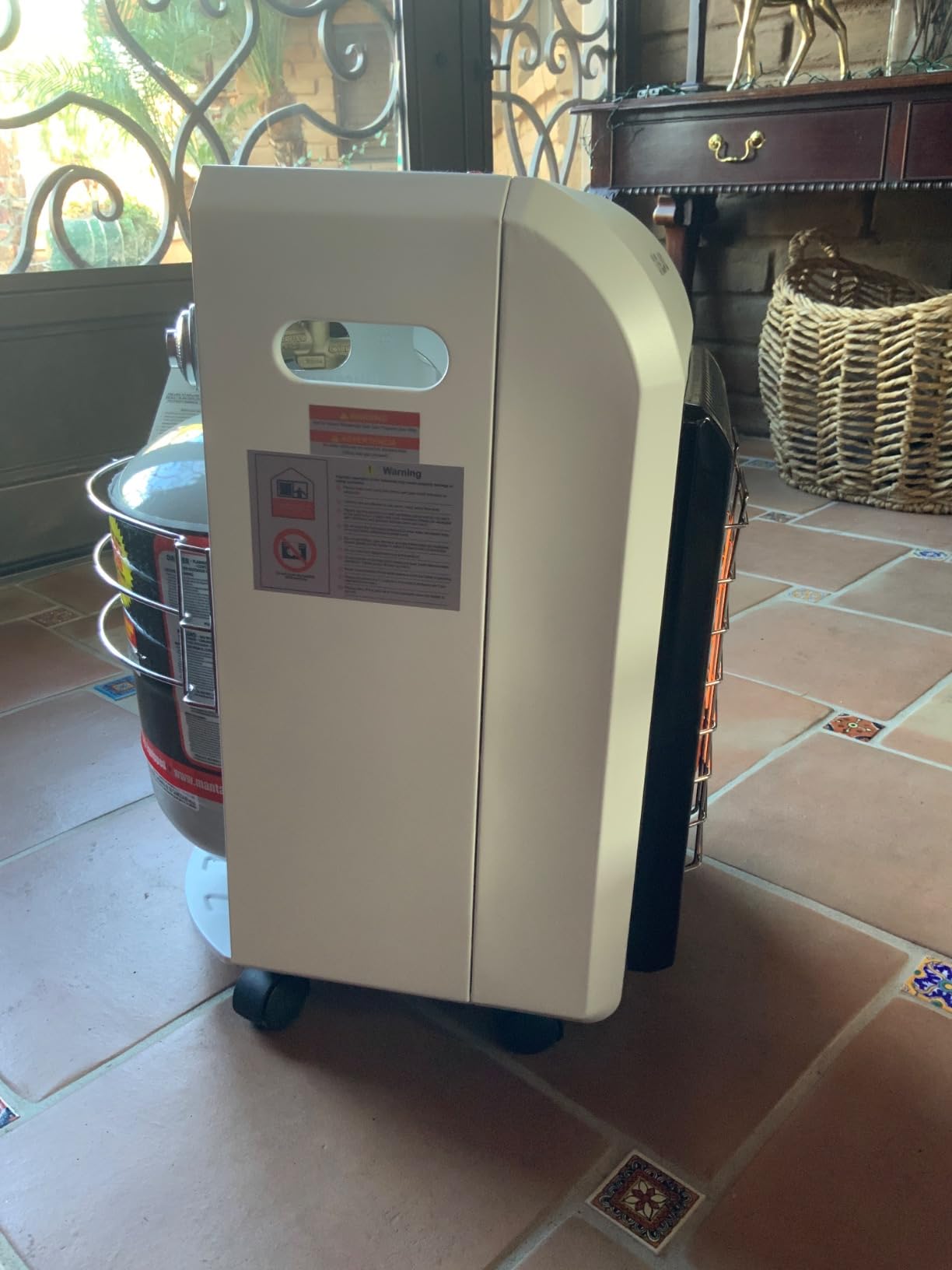
The gas connection and regulator are included, which saves a trip, but the cylinder is a separate purchase. Budget for that before you commit.
4. Mr. Heater 50000 BTU Natural Gas Unit Heater
Mr. Heater 50,000 BTU Forced-Air Unit Heater (Propane or Natural Gas)
50,000 BTU natural gas or propane
Heats about 1667 sq ft
Ceiling mount, needs 10 ft ceiling
NG to LP conversion kit included
Pros
- Steady even heat for a full three-car garage
- Long owners report several reliable winters
- Ceiling mounted low profile design
- Fits standard 24V or Wi-Fi thermostats
- Ships with natural gas to LP conversion kit
Cons
- Gas line and roof vent install can cost about as much as the unit
- Manual vent pitch can route condensation back into the heater
- Some units arrive with a loose fan set screw that causes wobble
This is the proper installed shop heater, and it is the only pick in the roundup that a contractor would recognise as commercial equipment. At 50,000 BTU it heats roughly 1,667 square feet, about a three-car garage, and it hangs low profile from the ceiling so it does not eat wall space.
It runs on natural gas as supplied, and it includes a conversion kit so it can run on propane instead. That flexibility is unusual and genuinely useful if your fuel situation changes. It works with standard 24V thermostats, including Wi-Fi models, sold separately.
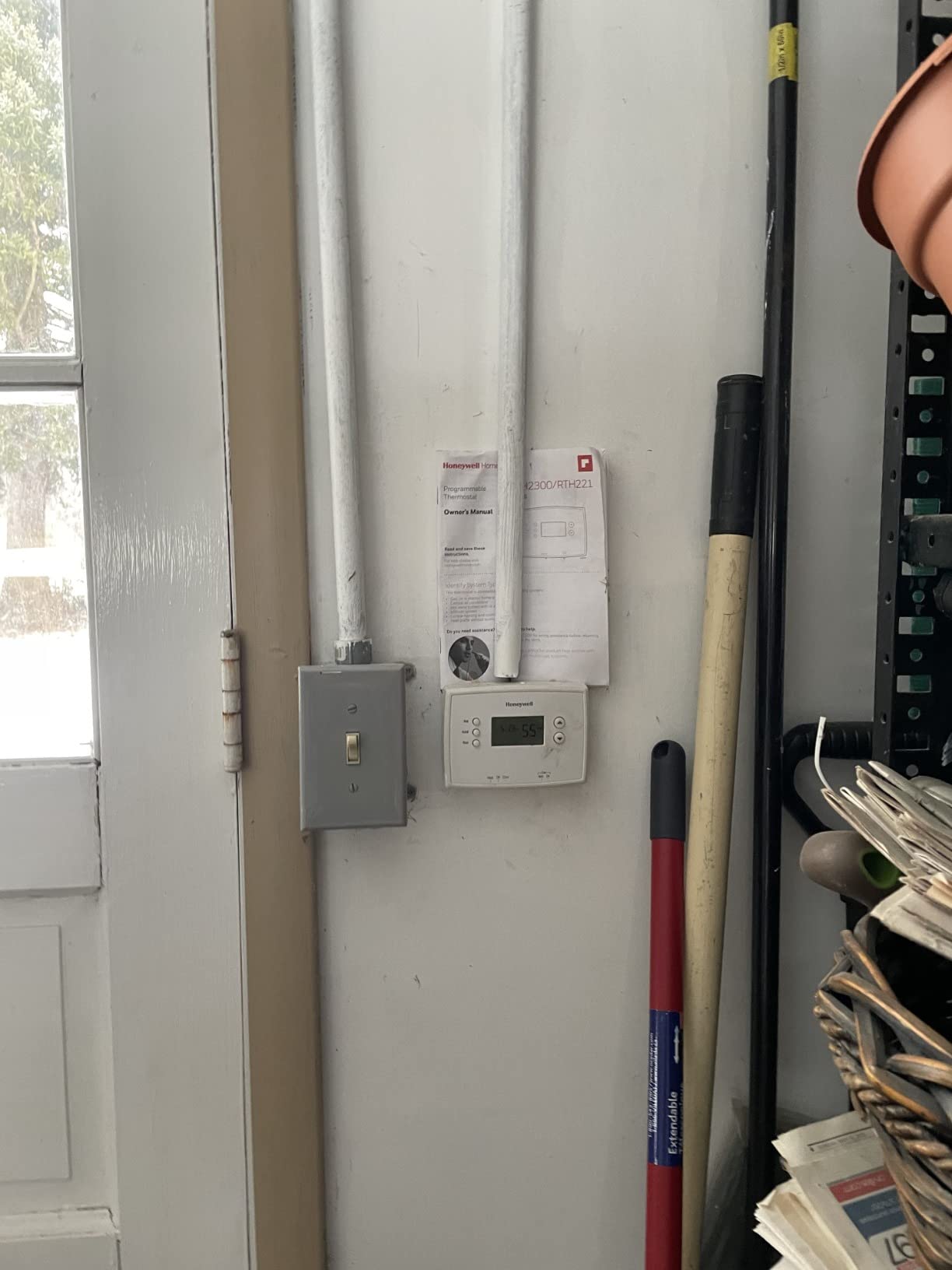
Long-term owners describe raising an insulated garage from single digits into the 60s and 70s in one to two hours and then letting a thermostat cycle it. The safety package includes a high temperature safety shutoff switch and a gas safety flame sensor, both of which are the reason gas unit heaters are allowed to run unattended in a workshop.
Be aware of the mounting envelope before you plan. The low profile design requires a minimum 10 foot ceiling height and 8 feet of clearance from the base of the heater to the floor. A standard eight-foot garage ceiling will not work without reframing the joists or choosing a different unit.
Installation is the real cost
A gas line, a regulator and a roof vent run by a licensed installer can add about as much as the unit itself, and most jurisdictions require a permit. If you do not already have gas in the building, that changes the decision completely, and an electric unit becomes far more sensible on a total-cost basis.
One instruction is worth flagging before your installer copies the manual. Owners note the vent duct is specified to pitch upward, which can route condensation back into the heater, and they recommend angling the duct down instead. Ask your installer about it directly.
Quality control gripes
Some units arrive with a loose fan set screw or mis-pressed fan blades that produce a heavy wobble until an owner tightens the screw or rebalances the blades. A few reviewers also report control board failures and slow warranty support. Check the fan on day one, before the first cold snap.
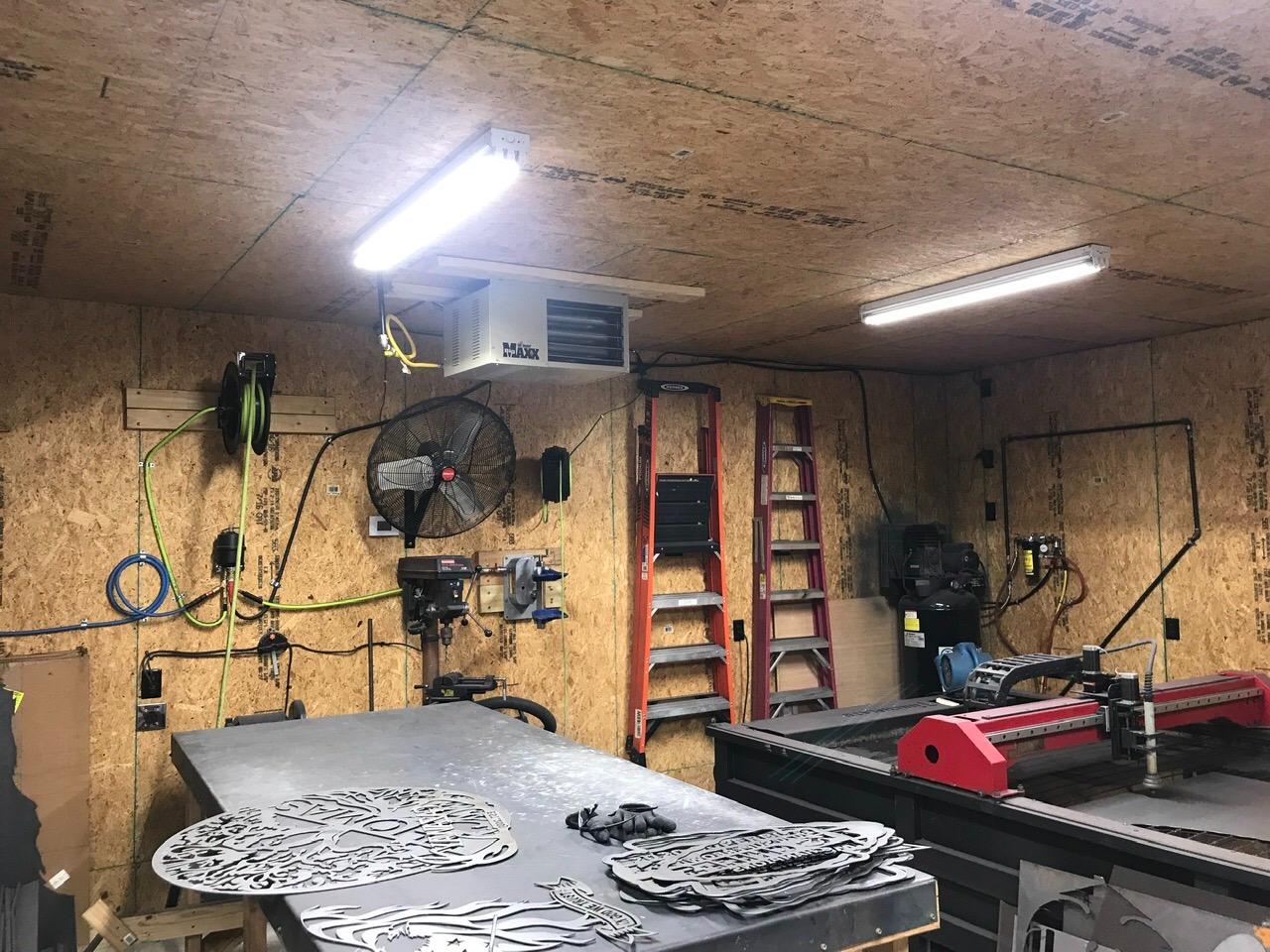
It is a 60.3 pound unit, so this is a two-person lift and a permanent fixture rather than a portable one.
5. Remington 60000 BTU LP Forced Air Heater
Remington LP Forced Air Heater, Portable 60,000 BTU Space Heater for up to 1500 Square Feet – Liquid Propane Gas Powered, Tank Not Included
60,000 BTU propane forced air
Covers 1500 sq ft
11 lb with adjustable height
Variable heat settings
Pros
- Warms a two-car garage in about ten minutes
- Only 11 lb so it moves easily between spaces
- Variable heat settings let you back down once warm
- Continuous electronic ignition
- Includes a 10 ft LP hose and regulator
Cons
- Very loud blower
- LP fitting takes real force to push onto a standard cylinder
- Power cord is under a foot long
- Propane tank is not included
The Remington is the value pick in the propane category, and the reason is weight. At 11 pounds it is the lightest forced-air shop heater in this roundup, which means one person can carry it out to a detached shop, reposition it under a vehicle being worked on, or store it when the season ends.
Output is 60,000 BTU of forced air covering up to 1,500 square feet, with variable heat settings and adjustable height. Owners report a two-car garage going from cold to workable in about ten to twenty minutes.
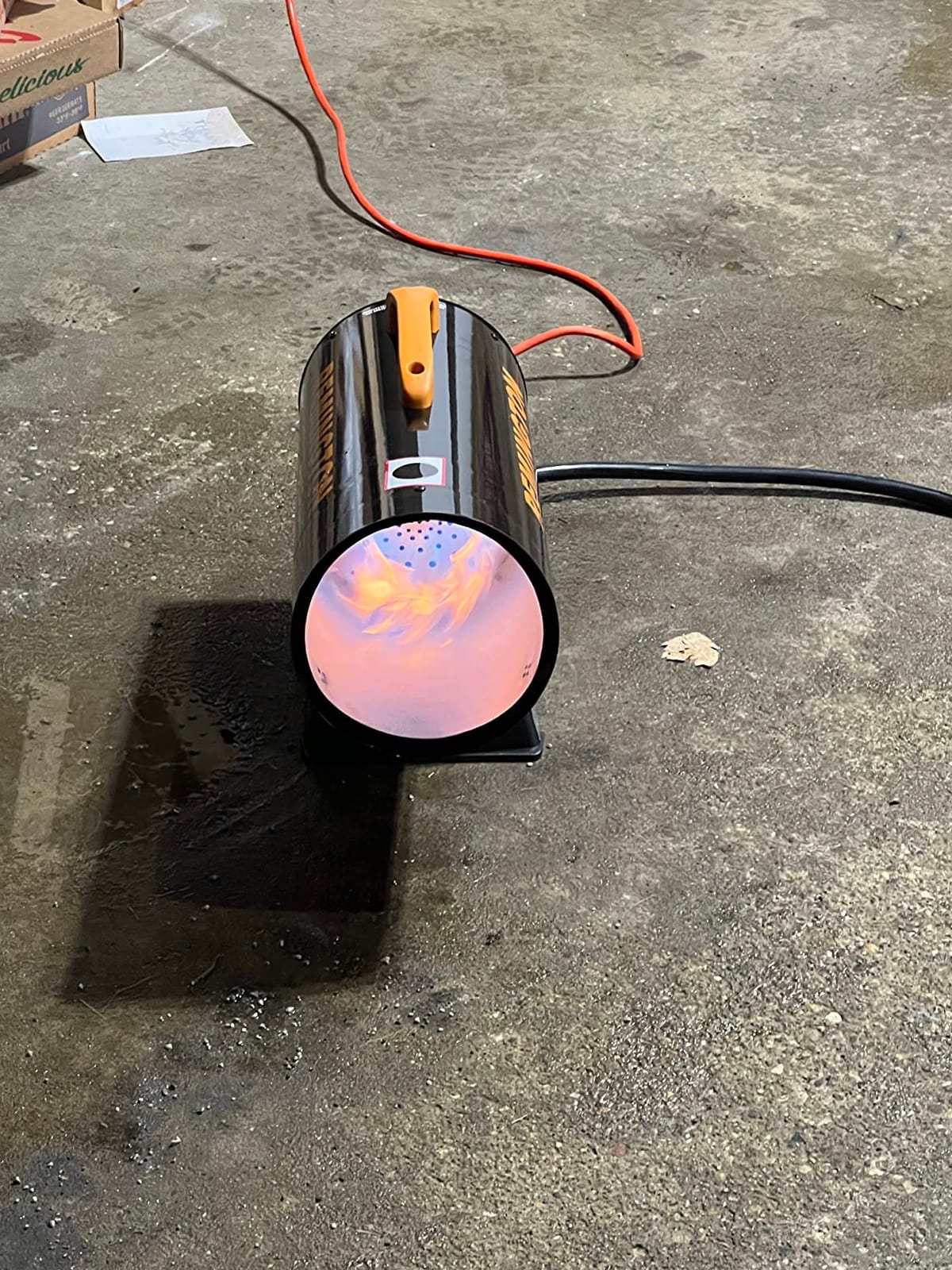
The safety package is the serious part of the specification: a thermocouple, high temperature limit shutoff and flame-out fuel cut-off, plus continuous electronic ignition so there is no manual relighting and no separate igniter to wear out. A 10 foot LP cylinder hose and regulator are included.
It also runs on 120 volts for its ignition and fan, which means a standard household outlet is enough. That is a real difference from a 31-amp hardwired heater, and it is why owners on r/Machinists like electric and portable propane solutions: nothing in the building has to change.
Set it up where the work is
Because the height is adjustable, the practical move is to aim the output at chest level rather than at the floor. Forced air that travels across your body warms you far faster than air that pools at ground level, and the variable setting lets you drop the burn once the space is comfortable.
Plan the cylinder. The 20 lb tank is not included, and at 60,000 BTU a single tank will not last a full weekend of intermittent shop use. Keep a second cylinder on hand or schedule refills before a project.
What buyers return it for
Noise is the dominant complaint and the reason for returns. The blower is very loud, so it is impractical in a space where you need to hear a radio or talk on the phone. Two smaller issues come up repeatedly: the power cord is under a foot long so an extension cord is effectively required, and the LP fitting takes real force to push onto a standard grill-style cylinder connection.
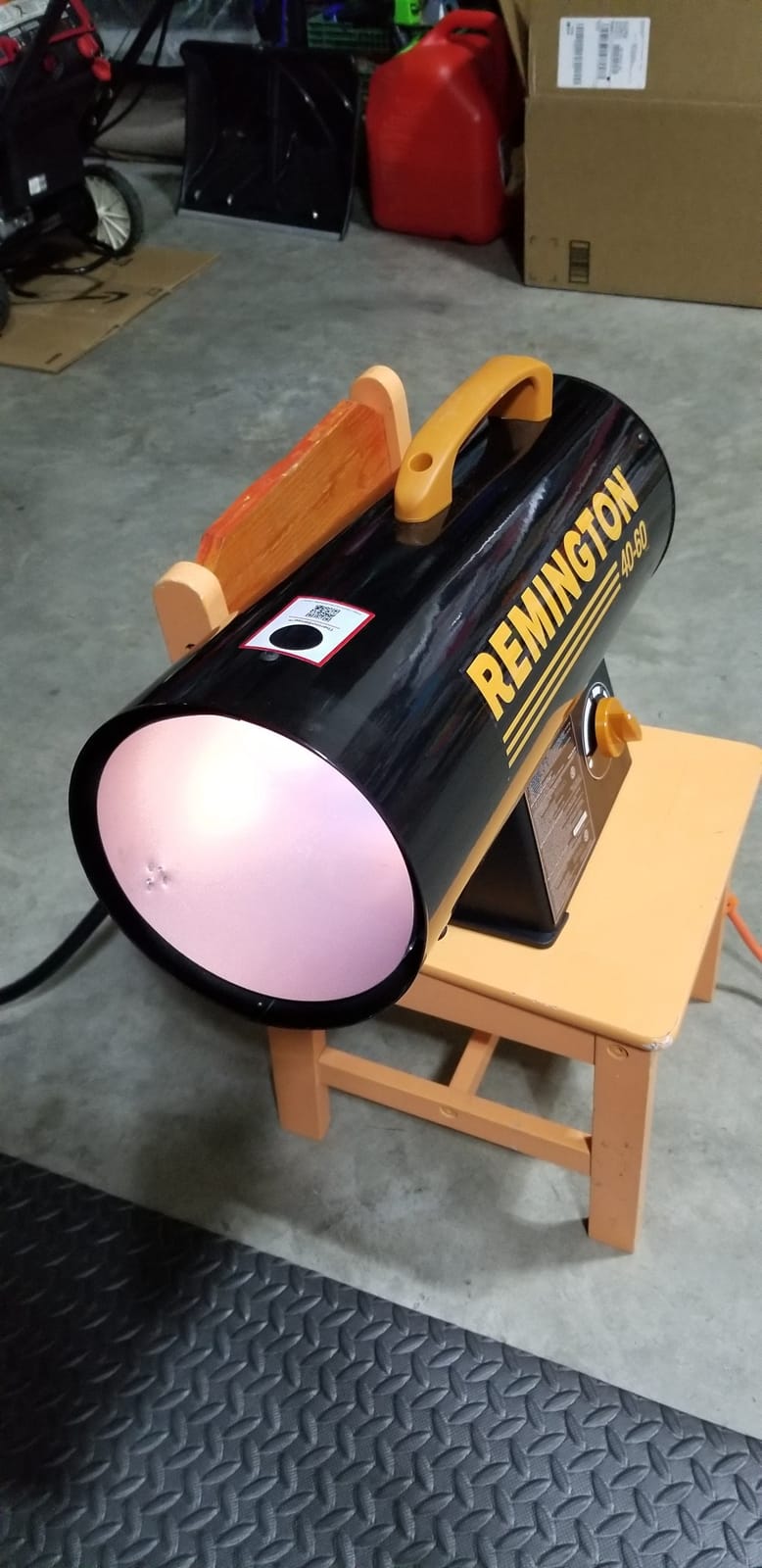
This is an outdoor-rated unit and it requires ventilation, so it is not for an enclosed room.
6. Shinic 2-Pack 1500W Radiant 120V Heater
Shinic 2-Pack 120V Electric Garage Heater,1500W/750W Ceiling Mounted Heater
1500W per unit at 120V
Radiant quartz tubes with halogen light
Covers 400 to 600 sq ft
ETL listed, overheat auto-off
Pros
- Plugs into a standard 120V wall outlet with no hardwiring
- Two units cover two work areas or a two-car garage
- Built-in halogen work light for late sessions
- Ceiling mount rotates up to 90 degrees
- Overheat auto-off and ETL listed
Cons
- Radiant heat only warms what is in line of sight
- 1500W covers far less space than a 240V unit
- Pull-string switches are awkward once mounted overhead
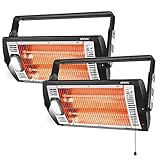
Most of the blocker forum owners describe is electrical access: a typical garage has a single 20A receptacle and no 240V outlet. The Shinic 2-pack is the answer to that constraint, because it plugs into a standard wall outlet and heats two areas at once.
Each unit is 1,500 watts at 120 volts and 12.5 amps, using a quartz heating element, rated 5,120 BTU and covering roughly 400 to 600 square feet. Two units in the pack is the useful configuration, one per bay or one at each bench.
Two details make it more workshop-appropriate than a typical radiant space heater. There is a built-in halogen work light, which matters when you are out in the garage at seven in the evening in December, and the ceiling bracket rotates up to 90 degrees so you can aim the radiant tubes down at a bench or across a vehicle.
Know what radiant actually does
Radiant quartz tubes warm people and objects in their line of sight rather than heating the air of the room. If you are standing at a bench, that is the most efficient possible use of 1,500W. If you are trying to bring the whole garage air to 65 degrees, it will not get there and it is not built to.
The pull-string settings give you 750W low, 1500W high, a combined setting with the work light, and off. Overheat auto-off, a three-prong grounded plug, a metal housing and ETL listing round out the safety package.
Where it is the wrong choice
Anyone heating a detached shop through a long winter with this is asking for disappointment. The square footage coverage is a fraction of a 240V unit, and the ambient air stays cold even when the person in front of it is comfortable. The pull-string switches are also awkward to reach once the unit is up on the ceiling.
It is a spot heater, and treating it as anything else is the source of most of the four-star spread in the reviews.
7. InoKraft 7500W 240V Heater with NEMA 14-50P Plug
InoKraft 7500W Electric Garage Heater, 240V with NEMA 14-50P Plug
7500W 240V fan-forced
Covers 750 sq ft at 65 dB
Digital thermostat 40 to 99F
8.2 ft cord with NEMA 14-50P plug
Pros
- NEMA 14-50P plug removes the hardwire step
- Digital thermostat with ECO mode and 1 to 24 hour timer
- 65 dB running noise
- Wall or ceiling mount with five angle adjustments
- Overheat protection and automatic fan delay
Cons
- Still needs a 240V NEMA 14-50 receptacle
- Two-speed manual high and low only
- Ceiling mounting needs two people
- Steady fan hum in a quiet shop
The InoKraft rates 4.6 stars, and the reason is a single design decision that changes the install: it comes with an 8.2 foot power cord and a NEMA 14-50P plug instead of a hardwired pigtail. Most 240V heaters in this category require an electrician to land wires on a terminal block.
It still needs a real 240V NEMA 14-50 receptacle, so this is not a plug-it-in-anywhere product. But if that outlet exists, or is easy to add, the electrical work drops to plugging something in, which is the difference between a weekend project and a contractor visit.
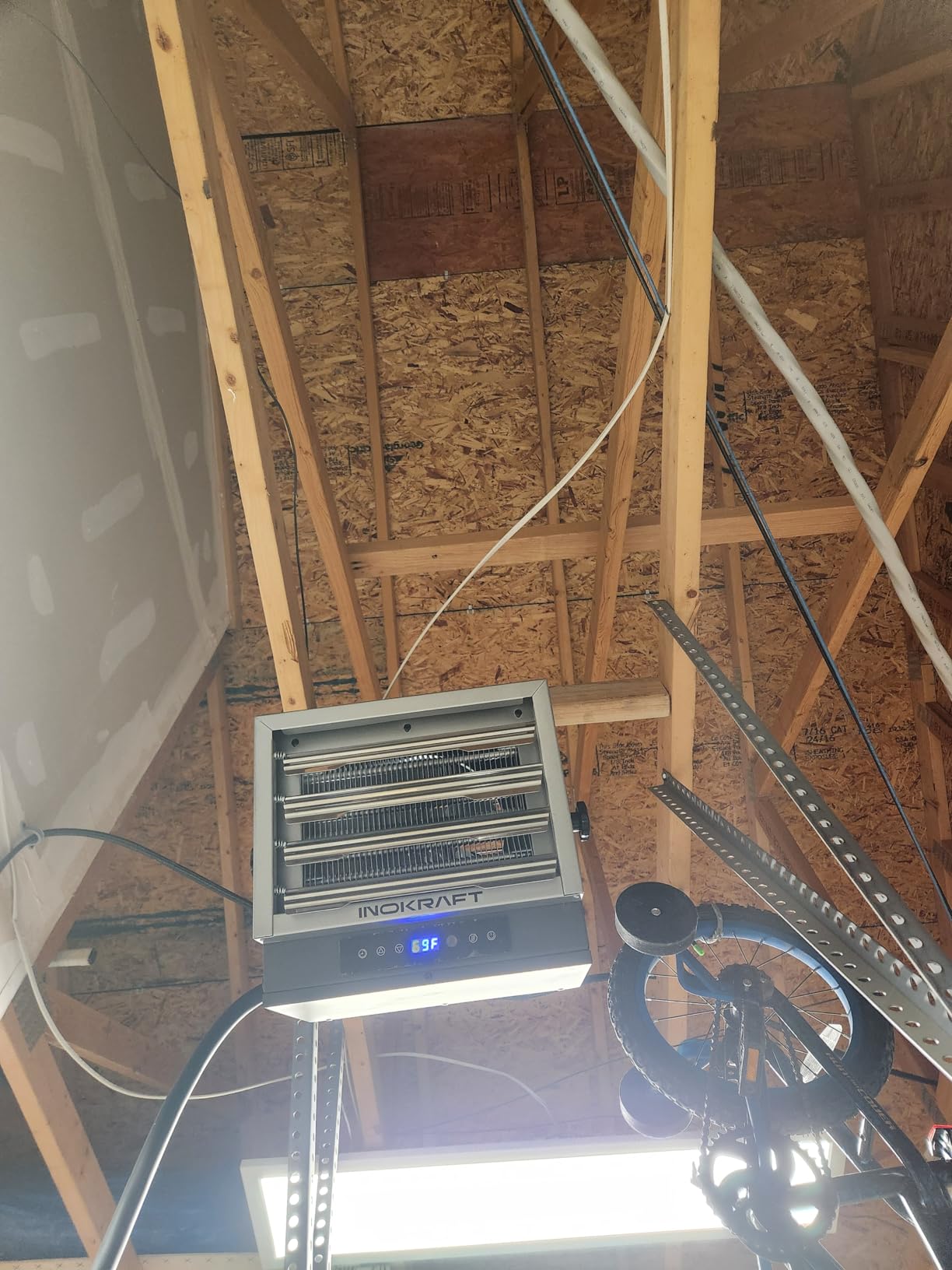
Control is the other advantage. The digital thermostat runs from 40 to 99 degrees with a 1 to 24 hour timer and an automatic ECO mode, none of which you get on a manual knob shop heater. Output is 7,500 watts of 240V fan-forced heat covering up to 750 square feet, at a stated 65 dB.
Mounting is flexible with five angle adjustments and flexible louvers, and it can go on a wall or a ceiling. There is an automatic fan delay so the fan keeps running briefly to distribute residual heat, and overheat protection with automatic shutoff.
Where to mount it
Wall mounting is the easier solo job. Ceiling mounting the hanging hardware takes two people or a helper, so plan for that before you are up on a ladder in the cold. Aim the louvers at the area you actually work in rather than at the door.
At 750 square feet of claimed coverage, size it to a one or two-car garage. Pairing it with a second smaller unit is a common way to cover a longer space without a single very large heater.
Limitations worth knowing
Fan selection is two-speed manual high and low, so fine-grained control depends entirely on the thermostat rather than the output switch. Reviewers also note a steady low hum from the fan that is noticeable in a very quiet shop, and professional installation is still recommended even with a plug.
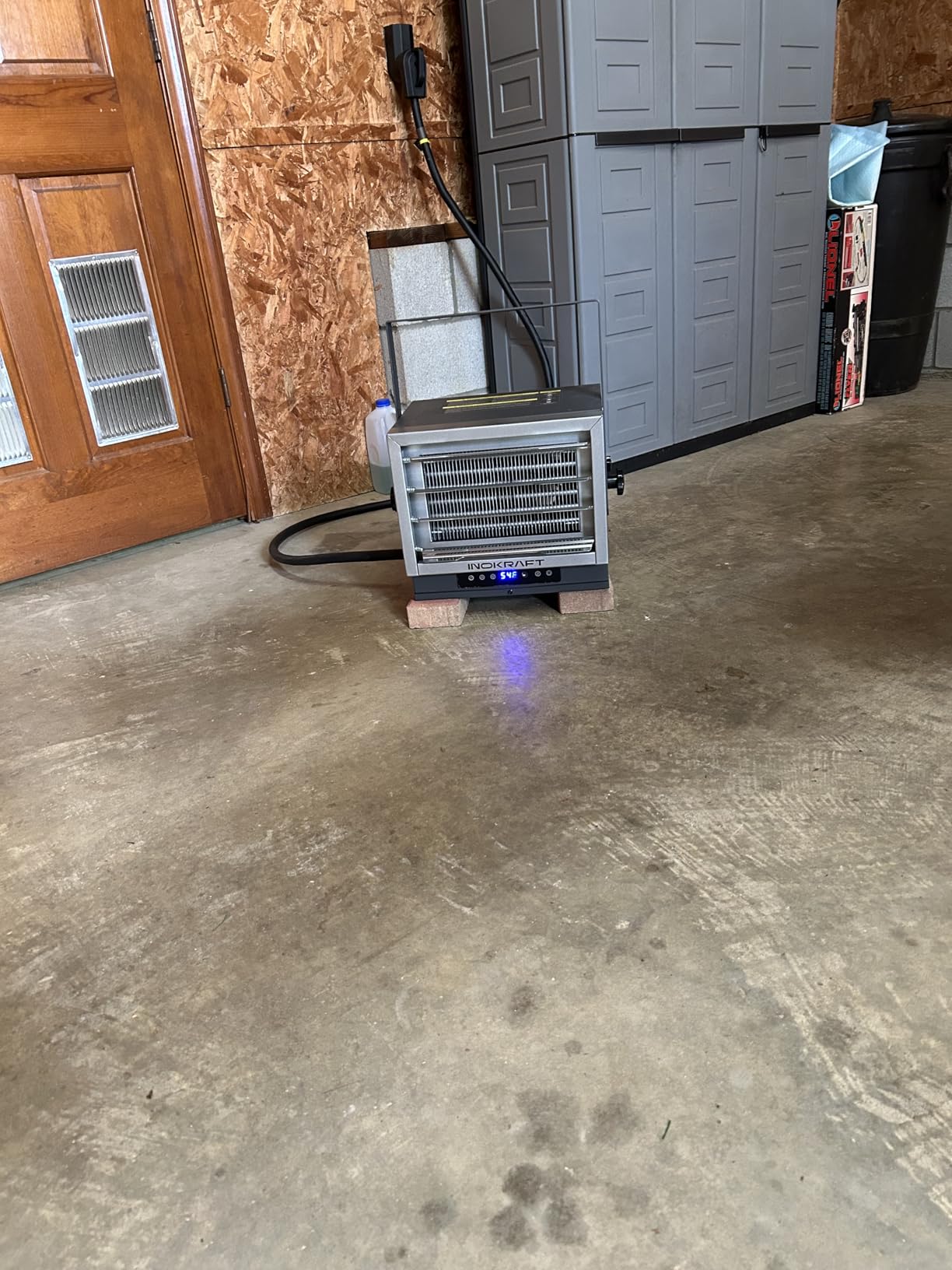
Its 4.6 rating comes on a smaller review base than the leaders, so treat the long-term reliability picture as less established than the rating suggests.
8. XtremepowerUS 30000 BTU Propane Tanktop Heater
XtremepowerUS 30,000 BTU Propane Tanktop Heater Infrared Dual Burner Safety Shut-Off Valve, Tip-Over Switch for Garage, Camping, Hunting Double Burner
15000 or 30000 BTU radiant
Tank top propane mount
3 heat settings
Tip-over safety shutoff
Pros
- A low-cost way to add real heat when no wiring exists
- Mounts directly to a 20 lb cylinder with no assembly
- Three output levels from 15000 to 30000 BTU
- Tip-over switch cuts gas flow when knocked over
- Chrome emitter guard and wind resistant metal dish
Cons
- Warms a person in front of it rather than the air of a garage
- Some units ship without the mounting screws
- Match lighting with no electronic ignition
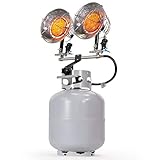
The tanktop heater is not a garage heater and we want to be direct about that. What it is: a genuinely inexpensive way to add radiant heat to a specific spot, and in a workshop that means your chair at the bench, not the 600 square feet around it.
It mounts directly to a 20 lb propane cylinder with no assembly, and the chrome emitter guard doubles as protection against accidental contact. The metal dish focuses heat and resists wind, which is why these keep showing up on porches and in hunting blinds as much as garages.
Output runs 15,000 or 30,000 BTU across three settings with a claimed 750 square feet of radiant coverage, and the tip-over safety switch cuts gas flow if the unit is knocked over. That tip-over feature is the safety item that matters here, and it is a genuinely good reason to pick this over a cheaper unbranded clone.
Where it earns its place
Point it at a work chair on a cold morning and you are comfortable in minutes. It is also useful for thawing a frozen line, warming a vehicle cabin before a cold start, or keeping a garage-adjacent porch usable in winter. For any of those jobs it does something no 7,500W fan-forced unit can do at that focal length.
It runs on a cylinder you supply, and the low profile means it can sit on the floor or a low shelf without a ceiling or fire risk. The three settings let you match output to a shoulder-season afternoon or a genuinely cold day.
What it cannot do
It will not heat the air of a garage. Owners consistently describe directing it at a chair, a bench area, a blind or a patio seat and reporting far more heat than the small frame suggests, and equally consistently say it is not a substitute for room heating.
Two practical notes: some units arrive without the mounting screws, so check the box before you leave the bench. And lighting is manual, by match through a side ignition hole, so it is not the unit you want for frequent unattended cycles. Indoor use needs ventilation and a working carbon monoxide alarm.
9. Mr. Heater 80000 BTU Convection Propane Heater
Mr. Heater 80,000 BTU Convection Heater Portable Propane
30000 to 80000 BTU propane
Heats up to 2000 sq ft
Standing pilot, no electricity needed
13.4 lb with 10 ft hose
Pros
- 80000 BTU covers up to 2000 sq ft
- Up to 14 hours on a 100 lb propane tank
- Adjustable output from 30000 to 80000 BTU
- Standing pilot means no electricity required
- Arrives fully assembled with hose regulator and piezo lighter
Cons
- Combustion heater requiring ventilation
- Warms a zone rather than distributing like fan-forced
- Needs a 100 lb tank for the quoted runtime
This is the outage pick. The standing pilot means the unit needs no electricity at all to ignite or run, so when the power goes out in an ice storm and your 240V electric shop heater is dead weight, this keeps working off a propane tank.
Output is adjustable from 30,000 to 80,000 BTU per hour, covering up to 2,000 square feet, with a maximum temperature setting of 120 degrees. It runs for up to 14 hours on a 100 lb propane tank, and the tank, hose and regulator are the correct size for a unit in this class.
It arrives fully assembled and ready to use, with a 10 foot hose, a regulator, a built-in piezo lighter and a P.O.L. tank connection. At 13.4 pounds and with a floor mount footprint, it is still portable enough to move between the garage and a covered work area.
Where it fits in a workshop
It works best as a secondary heat source or an emergency unit, especially in a detached shop where a power outage is common. The variable output lets you back it down once the space is warm, and the standing pilot keeps it safe to leave running without watching.
That makes it a natural companion to a small electric unit rather than a replacement for one. A common pairing is an electric heater for daily use and a propane convection unit for outage days.
Where it falls short
As with every propane unit, ventilation is required and it is not for an enclosed room. Owners also note the radiant and convection tower design concentrates heat in a cone rather than distributing it the way a fan-forced unit does, so a second unit in the far corner can be worthwhile in a long space.
The quoted 14 hour runtime assumes a 100 lb tank, which is a substantial separate purchase compared with a 20 lb cylinder.
10. Mr. Heater 170000 BTU Quiet Burner Forced Air
Mr. Heater 170,000 BTU Quiet Burner Technology Forced Air Propane Heater with Thermostat
170000 BTU class forced air propane
Heats up to 4250 sq ft
Built-in thermostat, up to 17 hours
Max temp 140F
Pros
- Heats up to 4250 sq ft from a single unit
- Built-in thermostat allows unattended cycling
- Quiet Burner Technology
- Reliable cold weather start-up reported
- Overheat shutoff and adjustable height
Cons
- Requires a 100 lb propane tank at minimum
- Ventilation required and not for a closed garage
- 20 lb weight and footprint make it a two person lift
This is the big-shop pick. At 170,000 BTU class output with a claimed 4,250 square feet of coverage, nothing else in this roundup heats a commercial workshop floor, and the coverage figure is a full third larger than the next portable unit.
It is the one with a built-in thermostat, which is the feature that makes a unit this size practical. The burner cycles rather than running continuously, so you are not paying to heat an empty building at two in the morning. Maximum temperature setting is 140 degrees and output is variable, so you can dial it back from the top setting.
Quiet Burner Technology is the named feature reviewers single out, and owners report dependable ignition in subfreezing conditions, which matters if the tank or line is exposed to a cold garage. Run time is up to 17 hours on a full propane tank, and there is an overheat safety shutoff plus adjustable height.
Sizing and placement
At 4,250 square feet of claimed coverage, this belongs in a detached shop, a warehouse bay or a large three-plus car workshop, not a standard two-car garage. In a small space it would be dramatically oversized and short-cycle constantly, which wastes fuel and wears the burner.
Plan the fuel supply before you commit. It requires a 100 lb propane tank at minimum, which is a separate purchase and a storage consideration in a heated workspace. A fixed line with a proper regulator is what most owners of a unit this size end up wanting.
Tradeoffs
It is a 20 pound unit with a 20 inch footprint, so it is effectively a permanent fixture rather than something you move around. Ventilation is required and it is not suitable for a closed garage or an attached space.
The review base here is the smallest in the roundup, so long-term reliability data is thinner than the numbers elsewhere. The specification and the safety package are solid; just factor in that you have less owner history to lean on.
Garage Heater Buying Guide
Insulate before you size
The cheapest way to heat a garage is not a heater at all. Insulation on the walls, the ceiling and especially the roller door reduces the load on whatever you buy, and owners in the forums repeatedly argue the door is where the money goes first. A heater sized for a bare block wall in a Minnesota January will run continuously and still leave you cold.
The order of operations we would follow: seal and insulate the door, insulate the ceiling joists if the garage is attached, insulate the walls, replace a single-pane door with a steel insulated unit, then size the heater for what is left. If your garage is attached to the house, an insulated door matters more than anything you do to the heating.
How much heat do you need?
The quick answer to the most searched sizing question: a 24 by 24 garage is 576 square feet. In a typical insulated garage, a 5,000W to 7,500W hardwired electric heater, or roughly 40,000 to 60,000 BTU of gas or propane output, covers that space. In an uninsulated or detached shop, size up one step.
A practical rule for electric is 10 watts per square foot as a starting point, which puts a 576 square foot garage at roughly 5,750W. For gas and propane, 40,000 to 60,000 BTU per 1,000 square feet is a workable band for an insulated space. These are starting points, not a load calculation, and a full Manual J assessment is the right tool for an uninsulated building.
Watch for the failure mode in both directions. An oversized heater short-cycles, meaning it fires, overshoots the thermostat setpoint, shuts down, cools and fires again, which wastes fuel and wears the components. An undersized heater runs constantly and never reaches temperature. Most disappointing garage heater purchases are one of those two errors, not a bad unit.
Electric vs propane vs natural gas
Electric wins on safety and installation simplicity. There is no combustion, so no carbon monoxide and no vent to run, and indoor-rated units work in a damp garage. The tradeoffs are the electrical requirement, which usually means a 30-amp circuit and an electrician, and the fact that electrical heat costs more per unit of heat than burning fuel.
Propane wins on flexibility and output per dollar. It is portable, needs no electrical work beyond a standard outlet for ignition, and reaches high BTU numbers quickly. The tradeoffs are the combustion appliance in an enclosed space, the need for ventilation and a carbon monoxide alarm, and a cylinder or line you have to supply and store.
Natural gas wins on running cost and permanence in a workshop heated every winter for years. It is the cheapest heat per BTU available to a homeowner. The tradeoffs are the largest installation commitment of the three: a licensed gas line, a permit, a roof vent and a wall thermostat, and it makes no sense in a building that is not already on gas.
The short version: if you have gas in the building, natural gas. If you have a 240V circuit, electric. If you have neither, propane, and accept the ventilation requirements.
Heating method: forced air vs radiant vs convection
Forced air uses a fan to move heated air around the room, and it warms the air fastest. It is the most even and the most flexible method, which is why it dominates shop heaters. The tradeoffs are noise, and the fact that moving air lifts dust off surfaces, which matters for automotive refinishing and fine woodworking.
Radiant and infrared heat objects and people directly without blowing air. You feel warm almost immediately, and it is the most efficient method for warming a person at a bench in a cold building. The tradeoff is obvious and it is not a flaw: the air stays cold, so the room never becomes a warm room.
Convection heats air that rises rather than forcing it, which warms a zone and is quieter than a fan-forced unit. It needs a taller enclosure to distribute well and is less even across a large open floor.
What heating actually costs
Heat output is priced per unit of energy delivered, and the three fuel types differ by a wide margin. The pattern is consistent: electricity is the most expensive per BTU, propane sits in the middle, and natural gas is the cheapest. The practical consequence is that a hardwired electric heater is justified by safety and convenience, while a gas heater pays back over years of daily winter use.
Two levers matter more than the fuel type. Duty cycle does, because a heater that works to maintain a setpoint all night costs far more than one cycling on a thermostat. Insulation does, because every unit of heat you stop losing stays in the building. A well-insulated garage heated by natural gas for eight hours a day is a fraction of the annual cost of the same space heated by a hardwired electric unit on a cold weekend basis.
Placement, clearance and safety
Mount a unit so the airflow lands across your work area rather than at the floor or at the door. For a ceiling heater, the general rule is to keep the outlet at least four feet above the floor and aim it downward and outward, and to check the manual for the specific clearance to combustibles.
The safety rules that matter: use a UL or ETL listed unit, and a gas line and vent installed by a licensed tradesperson under permit. Keep a working carbon monoxide alarm on every level if you burn propane or natural gas. Keep a fire extinguisher in the garage. Never refuel a gasoline-powered vehicle near a running combustion heater. And never rely on a space heater as the only heat in a space where you spend eight hours.
One workshop-specific caution from owner discussions: radiant heat sources parked under are not kind to vehicle finishes, and if you park a car in one spot all winter under a radiant or high-output unit, consider moving the vehicle or aiming the heat away from it.
Frequently Asked Questions
What is the best type of heater for heating a garage?
For most workshops, a 240V hardwired fan-forced electric unit heater is the best all-round choice because it needs no venting, produces no carbon monoxide and gives the steadiest room heat. Use a ceiling-mounted propane or natural gas unit heater if you already have fuel access, and a portable propane or radiant heater if the wiring and gas do not exist yet.
How many BTUs do I need to heat a 24×24 garage?
A 24 by 24 garage is 576 square feet. In a typical insulated garage, 40,000 to 60,000 BTU of gas or propane output, or about 5,000W to 7,500W of hardwired electric heat, will cover it. In an uninsulated or detached shop, size up one step and insulate first.
Is it cheaper to heat a garage with propane or electric?
Electricity costs more per unit of heat, so propane or natural gas is cheaper to run over a long winter. Electric wins on installation and safety, since it needs no vent, no gas line and no permit, and produces no carbon monoxide. Running cost depends most on duty cycle and insulation, not only on fuel type.
Should I get a gas or electric garage heater?
Choose gas if the building already has a gas line, a vent and you will use the heater daily through winter, because it is the cheapest heat per BTU. Choose electric if you have or can add a 240V circuit and you want zero combustion risk, no permit and fast warm-up. Choose propane if you have neither.
Can a garage heater be too big?
Yes. An oversized heater fires, overshoots the thermostat setpoint, shuts down and fires again, which is called short cycling. That wastes fuel and wears the burner and fan. An undersized heater runs constantly and never reaches temperature. Both are sizing errors rather than equipment faults.
Do garage heaters need a CO detector?
Any propane or natural gas heater is a combustion appliance and should be used only with adequate ventilation and a working carbon monoxide alarm on the same level. Electric heaters produce no combustion gases, so a CO alarm is not required for them, though one is still worth having in any attached garage.
Final Verdict
For most people reading this, the DR. Infrared DR-975 is the best garage heater for a winter workshop: 7,500 watts of hardwired forced-air heat, a remote thermostat that starts the shop warming before you get there, and more than 4,000 reviews backing the reliability. If your ceiling space is worth more than your floor space, the Comfort Zone CZ220 does the same job overhead at a lower running cost.
Own a detached shop with gas already in the building? The Mr. Heater 50,000 BTU unit heater is the commercial-grade answer. Have only a 20A receptacle and no plan for a panel upgrade? Start with the Shinic radiant pair or a portable propane forced-air unit, and put the money you saved into insulation and a 240V circuit for next winter.
Check the outlet before you check the catalog. That single fact eliminates more options than any other detail on this page.