
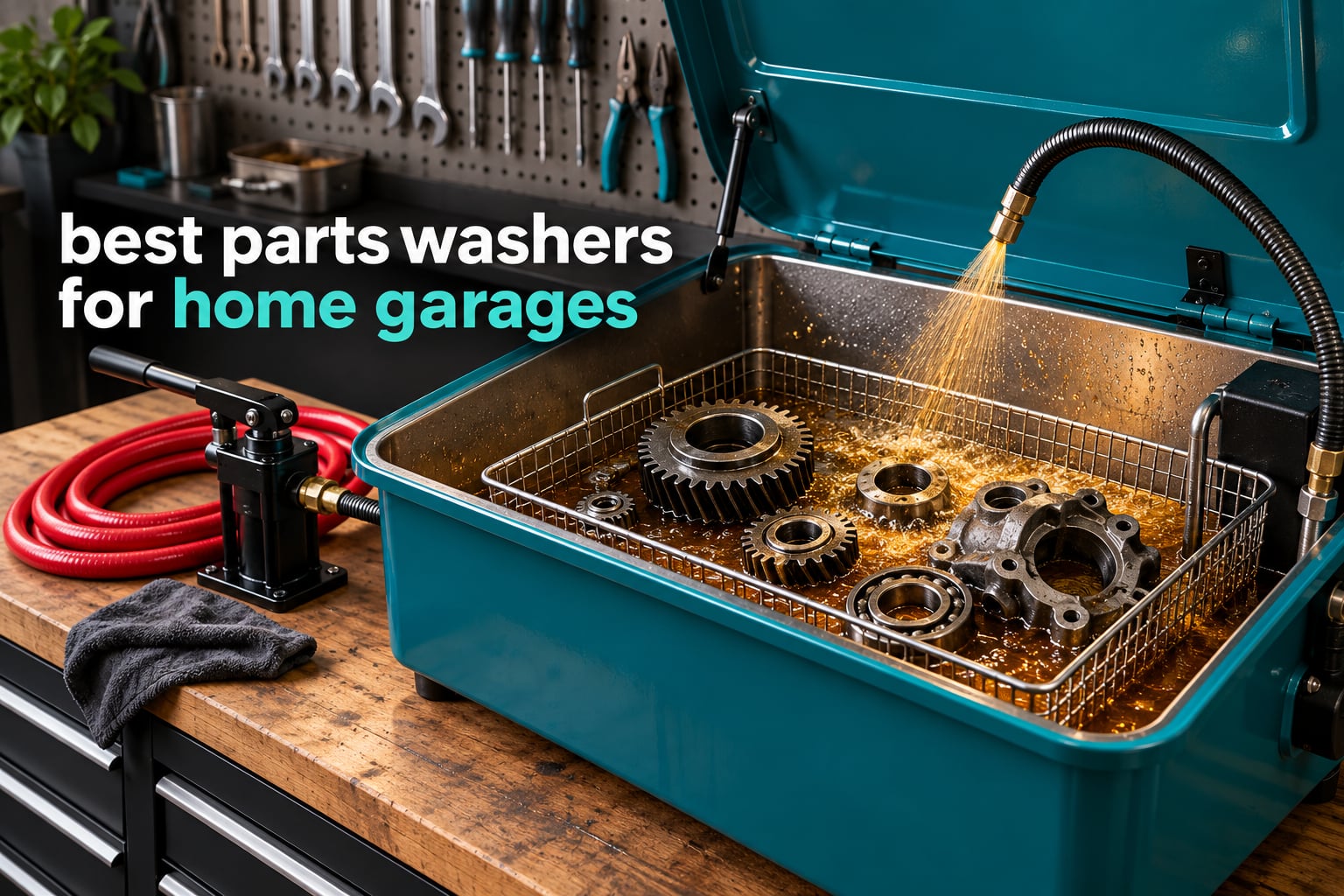
A parts washer is a tank with a recirculating pump and a hinged lid that lets you soak and spray automotive or mechanical parts in cleaning fluid, flushing grease, oil and corrosion off them without scrubbing by hand. The fluid drains back into the tank and gets reused until it is dirty, then it is pumped out and replaced. Our pick for the best parts washers for home garages is the BIG RED T10035, a 3.5-gallon benchtop steel cabinet with 577 owner reviews behind it.
Grease left on a rebuilt part causes gasket leaks, seized threads and bad paint adhesion, and a spray degreaser or a rag never fully reaches a threaded rod or a bearing race. A parts washer fixes that by soaking and flushing the part in one bath. If you are only cleaning a handful of small brackets a year, a jar of water-based degreaser and a nylon brush does the same job for a fraction of the money, and several owners in The Garage Journal parts washer threads say exactly that.
One clarification before we start, because search results mix these two constantly. A pressure washer blasts dirty water at 2,000 psi or more to clean a driveway, a fence or a car body. A parts washer is a low-pressure recirculating bath of solvent or aqueous cleaner built for small metal parts, and it is what you want for gears, bearings, carburetors and transmission components. If someone told you to fill a pressure washer with mineral spirits, that advice is dangerous.
We spent several weeks reading specification sheets, owner reviews and forum threads on parts washers before and during this roundup, and we compared all ten washers in this guide against the same criteria: tank capacity, working fluid volume, pump output, fire safety hardware, steel gauge, footprint and how the fluid gets out. This is spec and owner-experience research, not lab testing we conducted ourselves, and we say so up front. If you want garage-adjacent buying guides in the same vein, our ping pong table picks for garages and home studio bundles follow the same approach.
Table of Contents
Top 3 Best Parts Washers for Home Garages in 2026
The three washers below cover the range most home garages need: a compact benchtop model, a step-up benchtop model with more working volume, and a full-size cabinet for big transmission work. Every one of them has a review history deep enough to judge, which is not true of every washer on the market.
BIG RED T10035 Torin 3.5 Gallon
- 3.5 gallon tank
- 325 GPH 110V pump
- Fusible-link hinged lid
- 16.8 lbs
JEGS 81526 5 Gallon Portable
- 3.5 gallon solvent capacity
- Powder coated steel
- Removable tray
- 110V

All 10 Parts Washers Compared Side by Side in October
| Product | Specs | Action |
|---|---|---|
| BIG RED T10035 Torin 3.5 Gallon |
|
Check Latest Price |
| JEGS 81526 5 Gallon Portable |
|
Check Latest Price |
| Eastwood 31875 40 Gallon |
|
Check Latest Price |
 Jack Boss ASG4001 3.5 Gallon Jack Boss ASG4001 3.5 Gallon |
|
Check Latest Price |
 JEGS 81525 20 Gallon JEGS 81525 20 Gallon |
|
Check Latest Price |
 JEGS 81553 40 Gallon JEGS 81553 40 Gallon |
|
Check Latest Price |
 CRC SmartWasher BenchtopPRO CRC SmartWasher BenchtopPRO |
|
Check Latest Price |
 AFF INT31200A 20 Gallon AFF INT31200A 20 Gallon |
|
Check Latest Price |
 Tandagy 20 Gallon Stainless Tandagy 20 Gallon Stainless |
|
Check Latest Price |
 VEVOR 5 Gallon Portable VEVOR 5 Gallon Portable |
|
Check Latest Price |
How We Picked and What We Checked
Every washer here was judged on published specifications and on what owners report after living with it. We read the review text, not just the star average, because the most useful complaints repeat almost word for word across unrelated brands: a pump that pushes far more fluid than a small tub can hold, a missing drain plug, and a brush shown in the photos but not in the box.
Where a manufacturer does not publish a figure, we say so instead of guessing. We also flag the safety exclusions that appear in listings, because several compact washers are explicitly not rated for flammable solvents like mineral spirits, and buying one for solvent work without reading that line is the most expensive mistake in this category. Nothing here was measured on a flow bench or heated to temperature; that is not a claim we can make honestly from a home garage.
1. BIG RED T10035 Torin 3.5 Gallon Steel Cabinet – Best Overall
BIG RED T10035 Torin Portable Steel Cabinet Parts Washer with 110V Electric Pump, 3.5 Gallon Capacity, Red
3.5 gal tank
325 GPH 110V pump
16.8 lbs
Fusible-link lid
1 year limited warranty
Pros
- Compact and light enough to sit on a bench
- Strong 325 GPH pump for its size
- Hinged fusible-link lid for fire safety
- Sump collects metal shavings before cleaning
Cons
- Pump flow too fast for the small tank and splatters
- No drain plug so fluid is bailed by hand
- Not rated for flammable solvents such as mineral spirits
I put the Torin T10035 at the top because it does the smallest useful job well and has the deepest review history in this group at 577 ratings. The tank holds 3.5 gallons, the work basin measures 18 inches wide by 13.5 inches deep and 9 inches high, and the whole thing weighs 16.8 pounds, so you can lift it onto a bench or a cart with one hand. That matters more than capacity in a one-car garage, where floor space is the scarce resource.
The 110V electric pump moves fluid at 325 gallons per hour, which is enough to flush a wheel bearing race or a set of gears properly. Owners note that the sump collects a good amount of metal shavings before it needs cleaning out, and that the painted steel tub has held up with repeated use. The hinged fusible-link lid closes when you are not using it, which is the single safety feature that separates the credible washers from the toy ones.
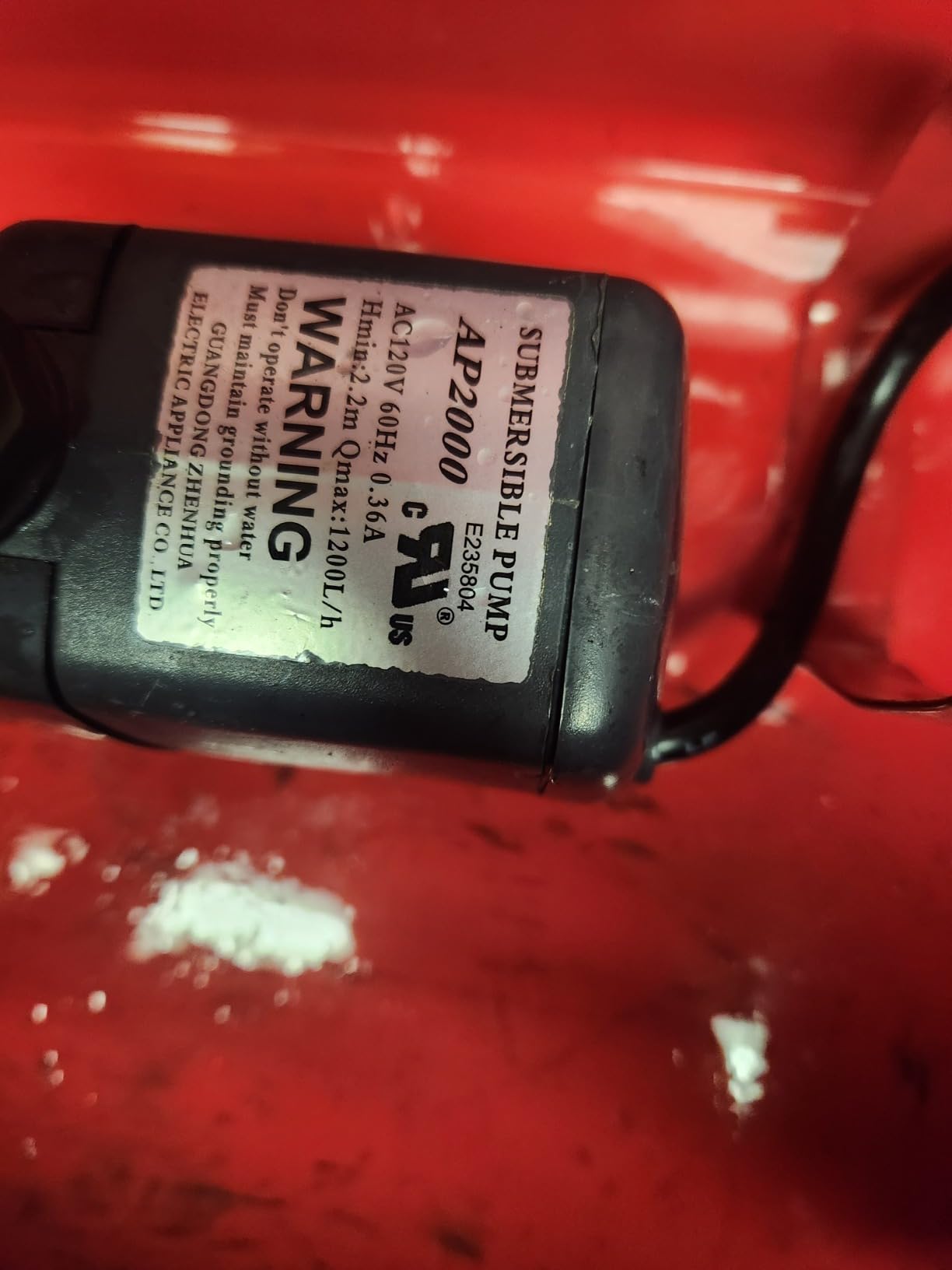
The weakness, repeated more than any other in the reviews, is that the pump is too strong for a tub this size. Fluid comes out fast enough to splash over the edge, and the work platform binds on the pump nozzle when you try to lift it out. The pump screen is also oversized and will not stay clipped to the pump. None of that is a dealbreaker for careful work, but it does mean this washer rewards a slower, more deliberate hand than a splash-happy one.
The second complaint is the missing drain plug. With no drain, changing fluid means bailing solvent out by hand or siphoning it, which is unpleasant and slow. Owners working around it typically add their own drain fitting before the first fill. The listing also states plainly that the washer is not for flammable or combustible solvents such as mineral spirits, so plan on a water-based degreaser with this one.
Who the Torin T10035 works well for
This is the washer for small-parts work: bearings, gears, carburetor bodies, chains and small brackets. Owners use it on greasy assemblies that would otherwise take an hour with a brush and a rag, and the 9-inch basin height is enough to submerge most of that work. At 16.8 pounds it also works on a utility cart if you want it near the vehicle rather than on the bench.
It is a good first washer for a home garage because the capital outlay is small and the review base is large enough that failure modes are well documented. If you are working on aluminum cylinder heads or intake ports, owners report it handles grimy port passages well with a water-based degreaser and an aftermarket flow-through brush.
Where the Torin T10035 falls short
If you plan to run mineral spirits or kerosene, stop here and read the fluid guide further down. This pump is not rated for flammable solvents, and a fusible-link lid is not a substitute for the right pump. The same applies to anyone washing a full transmission or a differential: the tub is too small and the pump is too fast.
You will also want to budget for two small modifications before the first fill, a drain fitting and a flow-through brush with a hose to tame the spray. Both are cheap, both are near-universal recommendations in the reviews, and together they turn a splashy benchtop box into a genuinely usable washer.
2. JEGS 555-81526 5 Gallon Portable Washer – Best Value
Portable Parts Washer [5-Gallon Tank]
3.5 gal solvent capacity
Powder coated steel
16.8 lbs
Removable tray
110V
Pros
- Long 457-review track record
- Compact footprint that stores out of the way
- Removable tray simplifies draining
- Cheap relative to similar cabinets
Cons
- Pump flow far exceeds what the small tank can hold
- No lid gasket so fluid evaporates in storage
- No fusible link and no lid catch
The JEGS 81526 is the washer I recommend to anyone who wants a step up from a tiny benchtop tub without giving up bench space. The solvent capacity is 3.5 gallons, the body is powder coated steel with a black finish, and the dimensions are 17.375 by 14.25 by 8.75 inches, so it slides under a workbench and comes back out when needed. At 16.8 pounds it moves the same way the Torin does.
Owners consistently rate the pump pressure as strong for the size, and the removable tray makes draining and general clean-up much less of a chore. One long-term owner has run diesel fuel and automatic transmission fluid through it without a leak, which tells you something about the steel. The 457 reviews here are the second deepest of any washer in this roundup.
![Portable Parts Washer [5-Gallon Tank] customer photo 1](https://nabihamusic.com/wp-content/uploads/2026/09/B078WJ3QJB_customer_1.jpg)
There is no published flow figure for this washer, which is a real gap in the spec sheet, so judge it by the reviews instead. They describe good spray pressure and, consistently, far more flow than a 3.5-gallon tank comfortably holds. Nearly every reviewer recommends adding a flow-through brush and hose to control the spray, and that advice is the single most useful thing in the review set for this product.
Two omissions are worth knowing before you buy. There is no lid gasket, so fluid evaporates during storage, and there is no clip or catch to hold the lid closed, so you can dribble solvent while carrying it. There is also no fusible link. For a water-based degreaser those are annoyances; for anyone tempted to use a flammable fluid they are the reason to pick a different washer.
![Portable Parts Washer [5-Gallon Tank] customer photo 2](https://nabihamusic.com/wp-content/uploads/2026/09/B078WJ3QJB_customer_2.jpg)
Who the JEGS 81526 works well for
It suits the hobbyist cleaning carburetors, fuel pump bodies, small gears and hand tools on a budget. The removable tray is the feature owners mention most warmly, because it means you can lift the working fluid out and carry it to a drain rather than tipping a fixed tub.
It is also a strong choice for a garage that is seasonal. Because the footprint is small, you can bring it out in spring, clean the mower and edger parts, and store it out of the way in winter without dedicating floor space all year.
Where the JEGS 81526 falls short
Do not run flammable solvents in it. Without a fusible link and without a lid gasket, a solvent-based fill in this washer is a real fire risk in an attached garage, and we would not make that trade for the price difference.
It also drains by removing the tray, which is convenient until you are carrying several gallons of used fluid. Budget for a storage container, and expect to top the fluid up more often than in a larger washer because the working volume is small and it gets dirty faster.
3. Eastwood 31875 40 Gallon Deep-Tub Washer – Best for Large Parts
Eastwood 40 Gallon Parts Washer | 10 Inch Deep Tub Heavy Duty Powder Coated Finish Steel Parts Cleaner | Parts Washer Tank with 120V 5.3 Gallons Per Minute Flow Pump | Blue
40 gal capacity
10 inch deep tub
5.3 GPM 120V pump
Reusable filter
92.4 lbs
Pros
- Only washer here with a 10 inch deep tub
- Reusable filter extends fluid life
- Smooth high-flow 5.3 gpm pump
- Backed by lifetime technical support
Cons
- Weighs 92.4 pounds and takes real floor space
- Parts cleaning brush not included
The Eastwood 31875 is the only washer in this roundup built for parts that will not fit anywhere else. The tub is 10 inches deep and holds 40 gallons, which means a transmission case, a differential housing or a full cylinder head can sit fully submerged instead of being half-dipped. Depth is the specification that gets overlooked, and it is the reason this washer performs differently from the other 40-gallon cabinet on the list.
The 120V electric pump is rated at 5.3 gallons per minute, the highest flow figure in the group, and a reusable filter is included, which extends how long a charge of fluid stays usable. Buyers call the flow smooth and the gooseneck easy to bend so the solution runs across a part surface rather than past it. Eastwood also backs it with lifetime technical support and a one-year limited warranty.
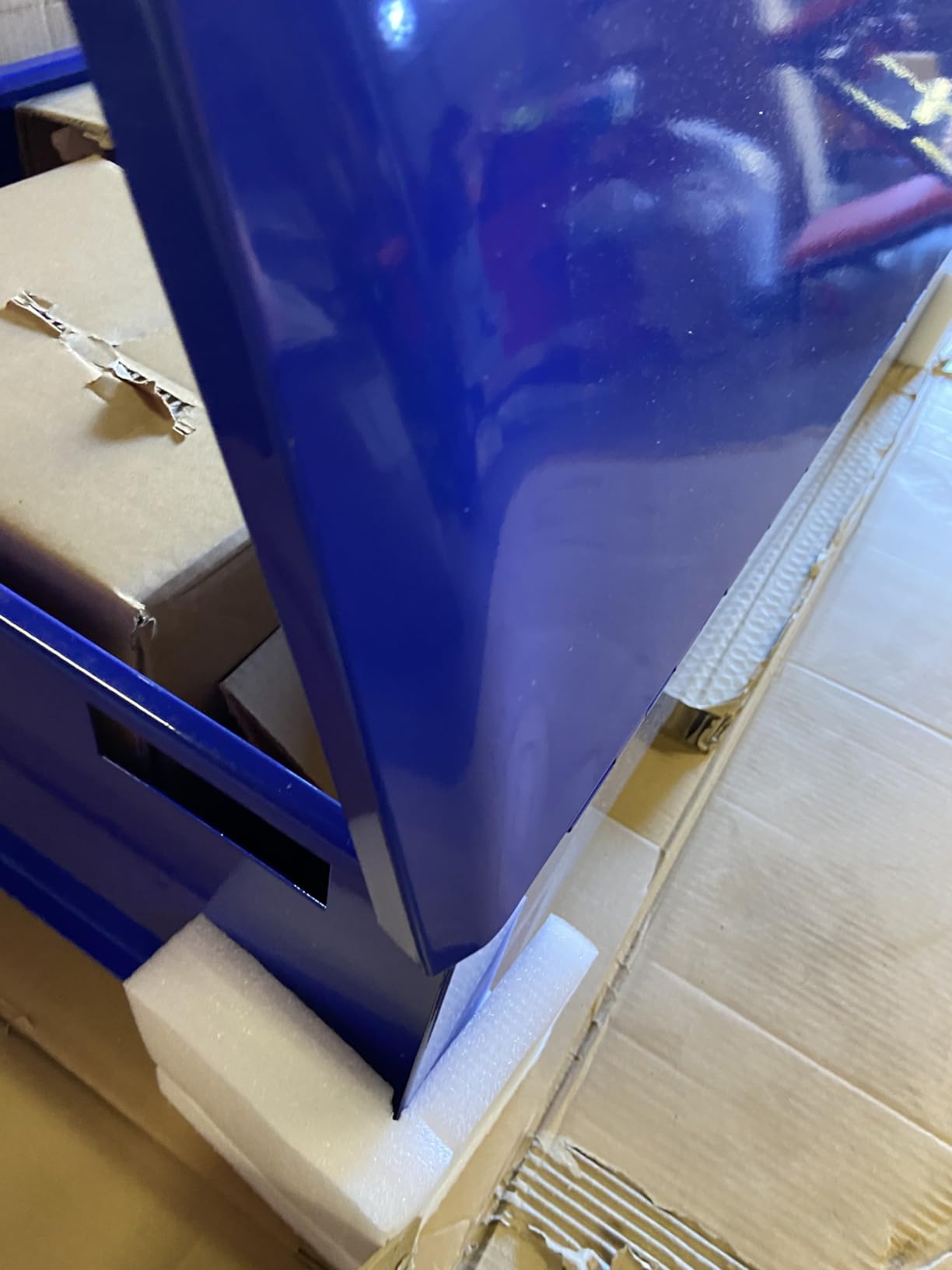
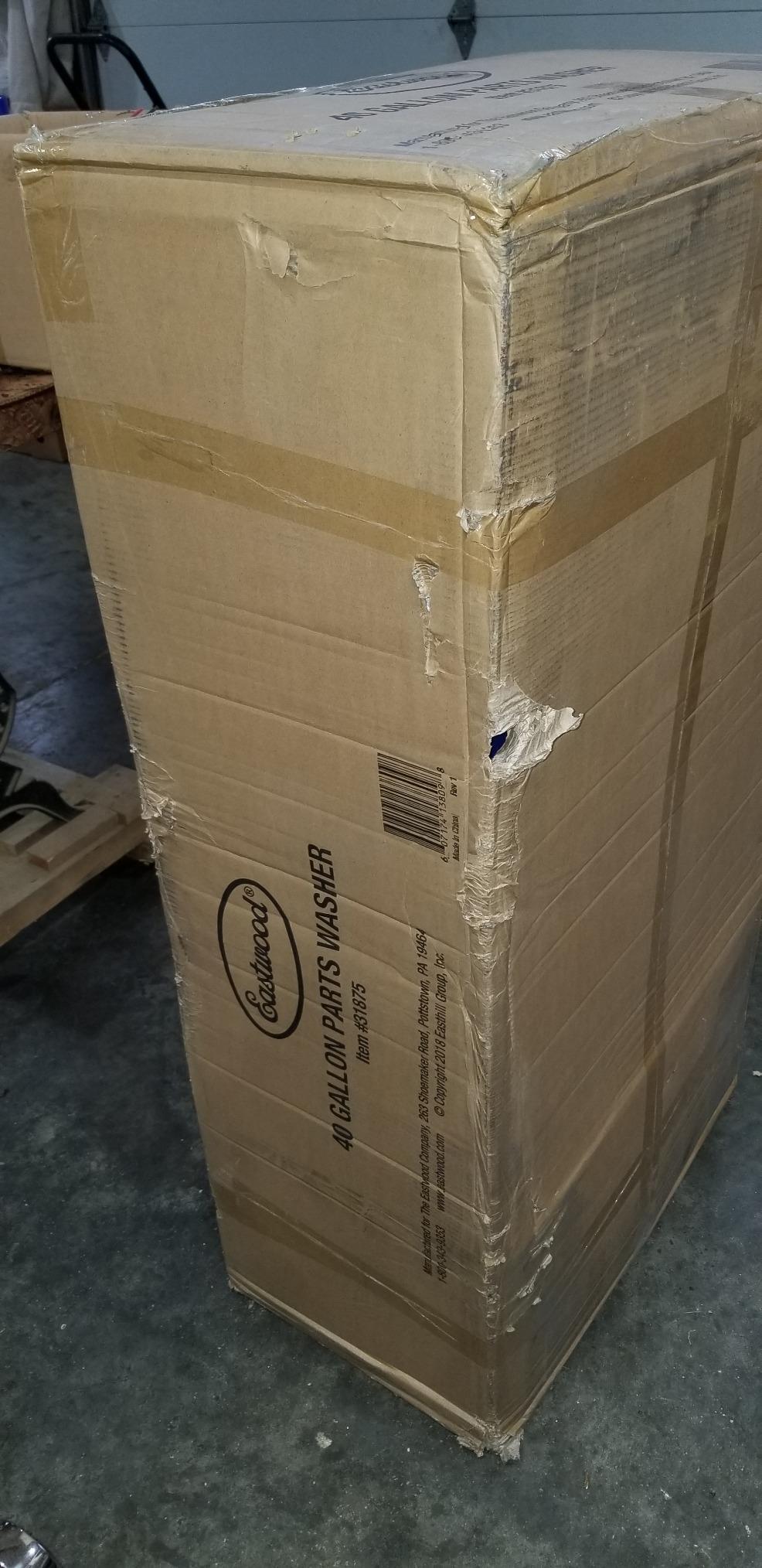
The build is heavy-duty all steel with a powder coated finish, and at 92.4 pounds it is not a one-person lift. The cabinet measures 35 by 21.5 by 43 inches, so plan the corner of the garage before you order. The workflow is straightforward: set parts on the tray, bend the gooseneck over the part, let the solution flush the surface, then brush stubborn deposits.
The main omission is the brush. Owners point out that the parts cleaning brush is not included and has to be bought separately, which is worth knowing before you set up. The deep tub and included filter, on the other hand, are the two things reviewers praise most, along with how little they have had to repair.
Who the Eastwood 31875 works well for
This one is for a serious home rebuild: engine projects, transmission work, anything where a large part needs to soak rather than be sprayed. The 40-gallon capacity also means the fluid lasts longer, which matters because fluid is the ongoing cost of owning a parts washer and owners repeatedly complain about it adding up.
It suits a garage that already has a corner allocated to a permanent work station. The reusable filter and deep tub reduce how often you drain and refill, so the higher capacity pays for itself in fluid saved rather than in parts cleaned per hour.
Where the Eastwood 31875 falls short
It is too big and too heavy for a small garage, a rental unit, or anyone who needs to move it to the vehicle. At 92.4 pounds and 43 inches tall, it is a fixed installation, not a bench accessory.
At this capacity you are also committing to real fluid discipline. You need a plan for draining, storage and disposal, and you need ventilation, because a 40-gallon bath of solvent in a residential garage produces a lot of vapour. Read the safety section below before you fill it.
4. Jack Boss ASG4001 3.5 Gallon Portable Washer – Best for Small Parts
Jack Boss 3.5 Gallon Capacity Portable Steel Cabinet Parts Washer with 110V Electric Pump for Wheel Bearings, Gears, and carburetors, Red
3.5 gal tank
0.5 GPM 110V pump
Fusible-link lid
18 by 18 by 9 in
Pros
- Gentle 0.5 gpm flow suits small parts
- Light enough to work from a utility cart
- Hinged fusible-link lid
- Good on chains and bearings
Cons
- Pump still splashes without an adjustable nozzle
- Not rated for flammable or combustible solvents
The Jack Boss ASG4001 is the compact washer to pick if your parts are small and you want a gentler spray than the Torin or the JEGS benchtop units give you. The 110V electric pump recycles fluid at half a gallon per minute, roughly a tenth of what the bigger pumps push, and owners notice the difference. The work basin is 18 inches wide, 13.5 inches deep and 9 inches high.
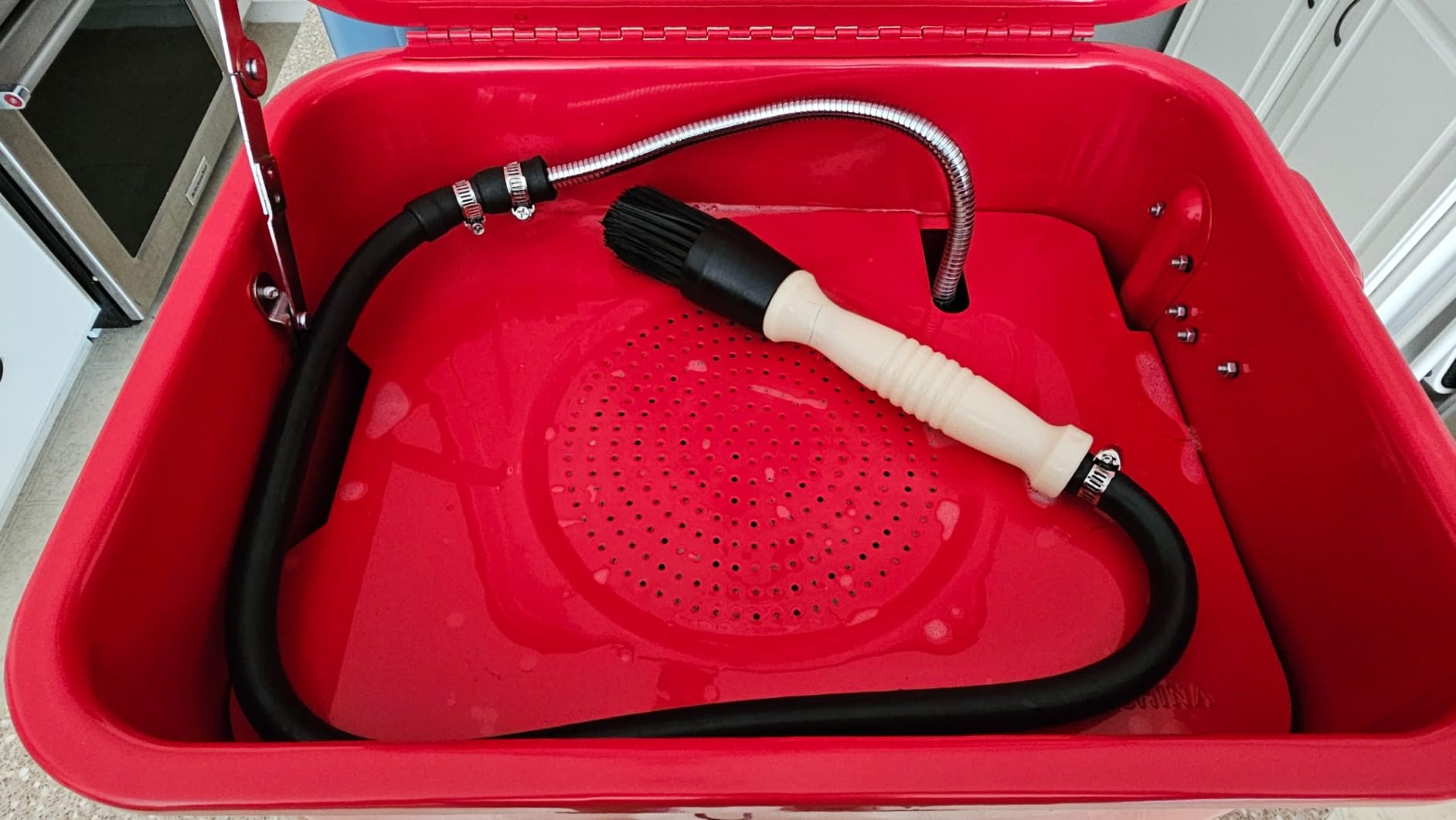
It is described as a steel cabinet that is big enough for most parts yet small enough to stay portable, and several owners use it on a utility cart for field work. Reviewers report good results on chains, bearings and even grimy engine cylinder-head ports, and it pairs well with an aftermarket flow-through brush and a water-based degreaser.
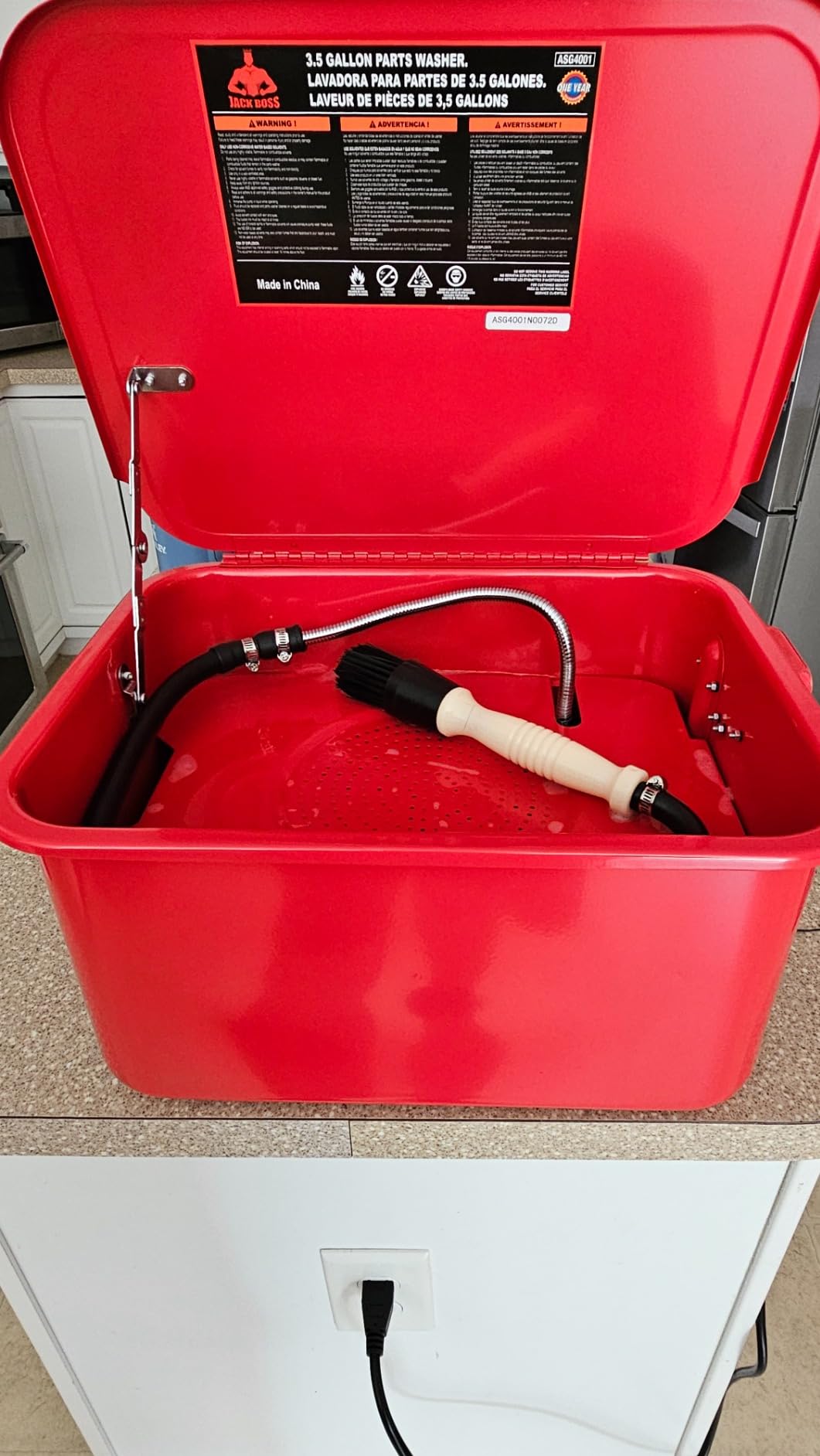
The recurring request in the reviews is for a controllable pressure hose or nozzle, and it is a fair one. Owners repeatedly recommend buying the brush attachment, which lengthens the spray distance and gives you a hand on the flow, which in turn reduces the splashing. Without it, the pump still outruns the tub.
As with several other compact washers in this roundup, the listing states the washer is not for use with flammable or combustible solvents such as mineral spirits. That line is worth taking seriously, and it is the main reason this washer sits fourth rather than higher for a lot of people.
Who the Jack Boss ASG4001 works well for
It is a good match for cleaning chains, bearings, small gears and fuel injector pieces where you want the fluid to flow around the part rather than blast it. The lower flow also makes it a safer washer to run with a lot of small loose parts in the basket.
Owners who work away from the bench like that it stores and moves easily. It is a sensible pick if your garage is a single bay and your cleaning tends to happen on the driveway side of the car rather than at a fixed bench.
Where the Jack Boss ASG4001 falls short
It will not handle anything large, and it is not a solvent washer. If your work involves transmission internals, fuel system components that need a hot soak, or a rebuild where you want petroleum solvent power, this is the wrong tool.
The flip side of portability is that the tub is small enough to get dirty fast, so you will be changing fluid more often than with a 20 or 40 gallon cabinet. For occasional small-parts work that is fine; for a full rebuild it becomes tedious.
5. JEGS 555-81525 20 Gallon Cabinet – Best for 20 Gallon Starts
Parts Washer [20-Gallon Tank]
20 gal tub
12 gal solvent capacity
317 GPH 110V pump
57.5 lbs
Powder coated steel
Pros
- Twelve gallons of working volume for a garage-sized budget
- Quick to assemble with clear directions
- Removable tray eases draining
- Good value for the capacity
Cons
- Deep tub can suck air if kept too empty
- Some units arrive dented from packaging
- Occasional noisy pump failures
The JEGS 81525 is the middle of the lineup and the capacity sweet spot for most home garages. The tub holds 20 gallons with 12 gallons of solvent capacity, which is enough working volume that the pump intake stays submerged even when you are washing a large part. The 110V pump is rated at 317 gallons per hour, and the whole cabinet weighs 57.5 pounds.
Owners who receive a good example describe it as solid and well priced for the capacity, and report that it is quick to assemble with clear directions. The removable tray is a repeated positive, and at 30 by 21 by 34.5 inches the footprint is manageable in a one-car garage if you place it along a wall rather than under a vehicle.
![Parts Washer [20-Gallon Tank] customer photo 1](https://nabihamusic.com/wp-content/uploads/2026/09/B078WJB4X2_customer_1.jpg)
This is the lowest-rated washer in the roundup at 4.1 stars, and the reason is mostly shipping rather than design. Buyers report units arriving banged up or dented from inadequate packaging, and a smaller number report noisy pumps that cut out or dead pumps on arrival. There is also a listing colour mismatch, since the product arrives black rather than the yellow shown in some imagery, which annoys buyers who ordered expecting a specific finish.
One operating note matters more than any of that: the tub is deep enough that the pump intake can suck air unless the fluid level stays fairly full. That produces a sputtering spray that looks like a failed pump. Keep the working level above the marked minimum and the pump behaves.
![Parts Washer [20-Gallon Tank] customer photo 2](https://nabihamusic.com/wp-content/uploads/2026/09/B078WJB4X2_customer_2.jpg)
Who the JEGS 81525 works well for
This is the washer for someone who has outgrown a benchtop tub but does not need a dedicated 40-gallon corner. Twelve gallons of working volume handles brake assemblies, calipers, hubs and a set of gears without crowding, and the removable tray means cleaning the tank is not a punishment.
It is also a sensible first step if your garage has room to grow. Later you can step up to a 40-gallon cabinet and the skills and fluid habits transfer directly.
Where the JEGS 81525 falls short
The packaging and quality control on this model are the weak points, and there is a 30-day warranty window. Inspect the cabinet and pump the moment it arrives rather than after your first fill.
There is no heater, no filter and no fire-rated lid hardware mentioned in the specification, so if you want heated cleaning or solvent work with proper fire protection, budget for a different model or for modifications. This is a parts washer that does the basic job at a sensible size.
6. JEGS 555-81553 40 Gallon Cabinet – Best for Two-Car Garages
Parts Washer [40-Gallon Tank]
40 gal capacity
24 gal solvent capacity
5 GPM 115V pump
99.4 lbs
Removable shelf
Pros
- Largest working volume in the roundup at 24 gallons
- 5 GPM pump output for strong flushing
- Removable interior shelf for versatility
- Compact footprint for its capacity
Cons
- Roughly 100 pounds
- so it takes two people to move
- Finish arrives black rather than the described powder coated yellow
The JEGS 81553 is the full-size option: 40 gallons of tank capacity and 24 gallons of working volume, which is the most fluid capacity of any washer here. The 115V pump is rated at 5 GPM maximum output, and the removable interior shelf adds a second level for parts that should not sit in the bath. At 99.4 pounds and 44.5 by 21.75 by 35 inches, it is a two-car garage fixture.
Buyer feedback centres on exactly the three things that matter: the useful capacity, the removable shelf, and the pump output. There is a small amount of colour mismatch feedback, since the finish arrives black rather than the powder coated yellow some descriptions reference, but no major mechanical complaints appear in the reviews.
![Parts Washer [40-Gallon Tank] customer photo 1](https://nabihamusic.com/wp-content/uploads/2026/09/B0784SQ1CN_customer_1.jpg)
The trade-off is straightforward: this is the least mobile washer in the roundup. At roughly 100 pounds, repositioning it takes two people, and you should plan the spot before it arrives. Owners who have it set up in a fixed corner report that the capacity pays off quickly, because fluid lasts far longer and you do not drain a 20-gallon tub every few rebuilds.
It runs on 115V and the specification sheet notes powder coated construction with a removable interior shelf for versatility and easy clean-up. There is no mention of a heater, a filter or a fusible-link lid, so treat it as a solvent-capable shell with a strong pump rather than a fully safety-equipped unit.
![Parts Washer [40-Gallon Tank] customer photo 2](https://nabihamusic.com/wp-content/uploads/2026/09/B0784SQ1CN_customer_2.jpg)
Who the JEGS 81553 works well for
It suits a two-car garage with a designated work corner, someone doing transmissions and differentials, or a household that cleans parts often enough that fluid costs are a line item rather than an occasional purchase. Twenty-four gallons of working volume means fewer fluid changes over a year.
It also works for seasonal equipment, because you can wash mower decks, tillers and wheel hubs in a single session rather than running three loads through a small benchtop tub.
Where the JEGS 81553 falls short
Weight and footprint rule it out for small garages, rental spaces and anyone who wants the washer near the vehicle. Plan the location before delivery, because moving it later is a two-person job.
The absence of listed fire-safety hardware matters more at this size. With that much fluid in the tank, ventilation and lid discipline are on you, and the 30-day warranty is short for a cabinet this size.
7. CRC SmartWasher BenchtopPRO – Best for Solvent-Free Cleaning
CRC SmartWasher BenchtopPRO Bioremidiating Parts Washer, 1000872
Solvent-free non-toxic fluid
Non-flammable
Stores without draining
2 year warranty on registration
Pros
- No solvents and no hazardous chemicals
- Non-toxic and non-flammable by design
- Stores on end without draining the fluid
- Included drying rack drains back into the tank
Cons
- Proprietary micro packs and concentrate are hard to source and costly
- Cleaning is slower and needs more scrubbing
- Can weep fluid when stored upright
The CRC SmartWasher BenchtopPRO is the odd one out in this roundup and the reason we included it: it cleans without solvents or hazardous chemicals at all. The chemistry is non-toxic, non-flammable and described as pleasant smelling, which in a residential garage with a house attached is not a small thing. The kit ships with the washer, the BT5 concentrate and MicroPRO Pack packets.
Owners highlight that the degreasing solution continually cleans itself so the fluid is ready to use, and that the washer stores on end without needing to drain, which removes the winter storage problem entirely. The deep tub cuts splashing and handles bulky parts such as brake and tie-rod assemblies, and the included drying rack drains solution back into the tank.
The trade is speed and consumable cost. Reviews are clear that degreasing takes longer and needs more scrubbing than a solvent-based washer, and that the proprietary micro packs and concentrate are difficult to source and add a significant ongoing cost. Budget for refills as a running expense, not a one-time purchase.
Who the CRC SmartWasher works well for
It suits an attached garage, a household with children or pets around the workspace, or anyone who simply does not want to handle petroleum solvent. It is also the easiest washer here to live with between jobs, because you can store it full and it will not vapour off in the shed.
It suits surface prep work: cleaning metal parts before painting, powder coating or reassembly, where you want the part clean without leaving a petroleum film behind.
Where the CRC SmartWasher falls short
It is the wrong tool for a seized, carbon-caked teardown that needs the aggressive cutting power of a strong solvent and a hot bath. Owners of stubborn greasy work report that scrubbing time goes up sharply.
The consumable dependency is the real risk. If the micro packs become hard to get, the washer goes idle, and a benchtop machine that stores full and stays in use is worth much more than one you cannot refill. Check availability in your area before you commit.
8. AFF INT31200A 20 Gallon Washer – Best for Certified Safety
AFF Parts Washer – For Tools & Automotive Components Cleaning – Accessories Included – (Available in multiple capacities)
20 gal tank,12 gal working
50 GPH pump
UL Listed and cETL
Heat-resistant cover with fuse
62 lbs
Pros
- UL Listed and cETL certified as a complete unit
- Heat-resistant cover with automatic fusible link
- All-steel construction resists corrosion
- Removable shelf and parts basket included
Cons
- Flow-through brush shown in imagery is often not included
- Drain plug position strands about 22 gallons
- Filter media is hard to source
The AFF washer is the one in this roundup that arrives with third-party safety certification, and in a garage with a house attached that is worth more than any extra gallon of capacity. The complete unit is UL Listed and cETL certified to CAN/CSA C22.2 No. 68-92, it includes a GFCI plug at 110V and 0.5A, and the heat-resistant cover carries a fusible link fuse that closes automatically to reduce the chance of fire.
Under the cover it is a solid 20-gallon washer with 12 gallons of working capacity, a 50 GPH pump, a flexible delivery spout, and a removable work shelf and parts basket. It is offered in 7, 20 and 40 gallon capacities, and the all-steel construction is described as high strength and corrosion resistant. The unit weighs 62 pounds and measures 30 by 20.5 by 35.625 inches.
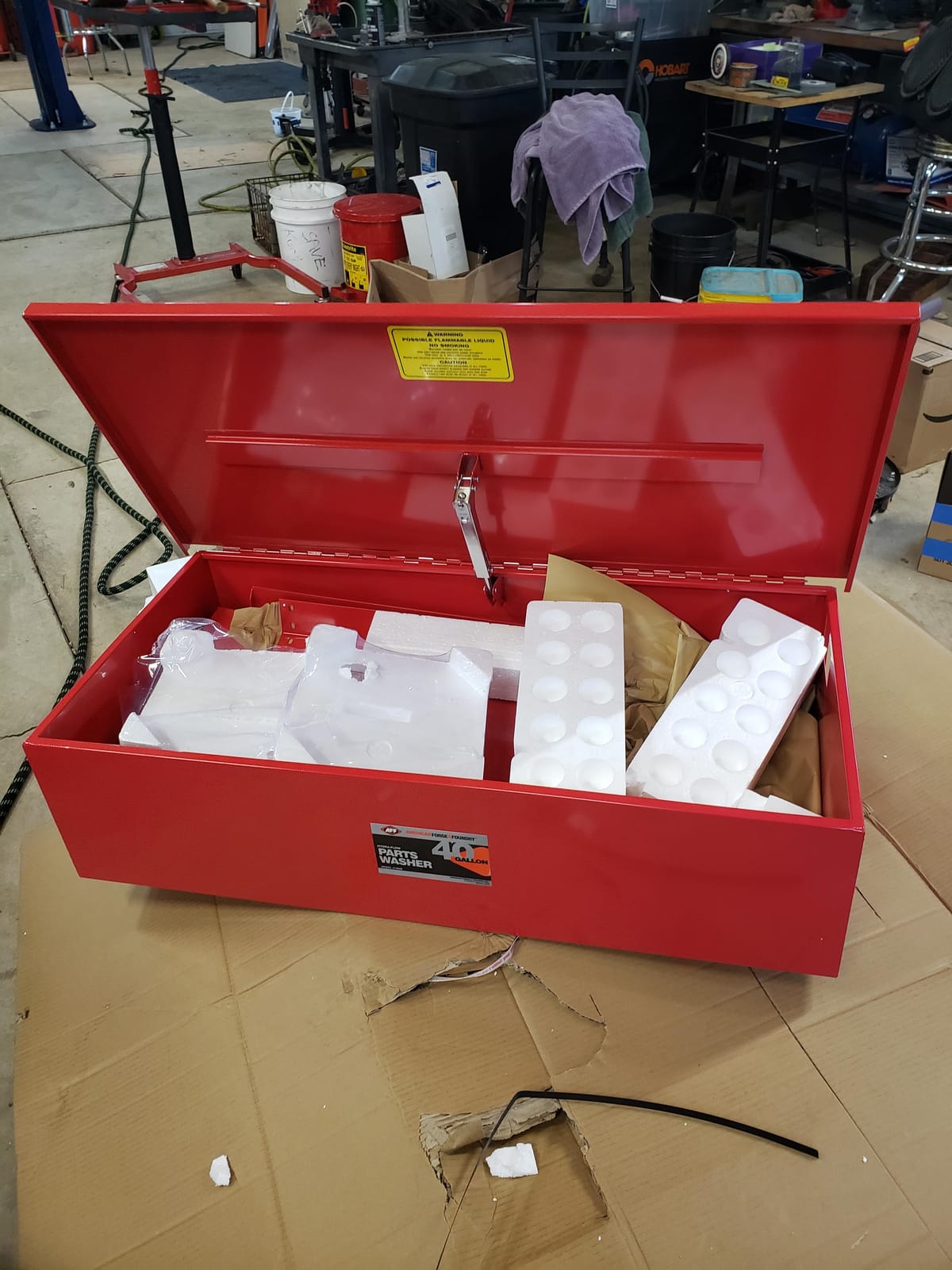
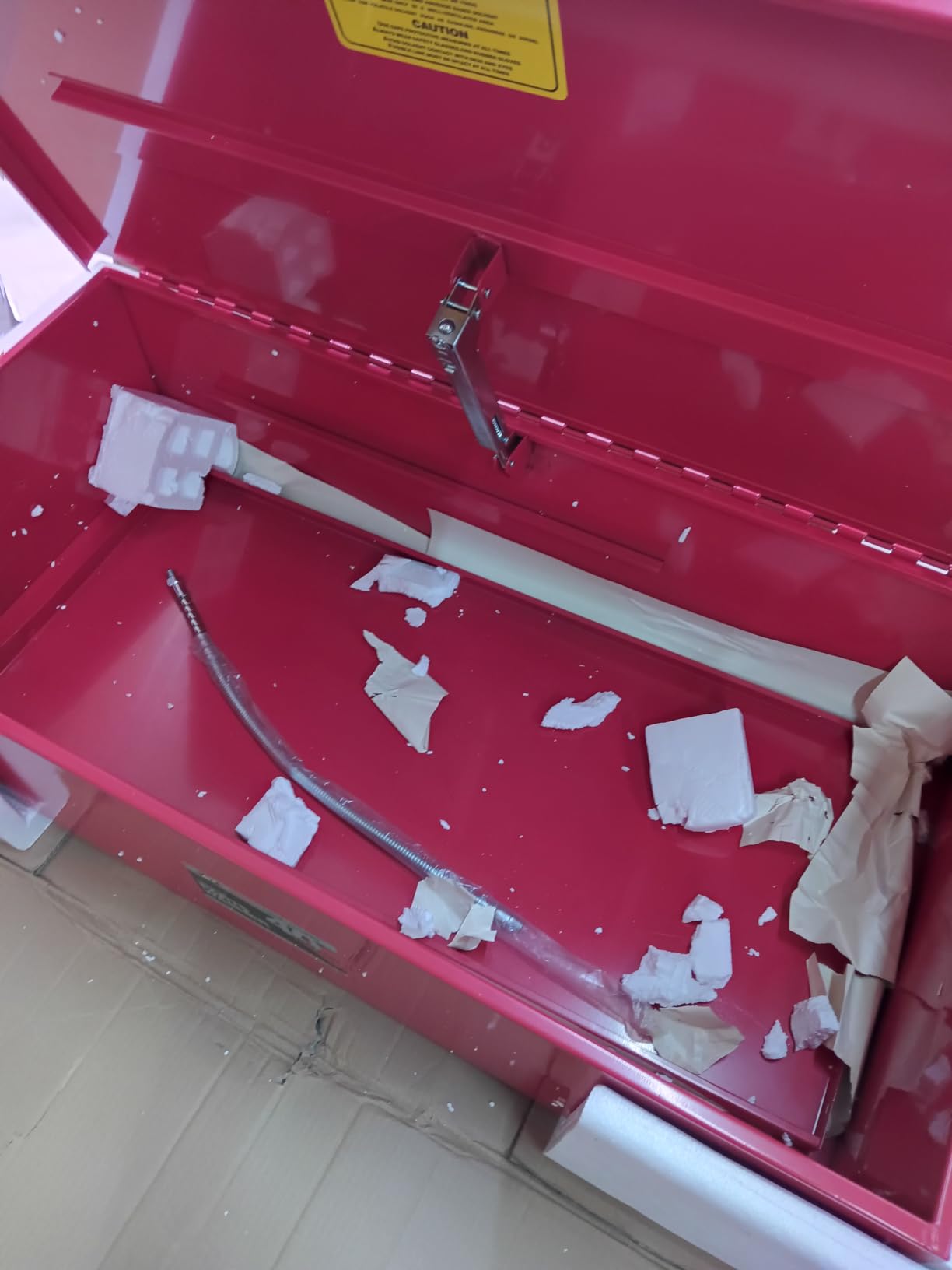
The rated 4.0 stars is the lowest average in the roundup, and the reviews explain why: the gap between the listing photos and the box contents, plus shipping damage. Owners report chipped paint, dents and loose hardware on arrival, and that the flow-through brush shown in the product imagery is frequently missing. Nobody who assembles it says the pump and tank underperform.
Two practical issues recur. The short legs put the tub low to the ground, which is awkward when you are lifting heavy parts in and out, and the drain plug is positioned so that roughly 22 gallons of fluid are stranded in the tank and cannot be drained out through it. The replacement filter media is also not well documented.
Who the AFF washer works well for
It is the pick for anyone running solvent where fire risk is a genuine concern, because the certification and the automatic fusible-link cover are the strongest safety package in this list. It is also a good fit for metal, rubber and plastic parts that a gentler aqueous cleaner will not cut through.
Because it comes in multiple capacities, it is a reasonable way to size up over time if a 7-gallon version fits your bench now and you need more working volume later.
Where the AFF washer falls short
Quality control on arrival is the problem. Inspect the cabinet, check for loose hardware and chipped paint before you fill it, and confirm what is actually in the box.
The drain design is a genuine annoyance in a 20-gallon cabinet, and the undocumented filter media means long-term ownership could get fiddly. If a clean drain and a documented consumable matter more to you than certification, the 20-gallon JEGS is the better-stated option.
9. Tandagy 20 Gallon Stainless Steel Washer – Best for Rust-Prone Garages
Tandagy Parts Washer 20 Gallon Portable Parts Washers with 110v Pump Solvent Tank Portable Automotive Parts Cleaner for Wheel Bearings Gears Carburetors
Stainless steel tub and shell
20 gallon
50 GPH sealed 0.7A pump
58 lbs
Fusible-link hinged lid
Pros
- Stainless steel resists bending
- rust and corrosion
- Sealed 0.7A pump motor with flexible gooseneck
- Hinged lid with fusible link
- Removable shelf simplifies draining
Cons
- Pump pressure cannot be adjusted and splashes
- Full 20 gallon capacity is costly for small jobs
- Small 19-review base
The Tandagy washer is the only stainless steel tub in this roundup, and in a damp garage that difference shows. The tub and outer shell are stainless steel with a blue powder coating rather than painted mild steel, and the reviews single out resistance to bending, rust and corrosion as the reason to buy it. It weighs 58 pounds and runs a sealed 0.7A pump motor at approximately 50 gallons per hour.
The hinged lid carries a fusible link that shuts automatically in a flash fire, which is more safety hardware than most washers in this price range offer. There is a removable shelf and a flexible gooseneck spigot, and the manufacturer lists screws, gaskets, wheel bearings, gears and carburetors as intended uses.
Two limitations show up repeatedly. The pump pressure cannot be adjusted, so it splashes on smaller jobs, and the 20-gallon capacity means you are using a lot of cleaning fluid for small cleaning tasks. A small review base of 19 ratings also means long-term durability is less proven here than elsewhere.
Who the Tandagy washer works well for
It suits coastal, basement or unheated garages where a painted steel tub would start spotting within a year, and for anyone storing parts in a damp space. The stainless shell also tolerates the knocks and scrapes of an active work area better than powder coat.
The fusible-link lid makes it a reasonable solvent-capable option for someone who wants a 20-gallon washer with fire hardware at this size.
Where the Tandagy washer falls short
Fixed pump pressure means you cannot slow the spray down for delicate or small parts, and a bent gooseneck is the only control you get. For small work that is a real limitation.
The 20-gallon capacity also has an ongoing cost. Fluid is the running expense owners complain about most, and filling a large tank for a single small part is wasteful. If your work is mostly small parts, a benchtop washer with a removable tray is a better economic match.
10. VEVOR 5 Gallon Portable Washer – Budget Pick
VEVOR Parts Washer 5-Gallon, 3.5 Gallon Solvent Capacity, 0.4 Gallon per Minute Max Pump Output, Portable Steel Automotive Parts Cleaner with Electric Pump for Wheel Bearings, Gears, and Carburetors
5 gal tank
3.5 gal solvent capacity
0.4 GPM pump
15 lbs
Powder coated steel
Pros
- Lightest washer here at 15 pounds
- Mesh filter recycles fluid to cut detergent use
- Adjustable curved gooseneck wets part surfaces
- Zero one-star ratings in the review set
Cons
- Small 16-rating base leaves durability unproven
- 0.4 GPM output is the lowest in the roundup
The VEVOR 5-gallon washer is the lightest unit here at 15 pounds and the easiest to move between a workshop, a shelf and the garage. The tank holds 5 gallons with 3.5 gallons of solvent capacity, and the dimensions are 18.11 by 13.39 by 9.06 inches, so it is genuinely bench-friendly. It is powered by an AC electric pump rated at 0.4 gallons per minute.
The filtration pump circulates the solution through a mesh filter and out the gooseneck tube, which recycles fluid and cuts how much detergent you burn through. Reviewers like the flexible gooseneck that bends to wet part surfaces fully, and the powder coated steel resists rust and corrosion. It is listed as suitable for wheel hub bearings, gears, carburetors, valve assemblies and transmission cases.
The honest caveat is the review base. Sixteen ratings is the smallest sample in the roundup, so long-term durability is unproven, and the 0.4 GPM output is the lowest here. It cleans, it just does not blast. If you are buying on a tight budget for small parts, that is a reasonable trade.
Who the VEVOR washer works well for
It suits a first-time buyer, a renter, or anyone who wants a parts washer that can be carried between a garage and a shed. At 15 pounds it is the one washer here you can move with one hand and store on a high shelf.
The mesh filter is the quiet advantage: recirculating fluid means you use less cleaning solution per session, which is the cost that owners complain about most when fluid adds up.
Where the VEVOR washer falls short
The flow rate is low, so heavy carbon and caked grease need time and a brush rather than spray alone. For a quick benchtop rinse of bearings and small gears it is fine; for a teardown it will feel slow.
With a small sample of reviews, there is no long-term owner evidence about pump or tank life. Treat it as an occasional-use washer, and check that a replacement pump is obtainable before you commit to it as your only cleaning bath.
Parts Washer Buying Guide: Size, Pump, Heat and Safety
Most regret in this category comes from sizing wrong, so start there. A 3.5-gallon benchtop washer is right for small parts, a 20-gallon cabinet is right for a working home garage, and a 40-gallon washer is right when you routinely handle transmissions, differentials or whole assemblies. In a one-car garage, a 20-gallon cabinet along a side wall is the balance most people want. A two-car garage with a dedicated corner can justify 40 gallons, and most of the extra benefit is fewer fluid changes rather than better cleaning.
Look at working volume, not tank capacity. A 20-gallon tub with 12 gallons of solvent capacity, as the JEGS 81525 and the AFF washer both have, keeps the pump intake submerged and gives you room to work. A large tank filled to the brim is unstable, spills more and ages faster than fluid sitting in a full but shallow working level.
Pump output is the second criterion, and the ratings are not always comparable. Three of the washers here are listed in gallons per hour and two in gallons per minute, so a 5 GPM figure and a 325 GPH figure are not the same measurement. The practical question is simpler: does the spray run steady or does it pulse and suck air? Deep tubs with low fluid levels are the ones that pulse, and that is a fluid level problem more than a pump problem.
Heating is the upgrade owners ask about most and rarely need at home. A heated parts washer holds fluid near its flash-off temperature and cuts grease faster, but it adds cost, an electrical hazard and a genuine fire risk if you are using flammable solvent. If you want heat, a properly listed heated aqueous washer is a better direction than adding a DIY immersion heater to a solvent tank, which forum owners do and which we would not recommend in an attached home garage.
Used and auction washers are a real value channel, and there is a whole restoration video genre built around them. Before buying one, check the pump for a hum and steady flow, look for rust pitting inside the tank, test the lid fusible link, confirm the filter and intake screen are present and clear, and check the cord and switch for damage. A replacement pump is often unavailable for an unknown brand, and a missing filter is the single most common reason owners remove a filter entirely, which lets debris recirculate and blunt the spray.
And know when not to buy. If you clean a few small brackets a month, a five-gallon bucket, a nylon kitchen brush and a water-based degreaser will do the same job, and several owners in Garage Journal threads make exactly that argument. A parts washer earns its floor space when you are doing rebuilds, not tidying up.
Which Fluid Should You Put In Your Parts Washer?
Fluid choice matters more than washer choice, and this is the question almost every buyer asks. Solvent-based fluid cuts grease faster and works on hardened deposits, but it is flammable, it smells, it costs more per gallon, and it can leave an oily film that will wreck paint adhesion or a gasket seal if you assemble too soon. Aqueous, or water-based, fluid is non-flammable, kinder to your hands and to an attached house, but it needs more scrubbing and heat to match solvent on heavy carbon.
Mineral spirits, also sold as Stoddard solvent, are the most common parts washer fill and the one the Garage Journal threads mention most. Owners report it cuts grease well, and it is the standard answer to a question that confuses a lot of people: parts washer solvent and mineral spirits are frequently the same product sold under different labels, so read the label rather than the container. The trade-off is cost per gallon, which owners consistently name as the biggest ongoing complaint, and the flash point, which is lower than most people assume.
Kerosene and diesel fuel do work, and owners in several threads report running kerosene, a kerosene and mineral spirits mix, or even diesel through a washer without complaint. They are cheaper and they cut grease. They are also more flammable, they smell more, and forum advice runs toward keeping solvent temperature lower when using them. In a residential garage we would not make them the default fill.
For pre-powder-coating and pre-paint work, the forum consensus is to avoid petroleum content entirely. Zep citrus degreaser comes up again and again for exactly this reason, and the logic is sound: any petroleum film left on the part can interfere with coating adhesion. Give parts a final rinse and let them flash off fully before painting or powder coating, no matter what fluid you used.
Aluminum changes the rules. Some petroleum solvents and strong alkaline cleaners etch or leave residue on aluminum, so check that your fluid is aluminum safe before you soak a cylinder head, a transmission case or an intake manifold. Finally, budget for the fluid honestly. A 20-gallon washer does not need 20 gallons of solvent, and the change and disposal cycle is a real recurring cost that is easy to underestimate when you are comparing washers.
Safety, Ventilation and Flammability in an Attached Garage
Flammable liquid is the one non-negotiable in this category. If you are running mineral spirits, kerosene, diesel or any petroleum solvent, treat the garage as a small machine shop: no smoking, no open flames, no pilot lights near the washer, and no sparks from grinding nearby while the lid is open. Keep a fire extinguisher rated for flammable liquid within reach, not in the house down the hall.
Ventilation is the part most people get wrong. Run the washer with the garage door open and a fan pulling air out, close the lid when you are not actively spraying, and do not store a filled solvent washer in an attached garage through the night. Owners describe the fumes and skin irritation as the reason they now wear gloves every time, and gloves are the cheapest safety upgrade available.
Read the listing for what the pump can handle. Several compact washers in this roundup state plainly that they are not for flammable or combustible solvents, and a hinged fusible-link lid is a safety device, not permission to use any fluid. Where a washer is listed for aqueous cleaning solutions within a narrow pH range, as the AFF washer is, stay inside that range.
Finally, plan the end of the fluid cycle. Know how you will drain the washer, what container you will store used solvent in, and where your local rules send it for disposal. Never pour solvent down a storm drain or a floor drain, and never mix a water-based rinse with a solvent charge. If you want zero of this, the CRC SmartWasher is the pick in this roundup that removes the question entirely.
Frequently Asked Questions
What is the best parts washer?
For a home garage, the BIG RED T10035 is the best all-round pick: a 3.5-gallon benchtop steel cabinet with a 325 GPH 110V pump, a hinged fusible-link lid and 577 owner reviews behind it. For large parts, the Eastwood 31875 has a 10 inch deep tub and a 5.3 GPM pump. For solvent work with fire protection, the AFF 20-gallon washer is UL Listed and cETL certified with an automatic fusible-link cover.
Are parts washers worth it?
They are worth it if you do rebuilds or clean metal parts before painting or powder coating, because grease left on a part causes gasket leaks, seized threads and poor coating adhesion. They are not worth it if you clean a few small brackets a month. In that case a bucket, a nylon kitchen brush and a water-based degreaser do the same job for a fraction of the cost and with no solvent to store.
What are the different types of parts washers?
The main types are solvent-based washers, which use mineral spirits, kerosene or diesel for the fastest grease cutting; aqueous or water-based washers, which use non-flammable cleaner and are safer in an attached garage; heated washers, which hold fluid near flash-off temperature to cut grease faster; and ultrasonic cleaners, which use cavitation to detail small carburetor and injector parts. Size then splits into benchtop, freestanding cabinet and portable formats.
Is mineral spirits good for a parts washer, and is parts washer solvent the same thing?
Mineral spirits, also called Stoddard solvent, are the most common parts washer fill and are frequently the same product sold under different labels, so check the label rather than the container. Owners in Garage Journal threads report it cuts grease well. The downsides are cost per gallon, which is the most common complaint about parts washer ownership, and a flash point lower than most buyers expect, so ventilation matters.
How much solvent does a 20 gallon parts washer need?
A 20-gallon tub does not need 20 gallons of solvent. Working volume, not tank capacity, is what matters: the JEGS 20-gallon washer here is rated at 12 gallons of solvent capacity, and the AFF 20-gallon washer has the same working figure. Staying at or below the working level keeps the pump intake submerged, reduces spill risk and slows how fast the fluid goes bad.
Is it safe to use kerosene in a parts washer, and what fluid is safe for aluminum?
Kerosene works and owners report using it, sometimes mixed with mineral spirits, but it is more flammable and smells worse than mineral spirits, so we would not make it a default fill in a residential garage. For aluminum, check that the fluid is labeled aluminum safe before soaking a cylinder head, transmission case or intake manifold, and avoid strong alkaline cleaners and heavy petroleum films that can etch or contaminate the surface.
The Verdict on the Best Parts Washers for Home Garages in 2026
The best parts washers for home garages come down to two questions: how big are your parts, and do you want to handle flammable solvent. For small-parts benchtop work, the BIG RED T10035 is the winner on review depth, steel construction and fire-safety hardware. For anything that needs to soak, the Eastwood 31875 has the deepest tub and the strongest pump of any washer here, and the JEGS 81525 is the 20-gallon middle ground most garages actually need.
If your garage is attached to a house, take the solvent question seriously and look at the AFF washer’s UL Listed, cETL certified build with an automatic fusible-link cover, or step out of solvent entirely with the CRC SmartWasher. Whichever one you choose, add a drain fitting and a flow-through brush before the first fill, keep the lid closed between uses, and plan your fluid changes before you buy the washer, not after. For more tested picks in the same vein, see our guide to the best practice amps.