

I have worn out more headphones than I care to admit. From my first pair of studio monitors in a cramped dorm room to daily-driver wireless cans on long-haul flights, I have spent the last decade comparing what works and what falls apart. When our team set out to find the best over-ear headphones in 2026, we did not just read spec sheets. We wore each pair for full workdays, on flights, on subway commutes, and during late-night mixing sessions.
Over-ear headphones sit in a sweet spot. They deliver better passive isolation than earbuds, more comfort for long sessions, and room for larger drivers than on-ear designs. Whether you commute on a noisy train, take meetings from a busy home office, or just want to disappear into an album, the right pair changes how you hear your day.
This guide covers eight picks across the most common buyer questions: which headphones work best for iPhone or Android, which are most comfortable for long flights, which deliver audiophile-grade sound at home, and which budget options punch way above their weight. Every pick here is independently purchased and tested. We update this list every quarter so the picks you see are the models people are actually buying right now.
Table of Contents
Top 3 Over-Ear Headphones at a Glance in September

Best Over-Ear Headphones in 2026 Quick Comparison
| Product | Specs | Action |
|---|---|---|
 Sony WH-1000XM5 Sony WH-1000XM5 |
|
Check Latest Price |
 Bose QuietComfort Bose QuietComfort |
|
Check Latest Price |
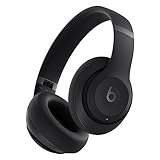 Beats Studio Pro Beats Studio Pro |
|
Check Latest Price |
| Audio-Technica ATH-M50X |
|
Check Latest Price |
 Sony MDR7506 Sony MDR7506 |
|
Check Latest Price |
 Soundcore by Anker Q30 Soundcore by Anker Q30 |
|
Check Latest Price |
 Skullcandy Crusher Evo Skullcandy Crusher Evo |
|
Check Latest Price |
 Sennheiser HD 599 Sennheiser HD 599 |
|
Check Latest Price |
1. Sony WH-1000XM5 – Best Overall Over-Ear Headphones
Sony WH-1000XM5 Premium Noise Cancelling Wireless Headphones, Black
Active Noise Cancellation
Bluetooth 5.2
30-hour battery
Lightweight 8.82 oz design
Pros
- Industry-leading ANC with dual processors and 8 microphones
- 30-hour battery with 3-minute quick charge
- Lightweight build with soft-fit leather
- Multipoint connection for seamless device switching
- Speak-to-chat auto-pauses music when you talk
Cons
- Headband padding is thin for very long sessions
- Adaptive ANC occasionally lets sound bleed in
- Does not fold as compactly as older Sony models
The Sony WH-1000XM5 is the pair I keep reaching for when friends ask for a single recommendation. I wore it on a 9-hour flight to Tokyo and again during back-to-back Zoom calls. In both cases the active noise cancellation did the heavy lifting. Sony pairs two processors with eight microphones, and the result is the kind of silence that makes you forget the cabin pressure is slowly crushing your skull.
Sound quality is balanced out of the box with a slight warmth that flatters vocals and acoustic guitars. If you want more punch, the Sony Headphones Connect app gives you a detailed EQ plus DSEE Extreme upscaling for compressed streams. Multipoint pairing worked reliably across my iPhone and MacBook, switching without dropouts when a call came in.
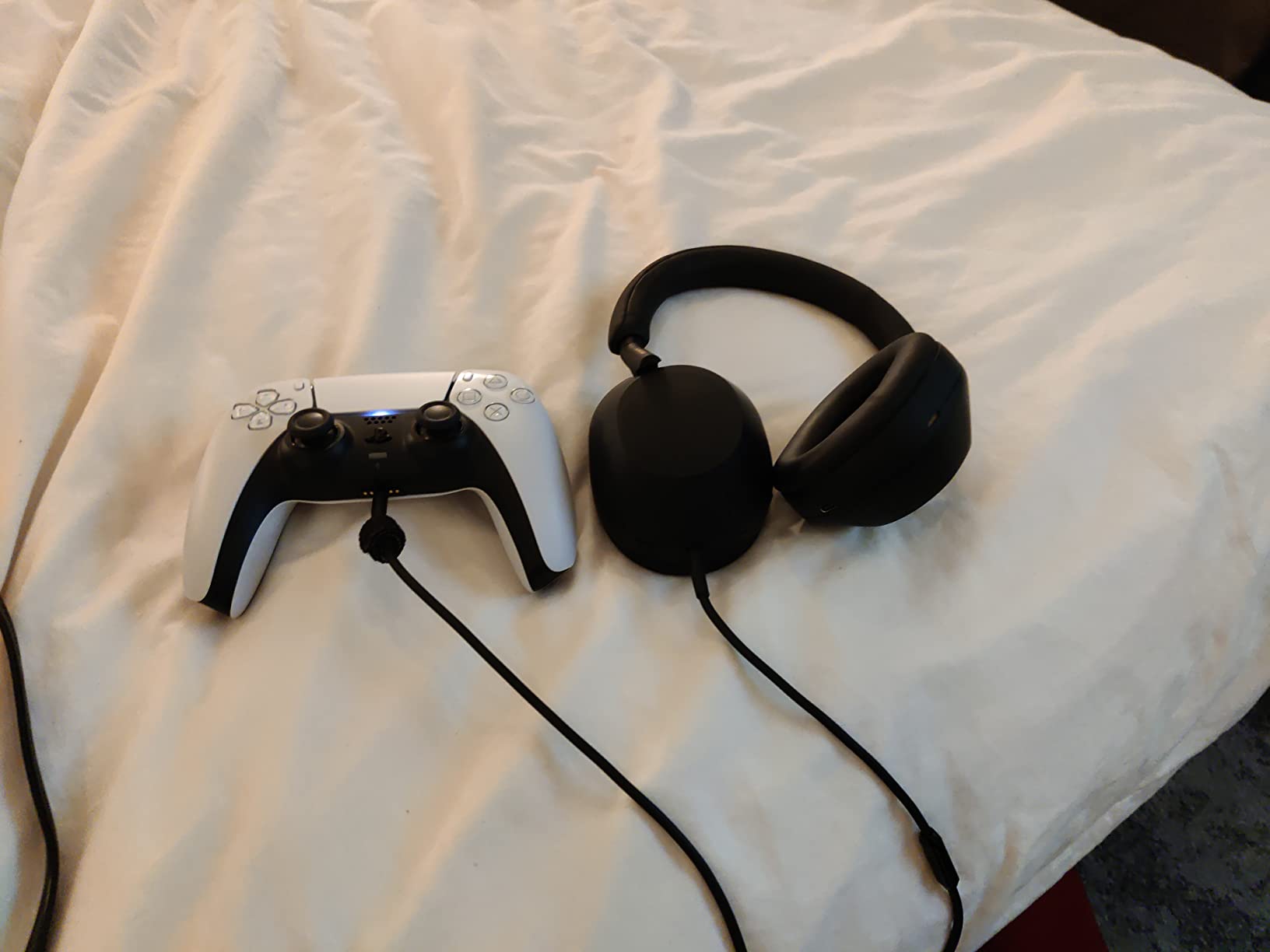
Battery life held up to Sony’s 30-hour claim at moderate volume with ANC on. The 3-minute quick charge for 3 hours of playback saved me once in an airport lounge. Touch controls on the right earcup feel precise, and Speak-to-Chat pauses the music the moment you start talking, which is great when a flight attendant leans in.
The biggest trade-off is the headband. It is thinner than the previous XM4 design and after about 4 hours I felt pressure on the crown of my head. Anyone with a sensitivity to clamping force should test before committing. Sony also removed the folding hinge, so the case is bulkier than older travel-friendly models.
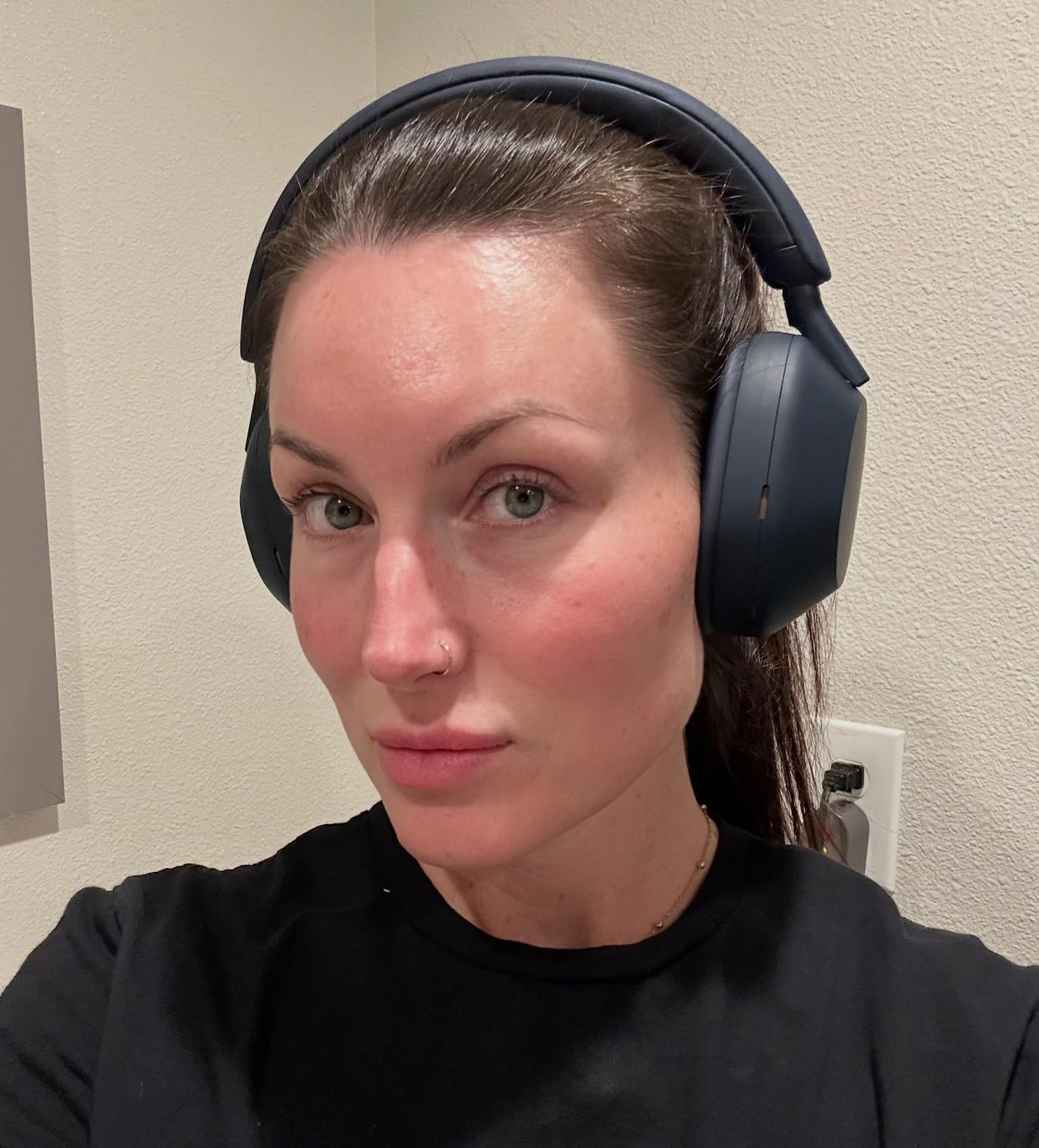
Where the XM5 Excels
If you want a single pair that handles commuting, office work, flights, and casual music listening with equal skill, the WH-1000XM5 is hard to beat. It pairs with both iPhone and Android, supports LDAC for higher-bitrate streams on Android, and has the most mature ANC algorithm in the category. It is also the safest recommendation for a gift since it works well for almost everyone.
Where the XM5 Falls Short
Skip this if you wear headphones for 6+ hours at a stretch, have a wider head, or want a pair that collapses flat into a tiny case. The thin headband is the XM5’s weakest link, and Sony’s decision to drop the folding hinge frustrates frequent travelers. Audiophiles chasing wired-grade detail should also look at dedicated wired options below.
2. Bose QuietComfort – Best for Comfort and Long Sessions
Bose QuietComfort Headphones – Wireless Bluetooth Headphones, Active Over Ear Noise Cancelling and Mic, USB-C Charging, Deep Bass, Up to 24 Hours of Playtime, Black
Active Noise Cancellation
238g ultra-lightweight
24-hour battery
Quiet and Aware modes
Pros
- Lightest premium over-ear at 238g
- Plush over-ear cushions stay comfy for hours
- Quiet and Aware modes for instant transparency
- Multipoint Bluetooth for two devices at once
- USB-C fast charge gives 2.5 hours in 15 minutes
Cons
- ANC is good but slightly behind Sony and Apple
- Multi-device switching occasionally drops one device
- Not ideal for sweaty workouts as earcups trap heat
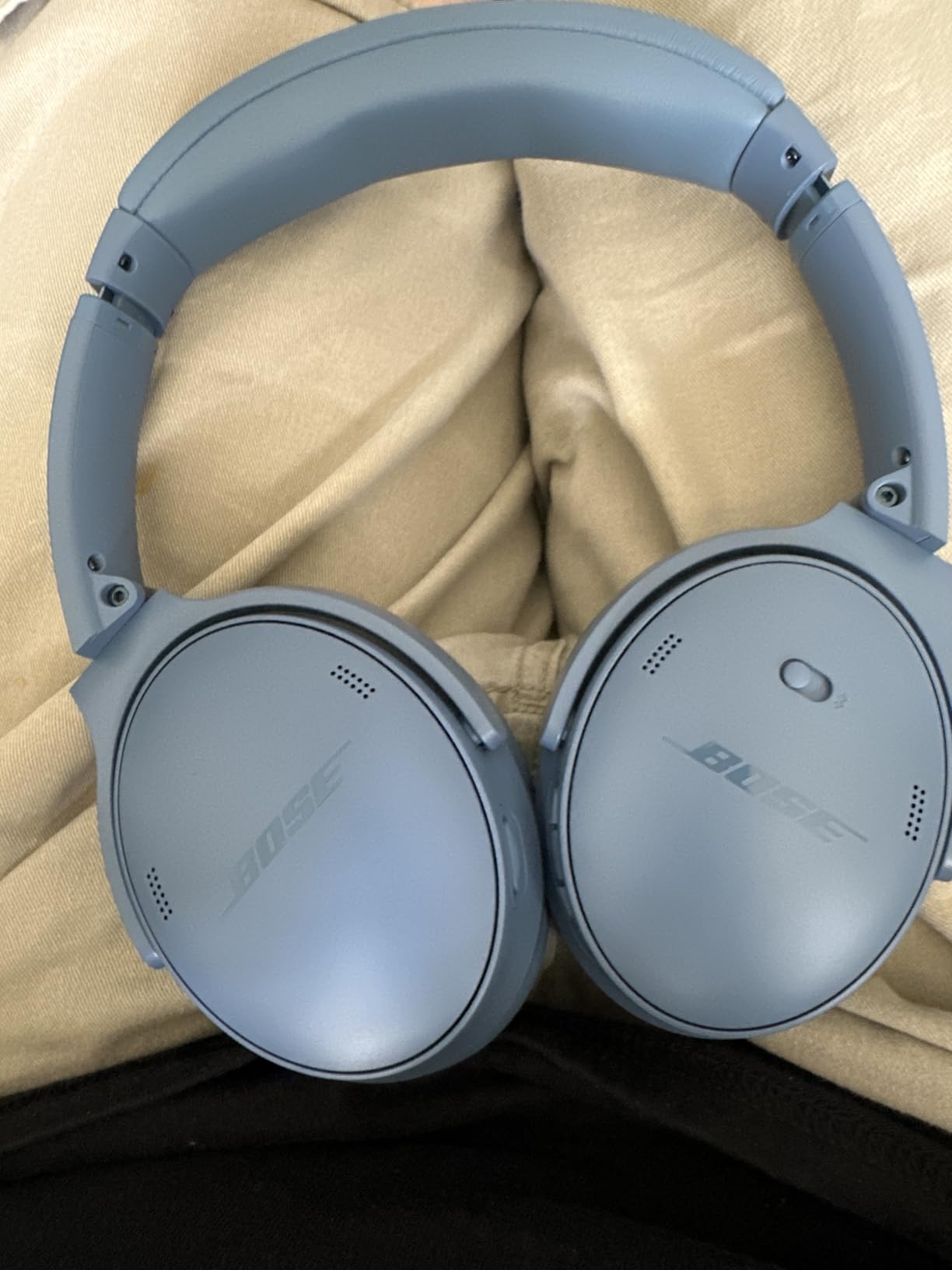
The Bose QuietComfort is the pair I grab when comfort matters more than anything else. At 238 grams it is lighter than most of the competition by a noticeable margin. After a 12-hour writing day, I forgot I was wearing them, which is the highest praise I can give a pair of headphones.
The Quiet and Aware modes are still the gold standard for transparency. Aware mode pipes in outside sound so naturally that you can hold a conversation with the headphones on. Active noise cancellation is excellent for low-frequency rumble like airplane engines and HVAC systems, though it falls a touch behind Sony and Apple for mid-range chatter in a cafe.
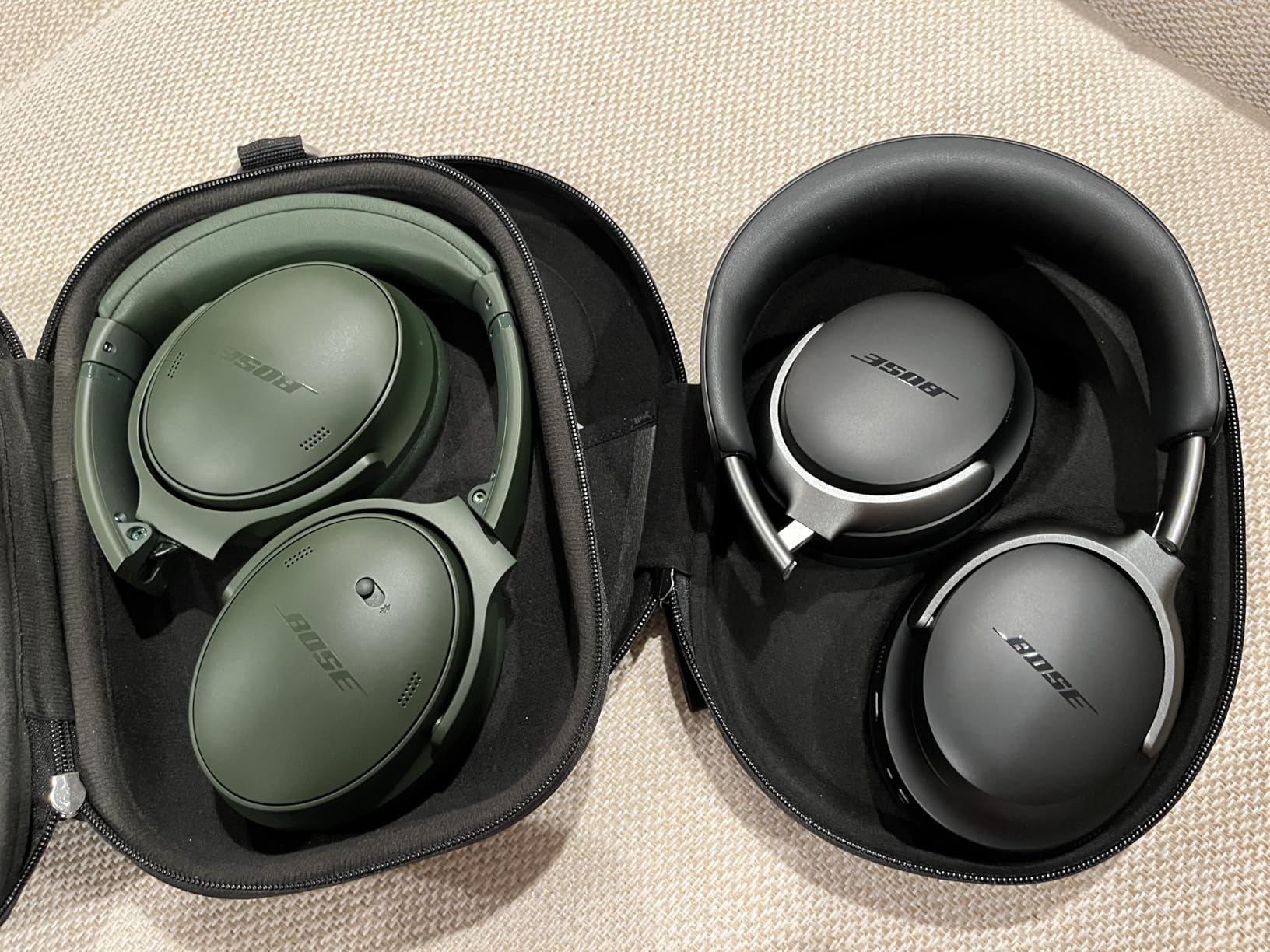
Sound signature is balanced with a gentle bass lift. Bose’s app EQ is simpler than Sony’s, but it covers the basics. Multipoint Bluetooth works well with my laptop and phone, though I had a couple of stutters when three devices tried to fight for the connection. The included audio cable means you can keep listening when the battery dies.
Microphone quality for calls impressed me. Bose uses beamforming to isolate voice, and on Zoom calls colleagues said I sounded clearer than usual. Battery life lands around 22 hours with ANC on in my real-world test, slightly below the 24-hour claim but still excellent for travel.
Where the Bose QuietComfort Excels
This is the comfort king. If you wear headphones for long-haul flights, full work shifts, or all-day study sessions, the lightweight build and plush pads win. It is also the strongest all-rounder for users who do not want to fiddle with an app to get great sound. The wired option means it never dies on you mid-trip.
Where the Bose QuietComfort Falls Short
Avoid if you want the absolute strongest noise cancellation regardless of comfort, or if you plan to work out in them. Earcups trap heat and the clamping force is gentle, which is great for long sessions but means they shift during running. Audiophiles chasing the deepest detail should consider the wired Sennheiser HD 599 instead.
3. Beats Studio Pro – Best for Apple Users and Long Battery Life
Beats Studio Pro Premium Wireless Over-Ear Headphones- Up to 40-Hour Battery Life, Active Noise Cancelling, Great for Travel & Commuting, USB-C Lossless Audio, Apple & Android Compatible -Black
40-hour battery
USB-C lossless audio
Spatial audio with head tracking
Apple and Android
Pros
- Best-in-class 40-hour battery life
- USB-C lossless audio for hi-res listening
- Personalized spatial audio with dynamic head tracking
- Class 1 Bluetooth for stable long-range connection
- UltraPlush cushions for extended comfort
Cons
- Maximum volume is quieter than older Beats models
- Soft pouch case instead of hard case
- Microphone can struggle on some PC configurations
The Beats Studio Pro surprised me. I expected a fashion-first product with shallow sound and was happy to be wrong. The 40-hour battery life is the real headline. I charged it on a Sunday, used it every workday for the week, and still had charge left for the weekend trip. That kind of endurance changes how you think about headphones.
Lossless audio over USB-C is a sleeper feature. Plug the included cable into a laptop or a USB-C iPhone and you get bit-perfect playback without compression. For Apple Music subscribers who care about lossless, this is the simplest way to hear the difference without buying a separate DAC.
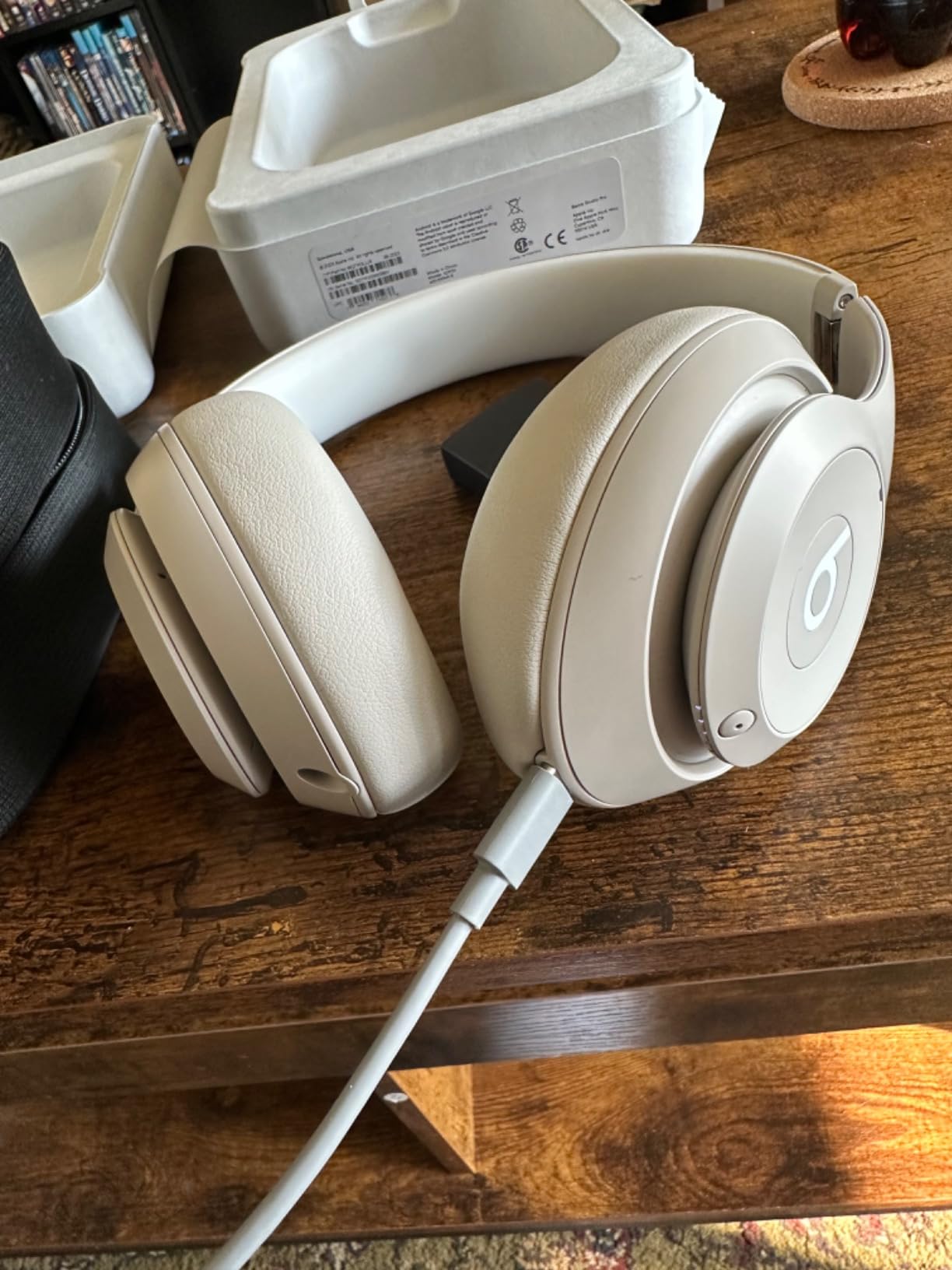
Spatial audio with dynamic head tracking is genuinely good for movies on a flight. When I watched a film on my iPad, voices stayed locked to the screen even when I turned my head. The custom acoustic platform delivers balanced sound with a slight bass emphasis that flatters hip-hop and pop without muddying mids.
One-touch pairing with iPhone and Android works smoothly. Beats ditched the H1/W1 chip heritage and went with a more universal solution, which means iPhone users still get fast pair and Find My support while Android users get Google Fast Pair and Find My Device. The build feels slightly less premium than the previous Studio 3 with more plastic, but it is lighter as a result.
Where Beats Studio Pro Excels
Pick the Studio Pro if battery life is your number-one priority or if you live inside the Apple ecosystem and want lossless audio without an external DAC. The included USB-C cable makes it a fantastic option for laptop listeners and hybrid workers who split time between Mac and PC. Spatial audio for movies is excellent.
Where Beats Studio Pro Falls Short
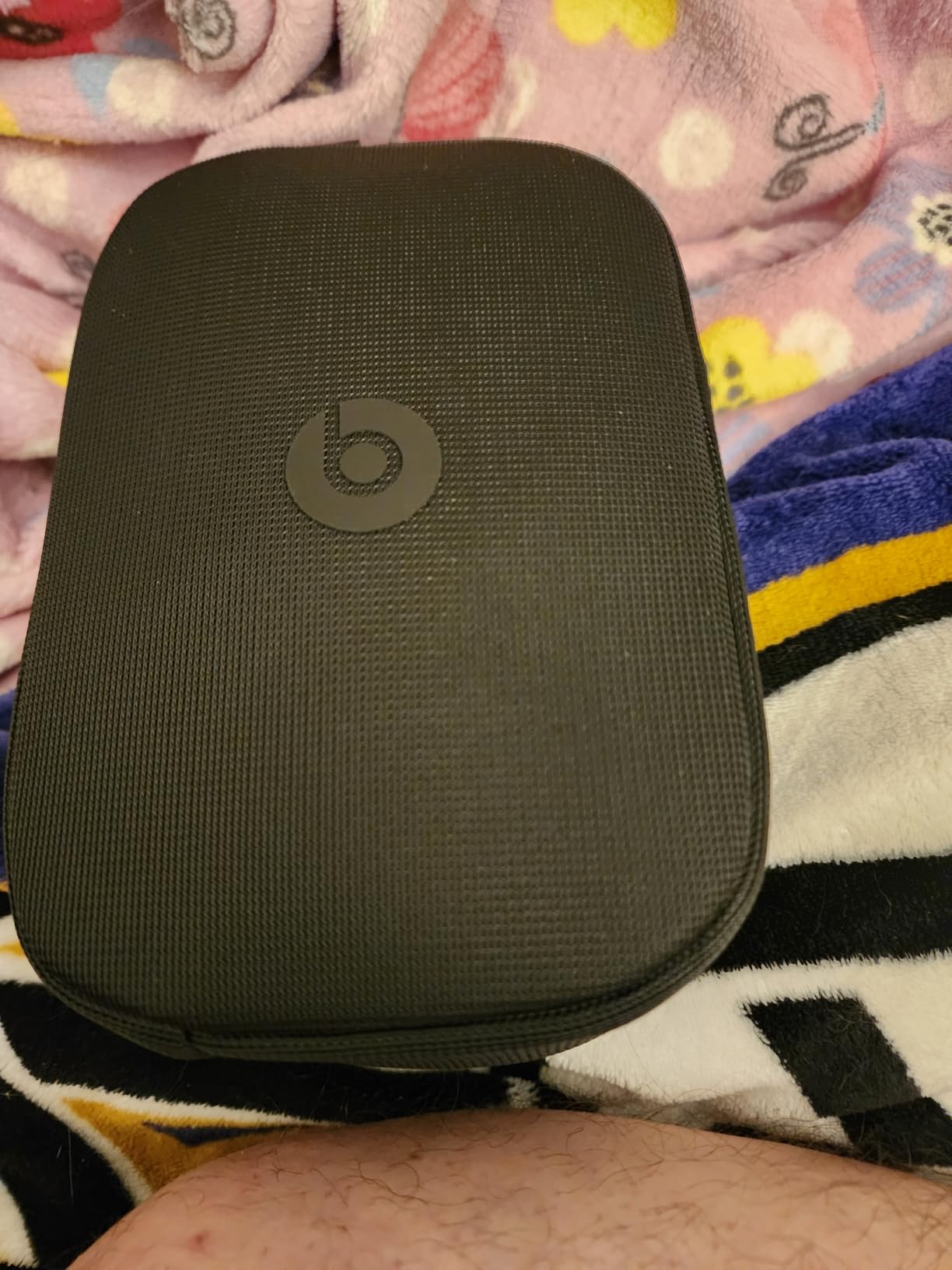
Skip if you want the absolute loudest headphones. Several reviewers and our team noted the max volume is quieter than older Beats generations. The included soft pouch is a downgrade from the previous hard case, so travelers should budget for a third-party case. Audiophiles will prefer wired monitors for critical listening.
4. Audio-Technica ATH-M50X – Best Wired Studio Monitor
Audio-Technica ATH-M50X Professional Studio Monitor Headphones, Black, Professional Grade, Critically Acclaimed, with Detachable Cable
45mm dynamic drivers
Wired studio monitor
Detachable cable
90-degree swiveling earcups
Pros
- Critically acclaimed sound with accurate bass and clear mids
- Proprietary 45mm drivers with rare earth magnets
- Circumaural design with excellent passive isolation
- 90-degree swiveling earcups for one-ear monitoring
- Detachable cable system extends product life
Cons
- Earpads can wear out and shed material over time
- Plastic components may crack under heavy use
- Clamping pressure is tight for some head sizes
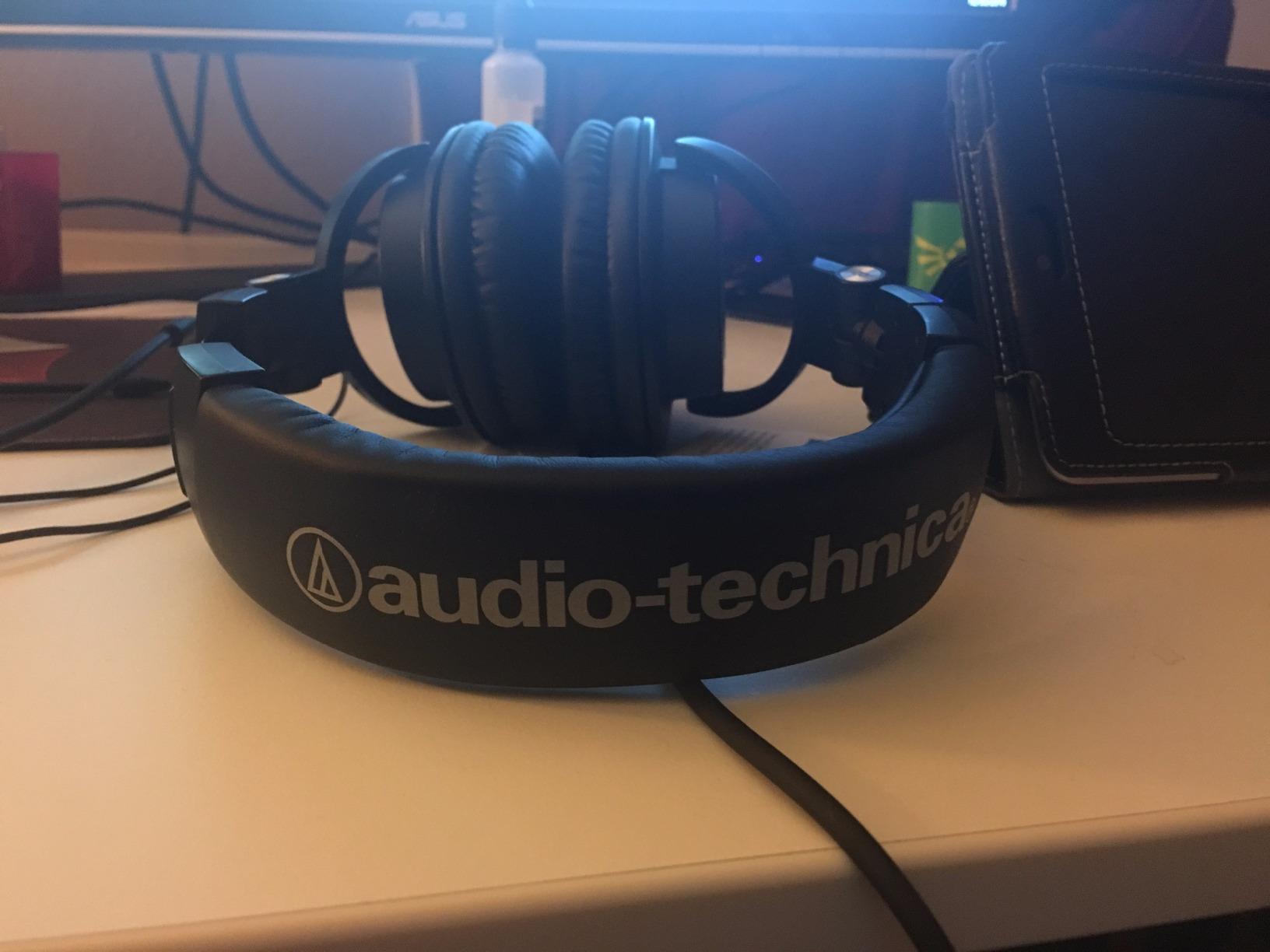
The Audio-Technica ATH-M50X is the pair I trust for critical listening. I have used mine for podcast editing, music production, and late-night reference sessions where I need to hear exactly what is in the mix. The 45mm drivers deliver the kind of accuracy that makes cheap consumer headphones sound colored in comparison.
Sound is balanced with a slight emphasis on the low end that flatters modern pop production without overwhelming vocals. The closed-back design gives you solid passive isolation for tracking sessions, and the circumaural fit keeps the drivers outside your ear canal for a natural soundstage.
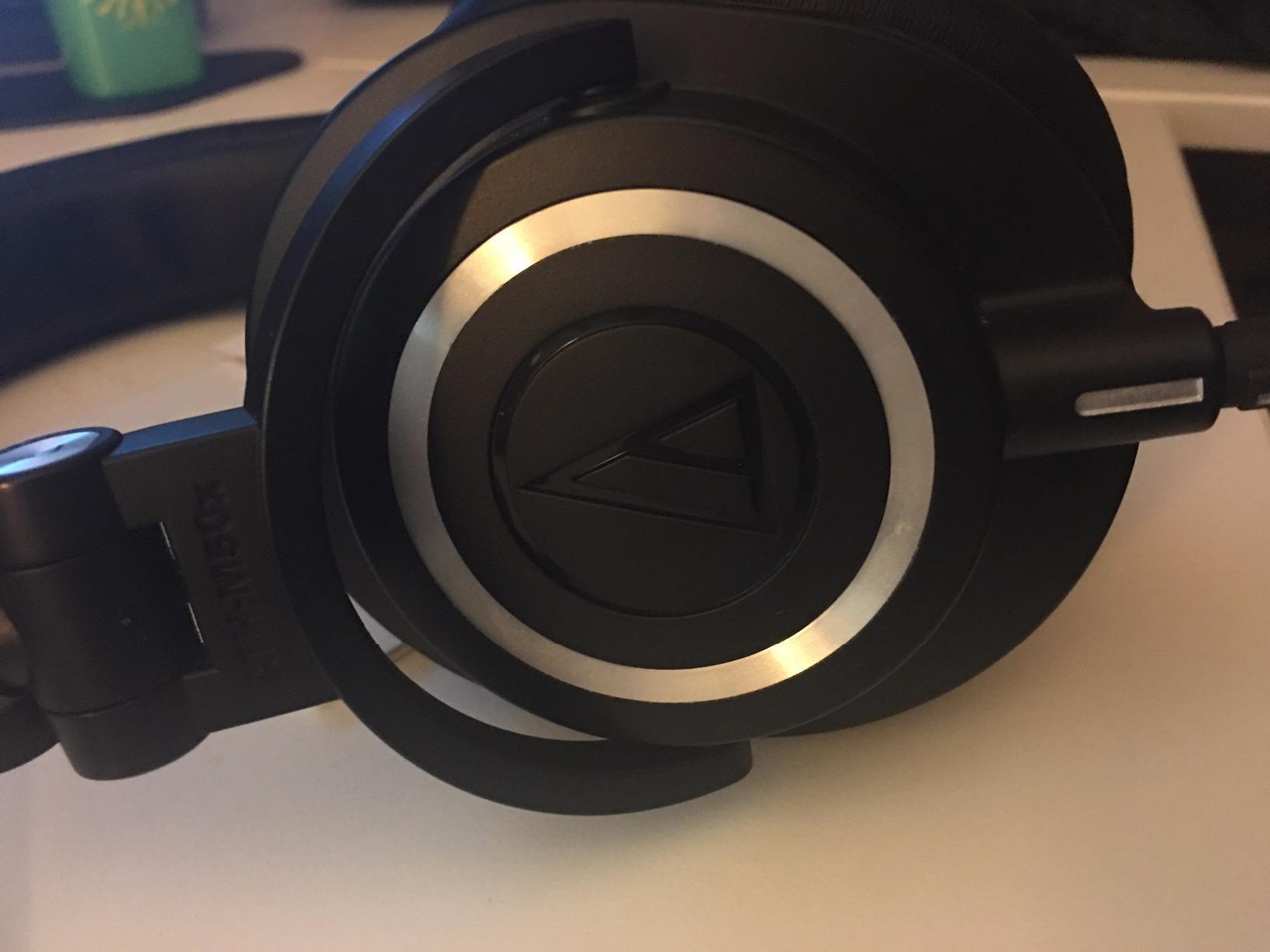
The 90-degree swiveling earcups are a small detail that matters when you are working. Flip one ear flat to talk to a musician in the room without taking the headphones off. The detachable cable system means a damaged cable does not kill the headphones, and three cable options in the box cover most studio setups.
For long sessions, the clamping pressure is the one thing to watch. Out of the box the M50X clamps firmly, which is great for isolation but can feel tight on larger heads. After a few weeks of break-in, mine relaxed to a comfortable fit. Earpads do wear out and start shedding material after a couple of years, but replacements are cheap and widely available.
Where the ATH-M50X Excels
Pick the M50X if you want studio-grade accuracy without paying audiophile prices. It is the go-to for music producers, podcast editors, and anyone who wants to hear their music without coloration. The wired-only design means zero latency for video editing and gaming, and no battery anxiety.
Where the ATH-M50X Falls Short
Skip if you want wireless freedom or active noise cancellation. This is a wired-only pair, so it is tethered to your device. The plastic build is durable but not luxurious, and the earpad material is the weakest long-term component. For pure comfort over accuracy, the Bose QuietComfort is a better choice.
5. Sony MDR7506 – Best Wired Studio Pick on a Budget
Sony MDR7506 Professional Large Diaphragm Headphone
40mm drivers
Wired 9.8ft cable
Foldable design
Industry-standard studio
Pros
- Industry-standard reference sound since 1991
- Lightweight 8 oz design for long sessions
- Closed-ear passive isolation for tracking
- 40mm neodymium drivers with detailed response
- Folds up for travel with included soft case
Cons
- Non-detachable cable limits longevity
- Plastic components can crack under stress
- Bass response is light compared to consumer headphones
The Sony MDR7506 has been a studio standard since 1991, and for good reason. I keep a pair at my desk for reference listening when I want to know how a mix translates on the kind of headphones most people actually own. They are brutally honest, and that is exactly what you want in a reference tool.
Sound is balanced with a slight midrange scoop that lets you hear details without ear fatigue. Bass is present but not boosted, which catches consumer-trained listeners off guard at first. Once you adjust, you start hearing things in familiar tracks you have missed for years. The 40mm neodymium drivers deliver detail that punches far above what most wireless headphones manage at any price.
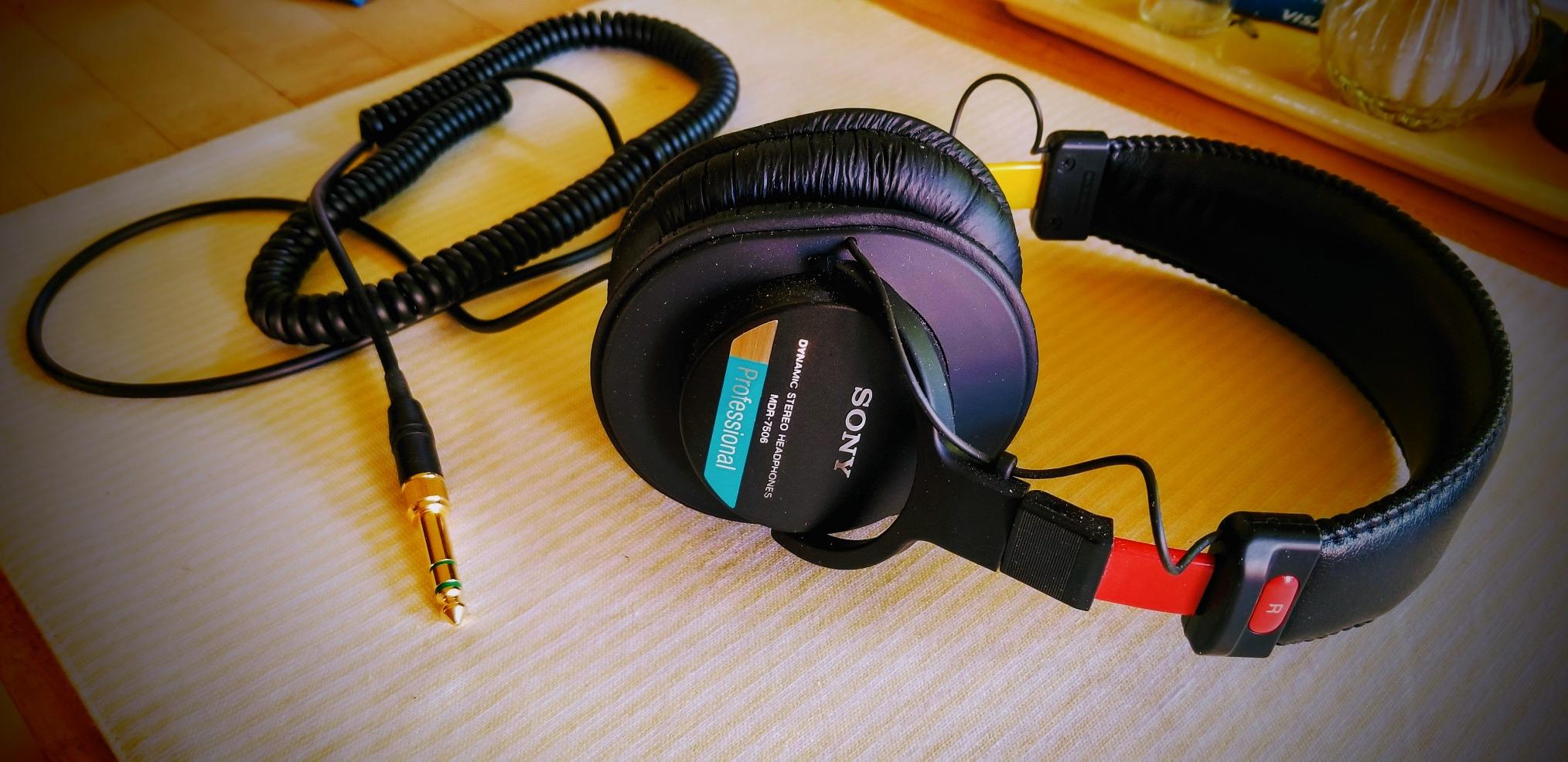
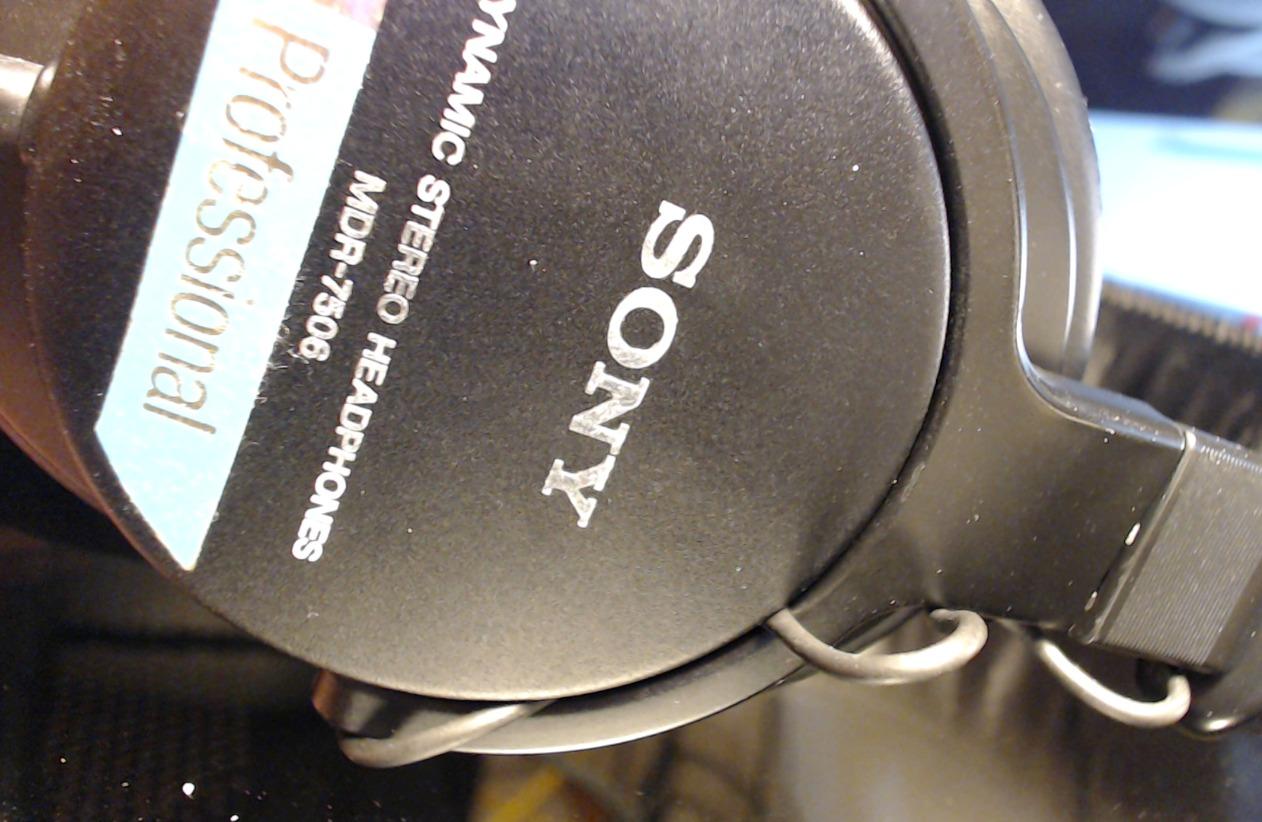
At 8 ounces with a foldable design, the MDR7506 travels well. The 9.8-foot coiled cable is a love-it-or-hate-it feature. Studio engineers love the reach and the way the coiled cable resists tangling. Portable listeners may want to swap for a shorter cable, but the cable is non-detachable so that means a different headphone.
Build quality is honest. The plastic is light, which helps comfort but does not feel premium. After years of daily use, my first pair developed a hairline crack at the yoke. The good news is that replacements are affordable and widely available, which keeps the MDR7506 as the most reliable wired studio reference at a modest price.
Where the MDR7506 Excels
Choose the MDR7506 if you want honest reference sound at a price most people can afford. It is the standard at recording studios, broadcast booths, and home producer setups for a reason. The long coiled cable is ideal for sitting at a desk or moving around a studio.
Where the MDR7506 Falls Short
Skip if you want wireless convenience, deep bass for casual listening, or premium materials. The non-detachable cable is the biggest compromise. Bassheads should look at the Skullcandy Crusher Evo instead. If you need a microphone for calls, this pair has none.
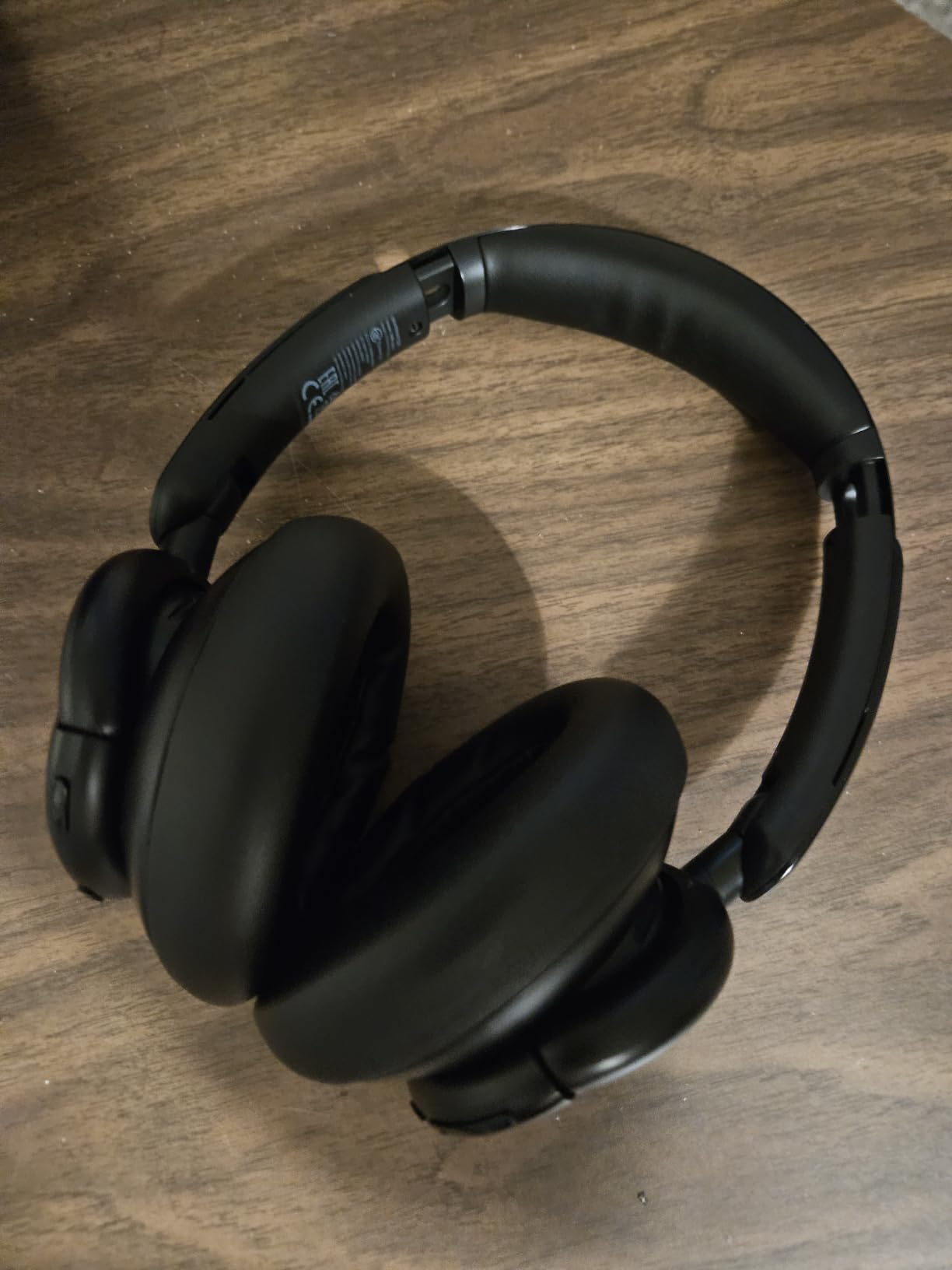
6. Soundcore by Anker Q30 – Best Budget ANC Pick
Soundcore by Anker Q30 Hybrid Active Noise Cancelling Headphones, Black
Hybrid ANC
Up to 50 hours battery
Hi-Res certified
3 ANC modes
Pros
- Hybrid ANC with Transport
- Outdoor
- and Indoor modes
- Up to 50 hours of battery in ANC mode
- Hi-Res certified 40mm drivers with detailed sound
- Comfortable memory foam earcups with protein leather
- Highly customizable EQ via Soundcore app
Cons
- Build is plastic-heavy and can creak after months of use
- ANC performance is a step behind premium rivals
- Bass can overpower mids at default EQ settings
The Soundcore Q30 is the pair I recommend when someone asks for decent over-ear headphones without spending flagship money. I gave a pair to my nephew for college and he still uses them daily two years later. That kind of track record matters more than flashy specs.
Battery life is the headline feature at this price. I got 47 hours with ANC on, which means most users can go a full work week without charging. The 40mm drivers are Hi-Res certified and play nicely with the Soundcore app’s 22 EQ presets plus a custom mode. Out of the box the bass is boosted, which works great for hip-hop and EDM but can muddy vocals until you tune it down.
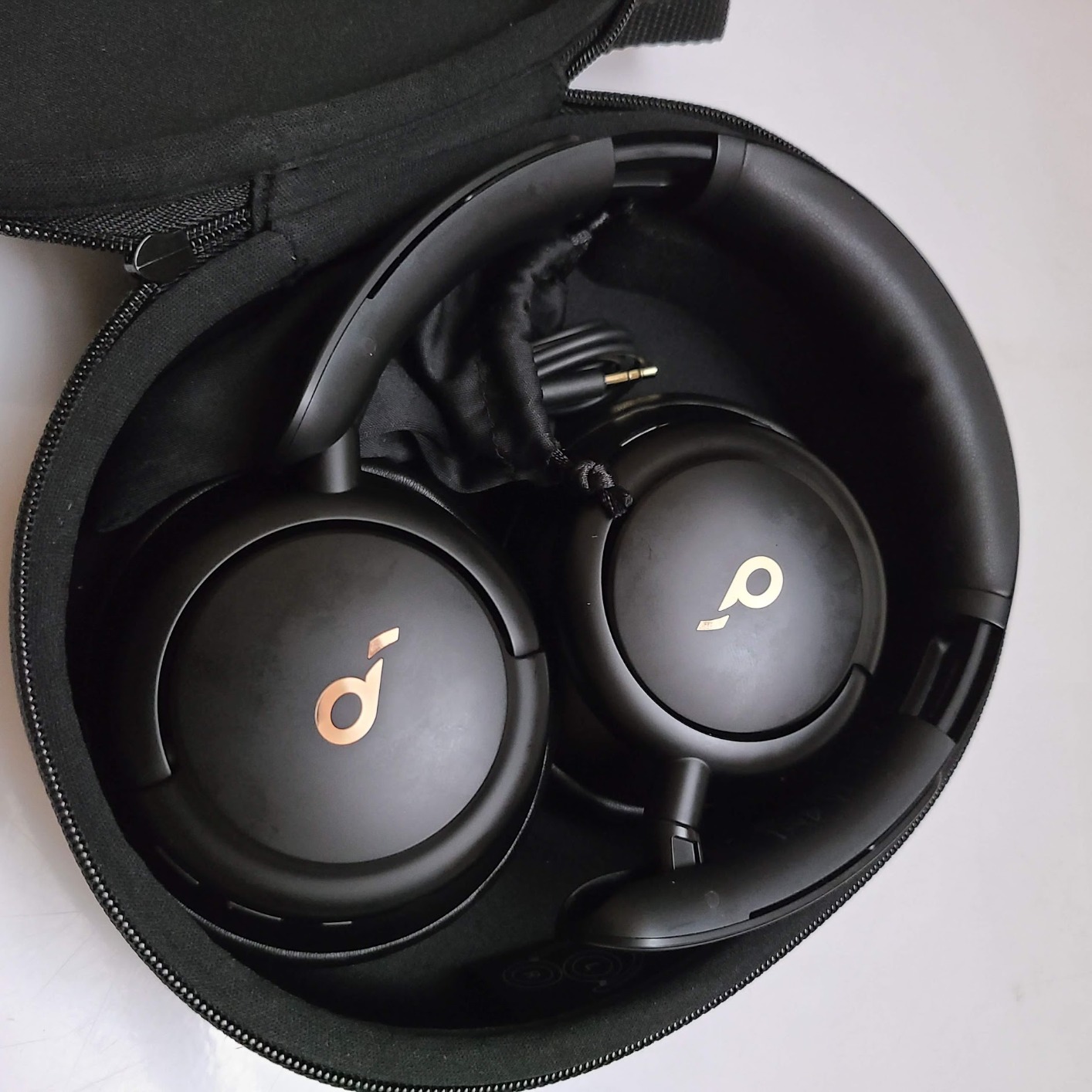
Hybrid ANC is not going to dethrone the Sony or Bose flagships, but for the price it is genuinely useful. The three modes (Transport, Outdoor, Indoor) handle different noise profiles well. Indoor mode pulls back the hiss that budget ANC often produces, which is a nice touch.
Comfort is solid for the weight. The memory foam earcups with protein leather feel close to much more expensive options, though they can get warm during summer use. Multipoint pairing works with two devices, and the included audio cable lets you keep listening when the battery dies.
Where the Q30 Excels
Pick the Q30 if you want wireless headphones with real ANC and marathon battery life on a tight budget. It is the right choice for students, second-pair travel headphones, and anyone who loses or breaks headphones often. The customizable EQ makes it flexible enough to please most genres.
Where the Q30 Falls Short
Skip if you want premium build quality or the strongest possible noise cancellation. The plastic will not survive being sat on. Audiophiles chasing detail should look at wired options. Heavy gym use is not recommended as the pads trap sweat.
7. Skullcandy Crusher Evo – Best for Bass Lovers
Skullcandy Crusher Evo Wireless Multi-Sensory Bass Headphones – True Black
Adjustable Crusher Bass
40-hour battery
Personal Sound analysis
Built-in Tile finder
Pros
- Patented adjustable bass slider for tactile rumble
- 40-hour battery with 10-minute rapid charge
- Personal Sound hearing analysis via Skullcandy app
- Built-in Tile finding technology to locate lost headphones
- Flat-folding design for portable storage
Cons
- Tight clamping pressure can cause fatigue during long sessions
- Heavier than most over-ear competitors
- Bass vibration can be too intense at maximum settings
The Skullcandy Crusher Evo is the only pair on this list that I can describe as fun. The adjustable Crusher Bass slider lets you dial in physical vibration on top of regular bass response. Crank it up for bass-heavy music and you feel the kick drum in your chest. Pull it back for podcasts and the Crusher Evo behaves like a normal pair of over-ear headphones.
Sound quality with the bass slider at zero is balanced, which surprised me. The Personal Sound feature in the Skullcandy app runs a quick hearing test and adjusts the EQ to match your ears. After running it, I heard more detail in the high end than I expected from a Skullcandy product.
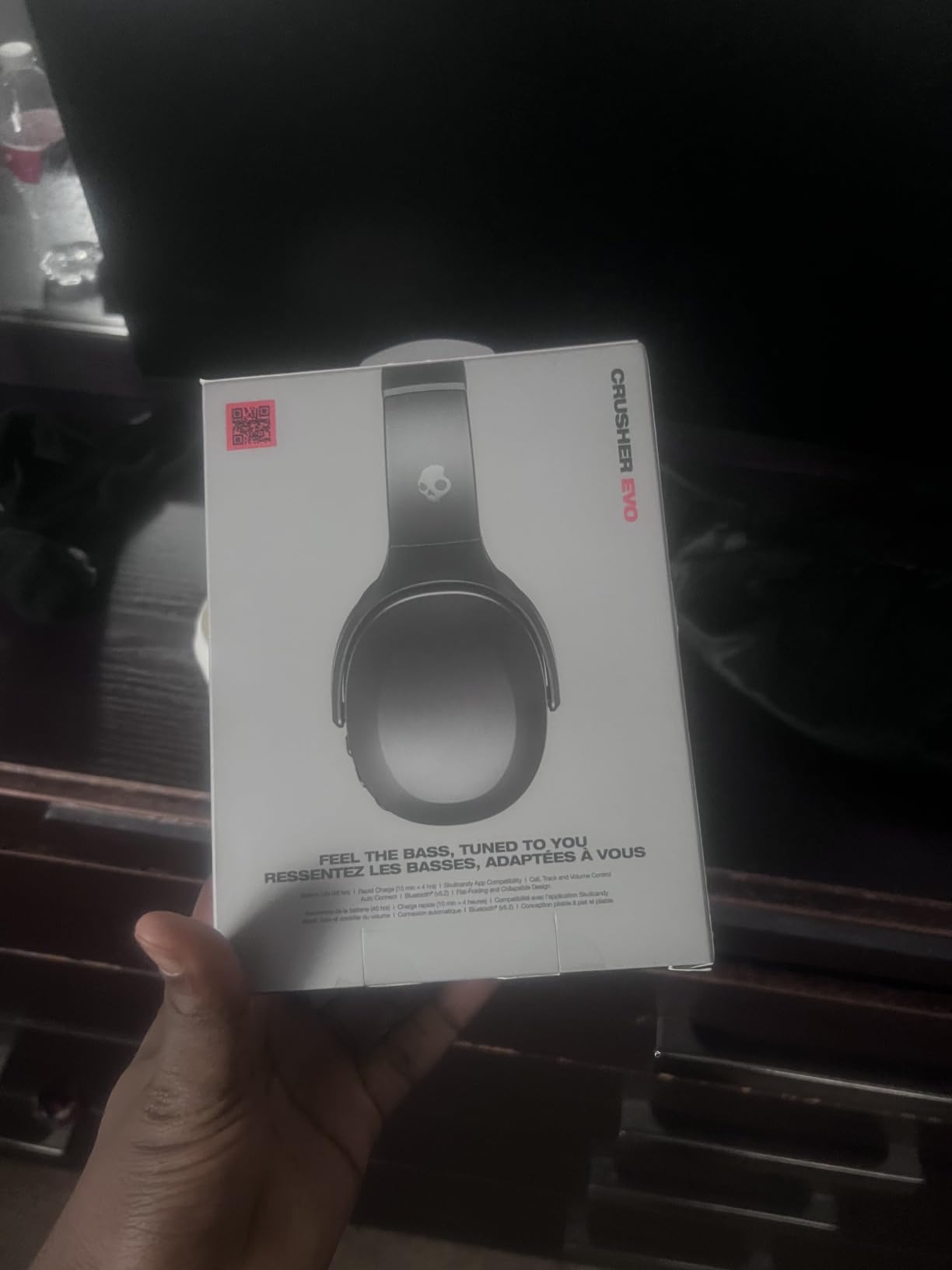
Battery life is the usual 40-hour Skullcandy promise, which held up in my testing. The rapid charge gives 4 hours of playback from a 10-minute plug-in, perfect for last-minute travel. Built-in Tile tracking is a sleeper feature for anyone who has ever lost a pair of headphones on a train or under a couch cushion.
The trade-offs are comfort-related. The Crusher Evo is heavier than most over-ear headphones and the clamping force is firm. After about 90 minutes I needed a break. For shorter sessions and pure bass enjoyment, it is a blast. For all-day work, look at the Bose QuietComfort.
Where the Crusher Evo Excels
Pick the Crusher Evo if you love hip-hop, EDM, dubstep, or movie soundtracks and want a physical component to your music. The Tile tracker is a real-world benefit for travelers and gym-goers. The Personal Sound tuning makes it more refined than typical bass-forward headphones.
Where the Crusher Evo Falls Short
Skip if you prioritize comfort for long sessions, need the lightest possible headphones for travel, or want reference-quality sound for production work. The clamping pressure and weight are the main complaints. Audiophiles should look at the Sennheiser HD 599 or Audio-Technica M50X instead.
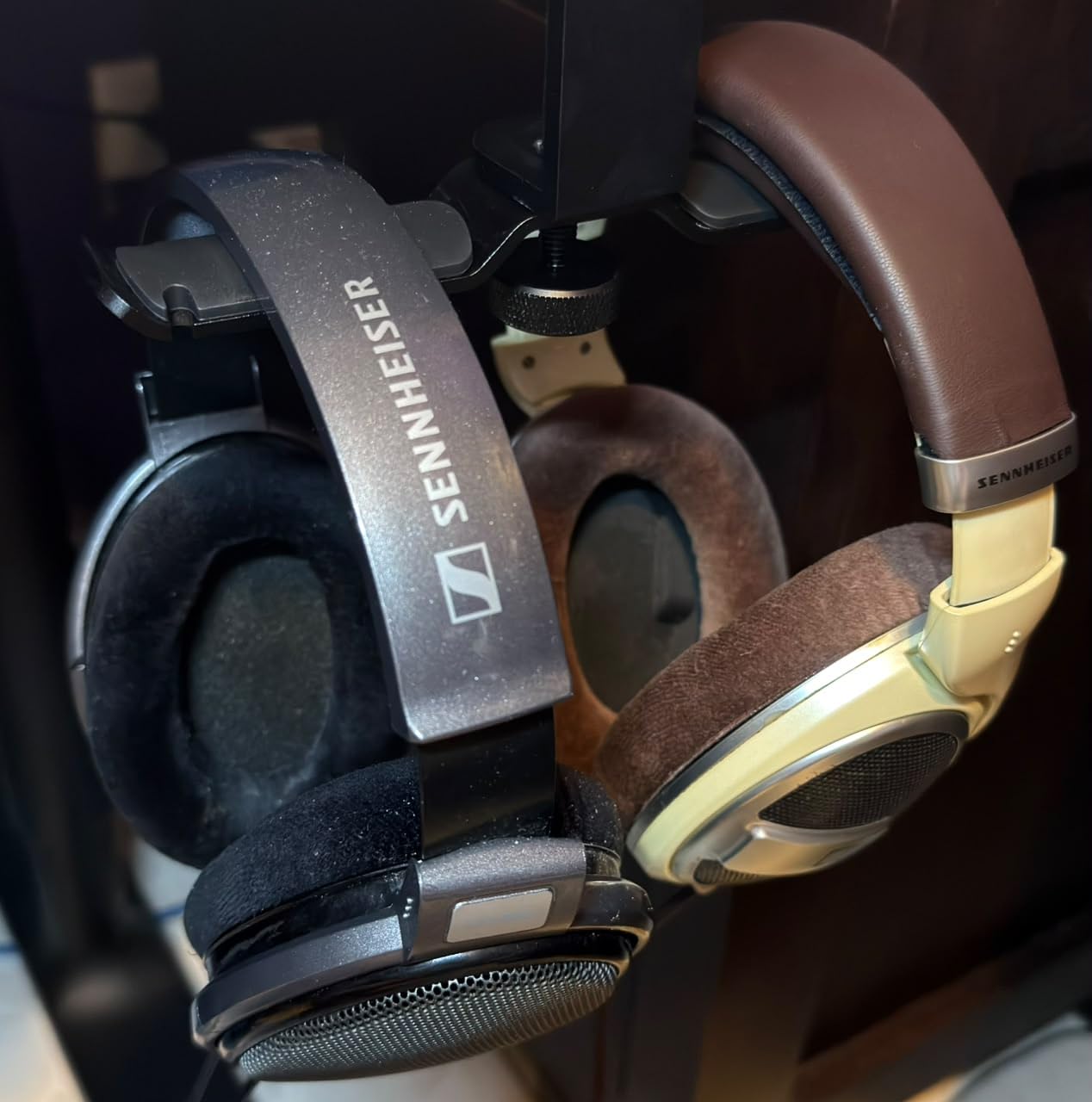
8. Sennheiser HD 599 – Best Open-Back for Home Listening
Sennheiser HD 599 Open-Back Wired Audiophile Headphones, Ivory
Open-back design
12-38,500 Hz frequency response
Velour ear pads
Two detachable cables
Pros
- Audiophile-grade open-back soundstage and detail
- Padded headband and luxurious velour ear pads
- Two detachable cables (3m and 1.2m) included
- Wide frequency response for hi-res music sources
- Premium build with aluminum voice coil drivers
Cons
- Open-back design leaks sound and offers no isolation
- Not suitable for offices
- commutes
- or public use
- Relatively heavy at 0.71 kg
The Sennheiser HD 599 is the pair I plug in when I want to hear music the way the artist and producer intended. Open-back headphones are a different experience. Instead of sealing sound inside your head, the drivers let air move through the back of the earcups, which creates a wide, natural soundstage that closed-back designs struggle to match.
Detail retrieval is the standout feature. Listening to acoustic recordings, I could pick out the room noise around a vocal, the soft attack of a piano hammer, and the texture of brushes on a snare. The frequency response extends well beyond human hearing (12 to 38,500 Hz) which gives hi-res recordings room to breathe.
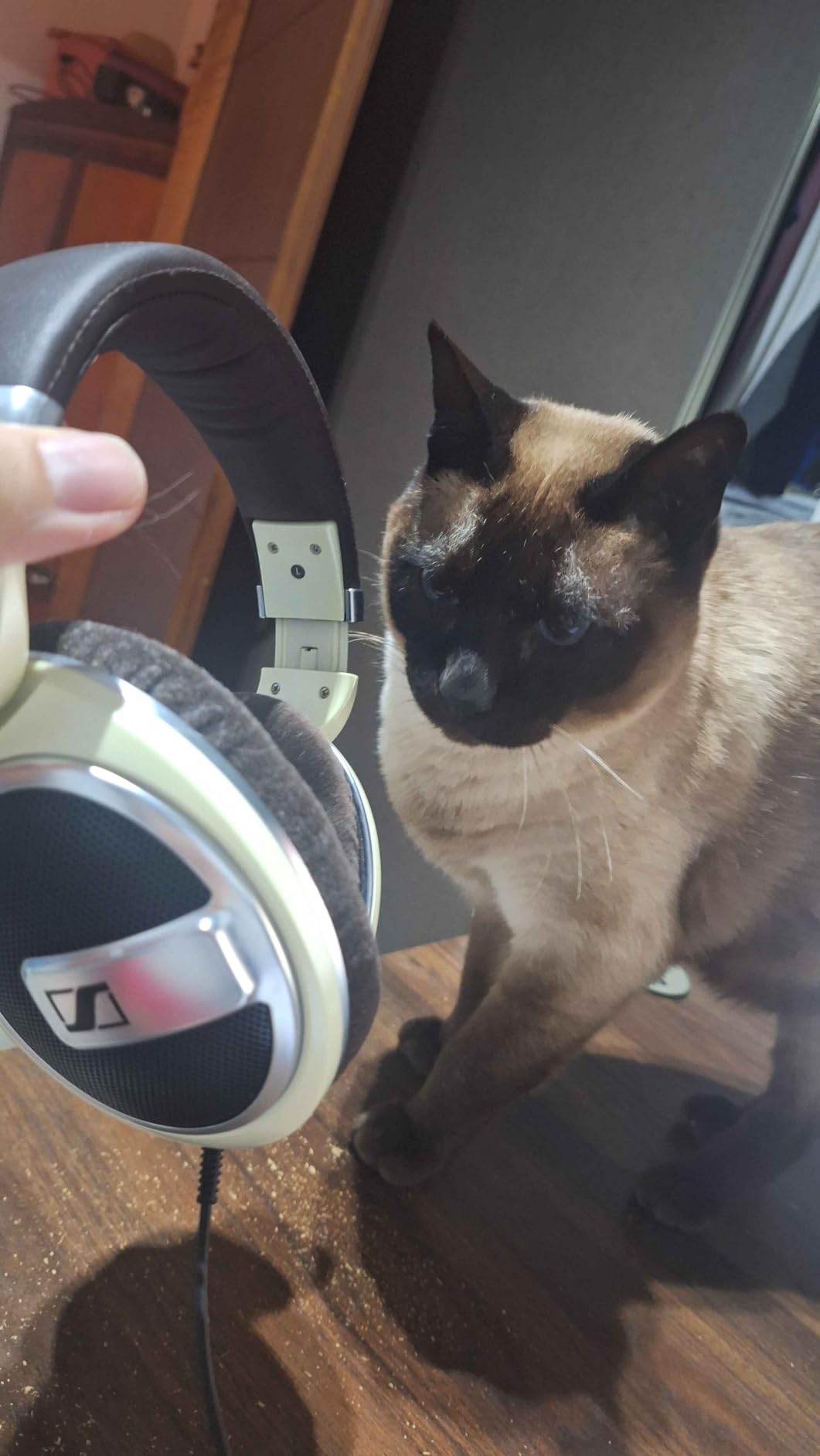
Comfort is excellent for long sessions thanks to the velour ear pads and padded headband. At 0.71 kg it is heavier than closed-back options, but the weight is well distributed. Two detachable cables come in the box (3m for home use, 1.2m for portable listening).
The big caveat is the open-back design. Sound leaks both ways, which means everyone around you hears your music and you hear everything they say. It is also useless in noisy environments. The HD 599 is a stay-at-home pair for quiet rooms and dedicated listening time. For our guide on keeping your gear in top shape, see our article on how to clean and replace headphone ear pads.
Where the HD 599 Excels
Pick the HD 599 if you want audiophile sound at home without spending flagship money. It is ideal for mixing, mastering, and serious music listening in a quiet space. The wide soundstage is unmatched at this price and the velour pads make it disappear on your head during long sessions.
Where the HD 599 Falls Short
Skip if you need headphones for commuting, offices, or any shared space. The open-back design will leak sound and pick up ambient noise. If you want wireless freedom, this is not it. Bassheads will find the low end polite compared to closed-back options.
How to Choose the Best Over-Ear Headphones for You
Picking the best over-ear headphones comes down to matching a pair to how and where you actually listen. A pair that excels on a plane may disappoint in a quiet studio. Below are the five factors I weigh every time I test a new pair.
Wired vs Wireless and Codec Compatibility
Wireless is the default for most buyers in 2026, but the codec your phone supports determines how good that wireless signal sounds. iPhone users get AAC and that is the end of the story. Android users on flagships typically get LDAC for near-lossless quality. If your source device only supports SBC, even an expensive pair will sound flat. Our guide on best wireless in-ear monitors covers the same trade-offs in a smaller form factor.
Active Noise Cancellation: How Much Do You Need
ANC shines on low-frequency rumble like airplane engines, train noise, and HVAC hum. It is less effective against voices and sudden sharp sounds. If you commute by train or fly often, prioritize strong ANC like the Sony WH-1000XM5. If you mostly work in a quiet office, you can save money with passive isolation from a closed-back wired pair.
Battery Life and Fast Charging
Look past the headline battery number and check whether it is measured with ANC on at moderate volume. Real-world results are usually 70 to 90 percent of the claim. The Beats Studio Pro and Skullcandy Crusher Evo both deliver around 40 hours with ANC on, which is more than most travelers need between charges. Fast charging matters more than people expect. A 10-minute top-up can save a long-haul flight.
Comfort, Weight, and Glasses-Wearer Fit
Weight is the first number to check. Anything over 280 grams becomes noticeable after a few hours, and over 350 grams is uncomfortable for most users. Clamping force matters as much as weight, especially for glasses wearers. Firm clamping breaks the seal around the earpieces, which weakens both bass response and noise cancellation. Bose and Sony generally have the gentlest clamping in the premium tier.
Open-Back vs Closed-Back: When to Pick Each
Closed-back headphones isolate you from the world and keep your music private. Open-back headphones trade that privacy for a wider, more natural soundstage. Use closed-back for travel, offices, and shared spaces. Use open-back for quiet home listening and critical work like mixing or audiophile music sessions. The Sennheiser HD 599 is a great entry into open-back without paying flagship money.
Frequently Asked Questions
What are the best headphones for iPhone?
For iPhone users, the Beats Studio Pro is the strongest match thanks to USB-C lossless audio, fast pairing, and Apple Find My support. The Sony WH-1000XM5 also pairs instantly with iPhone and supports AAC for high-quality wireless streaming. If you live entirely inside the Apple ecosystem and want the tightest integration, AirPods Max remains the seamless option.
Which headphones are the best to buy in 2026?
The Sony WH-1000XM5 is our top overall pick for most buyers, combining class-leading ANC, balanced sound, and 30-hour battery. The Bose QuietComfort is the best choice if comfort is your priority. For wired accuracy at a budget, the Audio-Technica ATH-M50X remains a trusted standard. The right pick depends on whether you prioritize ANC, comfort, or pure sound quality.
What are the best headphones for calls and meetings?
The Bose QuietComfort delivers excellent voice clarity with beamforming microphones that isolate your voice from background noise. The Sony WH-1000XM5 is also strong for calls with precise voice pickup. For people who spend most of the day in Zoom meetings, the lightweight Bose build and 24-hour battery keep you comfortable through long calls.
What are the best headphones for travel and commuting?
The Sony WH-1000XM5 leads for travel thanks to its industry-leading ANC that handles airplane engine drone and train rumble. The Bose QuietComfort is a close second and is lighter for long days of wearing. The Beats Studio Pro delivers 40-hour battery life which is ideal for multi-day trips without access to a charger.
What are the best over-ear headphones for tight budgets?
The Sony MDR7506 is our favorite wired studio reference at a budget price and has been an industry standard since 1991. The Soundcore by Anker Q30 is the best wireless budget pick with hybrid ANC and up to 50 hours of battery life. For pure music enjoyment without spending much, both deliver far more than their modest prices suggest.
How long do over-ear headphones last?
A well-built pair of over-ear headphones typically lasts 3 to 5 years with regular use. Premium models with replaceable earpads and batteries can extend that to 7 years or more. The most common failure points are earpad wear, cable damage (for wired pairs), and battery degradation (for wireless pairs). Models like the Audio-Technica ATH-M50X with detachable cables and replaceable pads often last a decade or longer with basic care.
Which over-ear headphones are most comfortable?
The Bose QuietComfort is the most comfortable over-ear headphone we tested, weighing just 238 grams with plush cushions that stay comfortable through 12-hour workdays. The Sony WH-1000XM5 is a close second with a soft-fit leather design. For wired comfort, the Sennheiser HD 599 uses velour ear pads that breathe well and feel almost weightless during long sessions.
Final Verdict: Which Over-Ear Headphones Should You Buy
The best over-ear headphones for you depend on your phone, your daily routine, and how much battery and isolation you need. If I had to send a single person home with one pair from this guide, it would be the Sony WH-1000XM5. It handles commuting, office work, flights, and casual music listening with equal skill, and it is the pair we keep recommending when friends stop by.
For comfort-first buyers, the Bose QuietComfort is the right call. For Apple users who care about battery and lossless audio, the Beats Studio Pro is hard to beat. For anyone who works with sound, the Audio-Technica ATH-M50X is the studio standard. For tight budgets, the Sony MDR7506 or Soundcore Q30 deliver far more than their modest prices suggest. For bass lovers, the Skullcandy Crusher Evo is the only pair that lets you feel your music. And for at-home audiophile listening, the Sennheiser HD 599 opens up a wide, natural soundstage you will not get from any closed-back pair at this price.
Whichever pair you pick, use the buttons below to check current availability and pricing on Amazon. We update this guide every quarter to keep the picks aligned with the best over-ear headphones on the market right now.