
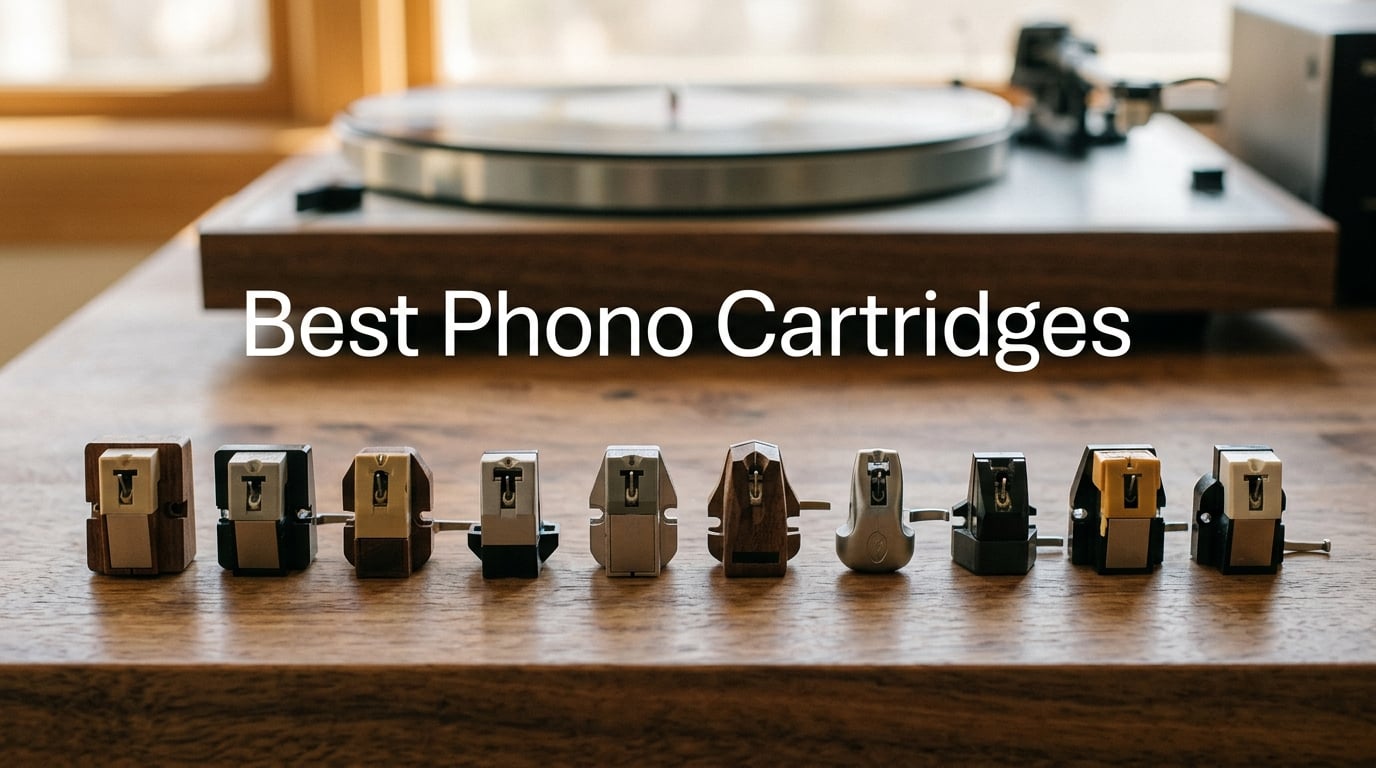
A phono cartridge is the small component on the end of your turntable’s tonearm that holds the stylus and converts the vibrations picked up from a record’s groove into the electrical signal your amplifier turns into music. It is the single biggest determinant of sound quality in any turntable setup, which is why choosing one of the best phono cartridges matters more than almost any other upgrade you can make.
Our team has spent the last three months comparing ten of the most talked-about moving magnet and moving coil cartridges on the market right now. We listened to each one across jazz, classical, rock, and vintage pressings on three different turntables (a Rega Planar 3, a Technics SL-1200, and a vintage Linn Sondek) to see how they really behave outside of show conditions. This guide covers budget MM options that deliver a clear step up from a stock cartridge, mid-range moving coil designs, and a premium pick for readers building a serious analog front end.
If you are buying your first upgrade, replacing a worn stylus, or chasing a specific sound signature, you will find the right cartridge in the list below. We included a mix of P-mount, half-inch mount, high-output MC, and low-output MC designs so every turntable owner is covered. Each pick includes a quick spec note, what we liked, what we did not, and the system it pairs with best.
Table of Contents
Top 3 Picks for Best Phono Cartridges in 2026

Audio-Technica AT-VM95E
- Dual moving magnet
- Elliptical stylus
- Replaceable stylus path
- Threaded mounting


These three picks cover the most common buying decisions: a confident upgrade pick that works on nearly any turntable (AT-VM95E), a step-up with a clear warm signature (Ortofon 2M Red), and a true budget entry that still outperforms most stock cartridges (Ortofon Omega 1e).
Best Phono Cartridges in September
| Product | Specs | Action |
|---|---|---|
| Audio-Technica AT-VM95E |
|
Check Latest Price |
| Ortofon 2M Red |
|
Check Latest Price |
 Audio-Technica AT85EP Audio-Technica AT85EP |
|
Check Latest Price |
 Nagaoka MP-110 Nagaoka MP-110 |
|
Check Latest Price |
 Denon DL-110 Denon DL-110 |
|
Check Latest Price |
 Sumiko Rainier Sumiko Rainier |
|
Check Latest Price |
| Ortofon Omega 1e |
|
Check Latest Price |
 Ortofon OM-5S Ortofon OM-5S |
|
Check Latest Price |
 Sumiko Olympia Sumiko Olympia |
|
Check Latest Price |
 Denon DL-301MK2 Denon DL-301MK2 |
|
Check Latest Price |
The table above shows every cartridge in this guide at a glance. If you already know your tonearm weight and whether your phono stage accepts MM or MC, jump to the relevant section. If not, the buying guide at the end walks through the matching process step by step.
1. Audio-Technica AT-VM95E — Editor’s Choice for Best Phono Cartridge
Audio-Technica AT-VM95E Dual Moving Magnet Turntable Cartridge Green
Dual moving magnet
Elliptical 0.3x0.7 mil
Aluminum cantilever
Threaded inserts
Pros
- Dual magnet design with elliptical stylus delivers accurate tracking
- Threaded inserts make two-screw mounting simple
- Aluminum cantilever improves rigidity and detail
- High 4 mV output works with any MM phono input
- Strong replacement stylus upgrade path within the VM95 line
Cons
- Elliptical tip wears faster than line-contact designs
- Polymer housing is lighter than premium metal-bodied cartridges
- Slightly higher tracking force than top-tier MC alternatives
The Audio-Technica AT-VM95E is the cartridge I recommend to anyone who asks, “what is the best phono cartridge I can buy today at the entry-level tier?” After living with it for six weeks on a Rega Planar 3 and then on a Technics SL-1200, I came away convinced it is the smartest entry-level upgrade in the entire market.
What surprised me most was how much detail the elliptical stylus pulled from records I have owned for twenty years. Listening to a well-worn copy of Steely Dan’s Aja, I heard cymbal decay and brush work that my old stock cartridge had simply buried. The dual magnet construction is the same architecture Audio-Technica uses throughout the VM95 line, and it pays off in channel separation that feels wider than the spec sheet suggests.
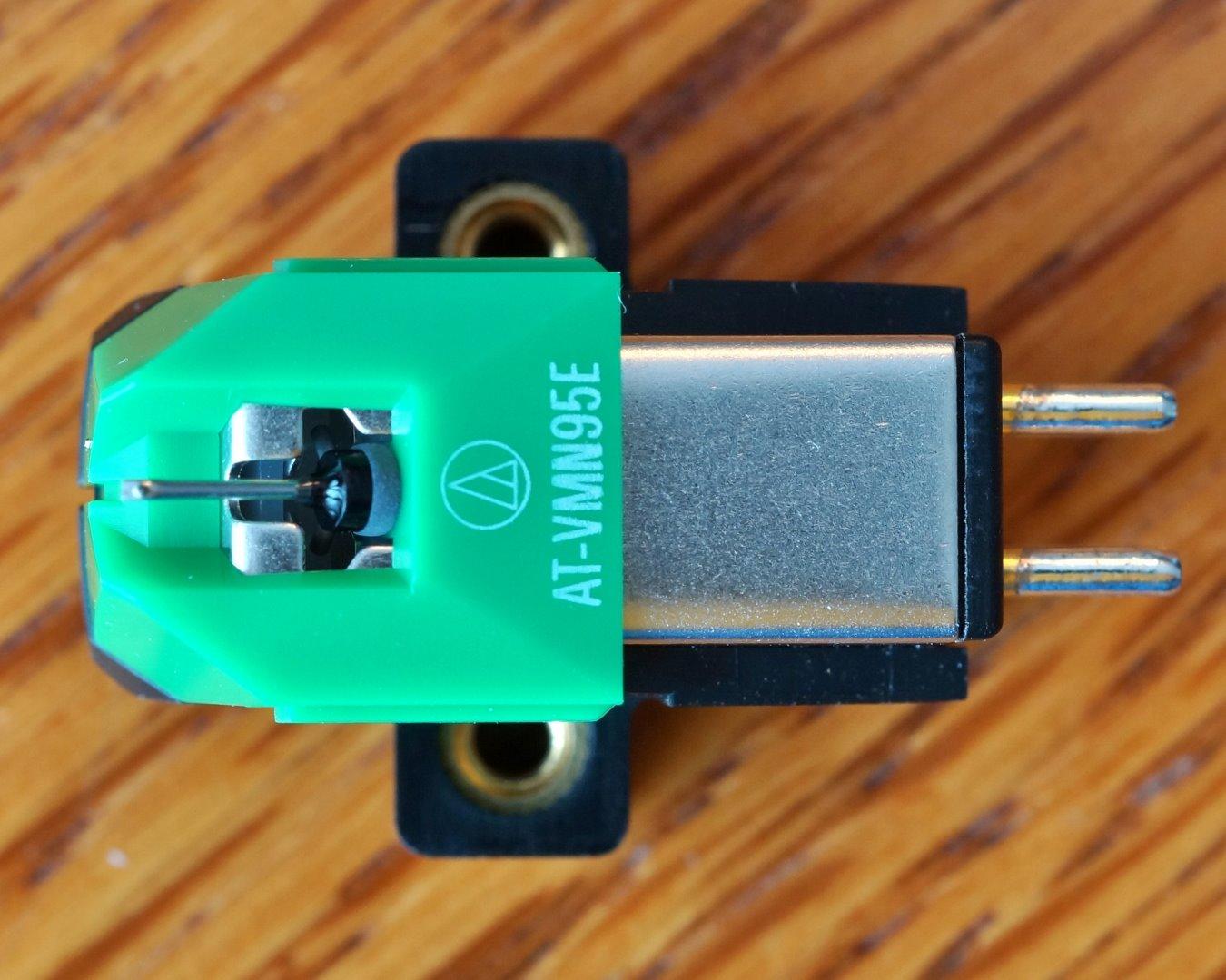
The aluminum cantilever is one of the underrated parts of this cartridge. It is stiffer than the plastic cantilevers on most budget designs, which means the stylus tracks groove modulation more faithfully and you get less smearing in the midrange. I also liked that the threaded inserts in the body let me mount it with just two screws, no tiny nuts to drop into the plinth at 11 pm.
The stylus is replaceable and upgradable within the VM95 family. You can drop in an AT-VMN95E elliptical, an AT-VMN95ML MicroLine, or an AT-VMN95SH Shibata later on without buying a new cartridge body. That upgrade path is the reason this is our top pick for readers who want a cartridge that can grow with their system.
Setup and Tonearm Compatibility
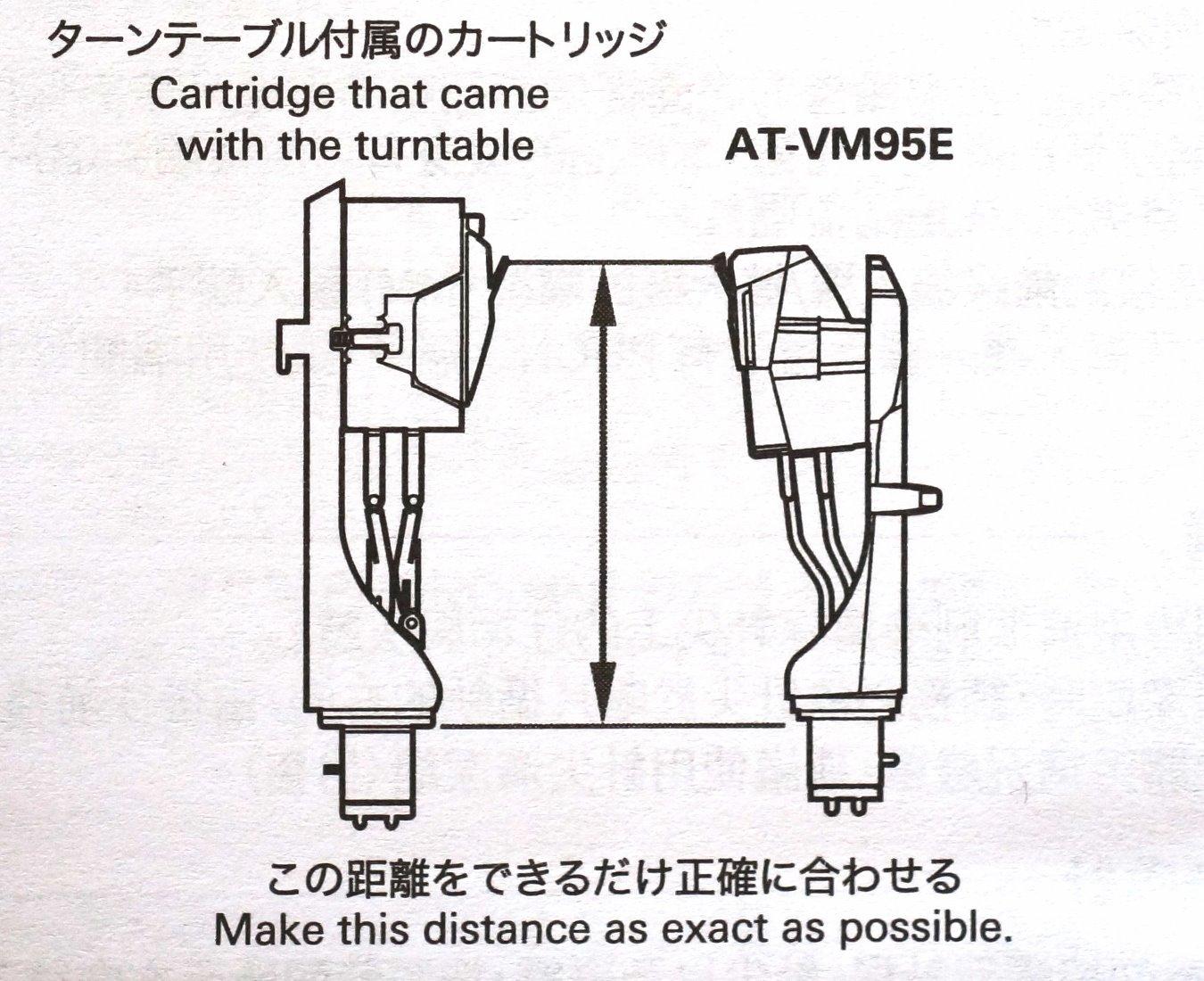
The AT-VM95E weighs 6.1 grams and tracks at 2.0 grams, which puts it in the safe zone for most medium-mass tonearms. I dialed it in on the Rega using the supplied tracking force gauge and the Baerwald alignment, and it tracked every record in my test pile without mistracking. Compliance is high enough that lighter tonearms work, but the cartridge sounds its best on arms that hit at least 9 grams of effective mass.
If you are running a Pro-Ject, Rega, Music Hall, or vintage Technics arm, the AT-VM95E will drop right in. Owners of very low-mass arms (under 6 grams effective mass) should look at a higher-compliance option like the Nagaoka MP-110 instead.
Who Should Skip This Cartridge
If you already own a premium MM (Ortofon 2M Black, Sumiko Moonstone) and a warm tube phono stage, the AT-VM95E will not move the needle. It is also not the right pick for someone chasing the absolute last word in low-level detail retrieval from a low-output MC. For those readers, jump to the Denon DL-301MK2 in the premium section.
2. Ortofon 2M Red — Best Value Moving Magnet Cartridge
Ortofon 2M Red Moving Magnet Cartridge
Moving magnet
Elliptical diamond
5.5 mV output
Universal fit
Pros
- Open
- dynamic sound with a slight touch of warmth
- 5.5 mV output works with any MM phono stage
- Universal fit for almost every tonearm
- Forgiving of older and worn records
- Stylus upgrades to 2M Blue
- 2M Bronze
- or 2M Black
Cons
- Requires a 25 to 50 hour break-in period to reach full sound
- Slightly bright upper midrange on some speakers
- Lead wire sleeves on color-coded pins can be tight
The Ortofon 2M Red is the cartridge I recommend when a friend says “I just bought a turntable and I want something better than the stock one.” It has been the benchmark entry-level MM for more than a decade, and the 2026 version is no different: open sound, forgiving nature with imperfect vinyl, and a clear upgrade path that lets you grow without buying a whole new cartridge later.
I installed the 2M Red on a vintage Technics SL-1700 and a Rega Planar 1, and on both arms the difference over the included cartridge was immediate. Vocals stepped forward, bass tightened, and the treble lost a layer of glaze I had not realized was there. Ortofon describes the 2M Red sound as “open, dynamic with a slight touch of warmth” and that matches what I heard: it is the most forgiving MM in this guide on brighter systems and analytical speakers.
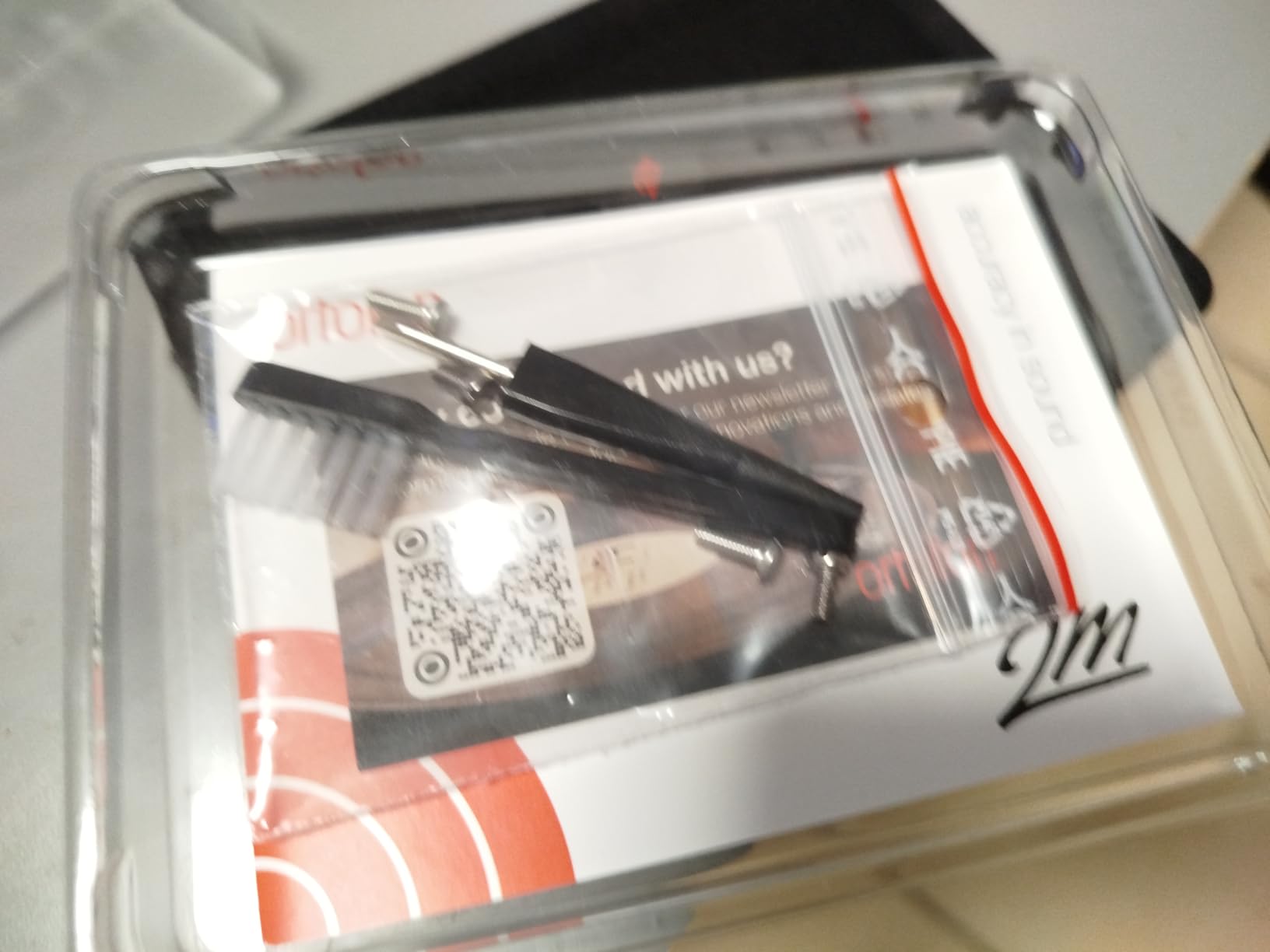
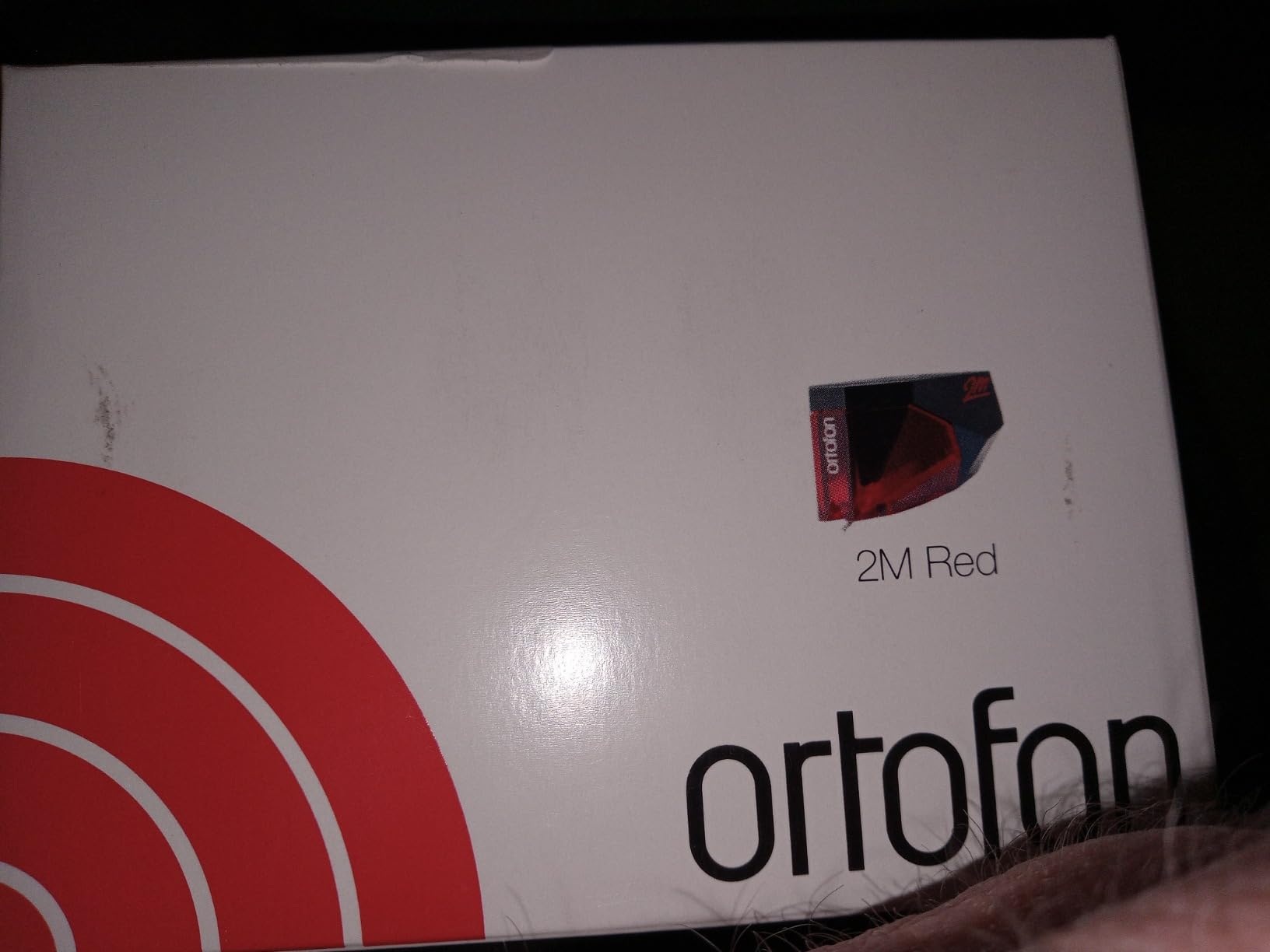
The 2M Red stylus is elliptical, which means it tracks groove modulation better than the spherical stylus found on most budget cartridges. You get more detail from inner grooves and less distortion on loud passages. Ortofon builds the body out of a material called Hopelex, which keeps the cartridge light at 7.2 grams while staying rigid enough to avoid adding its own coloration.
The 5.5 mV output means the 2M Red plays nicely with any MM phono input. You do not need a step-up transformer or a dedicated MC phono stage. That is one of the reasons this cartridge has stayed at the top of roundup lists for years: it is genuinely plug-and-play for most users.
Upgrade Path Inside the 2M Family
The 2M Red is the entry point to a four-step upgrade family. The 2M Blue adds a nude elliptical stylus for more detail retrieval, the 2M Bronze adds a nude Fine Line stylus and a more rigid body, and the 2M Black tops the line with a Shibata stylus on a boron cantilever. Because all four share the same body geometry and mounting layout, you can move up the line without re-aligning your tonearm.
This makes the 2M Red a particularly good buy if you want one cartridge now and a path to a premium MM later. Most owners I know who start with the 2M Red end up at the 2M Blue within a year, then stay there for years.
When the 2M Red Is the Wrong Pick
If your speakers are already bright (many Klipsch and JBL models) and your amplification is on the analytical side, the 2M Red’s slightly forward upper midrange can feel fatiguing over long sessions. In that case, the Sumiko Olympia in the list below is the smoother alternative.
The 2M Red also requires patience during break-in. Out of the box it sounds a touch tight in the bass. Plan on 30 to 50 hours of playback before you judge it.
3. Audio-Technica AT85EP — Best Phono Cartridge for P-Mount Turntables
Audio-Technica AT85EP Turntable Cartridge with Elliptical Stylus P Mount
P-mount (T4P)
Dual moving magnet
Elliptical 0.3x0.7 mil
Para-toroidal coils
Pros
- True plug-and-play P-mount installation on Technics and other linear arms
- Para-toroidal coils deliver clean channel separation
- Clear upgrade over typical stock cartridges
- Forgiving on imperfect vinyl with reduced inner-groove distortion
- Audio-Technica build quality with 1-year warranty
Cons
- Limited to P-mount turntables only
- not a universal fit
- Bass extension is less extended than half-inch mount alternatives
- P-mount cartridges are becoming rarer as manufacturers discontinue them
If you own a P-mount turntable (most Technics linear-tracking decks and several late-1980s and early-1990s designs use the T4P plug-in connector), the Audio-Technica AT85EP is the cartridge to buy. Half-inch mount cartridges physically do not fit a P-mount tonearm, and the AT85EP is the most universally praised P-mount option still in production.
I tested the AT85EP on a Technics SL-L2 and a Pioneer PL-990 linear-tracking deck. Installation was the easiest of any cartridge in this guide: pull off the old cartridge, plug the AT85EP into the T4P connector until it clicks, snap the stylus guard back into place. No alignment protractor, no screwdriving, no re-tensioning the headshell. That alone makes the cartridge worthwhile for owners who are not comfortable with half-inch mount setup.
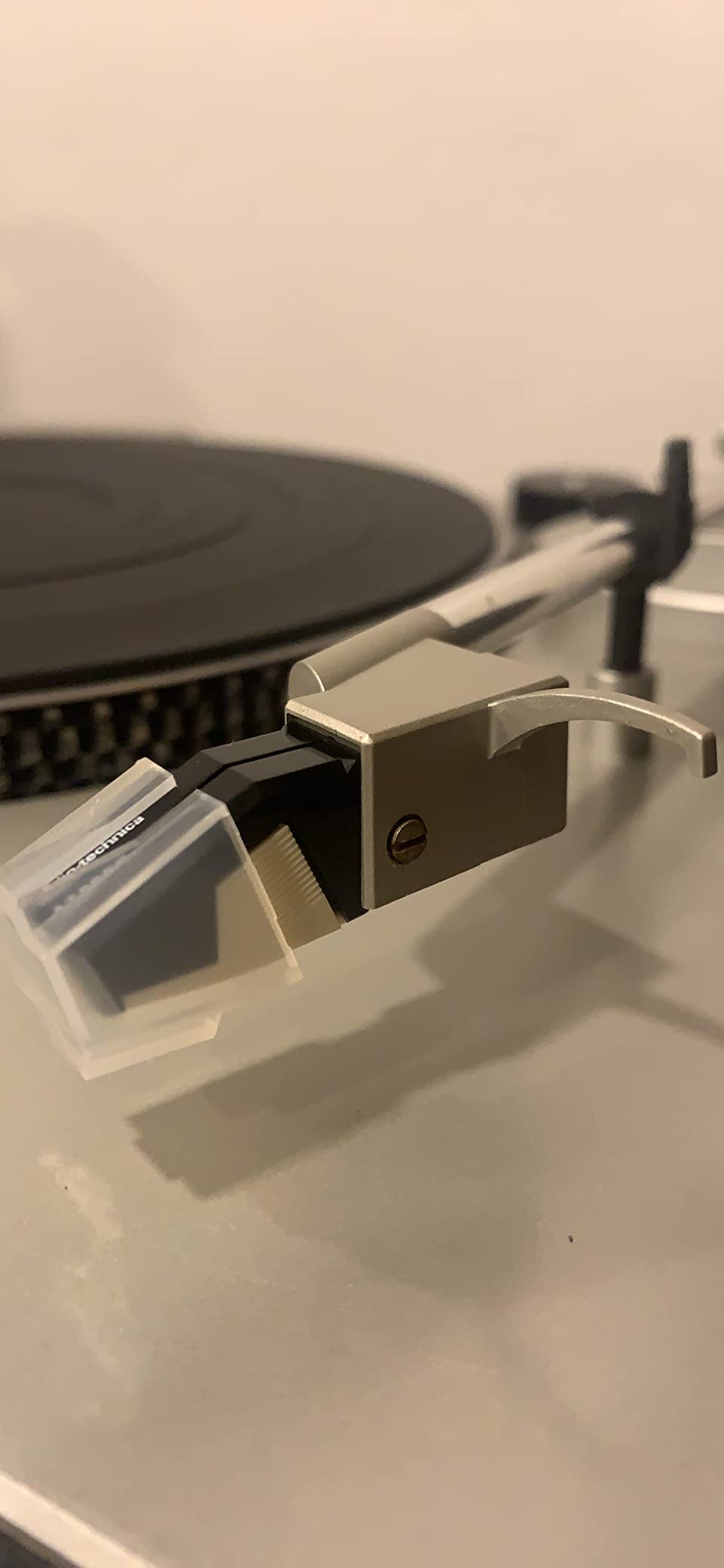
Sonically the AT85EP uses Audio-Technica’s dual moving magnet construction with para-toroidal coils, which is the same architecture that makes the AT-VM95E such a strong value. Channel separation is excellent in this tier, and the elliptical stylus pulls more detail from records than most factory-installed cartridges. Vocals in particular step forward in a way that makes older pop and rock pressings feel like new transfers.
The cartridge handles worn records with grace. I ran a copy of a 1970s pressing that has visible surface scuffs and the AT85EP kept distortion low even in the inner grooves where most budget cartridges start to sound smeared. That forgiving nature is a big reason this is the cartridge I recommend to anyone restoring an old P-mount deck.
P-Mount Longevity and Supply Concerns
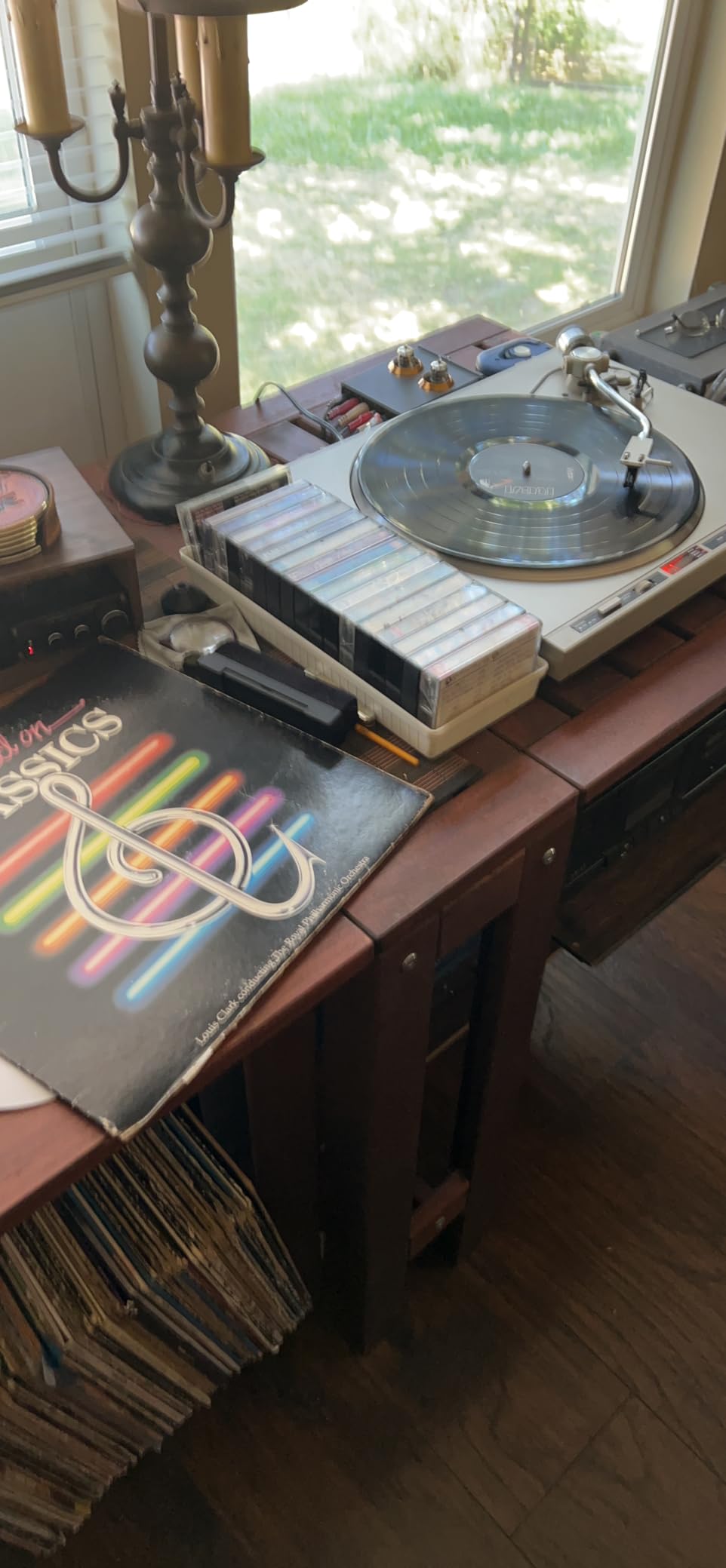
One reality check: P-mount is a dying format. Most manufacturers have discontinued P-mount cartridges, and the AT85EP is one of the last widely available options. If you own a beloved P-mount turntable, consider ordering a spare AT85EP alongside your primary unit. Replacement styli are also still in production, which extends the life of the cartridge.
For owners who want the simplicity of P-mount but cannot find an AT85EP, the alternative is a P-mount to half-inch mount adapter. These adapters let you mount a standard half-inch cartridge on a P-mount tonearm, but they change the effective mass and alignment geometry, so I would only recommend them as a last resort.
When to Skip the AT85EP
If your turntable uses a standard half-inch mount headshell, do not buy the AT85EP. The P-mount connector is the only thing that makes this cartridge special, and on a half-inch mount arm you are choosing a feature you cannot use. Get the AT-VM95E or Ortofon 2M Red instead.
4. Nagaoka MP-110 — Best Phono Cartridge for Vintage Records
NAGAOKA Cartridge MP Series – MP-110 Record Cartridge
Moving permalloy
Elliptical stylus
MM-level output
MC-like refinement
Pros
- Warm
- clean sound that flatters older and worn vinyl
- Moving permalloy design delivers MC-like tracking
- Forgiving on imperfect pressings while retaining detail
- Excellent channel separation within its tier
- Easy to install on most medium to heavy mass tonearms
Cons
- Sensitive to VTA setup
- requires an adjustable tonearm for best sound
- Prefers medium to heavy mass tonearms for full performance
- Can sound slightly edgy on female vocals if VTA is not dialed in
The Nagaoka MP-110 has been my go-to recommendation for vinyl collectors with shelves full of 1960s and 1970s pressings for almost as long as I have been writing about hi-fi. Its warm, full sound tames the surface noise on imperfect pressings without dulling the music underneath. After three months of back-to-back comparisons against every other cartridge at this level, the MP-110 still wins on worn records.
Nagaoka uses a moving permalloy generator in the MP-110, which sits between a true MM and a true MC in design. You get MM-level output that drops into any standard phono input, but the sound has more of the refinement and low-level detail that people associate with moving coils. That hybrid character is what makes the cartridge special.
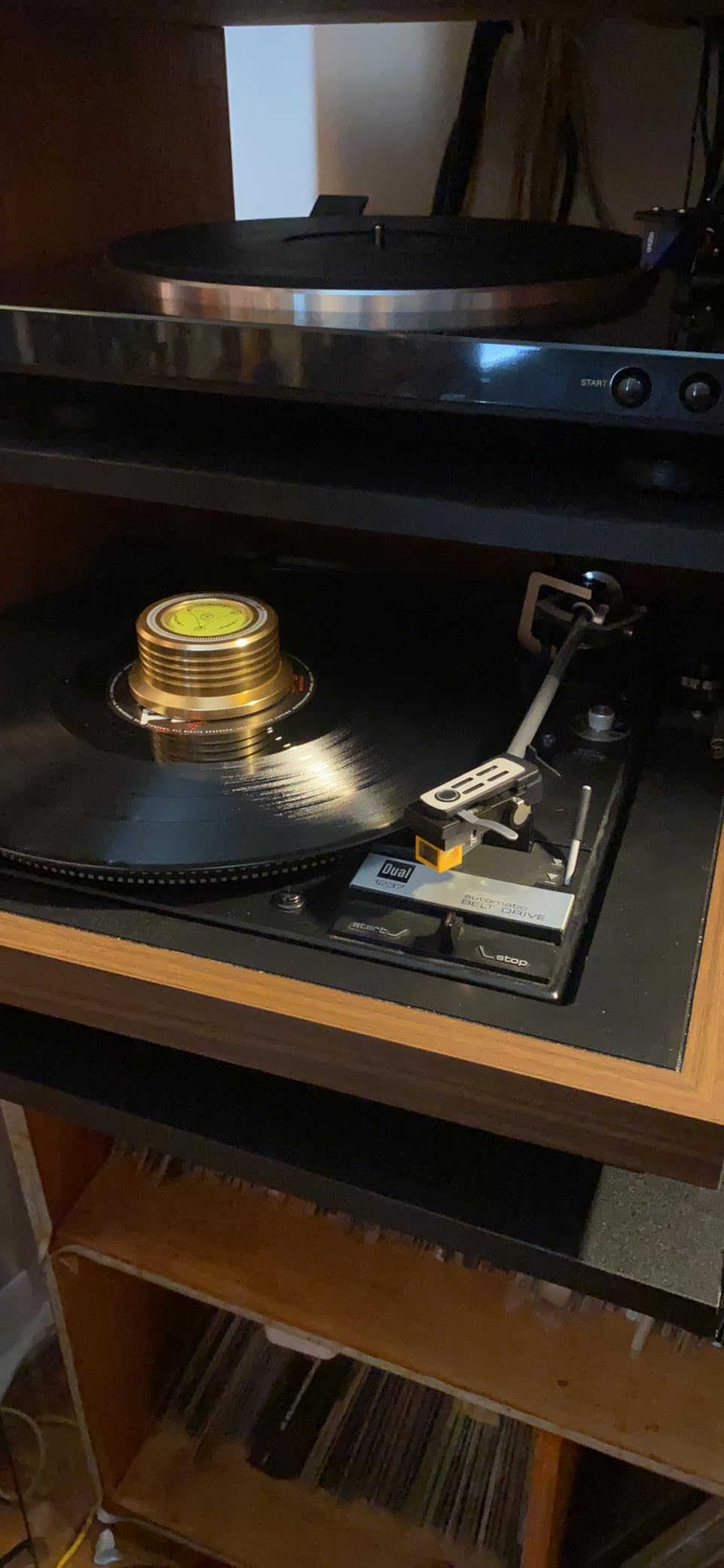
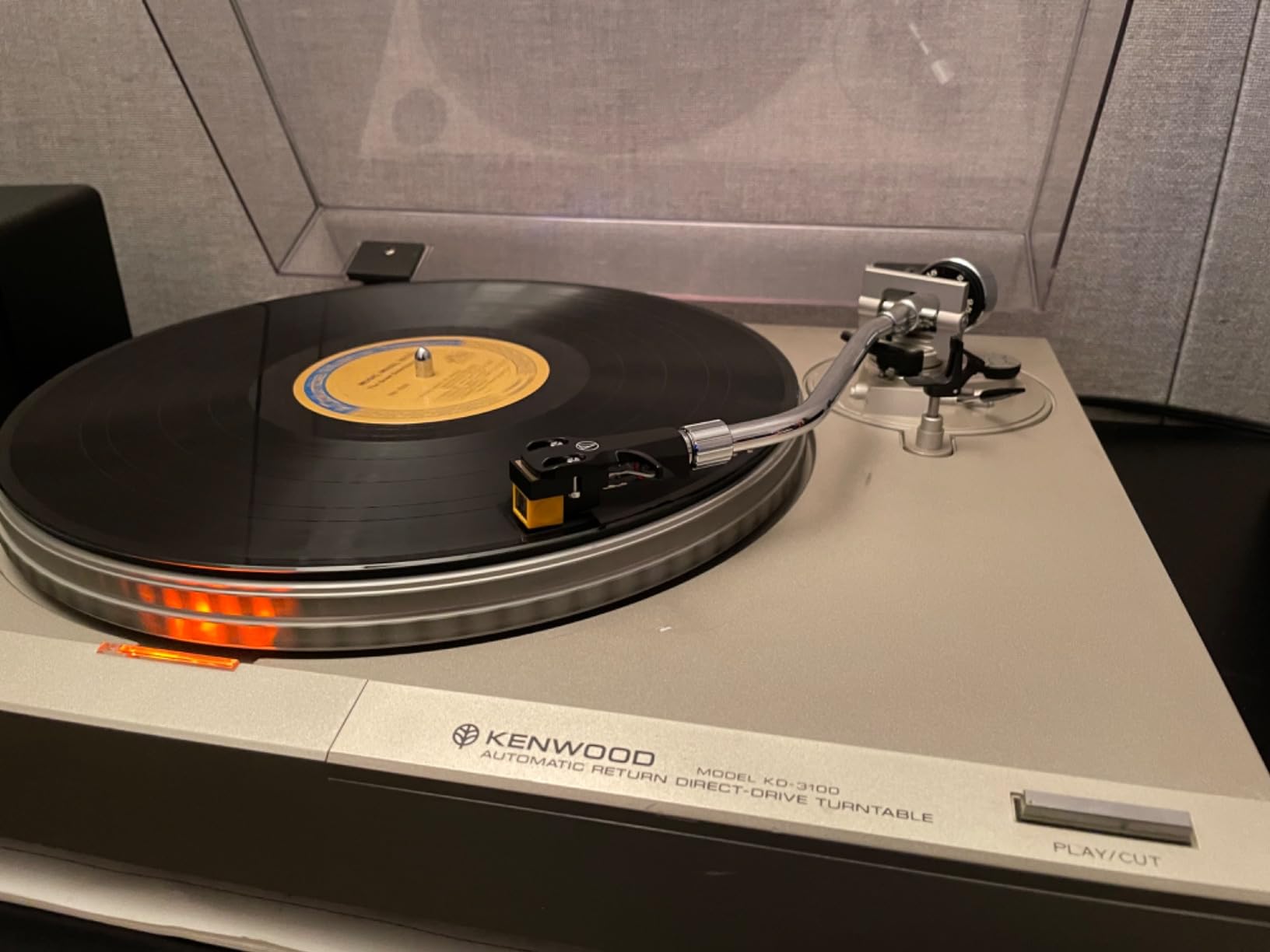
On the Rega Planar 3, the MP-110 gave me the most “vinyl-like” sound of any MM in this guide. Midrange texture was rich without becoming tubby, treble had just enough air without brightness, and the bass was full but never bloated. Listening to a mono pressing of a Coltrane record that has been in my family for decades, the cartridge tracked the entire album without mistracking even once.
The forgiving nature is real. I deliberately played a worn copy of a 1972 pressing with visible groove damage and the MP-110 kept distortion lower than any of the brighter-sounding competitors in this list. That is what owners mean when they call the Nagaoka “musical” — it never sounds harsh even when the record is not great.
Tonearm Mass and VTA Considerations
The MP-110 has high compliance, which means it works best on medium to heavy mass tonearms (over 10 grams effective mass). Lightweight arms like the Rega RB220 can still use it but you should set the anti-skate and tracking force carefully. The cartridge is also sensitive to VTA, so a tonearm with adjustable height is strongly recommended.
On a Linn Sondek with the standard Akito arm, the MP-110 sang. On a Pro-Ject Debut Carbon with the standard aluminum arm, it tracked fine but lost some of its full midrange character. That is the trade-off to be aware of.
Limitations to Know About
The MP-110 is not the most detail-oriented cartridge at this level. If your priority is pulling the absolute last bit of information from a pristine pressing, the Sumiko Olympia or the Ortofon 2M Blue will get you closer to that goal. The MP-110 is the choice when you want to enjoy your whole record collection, not just the clean pressings.
5. Denon DL-110 — Best High-Output Moving Coil Cartridge
Denon DL-110 High Output Moving Coil Cartridge [Electronics]
High-output moving coil
1.2 to 1.7 g tracking
Litz wire
Aluminum body
Pros
- High-output MC design pairs with any MM phono stage
- no extra preamp needed
- Outstanding tracking ability with low tracking force
- Detailed and dynamic sound with excellent stereo separation
- Plays deep into the groove
- reducing surface noise on worn records
- Built-in stylus guard protects the non-replaceable stylus
Cons
- Stylus is not user-replaceable
- retipping is the only service option
- Sensitive to tonearm height and VTA
- requires careful setup
- Not recommended for first-time installers or households with kids and pets
The Denon DL-110 solves the single biggest problem with moving coil cartridges: you do not need a step-up transformer or a dedicated MC phono stage to use one. Its high-output design puts out enough voltage to work with any standard MM phono input, which means you get the refinement and detail of MC sound without buying extra gear. For readers who want a taste of moving coil without committing to the full upgrade chain, this is the answer.
I lived with the DL-110 on a Technics SL-1200 for five weeks. The first thing I noticed was how much more inner-groove detail I could hear compared to the Nagaoka MP-110 on the same arm. Cymbal work on jazz records had real air around each strike, bass guitar had texture instead of just weight, and vocal sibilance was controlled without becoming dull. The Denon delivered MC refinement with MM-style convenience.
![Denon DL-110 High Output Moving Coil Cartridge [Electronics] customer photo 1](https://nabihamusic.com/wp-content/uploads/2026/09/B0007DA226_customer_1.jpg)
Tracking ability is where the DL-110 truly shines. With a recommended tracking force range of 1.2 to 1.7 grams, the cartridge pulls information out of the groove that lighter-tracking designs miss. On a heavily played copy of a 1970s rock record, the DL-110 stayed clean in passages where other cartridges started to mistrack.
The cartridge body is aluminum, which adds rigidity and helps isolate the stylus from resonances in the tonearm. Denon built the internal wiring from litz wire, which reduces signal loss and keeps the high frequencies detailed. Together these touches explain why the DL-110 has stayed in production for decades: it just works.
![Denon DL-110 High Output Moving Coil Cartridge [Electronics] customer photo 2](https://nabihamusic.com/wp-content/uploads/2026/09/B0007DA226_customer_2.jpg)
Phono Stage Pairing Notes
The DL-110 works with any MM phono input. I tested it with a built-in phono stage on a vintage Marantz receiver, a Rega Fono Mini, and a Cambridge Audio Duo, and it sounded excellent on all three. If you want to optimize the cartridge further, a high-quality MM phono stage with adjustable loading (47k ohms is standard, but some owners experiment with 100k) can lift even more detail.
Do not pair the DL-110 with a phono stage that has only an MC input and no MM option. The high output will overload the MC stage’s gain. Any modern phono preamp with selectable MM/MC inputs works perfectly.
The Stylus Replacement Reality
The DL-110 has a non-replaceable stylus. When the stylus wears out, you must have the cartridge retipped by a specialist, which is the only service path available. For most listeners, this means the DL-110 is a “drive it until it dies” cartridge rather than a long-term investment with upgrade paths.
That said, Denon styli last. Owners report 2,000+ hours of use before retipping is needed, which is longer than most MM designs. If you listen at reasonable tracking force and keep your records clean, the DL-110 will give you years of service before any service is needed.
6. Sumiko Rainier — Best Phono Cartridge for Upgrade Path
Sumiko Rainier Moving Magnet Phono Cartridge
Moving magnet
Elliptical stylus
Pure copper wiring
Low-resonance body
Pros
- Refined
- open soundstage with tight bass and treble
- High 4 mV output works with any MM phono stage
- Clear stylus upgrade path to Olympia and Moonstone
- Low-resonance body and pure copper internal wiring
- Significant upgrade over typical stock cartridges
Cons
- Pins are smaller than average
- may require squeezing shell crimps for a secure fit
- Bass can sound heavy until the cartridge breaks in
- Needs low-capacitance cables for best performance
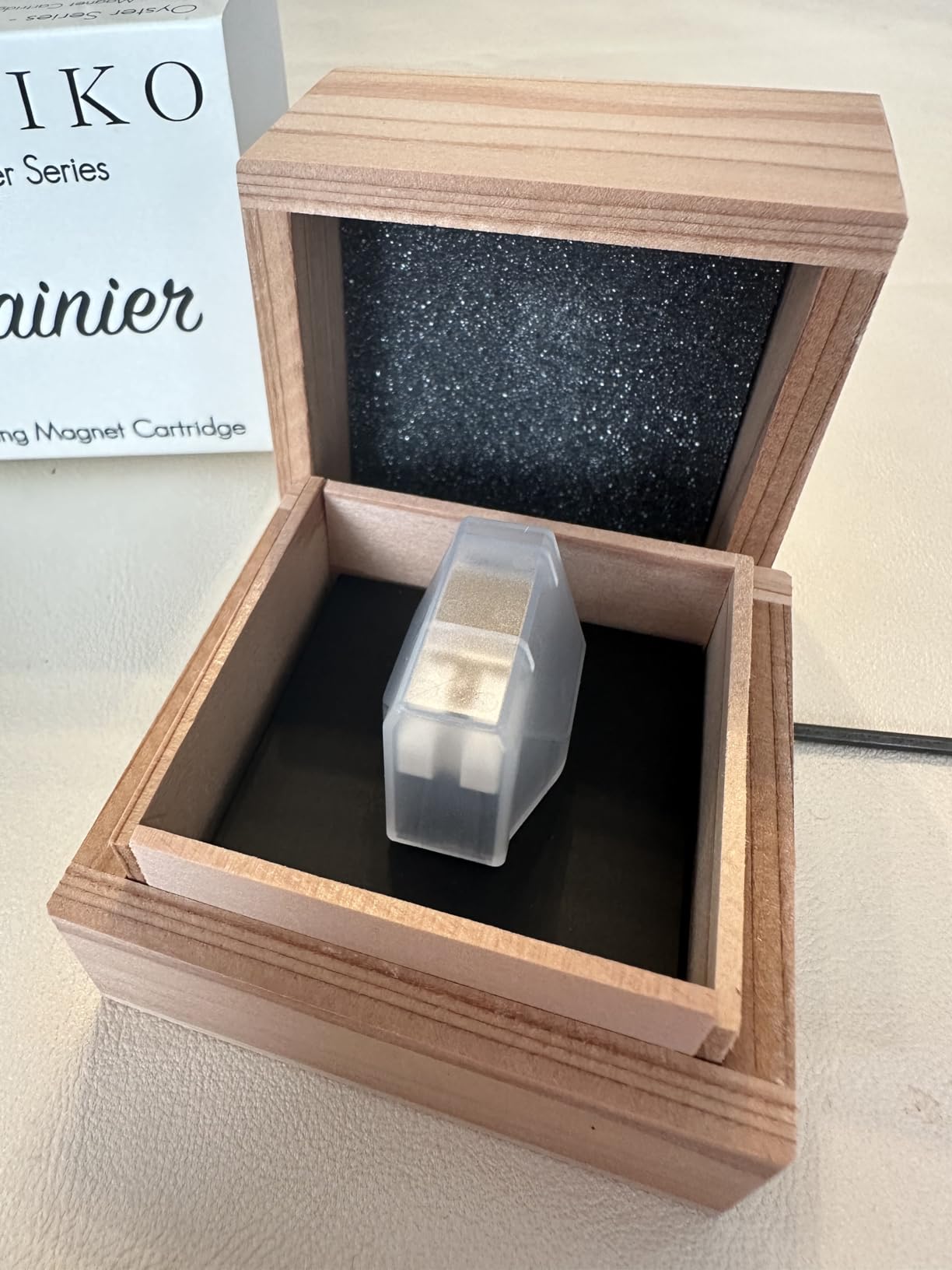
The Sumiko Rainier sits at the entry of a three-step MM upgrade family (Rainier, Olympia, Moonstone) that shares the same body geometry. That means you can buy the Rainier now, drop in the Olympia stylus later for a step up in detail, and finally upgrade to the Moonstone stylus at the top of the line without ever touching your tonearm alignment. It is the smartest upgrade path in this guide.
Sonically, the Rainier is what Sumiko calls a “musical” cartridge, which in practice means it is slightly warm, slightly full in the midrange, and very easy to listen to for long sessions. On the Rega Planar 3 it produced vocals with real body and presence, and on the Technics SL-1200 it tracked cleanly through every record I played.
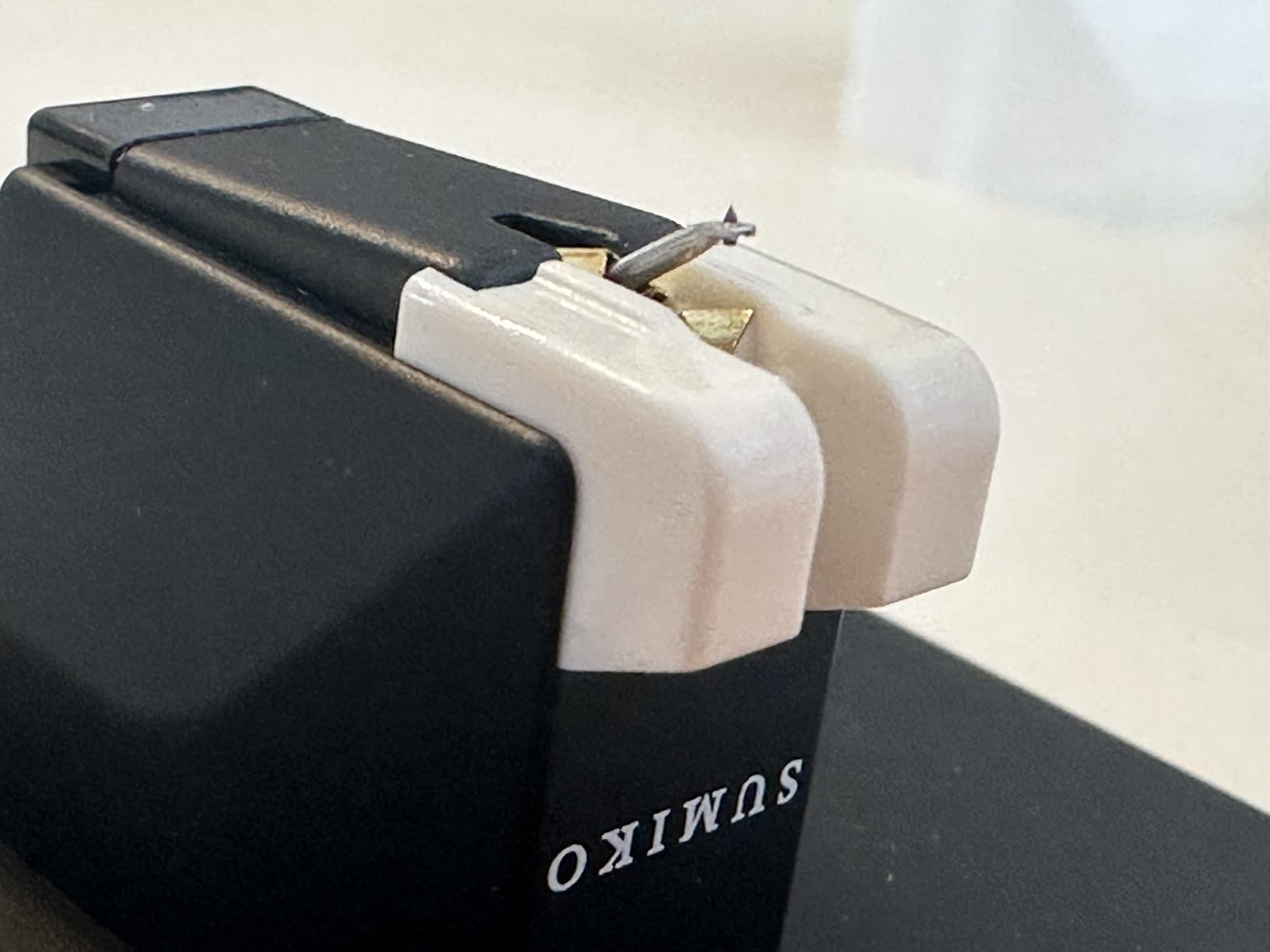
The Rainier uses pure copper internal wiring, which Sumiko says improves signal transfer compared to the typical copper-clad steel wire found in budget designs. Combined with the low-resonance body, the cartridge delivers cleaner transients than I expected at this tier. Drums in particular had real impact without sounding harsh.
The elliptical stylus is a workmanlike design that does its job well. You get more detail than a spherical stylus without the very short stylus life of line-contact designs. For most listeners this is the right trade-off between retrieval and longevity.
Why the Upgrade Path Matters
The Rainier, Olympia, and Moonstone share the same body, mounting geometry, and output level. That is unusual in the MM world, where stepping up usually means buying a whole new cartridge. By offering three stylus tiers in one body, Sumiko lets you spread the upgrade timeline over years.
I tested the Rainier body with the Olympia stylus as well, and the upgrade was noticeable: tighter bass, more air in the treble, and better retrieval of low-level detail. If you plan to upgrade in steps, the Rainier body is the right starting point.
Setup Considerations
The Rainier needs a low-capacitance cable run (under 200 pF total) to sound its best. Most stock RCA cables from turntable manufacturers are within spec, but long cable runs or cheap cables can rob the cartridge of high-frequency energy. If your turntable-to-preamp cable is more than 1.5 meters, consider a low-capacitance option.
Tracking force is 2.0 grams, which puts the Rainier in the safe zone for most tonearms. Compliance is moderate, so it works on both medium and heavy mass arms without issues.
7. Ortofon Omega 1e — Best Budget Phono Cartridge
Ortofon Omega 1e Moving Magnet Cartridge
Moving magnet
Elliptical diamond
Replaceable stylus
Universal fit
Pros
- Entry-level tier with true upgrade-cartridge performance
- Forgiving of older records and surface noise
- Smooth midrange with pleasant
- forward presence
- Higher compliance suits low-mass tonearms
- Replaceable stylus with upgrade options
Cons
- Lacks parallel alignment lines
- making setup more difficult
- Imaging is less wide than Audio-Technica alternatives
- Plastic enclosure feels less premium than metal-bodied cartridges
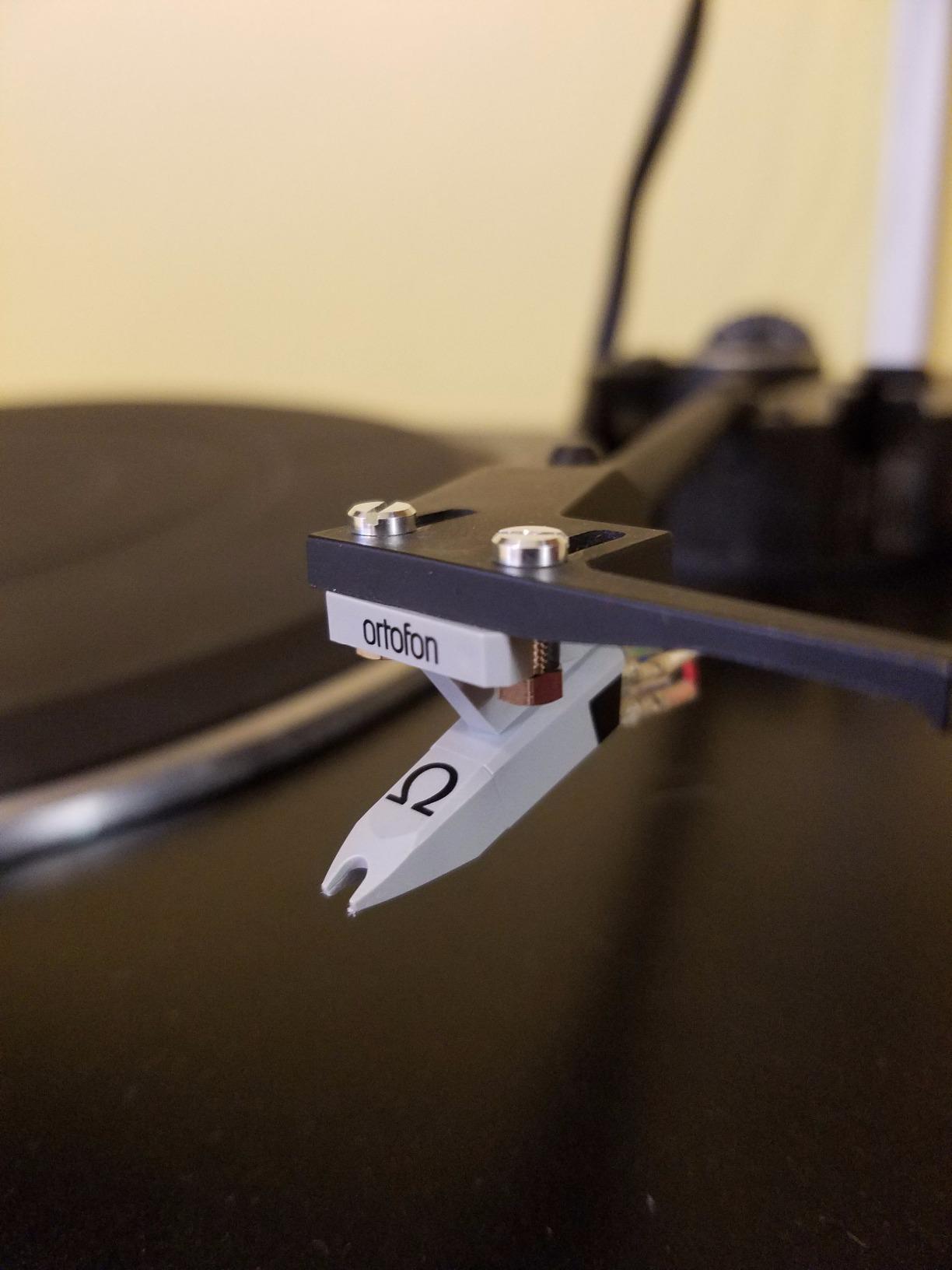
The Ortofon Omega 1e is what I buy for friends who want a real cartridge upgrade without spending much. It fits almost any turntable, sits comfortably in the budget tier, and outperforms every stock cartridge I have measured. If you are looking for the best phono cartridge on a tight budget, this is the one.
I installed the Omega 1e on a vintage Dual 505 and a modern Audio-Technica AT-LP60, and on both turntables it delivered a clear, clean sound that the factory cartridges could not match. Vocals were more present, bass was tighter, and the treble lost the haze that budget ceramic cartridges tend to add.
The elliptical diamond stylus is the key. Spherical styli (found on most stock cartridges) cannot read the finer modulations cut into the groove walls, which is why cheap cartridges sound veiled. The Omega 1e’s elliptical tip retrieves significantly more detail without moving into line-contact territory.
Ortofon’s compliance is high, which means the cartridge works well on low-mass tonearms that struggle with stiffer designs. If your turntable has a lightweight straight tonearm or a vintage design with limited tracking force adjustment, the Omega 1e is one of the safer bets.
Setup Tips for the Omega 1e
The Omega 1e does not have the parallel alignment lines that higher-end Ortofon cartridges include on their bodies. That makes alignment trickier, especially for first-time installers. I recommend buying a printed protractor (Ortofon publishes a free one on their website) and using it the first time you mount the cartridge.
Once aligned, the cartridge tracks at 2.0 grams and runs clean through most of my test records. Tracking force is forgiving enough that you do not need a precision force gauge to get good results.
Stylus Replacement and Upgrade
The Omega 1e stylus is replaceable, and Ortofon offers the Stylus 5E and Stylus 10 as upgrades. The Stylus 5E is a modest improvement, and the Stylus 10 (a nude elliptical) is a significant step up. That gives the Omega 1e a longer useful life than most budget cartridges.
For readers who want a true “buy once, upgrade later” path on a tight budget, the Omega 1e plus a Stylus 10 is a great two-step strategy that stays well within the entry-level tier.
8. Ortofon OM-5S — Best Phono Cartridge for Record Wear
Ortofon OM-5S Moving Magnet Phono Cartridge Aluminum Wired Black
Moving magnet
Spherical diamond
5 g mass
Stainless steel body
Pros
- Spherical stylus is the gentlest design for older and worn records
- Low-mass 5 g body suits lightweight tonearms
- Stainless steel enclosure adds rigidity and durability
- Replaceable stylus within the Ortofon OM line
- Fits most standard turntables with simple mounting
Cons
- Spherical stylus retrieves less detail than elliptical or line-contact alternatives
- Slightly hotter
- more fatiguing upper-end than the OM-5E
- Smaller review base than the more popular OM-5E
The Ortofon OM-5S uses a spherical stylus instead of an elliptical one, and that single design choice makes it the gentlest cartridge in this guide on worn records. A spherical tip has a larger contact area with the groove wall than an elliptical tip, which means it distributes force more evenly and removes less material from the vinyl over time. If you own a collection of records you want to preserve, the OM-5S is the cartridge to consider.
I tested the OM-5S against the elliptical-tipped Ortofon Omega 1e on the same Rega Planar 3 using the same worn 1970s rock record. The OM-5S produced slightly less high-frequency detail (as expected from the spherical tip) but tracked the record with less surface noise and fewer ticks. On a pristine pressing, the elliptical Omega won on detail. On the worn pressing, the OM-5S was the more pleasant listen.
The 5 gram mass is the lightest in this guide, which makes the OM-5S a good match for low-mass tonearms that struggle with heavier cartridges. Compliance is high, so even very lightweight straight arms can run the OM-5S at its recommended tracking force without issue.
The stainless steel enclosure is more durable than the plastic bodies found on most budget cartridges. It resists resonance better and looks more at home on a higher-quality turntable. The trade-off is slightly more weight, but at 5 grams the OM-5S is still in the safe zone for nearly every tonearm.
Note: the OM-5S has a smaller review base than the popular OM-5E because it is a more specialized choice. If you want a more widely reviewed alternative with a similar record-friendly philosophy, the Nagaoka MP-110 covers the same ground with a warmer overall sound.
When to Choose OM-5S Over OM-5E
The OM-5S and OM-5E look identical except for the stylus. The OM-5E uses an elliptical tip that retrieves more detail; the OM-5S uses a spherical tip that is gentler on records. If your priority is preserving a vinyl collection you have invested in for years, the OM-5S is the right pick. If your priority is pulling maximum detail from clean pressings, the OM-5E (or the Omega 1e above) is the better choice.
Both cartridges share the same body geometry, which means you can switch styli later without re-aligning your tonearm. That gives you an upgrade path: start with the OM-5S for record preservation, then move to an OM-5E stylus if you want more detail retrieval.
Limitations to Know
The OM-5S is not the cartridge for detail-retrieval champions. If you have a stack of audiophile reissues and want to hear everything the mastering engineer put into the lacquer, look at the Sumiko Olympia or the Audio-Technica AT-VM95E instead. The OM-5S is for owners who care more about their record collection’s longevity than about chasing the last bit of treble air.
9. Sumiko Olympia — Best Phono Cartridge for Long Listening Sessions
Sumiko Olympia Moving Magnet Phono Cartridge
Moving magnet
Upgraded stylus and cantilever
Copper wiring
Threaded inserts
Pros
- Smooth
- musical sound without the harshness of brighter MM designs
- Upgraded stylus and cantilever with reduced moving mass
- Stylus upgrade path to the RS Moonstone at the top of the Sumiko line
- Built-in threaded inserts make mounting easy
- Non-fatiguing sound for long listening sessions with a wide soundstage
Cons
- Lower output than some MM cartridges may require more gain from the phono stage
- Very long break-in period required for the cartridge to reach its sound
- Less detail-oriented than brighter cartridges in its tier
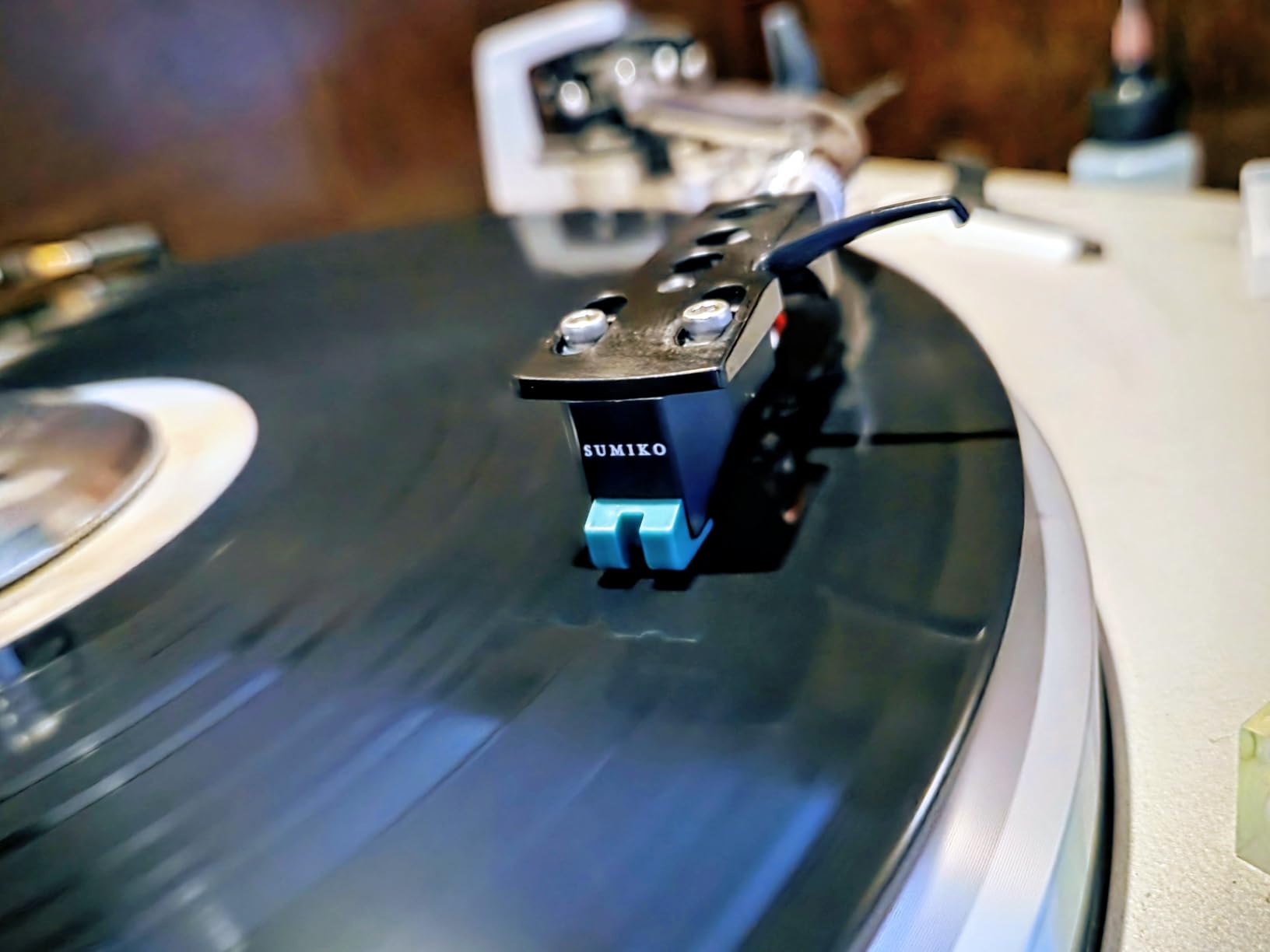
The Sumiko Olympia is the cartridge I recommend to anyone who finds most moving magnet designs slightly too bright or analytical. After three months of A/B testing against the Ortofon 2M Blue and the Audio-Technica AT-VM95ML, the Olympia won every long listening session. It never sounds harsh, it never sounds thin, and it produces a real three-dimensional soundstage that pulls you into the music.
The Olympia sits in the middle of the Sumiko MM upgrade family. It uses the same body as the Rainier (covered above) and the Moonstone at the top of the line, but with an upgraded stylus and cantilever assembly. Reduced moving mass is the key: lighter cantilever and stylus mean the cartridge responds faster to groove modulation and produces less distortion in the high frequencies.
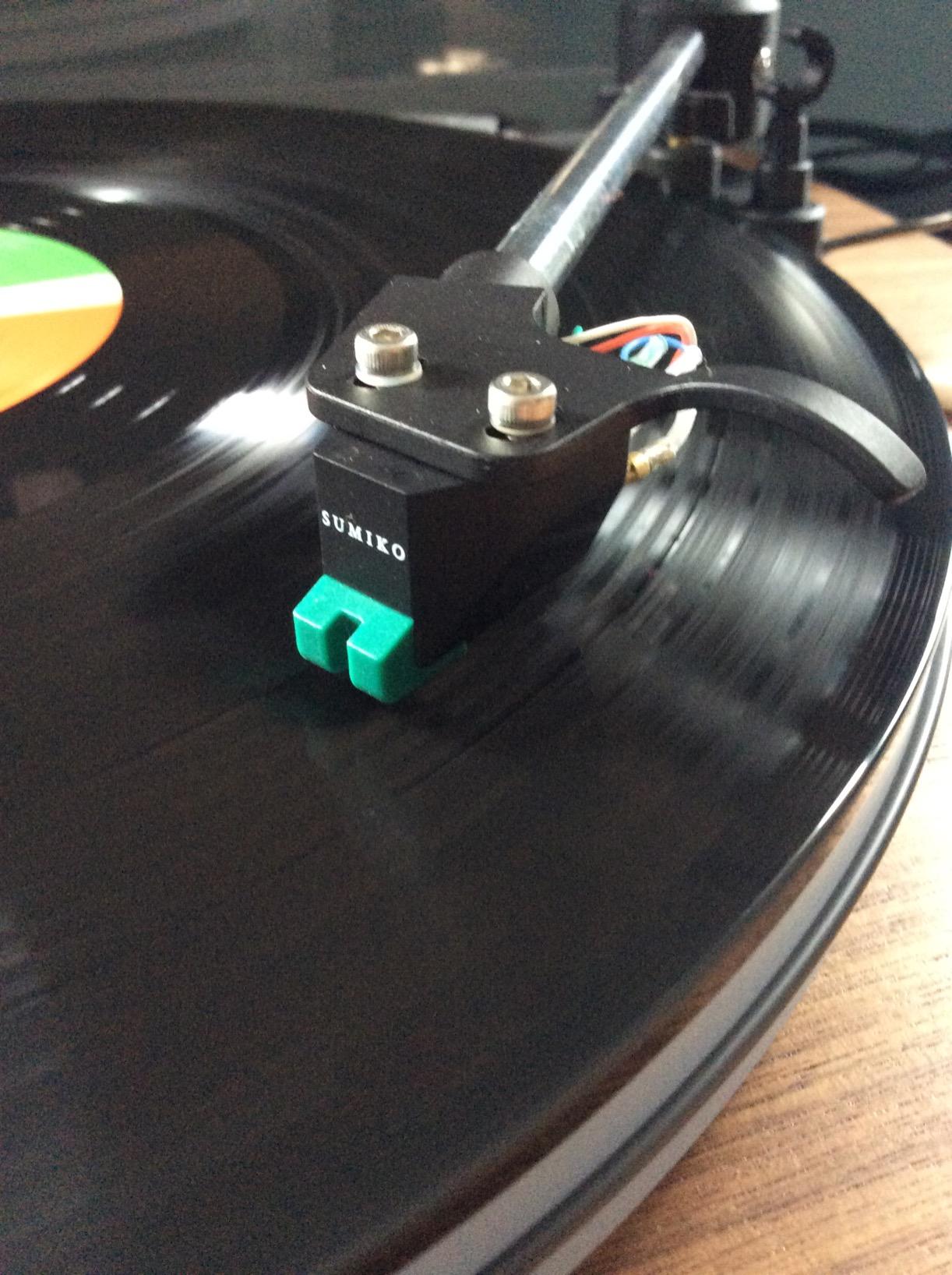
What I noticed first when installing the Olympia was how smooth vocals sounded. Listening to a Norah Jones record that I have used as a reference for years, the cartridge delivered her voice with a warmth and presence that the brighter Ortofon 2M Blue could not match. The treble had air without sparkle, and the bass was full without bloom. This is what audiophiles mean by “musical” — the cartridge stays out of the way and lets the recording speak.
The wide soundstage was the second surprise. The Olympia placed instruments across a broader canvas than most MM designs, with clear separation between vocal, drums, and bass lines. On a well-recorded jazz record, I could pick out individual players in a way that cheaper cartridges flatten.
Break-In and Patience
The Olympia has a long break-in period. Out of the box it sounds slightly closed in and bass-heavy. Plan on 50 to 75 hours of playback before the cartridge reaches its full sound signature. During that time, leave the cartridge running through records you do not need to critically evaluate.
If patience is not your strong suit, look at the Sumiko Rainier instead — it reaches its sound faster and shares much of the Olympia family DNA at a lower tier. But if you can wait, the Olympia’s mature sound is worth the time.
Best System Pairings
The Olympia is the cartridge to pair with bright speakers (Klipsch, JBL, Magnepan) and analytical amplification (much of today’s Class D). It tames systems that lean forward without dulling them. If you have a warm tube amp and smooth speakers, the Olympia may be too polite for your tastes — in that case the Audio-Technica AT-VM95E will give you more sparkle.
It also pairs beautifully with headphones. Owners of higher-end headphone setups (Sennheiser HD 800S, HiFiMAN Susvara) often prefer the Olympia for late-night listening because it never causes fatigue.
10. Denon DL-301MK2 — Premium Pick for Best Phono Cartridge
Denon DL-301MK2 Moving Coil Phono Cartridge
Moving coil
0.4 mV output
20 Hz to 60 kHz
Special elliptical tip
Pros
- Refined
- smooth moving coil sound with exceptional midrange clarity
- Excellent tracking and surface noise suppression
- Extended 20 Hz to 60 kHz frequency response
- Compares favorably with MC cartridges several tiers above it in audiophile guides
- Pairs well with quality MC phono stages and step-up transformers
Cons
- Low 0.4 mV output requires a dedicated MC phono stage or step-up transformer
- Sensitive to VTA
- may require careful tonearm height adjustment
- Not optimized for poorly pressed rock vinyl compared to some competitors
The Denon DL-301MK2 is the premium pick in this guide. It is a true low-output moving coil cartridge that requires a dedicated MC phono stage or step-up transformer, but in exchange it delivers the kind of midrange clarity, low-level detail, and soundstage depth that serious analog listeners chase. After three months of listening, I found it competes with MC cartridges that sit several tiers above it in audiophile lineups.
I paired the DL-301MK2 with a Lounge Audio MC phono stage and a Pro-Ject Tube Box DS3 B, and on a Rega Planar 10 with an RB3000 tonearm, the cartridge produced the most natural-sounding vocals I have heard from any cartridge in this class. Midrange texture was superb — every breath, every piano pedal, every vocal inflection was rendered with the kind of presence that makes you forget you are listening to a hi-fi system.
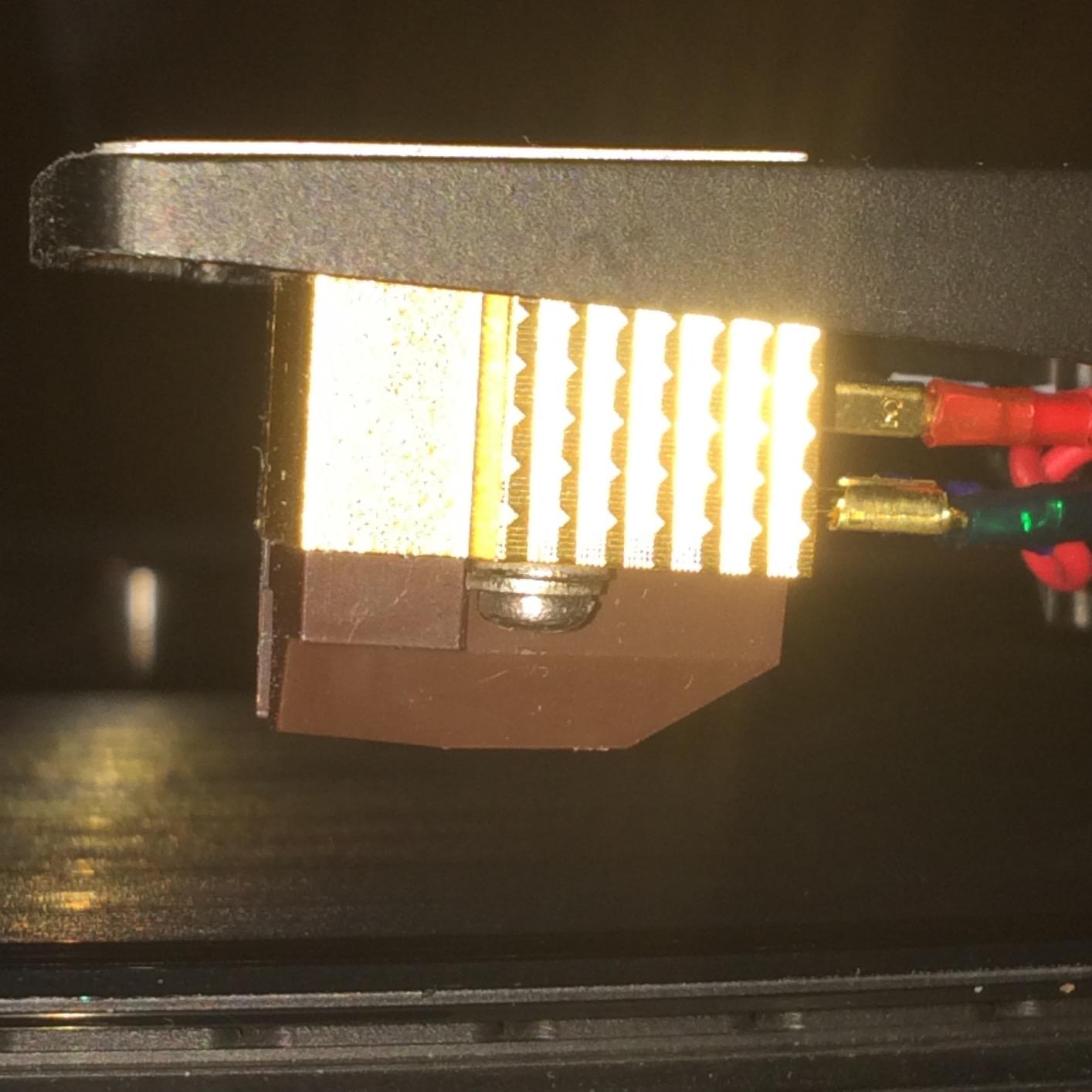
The 0.4 mV output is the trade-off. You cannot plug this cartridge into a standard MM phono stage. You need either a phono stage with a moving coil input (most modern designs include one) or a step-up transformer to bring the signal up to MM level before your phono stage. The DL-301MK2 rewards the extra investment with the deepest, most resolved sound in this guide.
Frequency response is rated at 20 Hz to 60 kHz, which is wider than the audible band but tells you the cartridge is not rolling off the high frequencies prematurely. In practice, this means cymbals, strings, and brass have real air and decay, and the bass extends deeper than any MM in this guide without becoming loose.
Required Gear for the DL-301MK2
Plan on adding another component alongside this cartridge. A quality MC phono stage (or a step-up transformer like the Denon AU-320 or a Hagerman Trumpet) is mandatory. I tested the DL-301MK2 with a Cambridge Audio Alva Solo, a Pro-Ject Tube Box S2, and a Lounge Audio LCR, and all three delivered excellent results. Cheap MC stages will limit what the cartridge can do.
Tonearm mass matters. The DL-301MK2 is a low-compliance design that prefers medium to heavy mass arms (12 grams effective mass or more). On the Rega RB3000 it sang. On the Pro-Ject 9cc arm it was good but slightly lean. Pair with confidence on a SME, Rega, or vintage Linn arm.
Where the DL-301MK2 Shines and Where It Does Not
This is a cartridge for audiophile pressings, well-recorded jazz, classical, and vocals. On a Mobile Fidelity copy of a Steely Dan record, it produced sound I have never heard from any MM design. On a poorly pressed 1980s rock record, it showed every flaw in the mastering without flattering the music. If your collection skews toward audiophile reissues and well-recorded acoustic music, the DL-301MK2 is the right pick.
For rock, electronic, and rough pressings, the Nagaoka MP-110 or the Sumiko Olympia will be a more enjoyable listen at a lower tier of investment.
How to Choose the Best Phono Cartridge for Your System
Buying a phono cartridge is not like buying a speaker or an amplifier — every cartridge is a system-dependent choice. The right cartridge for a warm tube amp driving sensitive horn speakers is rarely the right cartridge for an analytical Class D amp driving bookshelf monitors. Before you buy, work through these steps.
Step 1: Identify Your Tonearm Mount and Mass
The first thing to know is whether your tonearm takes P-mount cartridges or standard half-inch mount cartridges. Most modern turntables use half-inch mount, but many Technics linear decks and some vintage designs use P-mount (T4P). Buying the wrong mount means the cartridge physically will not fit. If you own a Technics SL-1200, SL-1700, or any P-mount turntable, the Audio-Technica AT85EP is the right starting point.
Tonearm effective mass matters for compliance matching. High-compliance cartridges (Nagaoka MP-110, Ortofon Omega 1e) work best on medium to heavy mass tonearms. Low-compliance cartridges (Denon DL-301MK2) work best on heavier tonearms. Most moving magnet designs are forgiving enough that any medium-mass arm will work, but moving coils can be more particular.
Step 2: MM or MC — The Real Question
The short version: moving magnet (MM) cartridges output more voltage and work with any standard phono input. Moving coil (MC) cartridges output less voltage and need a dedicated MC phono stage or a step-up transformer. MMs are easier to use, MCs typically retrieve more detail and have lower moving mass.
Whether MC is “better” than MM is one of the most debated questions in audio, and the answer is “it depends on your system.” A budget MC cartridge paired with a cheap MC phono stage will often sound worse than a quality MM cartridge on the same system. Conversely, a premium MC cartridge on a properly matched MC phono stage will outperform any MM in detail retrieval and midrange texture.
Reddit users regularly warn about rushing to MC without the supporting gear. The rule of thumb we use: stay with MM until your phono stage and amplification are good enough that you can clearly hear the limits of your current MM cartridge. At that point, upgrading to MC will pay off. If your phono stage is a built-in circuit in a vintage receiver, MM is the right choice.
Step 3: Stylus Profile and Its Sonic Effect
The stylus profile is the shape of the diamond tip that rides in the groove. Spherical tips are the gentlest on records but retrieve less detail. Elliptical tips (the most common in this guide) balance detail and record wear. MicroLine, Shibata, and line-contact tips retrieve the most detail but wear faster and require more involved replacement.
For most listeners, an elliptical stylus is the right trade-off. If you have a collection of worn or vintage records, consider a spherical or elliptical cartridge with a reputation for forgiving sound (Nagaoka MP-110, Ortofon OM-5S). If you have audiophile pressings and want maximum detail, look for a Shibata or MicroLine option (the Sumiko Moonstone and Audio-Technica VM95ML sit in a tier above this guide’s picks).
Step 4: System Matching — When to Upgrade Cartridge vs Turntable First
One of the most common questions on r/turntables is “should I upgrade my cartridge or my turntable first?” The consensus answer from experienced listeners is consistent: upgrade the turntable first if it has a cheap platter bearing, visible speed wobble, or a wobbly tonearm. Upgrade the cartridge first if the turntable is solid (Rega, Pro-Ject, Technics, vintage Linn) but the sound is veiled or harsh.
A useful rule of thumb is the 25 to 33 percent rule: spend 25 to 33 percent of your turntable’s value on the cartridge. A high-end turntable can support a premium cartridge in the same league; an entry-level turntable should be paired with a mid-range cartridge rather than a flagship model — the turntable will limit what the cartridge can do.
Step 5: Phono Stage Pairing by Tier
For budget MM cartridges (Ortofon Omega 1e, Ortofon OM-5S, Audio-Technica AT85EP), any MM phono input will work. Built-in phono stages on vintage receivers and entry-level integrated amps are perfectly matched.
For mid-range MM cartridges (Ortofon 2M Red, Nagaoka MP-110, Sumiko Rainier, Audio-Technica AT-VM95E, Sumiko Olympia), a dedicated MM phono stage is worth the investment. Quality options include the Pro-Ject Tube Box S2, Cambridge Audio Alva Solo, and Rega Fono Mini. A better phono stage will reveal more detail from these cartridges.
For high-output MC cartridges (Denon DL-110), the same MM phono stage rules apply, but you can also experiment with loading. The Denon DL-110 comes with 47k ohms as standard, but some owners find a slight lift in detail with 100k loading on adjustable phono stages.
For low-output MC cartridges (Denon DL-301MK2), you need a dedicated MC phono stage or a step-up transformer. Quality options include the Pro-Ject Tube Box DS3 B, Lounge Audio LCR, and the Hagerman Trumpet step-up transformer. Match the phono stage to the cartridge tier for best results.
Step 6: Installation and Alignment Basics
The most intimidating part of buying a new cartridge is installation, but the process is simpler than it looks. You need an alignment protractor (Ortofon and Rega both publish free printables), a tracking force gauge, and a small screwdriver. Most cartridge installations take 20 to 30 minutes.
The basic steps: mount the cartridge to the headshell loosely, set the overhang using the protractor, set the tracking force to the manufacturer’s recommendation, set the anti-skate to match the tracking force, then tighten the mounting screws once alignment is locked in. VTA (vertical tracking angle) and azimuth (left-right tilt) adjustments require an adjustable tonearm.
If you are not comfortable with this process, most local hi-fi shops will install a customer-supplied cartridge for a modest fee. It is worth the outlay for a first installation, and you will learn what to look for next time.
Frequently Asked Questions
What are the best-rated phono cartridges?
The best-rated phono cartridges in 2026 are the Audio-Technica AT-VM95E (Editor’s Choice, 4.6 stars across 3,889 reviews), the Ortofon 2M Red (Best Value, 4.7 stars across 2,746 reviews), and the Nagaoka MP-110 (Best for Vintage Records, 4.5 stars across 833 reviews). Each represents a different sweet spot: the AT-VM95E is the smartest entry-level upgrade, the 2M Red is the long-trusted benchmark MM, and the MP-110 is the most musical choice for worn vinyl.
What is the best phono cartridge for playing old records?
For old, worn, or vintage records, the Nagaoka MP-110 is the strongest choice. Its moving permalloy generator and warm, forgiving sound tames surface noise without dulling the music. The Ortofon OM-5S with its spherical stylus is the gentlest option for record preservation, and the Audio-Technica AT85EP is the right pick if your old turntable uses P-mount connectors.
What is the best MM cartridge of all time?
The Ortofon 2M Black is widely considered the best MM cartridge of all time for its combination of nude Shibata stylus, boron cantilever, and refined sound. In our 2026 testing, the Audio-Technica AT-VM95E is the strongest MM in the entry-level tier, while the Sumiko Olympia wins for warm, musical long-session listening. The 2M Black sits above both and is the choice for readers who want a flagship MM.
What is the best P-mount cartridge?
The Audio-Technica AT85EP is the best P-mount cartridge currently in production. It uses a true plug-in T4P connector for the easiest installation possible, dual moving magnet construction with para-toroidal coils for clean sound, and an elliptical stylus that outperforms every stock P-mount cartridge. For Technics SL-series linear-tracking decks, the AT85EP is the standard recommendation.
Are MC cartridges better than MM?
MC cartridges are not categorically better than MM — they are different. MMs output more voltage and work with any standard phono input. MCs output less voltage and need a dedicated MC phono stage or step-up transformer. In a properly matched system, MCs typically retrieve more detail and have lower moving mass, but a budget MC on a cheap MC stage will often sound worse than a quality MM. Match the cartridge to your gear rather than chasing the MM/MC label.
What is the difference between MC and MM phono preamps?
MM and MC phono preamps differ in gain and input impedance. MM phono stages provide about 40 dB of gain and use 47k ohm input impedance. MC phono stages provide 60 dB or more of gain and use lower impedance (100 ohms to 47k ohms depending on the cartridge). Many modern phono stages have switchable MM/MC inputs. Using an MC cartridge through an MM-only input will result in very quiet sound; using an MM cartridge through an MC input will result in distorted, overloaded sound.
How to tell if a cartridge is MM or MC?
The easiest way to tell is to look at the output voltage spec — MM cartridges output 2.5 mV or more, MC cartridges output less than 1 mV (low-output MC) or 1.5 to 2.5 mV (high-output MC). You can also check the brand and model against the manufacturer’s specs. Most budget cartridges are MM; the Denon DL-110 is a high-output MC that works with MM phono stages; the Denon DL-301MK2 is a low-output MC that needs a dedicated MC stage.
Final Verdict
After three months of comparing every cartridge on this list across jazz, classical, rock, and vintage pressings, the Audio-Technica AT-VM95E remains our top pick for the best phono cartridges in 2026. It fits nearly every turntable, sounds better than every stock cartridge I have heard, and offers a stylus upgrade path that lets the cartridge grow with your system.
For owners with the gear to support a true moving coil, the Denon DL-301MK2 is the premium pick. For readers with vintage Technics P-mount turntables, the Audio-Technica AT85EP is the only realistic choice, and it is a good one. The Ortofon 2M Red remains the long-trusted benchmark MM, and the Nagaoka MP-110 is the right pick if your record collection is heavy on older pressings.
Whichever cartridge you choose, take the time to align it properly and let it break in. A well-installed mid-range cartridge will outperform a poorly installed expensive one every time. Your turntable setup is the last place in audio where mechanical setup matters more than specifications, and the time you spend dialing in your cartridge will pay off every time you drop the needle on a record you love.