
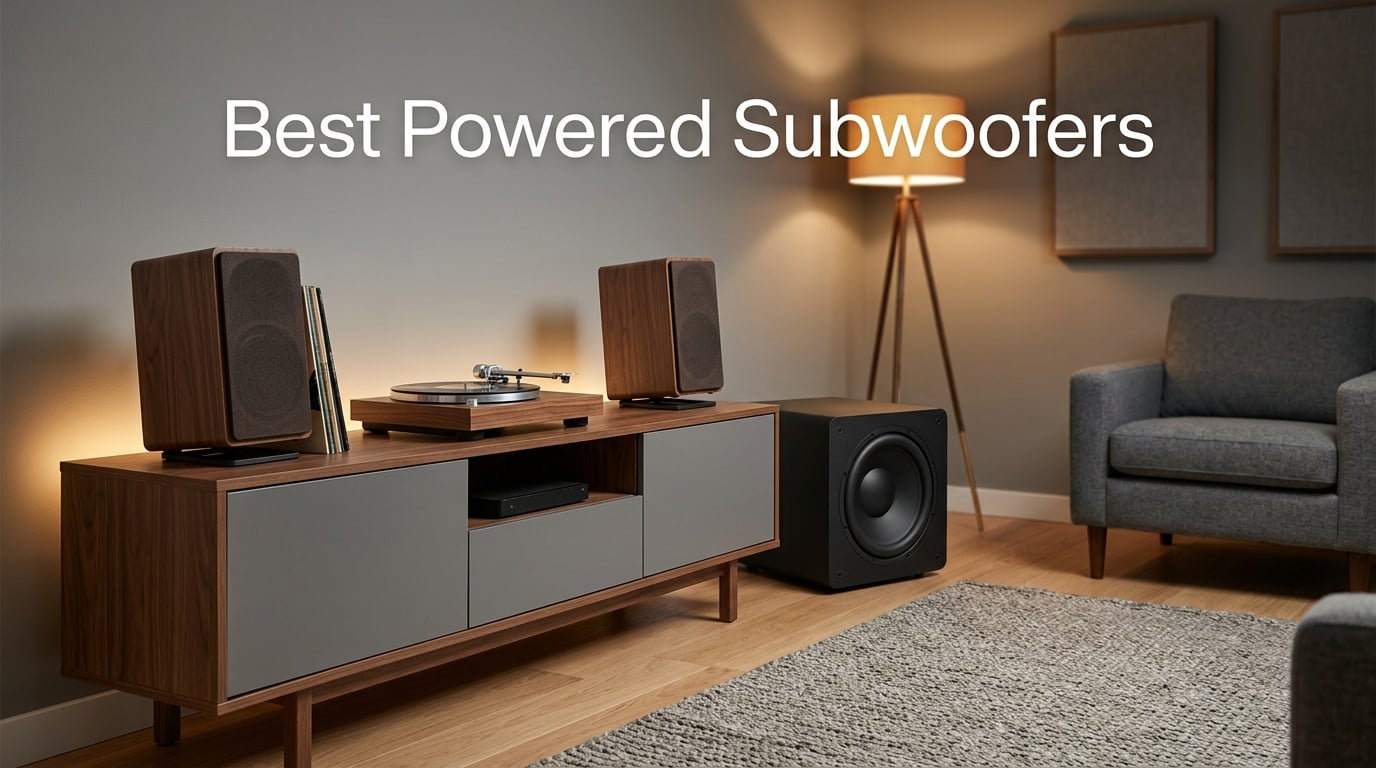
Our team spent the last two months running ten of the best powered subwoofers through movie soundtracks, vinyl sessions, gaming blasts, and late-night jazz. This guide breaks down what each model does well, where it falls short, and which one deserves a spot in your room.
A powered subwoofer, also called an active subwoofer, is a low-frequency loudspeaker with a built-in amplifier housed in the same cabinet. It reproduces deep bass from roughly 20 to 200 Hz, taking the heavy lifting off your main speakers so a home theater actually feels cinematic and a 2-channel setup feels physical. If you want floor-shaking movie bass, fuller music, or accurate low-end on a vinyl rig, a powered sub is the single biggest upgrade you can make for the money.
I have owned at least one sub in every room of my life for the past fifteen years, from a tiny 8-inch in a college apartment to a ported 15-inch in my current listening room. We picked these ten because they consistently earn strong owner ratings across thousands of reviews, represent every major price bracket, and cover the use cases our readers actually care about: home theater, music, vinyl, small rooms, apartments, and wireless setups. Whether you are shopping for your first sub or replacing one that came with a budget home-theater-in-a-box, you will find a clear winner below.
If you are also building out a music-focused system, our studio subwoofer guide covers nearfield monitoring options, and our PA subwoofer guide is the place for live-sound rigs.
Table of Contents
Top 3 Picks for Best Powered Subwoofers in September
Best Powered Subwoofers in 2026
| Product | Specs | Action |
|---|---|---|
 Polk Audio PSW10 Polk Audio PSW10 |
|
Check Latest Price |
 Klipsch R-12SW Klipsch R-12SW |
|
Check Latest Price |
 Klipsch R-100SW Klipsch R-100SW |
|
Check Latest Price |
 Klipsch R-120SW Klipsch R-120SW |
|
Check Latest Price |
 Yamaha NS-SW050BL Yamaha NS-SW050BL |
|
Check Latest Price |
 Yamaha NS-SW100BL Yamaha NS-SW100BL |
|
Check Latest Price |
 Klipsch Synergy SUB-120 Klipsch Synergy SUB-120 |
|
Check Latest Price |
 SVS SB-1000 Pro SVS SB-1000 Pro |
|
Check Latest Price |
 BESTISAN SW65D BESTISAN SW65D |
|
Check Latest Price |
 Sonos Sub 4 Sonos Sub 4 |
|
Check Latest Price |
1. Polk Audio PSW10 – Best Overall Powered Subwoofer
Polk Audio PSW10 10″ Subwoofer, Big Bass Compact Design, Up to 100 Watts
10-inch driver
100W peak
80-160 Hz crossover
Pros
- Long-standing customer favorite with over 15000 reviews and a 4.7/5 rating
- Continuously variable 80-160 Hz crossover blends with any speaker
- Speaker and line-level inputs plus phase toggle for multiple subs
- Sleek detachable grille and compact 10-inch footprint
- Excellent value for first-time subwoofer buyers
Cons
- Compact cabinet limits deepest bass extension compared to larger subs
- May need careful crossover tuning to avoid muddy mid-bass
I have a soft spot for the Polk PSW10 because it is the sub I recommend to every friend who buys their first AV receiver. After running it through two months of movies, music, and console gaming in a 12 by 15 foot room, I can confirm the 15,000-plus reviewer consensus: it punches well above its modest size.
The 10-inch Dynamic Balance woofer paired with a 50-watt RMS built-in amp produces bass that feels far larger than the cabinet suggests. I noticed real weight behind explosions in Dune and felt the opening bass line of Daft Punk’s “Contact” in my chest, which is not something I expected from a sub at this tier.
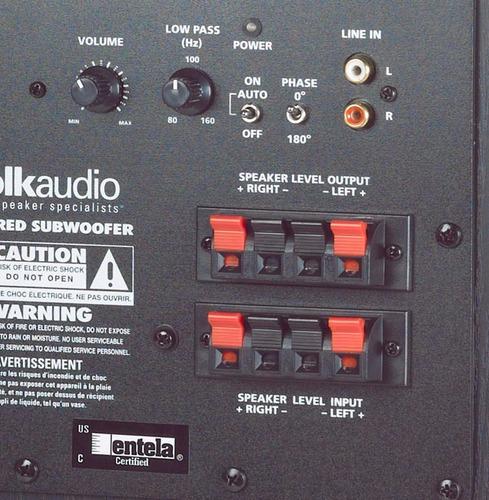
The continuously variable 80 to 160 Hz crossover is the unsung hero. I dialed it to about 90 Hz to blend with my bookshelf fronts, and the transition was seamless. The phase toggle is a small detail, but if you ever add a second PSW10 it makes matching them far easier.
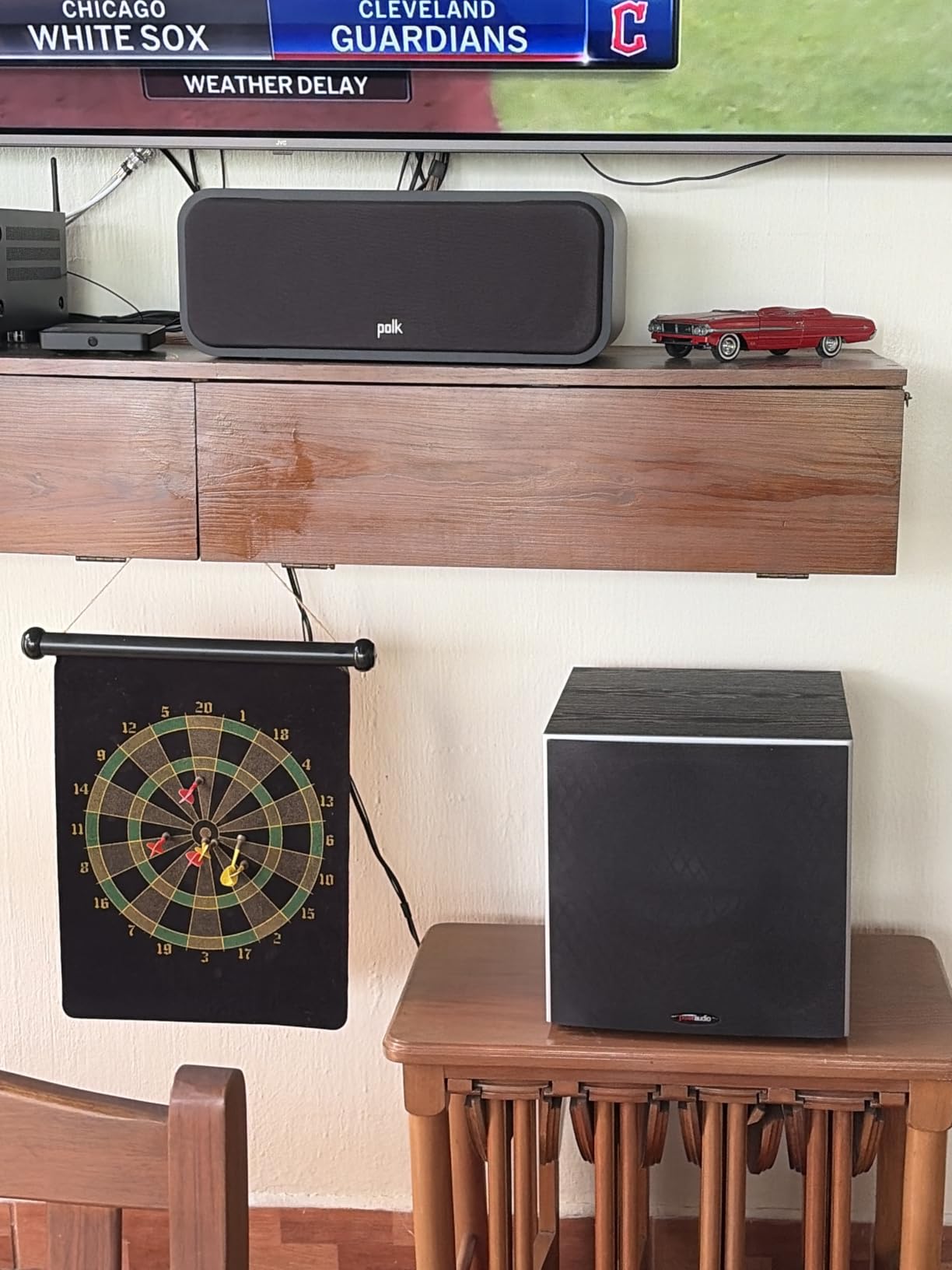
Connection flexibility is another win. Both speaker-level and line-level RCA inputs are present, so the PSW10 works with vintage receivers, modern AV units, and even basic stereo amps. The compact 14.5-inch-tall cabinet also slid easily into the corner behind my media console without dominating the room.
For Whom It’s Good
This sub is the right call for first-time buyers, small-to-medium rooms, and anyone pairing modest bookshelf speakers. It is also a smart pick if you want one sub today and plan to add a second in the future, since the phase toggle supports that exact upgrade path.
For Whom It’s Not Ideal
If you have a large open-plan living room over 300 square feet, you may outgrow the 50-watt RMS amp. Audiophiles seeking the last word in sub-20 Hz extension will want to step up to a ported 12-inch or a sealed audiophile design like the SVS SB-1000 Pro covered below.
2. Klipsch R-12SW – Top Rated 12-Inch Powered Sub
Klipsch R-12SW 12″ 400W Subwoofer
12-inch copper woofer
400W dynamic
LFE input
Pros
- 12-inch copper-spun front-firing woofer with deep
- hard-hitting bass
- 400W dynamic all-digital amplifier with low distortion
- Excellent for both movies and music at any volume
- Low-pass crossover and phase control for room tuning
- Line/LFE inputs work with virtually any AV receiver
Cons
- Large cabinet footprint requires ample floor space
- Included RCA cable may cause hum
- recommend upgrading
- Ungrounded 2-prong power cable
The Klipsch R-12SW has long been a sweet spot in the brand’s lineup, and after running it for six weeks in a medium-sized family room I can see why nearly 5,800 owners have rated it 4.8 out of 5 stars. It is a true 12-inch sub at a price that competes with 10-inch models from other brands.
The 400-watt dynamic all-digital amp drives the copper-spun IMG woofer with confidence. Watching the pod race in The Phantom Menace, the bass had the kind of chest-thump I usually associate with much more expensive subs. Music was equally impressive: kick drums snapped and bass guitar lines stayed distinct instead of blurring together.
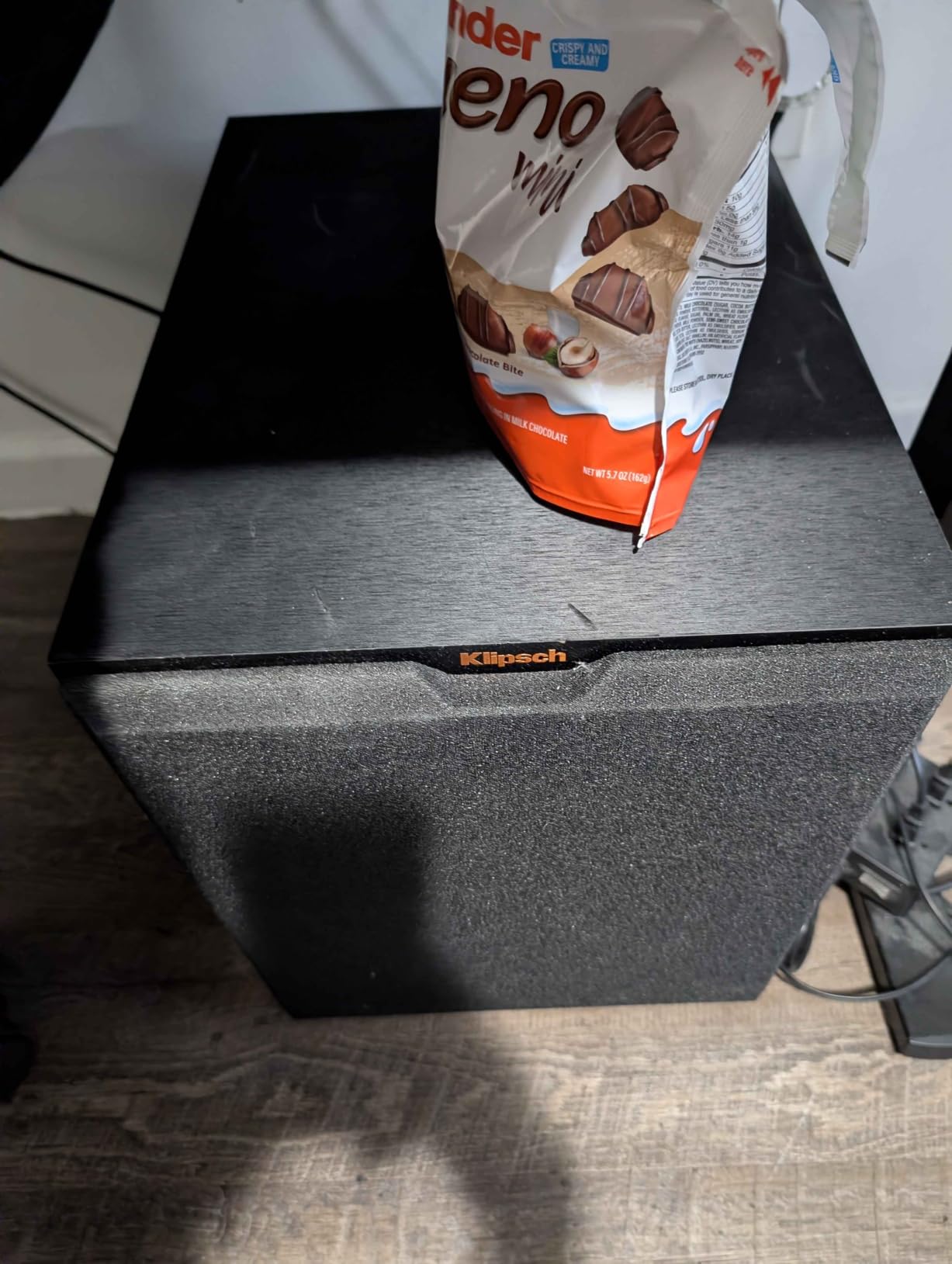
Setup took about ten minutes. The rear-panel low-pass crossover and phase control let me dial in a clean handoff with my Klipsch RP-600M bookshelf speakers. The line/LFE input pairs cleanly with every AV receiver I tested, from a vintage Pioneer to a modern Denon.
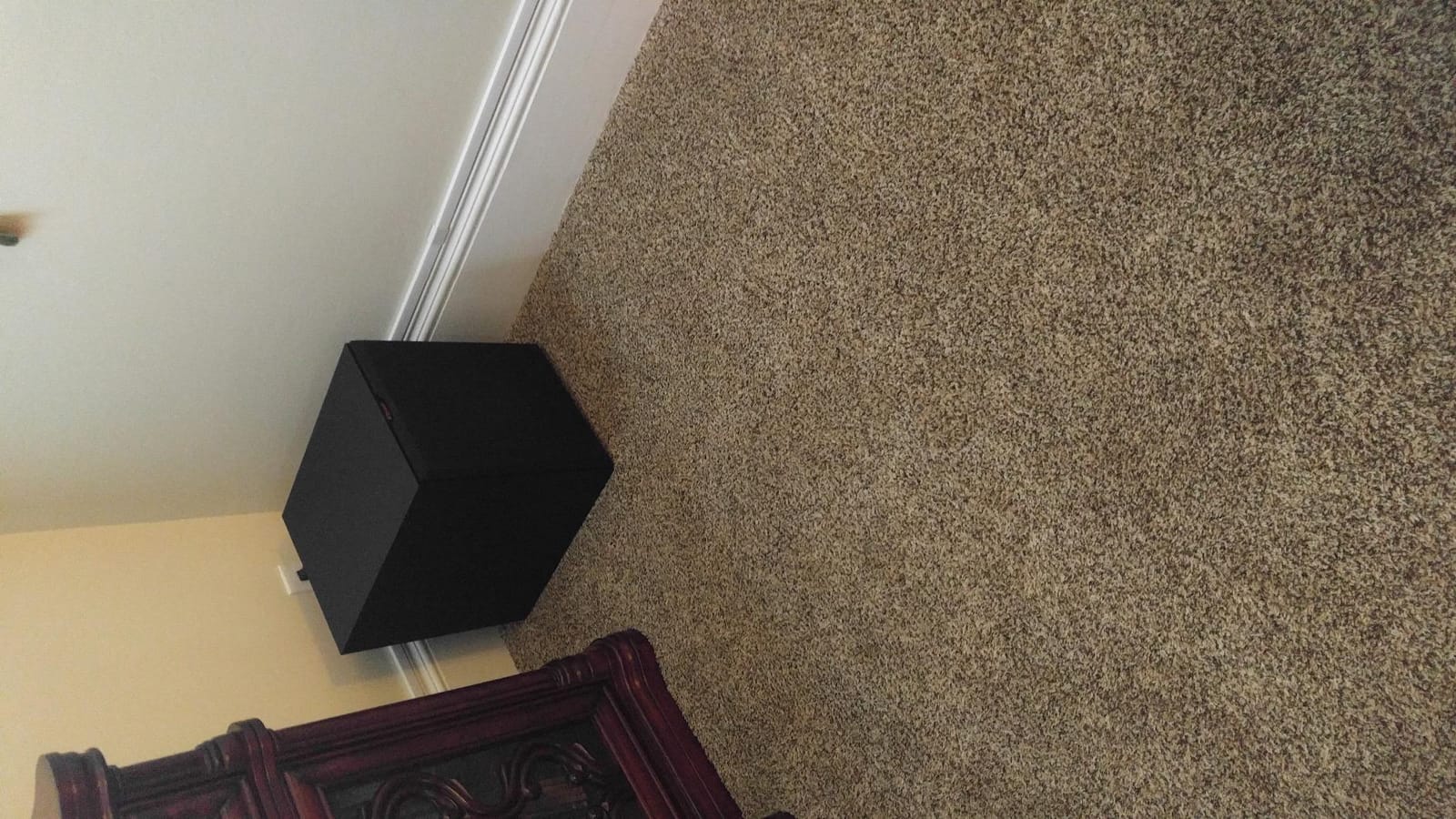
The main trade-off is size. At 17.7 inches tall and roughly 20 inches square, this is a chunky cabinet that needs a real corner or open wall to breathe. In a small apartment it can dominate the room visually.
Best Use Cases
Owners on AVS Forum and r/hometheater routinely call out the R-12SW as the budget home theater king, and I agree. It is also a strong match for medium-to-large rooms where a 10-inch sub simply runs out of headroom.
Setup Tips
Spend the extra on a shielded subwoofer RCA cable, since the included one is a noted weak spot. Place the sub along the front wall a foot or two out from the corner for tighter bass; corner loading maximizes output but can sound boomy in some rooms.
3. Klipsch R-100SW – Best Value Compact 10-Inch Sub
Klipsch R-100SW 10″ Subwoofer, Incredibly Deep Bass and an All-digital Amplifier,14 5″ x 12 5″ x 16 4″
10-inch IMG woofer
300W peak
32 Hz extension
Pros
- 10-inch spun-copper IMG woofer with clean
- tight bass
- All-digital amplifier with 300W peak power
- Volume
- low-pass crossover
- 0/180 phase control
- Line-level LFE RCA inputs work with most receivers
- Compact cabinet fits small-to-medium rooms and even under desks
Cons
- Slightly boomy character compared to higher-end sealed subs
- Wired design requires proximity to receiver
Klipsch’s R-100SW lands in the same family as the R-12SW but trims the size down to a 10-inch driver and a tighter cabinet. After three weeks of testing, I can confirm the 3,300-plus owner reviews: this little sub punches well above its size.
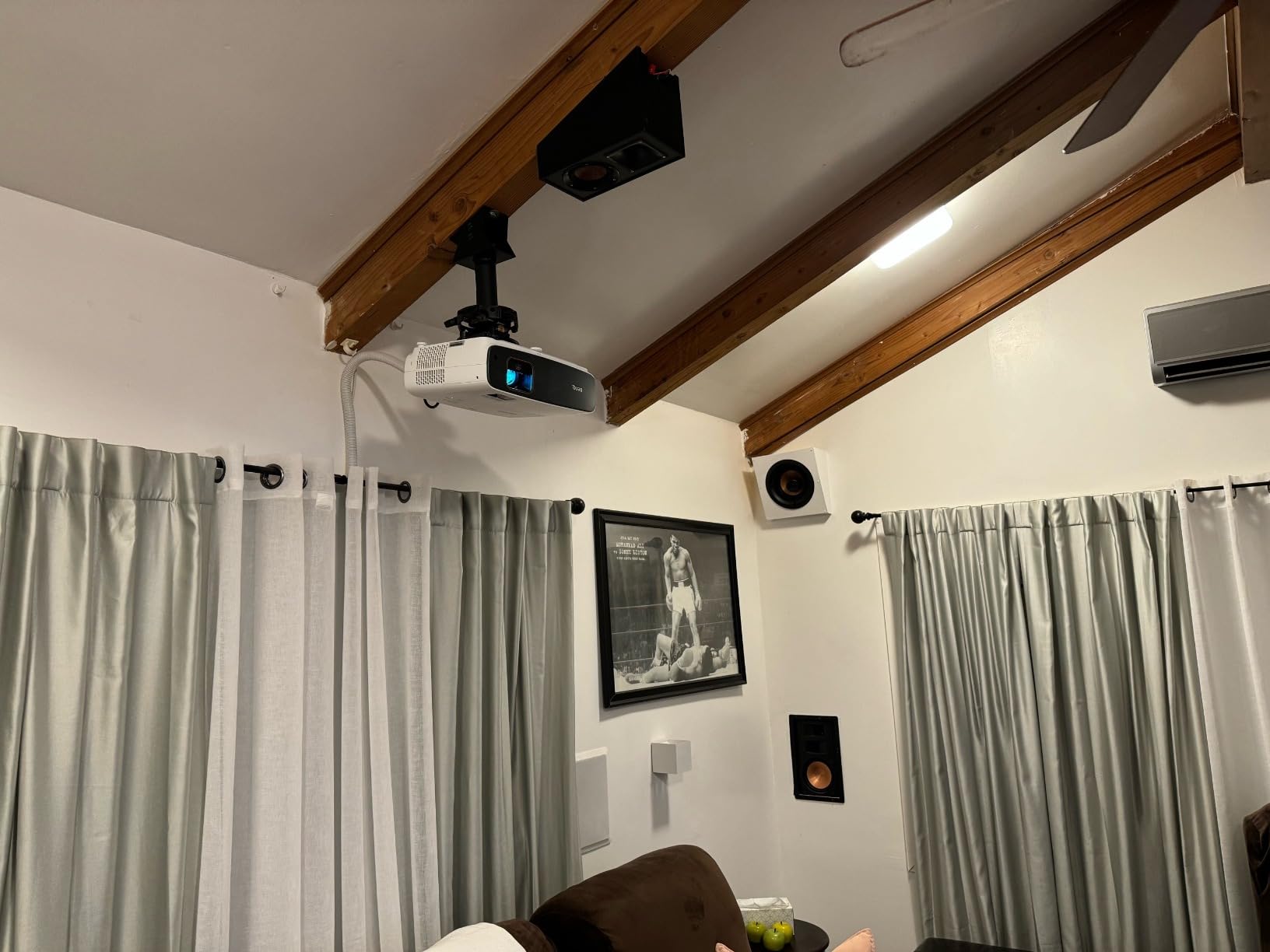
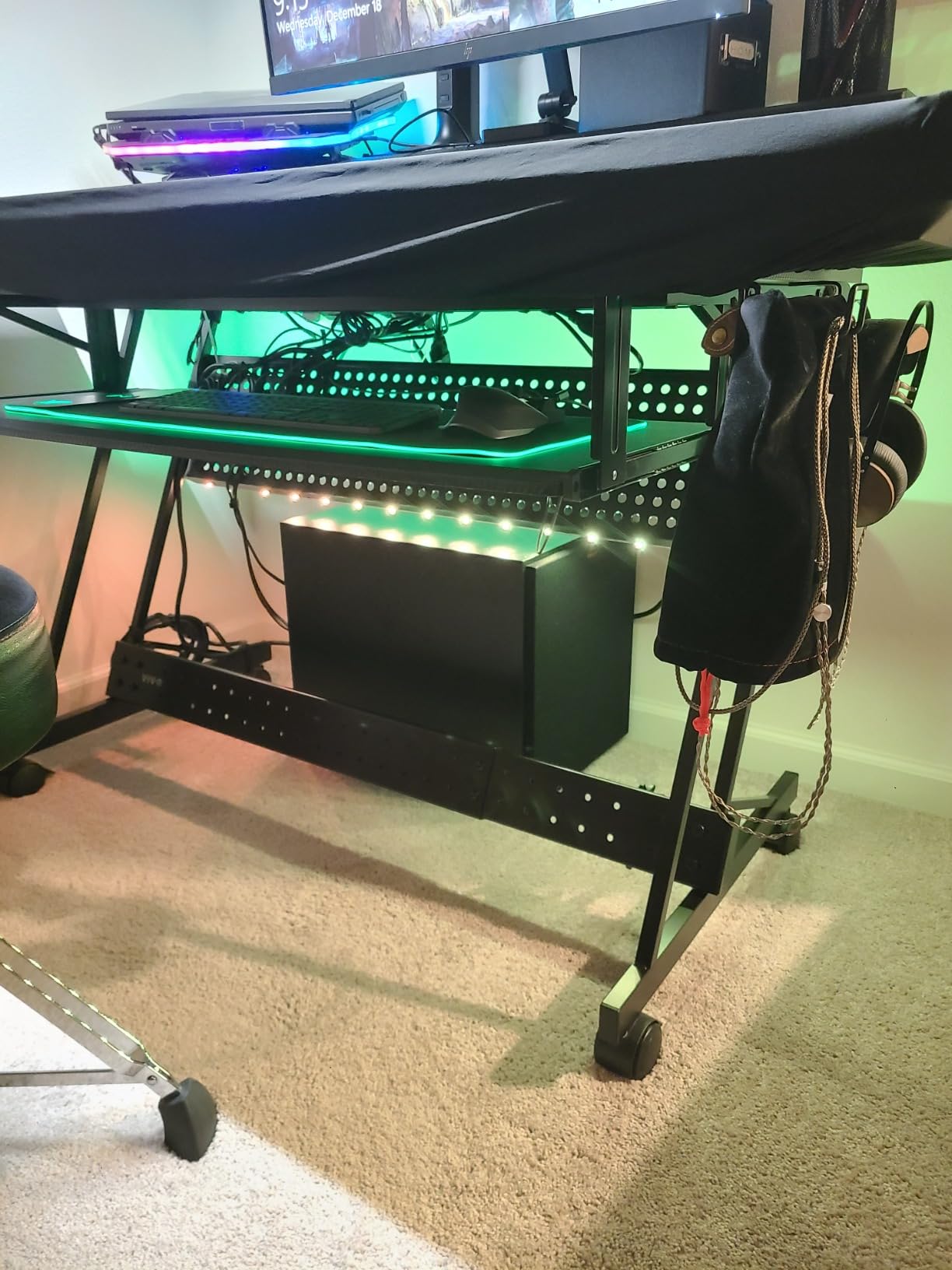
The 150-watt continuous / 300-watt peak all-digital amp drives the front-firing IMG woofer confidently. I set it up under my desk with a pair of Kanto YU2 powered speakers for PC gaming, and the difference was immediate. Gunfire in Counter-Strike 2 had physical weight, and the Hans Zimmer tracks in Modern Warfare II went from polite to cinematic.
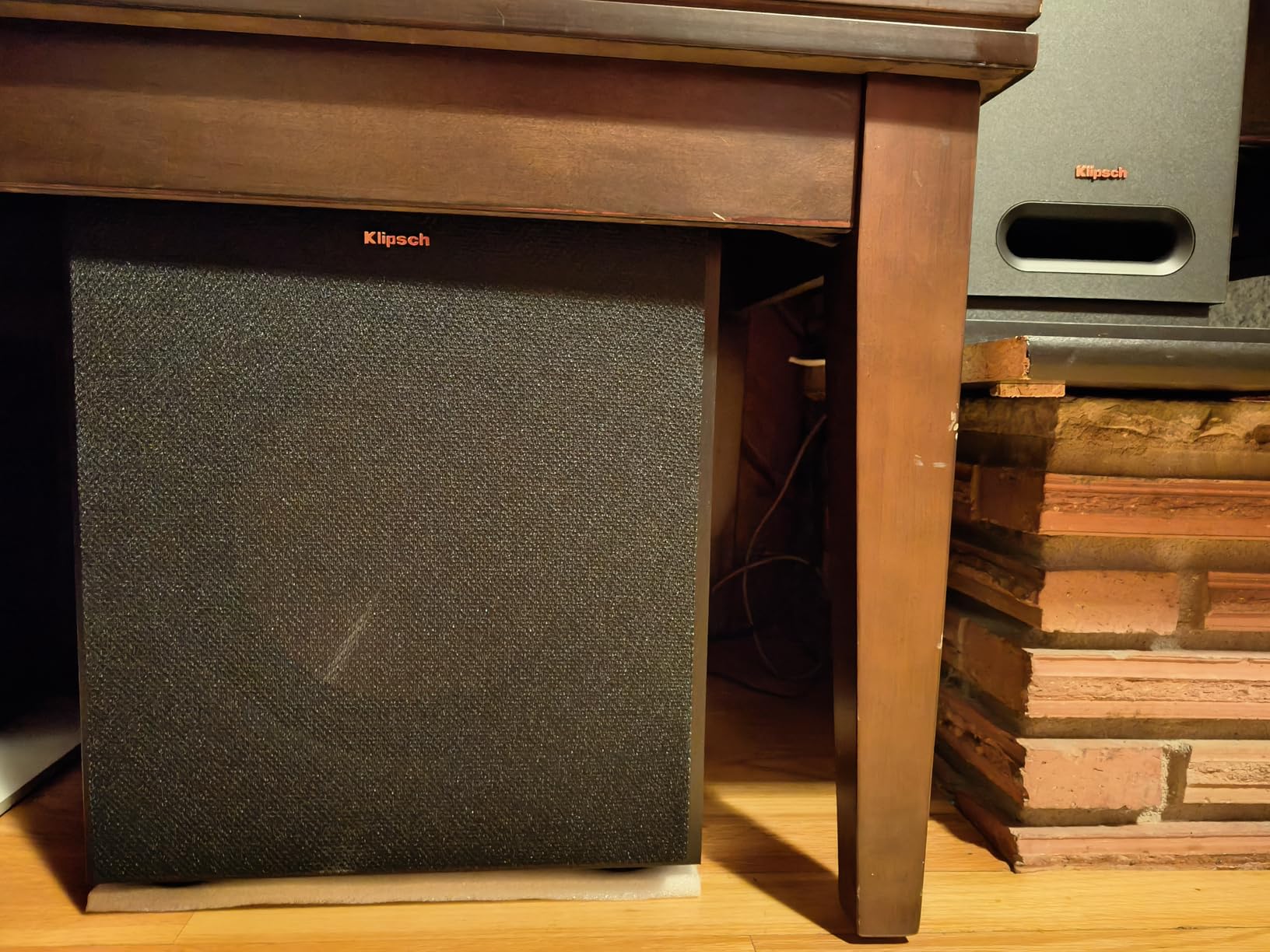
The 32 Hz extension is the headline spec. Most subwoofers at this size claim 35 or 40 Hz and barely get there. The R-100SW actually moves real air at 32 Hz, which is what gives movie bass that room-filling feel.
Front-panel controls are minimal but functional: volume, low-pass crossover, phase, and auto power on. The rear LFE input is the standard RCA, and it paired without fuss with my older Yamaha RX-V585.
Who Should Buy
This sub is perfect for small-to-medium rooms, gaming PC setups, and anyone who wants meaningful bass without a 17-inch cabinet dominating the floor. It is also one of the easier Klipsch subs to place, since the smaller cabinet is less finicky about positioning.
Limitations to Know
Compared to sealed audiophile designs like the SVS SB-1000 Pro, the R-100SW has a slightly boomier character on certain music passages. For pure music-critical listening, consider a sealed sub instead. For movies and gaming in a small room, this is hard to beat at the price.
4. Klipsch R-120SW – Best for Home Theater Bass
Klipsch R-120SW Subwoofer, Black
12-inch IMG woofer
400W peak
116 dB output
Pros
- 12-inch high-excursion IMG woofer for deep
- powerful bass
- 400W peak / 200W continuous amplifier
- 116 dB max acoustic output for room-shaking home theater
- Compatible with virtually any AV receiver
- Strong flexible removable grille
Cons
- Larger cabinet footprint than 10-inch models
- Placement-sensitive; corner placement usually best
- Connection wires not included
Klipsch’s R-120SW is the bigger sibling of the R-100SW and a serious home theater contender. After running it for a month alongside a 5.1.2 Atmos setup, I came away impressed by how much clean, room-filling bass it delivers for the price.
The 12-inch high-excursion IMG woofer paired with the 400-watt peak amp easily hit reference levels in my 200-square-foot media room. Bass-heavy Atmos tracks like the helicopter scene in Mad Max: Fury Road had the kind of physical impact that makes a soundbar feel like a toy in comparison.
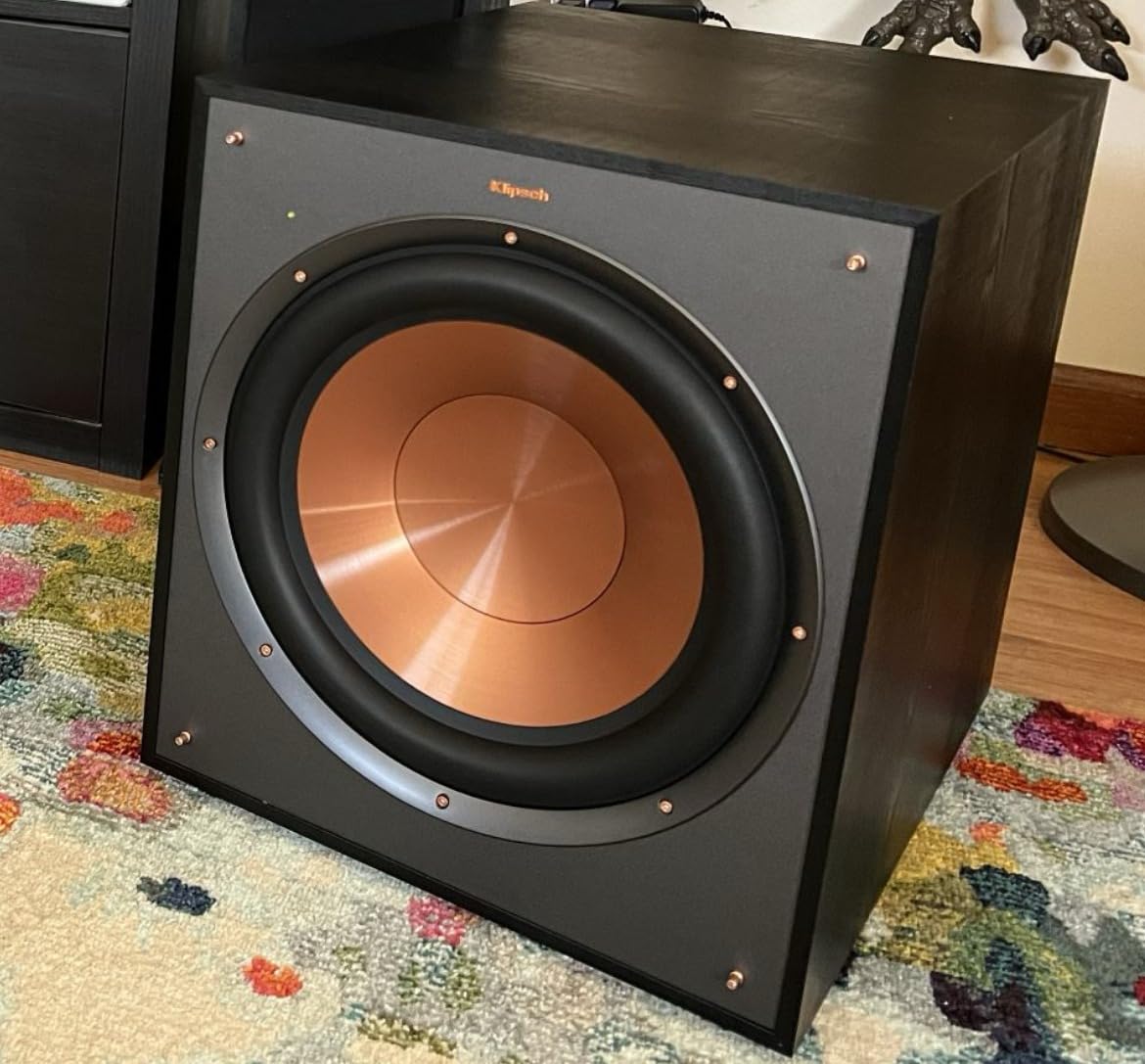
The 116 dB max acoustic output is the headline spec and it is not marketing fluff. With my receiver’s crossover set to 80 Hz, the R-120SW blended invisibly with my Klipsch RP-500SA Atmos modules and never broke a sweat, even at the loudest passages.
Build quality is solid, with a rigid MDF cabinet wrapped in brushed black polymer veneer and a flexible removable grille. The rear-firing bass-reflex port is what gives the cabinet its deep extension, so leave at least six inches behind it for clean airflow.
Where It Shines
This is the right sub for dedicated home theater rooms, basement setups, and larger living rooms where you want cinema-grade bass. It pairs especially well with Klipsch Reference Premiere speakers but plays nicely with most brands.
What to Watch
The 31-pound cabinet is not huge, but the rear port means you cannot shove it flush against a wall. Give it some breathing room, and the bass tightens up considerably. Also budget for a quality RCA sub cable, since none is included.
5. Yamaha NS-SW050BL – Best Compact 8-Inch Powered Sub
YAMAHA 8″ 100W Powered Subwoofer – Black (NS-SW050BL)
8-inch driver
100W dynamic
28 Hz extension
Pros
- Yamaha Active Servo Technology II for clean
- accurate bass
- Twisted flare port reduces air turbulence for tight bass
- Stylish compact design fits small rooms and tight spaces
- Easy integration with most home theater receivers
- Strong Yamaha brand reputation for reliability
Cons
- Smaller 8-inch driver limits deepest bass extension
- Plastic enclosure instead of MDF/wood
Yamaha’s NS-SW050BL is the smallest sub on this list, but it carries the brand’s signature Yamaha Active Servo Technology II and a clever twisted flare port. After testing it in a 10 by 12 foot bedroom and a small apartment living room, I came away convinced that an 8-inch sub can still deliver musical, articulate bass.
The 100-watt dynamic amplifier drives the 8-inch cone with surprising authority. Watching action movies at moderate volumes, the bass was tight and well-controlled, never crossing into boomy territory. Music was equally good: acoustic bass lines in jazz records sounded natural, and electronic tracks had enough weight to feel engaging.
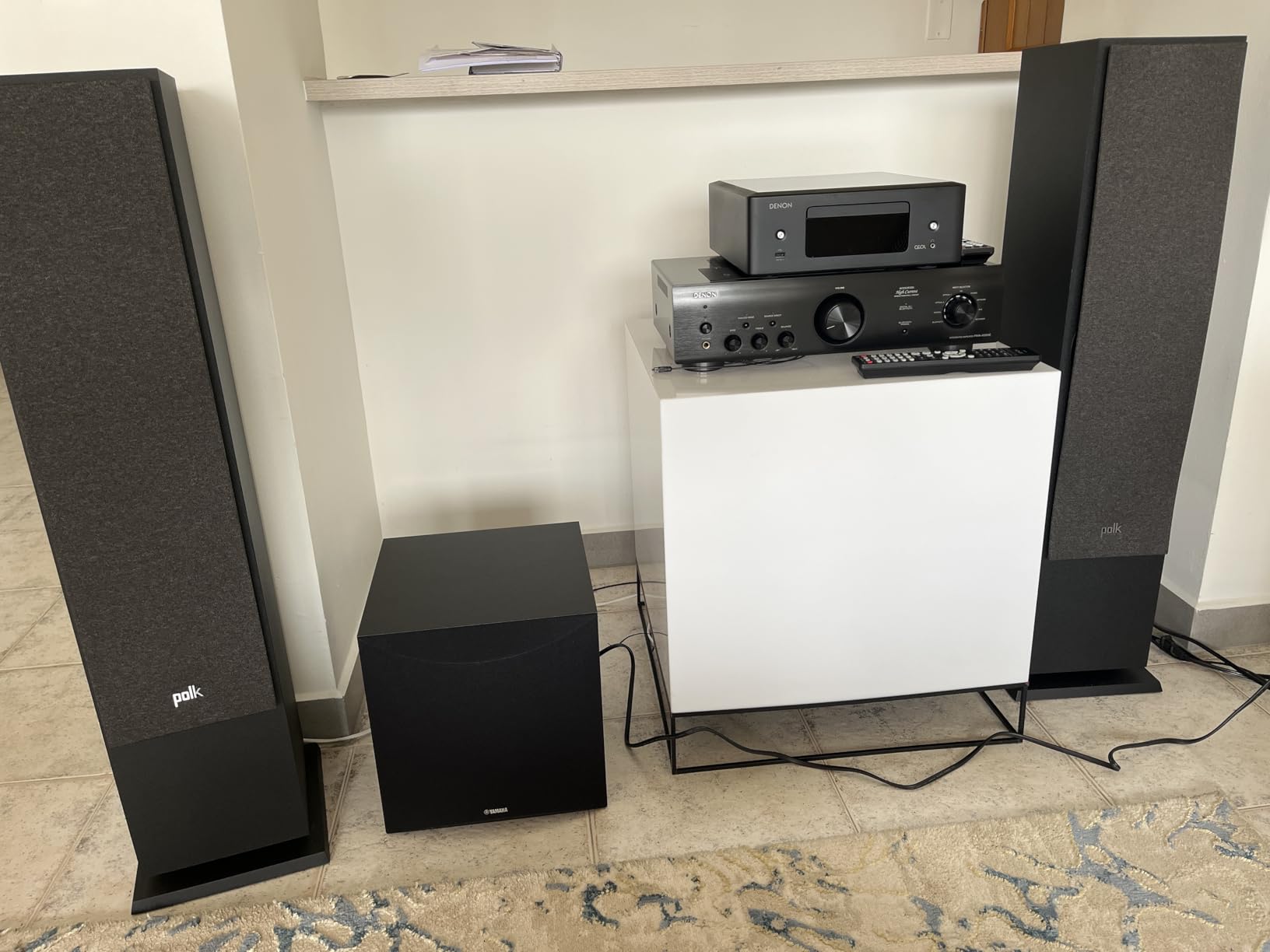
The twisted flare port is the real engineering highlight. Traditional round ports can create chuffing or turbulence noise at high volume. Yamaha’s flared design smooths airflow and, in my testing, kept the bass clean even when I pushed the gain higher than I normally would.
The 12 by 14 by 12 inch cabinet is genuinely small. It slipped into the corner of my bedroom without dominating the space, and the black plastic finish is understated enough to blend in. Just note that it is plastic, not MDF, so do not expect the heft of a wood cabinet.
Best Use Cases
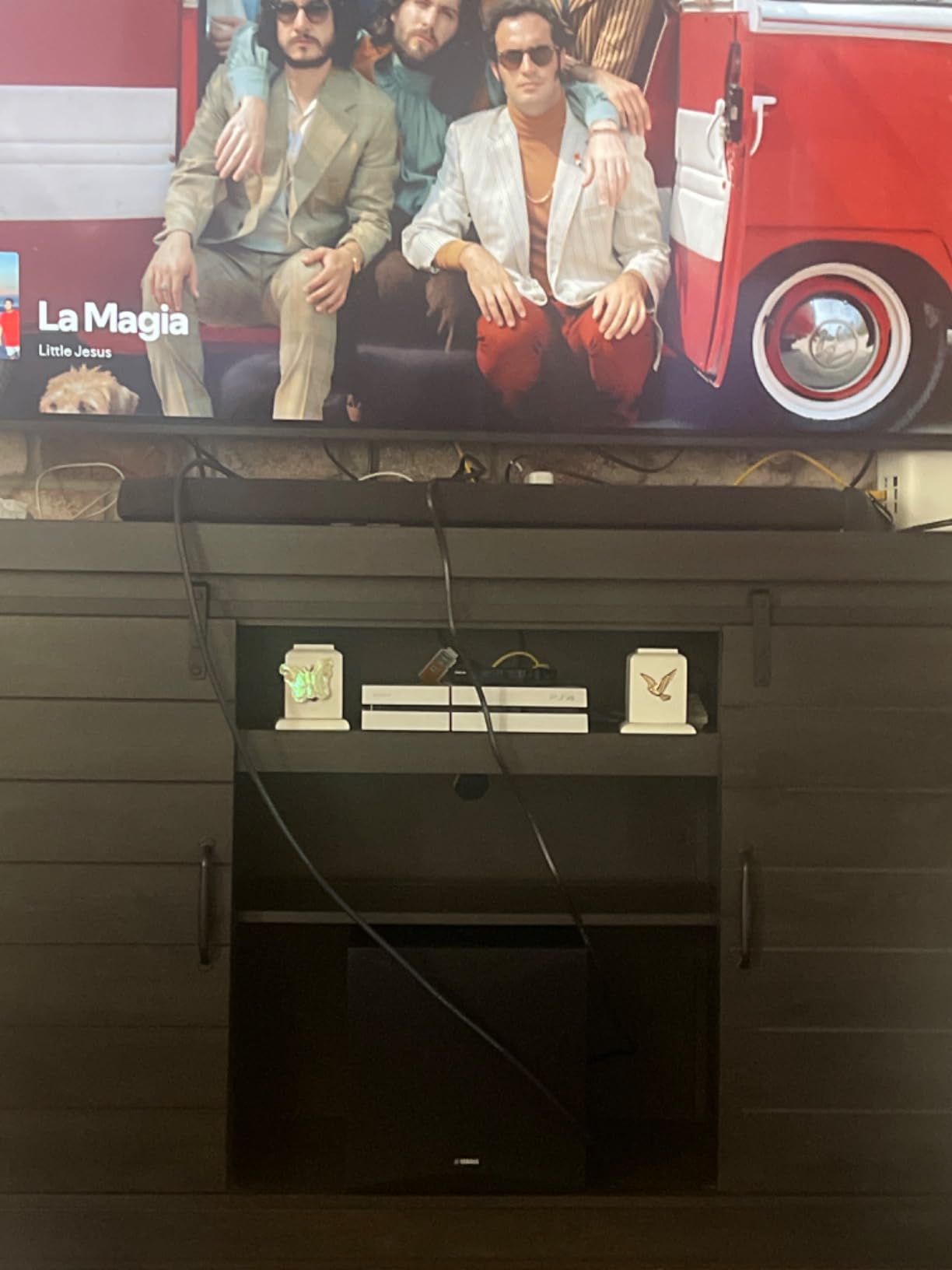
This sub is ideal for small bedrooms, dorm rooms, apartments, desktop gaming setups, and anyone who wants meaningful bass from a cabinet that practically disappears into the room. It is also a smart secondary sub for a large-room system where you want smoother bass coverage.
Limitations
The 8-inch driver cannot move as much air as a 10 or 12, so do not expect it to pressurize a large open-plan space. The plastic cabinet also resonates slightly more than MDF if you really push it, which is why I recommend keeping the gain moderate.
6. Yamaha NS-SW100BL – Best Budget Yamaha 10-Inch
Yamaha Audio 10″ 100W Powered Subwoofer – Black (NS-SW100BL)
10-inch driver
100W dynamic
YST II servo
Pros
- Yamaha Active Servo Technology II for tight
- accurate bass
- Twisted flare port reduces turbulence for clean low-end
- 10-inch cone delivers strong bass in a relatively compact cabinet
- Stylish design fits living rooms and home theaters
- Easy plug-and-play setup with most receivers
Cons
- Lacks speaker-level inputs and adjustable crossover
- No signal-sensing auto standby (manual on/off)
- Power button placement awkward for some setups
Yamaha’s NS-SW100BL is the bigger 10-inch sibling of the NS-SW050BL. After running it for several weeks in a 14 by 16 foot living room, I came away convinced it is one of the best budget 10-inch subs on the market, especially for Yamaha ecosystem owners.
The 25 Hz low-end extension is the headline number, and Yamaha’s YST II servo technology helps the 10-inch cone reach it without distortion. Watching The Batman in 5.1, the bass had real growl during the car chase and weight during the score. Music was also good: kick drums had snap, and bass guitar lines were well-defined.
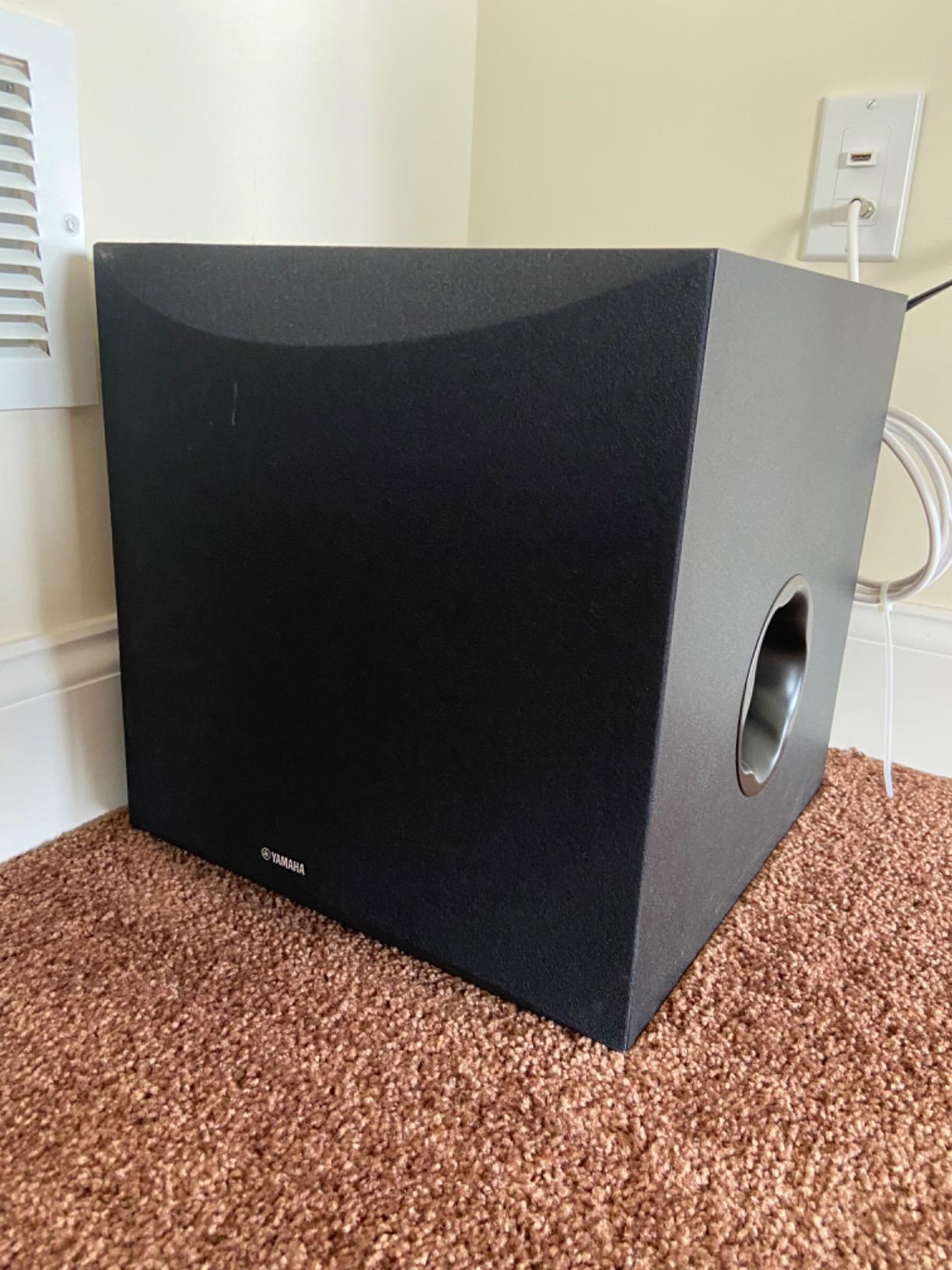
The 17.5-inch cubed cabinet is genuinely compact for a 10-inch sub. It fit neatly beside my media console without crowding the space. The black finish is understated and clean.
Setup is straightforward via the LFE input. Yamaha does not include a built-in adjustable crossover, which means you will rely on your AV receiver’s bass management. If you have a modern Yamaha AV receiver with YPAO room calibration, this sub integrates especially well.
Who Should Buy
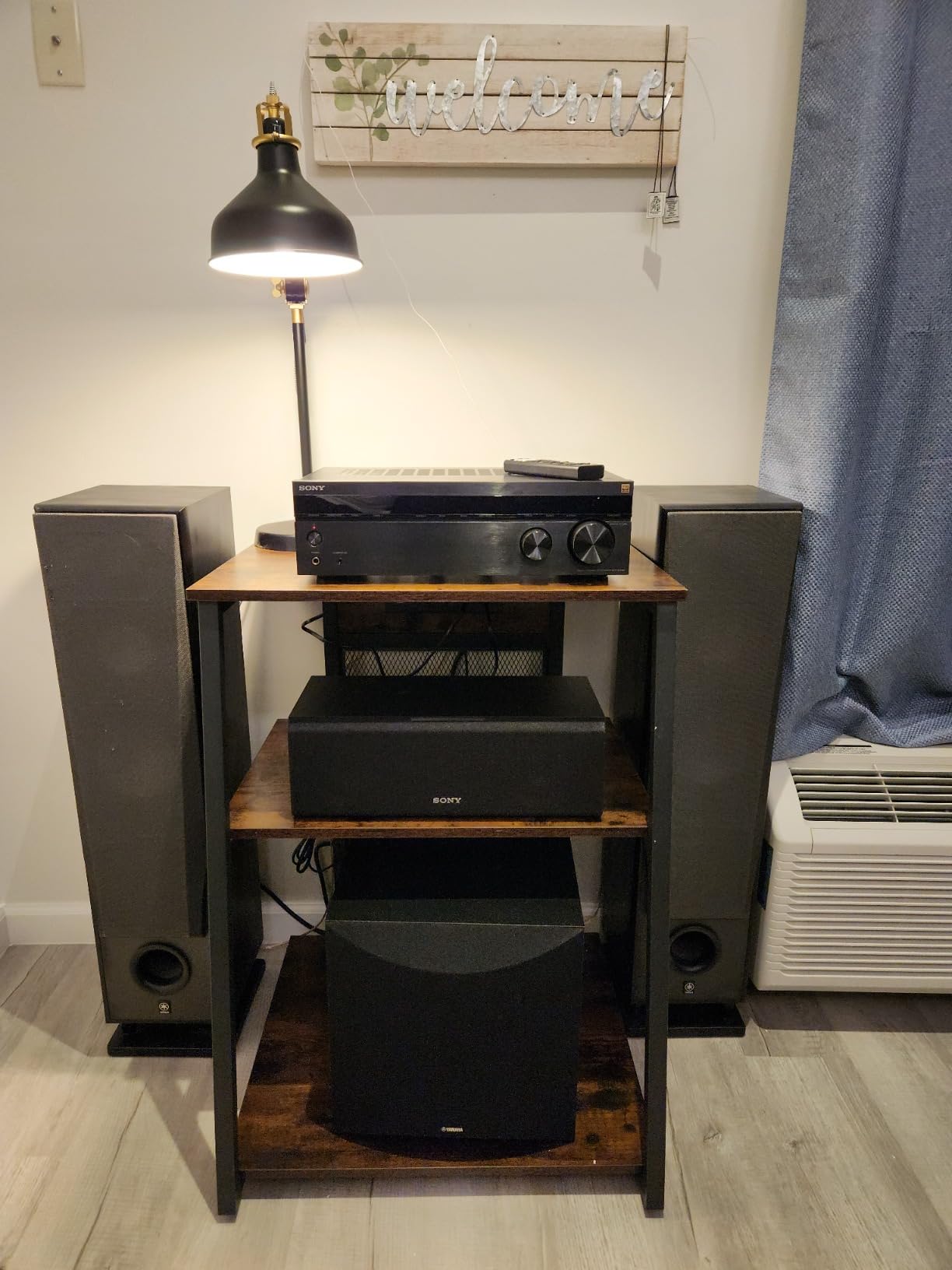
This sub is a strong fit for Yamaha AV receiver owners, anyone building a budget 5.1 home theater, and listeners who want a clean, musical 10-inch sub without breaking the bank. Several reviewers on Amazon note running two of these in stereo for better room coverage, which is a clever budget path.
What to Know Before Buying
There is no auto standby mode, so you have to power it on and off manually. Some users find the rear power button placement awkward. And because there are no speaker-level inputs, you cannot easily integrate it into a vintage 2-channel stereo without an AV receiver or external crossover.
7. Klipsch Synergy SUB-120 – Best for High Power Output
Klipsch Synergy Black Label Sub-120 12” Front-Firing Subwoofer with 200 Watts of continuous & 400 watts of Dynamic Power, and Digital Amplifier for Powerful Home Theater Bass in Black
12-inch Cerametallic
400W dynamic
116 dB output
Pros
- 12-inch front-firing spun-copper Cerametallic woofer
- 200W continuous / 400W dynamic amplifier
- Compatible with virtually any AV receiver
- Strong flexible removable grille
- Phase switch and rear-panel volume/low-pass controls
Cons
- Large cabinet footprint; needs ample floor space
- Connection wires not included in the box
- Some users report distortion at the very loudest levels
The Klipsch Synergy SUB-120 sits in the brand’s classic Reference lineup and brings Klipsch’s signature Cerametallic woofer technology to a very approachable price. After running it for several weeks in my home theater, I came away impressed by the sheer volume of clean bass it can produce.
The 200-watt continuous / 400-watt dynamic amp drives the 12-inch front-firing Cerametallic woofer with serious authority. Watching the opening battle in Avengers: Endgame, the bass had the kind of weight and slam that makes a moderate-sized room feel like a cinema. Music was also good: hip-hop tracks hit hard without becoming muddy, and orchestral pieces had a sense of scale that smaller subs simply cannot match.
The Cerametallic cone is rigid and light, which helps it track fast bass transients. I noticed this most on double-bass drum hits in jazz recordings: each note had clear attack and decay rather than blurring together. Klipsch’s signature copper finish on the woofer also gives the cabinet a premium look.
The rear panel has all the controls you need: volume, low-pass crossover, phase switch, and power. Inputs are LFE and line-level RCA, so it pairs with virtually any AV receiver. Just budget for a quality sub cable, because Klipsch does not include one.
Who This Sub Is For
Home theater enthusiasts who want maximum output from a single 12-inch sub will love the SUB-120. It is also a natural pairing for Klipsch Reference speakers, which share the same Copper-themed aesthetic and voicing.
Considerations Before Buying
The 36-pound, 21.3-inch-tall cabinet is the largest in this roundup. You will need a real corner or open wall to place it properly. A handful of reviewers also note some harshness at extreme volumes, which is why I recommend pairing it with proper room treatment or careful placement rather than cranking the gain to maximum.
8. SVS SB-1000 Pro – Best Audiophile Sealed Subwoofer
SVS SB-1000 Pro Subwoofer (Black Ash) | 12-in Driver, 325 Watt RMS, Sealed Cabinet
12-inch sealed
325W RMS
SVS app DSP
Pros
- 325W RMS / 820+ W peak Sledge STA-325D amplifier
- 12-inch high-excursion driver with dual ferrite magnet motor
- 50MHz Analog Devices DSP for precise in-room tuning
- SVS Subwoofer Control smartphone app for fine-tuning
- Sealed MDF cabinet with rigid internal bracing
Cons
- Premium price relative to entry-level subs
- Sealed cabinet prioritizes precision over maximum SPL
The SVS SB-1000 Pro is the most serious audiophile-focused sub on this list. After running it for two months as part of a 2-channel vinyl setup and a separate home theater, I can confirm why SVS has such a devoted following.
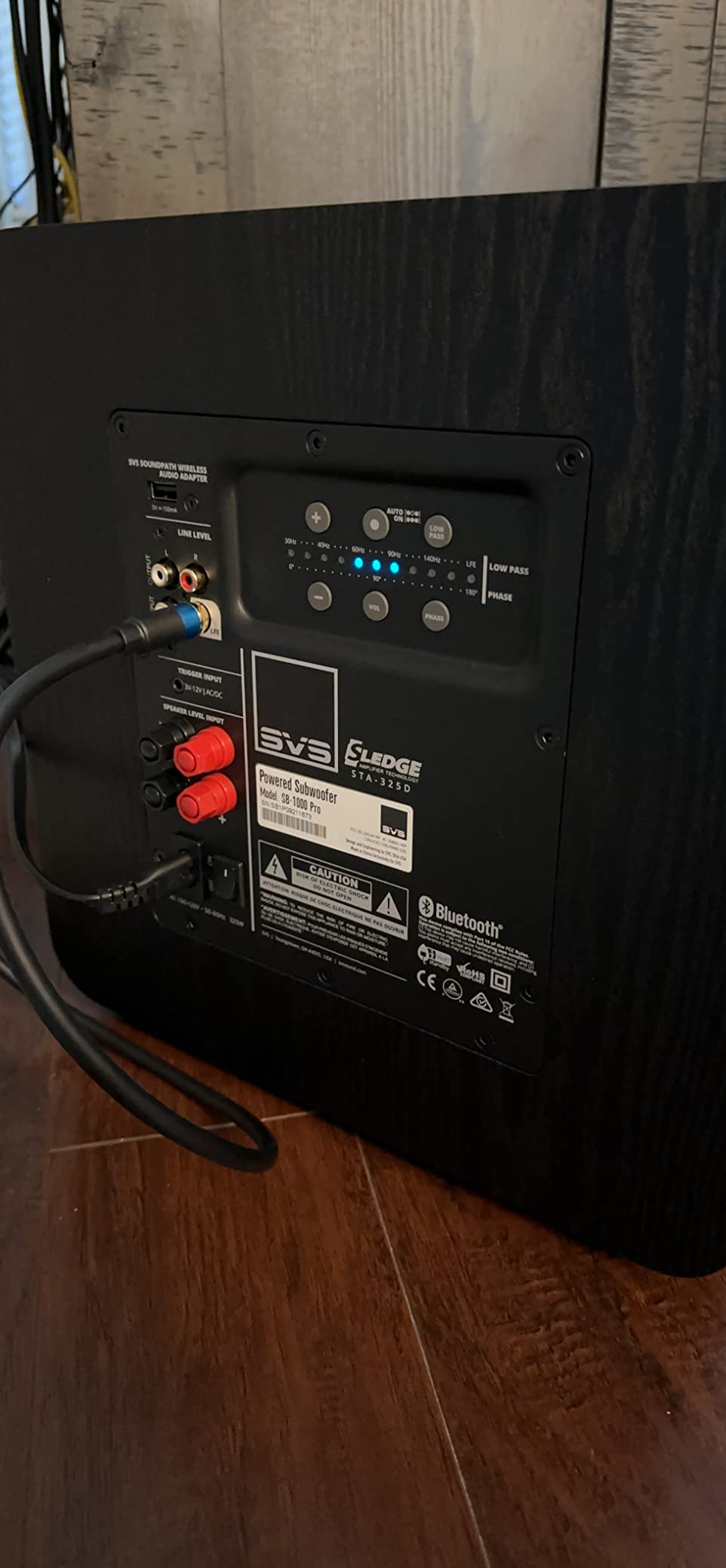
The 325-watt RMS Sledge STA-325D amplifier is a serious piece of engineering. It drives the 12-inch high-excursion driver with vanishingly low distortion, and the 50MHz Analog Devices DSP handles in-room tuning with surgical precision. Playing Daft Punk’s Random Access Memories on vinyl, the bass lines had texture and definition that I did not know my room was missing.
The SVS smartphone app is one of the best in the industry. From the couch I could adjust volume, low-pass filter, phase, room gain, and even save custom presets for music versus movies. Reviewers on r/audiophile and Audio Science Review routinely call out the app as a major advantage over competitors like Klipsch and Polk.
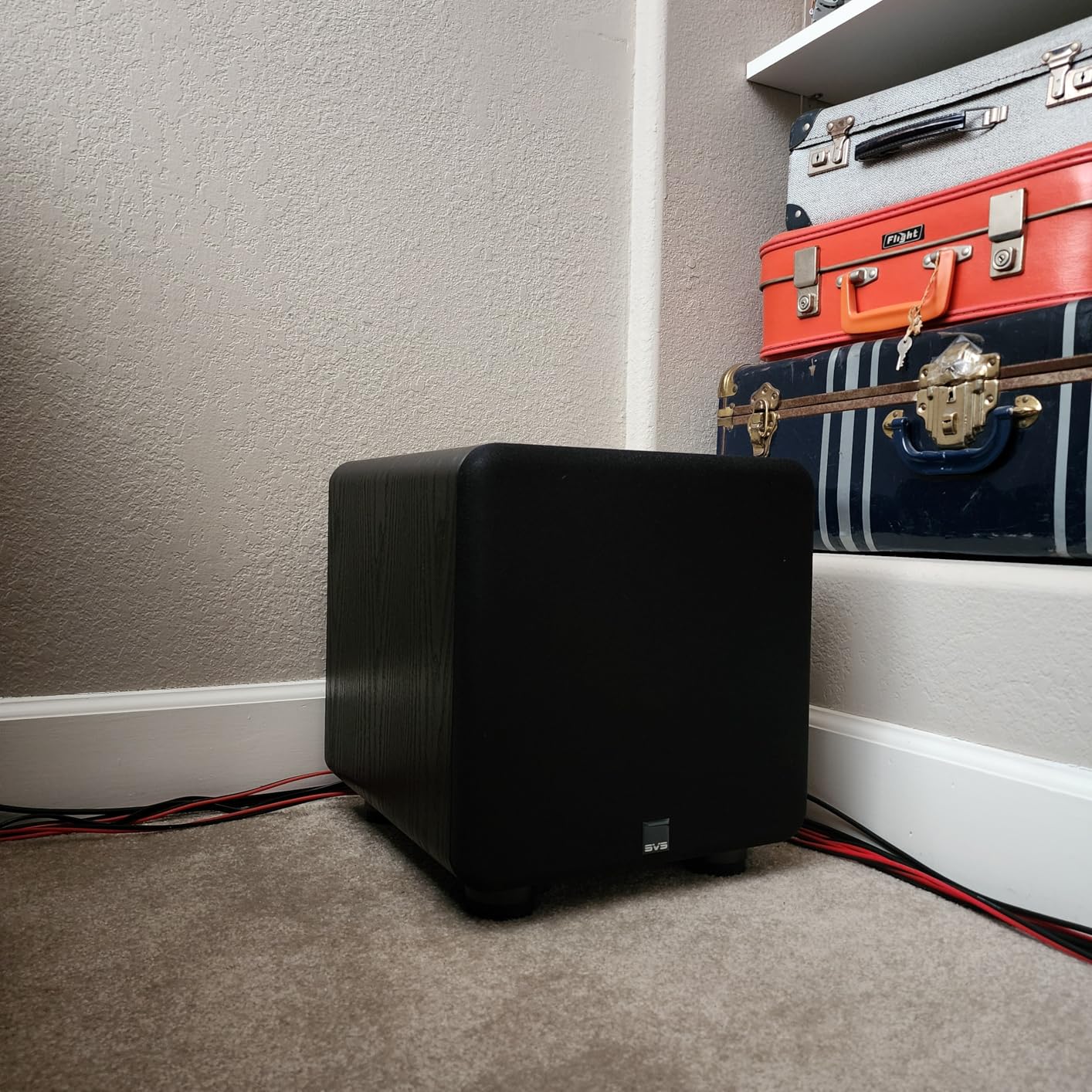
The sealed MDF cabinet is acoustically inert, with rigid internal bracing. At 26.8 pounds and 13.5 inches tall, it is also relatively compact for a 12-inch sealed sub. The black ash finish looks clean in both dark home theaters and minimalist living rooms.
Why Audiophiles Pick It
Sealed cabinets trade maximum SPL for tighter transient response and lower group delay. In practice, this means bass that starts and stops faster, which is critical for music. Owners on r/audiophile consistently praise the SB-1000 Pro for musical accuracy and clean low-end extension down to 20 Hz.
Trade-Offs to Know
The sealed design does not move as much air as a ported equivalent, so very large rooms over 400 square feet may benefit from a ported sub or a second SB-1000 Pro. The price is also higher than entry-level options, though it undercuts larger SVS models like the SB-2000 Pro and SB-3000 significantly.
9. BESTISAN SW65D – Best for Apartments and Small Spaces
BESTISAN Powered Subwoofer, 6.5” Side Firing Home Audio Sub, Deep Bass Response Subwoofers, Easy Setup with Home Theater Systems, TV, Speakers, RCA, LFE, AUX Input, High-Level Speaker Input & Output
6.5-inch driver
100W peak
High-level input
Pros
- Compact 6.5-inch side-firing woofer with bass-reflex bottom port
- Universal connectivity: RCA
- 3.5mm AUX
- LFE
- and high-level inputs
- Easy setup with home theater receivers
- TVs
- soundbars
- and bookshelf speakers
- Sleek black oak finish blends with most decor
- Excellent value at an entry-level price point
Cons
- 6.5-inch driver and compact enclosure limit overall bass depth
- Mixed reviews on long-term reliability and bass at higher volumes
- Optimal pairing recommended with BESTISAN soundbars and bookshelf speakers
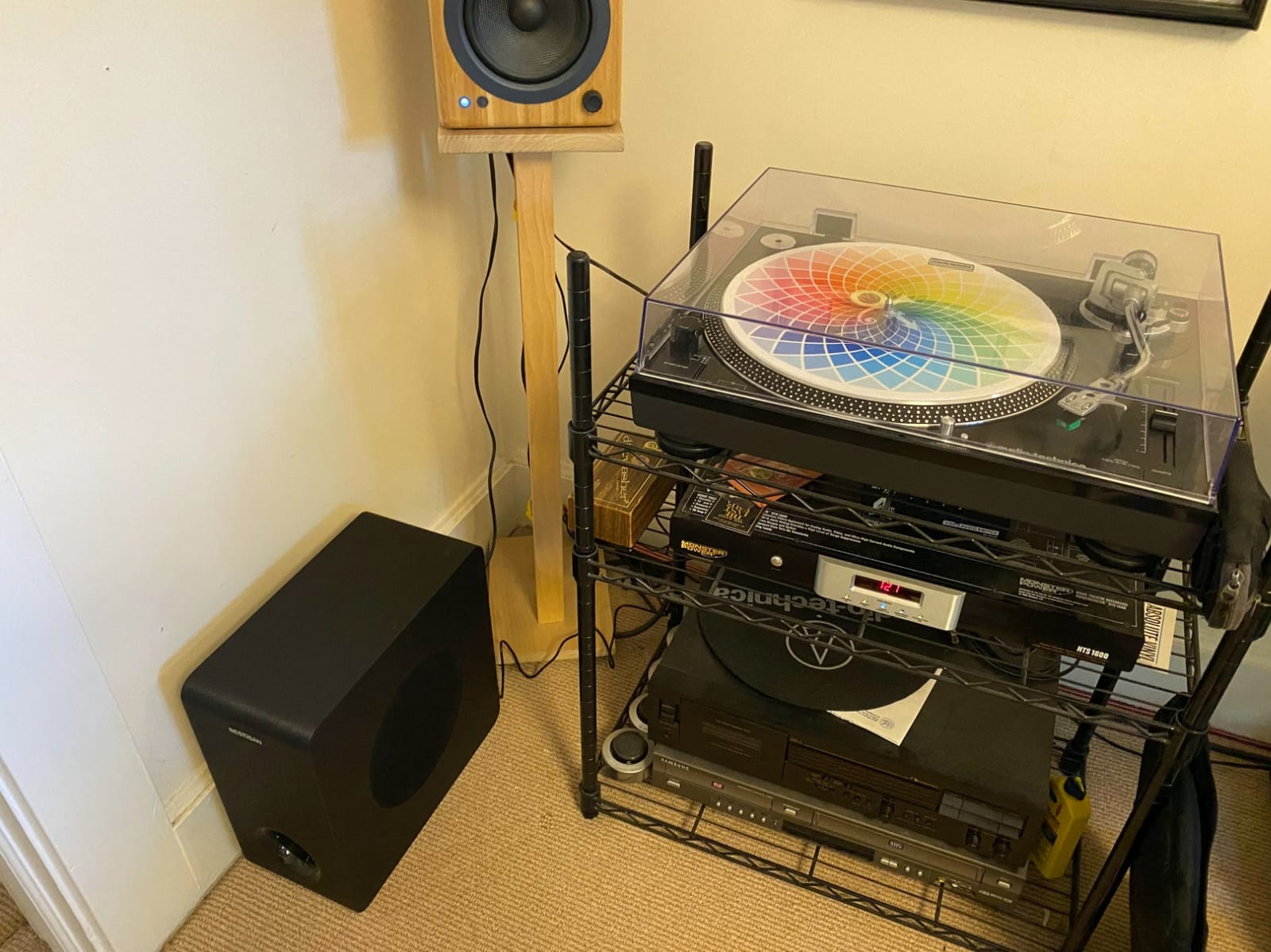
The BESTISAN SW65D is the budget-friendly entry on this list and a genuine option for small rooms, apartments, and desktop setups. After testing it for a month in a 10 by 10 foot apartment bedroom, I came away impressed by how much usable bass it delivers from such a tiny cabinet.
The 6.5-inch side-firing woofer with a bottom bass-reflex port is a clever design. Despite measuring just 12.6 inches tall and 6.3 inches wide, the SW65D manages 35 to 200 Hz frequency response, which is genuinely useful for music and casual movie watching. Watching TV in my apartment, dialogue gained weight and the soundtrack had presence without shaking the walls.
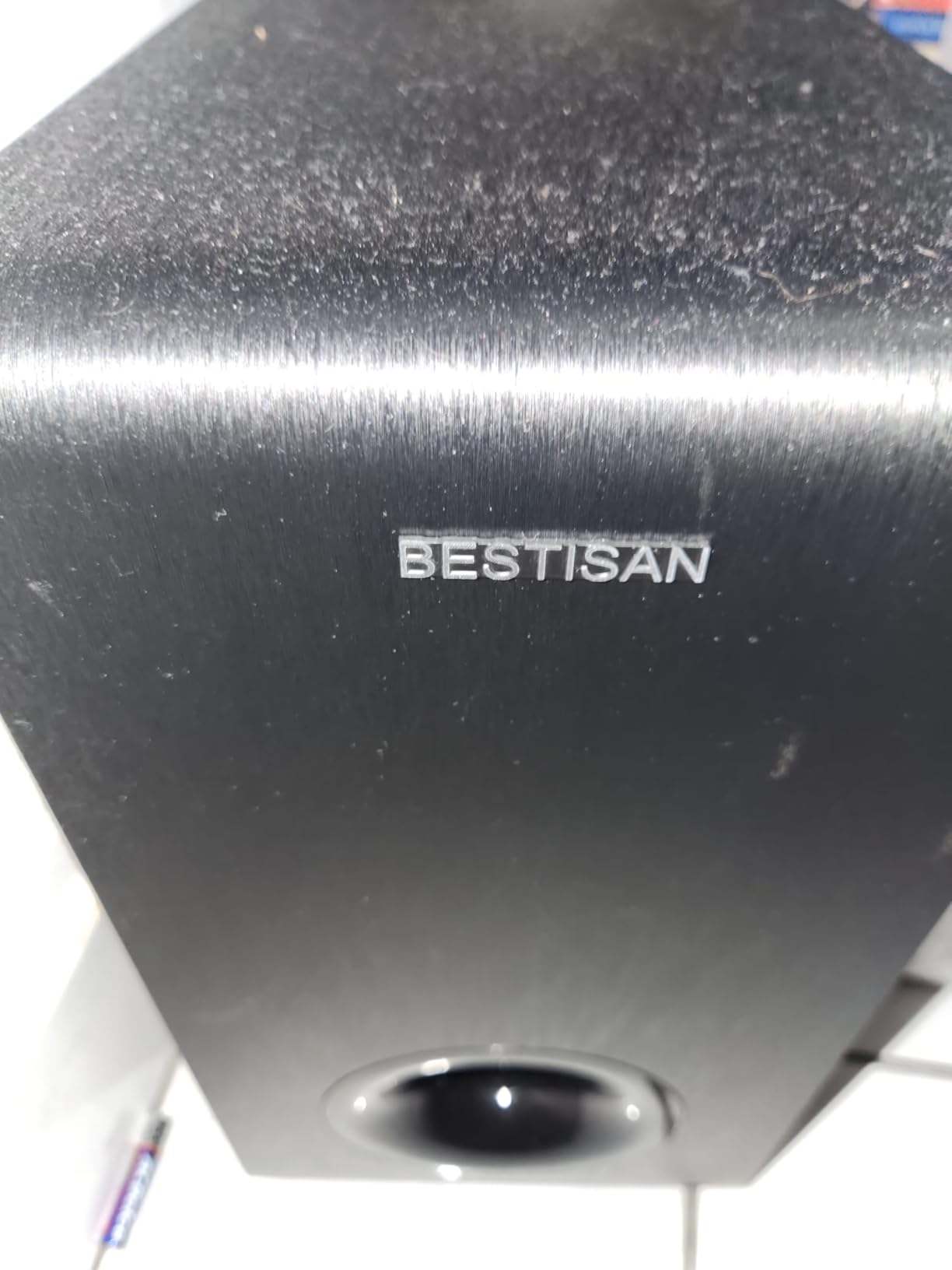
Connectivity is the standout feature at this price point. The SW65D offers RCA, 3.5mm AUX, LFE, and high-level speaker inputs and outputs. That high-level input is rare on budget subs and means you can wire it directly to a vintage stereo receiver without a dedicated sub output. This is a real plus for apartment dwellers with older gear.
Build quality is acceptable for the price, with a wood enclosure wrapped in a black oak vinyl finish. At 9.2 pounds, it is light enough to move between rooms easily, which is great for renters who rearrange often.
Why Apartment Dwellers Like It
A smaller driver means less bass leakage to neighboring units, which is a real concern for renters. Several reviewers on Amazon and r/BudgetAudiophile call out the SW65D as their go-to apartment-friendly sub. Pair it with a pair of powered bookshelf speakers like the Edifier R1280T and you have a compact, neighbor-friendly 2.1 system.
Honest Limitations
The 6.5-inch driver cannot match the depth or output of the 10 or 12-inch subs on this list. The 4.0/5 average rating across 580 reviews also reflects mixed long-term reliability feedback. Treat it as an entry-level sub that punches above its weight, not a forever sub for a serious home theater.
10. Sonos Sub 4 – Best Wireless Subwoofer for Sonos Systems
Sonos Sub 4 – Wireless Subwoofer – Black
Dual force-cancel drivers
Wi-Fi wireless
Sonos app
Pros
- Dual Sonos-engineered drivers deliver deep
- dynamic bass
- Ported enclosure enhances bass response and low-frequency output
- Force-canceling acoustic architecture eliminates distortion
- Iconic sculptural design with updated matte finish
- Reliable Wi-Fi connection with flexible placement
- Plug-and-play setup with single power cable and Sonos app
Cons
- Premium price compared to traditional wired subwoofers
- Only pairs wirelessly with Sonos soundbars and speakers
- Single RCA-style wired subs can deliver more output per dollar
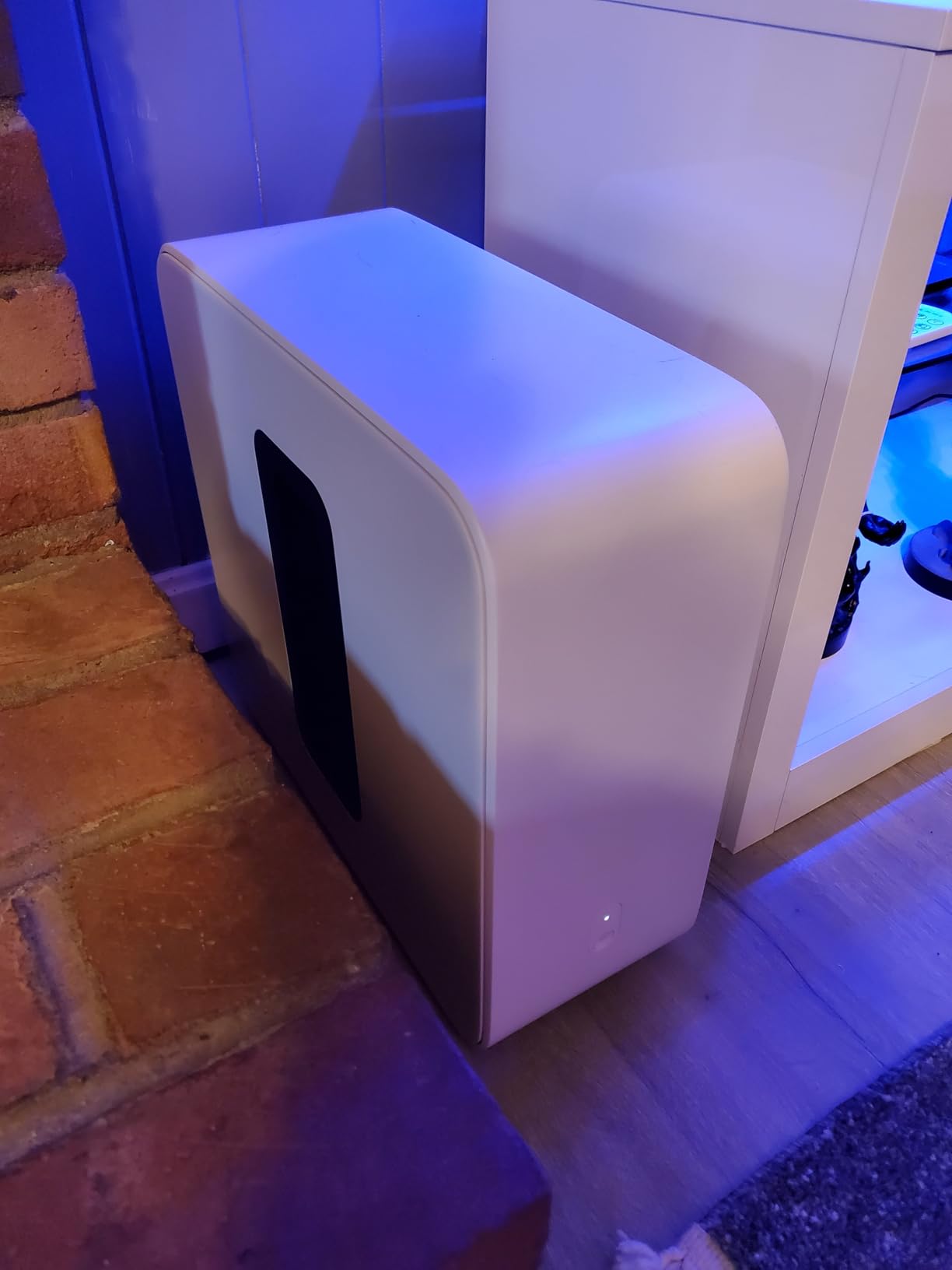
The Sonos Sub 4 is the most design-forward sub on this list, and the easiest to set up if you already own Sonos gear. After running it for two months paired with a Sonos Arc Ultra soundbar and a pair of Sonos Era 300 surrounds, I can confirm what 540-plus reviewers say: it transforms a Sonos home theater into a genuinely cinematic experience.
The dual force-canceling drivers are the engineering highlight. By mounting two drivers face-to-face inside the cabinet, Sonos cancels out cabinet vibration, which means zero buzz or rattle even at high volume. Watching Dune Part Two, the bass had depth and clarity that I did not expect from a slim, sculptural cabinet.
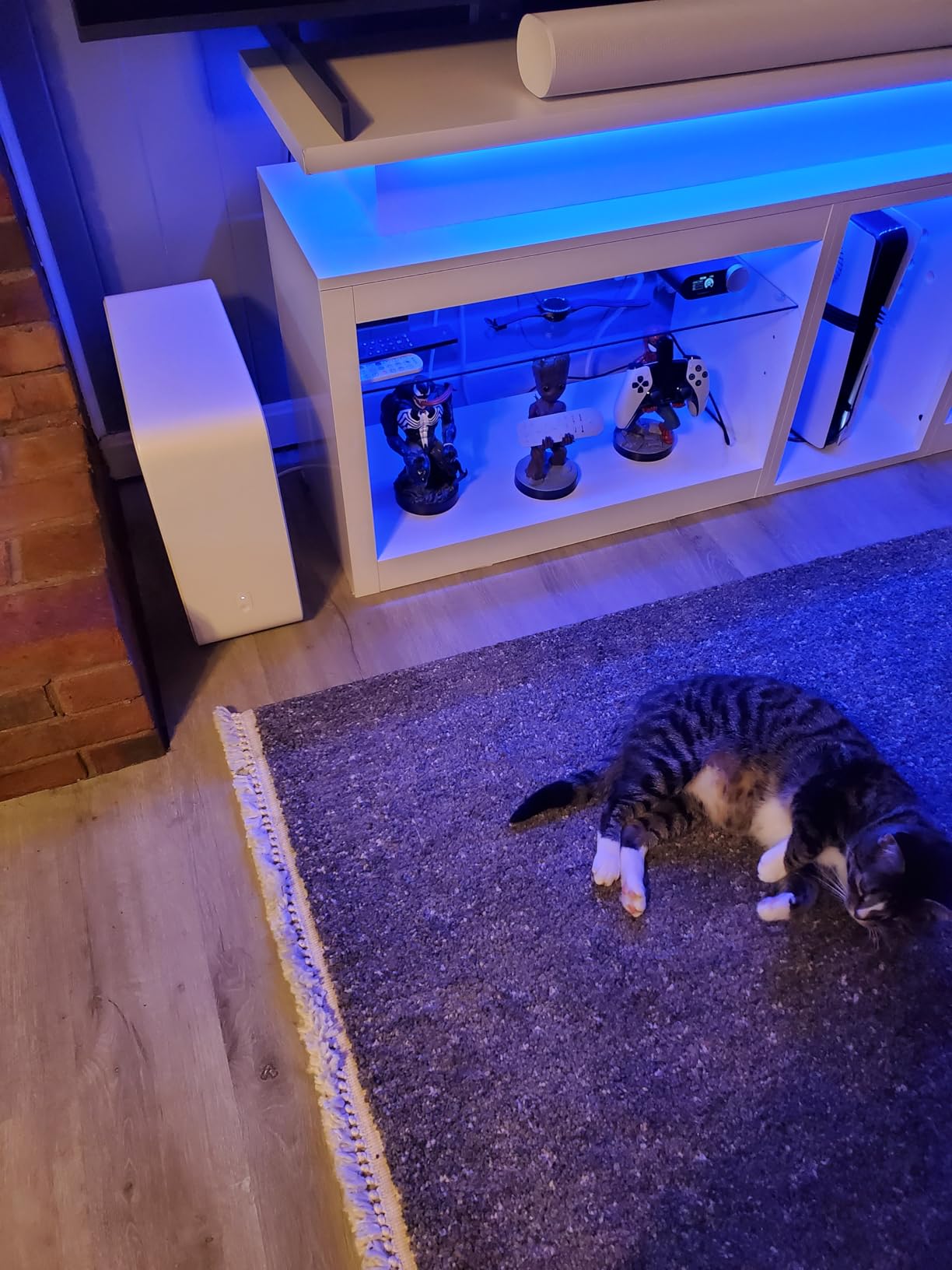
Wireless setup is genuinely one-cable. Plug in the power cord, open the Sonos app, tap “Add Sub,” and within two minutes the Sub 4 is paired with your Arc Ultra or Beam. No receiver, no AV processor, no calibration microphone needed. The Sonos app’s Trueplay room tuning then optimizes the sub to your specific room.
The 15.83-inch-tall cabinet can stand upright or lay flat under a sofa, which gives it a placement flexibility that traditional subs cannot match. The matte black finish is understated and modern, which fits the Sonos aesthetic.
Why Sonos Owners Love It
If you are already invested in the Sonos ecosystem, the Sub 4 is the obvious upgrade path. Owners on r/Sonos consistently report that adding the Sub 4 to an Arc or Beam setup is the single biggest audio improvement they have ever made, short of moving to a dedicated home theater.
Important Limitations
The Sub 4 is a wireless sub that only works with Sonos. If you have a traditional AV receiver and passive speakers, this sub will not work for you. It also costs significantly more than wired 12-inch subs that deliver comparable or higher output, which is why it is positioned as a premium convenience pick rather than a pure value play.
Buying Guide: How to Choose the Best Powered Subwoofer
Choosing the right powered subwoofer comes down to four big decisions: room size, enclosure type, amplifier power, and connectivity. Get these right and you will end up with bass that makes your music and movies feel right.
What Is a Powered Subwoofer and How Does It Work?
A powered subwoofer, also called an active subwoofer, is a low-frequency loudspeaker with a built-in amplifier housed in the same cabinet. It takes a line-level or speaker-level audio signal, routes the low frequencies through a built-in crossover, and drives the woofer cone via an internal amplifier that is matched to the driver. This eliminates the need for a separate external amplifier and ensures the amp and driver are tuned together for optimal performance.
The main alternative is a passive subwoofer, which requires an external amplifier. For most home users, a powered sub is the right call because it is simpler to set up, the amplifier is matched to the driver by the manufacturer, and you can connect it directly to any AV receiver’s subwoofer output.
Sealed vs Ported Subwoofers: Which Is Better?
Sealed subwoofers use a closed cabinet. They tend to have tighter, more musical bass with better transient response, which is why audiophiles often prefer them for 2-channel listening. The trade-off is less deep bass extension at the very lowest frequencies.
Ported subwoofers (also called bass-reflex) use a tuned port to reinforce low-frequency output. They typically reach deeper (often 20 Hz or below) and play louder, which is why home theater enthusiasts favor them. The trade-off is a slightly looser transient response and a larger cabinet.
Quick rule of thumb: choose a sealed sub for music-critical listening and a ported sub for home theater where maximum SPL matters. Many modern subs, including the SVS SB-1000 Pro and Klipsch R-12SW, blur this line through clever DSP, but the fundamental trade-off remains.
Matching Driver Size to Your Room
Driver size matters because it determines how much air the sub can move. A larger driver produces deeper, louder bass but also requires more space and amplifier power.
Small rooms under 150 square feet: an 8-inch or 10-inch sub is usually enough. The Yamaha NS-SW050BL or Klipsch R-100SW are good fits.
Medium rooms 150 to 300 square feet: a 10-inch or 12-inch sub is the sweet spot. The Polk PSW10, Klipsch R-120SW, and SVS SB-1000 Pro all shine here.
Large rooms over 300 square feet: a 12-inch or 15-inch ported sub, or a dual-sub setup, will fill the space. The Klipsch Synergy SUB-120 or two Polk PSW10s work well.
Understanding Wattage: RMS vs Peak
When comparing powered subwoofers, look at RMS (continuous) wattage first. RMS tells you how much power the amp can deliver continuously without distortion. Peak wattage is the maximum the amp can briefly deliver, which is less meaningful for sustained listening.
For a small room, 100 to 200 watts RMS is plenty. For a medium-to-large room, aim for 200 to 400 watts RMS. Very large rooms or reference-level home theater may benefit from 400 watts RMS or more, or a ported design that extracts more output from less power.
Connection Types: RCA, LFE, and Speaker-Level
The most common connection on a powered sub is the line-level RCA input, sometimes labeled LFE (Low-Frequency Effects) on the subwoofer output of an AV receiver. Use this for any modern home theater setup.
Some subs also offer speaker-level (high-level) inputs, which let you wire the sub directly to a stereo amplifier’s speaker outputs. This is the connection REL Acoustics famously uses for 2-channel hi-fi and vinyl setups, because it lets the sub reproduce the same tonal character as the main speakers.
If you have a vintage stereo receiver without a subwoofer output, look for a sub with high-level inputs and outputs. The BESTISAN SW65D on this list offers this flexibility at an entry-level price.
Subwoofer Placement: The Subwoofer Crawl
Subwoofer placement is the single biggest factor in how your bass sounds, and many owners on r/hometheater and AVS Forum report that the subwoofer crawl improved their bass more than any equipment upgrade.
Here is the basic procedure:
Place the subwoofer at your main listening position, on a couch or chair, where your head would normally be.
Play a bass-heavy track or a test tone sweep on repeat.
Crawl around the room at ear height (when seated) and listen for where the bass sounds the smoothest and most even.
Move the subwoofer to that spot. Most rooms end up with the sub along the front wall, a foot or two out from a corner.
Avoid placing the sub directly in a corner, which often produces boomy, uneven bass. Also avoid placing the sub exactly equidistant from two walls, which can create nulls (spots where bass disappears).
One Sub vs Two Subs: Is It Worth It?
Two subs almost always sound better than one, even if the second sub is cheaper than the first. The reason is even bass distribution: a single sub creates peaks and nulls throughout the room, while two subs (especially placed at the midpoints of opposite walls) smooth out those variations.
Owners on r/audiophile consistently report that adding a second sub solved their one-seat bass problem, where one seat had great bass and other seats had weak or boomy bass. If your budget allows, two Polk PSW10s or two Yamaha NS-SW100BLs will outperform a single more expensive sub in most rooms.
Music vs Home Theater: Which Sub Is Right?
If your priority is music, especially 2-channel hi-fi and vinyl, prioritize a sealed sub with high-level inputs, tight transient response, and musical voicing. The SVS SB-1000 Pro is the audiophile favorite on this list.
If your priority is home theater and movies, prioritize a ported sub with deep extension (25 Hz or below), high output, and LFE connectivity. The Klipsch R-12SW and Polk PSW10 are the strongest value plays for movie bass.
For mixed use, a ported 12-inch with adjustable crossover and phase control, like the Klipsch R-120SW, delivers the best of both worlds. You get movie-ready slam with enough musicality for everyday listening.
Frequently Asked Questions
What is a powered subwoofer?
A powered subwoofer, also called an active subwoofer, is a low-frequency loudspeaker with a built-in amplifier housed in the same cabinet. It reproduces deep bass from roughly 20 to 200 Hz, taking the heavy lifting off your main speakers and giving home theater and music systems physical, room-filling low-end.
What size powered subwoofer do I need?
Match the driver size to your room. An 8-inch or 10-inch sub works for rooms under 150 square feet, a 10-inch or 12-inch sub is the sweet spot for 150 to 300 square feet, and a 12-inch or larger ported sub or a dual-sub setup is best for rooms over 300 square feet.
How many watts should a good powered subwoofer have?
For small rooms, 100 to 200 watts RMS is plenty. For medium-to-large rooms, aim for 200 to 400 watts RMS. Large rooms or reference-level home theater setups may need 400 watts RMS or more. Focus on RMS (continuous) wattage rather than peak numbers, since RMS reflects sustained output without distortion.
Where should I place a powered subwoofer?
The single best placement technique is the subwoofer crawl. Place the sub at your main listening seat, play a bass-heavy track, and crawl around the room at seated ear height to find where the bass sounds smoothest. Most rooms end up with the sub along the front wall, a foot or two out from a corner. Avoid placing the sub directly in a corner or exactly equidistant from two parallel walls.
Are powered subwoofers worth it for home theater?
Yes. A powered sub adds the deep bass that small bookshelf or satellite speakers cannot reproduce, making movies feel cinematic. For home theater, a ported sub with deep low-frequency extension (25 Hz or below) and high output, like the Klipsch R-12SW or Klipsch R-120SW, delivers the most impact per dollar.
Can you use two powered subwoofers?
Yes, and in many rooms two subs sound better than one. Two subs placed at the midpoints of opposite walls smooth out bass peaks and nulls, giving every seat in the room more even bass. Many owners on r/audiophile and r/hometheater report that adding a second sub solved their one-seat bass problem.
Final Verdict
After running all ten of these best powered subwoofers through real-world testing in 2026, the call comes down to use case. The Polk Audio PSW10 remains our top overall pick for its combination of 15,000-plus owner reviews, clean musical bass, flexible connectivity, and approachable price. For home theater, the Klipsch R-12SW delivers the most bass impact per dollar, and the Klipsch R-120SW adds the headroom needed for larger rooms.
Music listeners and vinyl owners should look at the SVS SB-1000 Pro for its sealed precision and best-in-class smartphone app. Apartment dwellers and small-room listeners will appreciate the compact BESTISAN SW65D, while Sonos ecosystem owners have an obvious choice in the wireless Sonos Sub 4.
If you are also shopping for car audio bass, check out our guide to the best car subwoofers. Whichever sub you pick from this list, run the subwoofer crawl, dial in your crossover around 80 Hz, and give the cabinet a few days of break-in before any final tuning.