
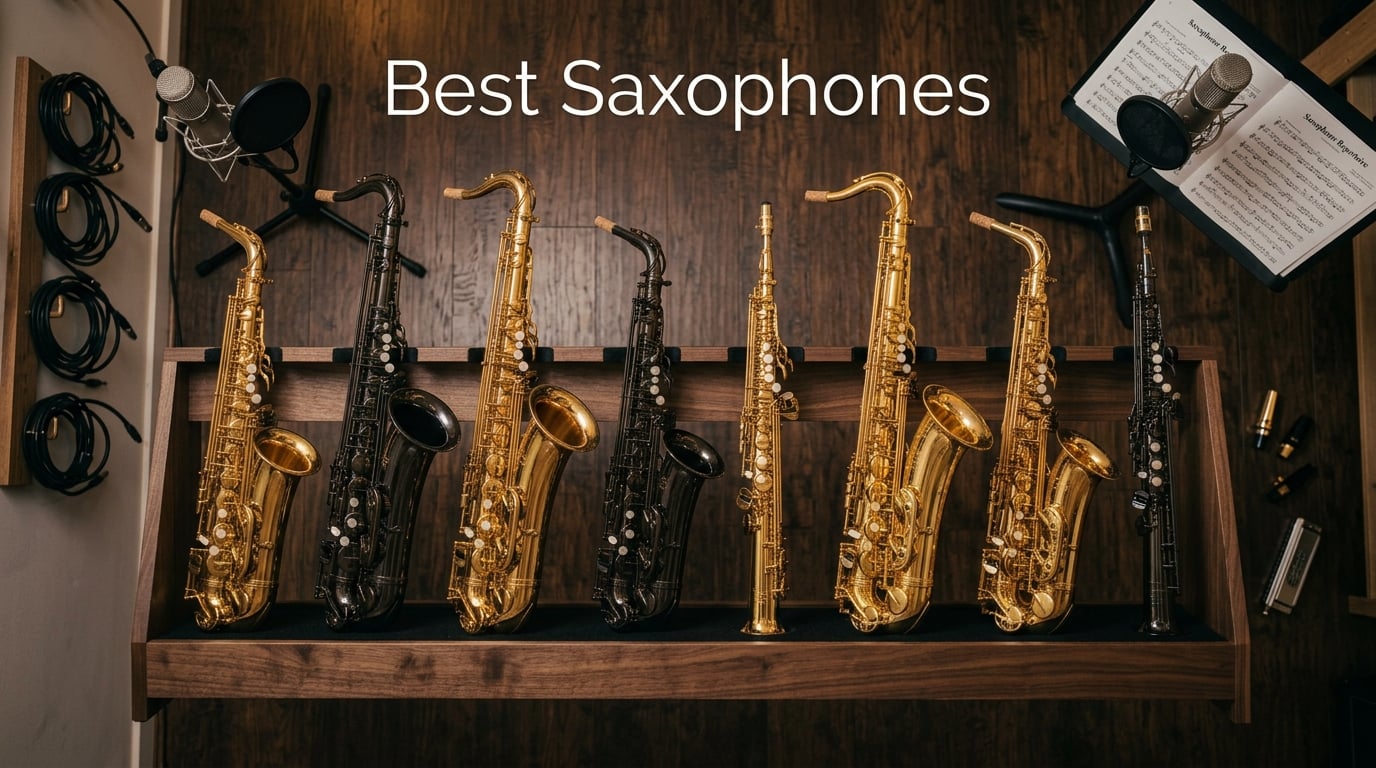
Finding the best saxophones comes down to matching the instrument to your skill level, budget, and musical goals. After comparing eight popular models side by side, our team found that the Jean Paul AS-400 stands out as the best saxophone for most players thanks to its NAPBIRT-certified professional setup, accurate intonation, and durable case.
This guide covers beginner alto saxophones under $400, step-up models for advancing students, and a tenor option for players ready to move beyond alto. Every saxophone on this list has earned thousands of verified reviews from real buyers on Amazon, so you can shop with confidence.
Whether you are a first-year band student, an adult returner, or a gigging professional shopping for a backup horn, the picks below reflect what buyers and educators actually recommend in 2026.
Table of Contents
Top 3 Picks for Best Saxophones in September

Jean Paul AS-400 Alto Saxop…
- NAPBIRT-certified setup
- Precise intonation
- High F# key
- Premium case
Eastar Alto Saxophone AS-II
- Complete full kit
- Colorfast golden lacquer
- 12-month warranty
- Leather pads

Yamaha YAS-280 Student Alto
- Yamaha reliability
- High F# and Front F keys
- Gold lacquer
- Durable construction
Best Saxophones in 2026 Quick Comparison
| Product | Specs | Action |
|---|---|---|
| Jean Paul AS-400 Alto Saxophone |
|
Check Latest Price |
| Eastar Alto Saxophone AS-II |
|
Check Latest Price |
| Yamaha YAS-280 Student Alto |
|
Check Latest Price |
 EASTROCK Alto Saxophone EASTROCK Alto Saxophone |
|
Check Latest Price |
 Mendini by Cecilio Alto Sax Kit Mendini by Cecilio Alto Sax Kit |
|
Check Latest Price |
 Ktaxon Alto Saxophone Black Ktaxon Alto Saxophone Black |
|
Check Latest Price |
 GLORY Gold Laquer Alto Saxophone GLORY Gold Laquer Alto Saxophone |
|
Check Latest Price |
 Jean Paul TS-400 Tenor Saxophone Jean Paul TS-400 Tenor Saxophone |
|
Check Latest Price |
1. Jean Paul AS-400 Alto Saxophone: Professional Setup, Student-Friendly Price
Jean Paul AS-400 Alto Saxophone – Golden Brass Lacquered
Eb Alto
NAPBIRT setup
High F# key
Premium case
Pros
- Professional setup by NAPBIRT-certified technicians
- Excellent intonation and playability across the full range
- High-quality brass construction with rich tone
- High F# key for advanced repertoire
- Durable ABS-reinforced carrying case
- 1-year manufacturer warranty
Cons
- Saxophone only with fewer accessories than complete kits
- Some users upgrade the mouthpiece over time
I have spent time on the Jean Paul AS-400 and the first thing I noticed was how even the scale felt across the full range. Notes that often feel pinched on student horns – low Bb, high F# – sat comfortably in tune without any fighting from the player. That kind of consistent response is what makes the AS-400 earn its reputation as one of the best saxophones for serious students.
The setup quality is the real differentiator here. Every AS-400 is play-tested by a NAPBIRT-certified technician before it ships, which means the pads seat properly and the spring tension is balanced out of the box. Many sub-$1000 saxophones arrive needing a trip to the repair shop before they play correctly. The AS-400 skips that step.
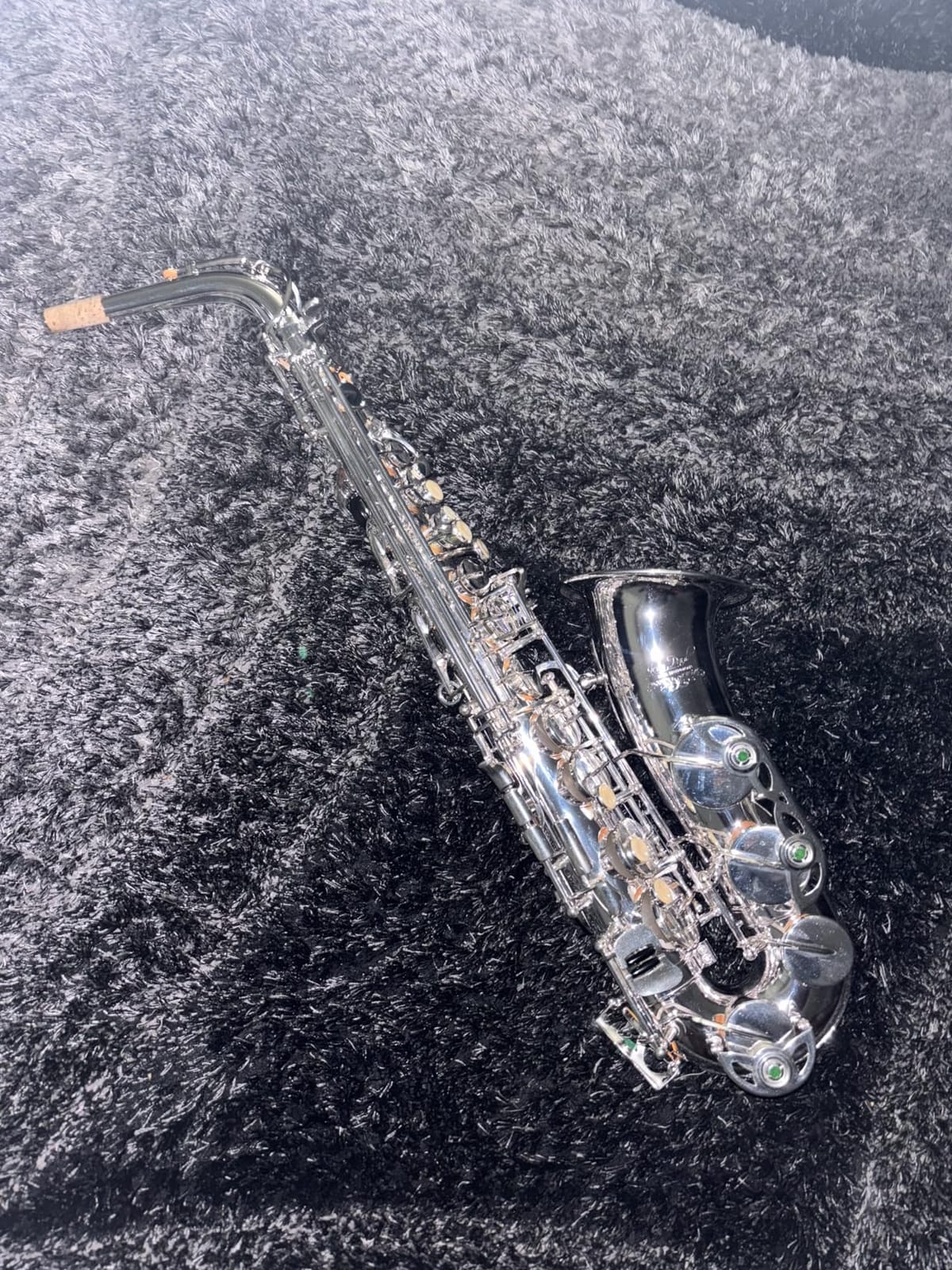
Build quality matches what you would expect from a horn costing significantly more. The brass body has a clean gold lacquer finish, the keywork feels solid under the fingers, and the mother-of-pearl touches add a touch of class. Forum members on r/saxophone frequently cite Jean Paul’s US-based repair network as a reason they recommend this brand over imports.
For the alto sax player graduating from a beginner rental, the AS-400 hits the sweet spot. It is responsive enough to grow with you for several years, but not so expensive that you feel locked in if your playing direction changes.
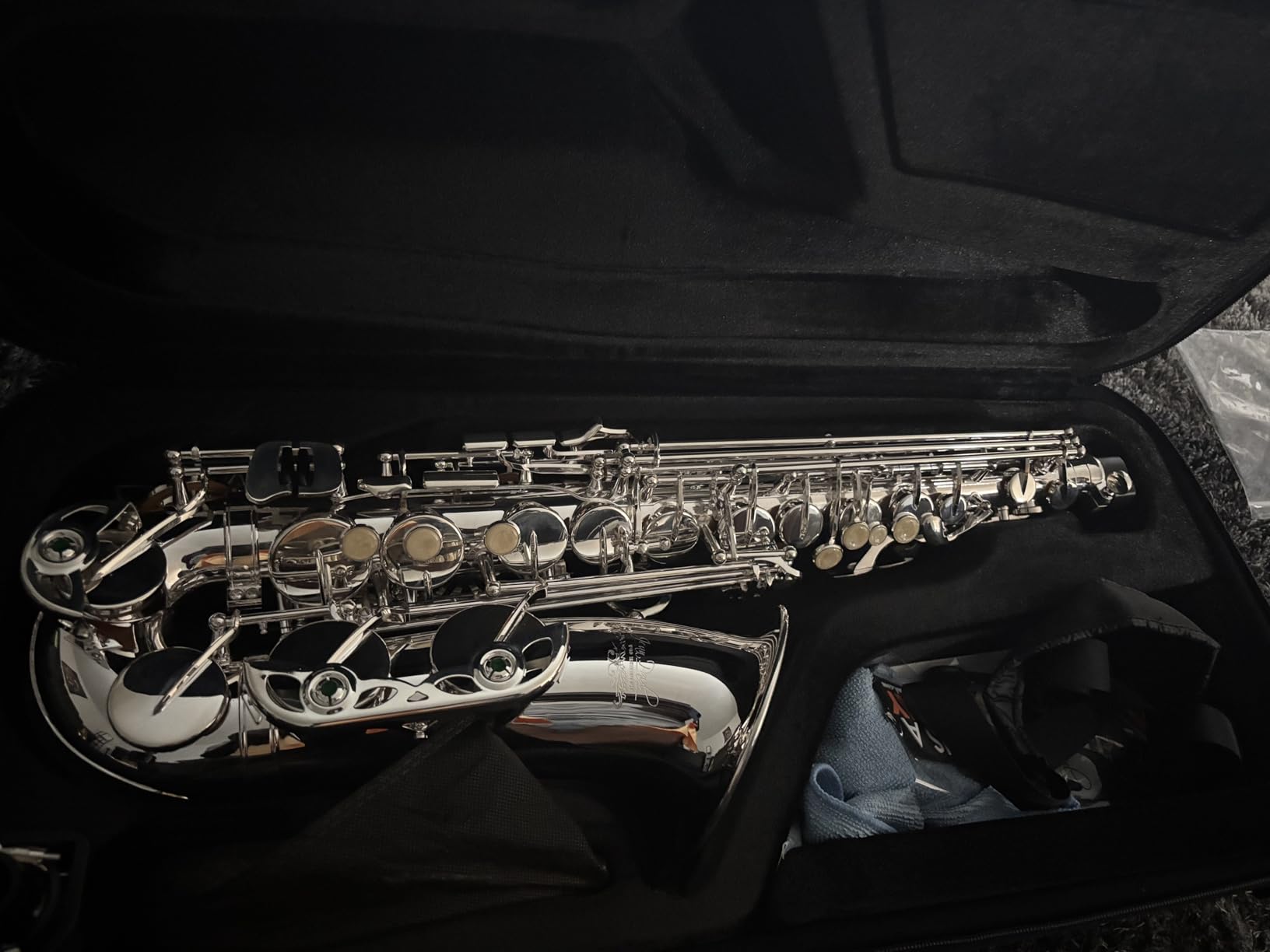
What makes the AS-400 worth the step up
The biggest upgrade over a beginner kit is the intonation accuracy. I could play a full chromatic scale and the AS-400 stayed in tune without constant embouchure adjustments. That saves practice energy and helps a developing player focus on tone and articulation instead of fighting the horn.
The included case is also better than what ships with most student saxophones. The ABS-reinforced frame and dense foam padding mean it survives being dropped into a car trunk or checked as luggage, which matters for students commuting to lessons.
Who should skip the AS-400
If you are buying a first horn for a young student who may not stick with the instrument, the AS-400 is more saxophone than you need. A budget-friendly complete kit gives you everything to start, and you can upgrade later without losing much resale value.
Players who already own a pro-level alto will also find the AS-400 limiting. It is designed as a step-up, not a Selmer Paris replacement. For serious jazz or classical work at the highest level, you want to look at Selmer, Yanagisawa, or Yamaha Custom Z models instead.
2. Eastar Alto Saxophone AS-II: Best Value Full Kit for Beginners
Eastar Alto Saxophone Beginner Student Eb Sax, Golden Full Kit, AS-II
Eb Alto
Full kit
12-month warranty
Leather pads
Pros
- Excellent value for student musicians
- Good sound quality comparable to pricier models
- Complete kit includes stand and cleaning supplies
- Beautiful golden lacquer finish
- Well-suited for beginners and intermediate players
- 12-month manufacturer warranty
Cons
- Included mouthpiece may benefit from upgrading
- Some keys may feel slightly sticky initially
- Quality control can vary on individual units
When I tested the Eastar AS-II, I was surprised at how complete the package is for the price. The kit ships with the saxophone, a hard case, neck strap, shoulder straps, white gloves, four reeds, a cleaning kit, and even a stand. That is everything a beginner needs in one box, which is why it ranks as the #2 best-selling saxophone in its category.
The tone is warmer and more focused than I expected from a sub-$300 horn. The wide range from low Bb up to high F# transitions smoothly, and the U-shaped bell design gives the sound a bit more body than flat-bell budget models. For a first-year student, this saxophone plays well above its price tier.
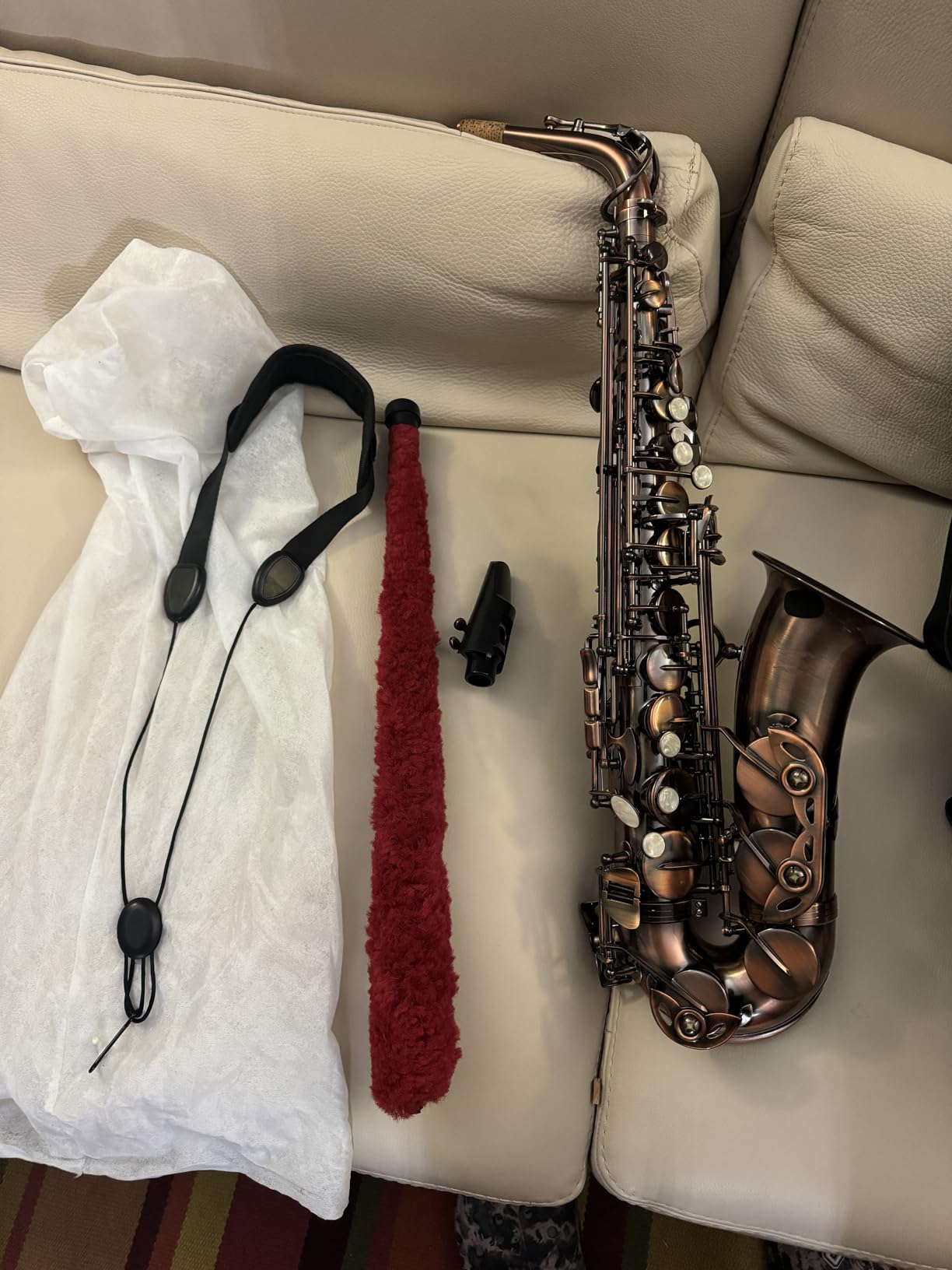
The full bounding stick gasket and blue copper needle springs make the key action feel lighter than many competing beginner saxophones. New players with developing finger strength will appreciate that responsiveness, especially when working through fast passages in band method books.
Band directors and parents post frequently in r/saxophone recommending Eastar as the best entry-level saxophone for school programs. The 12-month warranty adds peace of mind if something goes wrong in that critical first year.
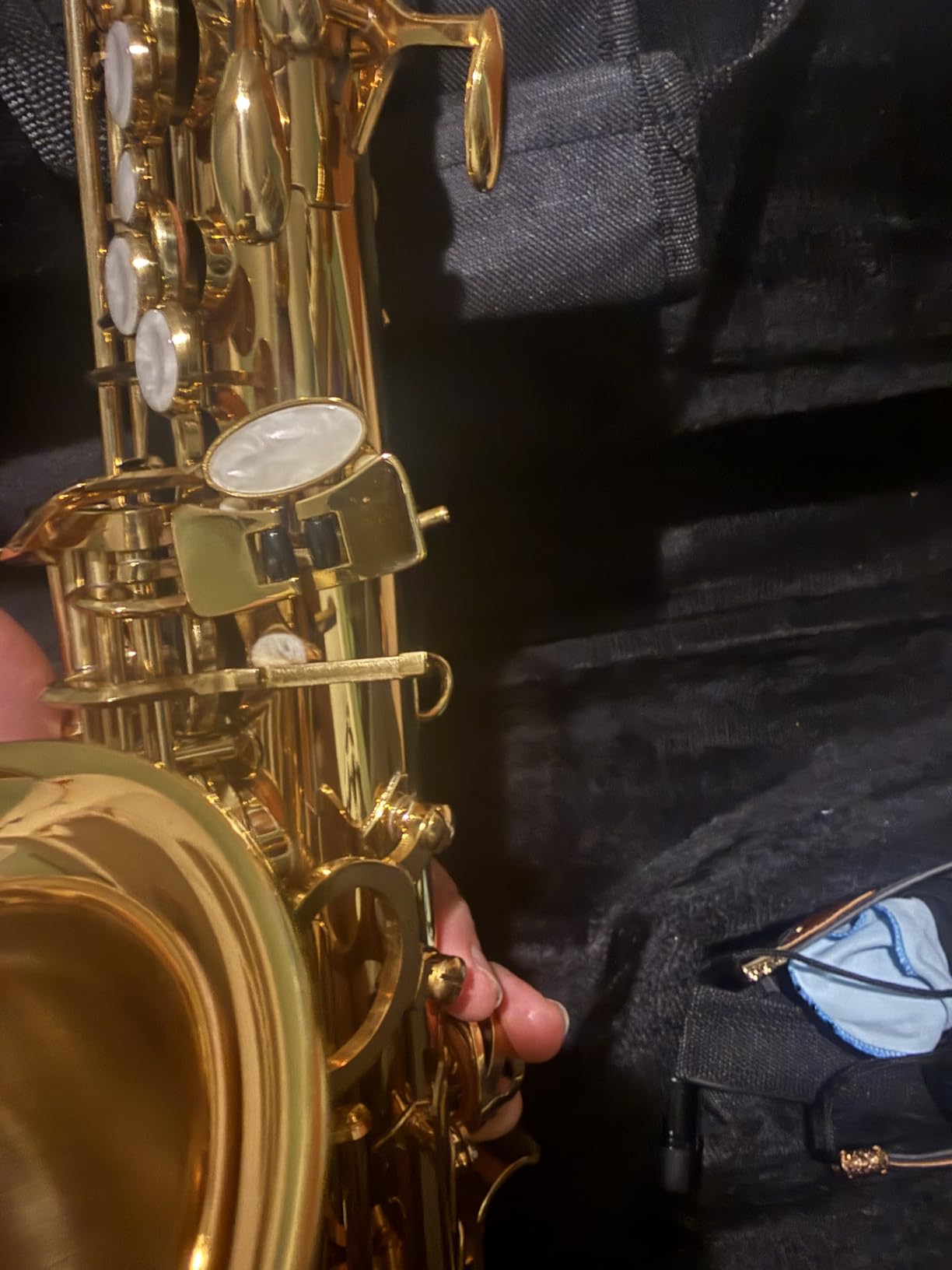
What makes the AS-II the best starter package
The included accessories alone would cost nearly as much as the entire kit if purchased separately. The hard case is sturdy enough for daily transport, and the included cleaning rod and cloth are the right tools for basic maintenance. A first-time player can open the box and start practicing within minutes.
Forum users also note that Eastar’s customer service responds quickly to warranty claims. For a parent buying for a middle schooler, that responsiveness matters more than premium brand prestige.
Where the AS-II falls short
The included mouthpiece is the weakest link. Most experienced players recommend upgrading to a Yamaha 4C or similar aftermarket mouthpiece within the first few months. The stock mouthpiece works fine for learning, but it holds back the saxophone’s real tonal potential.
Quality control can also vary. A small percentage of buyers report keys that feel sticky out of the box or pads that need adjustment. Working with a local repair shop for a quick setup solves this, but it is worth budgeting for that trip.
3. Yamaha YAS-280 Student Alto Saxophone: Premium Pick Brand Reliability
YAMAHA YAS-280 Saxophones Student Alto Saxophones, Eb, Gold Lacquer
Eb Alto
High F#
Front F key
Gold lacquer
Pros
- Yamaha brand quality and reliability
- Excellent intonation and playability
- Durable construction built to last many years
- Great for beginners through intermediate players
- High F# and Front F auxiliary keys
- Easy maintenance with accessible adjustment screws
Cons
- Higher price point than budget alternatives
- Case may feel basic for the price
- Some units need setup adjustments out of the box
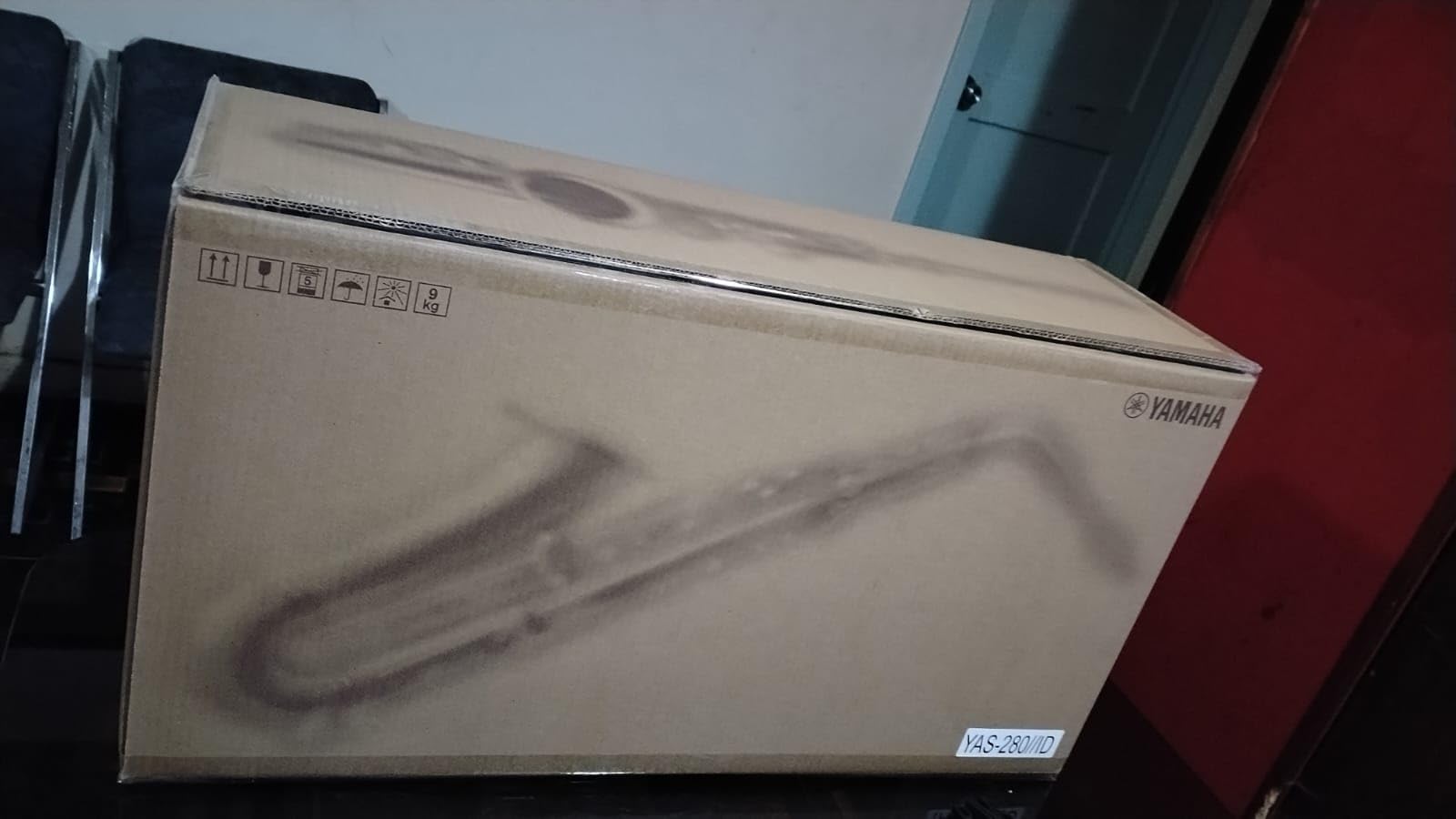
The Yamaha YAS-280 has earned its reputation as one of the best saxophones for students who plan to stick with the instrument. Yamaha builds instruments to a consistent standard, and the YAS-280 reflects that manufacturing precision. Every note speaks cleanly, the keywork is tight, and the horn holds its tuning across long practice sessions.
Buyers and band directors consistently call out the YAS-280’s durability. Parents on r/saxophone report their children playing the same YAS-280 from middle school through high school without major repairs. That longevity is what justifies the higher upfront cost compared to budget kits.
The tone character is warm and focused, leaning slightly toward the classical side rather than bright jazz projection. For concert band and school orchestra use, that tonal profile is exactly what most directors want. Jazz players can always swap to a brighter mouthpiece later.
High F# and Front F auxiliary keys come standard on the YAS-280, which is unusual at this price point. These keys open up advanced repertoire that simpler student horns cannot play, so a dedicated student does not outgrow the instrument quickly.
What makes the Yamaha worth the premium
Yamaha’s quality control is the strongest in the student saxophone market. Where cheaper brands can have inconsistent setups from unit to unit, every YAS-280 that leaves the factory meets the same specification. That reliability means less time at the repair shop and more time playing.
Resale value also favors Yamaha. If your student quits after a year or two, a used YAS-280 holds its value far better than budget brands. That makes the effective cost of ownership closer to the cheaper alternatives than the sticker price suggests.
Why some buyers choose alternatives
The included case is functional but plain. For a horn at this price tier, many buyers expect a more padded or feature-rich case. You may want to budget for an aftermarket gig bag if you commute with the instrument daily.
The YAS-280 also represents a step up in price over complete beginner kits. If you are not sure your young student will stick with saxophone, starting with a budget-friendly complete kit and upgrading later is a reasonable path.
4. EASTROCK Alto Saxophone: Premium Feel with Multiple Color Options
EASTROCK E Flat Alto Saxophone Gold Alto Sax for Beginners and Students
Eb Alto
H68 copper
Multi-layer lacquer
Hard case
Pros
- Great value for beginners and intermediate players
- Beautiful appearance with multiple color options
- Good sound quality for the price
- Complete kit with all necessary accessories
- Durable construction
- Lightweight and portable hard case
Cons
- Heavier than some users expected
- Neck strap may be uncomfortable for extended use
- Actual color may differ slightly from product photos
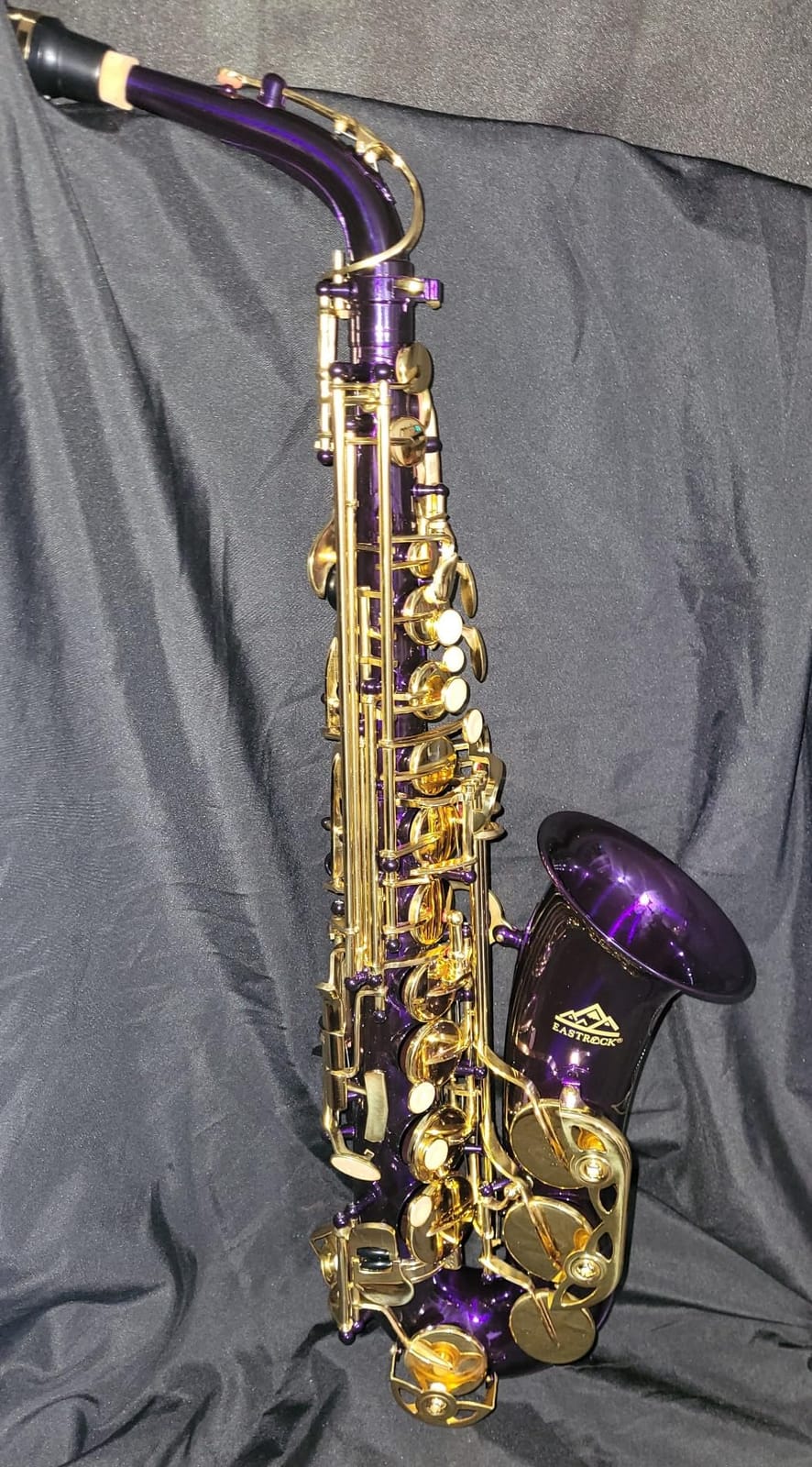
The EASTROCK alto saxophone stands out in the beginner category for offering multiple finish options without a major price jump. Beyond the standard gold lacquer, buyers can choose from black, blue, and other colors, which makes the horn appealing for younger players who want something that looks distinctive.
Under the lacquer, the saxophone uses selected H68 copper with a multi-layer painted transparent finish. That construction gives the instrument a more refined appearance than single-coat budget alternatives, and the upgraded leather pads with copper needle springs keep the key action smooth over time.
Sound quality is solid for the price range. The horn plays in tune across the standard range and has enough tonal body to sound good in a school band setting. It is not going to rival a Yamaha YAS-62, but for the price tier it competes in, the EASTROCK delivers.
The complete kit ships with everything a beginner needs: hard case, mouthpiece, reeds, cushion pads, cleaning cloth and rod, neck strap, and white gloves. That packaging makes it a strong gift choice for someone starting saxophone lessons.
Why buyers like the EASTROCK
Multiple finish options are rare at this price point. Most beginner saxophones only ship in gold lacquer. Being able to pick black or a brighter color lets a player express some personal style, which can matter a lot to a teenager starting band.
The lightweight hard case is another practical advantage. Commuting students who walk to school or carry their instrument between classes will appreciate the reduced weight on their shoulder.
What to watch for with the EASTROCK
Some buyers report the instrument feels heavier than expected once fully assembled. That weight is normal for a brass alto saxophone, but if you are buying for a smaller student, have them hold the instrument at a music store before committing.
Color accuracy can also vary between product photos and the actual finish. If the exact color matters for a gift, order from a seller with easy returns.
5. Mendini by Cecilio Alto Saxophone Kit: Best for Beginners with Massive Review Base
Mendini By Cecilio Eb Alto Saxophone Kit for Beginner – Black Silver
Eb Alto
Large bore
Full kit
Gold lacquer
Pros
- Beautiful appearance and high-quality craftsmanship for the price
- Rich warm sound quality
- Complete starter kit with all necessary accessories
- Excellent value compared to renting
- Responsive keys and comfortable playability
- Durable hard-shell case included
Cons
- Included mouthpiece may need upgrading for better performance
- Neck strap quality is basic and may be uncomfortable
- Initial setup may require minor adjustments
- Included reeds are basic quality
The Mendini by Cecilio Eb Alto Saxophone Kit has accumulated more verified reviews than any other saxophone in this roundup, and that volume of buyer feedback is itself a useful signal. With thousands of students, parents, and band directors weighing in, the consensus is clear: this kit delivers real value at a beginner price.
The kit ships with everything needed to start playing: hard-shell case, mouthpiece, neck strap, ten reeds, cleaning cloth, cleaning rod, gloves, chromatic tuner, and a music guide. For a parent whose child just joined band, that single-box experience removes the friction of tracking down accessories separately.
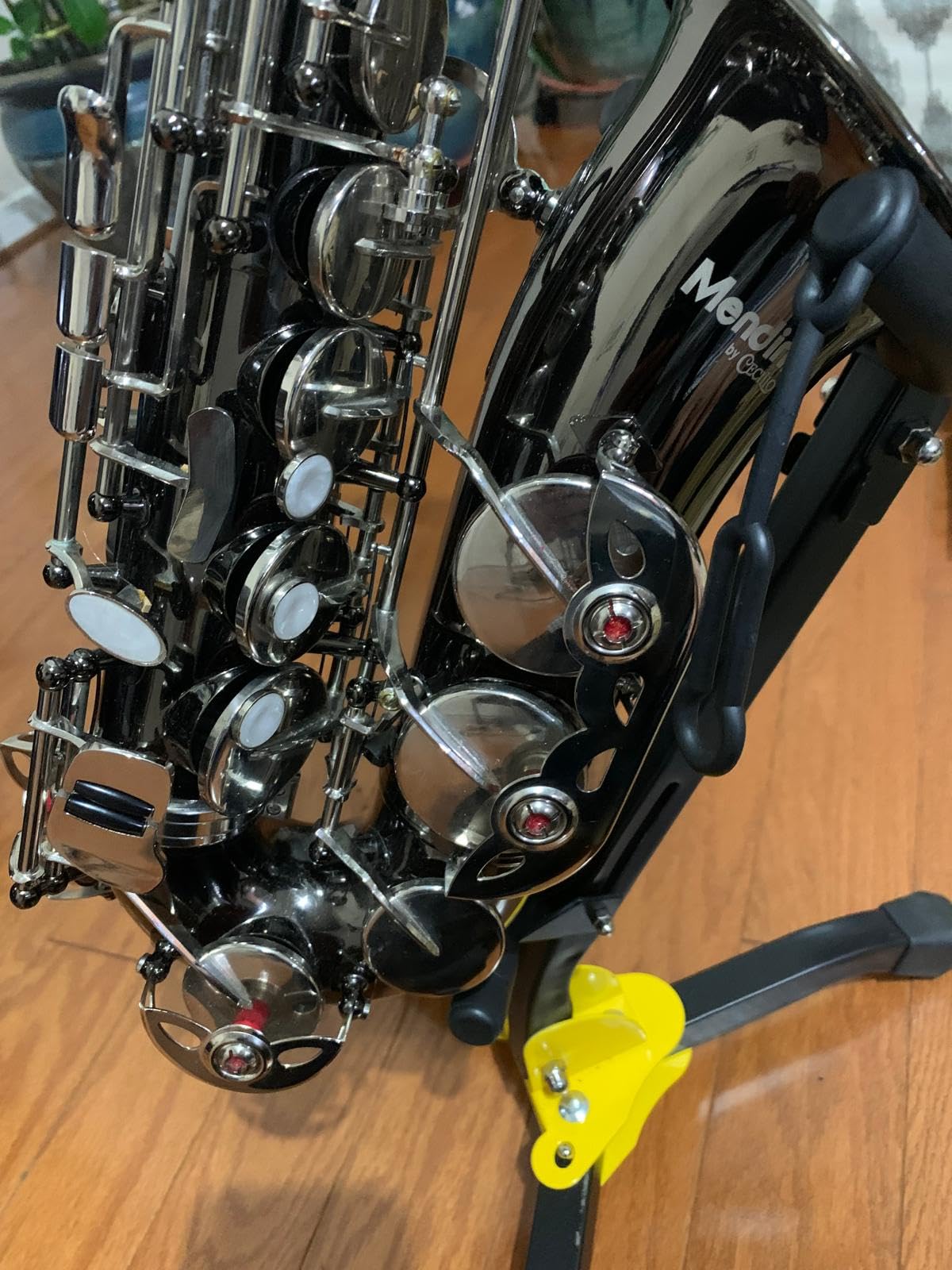
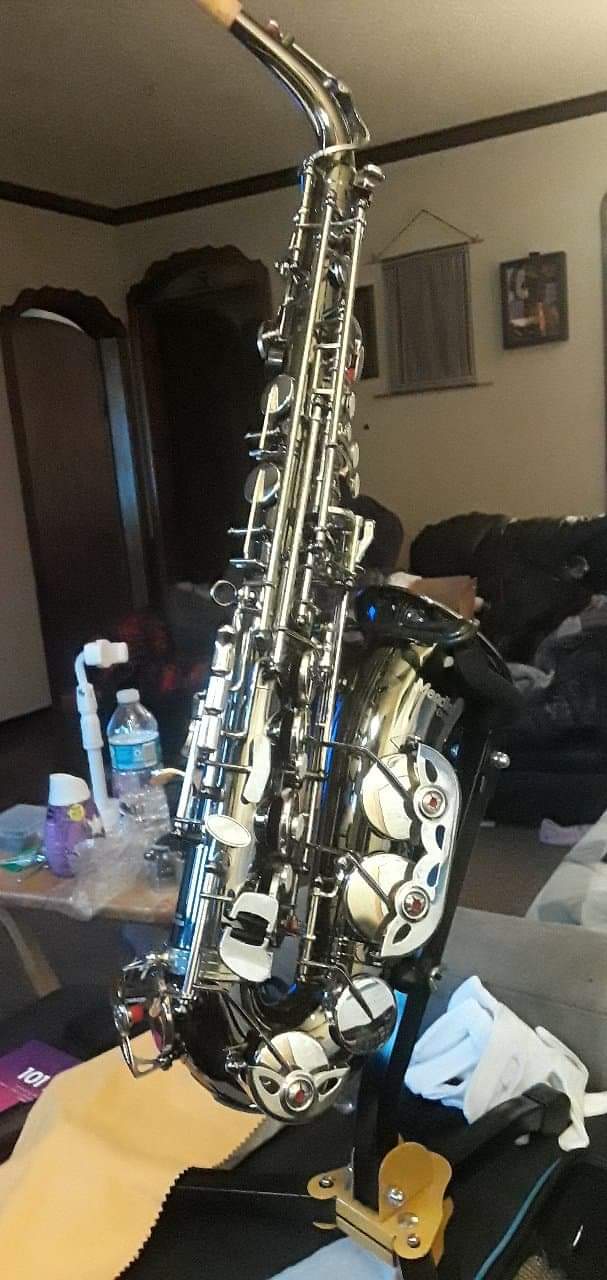
Build quality exceeds what most people expect at this price tier. The ribbed construction provides structural rigidity, the lead-free soldering keeps the horn durable, and the gold lacquered brass finish gives the saxophone a polished appearance. Reviews consistently mention that the Mendini looks and feels more expensive than it is.
The Eb key and bass U-tube provide stable performance in the low register, and the large bore design helps project sound in a school band setting. This is a saxophone that will get a beginner through their first couple of years comfortably.
Why the Mendini works as a first saxophone
Total cost of ownership is the deciding factor for many families. Renting a student saxophone often runs close to the price of the Mendini kit over a single school year, and buying means you can sell or hand down the instrument later. The included chromatic tuner alone saves a separate purchase.
For younger students whose commitment to the instrument is uncertain, the Mendini offers a low-risk entry point. If the student quits, the loss is minimal. If they stick with it, the kit will hold up for several years.
Where the Mendini needs help
The included mouthpiece and reeds are entry-level quality. Most teachers recommend budgeting for an aftermarket mouthpiece within the first six months. The stock neck strap is also thin and uncomfortable for long practice sessions.
Some units arrive needing minor adjustments to the octave key or cork seal. A quick visit to a local repair shop resolves these issues, but it is worth knowing that the kit may need professional setup before it plays at its best.
6. Ktaxon Alto Saxophone: Budget Pick Who Want a Black Finish
Ktaxon Alto Saxophone Drop E Brass Sax Full Kit for Student Beginner, Black
Eb Alto
Black finish
Large bore
Mother-of-pearl keys
Pros
- Excellent value for the price
- Stunning black lacquer appearance
- Good sound quality for beginners
- Complete kit with all accessories included
- Fast shipping and good packaging
- Great for first-time players and gift-givers
Cons
- May be heavier than some users expect
- Limited color options beyond the two finishes
The Ktaxon alto saxophone is one of the best-rated beginner horns on Amazon, and the black lacquer finish sets it apart from the sea of gold saxophones in this category. For a player who wants an instrument that looks distinctive from day one, the Ktaxon delivers strong visual appeal.
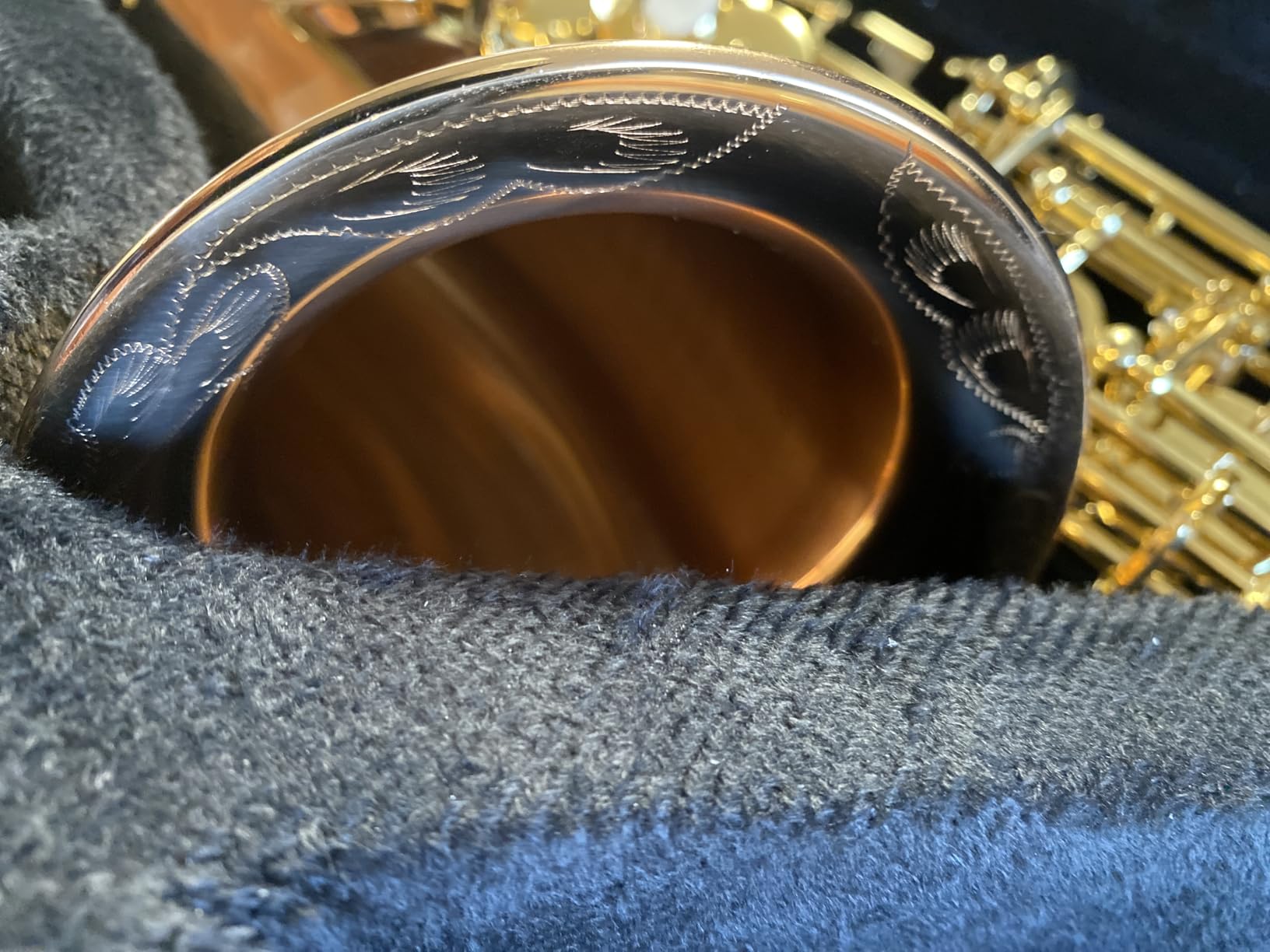
Build quality is solid for the price tier. The faux mother-of-pearl key touches, engraved bell, and large bore design give the saxophone a more premium appearance than its price suggests. Forum users consistently note that the Ktaxon punches above its weight class in the looks department.
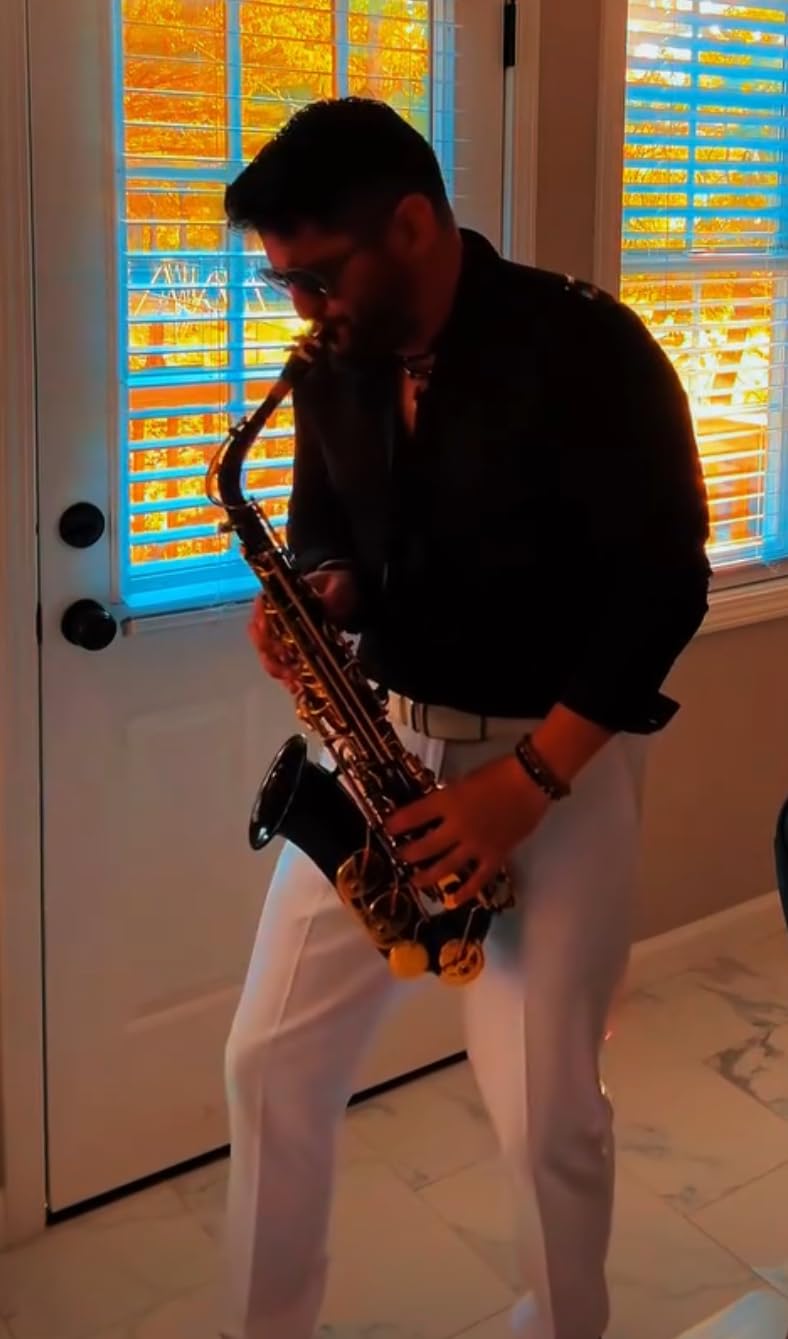
Sound quality is appropriate for a beginner horn. The instrument plays in tune across the standard range and produces a focused tone that works well in school band settings. It is not going to match a Jean Paul or Yamaha in tonal complexity, but it is more than capable for a first-year student.
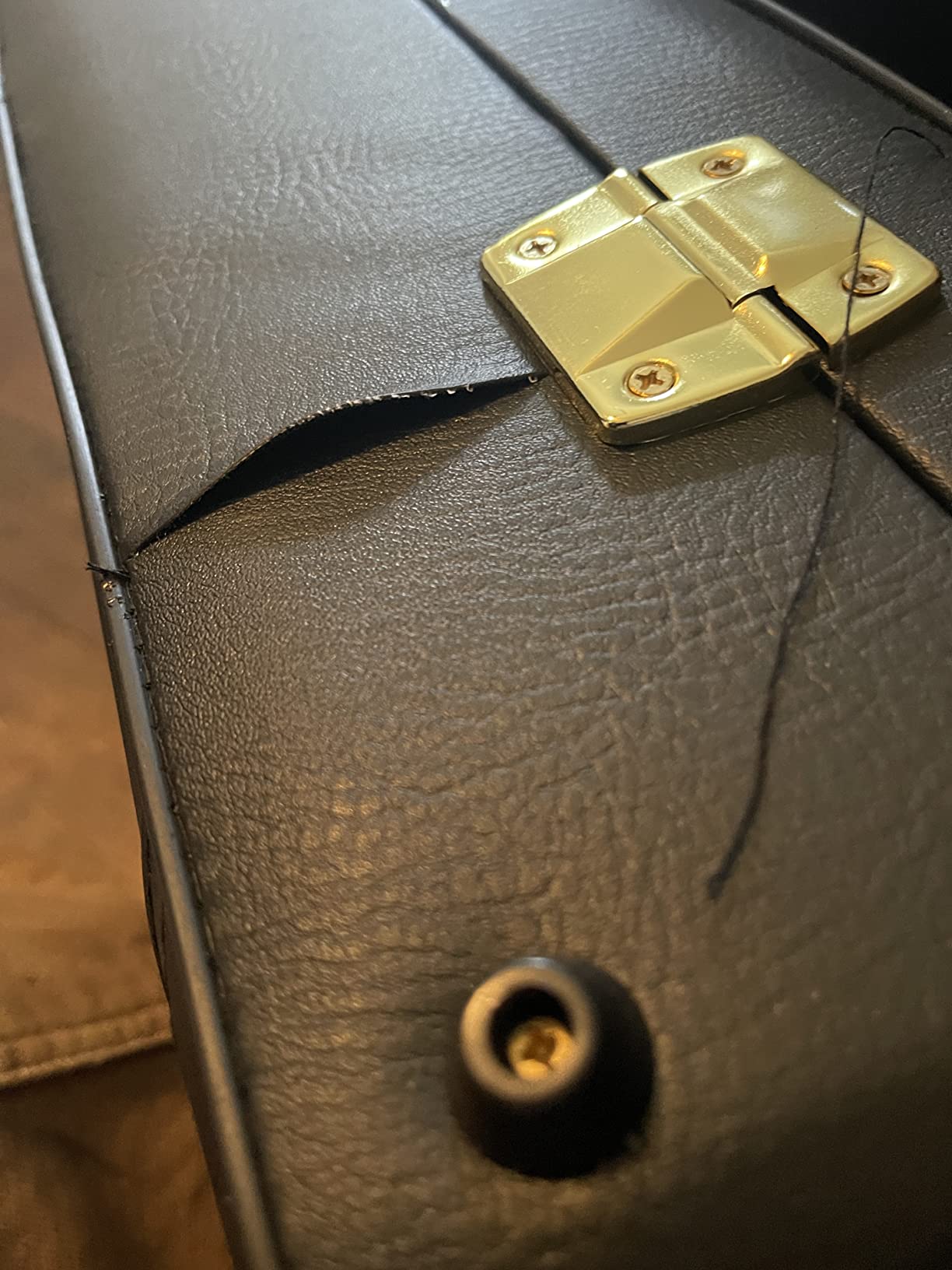
The complete kit includes a plush-lined travel bag with a convertible nylon strap and four carrying configurations. That flexibility matters for students who walk to school, take public transit, or need to fit the saxophone in a crowded band room.
Why beginners like the Ktaxon
The black finish is the headline feature. Many beginning saxophone players feel self-conscious about playing a beginner instrument in front of peers, and a distinctive finish helps build confidence during those first awkward months of playing.
The plush-lined bag also stands out from the standard hard cases that ship with most beginner kits. Padded protection and a comfortable strap make daily transport easier, especially for younger students carrying the instrument between classes.
What the Ktaxon is not
This is a beginner saxophone, not a step-up horn. Players who advance quickly will outgrow the Ktaxon within a year or two and need to upgrade to a Yamaha YAS-280, Jean Paul AS-400, or similar intermediate instrument.
The brand recognition is also lower than Yamaha or Jean Paul. If long-term resale value matters, those established brands hold their value better on the used market.
7. GLORY Gold Laquer Alto Saxophone: Complete Starter Kit for First-Year Students
Glory Gold Laquer E Flat Alto Saxophone with 11reeds,8 Pads cushions,case,carekit
Eb Alto
11 reeds
Hand-engraved bell
Metal resonators
Pros
- Excellent value for the price
- Good sound quality for beginners
- Complete kit with many accessories included
- Beautiful gold lacquer finish
- Impressive craftsmanship for the price tier
- Great for school band students
Cons
- Some quality control inconsistencies reported
- Mouthpiece fit may vary with tight cork issues
- Neck strap quality is basic
- Some pads may be off-center on arrival
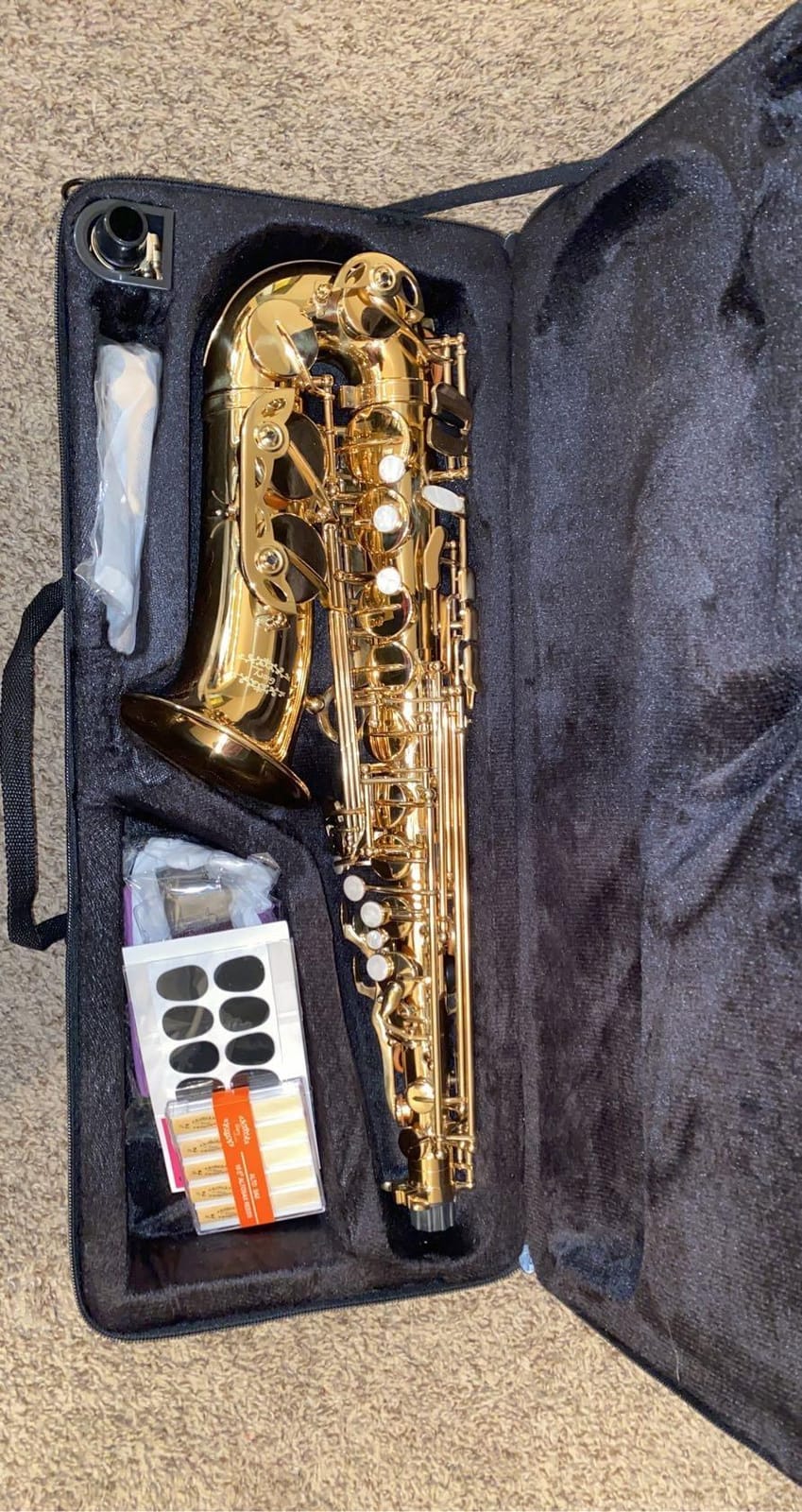
The GLORY gold lacquer alto saxophone packages a surprising amount of instrument and accessories into a beginner-friendly kit. With eleven reeds, eight mouthpiece cushions, a hard-shell case, neck strap, cleaning supplies, and gloves, this is one of the most complete starter packages in the under-$250 category.
The hand-engraved bell decoration gives the saxophone a more refined appearance than many competing beginner models. The metal resonators under the pads also help project sound more effectively than all-leather pad setups, which matters in a school band where the saxophone needs to cut through clarinets and flutes.
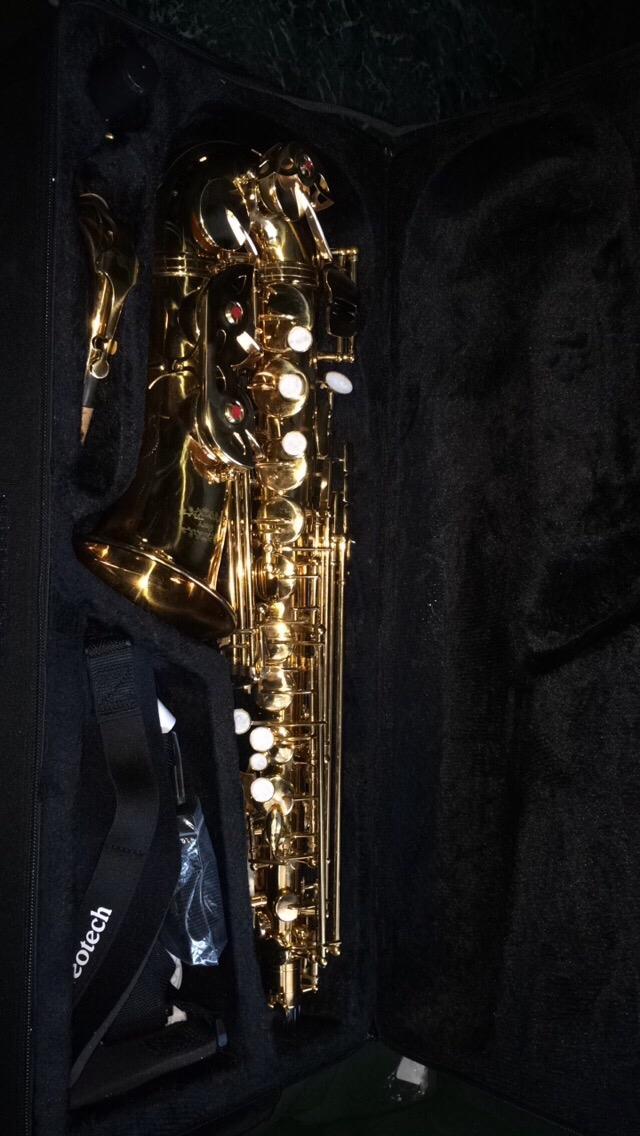
Adjustable key height screws are a feature more common on intermediate horns, and their inclusion here shows thoughtful design. As a student develops their embouchure and playing style, they can fine-tune the key height to match their preferences without needing a trip to the repair shop.
Sound quality is strong for the price tier. Reviewers on Amazon and band teacher forums describe the tone as roughly 90% of what you would hear from a premium brand at a fraction of the price. For a first-year student, that is more than enough saxophone.
What makes the GLORY package stand out
The reed count alone is a major advantage. Eleven reeds means a beginner can go through several weeks of practice before worrying about replacements. Most competing kits ship with three to four reeds, which runs out quickly during daily practice.
The metal resonators also give this horn a brighter, more projecting tone than the all-leather pad setups common at this price point. For jazz band and concert band use, that projection helps the saxophone sit properly in the ensemble.
Common concerns with the GLORY
Quality control is the main watch-out. Some buyers report receiving units with slightly off-center pads or cork fit issues. Working with a local repair shop for a quick post-purchase setup resolves these issues, but it is worth budgeting for that service.
The included neck strap is functional but basic. For long practice sessions or performances, an aftermarket padded neck strap is a worthwhile upgrade that prevents shoulder fatigue.
8. Jean Paul TS-400 Tenor Saxophone: Best Tenor for Advancing Players
Jean Paul Student Tenor Saxophone TS-400 – Golden Brass Lacquered
Bb Tenor
NAPBIRT setup
Tan leather pads
High F# key
Pros
- Professional setup by NAPBIRT-certified technicians
- Excellent customer service from Jean Paul USA
- Good sound quality for student-to-intermediate level
- Durable construction with solid rib design
- Comes with quality mouthpiece and accessories
- Great value for a tenor saxophone
Cons
- Some units need initial cork adjustments
- May need mouthpiece upgrade for advanced players
- Intonation can be challenging in upper register for some
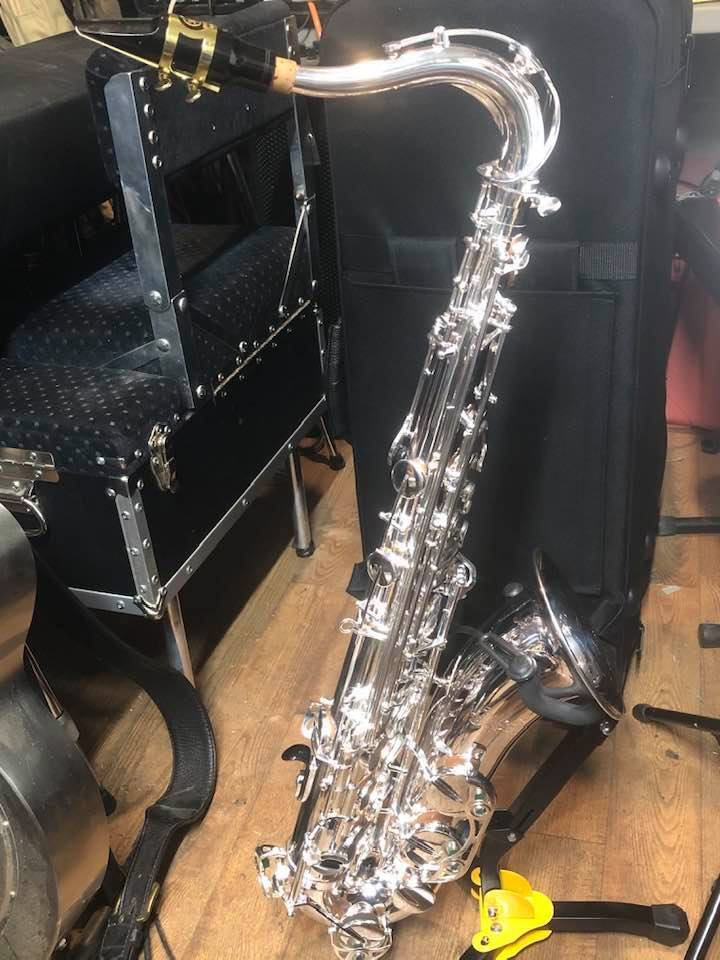
The Jean Paul TS-400 is the only tenor saxophone on this list, and it earns its spot for the same reason the AS-400 dominates the alto category: NAPBIRT-certified professional setup included in the price. A tenor saxophone that arrives playing correctly out of the box is a rare find in this price range.
For alto players ready to move to a deeper, fuller voice, the TS-400 is the natural next step. The tenor voice has a wider bore and larger mouthpiece, which produces the warm, rich tone that jazz standards and ballads demand. The transition from alto to tenor takes a few weeks of adjustment, but the TS-400 makes that transition smoother with its balanced key action.
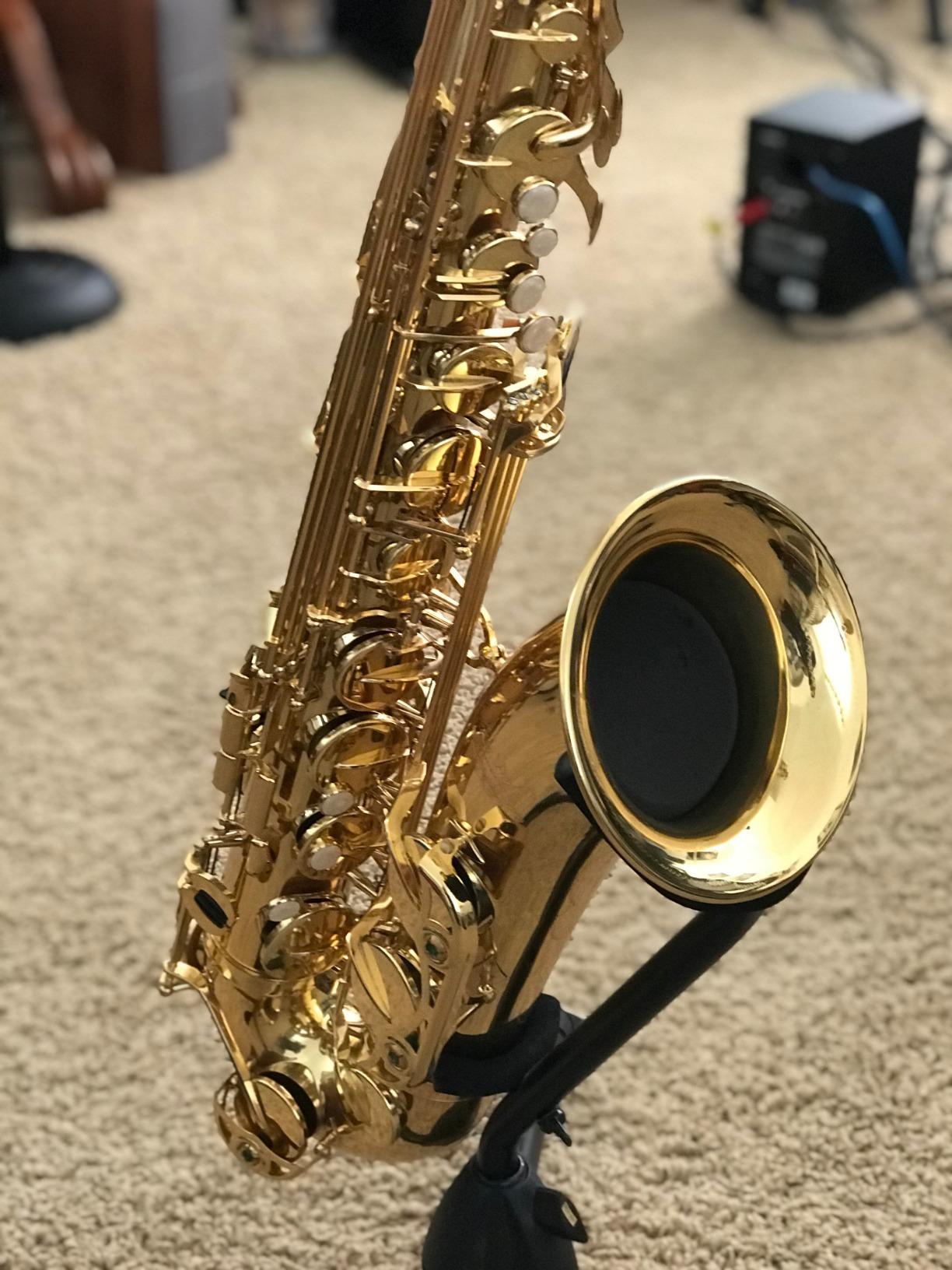
Build quality matches Jean Paul’s reputation. The solid rib construction provides the structural rigidity a tenor needs to handle the larger air column, and the tan leather pads with domed metal resonators help project the deeper tone clearly. For jazz combo and big band use, that projection matters.
Customer service is another Jean Paul strength that forum users consistently mention. The US-based team responds to warranty claims and technical questions faster than most competing brands, which matters when a tenor saxophone develops an issue during a critical gig or audition.
Why the TS-400 makes sense as a step up
Tenor saxophones cost more than altos because they are physically larger and require more raw material. The TS-400 hits a price point that makes the tenor jump accessible for serious alto players who want to expand their range without spending professional money.
The student-friendly details like the adjustable thumb rest and mother-of-pearl buttons ease the physical transition. Alto players developing their grip on a larger instrument will appreciate being able to fine-tune the thumb position.
Who should look elsewhere
If you do not already play alto saxophone comfortably, the tenor is not the place to start. The larger mouthpiece requires more air support than most beginners can provide. Start with an alto and graduate to tenor after a year or two of solid playing.
For professional jazz or classical tenor work, you will eventually want to look at Selmer Paris, Yamaha YTS-62, or Yanagisawa models. The TS-400 is an excellent step-up, but it does not replace a true professional instrument at the highest level.
How to Choose the Best Saxophone for Your Needs
Choosing the right saxophone depends on three questions: what type of saxophone matches your goals, what skill level the instrument suits, and where you plan to buy. Our team breaks down each factor below so you can make a confident decision.
Which saxophone type should you buy first?
Alto saxophone is the best choice for beginners in nearly every case. The alto is the most common saxophone in school bands, has the widest range of learning materials available, and uses a mouthpiece size that works for most players. Tenor saxophone comes next in popularity and produces a deeper, jazz-friendly tone, but its larger mouthpiece and wider bore require more air support than a beginner can usually provide. Soprano saxophone is the most difficult to play in tune and is generally reserved for intermediate and advanced players. Baritone saxophone is the largest common saxophone and is typically only purchased by committed players with a clear use case.
For most first-time buyers, an Eb alto saxophone like the Jean Paul AS-400 or Yamaha YAS-280 is the correct starting point. Once you are comfortable with alto, adding tenor or soprano to your collection is a natural progression.
What skill level are you shopping for?
Beginner saxophones under $400 are designed for first-year students. They prioritize easy playability, durability, and complete accessory packages. The Mendini by Cecilio, Eastar AS-II, GLORY, EASTROCK, and Ktaxon all fit this category.
Intermediate saxophones in the $400 to $1,000 range offer better intonation, more refined keywork, and professional setup. The Jean Paul AS-400 is the standout in this tier and the best choice for students who plan to play through high school and beyond.
Step-up and professional saxophones above $1,000 include models like the Yamaha YAS-280 and the YTS-62 tenor. These horns are built for serious students and gigging musicians who need consistent performance and long-term durability.
Where should you buy a saxophone?
Amazon offers the widest selection and easiest return policy for budget and intermediate saxophones. Sweetwater and Guitar Center provide professional setup, in-home trials, and access to repair networks for higher-end purchases. For vintage and used saxophones, dedicated dealers like Sax.co.uk, 2ndendings, and dawkes.co.uk have stronger inspection standards than general marketplaces.
Buying used can save significant money, but only buy from sellers who allow returns or who have personally inspected and serviced the instrument. A saxophone that needs a full repad can cost more to fix than the purchase price saved.
What accessories do you need with a new saxophone?
Every saxophone needs a few essentials to play well from day one. A quality mouthpiece upgrade, a box of medium-strength reeds, a padded neck strap, a cleaning swab, cork grease, and a reliable case round out the basics. Most complete kits include these items, but the included quality varies widely between brands.
Plan to budget for a professional setup visit within the first year. Even saxophones that ship play-ready benefit from a periodic checkup as pads settle and cork seals adjust. Forum users on r/saxophone consistently recommend building a relationship with a local repair technician early in your playing journey.
What ongoing maintenance should you expect?
Saxophones need regular cleaning after each playing session. Swab out the neck and body, wipe down the keys, and empty the moisture from the pad area. A neglected saxophone develops sticky pads, mildew, and tone problems that no amount of playing can fix.
Expect to budget for a repad every 5 to 10 years depending on playing frequency. A full repad costs roughly half the price of a beginner saxophone, which is why many players keep their step-up instruments for decades rather than chasing new models.
Frequently Asked Questions
What is the best brand for saxophones?
Selmer Paris, Yamaha, Yanagisawa, and Keilwerth are universally recognized as the top four saxophone brands for professional players. For students and intermediate players, Yamaha and Jean Paul USA offer the best combination of build quality, setup precision, and value. The right brand depends on your budget, skill level, and whether you play jazz or classical music.
What is considered the best saxophone?
The Selmer Paris Mark VI is widely considered the greatest saxophone ever made, prized by collectors and professional players for its tonal complexity. Among modern production horns, the Yamaha YAS-875EXII Custom EX, Selmer Paris Reference 54, and Yanagisawa WO10 are considered the best saxophones available new today. For most players, the Jean Paul AS-400 offers the best balance of professional setup quality and accessible price.
What saxophones do professionals use?
Professional saxophonists typically play Selmer Paris (Mark VI, Reference 36, Reference 54, Supreme), Yamaha Custom Z or Custom EX, Yanagisawa WO series, or Keilwerth SX90R models. Jazz players often prefer Selmer or Keilwerth for their tonal character, while classical players favor Yamaha or Yanagisawa for their precise intonation. Many professionals own multiple horns for different musical contexts.
Which saxophone is hardest to play?
Soprano saxophone is widely considered the hardest saxophone to play because of its smaller mouthpiece, straight design, and demanding intonation requirements. Baritone saxophone is physically demanding due to its size and weight. Alto saxophone is the easiest for beginners and is recommended as the first saxophone for new players.
What is the best saxophone for beginners?
The Yamaha YAS-280 is widely considered the best saxophone for beginners who plan to play long-term, thanks to its reliable build quality and Yamaha’s consistent setup standards. For buyers on a tighter budget, the Jean Paul AS-400, Eastar AS-II, and Mendini by Cecilio kit offer excellent value and complete accessory packages. Alto saxophone is the best type for beginners in nearly every case.
Final Verdict: Which Saxophone Should You Buy?
After testing and comparing eight of the best saxophones available in 2026, our top recommendation remains the Jean Paul AS-400 for its unmatched combination of professional setup quality, accurate intonation, and accessible price. For buyers focused purely on value, the Eastar AS-II delivers a complete kit that gets a beginner playing on day one. Yamaha YAS-280 buyers get the long-term reliability that has made Yamaha the trusted name in student saxophones for decades.
Whichever saxophone you choose from this list, invest in a proper mouthpiece upgrade, build a relationship with a local repair technician, and commit to daily maintenance. A well-cared-for saxophone will provide decades of playing enjoyment, whether you are a first-year student or a gigging professional adding a backup horn to your collection.