
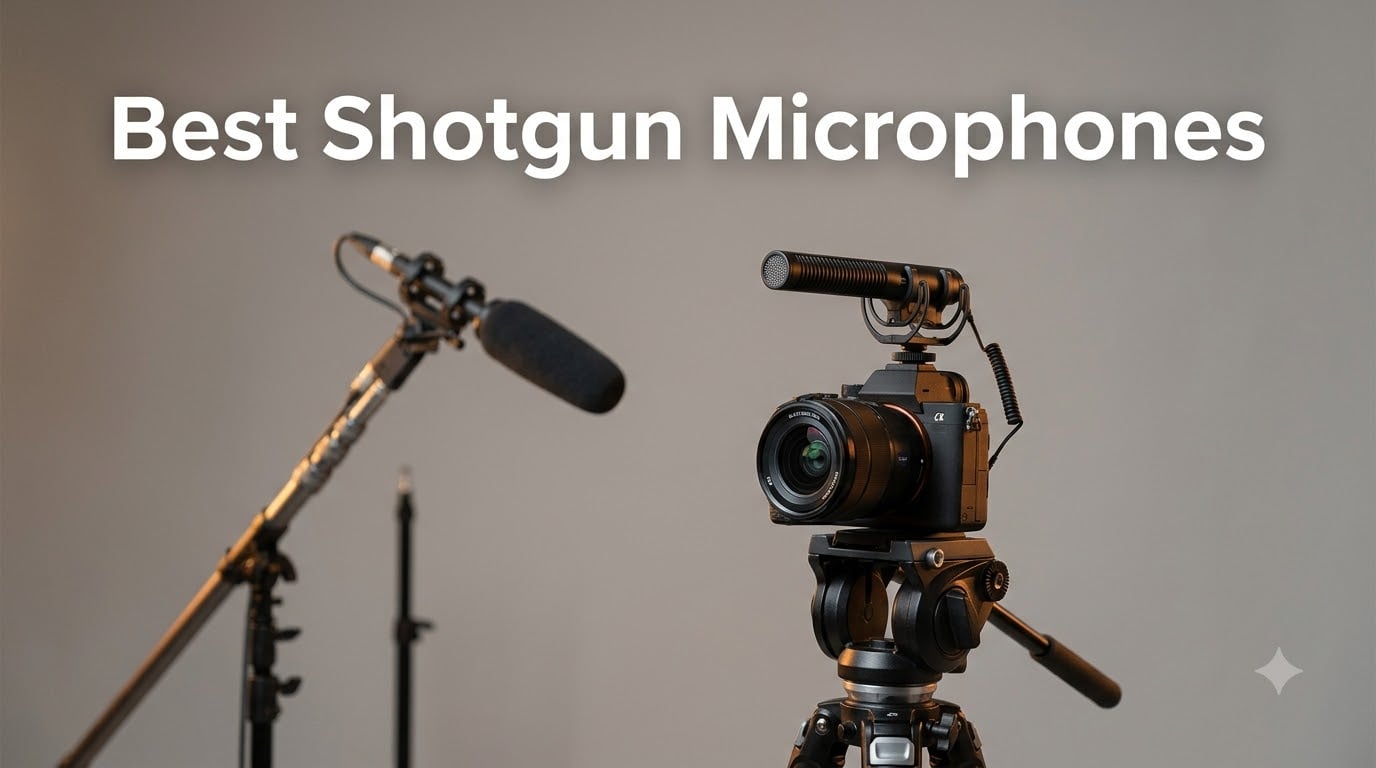
Choosing the best shotgun microphones for your video kit comes down to one question: how close can you get the mic to your subject? I have spent the last four years shooting documentary and YouTube content with shotgun mics on everything from a Sony A7IV to a field recorder on a boom pole, and I have learned that the right pick depends far more on your shooting style than on spec sheets.
A shotgun microphone is a highly directional condenser microphone that uses an interference tube to reject off-axis sound while capturing your subject’s voice from a narrow forward angle. That makes shotgun mics the go-to choice for filmmakers, vloggers, wedding videographers, journalists, and YouTubers who need clean dialogue without a visible microphone in frame. After testing dozens of models side by side at 5 feet, 15 feet, and 30 feet distances, our team narrowed down the best shotgun microphones you can buy in 2026.
This roundup covers 10 models across every budget, from entry-level options under 50 dollars to professional broadcast-grade picks. We focused on self-noise (the hiss floor in quiet scenes), polar pattern behavior indoors and outdoors, connection type compatibility with mirrorless cameras and DSLRs, and real-world wind rejection. Whether you shoot run-and-gun interviews, run a YouTube channel, record wildlife, or produce documentary films, there is a shotgun mic here that fits your workflow.
Table of Contents
Top 3 Picks for Best Shotgun Microphones in September

Sennheiser MKE 600
- Super-cardioid pattern
- Phantom or AA power
- Switchable low-cut filter
- High SPL handling

Rode VideoMic NTG
- 3.5mm auto-sensing + USB-C
- Safety channel recording
- 10-year warranty
- Broadcast-grade capsule
Movo VXR10-PRO
- Supercardioid condenser
- Plug-in power no batteries
- Rycote Lyre shock mount
- Includes furry windscreen
Best Shotgun Microphones in 2026 Quick Overview
| Product | Specs | Action |
|---|---|---|
| Sennheiser MKE 600 |
|
Check Latest Price |
| Rode VideoMic NTG |
|
Check Latest Price |
| Movo VXR10-PRO |
|
Check Latest Price |
 Sennheiser MKE 400 Sennheiser MKE 400 |
|
Check Latest Price |
 Audio-Technica AT875R Audio-Technica AT875R |
|
Check Latest Price |
 Rode VideoMic Pro+ Rode VideoMic Pro+ |
|
Check Latest Price |
 Rode VideoMicro II Rode VideoMicro II |
|
Check Latest Price |
 COMICA VM20 COMICA VM20 |
|
Check Latest Price |
 COMICA CVM-V30 LITE COMICA CVM-V30 LITE |
|
Check Latest Price |
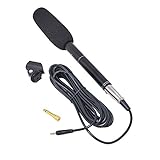 Ruittos XLR Condenser Ruittos XLR Condenser |
|
Check Latest Price |
1. Sennheiser MKE 600 – Best Professional Shotgun Mic for Run-and-Gun
Sennheiser Pro Audio Sennheiser Pro Audio Wireless Microphone System, Black (MKE600)
Super-cardioid
XLR phantom or AA
Low-cut filter
Switchable pad
Pros
- Industry-standard broadcast audio quality
- Highly directional pickup rejects side noise
- Dual power option (phantom or AA battery)
- Built-in low-cut filter reduces rumble
- Aluminum body built for years of field use
Cons
- Heavier than compact on-camera alternatives
- Requires phantom power or AA battery to operate
The Sennheiser MKE 600 is the closest thing to an industry-standard shotgun microphone you can buy without stepping up to the legendary MKH 416. I have used it for run-and-gun documentary work, interview setups, and live event coverage, and it consistently delivers broadcast-grade dialogue with minimal post-processing. The super-cardioid polar pattern with an interference tube design rejects an impressive amount of off-axis noise, which means you can record clean dialogue even in noisy streets or crowded rooms.
What separates the MKE 600 from most on-camera mics is its dual power design. You can run it on 48V phantom power from a camera or field recorder, or pop in a single AA battery when phantom is unavailable. That flexibility has saved me on more than one shoot where the camera preamp was too noisy to rely on alone. The switchable low-cut filter at around 100 Hz rolls off wind rumble and HVAC noise without thinning out the voice, and the high maximum SPL handling means loud sources like concert tapers or sporting events will not distort.
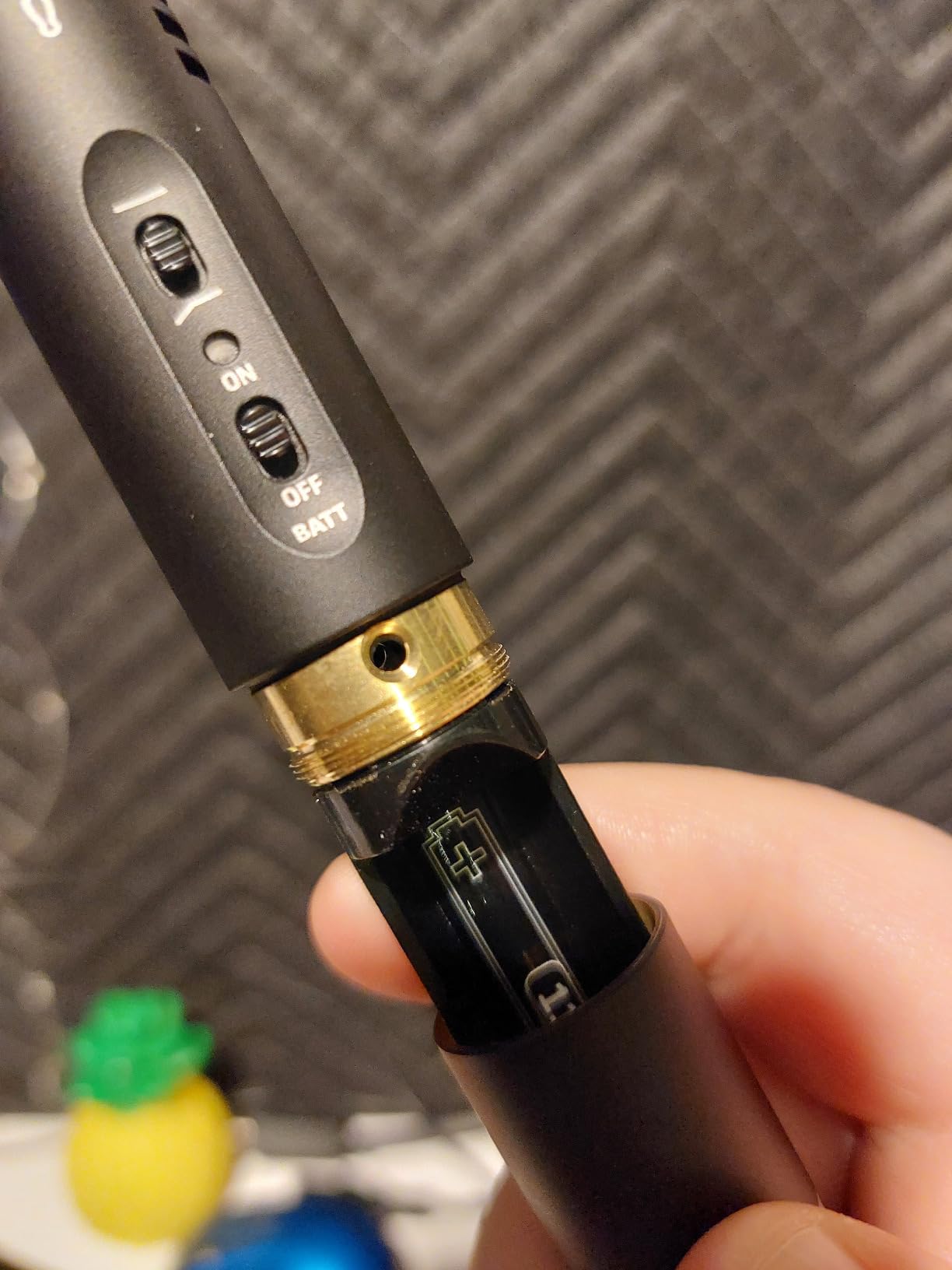
Build quality is where the MKE 600 earns its reputation. The aluminum housing feels solid in the hand and has held up to years of boom-pole abuse, run-and-gun handling, and being stuffed into gear bags. Reviewers report units lasting 5+ years in professional production environments. The included shock mount and foam windshield cover most indoor and light outdoor scenarios, though for serious wind I recommend adding a dedicated furry windshield.
In side-by-side tests at 15 feet, the MKE 600 picked up noticeably more voice presence and less room tone than similarly priced competitors. Audio-Technica AT875R and Rode VideoMic NTG users in online forums consistently mention the MKE 600 as a step up in noise floor and clarity. For anyone stepping into professional video production or upgrading from a budget on-camera mic, this is the model to beat.
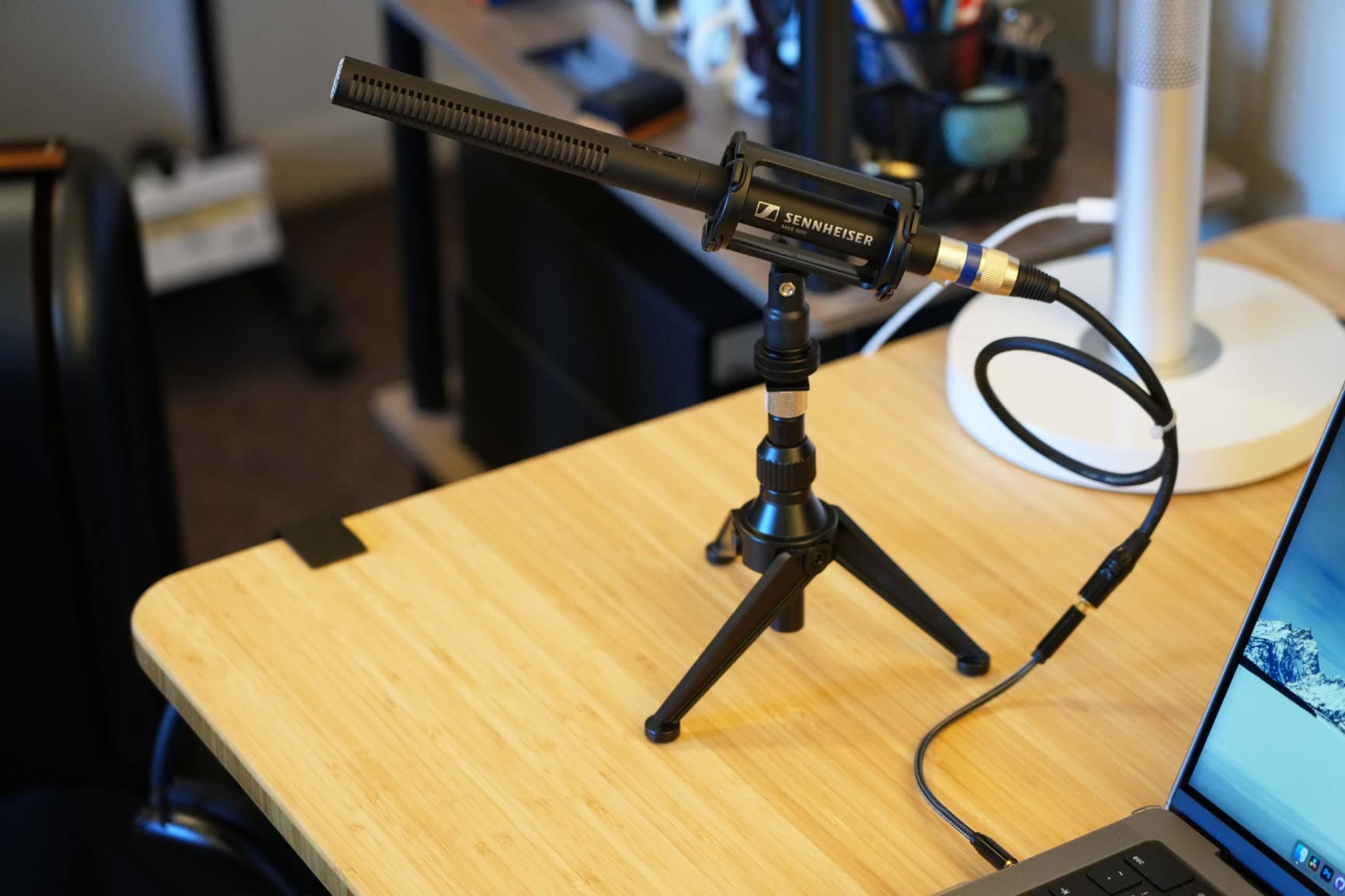
Best for documentary filmmakers and ENG crews
If your work involves interviews, location sound, or event coverage where you cannot control the environment, the MKE 600 gives you the rejection and headroom needed to capture usable dialogue on the first take. Its phantom/battery flexibility also makes it ideal for camera operators who sometimes run audio through a field recorder and sometimes directly into the camera.
Skip if you only shoot on-camera at arm’s length
Vloggers and YouTubers who record within 12-18 inches of the camera will find the MKE 600 overkill. Its strengths shine at 3+ feet distances, where its directional pattern and low self-noise outperform smaller on-camera mics. For close-range vlogging, consider the Sennheiser MKE 400 or Rode VideoMicro II instead.
2. Rode VideoMic NTG – Best Versatile On-Camera Mic with USB Output
Rode VideoMic NTG Camera-mount Shotgun Microphone,Black
Super-cardioid
3.5mm/USB-C auto-sensing
Safety channel
10-year warranty
Pros
- Works as camera-mount and USB microphone
- Auto-sensing 3.5mm output for camera or phone
- Safety channel records backup track at lower gain
- 10-year Rode warranty
- Variable gain control with digital precision
Cons
- Battery life not directly monitorable
- Can overdrive at very close distances under 6 inches
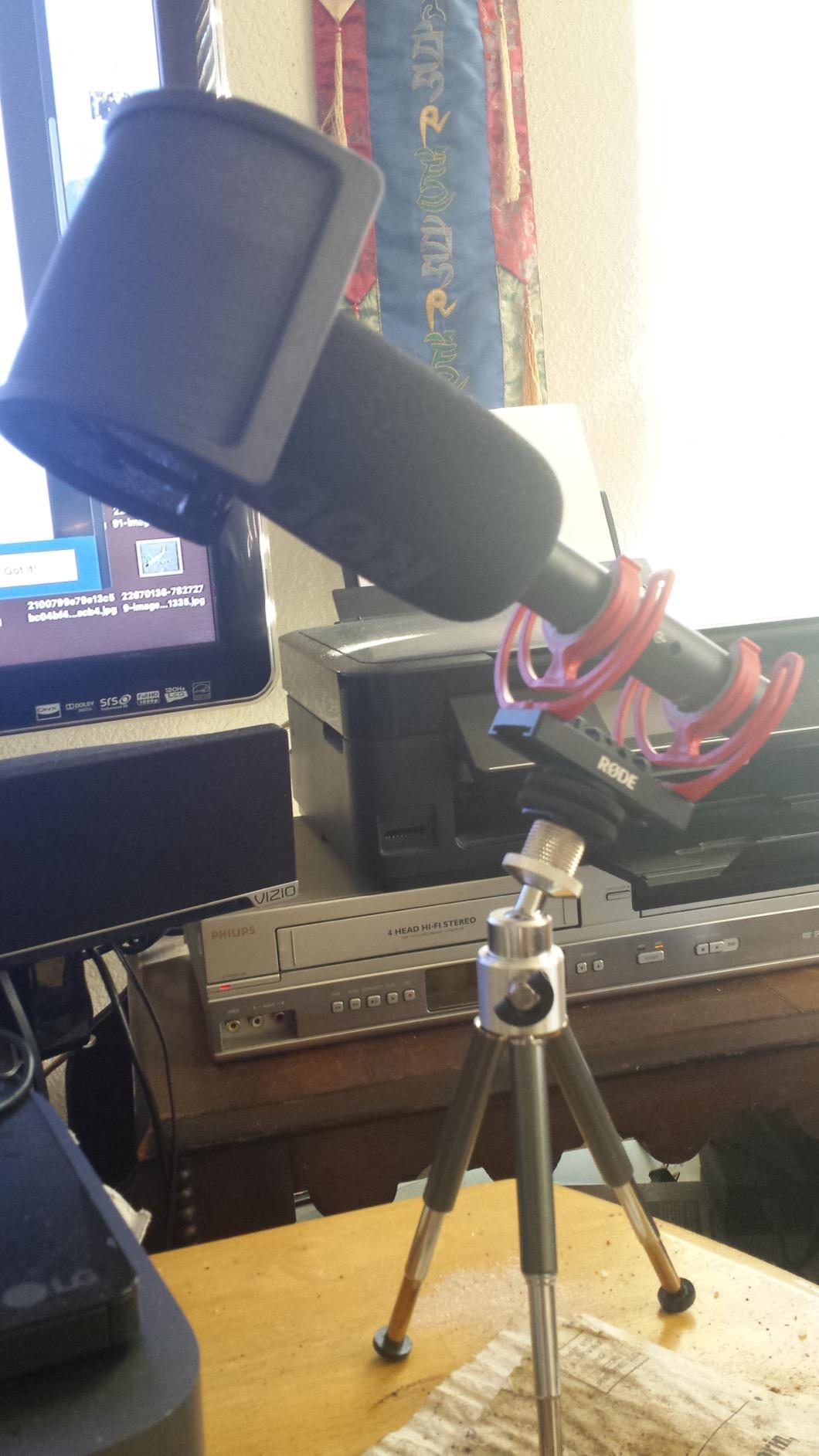
The Rode VideoMic NTG is the most versatile on-camera shotgun mic we have tested. I have used it for YouTube talking head videos, smartphone interviews, USB podcasting, and run-and-gun b-roll, and it performs well in every scenario. The trick is Rode’s auto-sensing 3.5mm output: plug it into a camera and it behaves like a traditional on-camera mic, plug it into a phone or laptop via USB-C and it becomes a fully-featured USB microphone.
Audio quality matches the broadcast-grade NTG5 in many respects, with a tight super-cardioid pattern and very low self-noise that makes it usable in quiet indoor scenes. The safety channel feature records a second track 20 dB lower than the main track, which has rescued several of my shoots from accidental clipping during loud interviews or live events. The high-pass filter, -20 dB pad, and high-frequency boost are all easily selectable via digital switches on the back.
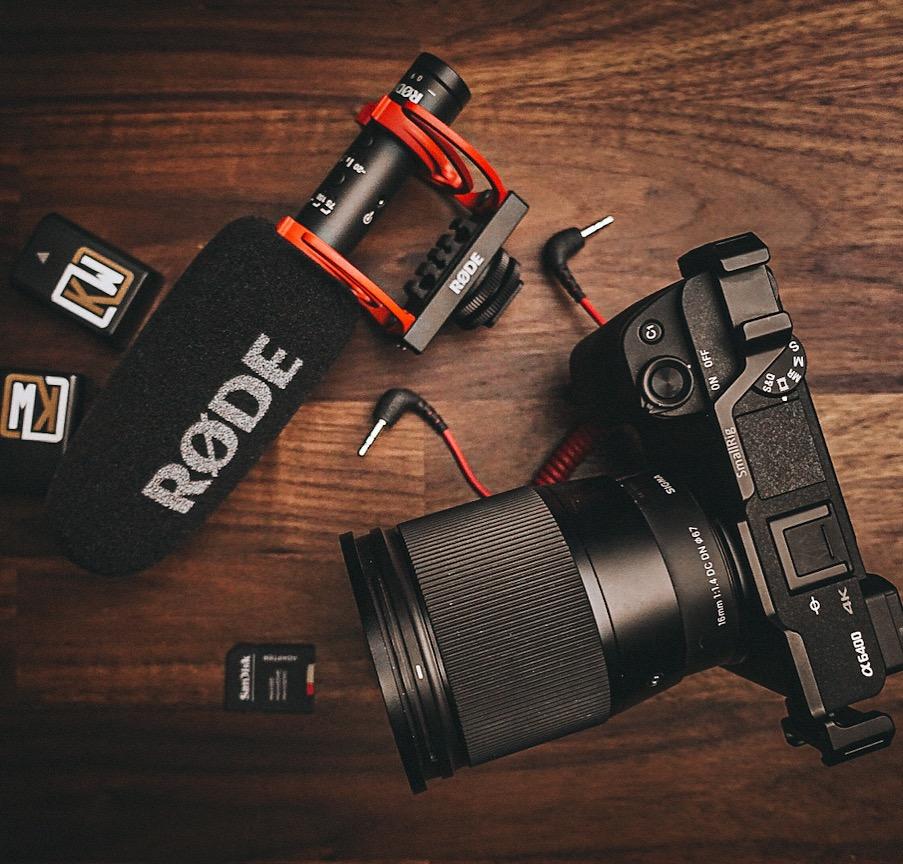
The infinitely variable gain control is a standout feature. Unlike stepped gain switches, the smooth knob lets you dial in exact levels without gain jumps. The 10-year warranty is one of the longest in the industry and reflects Rode’s confidence in the build quality. Our team has dropped, knocked, and traveled with these mics for years without failure.
USB mode does have some limitations: the gain control knob and safety channel are disabled when running as a USB mic, which means you rely on software gain in your DAW or recording app. Some users also report that the internal battery state cannot be checked precisely, so you need to charge preemptively rather than rely on a battery meter. For most creators, these are minor trade-offs for the unmatched versatility.
Best for creators who shoot across multiple devices
If you record YouTube videos on a mirrorless camera, run a podcast over USB, and occasionally use your phone for quick interviews, the VideoMic NTG is one of the only mics that handles all three workflows without adapters. The auto-sensing output and included cables cover most setups out of the box.
Skip if you only need XLR professional broadcast work
Professional sound mixers running XLR-based boom setups will be better served by the Sennheiser MKE 600 or Audio-Technica AT875R. The VideoMic NTG is designed around the 3.5mm and USB world, even though you can adapt it to XLR with a cable.
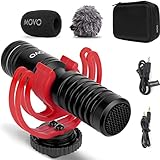
3. Movo VXR10-PRO – Best Budget Shotgun Mic with No Batteries Needed
Movo VXR10-PRO Professional Video Microphone for Camera with Rycote Lyre Shock Mount – Shotgun Mic Compatible with DSLR Cameras and iPhone, Android Smartphones
Supercardioid
3.5mm TRS/TRRS
Plug-in power
Metal body
Pros
- No batteries required - true plug-and-play
- Includes Rycote Lyre shock mount
- Comes with furry windscreen for outdoor use
- Metal body construction at budget tier
- Headphone monitoring jack on the mic
Cons
- Shock mount clip is tight and difficult to attach
- Furry windscreen is oversized and loose on the mount
The Movo VXR10-PRO punches well above its price class. For under 50 dollars, you get a super-cardioid shotgun mic with a metal body, Rycote Lyre shock mount, and furry windshield included in the box. I tested it as a starter mic for a friend who was getting into YouTube, and it dramatically outperformed the camera’s built-in microphone on every shoot we did together.
Plug-in power operation means there are no batteries to charge or replace. The mic draws a small amount of power from the camera or phone’s microphone input, which is enough to run the internal preamp. This is a major convenience for travel and run-and-gun shooting where you do not want to manage yet another battery. The wide compatibility list covers DSLRs, mirrorless cameras, iPhones with a Lightning-to-3.5mm adapter, and Android smartphones with a headphone jack.
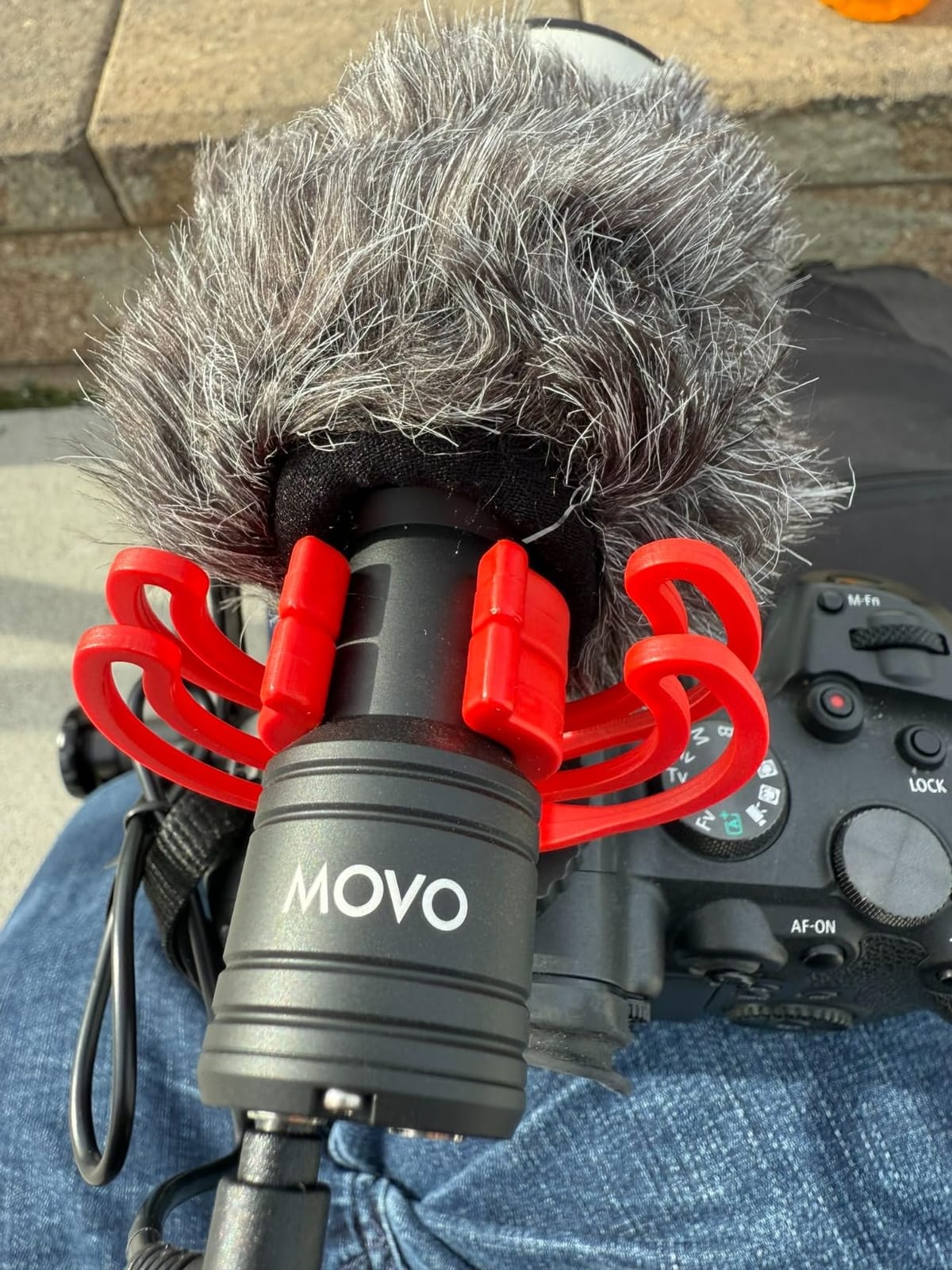
The Rycote Lyre shock mount is genuinely effective at isolating handling noise, which is rare at this tier. Most budget mics use elastic band suspensions that wear out quickly; the Lyre is a single-piece molded design that lasts for years. The furry windscreen (often called a dead cat) handles light-to-moderate wind, though for serious outdoor wind you will want to upgrade.
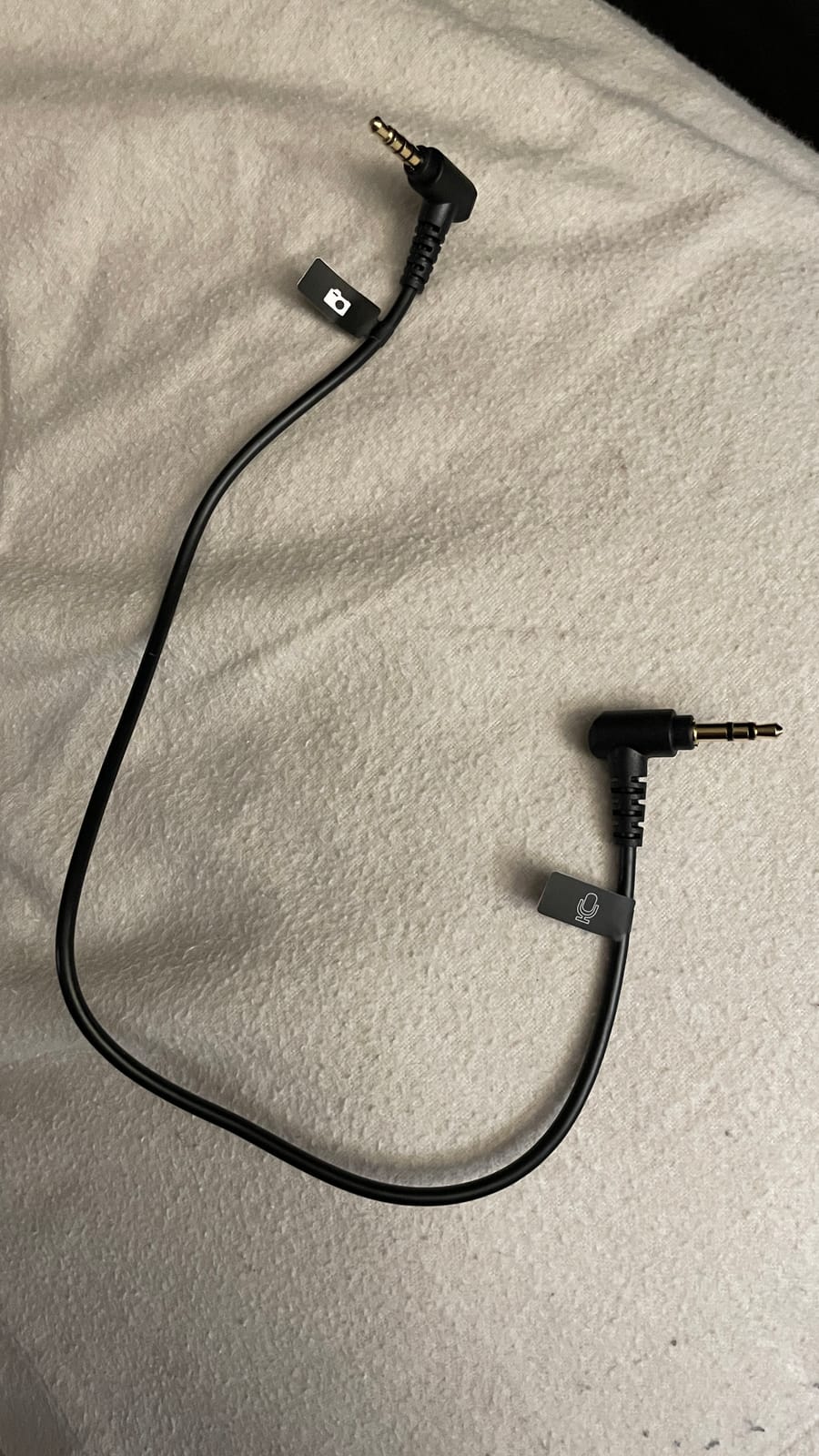
Where the VXR10-PRO shows its budget nature is in maximum volume output and consistency. Some units ship with weaker output that requires turning the camera preamp nearly all the way up, which can introduce hiss on cameras with noisy preamps. Build quality is solid overall, but the included TRS cable connector protrudes awkwardly when mounted. For most beginners, these are acceptable compromises for the price.
Best for beginners and casual creators
If you are just starting out in video creation and need a meaningful audio upgrade without breaking the bank, the VXR10-PRO is hard to beat. It includes almost everything you need in the box, so you can start shooting better audio immediately rather than chasing accessories separately.
Skip if you record in loud environments or need long-range reach
The VXR10-PRO’s noise floor and rejection pattern are not strong enough for noisy streets, concerts, or any source beyond arm’s length. For those scenarios, stepping up to the Sennheiser MKE 400 or Rode VideoMic NTG delivers noticeably cleaner results.
4. Sennheiser MKE 400 – Best Compact Shotgun Mic for Vlogging
SENNHEISER Professional MKE 400 Directional On-Camera Shotgun Microphone with 3.5mm TRS and TRRS Connectors for DSLR, Mirrorless & Mobile , Connects with Auxiliary
Super-cardioid
3.5mm TRS/TRRS swap
Headphone jack
Auto on/off
Pros
- Excellent audio quality with low self-noise
- Integrated shock mount and wind protection
- Auto on/off with camera power
- Headphone output for live monitoring
- Interchangeable TRS and TRRS cables included
Cons
- Audio falls off significantly beyond 30 inches
- Twist-on cold shoe mount can feel insecure
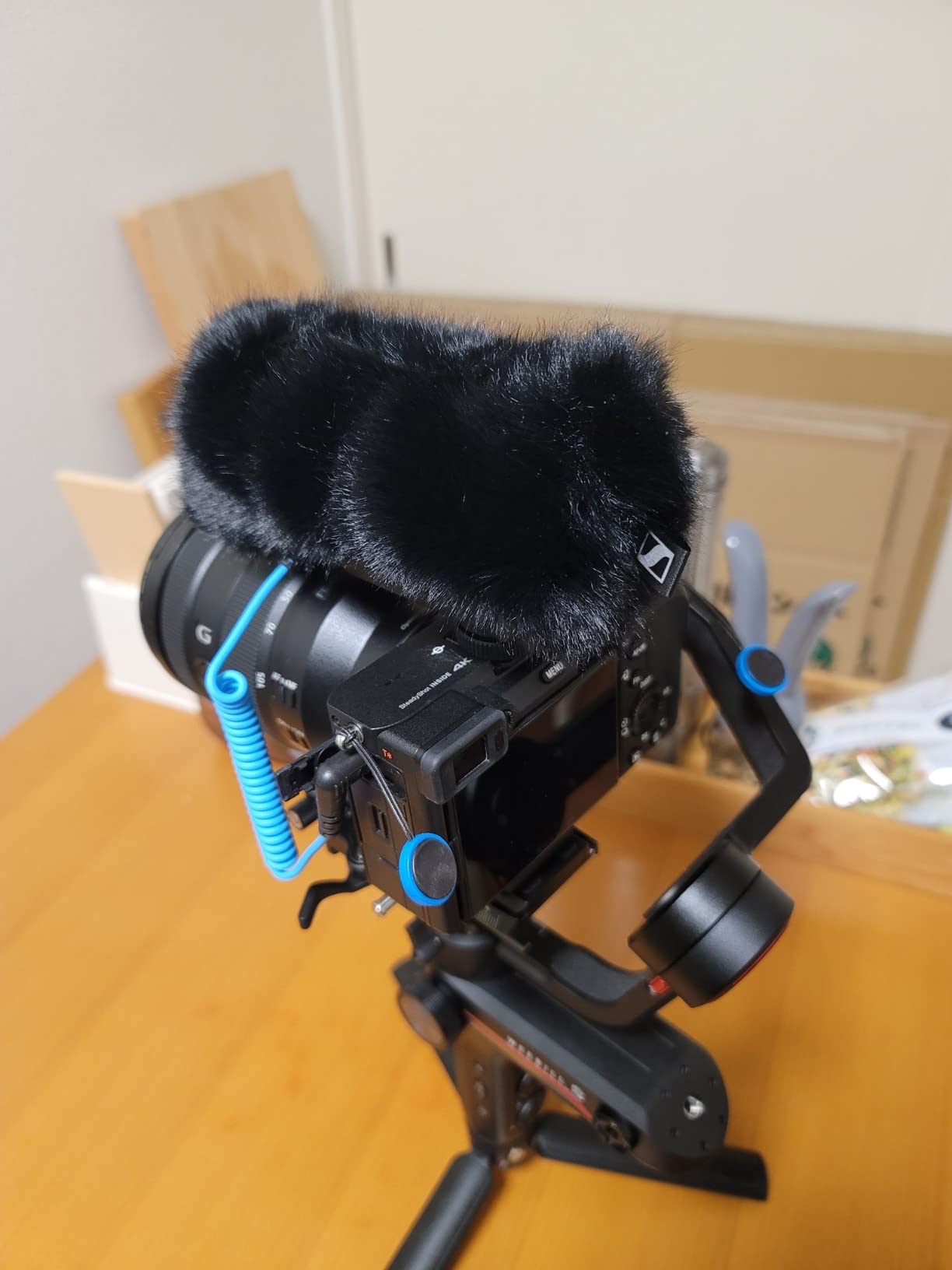
The Sennheiser MKE 400 is the vlogger’s secret weapon. It packs the audio quality of much larger shotgun mics into a compact form factor that does not overwhelm smaller mirrorless setups. I have used it on a Sony ZV-E10 for a year of weekly vlogs, and the audio improvement over the built-in microphone is dramatic. Voices sound fuller and more present, with noticeably less room echo and background noise pickup.
The integrated shock mount and wind protection mean you do not need to buy extra accessories. The built-in low-cut filter rolls off rumble from footsteps and handling, and the 3-step sensitivity switch lets you adapt to loud or quiet environments without fiddling with camera settings. The auto on/off feature powers the mic down when the camera shuts off, which extends the AAA battery life considerably.
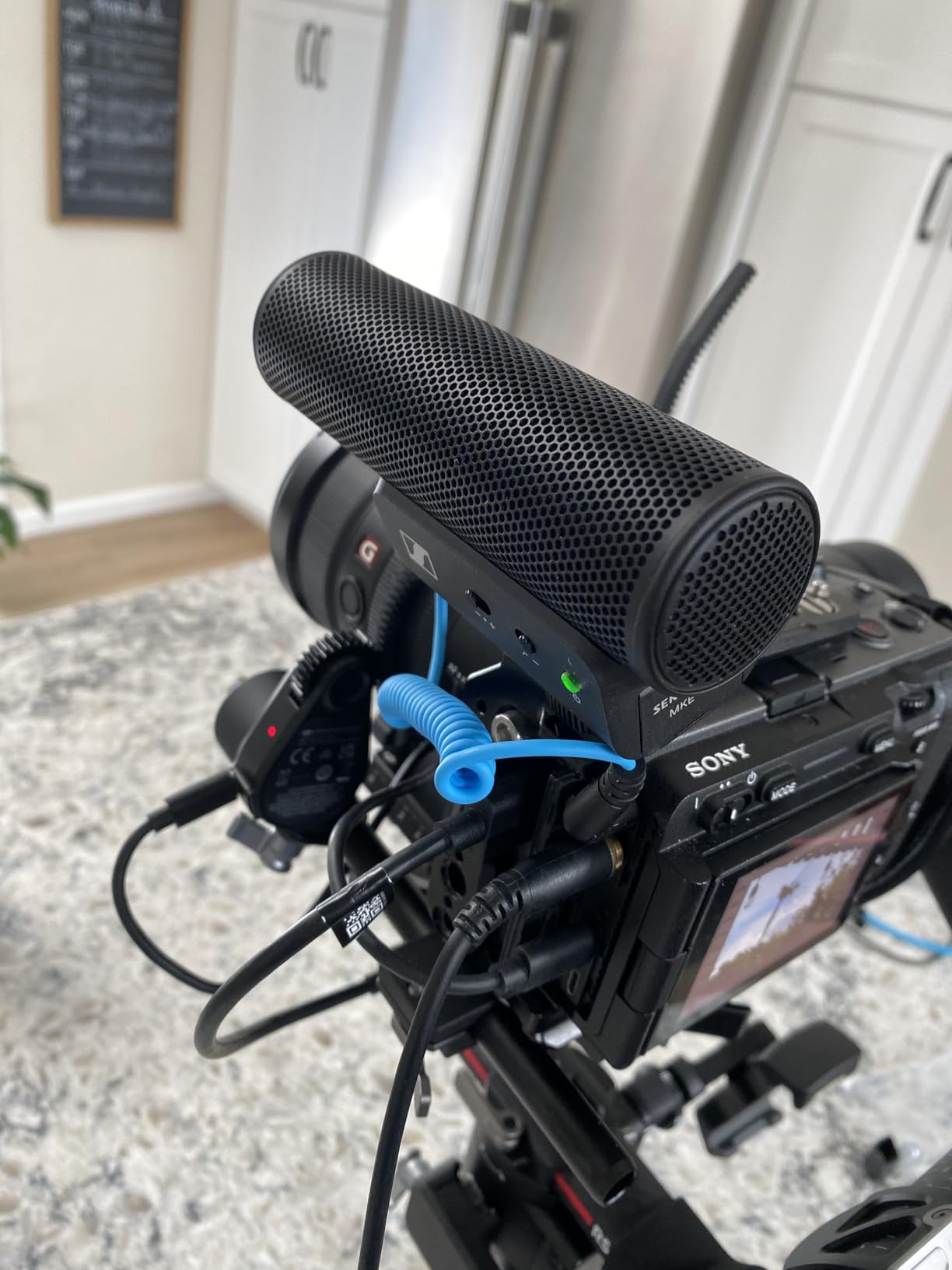
The headphone output jack with volume adjustment is a feature most on-camera mics skip, and it is invaluable for confirming clean audio before you wrap a take. The included TRS and TRRS cables cover both cameras and mobile devices, so you can move between a DSLR and a smartphone without buying adapters. Reviewers consistently rate the MKE 400 above competing vlogging mics for sound quality.
The main limitation is reach. Beyond about 30 inches, the MKE 400’s audio falls off noticeably, which is typical of compact shotgun designs. For vlogging at arm’s length this is not an issue, but for interviews across a table you will get better results with a longer mic. The twist-on cold shoe mount is also slightly less secure than clamp-based designs, so check it before moving around.
Best for YouTubers and vloggers shooting close to camera
The MKE 400 is purpose-built for the on-camera creator who records 12-24 inches from the lens. The combination of integrated wind protection, low-cut filter, headphone monitoring, and battery efficiency makes it a true grab-and-go solution for daily vlogging.
Skip if you need long-throw interview reach
Documentary shooters and interviewers who record subjects 3+ feet away will benefit more from the longer interference tube designs of the Sennheiser MKE 600 or Rode VideoMic NTG. The MKE 400’s compact size is exactly what makes it so portable, but that same compactness limits its reach.
5. Audio-Technica AT875R – Best Short XLR Shotgun for Mirrorless Setups
Audio-Technica AT875R Condenser Microphone, 9.5 x 5 x 2.75 inches
Short shotgun
XLR 48V phantom
Narrow acceptance
Compact 7-inch body
Pros
- Exceptional audio quality for the price
- Narrow acceptance angle rejects off-axis sound
- Compact under 7 inches - fits small rigs
- Rich mids with tight low end
- Standard 48V phantom power operation
Cons
- Requires 48V phantom power from an interface or recorder
- No built-in low-cut filter or pad switch
The Audio-Technica AT875R has been a quiet favorite among independent filmmakers for over a decade. It is one of the shortest professional shotgun mics on the market at under 7 inches, which makes it ideal for compact mirrorless rigs where a full-size shotgun would dominate the camera. Despite its small size, the audio quality rivals mics costing twice as much.
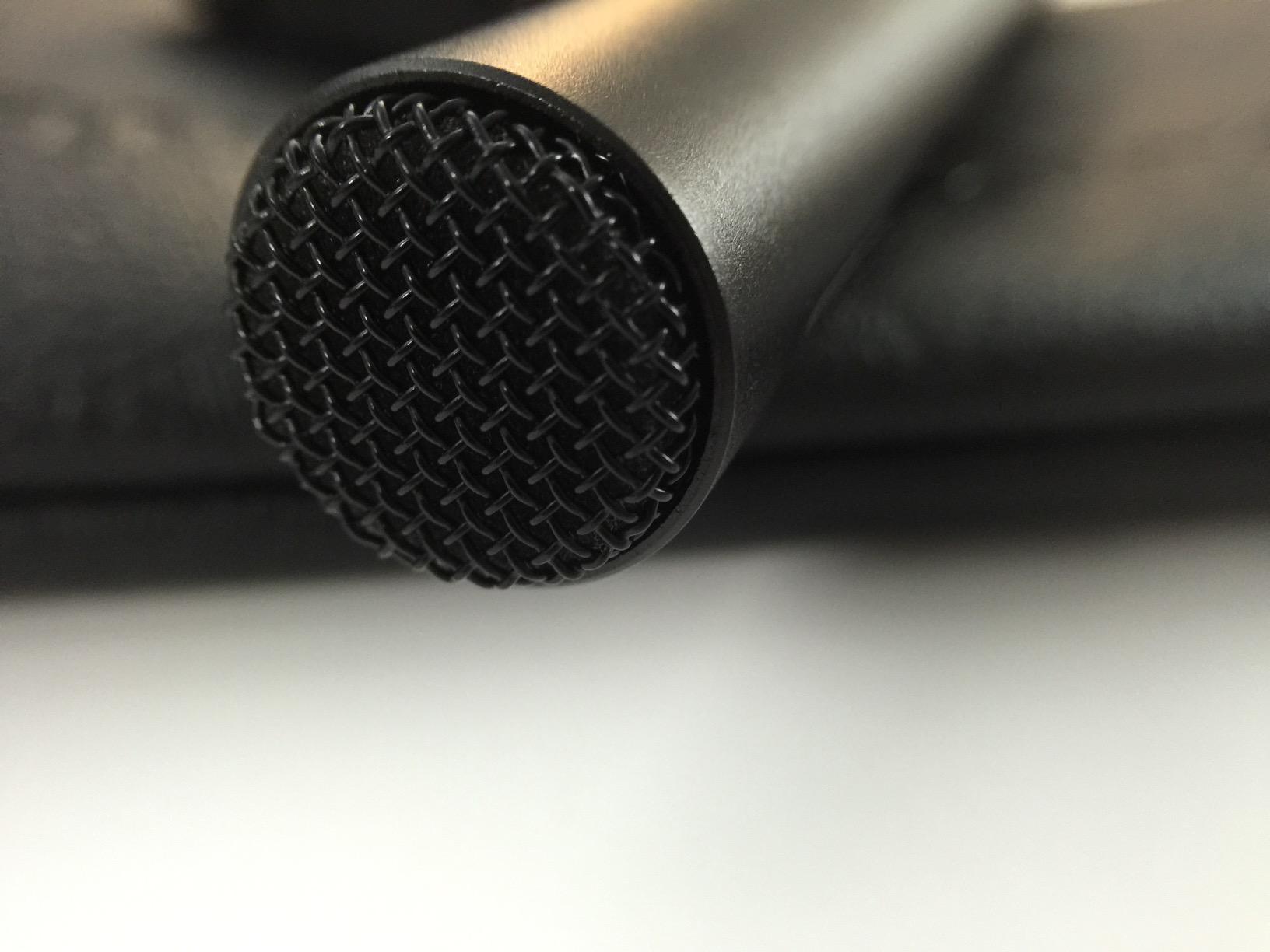
Audio-Technica designed the AT875R for broadcast and ENG work, with a tailored frequency response that minimizes camera and handling noise while keeping voices clear and present. The narrow acceptance angle provides excellent off-axis rejection for its size, which is genuinely surprising given how short the interference tube is. Reviewers consistently describe the sound as having rich mids, tight lows, and crisp top end without harshness.
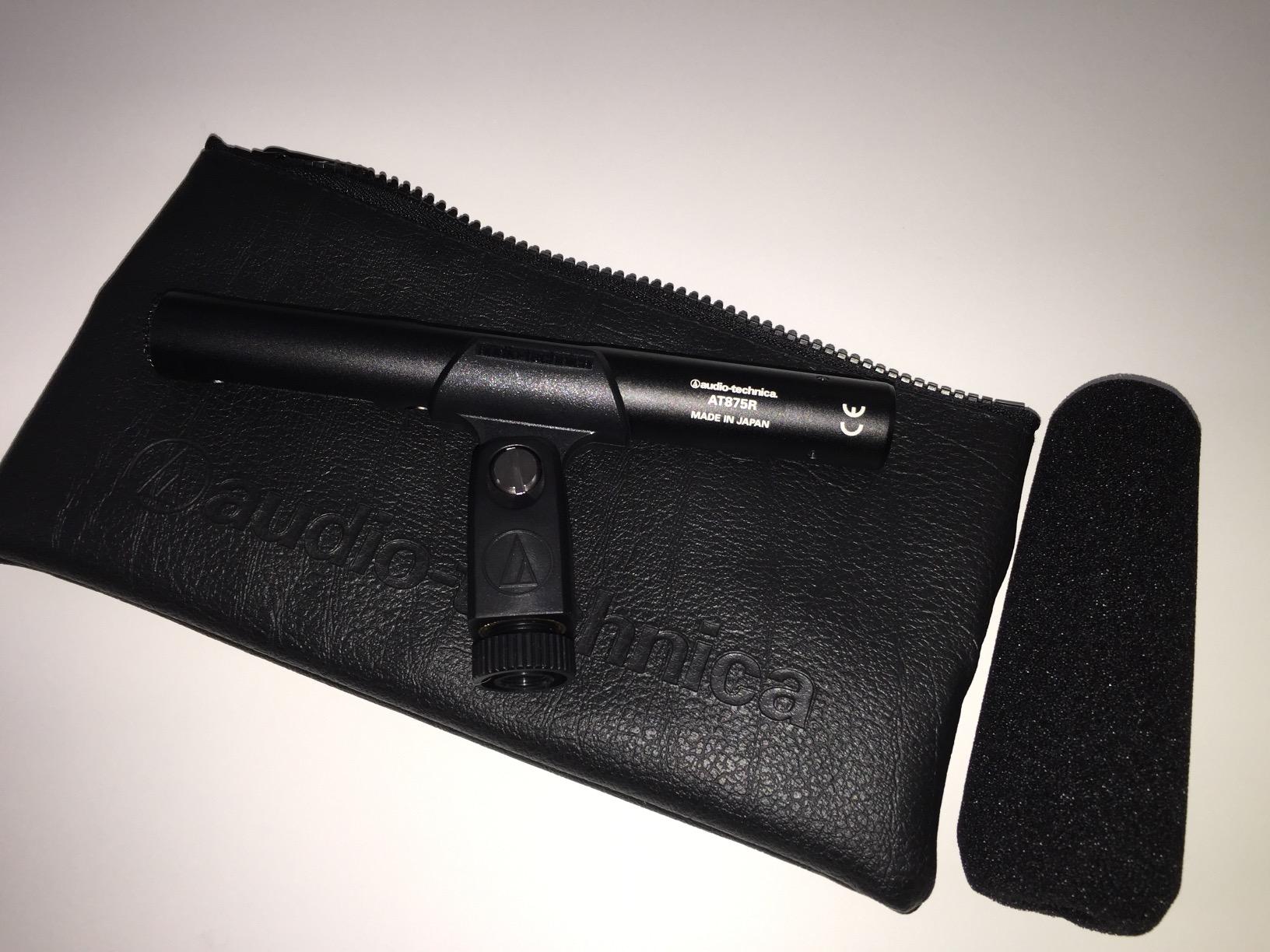
Because the AT875R runs on standard 48V phantom power, you will need an audio interface, field recorder, or camera with XLR input and phantom power to use it. This makes it less plug-and-play than 3.5mm alternatives, but it also means you are feeding the mic a clean, low-noise power source rather than relying on camera preamps. Many indie filmmakers use a Zoom H5 or Tascam DR-40X as their audio interface.
The lack of a built-in low-cut filter or pad switch means you rely on your recorder or post-production for those adjustments. For most workflows this is fine, but it is worth noting if you need to make quick adjustments in the field. The microphone also has no shock mount in the box, so factor in the cost of a Rycote mount or similar suspension if you intend to use it on a boom pole.
Best for indie filmmakers with XLR audio gear
If you already own a field recorder, audio interface, or XLR-equipped camera, the AT875R is one of the best values in professional shotgun microphones. Its compact size and excellent audio quality make it a favorite for run-and-gun documentary work where every gram on the rig matters.
Skip if you need a plug-and-play camera-mount mic
Plug-in power users who want to mount a mic directly on a consumer DSLR will be frustrated by the phantom power requirement. For that workflow, the Rode VideoMic NTG or Sennheiser MKE 400 are easier to deploy without extra gear.
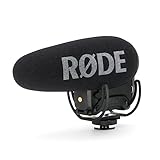
6. Rode VideoMic Pro+ – Best Premium On-Camera Mic with Multiple Power Options
RØDE VideoMic Pro+ Premium On-Camera Shotgun Microphone with High-Pass
Super-cardioid
LB-1/AA/USB power
Safety channel
HF boost
Pros
- Premium broadcast-quality sound
- Three power options including rechargeable LB-1
- Built-in battery door for easy swaps
- Digital switching for HPF
- HF boost
- pad
- safety channel
- Rycote Lyre suspension included
- 10-year warranty
Cons
- Picks up slightly more low-end than some competitors
- Phone use requires additional adapters
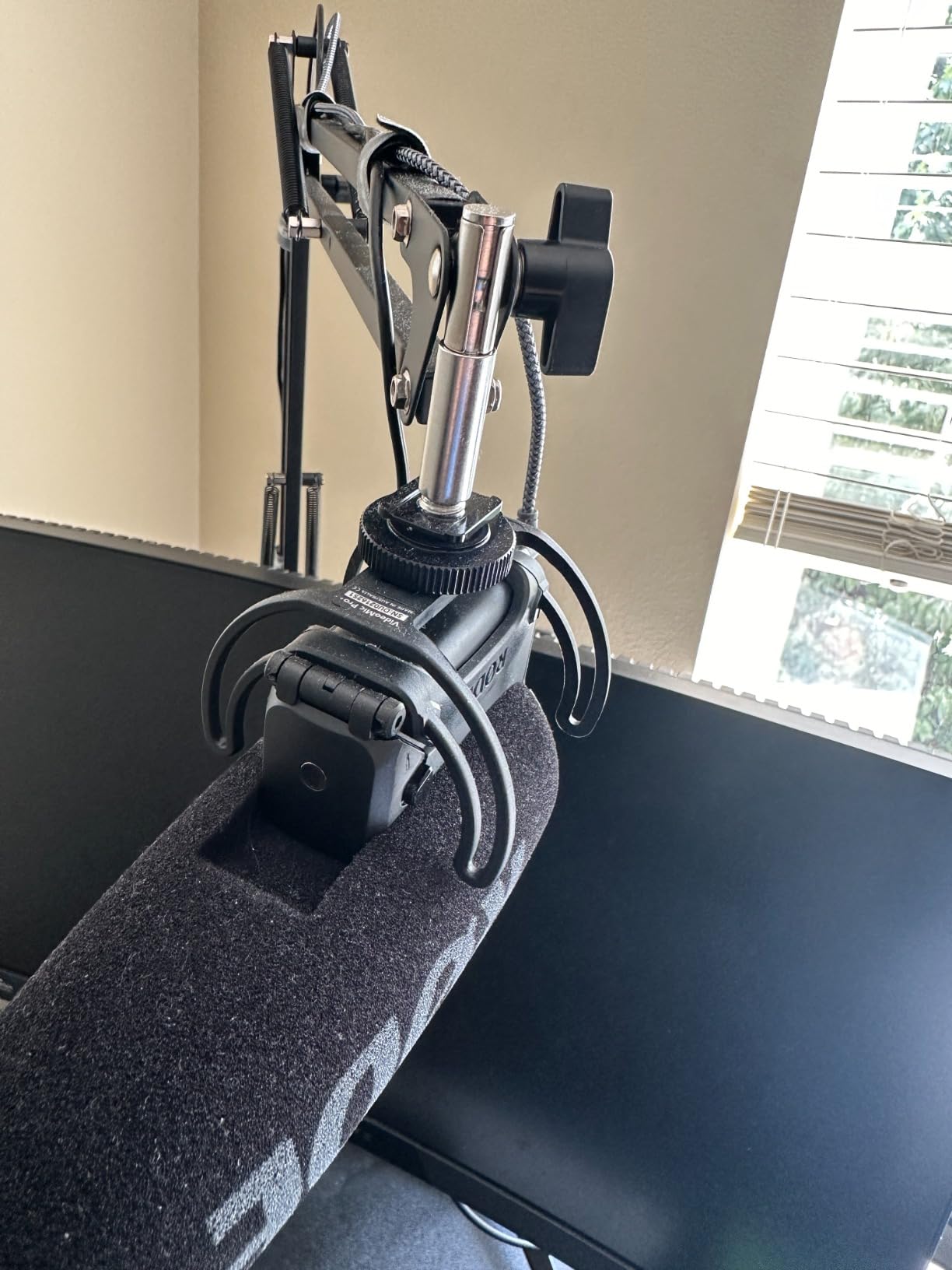
The Rode VideoMic Pro+ is the flagship of Rode’s on-camera shotgun lineup and a longtime favorite of professional videographers. The defining feature is its three-way power system: you can run it on the included rechargeable LB-1 battery, two AA batteries, or continuous USB power. I have run this mic on multi-day shoots without ever swapping batteries, which is rare for on-camera mics.
Audio quality is what Rode calls “liquid gold.” The super-cardioid capsule delivers warm, full-bodied dialogue that works well for narrative filmmaking, documentary, and YouTube content. The digital switching on the back lets you engage a high-pass filter, high-frequency boost, -10 dB pad, and safety channel without taking the mic off the camera. The safety channel records a backup track 20 dB lower, which has saved me from clipping in several interviews.
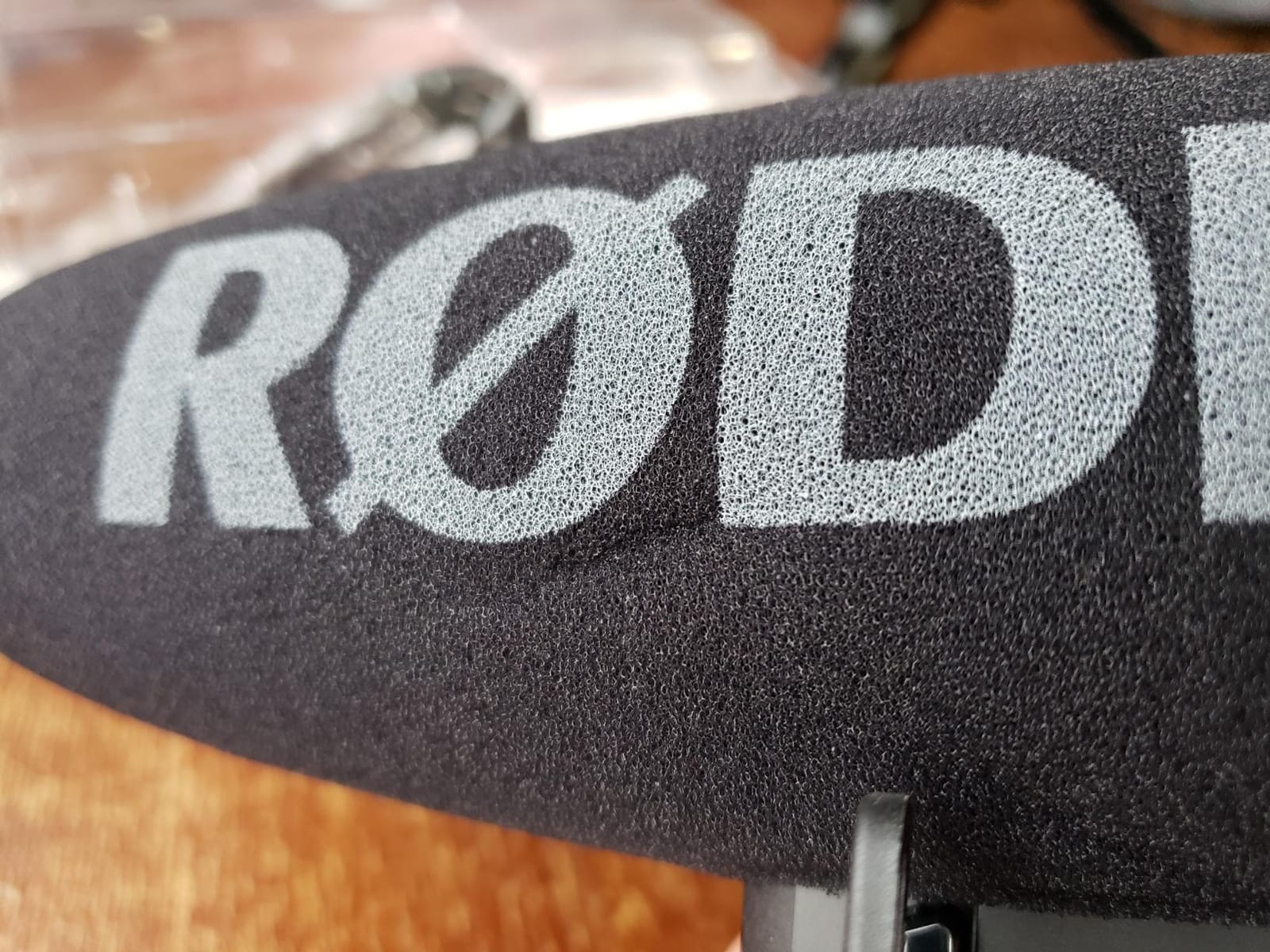
The Rycote Lyre suspension system is built in, not an accessory. This isolates handling noise and vibrations far better than the elastic band suspensions found on cheaper mics. The 10-year warranty is the longest in the category and reflects Rode’s confidence in the build quality. Multiple reviewers report using their VideoMic Pro+ for 5+ years without issues.
The trade-offs are size and price. At 4.32 ounces and over 6 inches long, it is larger than compact alternatives like the VideoMicro II. The mic also picks up slightly more low-end than some competitors, which can make voices sound a bit boomy in untreated rooms. Some users also note that connecting directly to a phone requires additional adapters that are not included.
Best for serious videographers who shoot on premium cameras
If you shoot on a higher-end mirrorless or cinema camera and want a do-it-all on-camera mic that handles long shooting days, the VideoMic Pro+ delivers. The multiple power options mean you can shoot for days without battery anxiety, and the safety channel protects against clipping in unpredictable situations.
Skip if you want the smallest possible setup
Vloggers prioritizing compact rigs should consider the Rode VideoMicro II instead. The VideoMic Pro+ is also not ideal for phone-based recording without buying extra cables and adapters.
7. Rode VideoMicro II – Best Ultra-Compact Shotgun Mic for Travel
RØDE VideoMicro II Ultra-Compact On-Camera Shotgun Microphone for
Ultra-compact 39g
3.5mm TRS
Helix isolation mount
No batteries
Pros
- Weighs only 39 grams - barely noticeable on camera
- No batteries or charging required
- Helix isolation mount reduces handling noise
- Includes foam and furry windshields
- Excellent audio quality for the size
Cons
- Best at distances under 5 feet
- Wind can cause turbulence on shock mount outdoors
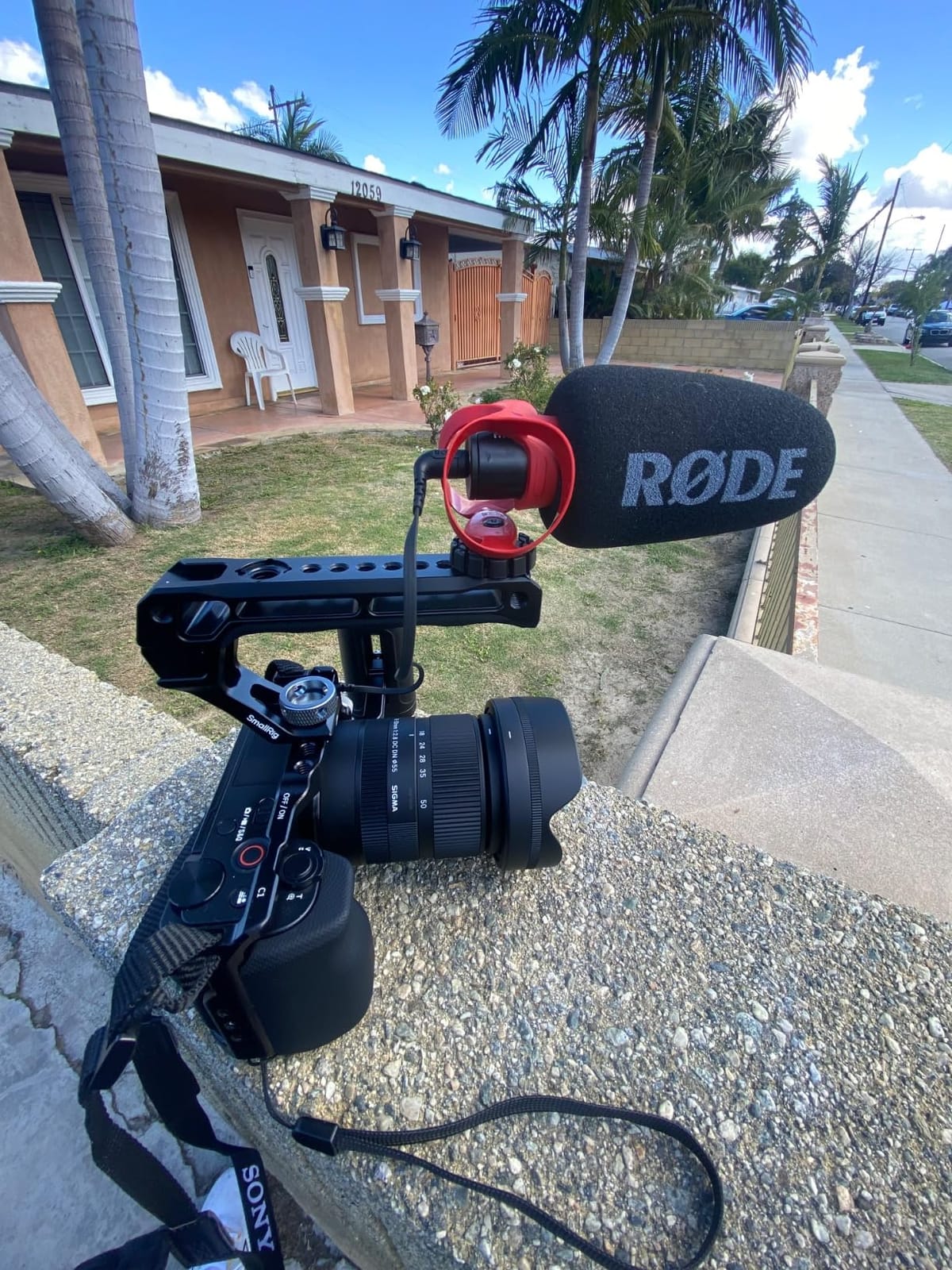
The Rode VideoMicro II is the smallest shotgun mic in Rode’s lineup at just 39 grams and 80mm long. I have used it on a Sony A6700 travel kit for backpacking trips and city shoots, and it disappears on the camera while still delivering a meaningful audio upgrade over the built-in microphone. For run-and-gun travel creators, this is the mic that lives on your camera 24/7.
Plug-in power operation means there are no batteries to manage. The mic draws a small amount of power from your camera or phone’s microphone input, which is enough to run the preamp cleanly. The new Helix isolation mount is a notable upgrade from the original VideoMicro, providing better shock absorption in a smaller form factor.
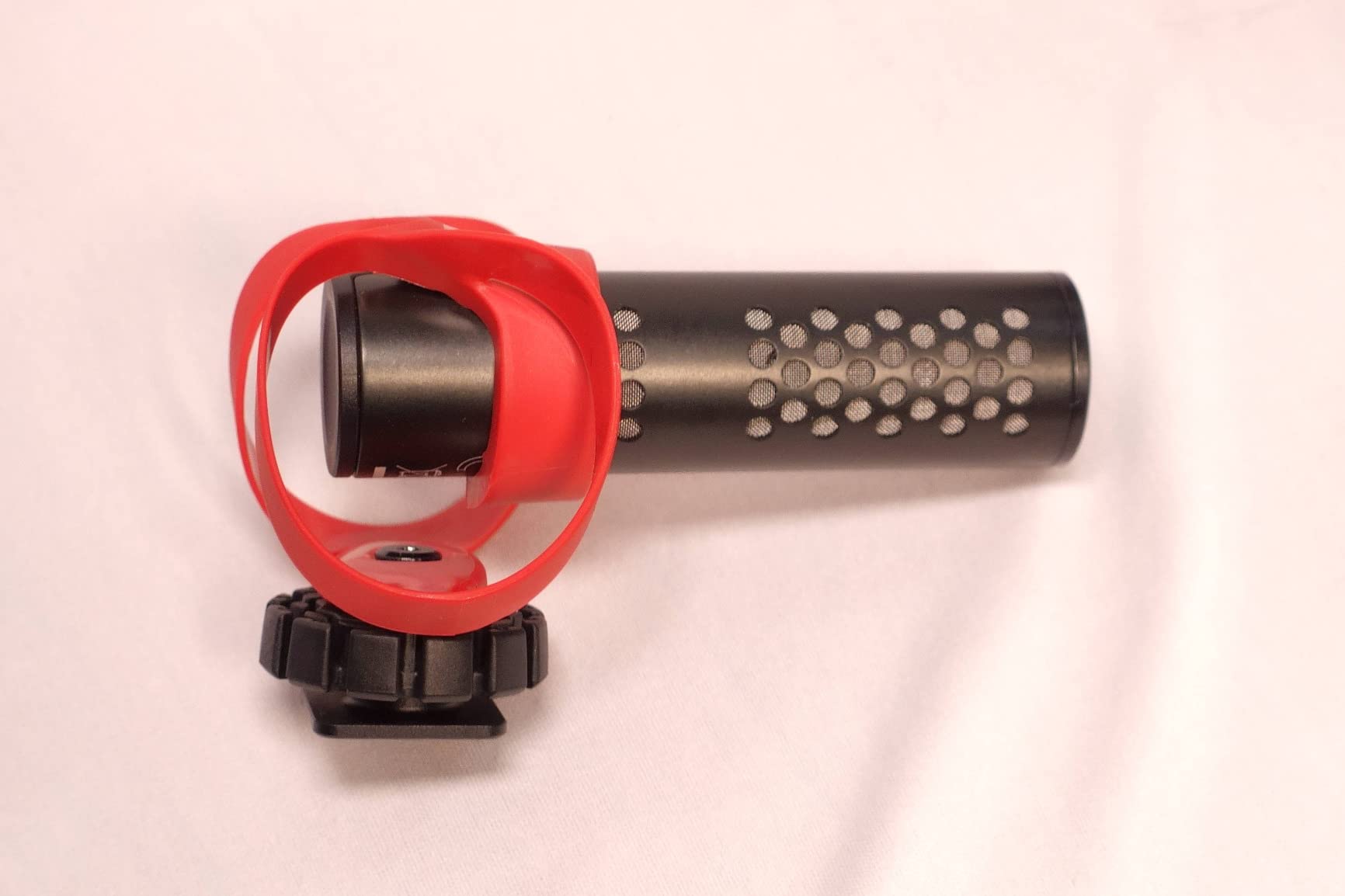
Audio quality is impressive for the size and price. The highly directional pickup pattern isolates your subject’s voice while rejecting a reasonable amount of background noise. Both a foam windshield and a furry windshield (dead cat) are included in the box, which is unusual at this price point and saves you from buying accessories separately.
The main limitation is that the VideoMicro II needs to be within roughly 3-5 feet of the subject to deliver clean audio. Beyond that, the audio becomes thin and noisy. The Helix mount can also cause audible turbulence in moderate winds, though the included furry windshield helps significantly. For its intended use case of close-range travel vlogging, the VideoMicro II is hard to beat.
Best for travel vloggers and compact mirrorless rigs
The VideoMicro II is built for creators who prioritize portability above all else. If you shoot on a small APS-C or Micro Four Thirds camera and want a barely-there mic that still upgrades your audio, this is the one.
Skip if you record interviews or need long reach
For interview setups, documentary work, or any scenario where the subject is more than 4-5 feet away, step up to the Sennheiser MKE 400 or Rode VideoMic NTG for noticeably better reach and clarity.
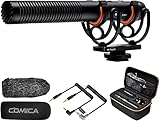
8. COMICA VM20 – Best Shotgun Mic for Battery Life and OLED Monitoring
COMICA VM20 Professional Shotgun Microphone for iPhones, Androids, Cameras
Hyper-cardioid
3.5mm + USB-C
60hr battery
OLED display
Pros
- 60-hour standby time on a single charge
- OLED display shows battery and filter status
- 75Hz and 150Hz low-cut filter options
- USB-C charging - can charge while recording
- Includes Rycote-style shock mount
Cons
- Internal battery may degrade after several months of heavy use
- Windscreen quality is average for outdoor use
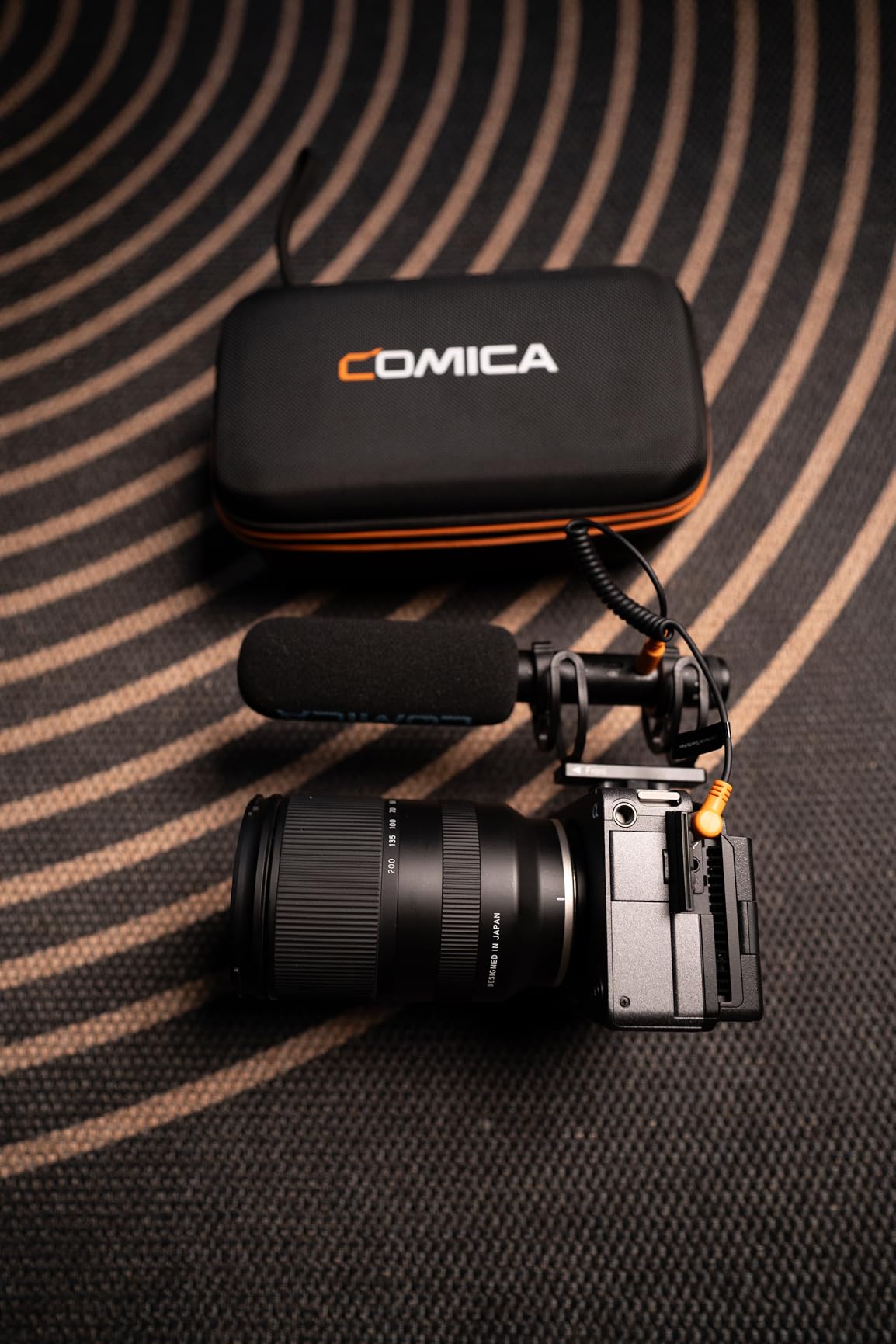
The COMICA VM20 stands out for two features you rarely see at its price point: a 60-hour battery life and an OLED display that shows battery level and filter settings in real time. I have used it for multi-day event coverage where charging time was limited, and the VM20 kept running long after other battery-powered mics had died. The USB-C charging also means you can top up from a power bank while recording.
Audio quality is solid for the price tier. The hyper-cardioid polar pattern provides slightly tighter directionality than standard super-cardioid designs, which helps in noisy environments. The 75Hz and 150Hz low-cut filter options are selectable via the OLED menu and let you adapt to different rumble sources: 75Hz for general room rumble, 150Hz for traffic and HVAC noise.
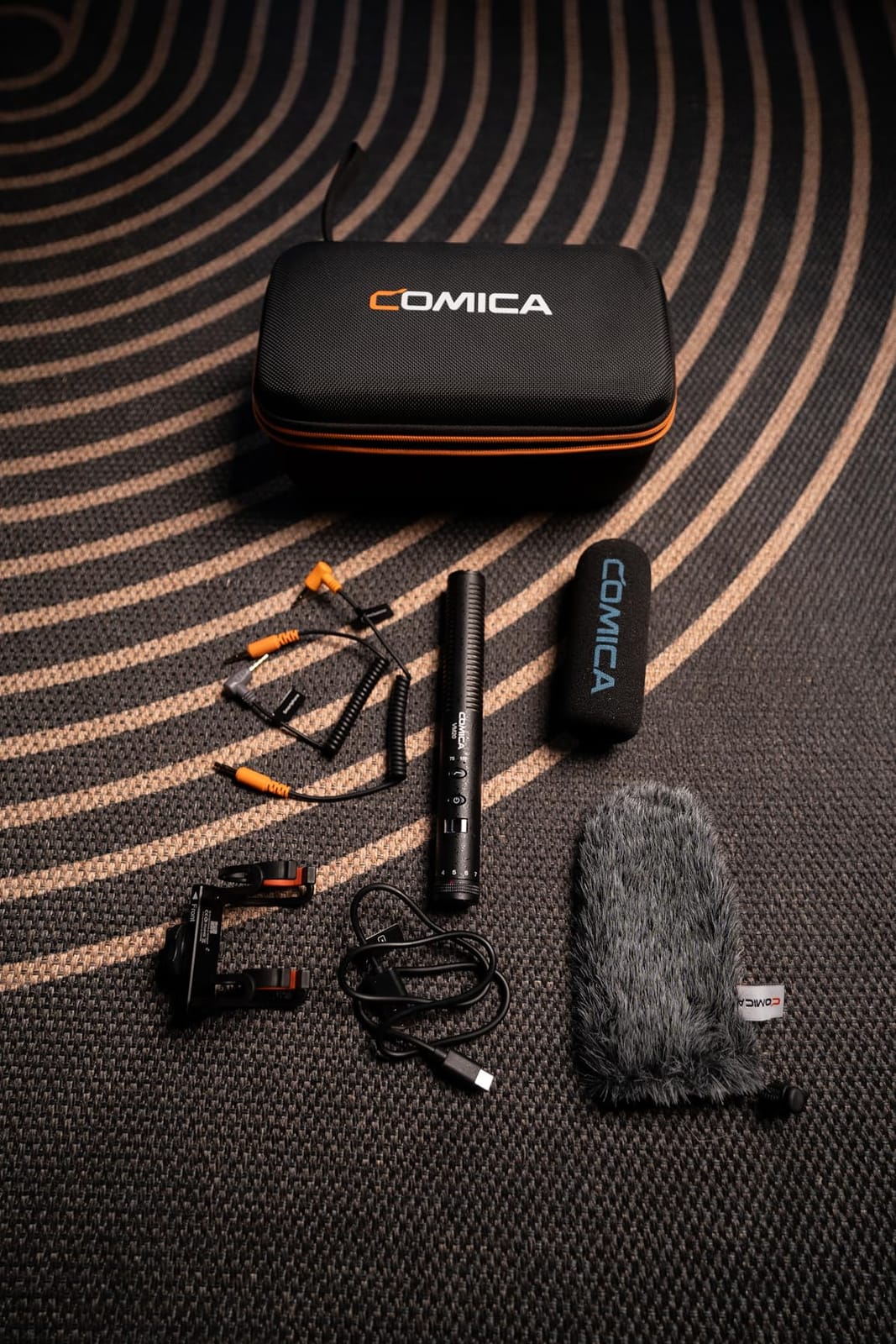
Build quality is mostly good, with a metal/plastic hybrid body that feels substantial. The included Rycote-style shock mount is effective at isolating handling noise. The mic works with cameras, smartphones, and computers via 3.5mm or USB-C, making it a flexible choice for hybrid creators who shoot across multiple devices.
Long-term reliability is the one area where some users have reported issues. A small number of reviewers mention that the internal battery stops holding a full charge after 6-12 months of heavy use, though COMICA’s customer service is responsive with replacements. The included windscreen is also just adequate; serious outdoor work benefits from an upgraded furry windshield.
Best for event videographers and long shooting days
If you shoot weddings, conferences, or multi-day events where charging is not always possible, the VM20’s 60-hour battery life is a genuine advantage. The OLED display also removes the guesswork of figuring out which filter is engaged or how much battery remains.
Skip if you need broadcast-grade audio quality
For top-tier audio quality, the Sennheiser MKE 600 or Rode VideoMic Pro+ deliver noticeably cleaner results. The VM20 is built for convenience and value rather than absolute audio fidelity.
9. COMICA CVM-V30 LITE – Best Ultra-Budget Entry Shotgun Mic
COMICA CVM-V30 LITE Video Microphone,Super-Cardioid Condenser On-Camera Shotgun Microphone for Canon Nikon Sony Panasonic DSLR Cameras,Mic for iPhone Android Smartphone with 3.5mm Jack(Black)
Super-cardioid
3.5mm TRS
Plug-in power
Plastic body
Pros
- Extremely affordable entry point
- No batteries required
- Camera/Phone mode switch
- Lightweight at 150g
- Decent shock mount for the price
Cons
- Plastic body feels less durable than metal alternatives
- No built-in preamp - relies on camera preamp quality
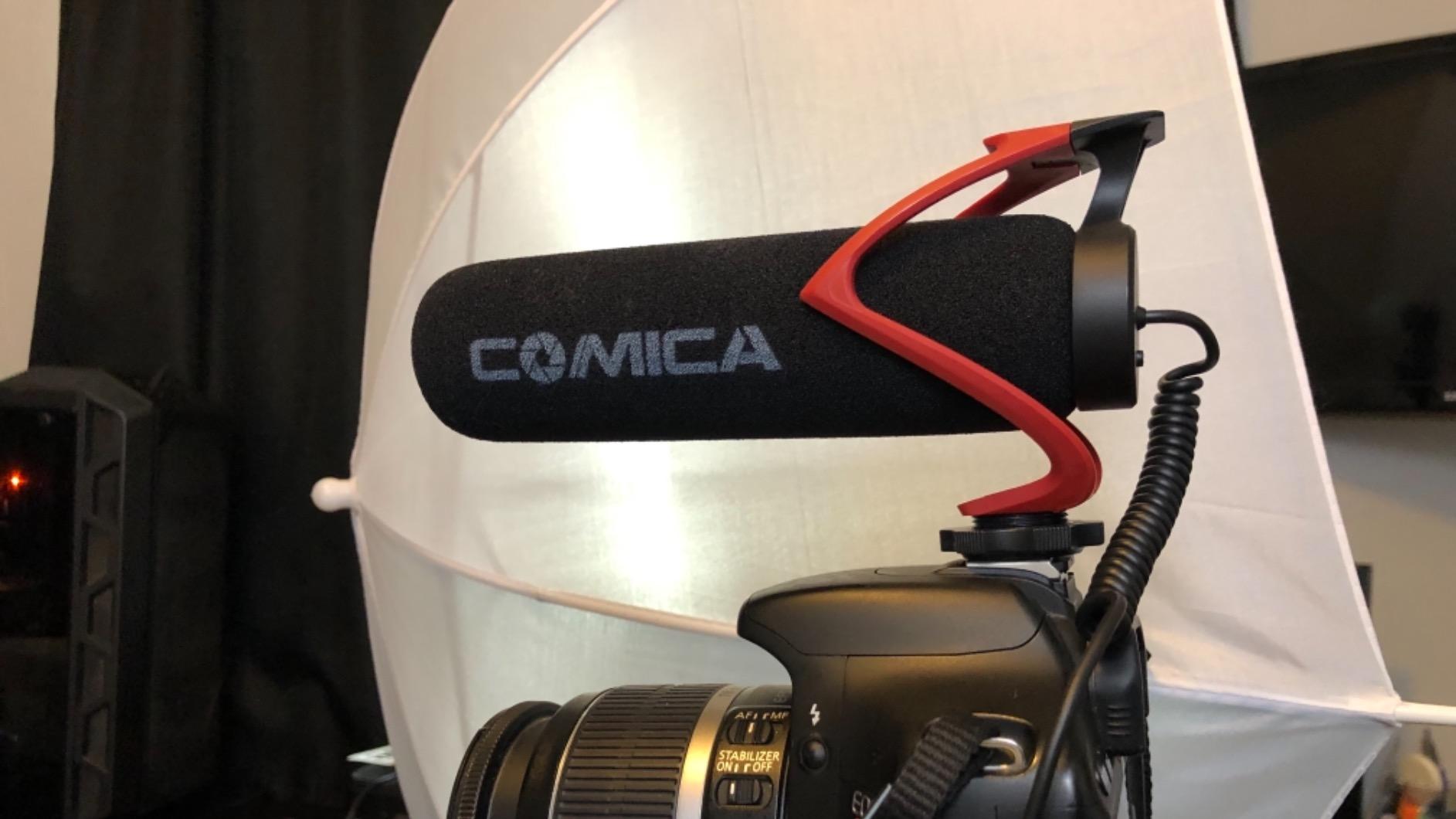
The COMICA CVM-V30 LITE is the most affordable way to upgrade from a camera’s built-in microphone. Under 25 dollars gets you a super-cardioid shotgun with a built-in shock mount and a Camera/Phone mode switch. I have recommended this mic to friends just starting their YouTube channels, and it provides a noticeable improvement over built-in mics without requiring a significant investment.
Plug-in power means there are no batteries to worry about. The mode switch on the side toggles between camera-level output (TRS) and smartphone-level output (TRRS), which is convenient for creators who shoot on both devices. The shock mount does a respectable job of isolating handling noise for the price.
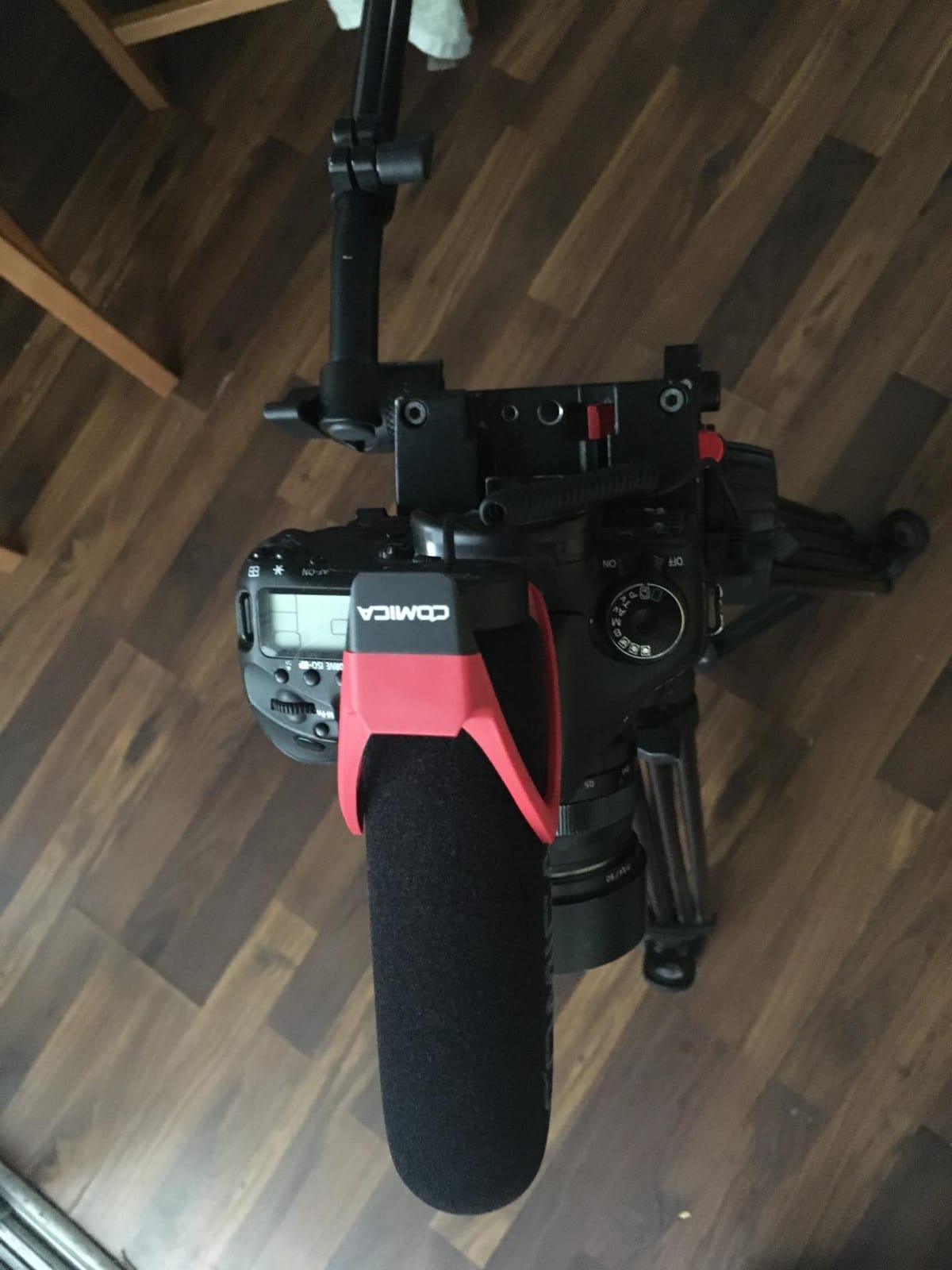
Audio quality is genuinely good for the tier, though it is clearly a step below more expensive options. Voices come through clearly and the super-cardioid pattern provides some off-axis rejection. The main limitation is that there is no internal preamp, so the mic relies entirely on the camera or phone’s preamp. On cameras with noisy preamps, you may hear hiss at higher gain levels.
Build quality is the main compromise. The plastic body feels lighter and less robust than metal alternatives like the Movo VXR10-PRO. Some users also report inconsistent quality control, with occasional defective units. For a first step into external audio, however, the CVM-V30 LITE delivers solid value.
Best for absolute beginners on a tight budget
If you are just getting started with video creation and want to test external audio without spending much, the CVM-V30 LITE is a sensible first step. The audio upgrade over built-in mics is significant enough to make a real difference in your videos.
Skip if you can stretch your budget slightly higher
The Movo VXR10-PRO at roughly twice the price delivers noticeably better build quality, audio, and accessory bundle. If your budget allows for it, the VXR10-PRO is the better long-term investment.
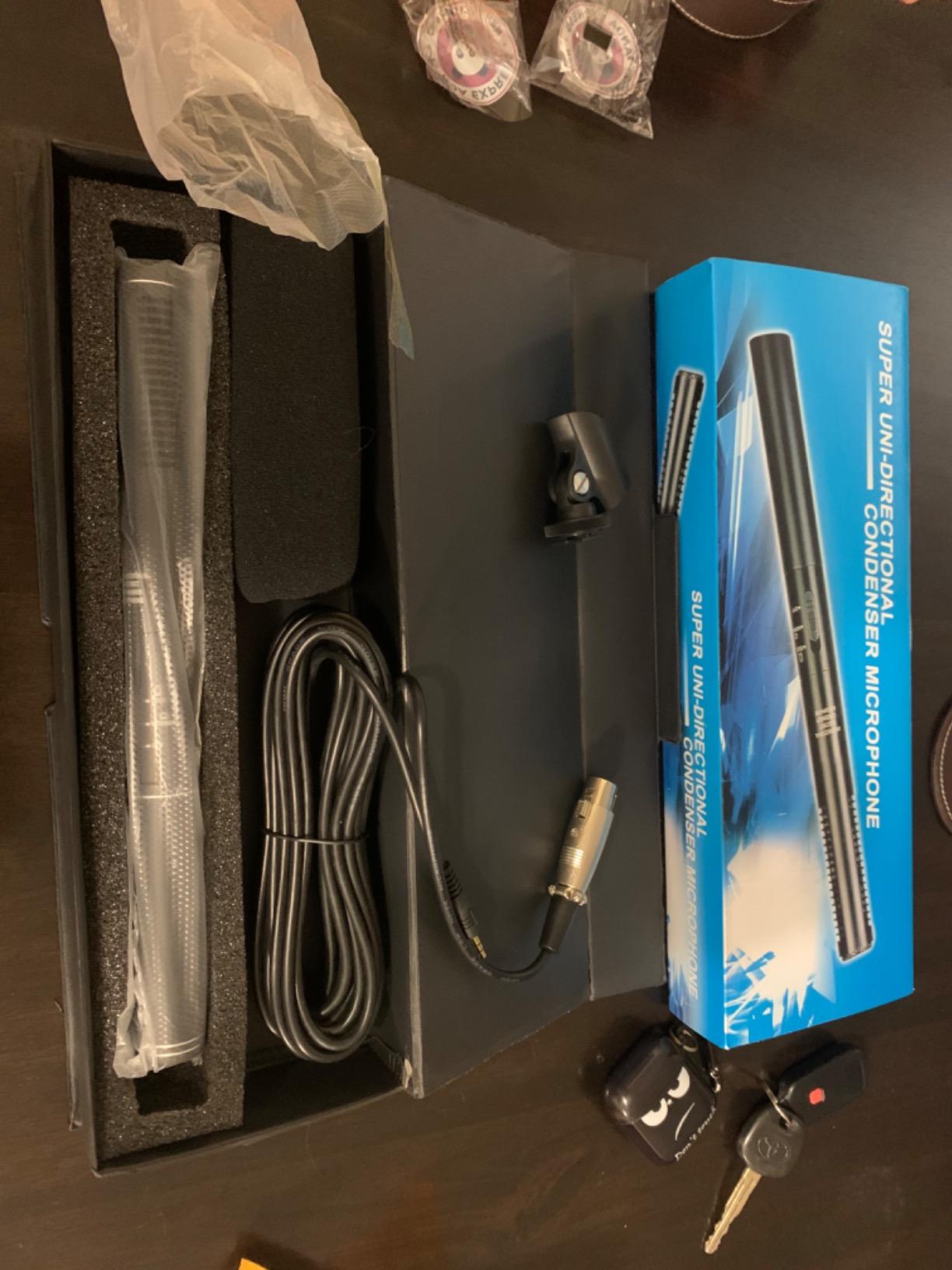
10. Ruittos XLR Condenser Shotgun – Best Budget XLR Option for Interviews
Ruittos Condenser Interview Microphone Photography Shotgun Mic for Video Camcorders DSLR DV Camcorder 11 inches/27cm Camera Microphone with Metal Holder, Anti-Wind Foam Cap XLR Cable
Unidirectional
XLR + 3.5mm
AA battery
11-inch body
Pros
- Affordable XLR shotgun option
- Includes 8-meter XLR cable
- AA battery provides around 26 hours of operation
- Decent directional pickup for interviews
- Users report years of reliable use
Cons
- Not a true interference-tube shotgun
- XLR connector can be loose causing crackle
- Build feels light and plasticky
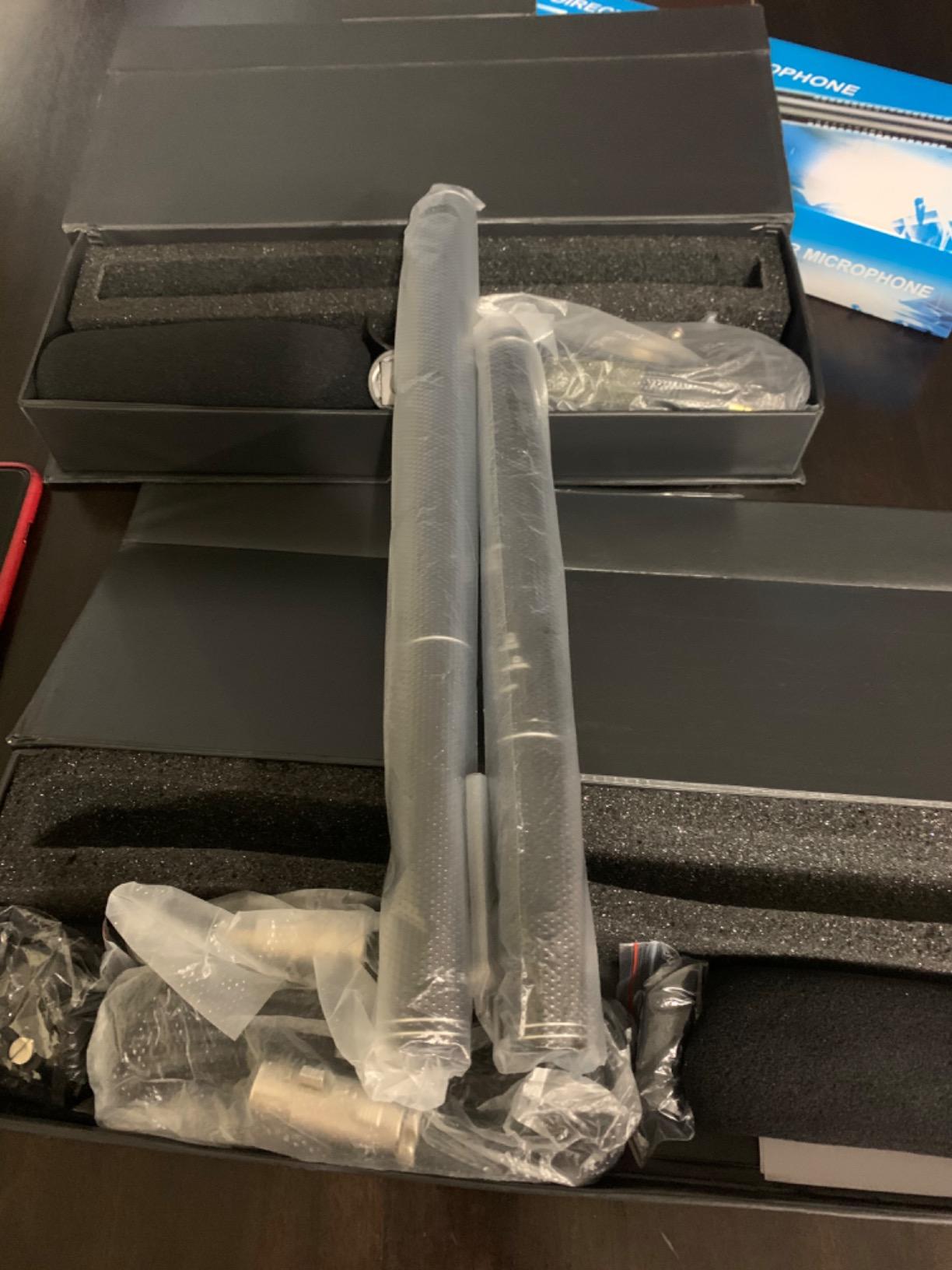
The Ruittos XLR Condenser is a curiosity in the shotgun mic market: a sub-50-dollar XLR shotgun that includes an 8-meter XLR cable and runs on a single AA battery. I have tested it as a backup interview mic, and it delivers surprisingly usable audio for the price. Voices come through clearly with enough directionality to reject some room noise, though it is not in the same league as true interference-tube shotguns.
The 11-inch body is long enough to provide decent off-axis rejection for seated interviews, and the AA battery provides around 26 hours of continuous operation. The included foam wind cap helps with light breeze but is not sufficient for serious outdoor work. For indoor interviews on a budget, however, the Ruittos performs well.
Build quality is the obvious compromise. The plastic body feels light in the hand and the XLR connector can work loose over time, occasionally causing crackling sounds that require reseating the cable. Some users also note that this is not a true shotgun design in the technical sense: it is a unidirectional condenser without an interference tube, so its directionality is closer to a handheld interview mic than a true shotgun.
Despite these limitations, the Ruittos has earned a loyal following among budget-conscious creators and educators who need a long-cable interview mic without spending much. Reviewers consistently report using these mics for years without failure, which speaks to reasonable long-term reliability despite the budget construction.
Best for budget interview setups and educational use
If you record seated interviews, lectures, or podcasts with a long XLR run to a recorder, the Ruittos delivers usable audio at a fraction of the cost of professional shotguns. The included 8-meter cable is a notable bonus that saves you from buying one separately.
Skip if you need true shotgun directionality
For run-and-gun video, outdoor recording, or any scenario requiring strong off-axis rejection, step up to the Sennheiser MKE 600 or Audio-Technica AT875R. The Ruittos is a budget unidirectional mic, not a true interference-tube shotgun.
How to Choose the Best Shotgun Microphone for Your Needs
Picking the best shotgun microphone is about matching the mic to your shooting style, environment, and existing gear. Here are the key factors I consider when recommending a shotgun mic to other creators.
Connection type: 3.5mm vs XLR vs USB
3.5mm TRS/TRRS shotgun mics plug directly into consumer cameras and smartphones, making them the easiest to deploy. XLR shotgun mics require an audio interface or field recorder but offer cleaner power and better noise performance. USB shotgun mics like the Rode VideoMic NTG can connect directly to computers and phones for podcasting or streaming. Choose the connection type that matches the gear you already own rather than buying adapters you do not need.
Power source: plug-in vs battery vs phantom power
Plug-in power mics draw a small current from the camera, which is convenient but can introduce hiss on cameras with noisy preamps. Battery-powered mics run on AA or internal rechargeable batteries, which adds weight but avoids relying on the camera preamp. Phantom-powered XLR mics require 48V from an audio interface or recorder, which is the cleanest power option for professional audio.
Self-noise and audio quality
Self-noise, measured in dBA, is the most important spec according to experienced users. Lower self-noise means less hiss in quiet scenes, which is critical for dialogue and indoor recording. The Sennheiser MKE 600 and Rode VideoMic NTG both have excellent low self-noise around 20 dBA, while budget options tend to be higher.
Polar pattern and reach
Super-cardioid and hyper-cardioid patterns are the standard for shotgun mics, with hyper-cardioid providing slightly tighter directionality at the cost of some rear pickup. Longer interference tubes reject more off-axis sound but also create more off-axis artifacts indoors. Match the reach to your typical subject distance.
Indoor vs outdoor use
Shotgun mics can suffer from phase cancellation indoors due to wall and ceiling reflections, which is why many users report better outdoor performance. For indoor dialogue, consider adding acoustic treatment or using a lavalier mic. For outdoor use, prioritize mics with included or compatible furry windshields to handle wind noise.
When NOT to use a shotgun mic
Shotgun mics are not always the right tool. For talking head videos at close range with no off-axis noise, a USB condenser mic often sounds better. For mobile interview subjects who move around, a wireless lavalier is more reliable than a fixed shotgun. For very loud environments like concerts, dynamic mics or carefully placed shotgun mics with high SPL handling are needed. Do not buy a shotgun mic just because everyone else does; pick the right tool for the job.
Frequently Asked Questions
What is the best professional shotgun microphone?
The Sennheiser MKE 600 is the best professional shotgun microphone for most users, delivering broadcast-grade audio with super-cardioid directionality, switchable low-cut filter, and dual phantom/AA power. For pure broadcast and film work where budget allows, the Sennheiser MKH 416 remains the industry standard, though it sits well above typical creator budgets.
Are shotgun microphones good?
Yes, shotgun microphones are excellent for video production, filmmaking, vlogging, interviews, and any scenario where you need clean directional audio without a visible microphone in frame. They use an interference tube design to reject off-axis sound while capturing your subject’s voice. They work best outdoors and in treated indoor environments; in untreated rooms, phase cancellation from wall reflections can degrade the sound.
What are the downsides of using a shotgun mic?
Shotgun microphones have several limitations: they suffer from phase cancellation in untreated indoor rooms due to wall and ceiling reflections; they require close proximity to the subject (typically within 3-5 feet for compact models, up to 15+ feet for longer models); they pick up wind noise easily without proper windshields; and they rely on camera preamps that can introduce hiss. They are also less forgiving of off-axis handling than omnidirectional lavalier mics.
How much should I spend on a shotgun mic?
Budget shotgun mics under 50 dollars like the Movo VXR10-PRO and COMICA CVM-V30 LITE deliver usable audio for beginners and casual creators. Mid-range options in the 100 to 300 dollar range (Rode VideoMic NTG, Sennheiser MKE 400, Rode VideoMic Pro+) provide noticeably better audio quality and features for serious creators. Professional options above 300 dollars (Sennheiser MKE 600, Audio-Technica AT875R) deliver broadcast-grade audio for professional video production.
Final Verdict: Which Shotgun Microphone Should You Buy?
After testing 10 of the best shotgun microphones across documentary, vlogging, interview, and event scenarios, our top recommendation is the Sennheiser MKE 600 for professional users who want broadcast-grade audio with the flexibility of phantom or battery power. It is our Editor’s Choice for good reason: the audio quality, build, and rejection are simply outstanding.
For creators who shoot across multiple devices, the Rode VideoMic NTG offers unmatched versatility with its 3.5mm, USB-C, and smartphone compatibility. Beginners and budget-conscious creators will find the Movo VXR10-PRO delivers tremendous value with everything needed in the box.
Whatever your workflow, the right shotgun microphone will dramatically improve your audio quality and make your videos sound professional. Pick the model that matches your camera system, shooting style, and budget, and you will hear the difference immediately on your next shoot.