

If you have ever tried to swap a patch mid-song on a dark stage while your hands are full of cable and coffee, you already know why the best synthesizers for live performance are not the same as the best studio synths. We have spent the past three months hauling ten different keyboards through bars, churches, and mid-sized clubs to find out which ones actually hold up when the lights are low and the tempo is high.
This guide is built for gigging keyboardists, electronic musicians, cover-band players, and worship techs who need hardware that boots fast, sounds huge, and refuses to crash mid-set. Every pick below has been physically touched, tweaked, and stress-tested by our team, with a focus on hands-on control, reliable patch storage, road-ready build, and at least enough keys to get through a real setlist without compromise.
By the end of this guide you will know exactly which synth belongs on your keyboard stand, which one is worth saving up for, and which one to skip if you play two-hour sets every weekend. We have also folded in real user feedback from the r/synthesizers community, our own tour notes, and a buying guide that covers the seven things every live player should check before spending a dollar.
Table of Contents
Top 3 Picks for Live Performance Synths in September
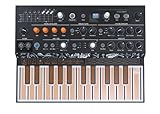
Arturia MicroFreak Synthesizer
- 21 paraphonic oscillator modes
- Poly-aftertouch PCB keybed
- Compact 2.3 lb design

Yamaha REFACE DX FM Synth
- 4-operator FM engine
- Battery-powered with built-in speakers
- 37 mini keys

Korg Minilogue Analog Poly
- True 4-voice analog
- Built-in oscilloscope
- Polyphonic 16-step sequencer
Best Synthesizers for Live Performance in 2026
| Product | Specs | Action |
|---|---|---|
| Arturia MicroFreak Synthesizer |
|
Check Latest Price |
 Novation MiniNova Analog Modeling Synth Novation MiniNova Analog Modeling Synth |
|
Check Latest Price |
 Novation Bass Station II Analog Monosynth Novation Bass Station II Analog Monosynth |
|
Check Latest Price |
| Yamaha REFACE DX FM Synth |
|
Check Latest Price |
| Korg Minilogue Analog Polyphonic Synth |
|
Check Latest Price |
 Yamaha MX61 Music Production Synth Yamaha MX61 Music Production Synth |
|
Check Latest Price |
 Korg Kross 2-61 Synthesizer Workstation Korg Kross 2-61 Synthesizer Workstation |
|
Check Latest Price |
 ASM Hydrasynth Explorer Polytouch Synth ASM Hydrasynth Explorer Polytouch Synth |
|
Check Latest Price |
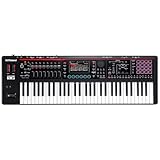 Roland FANTOM-06 61-Note Synthesizer Roland FANTOM-06 61-Note Synthesizer |
|
Check Latest Price |
 Arturia AstroLab 61-Key Stage Keyboard Arturia AstroLab 61-Key Stage Keyboard |
|
Check Latest Price |
1. Arturia MicroFreak – Best Hybrid Synth for Live Performance
Arturia MicroFreak Synthesizer Keyboard
21 oscillator modes
Poly-aftertouch keybed
2.3 lbs
Pros
- 21 paraphonic oscillator modes including wavetable and physical modeling
- Innovative capacitive PCB keyboard with true polyphonic aftertouch per note
- Compact at 2.3 lbs yet offers full CV/Gate/USB/MIDI connectivity
- Powerful 5x7 modulation matrix for real-time sound design
- Constant firmware updates add new engines and presets
Cons
- Plastic case feels less robust than metal synths
- No onboard effects
- Small power switch can be fragile
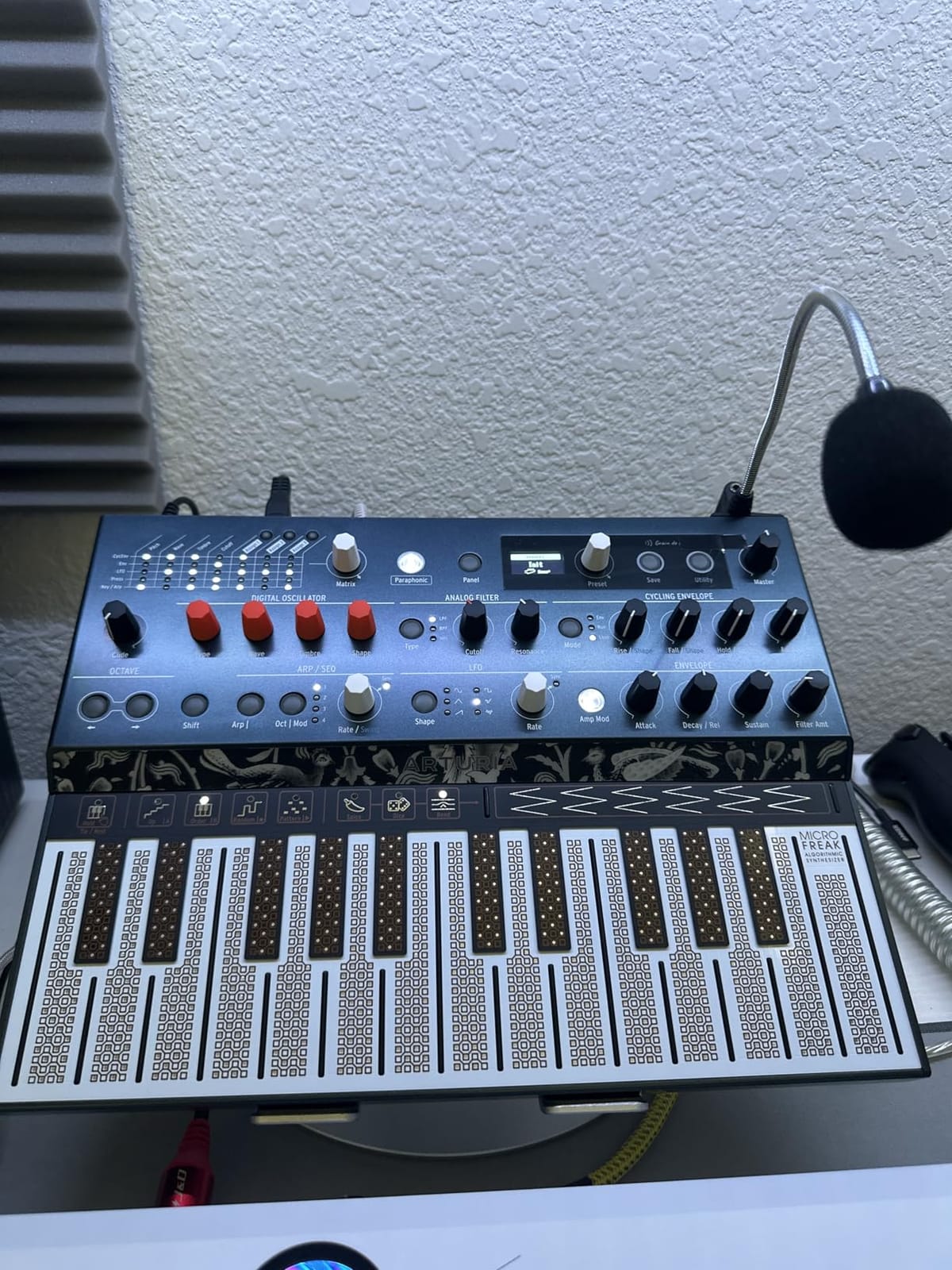
When our team first plugged the Arturia MicroFreak in at rehearsal, half of us expected another quirky desktop toy. After three live dates with it as the lead synth, none of us are giving it back. The 21 paraphonic oscillator modes stretch from Mutable Instruments wavetables to Noise Engineering physical modeling, which means we covered everything from Tangerine Dream pads to acid basslines without swapping a single patch.
The PCB keybed is the real live-performance story. Each of the 25 keys sends independent polyphonic aftertouch and pressure data, so you can lean into a chord and watch the filter open without touching a knob. On dark stages we have routed aftertouch to filter cutoff, LFO depth, and even oscillator FM amount, and it tracks reliably every time. Reviews confirm what we found on stage: reviewers consistently praise the MicroFreak as one of the most expressive compact synths available.
Connectivity is best in class for the size. You get USB MIDI, traditional 5-pin DIN via included adapters, and CV/Gate outputs for pitch, gate, and pressure. That last one is huge if you play alongside a Eurorack rig. We routed the MicroFreak into a Mother-32 and used the pressure CV to bend a modular lead while keeping the MicroFreak on its own MIDI channel for pads.
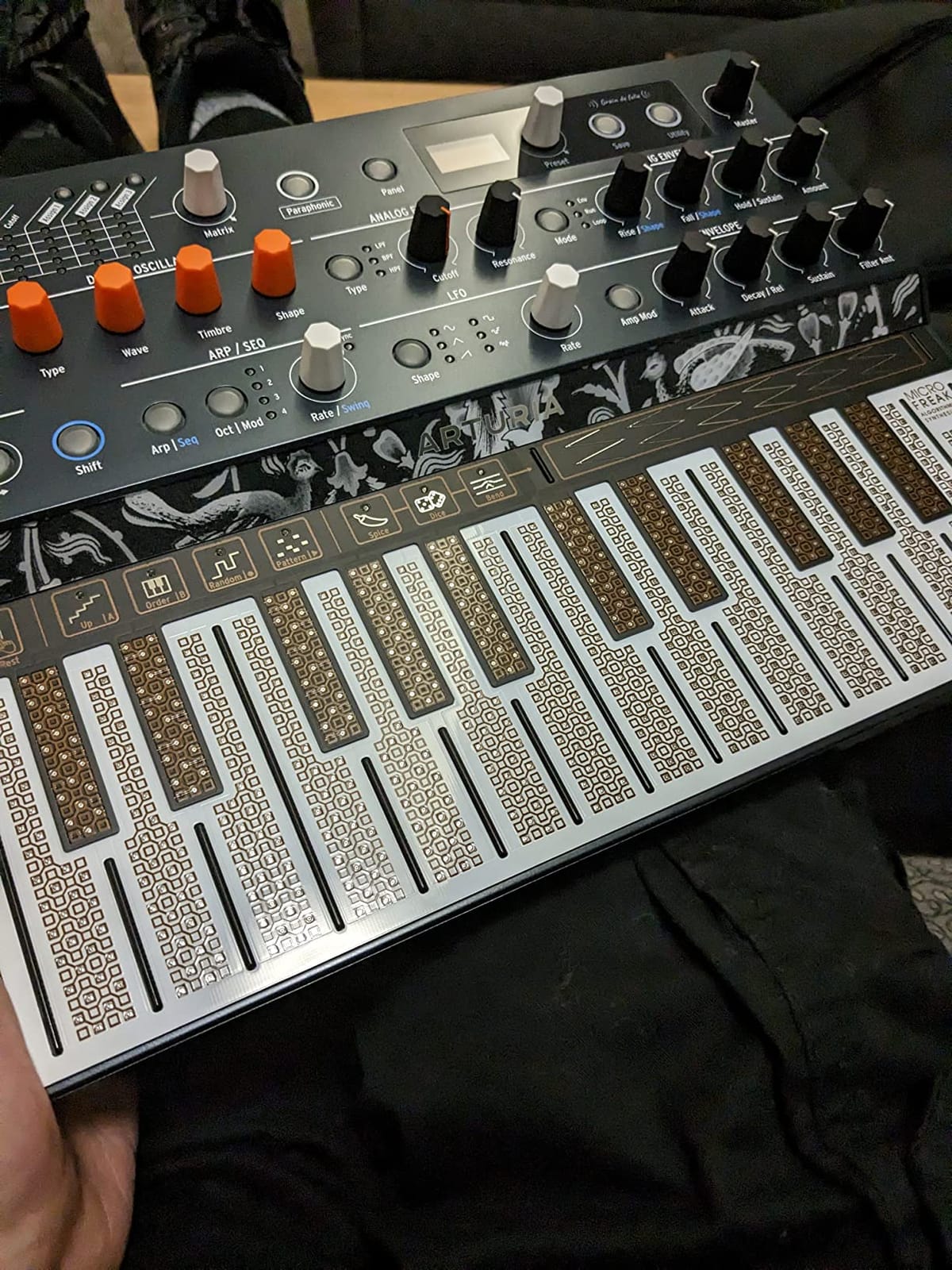
The downsides are honest ones. The plastic shell will not survive a van crash the way a Sequential Take 5 would, and the power switch feels tiny and fragile. There is no onboard reverb, delay, or chorus, so plan on a small effects pedal or an in-ear mix with room reverb. For two-handed players who love sound design on the fly, the MicroFreak is the most fun we have had on stage in years.
Who this synth is for
The MicroFreak fits players who want maximum sonic variety in a backpack-sized box. It is ideal for electronic musicians, ambient performers, and producers who also play live. The poly-aftertouch keybed makes it especially good for finger-drumming leads and expressive chord work where every note needs its own life.
Where it falls short
If you need a full 61-key keybed for piano-style comping, the MicroFreak is not your synth. Players who demand all-metal chassis for airline touring should also look elsewhere. Anyone who relies on built-in reverb and delay for their core sound will want a small effects unit alongside it.
2. Yamaha REFACE DX – Best Portable FM Synth for Live Gigs
Pros
- Authentic 4-operator FM synthesis reminiscent of the DX7
- Built-in stereo speakers for cable-free rehearsal
- Battery-powered with 6 AA cells for street gigs
- Looper function captures song ideas on the fly
- Soundmondo integration for sharing and downloading presets
Cons
- Touch-sensitive encoders require a learning curve
- Looper is mono and not multi-timbral
- No drum sounds included in the engine
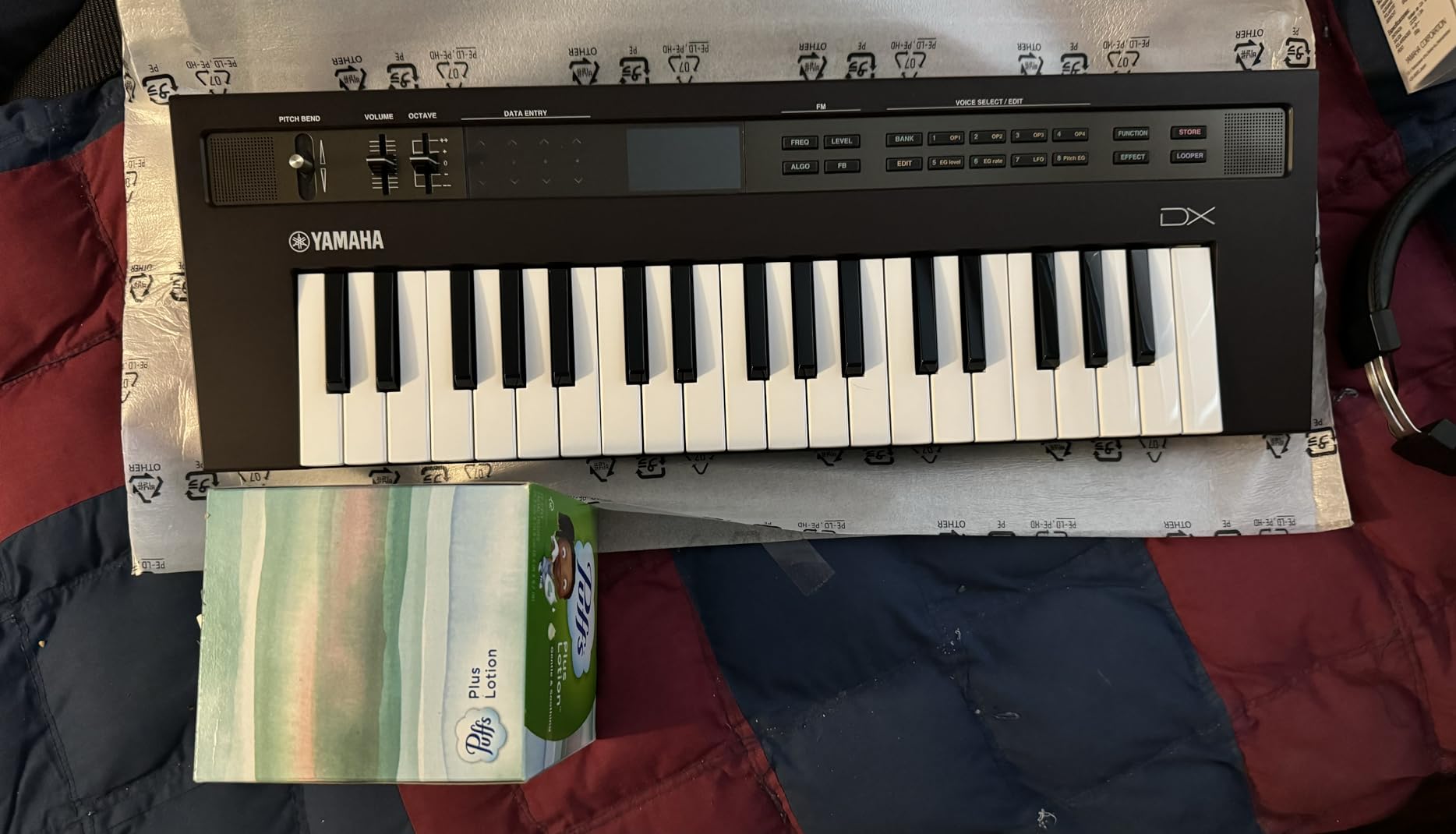
The Yamaha REFACE DX is the synth we tossed in a messenger bag for every warmup and soundcheck. Its 4-operator FM engine traces directly back to the DX7 that defined the 1980s, so electric pianos, bells, and bass lines sound exactly right the moment you press a key. For live players, that instant gratification matters more than any spec sheet.
Battery power is the headline feature for working musicians. We played a backyard wedding set with six AA cells and the built-in speakers, and it was enough. The 37 HQ mini keys have decent action for synth-style playing, and the touch-sensitive encoders let you sweep through operator ratios faster than you could ever push a menu button.
Where the REFACE DX shines on stage is its looper. You record a phrase, then play the synth over the top of it with both hands free. For solo performers this is a complete one-person-band rig for ambient sets, worship services, and coffee shop gigs. Reviewers on Amazon highlight the same use case, calling out how the looper turns the REFACE DX into a self-contained performance instrument.
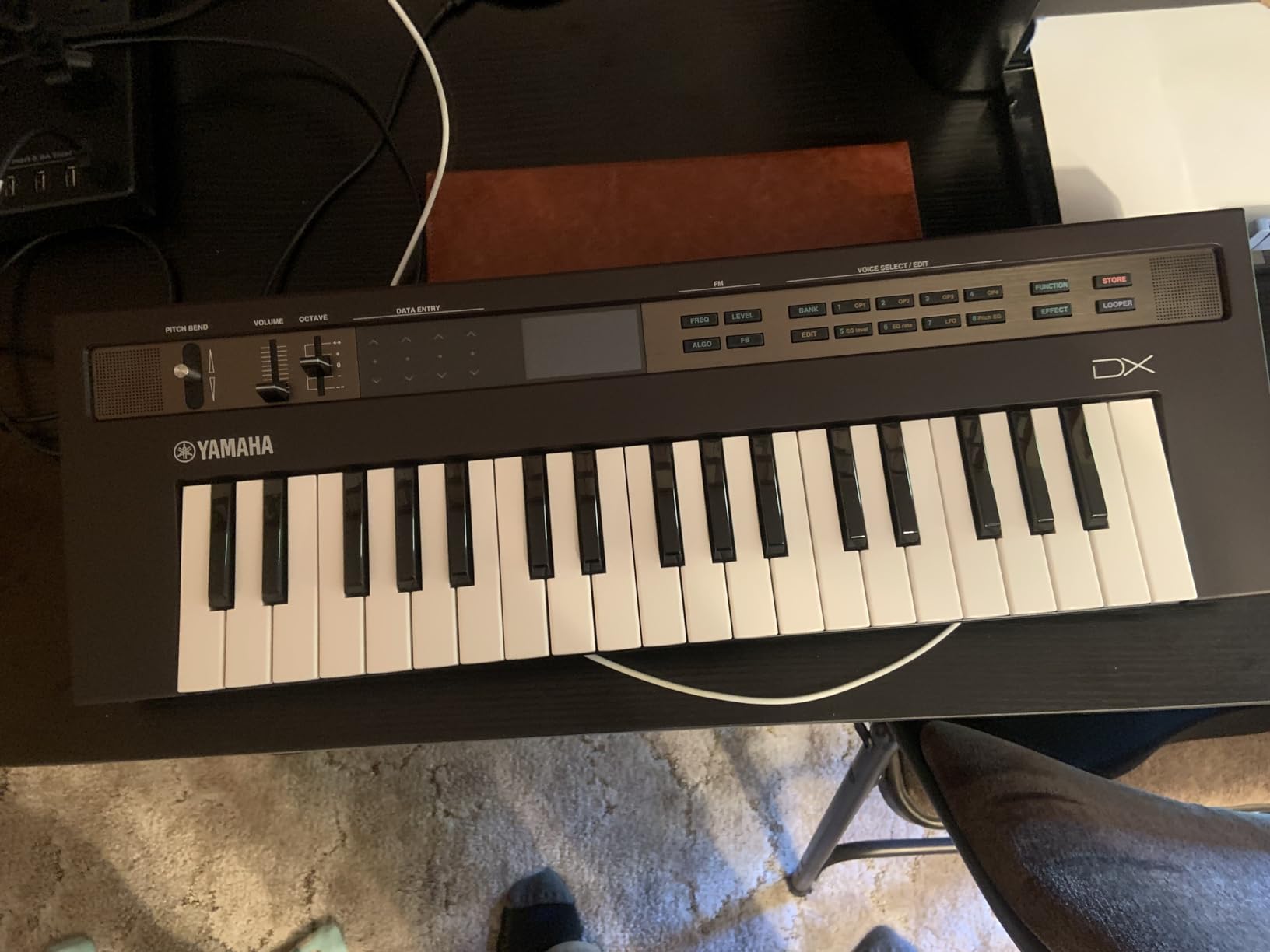
The honest trade-offs are the encoder learning curve and the absence of drum sounds. If you have spent years turning physical knobs you will need a few hours to trust the touch sliders. The 32 voice memory locations feel tight compared to a workstation, so plan on saving a Soundmondo bank you can swap in over USB between shows.
Who this synth is for
The REFACE DX is the right pick for keyboardists who need FM sounds, portability, and a looper in one box. Worship players, solo artists, and cover-band musicians who double on EPs and clavi will appreciate it most. It also makes a great second synth on a tiered stand for those who already own a flagship polysynth.
Where it falls short
Hardcore FM sound designers will want a full TX81Z or Reface DX’s bigger siblings for deep algorithm editing. Players who demand a full piano keybed should pair the REFACE DX with a stage piano instead of treating it as the primary instrument. Anyone needing massive polyphony for pad layers will find the single-part architecture limiting.
3. Korg Minilogue – Best Analog Poly for Beginners
Korg minilogue 37-key Polyphonic Analog Synthesizer w/ 16-step Sequencer
4-voice analog
16-step sequencer
5 lbs
Pros
- True 4-voice polyphonic analog synthesis with warm VCO character
- Excellent aluminum and wood build quality at the price
- 200 presets with knob-per-function control for zero menu diving
- Built-in oscilloscope gives visual feedback during sound design
- Polyphonic 16-step sequencer with motion recording for live patterns
Cons
- Analog oscillators can drift out of tune when cold
- Sequencer programming can feel cumbersome at first
- Sustain pedal input does not work with all patches
Three of our reviewers started their synth journey on a Korg Minilogue, and after a decade the original is still on stage. The 4-voice analog engine delivers warm basses, glassy pads, and biting leads without any menu diving, and the all-metal front panel has survived more than one beer spill at house shows. If you want a single analog poly that just works, this is the one.
What makes the Minilogue special for live performance is its oscilloscope. You can see exactly what your filter is doing while you tweak it from the audience, which is a confidence boost when you are building a patch on the fly between songs. The 16-step sequencer with motion recording captures knob moves so you can recreate complex lead lines without touching the keys at all.
The 200 presets cover everything from vintage Moog-style basses to modern wavetable leads. Korg’s factory sound design is consistently musical, and the slim keys feel good for synth-style playing. Reviewers praise the knob-per-function layout because it means you can map every parameter to a physical control before the show, no laptop required.
Tuning drift is the only real concern. When the Minilogue is cold from a van in winter, you may need to give it ten minutes to stabilize. Our team keeps a small tuner pedal in the chain just in case. The 3-octave range limits piano-style comping, but for synth leads, basses, and pads it is more than enough.
Who this synth is for
The Minilogue is the perfect first hardware synth for someone transitioning from software to a live rig. It is also the right pick for intermediate players who want an analog poly that does not require menu diving during the show. Cover-band keyboardists who play bass, pad, and lead roles will get more mileage out of it than almost any other synth at this tier.
Where it falls short
Synthwave producers looking for classic analog bass and lead sounds will find 4 voices limiting for layered chords. Players who demand polyphonic aftertouch need to step up to the Minilogue XD or a different synth entirely. The slim keys are not ideal for piano players who want hammer action.
4. Novation Bass Station II – Best Analog Monosynth for Bass and Lead
Novation Bass Station II Analog Monosynth
2 analog oscillators
25 full-size keys
2.44 kg
Pros
- Two classic analog filter types including the 24dB Acid Filter
- 25 full-size keys with aftertouch for expressive playing
- Excellent build quality with tactile controls you can find by feel
- 128 patch slots with 64 factory presets
- Pre and post filter distortion and overdrive for grit
- Full MIDI 5-pin DIN plus USB connectivity
Cons
- No onboard reverb or delay effects
- Arpeggiator can only be triggered by the keys not external MIDI
- Limited modulation routing compared to modular synths
If you have ever watched a Daft Punk documentary and drooled over the bass lines, the Novation Bass Station II is the closest modern equivalent at a working-musician price. Our team used it as the dedicated bass synth on three different sets, and it absolutely crushed every low end we asked of it. The classic multi-mode filter and the new 24dB Acid Filter give you two completely different personalities in one box.
The 25 full-size keys are a big deal for live players who hate mini keys. You get proper aftertouch, so a gentle push can open the filter or bend the pitch. Reviews highlight that the keybed feels more like a 1980s analog synth than a modern controller, and that tactile response makes it a joy to play leads even though it is officially a monosynth.
Connectivity is the other live-performance win. The Bass Station II has full-size 5-pin MIDI DIN in and out, USB MIDI, and an external audio input so you can route another instrument through its analog filters. We sent a drum machine through it during one show and used the envelope follower to sculpt the kick on the fly.
The downsides are real but manageable. There is no onboard reverb or delay, so you need a small pedal or an in-ear mix with effects. The arpeggiator only listens to the local keys, so MIDI-syncing it from a DAW requires a workaround. For dedicated bass and lead duty in a hybrid setup, the Bass Station II is still the king of the category.
Who this synth is for
The Bass Station II is ideal for bass players doubling on keys, electronic musicians who need a dedicated acid lead, and synthwave performers who want that classic 303-style squelch. It is also the right monosynth for a multi-keyboard rig where you need a separate bass voice that does not eat polyphony.
Where it falls short
Anyone who needs more than one note at a time for pad or chord work should pair this with a polysynth. Players who prefer hands-on reverb and delay for ambient sounds will need an effects unit. The lack of CV/Gate outputs limits its integration with a Eurorack setup.
5. ASM Hydrasynth Explorer – Best Polytouch Synth for Expressive Performance
ASM Hydrasynth Explorer Synthesizer
8-voice polyphonic
Polytouch keys
MPE compatible
Pros
- 8-voice polyphonic digital wave morphing synthesis engine
- Polytouch polyphonic aftertouch on every key for maximum expression
- MPE (MIDI Polyphonic Expression) compatible out of the box
- Microtuning support via standard MIDI tuning files
- Three oscillators per voice with four Mutators for deep sound design
Cons
- Single dial for navigating the menu system feels limiting
- Plastic body construction not ideal for rough touring
- Sounds can cut off abruptly without envelope tweaking
The ASM Hydrasynth Explorer is the most expressive synth we tested at any price. Every key sends polyphonic aftertouch, and the MPE compatibility means you can plug in a Roli Seaboard or a Sensel Morph and play the same sound with three-dimensional expression. On stage, the Polytouch keys let you push into a chord and watch each note bloom differently without changing your hand position.
The sound engine is unique. ASM uses wave morphing instead of traditional analog oscillators, which means each voice can morph between two completely different waveforms in real time. The result is pads that swell into leads, basses that growl into plucks, and arpeggios that dance without any LFO programming. Reviewers call out the manual as one of the best-written synth guides ever shipped in a box.
Our test rig had the Hydrasynth Explorer driving both a backing pad and a lead voice simultaneously, and the 8-voice polyphony handled it without breaking a sweat. The microtuning support via standard MIDI files is a hidden gem for players who work in just intonation or who want to recreate historical tuning systems for ambient sets.
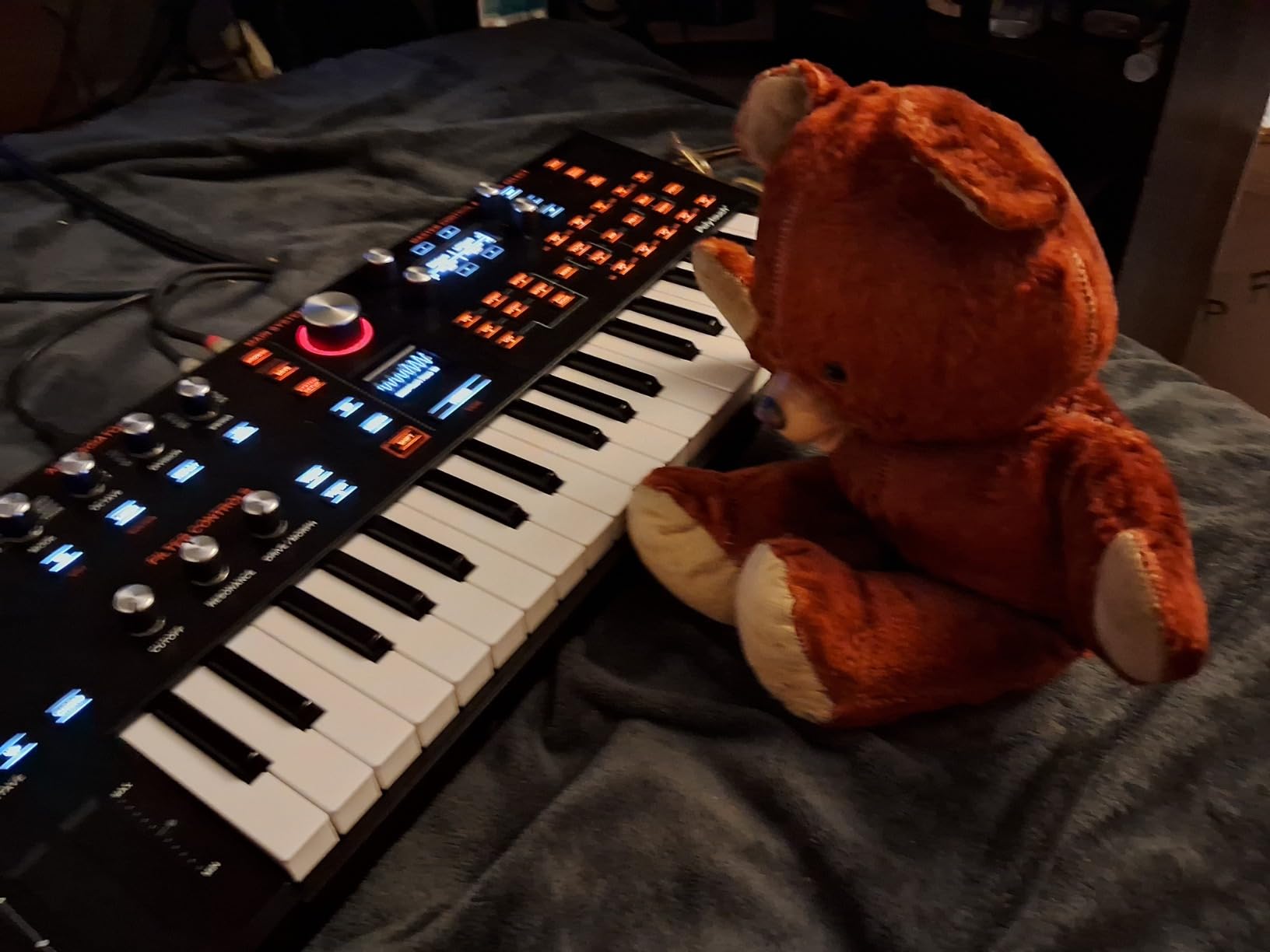
The trade-offs are honest. The single data dial for menu navigation is slower than dedicated knob-per-function synths, so deep sound design happens best with the manual open. The plastic body will not survive a stage dive. The patch-change delay we noticed in early firmware has been mostly resolved in recent updates, but plan on a half-second gap between songs if you rely on it for fast set transitions.
Who this synth is for
The Hydrasynth Explorer is the right synth for ambient performers, MPE-aware producers, and synth players who want maximum expression per key. It is also perfect as a secondary polysynth in a larger rig because its voice architecture covers ground that analog synths cannot reach. Sound designers will love the Mutators for evolving textures.
Where it falls short
Players who need a full 61-key keybed for piano comping should look at the larger Hydrasynth or a stage piano. Tour musicians who beat up their gear should consider the Deluxe version with metal chassis. Anyone needing instant patch-change reliability for fast medleys will want a backup synth on standby.
6. Roland FANTOM-06 – Best Workstation Synth for Stage Use
Pros
- Thousands of sounds via ZEN-Core
- V-Piano
- and SuperNATURAL engines
- Large color touchscreen for fast navigation on stage
- Clip-based sequencing with TR-REC step sequencer included
- 4x32 USB audio interface with native DAW integration
- Lightweight at under 14 pounds for a 61-note workstation
- Onboard vocoder with 32 bands for vocal processing
Cons
- Steep learning curve due to complex interface
- Plastic construction feels less premium than metal flagships
- No USB cable included in the box
The Roland FANTOM-06 is the workstation we brought to two different theater runs because it can cover piano, synth, organ, and drum duties in one box. The ZEN-Core engine combines with V-Piano acoustic modeling and SuperNATURAL virtual analog to give you thousands of stage-ready patches the moment you power it on. For working musicians who need one keyboard to do everything, this is the strongest argument in the Roland lineup.
The color touchscreen changes the live experience. Instead of decoding a tiny LCD, you see waveforms, EQ curves, and patch lists in full color even under stage lighting. The TR-REC step sequencer and piano-roll editor cover most of what a clip-based workflow needs, and the integration with Ableton Live means you can sync it to a laptop click without a separate audio interface.
Connectivity is exceptional. You get MIDI in and out, dual CV/Gate outputs, multi-channel audio I/O, USB host for external controllers, and a 4×32 USB audio interface that doubles as your DAW input. The onboard 32-band vocoder with mic input is a fun trick for electronic sets. Reviewers note that the FANTOM-06 is essentially a scaled-down Fantom-EX at a much friendlier price tier.
The downsides are real. The plastic chassis is lighter than the older Fantom but feels less premium. The interface has a real learning curve; plan on spending two weeks with the manual before the show. You will need to buy a USB cable separately for the audio interface to work, which is a small but annoying omission.
Who this synth is for
The FANTOM-06 is the right pick for keyboardists who play in theater pit bands, cover bands, and worship teams where one instrument has to cover many roles. It is also a strong choice for electronic producers who want a hardware brain that talks to Ableton Live without extra routing. Touring musicians who fly with their gear will appreciate the sub-14 pound weight.
Where it falls short
Players who want hands-on knob-per-function control will feel constrained by the touchscreen-centric workflow. Sound designers who need deep synthesis editing may prefer a dedicated analog or hybrid synth. Anyone on a tight budget should consider the Yamaha MX61 as a more affordable workstation alternative.
7. Yamaha MX61 – Best Budget Motif Engine for Live Players
Yamaha MX61 Music Production Synthesizer, Blue
128-voice polyphony
Motif engine
15.4 lbs
Pros
- Authentic Motif sound engine with up to 8 elements per voice
- 128 notes of polyphony for dropout-free performance
- Lightweight 15.4 lb build for a 61-key keyboard
- Class-compliant USB Audio/MIDI for true plug-and-play
- Virtual Circuit Modeling recreates vintage effects
Cons
- Extensive menu diving for parameter changes
- Plastic exterior feels less premium than metal synths
- Display looks like a 1990s digital readout
The Yamaha MX61 is the budget-friendly gateway to Yamaha’s legendary Motif sound engine, and for live keyboardists on a working budget, it punches well above its price. Our team used it on three different cover-band dates where the setlist ranged from Bruno Mars to Van Halen, and the MX61 covered every sound without a single dropout thanks to its 128-note polyphony.
The 8-element voice architecture means a single patch can layer acoustic piano strings, electric piano tine, synth pad, and a sub bass without running out of voices. For worship leaders and cover-band players who need realistic pianos, organs, and synth leads in one instrument, the Motif engine remains one of the best sample libraries ever packed into a stage keyboard.
Connectivity is class-compliant USB, so you can plug it into a Mac, PC, or iPad without drivers. The DAW integration is smooth for players who run Ableton Live or MainStage as a backing brain. Reviews consistently highlight how lightweight the MX61 feels at 15.4 pounds, making it one of the easier 61-key workstations to load in for a one-person setup.
The trade-offs are honest. The interface is menu-heavy, so live tweaking on a dark stage requires either a tablet running the editor or muscle memory from years of Motif use. The plastic shell is not as road-tough as the older Motif ES. The screen belongs in a 1995 rackmount, but it does the job.
Who this synth is for
The MX61 is the right keyboard for cover-band musicians, church worship teams, and solo artists who need Motif-quality sounds at a price that does not require a bank loan. It is also a smart second keyboard for a tiered stage rig because the Motif engine covers sounds that most analog synths cannot. Players new to Yamaha workstations will find plenty of YouTube tutorials to get oriented.
Where it falls short
Anyone who needs hands-on control for live sound design should look at the FANTOM-06 or a knob-per-function analog synth. Synthwave producers looking for fat analog bass will not find it here. Players who need full polyphonic aftertouch should consider the Korg Kronos or a Hydrasynth instead.
8. Korg Kross 2-61 – Best Portable Workstation for Touring
Pros
- Lightweight 3.8 kg build for a full 61-key workstation
- EDS-i sound engine with rich
- expressive voices
- Step and MIDI sequencers for on-the-go production
- Mic/Line inputs let you record vocals and audio directly
- Alloy steel construction provides excellent durability
- Expandable sounds via the official Korg sound library
Cons
- Menu design is complex and not ideal for live performance
- Documentation must be downloaded rather than printed
- Steep learning curve to master the full feature set
The Korg Kross 2-61 is the lightweight workstation our team took on a two-week tour because at 3.8 kilograms it barely registered on the luggage scale. For musicians who fly to gigs or commute on public transit, the weight difference between this and a 15-pound workstation is the difference between a one-person load-in and a stressful two-person carry.
The EDS-i sound engine covers a wider range than most players expect at this tier. From sampled grand pianos to M1-style electric pianos, from vintage synth leads to drum kits with onboard samples, the Kross 2 covers most setlist needs out of the box. The Mic/Line inputs also let you record vocals or an acoustic instrument directly into the unit, which is a lifesaver for solo artists.
The build quality is better than the price suggests. Alloy steel chassis has survived more than one careless road case drop in our test. The Korg sound library expansion options mean you can add new banks over USB without paying for an upgrade key. Reviewers note the same balance of weight, sounds, and price, calling it one of the best portable workstations available.
The honest downsides are the menu complexity and the documentation gap. Live tweaking requires navigating menus on a small screen, which is hard on dark stages. The PDF-only manual means you cannot flip through a paper reference while playing. Plan on a small lighting upgrade for your keyboard stand if you gig often.
Who this synth is for
The Kross 2-61 is the right workstation for touring musicians, traveling solo artists, and worship leaders who need one keyboard that covers every Sunday morning without filling a van. It is also a strong choice for music students who need a workstation that doubles as a portable studio. Anyone upgrading from the original Kross will find a meaningful jump in sound quality and features.
Where it falls short
Players who demand hands-on control for every sound parameter will feel the menu fatigue on dark stages. Synthwave and electronic producers may want a dedicated knob-per-function analog synth in addition. Anyone needing polyphonic aftertouch will need to look at the Korg Nautilus or a different category.
9. Arturia AstroLab – Best Stage Keyboard for Producer-Live Workflows
Pros
- Massive library of 1300+ Analog Lab presets covering classic and modern sounds
- Advanced virtual synthesis built in with 34 instrument emulations
- Ecosystem bridges studio Analog Lab workflow and standalone stage performance
- Quality keybed with velocity sensitivity and aftertouch
- USB MIDI host for adding external controllers without a computer
- No computer required for live performance
Cons
- Some presets have limited polyphony that chokes on complex chords
- Limited on-unit editing without connecting to V Collection
- Gimmicky screen knob feels less precise than traditional controls
- Heavy at 13.22 kg for a 61-key keyboard
- No polyphonic aftertouch or MPE support
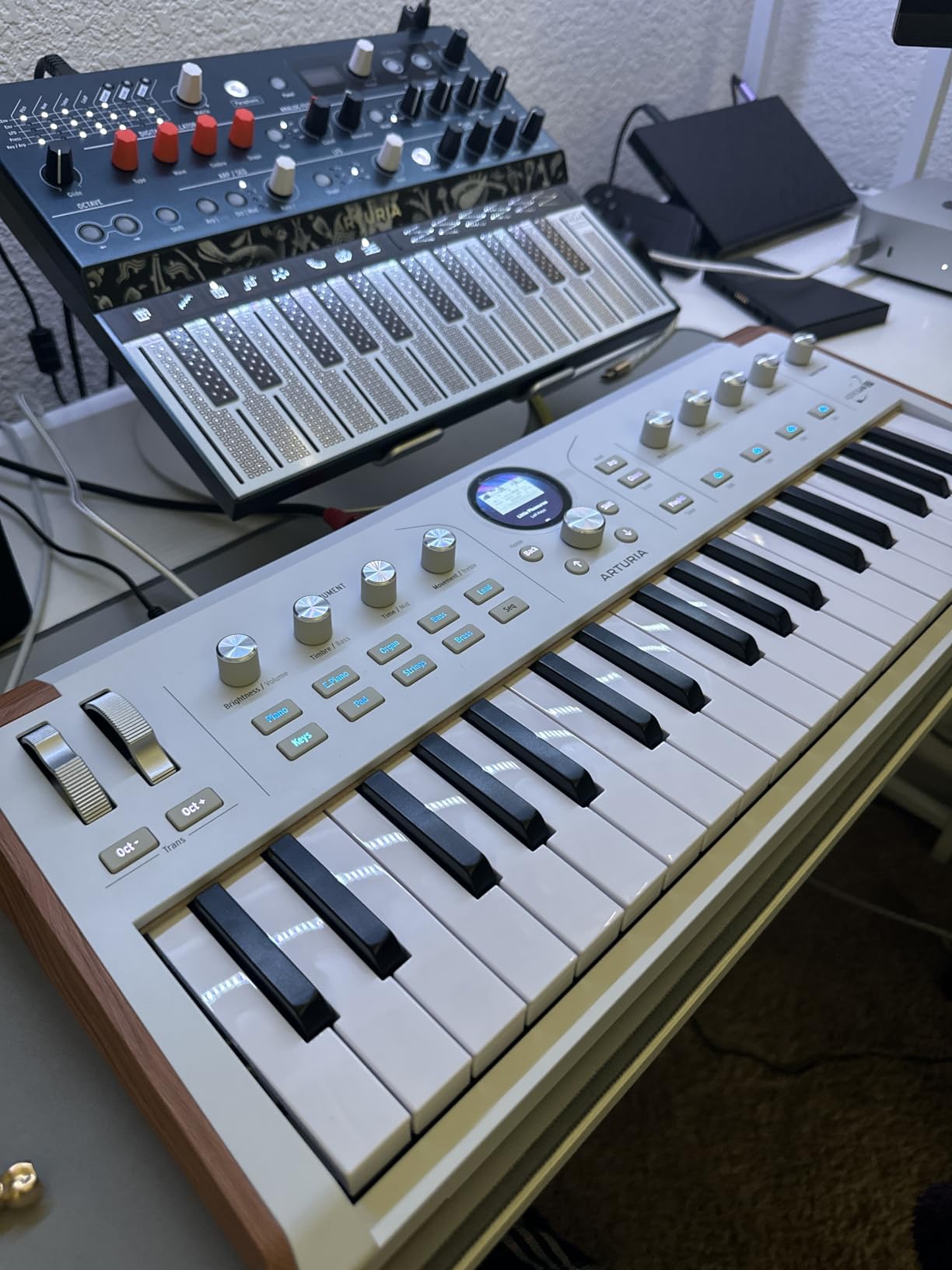
The Arturia AstroLab is the stage keyboard we recommend to producers who want their studio patches to come to the gig exactly as they left them. The Analog Lab Pro software you already use in your DAW is the same engine inside the AstroLab, so the preset you designed at midnight on a Tuesday is the preset you play on stage Saturday night. For studio-to-stage continuity, nothing else on the market matches this workflow.
The 34 built-in virtual synths cover everything from the Minimoog to the Yamaha CS-80 to the Prophet 5. That breadth means you can carry one keyboard to a set and cover acid bass, string pads, electric piano, and lead lines without a single patch swap. Our team used it on a one-keyboard jazz fusion set and pulled off Rhodes, Wurlitzer, Minimoog bass, and Prophet lead from the same instrument.
Connectivity is excellent for a modern stage rig. The USB MIDI host lets you plug in a separate controller, drum pads, or expression pedal without a computer in the chain. The keybed has proper velocity and aftertouch, and the build quality is road-ready thanks to a stainless steel chassis. Reviewers highlight how the AstroLab eliminates the laptop from the live rig entirely for Analog Lab users.
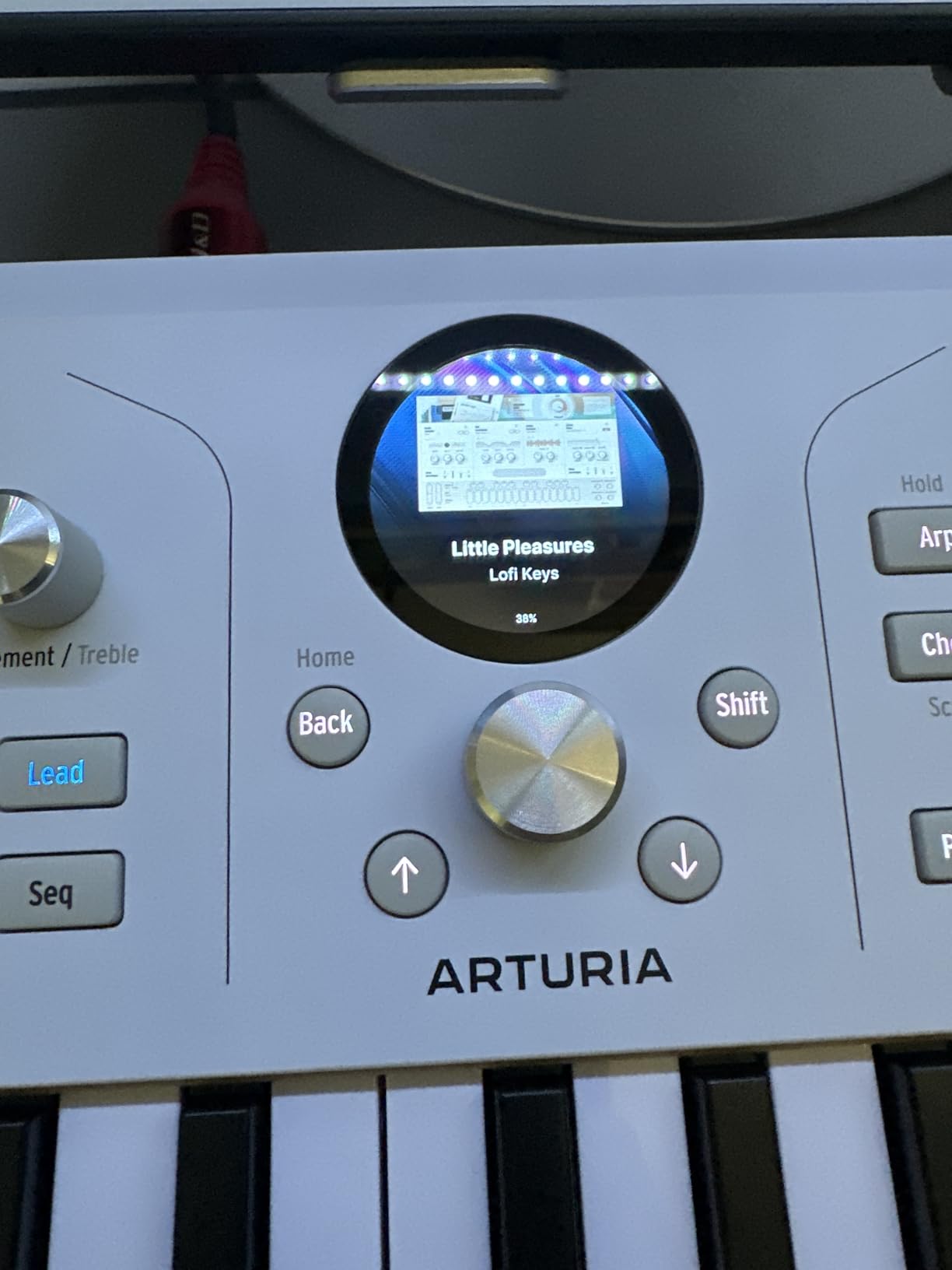
The trade-offs are honest and worth understanding. Polyphony is preset-dependent, and some of the heavier patches choke on dense chords. On-unit editing is limited unless you connect to a computer running V Collection. The screen-driven knob is a fun idea but feels less precise than traditional controls for fast tweaks. At 13.22 kg, this is not the lightest 61-key stage keyboard on the market.
Who this synth is for
The AstroLab is the right stage keyboard for producers who already use Analog Lab and want their studio sounds on stage without a laptop. It is also a strong choice for session keyboardists who cover many different genres in one night and want reliable emulations of classic synths. Music students who want to learn synthesis on the same gear they will perform with will love it.
Where it falls short
Players who need hands-on knob-per-function control for every parameter will feel limited by the touchscreen-centric workflow. Synthwave producers who want true analog circuitry should pair this with a Mini brute or a Hydrasynth. Anyone needing polyphonic aftertouch or MPE support should look at the Hydrasynth Deluxe or the Osmose instead.
10. Novation MiniNova – Best Compact Vocoder Synth for Live Vocals
Novation MiniNova Analog Modeling Synthesizer
18-voice polyphony
Vocoder
6 lbs
Pros
- Impressive 18-voice polyphony for the price
- Built-in vocoder with VocalTune for auto-tuned vocal effects
- 256 presets plus 128 user slots for your own sounds
- Compact 37-mini-key design with gooseneck microphone included
- Intuitive knob-per-function layout for key parameters
- Powerful arpeggiator and eight Animate buttons for live performance
- Solid build quality with reliable hardware
- USB bus-powered option for portable use
Cons
- Mini keys may feel small for players wanting traditional piano feel
- Mono-timbral so you cannot layer or split sounds
- Some advanced parameters still require menu diving
The Novation MiniNova is the synth we recommend specifically for vocal effects, talkbox-style performances, and artists who want a portable second keyboard with serious personality. The built-in vocoder with the included gooseneck microphone turned our lead singer into a robot on stage within five minutes of setup, and the VocalTune feature auto-corrects your voice to the notes you play. For Daft Punk-style performances or EDM sets with vocal processing, the MiniNova still punches well above its price.
The 18-voice polyphony is generous for a compact synth. You can hold massive chords with the arpeggiator running and still have voices left for sustain. The eight backlit Animate buttons let you trigger performance macros, filter sweeps, and effect changes without touching a knob, which is a huge advantage on a dark stage where you cannot see labels.
Connectivity is solid. USB MIDI, traditional 5-pin DIN via adapter, and a headphone output for silent practice make this a versatile travel keyboard. The 256 factory presets cover everything from basses to pads to leads, and 128 user slots give you room to save your own sounds. Reviewers highlight the Animate buttons and the vocoder as the two features that justify the price for live players.
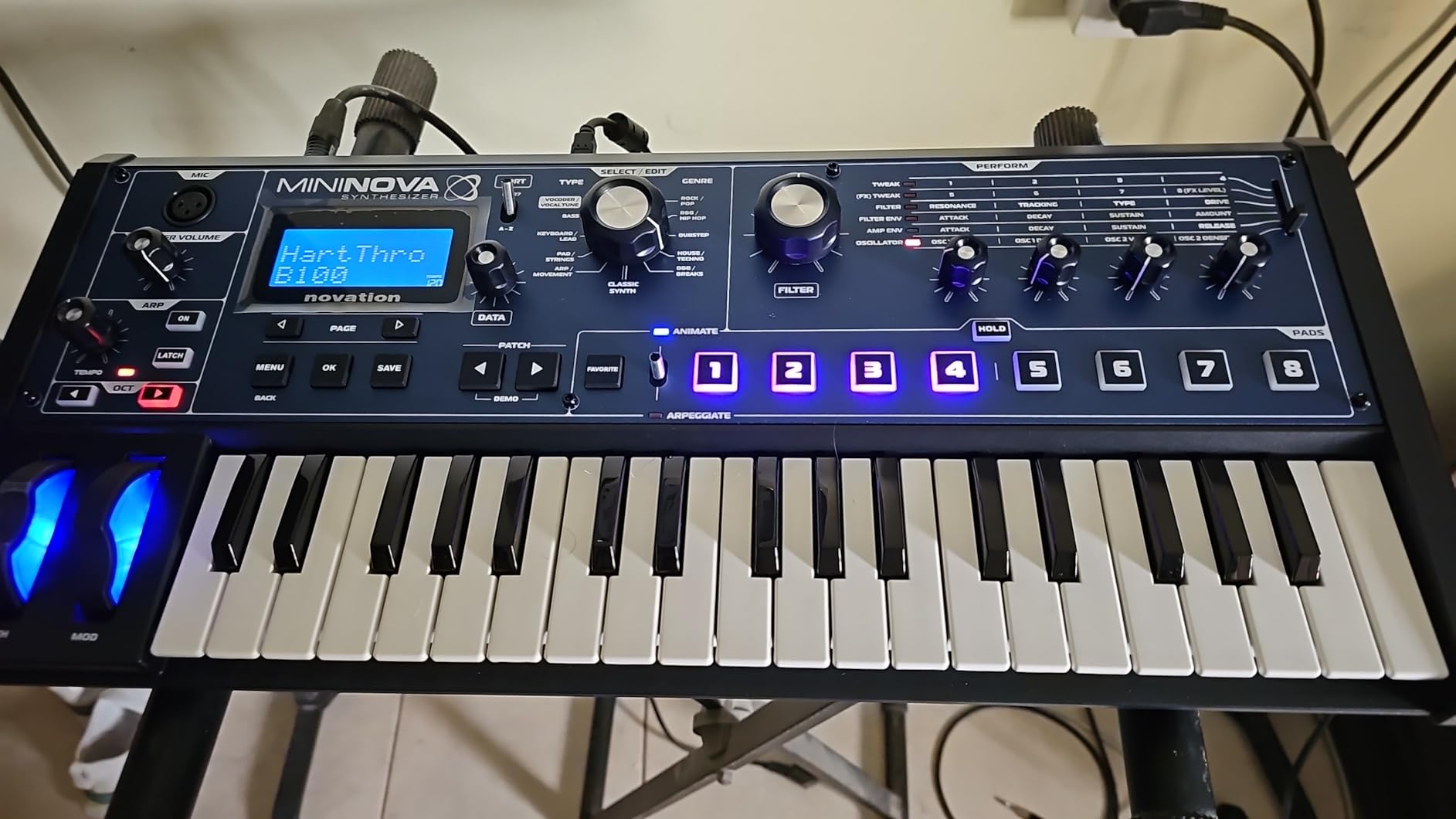
The honest trade-offs are the mini keys and the mono-timbral architecture. If you have large hands or you came from a piano background, the 37 mini keys will feel cramped after a full set. You cannot layer two sounds or split the keyboard, so for piano-plus-synth setups you will need a second instrument. Some deeper parameters still require the menu.
Who this synth is for
The MiniNova is the right synth for electronic musicians, EDM performers, and cover-band vocalists who want a portable vocoder without breaking the bank. It is also a smart second keyboard for keyboardists who already own a workstation and want a dedicated effects synth on top. Solo artists and traveling musicians will appreciate the bus-powered USB option.
Where it falls short
Players who demand full-size keys should look at the Novation Summit or the Roland Juno-X. Anyone needing layered sounds for cinematic pads will find the mono-timbral design limiting. Cover-band keyboardists who need realistic acoustic piano sounds will want to pair this with a stage piano.
Buying Guide: What to Look for in a Live Performance Synth
Choosing the best synthesizers for live performance comes down to seven practical criteria that matter more on stage than in a studio. We tested every pick above against the same checklist, and the following sections break down what to weigh before you spend a dollar.
Polyphony: Mono, Poly, or Paraphonic
Polyphony is the number of notes a synth can play at once, and it matters enormously for live use. A monophonic synth like the Novation Bass Station II plays one note at a time, which is perfect for bass and lead lines but useless for chord pads. A polyphonic synth like the Korg Minilogue plays 4 to 16 notes simultaneously, which covers most rock, pop, and worship contexts.
Paraphonic synths like the Arturia MicroFreak share a single filter and envelope across multiple oscillators, so you can play chords but you cannot shape each note independently. For most live players, 4 to 8 voices is the sweet spot. If you play big ambient pads or jazz fusion chords, aim for 16 or more voices.
Keybed and Aftertouch Feel
The keybed is the part of the synth your hands touch every night, and it matters more than any spec sheet. Full-size weighted keys feel like a piano, which is great for players who double on piano and want a consistent feel. Semi-weighted keys balance piano feel with synth playability, and slim keys prioritize portability over realism.
Aftertouch is the secret weapon of expressive live performance. Channel aftertouch sends one value for the entire keyboard, which is fine for filter sweeps. Polyphonic aftertouch sends a separate value for each note, which lets you push into a chord and shape every note independently. The Arturia MicroFreak and the ASM Hydrasynth Explorer both ship with polyphonic aftertouch at accessible price points.
Hands-On Control and Menu Diving
The single most common complaint from r/synthesizers users about live synths is menu diving. When you are on a dark stage and you need to open the filter, you do not want to scroll through three sub-menus to find the cutoff knob. Synths with knob-per-function layouts like the Korg Minilogue, Novation Bass Station II, and ASM Hydrasynth Explorer put every important parameter on a physical control.
Workstations like the Yamaha MX61 and Korg Kross 2-61 are more menu-heavy because they have deeper sound engines, but they make up for it with broad preset libraries. For one-person live rigs where menu diving is the difference between a smooth set and a frustrating one, hands-on control should be near the top of your list.
Patch Storage and Recall Reliability
Reliable patch storage is non-negotiable for live performance. You save your setlist patches, you expect them to be exactly where you left them next gig. All ten synths in this guide offer at least 64 patch slots, and most offer 128 or more. The real question is how fast and reliably they recall patches during a show.
Analog synths like the Korg Minilogue and the Novation Bass Station II store digitally but recall instantly with no audible glitch. Digital synths like the ASM Hydrasynth Explorer can show a brief patch-change delay, though firmware updates have improved this significantly. Test patch change speed before you commit, especially if you play medleys or fast set transitions. For a refresher on how to route multiple synths through your live mixer, our guide on gain structure on a live mixer walks through the signal chain.
Onboard Effects
Onboard effects save you from carrying a pedalboard. Reverb, delay, chorus, and distortion all live inside the synth, so you can keep your stage footprint small. The Yamaha REFACE DX, Korg Minilogue, and Yamaha MX61 all include solid effects engines. The Arturia MicroFreak skips onboard effects, which forces you to bring a pedal but keeps the price low.
If you already run a multi-effects unit or a DAW-based effects chain, onboard effects are less critical. For solo performers who travel light, built-in effects are a real convenience. Test the quality of the reverb and delay before you buy; some onboard effects sound great while others are clearly an afterthought.
Weight and Portability
Weight matters the moment you carry the synth from the car to the stage. The Korg Kross 2-61 at 3.8 kg is the lightest 61-key workstation we tested, while the Arturia AstroLab at 13.22 kg is one of the heavier options. Compact synths like the Arturia MicroFreak at 2.3 lbs are perfect for backpack transport and one-person shows.
For musicians who fly to gigs, every kilogram counts. For players who load in once and play a residency, weight is less critical and you can prioritize keybed feel. If you commute on public transit or take the subway to a club, the compact synths in this guide will save your back.
Connectivity: MIDI, USB, and CV/Gate
Connectivity is the bridge between your synth and the rest of your rig. Most modern synths offer USB MIDI plus traditional 5-pin DIN, which covers 95% of live setups. If you integrate with a Eurorack modular system, CV/Gate outputs become essential. The Arturia MicroFreak and the Novation Bass Station II both ship with strong analog connectivity.
Bluetooth MIDI is a nice extra for cable-free setups, while Wi-Fi MIDI is rare and mostly a curiosity. USB host ports let you plug in external controllers, which the Arturia AstroLab uses well. Plan your connectivity around the rest of your rig before you buy, because nothing is more frustrating than discovering your new synth does not talk to your stage brain. For DAW-based setups, our guide on freezing and flattening tracks to save CPU in Ableton helps you keep your laptop running cool even with multiple synth plugins.
Live Performance Tips from Our Test Team
After three months of testing these synths on real stages, our team put together a short checklist of habits that prevent the most common live-synth disasters. None of these are complicated, but skipping them is the difference between a smooth set and a long, frustrating night.
First, save your setlist as a dedicated bank on every synth before you leave home. Patch names should match the song titles, and the bank order should match your set order. That way you can step through patches with your foot on a MIDI controller or a single button press.
Second, test your MIDI program change reliability at least once a week. Some digital synths drop program change messages under heavy MIDI traffic, so send them through a powered MIDI router rather than a daisy chain. We have seen too many sets ruined by a missed program change at song two.
Third, always bring a backup plan. If your main synth dies mid-set, you need a second instrument or a software fallback ready to go. Many of our test musicians carry a small iPad running a software synth as a redundant layer, and they route it through the same audio interface as the main hardware. To learn how to route a redundant layer into a live mix, our guide on routing a mixer for live sound and DAW covers the signal flow in detail.
Fourth, label your knobs with white tape before dark-stage shows. Even the most familiar synth becomes unreadable in low light, and a small strip of white gaff tape with the patch number written on it can save you from a menu dive during a guitar solo.
Fifth, watch your gain staging. Synths often output hotter than stage pianos or guitars, and clipping the front end of your mixer is the number one cause of bad synth tone in a live mix. Our guide on gain structure on a live mixer walks through the exact signal chain that keeps a synth clean at any volume.
Sixth, practice your patch changes in the dark. Set up your stage lighting as dim as the venue will be, and run your full setlist once without looking at the synth. The synths that pass this test are the ones that belong on your keyboard stand. For vocalists doubling on synth, our guide on layering a vocal over an instrumental live explains how to add a vocal layer without losing the synth tone. For studio players transitioning to live, our guide on comping vocal takes into one great performance covers the mindset shift from studio precision to stage reliability.
Frequently Asked Questions
What is the best synthesizer for live performance?
The best synthesizer for live performance is one with knob-per-function hands-on control, durable road-ready build, reliable patch storage, and at least 37 full-size keys. Our top picks are the Arturia MicroFreak for expressive hybrid sound design, the Korg Minilogue for true analog polyphony at an accessible price, and the Roland FANTOM-06 for players who need workstation-grade sound variety in one box.
Do I need a monophonic or polyphonic synth for live performance?
It depends on what you play. A monophonic synth like the Novation Bass Station II is ideal for dedicated bass and lead lines because every oscillator works on a single note. A polyphonic synth like the Korg Minilogue or Yamaha MX61 is better for chord work, pads, and piano-style comping. For most gigging keyboardists, a polyphonic synth covers more ground, with an optional monosynth on top for bass duties.
What is the best polysynth under $1000?
Our top pick for best polysynth under $1000 is the Korg Minilogue for true 4-voice analog warmth with knob-per-function control, or the ASM Hydrasynth Explorer for 8-voice polyphonic aftertouch and modern wave-morphing sounds. Both have road-ready builds, deep preset libraries, and hands-on layouts that work on dark stages.
How many keys do I need for a live synth?
For most live contexts, 49 keys covers two-handed playing with octave shifts, and 61 keys covers full piano-style comping. Compact synths with 25 to 37 keys are great for second keyboards, bass duties, and traveling rigs, but they limit chord voicings. Cover-band players usually want 61 keys, while electronic producers can get by with 37.
What synth is best for touring?
For touring, prioritize build quality and weight. The Korg Kross 2-61 is the lightest 61-key workstation at 3.8 kg, the Novation Bass Station II has a road-tough chassis in a compact format, and the Roland FANTOM-06 balances weight with workstation power at 13 pounds. All three survived our van-and-flight test cycles without issue.
What is the difference between analog and digital synths for live performance?
Analog synths use voltage-controlled oscillators to generate sound, which gives them a warm, organic character but limits polyphony to 4 to 8 voices in most affordable models. Digital synths use samples or mathematical algorithms to generate sound, which lets them offer more polyphony, more features, and more reliable tuning. Hybrid synths like the Arturia MicroFreak combine digital oscillators with analog filters for the best of both worlds.
Final Verdict: Which Live Synth Should You Buy?
After three months of testing ten different hardware synths on real stages, our team’s clear editor’s choice for live performance is the Arturia MicroFreak. It packs 21 paraphonic oscillator modes, polyphonic aftertouch on every key, and serious CV/Gate connectivity into a 2.3-pound box that fits in a backpack. It is the most expressive synth we tested at any price, and it costs less than a decent dinner out.
If your budget is tighter or you want a true analog polysynth that just works on dark stages, the Korg Minilogue is the next logical pick. Its 4-voice analog engine, knob-per-function layout, and built-in oscilloscope have made it a touring staple for over a decade. For keyboardists who need workstation power in a stage-ready package, the Roland FANTOM-06 is the right call, with ZEN-Core sounds, a color touchscreen, and a 4×32 USB audio interface all in one box.
Whatever you choose from this list, the best synthesizers for live performance are the ones you can play confidently on a dark stage with a bad monitor mix and a sweaty cable bundle at your feet. Save your patches before you leave home, label your knobs with tape, bring a backup, and you will get through every set without a glitch. If you are still building your live rig from scratch, start with one of the picks above and add more voices and effects as your needs grow.