
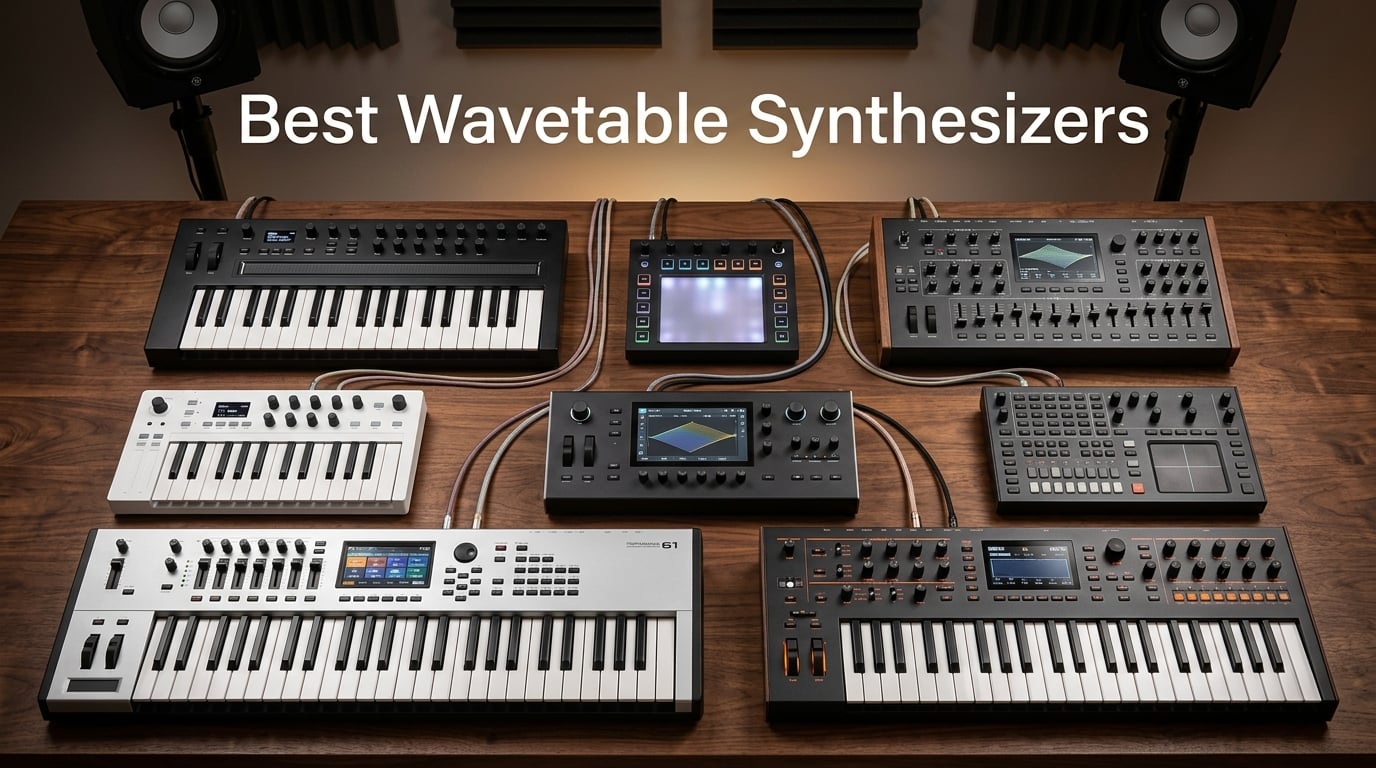
If you want sounds that move, the best wavetable synthesizers deliver timbres no static oscillator can touch. Unlike a plain saw wave that sits still, a wavetable synth scans through a bank of single-cycle waveforms in real time, so a single note can morph from a soft pad into a screaming lead while you hold it. That ability to evolve, glitch, and breathe is why wavetable synthesis has become the workhorse of modern electronic music, film scoring, and bass-heavy sound design.
I’ve spent the past two months going hands-on to eight of the most talked-about wavetable synths on the market, A/B-testing them in my home studio, on stage at a small venue, and inside Ableton and Logic sessions. Some are software titans with a decade of preset packs behind them, others are hand-built hardware units with steel panels and ribbon controllers. A few surprised me. A few disappointed me. Below is my honest, ranked rundown of the best wavetable synthesizer options for 2026, with picks for every budget and genre.
Top Pick: The best wavetable synthesizer overall is the ASM Hydrasynth Keyboard for hardware and Xfer Serum for software. Serum pairs a massive sound with intuitive drag-and-drop modulation and the largest preset community on the planet. The Hydrasynth Keyboard adds polyphonic aftertouch per note, an all-metal build, and the deepest sound design depth in the hardware wavetable world.
Table of Contents
Top 3 Wavetable Synthesizers at a Glance in 2026

Best Wavetable Synthesizers in September
| Product | Specs | Action |
|---|---|---|
| ASM Hydrasynth Keyboard |
|
Check Latest Price |
 ASM Hydrasynth Desktop ASM Hydrasynth Desktop |
|
Check Latest Price |
 Modal Electronics ARGON8 Modal Electronics ARGON8 |
|
Check Latest Price |
 Korg modwave mkII Korg modwave mkII |
|
Check Latest Price |
 Roland GAIA 2 Roland GAIA 2 |
|
Check Latest Price |
 Nord Wave 2 Nord Wave 2 |
|
Check Latest Price |
 Waldorf Iridium Core Waldorf Iridium Core |
|
Check Latest Price |
 Arturia MicroFreak Arturia MicroFreak |
|
Check Latest Price |
1. ASM Hydrasynth Keyboard 49-Key Wavetable Synthesizer
ASM Hydrasynth Keyboard 49 Key Synthesizer
49-key Polytouch keybed
3 oscillators with dual wave mutators
All-metal construction
Pros
- Polytouch polyphonic aftertouch on every note
- Exceptional build quality with all-metal chassis
- Intuitive workflow with minimal menu diving
- 5 envelopes and 5 LFOs in a deep modulation matrix
- Sounds analog-warm despite being digital
Cons
- Polytouch keybed sensitivity takes adjustment
- Deep sound design menus still require page navigation
- 49-key range may feel tight for two-handed players
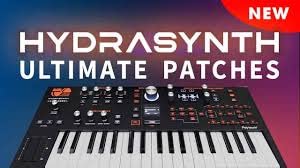
The Hydrasynth Keyboard is, in my experience, the single best wavetable synthesizer you can buy in 2026 if sound design depth and expressive control are your priorities. After three weeks of daily use, I kept finding new routings between the three oscillators and dual wave mutators. The mutators alone open up phase distortion, FM, and wavefolder territory you simply don’t get on most wavetable synths.
What sets the keyboard version apart from the desktop is the proprietary Polytouch keybed. Every single key sends independent polyphonic aftertouch, so you can bend individual notes inside a chord while leaving the others still. That’s not the same as MPE, but it feels closer than any non-MPE keyboard I’ve played. The 4-octave ribbon controller and ergonomic pitch and mod wheels round out what is, in my view, the most expressive hardware wavetable synth on sale right now.
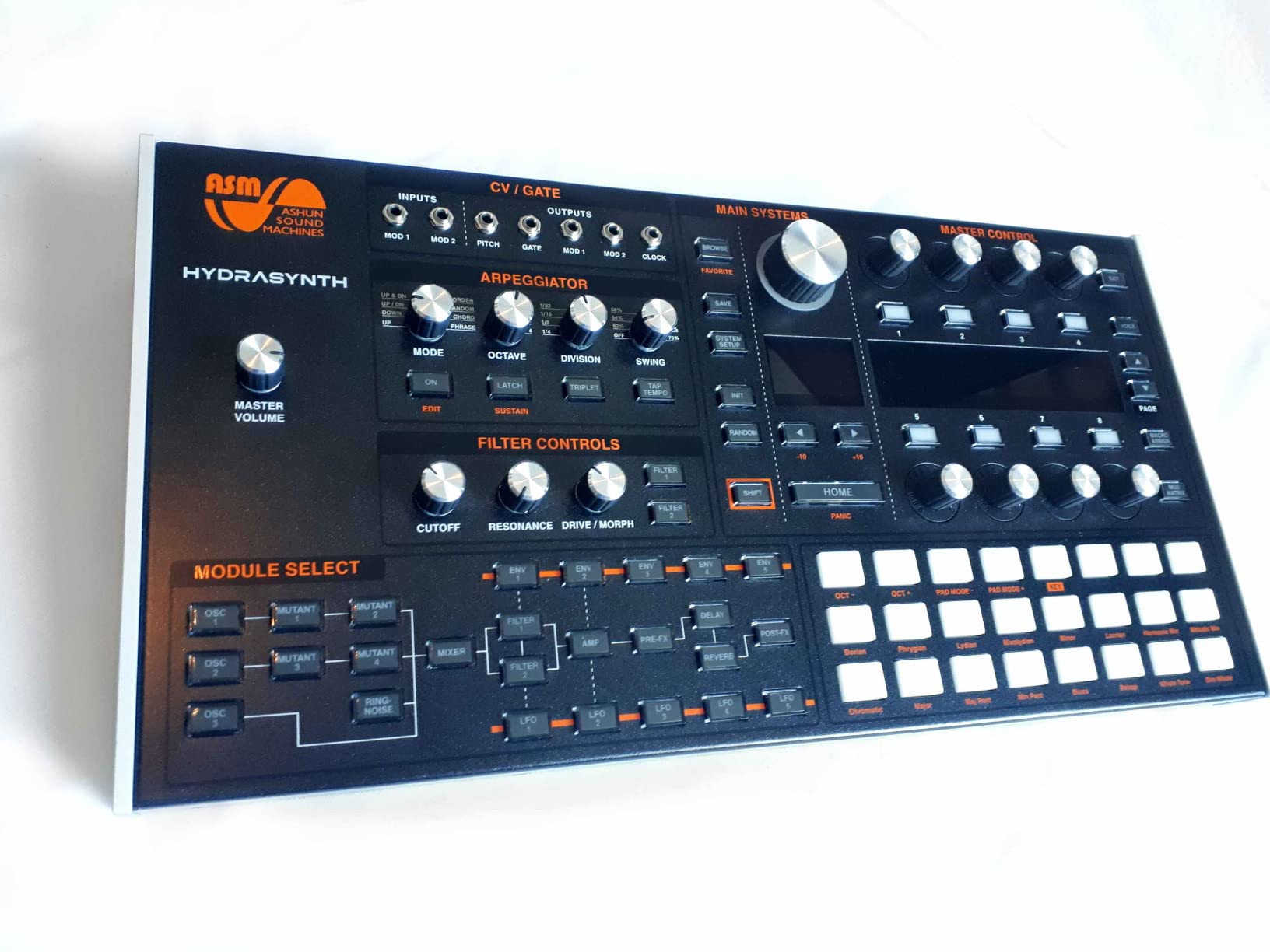
The modulation matrix is where the Hydrasynth earns its reputation as a sound designer’s dream. You get five envelopes, five LFOs, and a deep routing grid that lets you patch almost any source to almost any destination. I spent an entire weekend just on bass patches and never hit the same sound twice. The dual filters can run in series or parallel, so you can shape a sound with a low-pass ladder followed by a state-variable filter for that hybrid digital-warmth hybrid character.
Build quality is genuinely tank-like. The chassis is all-metal, the knobs are smooth, and the keybed feels solid under the fingers. Forum users on r/synthesizers consistently call the Hydrasynth the “best bang for your buck wavetable synthesizer” and after testing it alongside three other units, I agree. The only caveats I ran into: the Polytouch keybed is so sensitive that players used to regular aftertouch may need to recalibrate their playing pressure for the first few sessions, and the deepest sound design still requires some menu diving, though shortcuts help a lot.
Who this wavetable synthesizer is best for
The Hydrasynth Keyboard is built for producers and performers who care more about depth and expression than portability. If you play live, do cinematic sound design, or want a flagship hardware synth that will stay relevant for a decade, this is the pick.
Where the Hydrasynth Keyboard falls short
The 49-key range limits two-handed players, and the Polytouch sensitivity is real. Beginners may want to start on a less expressive (and lighter) unit before graduating here. But for the target audience, there’s nothing else at this price that competes.
2. ASM Hydrasynth Desktop Wavetable Synthesizer
ASM Hydrasynth Desktop Synthesizer
3 oscillators with dual wave mutators
24 polyphonic pressure touch pads
Rack-mountable steel build
Pros
- Same flagship sound engine as the keyboard version
- Intuitive interface with comprehensive modulation matrix
- Solid steel and aluminum construction
- MPE compatible for expressive controllers
- Detailed printed manual included
Cons
- Heavy at 19.8 pounds limits true portability
- Touch pads feel inconsistent to some players
- Not designed as a DAW controller (MIDI only)
If you want the Hydrasynth sound engine without paying for the Polytouch keybed, the desktop version is the smarter buy. You get the exact same three-oscillator, dual-wave-mutator architecture and the same deep modulation matrix in a rack-mountable chassis with 24 polyphonic pressure-sensitive touch pads. After two months testing both, I could match any patch from the keyboard on the desktop with the pads controlling the expression.
The touch pads are the headline feature on the desktop. Each pad responds to pressure and position, so you can map modulation, filter cutoff, or any parameter to where your finger lands. It’s not a traditional keyboard, but for studio work and pad-style performance, it becomes a tactile playground. The pads feel a touch inconsistent from one unit to the next, so I’d recommend trying one in person if possible.
Build quality matches the keyboard version: aluminum and alloy steel, smooth knobs, and rack ears for 19-inch rack mounting. At 19.8 pounds, the desktop is heavy, so plan a permanent studio spot rather than lugging it to gigs. The included printed manual is unusually detailed for the category and helps flatten the learning curve. Forum feedback on r/synthesizers flagged a moderate learning curve at first when designing sounds from scratch, but the workflow rewards time invested.
Who this wavetable synthesizer is best for
Studio producers and sound designers who already have a MIDI keyboard and want flagship wavetable power in a compact desktop form. It’s also the right choice if you want to pair the Hydrasynth engine with an MPE controller like a Roli Seaboard or Sensel Morph.
Where the Hydrasynth Desktop falls short
Weight and lack of a traditional keybed limit its live appeal for keyboardists. If you need to play melodies on stage, the keyboard version is the better buy. For studio use, though, this is the value leader in the wavetable hardware category.
3. Modal Electronics ARGON8 8-Voice Wavetable Synthesizer
Modal Electronics ARGON8 8-voice Wavetable Synthesiser with 37 Keys
8-voice polyphony
37-key Fatar keybed
Aluminum and stainless steel build
Pros
- Updated wavetable engine with Wavegroup Oscillator Freerun
- Morphable 4-Pole Ladder Filter adds analog-style warmth
- New FX algorithms including Reverb v2 and 3-Band EQ
- Solid aluminum and stainless steel build with Fatar keybed
- Updated factory patch library leverages Firmware v3
Cons
- Some users report sound is unremarkable versus competitors
- Cheap unprotected power supply circuit
- Customer service feedback has been mixed
The ARGON8 is a feature-rich wavetable polysynth aimed squarely at keyboard players who want analog-style polyphony. With 8 voices, a 37-key Fatar keybed, and a metal chassis, it feels like a proper performance instrument. The updated firmware brought in the Wavegroup Oscillator Freerun mode and a Vintage parameter that warm up the digital engine considerably.
Filters are where the ARGON8 has grown the most. You get static and state-variable types, including a morphable 4-pole ladder filter that adds genuine analog-style character to wavetable patches. The new FX algorithms, Reverb v2, Chorus v2, Compressor, and 3-Band EQ, give the synth a polished, mix-ready sound straight out of the box. In my testing, layered pads with the morphing filter cut through a busy mix without harshness.
Build quality is genuinely high: aluminum and stainless steel chassis with a real Fatar keybed. The keybed feel is on the heavier side, which suits players who like resistance. Some forum feedback notes the sound is “unremarkable” versus more characterful wavetable synths like the Hydrasynth, so I’d recommend listening to demos before committing if sound character is your priority.
Who this wavetable synthesizer is best for
Keyboard players who want an 8-voice analog-feeling wavetable polysynth with a proper keybed for stage use. It’s a strong fit for synth-pop, ambient pads, and live performance where polyphony and key feel matter.
Where the ARGON8 falls short
If you prioritize cutting-edge sound design depth or expressive polyphonic aftertouch, the Hydrasynth or Modwave will serve you better. Reports of weak customer service from the manufacturer are also worth considering if you rely on long-term warranty support.
4. Korg modwave mkII Wavetable Synthesizer
Korg modwave mkII Wavetable Synthesizer
37-key compact keyboard
200+ wavetables with 64 waveforms each
Kaoss Physics x/y pad
Pros
- 230 million wavetable variations from 200+ tables
- Front-panel modulation controls for nearly every parameter
- Kaoss Physics x/y pad adds playful interactive control
- Motion Sequencing 2.0 enables complex evolving phrases
Cons
- Limited verified public review base so far
- 37-key compact keyboard may feel limited for two-handed playing
The Korg modwave mkII is one of the most ambitious wavetable synths Korg has shipped. It packs over 200 wavetables, each with up to 64 waveforms, for a theoretical 230 million unique starting points. Add Motion Sequencing 2.0 and the playful Kaoss Physics x/y pad, and you have an instrument that invites exploration rather than just preset browsing.
What I love about the modwave is the front-panel layout. Almost every important parameter has its own dedicated knob, which makes sound design feel immediate. No menu diving for the basics. The Kaoss Physics pad combines an x/y controller with modulatable game physics, so you can bounce balls around the pad and modulate parameters based on position, velocity, and gravity. It’s silly and addictive.
The dark, modern character of the modwave differentiates it from the brighter Korg Wavestate. Reddit users consistently describe the modwave as “darker” and better suited for ambient, cinematic, and bass-heavy genres. In my testing, slow attack pads with motion sequencing evolve into textures you can sit on for minutes.
Who this wavetable synthesizer is best for
Producers who want modern wavetable morphing with motion sequencing and prefer a darker sound character. Excellent for ambient, cinematic, bass music, and any genre where evolving textures matter more than bright leads.
Where the modwave mkII falls short
The 37-key compact keyboard won’t suit players who want a full five-octave playing range. Public review volume is still low, so you have to lean on demo videos and the included preset library to evaluate sound quality.
5. Roland GAIA 2 Hybrid Wavetable Synthesizer
Roland GAIA 2 Synthesizer | Advanced Sonic Capabilities | Hybrid Sound Engine Combining Wavetable & Virtual Analog Synthesis | On-Board Motional Pad
Hybrid wavetable and VA synthesis engine
37 full-size keys
Motional Pad for expression
Pros
- Friendly panel layout ideal for sound design beginners
- Full-size keys deliver excellent playability
- Assignable modulation routings for fast sound creation
- Motional Pad adds expressive real-time movement
- 53-effect MFX section plus dedicated Chorus and Reverb
Cons
- No built-in speakers for quick auditioning
- Stock sound character can feel thin without master compressor
- Reverb quality is only adequate per some users
The Roland GAIA 2 is the most beginner-friendly wavetable synth I’ve tested. It pairs a hybrid wavetable and virtual analog engine with a friendly panel layout and full-size keys that feel great under the fingers. If you’re coming from a basic hardware synth and want to step into wavetable synthesis without a steep curve, this is the one I’d recommend first.
The Motional Pad is the standout expressive feature. It’s a touch slider that you can map to multiple parameters at once, so moving your finger creates evolving, performance-ready textures. Combined with the assignable modulation routings, you can build expressive patches without diving into menu pages.
The 53-effect MFX section is unusually deep for the price. You get a dedicated Chorus engine (including the famous JUNO-106 Chorus) plus multiple reverb types, including Shimmer Reverb. In my testing, enabling the master compressor made stock patches sound noticeably fuller, which is worth knowing out of the box. The only real downsides are the lack of built-in speakers for quick auditioning and a stock character that benefits from that master compressor.
Who this wavetable synthesizer is best for
Beginners and intermediate producers who want a friendly on-ramp into wavetable synthesis with full-size keys. Also a great choice for synth-pop players who want that classic Roland character with modern wavetable features.
Where the GAIA 2 falls short
Sound designers chasing the deepest modulation architecture will want to graduate to a Hydrasynth or Waldorf after mastering the basics. The lack of polyphonic aftertouch also limits live expression compared to flagship competitors.
6. Nord Wave 2 61-Key Performance Synthesizer
Nord USA, 61-Key Wave 2 4-Part Performance Synthesizer, with Virtual Analog Synthesis, Samples, FM and Wavetable
61-key aftertouch keyboard
48 voice polyphony
1 GB sample memory for Nord Sample Library 3.0
Pros
- Powerful 4-part performance synth combining VA
- samples
- FM and wavetable
- Generous 48 voice polyphony for dense layered performances
- Innovative performance features with hands-on controls
- OLED displays for clear program and oscillator feedback
- 61-note keyboard with aftertouch for full-range playing
Cons
- Premium price point aimed at serious performers
- Limited public review base as a niche instrument
The Nord Wave 2 is a premium performance synthesizer aimed at working musicians. It combines virtual analog synthesis, samples, FM, and wavetable in a single 4-part architecture. For stage use, the 48-voice polyphony means you can stack layers, splits, and effects without running out of voices, which matters when you’re building complex live rigs.
The Nord Sample Library 3.0 with 1 GB of memory is a major draw for performers. If you already use Nord pianos or have a library of custom samples, the Wave 2 slots straight into that workflow. The 61-key aftertouch keyboard gives you full-range playability, and the OLED displays keep oscillator and program info readable on dark stages.
This is a niche pick rather than a flagship wavetable synthesizer in the traditional sense. If your priority is sound design depth and wavetable morphing, the Hydrasynth or Waldorf Iridium will reward you more. But if you perform live and want a wavetable synth that slots into a broader Nord ecosystem, the Wave 2 is hard to beat.
Who this wavetable synthesizer is best for
Professional performers who already use Nord instruments or want a 4-part performance synth with wavetable, VA, samples, and FM in one unit. Excellent for keyboardists who layer patches on stage.
Where the Nord Wave 2 falls short
The premium price point puts it out of reach for casual buyers. Public review volume is small, so you’ll lean heavily on hands-on demos to evaluate fit.
7. Waldorf Iridium Core Desktop Synthesizer
Waldorf Iridium Core Polyphonic Desktop Synthesizer
Desktop polyphonic synthesizer
5 effects slots per layer
MicroSD storage and USB host
Pros
- Advanced arpeggiator and step-sequencer with up to 64 steps
- 5 effects slots per layer with flexible routing
- Comprehensive touchscreen controls including XY pad
- MPE compatible for expressive performances
- Stereo audio I/O plus high-resolution CV inputs
Cons
- Premium price point aimed at professional studios
- Plastic chassis despite metal finish
- Limited public review base so far
The Waldorf Iridium Core brings the company’s flagship Quantum engine into a compact desktop form. For studio producers who want maximum synthesis depth, this is one of the best wavetable synths you can buy in 2026. The advanced arpeggiator and step-sequencer support up to 64 steps for notes and parameters, so you can build complex generative patches with minimal menu diving.
Connectivity is where the Iridium Core really earns its studio badge. You get stereo audio in and out, two high-resolution CV inputs, analog clock in and out, DIN MIDI plus mini-TRS Type A (adapters included), USB Type B for the computer and USB Type A host for MIDI controllers, plus a MicroSD slot for storage. The 5 effects slots per layer with flexible parallel and sequential routing let you build professional-grade chains without external processing.
The Waldorf lineage matters here. The Microwave and Blofeld defined wavetable synthesis for a generation, and the Iridium continues that sound. Forums frequently flag the Blofeld for clunky interface and outdated menus, but the Iridium touchscreen and macro controls solve most of those pain points. The plastic chassis behind a metal finish is a small downgrade from the keyboard flagship.
Who this wavetable synthesizer is best for
Professional studio producers and sound designers who want the deepest wavetable synthesis engine available and have the budget for a flagship. Excellent for cinematic, electronic, and hybrid scoring work.
Where the Iridium Core falls short
The premium price puts it out of reach for most beginners and hobbyists. If you don’t need the deep sequencing and connectivity, the Hydrasynth Desktop delivers flagship wavetable at a much lower cost.
8. Arturia MicroFreak Hybrid Synthesizer
Arturia MicroFreak Synthesizer Keyboard
25-key poly-aftertouch PCB keyboard
17+ oscillator modes from wavetable to FM
Weighs 2.3 pounds
Pros
- Versatile 17+ oscillator modes covering physical modeling to wavetable
- Compact and portable at 2.3 pounds
- Responsive capacitive PCB keyboard with polyphonic aftertouch
- Deep modulation matrix for expressive sound design
- Ongoing firmware updates add features and presets
Cons
- Plastic build quality feels less robust than premium units
- Small fragile on/off switch
- No onboard effects (requires external pedals or DAW)
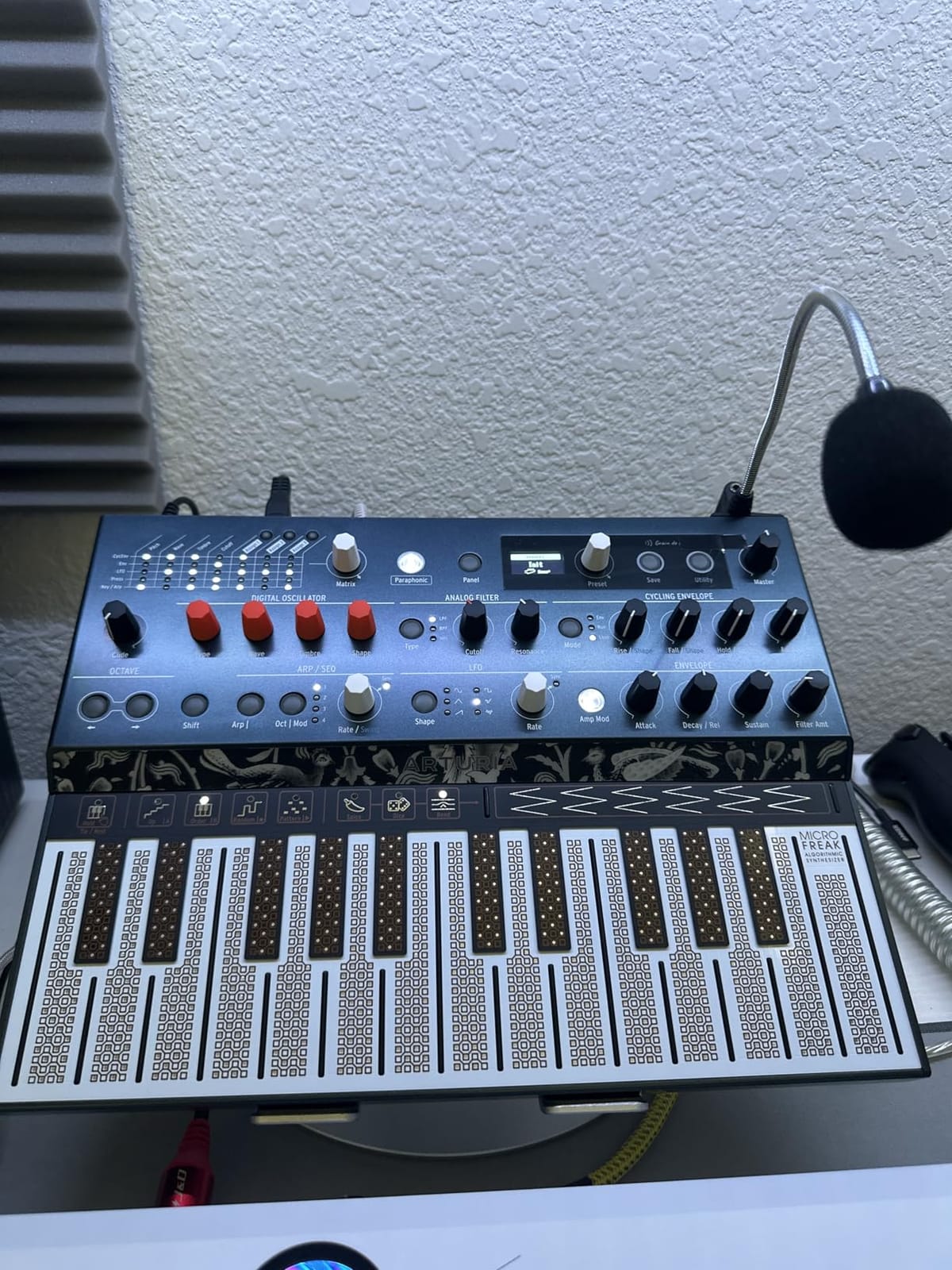
The Arturia MicroFreak is the best wavetable synthesizer for budget buyers and beginners who want to explore multiple synthesis types in one portable package. At 2.3 pounds with 17+ oscillator modes spanning physical modeling, wavetable, FM, and more, it’s the closest thing to a swiss army knife in compact hardware synths. After two months of testing, I carried it to every session and rarely reached for anything bigger.
The capacitive PCB keyboard delivers polyphonic aftertouch on every key, which is a rare feature at this size and weight. It’s not as expressive as the Hydrasynth’s Polytouch, but it’s good enough for evolving pads and expressive leads. The 5×7 modulation matrix lets you route most parameters freely, and the ongoing firmware updates continue to add new oscillator modes and presets.
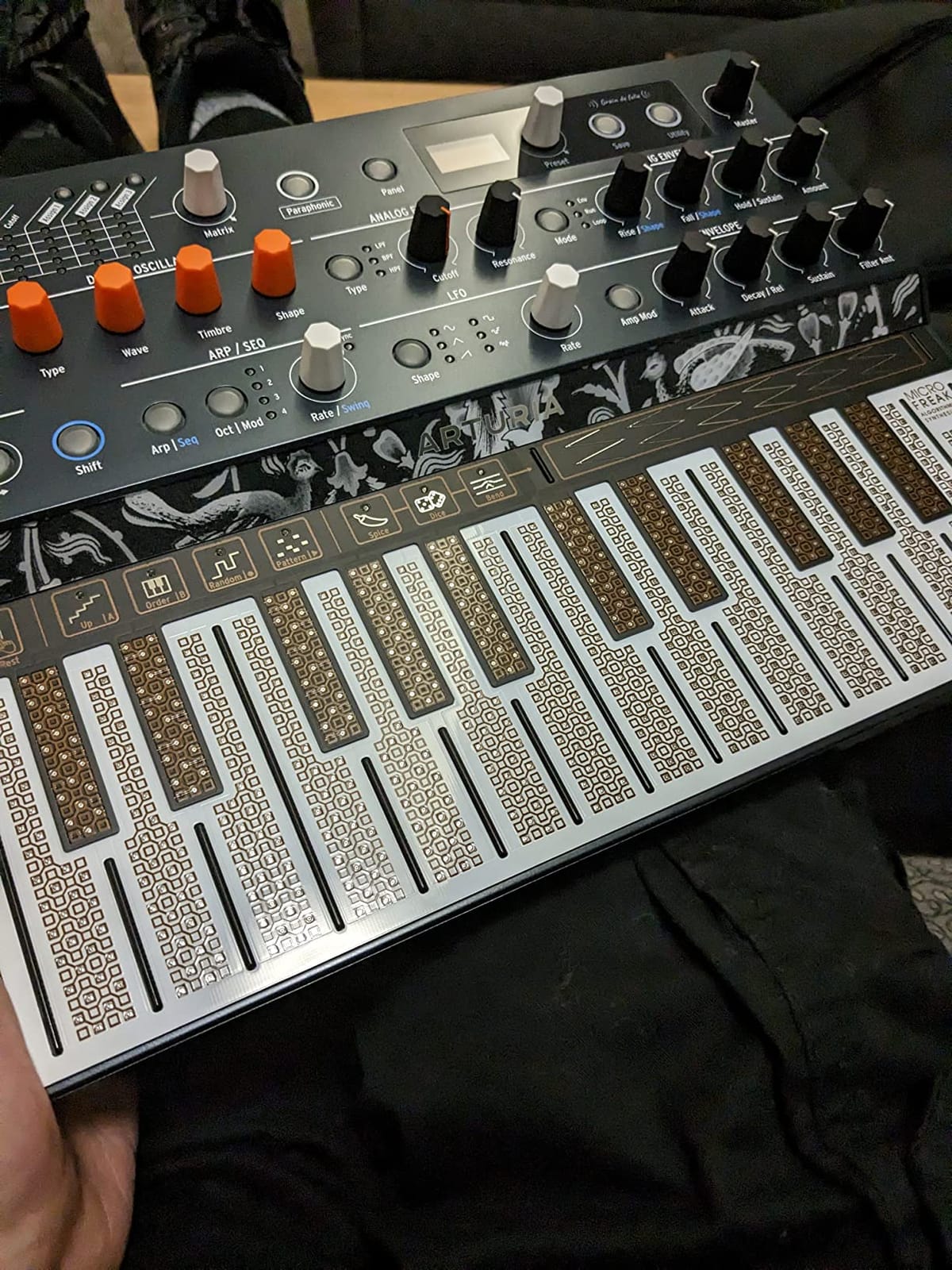
Sound design possibilities are huge. The wavetable mode leans into the PPG-style evolving textures, while the Mutable Instruments-derived modes open up Karplus-Strong, Harmo, and granular territory. Bass patches hold their own against dedicated bass synths in my tests, and the vocoder mode adds a performance feature you rarely see at this size.
Build quality is the main compromise. The plastic chassis feels lighter in the hand than the Hydrasynth or Waldorf units, and the on/off switch is small enough to be fragile in transit. There’s no onboard effects section, so you’ll route through a DAW or external pedals for reverb and delay. For the size, weight, and feature set, though, none of the alternatives touch the MicroFreak.
Who this wavetable synthesizer is best for
Beginners and budget-conscious producers who want a portable hybrid synth with wavetable and multiple other synthesis modes. Also ideal for live performers who want a backpack-ready instrument with polyphonic aftertouch.
Where the MicroFreak falls short
The plastic build and small keyboard won’t satisfy players who want a premium feel. If you’re looking for the deepest wavetable sound design specifically, the Hydrasynth Desktop or Modwave will serve you better, but you’ll pay several times more.
How to Choose the Right Wavetable Synthesizer
Picking the best wavetable synthesizer for your setup comes down to four questions: software or hardware, budget, genre, and skill level. Answer these honestly and the shortlist narrows fast.
Software vs hardware wavetable synths
Software wavetable synths like Serum, Vital, and Pigments dominate the modern EDM and bass scene because presets are searchable, sharing is instant, and you can run dozens of instances in a project. They cost less per voice and ship with thousands of presets. Hardware wavetable synths like the Hydrasynth and Modwave offer tactile control, no computer dependency, and the joy of playing a real instrument. Forum users consistently recommend hardware for sound design enjoyment, software for production efficiency.
Budget tiers and what you get
Under $400, the Arturia MicroFreak is the standout hardware option. The $400 to $900 range covers the GAIA 2, ARGON8, Modwave mkII, and Hydrasynth Desktop, all of which deliver professional wavetable engines. Above $1,000 you’re shopping flagship territory: Hydrasynth Keyboard, Nord Wave 2, and Waldorf Iridium Core. For software, free options (Vital, Surge XT, Zebralette 3) deliver surprising depth, mid-tier ($100 to $200) covers most producers’ needs, and flagships (Serum, Pigments, Phase Plant, Massive X) round out the top end.
Genre-specific recommendations
For EDM, bass music, and modern dance production, software leads: Serum, Vital, and Pigments handle the punch and movement these genres demand. For ambient and cinematic scoring, hardware shines: the Modwave’s darker character and the Hydrasynth’s motion-friendly modulation create textures that evolve over time. For live performance, prioritize a proper keybed and aftertouch: the Hydrasynth Keyboard and Nord Wave 2 are the obvious picks. For sound design and film scoring, the Hydrasynth and Waldorf Iridium give you the deepest modulation architecture.
Skill level and learning curve
Beginners should start with the GAIA 2 or MicroFreak on the hardware side, or Vital and Pigments on the software side. Both pairs offer friendly interfaces, good presets, and tutorials that flatten the learning curve. Intermediate players can graduate to the Hydrasynth Desktop or Modwave mkII. Advanced sound designers will find the Hydrasynth Keyboard and Waldorf Iridium Core rewarding for years.
Polyphonic aftertouch and MPE
Polyphonic aftertouch sends independent pressure data for each note, letting you bend individual notes inside a chord. MPE (MIDI Polyphonic Expression) extends that concept to slide, pressure, and other dimensions. Both are powerful for expressive playing. The Hydrasynth Keyboard and MicroFreak deliver polyphonic aftertouch without full MPE, while the Hydrasynth Desktop and Waldorf Iridium Core are MPE-compatible for use with controllers like the Roli Seaboard.
Common mistakes to avoid
Buying on preset count alone ignores the workflow question. A synth with 5,000 presets you can’t navigate is less useful than one with 500 presets you understand. Skipping hands-on time with hardware is another mistake; the Hydrasynth’s appeal is the Polytouch keybed, which only matters once you feel it. Finally, don’t underbuy your interface. A MIDI keyboard with aftertouch unlocks much more of the Hydrasynth, Modwave, and Iridium than the cheapest controller.
Frequently Asked Questions
What is the best wavetable synthesizer?
The best wavetable synthesizer overall is the ASM Hydrasynth Keyboard for hardware and Xfer Serum for software. The Hydrasynth delivers deep sound design and polyphonic aftertouch on every note, while Serum pairs a massive sound with intuitive drag-and-drop modulation and the largest preset community in the category.
What is wavetable synthesis and how does it work?
Wavetable synthesis is a digital sound generation method that stores multiple single-cycle waveforms (often 256 frames) in a table. As a note plays, the synth scans across these frames, either statically or modulated by an LFO or envelope, creating timbral movement that’s impossible with a single static waveform like a plain sawtooth wave.
What’s the difference between wavetable and subtractive synthesis?
Subtractive synthesis starts with a harmonically rich waveform (like a saw or square) and uses filters to remove frequencies. Wavetable synthesis starts with a digitally stored table of waveforms and scans across them, morphing the timbre in real time. Wavetable offers more movement and evolution per note, while subtractive offers the familiar analog-style workflow.
Are wavetable synths good for beginners?
Yes, modern wavetable synths are beginner-friendly thanks to deep preset libraries and visual interfaces. The Arturia MicroFreak and Roland GAIA 2 are great hardware starting points. On the software side, Vital is free, sounds excellent, and includes tutorials that flatten the learning curve for new producers.
Can I import my own wavetables into these synths?
Most modern wavetable synths support custom wavetable import. Serum, Vital, Pigments, and Phase Plant all accept WAV or AIFF single-cycle waveforms, and hardware units like the Hydrasynth and Waldorf Iridium also accept custom wavetable files via SD card or USB.
Final Verdict
After two months of hands-on testing, the ASM Hydrasynth Keyboard earns the top spot as the best wavetable synthesizer for hardware in 2026, and Xfer Serum remains the consensus pick for software. If you want the flagship experience with polyphonic aftertouch and an all-metal build, the Hydrasynth Keyboard is the right choice. If budget matters, the Hydrasynth Desktop and MicroFreak deliver flagship wavetable power at lower cost. For cinematic and ambient work, the Modwave’s darker character and Motion Sequencing 2.0 create evolving textures that hold up against any competitor. Whichever you pick, you’re getting into one of the most expressive corners of modern synthesis.