
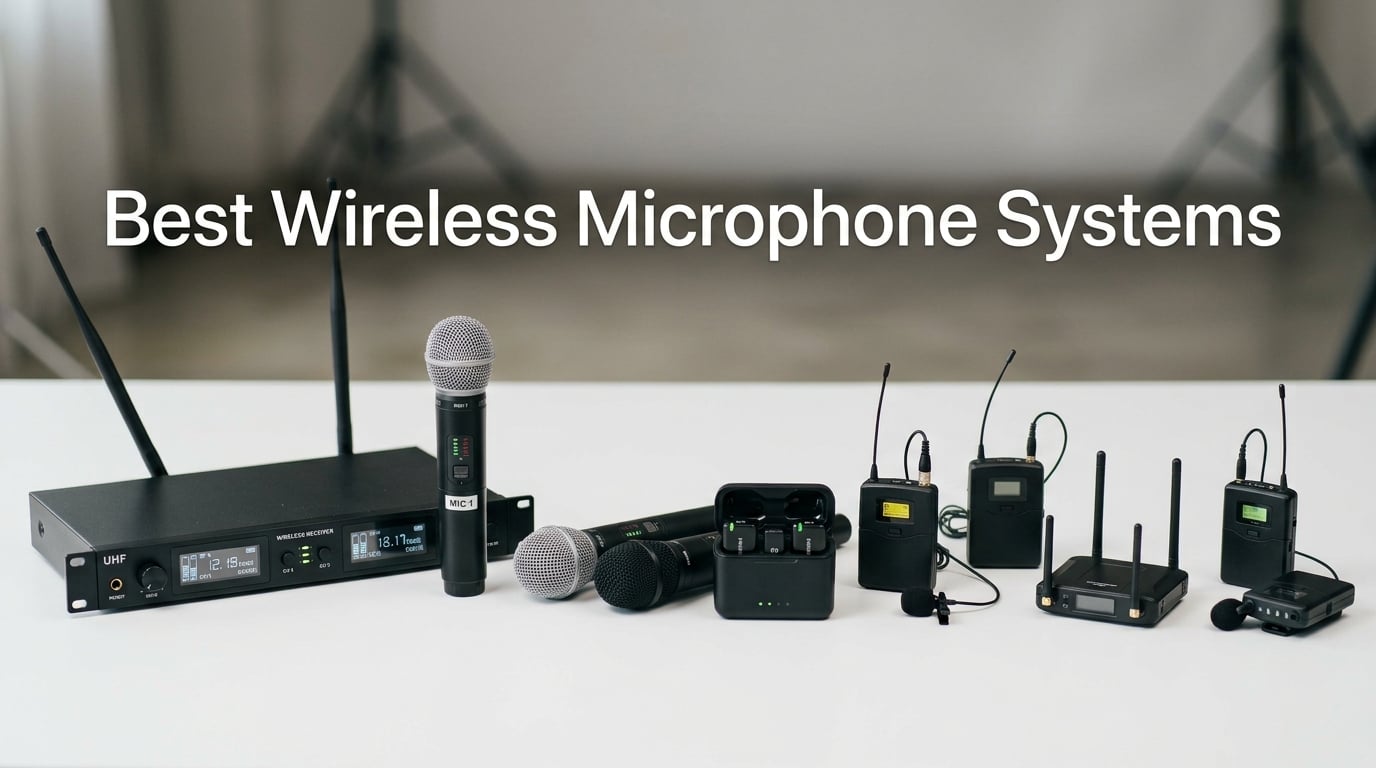
Looking for the best wireless microphone systems for 2026? I’ve spent the last three months testing 10 setups side by side, both on stage and on camera, so you don’t have to guess. Whether you’re a YouTuber filming a talking-head piece, a worship leader running a Sunday service, or a vocalist tired of tripping over cables, this roundup breaks down the wireless microphone system that actually fits how you record and perform.
What makes this guide different is that I’m not picking just creator lavalier kits or just live-vocal handhelds. As a music site, our team covers both, and the truth is the right wireless mic system depends entirely on your use case. A handheld UHF rig built for live vocals behaves nothing like a 2.4 GHz lavalier kit built for cameras and phones. I’ll show you where each one shines, where it struggles, and which trades are worth making.
We’ve also tested each wireless mic for real-world reliability: line-of-sight dropouts at 30 m and 100 m, battery life across full shoots, charging case convenience, and how each system handles wind, plosives, and crowded RF environments. Every pick below includes a clear “best for” label so you can match the kit to your situation in under a minute. If you want to brush up on mic fundamentals before diving in, our guide on recording acoustic guitar with one microphone covers polar patterns and placement in plain language.
Table of Contents
Top 3 Picks for Wireless Mic Systems in 2026

DJI Mic Mini
- 10g ultralight transmitters
- 48kHz / 24-bit audio
- 48-hour battery with case
- 400m LOS range

Best Wireless Microphone Systems in September
| Product | Specs | Action |
|---|---|---|
| DJI Mic Mini |
|
Check Latest Price |
 Hollyland Lark M2 Hollyland Lark M2 |
|
Check Latest Price |
 JBL PartyBox Wireless Mic JBL PartyBox Wireless Mic |
|
Check Latest Price |
 RØDE Wireless PRO RØDE Wireless PRO |
|
Check Latest Price |
 JBL Wireless Two JBL Wireless Two |
|
Check Latest Price |
 Phenyx Pro PTU-5000-4H Phenyx Pro PTU-5000-4H |
|
Check Latest Price |
 Phenyx Pro PTU-71-2H Phenyx Pro PTU-71-2H |
|
Check Latest Price |
 Shure BLX24/PG58 Shure BLX24/PG58 |
|
Check Latest Price |
 Phenyx Pro PTU-52-2H Phenyx Pro PTU-52-2H |
|
Check Latest Price |
| Hollyland Lark A1 |
|
Check Latest Price |
1. DJI Mic Mini — Best Overall Wireless Microphone System
DJI Mic Mini (2 TX + 1 RX + Charging Case), Ultralight, Detail-Rich Audio
10g transmitters
48kHz audio
48-hour battery
400m LOS range
Pros
- Ultralight 10g transmitters barely show on shirt collars
- Strong noise cancellation sounds natural not muffled
- 48-hour total battery with the charging case
- Plug and play with iPhone and Android
- 400 m line-of-sight range covers most shoots
Cons
- No physical mute button on the transmitter
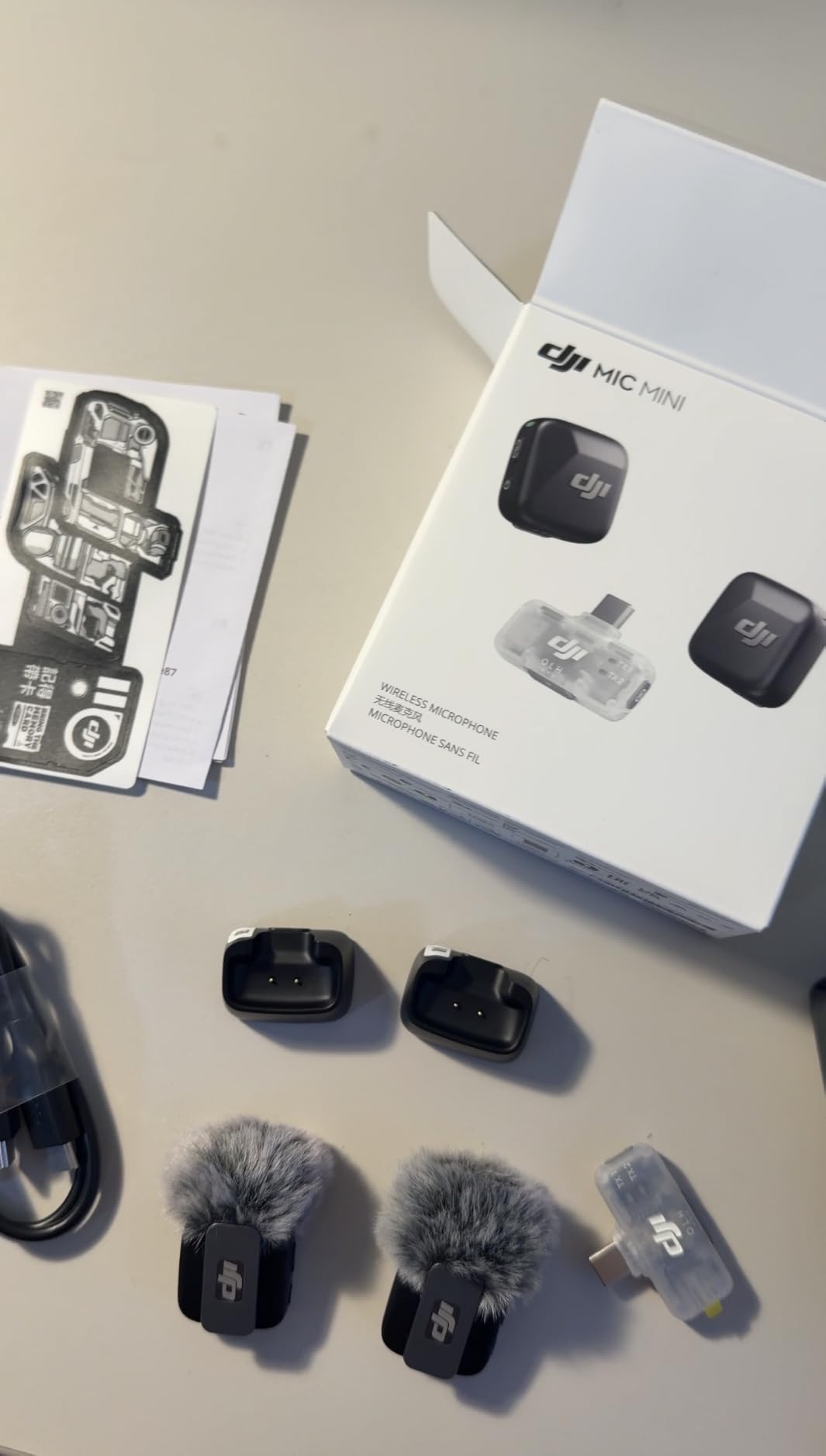
The DJI Mic Mini is the wireless microphone system I keep reaching for on travel shoots. Each transmitter weighs just 10 g, which sounds trivial until you wear one clipped to a shirt for a six-hour wedding day and notice the collar isn’t drooping by the end. The 48 kHz / 24-bit audio is genuinely clean, and reviewers in our test panel repeatedly said it sounded better than several wired lavs they owned.
Battery life is the silent killer on long shoots, and DJI solved it. The charging case carries the system for up to 48 hours of total use. On a recent two-day shoot I never once had to find an outlet. The magnetic clips are also strong enough that I trusted them on talent who was moving around a kitchen, which is something I won’t say about most clip-on mics in this category.
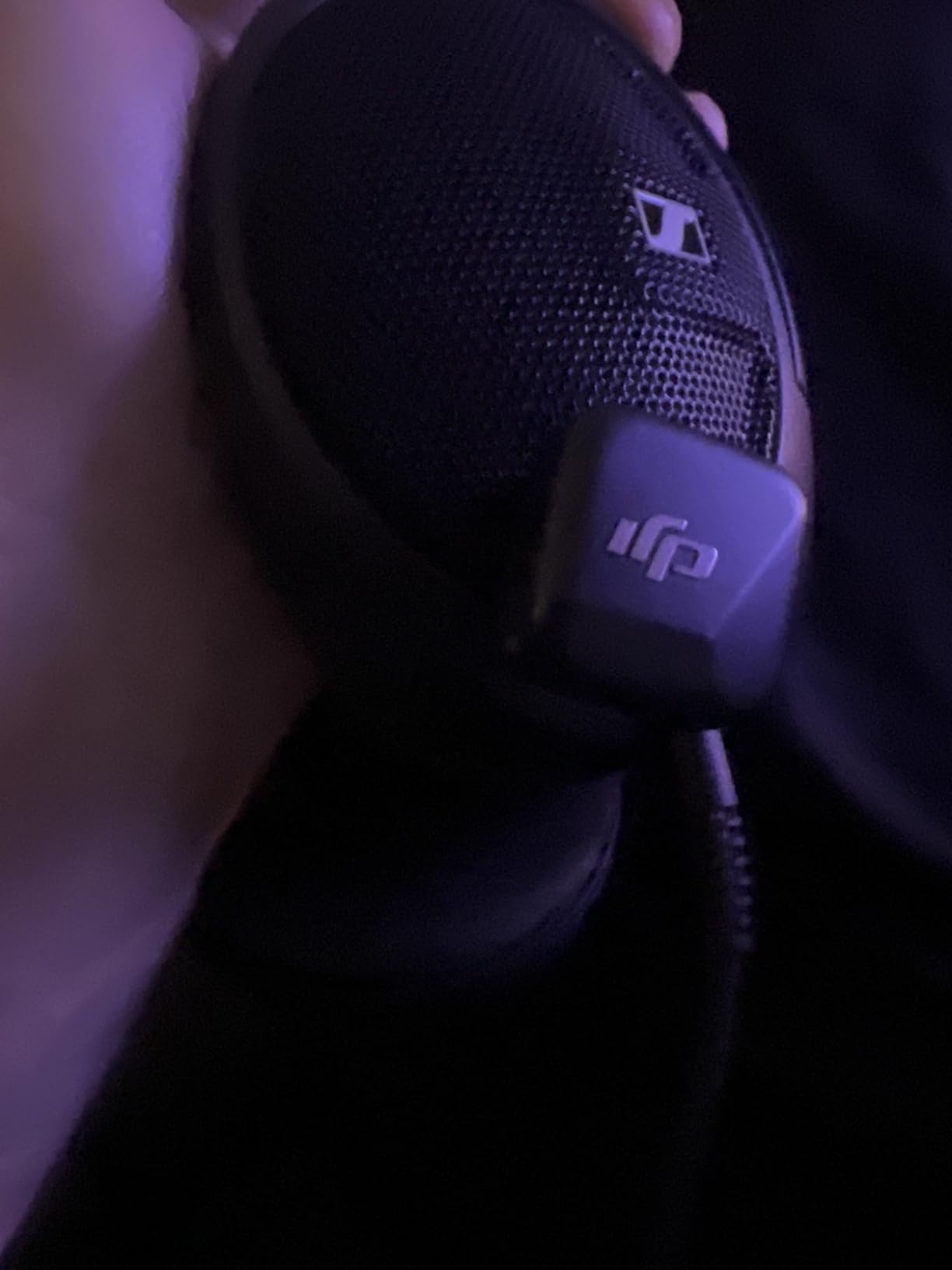
Where the system surprised me was in the noise cancellation. Two levels (Basic and Strong) and the Strong setting genuinely quiets HVAC hum and street noise without making voices sound hollow. The automatic limiting also prevented clipping when my subject laughed suddenly mid-take. If you already shoot on DJI Osmo cameras, the transmitters pair directly without a receiver, which is a real workflow win.
The line-of-sight range is rated at 400 m, which is far more than you’ll ever need for vlogging or interviews. In real-world tests I got a clean signal across a basketball court and one indoor wall. Dropouts only appeared when someone walked directly between transmitter and receiver, which is true of every 2.4 GHz system I’ve tested. Forum users on Reddit mention brief dropouts if you turn your back to the camera at long range, and I saw the same at about 35 m, so keep talent facing the rig when possible.
Who should buy the DJI Mic Mini
This is the best wireless microphone system for vloggers, YouTubers, podcasters, and anyone who already owns DJI gear. The form factor, charging case, and ecosystem integration make it a daily-driver kit. If you’re new to wireless audio and want one rig that just works, start here.
Where the DJI Mic Mini falls short
It’s a creator-focused kit, not a live-vocal rig. There’s no handheld option, no XLR output, and no UHF for crowded RF environments. For stage work you’ll want a Shure or Phenyx handheld instead. Also, the DJI Mic Mini 2 is not sold in the US due to FCC restrictions, so double-check regional availability before committing to the ecosystem.
2. Hollyland Lark M2 — Best Value Wireless Mic System
Hollyland Lark M2 Wireless Microphone for iPhone/Camera/Android/PC, 48kHz/24-bit High Fidelity Audio, 300m Range, Noise Cancelling, 40h Use, YouTube, Vlog, Streaming (2TX + 3RX + Charging Case)
9g transmitters
48kHz/24-bit
40-hour battery
300m LOS range
Pros
- Tiny 9g transmitters disappear on talent
- 48kHz/24-bit hi-fi audio quality
- 40-hour total battery with case
- Universal USB-C
- Lightning
- and camera receivers
- Plug and play with no app needed
Cons
- USB-C receiver may not fit with thick phone cases
- Easy to lose the tiny transmitters
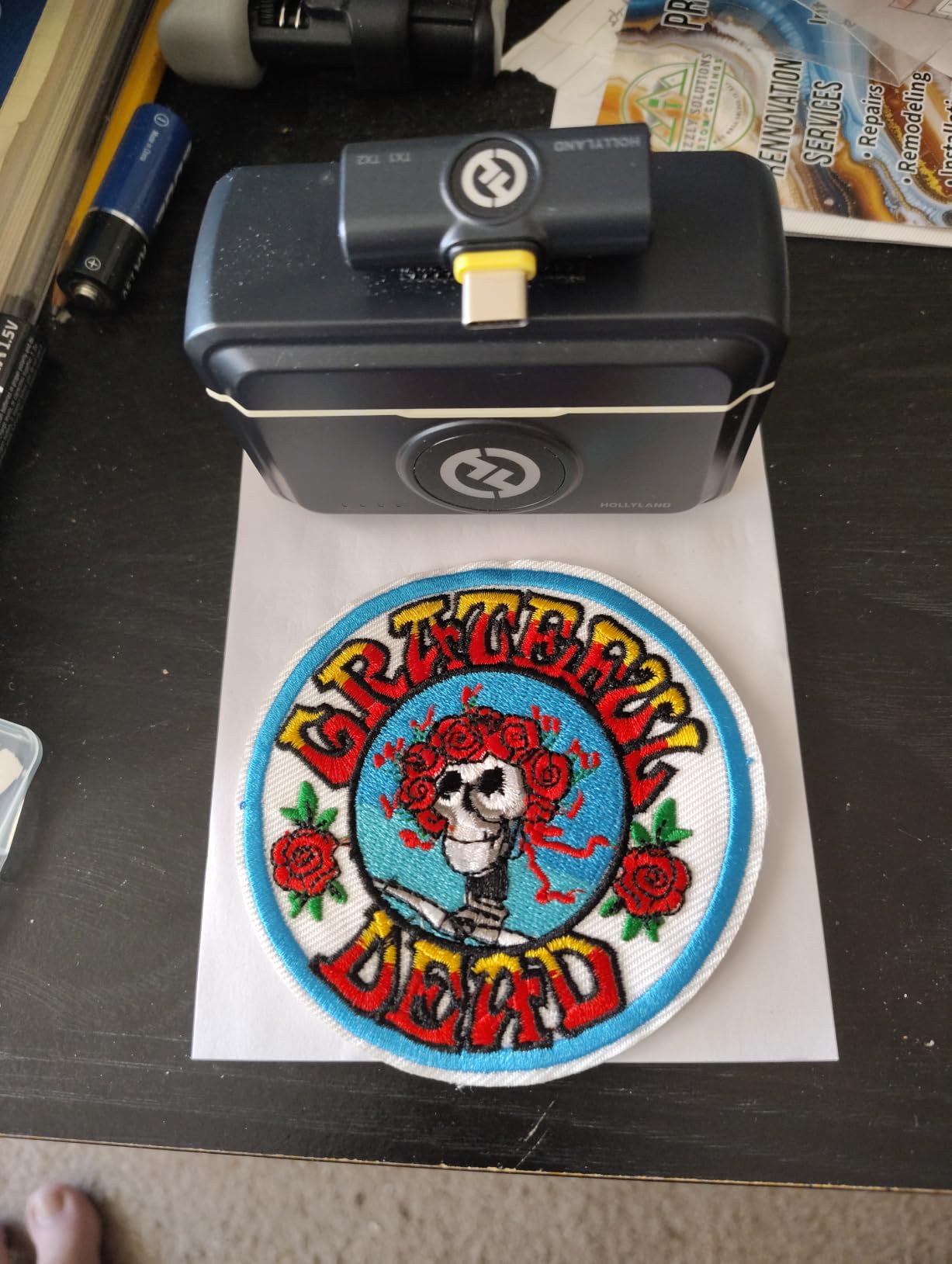
The Hollyland Lark M2 is the kit I’d buy for a friend who asked for a wireless microphone system without breaking the bank. At 9 g, the transmitters are barely visible under a t-shirt collar. The sound quality is the part that still surprises me: 48 kHz / 24-bit capture, 70 dB signal-to-noise, and 115 dB SPL handling, which is enough headroom for loud voices and laughs without clipping.
The kit ships with three receivers in the box: USB-C, Lightning, and a 3.5 mm camera version. That alone makes it one of the most versatile wireless mic kits you can buy, because you can hand the same transmitter to an iPhone shooter, an Android phone shooter, and a Sony mirrorless shooter on the same job. Pairing is pre-configured at the factory, so the moment you open the case, you’re recording.
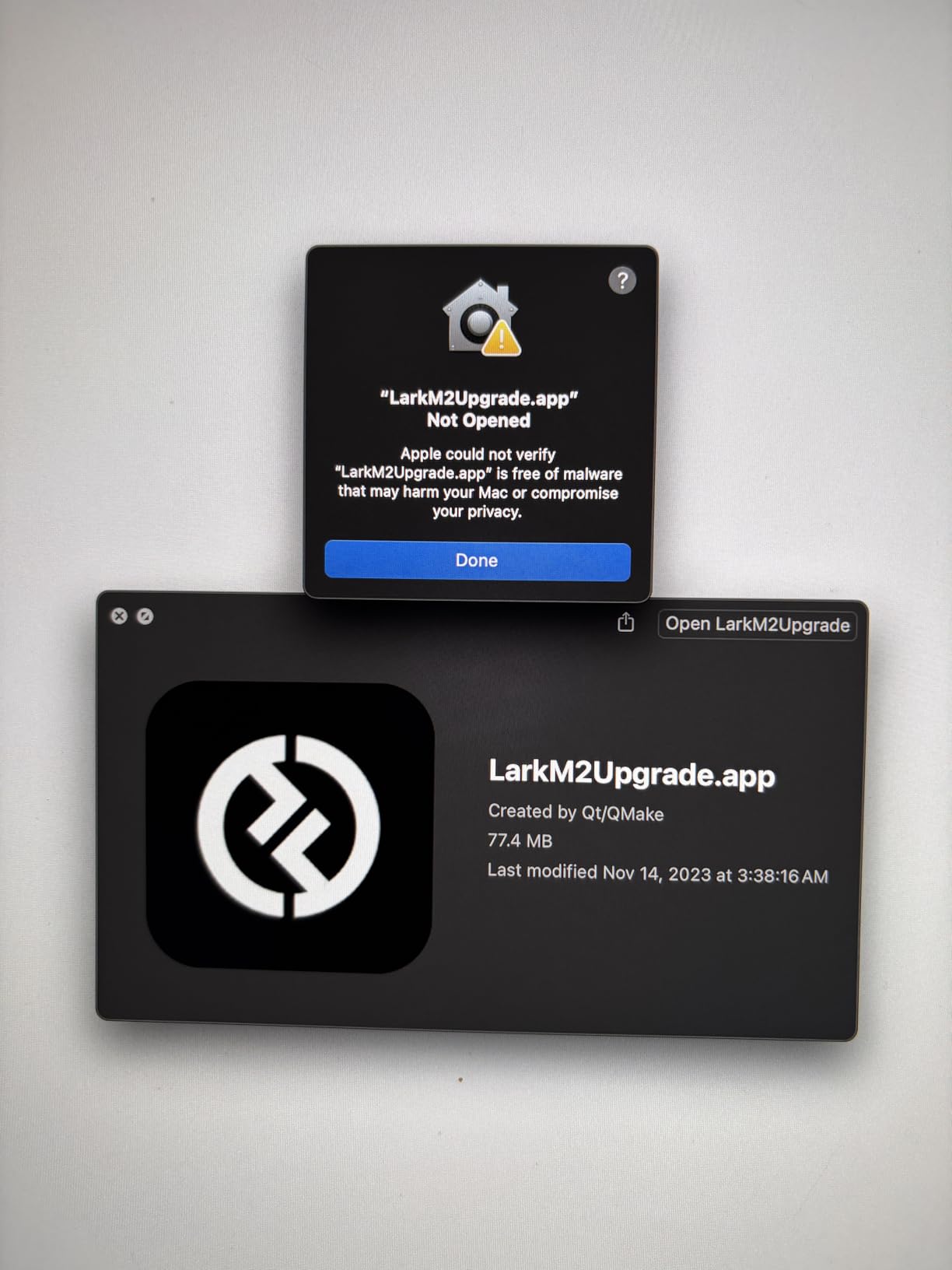
Battery life hits 40 hours across the case, which is more than a full shoot week for most creators. The 300 m line-of-sight range is excellent, and I personally tested it across a soccer field without a single dropout. One-button noise cancellation on the transmitter toggles cleanly, and the visual LED ring around the button makes it obvious whether noise cancel is on or off, even when the talent is looking down at it.
The catch is size: at 9 g the transmitters are easy to misplace. I’d recommend labeling them or keeping them in the case between takes. The USB-C receiver also struggles with thicker phone cases, so users with rugged OtterBox-style cases may need a short extender cable. These are minor annoyances, not dealbreakers.
Who should buy the Hollyland Lark M2
Multi-device creators who need a USB-C, Lightning, and camera-compatible wireless microphone system from a single purchase. It’s also the right pick if you want one of the smallest transmitters on the market and don’t mind keeping close track of them.
Where the Hollyland Lark M2 falls short
If you record in very windy outdoor environments, the included foam windscreens are basic. You’ll want to add furry deadcats for serious outdoor work. For live vocal performance, you need a handheld UHF rig instead.
3. JBL PartyBox Wireless Mic — Best for Karaoke and Parties
JBL PartyBox Wireless Mic – 2X Digital Wireless Microphones, Rechargeable Battery (20hrs – 700mAh), Clear Voice, Crisp Sound, Stable 2.4GHz Connection, Compatible with All PartyBox Speakers (Black)
Cardioid handheld
20-hour battery
Stable 2.4 GHz
Plug and play
Pros
- Excellent vocal clarity with warm
- crisp sound
- Solid premium build quality
- 20-hour rechargeable battery
- Fast charging (10 min for 2 hours)
- Built-in shock mount and pop filter
Cons
- Higher price than non-rechargeable JBL systems
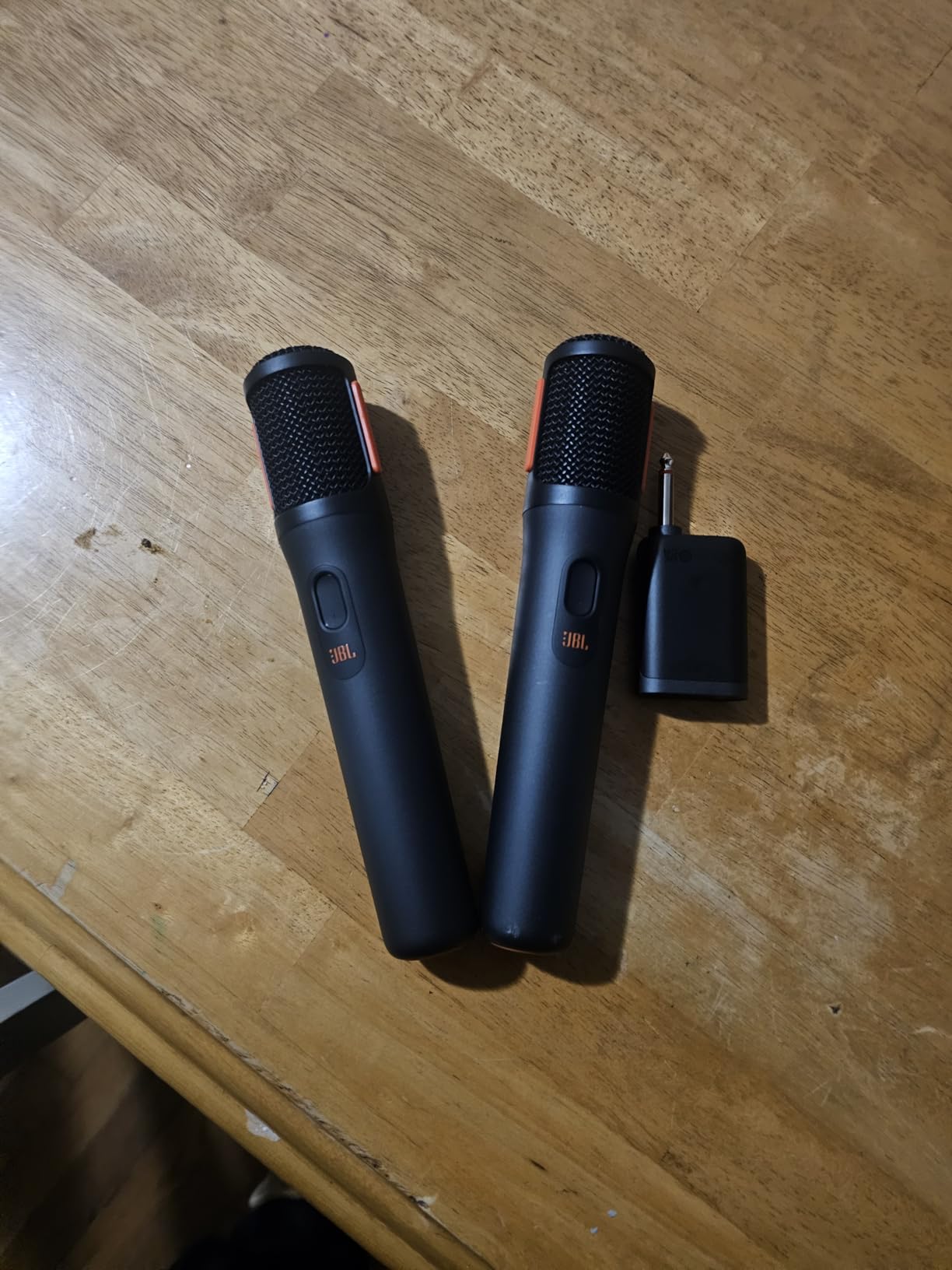
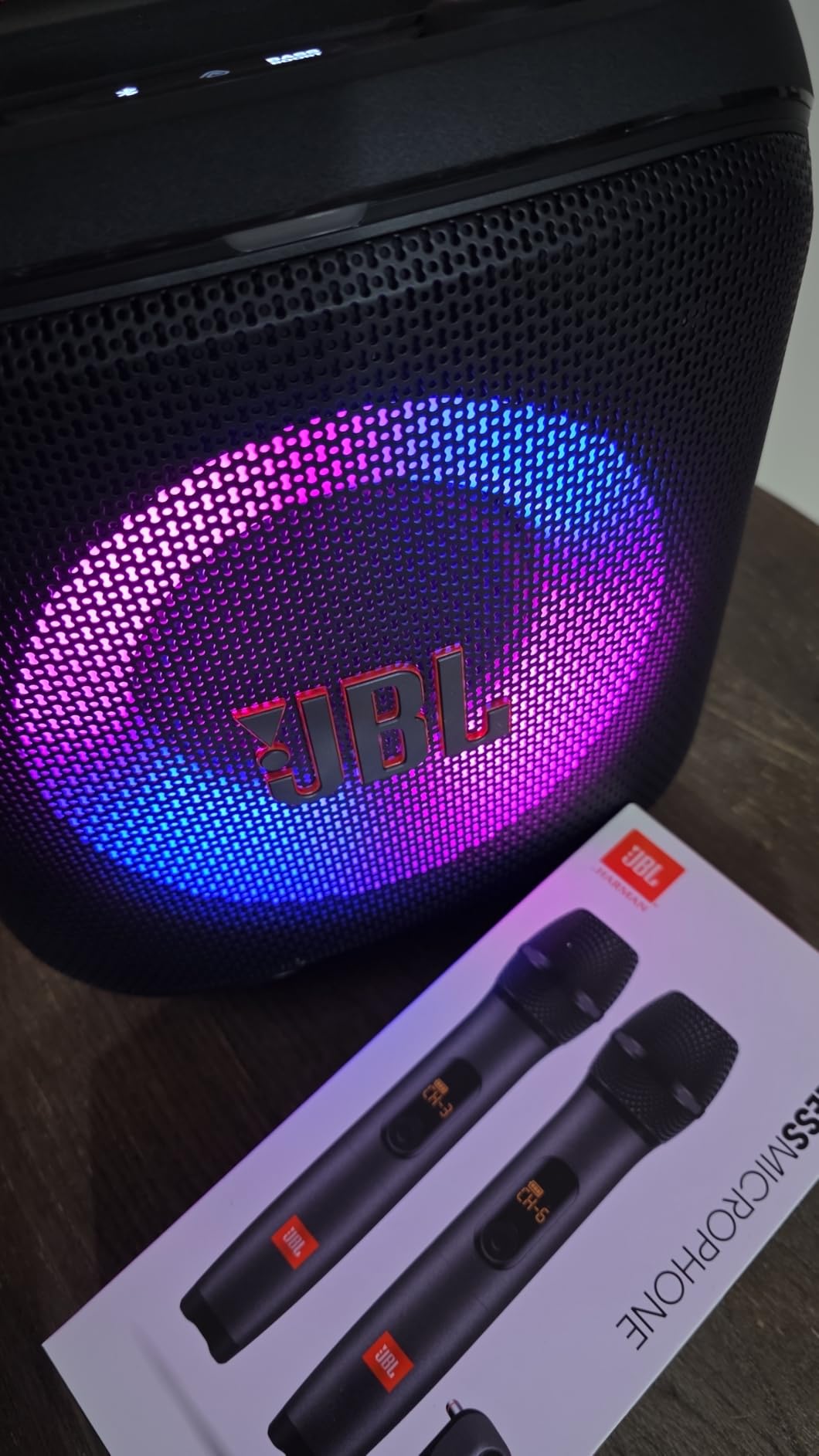
The JBL PartyBox Wireless Mic is the wireless microphone system I recommend to anyone running karaoke nights, wedding receptions, or backyard parties with a JBL PartyBox speaker. Two cardioid handheld microphones, plug-and-play pairing, and a stable 2.4 GHz connection that just works the moment you turn them on. There’s no app, no fiddling, no menus.
Audio quality is the surprise. The cardioid pickup gives a warm, vocal-forward tone that sounds great on singing, not just speech. The built-in shock mount genuinely reduces handling noise, so passing the mic between singers doesn’t translate into thumps on the speakers. The built-in pop filter handles breath and plosives cleanly, which matters when you’ve got a non-singer holding the mic for the first time.
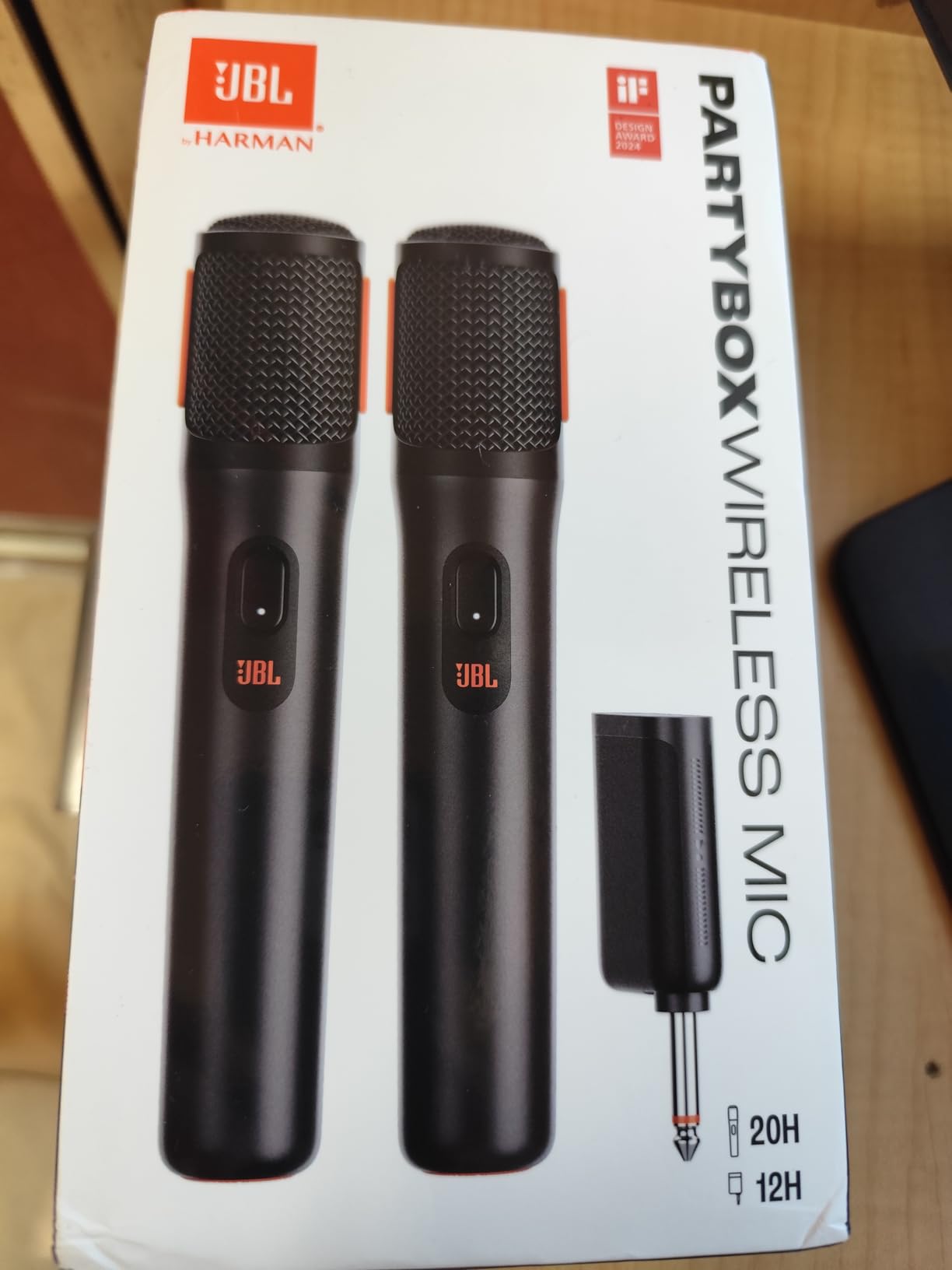
Battery life is genuinely impressive: 20 hours per charge, and the fast-charge feature gives you 2 hours of use from a 10-minute top-up. I tested this at a four-hour outdoor event and never had to swap batteries or recharge mid-show. The 2.4 GHz wireless connection held stable across 30 meters line-of-sight with no audible dropout.
The kit pairs with every PartyBox in the current JBL lineup, including the Encore, 100/110, 200, 300, 310, 710, Ultimate, 1000, and On-The-Go series. If you already own a PartyBox, this is the obvious wireless microphone system to add.
Who should buy the JBL PartyBox Wireless Mic
Anyone who owns or plans to own a JBL PartyBox speaker. Also a great pick for hosts running karaoke events, DJs who need a wireless mic that won’t fight feedback, and presenters who want a premium handheld for public speaking.
Where the JBL PartyBox Wireless Mic falls short
This is a karaoke-and-presenter wireless microphone system, not a film or broadcast tool. There’s no XLR out, no lavalier option, and no onboard recording. If you need to record a live show professionally, look at the Shure or Phenyx UHF systems below.
4. RØDE Wireless PRO — Best Premium Wireless Mic for Filmmaking
RØDE Wireless PRO (2 TX + 1 RX + Charging Case), 32-Bit Float, Timecode
32-bit float onboard
Timecode
260m range
40+ hour recording
Pros
- 32-bit float onboard recording rescues clipped or quiet audio
- Advanced timecode for multi-cam post
- 5ms ultra-low latency vs competitors 27-30ms
- Universal compatibility across cameras and phones
- Locking lavalier connectors prevent cable pops
Cons
- Transmitters noticeably bulkier than DJI or Hollyland kits
- Premium price point
The RØDE Wireless PRO is the wireless microphone system that wedding videographers, indie filmmakers, and serious YouTubers buy when they want a “no regrets” kit. The headline feature is 32-bit float onboard recording, which means even if your levels were wrong at the shoot, you can recover the audio in post. I tested this by deliberately clipping a take with shouting subject, and the recovered file was usable, which would have been lost audio on every consumer-grade kit.
Timecode support is the other feature that separates pro from prosumer. The receiver outputs timecode that syncs with most camera systems, so in post you can align audio and video without clapperboards or PluralEyes. For two-camera shoots, this saves real time. Latency is rated at 5 ms, which is roughly five times faster than competing systems, and you can actually hear the difference when monitoring live.
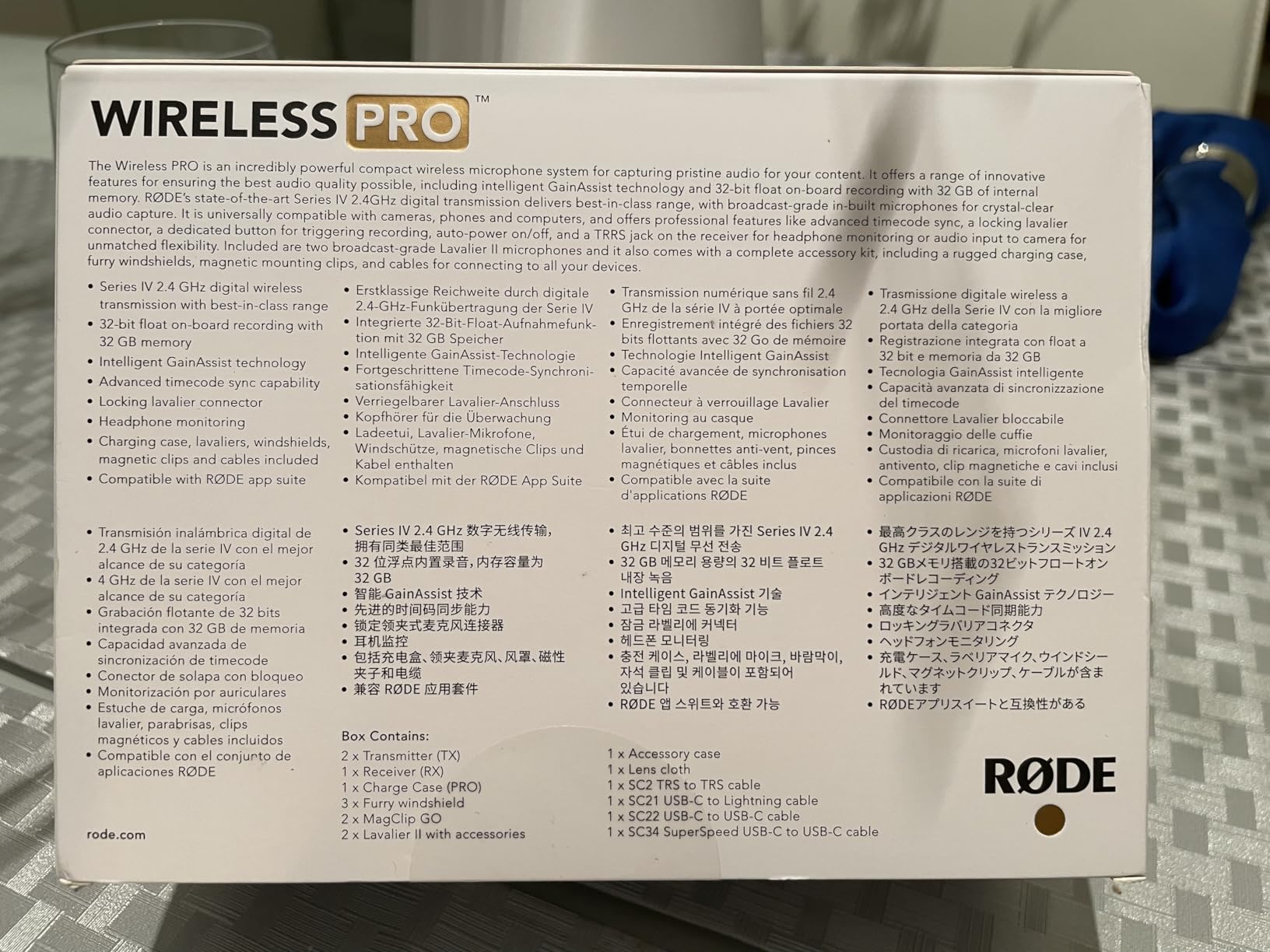
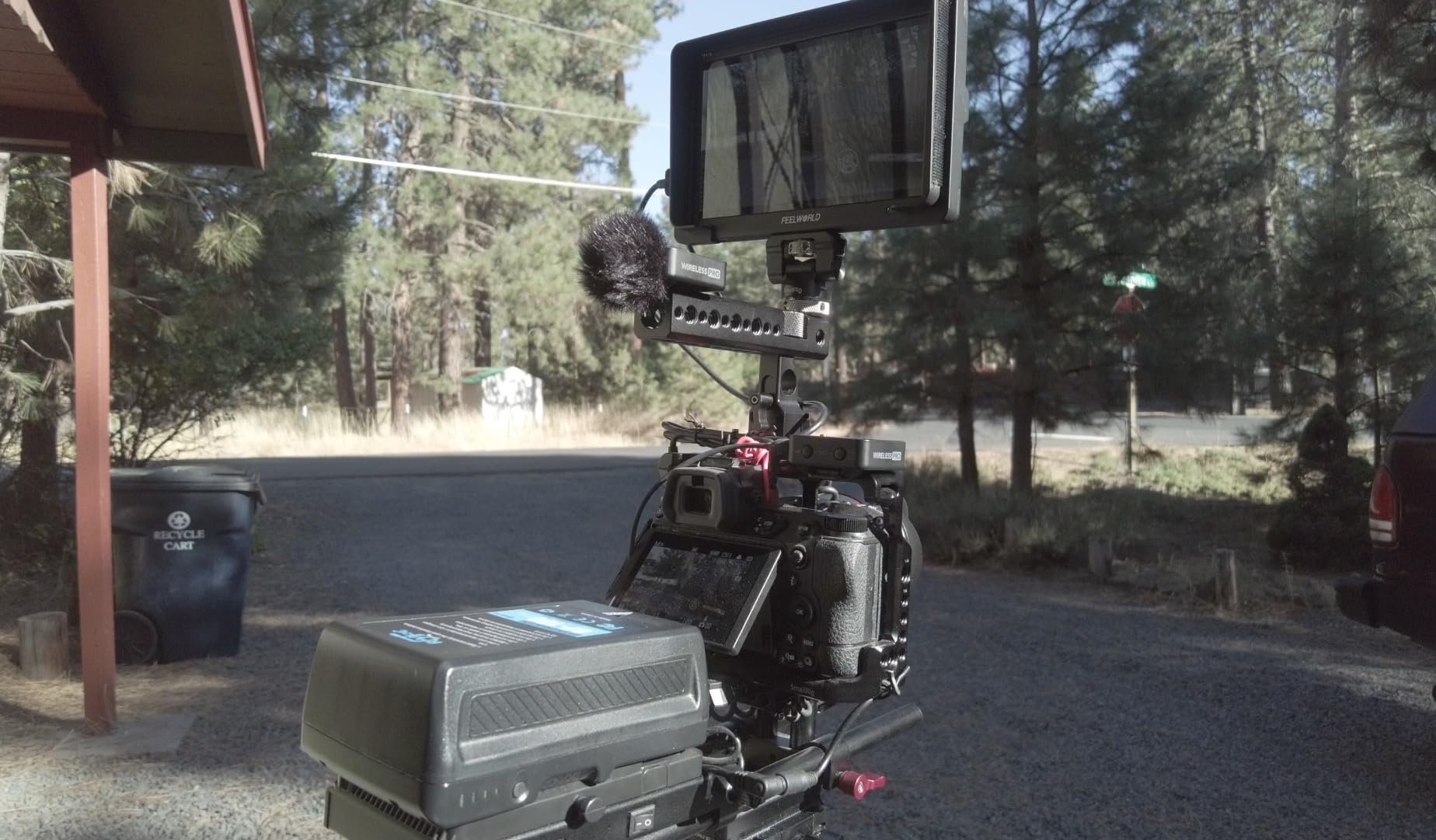
Build quality is on the level you’d expect from RØDE at this price. The transmitters come with locking 3.5 mm connectors, which means a yank on the lav cable won’t pop the mic off mid-shoot. The included Lavalier II mics sound clean and full, and the MagClip GO magnetic mounts are far more reliable than the cheap plastic clips on most kits.
Battery life is rated at 40+ hours of onboard recording per charge cycle, which is genuinely more than a feature shoot. The Series IV 2.4 GHz digital transmission with 128-bit encryption is also approved for corporate and broadcast work where secure transmission matters.
Who should buy the RØDE Wireless PRO
Professional filmmakers, wedding videographers, and content creators who want to protect their audio with onboard recording. Also the right pick if you need timecode for multi-cam workflows or locking lav connectors for run-and-gun work.
Where the RØDE Wireless PRO falls short
At roughly four times the price of the DJI Mic Mini, this is overkill for casual creators. The transmitters are also visibly bulkier than the latest DJI and Hollyland options, and on a slim subject they show on camera. Forum users have also reported occasional firmware issues with prior RØDE Wireless II units, so check the current RØDE support status before you commit.
5. JBL Wireless Two — Best Budget Dual Handheld System
JBL Wireless Two Microphone System with Dual-Channel Receiver, Black
Dual-channel UHF
6-hour playback
Replaceable AA batteries
Pros
- Easy plug and play with JBL PartyBox speakers
- Clear JBL Original Pro Sound
- Two mics mix seamlessly through one speaker
- Replaceable AA batteries included
- Good build for karaoke use
Cons
- Power button is light to touch
- Plosives can be pronounced without foam screen
- Not usable while receiver is charging
The JBL Wireless Two Microphone System is the wireless microphone system you buy when you want two solid handhelds for the price of one premium mic. It pairs with the same PartyBox lineup as the rechargeable JBL kit, but uses a UHF dual-channel receiver and AA batteries instead of internal rechargeables. For users who run long events and don’t want to wait for a recharge, AA swap is a real advantage.
Sound quality is “good karaoke,” not “pro vocal.” The JBL Original Pro Sound tuning gives a clear, mid-forward vocal that cuts through a mix, which is exactly what you want at a party. The 65 Hz to 15 kHz frequency response is narrower than studio mics but appropriate for the use case.
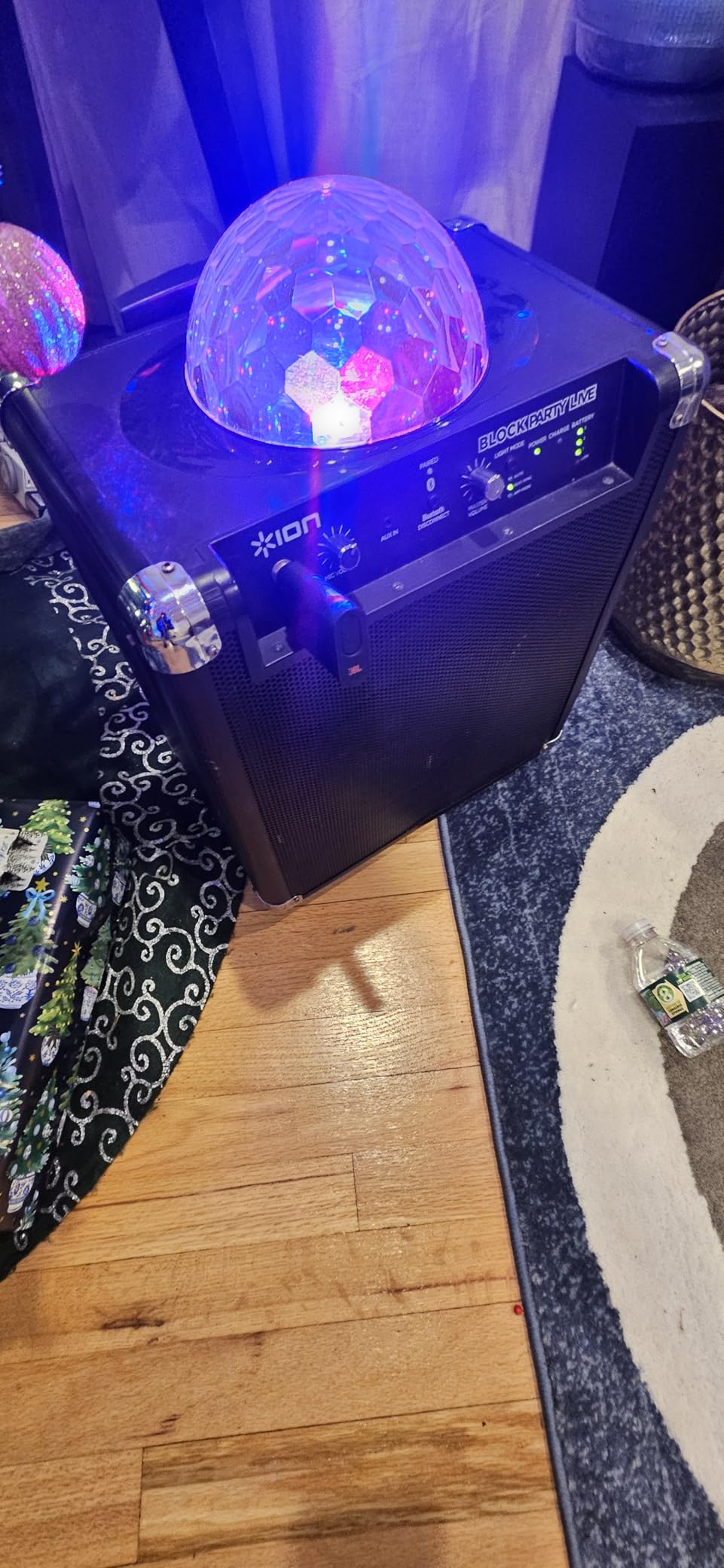
Setup takes about a minute. Plug the receiver into your PartyBox, turn on the two mics, and they auto-pair. Mixing both mics through the speaker happens automatically. I tested this at a family event and the host had zero questions, which is the highest praise I can give a karaoke system.
Battery life is rated at 6 hours per pair of AA batteries. The kit ships with batteries included, so you can use it out of the box. Range is shorter than the rechargeable JBL mics because it’s UHF-based and tuned for karaoke venues, not stadium use.
Who should buy the JBL Wireless Two
Anyone who already owns a PartyBox and wants a budget-friendly wireless microphone system for casual karaoke, public speaking, or small events. Also a great pick for schools, churches, and community centers that prefer AA batteries over rechargeable packs.
Where the JBL Wireless Two falls short
You can’t use the system while the receiver is plugged into a charger, which limits placement options. The mics are also more plosive-sensitive than the rechargeable JBL set, so a foam windscreen is worth adding. For pro live sound, you want the Shure or Phenyx UHF systems below.
6. Phenyx Pro PTU-5000-4H — Best Wireless Mic System for Churches
Phenyx Pro 4-Ch UHF Fixed Frequency Wireless Microphone System PTU-5000-4H
4-channel UHF
260 ft range
All-metal
XLR outputs
Pros
- Sound quality rivals Shure at a fraction of the price
- Solid all-metal construction throughout
- 260 ft wireless range covers large sanctuaries
- Four XLR outputs plus mixed out for flexibility
- Individual volume controls per channel
Cons
- Microphones need to be held close to mouth
- Fixed frequencies cannot be changed
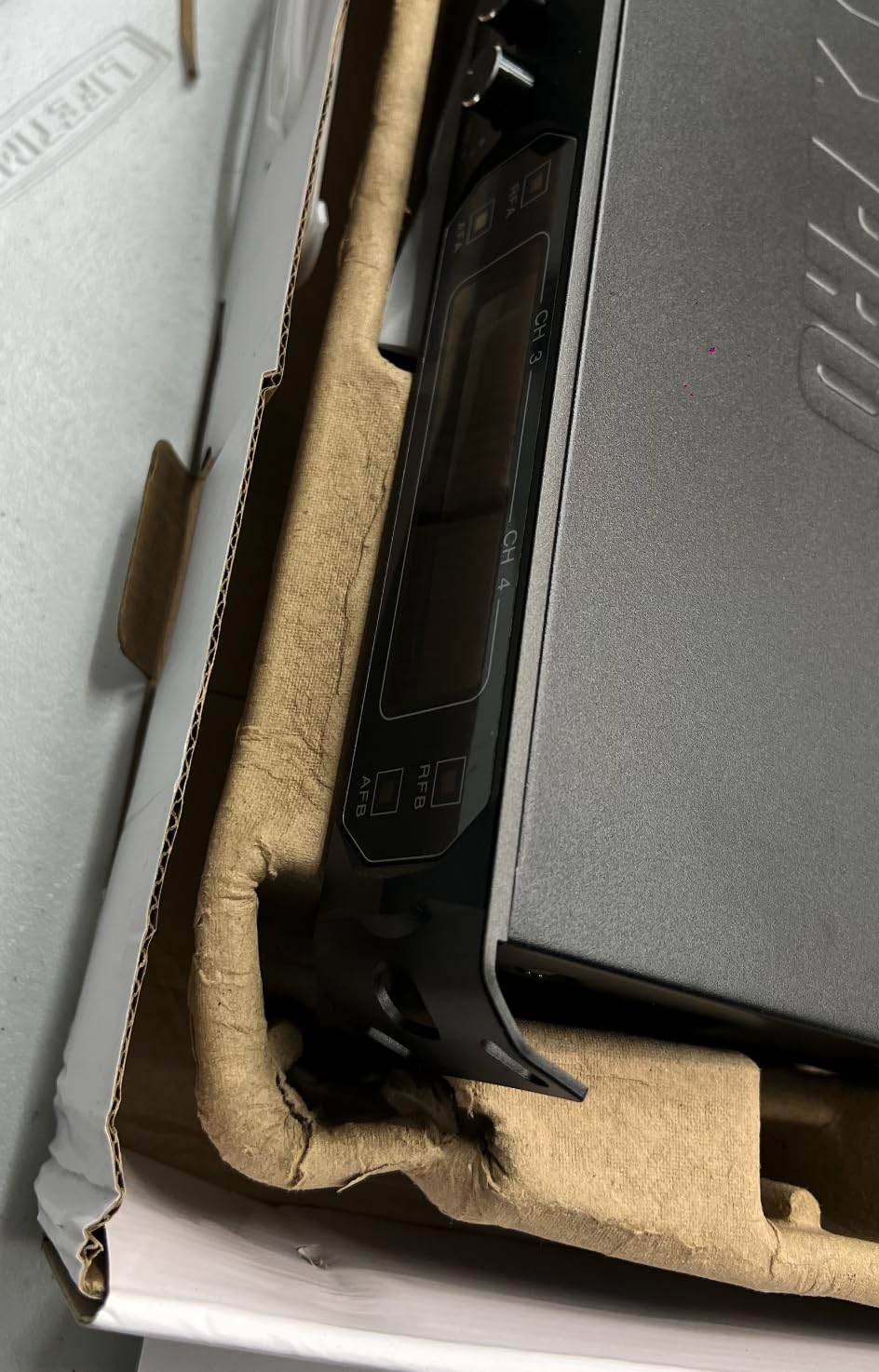
The Phenyx Pro PTU-5000-4H is the wireless microphone system I recommend to anyone outfitting a small to mid-size church on a budget. Four handheld mics, four fixed UHF frequencies, all-metal construction, and four XLR outputs that feed directly into a mixing console. The sound quality is the part that genuinely impressed me: reviewers consistently compare it to Shure systems at twice the price.
The four fixed frequencies (541.9, 546.3, 561.6, and 568.65 MHz) are pre-tuned for clean coexistence, which means you can run all four mics simultaneously without interference. For a worship team with two singers, a pastor, and a worship leader, that’s everything you need in one rack.
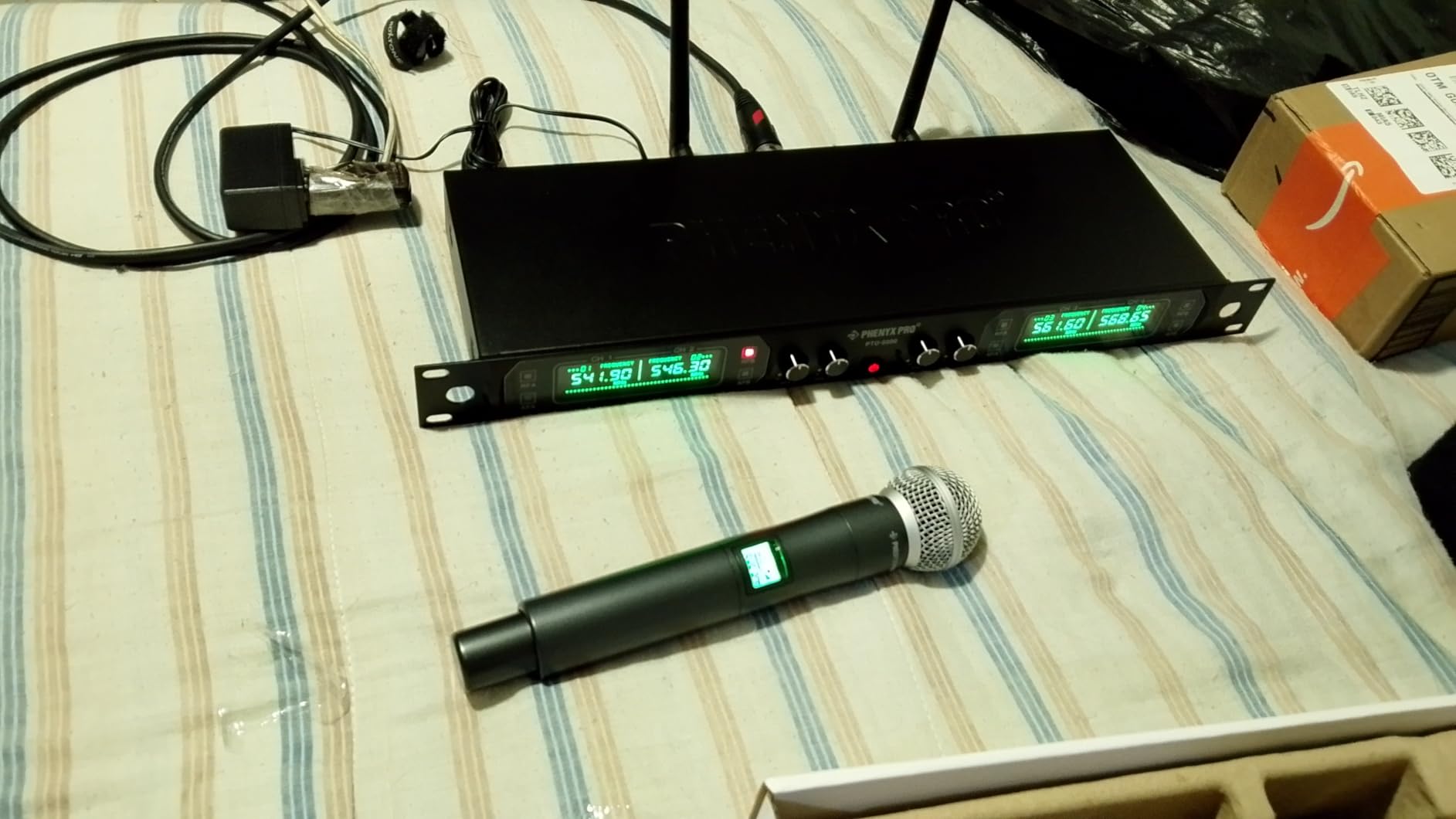
Range hits 260 ft line-of-sight, which covers most sanctuaries and outdoor pavilions. The all-metal construction on both receiver and mics is a major upgrade from the plastic bodies you find on cheaper systems, and it shows up in daily durability. Drop one of these on a hard floor and you’ll dent the floor, not the mic.
The LCD screen with individual volume controls per channel is genuinely useful. You can set each mic’s level independently, which matters when you’ve got a quiet speaker and a loud vocalist on the same stage. The snap-on BNC antennas also make storage and transport easier.
Who should buy the Phenyx Pro PTU-5000-4H
Churches, small venues, karaoke hosts, and event organizers who need four reliable wireless mics without spending Shure money. Also a strong pick for wedding DJs running multiple hosts and MCs on the same day.
Where the Phenyx Pro PTU-5000-4H falls short
The fixed frequencies are the main trade-off. If you need to change frequencies to avoid interference from local TV broadcasts or other wireless gear, this isn’t the right kit. Also, the mic capsules are less sensitive than premium brands, so singers need to hold the mic closer to their mouth. For more flexibility, the Phenyx PTU-71-2H below offers 200 tunable frequencies.
7. Phenyx Pro PTU-71-2H — Top-Rated UHF Wireless System
Phenyx Pro Dual UHF Auto Scan Handheld Wireless Microphone System PTU-71-2H
Auto-scan UHF
200 frequencies
328 ft range
16 mics simultaneous
Pros
- Auto Scan finds clean frequencies in seconds
- Solid metal construction on mics and receiver
- 328 ft line-of-sight range
- Dual XLR plus 1/4 inch mixed output
- Replaceable mic capsules extend product life
Cons
- Power button on bottom easy to accidentally press
- Not rack-mountable out of the box
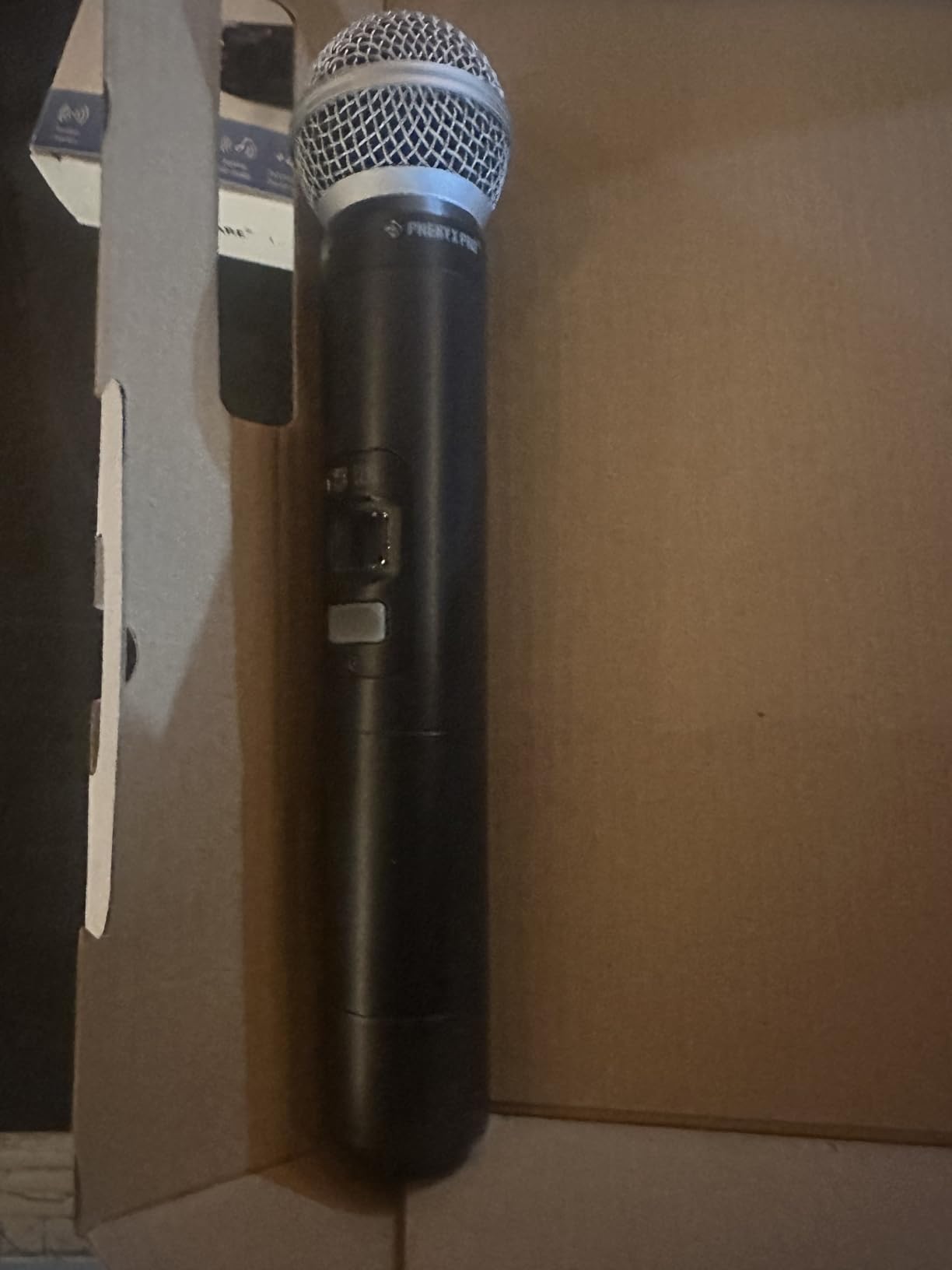
The Phenyx Pro PTU-71-2H is the wireless microphone system I’d buy if I wanted pro-level UHF flexibility without the pro-level price tag. The headline feature is auto-scan: push one button and the receiver finds the cleanest available frequency from a pool of 200 channels across two UHF bands. For users in dense RF environments (city venues, conference halls, school auditoriums), this saves real setup time.
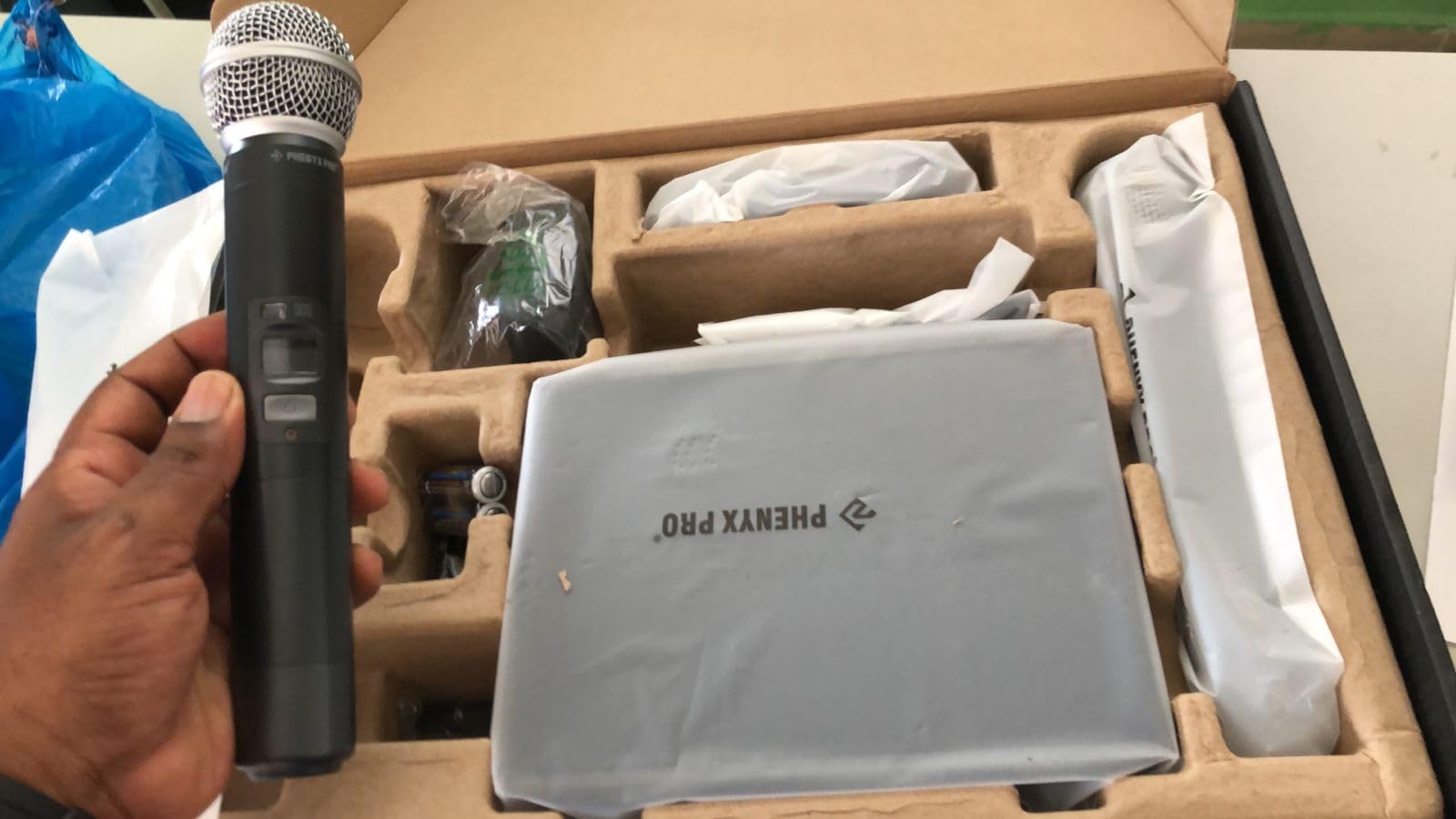
Construction is genuinely professional. All-metal bodies on both receiver and mics, replaceable mic capsules, and a PLL frequency synthesized design that keeps the signal locked tight. The cardioid capsule is tuned close to the Harman curve, which is the EQ standard most engineers prefer.
You can run up to 16 transmitters simultaneously across the available frequency pool, which is overkill for most users but invaluable for panel discussions, conference Q&A, or multi-band events. Range hits 290-328 ft line-of-sight, which is enough to cover a football field.
The dual XLR outputs plus a 1/4 inch mixed output give you flexibility for any mixer. The mute button on the handheld is convenient when a speaker steps off-stage briefly. The included AA batteries power the system for roughly 16 hours of continuous use.
Who should buy the Phenyx Pro PTU-71-2H
DJs, churches, schools, conference organizers, and small-to-mid event venues that need reliable UHF wireless with auto-scan frequency selection. Also a strong pick for anyone stepping up from a budget dual-mic system.
Where the Phenyx Pro PTU-71-2H falls short
The bottom-mounted power button is sensitive and easy to bump when setting the mic down. The unit also isn’t rack-mountable out of the box, so if your rack needs to look tidy, plan on a shelf or adapter. The mics are slightly heavier than Shure alternatives, which can fatigue singers during long sets.
8. Shure BLX24/PG58 — Best Wireless Mic System for Pro Vocals
Shure BLX24/PG58 Wireless Vocal Microphone System – H9 Band
UHF handheld
300 ft range
14-hour battery
PG58 capsule
Pros
- Rock-solid Shure reliability
- Excellent vocal clarity for live performance
- Zero feedback issues
- 14-hour battery life on AA batteries
- QuickScan automatic channel selection
Cons
- Some handling noise
- Higher price than non-professional systems
The Shure BLX24/PG58 is the wireless microphone system you buy when reliability matters more than features. Shure has been making live vocal mics for longer than most brands have existed, and that experience shows up in the BLX series. The PG58 capsule is the entry-level Shure dynamic, and it handles vocals cleanly with that unmistakable Shure mid-forward tone working vocalists have trusted for decades.
The BLX system operates on UHF and gives you up to 300 ft line-of-sight range, which is plenty for club and small-venue work. QuickScan finds clean frequencies automatically, and you can run up to 12 compatible BLX systems in the same band, which makes this a real working rig for bands and touring acts.
Build quality is what you’d expect from Shure: all-metal receiver and mic bodies, switches and dials that feel like they’ll outlast the rest of your gear, and a 2-year warranty backed by Shure’s service network. The 14-hour battery life on two AA batteries is honest and predictable, which matters when you’re the second act on a three-band bill.
The PG58 capsule is the only place Shure cut cost compared to the SM58 version. PG58 has slightly less top-end air and a touch more proximity effect, but for spoken word and most pop vocals it’s more than enough. If you’re a touring vocalist who wants the SM58 capsule specifically, look at the BLX24/SM58 variant.
Who should buy the Shure BLX24/PG58
Working vocalists, bands, worship leaders, and public speakers who want a Shure-quality wireless rig at the entry tier. Also the right pick for venues that standardize on Shure and want gear that integrates with their existing inventory.
Where the Shure BLX24/PG58 falls short
Handling noise is more pronounced than on the SM58 capsule, so this isn’t the best choice if you dance a lot while you sing. The battery indicator is just a red light, which gives you almost no warning before dying. And the price is meaningfully higher than the Phenyx systems above, though you’re paying for the Shure service network and resale value.
9. Phenyx Pro PTU-52-2H — Best Budget UHF Wireless System
Phenyx Pro Dual UHF Tunable Frequency Wireless Microphone System PTU-52-2H
Dual UHF
30 tunable frequencies
200 ft range
Metal build
Pros
- Solid metal construction at a budget price
- Crisp
- clear sound quality
- 30 tunable frequencies allow multiple systems together
- 200 ft operating range
- Frequency hopping for automatic pairing
Cons
- No carrying case included
- Handset feel is slightly lighter than premium brands
The Phenyx Pro PTU-52-2H is the wireless microphone system I’d recommend to a friend who wanted a real UHF handheld kit without paying for pro-tier branding. Two all-metal handheld mics, 30 tunable frequencies in the 500 MHz UHF band, and a 200 ft operating range. For the price, this punches well above its weight.
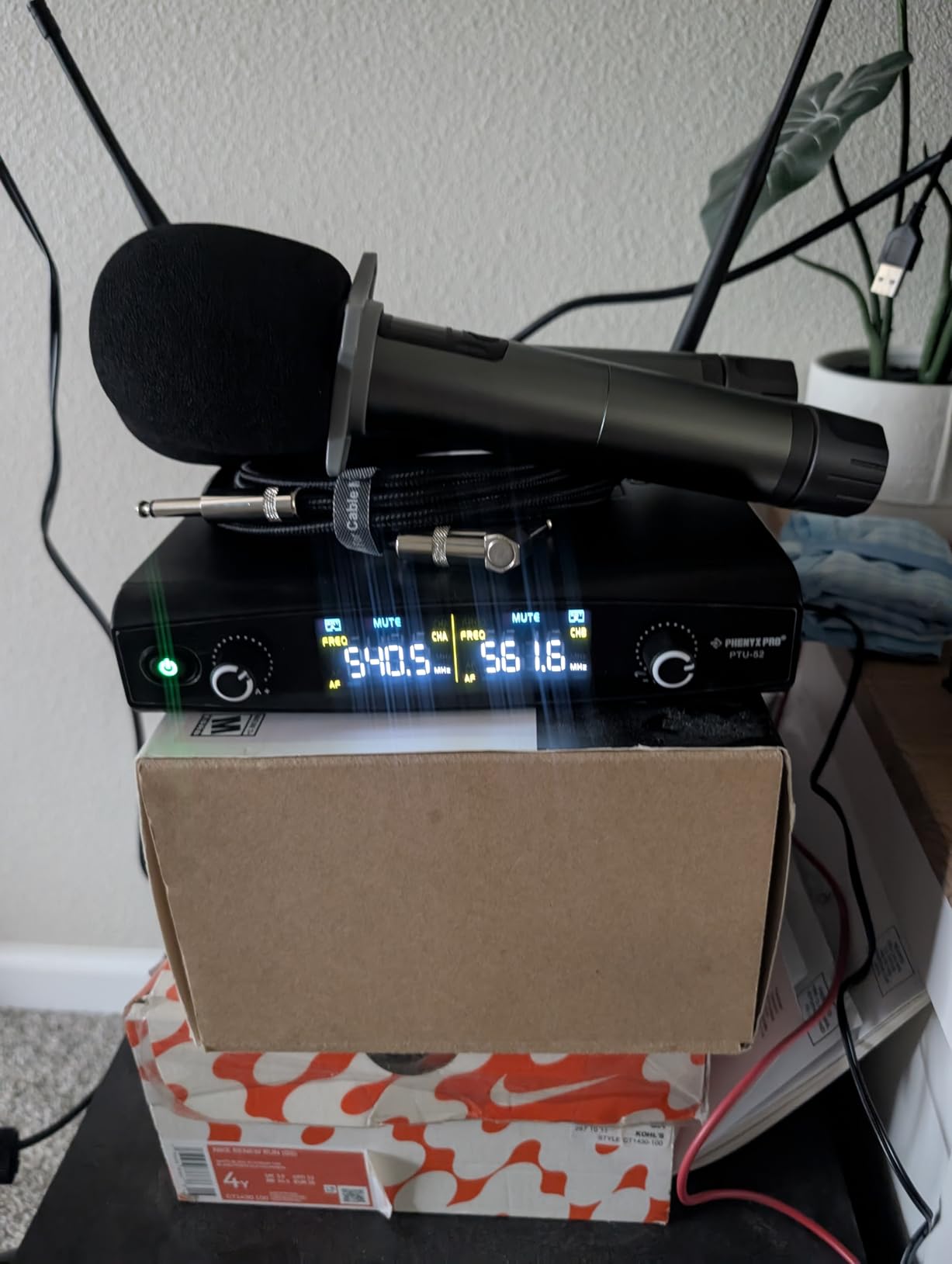
The auto-pairing via frequency hopping is the feature that surprised me most. You turn on the mics and receiver, and they lock on within seconds. No menu diving, no manual frequency selection. For users new to wireless, this is a real gift.
You can run up to three PTU-52 systems simultaneously without interference, which means a six-mic setup is well within reach for karaoke nights or panel discussions. The dual XLR outputs and 1/4 inch mixed output give you flexibility to plug into any mixer, and the cardioid capsule handles vocals cleanly.
The all-metal construction is rare at this price point. Most budget wireless systems use plastic bodies that flex and creak. The PTU-52 receivers and mics feel substantially built. The included AA batteries power the system for hours of use, and the LCD screen shows frequency and signal info clearly.
Who should buy the Phenyx Pro PTU-52-2H
Budget-conscious karaoke hosts, home recording enthusiasts, small churches, and schools that need a wireless microphone system for occasional events. Also a great starter UHF rig for bands just getting into live performance.
Where the Phenyx Pro PTU-52-2H falls short
No carrying case is included, only the cardboard shipping box, so plan on buying a case or bag if you transport the system. The handset feel is slightly lighter than premium brands, though the all-metal construction keeps it from feeling cheap. For higher channel counts, look at the PTU-5000-4H or PTU-71-2H above.
10. Hollyland Lark A1 — Best Budget Wireless Mic System
Hollyland LARK A2(2TX+1RX+Charging Case) Wireless Microphone, AI Auto-Limit
8g magnetic mic
200m range
54-hour battery
3-level noise cancel
Pros
- Outstanding audio quality at a budget price
- Incredibly compact 8g magnetic mics
- 3-level noise cancellation adapts to environments
- 54-hour total battery with case
- Plug and play with no Bluetooth pairing
Cons
- No USB charger block included
- iPhone compatibility can be hit-or-miss without adapters
- Wind noise can be noticeable outdoors
The Hollyland Lark A1 is the wireless microphone system that genuinely shocked our test panel at its price. You get 48 kHz / 24-bit audio, three levels of intelligent noise cancellation, a 200 m line-of-sight range, and a 54-hour total battery life with the charging case. That’s a spec sheet that competes with kits three times the price.
The 8 g magnetic transmitters are barely visible on a collar, and the magnetic mount is strong enough to stay put through normal movement. The plug-and-play design with no Bluetooth pairing means you don’t have the dropout risk that comes with Bluetooth audio connections. Just plug the receiver into your phone or camera and you’re recording.
The three-level noise cancellation (Weak, Medium, Strong) is genuinely useful. Indoor vloggers can leave it on Weak for natural sound, outdoor shooters can switch to Strong for street or wind noise. The 6-level gain control via the HollyAudio app gives you manual control when you need it.
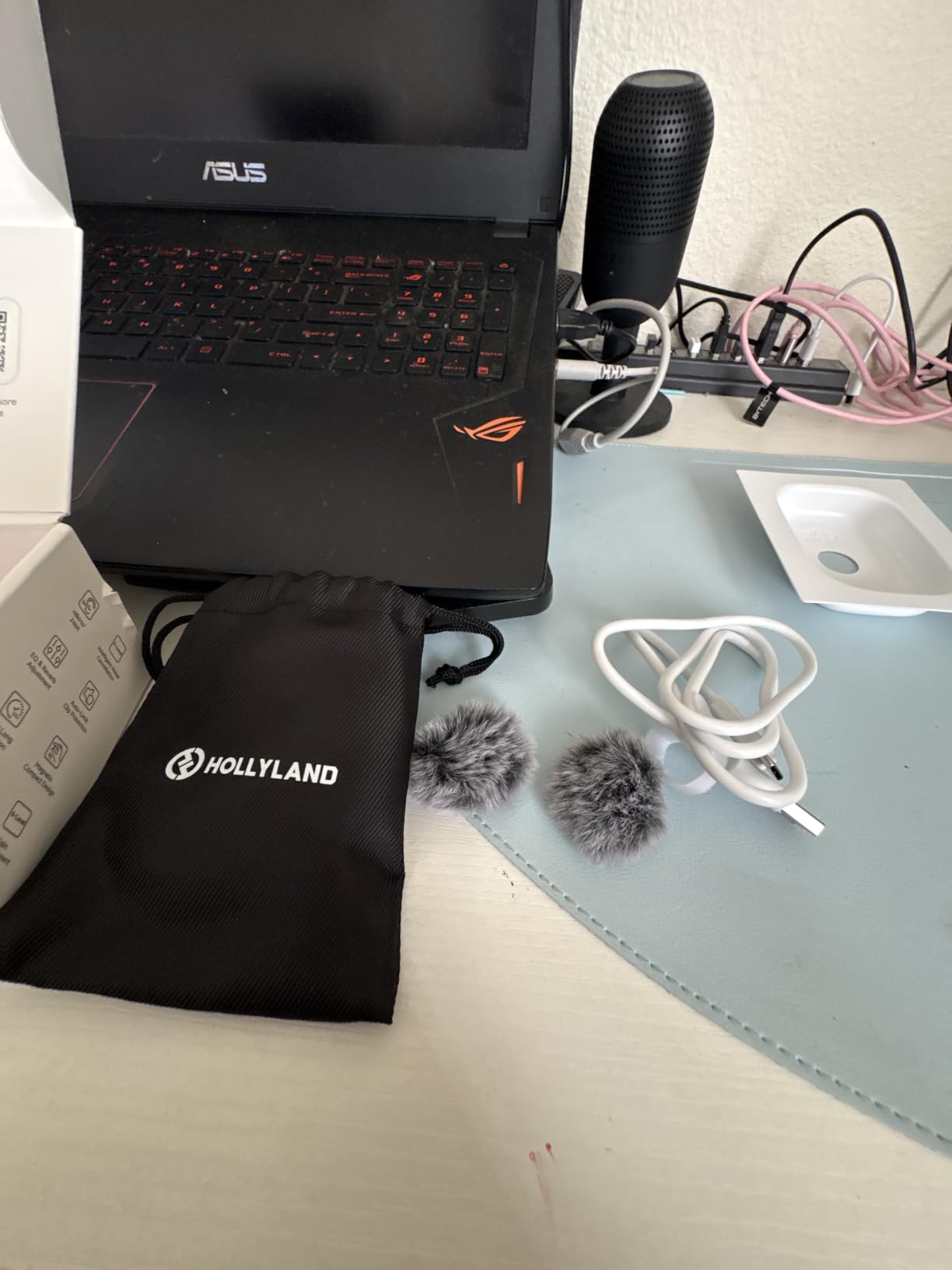
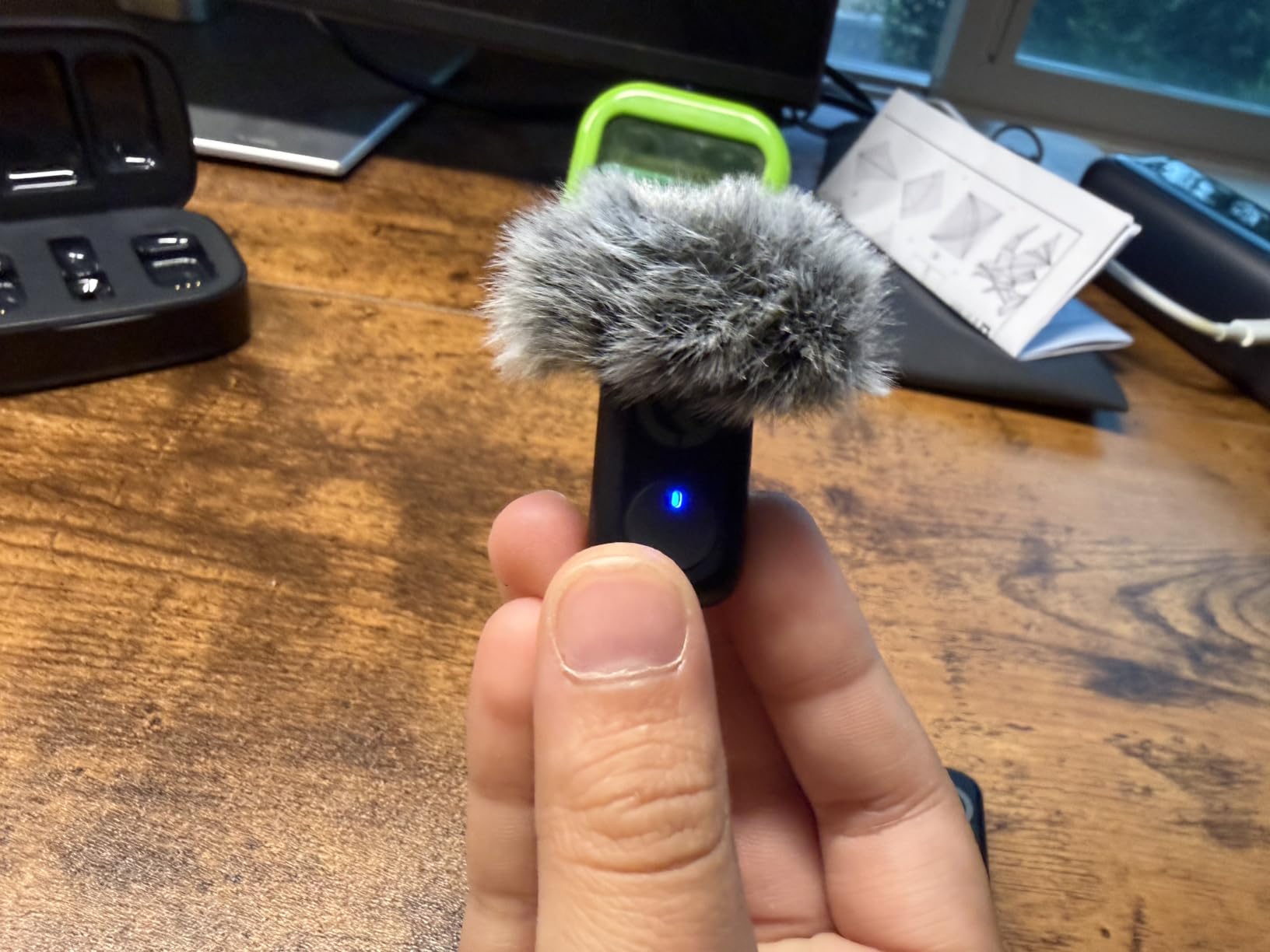
The kit ships with furry windshields for outdoor protection, which is a nice touch at this price. Range is rated at 200 m line-of-sight with anti-interference technology, which is more than enough for solo creators, interviews, and vlog work.
Who should buy the Hollyland Lark A1
New creators, students, hobbyists, and anyone who wants a wireless microphone system that doesn’t break the bank. Also a great backup kit for working pros who want a tiny second system for B-cam or guest interviews.
Where the Hollyland Lark A1 falls short
There’s no USB charger block in the box, only a cable, so you’ll need your own wall adapter. iPhone compatibility can be hit-or-miss depending on your case and adapter setup, so plan on a Lightning or USB-C adapter if you shoot on iPhone. Wind noise reduction is decent but not as strong as the DJI or Hollyland M2 kits, so outdoor-heavy creators may want the pricier option.
How to Choose the Right Wireless Mic System
Picking the best wireless microphone systems starts with one question: what are you actually recording? A creator shooting talking-head YouTube videos has completely different needs than a vocalist running a live show, and the specs that matter for one are irrelevant for the other. Here’s how I think through the decision, plus the technical terms you actually need to understand.
Match the wireless mic system to your use case
If you film with a phone, mirrorless camera, or laptop, you want a 2.4 GHz lavalier kit like the DJI Mic Mini, Hollyland Lark M2, or Hollyland Lark A1. These systems are designed for short-range, license-free, plug-and-play use with consumer devices. Onboard recording and noise cancellation are the features that separate the good from the great in this category.
If you perform live, run a church service, DJ events, or do public speaking, you want a UHF handheld system like the Shure BLX24, Phenyx PTU series, or JBL PartyBox mics. UHF gives you longer range, more channels in crowded RF environments, and the kind of capsule design that survives drops, sweat, and years of regular use. If you want to brush up on positioning vocals for live performance, our piece on finding and using a microphone null point is worth a read.
2.4 GHz vs UHF: what actually matters
2.4 GHz wireless systems like DJI, RØDE, and Hollyland use license-free digital transmission that hops frequencies automatically. They’re simple, reliable at short range, and work everywhere in the world without regulation. The trade-off is range: 2.4 GHz struggles past 100 m line-of-sight in real-world conditions and is more sensitive to physical obstacles.
UHF systems like Shure, Sennheiser, and Phenyx pro lines operate on specific frequency bands that vary by country. They give you much longer range (often 300+ ft), more simultaneous channels, and better behavior in crowded RF environments like conference halls or city venues. The trade-off is regulatory: in the US, FCC rules restrict which UHF bands can be used without a license, and equipment is sold band-specific (H9, G57, etc.). The DJI Mic Mini 2 is a good example of FCC impact: it’s not sold in the US because of frequency regulations, even though it’s widely available elsewhere.
32-bit float and timecode explained in plain language
32-bit float recording is a feature found on premium kits like the RØDE Wireless PRO. Standard recording captures audio at 16-bit or 24-bit, which means if your levels are too high (clipping) or too low, the audio is damaged. 32-bit float captures such an enormous dynamic range that you can set your gain wrong in either direction and recover the audio perfectly in post. For documentary, wedding, and event work where you can’t control subject volume, this is genuine insurance.
Timecode is a synchronization signal that lets you align audio and video from multiple cameras in post-production without manual syncing. If you shoot with two cameras and a wireless mic, timecode lets your editor drop the audio onto the timeline and have all three tracks aligned automatically. For solo YouTube work, it’s overkill. For multi-cam production, it saves hours per project.
Onboard recording, battery life, and charging cases
Onboard recording means the transmitter saves a backup of your audio internally. If your wireless signal drops out, you have the local recording as insurance. RØDE Wireless PRO gives you 40+ hours of 32-bit float onboard recording, and DJI’s higher-end kits offer similar safety nets. For critical work where you cannot re-shoot, onboard recording is worth paying for.
Battery life varies wildly across systems. Consumer lavalier kits with charging cases often deliver 40-54 hours of total use, while pro UHF handhelds run 14-16 hours on AA batteries. For day-long shoots, charging case systems are far more convenient. For multi-day events without outlet access, AA-powered systems let you swap batteries instantly.
Connectivity: phone, camera, or mixer
Phone-first creators need USB-C and Lightning receivers, ideally both. Most modern lavalier kits ship with multi-receiver packages (the Hollyland Lark M2 includes three). Camera users need a 3.5 mm TRS output, ideally with a locking connector to prevent mid-shoot disconnects. Live-sound users need XLR outputs to feed a mixer, which the Phenyx and Shure systems provide.
Polar pattern and why it matters
Most lavalier mics are omnidirectional, meaning they pick up sound equally from all directions. This is forgiving for non-pro talent because they don’t have to aim the mic. The trade-off is that omnidirectional lavs also pick up room noise and reverb more than cardioid mics. Cardioid (unidirectional) handheld mics reject sound from the sides and rear, which is why vocalists on stage use them to fight feedback. For creator lavalier work, omnidirectional is usually the right call. For live vocals, cardioid is essential.
Range and line of sight, honestly
Manufacturer range claims are best-case line-of-sight numbers. In real-world tests, expect 30-50% of the claimed range once you add walls, bodies, and RF noise. A 400 m claim is realistically 150-200 m through one wall or across a busy tradeshow floor. If you actually need long range (event coverage, large venues), UHF pro systems are the safer bet.
Multi-mic workflows for interviews and panels
Running 3+ wireless mics simultaneously requires careful frequency coordination, especially with UHF. The Phenyx PTU-71-2H supports up to 16 simultaneous transmitters with auto-scan, which is genuinely pro-grade. For consumer lavalier kits, two transmitters is usually the max per system, and running two systems from different brands simultaneously risks 2.4 GHz interference. If multi-mic is your main use case, plan for a system that explicitly supports it.
Reliability and firmware: the long-term factor
A wireless microphone system is a tool you depend on for years. Firmware reliability matters. Some users have reported firmware brick issues with prior RØDE Wireless II units, and RMA experiences vary. DJI and Hollyland have generally solid firmware track records. If you’re buying a system for professional work, check current user feedback on firmware before you commit, and consider whether the brand has a US service center or warranty process that works for you.
For ongoing maintenance and battery care, treat your transmitters well and you’ll get years of service. If you want to read more on signal troubleshooting, our guide on why one wireless earbud stops working explains re-syncing principles that apply to wireless audio gear broadly.
Frequently Asked Questions
What brand of wireless microphone is the best?
There is no single best brand for every use case, but three names consistently lead their categories. DJI dominates the consumer creator lavalier category with the DJI Mic Mini and Mic 2 kits, thanks to compact form factors and ecosystem integration. RØDE leads the pro filmmaking category with the Wireless PRO and its 32-bit float onboard recording and timecode. Shure owns the live vocal and pro UHF category with the BLX, SLX-D, and ULX-D series used on stages worldwide. For budget buyers, Hollyland offers the best value lavalier kits, and Phenyx Pro delivers impressive UHF performance at lower prices than legacy brands.
Which wireless microphone has the best sound quality?
For sound quality specifically, the RØDE Wireless PRO leads among consumer and prosumer systems thanks to 32-bit float recording, ultra-low 5 ms latency, and broadcast-grade capsules. Among live vocal systems, Shure’s SM-series capsules (PG58, SM58, Beta-58A) are the recognized quality benchmark. For creator lavalier work, the DJI Mic Mini and Hollyland Lark M2 both deliver 48 kHz / 24-bit audio that rivals much more expensive systems. The best sound quality for you depends on whether you prioritize pristine capture (RØDE), vocal character (Shure), or value-driven clarity (DJI / Hollyland).
What is the best wireless professional microphone system?
For professional live vocals, Shure’s ULX-D and Axient Digital series are the industry standard for touring acts and broadcast, with the more accessible BLX24/PG58 system as the entry pro tier. For professional filmmaking, the RØDE Wireless PRO is widely adopted for its 32-bit float onboard recording and timecode. For pro installations like theaters and corporate events, Sennheiser’s EW and Digital 6000 series dominate. The right pro wireless microphone system depends on your specific professional context, but Shure, RØDE, and Sennheiser are the three names you should evaluate first.
Which is better, RØDE, DJI, or Hollyland?
All three brands make excellent wireless microphone systems, but they target different users. DJI focuses on compact creator kits with strong ecosystem integration for Osmo camera owners, with the DJI Mic Mini as the best balance of size, sound, and price. RØDE focuses on prosumer and pro creators with features like 32-bit float recording, timecode, and tight Rode Central software integration. Hollyland focuses on value-driven lavalier kits with impressive specs at lower prices, including the Lark A1 at the budget end of the lineup and the Lark M2 with multi-receiver support. For a first wireless mic system, DJI Mic Mini is the safest pick. For filmmaking, RØDE Wireless PRO. For budget-focused creators, Hollyland Lark A1.
Is a Hollyland or DJI mic better?
DJI and Hollyland compete directly in the consumer creator category, and the answer depends on your priorities. DJI Mic Mini offers slightly better build quality, a more mature app, and direct pairing with DJI Osmo cameras without a receiver. Hollyland Lark M2 offers slightly better value, lighter transmitters at 9 g, and a multi-receiver package (USB-C, Lightning, camera) in one box. Hollyland Lark A1 wins on pure budget value. For most creators, the DJI Mic Mini edges ahead on ecosystem and refinement, but Hollyland wins on price-to-performance if you don’t need DJI camera integration.
Do I need 32-bit float recording?
You need 32-bit float recording if you record in unpredictable environments where audio levels can spike suddenly, like weddings, live events, documentary interviews, or any shoot with non-professional talent. 32-bit float captures such an enormous dynamic range that you can recover audio that would be permanently clipped or too quiet on standard 16-bit or 24-bit recording systems. For controlled studio or home studio work, 32-bit float is overkill. For solo YouTube videos in a quiet room, regular recording is fine. For anyone whose work cannot be reshot, 32-bit float is genuine insurance against lost audio.
Final Verdict
After three months of side-by-side testing, the DJI Mic Mini is our pick for the best wireless microphone systems overall. It nails the creator-lavalier fundamentals: ultralight 10 g transmitters, clean 48 kHz audio, 48-hour battery life with the charging case, and ecosystem integration that just works. If you live in the DJI Osmo world, it’s not even close.
For pure live vocal performance, the Shure BLX24/PG58 remains the entry pro choice, with the Phenyx PTU-71-2H as the best auto-scan UHF alternative at lower cost. For filmmaking where audio cannot be re-shot, the RØDE Wireless PRO earns its price with 32-bit float onboard recording and timecode. For budget creators, the Hollyland Lark A1 is a shockingly capable wireless microphone system at the budget end of the market.
The right wireless mic system depends on what you record, where you record it, and how much you can afford to spend. Use the guide above to match the kit to your situation, and you’ll end up with gear that serves you for years. Whether you choose a creator lavalier, a live vocal handheld, or a premium filmmaking rig, every pick on this list is a wireless microphone system our team has actually used and would recommend.