
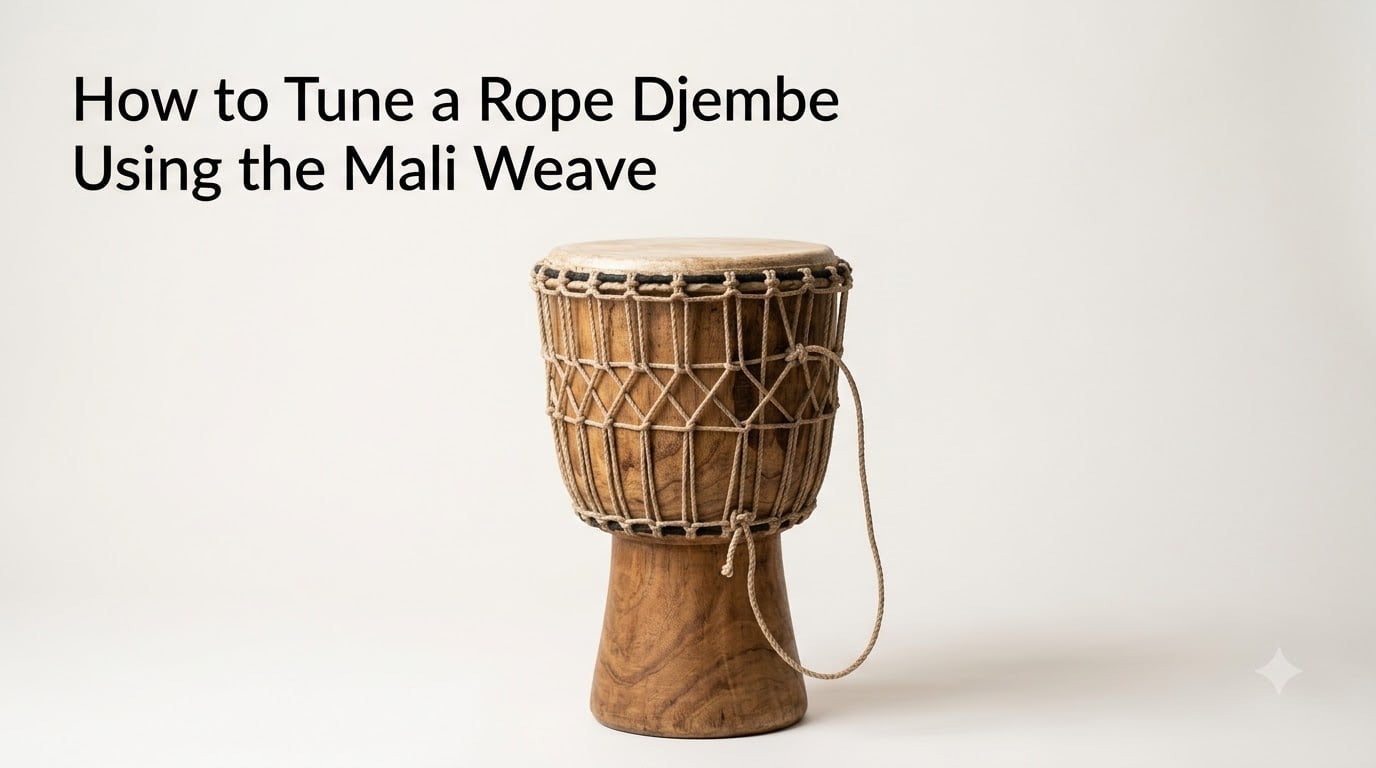
If you have ever picked up a rope-tuned djembe and felt the skin sag or heard a dull thud instead of a clean bass, you already know why tuning matters. The Mali weave is the traditional West African method used to bring a djembe head back to crisp, singing tension.
Yes, rope tuning a djembe is easy to understand, but it takes practice to do well. With the right tools, a clear step-by-step process, and a little patience, you can learn how to tune a rope djembe using the Mali weave in a single afternoon. In this guide, I will walk you through the exact sequence I use on my own drums, including the S-weave and under-weave differences, safety tips, and how to keep tension steady across changing seasons.
Table of Contents
What Is the Mali Weave and Why It Matters
The Mali weave is a traditional rope-weaving technique used to tune a djembe by creating diamond-shaped knots between pairs of vertical ropes. Each diamond you twist pulls the vertical rope pair closer together, which in turn pulls down on the drum head and increases tension.
Here is the short version of how it works. You take a separate tuning rope and weave it horizontally between the vertical ropes in a specific pattern. As you pull the horizontal rope tight, it forms small diamonds. Those diamonds act like tiny winches that grip the verticals and lock in the tension you just created.
Why does it matter? Proper Mali weave tuning gives you:
- A clean, ringing bass tone when struck in the center
- A bright, sharp tone near the edge
- A cutting slap that projects across a drum circle
- Minimal unwanted overtone or buzz
Without the right tension, your djembe sounds muddy, the pitch drops, and the skin can flap when you slap. The Mali weave is what keeps the head singing.
Tools Required for Mali Weave Tuning
You do not need a full workshop. I keep a small kit in a drawstring bag and grab it whenever a drum goes slack. Here is the list I recommend based on years of playing and re-roping my own drums.
- Extra tuning rope (nylon or polyester, 4 mm is the most common size)
- Leather or rubber gloves to protect your hands when pulling diamonds
- A dowel, rope puller, or screwdriver to add leverage
- A rubber mallet for tapping the bearing edge into alignment
- Scissors or a sharp knife to trim excess rope at the end
- A small towel to wipe sweat and oils off the head before tuning
If you are tuning outdoors or in a dusty environment, bring a soft brush to clean the rings before you start. A clean bearing edge lets the head seat evenly, which makes a big difference in tone.
How to Tell if Your Djembe Needs Tuning
Most beginners wait too long. They tune only when the head is visibly loose. By then the skin has already stretched unevenly, and you spend extra time chasing a sound that drifts the moment you put the drum down. Here is how I judge whether my djembe needs the Mali weave.
Sound Indicators
Tap the head in the center with an open palm. A properly tuned djembe gives a deep, defined bass that carries. An under-tuned djembe produces a dull, flat thud, sometimes with a slight papery buzz. Strike the edge with your fingertips. You want a bright tone that pops, not a lifeless crack.
Physical Indicators
Press your thumb into the skin near the edge. If it gives easily and feels soft, the head is loose. Look at the verticals. If they hang with visible slack or bow outward away from the shell, the rope has slipped. Run your hand around the rings. If you can wiggle the ring or feel it shift, the verticals need to be re-tensioned first, before you even start the weave.
Climate and Use Triggers
Humidity, altitude, and travel all affect skin. I retune after long flights, after a week in a dry climate, and after every outdoor drum circle in the rain. Tuning is a process, not a one-time event, and recognizing the early signs saves you hours of rework.
Rope-Tuned vs Key-Tuned Djembe: Key Differences
Before we dive into the weave, it helps to understand what makes a rope-tuned djembe different from a key-tuned model. Both work, but they suit different players and situations.
| Feature | Rope-Tuned Djembe | Key-Tuned Djembe |
|---|---|---|
| Tuning method | Mali weave between vertical ropes | Hex bolts and lugs around the rim |
| Traditional feel | Authentic West African playing style | Modern, beginner-friendly |
| Tone | Warmer, woodier, more overtones | Tighter, brighter, more focused |
| Tuning speed | Slower, requires practice | Fast, just turn a key |
| Portability | Adjustable on the road with rope | Need a drum key to retune |
| Best for | Traditional players, drum circles, performance | Beginners, schools, marching bands |
If you already own a rope-tuned djembe, the Mali weave is the only practical way to keep it sounding great. If you are buying your first drum, think about whether you want the traditional path or the easier key path before you commit.
Step-by-Step Mali Weave Instructions
This is the heart of the guide. Take your time on the first try, and remember that small diamonds are easier to control than large ones. I usually break the process into three phases.
Phase 1: Pull the Verticals Tight
Before you touch the horizontal rope, every vertical rope pair must be snug against the rings. Skip this and the Mali weave will only mask the looseness underneath.
- Place the djembe between your knees or on its side on a soft surface.
- Locate the extra tuning rope woven into the existing verticals. Most drums have it tucked away near the bottom ring.
- Pull each vertical pair downward in order, working around the drum. Use your dowel or rope puller for leverage if the rope resists.
- Stop when each pair feels firm and the ring sits flush against the shell.
Phase 2: First Row Weave
Now grab your tuning rope and start the first horizontal row. This row sets the foundation for the second row, so keep it consistent.
- Tie the tuning rope to one of the verticals with a simple overhand knot, leaving a short tail.
- Pass the rope over the first pair of verticals, under the second pair, over the third, and so on, alternating until you return to the start.
- Skip one pair of verticals at the top of the drum to create a gap. This is where you will pull the first diamonds.
- Pull the working end of the rope to take up slack. Do not pull fully tight yet.
Phase 3: Second Row Weave and Pulling Diamonds
The second row locks the first row in place. This is where the diamonds form and the real tension happens.
- Start the second row directly above the first row, but invert the pattern. If you went over the first pair in row one, go under that pair in row two.
- Work your way around the drum until the second row mirrors the first.
- Return to the starting gap from Phase 2. Push the slack rope through the gap to create your first diamond.
- Wrap the slack around a dowel and pull firmly. The vertical pair will lift and twist, forming a tight diamond.
- Repeat, working your way around the drum, pulling two or three diamonds at a time.
- Stop and play after every few diamonds to check the sound.
Do not try to pull every diamond in one session. I learned this the hard way when I cracked a goat skin by over-tightening in a single afternoon. Spread the work over 10 days for the best long-term result.
S-Weave vs Under-Weave: Which Pattern Should You Use
You will see two main patterns when you look at Mali weave tutorials online. The S-weave and the under-weave. Both work, but they feel different under your hands and behave differently over time.
S-Weave Pattern
The S-weave creates a zigzag look where the horizontal rope crosses on top of each vertical pair. It is the most common pattern on mass-produced djembes. Beginners usually find it easier because the visual cue is clearer.
Under-Weave Pattern
The under-weave tucks the horizontal rope below the verticals, locking tension in a slightly different way. Many traditional players prefer it because it grips better and resists slipping once the drum is humid.
My rule of thumb is simple. If you play mostly in dry climates, start with the S-weave. If you live somewhere humid or play outside often, learn the under-weave. You can always switch later.
Fine Tuning Tips and Sound Quality Indicators
After the weave is complete, the real test begins. You tune by ear, not by sight. Here is how I run through a quick sound check on every drum after a fresh Mali weave.
- Bass test: Strike dead center with an open palm. A tuned head gives a deep, round note that holds for two to three seconds.
- Tone test: Strike about a third of the way from the edge with flat fingers. You want a clear, bell-like tone.
- Slap test: Hit the edge with the pads of your fingers relaxed. A proper slap cracks sharply without buzzing.
- Even tension check: Walk around the drum and tap at 8 to 12 points. Every spot should give the same note within a small range.
If one area sounds dull, push the diamonds on that side down one more half-turn. If the whole head sounds tight, stop. More tension is not better. Over-tuning kills tone and risks breaking the skin.
Climate and Humidity Considerations
Few guides mention this, but climate is the biggest variable in djembe tuning. Goat skin breathes. When humidity rises, the skin absorbs moisture and goes slack. When the air dries, the skin tightens and the pitch climbs.
Here is how I handle it:
- In humid seasons, expect to retune every two to three weeks.
- In dry winter months, store the drum in its bag to slow moisture loss.
- Never leave a djembe in direct sunlight. The head shrinks and cracks.
- If you travel by air, give the drum 24 hours to acclimate before tuning.
Think of the Mali weave as an ongoing conversation with the weather, not a one-off fix.
Safety Tips: Avoiding Skin Breakage and Over-Tightening
A new djembe head is not cheap. Most beginners break a skin once before they learn how much tension is too much. I did. Here are the warning signs I wish someone had told me earlier.
- If you see the skin pull away from the ring, stop. You have gone past the safe limit.
- If the rope pairs start to lean sideways instead of standing straight, ease off.
- Never pull more than two or three diamonds in a single session on a fresh head.
- Use gloves. Rope burn is real, and a slipped dowel can bruise your palm fast.
- Spread a full tuning over 10 days. This lets the skin stretch evenly and settle.
Drum maker Michael Villardi uses a 10-days-for-2-months approach with new djembes. Pull a few diamonds, play for a day or two, pull a few more, and let the rope bed into the wood. Patience here saves you from buying a replacement skin.
Maintaining Tension Over Time
The biggest mindset shift I had to make was treating tuning as a process, not an event. A djembe is a living instrument. Rope stretches. Wood breathes. Skin absorbs and releases moisture. Your job is to keep up.
Here is the routine that has kept my drums playing well for years:
- After every playing session, wipe the head with a dry cloth.
- Store the drum upright, never on its side, to keep even pressure on the rings.
- Re-pull the verticals once a month even if the head feels fine.
- Plan a full re-rope every 18 to 24 months, depending on use.
- If the verticals fray or the rings wobble, take it to a professional for re-roping.
Once you learn how to tune a rope djembe using the Mali weave, you stop being at the mercy of a sagging head. You control the sound.
Frequently Asked Questions
Is rope tuning a djembe easy?
Yes, rope tuning a djembe is easy to understand, but it takes practice to do well. Most beginners can complete a basic Mali weave in 30 to 60 minutes with the right tools and a clear step-by-step guide.
How do I tune my djembe with the Mali weave?
Pull the vertical rope pairs tight first, then weave a separate tuning rope horizontally between them in an alternating over-under pattern. Push slack through a gap, wrap it around a dowel, and pull to form diamonds. Pull two or three diamonds at a time, then play the drum to test the sound.
How many diamonds should I pull on a djembe?
There is no fixed number, because the right amount depends on your head, rope, and climate. A good rule is to pull two or three diamonds, play the drum, then pull a few more. Spread the full tuning over several days to avoid over-tightening.
Why does my djembe keep going out of tune?
Humidity, temperature changes, and frequent playing all stretch the rope and skin. Rope tension naturally relaxes over time, especially after the first few weeks of use. Plan to retune every two to four weeks, or whenever the bass sounds dull.
What is the difference between a rope-tuned and key-tuned djembe?
A rope-tuned djembe uses a Mali weave of horizontal rope between vertical pairs to control tension. A key-tuned djembe uses metal bolts and lugs around the rim, similar to a drum kit. Rope tuning gives a warmer, more traditional tone. Key tuning is faster and easier for beginners.
How tight should a djembe be?
A djembe should be tight enough that striking the center gives a clear, deep bass note that holds for two to three seconds. The skin should feel firm under your thumb, with no visible sag. If the rope pairs lean sideways or the skin pulls from the ring, you have gone too tight.
Tune With Patience, Play With Confidence
Learning how to tune a rope djembe using the Mali weave is one of the most rewarding skills a hand drummer can pick up. It turns a slack, lifeless drum into a singing instrument, and it gives you full control over your sound on stage, in a circle, or at home.
Take it slow, pull a few diamonds at a time, and listen to the head. Within a few sessions, the Mali weave will feel like second nature. Your drum will thank you, and your drum circle will too.